



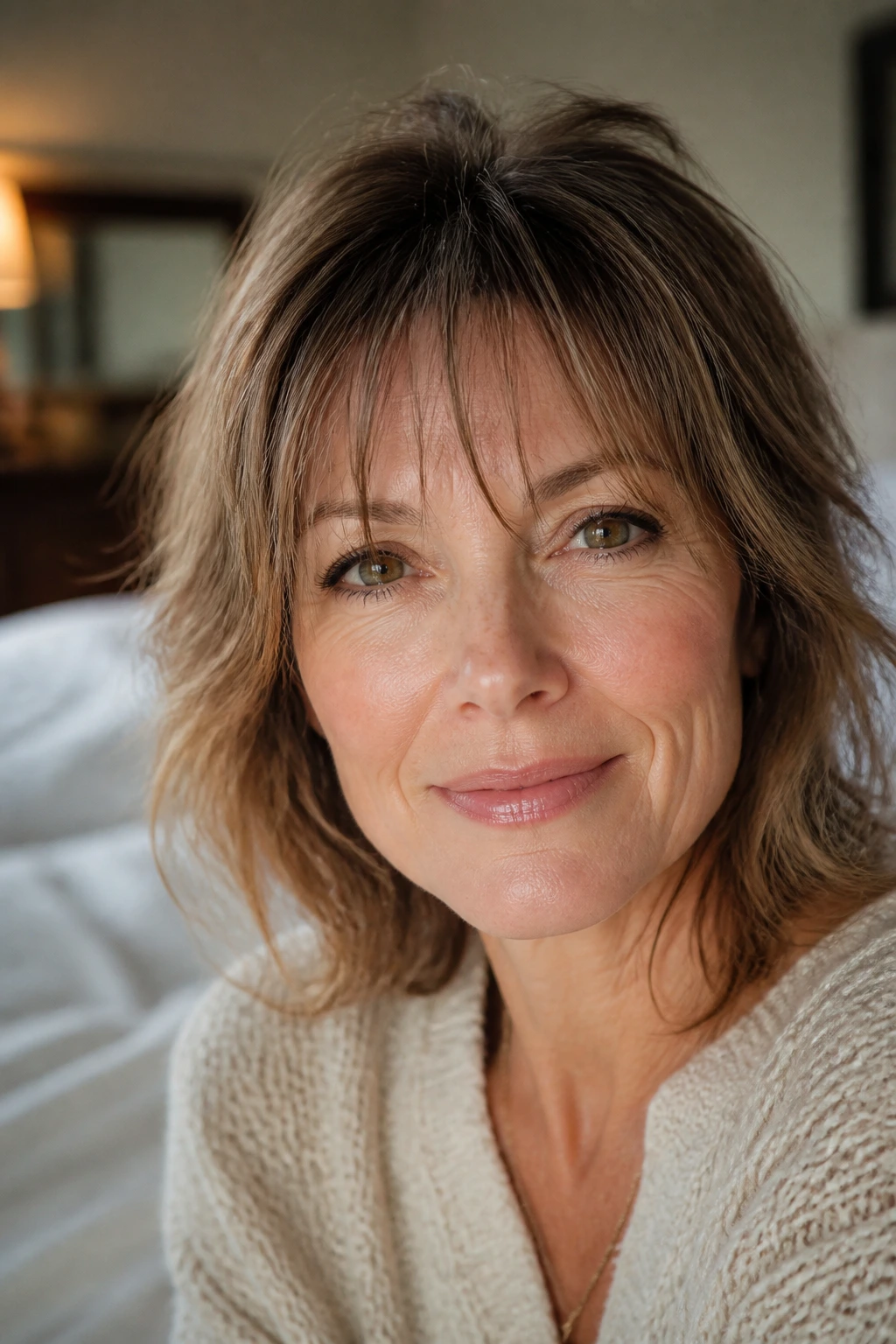
A heavy fringe can swamp fine hair in a single snip. Once the front gets too blunt, the whole cut starts feeling smaller, flatter, and harder to style by lunch. That is why wispy bangs for women over 40 with fine hair keep winning: they open the face, keep the crown from collapsing, and still look deliberate when they grow a little. The trick is not more hair. It’s smarter placement.
The best version doesn’t hide the forehead under a blanket of strands. It skims the brows, leaves some skin visible, and lets the ends disappear into cheekbone-length pieces or a bob. Fine hair needs that restraint; if you pile on too much bang, the root goes limp and the ends start to separate into sad little strings. Nobody needs that.
A good cut, a tiny round brush, and about 30 seconds of directing the airflow make more difference than a shelf full of styling products. And once you know which shapes keep fullness where it matters, the whole fringe conversation gets easier. The useful ones are right below.
Why These Wispy Fringe Ideas Earn Their Keep
-
Less weight at the hairline: These cuts leave enough hair in front to read as a fringe, but not so much that fine strands slump and separate by midday.
-
Softness without hiding the face: A wispy edge draws attention to the eyes and cheekbones instead of building a hard line across the forehead.
-
Better grow-out: The lighter the perimeter, the less awkward the in-between stage looks when you miss a trim by a week or two.
-
Friendlier with glasses and cowlicks: Longer outer corners and side-swept shapes are easier to live with if frames sit close to the brow or your front hair wants to split.
-
Works with short, mid-length, and long cuts: The same fringe idea can sit on a bob, a lob, a shag, or a pixie bob if the rest of the haircut carries the shape.
-
Less product, more movement: Fine hair usually looks best when the bang is cut to move first and styled second; that gives you lift without crunchy ends.
Why Wispy Bangs Stay Light Instead of Limp
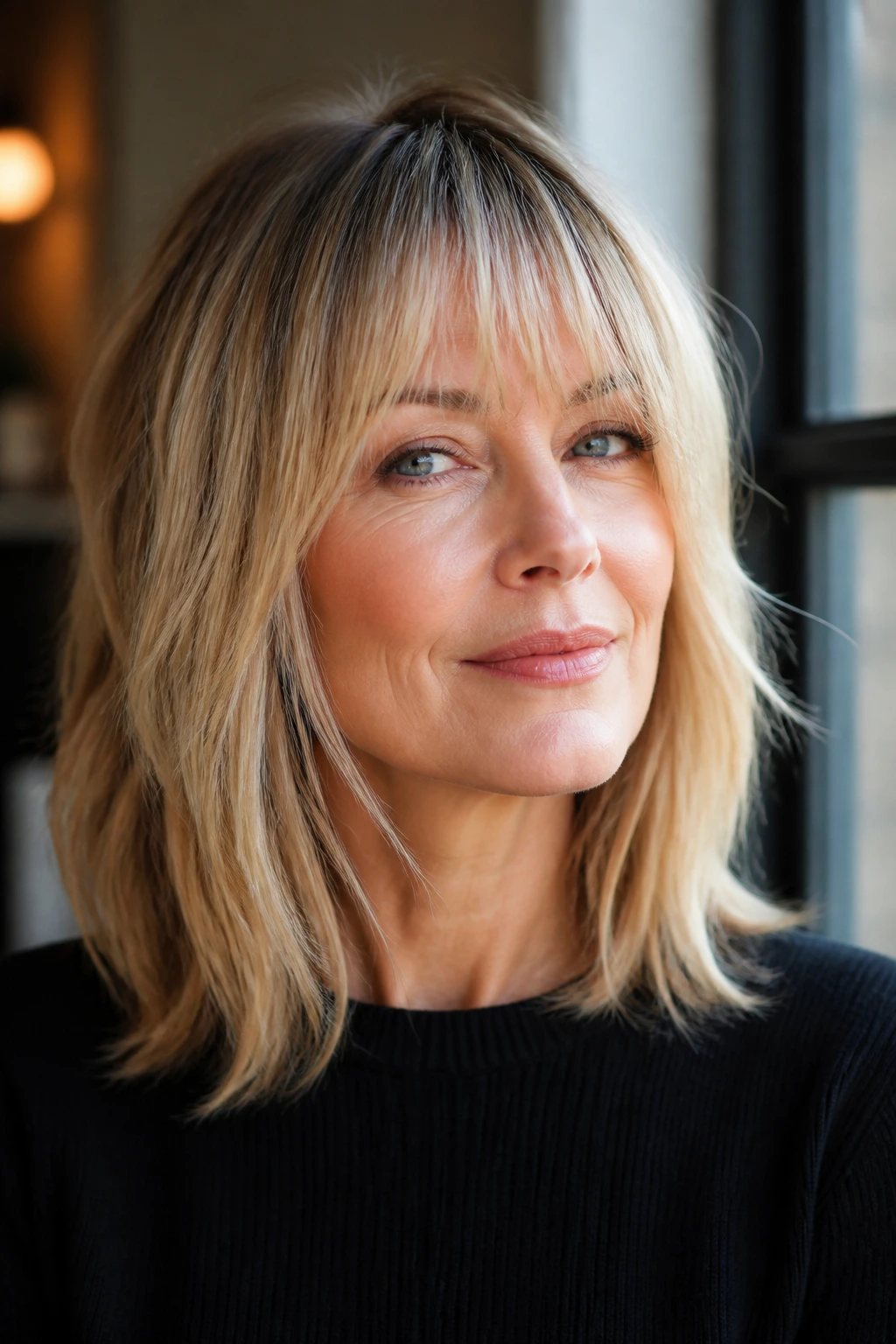
Fine hair isn’t the problem. Too much weight is.
That’s the part people miss. A fringe doesn’t need to be thick to look full. It needs a clean line at the root, a little separation at the ends, and enough structure on the sides so the front doesn’t hang like a wet ribbon.
Density Lives in the Wrong Places
When hair is fine, bulk at the wrong point is the enemy. A dense bang panel can look impressive in the chair and miserable at home, because the roots collapse first and the ends stick to the forehead. A wispy fringe works because the visual density is spread out: a touch more in the center, softer at the edges, and lighter where it meets the temples.
The Last Quarter Inch Matters
This is where point cutting earns its keep. A stylist who softens only the last bit of the bang leaves the body intact while breaking up the hard edge that makes fine hair look sparse. Go too far with thinning shears and the strand ends fray. That fray is not texture. It’s damage pretending to be texture.
Grow-Out Is Part of the Plan
The nicest part of a wispy fringe is that it still looks like hair when it grows. A blunt bang turns weird fast. A feathered one can shift for a few weeks and still look like a choice. That’s useful if you want bangs, but you do not want your calendar ruled by them.
1. Soft Curtain Bangs That Split at the Cheekbone
Curtain bangs stay popular for a reason: they borrow density from the sides instead of dumping all the weight in the middle. On fine hair, that matters. The split keeps the forehead open, while the longer outer pieces blend into the cheekbone area so the cut reads airy instead of sparse.
How to Ask for It
Ask for the shortest point to sit around the lower brow or just below it, then let the outer corners skim the top of the cheekbone. I’d ask for point-cut ends, not a heavy blunt line. That last detail keeps the bang from looking like a flat strip taped across the front.
Curtain bangs are a good match if you like to tuck hair behind one ear, wear glasses, or part your hair in the middle most days. They’re also one of the easier shapes to grow out because the sides already know where they want to go.
2. Brow-Grazing Feathered Bangs With a Light Point Cut
Can a bang sit right at the brows without looking heavy? Yes, if the ends are feathered instead of carved into a solid shelf.
This version works best when the center is cut a touch longer than you think you need. Fine hair springs up once it dries, and a fringe that seems perfect when wet can end up sitting half an inch higher by lunch. I like this shape for anyone who wants the eyes framed, not hidden.
- Best length: Brow to just below brow, depending on how much lift your hair gets when it dries.
- Best finish: Soft, broken-up ends with a tiny bend under at the tips.
- Best styling move: Dry from side to side first, then set the ends with a small round brush.
The line should still feel neat. Just not rigid.
3. Side-Swept Wispy Bangs for a Softer Forehead Line
Side-swept fringe is the diplomat of this whole group. It smooths over a forehead without announcing itself, which is handy if your hair likes to go flat the moment it’s asked to stay in place.
The diagonal line gives the illusion of density because the eye travels across the face instead of stopping at a blunt edge. That’s useful on fine hair, where too much straight-across cutting can make the front look thinner than it is. I also like this shape for people with a stubborn front swirl; it’s easier to direct a diagonal bang than fight a hard center split.
It looks especially good when the rest of the haircut has a little bend—soft layers, a brushed-out wave, or a lob that flips under just slightly. Side-swept bangs don’t need a lot of support, but they do need direction. Skip the straight-down blow-dry. It usually loses.
4. Bottleneck Fringe With Longer Sides
Bottleneck bangs sound heavier than they are. The center is shorter, the sides stay longer, and that taper gives the whole front some shape without making it feel packed.
This is a smart choice when fine hair needs a little architecture. The shortest point in the middle can make the face look open and lift the eyes upward, while the longer corners keep the fringe from looking skimpy. If you wear your hair in a bob or collarbone cut, this one settles in fast.
Why It Works So Well
The shape narrows near the brows and then opens out near the temples, so the fringe looks intentional even if the hair itself is soft and light. It’s one of the few bang styles that can create movement without asking for much product.
Just don’t let the center get too short. On fine hair, that can send the bang up and away from the forehead in the wrong way. A soft bottleneck looks easy. A too-short one looks like you lost an argument with a pair of scissors.
5. Piecey Bangs With a Chin-Length Bob
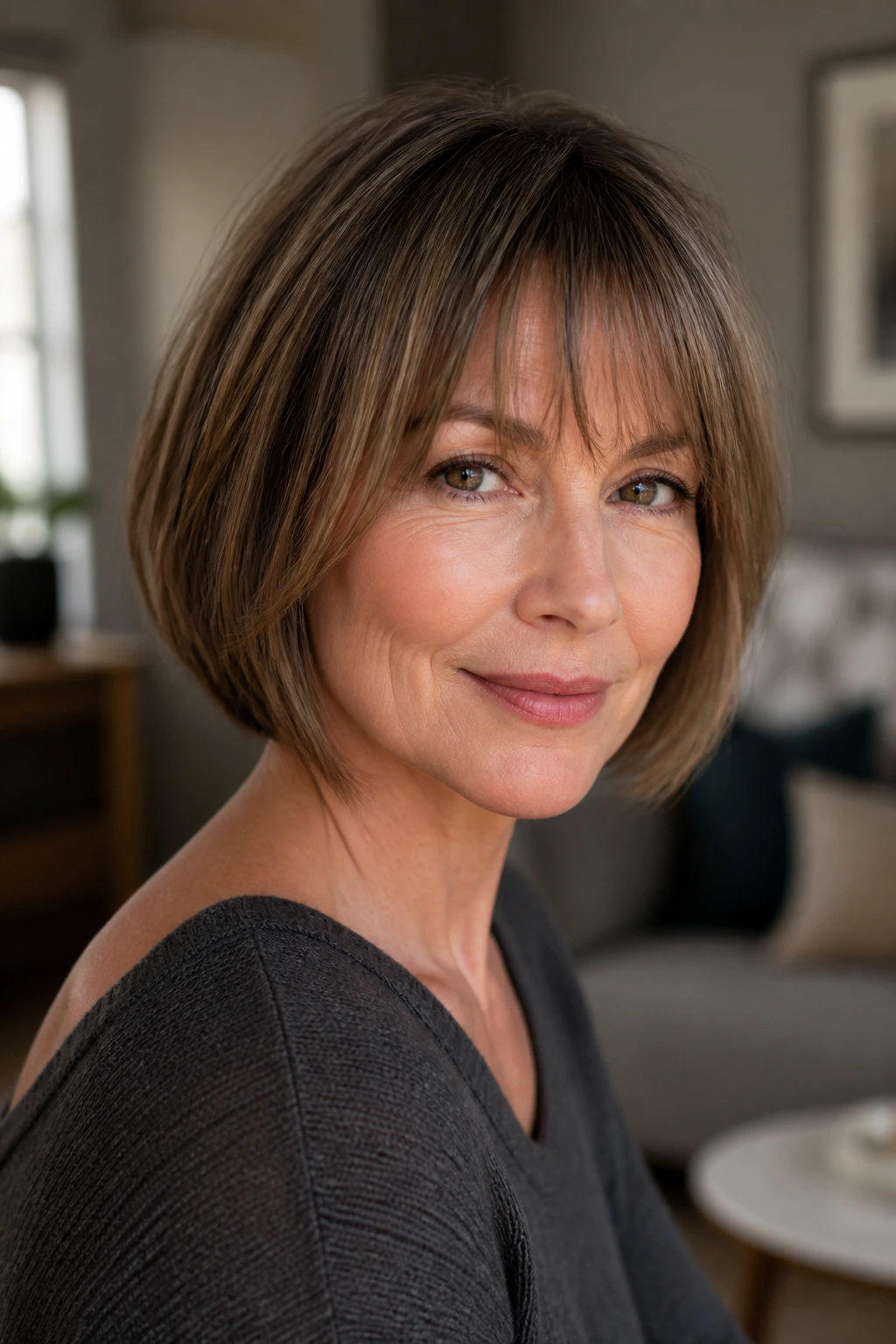
A chin-length bob gives piecey bangs a place to land. Without that structural help, fine fringe can drift into flyaway territory. With a bob underneath, the whole haircut feels compact, neat, and lighter around the face.
This pairing has a little snap to it. The bob holds the shape, and the bangs break it up. I like it when the fringe is sliced into small, separated sections rather than one continuous sheet. A light mousse at the root and a quick pass with a small brush are usually enough. Too much cream here turns the edges stringy fast.
The best version is not over-textured. The tips should move when you turn your head, but not look ragged. If you’ve been wearing longer hair forever and want a change that still feels polished, this is a clean pivot.
6. Long Peekaboo Bangs for Glasses and Easy Grow-Out

Long peekaboo bangs are what I suggest when someone wants forehead softness but not daily commitment. They fall just low enough to kiss the brow, then tuck away when needed. That makes them a friend to glasses, windy days, and mornings when you don’t feel like coaxing hair into a perfect shape.
If your frames sit close to the face, keep the center a little longer so the fringe doesn’t crash into the top rim. The sides should sweep past the temples, not stop dead at the cheek. That little bit of length buys you a lot of freedom.
These bangs are also forgiving if your fine hair separates easily. A tiny mist of water and a quick blow-dry reset them without needing a full wash. That’s one reason they stay popular with people who want a fringe but don’t want to become the sort of person who trims their own bangs in the bathroom mirror every Sunday.
7. Feathered Fringe With a Soft Shag
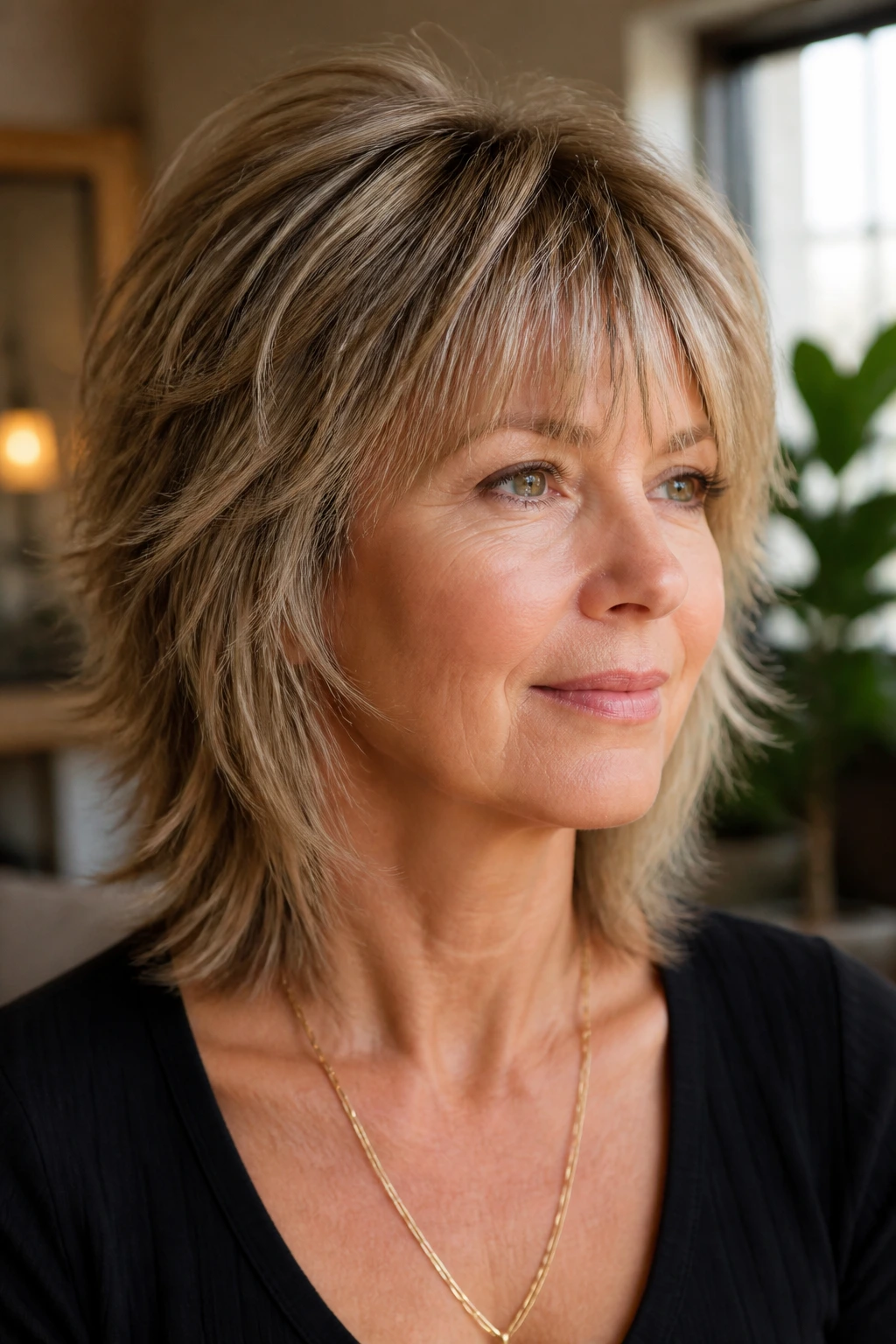
A shag can be a gift to fine hair if the layers are handled with restraint. Too much layering and the head starts to feel stripped of weight. But a soft shag with feathered fringe can give the crown a little lift while keeping the front light and mobile.
Why the Shag Helps
The cut works because it builds shape through the lengths, not by loading the bangs with extra density. Fine hair usually looks better when the shag is soft around the temples and a touch longer through the fringe. That preserves movement without turning the front into frizz.
I’d ask for the bang to blend into the first face-framing layer rather than sit apart from it. That seam matters. When the bang and layer connect cleanly, the whole haircut looks fuller because the eye reads one flowing shape, not separate thin pieces. That’s a much better use of fine hair than piling all the visual weight into the front.
8. Face-Framing Wispy Bangs for Women Over 40 Who Wear Glasses

If you wear glasses, the fringe has to cooperate with the frames. It cannot spend the day falling into the lenses or sitting on the frame top like it owns the place.
For women over 40 with fine hair, this kind of wispy fringe is one of the easiest ways to keep the face open while still having a soft front edge. The bang should sit just above the frame or sweep to one side of it, depending on how high your glasses ride. Longer temples help a lot. So does a slight bend away from the face at the edges.
What I like here is the balance: the glasses get room, the bangs stay light, and the cut doesn’t fight your daily routine. If the frame arms sit close to the temple, ask for enough length at the sides so the fringe can tuck behind the glasses without puffing out.
9. Rounded Wispy Bangs That Follow the Brow
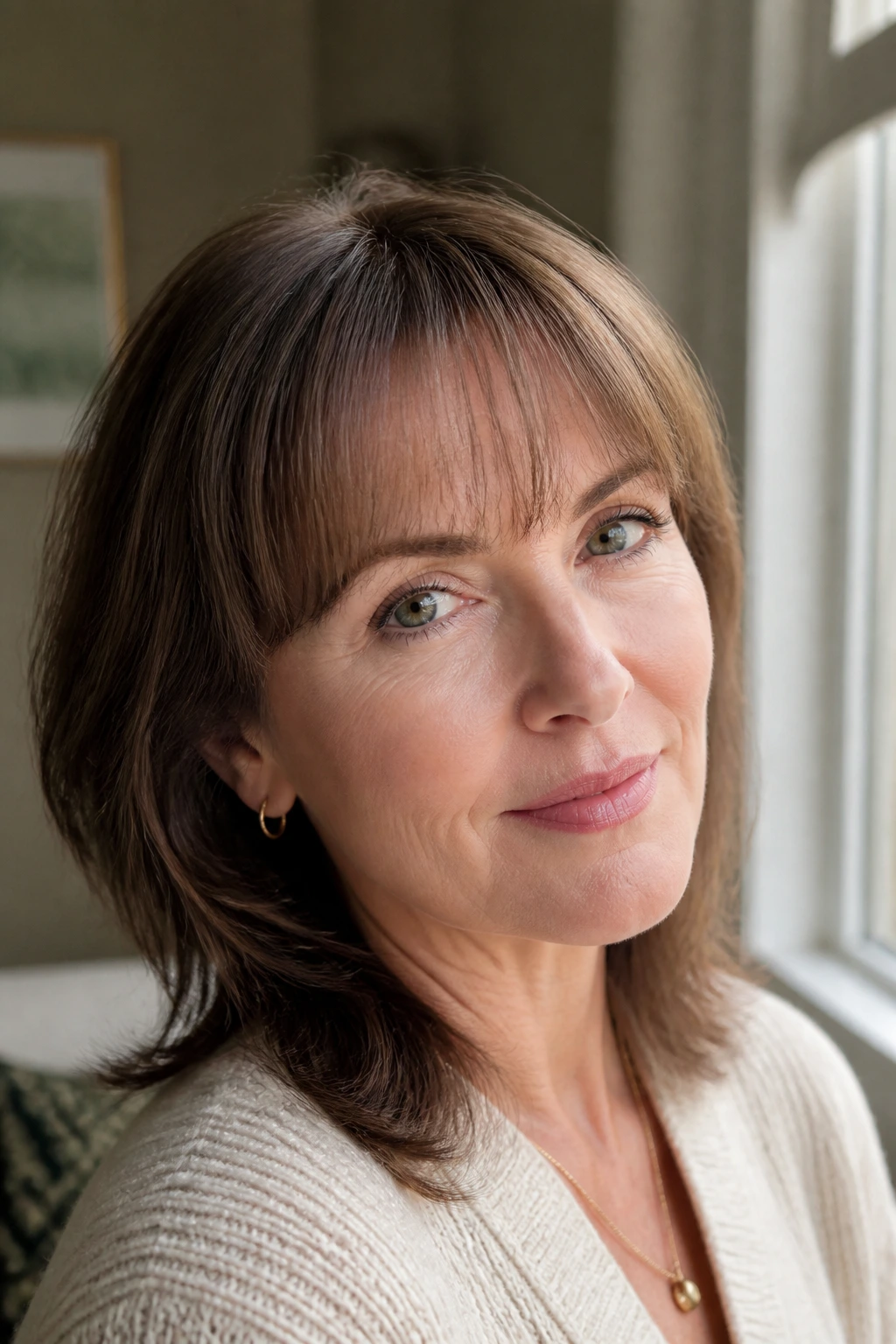
Why round the fringe at all? Because a flat line across the forehead can make fine hair look thinner than it is. A soft curve gives the eye somewhere to travel, and that movement keeps the bang from feeling rigid.
This shape is especially nice if your forehead is a bit wider or you dislike the feeling of hair sitting straight across your face. The curve should be gentle, not domed. A hard arc looks dated fast. A soft one looks like the haircut grew there naturally.
The Curve Matters
Ask for the center to sit slightly shorter than the outer corners, but not by much. The goal is a quiet arch that follows the brow line and then relaxes into the sides. On fine hair, that curve can make the fringe feel fuller because it avoids one long, obvious horizontal line.
I also like this on straight hair that tends to drop flat. The rounded edge makes the front look shaped, even when the rest of the hair is simple.
10. Tapered Fringe for a Pixie Bob
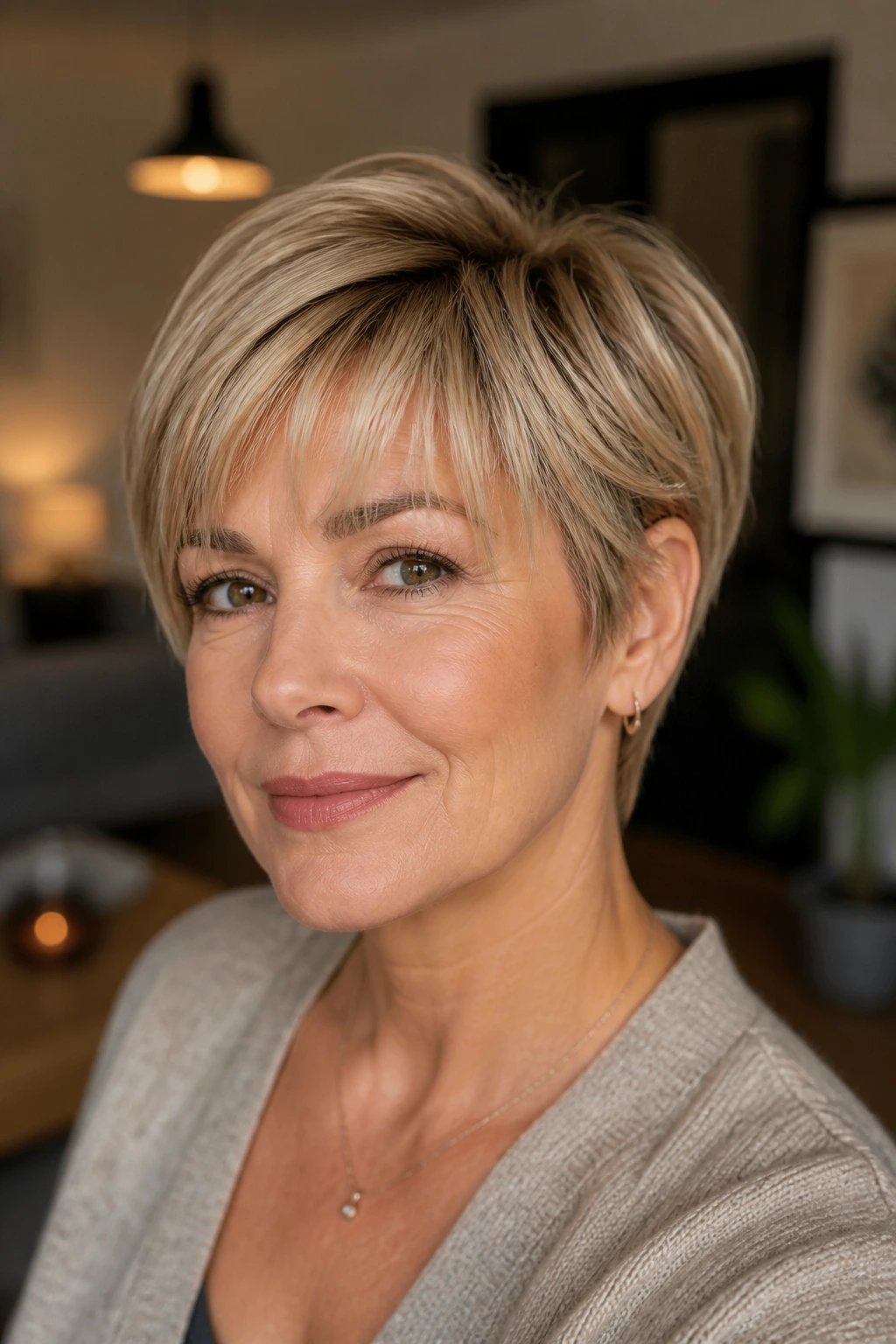
A tapered fringe can change a pixie bob from sharp to soft in one move. The front stays light, but the temple areas narrow enough to keep the haircut from looking puffy or helmet-like.
This is a strong choice if you like short hair but want the face framed gently. Fine hair actually behaves well here because the cut does not ask it to carry too much bulk. The fringe sits close to the forehead, then fades into the sides. That keeps the silhouette neat.
- Ask for: soft tapering at the temples and a slightly longer center.
- Avoid: over-thinning at the hairline, which makes the fringe break apart.
- Style with: a small round brush or just your fingers if the cut is already shaped well.
The pixie bob needs a clear perimeter. The fringe should soften that perimeter, not replace it.
11. Grown-Out Wispy Bangs That Still Look Intentional
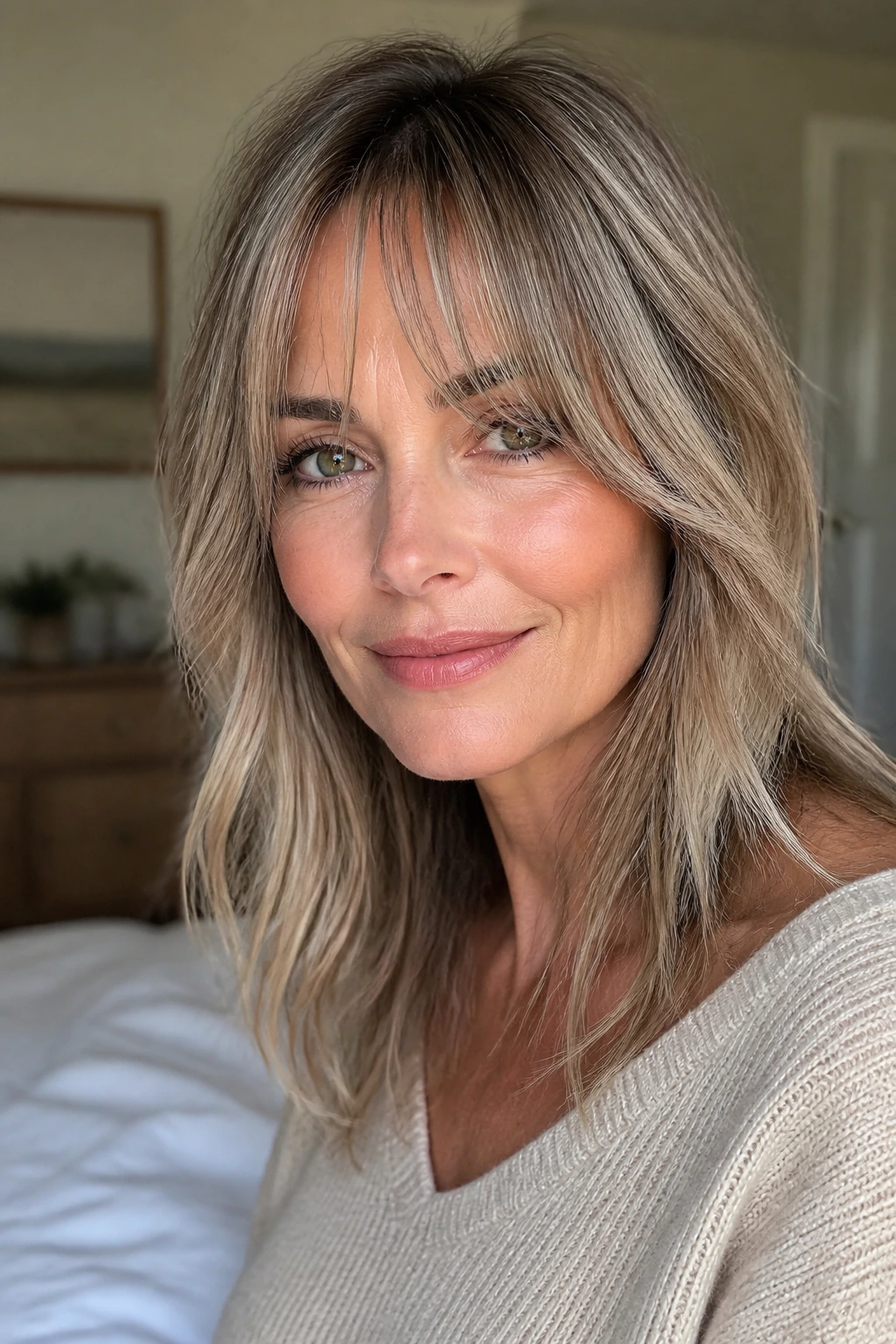
Grown-out bangs don’t have to look like you missed your salon appointment. If the center is left a little longer and the sides are cut to meet the cheekbone layer, the whole thing can look purposeful even when it’s past the strict-bang stage.
This is one of my favorite options for fine hair because it gives you the feeling of bangs without locking you into constant trimming. You can part them down the middle, sweep them to the side, or tuck half of them back and still look finished. That flexibility is the real luxury here.
If you’ve ever grown out bangs and hated the awkward stage, this shape is the fix. It’s built to live in that in-between place. That means less frustration and fewer days where you’re tempted to pin the front back with a bobby pin and call it a day.
12. Sliced Bangs With a Center Part
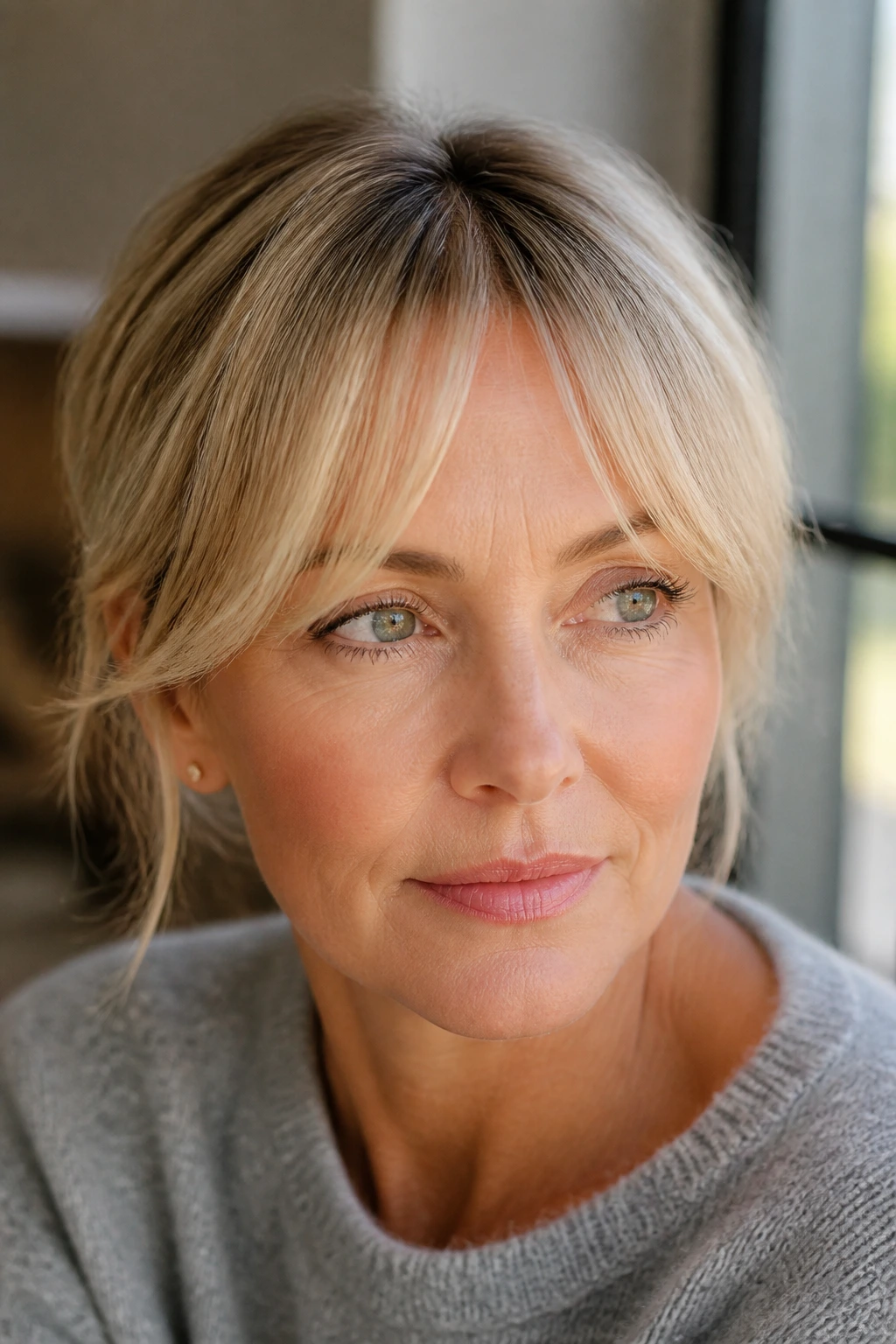
A center part can be unforgiving on fine hair if the fringe is too thick or too blunt. But when the bangs are sliced into soft pieces, the part opens the face instead of exposing too much scalp at the front.
The Slicing Detail
This is not a job for heavy thinning shears. I’d rather see careful point-cutting through the last inch of hair, with the shortest pieces landing around the brows and the outer sections sliding toward the cheekbones. That gives the center part a softer seam and helps the two sides fall away from each other naturally.
The style works best when your part is already close to the middle. If you always wear a deep side part, a sliced center bang can feel like a fight. But if you like that clean, symmetrical front, it gives fine hair just enough detail to look styled without looking overworked.
13. Airy Shag Bangs That Add Lift at the Crown
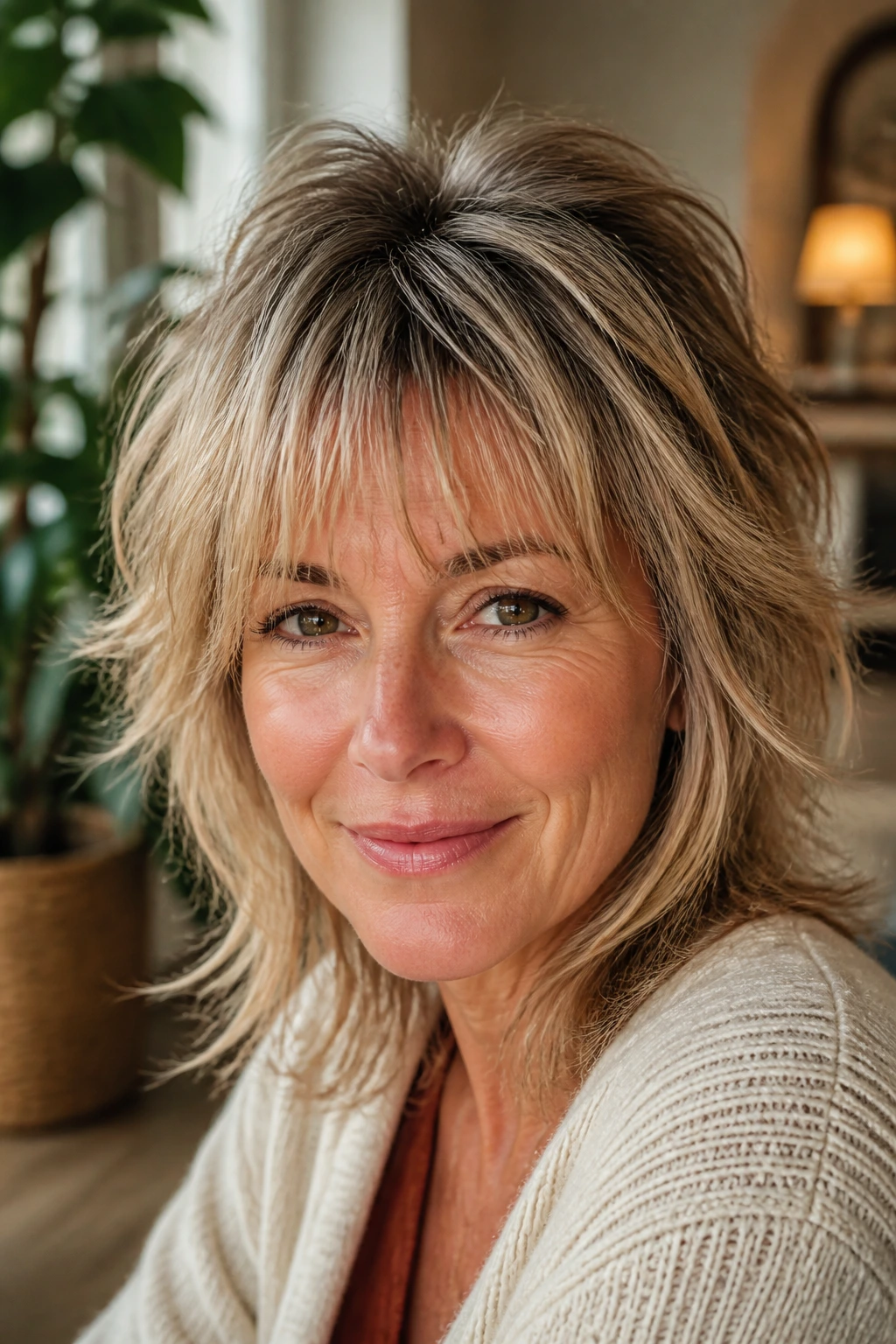
A shaggy cut lives or dies by its crown lift. If the top goes flat, the whole thing loses its shape. Airy bangs help because they keep the front from dragging the haircut down.
The trick is to keep the fringe soft and the crown supported. Root-lift spray at the top, a quick round-brush bend through the front, and a little separation at the ends make the whole cut feel lighter. I would not load this style with heavy oils. Fine hair hates that. It doesn’t need shine as much as it needs air between the strands.
If your hair tends to fall against your head by noon, this shape gives you enough movement to disguise it. The bangs stay broken up, the crown gets a little height, and the cut never turns into one solid block.
14. Arched Wispy Bangs for Women Over 40 With a Longer Face
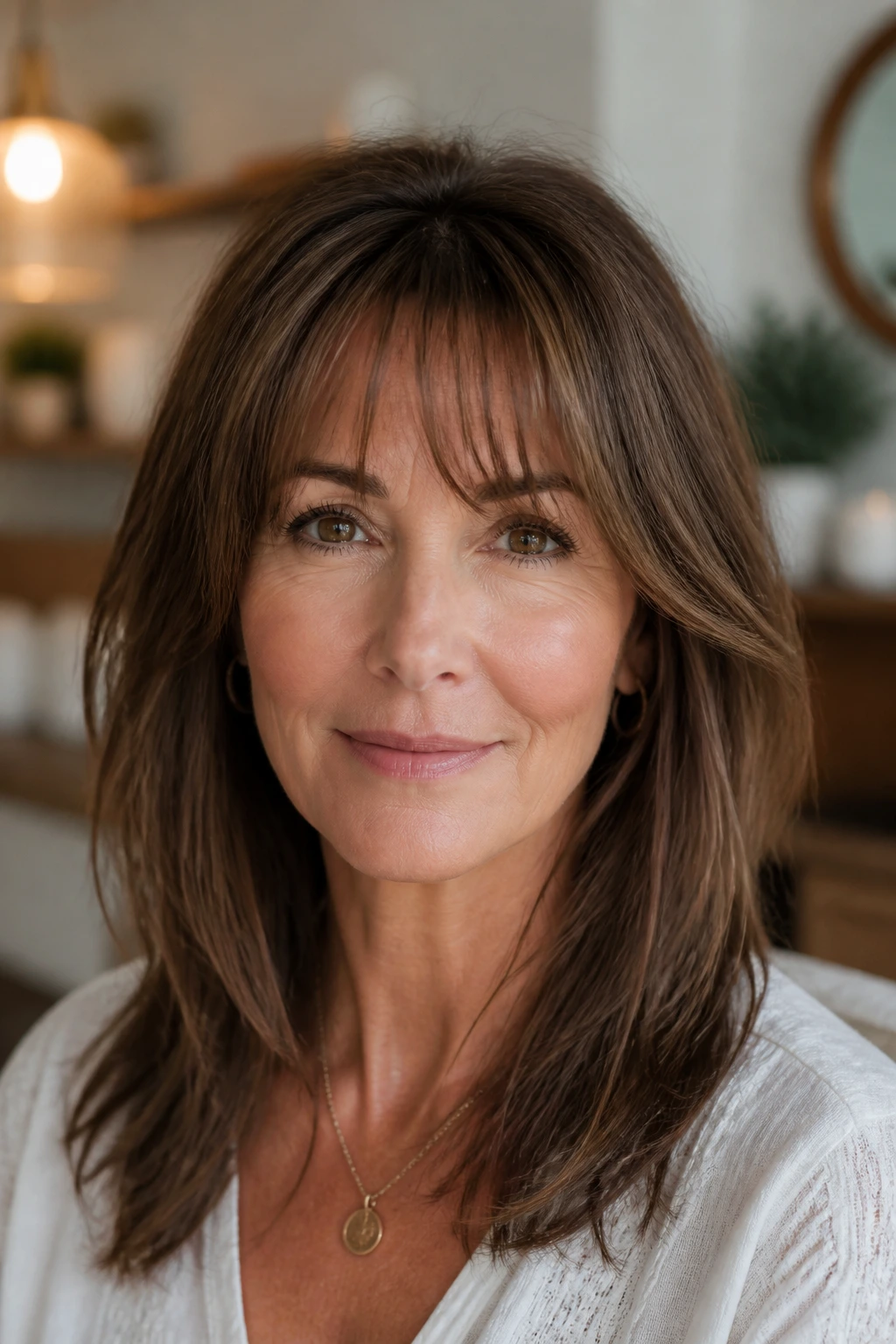
Need a fringe that shortens a longer face without boxing it in? A soft arch does that job better than a blunt straight line.
The shortest point should sit around the brow, then the sides can drift down toward the upper cheekbone. That brings attention inward and helps balance the length of the face without hiding the upper features. On fine hair, the arch also prevents the bang from looking like a flat bar across the forehead.
I like this shape when someone wants softness but still needs a clear frame. It’s polished without being stiff. And because the edges are feathered, it doesn’t demand a thick head of hair to work. It just needs a clean cut and a little direction while drying.
15. Shoulder-Length Waves With a Barely-There Fringe
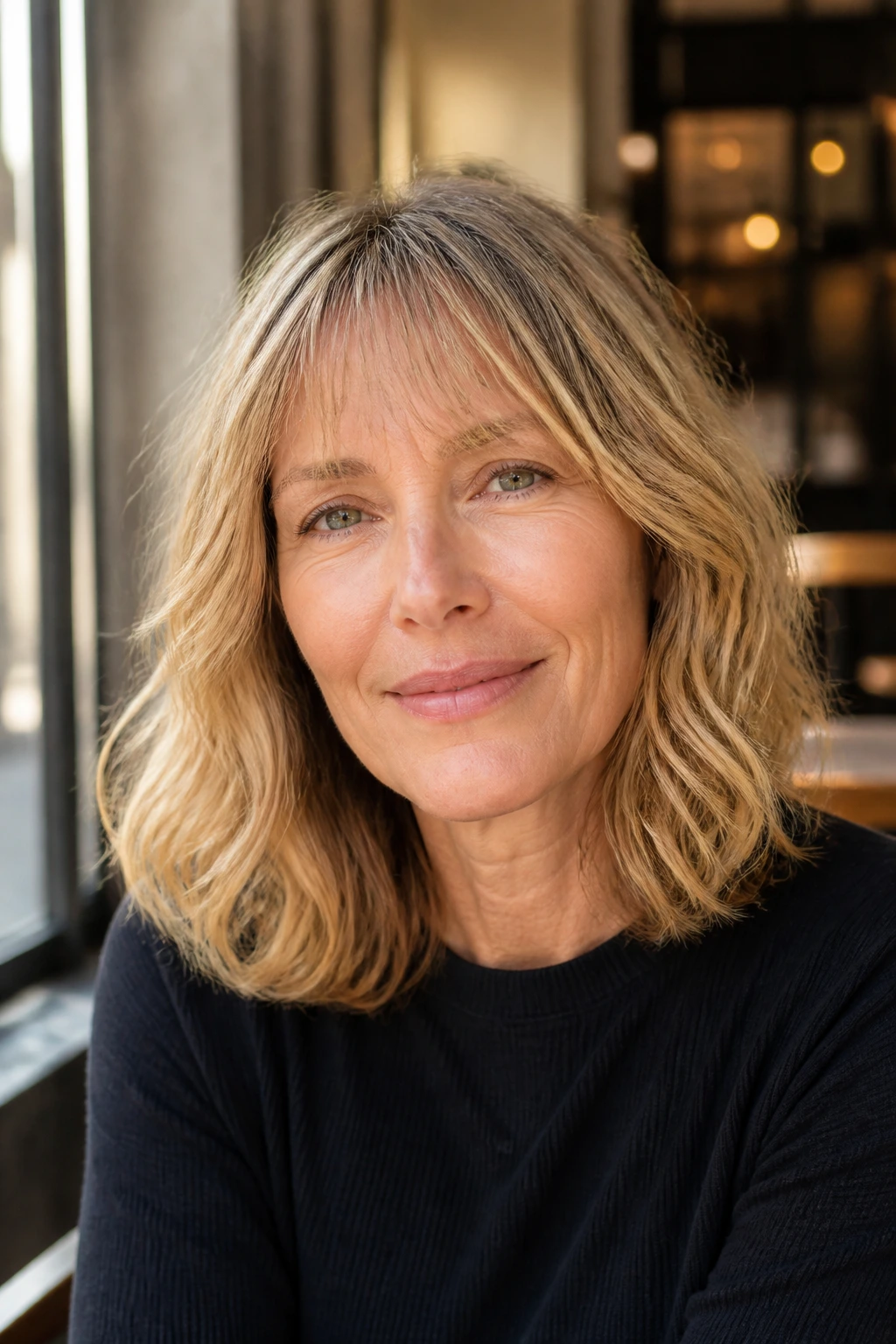
Shoulder-length waves already bring motion, which makes them a nice home for a very light fringe. The bangs don’t need to dominate. They just need to echo the bend in the rest of the hair.
This is a smart choice if you want the face framed but don’t want a strong bang statement. A barely-there fringe can sit just above the brows or split slightly off-center, then disappear into the first wave. The whole thing feels relaxed. Not sloppy. Relaxed.
I’d keep the ends soft and avoid over-smoothing the bang with a flat iron. A little imperfection helps here. Fine hair often looks better when the fringe has a small bend rather than a pin-straight line that shows every uneven strand.
16. French Bob With Feather-Light Bangs
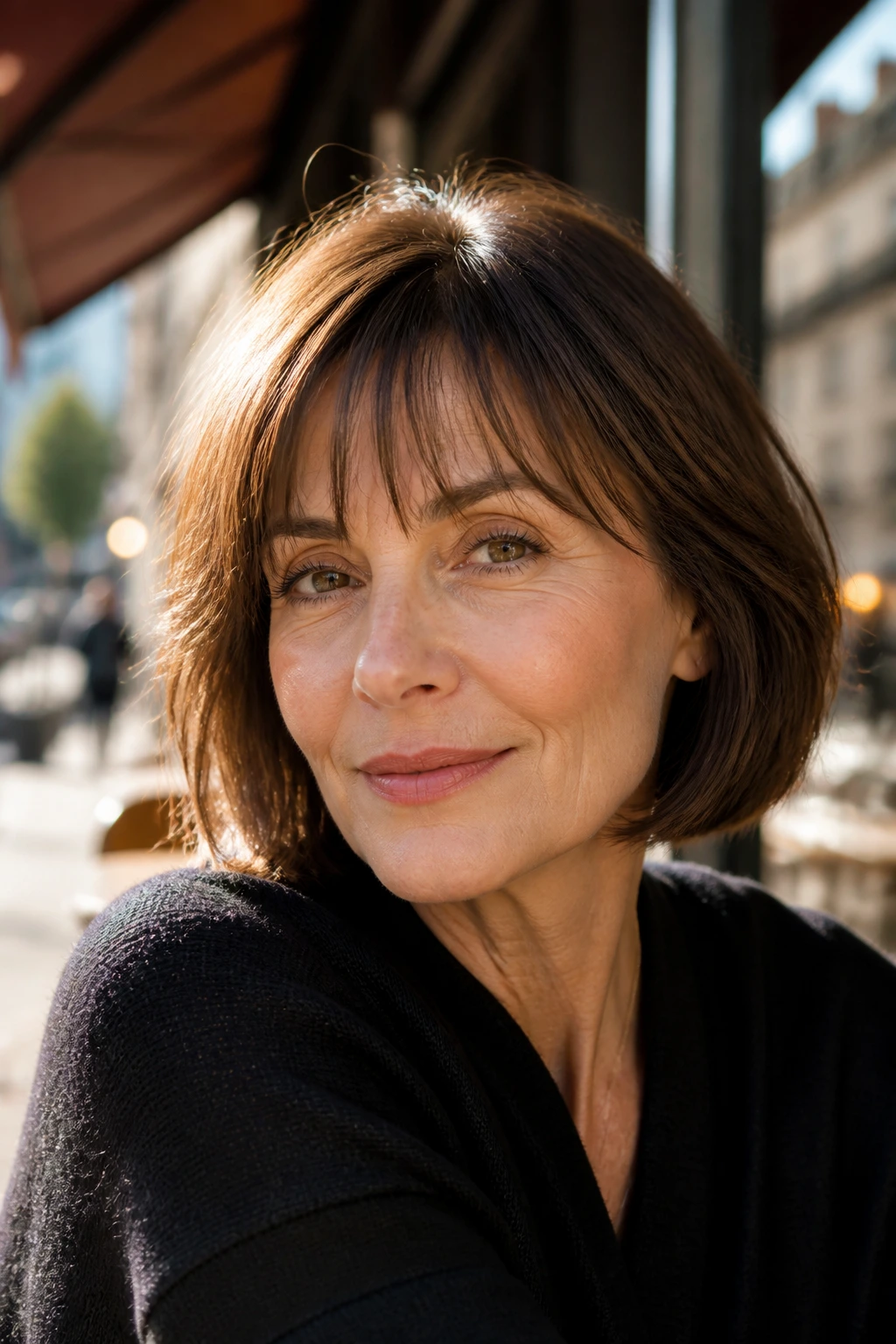
A French bob brings structure, and that’s exactly why feather-light bangs can work so well with it. The bob carries the visual weight. The fringe just softens the front.
That matters on fine hair, where a heavy bang plus a compact bob can feel crowded around the face. A lighter fringe gives the haircut some air between the eyes and the brow. I prefer this when the bob sits somewhere between the jaw and the lip line, because that little bit of length stops the whole shape from feeling too severe.
The key is not to over-texture the bangs. A few broken pieces are enough. If the fringe gets too shredded, the contrast with the bob gets lost, and the cut starts to look unfinished instead of crisp.
17. Side-Part Fringe With Crown Volume
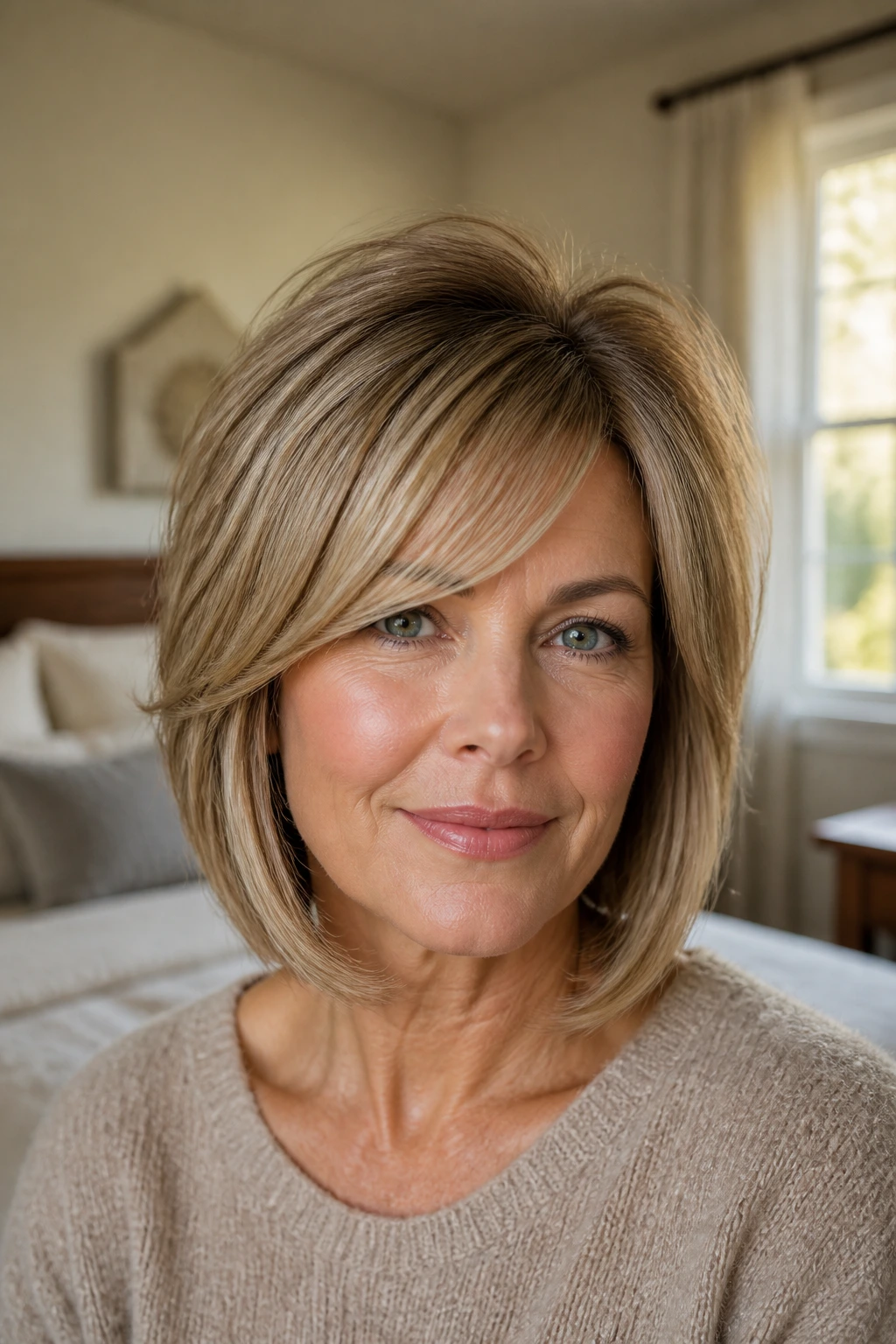
A side part and a wispy fringe are old friends. The side part gives the crown a little lift, and the fringe follows that direction instead of fighting it.
Work With the Part You Actually Wear
If you know your hair falls to the left, don’t cut a fringe that only behaves on the right. That’s a daily tax you don’t need. Ask for the fringe to be designed around your real part, then build the rest of the shape from there. Fine hair does better when it isn’t being dragged into a new habit every morning.
This is also a good option if your crown is flat. A bit of lift at the part line makes the bang look fuller, even when there isn’t much hair there. You are not chasing volume all over the head. Just enough where people see it first.
18. Soft Micro-Fringe for a Sharper, More Editorial Edge
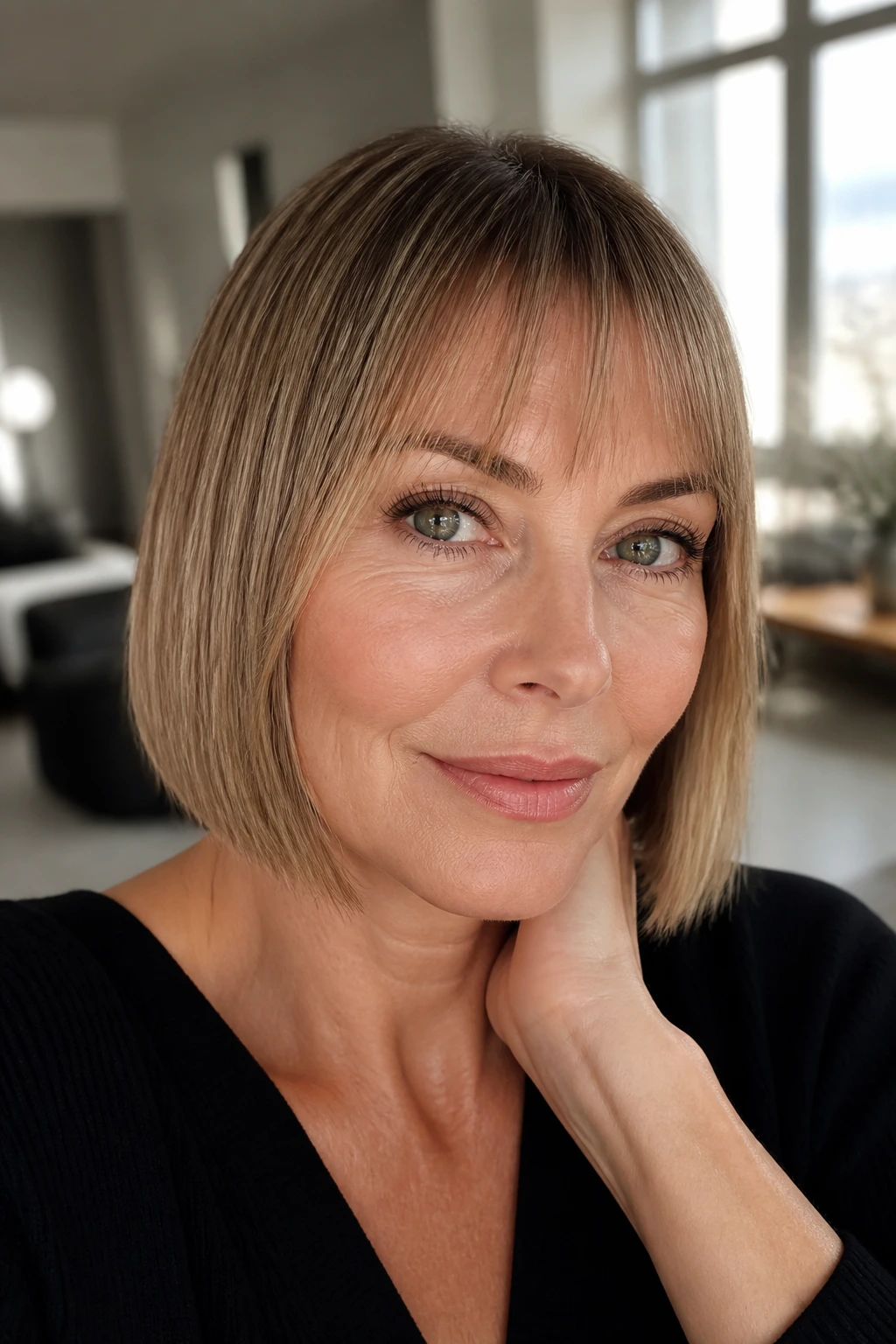
A micro-fringe can work on fine hair if it stays soft at the edges. Hard, blunt micro bangs are a different animal. They can be too severe and too obvious. A feathered micro version is lighter, more modern, and easier to wear.
This is not the choice for someone who wants to forget about bangs entirely. It’s the choice for someone who likes a sharper front and doesn’t mind styling it with intention. The fringe should sit short, but not choppy in a damaged way. Think controlled, not crunchy.
I’d keep the rest of the haircut clean and simple if you go this route. A strong bob or a sleek short cut gives the micro fringe room to stand out without making the whole head feel busy.
19. Wispy Bangs on a Blunt Bob
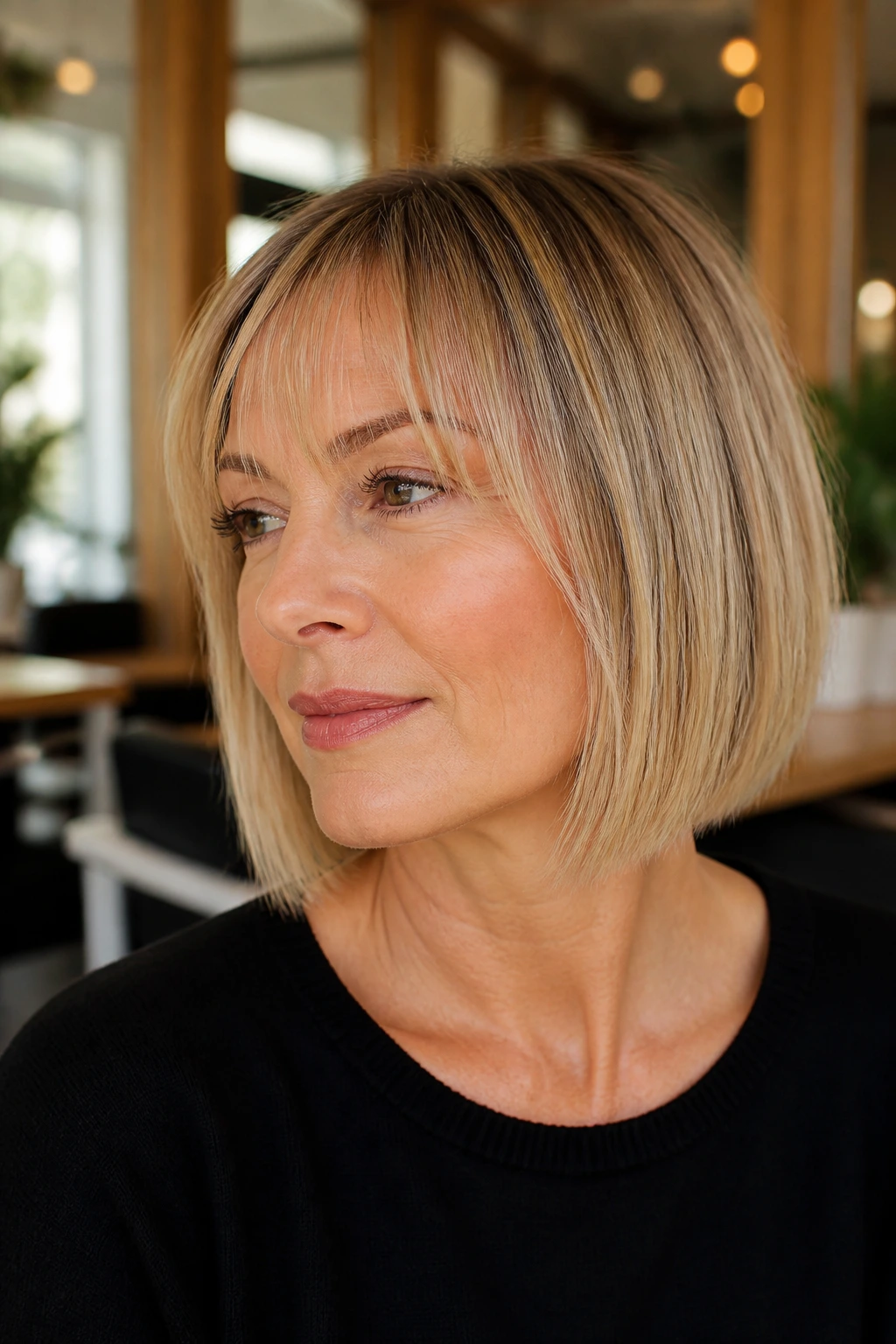
A blunt bob and wispy bangs sound like opposites, and that’s why they work. The bob brings the density. The fringe brings the softness.
Fine hair often benefits from that contrast. The perimeter of the bob makes the hair look thicker, while the light bang prevents the face from feeling boxed in. This is one of those cuts that can look more expensive than it is, mainly because the shape is so clean. There’s no puffing at the ends, no extra fluff around the forehead, and no overbuilt layering.
The bang should be a little shorter in the middle and softer at the edges. If it gets too chunky, it fights the bob. If it gets too thin, it disappears. The sweet spot is a fringe that looks almost casual, sitting against a sharp lower line.
20. Collarbone Cut With a Split Fringe
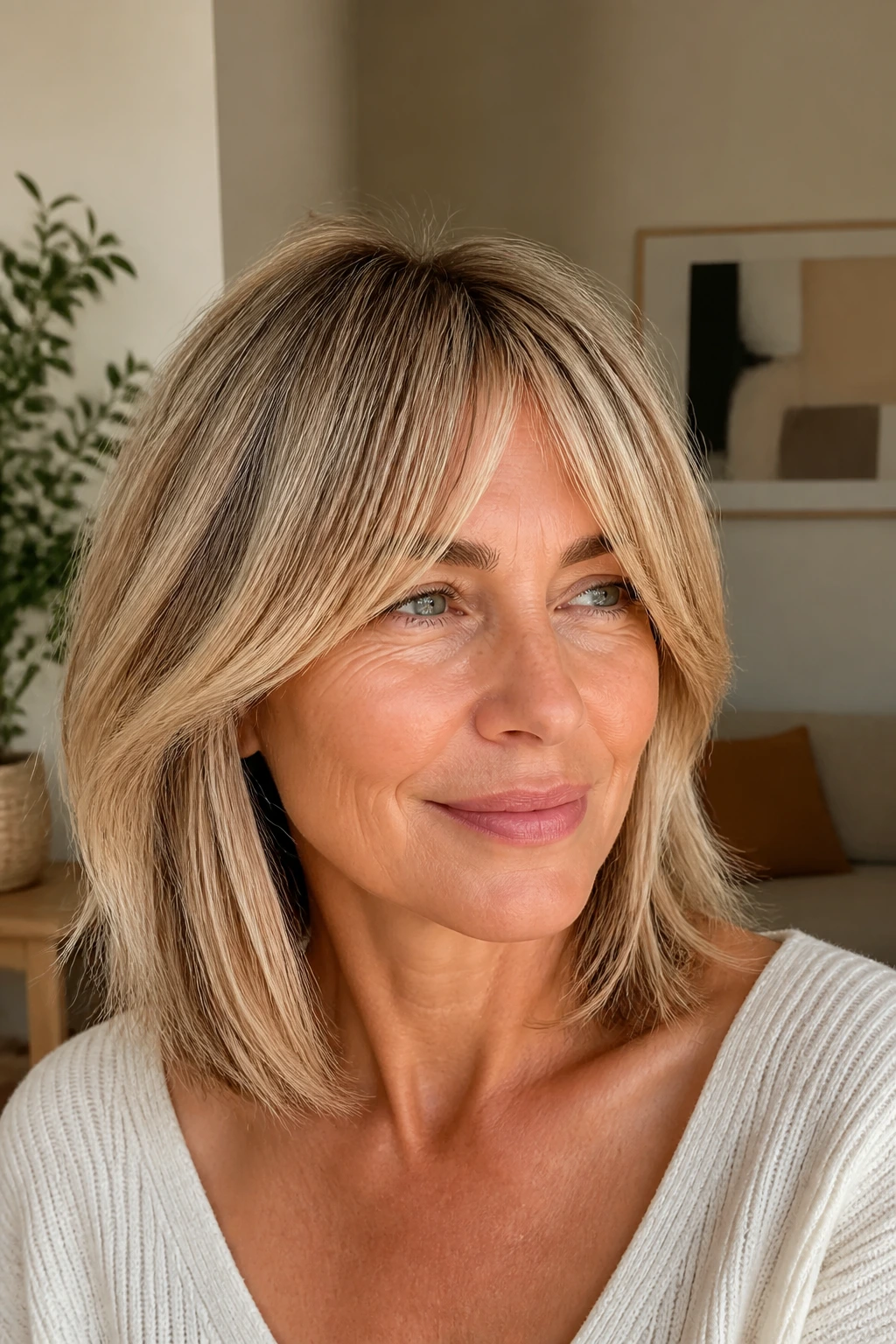
A collarbone cut gives you room to tuck hair behind the ears, clip it back, or leave it loose without much drama. Pairing that length with a split fringe keeps the face open and the front soft.
This is a good middle ground for someone who wants bangs but still wants to pull everything into a low ponytail or a loose clip. The split fringe can part slightly off-center, and the longer sides fall into the rest of the cut instead of sitting apart from it.
A style like this is forgiving on fine hair because the overall length gives the illusion of more body. The bangs just add a little frame. Not a wall. That distinction matters a lot if you’ve ever had a fringe that made your hair feel thinner than it actually was.
21. Cheekbone-Grazing Bangs That Break Up a Long Face
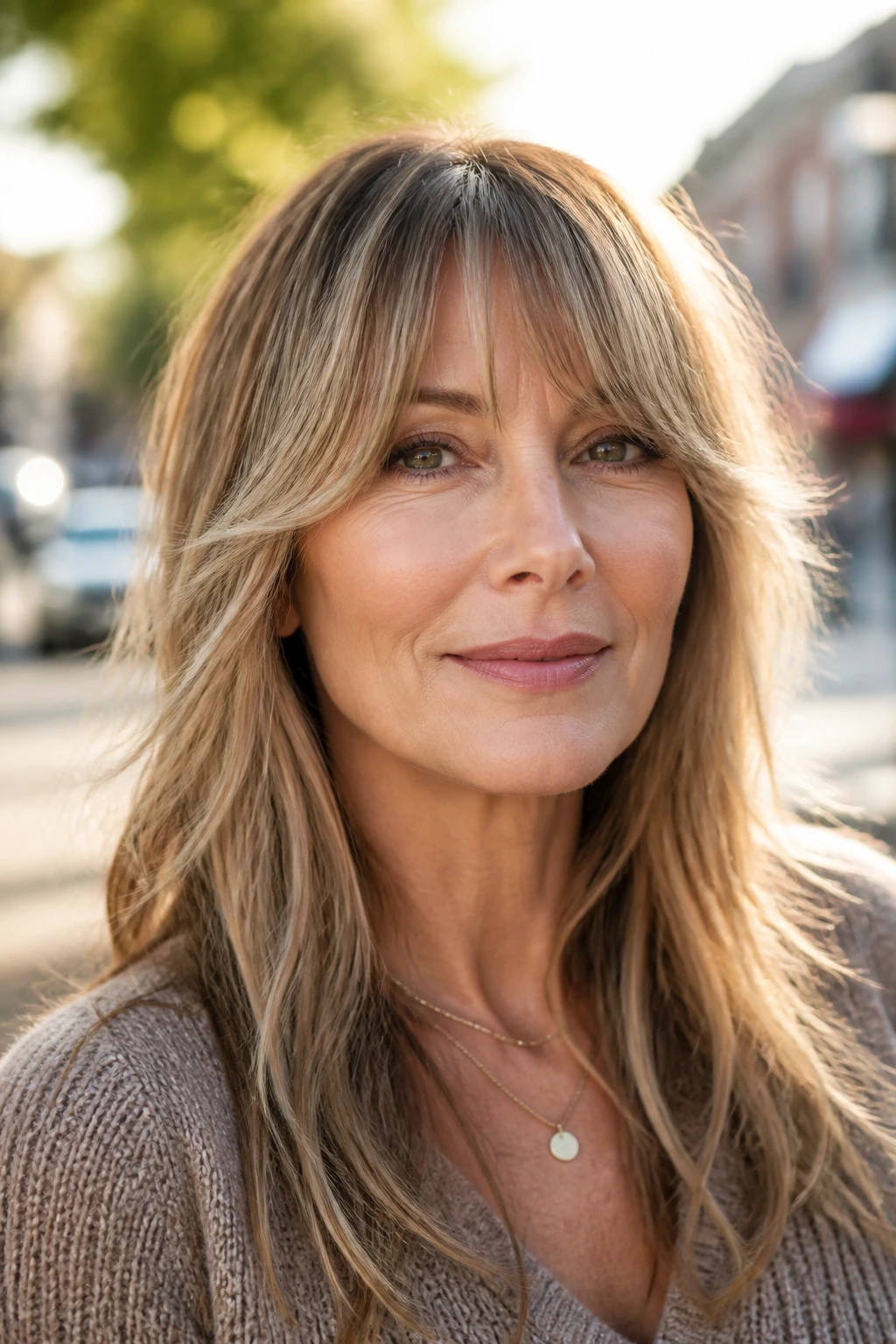
A long face needs width, not height. Cheekbone-grazing bangs help because they draw attention outward and lower the visual center of the haircut.
The best version is soft at the center and fuller through the side pieces. That creates a little horizontal balance without turning the fringe into a heavy curtain. On fine hair, the side pieces can look especially nice if they blend into a layer that lives right at the cheekbone. The eye gets a clear stopping point, which makes the face feel more proportioned.
I’d avoid making the center too airy here. That can leave the face looking longer, not shorter. A little substance in the middle, plus softer corners, is the move.
22. Bangs That Melt Into Long Layers
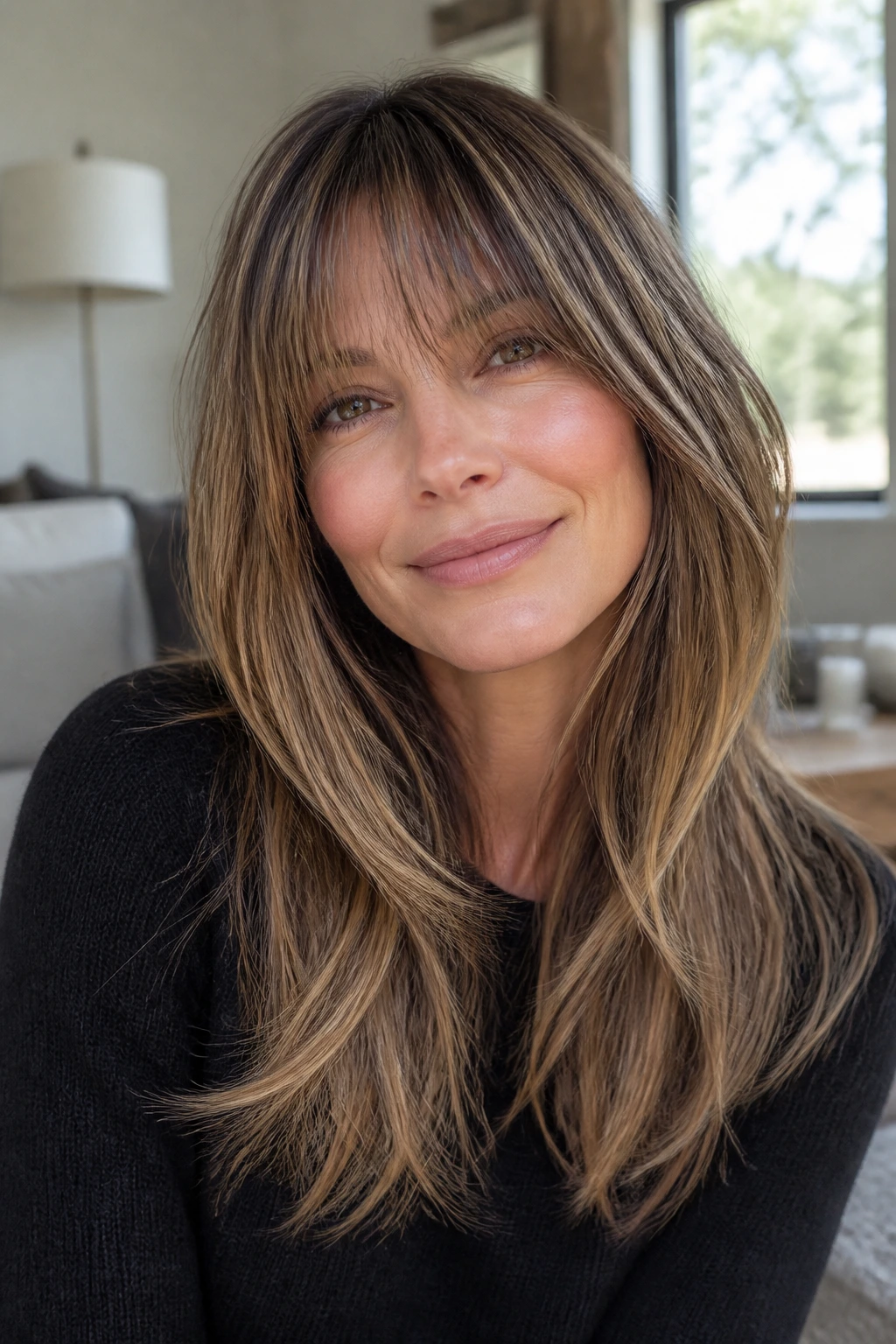
This is the fringe for someone who wants bangs only if nobody can point to the exact line where they start. The front pieces blend into long layers, so the whole haircut looks soft and continuous.
Fine hair loves this because there’s no hard break to expose thinness. The lengths around the temple and cheekbone do most of the work. The bangs are more like a transition than a statement. That’s a useful thing if you want the face framed but don’t want an obvious bang shape every single day.
It also grows out beautifully. The front can move from fringe to face-framing layers without a messy stage. A good cut here depends on clean blending, not aggressive thinning. The seam should disappear when you comb it forward.
23. Light Fringe for Straight Fine Hair
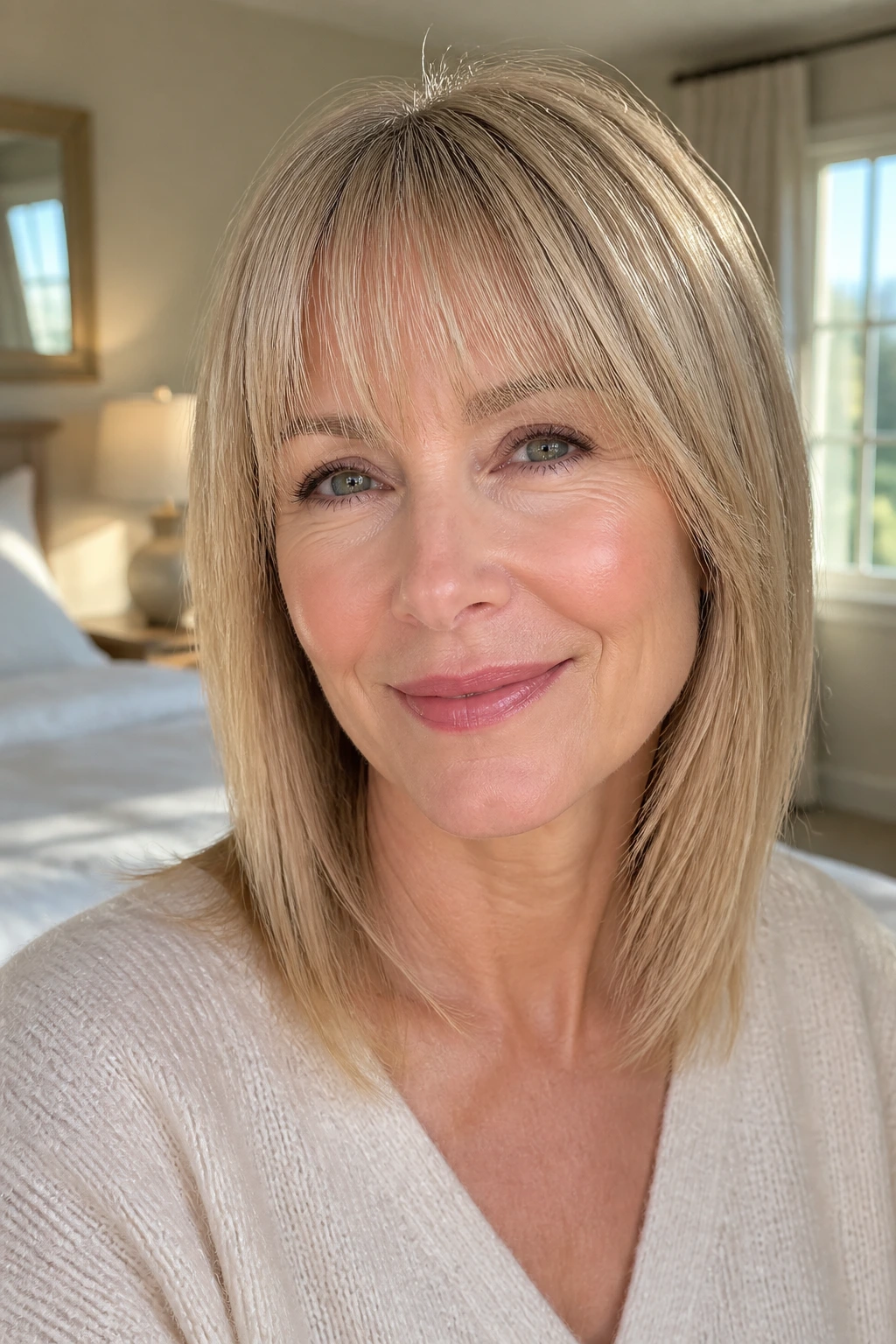
Straight fine hair shows everything. Every part line. Every blunt edge. Every uneven snip. That’s why the fringe has to be softened with a beveled or point-cut end.
The best version keeps the center slightly longer and lets the sides angle down just enough to prevent a shelf effect. A tiny bit of bend at the ends helps too. Straight hair can go flat in a hurry, so I’d rather see a fringe that has a little internal movement than one that sits like a ruler across the forehead.
Use the brush to lift the roots first, then polish the ends. Not the other way around. If you smooth the whole bang from top to bottom, it will lie too close to the forehead and show every strand.
24. Curved Fringe for Wavy Fine Hair
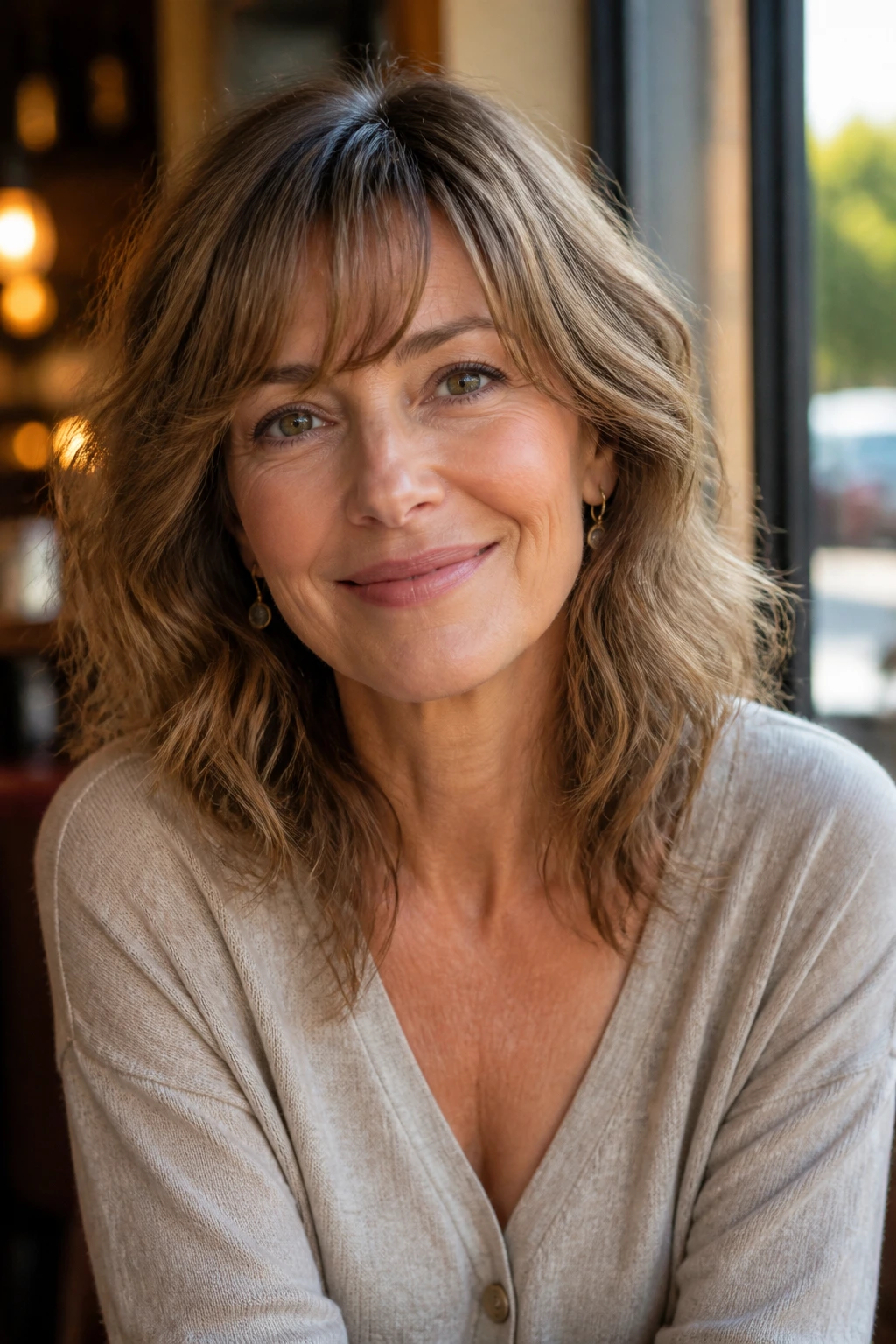
Wavy fine hair behaves better when the fringe respects the bend it already has. If you try to iron every wave out, the bang can end up limp at the roots and frayed at the ends.
A curved fringe lets the wave do some of the work. The shortest point can live near the middle, while the sides follow the natural sweep of the hairline. That means less daily fighting and fewer mornings spent wondering why one side insists on splitting off to the temple.
Let the Bend Stay
I would not chase perfect symmetry here. A tiny difference from side to side often looks more natural and more flattering. Fine wavy hair usually reads better when the fringe is soft and a little loose, not rigid. A quick diffuser pass or a small brush just at the roots is enough. Leave the wave some room.
25. The Whisper Fringe for First-Time Bang Wearers
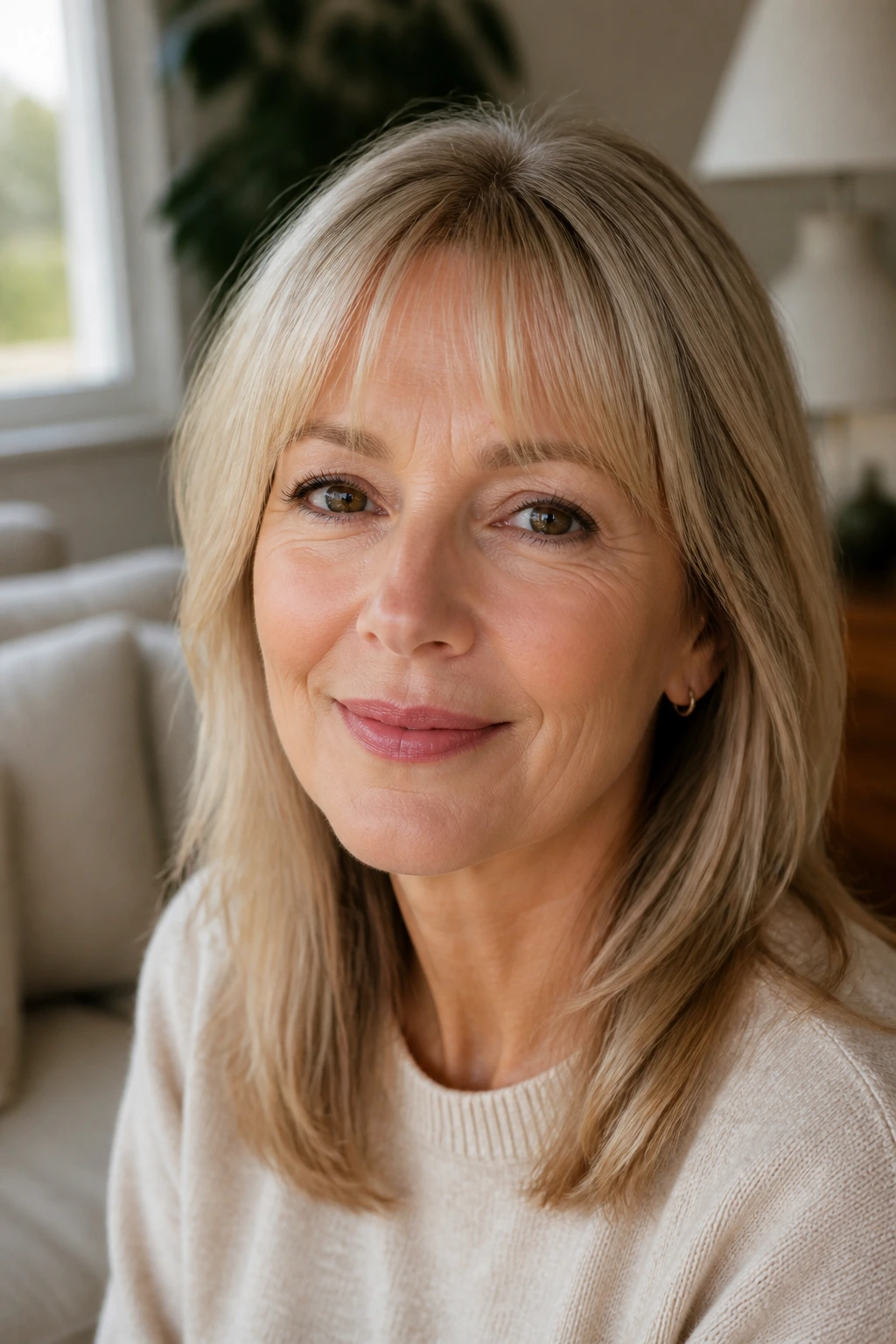
The whisper fringe is the one I’d point a nervous client toward first. It is barely there, soft around the edges, and long enough to tuck away if the mood changes.
This shape gives you the feeling of bangs without the pressure of a full front panel. The center kisses the brow, the sides slip into the cheekbone layer, and the whole thing looks like it belongs with the rest of the cut rather than sitting on top of it. That matters on fine hair, where too much bang can take over the whole front.
If you are bang-curious but cautious, this is the safest place to start. It still changes the face. It still softens the forehead. It just doesn’t shout about it.
What to Tell Your Stylist Before the First Snip
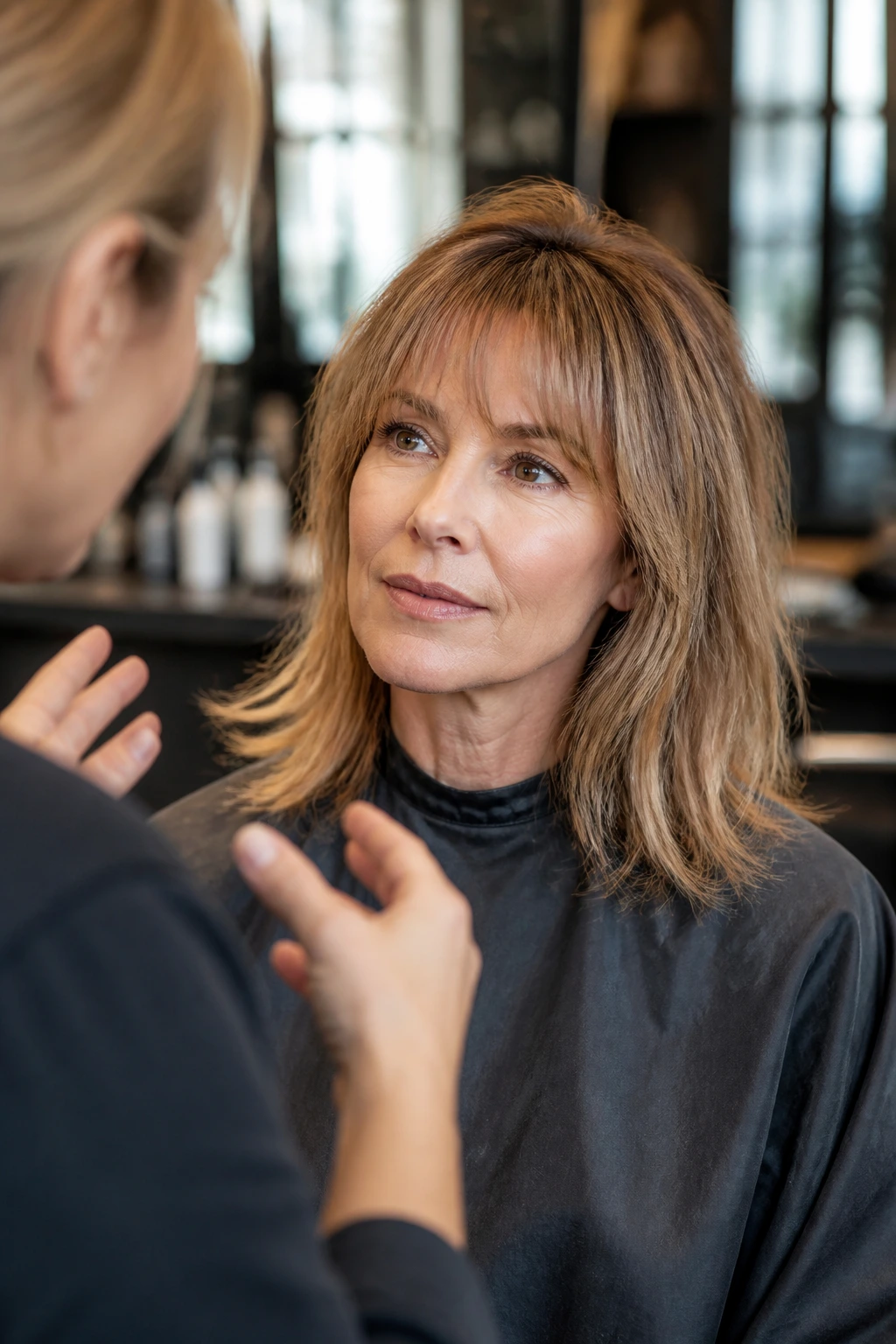
Bring pictures, yes, but bring useful ones. One photo from the front and one from the side says more than ten vague references to “soft bangs.” And if your hairline or cowlick is dramatic, mention that before the cape goes on. A good stylist can work with a front swirl. They cannot work with silence.
Tell them how much forehead you want to see. That sounds obvious, but it saves people from getting a fringe that’s technically wispy and practically too short. Ask where the shortest point will land when dry, not just when wet. Fine hair changes shape as it dries, and wet hair lies.
I’d also say this plainly: ask for a soft connection into the temple pieces. That seam is the difference between bangs that feel light and bangs that feel chopped off. If you wear glasses, say so. If you tuck your hair behind one ear, say that too. Those small habits change where the fringe should land.
Tools That Make a Featherlight Fringe Behave
-
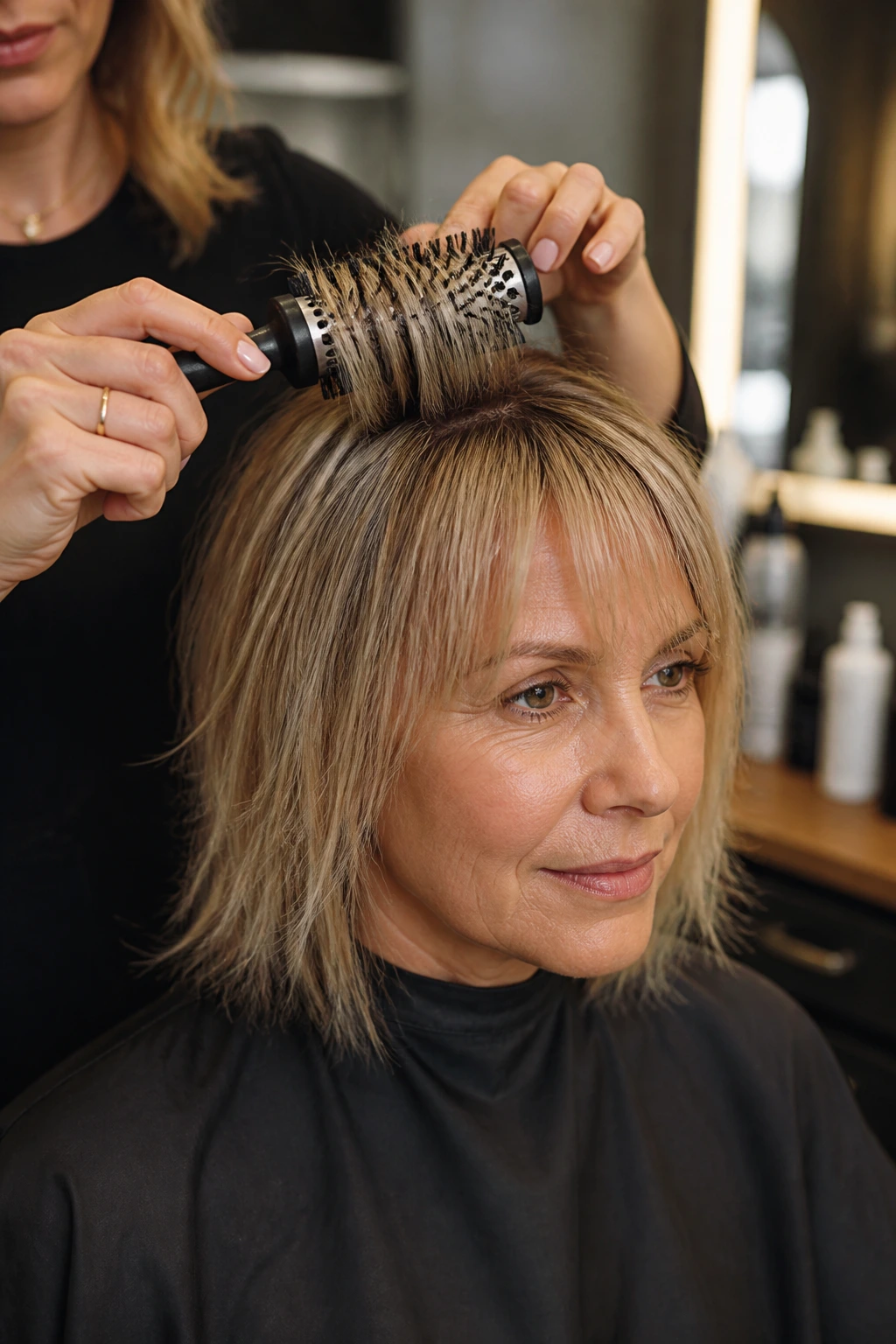
Small round brush, 1/2- to 1-inch size: This gives you enough bend at the roots without over-puffing the ends.
-
Blow dryer with a concentrator nozzle: A directed stream of air helps set the fringe where you want it instead of blasting it sideways.
-
Duckbill clips: Clip the fringe in the opposite direction while it cools for extra lift at the root.
-
Fine-tooth comb: Useful for separating the bang before drying, especially if the strands like to clump.
-
Lightweight mousse or root-lift spray: A small amount at the roots gives shape without the sticky finish heavy creams leave behind.
-
Dry shampoo: Handy for day-two bangs that start to separate or pick up skin oils.
-
Mini flat iron or small velcro roller: Optional, but useful for a slight bend or polish when the fringe needs more direction.
Styling Moves That Keep the Fringe Soft
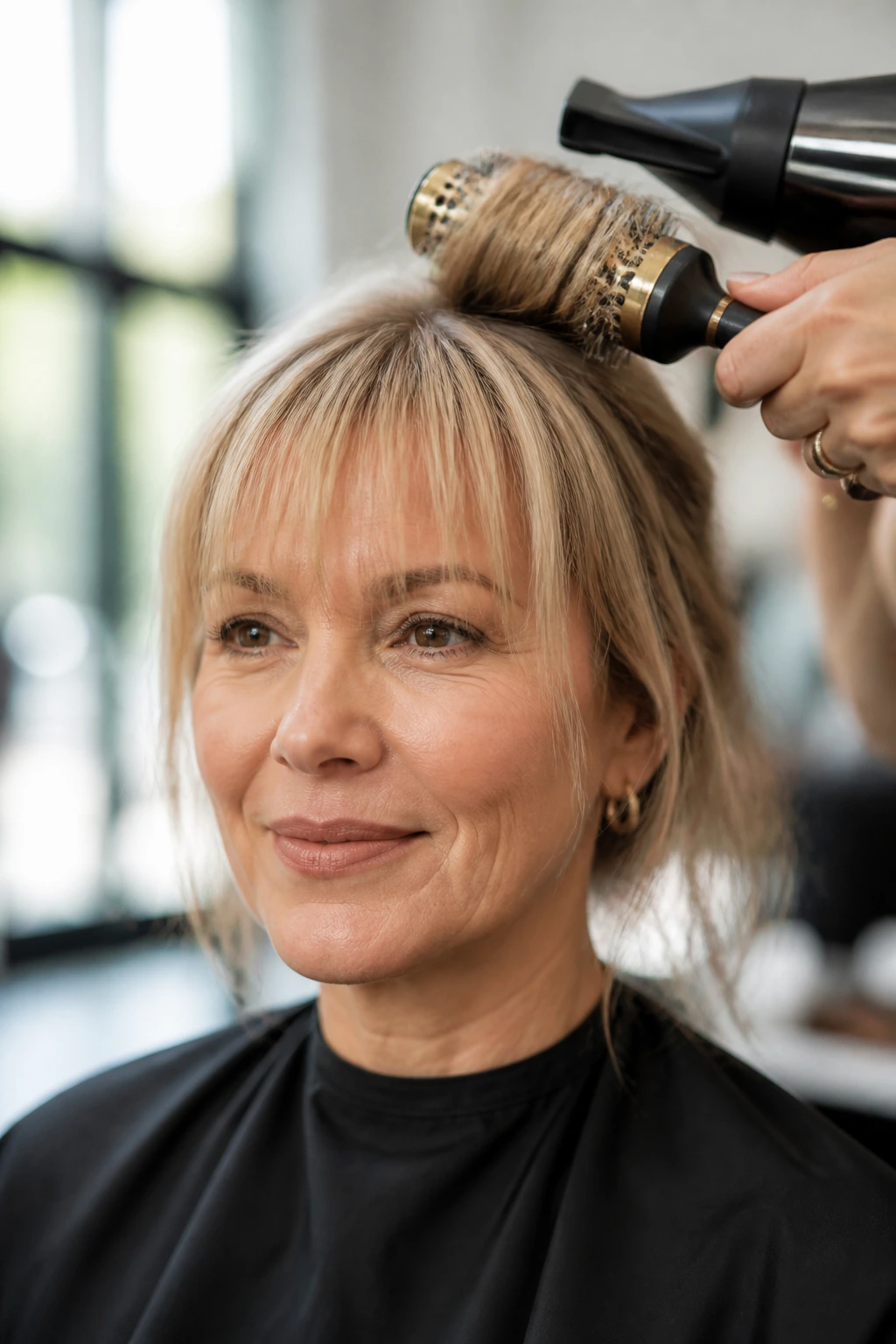
Root Lift: Start with damp bangs and blow-dry them from side to side for the first 20 to 30 seconds. That tiny back-and-forth motion keeps the roots from settling into one flat direction. You are setting shape before you finish the ends.
Brush Choice: Use a small round brush only at the tips if your fringe already has enough body. If you wrap the whole bang around a large brush, it can puff out and lose the wispy edge. The brush should guide, not inflate.
Product Rule: Fine hair usually needs less product than people think. A pea-sized amount of mousse at the roots is enough for most fringes. Save heavier serums for the ends of the rest of the haircut, and keep them away from the forehead unless you want the bang to separate into clumps.
Reset Trick: If the fringe misbehaves, mist it lightly with water and re-dry for 15 to 20 seconds. You do not need a full wash. You need a reset. That small move is often all it takes to revive the front.
Common Mistakes That Flatten Fine Hair
-
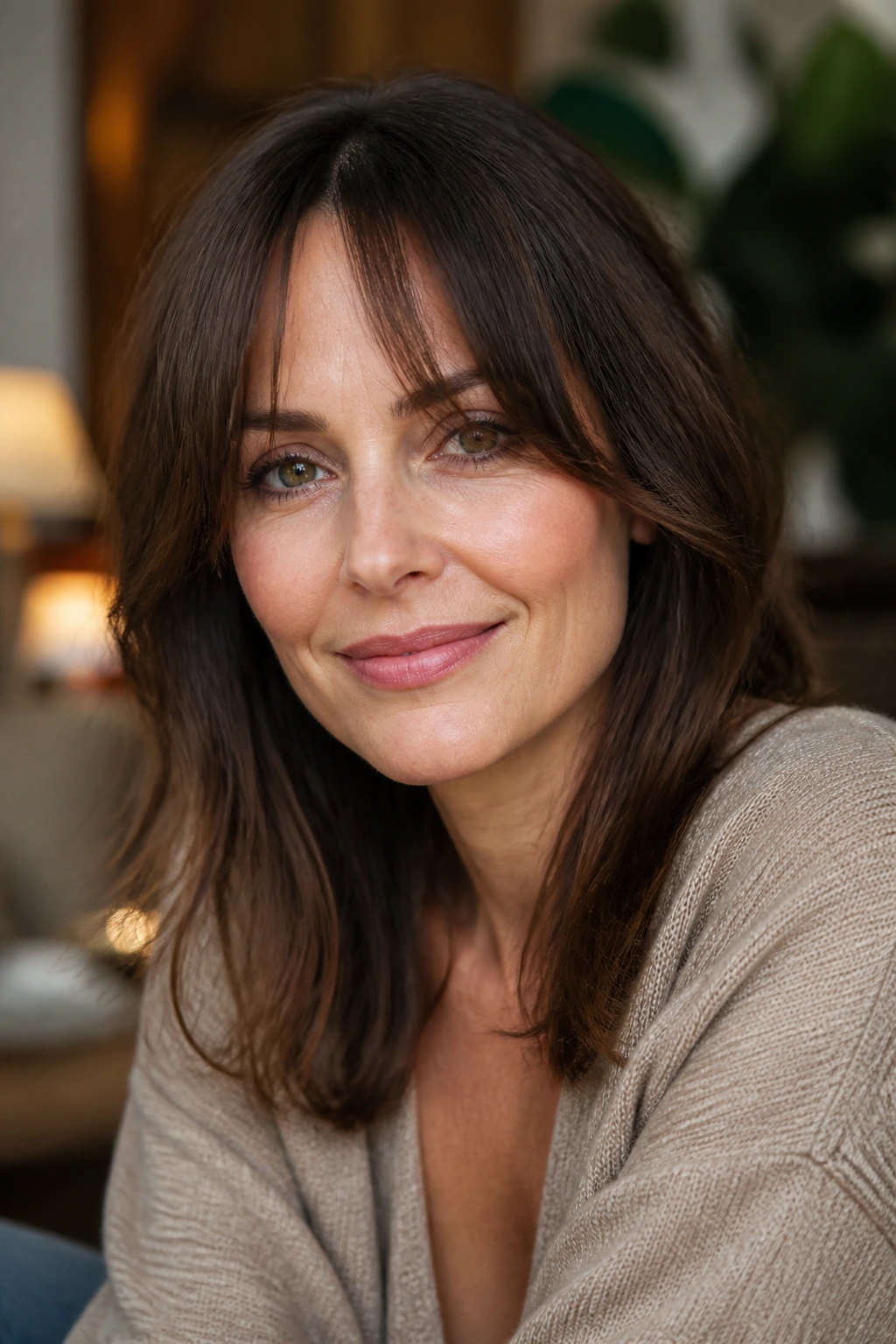
Cutting the bang too dense: The forehead looks covered in the chair, then the roots collapse and the fringe splits. Ask for lightness at the edges, not a huge mass of hair.
-
Thinning the whole fringe from root to tip: That can make the ends look frayed and weak. The fix is targeted point cutting near the perimeter, not aggressive thinning through the panel.
-
Using heavy cream or oil at the front: Fine hair drinks product quickly and turns stringy fast. Keep the fringe clean and use dry shampoo or a light mousse instead.
-
Blowing the bangs straight down every morning: They tend to stick to the forehead and show every uneven section. Blow them side to side first, then finish with a brush.
-
Ignoring the natural part or cowlick: A front swirl will fight a cut that goes against it. Ask for the fringe to be shaped around your real growth pattern, not the one you wish you had.
Fringe Variations and Easy Swaps
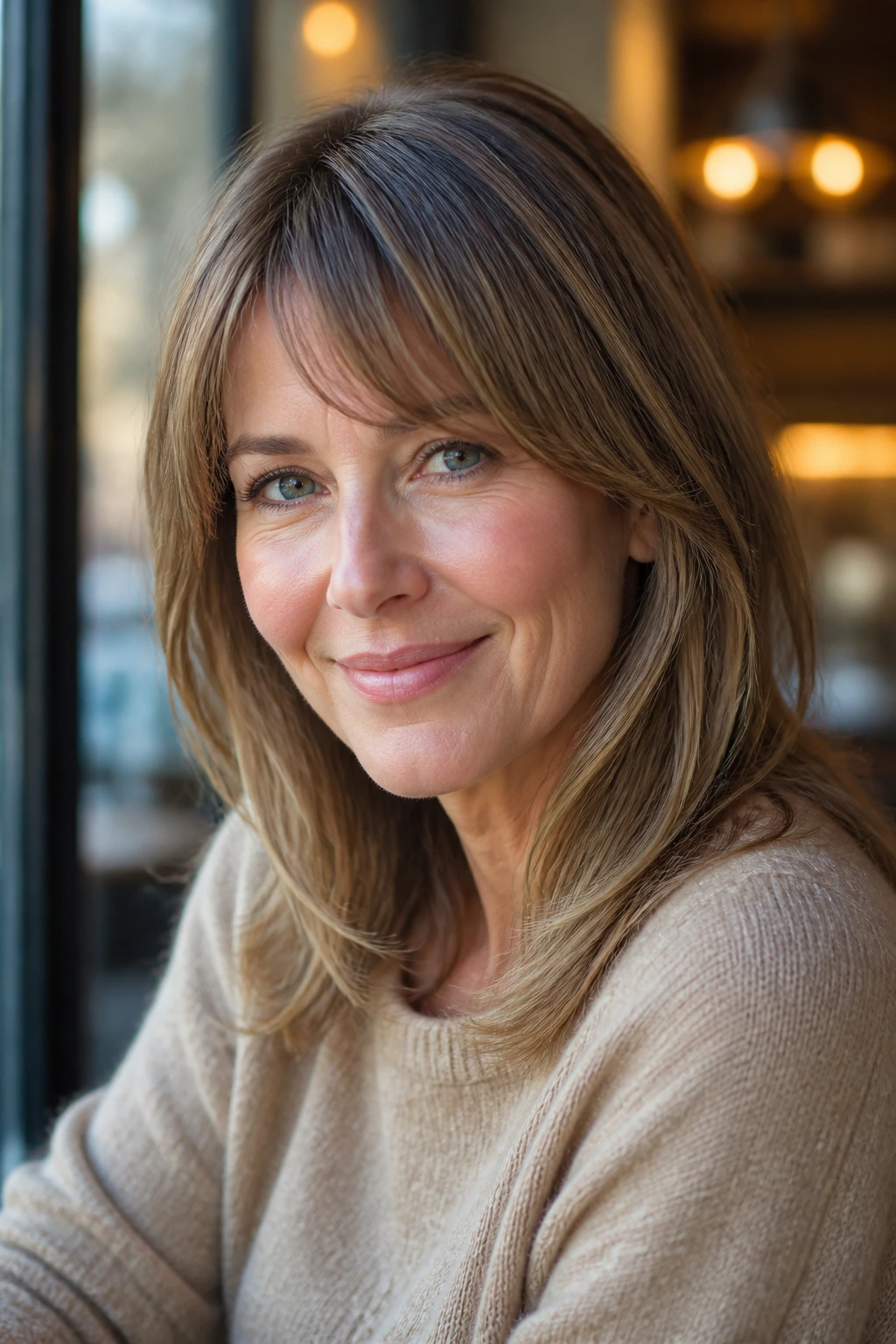
The Curtain-to-Sweep Swap: If center-parted curtains feel too open, move the shortest point slightly off-center and let one side sit heavier than the other. It keeps the softness while reducing the split-down-the-middle look.
The Bob-and-Bang Balance: Pair a wispy fringe with a blunt or beveled bob when you want the hair to look fuller overall. The bob supplies the density, and the bang keeps the face from feeling hard.
The Glasses-Friendly Drift: Make the sides longer and keep the center soft so the fringe clears the top rim of your frames. This is the best move if your glasses sit high on the bridge.
The Curl-Respecting Fringe: Leave the bang a touch longer and let the wave or bend live inside it. That works better than forcing a wavy fringe into a straight line.
The Grow-Out Plan: Start longer than you think you need and let the fringe connect to face-framing layers. It buys you flexibility and avoids the awkward middle stage.
Keeping Wispy Bangs Fresh Between Trims
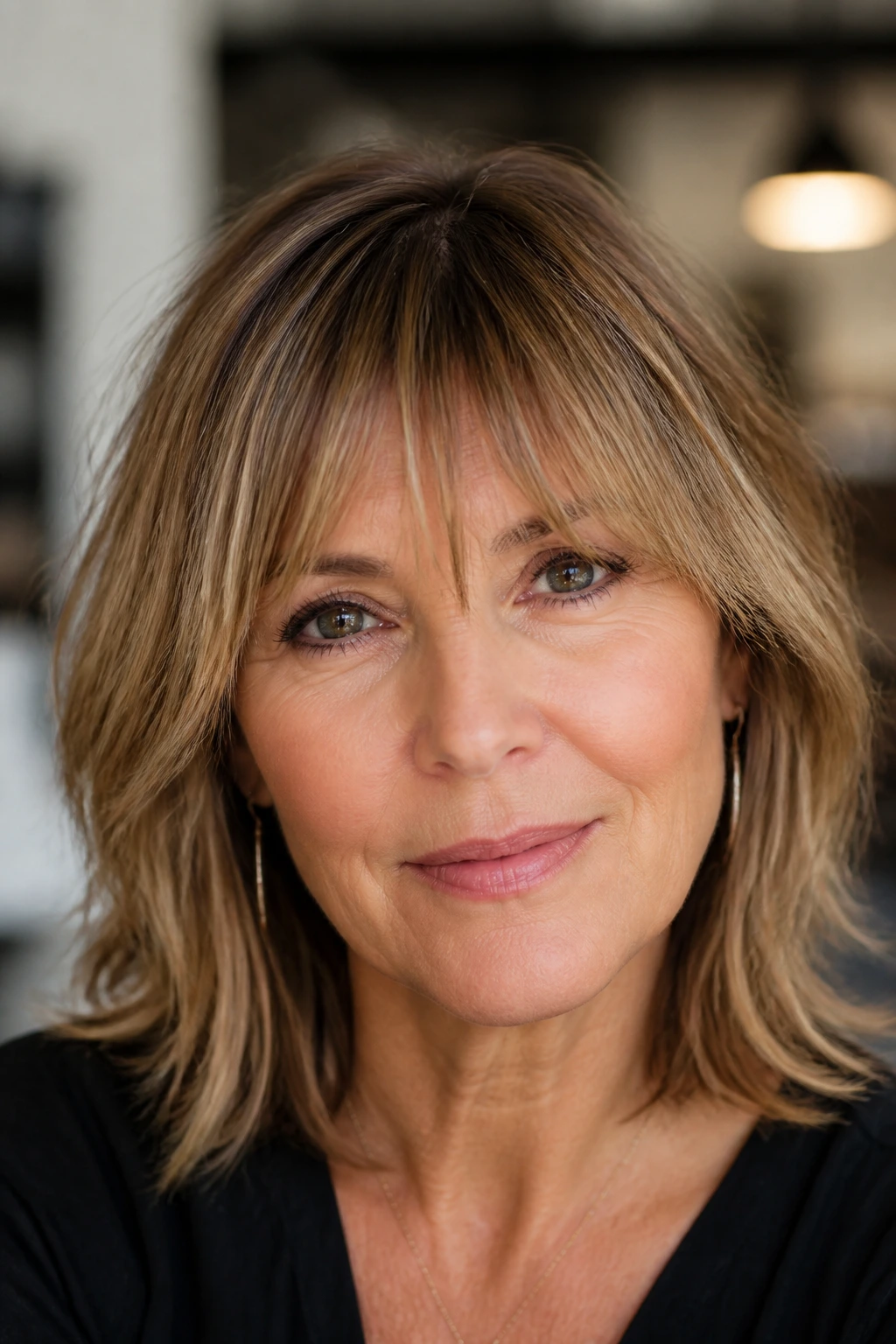
The sweet spot for trims is usually four to six weeks if you want the fringe to stay crisp. If you prefer a softer grow-out, six to eight weeks can work, but the shape should be designed for that from the start. A wispy fringe that’s meant to last needs a little extra length at the temples.
At home, dry shampoo is your friend, but use it at the roots, not the ends. The ends need movement, not grit. If the fringe starts to separate by noon, a light mist of water and a quick dry with your fingers usually resets it faster than piling on more product.
Nighttime matters too. If your bangs bend awkwardly while you sleep, clip them lightly away from the face or tuck them into a loose velcro roller for a few minutes in the morning. That sounds fussy until you try it and realize it cuts the morning battle in half.
Questions People Ask Before Cutting Wispy Bangs
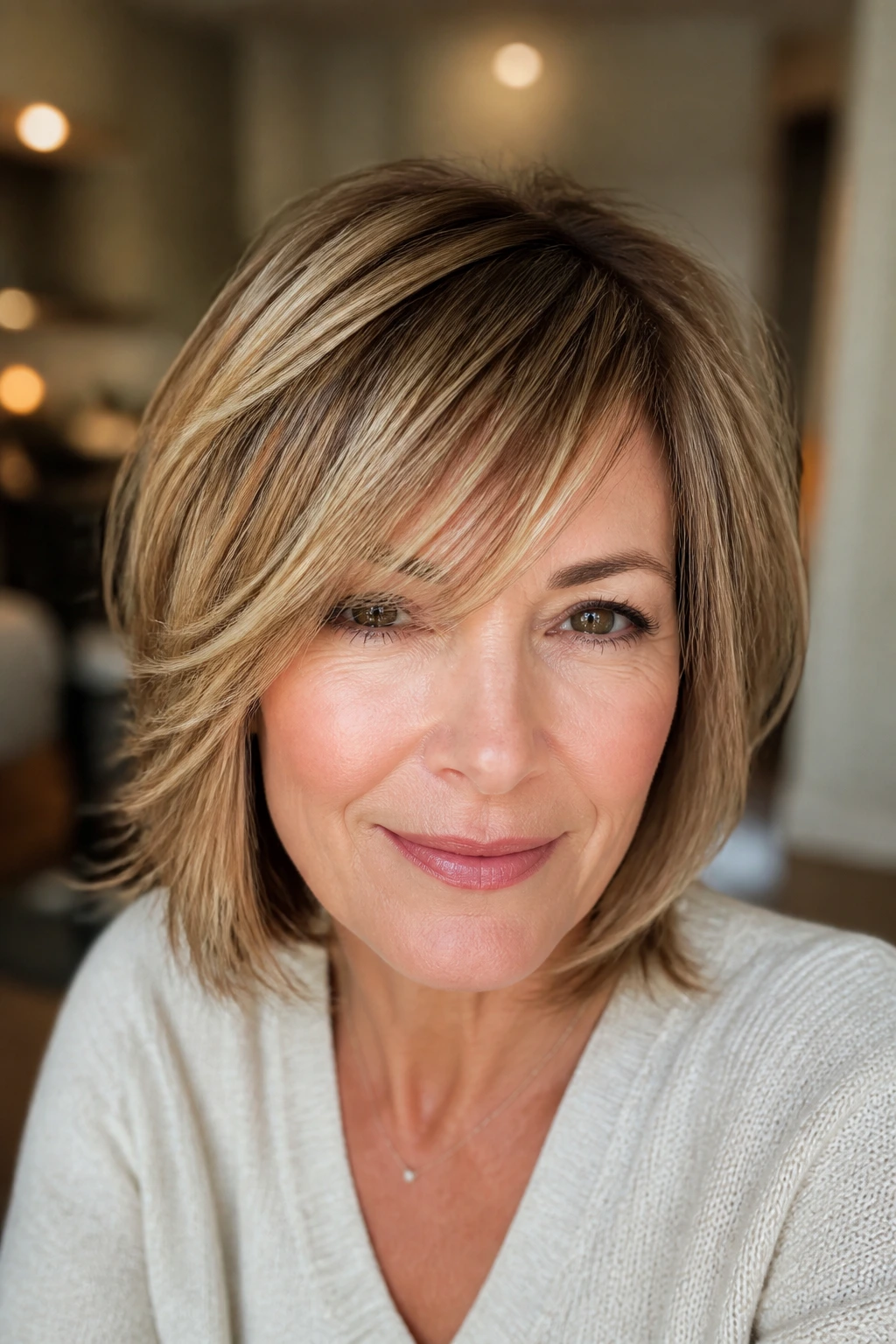
Are wispy bangs good for fine hair after 40?
Yes, because they add shape without asking fine strands to carry too much weight. The key is to keep the fringe light at the edges and connected to the rest of the haircut so it doesn’t look isolated.
Will wispy bangs make my hair look thinner?
Not if they’re cut with enough structure at the root. The thin-looking version happens when the fringe is over-thinned or cut too sparse across the front panel.
How short should they be?
Usually somewhere between the brow and just below it, depending on how much your hair lifts as it dries. Fine hair often springs up more than people expect, so a little extra length is safer.
Can I wear wispy bangs with glasses?
Absolutely. Longer sides and a soft center work well because they clear the frame and don’t sit heavily on the bridge. Ask your stylist to check the fringe with your glasses on, not after the fact.
Do they work on straight hair?
They do, but straight fine hair needs a beveled or point-cut finish so the fringe doesn’t look like one flat line. A tiny bend at the ends helps the cut feel softer.
What if my bangs separate by midday?
That usually means too much product, too much oil at the front, or a cut that’s too sparse. Reset with a light mist of water, dry from side to side, and keep heavy creams away from the fringe.
Can I grow them out without an awkward stage?
If the sides are already blended into layers, yes. That’s why the best wispy bangs are cut with the grow-out in mind from the start.
A Softer Edge That Fits Real Life
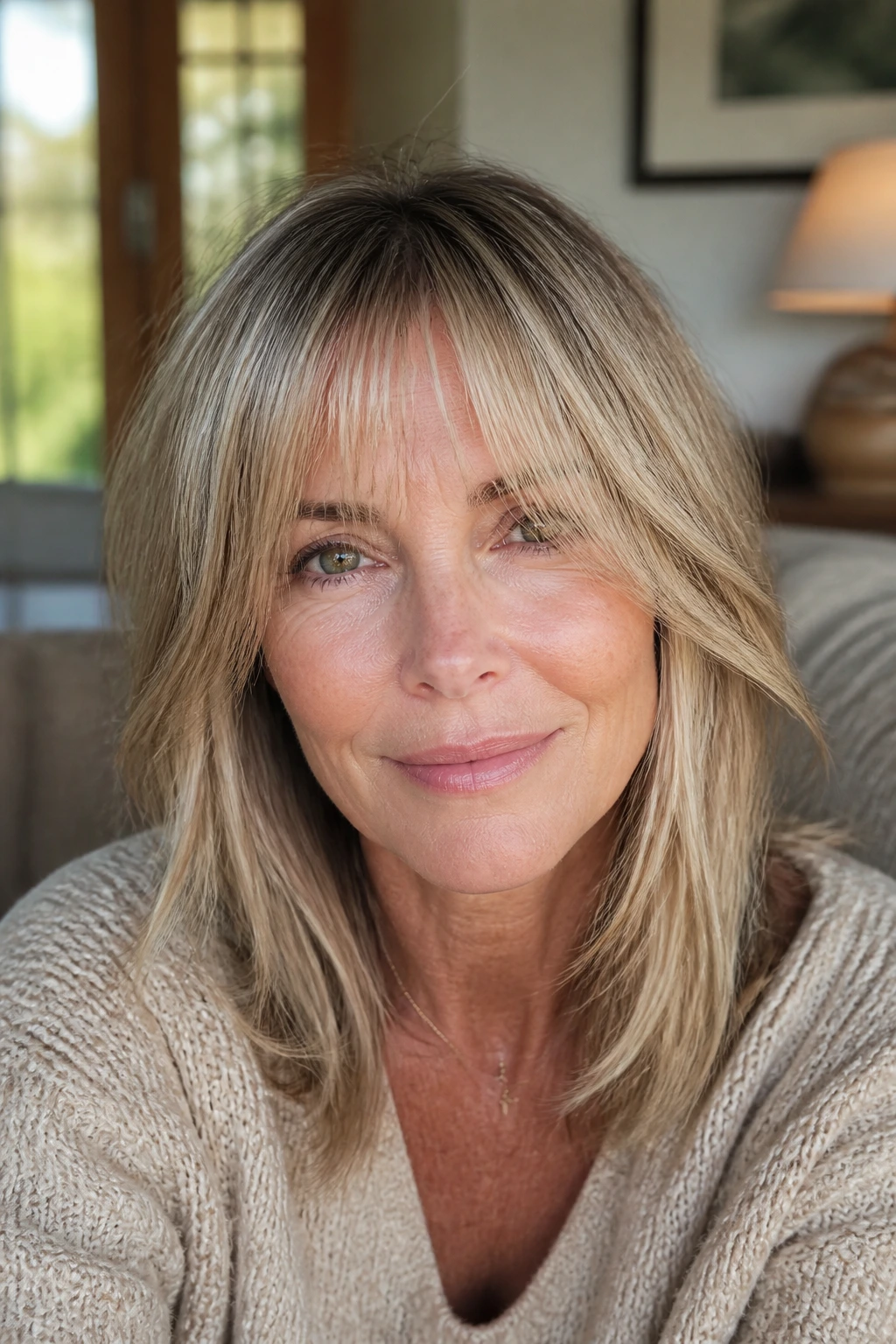
The best fringe for fine hair is not the thickest one on the mood board. It’s the one that leaves you with a little shape, a little movement, and no daily battle in front of the mirror. That’s the whole appeal of wispy bangs for women over 40 with fine hair: they do enough to change the face, but they don’t demand that the rest of your hair become a performance.
A smart fringe should work with your part, your glasses, your cowlick, and the amount of patience you actually have before coffee. If it can do that, it earns its place.
Pick the version that matches how you live, not just how it looks in a photo. The right soft edge can make the rest of the haircut feel lighter, and that’s a very good place to start.