



A blunt fringe on wavy hair can look polished for about ten minutes. Then the humidity wakes up, the root lifts, the ends split apart, and the whole front of the haircut starts acting like it has its own opinion.
Layered bangs for Black women with wavy hair dodge that mess by working with movement instead of fighting it. The length changes around the face, the weight gets removed in the right places, and the front can bend, flip, or separate a little without ruining the shape. That matters more than people think. A fringe that survives a subway ride, a humid walk, or a long workday is worth ten glossy photos on a salon mirror.
The sweet spot is not “shortest possible.” It’s the cut that gives your wave pattern room to land where it wants to land. If your hair is dense at the root but looser through the front, if one side pushes forward harder than the other, if your bangs puff up when you use too much cream — yes, all of that is normal — the right layered bang can clean it up fast.
Why This Collection Stands Out
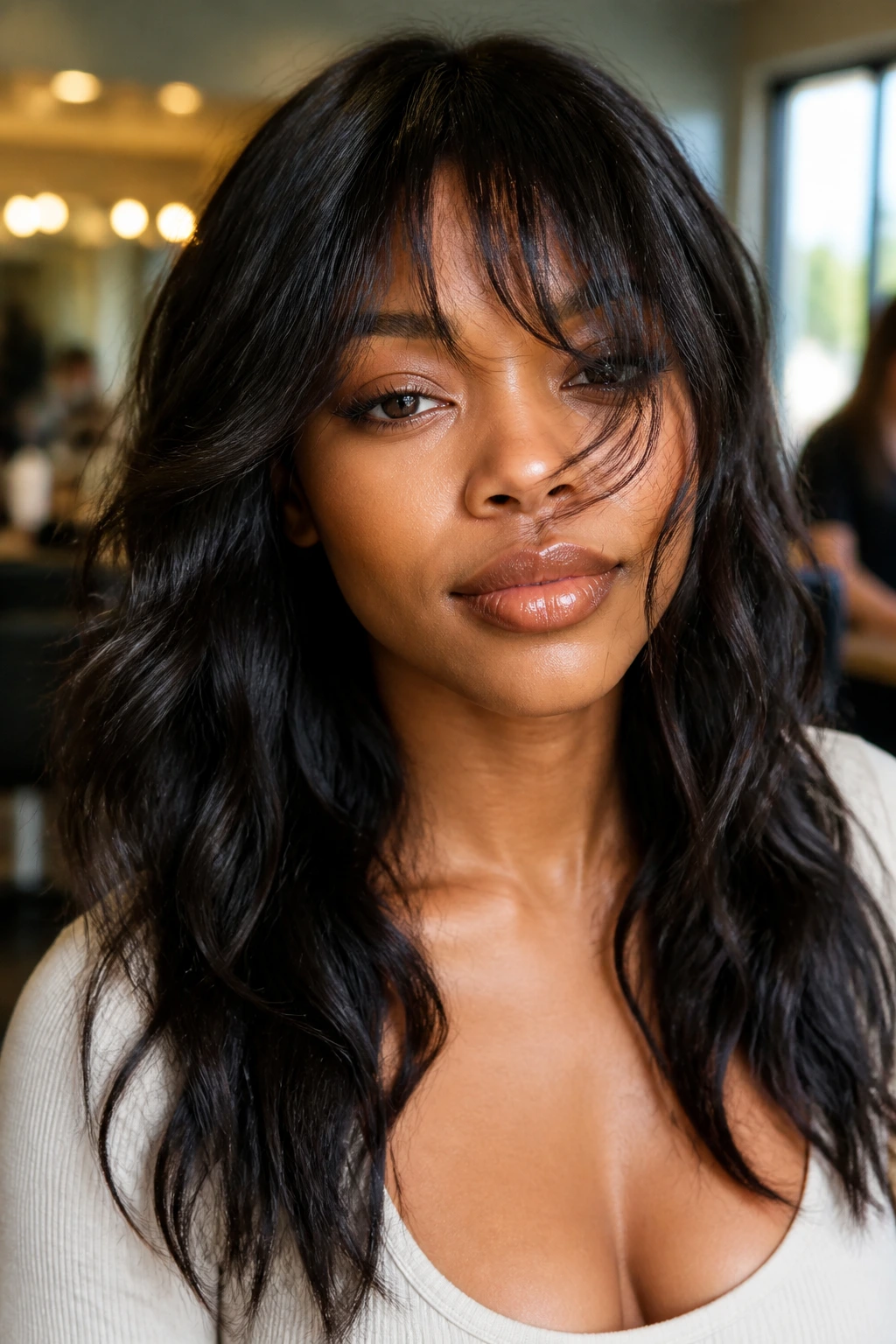
- Wave-first shaping: Every look here gives the fringe enough length to move, which is the difference between soft texture and a helmet.
- Better grow-out: Longer layered bangs buy you time. You can tuck them, sweep them, or blend them into face-framing pieces instead of reaching for scissors every three weeks.
- Works with real density: Black wavy hair often has more volume at the root than straight fringe cuts account for, so these styles keep weight where it belongs.
- Salon-friendly language: Each style gives you a clear name and a clear shape, which makes the chair conversation much easier.
- Less daily fighting: These cuts can air-dry, diffuse, or blow out with a brush. No daily flat-iron rescue mission required.
- Made for movement: Earrings, glasses, cheekbones, and brow shape all play differently with layered fringe. The right cut notices that.
1. Curtain Bangs That Open at the Cheekbones
Curtain bangs are still the safest place to start if you want fringe without a harsh line. On wavy Black hair, they work because the part down the middle lets the front pieces fall in soft arcs instead of trying to sit flat across the forehead.
Ask for the shortest point to live around the bridge of the nose or just under the brow, then let the sides slide to the cheekbones. That extra length matters. It keeps the waves from springing up too high when the hair dries, and it gives you room to sweep the bangs away from the face on lazy days.
Why it works
The center stays light while the outer edges do the real framing. That balance is what makes curtain bangs forgiving. If one side gets a little bigger than the other, the cut still looks intentional.
2. Deep Side-Swept Layers
A deep side part gives you instant shape without asking the bang to behave like a ruler. The front section falls diagonally across the brow, and that diagonal line looks especially good when your wave pattern likes to bend forward on one side.
I like this shape for people who hate spending five minutes fixing one stubborn cowlick. Push the part over while the hair is damp, clip the fringe in the direction you want it to dry, then finish with a round brush or a large roller at the root. It makes the front sit higher, but not stiff.
3. Brow-Grazing Fringe With Long Ribbons
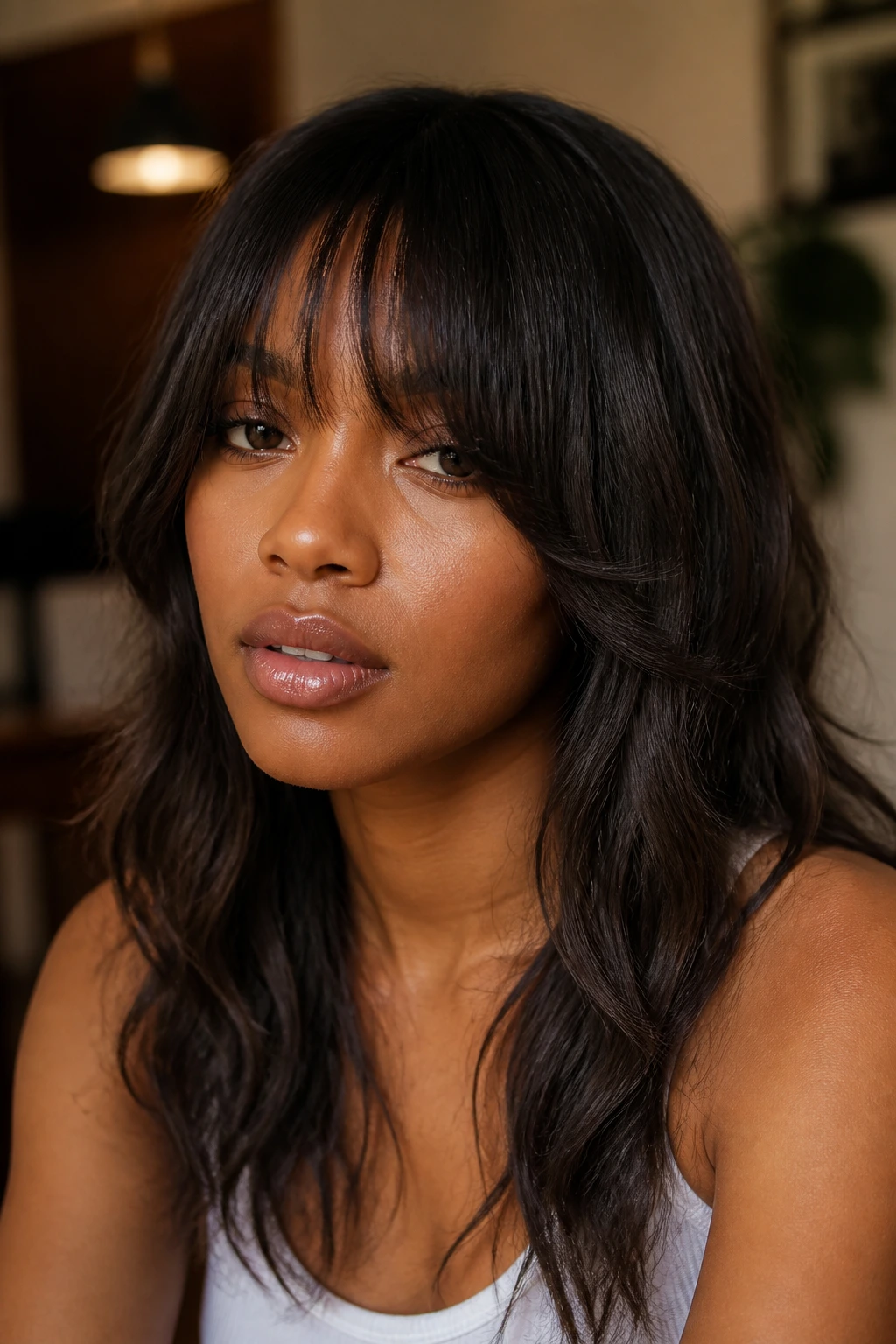
This is the choice for someone who wants actual bangs, not just a face frame. The fringe sits near the brows, but the sides stretch out into longer ribbons that soften the cheek area.
The trick is restraint. Don’t let the center get too short. Once wavy hair jumps above the brow, it can read blunt fast, and blunt is the enemy of softness here. Keep the middle piece slightly longer than you think you need, because the wave will take away a little length once it dries.
4. Bottleneck Bangs That Narrow at the Brow
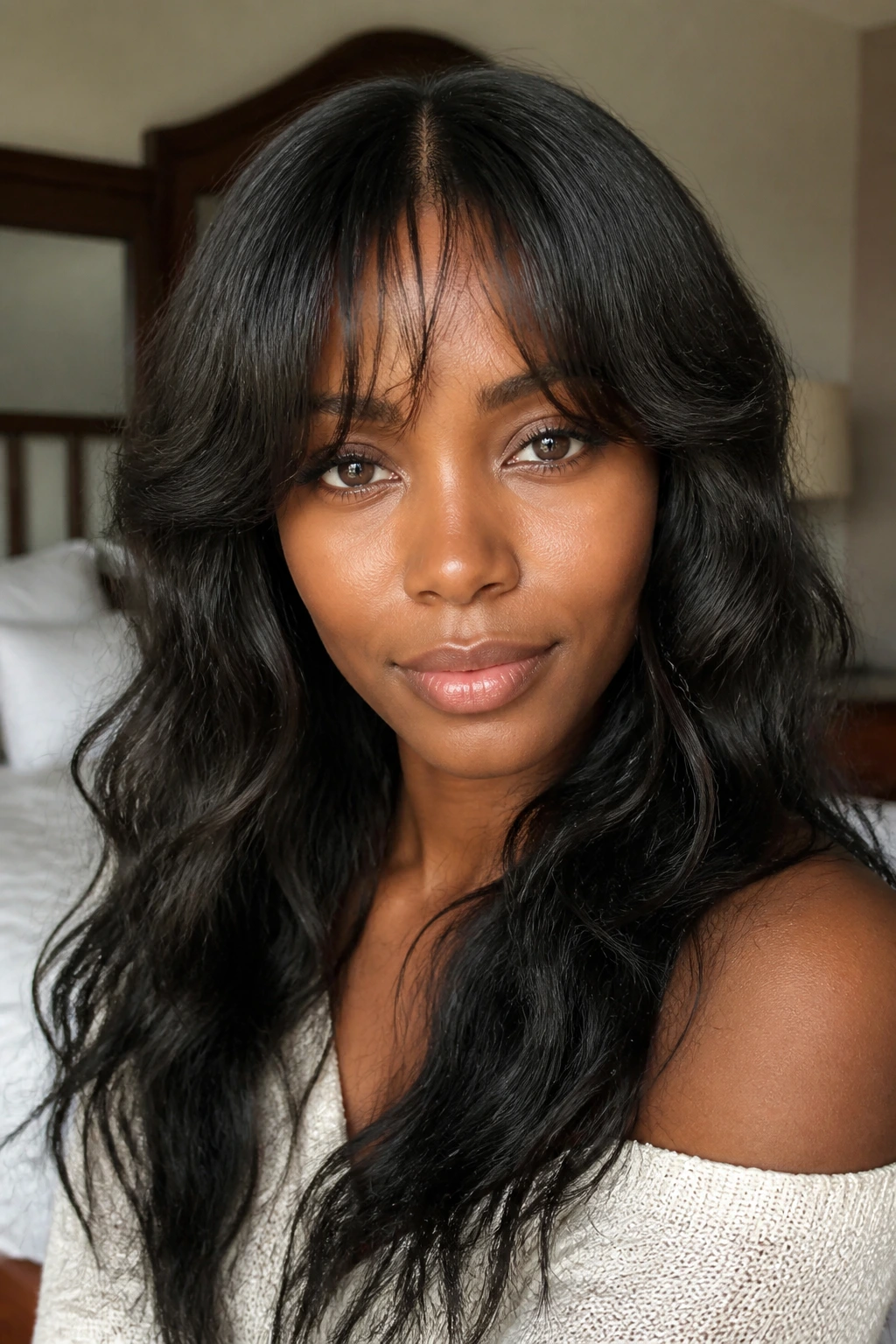
Bottleneck bangs are smarter than they sound. They start narrow in the middle, then widen at the sides, which gives the face a little opening without taking too much hair off the forehead.
That shape is especially nice on wavy textures because the bang never has to sit in one straight line. The center can curve down while the corners bend outward — a small thing, but it keeps the cut from looking heavy. If your forehead feels wider than your chin or your cheeks carry most of the volume, this silhouette softens the whole top third of the face.
5. Feathered Shag Bangs
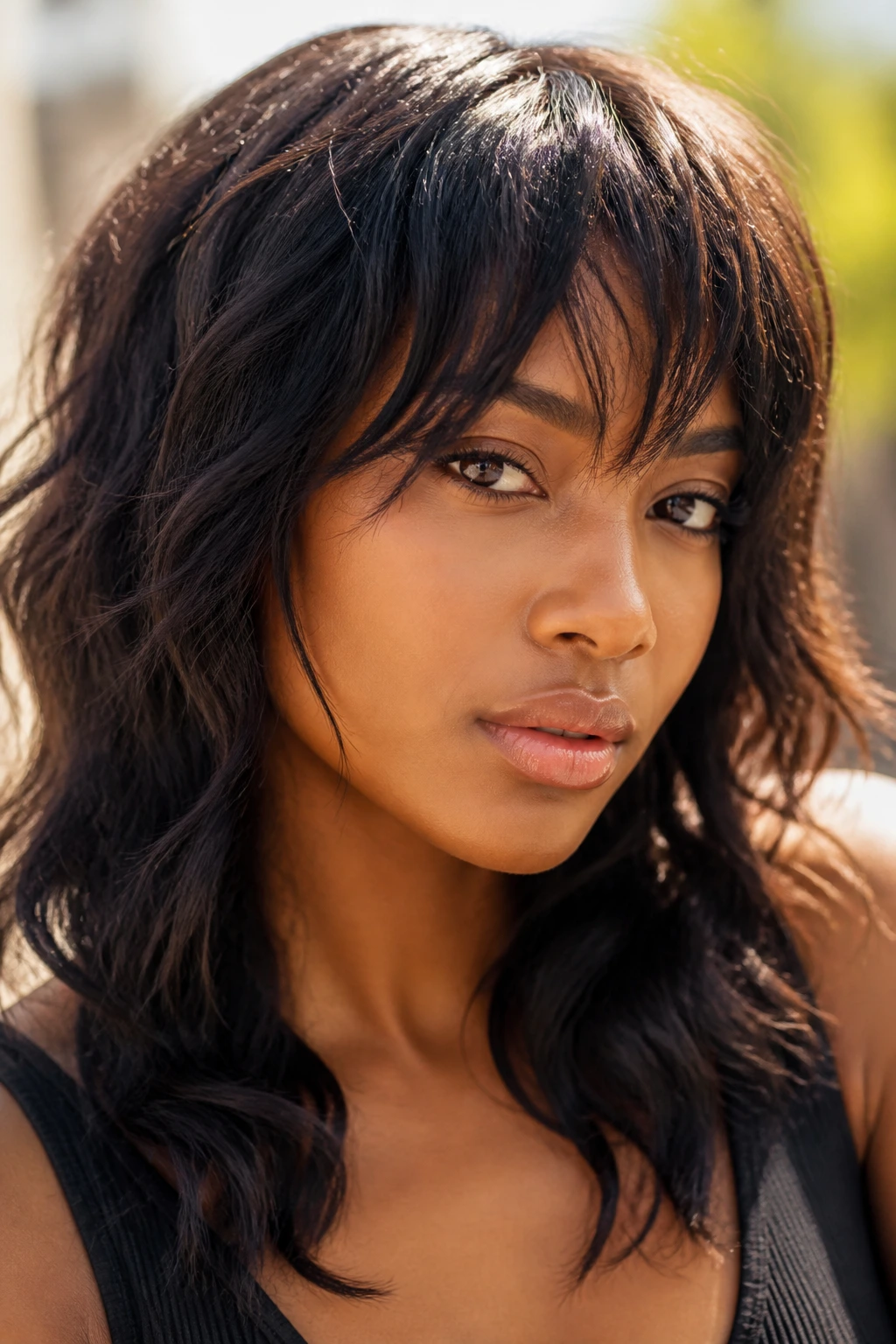
If you like movement, this is the loudest voice in the room. Feathered shag bangs are cut with texture at the ends, so they break apart in wisps instead of falling as one solid curtain.
They’re a good match for Black women whose wavy hair runs dense and a little wild in the front. The shag removes weight, but it does it with purpose. You still get shape at the cheekbones, just not the stiff, rounded fringe that turns into a shelf after lunch.
Styling note
A diffuser on low heat keeps this cut from getting puffed up. Scrunch a light mousse into the roots, diffuse for 3 to 5 minutes at a time, and stop when the front is about 80 percent dry. Let the rest air-dry. The air does the rest better than hot air ever will.
6. Chin-Length Bangs That Blend Into Layers
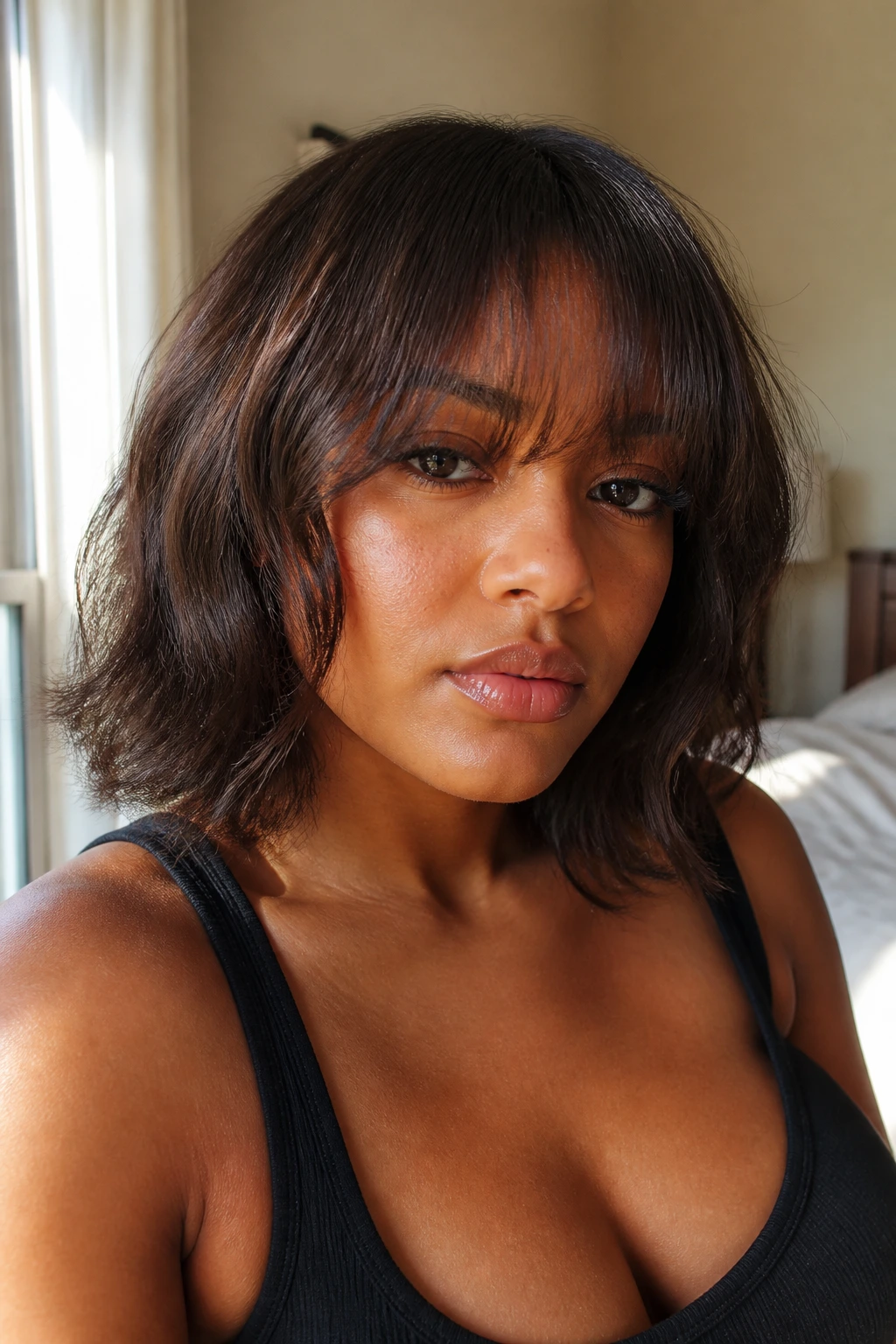
This one is for the cautious. The bangs are long enough to brush the chin, then they melt into the rest of the haircut so the front never looks like an obvious add-on.
The shape is useful if you wear your hair wavy most days but sometimes stretch it with a blow-dry. Chin-length bangs can handle both. Wavy and loose, they read soft. Blown out, they become part of the face frame and stop looking like bangs altogether.
7. Arched Bangs With Rounded Face Framing
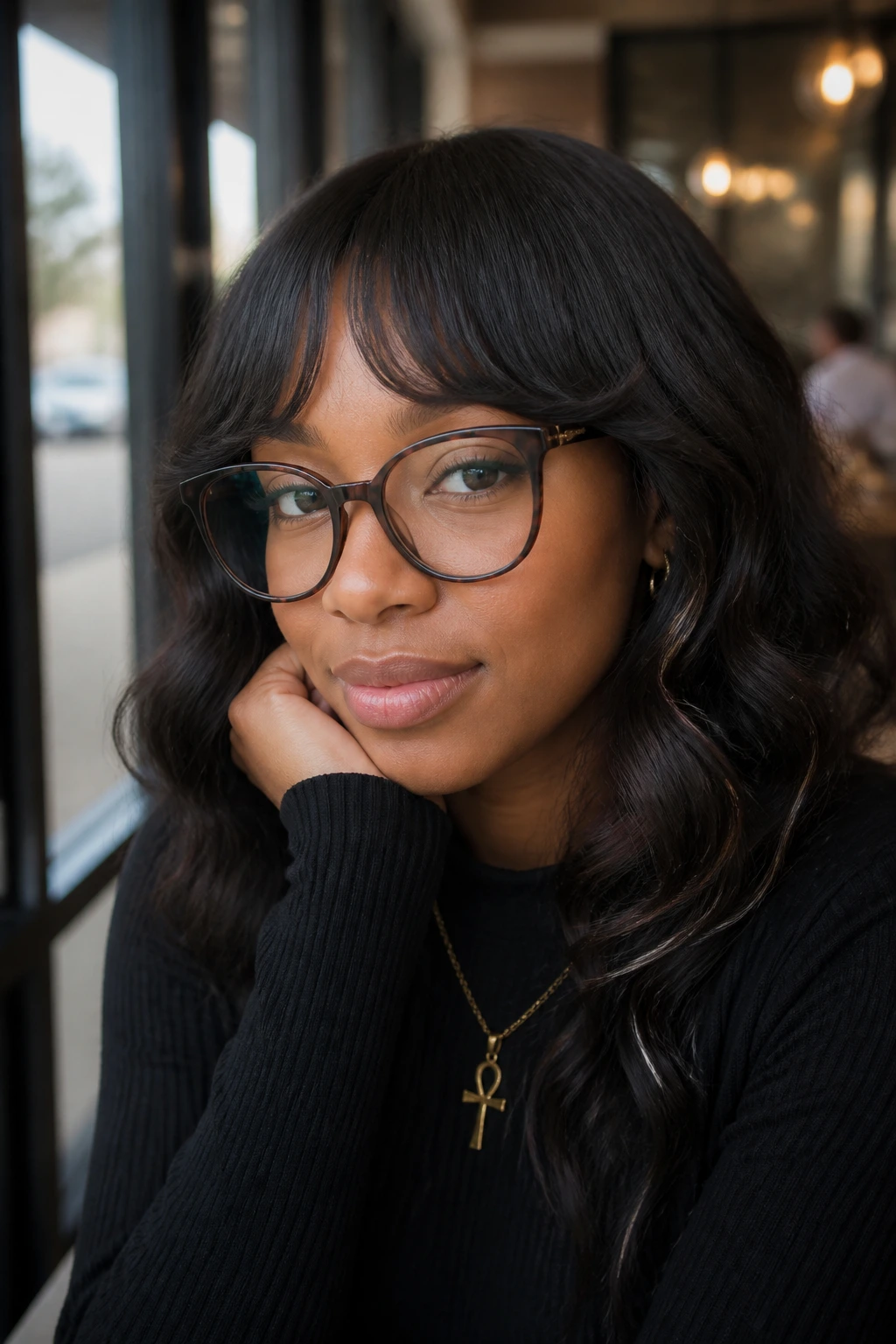
An arched fringe follows the brow line instead of cutting straight across it. On wavy hair, that curve looks smoother than a blunt edge and gives the front a little lift in the center.
I especially like this on women who wear glasses. The arc keeps the bangs from sitting hard against the frames, and the longer sides tuck the whole cut back into the rest of the hair. It feels neat without looking strict.
8. Wispy Micro-Layers for Fine Wavy Hair
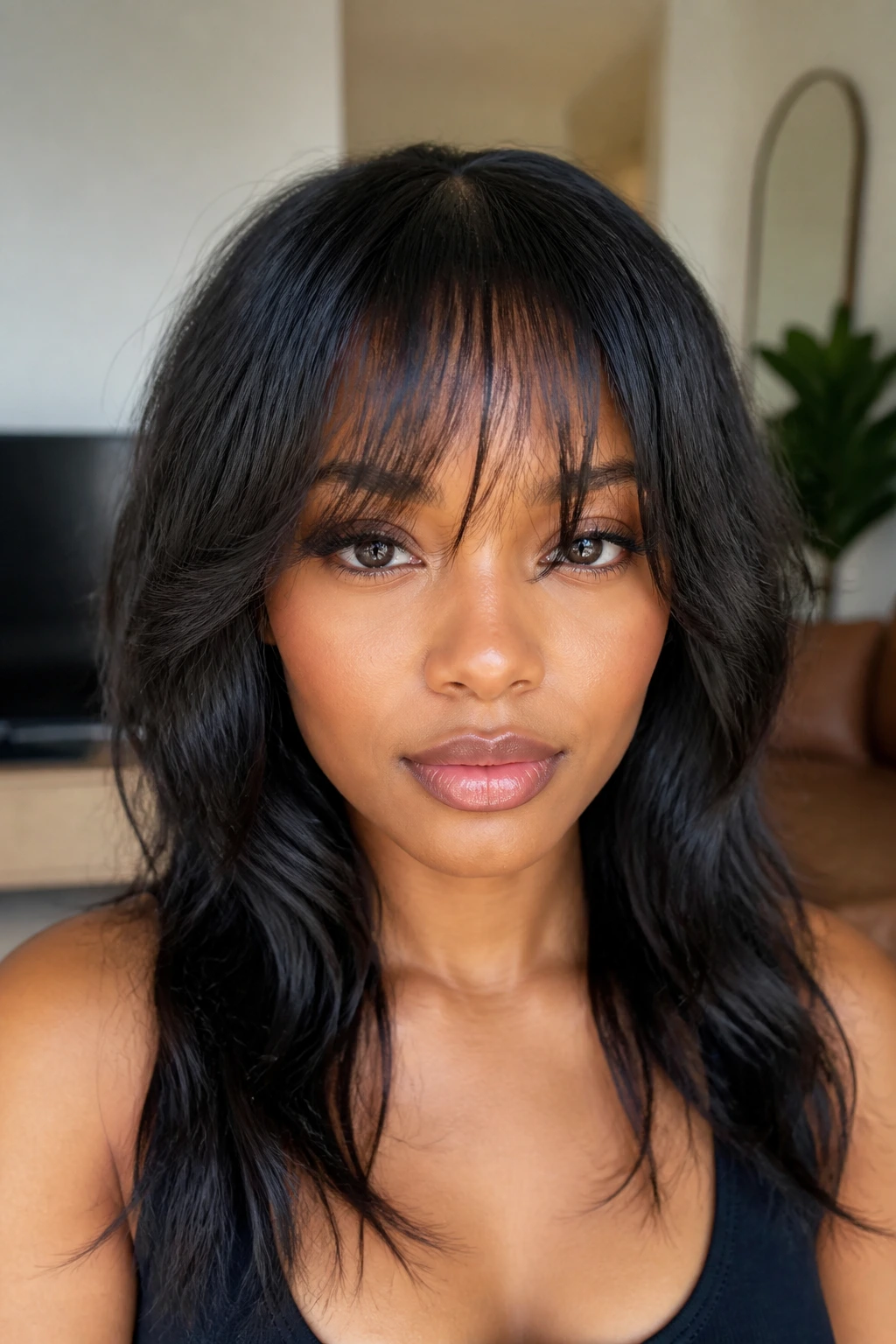
Fine wavy hair can get swallowed by a heavy bang, which is why wispy micro-layers matter. Not micro bangs. Wispy layers.
The idea is to keep enough hair in the front to frame the face, but remove weight so the wave doesn’t collapse into a flat strip. A stylist should point-cut the ends rather than chop a clean line. That tiny difference changes the way the fringe separates once it dries.
9. Choppy Bangs With Piecey Texture
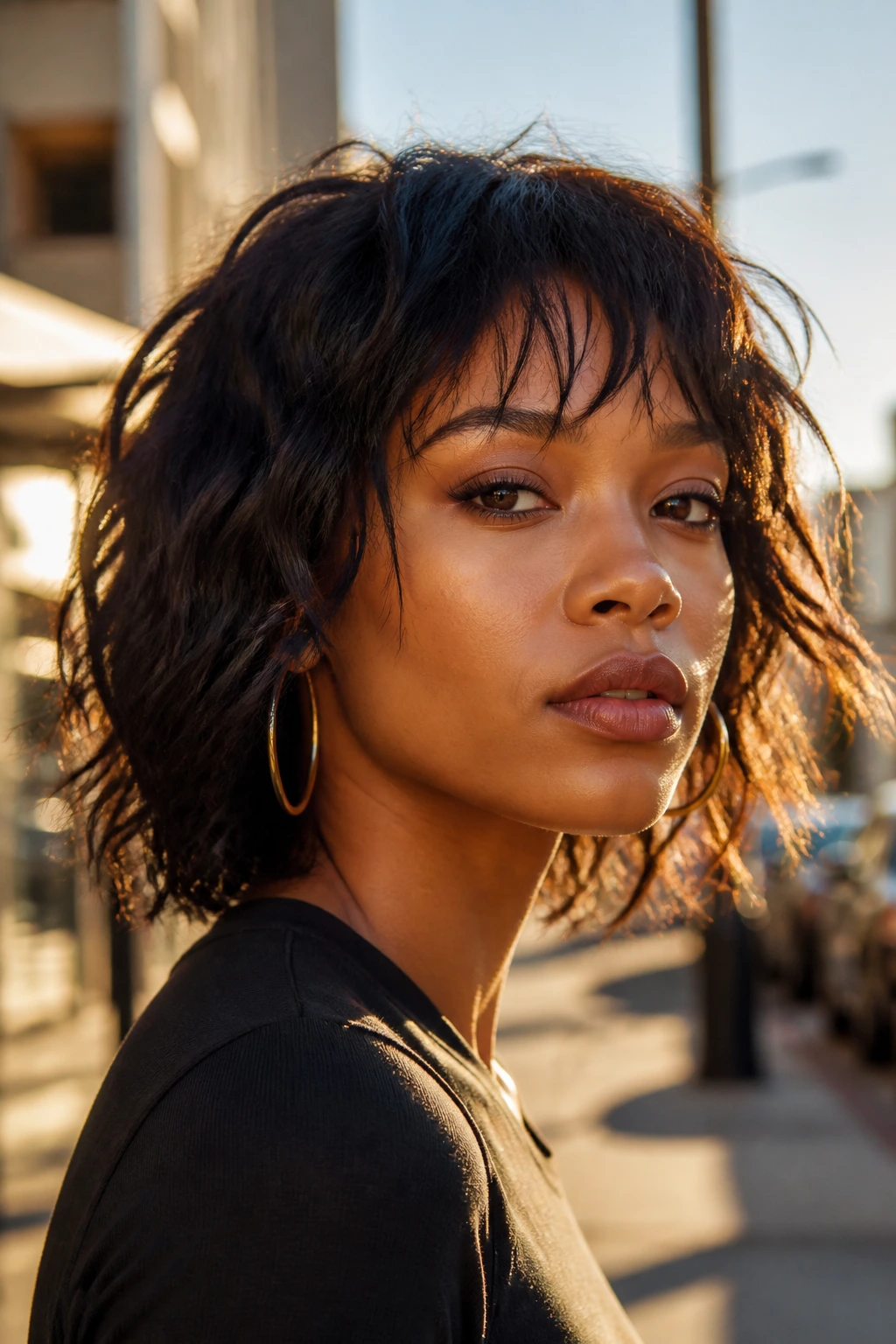
Choppy bangs are a little bolder, and they look better when the texture is visible. Instead of one blended sheet of hair, you get small sections that break apart around the forehead.
That piecey effect is useful if your waves have personality. Let them. Use a cream with a light hold, not a heavy butter, and pinch the ends after diffusing so the front doesn’t join into one big clump. The cut feels modern without needing much styling skill.
10. Butterfly Layers and Floating Fringe
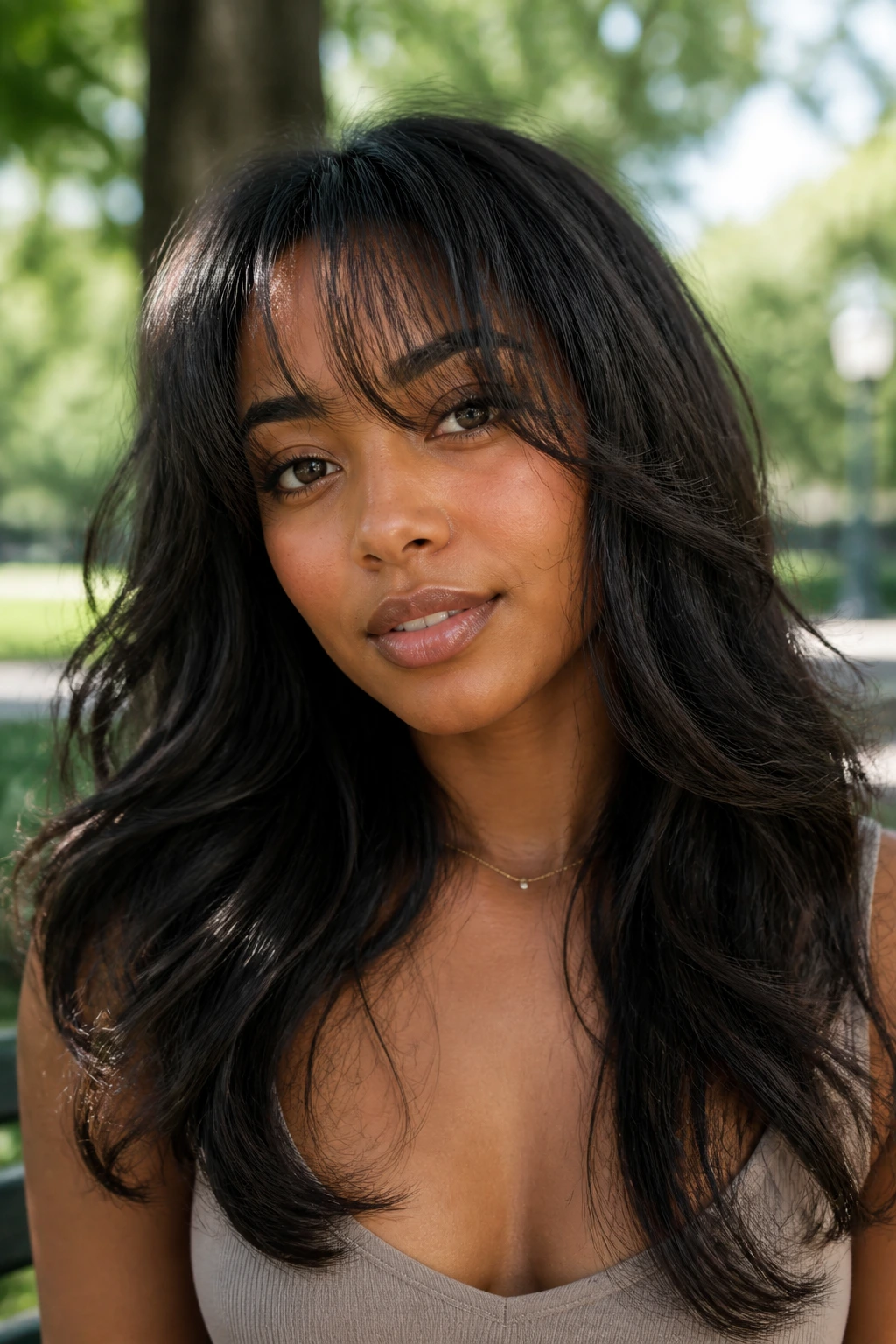
Butterfly layers do a nice job of building movement through the front without chopping off too much length. The bangs sit like a lighter version of a curtain fringe, then the layers drift away from the face and give the haircut a softer outline.
This is one of my favorites for long wavy hair because it keeps the length dramatic while still changing the mood around the face. The front lifts. The rest stays long. Nothing feels crowded.
11. Collarbone Layers With Swoopy Bangs
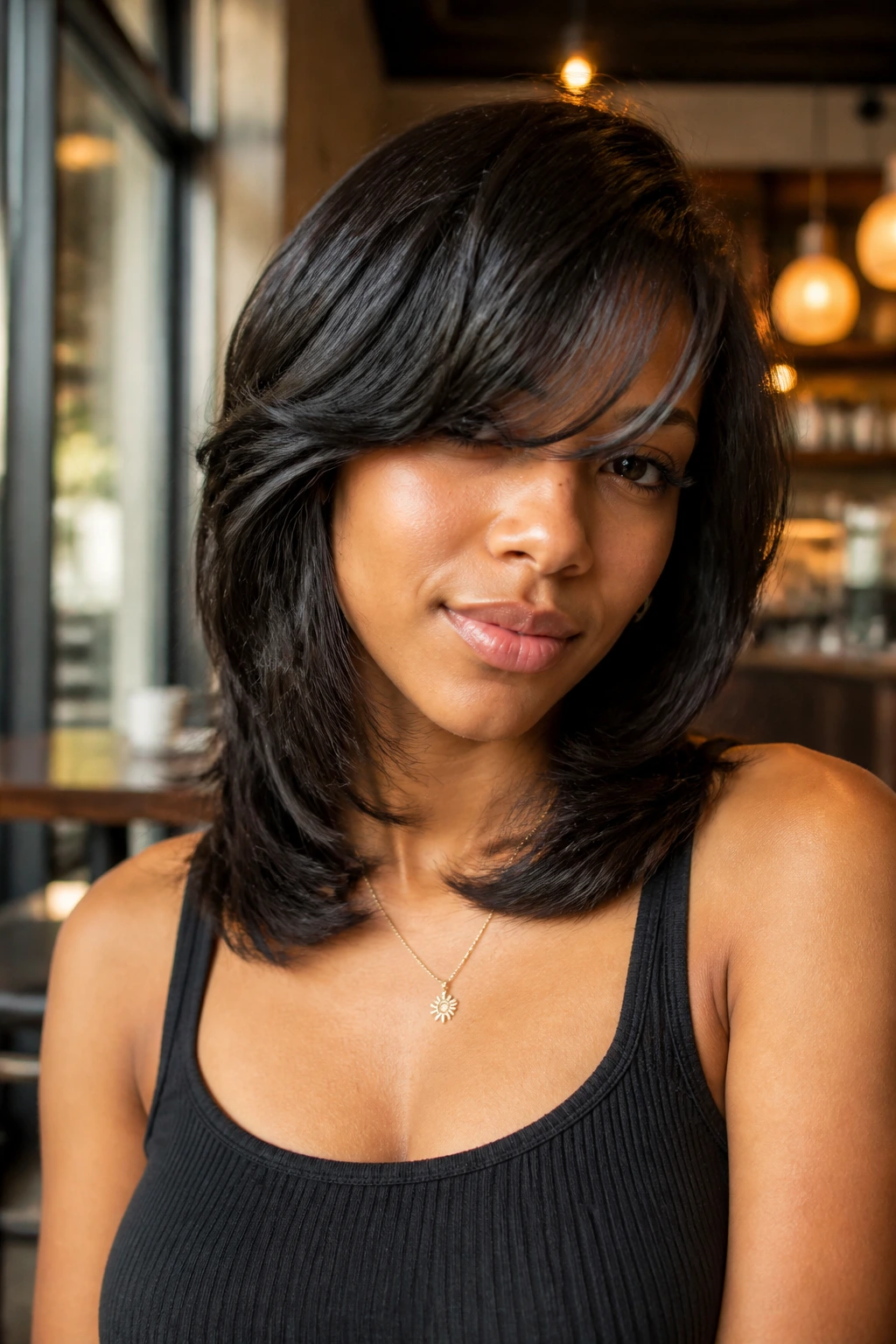
Collarbone-length layers are a smart middle ground if you want fringe but hate touch-ups. The bangs sweep across the face in a soft diagonal, then the rest of the hair lands just below the shoulders.
That length gives the wave pattern room to settle instead of springing upward. It also keeps the haircut practical. You can tuck the front behind one ear, pin it back for a workout, or brush it into a more polished curve when you want the whole thing to read dressed up.
12. Soft Asymmetrical Bangs
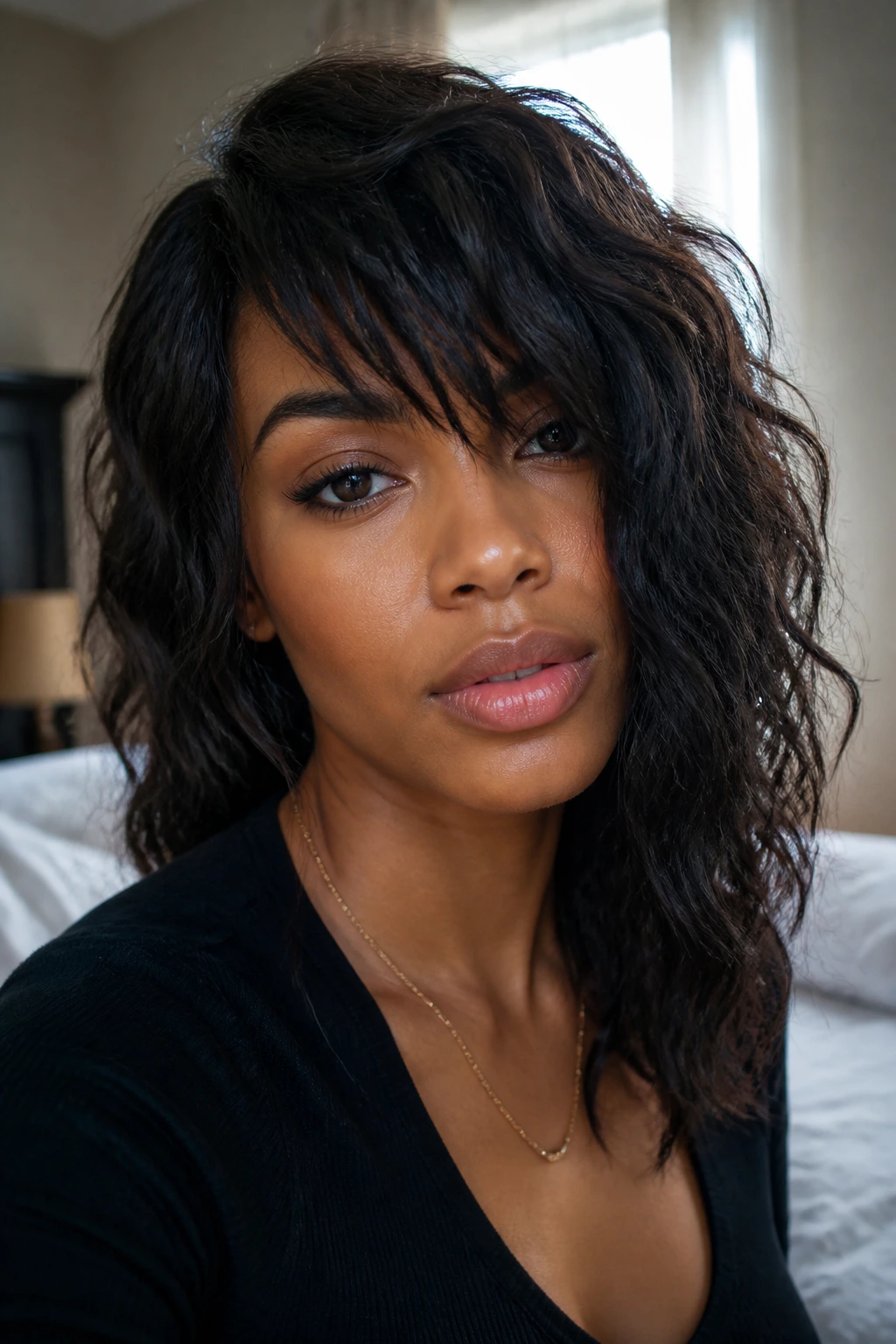
One side shorter, one side longer. Simple. Effective.
Soft asymmetry works on wavy Black hair because it follows the way texture already behaves. Hair rarely falls in a perfectly even curtain anyway, so this shape turns a natural bend into a feature instead of a problem. If your part never stays centered, this is the cut that stops punishing you for it.
13. Rounded Bangs With Shoulder-Length Hair
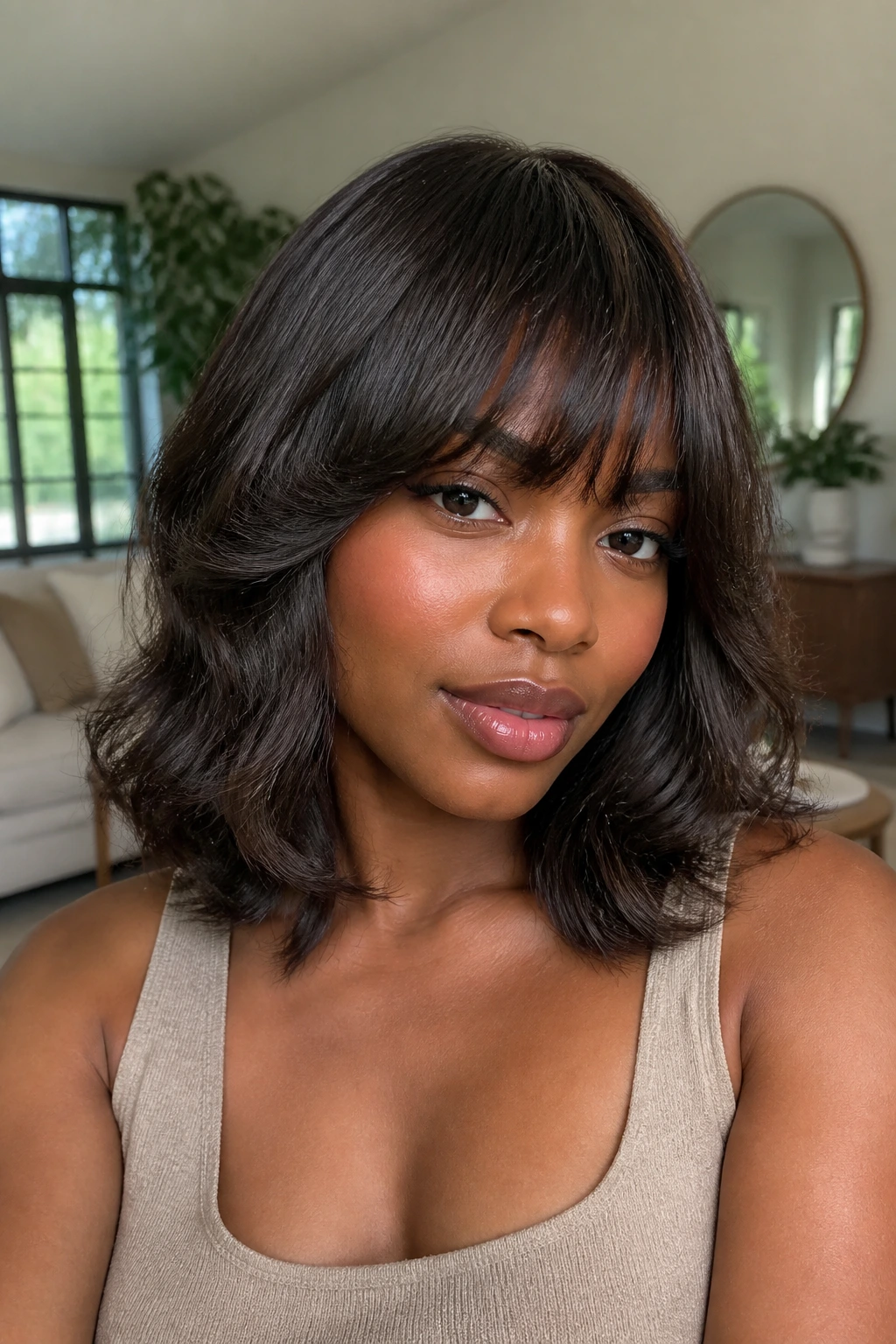
Rounded bangs give the front a little dome of softness instead of a hard line. Paired with shoulder-length layers, they can make wavy hair feel fuller near the face without making the cut bulky.
What to ask for
Ask for the center to sit slightly shorter than the edges, with the curve blended into the front layers. That keeps the bangs from looking helmet-like. If the stylist reaches for thinning shears too fast, slow them down. Rounded bangs need shape, not random holes.
14. Long Bangs With Invisible Internal Layers
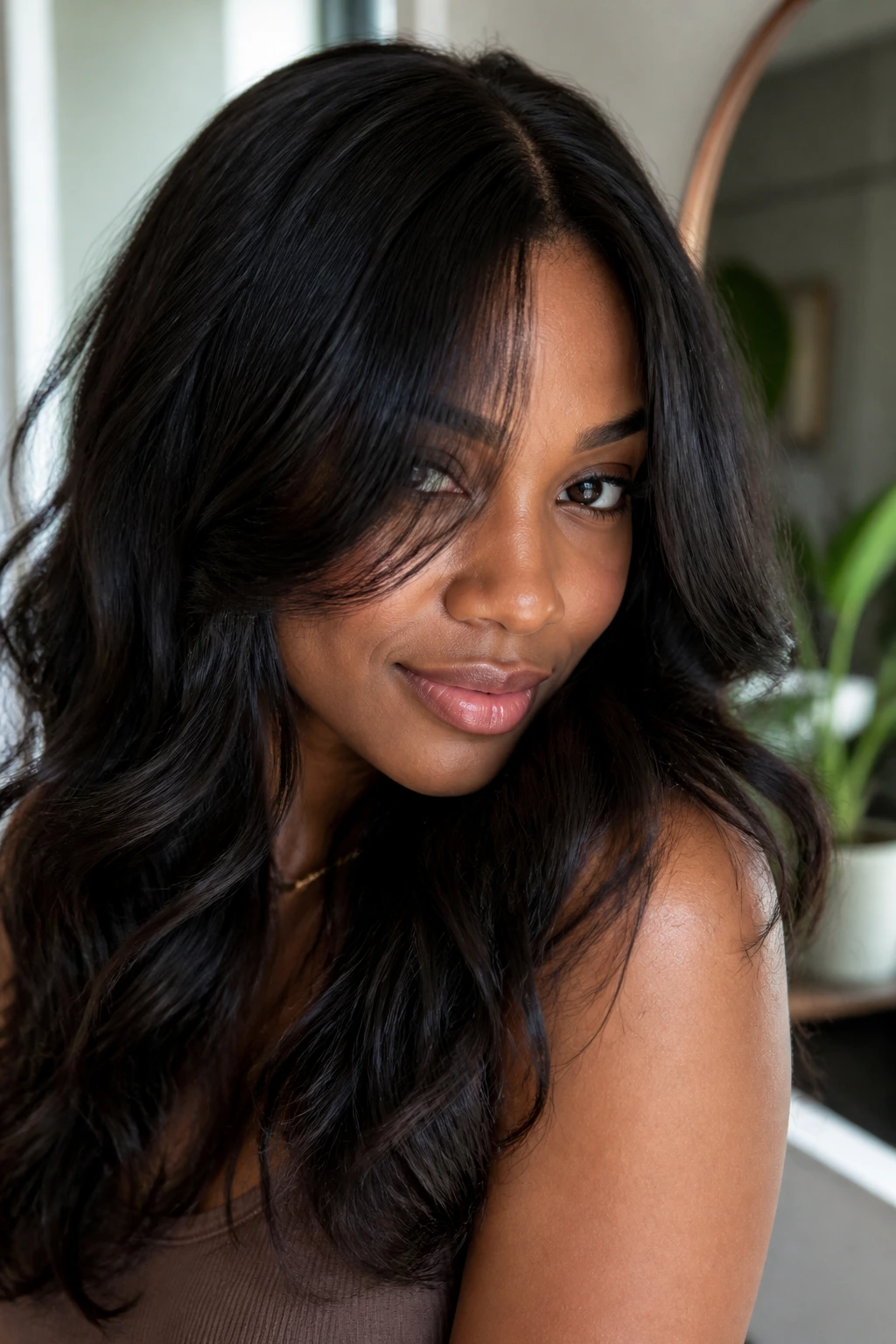
Some people want bangs, but not enough bangs to be bothered by them. That’s where long fringe with internal layering comes in.
The front pieces stay long enough to part, tuck, or brush back, but the stylist removes bulk underneath so the hair lies closer to the face. On wavy texture, that invisible layering keeps the fringe from getting boxy. The result is a front that moves like fringe without screaming I have bangs from across the room.
15. Face-Framing Bangs for Big Glasses
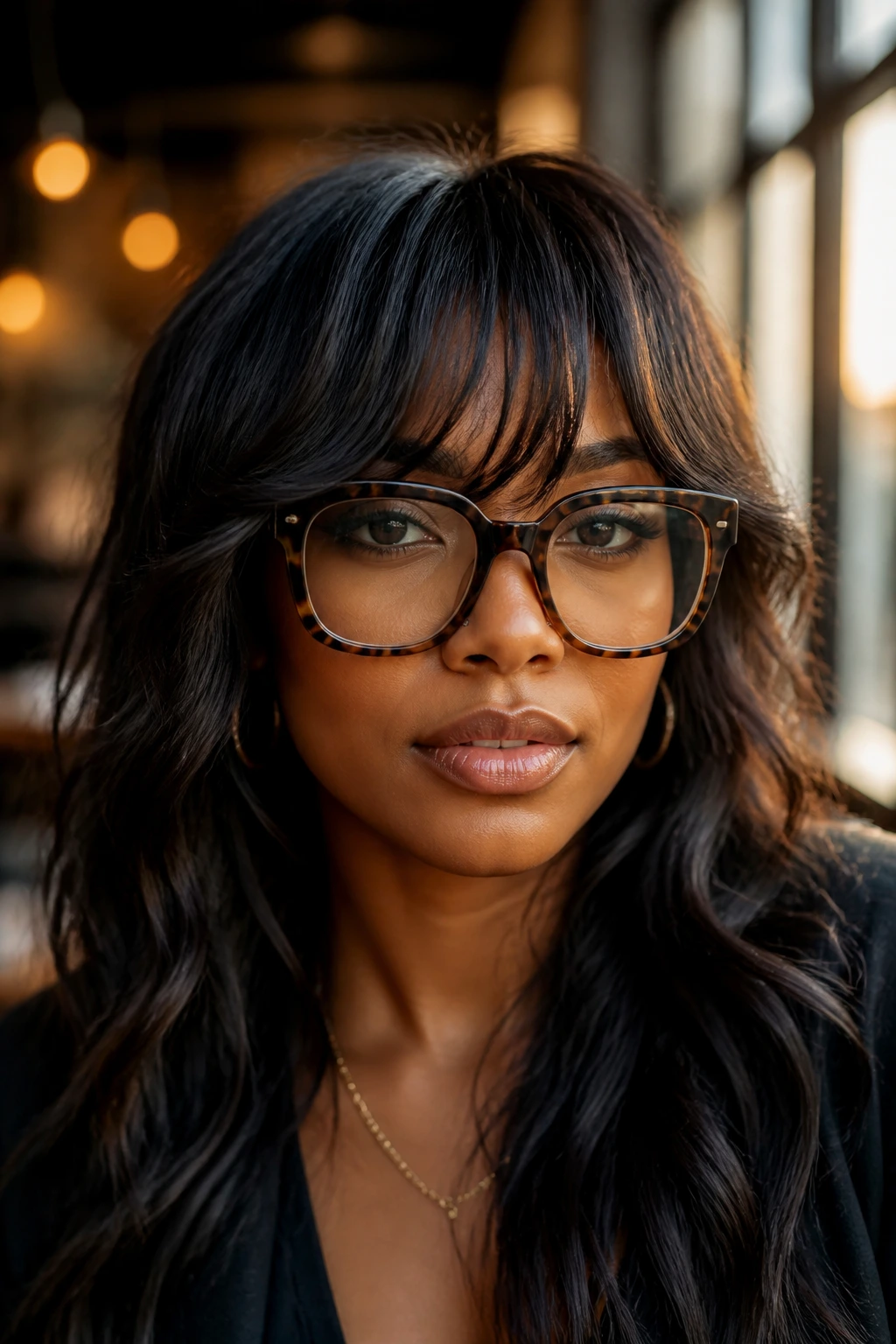
Glasses change the whole bang conversation. A fringe that looks perfect naked can disappear behind frames or press into the lenses by noon.
Face-framing bangs solve that by keeping the center slightly higher and the sides a little longer. The hair slips around the frames instead of fighting them. If you wear glasses daily, this shape saves you from constant pushing and fluffing, which is a bigger win than people admit.
16. Layered Bangs on a Wavy Lob
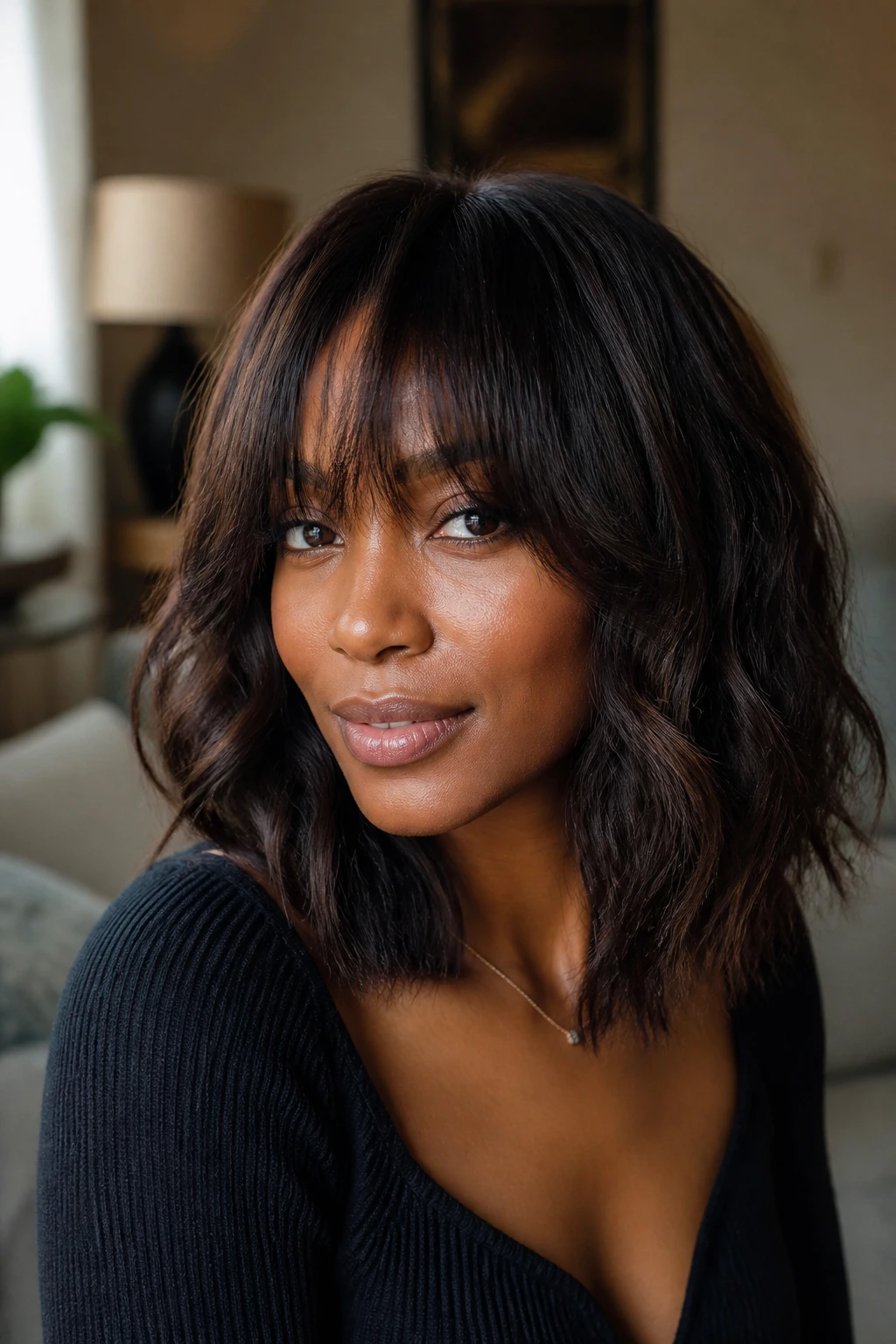
A lob with layered bangs is one of the most practical shapes in this whole collection. The cut sits above the shoulders, the bangs soften the front, and the waves get enough room to form without eating the length.
This works especially well if your hair gets puffy when it’s too long. A lob removes weight from the bottom while the layered fringe keeps the haircut from looking boxy. It’s tidy, but not stiff.
17. Tapered Fringe for Dense Hair
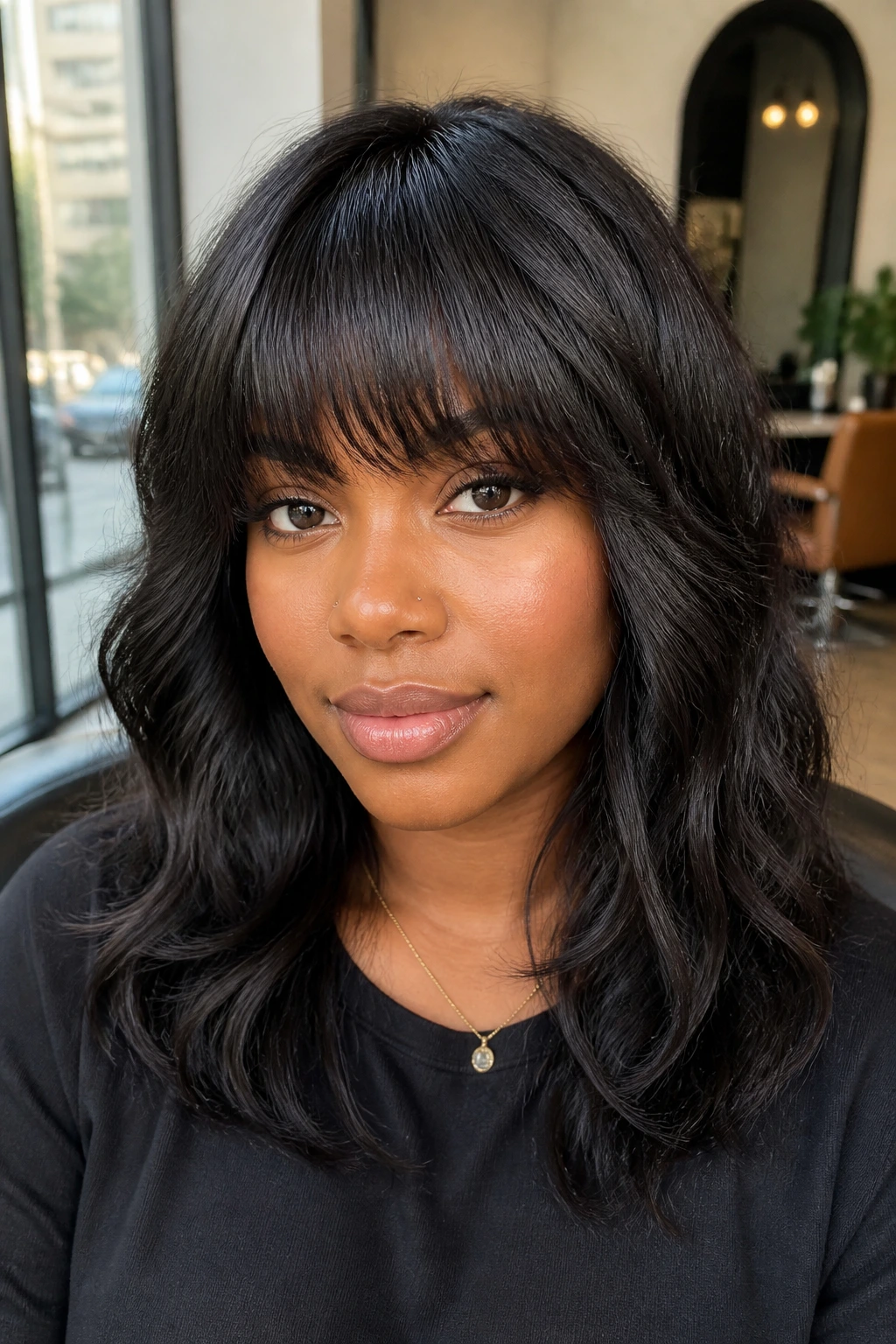
Dense hair needs a different hand. If the front section is thick and heavy, a tapered fringe removes bulk from the ends so the bangs don’t sit like a shelf over the brows.
The best version still keeps structure at the root. You want the bang to have shape, not gaps. Too much thinning in the center can make the front look see-through, so ask for weight removal mostly at the perimeter and around the temples.
18. Razor-Cut Fringe With Soft Movement
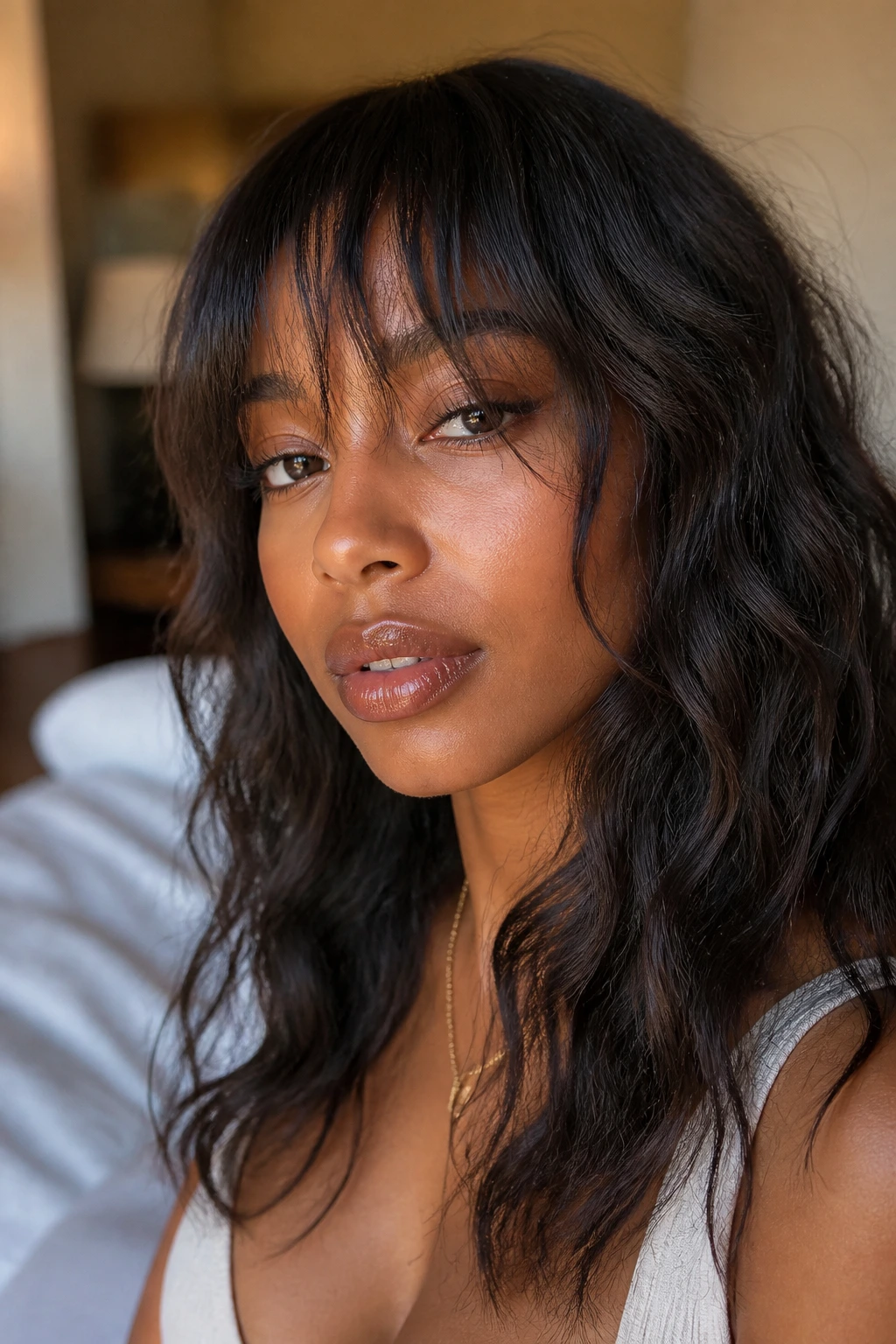
A razor cut can give wavy hair a little more softness at the ends, especially when the hair is thick enough to hold the shape. The edge feels lighter, and the bangs separate into fine pieces instead of one blunt line.
This is not the cut to ask for if your hair is fragile or if the ends fray easily. Razor work needs a stylist who knows exactly how your texture behaves. When it’s done well, the result looks airy and slightly undone in the best way. When it’s rushed, the ends can look dry fast.
19. Center-Parted Bangs With S-Curve Waves
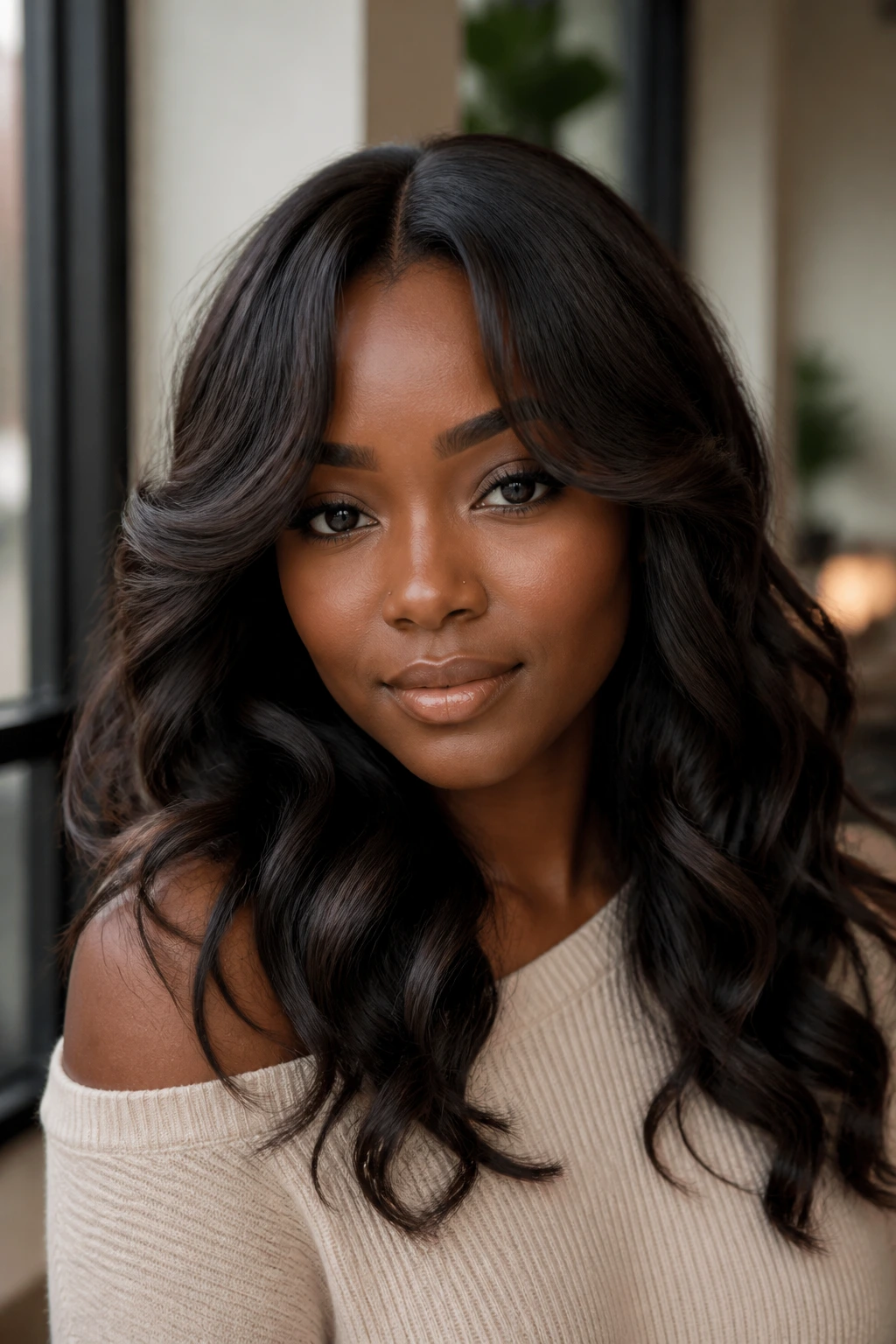
This is the smooth cousin of curtain bangs. The center part stays visible, but the wave pattern is coaxed into an S-curve that bends away from the face and then back in again.
Why the shape feels polished
The front pieces don’t sit flat, and they don’t blow around in every breeze. They have direction. A little foam at the roots, a quick brush with tension, and a soft bend at the ends gives the fringe a clean line without making it stiff.
20. Glam Blowout Bangs With Layered Ends
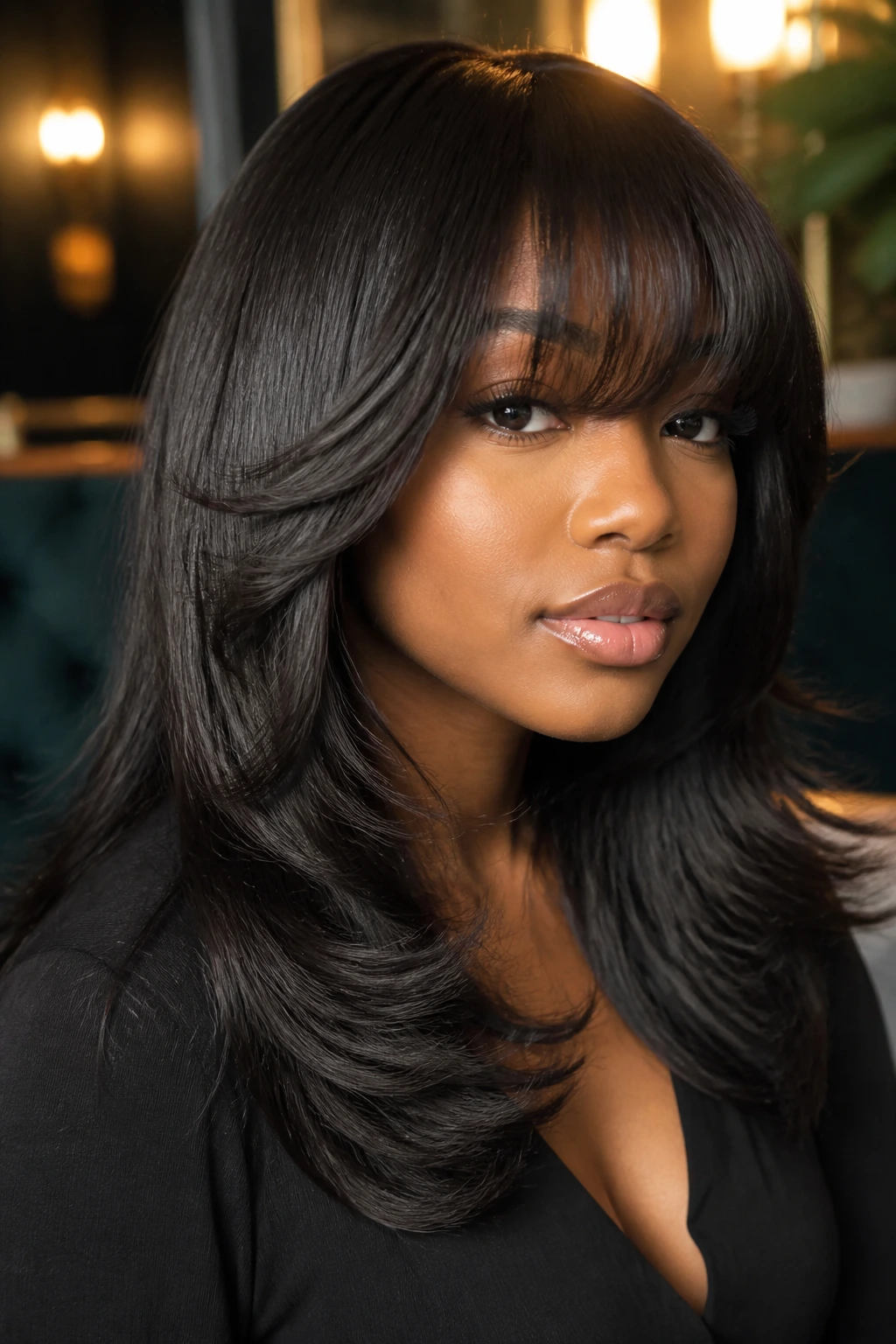
If you like a silk-press finish or a round-brush blowout, this is your lane. The bang is layered so it bends at the cheekbone, and the ends flick just enough to keep the front from looking heavy.
This one does ask for more styling time. Not a lot, but more. A concentrator nozzle, a round brush, and a heat protectant matter here because the shine is part of the whole effect. If you skip the protectant and blast the hair too hot, the front goes dull faster than the rest of the cut.
21. Short Curved Bangs for Bold Features
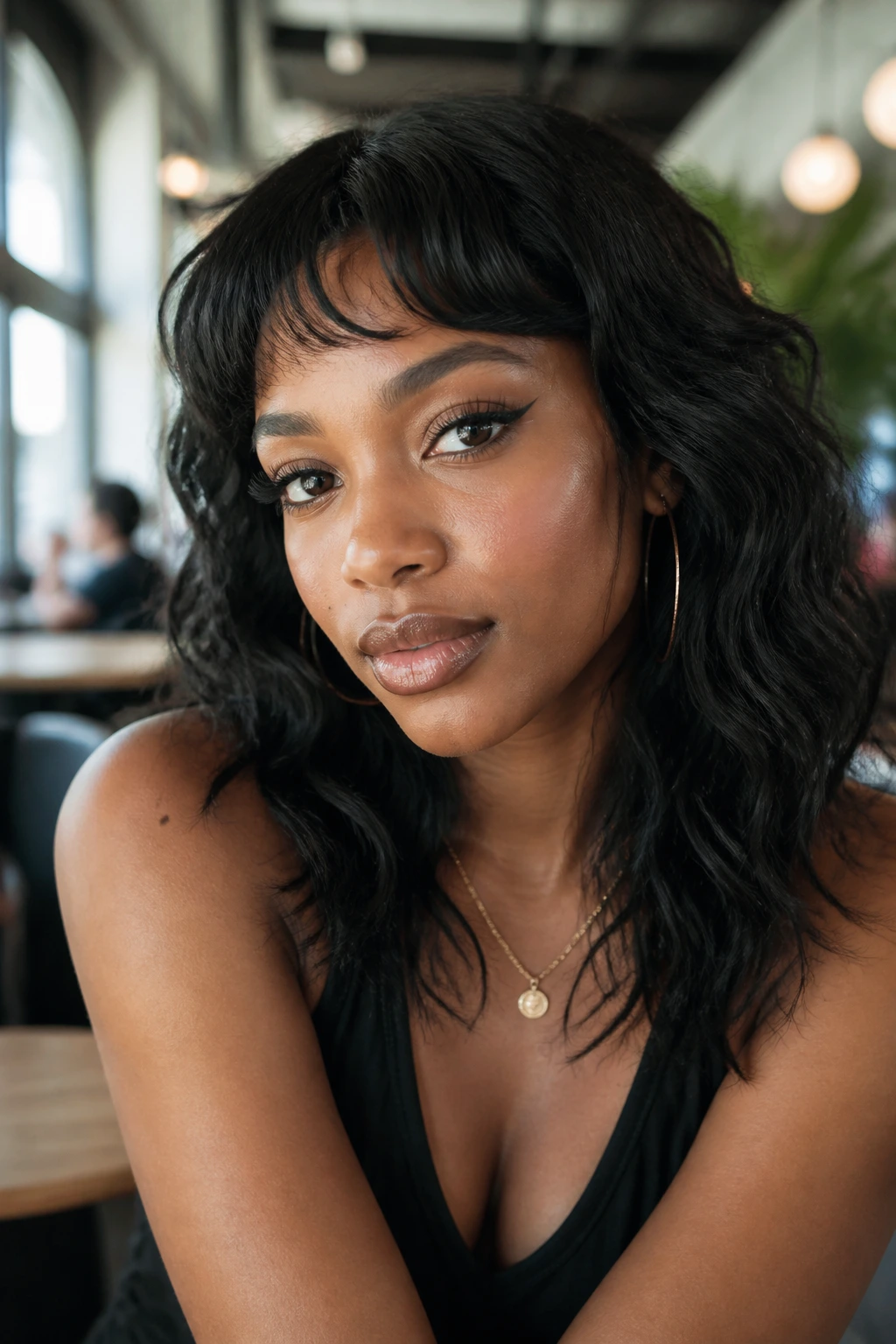
Short curved bangs can look strong and elegant when they’re layered rather than blunt. The center lifts just above the brows, then the sides slope down into the face frame.
The shape works when you want the forehead visible but not exposed. Strong brows, sharp cheekbones, and a defined jaw all pair well with it. Keep the edges feathered. A hard line can make the front feel severe, and that’s not the point.
22. Layered Side Fringe With Tucked-Behind-Ear Length
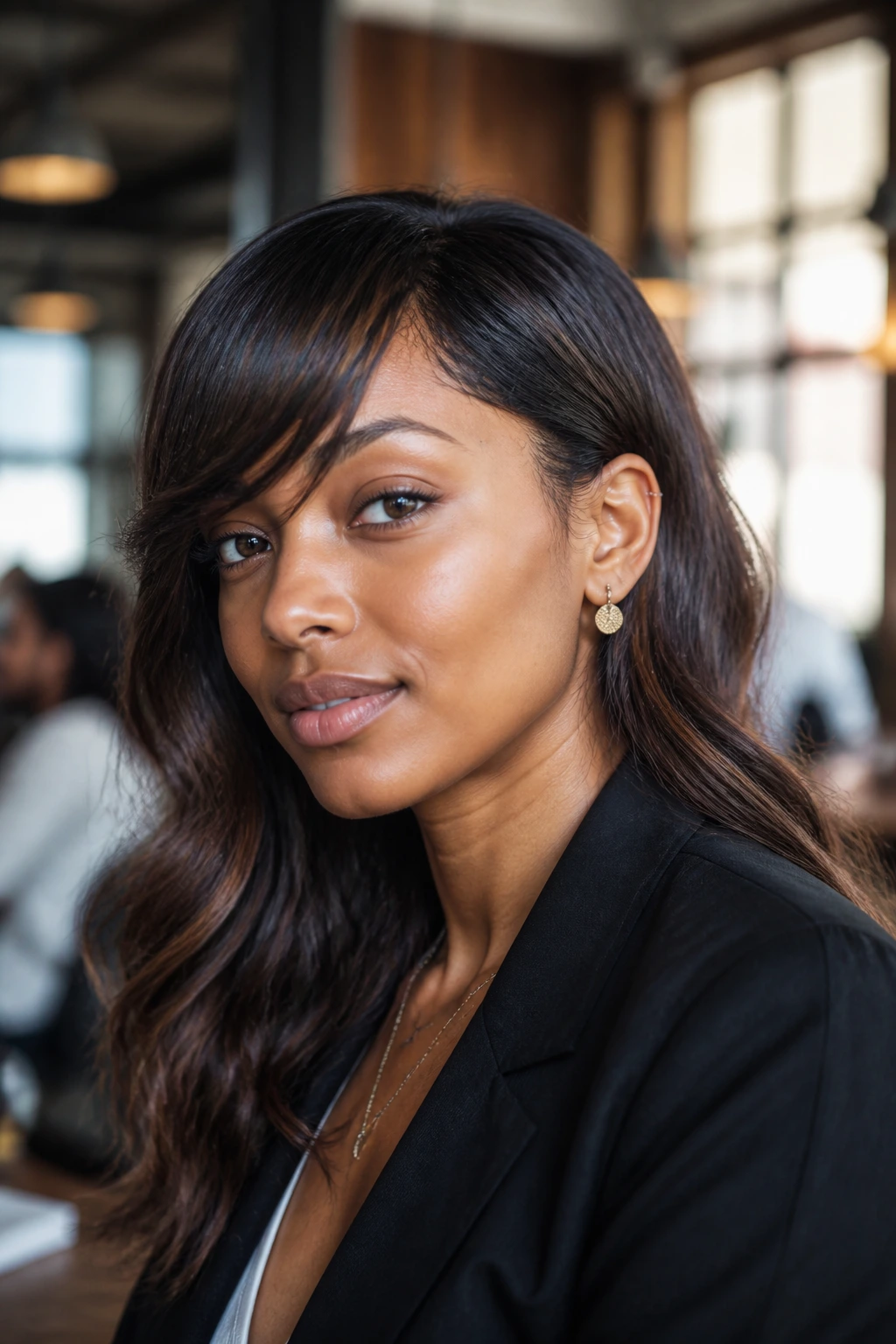
This is the working haircut. The fringe is long enough to sweep across the face, but not so long that it becomes a nuisance on day three.
I like this on women who need their hair to behave at work and still want a little movement in front. It tucks behind the ear cleanly, which means earrings finally get to do some of the talking. The layers keep the side fringe from becoming one heavy sheet.
23. Soft Curl-Set Bangs for Humidity-Prone Days
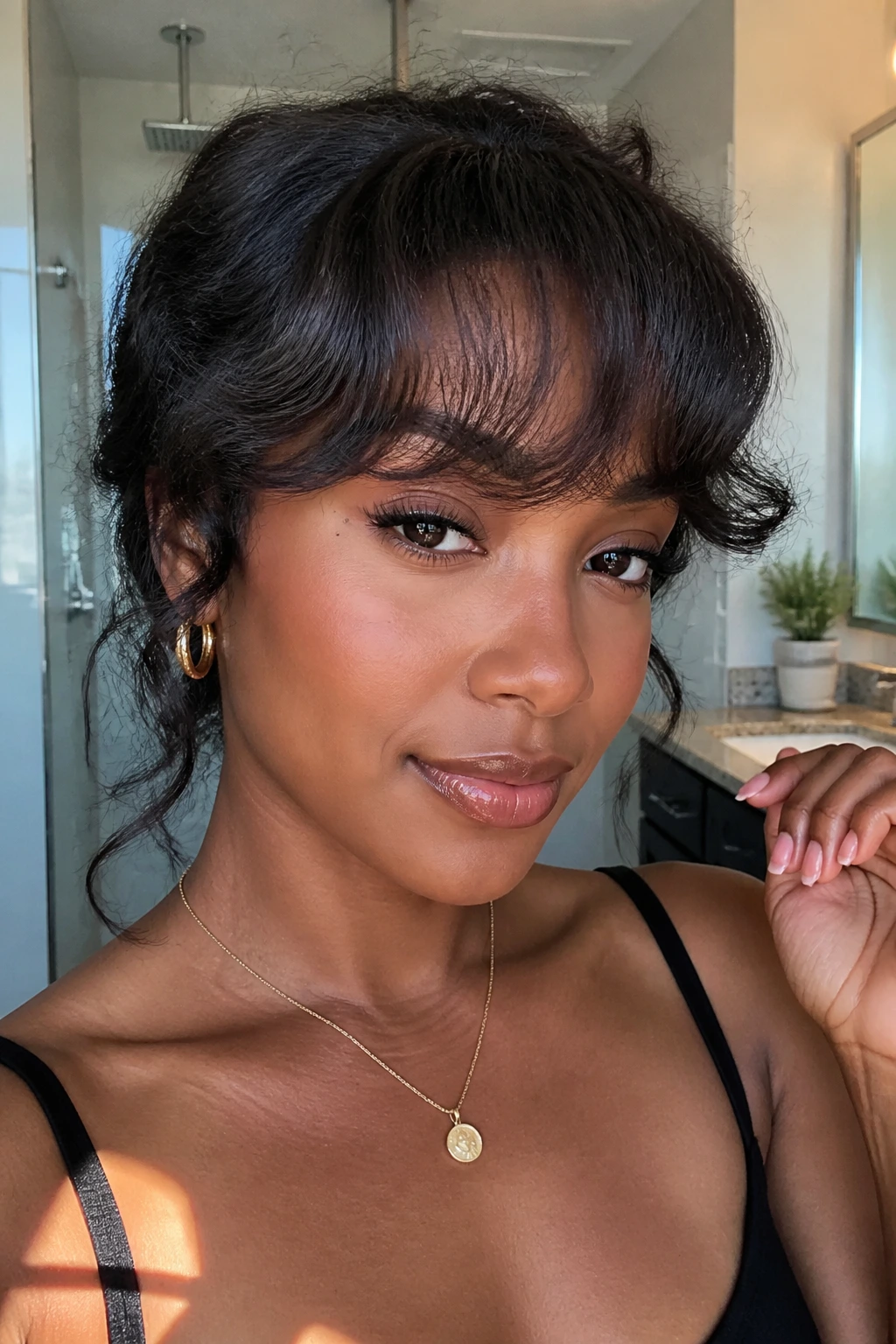
Humidity is rude to bangs. Curl-setting the front is one of the few moves that actually helps.
Set the bangs on a small roller, flexi rod, or even a velcro roller while the hair is warm and about 80 percent dry. Let the set cool before you touch it. That cooling time matters. It locks in the bend and keeps the front from blooming into a puff the second you step outside.
24. Long Grown-Out Bangs That Brush the Cheekbone
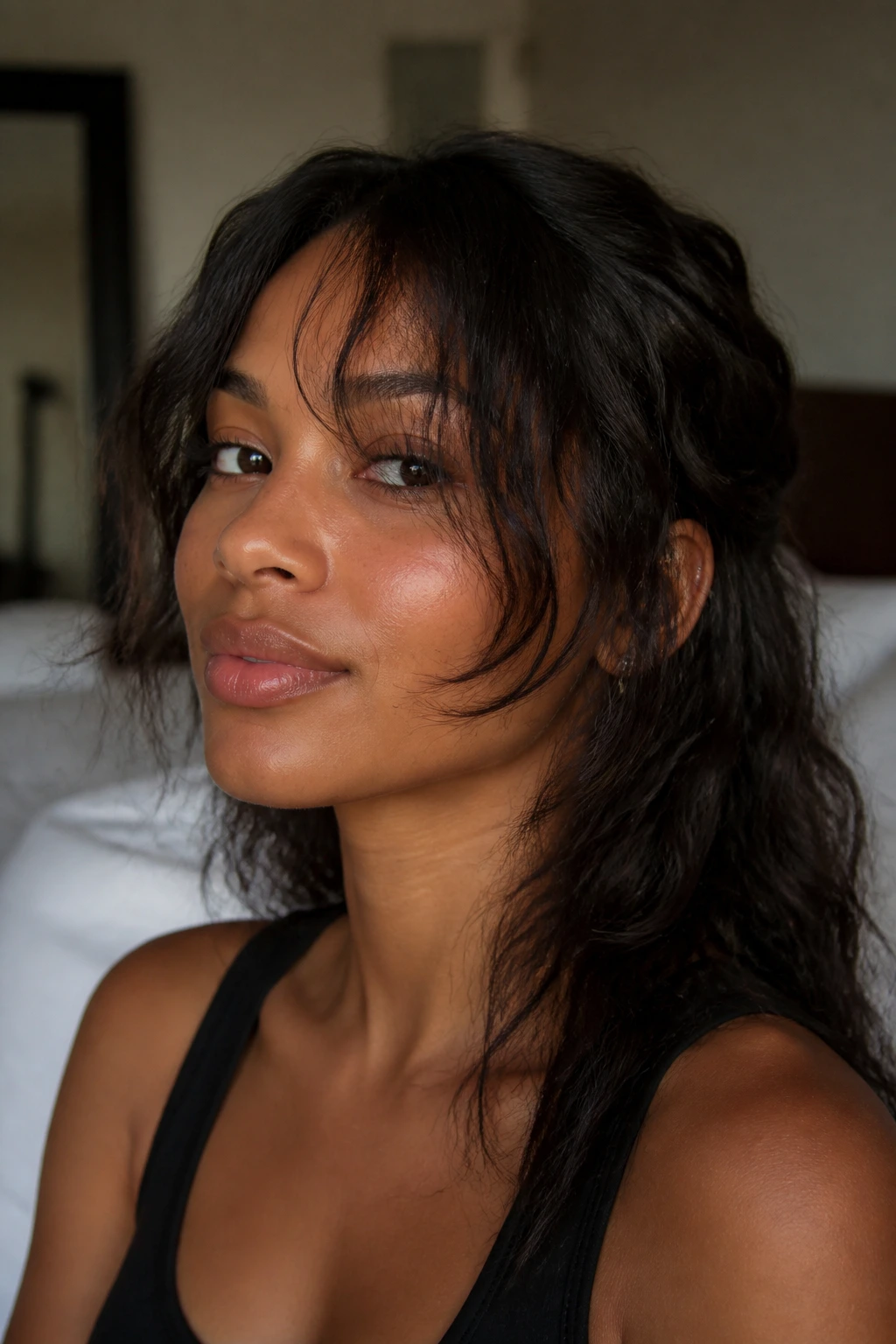
Grown-out bangs are not a mistake if they still have shape. When they reach the cheekbone, they turn into a face frame that feels softer than a fresh fringe and easier to live with too.
This is the style for people who want bangs but refuse to book a trim every month. The longer length gives you options. Part them, sweep them, pin them, twist them back. It’s a very good place to land while you decide whether you even want shorter fringe again.
A small detail that helps
Ask your stylist to keep the center just a little shorter than the sides, even during the grow-out. That keeps the front from collapsing into one dull line.
25. Polished Face Frame Layers With Barely-There Fringe
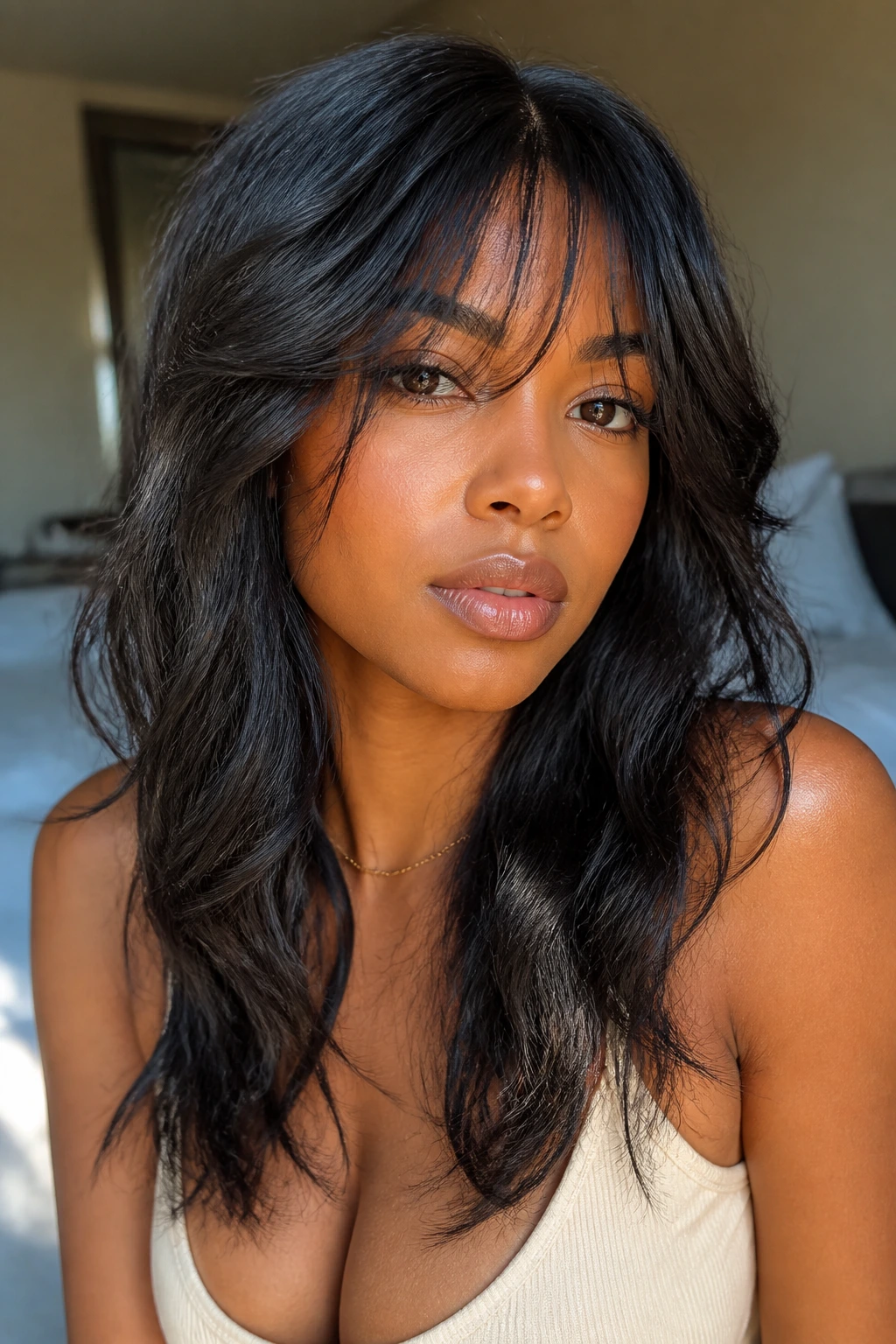
Sometimes the smartest bang is barely a bang. A whisper fringe blended into face-framing layers gives you the feeling of bangs without much upkeep.
This is the safest choice if you’re nervous about commitment or if your wave pattern changes a lot from wash day to wash day. The front still softens the face, but the length stays generous enough to wear up, pin back, or stretch into a full side sweep. It’s the haircut version of easing into the pool instead of diving in.
Why Layered Bangs Sit Better on Wavy Black Hair
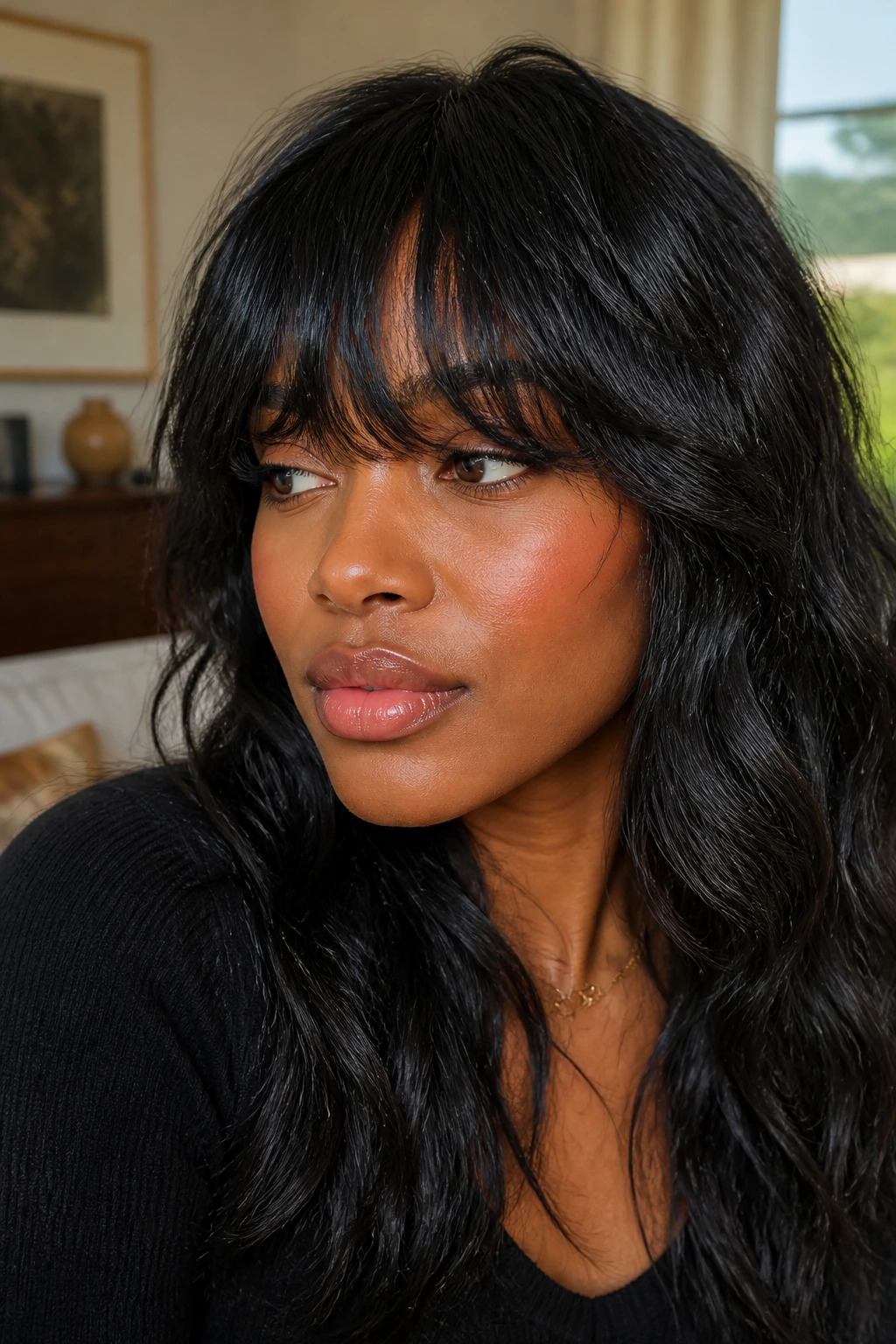
Black wavy hair tends to have a little push at the root and a little bend through the lengths, which is exactly why layered bangs make more sense than a blunt strip of fringe. A blunt bang asks the front to act like one flat panel. Wavy hair usually doesn’t want to do that for long. It lifts, separates, and starts trying to reclaim its own shape.
Layering gives that movement somewhere to go. The shortest pieces can sit near the brows, while the longer pieces drift toward the cheekbones or jaw. That staggered length keeps the fringe from growing into a thick, triangular block, especially if your front section is denser than the rest of your hair. It also helps when one side of the hairline has a stubborn cowlick or a little more shrinkage than the other.
The other thing people forget is the way product behaves on this texture. Heavy creams can weigh the bangs down for about an hour, then the front starts puffing anyway because the roots still want lift. A lighter mousse, a flexible cream, or a small amount of foam usually gives better control. The cut does half the work. The product finishes the job.
How to Ask for the Cut at the Salon
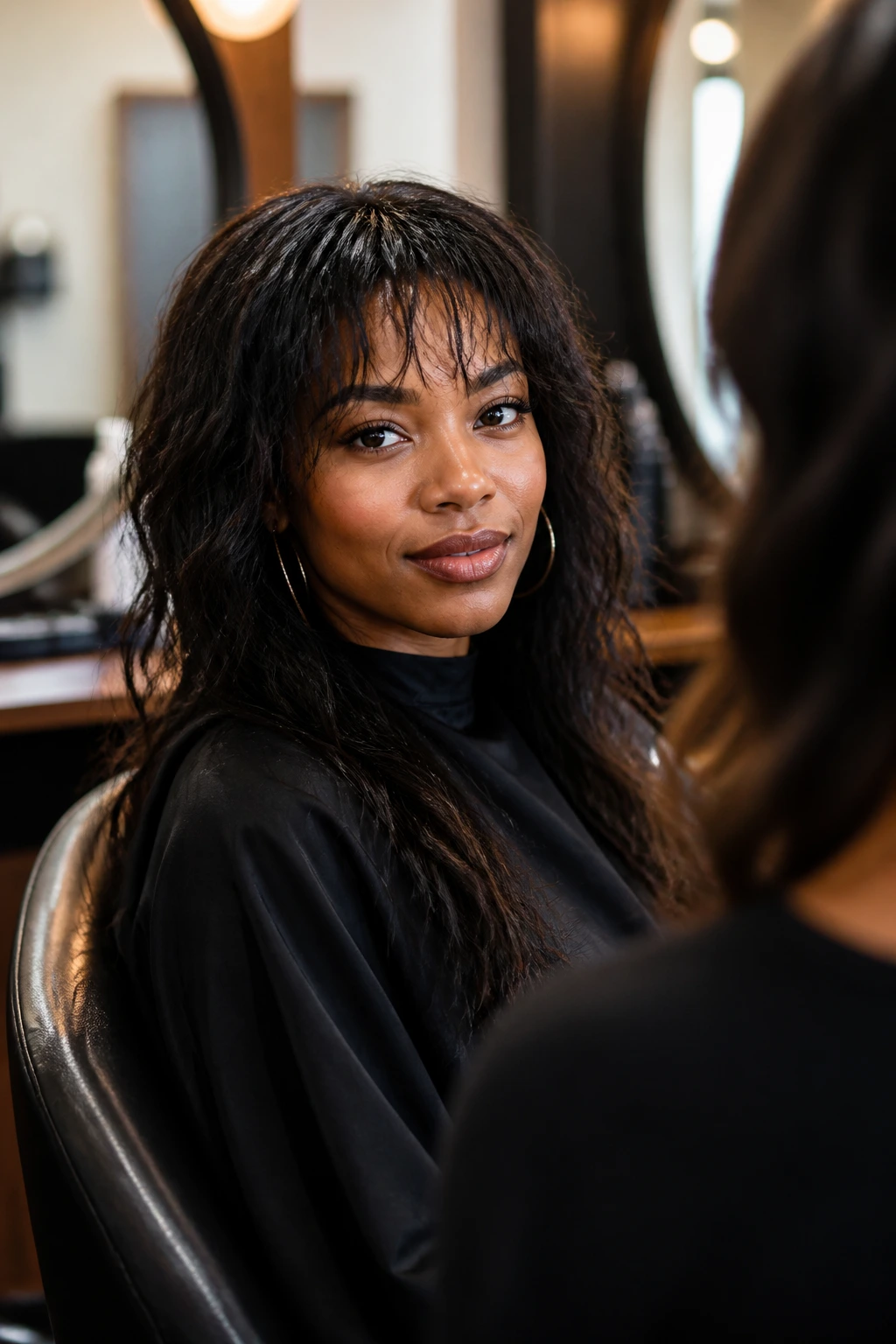
Bring photos, yes, but don’t stop there. Photos show shape. They do not show the parting, the density at the hairline, or whether the stylist cut the bangs on wet hair and hoped for the best. That part matters more than the inspo picture.
Tell the stylist you want the bangs cut with your wave pattern in mind, not straightened out first. If your hair springs up when dry, say so plainly. If the front gets tighter than the back, say that too. A good stylist will usually cut the fringe longer than the final target and refine it after the hair dries. That extra half inch can save you from a forehead surprise.
Ask for the shortest point to be decided first, then build the sides from there. If you want curtain bangs, say where you want the shortest point to land — brow, bridge of the nose, or cheekbone. If you want a side sweep, point to the side your hair naturally falls toward. Tiny details. Big difference.
The Brushes, Clips, and Products That Pull Their Weight
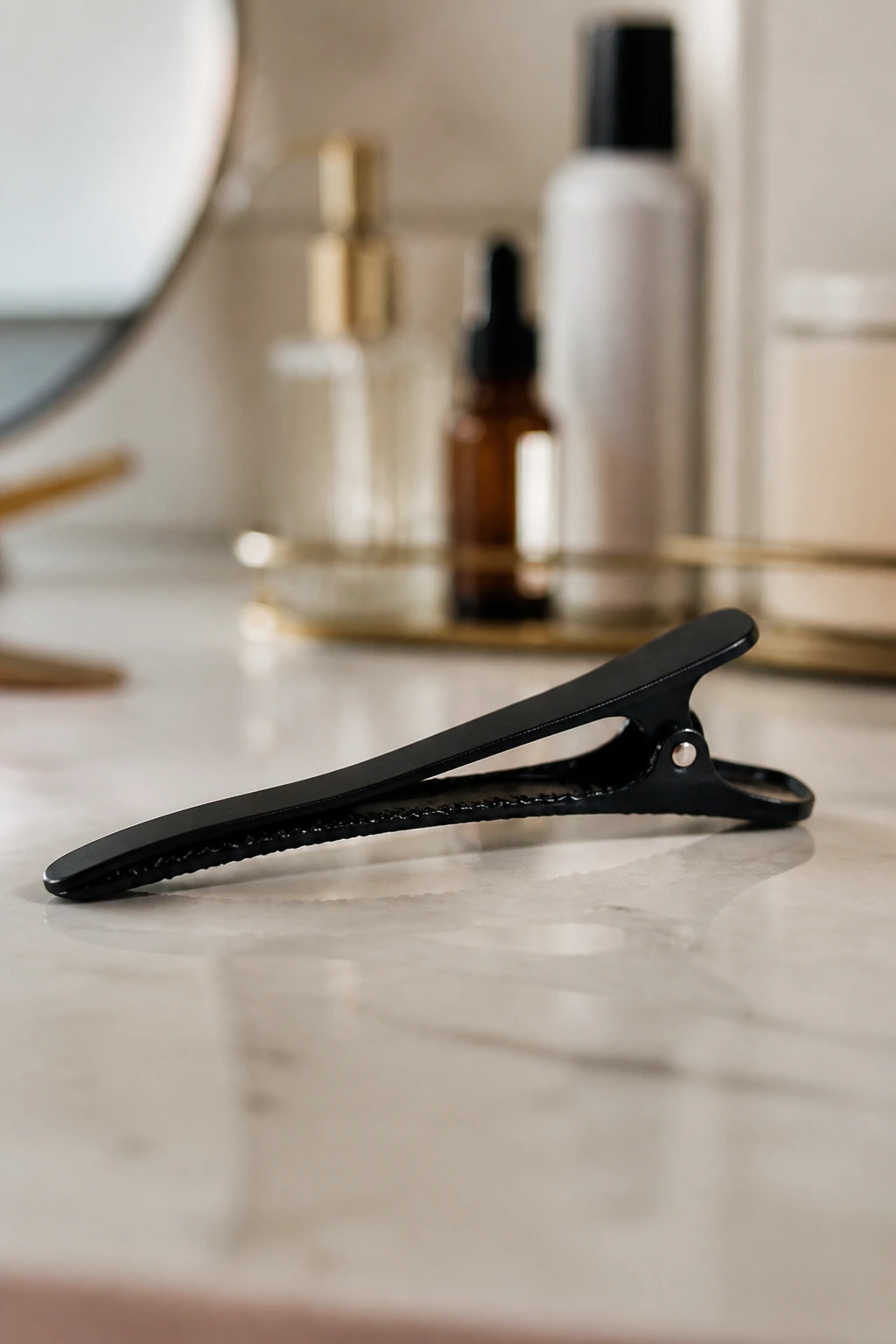
You do not need a giant shelf for this. A few tools do most of the work.
- Tail comb: Useful for parting the front cleanly and sectioning bang pieces without grabbing too much hair.
- Duckbill clips: Hold the side pieces out of the way while the fringe dries; they stop the front from folding back on itself.
- Small round brush, 1 to 1.5 inches: Best for shaping curtain bangs, side sweeps, and blowout fringe without making the ends flip too hard.
- Concentrator nozzle on your dryer: Sends airflow where you want it and keeps the front from ballooning.
- Light mousse or foam: Gives the bangs a little memory without the sticky, crunchy feel that heavy gel can leave behind.
- Heat protectant spray: Non-negotiable if you blow-dry or flat-iron the fringe.
- Velcro rollers or a small roller set: Great for cooling the bangs into shape after a brush-out.
- Satin scarf or bonnet: Keeps the front from frizzing while you sleep, which matters more than people admit.
How to Style Layered Bangs on Wash Day and Day Two
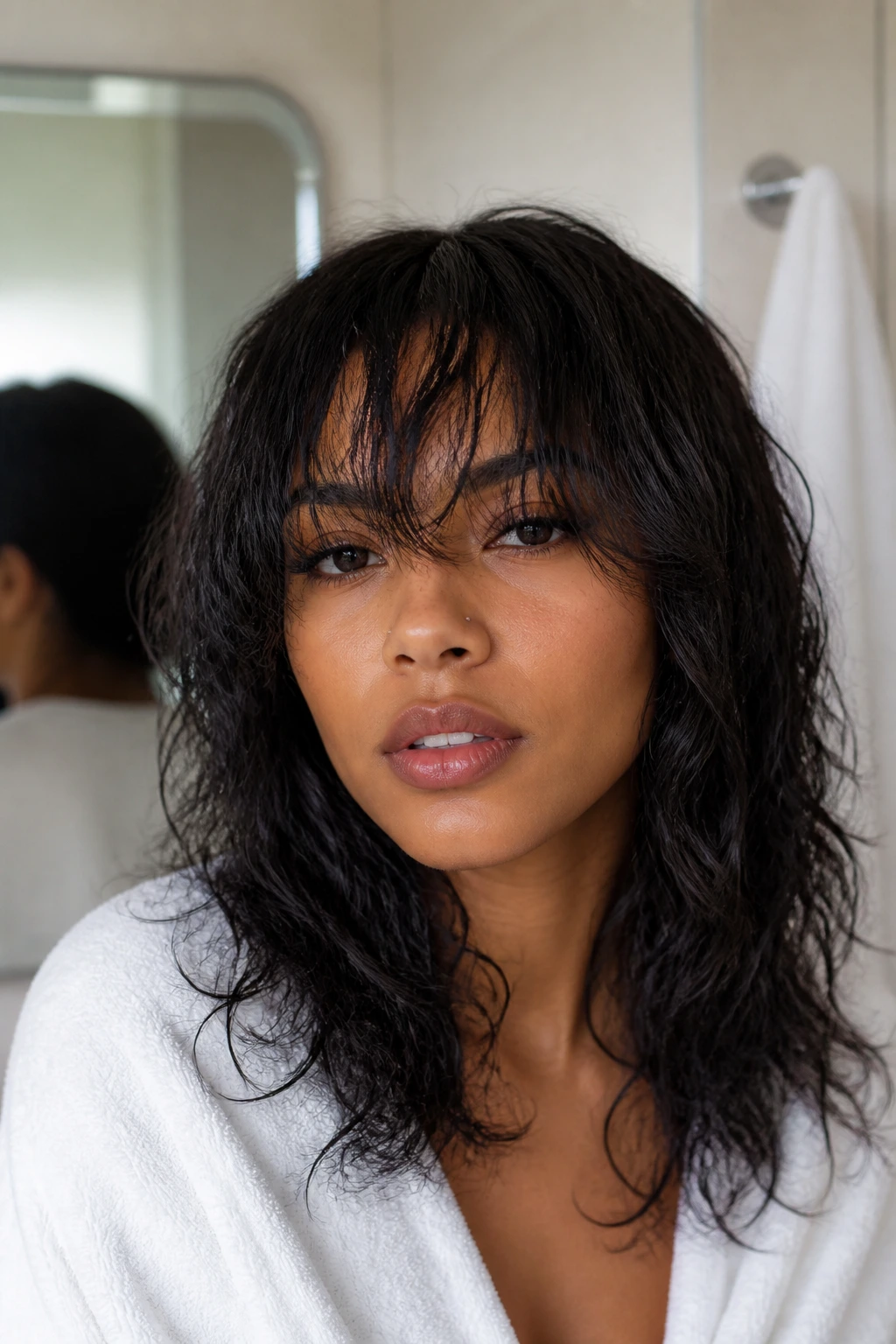
The front of the haircut usually wants a different plan than the rest of the head. Treat it that way.
Air-dry days
Start with a light leave-in on the mids and ends, not the roots. Then work a small amount of mousse through the bang section and clip the fringe in the direction you want it to dry. That little bit of tension keeps the front from shrinking into a blunt puff.
Blowout days
Use the concentrator nozzle and a round brush, aiming the airflow down the hair shaft. Dry the roots first, then bend the ends under or away from the face depending on the style. Stop while the bangs are still slightly warm and set them in a roller for a few minutes if you want extra shape.
Day two and day three
A dry shampoo at the roots helps, but use it lightly. Too much powder makes the bangs chalky and stiff. If the front starts to separate, mist your hands, smooth the root area, then add a tiny bit of foam to the ends. Not a lot. Just enough to wake up the wave.
Practical Tips for Getting More Life From the Shape
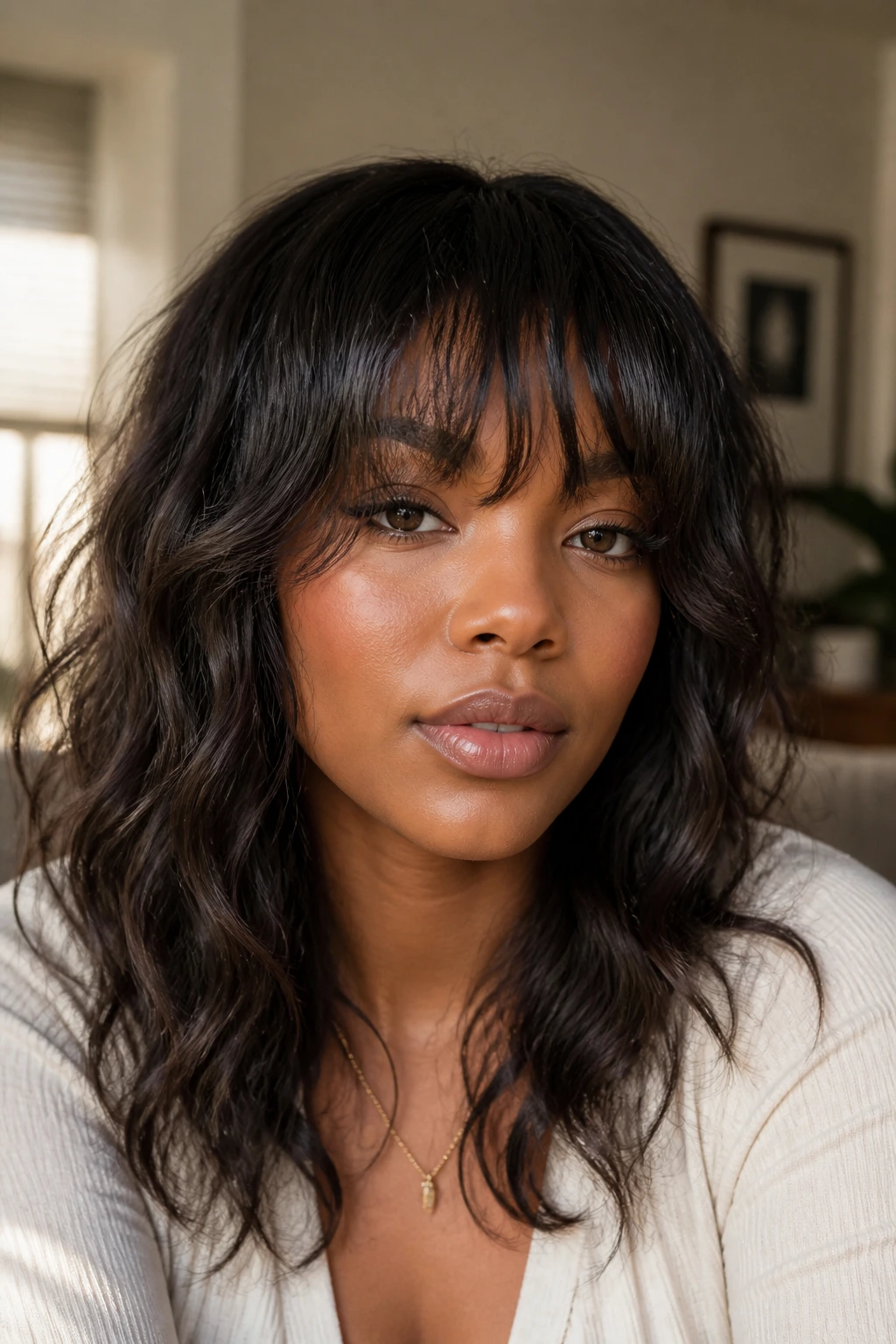
Start longer than you think. Bangs that look perfect when wet can land a half inch too short once they dry. On wavy Black hair, that margin matters because the front usually springs up more than the stylist expects.
Keep the root light. Heavy oils and thick butters near the forehead flatten the front and make the bangs separate in greasy-looking strands. Save richer products for the ends or the lower layers.
Use tension, not force. When blow-drying, pull the fringe just enough to smooth it. If you yank hard, the hair cools in a shape that fights your natural wave pattern, and it usually wins later in the day.
Trim the center more slowly than the sides. A tiny snip can change the whole mood of a bang. If you trim at home between appointments, work in daylight and cut less than you think you need.
Common Mistakes That Make Bangs Sit Wrong
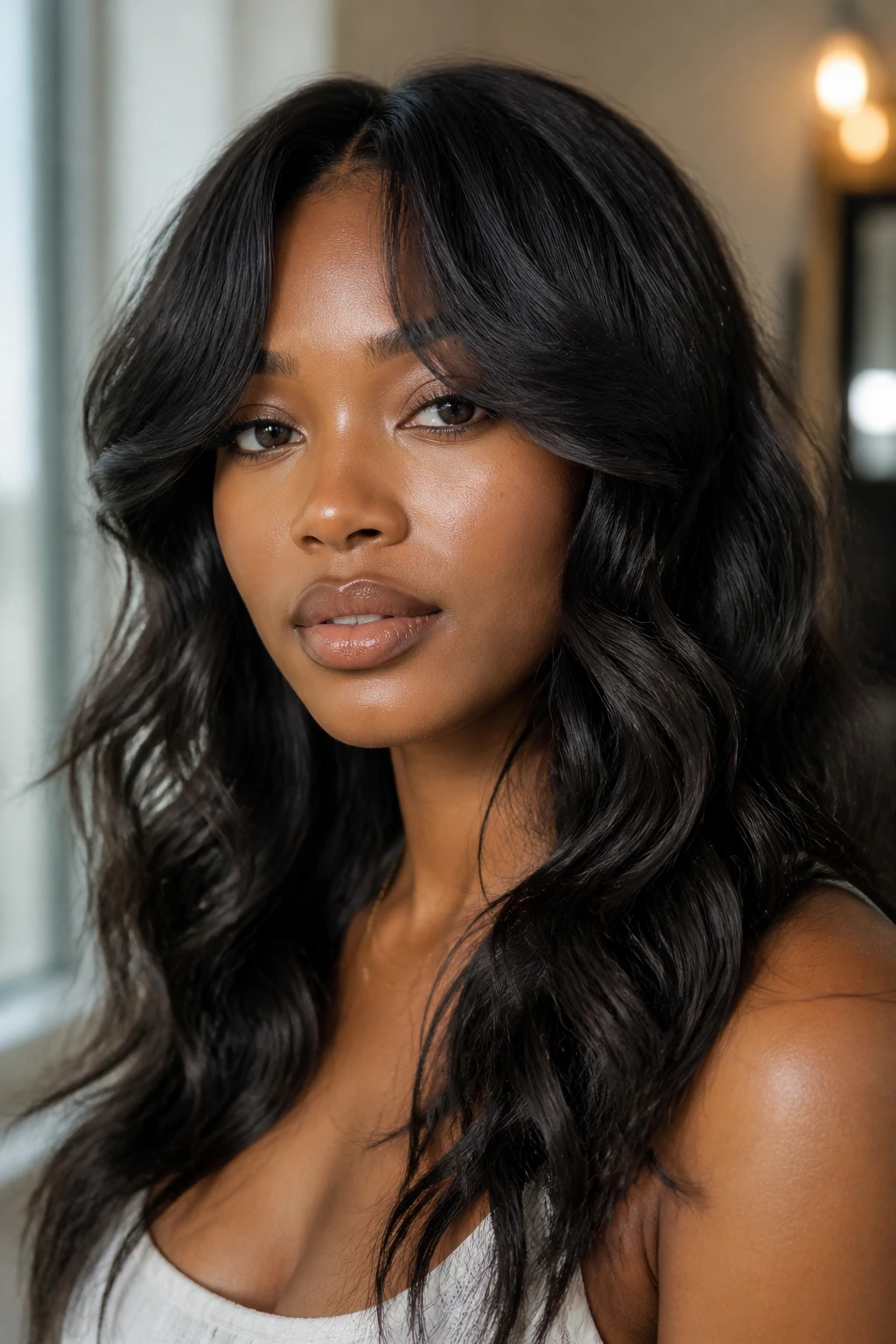
The most common mistake is cutting the fringe too short while the hair is wet. Wavy hair often shrinks as it dries, and what looked airy in the chair can turn into a short, puffy shelf by afternoon. The fix is simple: cut longer, dry, then refine.
Another mistake is loading the front with heavy product. Creams, oils, and thick gels can all be fine on the lengths, but the bang area needs a lighter hand. If the roots look flat and the ends clump together, you’ve probably overdone it. Swap to mousse or a light foam and keep the richer stuff away from the hairline.
People also ignore the direction the hair already wants to go. If one side pushes forward harder, work with it instead of fighting it into a straight line. A side sweep or asymmetrical fringe often solves a problem that a centered bang would only amplify.
Four Ways to Wear the Same Shape Differently
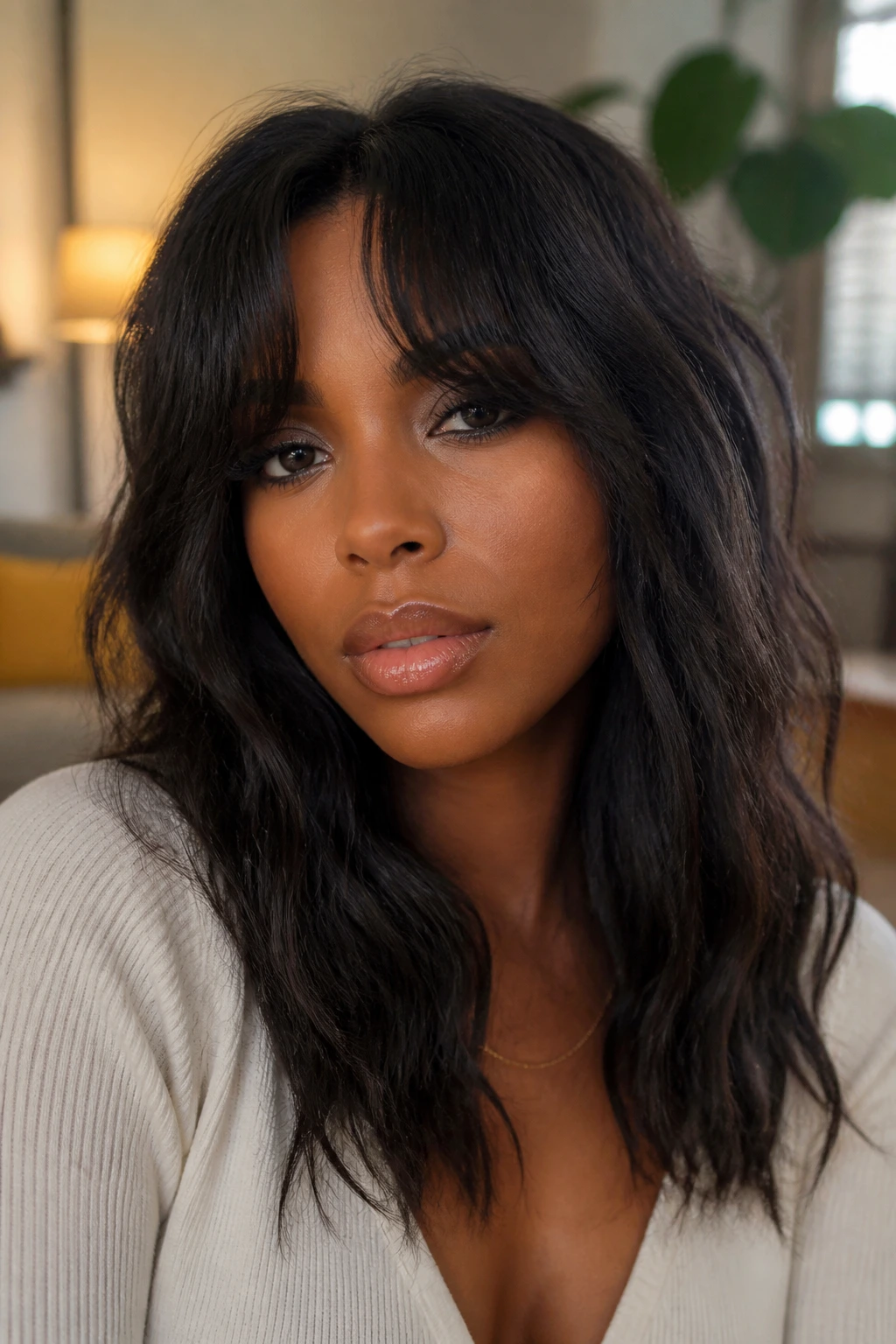
The Soft Center Part: Best for curtain bangs and bottleneck shapes. Split the fringe slightly off center, then finger-comb the ends for a loose fall.
The Side Sweep: Good on days when the front won’t behave. Push the bangs toward the stronger side of your part and clip them while they cool.
The Curled-Under Finish: Works on blowout fringe and shoulder-length layers. Use a round brush to bend the ends inward for a polished frame.
The Airy Split: Useful for shag bangs and choppy fringe. Let the front separate naturally, then define only the ends with a small amount of cream.
How to Keep the Fringe in Shape Between Trims
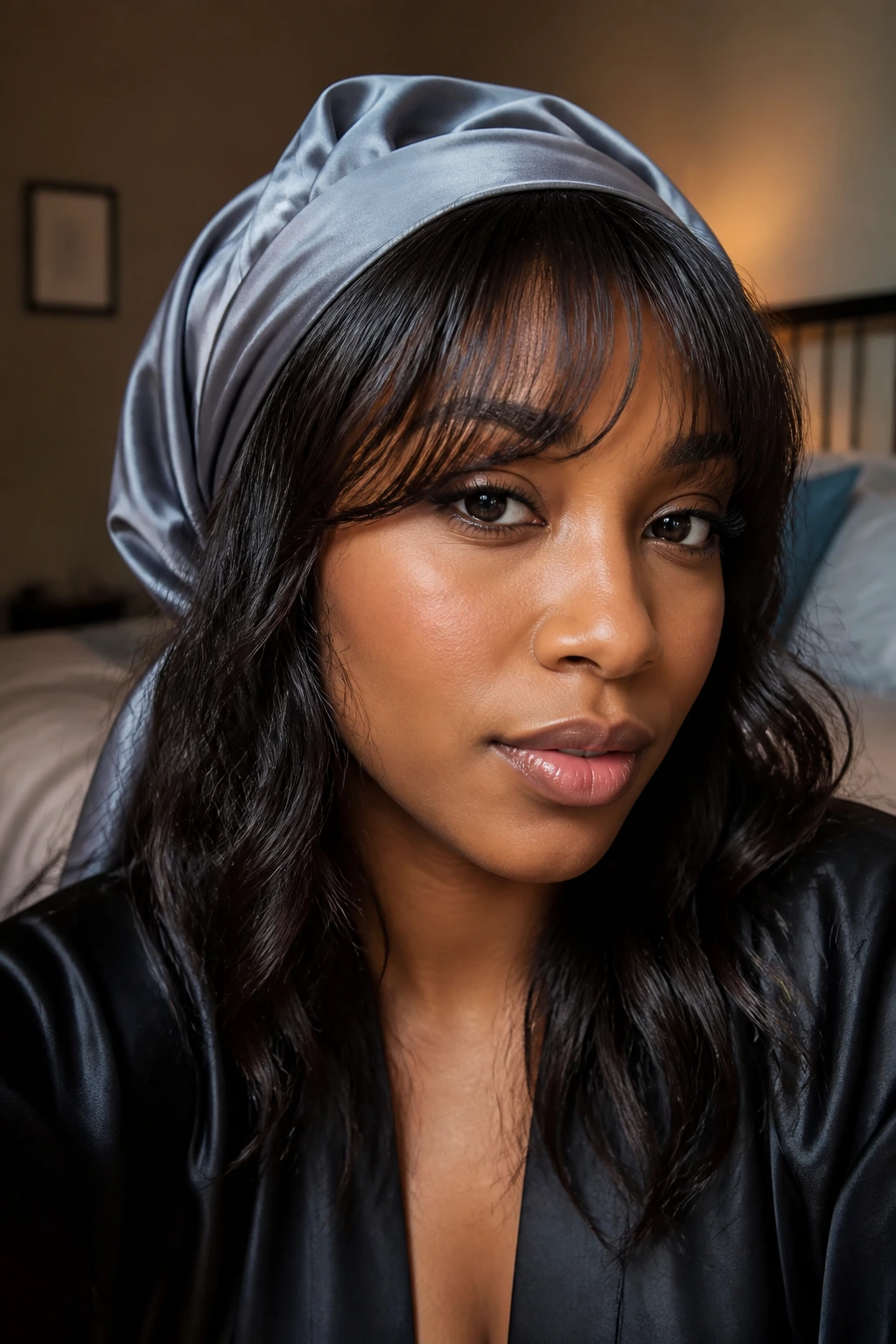
Bangs need attention more often than the rest of the haircut. That’s not a flaw; it’s the deal.
Plan on a fringe refresh every 4 to 6 weeks if you want the shape to stay crisp, or stretch to 8 weeks if you’re wearing a longer, grown-out version. The full haircut can often go 8 to 12 weeks between shaping appointments, depending on how much layering you have through the ends. If the front starts hiding your brows, falling into your eyes, or sticking out in a hard corner, it’s time.
At night, wrap the front loosely with a satin scarf or tuck it under a bonnet so it doesn’t catch frizz at the hairline. If the bang sits off to one side, pin it flat in the direction you want it to dry. In the morning, a quick mist of water, a few passes with a brush, and a cool shot from the dryer usually reset the shape. The cool shot matters. Warm air moves the hair; cool air keeps the decision.
Frequently Asked Questions
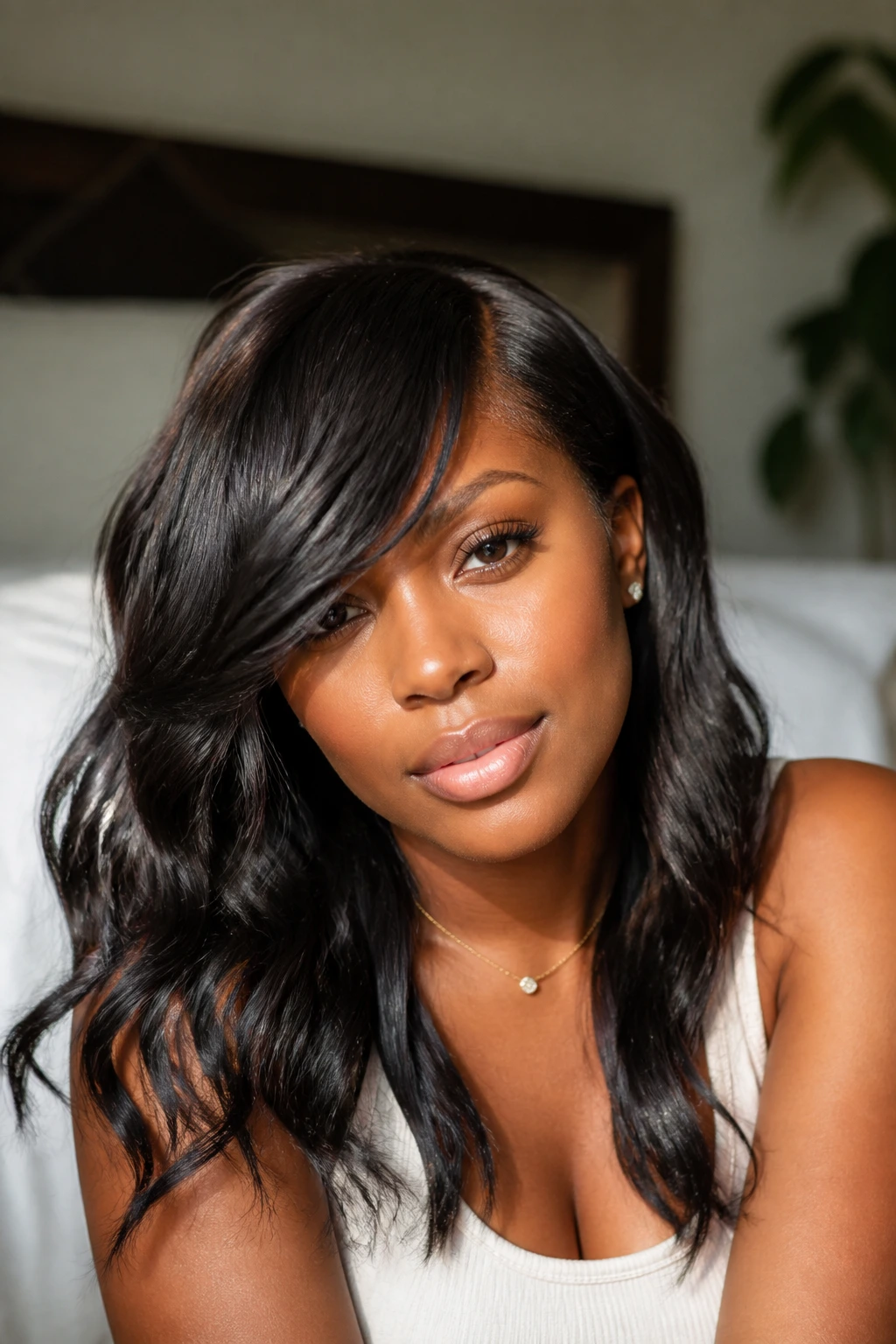
Will layered bangs work if my waves are loose on top but denser underneath?
Yes, and that mix is one of the best cases for this cut. Ask for the bang area to be cut based on the front-most layer only, then let the stylist remove bulk underneath so the fringe doesn’t puff from hidden weight.
Should bangs be cut wet or dry on wavy Black hair?
Dry or mostly dry is safer. Wet cutting can hide shrinkage, which is where the length mistake usually happens. A good stylist may cut them dry first, then make tiny adjustments after the hair cools and settles.
Can I wear layered bangs with a middle part and still keep them neat?
Absolutely. Curtain bangs and bottleneck bangs are built for that. The key is to keep the shortest point long enough to part cleanly, then sweep the sides so they meet the rest of the haircut instead of standing apart from it.
What if my bangs puff up in humidity?
Use less product, not more. A light mousse, a cool blow-dry, and a roller set on the front usually hold better than a thick cream that turns soft and heavy. If your area is humid often, ask for a slightly longer fringe so the shape has room to rise.
How do I keep bangs from separating into stringy pieces?
That usually means there’s too much oil or too little structure. Clean the front thoroughly, use a small amount of foam or mousse, and avoid dragging rich leave-in products all the way to the roots. A light brush-out can bring the strands back together.
Are layered bangs good for big foreheads?
Yes, especially curtain bangs, bottleneck bangs, and brow-grazing fringe. Those shapes soften the top half of the face without cutting off the forehead completely, which keeps the look balanced instead of heavy.
Can I pull layered bangs into a puff, bun, or ponytail later?
That’s one of the best things about longer layered fringe. The front pieces can be pinned, tucked, or left loose around the face while the rest of the hair goes up. Long layered bangs are far more flexible than a short, blunt fringe.
What should I do if I hate them after the cut?
Do not panic and reach for the scissors again. Pull the bangs into a deeper side part, clip them back with a small barrette, or blend them into a twist-out for a few weeks. Most bang mistakes are grow-out problems, not permanent disasters.
A Better Frame
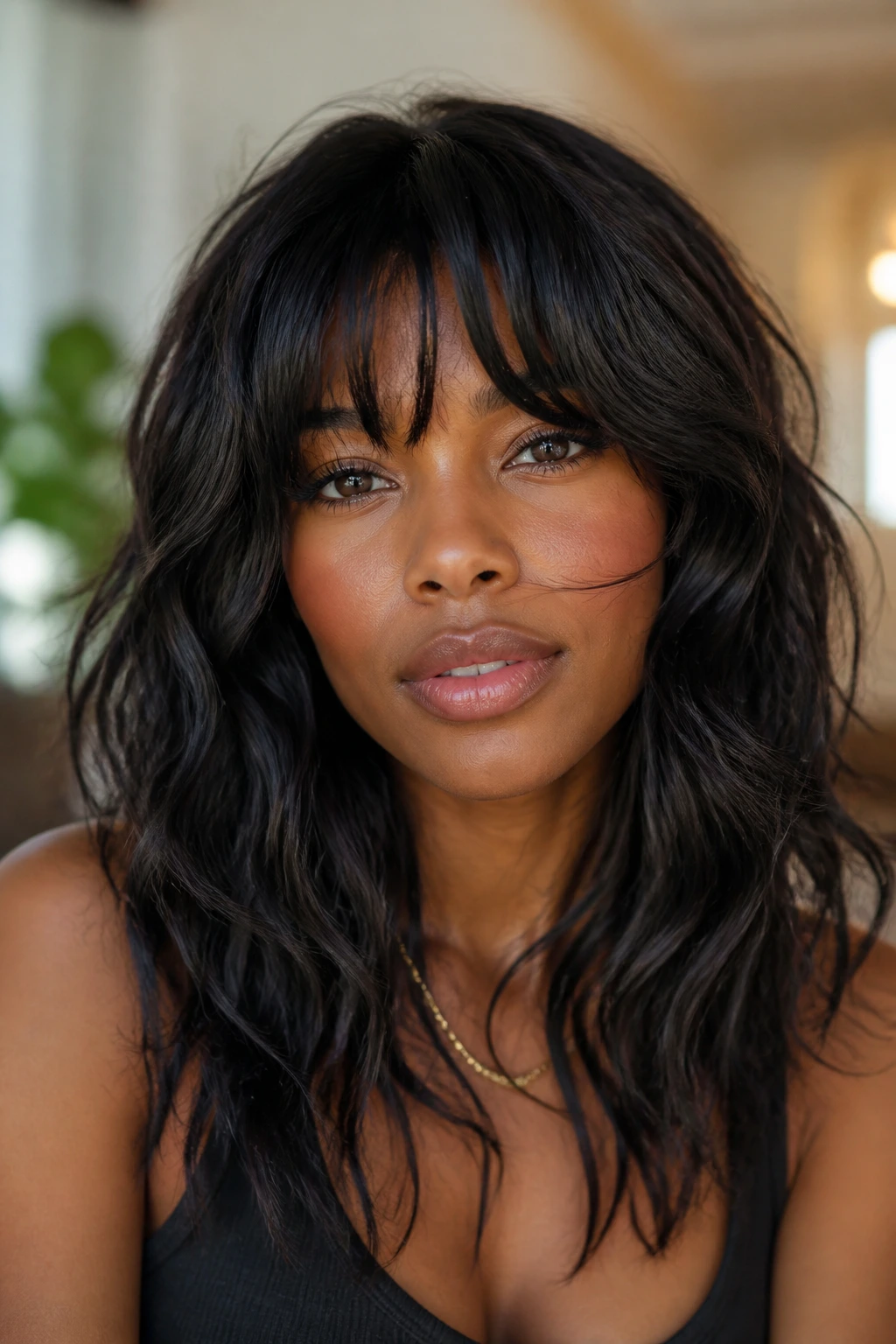
The nicest thing about layered bangs is that they don’t try to flatten Black wavy hair into someone else’s idea of polish. They keep the movement, keep the softness, and still give the face a real shape. That’s why the best versions in this list are the ones that leave room for bend, lift, and a little unpredictability.
Start longer if you’re unsure. Keep the ends light. Let the wave pattern do some of the talking. A fringe that moves with you will always look smarter than one that sits there fighting the weather.