



Fine hair can lie to you in the mirror. Under salon lights, it may look like it has enough body for a full fringe, and then the first wash knocks it flat again. Long bangs solve that problem better than blunt ones, especially on oval faces, because they give you movement at the front without eating the little density you have to work with.
Oval faces are forgiving in the useful way, not the lazy way. You can wear a center split, a side sweep, a soft bend, or something piece-y and broken up; the real question is how much weight your hair can carry before it starts looking stringy. A fringe that ends near the cheekbone or lip usually gives fine hair more life than a heavy strip that sits like a shelf.
The styles below lean into that sweet spot. Some are polished, some are airy, and some are barely-there on purpose. All of them keep the forehead area soft, give the front of the haircut a little movement, and grow out without that awkward helmet phase that makes people swear off bangs for years.
Why These Bangs Earn Their Keep
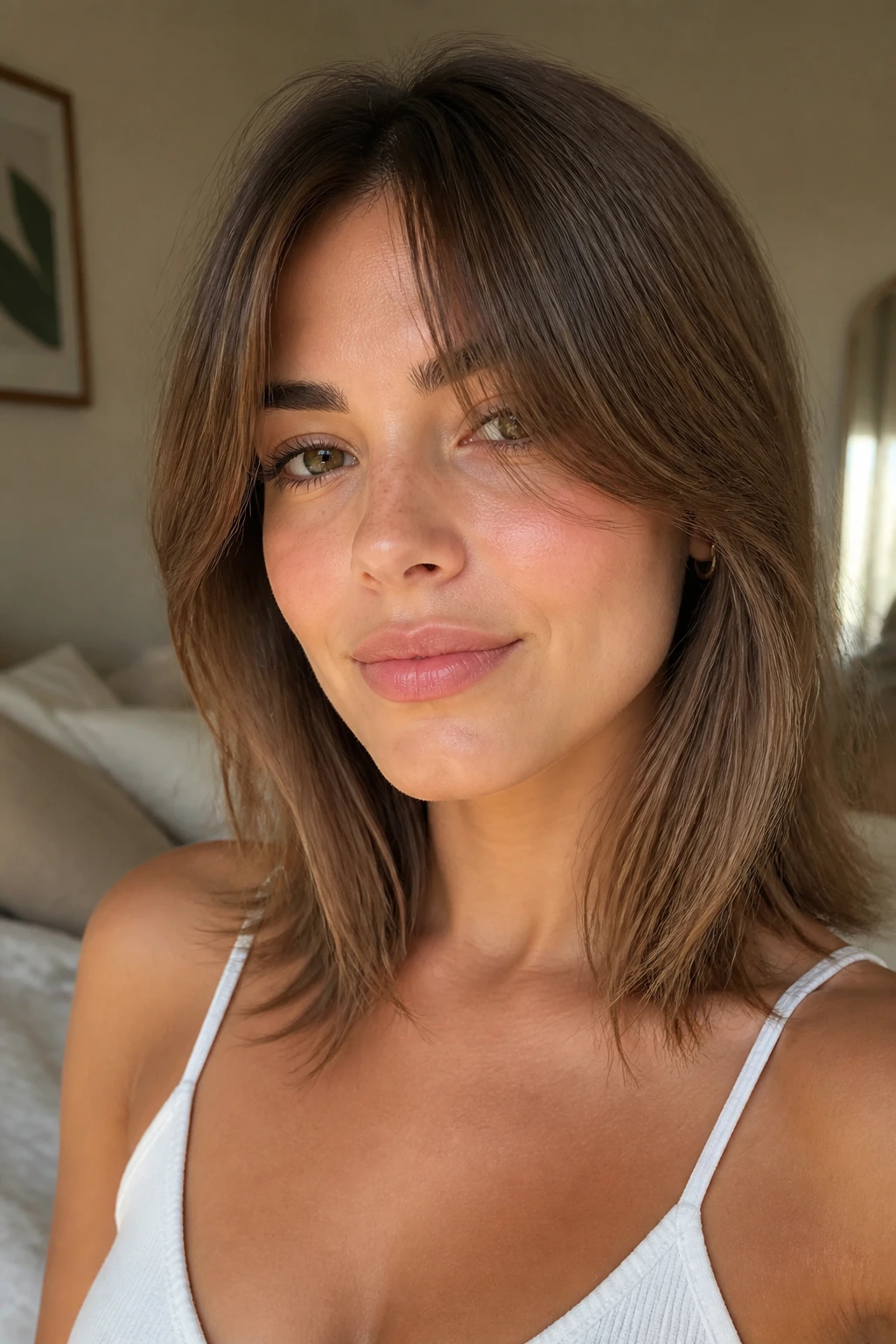
- Face Shape Flexibility: Oval faces can handle a center part, a side sweep, or a broken-up fringe without the haircut fighting your proportions.
- Fine-Hair Friendly Movement: Long bangs borrow visual weight from the corners and cheekbones instead of packing all the density into one blunt line.
- Grow-Out Grace: When the shortest point starts near the brows and the corners stay longer, the fringe can slide into face-framing layers instead of turning into an awkward strip.
- Low-Fuss Styling Options: Some of these shapes air-dry well, and the rest only need a quick bend from a round brush and a cool shot.
- Better Forehead Balance: A soft fringe changes the mood of the haircut without burying your face under hair you’ll spend all day pushing aside.
- Salon-Safe Range: If your hair is fine, these cuts give your stylist room to work with texture, parting, and density instead of trying to force a one-size shape.
What Your Stylist Needs to Know Before Cutting Fine Hair
The first thing to say at the chair is not “make it like the photo.” Say where you want the shortest point to land in real life. Fine hair almost always looks denser when it’s wet, so a bang that seems safe at the bowl can bounce up half an inch once it’s dry. If you want the shortest pieces to hit the brows, tell your stylist to leave a little extra length and check the shape after a rough dry.
Length should be set from the driest part of your hair
A bang that looks good wet can turn too short fast if your hair has any bend at all. That’s why a lot of good fringe work on fine hair happens with a dry check at the end, or at least a careful recheck once the roots are lifted. Ask for the shortest point to be cut conservatively first, then trimmed up little by little.
Texture should come from the edge, not from stripping the middle
Point cutting, slide cutting, and light razoring can keep the fringe airy. Heavy thinning shears often do the opposite on fine hair: they leave random weak spots that separate at the brow and show your scalp when the light hits. You want a soft edge, not missing hair.
Your part and cowlick should decide the shape
If your front hair naturally splits in the center, don’t fight it with a dead-straight bang. That usually ends in a bang that lifts weirdly at the temples by lunchtime. A side part, curtain split, or bottleneck shape will lie better and take less heat every morning.
1. Curtain Bangs That Skim the Cheekbones
Curtain bangs are the obvious answer, but there’s a reason people keep coming back to them. The best version for fine hair starts just below the brows at the center and drifts toward the cheekbones at the sides, so the fringe has shape without becoming a heavy bar across the forehead. On oval faces, that open center keeps the proportions relaxed.
What matters here is the corners. If they end too high, the fringe can look airy in a bad way. If they fall to the top of the cheekbones, the whole cut feels softer and fuller. I like this shape best when the stylist point-cuts the ends and leaves the parting a little wide, because narrow curtain bangs can collapse and separate too quickly on fine hair.
- Best with: straight or softly wavy hair that bends easily.
- Ask for: a light point-cut finish and corners that reach the cheekbone.
- Style with: a 1-inch round brush and a quick forward-to-back blow-dry.
Pro tip: stop the heat as soon as the roots set, then use the cool shot to lock in the bend. Fine hair loses shape fast if you keep blasting it after it’s already dry.
2. Bottleneck Bangs With a Narrow Center
If curtain bangs feel too loose, bottleneck bangs give you a sharper shape without turning blunt. The center is narrower and a touch shorter, then the sides widen and soften as they move toward the temples. That little change in width makes a big difference on fine hair because the fringe doesn’t have to carry the same amount of visual weight all the way across.
Oval faces wear this shape well because the opening at the center keeps the forehead visible. The fringe frames the eyes instead of boxing them in. I’d pick this cut for someone who likes a little polish but still wants the hair to fall in a relaxed way when it air-dries.
This is also one of the better options if your front hair tends to split apart. The shape already expects a little separation, so you’re not fighting the texture. That makes mornings easier than people expect.
3. Side-Swept Fringe With a Long Diagonal Line
A deep side part is the lazy woman’s blowout, and I mean that kindly. Sweep the front from the heavier side across the forehead so the fringe falls on a diagonal, with the longest bit grazing the cheekbone. It gives fine hair a clear line to follow, which usually means less frustration and fewer flat spots.
This shape is especially nice if your bangs keep flipping the wrong way in humidity or if one side of your hairline is stronger than the other. A diagonal fringe works with that asymmetry instead of pretending it doesn’t exist. For oval faces, the slant adds movement without changing the balance of the face.
How to wear it
Blow-dry the front in the opposite direction first, then sweep it back across the forehead while it cools. That little over-direction at the root gives you lift without needing a ton of product. A pea-size mousse at the roots is usually enough.
4. Feathered Bangs That Melt Into the Front Layers
Feathered bangs are for people who hate a hard line. The cut uses broken ends and light layering so the fringe dissolves into the rest of the haircut instead of sitting on top of it like a separate piece. On fine hair, that matters because the front keeps moving even when the rest of the head starts to go flat.
The best feathered fringe on an oval face usually lands somewhere between the eyebrow and cheekbone, with the corners blended into front layers that continue down the jaw. You get softness around the face without losing the sense of length. It’s one of the easiest long-bang shapes to grow out because the whole thing already behaves like a layer.
If you want this look to stay airy, avoid heavy creams. A light texturizing spray is enough. Too much slip and the feathering disappears.
5. Wispy See-Through Bangs
See-through bangs can look elegant or accidental, and the difference is density control. You want enough hair to frame the eyes, but not so much that the front turns into a dark band. For fine hair, this is one of the softest ways to wear bangs without swallowing the face.
The trick is to keep the section narrow and the ends softly broken up. If the fringe gets too wide, it stops looking wispy and starts looking thin in a bad way. A little bit of separation is the goal here. A lot of separation means you cut too much.
This style works best when the rest of the haircut has some movement too. Straight, one-length hair can make wispy bangs look disconnected. Add a slight bend through the front or a few face-framing layers, and the fringe suddenly makes sense.
6. Brow-Skimming Arched Fringe

An arched fringe follows the brow line with a gentle curve. It feels neater than curtain bangs and softer than blunt bangs, which is useful if you like a cleaner finish but still need fine hair to keep some air. Ask for the center slightly shorter than the corners so the shape bows, not blocks.
On oval faces, the arch adds structure without changing the overall balance of the face. It gives the eyes a frame, and that frame matters when your hair is light enough to go flat quickly. I like this shape for people who want bangs they can tuck, bend, or brush into place in less than two minutes.
It also wears well with glasses. The curve stays above the frame line more easily than a heavy straight fringe, so the whole thing feels less crowded.
7. Piece-Y Center-Part Bangs

This is the fringe for people who want a center part but don’t want the whole front section to read as a curtain. The hair is separated into thin ribbons, usually with a touch of texture spray or a matte cream, so the bangs sit in pieces instead of one sheet. Oval faces can wear this easily because the face stays open.
On fine hair, piece-y bangs are useful because they create shape without asking for density that isn’t there. The trick is to keep the pieces intentional. If you over-separate them, the front starts looking like three random strings. If you keep them soft and slightly irregular, they look relaxed and modern.
This cut is a good match for straight hair that doesn’t love a full bend. You can twist the pieces around your fingers while they dry and let them fall naturally from there.
8. Choppy Long Fringe With Broken Ends

Choppy long bangs are the opposite of precious. The ends are uneven on purpose, which makes fine hair look a little rougher in a good way — more broken up, less see-through. Keep the shortest bits around eyebrow level and let the edges land wherever they want as long as the front doesn’t turn blunt.
I like this shape for oval faces because the unevenness keeps the eye moving. There’s no heavy center line to stop the look in its tracks. If your hair tends to fall limp by noon, a choppy fringe gives it some grit so it doesn’t melt into the forehead.
Use a small round brush or even just your fingers to set the bend. A heavy styling cream will take the edge off the texture, which is the one thing this cut needs to keep.
9. Face-Framing Bangs With Collarbone Layers
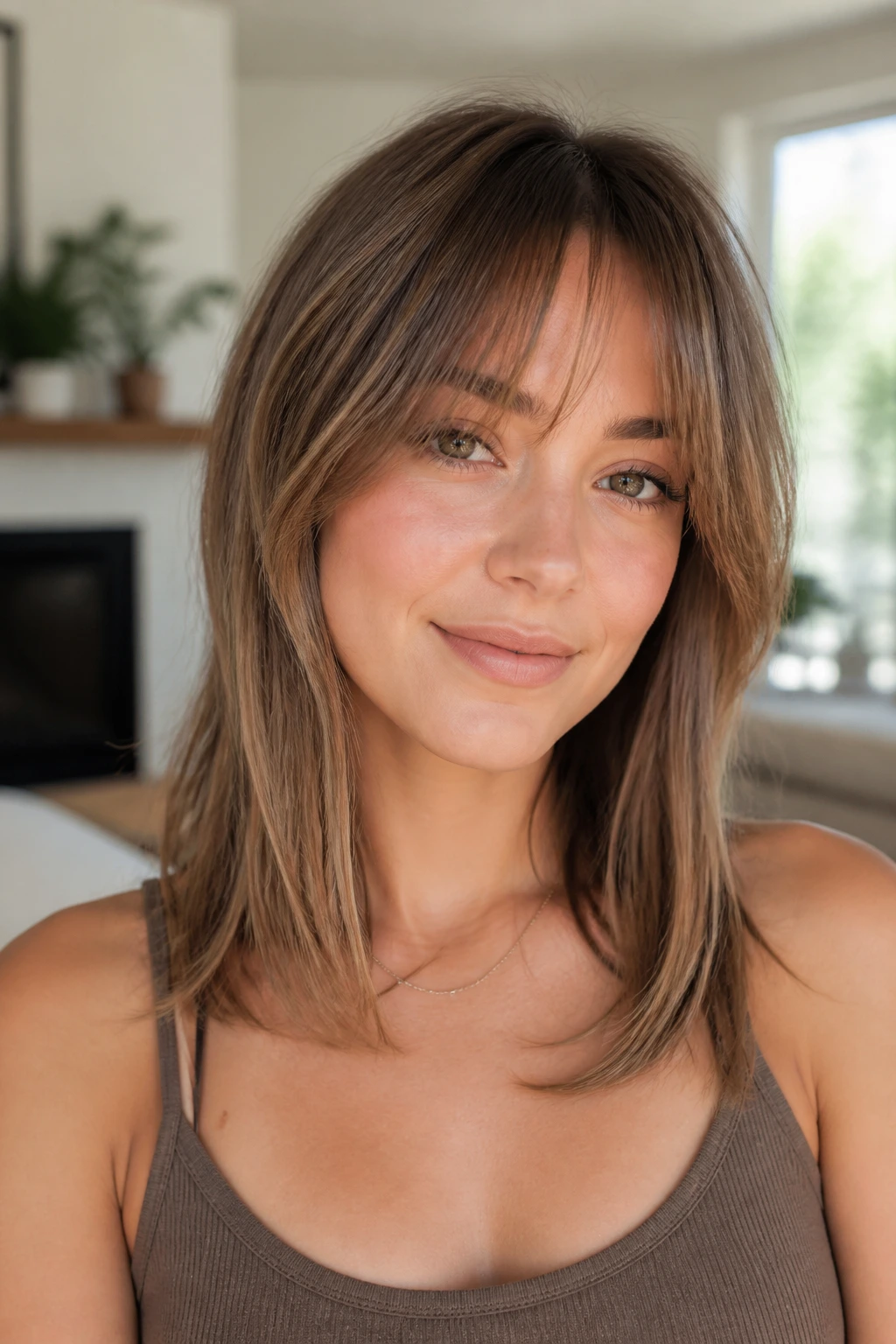
This one is almost a haircut strategy rather than a fringe shape. The bangs start near the brows, then melt into front layers that keep traveling all the way to the collarbone. For fine hair, that connection is gold because the front never feels isolated from the rest of the cut.
Oval faces benefit from the softness around the cheekbones and jaw. The long layers keep the silhouette open while still giving the impression of fullness at the front. I’d pick this if you want bangs, but not a bang that announces itself every time you walk into a room.
The key is to keep the transition smooth. If the front pieces are too disconnected from the rest of the cut, fine hair can look stringy at the corners. Connected layers solve that problem better than more product ever will.
10. Soft Bend Bangs
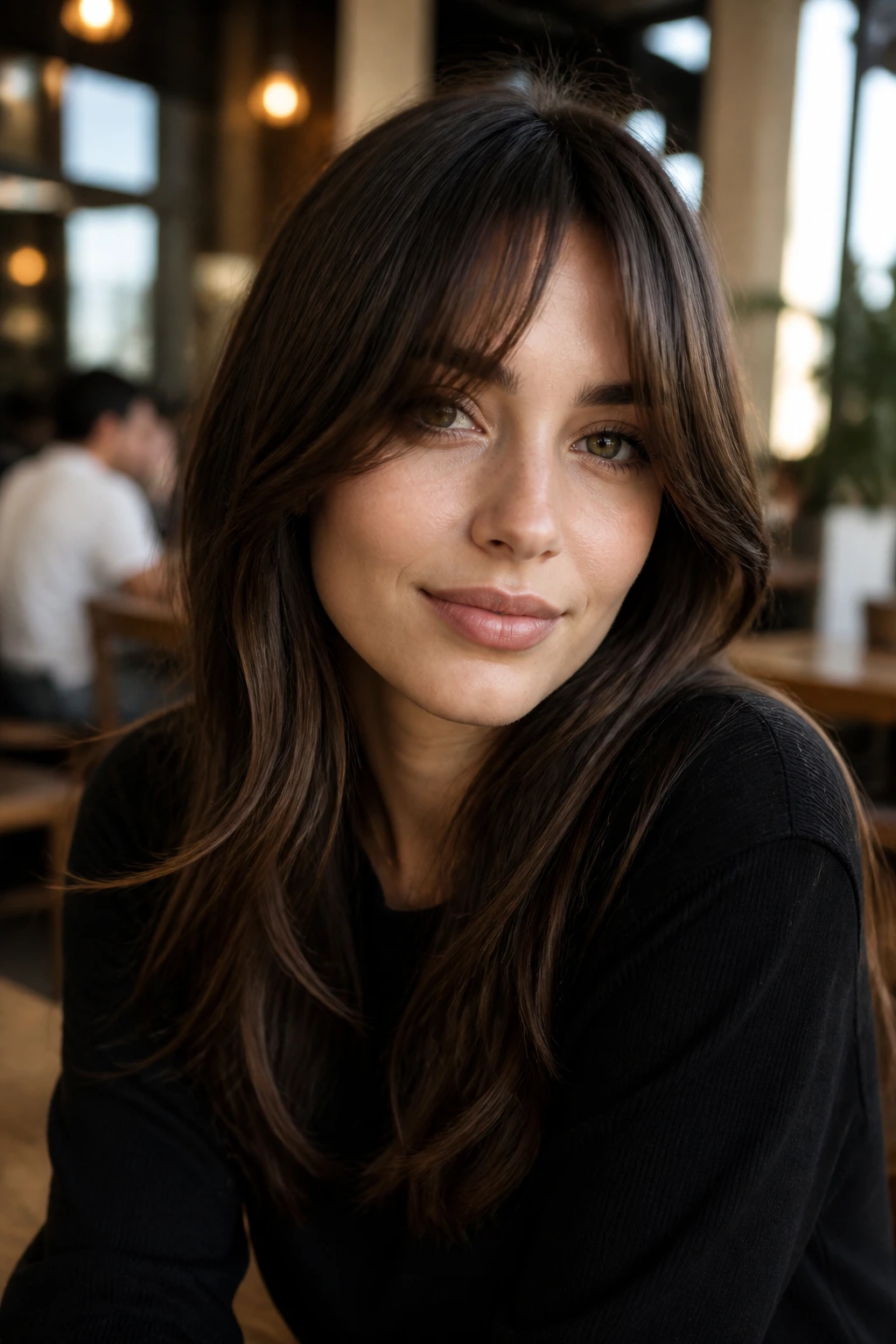
Soft bend bangs are the easiest to live with if your hair already takes a curve from a round brush. The point is a slight inward bend, not a polished curl, with the corners turning under just enough to graze the cheekbones. Fine hair likes this because the shape gives volume at the front without asking for a lot of product.
On an oval face, the bend creates a gentle frame that feels finished but not stiff. It works especially well if you wear your hair down most days and want the front to feel fuller without a separate styling routine for the bangs alone.
Best way to set them
Blow-dry the bangs from side to side first, then finish by brushing them downward and slightly inward. That little back-and-forth motion gives the roots lift and keeps the hair from splitting straight down the middle.
11. Deep Side-Part Fringe
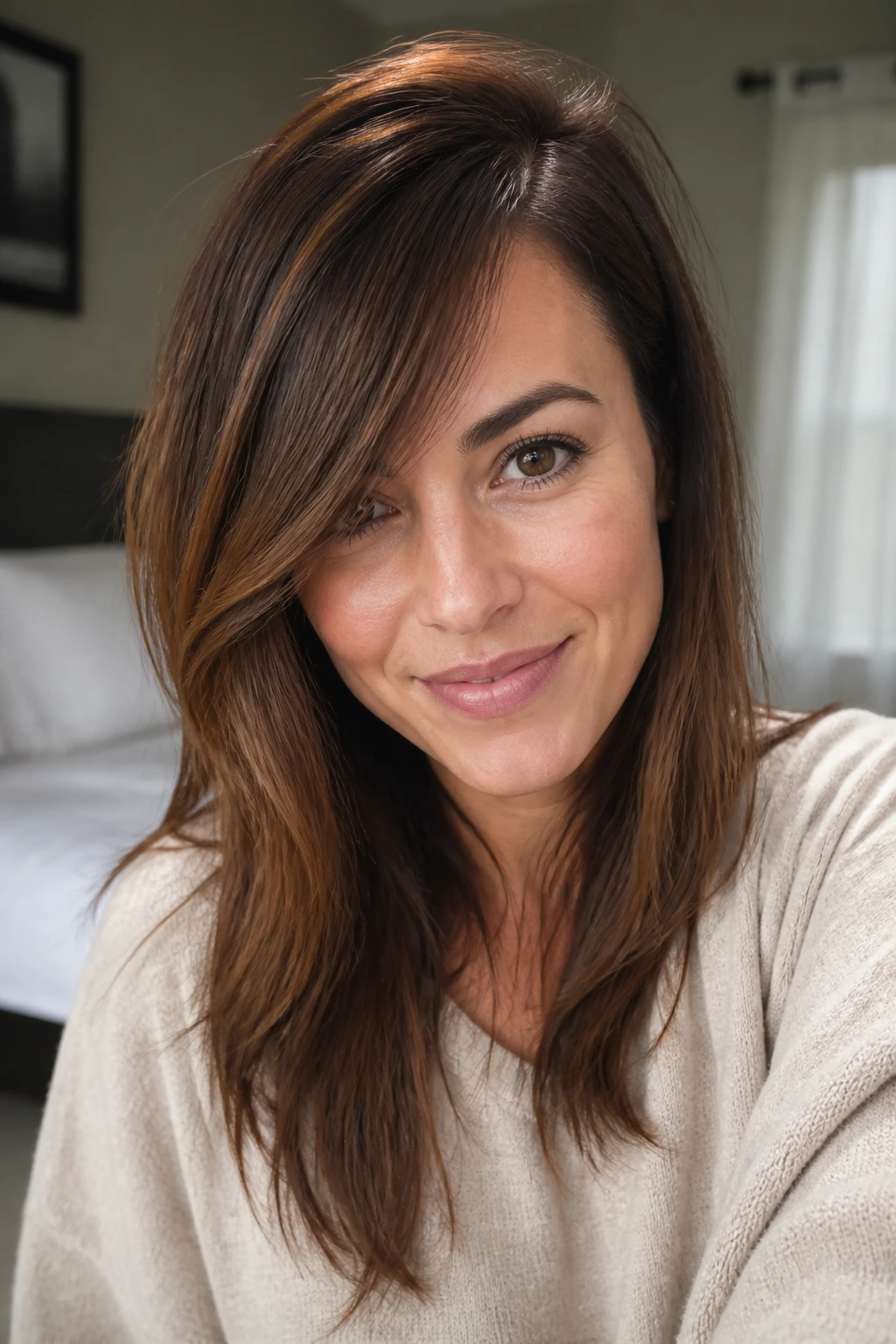
A deep side part gives the roots something to do. The heavier side creates lift, the lighter side stays soft, and the whole front gets a diagonal line that works well on oval faces. If your hair falls flat at the crown, this fringe is often more useful than trying to brute-force volume at the center.
Fine hair benefits because the part creates an instant visual slope. The front doesn’t have to look thick to look full. That’s the whole trick. You’re using direction instead of density.
If your hair naturally wants to fall to one side, lean into it. Fighting that pattern usually means more heat, more product, and less freedom. A deep side fringe gives you shape with less effort.
12. Swoopy Blowout Fringe
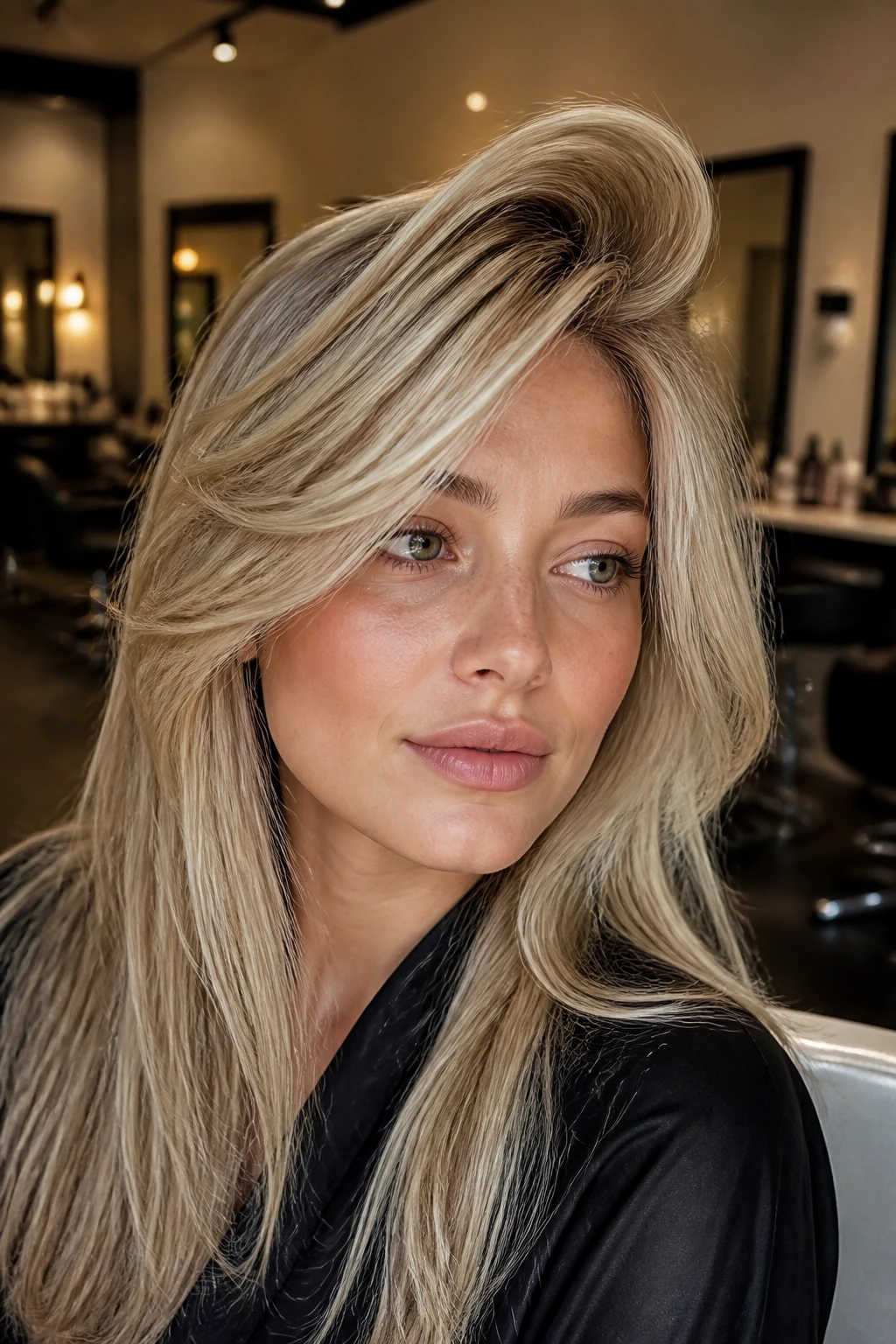
This is the “I actually took five extra minutes” version. The bangs are cut long enough to bend up and away from the forehead, then swoop back in a polished arc. On fine hair, that arc gives the illusion of thickness because the hair is lifted off the skin instead of pressed against it.
Oval faces wear this shape easily because the swoop keeps the forehead open while adding movement near the eyes. It feels a little dressed up, but not fussy. If you like a clean finish and don’t mind using a round brush, this one gives you the most salon-looking front section on the list.
A Velcro roller for three or four minutes can help the curve hold if your hair drops fast. Small detail. Big difference.
13. Split Fringe With Inward Curves
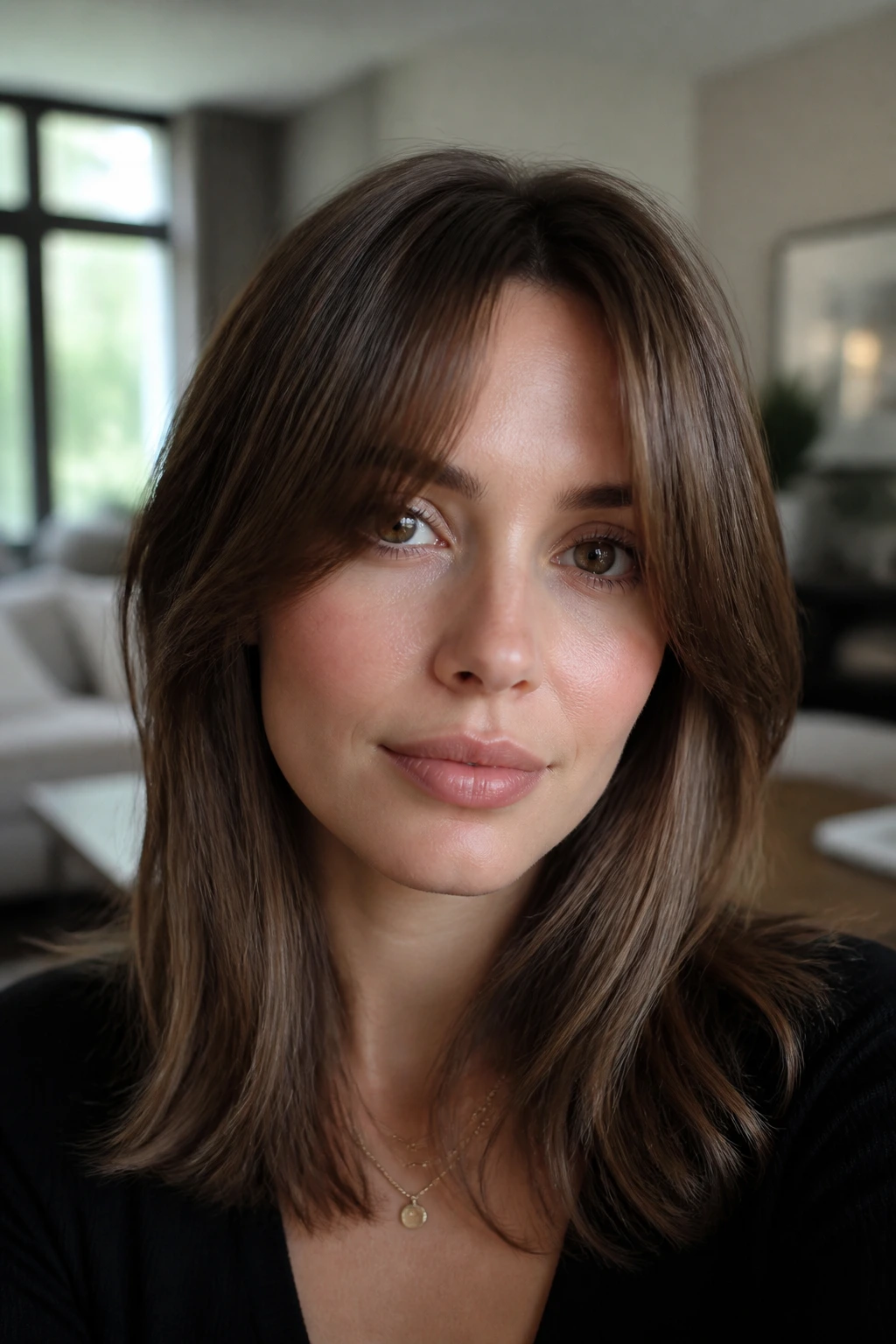
A split fringe is not the same thing as a curtain bang with a center part. The center stays open, but the sides bend inward toward the eyes and cheekbones, which keeps the shape softer than a straight drop. It’s a good choice if you like your face open but still want the front to feel styled.
On fine hair, the inward curve keeps the fringe from looking like two loose strings. The bend gives the shape a little weight near the temples, which helps the cut read as intentional. For oval faces, that inward motion adds just enough framing without pinning the eye in one place.
If your hair is straight, set the curve with a round brush or a mini flat iron turned slightly under at the ends. Keep the motion soft. A sharp flip would fight the point of the cut.
14. Long Shag Bangs
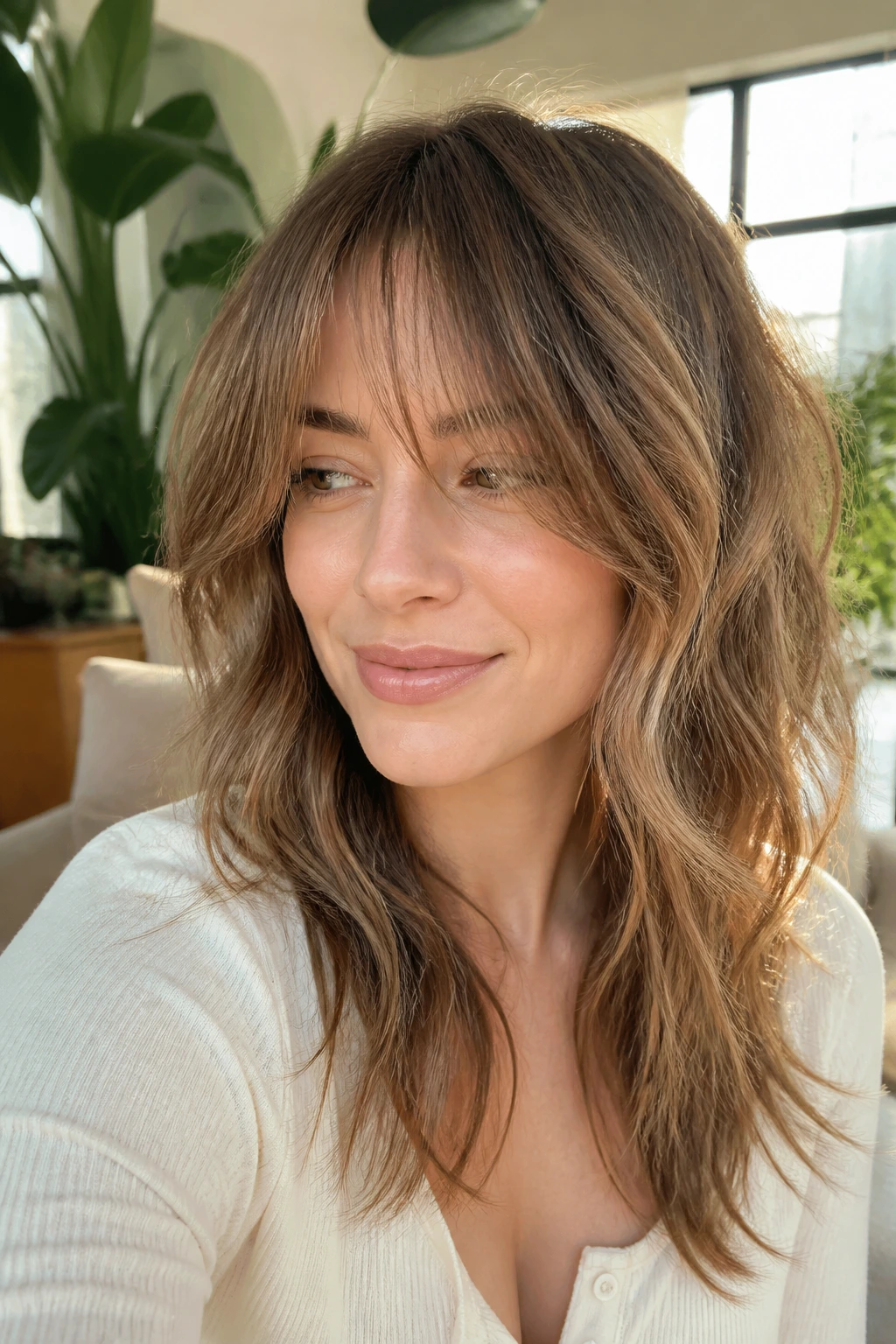
Long shag bangs work when you want the front to look lived-in from day one, not after three weeks of messing with it. The cut uses layers, bends, and a little unevenness, so the fringe falls into the rest of the haircut instead of sitting on top like a separate panel. Fine hair can benefit here because the broken texture keeps the ends from clumping.
On oval faces, shag bangs add attitude without changing the face shape much. They let the hair move, which is half the battle with low-density fronts. If your hair has even a hint of wave, this is one of the easiest ways to make that wave work for you instead of against you.
A light salt spray or texture mist usually does more here than a heavy cream. The cut already carries the personality.
15. Rounded Long Bangs
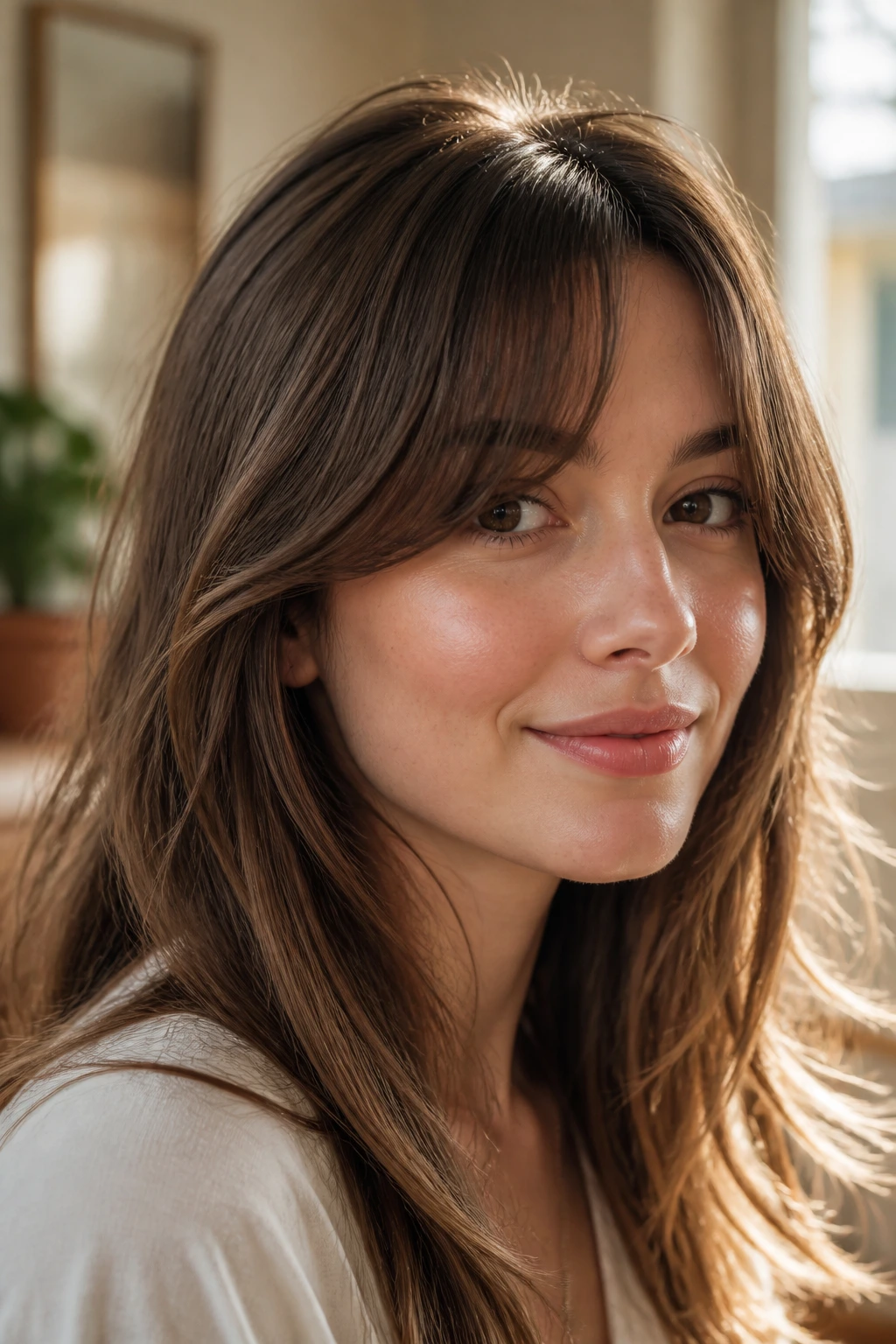
Rounded long bangs follow the shape of the brow and soften the whole hairline. They’re neat, almost tidy, but not harsh, which is why they suit oval faces so easily. Keep the center a touch shorter than the temples, and the front will curve instead of hanging straight down.
This shape is a nice middle ground if curtain bangs feel too relaxed and blunt bangs feel too severe. Fine hair likes the rounded hem because it creates a defined edge without needing a thick wall of hair. The shape reads fuller than wispy bangs but lighter than a straight-across fringe.
It also plays well with a smooth blow-dry. A round brush and a quick bend under at the end usually do the job.
16. Barely-There Fringe

This is the fringe for people who want a whisper, not a statement. A few delicate pieces at the front and temples can break up the forehead area without committing to a full bang zone. On very fine hair, the trick is restraint: too few pieces and it looks accidental, too many and the effect disappears.
Oval faces can wear this easily because the face stays open. The fringe just softens the edges a touch. I’d choose it if you like your hair pinned back some days and down on others, because the pieces can disappear into a ponytail without looking chopped.
Keep the styling light. A touch of spray and your fingers is usually enough. Anything heavier tends to flatten the very softness this shape needs.
17. Razored Fringe With Soft Separation
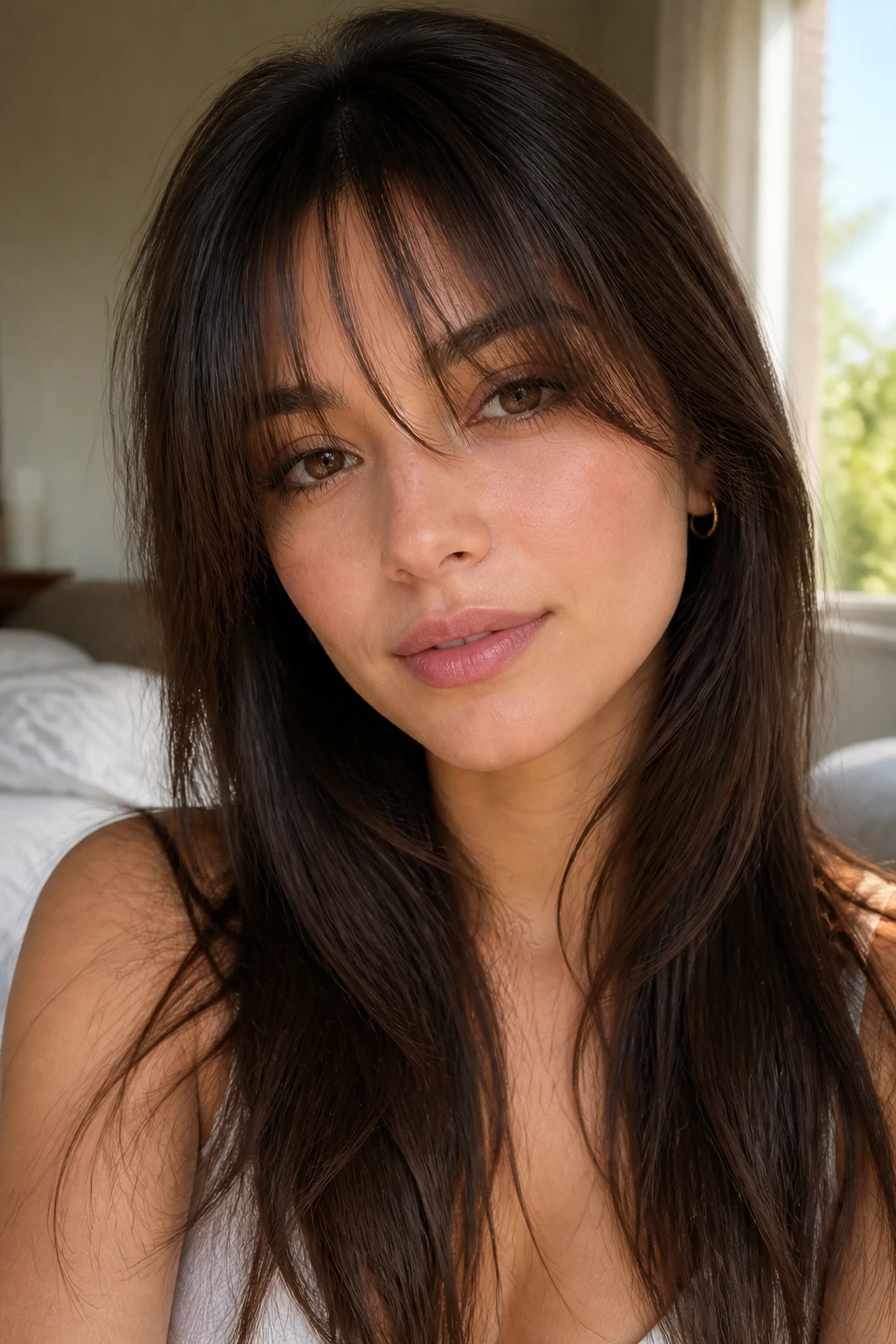
Razored bangs can look airy and cool, but only when the razor is used with a light hand. Fine hair doesn’t need to be chopped to bits; it needs the edges softened so the ends don’t form one hard line. If your hair is straight and healthy, a bit of razor work can give the fringe a slippery, separated finish that moves well.
On oval faces, the separation keeps the front from feeling crowded. The bangs sit in thin pieces rather than a solid block, which gives the eyes more room. I’d avoid this if your hair is already fragile or frays easily at the ends. In that case, scissors and point cutting are safer.
The best razored fringe still looks deliberate, not shredded. There’s a difference, and it matters.
18. Flipped-Out Bangs

Flipped-out bangs are a small retro cheat. Instead of curling inward toward the face, the ends turn away, which opens the cheekbones and keeps fine hair from lying flat against the forehead. You get a little width at the front, and that can make the whole haircut feel less narrow.
This shape works well on oval faces because it adds movement without crowding the center of the face. It’s also a smart option if your hair has a habit of sticking to your forehead when the air gets warm. A small round brush or a flat iron flick at the ends can set the direction.
Keep the flip soft. A giant retro wing can look costume-y fast. A small lift at the end is enough.
19. Diagonal Fringe With a Clean Slide
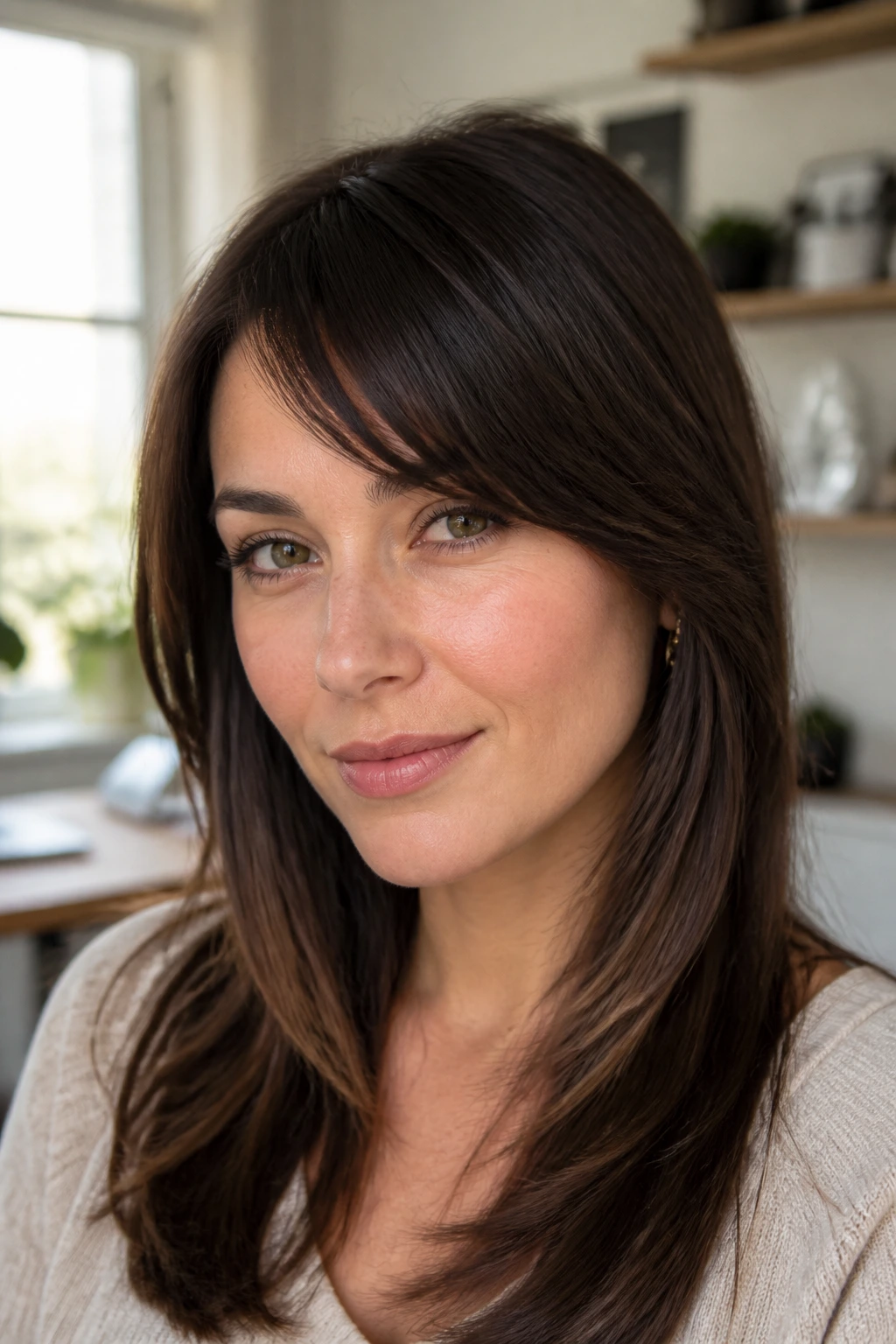
A diagonal fringe is the bluntest-looking option on this list, but it still reads soft because the line moves from one temple down toward the opposite cheekbone. That slant flatters oval faces without changing their balance, and it gives fine hair a clear shape to hold. Ask for the edge to be point-cut so the line doesn’t look like a ruler.
This is a strong choice if you like a more polished front section and don’t mind keeping it brushed into place. Fine hair often benefits from a clear line like this because the shape feels intentional even when the density is light. You’re not pretending the hair is thick. You’re giving it a clean direction.
If your part shifts through the day, this style usually behaves better than a center split. The diagonal line has more staying power.
20. Curtain Bangs With Extra-Long Corners
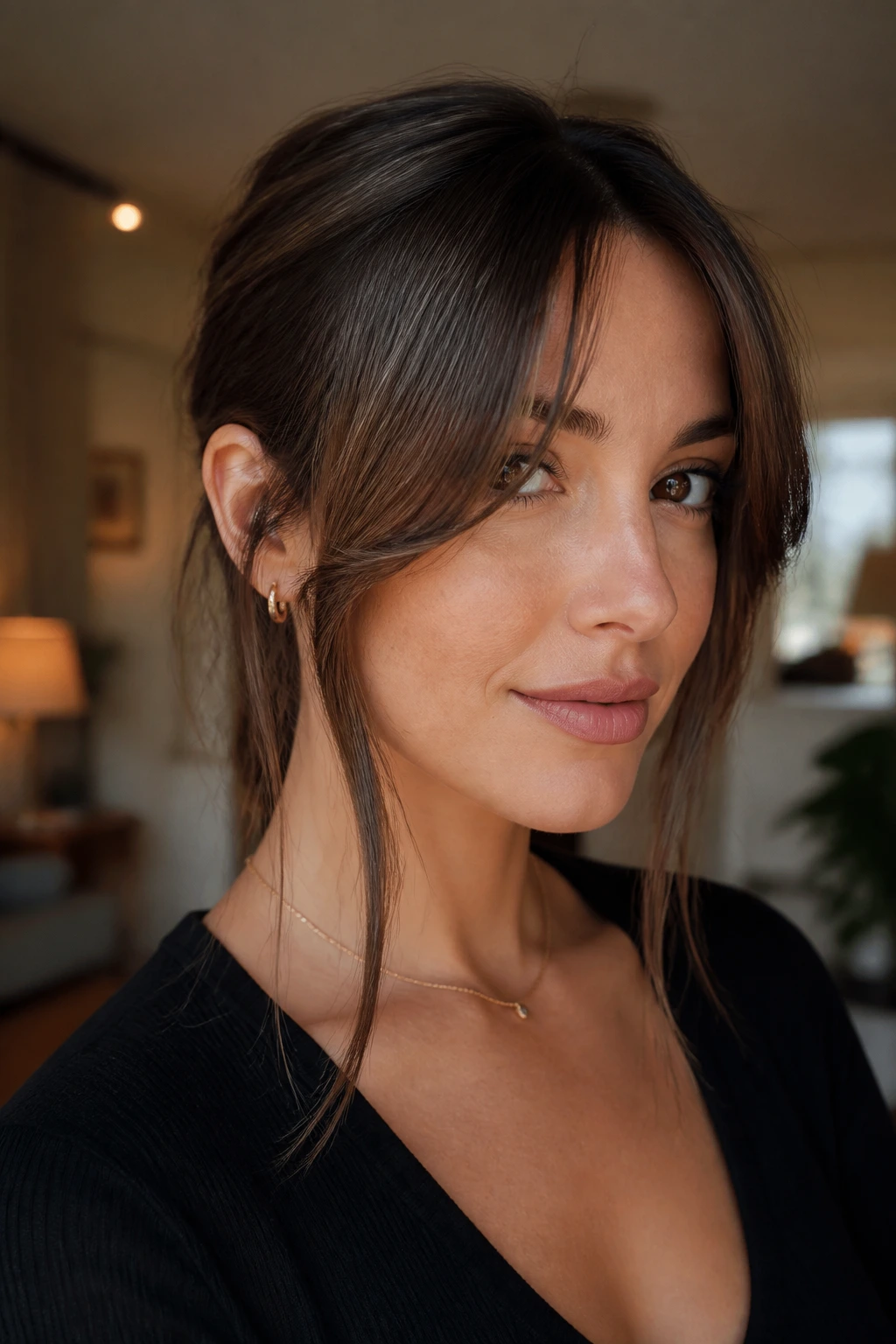
Think of this as curtain bangs with more room to grow. The center sits around the brows, but the corners go longer — often to the top of the lip or even the jaw — so the front can tuck behind the ears on a lazy day. Fine hair gets a break here because the longer sides carry the visual weight instead of the middle.
Oval faces wear this shape well because the corners soften the cheekbones without closing in the forehead. It feels easy and slightly romantic, but the long corners make it practical. If you’re the kind of person who likes to pull one side back or pin a piece behind the ear, this cut gives you options.
The biggest win is the grow-out. It doesn’t fall off a cliff as fast as a shorter fringe.
21. Cowlick-Friendly Split Fringe
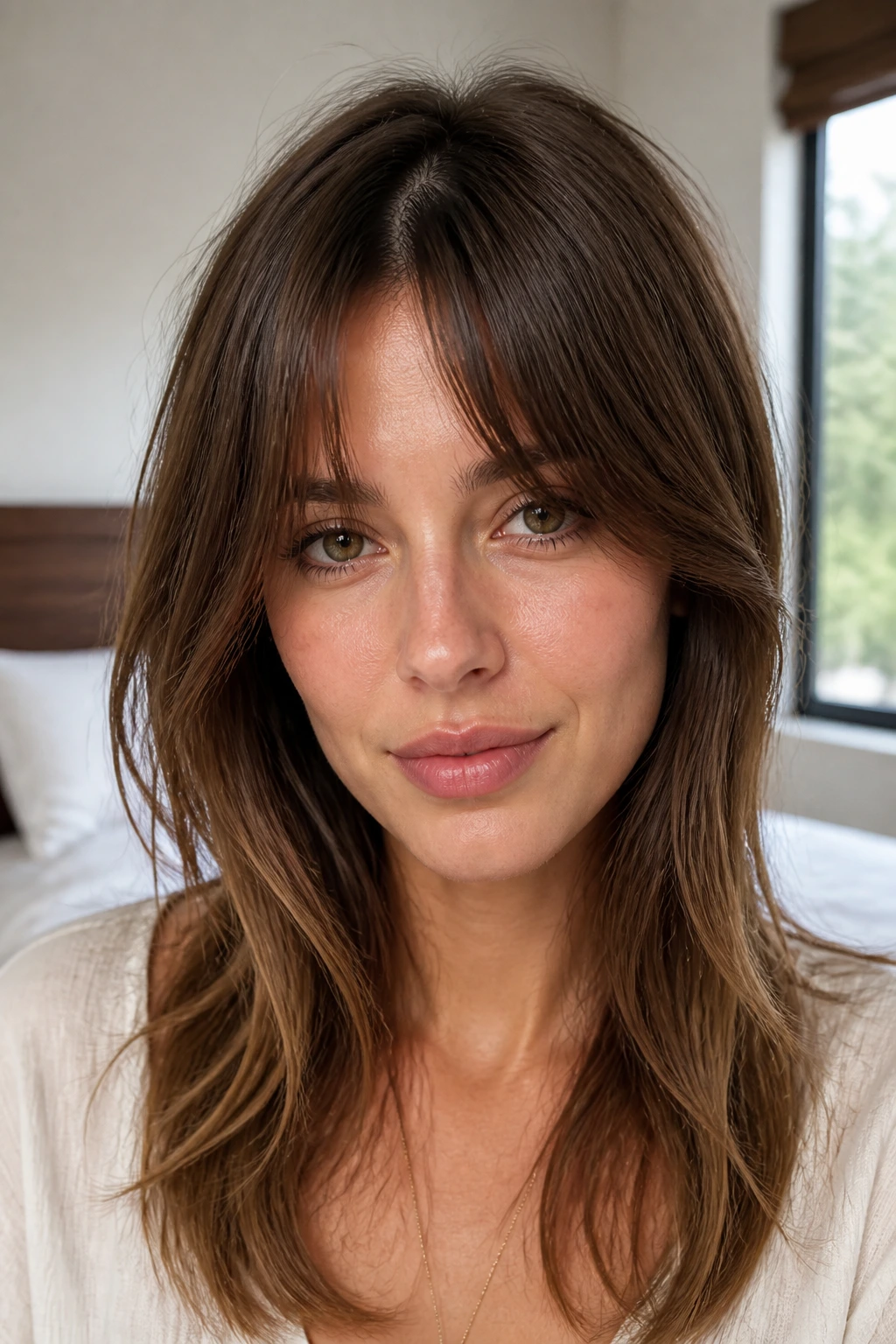
Some hairlines refuse to sit in one neat direction. This version works with that instead of trying to overpower it: the center stays slightly open, the two sides are shaped to fall where they want, and the blow-dry leans into the natural split. If your bangs keep separating anyway, this is the cut that stops fighting back.
Fine hair loves a cowlick-friendly shape because it doesn’t need to be forced into a thicker line. The fringe can stay light and still look deliberate. That matters more than people think, especially if your front hair grows in different directions.
- Ask for: a soft center opening and longer corners.
- Style with: a clip at the roots for the first five minutes of drying.
- Skip: heavy waxes that make the separation look greasy.
22. Blended Fringe for Low-Density Hair
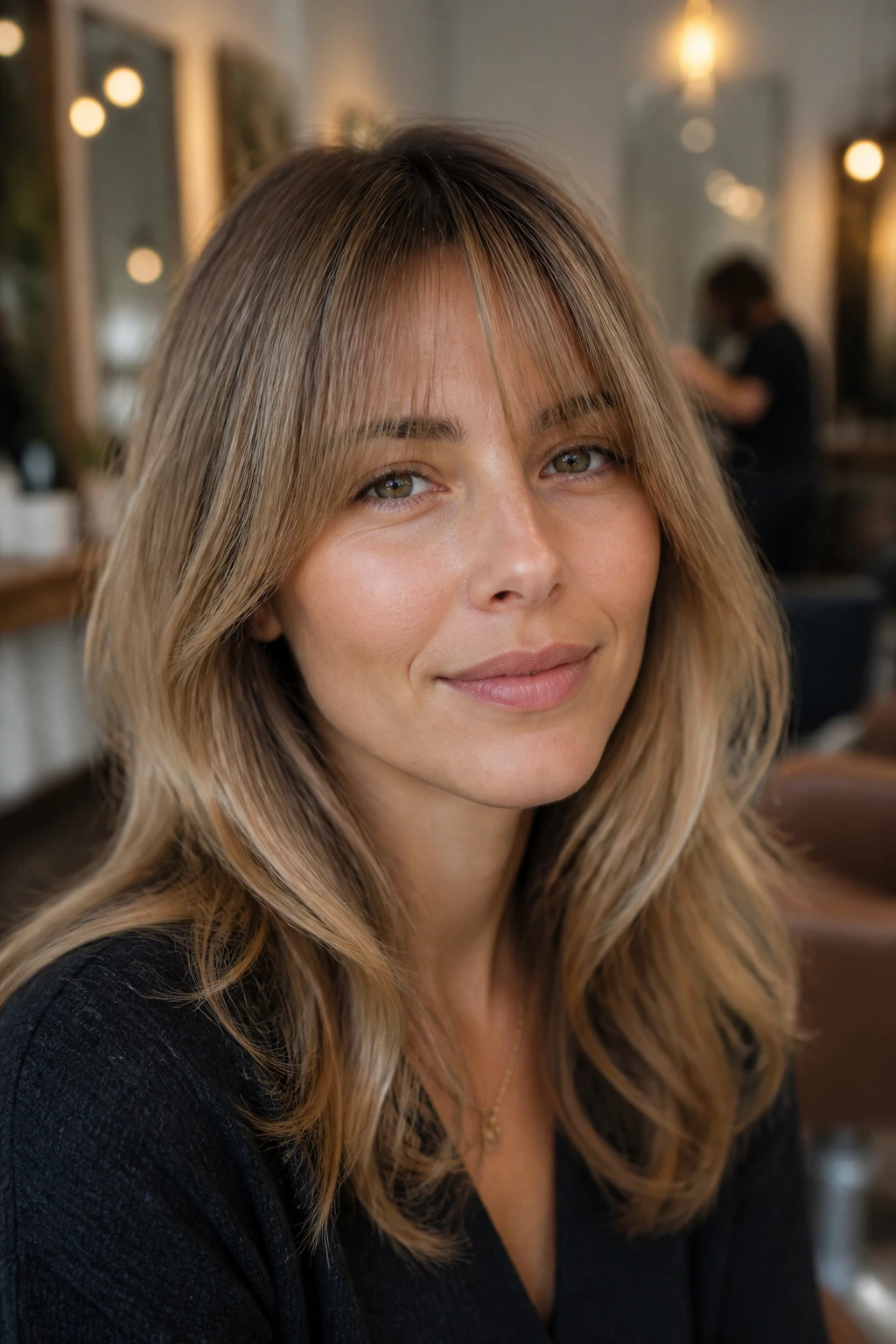
When the hairline is sparse, the worst thing you can do is carve out a huge bang section and hope for the best. A blended fringe keeps the front connected to the top layers, so the eye reads softness rather than an obvious gap. The cut should feel like part of the haircut, not a front curtain bolted on top.
Oval faces don’t need heavy correction, so this light connection works well. The shape can sit around the brows and temples without crowding the face. If your hair is very fine at the front, this is one of the most honest options on the list. It doesn’t pretend the density is there. It just makes the most of what is.
A quick root lift spray helps, but the blend is doing most of the work. That’s the nice part.
23. Hybrid Bottleneck Fringe

This sits between a bottleneck and a side sweep. The center is narrow and airy, the sides get a little more length, and the whole shape opens gradually instead of all at once. If you like the idea of curtains but want something a touch cleaner, this is the compromise that doesn’t feel like one.
For fine hair, the hybrid shape keeps the front from becoming too wide too quickly. For oval faces, it adds a little tension at the center without making the forehead disappear. I like it when the hair is fine but not sparse — enough for a shape, not enough for a heavy wall.
Think of it as the sharpest version of softness. That sounds contradictory. It isn’t.
24. Long Bangs With Side Tendrils
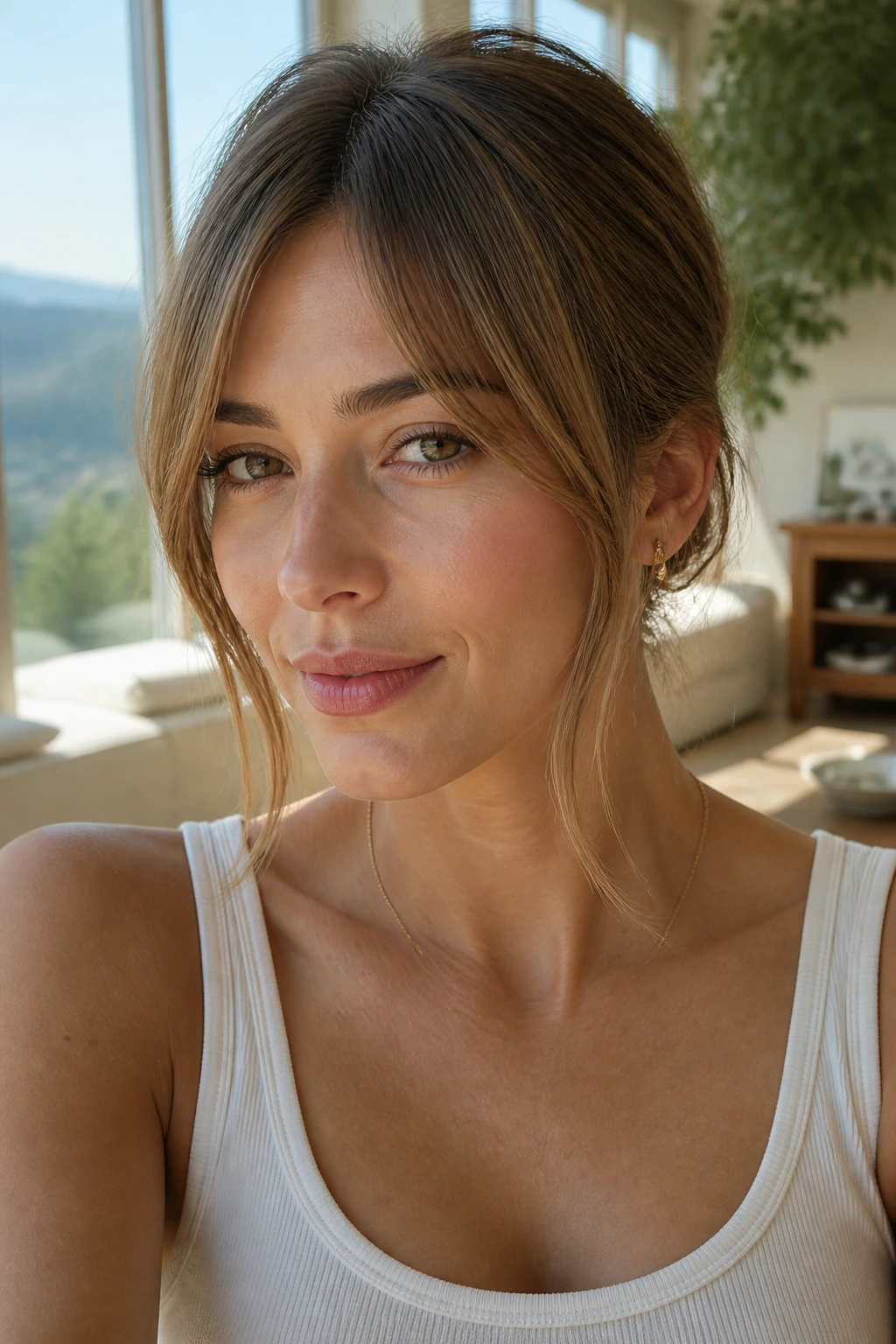
Two face-framing tendrils can do more for fine hair than a heavy bang section ever will. The pieces fall near the cheekbones and jaw, so they soften the face without crowding the forehead. This is a good move if you wear your hair in buns, clips, or low ponytails half the week.
Oval faces can handle that open center because the tendrils carry the shape. Fine hair benefits because the cut doesn’t demand a dense front panel. You’re using placement instead of bulk.
This is also one of the easiest styles to live with on day two. If the front starts to separate, the answer is usually a quick re-bend on the tendrils, not a full wash.
25. The Soft Grow-Out Fringe
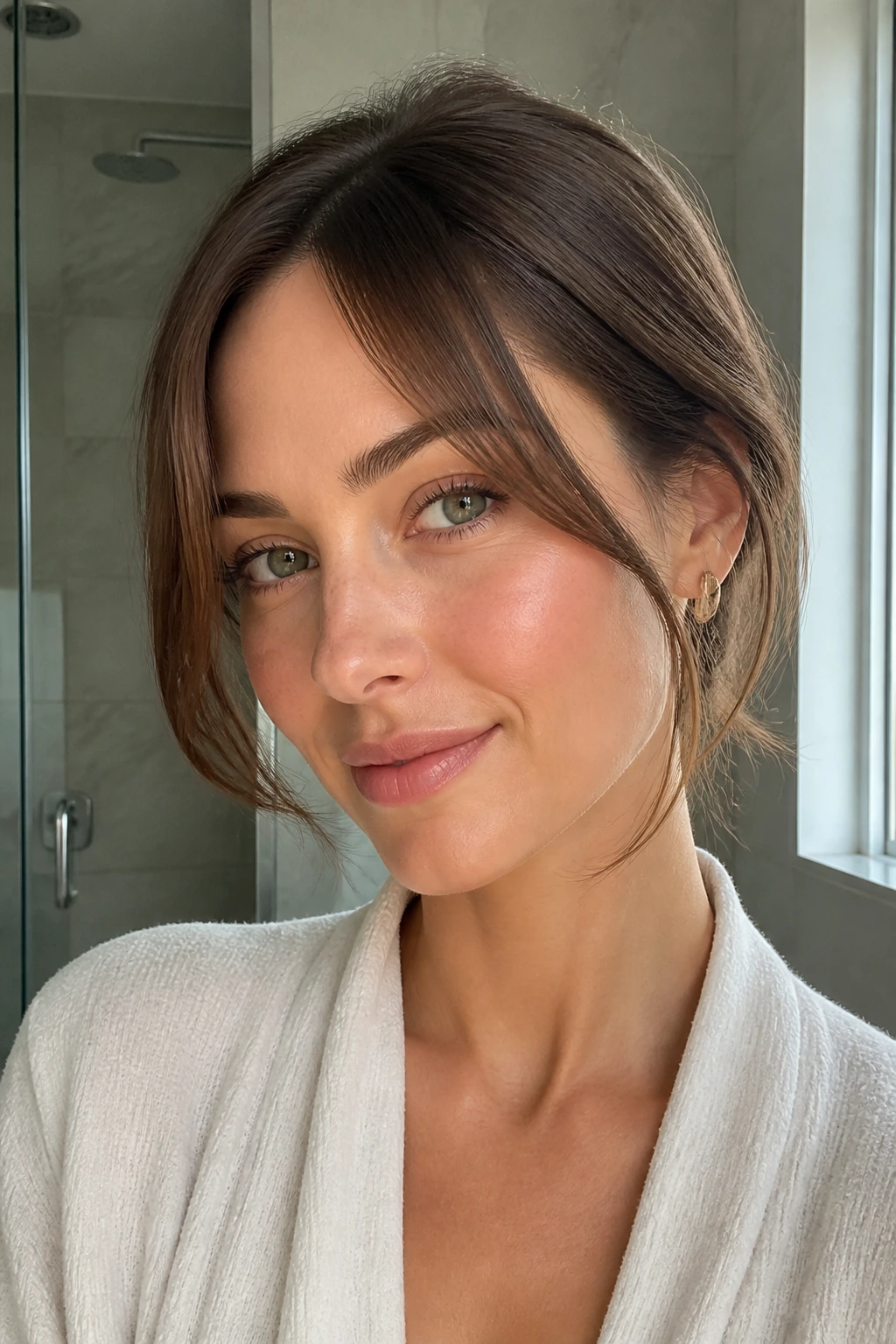
The smartest grow-out fringe is cut to look good while it’s still moving through the awkward stage. The shortest pieces stay long enough to tuck behind the ear, while the corners are blended into the front layers so the shape dissolves instead of dropping off a cliff. If you know you may change your mind later, start here.
On oval faces, the soft grow-out fringe keeps the front open and balanced. On fine hair, it avoids the heavy commitment that can make a bang feel like too much work. This is the version I’d call the least dramatic in the salon and the most forgiving on week three.
It’s a good reminder that bangs do not have to be a permanent mood. Sometimes they’re just a season of hair, and that’s enough.
How to Keep Long Bangs Lifted All Day
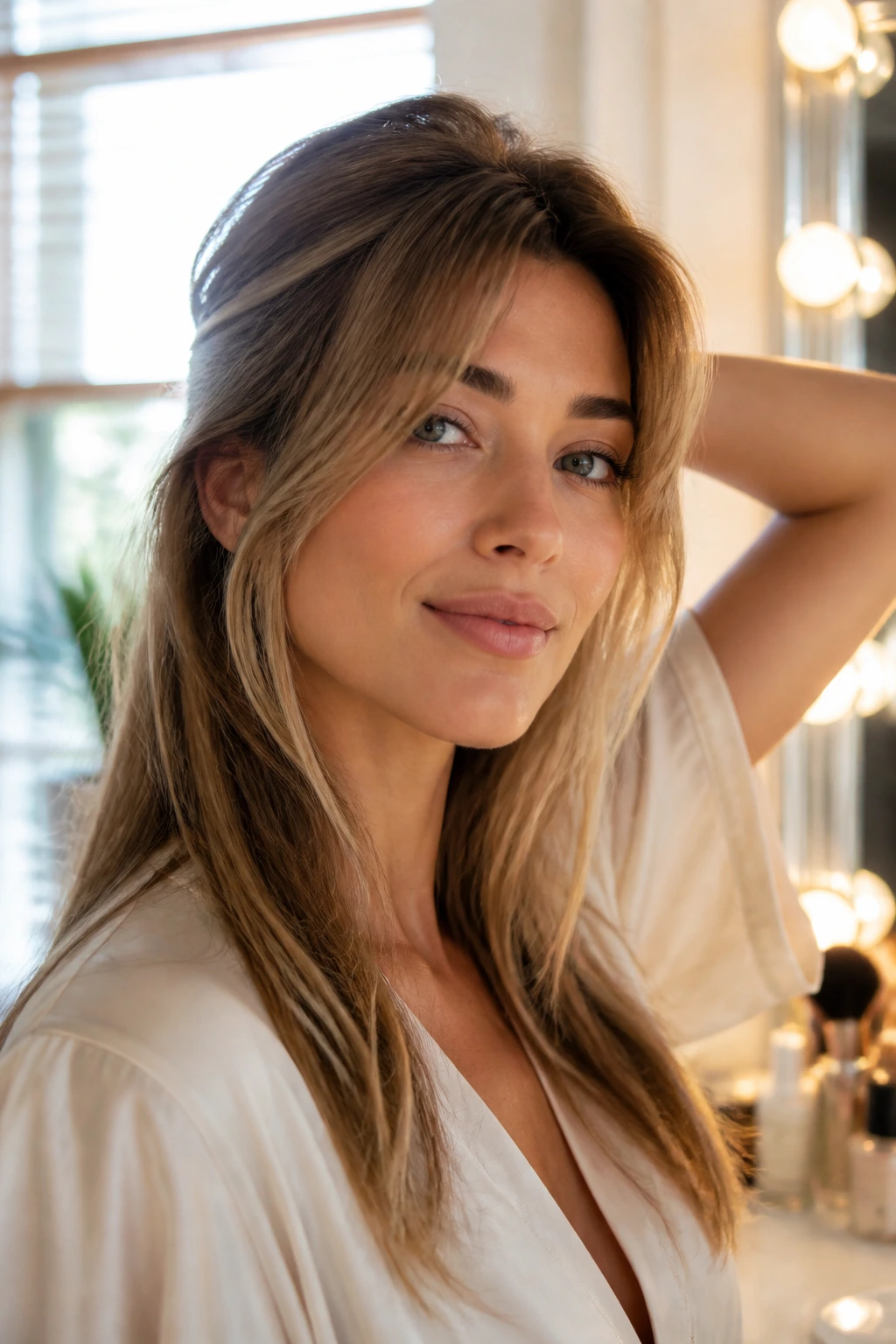
Fine hair needs the root to set first, or the whole bang collapses by lunch. Start with a lightweight mousse or root spray at the fringe area, not all through the ends. Then dry the bangs from side to side for the first 20 to 30 seconds so the root line doesn’t freeze in one flat direction.
A round brush helps, but only if you keep the tension gentle. Pull the hair upward at the roots, then curve it down at the very ends. If you drag the brush straight down, you’ll erase the lift and make the front lie too close to the forehead.
Refresh, don’t restart
If the bangs flatten later in the day, mist the root zone with a little water or leave-in spray and give it a 15-second blast of warm air. Don’t soak the fringe. Wet fine hair clumps, and clumpy bangs look thinner than they are.
Dry shampoo helps after the hair is fully dry. A tiny puff at the roots is enough. Too much powder at the front turns into chalk, and chalky bangs are nobody’s friend.
The Mistakes That Make Fine Hair Look Flatter
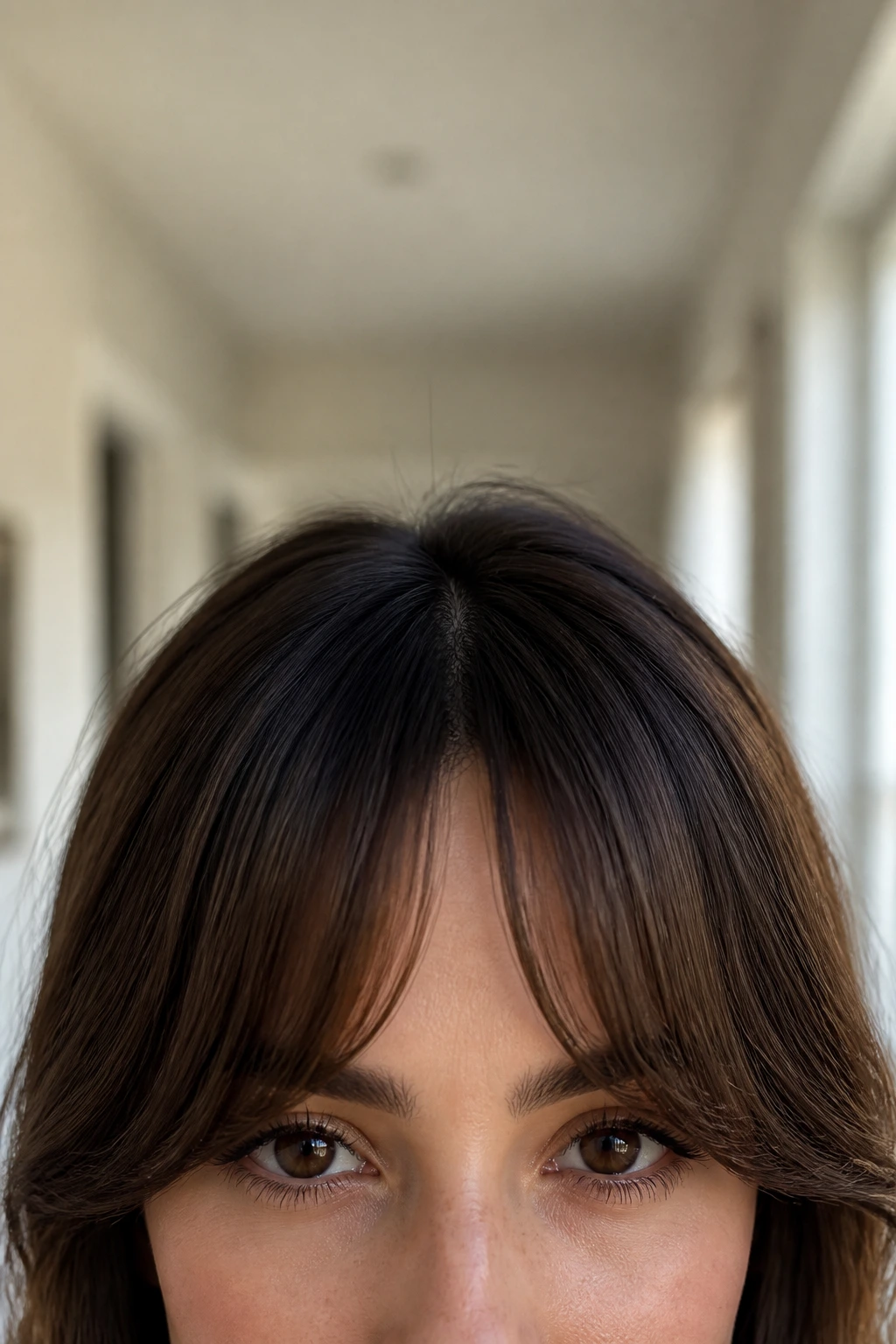
- Making the bang section too wide: The front starts to look thin because too much hair gets pulled forward. Keep the bang triangle narrow and let the corners do more of the visual work.
- Cutting too bluntly: A straight shelf across the forehead makes fine hair look heavy for a day, then stringy the next. Point cutting or soft texturing breaks the line up.
- Loading on cream or oil: Heavy product sinks fine hair straight to the scalp. Use mousse, light spray, or a touch of dry texture first, and keep richer products away from the fringe.
- Ignoring the cowlick: If the front naturally splits, forcing it straight down usually creates a gap at the center by noon. Choose a curtain, bottleneck, or side-swept shape that matches the growth pattern.
- Skipping trims too long: Long bangs can drift into the eyes and lose their shape fast. A small trim every 4 to 6 weeks keeps the corners useful and the center from getting shaggy in a bad way.
6 Ways to Change the Look Without a Full Cut

Switch the part. A center split can become a deep side part in five minutes, and that alone can change how the fringe sits across the face. It’s the easiest way to get a different mood without touching the scissors.
Bend the ends inward or outward. Inward gives a softer, more polished frame. Outward gives a looser, flipped finish that keeps fine hair from clinging to the forehead.
Pin one side back. That works especially well with curtain or hybrid bottleneck bangs. You keep the shape, but the face opens up more.
Trim only the corners. If the center still feels good, the ends may just need a tiny clean-up at the lip or jaw. Small cuts there can reset the whole front without changing the shape.
Add a little texture spray. Not a lot. One or two sprays at the roots and ends can wake up bangs that went flat, especially on day two.
Grow into side tendrils. If you’re tired of a full fringe, let the shortest pieces slide into face-framing layers and keep the front open while the rest catches up.
The Tools Worth Keeping by the Mirror
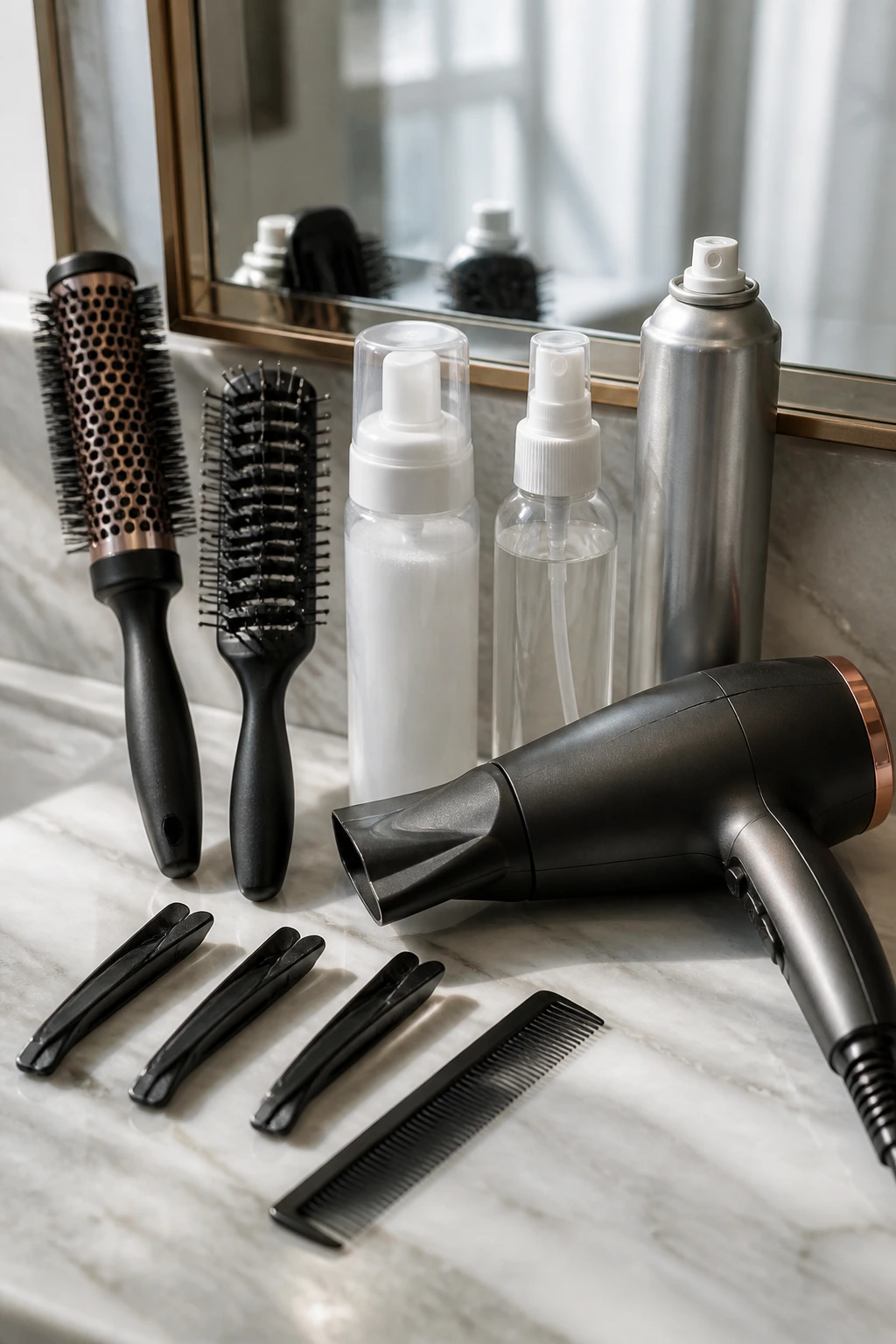
- 1-inch round brush: Best for bending long bangs under or away from the face without making the curve too wide.
- Vent brush: Good for quick drying when you want lift and don’t need a polished bend.
- Blow dryer with a nozzle: The nozzle keeps air focused at the roots instead of blowing the fringe all over the place.
- Duckbill or section clips: Useful for pinning the rest of the hair away so the bang area dries cleanly.
- Lightweight mousse: Adds root support without the sticky feel that makes fine hair collapse later.
- Heat protectant spray: Worth using every time if you blow-dry or flat-iron the fringe.
- Dry shampoo: Helps on day two, but only after the bangs are fully dry.
- Fine-tooth comb: Handy for setting the part cleanly and separating the front section before drying.
Trim Timing and Grow-Out Care
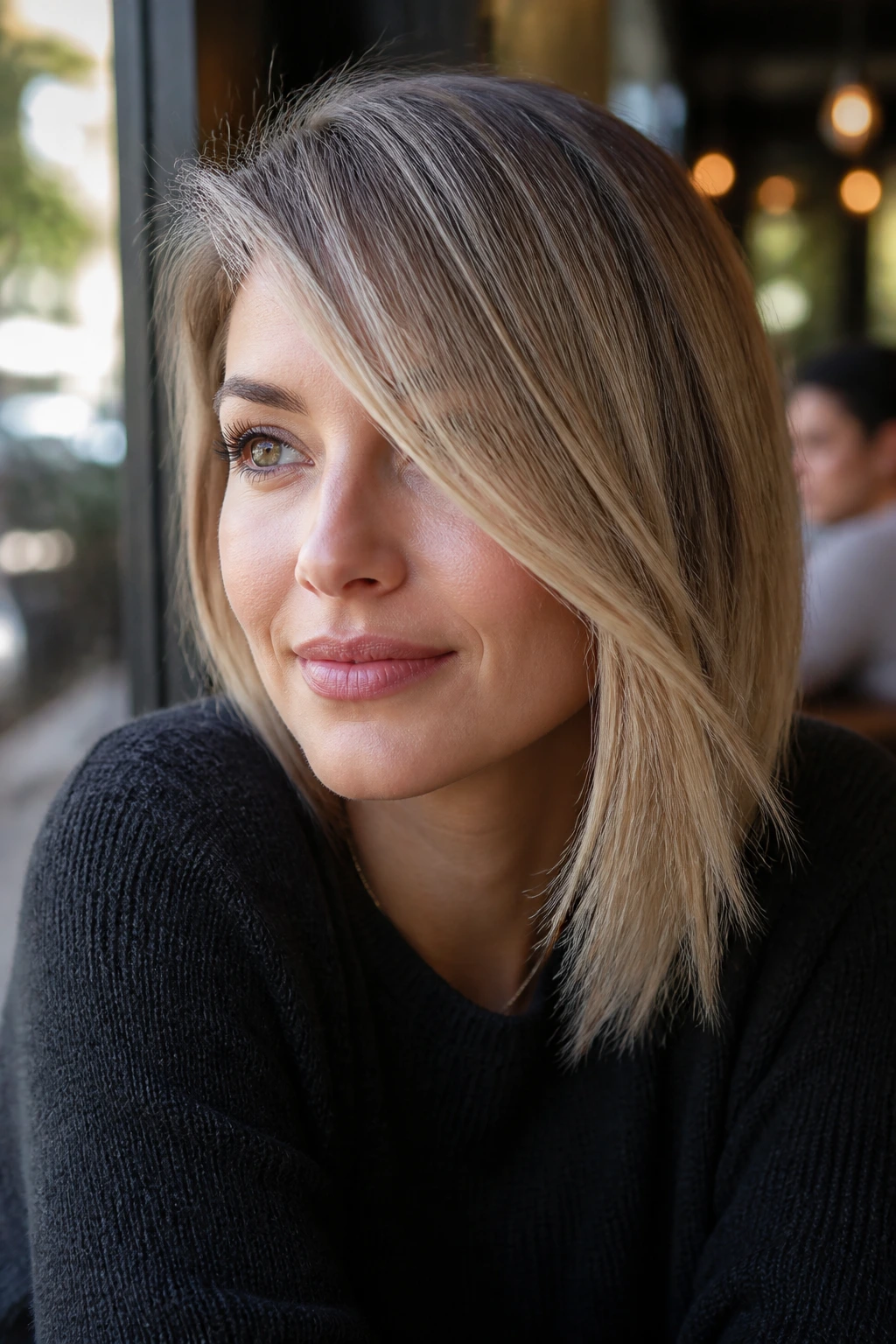
Long bangs need small maintenance, not constant drama. If you want the shape to stay crisp, book a fringe trim every 4 to 6 weeks. If you prefer a softer, more grown-out edge, you can stretch that to 6 to 8 weeks, but don’t wait until the bangs are in your eyes every time you blink. That’s when they start to feel like a problem instead of a style.
Fine hair often gets oily at the front faster than the rest of the head. A quick rinse of just the fringe, or a tiny amount of dry shampoo at the roots, can reset the shape without washing the whole haircut. Keep conditioner away from the roots and use it mostly from the ears down; the front pieces do not need extra slip.
At night, clip the bangs lightly to one side or pin them back with a soft clip so they don’t crease into a hard fold while you sleep. If they wake up bent, a 20-second blast of warm air from the roots usually brings them back. No need to start from zero.
Frequently Asked Questions
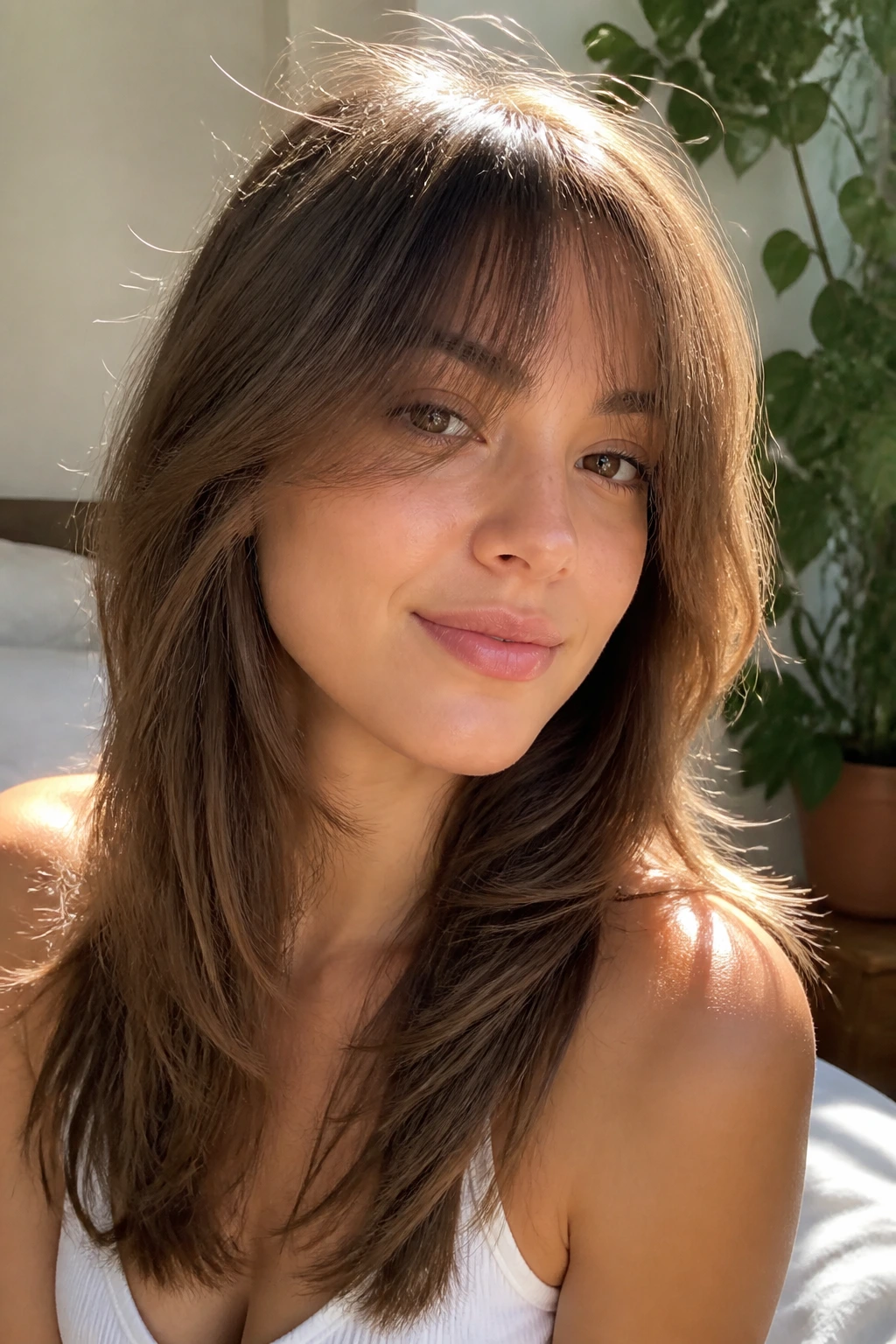
Are long bangs good for oval faces?
Yes, because oval faces can wear a lot of fringe shapes without losing balance. Long bangs work especially well when you want to soften the forehead and add movement near the cheekbones without shortening the face.
Will fine hair look thinner with bangs?
Only if the section is too wide or the cut is too blunt. Fine hair usually looks better with a lighter fringe that keeps the center open and lets the corners carry the shape.
Should I choose curtain bangs or side-swept bangs?
If you wear a center part often, curtain or bottleneck bangs usually feel easier. If your hair naturally falls to one side, a side-swept fringe will usually behave better and need less daily coaxing.
How short is too short for long bangs?
For fine hair, anything that sits much above the brows can get fussy fast unless the haircut has a lot of texture. The safer move is to keep the shortest pieces at or just below the brow and let the corners reach the cheekbone or lip.
Can I air-dry long bangs?
Yes, if the fringe is cut with enough softness and movement. Curtain, feathered, and split shapes air-dry better than blunt ones; just clip the roots for a few minutes while they set.
What if my bangs keep splitting in the middle?
That usually means your hair wants a center opening. Don’t force it straight down; choose a curtain, bottleneck, or cowlick-friendly split fringe and let the part work for you.
How often should I trim them?
Most long bangs need a trim every 4 to 6 weeks if you want shape. If you like a softer grow-out, 6 to 8 weeks can work, but once the corners hit the eyes, the style starts to fight you.
Can I wear long bangs with glasses?
Absolutely. Brow-skimming, side-swept, and rounded shapes tend to sit better with frames because they don’t crowd the lenses. Just keep the shortest point a touch longer if your glasses sit high on the bridge.
A Fringe That Stays Soft
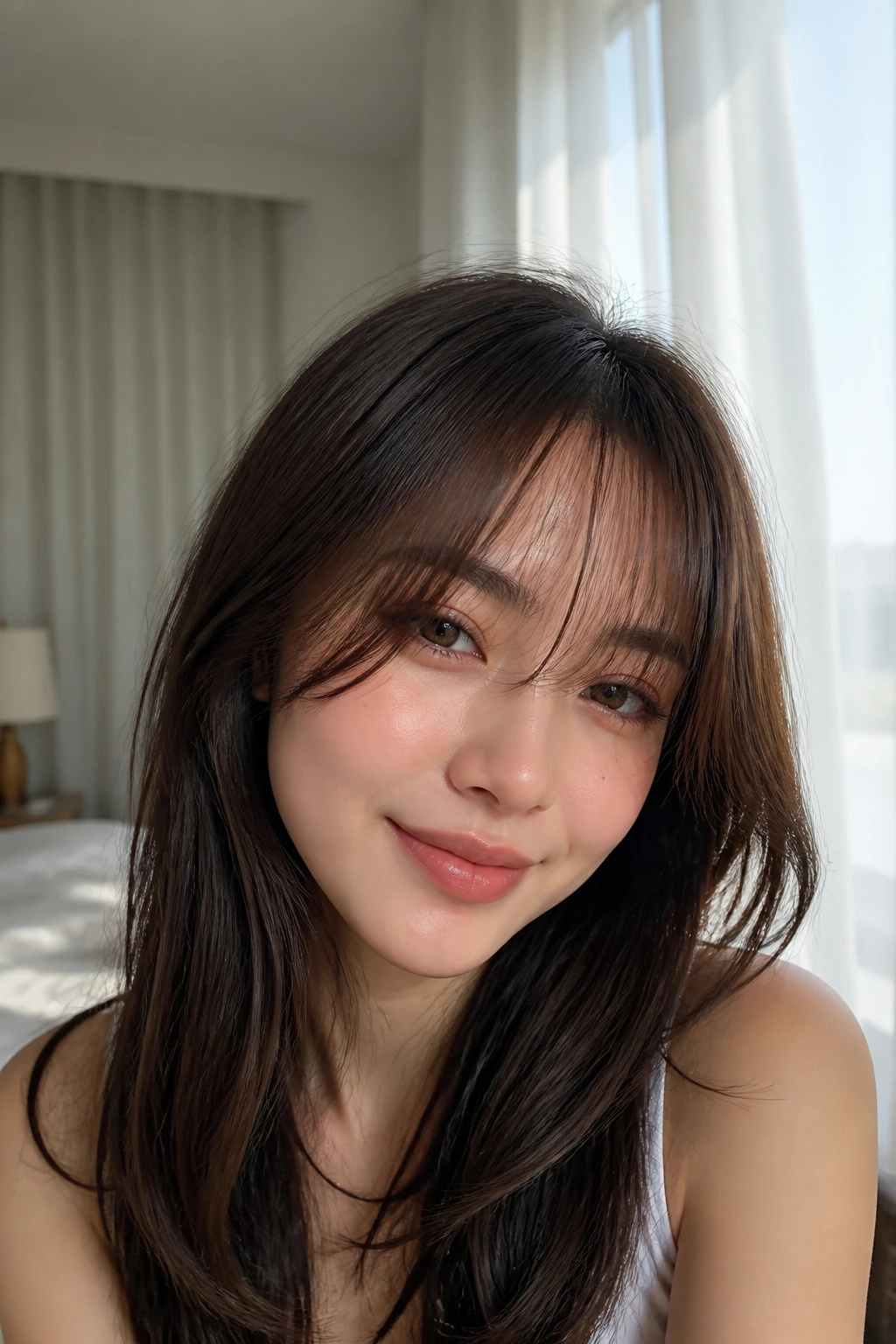
The nicest thing about long bangs on fine hair is that they do not need to shout. They just need to move. A soft center opening, a cheekbone-length corner, and a little root lift can change the whole front of a haircut without draining the rest of your density.
Pick the version that fits your routine, not the one that looks hardest to maintain in a mirror photo. The fringe that survives a grocery run, a head turn, and a quick brush-through will always beat the one that only behaves for five minutes.