



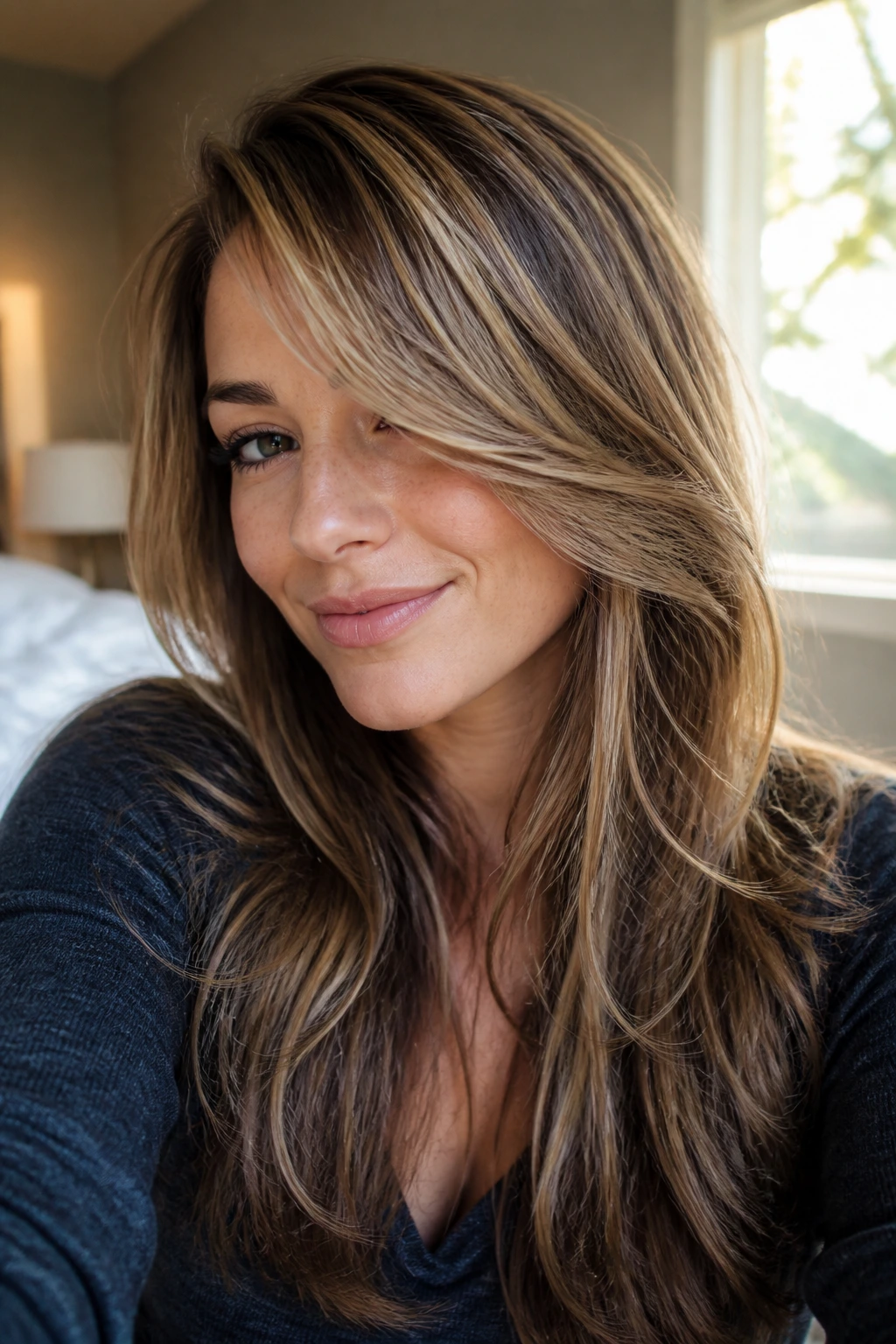
Fine hair does not need more of everything. It needs a cut that keeps the ends close enough to the head to look full, plus hi lights — highlights, if you want the standard spelling — that break up the surface so the eye sees depth instead of a single pale sheet. Side-swept bangs help because they draw a diagonal line across the face, and diagonal lines do more lifting than blunt ones ever will.
Chunky streaks are usually the wrong move. On fine strands, big contrast can expose spacing between pieces, while baby lights, ribbon highlights, and a soft root shadow make the whole shape read denser from the hairline down. A slightly off-center part helps too. It gives the front a little bend before the hair has a chance to collapse.
The 25 hi lights hairstyles for fine hair with side-swept bangs below lean on that same idea from different angles: some are cropped and airy, some are shoulder-length and bent under, some are long but controlled. All of them count on placement, not bulk, which is exactly where fine hair usually wins if you treat it well.
Why These Looks Earn Their Keep
-
They build shape without stacking weight: Fine strands often go flat under heavy layering, so these styles keep the outline clean and the movement close to the face.
-
The bang angle does actual work: A side-swept fringe creates a diagonal line that softens the forehead and keeps the front from splitting into two lifeless curtains.
-
The color plan matters more than brightness: Babylights, honey veils, and root smudges give you that denser look without stripy contrast.
-
Most of these styles survive a rough dry: They still look deliberate when you air-dry a little bend into them and let the bangs fall to one side.
-
They grow out with less drama: A long side fringe and a soft root mean you are not stuck in the salon every few weeks.
-
They work with real hair, not photo hair: Fine hair that gets frizz, cowlicks, or oily roots can still wear these cuts because the shape is doing the heavy lifting.
1. Chin-Grazing Bob with Beige Babylights
A chin-length bob is one of the few short cuts that can make fine hair look more substantial instead of more exposed. The trick is the outline: clean at the bottom, not razor-thin at the ends, with side-swept bangs that land softly across the cheekbone instead of chopping straight across the forehead. Beige babylights keep the surface from looking like one flat block of color, which matters a lot when the hair is so fine that every strand wants to show its own business.
Why It Works on Fine Hair
The shorter length gives the hair less chance to slump under its own weight. That’s the whole game. Ask for a blunt-ish perimeter with very light internal texture, then keep the front piece long enough to tuck behind one ear when you want it out of the way.
A chin bob also gives the highlights a clean place to sit. The color catches the edge of the cut, which makes the line look crisp rather than sparse.
Best for: straight to slightly bent hair, narrow faces, and anyone who likes a sharp shape without a lot of styling time.
Watch for: over-thinning the ends. A little fullness at the edge is what keeps this bob from looking wispy.
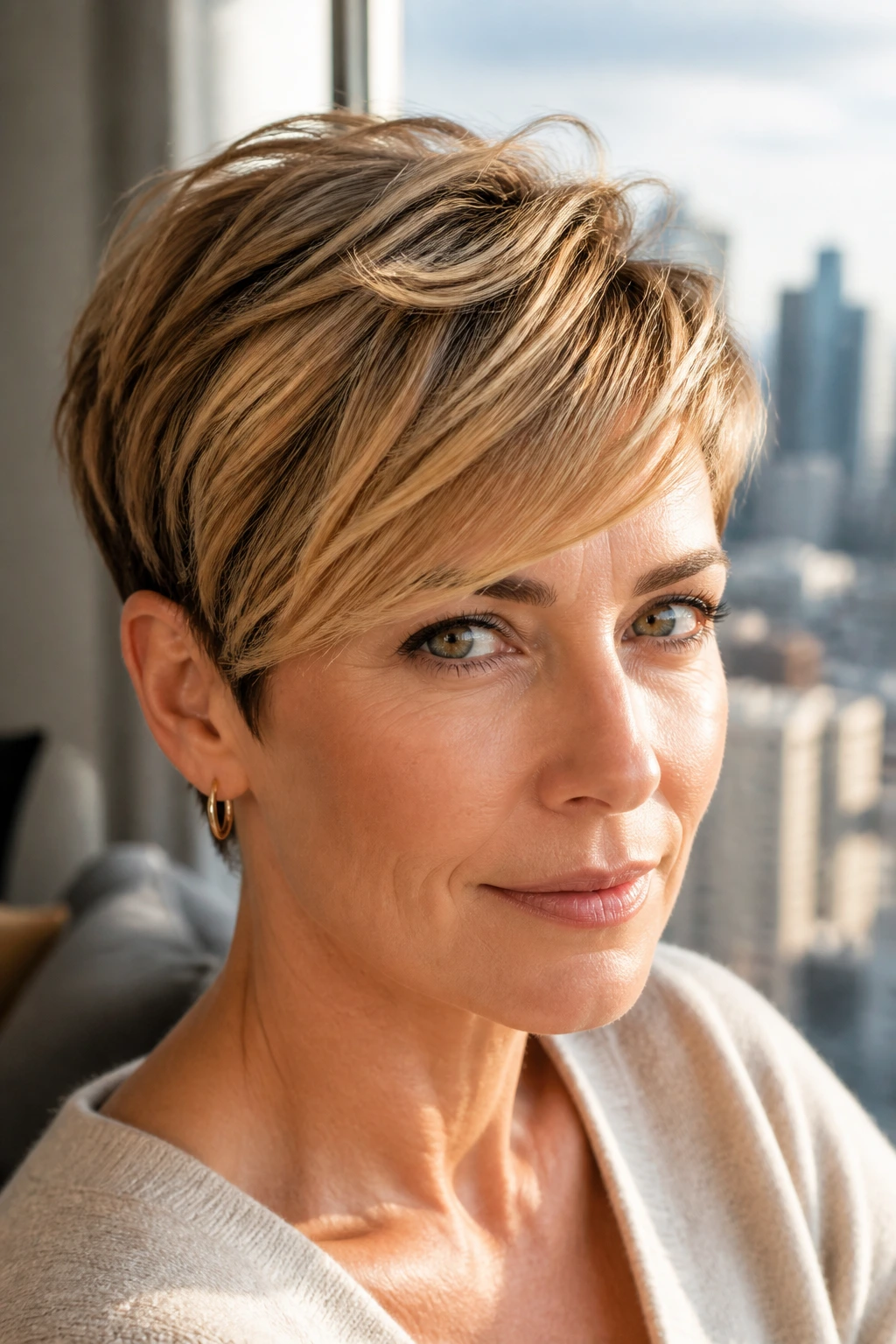
2. Side-Swept Pixie with Soft Gold Panels
Can a pixie look feminine and full on fine hair? Absolutely — if the top stays long enough to move and the sides stay tidy. This version keeps the crown feathered, not spiky, and lets the side-swept bangs sweep across one brow in a soft arc. Soft gold panels around the temple and fringe make the short cut feel lighter instead of harsher.
How to Style It
Work a pea-size amount of mousse into damp roots, then blow-dry the top forward and over to the side with a small round brush. The shape should feel lifted at the crown and a little piecey at the ends. No helmet hair. No crunchy texture.
- Keep the fringe long enough to brush the outer corner of the eye.
- Use baby lights, not wide highlights.
- Finish with a matte paste only on the tips.
A pixie like this is one of my favorite answers for very fine hair because it does not ask the hair to fake thickness it does not have. It just gives it a smart outline and a few bright pieces where the light hits first.
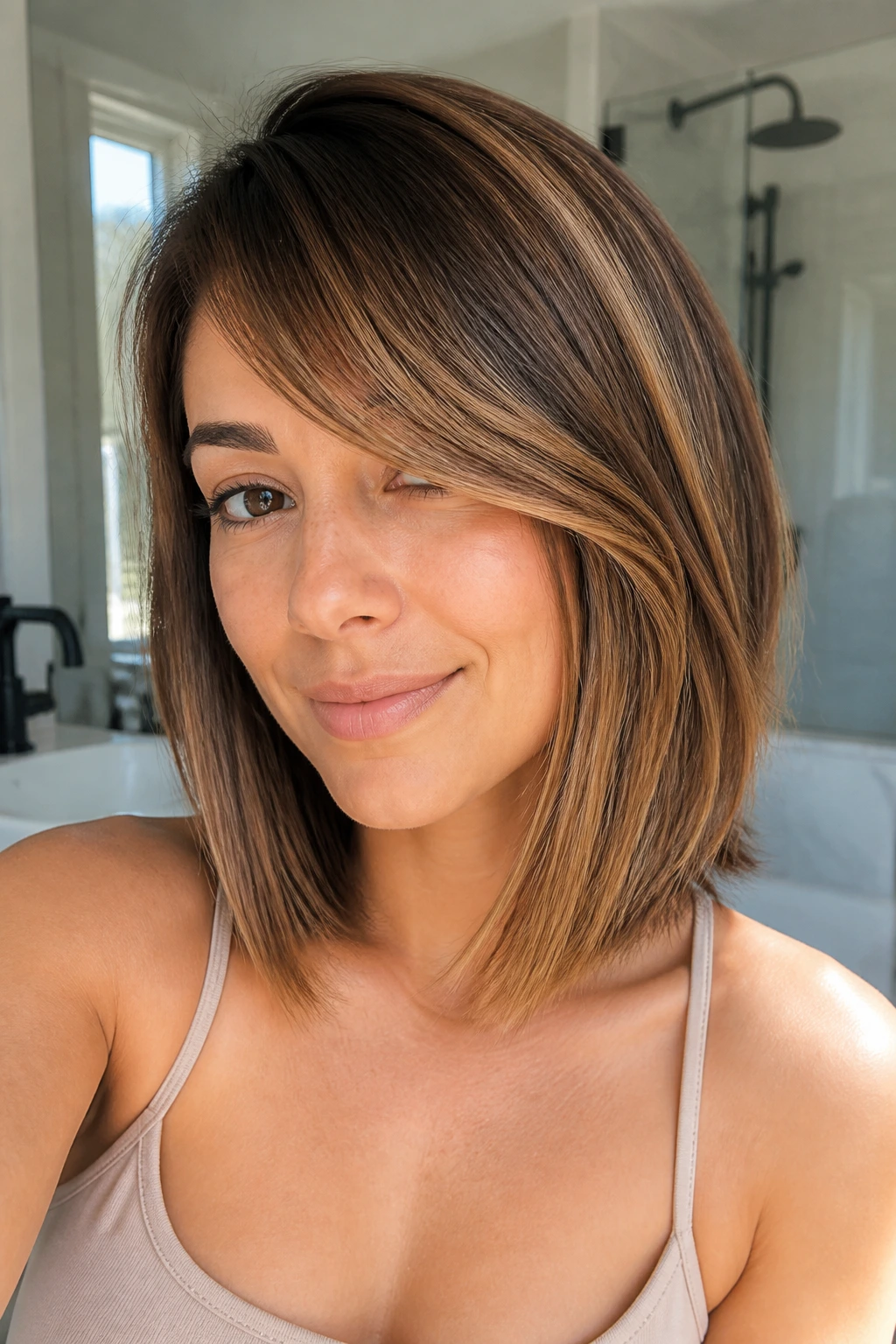
3. Collarbone Lob with Caramel Veil
A collarbone lob is the safe answer that is not boring if you cut it correctly. The ends skim the collarbone, the front falls a touch longer than the back, and the side-swept bangs blend into face-framing pieces so the whole style feels like one shape rather than three separate parts fighting for attention.
Caramel color woven in thinly through the mid-lengths gives the illusion of more hair by breaking up the surface. You want veil-like ribbons here, not thick stripes. Fine hair usually looks best when the color sits a shade or two lighter than the base, not four levels up screaming from the page.
The nice part about this lob is that it works air-dried with a soft bend, but it also takes a smooth blowout well. If your hair changes mood from one day to the next, this cut can handle the negotiation.
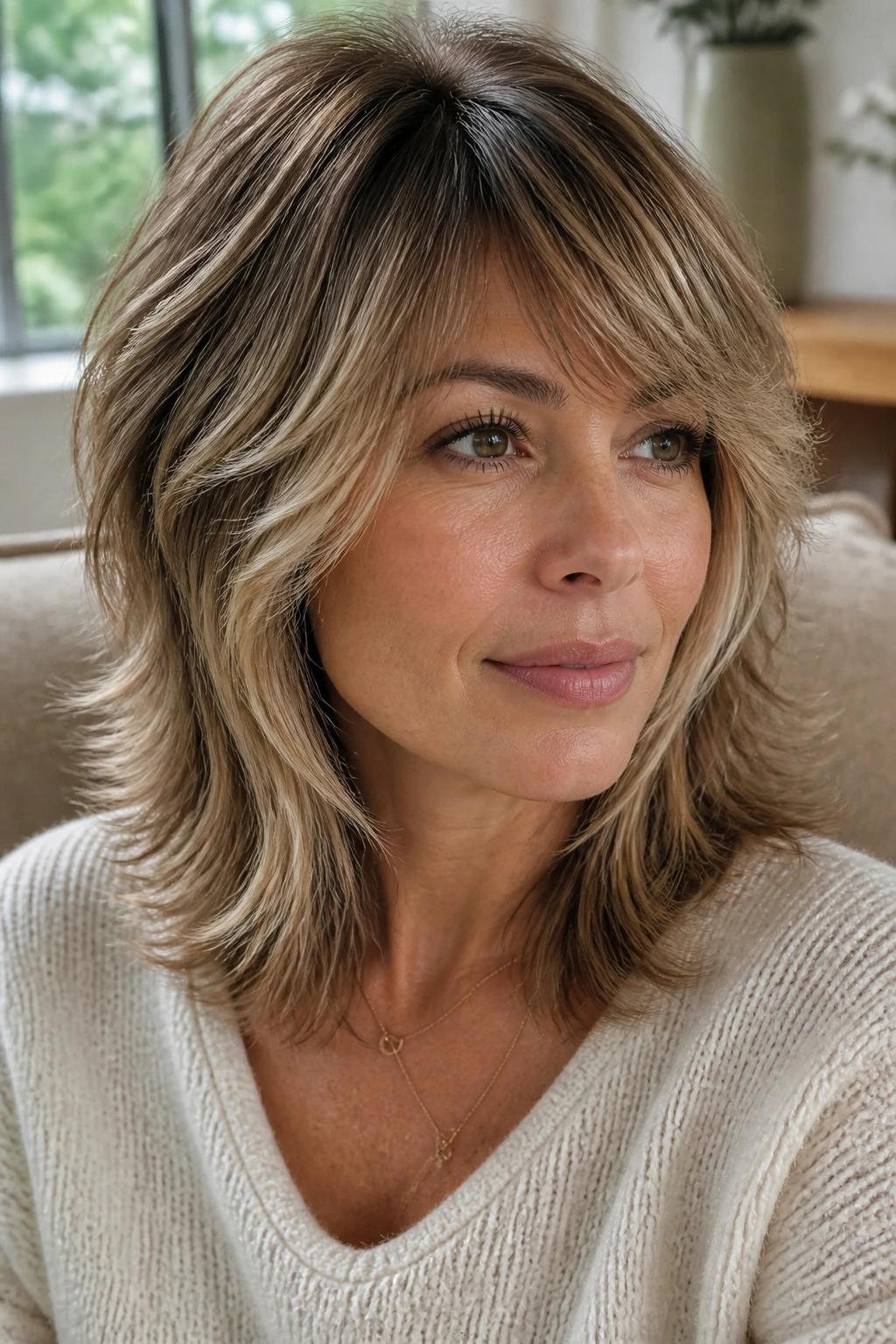
4. Feathered Shag with Face-Framing Lights
A shag on fine hair sounds risky until you see it with the right density of layers. Heavy, choppy layers can leave the ends looking like three sad strings. Feathered layers, though? Different story. They build movement around the crown and cheekbones, and a side-swept bang keeps the front from collapsing into a center-part curtain.
The Color Trick
Face-framing lights are the part that makes this cut sing. Put the brightest pieces near the cheekbones and temple, then keep the rest of the color softer and a touch deeper. That contrast pulls the eye outward and away from any scalp peek at the part.
This is the haircut I’d pick for someone who wants texture without the “I spent an hour with a curling iron” look. Use a lightweight texture spray, bend just the front two sections away from the face, and leave the rest a little undone. That unfinished edge is the point. Over-styling a shag kills it fast.
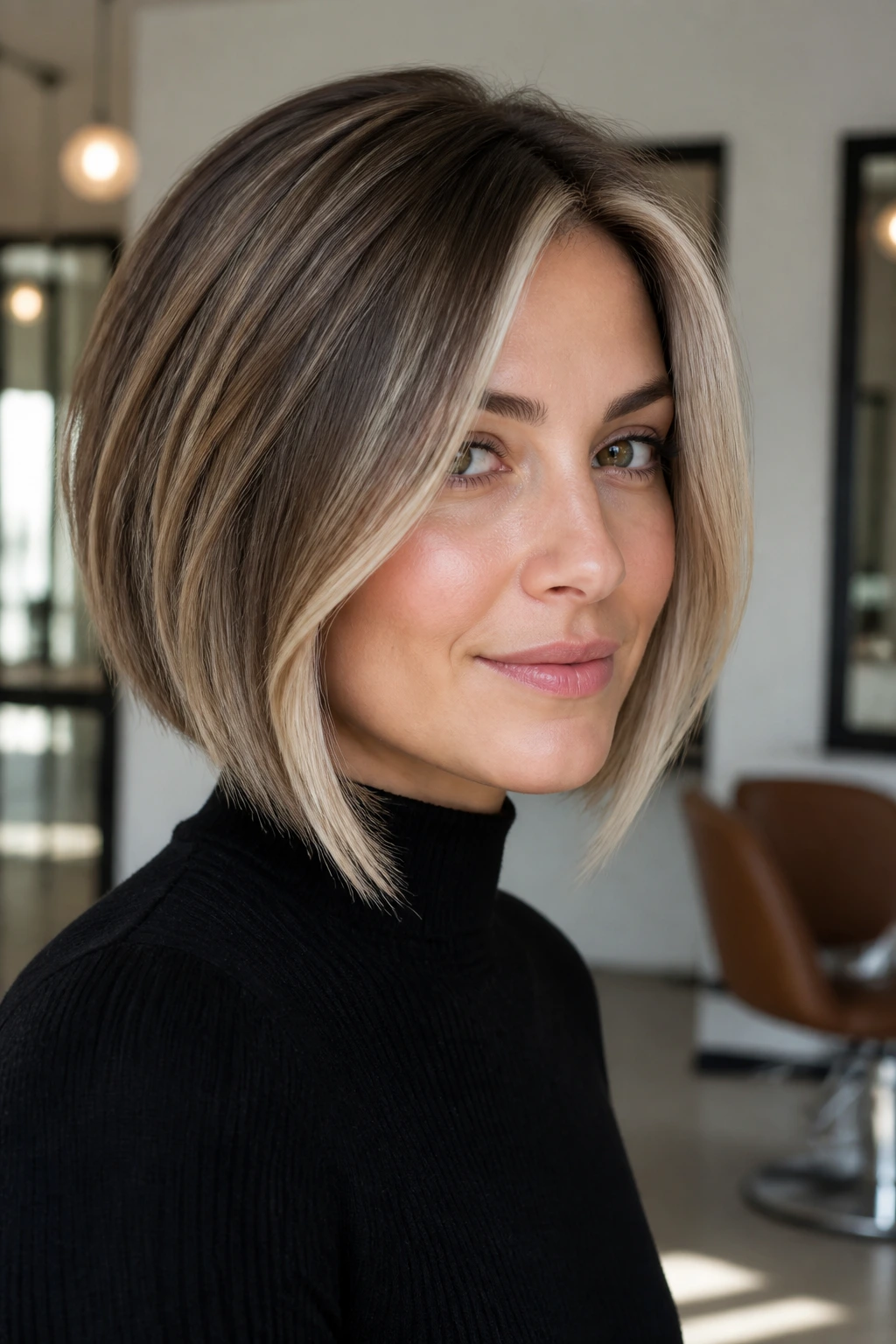
5. Angled Bob with Money Piece Highlights
An angled bob gives fine hair a shape that looks deliberate from every side. The back is a little shorter, the front stretches forward toward the chin, and the side-swept bangs melt into a bright money piece at the face. That front highlight is doing more than decorating; it makes the cut look fuller where the eye lands first.
If your hair tends to lie flat at the crown, this bob helps because the shorter back creates a small built-in lift. Keep the angle subtle. You are not building a dramatic wedge here, just enough difference to make the line interesting and keep the ends from sitting like one level sheet.
Ask for: a clean perimeter, soft graduation in the back, and a bright but narrow highlight around the face.
Skip: chunky money pieces that start too far back. They can make fine hair look stripy instead of dimensional.
The best version of this cut is smooth at the root and beveled at the ends. That bevel is where the body lives.
6. Long Layers with Swoopy Side Bangs
Long hair and fine hair can be a tricky pair. If the layers are too short, the bottom goes see-through. If there are no layers at all, the whole shape hangs there like a damp ribbon. Long layers fix both problems when they’re cut with restraint and paired with a side bang that sweeps from temple to cheekbone instead of sitting heavy on the forehead.
The highlights should follow the layers. Think subtle ribbons through the mid-lengths, a few brighter pieces around the face, and a softer tone underneath so the hair keeps depth when it moves. A single-tone blonde on fine long hair can flatten out fast. Dimension keeps it awake.
This style is best for someone who likes to wear hair down most of the time and doesn’t want constant salon upkeep. It does need a few strategic waves or a round-brush bend at the ends, though. Long fine hair without movement can turn stringy in a hurry.
7. Wavy Midi Cut with Honey Balayage
Why does a wavy midi cut work so well here? Because medium length gives the hair enough body to swing, while honey balayage breaks up the surface just enough to make the strands look thicker. The side-swept bangs take the flatness off the front, especially when they’re blow-dried with a little bend instead of left to hang straight.
How to Wear It
A one-inch curling iron or flat iron wave is enough. You are after a loose S-shape, not a pageant curl. Let the ends stay soft. Fine hair gets overwhelmed fast if every piece is curled too tightly.
- Keep the brightest balayage around the face and crown.
- Leave the underlayers a touch deeper for contrast.
- Finish with dry texture spray, not sticky hairspray.
This is a cut that looks polished when styled and still decent when it air-dries with a little natural wave. That matters more than most people admit. If you have to fight your hair every morning, you will stop wearing the style long before the cut grows out.
8. Tapered Crop with Lifted Crown
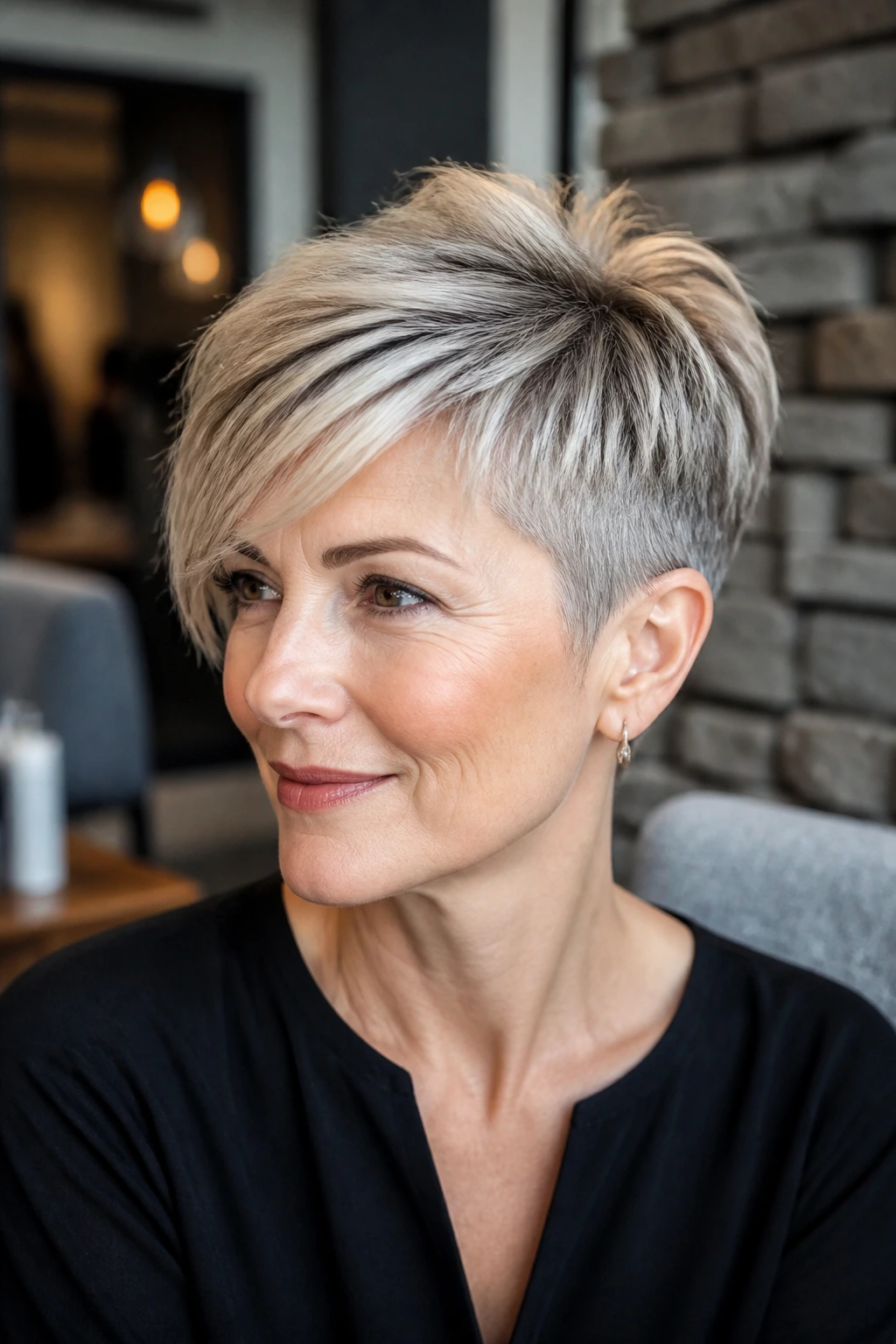
A tapered crop can look almost sculpted on fine hair, which is exactly why I like it. The sides stay close, the top stays airy, and the side-swept bang softens the front so the cut doesn’t feel severe. A little brightness at the crown helps too, because fine hair often looks darkest and flattest right where you need lift most.
This is one of those styles that rewards good blow-drying. Dry the roots upward first, then sweep the fringe across while it’s still warm. If you wait until the hair is fully dry and cold, the bang usually sets in the wrong direction and you spend the rest of the day pushing it back into place.
A crop like this is also kind to glasses wearers. The fringe can sit above the frame or brush just past it, depending on how long you keep the front. That small detail changes the whole mood.
9. Inverted Bob with Ash Beige Dimension
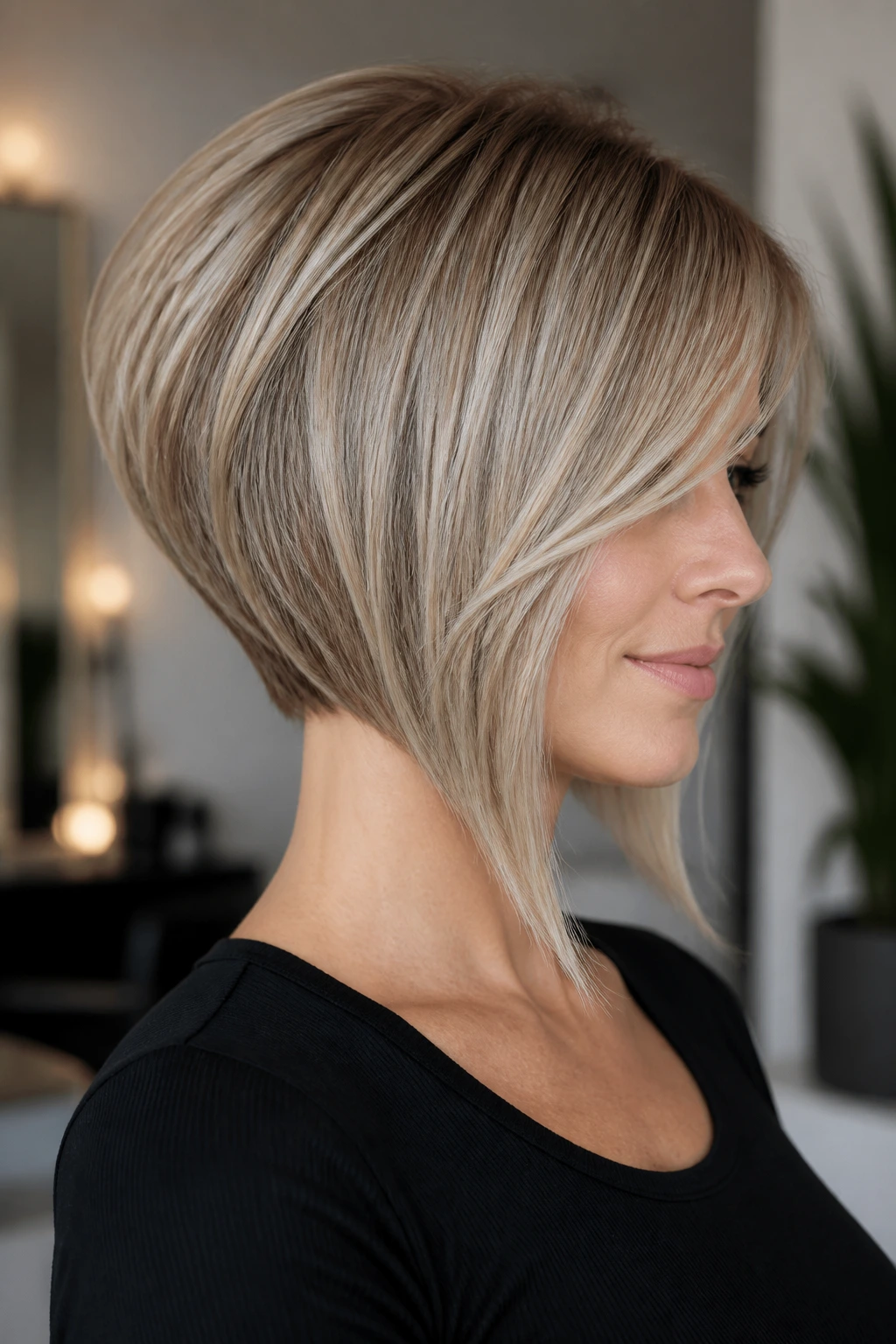
An inverted bob is all about line, and line is a fine-haired person’s friend when you want shape without a lot of bulk. The stacked back creates quiet lift, while the longer front pieces keep the face from looking boxed in. Side-swept bangs soften the transition and stop the front from feeling too sharp.
Ash beige dimension works here because it keeps the bob from looking overly warm or too one-note. Fine hair often shows color better when the tones are close together, not when the contrast is loud. A couple of foiled pieces at the crown and a few lighter threads near the cheekbones are usually enough.
You’ll get the best result if the ends are beveled under with a round brush or a quick flat-iron curve. Straight, stiff ends can make the shape feel severe. A tiny bit of bend gives the bob more air.
10. Textured Shoulder Cut with Baby Lights
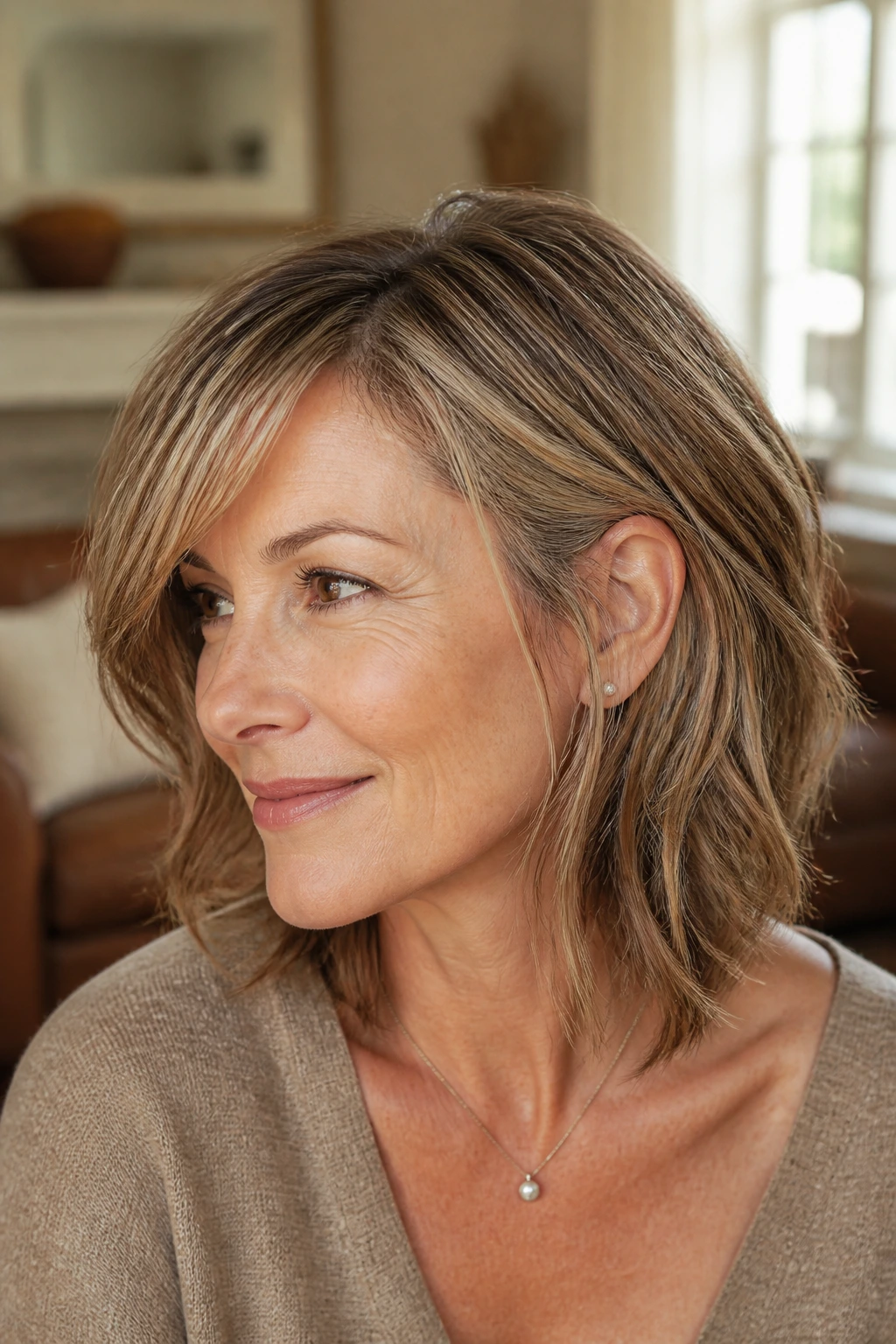
Shoulder-length hair can lose its shape if the cut is too blunt or too layered. This version sits in the middle: enough texture to keep the ends from looking heavy, enough length to tuck behind the ear, and side-swept bangs that break up the top line so the hair doesn’t read as one flat sheet.
Baby lights make a bigger difference here than people expect. Fine hair needs small, close-together highlights because the eye reads them as density. Bigger foils can look like gaps between the pieces instead of depth inside the hair.
Why It Feels Fuller
A shoulder cut catches the light at the same place the collarbone and jaw do, which gives the whole style a little shape even when you barely style it. That matters on rushed mornings. Add a quick round-brush bend at the ends, sweep the fringe across, and the cut does the rest.
The sweet spot is a texture that feels loose, not shredded. If the layers are too aggressive, the bottom disappears. If they’re too heavy, the whole thing drags.
11. French Bob with Subtle Bronde
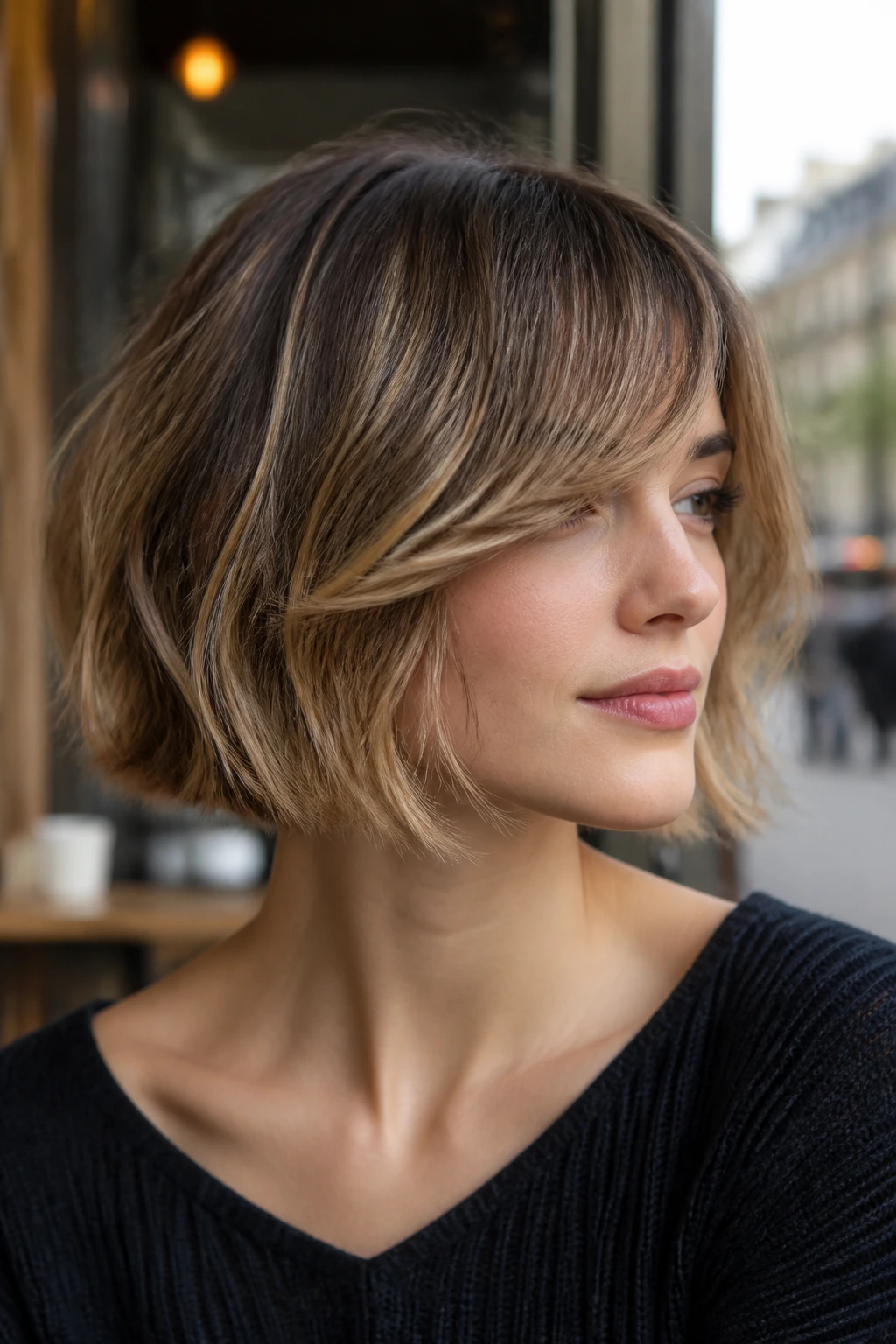
A French bob has attitude, but on fine hair it needs control. Keep it at or just below the jaw, with a soft side sweep instead of a short baby bang, and the shape reads chic rather than severe. Subtle bronde — that blend of brown and blonde that lives in the middle — works because it gives movement without loud contrast.
This cut is especially strong if your hair naturally falls straighter near the roots and bends slightly at the ends. That small natural movement keeps the line alive. If your hair is poker-straight, a quick bend under with a flat iron will do the same job.
The side-swept fringe can be cut a touch longer on one side so it melts into the bob rather than sitting like a separate piece pasted on top. That blend is what keeps the haircut from looking too constructed. Fine hair hates looking overbuilt.
12. Butterfly Layers with Side-Swept Fringe
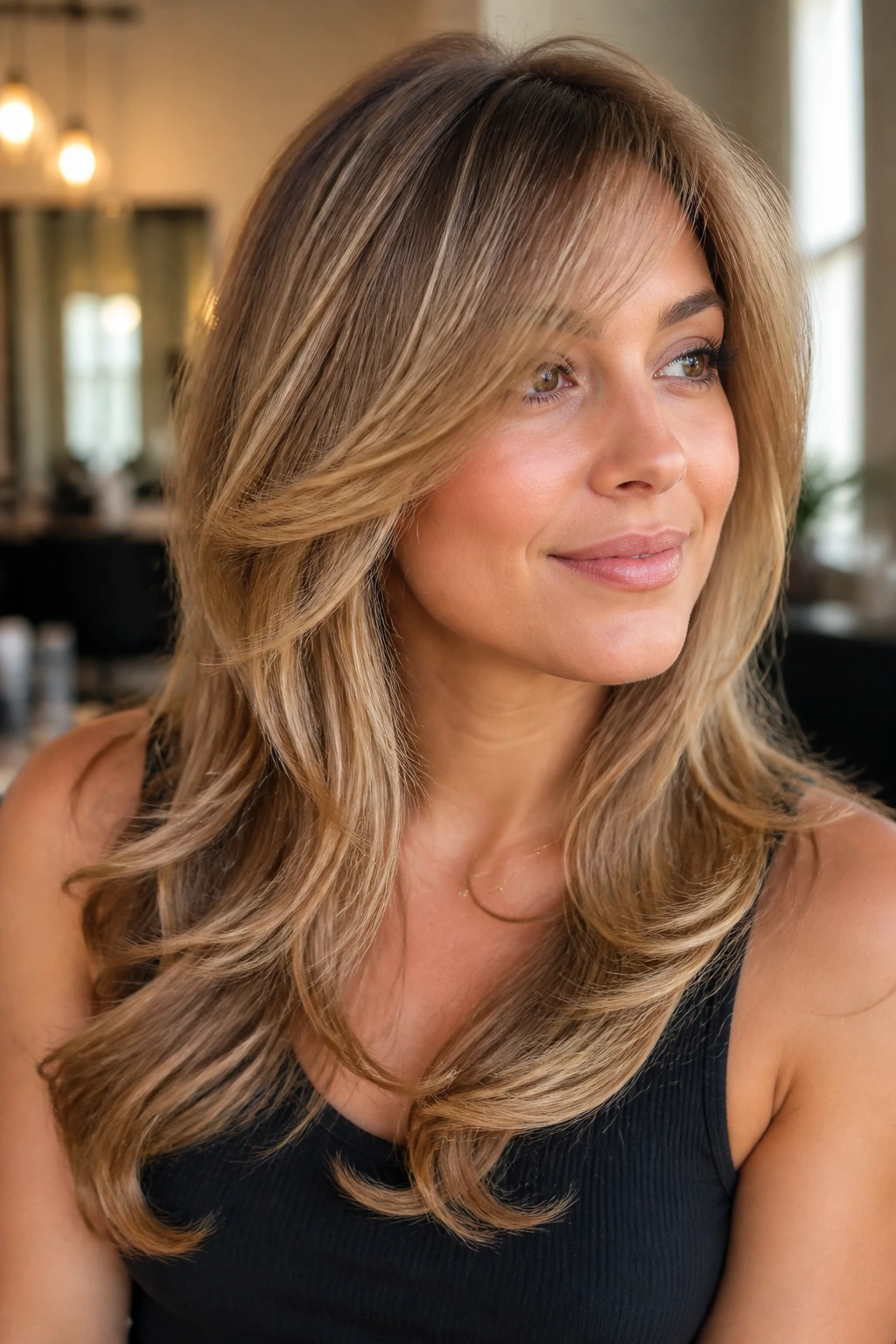
Butterfly layers usually sound like a lot of hair, which is why they can work so well on fine strands when they’re done with a light hand. The shorter top layers create movement around the face and crown, while the longer lengths keep the bottom from going thin. Side-swept fringe helps connect the two so the haircut feels like one shape, not two different cuts sharing a head.
If you wear your hair up half the time, this is a smart pick. The face-framing pieces stay out where they can lift the front, and the longer layers still look clean when you pull the rest back. That is a real-world haircut, not a photo-only one.
For color, keep the brightest pieces around the top layers and cheekbones. The lower lengths can stay slightly deeper so the end line doesn’t disappear. Fine hair often needs that contrast to keep the bottom from looking see-through.
13. Razor-Cut Lob with Sandalwood Highlights
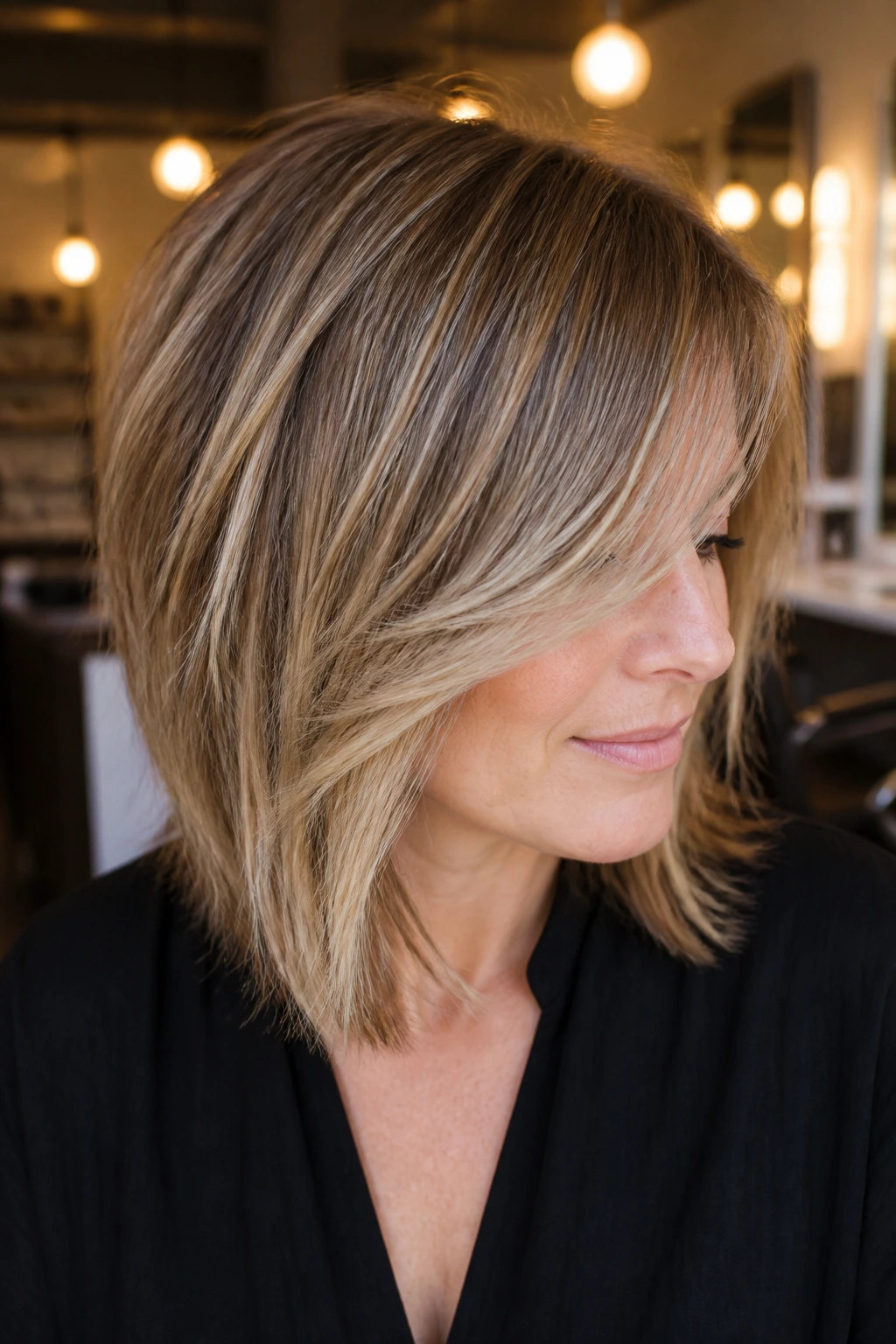
A razor-cut lob is not for everybody, and I’ll say that plainly. If your fine hair frizzes at the ends or breaks easily, a razor can go too soft and make the perimeter look fuzzy. But if your hair is smooth and you want a piecey, airy finish, it can be excellent — especially with side-swept bangs that echo the same movement.
What to Ask For
- A softly razored surface, not shredded ends.
- Side-swept bangs long enough to brush the temple.
- Sandalwood highlights placed in thin ribbons through the mid-lengths.
- A darker root or shadow at the base so the cut doesn’t lose shape.
This style is best styled with a light cream on damp hair and a tiny bit of texture spray once dry. Too much product turns razor-cut ends into string. Too little and the shape can look unfinished.
The appeal here is motion. Fine hair can look very alive in a razor lob if the cut is controlled. If it isn’t, it can look tired fast.
14. Deep Side-Part Cut with Ribbon Lights
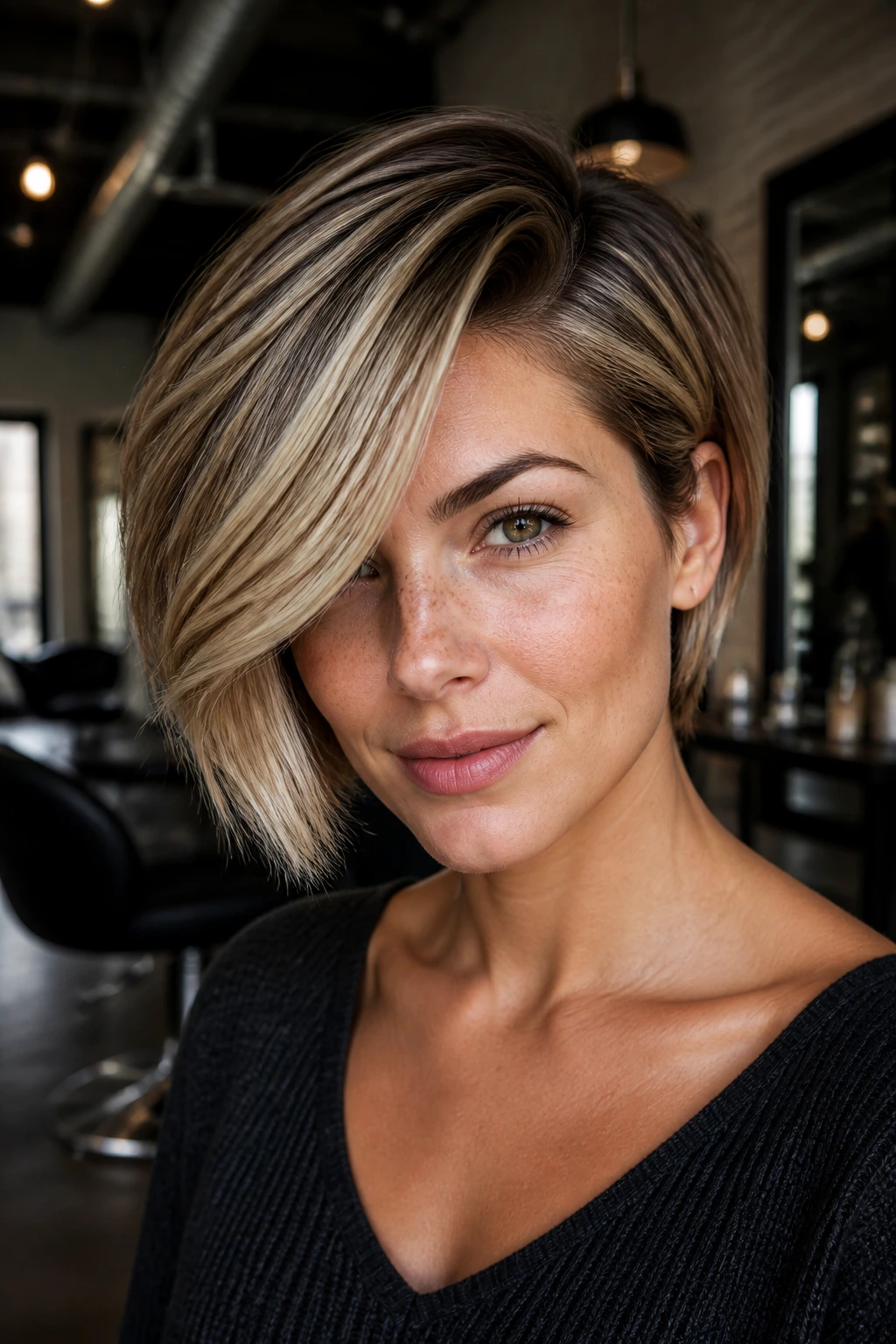
A deep side part can rescue fine hair on days when the roots are giving up. It shifts the weight of the hair, creates a little lift at the crown, and lets the side-swept bangs fall in a longer diagonal that makes the front look thicker than it is. Ribbon lights — narrow, painted pieces that travel through the cut — keep the style from looking flat once the part is in place.
This isn’t really about length. It works on bob, lob, or long layers. What matters is the part and how the color follows it. Put the brightest strands where the hair breaks around the face, and the whole style reads fuller right away.
I like this look for anyone who gets oily at the roots. A deep side part makes the hair move away from the scalp and buys you a little volume before the flatness creeps in.
15. Piecey Pixie-Bob with Warm Champagne Tones
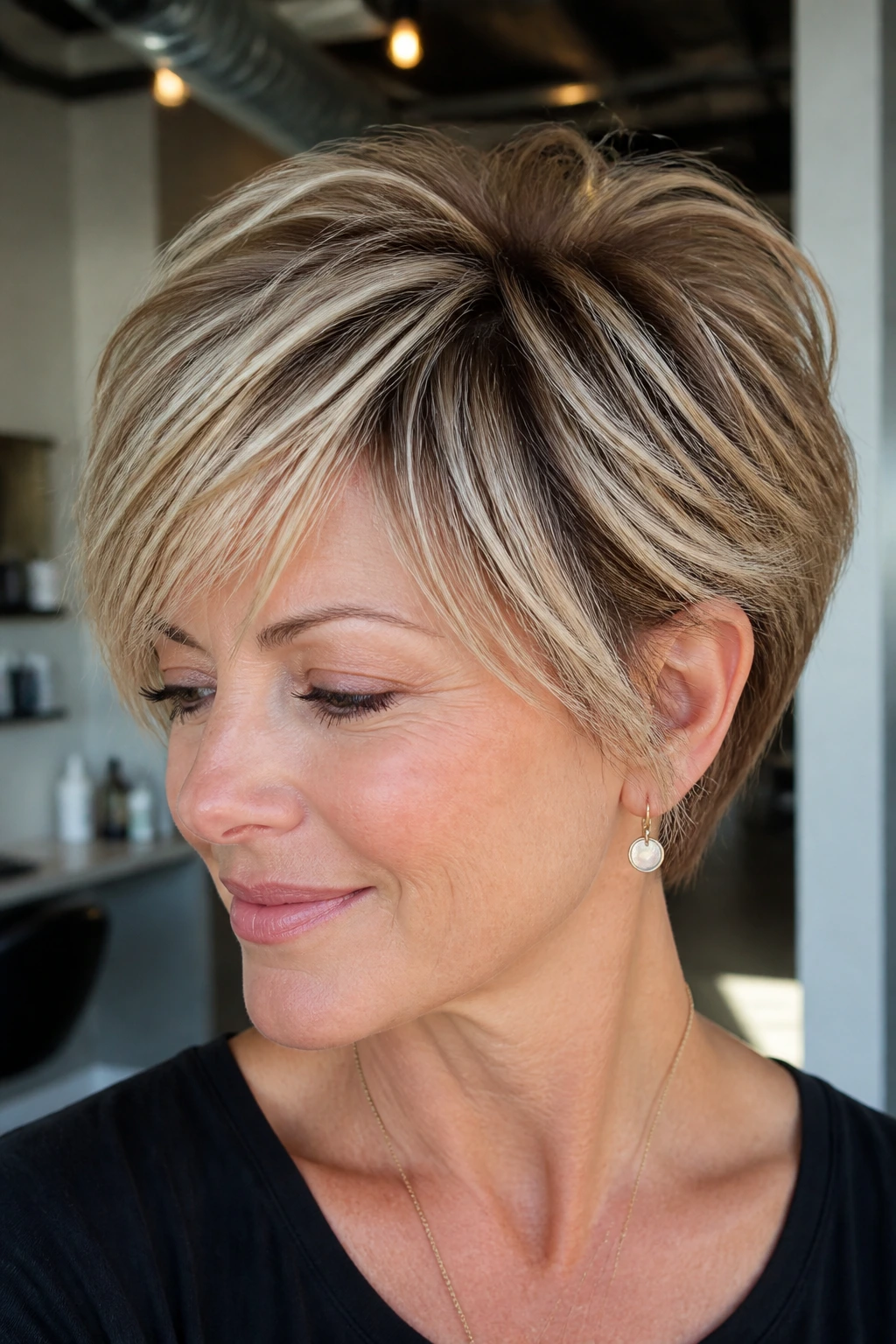
A pixie-bob sits in a nice middle ground: shorter than a bob, longer than a pixie, easy to push around with your fingers. On fine hair, that in-between length can be a gift. The side-swept bangs add softness, while the crown stays light enough to lift. Warm champagne tones keep the cut bright without going neon blonde.
Where the Lift Comes From
The crown is the important part here. Ask for interior texture that removes just enough weight to help the top stand up, but not so much that the cut goes fluffy at the sides. The best pixie-bobs keep their shape even after a nap, which is rarer than it sounds.
- Keep the fringe long and soft.
- Add the lightest pieces only around the top and face.
- Use a tiny dab of paste at the ends, not the roots.
This is one of the easiest styles to live with if you like the feeling of short hair but don’t want to commit to a full pixie. It can look sleek or messy depending on the product, and that flexibility matters more than people think.
16. Sleek Collarbone Cut with Shadow Root
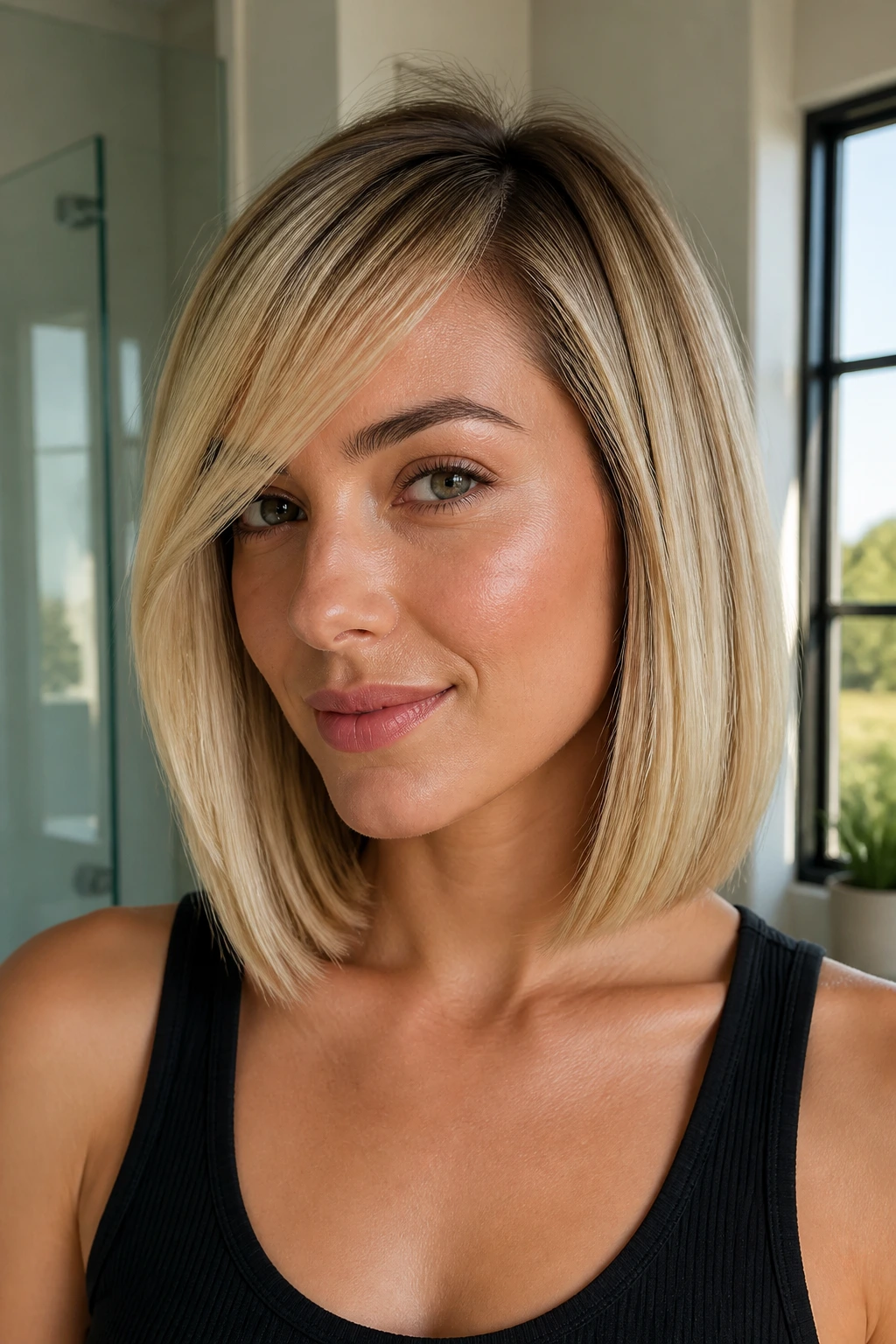
A sleek collarbone cut sounds simple because it is simple — and that’s a good thing. Fine hair often gets lost in overly complex layers. Here, the shape is the point: one clean length that skims the collarbone, side-swept bangs that fold into the front, and a shadow root that keeps the color from looking washed out at the part.
The shadow root is the quiet genius. It gives you depth where fine hair can look too light and too thin, especially under bright indoor lighting. The lighter pieces sit through the mid-lengths and ends, where they reflect movement instead of exposing the scalp line.
This cut is best when the ends are polished. A round brush or a low-heat flat iron pass on the bottom two inches is enough. If the roots are puffed and the ends are fuzzy, the whole idea gets muddy fast.
17. Choppy Midi with Wind-Swept Bangs
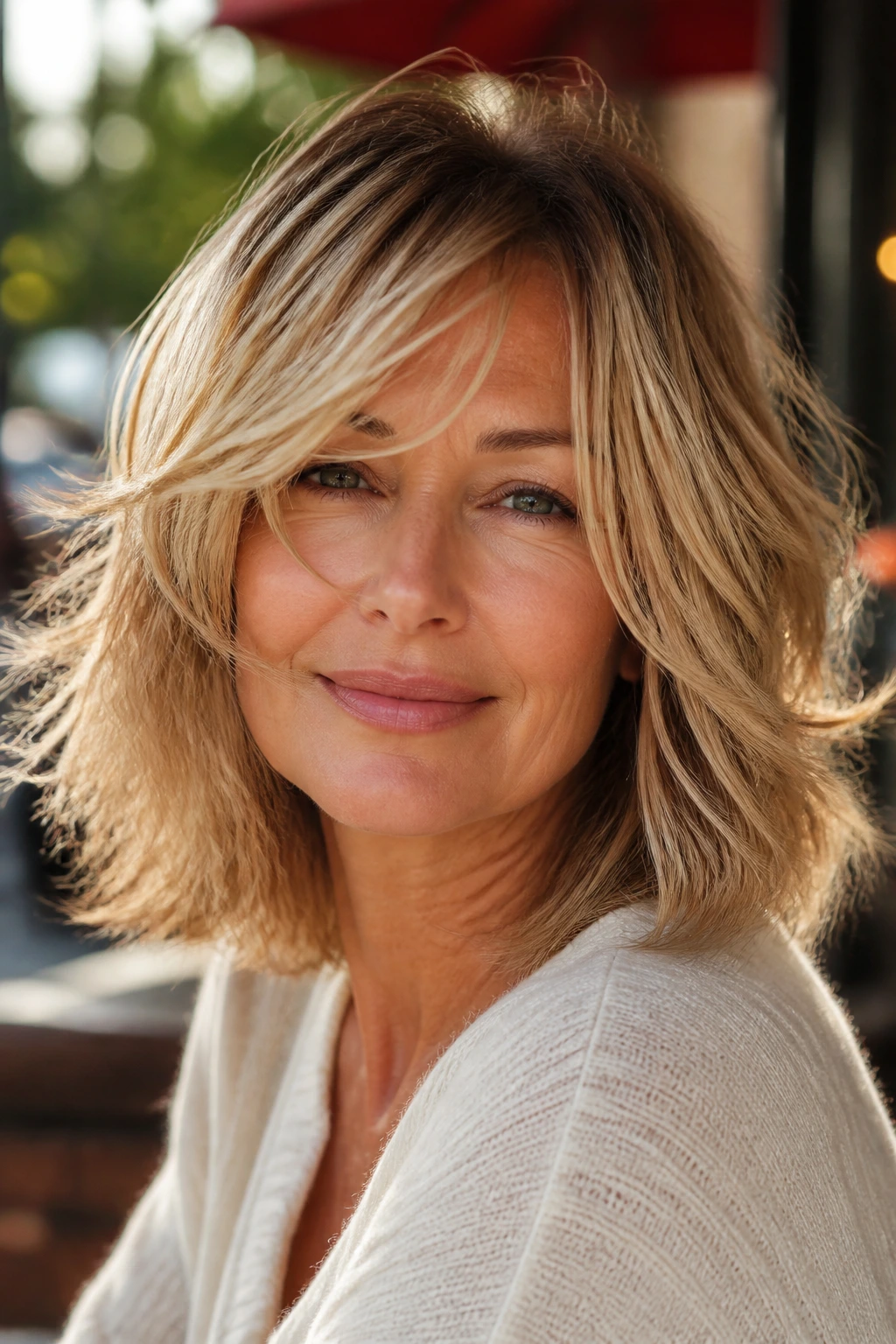
A choppy midi is basically the haircut version of leaving the window open a crack. It has movement, but it still feels controlled. The side-swept bangs should move in the same direction as the rest of the cut, almost like a bit of wind caught them on purpose. That gives fine hair a loose shape without turning it into a nest.
This is one of the better options if your hair bends on its own and you don’t want to spend a long time smoothing it. The layers need to be soft and staggered, not stacked. Think lifted ends, not broken ends.
Color note: keep the highlights fine and spread out, with a few brighter pieces around the face.
Styling note: use a sea-salt spray only if your hair can handle it; some fine hair turns crunchy fast.
The cut works because it creates motion at different points instead of one obvious wave. That scattered movement is what makes the hair look fuller from a distance.
18. Half-Up Lob with Brightened Crown
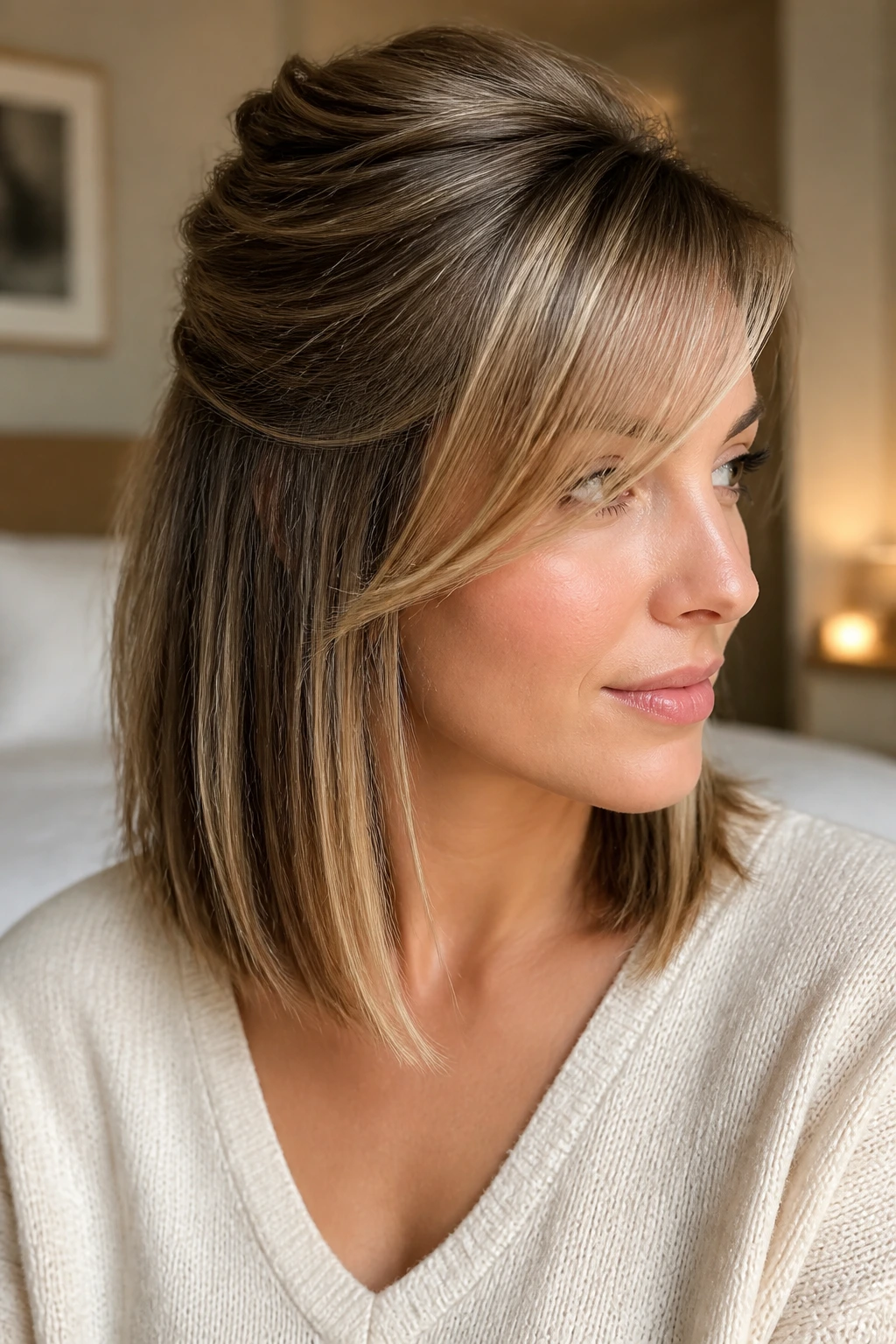
Some styles only matter when you actually wear them. A half-up lob is one of those, and it’s a lifesaver for fine hair when the roots are flat by lunchtime. Pulling the top half back creates instant lift at the crown, while the side-swept bangs stay out front and keep the face from looking bare. Brightening the crown makes that lifted section look intentional instead of like a last-minute fix.
The best part is how little it takes. A small clip or a skinny elastic, two fingers of volume at the root, and a few face-framing pieces left loose. That’s it. If the top looks too tight, the style loses its softness, and fine hair tends to show every tug.
I like this as a mid-week reset style. It feels a little dressed up, but not fussy, and the highlights near the crown give the eye something to follow when the rest of the hair is pinned back.
19. Soft Mullet with Airy Fringe and Highlights
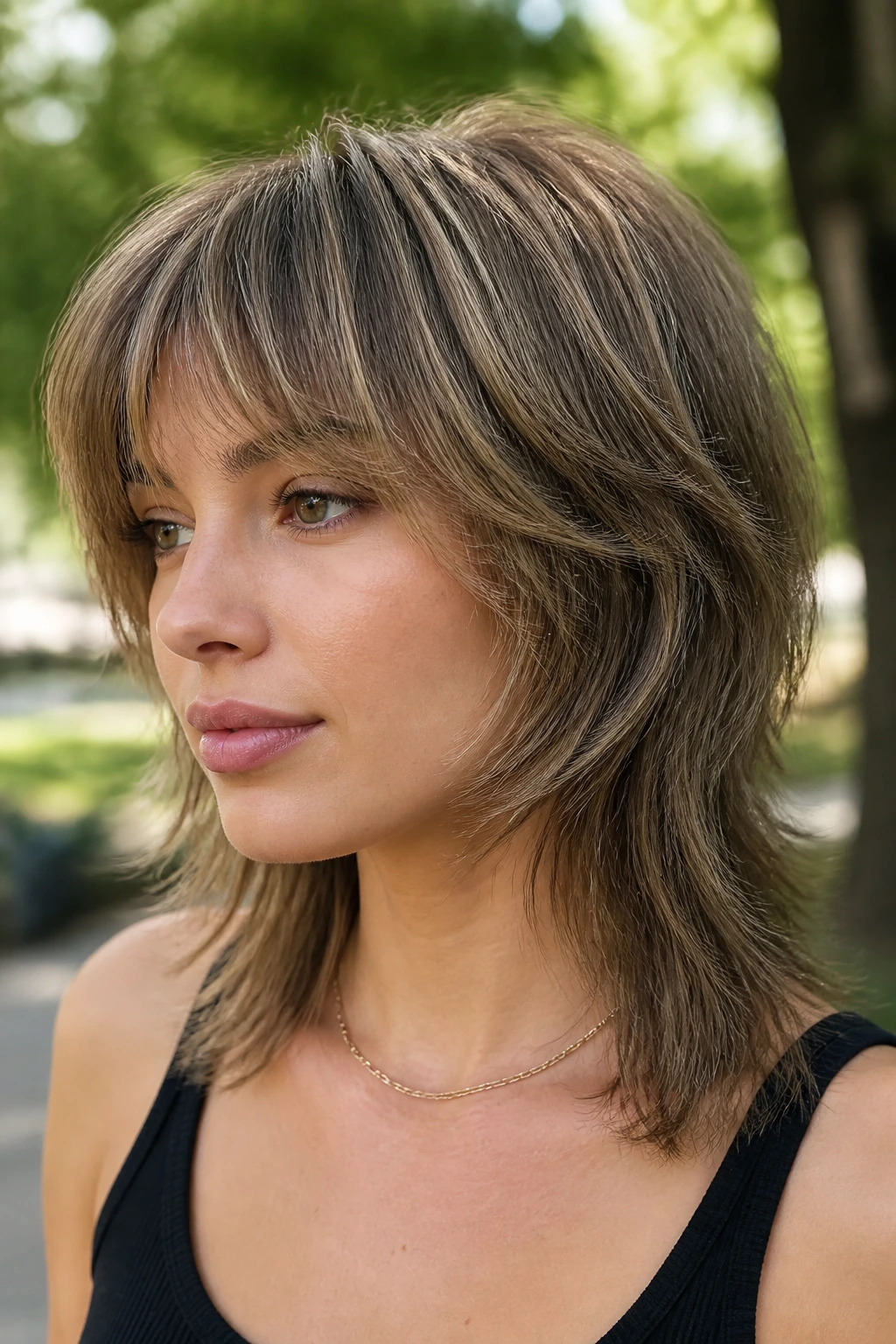
A soft mullet sounds edgy because it is edgy, but the modern version is much gentler than the old-school one people remember. On fine hair, it can work if the layers stay airy and the side-swept fringe melts into the front instead of sitting in a hard line. The highlights should be thin and slightly brighter around the top so the crown doesn’t disappear.
This is for someone who wants movement without pretending their hair is thicker than it is. The shorter top layers bring lift, the longer back pieces keep length, and the fringe prevents the cut from feeling severe. It’s a shape with personality.
The only thing I’d warn against is overtexturizing the ends. Fine hair can lose its last bit of substance fast. Keep the layers visible, but not shredded. That balance is the whole cut.
20. Blunt Lob with Fine-Weave Highlights
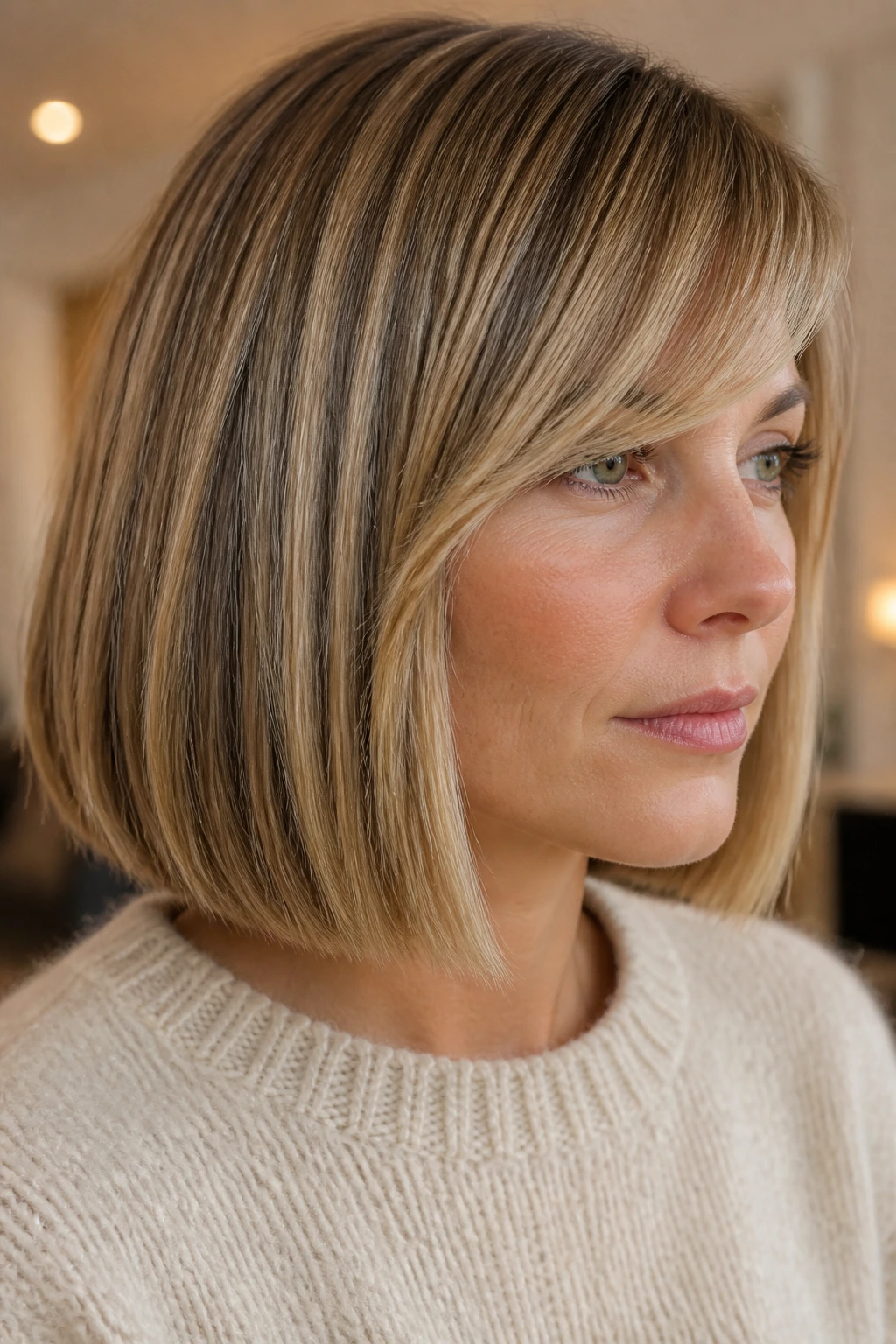
A blunt lob can be very good on fine hair, which surprises people who think every fine-haired head needs layers. Not true. A blunt line at the ends creates the visual edge that makes the hair look fuller, and a side-swept bang stops the top from feeling too square. Fine-weave highlights add depth without interrupting the clean outline.
Why the Blunt Line Still Works
The hard edge at the bottom gives your eye a place to stop. That alone can make hair seem denser. Then the soft, side-swept front keeps the whole thing from looking heavy or helmet-like.
Keep the layers almost invisible. If you start cutting too much movement into the body, you lose the very fullness the blunt line was giving you. This cut likes a smooth finish and a slight bend at the ends — nothing more.
For color, ask for weaving that’s narrow enough to hide inside the haircut. The highlights should feel like light passing through, not painted stripes sitting on top.
21. Air-Dry Shag with Sunlit Ends
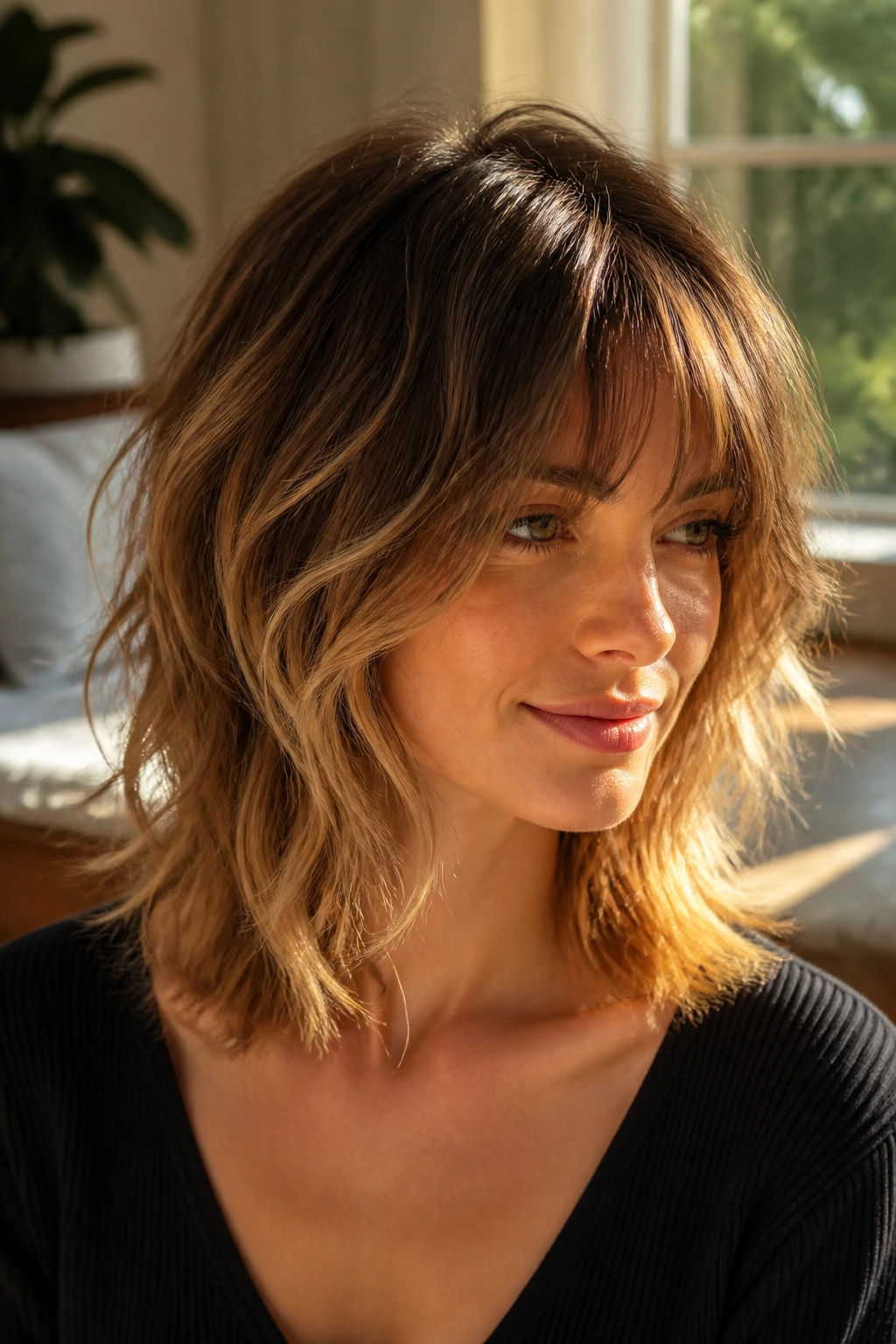
An air-dry shag is the answer for the person who wants texture without daily heat. Fine hair that has a natural wave can look surprisingly full here, as long as the layers are soft and the side-swept bangs are long enough to dry in one direction instead of puffing up in the middle. Sunlit ends keep the bottom from looking too dark and heavy.
The key is control at the root and looseness through the lengths. A touch of lightweight cream goes on damp hair, then you scrunch or twist the front away from the face and let it set. If the layers are cut well, the shape falls into place with very little help.
I’m fond of this look because it has a little edge but doesn’t punish you for being lazy on a Tuesday. That sounds like a small thing. It isn’t.
22. Polished Blowout Layers with Glossy Highlights
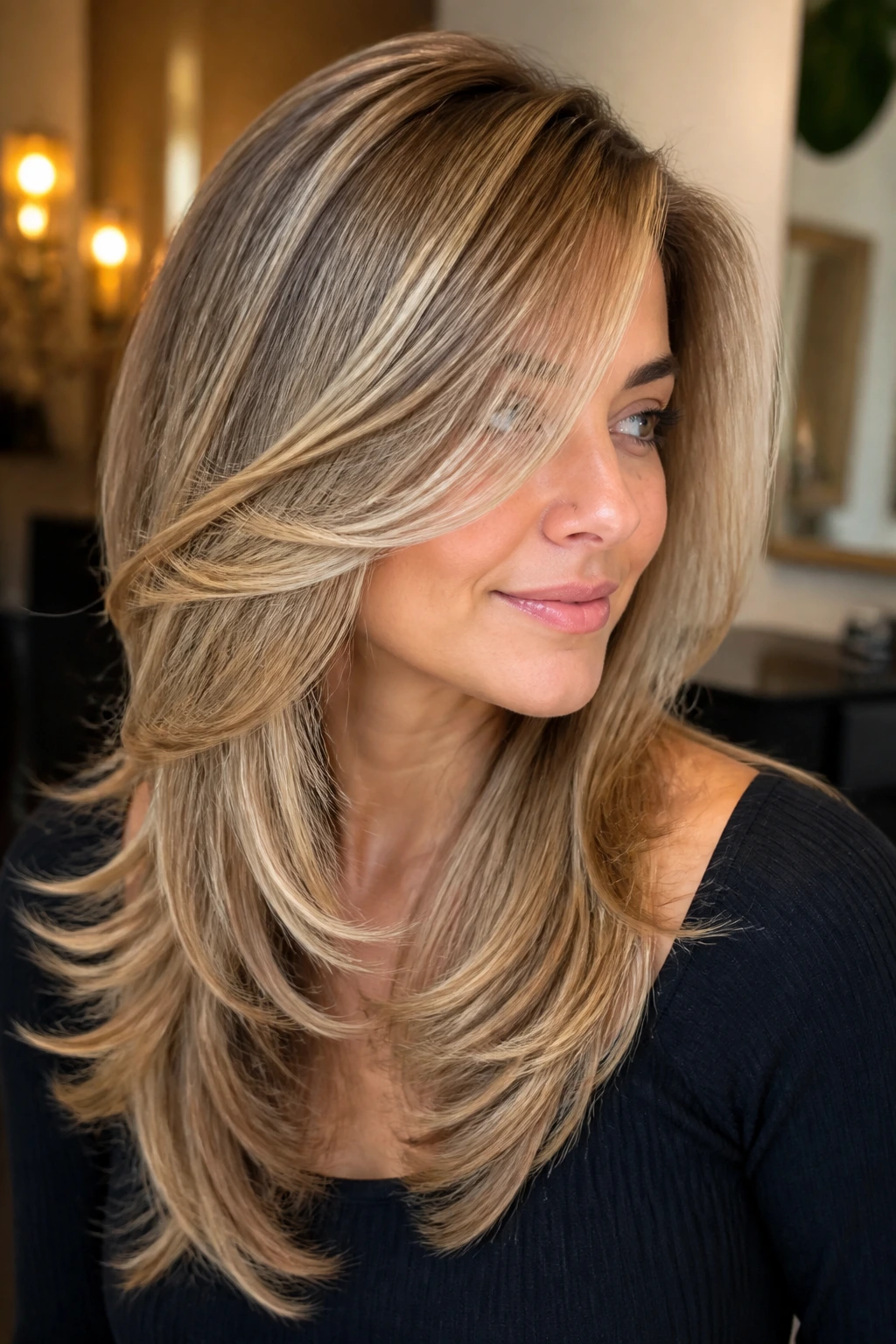
A polished blowout can make fine hair look like it owns two extra inches of density, and I mean that in the literal, visual sense. The round brush lifts the root, the layers curve away from the face, and the side-swept bangs sweep into the rest of the style instead of sitting on top of it. Glossy highlights reflect the light that a matte, over-textured finish would swallow.
This is the style I’d pick for events, interviews, or any day when you want the hair to look deliberate. It does take time. There’s no pretending otherwise. But the payoff is a shape that feels smooth, buoyant, and clean around the jaw and cheekbones.
If your ends flip out too much, keep the brush on them a few extra seconds while they cool. That one small move changes the whole silhouette.
23. Long Straight Cut with Diagonal Bang Sweep
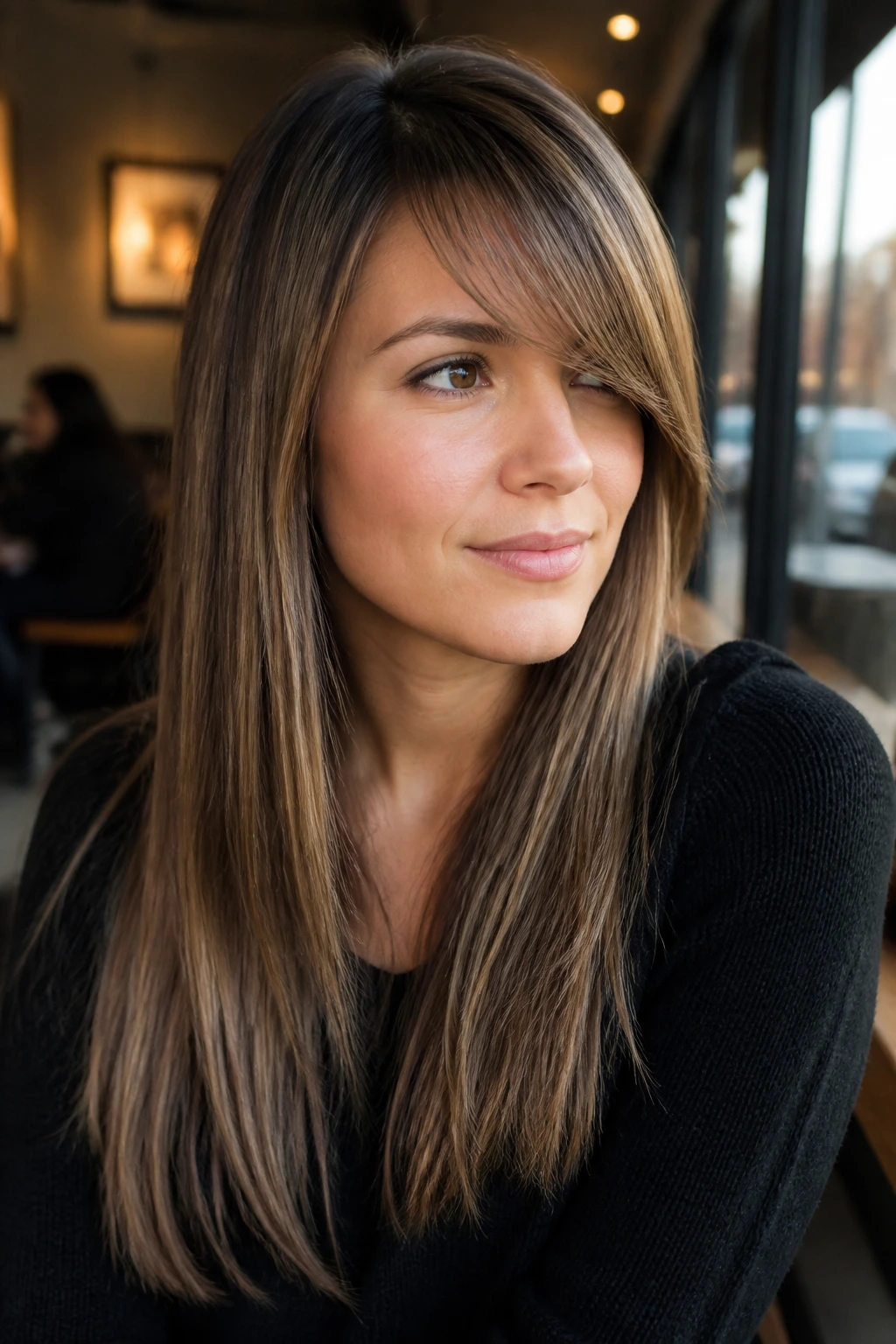
Long, straight fine hair can get a bad rap because it often looks sparse when the ends are left untouched. A diagonal bang sweep fixes part of that problem by creating motion at the front, and a long, straight cut with subtle highlights keeps the rest from turning into a single curtain. The color should be soft and woven, not streaky.
What helps most here is restraint. The ends need a little cleanup, but not much layering. If you cut the bottom too thin, the length loses its weight and the whole shape starts to look transparent. Side-swept bangs provide just enough interruption to keep the line from feeling endless.
This style is especially useful if you like wearing hair tucked behind one ear. The sweep opens the face and the highlights brighten the side that’s visible first. That tiny asymmetry is more flattering than people expect.
24. Curved Bob with Tucked Ends and Luminous Highlights
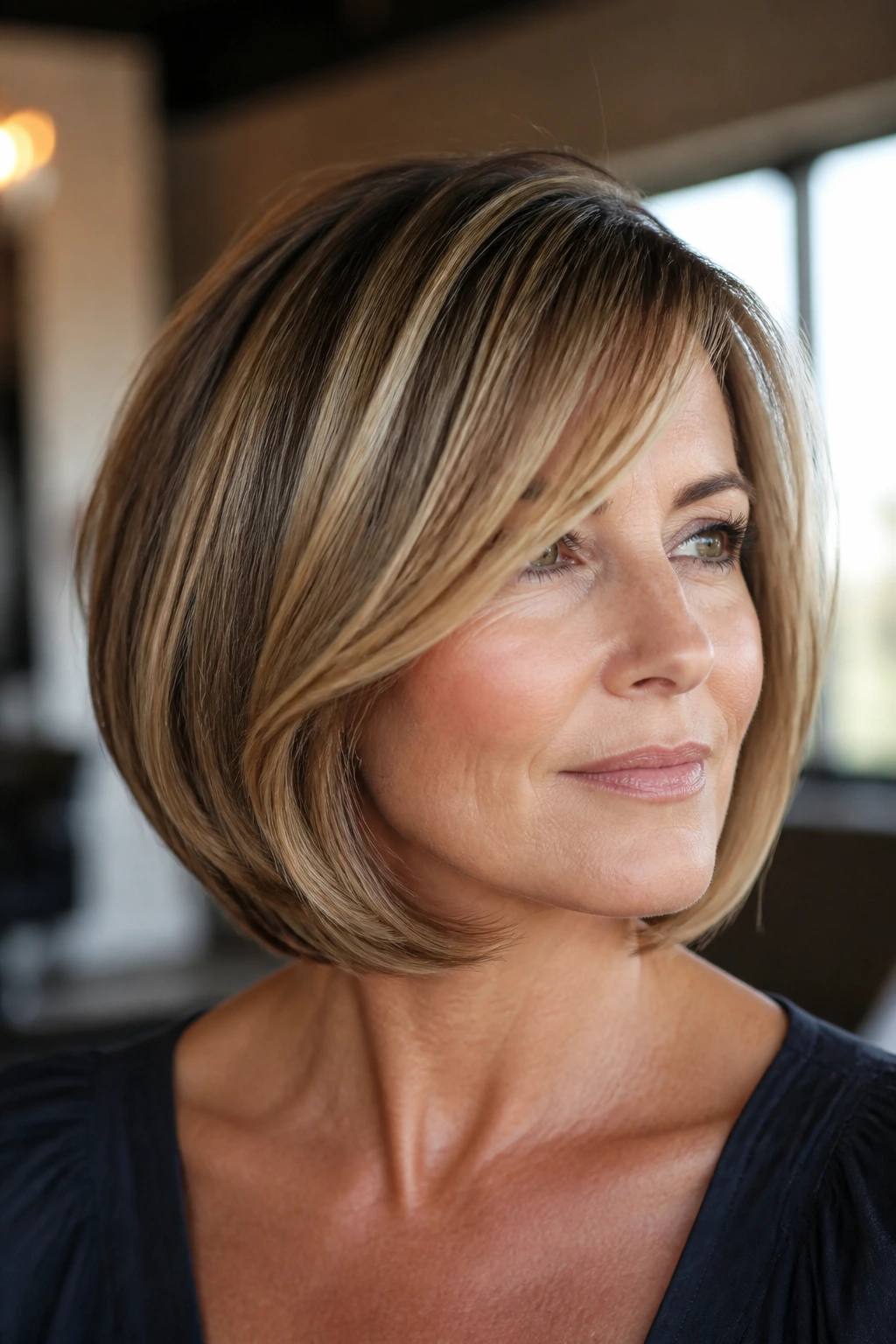
A curved bob turns inward just enough to hug the jawline, which is a smart move for fine hair because it gives the ends a little support. Side-swept bangs soften the front edge, and luminous highlights keep the curve from looking too dark or heavy underneath. The whole style feels lifted even when it’s not big.
This bob works best when the bottom is beveled with a brush, not flipped out in a fussy way. The curve should look natural, like the hair decided to sit there on its own. A few brighter pieces around the face help the cut read as fuller because they break up the solid line.
If your hair tends to separate at the crown, a tiny root-lift spray before blow-drying can change the shape enough to matter. Small fix, big difference.
25. Low Twist Updo with Face-Framing Side Bangs
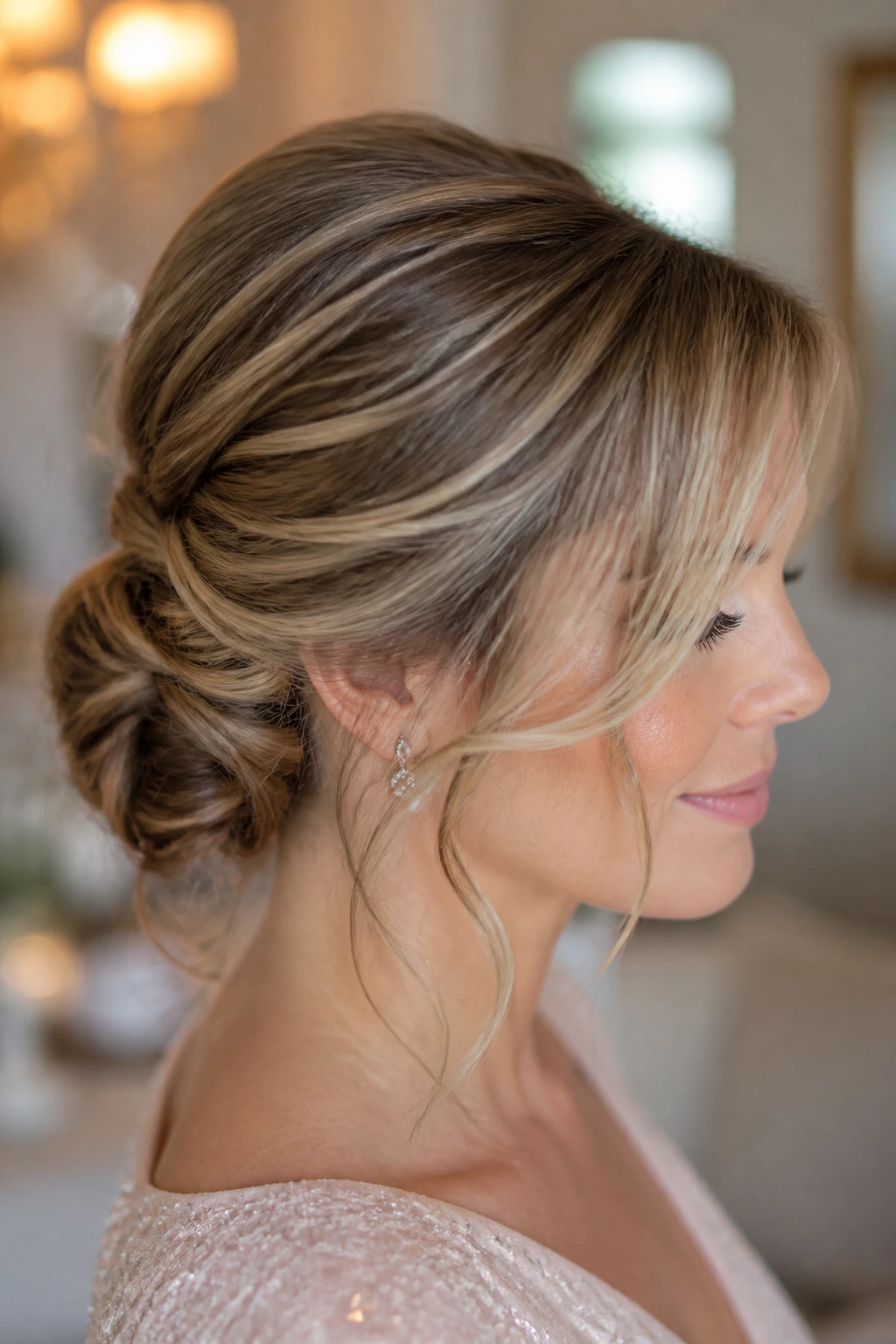
Not every good hairstyle for fine hair has to be worn down. A low twist updo can look graceful and still keep some visual thickness if you leave the side-swept bangs and a few face-framing strands loose. The highlights around the front and crown keep the pulled-back hair from looking too tight or too dark.
I like this for weddings, dinners, or any day when the hair needs to stay up but still look soft. The twist should sit low at the nape, not high and severe. Pull gently at the crown after pinning so the head shape has a little air in it. That tiny looseness matters.
This is the style that proves fine hair does not have to hide. A controlled twist, a sweeping fringe, and a few lighter pieces near the cheekbones can look richer than a lot of overworked volume.
Why Highlights and Side-Swept Bangs Work So Well on Fine Hair
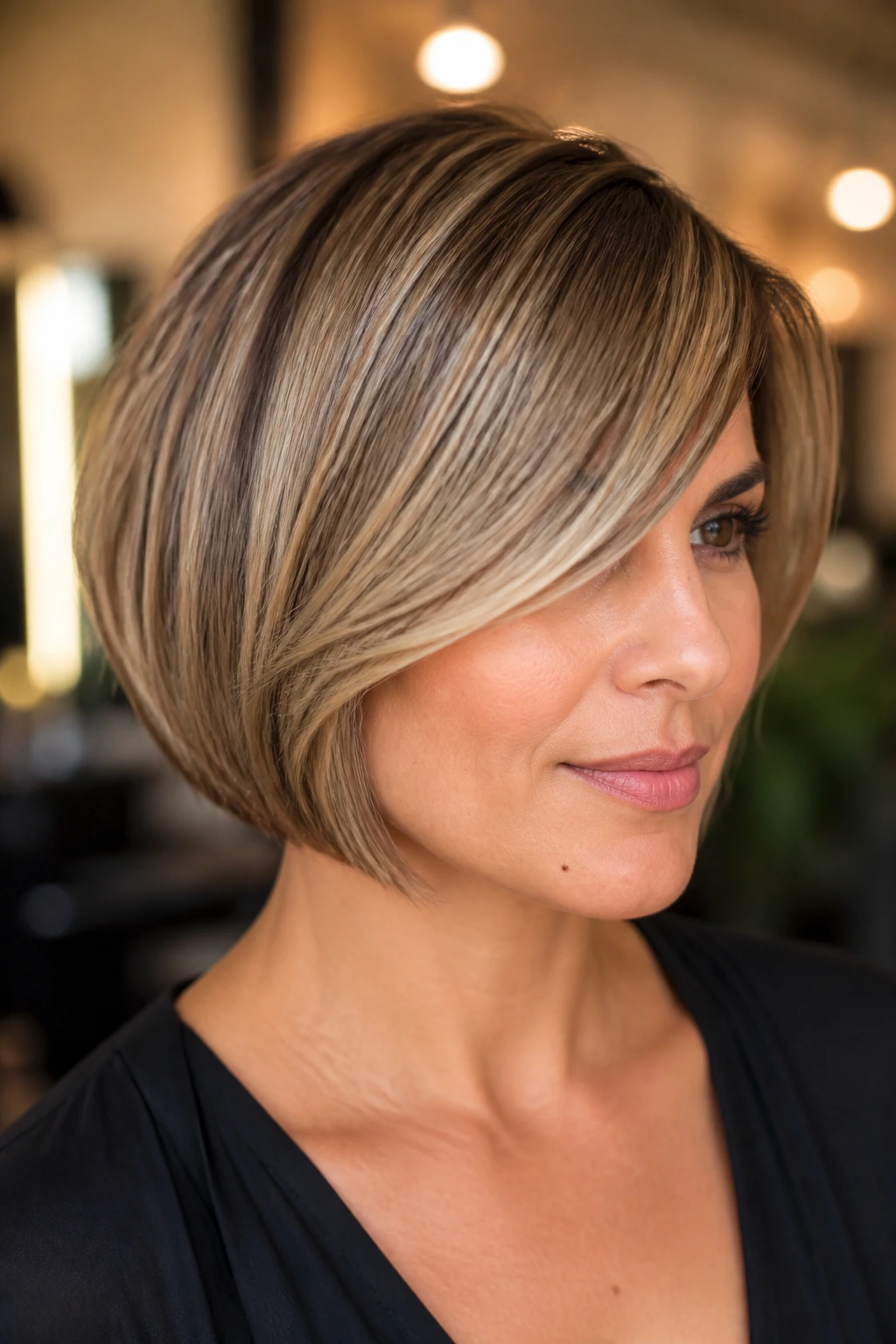
Fine hair is about strand thickness, not how much hair you have. That distinction matters because a head with dense fine hair and a head with sparse fine hair do not need the same cut, even if both people say “my hair is thin.” One can handle more surface texture. The other needs a cleaner outline.
The diagonal line from side-swept bangs is a small thing that does a big job. It pulls the eye across the face, which makes the front of the hair feel less narrow and less see-through. A blunt fringe can work in some cases, but on fine hair it often looks heavier than the rest of the cut, and that imbalance is what makes the whole style feel off.
What Makes the Color Read Fuller
Fine-weave highlights are the safest bet because they create many tiny shifts in tone instead of a few obvious panels. The eye blends those small shifts into depth. Chunky highlights can expose the part line or make the hair look striped, especially if the base color is much darker.
A root shadow or soft melt helps too. It keeps the top from looking bleached out and gives the crown a little visual weight. That is why so many of the best hi lights hairstyles for fine hair with side-swept bangs lean on subtle contrast instead of loud drama.
The Cut Has to Help the Color
Color alone will not save a weak shape. If the ends are too wispy, the best babylights in the world will still sit on top of a flat line. A blunt edge, a beveled bob, or a feathered layer pattern gives the highlights something to live inside.
That is the part people skip, then wonder why the hair still looks thin. The haircut is the container. The color is the spark.
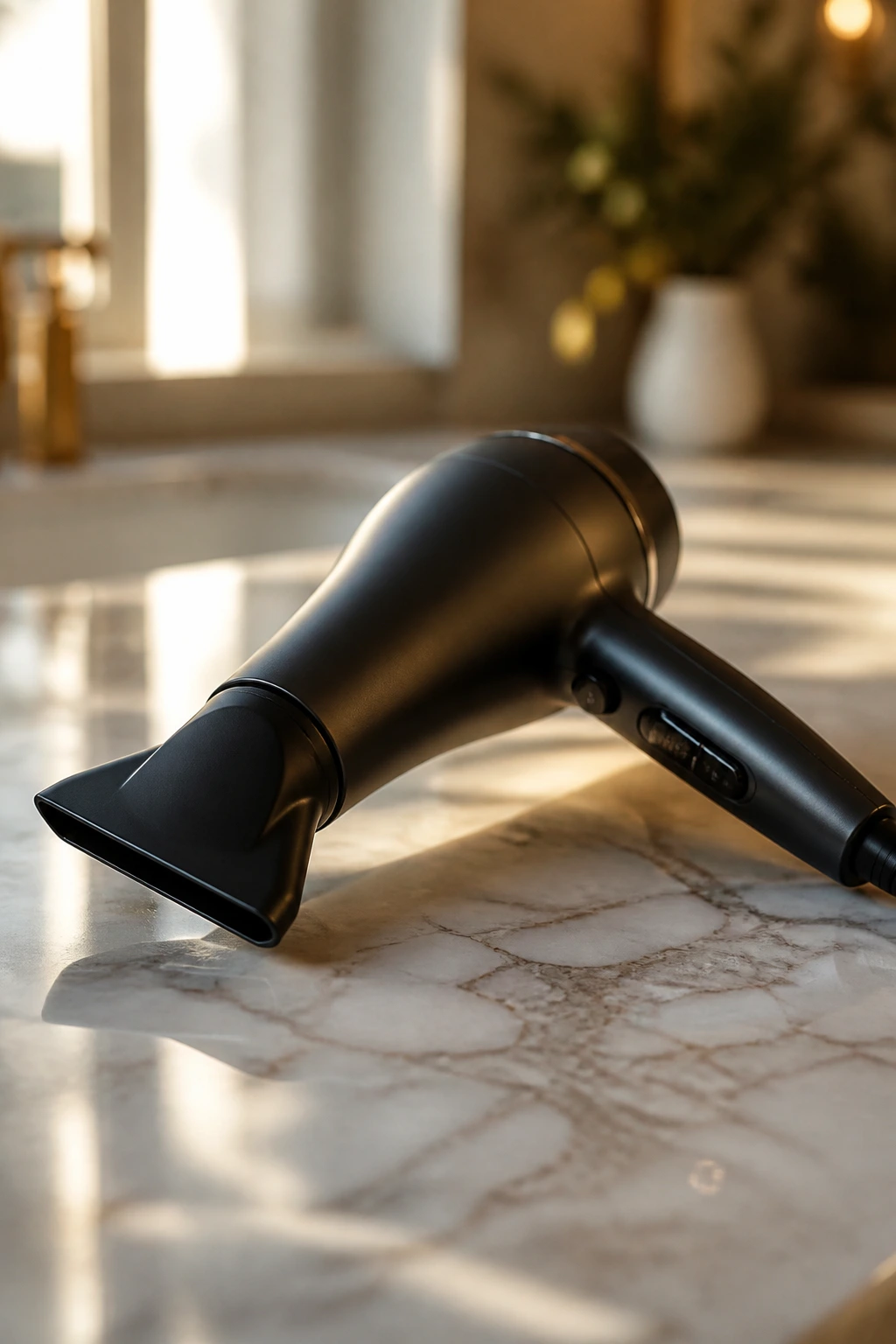
Essential Tools for Styling Fine Hair
-
Blow dryer with a concentrator nozzle: Directs airflow at the roots so you can build lift instead of blasting the cut apart.
-
1-inch to 1.25-inch round brush: The sweet spot for bending side-swept bangs and smoothing fine ends without making them puffy.
-
Tail comb: Helps you place a clean off-center or deep side part and section the fringe without messing up the root.
-
Sectioning clips: Keep the top layers out of the way while you dry the underlayers; fine hair collapses fast if you try to do everything at once.
-
Lightweight root-lift mousse: Adds grip at the crown without turning the hair sticky or stiff.
-
Heat protectant spray: Non-negotiable if you use a blow dryer, flat iron, or curling iron on color-treated fine hair.
-
1-inch curling iron or flat iron: Useful for a soft bend through the front pieces and ends; larger barrels often make fine hair lose shape too quickly.
-
Dry shampoo: Works best on day two or three at the roots, not as a rescue after the hair has gone fully oily.
-
Texturizing spray: Adds a little separation to shaggy, bobbed, or pixie shapes; use lightly or the hair can look dusty.
-
Silk or satin pillowcase: Cuts down on friction, which matters more when the strands are fine and easily bent out of shape.
Small Styling Moves That Add Real Lift
Root lift first: Put mousse or volumizing spray only at the crown and front roots before you dry. If you spray the lengths heavily, the hair gets dull and the top still goes flat.
Dry the bangs separately: Side-swept bangs should be brushed from side to side while they’re wet, then settled into the direction you want. That stops them from drying in a weird hook.
Use less oil than you think: Fine hair needs shine, not grease. A pea-size amount of serum on the ends is enough for most styles.
Flip the part every few days: That breaks the habit of the root lying in one groove, and the top keeps more life. It also helps the fringe sit with a little more lift.
Keep highlights close to the face: A few brighter pieces around the temple and cheekbone do more than a random bright strip in the back. That is where the eye lands first.
Common Mistakes That Flatten the Shape
Making the highlights too chunky: Wide streaks can expose the spacing between fine strands and make the hair look thinner, not fuller. Ask for babylights, micro-weaves, or soft ribboning instead.
Cutting side-swept bangs too short: Short fringe can spring up and expose more forehead than you wanted. Keep them long enough to brush the cheekbone when dry, then trim in small steps.
Over-layering the crown: Too many short pieces at the top can leave the hair see-through near the part. If you need lift, ask for interior removal that keeps the surface length intact.
Using heavy products near the root: Creams, oils, and thick leave-ins at the scalp will flatten the top within an hour. Put those only on the mid-lengths and ends, and keep the root product light.
Leaving the part in one place for months: The hair gets trained to fall there, and the lift disappears. Change the part, even slightly, when the roots start lying too close to the head.
Skimping on bang trims: Side-swept bangs grow out fast and start hanging in the eyes or splitting apart. Tiny trims every few weeks keep the shape useful.
Variations and Alternatives to Try
Bronde Ribbon Blend: Swap bright blonde for a brown-blonde blend with caramel and beige threads. It keeps fine hair looking rich without high contrast, and it’s easier to grow out than a paler blonde.
Cool Pearl Sweep: If your skin runs cool, ask for ash beige, pearl, or mushroom tones around the face. The finish looks softer and less brassy, especially on a blunt bob or collarbone cut.
Copper Threading: A thin copper or apricot weave can wake up fine hair without making it loud. This works best on brunettes and medium browns because the warmth sits inside the cut instead of sitting on top of it.
Low-Contrast Gloss: Keep the base and highlights close together and finish with a gloss or glaze. That gives fine hair shine and depth without obvious color stripes.
Air-Dry Bend Version: For wavy or bendy hair, skip hot tools most days and use a lightweight cream plus a scrunch or twist-dry. The side-swept bangs can be pinned in place while damp, then released when dry for a softer fall.
Keeping the Cut, Fringe, and Color in Shape
Fine hair does not forgive long gaps between trims. Side-swept bangs usually need a touch-up every 2 to 4 weeks if you want them to keep their sweep and not fall into your lashes. The rest of the cut can usually go 6 to 8 weeks before the ends start looking tired or see-through.
Color holds up best when you do not chase brightness every appointment. A gloss every 4 to 6 weeks keeps the highlights shiny and the tone controlled. Full babylight refreshes usually make sense every 8 to 12 weeks, depending on how much contrast you want and how fast your roots show.
Dry shampoo helps, but it is not a substitute for washing. If you use it often, do a proper cleanse about once a week so the roots do not build up a dull film. Fine hair goes limp faster when product residue sits on the scalp.
If you heat-style regularly, use a protectant every single time. Not sometimes. Every time. Fine strands show damage quickly, and burned ends are the fastest way to lose the density you worked for.
Frequently Asked Questions
Are highlights or lowlights better for fine hair?
A mix usually works best, but if you have to choose one, fine highlights tend to create more visible movement around the face. Lowlights help when the hair is very light or washed out, because they put a little depth back under the surface.
Do side-swept bangs make fine hair look thinner?
Not if they’re cut long enough and blended into the front. Short, heavy bangs can expose the forehead and make the hairline look sparse, while a soft side sweep keeps the front moving in one direction.
Should fine hair have layers at all?
Yes, but the layers need to be careful. Long, soft layers remove weight without chewing up the ends; short, choppy layers can leave the bottom looking stringy fast.
What highlight placement looks best with side-swept bangs?
The brightest pieces usually belong around the temple, cheekbone, and crown. Those are the spots the eye sees first, so that’s where dimension pays off.
Can I wear these styles if my hair is straight?
Absolutely. Straight fine hair often benefits the most from a clean bob, a smooth lob, or a polished blowout because the line stays visible. You may just need a little root lift and bend at the ends so the style does not lie too flat.
How often should I trim side-swept bangs?
Every 2 to 4 weeks is the usual sweet spot. If your bangs grow quickly or split in the middle, trim more often; if they sit longer and softer, you can stretch it a bit.
What if my hair goes flat after a few hours?
Start with less conditioner at the roots, use a root-lift mousse before drying, and change the part once the hair is fully dry. A small blast of dry shampoo at the crown can help, but if the cut itself is too heavy, no product will fully fix it.
Do chunky highlights ever work on fine hair?
Sometimes, but only if the hair is dense and the chunking is very controlled. For most fine hair, smaller weaves look better because they create depth without exposing the space between strands.
The Shape That Keeps Doing the Work
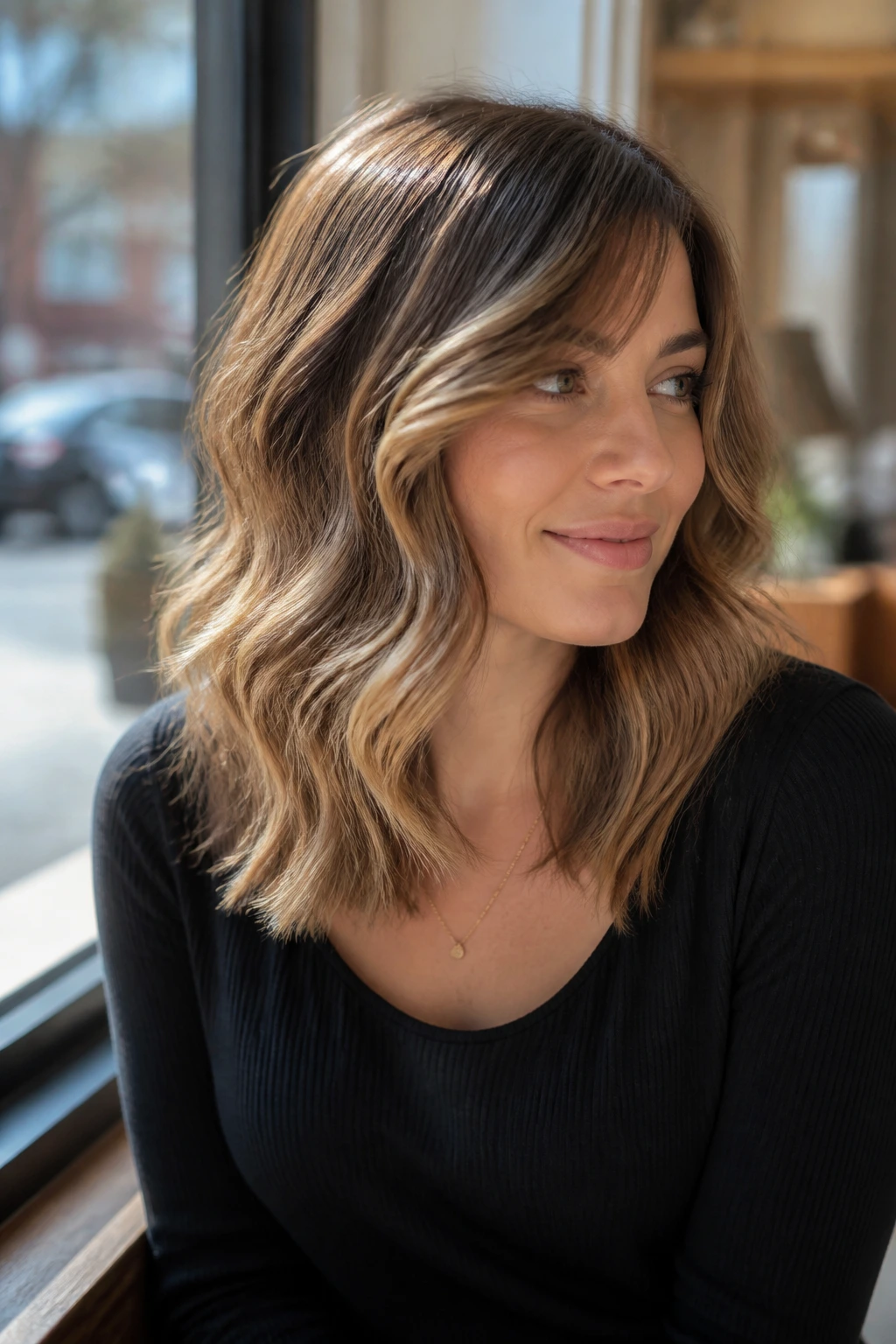
Fine hair can be fussy, but it is not doomed to look flat. The right cut leaves enough line at the ends to hold its shape, and the right highlight placement adds movement where the eye needs it most. Side-swept bangs matter because they soften the front without cutting off the face.
That’s why these looks keep coming back in one form or another. They don’t depend on one giant curl, one heavy product, or one heroic blowout. They rely on proportion. Get that part right, and the hair starts cooperating in a way that feels almost suspiciously easy.
Bring one of these shapes to the salon, ask for the color to stay fine and woven, and keep the bang sweep soft. That combination does the lifting better than any miracle spray ever could.