



Rounded layers with bangs for wavy hair solve a problem that blunt cuts keep creating: the ends flare, the sides puff, and the front hangs there like it belongs to a different haircut. A rounded shape changes the whole mood. The curve at the perimeter keeps waves from kicking out at the jawline, and the fringe gives the front a place to land instead of turning the face into one big wall of hair.
The part most people miss is that wavy hair does not behave like straight hair, not even close. It expands as it dries, it twists where it wants to twist, and it can look narrower at the top and wider near the shoulders if the layers are cut in the wrong place. Rounded layers fix that by redistributing weight in a way that works with the bend pattern instead of fighting it. Bangs help too, especially when they’re cut long enough to move and short enough to matter.
There’s also a very practical reason this family of cuts keeps showing up in salons. It gives you shape on air-dry days, but it still looks good with a round brush and a little tension if you want a sleeker finish. That flexibility is rare. Most haircuts lean hard in one direction or the other. These don’t. They sit in the middle, and that middle is where wavy hair usually looks its best.
Why Rounded Layers and Bangs Are Such a Good Match for Wavy Hair
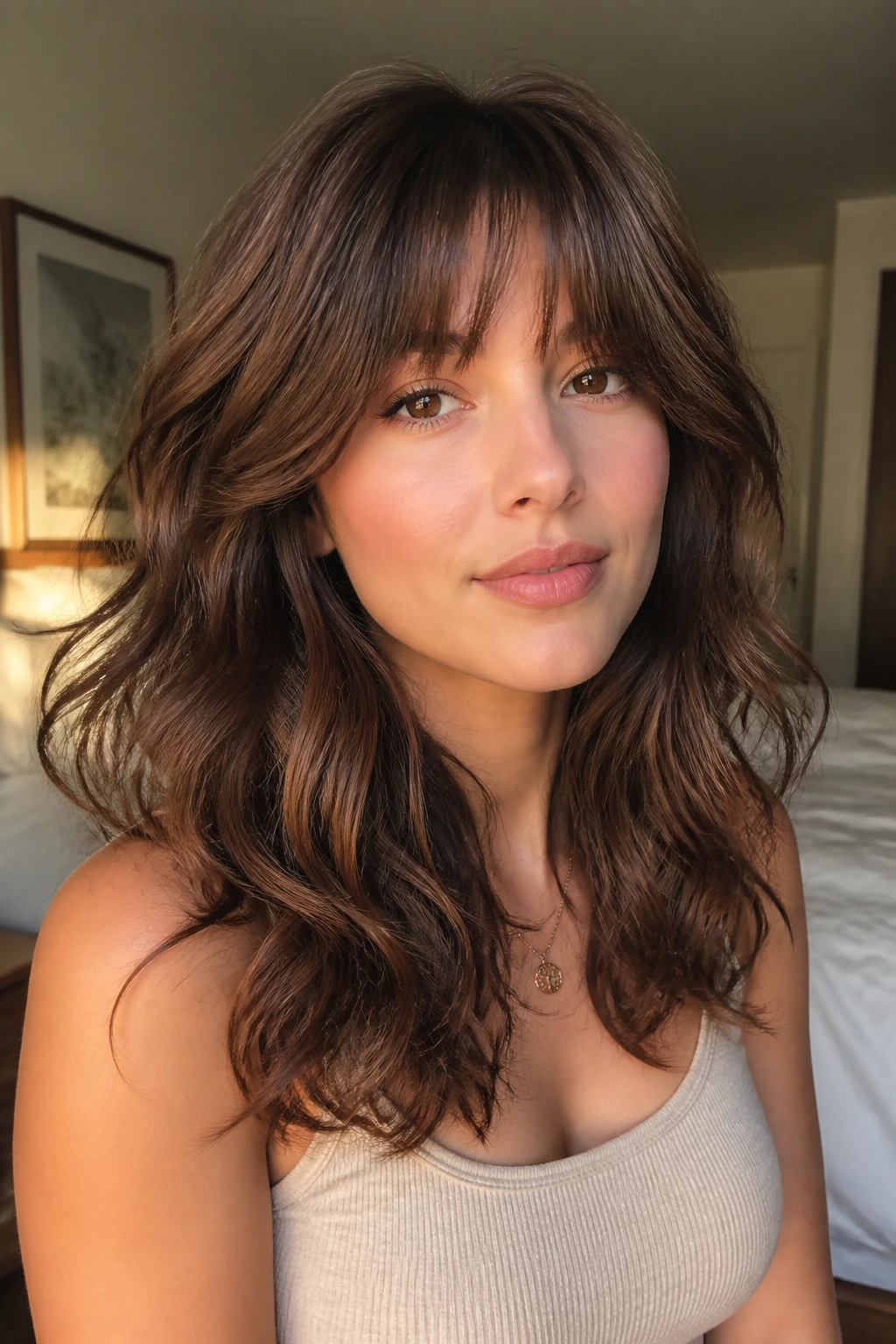
-
The curve stops the triangle shape: Rounded layers keep the outer line from flaring out at the shoulders, which is the thing that makes many wavy cuts look wider than intended.
-
The fringe gives the front a job: Curtain, bottleneck, or side-swept bangs break up the heavy front panel and pull attention to the cheekbones instead of the jaw.
-
The cut works with natural movement: Wavy hair already bends on its own, so a rounded shape only has to guide that movement. It does not need to create it from scratch.
-
The grow-out is kinder: Longer rounded layers soften as they grow, which means you don’t get that hard shelf line that blunt cuts leave behind.
-
You can wear it several ways: Air-dried, diffused, or blown out with a brush, the same haircut can look relaxed one day and polished the next.
-
It scales up or down easily: A shorter bob, a collarbone-length lob, or waist-skimming waves can all take the same rounded idea and wear it differently.
1. Soft C-Cut with Curtain Bangs
A soft C-cut is one of those haircuts that quietly does the right thing. The perimeter curves inward just enough to keep the sides from sticking out, and the curtain bangs open at the center so the front never feels boxed in. On wavy hair, that curve matters. It follows the bend of the wave instead of drawing a hard line across it.
Why it works
The C-shape gives medium-length waves a little structure without stealing motion. The shortest face frame usually starts around the cheekbone, which is high enough to lift the face but low enough to blend into the rest of the cut. If your waves puff at the ends when they air-dry, this shape smooths that problem out fast.
Ask for the curtain bangs to stay long enough to split and sweep. A fringe that lands at the nose bridge or just below the eyebrows gives you room for shrinkage. That extra half-inch is not a small thing. Wavy hair will take it back.
- Best for shoulder-length to collarbone-length hair
- Good if your waves are looser around 2A to 2B
- Works well with a middle part or a slight off-center part
Pro tip: Have your stylist check the front pieces dry, not just wet. Wavy hair can spring up a full inch once the water leaves it.
2. Collarbone Rounded Layers with Bottleneck Fringe
Bottleneck bangs are the rare fringe that can handle a moody wave pattern without looking fussy. They sit narrower at the center, then widen gently toward the temples, which means the front reads soft instead of chopped. Paired with collarbone rounded layers, they give wavy hair a shape that feels deliberate even on a lazy air-dry.
The collarbone length is doing real work here. Hair at that length still has enough weight to stay smooth through the mid-lengths, but the rounded layers keep the ends from dragging everything down. That balance is why the cut looks better with movement than without it. Still. That’s the point.
I like this version for medium-density hair that tends to spread outward once it dries. The bottleneck fringe gives the eye a center line, and the rounded layers keep the side volume from running away with the whole look. It’s flattering without being precious. That matters.
If you wear glasses, the longer sides of the fringe are handy. They slide instead of sitting straight across the frame. If you tuck your hair behind one ear a lot, this shape still reads clean, which is more than I can say for a lot of trendy cuts that only look good in a salon mirror.
3. Long Halo Layers with Wispy Bangs
Why do some long wavy cuts look like they were shaped on purpose, while others just hang there? Usually it comes down to where the weight sits. A long halo cut takes bulk out of the interior without stripping the ends bare, so the outline stays round and the wave pattern can move through the hair instead of collapsing at the bottom.
What makes it different
The halo idea is simple. The shortest pieces sit around the crown and cheek area, then the lengths stay long enough to keep the overall silhouette soft. Wispy bangs finish the job by giving the front a little air. They should not be see-through to the point of disappearing, though. That’s a different thing, and a bad one.
For thicker wavy hair, this cut can prevent the heavy “blanket” look that shows up when all the length stays the same. For finer hair, the layers have to stay long and gentle. Too much removal at the crown and you’ll end up with a top that looks airy and ends that look tired.
How to use it: Air-dry with a light mousse, then scrunch only the mid-lengths and ends. Keep the bangs separated with your fingers until they set. If you brush them while wet, they tend to split in strange places.
4. Shoulder-Length Rounded Lob with Side-Swept Bangs

If your hair hits your shoulders and flips out at the ends, this cut is the one that reins it in. A rounded lob sits just below the collarbone or right at the top of it, which is long enough to feel like real hair but short enough to keep the wave from turning into a wing. Side-swept bangs soften the front without asking you to live with a center part every day.
There’s a nice little trick in this shape. The side bang pulls the eye diagonally, and diagonal lines are good at making wavy hair look narrower through the face. The rounded layers keep the bulk moving downward in a curve, which means the sides do not explode outward at the first hint of humidity.
This cut is especially friendly if your wave pattern is uneven. Some people have a bend at the crown and a looser end pattern. Others have one side that takes shape faster than the other. A side-swept fringe gives you a bit of forgiveness on those bad pattern days.
It also grows out cleanly. When the bangs get longer, they become a face frame. When the lob grows past the shoulders, the round shape just gets softer. Few cuts age that gracefully.
5. Butterfly Layers with Airy Center-Part Bangs
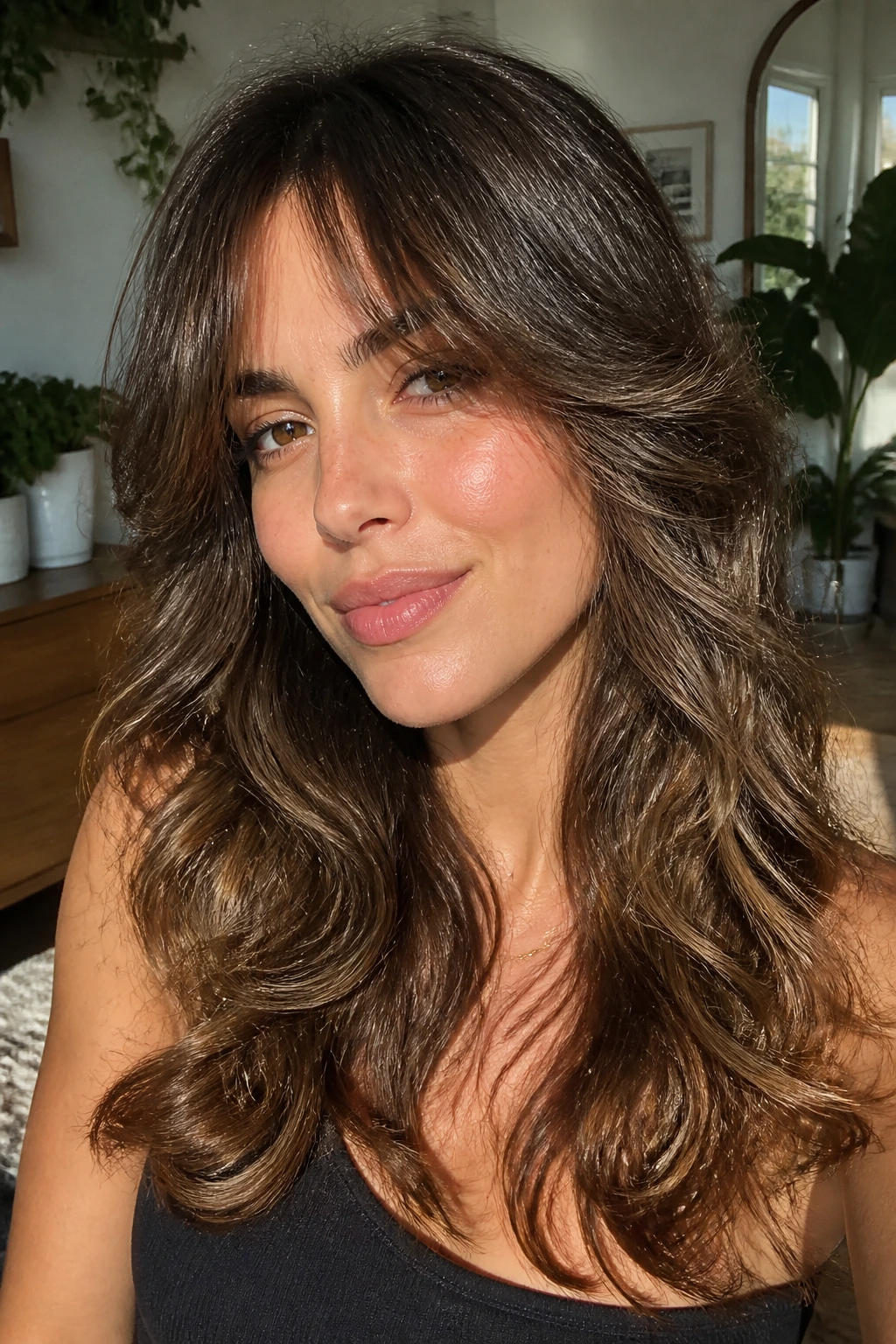
Butterfly layers are popular because they make long hair feel lighter without making it look thin. On wavy hair, that matters even more. The shorter top layers lift the crown and cheeks, while the longer lengths keep the bottom from disappearing. Add airy center-part bangs and the whole cut starts moving in two directions at once, which is exactly why it looks full without feeling bulky.
The bangs in this version should be light, not chopped. Think of them as a veil that opens at the forehead and joins the layers at the cheekbones. If they’re too short, they fight the length. If they’re too dense, they make the face look boxed in. The sweet spot is right in the middle.
This is one of the best choices for medium-to-thick wavy hair that goes flat at the top but puffs at the sides. The butterfly structure keeps the crown from collapsing, and the long layers keep the shape from turning puffy at the bottom. It’s a balancing act, and the haircut is doing most of the work for you.
If you like a little polish, this shape takes a blowout beautifully. If you prefer air-drying, it still reads as intentional, which is why I keep recommending it to people who want movement but not a shaggy finish.
6. Soft Shag with Grown-Out Fringe
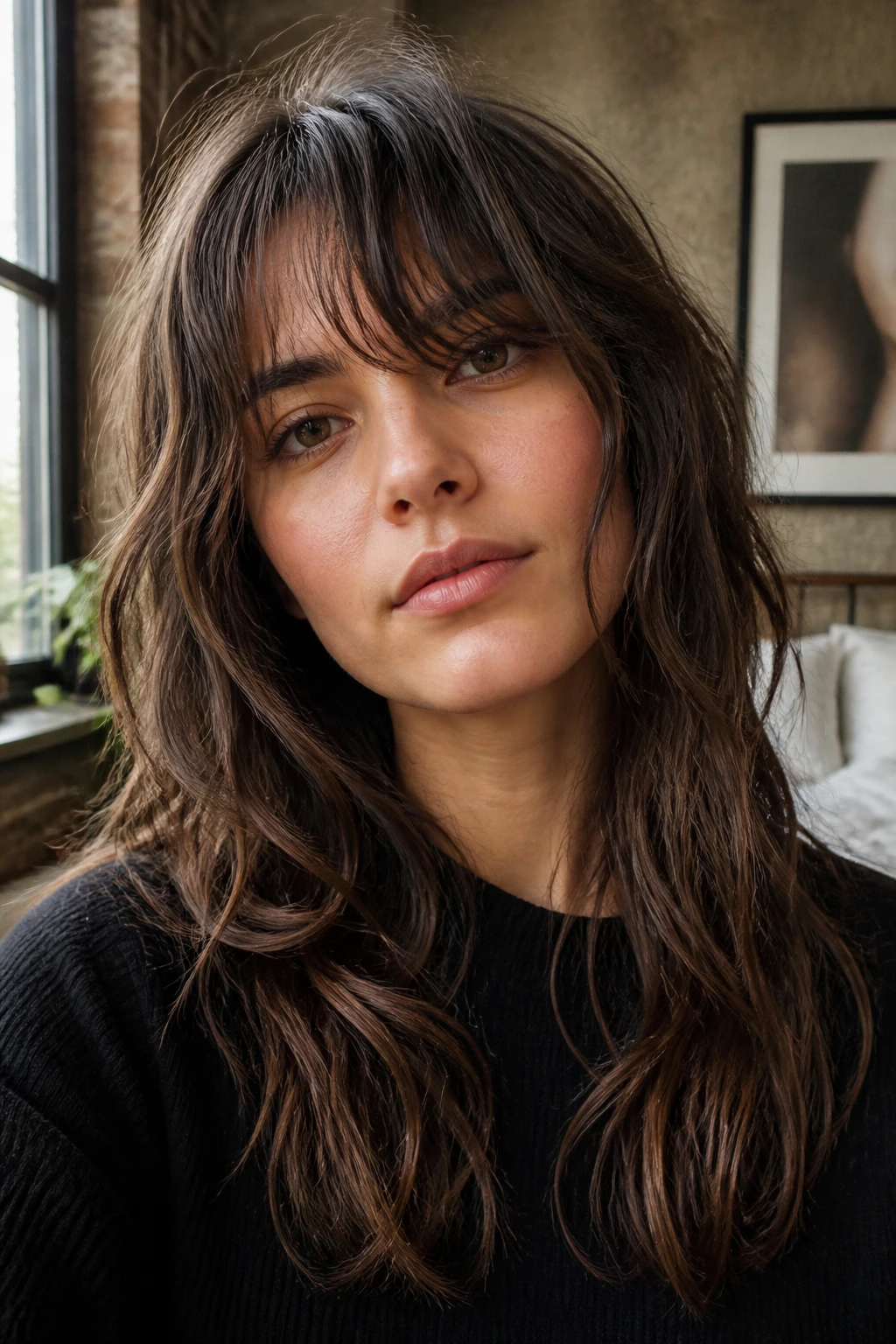
A soft shag is what happens when rounded layers get a little more attitude. The interior texture is stronger, the ends are less exact, and the fringe sits longer so it can break apart naturally on wavy hair. This is not the polished cousin in the family. It’s the one with the leather jacket and the good boots.
The grown-out fringe matters more than people think. A fringe that starts too short on wavy hair can spring up in a way that feels abrupt, especially if the front is coarse or low-density. Leaving the bangs longer lets them split, tuck, and bend without becoming the center of attention.
This cut works best if you actually like texture. If you want smooth, glossy, and precise, skip it. If you want hair that can be tossed around a little and still look right, the shag gives you that breathing room. It also hides a bad hair day better than many more polished shapes because the point is movement, not symmetry.
You do need to stay honest about maintenance. A shag looks relaxed, but the fringe still needs occasional tidying, and the layers need enough length to keep from looking hacked. The difference between “cool” and “messy” is usually about half an inch.
7. Rounded V-Cut with Piecey Bangs
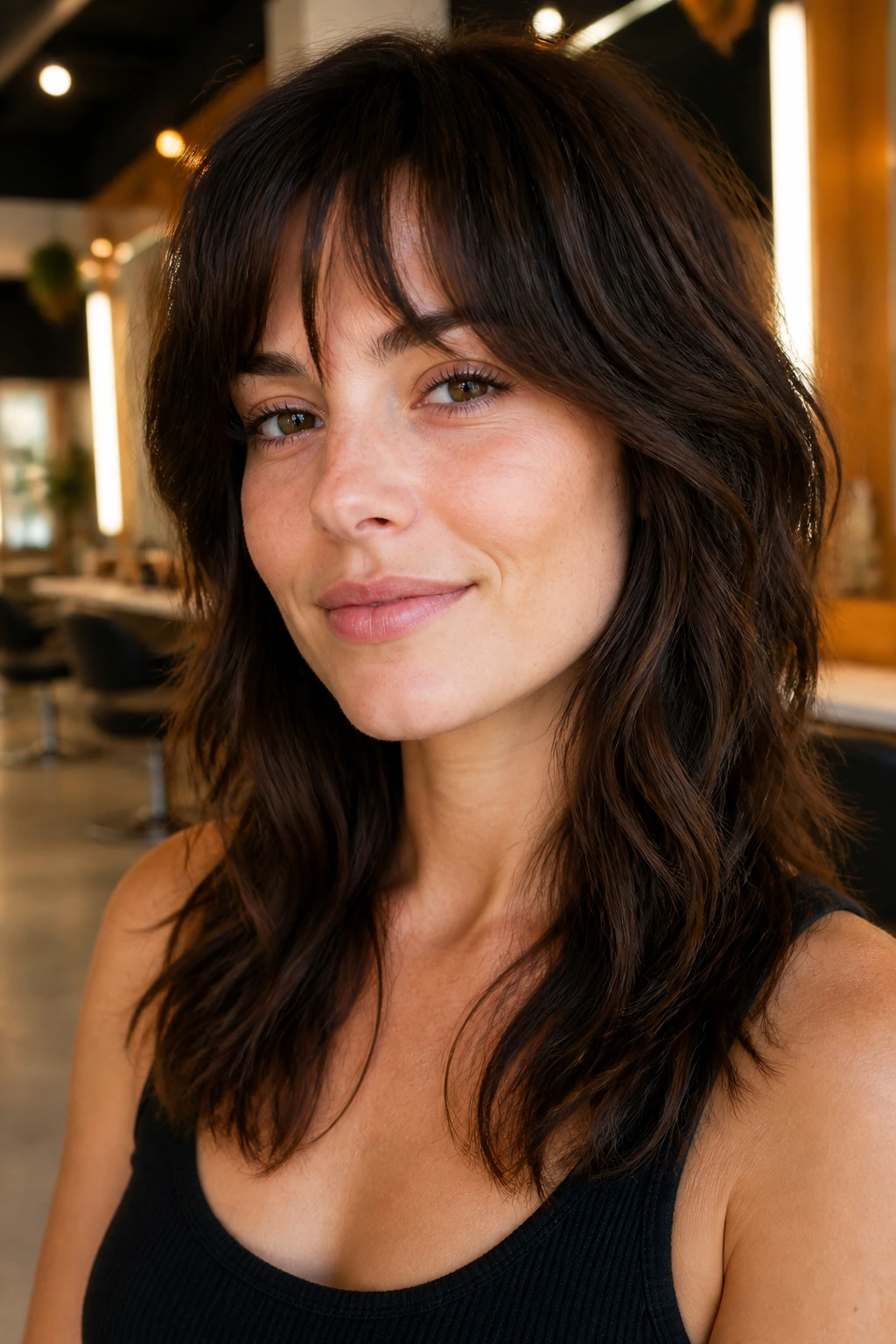
A rounded V-cut sounds contradictory until you see it on wavy hair. The sides still curve softly around the body of the hair, but the back falls into a subtle point, which keeps long length from looking boxy. Piecey bangs finish the front with small separated strands instead of one solid block.
That separation is useful. Thick or medium-thick wavy hair can make bangs look heavy fast, especially if the forehead area grabs too much water when styling. Piecey bangs break up that weight and let the wave pattern show through. The result feels lighter without going sparse.
The V-shape gives you length in back, which is handy if you want to keep ponytail options open. The rounded sides keep the silhouette from turning into a sharp wedge. It’s a smart compromise. Not dramatic. Not boring either.
If your hair has a strong bend at the mid-lengths, ask for the shortest face frame to stay well above the jaw. That stops the front pieces from turning into a triangle around the chin. Small detail. Big payoff.
8. Mid-Length Face-Framing Layers with Micro-Curtain Bangs
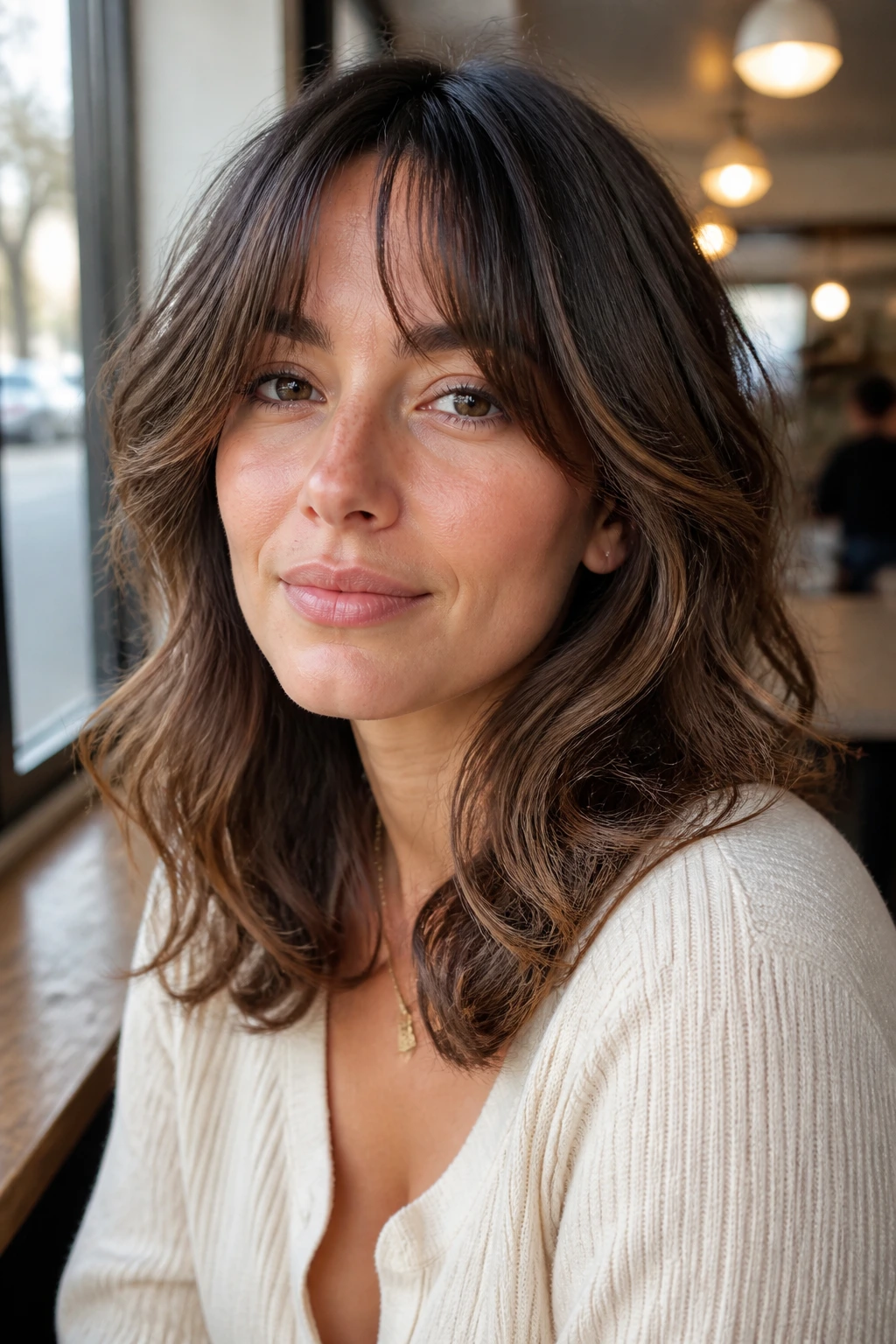
Small bangs can do a surprising amount of work on wavy hair. Micro-curtain bangs — short in the center, longer toward the sides — give the front enough interest without swallowing your forehead or demanding a perfect blow-dry. Pair them with mid-length rounded layers and the whole cut feels lighter, sharper, and a little more modern.
How it changes the shape
Mid-length hair tends to sit in a tricky zone. It’s short enough to flip, but long enough to show every uneven bend. Rounded layers help it curve, while the micro-curtain fringe keeps the front from looking flat against the face. If you have fine to medium hair, that front lift can be a lifesaver.
This is a good cut when you want shape without a lot of density in the fringe. Heavy bangs on wavy hair can get sweaty, puffy, or separated in the wrong spots. A lighter curtain lets the forehead breathe. It also grows out into a normal fringe more easily than a straight-across bang.
What to ask for: keep the shortest center piece longer than you think you need. Wavy hair retracts. Always.
A tiny fringe can look sharp with a natural wave, but it needs confidence and a stylist who understands shrinkage. If that sounds too high-maintenance, the same haircut with longer bangs is safer. Still good. Just less bite.
9. Chin-Skimming Rounded Bob with Baby Bangs

A bob with baby bangs is not subtle. It announces itself the second you walk in. On wavy hair, though, that sharp little combo can be incredible because the rounded bob stops the shape from going too blocky and the short fringe keeps the face open instead of buried in length.
Why does this work better than you’d expect? Because the chin-skimming length gives waves a precise place to turn. The haircut ends right where the wave wants to kick out, so the rounded shape can guide that motion instead of fighting it. Baby bangs then add a second focal point up top, which makes the cut feel balanced even though it’s short.
It is not a low-maintenance choice. Let’s be honest about that. Baby bangs need regular trims, and a rounded bob on wavy hair can look very different wet versus dry. If you want a wash-and-go that never asks questions, this is not it.
But if you like strong shape and you don’t mind using a diffuser or a quick brush blowout, this cut has real personality. The rounded bob can feel chic without looking stiff, and the short fringe keeps the whole thing from reading too severe.
10. Extra-Long Waves with Cheekbone Bangs
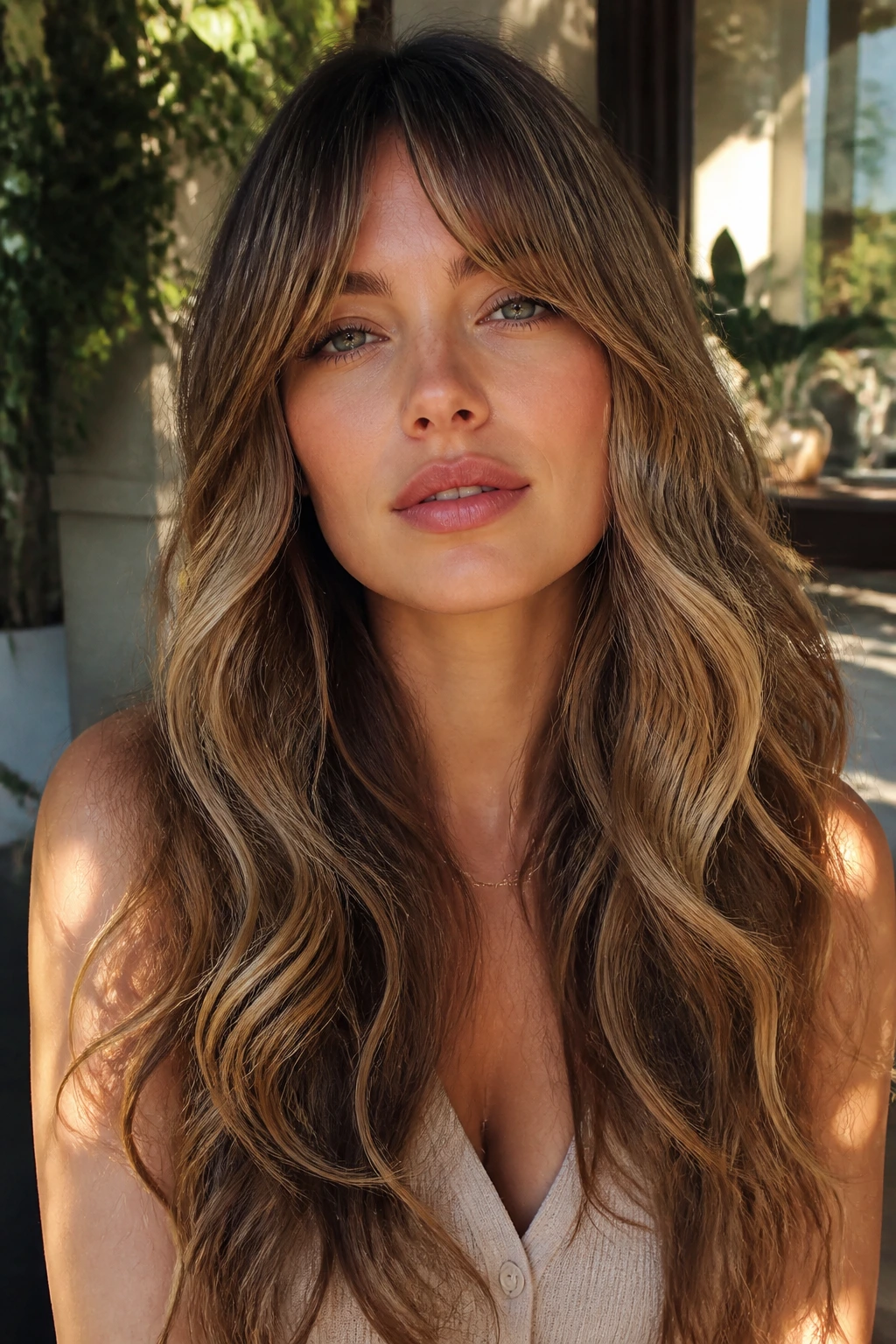
Keeping the length and adding cheekbone bangs is the move for people who love their long hair but hate how dead it can look without shape. The rounded layers start high enough to create movement through the sides, while the fringe skims the cheekbones and falls into the rest of the cut instead of sitting on top of it like an afterthought.
There’s a practical advantage here too. Long wavy hair gets heavy at the bottom. That weight can flatten the crown and make the ends look stringy if the cut is blunt. Rounded layers take just enough off the interior to let the wave pattern breathe, but not so much that you lose the length you wanted to keep.
Cheekbone bangs are one of my favorites for this length because they soften the face without demanding constant trimming. They also tuck back easily on busy days, which is useful when you’re not in the mood to deal with fringe. Very useful.
If your hair is thick, ask for the layers to be rounded rather than aggressively stepped. You want motion, not shelves. Those shelves can show up as weird gaps once the hair dries, and nobody needs that.
11. Rounded Layers with Curved Side Bangs
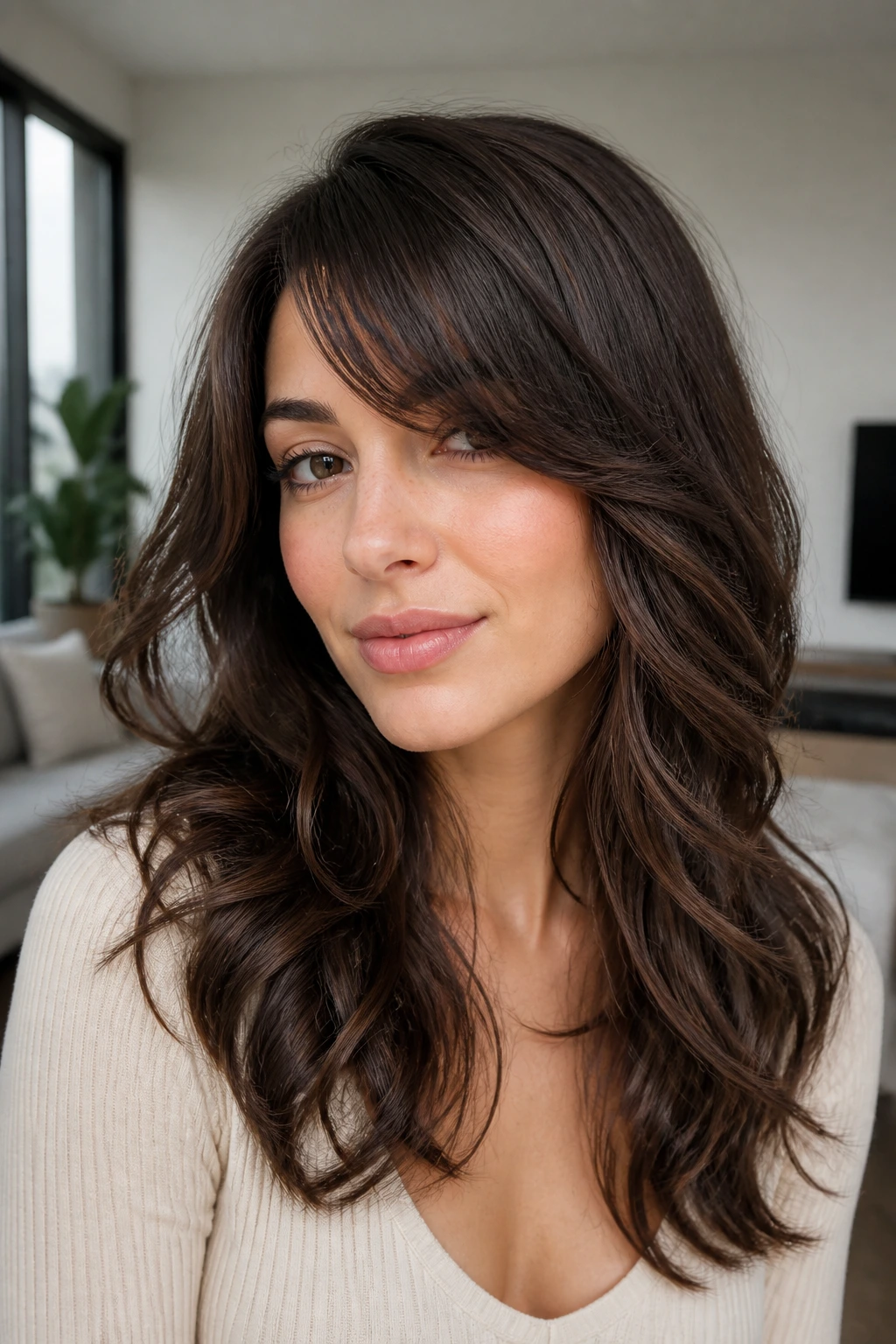
A deep side part changes everything. The waves fall in a diagonal line, the forehead opens up on one side, and the curved side bang creates a soft sweep that feels less staged than a center-part fringe. On wavy hair, that one decision can make the haircut look smoother and more expensive without adding any extra work.
The curved bang should follow the arc of the brow and cheek, not sit as a straight strip of hair pushed sideways. That curve helps the front blend into the rounded layers on the sides. Without it, the haircut can look split into two unrelated pieces. With it, the whole shape reads as one continuous motion.
This version is especially good if you have a cowlick or a stubborn front section that refuses to lie flat in the middle. A side part gives that growth pattern a place to go. It also flatters square and heart-shaped faces by softening the front edge a little.
I like this cut for people who wear their hair half-tucked, clipped back, or pinned behind one ear. The side bang still does its job even when it’s not perfectly arranged. That kind of resilience is worth more than a trendy fringe that only behaves in one pose.
12. Textured U-Shape with Bottleneck Bangs
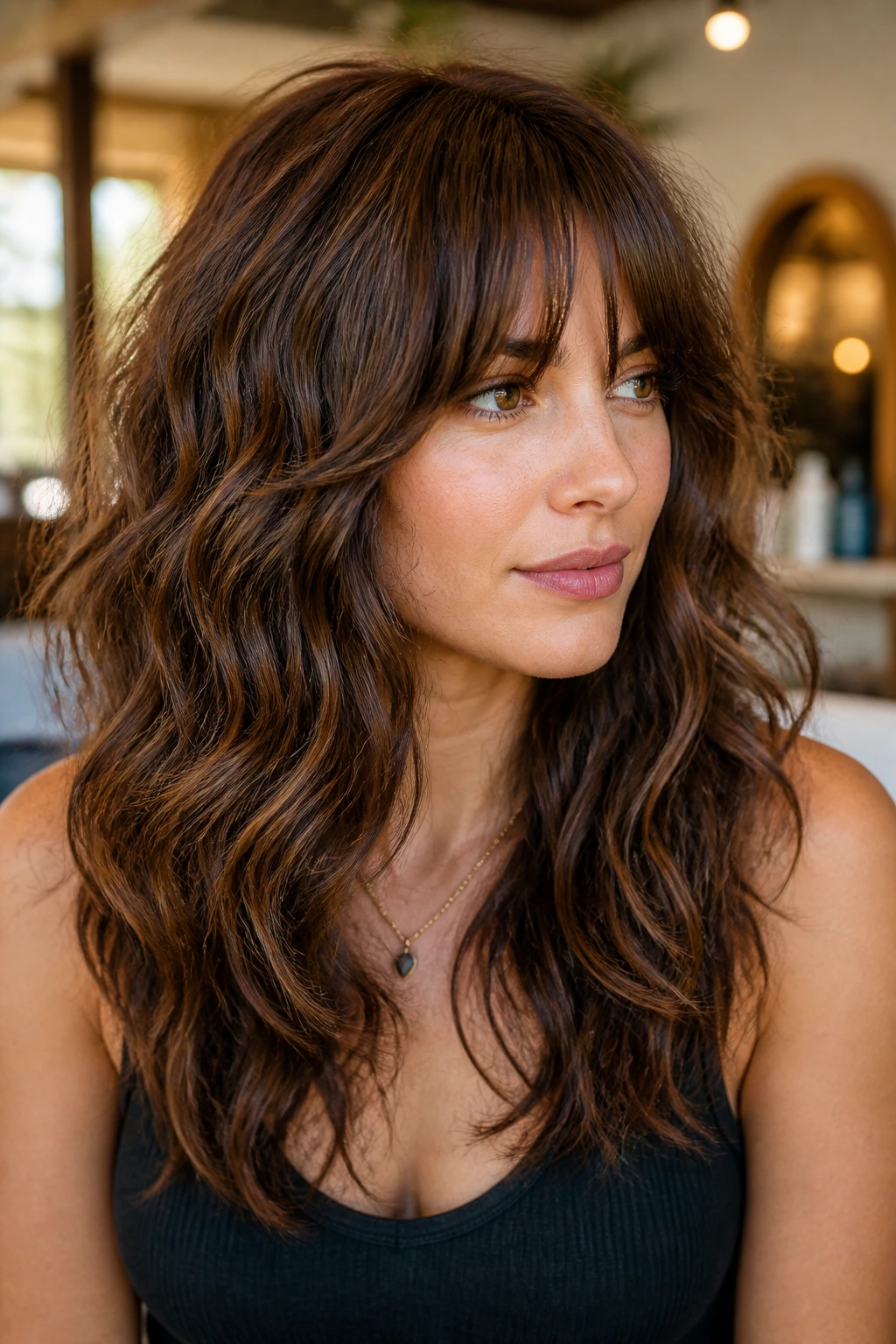
A U-shape keeps the longest point in the center and rounds the sides gently instead of forcing the hair into a sharper V. On wavy hair, that softer outline prevents the ends from feeling stringy while still giving the cut enough direction to move. Bottleneck bangs carry the same logic up front: narrow at first, then a little wider, then blending into the face frame.
That combination is good for thicker hair that needs shape but not a lot of removal. A U-shape keeps the perimeter full, which helps the ends look healthier. The textured interior layers stop the whole thing from ballooning. It’s a controlled version of “big hair,” and I mean that in the best way.
The difference from a V-cut
A V-cut can make the center back look pointed and sharp. The U-shape feels softer and more relaxed. If your waves have a looser bend and you don’t want the back to feel dramatic, U usually wins.
Bottleneck bangs also help if your forehead is shorter or wider and a full curtain bang feels like too much fabric. The narrow center creates lift without covering the whole face. Then the wider sides tuck into the rounded layers, which keeps the fringe from looking pasted on.
13. Tousled Midi Cut with Peekaboo Fringe

Peekaboo fringe is the kind of bang that behaves like an accessory. It hides, splits, slides, and falls into the wave pattern instead of standing at attention. On a tousled midi cut, that softness matters. The haircut stays casual, but it still has a front shape, which is where so many mid-length cuts lose their nerve.
The midi length is the sweet spot for people who want easy movement without giving up too much styling range. Rounded layers keep the sides from widening out, while the peekaboo fringe lets the front breathe. It’s especially nice on hair that goes flatter at the root and fuller at the ends.
This cut looks best when the fringe is intentionally imperfect. A clean little split is fine. A hard center part on every strand is not. The goal is a little curtain, a little sweep, a little movement near the brows.
If you’re growing out bangs, this is one of the easiest transition shapes to live with. The fringe starts as a face frame and gradually becomes part of the haircut. That means fewer awkward weeks. Always a win.
14. Thick-Hair Rounded Layers with Longer Bangs

Thick wavy hair needs a haircut that knows when to stop. Too many short layers, and it puffs. Too much thinning, and the ends go wispy while the top still looks dense. A rounded shape with longer bangs gives thick hair a way to move without losing its body.
The longer fringe is the key here. It keeps the front from sitting too high and too wide, which is a common problem on dense waves. When bangs are cut long enough to blend into the cheek area, they soften the face instead of creating a hard line across the forehead.
What actually matters in this cut is where the weight is removed. You want the stylist to take bulk from the interior and the sides, not just chop the surface into more layers. Thick hair can hide a bad cut for about five minutes. After that, the shape shows itself in all the wrong ways.
This is a very good choice if your hair takes forever to dry and feels heavy at the nape. The rounded layers remove some of that drag so the movement sits higher. The hair still looks full. It just stops looking like one solid block.
15. Fine-Hair Soft Layers with Light Fringe
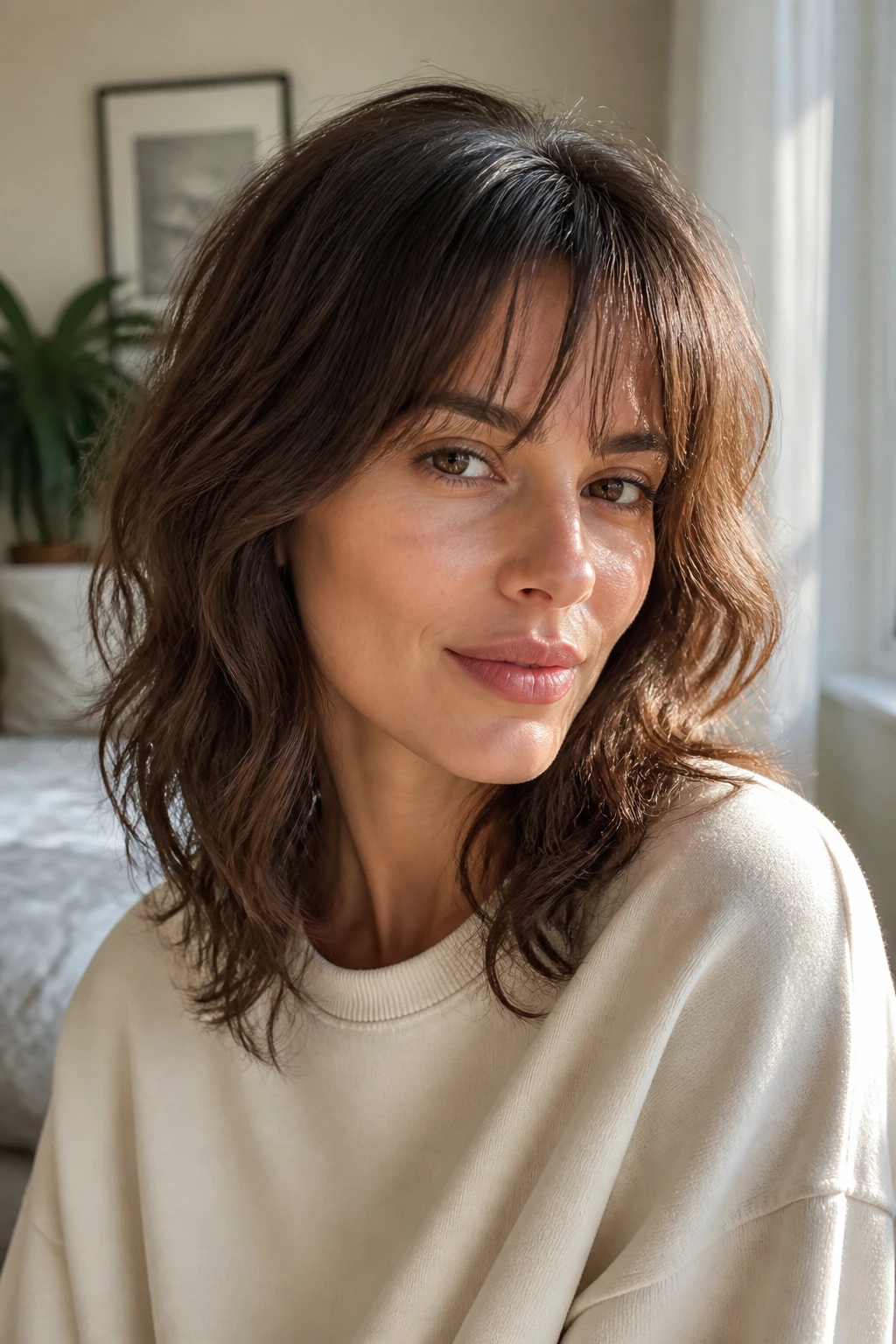
Can fine wavy hair wear rounded layers and bangs without getting see-through? Yes, if the layers stay long and the fringe stays light. The mistake people make with fine hair is taking too much off the ends and then wondering why the shape looks flat. The answer is usually in the scissors.
Fine hair needs air around it, not a lot of aggressive texture. Soft rounded layers preserve the outline while giving the wave a little room to move. A light fringe — feathered, not chopped — keeps the front from overpowering the rest of the cut.
What to avoid
Do not ask for too many short layers near the crown. That can make the top collapse and expose the scalp in bright light. Also, skip heavy cream on the fringe. Fine hair looks greasy fast, and bangs show it first.
What works better is a small amount of mousse at the roots and a touch of texture spray through the mids. Let the bangs dry with a slight bend rather than forcing them into a perfect curtain. Perfection is not the goal here. Lift is.
This cut is best when you want movement that still reads soft. It won’t make fine hair pretend to be thick. Good. That would be a waste of everybody’s time.
16. Retro-Flip Rounded Layers with Bardot Bangs
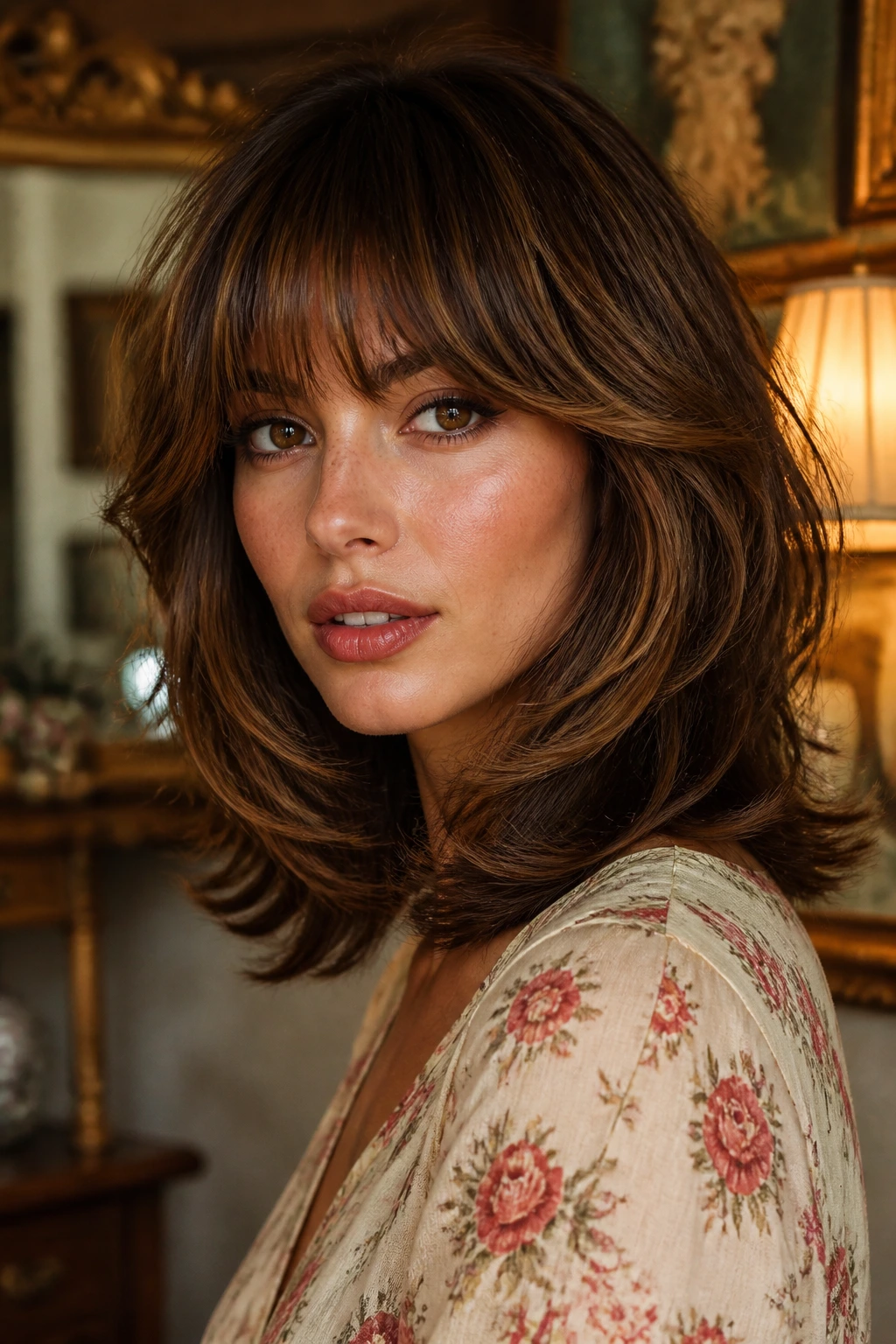
Bardot bangs have that airy, face-framing sweep that never quite sits flat, and that’s part of the charm. On wavy hair, they work because the fringe can split down the center and curve away from the face instead of sticking to the forehead like wet paper. Rounded layers underneath keep the ends from looking blunt, so the whole haircut has a little soft flip at the perimeter.
This is one of the more romantic shapes in the group, but it still has structure. The top layers are short enough to lift the cheek area, while the length stays loose and touchable. If you like a little volume near the crown and movement through the ends, the combination is hard to beat.
The retro part shows up in the styling. A round brush or medium barrel blowout makes the fringe bend away from the face, and the ends pick up a gentle outward swing. You do not need a perfect set. A soft bend is enough. In fact, too much polish can make the cut feel stiff.
This one suits people who like a little polish but not a lot of fuss. It’s dressy without being formal. That’s a rare lane, and it’s a good one.
17. Deep Side Part Layers with Sweeping Fringe
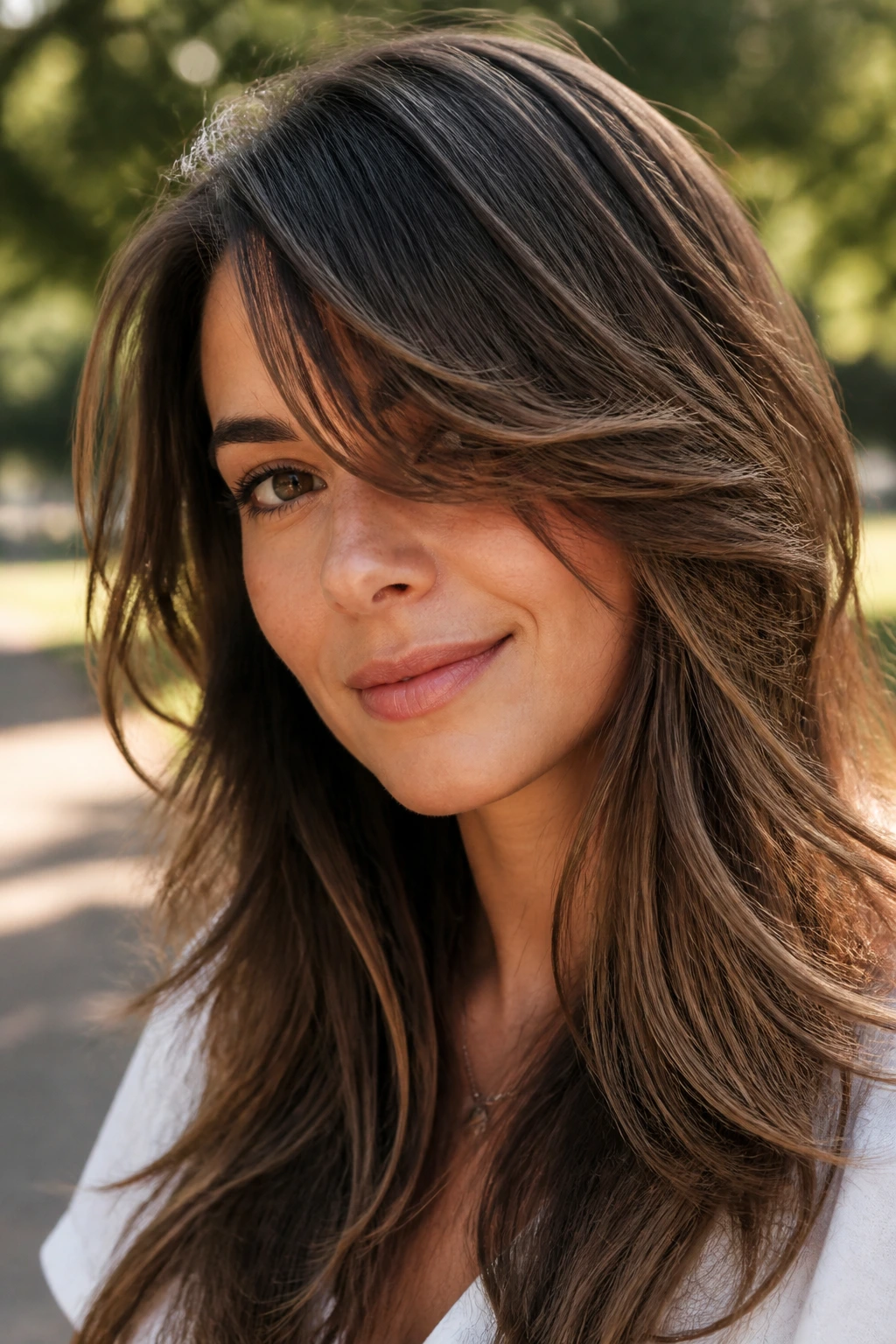
A deep side part gives wavy hair a line to follow, and once you have that line, the rest of the cut can relax a little. The sweeping fringe drapes across the forehead in a diagonal, which makes the face look softer and keeps the top from going flat in the middle. Rounded layers underneath echo that curve and keep the silhouette moving.
This is a good cut if your hair wants to fall toward one side anyway. Don’t fight that pattern. Let it work for you. The part becomes part of the shape, not something you’re constantly trying to correct with clips and spray.
The other nice thing is that it changes how volume sits. Side-parted waves often get more lift on the heavier side and more softness on the open side. That can help round out a long face or soften a strong jaw without any dramatic length change.
I like this shape for people who wear their hair down most days and want a little face framing without the commitment of a full curtain fringe. It’s easy to pin back, easy to tuck, and easy to grow out.
18. Air-Dry Shaggy Layers with Curly Bangs
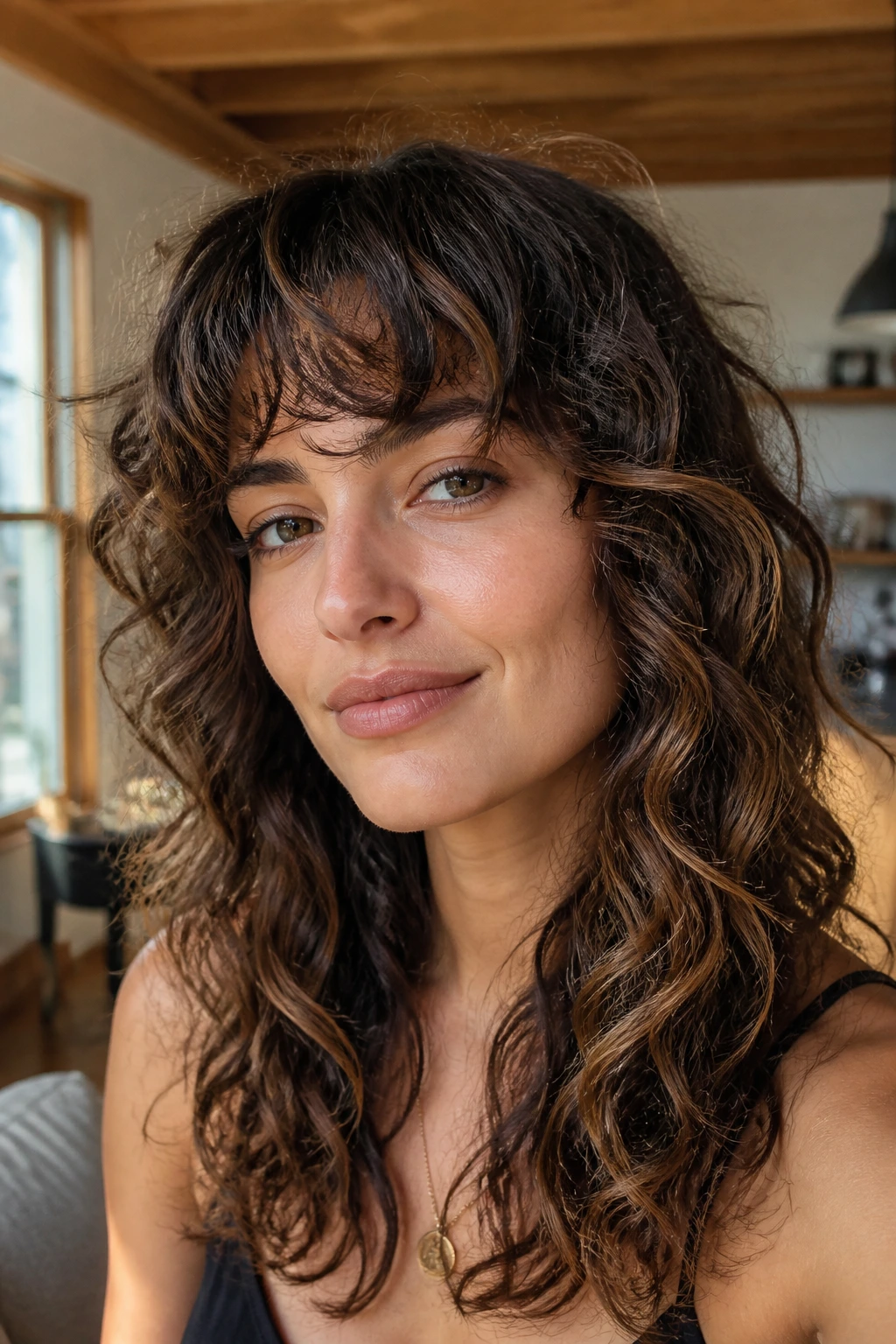
If you let your wavy hair do what it wants, this is the haircut that meets it halfway. Air-dry shaggy layers keep the shape loose and the ends textured, while curly bangs let the front follow its own bend instead of forcing a smooth line. That makes this one of the more honest haircuts in the bunch.
The bangs are the part most people worry about. Curly or wave-heavy fringe can seem unpredictable, but that unpredictability is exactly what makes it work in a shag. The fringe is not supposed to lie flat. It’s supposed to break up the forehead and blend into the top layers.
This cut is best if you’re tired of heat styling. You still need a little product — a light curl cream or mousse, not a heavy butter — but the shape itself is built to dry on its own. The trick is to keep the layers long enough that they bend rather than spring into random shelves.
It’s a little wild, a little soft, and much easier to live with than it looks in pictures. Which is rare. Most shag cuts ask for more effort than they admit.
19. Face-Slimming Rounded Layers with Narrow Curtain Bangs
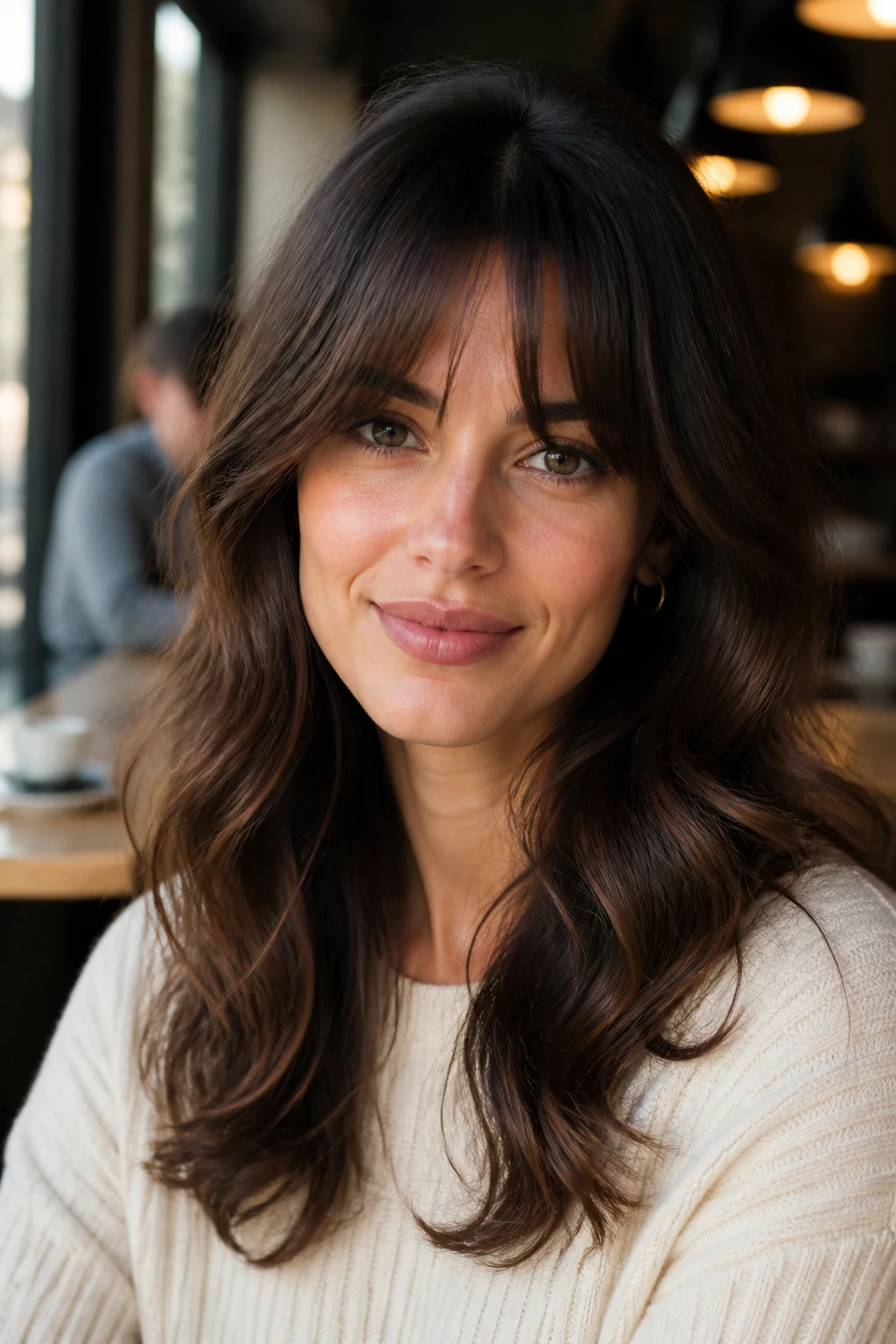
Not every curtain bang needs to be wide. Narrow curtain bangs start closer to the center and open gently toward the temples, which is useful when you want the face to look a touch longer without losing the softness of a fringe. Paired with rounded layers, they create a clean line that still bends with the wave.
This version works especially well on round or heart-shaped faces. The narrow center keeps the fringe from spreading too far across the forehead, and the rounded layers keep the sides from ballooning at cheek level. That combination makes the whole cut feel more vertical, which is often the point.
A lot of people overthink face-slimming haircuts and end up with something severe. That is not what this is. The goal is a soft frame, not a carved-out one. The wave should still look relaxed. You just want the eye moving up and down instead of side to side.
Ask for the longest front pieces to hit the cheekbone or just below. That placement creates a gentle line through the face and keeps the bangs from fighting glasses, lashes, or brows.
20. Salt-and-Pepper Rounded Layers with Soft Fringe
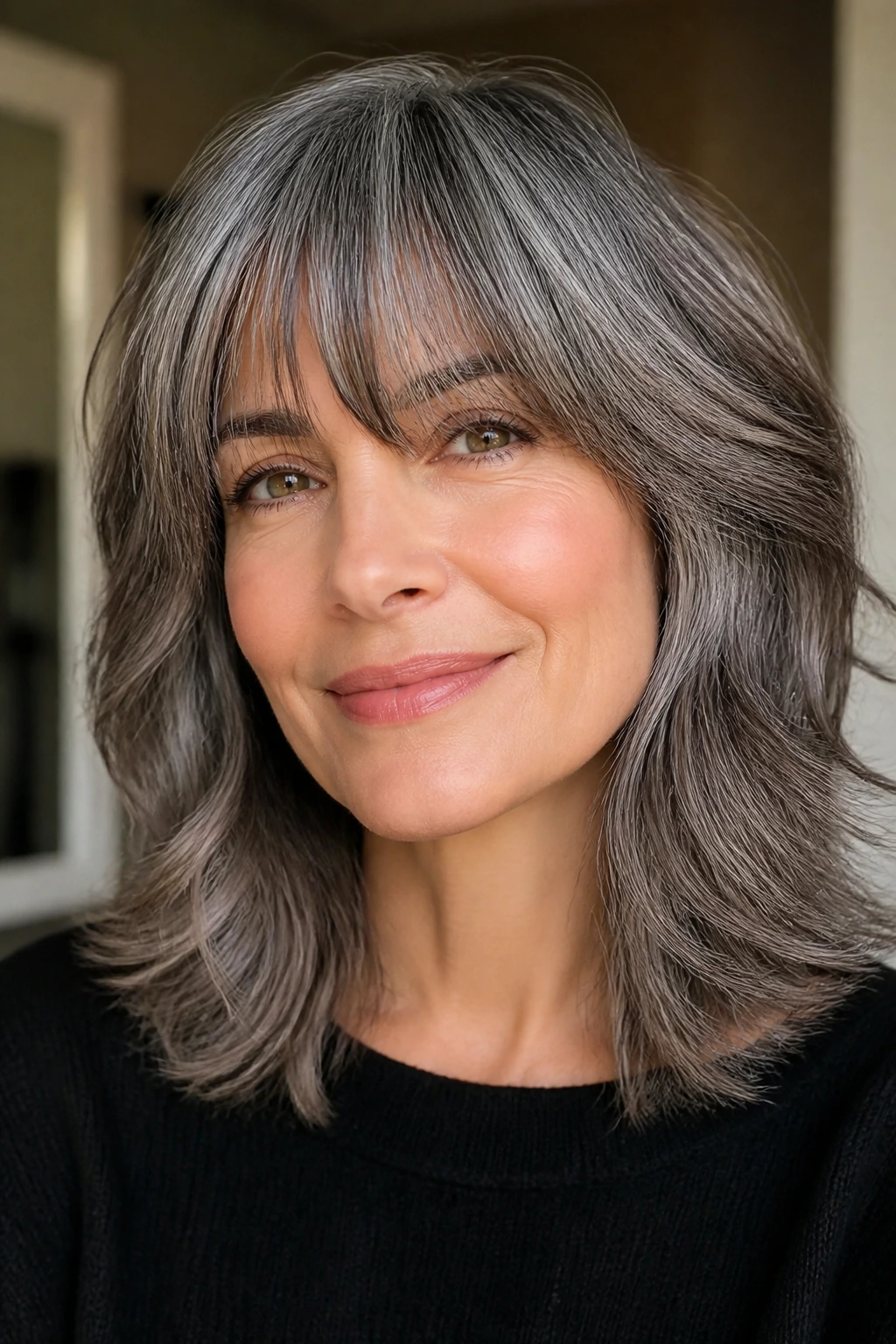
Salt-and-pepper hair has its own texture story. The silver strands often feel a little coarser, a little more wiry, and sometimes a little more reflective than the darker ones around them. Rounded layers help that mix look intentional instead of shaggy, and a soft fringe keeps the front from feeling blunt against the skin.
The benefit here is shape, not disguise. A good rounded cut lets the silver and dark strands fall in a curve, which gives the hair movement and keeps it from reading like one hard block of color. The fringe should stay soft enough to blend, because heavy bangs on mixed-tone hair can look much denser than they really are.
This is one of those cuts that rewards a little styling cream at the mids and ends. Too much product can dull the shine in the silver pieces. Too little and the ends can fuzz out. You want that middle path again. Annoying, maybe. Necessary, definitely.
If you’re embracing natural grays, this shape often looks better as it grows. The curve stays visible even when the line softens, and that makes the haircut feel lived-in rather than overdue.
21. Low-Maintenance Rounded Layers with Split Bangs
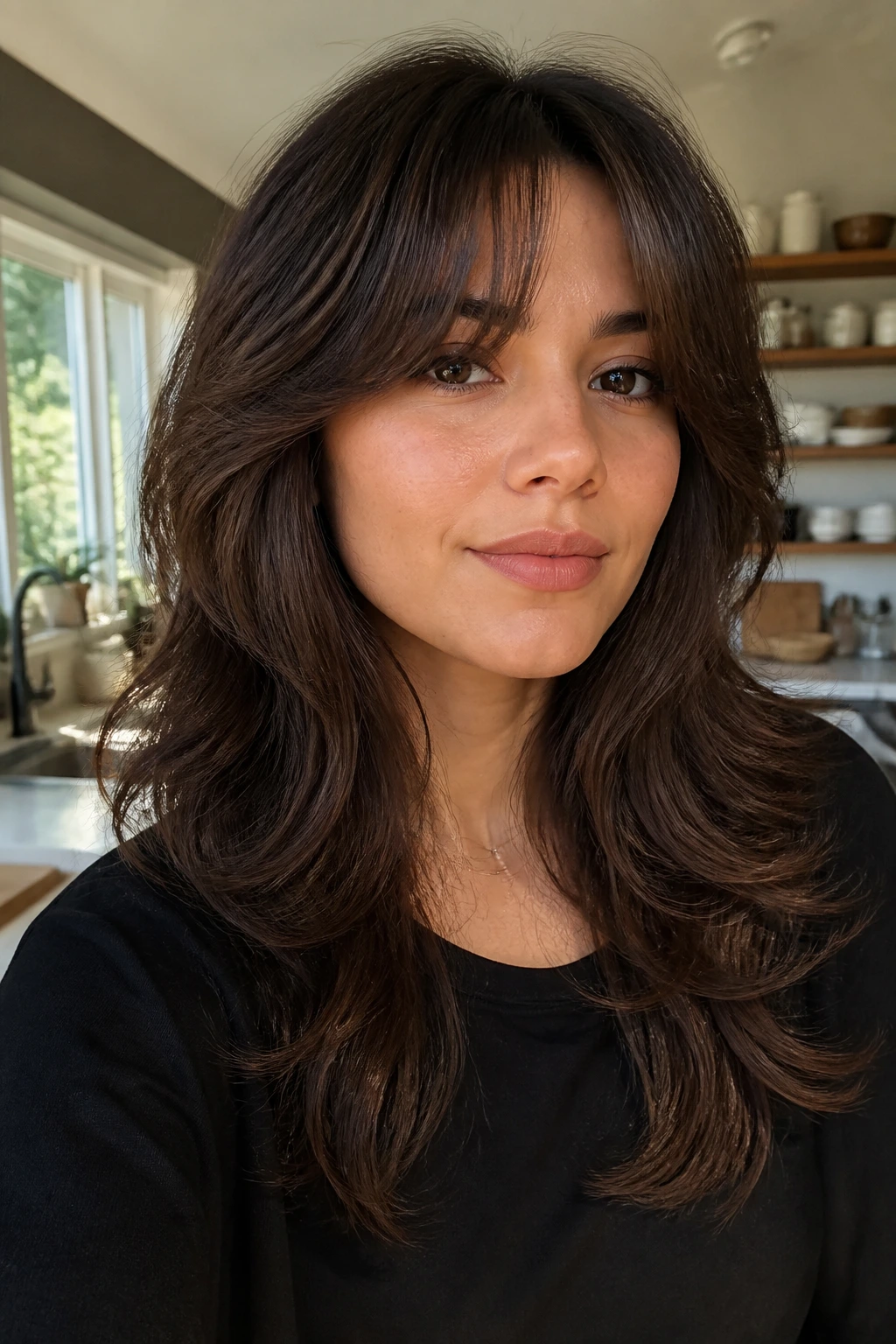
What if you want bangs, but you don’t want bangs every day? Split bangs are the answer. They part in the middle or near the middle on their own, which means they can be worn as a fringe, tucked away, or pushed aside without a fight. On wavy hair, that flexibility matters more than perfection.
The rounded layers underneath should stay long and gentle. The point is to give the hair enough shape that it falls into a curve, but not so much structure that you need a weekly salon visit to keep it alive. This is a shape for people who want options, not rules.
Split bangs are also a nice bridge if you’re nervous about committing to a full curtain fringe. They can be trimmed into more face framing later, or they can be grown out into a longer sweep. No dead end. That makes them practical in a way most fringe styles are not.
If your routine is wash, scrunch, leave, this cut fits that life. It looks more interesting than a blunt long layer, but it does not demand a blowout to make sense. That balance is the whole appeal.
22. Long Rounded Layers with Blended Fringe and Ends
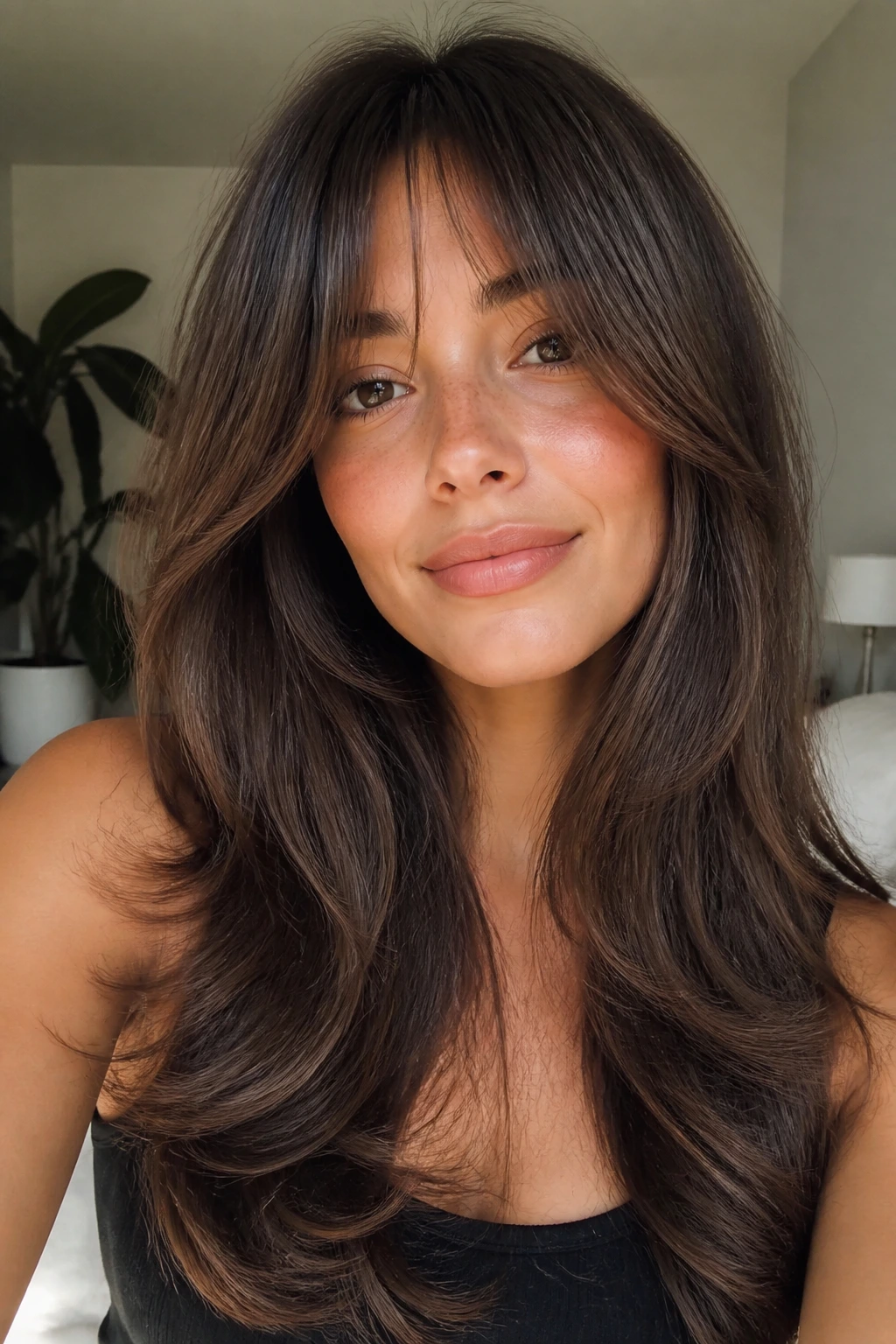
The last version is the quietest one, and sometimes that’s the smartest move. Long rounded layers with a blended fringe and ends keep the front pieces so soft that the line between bangs and layers nearly disappears. On wavy hair, that creates an easy, fluid shape that looks like it grew that way.
This is the cut for someone who wants movement without obvious styling drama. The fringe should melt into the longest face-framing pieces, and those pieces should keep drifting into the ends. If the transition looks too chopped, the whole point is lost. The beauty here is in the blend.
It works especially well if you like length and don’t want the haircut to announce itself every time you put your hair up. The shape is there when the hair is down, but it doesn’t punish you when you clip it back. That kind of flexibility is underrated.
If you’re not ready for a bold fringe but want something more shaped than plain long layers, this is the place to land. It’s subtle, but not invisible. There’s a difference.
Why the Rounded Outline Changes the Way Waves Sit

A lot of people ask for layers when what they really want is curve. Those are not the same thing. Layers can be chopped in a way that creates movement at the top and frizz at the bottom, which is how you end up with the shelf effect — heavy around the mid-lengths, light at the ends, and wide at the sides. Rounded layers change that by keeping the outline soft all the way around the head.
Wavy hair tends to expand outward as it dries, especially if the cut has been thinned too much or the front has been left too blunt. A rounded shape gives the wave room to travel downward instead of out. That’s why the silhouette looks smoother. The cut is guiding gravity, not arguing with it.
Bangs matter because they break the front panel into something smaller and more interesting. A curtain fringe, bottleneck fringe, or even a soft side bang can shift the eye away from a heavy forehead line and toward the cheekbones. If the front is too dense, the whole haircut can feel top-heavy. If it’s too thin, the shape loses its anchor. Balance. That’s the whole game.
The other thing a rounded shape does is buy you better grow-out. Straight layers often reveal themselves as they lengthen, which is why they can look a little stale between cuts. Rounded layers soften instead. They become face-framing, then shoulder-grazing, then just part of the haircut. Much easier to live with.
What to Tell Your Stylist Before the First Snip
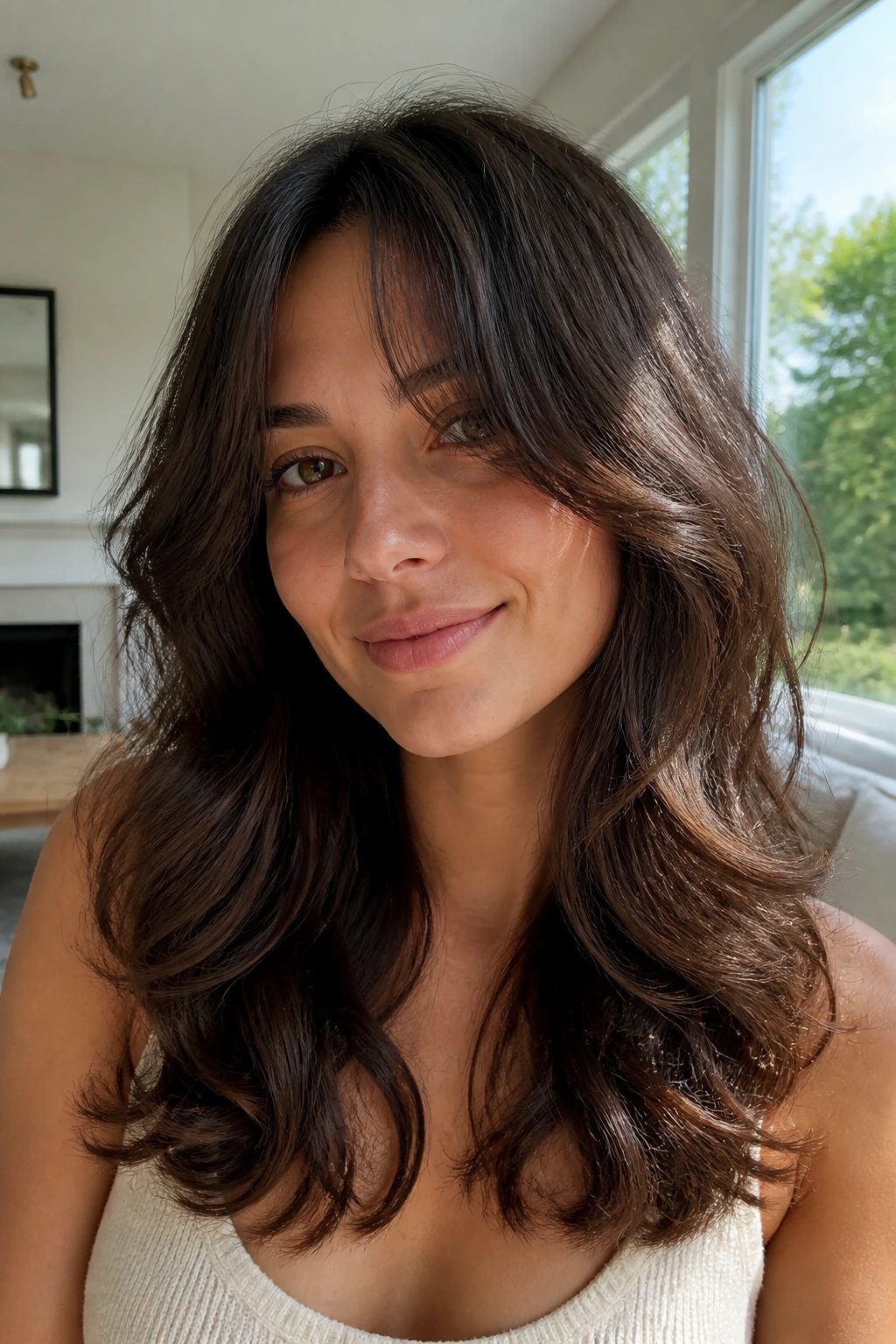
Bring pictures, but bring the right pictures. One front view, one side view, and one image that shows the length at the back will tell a stylist more than a dozen cropped selfies. If you want rounded layers with bangs, the outline matters more than the color or the lighting. A blurry photo with nice beach waves is not enough.
Say how you usually wear your part. Middle, slightly off-center, deep side — that changes where the fringe needs to sit. A bang cut for a middle part can fall oddly if you always separate your hair to the side. Mention any cowlicks too. The front hairline can make or break a fringe, and stylists should know exactly where your hair pushes back.
Be plain about your styling life. If you air-dry, say that. If you diffuse for five minutes and then walk away, say that too. Rounded layers can be cut very differently depending on whether the hair gets brushed smooth every day or left to live in a wave pattern. Same haircut. Different behavior.
Ask for the bangs to be cut longer than the final target, then checked again after they dry. Wavy hair retracts. That’s not a theory. That’s the reality of standing in front of a mirror an hour after the cut and wondering where your fringe went.
Styling Tools and Products Worth Buying
-
Blow dryer with a nozzle: Helps direct the fringe and smooth the top layers without blasting the wave apart.
-
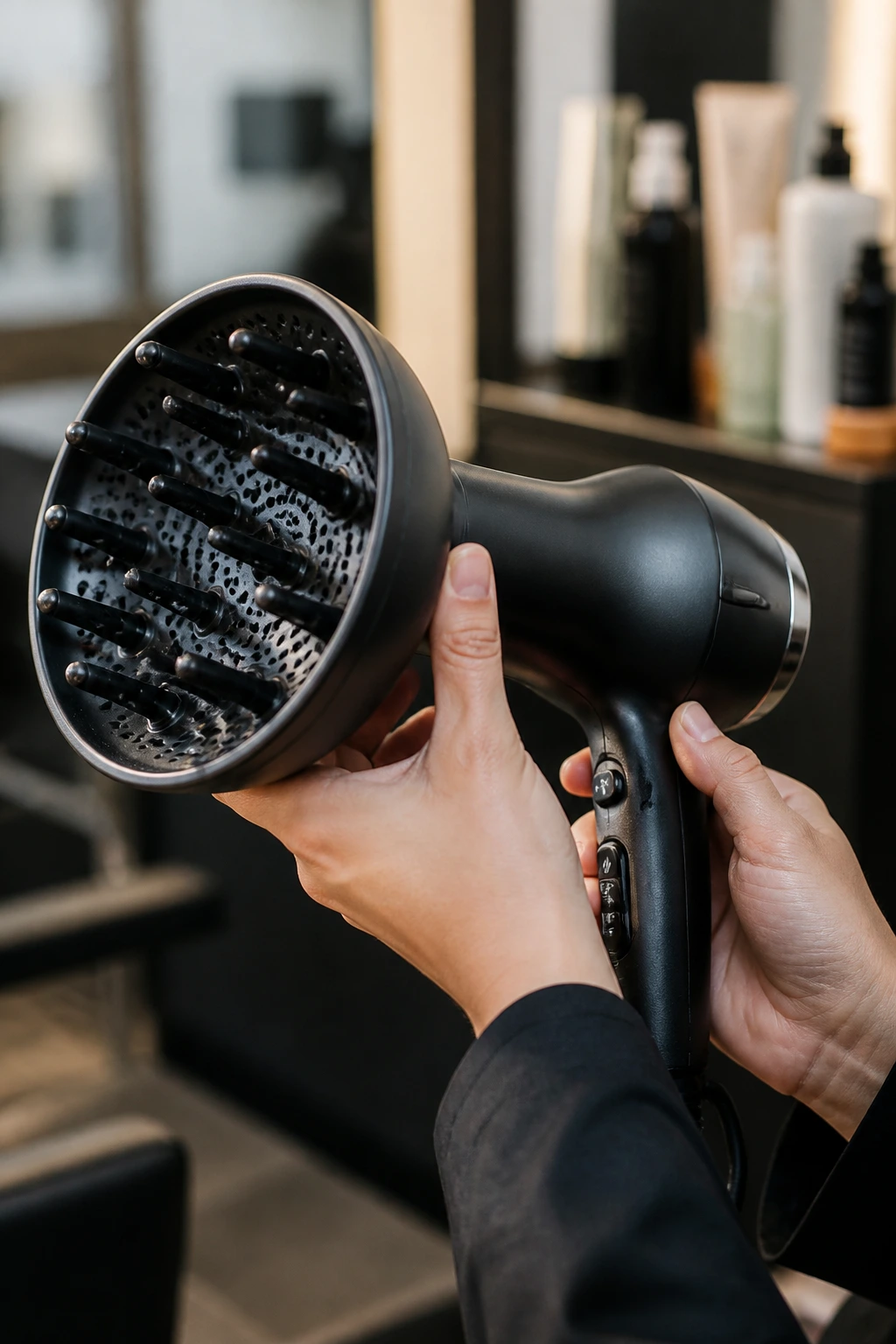
Diffuser attachment: Useful if you want the wave to keep its bend while drying, especially on thicker hair.
-
Lightweight mousse: Gives rounded layers root lift and keeps bangs from collapsing onto the forehead.
-
Heat protectant spray: Non-negotiable if you use a brush, diffuser, or flat iron on the fringe.
-
Medium round brush: Best for bending curtain bangs, Bardot bangs, and side-swept fringe away from the face.
-
Wide-tooth comb: Good for distributing product through wet waves without pulling out the shape.
-
Microfiber towel or soft T-shirt: Cuts down on roughing up the wave pattern while the hair is wet.
-
Duckbill clips: Handy for setting the fringe away from the face while it dries.
-
Dry shampoo: Helps keep bangs from getting heavy at the root line after day one.
-
Light texture spray: Adds separation to piecey fringe and shaggy layers without making them sticky.
How to Style the Shape on Wash Day and Day Two
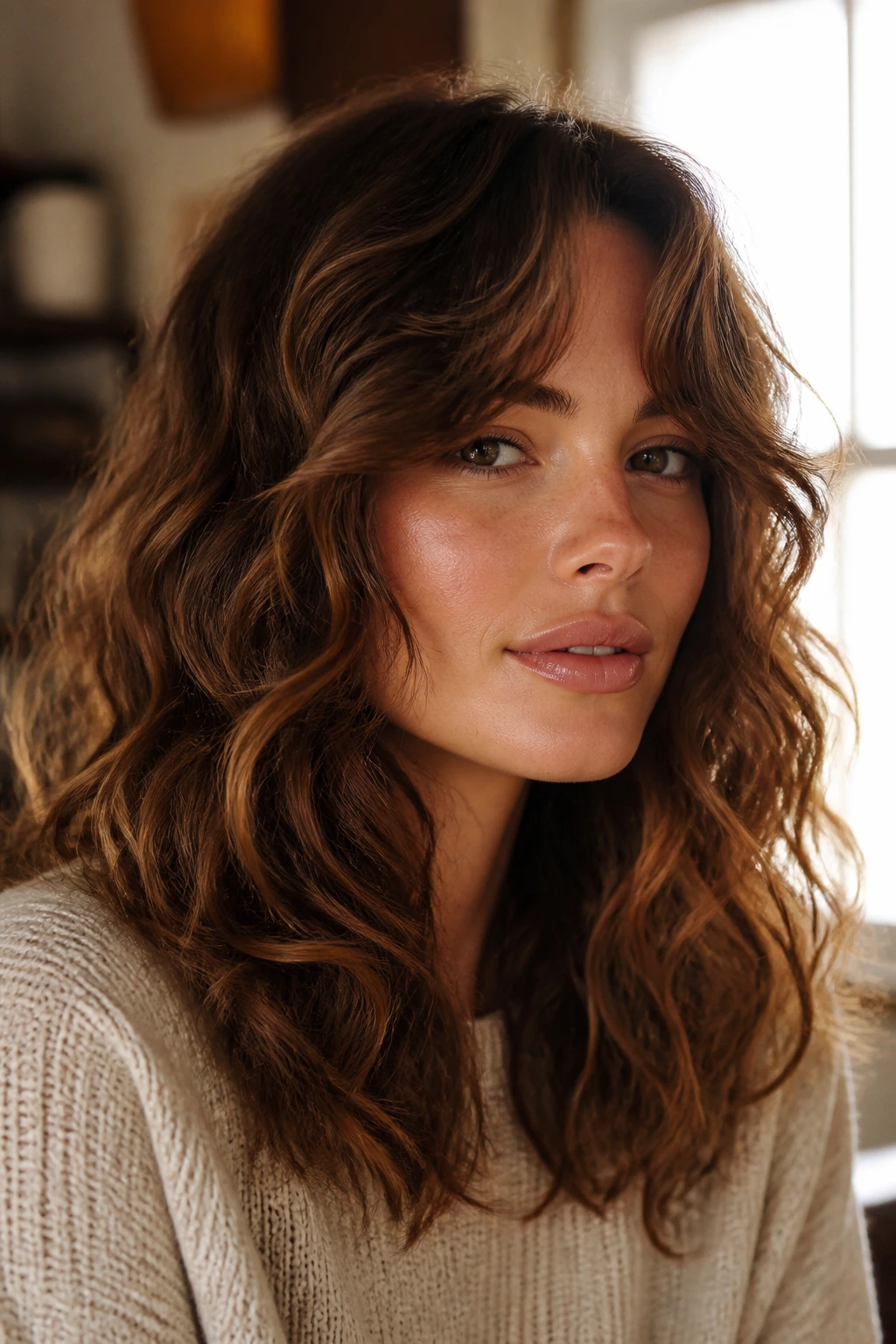
Air-Dried Finish: Work a golf-ball-sized amount of mousse through damp hair, then scrunch the ends upward with your hands. Clip the bangs away from the face for 10 to 15 minutes while the root area starts to set. Once the fringe is no longer dripping, separate it with your fingers and let it dry in the direction you want it to live.
Diffuse Finish: Start on low heat and low speed. Cup the ends into the diffuser, hover near the roots, and stop when the hair is about 80 percent dry. That last bit matters. Over-drying frays the wave and makes the fringe look puffier than it should.
Blowout Finish: Use the nozzle first, then a medium round brush on the fringe and front layers. Roll the hair away from the face for curtain bangs or under for a smoother lob. Keep the sections small. Big sections make wavy hair slip and bend in the wrong spots.
Day-Two Refresh: Mist the fringe and crown lightly with water, then add a pea-sized amount of mousse or a tiny bit of cream to the mid-lengths. Don’t soak the bangs unless you want to start over. A little reactivation is usually enough.
Keeping Bangs from Splitting, Puffing, or Going Limp
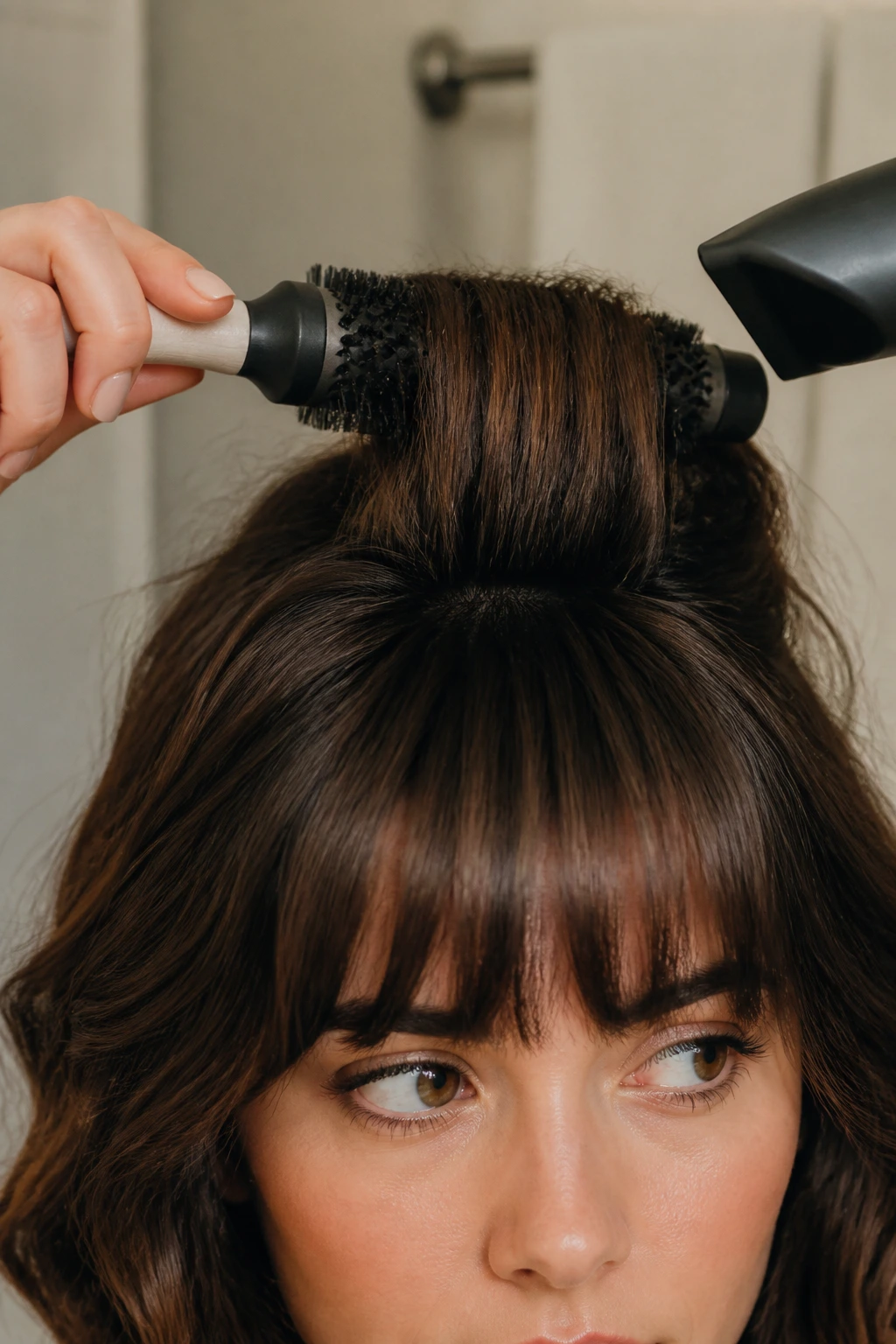
Bangs misbehave for a few predictable reasons. They split because they dried in the wrong direction. They puff because too much product sat at the root. They go limp because the forehead area was overloaded with cream or oil. None of that is mysterious.
Set the direction first: Dry the fringe side to side, then separate it where you want it to part. If you let it dry flat against the forehead, it will usually stay there until the next wash.
Keep heavy products off the roots: Cream belongs in the mid-lengths and ends. Bangs need lighter treatment. Mousse, spray, or a tiny amount of balm is usually enough.
Trim before the fringe turns fussy: Most people wait too long. Once the bangs start poking into the eyes every time you blink, they’re already past the sweet spot.
Use dry shampoo like a reset button: A single mist at the roots can save a fringe that started the day clean and ended the afternoon flat. Tap it in, wait a minute, then brush lightly or shake it loose with your fingers.
Humidity is another story. You can’t outstyle every damp day. Sometimes the answer is to pin the fringe back, let it live off the forehead for a few hours, and stop pretending the weather is in your control.
Trim Timing and At-Home Maintenance
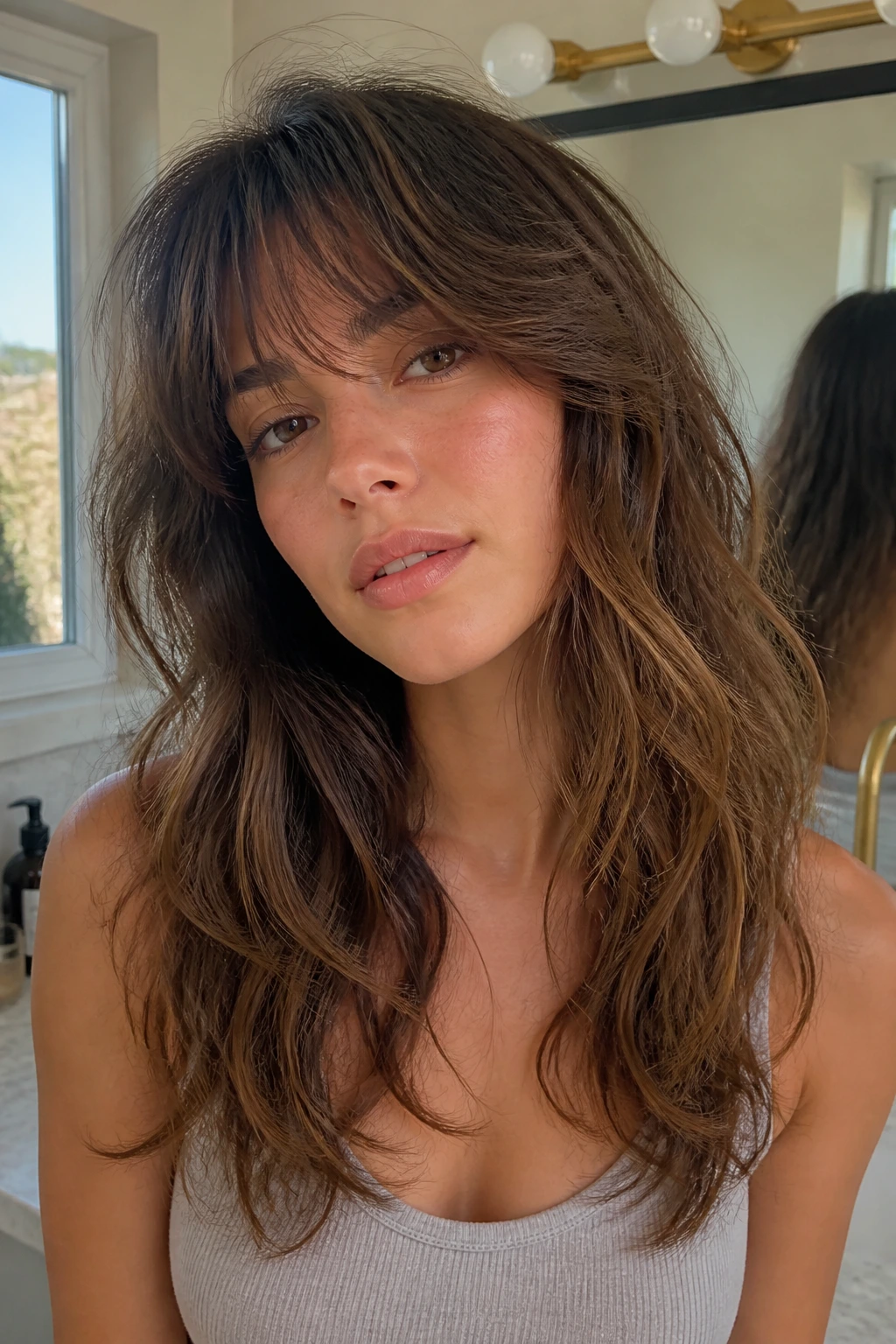
Rounded layers stay pretty forgiving, but they still need maintenance. Bangs usually need attention every 3 to 5 weeks if you want them to keep their shape. That doesn’t always mean a full haircut. Sometimes it’s just a fringe tidy and a check on the face frame.
The rest of the layers can usually go 8 to 12 weeks before they start losing the curve. If your hair is thick, dense, or wavy in more than one pattern, the shape may need a little refinement a bit sooner. If it’s fine and grows slowly, you can stretch that out a little. The ends will tell you when they’re getting tired. They get fuzzy, not just longer.
Weekly care matters too. A light conditioning mask on the mids and ends keeps the wave from feeling brittle, especially if you blow-dry the fringe often. Clarify once a month if your hair starts losing bounce from product buildup. Too much residue makes waves hang in a dull line, and bangs are the first place you’ll notice it.
If you’re growing out the fringe, keep the side pieces trimmed into the layers so the grow-out looks planned. That saves you from the awkward “I meant to do this” stage, which is never as cute as people say it is.
Common Mistakes That Flatten or Expand the Shape
-
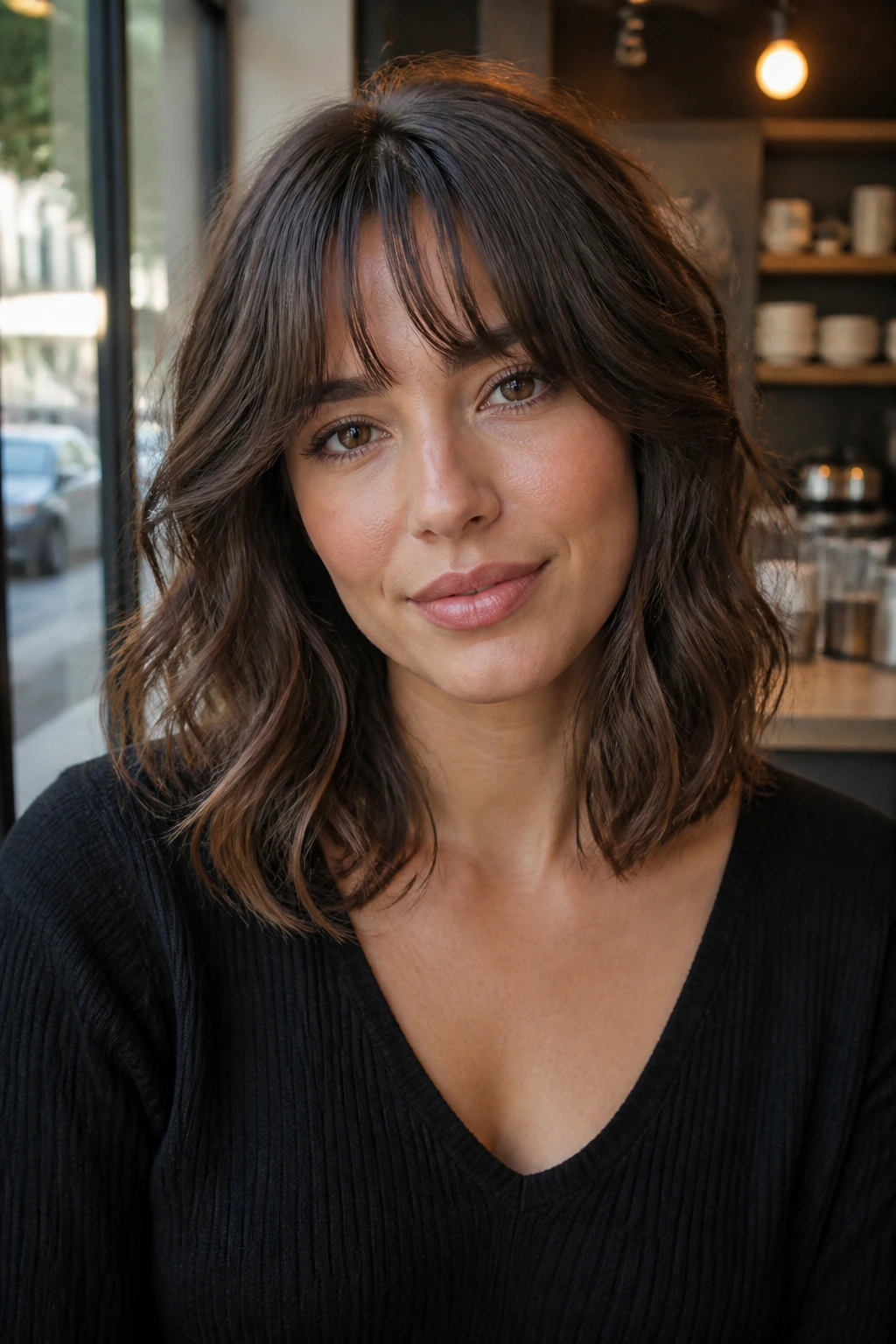
Cutting the bangs too short: Wavy hair springs up, and a fringe that looked eyebrow-length in the chair can end up two inches higher after it dries. Ask for more length than you think you want.
-
Over-layering fine hair: Too many short layers near the crown make the top look thin and the ends look tired. Keep the layers longer and rounder if density is low.
-
Removing too much bulk from thick hair: Heavy thinning can leave ends wispy and the surface frizzy. The better fix is internal weight removal, not aggressive texturizing at the perimeter.
-
Using rich cream on the fringe: Heavy product makes bangs separate in greasy-looking pieces. Keep the fringe light and work the heavier styling cream through the mids.
-
Ignoring the natural part and cowlicks: A fringe that fights your growth pattern will split every single day. Cut it with the direction of the hair, not against it.
-
Rounding the sides too much at the bottom: If the layers are too short near the jaw, the hair can flare out and create the triangle effect you were trying to avoid. Keep the outer curve soft and the weight balanced.
Variations and Alternatives for Different Hair Densities
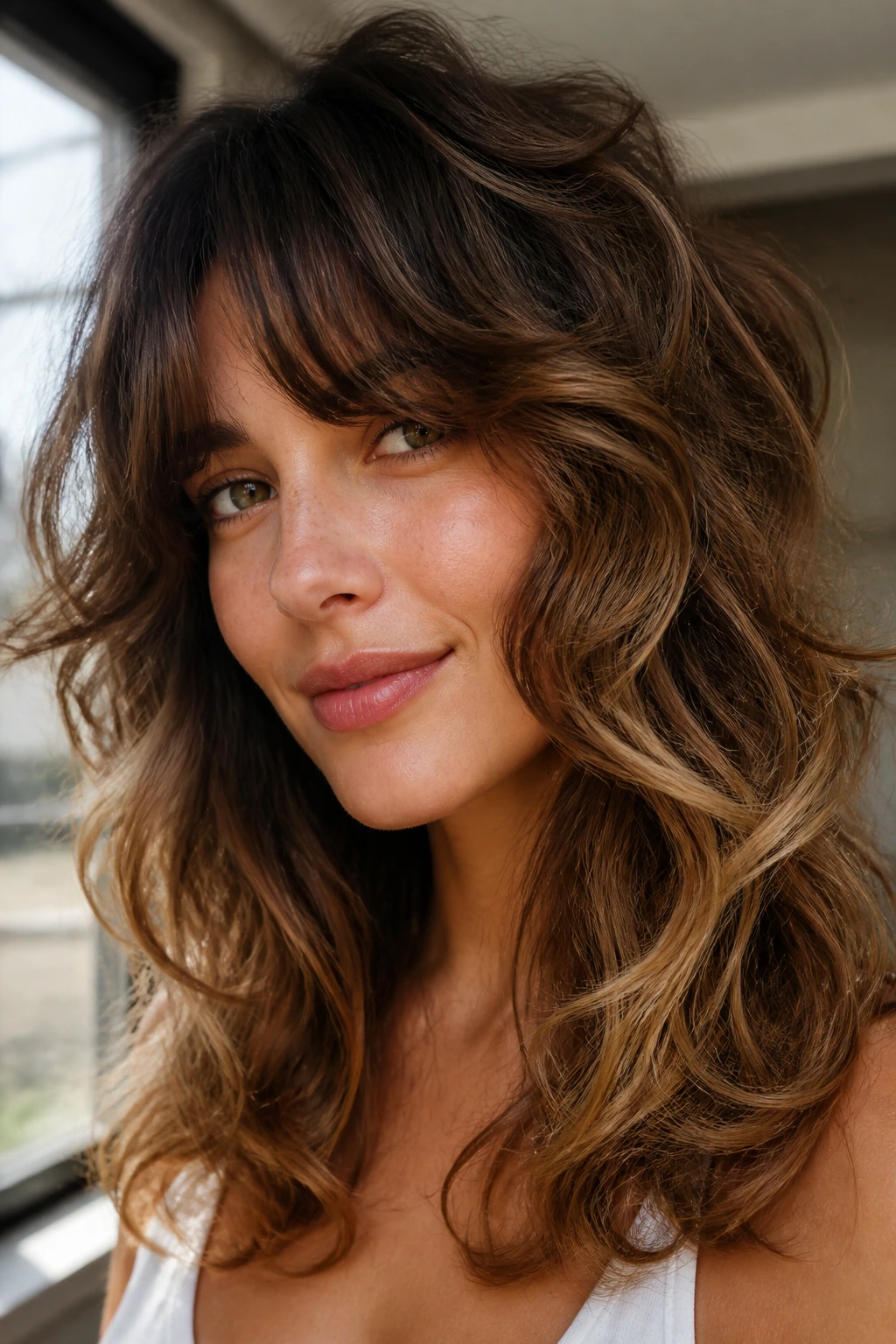
The Fine-Wave Version: Keep the layers long, the fringe light, and the overall outline soft. This version needs lift at the roots and less thinning at the ends so the hair doesn’t look sparse in daylight.
The Thick-Hair Version: Ask for interior weight removal and longer bangs that blend into the cheek area. The goal is movement without a halo of puff at the sides. More shape, less bulk.
The Curly-Wave Mix: Leave the cut longer than you think you need, especially in the front. Mixed texture shrinks in uneven ways, and rounded layers only work if the shortest pieces still have enough length to bend.
The Grow-Out Version: Choose split bangs or cheekbone-length fringe and keep the front pieces connected to the layers. That way the haircut can evolve into a face frame instead of looking like a stalled bang grow-out.
The Blowout Version: Keep the same rounded outline, but ask for enough front length to wrap around a medium round brush. This version is built for polish and works especially well on collarbone and lob lengths.
Frequently Asked Questions
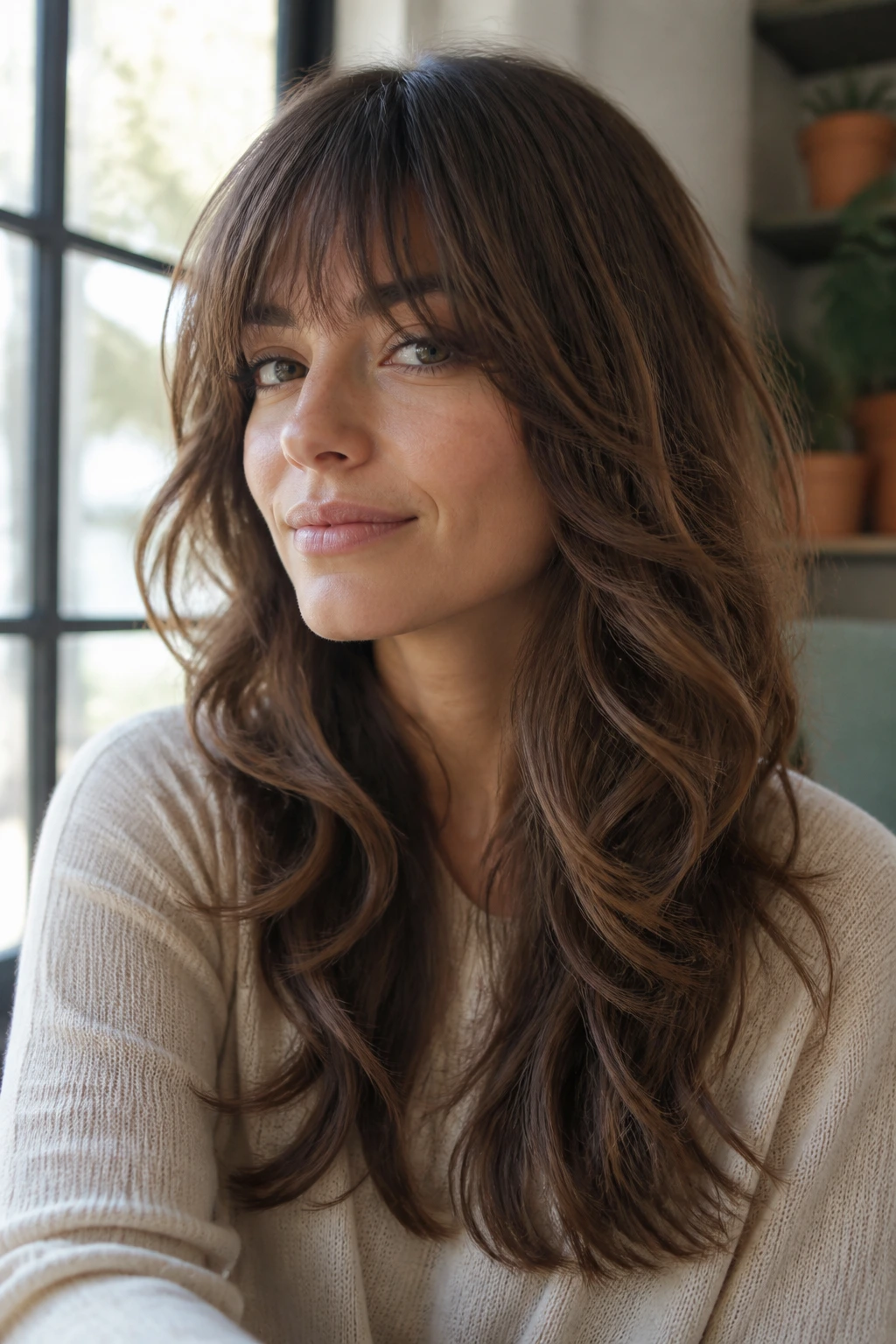
Are rounded layers actually good for wavy hair?
Yes, because they keep the silhouette curved instead of boxy. Wavy hair usually needs shape at the perimeter and weight control through the middle, and rounded layers handle both.
Do bangs make wavy hair look wider?
They can, if they’re cut too thick or too short. A softer fringe — curtain, bottleneck, side-swept, or split — breaks up the front without adding bulk across the forehead.
What if my waves are only obvious from the ears down?
That still works. A rounded cut can add shape through the lower half, and a longer fringe can draw attention upward so the hair doesn’t feel flat at the top.
Can fine wavy hair wear this cut without looking thin?
Yes, but the layers need to stay long. Heavy texturizing or a short fringe can make fine hair look sparse, so keep the shape soft and the product light.
How often should bangs be trimmed?
Most wavy fringes need a trim every 3 to 5 weeks. If you wear them swept aside or split, you can stretch that a little longer, but once they start folding into your eyes, they’re past their clean stage.
What if my bangs puff up every time I air-dry them?
Dry them in the direction you want first, then separate them after they’re mostly set. A little mousse or light spray is fine; too much cream near the roots usually makes the puff worse.
Can I still put this haircut in a ponytail?
Usually, yes, especially if the fringe is long enough to tuck or pin. Collarbone, lob, and long layered versions are the easiest to tie back without looking half-done.
What should I ask for if I want the shape but not a heavy fringe commitment?
Ask for split bangs, peekaboo fringe, or long curtain pieces that blend into the front layers. That gives you the feeling of bangs without locking you into daily styling.
The Shape That Keeps Its Movement
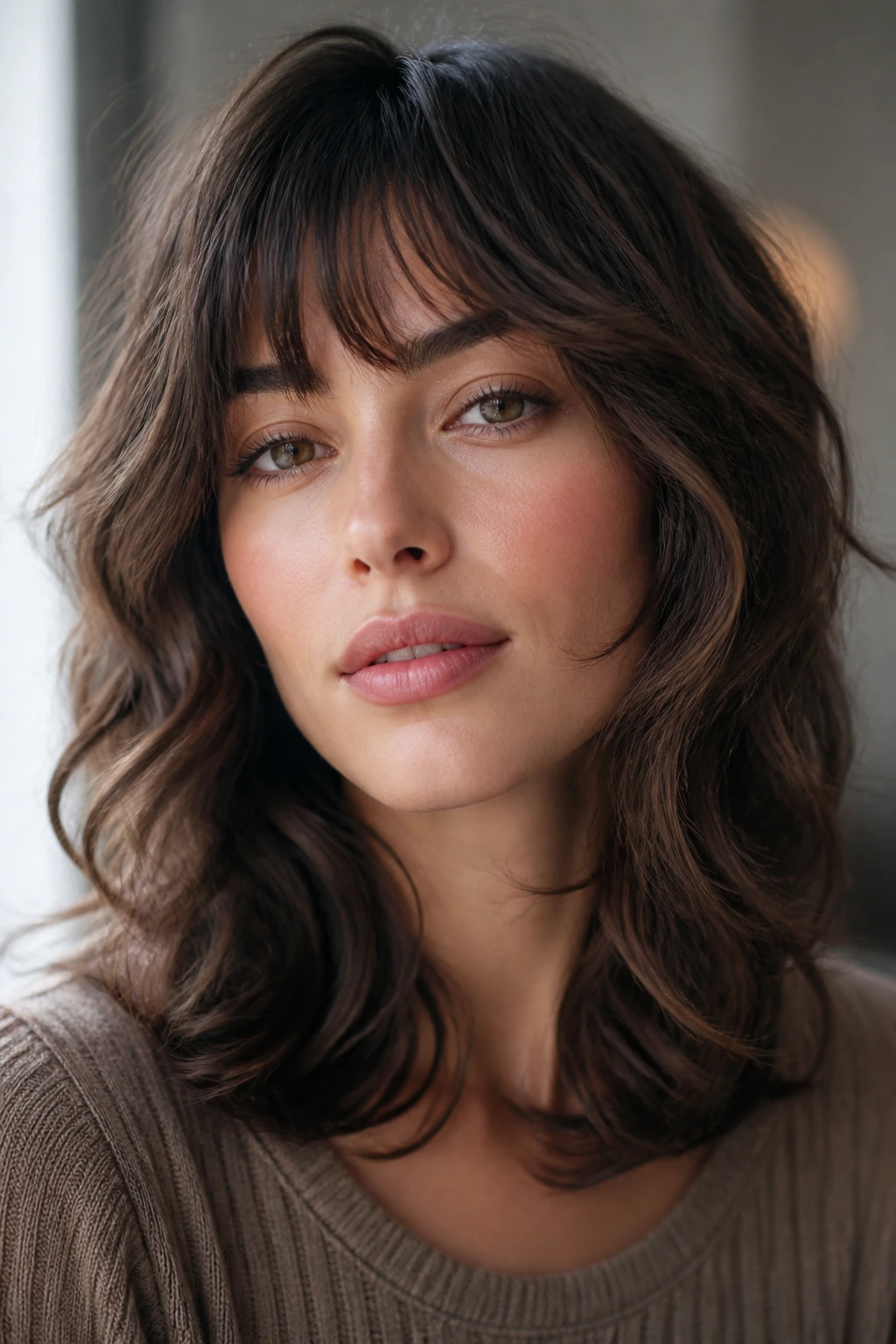
Rounded layers with bangs work because they respect what wavy hair already wants to do. They don’t force the bend into a straight line, and they don’t leave the front stranded on its own. The curve at the perimeter keeps the silhouette soft, and the fringe gives the haircut a face to live around.
If you want this shape to hold up, be honest about your routine. Tell your stylist how you dry your hair, how often you trim, and whether your bangs need to tuck back on real life days. That one conversation usually matters more than the photo you bring in.
A good rounded cut should look like it belongs to the wave pattern you already have. Not a costume. Not a fight. Just a better outline, which is often the whole difference between hair that sits there and hair that actually moves.