



A round face doesn’t need to be hidden. It needs angles.
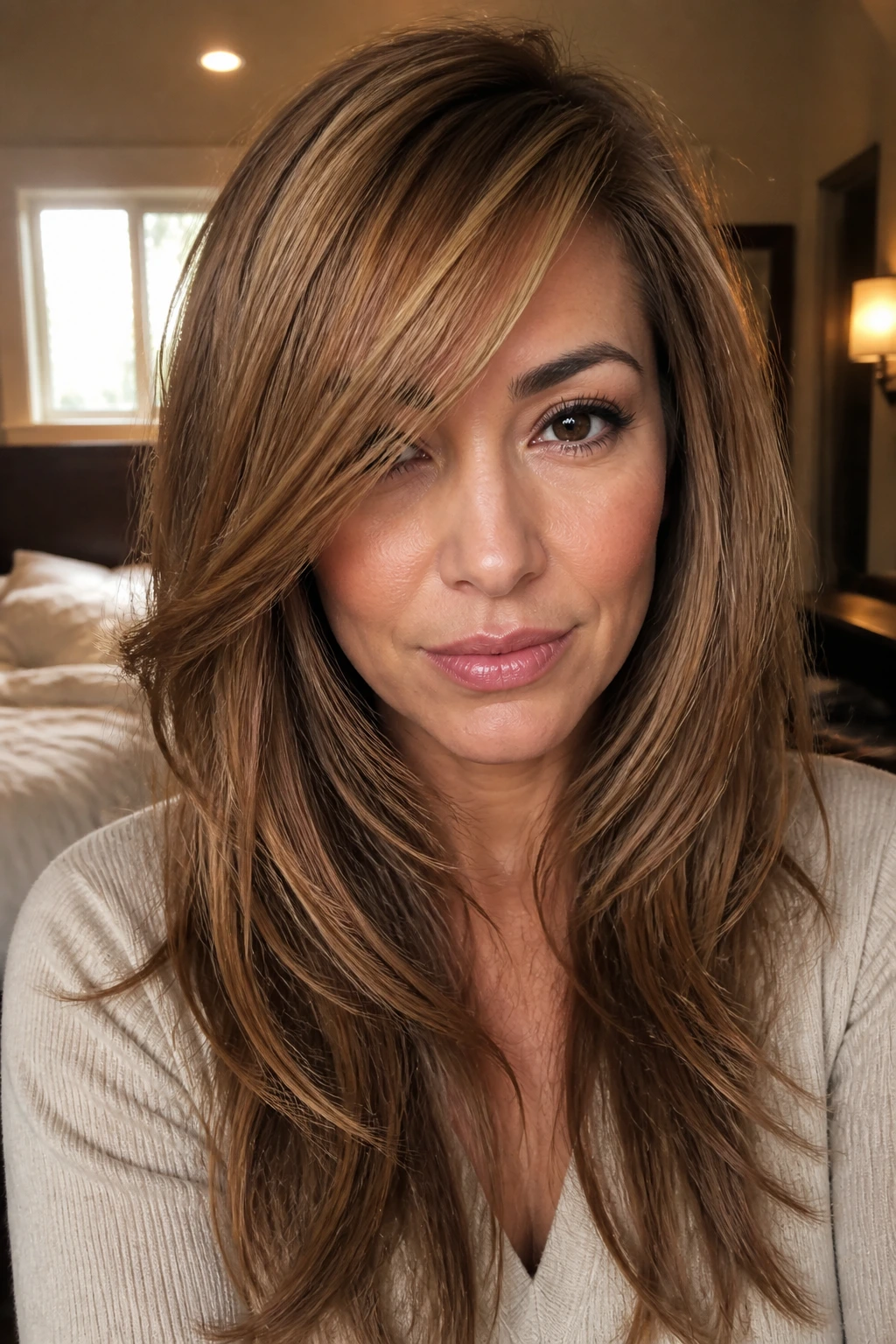
That’s why face-framing layers for round faces with side-swept bangs work so well when they’re cut with a little discipline. The diagonal line of the bang pulls the eye across instead of straight out, and the front layers break up the widest part of the face without turning the whole haircut into a curtain. If the shortest layer lands at the cheekbone or the bang stops dead at the middle of the forehead, the shape can go boxy fast. One inch matters. Sometimes half an inch does.
The good versions are less about “slimming” and more about steering the eye. A side sweep that starts near the high arch of the brow, a first face frame that begins below the cheekbone, and a little lift at the crown can change the whole balance of the haircut. You still get softness. You still get movement. You just don’t get that round-on-round effect that makes so many salon photos look prettier than they behave in real life.
These 25 cuts cover long hair, lobs, shags, curls, fine strands, thick density, and everything in between. Some are polished. Some are piecey and messy on purpose. All of them use the same basic trick: create a line that lengthens, not one that widens.
Why These Cuts Keep Showing Up in Good Salon Notes

- Diagonal movement: Side-swept bangs break up the forehead line and keep the face from reading as a single circle.
- Length below the widest point: Layers that start at the jaw or lower usually work harder for round faces than pieces that hit the cheek.
- Lift at the crown: A little root height makes the whole silhouette feel taller, which matters more than people expect.
- Soft ends, not blunt blocks: Ends that move give the face room; blunt edges right at the cheek can add visual weight.
- Grow-out that behaves: These shapes keep some of their shape after a month of growth, which is a relief if you dislike frequent salon visits.
Why Face-Framing Layers and Side-Swept Bangs Work So Well Together
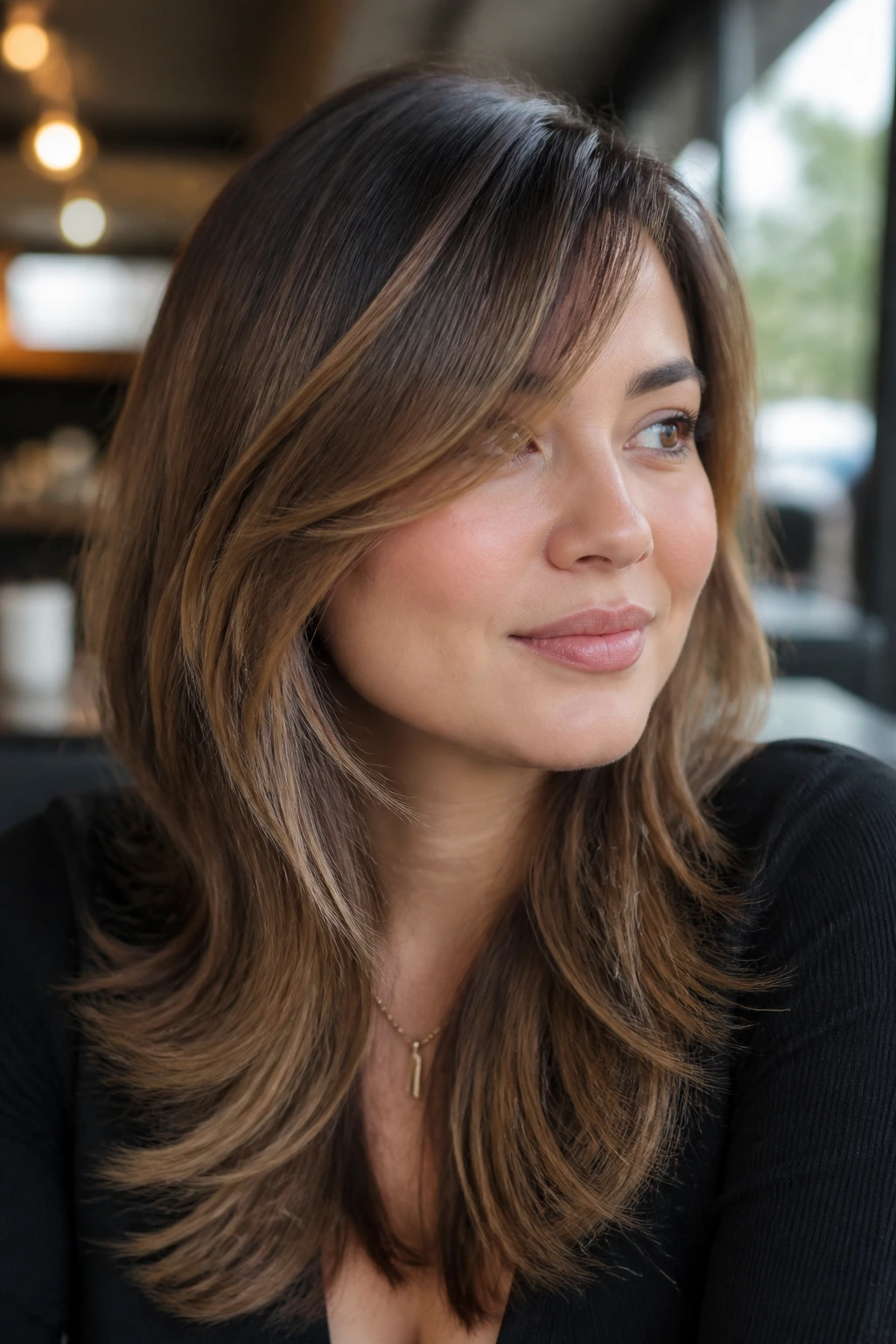
Round faces share width and height more evenly, so the haircut has to do some of the shaping for you. That’s not a flaw. It just means your best cut needs to build a little vertical line and a little diagonal line at the same time.
Side-swept bangs handle the diagonal part. Face-framing layers do the rest, especially when they begin below the cheekbone and curve toward the jaw or collarbone. That combination stops the eye from staying parked at the widest part of the face. The result is less about “hiding” anything and more about redirecting attention with a cleaner line.
The other piece people miss is volume placement. A round face usually looks best when the sides stay a little lighter and the top has some lift. That doesn’t mean giant hair. It means enough root height to give the silhouette a top-down shape instead of a side-to-side spread. Tiny change. Big payoff.
1. Collarbone Lob with a Long Diagonal Fringe
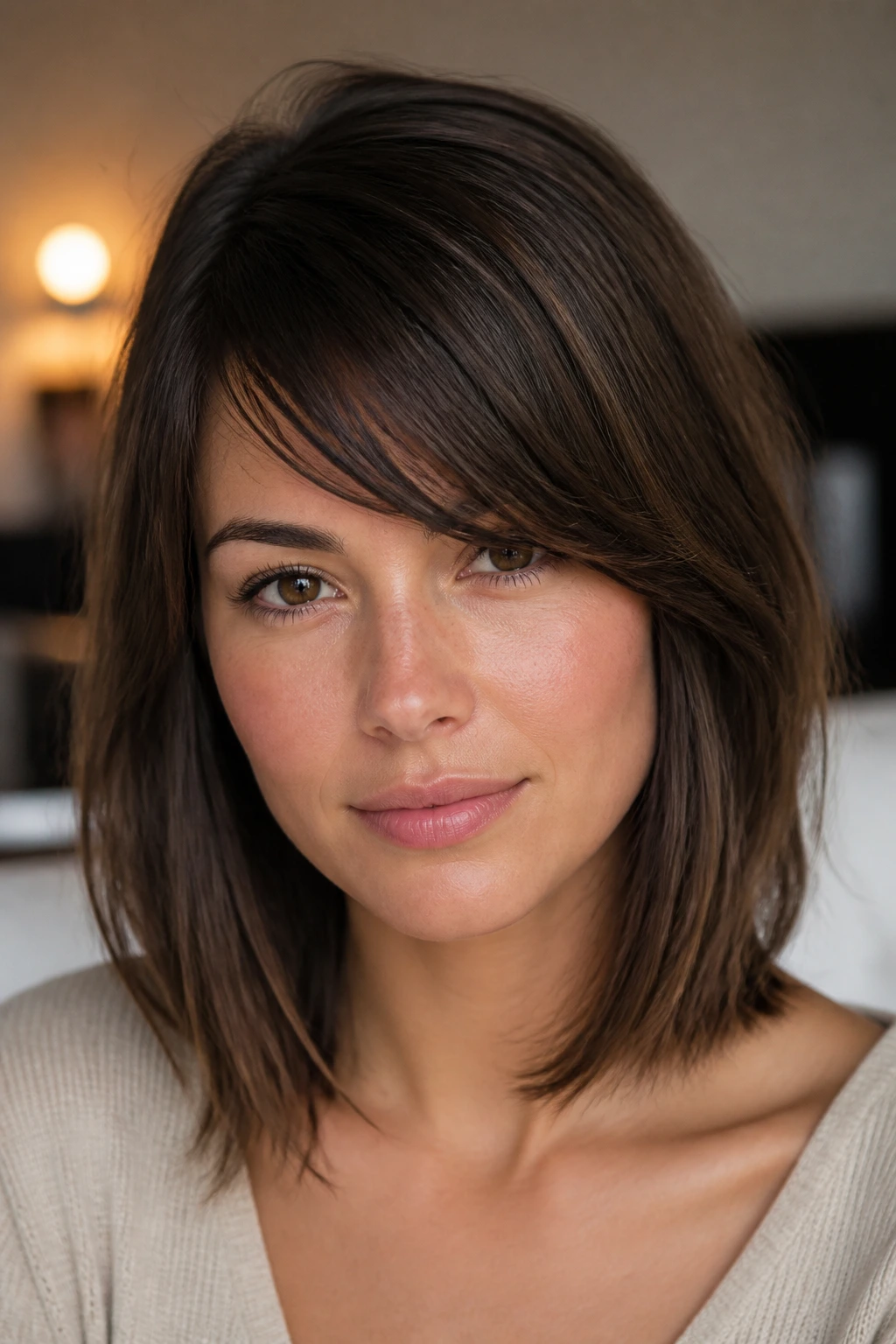
A collarbone lob is one of the safest starting points if you want movement without losing length. The cut sits low enough to keep the face from feeling boxed in, and the long fringe sweeps across the forehead instead of stopping short and widening the cheek area.
Ask for: a lob that grazes the collarbone, with the shortest front piece starting around the high arch of the brow and fading into the length near the outer eye.
Why it works: the collarbone gives you a vertical anchor, while the diagonal fringe interrupts the roundness at the top third of the face. If your hair is straight, this version looks especially clean. If it’s wavy, the bend adds even more softness.
Watch for: bangs that end at the middle of the forehead. That’s where this cut can turn blunt fast.
2. Butterfly Layers with Cheekbone-Starting Front Pieces
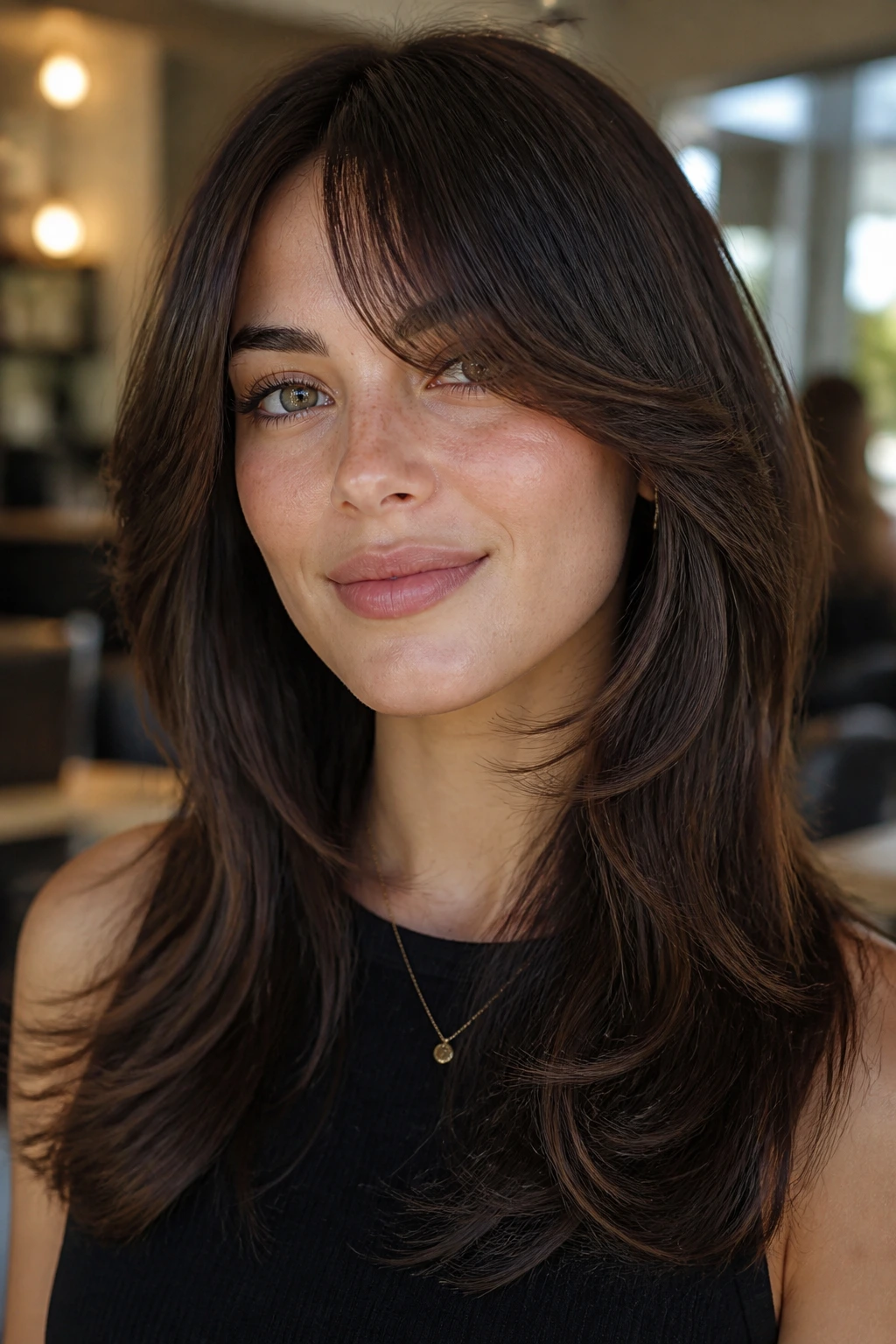
This is the cut for someone who wants fullness without a bulky shape around the cheeks. Butterfly layers create short, lifted pieces around the crown and longer pieces below, so the outline feels airy instead of heavy.
The face-framing parts should start below the cheekbone, not on it. That’s the point. When they skim past the widest part of a round face, they give the illusion of length without dragging the eye outward.
Best if you style with: a round brush or large hot rollers, because this cut loves a bend through the mid-lengths.
Tell your stylist: keep the face frame long enough to tuck behind the jaw. Short butterfly pieces can puff out on round faces, and that’s not the look here.
3. Soft Shag with Airy Side-Swept Bangs
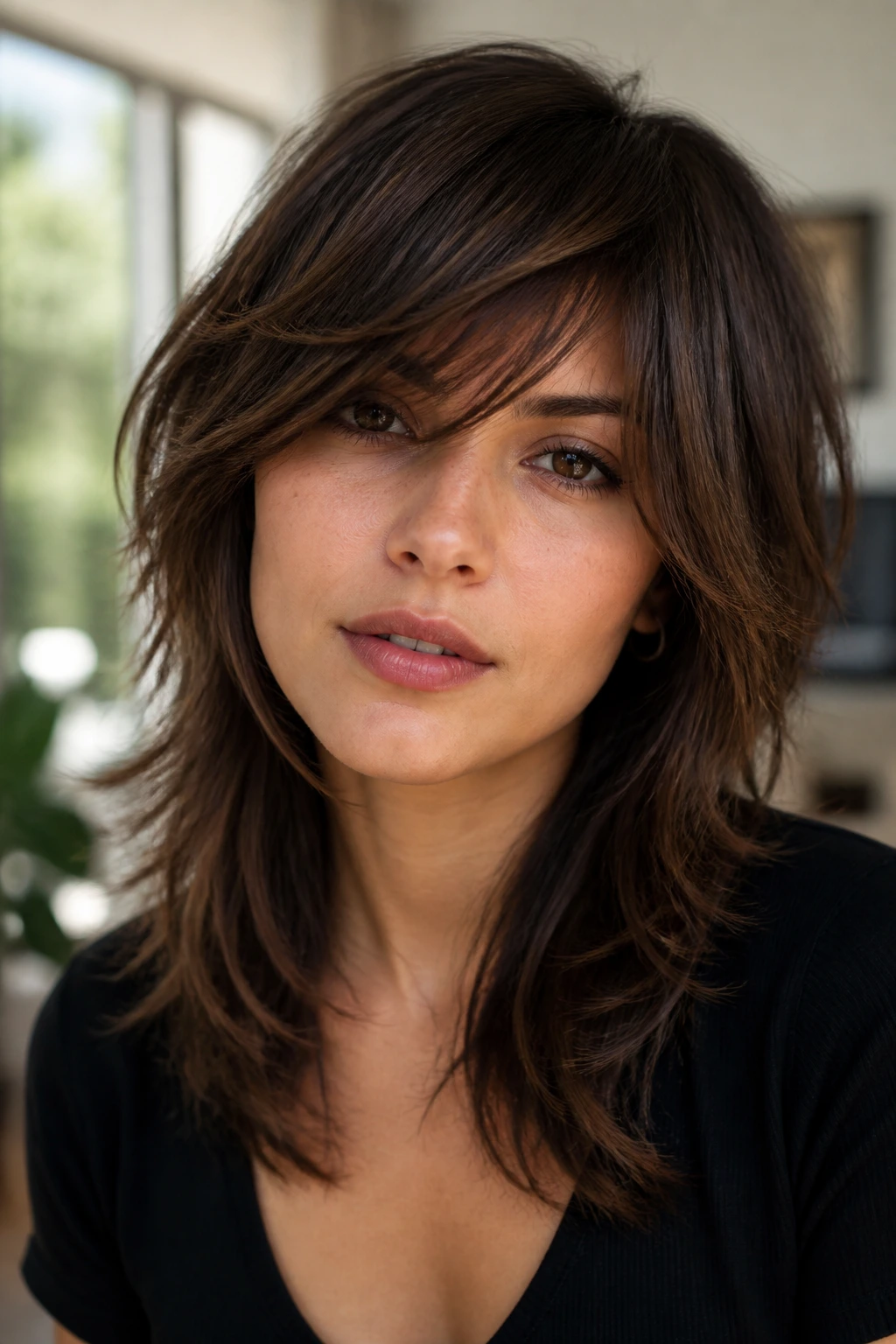
Does a shag work on a round face? Yes, if the texture stays light and the fringe is long enough to sweep. A heavy shag with short bangs can make the face feel wider. A soft shag with longer, feathered sides does the opposite.
How to wear it
Use a dab of mousse at the roots and scrunch from the temples down. You want bend, not frizz. A small amount of texture spray at the ends keeps the layers separated so the haircut doesn’t collapse into one puff.
The sweet spot is a fringe that starts just off-center and lands somewhere between the brow and the outer corner of the eye. That little angle keeps the look messy in a good way, not shapeless.
4. Deep Side-Parted Long Layers
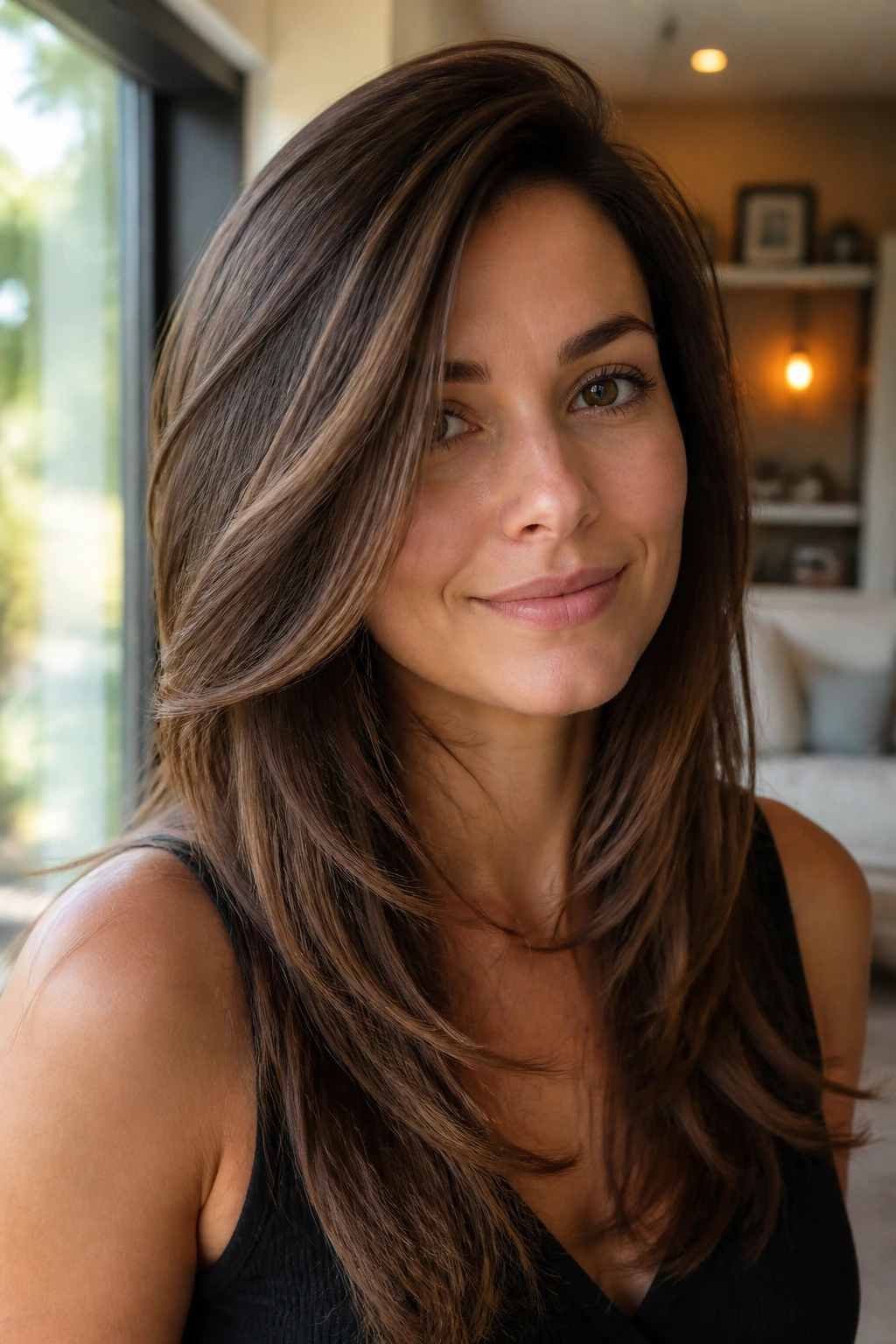
A deep side part is one of the easiest shape tricks in hair. It gives the crown a quick lift, and that lift changes how the rest of the haircut sits. On a round face, that vertical emphasis matters.
These long layers should be feathered around the chin and below, never stacked right at the cheek. Think of the front as a soft frame that opens the face, not a pair of wings sitting at the widest point.
- Best for: straight or wavy hair that can hold a bend.
- Ask for: the shortest face frame to start around the mouth or jaw, then taper into the length.
- Skip if: your hair falls flat at the root and you never blow-dry it. A deep side part needs a little help.
5. U-Shaped Layers with Jaw-Grazing Fronts
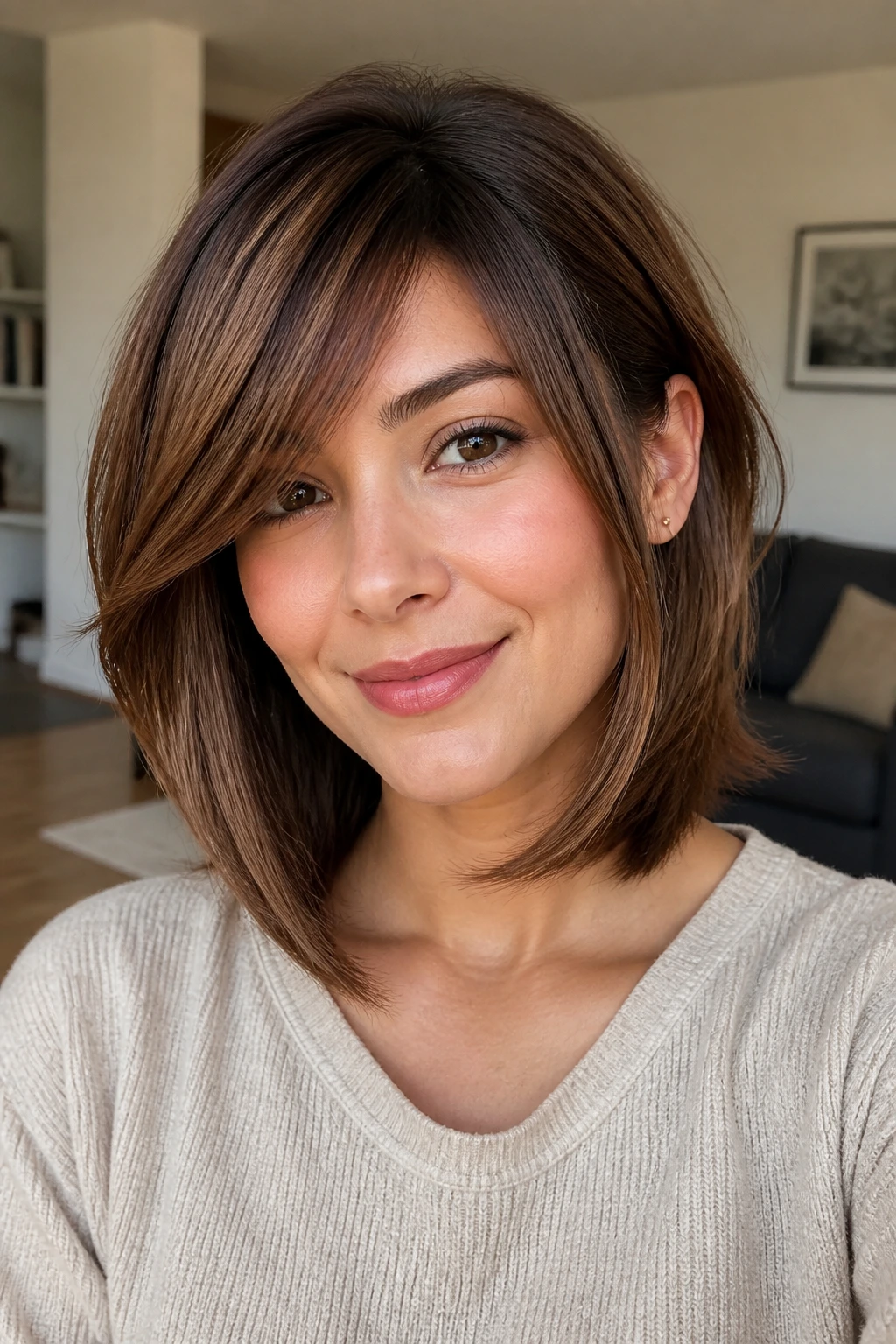
The U-shape gives long hair a softer edge than a blunt cut, and that matters on a round face because a straight bottom line can make the silhouette look wider. The front pieces should angle down toward the jaw, then disappear into the rest of the hair.
This is a clean, calm haircut. Not fussy. The magic is in the line. A U-shaped perimeter keeps the length feeling full, while the front pieces draw the eye downward in a way a straight cut never can.
A good version of this cut looks especially strong when the hair is smooth and tucked behind one ear on the shorter side. That asymmetry does half the work for you.
6. Feathered Midi with a Soft Bend at the Ends
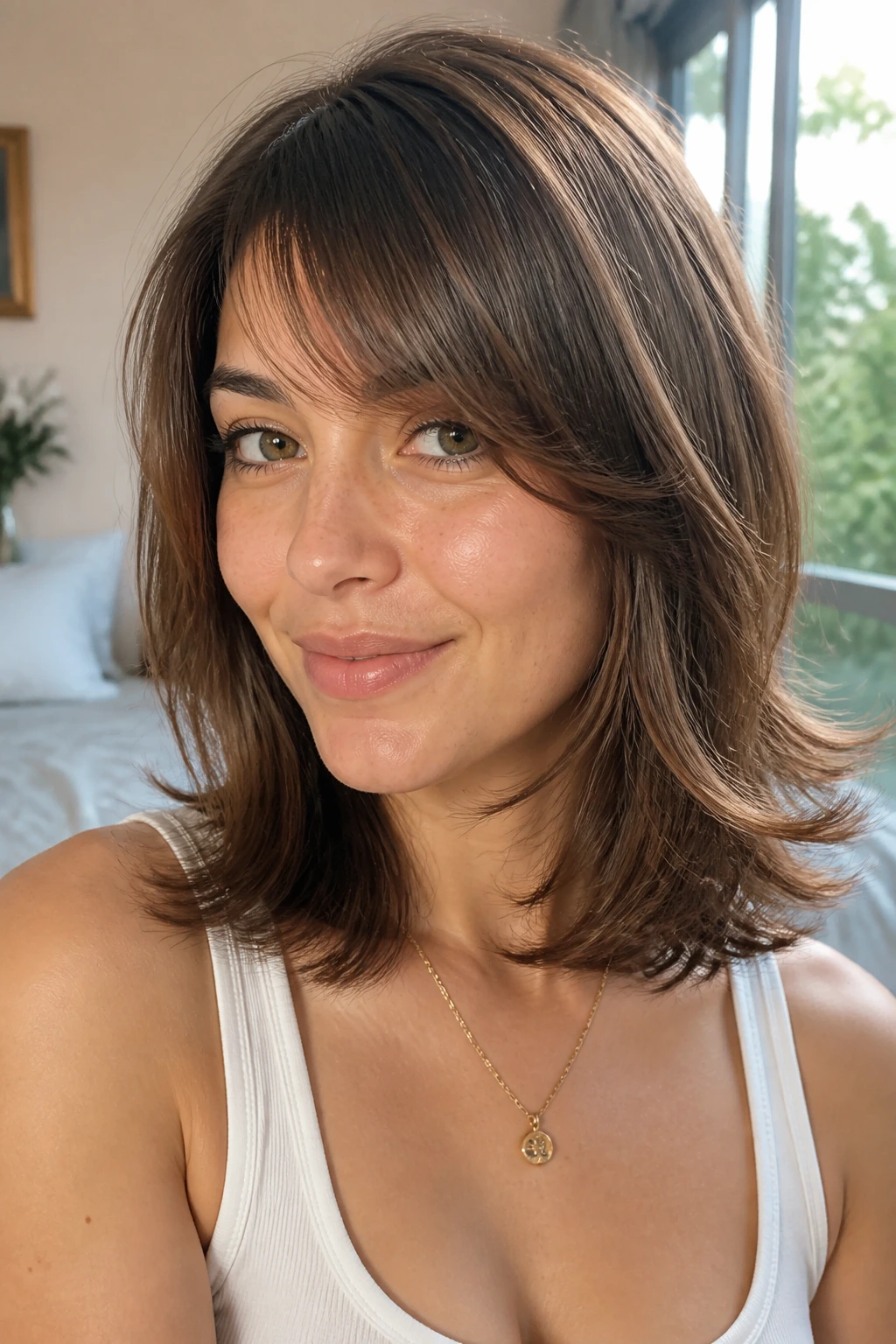
The feathered midi lives in that sweet spot between shoulder length and a true bob. It’s light enough to move, but not so short that it adds width through the cheeks.
What makes it flattering is the way the ends bend away from the face instead of forming a hard shelf. If the layers are cut to feather out around the jaw, they create a little air around the face, which is exactly what a round shape needs.
Styling note
A 1.25-inch curling iron or a medium round brush can set the bend fast. Wrap the front pieces away from the face, leave the last inch straight, and finger-comb when they cool. That tiny unfinished end keeps the style from looking too polished.
7. Curly Layers with a Swept Front Section
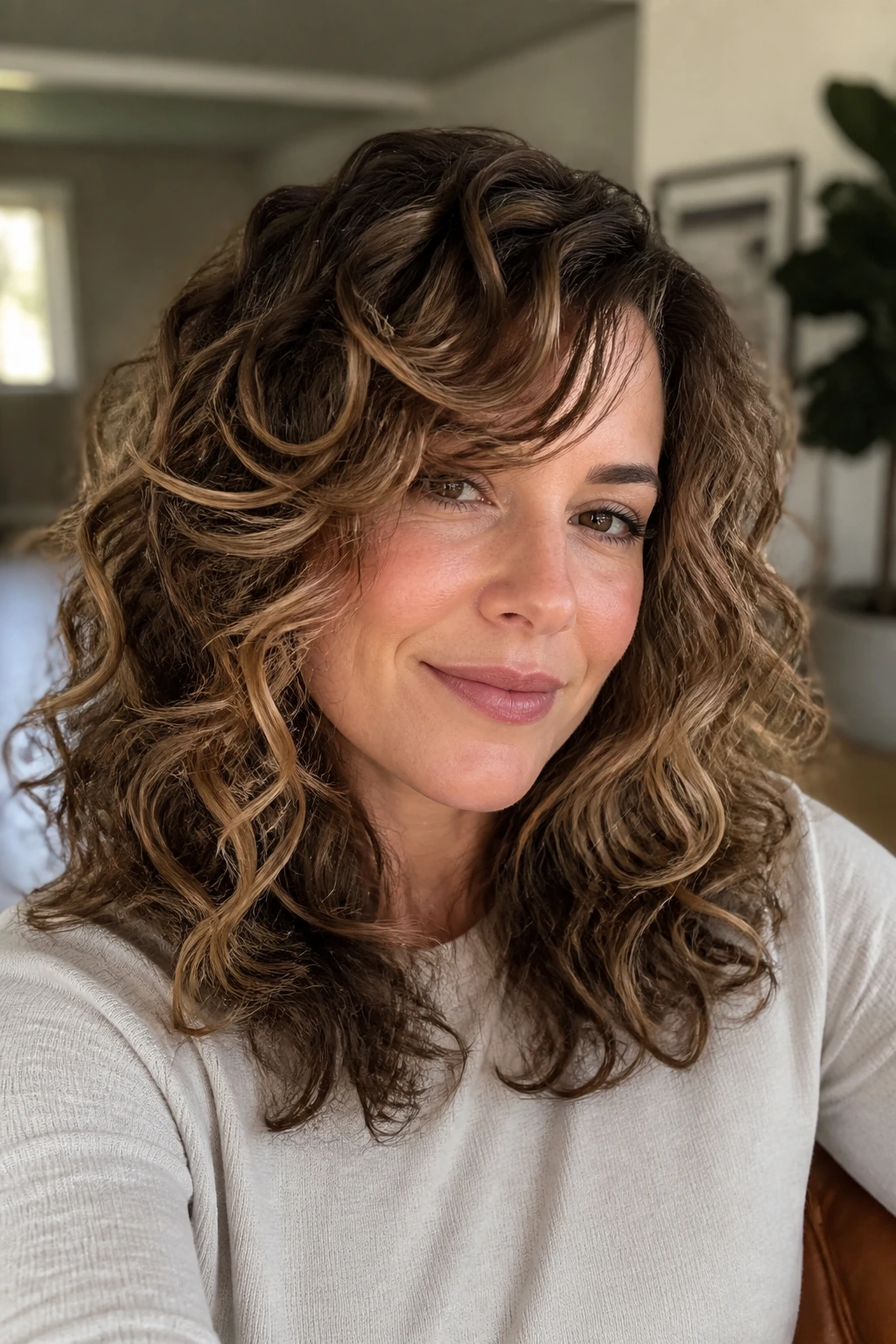
Curly hair on a round face needs shape control, not flattening. The problem usually isn’t the curl pattern. It’s where the bulk sits. If the widest curl bunch lands at the cheek, the face can read wider than it is.
Longer front pieces that sweep across the forehead fix that problem without fighting the curl. They create a diagonal line, and the diagonal line is your friend here. Let the curls spring, but keep the front a little longer than feels natural in the chair.
Good rule: when curly hair shrinks, the face frame should still land below the cheekbone when dry.
8. Blunt Lob with a Thin Side-Swept Bang
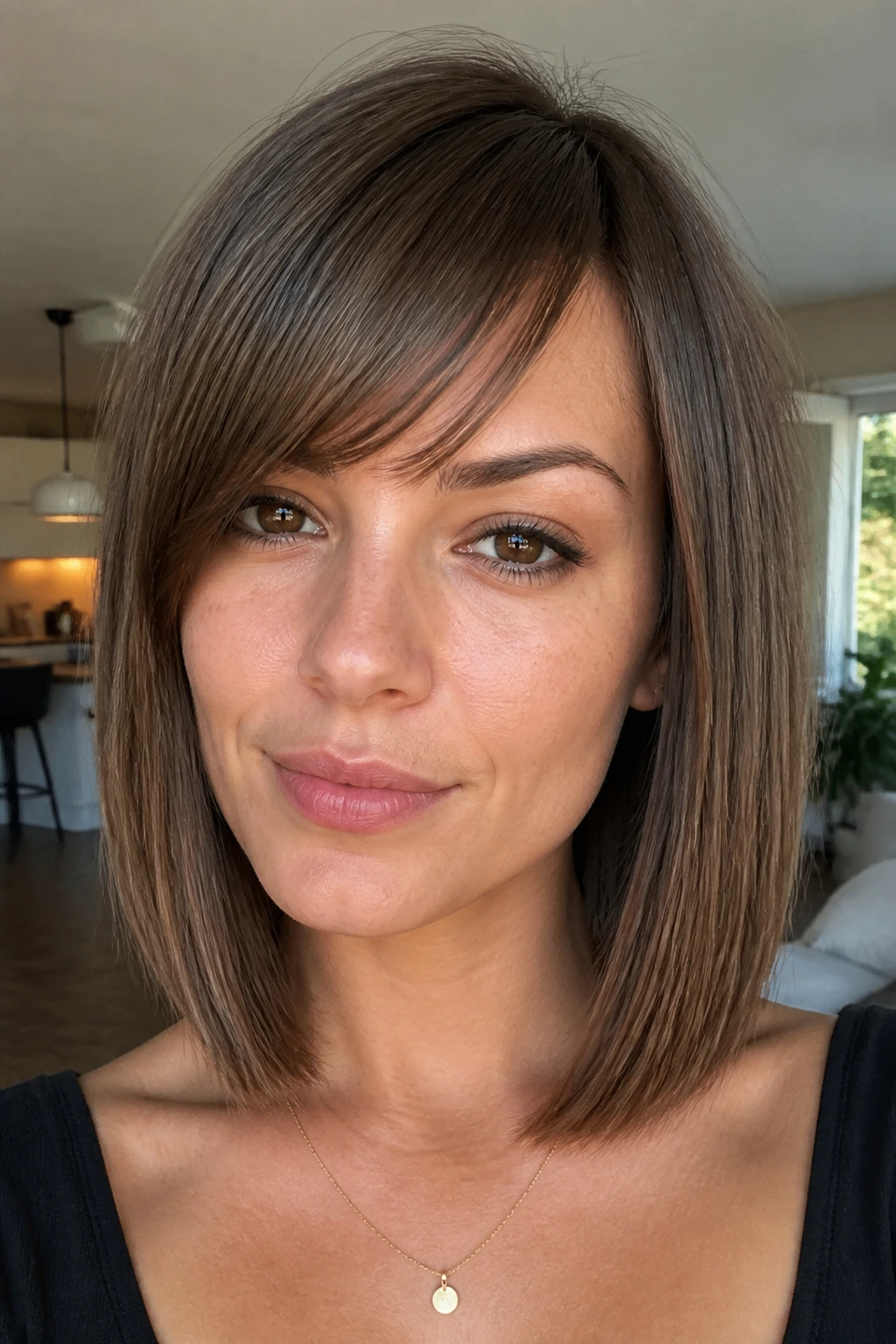
A blunt lob sounds like the wrong answer for a round face until you pair it with a very thin, side-swept bang. Then it works. The blunt edge gives the haircut weight; the narrow fringe keeps that weight from spreading across the face.
This cut is tidy. It looks best on hair that can stay smooth through the ends, because the clean line is the point. Keep the bangs light, not heavy. A dense fringe will turn the whole thing boxy.
- Ask your stylist for: a blunt perimeter at the collarbone and a bang that only covers part of the forehead.
- Style with: a flat brush and a soft bend at the front, not a tight curl.
9. Razor-Cut Shoulder Length with Shattered Ends

Razor cutting can be risky if it’s overdone, but on shoulder-length hair it can take away that hard shelf that sometimes makes round faces look broader. The shattered ends move. That movement matters.
What to watch for
If the razor work lands too high, the layers puff. Keep the point of release below the cheekbone, closer to the jaw. That gives the face a longer frame and keeps the haircut from ballooning out at the sides.
It’s a good match for hair that has some natural wave. The texture brings out the broken ends in a way that looks soft instead of stringy.
10. V-Cut Lengths with Ribbon-Like Front Layers
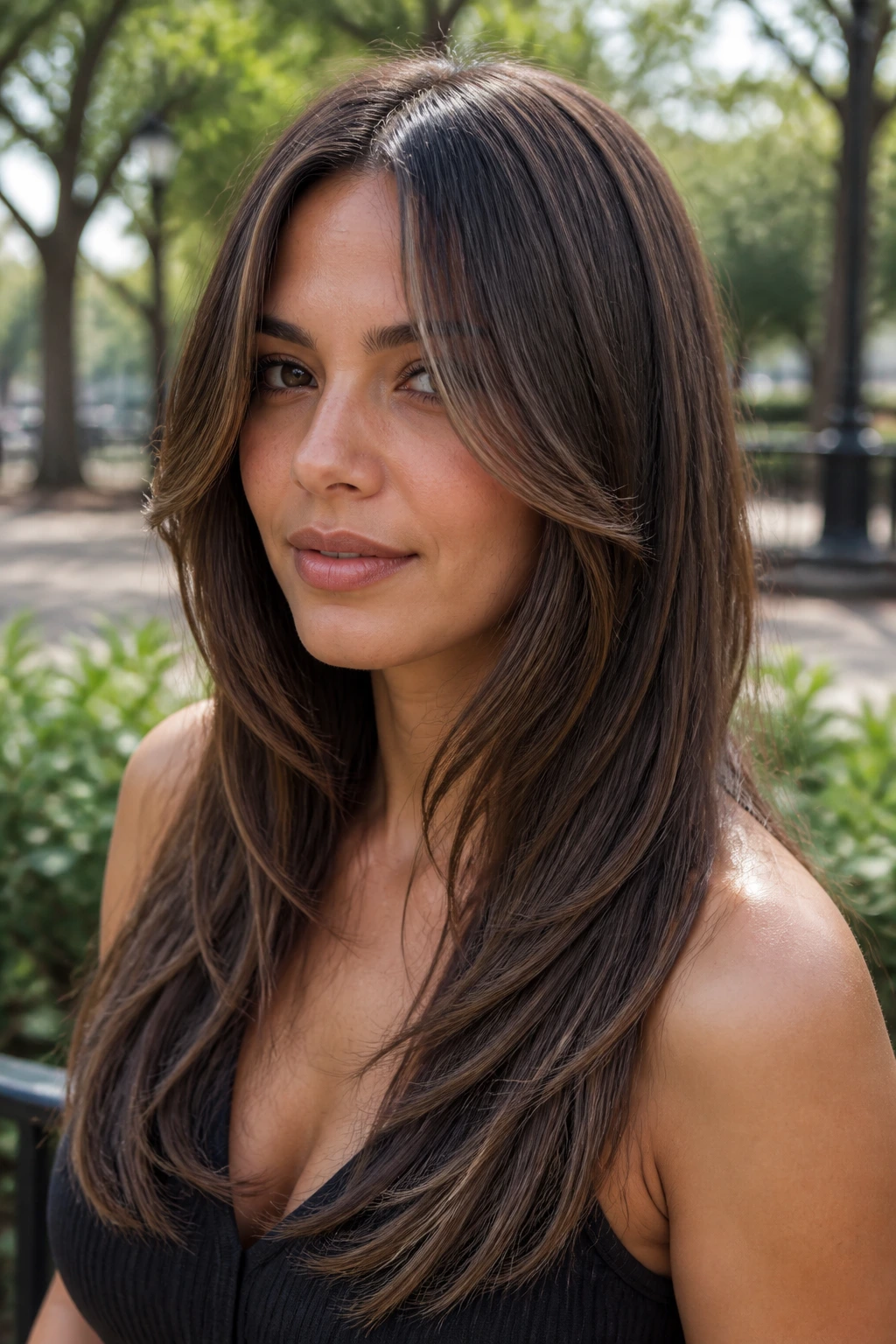
A V-cut creates length down the back, which is useful when you want your hair to feel long without looking bottom-heavy. The front layers should be narrow, almost ribbon-like, and they need to start low enough to avoid widening the cheeks.
This shape is a little more dramatic than a U-cut. The back tapers more sharply, so the eye follows the center line downward. On a round face, that center pull is useful.
Best for: long hair that can hold a curl or bend at the ends.
Avoid: heavy, thick front pieces that cut across the cheek. They fight the V shape instead of helping it.
11. Angled Lob with Curved Front Pieces
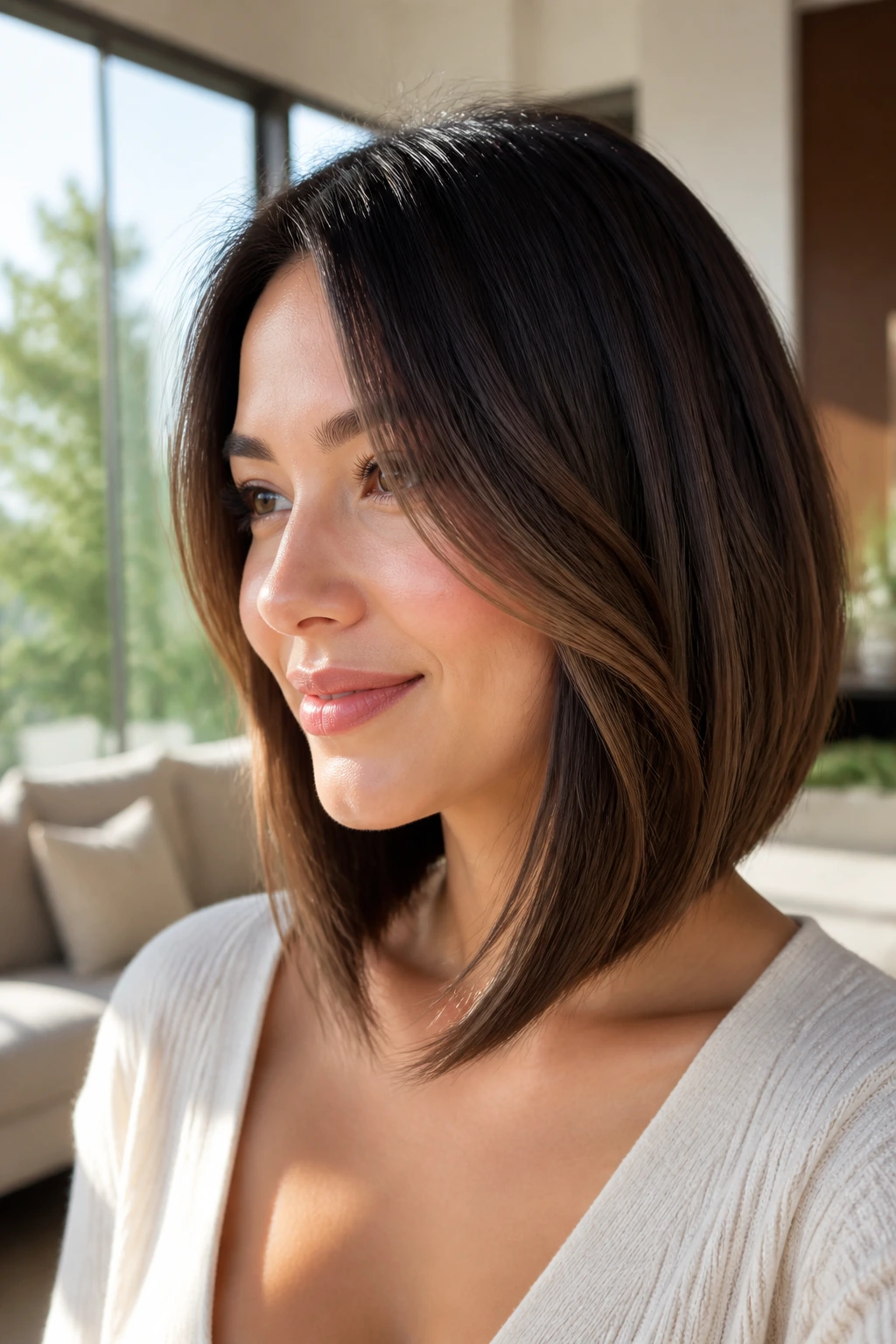
An angled lob gives you the easiest built-in length illusion because the front sits lower than the back. That diagonal line is doing the work before you even touch a brush.
The front pieces should curve around the cheek and tuck toward the jaw. If they flare out, the cut loses its point. If they stay too straight, the face can look wider. A little bend is the whole game.
This is one of the better choices if you like a polished finish. It looks neat when straight and still has enough shape when styled with a soft wave.
12. Shag-Bob with a Longer Fringe

A shag-bob is not the same thing as a heavy bob with chopped ends. The longer fringe keeps the front from feeling blunt, while the textured crown adds lift where a round face usually benefits from it.
The trick here is restraint. Don’t let the shortest pieces sit too high. You want a bob that feels loose around the temples, not a puffball with fringe.
A little dry texture spray at the root helps the top stay lifted. Without it, the cut can sink and lose the shape that makes it work.
13. Blowout Layers with Cheekbone Lift
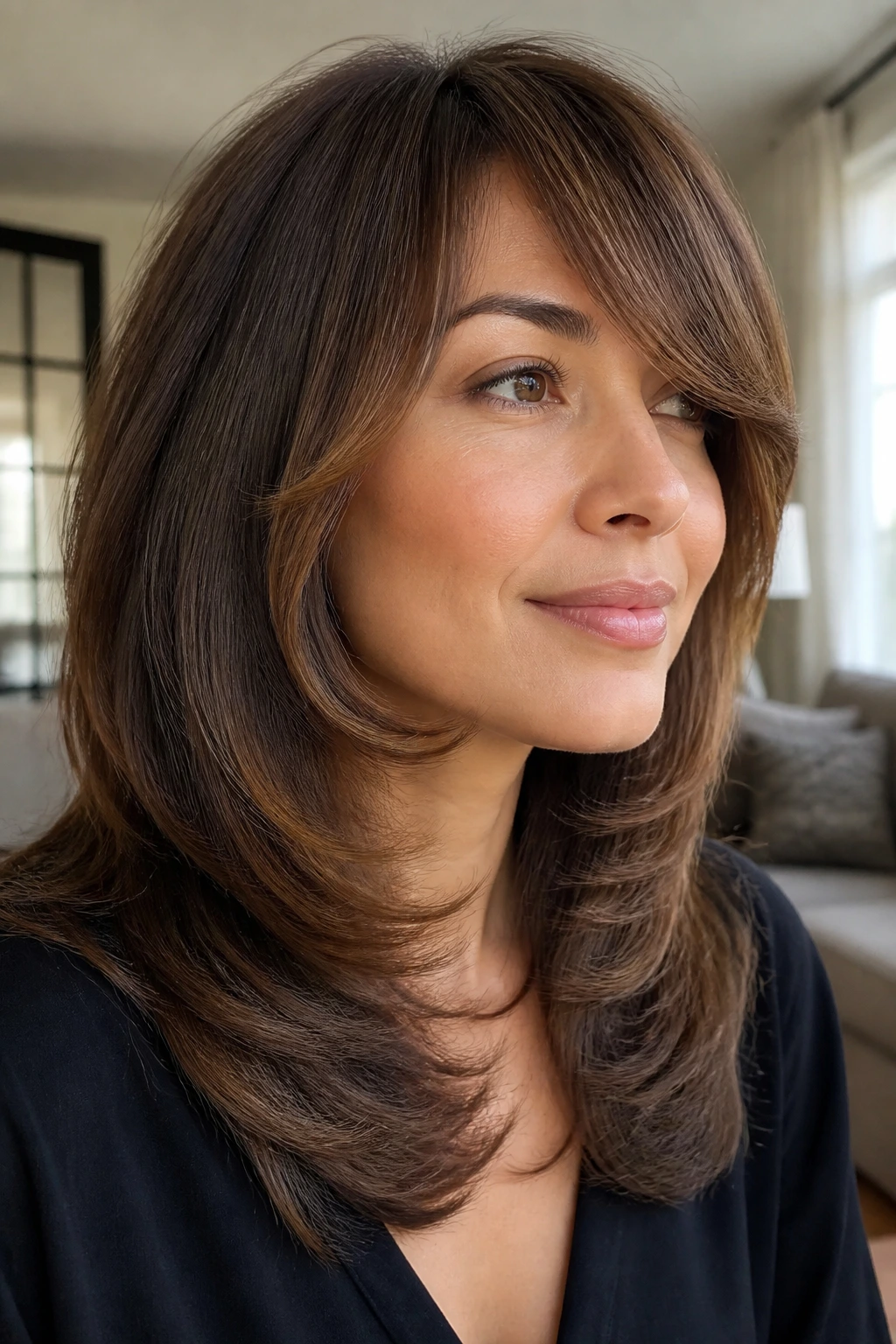
Some cuts need texture. This one needs polish. Blowout layers are built to swing, and the side-swept bang gives them direction.
The front layers should curve out from the cheekbone and then turn back in around the jaw. That soft S-shape is flattering on round faces because it adds movement without a hard edge. A round brush and medium heat are enough; you do not need a salon-sized blowout every time.
Best move
Clip the bangs to the side while they cool. That small step teaches them the direction you want, and it keeps the sweep from splitting the second you step outside.
14. Long Pixie Bob with a Side Volume Sweep
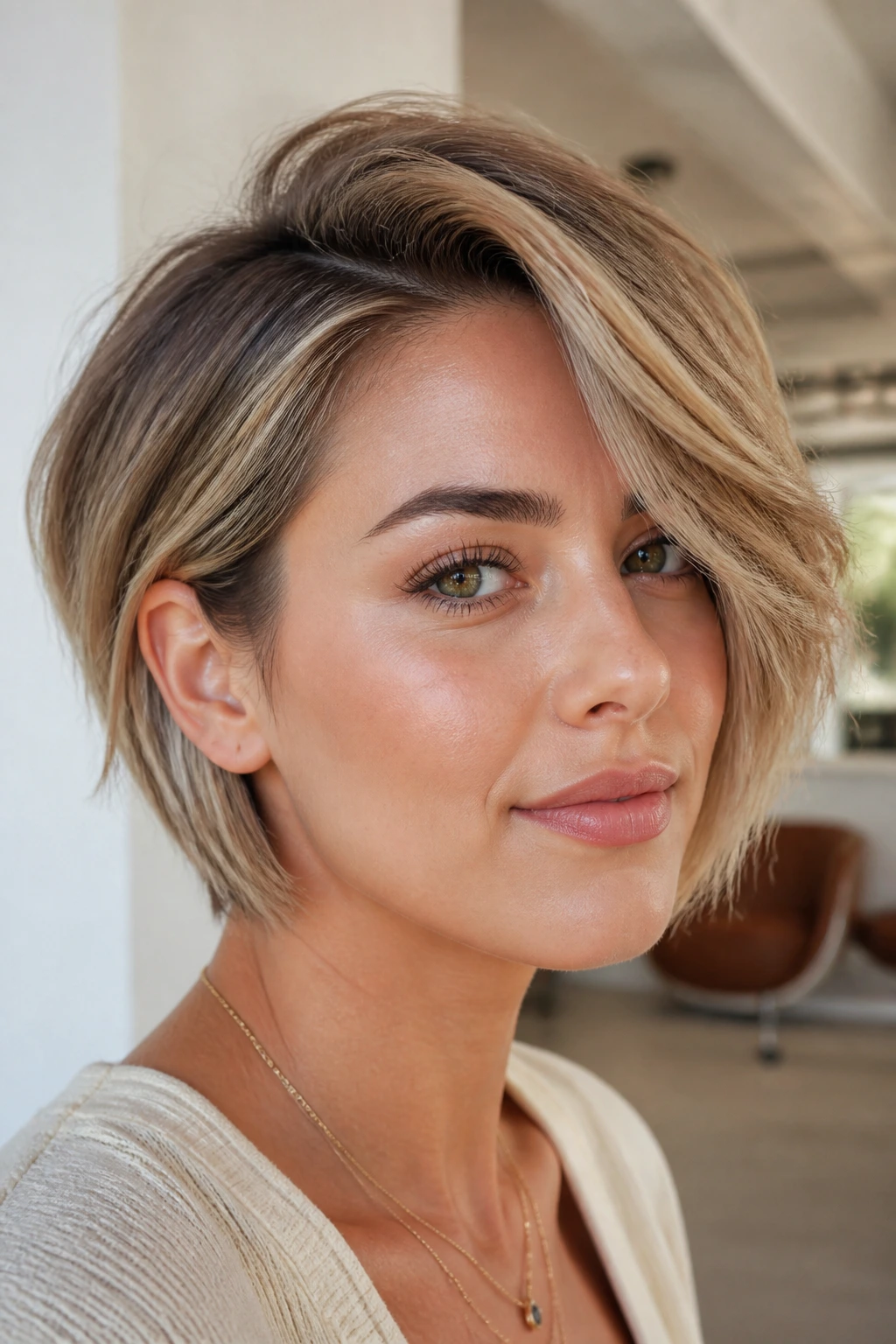
This one sits in an interesting place: short enough to feel crisp, long enough to keep softness. The side volume is what saves it on a round face. Without that lift, a pixie bob can read too boxy.
The longer top section should sweep across the forehead and taper into the temple, not stop in a blunt ridge. The back can stay snug, but the front needs movement.
It’s a strong choice if you want something that dries fast and still looks intentional with a quick finger-style. Tiny cut. Real shape.
15. Thick-Hair Layers with Internal Weight Removal
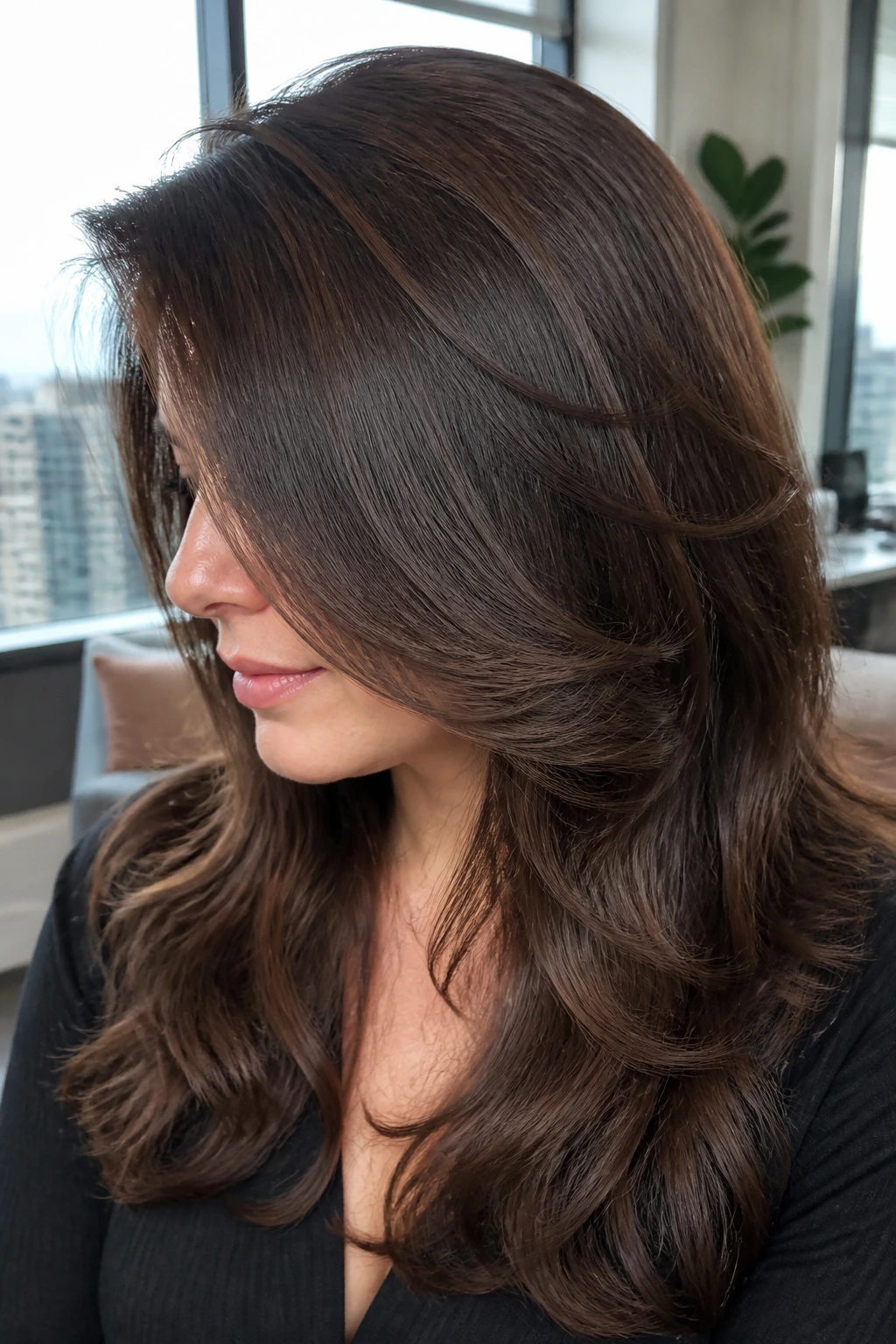
Thick hair needs internal shaping, not just surface layers. If the bulk stays at the sides, a round face gets swallowed by the haircut. The answer is to remove weight from the inside while keeping the outer line smooth.
The face frame should stay long and controlled. If you thin the front too much, the hair can separate into wisps. Better to keep one strong diagonal sweep and use internal debulking behind it.
Pro note
Ask for weight removal under the surface, not from the outline. That keeps the haircut from springing outward like a triangle.
16. Fine-Hair Layers That Keep the Ends Full
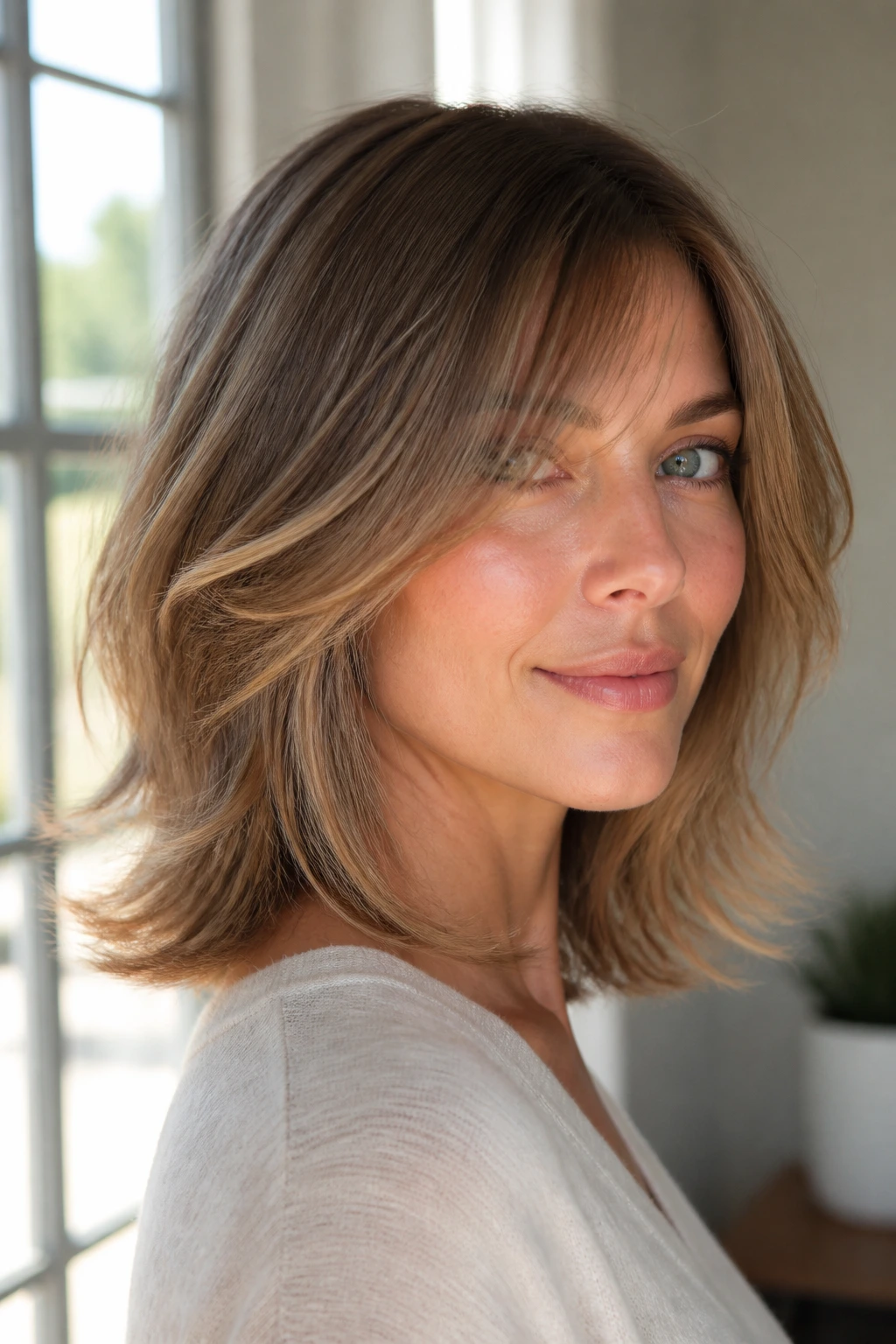
Fine hair needs a different strategy. Too many short layers can leave the ends see-through, and a round face does not need the haircut to disappear at the jaw.
The best version keeps the perimeter fuller and uses only a few soft front pieces. The bangs can still sweep, but they should be light and airy, not heavy enough to drag the front flat.
A root spray and a small round brush are usually enough to give this shape the lift it needs. Fine hair rarely needs more product than that. More often, it needs less.
17. Wavy Layers with Tucked-Behind-the-Ear Fronts

A wavy cut like this looks lived-in from day one. The front pieces curve around the face, then tuck behind one ear on the heavier side, which creates an easy asymmetry that round faces handle well.
The waves should start below the cheekbone, not right at it. If the bend begins too high, the width gathers at the middle of the face. When the wave starts lower, the eye follows the line downward and the shape feels longer.
This cut looks especially good with a loose bend made by a 1-inch iron and brushed out lightly.
18. Soft Wolf Cut with a Long Fringe

A soft wolf cut can work on a round face if the fringe stays long and the crown lift stays controlled. The whole point is to keep the texture loose enough to avoid a mushroom shape.
The front should be the longest part of the face frame. That keeps the cut from stacking too much volume at the cheeks. Let the fringe fall sideways, not straight down.
Best for: people who like a little edge and don’t want a polished finish every day.
Not for: someone who wants perfect symmetry. This cut looks better with a bit of mess.
19. Rachel-Inspired Layers with a Modern Side Sweep
The old-school layered cut still has life in it, but on a round face the modern version needs a longer side sweep and softer movement around the jaw. Short, flipped-out pieces at the cheeks can widen the face. Longer layers fix that problem.
How to ask for it
Say you want the face frame to start below the cheekbone and the fringe to sweep across one side, not split in the middle. That wording matters. It keeps the stylist from cutting in the classic, more boxy shape.
A blow-dry with a round brush will give this style the clean swing it needs. Air-dried, it reads more casual. Both work.
20. Shoulder Flip with Outward-Bent Ends

This cut leans into movement at the ends, which sounds risky for a round face, but the shoulder length keeps it grounded. The outward flip adds a little visual lift at the bottom without making the sides wider.
The side-swept bang is what keeps the top from going too square. It gives the haircut a diagonal line, and that line softens the whole shape.
This one is easy to wear with a blazer, a knit, or a simple tee. It has enough structure to look intentional, but it does not demand perfect styling every morning.
21. Long Layers That Curve In at the Jaw
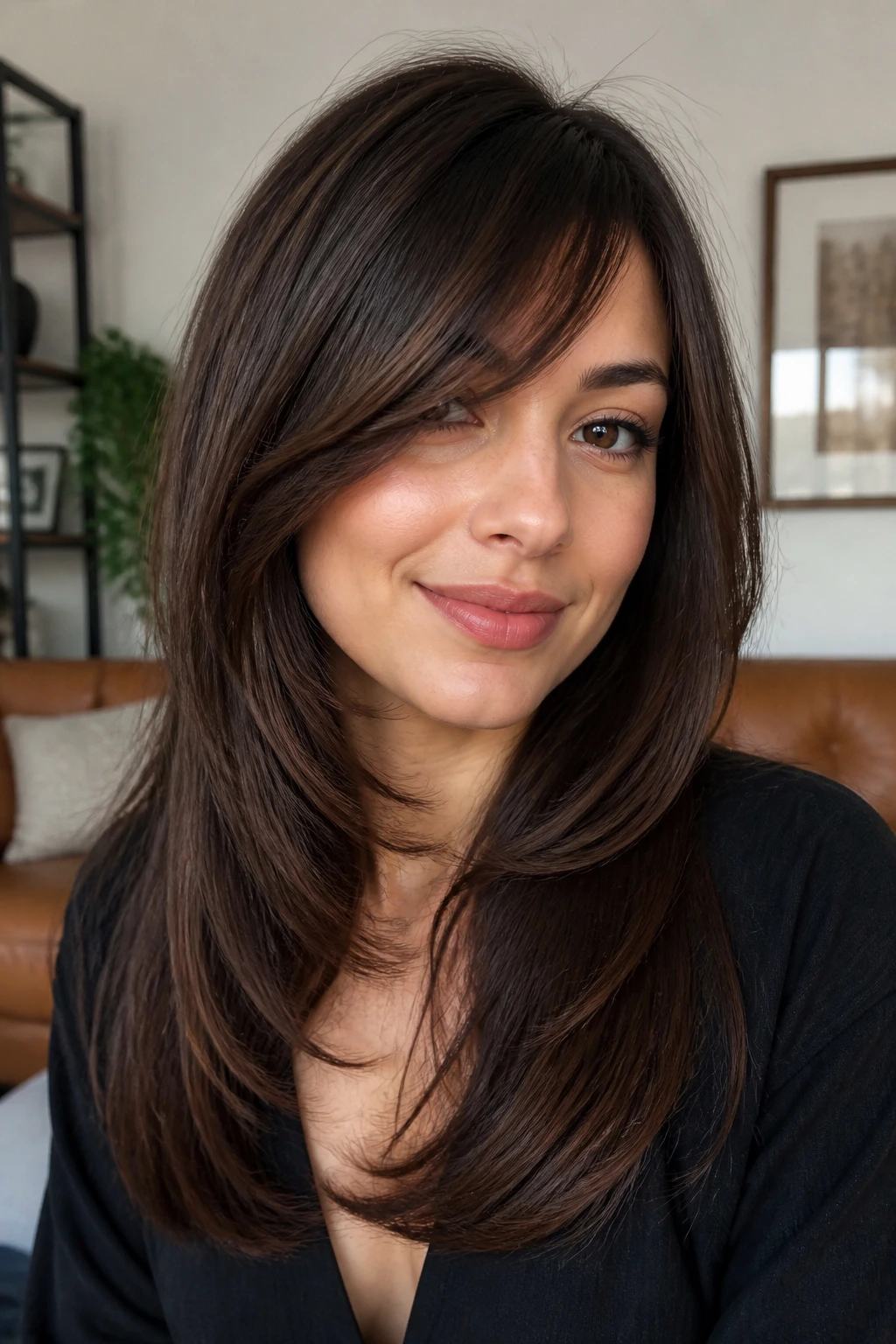
If you want length, this is a strong choice. The layers should bend inward near the jaw, which frames the lower face instead of expanding it. That inward curve creates a cleaner outline than layers that kick out at the sides.
The side-swept bang can be fairly long here. In fact, longer works better. A fringe that ends near the outer corner of the eye gives the face a gentler diagonal and avoids a hard stop at the center of the forehead.
This is one of the easiest shapes to grow out because the layers stay useful for a long time.
22. Coily Shape with a Diagonal Front Curl
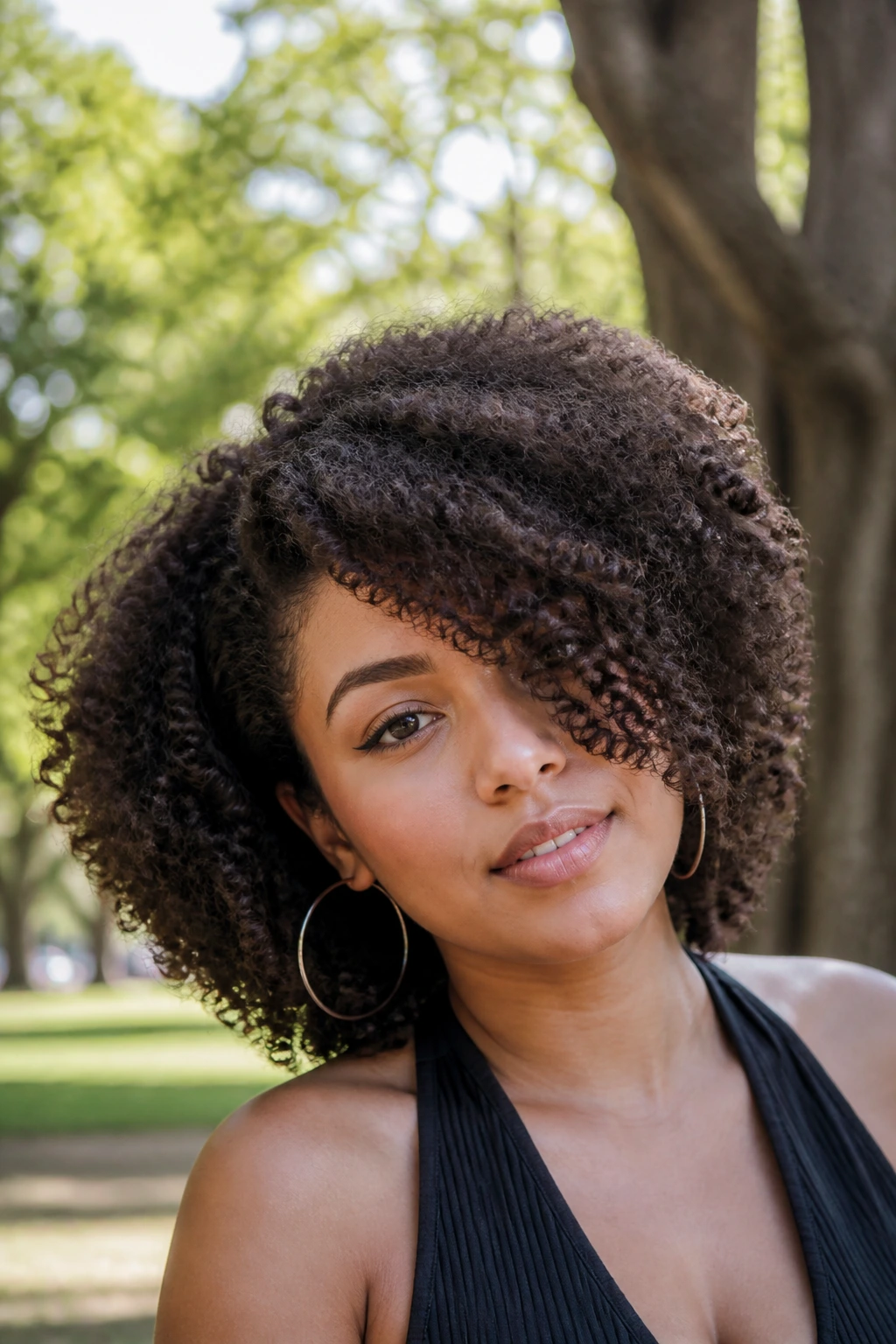
Coily hair can absolutely carry this idea, but the front needs to be thought through curl by curl. The goal is not to straighten the shape. It’s to place the front coil in a way that creates a diagonal line across the forehead and down one side.
The longest front curl should sit below the cheekbone when dry. Anything shorter can spring up and widen the center of the face. A shape cut with dry curls in mind usually works better than one cut wet and guessed at.
Use a light cream or gel that keeps the curl defined without crunchy edges. Coils need shape, not stiffness.
23. Triangle-Busting Layers with Chin-Length Movement
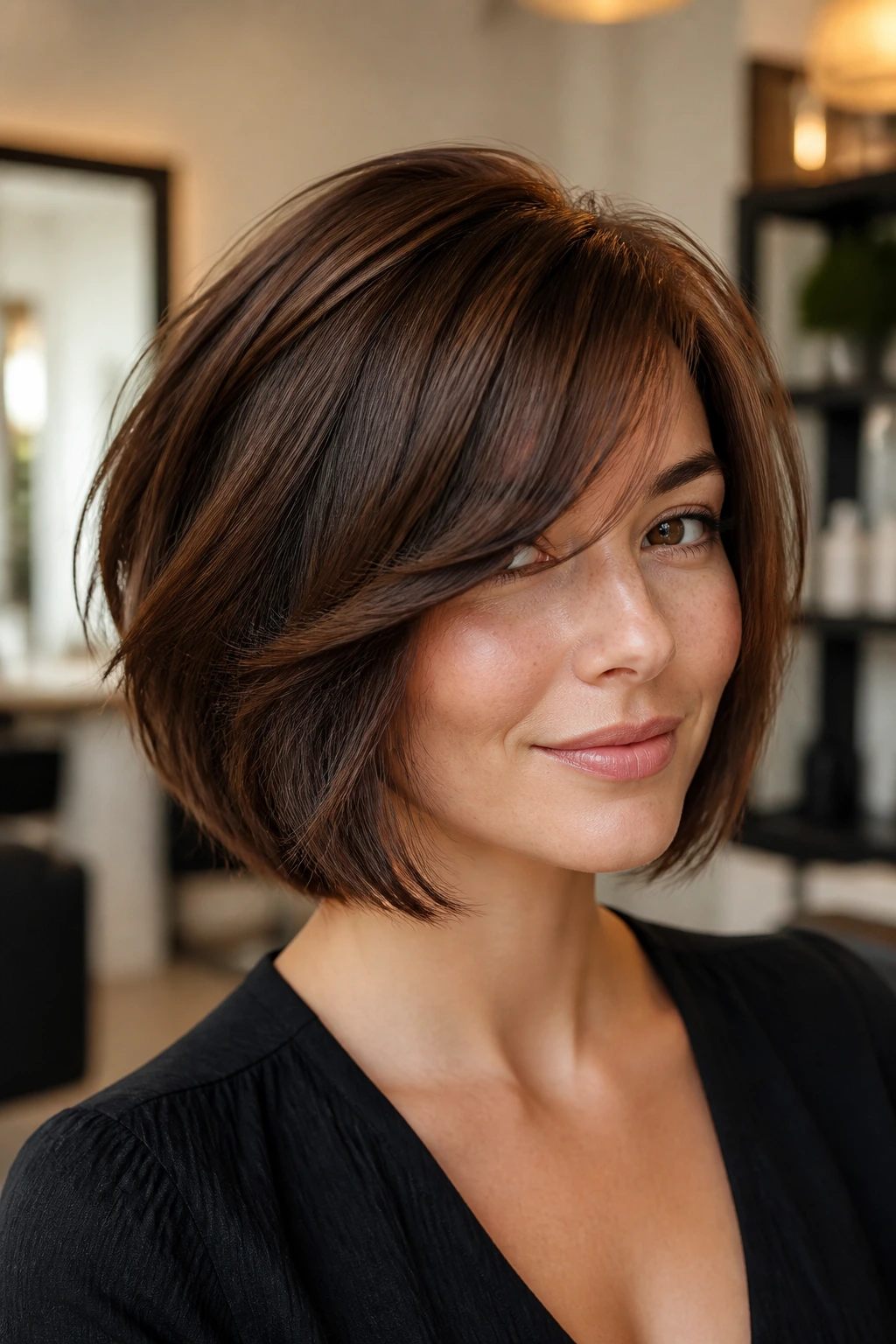
A triangle shape around the head can happen when the top is flat and the bottom is wide. On a round face, that effect can be harsh. Triangle-busting layers fix it by adding lift at the crown and movement around the chin.
This cut is useful if your hair naturally grows outward at the sides. The side-swept bang pulls the eye across, while the chin-length layers stop the outline from hanging like a block.
Tip: if your hair is thick, ask for internal shaping near the jaw rather than aggressive thinning at the ends. That keeps the shape balanced.
24. Jaw-Softening Lob with Piecey Bangs
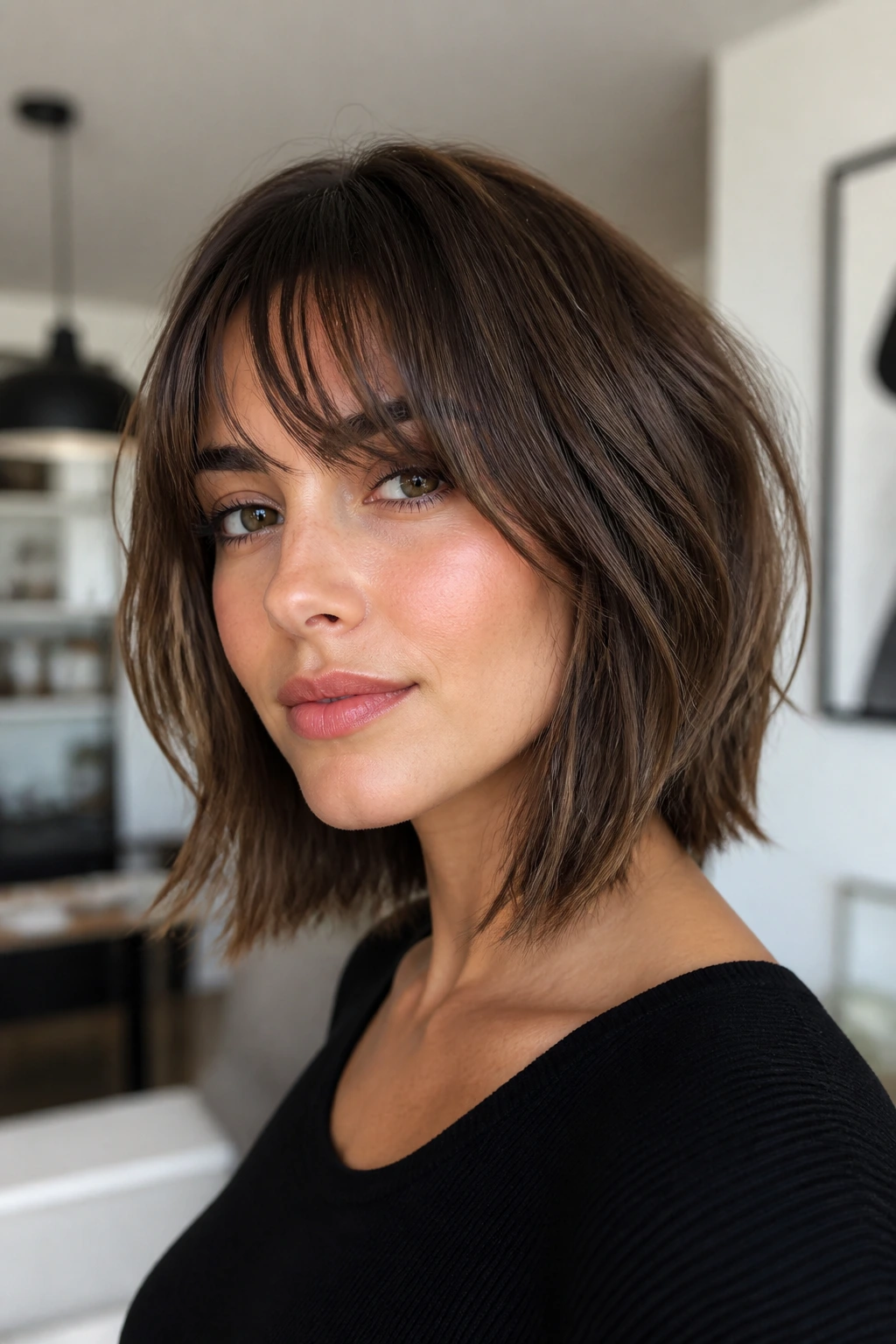
This is the version for someone who wants texture without full shag energy. The lob keeps the outline clean, while the piecey bangs break up the forehead line in a softer way than a dense fringe would.
A good jaw-softening lob should move around the face, not sit parallel to it. The front pieces should bend inward just enough to skim the jaw, then loosen toward the collarbone.
It’s one of the easiest cuts to style with a few flat-iron bends and a light spray wax at the ends.
25. Glossy Long Cut with a Low Face Frame
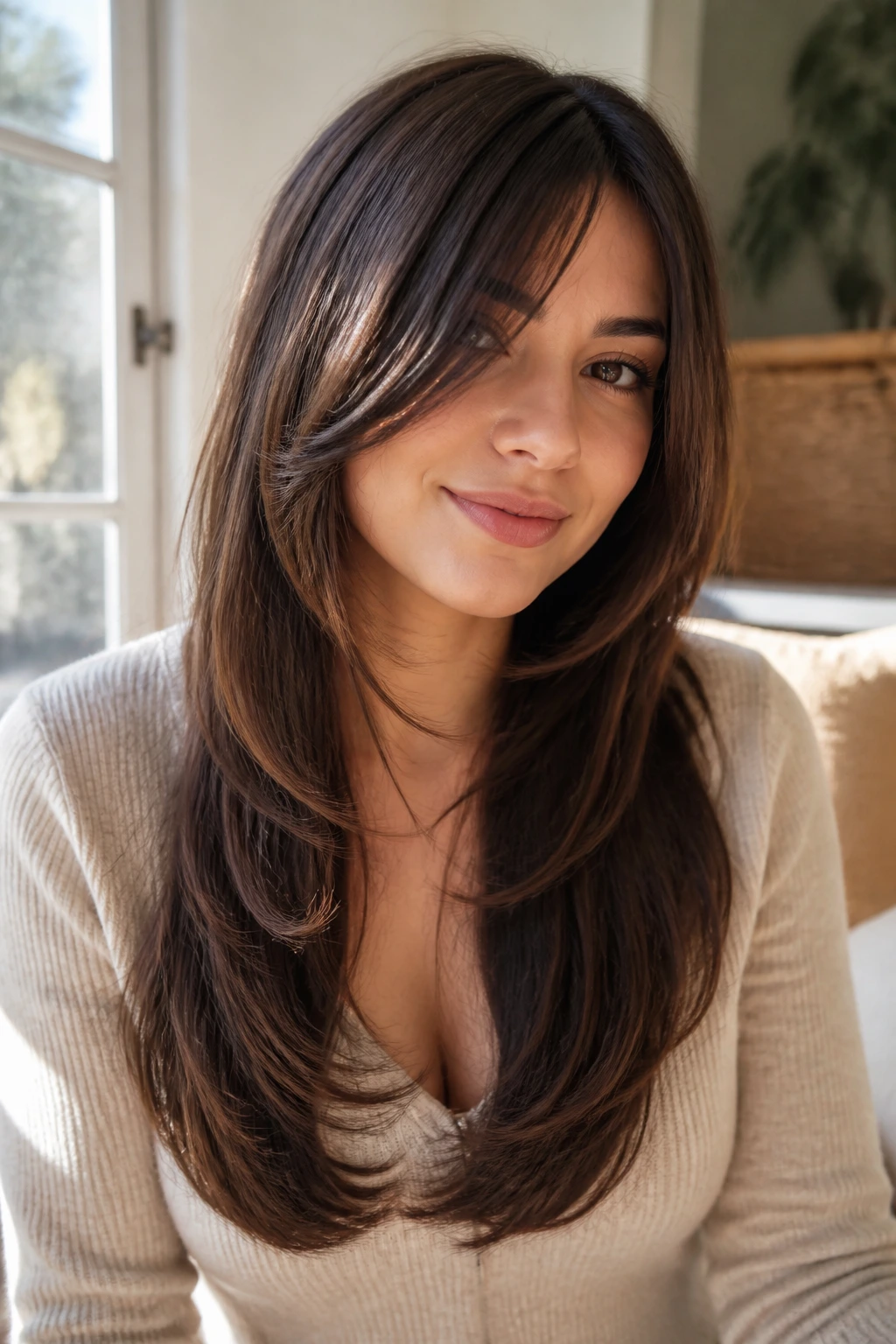
The long cut at the end of the list is not here because it’s safe. It’s here because length only works on a round face when the frame starts low enough to shift the eye down. The front pieces should begin below the cheekbone, then curve into the length with a clean side sweep.
That low frame keeps the hair from spreading width across the upper face. Add shine and the whole cut feels calmer, smoother, and more deliberate. I like this shape when the hair is healthy and the ends are trimmed often, because long hair without good ends can look heavy in a hurry.
If you want the least dramatic change with the most face-shaping payoff, this is the one.
How Face-Framing Layers and Side-Swept Bangs Should Be Cut
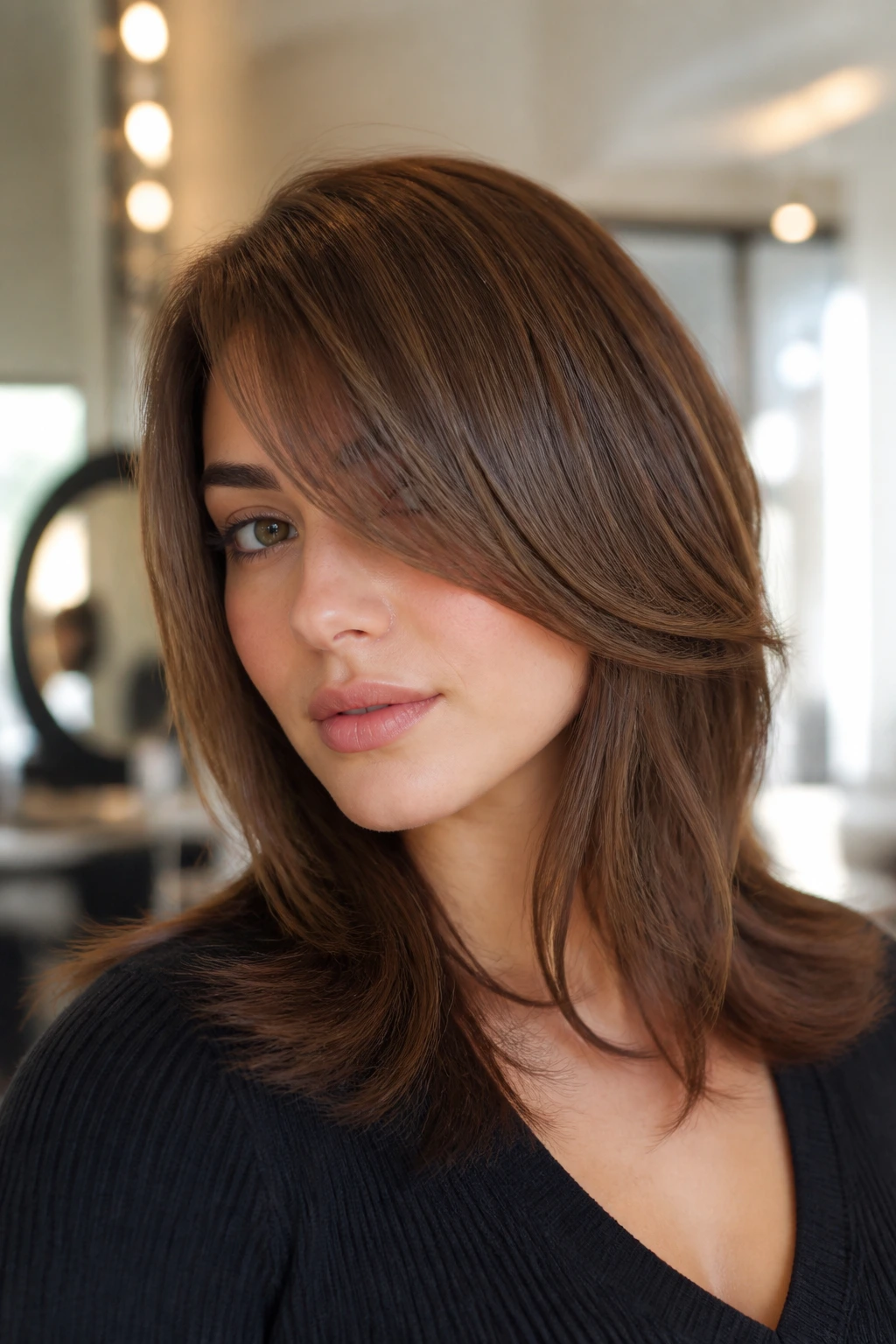
Bring photos, yes, but bring language too. A good stylist can read a picture; a better one can hear what your hair actually does in daily life. Say where you part your hair, how often you heat-style, whether your hair flips outward at the ends, and whether you want the front pieces to hit the cheek, jaw, or collarbone.
Tell them the shortest point. That is the line that matters most. On a round face, the shortest front piece usually needs to start below the cheekbone unless you want a very specific, short-fringe look. If you wear glasses, mention that up front. If you tuck one side behind your ear, say that too.
A few words save a bad cut. “Long diagonal fringe,” “layer below the cheekbone,” and “soft side sweep” are better than “something face-framing.” That phrase can mean almost anything.
The Tools That Keep the Sweep in Place
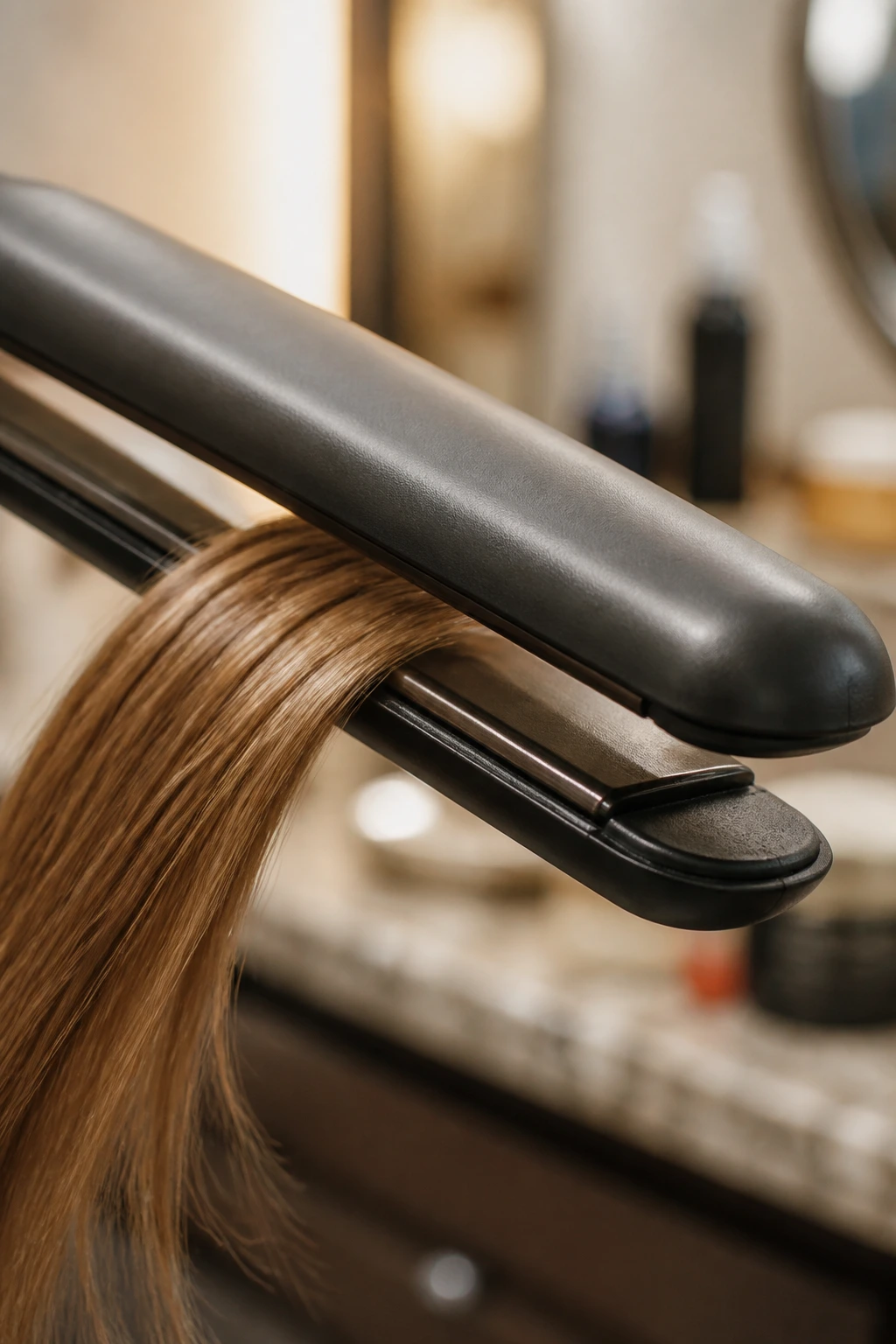
- Blow dryer with a nozzle: The nozzle directs air down the hair shaft and keeps the fringe from frizzing up while you shape it.
- 1.5-inch round brush: A medium brush gives you enough bend without creating a curl that feels too done.
- Duckbill or sectioning clips: These hold the bangs in place while they cool, which helps the side sweep stay where you put it.
- Flat iron with rounded edges: Useful for a soft bend through the front pieces, especially on straight or stubborn hair.
- Root-lift spray: A light spray at the crown prevents the whole cut from sinking flat by midday.
- Light texture spray or spray wax: A small amount separates the face-framing ends so they move instead of clumping.
- Wide-tooth comb: Better than a brush for curly or wavy hair when you’re trying to keep the front shape intact.
Styling These Layers Around Glasses, Earrings, and Necklines

Glasses can change the whole story. If your frames are thick, keep the bang a little longer and lighter so it doesn’t sit on top of the frame line. If your frames are narrow, a stronger side sweep can create a nice diagonal without crowding the eyes.
Earrings matter too. A short, angled face frame draws attention to hoops and drops, while a longer collarbone layer pairs better with small studs. Nothing mystical there. It’s just line work.
High necklines and turtlenecks look best with a cut that doesn’t stop at the jaw. If the front ends around the collarbone or lower, the hair keeps moving and the neck doesn’t feel boxed in. That’s one reason long face-framing layers stay useful all year, whether the outfit is open or closed at the throat.
The 10-Minute Routine That Keeps the Bangs Swept

Root lift first: Start at the crown and front roots, not the ends. A little lift there changes how the face reads more than a lot of product on the lengths.
Set the bang direction while damp: Blow the fringe in the direction you want it to sit, then pin it for a minute or two while it cools. That tiny wait keeps the bang from splitting back to center.
Bend the front pieces away from the cheeks: Use a round brush or flat iron to curve the layers away from the face, then let them cool before you touch them again. Warm hair remembers shape better than hot hair.
Finish with a small amount of texture spray: One or two sprays are enough. Too much and the face frame turns rough.
Common Mistakes That Add Width Instead of Length
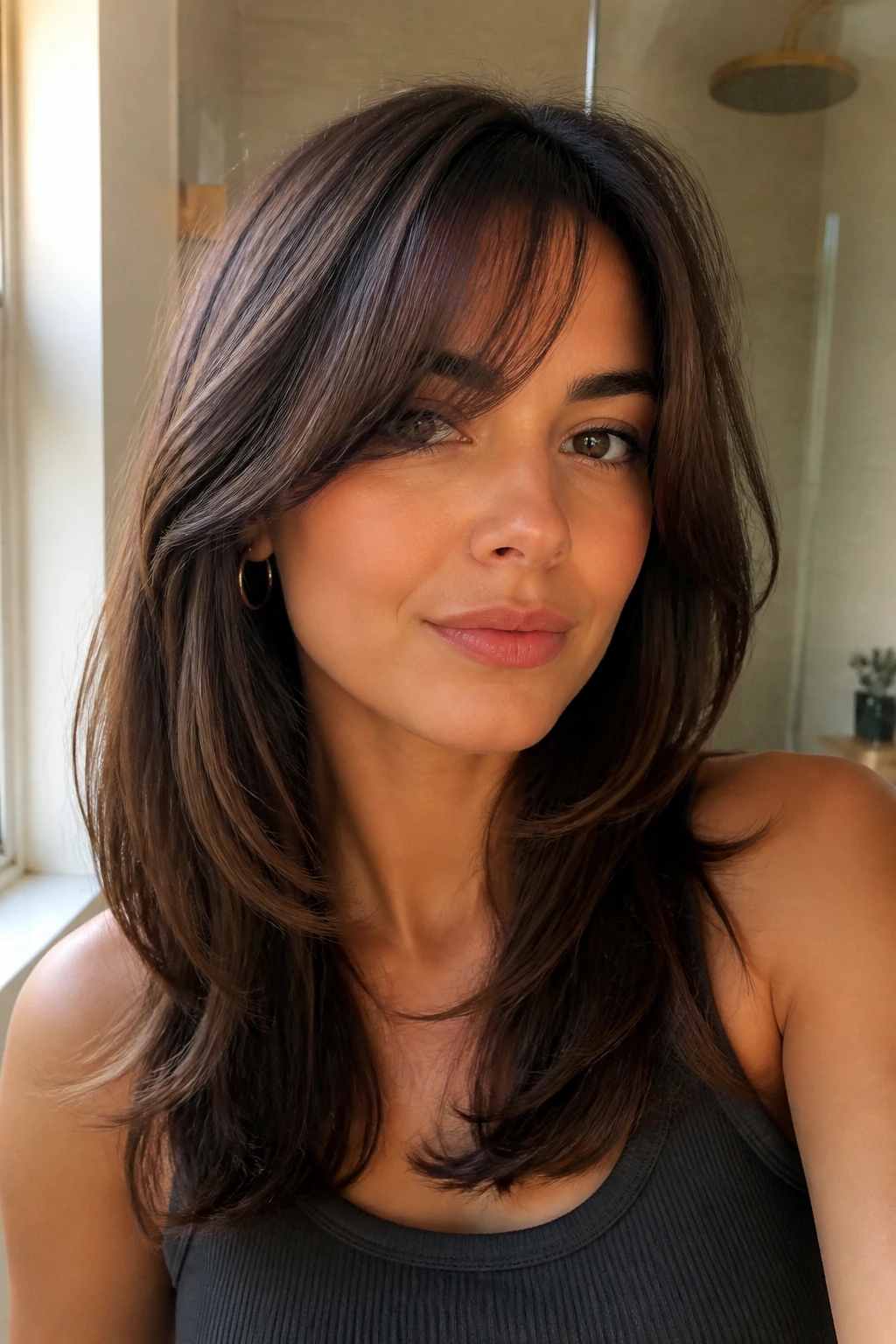
- Cutting the shortest layer at the cheekbone: That places the widest part of the haircut right on the widest part of the face. Move it lower.
- Making the bang too blunt: A heavy, straight fringe cuts the face in half and can make the roundness feel stronger. Keep the side sweep airy.
- Adding volume only at the sides: Side volume sounds flattering, but on a round face it can push the silhouette outward. Lift the crown instead.
- Letting the front pieces stop at the jaw line with no bend: A dead-straight jaw line can draw a square frame around the face. Add movement or go longer.
- Over-thinning fine hair: Fine strands need shape, not emptiness. If you remove too much weight, the haircut goes wispy and loses the line that made it work.
Best Ways to Adapt the Cut for Fine, Thick, Wavy, Curly, and Coily Hair
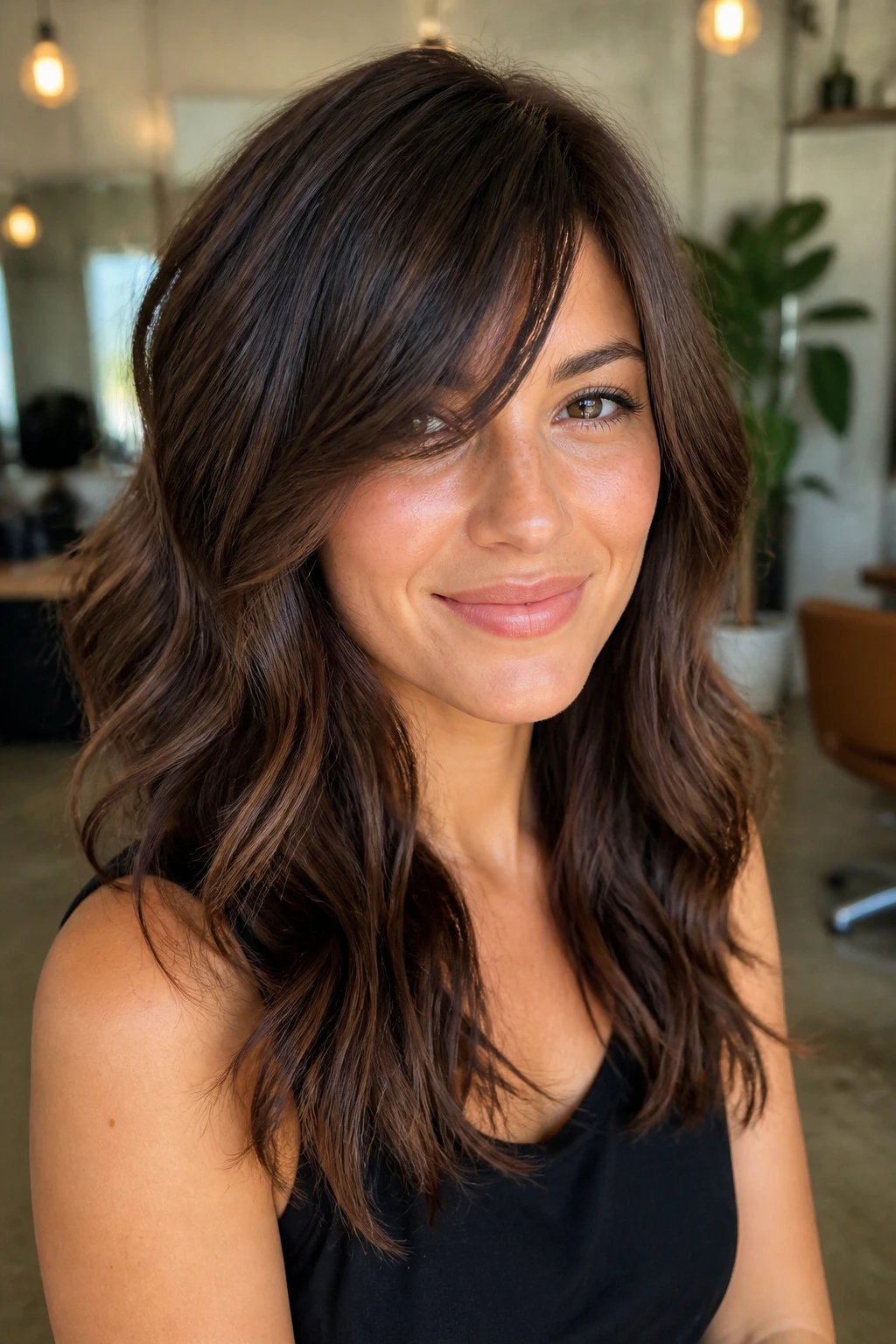
Fine-Hair Lift: Keep the layers long and sparse, with a light side sweep and a little root spray. Too many short layers will make the ends look thin.
Thick-Hair Control: Ask for internal removal under the surface and a smooth outer line. That keeps the shape from puffing outward at the cheeks.
Wavy Air-Dry Shape: Let the front pieces start lower and use a curl cream only through the mids and ends. The wave will do the styling work for you if the cut is placed well.
Curly Frame: Dry-cutting or curl-by-curl shaping helps the stylist place the front frame where it will land after shrinkage. That matters more here than any product.
Coily Diagonal Sweep: Keep the front curl long enough to fall across the forehead and down one side. Short curly bangs on a round face often spring up and widen the center.
How to Keep the Shape Fresh Between Trims
Bang trims are the first thing to get neglected, and they’re the part that gives the haircut its logic. If you keep side-swept bangs precise, a trim every 4 to 6 weeks is usually enough. The full face frame can go 8 to 12 weeks, depending on how fast your hair grows and how much shape you want to keep.
A dry shampoo at the roots helps more than people think. Bangs collect oil first, and oily bangs lose their sweep. Lift the fringe, spray lightly from a short distance, wait 30 seconds, then brush through with your fingers. Do not soak the front. It turns chalky.
At night, clip the front pieces away from your face or loosely wrap them so they don’t crimp in weird places. If your hair bends badly under a pillow, this tiny habit will save you five minutes every morning.
Frequently Asked Questions
Do side-swept bangs make a round face look slimmer?
They can, when they’re cut long enough to sweep diagonally and not straight across. The slimming effect comes from the line they create, not from hiding the forehead. A bang that ends at the outer eye usually works better than one that stops in the middle of the forehead.
How short can the first face-framing layer be on a round face?
Most round faces do better when the shortest layer starts below the cheekbone, often near the mouth or jaw. If it lands at the cheekbone, the haircut can widen the face instead of lengthening it. There are exceptions, but they need careful styling.
Are these cuts better for straight hair or wavy hair?
Both can work. Straight hair shows the geometry more clearly, while wavy hair adds softness and movement. The real issue is placement: if the layers hit the wrong spot, no texture saves them.
Can curly hair wear side-swept bangs without looking bulky?
Yes, but the bang has to be longer than it would on straight hair because of shrinkage. Curly fringe should sweep, not sit as a short block. Dry-cutting usually helps the shape land where you want it.
What if my hair is very thick and puffs out at the sides?
Ask for internal weight removal and keep the outer line smooth. The goal is to reduce bulk without carving too many short layers near the cheeks. That usually means less fluff, more movement.
Do I need a deep side part for these cuts to work?
No, but a deeper part often gives the shape a stronger lift at the crown. Even a soft off-center part can help if you don’t want a dramatic shift. The part is a tool, not a rule.
How do I keep the bangs from splitting in the middle?
Blow-dry the bangs in the direction you want them to sit, then clip them there while they cool. A tiny amount of lightweight styling cream at the roots can help too. Heavy creams make the fringe droop and separate.
What should I ask for if I want low-maintenance grow-out?
Ask for longer face-framing layers that can blend into the rest of the hair as they grow. A collarbone lob, a long side sweep, or a soft U-shape usually grows out better than a short, choppy fringe. The more the front connects to the rest of the cut, the easier the grow-out.
A Shape That Still Works When It Grows
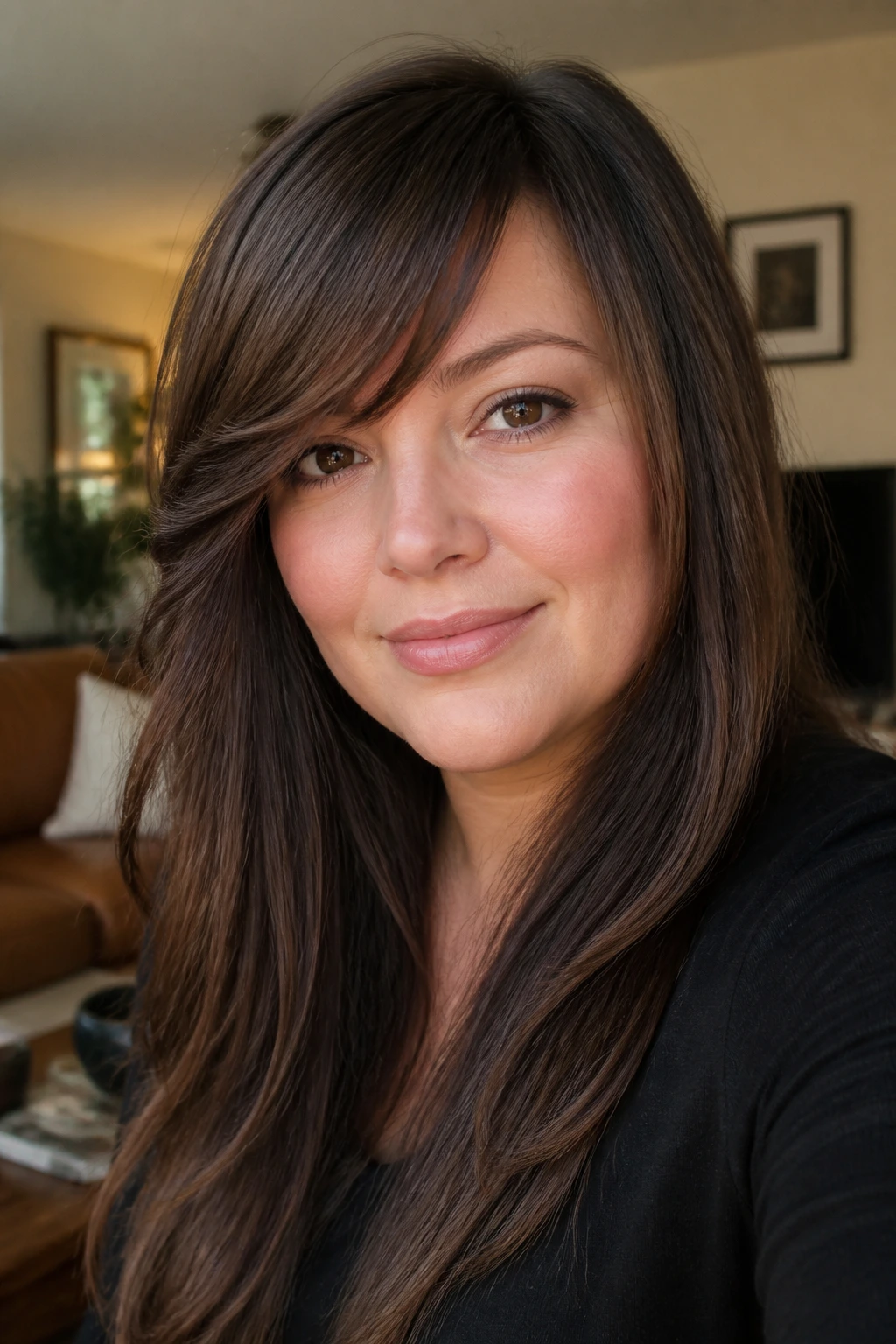
The nicest thing about these cuts is that they don’t depend on one perfect day in the salon chair. A good face frame for a round face still does its job after the first wash, after the bangs lose a little polish, and after the layers have grown a bit longer than planned. That’s the mark of a smart haircut. It keeps the line even when life gets in the way.
If you’re choosing between a cute idea and a shape that will keep looking right in the mirror, pick the one that starts lower, sweeps diagonally, and leaves the cheeks a little breathing room. That is the whole trick, and it keeps working long after the first photo.