



Pale skin can be unforgiving with hair color. A dark blonde hair color that looks soft in a salon chair can go orange, smoky, or flat the second it meets daylight, and that’s usually where people realize the shade was wrong all along.
The useful middle ground sits around level 6 or 7. That range gives the face enough structure to look defined, but it stops short of the heavy brown edge that can swallow very fair features. On porcelain, pink-toned, or cool fair skin, that difference matters more than people think. One notch too gold, and the hair can look brassy. One notch too ashy, and the face can start to look a little hollow.
The 28 ideas below stay in that sweet spot on purpose. Some are cool and smoky. Some lean beige. Some use root shadow and face-framing brightness so the color grows out cleanly. A few are warmer, but only when the warmth is balanced with depth and placement, which is the part that makes them work.
Why Dark Blonde Hair Color Flatters Pale Skin Without Stealing the Show
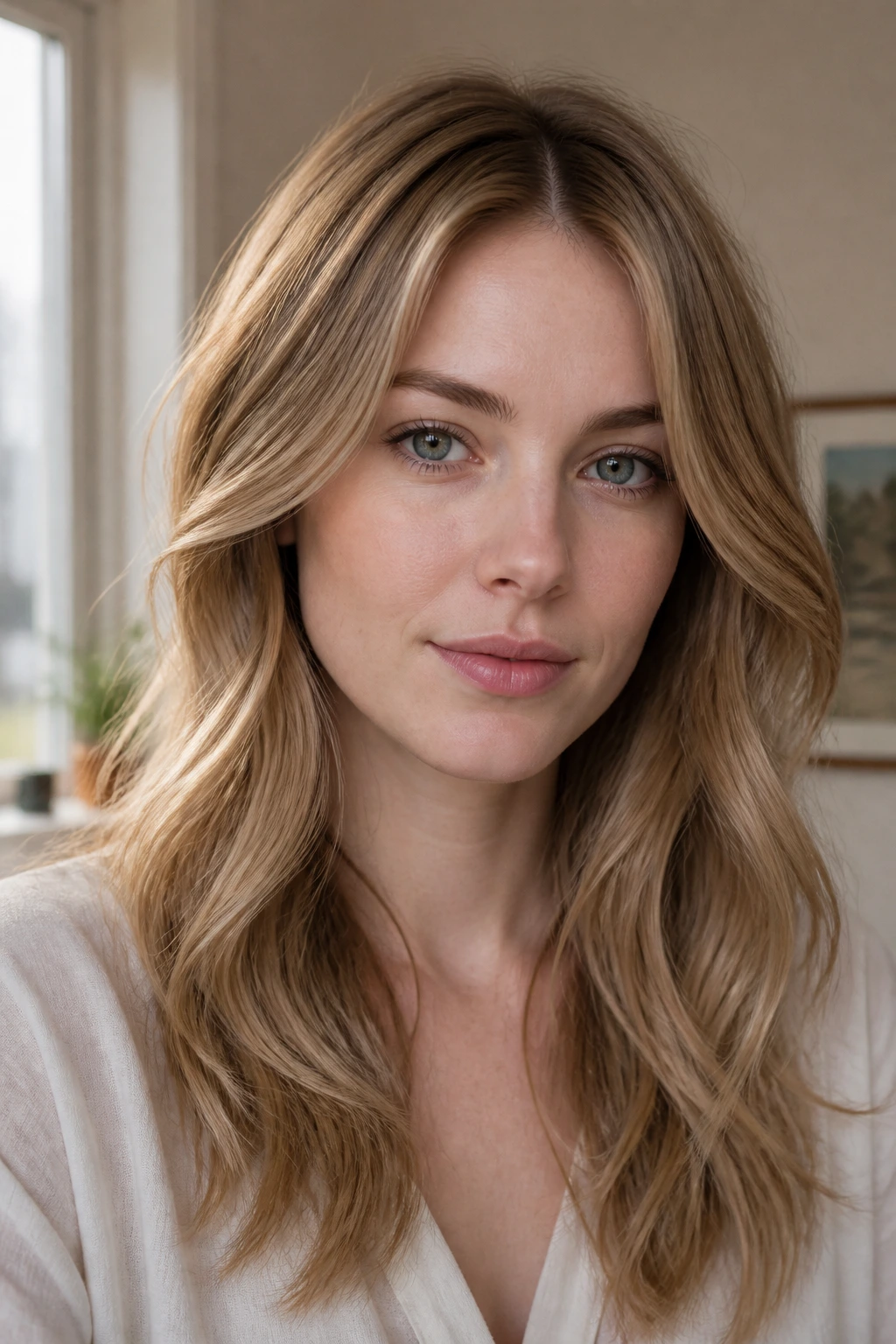
-
Contrast Without a Hard Edge: Level 6-7 dark blonde gives pale skin a frame, but it doesn’t create the stark line a deep brown can make against a very fair face.
-
Undertone Control: Beige, mushroom, and neutral-gold tones can keep skin from looking sallow, while ash tones pull down brass when hair wants to go orange.
-
Less “Washed-Out” Risk: Very light blonde can erase eyebrows, lashes, and cheek color; dark blonde leaves enough depth around the face to keep features readable.
-
Cleaner Grow-Out: A root shadow or soft melt means the regrowth line is blurred, which matters a lot when you do not want a harsh stripe against light skin.
-
Better Daylight Behavior: Some shades look lovely under warm bathroom lights and then fall apart by the window. Dark blonde with dimension usually holds its shape in real daylight.
1. Mushroom Beige Dark Blonde
Mushroom beige sits in that lovely taupe lane between ash blonde and soft brunette. On very fair skin, it looks calm in a way golden blonde often doesn’t. The cool-beige cast keeps the hair from shouting over the face, which is the whole trick here.
What to ask for
Ask your colorist for a level 6 neutral base with a beige gloss through the mids and ends, plus a soft shadow root one shade deeper. That tiny root depth keeps the hair from floating too light around the temples, where pale skin can already read bright.
The shade works especially well if your complexion leans pink, rose, or cool ivory. Blue eyes and gray eyes tend to look sharper next to it. If the finish starts drifting yellow, a beige toner is the better fix than a heavy purple shampoo, which can make the shade look dusty.
Best with: a blunt bob, collarbone lob, or loose waves.
Avoid: full gold highlights. They pull the mushroom tone out of balance fast.
2. Caramel Root Melt
This one is warmer, but it has a little restraint, which is why it behaves on pale skin. The root stays deeper, the mids soften into caramel, and the ends stay light enough to avoid a heavy block of color. It’s a good answer if you want warmth without going pumpkin-gold.
The root melt matters more than the caramel itself. A level 5 or 6 root feeding into level 7 lengths creates a slow fade that frames the face instead of flattening it. When the grow-out comes in, it looks intentional, not messy.
I like this shade on fair skin with freckles or neutral undertones. It gives a bit more warmth to the face, which can be handy if your complexion tends to look a little icy beside ash blonde. Keep the caramel glossy, not coppery. That’s the line.
3. Ashy Dark Blonde Lob
If your skin burns pink in daylight, this is one of the safest bets. Ashy dark blonde takes the heat out of the hair without pushing it into gray. On a lob, that muted finish feels neat, especially with a clean middle part or a soft bend at the ends.
Why it stays flattering
The best version usually uses a level 6 ash-beige base with lighter ribbons only around the face. That keeps the haircut from looking like one flat sheet. The ash note stops brass, while the beige keeps the tone from turning drab.
This shade is strongest on cool or neutral skin, and it can make green eyes pop in a subtle way. If you wear a lot of black, charcoal, or crisp white, this is one of those colors that snaps into place fast. The contrast reads polished without being severe.
Tip: ask for a toner that leans beige rather than blue if your skin is already very fair.
4. Honey Ribbon Balayage
Honey ribbon balayage is where warmth gets a little more movement. Instead of flooding the whole head with gold, the colorist paints warm honey pieces through a darker blonde base, so the skin gets a glow without the hair turning brassy all over.
It works because the ribbons are placed with intention. The brightest pieces usually sit around the cheekbones, temples, and outer layers, while the underneath stays a half-step deeper. That keeps the honey from making pale skin look yellow, which is the mistake people make when they go too blonde, too fast.
This is a good pick if your hair is naturally light brown and you want to stay in the blonde family without a harsh shift. It looks especially nice on wavy hair, where each ribbon catches the bend differently. Straight hair can wear it too, but the placement needs to be tighter.
5. Beige Blonde Bob With Shadow Root
A bob gives dark blonde a sharper shape. Add a shadow root, and suddenly the whole color feels expensive in the plain old useful sense of the word: tidy, dimensional, and easy to wear.
What makes this version work on pale skin is the root depth. A softly shaded crown stops the face from disappearing into the lightest part of the blonde. The beige midtone keeps the color creamy instead of yellow, and the blunt bob edge gives the whole look a little structure.
This is one of the easiest shades to maintain if you hate frequent touch-ups. Ask for a root that’s one level deeper than the mids, then keep the ends in a neutral beige gloss. It grows out with a soft line, which is nice if your hairline shows every 5 minutes in a mirror.
6. Sandy Dark Blonde Waves
Sandy dark blonde sits between warm and cool, and that in-between quality is the reason it flatters so many pale faces. It doesn’t have the orange push of caramel, and it doesn’t go so ashy that the skin turns flat.
The wave pattern matters here. Sandy shades look better when they move, because the eye can catch a few tones at once: beige, soft gold, a little smoke near the root. On very fair skin, that movement gives the face a softer outline. No heavy striping. No candy-blonde glare.
If you have pale skin with a neutral undertone, this is one of the easiest shades to wear. Ask for a level 7 sandy gloss over a darker base, then keep the brightest ends just a touch lighter than the crown. The whole thing reads beachy, but not sun-bleached.
7. Champagne Dark Blonde With Face-Framing Pieces
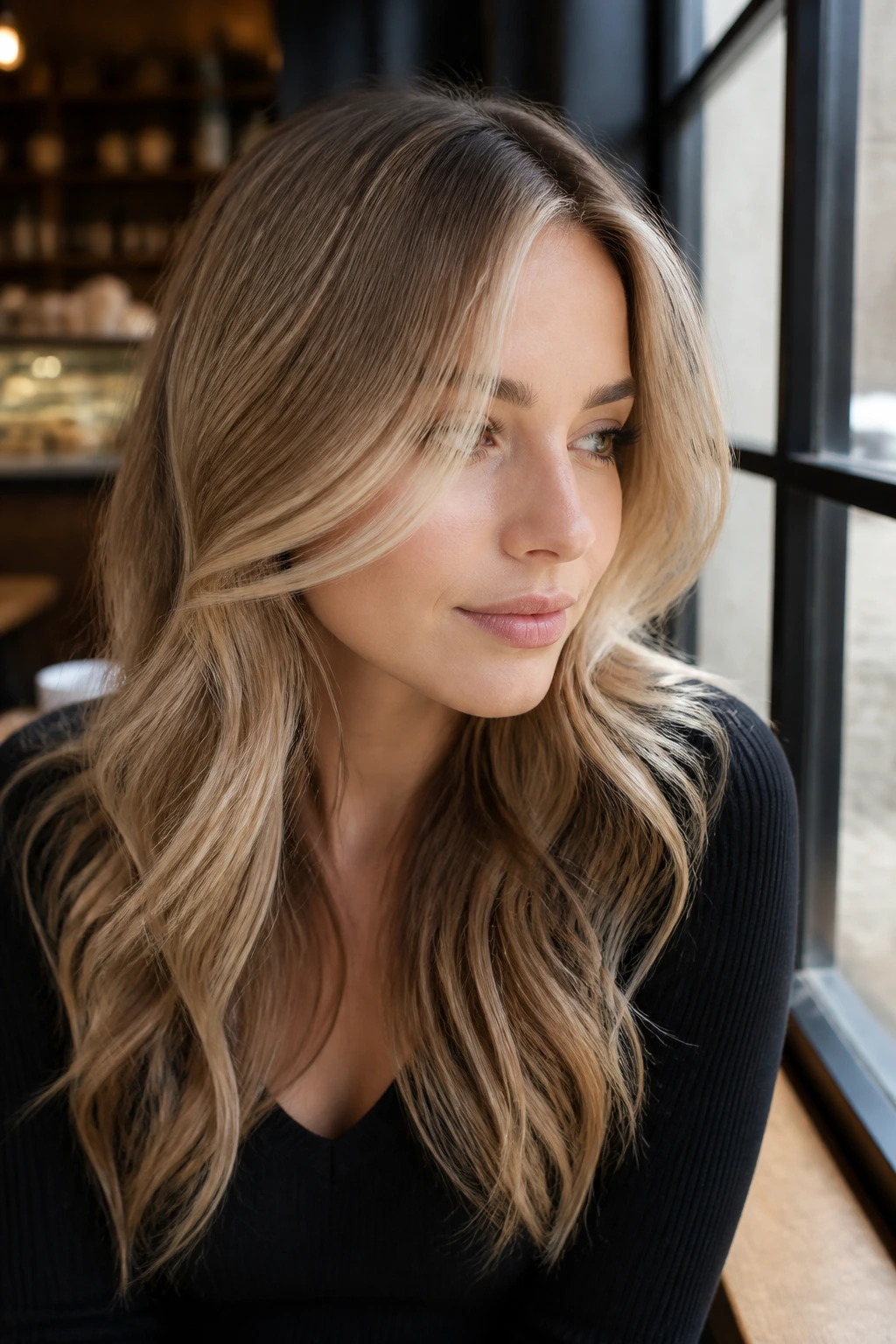
Champagne dark blonde sounds light, but in practice it works best when the base stays grounded. The champagne note gives a soft sparkle, while the face-framing pieces lift the front enough to keep pale skin from looking swallowed.
The part that matters
The pieces around the face should be brighter, yes, but not white. Think level 8 at most, tucked into a deeper level 6 or 7 canvas. That contrast wakes up blue or green eyes fast. If the face frame gets too pale, the skin can look colder than it really is.
This is a smart choice if you like a bit of brightness near the cheekbones without committing to a blonde that needs toning every other week. It’s also good for layered cuts, because the lighter front pieces move around instead of sitting like a stripe.
Best pairing: soft waves and a side part or off-center part.
8. Smoky Bronde Layers
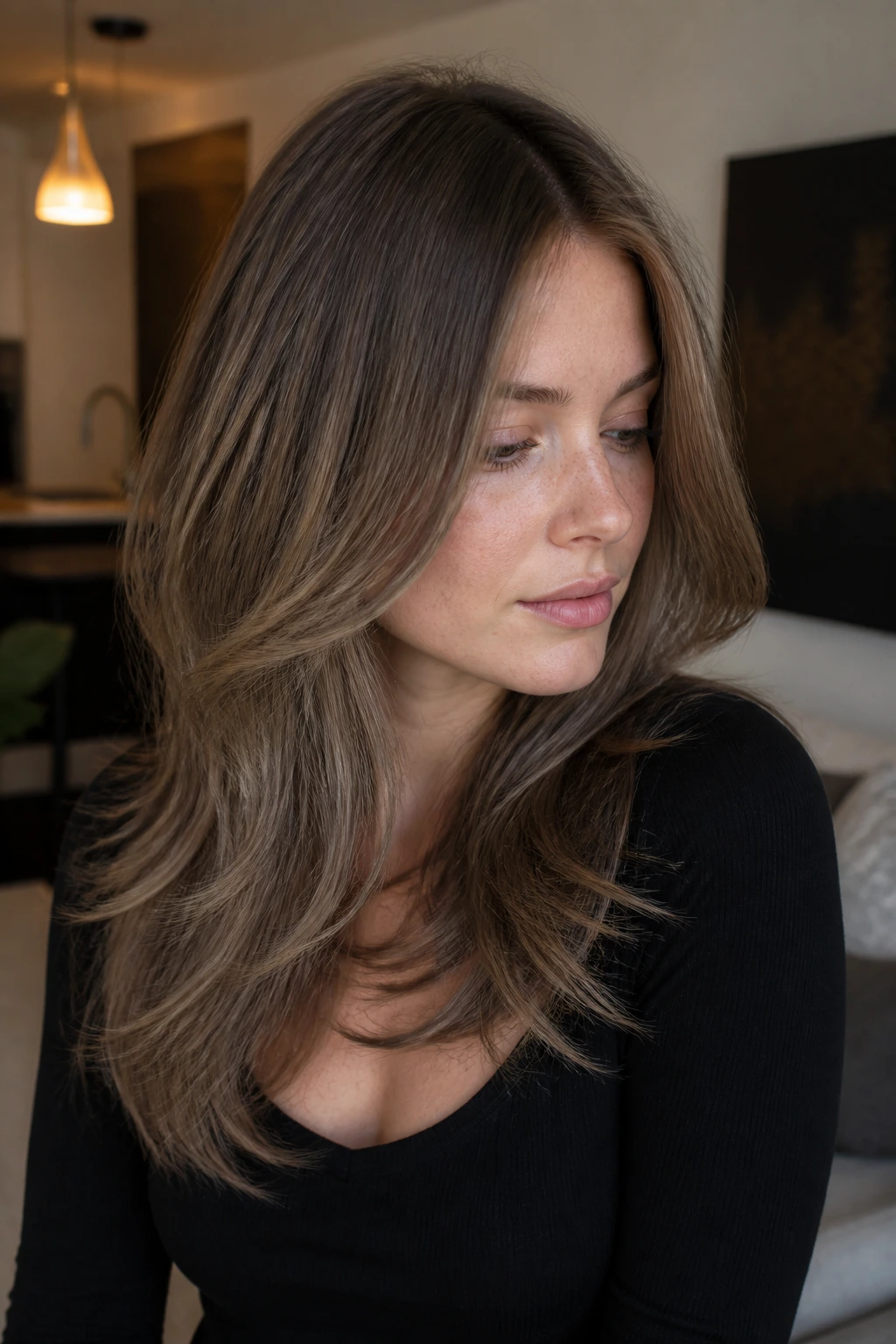
Smoky bronde is for the person who wants a darker feel without leaving the blonde family. It lives between brown and blonde, but the smoky tone keeps it chic on fair skin instead of muddy.
Picture a level 6 base with beige lowlights and a dusting of ash through the ends. The layers do most of the work. They keep the darker tone from looking helmet-like, which can happen if bronde is placed on a heavy one-length cut. With movement, the color looks richer and more expensive. Without movement, it can go flat. That’s the honest version.
This shade is a favorite for pale skin with a neutral or cool cast because it makes brows and lashes look stronger without forcing the hair too dark. It also grows out quietly, which is a blessing if you hate obvious maintenance.
9. Golden Dark Blonde With Airy Ends
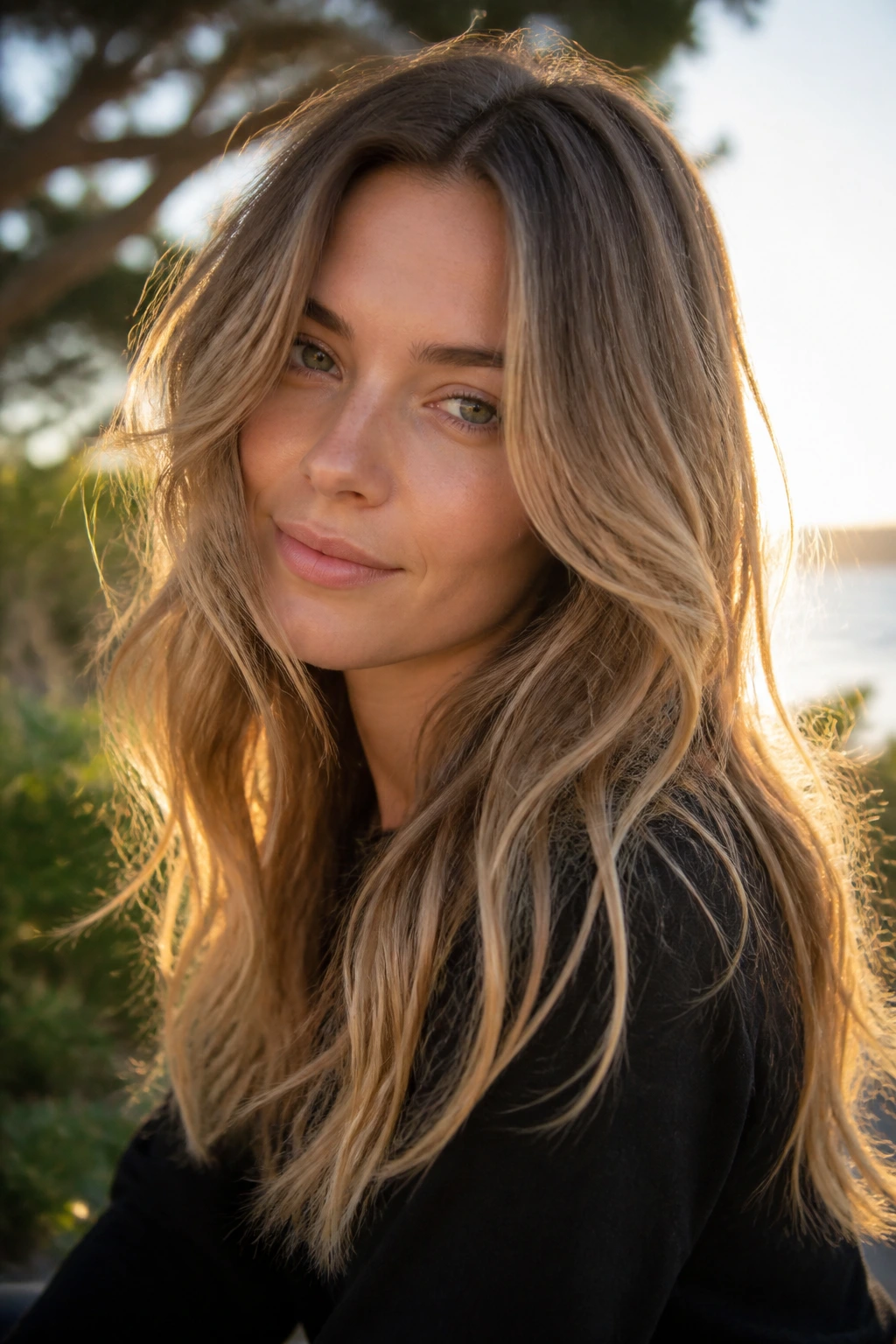
Golden dark blonde can be tricky on pale skin, but airy ends change the game. The warmth stays soft because the hair doesn’t go gold from root to tip. Instead, the brightness is lifted into the ends, where it catches light and avoids sitting next to the face all day.
Why it stays wearable
Ask for a neutral or light brown root, then build golden beige pieces only through the lower half and around the ends. That keeps the warmth from bunching up at the hairline. It also stops the color from going yellow under indoor lighting, which is where too much gold usually misbehaves.
This shade is especially good if your skin has a little peach or warmth in it and you don’t want to fight that with ash. The airy ends make the color feel lighter than it is, which is handy if you want movement without committing to a full blonde transformation.
10. Mushroom Bronde Pixie
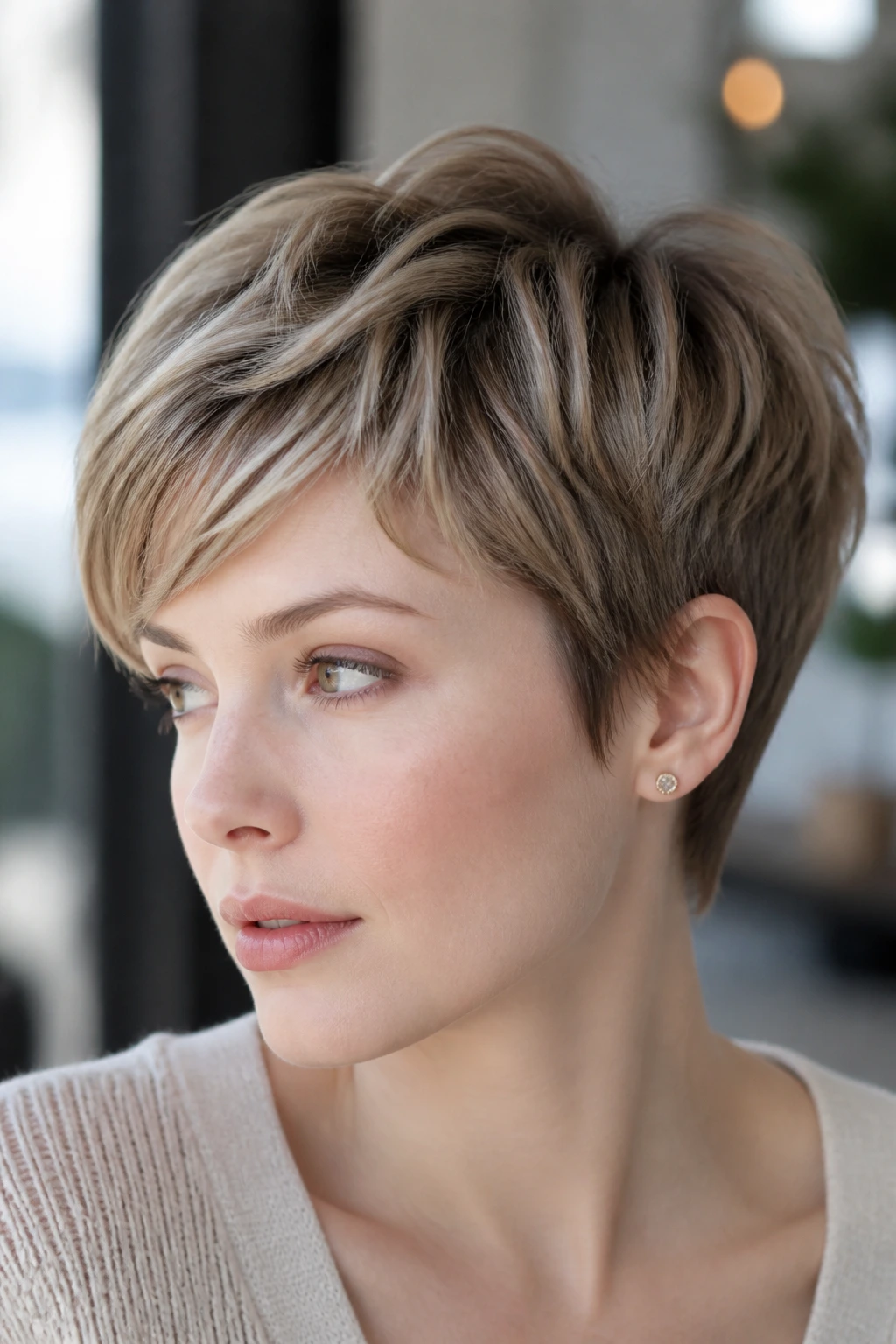
A pixie can handle more depth than people expect, and mushroom bronde proves it. The mix of brown, blonde, and smoky beige gives a short cut enough texture to keep it from looking like one solid helmet of color.
The cool tone helps pale skin most here. Short hair puts color right up near the face, so a brassy blonde would be obvious in a second. Mushroom bronde takes that risk off the table. It reads modern without becoming severe, and it keeps the haircut from overpowering delicate features.
This is a strong pick if you have fine hair and want the cut to look thicker. A slightly deeper root and muted highlights create the illusion of density. Ask your colorist for micro-highlights rather than chunky strips. Chunky pieces can make a pixie look stripey. No one needs that.
11. Toasted Oat Long Layers
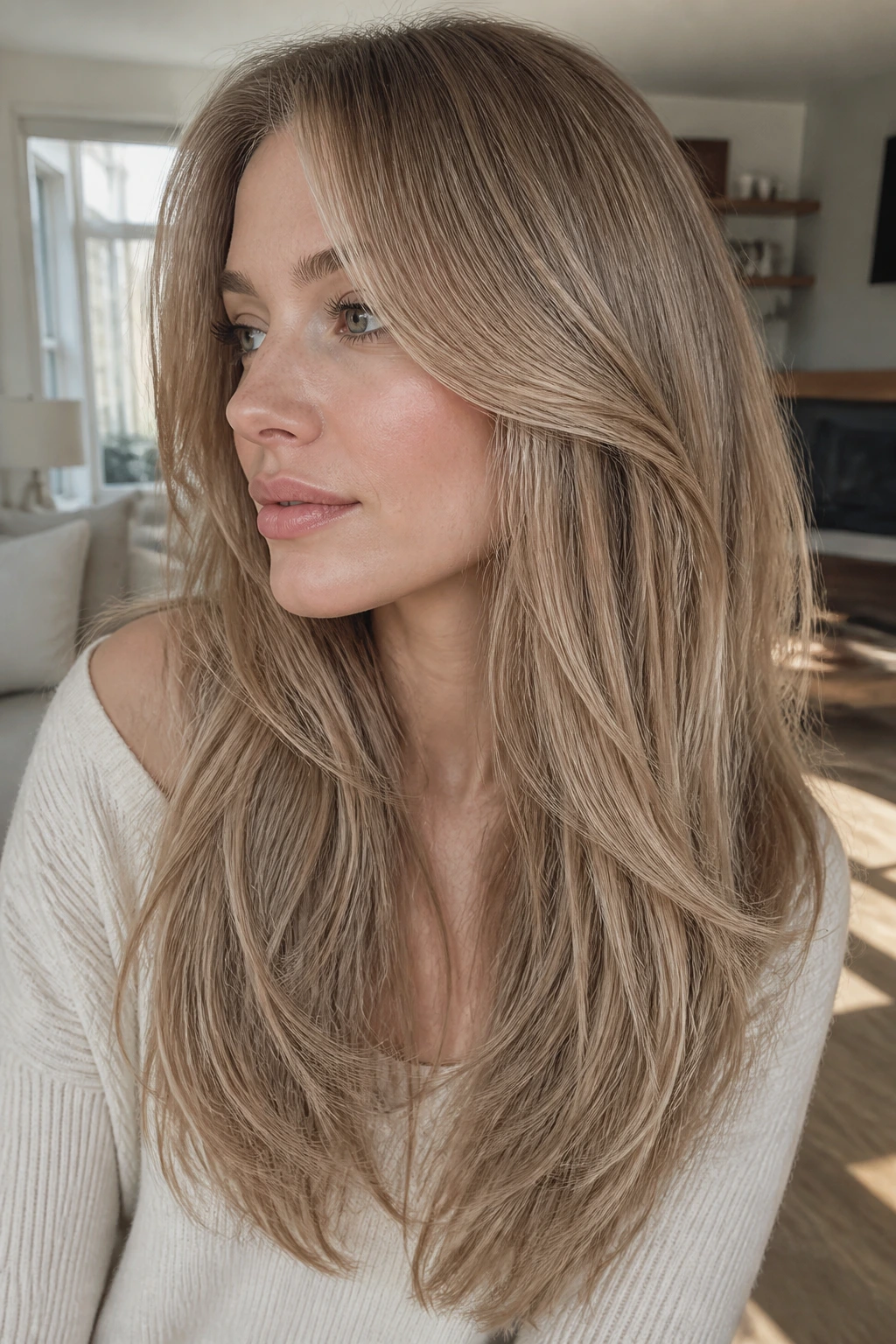
Toasted oat is one of those shades that sounds simple and ends up doing a lot. It sits in the beige range, but the warmth is dry and soft, not sticky or golden. On pale skin, that matters. It keeps the color from tipping into yellow while still giving the face a little warmth.
Long layers let the shade breathe. The color shifts from root to mid-length to ends in a way that feels natural, which helps on lighter skin because you get movement instead of a flat sheet of hair next to the face. If your complexion is very fair and your hair is thick, this can stop the whole look from feeling heavy.
A subtle bevel at the ends keeps the shade from reading too rustic. Ask for a beige gloss every 6 to 8 weeks if the tone starts to cool off or go dull.
12. Pearl Beige Dark Blonde
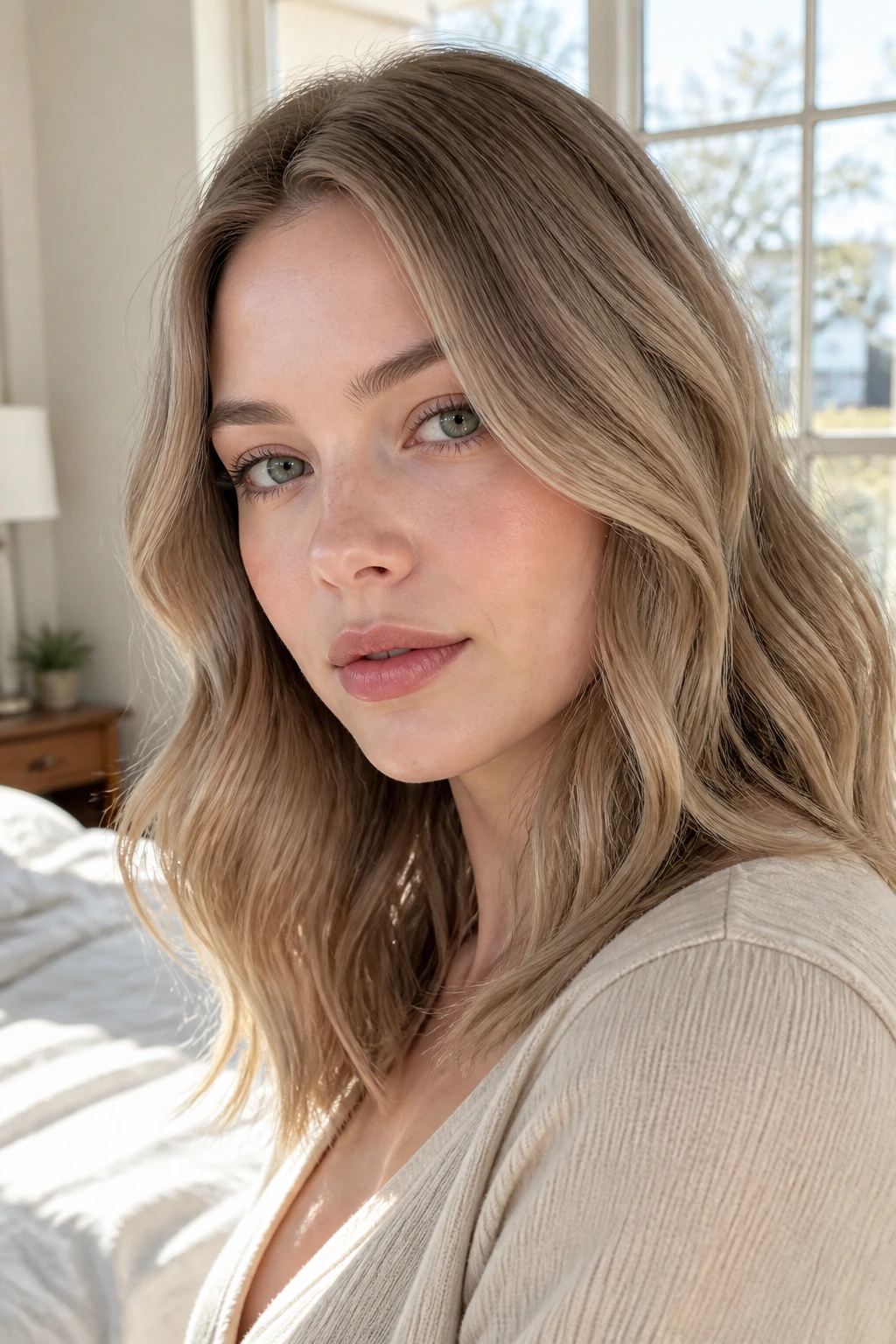
Pearl beige is cleaner than mushroom and softer than ash. It has that faint luminous look that can make pale skin appear more even, especially when the complexion is a little red around the cheeks or nose.
What makes it different
Unlike icy blonde, pearl beige doesn’t wash the face out. Unlike warm gold, it doesn’t add extra yellow. That middle position is why it works so well for fair skin that seems to change color under different lights. Indoors it looks smooth. Outside it keeps the same calm tone.
The shade shines on medium-length cuts with loose bends because the pearl finish catches the movement without screaming for attention. If you want a low-drama blonde that still looks deliberate, this is one of the strongest options on the list.
Good with: silver jewelry, soft pink lipstick, and cool-toned sweaters.
13. Creamy Honey Dark Blonde With Fringe
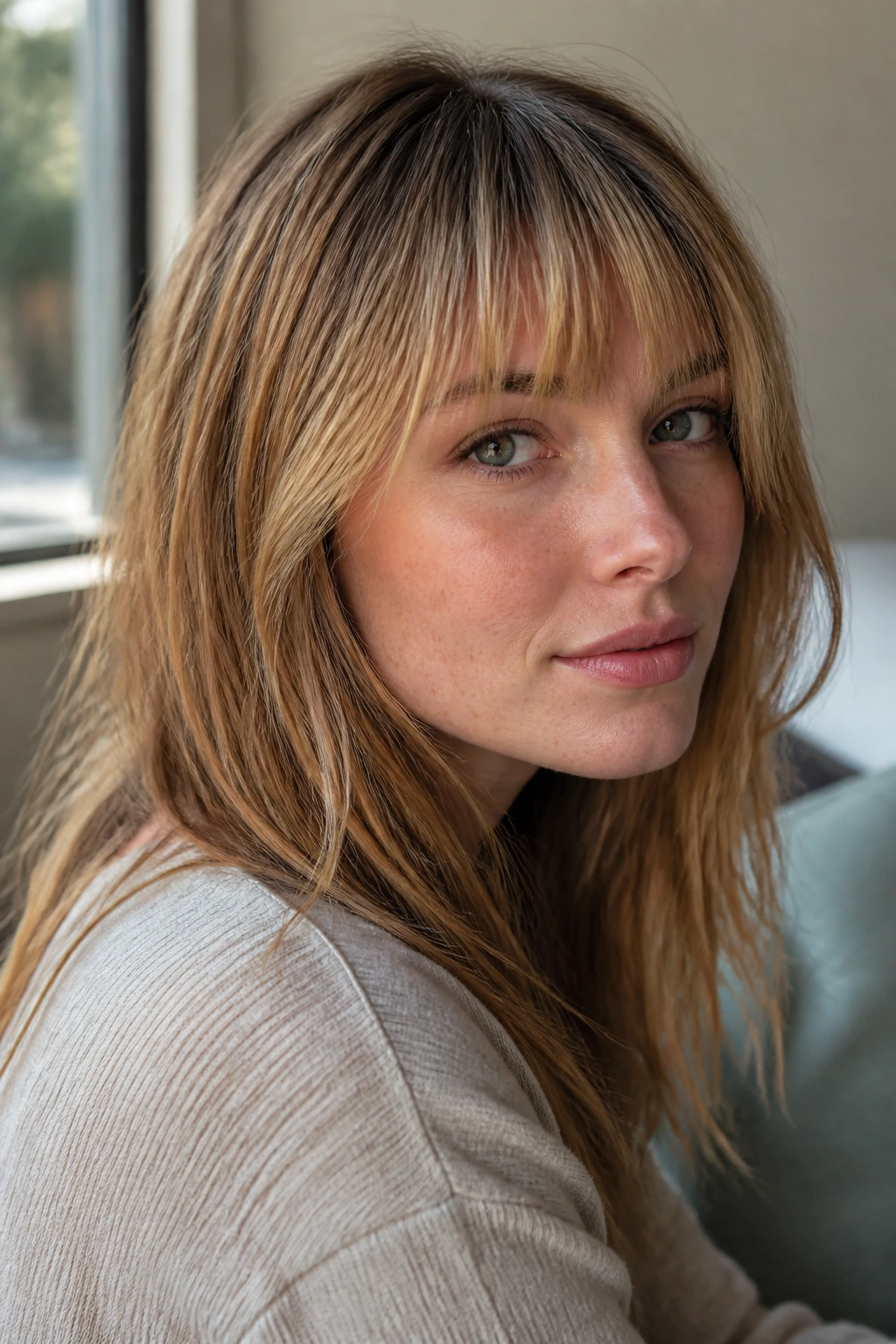
A fringe changes everything. It puts the color right where people look first, which means the tone has to be soft and controlled. Creamy honey dark blonde does that better than a louder gold.
The trick is keeping the fringe slightly lighter than the rest, but not bright. Ask for a beige-honey glaze, then keep the root a shade deeper so the bangs don’t float away from the face. On pale skin, that little depth at the root helps the eyes stand out. Without it, fringe can make the face look too light at the top.
This is a lovely choice if you want warmth but still like a readable brow line. The color works especially well with straight, brow-skimming bangs or a piecey curtain fringe. It gives the face a soft frame without making the complexion look washed out.
14. Cool Sand Dark Blonde Shag
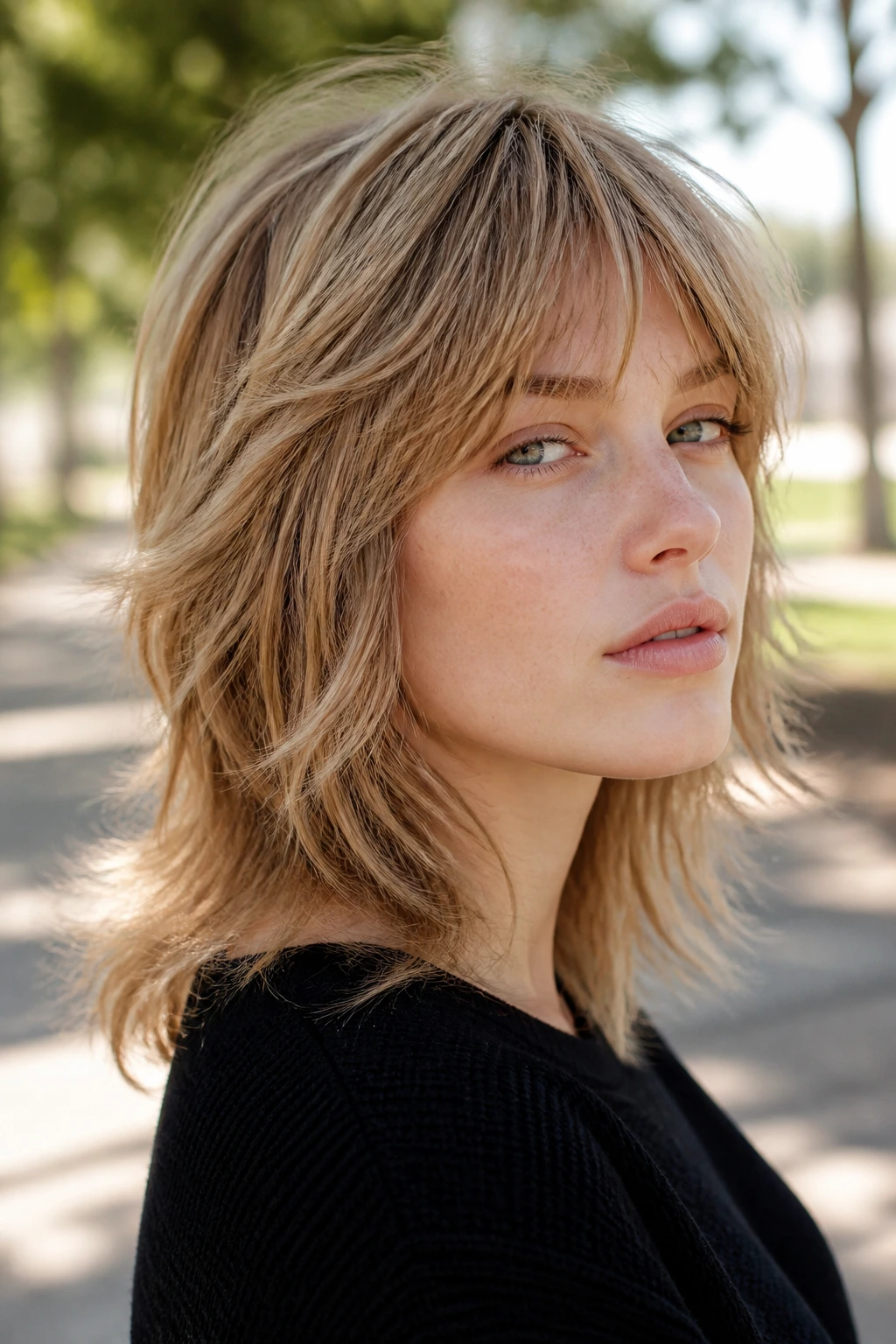
A shag needs dimension. Without it, the cut can look too chopped and a little flat. Cool sand dark blonde solves that problem by putting just enough lightness into the texture while keeping the overall tone grounded.
The cool sand note is the reason pale skin does well with it. It takes the edge off the brightness near the face, especially if the haircut already has a lot of movement around the cheekbones and jaw. A shag with too much gold can look busy. Cool sand keeps it edited.
This shade works particularly well if your hair has a natural wave or you like rough-drying it with mousse. The uneven texture gives the color depth, and the color gives the haircut shape. That’s the real pairing here. They need each other.
15. Almond Beige Color Melt
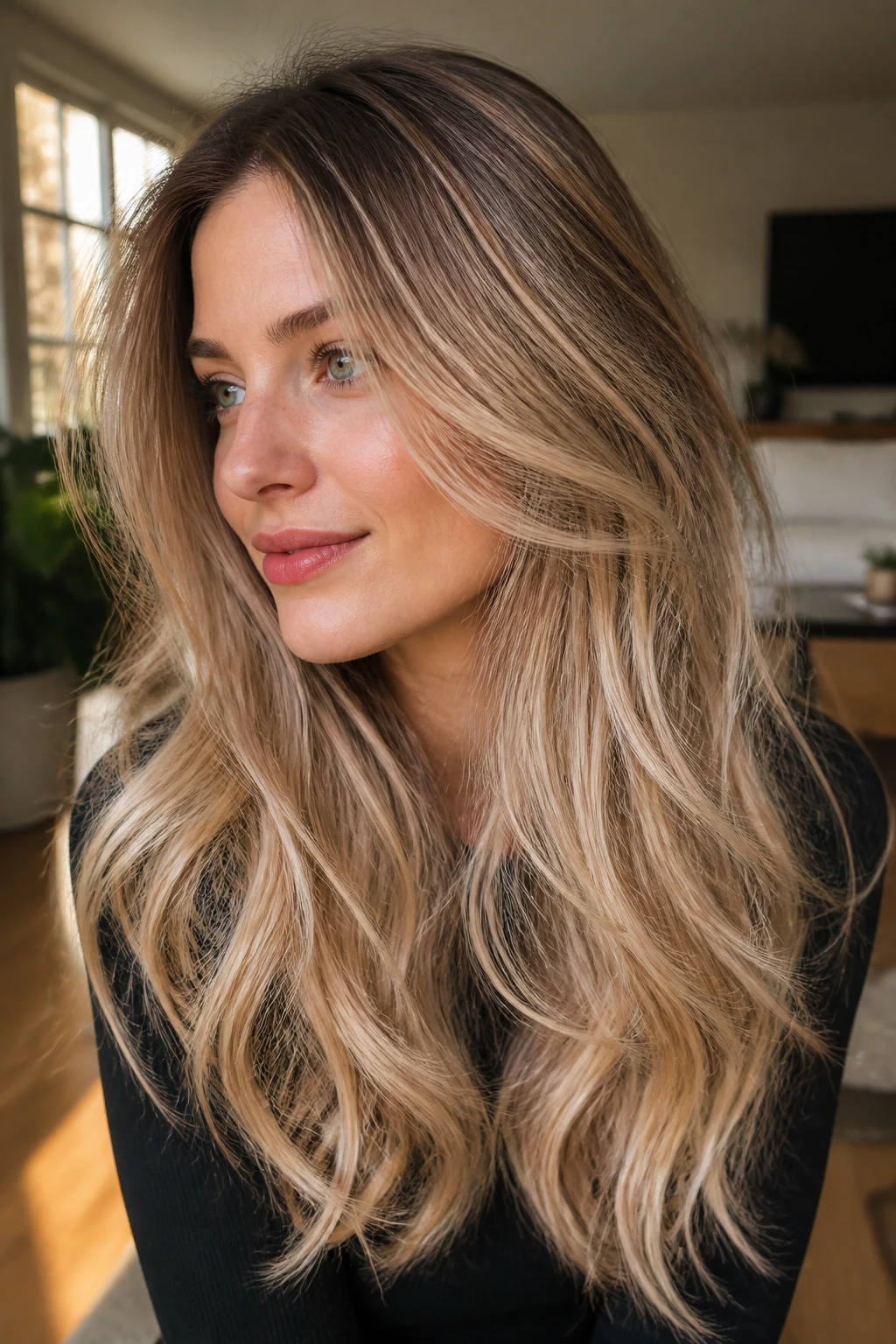
Almond beige color melt is one of the most flattering options for pale skin because it doesn’t announce itself all at once. The color starts a bit deeper at the root, then loosens into almond-beige mids and lighter ends. The fade is the point.
Why it flatters fair features
The melt keeps the hair from sitting like a single block next to the face. Instead, the eye moves through the shade, which softens sharp cheekbones and prevents a washed-out look. If your skin is light with a neutral or pink undertone, that transition is gold, and I mean that in the practical sense, not the color sense.
Ask for a root shadow that is one to two levels deeper than your mids, then keep the ends glossy with a beige-toned finish. It grows out cleanly, and it looks more expensive than a hard highlight job.
Best for: shoulder-length cuts, soft curls, and blowouts with bend.
16. Soft Copper-Infused Dark Blonde
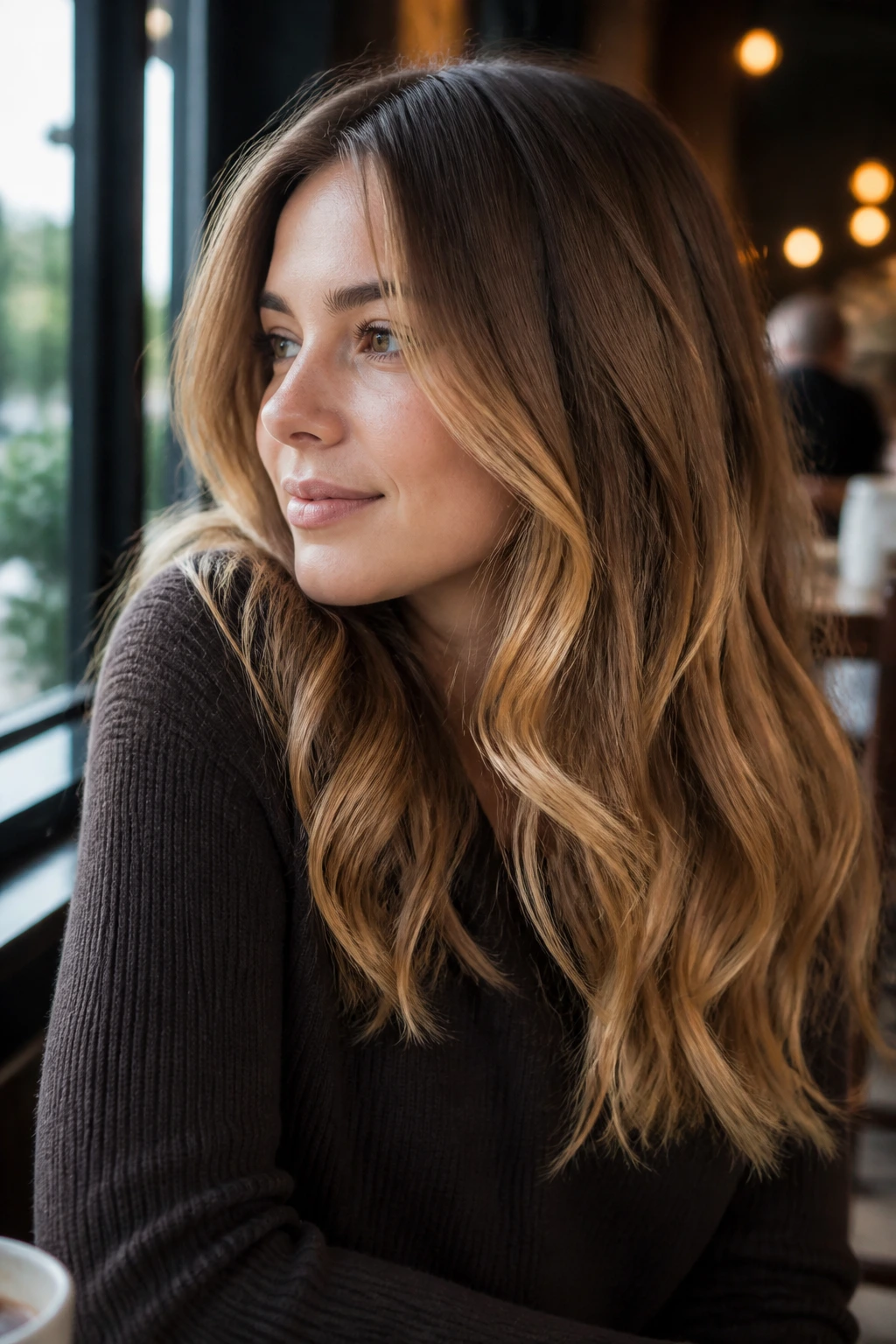
A little copper can be beautiful on pale skin, but only when it stays diluted. Soft copper-infused dark blonde has enough warmth to wake up the complexion, yet not so much that it turns clownish or orange.
The reason it works is the balance. The copper should live inside a dark blonde base, not sit on top of it like a loud stain. When the pieces are spread out, the hair gets a strawberry-beige feeling that can make freckles look brighter and blue eyes feel sharper. Too much copper, though, and the whole thing can fight rosy skin.
If your skin is cool but not ultra-pink, this is a fun one to try. Ask for a beige-copper gloss rather than a true copper dye, and keep the brighter pieces near the ends and face frame, not all over the crown.
17. Rooted Dark Blonde With Money Piece
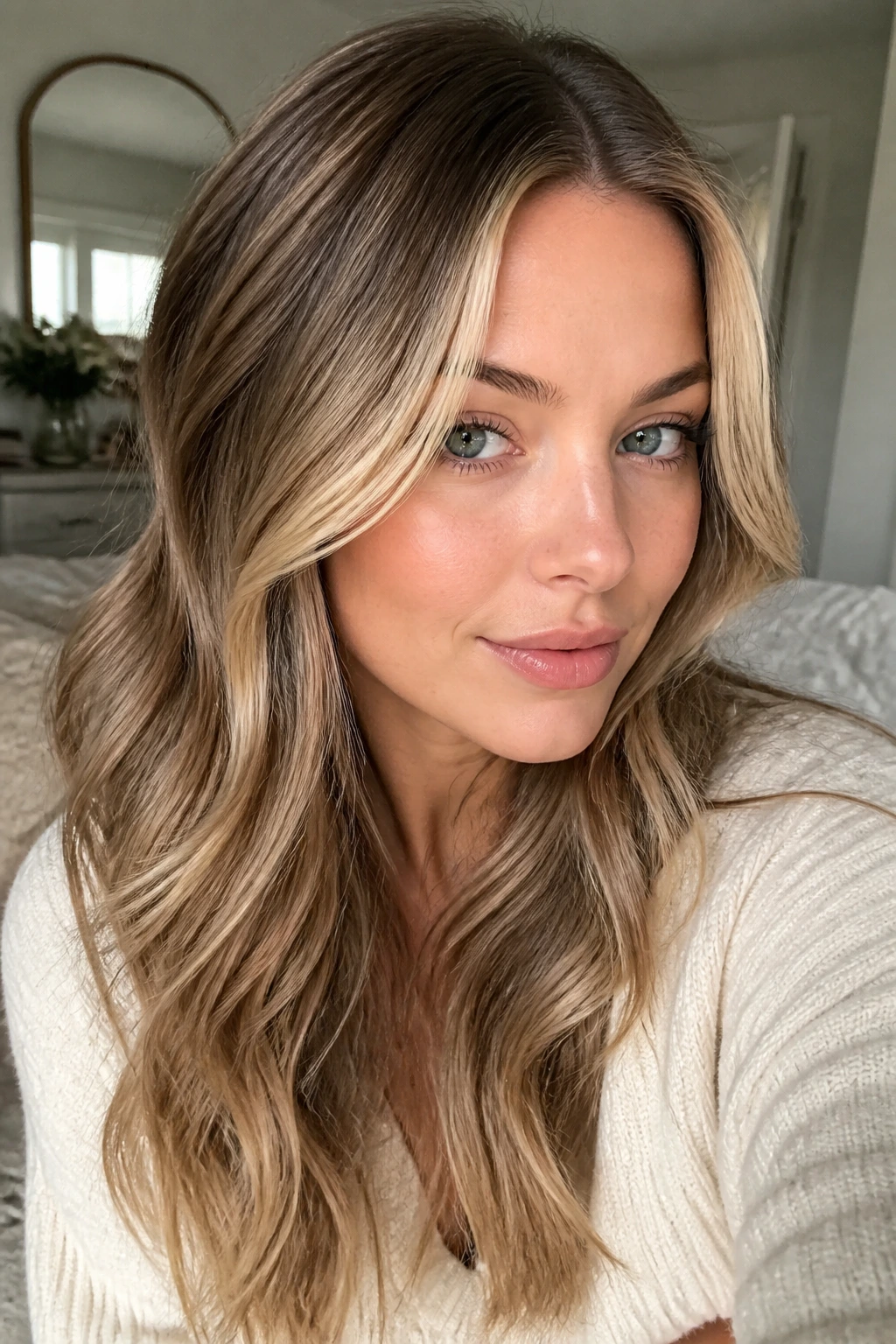
A rooted dark blonde with a money piece is a smart move when you want brightness near the face without making the entire head lighter. The darker root keeps the look grounded, and the money piece gives pale skin that little flash of contrast around the eyes.
The key is restraint. A money piece that is too blonde can overpower fair skin in a hurry. Keep it one or two levels lighter than the rest, not five. That’s enough to brighten the face while still letting the shade feel believable.
This style is especially handy if you wear makeup and want your hair color to support it rather than compete with it. The lighter front sections make liner, lashes, and blush pop. The rest of the hair stays soft and low-drama.
18. Winter Wheat Dark Blonde
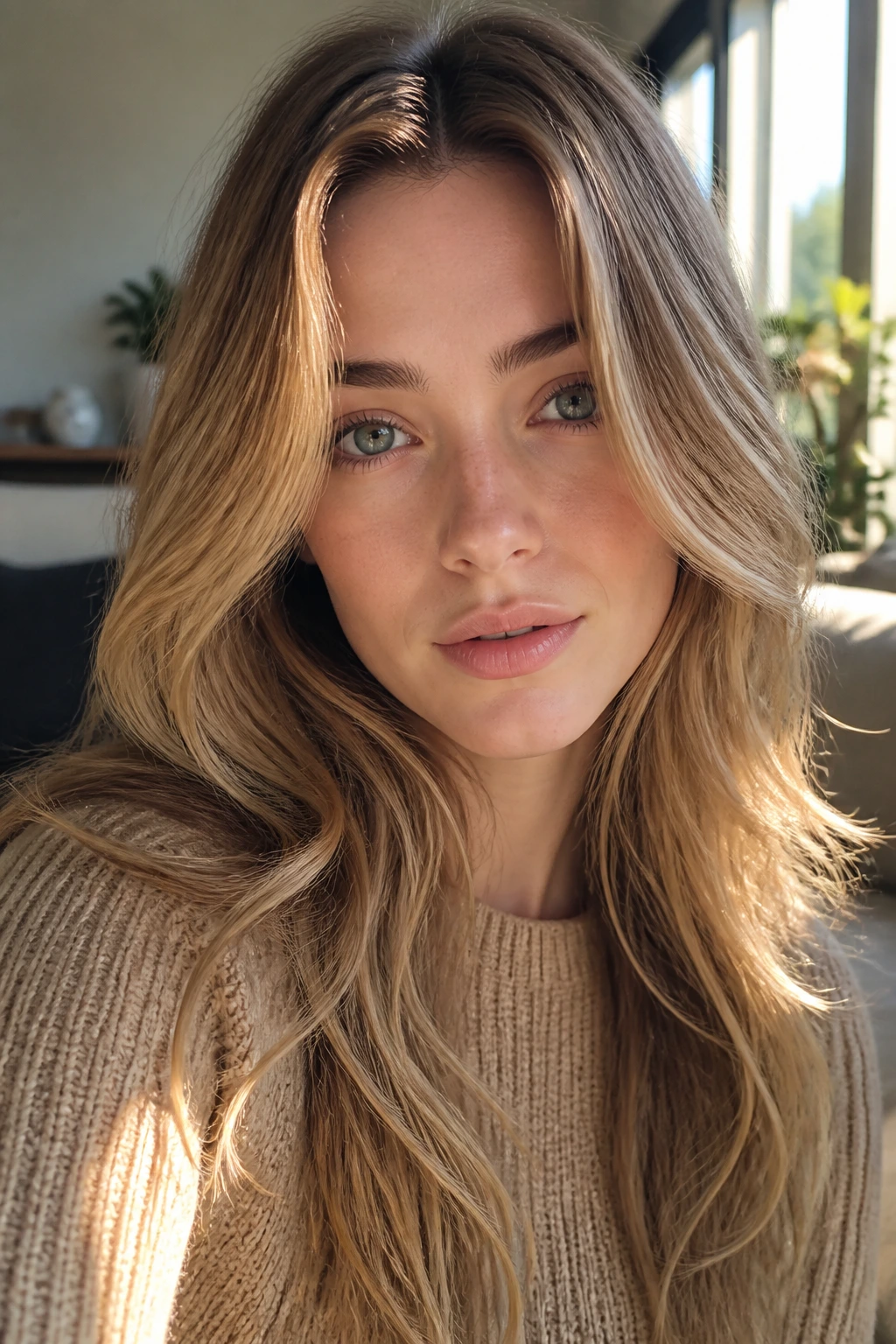
Winter wheat is a dry, pale gold with some beige underneath, and that dryness is what keeps it wearable. It does not have the syrupy warmth that can make pale skin look sallow. Instead, it feels sun-touched in a quiet way.
Who it suits
This shade works well on fair skin with a neutral or slightly warm undertone, especially if you want something brighter than mushroom but softer than honey. The color is nice on long layers because the warm notes can move through the ends without hitting the face all at once.
Ask for a muted wheat gloss and avoid heavy yellow toner. The best version has enough depth at the root to keep the face framed, but the lighter pieces should stay diffused, not streaky. If you love cream sweaters, gold hoops, and warm makeup, this one will fit your wardrobe fast.
19. Beige-Gold Dark Blonde Curls
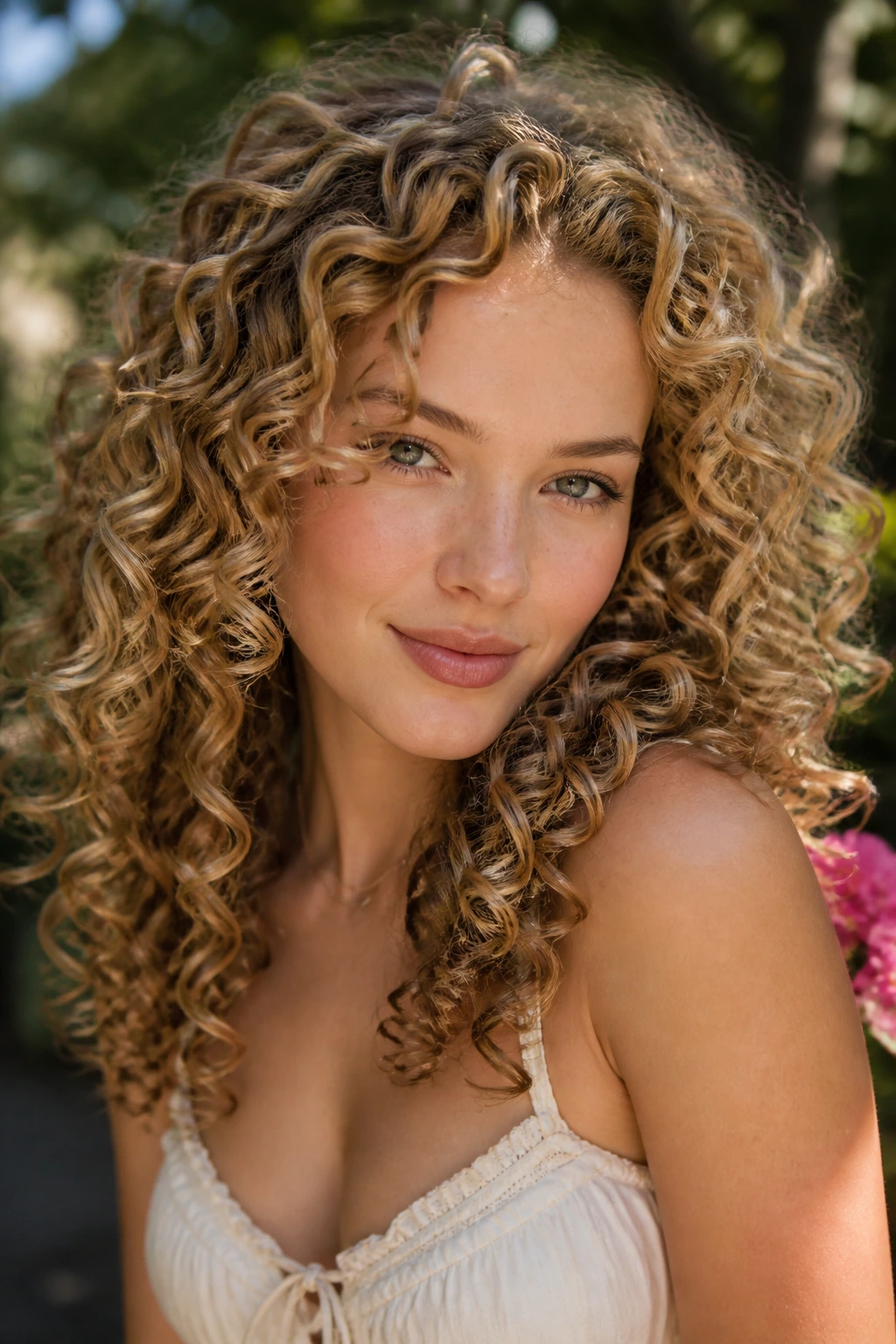
Curls need a little contrast or they disappear into themselves. Beige-gold dark blonde gives them that contrast without going too orange. On pale skin, the beige base keeps the warmth from getting loud, while the gold catches the curl pattern.
A curly head of hair can handle more dimension than straight hair because the light bounces differently through each bend. That’s why this shade works. The darkest pieces anchor the roots, and the beige-gold ends add movement around the face. If the whole thing is the same tone, curls can look puffy. With dimension, they look shaped.
This is a strong choice if your skin is light and your features are soft. The warmth adds life, but the beige prevents the color from taking over the face. Diffuse drying helps the dimension show up better than rough towel scrunching. Gentle matters here.
20. Smoky Honey Bob
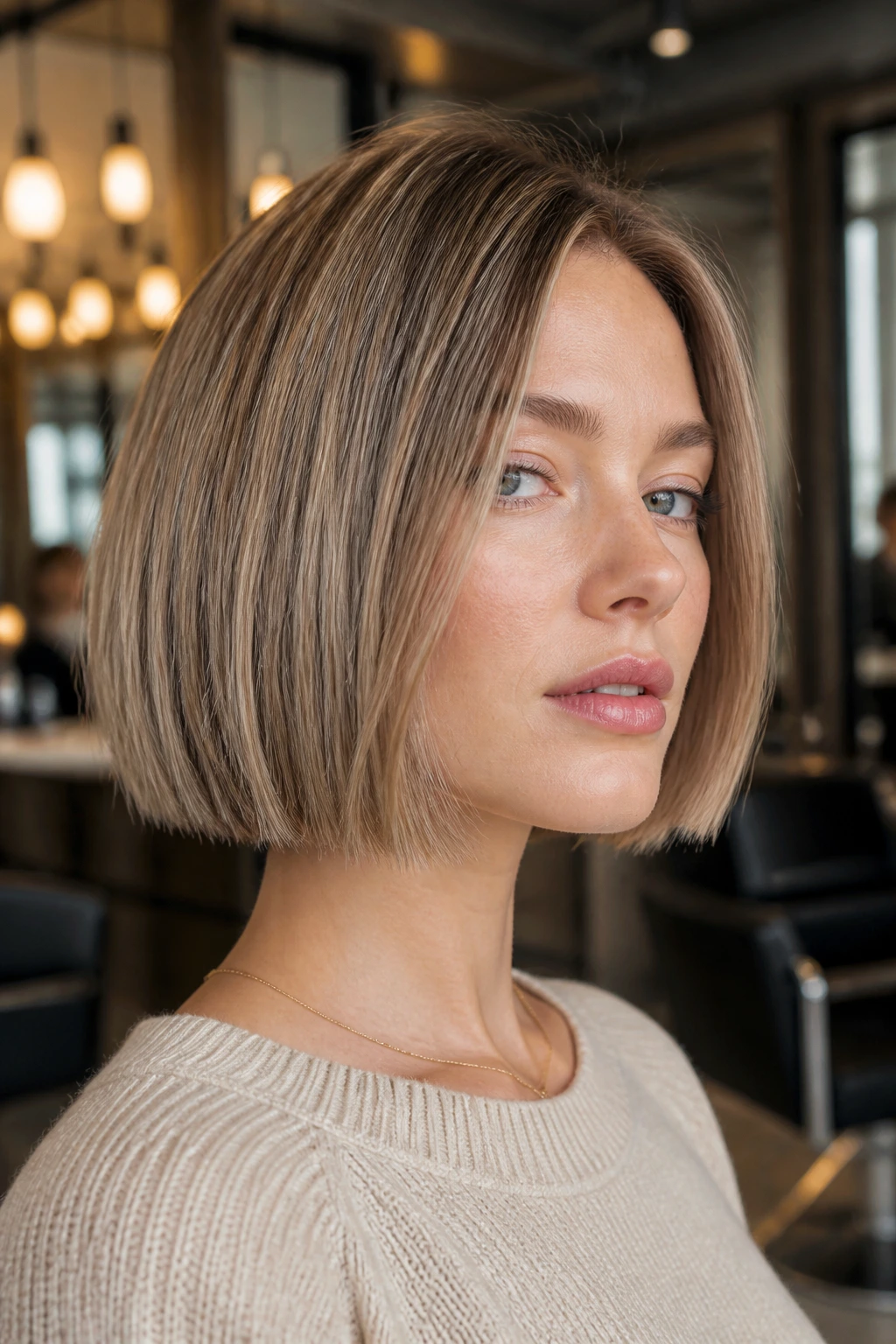
Smoky honey sounds contradictory, and that’s why it works. The honey gives the bob some life. The smoky note keeps it from becoming brass next to pale skin. Put together, the shade has just enough warmth to look friendly and just enough ash to look edited.
The bob shape helps by putting all that tone into a clean outline. If the cut is blunt, the color reads more polished. If the bob is slightly layered, the smoky finish keeps the texture from puffing out. On fair skin, that balance is useful because a warm bob can become too much very fast.
Ask for a honey-beige gloss over a neutral base, then keep the ends a touch lighter than the crown. It’s a nice compromise if you like warmth but hate the orange streaks that some golden blondes pick up.
21. Lived-In Dark Blonde Pixie
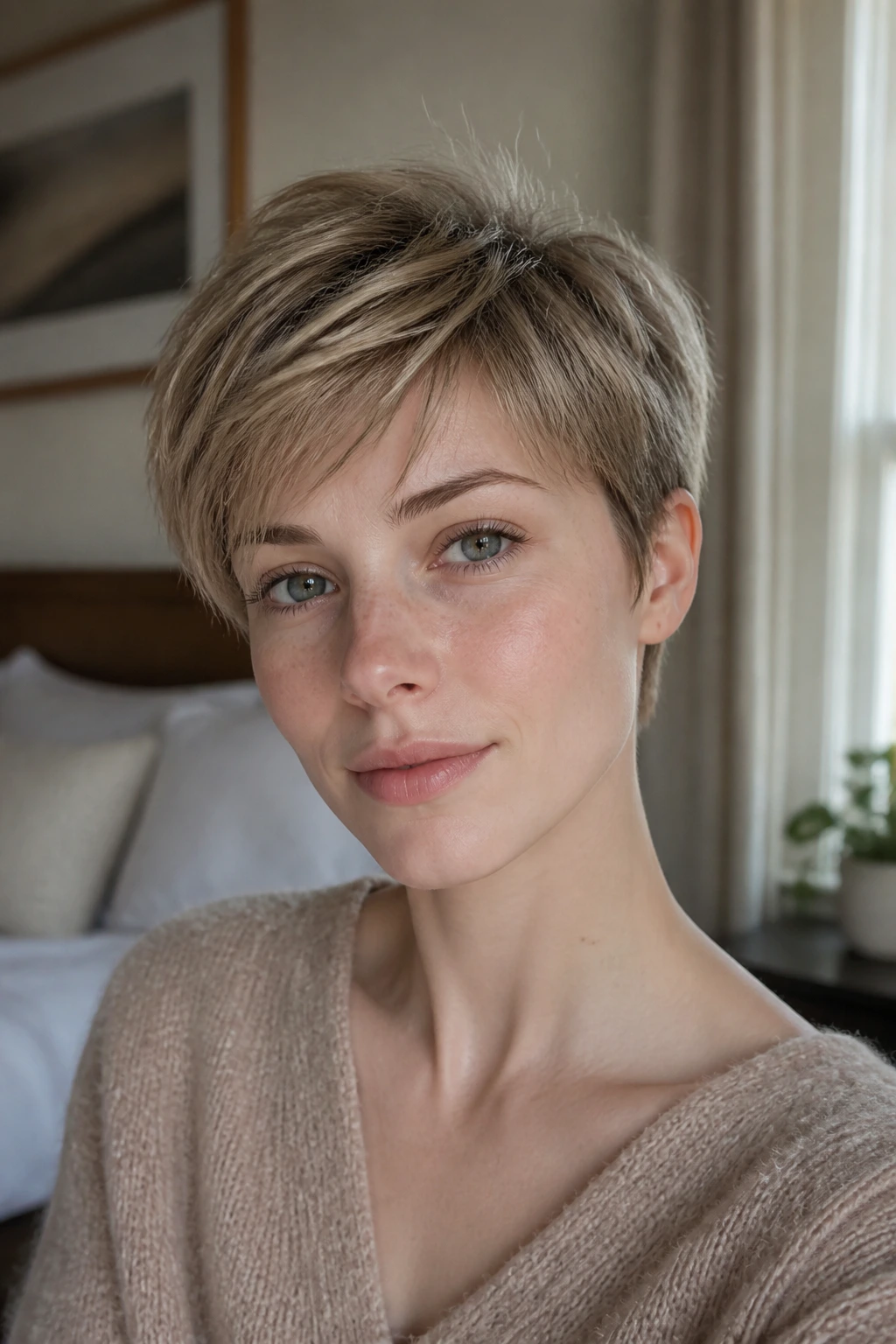
A lived-in pixie is not trying to be perfect. Good. That looseness makes the shade easier to wear on pale skin, because a tiny bit of darkness at the root and a few lighter ends create texture without fuss.
The lived-in part usually means a muted level 6 base with soft highlights around the top and sideburns. That keeps the cut from looking too severe. On fair skin, a one-note blonde pixie can flatten the face; a lived-in finish keeps the head shape visible and the complexion from going blank.
This is one of my favorite choices for anyone who wants low styling time. A dab of matte paste, a quick finger-dry, and the color still looks intentional. That’s a rare win.
22. Mushroom Blonde With Curtain Bangs
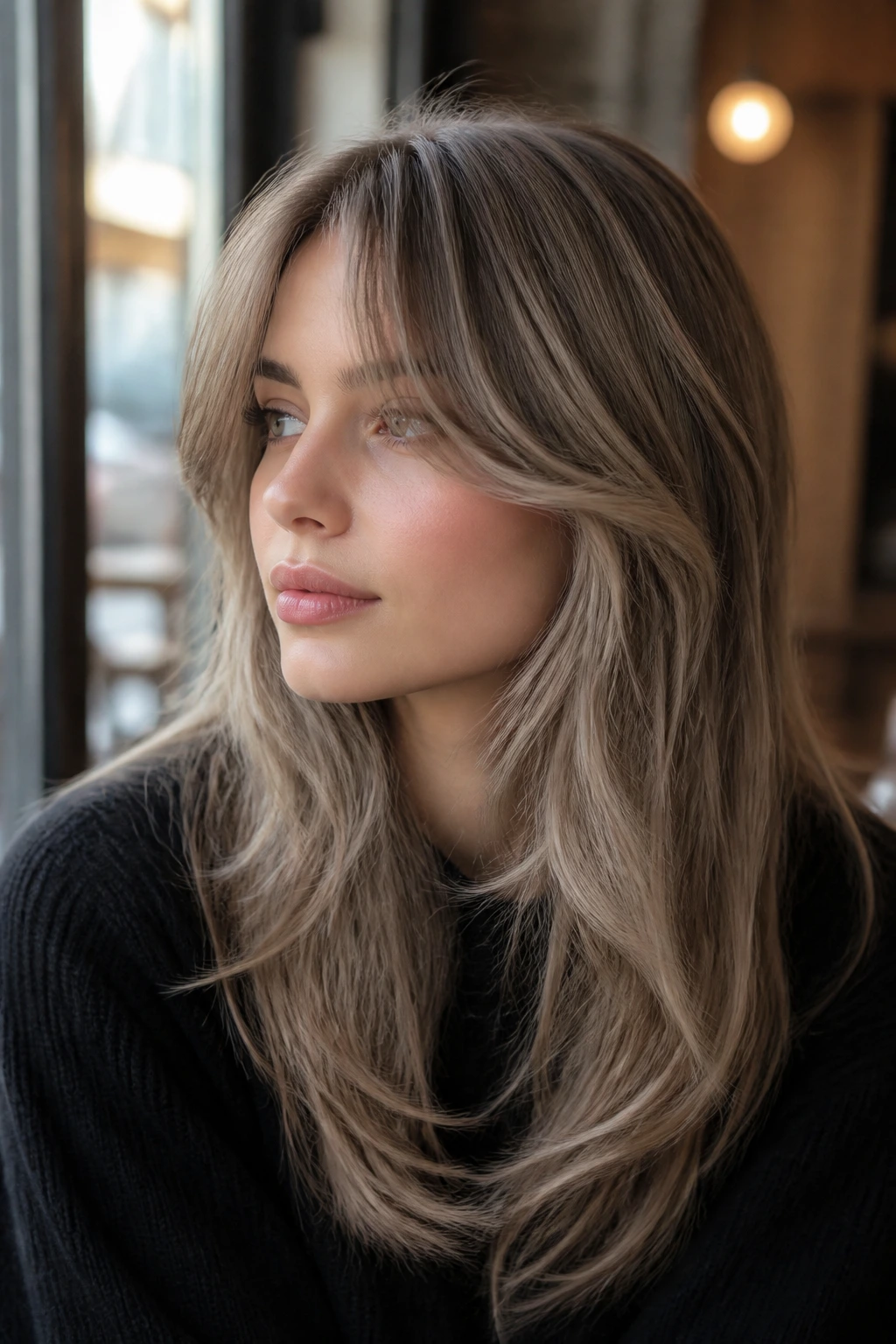
Curtain bangs need a color that can frame the face without shouting at it. Mushroom blonde does exactly that. The cool taupe note keeps the fringe soft, while the darker root and lighter mids create a nice fade down the sides of the face.
Why it suits pale skin
Curtain bangs put hair right near the cheeks, so the tone has to be controlled. Mushroom blonde avoids the harsh yellow cast that can make very fair skin look tired. It also makes the part line and brow area look cleaner, which is helpful when you want the bangs to feel airy rather than heavy.
Ask for a shadow root, then keep the front pieces one shade lighter than the rest of the hair. That little lift helps the bangs move away from the face instead of sitting on top of it. The result feels soft, not sugary.
23. Caramel-Tea Dark Blonde
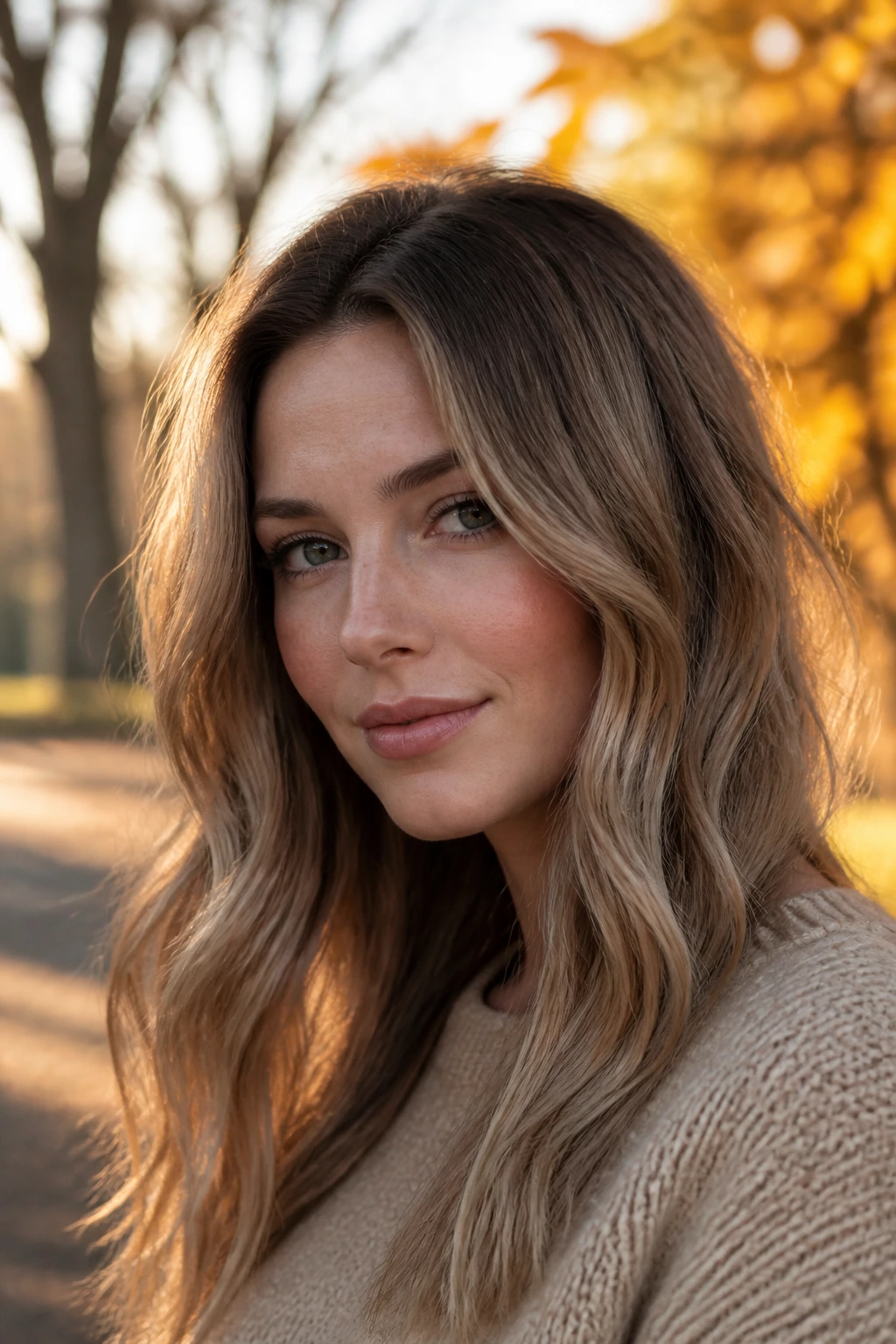
Caramel-tea dark blonde has a drier, more muted warmth than straight caramel, and that is the difference between flattering pale skin and frying it visually. The tea note cools the sweetness down, so the color feels rich instead of sticky.
This is a good pick if you want warmth that still looks civilized. The best version has depth near the roots and caramel-veiled mids, with the ends staying soft beige rather than bright gold. That structure matters. It keeps the face from turning flat while still giving a little warmth back to the skin.
I like this shade on fair complexions that go a little gray in winter light. The muted caramel wakes the face up without forcing the brows and lashes to compete with a blazing blonde. It’s a quieter color than people expect, and that’s the charm.
24. Neutral Beige Balayage
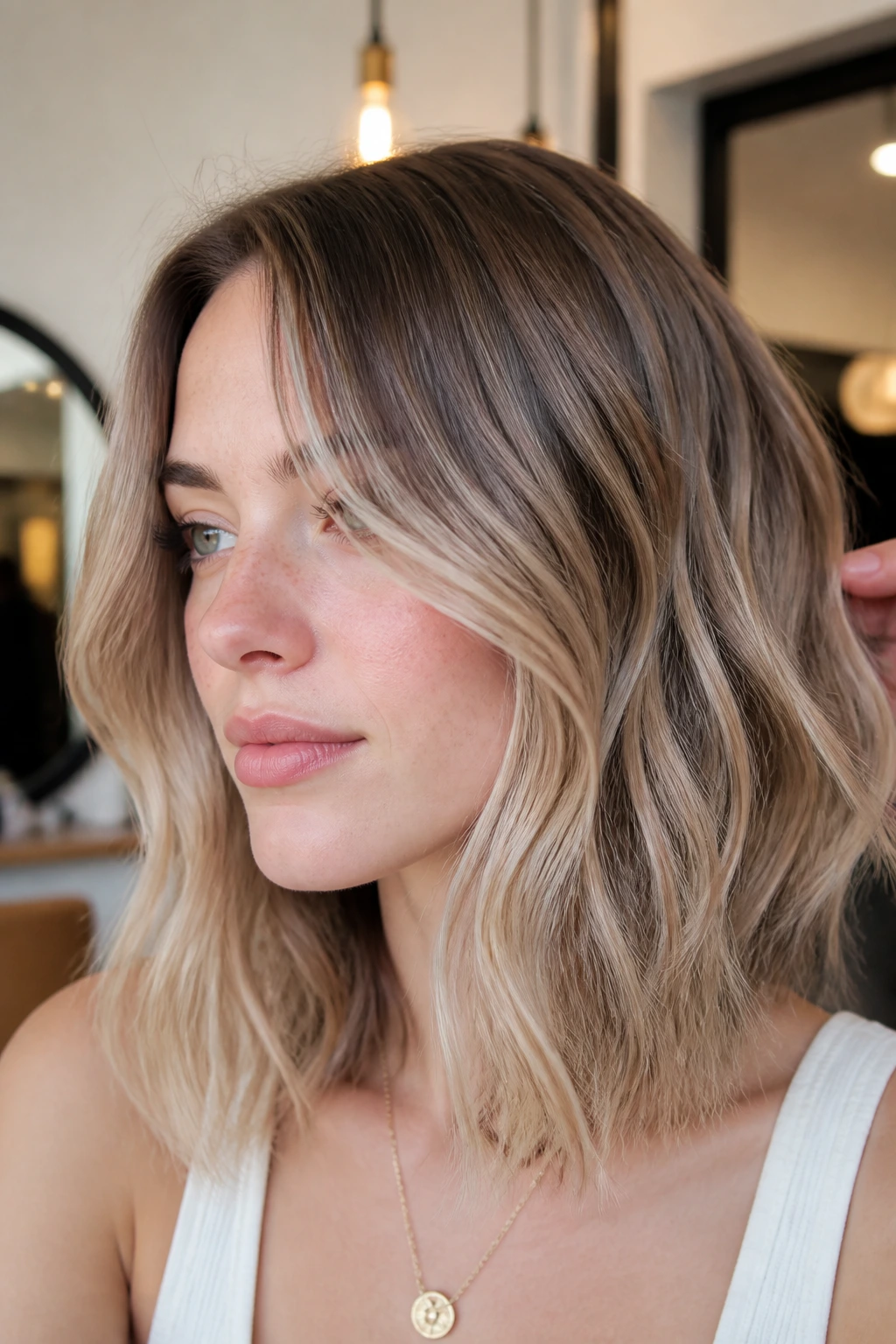
Neutral beige balayage is the safest “I want something flattering, not dramatic” answer on this list. It gives pale skin contrast through placement, not loud color. The beige is steady, not too warm and not too cold, which makes it easier to wear with changing makeup or clothes.
How it works
Balayage lets the brightest pieces sit where the light naturally hits — around the face, the top layer, the ends — while the rest stays one to two levels deeper. That keeps the hair from looking like one giant pale panel next to fair skin. It also means the roots grow out with a softer line.
If you’re nervous about going blonde, this is the version I’d point to first. It gives the feeling of lightness without committing the whole head to it. A beige gloss every 6 to 8 weeks usually keeps the tone honest.
25. Soft Ash Blonde With Dark Roots
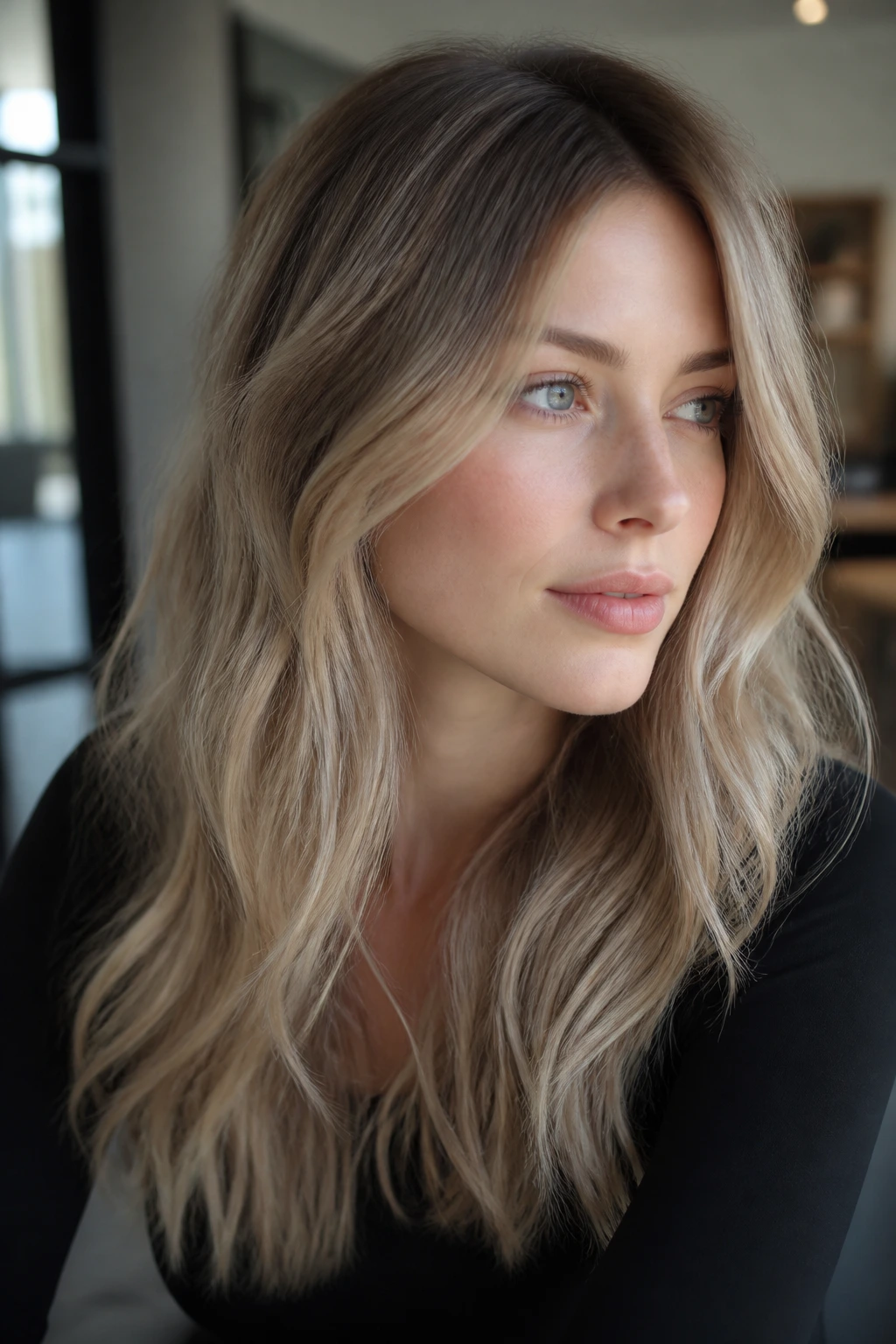
The name sounds colder than it looks. Soft ash blonde with dark roots is really a rooted dark blonde style that leans cool enough to keep brass in check. On pale skin, the dark root adds structure, and the ash-blonde mids stop the color from going gold.
This shade is strongest if your skin is cool or neutral and your brows are naturally medium or dark. The root depth helps keep the face from looking washed out, while the cool blonde pieces around the lengths make the hair feel lighter without pushing into high-lift territory. If you’ve ever thought blonde made you look tired, this is the version that usually fixes the problem.
Keep the ash note soft, though. Too much ash can make the shade feel dusty in daylight. Beige-ash is the sweet spot.
26. Sunlit Bronde Layering
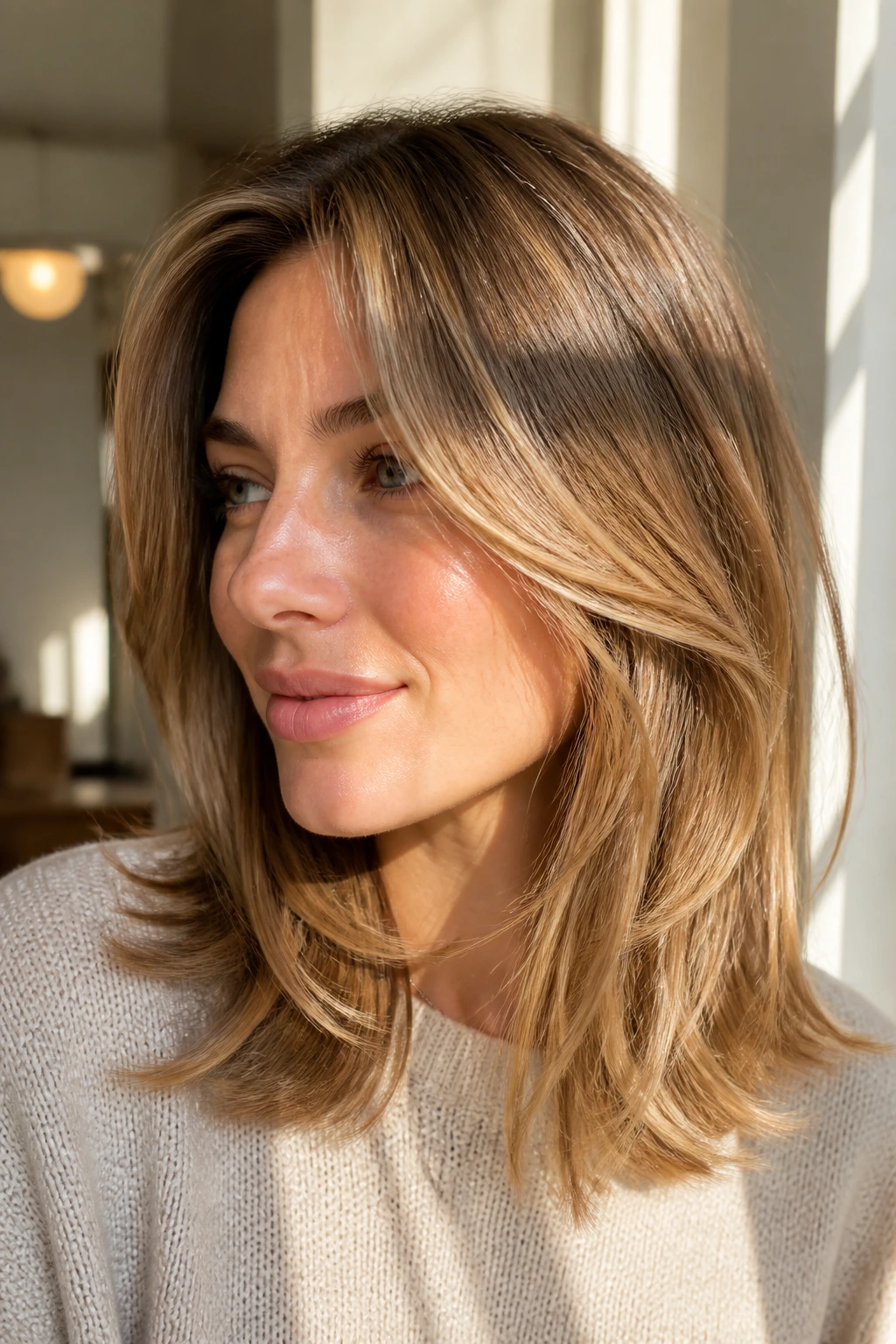
Sunlit bronde is brighter than smoky bronde, but it still keeps one foot in brunette territory. That makes it useful on pale skin, especially if you want a little warmth and a little depth without the upkeep of a full blonde.
Layering matters because the color needs movement to avoid looking heavy. The sunlit pieces should sit on the surface and around the face, while the deeper base holds the outline. On fair skin, that outline keeps the complexion from getting lost in too much lightness. It also makes the cut look fuller, which is handy on medium to thick hair.
This is a nice middle path if you’re unsure whether you want dark blonde or light brown. Bronde gives you room to drift either way later.
27. Pale Rose Beige Dark Blonde
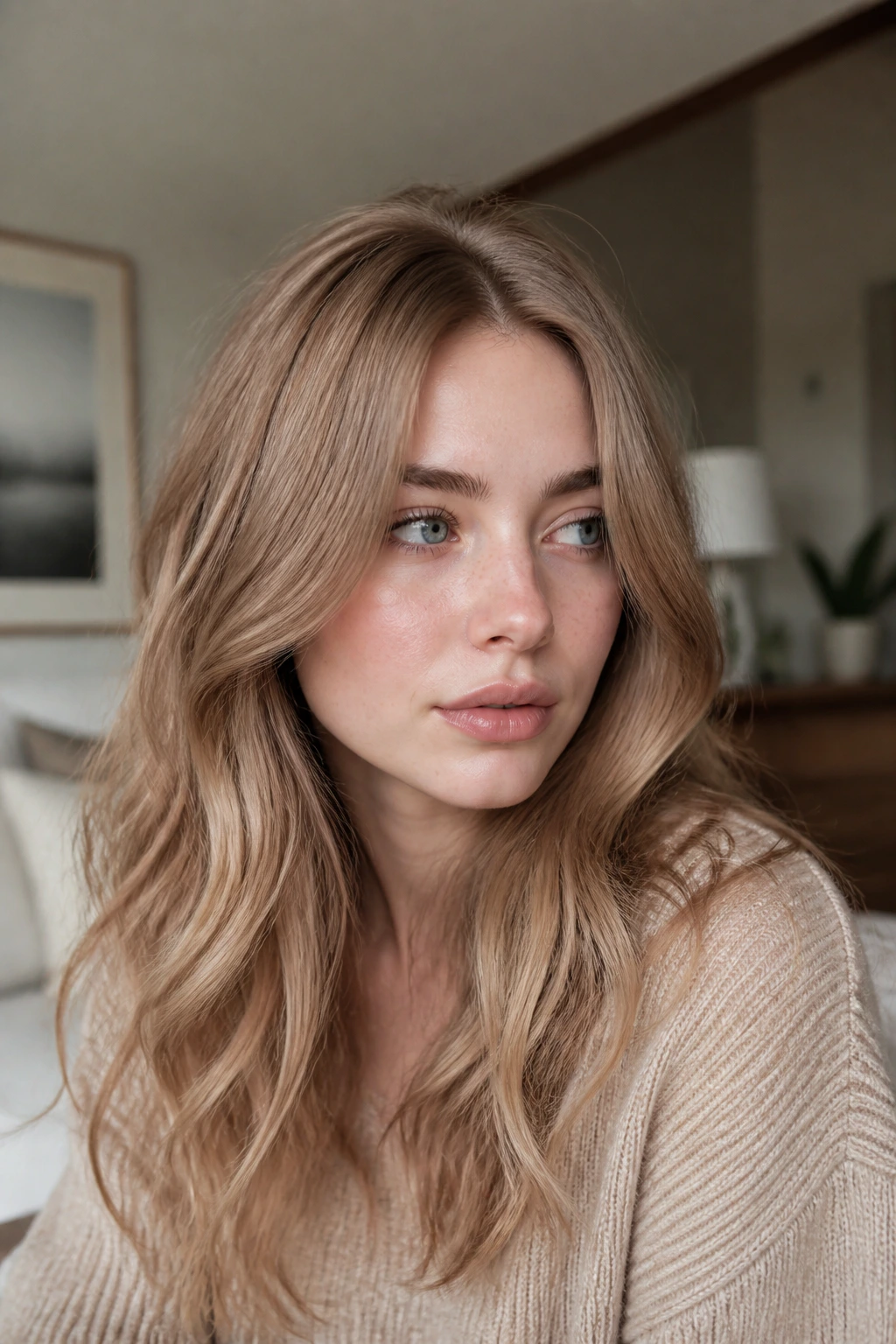
Pale rose beige is one of the few warm-ish blondes that can look beautiful on very fair skin without turning orange. The rose note softens the beige, so the warmth feels blushy rather than yellow.
What to watch
This shade needs restraint. If the rose overtakes the beige, the hair can start to look brassy or pink in bad light. Keep it muted and use it as a glaze, not a loud color statement. The effect should be soft warmth around the face, not strawberry candy.
I like this one for fair skin with visible pink in the cheeks, because it can echo that color in a controlled way. It looks lovely with a soft bob, loose waves, or a blowout with rounded ends. Keep the brows a touch deeper, and the whole look settles in.
28. Glossy Dark Blonde With Warm Underpainting
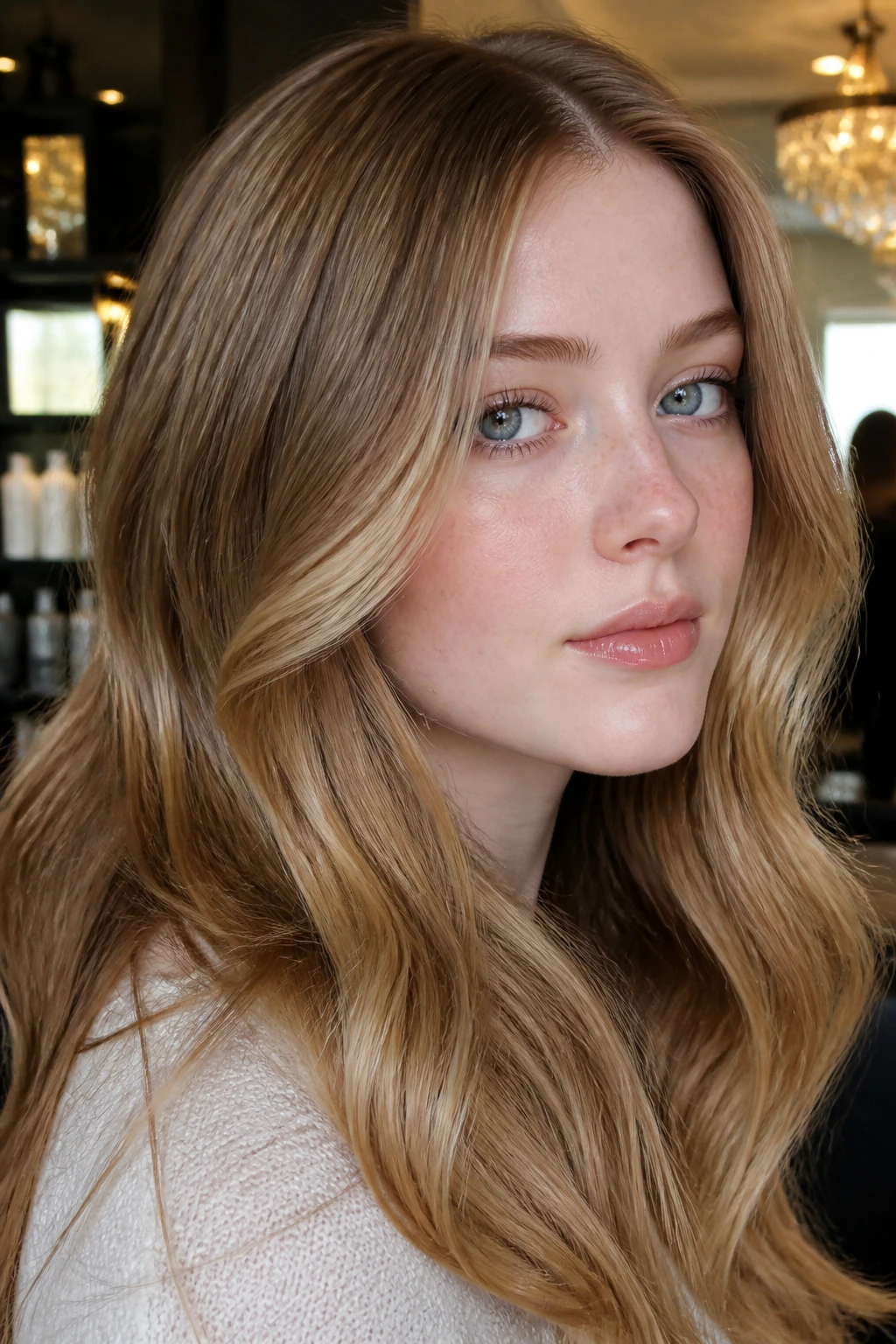
This is the most elegant option if you want the shade to look rich without looking loud. A glossy dark blonde with warm underpainting keeps the surface neutral while a warmer base peeks through underneath, which gives pale skin a bit of glow without flooding the face with gold.
The underpainting is doing the heavy lifting. You get the sense of warmth when the hair moves, but the top layer still reads clean. That’s perfect for very fair skin that can go sallow if the blonde is too flat or too icy. The gloss should feel smooth and reflective, not syrupy.
If you want one shade that can handle changing seasons, different makeup, and a few months of grow-out, this is the one I’d put near the top of the stack. It has enough depth to frame the face and enough brightness to keep the look light.
Why Dark Blonde Hair Color Flatters Pale Skin Better Than Lighter Blonde
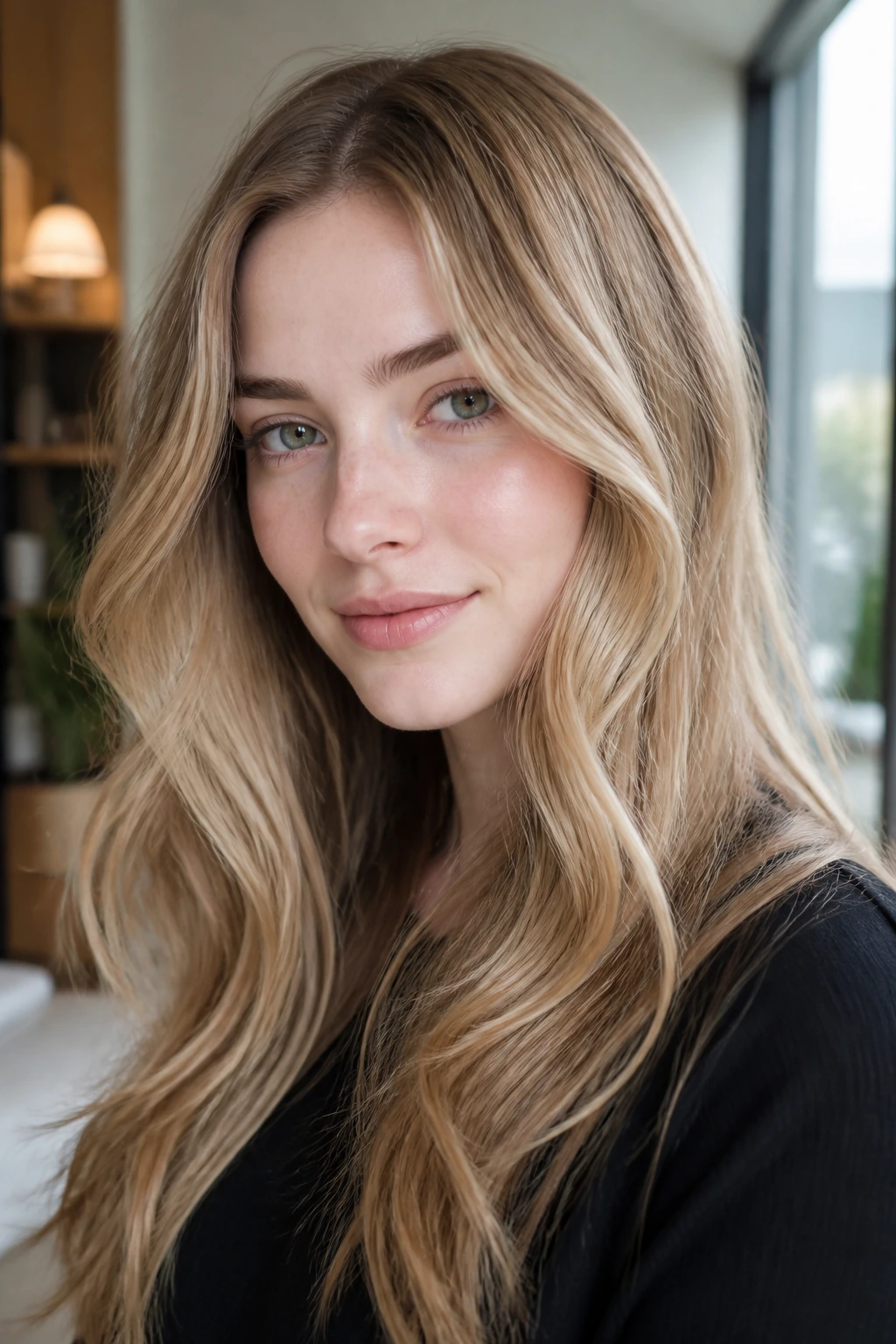
Very light blonde can be beautiful, but it asks a lot from pale skin. It can erase brows, drain blush, and make the face depend entirely on makeup. Dark blonde solves more of that problem than people expect, because the extra depth around the face gives your features a border.
There’s also a color-theory reason it behaves well. Pale skin often shows every hint of yellow, red, or ash in the hair. A level 6-7 dark blonde lets you choose those notes instead of letting them run wild. Beige softens the yellow. Ash cools the brass. Mushroom and neutral shades land between the two, which is why they show up so often in good salon work.
The nice side effect is that you can still wear the shade with minimal makeup. You do not need heavy contour or dark brows to keep your face visible. You just need the color to sit in the right range. Too light, and the hair takes over. Too dark, and the skin starts to look pale in a way that feels accidental.
Picking the Right Undertone: Ash, Beige, Gold, and Mushroom
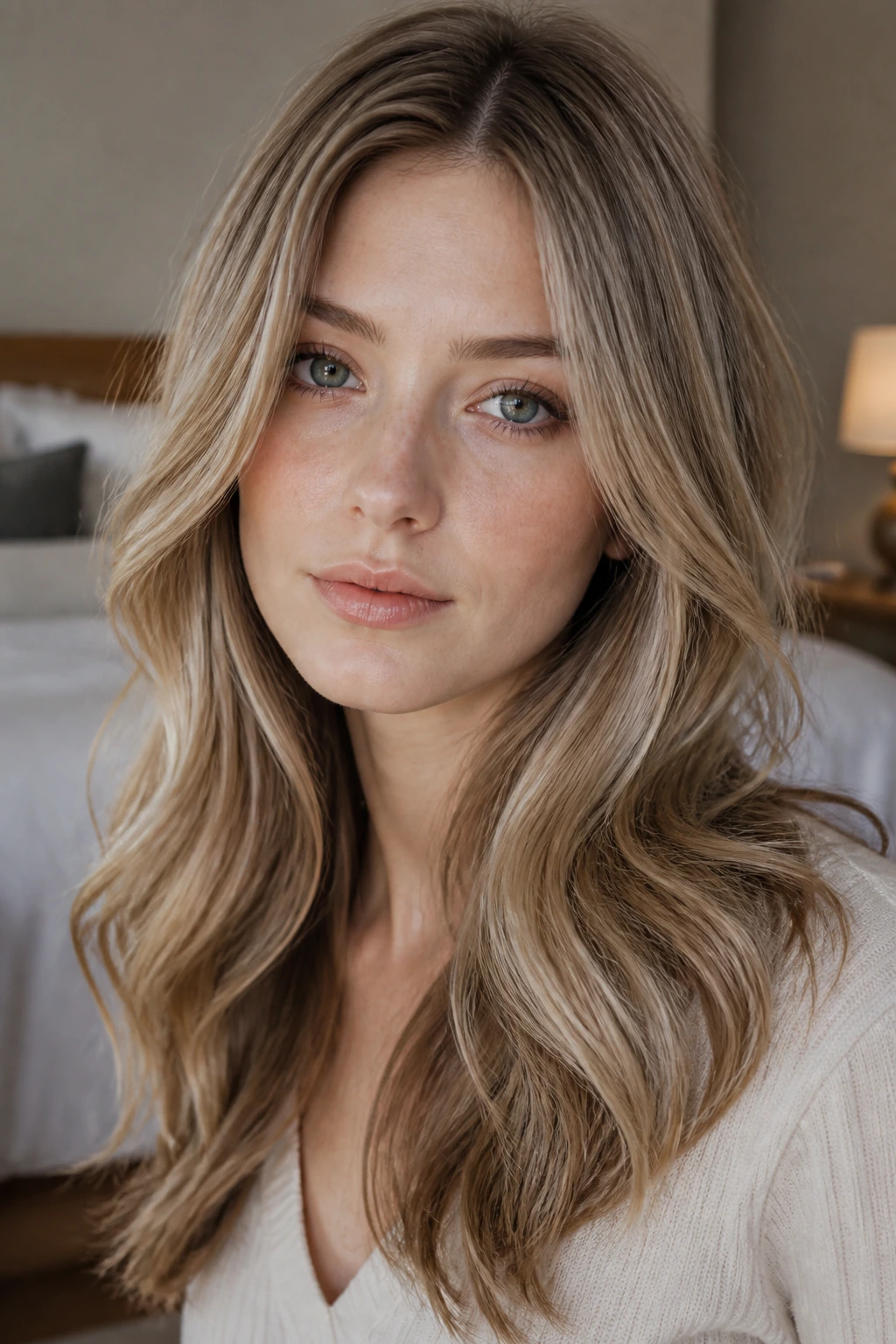
Pale skin is not one thing. Some fair complexions lean pink. Others are neutral and disappear under yellow lighting. A few can take warmth easily, but only if it’s softened. The shade choice should follow that, not some one-size-fits-all blonde rule.
Ash is the safest choice when your skin has a cool or rosy cast and brass shows up fast. It keeps the blonde from going orange, but it should stay soft so the result doesn’t look dusty.
Beige is the best all-around tone if you want flexibility. It gives enough warmth to keep the face alive, but it usually won’t turn the skin yellow.
Gold works when it’s muted and placed with care. A little gold near the ends or face frame can be lovely. Gold all over the head? That’s where pale skin starts to look tired.
Mushroom is the quiet hero. It has that smoky beige-brown mix that feels modern and usually behaves beautifully on porcelain skin.
Essential Tools and Products That Keep the Tone Clean
-
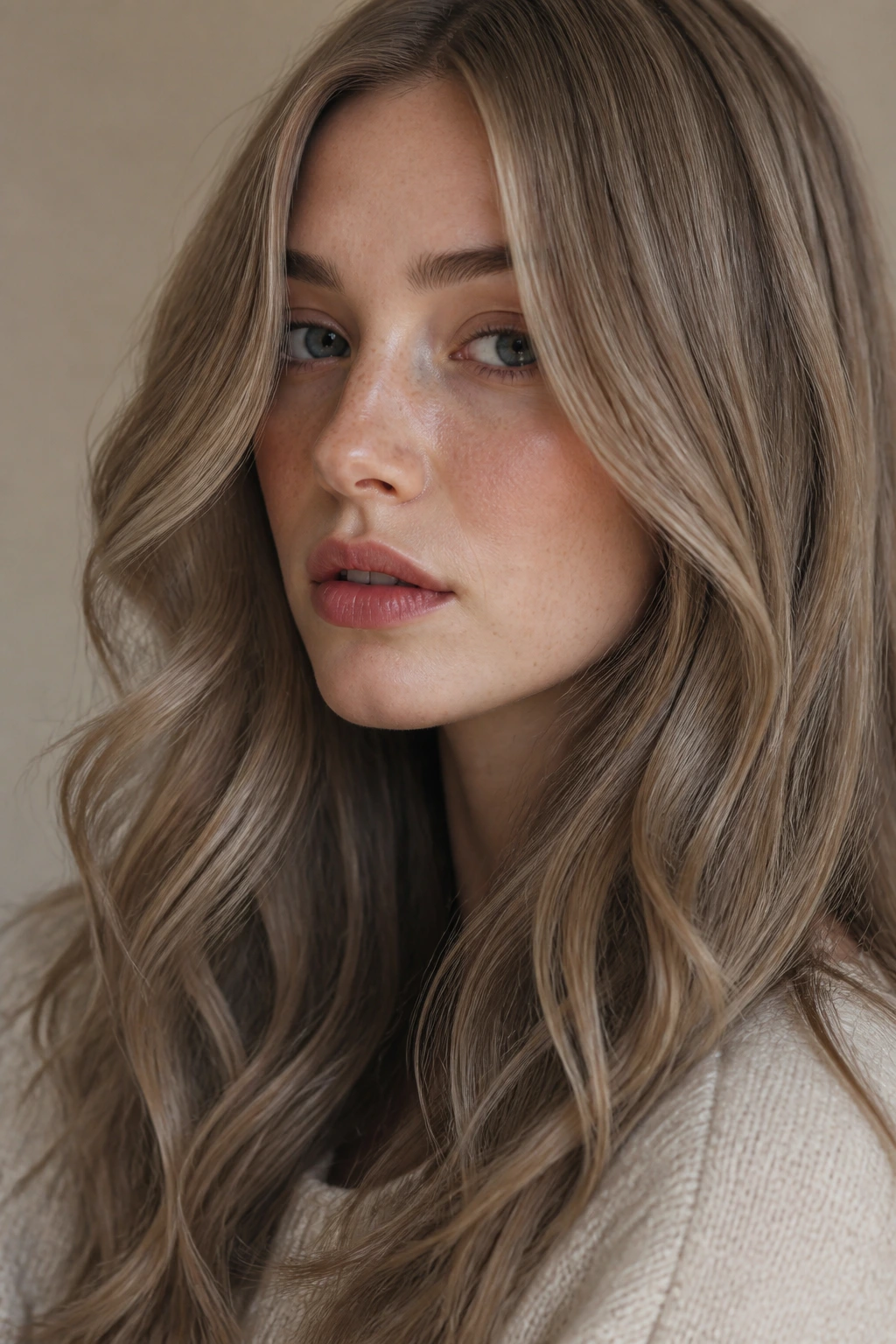
Color-safe shampoo: A sulfate-free formula helps preserve gloss and keeps the blonde from fading into dullness too fast.
-
Purple or blue shampoo: Purple is useful for yellowing; blue helps when the blonde starts drifting orange. Use either sparingly, not every wash.
-
Deep conditioner or mask: Pale-skinned blondes can look better when the hair shines, and moisture is what keeps the shine from going limp.
-
Heat protectant spray: If you blow-dry or curl the hair, this keeps the finish smoother and the tone less fried-looking.
-
Wide-tooth comb: It helps preserve waves and curls without roughing up the cuticle.
-
Microfiber towel: Less friction means less frizz, which matters because frizz makes dark blonde look rougher and drier than it is.
-
Gloss or toner appointment: Not a tool in the drawer, but it belongs on the list. A clean gloss refreshes the tone before it tips brassy.
-
Good daylight mirror or window: Check the color in natural light. Bathroom bulbs lie.
How to Wear the Shade With Makeup, Brows, and Clothes
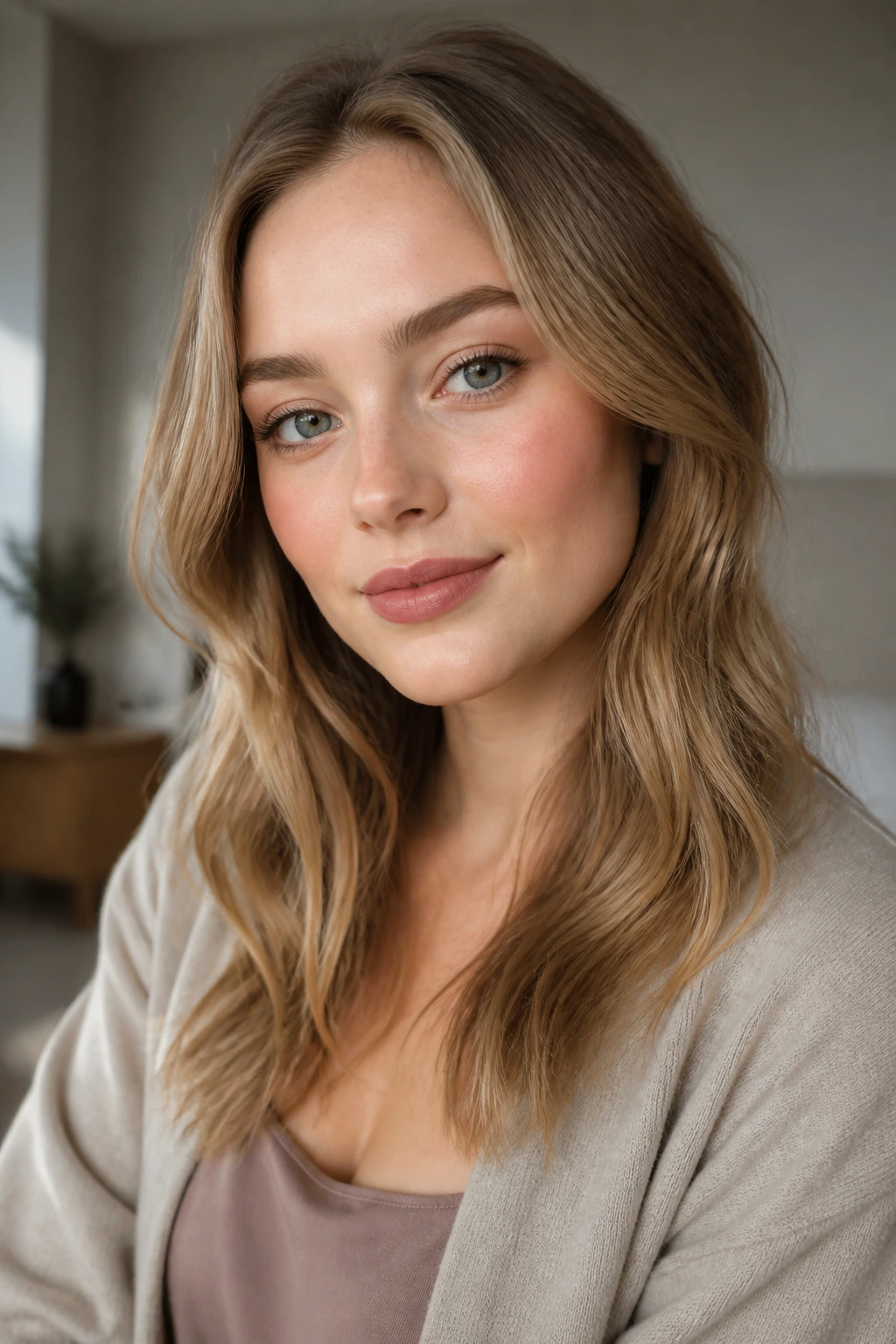
Dark blonde on pale skin looks best when the rest of the face does not fight it. Brows: keep them one shade deeper than the root, or the face can lose structure. Taupe, soft brown, and cool brown pencils usually beat jet black.
Blush: rose, soft peach, and muted berry tend to work better than neon pink. The hair already brings enough lightness; the blush should give the skin life, not compete with the color.
Lips: if the hair leans cool, a dusty rose or berry lip keeps the look clean. If the shade leans beige or honey, soft peach or warm nude can tie it together without turning orange.
Clothes: charcoal, cream, soft black, dusty rose, olive, and muted blue all play nicely with dark blonde on fair skin. Stark white can be useful, but if your complexion is extremely pale, a little warmth in the fabric helps avoid that washed-out feel.
Additional Tips That Make the Color Look Deliberate
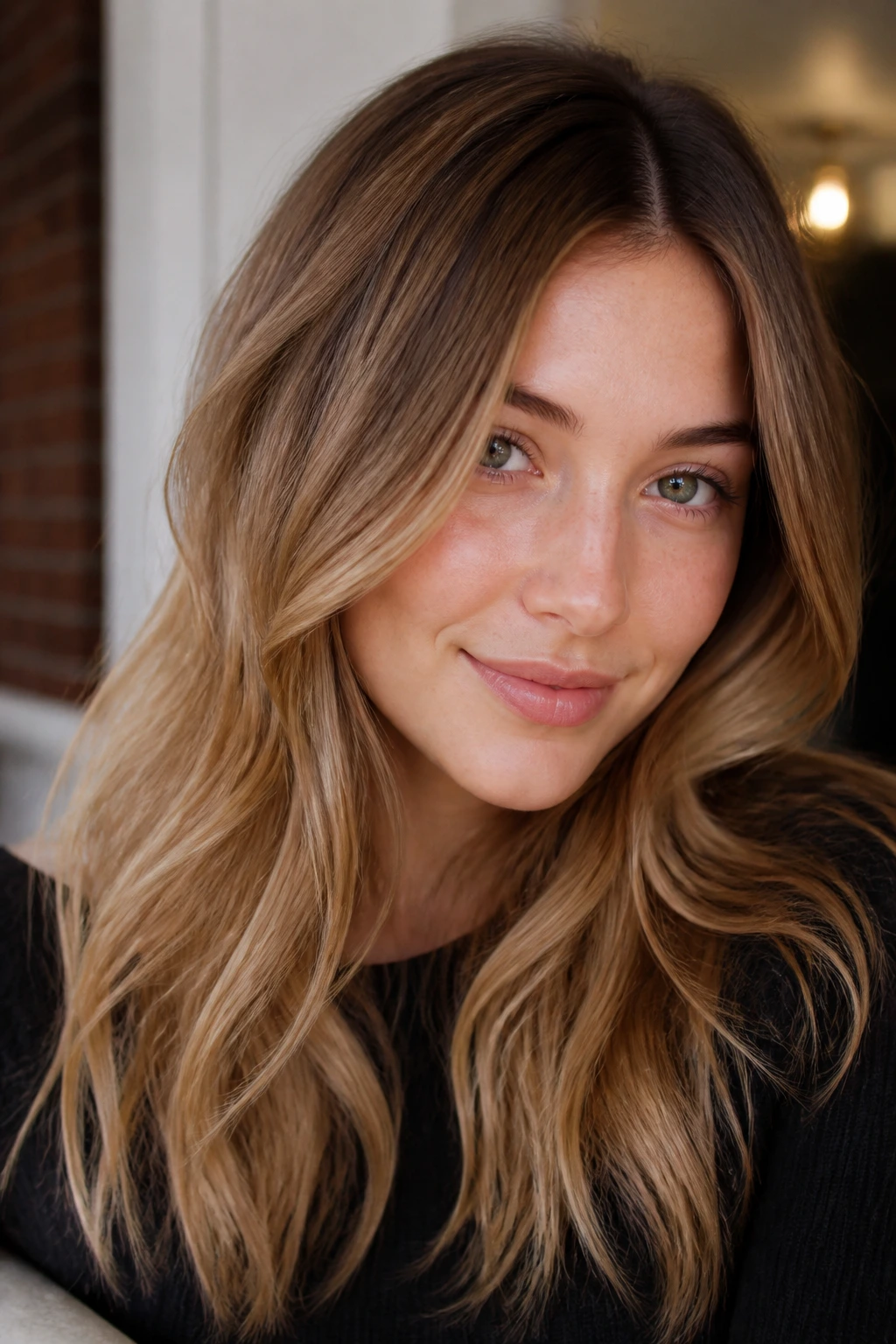
Root Depth: A root that is one level deeper than the mids usually looks better than a matchy-matchy all-over blonde. The eye gets shape, and the skin gets a frame.
Gloss Timing: Refresh the tone every 6 to 8 weeks if it starts turning yellow or flat. That is often enough to keep beige shades from drifting into brass.
Face-Framing: A subtle lift around the cheekbones can brighten the complexion without bleaching the whole head. Keep the brightest pieces close to the face, not all over.
Photo Check: Look at the shade by a window before you commit. The same dark blonde can read mushroom indoors and orange outside, which is why daylight matters so much.
Heat Setting: If you use a hot tool, stay under 365°F. Higher heat roughs up the finish and makes the color look dull faster.
Common Mistakes That Make Pale Skin Look Washed Out
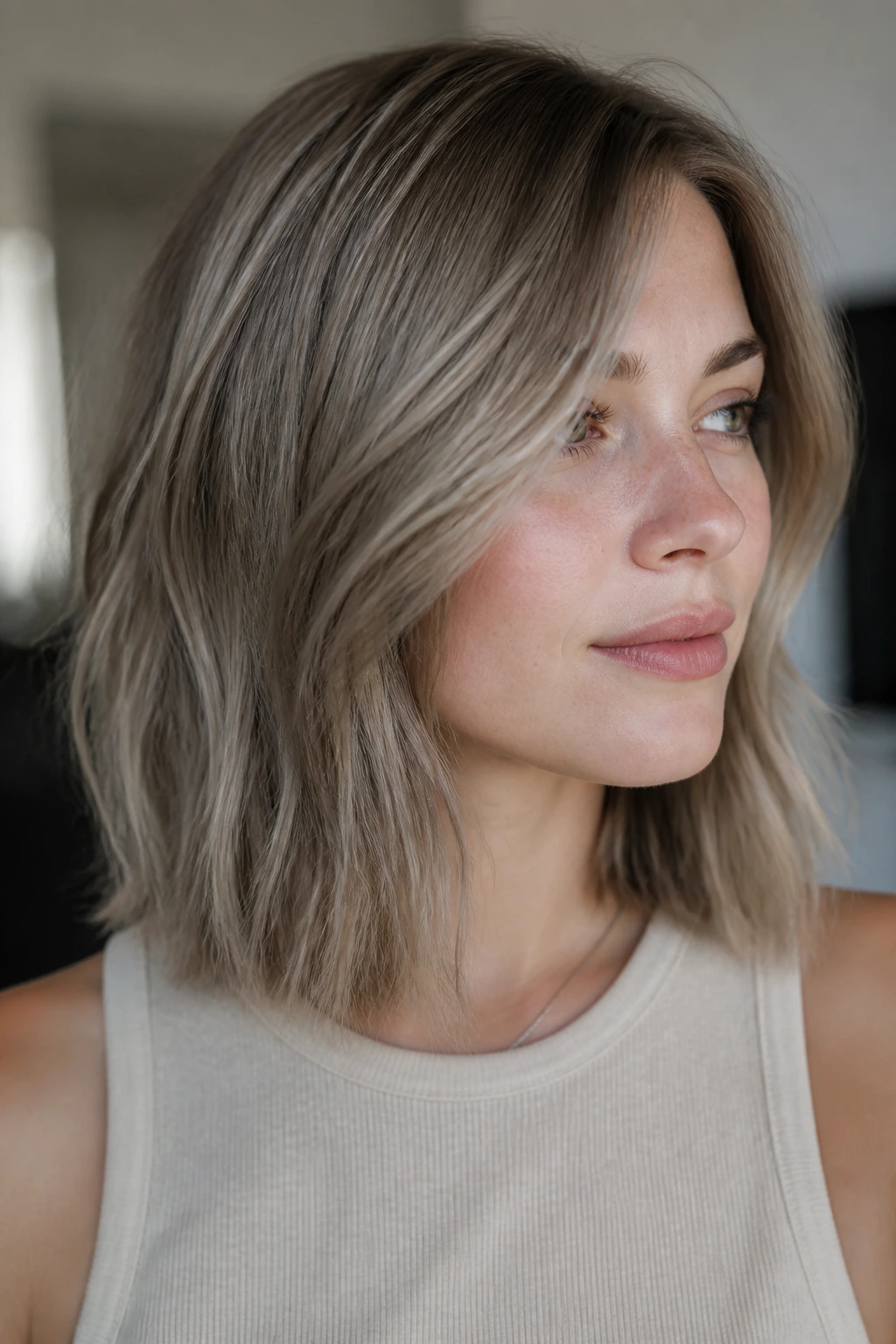
The biggest mistake is choosing a blonde that is too light and too one-note. When the whole head is bright, pale skin can lose the contrast it needs to feel alive. The fix is usually a darker root or a softer, more beige tone through the mids.
Another common problem is too much gold. Gold can be lovely, but when it sits too close to the face on porcelain skin, it can look yellow instead of warm. A beige or mushroom gloss often solves that faster than stripping the color and starting over.
People also overdo purple shampoo. It helps with yellow brass, but use it too often and the hair starts to look chalky. Once every 1 to 2 weeks is plenty for most dark blondes.
The last big mistake is ignoring brows. A beautiful dark blonde with eyebrows that are too light or too dark can feel disconnected. Match the brows to the root or one shade deeper. That usually settles the whole face.
Variations and Adaptations to Try
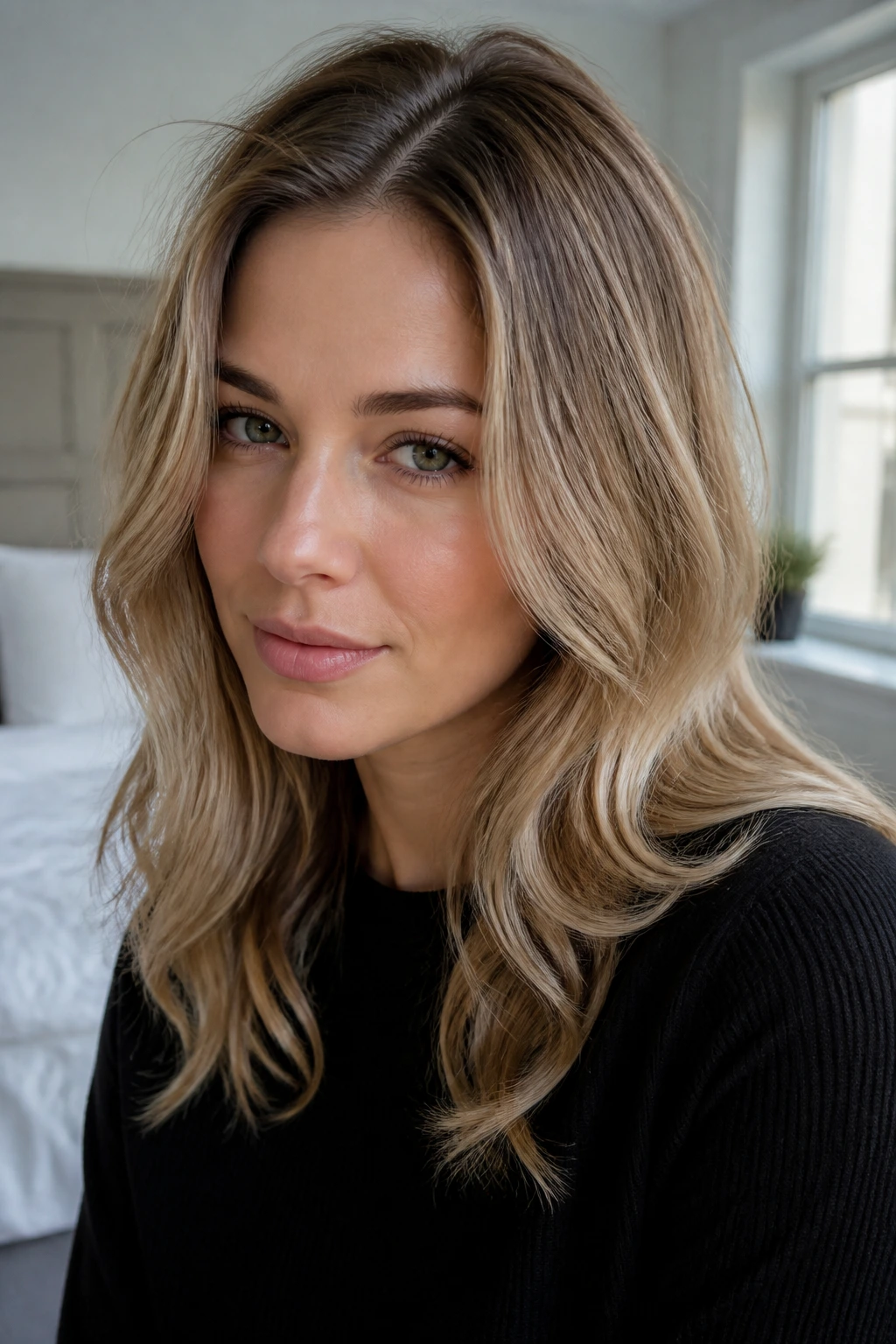
The Cool Porcelain Melt: Keep the root deep and the blonde ash-beige through the mids. This version is best for very fair skin that picks up brass fast and looks best with silver jewelry.
The Warm Fair-Skin Glow: Use soft honey only on the ends and face frame, then keep the root neutral. This works if your skin has peach or golden undertones and you want warmth without orange.
The Low-Maintenance Shadow Root: Ask for a root that is one to two levels deeper than the rest of the hair. It grows out quietly and gives pale skin a soft frame for months, not weeks.
The Short-Cut Version: On pixies and bobs, keep the tone muted and the highlights fine. Big streaks can overwhelm a smaller cut, while fine ribbons keep the shape clean.
The Curly Dimension Edit: Add lowlights and beige ribbons instead of broad blonde panels. Curls need contrast, but they do not need stripes.
Maintenance and Tone Care That Keeps the Shade Looking Fresh
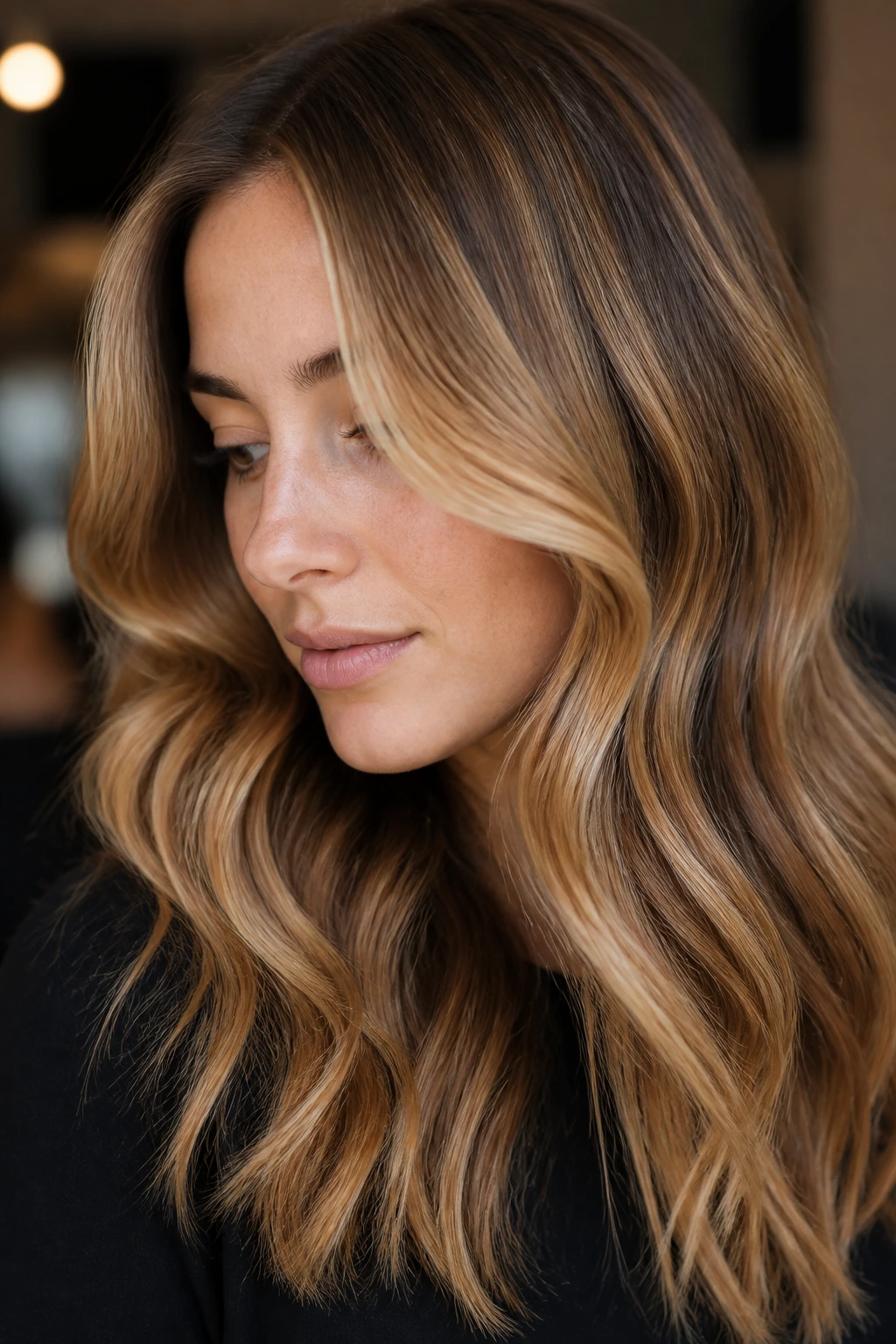
Dark blonde on pale skin looks best when the tone stays controlled. Use color-safe shampoo most washes, then bring in purple or blue shampoo only when the shade starts drifting warm. If your blonde is beige or mushroom, purple once every 1 to 2 weeks is usually enough. If it leans orange, blue shampoo may help more.
Gloss appointments every 6 to 8 weeks keep the finish honest. A lot of dark blonde shades don’t need full color refreshes nearly that often. They need a tone adjustment. That’s a smaller, easier job, and it keeps the color from getting tired.
If you swim, rinse the hair before and after the pool, then use leave-in conditioner. Chlorine can skew blondes fast, and pale skin will make any odd tone more obvious. Sleep on a silk or satin pillowcase if your hair frizzes easily. Less friction means less dullness by morning.
Frequently Asked Questions
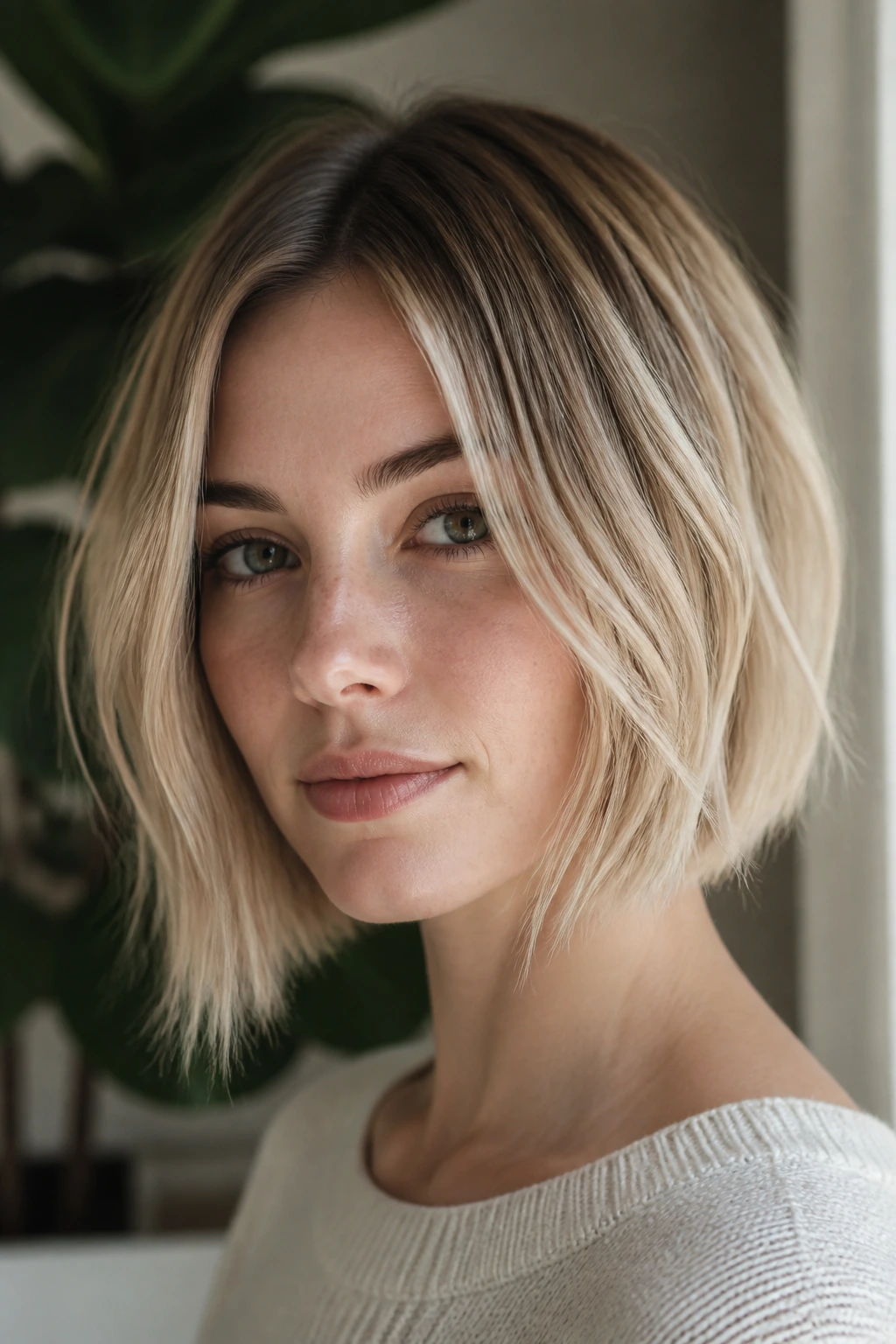
Will dark blonde hair color wash out pale skin?
Not if the undertone is chosen well. A beige, mushroom, or neutral dark blonde usually adds more shape to the face than a very light blonde, which can erase brows and make the skin look flat.
Should pale skin choose ash or gold?
Ash works better for cool or pink undertones, while muted gold can look lovely on neutral or slightly warm skin. The mistake is going too extreme in either direction; beige is often the middle path that behaves best.
Can I go from dark brown to dark blonde without bleaching?
Sometimes, if you are only aiming for a soft bronde or lightened brunette look. If you want true level 6-7 dark blonde, lifting is usually part of the process. A colorist can tell you how much lightening your starting shade needs.
How often will I need to tone it?
Most dark blonde shades on pale skin benefit from a gloss every 6 to 8 weeks. If your hair pulls yellow fast, you may need a toner touch-up sooner, especially in the face-framing pieces.
What if the color turns orange?
That usually means the hair needs a blue-based toner or a cooler gloss, not more permanent dye. Orange brass tends to show up when the hair is lifted but not toned enough.
Does dark blonde work with freckles?
Yes, and often beautifully. Warm beige, soft honey, and rose-beige shades can make freckles stand out in a good way, while smoky beige keeps the look softer and more muted.
Is balayage better than one solid color?
On pale skin, balayage often gives a more forgiving result because the dimension keeps the face from looking washed out. Solid dark blonde can work, but it usually needs a root shadow or gloss to keep the tone from feeling flat.
What’s the easiest shade to maintain from this list?
The rooted options — mushroom beige, smoky bronde, and shadow-root blends — usually grow out the cleanest. They let the color fade without leaving a harsh line at the scalp.
Soft, Not Flat
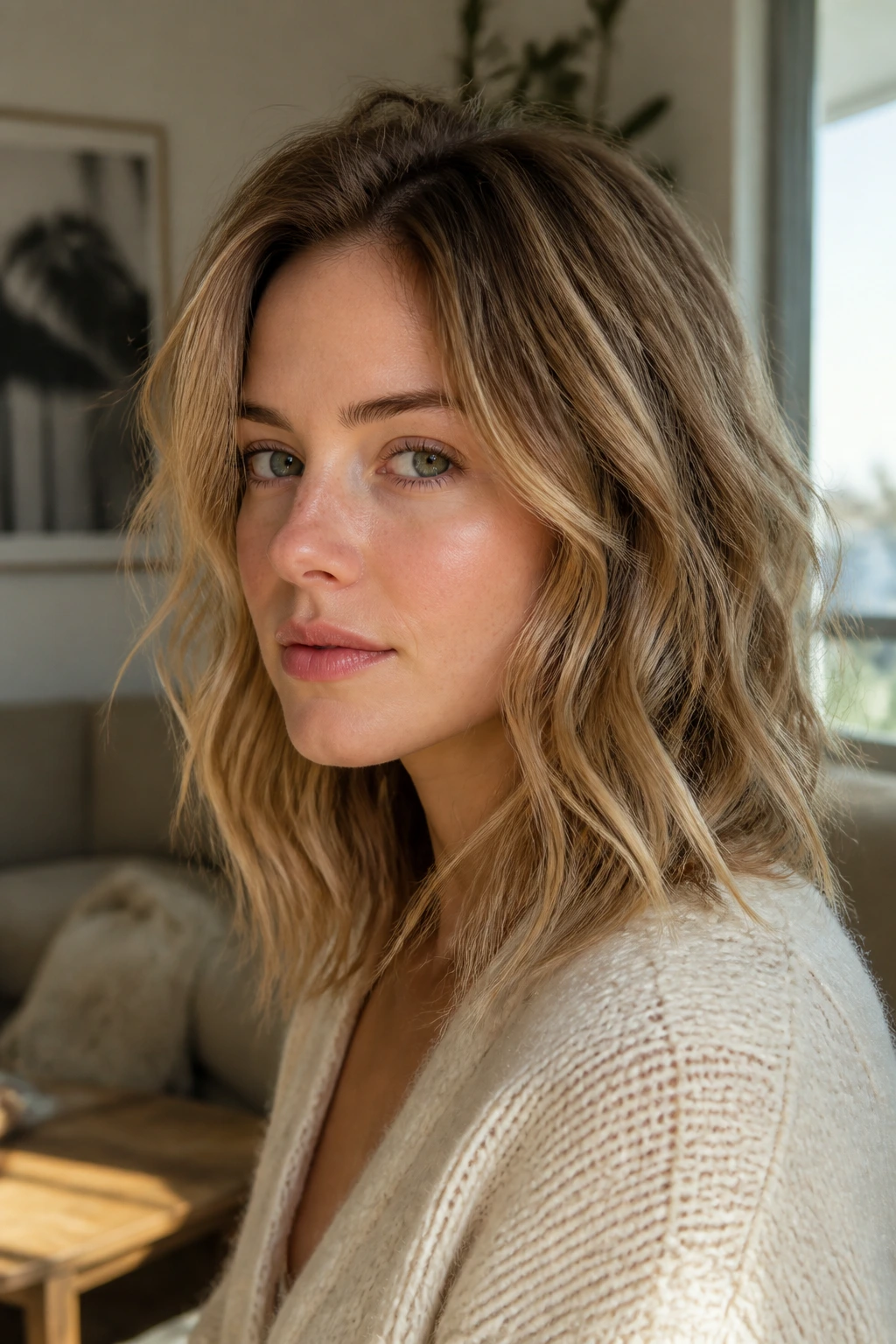
The strongest dark blonde shades for pale skin do one thing well: they give the face a frame without turning the hair into a loud block of color. That’s why mushroom beige, root melts, sandy bronde, and muted honey all keep showing up. They leave room for the skin, the brows, and the eyes to do their part.
The next appointment gets easier once you know what you’re asking for. Level numbers, root depth, and tone language matter more than the cute name on the inspo photo. Bring a daylight photo, stay honest about your undertone, and you’ll get much closer to the shade that actually belongs on your head.