



Black hairstyles for round faces with beachy waves can be a gift on the right cut—and a face-widening mess on the wrong one.
On Black hair, the difference usually comes down to placement, not the wave itself. A deep side part, a little lift at the crown, and ends that fall below the cheekbone can change the whole shape of the face in a way a blunt, chin-length bend never will. Shine matters too. Dry-looking waves read unfinished; smooth roots, soft separation, and a clean gloss on the mids and ends make the whole style look deliberate.
That is why these looks lean hard on shape. Some use silk-pressed hair and a 1.25-inch wand. Others borrow the same effect from weave, braids, locs, or twists, which is useful when you want movement without asking your own hair to do every bit of the work. Round faces usually look best when the hair creates diagonal lines and vertical length, so the smartest styles keep fullness away from the widest part of the cheeks.
A lot of people think beachy waves only mean loose curls. Not quite. On textured hair, they can mean brushed-out bends, wave-set braids, fluffy twist-outs, or install styles with glossy ends and a little asymmetry. The trick is choosing a shape that narrows where you need it and leaves the face looking longer, cleaner, and less boxed in.
Why These Styles Work on a Round Face
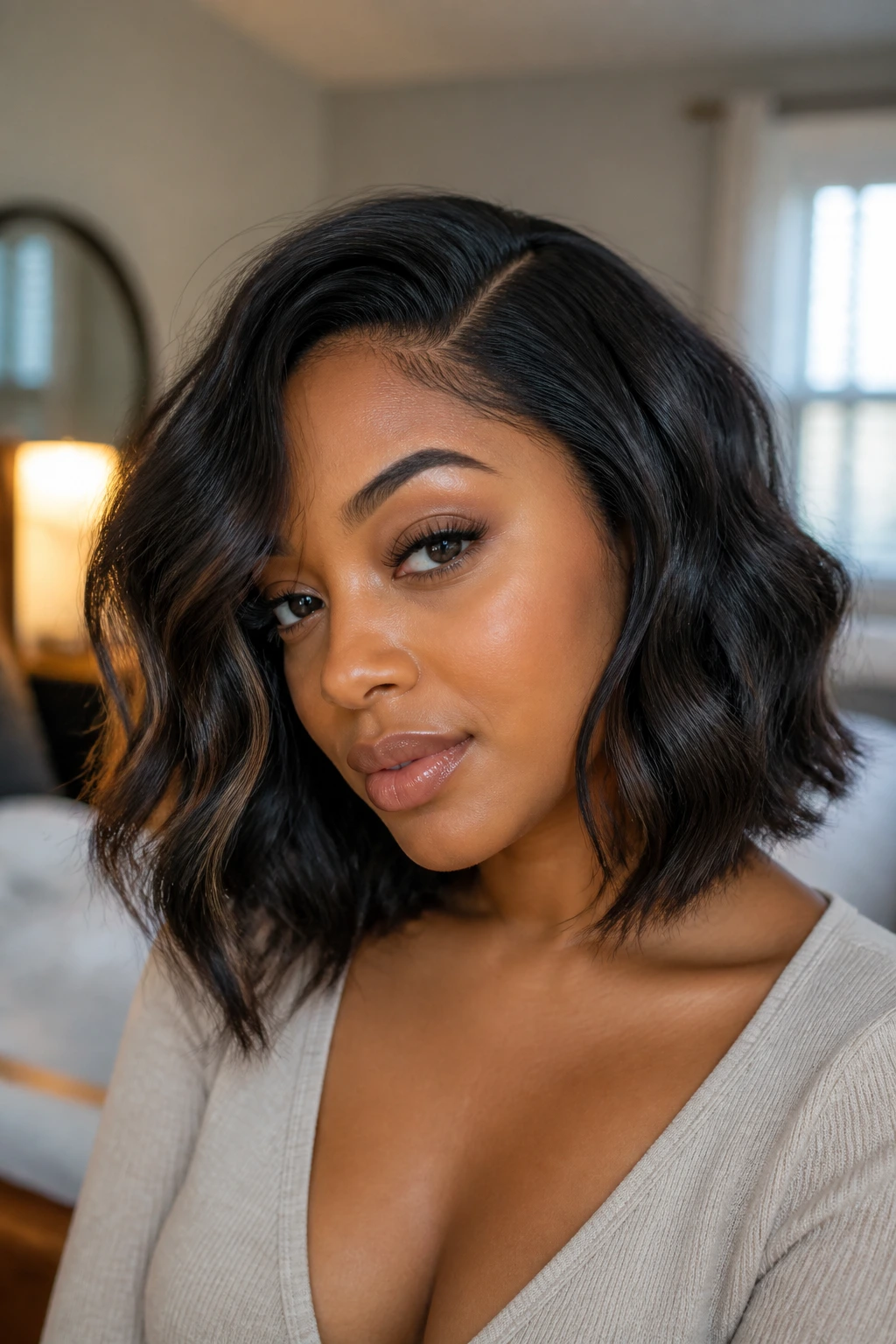
Diagonal lines do the heavy lifting. A deep side part or a side-swept front piece pulls the eye down and across instead of letting the hair sit squarely on the cheeks.
The best length lands below the chin. Once the ends fall at the collarbone or farther, the face gets a longer border and stops feeling compressed.
Crown lift changes everything. A little height at the top makes the face look less wide, even if the rest of the style stays soft and loose.
Gloss matters more than people admit. Smooth, reflective hair makes the shape look clean; frizz at the roots can turn soft waves into a fuzzy halo.
Movement should start low. Waves that begin around the ears or below the cheekbone usually flatter more than bends that flare out right beside the widest part of the face.
1. Deep Side-Part Shoulder Waves
A deep side part is the fastest way to make soft waves look sharper on a round face. It pulls the weight of the style off the center of the cheeks and gives the forehead a little more breathing room, which is exactly why this shape keeps working. On Black hair, it looks especially good when the roots are smooth and the waves stay loose through the mid-lengths.
Keep the bend starting around ear level, not higher. If the wave begins at the temple, the style can puff outward in the wrong place. A 1.25-inch wand on blow-dried or silk-pressed hair gives a soft, brushed wave that moves instead of ringing into tight curls.
A little shine spray at the end is enough. I’d tuck the heavier side behind one ear and let the other side drape forward; that one small asymmetry does more face-shaping than a lot of people expect.
2. Collarbone Lob with Face-Framing Ribbons
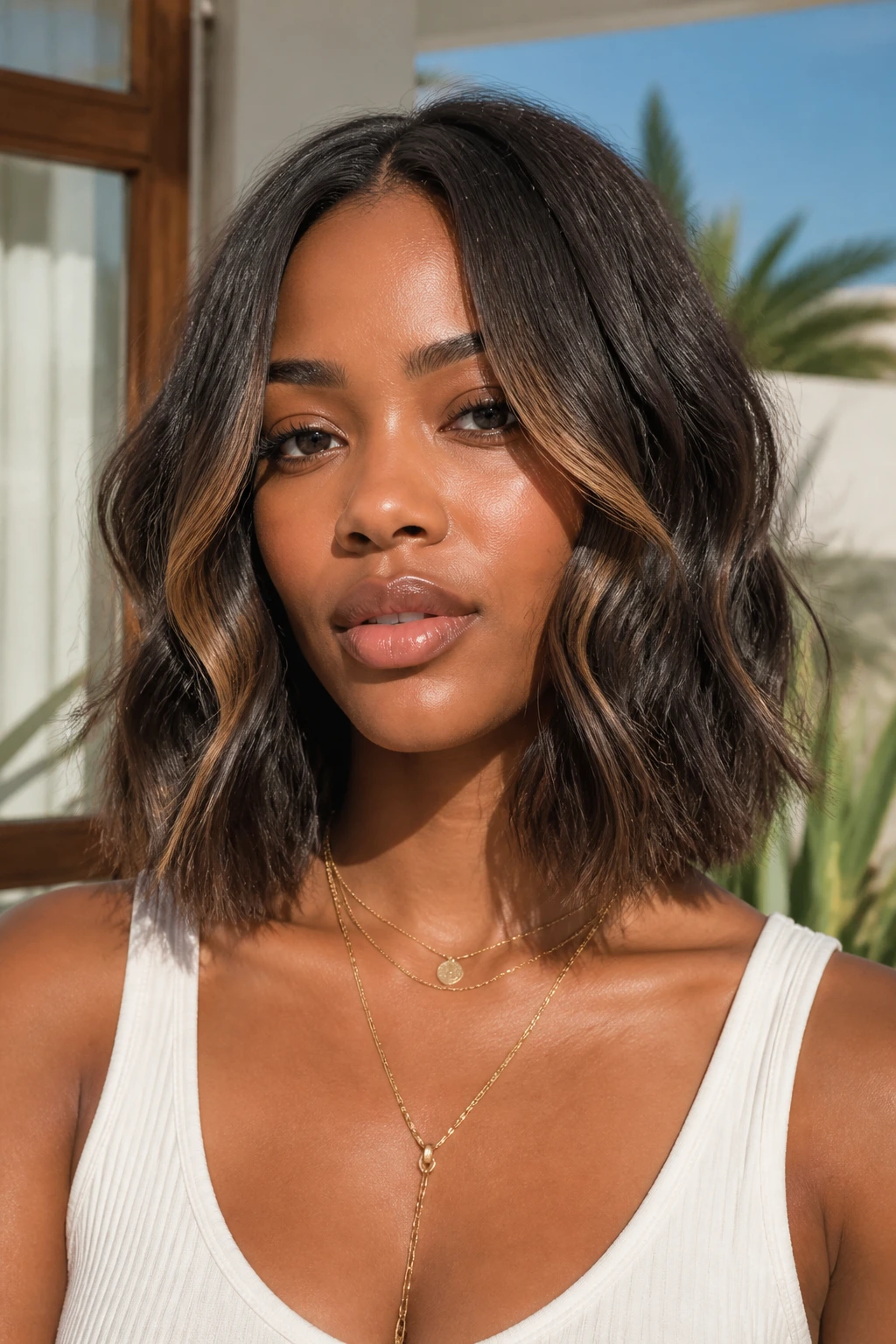
Why does a collarbone lob work so well here? Because it stops below the jaw, not on it. That one detail changes the whole read of the haircut. The front pieces can skim the cheeks without sitting right on the widest part of the face, which keeps the look soft instead of boxy.
If your hair is relaxed, heat-stretched, or in a sew-in, this is one of the cleanest styles to wear. Ask for face-framing pieces that land around the mouth or just below it, then bend them gently with a wand so they don’t look too curled. Brush the bends out once they cool.
That brush-out is where the style gets its beachy feel. Not fluffy. Not overdone. Just loose enough to move when you turn your head.
3. Long Center-Part Waves with Soft Lift
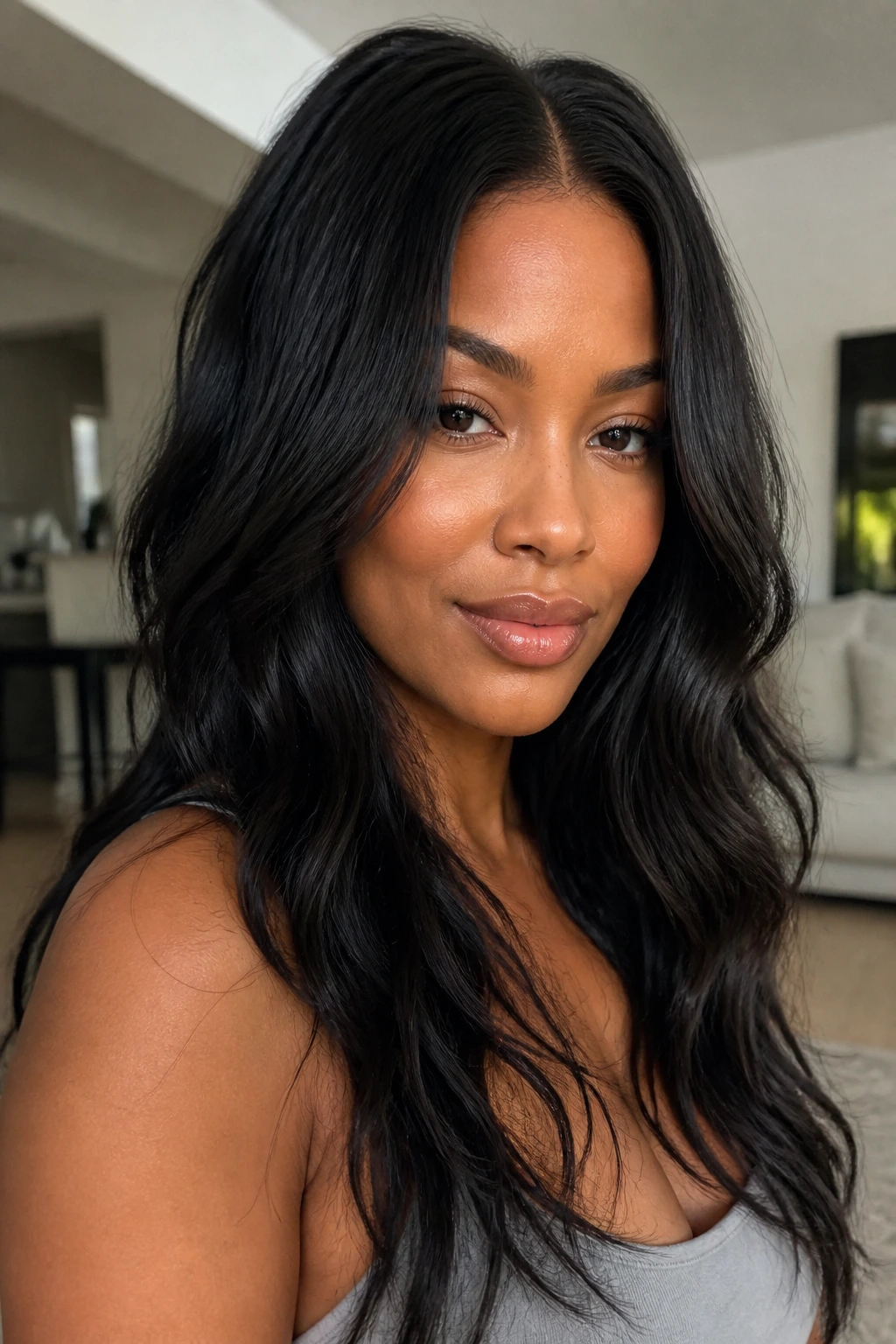
A center part can work on a round face, but only when the rest of the style does some shape work. If the crown is flat and the sides are full, the face can look broader. If the top has lift and the waves fall long and airy, the middle part starts to make sense.
I like this look best when the front pieces start below the cheekbone and taper toward the collarbone. The movement should feel stretched, not springy. That’s the difference between a style that lengthens and a style that just sits there.
This one also rewards shine. A smooth finish on the mids and ends helps the center part read intentional instead of severe. Keep the roots clean, keep the wave pattern soft, and don’t be afraid of a little off-center movement in the front if the face needs it.
4. High Ponytail with Loose Waved Length
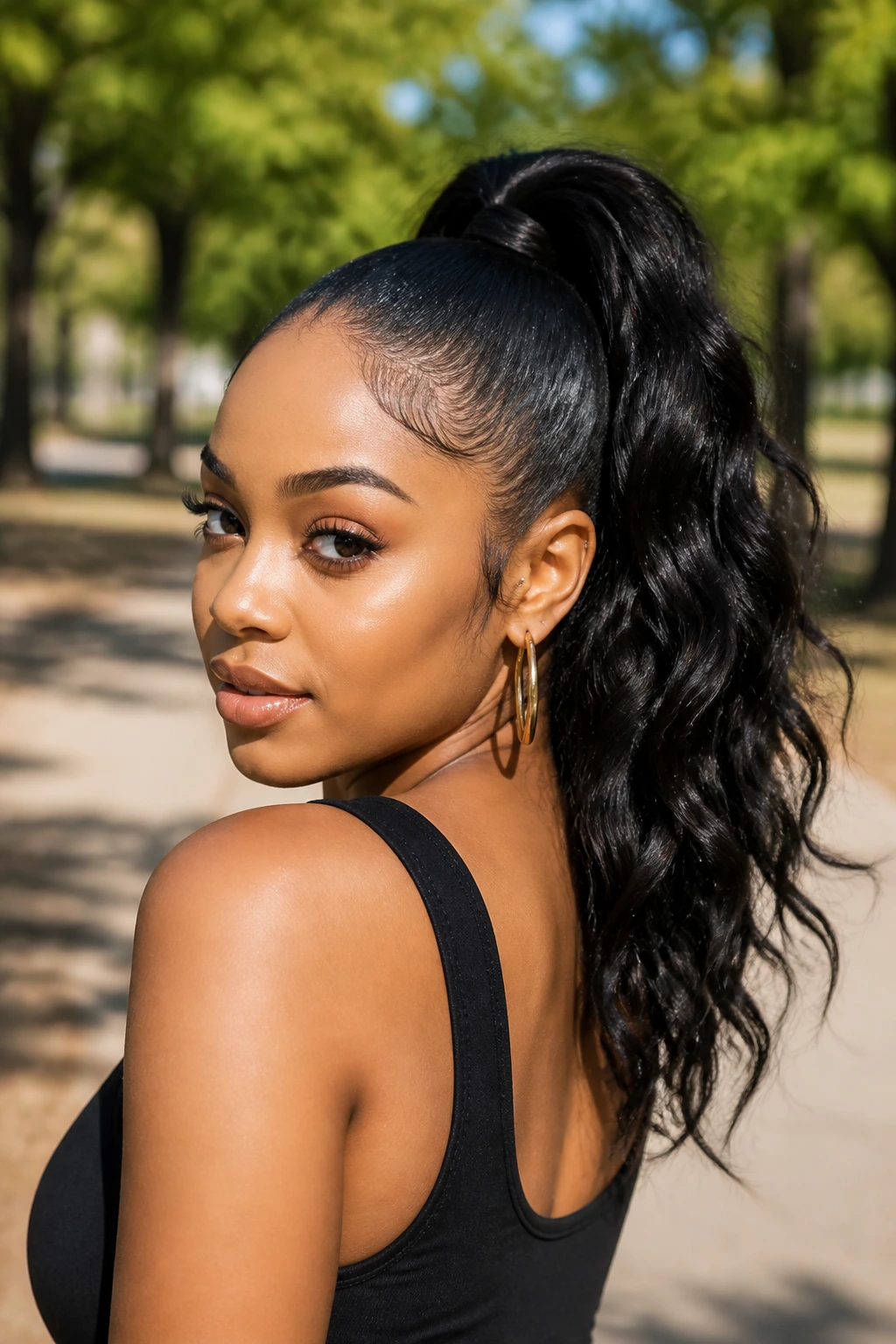
Pulling the hair up does not have to add width. In fact, a high pony can make a round face look longer when the base sits above the crown and the ponytail itself drops into loose waves. The lift at the top gives the face a taller frame, which is the whole point.
Keep the roots sleek. That part matters. If the ponytail base is bulky or puffy around the sides, you lose the lengthening effect. The tail should be where the texture lives, not the scalp.
- Best base height: just above the crown.
- Best wave placement: from mid-tail to ends.
- Best finish: a wrapped base and a few soft face pieces left out.
A little sheen on the ponytail keeps the style from looking dry under indoor light. Too much oil at the roots will make the top collapse, and that ruins the shape fast.
5. Half-Up Crown with Cascading Waves
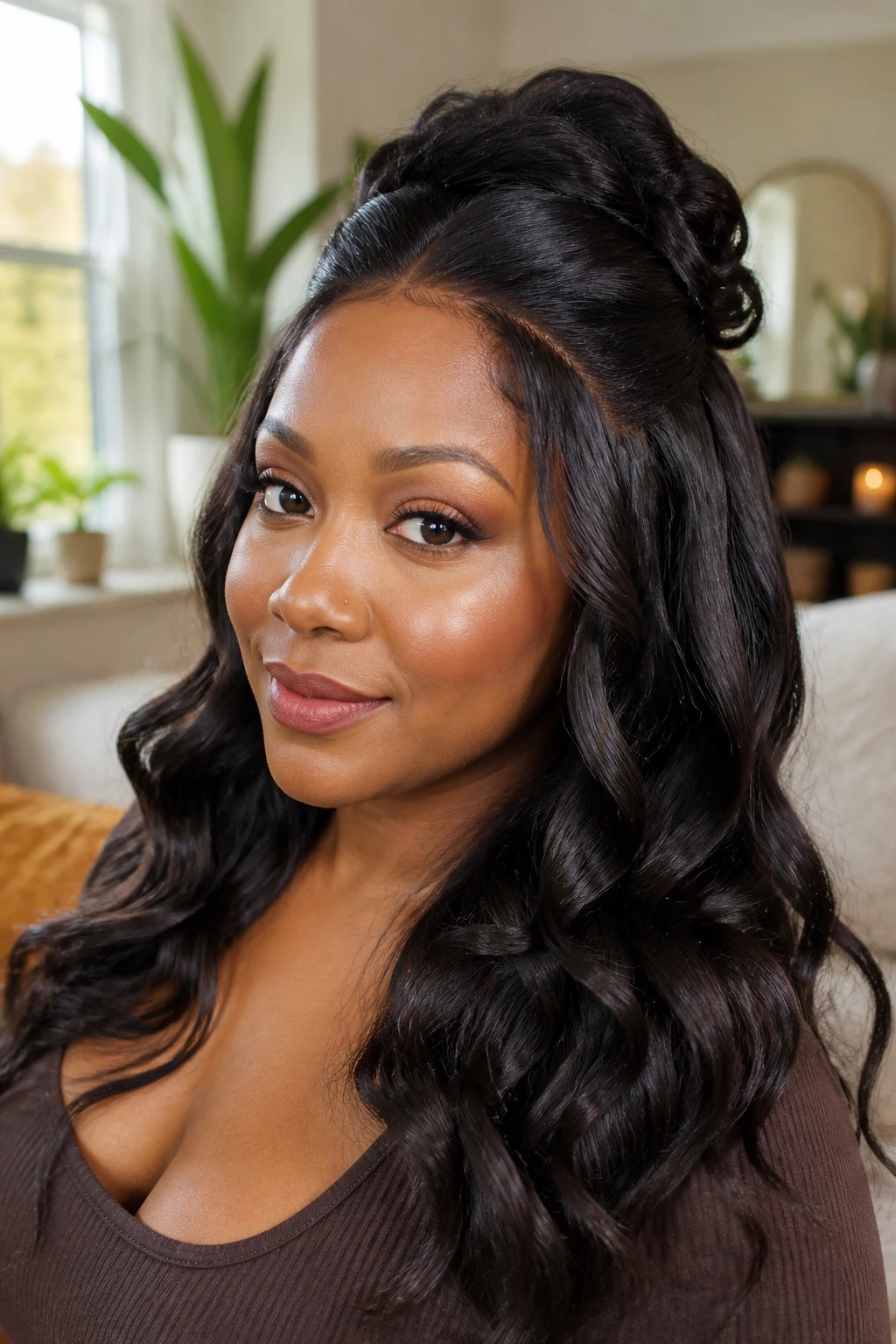
A half-up style gives you a bit of height without exposing the whole face. That’s useful on a round face because the lifted crown creates a vertical line while the bottom half still gives you softness and movement. It’s one of the easiest ways to wear beachy waves without feeling heavy around the cheeks.
The top section should be secure, but not pulled so tight that it flattens the scalp. Leave a touch of volume near the crown, then let the lower half fall into brushed waves. If the front pieces are left long enough to frame the temples, the face gets a cleaner outline.
This is the kind of style that looks better after the waves cool and separate a little. A clipped half-up section, a loose bow, or a small barrette can change the whole mood. Keep it airy. The style should float, not fight.
6. Sleek Low Ponytail with Soft Ends
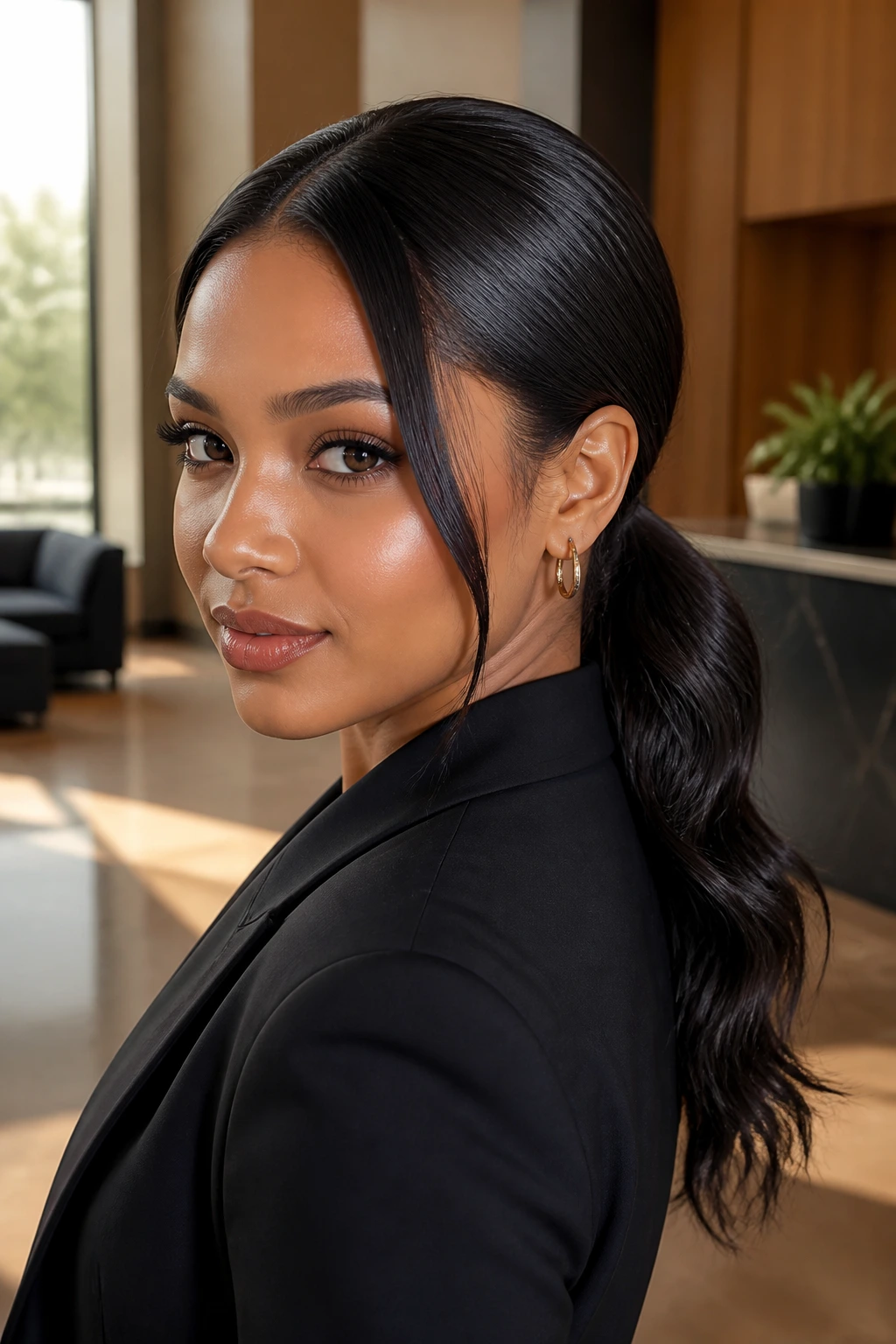
A low ponytail sounds simple, but on a round face it can be one of the smartest shapes in the group. The nape placement keeps the line low and long, and the soft waved ends stop the style from feeling severe. It is tidy without being stiff.
The trick is to keep the front smooth and the tail loose. If you want more length, part the hair slightly off-center and let one face-framing strand fall free. That one strand can take a lot of pressure off the cheeks.
This style works especially well for formal outfits, work events, or any day when you want the hair controlled but still soft. A little gloss on the tail is enough. The finish should look polished, not oily.
7. Waist-Length Sew-In with Invisible Layers
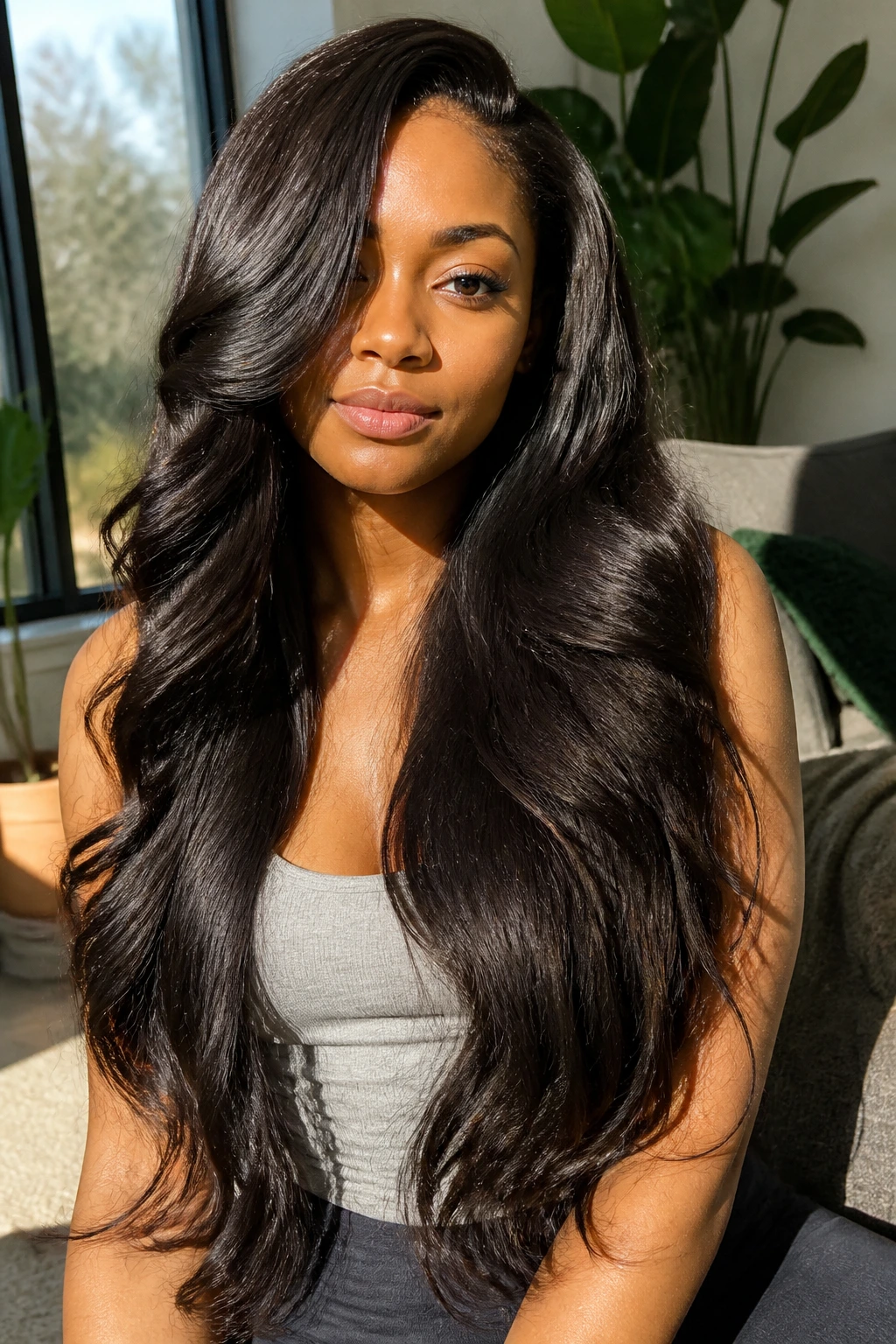
Long hair gives a round face the vertical line it needs, and a waist-length sew-in can do that without making the style feel bulky if the layers are handled well. I like invisible layers here because they remove weight from the lower sections while keeping the overall length dramatic.
The goal is movement, not a curtain. Hair that hangs in one heavy sheet can make the face look wider by comparison. Soft layers around the front and underneath keep the whole install from feeling blocky, especially around the jaw and shoulders.
If you choose body-wave bundles or a brushed-out curl pattern, keep the ends soft and separated. A light serum through the mids is enough. Heavy product at the roots only makes the install look flat and tired.
8. Chin-Length Bob with Tapered Front Pieces
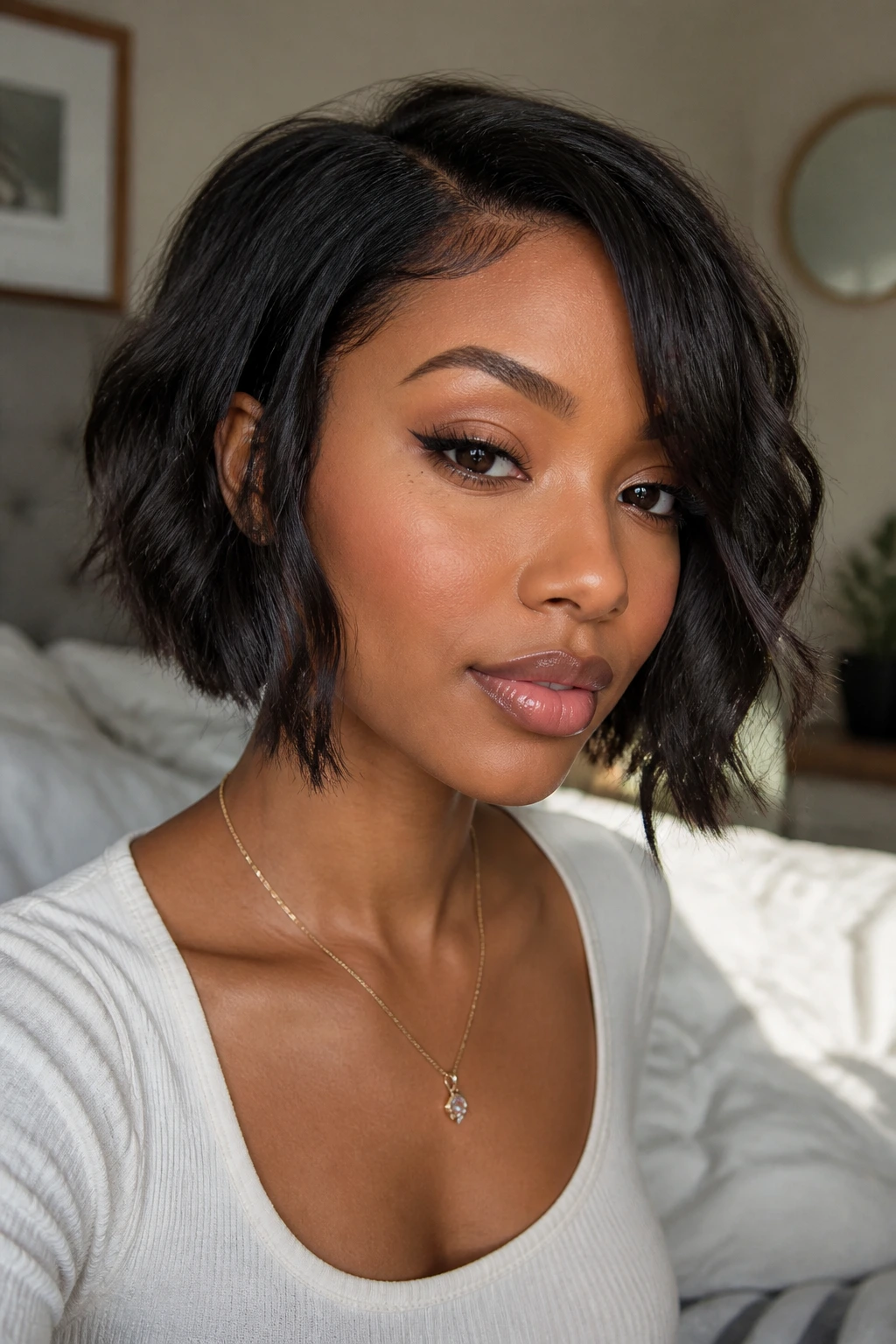
A chin-length bob can work, but it needs a little help. Straight-across ends that stop right at the cheek line are usually too blunt for a round face. An angled bob with longer front pieces is cleaner because it stretches the face instead of boxing it in.
The wave should stay loose. You want movement at the edges, not a tight curl that piles up around the cheeks. A side part helps here, too, because it breaks up the symmetry and gives the face a little diagonal motion.
This is a good choice if you like shorter hair and still want shine. A smooth finish on the ends makes the cut look crisp. If the bob is too thick around the sides, ask for a bit of internal layering so it moves instead of sitting like a helmet.
9. Side-Swept Pixie with Soft Bends
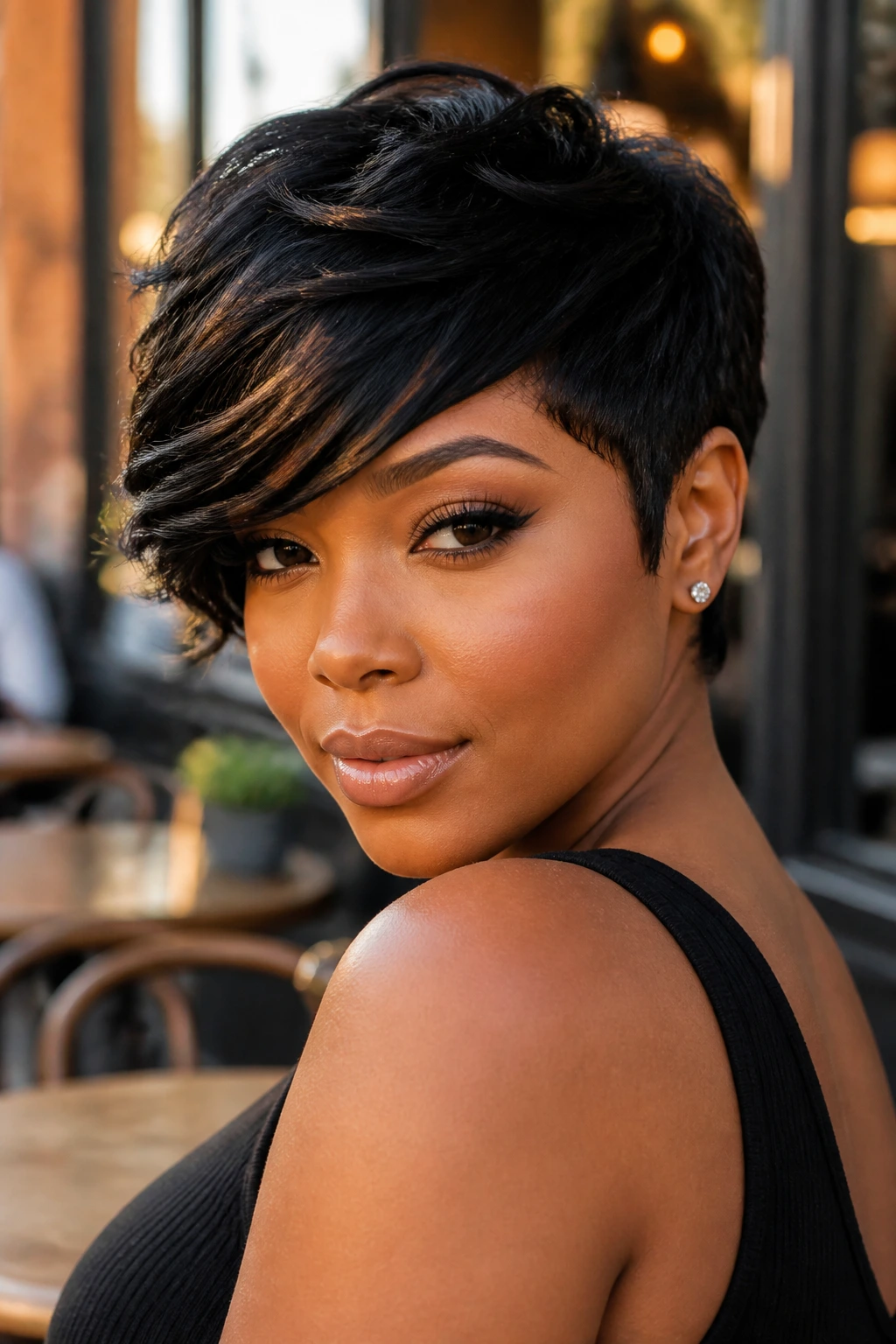
Short hair does not have to give up the face-shaping work. A pixie with a long, side-swept top creates a line that moves across the forehead and down the cheek, which helps a round face look less circular. The sides can stay tight while the top does the talking.
Soft bends on the crown keep the look from going stiff. I’d use a small wand or a finger-wave pattern on the longer top sections, then brush them just enough to soften the curl into a wave. Too much separation and the style gets messy; too little and it looks helmeted.
This one is bold, and that’s the appeal. The shine should live at the top and around the fringe, not all over the short sides. Keep the texture controlled and the shape clean.
10. Tapered Cut with Lifted Top Waves
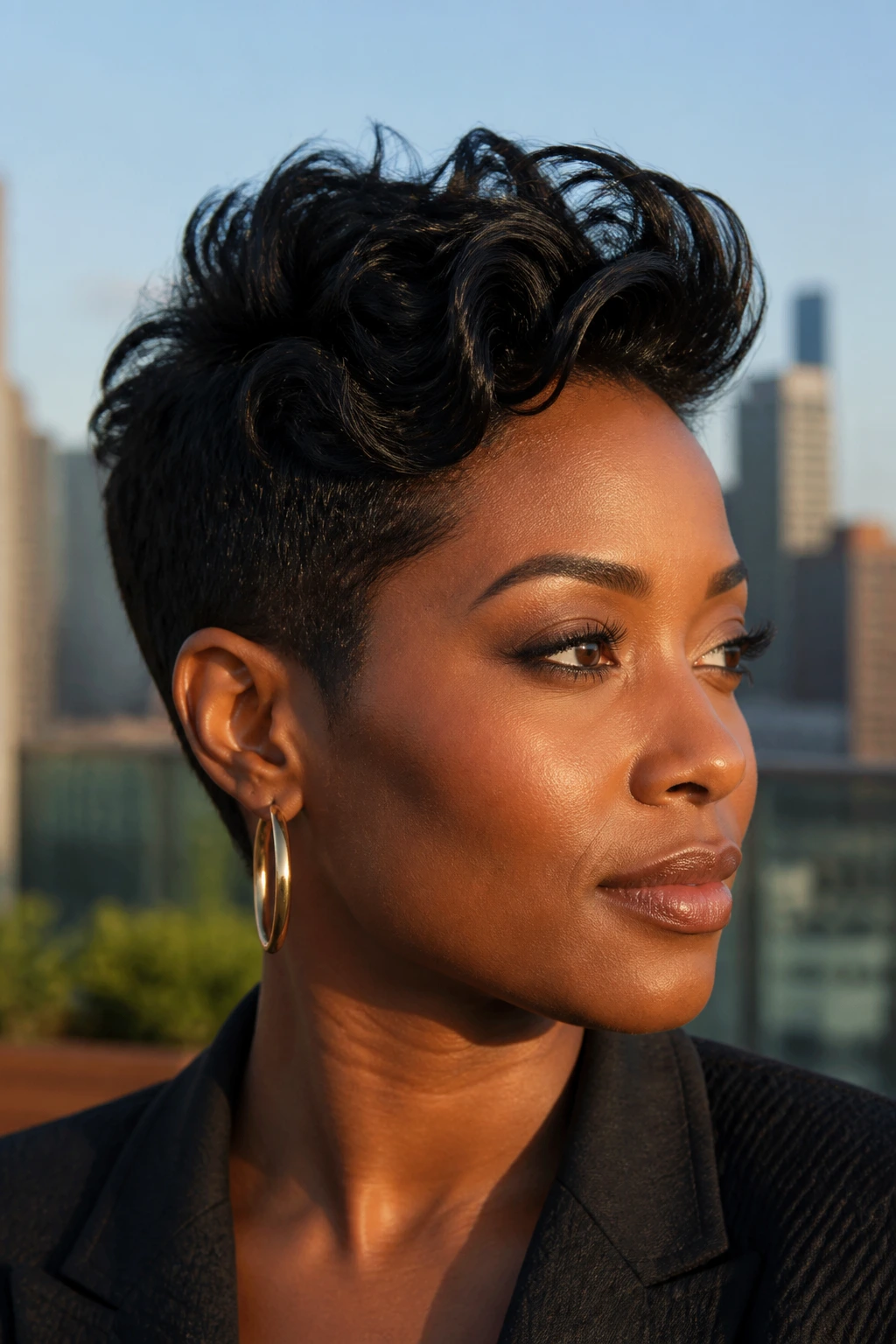
A tapered cut can flatter a round face better than a lot of longer styles, because the shape naturally adds height where the face needs it most. The sides stay close, the top has room, and the eye goes upward instead of outward. That is the whole game.
Why the crown matters
If the top is flat, the cut loses its advantage. Use mousse or setting foam at the roots, then shape the top into loose waves or stretched bends after drying. On natural hair, that can mean a rod set on the top sections or a soft twist-out brushed into wave pattern.
The finish should feel airy. I like this look when it stays crisp around the ears and soft on top. It is a neat, shape-first style, and it’s one of the best choices if you want the face to look longer without adding length all over.
11. Silk-Pressed Layers with Brushed-Out Movement
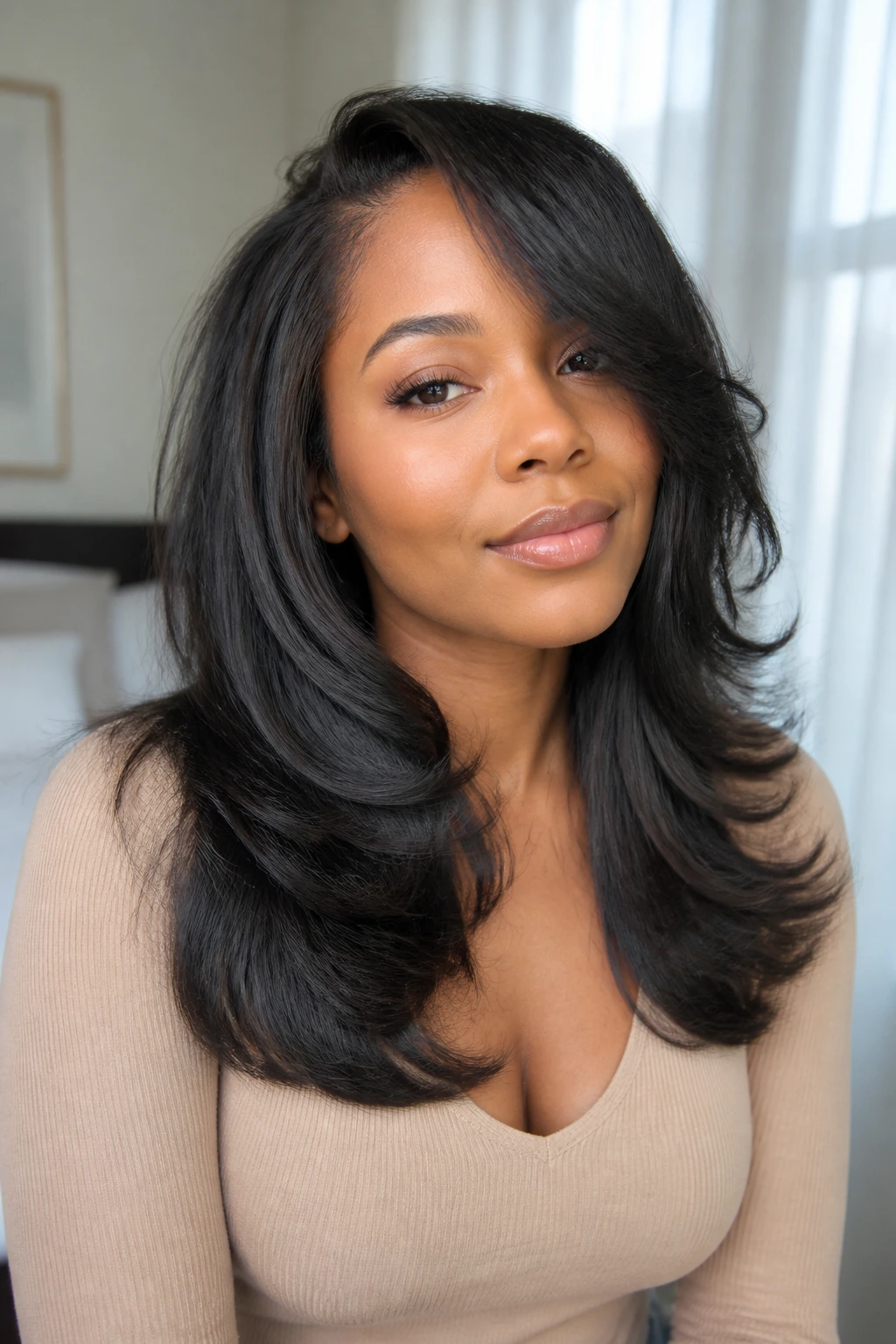
Silk-pressed hair and beachy waves go together because the press gives you smoothness, and the wave set gives you motion. On a round face, layers keep the shape from turning into one wide sheet. That matters. A lot.
Start with healthy heat protection and a clean press. Then bend the ends with a wand or a flat iron, let them cool, and brush them out while they’re still warm enough to soften. That brushed-out stage is what turns curls into waves.
The layers should fall around the collarbone and lower. If the shortest pieces hit the cheek, the style can spread out in the wrong spot. When it’s done well, though, this look has a clean shine that works from every angle.
12. Blunt Lob with Airy Texture
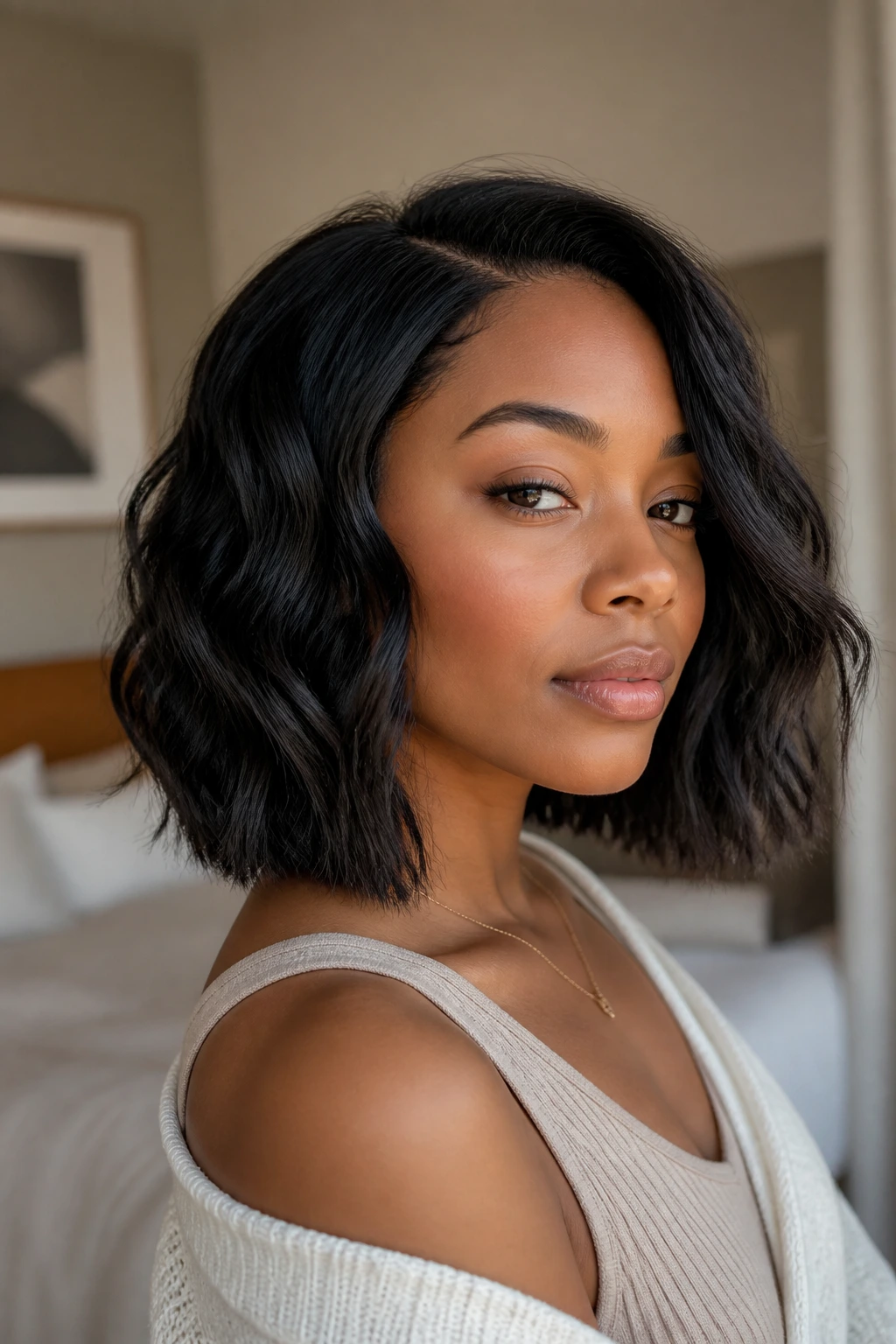
A blunt lob sounds sharp, and that’s exactly why it works here when the texture stays light. The strong edge gives the face a clean border, while the soft wave breaks up the hard line just enough to keep it from looking heavy. It’s one of my favorite balances in the whole group.
Keep the length at the collarbone or a touch below it. If the line ends at the chin, the face can look wider. If the wave starts too high, the hair can puff at the cheeks. The sweet spot is a loose bend through the mids and a smoother end.
An off-center part helps the blunt edge feel less rigid. You get structure, but not stiffness. That is a good trade.
13. Closure Wig with Glossy S-Curves
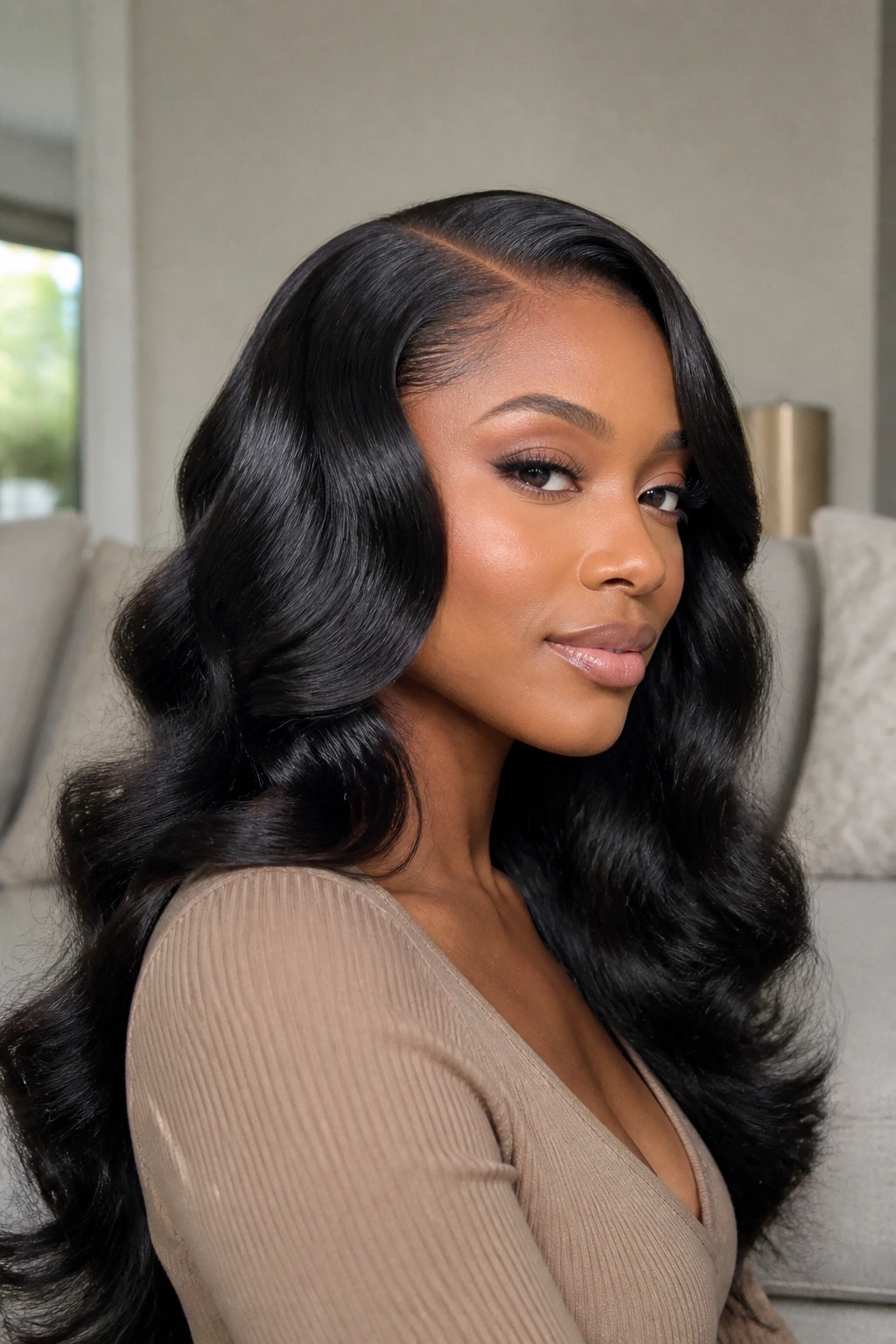
A closure wig is useful when you want the wave pattern to look polished every single day without rebuilding it from scratch. The closure gives you a clean part, and the wave pattern can be set to fall in soft S-curves that flatter a round face by moving the eye downward.
The lace line matters as much as the waves. If the part is too flat or the density is too heavy at the sides, the whole style can look boxed in. Keep the front a little softer and let the waves take shape through the mids and ends.
I’d choose this when you want predictability. There’s a reason people come back to it. It gives you shine, length, and a face-framing shape without a ton of daily work.
14. U-Part Install with Leave-Out and Movement
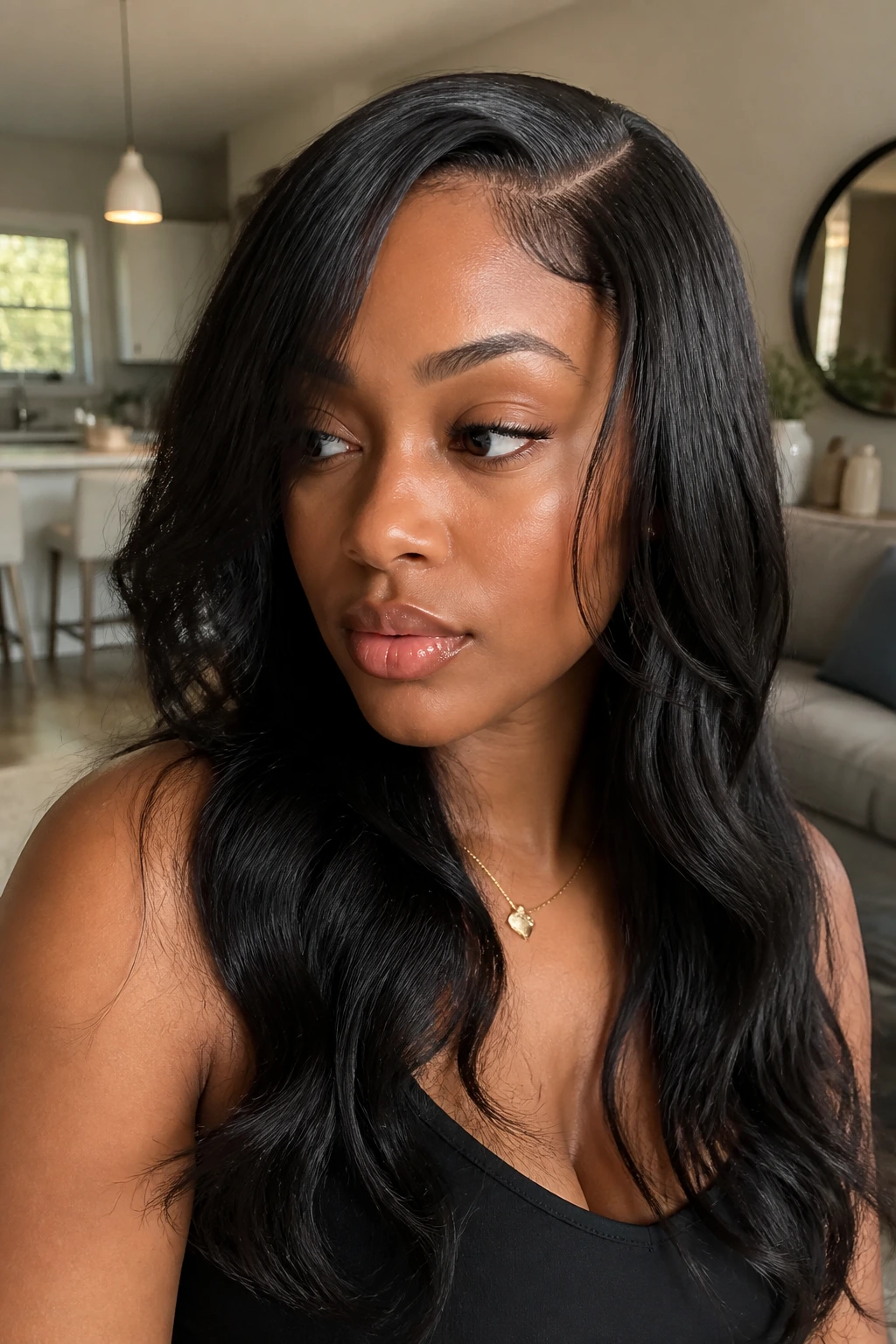
A U-part install is one of the easiest ways to make the style look like it belongs to you, because your own hair does the framing at the part and hairline. That natural blend helps a round face because the leave-out can be shaped exactly where you need softness.
- Match the texture first. If your leave-out is coarse and the install is silky, the mismatch will show.
- Keep the part slightly off-center if you want more length.
- Ask for movement at the front, not bulk around the ears.
The beauty of this style is control. You can keep the install long and glossy while your own hair handles the face-framing job. That’s a nice combination when you want the style to feel low-drama but still shaped.
15. Knotless Braids with Curled Ends
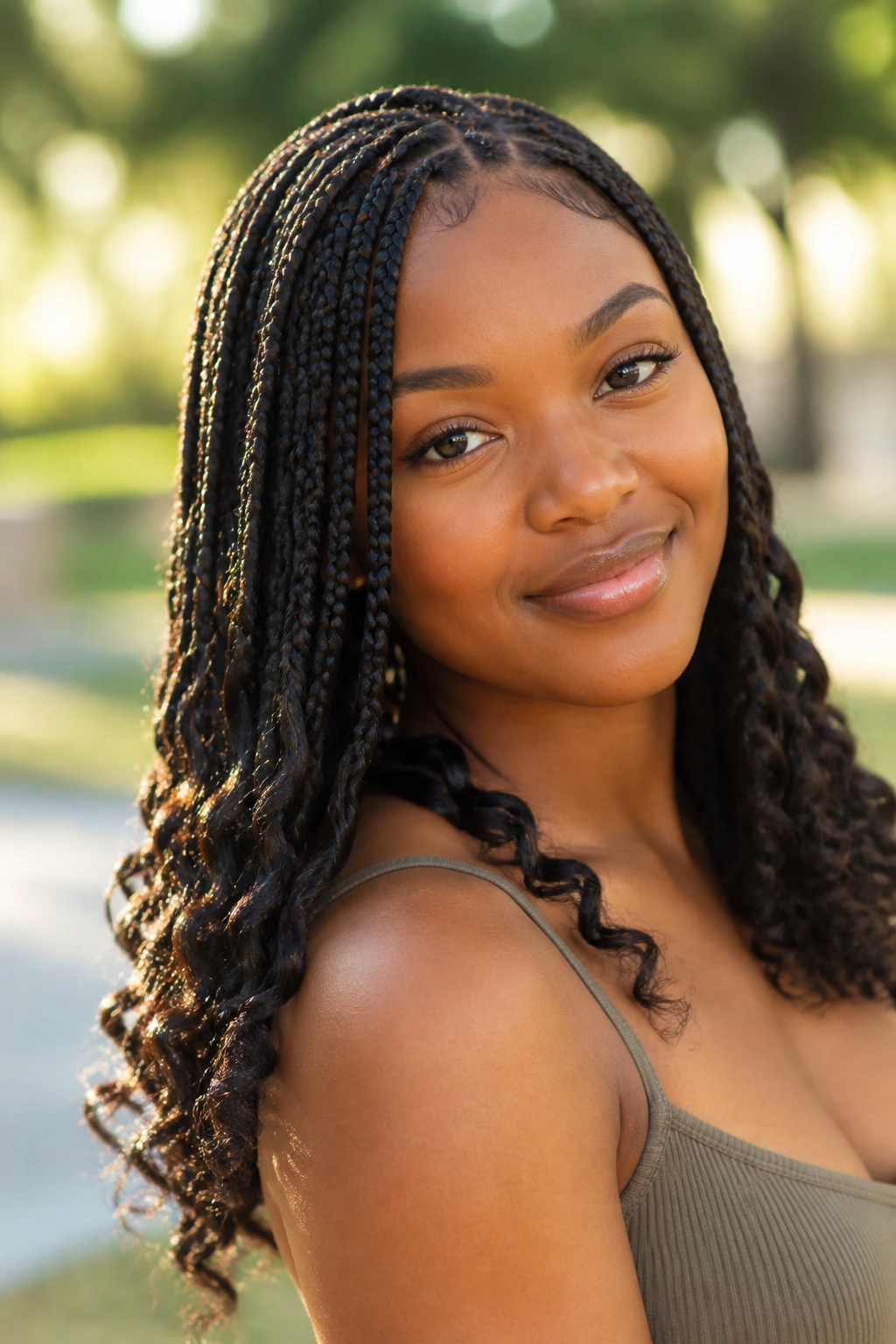
Knotless braids with curled ends solve a real problem: braids can look too straight and severe around a round face if every line is rigid. The curled ends soften all that geometry and give the style a bit of beachy movement without losing the protective part.
Keep the front braids a touch longer and avoid making the part line too wide. That keeps the style from widening the cheeks. A mousse set on the ends, wrapped overnight, helps the finish stay smooth and glossy.
This look works especially well when the braids are medium-sized. Tiny braids can disappear; oversized braids can feel heavy near the face. Medium is the sweet spot here.
16. Boho Knotless Braids with Loose Waves
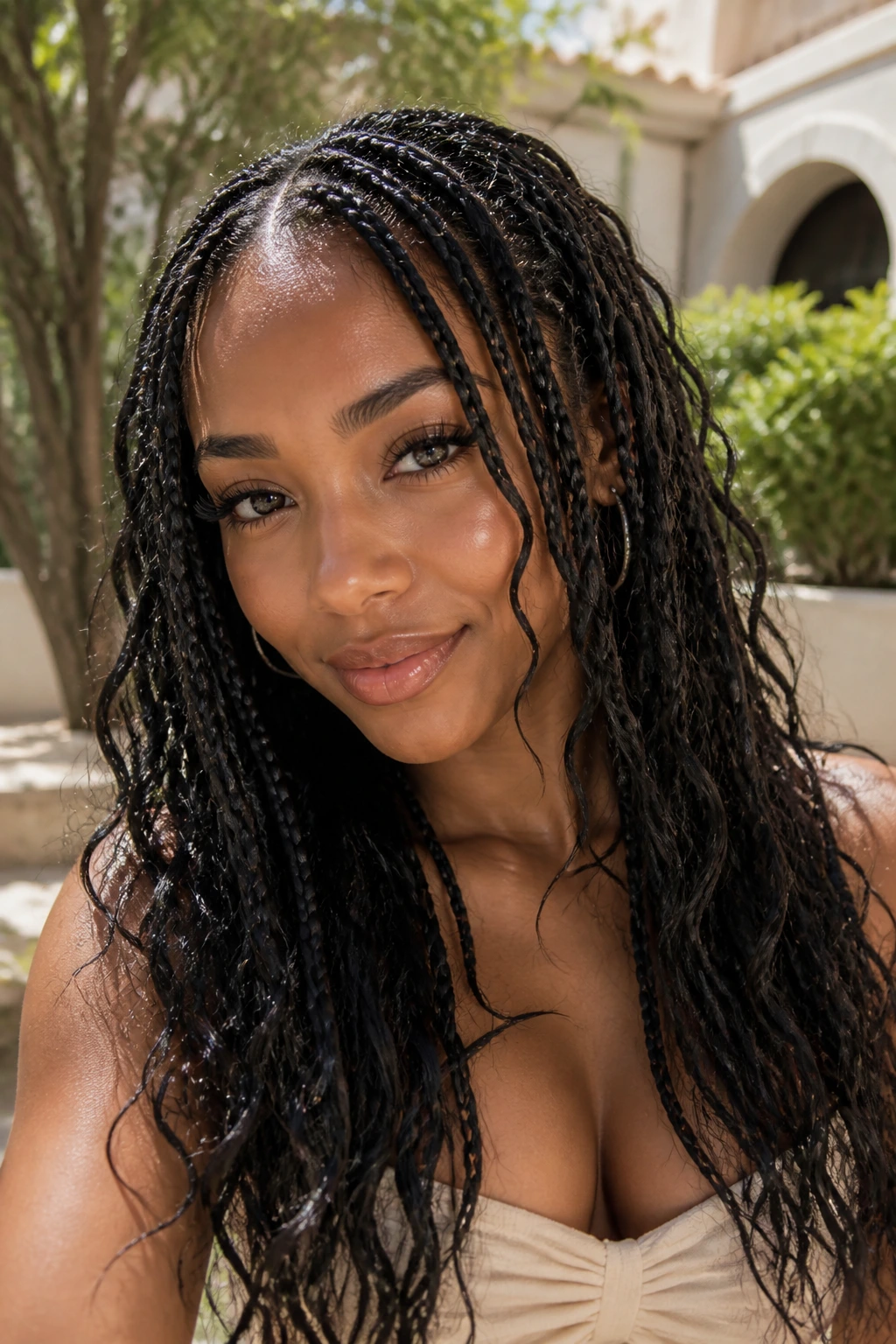
Boho knotless braids bring in loose waves where the braid pattern would normally be too clean. Those soft pieces of human hair soften the whole face, which is exactly what a round shape likes. The result feels relaxed instead of rigid.
How to keep the loose pieces soft
Don’t overload the braids with too much loose hair. A little goes a long way, and too much turns the style frizzy fast. Keep the pieces concentrated around the face and lower lengths so the top stays neat.
This is one of the better choices if you want movement without daily heat. The wavy pieces do the beachy part for you, while the braids handle the structure. It’s a good mix, and it photographs well from the front because the face pieces create that gentle vertical frame.
17. Fulani Braids with Wavy Sides
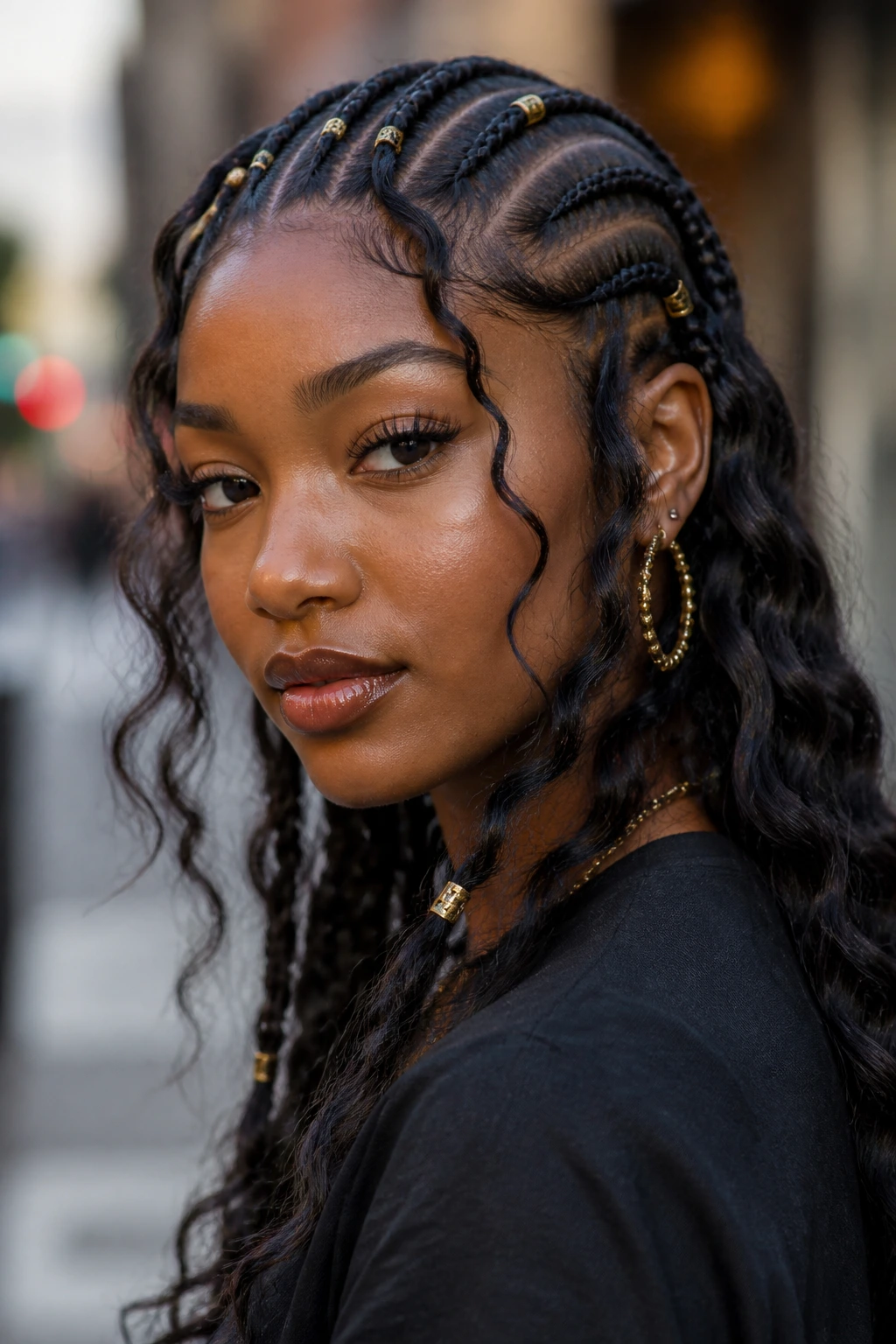
Fulani braids already bring strong lines to the face, so the beachy-wave element needs to soften, not compete. Wavy side pieces or curved braids near the temples make the style feel more fluid. That matters on a round face because hard symmetry can make the cheeks look fuller.
A curved part line helps here. So does keeping the side pieces long enough to skim the jaw instead of stopping at the cheekbone. If you add beads, keep them light and balanced so the sides do not feel top-heavy.
This style has presence. A lot of it. But it still works because the waves break up the geometry and keep the look from going boxy.
18. Faux Locs with Beachy Ends
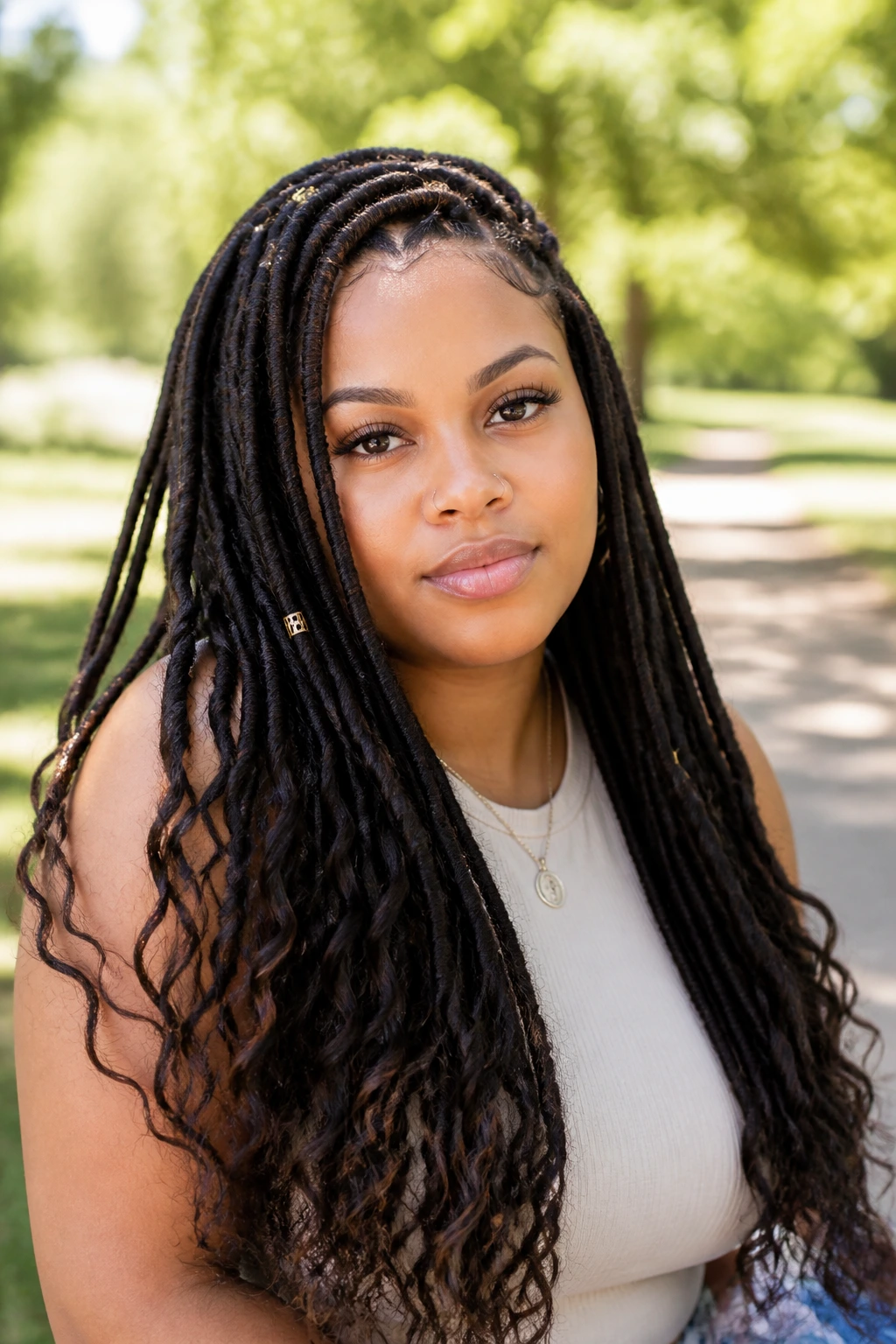
Faux locs can be surprisingly flattering on a round face when the ends stay loose and soft. A stiff, blunt loc line tends to widen the lower face, while the curled or waved ends create movement that pulls the eye downward.
Keep a few face-framing locs a little longer than the rest. Those front pieces matter more than people think. They create a narrow frame at the temples and make the whole style feel less dense around the cheeks.
I like this look for its low-manipulation feel. You can get the texture, length, and shine without daily heat, and the style has enough shape to stand on its own.
19. Passion Twists with Soft Wave Ends
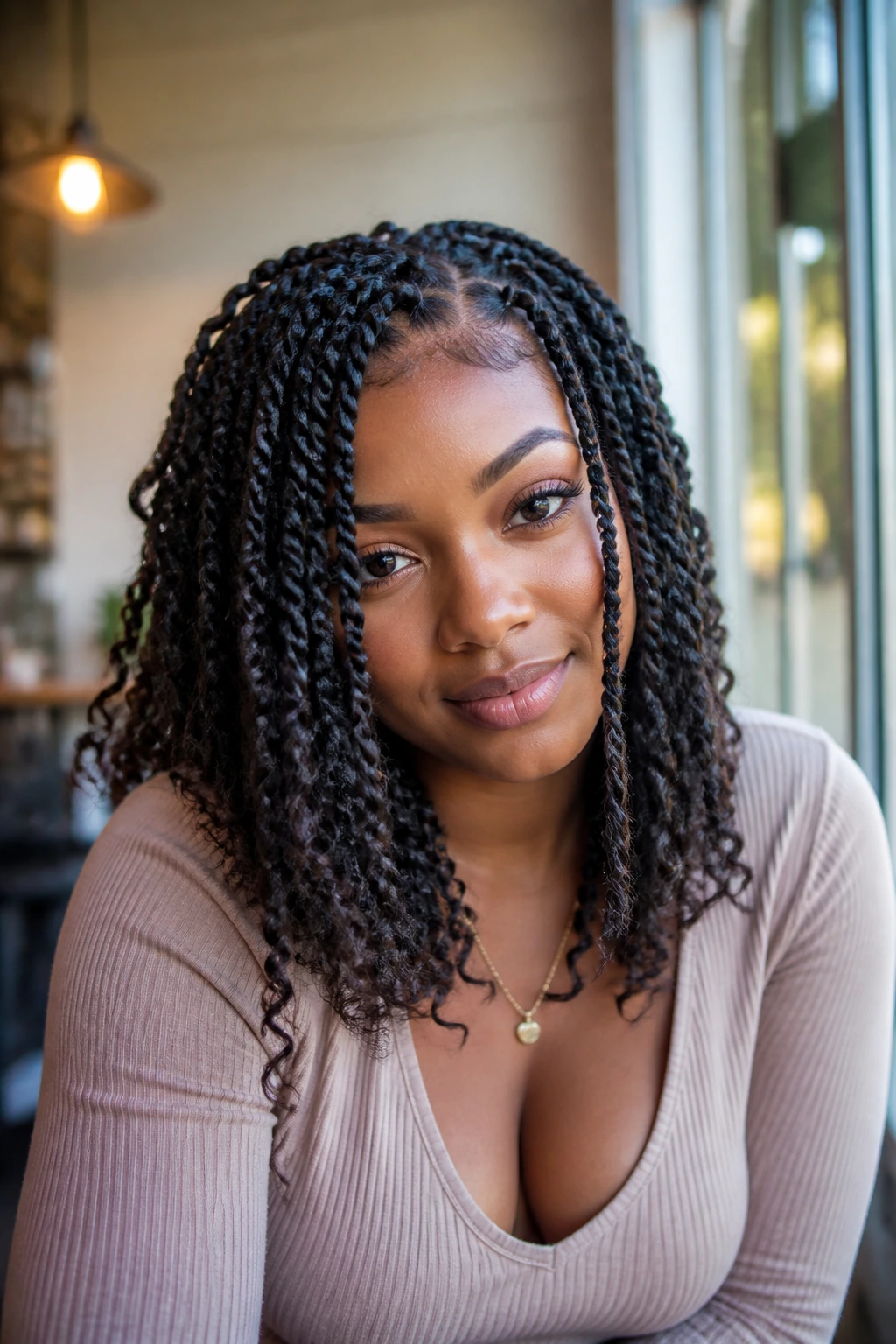
Passion twists already sit somewhere between a curl and a wave, which makes them an easy fit for this theme. The key is keeping the front pieces long enough to pull the face down visually and avoiding a setup that gets too full at the temples.
A shoulder-length or mid-back version usually works better than a short one. Shorter twists can bunch up around the cheeks if the density is high. The softer the ends, the more beachy the whole style feels.
This is one of the more forgiving styles in the group. It gives you movement, shine, and a bit of softness around the face without asking for much daily fuss.
20. Butterfly Locs with Loose Tendrils
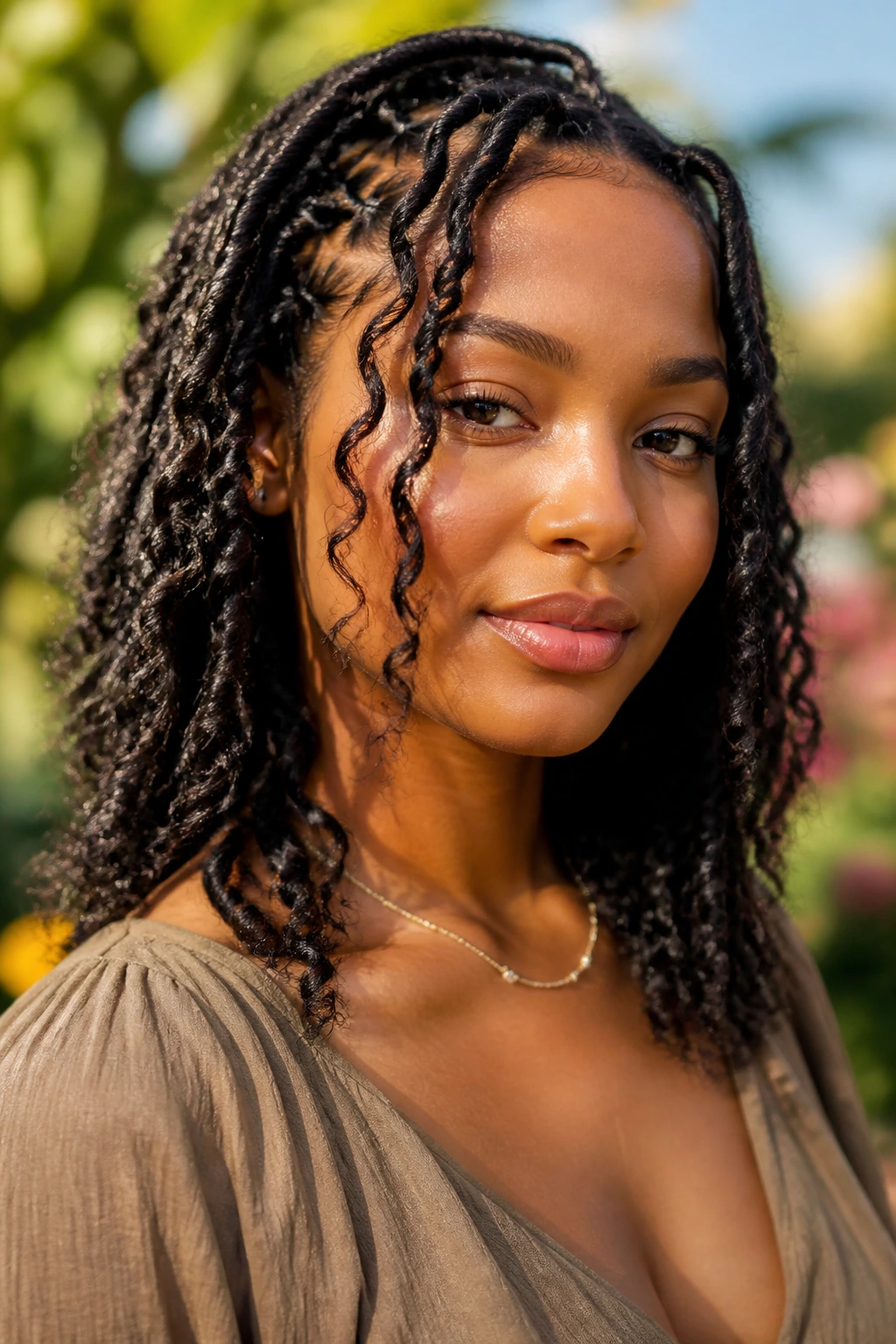
Butterfly locs have a softer, airier shape than classic faux locs, and that helps a round face a lot. The loose loops and tendrils break up the line of the style so it doesn’t feel too heavy at the sides. That softness is the real draw.
A few face pieces should be left loose on purpose. Not accidentally. Purpose matters here. If the front is too neat and tight, the locs can make the face look wider by comparison.
This style also takes well to mousse and a light wrap at night. Keep the roots neat and let the loose pieces keep their shape. That balance is what keeps the style pretty instead of puffy.
21. High Puff with Waved Face Pieces
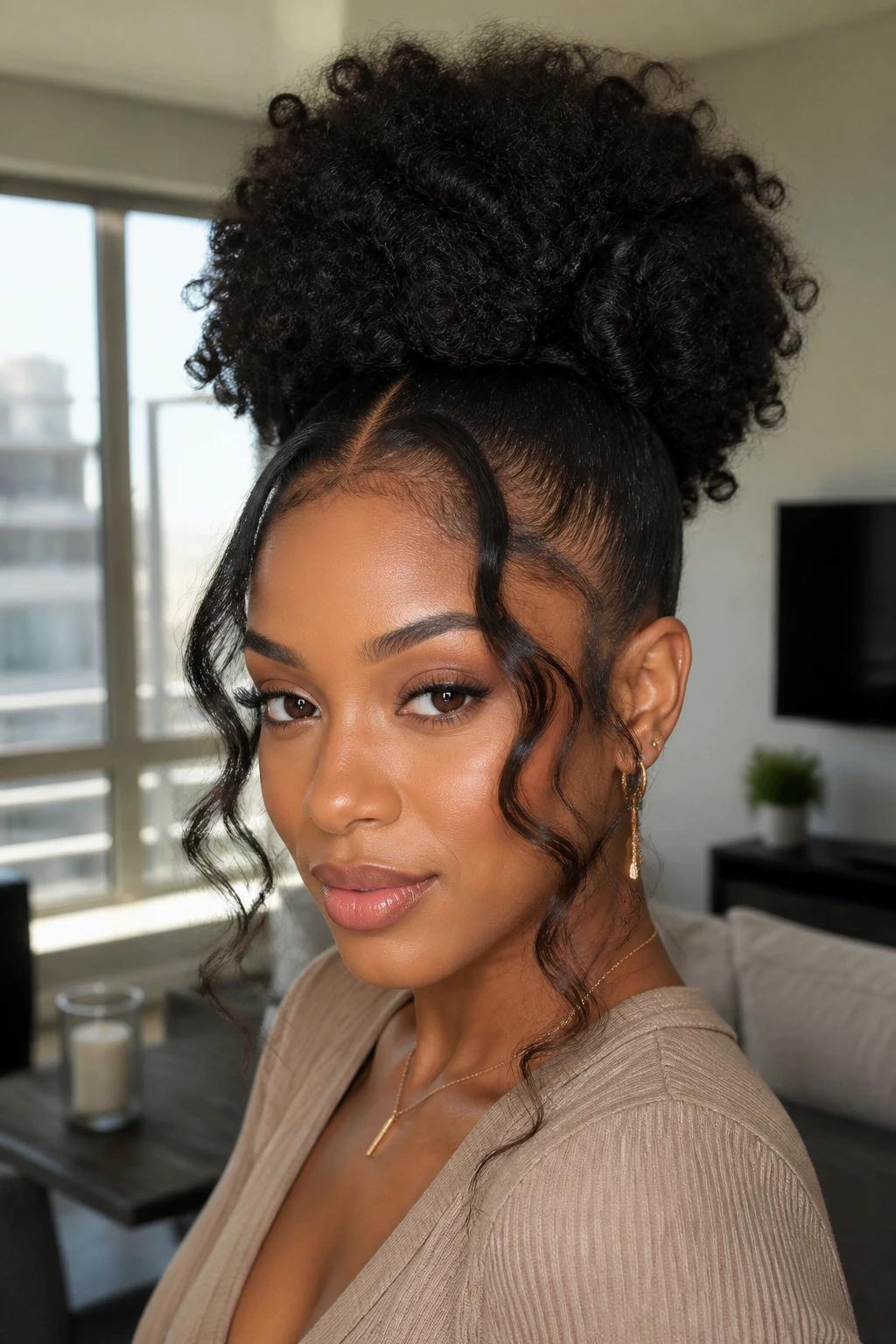
A high puff gives you instant height, and height is one of the easiest ways to flatter a round face. The puff sits at the crown, which draws the eye upward, while the face-framing pieces can be stretched into soft waves to keep the front from feeling bare.
Keep the sides smooth but not plastered down. A little texture is fine. Too much slickness can make the puff look disconnected from the rest of the face. The front pieces should feel light and bendy, not tight and springy.
This is a natural-hair favorite for a reason. It keeps the shape high and the finish soft, which is a strong combination when you want your features to stay open.
22. Low Bun with One-Side Wave Fall
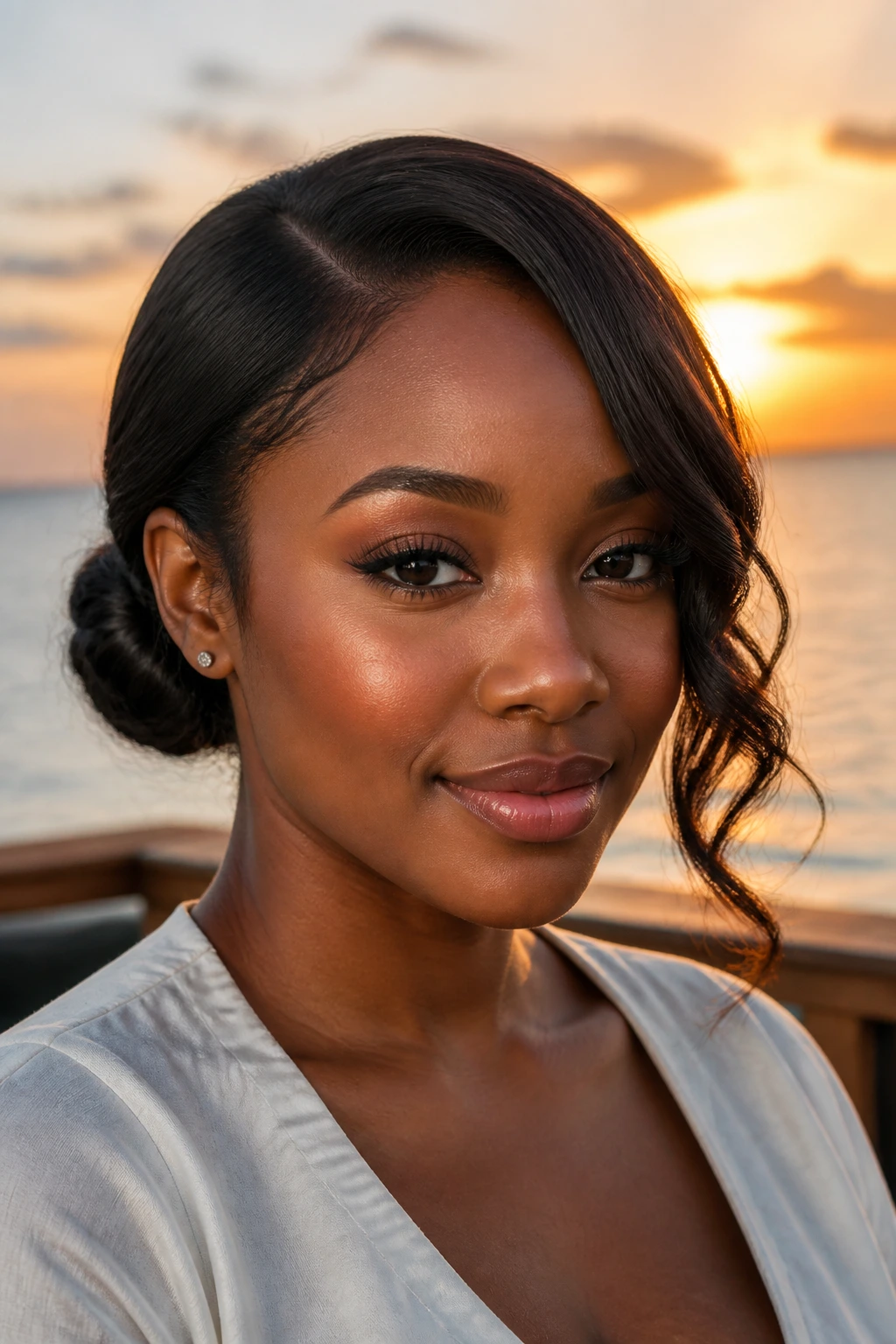
A low bun can still feel beachy if one side or the back has a soft wave fall. The bun keeps the style neat, while the loose section gives the face some movement and keeps the jawline from feeling boxed in. It’s a clean shape with a little drama.
This works especially well with a side part or a deep side sweep. The diagonal line helps the face look longer, and the loose waves keep the look from turning severe. If you want a formal style that still flatters, this is a good one to save.
The shine should be concentrated on the bun and the fall pieces. A smooth bun with glossy mids looks polished without getting greasy.
23. Side Ponytail with Soft Glam Texture
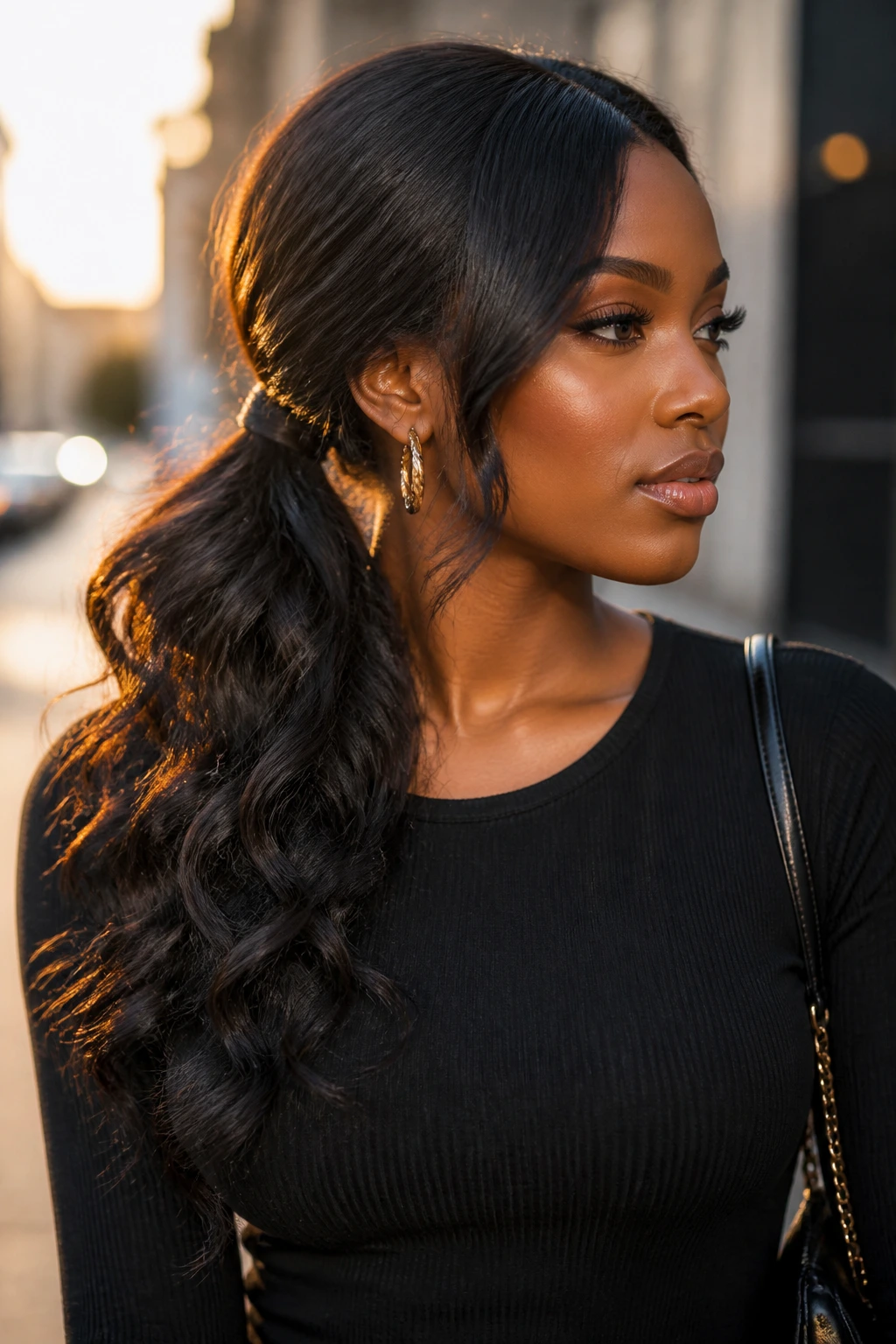
A side ponytail tilts the whole style diagonally, which is useful when the face itself is round. That angle gives you motion without needing a lot of extra height. The waves can drape over one shoulder and create a long, clean line.
Keep the ponytail loose enough to move, not so tight that it looks severe. A brushed wave through the tail works better than tight ringlets here. If you want more length, add a few face pieces and keep the part soft.
This is one of those styles that can read casual or dressed up depending on the finish. The shape stays the same. The shine level and the outfit do the rest.
24. Crochet Water Waves Bob
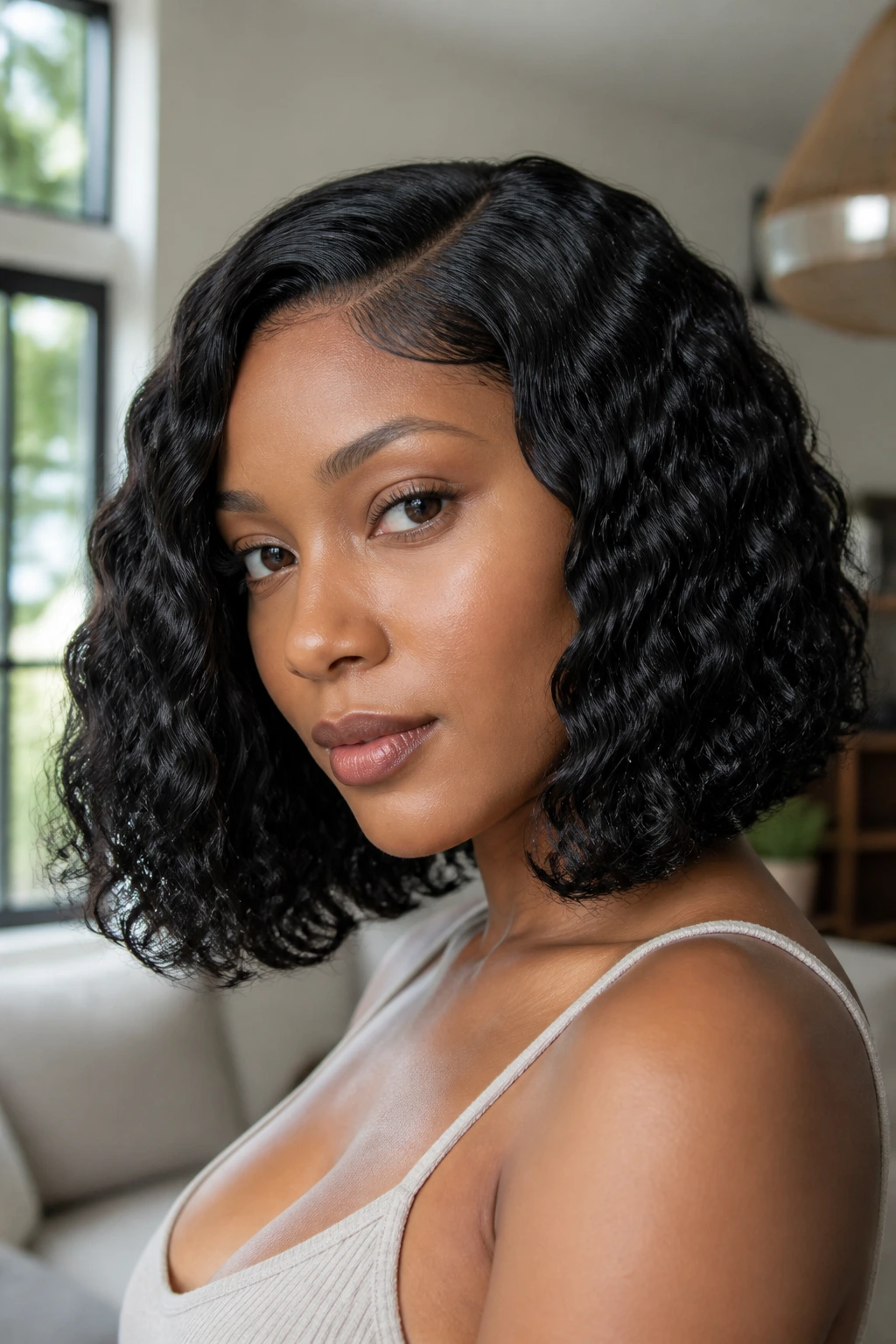
Crochet water waves give you a dense, textured wave pattern that looks soft from a distance and detailed up close. In bob length, the style avoids too much bulk while still giving the face enough movement to stay balanced. That is a useful combination for round faces.
A side part helps the bob fall more cleanly. So does keeping the fullness closer to the bottom than the sides. If the top gets too puffy, the style can widen the face instead of framing it.
This one is a solid choice when you want a low-manipulation install with a soft finish. A little mousse keeps the pattern neat, and a satin wrap at night helps the waves keep their shape.
25. Bantu Knot-Out with Piecey Waves
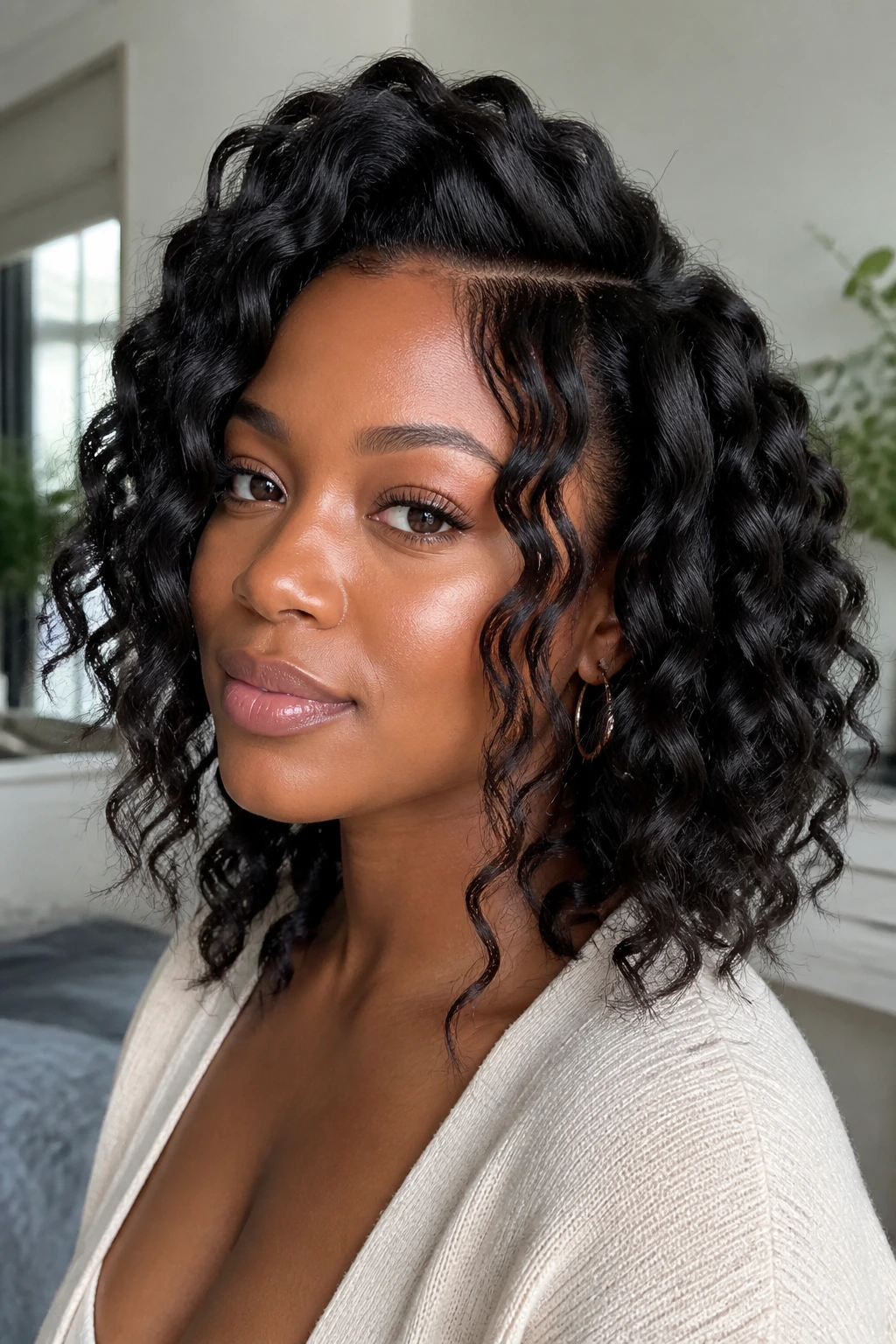
A Bantu knot-out gives you controlled, piecey waves without heat, and that makes it a smart option for round faces. The texture has enough separation to feel beachy, but the shape can still be stretched and arranged so the face looks longer.
The knots need to be fully dry before you unravel them. If you rush that part, the wave pattern collapses and frizzes out at the cheeks. Separate the sections gently, then stop before the hair turns into a cloud.
I like this style when the front pieces are kept a little longer and the crown gets a touch of lift. It feels soft, natural, and easy to wear. No blunt lines. No heavy sides. Just movement that does its job.
Why Beachy Waves Keep a Round Face Looking Longer
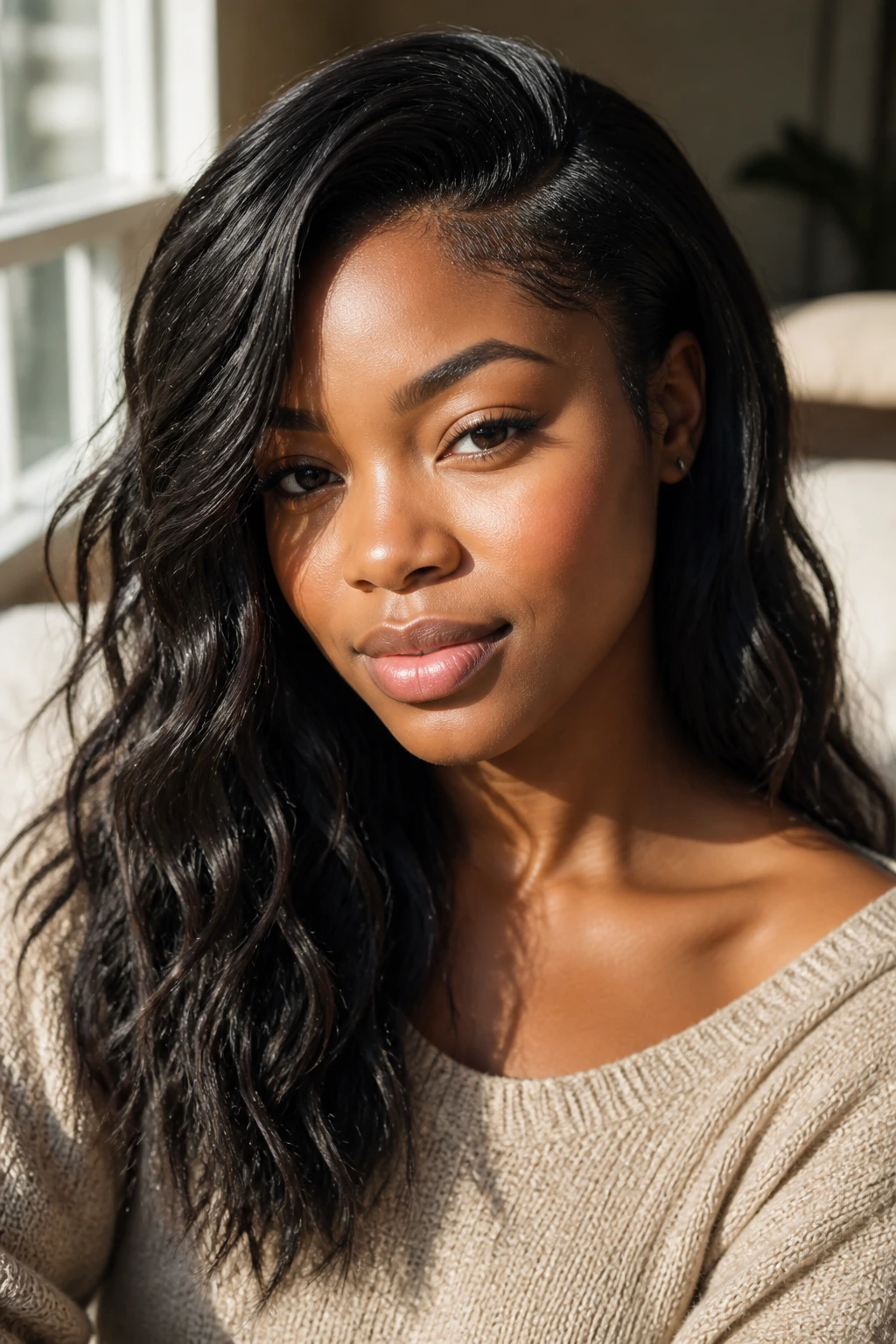
Round faces usually need one thing more than anything else: a shape that moves the eye vertically or diagonally instead of letting it sit flat across the cheeks. Beachy waves help because they break up the outline of the face without creating a hard edge. That’s why a side part, a little crown lift, or longer front pieces can matter more than the curl pattern itself.
Hair that ends at the widest point of the face tends to widen the face further. Hair that falls below the jaw and keeps its fullness lower down does the opposite. It sounds simple because it is. The real craft is placing the movement where it counts and leaving the cheek area a little cleaner.
Shine helps here too. A glossy finish keeps the waves from looking fuzzy or overworked, and that visual clarity makes the face frame feel sharper. The hair can still be soft. It just needs a little definition.
Picking the Right Base: Natural Hair, Relaxed Hair, Braids, and Extensions
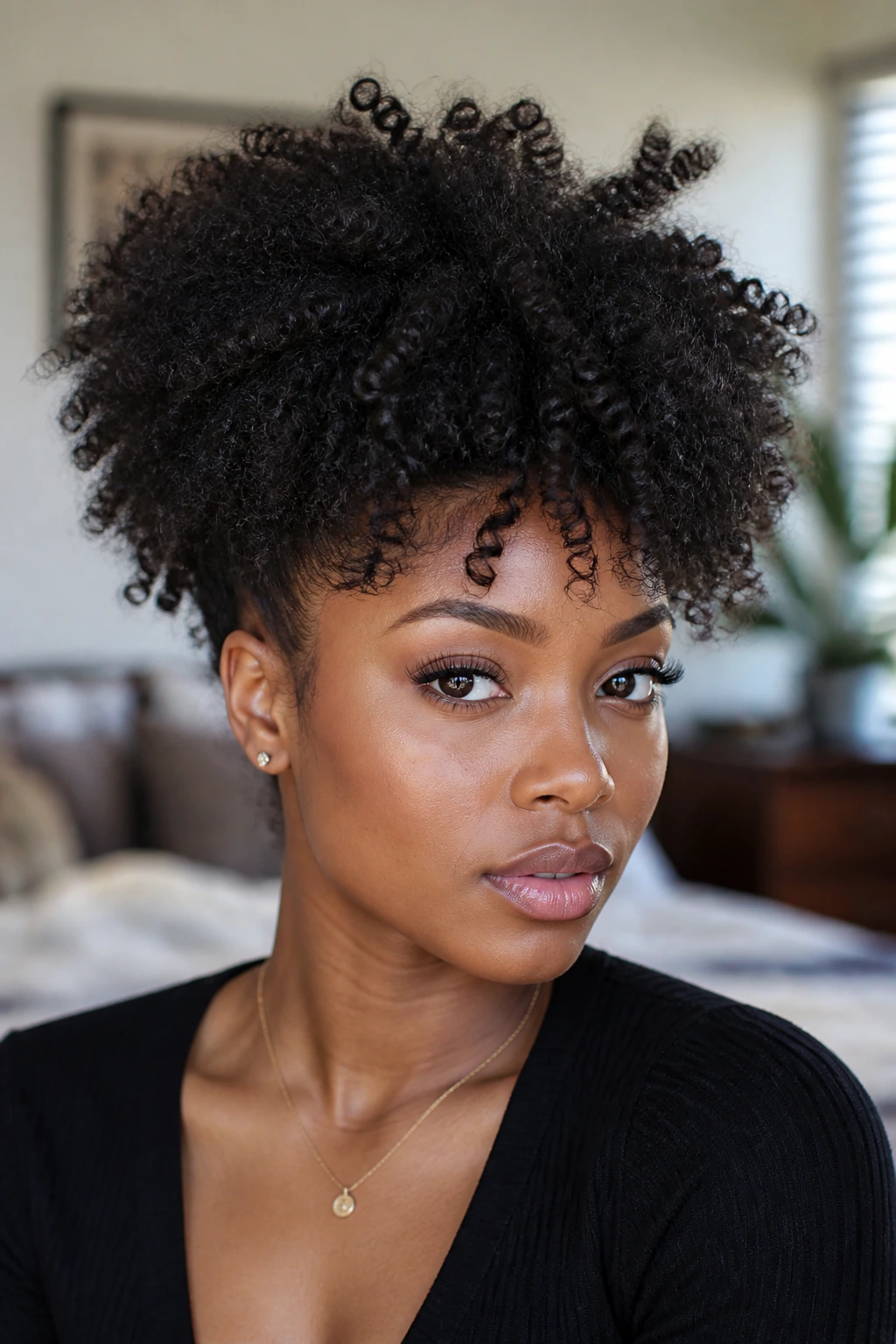
Not every style on this list needs the same base, and that’s a good thing. Natural hair gives you texture and volume that can be shaped into a puff, twist-out, or heatless wave. Relaxed or heat-stretched hair gives you smoother bends and more reflective shine. Extensions, braids, and locs give you length and low-manipulation structure.
Natural hair
If your hair is coily or curly, shape matters before shine does. Stretch the roots a bit, keep the front pieces longer, and use foam, setting lotion, or a light cream so the wave pattern holds without turning sticky. Heat is optional here, not required.
Relaxed or heat-stretched hair
This base is the easiest for brushed waves, lobs, and ponytails because the hair bends softly and keeps the finish smooth. Use heat protectant, keep the temperature low enough to avoid dryness, and brush only after the hair cools a bit. That keeps the shine.
Braids, locs, and twists
These styles already build in structure, so the wave work happens in the ends, the face-framing pieces, or the parting pattern. The big advantage is stability. The danger is bulk. Keep the front lighter and let the movement live lower down.
Wigs and sew-ins
These are the easiest way to control length and density. They also make the round-face shape work more predictably, which is useful when you want a polished finish. A good install should still move. If it looks stiff, the layers are too heavy.
What to Ask for in the Salon Chair
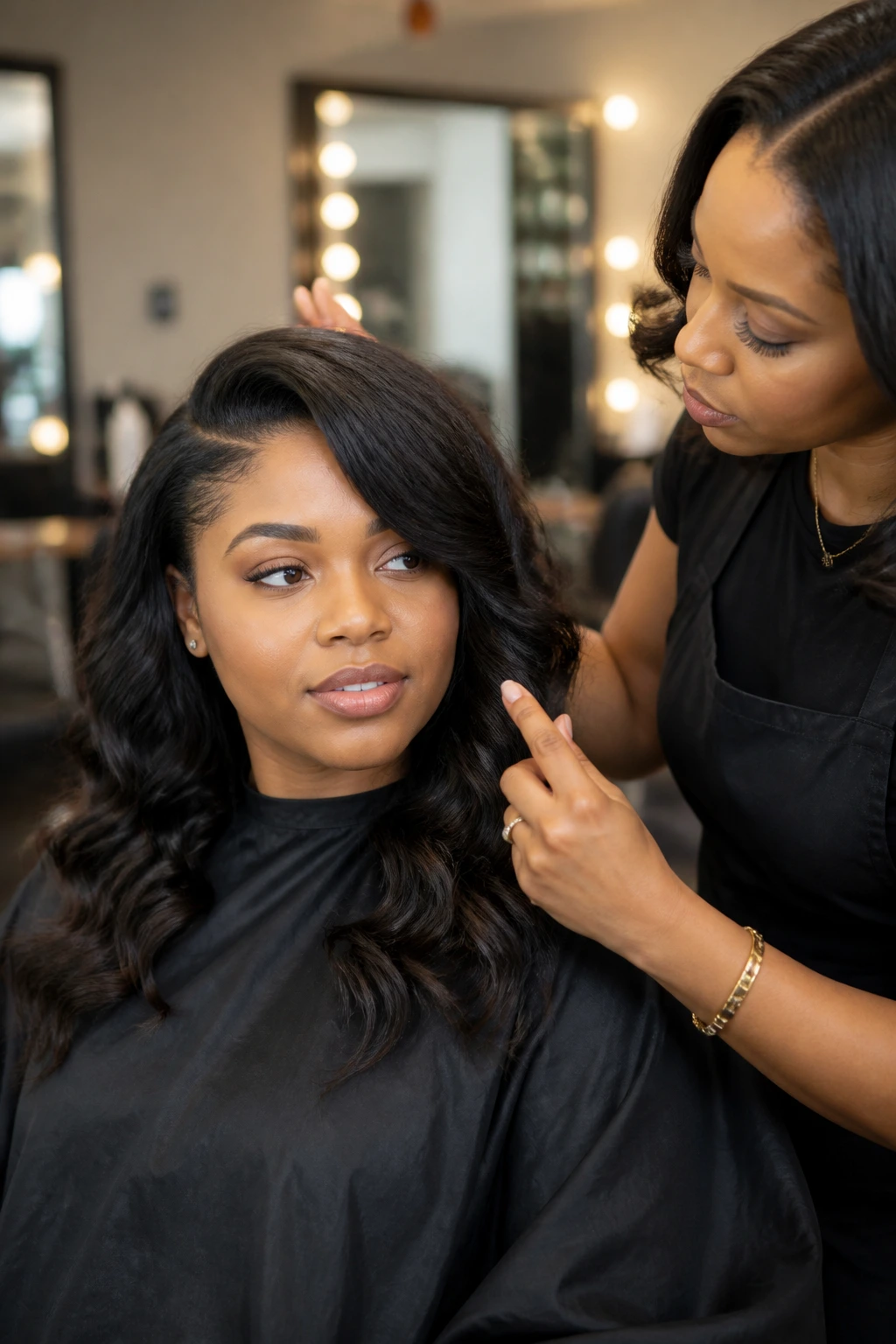
A good stylist can build the shape fast if you tell them what matters. Start with the face shape, not the trend. Say you want length below the chin, movement at the ends, and softness around the cheeks without a lot of width at the temples. That gives them something useful to work with.
If you want waves, ask where the pattern should begin. For a round face, “around the ears or lower” is a useful place to start. If you want a side part, say how deep you want it. A true side part and a barely-off-center part do different things.
For installs, ask about density near the sides. Too much hair around the temples can make the face look wider. For natural styles, ask where the front pieces should land. Mouth, chin, or collarbone are very different spots. Pick the one that works with your face, not against it.
Tools and Products That Make the Finish Last
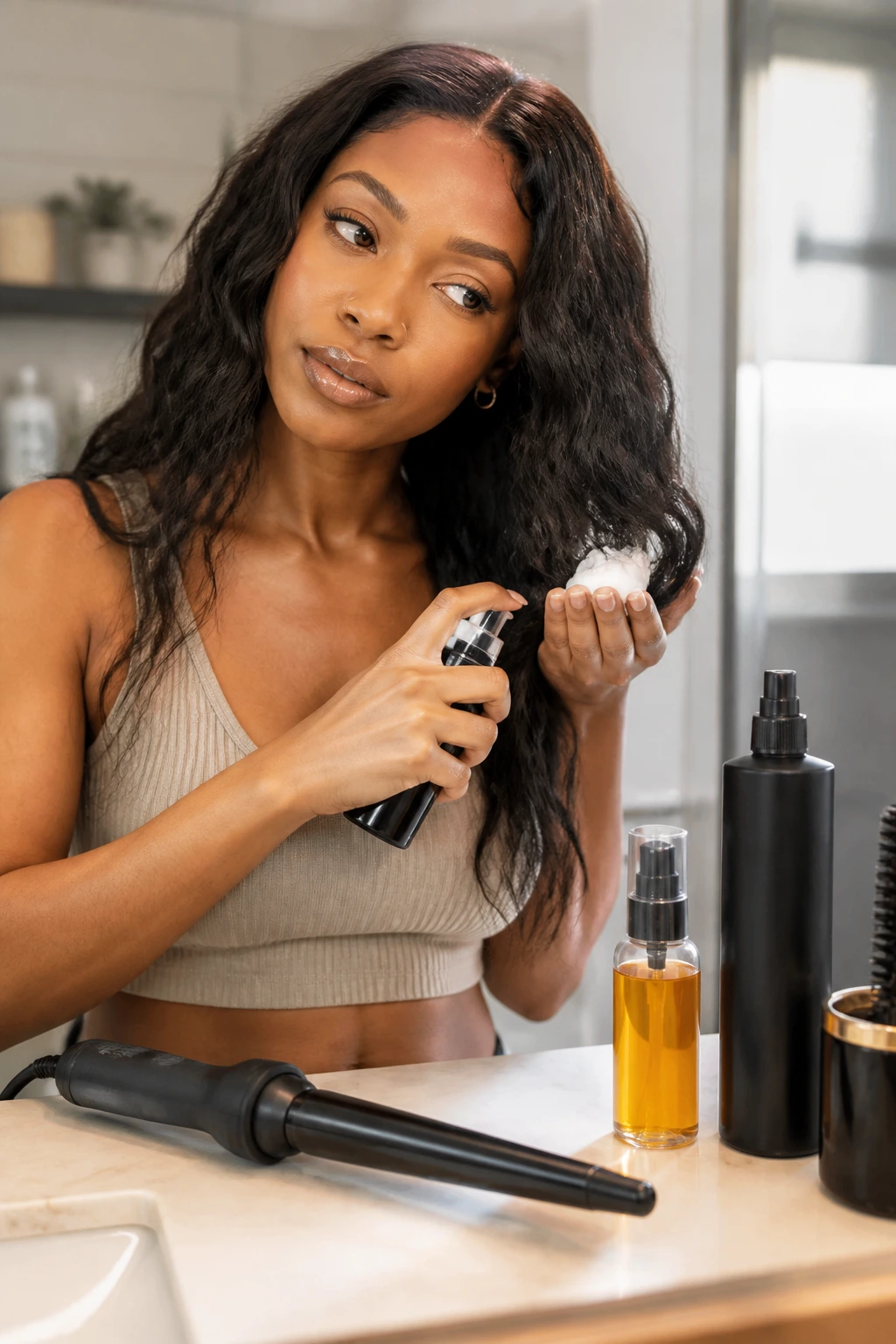
- 1.25-inch curling wand: Best for shoulder-length hair, lobs, and long layers when you want soft bends instead of tight curls.
- 0.75-inch wand or small iron: Useful for pixies, tapered cuts, and short face-framing pieces that need movement without bulk.
- Heat protectant spray or cream: Keeps silk presses, leave-outs, and wand waves from drying out under hot tools.
- Mousse or setting foam: Helps natural hair, braids, twist-outs, and installs hold the wave pattern without getting stiff.
- Lightweight shine serum: Adds gloss to mids and ends; use a small amount so the roots stay lifted.
- Flexible-hold spray: Keeps waves in place without turning them crunchy or helmet-like.
- Rat-tail comb: Makes clean parts and helps place the front pieces where they actually flatter the face.
- Duckbill clips: Handy for pinning crown lift while waves cool.
- Satin scarf or bonnet: Protects the finish overnight and keeps frizz from wrecking the shine.
- Paddle brush or soft boar-bristle brush: Useful for brushing out curls into softer beach waves.
- Flexi rods or perm rods: Great if you want heatless waves on natural hair or ends.
- Edge brush: Use lightly, especially around sleek ponytails and buns, so the hairline stays neat without looking painted on.
How to Wear These Styles With Clothes and Accessories
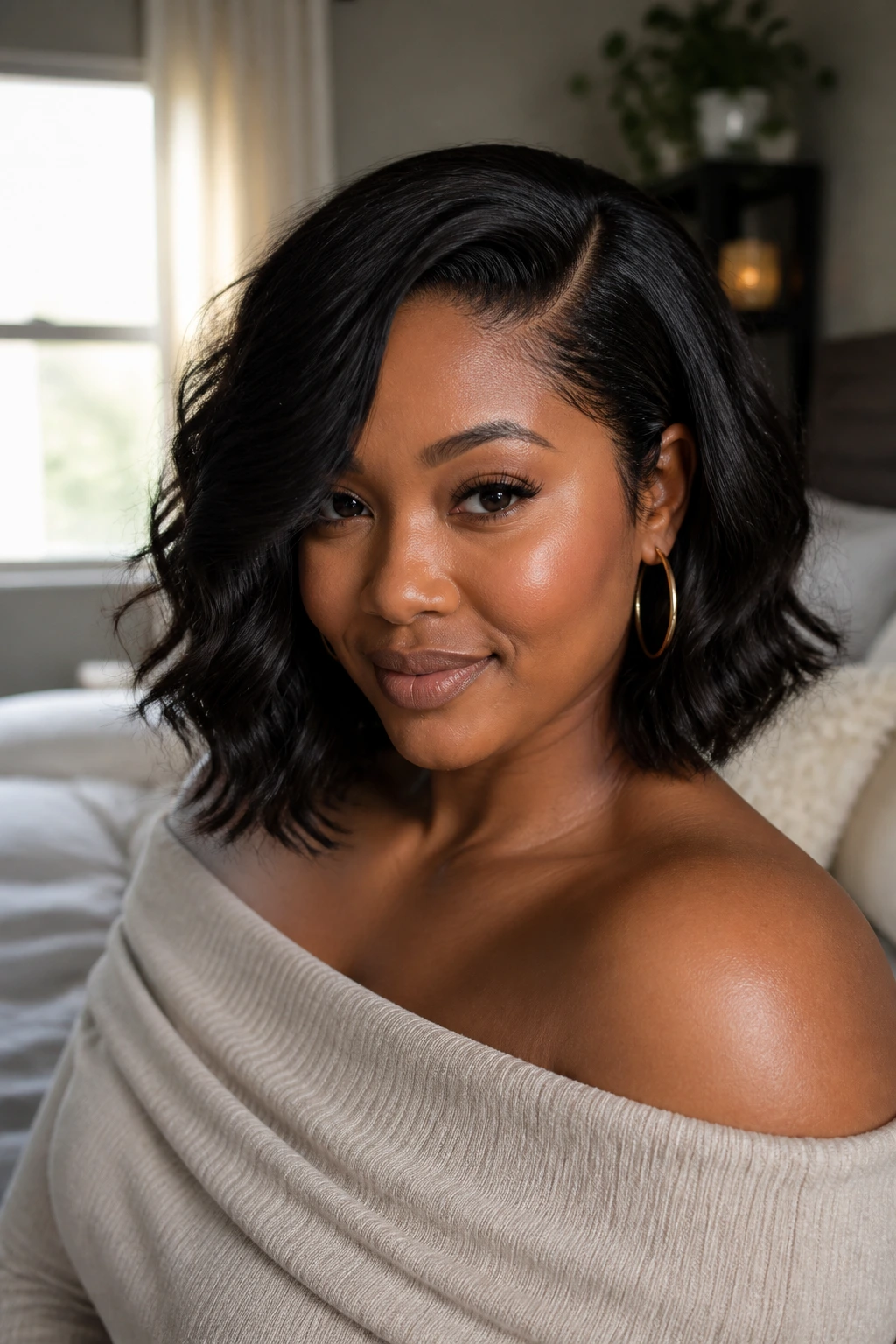
Presentation: Keep the part where the shape needs help most. A deep side part, side sweep, or lifted crown will usually flatter a round face more than a flat center part with no height. Let the waves fall below the jawline where possible, and tuck one side behind the ear if you want more openness around the face.
Accessories: Hoops, drop earrings, collar-bone necklaces, and off-shoulder necklines work well because they leave space around the face instead of crowding it. Thin headbands and barrettes can help, but keep them light; too much at the temples adds width. A single statement earring often looks cleaner than a heavy pair.
Scale: Shorter styles need more lift on top and less bulk at the sides. Longer styles can carry more wave, but the face-framing pieces still need to stay below the cheekbone. If your face is especially full at the cheeks, keep the front layers a touch longer than you think you need.
Occasion: Sleeker looks fit formal outfits and strong shoulder lines. Softer, looser waves fit everyday clothes, denim, and open necklines. Match the polish level of the hair to the polish level of the outfit, and the whole thing feels more finished.
Shine Without Grease: The Small Moves That Matter
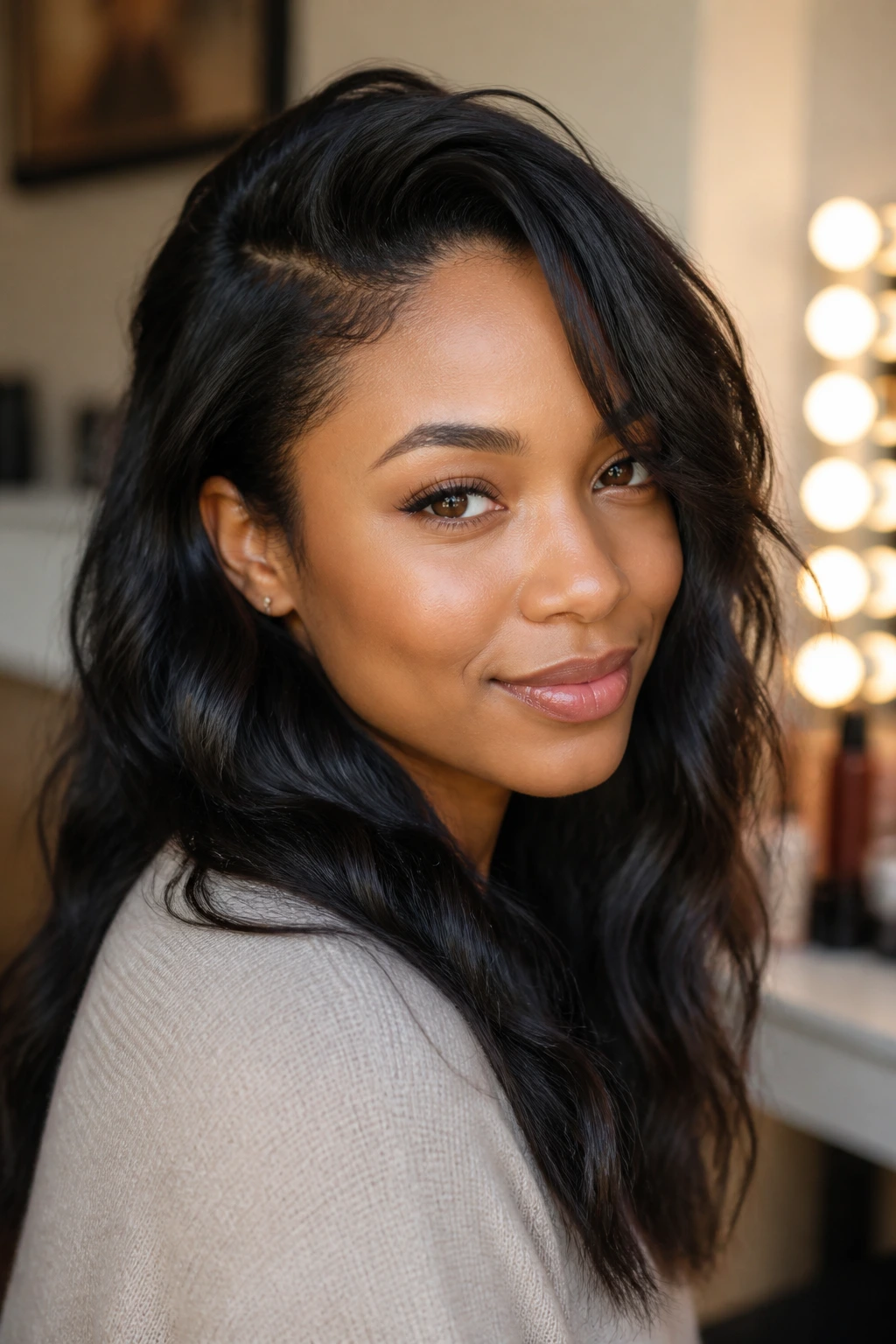
A glossy style starts before the finishing spray. Clean, conditioned hair reflects light better than hair loaded with butter and oil, especially at the roots. If you want shine, keep heavy products off the scalp and use them only where the hair actually needs slip.
The order matters. Smooth first, shape second, finish last. That means heat protectant, then the wave set or press, then a tiny amount of serum warmed between the palms and tapped through the mids and ends. Don’t pour product on. A pea-sized amount can cover more ground than people expect if you spread it properly.
I also like a cool-down step. Pin the curls, clip the crown, or wrap the hair in a satin scarf for 10 to 15 minutes after styling. That helps the shape set before the hair starts moving around. If the finish looks too shiny, use flexible-hold spray instead of more oil. Grease and gloss are not the same thing.
The Mistakes That Add Width Instead of Length
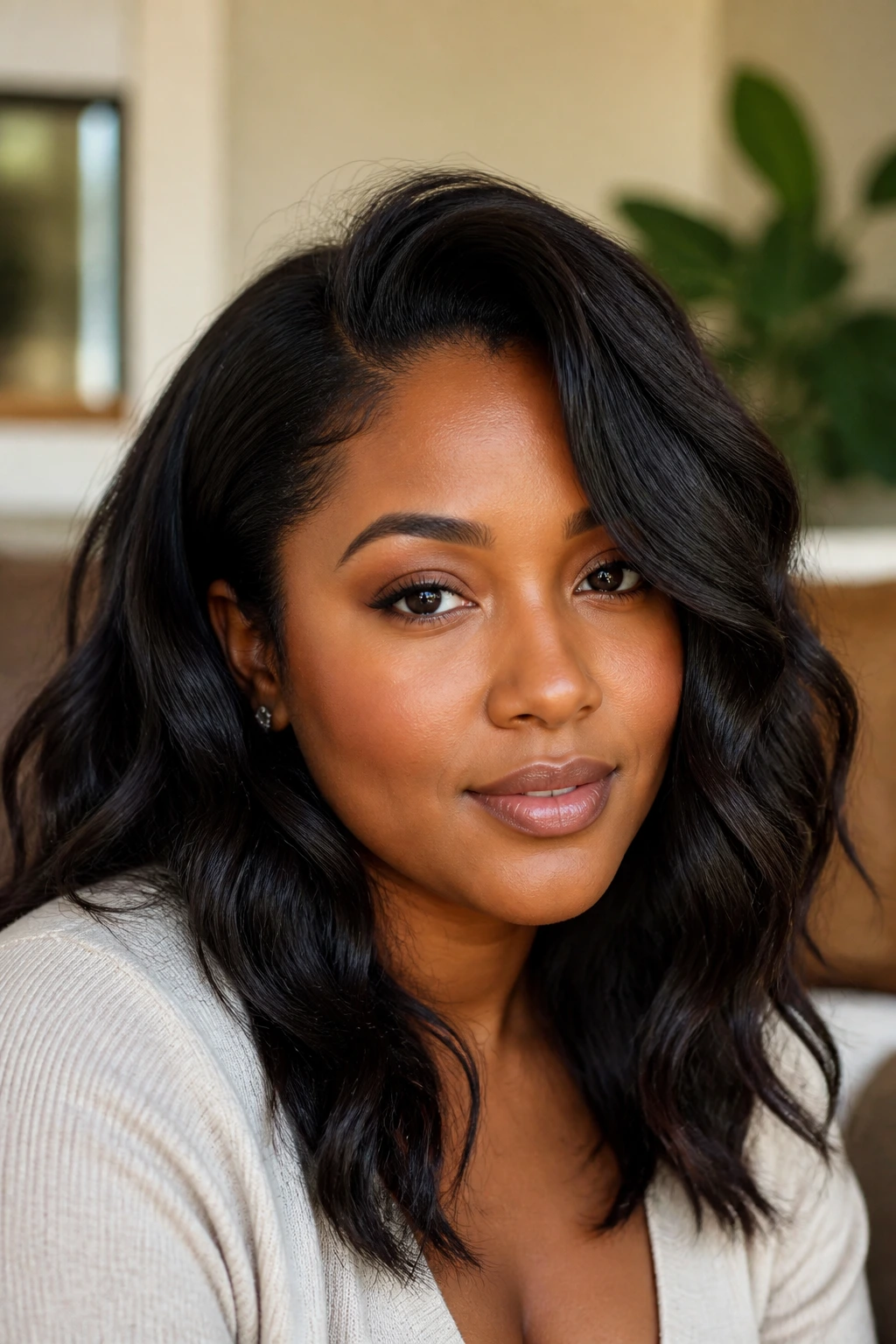
The first mistake is letting the waves flare out at cheek level. That usually happens when the curl starts too high or the ends are cut too blunt. The fix is simple: start the movement lower, around the ear or jaw, and keep the front pieces a little longer.
The second mistake is too much fullness at the sides. Round faces already have width in the middle, so hair that balloons at the temples only repeats the shape. Use a side part, crown lift, or narrower front pieces to pull the eye upward instead.
The third mistake is over-oiling the roots. That kills lift, makes the hair collapse, and turns the whole style heavy. Put shine only where the hair needs it.
The fourth mistake is choosing a wave that is too tight. Tight curls can bunch up and make the face feel more crowded. Soft bends, brushed waves, and loose S-curves usually give the cleaner line.
Variations and Texture Swaps to Try
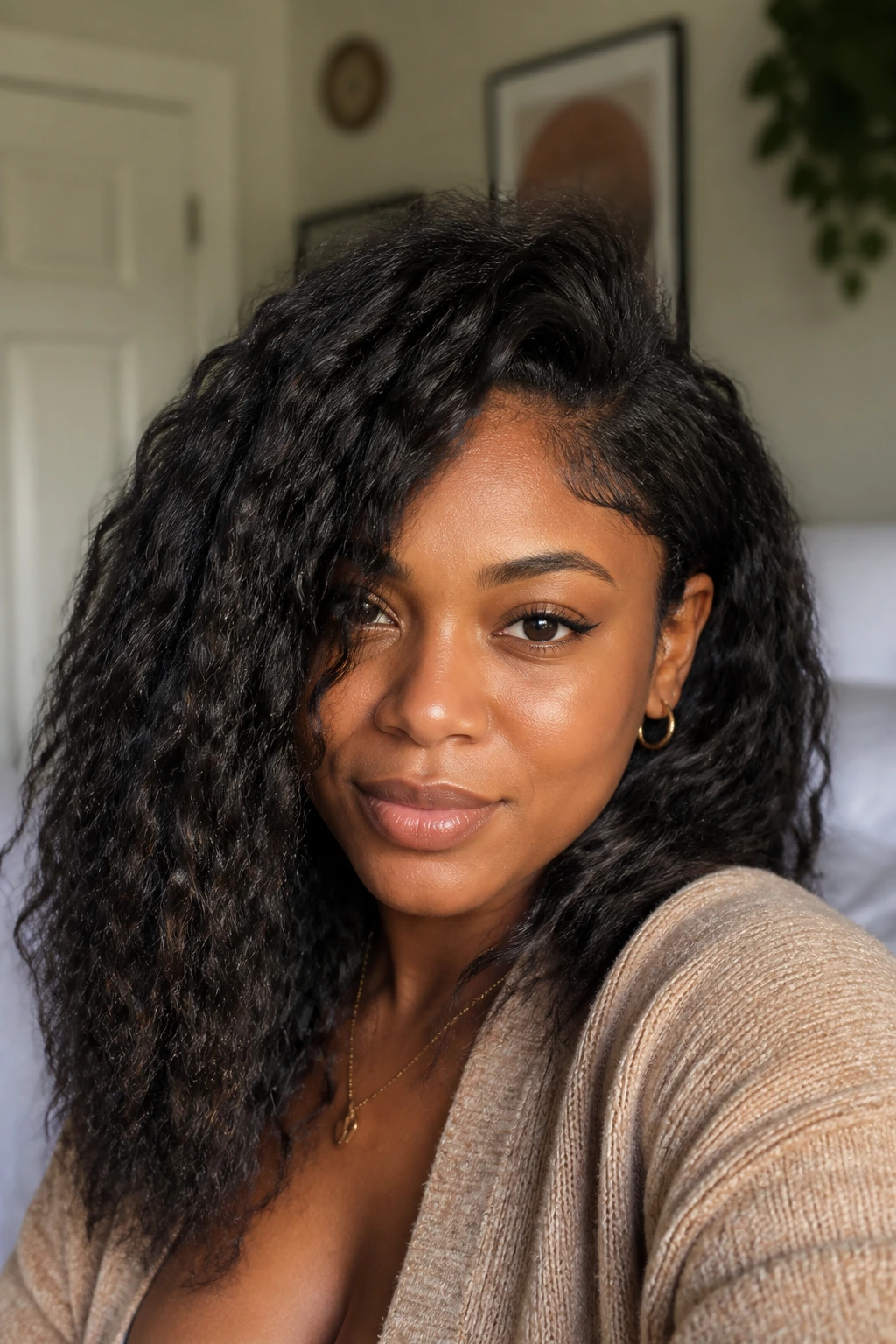
Heatless Night-Set Waves: Braid-outs, flexi rods, or bantu knots can give you the same face-framing softness without a hot tool in sight. This works best when the hair is fully dry before you take it down and separate it.
Soft Glam Silk Press: If you want a smoother finish, keep the hair pressed and use a wand only on the mids and ends. The result is less fluffy, more polished, and easier to keep glossy.
Protective-Style Wave Mix: Knotless braids, boho braids, faux locs, and butterfly locs all fit the theme if you keep the front lighter and the ends soft. This is the route I’d take when I want less daily manipulation.
Short-Hair Shape Shift: Pixies, tapered cuts, and bob variations need more crown lift and more careful parting. The face-framing work happens in the fringe and top, so the sides should stay controlled.
Big-Volume Crown Lift: If your face is especially round, add height at the top and keep the sides closer. That single move can change the whole silhouette without changing the hairstyle itself.
Night Wraps, Refreshes, and How Long Each Style Lasts
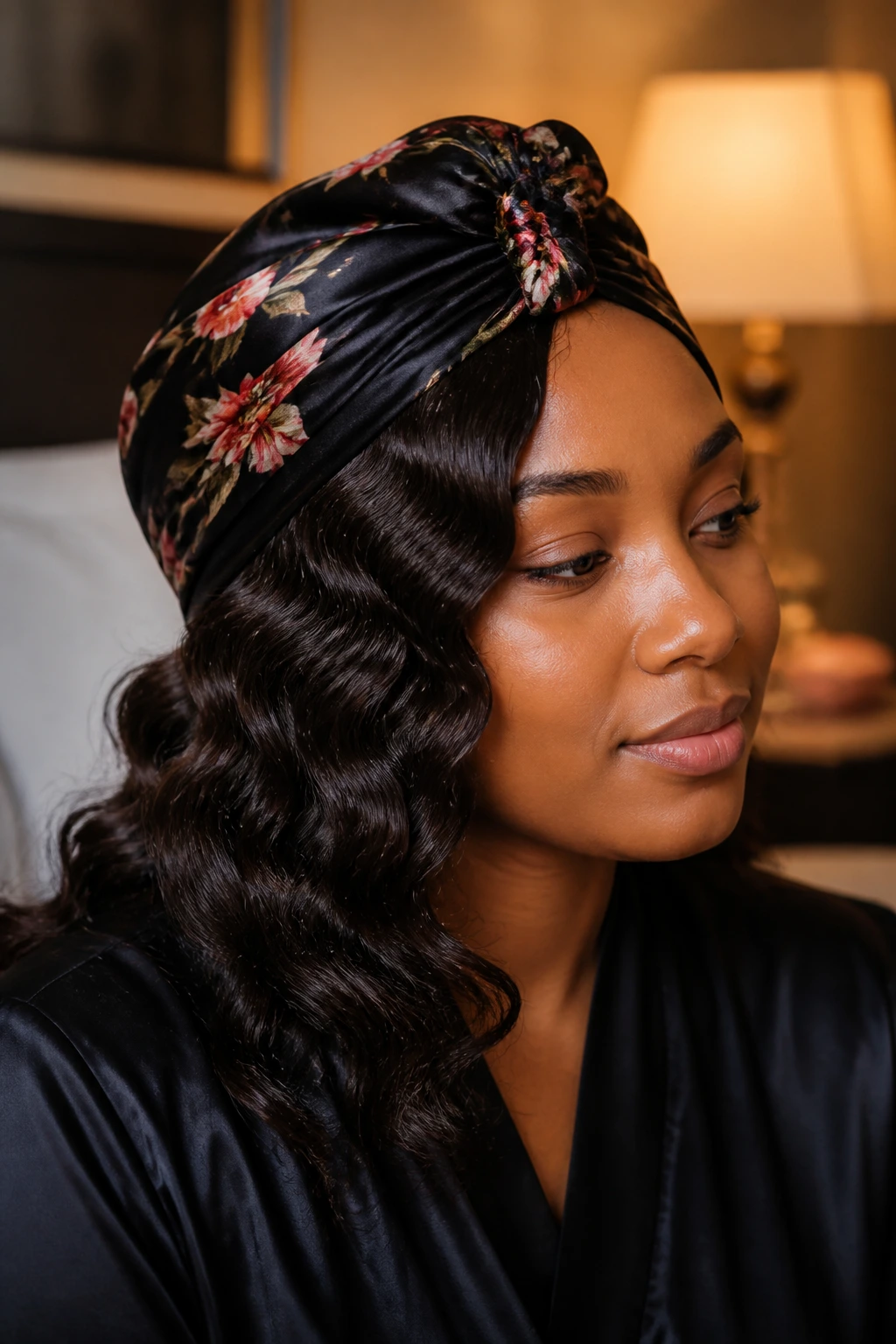
Silk-pressed waves and wand styles usually hold best for 2 to 4 days if you wrap them in a satin scarf and sleep on a silk pillowcase. If you pin-curl the front pieces or clip the crown before bed, you can stretch that a little longer. The fastest refresh is usually not a full restyle—just re-bend the face-framing pieces and smooth the roots with a little heat or a cool brush.
Sew-ins, wigs, braids, twists, and locs last longer, but they need their own care. Braids and locs usually stay neat for 4 to 8 weeks depending on maintenance and scalp care. Wigs and sew-ins can stay polished for 1 to 3 weeks if the part stays clean and the ends aren’t overloaded with product. Twist-outs, puffs, and bantu knot-outs are more short-lived; many need a refresh after 1 to 3 days.
The best nighttime move is simple: protect the shape before you protect the shine. Bonnet, scarf, or wrap first. If the front pieces are part of the look, pin them where they need to fall in the morning so you are not fighting them at sunrise. A little effort at night saves a lot of rework later.
Frequently Asked Questions
Which beachy-wave hairstyle flatters a round face the most?
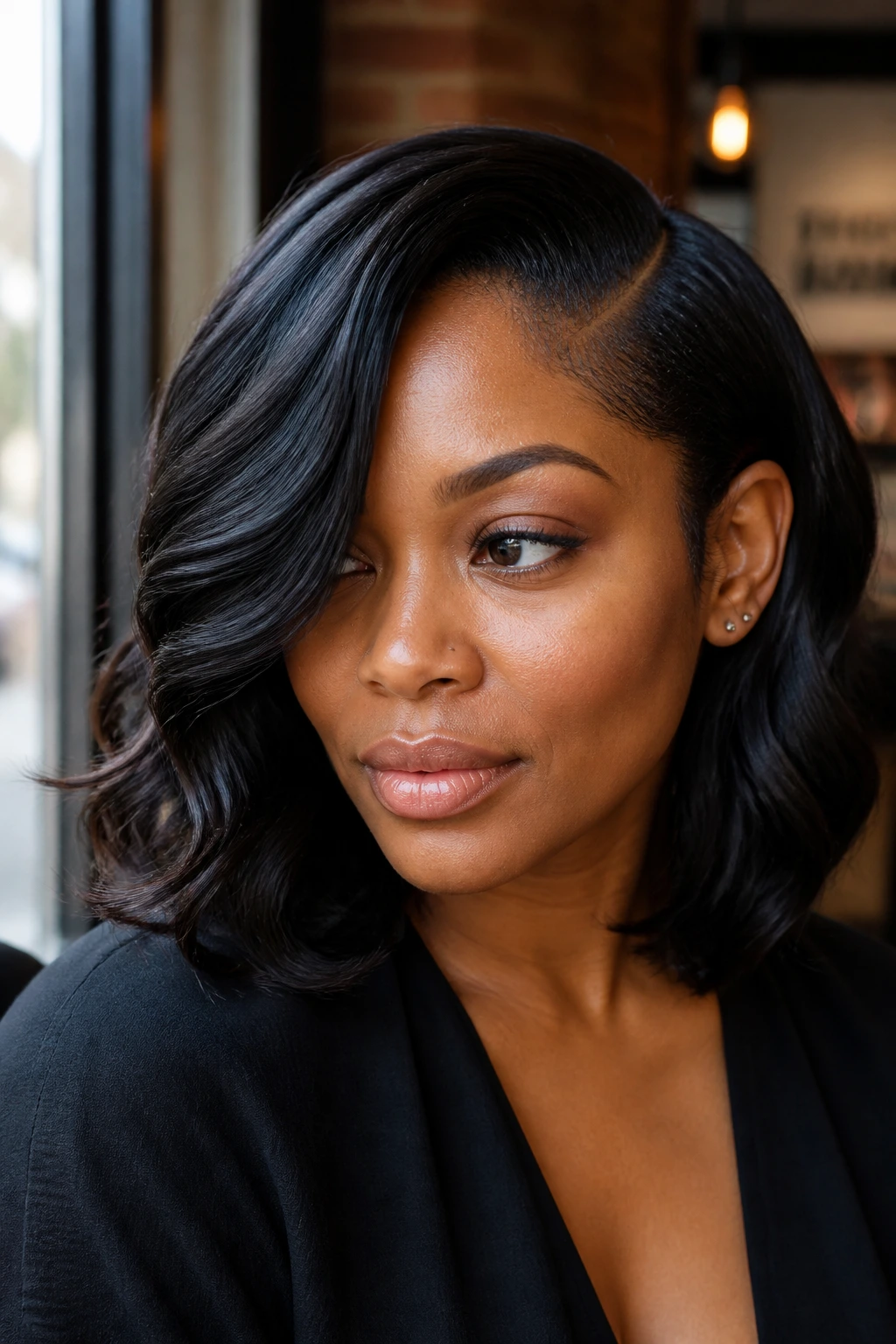
Deep side-part styles, collarbone lobs, and high ponytails with loose waved lengths usually do the best job because they add diagonal lines or crown lift. If you want the safest bet, start with a side part and length below the chin.
Can I wear beachy waves on natural 4C hair without heat?
Yes. Bantu knot-outs, twist-outs, flexi-rod sets, and stretched puff styles can give you a soft wave shape without a curling iron. The key is letting the hair dry fully before you separate it, or the pattern will frizz at the sides.
Do center parts work on round faces?
They can, but they need support from the rest of the style. A center part works best when the crown has lift, the front pieces are long, and the waves stay airy instead of dense.
What size curling wand should I use?
A 1.25-inch wand is the safest starting point for shoulder-length and longer hair because it creates soft bends rather than tight spirals. For short cuts or pixies, a 0.75-inch wand gives you more control on the top layers.
How do I keep the shine without making my hair greasy?
Use serum on the mids and ends only, and keep it light. If the roots need smoothing, use a flexible spray or a wrap scarf instead of adding more oil.
Can braids and locs count as beachy waves?
Absolutely, as long as the wave shows up in the ends, face-framing pieces, or the overall softness of the style. Boho braids, faux locs, butterfly locs, and curled braid ends all fit the look nicely.
What if my waves keep falling flat?
You probably need more crown structure or a better set while the hair cools. Clip the roots, pin-curl the front, or let the style cool in place before brushing it out; that usually helps more than adding product.
Are shorter styles or longer styles better for a round face?
Longer styles are easier because they naturally stretch the face, but shorter cuts can work if they add height on top and stay narrow at the sides. A short style with the wrong width looks wider fast; a short style with lift can look sharp and balanced.
The Styles I’d Reach For First
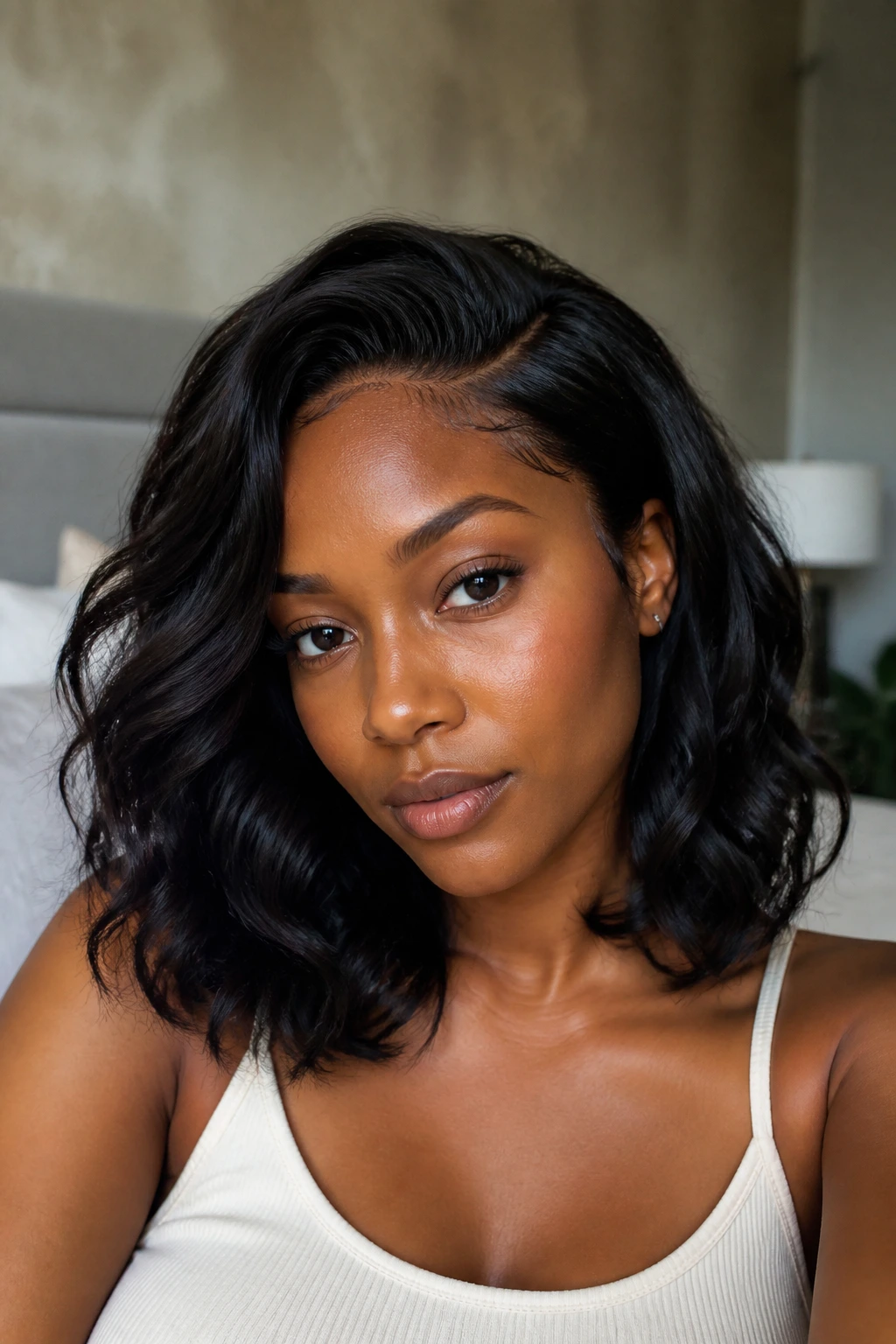
If you want the safest starting point, I’d reach for the deep side-part shoulder waves, the collarbone lob, or the high ponytail with loose waves. Those three do the face-shaping work without asking for much drama, and they all hold up well in Black hair when the finish stays smooth.
If you want something lower-maintenance, the knotless braids with curled ends, butterfly locs, and crochet water waves bob make sense. They give you the soft movement and shine without daily hot-tool work, which is a relief when you want the style to last and still look clean.
Round faces do not need hair that hides them. They need hair that places the width in the right spot, leaves the cheeks alone, and lets the eye travel. Start with the style that fits your routine, keep the ends soft, and let the waves do their job.