



Thick blonde hair has a specific kind of attitude. Left alone, it can swallow shape, turn a curl into a tube, and make a pale tone look like one flat sheet instead of a color story. Given the right cut and styling pattern, though, it becomes the opposite: glossy, full, and hard to ignore.
The best blonde hairstyles for thick hair do not try to erase density. They use it. A blunt lob with a soft money piece, a braid with enough width to hold its lines, a blowout that keeps the crown lifted—those styles make the hair look expensive without looking fussy. That matters more than people admit, because thick strands need a clearer outline than fine hair does.
I’ve always thought the fastest way to ruin thick blonde hair is to ask it to behave like hair that is half its size. Better to choose a shape that lets the weight work for you. That is where these looks come in, and the difference shows fast.
Why These Blonde Styles Work on Thick Hair
-
Density becomes part of the design: Thick hair gives waves, braids, buns, and ponytails enough bulk to look intentional instead of flimsy, which is half the battle.
-
Blonde needs room to move: When the hair is dense, one flat shade can disappear into a pale sheet; highlights, lowlights, and root shadow keep the color from looking heavy.
-
The shape lasts longer: Thick strands usually keep curls, twists, and pinned sections in place for hours, so you’re not rebuilding the style every time you step outside.
-
Volume stops being the enemy: A style with a strong silhouette—blunt lob, layered blowout, high ponytail—turns thick hair’s natural fullness into the point of the look.
-
You can go sleek or undone: Thick blonde hair handles polished finishes and messy texture better than most hair types, as long as the ends and crown are given a real plan.
1. Honey Balayage Beach Waves
Honey balayage beach waves are the style I reach for when thick hair needs movement without looking overworked. The warmer blonde ribbons stop the length from reading like one solid curtain, and the waves break the mass into soft bends that catch the eye in sections instead of all at once.
Why it works on dense hair
Thick hair holds a wave pattern well, but it needs sectioning in layers or the outer pieces get styled while the middle stays stubbornly straight. Use a 1¼-inch curling iron, leave the last inch of each strand out, and alternate curl direction so the finish looks loose instead of uniform.
A light mist of texture spray at the mid-lengths is enough. Too much at the roots and the whole thing goes dry and fuzzy fast.
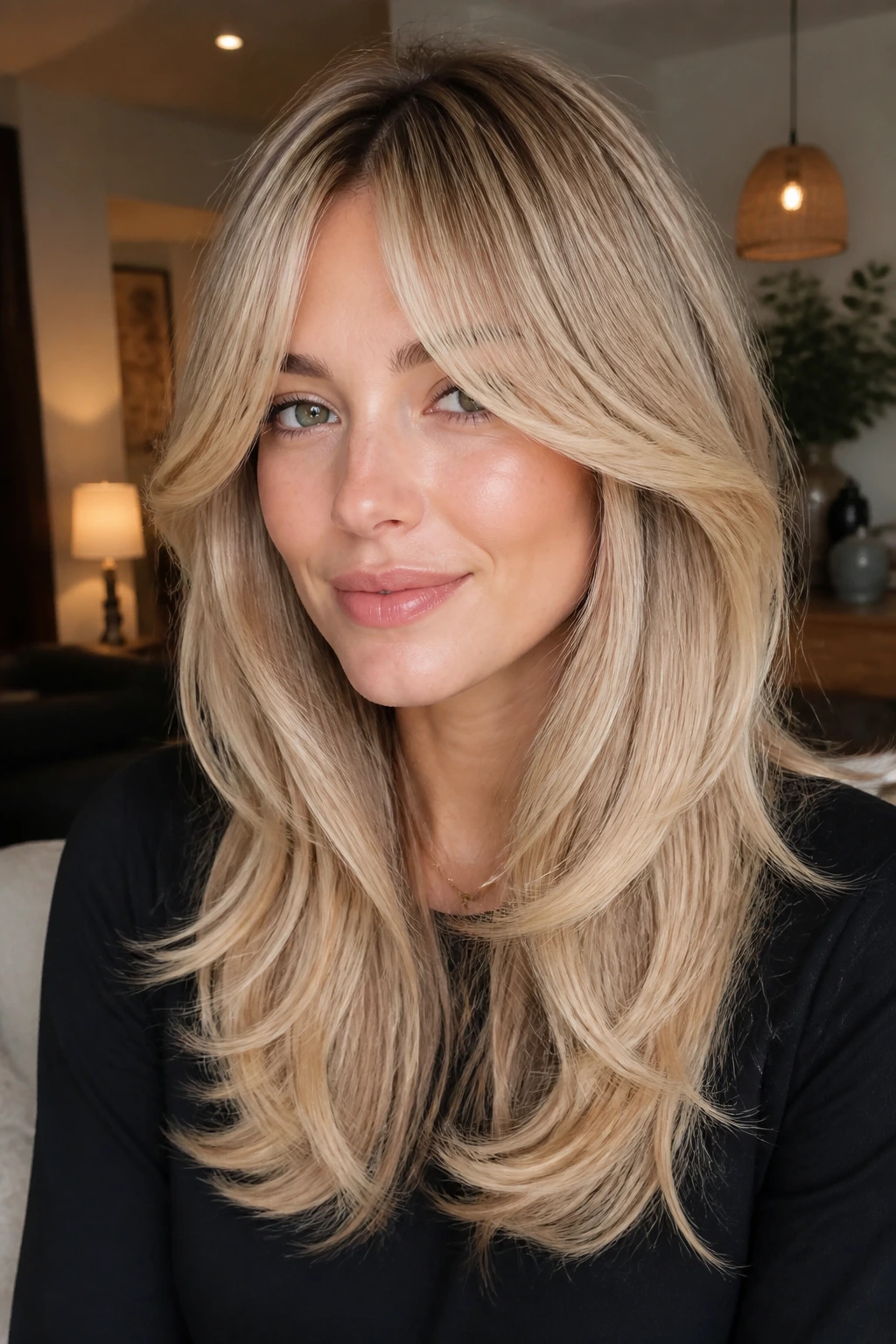
2. Butterfly Layers with Cream Blonde Ends
If your hair feels heavy at the bottom, butterfly layers are the cleanest fix. The shape takes weight out of the interior while keeping the perimeter long enough to feel full, and cream blonde ends keep the outline from looking dark or blunt.
The trick is asking for face-framing pieces that start around the cheekbone and longer layers that begin lower, closer to the collarbone. That gives the top section lift and lets the bottom section still swing.
Styling note
A large round brush and a blow-dry clip set make a big difference here. Pull the top layers up and away from the head while the ends roll under just a touch; that small bend keeps thick hair from collapsing into a triangle.
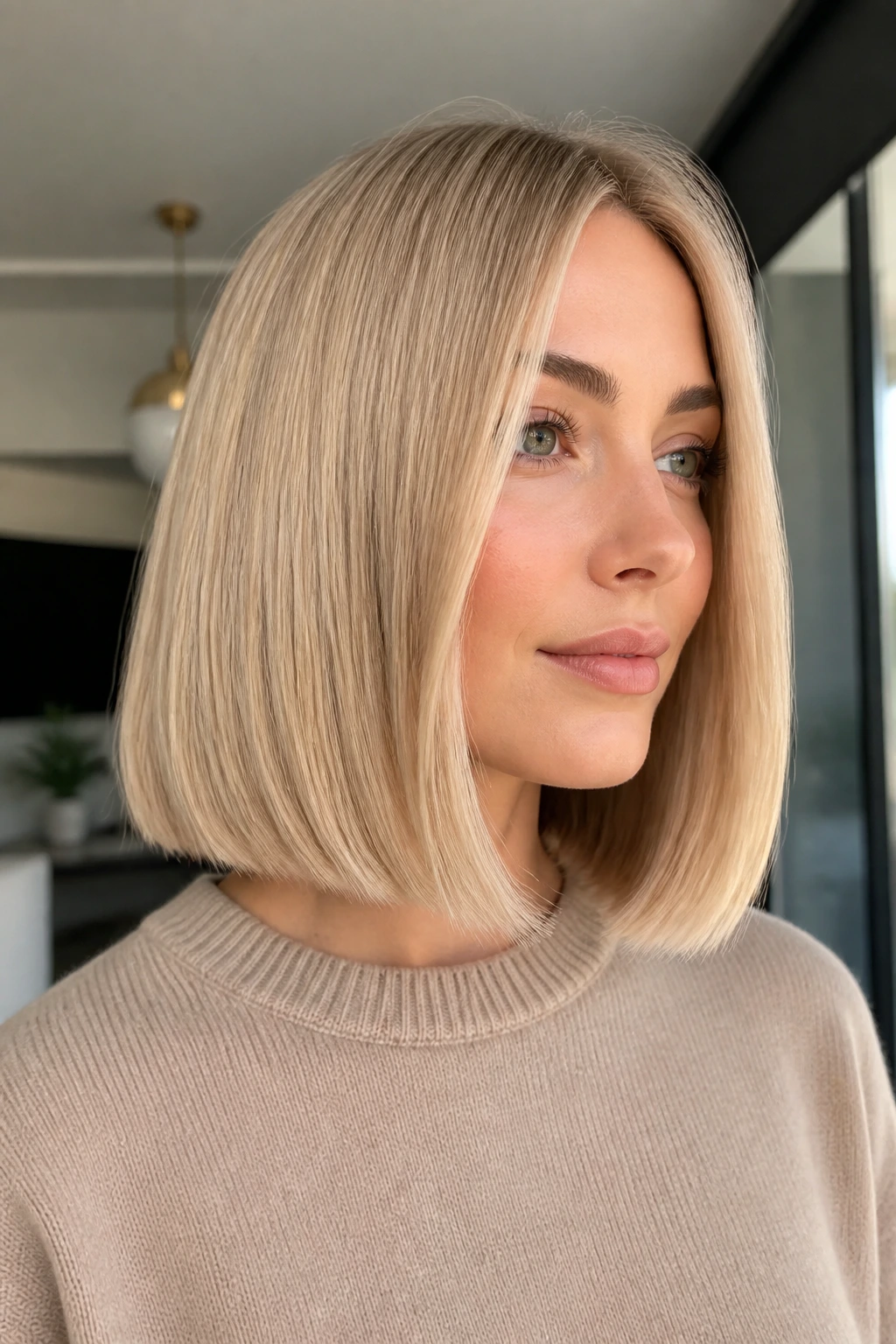
3. Sleek Blunt Lob with Champagne Blonde
Can thick hair look sharp instead of massive? Absolutely. A blunt lob with champagne blonde proves it, and this is one of my favorite looks when someone wants clean lines without losing body.
The blunt edge keeps the silhouette strong, which matters because thick hair can look shapeless when it’s thinned too much. Champagne blonde softens the cut so it doesn’t feel severe, and a tiny bevel at the ends keeps the lob from kicking out at the jaw.
Best for
This shape works especially well if your hair sits just below the shoulders and tends to puff outward in humidity. A flat iron pass on 1-inch sections is enough; don’t chase pin-straight perfection. Thick hair looks better when it has a little weight in the line.
4. Curtain Bangs with Beige Blonde Layers
Curtain bangs are a smart move when the front of the hair needs to feel lighter. Beige blonde layers keep the whole look soft, while the bangs split the density off the face so the style doesn’t feel like a blanket.
A round brush is your friend here. Blow the bangs away from the face, then clip them to cool for five to seven minutes so the bend actually stays. If you skip the cool-down, they drop faster than you’d expect.
The rest of the hair can stay long and layered. That mix—shorter front, longer body—keeps thick hair from reading as one block from every angle.
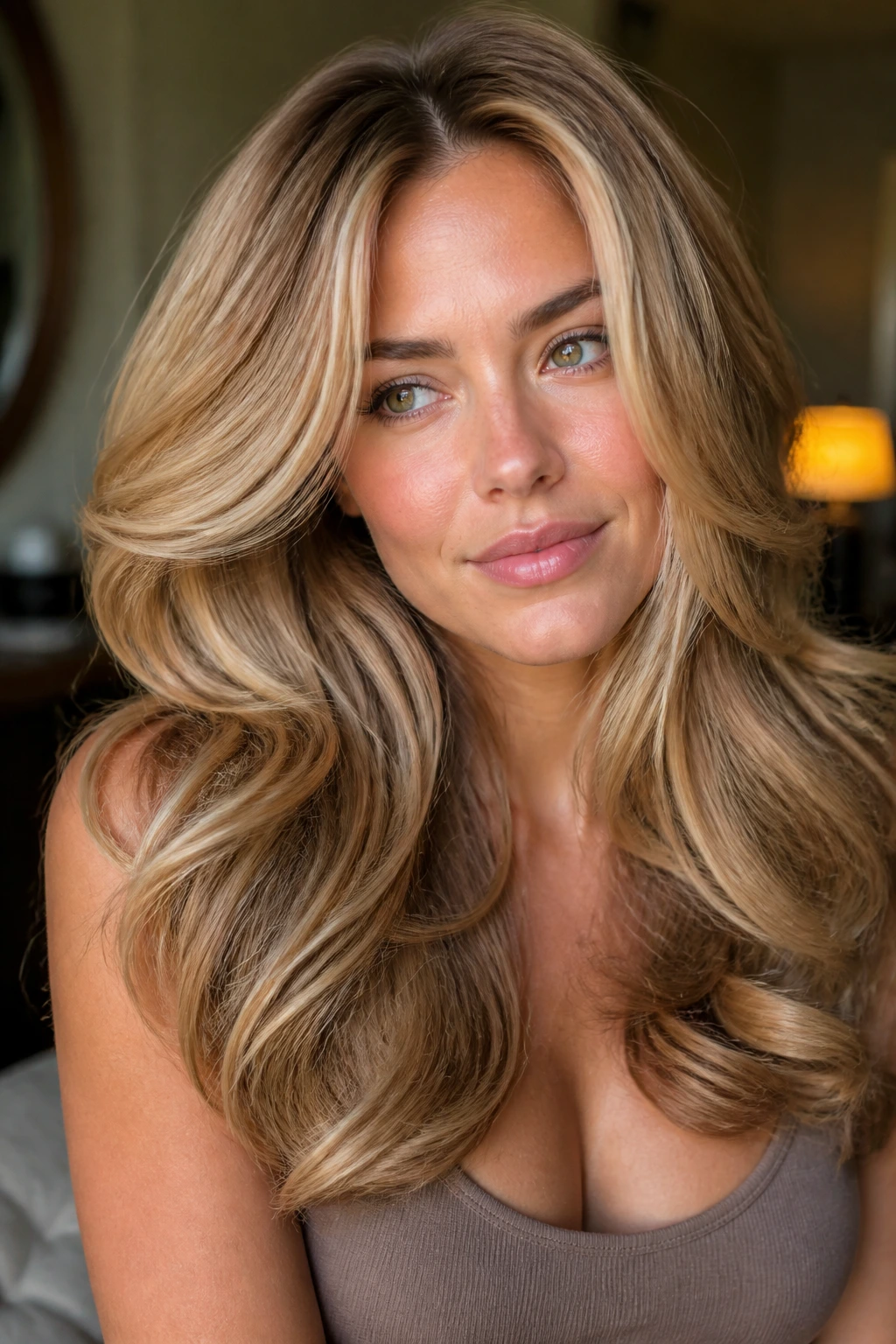
5. Hollywood Blowout with Caramel Lowlights
A full Hollywood blowout was made for thick hair. There’s enough density to create that big, brushed-out curve, and caramel lowlights stop the blonde from looking too one-note under indoor light.
Start with mousse at the roots and a heat protectant through the mids and ends. Rough-dry until the hair is about 80 percent dry, then switch to a large round brush and work in horizontal sections. That order matters. If you go straight to the brush while the hair is too wet, the shape goes limp before it ever has a chance.
A set of large velcro rollers at the crown can give the lift a final push. Ten to fifteen minutes is enough.
6. Shaggy Layers with Icy Money Pieces
The shag is where thick hair gets to loosen up. Compared with a smooth, one-length style, a shag steals weight from the interior and gives the lighter front pieces room to stand out, especially when the money pieces are icy and bright.
This cut does not like over-thinning. That’s the catch. Ask for controlled layering and point cutting, not a razored mess that turns the ends into frizz by lunch.
The icy pieces around the face work because they create contrast. On dense hair, contrast is your friend. Without it, the shape can read as one dark mass with a blonde topcoat.
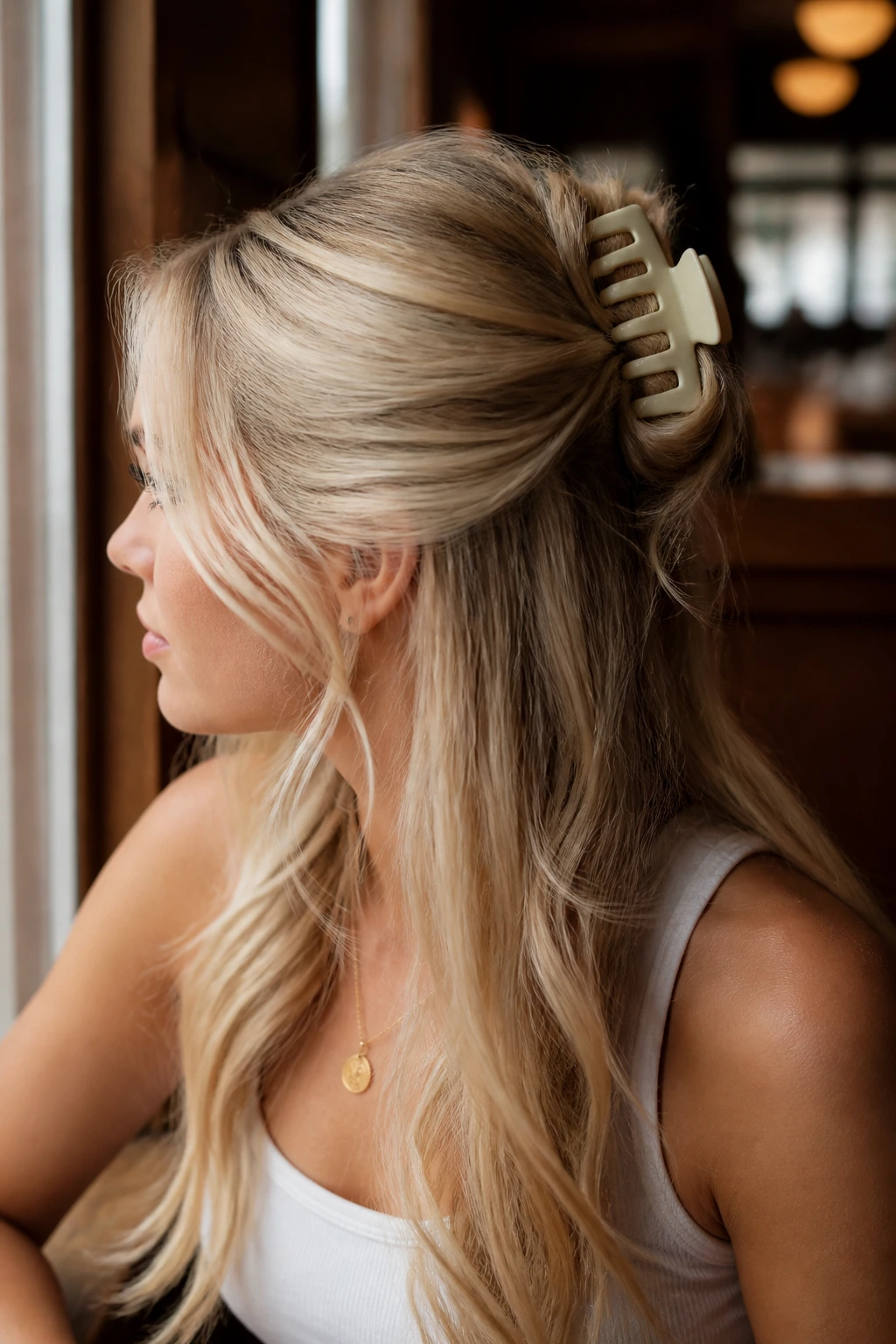
7. Half-Up Claw Clip Twist in Vanilla Blonde
Some days you want the hair off your neck and you do not want to commit to a full updo. That is where the half-up claw clip twist earns its place.
Thick hair gives the clip something real to hold, which is why this style tends to look fuller and more secure than it does on finer hair. Choose a large claw clip with long teeth, twist the top half back once, and let a few front strands fall loose.
Vanilla blonde highlights are ideal here because they show the twist instead of disappearing into it. The lighter strands catch along the fold of hair and make the shape look deliberate.
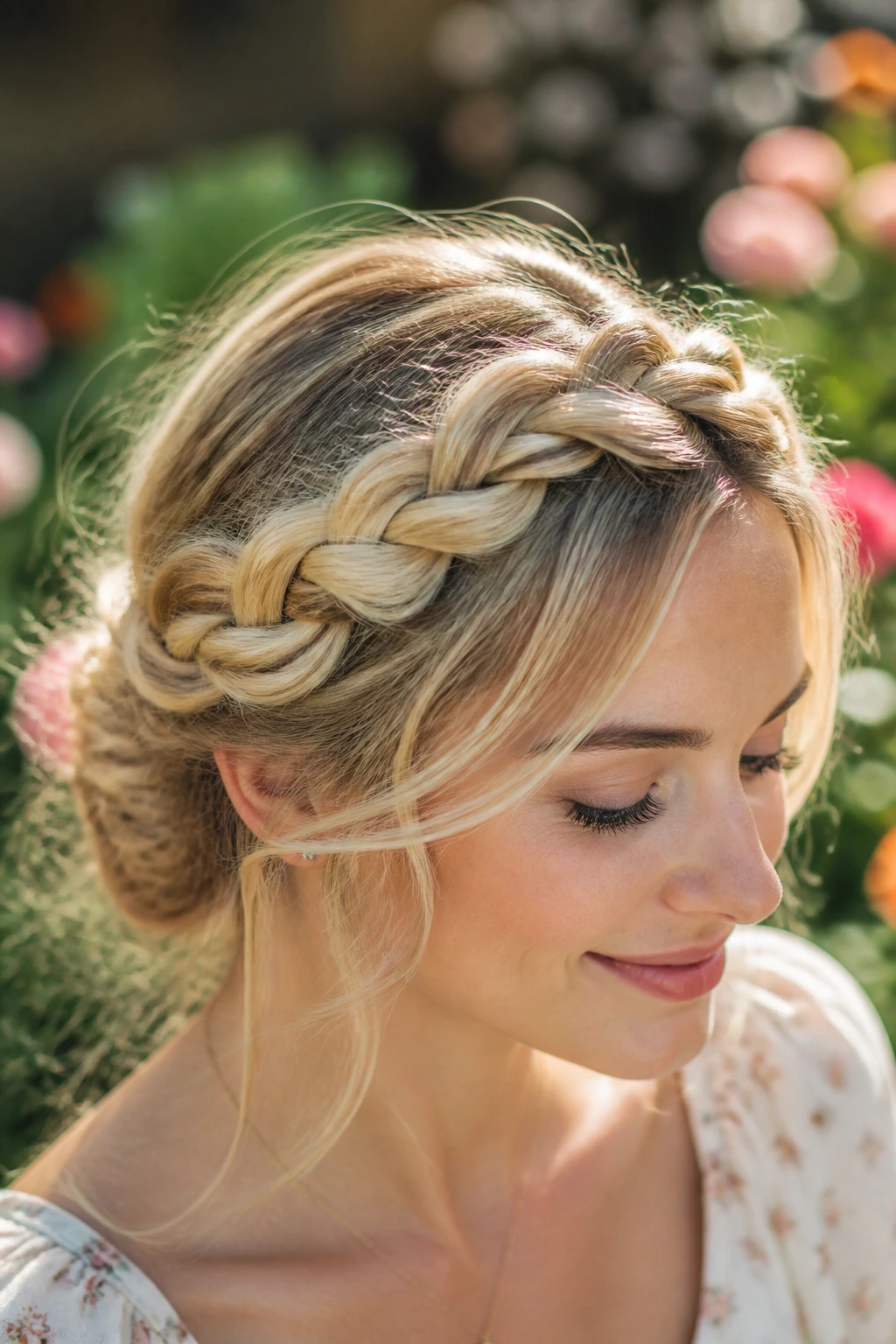
8. Crown Braid with Warm Buttermilk Highlights
Why does a crown braid always look better on thick hair? Because the braid actually has width. Thin hair can make the style look skimpy. Thick hair gives it a proper halo.
Warm buttermilk highlights keep the braid from going dark and flat. When the pieces cross over, the lighter streaks show the pattern, which is half the appeal. Braid close to the scalp, then gently pancake the edges with your fingers once the braid is secured. Don’t yank. You want width, not collapse.
This is a good style when the hair has a little texture on day two or day three. Freshly washed, super-slippery hair can slip out unless you use texturizing spray at the roots first.
9. Low Polished Chignon with Root Shadow
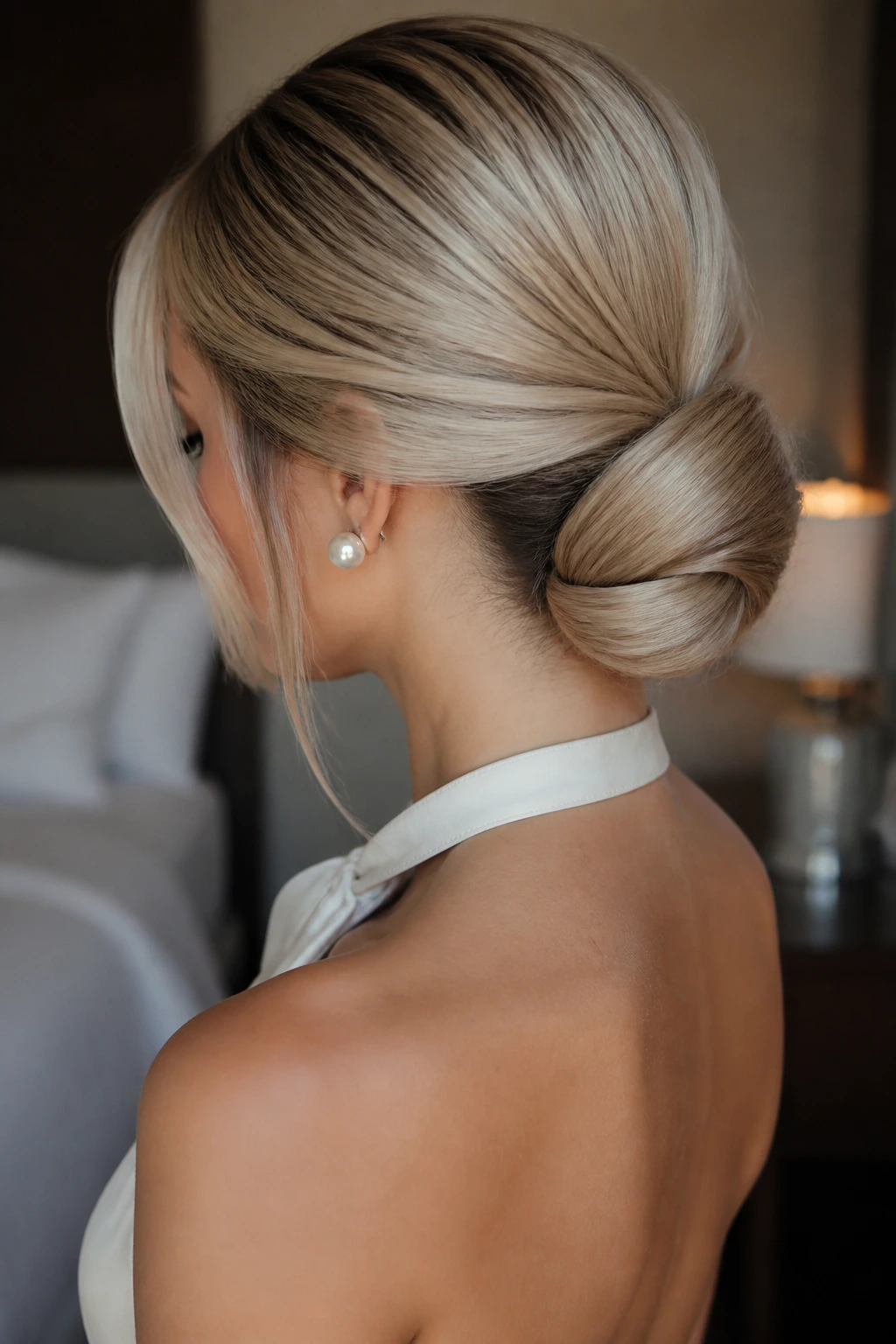
A low chignon looks particularly good on thick blonde hair when the roots are shadowed slightly darker. That darker base gives the bun depth, so it doesn’t look like a pale knot sitting on top of the head.
Pull the hair into a low ponytail first, then twist the length into a figure-eight or coil it around the base. Use large U-pins or long bobby pins instead of tiny pins; thick hair eats small pins for breakfast. A smoothing cream through the surface keeps the flyaways from frizzing out.
I like this style for formal events because it stays put and still looks rich by the time you leave. It is neat without feeling severe.
10. Bubble Ponytail with Sandy Blonde
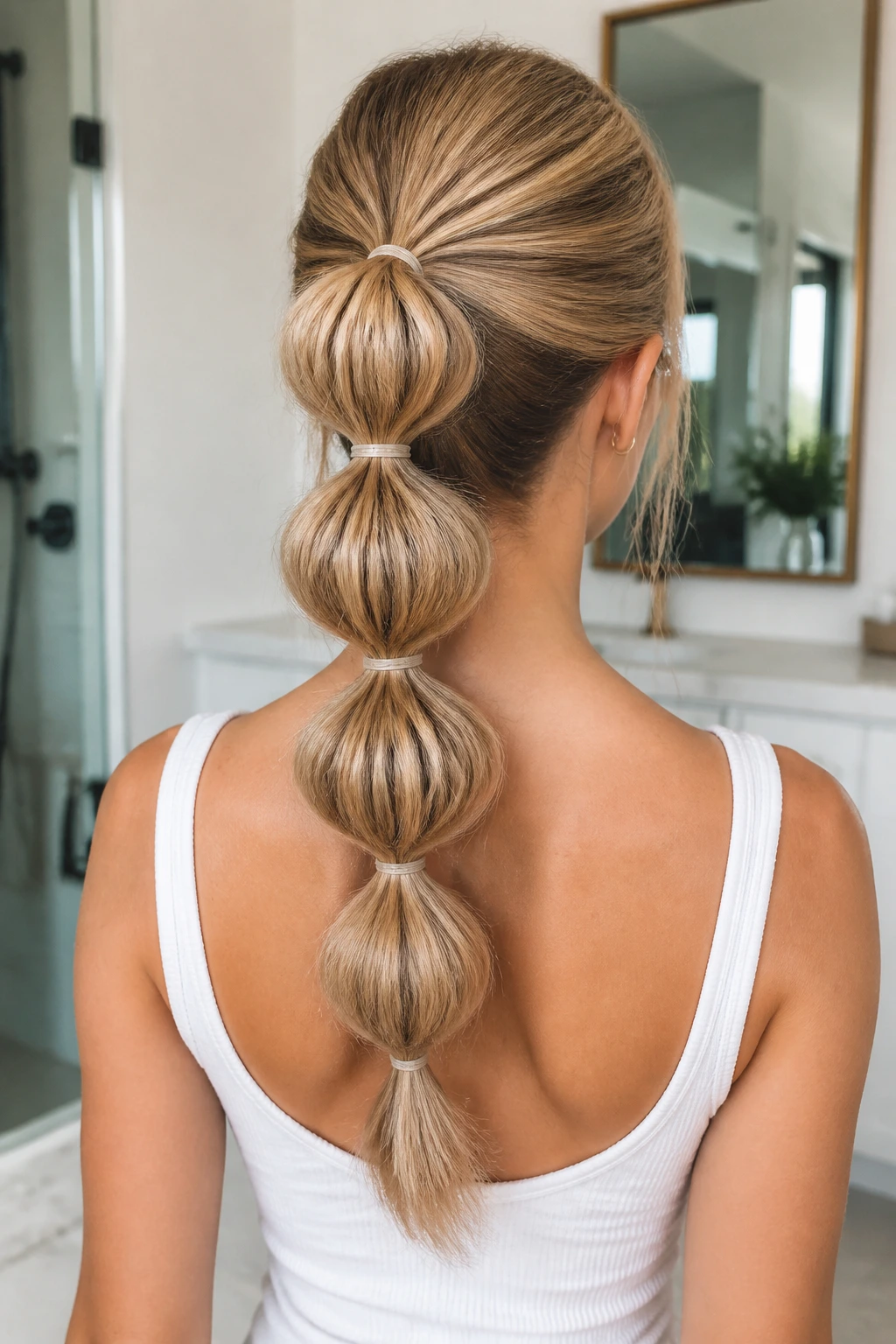
The bubble ponytail is one of those styles thick hair can actually show off. Each section has enough mass to form a real bubble, not a sad little bump, and sandy blonde ribbons keep the ponytail from reading as a single color block.
Secure the base high or mid-height, then add clear elastics every 2½ to 3 inches down the length. Tug each segment outward with two fingers until it rounds out. That part is the whole trick. Skip it and the style looks unfinished.
A tiny bit of shine spray on the outer layer makes the bubbles look smoother. Keep it light. Too much product at the crown pulls the style flat.
11. Side-Swept Hollywood Waves in Pearl Blonde
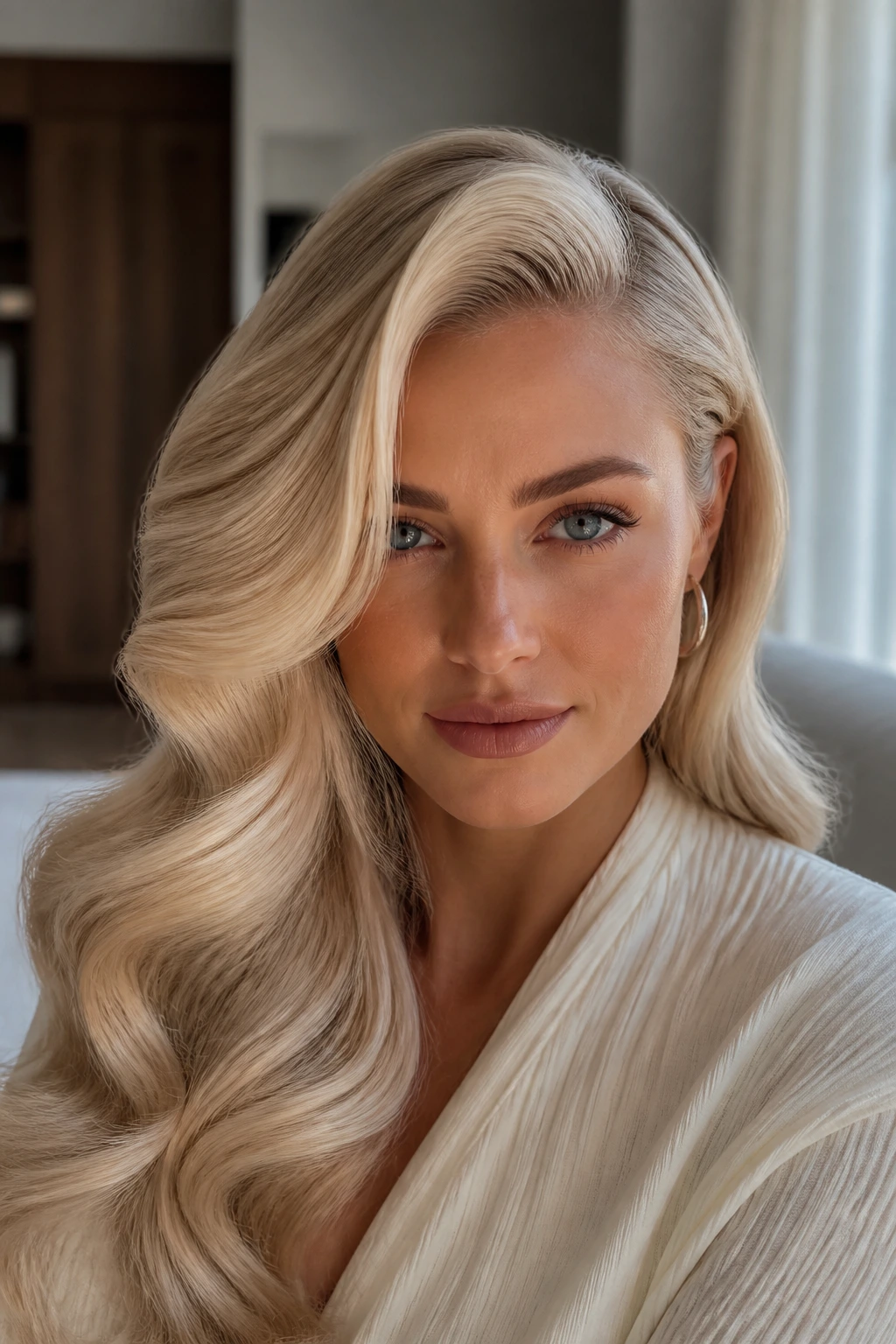
A deep side part changes everything here. Thick hair gives the waves enough weight to stay sculpted, and pearl blonde catches the curve of each bend so the style looks polished instead of stiff.
Set the curls all in the same direction on the heavier side of the part, then clip them flat until they cool. That cooling time matters more than people think. Warm hair forgets its shape fast. Cool hair remembers.
Brush the curls into one continuous wave with a boar-bristle brush, then tuck one side behind the ear. It’s a small move, but it sharpens the whole line of the face.
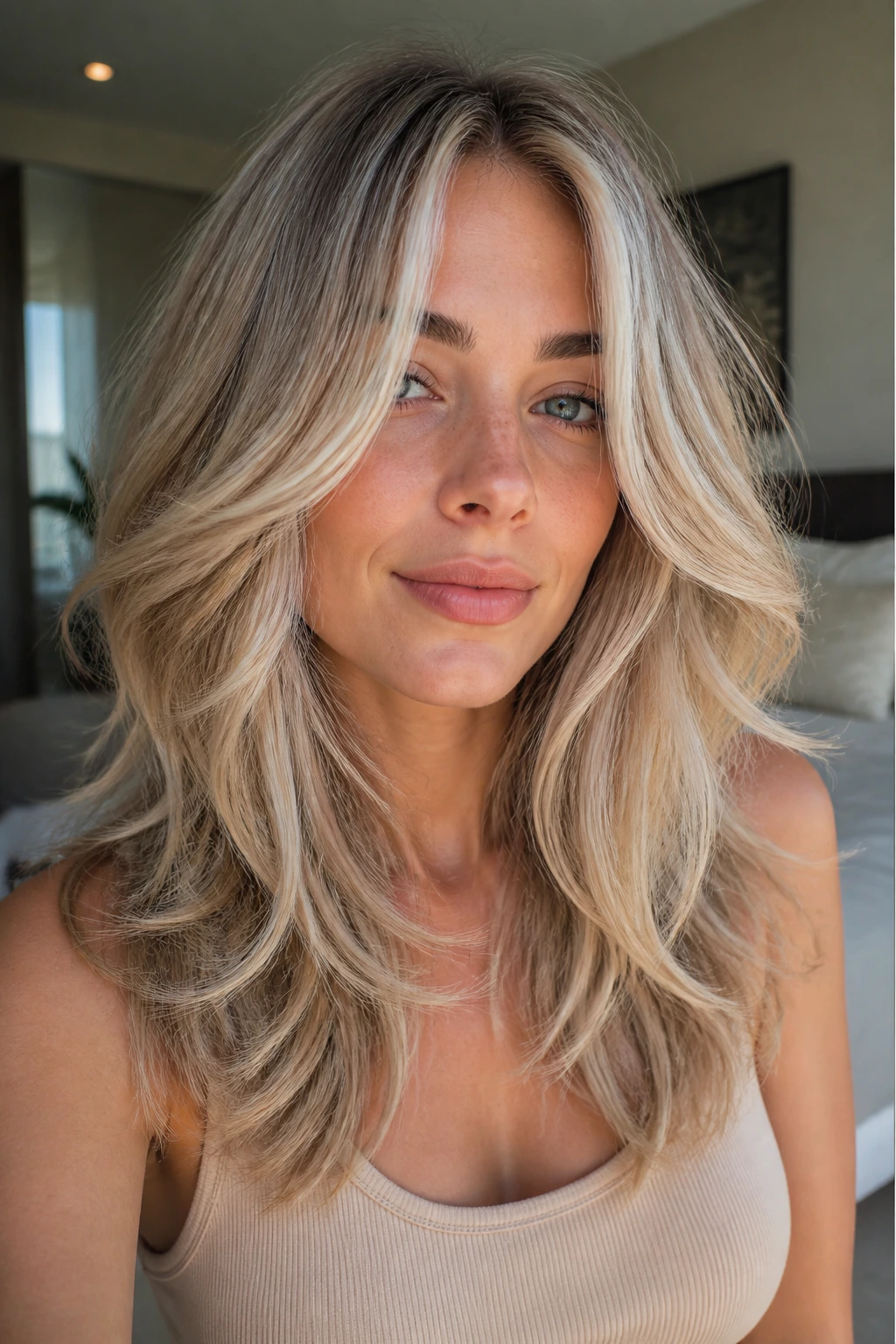
12. Feathered Wolf Cut with Platinum Face Frame
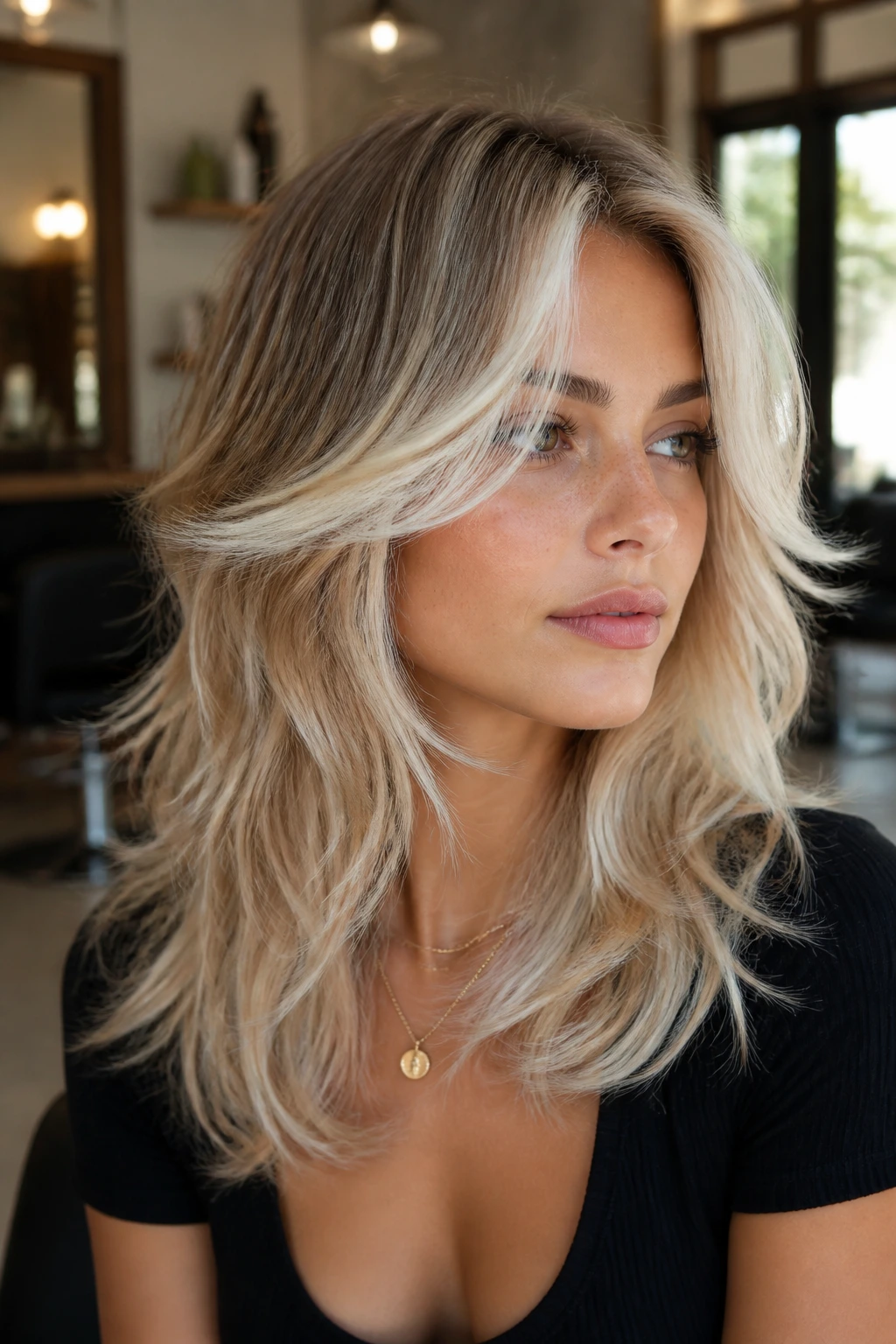
The wolf cut is for somebody who wants a little edge. On thick hair, the shape works because the interior layers can be feathered without leaving the ends thin and sad. The platinum face frame gives it a hard light at the front, which keeps the look from going muddy.
Ask for softly disconnected layers at the crown and around the cheekbones. That keeps the lift on top while preserving enough density through the back. Razor-heavy cuts can frizz on thick blonde hair, so I’d rather see clean scissors and restrained texturizing.
What makes it different
The wolf cut gives you movement without needing a round brush every time. Air-dry it with a cream, scrunch it a little, and let the layers do the work. It has a rougher attitude than a butterfly cut, and that’s the point.
13. Messy Top Knot with Creamy Blonde Tendrils
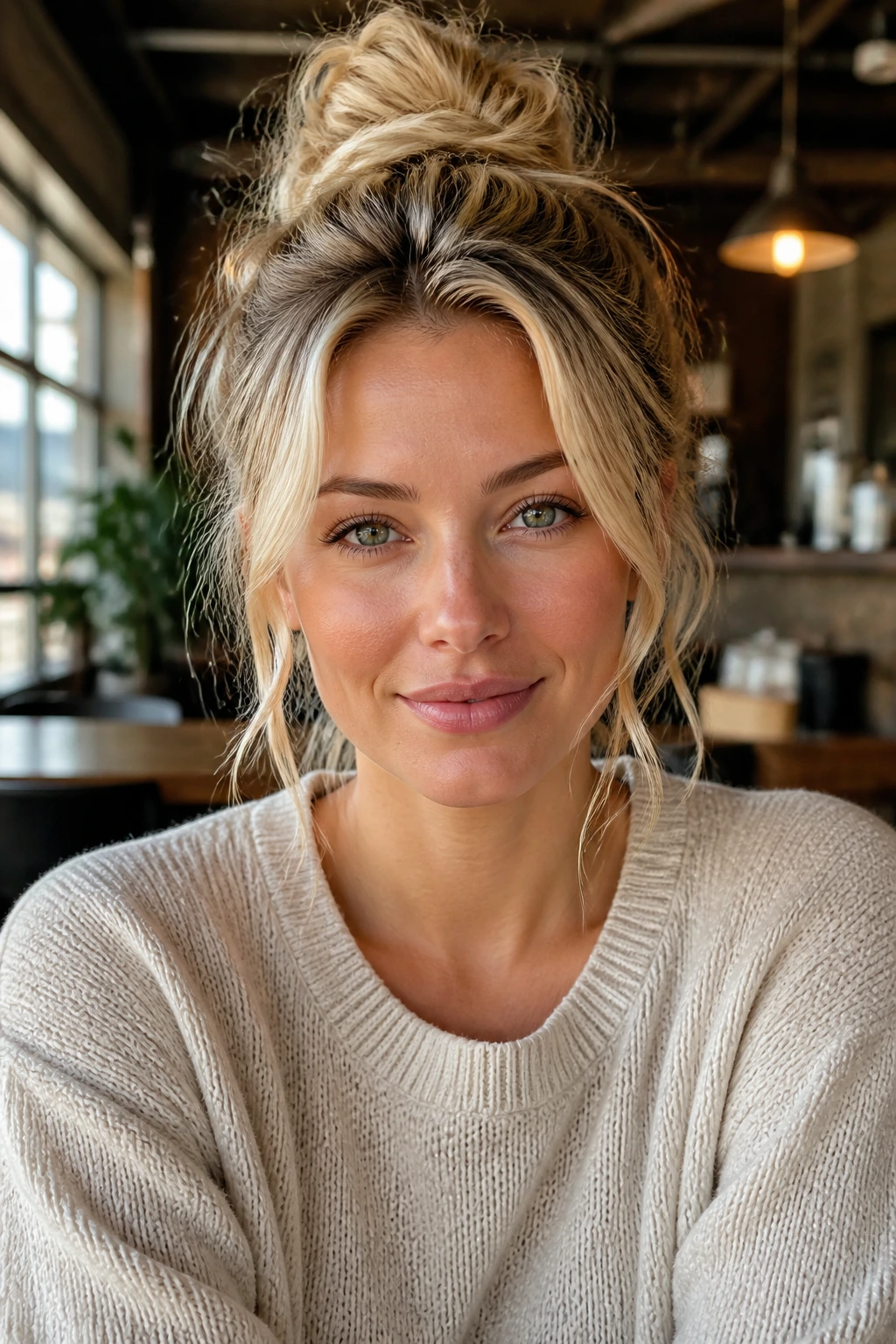
A thick-haired top knot never looks tiny, and that’s a good thing. It has presence. Wrap the knot loosely, leave the crown a little lifted, and let a couple of creamy blonde tendrils drop around the face so the style doesn’t harden into a ball at the top of the head.
Use one elastic to make the ponytail, then twist the length once and pin it instead of pulling the hair through a second time. That keeps the knot soft and avoids the stretched-out look that happens when thick hair gets forced too tight.
This is the kind of style that survives errands, dinners, and humid weather. Not because it is fancy. Because it’s built on actual density.
14. Double Dutch Braids into a Low Bun
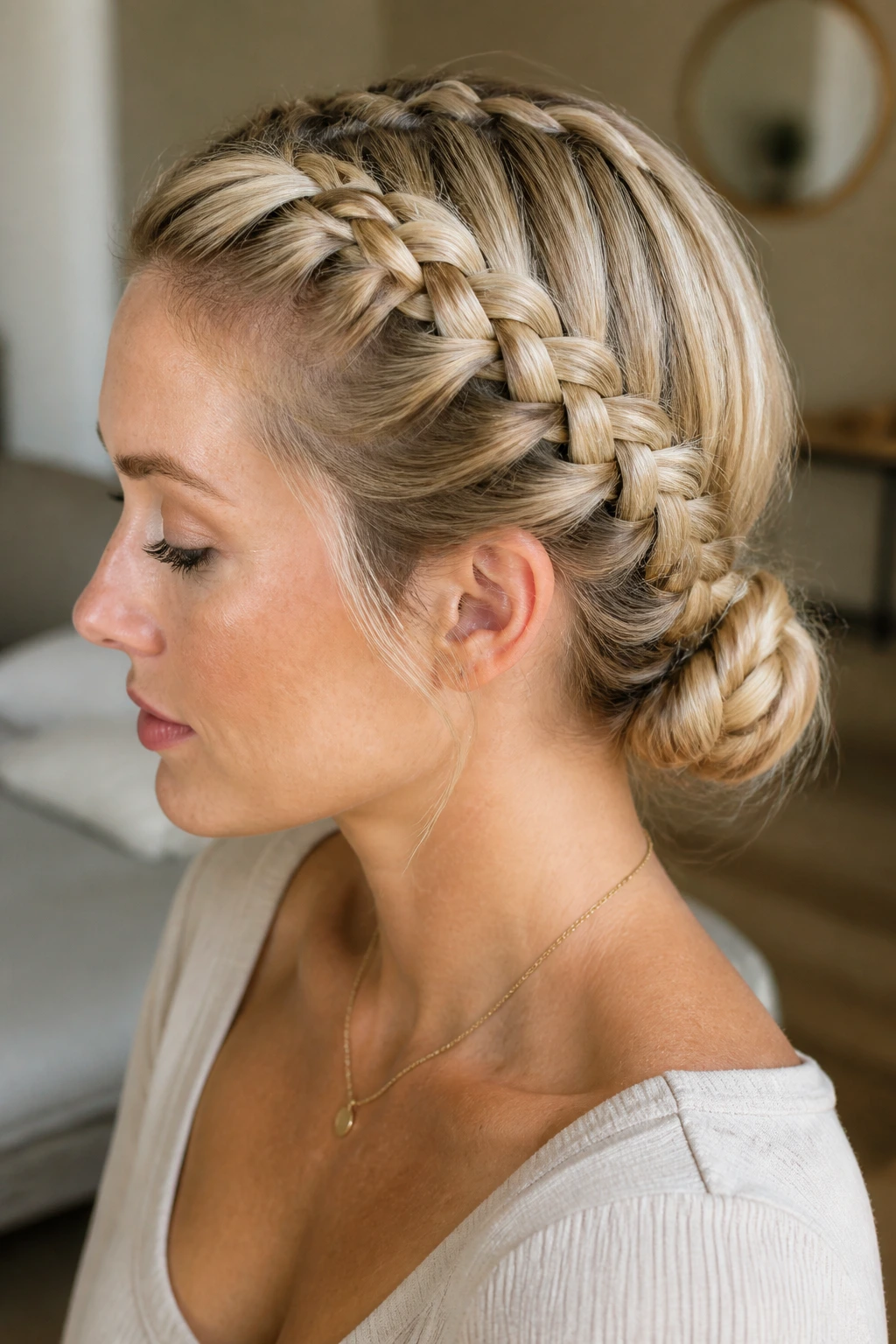
Need the hair off your back, neck, and face all at once? Double Dutch braids feeding into a low bun do the job without looking like gym hair.
Thick hair makes the braids visible from a distance, which is half the charm. Start the braids near the hairline, braid down to the nape, then gather both ends into a low bun and pin them under. If the hair is slippery, use a little texturizing powder at the roots before you start.
A few pale blonde streaks show up nicely in the braid ridges. If the color is too uniform, the style can flatten out visually. A little contrast keeps the plait from disappearing.
15. Sleek High Ponytail with Bright Money Piece
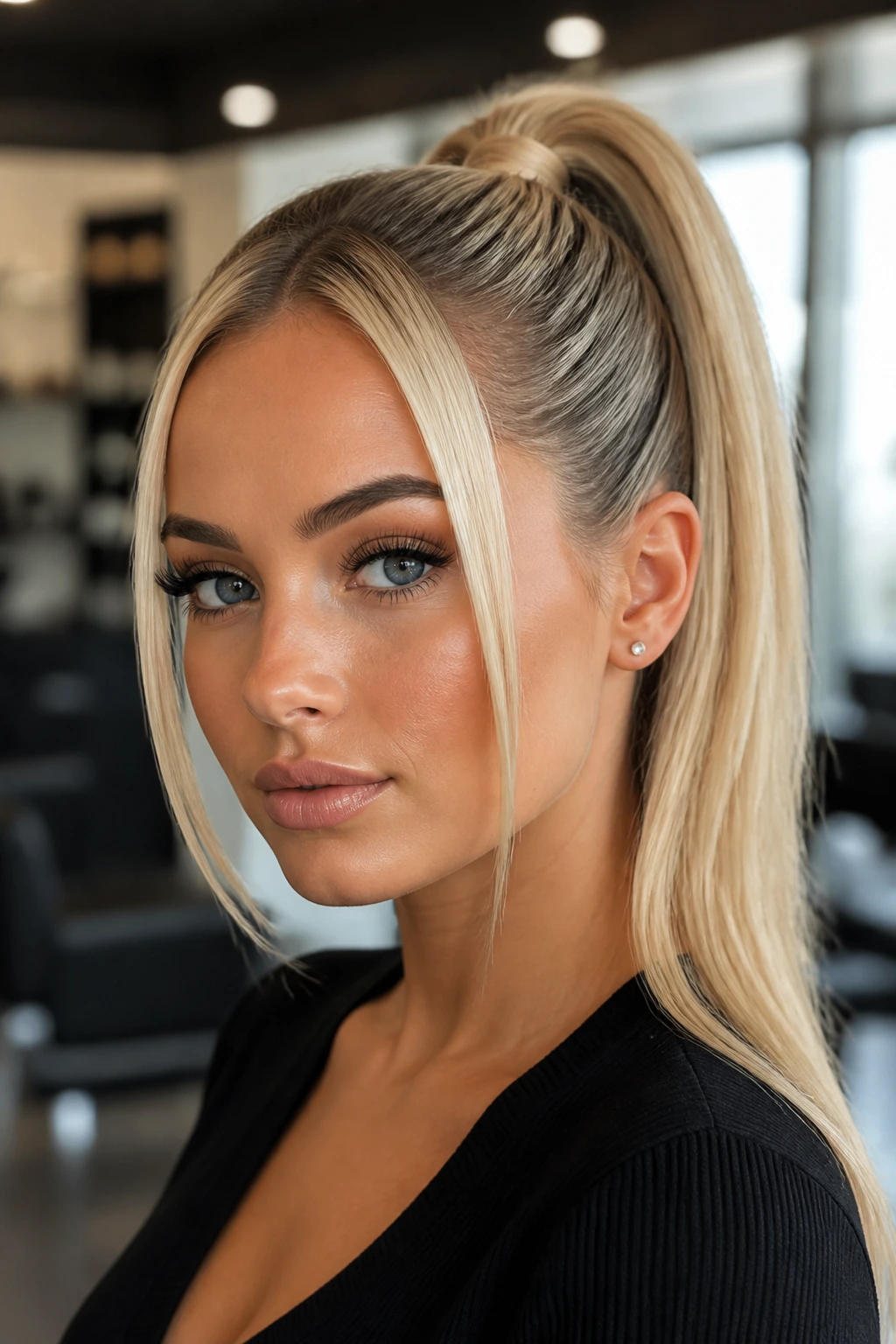
A high ponytail on thick blonde hair can look expensive fast, but it needs a clean base. Slick the crown back with a soft gel or edge control, brush it tight, and wrap a strand of hair around the elastic so the whole thing reads finished.
The bright money piece at the front does the heavy lifting. It breaks up the slickness and frames the face, which keeps a severe ponytail from looking harsh. If your hair is very dense, use two elastics stacked one above the other. One alone can sag.
This style is strongest when the ponytail is polished but the ends still have movement. A tiny bend at the ends keeps it from looking like a horse tail.
16. Deep Side Part Glam Waves in Honey Blonde
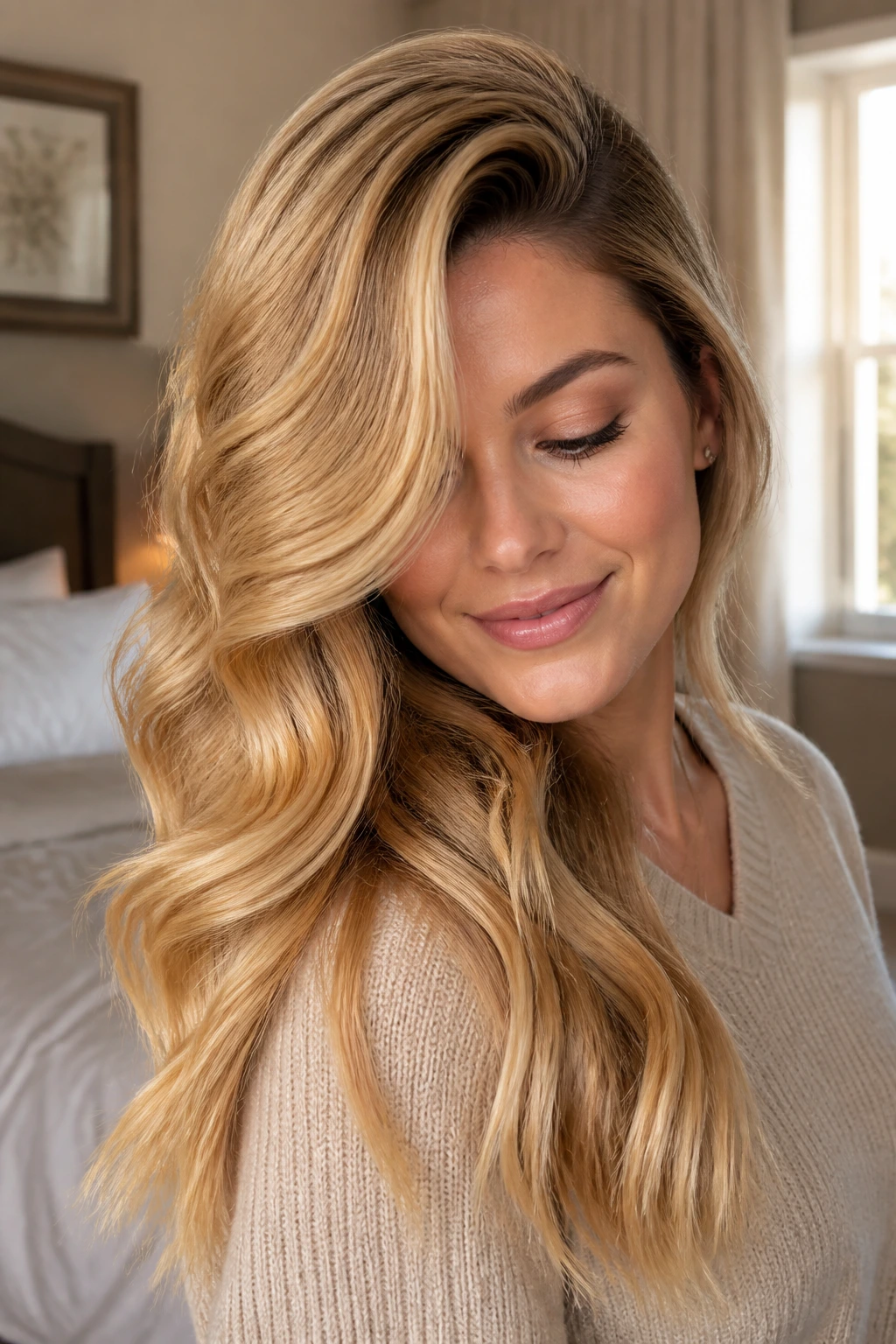
A deep side part gives thick hair instant shape. It creates lift at the root on the heavier side and lets the other side fall into a clean curve, which is why this version of glam waves feels a little less formal and a little easier to wear.
Honey blonde suits the look because it softens the shine without dulling it. Use a 1½-inch curling iron, but don’t curl every section the same way all the way through. Leave the ends a touch straighter for a more modern finish.
Quick note
This style looks best when the waves are brushed into each other, not left as separate ringlets. Thick hair can handle that brushing-out step without disappearing, and that is exactly why it works.
17. Layered Mermaid Waves with Buttery Blonde
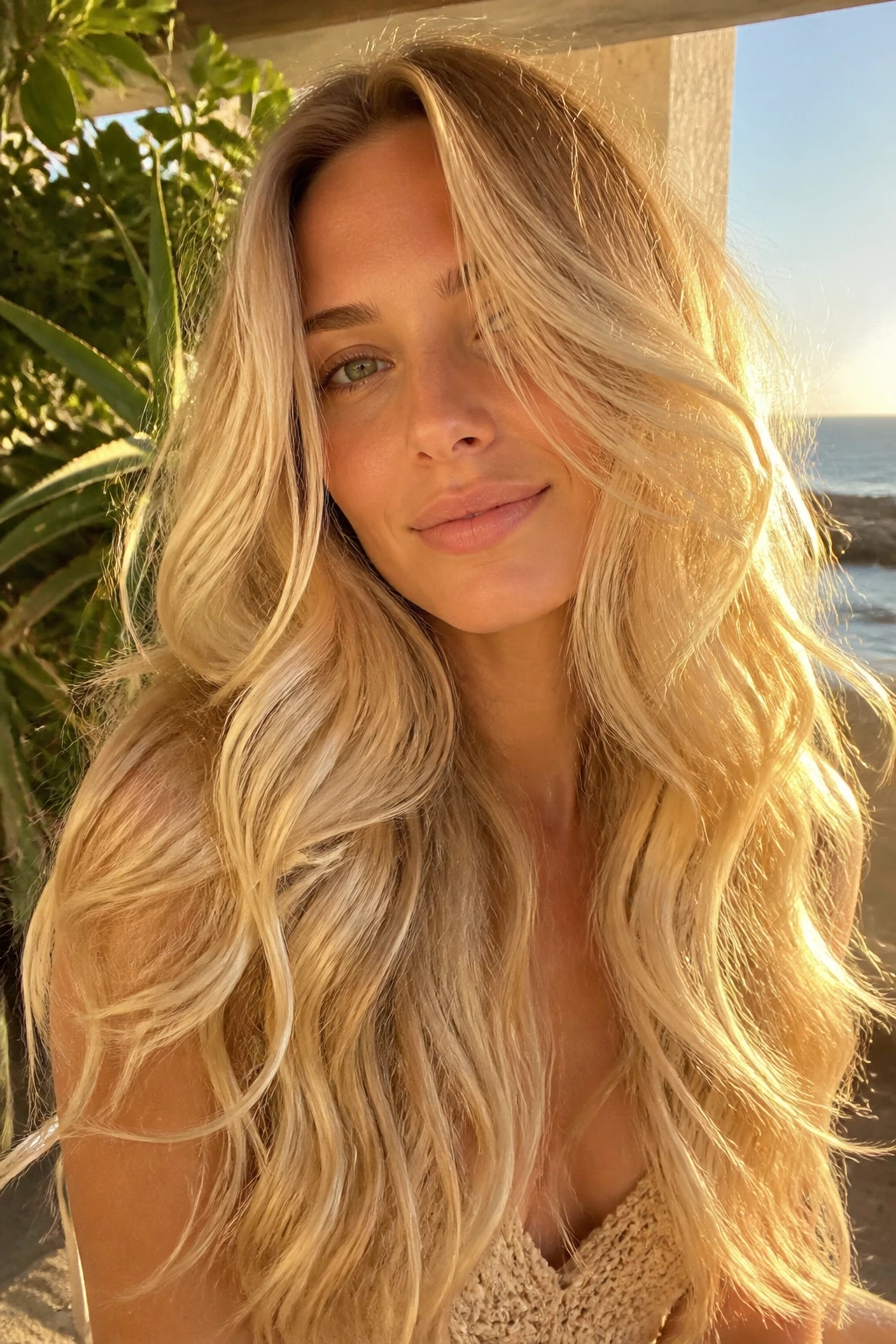
Mermaid waves need enough length and weight to hold their bends, which is why thick hair is such a good fit. The layered shape keeps the waves from feeling bulky, while buttery blonde gives the movement a warm, almost sunlit look.
A triple-barrel waver can work here, but a standard iron does the job if you clamp and release in a repeating S-pattern. Keep the sections small. Thick hair swallows big sections and leaves the middle untouched.
I like this style when the goal is softness over polish. It’s fuller than beach waves, less rigid than Hollywood curls, and more forgiving when a few pieces decide to bend in their own direction.
18. French Twist with Soft Volume and Beige Blonde
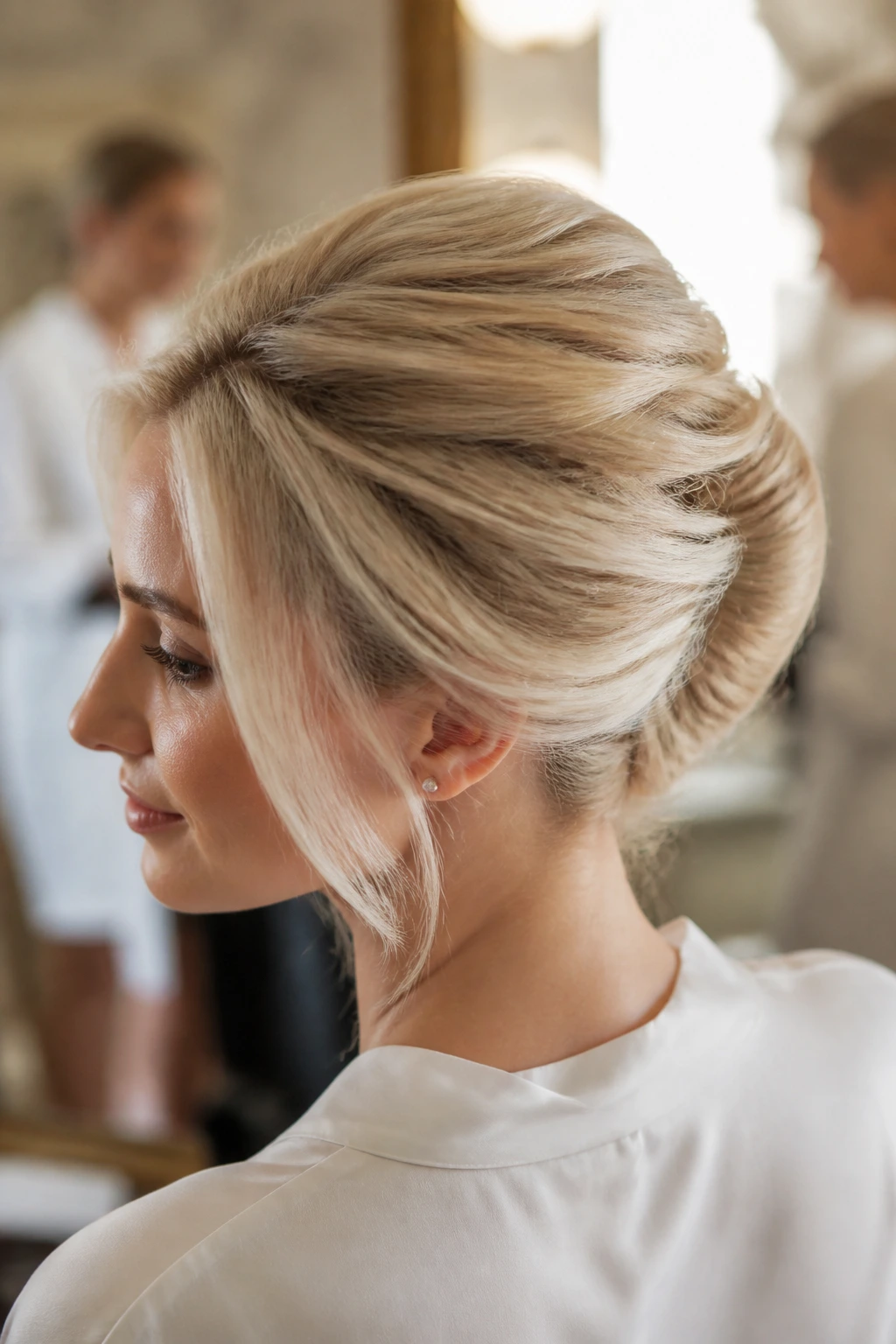
Can a French twist hold on thick hair? Better than on most textures, honestly. There’s enough density for the twist to grip the back of the head, and the beige blonde keeps it from looking too formal or too dark against the nape.
Tease the crown lightly before twisting so the top doesn’t go flat. Then smooth the surface with a brush and pin the roll upward with long bobby pins. The key is not making the twist too tight. A little softness at the crown keeps the whole thing from looking dated.
Best for
This is the style I’d pick for a dinner, wedding, or any event where you want the hair away from the face but still want shape. It has structure. It also has enough bend to feel human.
19. Soft Curl Lob with Champagne Ends
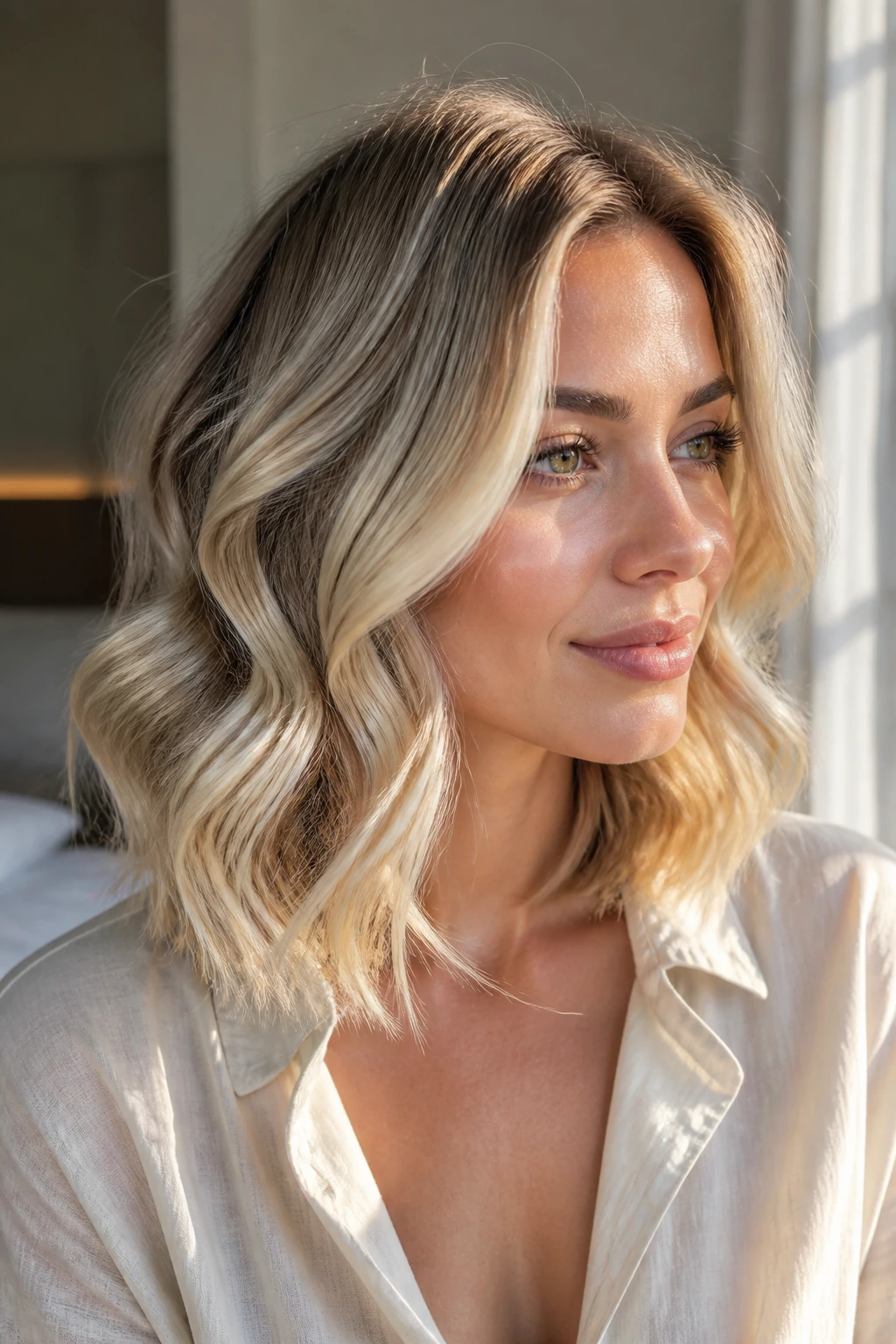
A collarbone-length lob with soft curls is one of the least fussy ways to wear thick blonde hair. The cut removes enough weight that the shape moves, but it still has enough body to hold a curl without going stringy by the end of the day.
Champagne ends keep the lower half bright, which matters because thick hair can make shorter styles look heavy if the color is too dark at the perimeter. Curl away from the face in alternating sections, then run fingers through the ends only. Don’t brush it into a cloud.
This is a good compromise if you want a shorter shape without giving up fullness. It has polish, but it doesn’t demand perfection.
20. Chin-Length Bob with Face-Framing Blonde
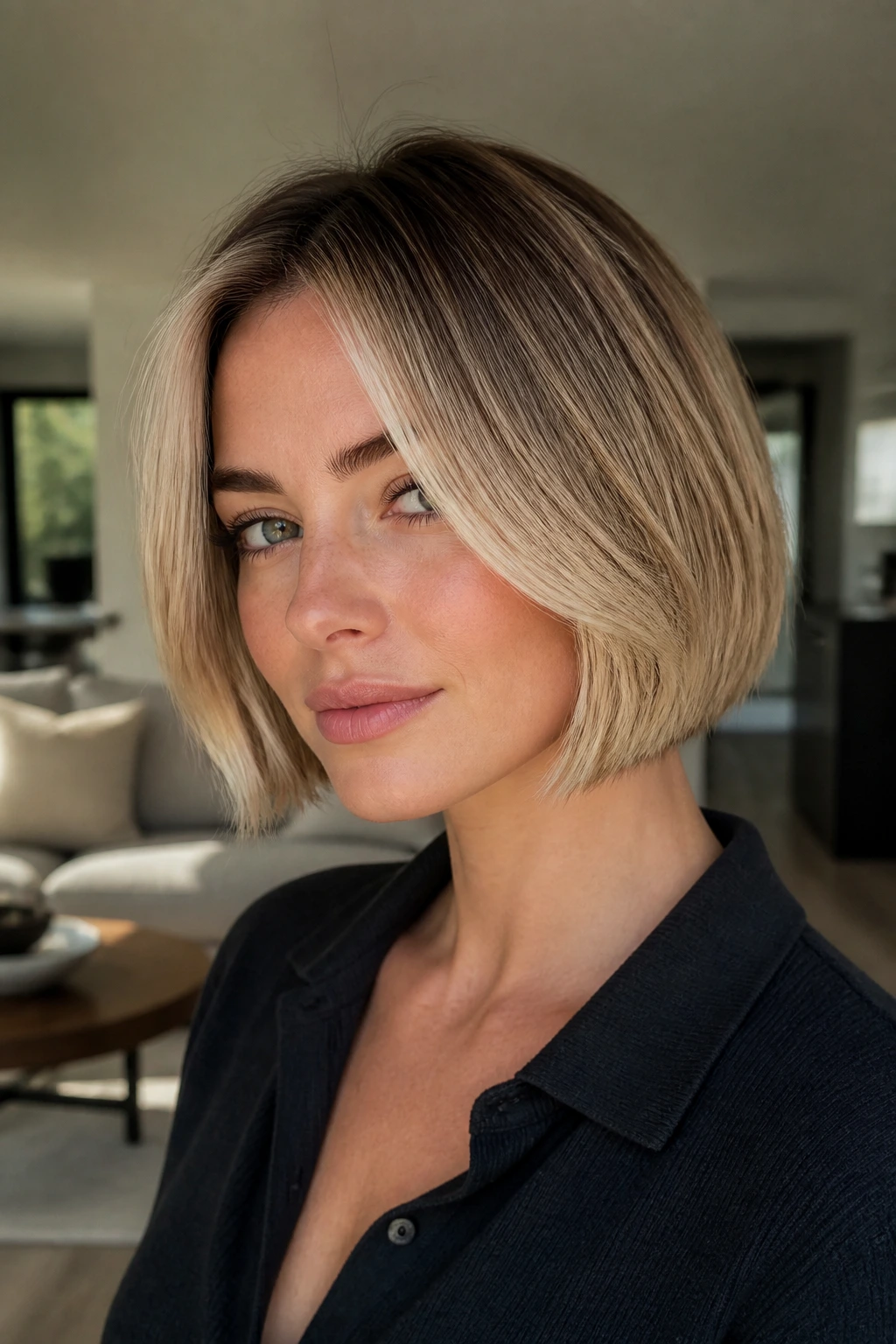
Yes, thick hair can go short. It just needs the right structure. A chin-length bob with face-framing blonde pieces keeps the shape from looking like a helmet, and the lighter front draws attention upward instead of outward.
Ask for a little internal weight removal at the back of the head, not a lot. Too much thinning turns the ends wispy and weird. The perimeter should stay blunt enough to hold the shape, while the front pieces can angle softly toward the jaw.
What to watch for
This cut looks best when the blow-dry is smooth at the roots and slightly tucked under at the ends. If the ends flip outward wildly, the bob loses its clean line fast.
21. Twisted Half-Up Style with Ribbon Blonde Highlights
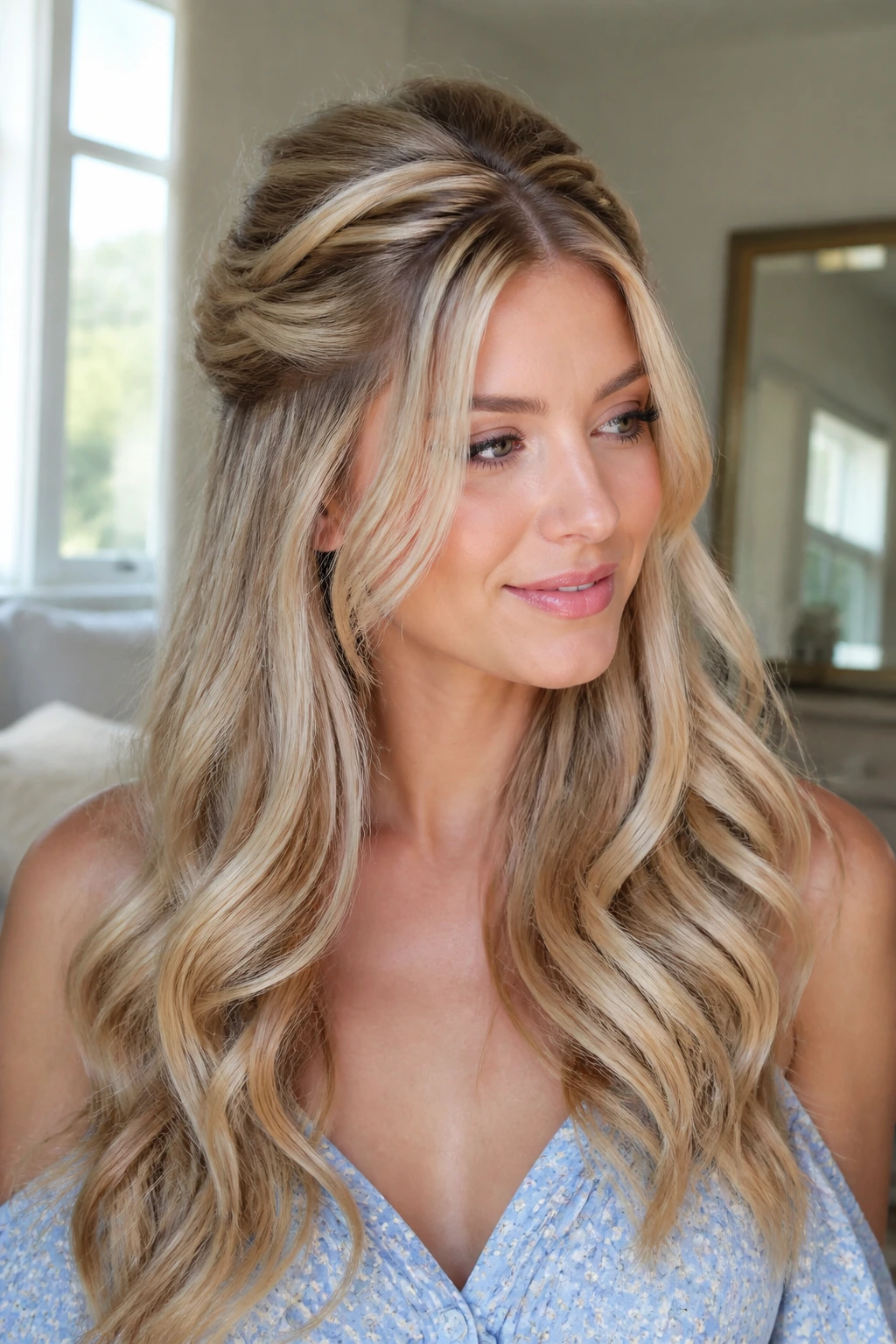
This is the kind of style that looks simple until you notice how much shape is packed into it. Twist two side sections back from the temples, secure them at the crown, and let the rest fall in loose bends or soft curls. Ribbon blonde highlights make the twist visible because the lighter strands trace the coil.
I like this for thick hair because it keeps the face open without pulling all the weight upward. The lower half still moves, which matters. A half-up style that removes too much hair can leave the rest of the length looking flat and over-controlled.
If you want it softer, pull the twist apart with your fingers after pinning it. Just a little. Enough to show the texture.
22. Straight Lengths with Face-Framing Layers and Root Shadow
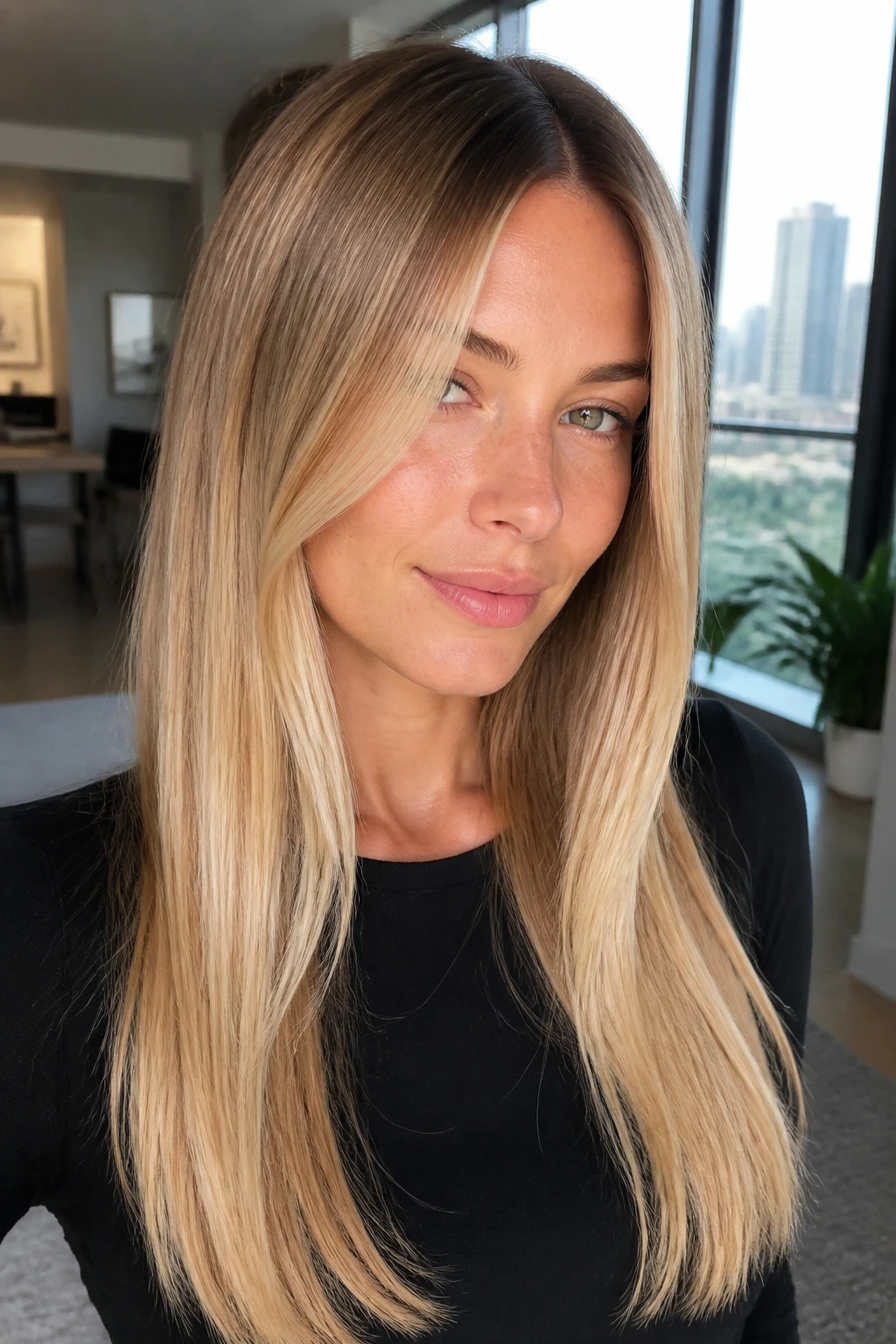
Some thick hair wants to be straight, and there is nothing boring about that when the cut is right. Face-framing layers keep the front from feeling heavy, while root shadow makes the blonde grow out with less drama and gives the length more depth.
A paddle brush and a flat iron are enough if the cut is solid. Work in narrow sections, use a heat protectant, and leave the ends only lightly beveled. Don’t chase pin-straight at the cost of shine. Thick hair can look muddy if you overwork it.
The root shadow matters here because it prevents the whole style from looking too pale and one-dimensional. That darker base gives the length a spine.
23. Braided Low Ponytail with Warm Vanilla Ribbons
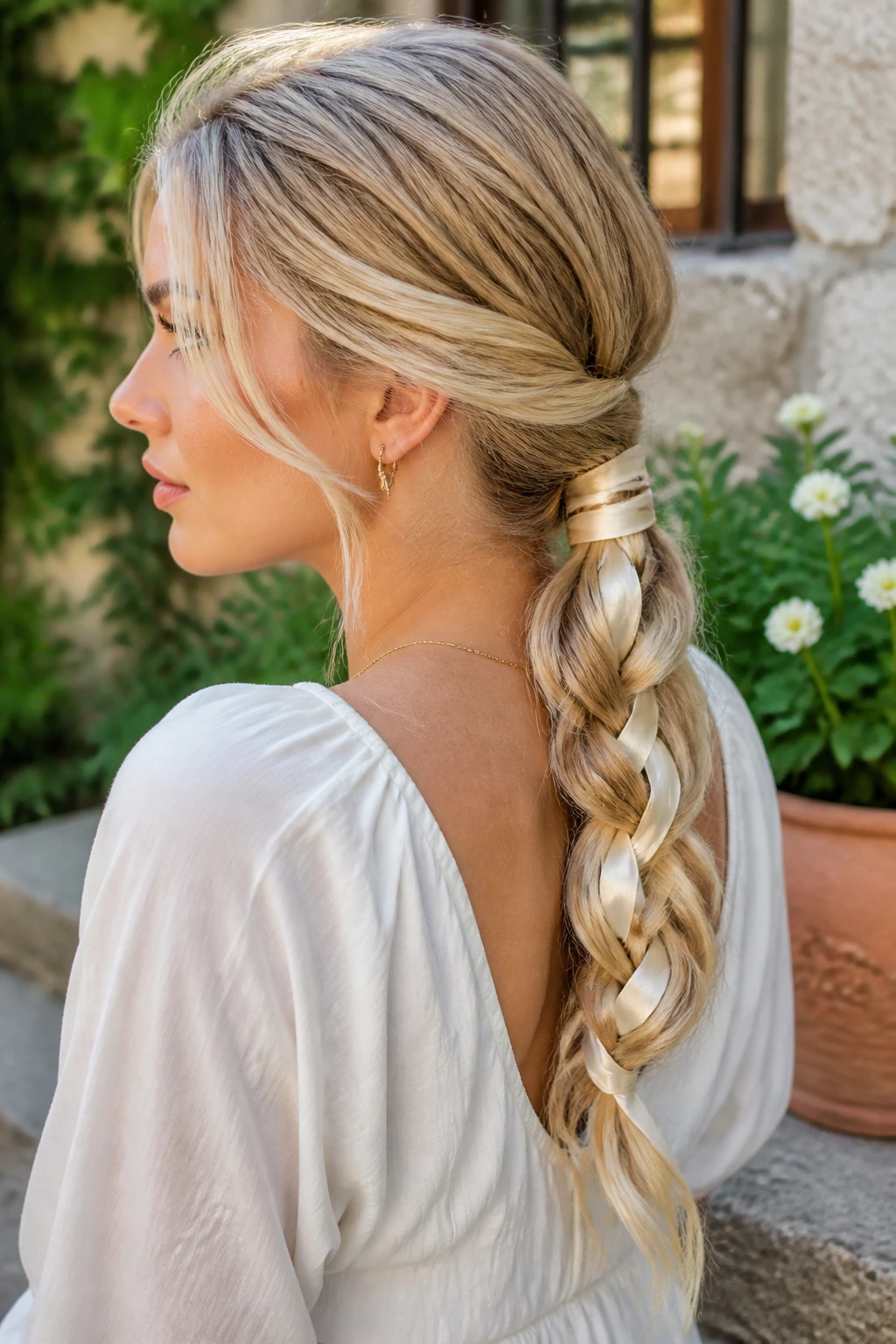
A low ponytail braid is one of the neatest answers to thick hair on a busy day. Gather the hair low at the nape, braid the tail, and then pancake each braid section just enough to widen it. Warm vanilla ribbons in the blonde make the braid pattern easy to read.
The style holds because thick hair gives the braid substance. Thin hair can make this look skimpy. Thick hair gives you a rope-like braid that has actual visual weight.
A small wrap of hair around the base makes the finish look cleaner. Secure it with a pin under the ponytail, not on top where it can poke out.
24. Tucked-In Scarf Bun with Honey Blonde Ends
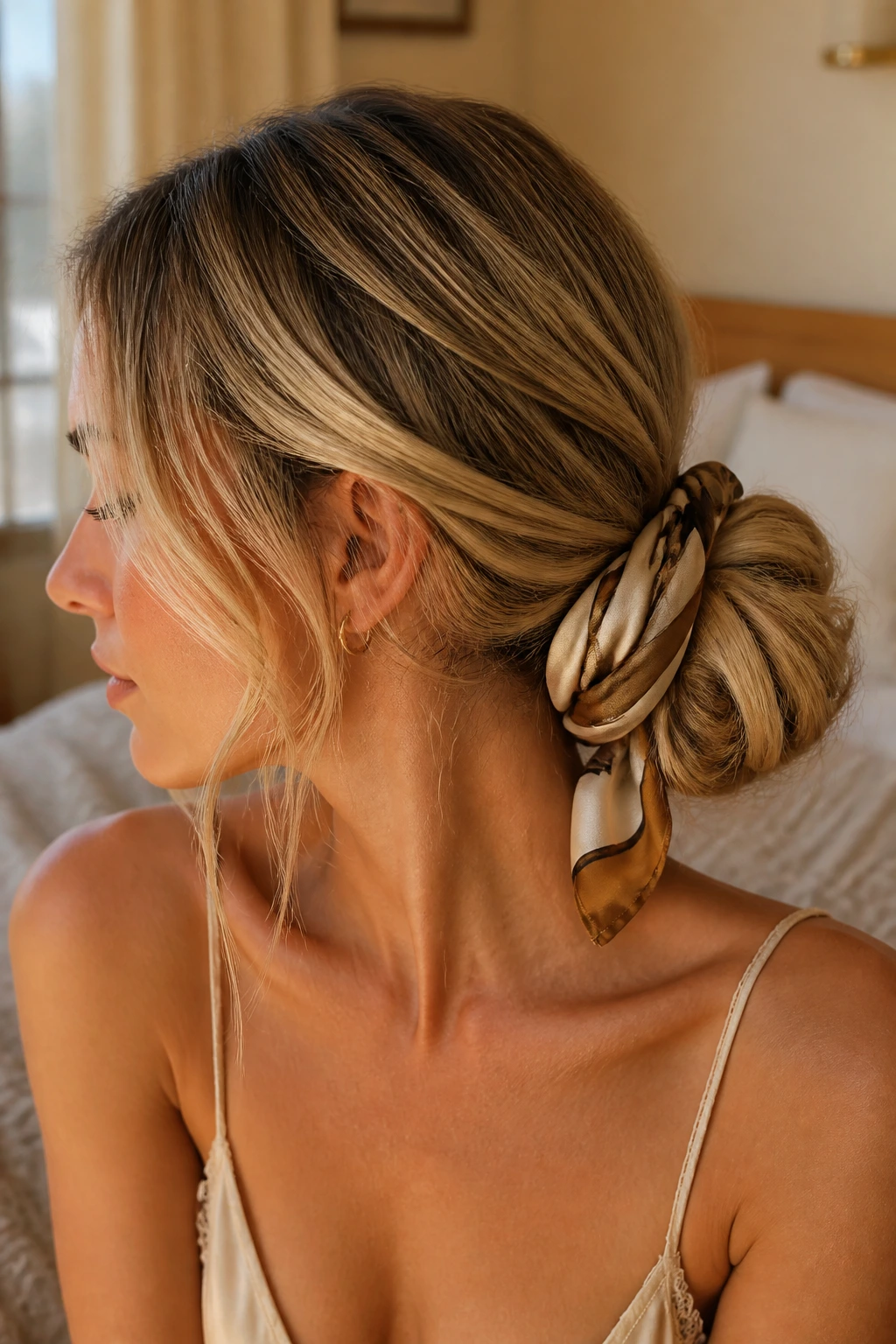
Add a silk scarf and a low bun suddenly feels styled instead of rushed. Thick hair fills the bun out, and the scarf gives the whole look a finished edge without needing perfect smoothness.
Tie the hair into a low bun first, then wrap the scarf around the base or weave it through the bun. Let a little of the honey blonde end peek out if you want the color to show through the accessory. That small contrast keeps the scarf from taking over.
This style is especially good when you want to protect the hair ends from friction. A silk or satin scarf reduces the rub that can rough up lightened hair.
25. Glossy Glass Hair with Cool Blonde Depth
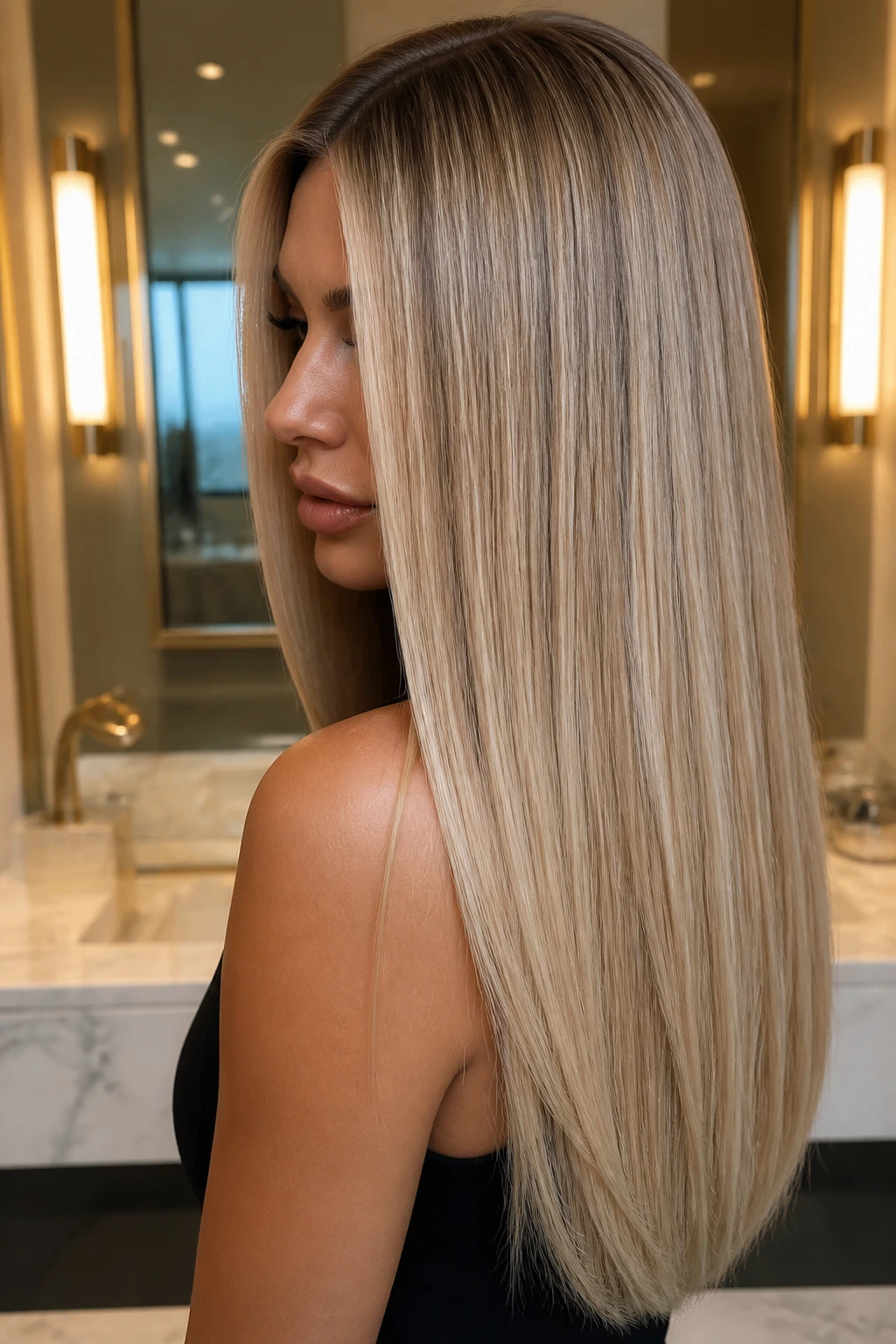
Glossy straight hair is not reserved for fine hair. Thick hair can look even sharper in a glass-hair finish because the density gives the line more presence, especially when the blonde has cool depth instead of one pale flat shade.
The key is prep. Blow-dry with a smoothing cream, then flat iron in small sections with a fine-tooth comb chasing each pass. Keep the roots smooth and the ends blunt. A tiny drop of serum on the mids and ends is enough; too much and the finish turns greasy fast.
The line that matters
Cool blonde depth and a shadow root keep the style from looking washed out. Without them, straight thick blonde hair can lose definition under indoor light. With them, it looks clean and deliberate from root to tip.
Why Thick Hair Changes the Color Game
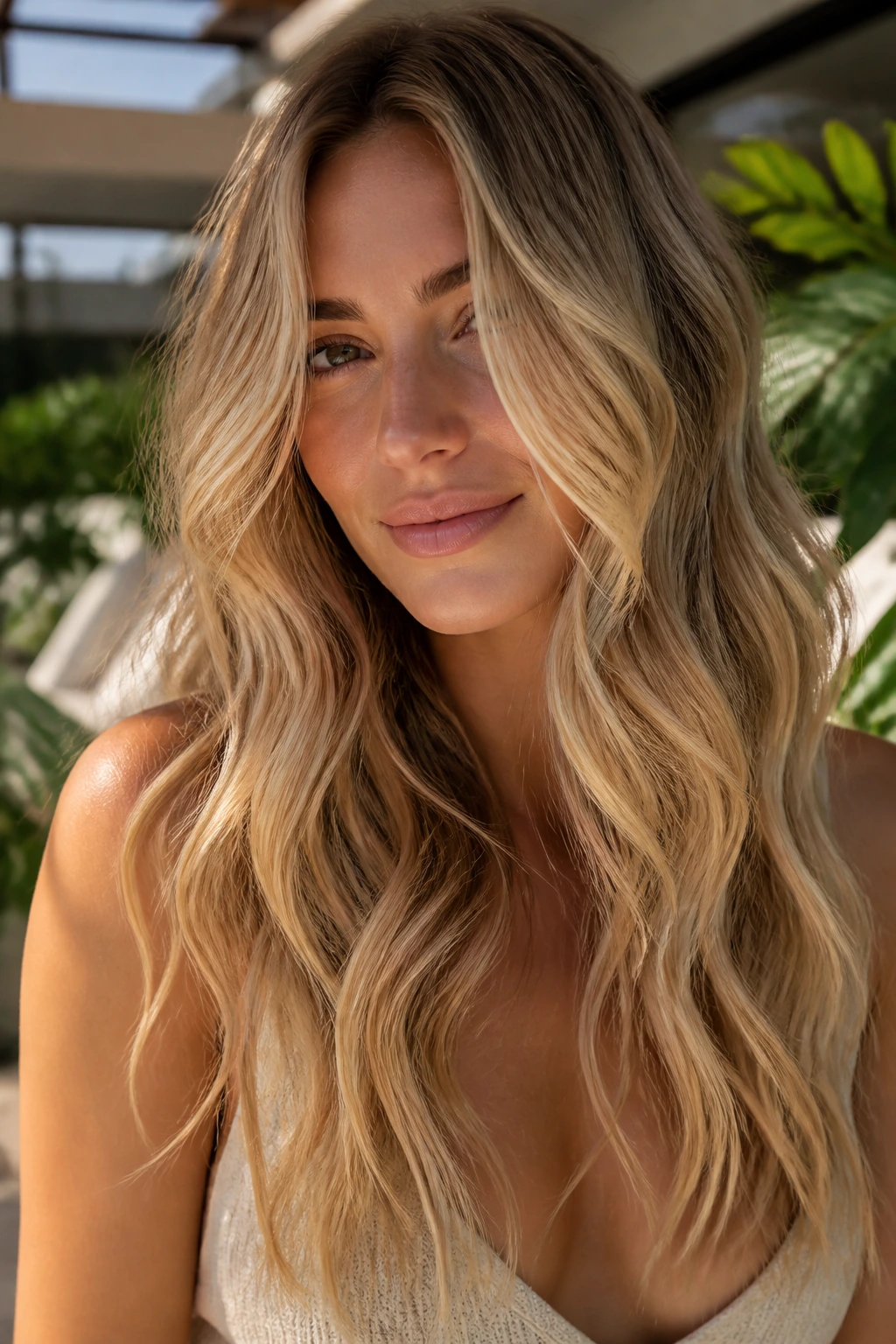
Thick hair does not take blonde the same way finer hair does. There’s more surface area, more weight, and more room for color to disappear if the placement is lazy. A solid pale blonde on dense hair can look like a sheet. Add dimension, and the whole thing wakes up.
That is why root shadow, lowlights, and face-framing brightness keep showing up in the best styles here. They give the eye something to follow. The cut matters just as much. Internal layers prevent the triangle shape that thick hair gets when it hangs straight with no plan. Leave the weight at the bottom untouched, and the whole style gets wide in the wrong places.
The part people skip
If the color and cut are fighting each other, styling gets harder every morning. If they work together, you can do less and still look put together. That’s the difference.
A good blonde on thick hair should look broken up, not striped, and full, not puffed. Once you see that, the rest gets easier to choose.
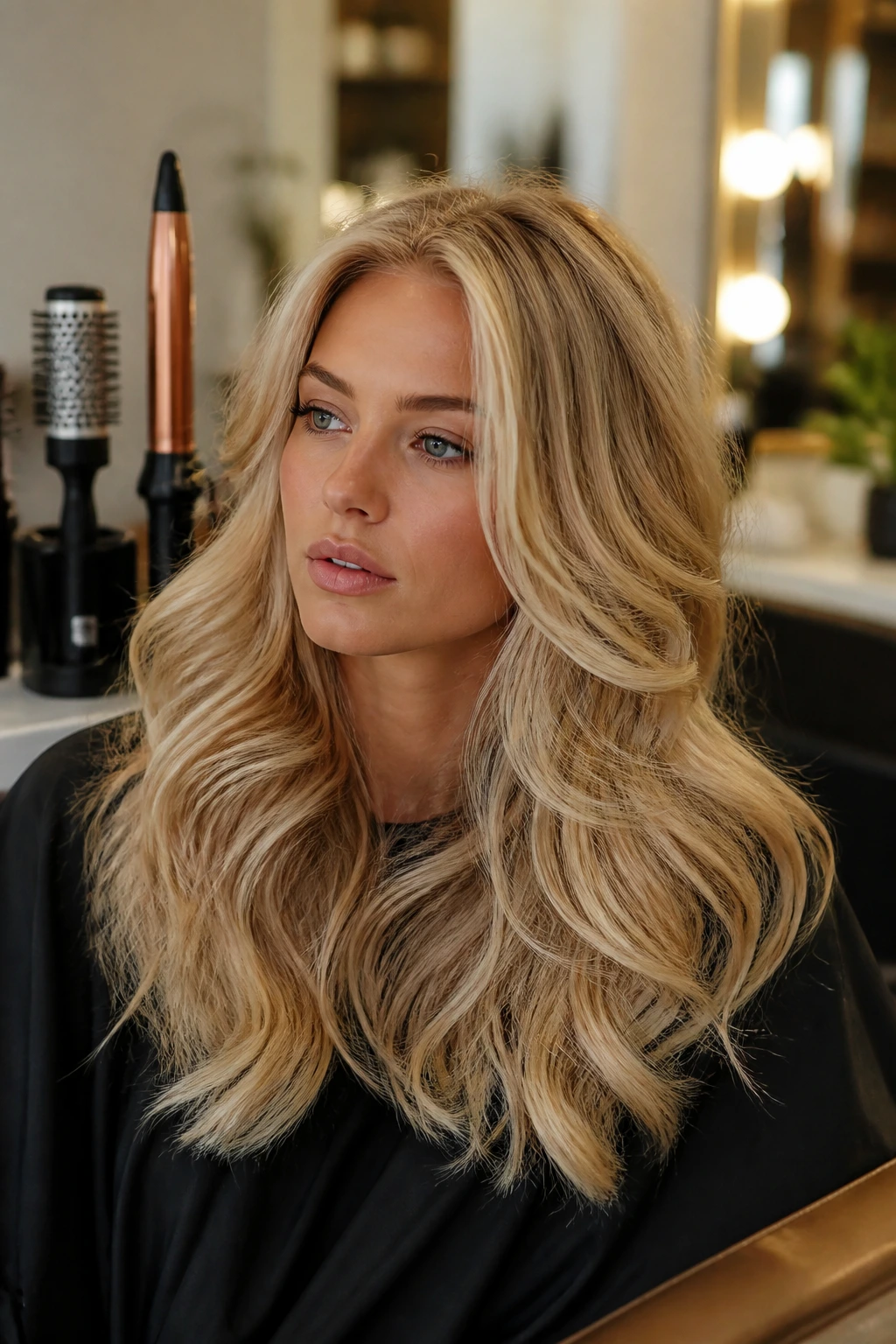
Essential Tools for Styling Thick Blonde Hair
-
1¼-inch curling iron or wand: Big enough to bend thick sections without making them look tight or ringlet-heavy.
-
1½-inch round brush: Useful for blowouts, curtain bangs, and volume at the crown.
-
Heat protectant spray: Non-negotiable on lightened hair; apply before every hot-tool session.
-
Boar-bristle brush: Great for sleek ponytails, glass hair, and smoothing the surface without tearing at the cuticle.
-
Wide-tooth comb: Better than a brush when you’re detangling wet, dense hair.
-
Sectioning clips: Thick hair needs them. Four to six sturdy clips keep the back from getting ignored.
-
Long bobby pins and U-pins: Small pins slip out of thick buns and twists. Use the long ones.
-
Large claw clip: Buy the oversized version with real spring tension, not the flimsy little ones.
-
Texturizing spray or powder: Gives grip for braids, twists, and half-up styles.
-
Color-safe shampoo and conditioner: Keep blonde from going dull and rough between salon visits.
-
Purple shampoo: Use it sparingly; thick lightened hair can grab pigment unevenly if you use it too often.
-
Silk or satin scrunchie: Gentler on the length than a tight elastic, especially for buns and ponytails.
How to Choose the Blonde Tone That Fits Thick Hair
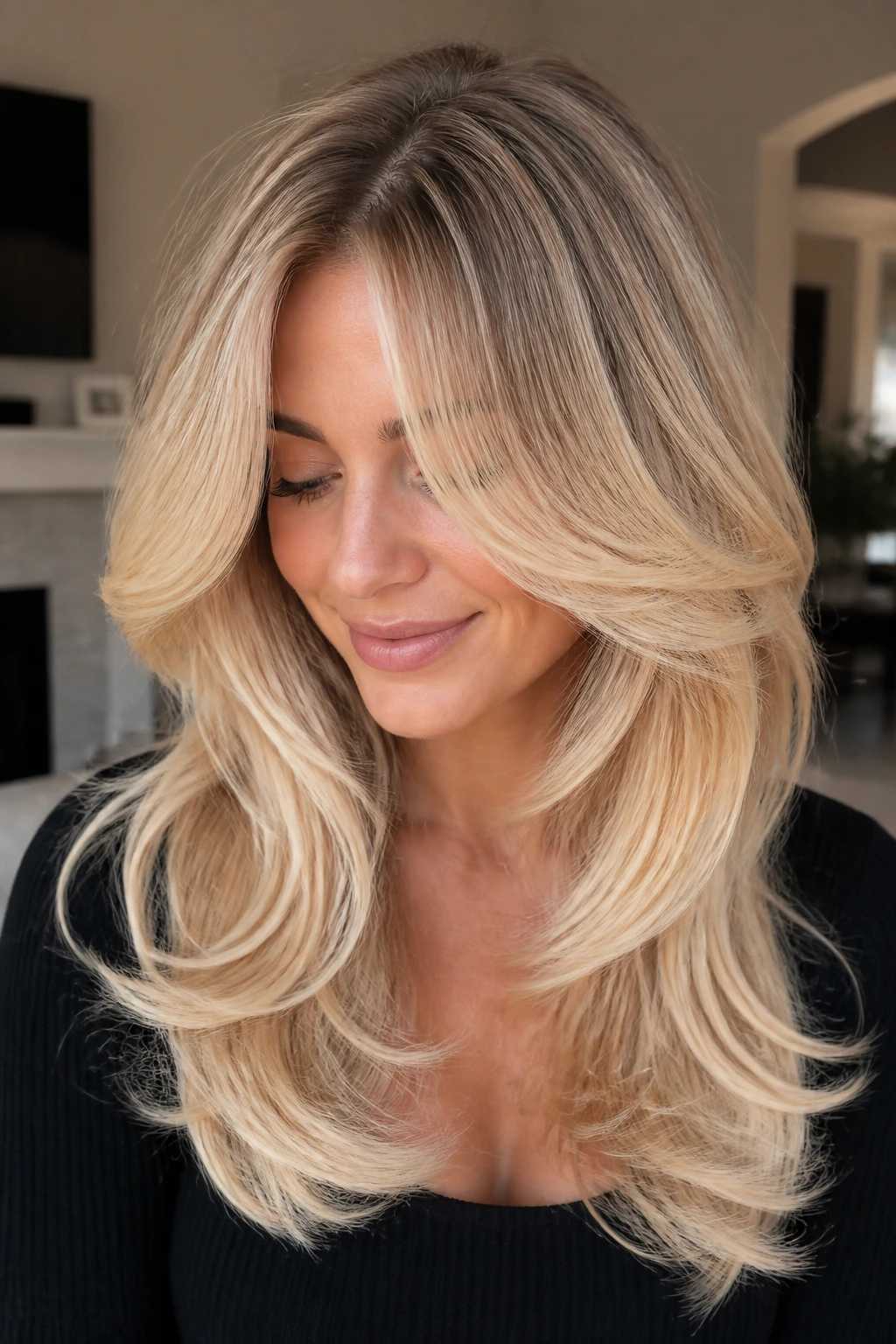
Warm blondes are often easier on dense hair than stark, icy tones. Honey, caramel, butter, and vanilla keep the color looking rich even when the hair is wearing a lot of volume. They soften the edges of a heavy cut and make the texture feel more plush.
Cooler blondes have their place, though. Pearl, beige, and platinum give thick hair a sharper finish, especially if the cut is blunt or layered with a strong shape. The mistake is choosing a cool blonde with no depth at the root. Then the hair can look washed out and oddly solid.
The safest move
A root shadow or soft lowlight often solves the whole problem. It gives thick blonde hair contrast at the base and keeps regrowth from looking too abrupt. That is especially helpful if you’re wearing sleek styles, straight lengths, or anything with a deep part.
Practical Tips for Making These Styles Hold
-
Section more than you think you need: Thick hair swallows heat and product, so working in smaller panels gives you cleaner waves and smoother blowouts.
-
Cool the shape before you touch it: Clips, rollers, or even just a few minutes of air-cooling make curls and bends stay longer.
-
Use product in the right order: Heat protectant first, mousse or root lift next, cream or serum only on the mids and ends.
-
Keep roots light: Heavy oil at the crown flattens thick hair fast, especially on day-one blowouts.
-
Hold the finish from a distance: Hairspray should land as a mist, not a wet coat. Aim from 10 to 12 inches away.
-
Pick the right barrel size: Smaller barrels can make thick hair look too tight and busy; larger barrels give a softer bend that fits the density better.
Common Mistakes That Make Thick Blonde Hair Harder to Style
-
Over-thinning the ends: The hair gets frizzy, see-through, and oddly frayed at the bottom. Ask for controlled interior layering instead of aggressive texturizing.
-
Using one giant section per curl: The outside looks waved while the middle stays straight. Clip the hair into smaller sections so the heat reaches all of it.
-
Purple shampoo overload: Blonde turns dull, gray, or patchy, especially on porous ends. Use it only when the brass starts showing.
-
Too much product at the roots: The style collapses by midday. Keep creams, oils, and serums lower on the length.
-
Tiny accessories on big hair: Weak clips snap open and thin elastics dig in. Use oversized claw clips, sturdy pins, and elastics with a little stretch.
-
Ignoring the cut: Styling can only do so much if the haircut is a solid block. Thick hair needs some internal movement or the shape gets heavy fast.
Variations and Alternatives to Try
Heatless Satin Waves
If your hair is blonde but you want less hot-tool work, wrap damp lengths around a robe tie or large flexi-rod set and let it dry fully before releasing. Thick hair needs more drying time than most people expect, so give it enough hours or it will flatten at the center.
Short-Hair Translation
A lot of these looks can be shortened into a lob or chin-length bob. Keep the crown smoother, the ends blunt, and the face framing lighter. Thick hair usually behaves better short when the weight is removed from the interior, not hacked off in layers everywhere.
High-Contrast Blonde
Want a bolder look? Keep the base a shade or two deeper and brighten only the money piece, ends, or front layers. The contrast makes thick hair look more defined, especially in braids, blowouts, and side parts.
Low-Maintenance Root Melt
If you hate obvious regrowth, ask for a soft root melt with beige or honey lengths. It softens the line between salon visits and keeps the blonde from looking stripped against dense hair. This is the version I’d pick for someone who wears her hair up a lot.
Office-Ready Polish
For a cleaner daily version, keep the texture smooth, the flyaways controlled, and the accessories minimal. A sleek ponytail, straight lob, or low chignon will read professional fast without making the hair feel stiff.
Maintenance, Tone-Up, and Trimming Schedule
Thick blonde hair needs a regular rhythm. If you let it drift too long between trims, the ends start to swell, and once that happens the whole style becomes harder to shape. A trim every 6 to 8 weeks keeps the outline cleaner, even if you only take off half an inch.
Color care matters just as much. Use a color-safe shampoo most washes, a purple shampoo when brass starts to show, and a deep mask once a week if the blonde is lightened. Thick hair can handle heavier masks better than fine hair, but the ends still need separation—apply the richest conditioner from mid-lengths down, not all over the roots.
If the hair is heat-styled a lot, a bond-building treatment every couple of weeks can help the blonde stay smoother and less brittle. That is not a magic fix. It just keeps the cuticle from feeling like straw after too many rounds of flat ironing.
Frequently Asked Questions
Which blonde shade looks best on thick hair?
Honey, beige, champagne, and soft caramel usually work well because they add depth without making the hair look flat. Cooler shades like pearl and platinum can look sharp too, but they usually need a root shadow or lowlight to keep the shape from going washed out.
Can thick hair wear short blonde styles without looking bulky?
Yes, but the cut has to remove weight from the right places. A chin-length bob or lob works better than a blunt one-length cut if the interior has some movement built in.
How do I stop thick blonde hair from going poofy at the ends?
Use a smaller amount of smoothing cream on the mids and ends, then dry the hair with tension from a brush so the cuticle lies flatter. A blunt or softly beveled perimeter also helps more than people think.
Is purple shampoo safe for thick lightened hair?
It is, but it can stain porous ends if you use it too often. Once a week—or even less if the blonde is already cool—usually gives enough tone without drying the hair out.
What should I ask my stylist for if I have very dense hair?
Ask for interior weight removal, face-framing layers, and a shape that keeps the outline controlled. If you want blonde, mention whether you’d like a root shadow, money piece, or lowlights so the color doesn’t look flat.
Can these styles work on naturally wavy or curly hair?
They can, but the styling approach changes. Wavy and curly thick hair often looks better with softened layers, larger curls, or braid-and-twist styles that respect the natural texture instead of forcing it straight.
Why does my thick hair hold curls for some styles but not others?
Because section size, barrel size, and cooling time all matter. Thick hair holds a curl better when the section is smaller than you think, the barrel matches the look you want, and the curl cools fully before brushing.
How often should I trim thick blonde hair?
Every 6 to 8 weeks is a solid rhythm if you want the ends to stay neat. If you wear it in sleek styles, you may notice the shape going off sooner than you expect when the perimeter starts to fray.
A Shape That Holds
Thick blonde hair doesn’t need to be tamed. It needs a plan. Once the cut has enough structure and the color has enough dimension, almost any of these styles starts to make sense fast—waves, braids, sleek ponytails, short bobs, all of it.
The best part is that you don’t have to choose between polish and fullness. Thick hair gives you both, as long as you stop asking it to behave like something it isn’t. Pick one shape that suits your routine, one blonde tone that gives the hair depth, and one styling habit you’ll actually repeat. The rest has a way of falling into place.