



Rounder haircuts for short hair with curly hair live or die on shape, not length. That’s the part most people miss. A short curly cut can look airy and polished, or it can tip into triangle territory fast, and the difference is often a half-inch at the nape, a softer curve through the sides, or whether the interior is layered at all.
I’ve always liked rounded curly cuts because they respect the curl pattern instead of bullying it into a flat outline. When the shape is right, the curls stack into a soft halo around the face, tuck in at the jaw, and keep the neck area neat without looking severe. When the shape is wrong, you get bulk in all the wrong places and that awkward shelf effect at the bottom.
The good news? There are a lot of ways to build that rounded silhouette without sacrificing personality. Some cuts lean French and cheeky. Some are more sculpted. Some keep the perimeter soft and the crown lifted. The trick is knowing which version works with your curl tightness, density, and shrinkage — because short curly hair has opinions, and it will tell on a bad cut.
Why These Curly Shapes Earn Their Keep
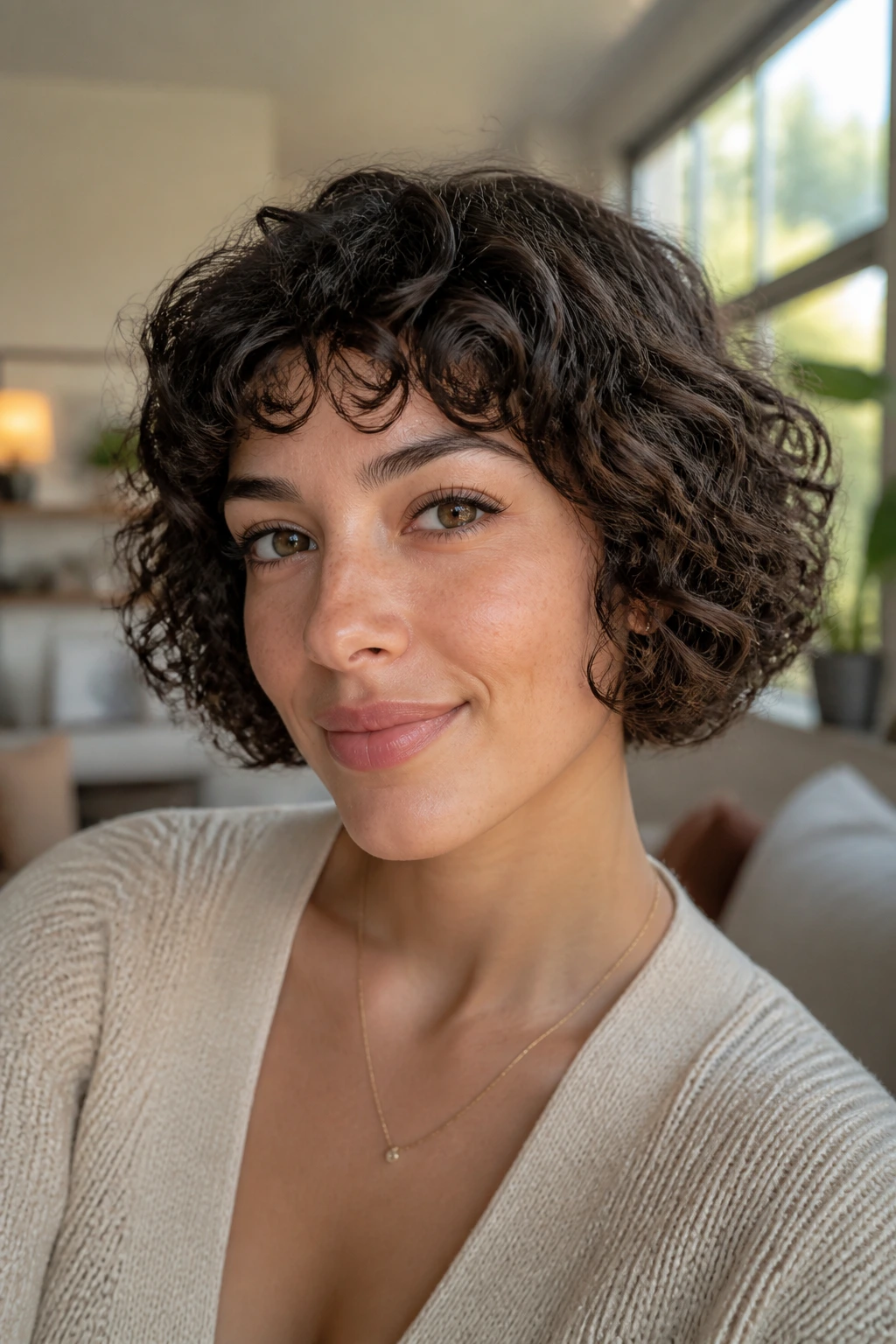
- Roundness softens the jawline: A curved perimeter sits closer to the face and keeps short curls from flaring out at the sides like a bell.
- Short length stays intentional: These cuts keep the silhouette controlled, so you’re not fighting random bulk every time humidity spikes.
- Shrinkage becomes part of the design: Good rounded cuts are planned around how curls spring up dry, which saves you from that “looks longer in the salon chair” surprise.
- They grow out with less drama: A soft curve and layered interior usually hold their shape longer than a blunt, boxy cut.
- They work with real texture: Loose waves, springy curls, and tighter coils all read round when the perimeter and crown are handled with care.
- Styling gets simpler: Once the shape is built well, you spend less time trying to fix it with product and more time just nudging it into place.
How a Rounder Curly Cut Gets Its Shape
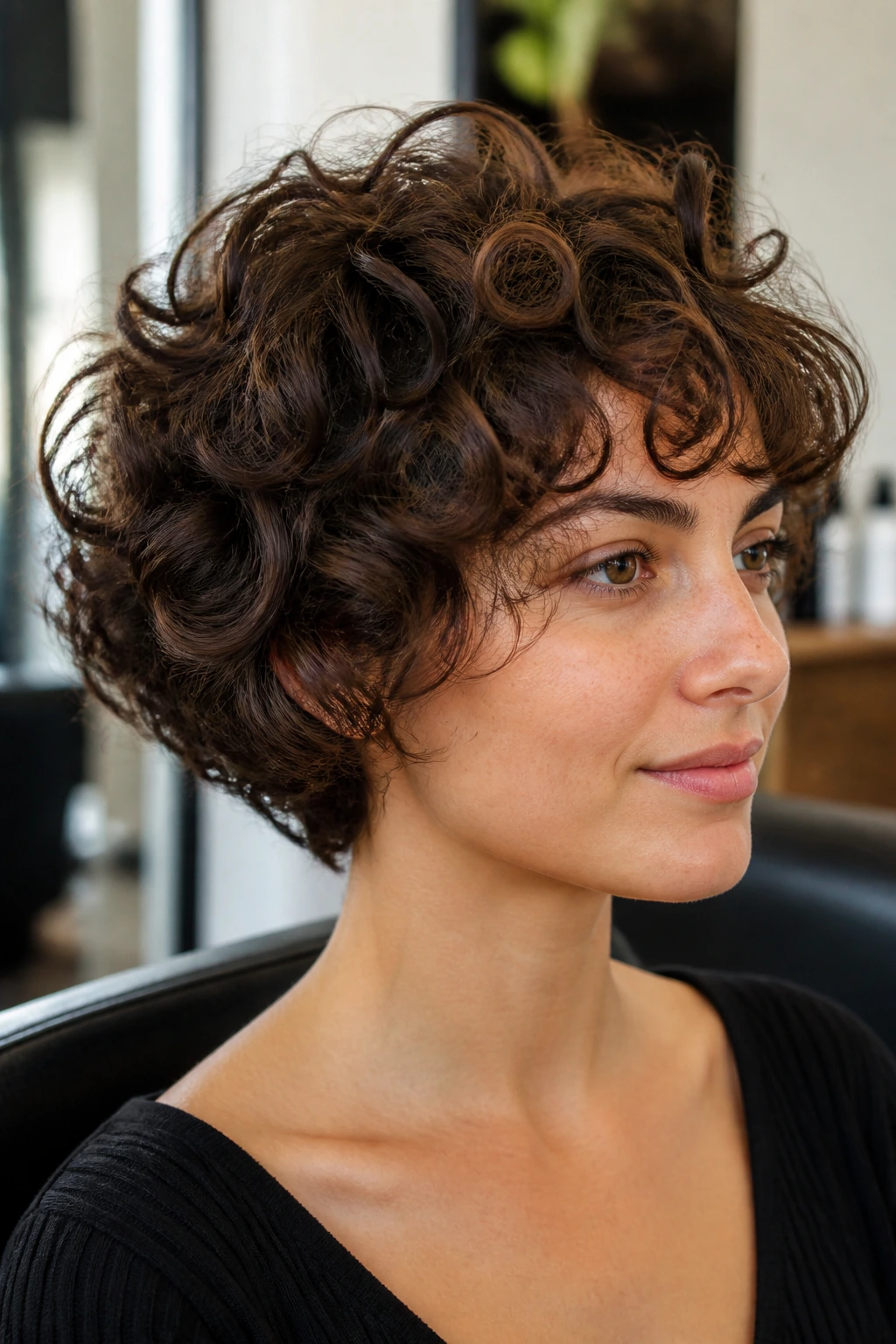
A round curly haircut is not just “short with layers.” That’s the lazy version, and it usually ends in puff at the sides and flatness at the crown. Real roundness comes from balancing three things: the perimeter, the interior, and the crown.
The perimeter is the edge you actually see first. On curly hair, that edge should usually be softened, curved, or subtly tucked, not chopped into a hard line unless you want a graphic look. The interior layers do the heavy lifting. They remove bulk where curls stack too thick, which helps the cut curve inward instead of ballooning out.
Curl Pattern Changes the Math
Loose curls can handle a little more shape through the ends. Tighter curls need a touch more room near the crown and sides so the cut doesn’t shrink into a mushroom. And if your hair is dense, the roundness often comes from removing weight inside the shape rather than chasing it at the ends.
Dry Cutting Makes the Difference
A curl-by-curl dry cut is often the cleanest way to build a round silhouette. You can see where each curl lands, where it springs, and where one side needs to sit shorter than the other. Wet cutting has its place, but on short curls it can hide too much shrinkage. That’s how people end up with a shape that looks tidy when wet and lopsided when dry.
The Shape Should Read Soft, Not Flat
Soft roundness is the goal. Not a helmet. Not a mushroom cap from the wrong decade. You want movement around the cheeks, lift at the crown, and enough taper at the edges that the haircut seems to curve around the head instead of sitting on top of it.
1. Rounded Curly Pixie
A rounded curly pixie keeps the sides close enough to the head to feel neat, but it leaves enough crown length for the curls to stack and soften the whole face. I like this cut when someone wants short hair without giving up the little puff of personality that curls naturally bring. It’s tidy, but not stiff.
Why the Shape Works
The crown is the star here. If the top is left a touch longer than the sides, the curls fall forward and outward in a soft dome instead of standing up in a sharp spike. That gives you roundness without bulk.
Ask for the nape to be cleaned up and the sides to taper gently into the top. If your curls are loose, the finish will look more piecey. If they’re tighter, it reads fuller and more sculpted. Either way, it’s one of the easiest ways to make short curly hair feel deliberate.
2. Parisian Curly Bob
This is the chin-skimming, slightly undone bob that still manages to look polished when the curls are behaving. The trick is keeping the ends curved under just enough to hug the jaw, not fling outward. When done well, it gives you that rounded bob silhouette that frames the face instead of boxing it in.
What I love here is the restraint. The cut does not need a lot of layering to work. A soft face frame, a curved perimeter, and enough length to let the curls settle are usually enough. If your hair has a little wave at the root and tighter curl through the mid-lengths, this shape is especially pretty.
3. Tapered Curly Crop
A tapered curly crop is for people who want the back and sides neat, but still want the top to have a little lift and movement. The taper keeps the haircut close to the head where short curls can get bulky, especially near the ears and nape. The top stays a bit longer so the silhouette rounds upward instead of flattening down.
This cut is a smart pick for dense hair. You can remove weight where it tends to stack, then keep enough curl on top to show off texture. It’s also one of the easiest rounded short cuts to refresh on day two, because the shape is already doing half the work.
4. Chin-Length Curly Bob
A chin-length curly bob hits that sweet spot where the curls can bounce without overwhelming the face. It’s short, but not severe. The best versions keep the bottom edge soft and curved, with the longest pieces brushing the chin and the interior lightly layered so the body doesn’t settle into a square block.
This cut has a quiet usefulness that people underestimate. If your curls shrink a full inch or two, chin length often lands in the right spot once dry. If you want the haircut to feel rounder, ask for the sides to be ever so slightly longer than the back. That tiny difference changes the whole read.
5. Soft Curly Bowl Cut
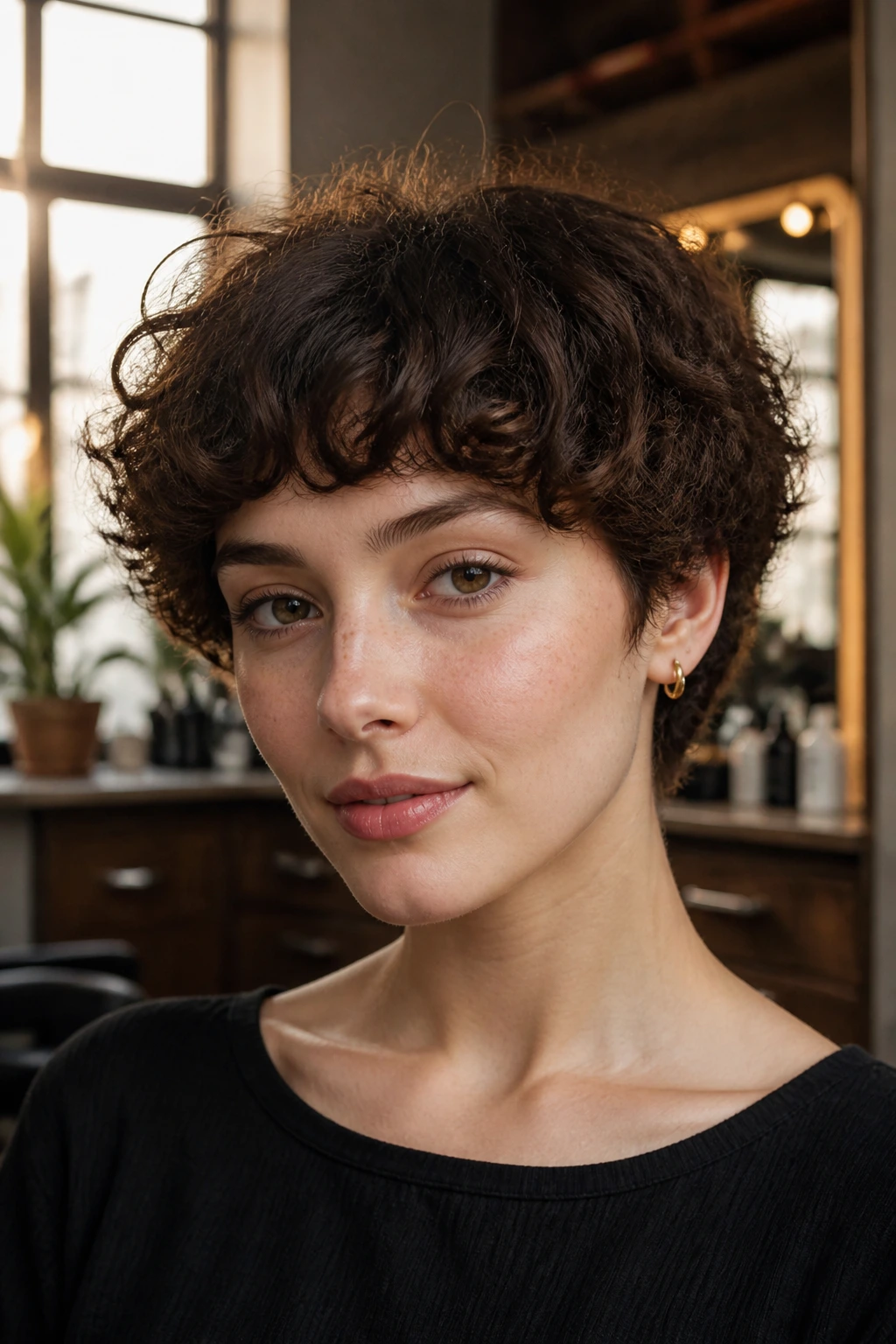
A curly bowl cut sounds bold because it is. But the soft version is not the blunt, heavy shape people imagine from old photos. On curls, it can look almost cloud-like when the ends are softened and the perimeter curves gently around the head.
Why It Looks Better on Curly Hair Than Straight Hair
Curly texture takes the hard edge off the classic bowl outline. Instead of sitting flat and graphic, the curls break the line and make it look plush. The key is to keep the fringe rounded and not too heavy across the forehead. If the front drops too low, the whole thing gets dense fast.
This is one of those cuts that works best when the stylist understands curl shrinkage. A little space at the crown and sides keeps it from looking like a cap. Done right, it reads modern, playful, and oddly elegant.
6. Airy Curly Shag
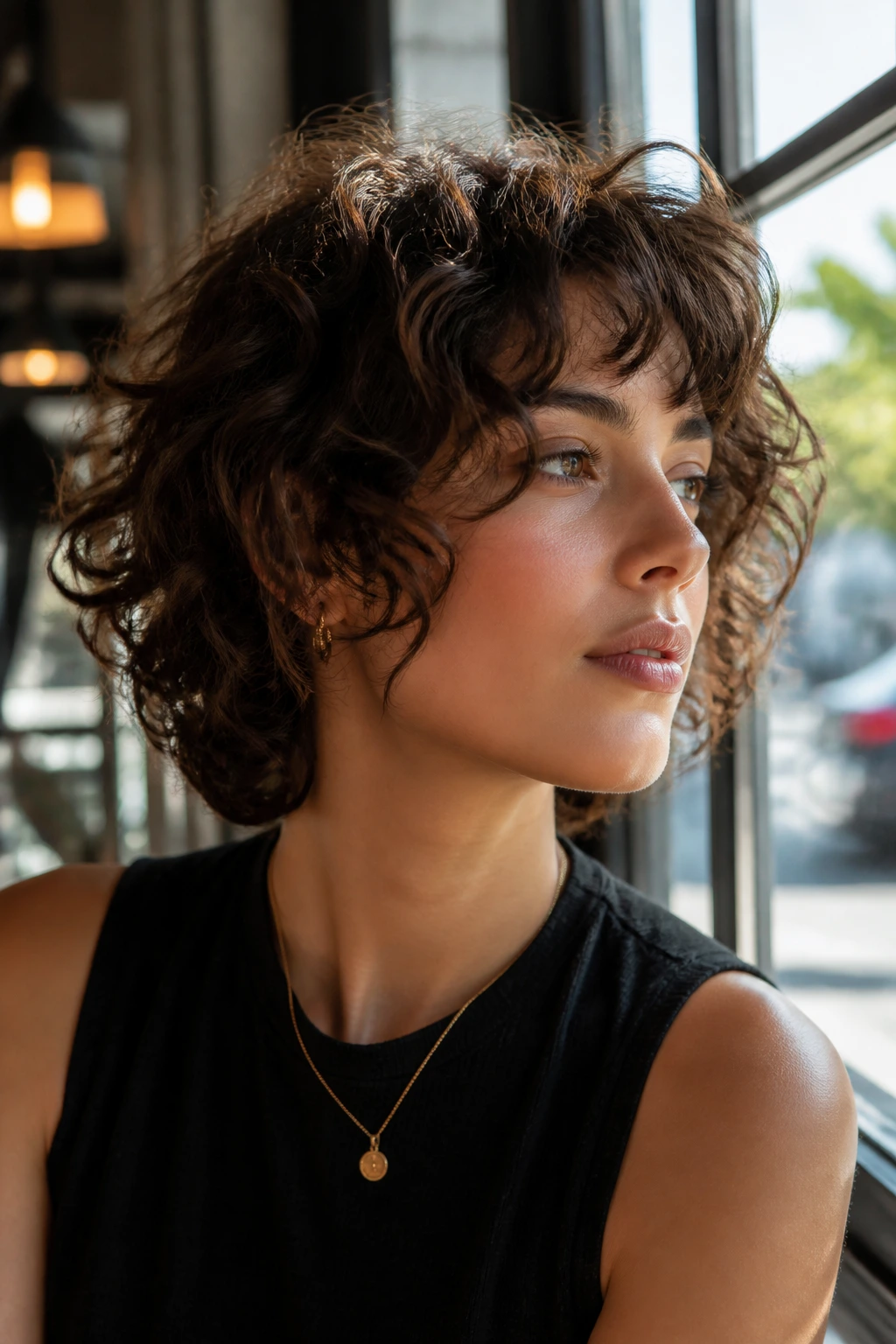
The shag can be round if it’s cut with restraint. Too many layers and you get frizz. Too few and it goes boxy. The sweet spot is a short curly shag with soft face-framing pieces, a lifted crown, and a perimeter that still keeps its curve.
This cut suits people who want short hair with motion. The layers make the curls pile up in a relaxed way, and the roundness comes from the way the lengths fall around the head, not from one dramatic line. I’d choose this for someone with medium to dense curls who likes a little edge but does not want the haircut to look severe.
7. Curly Bixie
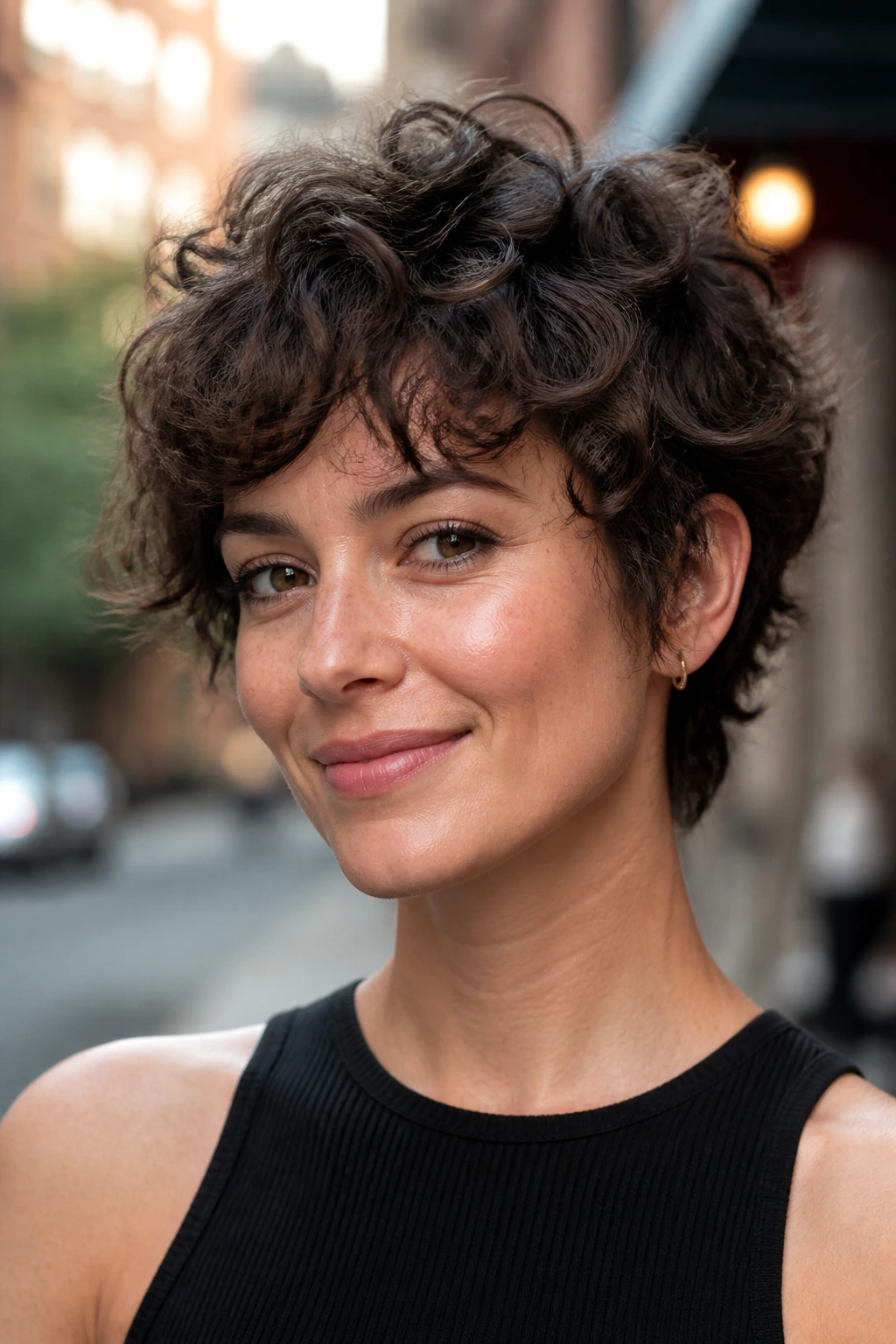
A bixie — that half-bob, half-pixie shape — gets especially good when curls are involved. The back stays short, the sides are soft, and the top keeps enough length to give the cut a rounded, airy crown. It’s one of the easiest ways to wear short curls without losing the feeling of hair.
What makes it work is the contrast. The nape can be neat and close, while the top and front stay fluffy and curved. That keeps the head shape from looking flat. If your curls tend to collapse around the ears, ask for a bit more lift there so the cut stays open.
8. Stacked Curly Bob
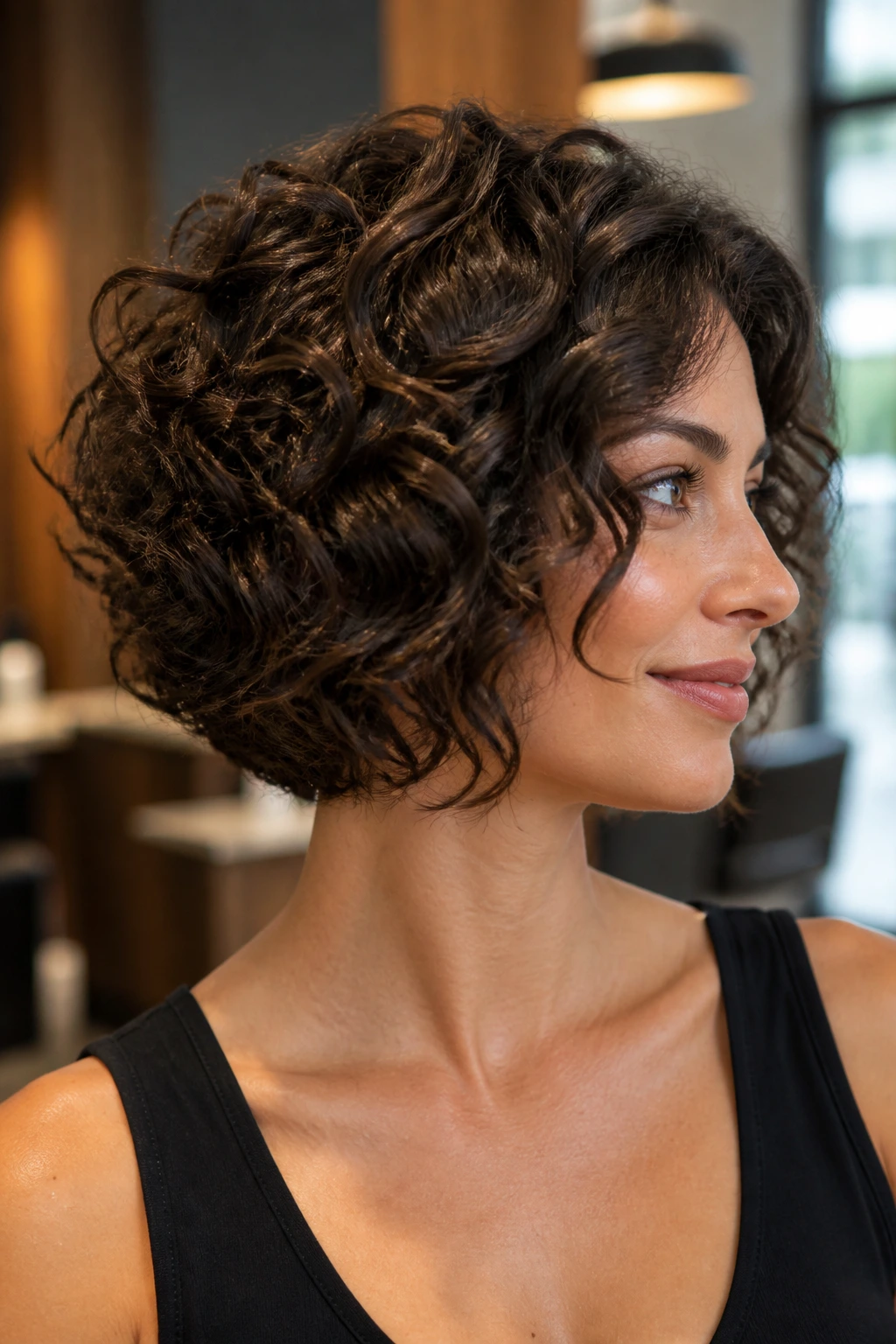
A stacked curly bob builds volume in the back, then lets that volume taper neatly toward the face. On straight hair, stacking can look sharp. On curly hair, it can look plush and rounded, almost like the haircut is cupping the back of the head.
This is a good move if your hair is dense and you want the cut to sit higher without losing fullness. The layers under the crown help the top rise a little, which gives the whole shape a rounded dome. It’s not the softest option in the lineup, but it is one of the cleanest.
9. Jaw-Length Cloud Bob
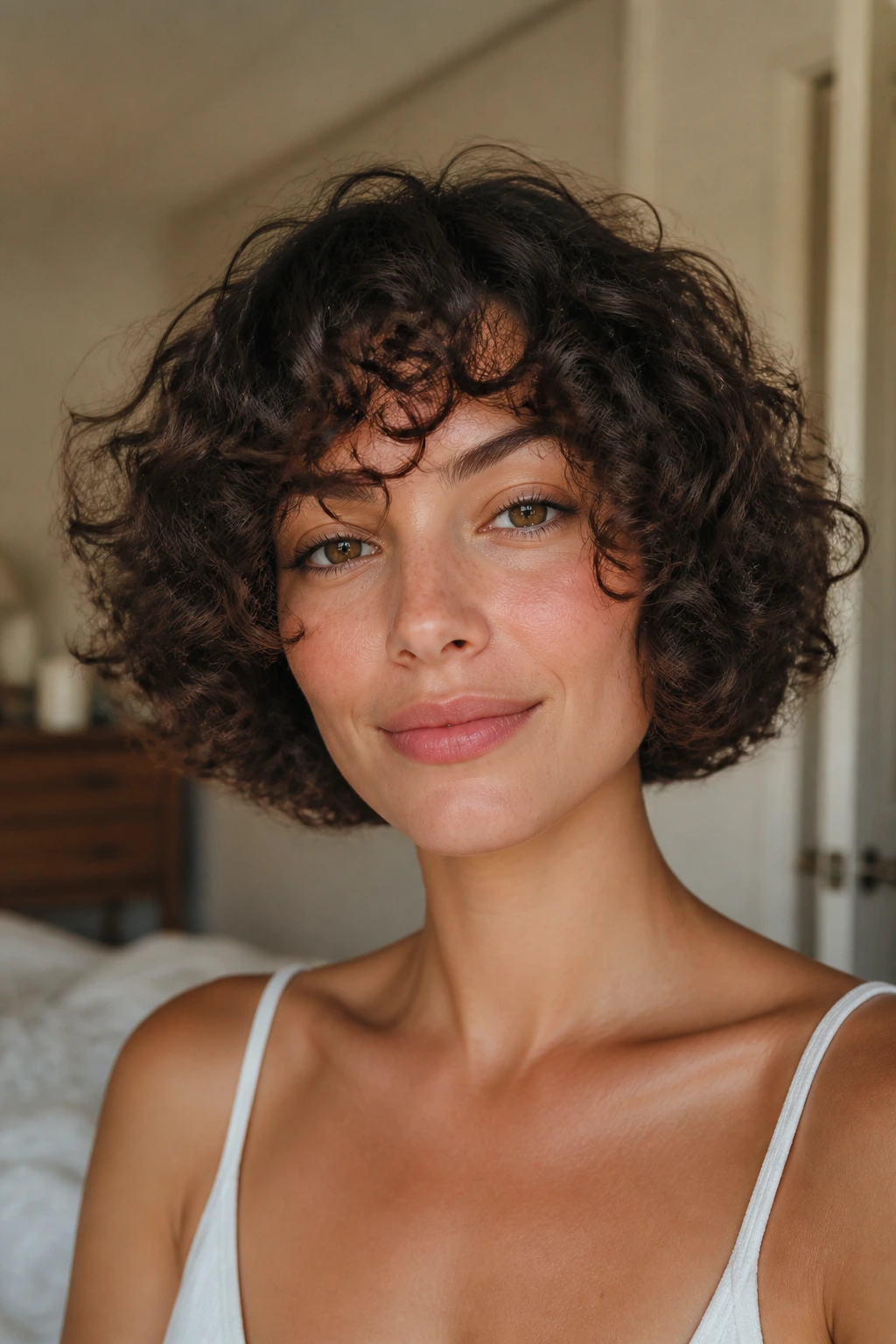
The cloud bob sits around the jaw and feels light, but not wispy. The curls should puff outward a bit and then settle back in, creating that soft rounded halo around the face. It works especially well when the stylist removes bulk underneath and leaves the top layer loose enough to move.
I like this cut for anyone who wants short hair that still feels touchable. The best version has a slightly longer front and a shorter interior, so the shape rounds toward the cheekbones. If your curls are fine, keep the layers subtle. Too much carving can make the ends look thin.
10. Curly Pageboy
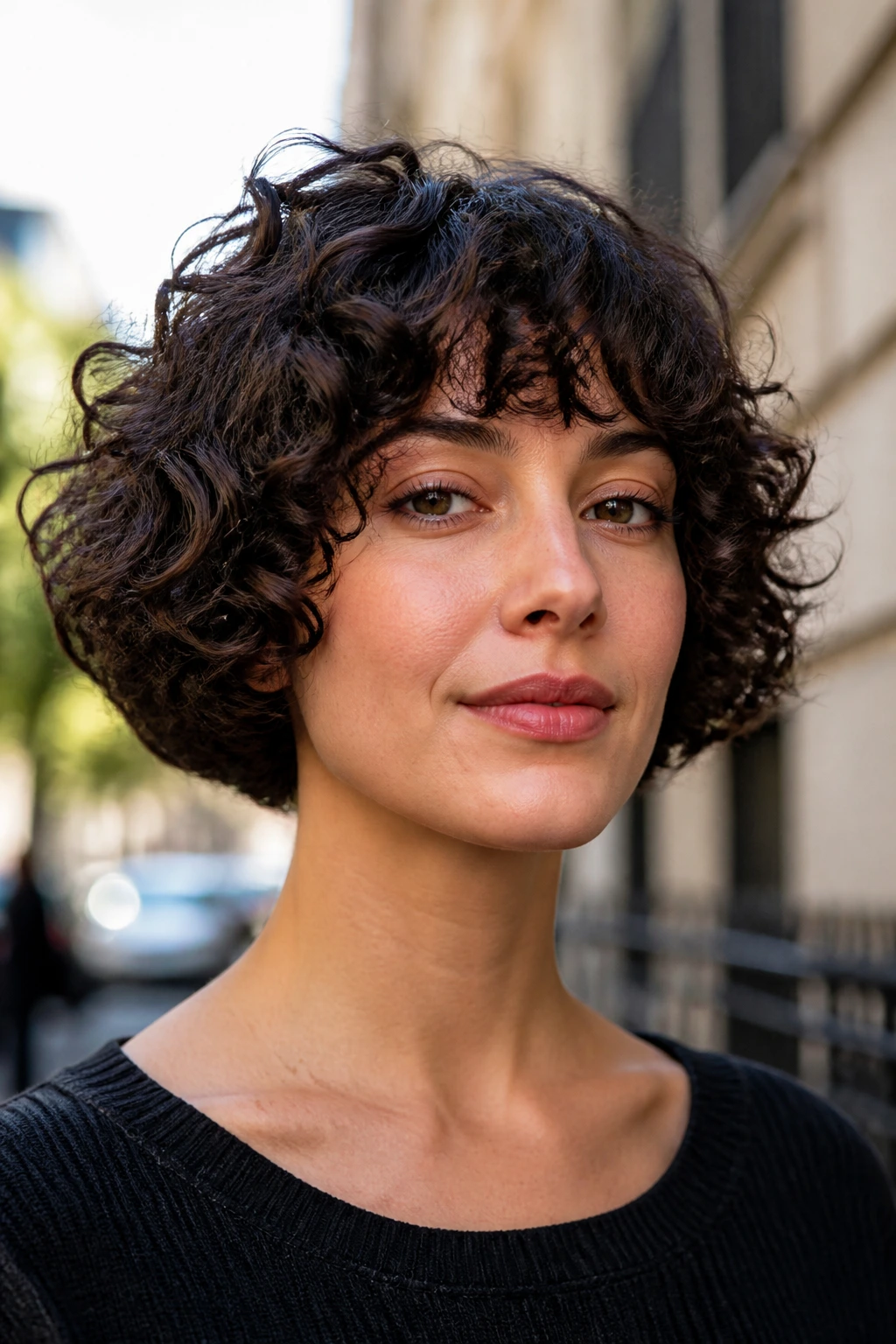
The pageboy is underrated on curly hair. It has that curved-under shape at the ends, which naturally supports a rounder outline. On curls, though, it should stay soft at the edge and never turn into a hard helmet shape.
The nape is usually kept neat, while the front has a gentle sweep or bend toward the cheek. That creates a shape that feels vintage without feeling costume-y. It’s especially nice if you want your curls to behave around the face and ears instead of exploding sideways.
11. Halo Crop
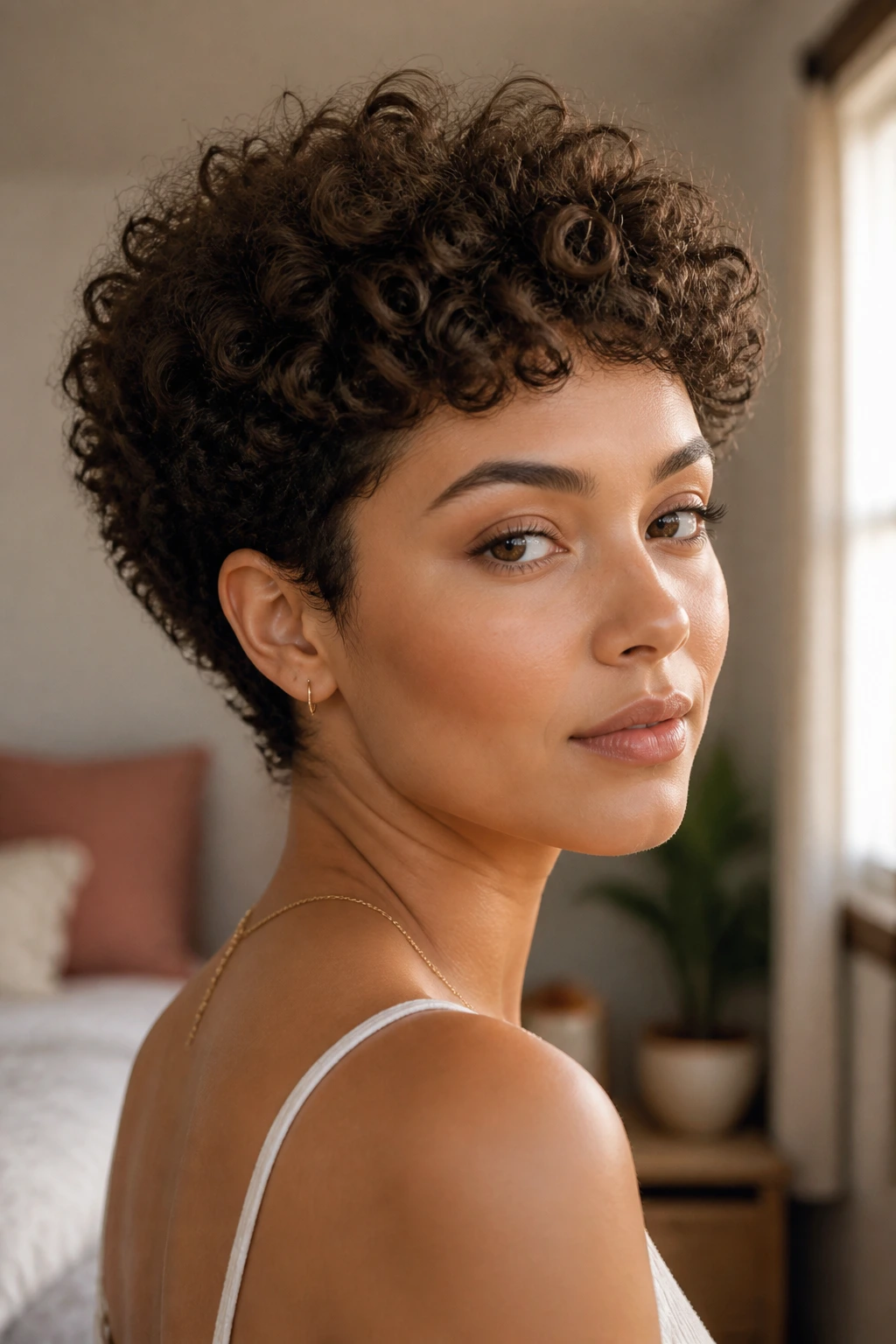
A halo crop is exactly what it sounds like: curls gathered into a compact shape around the head, with the silhouette reading like a rounded cloud. This works beautifully on tighter curl patterns and coily textures because the hair naturally lifts into a circular frame.
The best halo crops keep the perimeter even but not blunt. Tiny differences in length matter here. A little extra at the crown, a cleaner nape, and a soft outline around the temples make the shape feel intentional. It’s a strong choice if you want a cropped cut that still feels feminine, bold, and soft at the same time.
12. Curly Mixie
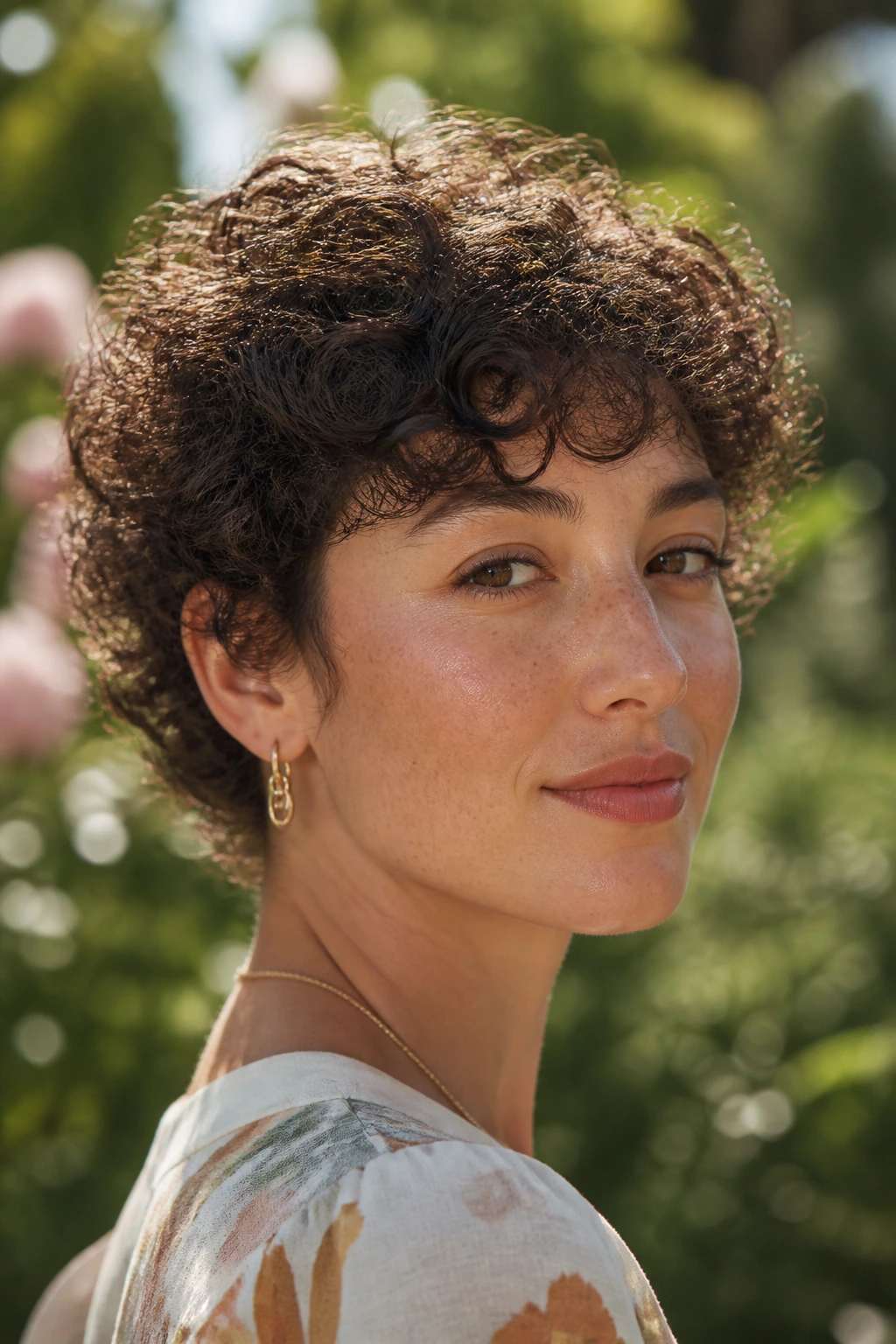
A mixie blends the pixie’s short sides with a little mullet-ish length in the back, but the rounded version keeps the transition soft. The back is not shaggy for the sake of being shaggy. It’s curved, controlled, and just long enough to give the silhouette a lifted tail.
This is a good one for people who want something a little stranger in a good way. The roundness comes from keeping the crown full and letting the front fall in a curved fringe or side sweep. If your hair has a springy curl pattern, the mixie can look playful instead of edgy.
13. Curved-Angle Bob
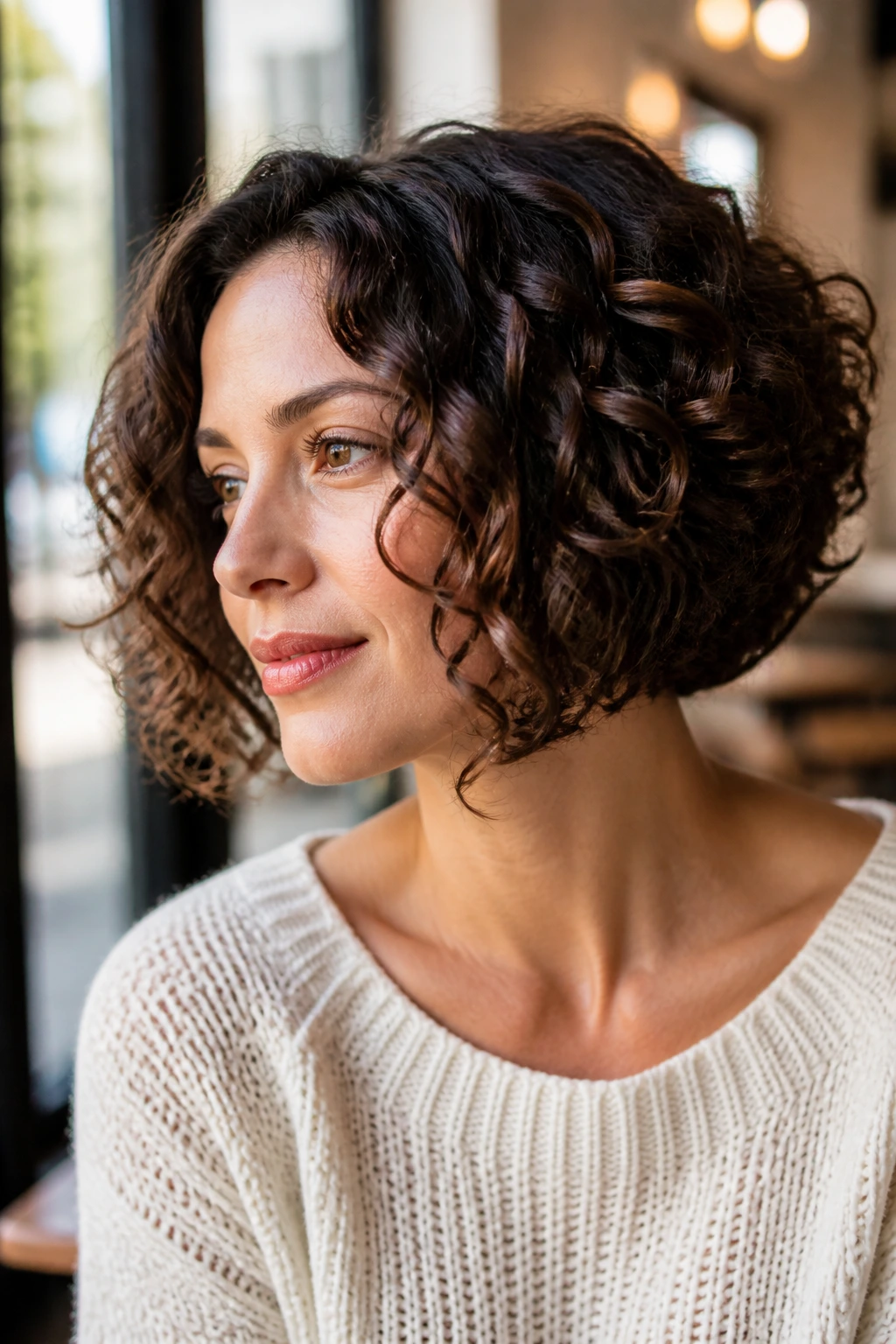
This cut sits between a classic bob and a softly angled crop. The front is slightly longer, but the angle should be subtle enough that the silhouette still reads round. Think of it as a bob that knows how to lean forward without becoming sharp.
What Makes It Different
The curved angle gives the face a bit of movement and lets the curls drape where they want to. That matters on short curly hair because a hard, steep angle can make the shape feel too triangular. A soft angle does the opposite: it tucks the line inward and makes the hair look fuller in the right places.
This one is especially good if you want something a little more polished than a shag but less classic than a blunt bob.
14. Rounded Undercut Crop
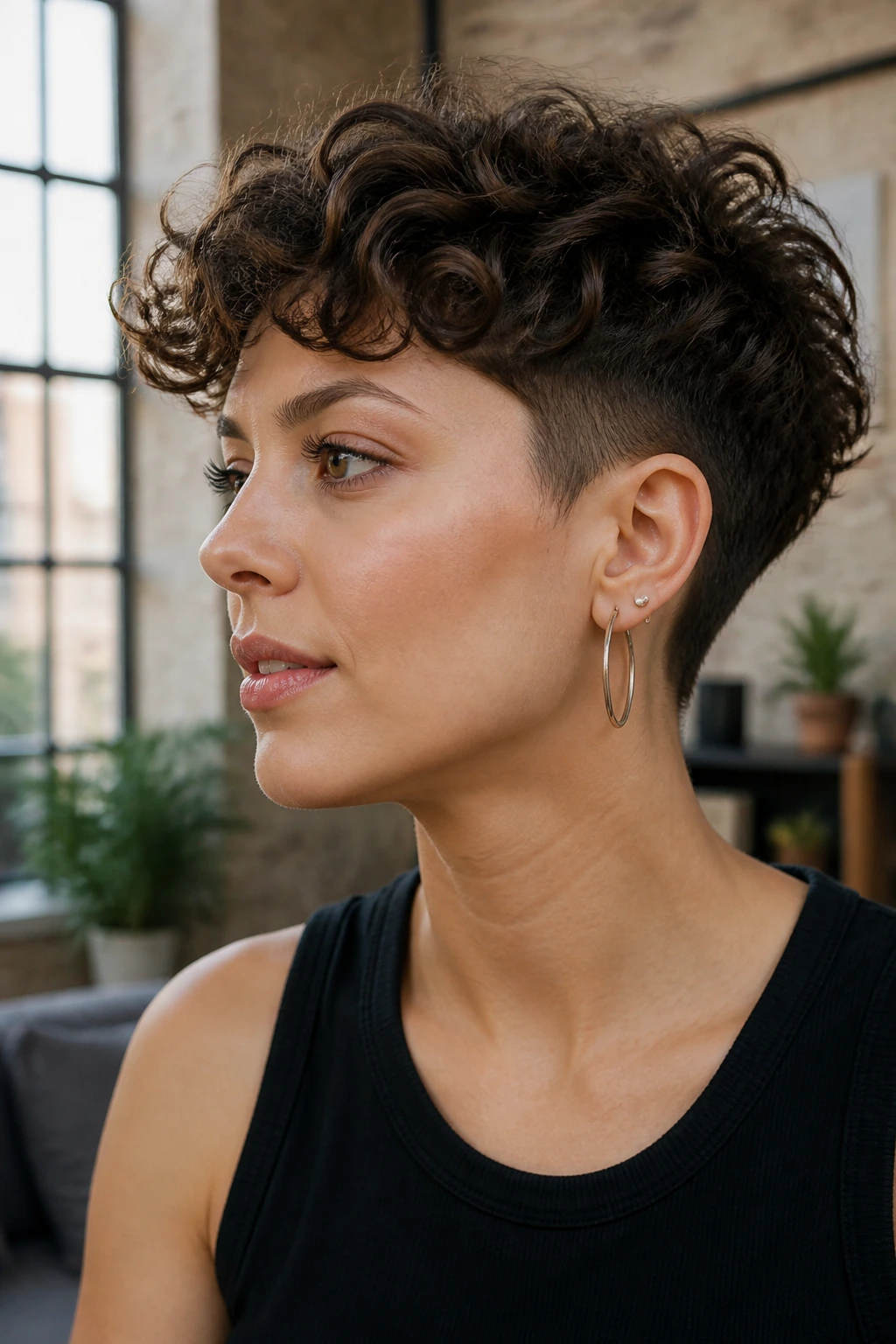
A rounded undercut crop sounds severe, but it can be very wearable when the top curls are left soft. The undercut removes bulk from the sides or nape, which helps the top curls sit in a cleaner arc. That keeps the haircut round instead of mushroom-heavy.
I like this shape for thick hair that fights back every time it gets short. The undercut takes away the hidden weight that causes puffing at the lower half of the head. The top can still be fluffy and textured, which is the whole point. You get shape without that helmet effect.
15. Mushroom Curly Cut
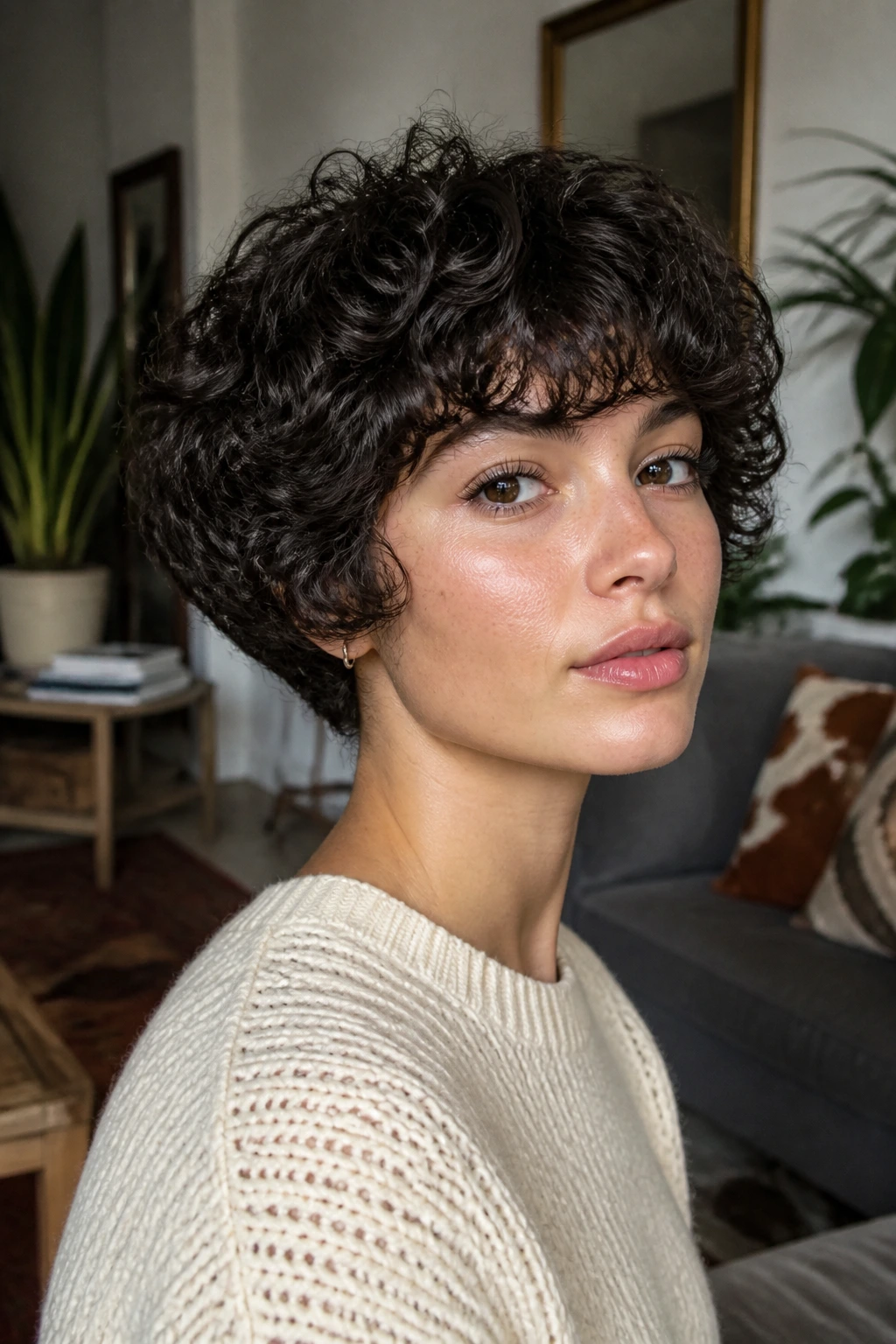
The mushroom cut only works when it’s softened. On curly hair, that means a rounded crown, a curved perimeter, and a fringe that doesn’t try to sit in a ruler-straight line. The result can feel surprisingly modern.
This is the haircut for someone who wants a clean circle of shape without losing texture. It works best on hair with enough spring to break up the line a little. If the curls are loose, you may need more layering so the shape doesn’t look too heavy. If they’re tighter, the overall silhouette lands beautifully.
16. Rounded Afro Crop
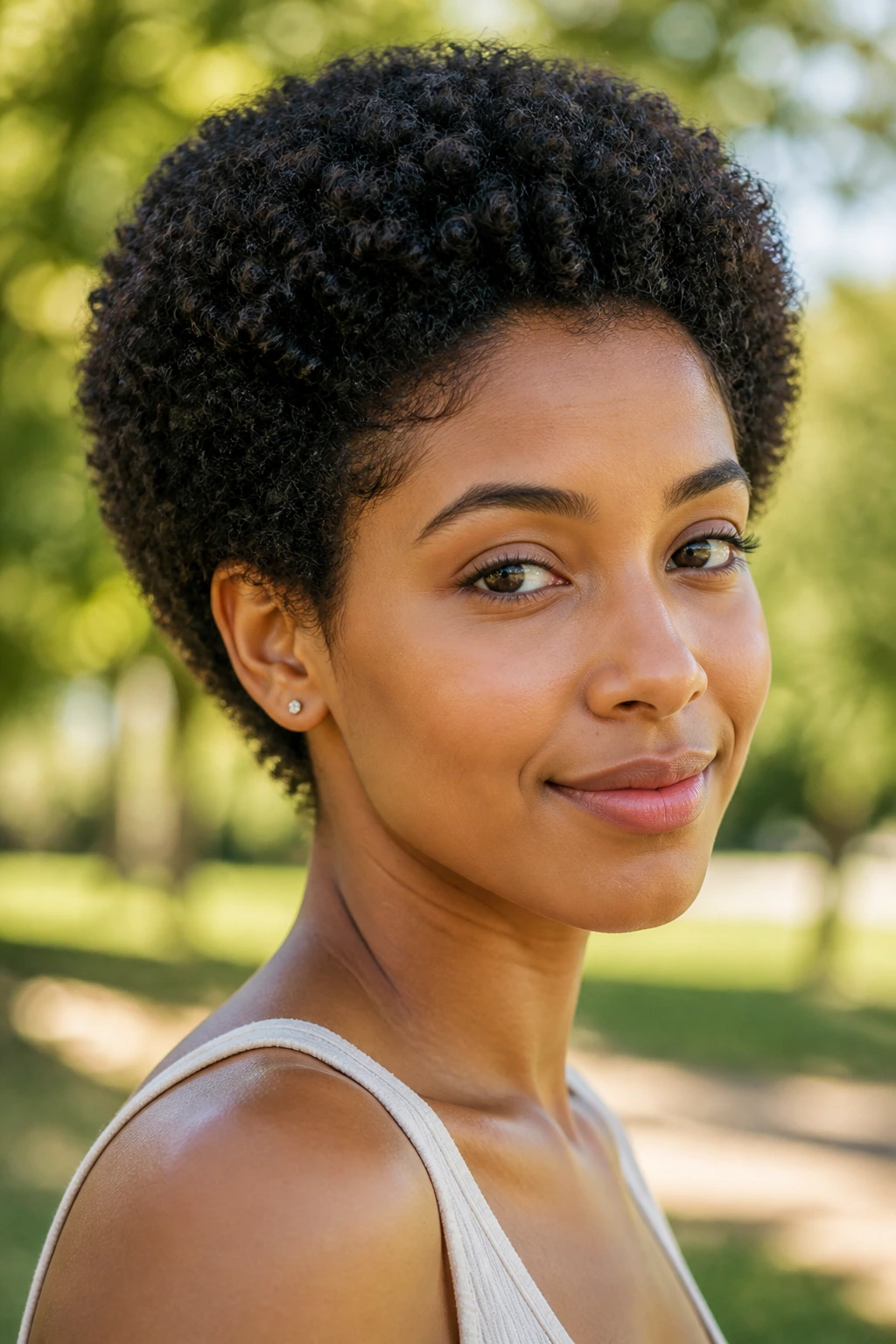
A rounded afro crop is all about shaping the silhouette, not fighting the texture. The sides should feel even, the crown should have enough lift, and the perimeter should curve in a way that follows the head. It’s one of the most naturally round cuts on the list, because the texture already wants to do the work.
What makes it look polished is the outline. If the edges are uneven, the shape loses that clean orb effect. A good trim here respects the curl pattern while quietly sculpting the outside line. That balance is the whole game.
17. Short Curly Lob
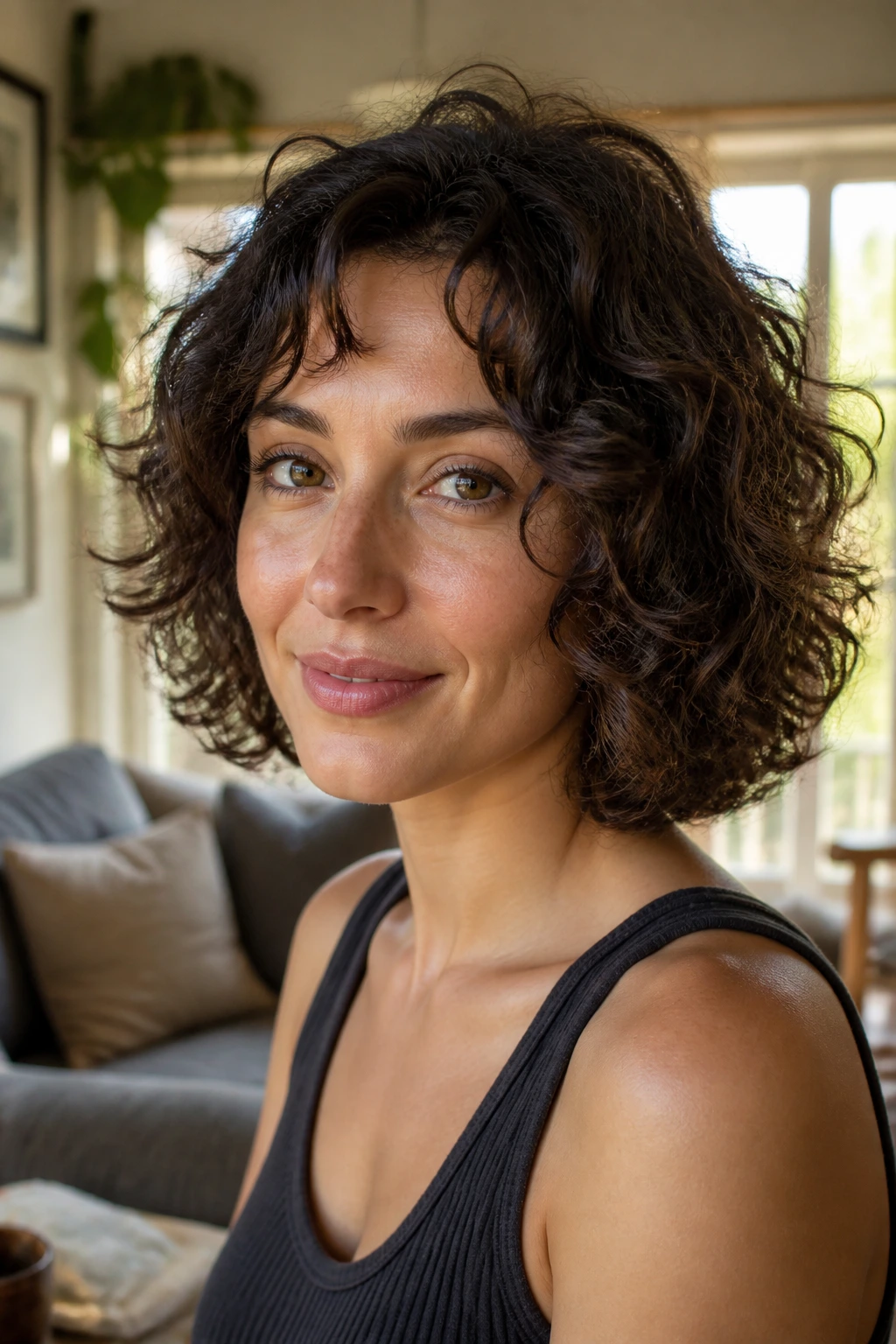
A lob can absolutely count as short hair when it sits at or above the shoulders and is cut with rounded intent. On curly hair, the shorter version reads softer when the ends curve inward and the top layers stay light enough to float.
This is a good pick if you want a little more length around the face without giving up the round silhouette. It’s also easier to pin back, twist, or refresh than the shorter cuts. If you’re nervous about going too short, this is the least dramatic place to land.
18. Side-Parted Rounded Bob
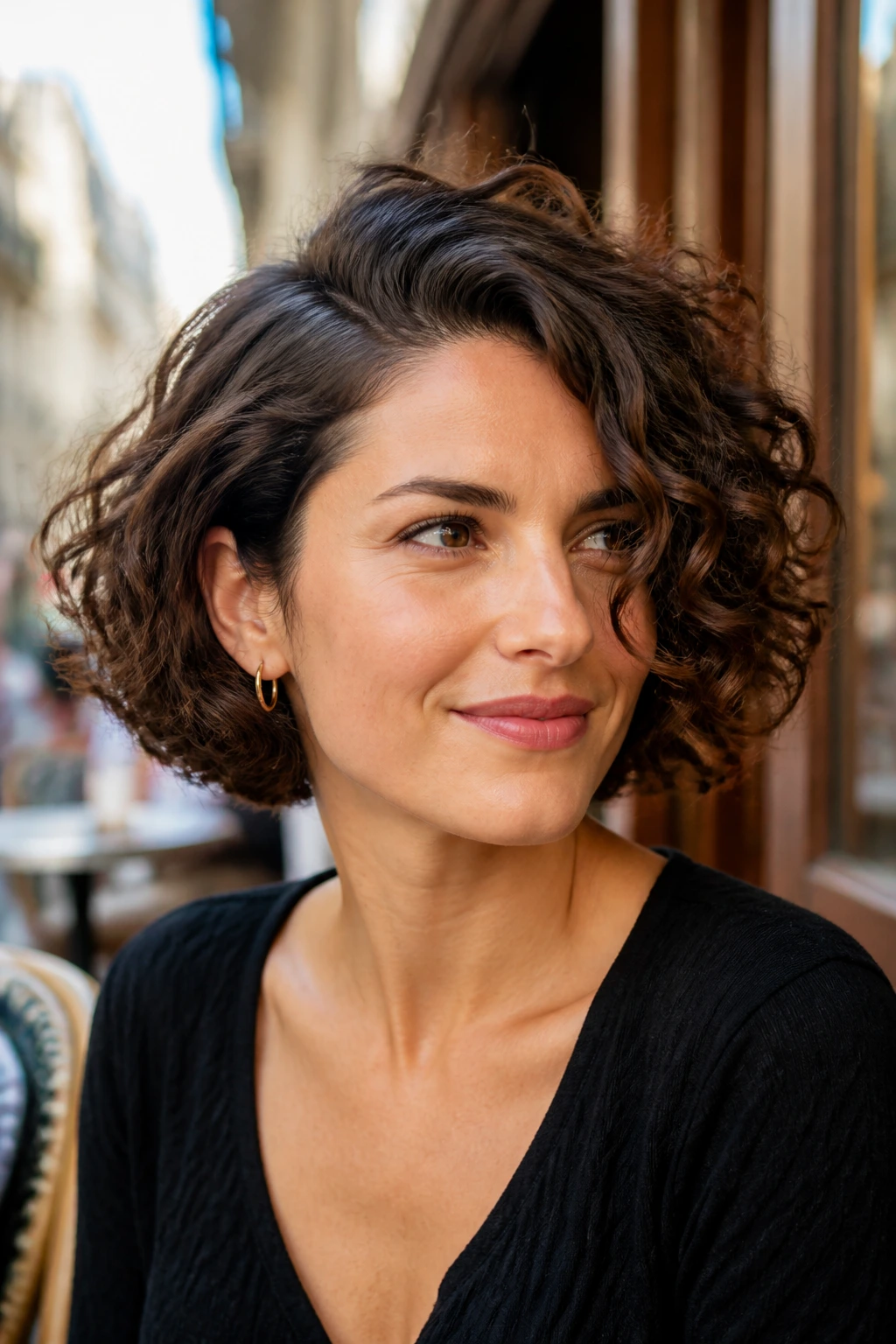
A deep side part changes the whole mood of a curly bob. Instead of a centered dome, you get a round shape with one side lifted and the other side sweeping softly along the cheek. The shape still feels curved, but it has movement and a little asymmetry.
I like this when the curls are dense enough to hold the part without collapsing. The heavier side can skim the eye line, which is a nice way to soften the face. The opposite side gets a bit more volume at the crown. Small shift. Big payoff.
19. Sculpted Crown Crop
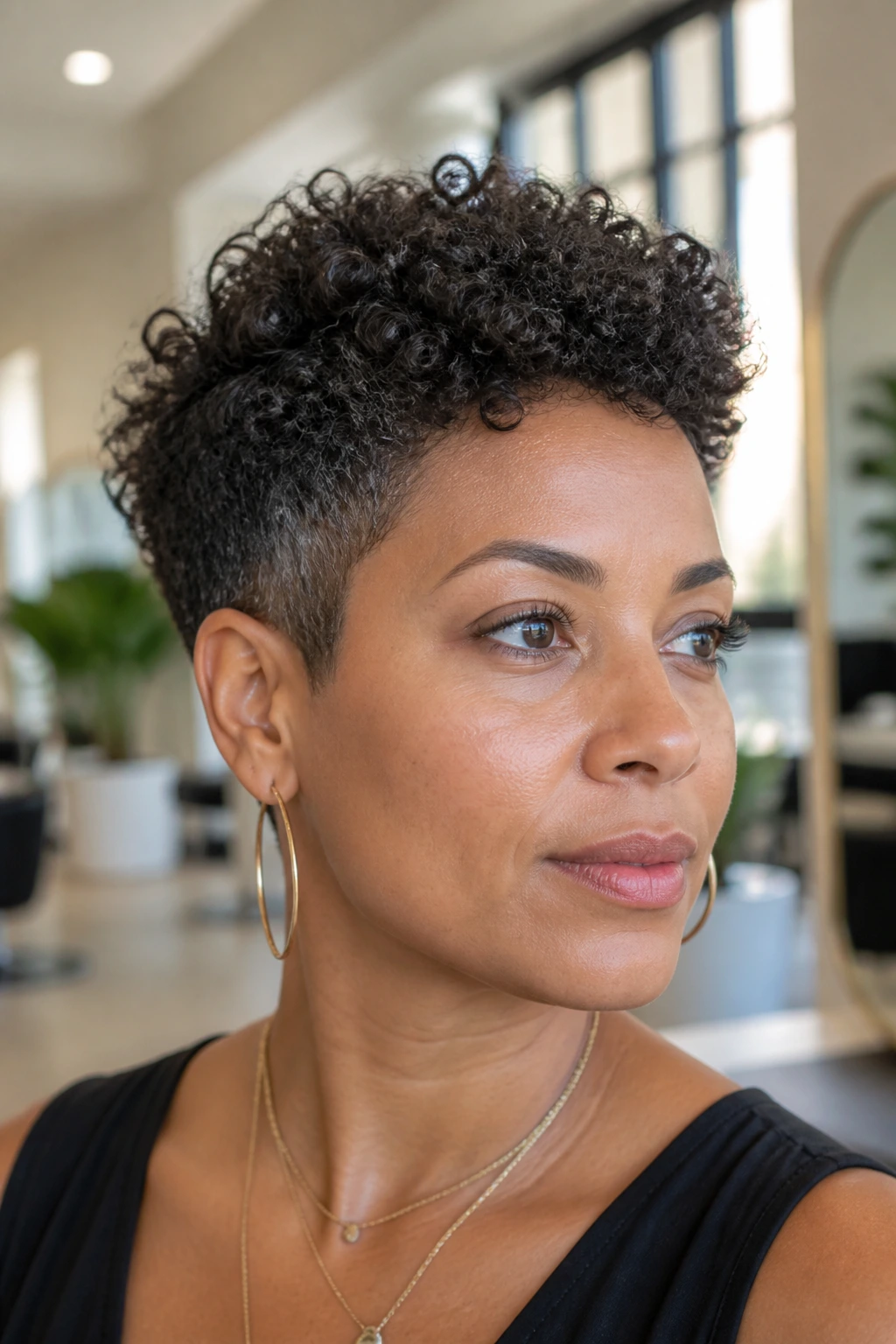
A sculpted crown crop is for people who want short curls to look intentionally shaped, not just cut short. The crown is left long enough to create height, while the sides and nape are cleaned up so the silhouette stays round and balanced.
This cut works because it uses the top as the anchor. If the crown sits right, the whole haircut reads round even when the curls are doing their own thing. It’s a strong option for tighter curl patterns or for anyone whose hair tends to puff at the temples.
20. Soft Curly Shullet
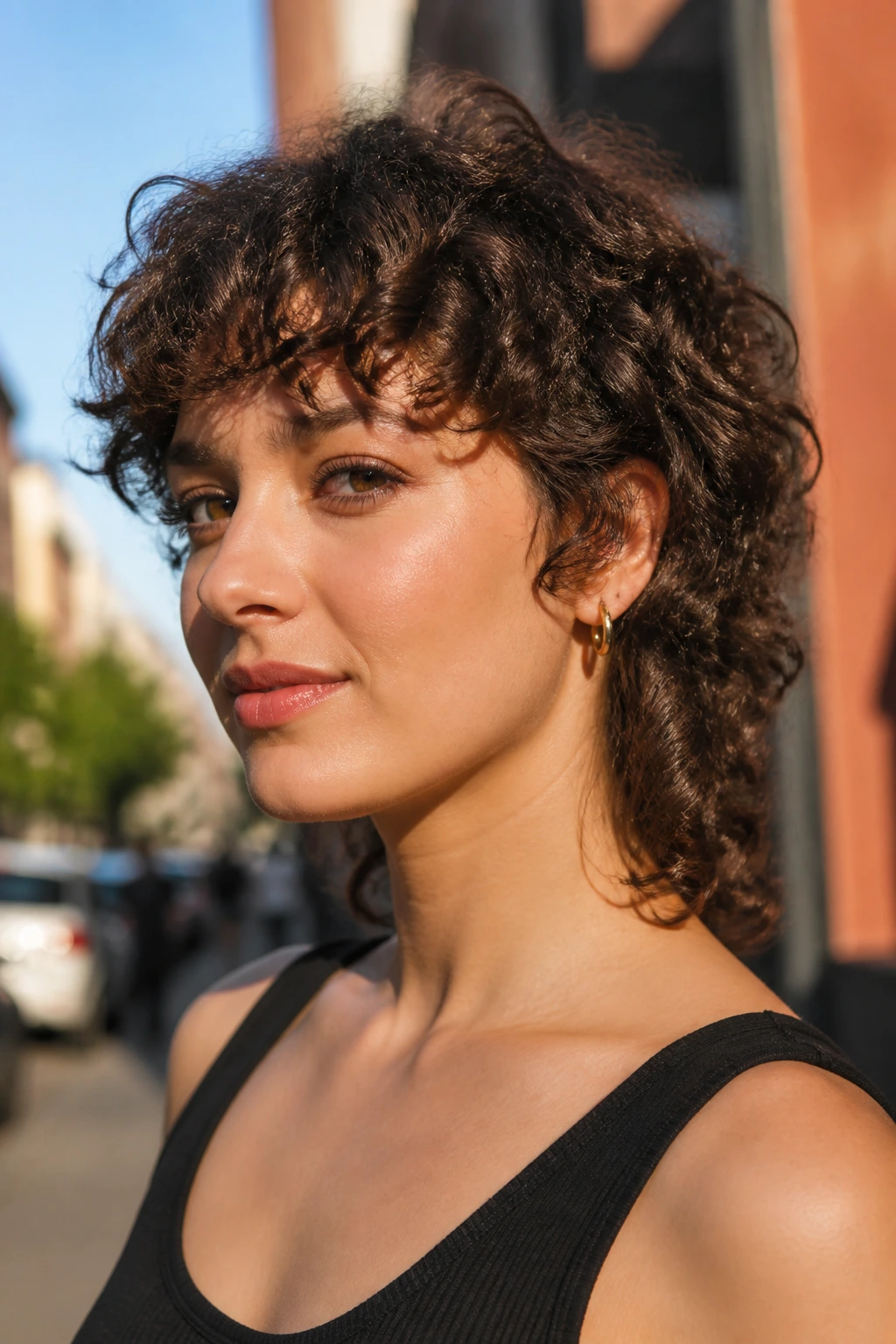
A shullet — shag plus mullet — can look wild if it’s cut too hard. The soft version keeps the back curved and the layers blended so the haircut still reads rounded through the sides. It’s not about looking rebellious for the sake of it. It’s about giving short curls a little extra movement without losing the curve.
This one suits people who want personality in the cut itself. The front can be slightly shorter, the nape a touch longer, and the sides feathered enough to keep the profile smooth. If you like a haircut that feels lived-in from day one, this is a good one.
21. Fringe-First Rounded Bob
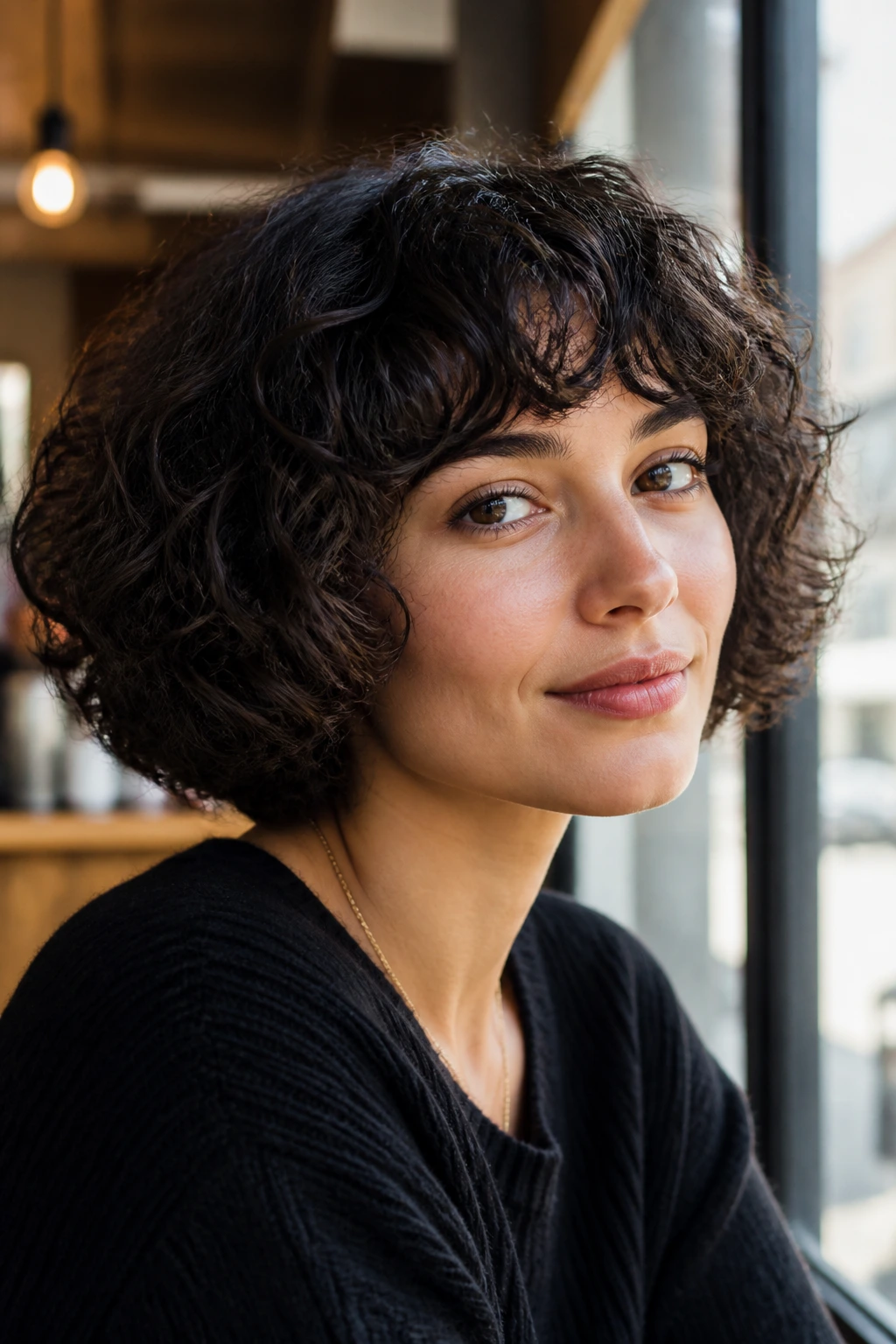
The fringe-first bob puts the bang area in charge. That sounds risky, and it can be, but curly fringe works when the rest of the cut supports it with a rounded perimeter. The bangs should blend into the sides rather than sit as a separate block.
This is one of my favorite shapes for softening a high forehead or balancing a long face. The roundness comes from the way the fringe curves inward and connects to the cheek-level curls. If the front is too thick, the whole thing can go heavy fast. Keep the fringe airy.
22. Temple-Tapered Cut
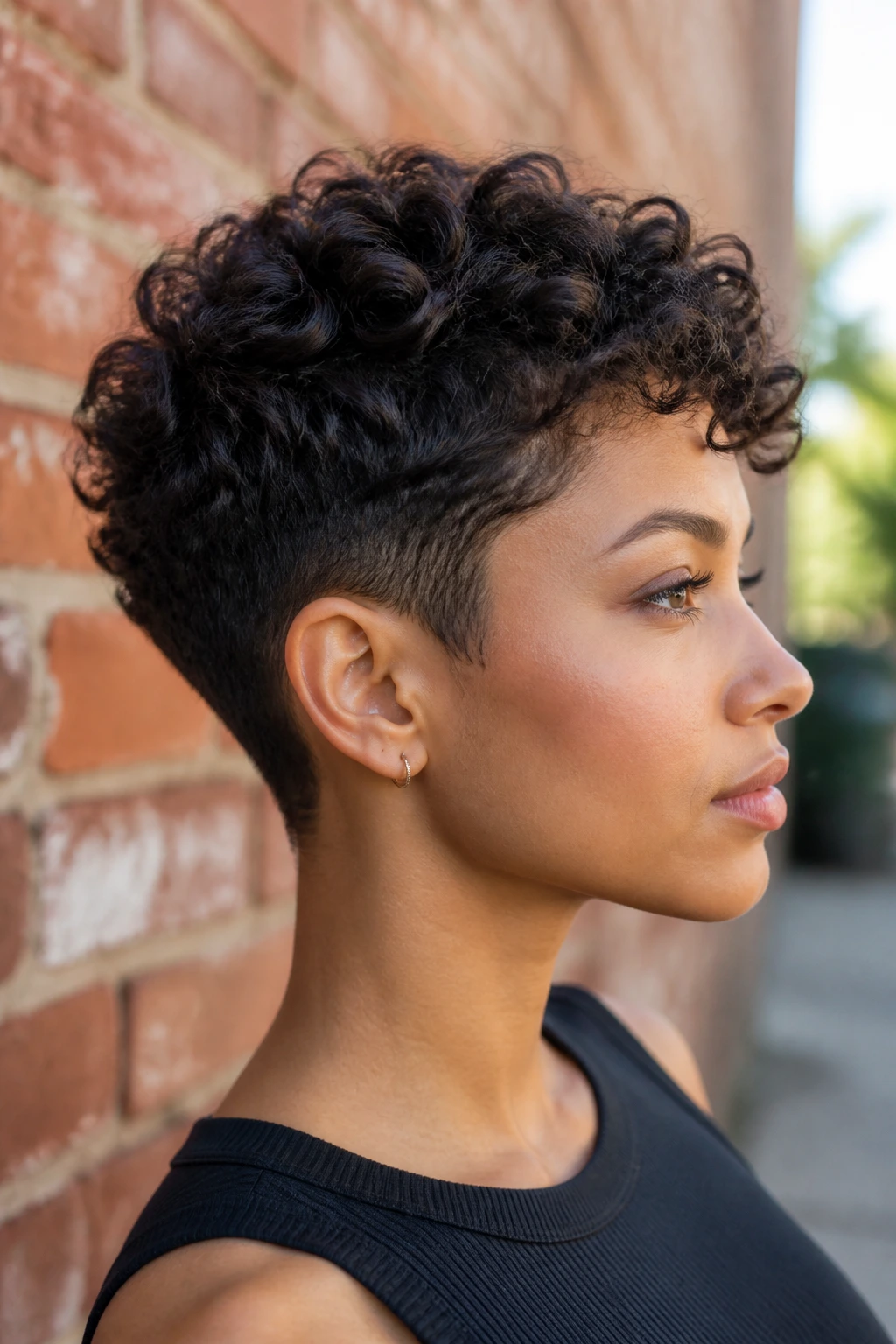
A temple-tapered cut gets rid of width right where curly hair tends to spread outward. The temples are cleaned up, the ears are framed lightly, and the top keeps enough length to round over the head. It’s a small detail that changes the whole silhouette.
This cut is useful for dense curls that want to widen at the sides. Tapering the temple area keeps the haircut from looking too boxy in profile. If your curls expand sideways after washing, this is the sort of shape that stops the problem before it starts.
23. Ear-Length Curly Crop
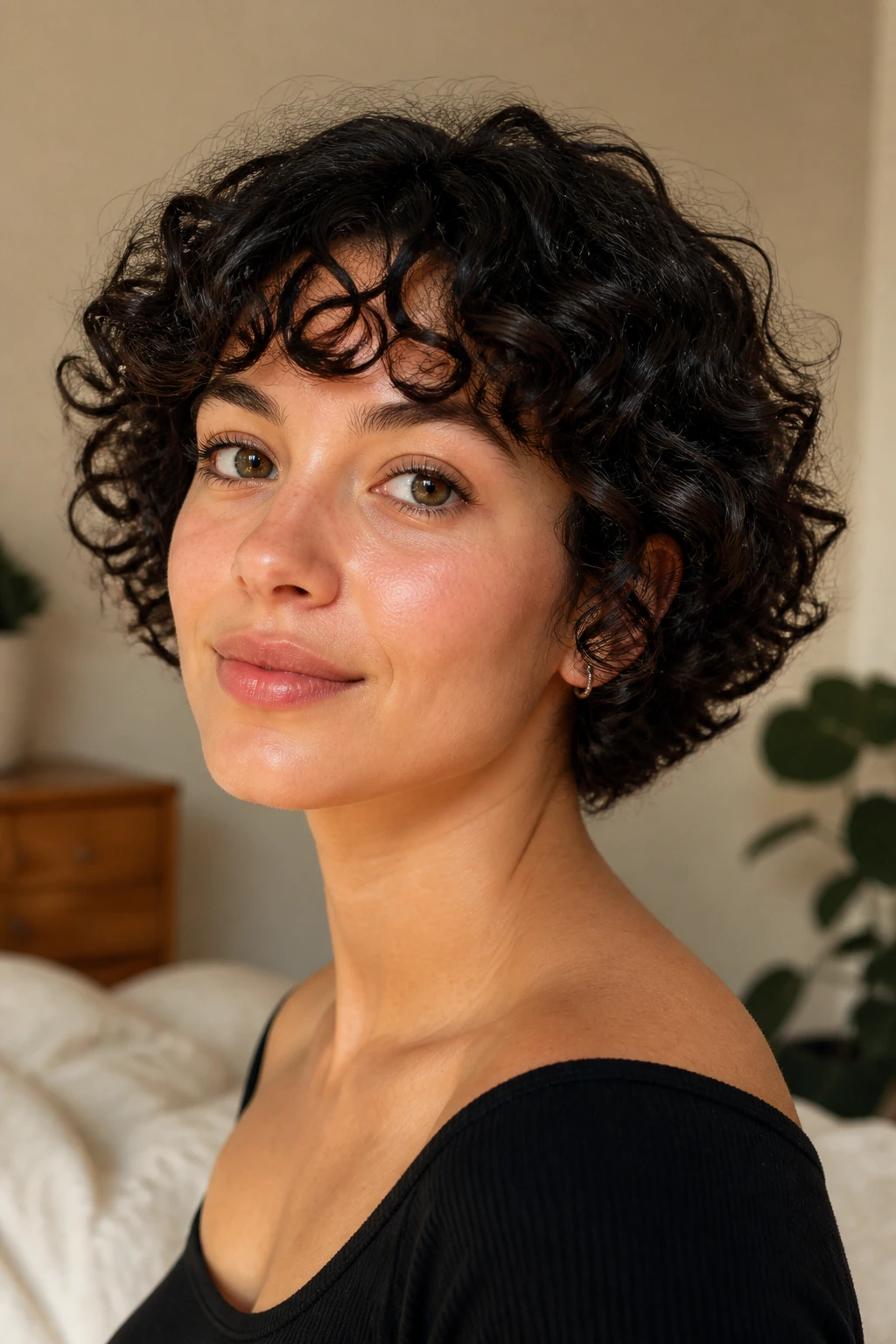
Ear-length cuts are brave because there’s nowhere to hide. But when they’re rounded well, they can look incredibly soft and fresh. The curls sit close to the cheeks and ears, and the top is shaped to keep the outline full rather than flat.
The danger here is over-thinning. Short hair needs some body to keep its silhouette, and curls need enough mass to form a curve. Ask for a curved outline with a neat nape and only light internal shaping. Too much removal turns it into a wispy mess.
24. Orb Bob
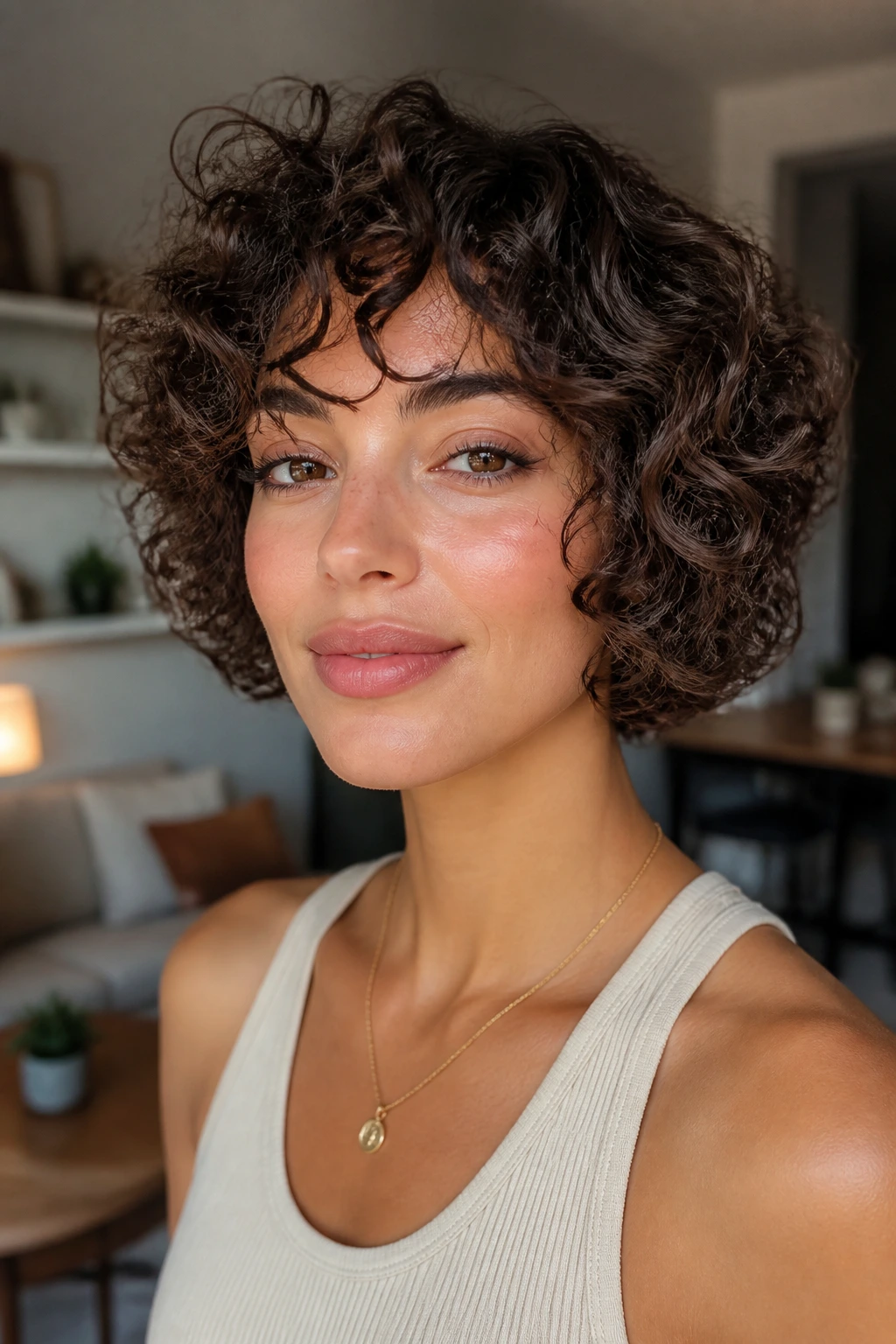
An orb bob is all about making the head shape look softly circular. The sides are curved in, the crown is rounded, and the ends are kept close enough to follow the contour of the face. It’s one of the cleanest round shapes you can get on curly hair.
Why It Stands Out
The orb bob does not rely on bangs or dramatic angles. It works because the whole cut is balanced from every direction. Front, side, back — it all reads as one smooth shape. If your curls are medium to dense, this can look almost sculptural without feeling rigid.
It’s also a good cut for people who want a low-drama shape that still looks planned. There’s nothing fussy about it. That’s the appeal.
25. Soft U-Shape Curly Bob

The U-shape bob keeps the center slightly longer than the sides, which gives the cut a gentle curve when viewed from the back and front. On curly hair, that U outline becomes much softer once the curls settle, and the result is a rounder finish than a blunt line.
This is a nice closing note for the whole list because it shows how small geometry changes the entire haircut. The U-shape works especially well if you want softness around the jaw and a little extra weight in the middle to keep the curls from kicking out at the sides. It’s simple. It just works.
What Makes a Round Curly Cut Read Soft Instead of Boxy
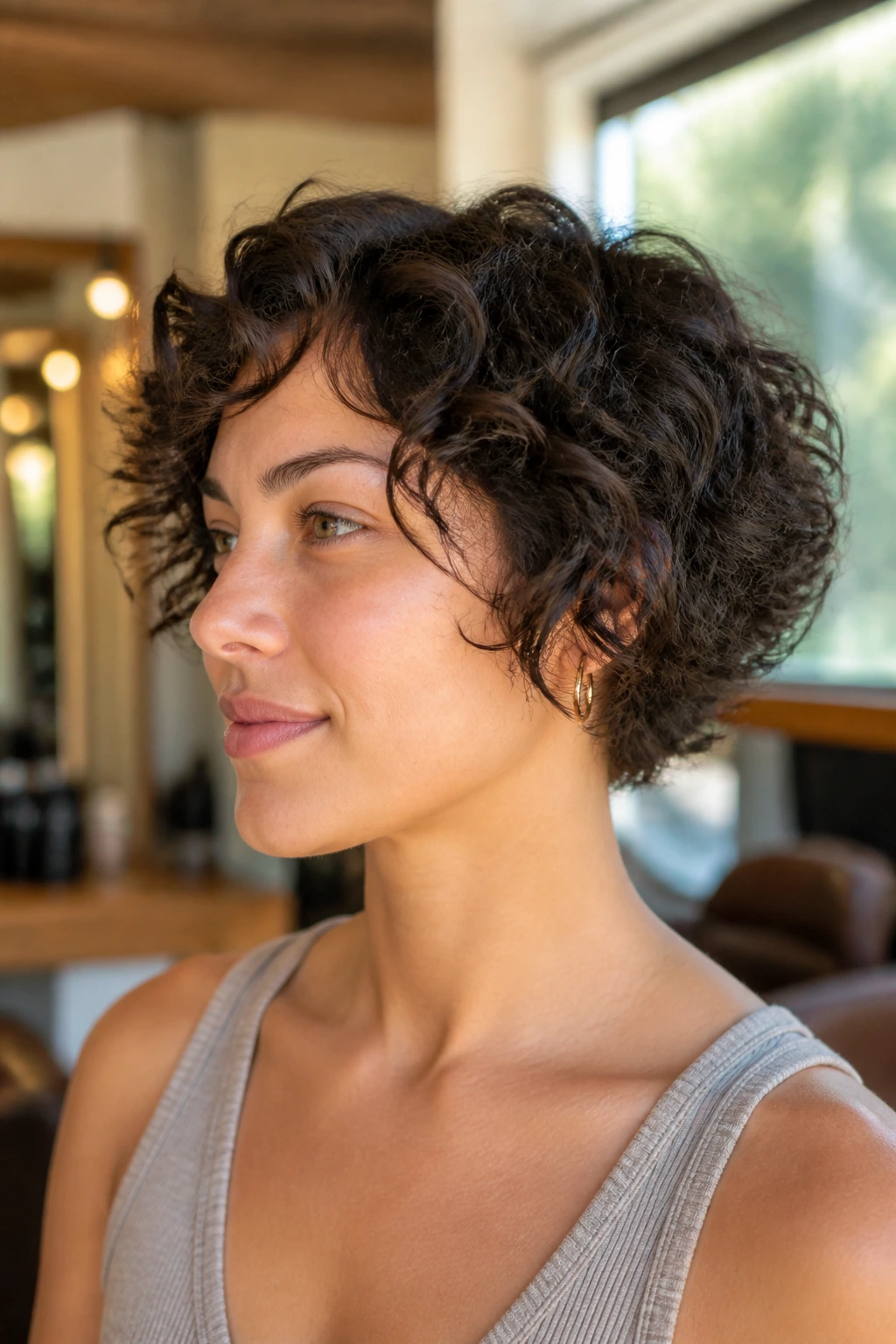
A round shape on curly hair comes from subtraction, not stuffing in more layers and hoping for the best. You’re trying to remove the places where the hair spreads too wide while keeping enough density where the silhouette needs support. That usually means light internal shaping, careful nape work, and a perimeter that curves with the curl pattern instead of fighting it.
The mistake I see most is people asking for “more layers” when what they really need is better distribution. Layers alone can make short curly hair puff around the ears and collapse at the crown. A better cut keeps the outline smooth and lets the curl pattern supply the movement.
Where the Curve Should Live
For most people, the curve should live at the cheekbones, jaw, and crown. That gives the face softness and keeps the back of the haircut from looking heavy. If your hair is dense, the stylist may need to remove weight from the interior rather than the edge. That’s the part many people skip, and then they wonder why the haircut still feels bulky.
Shrinkage Is Not a Surprise, It’s a Plan
Short curly hair always gets shorter once it dries. That sounds obvious, but people still get caught out by it because wet curls can look cooperative for ten whole minutes. If you want a rounder shape, you need to plan around the dry finish. A curl that sits at the jaw wet may land at the cheekbone dry.
How to Ask for Rounder Haircuts on Short Curly Hair
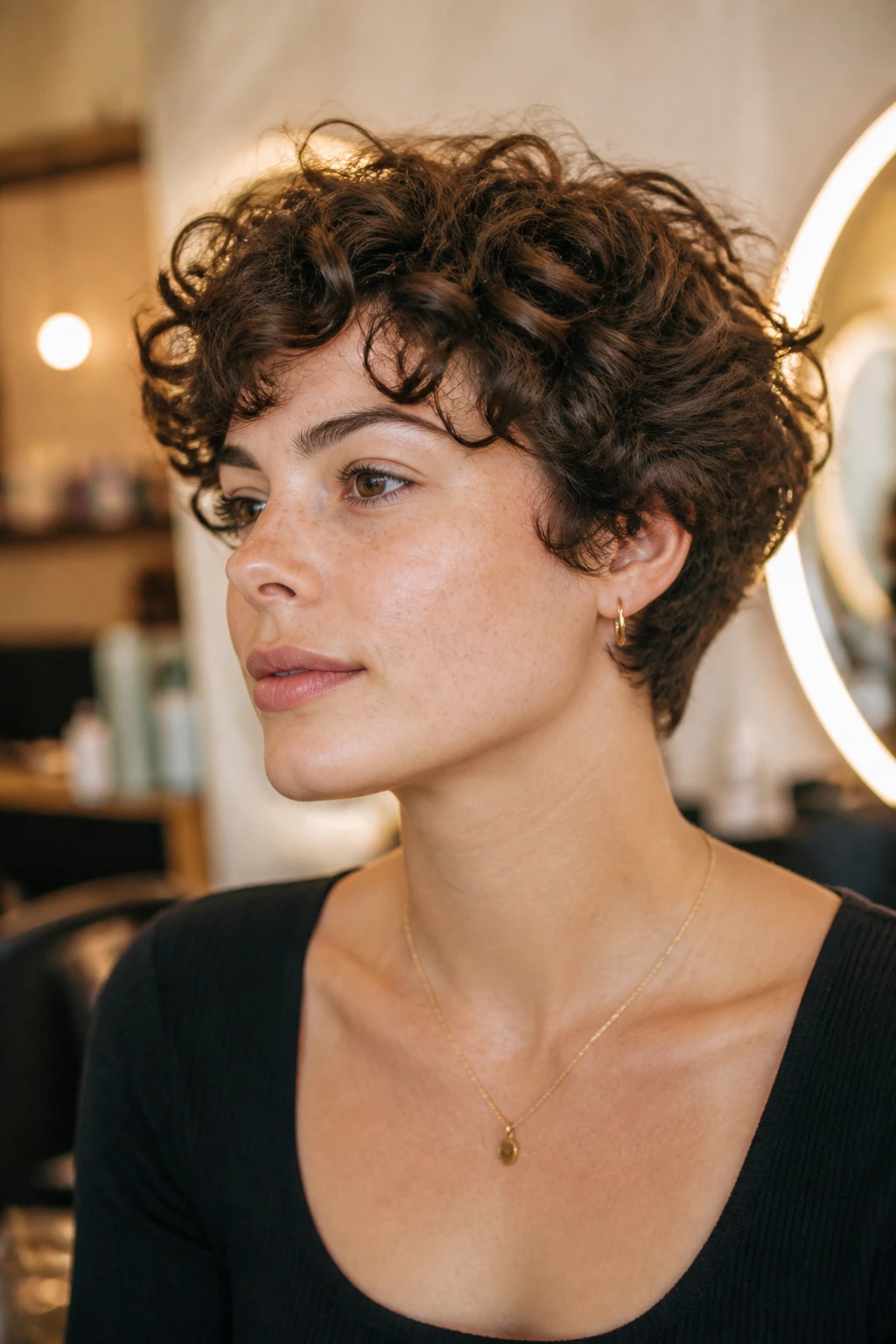
Use plain language at the salon. Tell the stylist you want a rounded silhouette, not a triangle, and mention where you want the fullness to sit: crown, cheeks, or back of the head. If you like photos, bring two or three that show the same general shape from different angles. One front view is not enough. The back matters.
Ask whether they cut curls dry, wet, or a mix of both. On short curly hair, a dry finish can reveal shrinkage and balance problems much faster. If your stylist only cuts wet, that is not automatically wrong, but they should still check the dry shape before you leave. A good round cut can look tidy wet and still fail dry. That’s the trap.
Tell them about your routine, too. If you air-dry, the cut needs to work without a diffuser. If you diffuse every wash day, they can leave a little more fullness at the crown. If you hate styling, ask for a cut that stands on its own with a little leave-in and a small amount of gel.
Tools That Make Short Curly Cuts Easier to Live With
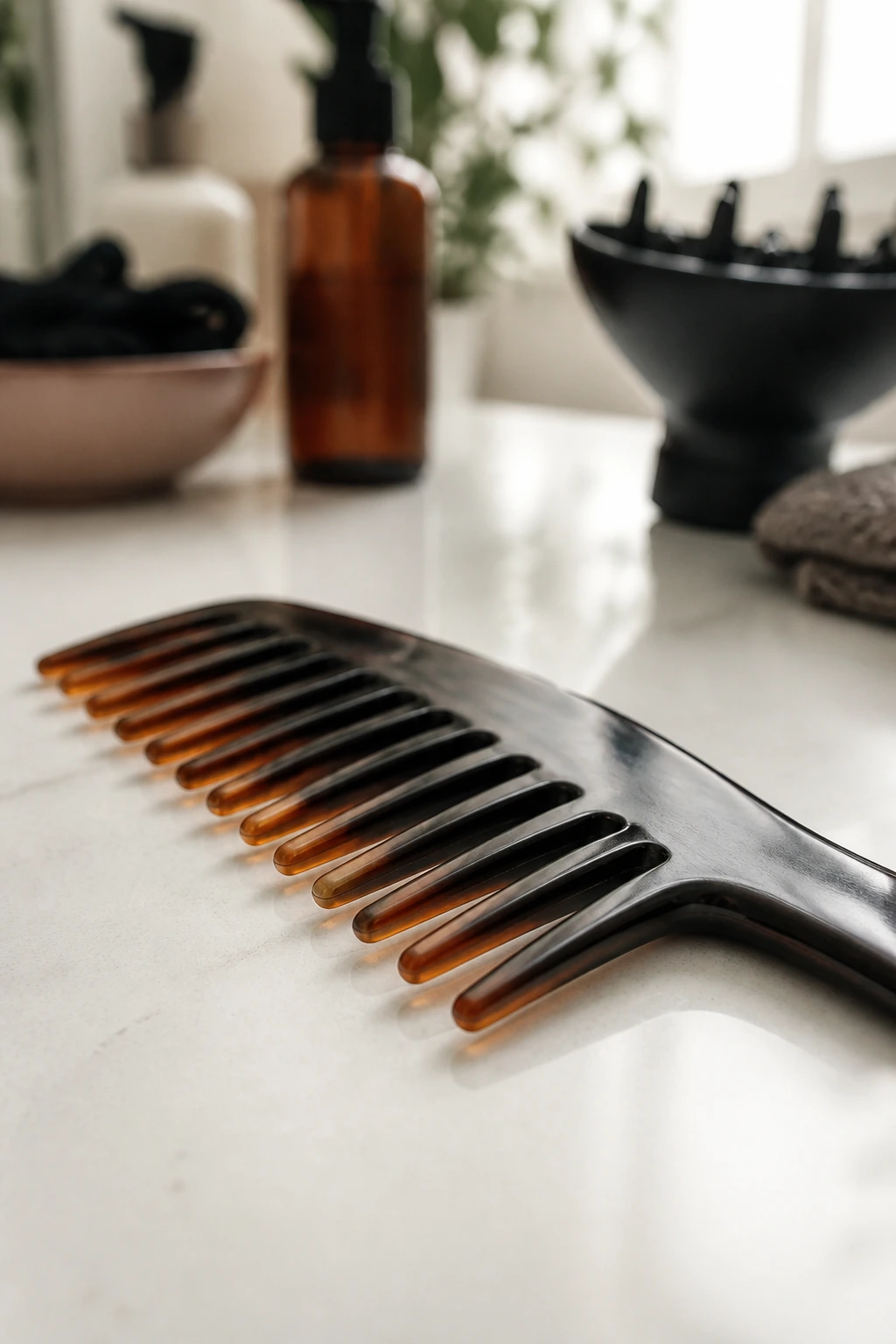
- Wide-tooth comb: Good for detangling in the shower without breaking up curl clumps too much.
- Spray bottle: Useful for reshaping morning frizz or reactivating product on day two.
- Microfiber towel or cotton T-shirt: Helps blot water without roughing up the curl pattern.
- Diffuser attachment: Gives short curls lift at the roots and keeps the shape from drying flat against the head.
- Duckbill or sectioning clips: Handy when you’re styling a rounded bob or crop and want to pin the top while the sides set.
- Satin bonnet or pillowcase: Cuts down on friction, which matters a lot when the haircut is short enough that every curl bump shows.
- Tail comb or pick: Great for a tiny lift at the crown, but use it lightly unless you want to loosen the shape on purpose.
Product Picks That Keep the Shape Round
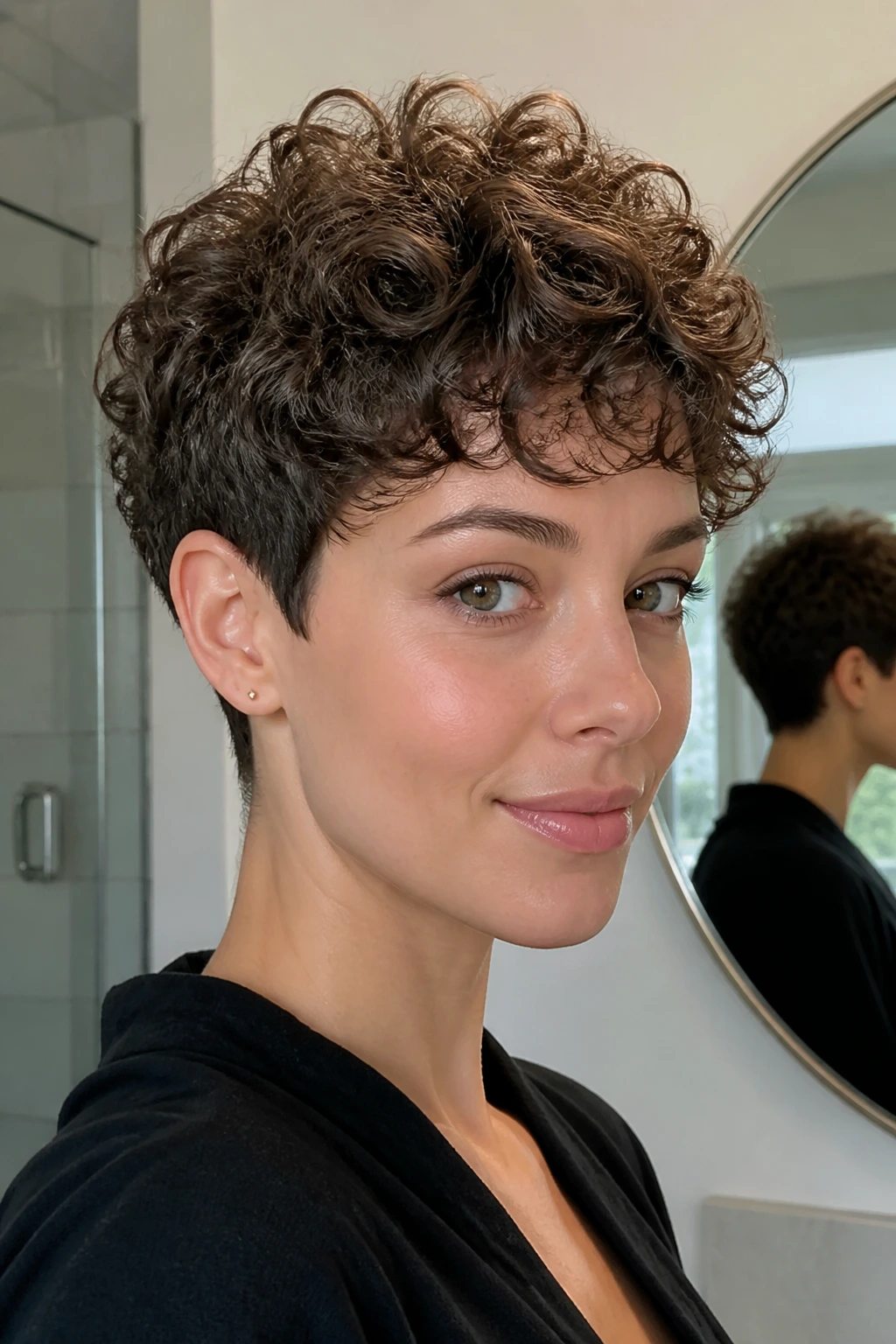
Short curly hair usually needs less product than people think, but the right product matters more because there’s less length to hide a bad choice. A lightweight leave-in is often enough for looser curl patterns, while denser curls may want a cream plus a soft hold gel. I’m not fond of piling on heavy butter on short hair unless the hair is very dry or very coarse; it can weigh down the crown and blur the shape.
What to Look For
Choose products by hold and weight, not by how shiny they look on the shelf. If your curls collapse by noon, you probably need more hold, not more moisture. If your hair feels sticky and the cut looks wide, you may be using too much cream or too much oil.
A mousse can be a very good friend to round curly cuts because it gives lift without coating the hair too heavily. Gel is better when you want the shape to last through humidity. Cream is nice for softness, but on short curls it can turn the outline fuzzy if you use too much.
Styling Moves That Keep the Silhouette Round
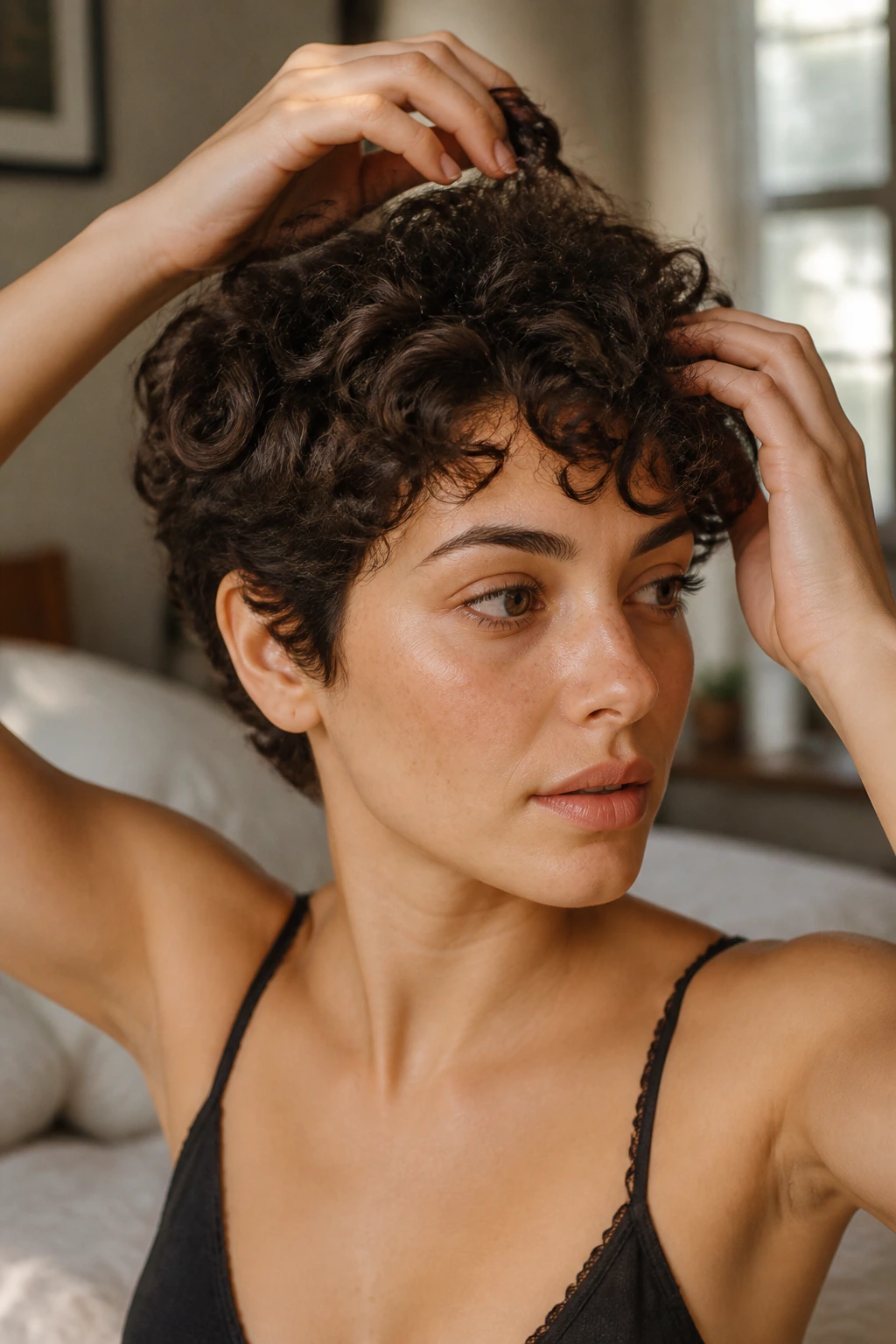
Start with water. Not a flood, just enough to wake the curls back up. Work product through damp hair, then scrunch upward toward the crown so the side pieces don’t dry too long and flare out. That upward motion is what preserves the round outline.
Diffusing helps, but don’t blast the hair from one side until it’s dry and call it done. Move around the head in sections, tipping the head where needed to build lift at the roots. For a bob or crop, I like to start at the nape and move upward, because if the bottom dries too flat, the whole shape can sag.
A Fast Refresh Trick
If the haircut looks puffy in the wrong places on day two, mist the wider sections lightly and smooth the perimeter with damp hands. Then pin the top at the crown for ten to fifteen minutes while the sides settle. It’s a small reset, but on short curls it can save the whole silhouette.
Common Mistakes That Flatten Curly Short Hair
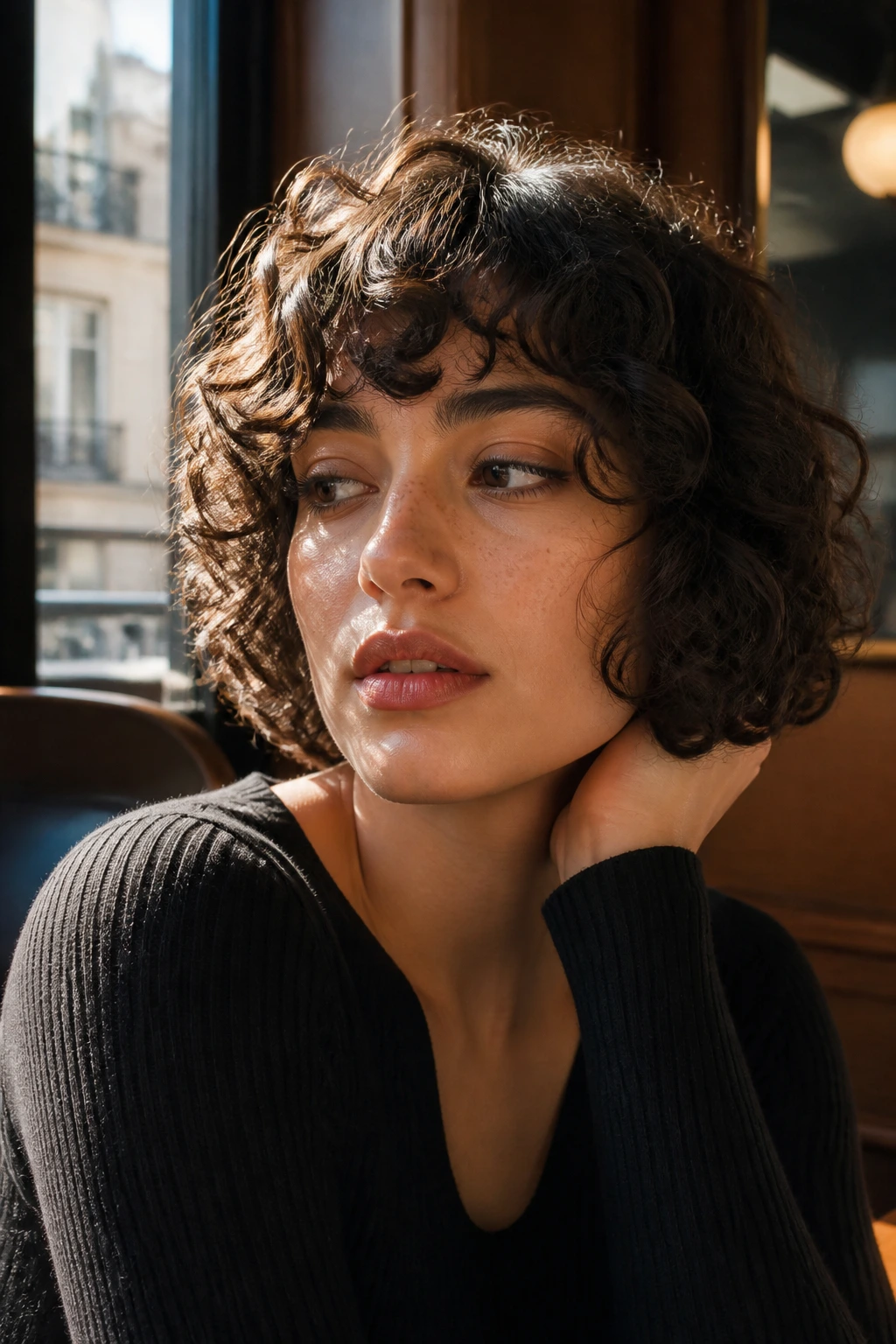
The first mistake is asking for too much thinning. When stylists over-remove weight on curly hair, the ends go see-through and the sides spread. The haircut might look lighter for a week, but the shape loses its structure fast. The fix is to ask for internal shaping, not aggressive thinning at the perimeter.
The second mistake is ignoring the nape. A bulky nape can push the whole shape forward and make the haircut look like it’s sitting on the head instead of wrapping around it. A neat taper there makes the roundness read cleaner.
The third mistake is pretending shrinkage is a surprise. It isn’t. Short curly hair can jump up a full inch or more, and the difference between “jaw-length” and “too short” may be that one overlooked curl spring. Cut with the dry finish in mind, always.
And one more: too much product. Heavy cream or oil can drag the crown down and make the haircut feel wider. Start lighter than you think, then add only where the curls look thirsty.
Variations and Alternatives for Different Curl Patterns
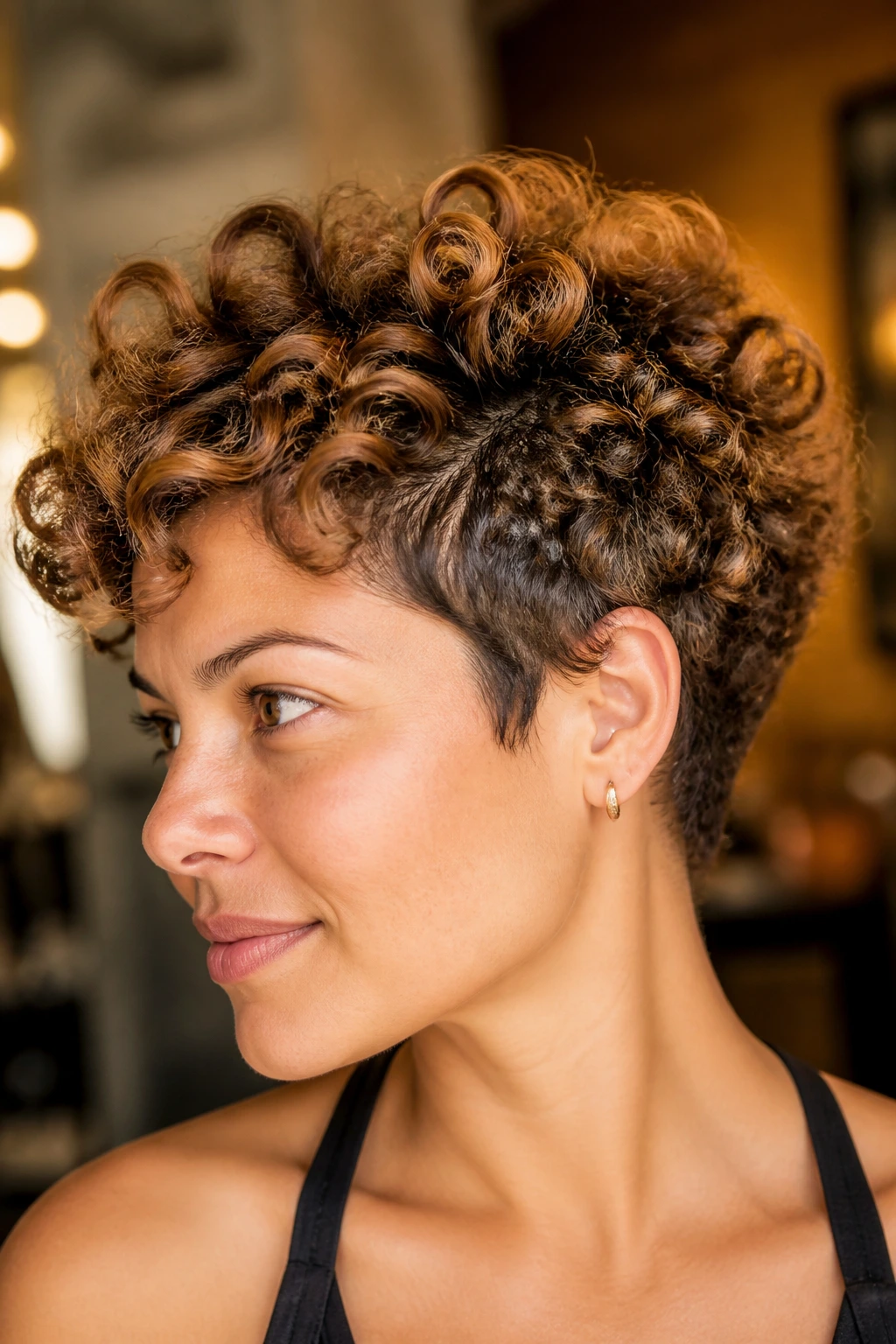
- Loose-Wave Version: Keep the layers softer and the perimeter slightly fuller so the cut doesn’t collapse into a flat arc.
- Dense-Curl Version: Ask for more interior weight removal and a cleaner nape so the round shape doesn’t puff at the bottom.
- Coily Version: Keep the outline even and compact, with careful temple shaping and enough crown space for natural shrinkage.
- Low-Styling Version: Choose a bob or crop that looks good with a little leave-in and air-drying, no diffuser required.
- Polished Finish Version: Add a smoother fringe or side part, then diffuse with a light hold gel for a cleaner, more sculpted curve.
- Grow-Out-Friendly Version: Leave the front a touch longer and keep the back softly tapered so the haircut stays balanced for longer between trims.
Maintenance, Refreshing, and Grow-Out
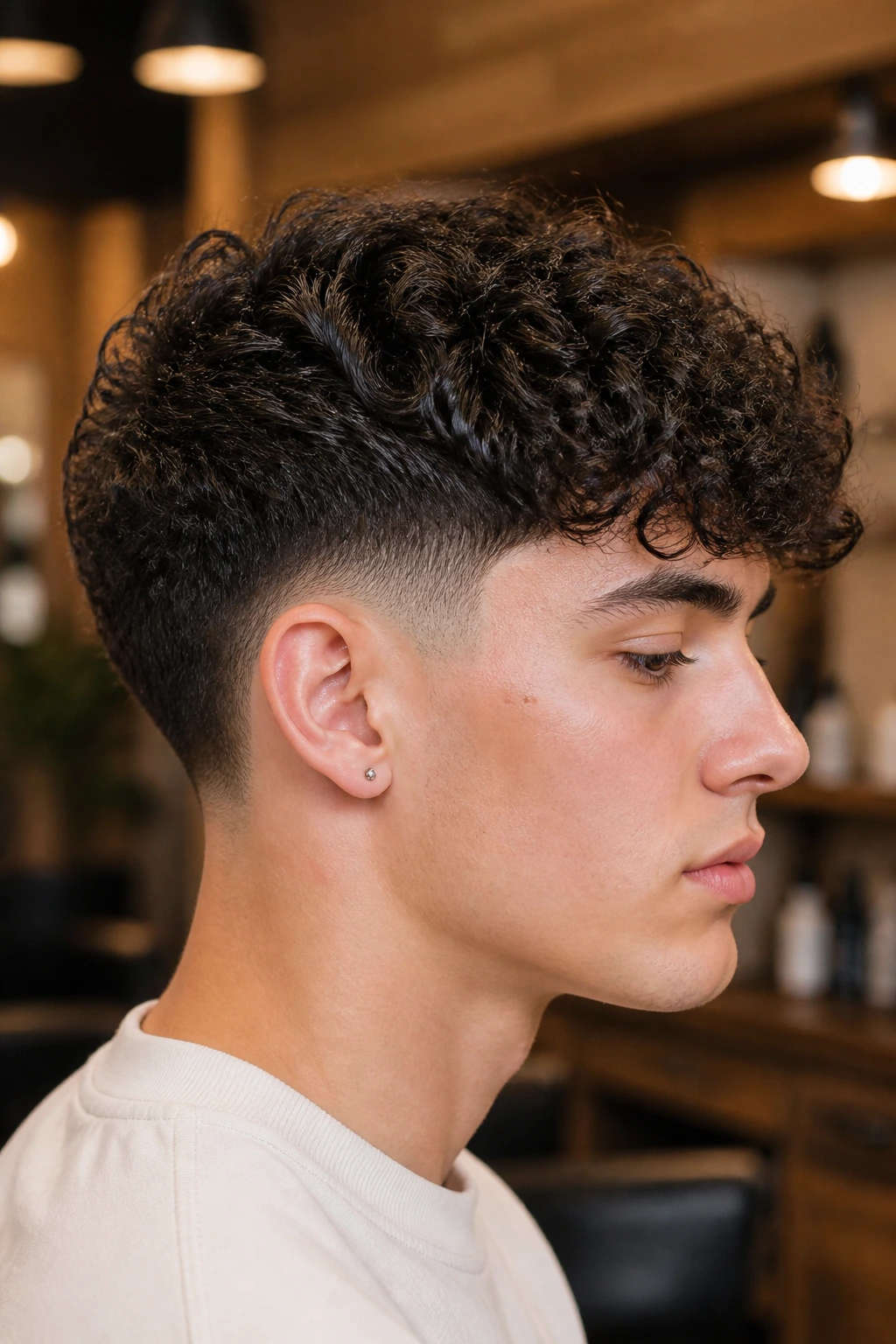
Short curly cuts need trims more often than long hair, but not because they’re fragile. They just show shape changes sooner. A rounded bob can lose its curve after a few weeks if the nape starts puffing out or the front pieces lose their bend. For many people, a trim every 6 to 10 weeks keeps the silhouette intact. Tighter curls and faster growers may need a tiny cleanup closer to the 6-week mark.
Night care matters more than people think. Satin pillowcases help, but short curls often do better with a satin bonnet or a loose wrap that doesn’t crush the crown. If your cut is very short, the old pineapple trick may not hold enough shape. A bonnet usually works better because it keeps the sides from rubbing flat.
Refreshing should be quick. Mist the hair lightly, add a pea-sized amount of leave-in or a touch of mousse to the frizzy areas, then scrunch the curls back into place. If the roots have gone limp, use a diffuser on low heat for a few minutes and lift the crown with your fingers. Don’t overdo the heat. Short curly cuts can go from full to fuzzy in one pass if the airflow is too harsh.
Grow-out is where a round cut can either stay lovely or become annoying. If you know you’re letting it grow, keep the outline soft and avoid a cut that is too tightly cropped at the nape. A little length in the front buys you time. It also gives your stylist room to rebalance the shape at the next trim instead of starting over from scratch.
Questions People Ask About Round Curly Haircuts
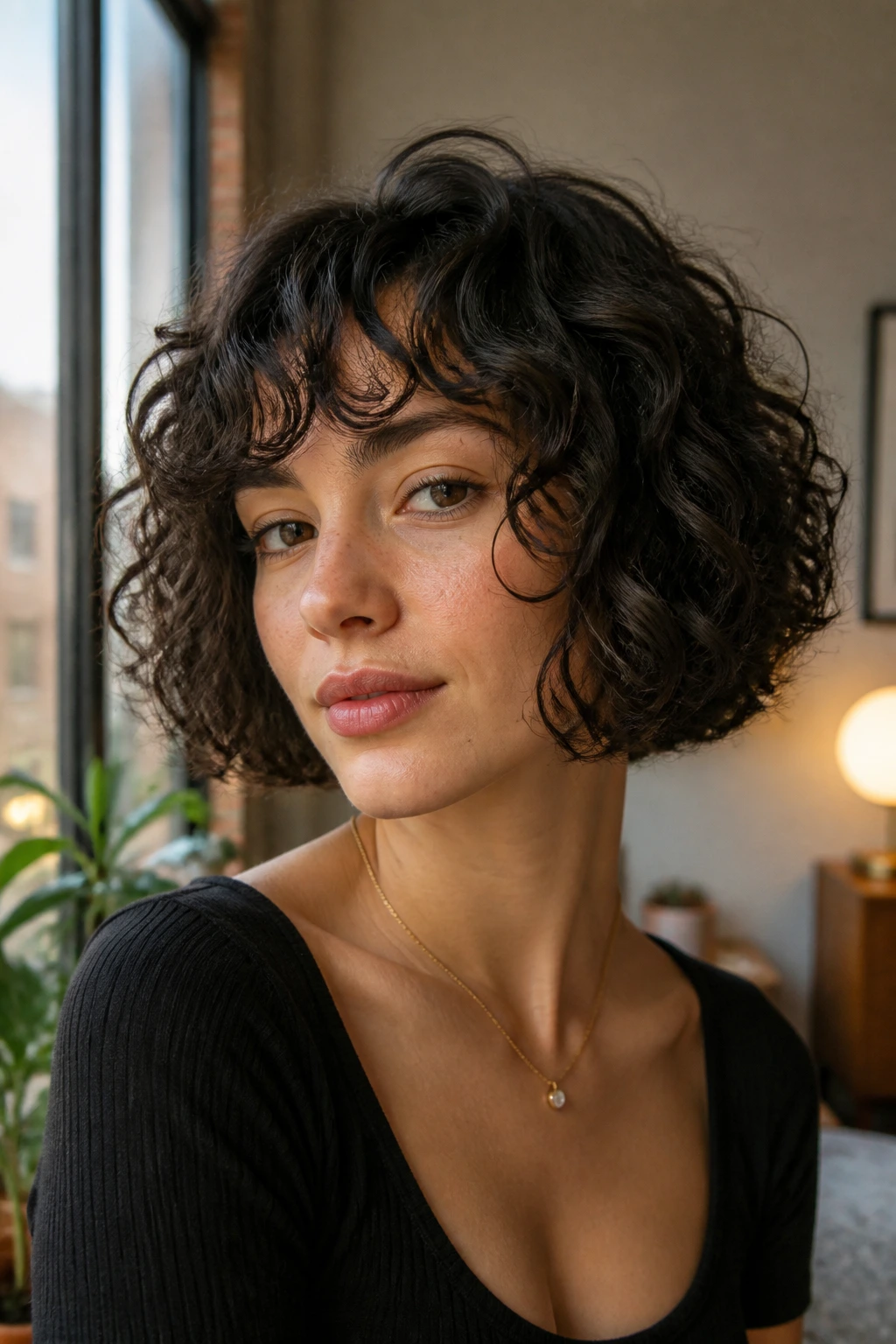
Which short curly haircut is easiest to maintain?
A tapered curly crop or a rounded pixie is usually the easiest because the shape stays close to the head and doesn’t rely on perfect styling. If your curls are loose, a chin-length bob can also be simple because it has enough weight to settle naturally.
Will a round cut make my face look wider?
Not if the curve is placed well. A good round cut softens the jaw and cheek area without adding bulk exactly at the widest point of your face. If width is a concern, keep a little height at the crown and avoid a heavy, blunt side line.
Should curly hair be cut wet or dry?
Dry cutting is often better for short curly shapes because it shows the real curl pattern and shrinkage. A wet cut can still work, but the stylist should check the dry finish before you leave so the round silhouette is accurate.
Can I get bangs with a round curly haircut?
Yes, but the fringe needs to be shaped for your curl pattern. Short curly bangs should be cut with enough space so they curl up and soften, not jam into a thick block across the forehead.
What if one side of my curls is fuller than the other?
That’s normal. Many curls have a favorite direction. A good stylist will balance the shape by adjusting the length a little on the fuller side and by placing volume where the haircut needs it, not by forcing both sides to behave the same.
How do I stop my short curls from looking triangular?
Keep the nape cleaner, leave a little lift at the crown, and ask for interior shaping rather than just shortening the bottom. Triangle shape usually comes from bulk sitting too low on the head. Remove that weight and the roundness comes back.
Are these cuts good for fine curly hair?
Yes, but the layers should be softer. Fine curls need enough length and density to hold shape, so a heavy undercut or too much thinning can leave the ends sparse. A rounded bob or bixie often works better than a very chopped crop.
How often should I trim a rounded curly cut?
Every 6 to 10 weeks is a good range for most short curly shapes. The tighter the curl and the shorter the cut, the sooner you’ll see the outline change.
The Shape That Keeps Working
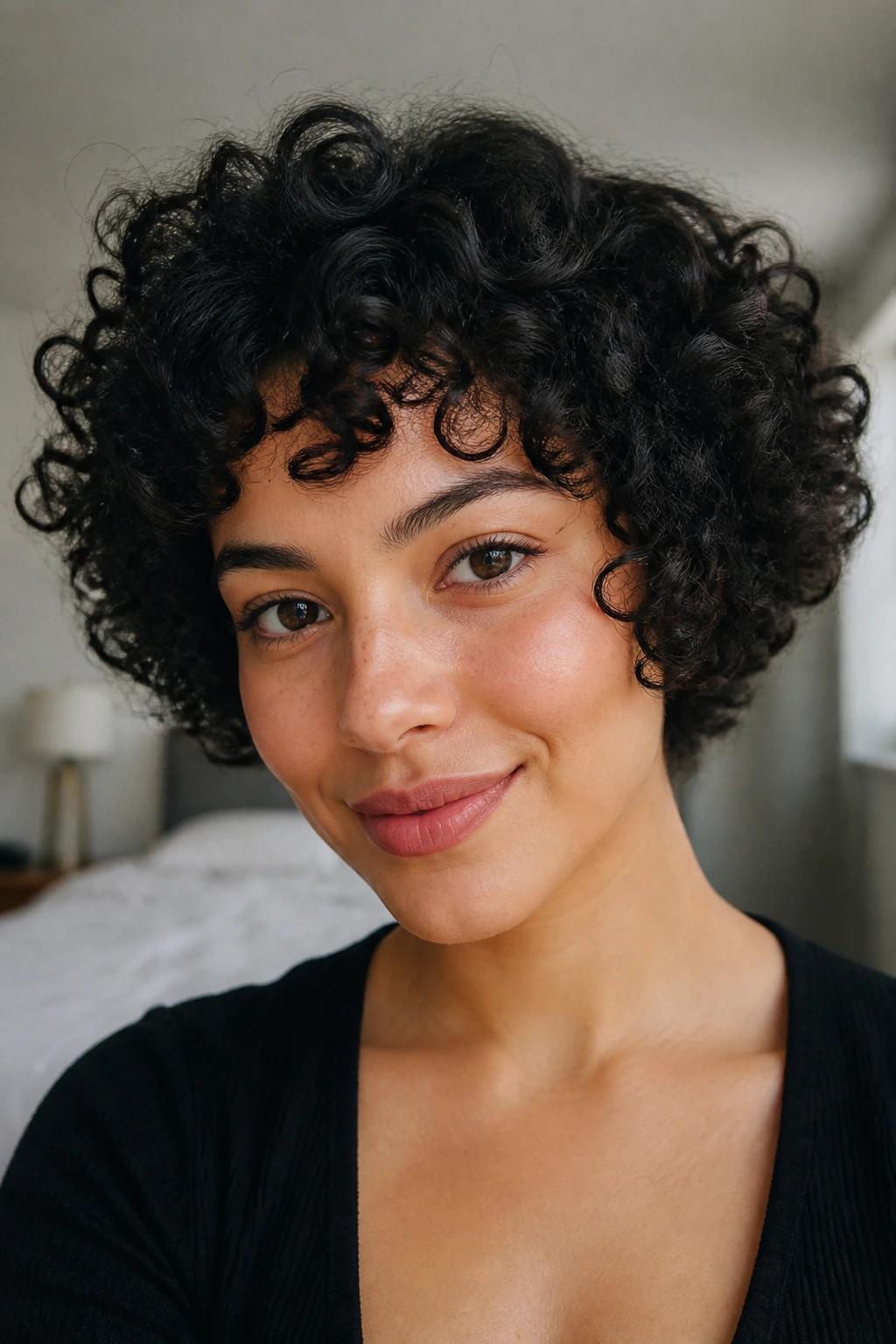
A good round curly haircut does more than look neat on day one. It gives your curls a place to land. That is the real difference between a short cut that feels fussy and one that feels like it belongs to your texture.
If you choose a shape that respects shrinkage, density, and the way your curls naturally curve around the head, you get a cut that keeps paying you back every morning. That’s the kind of haircut I’ll take over a trendy but annoying one any day.