



Honey blonde hairstyles for tan skin work best when the color stays in the warm zone but leaves a little room for shadow. That balance is the whole reason the shade looks so good on golden, olive, and neutral-tan complexions: the blonde echoes the skin instead of fighting it. Too pale and the face can look stripped. Too orange and the hair starts to look cooked.
A good honey formula has more than one note. Think toasted sugar at the root, softened gold through the mids, and a beige or vanilla glaze over the brightest pieces. That mix matters even more when the cut has movement—waves, layers, bangs, or a blunt bob—because texture decides where the eye lands first.
I like honey blonde on tan skin for one simple reason: it does work. Not theatrical work. Quiet, flattering work. The right placement lifts the face, softens darker roots, and keeps the whole look from tipping into brass or ash, which are the two dead ends people keep stumbling into.
Why These Looks Work on Tan Skin
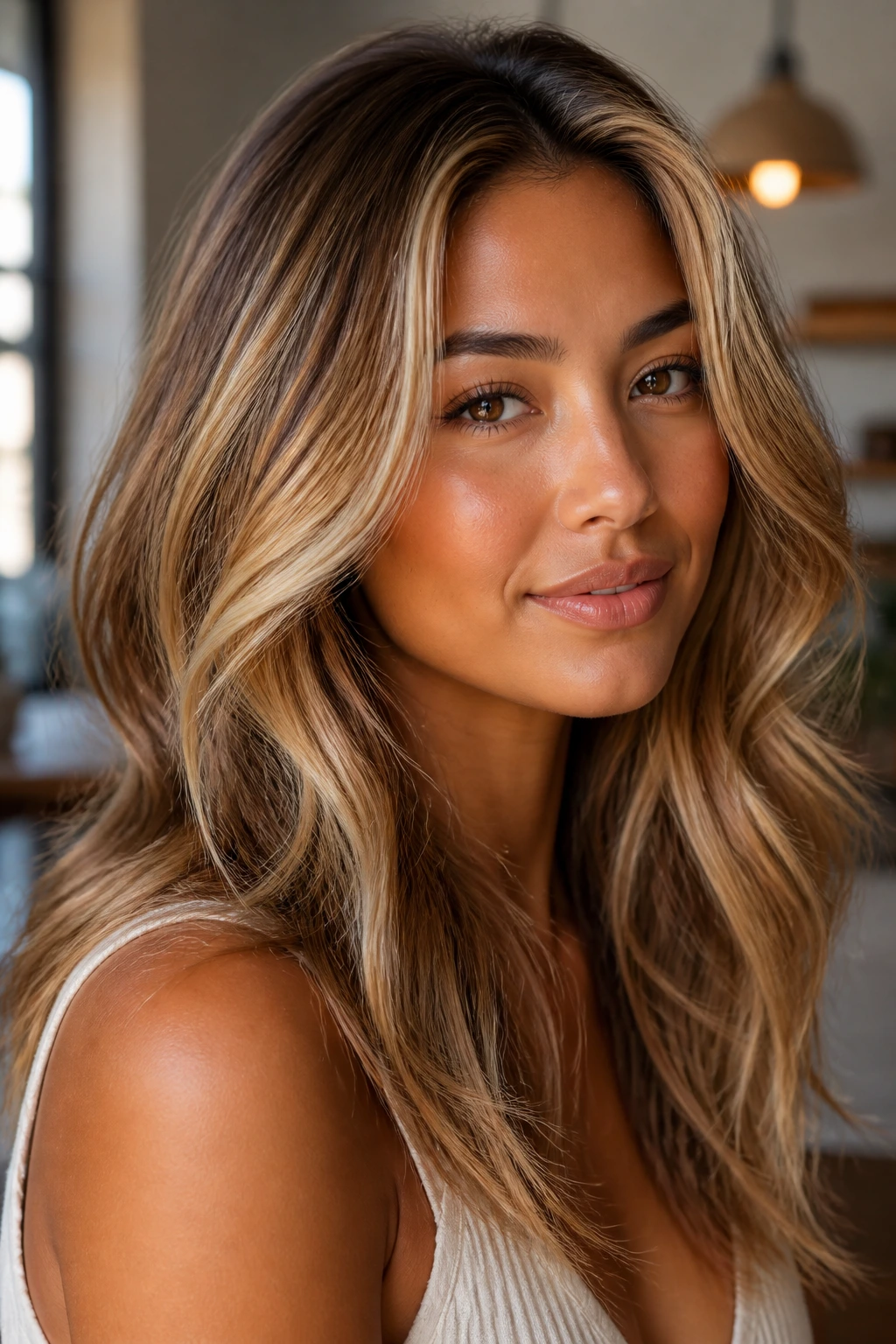
Warm skin wants warmth with shape. Honey blonde doesn’t flatten tan skin the way a cool ash blonde can, because the gold in the hair and the gold in the skin speak the same language. The trick is to keep one side of the formula softer than the other—usually the root shadow, gloss, or lowlight—so the color still has depth.
Placement matters as much as tone. A few light pieces at the temples and cheekbone area do more for the face than a full head of brightness. Tan skin reads especially well when the blonde sits where the light hits naturally: around the hairline, on the top layers, and through the ends of waves or bends.
The cut changes the mood. On a blunt bob, honey blonde looks cleaner and more polished. On shaggy layers, it looks broken up and lived-in. On curls, it reads as movement. That means the same formula can feel completely different depending on whether the hair is straight, waved, or coiled.
Beige keeps honey from going loud. If the blonde has only gold, it can veer yellow. If it has a little beige or neutral in the gloss, the color stays creamy. That small shift is the difference between “sunlit” and “boxed at home.” One is flattering. The other is loud in the wrong way.
1. Soft Layered Lob with a Level-7 Honey Melt
A layered lob is the easy place to start if you want honey blonde hairstyles for tan skin that feel polished but not fussy. The length sits right at the collarbone, which gives the blonde somewhere to move, and the layers keep the color from reading as one flat sheet. On tan skin, that kind of softness makes the face look warmer without turning the whole head into a solid gold block.
Formula cue: ask for a level 7 neutral-gold root melt with level 8 honey ribbons through the mids and a beige gloss on the ends. That mix gives you dimension without pushing the blonde into orange territory.
Why it flatters
The root shadow keeps regrowth soft, which matters if your natural base is darker. The lighter pieces sit best around the front layers and the collarbone, where a lob tends to flick out and show movement.
Quick fit notes
- Best on straight, wavy, or lightly curled hair.
- Works well if you wear a side or center part.
- Easier to maintain than full blonde from root to tip.
The one thing I’d watch: don’t cut the layers too choppy. Honey blonde on tan skin already brings warmth; you want shape, not extra busy texture.
2. Long Beach Waves with a Shadow-Root Honey Balayage
Why do beach waves make honey blonde look richer than pin-straight hair? Because the bend in the hair breaks up the color and lets the lighter pieces flash in and out instead of staring you in the face all at once. On tan skin, that flash feels sun-kissed, not frosted.
A shadow-root balayage is the safest long-hair version of this look. Keep the root a shade or two deeper, paint the honey through the mid-lengths, and leave the ends the lightest. The formula should stay soft—think level 6 to 7 root, lifted to level 8 honey, finished with a beige-gold glaze.
You get length, but you also get movement. That matters. Long hair can swallow color if every strand is the same tone. Waves fix that, and they’re forgiving when the grow-out starts.
The best version of this look uses loose bends, not crunchy curls. If the waves are too tight, the honey can look stripy. If they’re too flat, you lose the whole point. Aim for that in-between bend that looks like the hair has been pinned up and let down an hour later.
3. Curtain Bangs and a Beige-Honey Ribbon Formula
Curtain bangs are one of the easiest ways to make honey blonde feel intentional on tan skin. They open the face, show off the lighter front pieces, and keep the color from sitting only at the ends where nobody notices it unless the wind does the work.
Why this cut helps: the bangs drop the brightest color right where your eyes land first. That little triangle of light at the cheeks and temples is doing more than people think. It softens strong brows, warms the skin, and keeps darker hair from feeling heavy.
Formula cue
Ask for fine balayage ribbons around the fringe, then a level 8 beige-honey gloss through the front layers. If your base is dark brunette, keep the root smudged at level 6 or 7 so the bangs don’t look pasted on.
A detail I like here: the bangs should be lighter than the rest, but not the lightest thing on your head. If they’re too bright, the face can start to look disconnected from the mids and ends. That’s a strange look in person. Better to keep the honey creamy and let the haircut do the talking.
4. Sleek Middle-Part Blowout with Golden Money Pieces
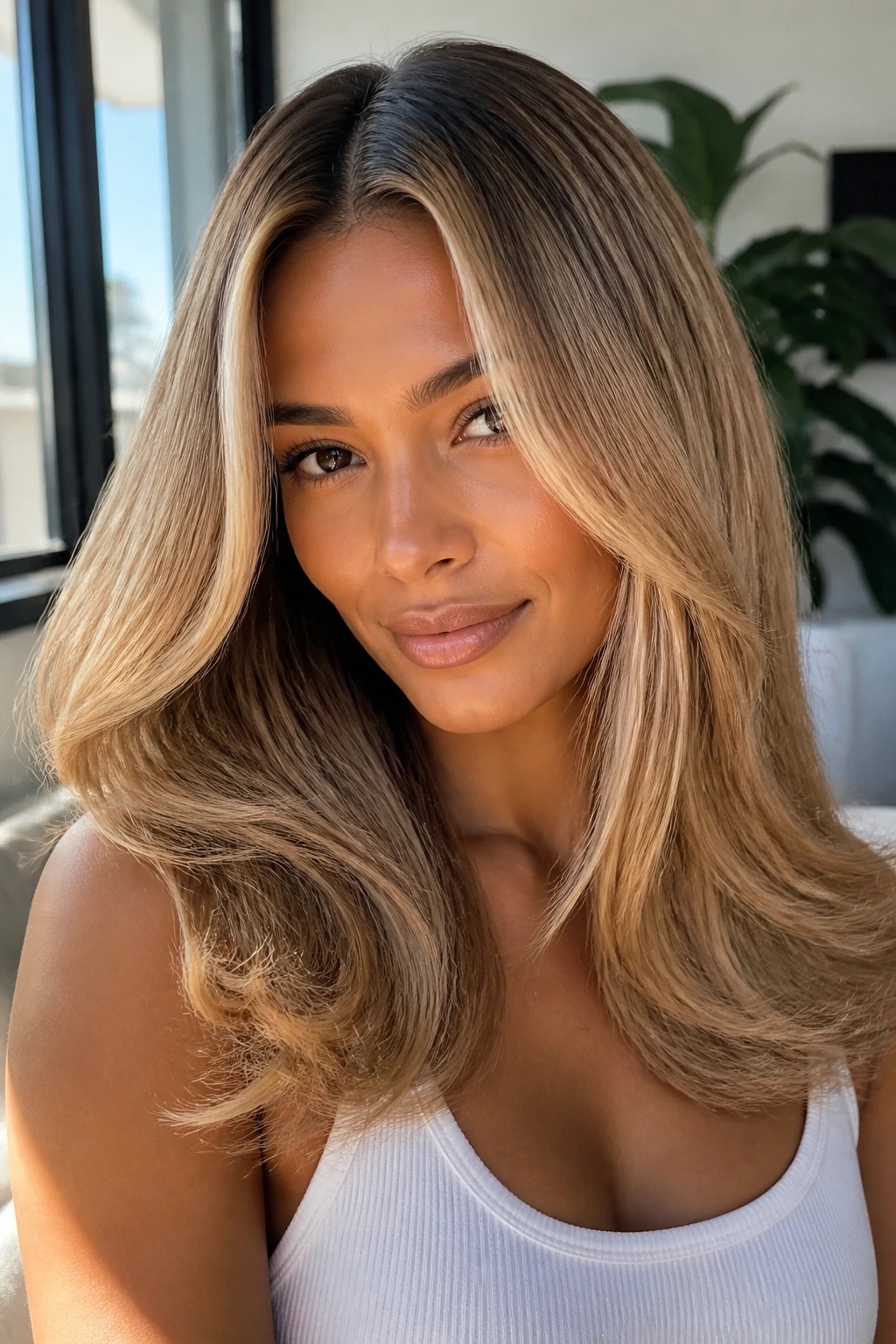
A sleek blowout is the opposite of beachy texture, and that’s exactly why it works. The clean finish lets the honey blonde read as shine instead of streaks. On tan skin, that kind of polish can be more flattering than a messy wave because the color looks expensive in the plain sense of the word: smooth, even, and controlled.
The money pieces should sit just in front of the ears and at the top of the cheekbone. That’s where a center part needs help most. A level 8 golden money piece against a level 6 or 7 root gives the face a clean frame without turning the whole style into a stripey salon project.
Best for
- Medium to long hair
- Oval and heart-shaped faces
- Anyone who likes a neat finish over texture
Sleek hair can make people nervous because they think it will expose every color flaw. It does expose them. That’s the point. If your toner is right and the root melt is soft, the result looks sharp in a good way. If the toner is off, you’ll know immediately, which is also useful. No hiding.
5. Dark Brunette Lengths with a Bright Honey Money Piece
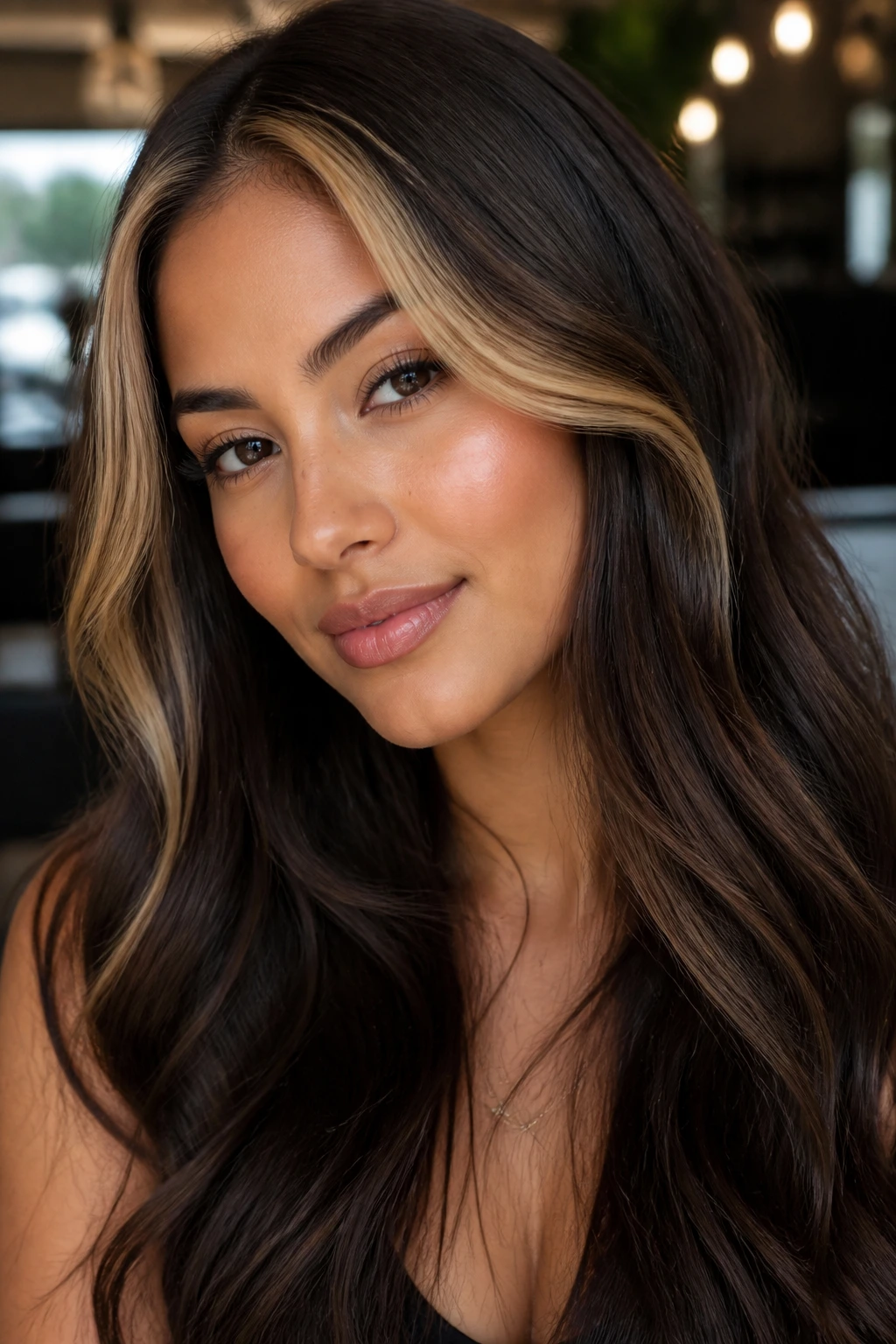
A bright honey money piece on dark brunette hair is one of my favorite ways to test the water without committing to a full color overhaul. The front panels catch light, the rest of the hair stays darker, and tan skin gets a bright frame without losing contrast. That contrast is a gift. Don’t waste it by making everything equally light.
Think of the formula like this: dark brunette base, painted front pieces lifted to level 8 or 9, then a warm honey-beige toner so the light pieces don’t go sour. The front should be brighter than the rest, but still soft enough to blend into the hairline.
This look works best when the money piece is wide enough to show under waves but not so wide that it looks like two separate blocks of color. If you wear your hair tucked behind the ears a lot, this is especially pretty. The lighter pieces stay visible even when the rest of the hair is pulled back.
A small warning: if your natural base is very dark, don’t ask for the front to be lifted too fast. Honey blonde that’s forced too far can go orange, and orange around the face is a mood nobody asked for.
6. Tousled Shoulder-Length Shag with Amber Lowlights
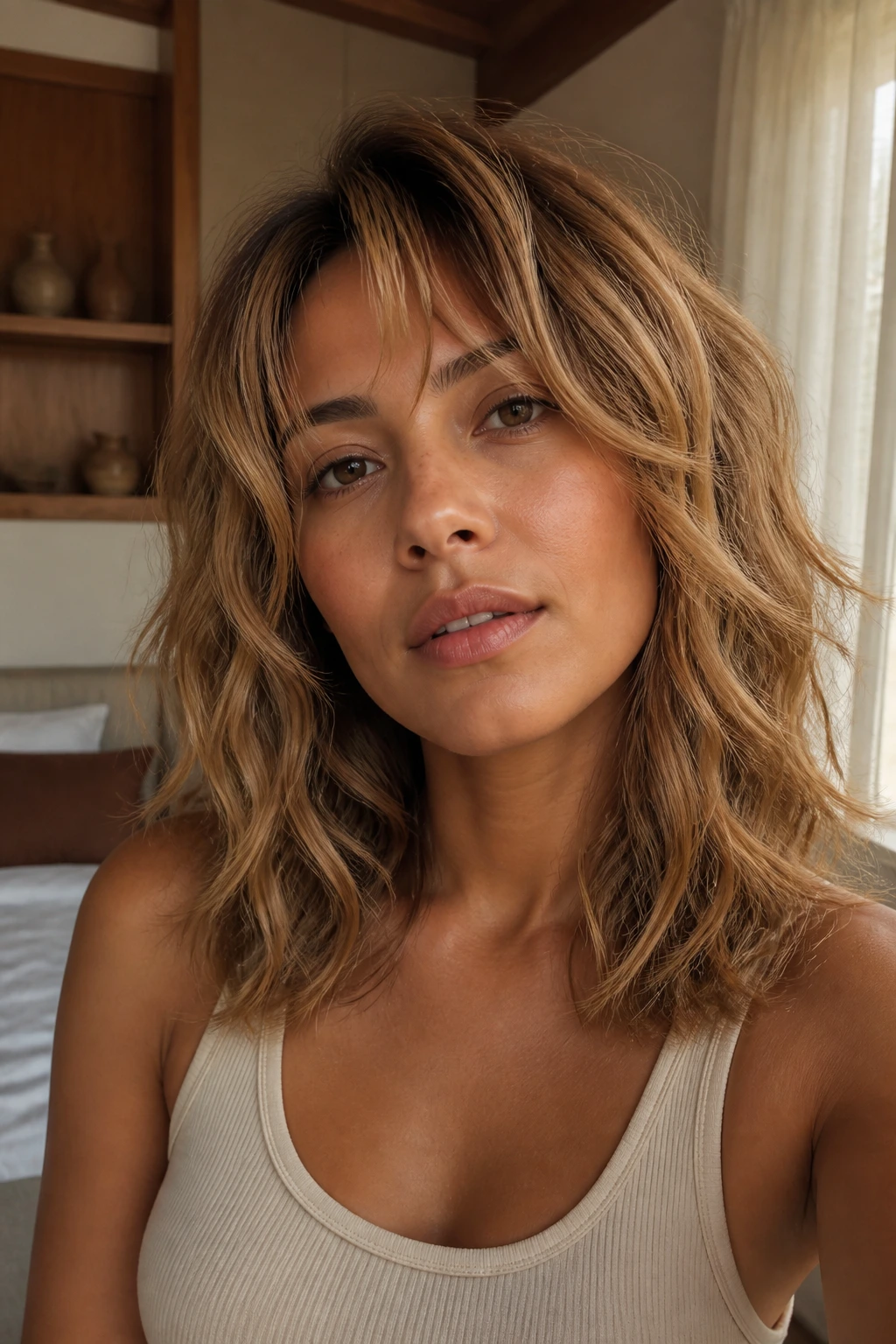
A shag gives honey blonde more attitude. Not in a loud way. In a better way. The layers create little shelves for the color to sit on, and the tan skin underneath keeps the whole thing from looking too pale or too precious.
The real trick here is contrast. You do not want only blonde. You want amber lowlights, soft honey highlights, and a little darker depth under the top layer so the cut keeps its edge. Ask for a level 7 honey placement with deeper caramel lowlights beneath the crown and around the nape.
Why it works
- The texture hides regrowth.
- The lowlights stop the blonde from turning flat.
- The shaggy shape gives the hair movement even on days you don’t style it much.
This is a good choice if you don’t want your hair to look too “done.” It has a lived-in feel, but it still looks considered. That balance is hard to fake with one-tone color. Layers need shadows, and tan skin handles them beautifully.
7. Soft Curls with Caramel Underlights
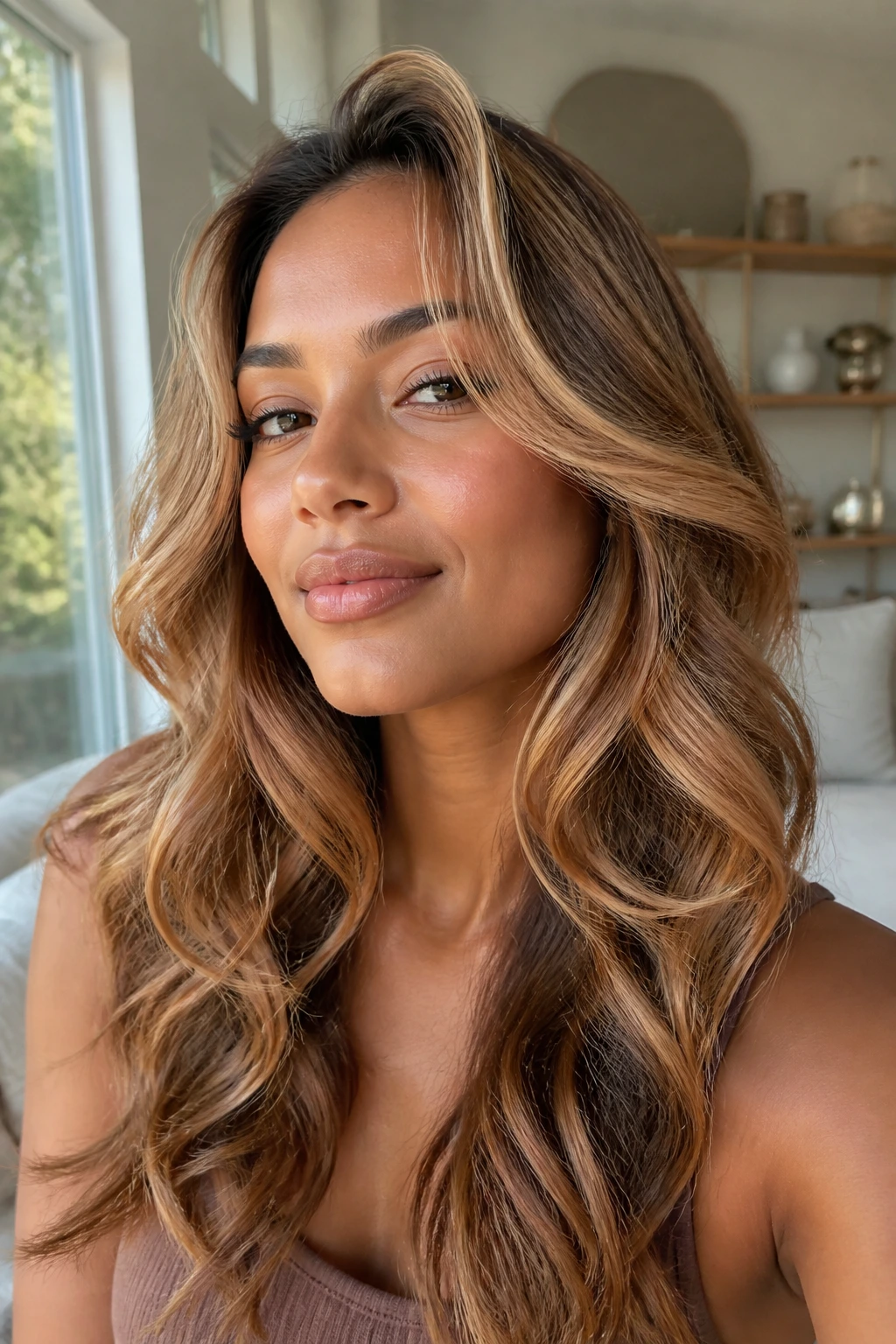
Soft curls and honey blonde have a nice relationship. The curls wrap the color around themselves, so the eye catches bits of caramel, gold, and beige as the hair moves. On tan skin, that creates warmth without making the whole head glow like one flat tone.
The underlights are the subtle part that saves this style. Keep the top layer a little deeper and weave the lighter pieces underneath, especially if you like to wear your hair half-up. A formula built around level 7 caramel underlayers and level 8 honey surface pieces keeps the curl pattern from getting lost.
How to wear it well: brush the curls out lightly after they cool. You want softness, not ringlets that look shellacked. A diffuse finish gives the honey more room to show through the curve of the hair.
This is one of those styles that looks better on the second day. The curls loosen, the colors blend, and the whole thing gets a little more relaxed. I’d take that over freshly curled stiffness any day.
8. High Ponytail with Honey Ribbon Highlights
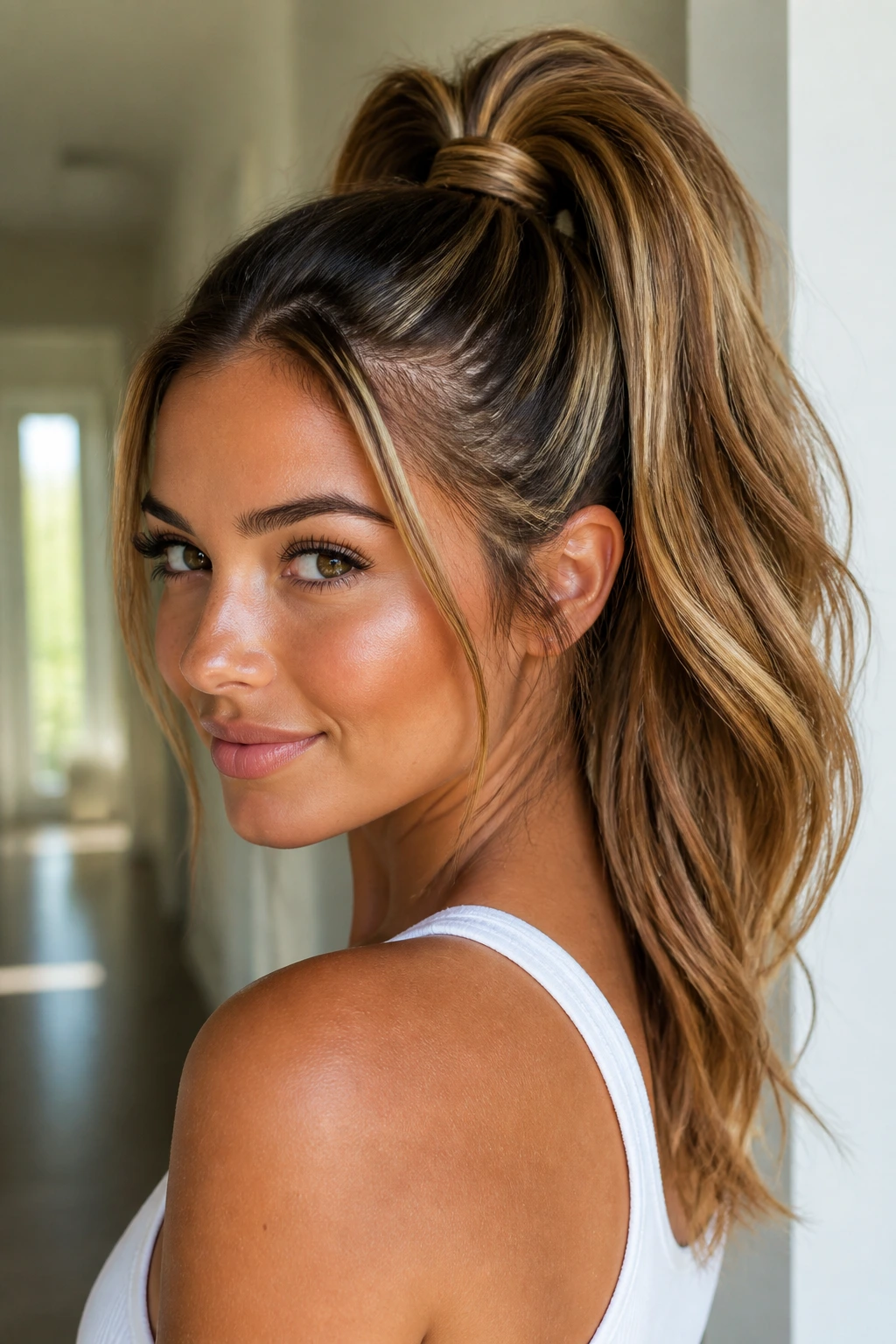
A high ponytail sounds simple, but the color has to earn its keep. With tan skin, honey blonde ribbon highlights in a ponytail can look sharp because the hair is lifted off the face and the lighter pieces catch light around the temples, crown, and tail. It’s clean. It’s bright. It doesn’t need much else.
The best formula is a deeper root at the crown, with narrow honey ribbons painted through the top and the tail ends. Ask for the highlights to be concentrated where the pony sits high, because that’s where the movement shows up. If the ribbons are too low, they disappear under the elastic and the style loses its point.
Quick note
A glossy ponytail reads better than a dry one. Honey blonde likes shine. A light serum on the tail and a smoothing cream at the crown make the color look intentional instead of thrown together.
This is the kind of style that can go from gym-to-dinner territory without much effort, which is useful, but the real advantage is the lift at the face. Tan skin and a high ponytail are a good match when the color opens up around the hairline.
9. Chin-Length Bob with a Beige-Honey Gloss
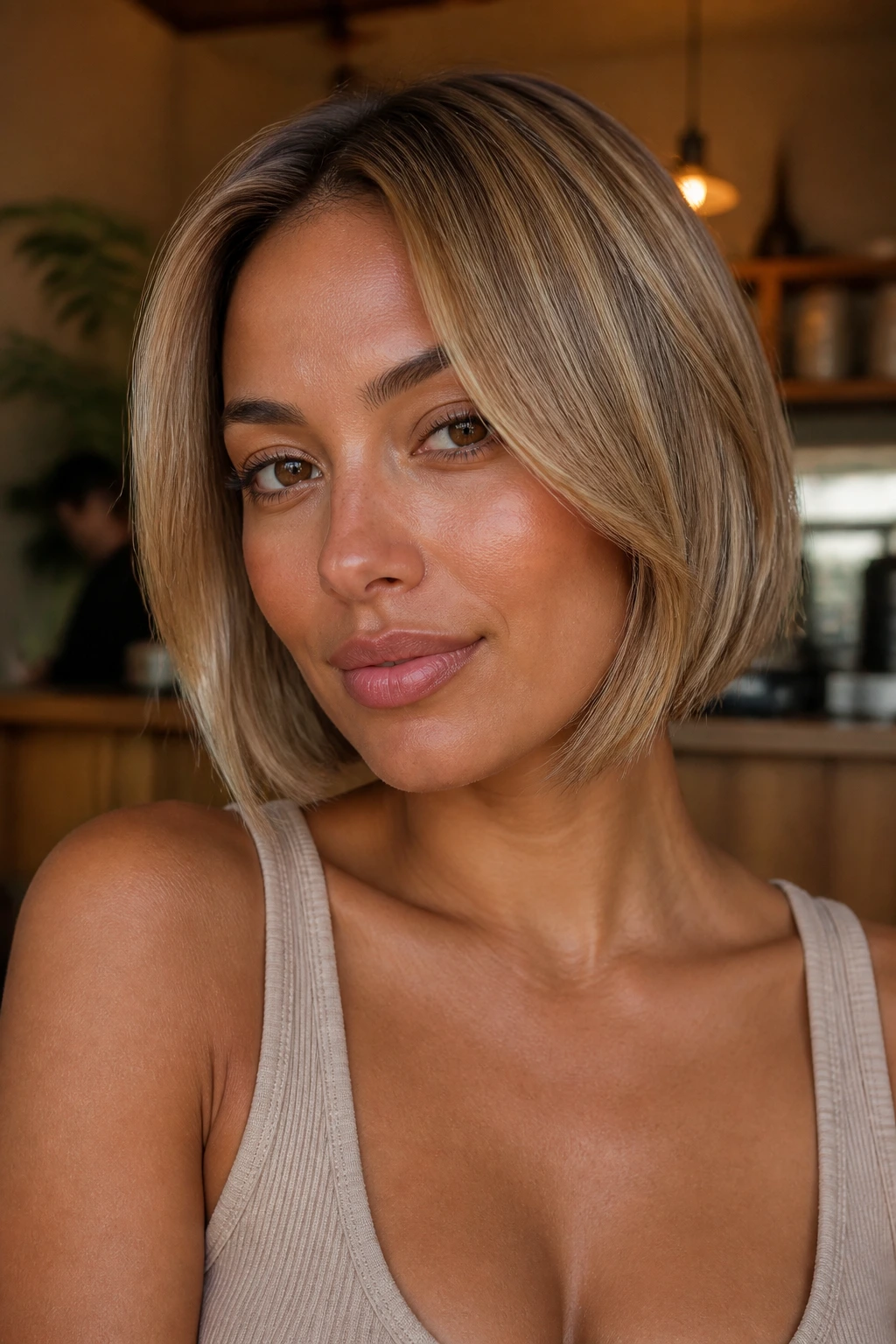
A chin-length bob is blunt enough to feel modern and short enough to make the color look rich. Honey blonde on tan skin can get too airy on very long hair, but on a bob it feels denser, cleaner, and a little more editorial. The edge of the cut gives the color a line to rest against.
A beige-honey gloss is the move here. Keep the tone creamy, not yellow, and let the ends be just a touch lighter than the base. If the bob is one length, subtle face-framing brightness can keep it from looking boxy. If it’s slightly angled, even better—the color will follow that line.
The thing I like most about this look is how little it asks for. A blow-dry, a tuck behind one ear, and the color has enough structure to do the rest. You don’t need five styling products to make it work. You need a good cut and a gloss that leans warm but not brassy.
10. Loose Braided Crown with Warm Light Strands
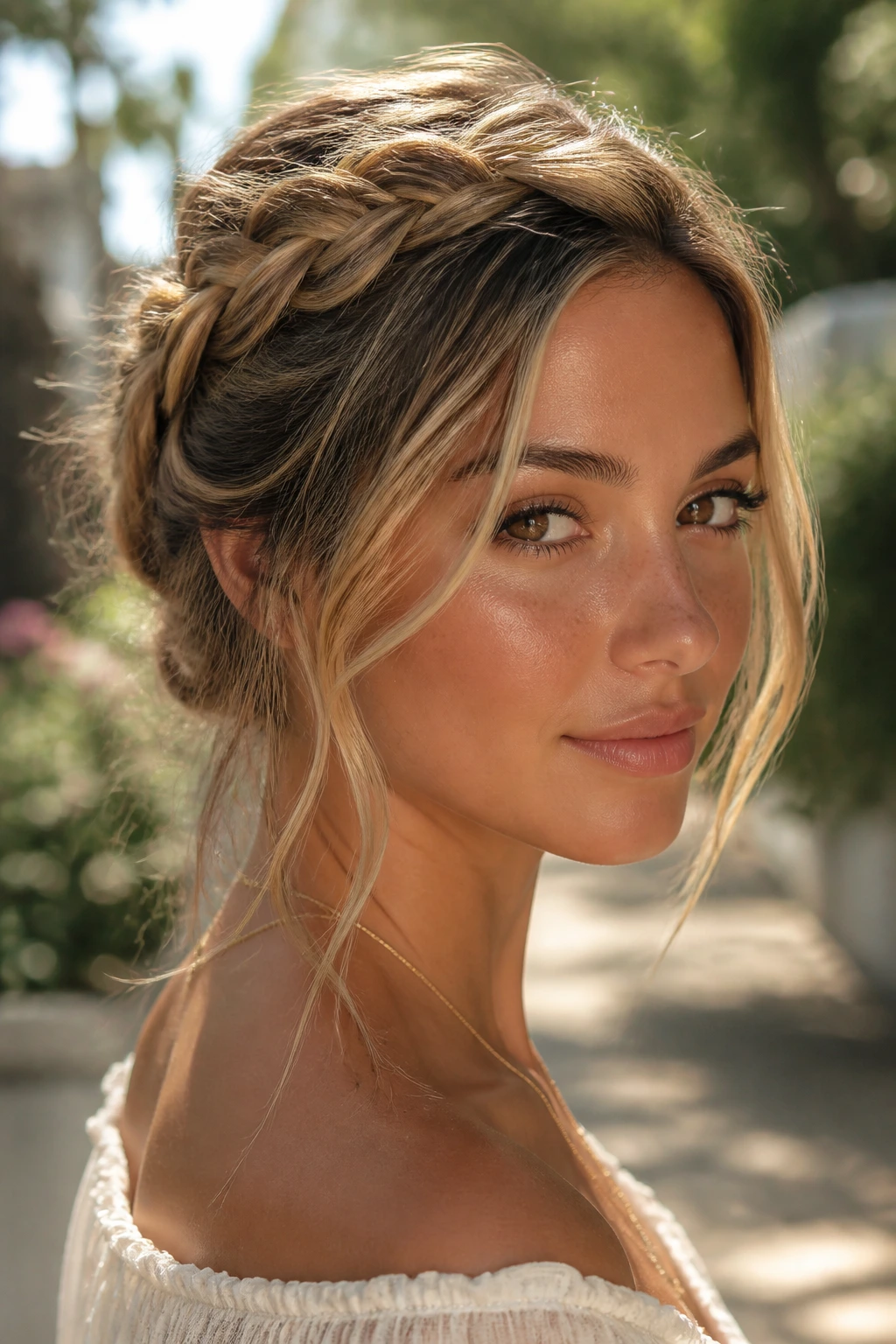
Braids are good at hiding the messy parts of color, which is why a braided crown can make honey blonde look more expensive than it has any right to. The weave breaks the color into little sections, and tan skin benefits from that softness because the hair never turns into one solid panel.
The best version uses warm light strands around the face and slightly deeper pieces in the braid itself. If every strand is the same honey shade, the braid can go flat. If the crown has a mix of beige, gold, and a touch of caramel underneath, the texture reads much better.
I’d keep this one less about perfection and more about balance. Let a few tendrils fall around the cheeks. Pull the braid tighter near the crown so the face stays open. It’s a pretty style, yes, but the real win is how the light pieces trace the shape of the head without looking stiff.
11. Face-Framing Layers with Glossed Ends
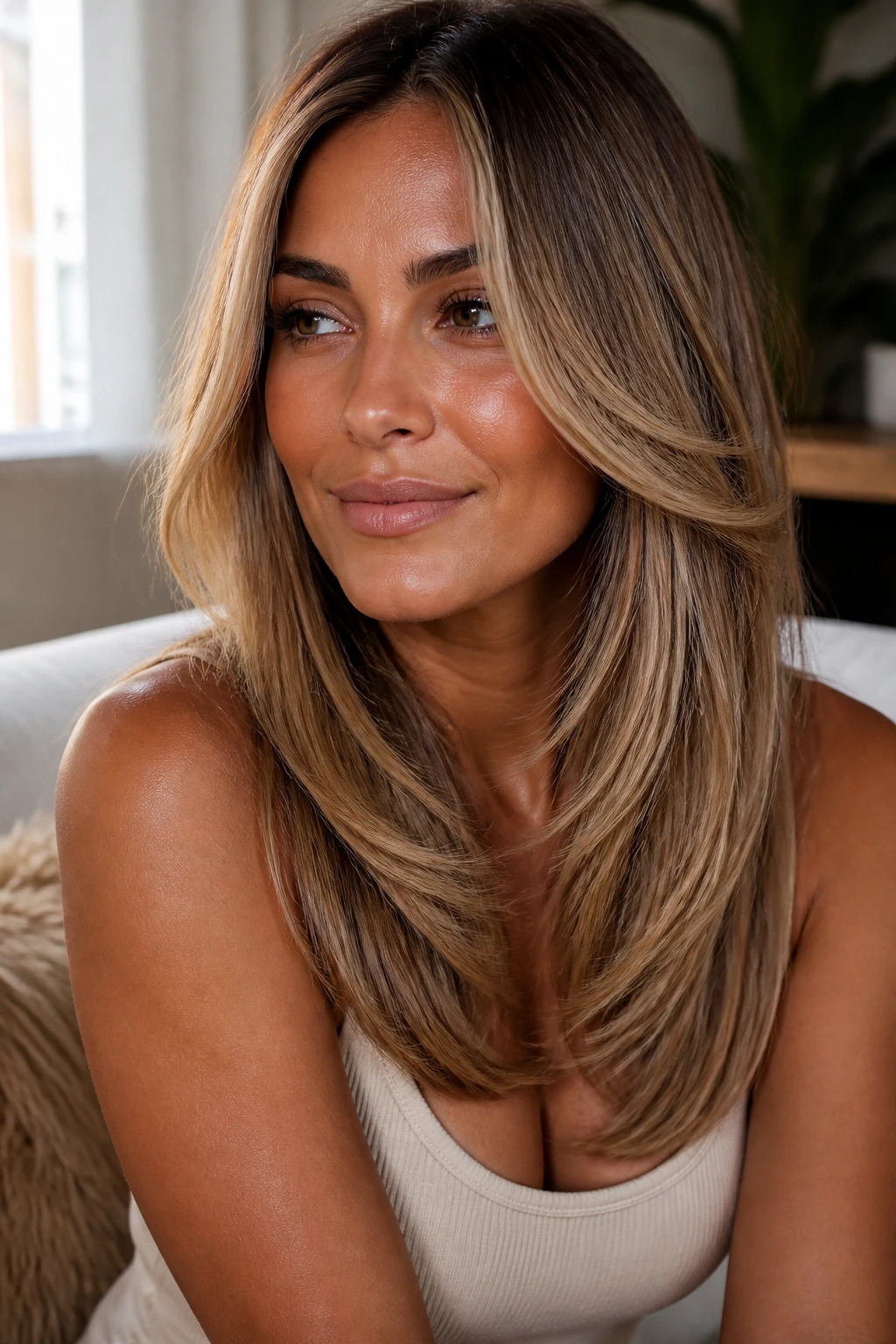
Face-framing layers are the kind of cut that make a colorist look smarter than they are. Not because the color is difficult. Because the placement is so obvious once you see it. Light pieces around the cheekbones and jawline soften tan skin, especially when the ends stay glossy and creamy.
The formula cue is simple: keep the root deeper, paint the front layers to a brighter honey level, then finish the ends with a sheer gloss. That gloss matters. Without it, the light pieces can look dry or too yellow. With it, the color blends into the rest of the hair and stops looking sketched on.
Quick thought: this is one of the easiest ways to get honey blonde without committing to a full head of highlights. The haircut creates the contrast for you.
12. Butterfly Cut with Warm Honey Slices
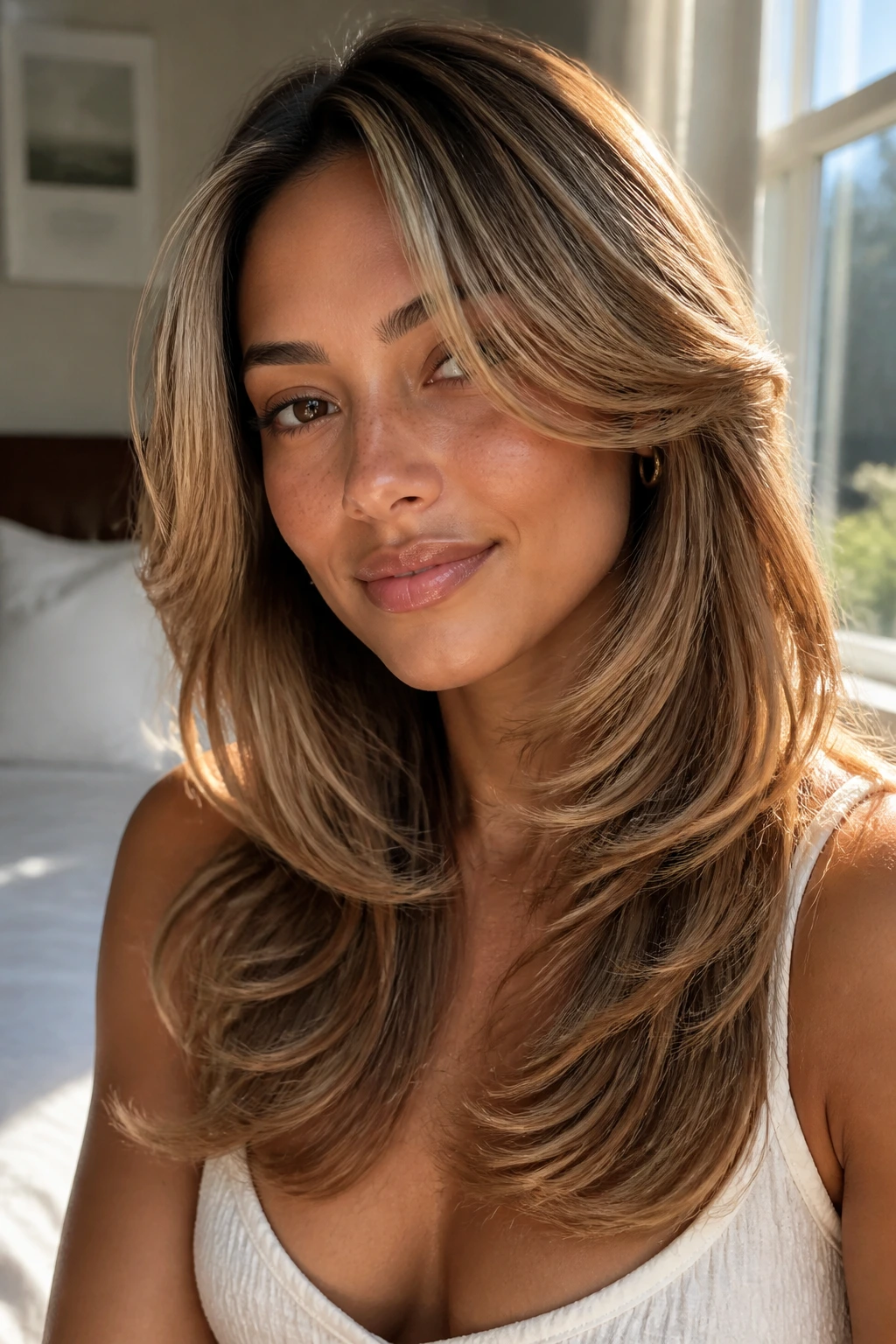
The butterfly cut has enough movement on its own that the color almost becomes part of the architecture. The shorter top layers create a flutter around the face, and the longer lengths underneath keep the honey blonde from disappearing when the hair settles. On tan skin, that layered shape gives you lift without losing warmth.
A good formula here uses warm honey slices through the top layers and a slightly deeper beige tone through the underlayers. The contrast should be soft, not stripey. If the slices are too thick, the cut can look dated fast. If they’re too thin, you won’t see them once the layers move.
I like this on medium to long hair because it keeps the blonde visible from more than one angle. You get color at the front, movement through the crown, and enough length for waves or a blowout. It’s a lot of payoff without needing a full blonding session from root to tip.
13. Pixie Cut with Golden Honey Peaks
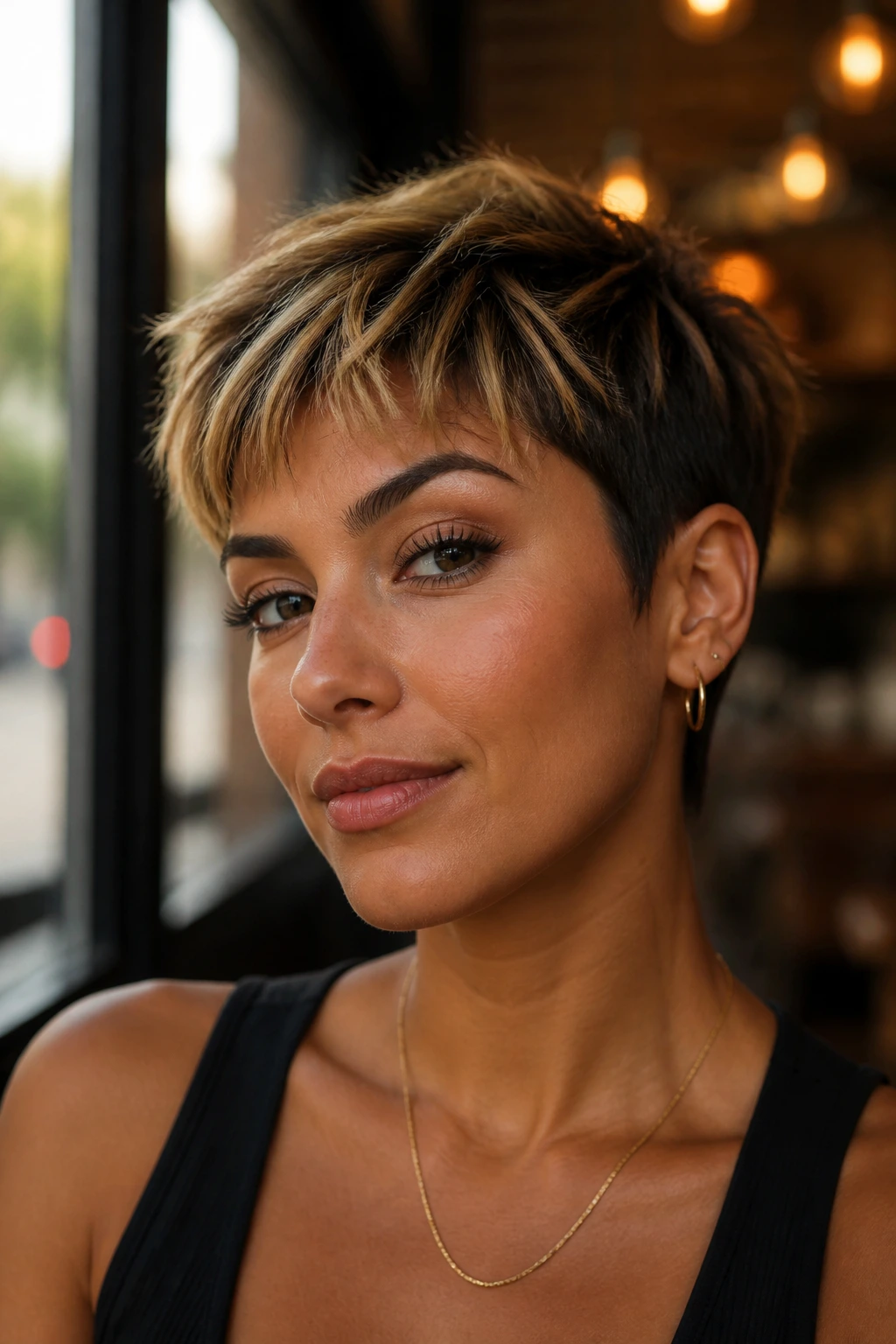
Can a pixie carry honey blonde on tan skin? Absolutely. In fact, it can carry it better than some longer cuts because every piece of color sits right up near the face. The cropped shape means the blonde shows at the temples, crown, and fringe instead of hiding under length.
The best formula is a deeper root with golden honey peaks on the top and fringe. Keep the sides a touch darker or more neutral so the cut keeps shape. If the whole pixie is light and golden, it can lose its edges. A little shadow is what makes the style look sharp.
Why I like this one
- It’s easy to style.
- It puts the brightest color where the face needs it.
- It grows out in a soft way if the root is kept deeper.
A pixie is not the place to be timid with placement, though. The lighter pieces should have a reason to exist. Push them toward the fringe or the crown, not random spots. That’s where honey blonde earns its keep on a short cut.
14. Half-Up Clip Style with Sunlit Ribbons
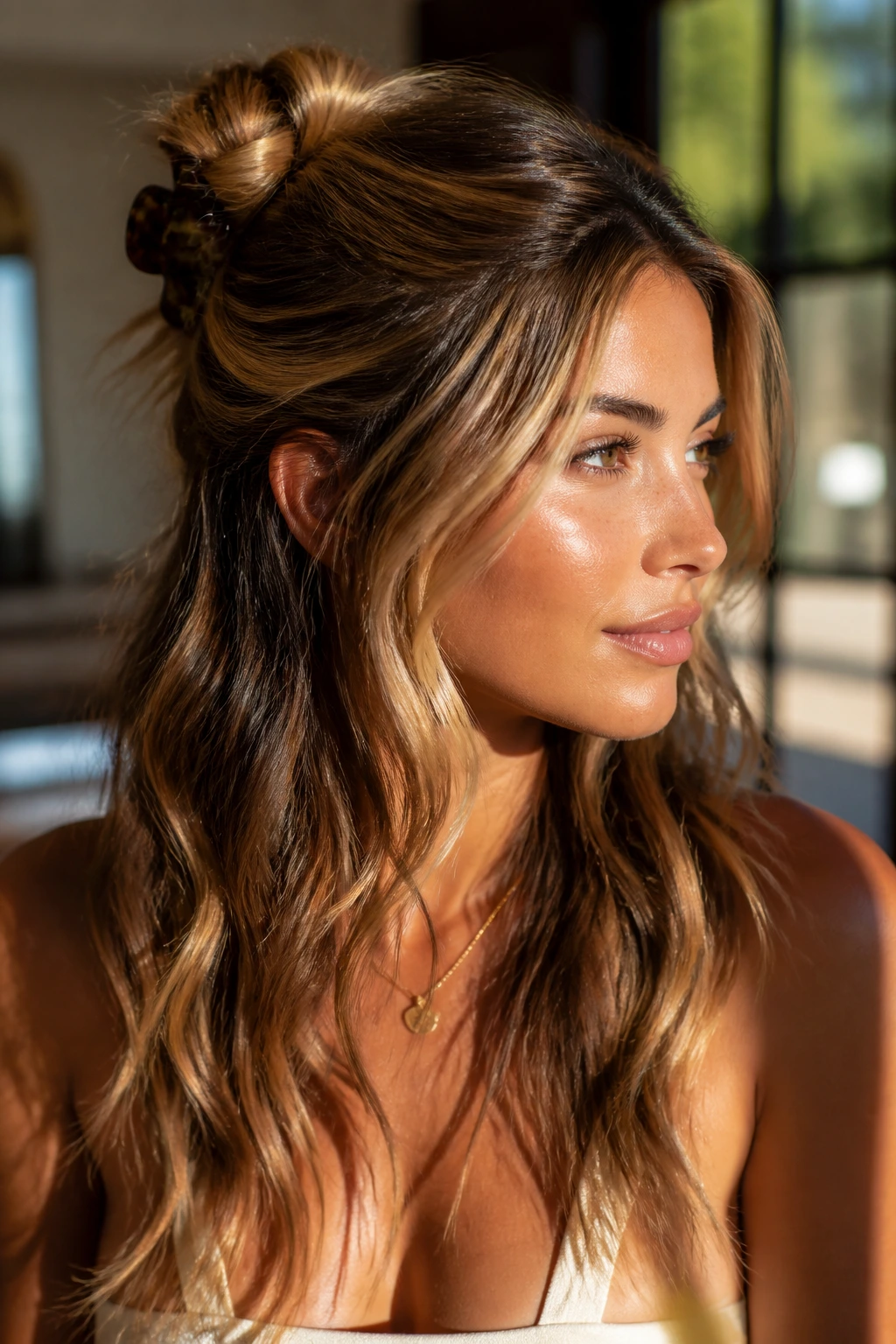
Half-up styles are underrated because they let you show off color without exposing every inch of your roots. On tan skin, honey blonde ribbons in the upper half of the hair can look especially fresh when the lower half stays a little deeper. That contrast adds shape.
The formula should focus on the top layer: sunlit ribbons around the part, temples, and crown, with a softer glaze through the rest. If the hair is naturally brunette, leave enough depth underneath so the style has dimension when it’s clipped up.
This is one of those looks that feels casual but still reads polished. A matte claw clip, a smooth half-up twist, or even a small knot at the crown all show the lighter strands in a different way. It’s a good choice if you like seeing your color but don’t want full brightness every day.
15. Voluminous Curls with Toffee-Honey Dimension
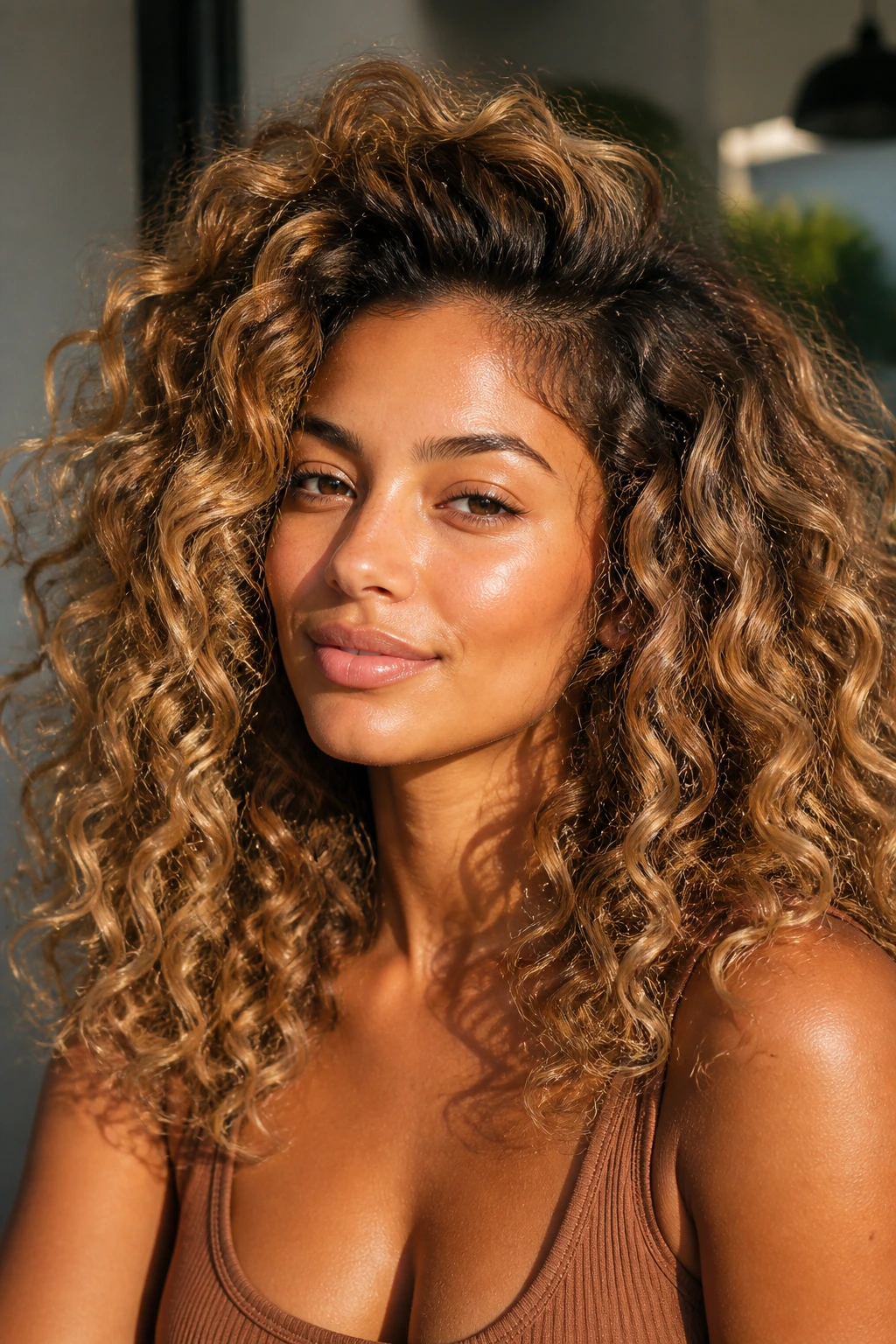
Voluminous curls are honest about color. They don’t hide much. That can be a problem with the wrong blonde and a gift with the right one. Honey blonde on tan skin looks especially full when the curls have toffee tones underneath and brighter honey on the surface.
The formula should be built in layers: a richer base, toffee-toned lowlights, and lighter honey pieces on the outer curve of the curls. That keeps the curl pattern from turning into a single fuzzy halo. It also gives the hair a more expensive-looking depth, which is hard to fake with one shade.
If your curls are tight, place the lighter pieces where they’ll show as the curl stretches, not only at the top. If they’re looser, you can go a little brighter on the outer layer. Either way, the color should move when the hair moves. Static color on curls looks dead. Movement wakes it up.
16. Blunt Lob with Sandy Honey Tone
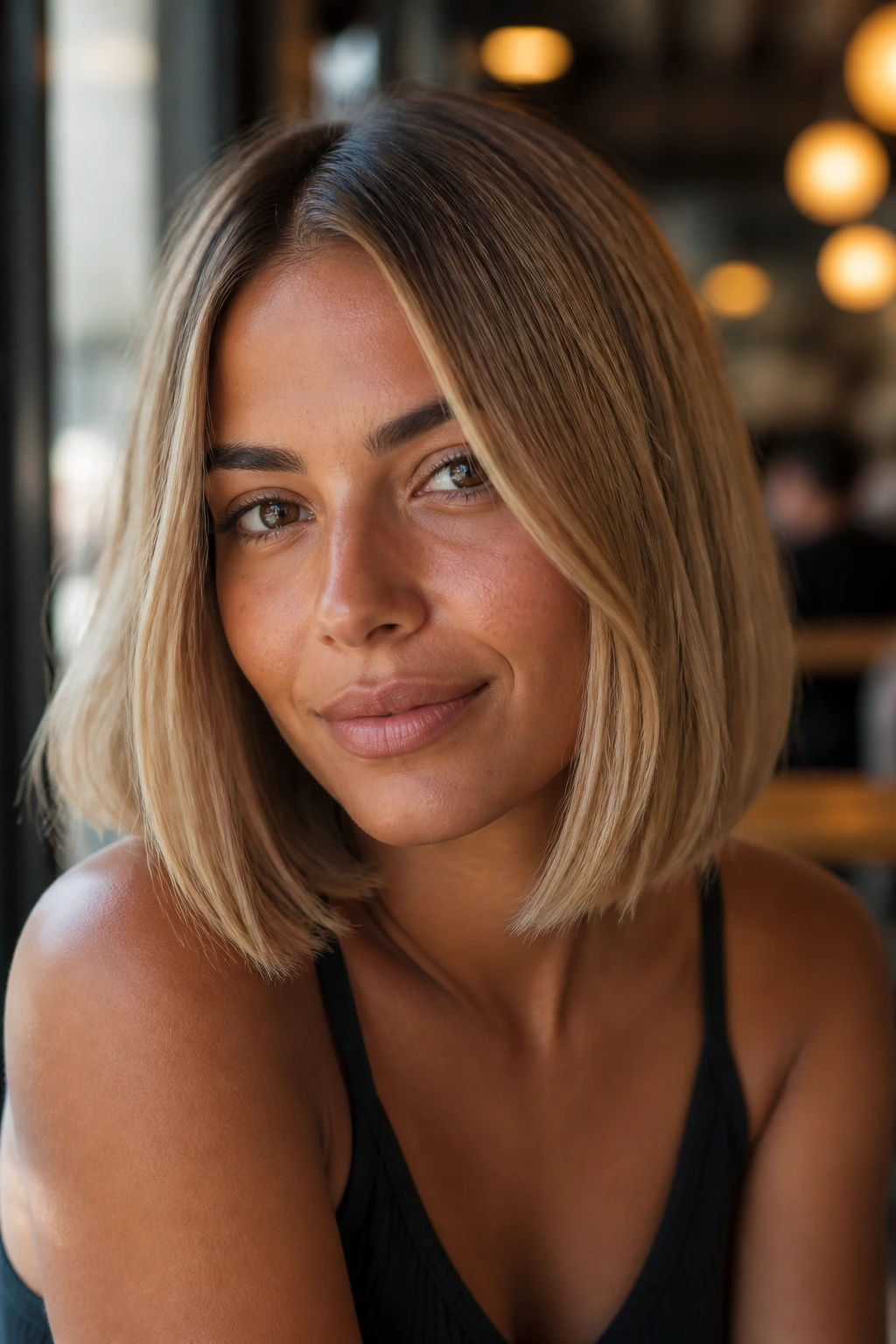
A blunt lob has edge. A sandy honey tone softens it just enough. That combination works well on tan skin because the blunt cut keeps the hair from feeling flimsy, while the sandy warmth prevents the blonde from drifting into yellow or orange.
Ask for a soft root shadow, then a sandy-honey gloss through the mids and ends. You don’t need giant highlights here. Thin, controlled placement is enough because the cut itself provides the shape. If you over-highlight a blunt lob, it can look busy fast.
The beauty of this look is the restraint. It looks cleaner than a beach wave, but it still has warmth. If you like hair that looks expensive in daylight and low maintenance at the office, this is one of the better bets on the list.
17. Soft Updo with Glossed Tendrils
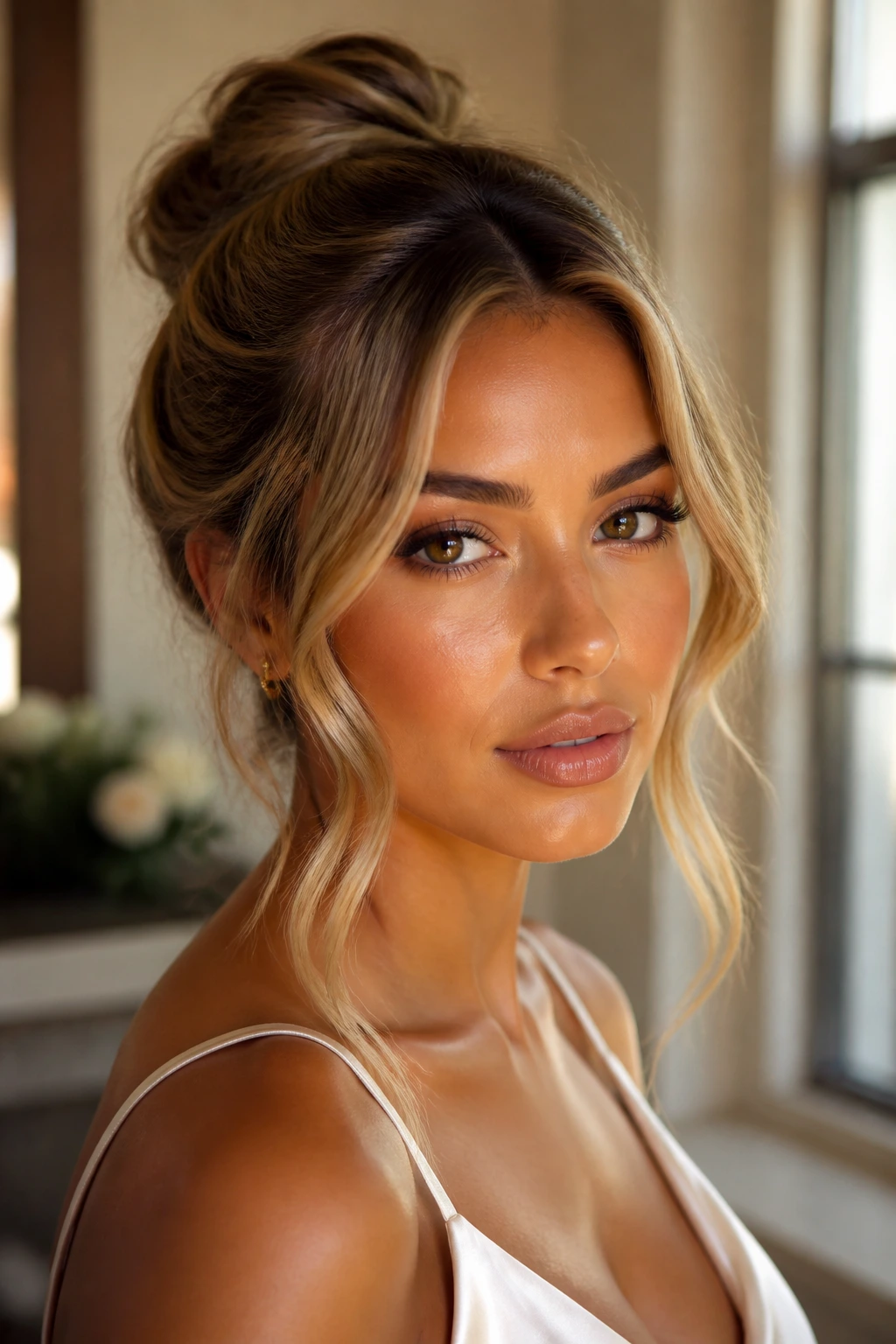
A soft updo lets honey blonde show up in little flashes instead of a full curtain. On tan skin, that can be prettier than wearing the color loose, especially if the lighter pieces are concentrated around the face and nape. The updo does not need to be formal. It just needs a bit of shape.
The formula should keep the tendrils lighter and the pins area deeper. Ask for glossed face-framing strands and a softer honey melt through the rest. That way the updo feels airy instead of severe. If the blonde is too evenly spread, the style loses contrast and starts to look muddy when pinned.
This is a good move for weddings, dinners, or any situation where you want the color to show up in a few strategic places rather than everywhere. A little shine spray helps. So does a gentle bend in the loose pieces. The goal is movement, not shell hair.
18. Long Straight Hair with Melted Honey Ombré
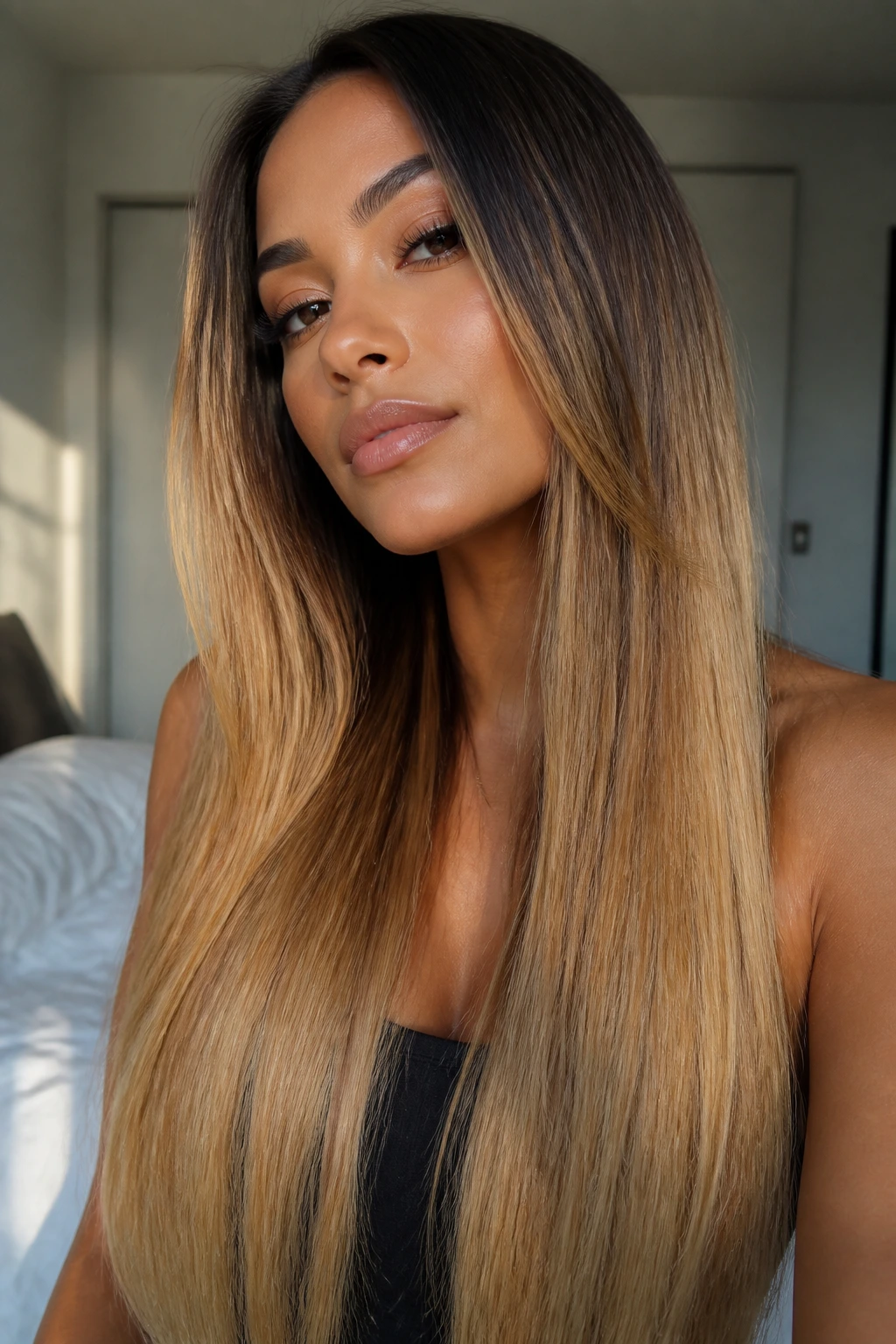
Straight hair is unforgiving, which is why a melted ombré has to be done right. There’s nowhere to hide. But when it works, honey blonde on tan skin looks clean and smooth, with a soft transition from deeper roots to lighter ends. The contrast is what makes the length interesting.
Formula cue: keep the top close to your natural depth, then melt into golden honey mids and beige ends. The transition should not feel like a line. If you can point to where the color changes, it’s too obvious. The whole point of an ombré is that the eye glides through it.
A flat iron finish makes this look crisp, but only if the ends are healthy. Split ends steal the shine. If the hair is dry, a long straight style will show it immediately. That means this look works best when the cut is clean and the gloss is fresh.
19. Side-Swept Waves with Warm Beige Honey
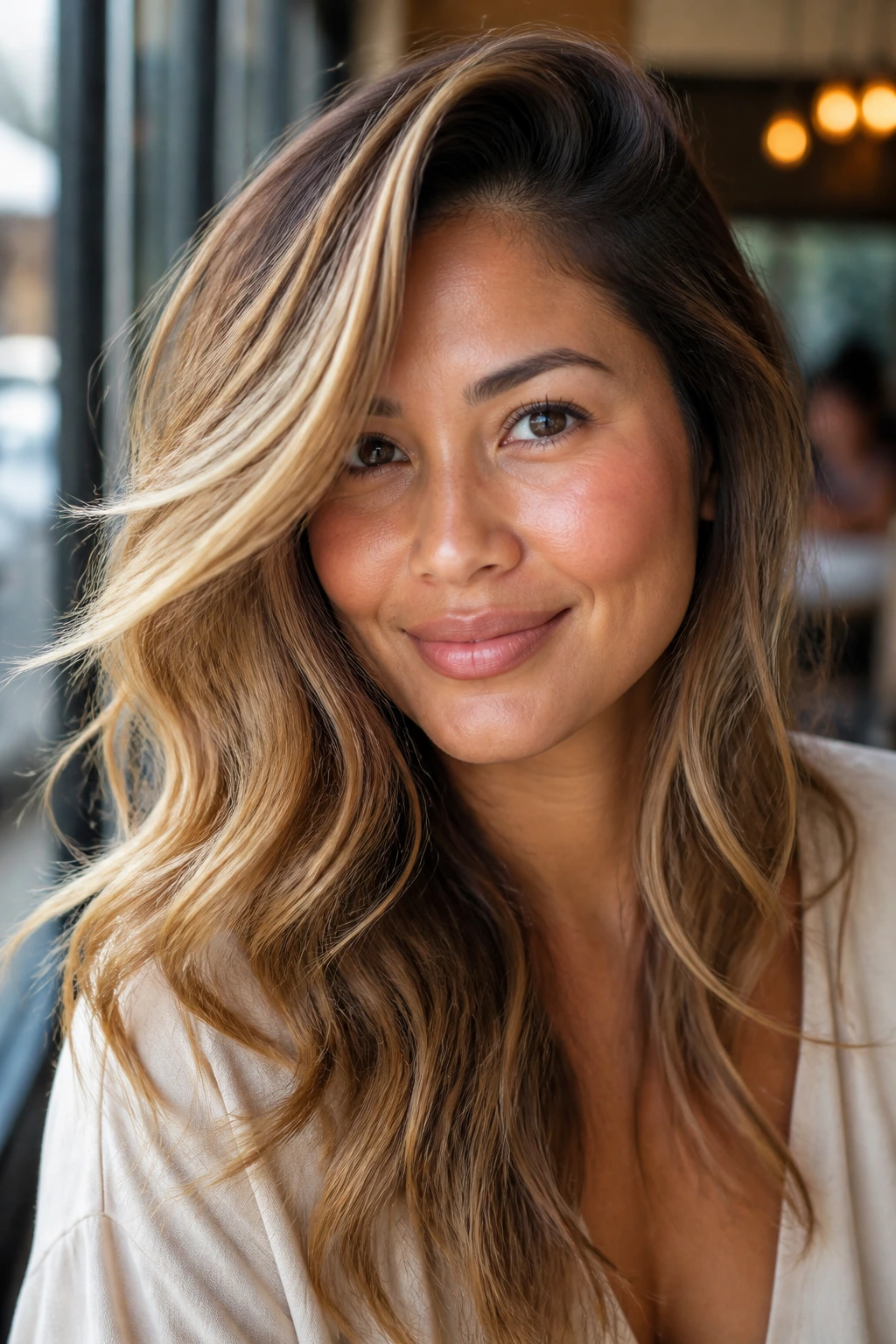
Side parts are having a long and useful run for one reason: they frame the face with less effort than almost anything else. Add warm beige honey to the mix and tan skin gets a softer, more lifted look, especially if the waves are swept away from the heavier side.
The placement matters. Put the brightest pieces on the open side and through the front curve of the wave. The deeper pieces can sit behind the ear and into the back layers. That makes the color feel dimensional instead of scattered.
This style is especially good when you want your hair to look fuller at the root. The side-swept shape gives the illusion of volume, and the warm honey catches light as the wave falls across the cheek. It’s a practical trick, not just a pretty one.
20. Rope Braid with Hidden Honey Panels
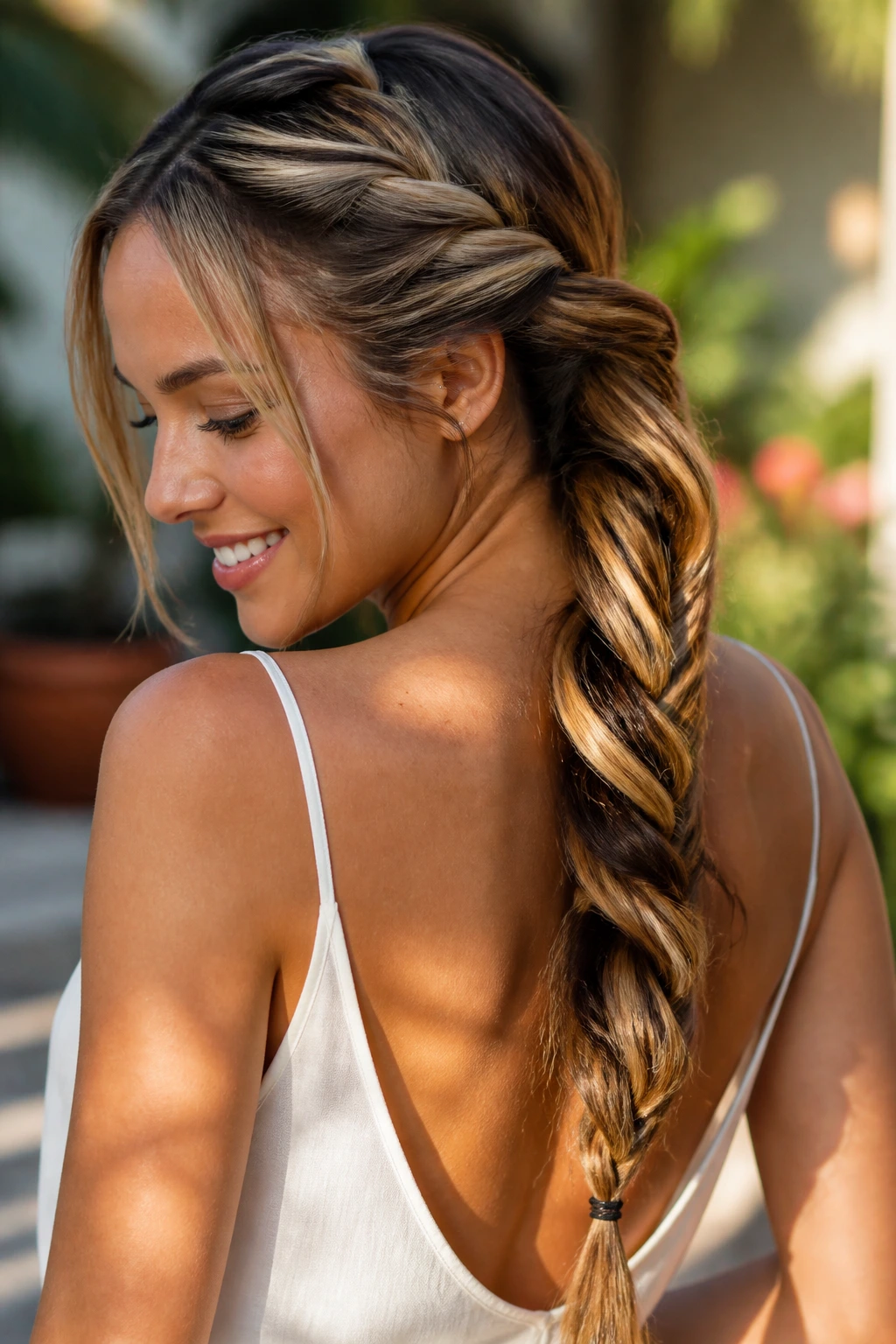
A rope braid shows off color in a slower way than a loose braid, which is why it can look so rich on tan skin. The twist catches hidden panels of honey blonde and turns them into flashes rather than streaks. That’s a good thing. Streaks can be blunt. Flashes feel intentional.
The formula should hide the brighter blonde in the panels that will rotate to the surface as you twist the hair. Keep the underside a little deeper. If everything is the same level, the braid looks dense but not interesting. You want the twist to reveal the color in steps.
This is a style for when you want the hair to feel controlled. It works with long lengths, medium lengths, and even layered hair if the ends are tucked in neatly. A little edge control or smoothing cream at the hairline helps keep the braid clean.
21. Deep Side Part with Caramel Honey Sweep
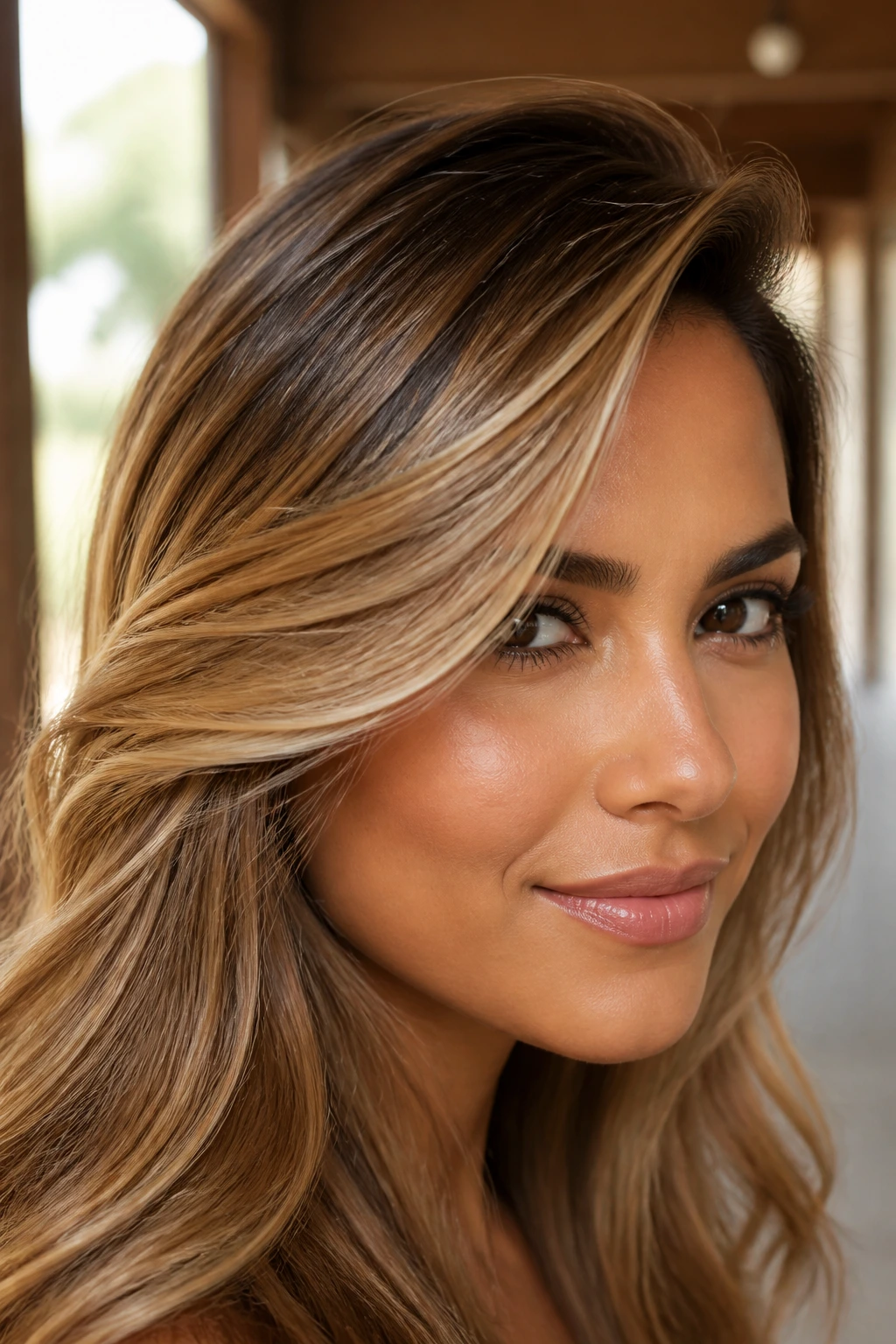
A deep side part can change the whole read of honey blonde on tan skin. Push the hair over, and the lighter sweep creates a diagonal line across the face. That diagonal is flattering because it breaks up symmetry in a good way. It also gives the color a little drama without needing more bleach.
The formula should lean caramel at the root and lighter honey through the sweep. If the root is too light, the part loses depth. If the mids are too dark, the blonde won’t show enough from the front. The sweet spot is a believable shadow with a brighter top layer.
Why it works
- Adds root lift.
- Keeps the face from looking flat.
- Makes waves and bends look fuller.
This is the kind of styling move that can rescue a plain cut. You don’t always need more color. Sometimes you need a different direction.
22. Natural Coils with Honey Glaze Ribbons
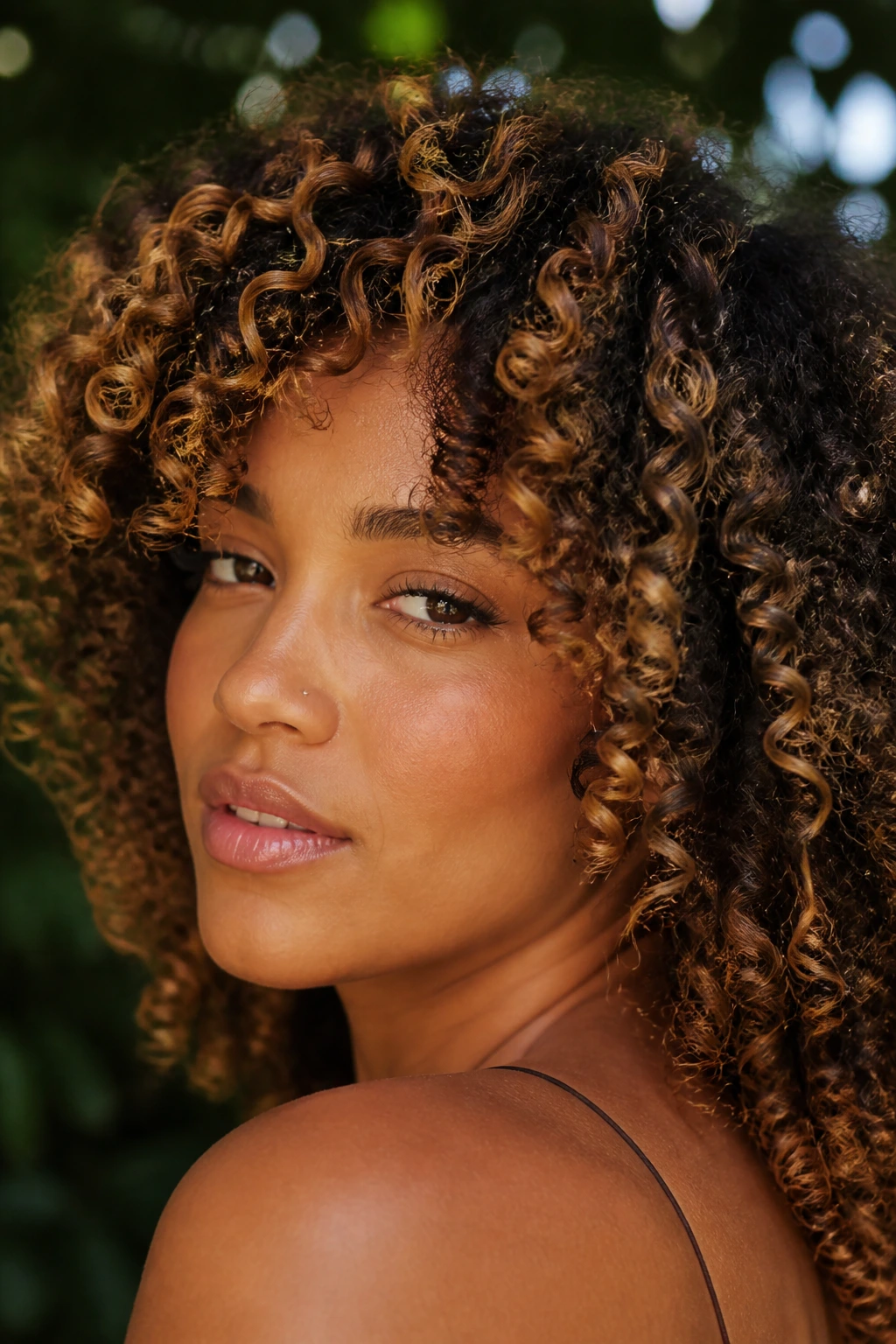
Natural coils handle honey blonde in a way that straight hair can’t. The curl pattern turns every ribbon of color into a little highlight, and tan skin picks up the warmth around the face and crown. The result can look incredibly soft if the placement respects the curl shape.
The best formula uses glaze ribbons rather than chunky streaks. Think lifted strands around the outer coil layer, with deeper depth underneath. That keeps the texture intact. Too much blonde in coils can make the pattern look broken, and nobody wants that.
Placement note
- Brighten the perimeter.
- Leave depth in the interior.
- Keep the face-framing strands slightly lighter.
I’d also avoid over-toning coils into ash. A beige-gold finish looks much better with warm skin and keeps the hair from looking dusty. The whole style should feel lit from within, not drained.
23. Shaggy Wolf Cut with Golden Honey Tips
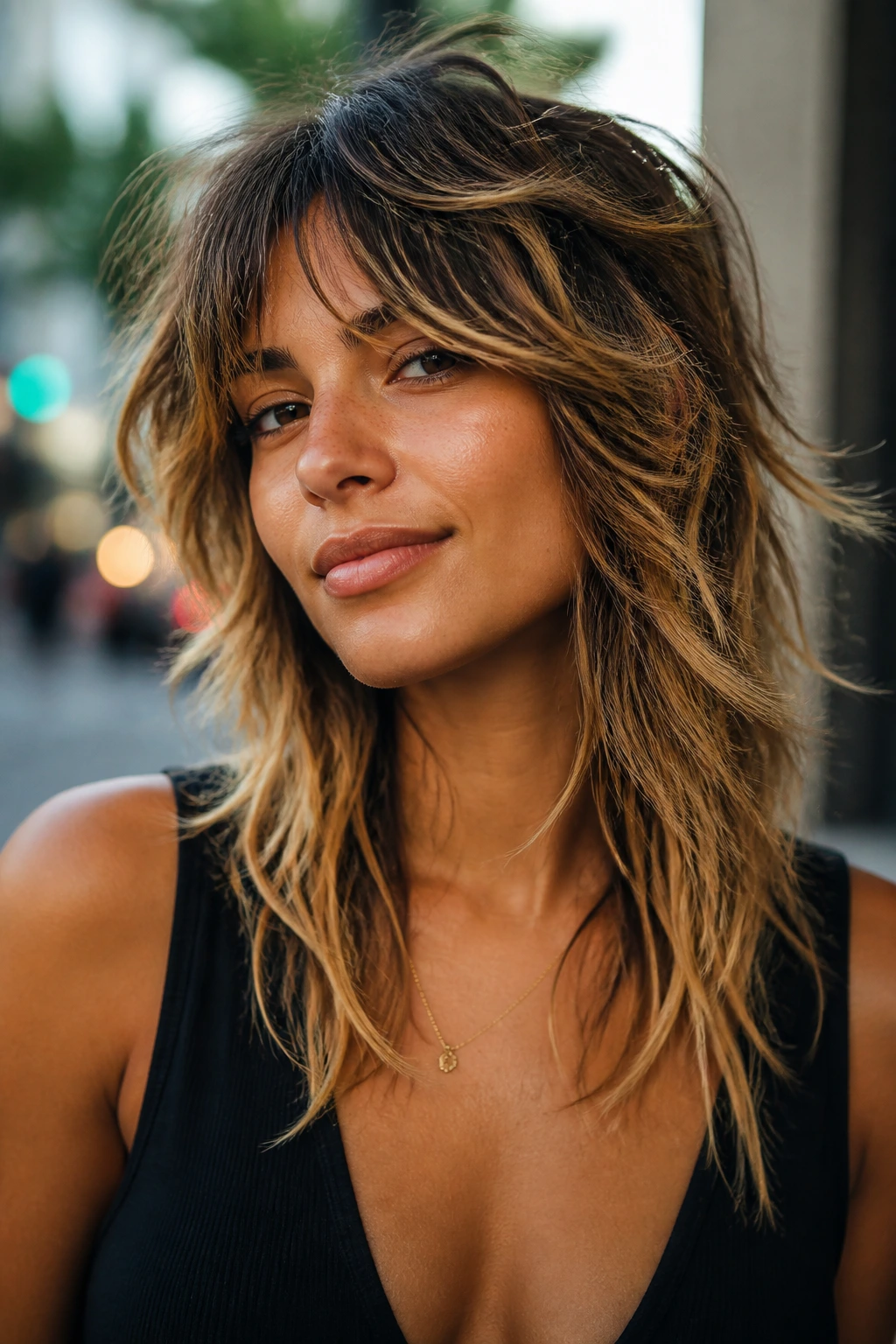
The wolf cut is all edge and movement, which makes honey blonde feel a little wild in the best way. On tan skin, golden tips and honey ribbons through the crown keep the cut from reading heavy. That matters because the wolf shape can get bulky fast if the color is too dark or too uniform.
Ask for golden ends, a soft shadow root, and a few lighter pieces through the top layers. The lighter tips help the feathered sections stand out. If every layer is the same color, the haircut loses its bite.
This is not a shy haircut, and the color should know that. Still, I would keep the honey more golden than yellow. The goal is texture and energy, not brass. There’s a difference, and it shows in daylight immediately.
24. Messy Bun with Face-Framing Honey Pieces
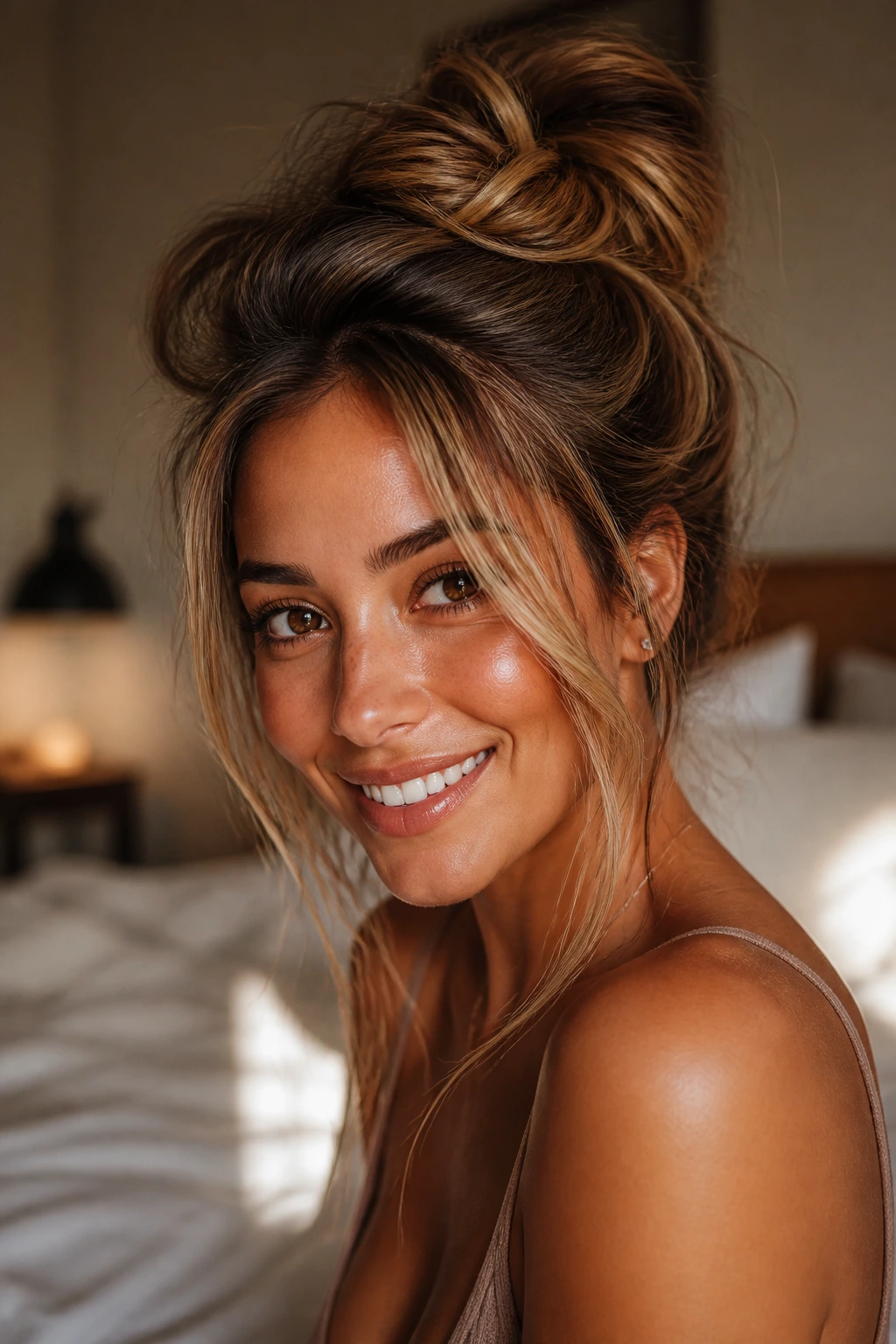
A messy bun can make honey blonde look casual in a very good way, especially on tan skin. The bun itself pulls the eye upward, and the face-framing pieces soften the whole look so it doesn’t feel severe. A few lighter strands around the cheekbones are enough to bring the color to life.
The formula here is all about the front. Keep the bun area a shade deeper and let the front pieces carry the brighter honey. That contrast keeps the style from going flat from behind. It also means the color still shows even when the hair is up for most of the day.
This is a strong everyday option if you want a style that survives errands, work, and whatever happens after. The honey pieces should be loose, not curled into perfection. A little bend and a little mess are the point.
25. Sleek Low Bun with a Honey Halo
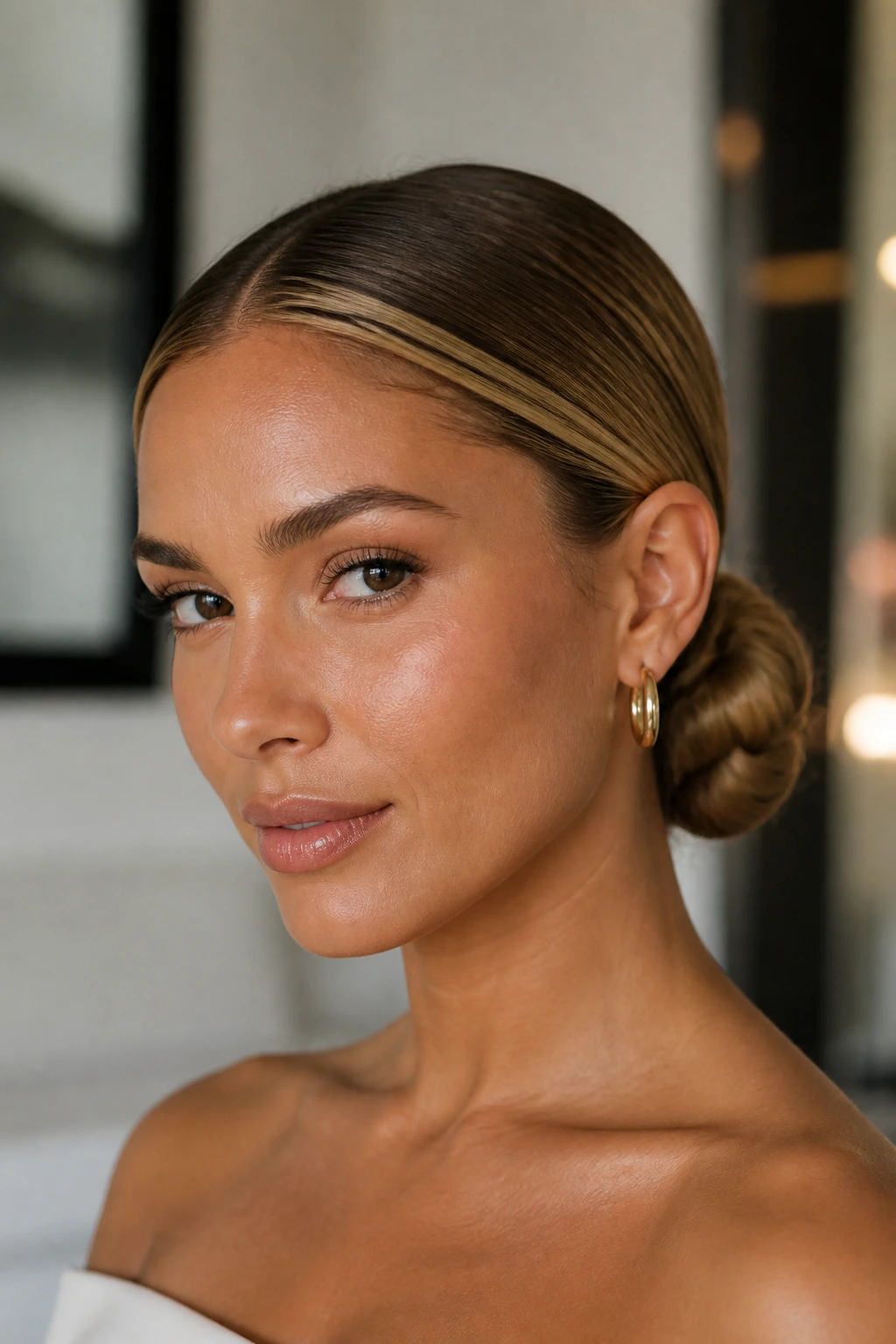
A sleek low bun is the most restrained look on the list, and that restraint can be gorgeous when the color is right. On tan skin, a honey halo around the hairline gives the bun a softer edge, so it doesn’t feel too severe or too bridal. The trick is to keep the halo narrow and the bun neat.
Ask for fine honey pieces around the perimeter and a deeper base through the bun itself. That keeps the shine focused where it matters. If the entire bun is light, the shape disappears. If only the perimeter is light, the style reads crisp and controlled.
I like this one because it proves honey blonde does not need waves to work. It can sit quietly, almost like a line of light around the face, and still do enough. That’s probably the most useful kind of blonde anyway.
What Makes the Honey Blonde Formula Stay Soft Instead of Brassy
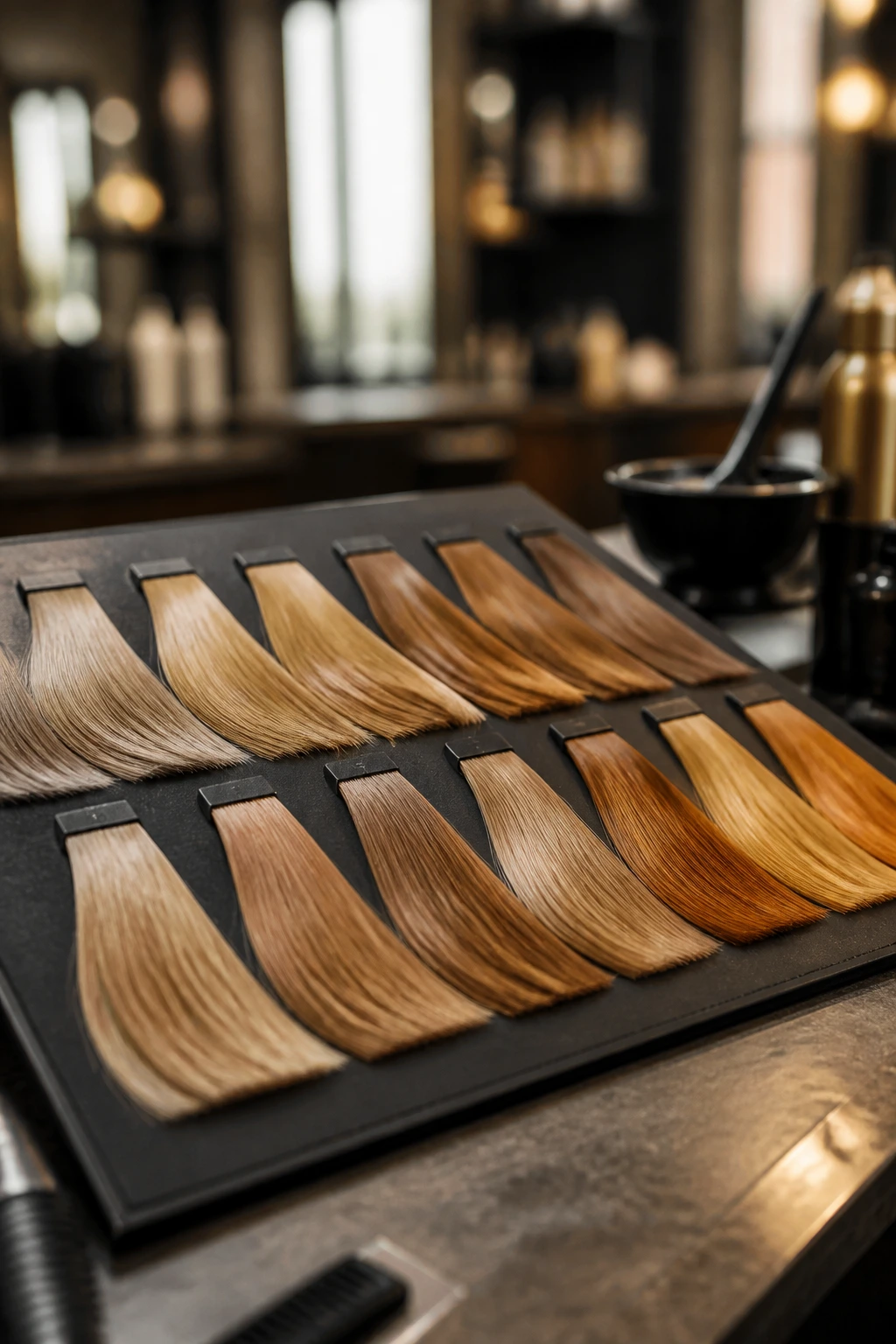
The part people miss is that honey blonde is not one color. It’s a family of colors. The look lives somewhere between gold, beige, and a little caramel, and the proportions change depending on the base shade you start with. On tan skin, that matters more than the style itself, because the wrong tone can make the face look flat in daylight.
A softer formula usually means a deeper root shadow, a controlled lift to level 7 or 8, and a beige-gold gloss instead of a heavy yellow toner. That beige note is the quiet hero. It keeps the blonde from shouting. If your natural hair is darker, a colorist may need to lift in stages rather than rushing the process, especially if you want the hair to stay shiny and not feel like straw.
I’m also a fan of leaving a little depth underneath the bright pieces. It gives the color places to rest. All-over lightness can be pretty for a minute and tiring later. Dimension buys you time. It also makes the tan in your skin read richer because the hair isn’t competing with it.
Essential Tools for These Looks
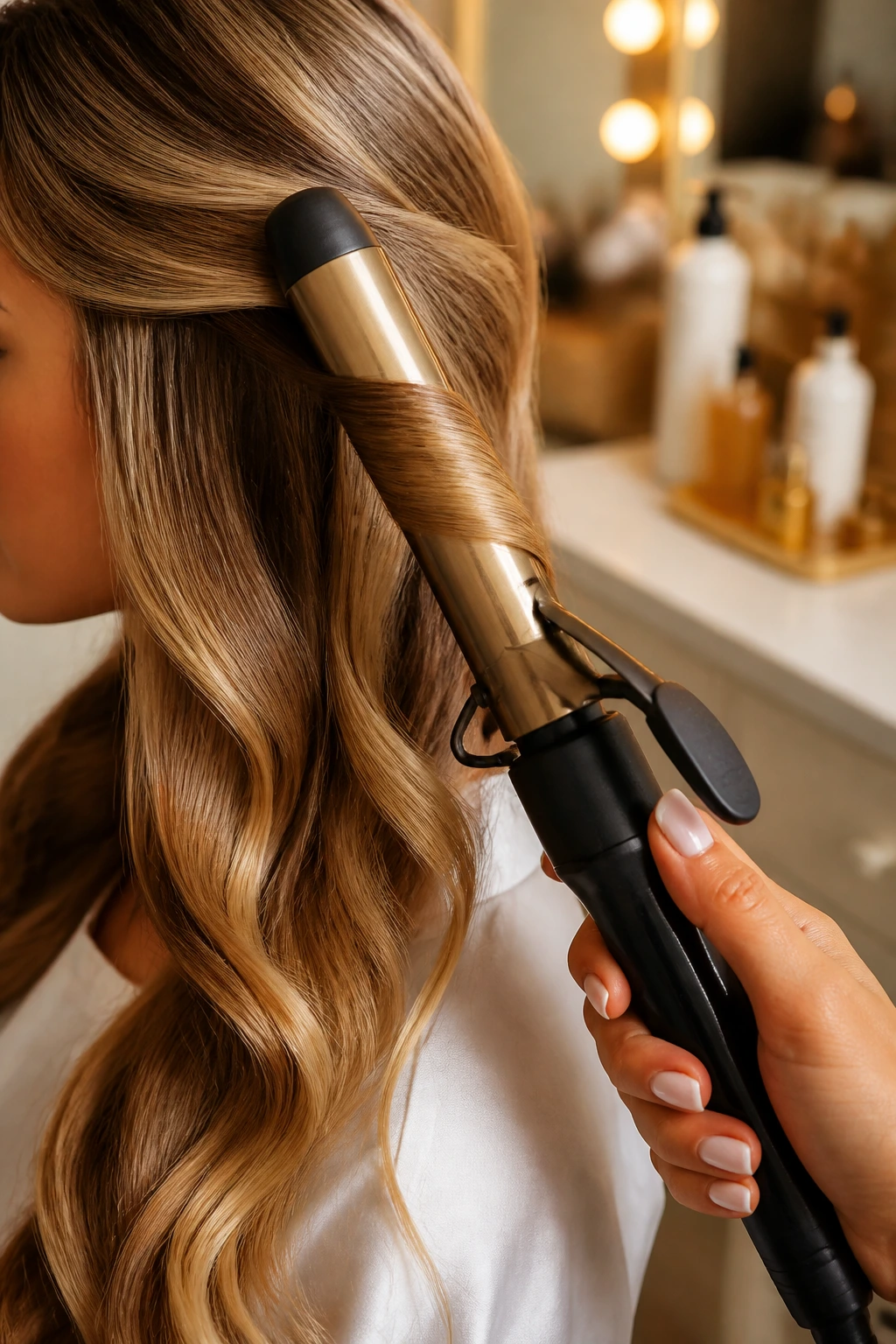
- Color-safe shampoo and conditioner — Keeps the blonde from fading into a dull, washed-out yellow after a few washes.
- Heat protectant spray — Use it before blow-drying, curling, or flat ironing; honey blonde shows heat damage fast.
- 1.25-inch curling iron or wand — The sweet spot for loose bends, beach waves, and brushed-out curls.
- Blow-dryer with concentrator nozzle — Useful for sleek blowouts, lob styling, and smooth curtain bangs.
- Round brush — Gives lift at the roots and helps honey highlights show around the face.
- Tail comb — Handy for clean parts, sectioning, and getting the money piece placement right.
- Sectioning clips — Keeps foils, blowouts, and curl sets from turning into a tangle.
- Wide-tooth comb — Better than a brush on wet, highlighted hair; it cuts down on breakage.
- Leave-in conditioner or light cream — Helps the ends stay soft, especially after lightening.
- Satin pillowcase or bonnet — Protects the gloss and keeps waves from frizzing into nothing overnight.
- Purple or blue-violet shampoo — Only when the tone starts leaning too yellow or orange; use sparingly.
- Hair oil with a light hand — A tiny amount on the ends gives shine without making the blonde look greasy.
Smart Shade and Product Shopping
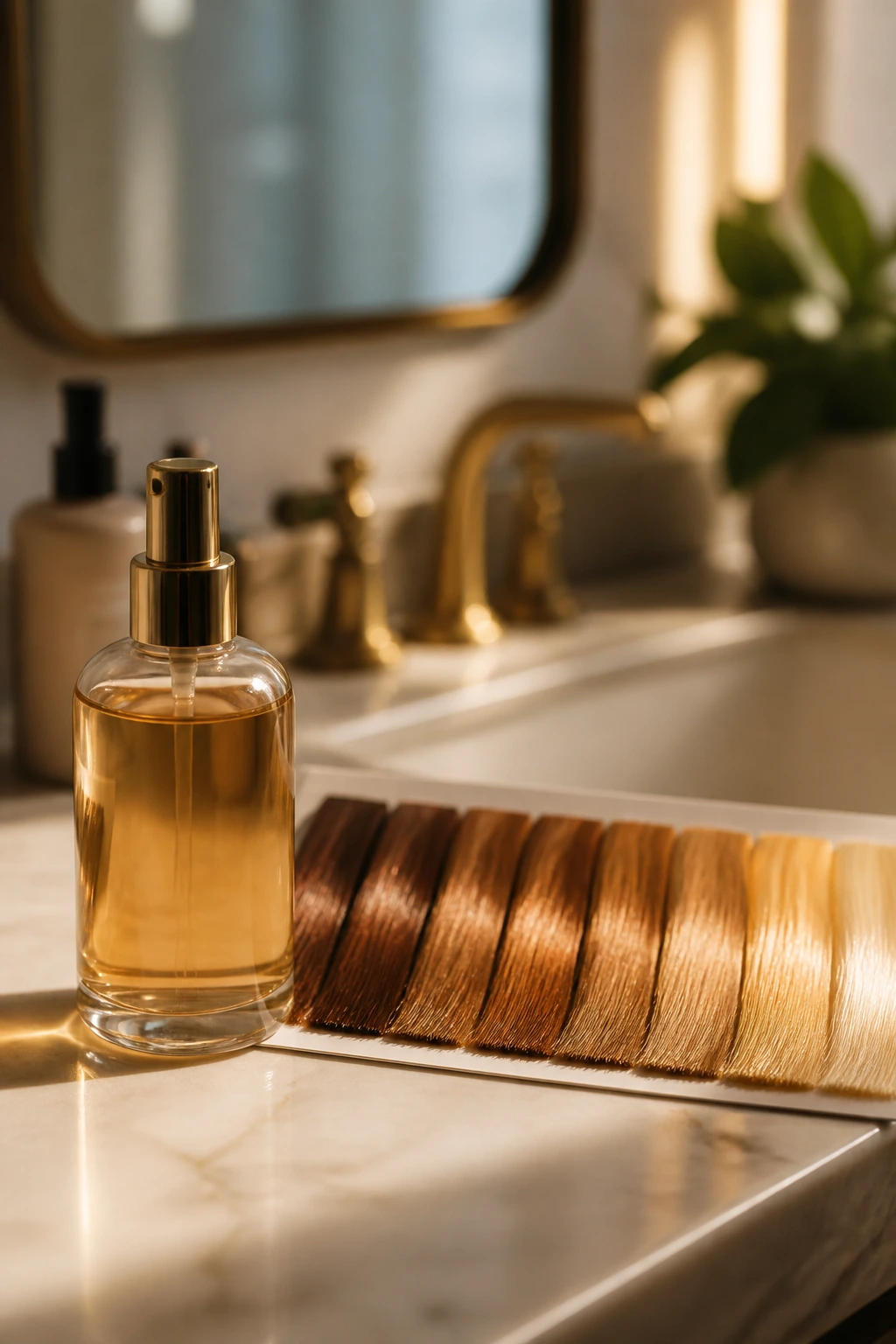
When you shop for a honey blonde look, start with your base level, not the inspiration photo. That photo might be sitting under studio lighting with extensions, a gloss, and filters. Your own hair texture and starting color matter more than the picture. If you walk into a salon with only a photo and no context, you’re asking for guesswork.
For tan skin, I’d look for shades described as golden beige, soft caramel, warm honey, or buttery blonde. Be cautious with anything labeled ash unless you know your skin leans very olive and you want the warmth dialed down. Ash can look chic in a swatch and a little gray on the face once it’s out in daylight. That is not the same thing.
If your hair is porous from past color, ask for a demi-permanent gloss or toner after lightening. Porous hair drinks color fast, which is why the same formula can look rich on one head and muddy on another. And if you’re doing this at home, choose a shade one step softer than your target. Hair that’s already light usually grabs pigment more aggressively than the box suggests.
One more thing: buy your maintenance products before you color, not after the blonde starts fading. A good mask, a color-safe cleanser, and a heat protectant matter more than the last ounce of shine serum you can find.
How to Wear Honey Blonde in Real Life
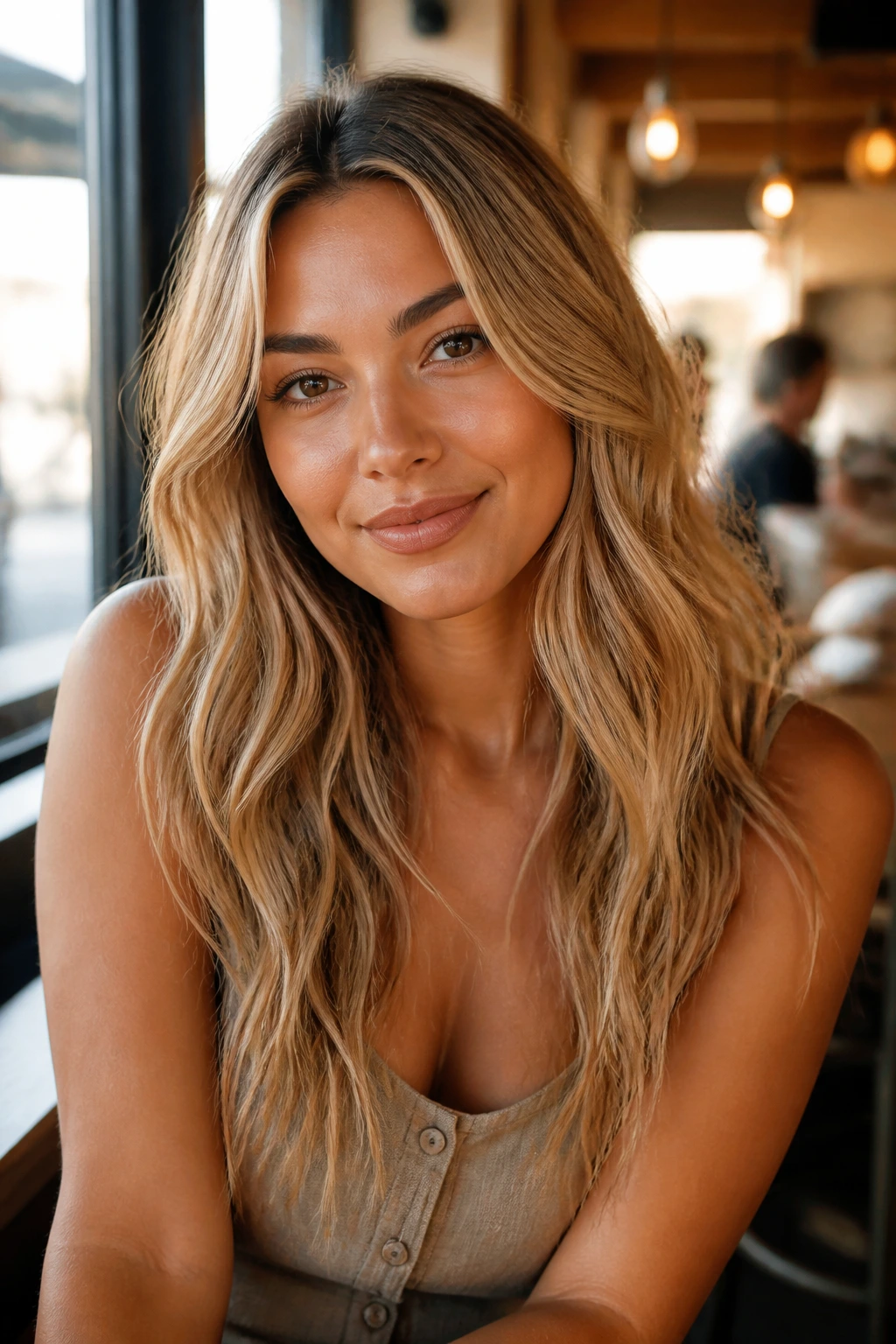
Presentation: Keep the brightest pieces where the eye naturally goes first—around the face, at the crown, or on the outer curve of waves and curls. That placement lifts tan skin without needing every strand to be light, which is where a lot of blonding jobs go wrong.
Accompaniments: Warm makeup helps, but not in a matchy way. Peach blush, bronze shadow, soft brown liner, and gold hoops all sit comfortably next to honey blonde. If you love cooler makeup, keep the brows defined and the skin balanced so the hair doesn’t start doing all the work.
Portions: If you want subtle, ask for face-framing pieces, a light gloss, and maybe a few ribbons through the top layer. If you want more drama, increase the brightness at the front and work the lighter shade through more of the mid-lengths. The difference between “soft glow” and “full blonde” is usually placement, not another round of lightener.
Finish: Waves show dimension. Blowouts show polish. Sleek styles show the actual formula. Pick the finish based on what you want the color to say. Honey blonde can look soft and expensive, or sharp and fashion-forward, depending on how the hair is styled that morning.
Extra Shine, Dimension, and Personal Tweaks
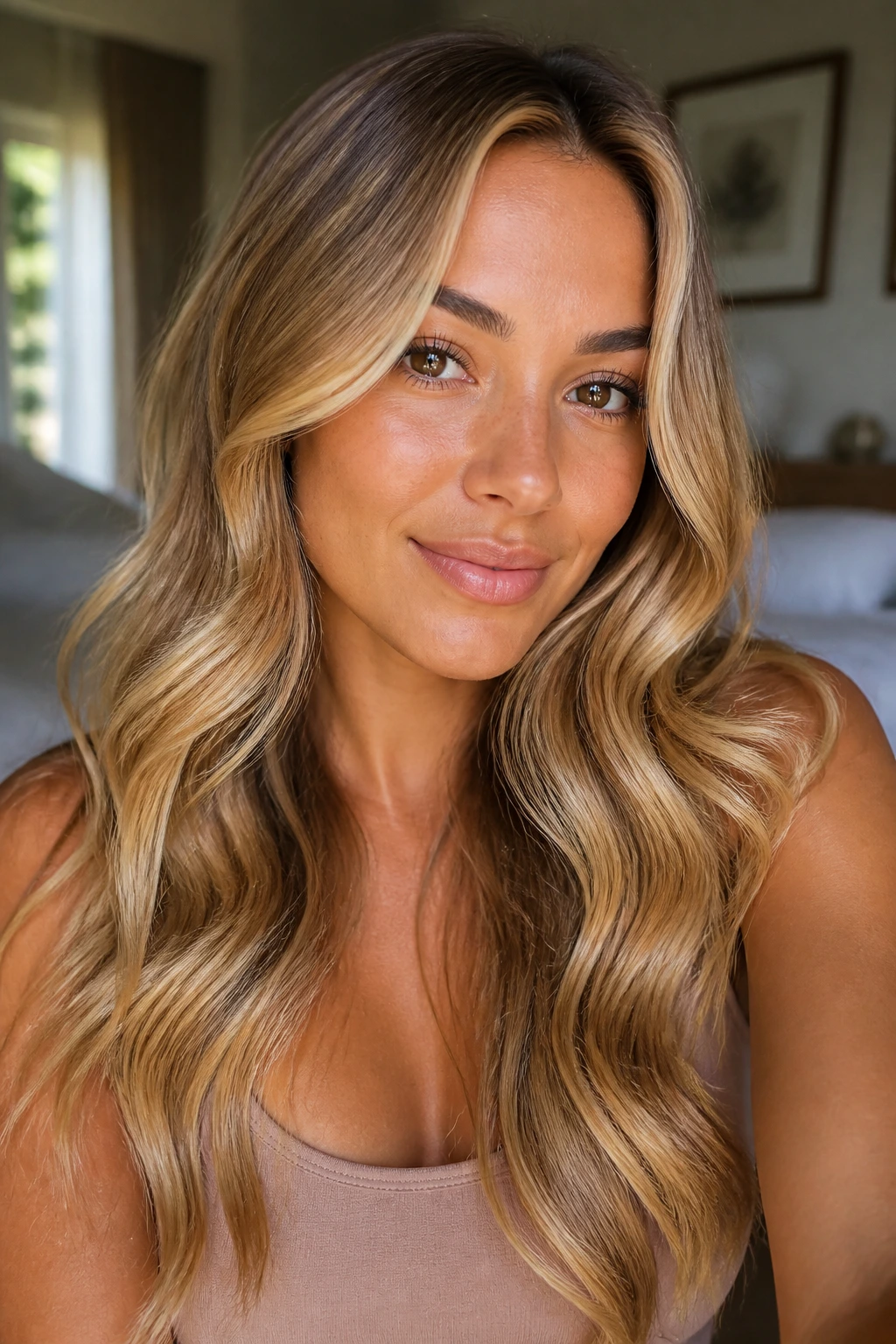
Tone Boost: If the blonde starts looking too yellow, don’t reach for a harsh silver shampoo right away. A beige-gold gloss can calm the color without stripping the warmth that makes it work on tan skin.
Texture Boost: Honey blonde loves movement. Loose bends, brushed-out curls, and soft layers show the different shades better than very tight ringlets or pin-straight hair.
Customization: Olive-leaning skin usually looks better with a little beige in the formula. Deep tan skin can carry richer caramel and amber notes without getting washed out. If your skin has more neutral warmth, you can sit right in the middle.
Make-It-Yours: If you wear minimal makeup, keep the honey closer to beige so the face doesn’t feel over-warmed. If you like bronzer and gold jewelry, you can push the blonde a bit richer and more golden.
Pro move: Ask for a few brighter ribbons at the part and temples. Those are the spots that show first in daylight and in photos, and they give the whole head more lift than adding brightness everywhere.
Keeping the Color Fresh Between Salon Visits
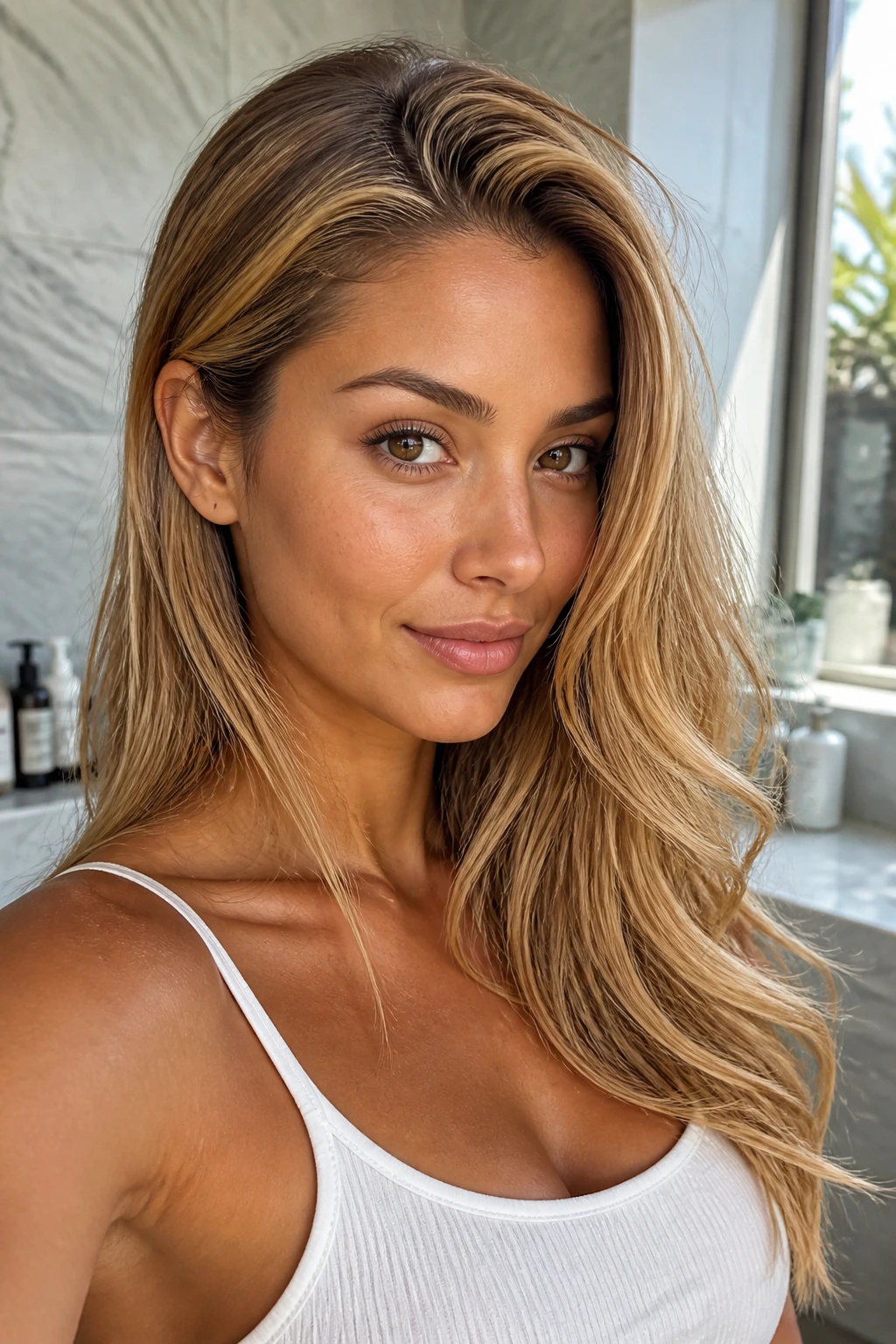
Honey blonde needs a little upkeep, but not the kind that eats your life. The easy rule is this: protect the warmth, protect the shine, and stop the ends from drying out. If you wash too often, the gloss fades. If you use too much heat, the blonde gets rough. If you over-toner the hair, it can go flat fast.
For most people, a sulfate-free wash routine works best, with shampooing every 2 or 3 days instead of every day. That keeps the natural oils from vanishing and helps the honey tone stay richer. Use a purple or blue-violet shampoo only when needed, usually once every 1 to 2 weeks, and let it sit for a short time. Leave it on too long and you can make warm blonde look dull.
A gloss refresh every 4 to 6 weeks keeps the tone creamy. Partial highlights or face-framing pieces can often wait 8 to 12 weeks, depending on how dark your base is and how much regrowth you like to see. If your hair is very lightened, a weekly mask and a low heat setting on hot tools are non-negotiable. Dry honey blonde is easy to spot. It loses that soft, candlelit look and starts to feel rough at the ends.
Variations and Adaptations to Try
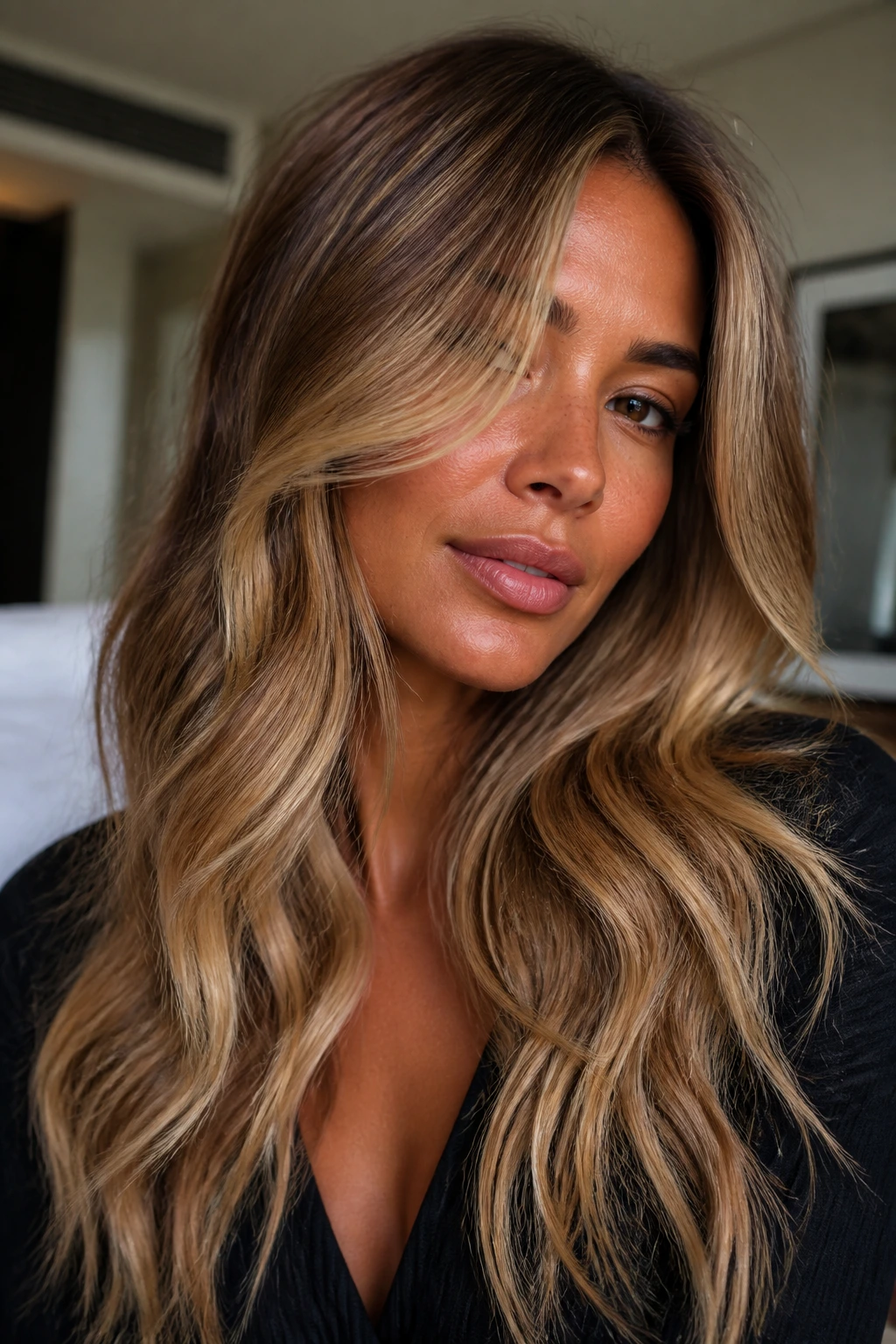
Beige Honey for Olive Undertones: Pull the gold back a little and let beige carry the formula. This keeps the blonde from turning too orange on olive-tan skin, especially around the face where color is easiest to overdo.
Caramel Bronze Melt: If you want more depth, keep the roots richer and let the blonde emerge through the mids and ends. This version is better for darker brunettes because it preserves contrast and grows out with less drama.
Low-Commitment Honey Ribbon: Use a gloss, a few foils at the hairline, and light ribbons through the top layer only. It’s the least demanding option if you want to test how honey blonde sits against your skin before going brighter.
Curly Honey Halo: Place the lightest pieces around the outer layer of curls and keep the interior darker. This respects the curl pattern and keeps the style from looking frizzy or overprocessed.
Brighter Money Piece Version: Push the front panels up to a more visible honey level while keeping the rest of the hair softer. Good if you like makeup-heavy looks or want the blonde to show even when your hair is tucked behind the ears.
Common Mistakes to Avoid
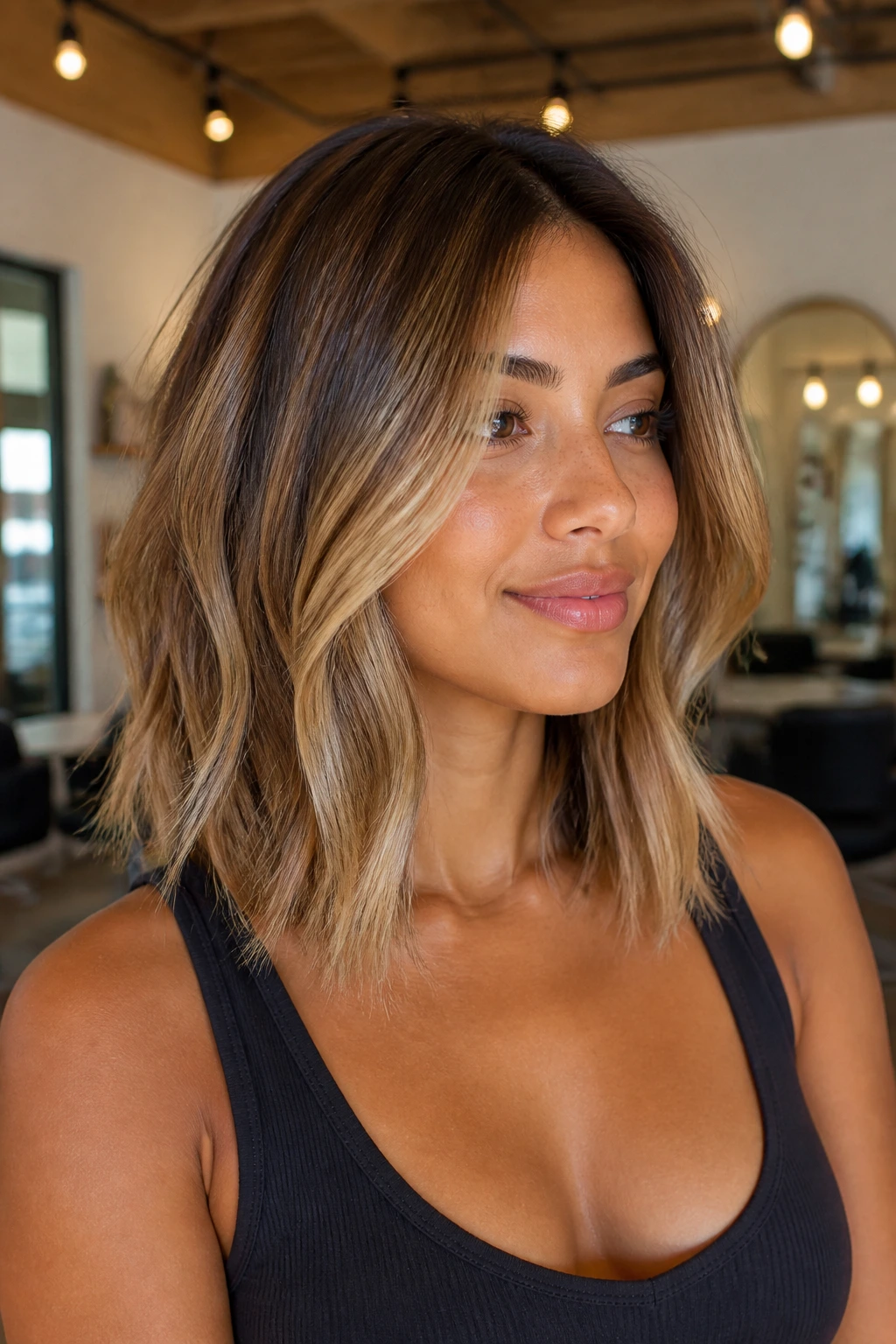
- Going too ashy for tan skin: The hair can start to look dusty or disconnected from the face. Fix it with a beige-gold gloss or ask for less neutral toner next time.
- Lifting too far, too fast: This is how honey turns into brittle yellow-orange. Slow lift and controlled toning beat rushing every time.
- Making the highlights too chunky: Big stripes can overpower tan skin and make the cut look dated. Finer placement around the front reads softer and fresher.
- Skipping the root shadow: All-over lightness can flatten the face and make regrowth obvious. A deeper root gives the blonde somewhere to land.
- Using purple shampoo like it’s regular shampoo: Too much of it strips warmth and leaves the hair dry. Use it sparingly and only when the tone starts leaning too yellow.
- Ignoring the cut: Honey blonde looks best when the haircut has shape. Flat, shapeless hair can make even a good formula look plain.
Frequently Asked Questions
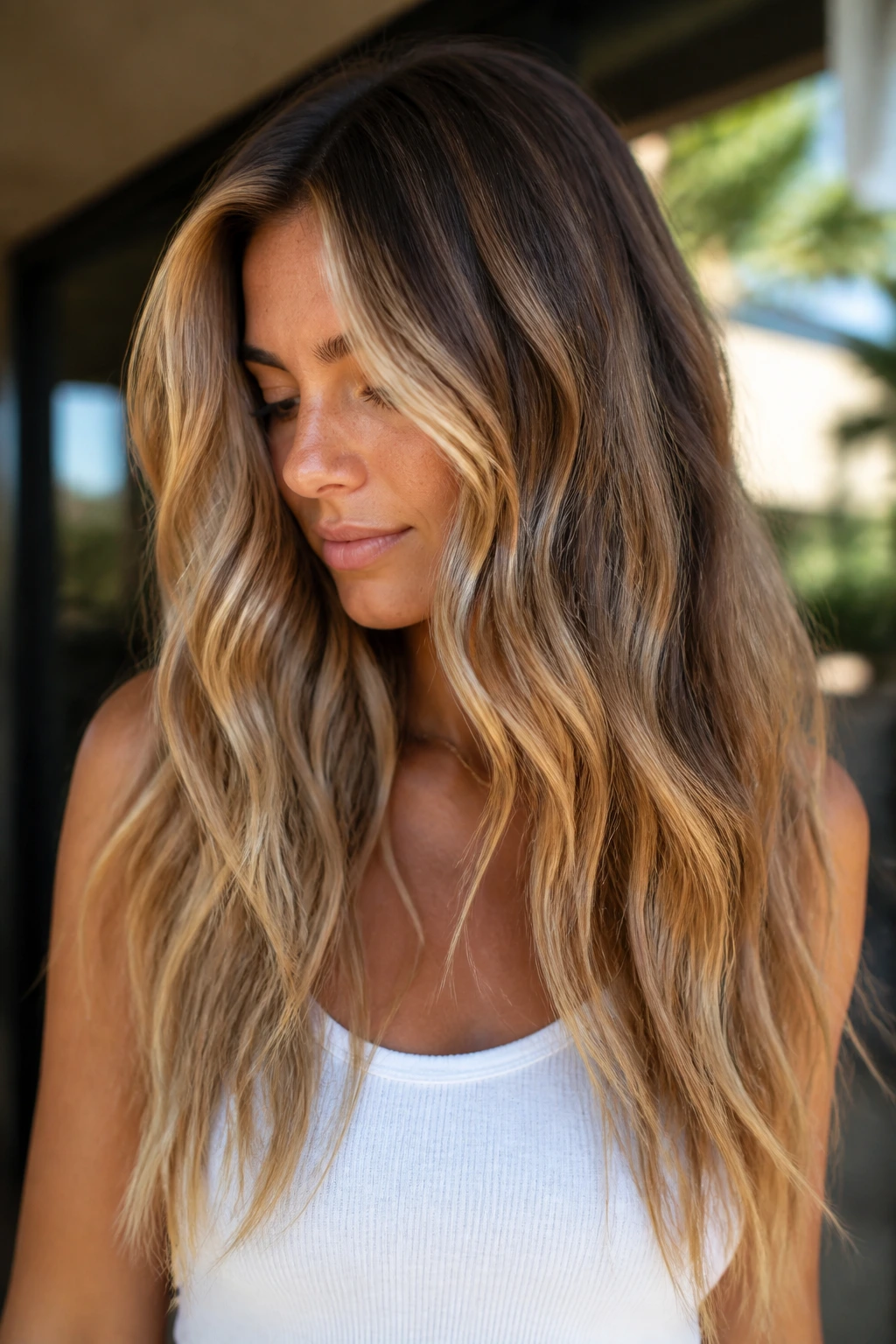
Does honey blonde work on olive tan skin?
Yes, but the tone usually looks better with a little beige in it. Pure gold can read orange on olive undertones, while beige-gold keeps the warmth soft and believable.
Can I get honey blonde without bleaching?
If your hair is already light brown or dark blonde, a gloss or soft lift may be enough. Dark brunette hair usually needs pre-lightening first, because honey has to sit on top of a lighter base to read as blonde instead of brown.
Is balayage or foils better for honey blonde on tan skin?
Balayage gives you softer, more diffused warmth, which is great if you want low maintenance. Foils give you brighter, more controlled lightness around the face and part line. A mix of both is often the best answer.
What if my honey blonde turns orange?
That usually means the tone is too warm or the lightening stopped short. A beige or blue-violet toner can calm it down, but don’t keep lightening blindly. You’ll end up with damage before you fix the color.
Which hairstyle shows honey blonde the best?
Layered lobs, waves, shags, and curtain bangs show dimension fast because the light pieces move. Sleek bobs and blowouts show the polish of the color formula. Both can work; they just say different things.
How often should I refresh the color?
Glosses usually need refreshing every 4 to 6 weeks. Partial highlights or face-framing pieces can stretch to 8 to 12 weeks, depending on how much contrast you keep at the root.
Will honey blonde wash me out if my skin is tan?
Not if the formula keeps some depth. Tan skin usually looks better with honey that leans golden-beige rather than very pale yellow or cool ash. The shadow root is what keeps the color grounded.
Can curly hair pull off honey blonde?
Absolutely. Curly hair often looks better with honey blonde when the lighter pieces follow the curl pattern instead of fighting it. Place brightness on the outer layer and keep the interior deeper so the shape stays clean.
A Shade That Holds Its Shape
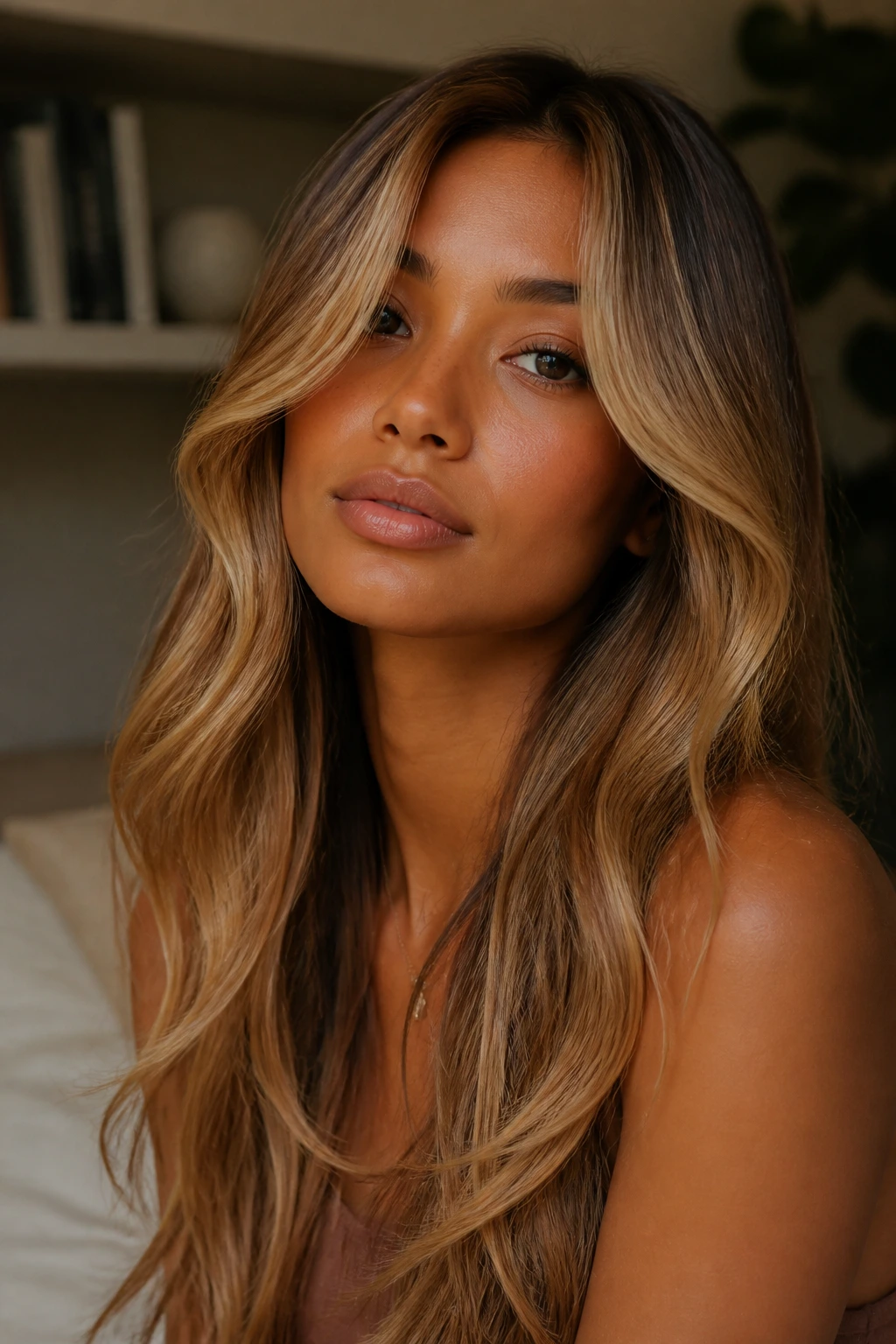
Honey blonde on tan skin works because it respects contrast. It doesn’t try to bleach the personality out of the hair. It gives warmth, shine, and enough shadow to keep the color from going flat. That’s why the best looks in this collection feel different from one another even though they all live in the same color family.
If you remember one thing, make it this: the cut and the placement matter as much as the shade itself. A good honey formula can be soft, bright, braided, blown out, or pinned up, but it still needs shape. Get that right and the color does the easy part.