



Champagne blonde can look like candlelight on fair skin—or like a toner job that missed the mark by half a shade. The gap is small, but on porcelain skin it reads fast. Too icy and the face looks drained; too golden and the blonde starts turning brassy by the second wash.
That narrow middle is why the shade keeps showing up on light complexions. Champagne sits between beige, pearl, and soft gold, which gives the hair enough warmth to stay alive without tipping into yellow. A little root depth helps too. So does a gloss with a neutral or pearl base.
If your skin is very fair, the real question is not whether you can wear blonde. It’s which blonde keeps your features from disappearing. These 25 looks move through pearl, beige, rose, smoky, rooted, and sunlit versions so you can see how much range lives inside one shade family.
Why Champagne Blonde Hair Color Ideas for Fair Skin Work So Well
-
Pearl reflect keeps the face from going flat: A beige-pearl toner softens yellow and gives fair skin a cleaner frame than a straight golden blonde does.
-
A little root depth makes the color believable: Leaving one to two levels of depth at the scalp keeps the blonde from floating on top of very pale skin.
-
Face-framing brightness does the heavy lifting: When the lightest pieces sit around the cheeks and eyes, the whole look feels brighter without needing every strand to be pale.
-
The shade family has room for different undertones: Pink, neutral, and warm fair skin all need a slightly different version of champagne, and that flexibility is the real strength here.
-
Grow-out looks softer than with full platinum: A rooted or balayage champagne blonde can stretch farther between salon visits without turning into a hard line of regrowth.
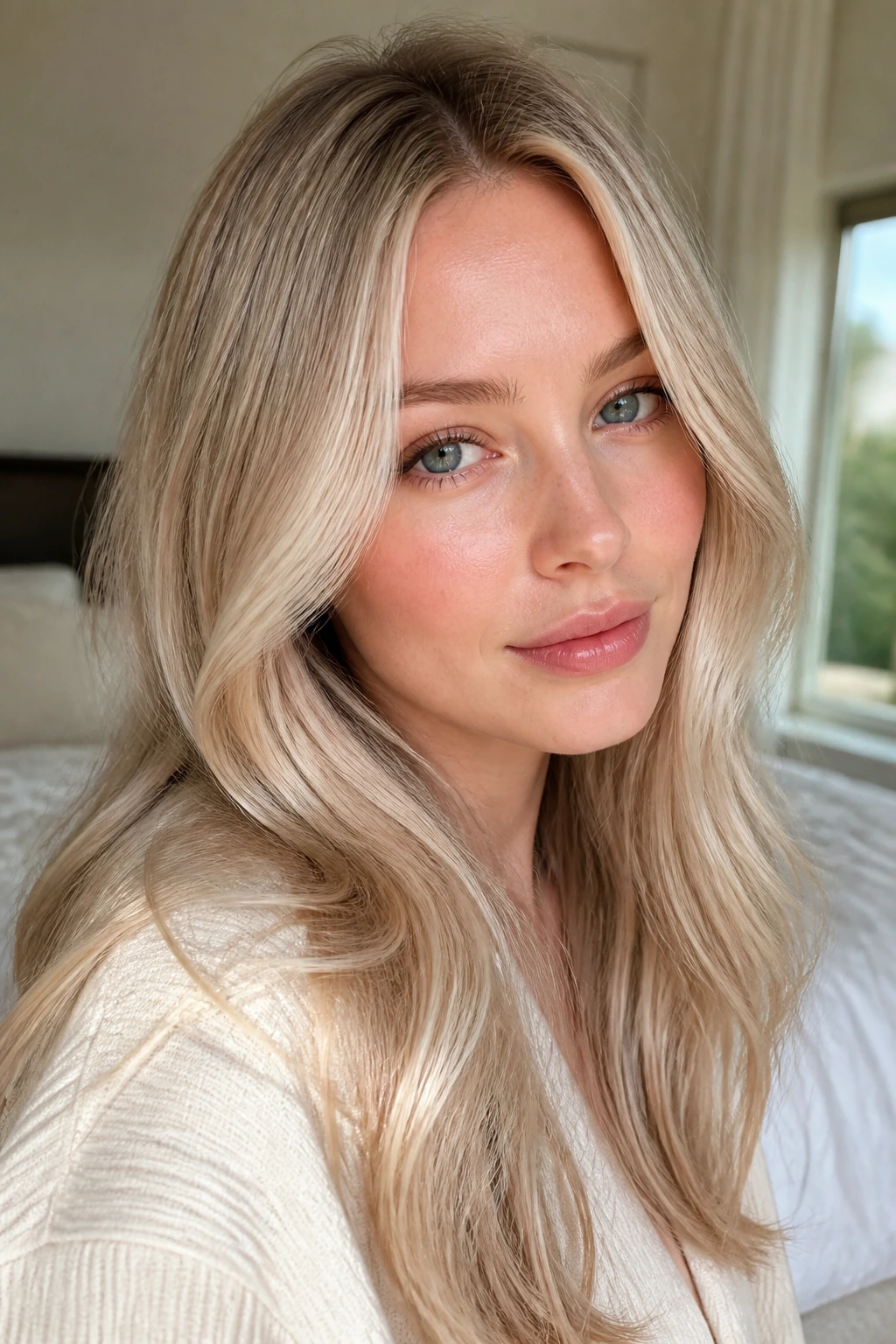
1. Pearl Champagne with a Center Part
Pearl champagne is the shade I reach for when I want blonde to glow rather than shout. On fair skin, the pearly edge keeps the color from tipping yellow, and a center part makes the reflection look even on both sides of the face.
Why it flatters pale skin
Pearl sits at the cooler end of champagne, so it behaves nicely on pink or neutral undertones. Ask for a level 9 beige-pearl gloss over fine highlights, not a white-blonde lift from root to end. A tiny bit of root shadow here stops the color from looking pasted on.
- Best on straight or softly bent hair.
- Good for fine hair that needs shine more than volume.
- Needs a gloss refresh every 4 to 6 weeks.
2. Beige Champagne Bob with Clean Ends
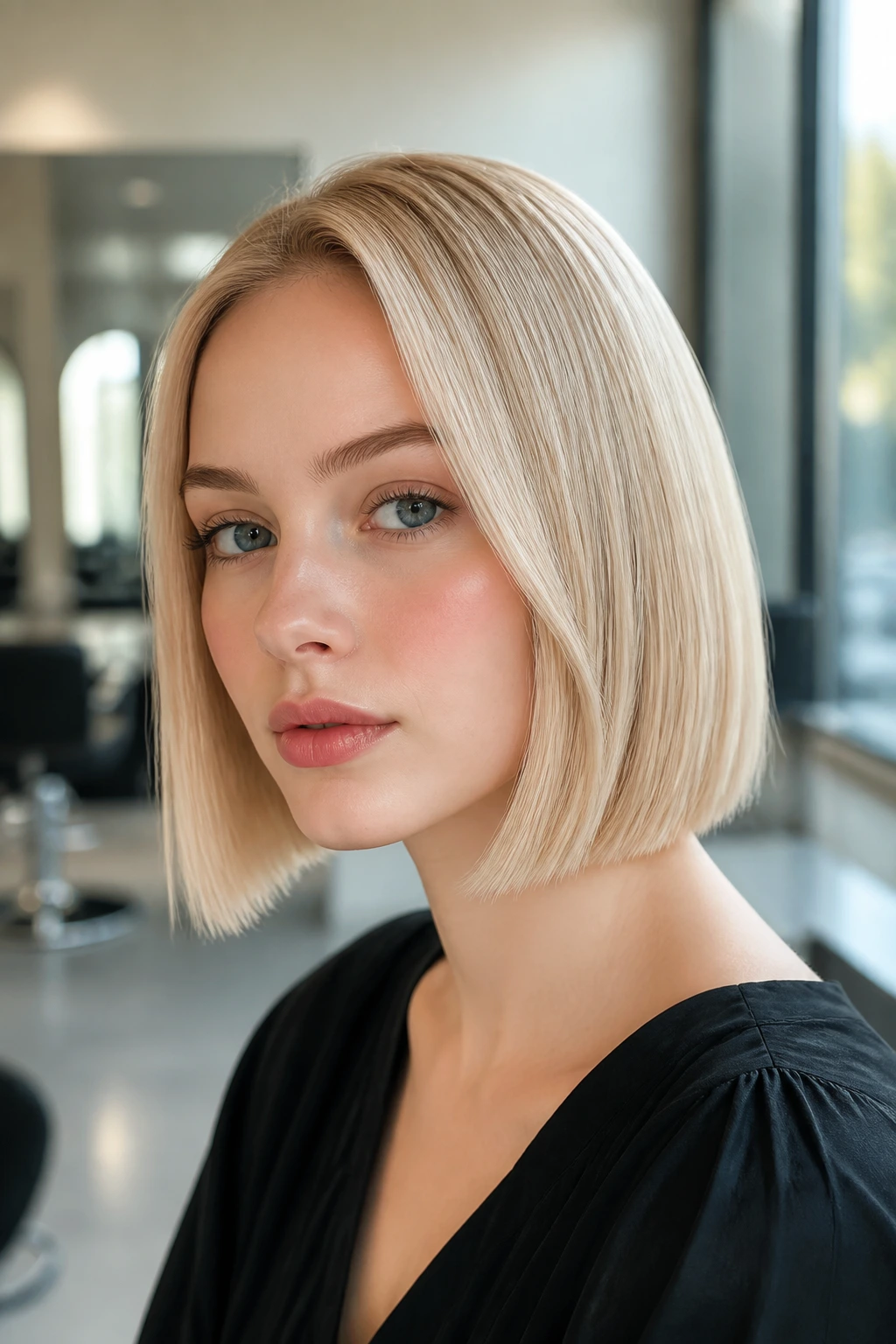
A blunt bob and beige champagne are a better match than they sound. The clean line of the cut gives the color structure, and the beige tone keeps fair skin from looking too stark beside the hair.
This version works especially well when your skin leans cool but not icy. Beige sits in that quiet middle ground—warmer than pearl, softer than gold—and it keeps the blonde looking expensive in daylight without any harshness around the jawline. I like this one with a barely-there side part. It softens the edge just enough.
3. Rooted Champagne Blonde with a Shadow Melt
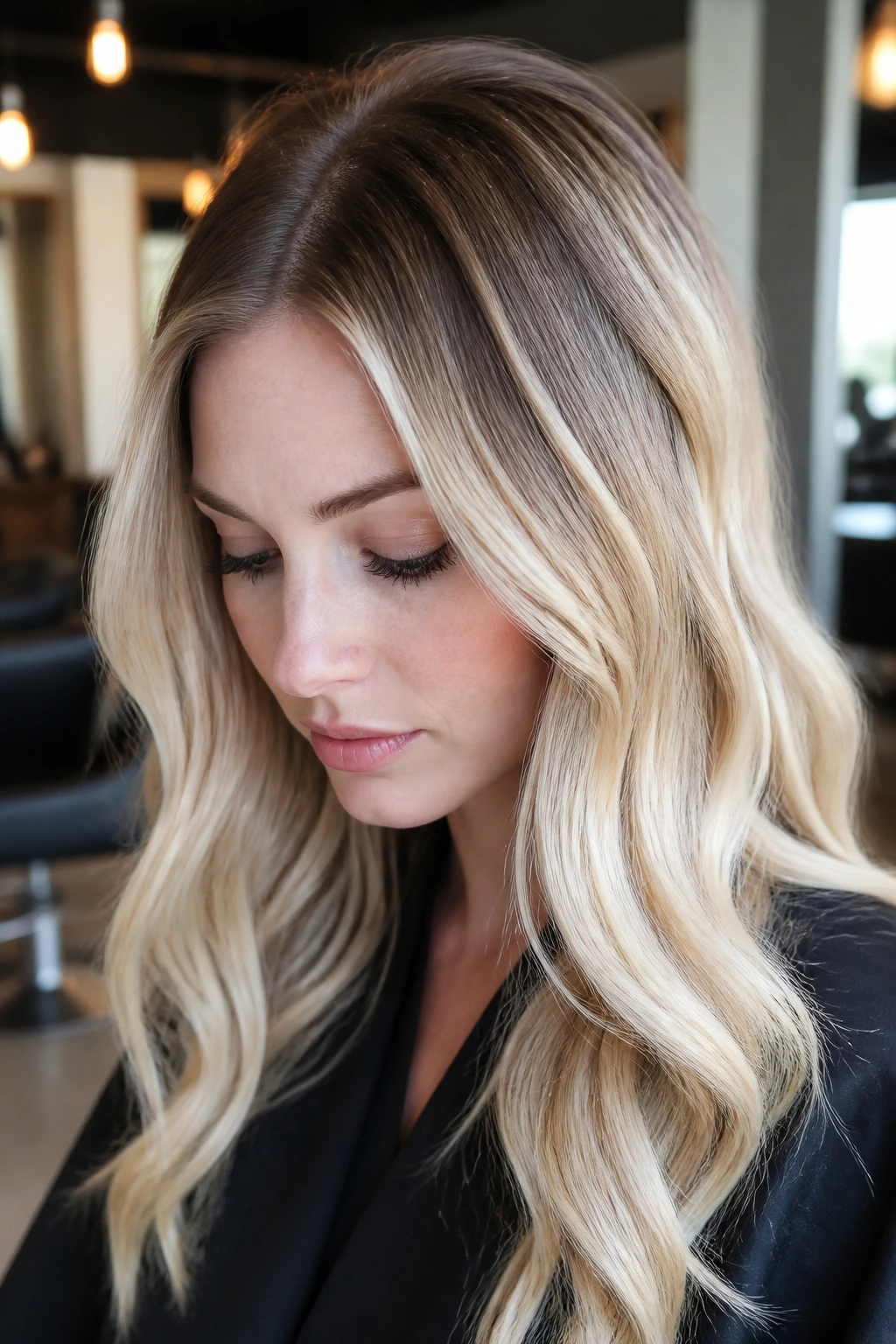
A shadow root is the easiest way to make champagne blonde behave on very pale skin. The darker base gives the face a frame, which matters when your brows and skin are both light and the hair needs a little anchor.
Ask for a root that sits one to two levels deeper than the mids, then melt into level 9 champagne through the lengths. That soft transition keeps the color from breaking at the scalp. It also buys you extra weeks before the regrowth line starts bothering you. That tiny bit of depth matters more than most people expect.
4. Champagne Balayage on Long Layers
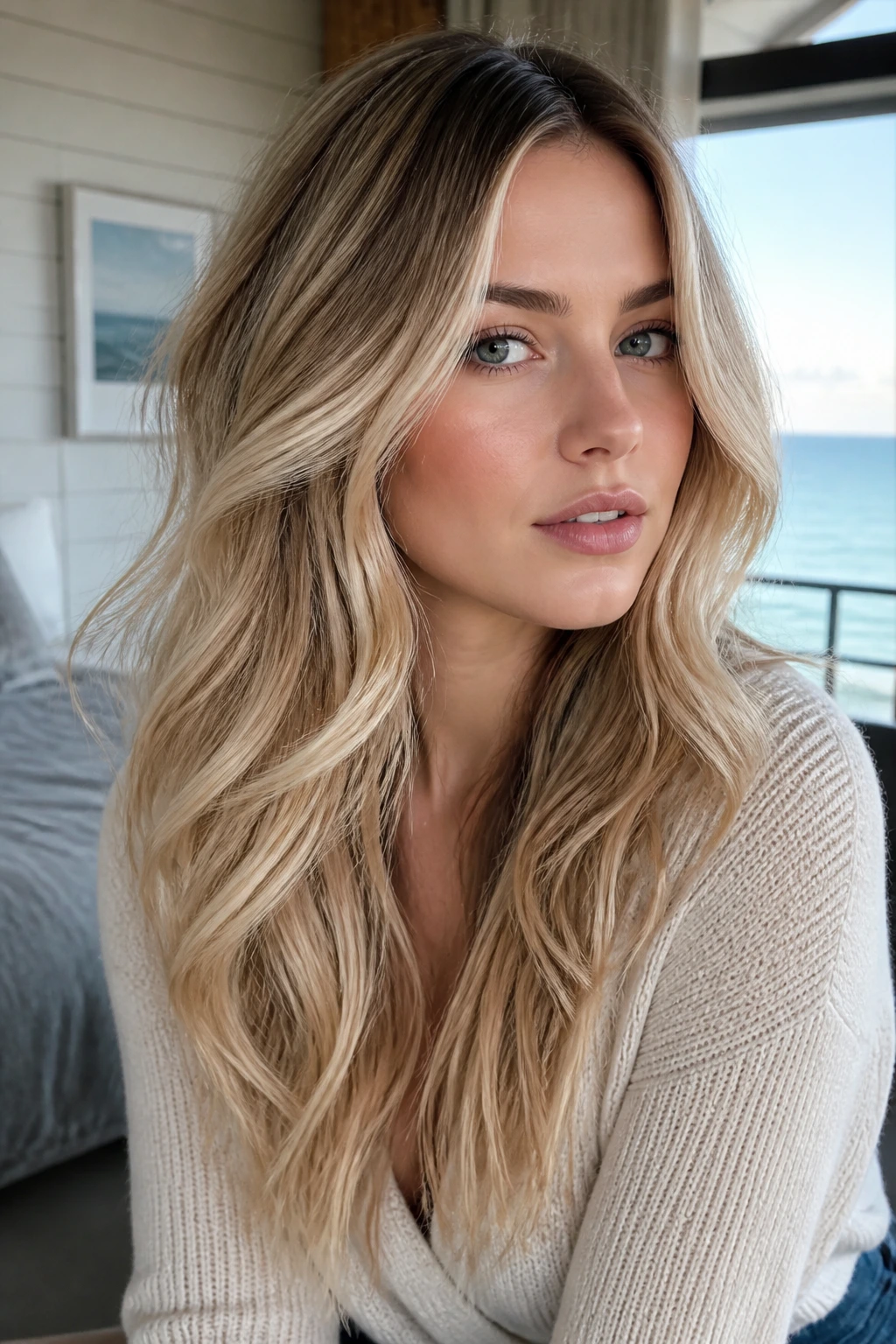
Long layers give champagne blonde room to move, and that movement is half the point. The balayage placement keeps the brightest pieces where the hair swings, so the color catches light on the ends, around the shoulders, and near the cheekbones.
On fair skin, this is one of the easiest ways to wear blonde without looking overdone. The darker base between the ribbons keeps the complexion from washing out, and the layered cut stops the color from reading like one solid sheet. If your hair is thick, this version is especially good. The dimension keeps it from looking heavy.
5. Face-Framing Champagne Money Piece
The money piece changes the whole mood. Two bright front sections can make the face look awake even when the rest of the blonde stays soft and beige, which is a very useful trick on fair skin.
Best pairings
- Cuts: Lobs, long layers, and curtain-bang shapes.
- Tone: Keep the face frame slightly lighter than the mids, but not white-blonde.
- Maintenance: Ask for a beige-pearl gloss on the front pieces so they do not go yellow first.
I like this look when the rest of the hair stays one notch deeper. The contrast keeps the front lively without bleaching the whole head into submission.
6. Icy Champagne Blonde with a Silver Edge
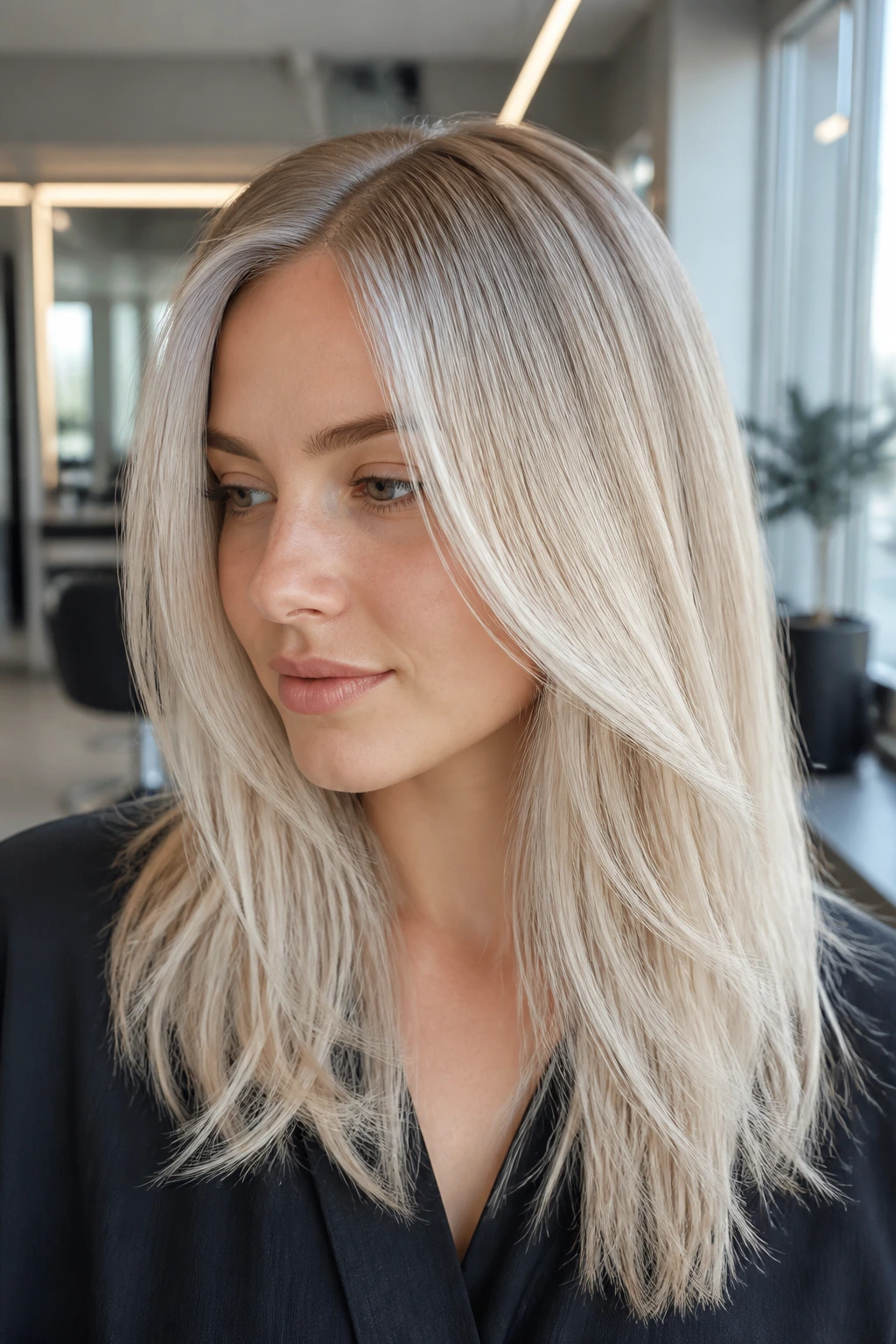
Icy champagne gets tricky fast. Done well, it looks crisp and modern on very fair skin with pink undertones; done badly, it can push the skin toward gray.
The trick is restraint. Keep the base in the champagne lane and let the silver live mostly in the toner, not the lift itself. Think pale pearl with a whisper of smoke, not full platinum. This one works best on sleek styles because the smooth surface shows the tonal shift. If your hair is porous, go easy on the violet shampoo. Too much, and the blonde turns dusty.
7. Golden Champagne Blonde on Soft Waves
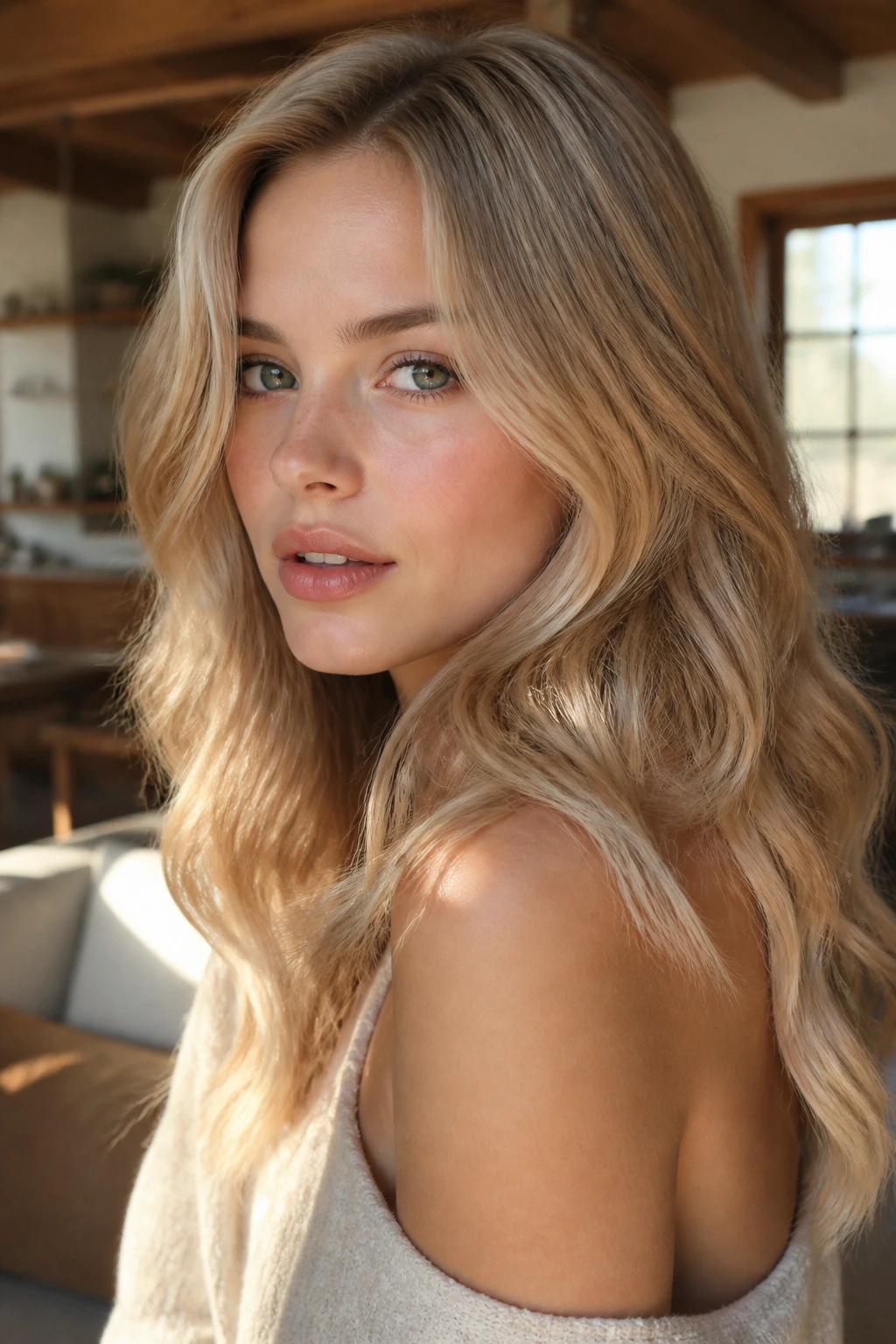
Golden champagne is the warmer cousin that fair skin can actually wear. The warmth softens freckles, adds life to peachy undertones, and keeps the complexion from looking too cold beside the hair.
Soft waves help this version the most. The bend breaks up the gold so it reads as glow, not brass. Ask your colorist to keep the root neutral and put the warmth in the mids and ends, especially if your hair lifts quickly. That keeps the color sunny without drifting orange. It’s one of the easier versions to wear if you like your blonde to feel friendly rather than icy.
8. Rose Champagne Blonde with a Rosy Flush
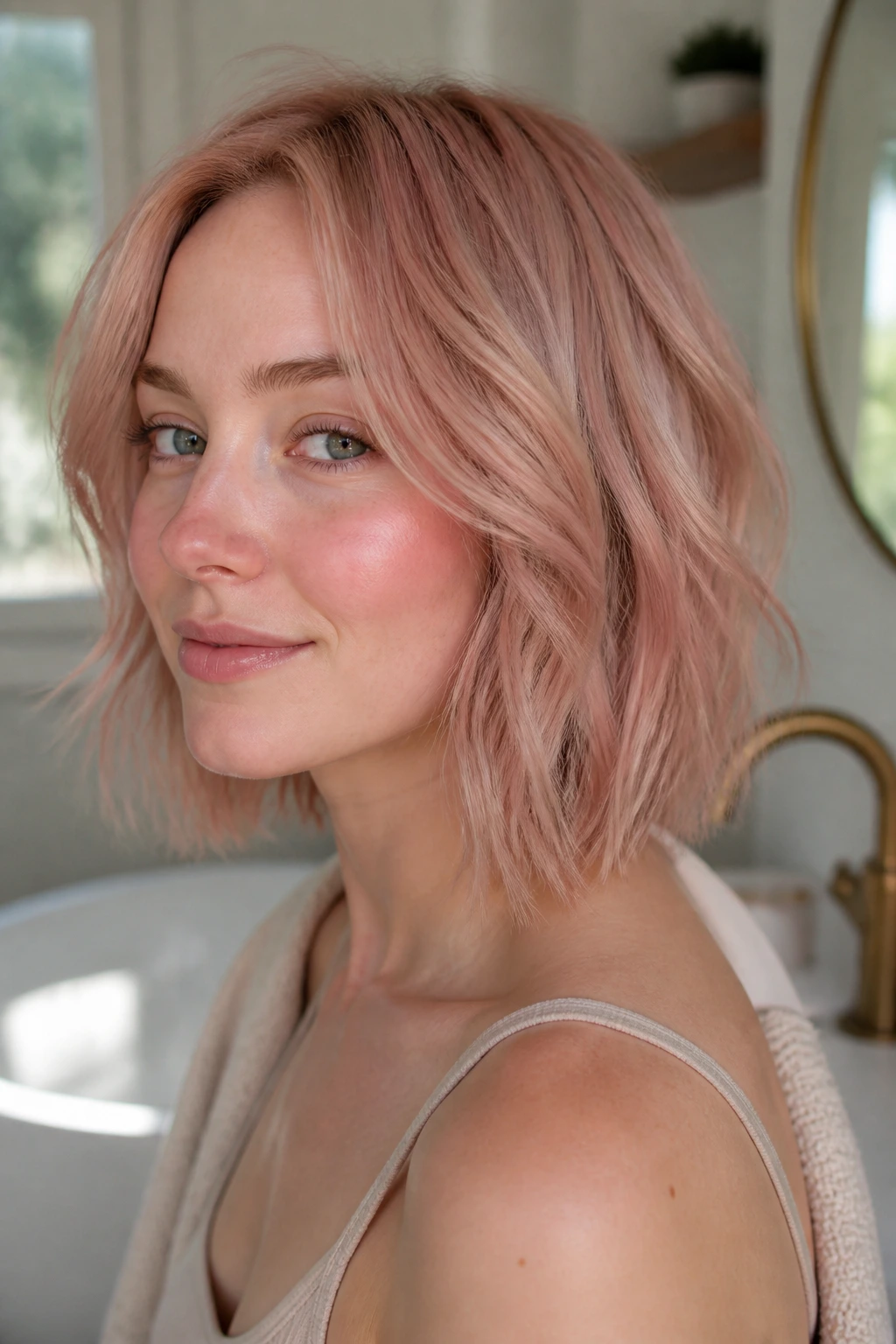
Rose champagne is basically hair-color blush. A whisper of pink-beige makes fair skin look less drained, especially if your cheeks already flush easily or your lips lean naturally rosy.
The important part is keeping the pink subtle. You want rose, not cotton candy. On light complexions, a soft rose glaze over champagne highlights can add warmth without going yellow, and it wears nicely on bob lengths or shoulder-grazing cuts. If you want the tone to stay pretty rather than loud, ask for a sheer deposit only at the end. Heavy pink fades fast.
9. Lived-In Champagne Lob
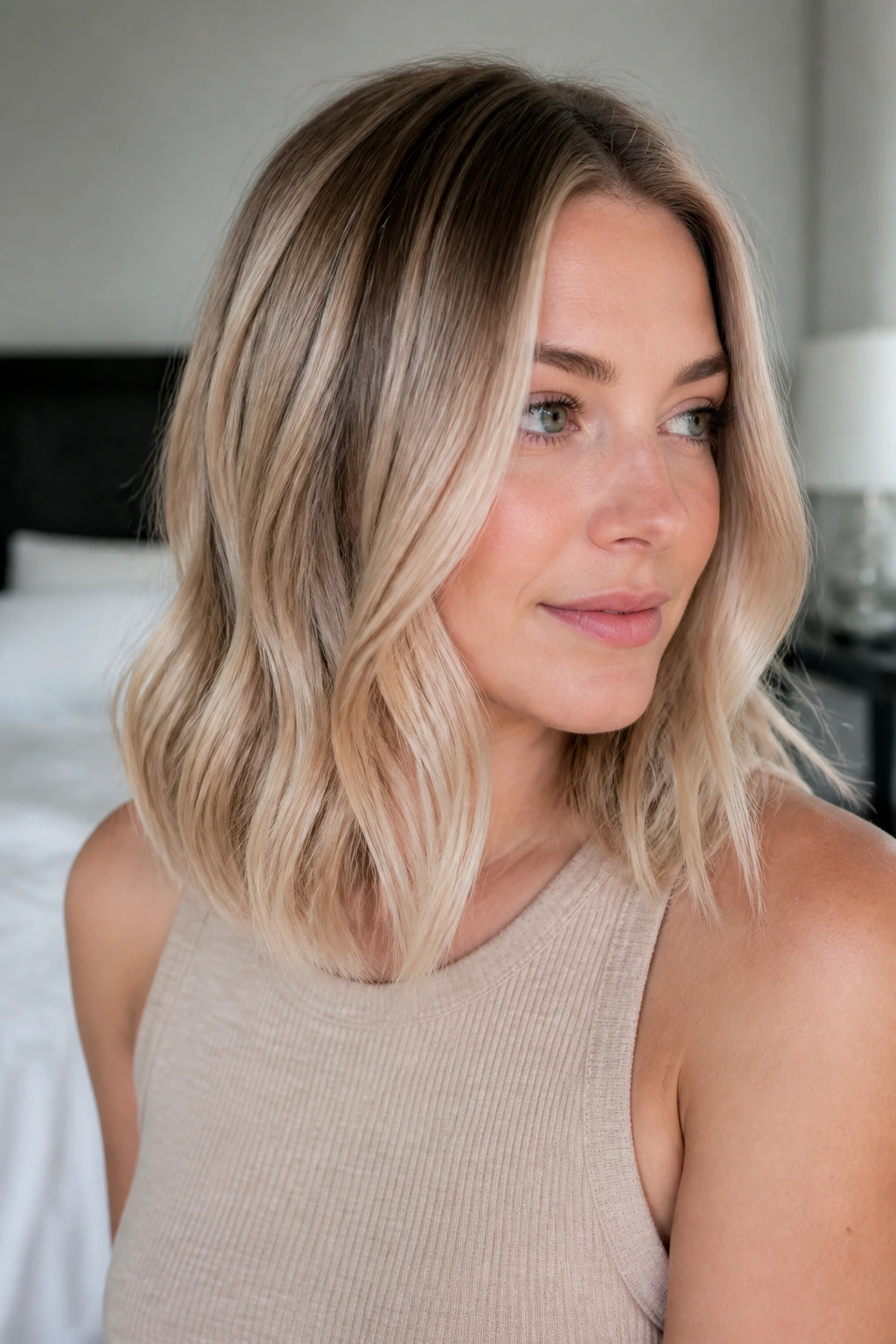
A lob with a lived-in root does more work than a full blonde ever could. It gives fair skin shape, keeps the hair from looking too solid, and makes the grow-out feel intentional instead of accidental.
This is the version I suggest when someone wants champagne blonde without babysitting it. The root stays a touch deeper, the mids carry the champagne beige, and the ends get just enough brightness to reflect light. It’s especially good if you wear your hair tucked behind one ear or half-up, because the contrast shows up in small, flattering ways.
10. Champagne Blonde Pixie with Choppy Texture
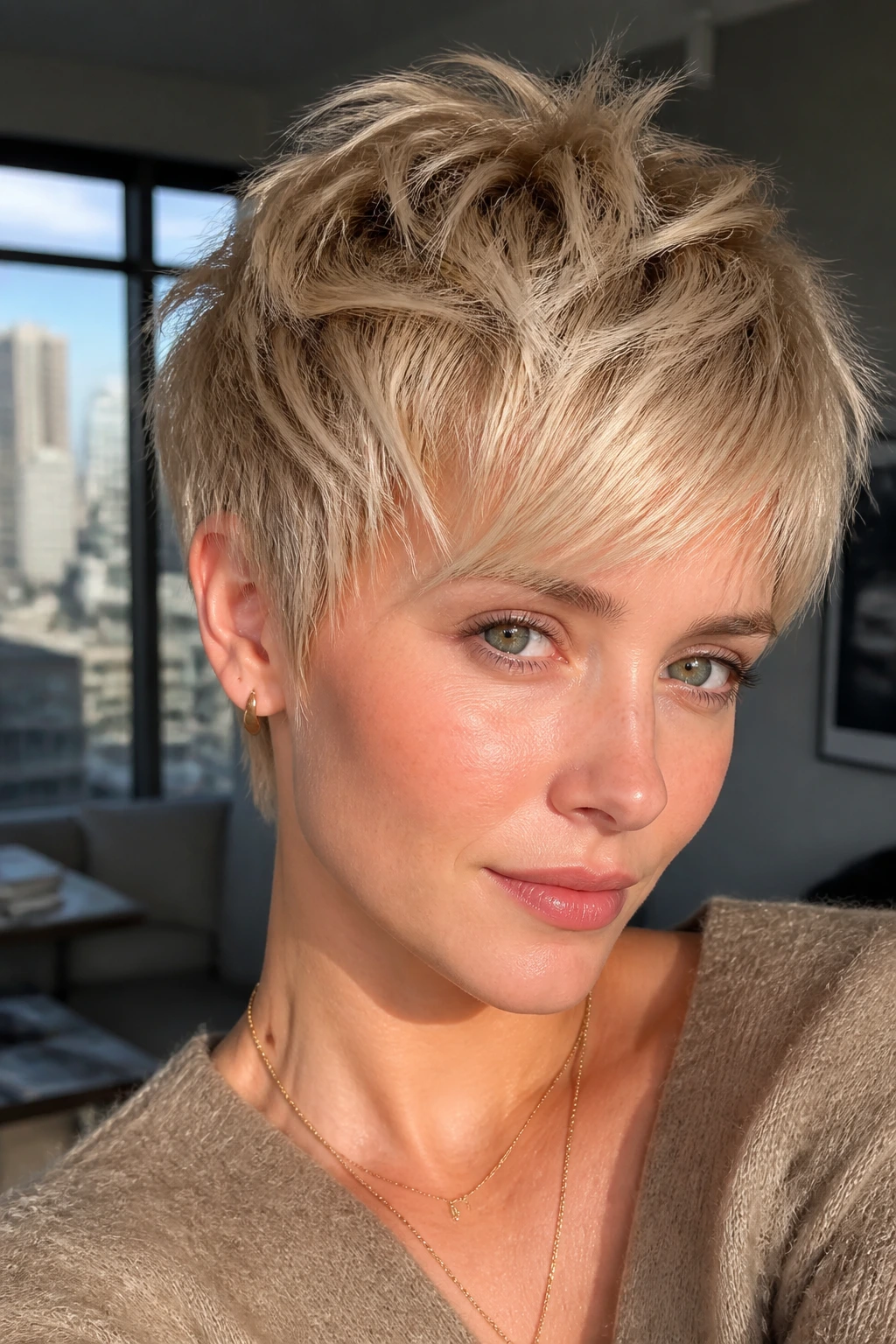
Short cuts can carry champagne blonde better than people expect. A pixie gives the color a chance to read on the surface, not just in long ribbons, which is useful on fair skin if you want brightness without a lot of maintenance.
The key is texture. Choppy layers break up the blonde so it doesn’t turn into one flat note, and a slightly deeper root keeps the crop from disappearing into pale skin. I’d avoid a very icy version here unless your undertones are cool. A creamy champagne with a soft beige base looks cleaner and grows out more naturally.
11. Mushroom Champagne Blend with Beige Lows
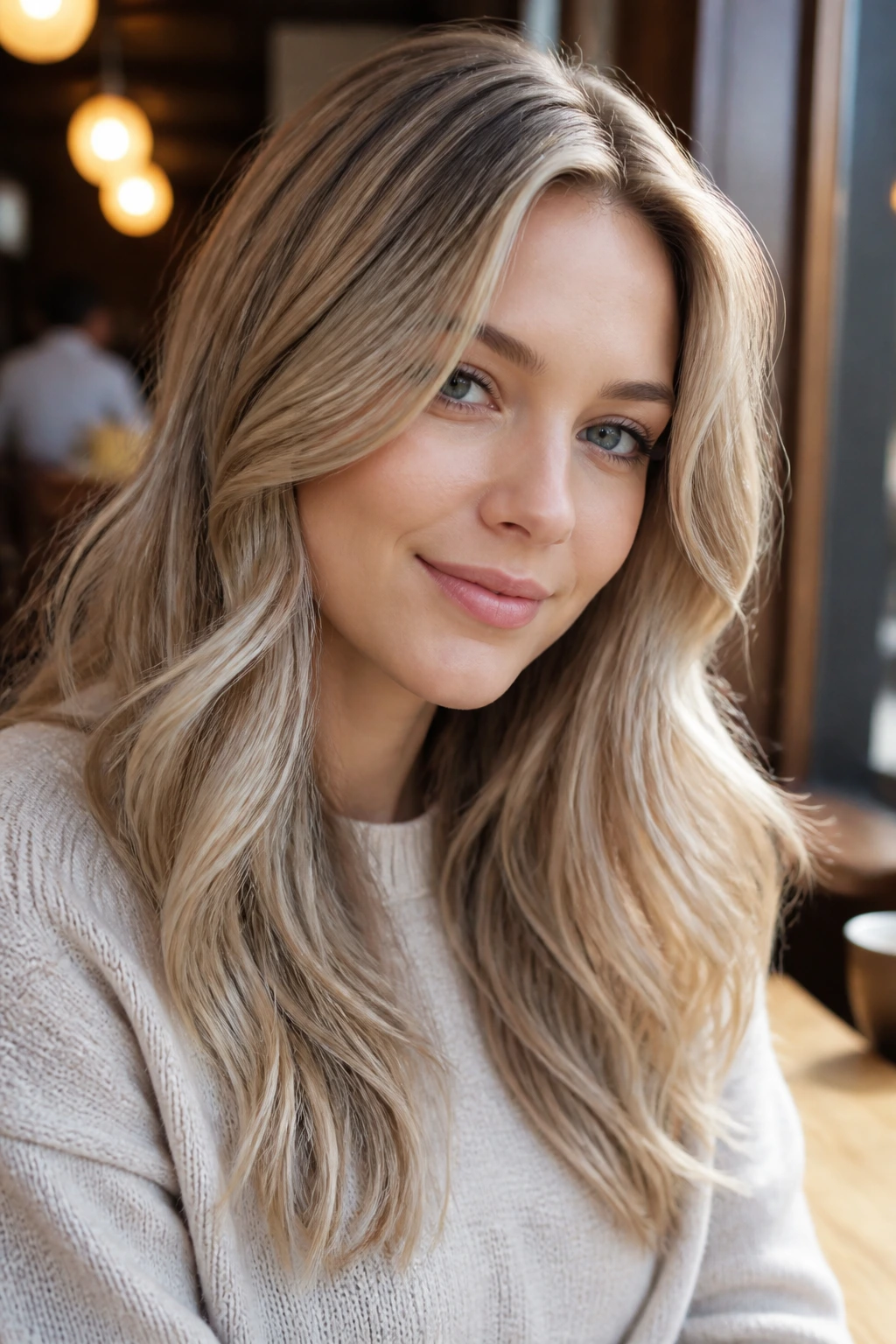
Mushroom champagne is for the person who wants blonde with a little smoke in it. The beige and taupe lowlights keep the color from becoming sugary, which can be a relief on very fair skin.
This is one of my favorite shades for neutral undertones. It has enough softness to flatter light complexions, but the smoky lowlights stop it from turning one-dimensional. Ask for fine lowlights under the crown and through the back so the top pieces still look bright. The result is quieter than gold, cooler than honey, and easier to wear if you dislike obvious warmth.
12. Champagne Blonde Baby Lights
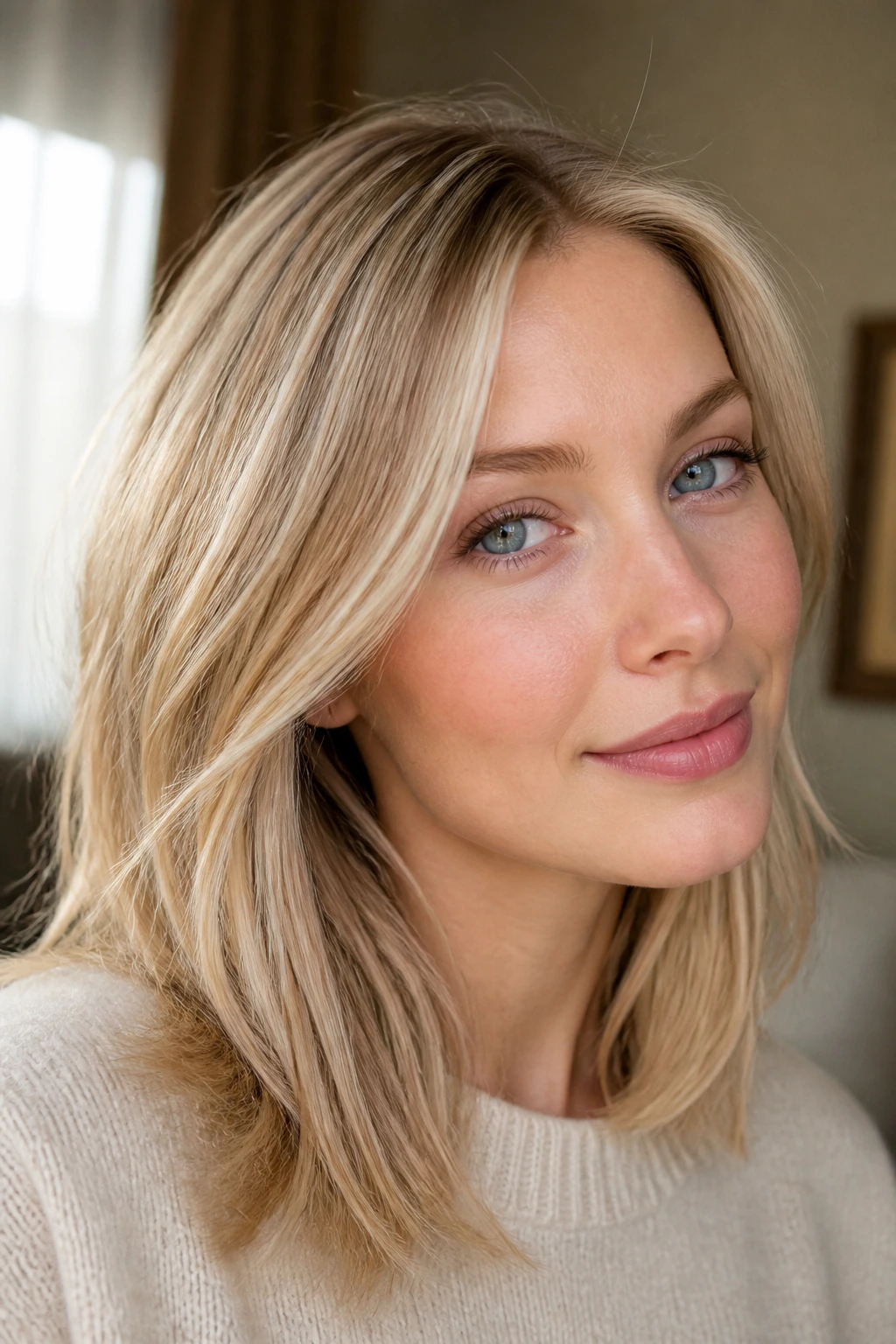
Baby lights are the quietest way to wear champagne blonde. The highlights are so fine that the color looks woven through the hair instead of painted on top of it.
Why the smaller pattern matters
On fair skin, tiny highlights create a soft veil of light rather than harsh stripes. That matters if your natural base is already light or if you want to keep the blonde from feeling loud. Ask for a beige-champagne toner after the lift, because baby lights can go yellow faster than thicker sections.
- Best for fine hair.
- Good if you hate obvious grow-out lines.
- Looks especially soft on shoulder-length cuts and soft layers.
13. Champagne Ombre on Mid-Length Hair
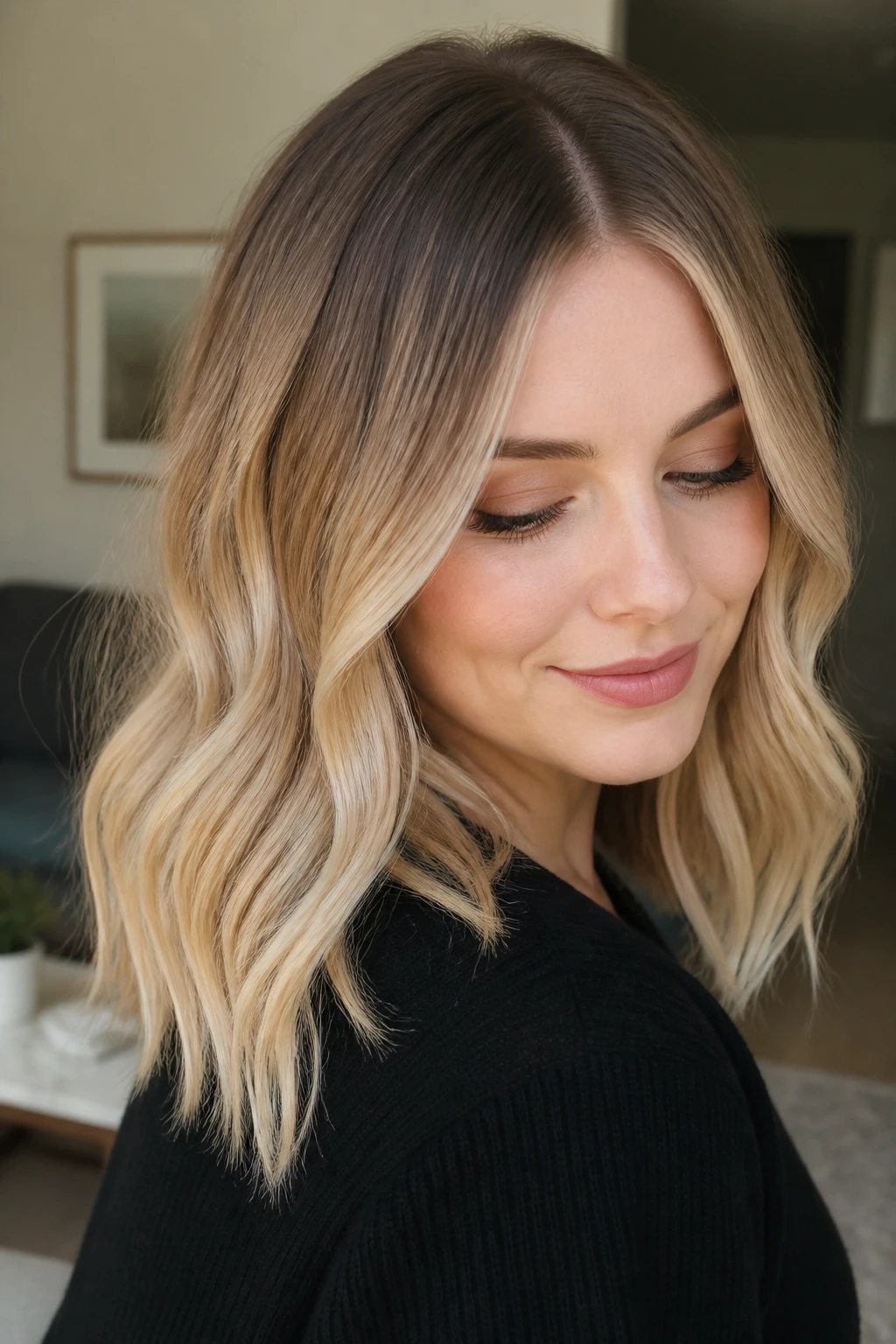
Champagne ombre is the one version that can keep growing without looking abandoned. The darker root gives pale skin a frame, then the color brightens gradually through the mids and ends.
On mid-length hair, the fade feels clean and deliberate. It also gives you more room to play with tone; the root can stay neutral while the ends lean pearl or gold, depending on your undertone. I like this version when someone wants the lightest color only near the bottom half of the head. It keeps the face calm and lets the ends do the sparkling.
14. Creamy Champagne Waves with Gloss
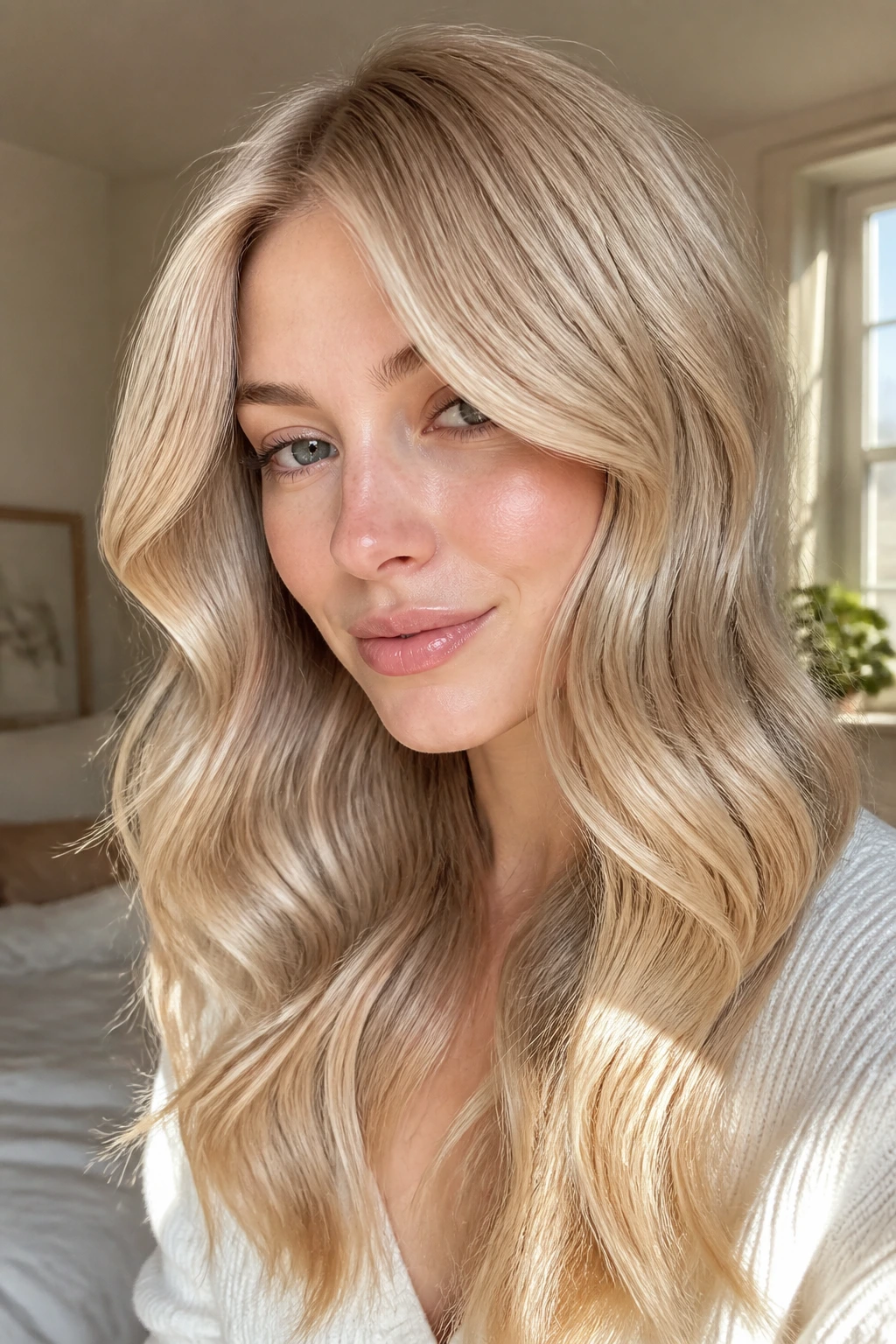
Creamy champagne is all about reflect, not contrast. The color sits in the beige-pearl lane, and a good gloss gives the hair a smooth, polished surface that catches light without screaming for attention.
This version is especially kind to fair skin because it doesn’t add too much gold or smoke. It just softens. If your hair tends to look dry after lightening, the creamy finish is smarter than chasing a super icy tone. You can wear it with loose waves, but the real magic shows up in a shiny blowout. The color looks fuller when the cuticle is smooth.
15. Champagne Blonde Curtain Bangs
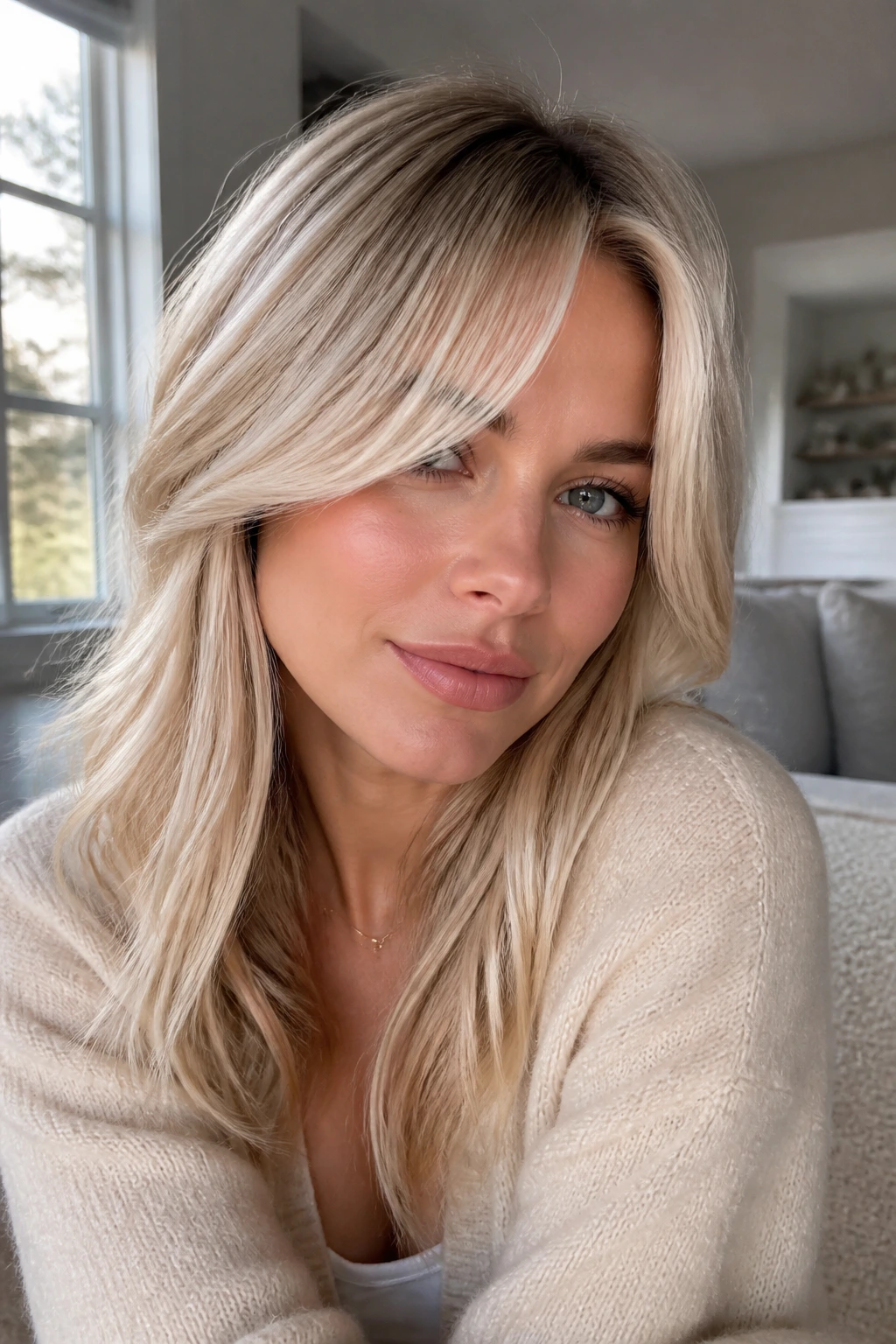
Curtain bangs make champagne blonde feel tailored. The fringe brings the brightest pieces right where the eyes and cheeks live, which is useful on fair skin because it gives the face a little lift without needing a huge color change.
Where the brightness should sit
Keep the bangs one shade lighter than the root area, but not as light as the ends. That keeps the fringe visible without making it look stripped. If your brows are pale, a tiny bit of beige depth at the root of the bangs helps them blend instead of floating.
This is one of those looks that gets better when the cut is right. Too thick and the bangs steal the show. Too wispy and the champagne loses its shape.
16. Vanilla Ribbon Champagne Highlights
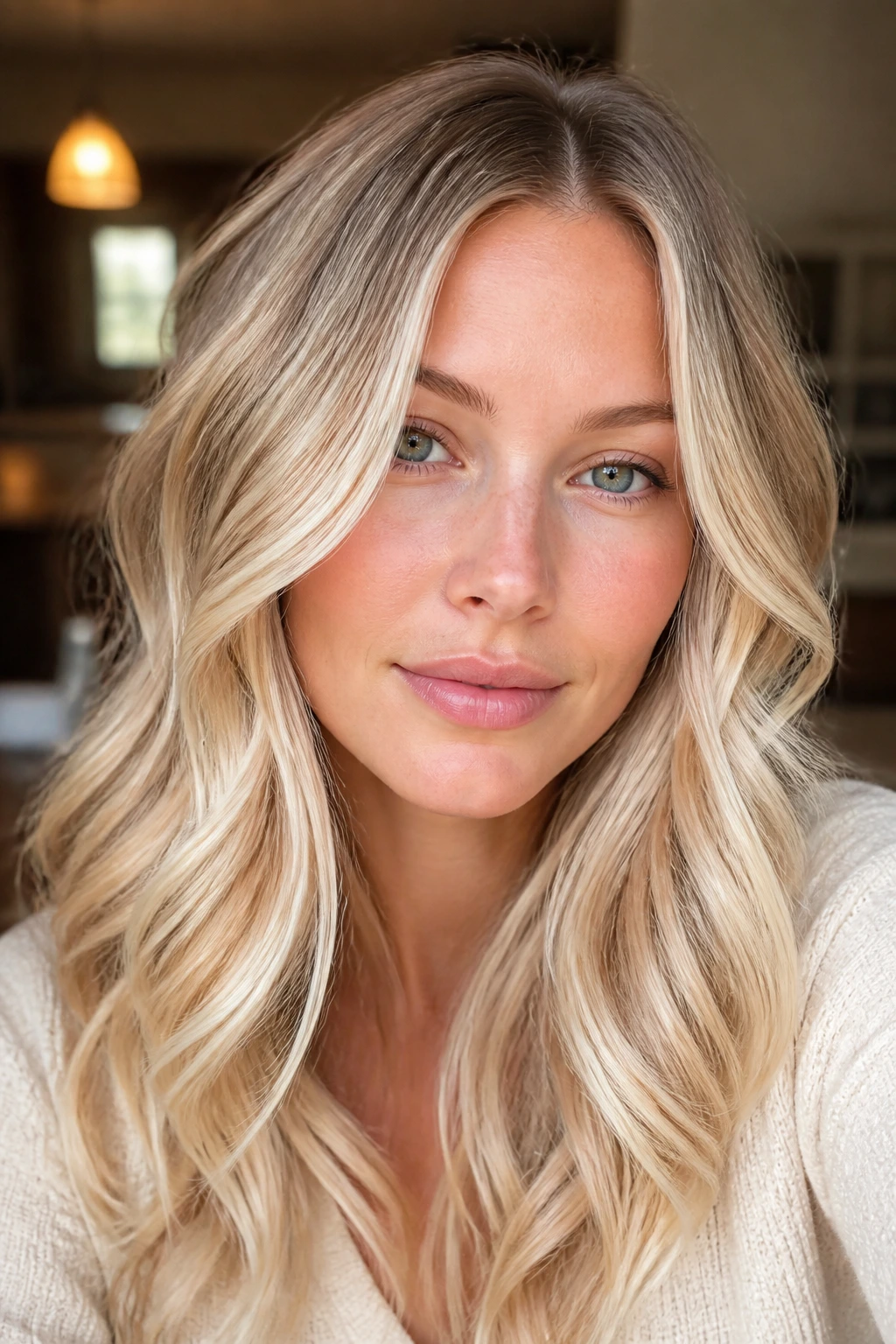
Thicker vanilla ribbons change the way light lands on fair skin. Instead of one uniform blonde, you get visible strands of vanilla, beige, and champagne that move in different directions as the hair shifts.
This is a good option if your hair is medium to thick and you want a bit more contrast than baby lights give. Ask for ribbons that are bright around the face and softer underneath, so the overall effect stays light but not flat. It’s also one of the best ways to keep a layered cut from disappearing. The bands of color give the layers something to show.
17. Sandy Champagne Blonde with Cool Root
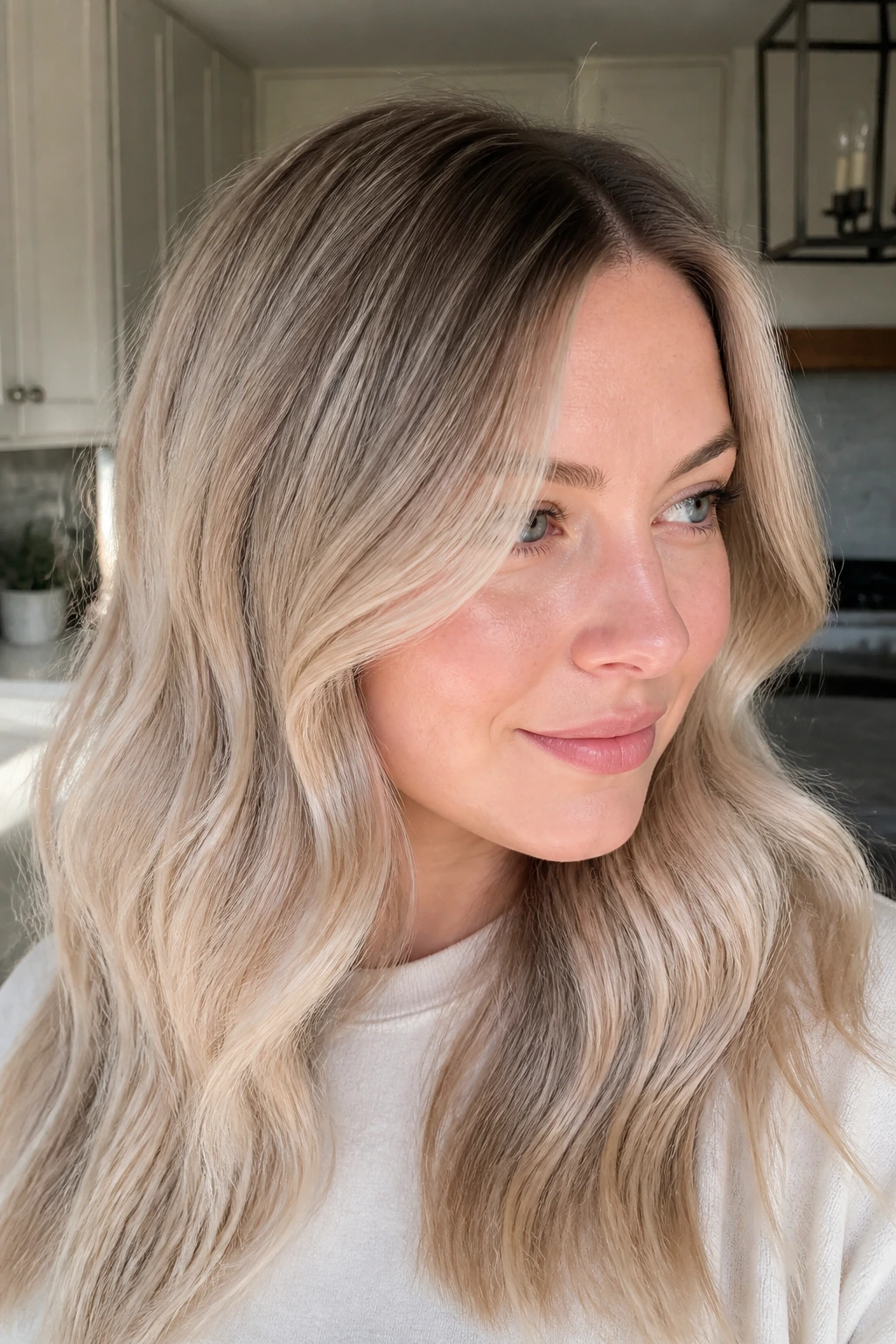
Sandy champagne is what happens when you want softness with a cool edge. The root stays muted, the mids sit in a sandy-beige zone, and the ends pick up just enough brightness to keep the hair from going dull.
Fair skin with cool or neutral undertones usually likes this one. It avoids the heavy gold that can make light complexions look flushed in a bad way, but it does not go so ash that the hair looks gray. If you want low drama, this is a strong pick. It grows out quietly and looks good even when the styling is casual.
18. Glass-Hair Champagne Straight Look
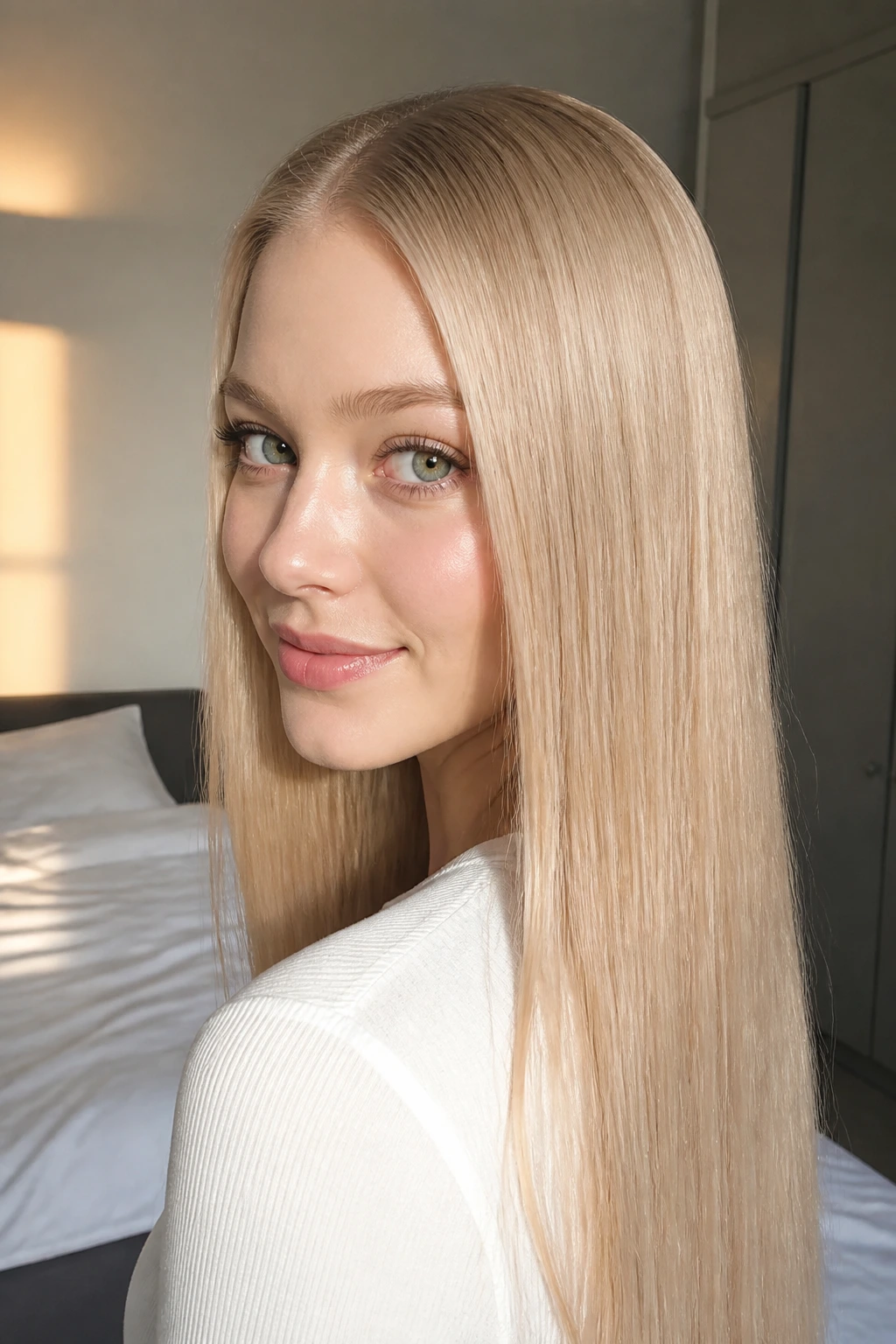
Straight, glossy champagne blonde only works if the tone is disciplined. When the hair is this smooth, every color shift shows, so the champagne has to be clean at the root and even through the mids.
On fair skin, that can look sharp in a good way. The straight finish makes pearl and beige tones read very clearly, especially if you keep the part neat and the ends trimmed. Use heat protectant. Seriously. A flat, reflective blonde looks richer when the hair is in good shape, and nothing ruins it faster than dry, bent ends.
19. Champagne Shag with Airy Layers
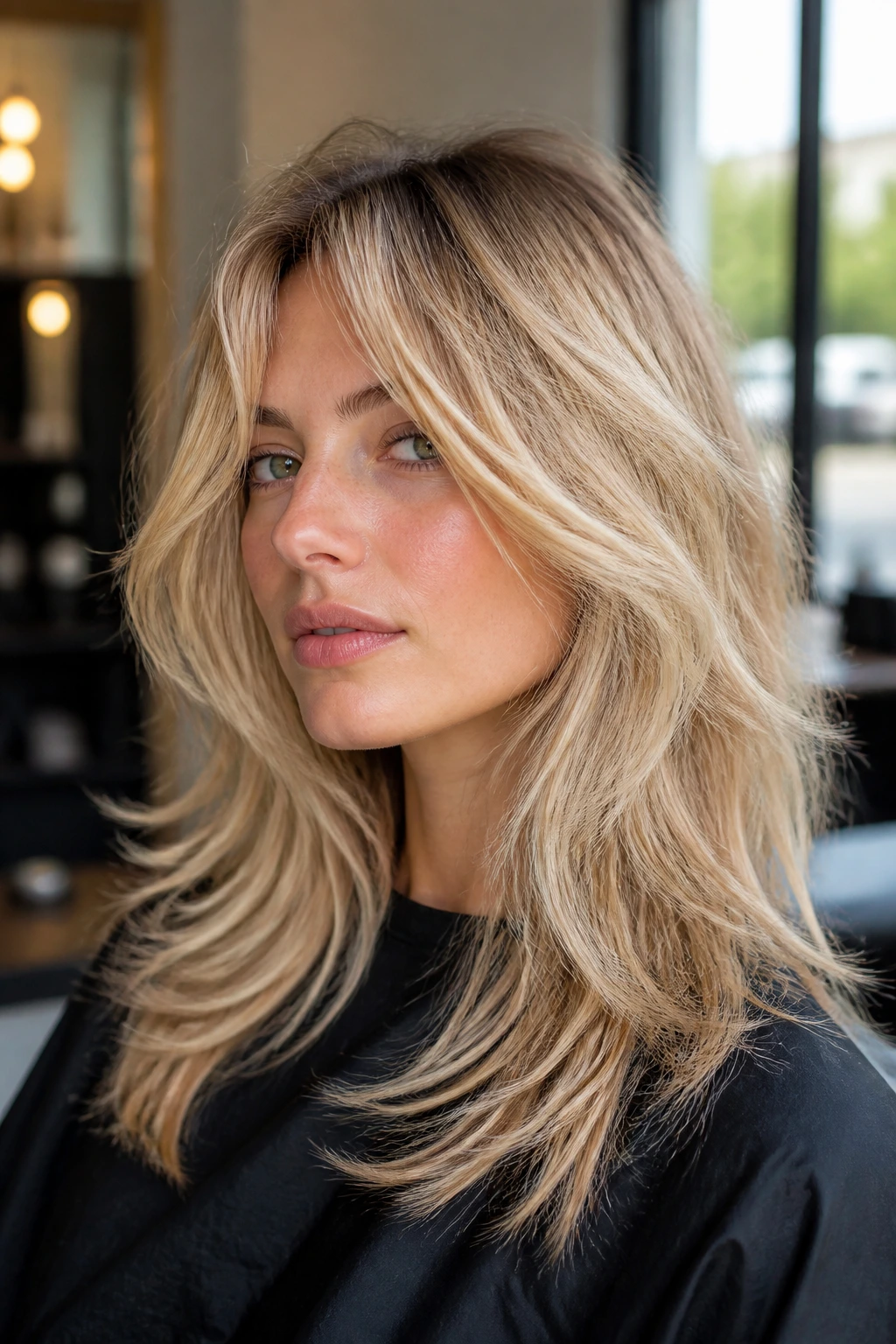
A shag keeps champagne blonde from sitting too neatly. The layers create movement, and movement makes the different blonde tones look scattered in a good way instead of blocky.
This is a nice choice if your fair skin needs a little visual texture near the face. The airy pieces around the cheeks stop the color from feeling heavy, and a beige-gold glaze keeps the whole thing soft. I’d keep the roots a touch deeper here. On a shag, that contrast gives the cut shape and keeps the color from blending into the skin.
20. Dusty Champagne Beige Veil
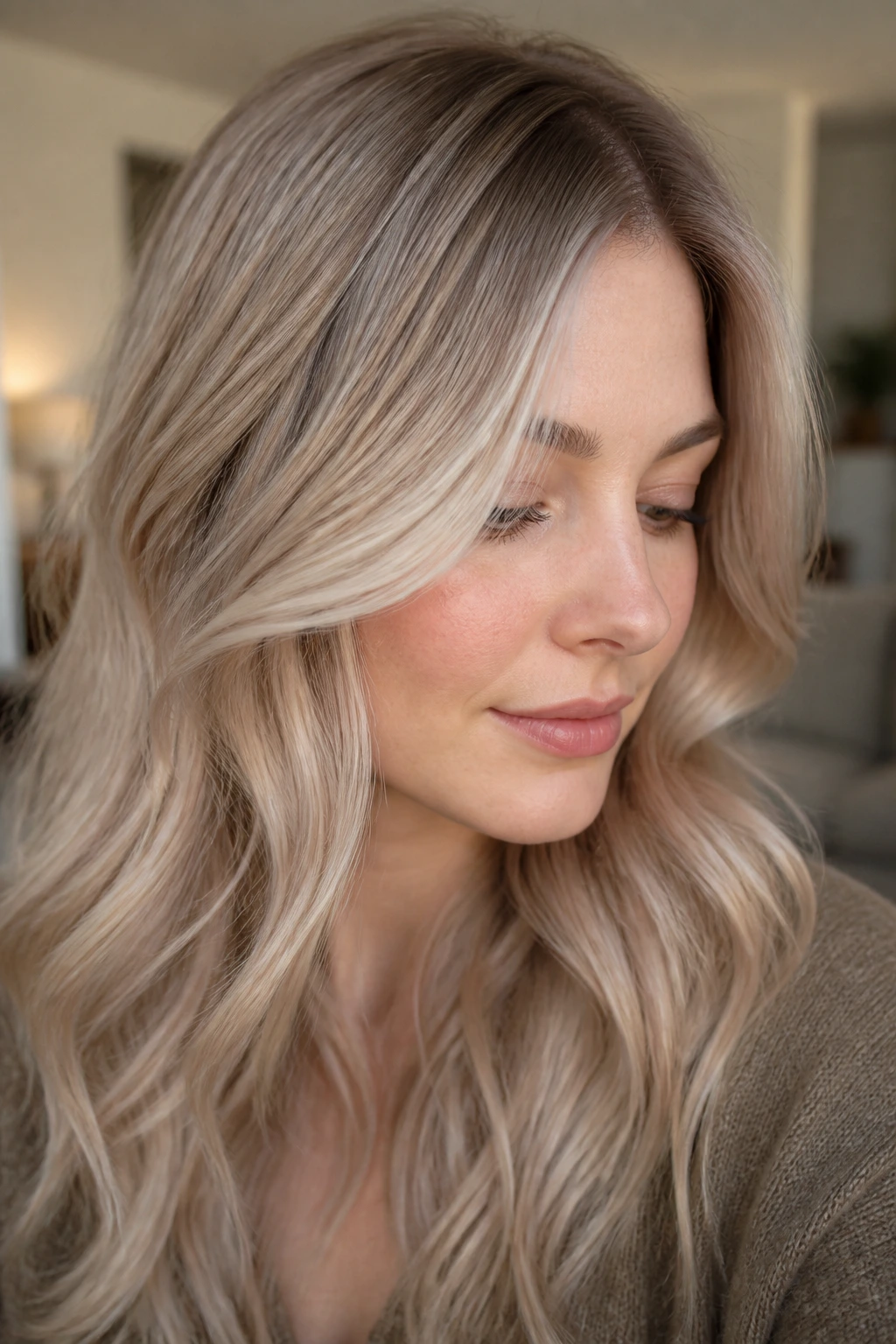
What if you want champagne blonde with almost no sparkle? Dusty champagne is the answer. It’s muted, soft, and just beige enough to feel refined on very pale skin.
This shade is good for people who hate yellow, hate brightness, and still want to stay blonde. The tone should live in the beige-pearl lane with a matte finish at the root and a little more shine through the ends. It pairs especially well with softer cuts—bends, bends, and more bends. Straight hair can make it feel too flat if the color is very muted.
21. Champagne Blonde with Subtle Lowlights
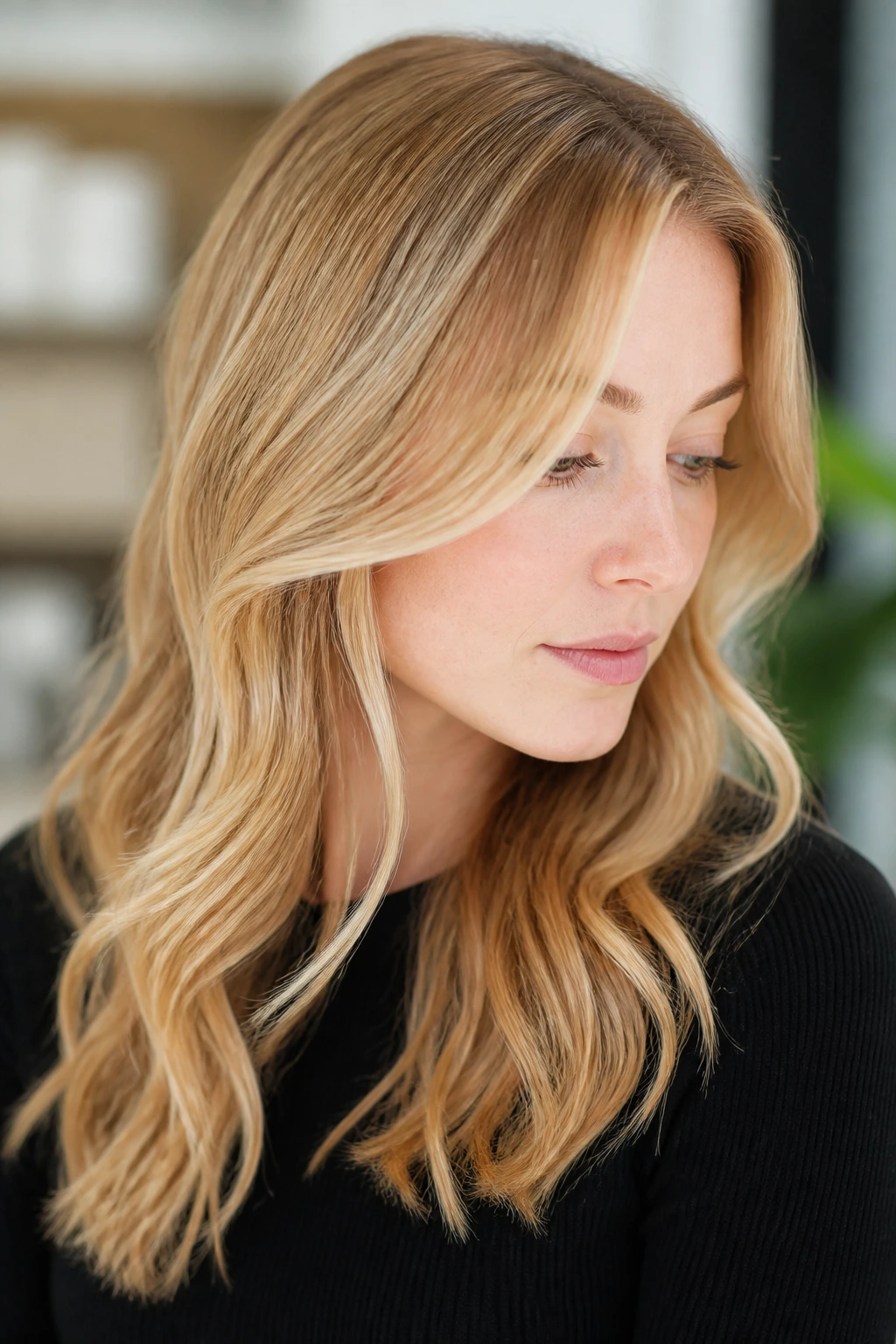
Lowlights are the secret weapon in a champagne blonde. They keep the hair from disappearing against fair skin, especially if your brows are dark or your complexion is so light that a single-tone blonde would go floating.
Why depth matters here
A few lowlights at level 7 or 8 under the crown give the blonde contour. That tiny bit of depth makes the lighter pieces around the face look brighter by contrast. Ask for them to stay soft and narrow, not chunky.
- Best for long hair that can handle dimension.
- Good if you want your blonde to last between appointments.
- Helps thick hair avoid the “one big yellow sheet” problem.
22. High-Contrast Champagne Face Frame
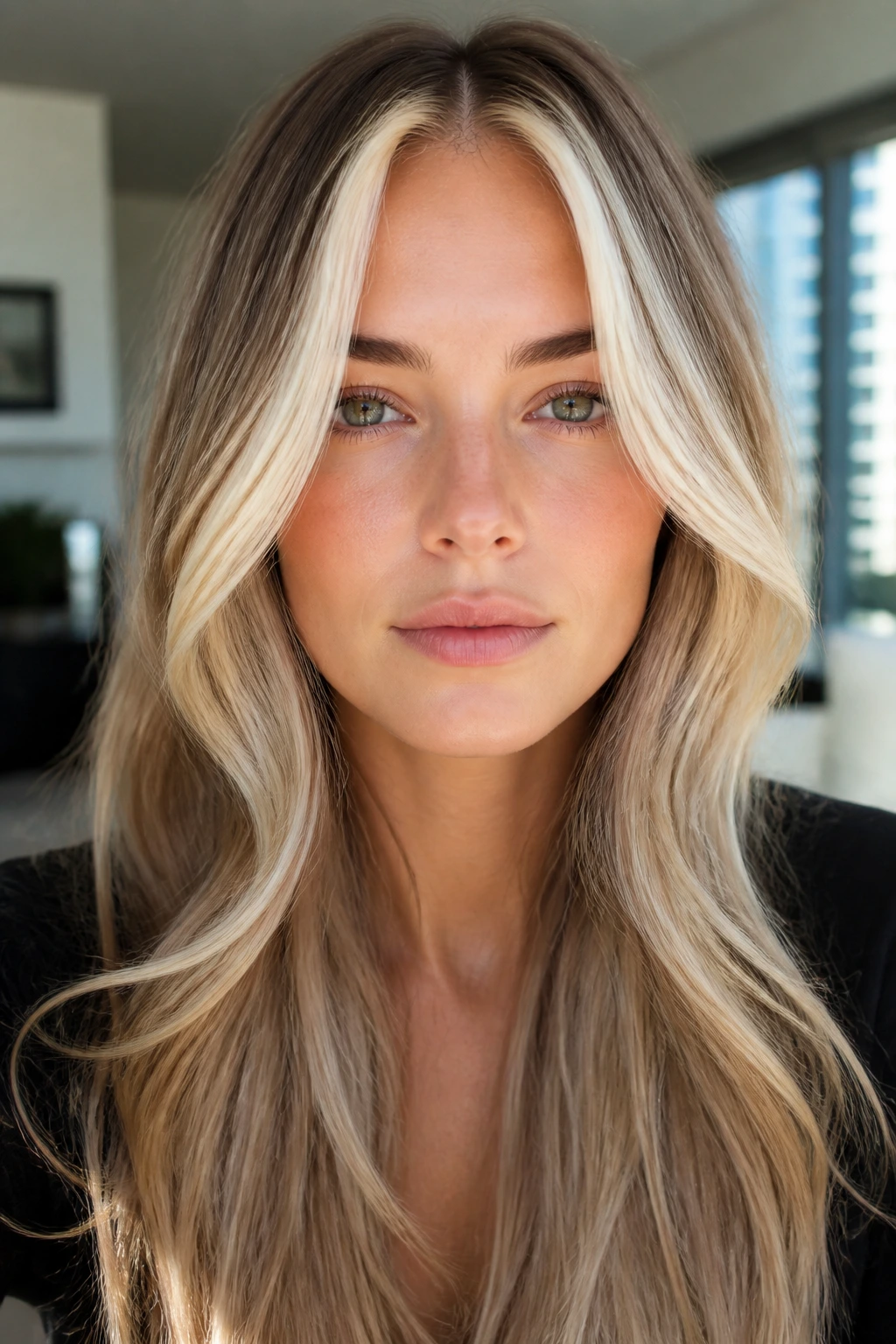
A bright face frame can fix a lot of things. It wakes up fair skin, opens the eyes, and gives champagne blonde a focal point, which is useful if the rest of the color is more muted or beige.
This look works especially well with ponytails, buns, and loose waves because the front pieces stay visible even when the rest of the hair moves back. Keep the front bright, but not white. I’d rather see a clean level 9.5 champagne frame than a harsh platinum stripe next to pale skin. The contrast should flatter the face, not fight it.
23. Champagne Blonde for Curly Hair
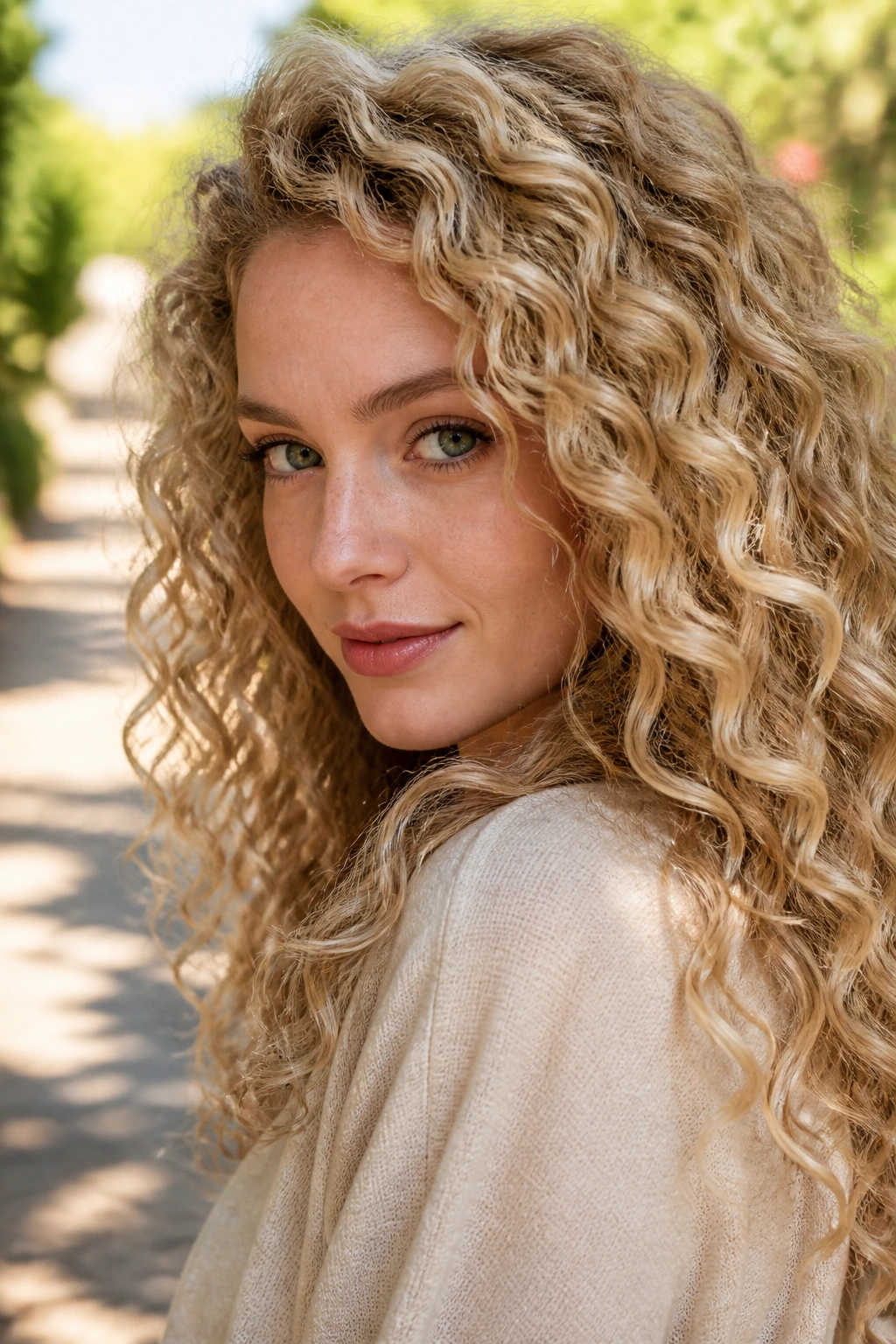
Curly hair changes the whole champagne conversation. The curl pattern breaks the color into little pockets of light and shadow, so the blonde needs to live in ribbons rather than one continuous sheet.
Why curls change the tone
On fair skin, curls can make champagne look softer because the shadow between the coils keeps the blonde from flattening everything out. Ask for balayage or hand-painted ribbons and keep the root deeper than you would on straight hair. That keeps the curl pattern readable.
A beige-pearl champagne usually works better than a pure gold here. The texture already brings warmth, so the tone does not need to work that hard.
24. Smoky Champagne with a Soft Gloss
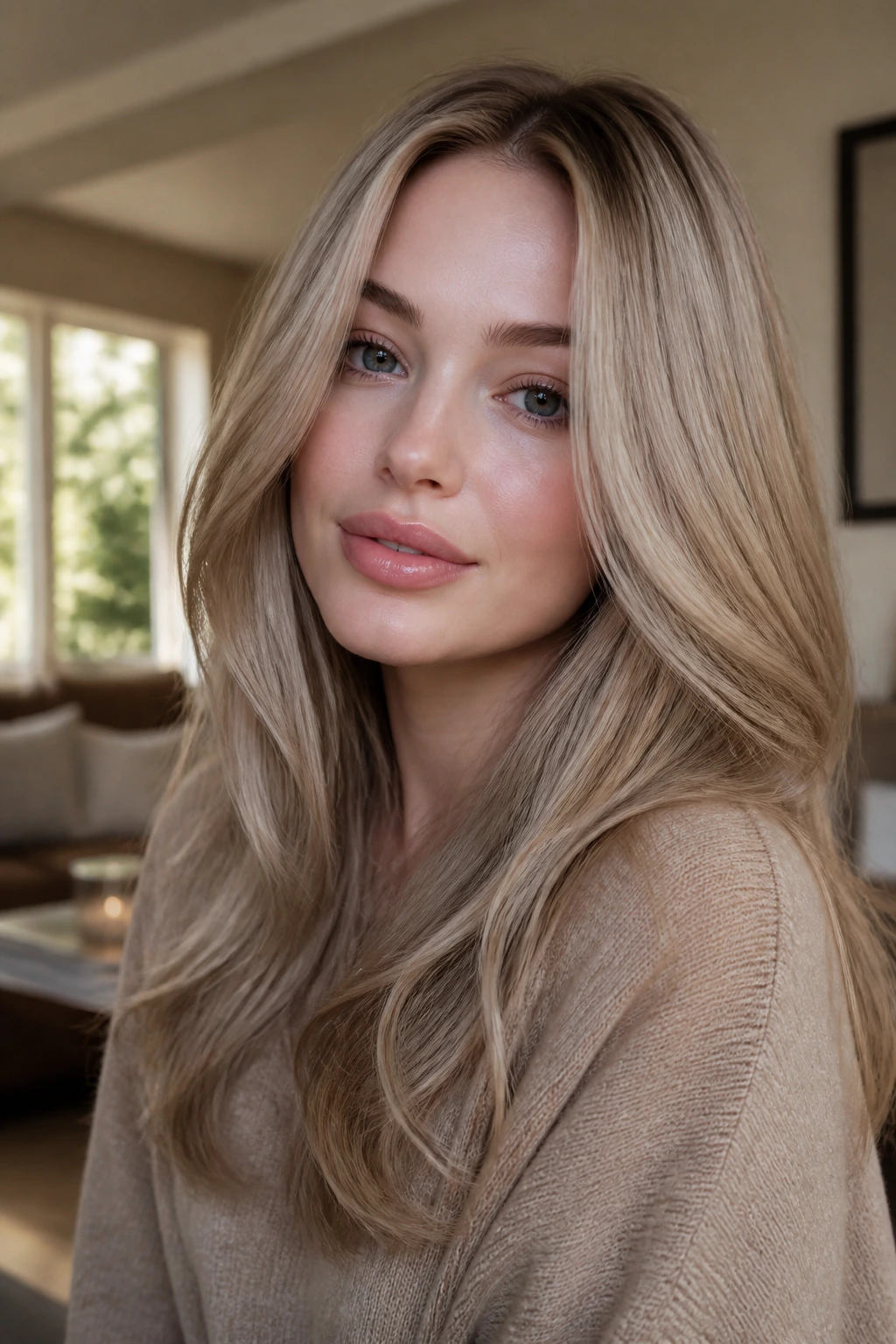
Smoky champagne is the most forgiving choice in the group. It keeps the blonde in a taupe-beige lane, which is useful if your fair skin goes red easily or if you hate seeing obvious yellow in the mirror.
The soft gloss is the key. Without it, smoky tones can look dry or dull; with it, the color looks calm and expensive without needing much warmth. This is a strong option for someone who wants a cooler read than golden champagne but does not want full ash. It’s subtle. That’s the point.
25. Bright Champagne Blonde with a Sunlit Finish
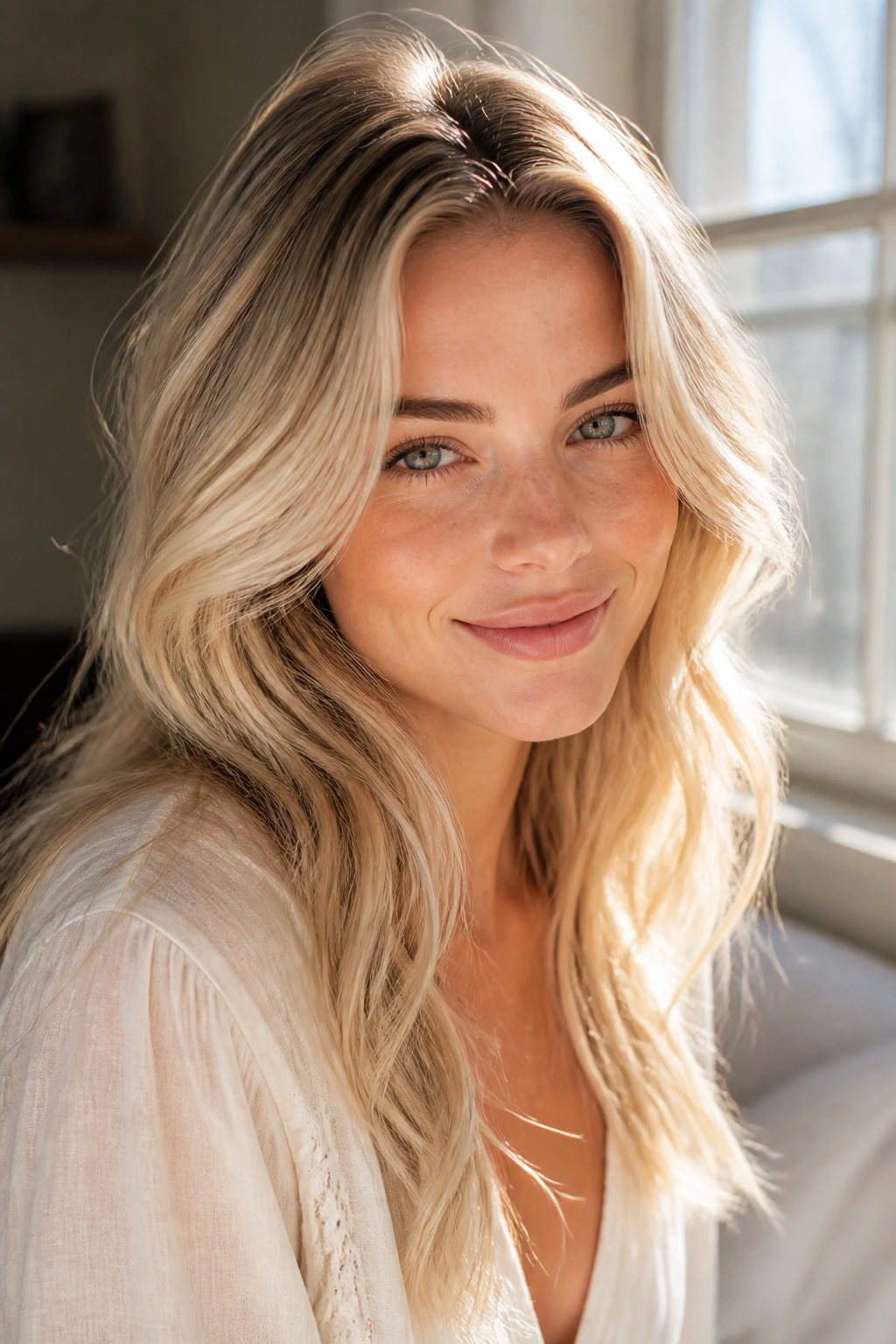
If you want the brightest version of champagne blonde, this is the one. The finish is sunny, clean, and a little more lifted than the rest of the group, but it still stays softer than a straight platinum blonde.
On fair skin, the trick is to keep the root a touch deeper so the brightness does not erase the face. Ask for luminous mids, lighter face-framing pieces, and a beige-gold gloss on the ends. That combination keeps the hair looking sunlit instead of bleached. It’s the version I’d pick for anyone who wants the lightest blonde here without losing all warmth.
What Makes Champagne Blonde Glow on Fair Skin
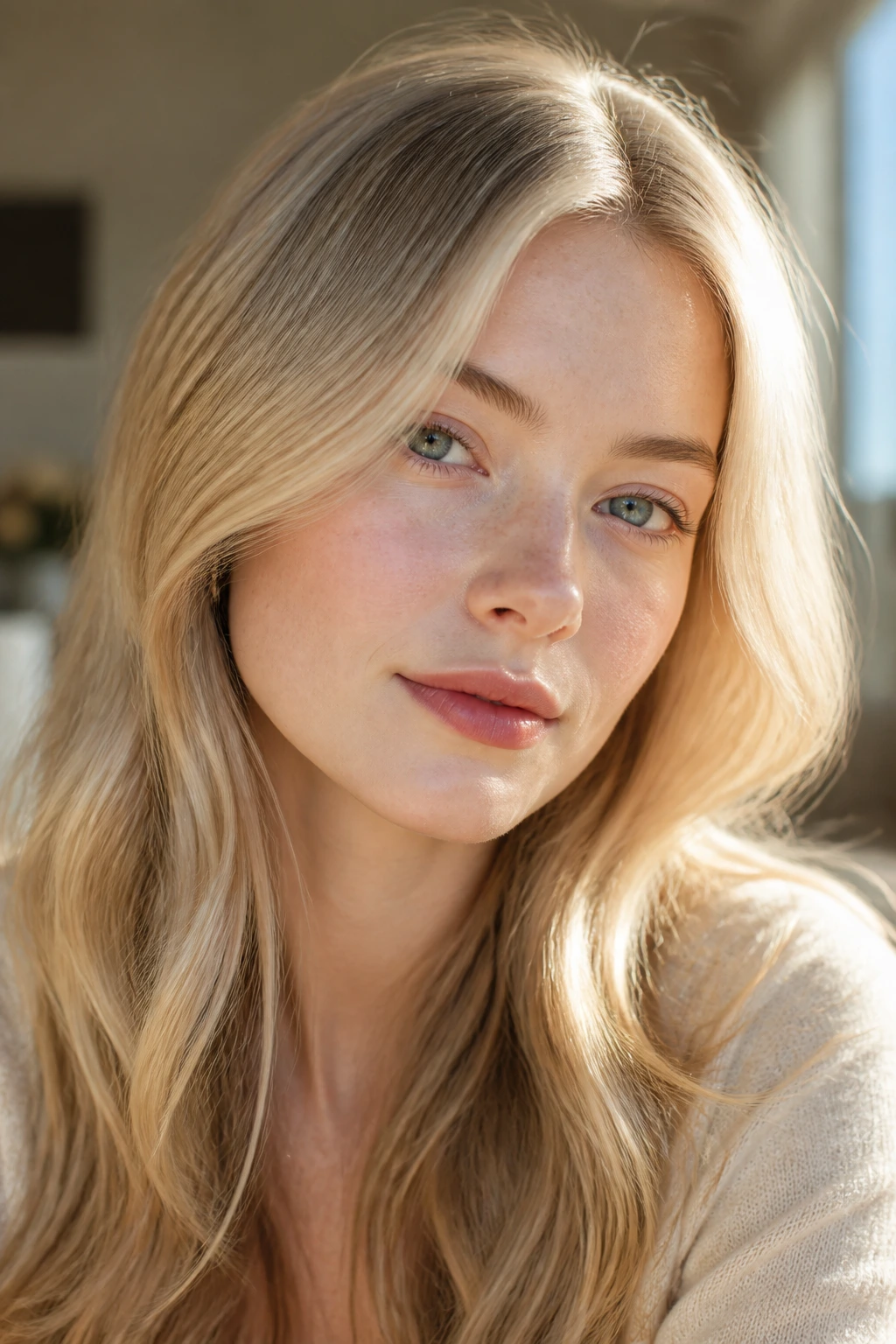
Champagne blonde works on fair skin because it sits between two mistakes. Go too cool and the face can start to look gray. Go too warm and the blonde turns brassy before the week is out.
The sweet spot is usually a level 9 with beige, pearl, or soft gold reflect. That gives the hair enough lightness to read blonde in daylight while keeping enough tone to sit politely beside pale skin. If your undertones are pink or cool, pearl and silver-beige tend to behave best. If your skin is neutral, beige champagne is the safest lane. Warm or freckled fair skin can take more gold, but it still usually looks better with a root a shade deeper than the mids.
Porosity matters too. Highly porous blonde grabs toner fast, which is why the same champagne formula can look creamy on one head and dusty on another. That is why gloss and maintenance matter so much here. The shade is not fragile, exactly. It just needs the right amount of control.
Tools and Products That Keep the Tone Honest
-
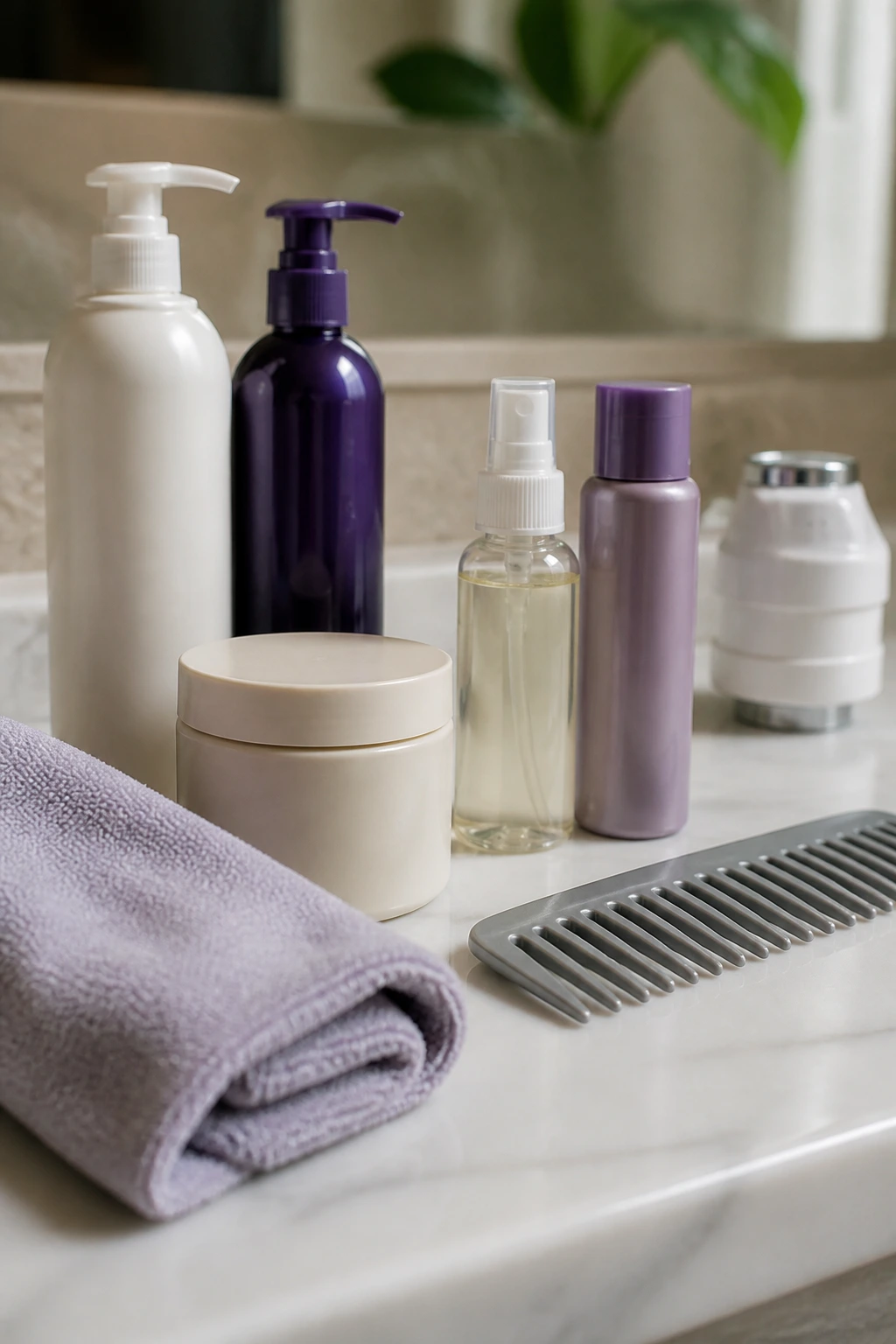
Sulfate-free shampoo: Cleans without stripping the beige and pearl tones that make champagne blonde work.
-
Purple shampoo: Use it sparingly, only when yellow starts showing through; too much can mute the warmth and leave a gray cast.
-
Deep conditioner or repair mask: Lightened hair needs moisture, especially through the ends where champagne tones can look dry first.
-
Heat protectant spray: Flat irons and curling wands can rough up the cuticle fast, which makes the color look duller than it is.
-
Toning gloss or glaze: A demi-permanent gloss every few weeks keeps the blonde soft, reflective, and not too yellow.
-
Wide-tooth comb: Helps detangle without scraping up the lighter strands.
-
Microfiber towel: Cuts frizz and keeps the finish smoother after washing.
-
Shower filter, if your water is hard: Mineral buildup can make champagne blonde look flat and dingy, especially on very light hair.
How to Ask for Champagne Blonde Hair Color Ideas for Fair Skin at the Salon
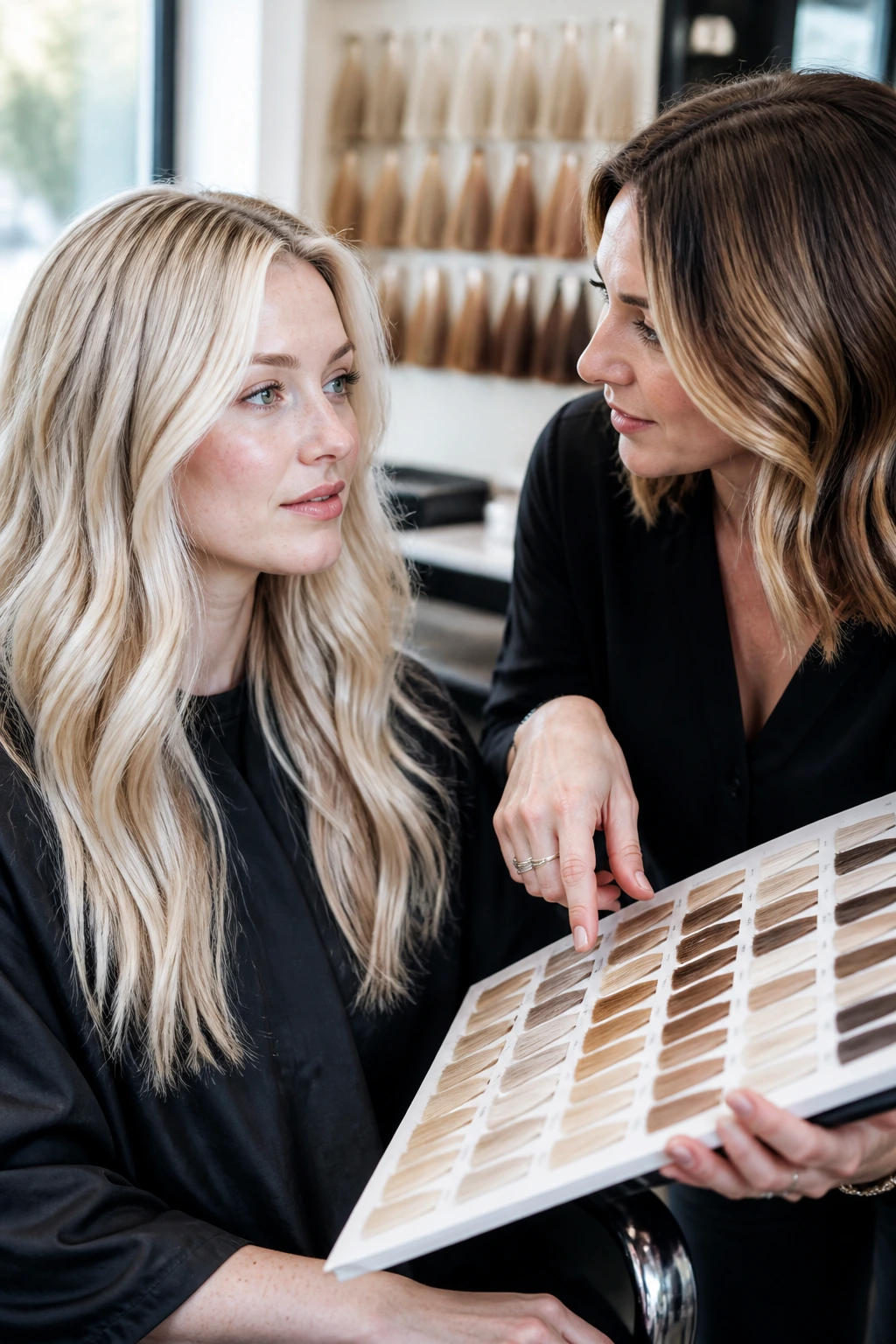
Bring more than one photo. One image should show the tone you want, and another should show the brightness level, because those are not always the same thing. A lot of bad blonde appointments happen when someone asks for “champagne” and leaves it to chance.
Bring the tone words, not just the trend words
Say pearl, beige, smoky, rose, golden, or rooted if one of those sounds close to what you want. Those words tell the colorist where to steer the toner. “Champagne” by itself can mean a dozen different things depending on who is listening.
Talk about the root before you talk about the ends
If you want easy grow-out, say so. A soft root shadow, balayage, or babylights will behave differently on fair skin than an all-over bright blonde. If your natural base is light, you may only need a gloss and a few lighter pieces around the face. If your hair is darker, ask how many sessions it would take before anyone starts painting.
Be honest about maintenance
This is the part people skip and regret later. If you only want to be in the salon every 8 to 10 weeks, say that. If you are happy to tone more often, say that too. The best champagne blonde for fair skin is not the lightest one. It is the one that fits your patience.
How to Wear Champagne Blonde Without Looking Washed Out
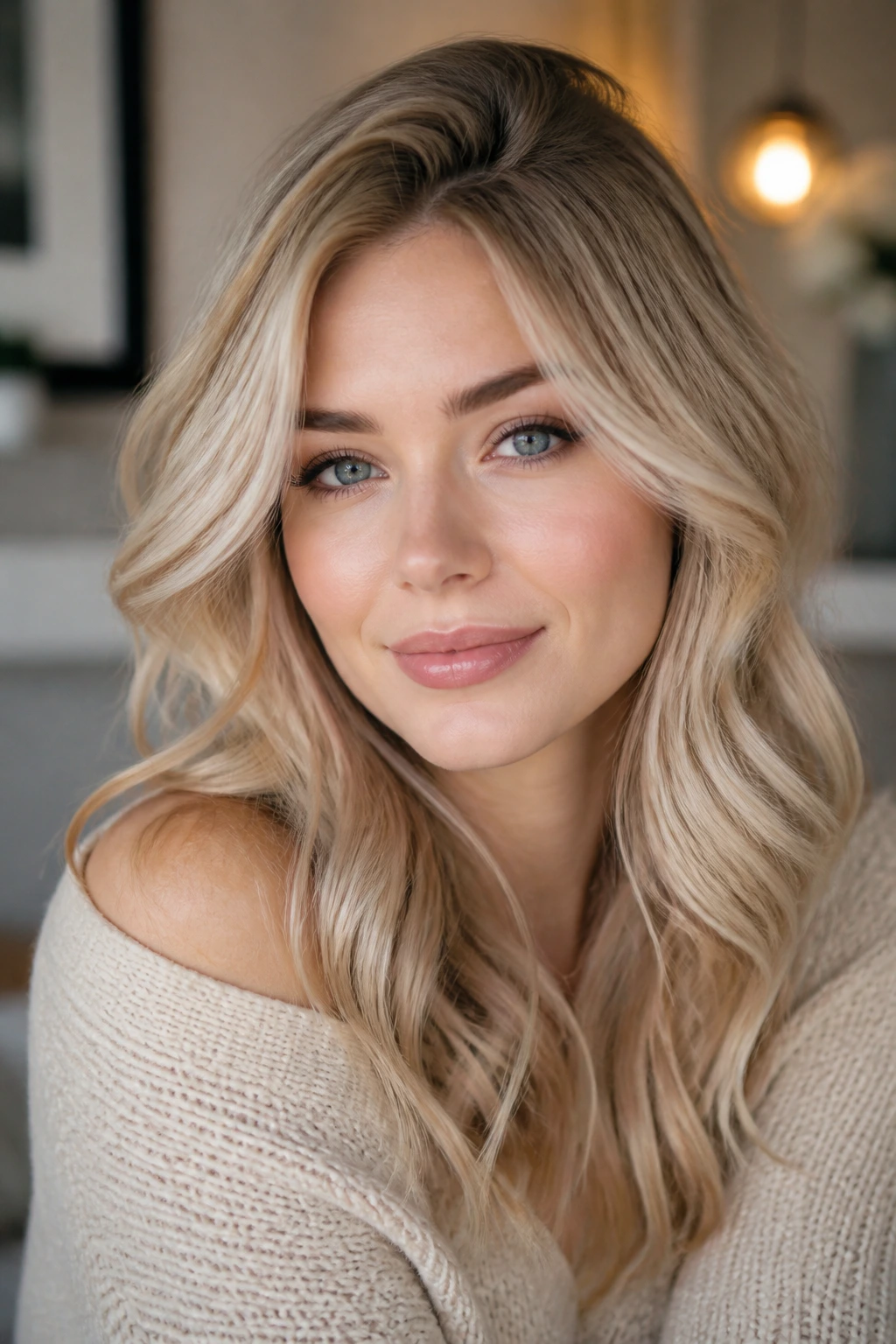
Finish: Soft waves spread the different tones across the hair and make beige, pearl, and gold blend together. A glassy blowout reads cleaner and brighter, which works well for smoky or rooted versions.
Cut: Bobs, lobs, curtain bangs, shag layers, and long face-framing pieces all give champagne blonde something to sit on. A one-length cut can still work, but it needs more tonal depth or it risks looking flat against very pale skin.
Parting: Center parts sharpen pearl and beige shades. Side parts soften bright face frames and make golden versions feel less intense around the forehead.
Makeup: Cool champagne likes rosy blush, taupe liner, and soft berry lips. Warmer champagne does better with peach blush, cream shadows, and brows that have a little more definition. If the hair is bright, a bare face can look unfinished; a little color in the cheeks goes a long way.
Clothing: Cream, dove gray, navy, soft black, dusty rose, and muted sage all tend to sit well beside champagne blonde. Very yellow tops can fight warm champagne, and stark white can overpower softer pearl tones.
Extra Ways to Push the Shade Warmer, Cooler, or Dimmer
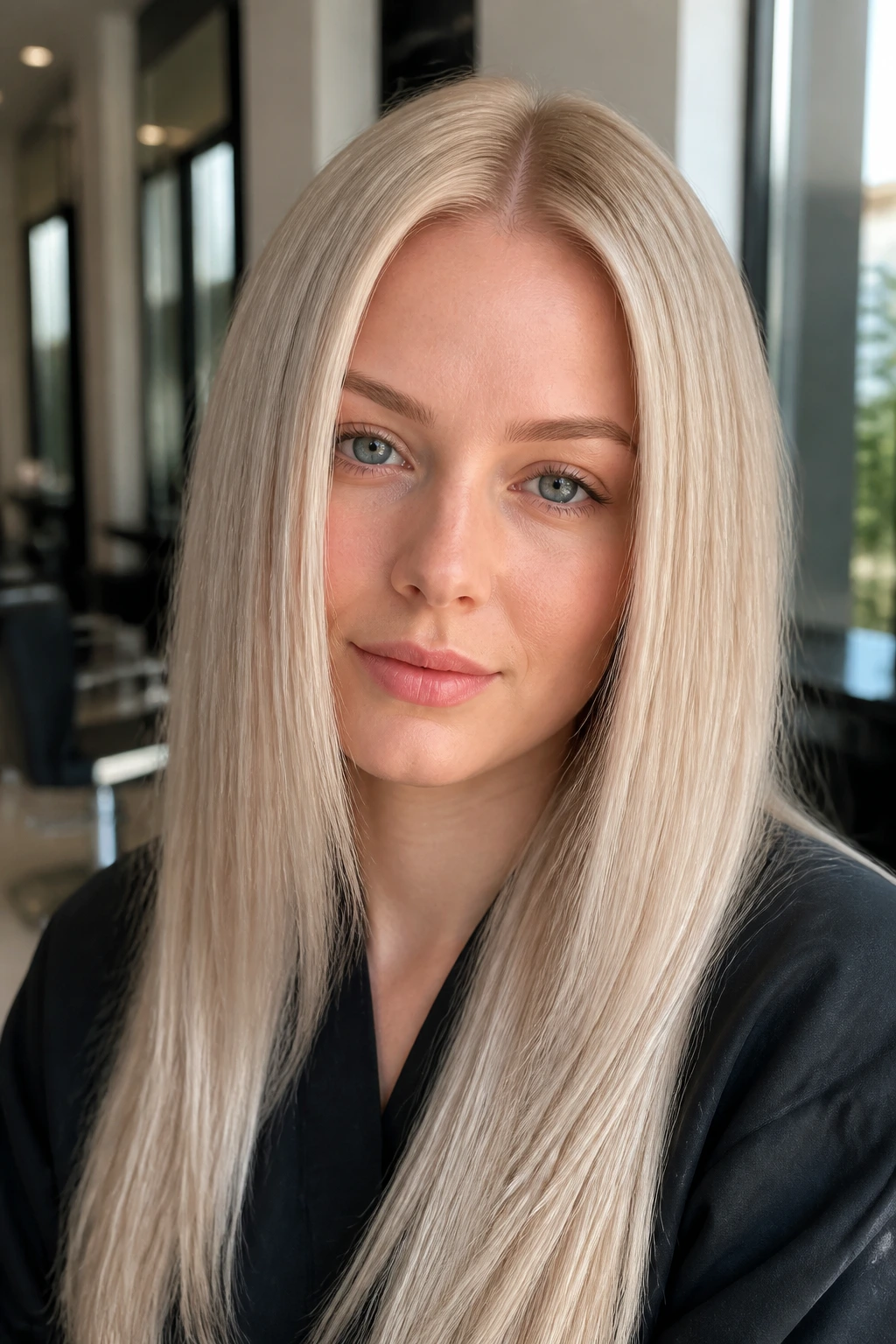
Gloss Boost: A beige-pearl gloss every 4 to 6 weeks keeps the color reflective and stops it from wandering too yellow or too flat. If your hair pulls warm fast, ask for a slightly cooler gloss at the sink rather than reaching for purple shampoo every wash.
Customization: If the color looks too even, add one or two lowlights under the crown. If it looks too dark around the face, brighten the front pieces by half a level. Those tiny adjustments change the whole mood without making you start over.
Serving Suggestions: Loose bends, tucked-behind-the-ear styling, or a soft blowout show the tone best. A heavy oil can make champagne blonde look greasy fast, so use a lighter serum only on the ends.
Make-It-Yours: Very fair skin with pink undertones usually likes pearl, smoky beige, or rose champagne. Freckled skin can take more gold. Neutral skin can slide anywhere in the middle, which is a pleasant kind of flexibility.
Mistakes That Make Champagne Blonde Look Off
-
Going too platinum too fast: The hair can end up looking disconnected from the face, especially if your brows and skin are both light. The fix is a beige or pearl champagne with a soft root, not a pure white-blonde lift from scalp to tip.
-
Choosing the wrong tone for your undertone: Heavy gold can make pink skin look flushed, while too much ash can make the face look tired. Match pearl to cool skin, beige to neutral skin, and golden champagne only if your complexion can handle the warmth.
-
Using purple shampoo like a daily cleanser: A little helps. Too much turns the blonde dusty and strips the champagne finish out of the hair. Use it only when yellow is creeping in, and follow with a conditioner.
-
Ignoring root depth: On fair skin, an all-over pale blonde can blur into the face and lose its shape. A root shadow or lowlights give the color contour and keep it from looking flat.
-
Expecting dark hair to become champagne in one appointment: Sometimes it can. Often it cannot without damage. Staged lightening usually gives a softer, safer result and keeps the ends from feeling chewy.
Variations and Adaptations to Try
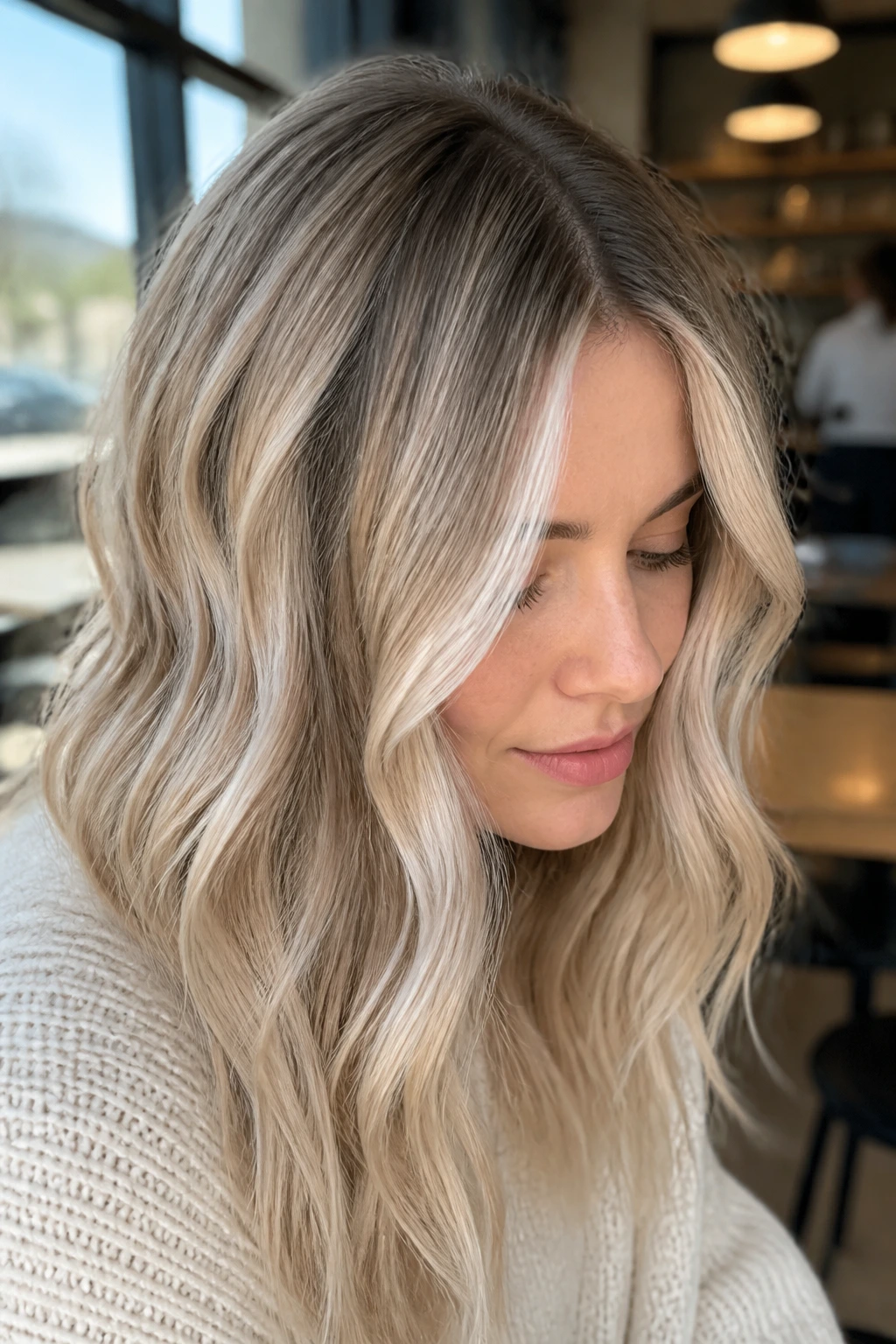
Pearl Veil: This is the cool, airy version for pink or porcelain skin. Keep the toner in the pearl-beige lane and leave a soft shadow at the root so the color does not look too white. It is a good fit if you like your blonde clean and quiet.
Honeyed Champagne: Add a little more gold to the mids and ends if your skin warms up easily or you wear freckles proudly. The trick is keeping the gold soft, not orange. A neutral root keeps the warmth from taking over.
Smoky Beige Melt: This one pushes the blonde dimmer and more muted. Ask for beige lowlights and a taupe gloss so the overall look feels cooler and softer. It is the easiest adaptation if you hate brightness near your face.
Rooted Low-Maintenance Champagne: Leave more depth at the scalp and brighten only the middle and lower sections. This gives you longer wear between appointments and works well if your hair grows fast or you do not want a strict salon schedule.
Rose-Soft Champagne: Add a faint rose-beige glaze for a little flush. It is subtle enough to stay pretty, but it gives very fair skin a gentler look than plain gold. If you flush easily, this version can look especially kind.
Keeping Champagne Blonde Hair Color Ideas for Fair Skin Fresh
The first 48 hours after coloring matter more than people think. If your colorist tells you to wait before shampooing, listen. Once you do wash, use lukewarm water and a sulfate-free cleanser so the toner does not vanish in two shampoos.
A good routine usually looks like this: color-safe shampoo two or three times a week, purple shampoo only when yellowing shows up, and a deep conditioner once a week on the mids and ends. If your hair is very light or porous, toner may need refreshing every 4 to 6 weeks. If the shade is rooted or balayaged, you can often stretch farther, closer to 8 to 10 weeks, before the shape starts to feel tired.
Hard water is a nuisance. So is chlorine. If you swim, wet the hair with clean water first and add leave-in conditioner before getting in the pool. If your water is mineral-heavy, a shower filter or occasional chelating wash can keep champagne from looking dull and muddy.
Champagne Blonde Questions, Answered
Will champagne blonde make very fair skin look washed out?
Not if the tone is chosen well. Pearl, beige, and soft rose versions usually keep pale skin alive, while ultra-icy platinum can be the one that drains the face.
Is champagne blonde easier to wear than platinum?
Usually, yes. Champagne keeps more beige and gold in the mix, so the hair does not have to be so pale to look blonde. That extra tone makes grow-out softer and gives the face more shape.
Can I get champagne blonde if my natural hair is dark brown?
Yes, but probably not in one clean session if you want the hair healthy. Dark hair usually needs staged lightening and a careful toner afterward, especially if you want pearl or beige champagne instead of a warm gold.
How often should I tone it?
Most champagne blondes do well with a gloss or toner refresh every 4 to 8 weeks, depending on porosity and how bright the hair was lifted. If the shade starts looking flat before then, that is usually a sign you need a glaze, not a full recolor.
What if my champagne blonde turns yellow?
Use a purple shampoo once or twice, not every wash. If the yellow keeps coming back, the problem may be water, sun, or a toner that was too warm for your undertone.
Does champagne blonde work on curly hair?
It does, but the color placement matters more. Curly hair usually looks better with ribbons, balayage, or babylights because the curl pattern already creates shadow and movement.
Should my brows be changed too?
A little, yes. If the hair gets much lighter, brows that stay extremely dark can look too hard; if the hair is smoky or pearl-cool, brows may need a softer pencil or tinted gel so the face feels balanced.
A Shade That Holds
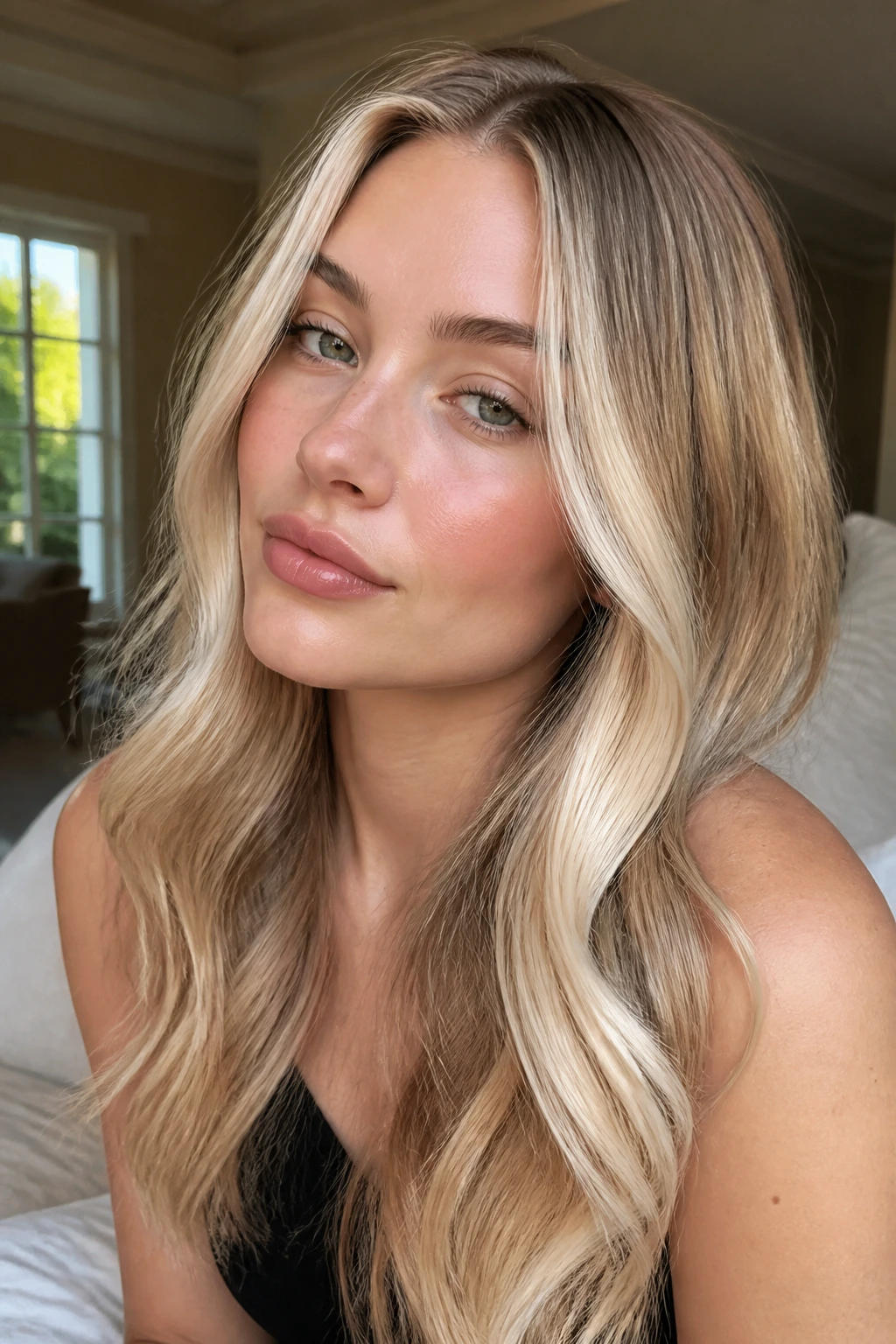
Champagne blonde works best when it looks chosen, not accidental. The right version for fair skin is rarely the palest one in the room. It is the one with enough beige, pearl, or soft gold to keep the face from getting erased.
That is why this shade family is so useful. It can be rooted, airy, smoky, bright, rosy, or sunlit and still stay inside the same easy-to-wear lane. Pick the version that matches your undertone and your patience for upkeep, and the color does the flattering for you.