



Long, thin hair can be brutally honest. One flat blonde formula and the whole length starts to look see-through at the ends; one smarter mix of light and shadow, and the same hair suddenly has more body, more movement, and a better shape around the face. That’s why the best blonde hair color ideas for long hair with thin hair are rarely the palest ones in the room.
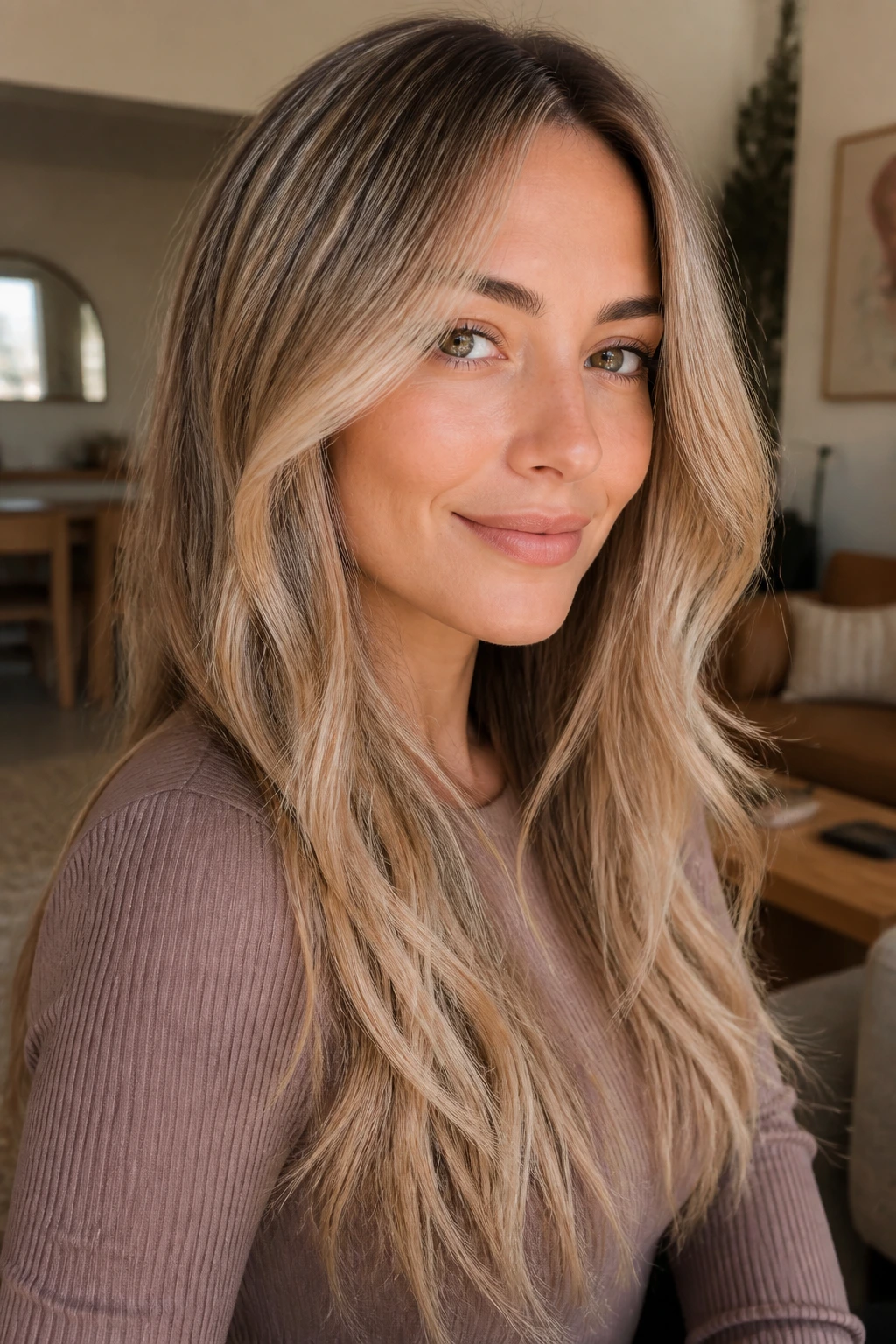
The trick is not “go lighter everywhere.” That approach can turn the mids and ends papery fast. What usually works better is a blend: a deeper root, a soft beige or buttery midlength, a brighter frame around the face, maybe a few cooler ribbons tucked underneath so the eye keeps moving. Thin hair likes dimension. Long hair likes balance. Put those two together and you get color that helps the cut instead of fighting it.
And yes, the cut matters too. A one-length sheet of hair and a carefully placed blonde are two very different things. If your hair is fine, sparse, or both, the right blonde can make the lengths look richer from three feet away. The wrong one exposes every weak point. So let’s get specific.
Why These Blonde Shades Work So Well on Long, Thin Hair
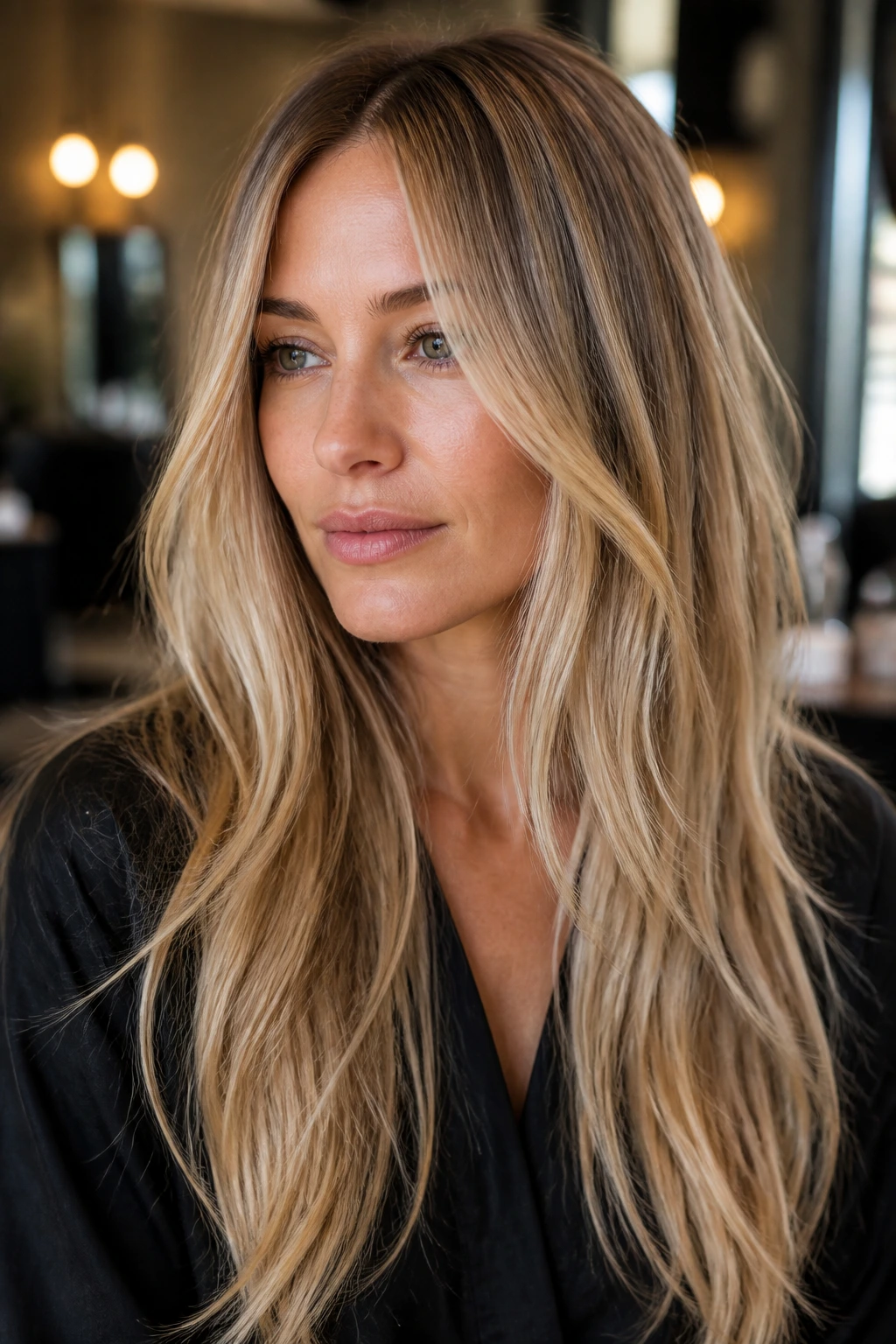
- They build shadow at the root: A root that stays one to two levels deeper keeps the part from looking wide and the crown from going flat.
- They scatter light instead of flooding it: Ribboned blonde, babylights, and balayage create movement that makes fine strands read as fuller.
- They protect the ends: Creamy beige, butter, and champagne tones keep the last few inches from looking wispy or over-bleached.
- They grow out in a softer way: Thin hair shows every hard line. A blurred grow-out buys you time between touch-ups.
- They work with long layers: When the cut already has movement, the color needs to echo that movement instead of sitting on top like paint.
1. Soft Butter Blonde with a Quiet Root Shadow
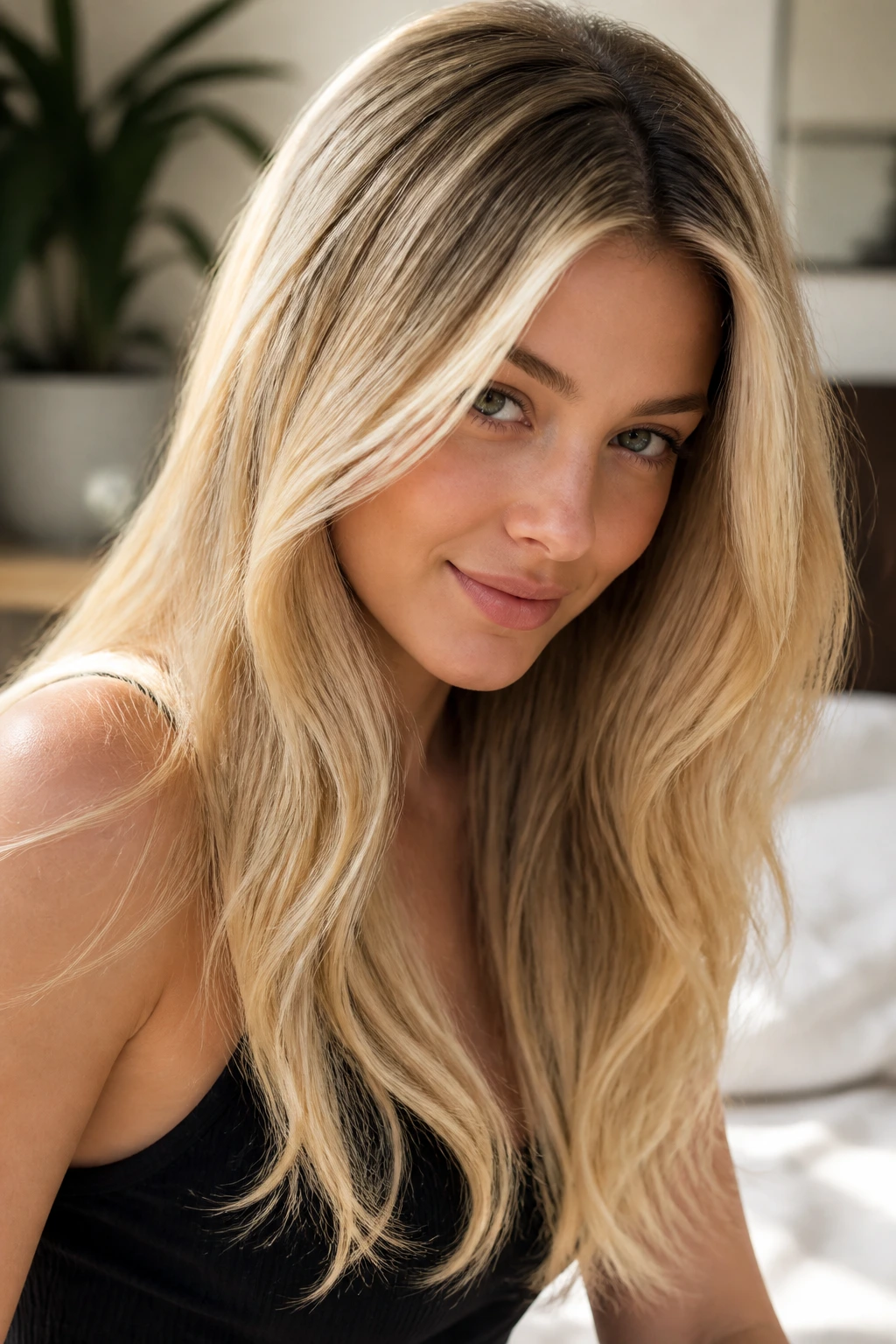
Soft butter blonde is one of my favorite answers when long hair needs warmth without looking orange. It sits in that creamy middle ground—soft gold, a touch of beige, no chalky edges. On thin hair, that matters. Pale, cool blonde can make the ends look hollow. Butter blonde keeps them looking plush.
Ask for a root that stays a shade deeper than the mids, then place the brightest ribbons around the cheekbones and collarbone. That puts the light where people look first. If you wear your hair in loose bends, the color catches on the curves instead of reading like one flat block.
A one-inch waving iron works better here than a tight barrel. Leave the last inch straighter, and the ends look thicker. Small thing. Big payoff.
2. Champagne Blonde That Starts at the Mids
Champagne blonde has a sparkle to it, but not the icy kind that can make thin hair look brittle. Think pale beige with a little brightness, like the top of a good sparkling drink after the bubbles settle. The best version for long hair usually begins below the roots, so the crown keeps some depth.
Why does that help? Because the eye sees a fuller root area and a lighter body below it. That contrast gives the impression of density without any hard stripe. If you have a naturally darker base, this is a smart place to live. It grows out politely, and it does not demand that every inch be lifted to the same pale level.
I’d pair this with long, invisible layers. The cut adds air; the color adds shine. Together they do a nice job of keeping the length from feeling heavy or limp.
3. Beige Balayage Over Invisible Layers
Beige balayage is one of those looks that looks simple until you see it in motion. Then the whole thing makes sense. The beige keeps things soft, while the hand-painted placement gives long, thin hair breaks of brightness without exposing every strand.
Invisible layers are the secret partner here. They remove weight from the interior without leaving obvious steps in the cut. That means the blonde can fall through the hair in softer planes, which is exactly what you want if the ends tend to look narrow. The color gets room to breathe.
If your hair is straight most of the time, keep the lightest pieces around the face and the outer third of the length. If you curl it, let a few lighter ribbons hide inside the bend. The movement does half the work.
4. Face-Framing Money Piece Blonde
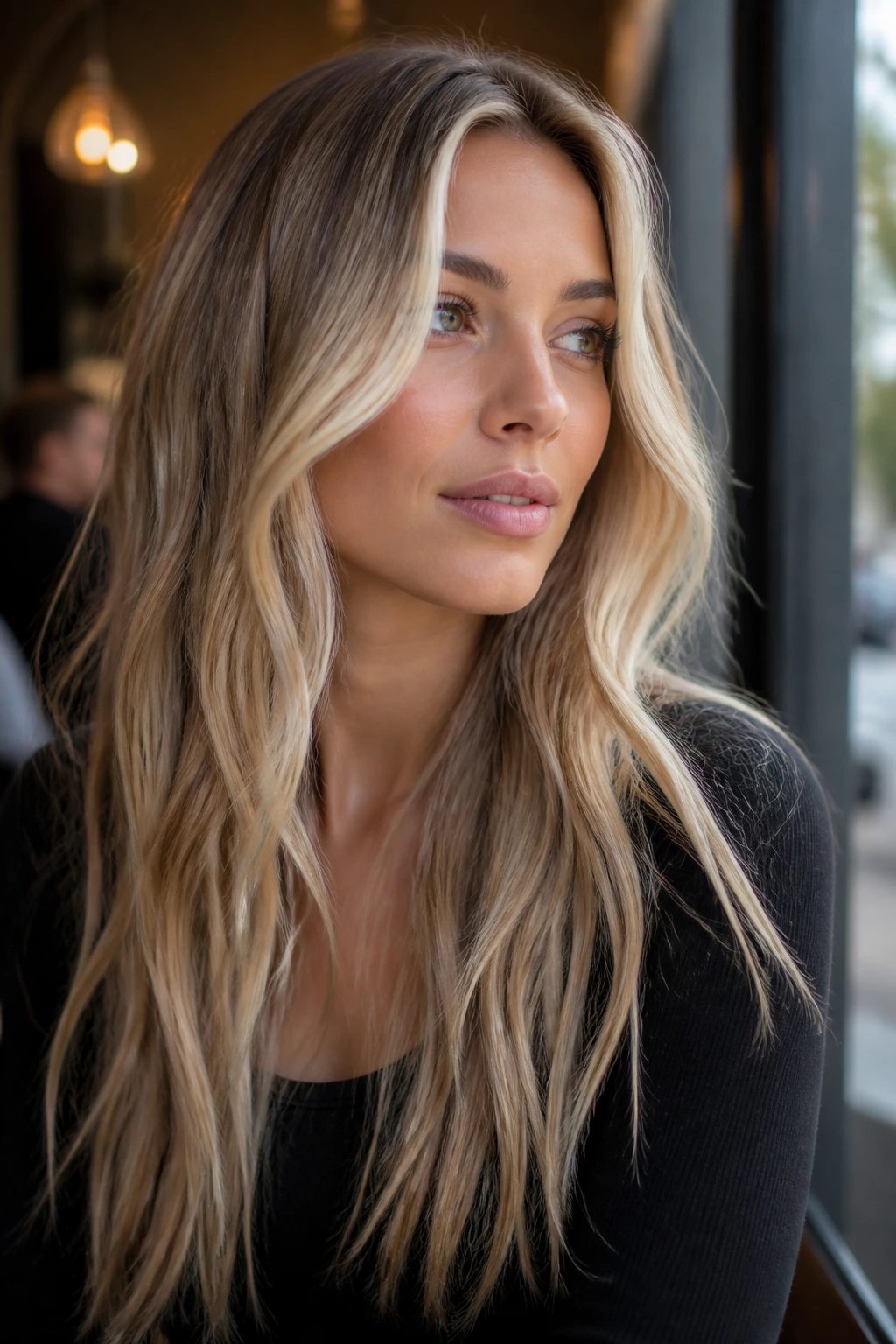
A money piece can do more than a full head of highlights. It can make a long face look brighter, give thin hair a stronger outline, and create the illusion that there’s more going on even when the rest of the color stays quiet. That little hit of light around the face is not cosmetic fluff. It changes the whole read of the hair.
I like this approach when the client wants visible blonde without committing to a lot of lightness through the ends. Keep the front pieces one to two levels lighter than the rest, then blend them into a softer beige through the mids. Too much contrast, and the front starts to look disconnected. Too little, and the effect disappears.
This one works especially well with a center part and loose bends away from the face. It opens everything up. Clean, simple, effective.
5. Icy Pearl Blonde with Glossy Ends
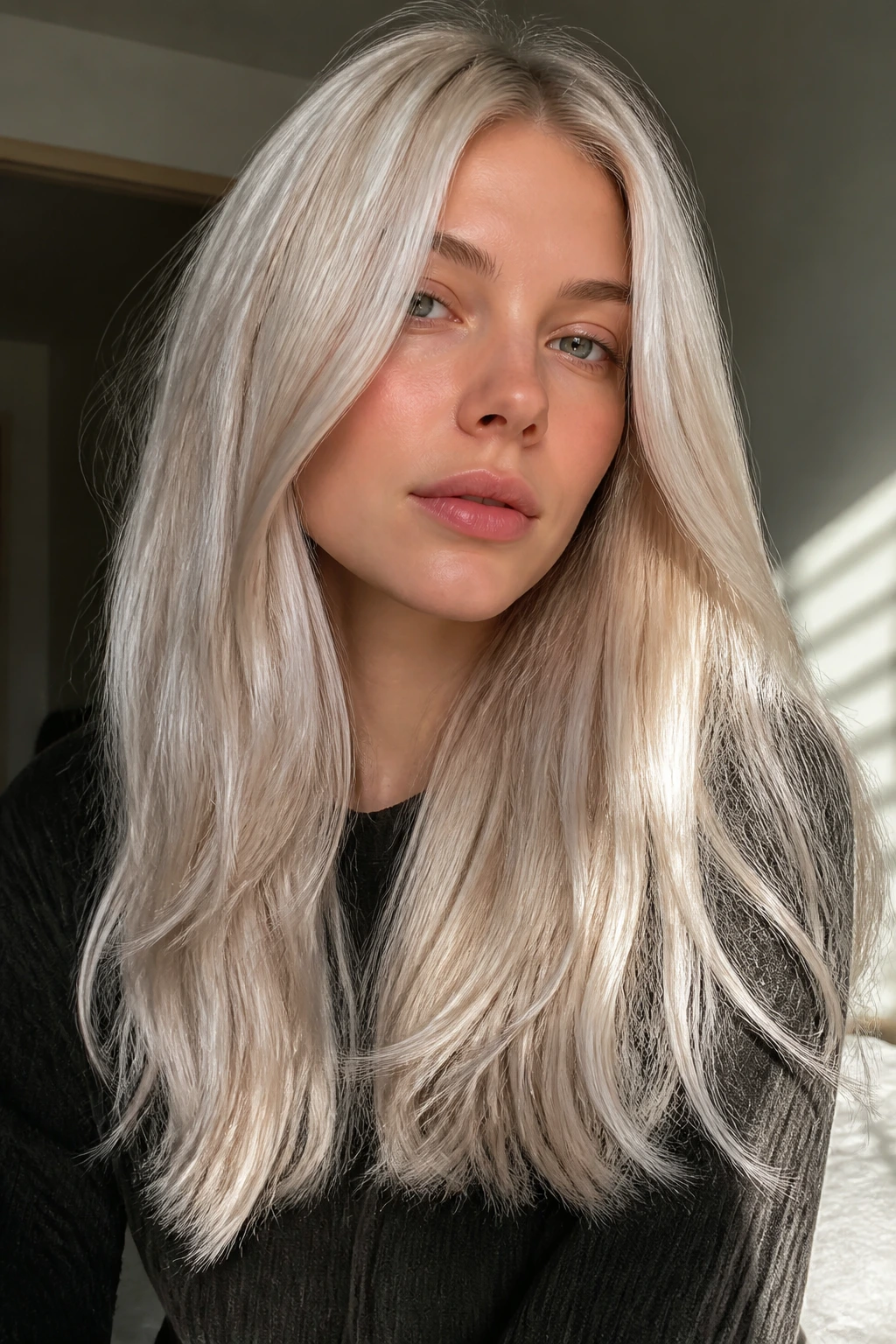
Pearl blonde is the cooler cousin of platinum, but it has more softness in it. The shade leans pale and luminous rather than stark white. On thin hair, that softness matters because hard white can make the strand pattern too obvious.
The key is gloss. Pearl blonde without a glossy finish can look dry fast, especially at the bottom half of long hair where damage usually shows first. Ask for a cool pearl toner, but keep a little translucence in the ends instead of pushing them to a flat, matte pale. That small bit of sheen keeps the length from looking sparse.
I’d be careful with this shade if your ends are already fragile. It can be gorgeous, but it asks for decent hair health. If the length snaps when you brush it, start with a softer beige pearl instead.
6. Honey Blonde Melt from Root to Tip
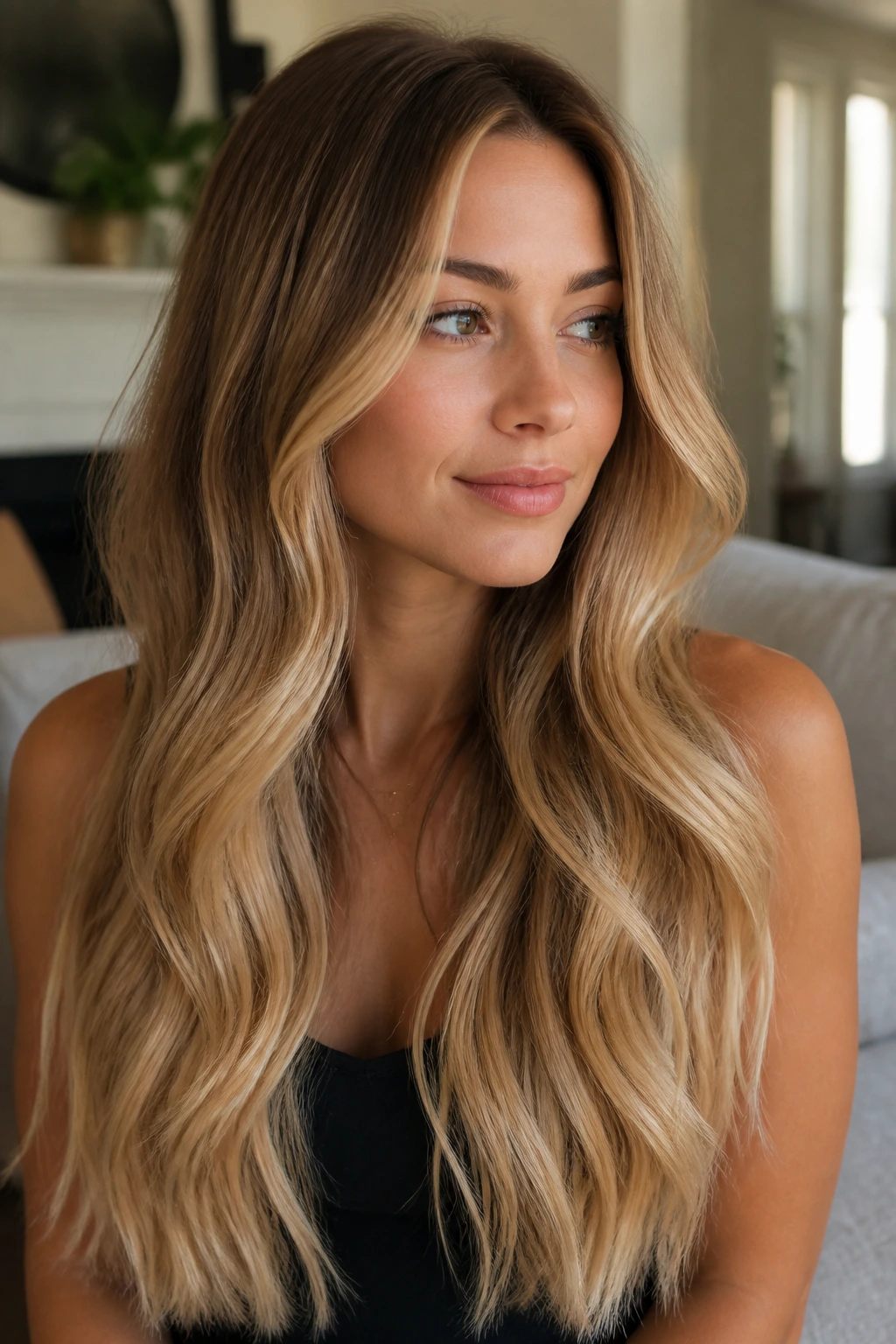
Honey blonde is one of the easiest shades to wear on long, thin hair because it adds warmth and depth at the same time. It looks richer than beige, less stark than platinum, and more forgiving than ash. When the root melts into honey mids and brighter ends, the whole head looks fuller.
That melt is the important part. You do not want a line where root meets blonde. You want a gradual shift that gives the illusion of thickness through the shaft. Thin hair often looks narrow when every strand is the same tone. Honey solves that by layering warmth in different places.
This is a good choice if your skin runs warm or neutral. It also behaves well under soft indoor light, which is where a lot of blondes fall flat. Honey keeps reading as hair, not as a color sample.
7. Ultra-Fine Babylights for a Fuller Look
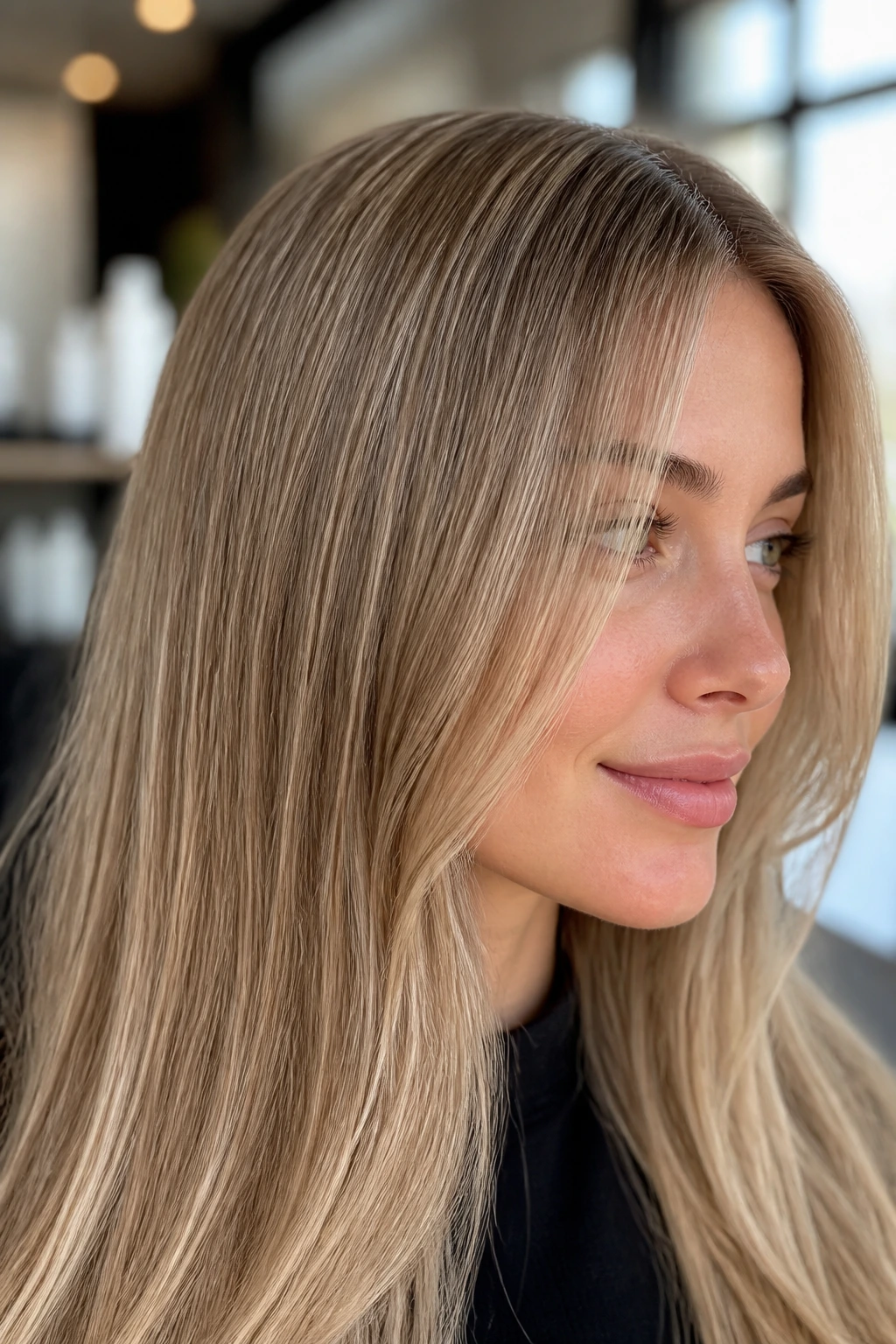
Babylights are tiny, barely-there highlights, and they’re one of the smartest options for sparse density. Chunky highlights can show too much scalp and make the space between foils obvious. Babylights do the opposite. They break up the base into soft threads of light so the hair looks more abundant.
What to Ask For
- Use very narrow weaves: Think finer than a shoelace, not wide ribbons.
- Keep the top layer slightly deeper: That preserves the look of coverage at the crown.
- Finish with a beige or neutral toner: Too much ash can flatten the result.
- Keep the ends a touch warmer: That helps long hair avoid the see-through look.
I like babylights for people who want their blonde to look expensive without looking obvious. They take longer in the chair, sure. But they buy you the kind of softness thin hair rarely gets from bigger highlight patterns.
8. Mushroom Blonde with Smoky Depth
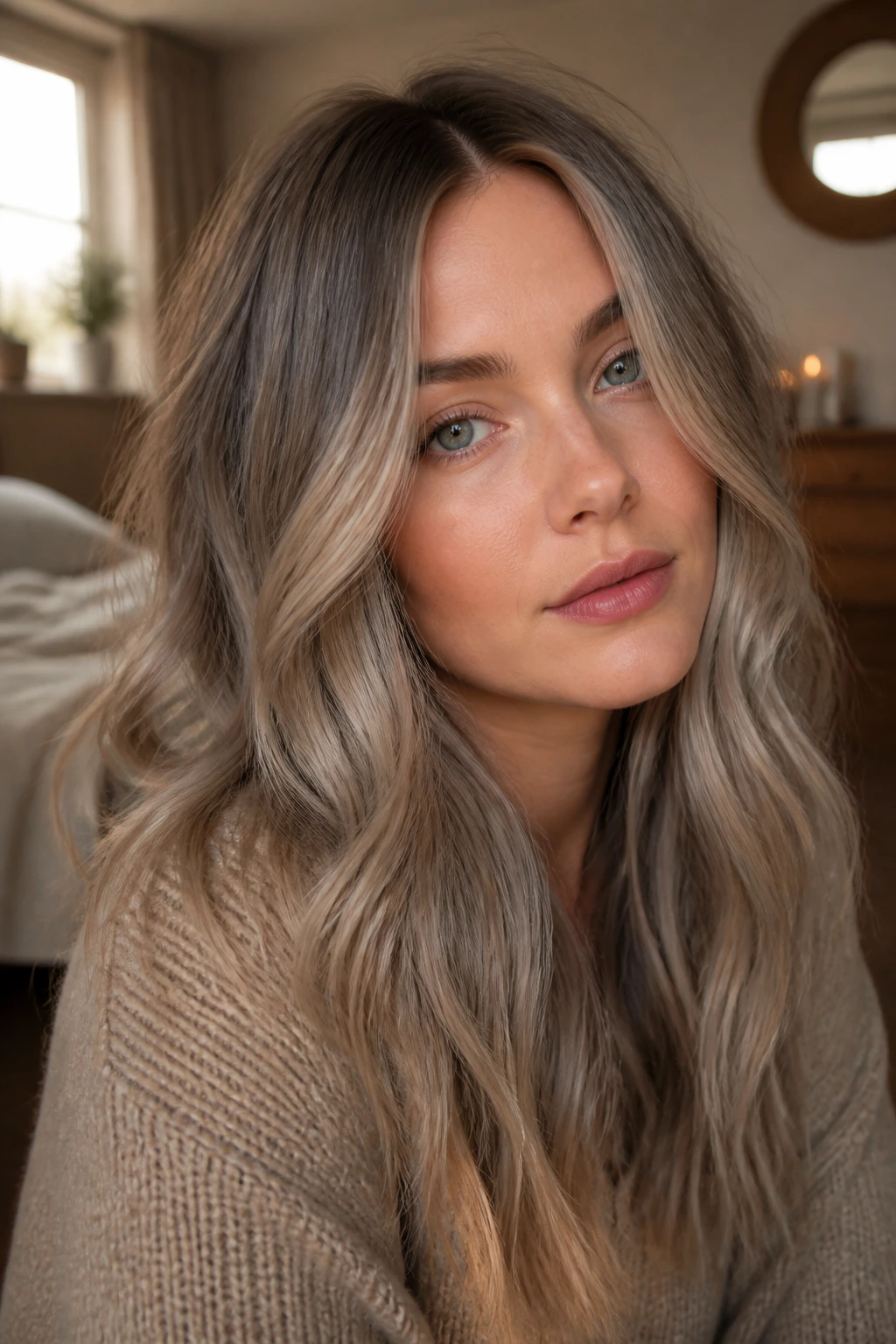
Mushroom blonde sits in a cooler, earthier lane. It has beige, taupe, and a faint smoky finish that keeps the color from going yellow or flat. On long hair with thin density, that smoke is useful. It gives the eye places to rest.
This is not the blonde for someone chasing bright, sunny blonding. It is for someone who wants a softer, more muted look that still reads blonde from a distance. The shade is especially nice if your natural base is medium brown and your ends are already fragile. You can lift enough to create contrast without sending the whole head into over-processed territory.
Wear it with loose waves and a middle or slightly off-center part. The neutral tone keeps the wave pattern from getting too sugary or too warm. It’s quiet, but not dull.
9. Golden Wheat Blonde for Sunlit Length
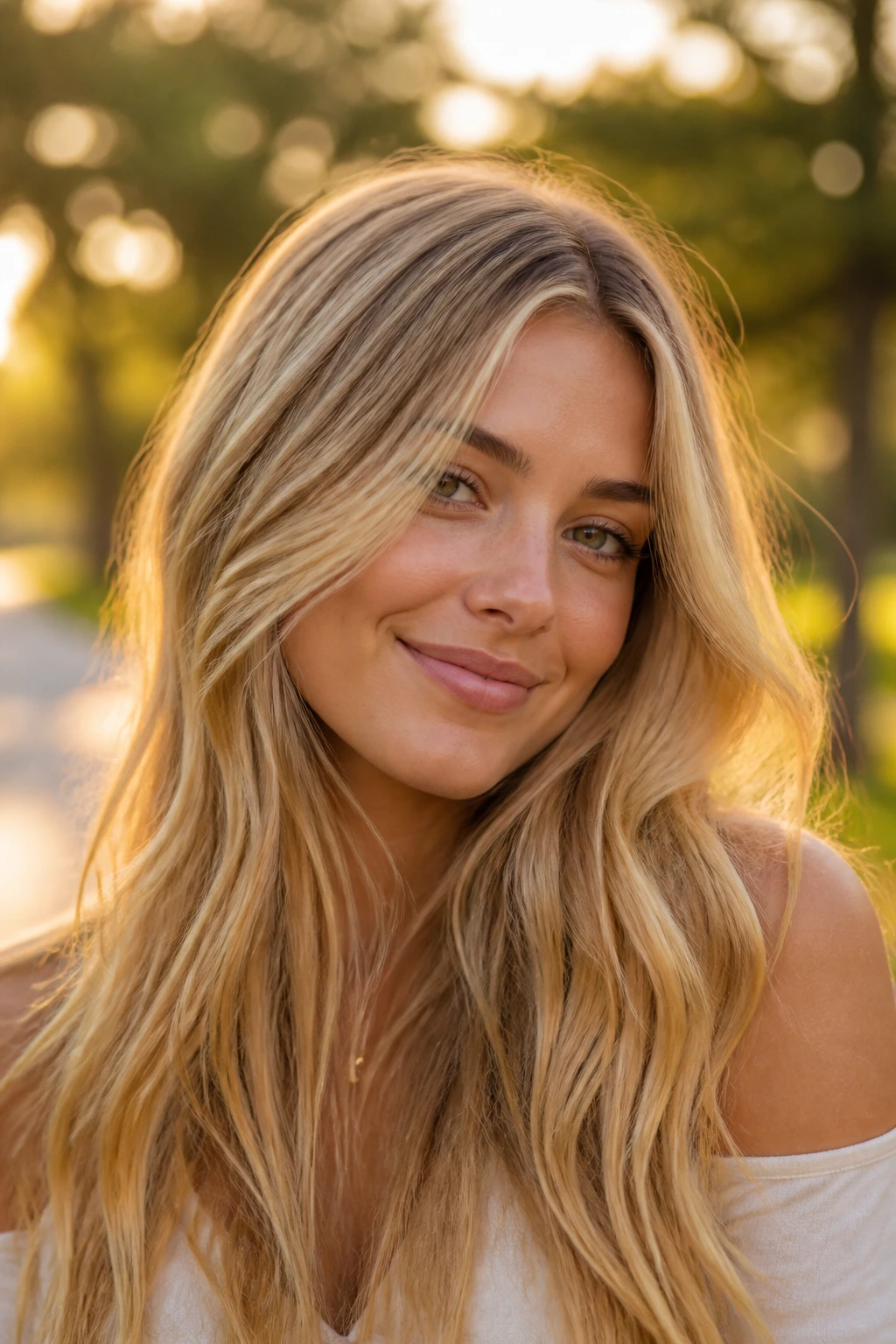
Golden wheat blonde has a dry, luminous warmth that feels natural on long hair. It looks like the hair has spent time outdoors, but without the bleachy glare that can make thin strands look stiff. The gold lives in the mids and ends, where it adds a soft glow.
This shade works best when the root stays a little deeper and the highlights are placed in long vertical ribbons. That keeps the length from turning into one washed-out plane. If your hair has a bit of natural wave, golden wheat catches the movement in a nice way. If it’s straight, add a soft blowout bend just to break up the line.
I’d call this a good “middle” blonde. Not too warm, not too cool, and easy to wear when you want color that does its job without showing off.
10. Vanilla Cream Blonde with a Soft Beige Base
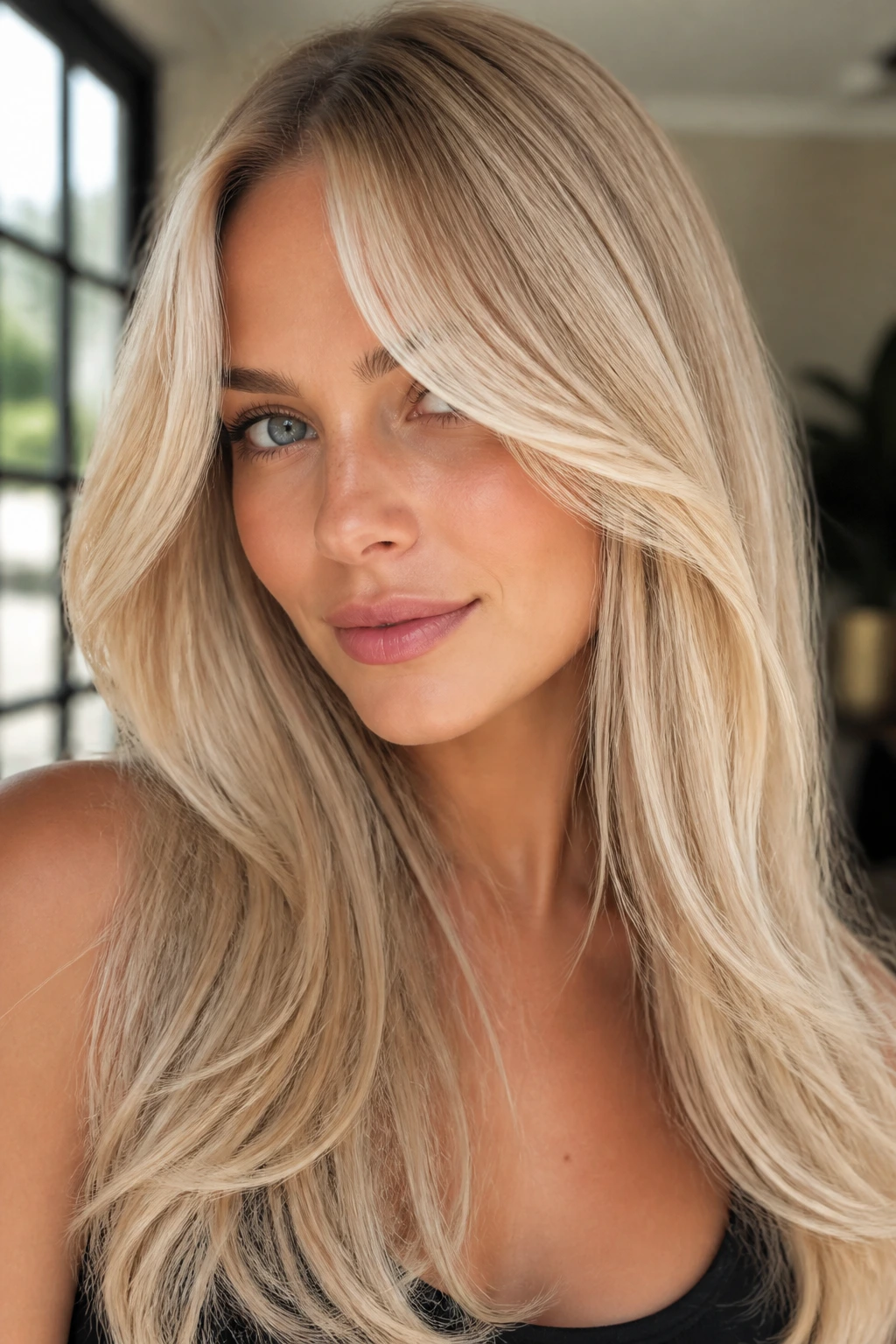
Vanilla cream blonde is the polished version of pale blonde that still behaves on thin hair. It has enough beige in it to keep the color from going chalky, and enough lightness to feel bright around the face. Think of it as a creamy, expensive-looking blonde rather than a high-contrast one.
The trick here is to avoid over-bleaching the last few inches. Ask for the most lift through the face frame and upper mids, then let the ends stay a touch softer. That creates a little visual weight at the bottom instead of a feathery finish that disappears in photos.
This is one of those shades that looks best with a clean blowout and a slightly off-center part. The movement gives the cream tone somewhere to go. Flat ironing it pin-straight can make it lose some of its life.
11. Caramel Blonde Ribbons Through the Ends
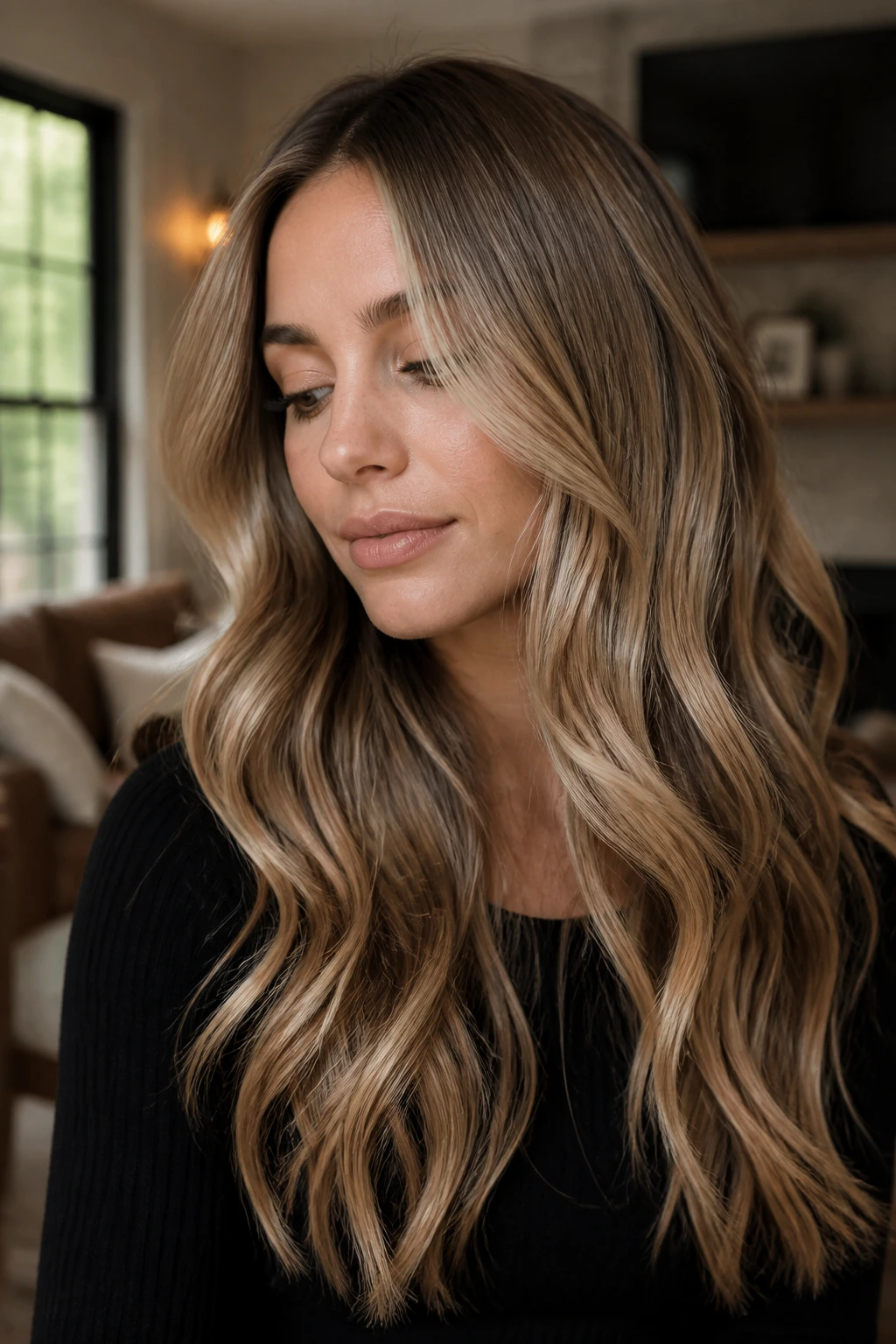
Caramel ribbons are a smart move when the ends of long hair need help. Instead of making everything lighter, you let a few deeper golden-brown threads stay in the lower half so the hair looks thicker where it normally thins out. That’s the whole point. Fill the visual gaps.
This approach is especially useful if your natural base is darker and you want something soft rather than icy. The caramel gives the blonde more structure. You end up with a finish that looks intentional, not overworked. On fine hair, intentional is a lot better than empty.
I’d keep the face frame lighter and the ends slightly warmer. That little contrast gives the illusion of a denser tail, which is where long hair usually needs the most help.
12. Cream Soda Blonde with a Gloss Finish
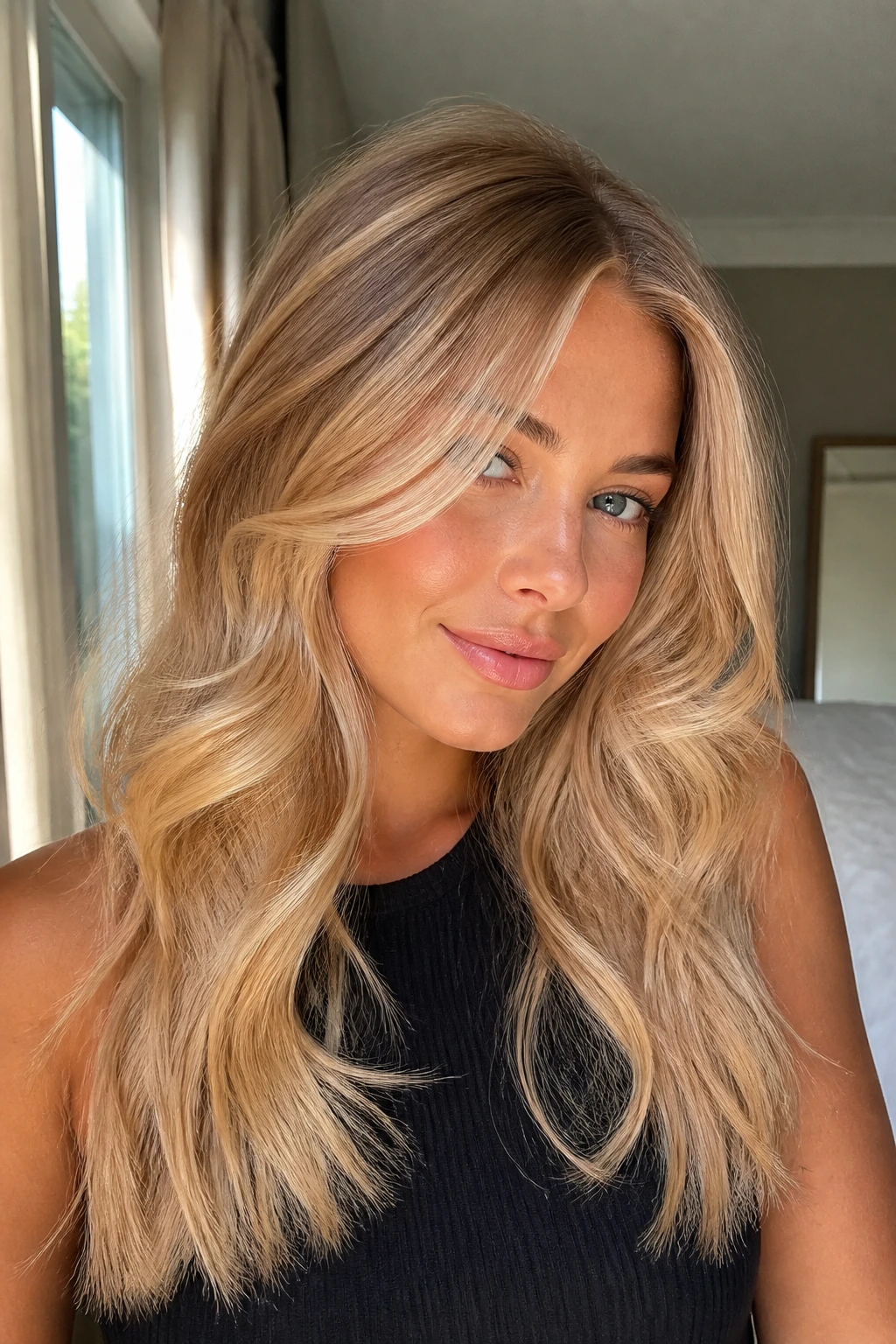
Cream soda blonde has a rooty, blended feel that keeps the whole look from going flat. It mixes beige, cream, and a touch of soft gold, then finishes with a glossy shine that makes long hair look healthier than it may actually be. That shine matters. Thin hair often needs light bouncing off the surface to read as fuller.
The best version keeps the root a soft shade deeper, then fades into a creamy midlength. No harsh line. No stripe. The grow-out is half the appeal, because it keeps the style from looking chopped up after a few weeks.
If you wear hair in loose curls, cream soda blonde has a nice way of catching on each bend. It feels relaxed, but not sloppy. That’s a useful balance when you want blonde that still looks put together.
13. Scandinavian Blonde with a Darker Root
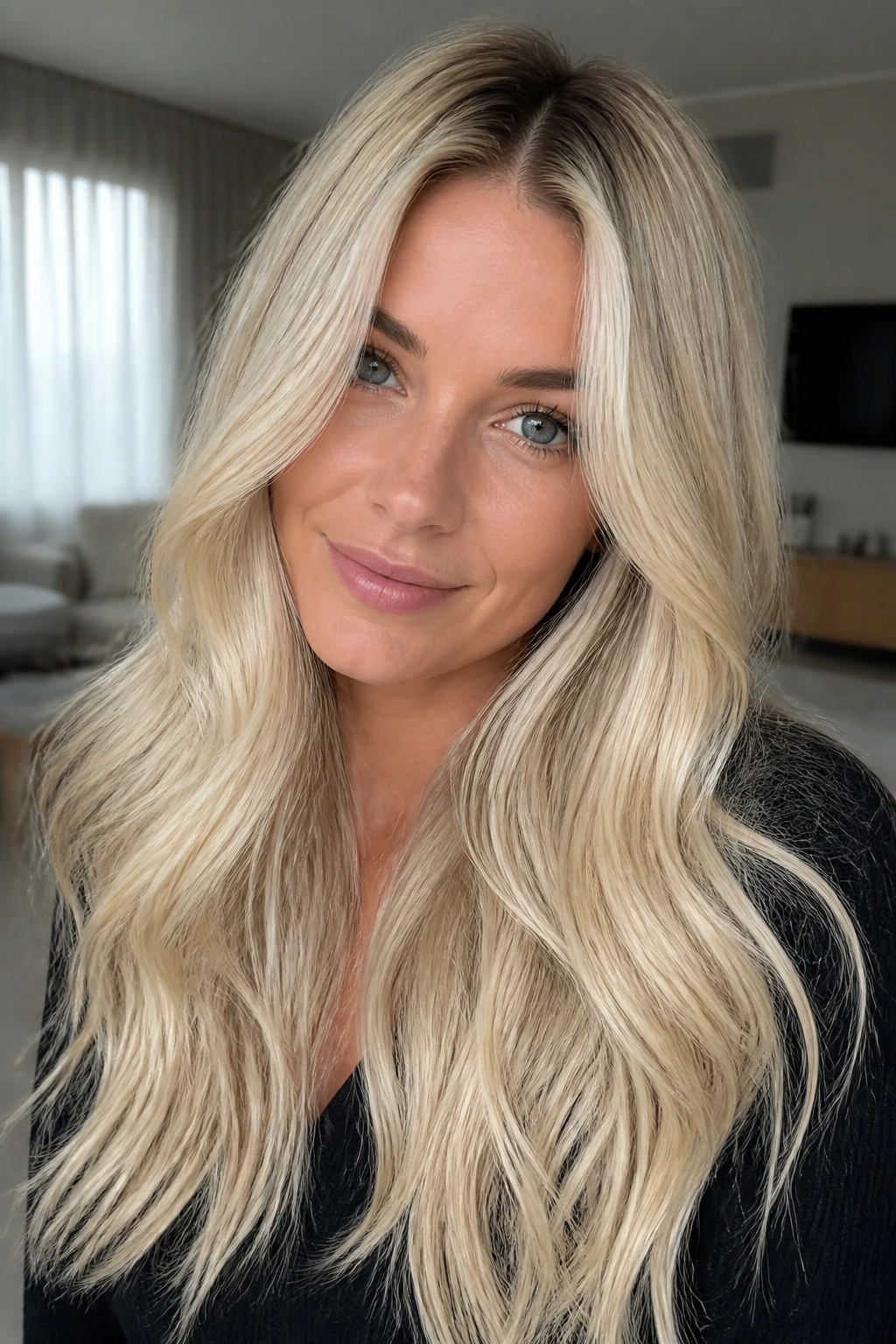
Scandinavian blonde gets a lot of attention because it’s bright, crisp, and very light, but on thin hair it needs a smarter setup. The version I’d trust most starts with a deeper root shadow and moves into a pale blonde through the mids and ends. That shadow is doing real work. It keeps the crown from looking thin and the part from looking wide.
If your hair is healthy enough to handle high lift, this can be striking. But I would not ask for an all-over pale finish on already delicate lengths. That usually looks more washed out than chic. The darker root gives the light blonde a frame, and on long hair, frames matter.
A center part and soft waves make this shade read cleaner. Straight and glassy can work too, but only if the ends are in good shape. Dry ends kill the effect.
14. Sandy Beige Blonde with Neutral Shine
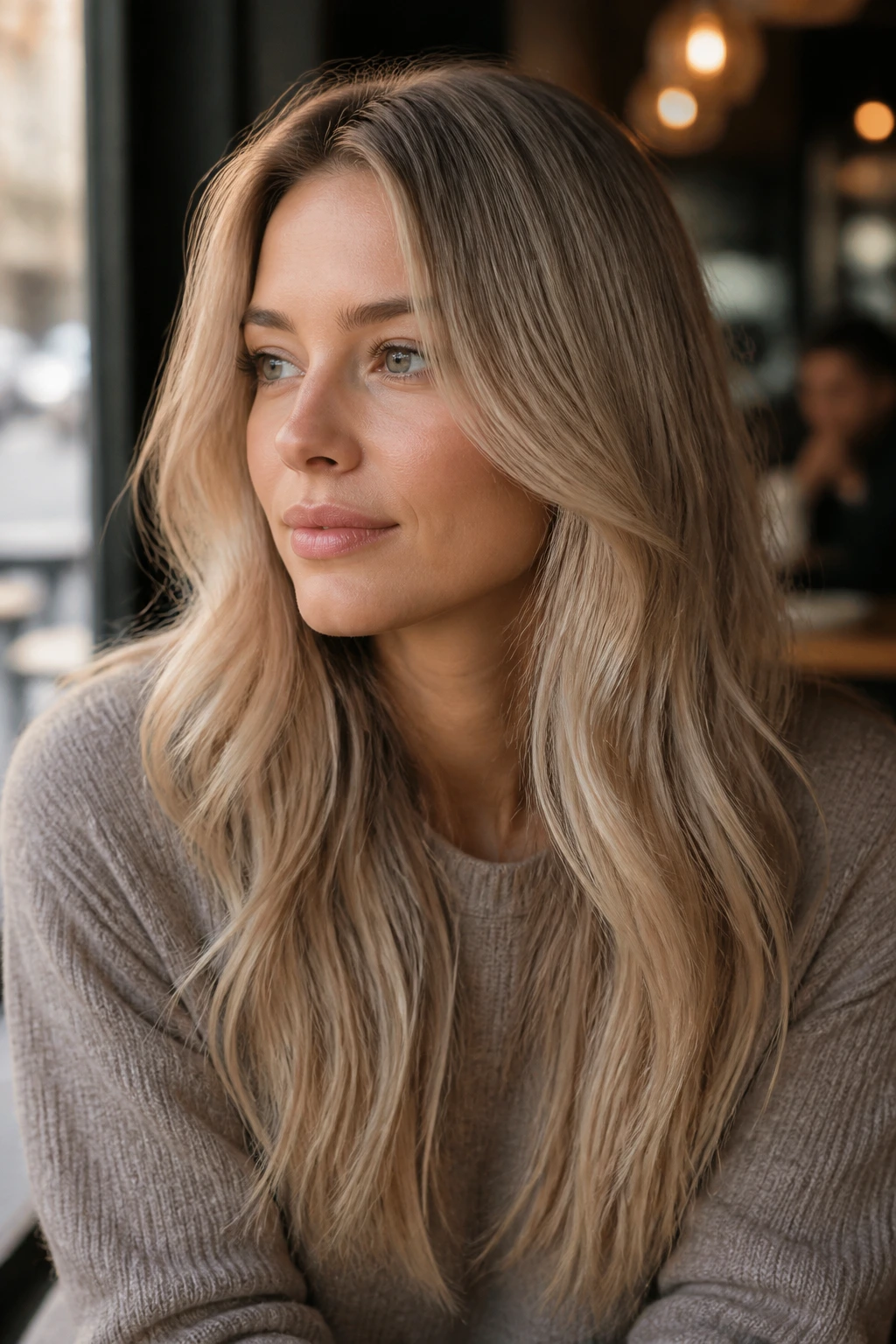
Sandy beige blonde is one of those shades that rarely offends anyone, which is why it works so well on long, thin hair. It sits in the middle of warm and cool, so it doesn’t tilt yellow or gray. That neutral balance helps the hair look smooth without flattening out.
This is a good option if your natural color is already somewhere in the dark blonde to light brown range. You can lift just enough to brighten the length, then tone it beige so the finish stays soft. Thin hair tends to look better when the color reads as texture, not as a loud statement.
I like sandy beige with long face-framing layers and a soft bend through the mids. It keeps the length from falling into one flat line. The effect is calm, but not sleepy.
15. Airtouch Blonde for Long, Floaty Layers
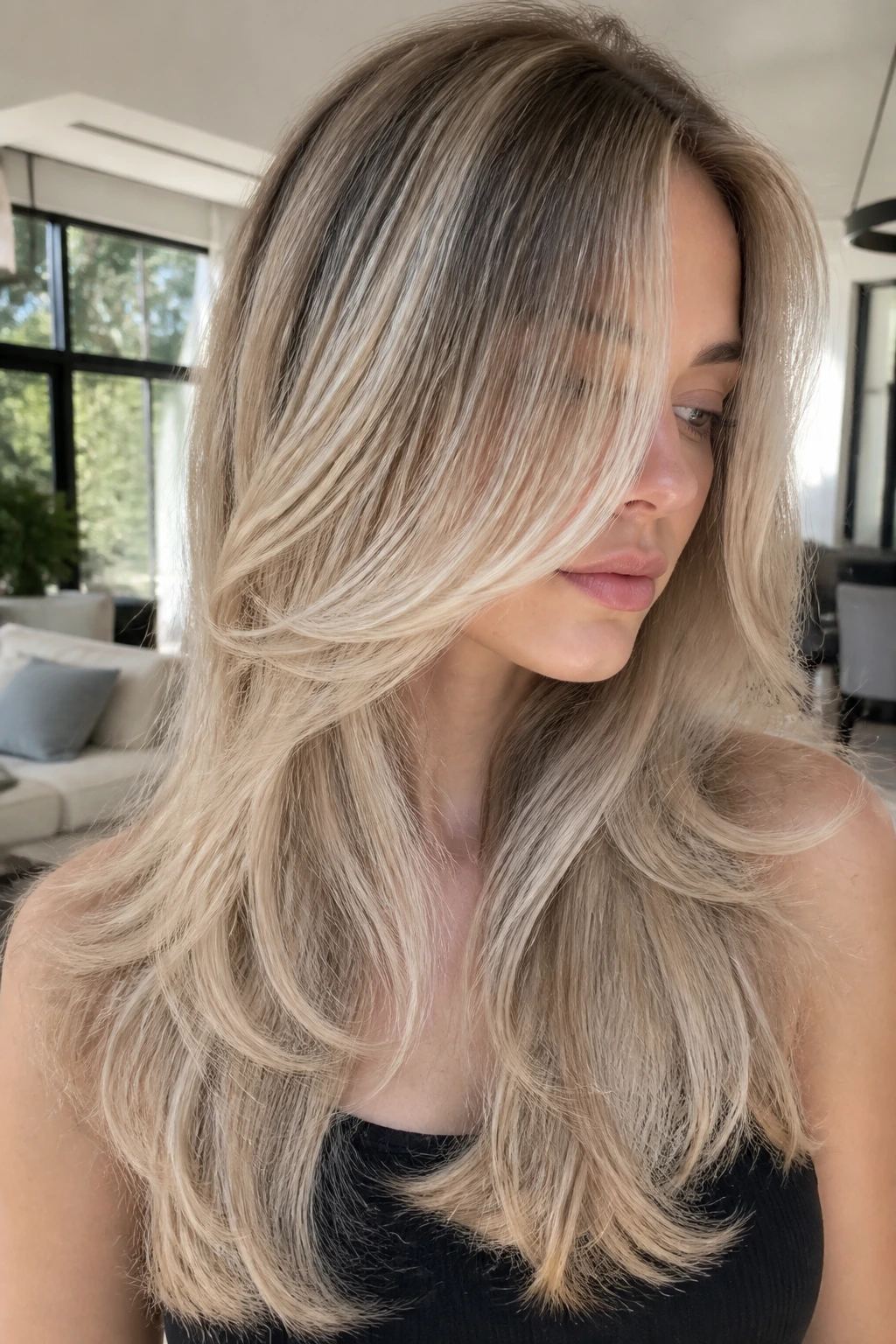
Airtouch is one of the best techniques for long, thin hair because it creates soft diffusion instead of hard stripes. The stylist uses air from the blow dryer to separate shorter hairs before painting the longer pieces, which leaves a very blended result. That’s the point. You get lightness without obvious lines.
This technique is especially helpful if you like the look of expensive, airy blonde but don’t want the scalp flash that comes with chunkier foils. The color grows out beautifully because the transition is already soft at the chair. Long hair benefits from that softness more than short hair does.
It also pairs well with layered cuts. Airtouch keeps the surface light while the interior still holds depth. That mix is what keeps thin hair from looking skimpy.
16. Platinum Ends with a Deep Shadow Root
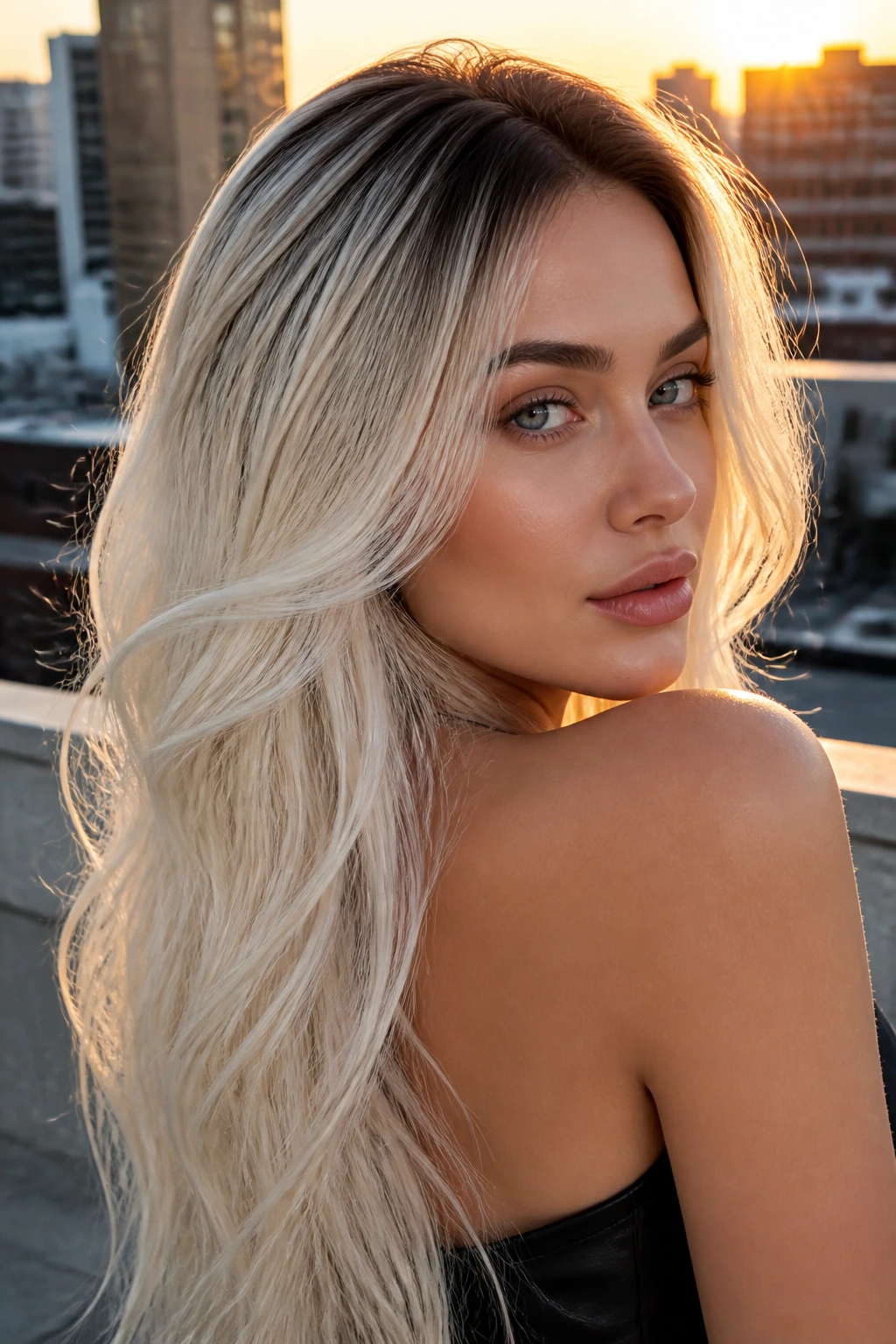
This one is bolder, and I would only use it on hair that can handle the lift. Platinum ends with a deep shadow root create a strong contrast that can actually make the hair look fuller in the lower half, because the pale ends stand out against the darker top. If the ends are blunt enough, the result has some punch.
The catch is damage. Platinum is unforgiving. If the hair is already fragile or over-lightened, this look can turn brittle fast. I’d keep the root shadow soft and the platinum more creamy than stark white. That gives you brightness without the chalky finish.
Wear this with big, smooth waves rather than tight curls. Tight curls can separate the platinum into skinny pieces, and that defeats the whole purpose. Keep it sleek enough to feel intentional.
17. Straw Blonde and Curtain Bangs
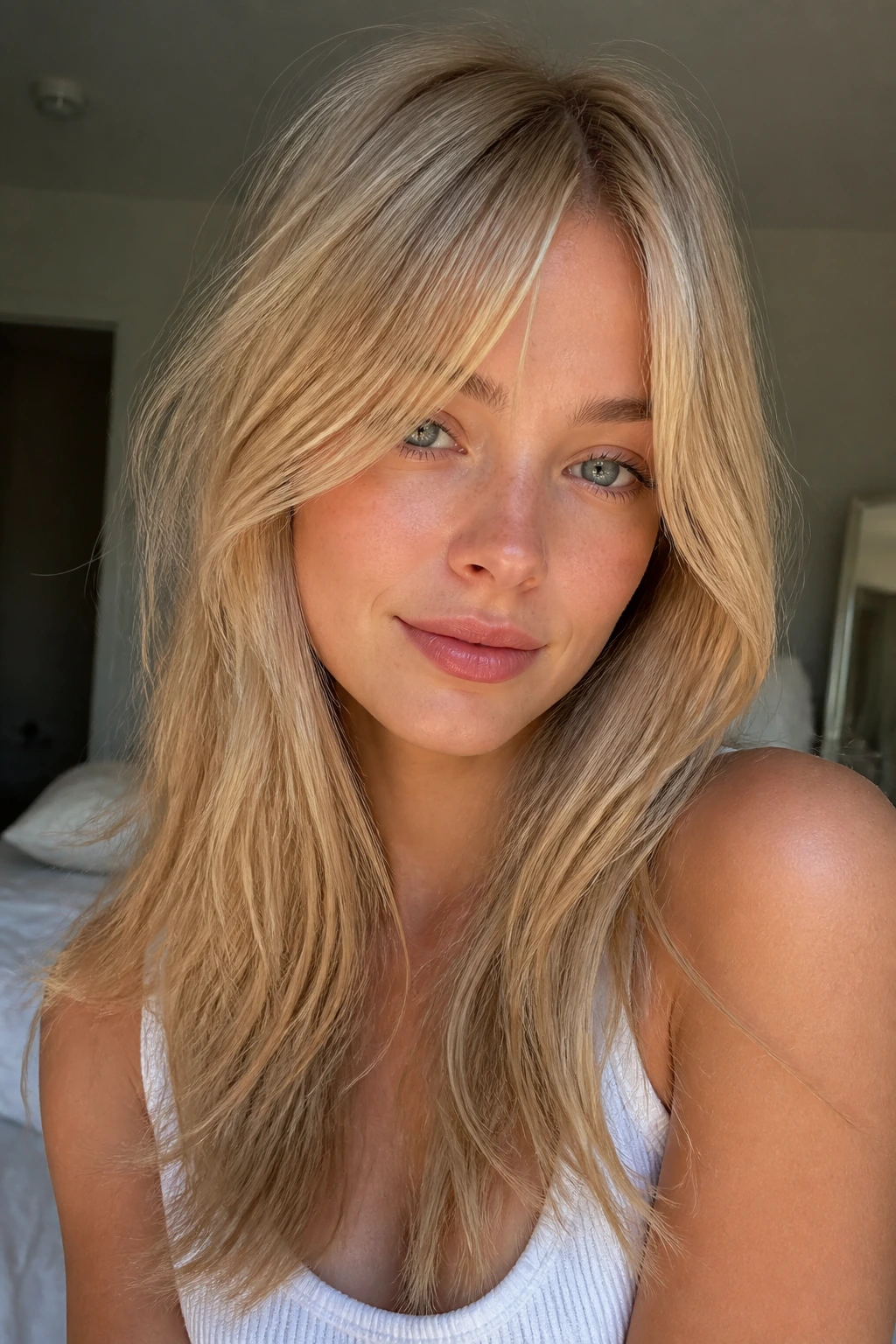
Straw blonde has a soft gold tone that sits between butter and beige. On long, thin hair, it works especially well when you pair it with curtain bangs. The bangs put color and shape back around the face, which is where thin lengths often look a little lost.
The shade itself should stay soft, not yellow. Ask for a gentle golden toner and avoid making the front sections too bright compared with the rest of the hair. You want the bangs to blend into the longer pieces so the whole haircut feels connected. Disconnected bangs plus disconnected color can make the hair look patchy.
This is a good choice if you want movement without a major color commitment. The face frame does a lot of the heavy lifting.
18. Rose Champagne Blonde with a Soft Pink Cast
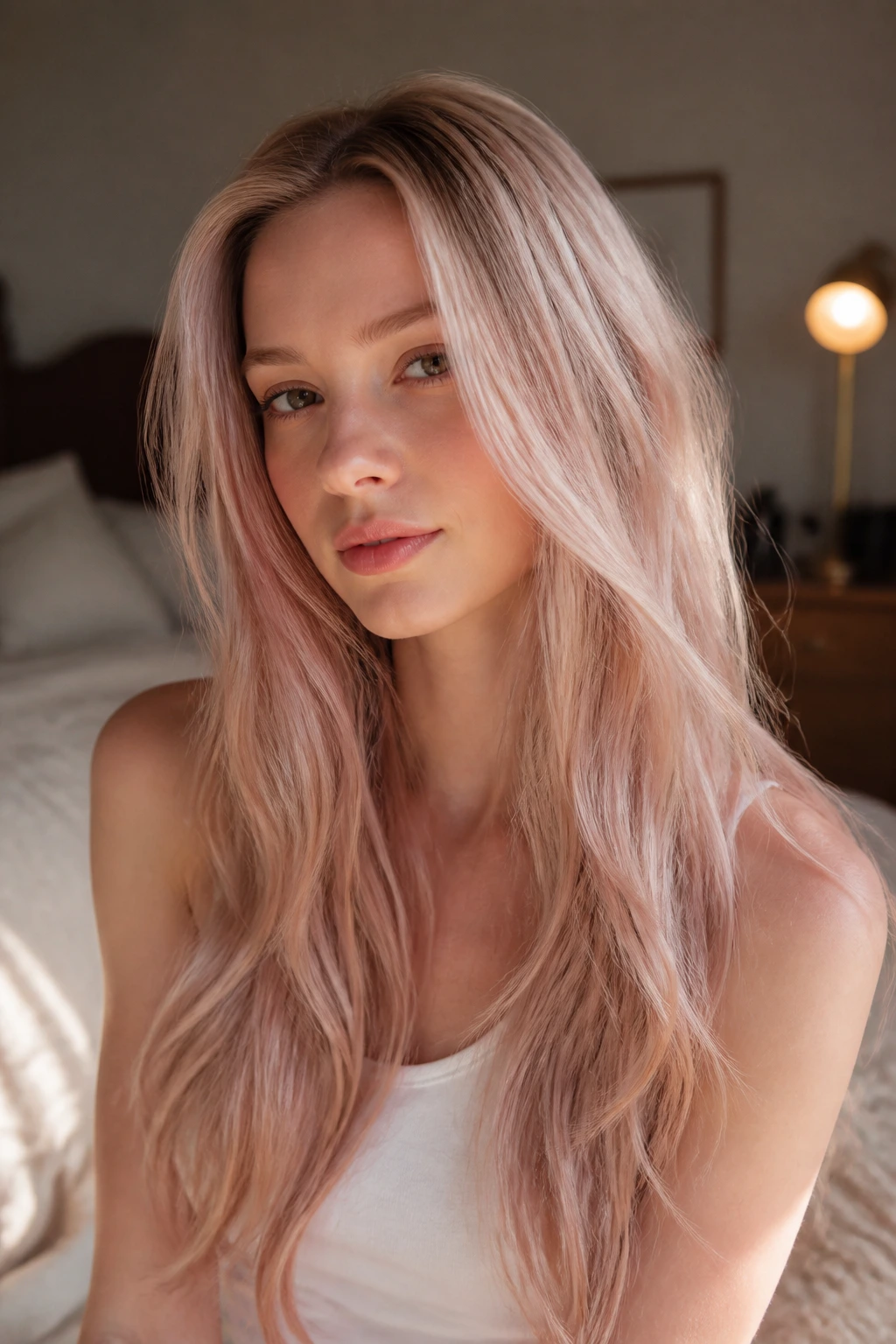
Rose champagne blonde is delicate in the best way. It takes the brightness of champagne and adds a whisper of pink or peach, which gives the hair a softer, more luminous feel. On long thin hair, that warmth can stop the blonde from reading too cold or too empty.
I would not push this into a strong pink pastel. The best version is barely there. It should show up most in soft light and then disappear back into blonde indoors. That subtlety is what keeps it wearable.
If your skin runs cool or neutral, rose champagne can be flattering because it warms the hair without making it brassy. It looks especially good with loose, brushed-out waves. The movement lets the color shift from pale to rosy as you move.
19. Two-Tone Blonde with Warm and Cool Ribbons
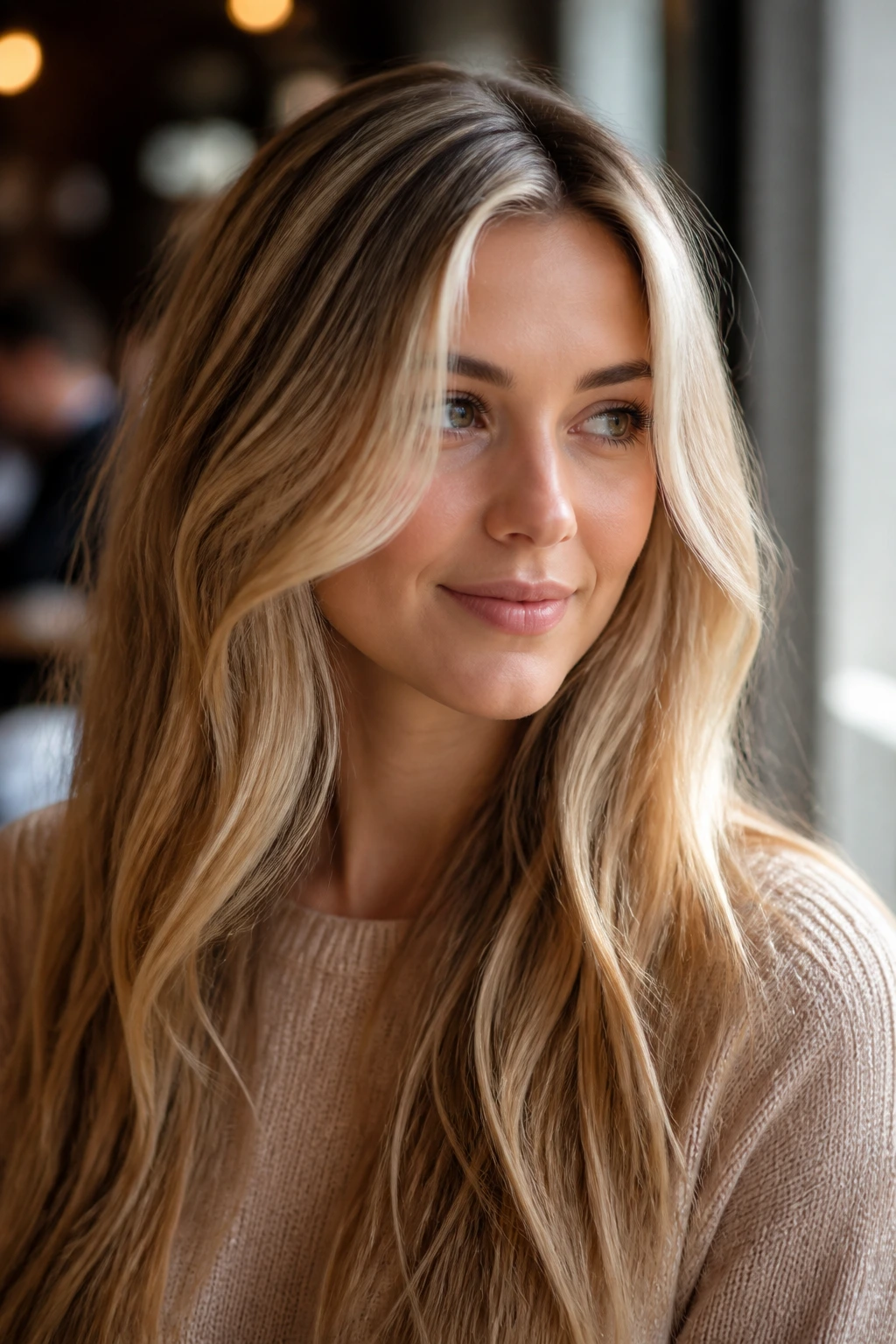
A two-tone blonde is one of the smartest ways to make thin hair look more substantial. By mixing warm and cool ribbons, you create visual texture without making the color messy. The eye keeps moving because it cannot settle on a single flat note.
This works best when the warm pieces sit through the mids and the cooler pieces frame the face and crown. That keeps the top from looking flat while the lower length still has some glow. You get contrast, but not the harsh kind that shows every line in the cut.
If you wear your hair straight, the two tones create a subtle stripe of movement. If you curl it, the ribbons fold into one another and the hair looks fuller from every angle. Useful. Very useful.
20. Toasted Coconut Blonde with Chestnut Depth
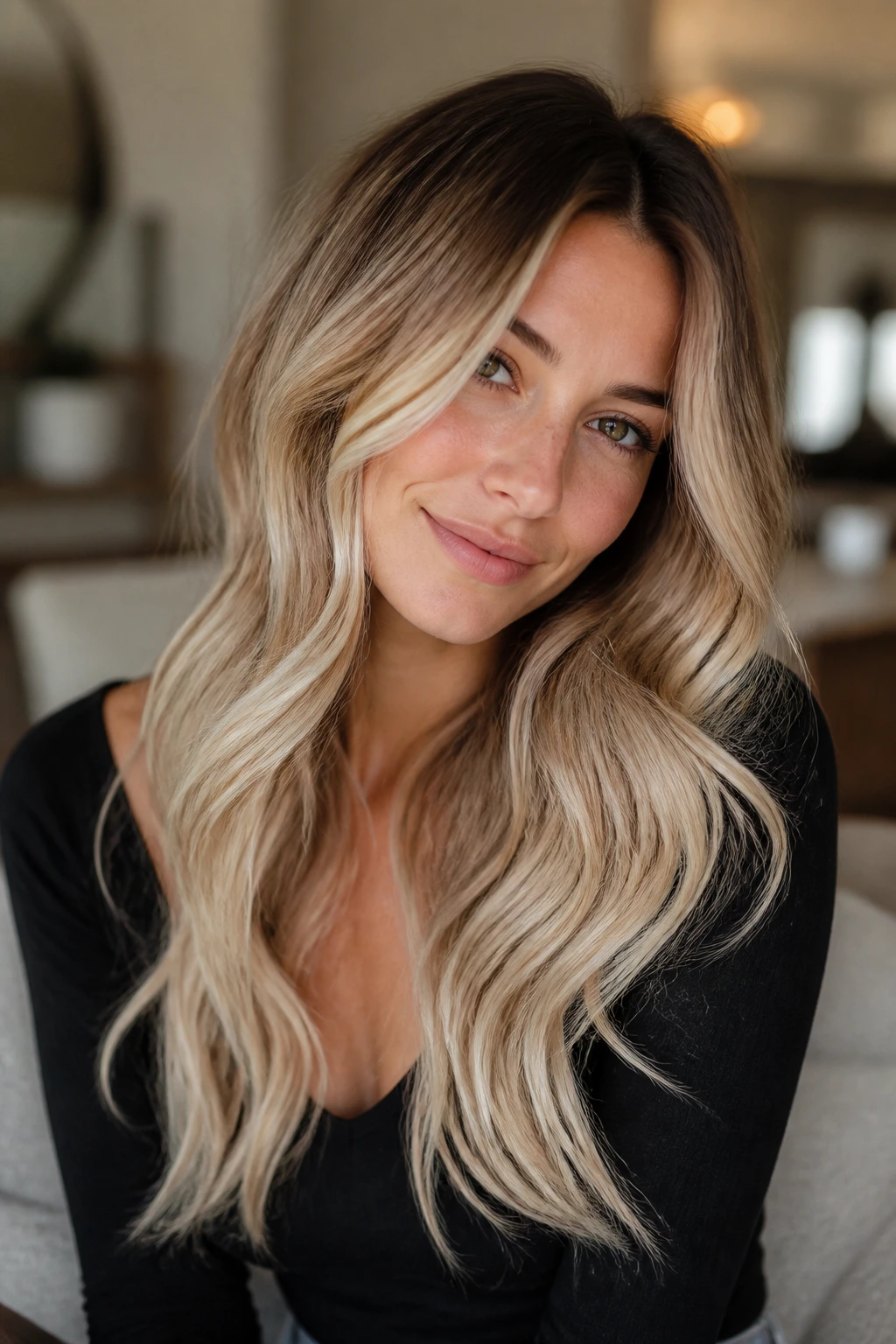
Toasted coconut blonde is one of those shades that looks richer than its name suggests. The root starts chestnut or deep beige-brown, then shifts into creamy blonde through the mids and ends. For long thin hair, that darker base is not a drawback. It gives the length a spine.
This is a strong choice if you want blonde without losing all connection to your natural color. It grows out in a way that feels lived-in, not neglected. And because the ends stay a little toasted rather than ultra-pale, the hair keeps some visual weight at the bottom.
I’d call this one especially good for people who do not want constant salon visits. The contrast is soft enough to stretch the time between touch-ups, which thin hair usually appreciates.
21. Buttercream Ribbon Highlights for Length
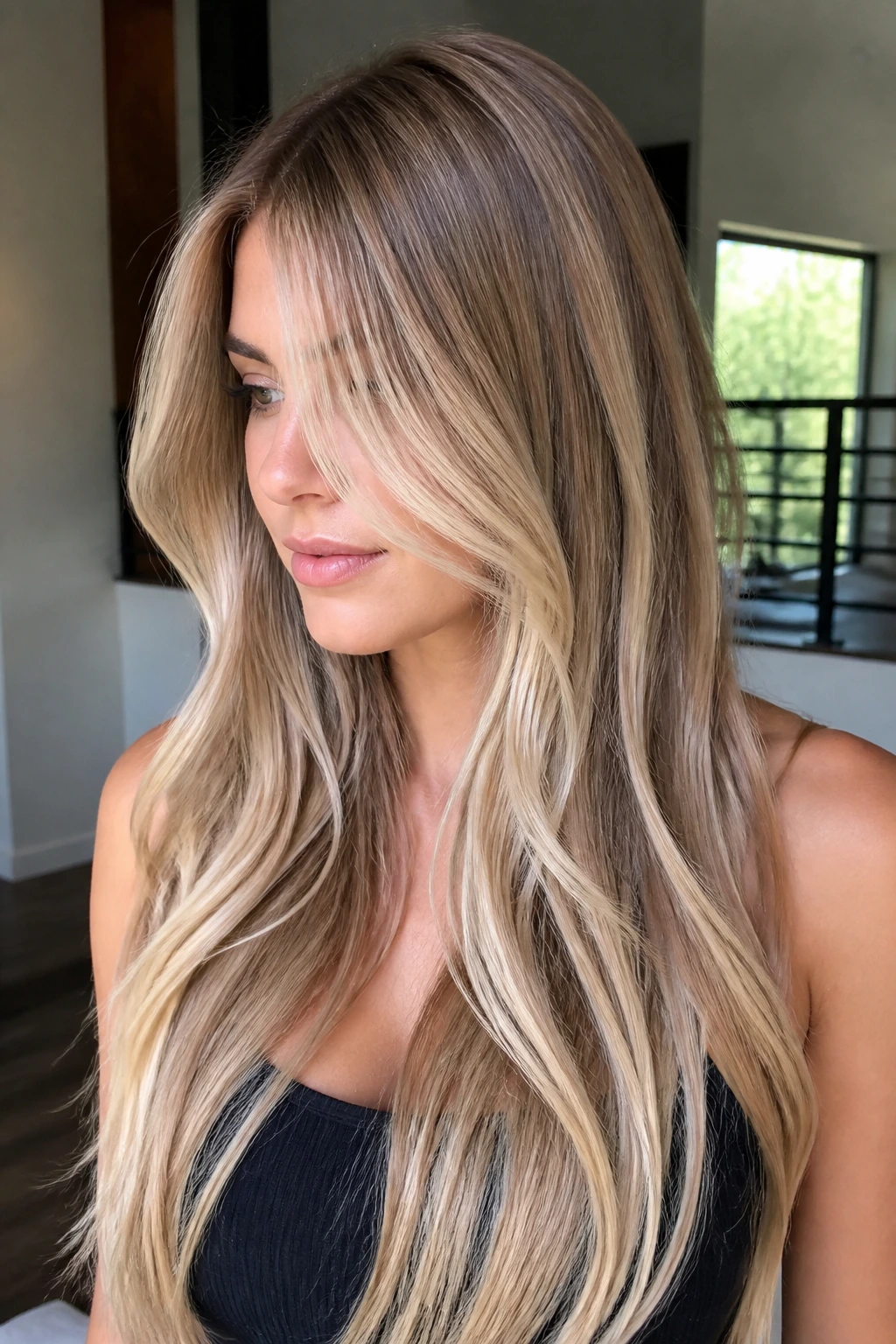
Buttercream ribbon highlights are wider than babylights but softer than chunky streaks. They move through long hair in smooth bands, which can be beautiful if the cut has face-framing layers or a soft V-shape at the back. The ribbons give the length shape.
This style works best when the highlight placement follows the fall of the hair, not a rigid grid. In plain English: the blonde should move with the cut. When it does, long thin hair looks more deliberate and less like it’s hanging there waiting to be filled in.
I’d keep the root controlled and the ribbons spaced out. Too many ribbons and the hair starts to look busy. Too few, and you miss the effect. It’s a balancing act.
22. Cool Sand Blonde with Low Brass
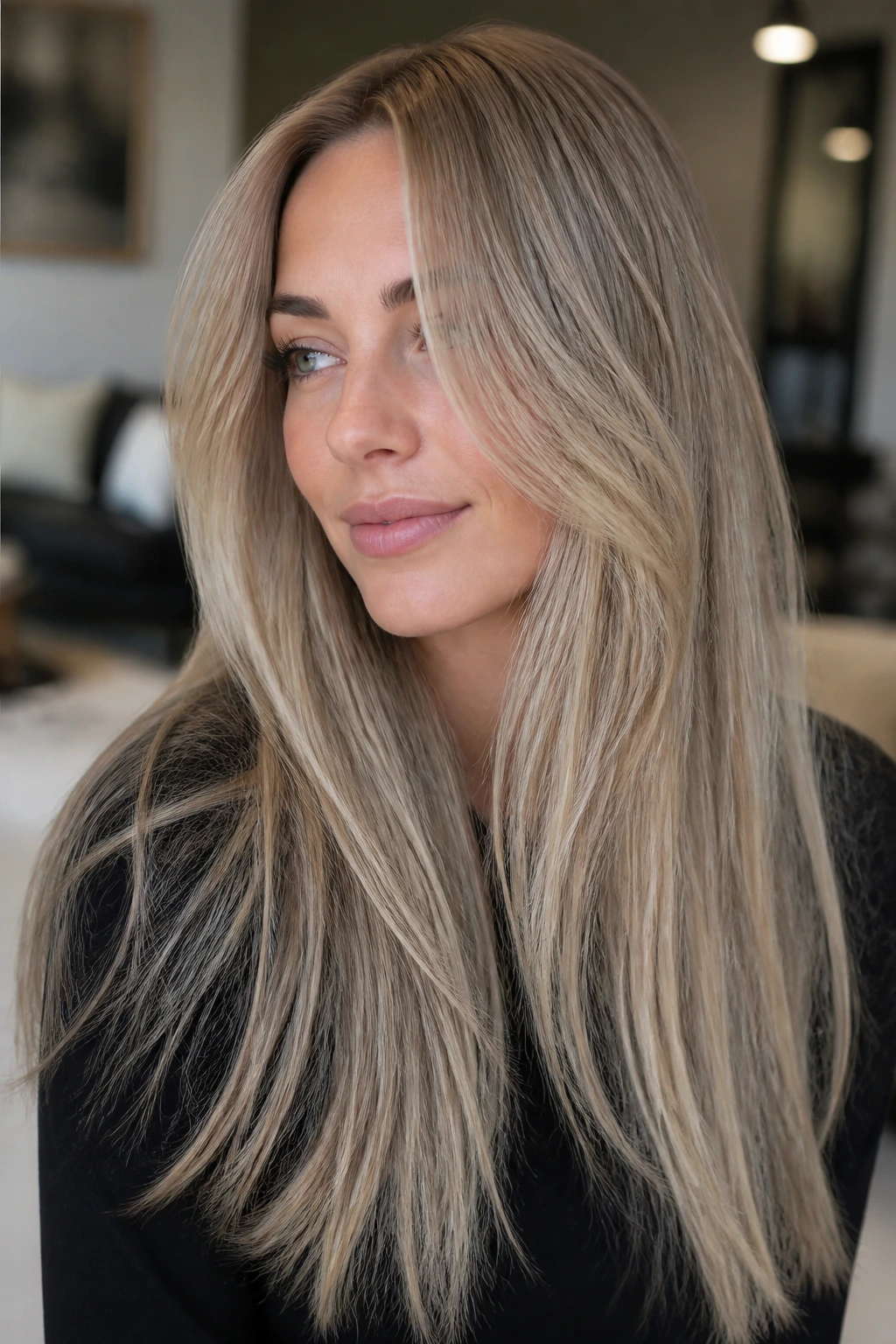
Cool sand blonde sits in a clean neutral-cool lane that can be a relief if warm blondes make you nervous. It has enough beige to stay soft, but enough coolness to keep brass from taking over. On thin hair, that balance helps the color stay crisp without looking dry.
This is a strong choice if your skin leans pink, cool, or very neutral. It also works well if your hair tends to pull gold the second it’s lightened. Ask for a soft matte-beige toner rather than a heavy ash finish. Heavy ash can flatten the shine, and thin hair needs shine.
Wear this one with loose texture, not crunchy definition. The color does its best work when the movement is gentle.
23. Gold Foilayage That Brightens the Face
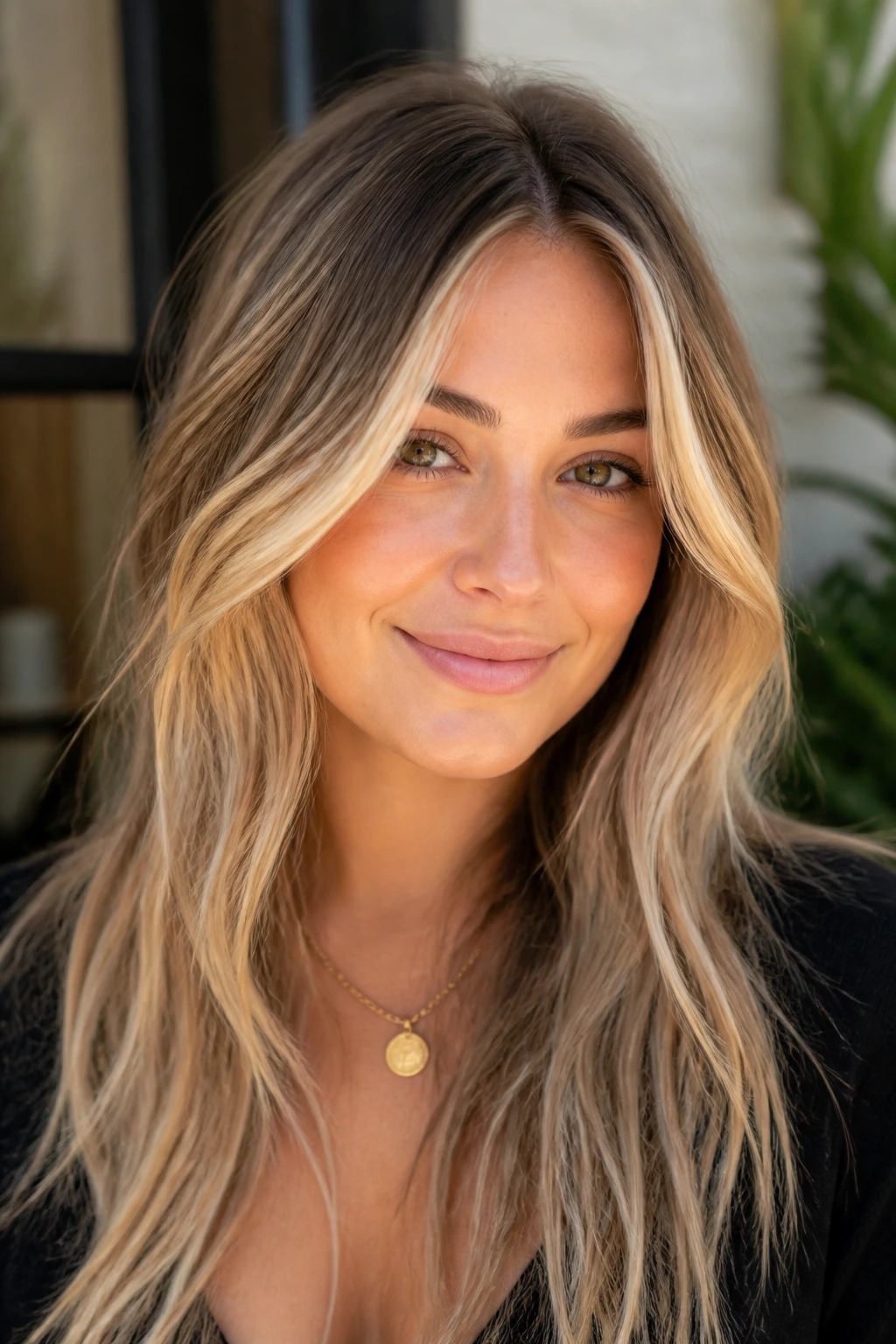
Foilayage gives you more lift than open-air balayage, which makes it useful when the goal is brightness rather than a whisper of color. Gold foilayage around the face can make long, thin hair look more alive because it creates a bright edge without blasting the whole head.
The gold should stay soft and luminous, not orange. That line matters. You want the front pieces to glow, then drift into a more blended blonde through the mids and ends. If the contrast is too sharp, the pieces start to look disconnected. If it’s too soft, the face frame disappears.
This is one of the better picks if you usually wear your hair down and want the color to show quickly. It gives you a visible result without needing a dramatic all-over blonde.
24. Strawberry Champagne Blonde with a Peach Tint
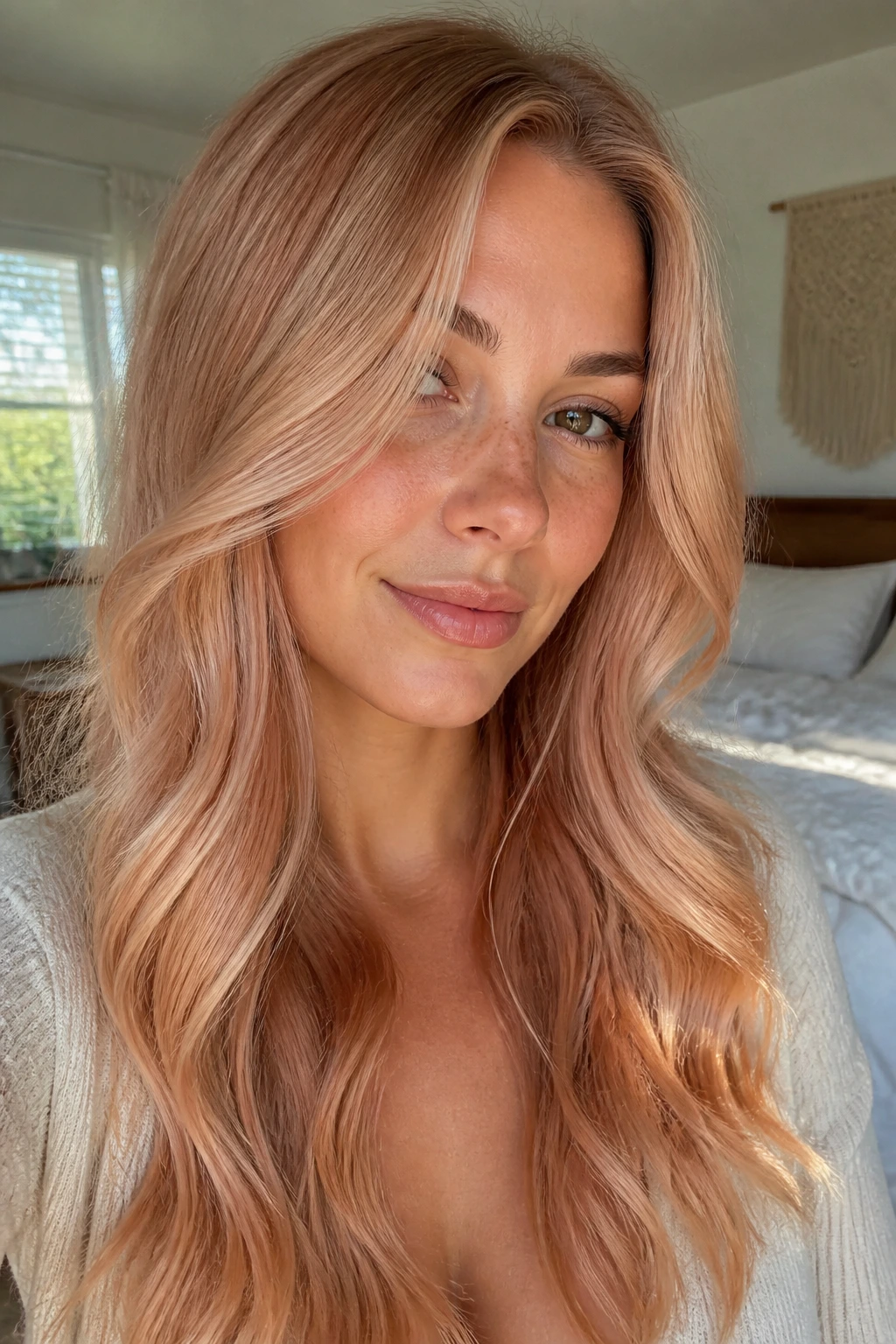
Strawberry champagne blonde is a little warmer and a little softer than standard champagne. The peachy cast can be flattering on thin hair because it gives the blonde a gentle warmth that doesn’t look flat or over-toned. It feels light, but not icy.
I like this one on hair that has a naturally delicate texture. The soft tint can make the strands seem more plush, especially when the length is curled or waved. Keep the peach subtle. The moment it becomes obvious pink, the blonde side of the look starts to disappear.
It also grows out well if your base is warm. That makes maintenance easier. And yes, maintenance matters when the hair is thin—harsh regrowth lines are harder to ignore.
25. Mink Beige Blonde for Soft, Muted Dimension
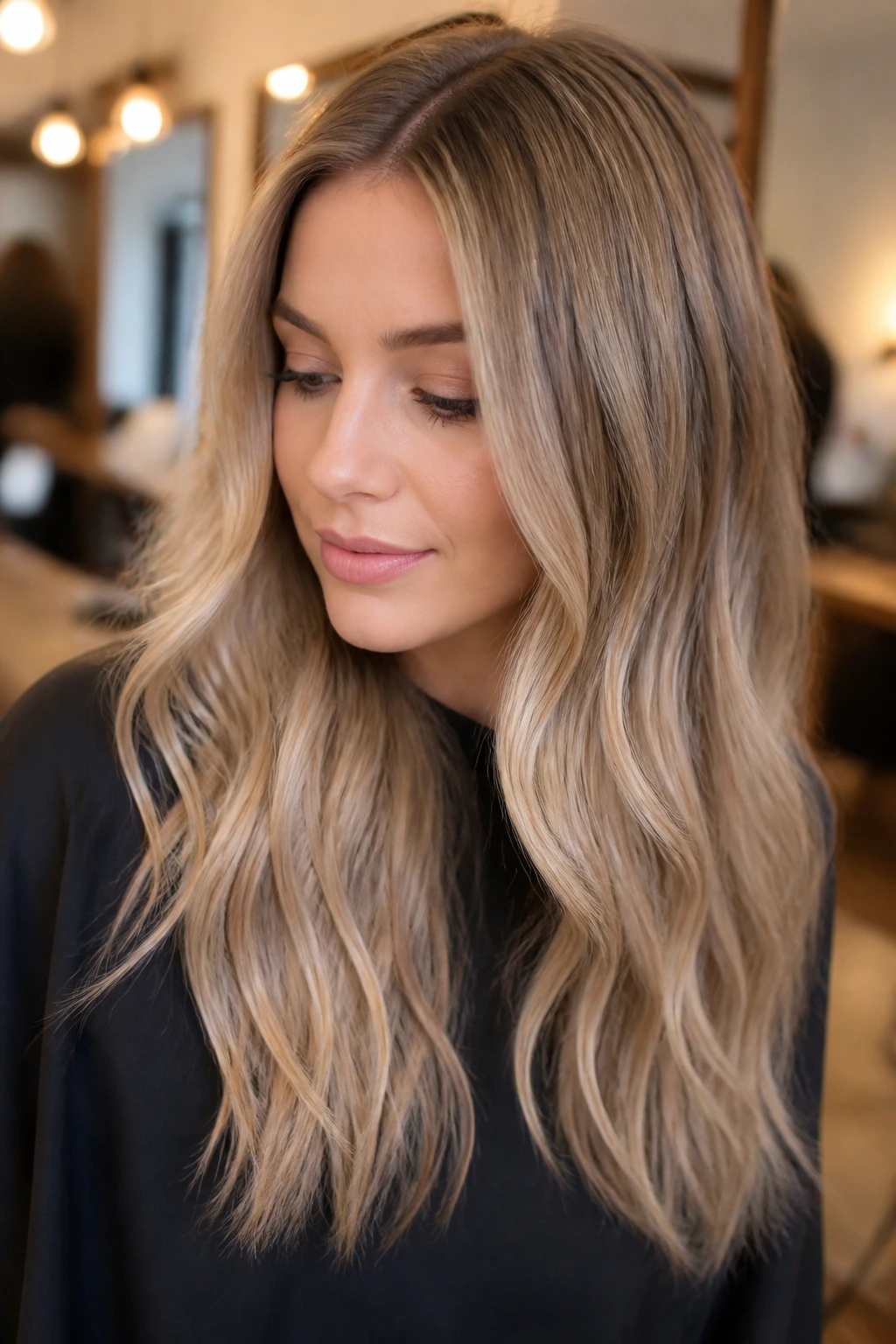
Mink beige blonde is what I recommend when someone wants something quieter than honey and softer than ash. It has a smoky beige finish with just enough depth to keep long thin hair from looking featherlight in the wrong way. The shade is calm. That calm helps.
Ask for a dark-blonde or light-brown root that melts into a beige blonde midlength with a muted finish. If the ends are left a touch deeper, the whole style reads thicker. It’s one of those shades that looks more expensive in person than it does in a picture because the texture does not get washed out by glare.
This is a good final option if you want blonde, but you do not want your hair to look like it has been pushed to the edge. Smart restraint has its own payoff.
Why Dimension Beats One Flat Blonde on Long Hair with Thin Hair
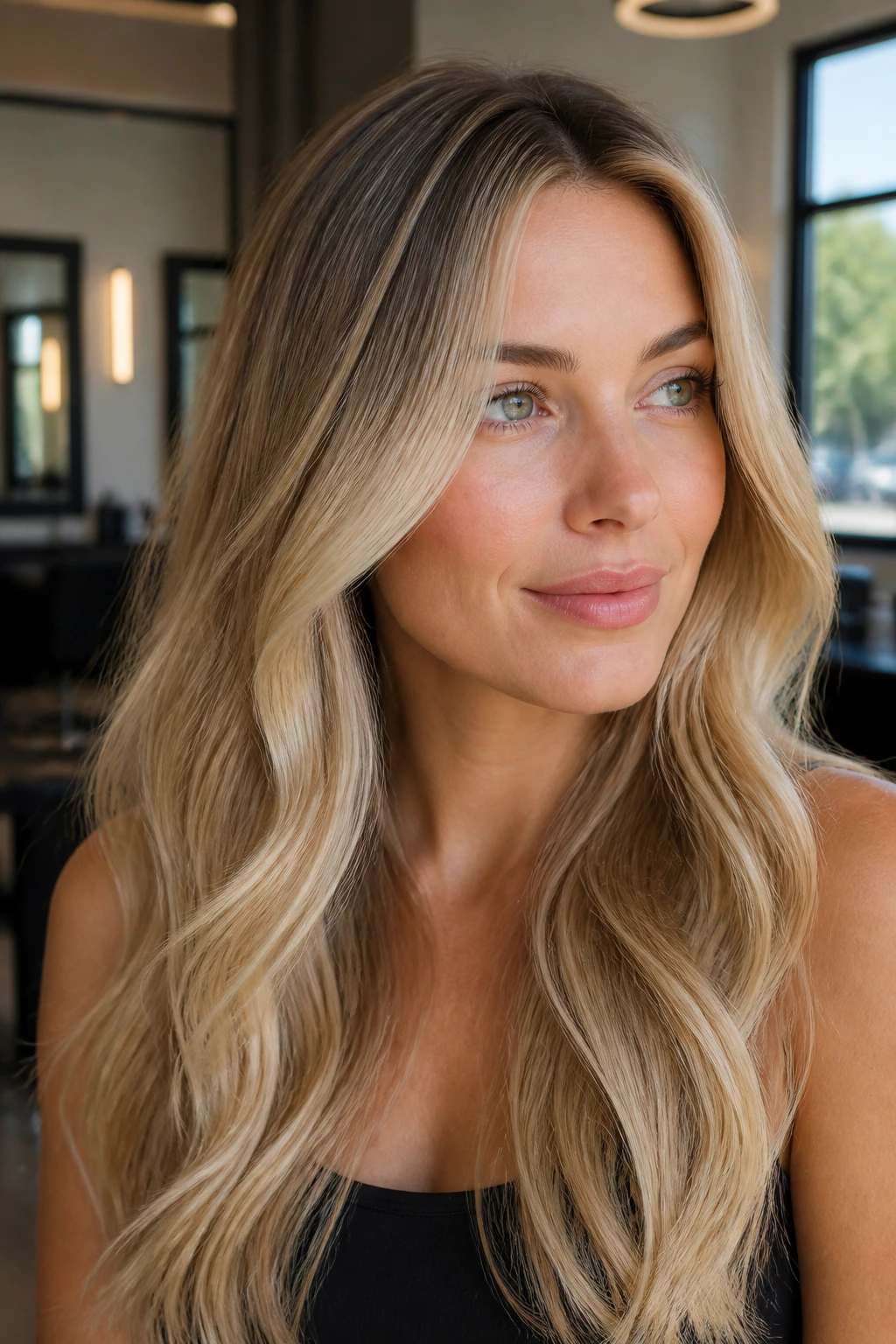
A single pale shade can be elegant on the right head of hair, but long thin hair usually needs more help than that. Flat blonde exposes the length in one clean line, and clean lines are not always your friend when density is the issue. A layered color story—root, midlength, end—gives the eye more to read.
The Root Gives the Hair a Spine
A deeper root shadow does two things at once. It trims the contrast at the scalp, and it keeps the top of the head from looking over-lifted. If the crown goes too light, the hair can start to read as sparse before you even notice the ends.
The Mids Carry the Movement
This is where balayage, babylights, and foilayage earn their keep. The mids are the part of the hair that moves when you turn your head, tuck it behind your ear, or brush it out after a wave set. Give that section a few brighter ribbons, and the whole style feels fuller.
The Ends Need Softness, Not Flooding
Thin ends usually look best when they hold a little beige or gold, not when they’re pushed to the palest possible tone. That sounds backward if you’ve spent years chasing brightness, but I’d rather see soft creamy ends than shredded white ones. The creamier finish gives the length some body.
What to Ask Your Colorist For at the Chair
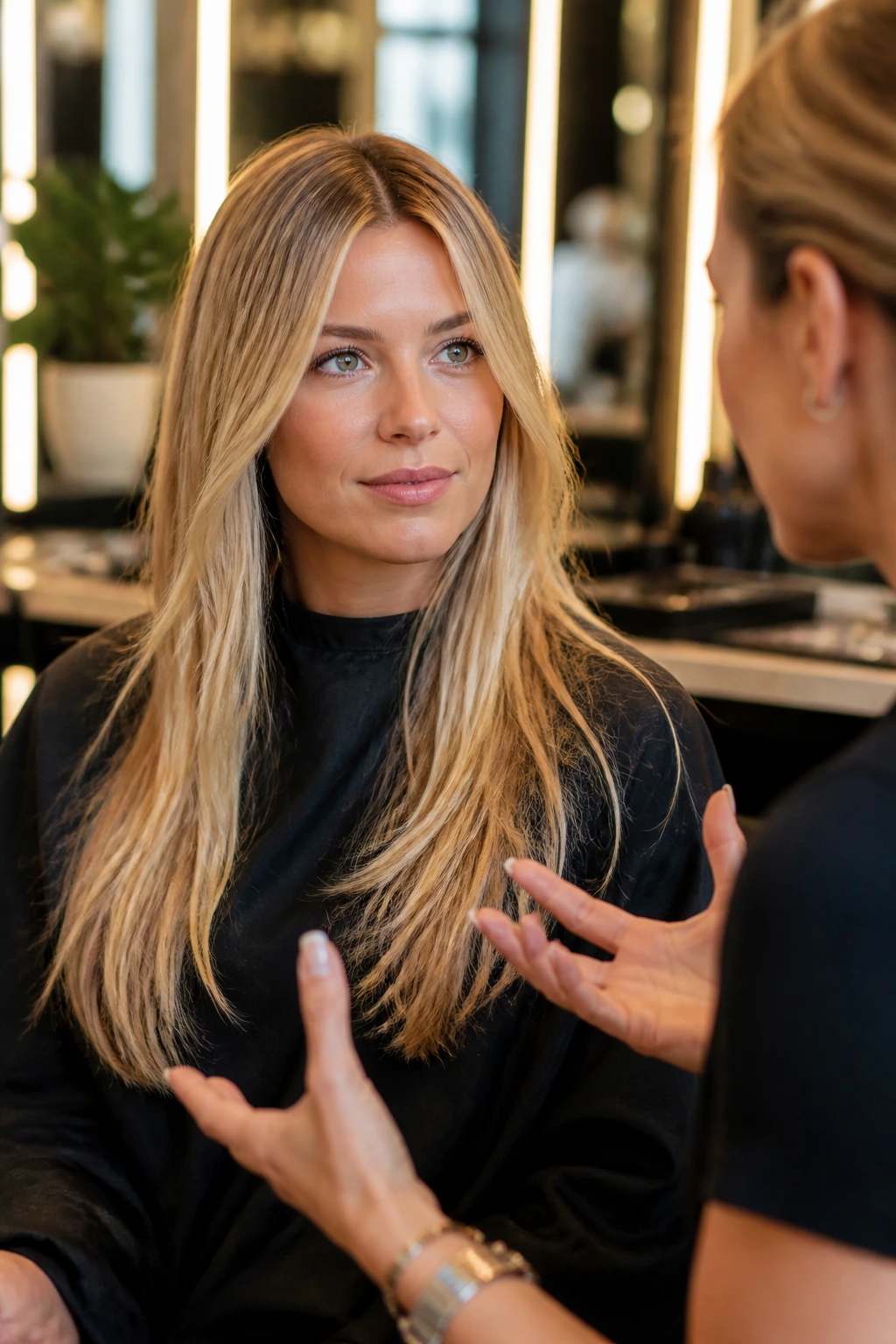
Bring reference photos, sure, but bring a clear idea of what you like in each one. One photo may have the brightness you want around the face, another may have the root depth you need, and a third may have the exact kind of beige you’re after through the ends. Do not hand over three photos and say “something like this.” That gets muddy fast.
Ask for terms that describe placement, not just shade. Root shadow, babylights, foilayage, melted blonde, and gloss all tell the colorist where the light should sit and how soft the transition should be. If your hair is fine but dense, you can usually tolerate more lift than someone with truly sparse density. If your hair is sparse, ask for more diffusion and less contrast.
A useful question is this: Where do you want the brightest pieces to live? Around the face, through the mids, or mostly on top? That answer decides more than the shade name does.
Tools and Products That Keep Blonde Hair Looking Fuller
- Color-safe shampoo: Keeps the toner from rinsing out too fast and helps the blonde stay clean rather than muddy.
- Purple shampoo: Use it sparingly to control brass; too much can dull beige and champagne tones.
- Bond-building treatment: Useful if your hair is fine or fragile, because blonde lightening can make the ends feel airy in a bad way.
- Hydrating mask: A weekly mask keeps porous ends from looking fuzzy.
- Heat protectant spray: Non-negotiable if you blow-dry or curl the hair; thin blonde ends show heat damage fast.
- Root-lifting mousse: Adds body at the crown before blow-drying, where long thin hair usually needs it most.
- Large round brush: Helps create lift and a smooth bend without over-smoothing the roots.
- 1.25-inch curling iron or flat iron: Good for soft bends; tighter barrels can separate fine ends too much.
- Tail comb and sectioning clips: Useful for clean parts and controlled styling.
- Microfiber towel: Cuts down on friction when hair is wet, which matters more than people think.
- Satin pillowcase: Helps preserve the finish overnight and reduces the rough look that can make thin hair seem drier.
Choosing the Right Blonde for Your Base Color and Skin Tone
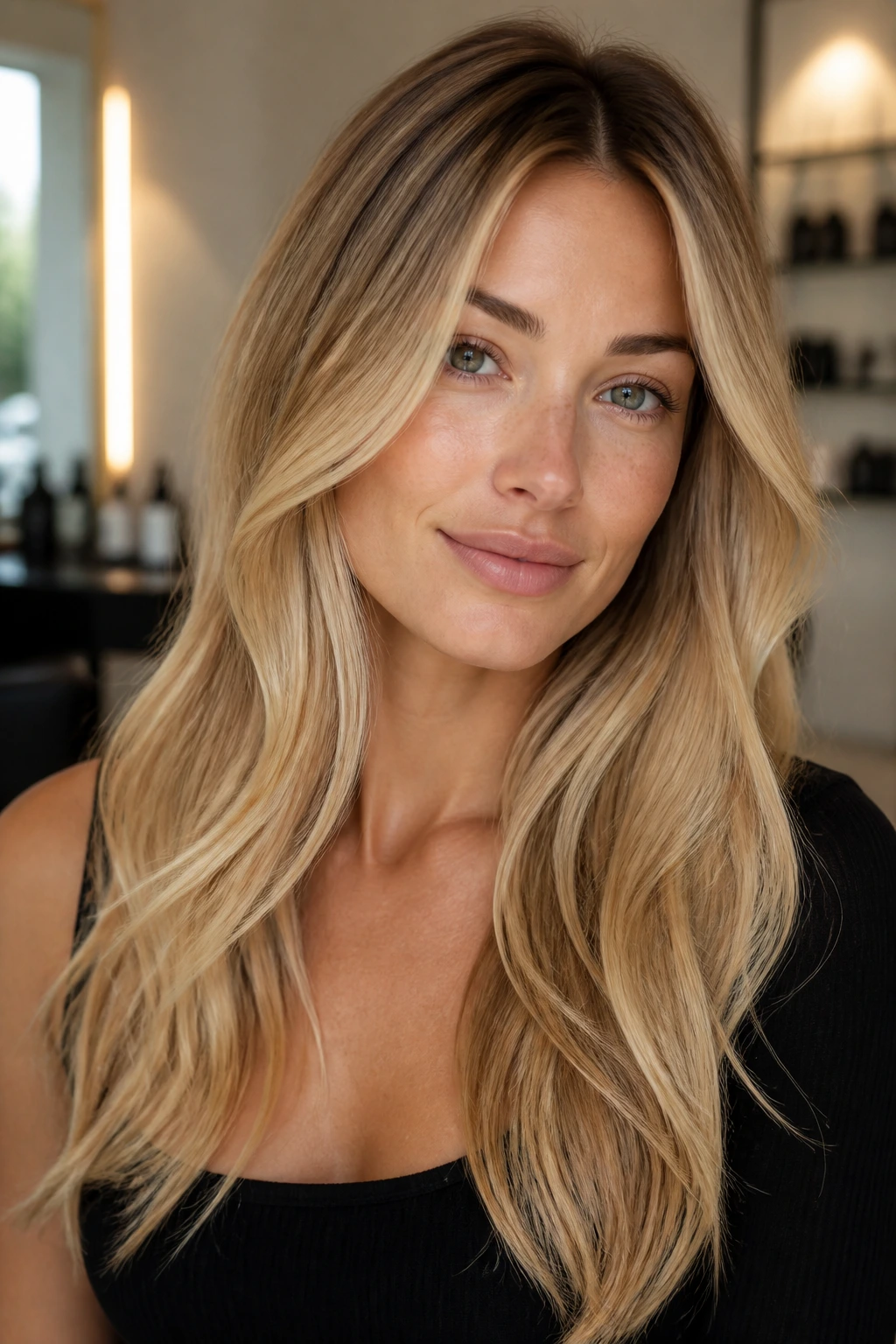
Thin hair does not live in a vacuum. Your natural base, undertone, and how much contrast you like all change the result. A warm honey blonde on an olive base can look rich and full. That same shade on a very cool pink complexion may look a little off unless the toner is adjusted.
If your base is dark blonde or light brown, beige, champagne, and mushroom blondes usually behave well because they leave some depth behind. If your base is lighter, cream, vanilla, and pearl tones can work, but they need careful placement so the ends do not vanish. Hair that sits between fine and sparse often benefits from leaving the underside slightly deeper than the top.
Ask yourself one plain question: do you want the blonde to read bright first, or full first? Brightness and fullness are not always the same thing. For long thin hair, fullness usually wins.
How to Style Blonde Hair So It Reads Fuller
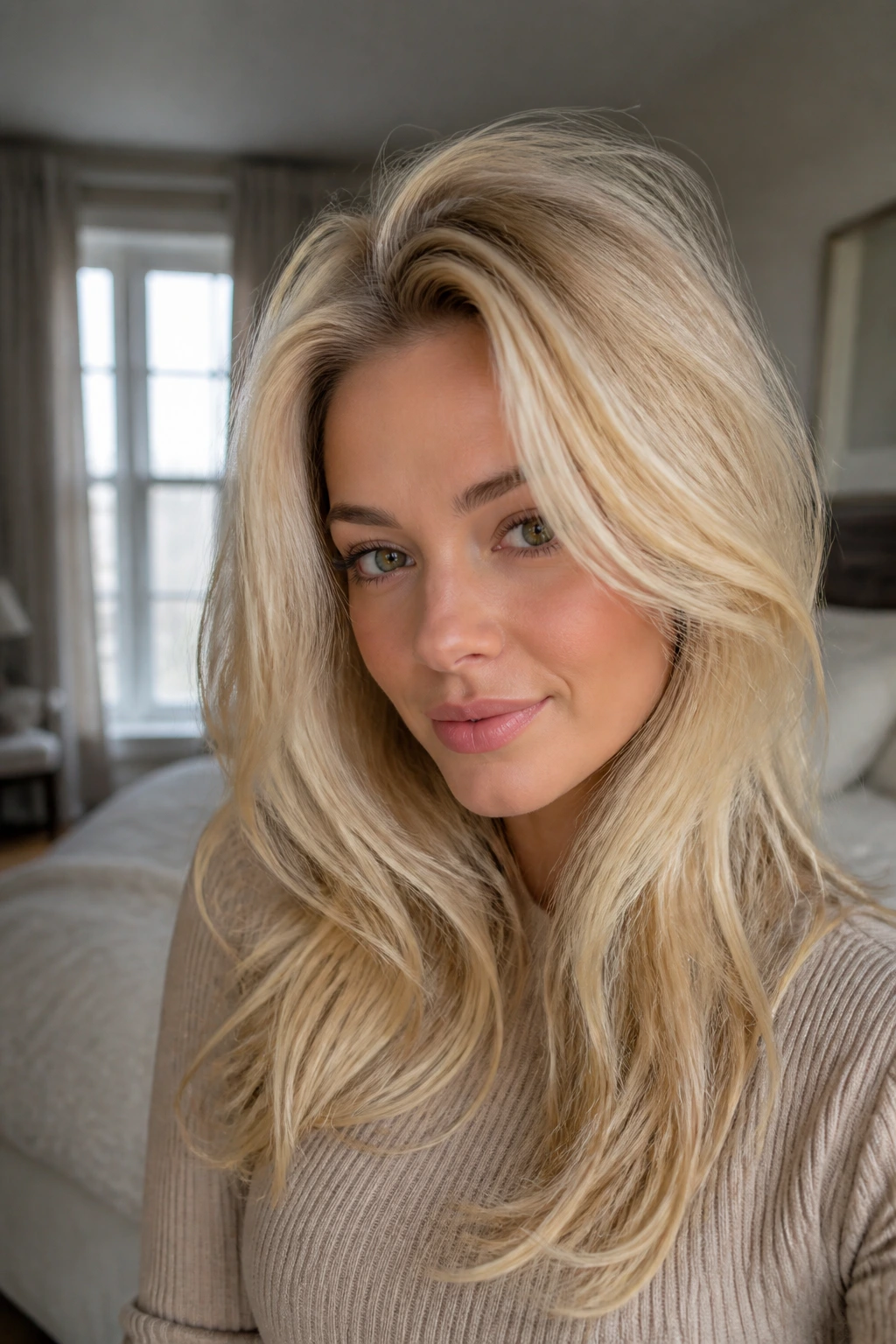
Start with a light mousse or root spray on damp hair. Focus it at the crown, not the ends. If you load product through the bottom half, the hair can clump, and clumping is the enemy when the goal is density.
Blow-dry with the head slightly tilted from side to side so the root lifts instead of sitting dead flat. Once the hair is about 80% dry, switch to a round brush and lift the top layers at the crown for a few passes. That little bit of tension makes a bigger difference than people expect.
For waves, use a 1.25-inch iron and bend the hair away from the face in alternating directions. Leave the last inch straighter. That keeps the ends from turning wispy. After the curls cool, rake them apart with your fingers and mist texture spray underneath the top layer, not over the top. If the hair still collapses by lunch, clip the crown while it cools or add two Velcro rollers for ten minutes.
Small Tweaks That Make the Color Look Denser
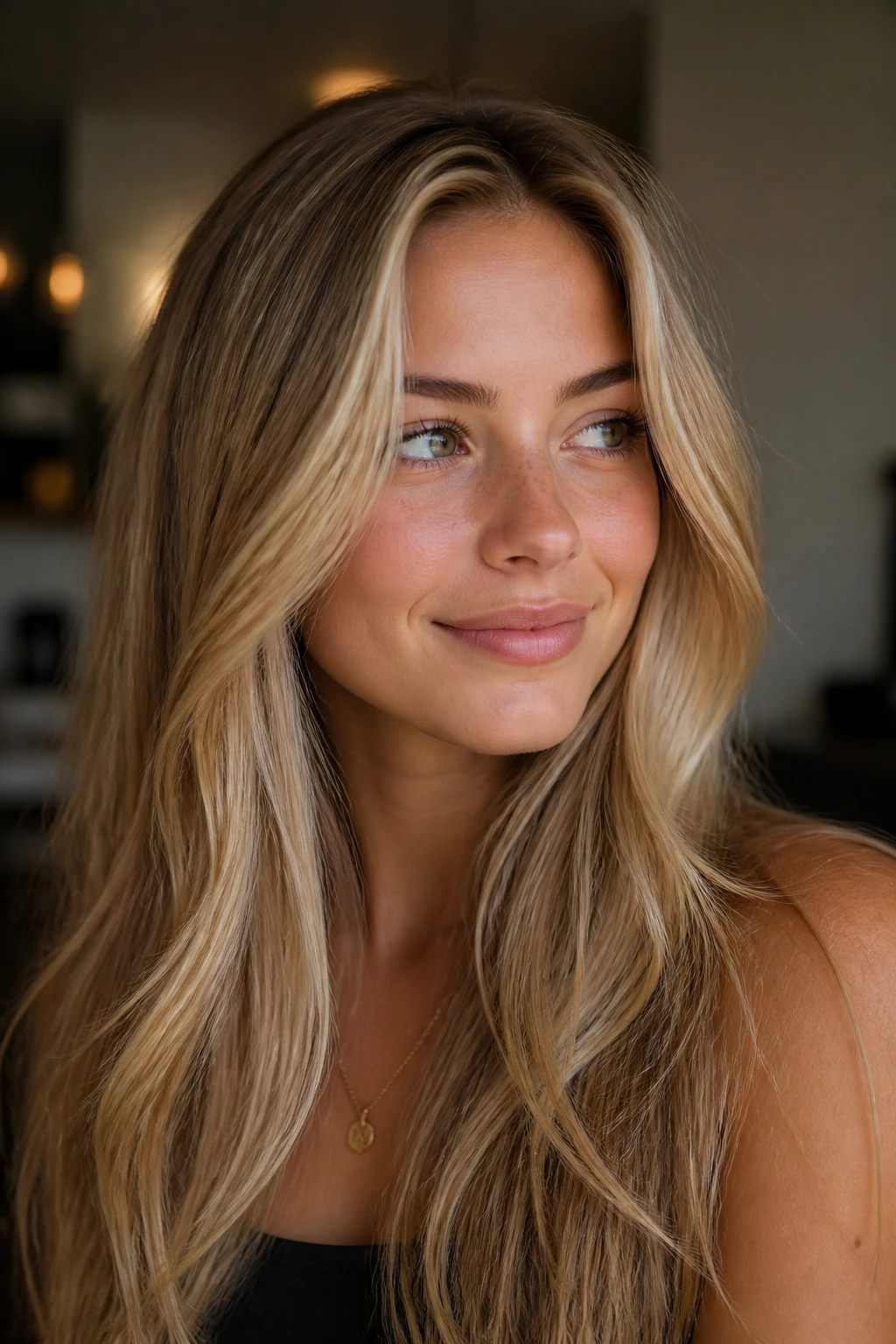
Brightness Placement: Put the lightest blonde around the face, collarbone, and outer mids. That is where the eye lands first. The center back can stay a little quieter.
Root Control: Keep the root one to two levels deeper than the mids. That tiny bit of shadow stops the scalp from looking wide and gives the crown a better shape.
End Treatment: Leave the final few inches creamy or beige rather than pushing them to the palest tone. Thin ends need a little visual weight.
Finish: Choose a gloss or soft serum, not a heavy oil. Too much oil flattens the cuticle and makes the hair cling in skinny sections.
Cut Match: Long layers, invisible layers, or a soft U-shape at the back usually help blonde read fuller. A blunt one-length cut can work too, but only if the hair has enough density to support it.
Common Mistakes That Make Thin Hair Look Thinner
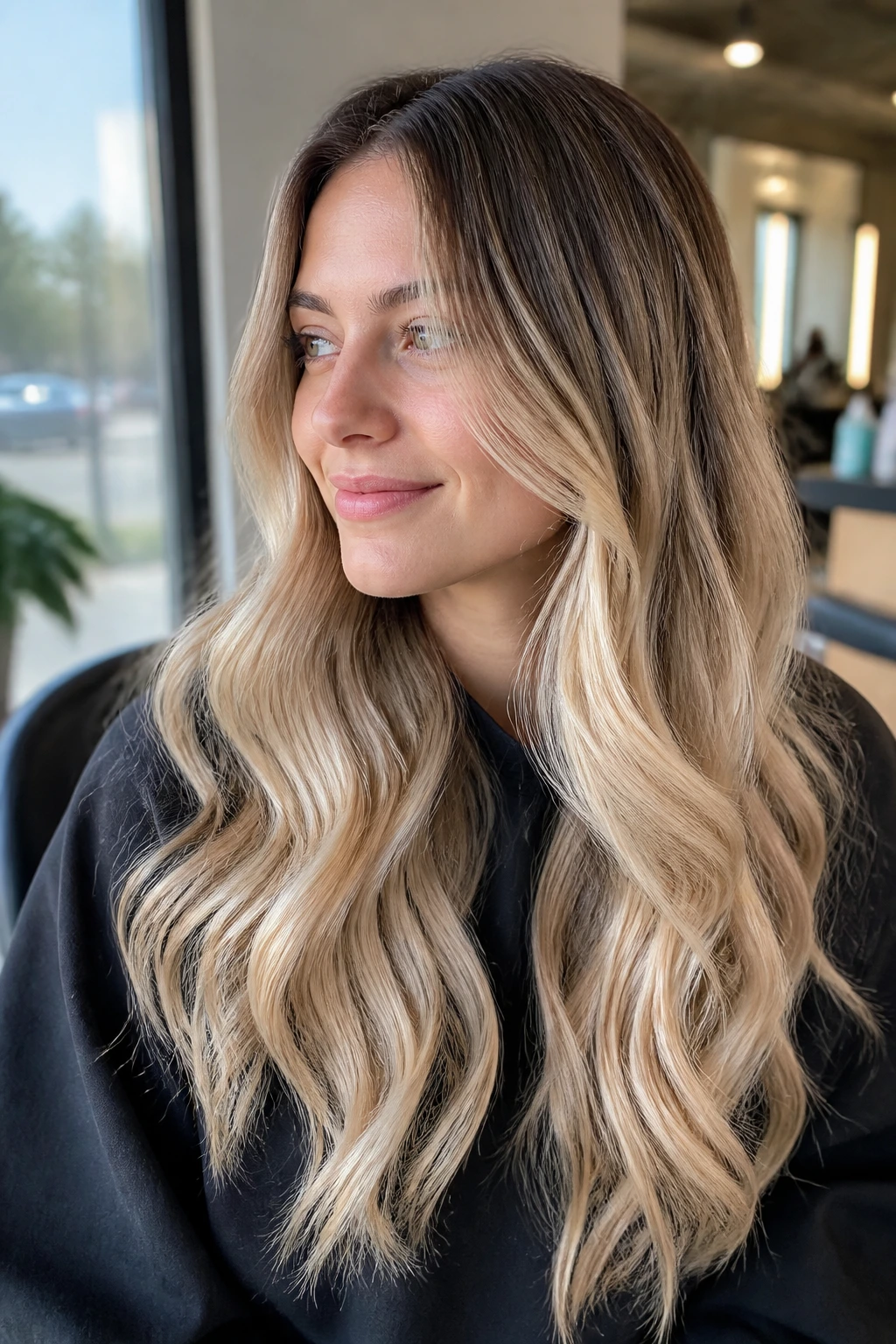
- Going too pale all over: If every inch is lifted to the same level 10 blonde, the hair can lose shape and the ends can look shredded. Leave some depth.
- Using chunky highlights: Thick stripes can show scalp more easily and make the gaps between foils obvious. Babylights or softer ribbons are usually kinder.
- Over-toning with purple shampoo: One heavy bottle routine can push beige and champagne blondes into a flat, chalky place. Use it lightly and not every wash.
- Skipping trims: Long thin hair shows split ends fast, and split ends make the whole color look thinner than it is.
- Ignoring the part: A hard center part on sparse density can expose the scalp too much. Move it a half inch off-center and see what happens.
- Using too much heavy serum: Shiny is good. Slick and clumped is not. Thin hair needs featherlight product.
Variations and Adaptations to Try
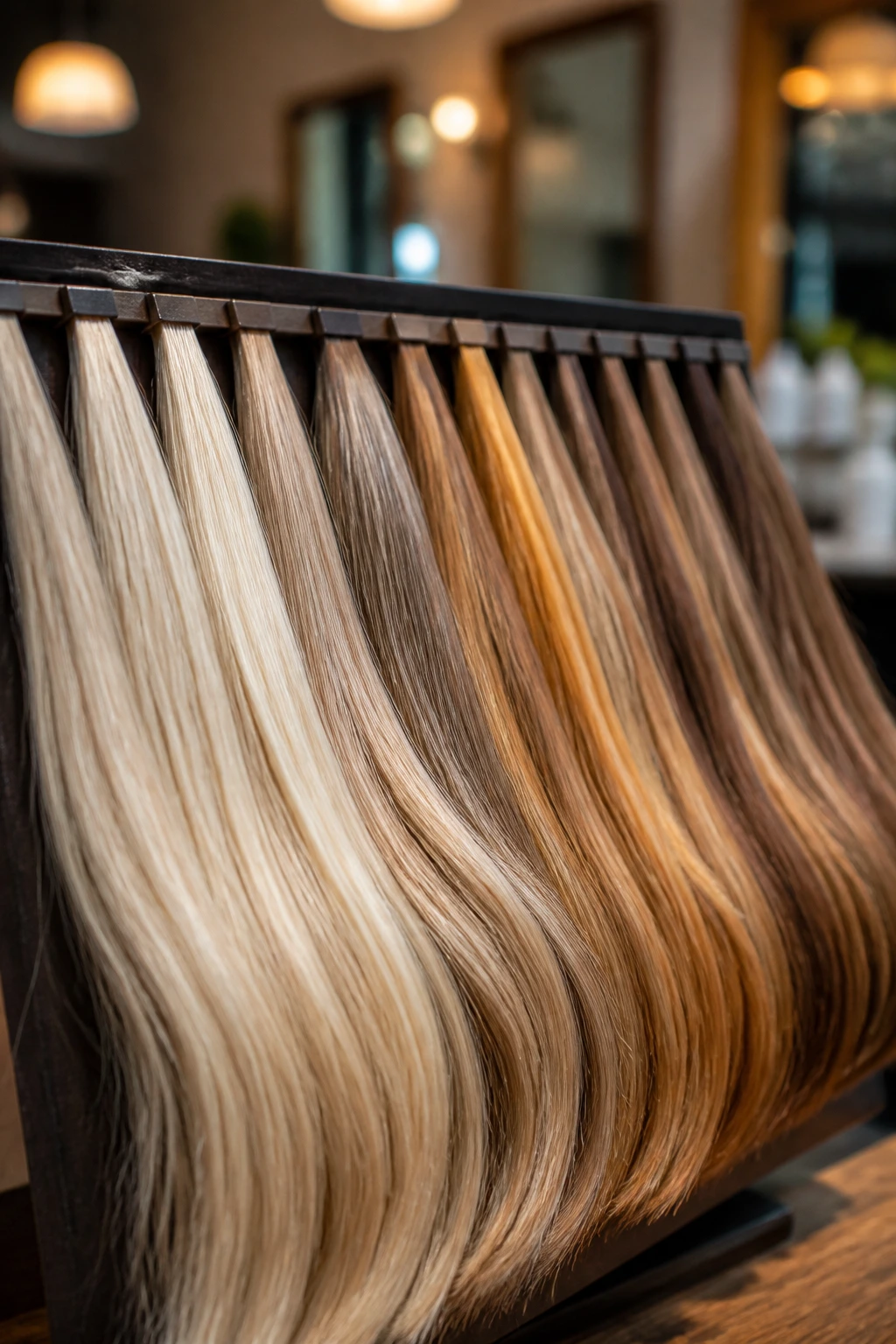
Low-Maintenance Rooted Blonde: Keep the root deeper and ask for softer placement through the mids. This grows out with less obvious regrowth, which is useful if you cannot live in the salon chair.
Warm Honey Edit: Push the shade toward honey, wheat, or caramel if your skin likes warmth. The result feels richer and often looks thicker than a very pale blonde on the same base.
Cool Beige Edit: Move the toner toward sand, mushroom, or cool champagne if brass shows up fast in your hair. This keeps the finish calm and clean.
Damage-Minimizing Blonde: Choose babylights, glosses, and root shadows instead of a full bleach-out. The color still looks dimensional, but the hair takes less strain.
High-Contrast Blonde: Keep a deeper root and brighter ends if you want a sharper, more fashion-forward result. It can be striking on long hair, but it needs healthy ends and regular toning.
Care, Washing, and Tone Maintenance
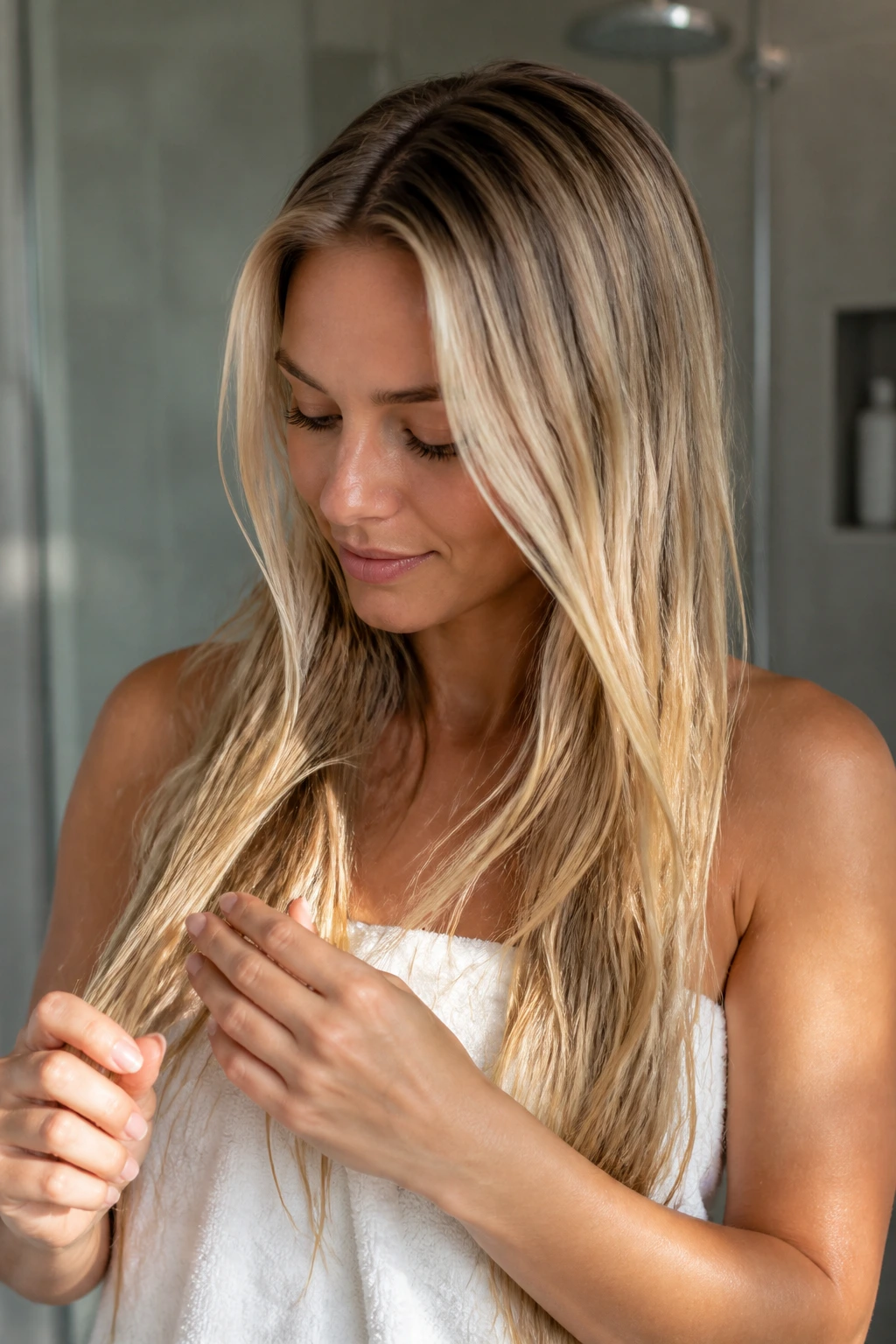
Blonde on thin hair usually looks best when you wash a little less often and use a little less product than you think you need. Heavy washing strips toner fast, and toner is doing a lot of work in these shades. If your scalp allows it, two to three washes a week is a sensible range for many people.
Purple shampoo can help with brass, but it is not a daily fix. Once every 7 to 14 days is enough for most beige, champagne, and butter blondes. If you use it too much, the hair can turn dull and chalky, which makes thin strands look even finer. A gloss or toner refresh every 4 to 6 weeks helps the color stay balanced, especially if you lean warm and your blonde pulls gold fast.
Root touch-ups depend on the technique. A soft balayage or rooted blonde may last 8 to 12 weeks before it starts to bother you. Babylights and brighter face frames often need a little more attention sooner. And if the ends feel rough, trim them before they split farther up the shaft. Long thin hair doesn’t get many second chances there.
Frequently Asked Questions About Blonde Hair on Long, Thin Hair
Which blonde shade makes thin hair look thickest?
The safest bets are rooted beige blondes, butter blonde, champagne, and babylight-heavy blends. They keep some depth near the scalp and through the mids, which gives the hair more visual body than a single pale shade.
Is platinum a bad idea for thin hair?
Not automatically, but it is the riskiest choice. Platinum can make the ends look translucent if the hair is already fragile, so it usually works better with a shadow root and a creamier finish than with a stark, white result.
Should I get balayage or highlights?
Balayage gives a softer grow-out and usually keeps long thin hair from looking stripey. Highlights can still work, but babylights or foilayage are usually kinder than chunky foils because they break up the color more gently.
Do lowlights help thin hair?
Yes, and they help more than people expect. A few deeper ribbons add shadow and make the blonde pieces read as fuller. That contrast is useful on long lengths where the bottom can look too airy.
How often should blonde hair be toned?
Most blondes do well with a gloss or toner refresh every 4 to 6 weeks, though softer rooted looks can stretch longer. If your blonde starts to look yellow or muddy, that is usually the cue.
Can I go blonde if my hair is already fragile?
You can, but the shade and method matter a lot. Babylights, softer beige blondes, and rooted techniques are safer than a full high-lift platinum job. If the hair snaps easily when wet, start slower.
What part looks best with blonde on thin hair?
A slightly off-center part often gives the hair more body than a rigid center part. That tiny shift keeps the scalp from showing too much and can make the crown feel fuller.
What if my blonde turns brassy too fast?
Use a purple shampoo lightly, not aggressively, and ask your colorist for a toner that suits your base better. Brass often returns when the toner is too cool for your natural pigment or when the hair is porous at the ends.
A Blonde Finish That Still Looks Like Hair
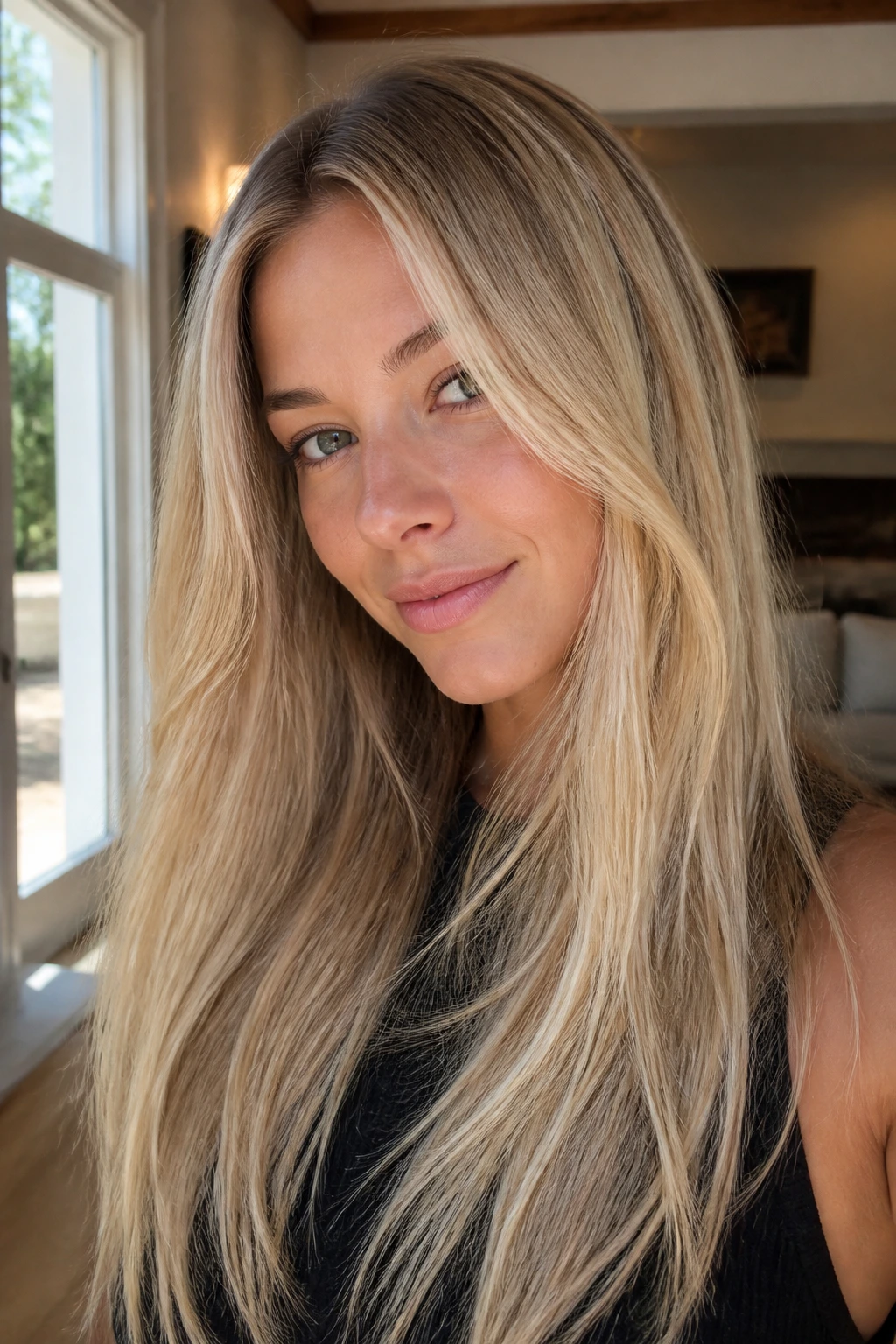
The best blonde for long, thin hair does not try to erase the hair you have. It works with it. A little shadow at the root, a few brighter ribbons in the right places, and a finish that keeps the ends creamy instead of brittle—those small choices do more than a loud, all-over blonde ever will.
That is the part people forget. Thin hair doesn’t need more noise. It needs smarter placement and a shade that leaves room for the hair to move. Bring a couple of these ideas to your colorist, point to the pieces you like, and ask which one fits your base and your upkeep tolerance. The right blonde should make the length look alive, not overworked.