



Type 2C wavy hairstyles have a very particular kind of drama. The bend is strong enough to show shape, the frizz has enough personality to show up at the surface, and the ends can swing from airy to puffy depending on how the cut is built. Add lowlights into that mix, and the whole head stops reading as one flat tone. The waves get depth. The outline gets sharper. The hair looks like it has actual shadows in it, not just color.
That’s why type 2C wavy hairstyles with lowlights are such a smart pairing. A few darker ribbons tucked under the top layer can make the wave pattern look thicker and calmer at the same time, which is a rare little trick. Too many dark strands can muddy the movement, though, and that’s where a lot of people go wrong. The answer is usually placement, not more color.
Some of the looks here lean polished, some are loose and a little undone, and a few are the kind of styles that look better after they’ve been worn for a few hours and softened at the edges. That’s not a flaw. On 2C hair, it’s part of the charm. The lowlights do the quiet work; the waves do the showing off.
Why You’ll Love This Collection
-
Dimension without extra bulk: Lowlights break up a single block of color, so 2C waves look more layered even on days when the bend is soft.
-
More forgiving grow-out: Darker pieces placed under the top layer fade into the base more gently than all-over color, which means fewer obvious stripes at the root.
-
Styles that fit real hair texture: These looks are built around the way 2C hair actually moves — not around a straight-haired idea of “beach waves.”
-
Options for every length: From collarbone lobs to waist-length layers, lowlights can sit quietly inside the shape and do their job without shouting.
-
Better balance for frizz-prone ends: A little darkness at the mid-lengths and ends keeps the outer edges from looking too light, wispy, or blown out.
-
Easy to dress up or down: A side part, a claw clip, or a clean low bun can shift the same color pattern from casual to polished fast.
1. Waist-Length Layers with Caramel Ribbons
Long 2C hair can look glorious or mushroomy, and the difference usually comes down to layers. Waist-length pieces with soft, internal layers give the wave room to bend instead of hanging as one heavy sheet. Caramel lowlights tucked under the surface keep the lengths from going washed out, especially when the ends catch a lot of light.
Why It Works
The longer the hair, the more useful lowlights become. They create little pockets of shadow between waves, which makes the whole length look thicker without needing extra curl.
If your hair is dense, ask for the darker pieces to sit beneath the top veil, not right at the hairline. That keeps the color from looking stripey when the hair moves.
Good for: thick 2C hair, long faces, and anyone who wants movement without losing length.
Best shade range: caramel, chestnut, or a soft level-5 brown.
Style note: a 1.25-inch iron set on a low heat can smooth the outer bend without flattening it.
Tiny tip: flip the last 2 inches of the ends outward on day two. It makes the lowlights show instead of hiding in the bulk.
2. Collarbone Lob with Mushroom Brown Lowlights
Can a lob look fuller without a mountain of mousse? Absolutely. A collarbone-length cut lets 2C waves sit at the sweet spot where the bend is visible but not weighed down, and mushroom brown lowlights cut through any brassiness with a cool, smoky edge.
The best part is the movement. When the hair brushes the collarbone, the ends kick out a little, and the darker ribbons near the interior keep that kick from looking flimsy. Ask for soft graduation at the back so the shape doesn’t collapse into a blunt shelf.
This one is especially good if your waves swell up in humidity. The darker interior pieces visually tighten the outline, even when the texture gets a little bigger than you planned.
3. Feathered Shag with Mocha Depth
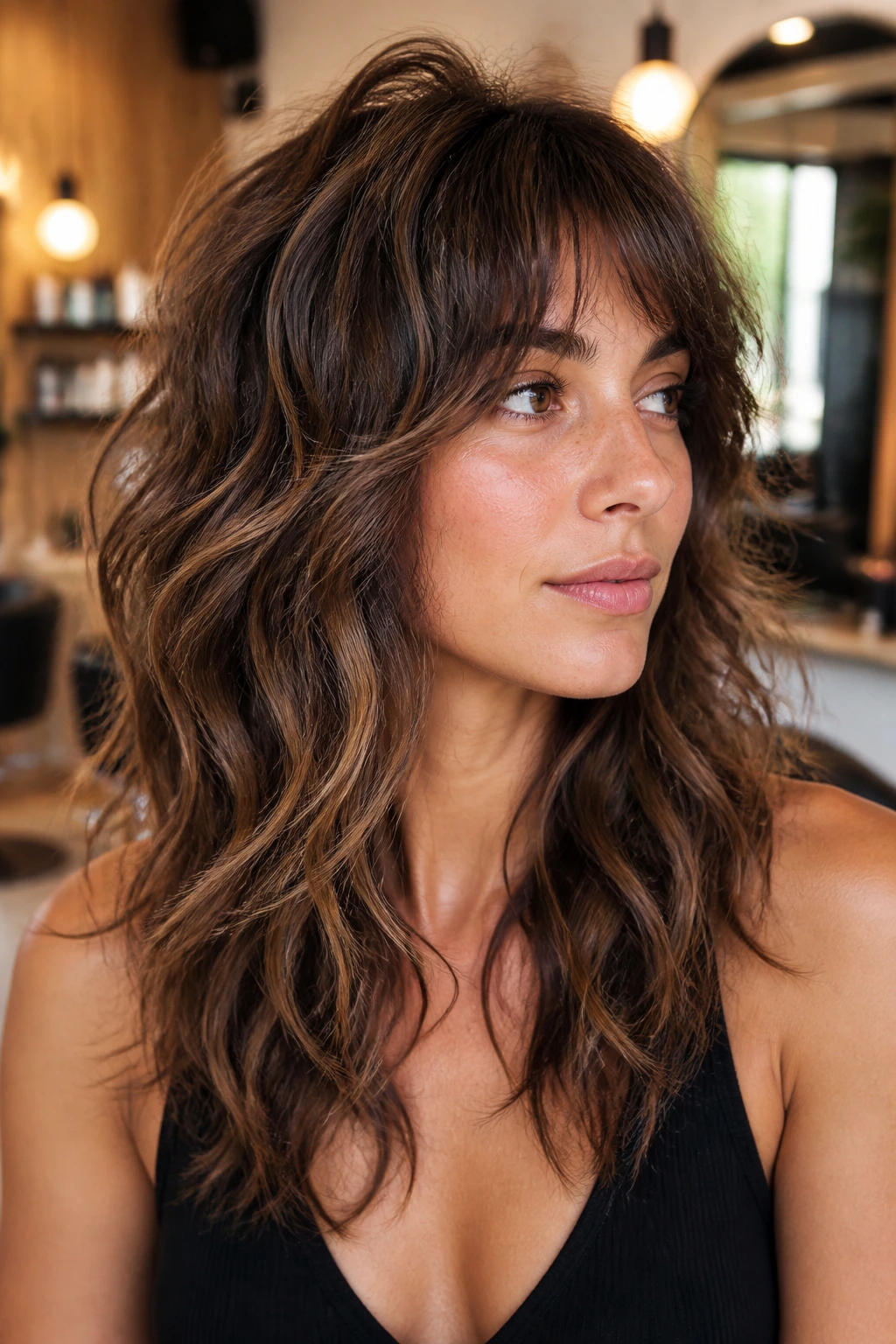
A shag and 2C hair speak the same language. The cut already encourages the wave to break into visible bends, and mocha lowlights make those bends read as texture instead of fuzz. The whole style looks lived-in in the best way.
What Makes It Different
The crown gets the lift; the sides get the movement; the ends get to stay a little messy. That’s the whole point. You do not need every piece to behave.
Ask for the lowlights to be painted through the mid-layers and underneath the crown rather than sprayed all over the top. When the top layer stays a little lighter, the shag keeps its shape. When the inside is darker, the haircut looks fuller from the side.
- Best on medium to thick 2C hair.
- Works well with air-drying and scrunching.
- Looks best when the fringe is soft, not heavy.
Pro tip: a pea-sized amount of curl cream on damp hair is enough here. More than that and the feathered ends can go limp.
4. Curtain Bangs with Chestnut Face-Framing Pieces
Curtain bangs can be a gift or a headache on 2C hair, depending on the cut. The version that works gives the bangs enough length to split and bend around the cheekbones, while chestnut lowlights around the face keep the whole front section from looking too bright or too flat.
Picture the hair pulled open just enough at the center, with the shorter pieces curving away from the eyes. The darker strands around the temples and jawline make that curve look deliberate. It’s a small change, but it shifts the whole face frame.
This style is especially good when you want the lowlights to be visible right away, not hidden in the back. Ask for the deepest color to sit one inch or so behind the hairline, then feather it forward into the fringe pieces.
5. Deep Side-Part Waves with Espresso Underlights
The side part does half the styling work here. It gives 2C hair an immediate sweep, and that sweep creates a natural spot for espresso underlights to peek through when the hair moves. The darker pieces stay under the top layer, which keeps the silhouette smooth instead of busy.
This is one of my favorite looks for hair that tends to puff at the crown. A deep side part shifts the balance, and the lowlights underneath stop the exposed side from looking too wide. You get height at the roots and depth through the lengths. Nice trade.
Wear it brushed through for a softer finish, or set the wave with a wide curling iron and break it up with your fingers once it cools. The lowlights should show in narrow bands, not hard stripes. If they’re visible from five feet away, they’re probably too bold for this cut.
6. Half-Up Twist with Cinnamon Lowlights
A half-up twist is a smart move when you want to keep the front off the face but still show the wave pattern in the lengths. Cinnamon lowlights make that twist look richer, because the darker pieces bunch together near the crown and then fade into the loose lower section.
What I like here is the contrast. The top stays tidy, the bottom stays loose, and the color does a little visual stitching between the two. That makes 2C hair look intentional even when the lower waves are doing their own thing.
Use a small clip or two hidden pins instead of yanking the twist too tight. If you flatten the crown, the whole style loses the volume that makes 2C hair useful in the first place.
7. Soft Wolf Cut with Walnut Dimension
The wolf cut can go very wrong on 2C hair if it gets chopped too high around the crown. Keep it soft, keep the layers longer, and use walnut lowlights to give the interior some weight. The result is shaggy, but not choppy.
The Shape Is the Point
A soft wolf cut lets the wave break in different places, which is exactly where lowlights help. Darker pieces in the underneath sections stop the layers from looking separated in a harsh way.
Ask for face-framing pieces that start below the cheekbone, not at the jaw, if your waves swell a lot. That keeps the front from puffing out too wide. And if your hair is coarse, a light gloss after coloring can keep the walnut tone looking smooth instead of dusty.
This cut is for someone who likes hair with movement and a little edge. It is not for someone who wants every strand to sit perfectly still.
8. Braided Crown with Hidden Cocoa Panels
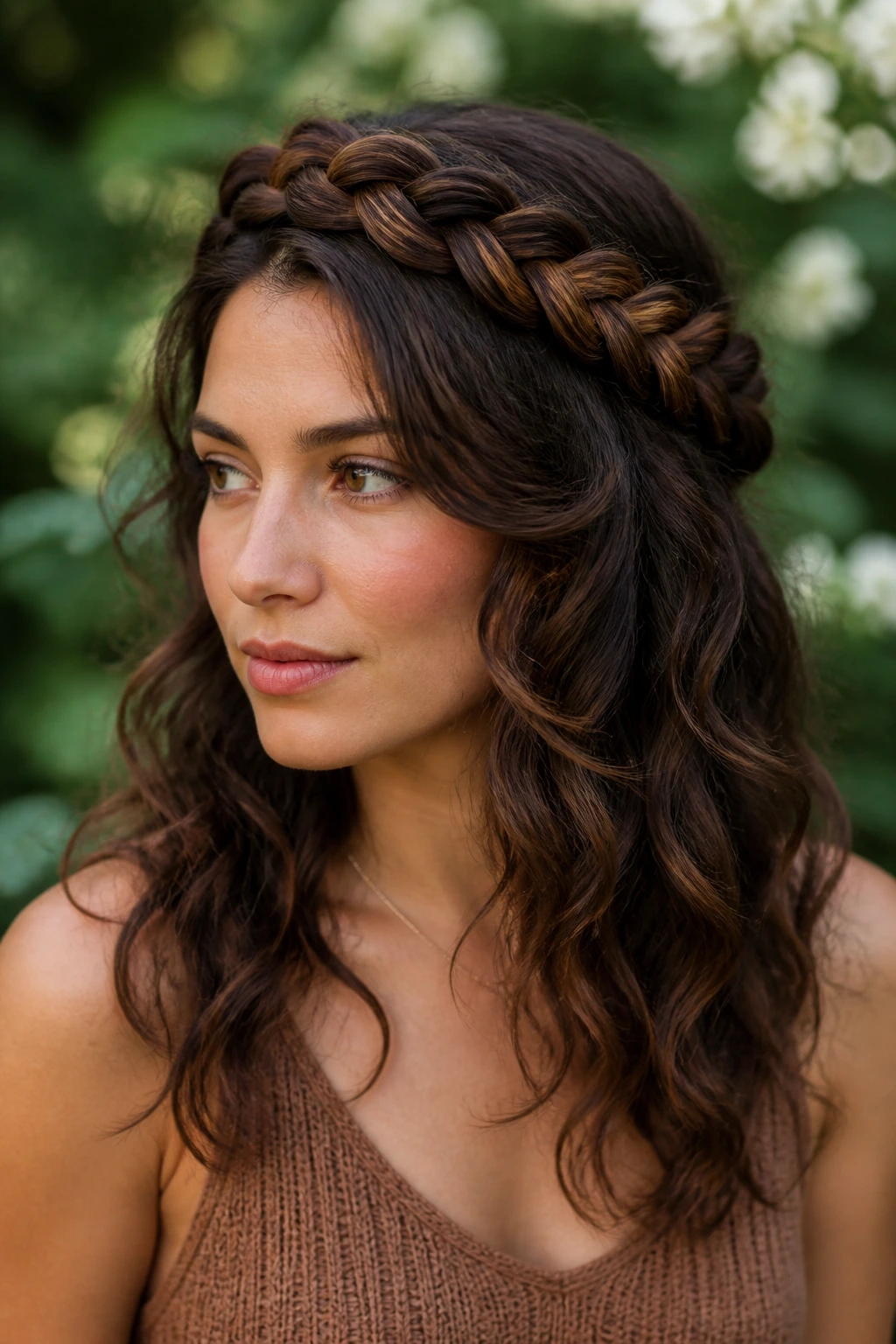
Braids on 2C hair can look flat if the color is too even, and that’s where hidden cocoa lowlights earn their keep. A braided crown shows the dark pieces only in flashes, which makes the braid look deeper and more textured without needing extra product.
The trick is to braid the top section loosely, then leave the rest of the waves open. When the underside color is darker, the braid reads like a frame sitting on top of richer fabric. It’s subtle, but it matters.
This style is especially nice for event hair because the braid keeps the face open and the waves still get their moment. If you have shorter layers that slip out, mist them with a little texture spray before braiding. Sticky, crunchy hair is not the goal. Controlled grip is.
9. Angled Lob with Honey-Brown Contrast
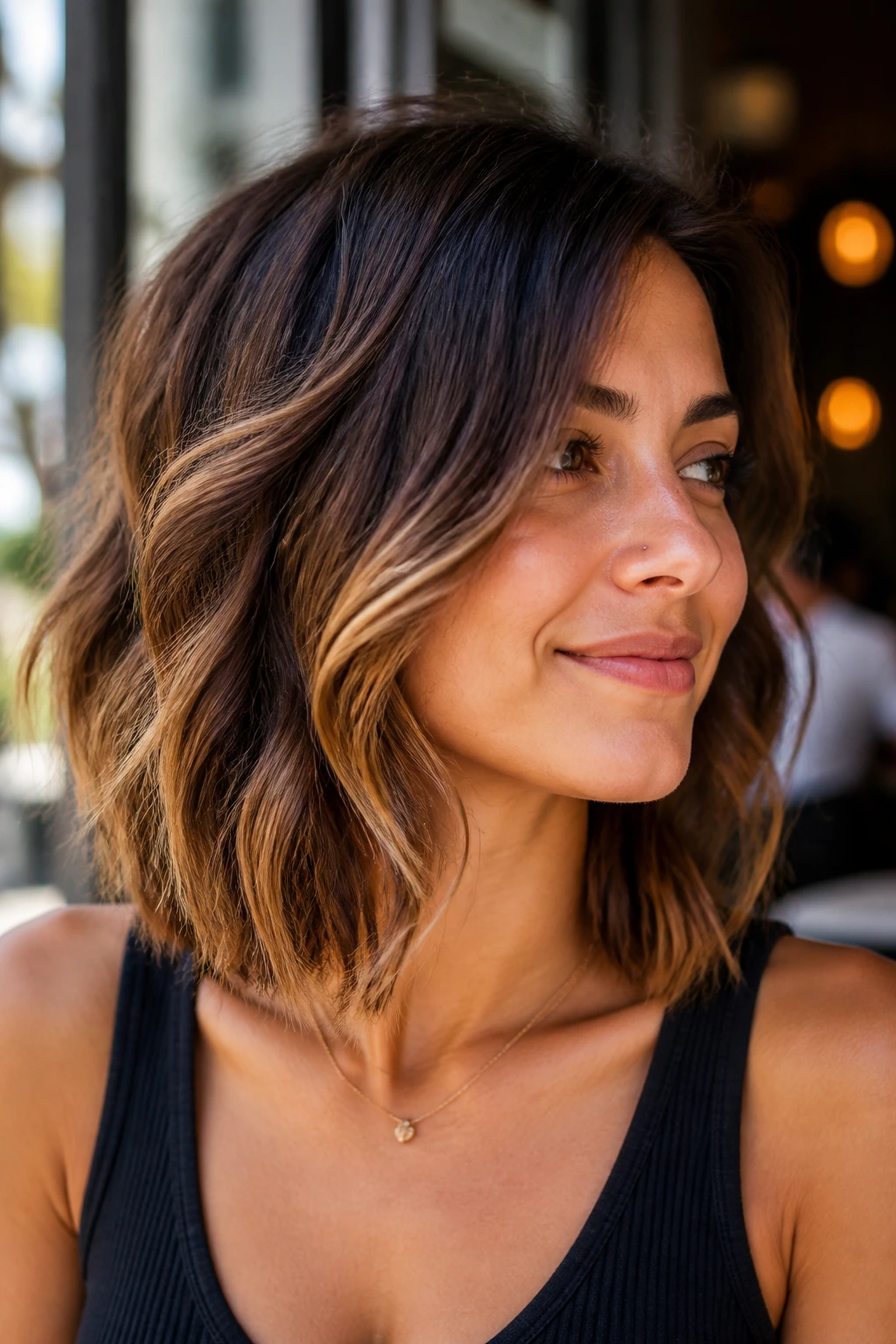
An angled lob gives 2C hair a clean slope: shorter in the back, longer toward the front, with the wave bending along that line instead of fighting it. Honey-brown lowlights underneath keep the front from looking too light and the back from disappearing into one shape.
There’s a nice visual pull here. The front pieces graze the jaw, the back lifts a little at the nape, and the darker color underneath makes the angle show up in motion. It’s one of the best cuts if you want structure without looking stiff.
Wear the part slightly off-center so the longer side can drape toward the collarbone. The lowlights will do more work if the hair is allowed to fall across the face a little.
10. Low Messy Bun with Loose Wavy Tendrils
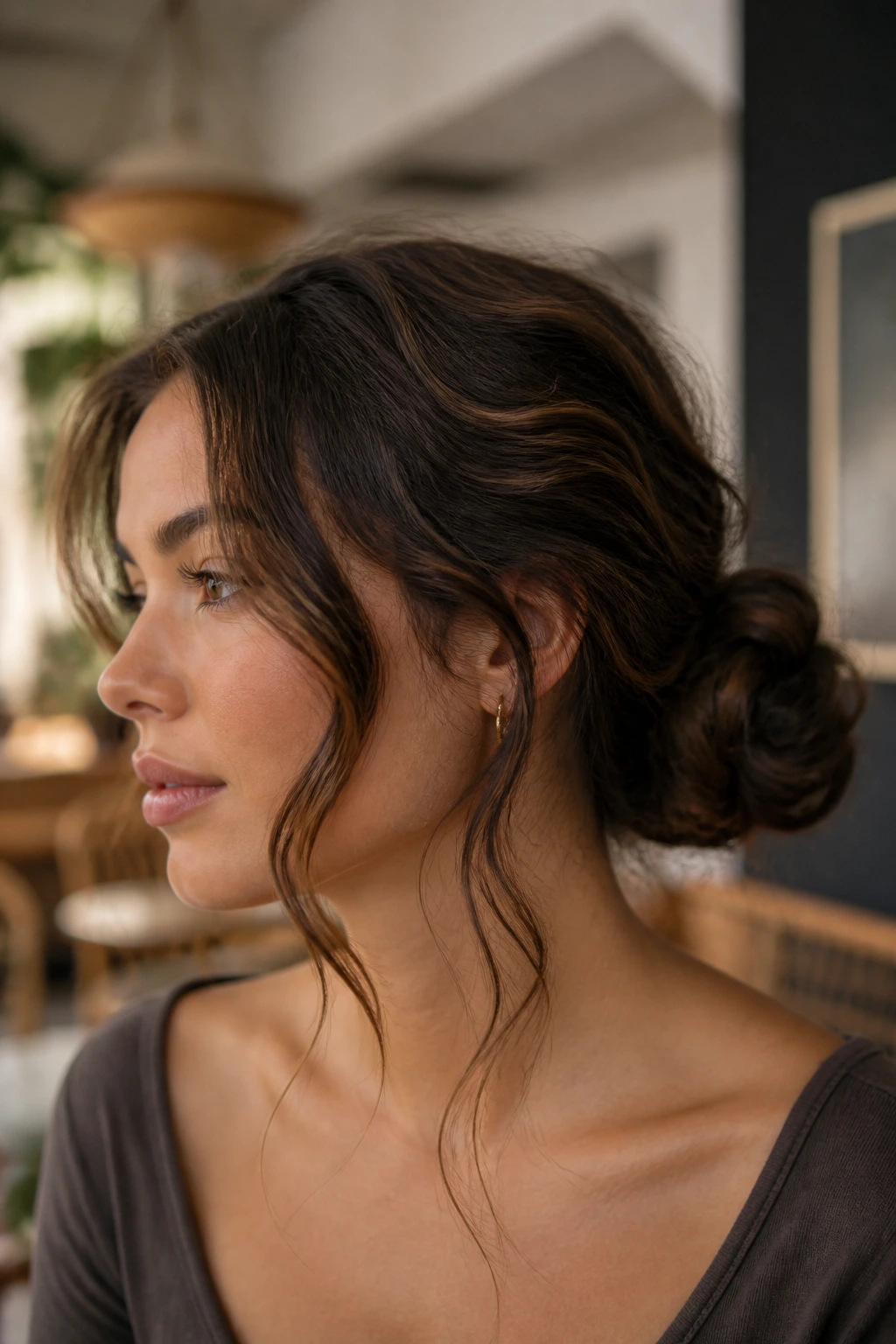
A low bun sounds simple until you put it on 2C hair, which has a habit of creating better shape than you expected. With lowlights in the loose tendrils, the bun looks softer at the edges and the wave pattern keeps the style from reading too strict.
Leave two or three front pieces out, then twist the rest into a bun at the nape. The darker strands catch under the knot and make the whole thing look fuller. That matters, because a flat bun on 2C hair can look thin from the side.
A little texture spray at the roots helps, but don’t drown the lengths in it. You want the bun to hold, not stiffen. If the tendrils are too frizzy, wrap them once around a medium iron and let them cool before you touch them.
11. V-Cut Length with Hazelnut Bands
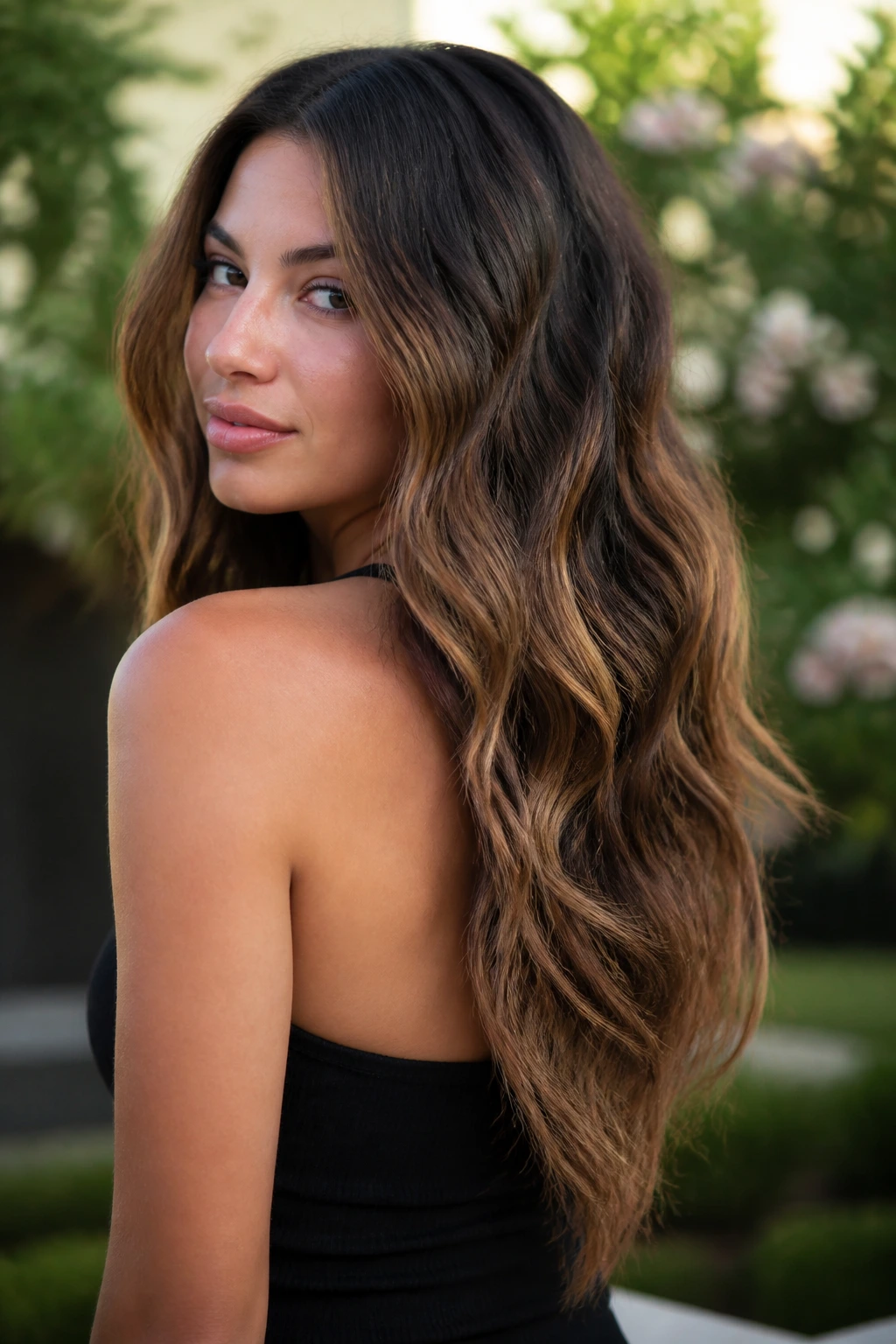
A V-cut is one of those shapes that only looks good when the layering is intentional. On 2C waves, the long center point gives the hair a strong line down the back, and hazelnut lowlights banded through the lower half keep that point from looking stringy.
The color placement matters more here than on a blunt cut. Put the darker pieces beneath the top sheet and around the lower sides, where the waves naturally separate. That keeps the center point visible while still giving the ends some depth.
This cut is a nice match for thick hair that feels heavy when it’s all one length. The V shape removes weight without making the silhouette boxy.
12. Shoulder-Length Flip with Bronze Lowlights
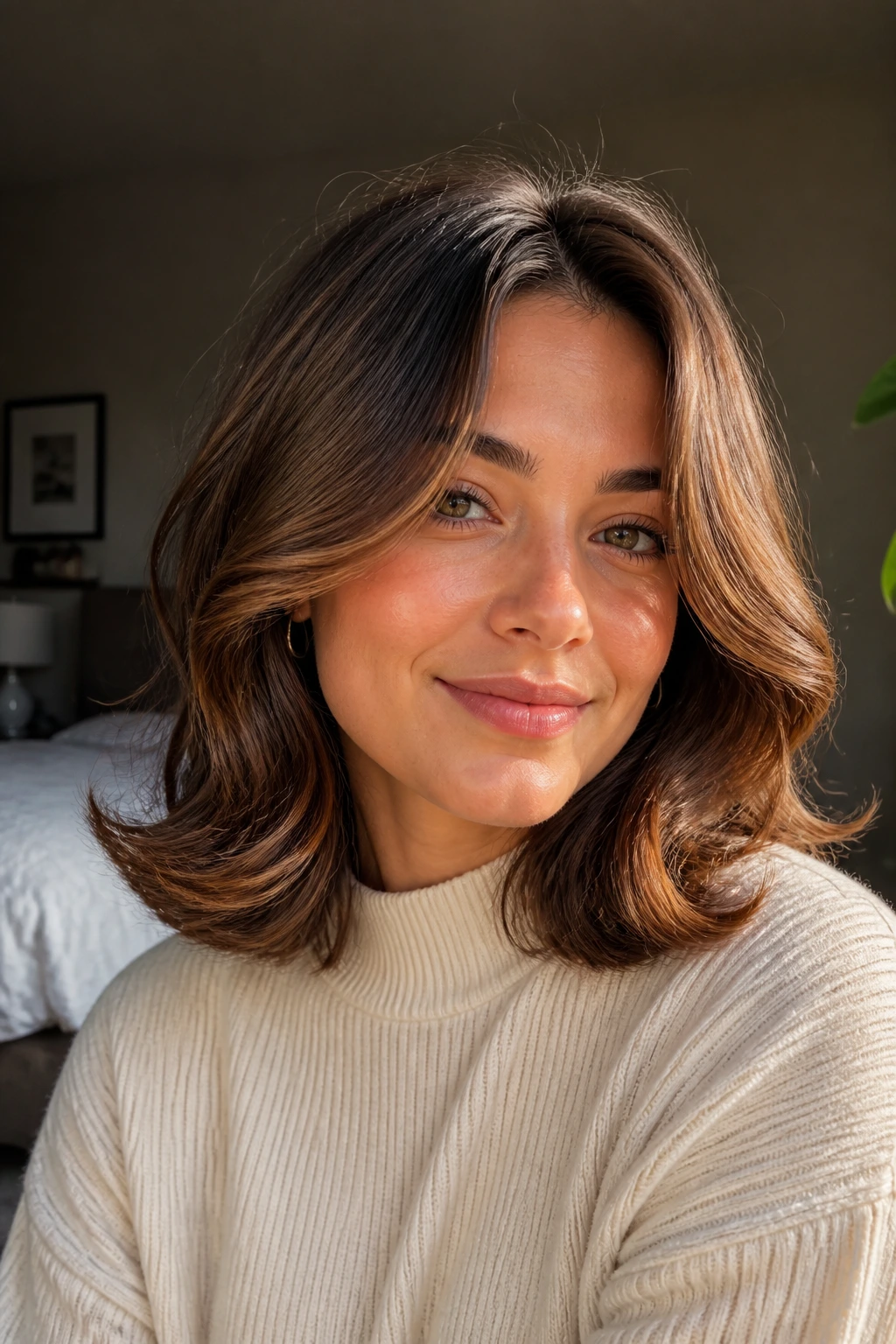
Shoulder-length 2C hair has a tendency to kick out at the ends, and this cut leans into that. Bronze lowlights give the flipped pieces a richer base, so the ends don’t look like they were lightened by accident.
The style works because the length sits right where the wave can bounce. If the cut lands too short, the flip can feel puffy. If it goes too long, the bend gets stretched out. Shoulder length is the middle ground.
Use a round brush only at the final inch or two if you want a cleaner flip. The rest should stay wavy. Bronze lowlights are especially useful on medium brunettes that need a little warmth without turning copper.
13. Side-Swept Glam Waves with a Root Shadow
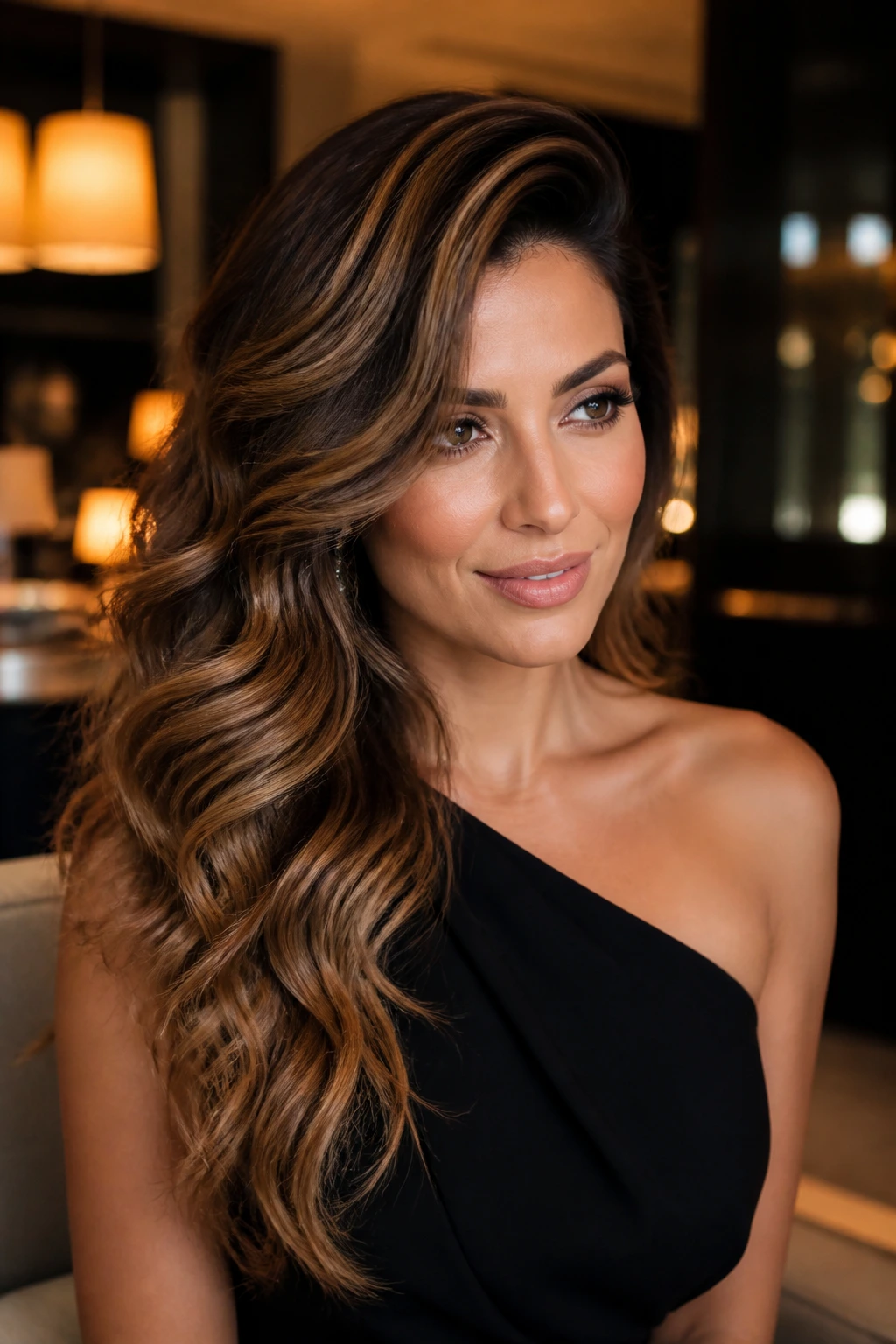
A side sweep gives 2C hair room to look polished without becoming flat. Add a root shadow and the whole style gets a deeper base, which makes the waves appear more sculpted from crown to ends.
This is the look for a night out, a formal dinner, or any day you want the hair to sit a little more dressed. The darker root area softens the part, and the lowlights through the mid-lengths help the wave show up under indoor light instead of disappearing into shine.
Brush the top section over one side, pin the underlayer discreetly if needed, and keep the ends soft. If the ends are too curled, the style starts looking dated fast. A looser bend keeps it modern without trying too hard.
14. Mid-Length Cut with Auburn Tones
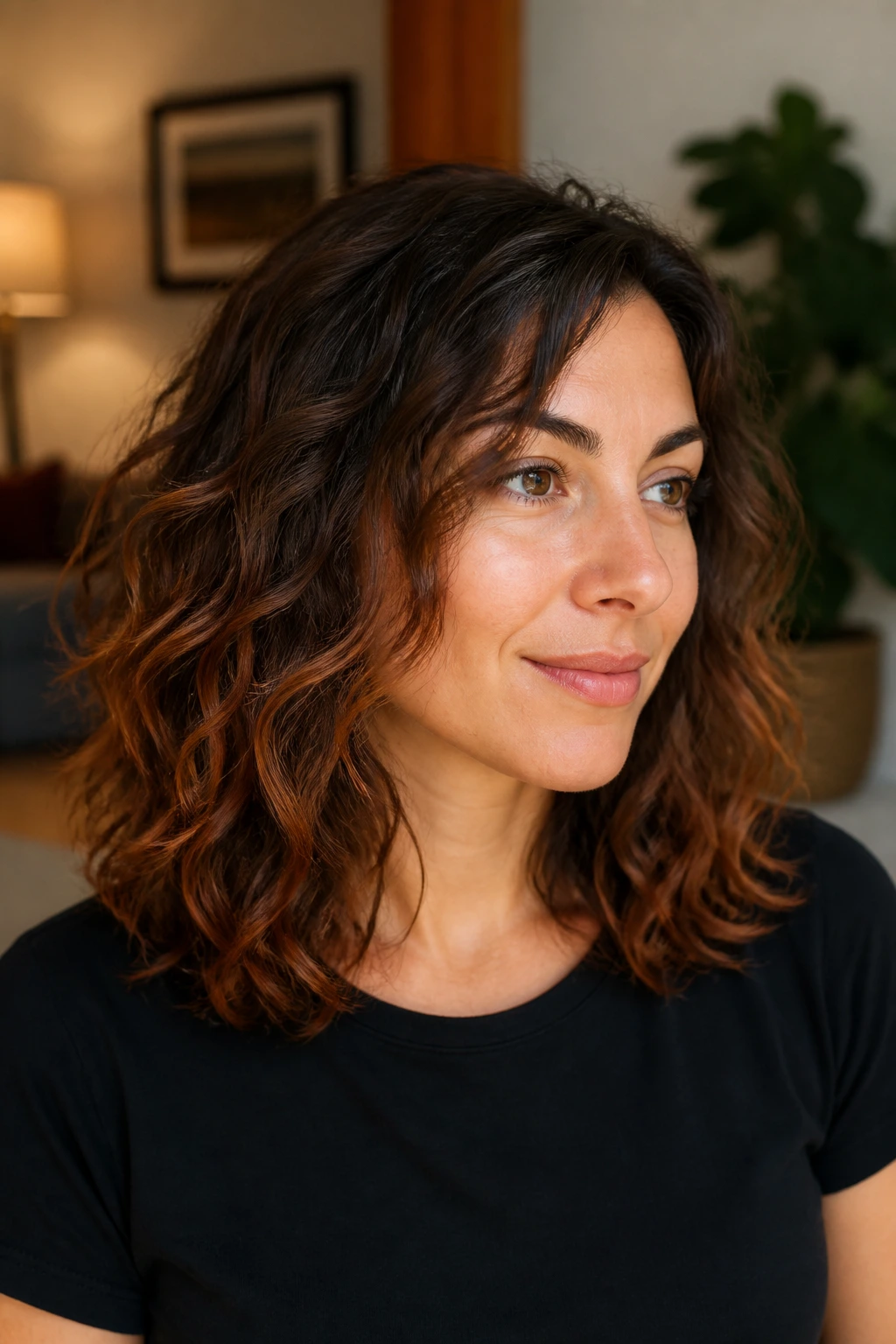
Mid-length 2C hair can feel the most cooperative of all, partly because it has enough weight to sit down, but not so much that it loses its curve. Auburn lowlights bring warmth into the bend, which helps darker brunettes avoid looking one-note.
This is one of the friendlier cuts if you’re not in the mood to fight your texture every morning. The length hits around the shoulders or just below, so the wave has a place to settle. Auburn pieces around the lower half add a little glow when the hair moves.
If your skin tone runs cool, keep the auburn subdued — more brown-red than bright copper. The goal is richness, not fire.
15. Tucked-Behind-Ear Waves with Interior Lowlights
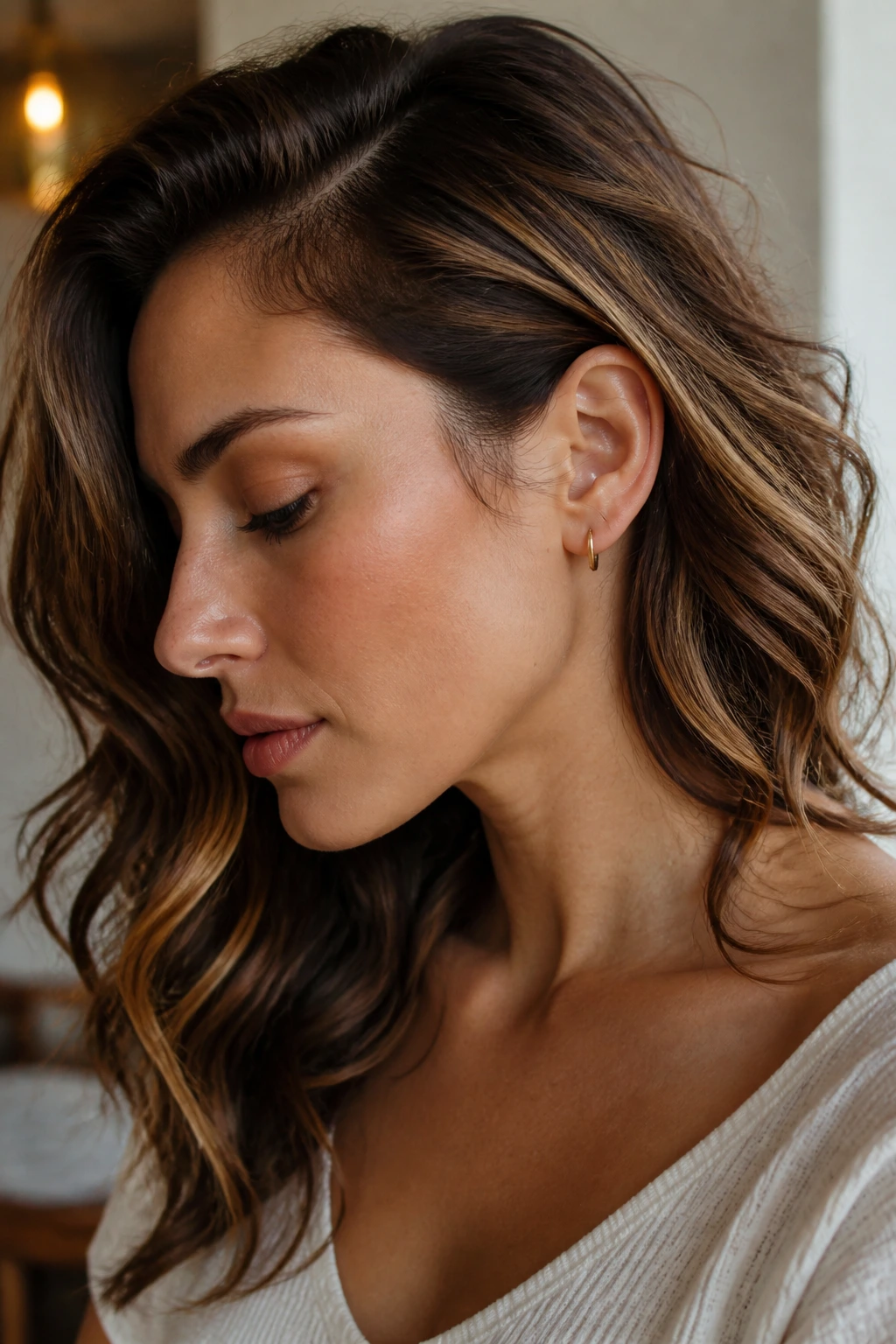
Sometimes the styling trick is tiny. Tucking one side behind the ear opens the face, shows off earrings, and lets the hidden lowlights show in the underlayer when the hair shifts. It’s a neat option when you want polish without much effort.
The interior color does the heavy lifting here. Because 2C waves naturally separate when you tuck one side back, the darker pieces appear in little flashes instead of one big block. That makes the style look layered even if the cut is fairly simple.
This works especially well with medium or long hair that has face-framing layers. Pin the tucked side if the wave keeps slipping, and keep the exposed side a little looser so it doesn’t look too contrived.
16. Claw-Clip French Twist with Brunette Pieces
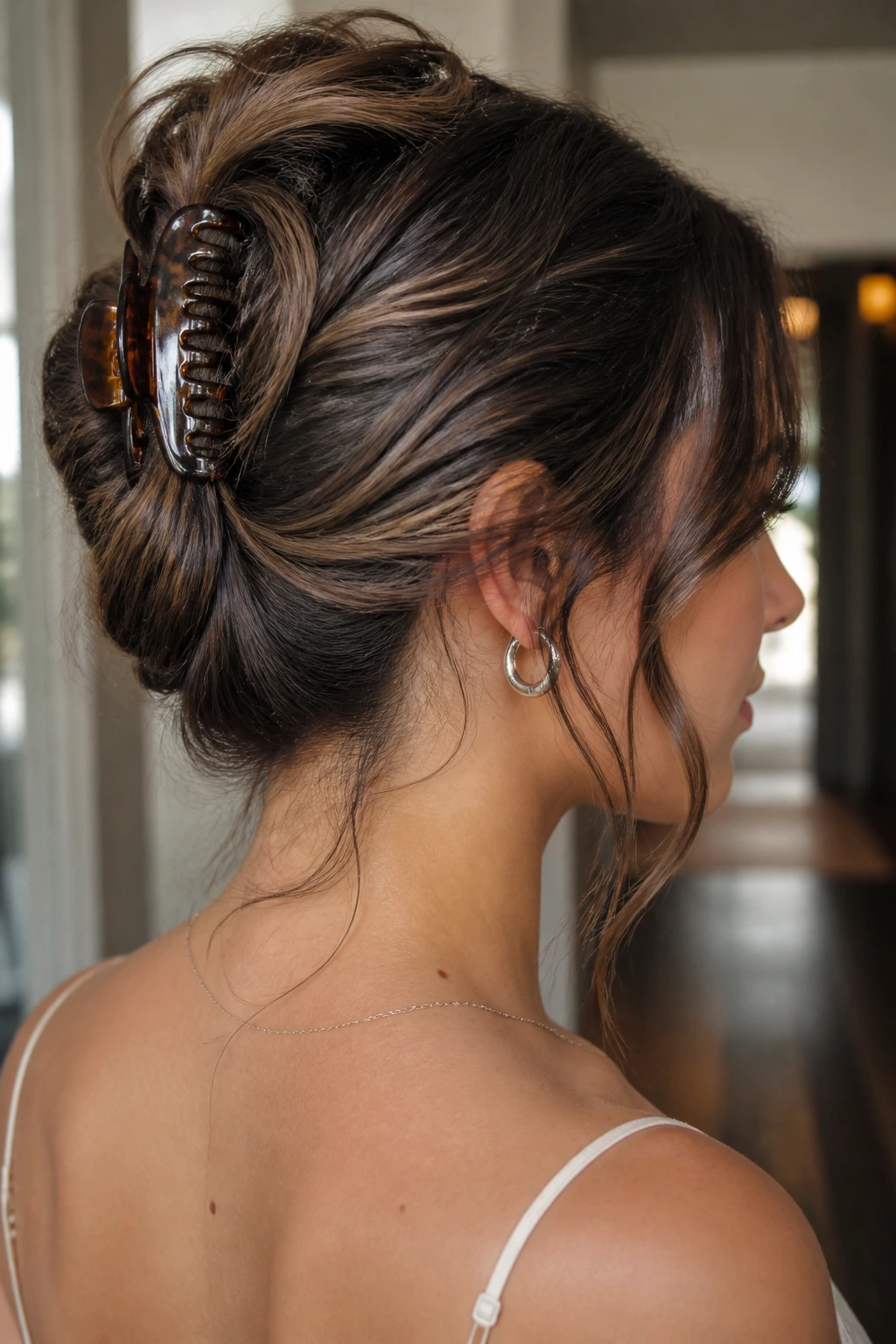
A claw-clip twist is one of the easiest ways to make 2C hair look put together without forcing it into obedience. Brunette lowlights tucked through the sides and nape make the twist look deeper, especially once a few waves fall free.
The clip should hold the top section, but not crush it. Leave enough bend in the crown so the style keeps some height. If the hair is too flat at the roots, the clip becomes a paperweight and the whole thing loses shape.
I like this look for second-day hair that still has some texture left. It hides uneven wave patterns better than a sleek bun does, which is useful when the front pieces have decided to do something different from the rest of the head.
17. Soft Wet-Look Waves with Deep Brunette Gloss
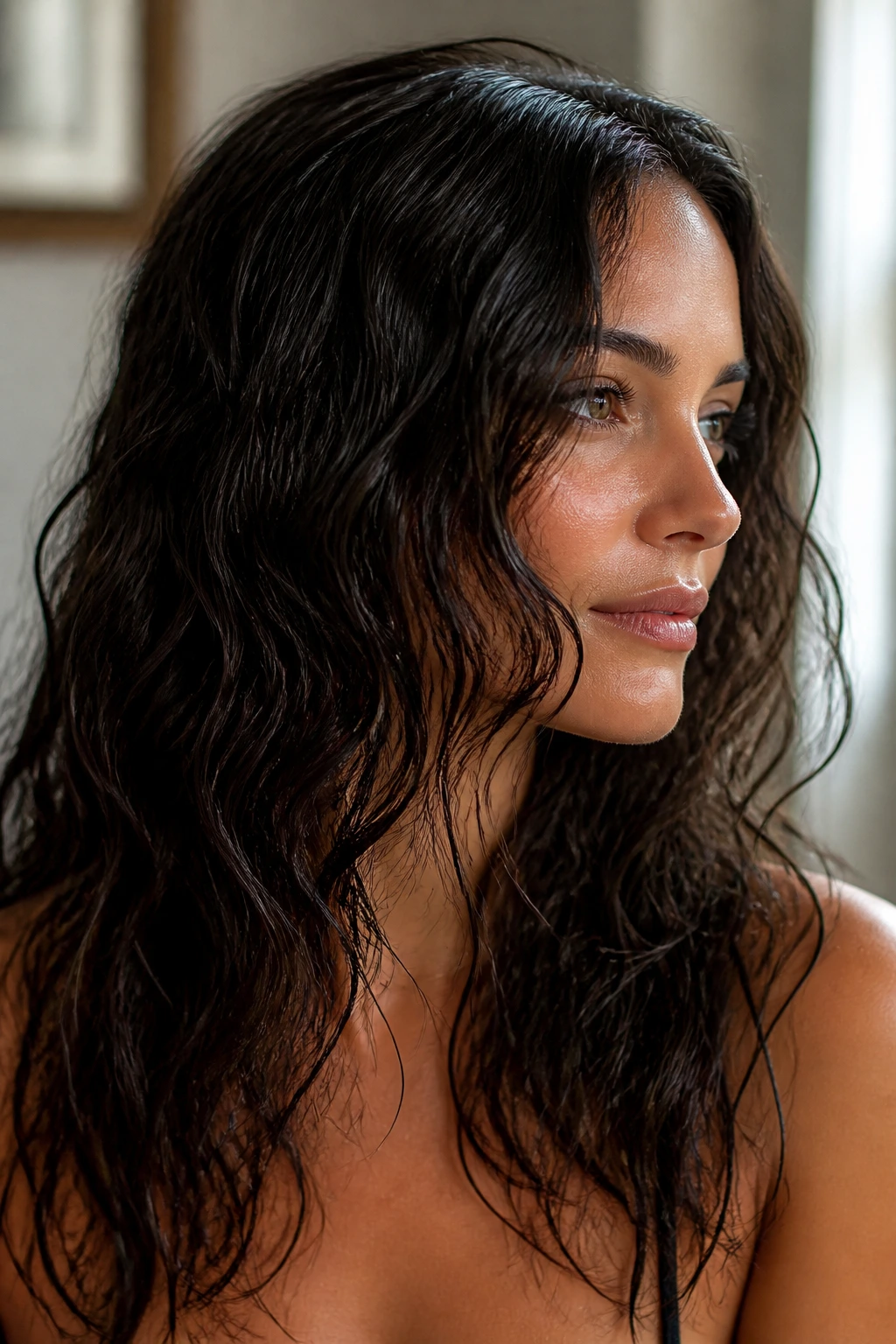
Wet-look waves can go greasy in a hurry, so the color has to do a bit of balancing work. Deep brunette lowlights and a clear gloss keep the finish rich rather than oily, which is exactly what 2C hair needs when you want shine without puff.
The wave should still be visible underneath the sheen. That means using enough gel or cream to hold the bend, but not so much that the strands stick together like rope. Once the product sets, break the wave apart with your fingers for a softer line.
This style is stronger on shoulder-length or longer hair because the gloss catches the movement along the whole length. On shorter hair, it can get too stiff too fast.
18. Butterfly Layers with Toffee Pieces
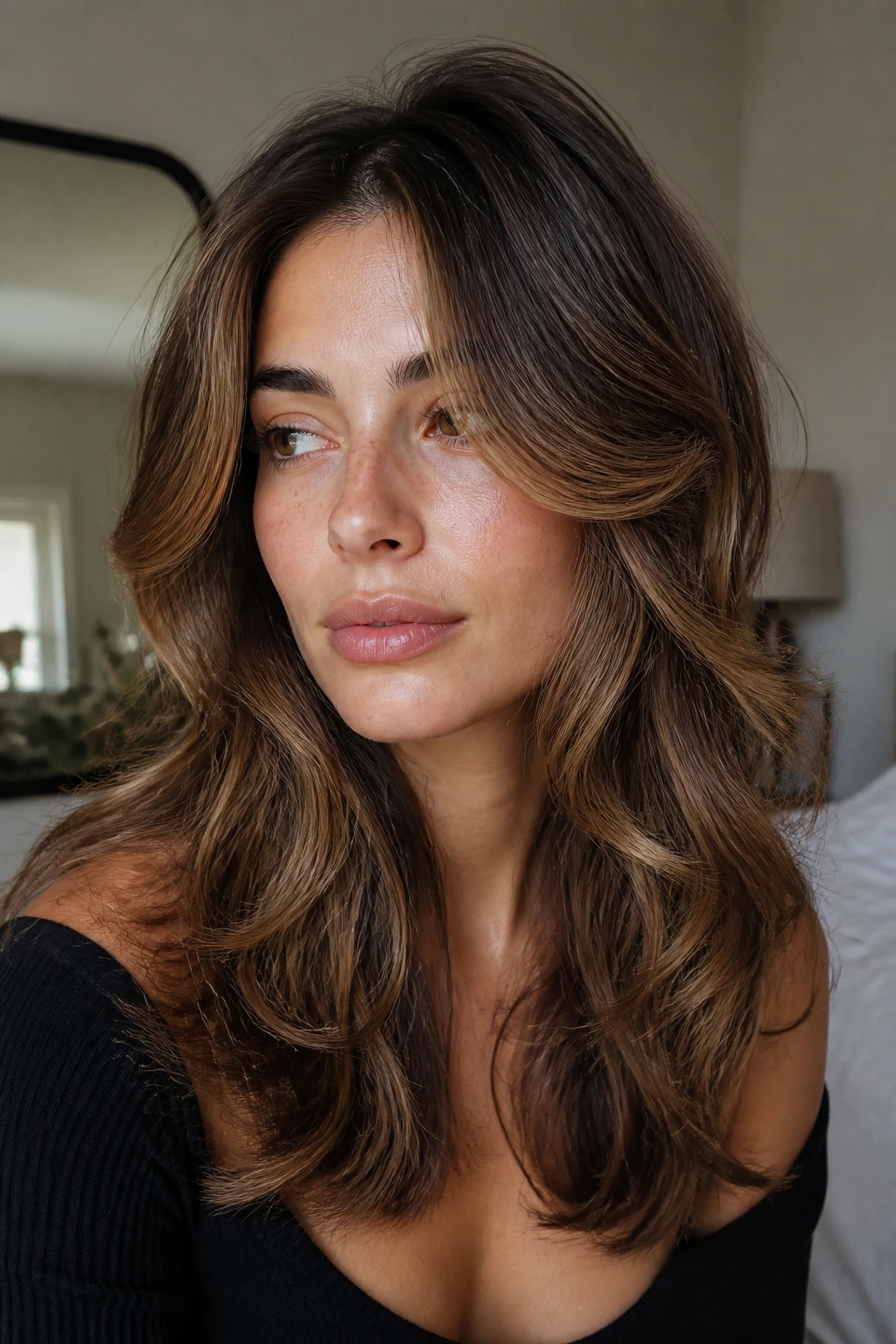
Butterfly layers are built for the kind of hair that likes volume at the top and length at the bottom. On 2C hair, that means the shorter face layers bounce while the longer back layers keep some weight. Toffee lowlights add a warm line through the mid-lengths so the cut doesn’t blur into a single color block.
The face layers should start high enough to show movement, but not so high that they flip out in a cartoonish way. That’s the danger with this cut. The lowlights help by giving the shorter sections some depth, so they blend into the longer hair instead of floating above it.
If you wear glasses, this cut can be especially good. The front pieces sit around the frames and the color gives the shape more definition.
19. Dutch Braid Half-Crown with Walnut Lowlights
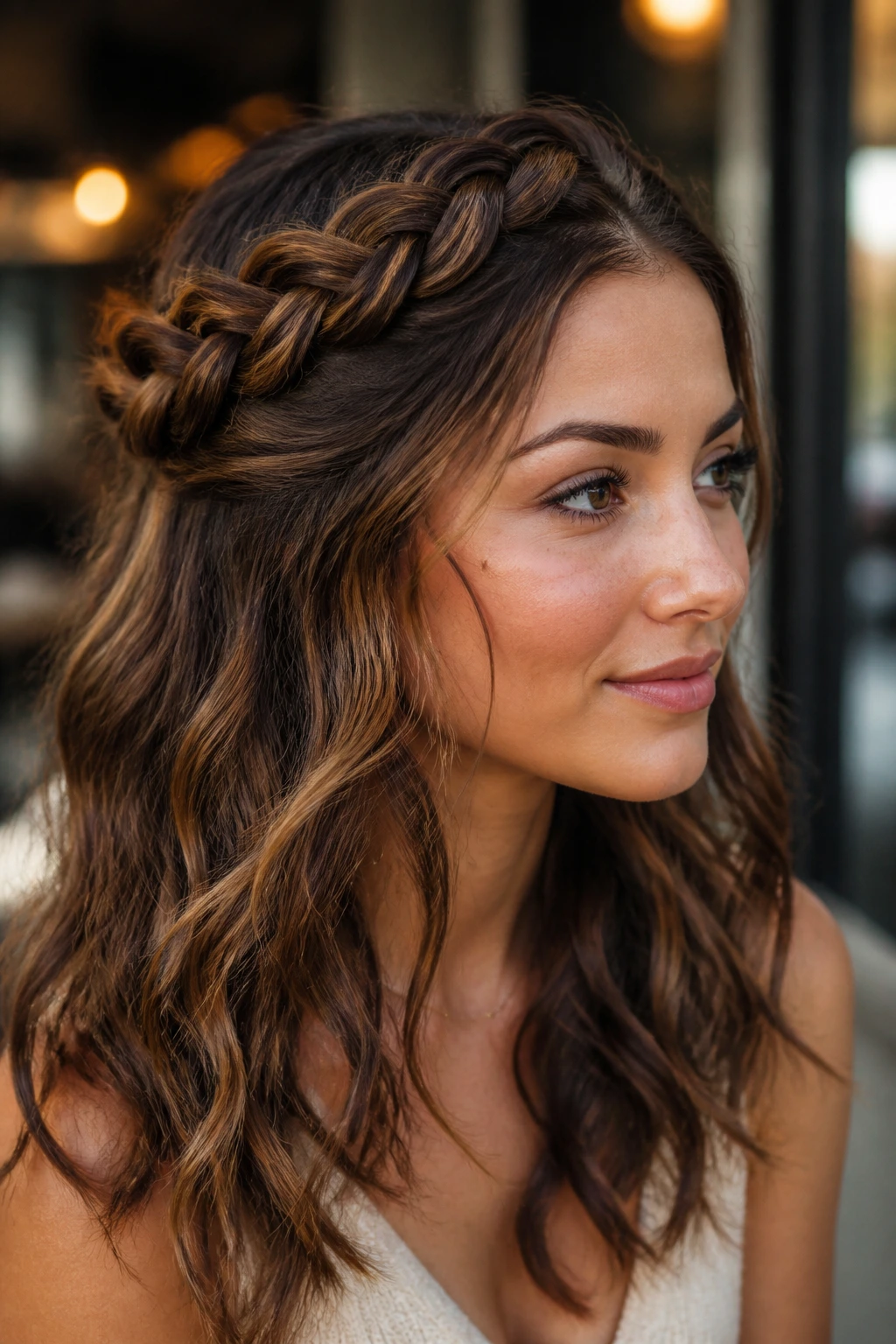
A Dutch braid half-crown gives you a firm braid line on top and open waves underneath, which is a nice contrast on 2C hair. Walnut lowlights in the lower sections make the braid pop because the darker strands peek out every time the hair shifts.
The braid does not need to be tight. Tight braids on 2C hair can create a ridge that looks stiff once you take them out. A slightly looser hand gives the style a soft edge and keeps the wave below from getting crushed.
This is a solid choice for busy days because the braid keeps the front controlled while the rest of the hair still feels like itself. That’s the balance many people are after and don’t quite get.
20. Brushed-Out Waves with Mushroom Brown Depth
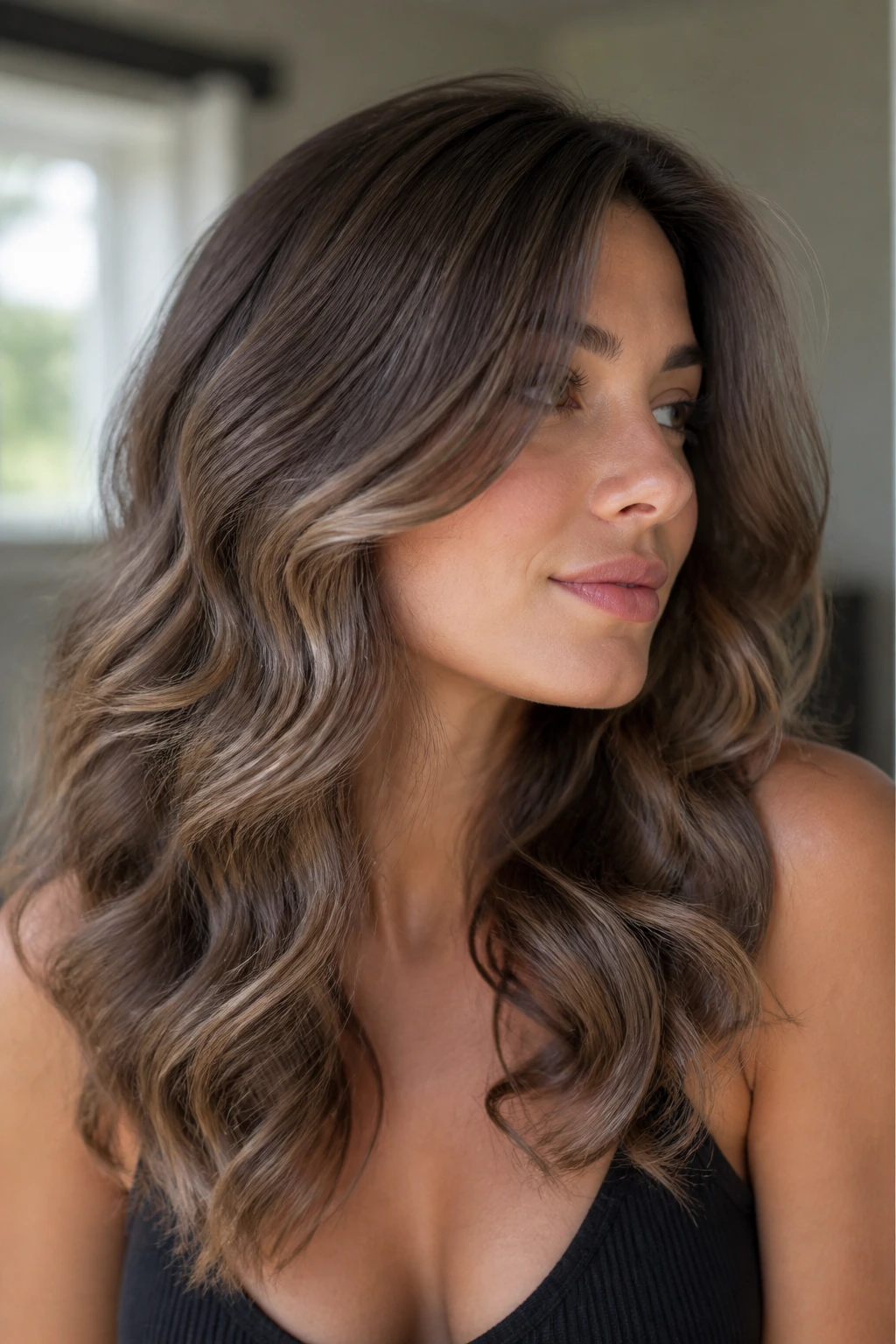
Brushed-out waves can turn 2C texture into something smoother and a little more polished, but only if the cut and color have enough depth to hold the shape. Mushroom brown lowlights are ideal here because they cool the tone down and keep the brushed finish from looking too fluffy.
Use a large iron or a hot brush to set loose bends, then let the hair cool fully before brushing. That cooling step matters. If you brush while the wave is warm, it falls apart into frizz. If you brush after it’s cool, the wave softens without disappearing.
This style suits hair that likes to expand. The darker color underneath keeps the silhouette from ballooning.
21. Tousled Midi Cut with Cinnamon-Sugar Lowlights
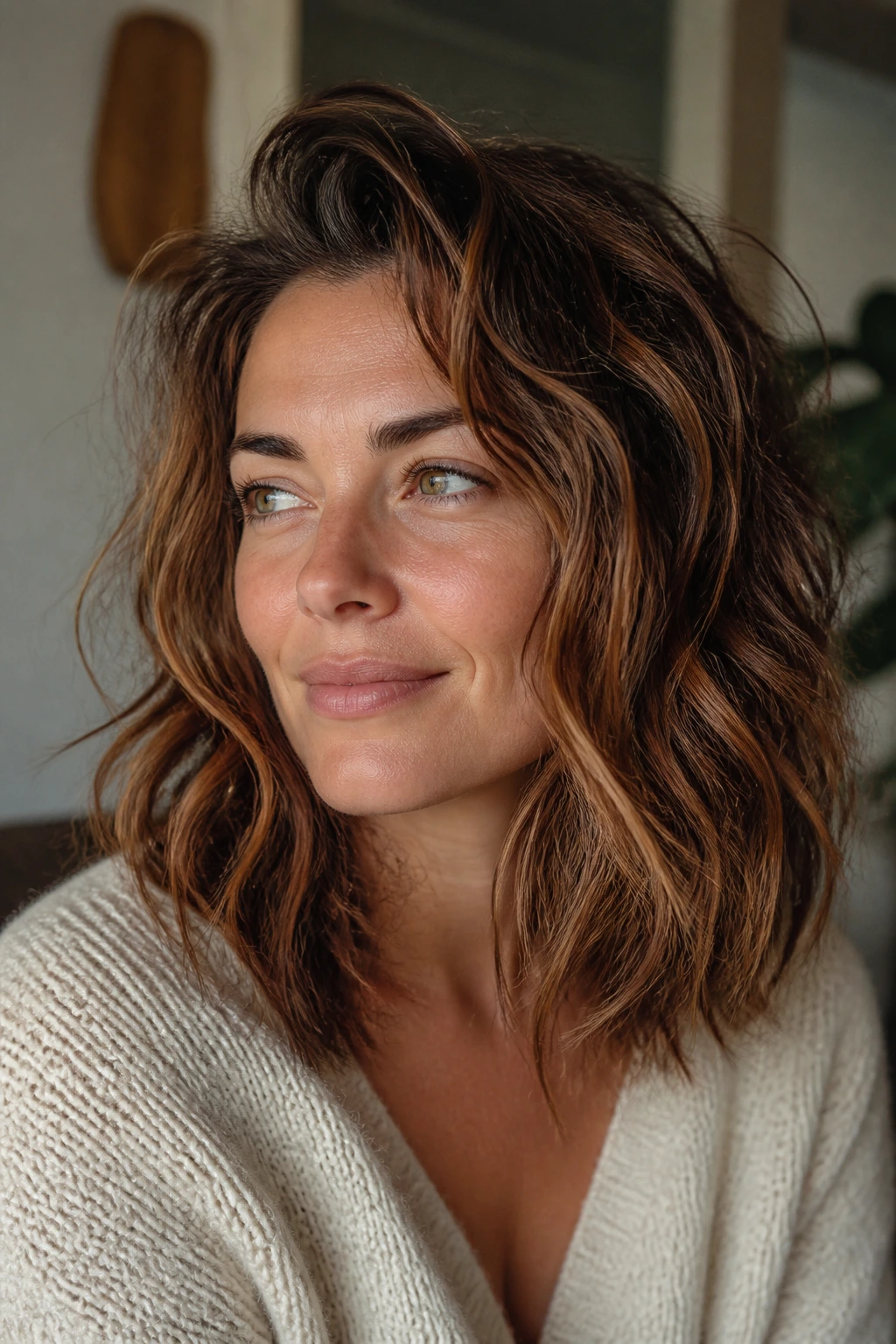
A midi cut sits in that useful middle zone where 2C hair has enough length to wave, but not enough to drag itself down. Cinnamon-sugar lowlights keep the style lively, especially on days when the texture gets a little dry and starts looking pale at the ends.
The cut can be blunt-ish at the bottom with soft internal layers, or more layered if your hair is dense. Either way, the darker pieces should live around the lower thirds of the hair and around the face. That gives the waves a little shadow to lean on.
This is the kind of style that rarely needs a full restyle. A mist of water, a dab of leave-in, and a quick scrunch are usually enough.
22. Side-Pinned Waves with Smoky Chocolate Contrast
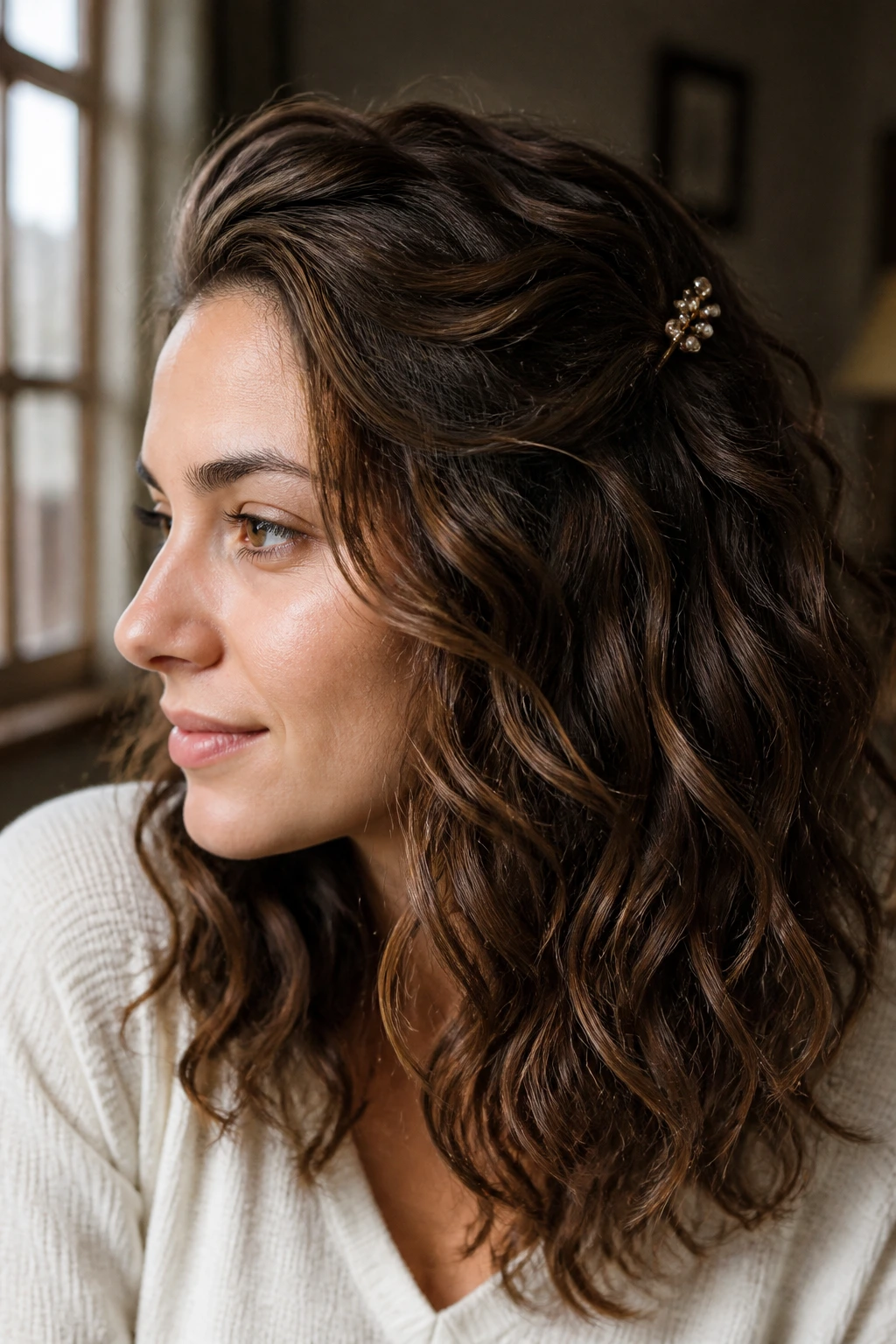
Pinning one side back creates instant shape, and smoky chocolate lowlights make that pinned section look deeper instead of thinner. The contrast is subtle, but it keeps the style from collapsing into one broad wave across the face.
This is a useful option when the front layers are growing out and you need them out of the way. Instead of fighting them, pin them and let the darker interior pieces show. The result feels deliberate rather than improvised.
A single decorative pin can work here, but I’d keep the accessory small. The lowlights already give the style enough visual weight.
23. Long Mermaid Layers with Espresso Ribbons
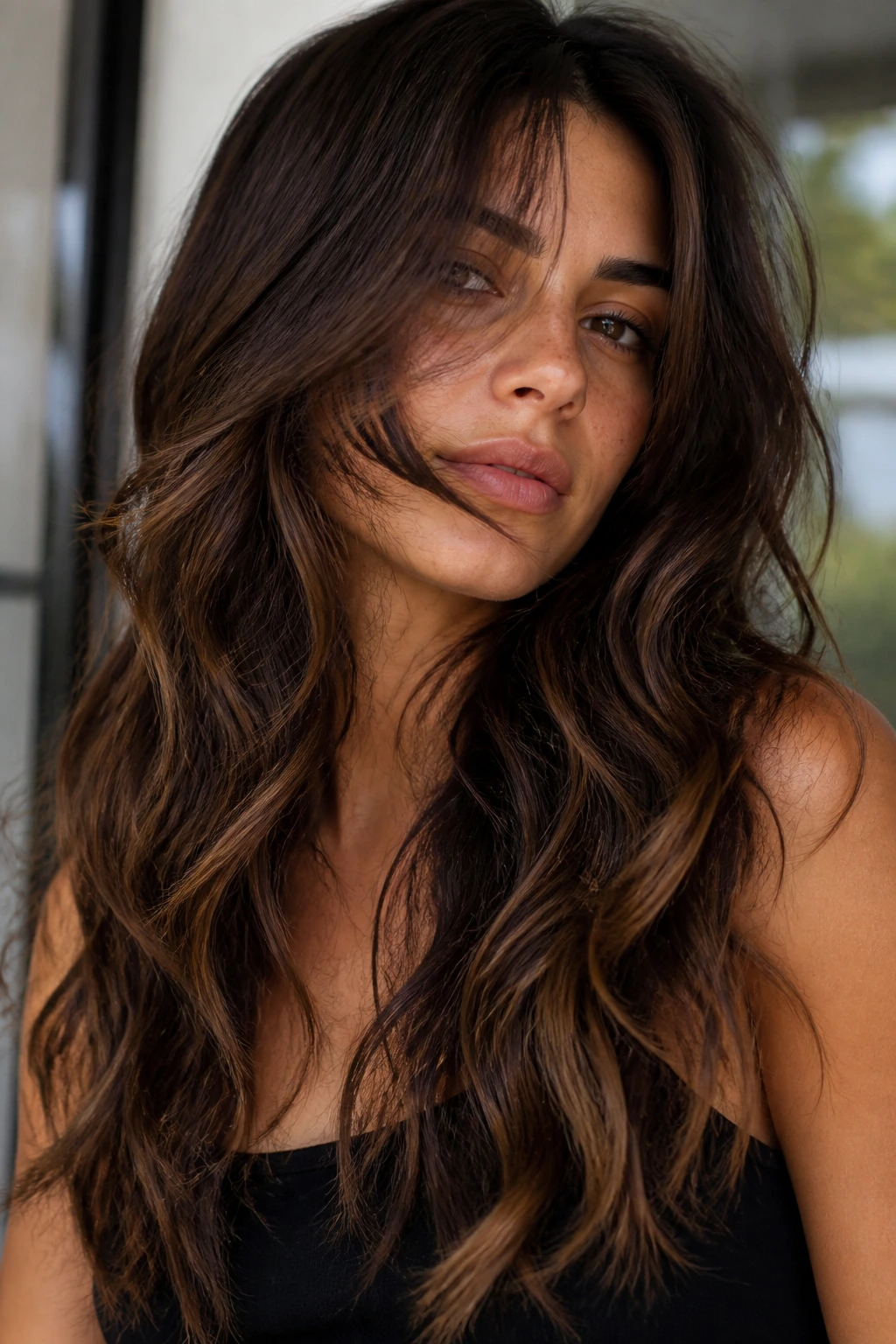
Long, layered 2C hair can be beautiful, but it can also get fuzzy at the ends if the shape isn’t built right. Espresso ribbons woven through the lower lengths help the wave hold together visually, even when the hair is full and sprawling.
The key is spacing. Too many dark strands and the lengths can go heavy. Too few and the lighter top layer steals all the attention. A good colorist will keep the espresso under the surface and around the interior bends, so the movement still feels soft.
This is the style for someone who wants length and does not mind a little upkeep. Long hair asks more of you. It always does.
24. Puffy Top Knot with Shadow-Root Dimension
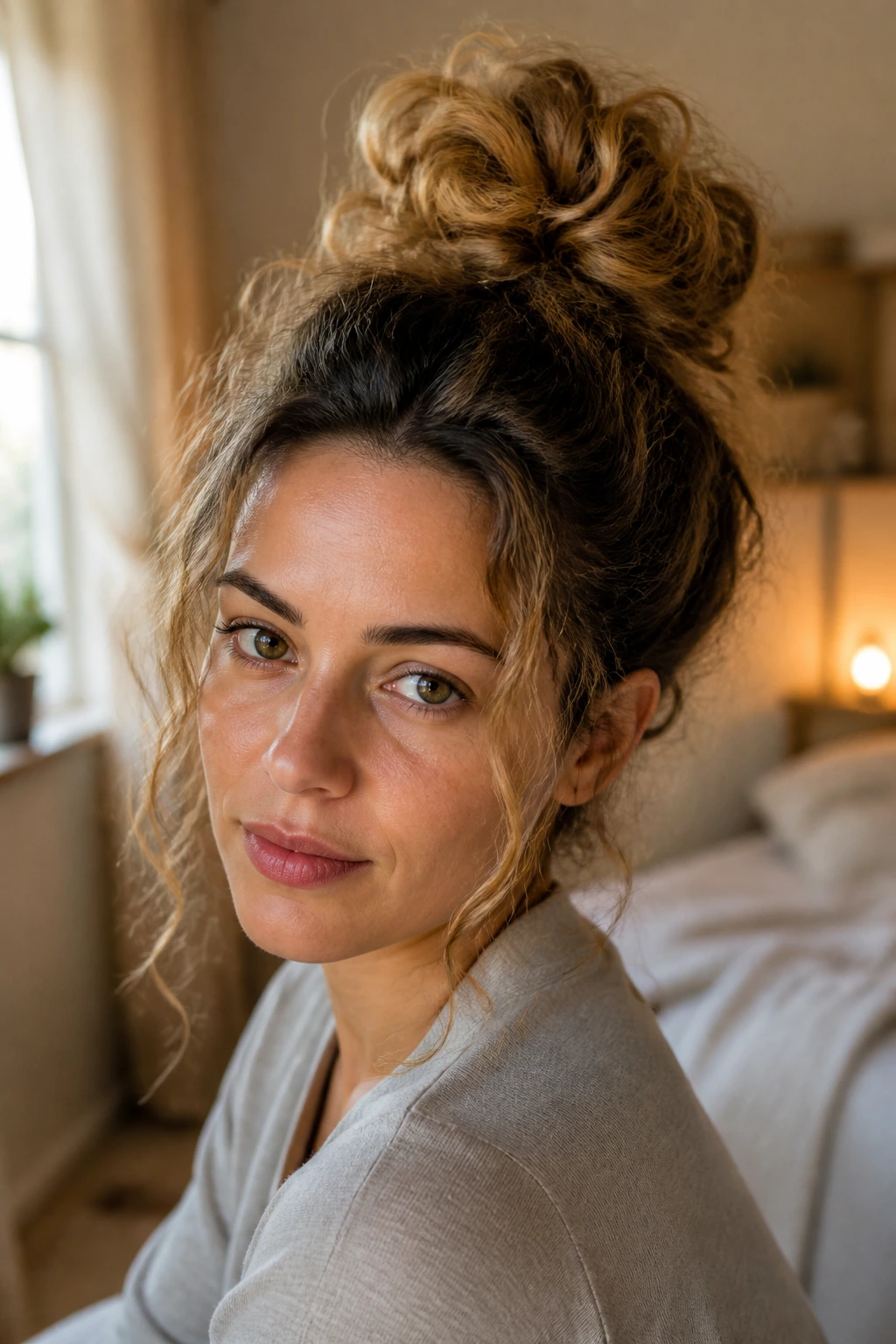
A top knot on 2C hair can either look tidy or wonderfully full, and the shadow-root dimension helps decide which side of that line it lands on. The darker root area keeps the knot from looking like a pale puffball, while the looser waves around the face add shape.
Leave a few pieces out around the temples if your hairline is soft. Those pieces make the style look deliberate instead of thrown together. The lowlights matter here because the bun exposes the underside of the hair, which is where color often gets ignored.
This is a good fix for days when you need the hair out of your face but don’t want a strict bun. It has more movement than a sleeker knot and less fuss than a full blow-dry.
25. Polished Side Part with Chestnut Ends
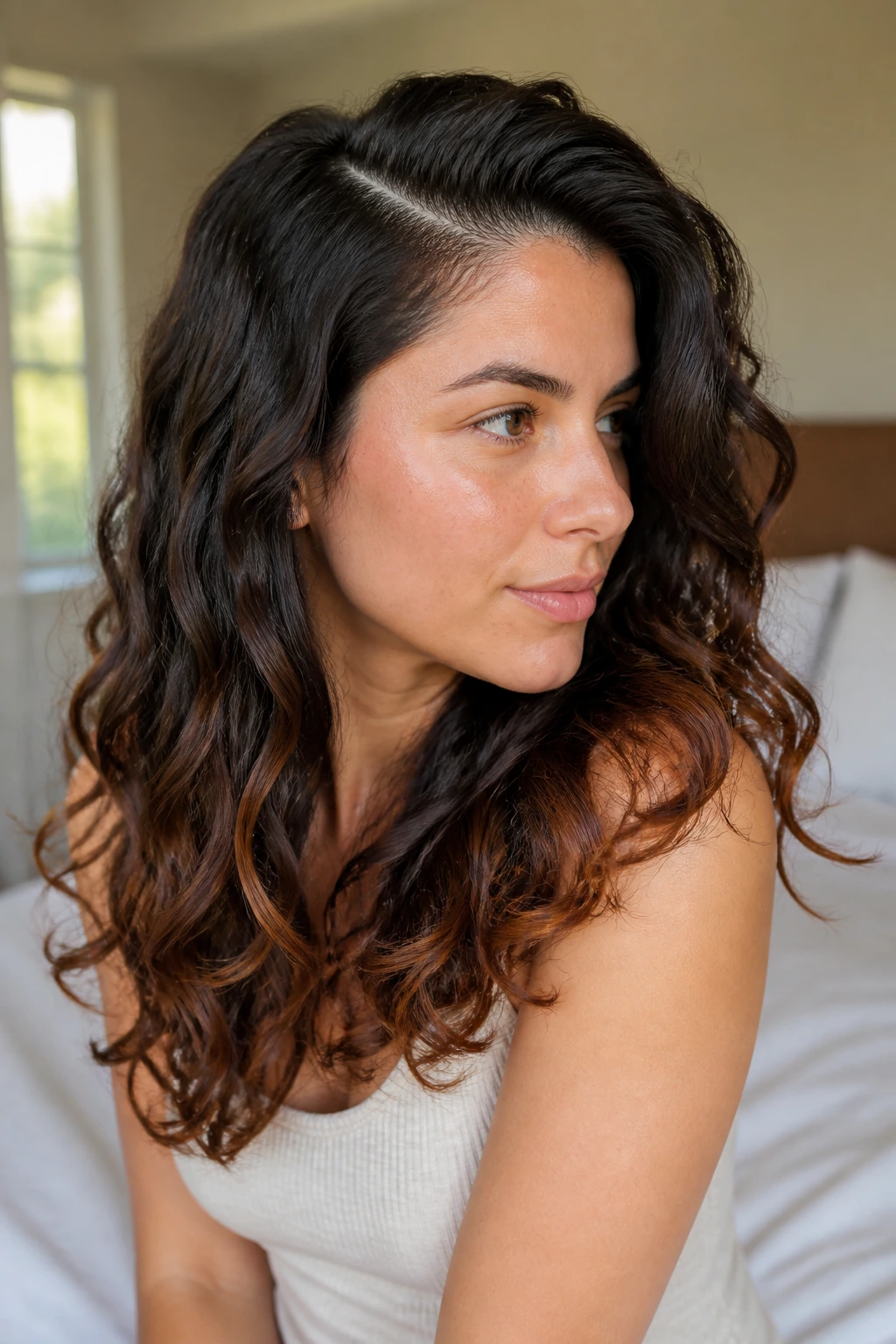
A polished side part is a nice way to finish this list because it shows how little you sometimes need to do. On 2C hair, a clean part, a controlled wave, and chestnut lowlights through the ends can make the whole head read as glossy and intentional.
The ends matter most. That’s where 2C hair often goes frizzy or transparent, and chestnut depth keeps the silhouette from fraying at the bottom. Keep the top smooth with a little serum, but not enough to kill the movement.
If you want the hair to look neat without losing texture, this is the move. It’s tidy. It’s not stiff. There’s a difference, and your hair knows it.
Why Type 2C Waves and Lowlights Belong Together
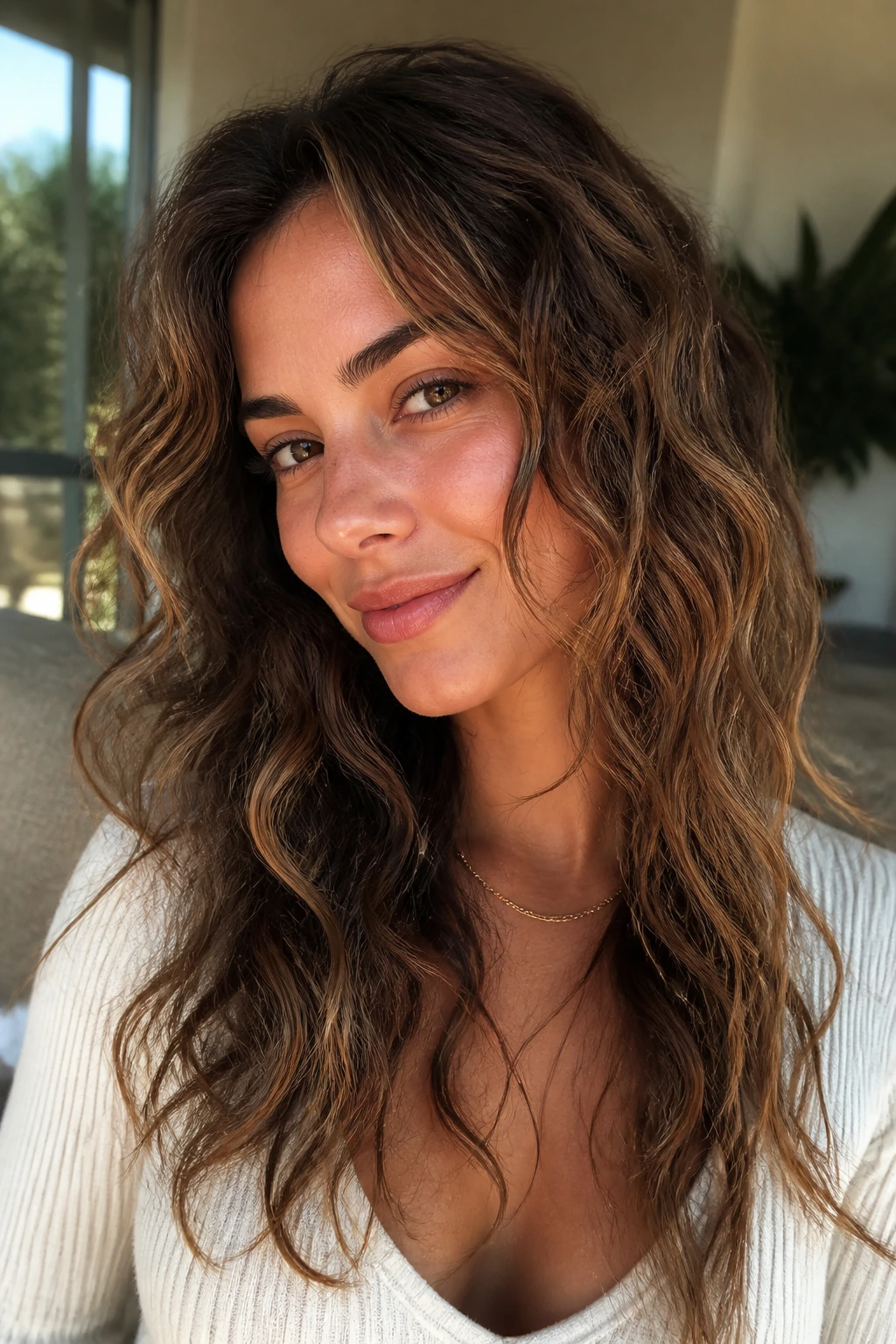
2C hair sits in a funny middle ground. It’s wavier than a soft 2A bend, but it doesn’t usually coil like curly hair does. That means the surface can be smooth in one area and puffier in another, which is exactly why lowlights help. Darker strands add shadow where the wave opens up, so the shape looks more controlled without being pressed flat.
The real win is depth. A single color on 2C hair can look fine from the front and dull from the side, especially when the hair is layered. Lowlights change that. They show up in the bends, under the crown, around the nape, and in the ends where the texture separates a little. If you’ve ever looked at your hair in daylight and thought, “There’s movement here, but not enough shape,” this is the fix I’d reach for first.
Placement matters more than shade alone. A lowlight one or two levels deeper than the base usually reads as richness. Go much darker, and the wave can start to look heavy or patchy. Keep most of the deeper pieces inside the cut, and the top layer can stay lighter and more dimensional. That’s the balance.
Tools That Make These Hairstyles Easier to Wear
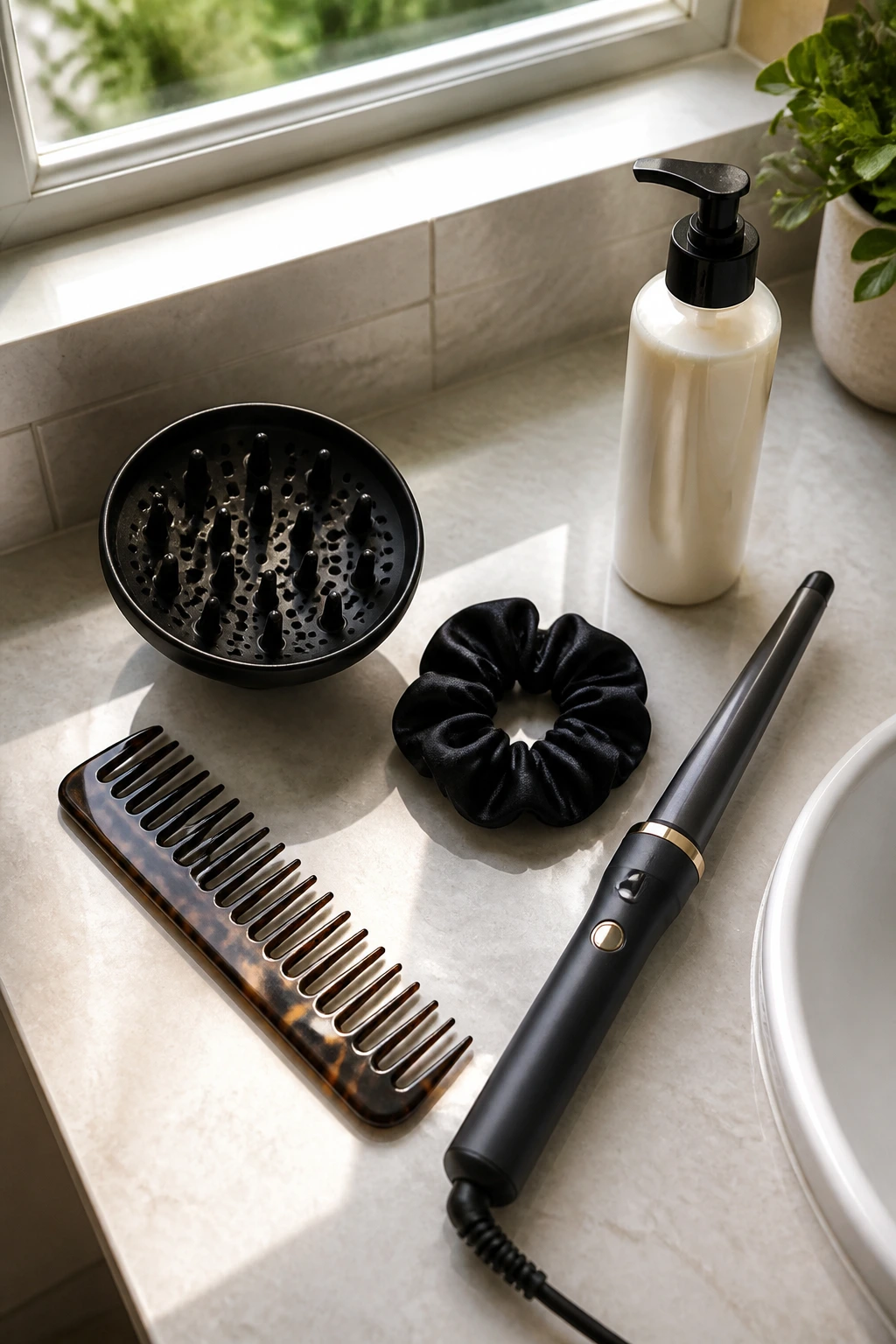
You do not need a drawer full of gadgets to pull these looks off, but a few right tools make 2C hair a lot less annoying.
-
Wide-tooth comb: Best for detangling damp hair without pulling the wave apart or roughing up the cuticle.
-
Microfiber towel or old cotton T-shirt: Absorbs water without the aggressive friction that can turn 2C ends frizzy.
-
Leave-in conditioner: Helps the wave settle into a smoother bend before you add any styling product.
-
Curl cream or lightweight mousse: Gives 2C hair a little control and shape; use a small amount so the hair doesn’t collapse.
-
Heat protectant spray: Non-negotiable if you use a diffuser, curling iron, or hot brush. Every time.
-
1.25-inch curling iron or wand: Useful for refreshing the front pieces, ends, or the soft bends in a side-part style.
-
Diffuser attachment: Good for drying without blasting the wave into a cloud.
-
Duckbill clips: Handy for setting volume at the crown or pinning side sections while they cool.
-
Satin scrunchies or silk ties: Better than rough elastics when you need a bun, pineapple, or half-up twist.
-
Color-safe shampoo and conditioner: Helps the lowlights stay rich and stops the color from fading into a dull brown wash.
What to Ask Your Colorist for at the Chair
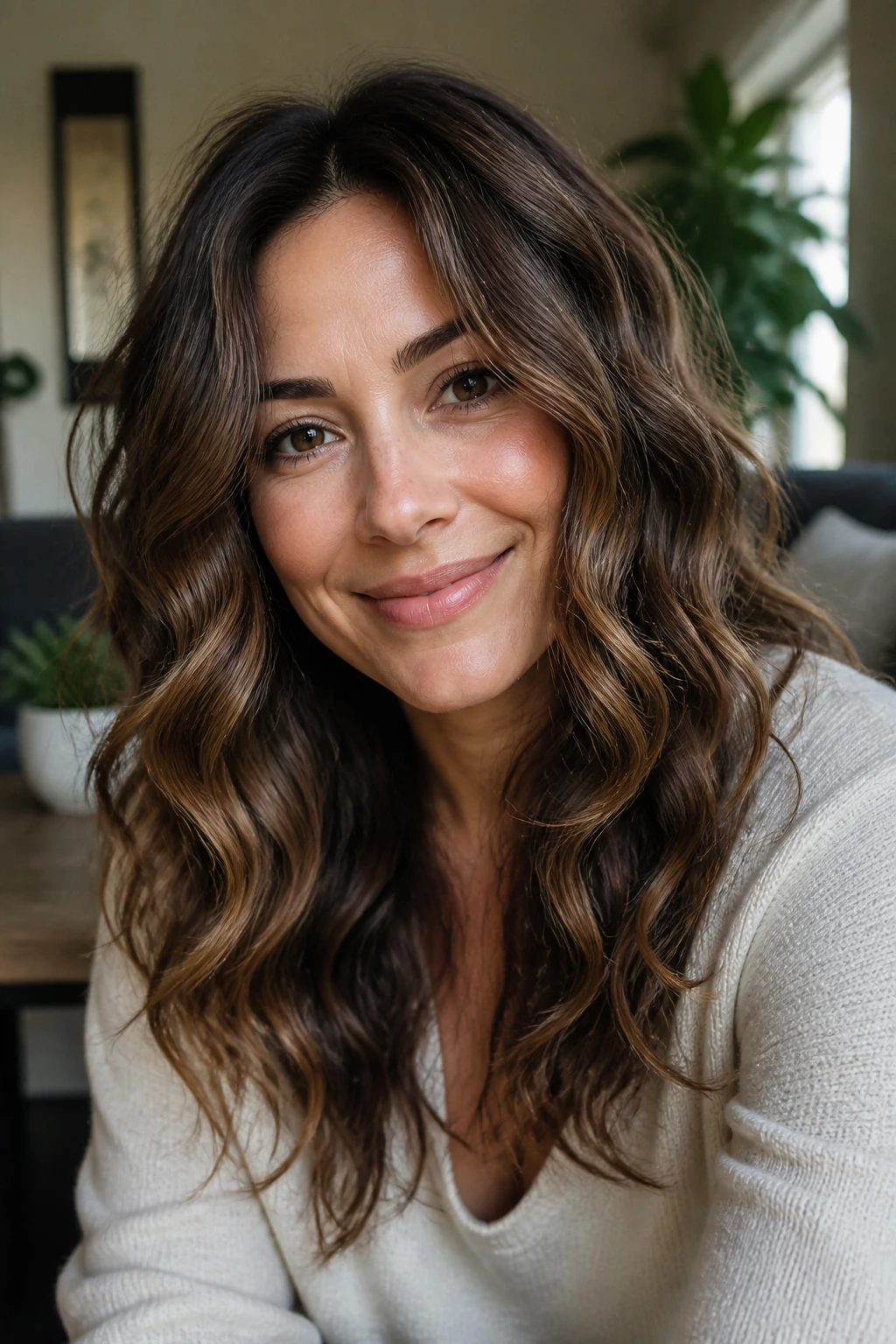
The color conversation matters here. If the lowlights are too dark, the hair can look striped. Too close to the base, and they disappear. I’d ask for lowlights that sit one level deeper than the natural brunette base for a subtle result, or two levels deeper if the hair is very light brown and needs more depth.
Placement is the other half of the request. Ask for the darker pieces to live under the top layer, through the interior, and around the mid-lengths and ends, with a lighter veil left near the hairline if you want a softer face frame. That keeps the color from looking chunky when the wave shifts. On 2C hair, a little shadow in the bend goes a long way.
Bring two or three photos of the same type of haircut from different angles if you can. One front view is never enough. You want the colorist to see the way the lowlights sit in motion, especially at the back and around the crown where 2C hair tends to expand.
If your hair pulls warm, ask whether the lowlights should lean ash, mocha, or chestnut. If it pulls cool, a touch of caramel or toffee can keep the whole head from feeling flat and gray. That conversation saves a lot of regret later.
How to Wear These Looks Without Fighting the Wave Pattern
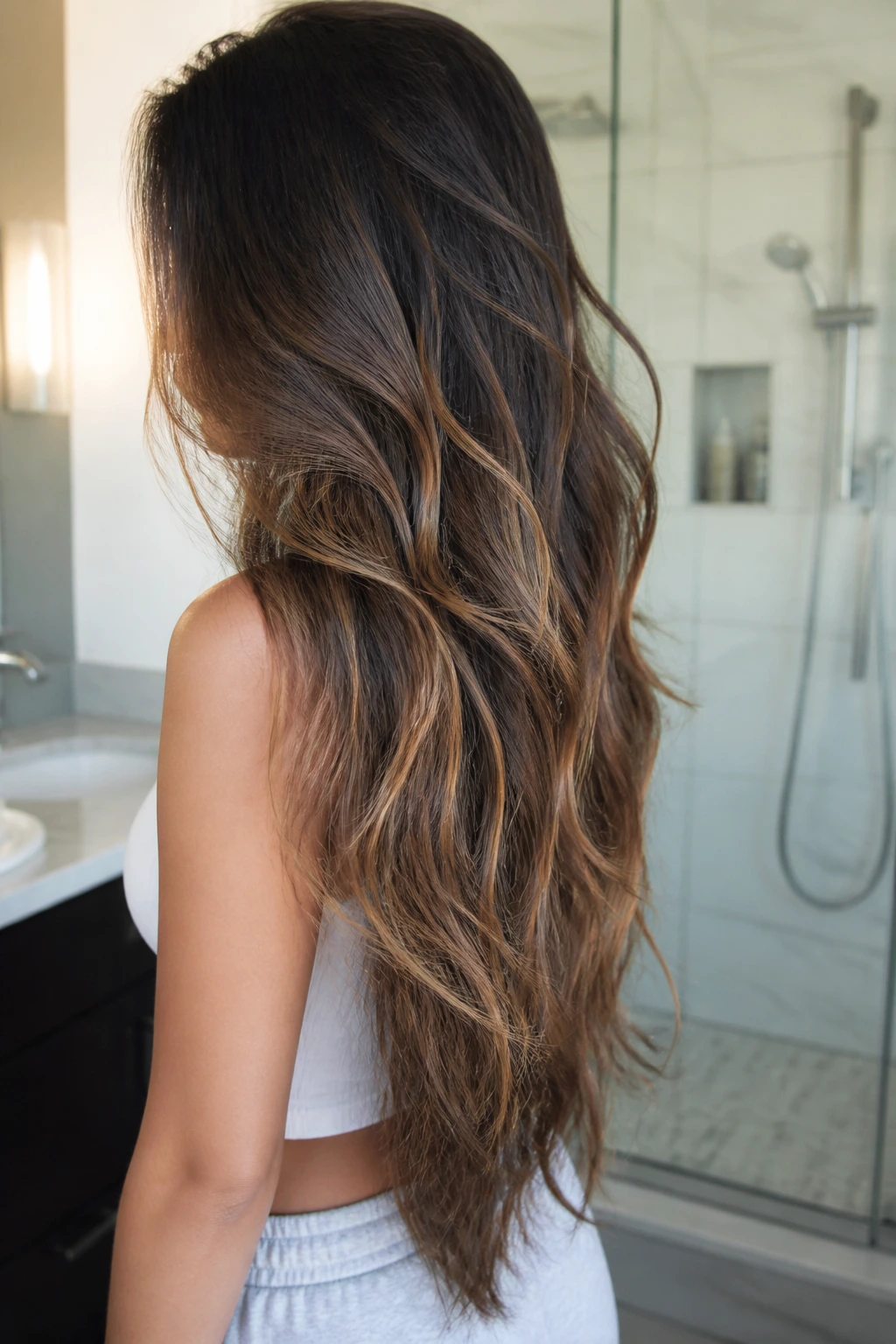
Presentation: Let the wave do the visible work. A center part gives a cleaner line, while a deep side part shows off the darker interior pieces more dramatically. If the style is long and layered, keep the top smooth and let the ends move; if it’s shorter, keep the crown a little airy so the cut doesn’t puff outward.
Pairings: Simple necklines help. Crew necks, scoops, and open collars keep the hair from competing with itself, and small hoops or slim drop earrings work well when the hair is tucked behind one ear or pinned back. A busy neckline plus a busy wave pattern can feel crowded fast.
Wear Time: These styles usually look their smartest on day one or day two, when the wave has settled but hasn’t gone limp. If the top section falls, refresh only the crown and face frame rather than redoing the entire head. That keeps the lowlights visible and avoids the crunchy, over-styled look.
Quick Reset: Mist the mid-lengths lightly with water, scrunch in a pea-sized amount of leave-in, and diffuse for two or three minutes. Don’t soak the whole head. You’re reviving the bend, not washing it from scratch.
Extra Tips for Fuller, Calmer 2C Hair
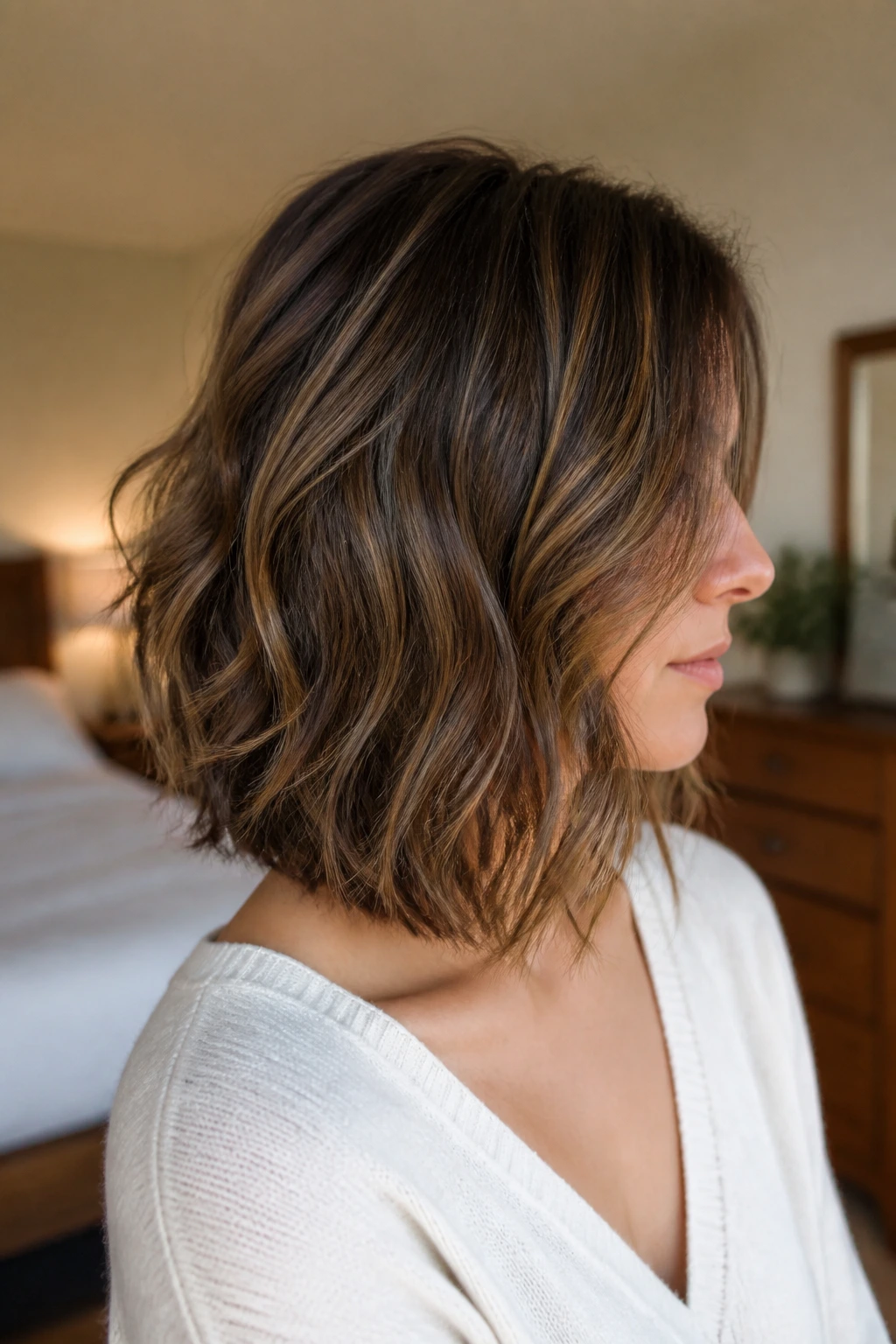
Color Boost: If your lowlights feel too soft after a few weeks, ask for a clear gloss or a cool brunette glaze instead of going darker again. That often restores contrast without adding more pigment.
Shape Boost: Dry the roots in the opposite direction of your part for the first few minutes, then switch back. It gives the crown more lift, which helps the lowlights underneath read as depth instead of drag.
Frizz Control: Put styling cream only from mid-length to ends. The roots on 2C hair usually need less help than the outer bend, and heavy product near the scalp is the fastest way to flatten the style.
Shortcut: If you’re in a hurry, clip the front sections back while they cool after a quick iron pass. That small step gives the hair a clean bend around the face and lets the darker pieces sit where they’re supposed to.
Keeping the Shape, Shine, and Color Between Washes
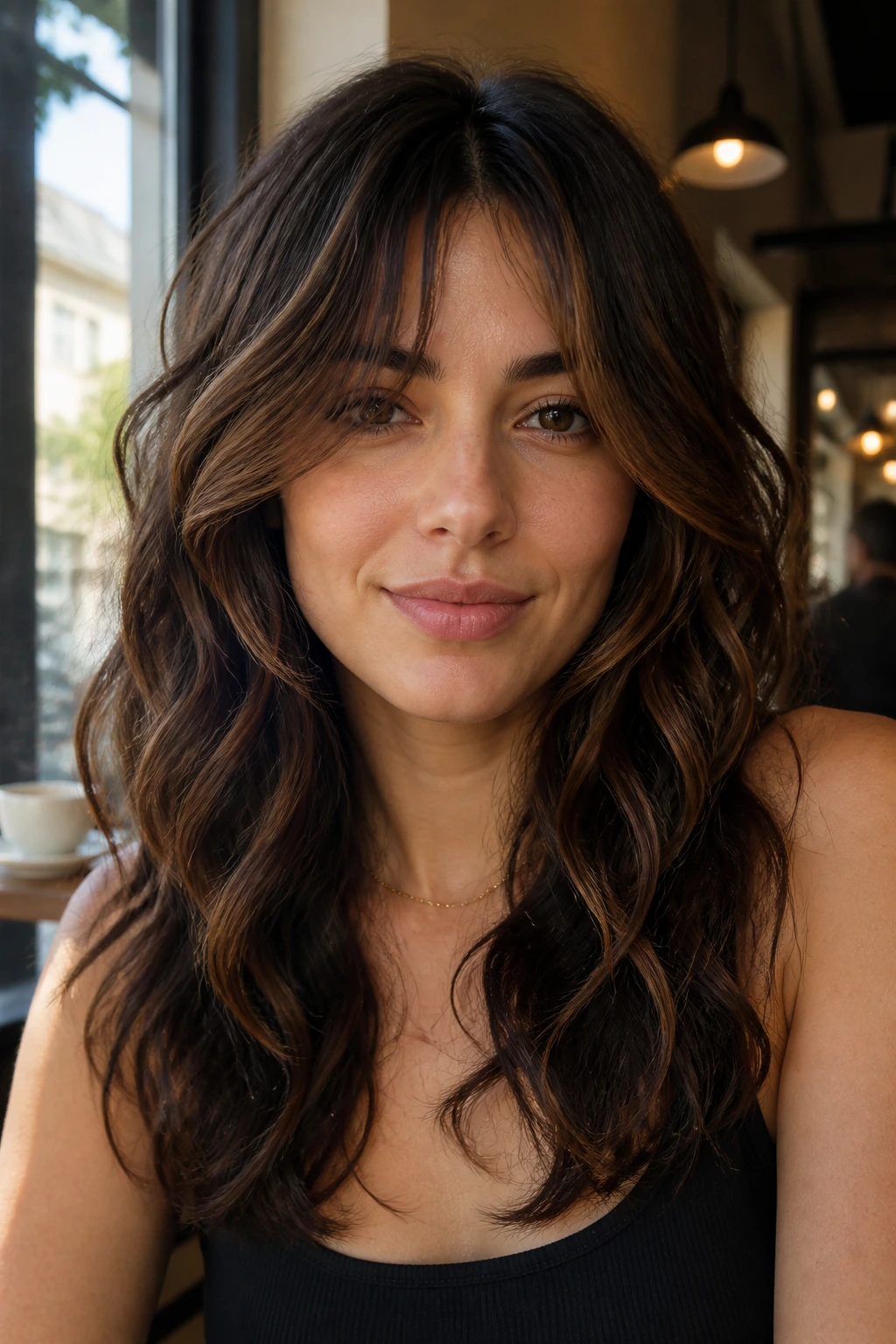
2C waves and lowlights both need a little maintenance, but not the fussy kind. Most people do well washing two to three times a week, depending on scalp oil and how much product they use. If the hair is freshly colored, a sulfate-free shampoo and cooler water help the lowlights stay richer for longer.
The shape usually holds better if you sleep on a silk pillowcase or gather the hair loosely into a pineapple or soft clip at the crown. Tight elastics leave dents. Rough cotton pillowcases rough up the surface and make the next morning harder than it needs to be. If you wake up with flattened waves, mist the hair lightly, twist the front sections around your fingers, and let them air for a few minutes before you touch them again.
Color refreshes tend to look best on an interval of about 6 to 10 weeks, depending on how dark the lowlights are and how often you heat-style. If brass creeps in sooner, a gloss or toner can help without redoing the full head. That’s usually enough to bring back the shadow and keep the layers from turning flat.
For heat styling, use a protectant every single time. No exceptions. 2C hair already has a drier outer texture than straighter hair, and lowlights only look good when the surface is smooth enough to show them.
Variations and Adaptations to Try
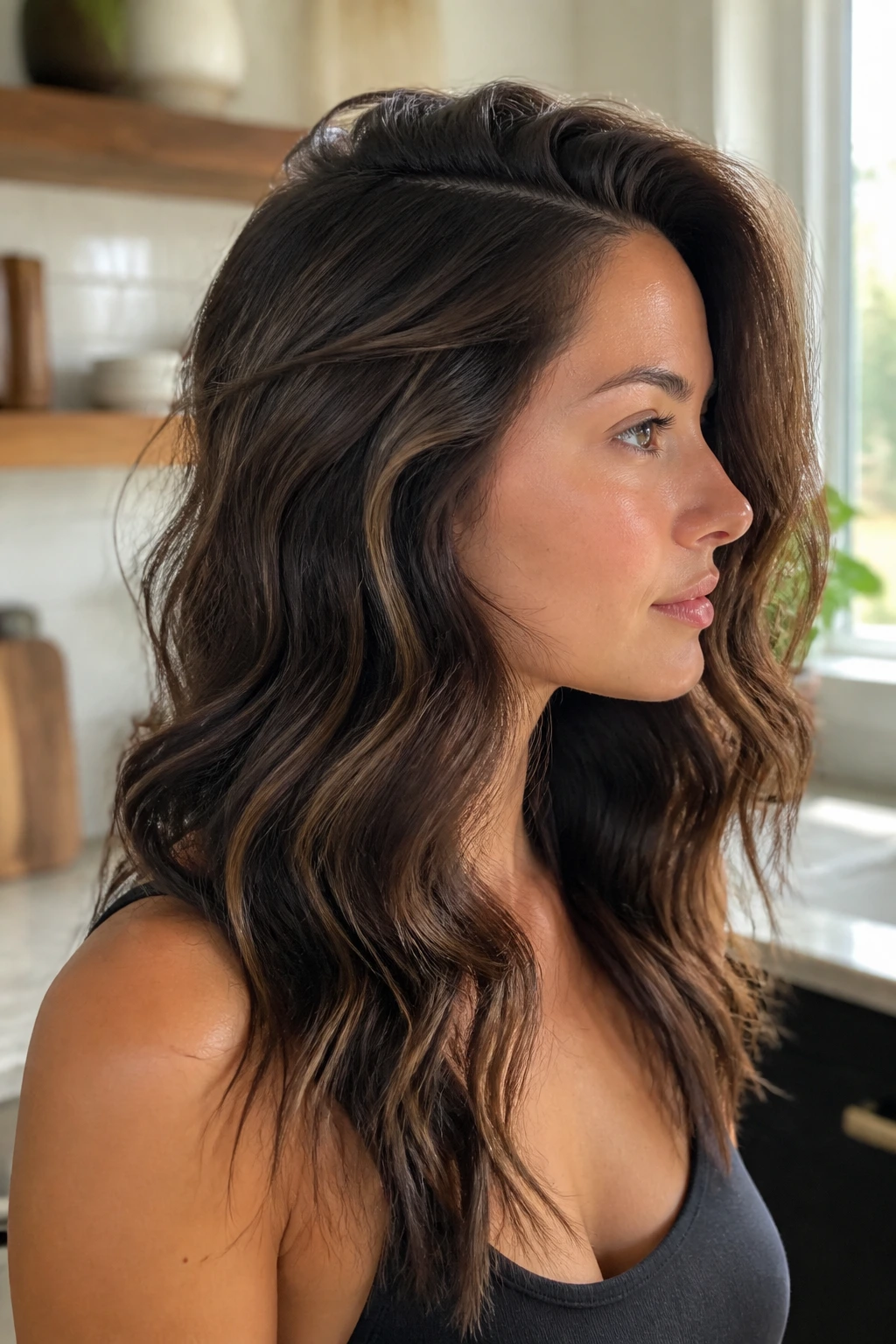
Cool Brunette Shift: Swap warm caramel, toffee, or chestnut lowlights for mushroom brown or ash brown if your base pulls orange. The result looks softer and a little cooler, which suits shiny brunette hair that gets brassy fast.
Warm Glow Version: Move the lowlights toward cinnamon, bronze, or hazelnut if your skin tone likes warmth. This version keeps the hair rich without making it look reddish all over.
Low-Maintenance Grow-Out: Ask for a shadow root and interior lowlights only, leaving the hairline and part area lighter. That gives you softer regrowth and fewer obvious lines when the color starts to drift.
Shorter-Length Spin: If your hair sits above the shoulders, keep the same color idea but concentrate the darker pieces under the bend and at the nape. Short 2C hair can look thick fast, so you want the shadow to sharpen the outline instead of crowding it.
Heat-Free Texture: Use braids, twists, or a loose bun on damp hair, then shake the style out once it dries. The lowlights will show as the waves separate, and you can skip the iron for a more relaxed finish.
Event-Ready Polish: For a dressier version, smooth the crown with a round brush or blow-dry brush, then leave the lower waves loose. The contrast between controlled top and textured ends makes the lowlights stand out fast.
Common Mistakes That Flatten the Wave or Muddy the Color
-
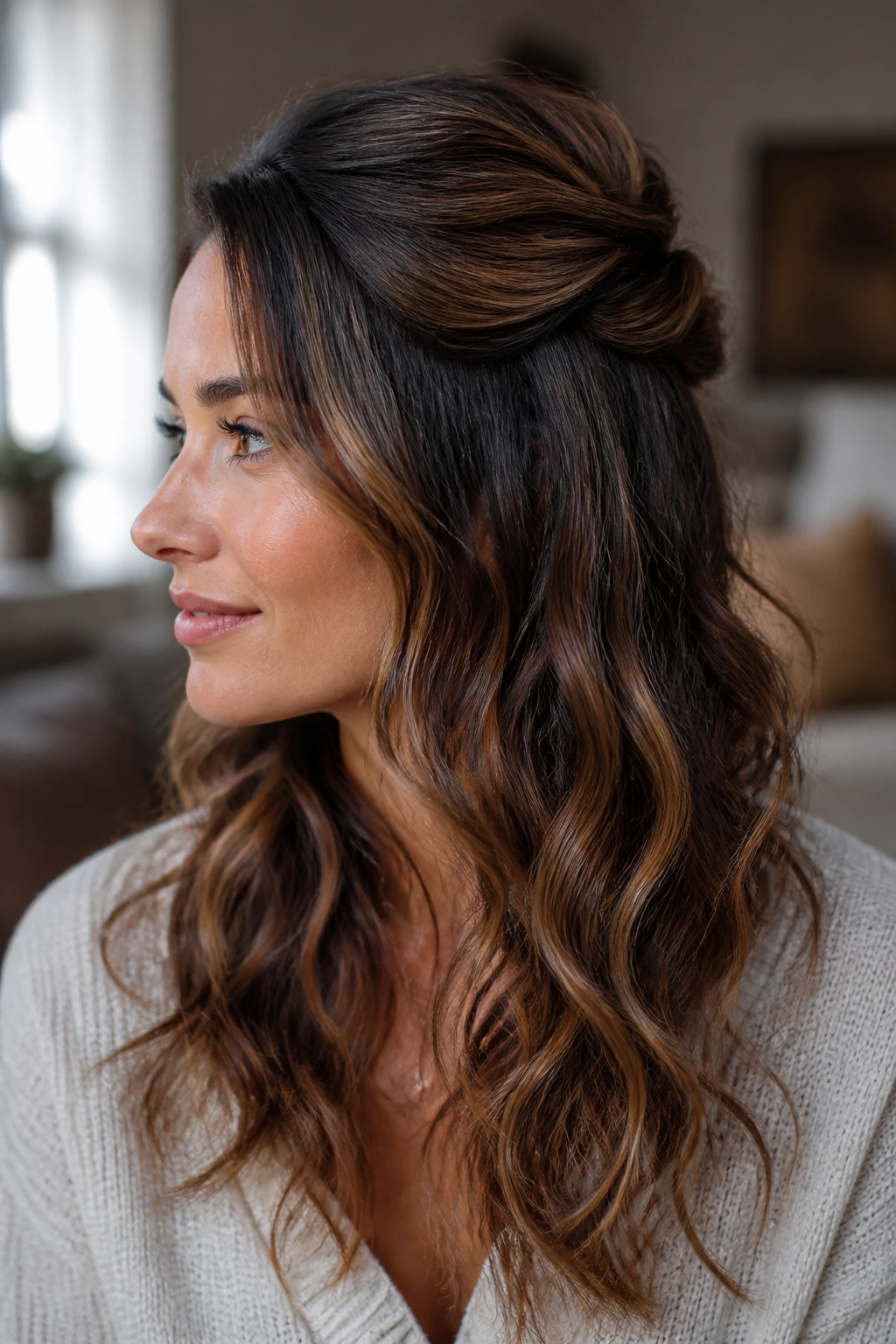
Going too dark, too fast: If the lowlights are several levels deeper than the base, 2C waves can look heavy instead of dimensional. Fix it by asking for softer placement or a glaze over the dark pieces.
-
Coloring every surface strand: When the darker pieces cover the whole top layer, the wave loses contrast and the hair can look flat in direct light. Keep most of the depth inside the cut and around the underside.
-
Using too much cream or oil: 2C hair can turn limp fast if you stack product near the roots or through the front pieces. Start with less than you think you need, then add only to dry ends if necessary.
-
Skipping the cut work: Lowlights can’t save a blunt, bulky shape that sits like a helmet. If the haircut is too heavy, the waves won’t show up cleanly, and the color won’t have anything to frame.
-
Refreshing with hot tools on high heat: High heat can puff the outer layer and make the lowlights look dull. A lower setting with a heat protectant usually gives a cleaner bend.
Questions People Ask About Type 2C Waves and Lowlights
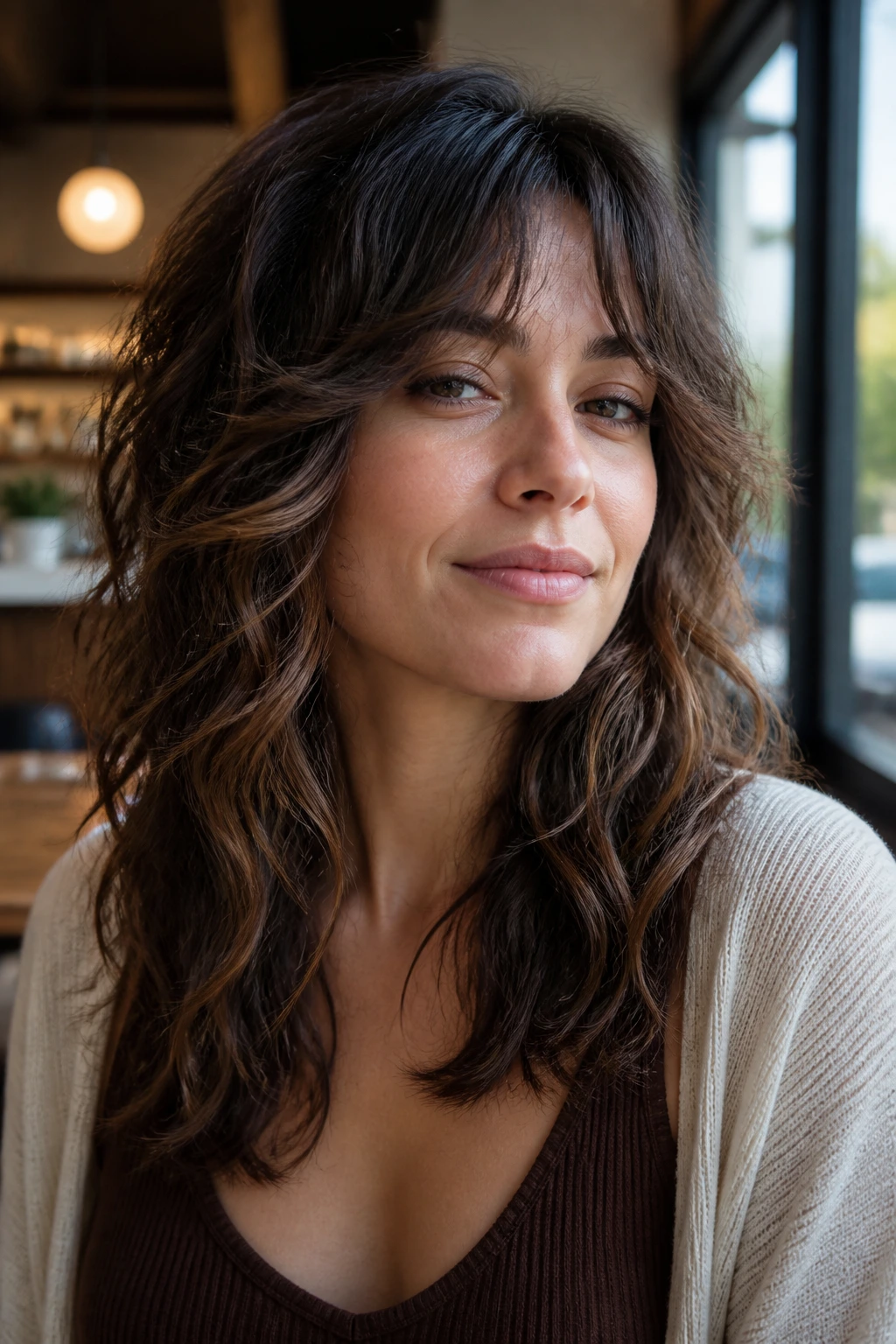
Are lowlights better than highlights for 2C wavy hair?
Lowlights often give 2C hair more visible depth than highlights do, especially if the wave pattern is loose or frizz-prone. Highlights can brighten the texture, but lowlights usually sharpen the shape and make the hair look fuller at the mid-lengths.
What shade of lowlight looks most natural on brunette 2C hair?
Chestnut, mocha, walnut, and mushroom brown tend to blend well because they sit close to brunette bases without disappearing. If the hair is warm, a soft caramel-brown works. If it runs ashy, cooler brown tones are easier to keep clean.
Can I wear a blunt bob with lowlights and still keep wave definition?
Yes, but the bob needs some internal texture so it doesn’t turn into a heavy block. Lowlights under the surface help the ends look thicker, while soft layering keeps the wave from fighting the shape.
How often should I refresh lowlights?
Most people find 6 to 10 weeks works well, depending on how bold the contrast is and how often they use heat. If the color starts looking brassy sooner, a gloss or toner is usually enough.
What if my 2C waves go flat by midday?
Refresh only the crown and front pieces, not the entire head. A light mist of water, a touch of leave-in, and a quick diffuse or finger twist can bring the wave back without making the hair sticky.
Do these styles still work if my hair is fine?
They do, but the cut has to stay light and the product has to stay sparse. Fine 2C hair needs airy layers and lowlights placed with restraint, or the style can collapse.
Can I do lowlights at home?
You can, but placement is the hard part. If you’re not confident about keeping the darker pieces beneath the top layer and away from the hairline, a salon visit is safer because bad placement shows fast on wavy hair.
Will lowlights make my hair look thinner?
Not if they’re placed well. In fact, 2C hair often looks thicker with lowlights because the darker ribbons create shadow between the waves. Problems start when the color gets too dark or too stripey.
The Styles That Stay Interesting
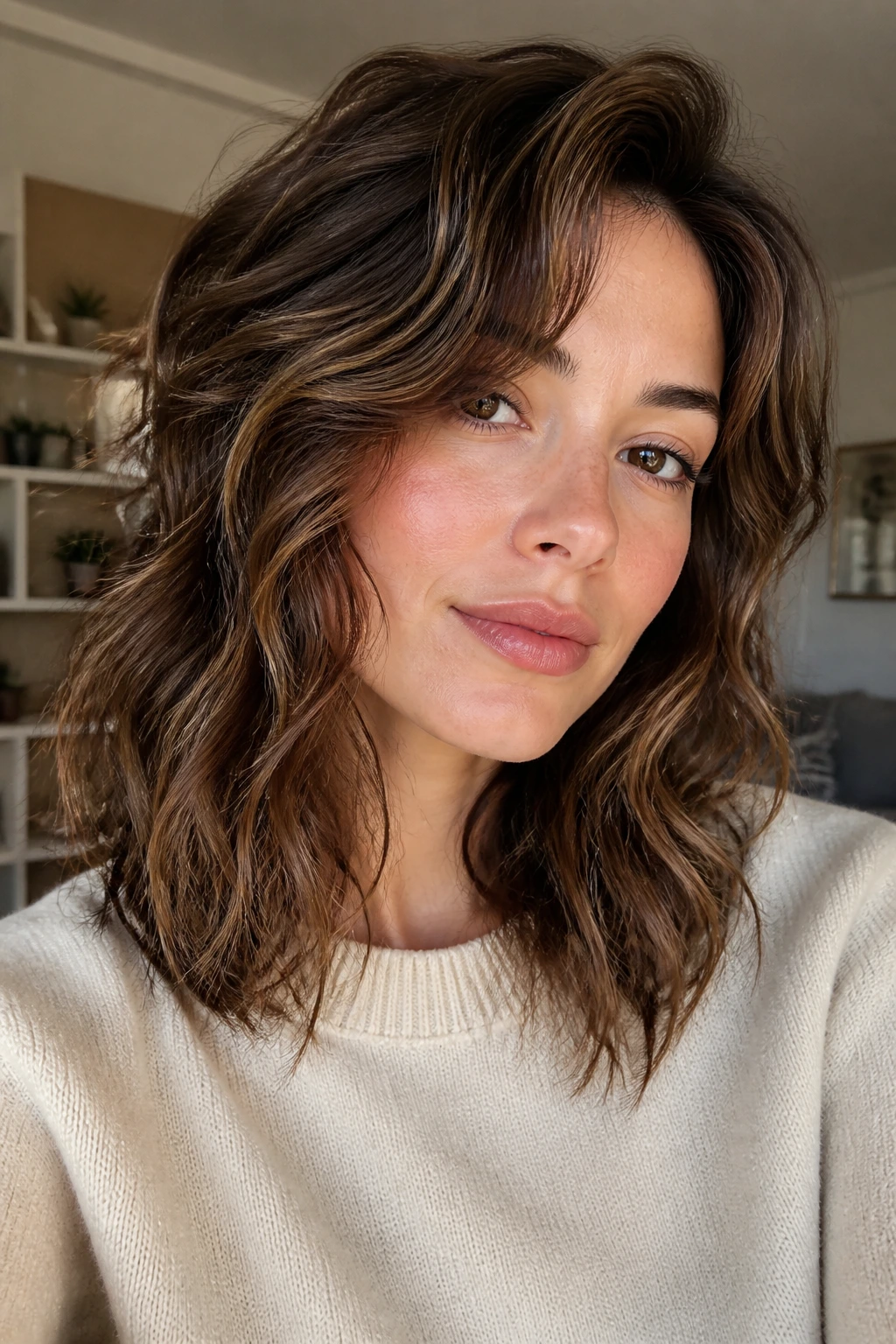
2C waves already have motion. Lowlights give them a place to land. That’s why these hairstyles work when a lot of flat, one-tone looks fall apart the second you step into daylight or humidity.
The smartest versions don’t fight the texture. They feed it a little depth, keep the shape light enough to move, and let the darker pieces sit where the bends are strongest. Once you start looking at your hair that way, the options open up fast. A lob is not just a lob. A shag is not just a shag. A bun can hide or show off the shadow in the hair depending on where you pin it.
If you save one idea from all of this, make it placement. Get the lowlights in the bend, not all over the top. Let the cut do some of the work. Then wear the style long enough to see how it behaves when it’s not fresh from the chair — that’s where the good stuff shows up.