



Long bangs for long hair and oval faces have a useful little trick built into them: they change the shape in front without chopping up the length you’ve been growing for ages. That matters more than people think. With an oval face, the proportions are already balanced, so the bangs do not need to “fix” anything; they just need to land in the right place and keep the movement going.
The bad version of fringe is the one that sits there like a shelf. The better version moves. It brushes the cheekbone, slips into the layers, and still lets the rest of the hair feel long, soft, and deliberate. If the shortest piece lands too high, the front starts to read heavy. If it lands too low, it disappears into the lengths and you lose the point of the cut entirely.
That’s why long bangs are such a smart match for oval faces. You can wear them center-parted, side-swept, piecey, full, feathered, or almost invisible, and the face shape still gives the cut room to breathe. The real question is not whether you can wear them. It’s which version gives the front of your hair a little shape without stealing the swing from the rest of it.
Why You’ll Love This Collection
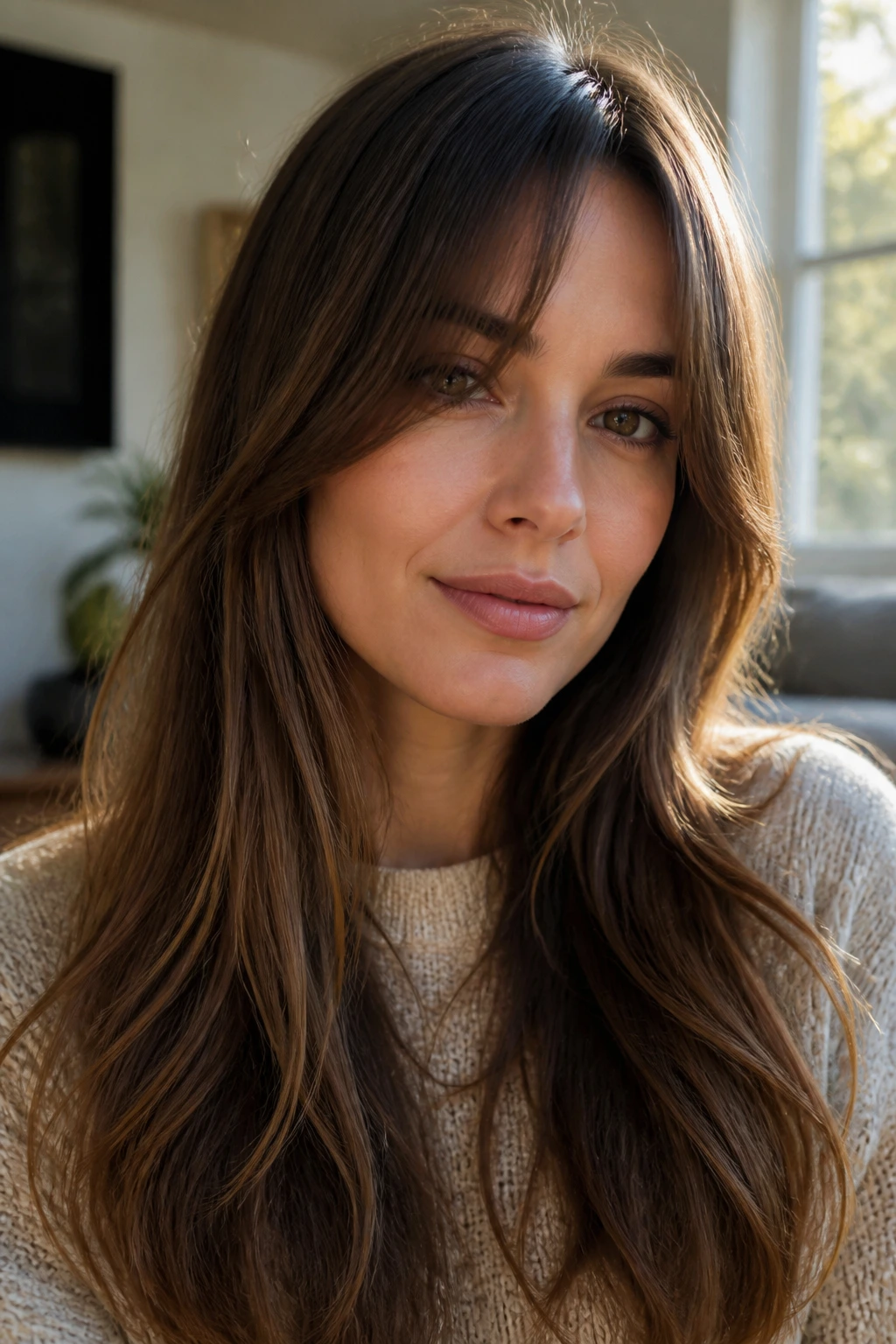
-
Oval-face balance: Oval faces can carry a wide range of fringe lengths, but the right long bang puts the eye exactly where you want it — usually around the cheekbones or lips, where the face looks clean and open.
-
Length stays intact: These cuts keep the front soft while the back and sides still read as long hair, so you get movement without losing that long, draped shape.
-
Grow-out friendly: Most long bangs can slide into face-framing layers once you’re bored with them, which makes them less dramatic than a blunt fringe that needs a full reset.
-
Works with texture: Straight, wavy, thick, fine, and curly hair all have a version here; the trick is matching the cut to the way your hair dries, not the way it looks under a salon blowout.
-
Easy to style in sections: Long fringe usually needs only the front 2 to 3 inches of hair to be blown forward or swept aside, which keeps the styling routine shorter than people expect.
-
Salon-photo ready: These styles are easier to explain with clear landmarks — cheekbone, lip, jaw, brow — so you can point to a photo and actually get close to the same result.
1. Soft Curtain Bangs That Open at the Cheekbones
Soft curtain bangs are the safest place to start if you want fringe but do not want a hard line across your forehead. The center opens gently, the outer pieces fall into the length, and the whole thing keeps the face looking long and airy instead of boxed in. On an oval face, that opening usually looks especially easy because the shape already gives the bangs room to spread out.
Why It Works
The shortest pieces usually start around the bridge of the nose or just below the brows, then curve down toward the cheekbones. That curve matters. It keeps the bang from cutting straight across the face, which is where a lot of fringe starts to look stiff.
Ask for the front to be cut on the longer side and then softened through the center split. A good curtain bang should tuck behind the ear on both sides without sticking out like two stiff panels. If your hair is thick, keep the center a little lighter; if it’s fine, don’t over-thin the ends or the split can go stringy fast.
Best for: people who want movement without a full bang commitment.
Styling note: a 1-inch round brush or Velcro roller at the front gives that soft bend in under 5 minutes.
2. Bottleneck Bangs With a Narrow Center and Longer Sides
Bottleneck bangs are what happen when curtain bangs get a little more shape. The center stays narrower, then the pieces widen out toward the temples and cheekbones. The effect is subtle but useful, especially on an oval face where too much width at the brow can feel busy.
What I like about this cut is that it does not rely on perfect styling to look intentional. Air-dried, it can read relaxed. Blow-dried, it looks polished. The center piece sits a touch shorter, usually near the upper brow or just below it, while the sides taper longer so the whole bang melts into the rest of the hair.
If your hair tends to fall flat at the front, this shape gives you more structure than a loose curtain bang without crossing into blunt territory. It’s also a nice choice when you want the forehead softened but not hidden.
Quick cue for the salon: ask for the shortest point to stay modest, then bring the corners down to the cheekbone.
Styling note: finish with a tiny bit of texture spray, not oil. Oil makes the center collapse.
3. Side-Swept Long Bangs That Brush the Eye
Side-swept long bangs are still one of the easiest ways to wear fringe if you like a little drama without a hard edge. They sweep across the forehead, usually from a deep or soft side part, and end somewhere between the cheekbone and the top of the lip. On oval faces, that diagonal line adds movement without narrowing the face too much.
The key is weight. Side-swept bangs need enough hair to hold the shape, but not so much that they become a thick curtain stuck to one side of the forehead. If the front is too heavy, the sweep looks accidental. If it’s too light, it splits apart by noon and starts behaving like awkward layers.
I usually think of this as the “good scarf hair” of bangs. It has that easy, swept-over look that works with long hair pulled into a low ponytail or left loose.
What to Ask For
- A long front section that starts around the brow and drops to the cheekbone.
- Soft graduation so the bang can blend into the sides.
- Enough length to tuck behind the ear when you want it out of the way.
4. Cheekbone-Grazing Bangs That Do the Work Quietly
This version is less about a formal fringe shape and more about placement. The shortest pieces sit right at the cheekbone, where they catch movement and frame the face without announcing themselves from across the room. It’s a smart cut for oval faces because it gives you shape exactly where the face can use a little emphasis.
Cheekbone-grazing bangs look especially good on long hair with layers, because the bang and the front layers can meet at the same visual point. That keeps the front from looking chopped into two separate pieces. When the lengths are matched properly, you get one long sweep instead of a bang plus a haircut.
If your hair parts naturally in the middle but you still want a little more shape around the face, this is a quiet way to do it. It’s also a nice option for anyone who wants to grow out shorter bangs without spending six months in awkward territory.
My take: this is one of the most flattering long-bang options for oval faces because it never overwhelms the forehead.
Styling note: bend the front away from the face with a round brush, not straight under.
5. Feathered ’70s Bangs With a Soft Flip
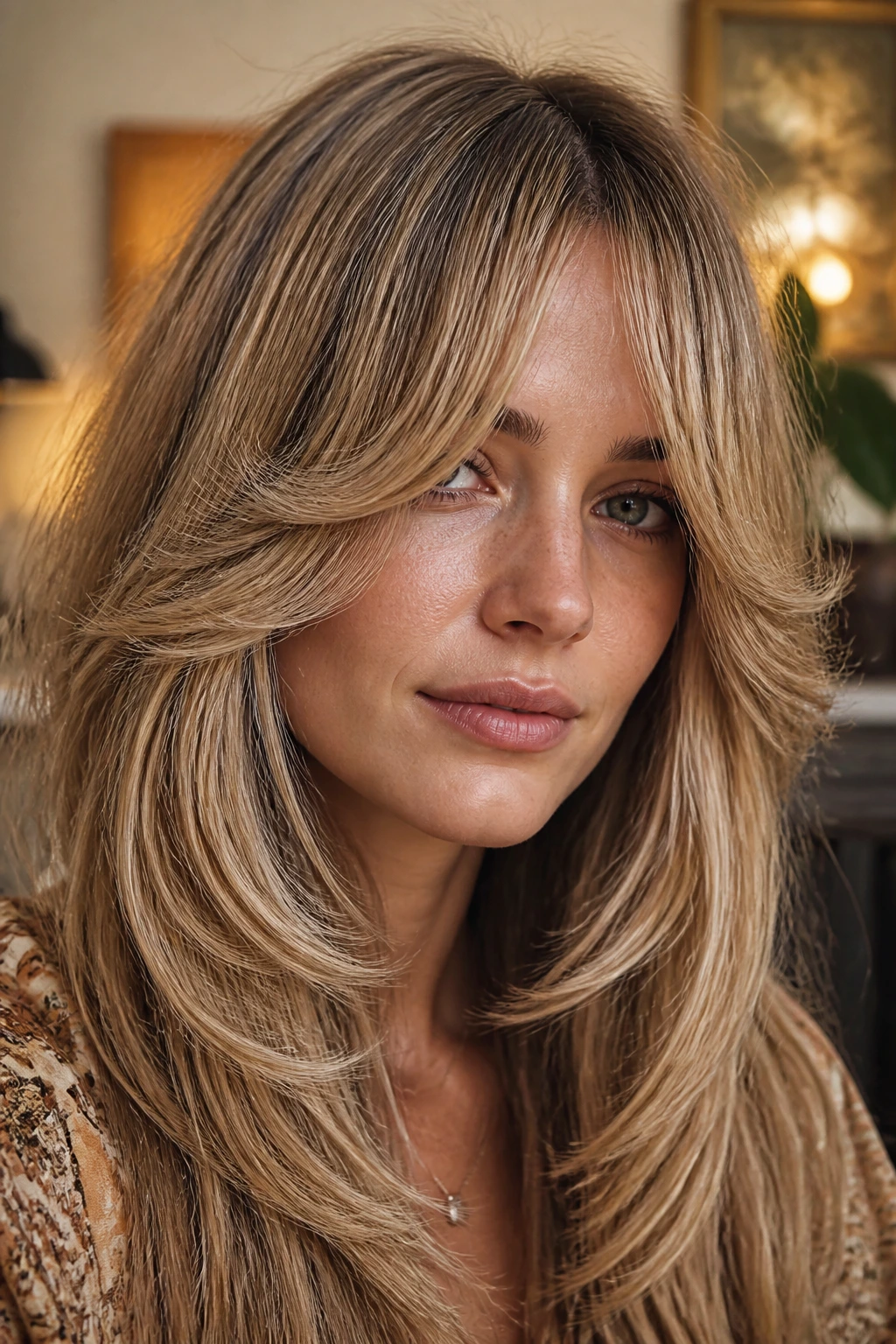
Feathered fringe brings back that airy, brushed-out movement where the ends flick apart instead of hanging in one solid line. On long hair, that can look especially rich because the bangs echo the softness of the layers below. An oval face can take the volume, which is part of why this cut still feels wearable instead of costume-y.
The trick is not to over-layer the front. Feathered bangs need shape, yes, but they also need enough weight at the ends so they do not vanish into the rest of the hair. Ask for the front to be blended with a light hand and for the longest pieces to stay in the cheekbone-to-lip zone.
This is one of those styles that looks better after a little movement. A brush-through after a blow-dry makes the ends separate in a nice way, almost like the front is breathing.
How to Wear It
- Use a medium round brush.
- Blow the front forward first, then sweep it open.
- Finish with a touch of flexible hairspray, not a stiff mist.
6. Wispy Bangs That Leave the Forehead Partly Open
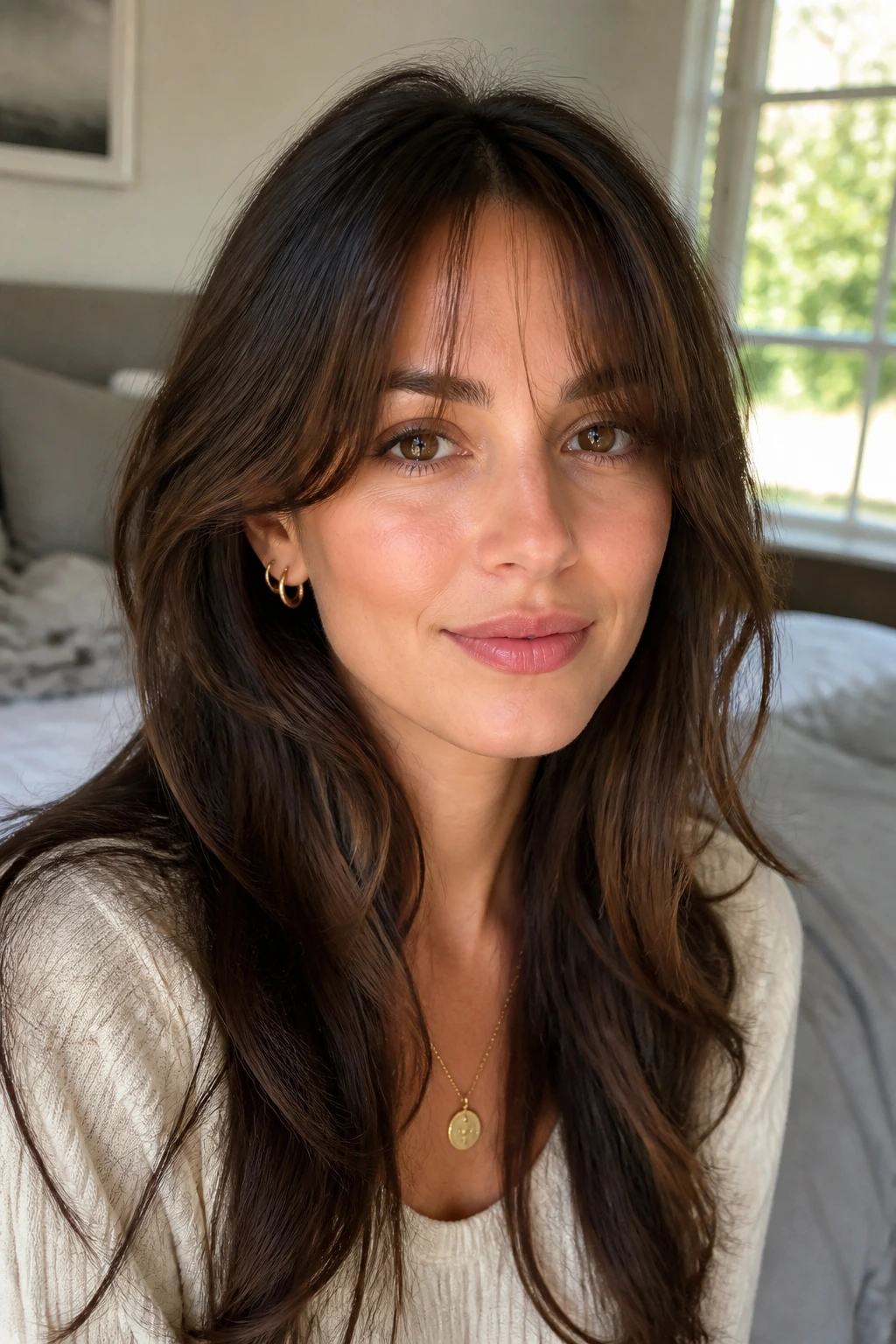
Wispy long bangs are for people who like the idea of fringe more than the feeling of a full curtain on the forehead. The pieces are lighter, the gaps are a little more visible, and the whole shape reads soft rather than heavy. On oval faces, that can be enough to change the look without changing the whole haircut.
The danger here is going too thin. Wispy does not mean threadbare. You still need enough hair in the front to show a shape when the bangs fall apart during the day. If the density is too low, they start to look like stray layers instead of a considered fringe.
This style works well with fine hair because it does not require a thick wall of bang to feel complete. It also behaves nicely on slightly wavy hair, where a bit of bend can make the wisps look intentional instead of sparse.
Best visual cue: you should still be able to see the forehead through it.
Styling note: a pea-sized amount of mousse at the roots is enough. More than that and the pieces clump.
7. Choppy Face-Framing Bangs That Break Up the Front
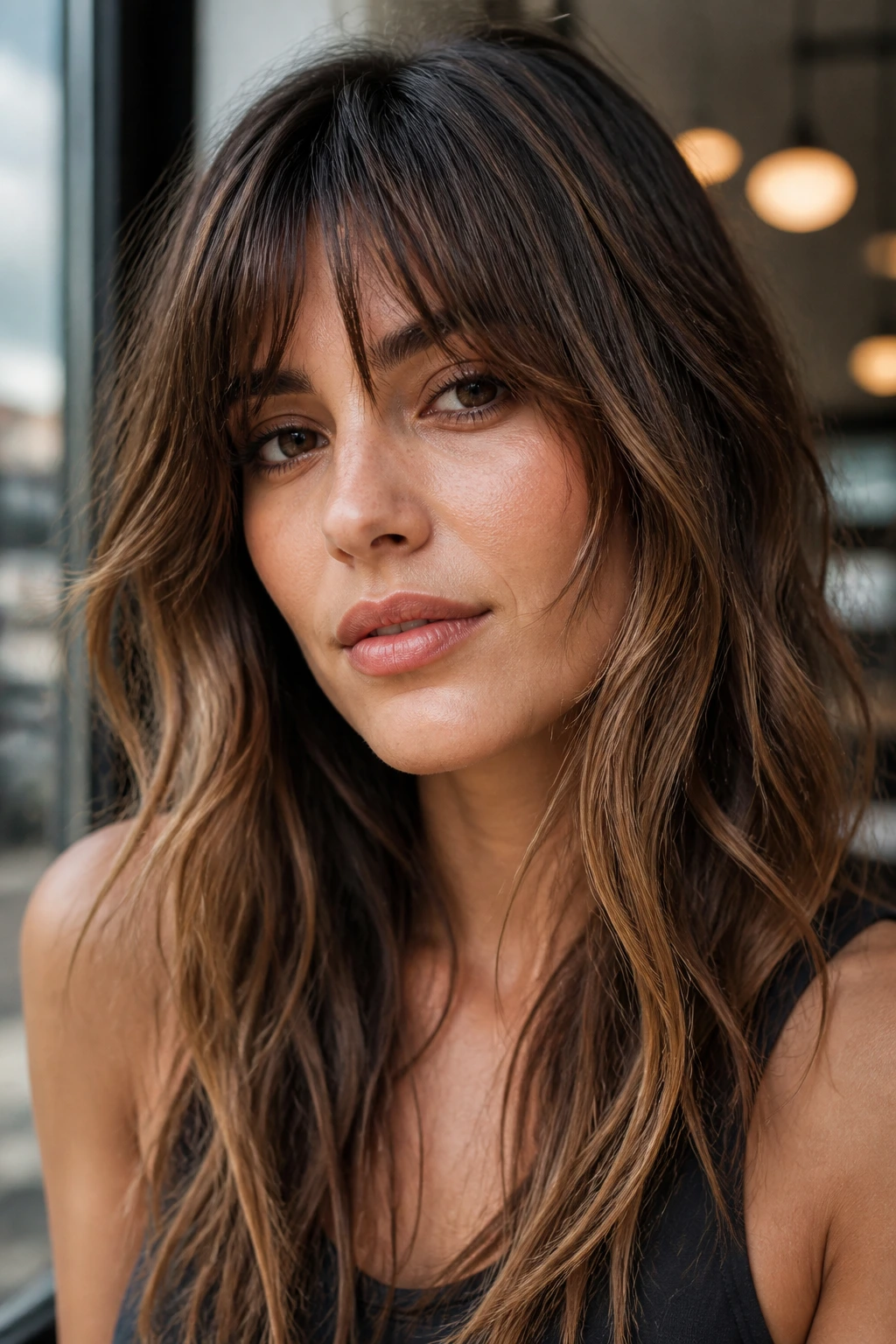
Choppy bangs are the opposite of precious. They are sliced into uneven pieces so the front looks light, piecey, and a little undone. On long hair, that works because the rougher edge at the front keeps the rest of the length from feeling too polished or predictable.
Oval faces can wear this kind of fringe without much fuss, but the important part is where the shortest bits stop. If they end too high, the chop can look accidental. If they end near the cheekbone and then slide into the layers, the style gets that relaxed, lived-in feel people usually want from choppy bangs in the first place.
I like this cut best on hair that has some natural bend. Straight hair can still wear it, but it benefits from a quick flat-iron twist or a texturizing spray to stop the pieces from lying too neatly together.
What Makes It Different
The point is not a perfect line.
The point is a broken one that still belongs to the haircut.
8. Rounded Long Bangs With a Soft Curve Across the Forehead
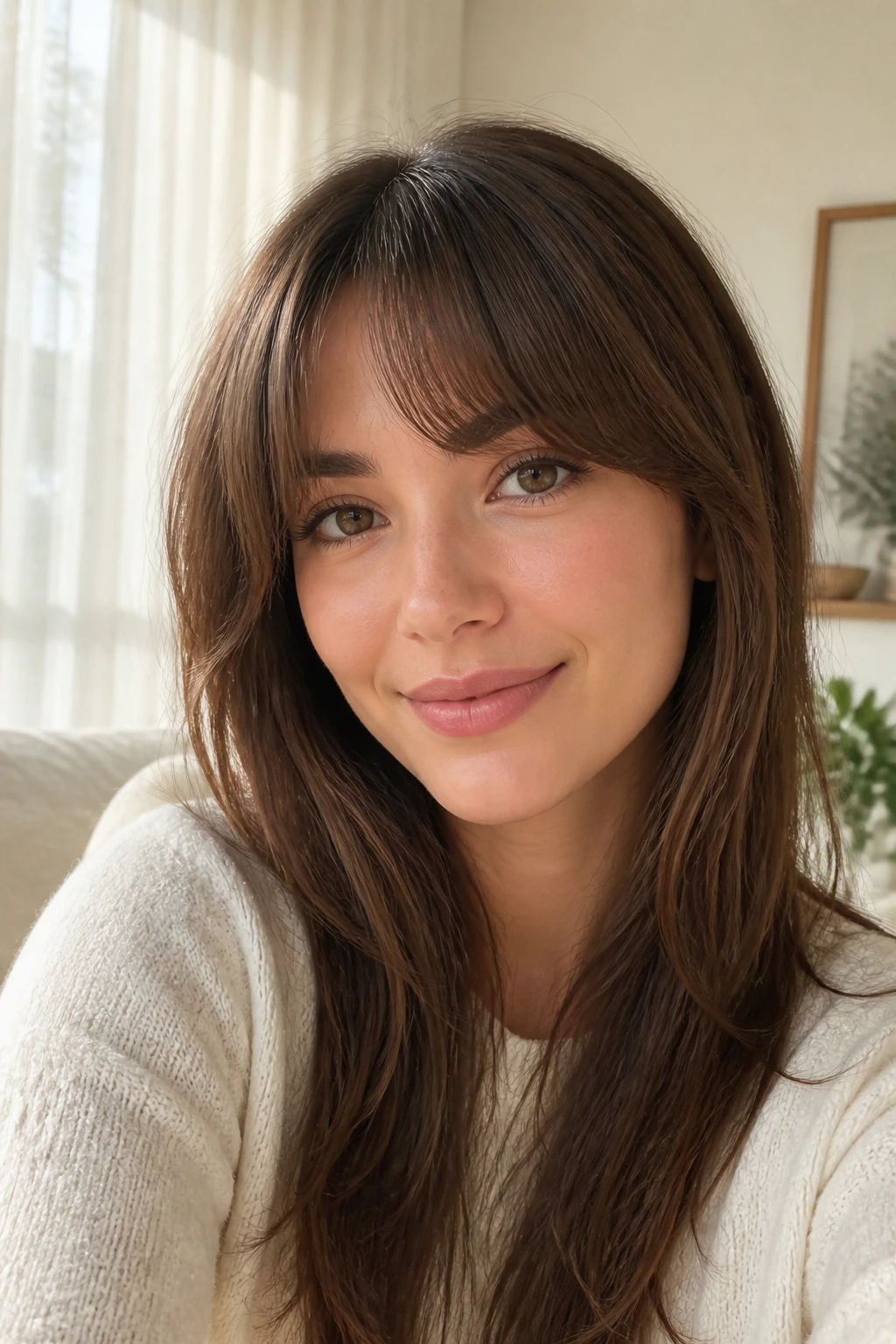
Rounded long bangs follow the shape of the face a little more closely than curtain bangs do. Instead of opening sharply in the center, they form a gentle curve that dips slightly in the middle and rises toward the sides. That shape can be lovely on an oval face because it echoes the natural balance of the features without making the forehead disappear.
The most common mistake is making the curve too deep. Then the fringe starts to feel dated or costume-like. Keep the arch soft. The center can sit a touch shorter than the sides, but the line should still look easy.
This is also a good option when long hair is very straight and needs a little front-end softness. The rounded shape gives the eye somewhere to land before it moves down into the length.
Styling note: blow the middle forward first, then use the sides of the brush to push the outer pieces outward.
Good for: hair that falls flat at the front but still wants a clean finish.
9. Center-Split Bangs That Travel Into the Layers
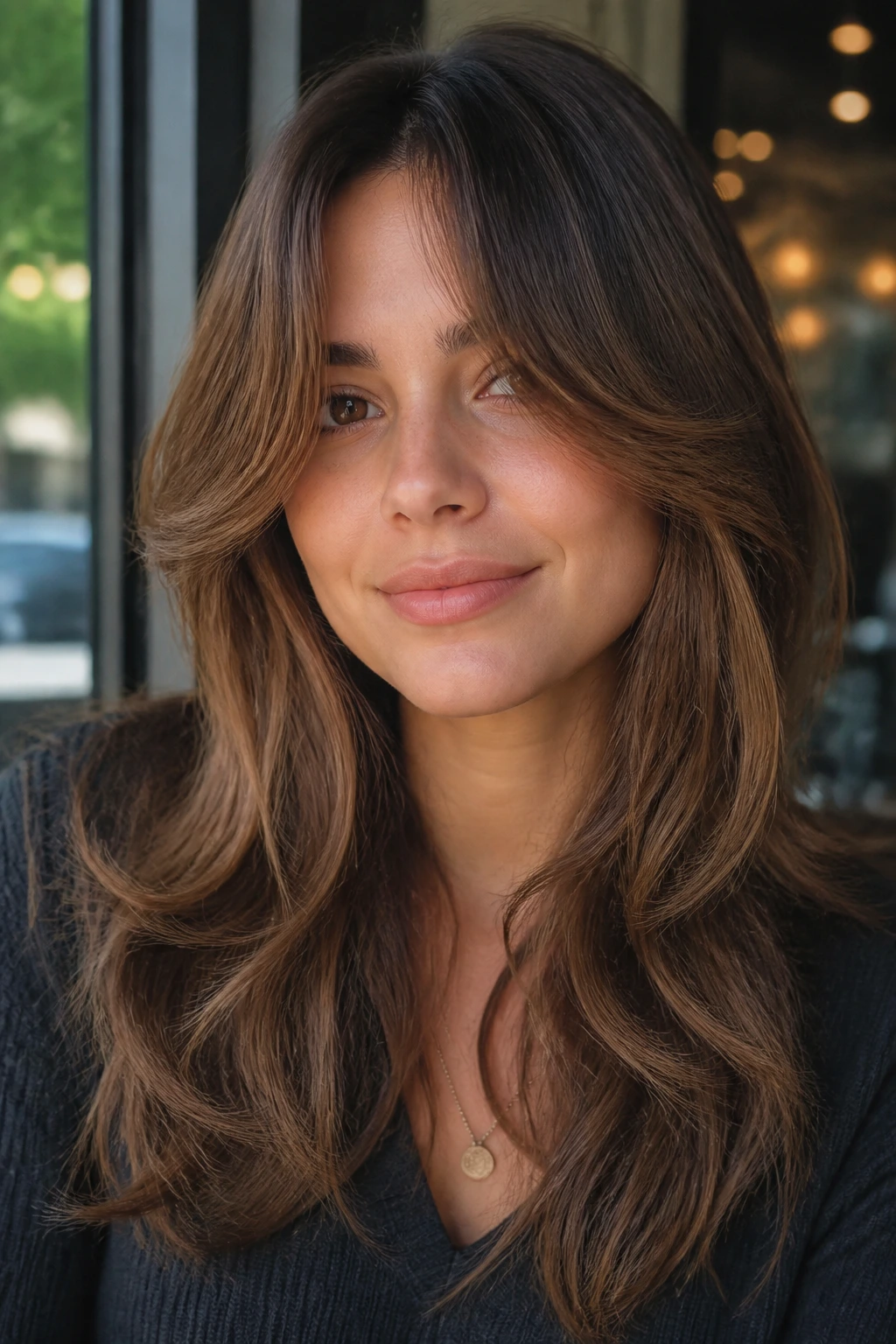
A center split is not the same thing as a curtain bang, and the difference matters. Center-split bangs are often a little longer, a little looser, and more committed to blending into the haircut instead of standing apart from it. On long hair, that creates a clean front line that opens the face without making the fringe the main event.
Oval faces usually handle the split well because the face shape already has enough softness around the jaw and forehead. The split just gives the eyes a path downward. If you want your hair to look long even when the front is styled, this is one of the easiest shapes to live with.
A middle part can flatten this style if the roots are oily, so dry shampoo matters here. A light mist at the roots keeps the split from collapsing into the skin.
Salon phrase to use: “Keep the front long enough to sit below the brows and blend into the sides.”
Best when: you want a center part but not a severe one.
10. Deep Side-Part Bangs That Add a Diagonal Line
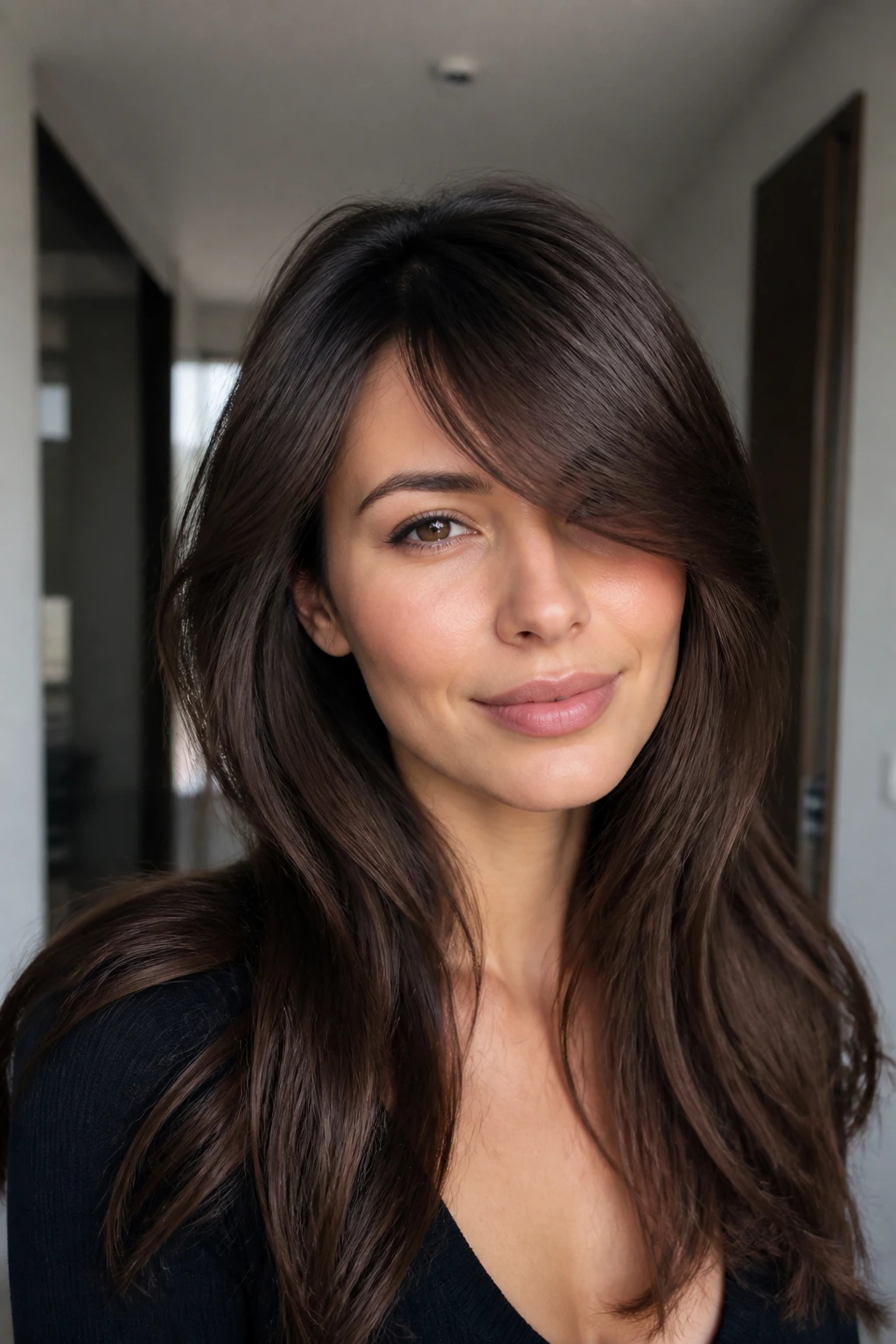
Deep side-part bangs are a little more dramatic than the soft side-swept version, and that diagonal line does good work on an oval face. It changes where the hair falls across the forehead and creates a long sweep that leads the eye toward the jaw and neck. The face stays open, but the front gets a more deliberate shape.
This cut shines when the rest of the hair has volume. If the lengths are too flat, the side part can feel like it’s carrying the whole haircut by itself. If the blowout has some lift at the roots, though, the bang looks sleek and expensive without being stiff.
It’s worth noting that deep side parts can expose a cowlick fast. If your front hair wants to split in the middle no matter what you do, tell your stylist before the cut. A tiny adjustment in direction can save a lot of annoyance later.
How to Wear It
- Create the part while the hair is still damp.
- Blow-dry the front in the direction of the part first.
- Finish with a cool shot so the bend stays put.
11. Blunt-Looked Long Bangs That Still Move
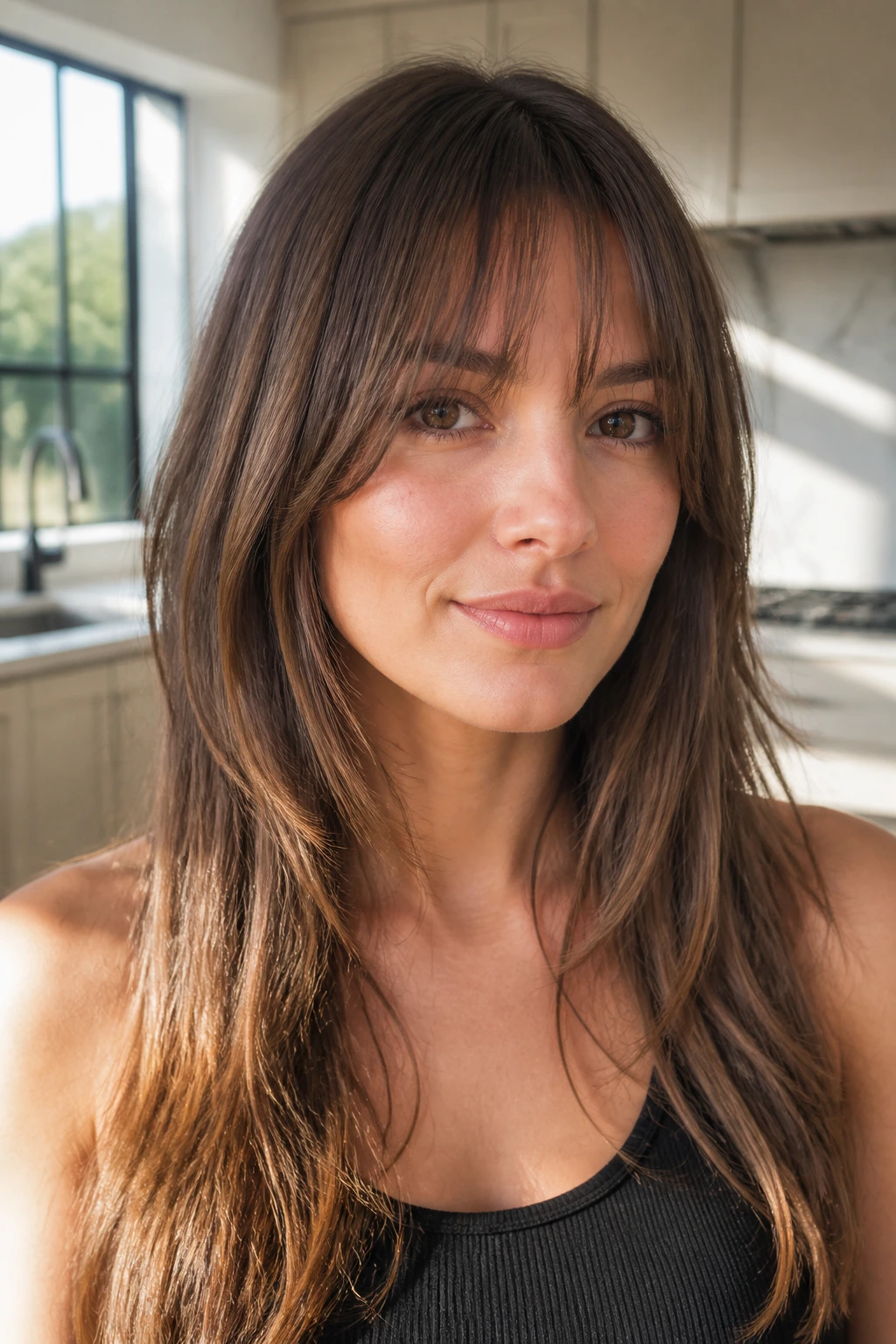
Blunt-looking long bangs give you a cleaner edge across the front, but the length stays long enough to tuck into the rest of the hair. The result is sharp without becoming a true blunt fringe. On oval faces, that can be useful if you want more presence up front but do not want to close off the forehead completely.
The challenge is keeping the line crisp without making the bangs feel heavy. The ends should be tidy, not thick like a helmet. If the hair is dense, ask for internal weight removal rather than a full thinning session; that keeps the shape solid while letting it move.
This style pairs nicely with straight hair and polished blowouts. Wavy hair can wear it too, but you need to accept a softer edge after air-drying. That’s not a flaw. It just changes the mood.
Good rule: if the bangs sit still, they should look neat; if they move, they should break softly at the ends.
Not for: anyone who wants a wash-and-go fringe with zero styling.
12. Razor-Cut Bangs With Soft Ends
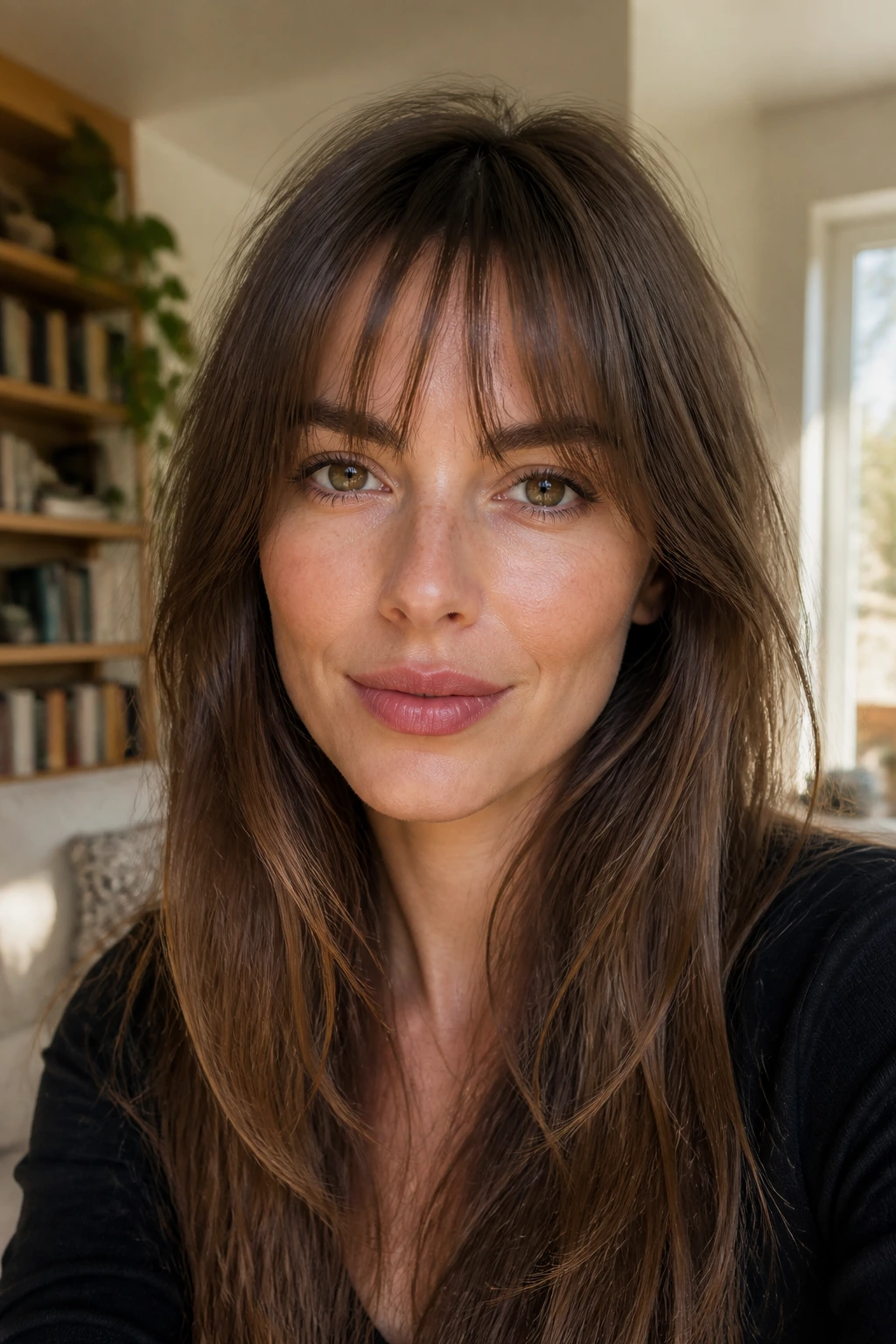
Razor-cut bangs have a lighter, more frayed edge than scissor-cut fringe, which can be a gift if your hair tends to look too blocky at the front. The razor takes off weight in a way that creates movement, especially on long hair where the rest of the cut already carries plenty of length.
The reason they work on oval faces is simple: they do not build a wall across the forehead. They skim it. That keeps the face open while still giving the front some edge. The cut can look especially nice when the shortest pieces land around the eyes and then break apart near the cheekbones.
A razor is not the answer for every hair type, though. Very fine hair can get wispy in a bad way if too much is removed. Very curly hair usually needs a different tool and a different hand, because a razor can invite frizz if the texture is coarse or springy.
What to Watch For
- Ask for soft edges, not a shredded finish.
- Check the bangs dry before removing more length.
- Keep the center heavier if your hairline is thin.
13. Shaggy Bangs That Blend Straight Into the Layers
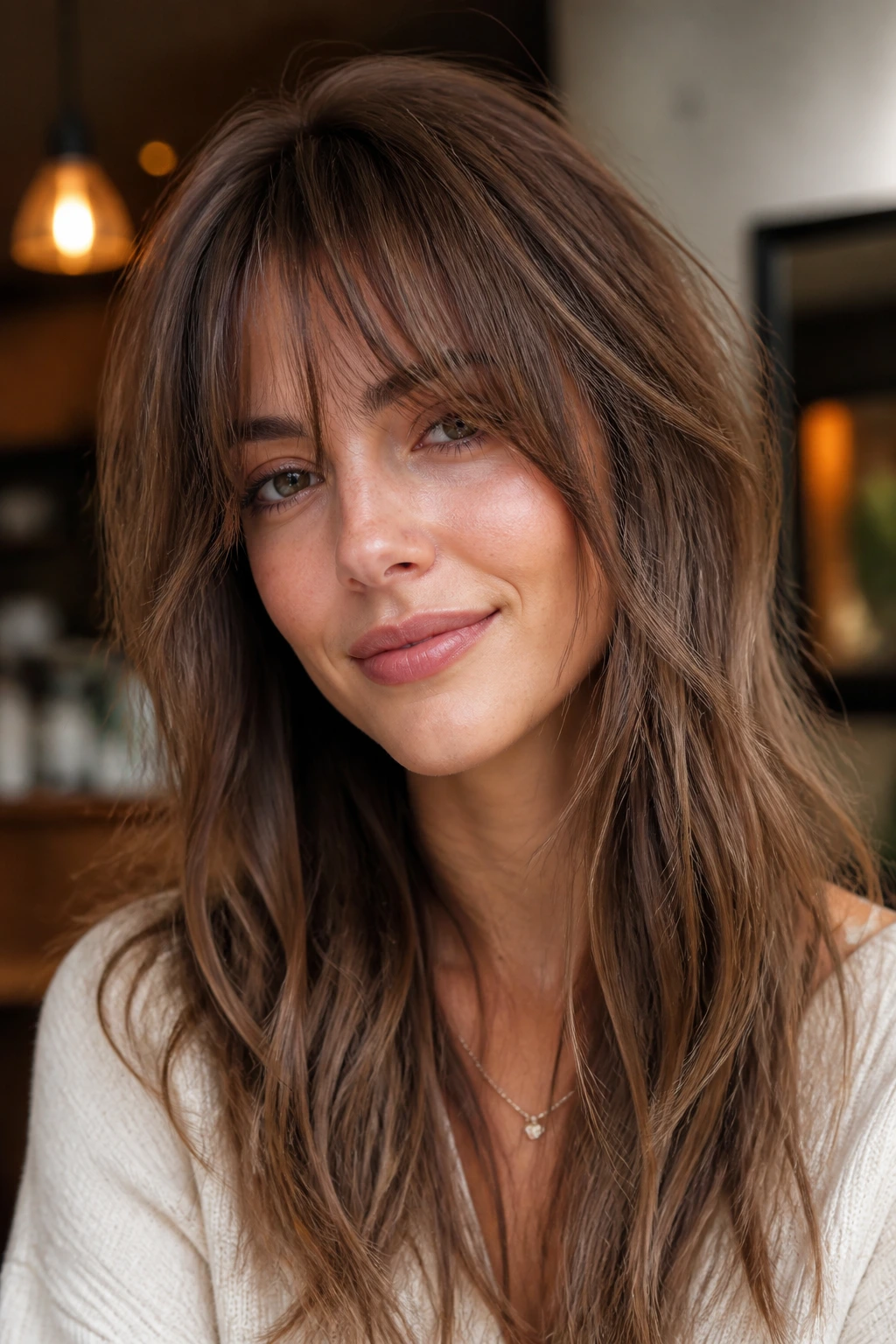
Shaggy bangs are for people who want the front of the hair to feel lived-in from the first day, not after three weeks of styling it into submission. They blend quickly into the side layers, and on long hair that can make the whole cut feel easier to wear. Oval faces can take the extra texture without looking crowded.
This is one of the better choices if you already wear layered lengths and do not want the bangs to look separate. The front pieces should start long, then taper into the rest of the hair with enough irregularity to avoid a crisp line. Think soft edges, not choppy chaos.
If your hair is naturally wavy, this style can be a gift. If it’s pin-straight, you may need a light texture spray or a bend from a flat iron to keep the shag alive.
My opinion: shaggy bangs look best when they are not overworked.
Styling note: scrunch them lightly with your fingers after drying instead of brushing them into perfection.
14. Wavy Long Bangs That Follow the Hair’s Natural Bend
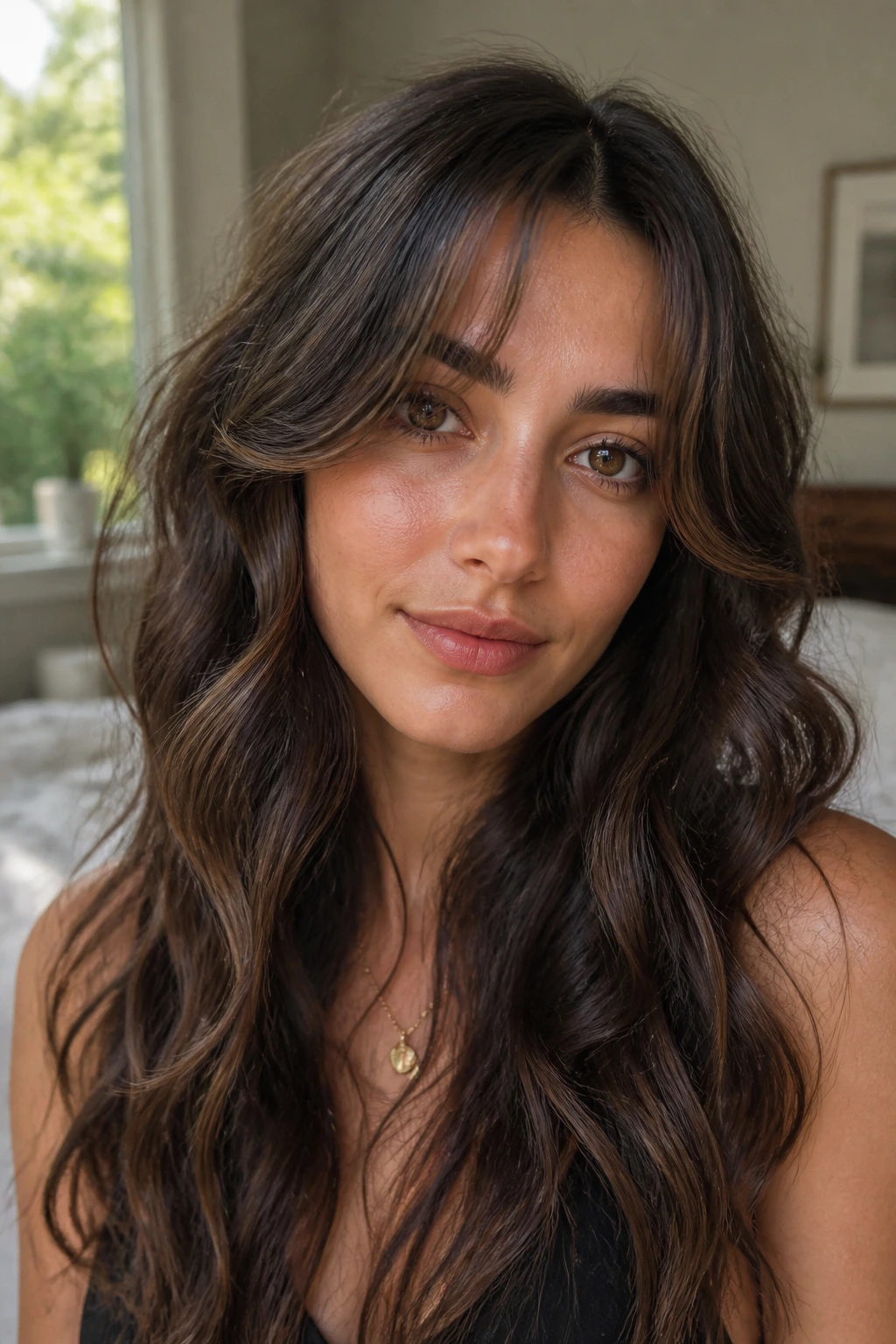
Wavy long bangs do not fight the texture, which is the whole reason they look good. Instead of trying to flatten the front into a smooth curtain, the cut lets the wave show up in the bang itself. On an oval face, that movement softens the features without changing the balance too much.
The important part is length. Wavy bangs usually need to be cut longer than straight bangs because they spring up as they dry. If you forget that, the front ends up shorter than expected and can feel awkward by the second day.
Air-dryers often love this shape because it looks finished even when it is not perfectly styled. A small amount of curl cream or light mousse is enough; the goal is to keep the wave defined, not crunchy.
Good Fit If You Want
- A front section that bends on its own.
- Less need for hot tools.
- A fringe that looks softer by the hour.
15. Curly Long Bangs That Sit With the Curl Pattern
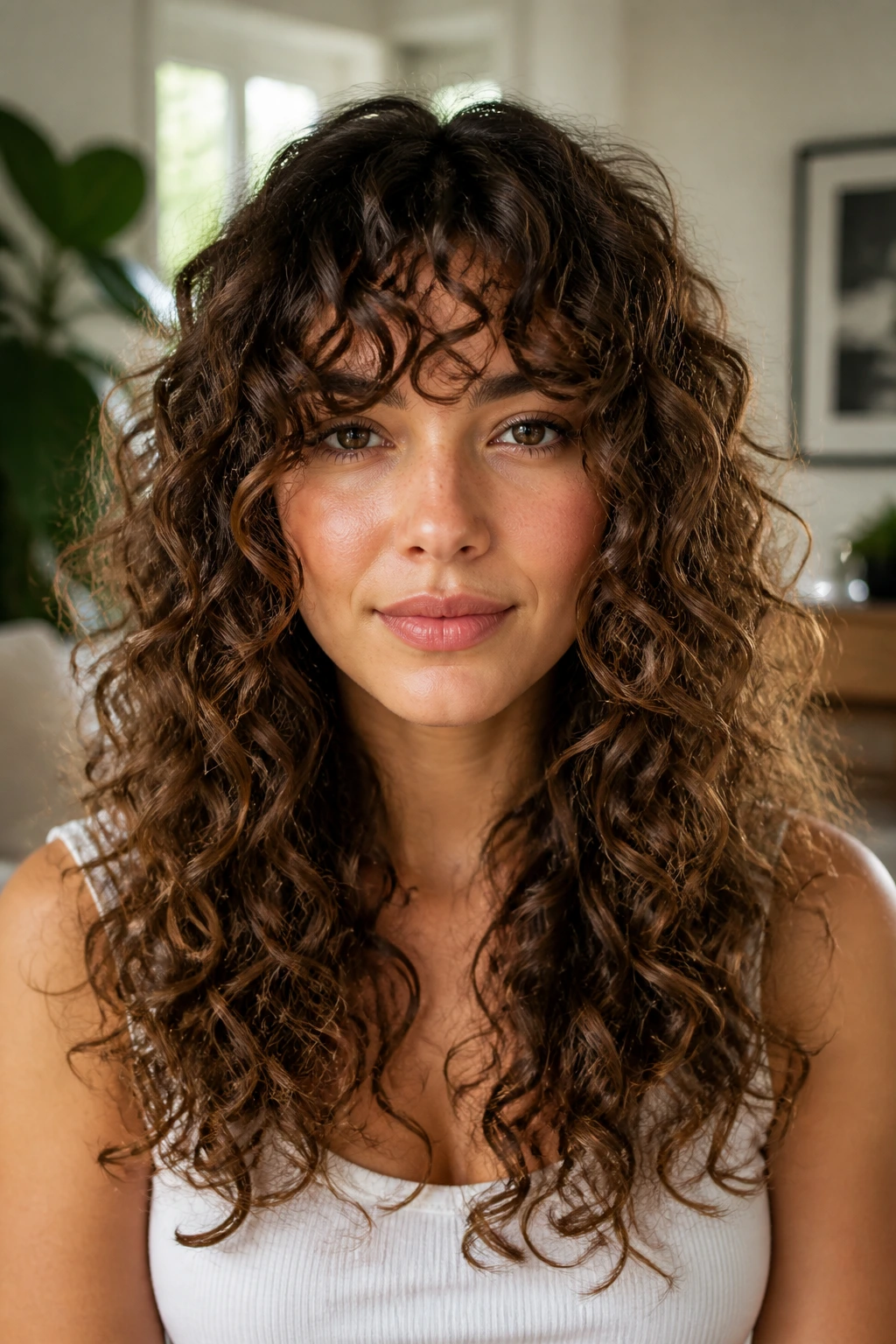
Curly long bangs need room. Lots of it. The curl wants to spring, stretch, and shift, and the cut has to respect that or the bangs end up too short and too wide. On oval faces, a curly fringe can look especially pretty because it adds texture without throwing off the proportions of the face.
The best curly long bangs are cut dry or nearly dry, curl by curl, so the stylist can see where the pieces actually land. The shortest curls usually sit somewhere around the brow or upper cheekbone, but the real target depends on how much spring your hair has. A curl that looks long when wet can shrink two inches or more once it dries.
This style works when the front is shaped to follow the curl, not flatten it. If you spend all morning stretching it straight, the whole point disappears.
Styling note: twist the front in small sections while damp, then let them dry before separating.
Avoid: heavy oils at the roots; they make the front droop and clump.
16. Grown-Out Bangs That Look Deliberate, Not Delayed
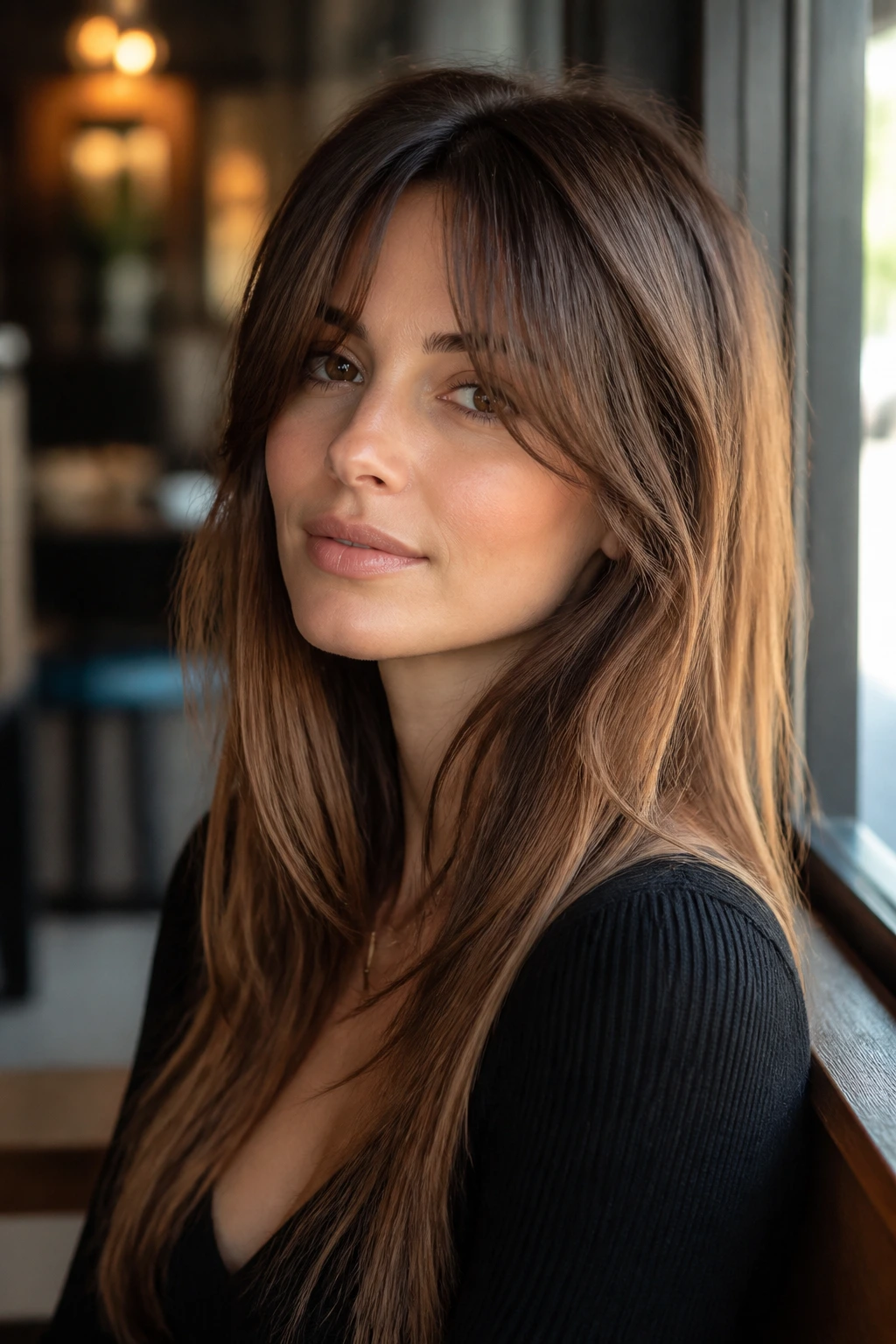
Grown-out bangs are what happen when fringe gets a little longer and starts blending into the rest of the haircut. On the wrong cut, that stage looks messy. On the right long-hair shape, it can look polished and expensive, almost like the bangs were planned that way from the start.
Oval faces are a good match because the face shape can handle the extra length across the forehead without looking closed off. The key is keeping enough separation in the front pieces so they still look like fringe, not just accidental front layers. A little bend at the ends helps.
This is a smart direction if you are between bang appointments or trying to ease out of a shorter fringe. The style is less about precision and more about clean blending. That means a light trim every 6 to 8 weeks matters if you want it to stay intentional.
What Makes It Work
The front should touch the face.
It should not hide in the haircut.
17. Heavy-End Bangs With Weight at the Bottom
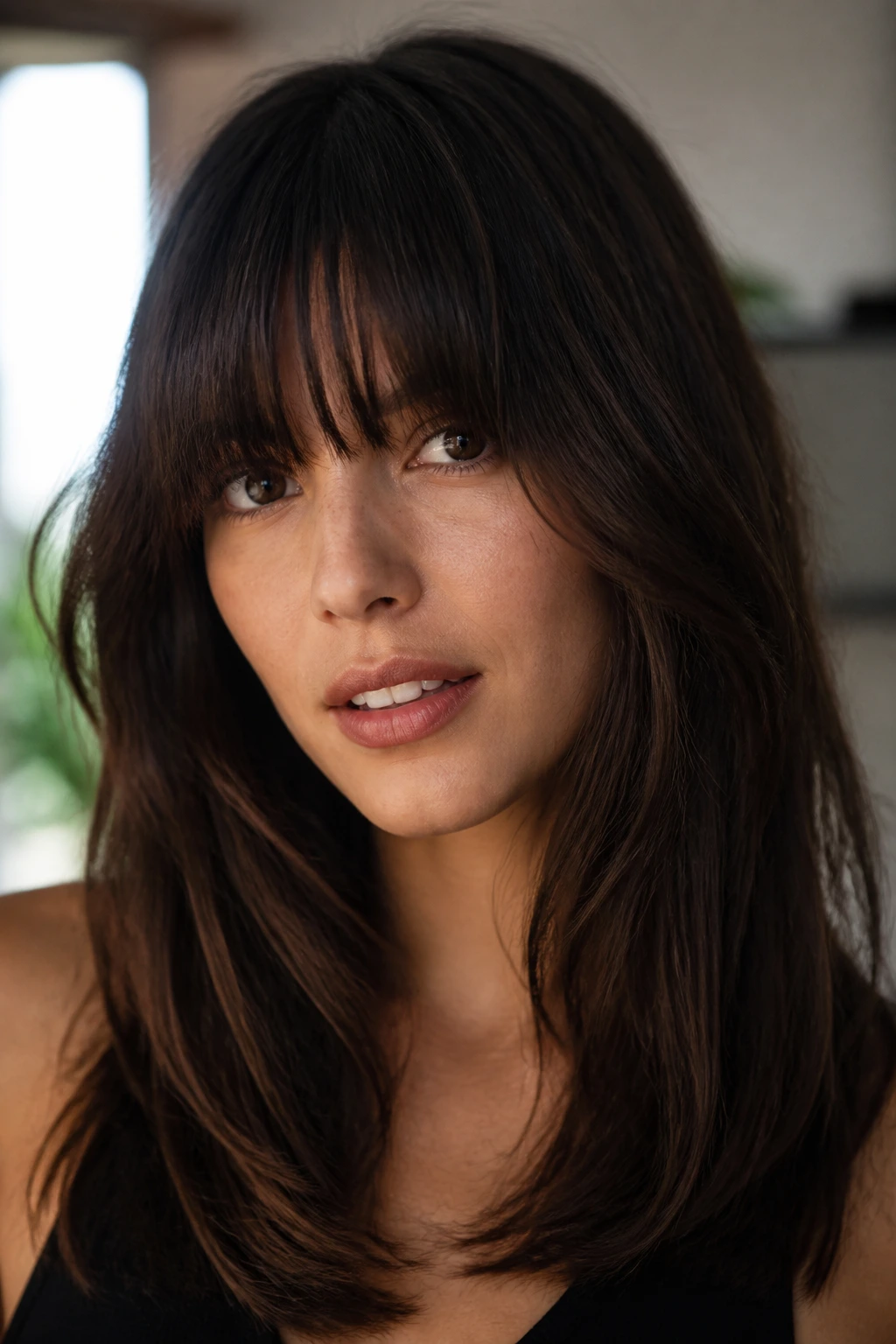
Heavy-end bangs keep more density at the bottom of the fringe while still letting the top soften a little. That gives the front some gravity, which can be useful on long hair when you want the bangs to stay visible against all that length. On oval faces, the effect is structured without being severe.
This is not the same as blunt bangs. The line is still relaxed, but the ends carry more presence. It can be a smart choice for thick hair, where taking too much weight out of the front makes the bangs look thin and scattered. Leaving a bit more substance at the ends helps them sit better after a blow-dry.
I’d choose this if you like fringe that holds its shape by noon, not fringe that evaporates into soft layers. It has more staying power.
Styling note: use a paddle brush first if the hair is coarse, then a round brush just at the ends.
Best for: thick or medium-thick hair that needs a little discipline.
18. Piecey Split Fringe That Separates on Purpose
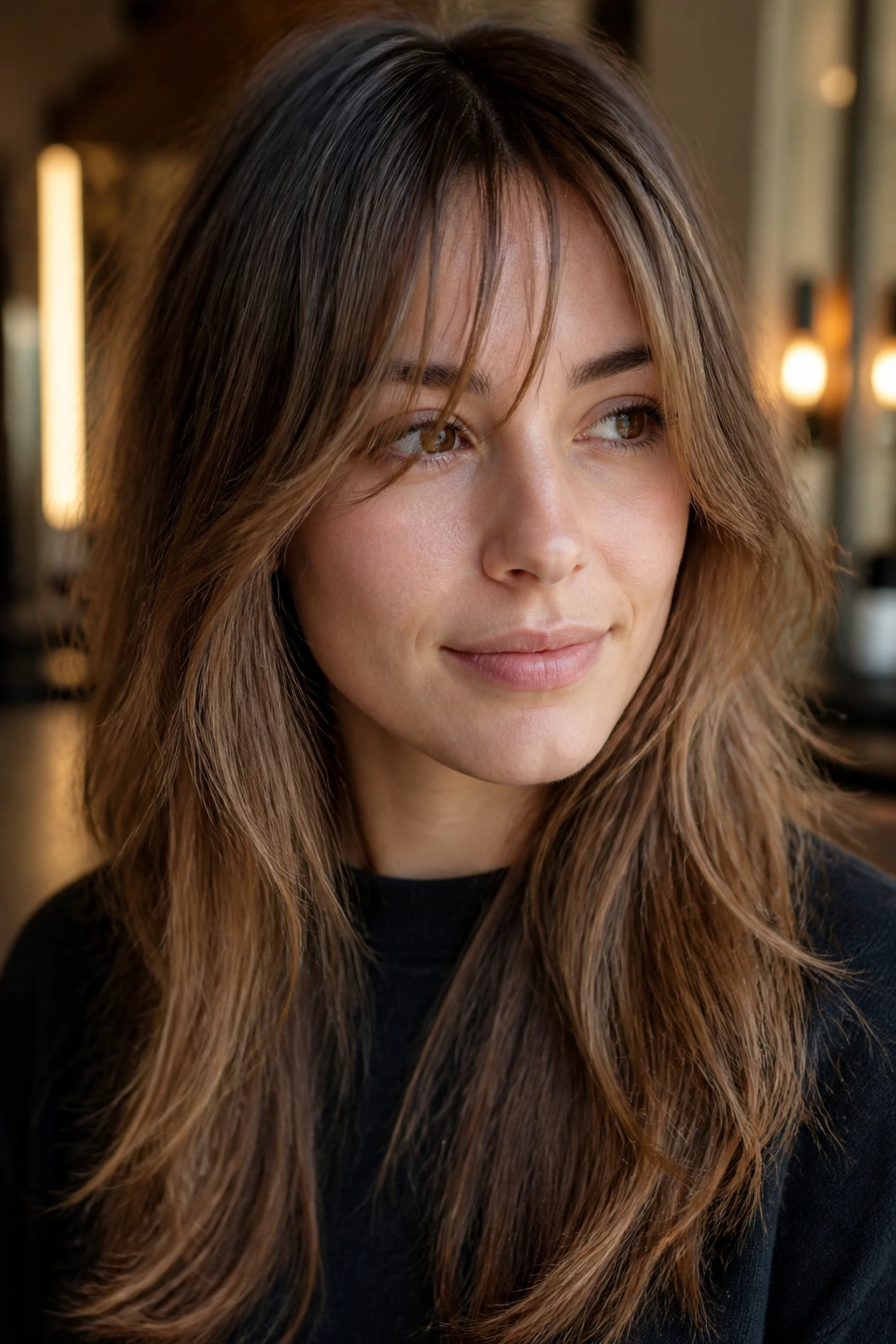
Piecey split fringe is for anyone who wants the front to break into little sections instead of falling as one sheet of hair. That separation gives long bangs a lighter mood, especially on oval faces where the structure can handle some asymmetry up front.
The trick is not to create the pieces by overloading them with product. Start with a clean cut that already has some internal movement, then add a small amount of texture cream or spray only at the mid-lengths and ends. If you put product at the roots, the split can turn greasy fast.
This style is one of the easiest ways to make long bangs feel current without making a big cut. It works particularly well when the rest of the hair is long and smooth, because the contrast between polished lengths and broken-up fringe keeps the whole look from going flat.
Styling Cue
Use your fingers, not a comb, to separate the pieces once they’re dry.
That one choice changes everything.
19. Long Bangs for Thick Hair That Don’t Bulk Up at the Brow
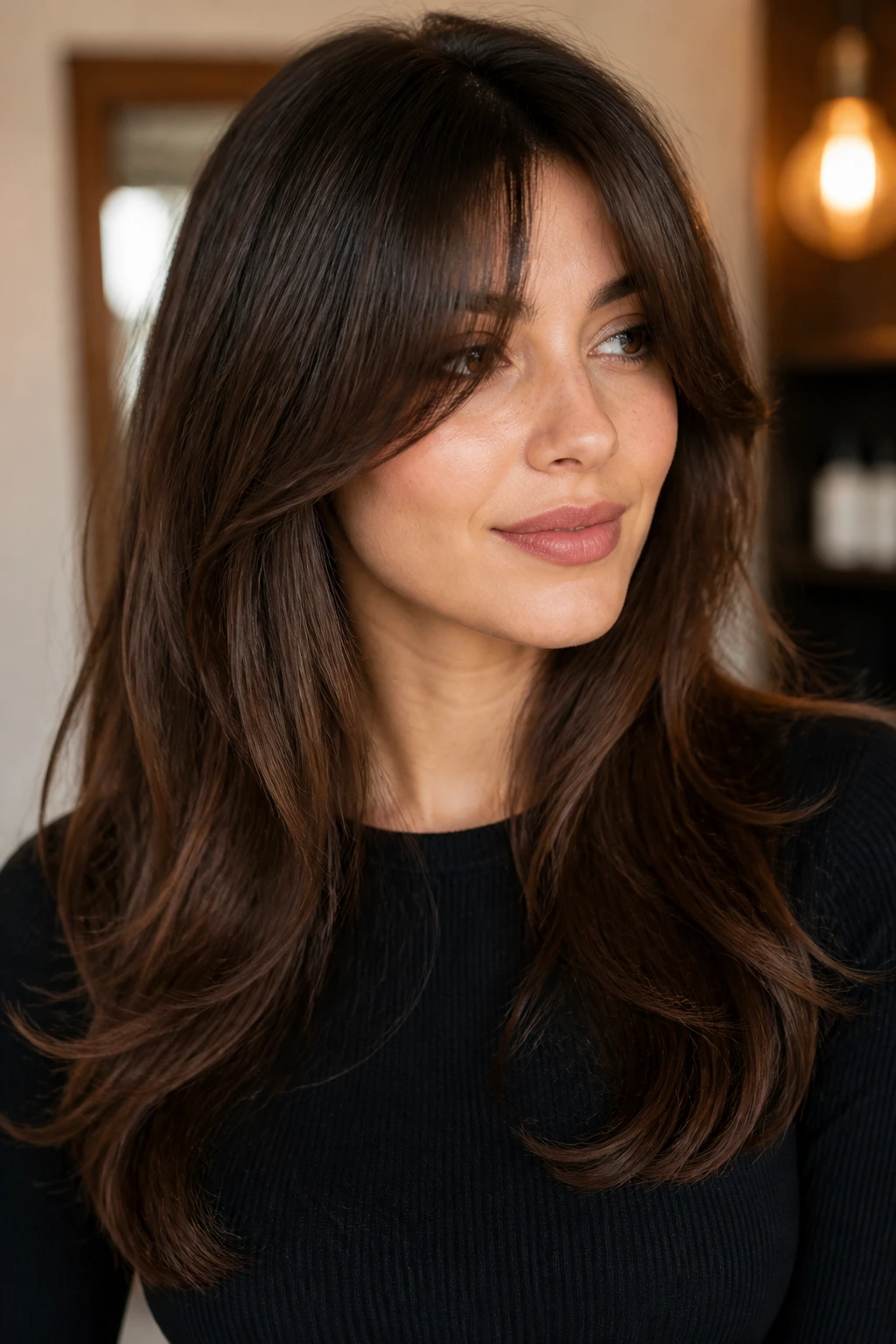
Thick hair needs a different kind of long bang. If the front is left too dense, it can sit like a heavy curtain and push the forehead out of balance. Oval faces can handle some fullness, but there is still a line between flattering and bulky.
The cut should remove weight from inside the fringe, not just from the ends. That keeps the front from puffing up in humidity. It also helps the bangs lie next to the face instead of standing out from it. The shortest pieces can still start around the brow, but the shape should taper so the sides can merge into the lengths.
If your hair is thick and straight, this is where a precise blow-dry matters. A round brush and a cool shot at the end will keep the fringe from exploding outward. If it’s thick and wavy, a little smoothing cream goes a long way.
Do not overthin it.
That’s the trap. Too much removal turns thick hair into frizzed-out wisps that never sit together again.
20. Long Bangs for Fine Hair That Still Look Full
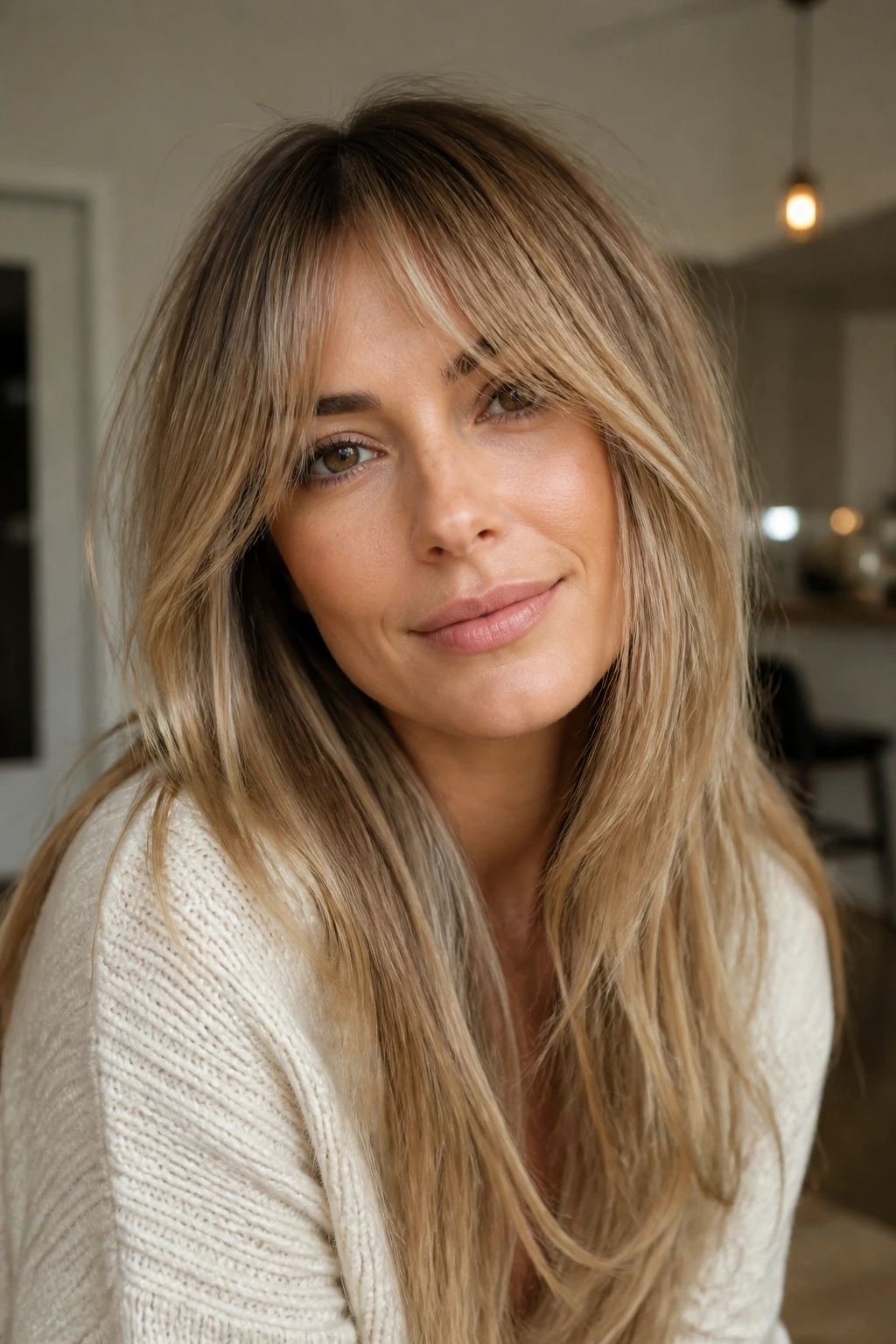
Fine hair can wear long bangs beautifully, but the cut has to respect what fine hair does under gravity. It falls flat faster, separates more easily, and can show every mistake in the shape. On an oval face, that means the fringe needs to be light enough to move but full enough to show up.
The answer is usually a longer, softer bang with a little internal texture and a careful center or side part. Shorter pieces at the front can disappear too quickly, especially if the hair is very silky. A length that brushes the cheekbone tends to hold better and gives the hair a chance to look like fringe rather than stray bits.
A root-lifting spray or a small amount of mousse at the front helps more than heavy styling creams. Fine hair does not need much weight. It needs support.
Best Practice
Blow-dry the roots first.
Not the ends. The roots.
21. Butterfly-Layer Bangs That Fold Into the Face-Framing Layers
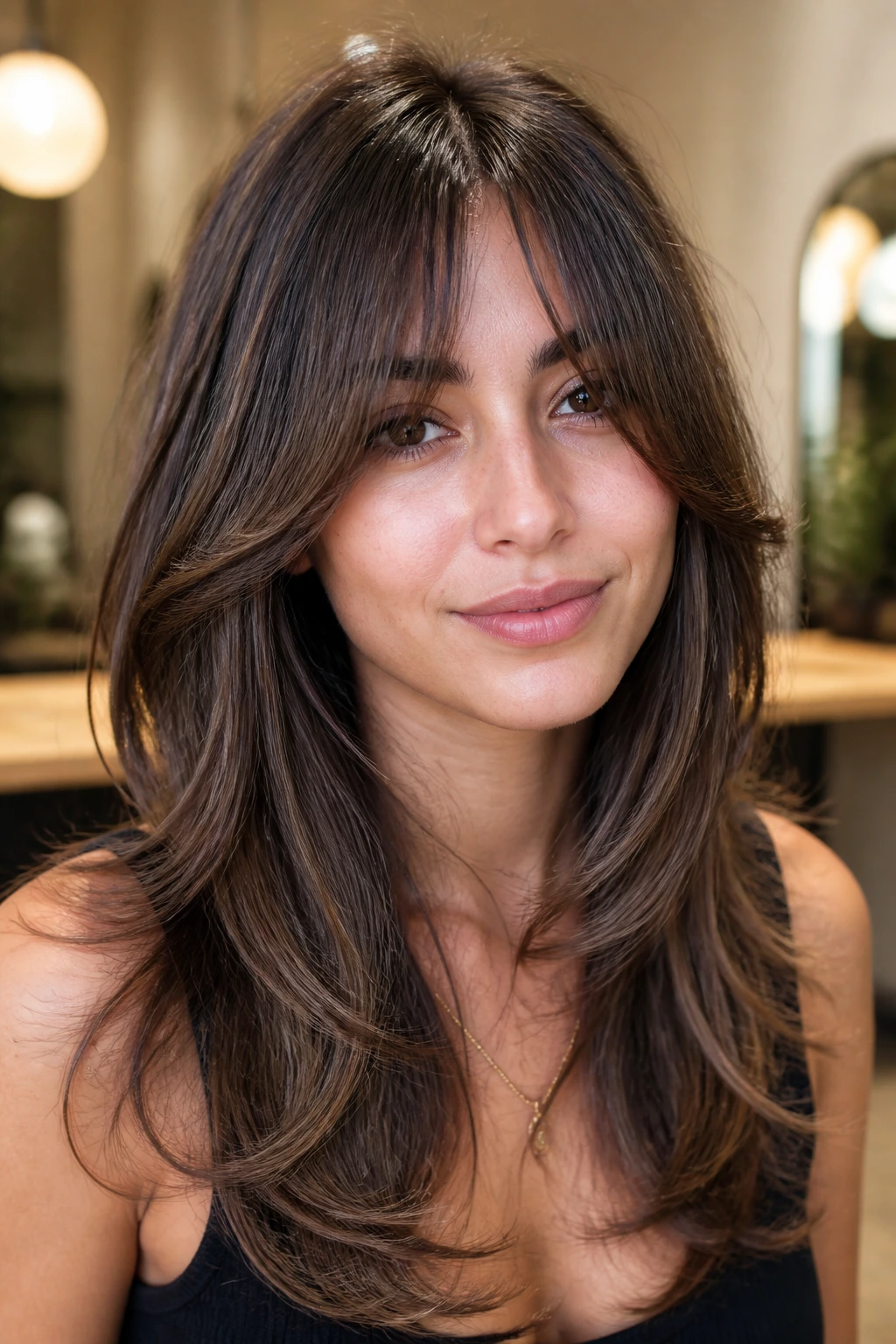
Butterfly layers and long bangs get along for a simple reason: both are about movement around the face while keeping the bulk in the long lengths. The bangs are usually shorter near the center, then slide down into longer front layers that flip away from the cheekbones. On an oval face, that creates a nice lift without changing the overall balance.
The shape works best when the shortest piece still stays long enough to tuck. You do not want the face-framing layers and the bang fighting each other. They should read as one front section that opens up when you move.
If you already like layered haircuts, this is one of the strongest options on the list. It gives you a little more shape than a straight curtain fringe, but it stays softer than a full bang.
Styling note: curl the front away from the face, not toward it.
Result: the layers open, then settle into each other instead of flipping in random directions.
22. Soft Arch Bangs That Follow the Brow Line
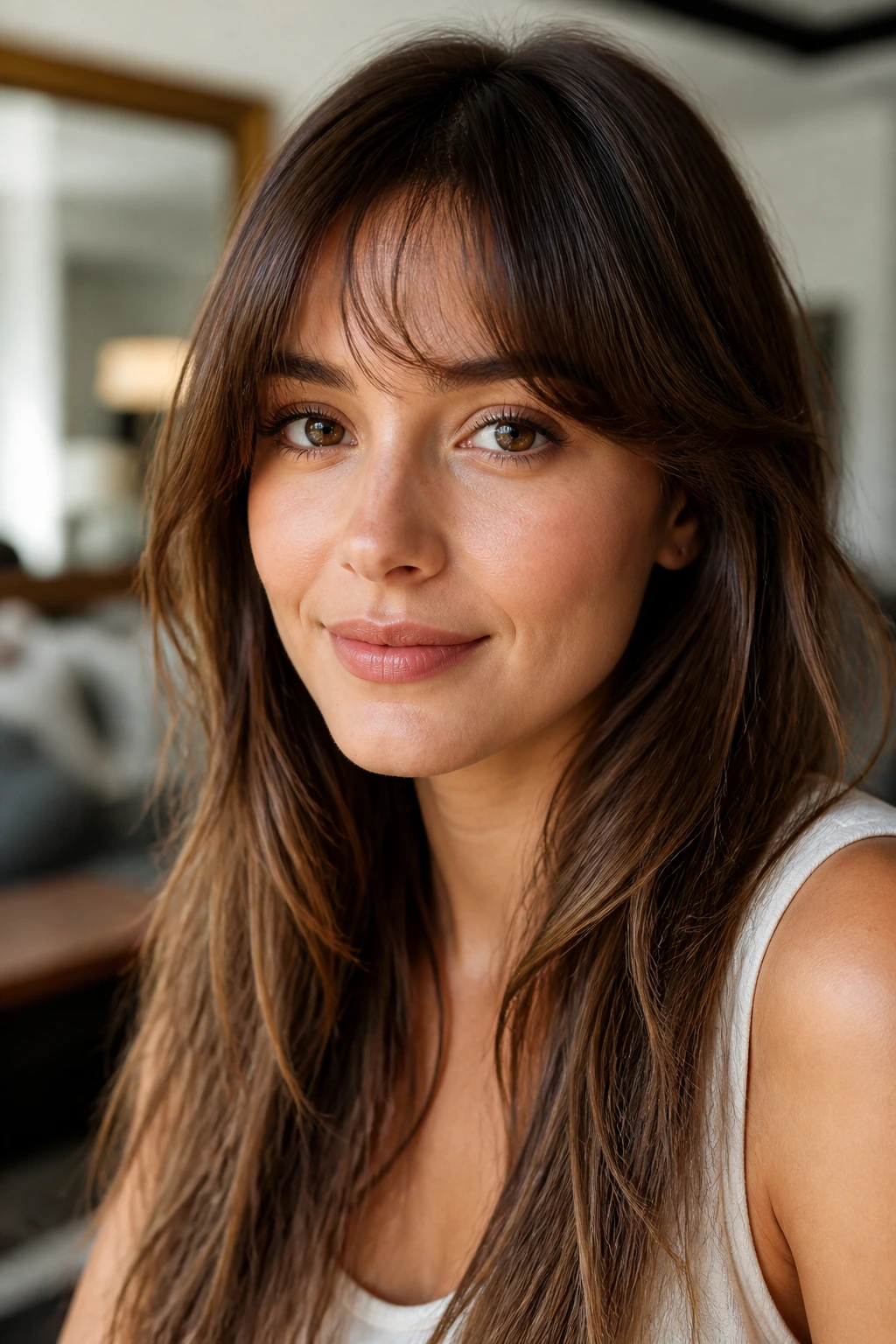
Soft arch bangs are gently curved across the forehead instead of split or sharply angled. The arch gives the fringe a quieter, more tailored feel, which can suit oval faces that already have balanced proportions and do not need extra drama from the cut itself.
The line should never feel severe. Think of it as a soft frame, not a shaped helmet. The middle can sit slightly shorter than the sides, but the drop should be subtle. If the curve becomes too deep, the whole thing starts looking over-designed.
This style is nice when you want your bangs to look finished even on days when the rest of the hair is loose and simple. It is also one of the easier shapes to pair with a round-brush blowout because the curve already gives the hair a direction.
Small Detail, Big Difference
A soft arch looks best when the ends are clean.
Not blunt. Clean.
23. Brow-Grazing Bangs That Stay Long Enough to Tuck
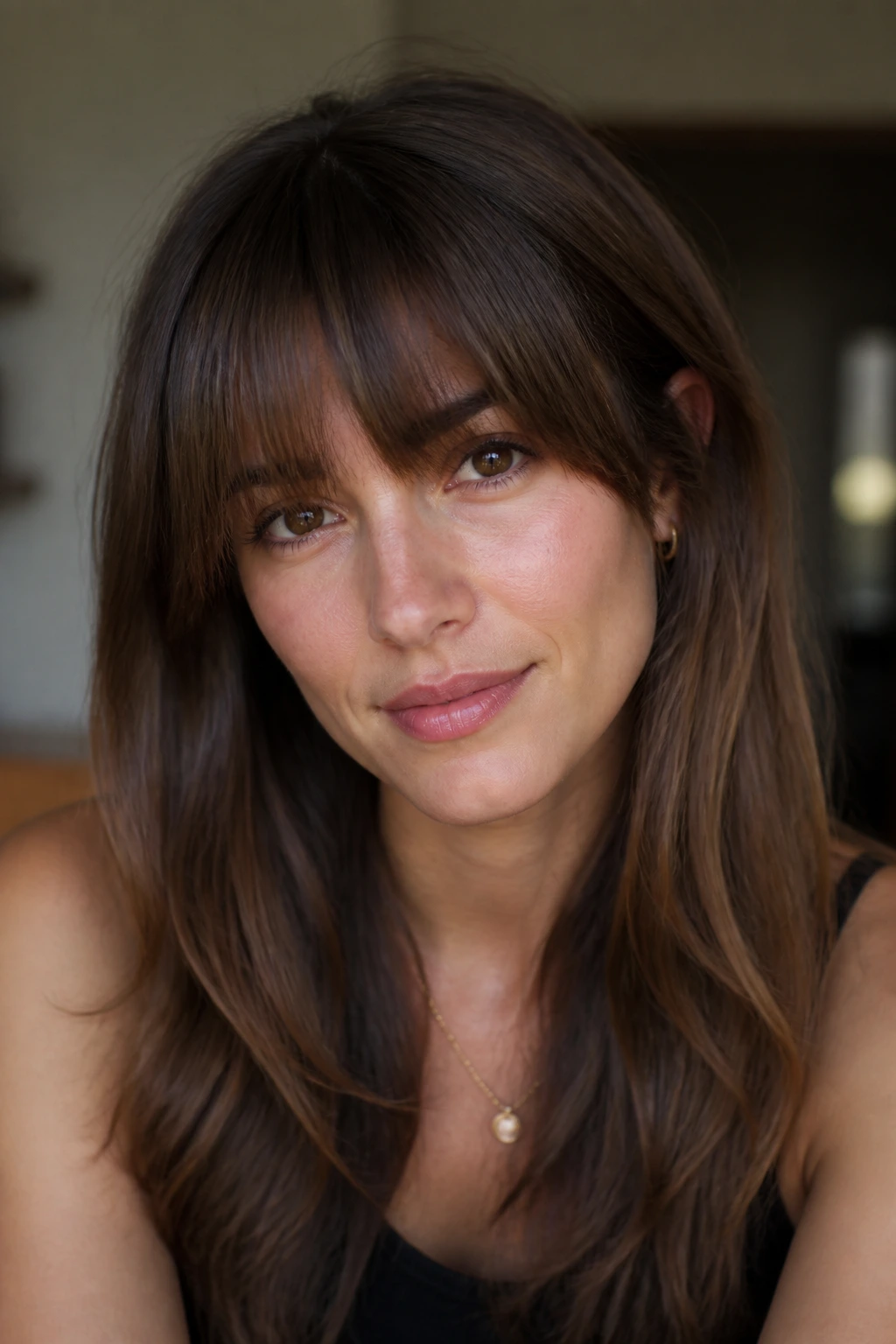
Brow-grazing long bangs are the sweet spot for people who want the fringe to be visible but not needy. The hair lands right around the brows, then continues long enough to tuck into the sides or shift into a part. On an oval face, that keeps the forehead framed while still leaving enough openness.
The real advantage is flexibility. You can wear them straight down, split them, push them to one side, or let them fall softly after a humid day. They are not locked into one behavior. That makes them useful if you like changing your part from time to time.
I’d describe this as one of the more forgiving versions of long bangs. The shape still matters, but the cut has some room to adapt. That matters a lot when you do not want your fringe to demand attention every morning.
Styling note: if the bangs are too long by a quarter inch, that is better than too short by a quarter inch.
Hair grows. Bad bang lengths linger.
24. Invisible Fringe That Blends Into the Front Layers
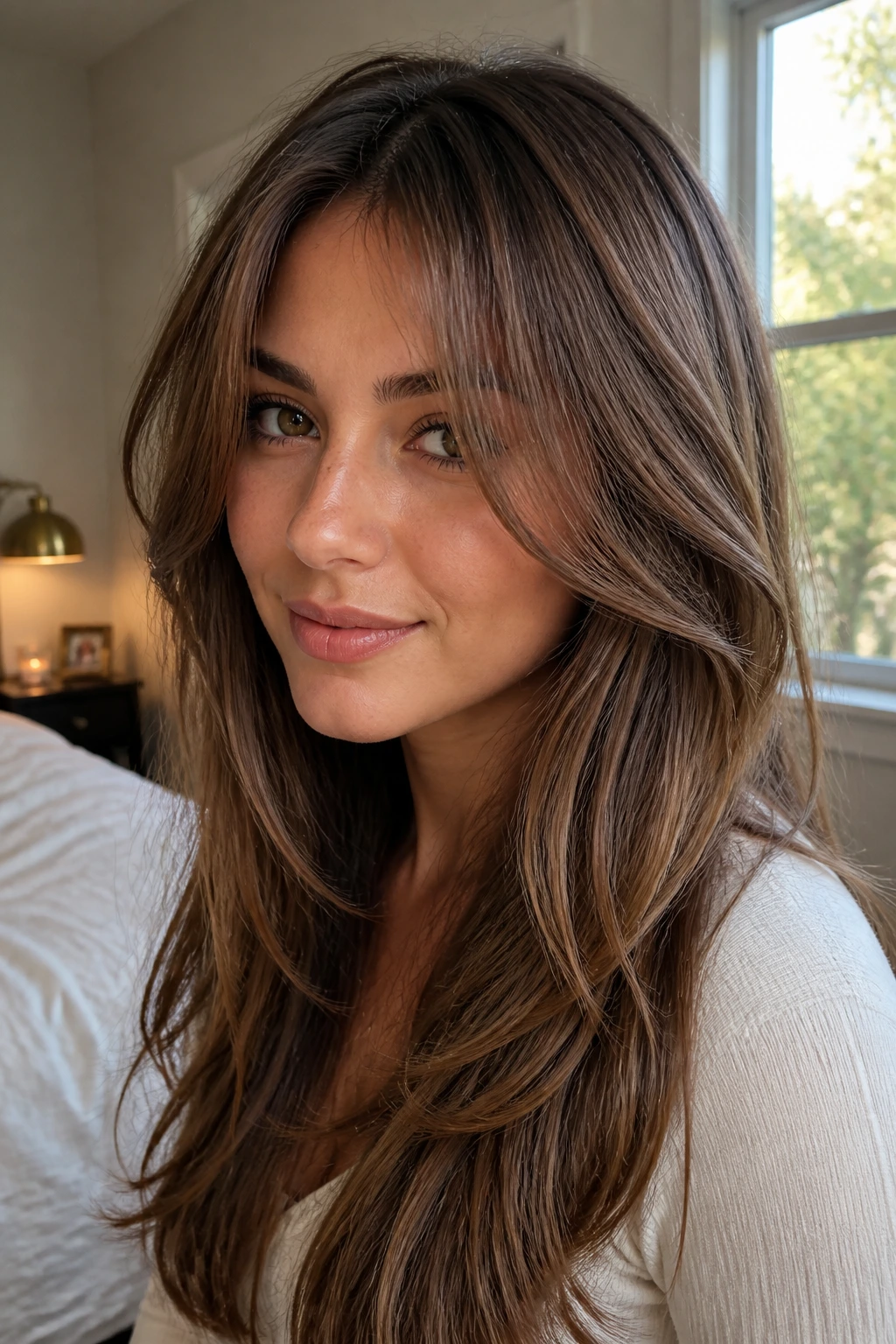
Invisible fringe is the least obvious way to wear long bangs, which is exactly why some people love it. The pieces are there, but they blend so smoothly into the front of the haircut that the fringe reads more like a shaping tool than a separate feature. On an oval face, that subtlety can look expensive in the best sense of the word: nothing competes, everything flows.
This cut is a solid choice if you want to test bangs without making them the headline. It works especially well with long layered hair, where the front sections already have movement. If the hair is very one-length, the invisible fringe can disappear too much. In that case, you need a stronger front angle.
The styling should stay light. A quick bend with a flat iron or brush is enough. If you start loading it with product, the “invisible” part becomes flat and greasy, which is not the point.
Good for People Who Want
- Shape, not drama.
- Fringe, not commitment.
- A cut that grows out quietly.
25. Tucked Side-Sweep Bangs That End at the Jawline
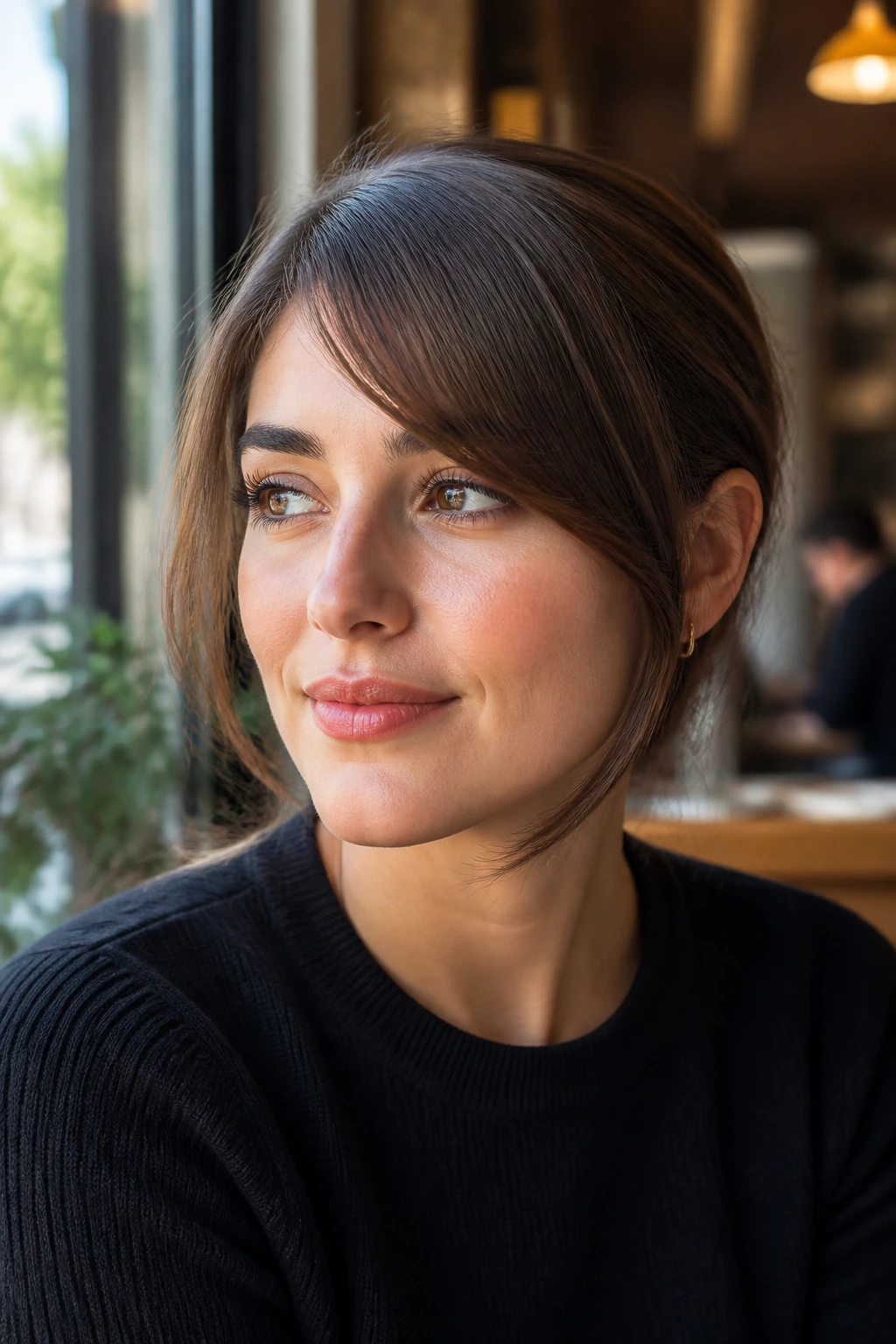
Tucked side-sweep bangs are one of my favorite long-bang ideas because they behave well in real life. The front sweeps across, then tucks behind the ear or slips into the front of the hair at the jawline. On oval faces, that creates a clean diagonal that defines the front without closing off the face.
This is a practical cut for anyone who wears hair down most days but still wants the option of getting the front out of the way. It also works nicely with glasses, since the bang can move off the face instead of fighting the frames. The jawline finish is the key. That’s where the sweep stops feeling like a loose layer and starts feeling like a shape.
If you want long bangs that won’t sabotage a ponytail, this is a smart final stop.
Styling cue: blow the front forward first, then sweep it back while it’s still warm.
Result: it remembers the direction instead of drooping flat.
Why Long Bangs Look So Good on Oval Faces
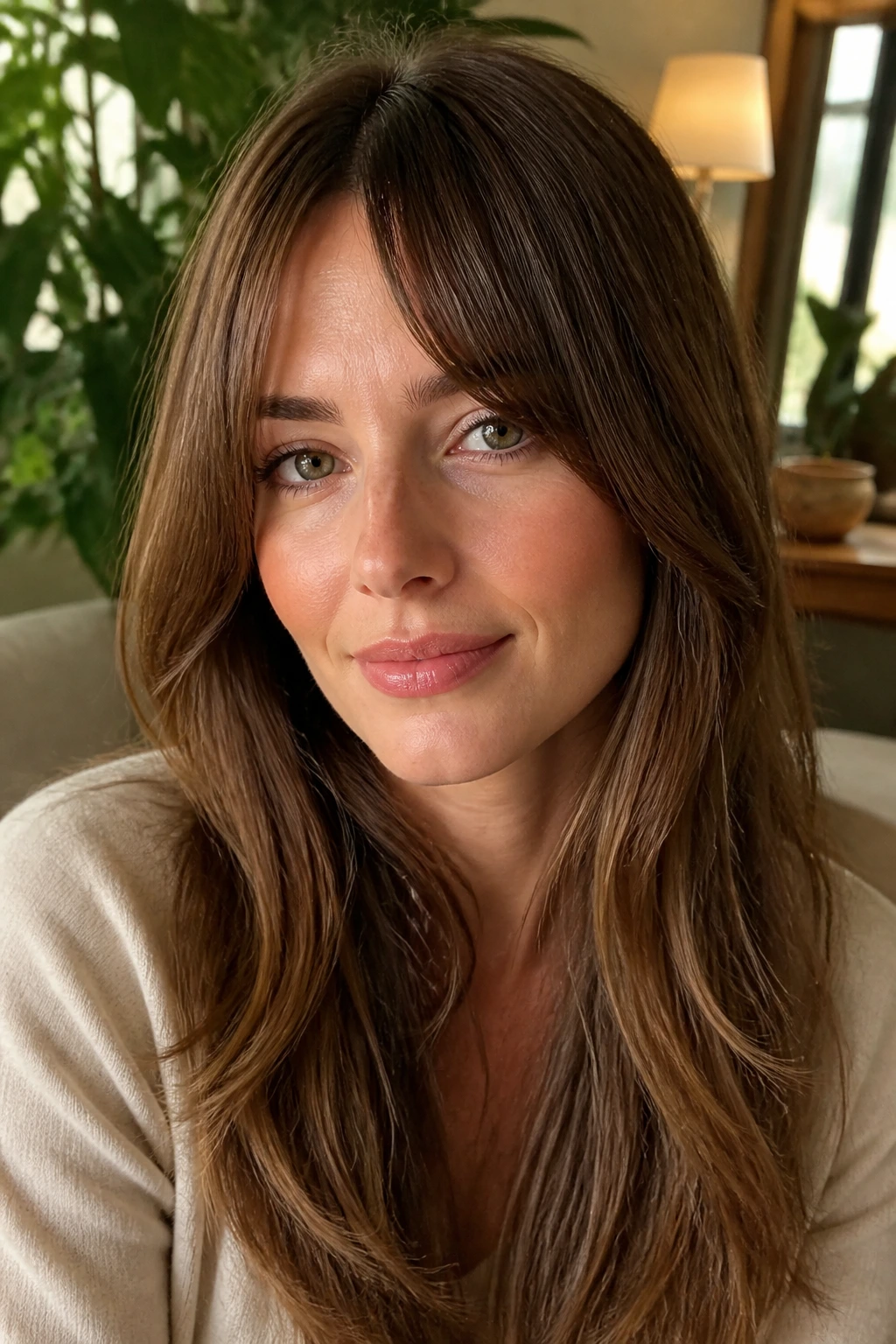
Oval faces are the easy canvas, but “easy” does not mean automatic. The reason long bangs work here is that the face already has balanced proportions through the forehead, cheekbones, and jaw. A fringe can therefore add shape without having to correct anything dramatic. That gives the front of the haircut room to move.
The sweet spot is usually around the cheekbone, lip, or brow, depending on how dense the bangs are and how much hair sits behind them. Shorter than that, and the bang can take over. Longer than that, and it starts to fade into the layers unless the cut has enough weight to stand on its own.
There’s another benefit people forget: oval faces let you change the part without wrecking the haircut. Center, slight off-center, deep side part — all of it can work as long as the bang is cut with enough softness to travel. That flexibility is why long bangs and oval faces keep getting paired together in salons. The shape can handle the motion.
What to Ask for at the Salon
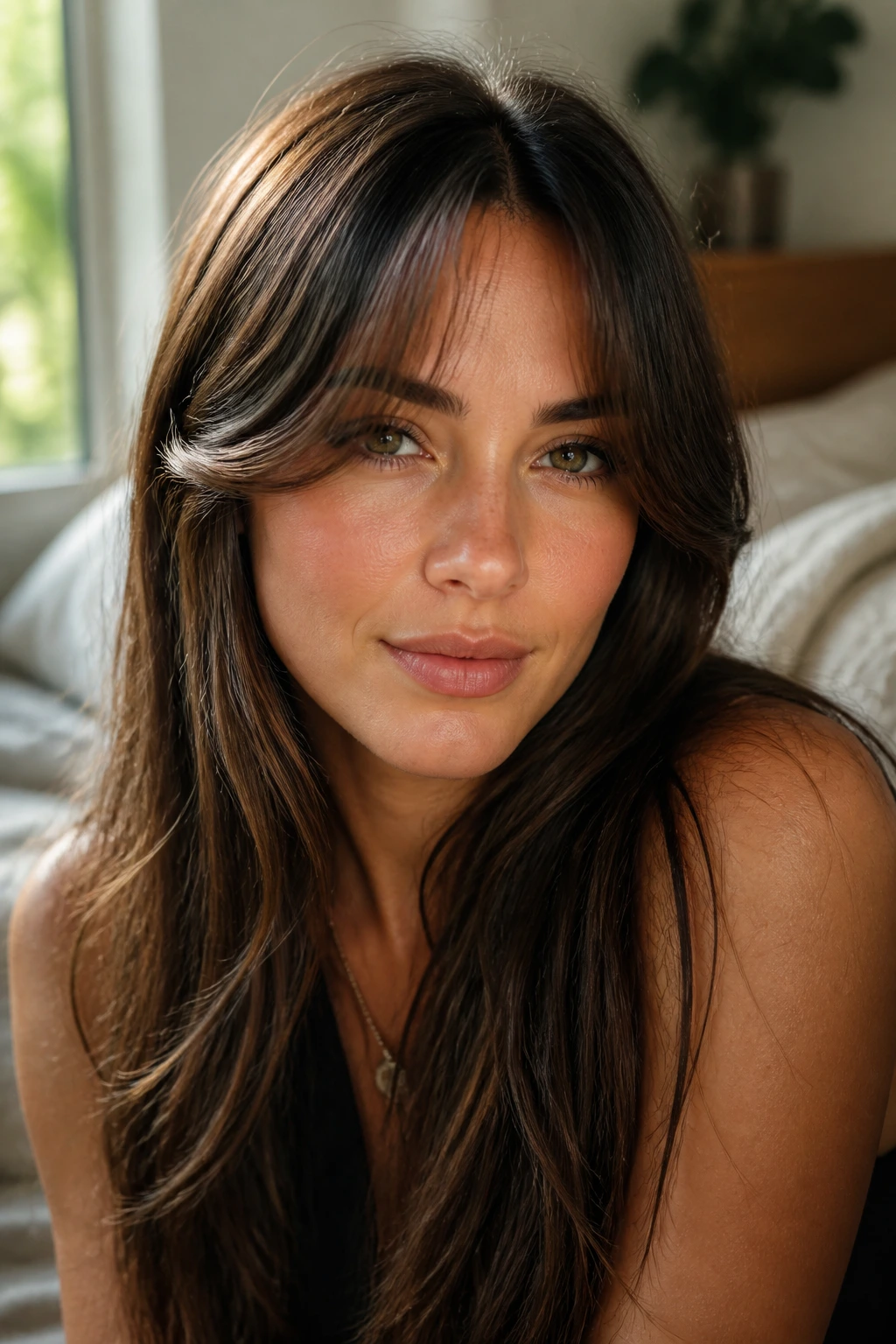
Bring photos, yes, but bring words too. Photos show mood; words tell the stylist where the fringe should land. For long bangs, the useful landmarks are the brow, cheekbone, lip, and jawline. Point to one of those and say where you want the shortest piece to sit when the hair is dry, not just when it has been freshly blown out.
A few phrases help more than vague requests:
- “Keep the shortest pieces around the cheekbone.”
- “I want them long enough to tuck behind the ear.”
- “Blend them into the front layers instead of cutting a hard line.”
- “Leave enough length for my hair to shrink when it dries.”
That last one matters if your hair is wavy or curly. Wet hair lies. Dry hair tells the truth. If your stylist cuts curly bangs to their wet length, you may end up with a fringe that sits too high and too wide. Better to be a touch too long at first and trim after the first dry pass.
Tools That Make Long Bangs Behave
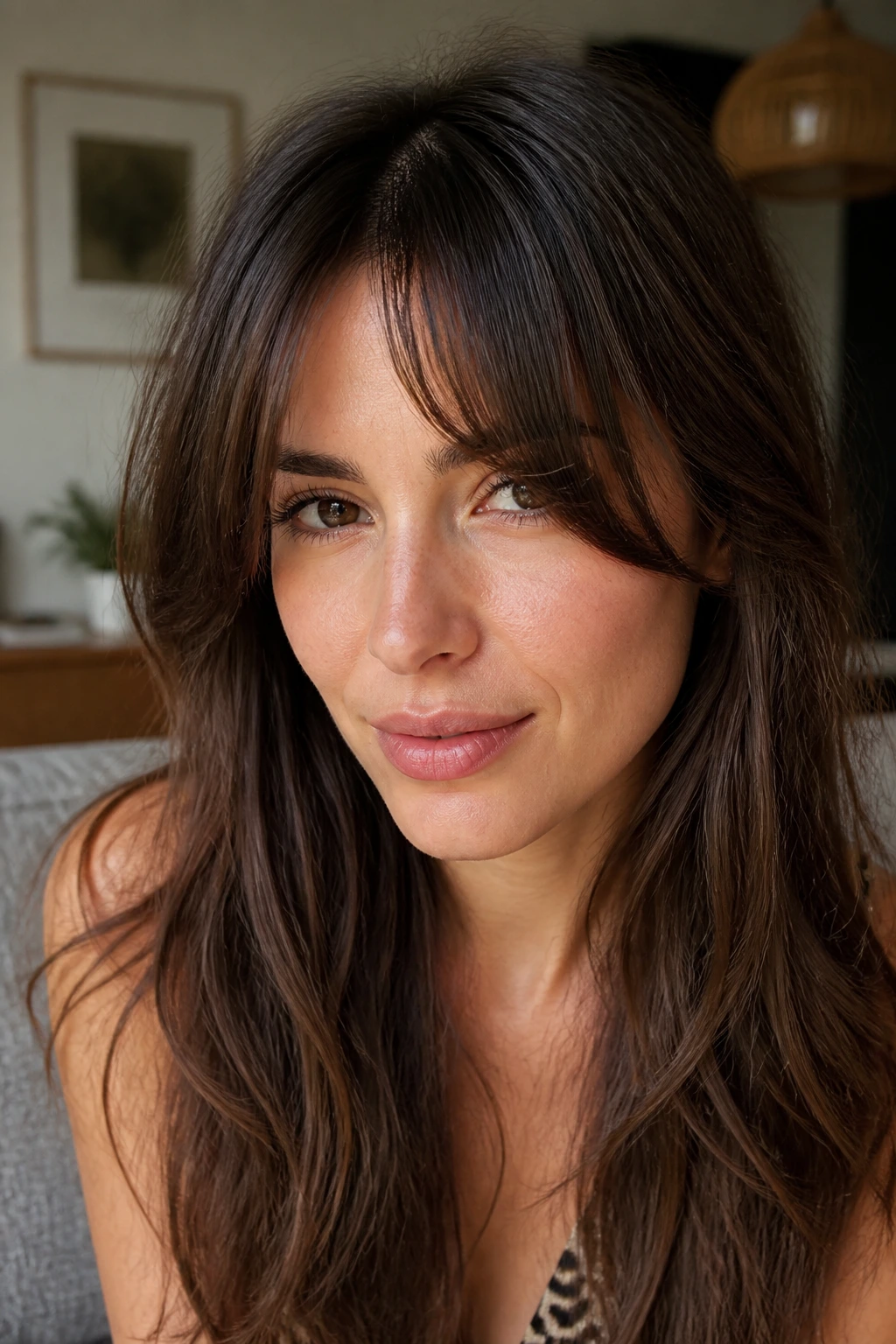
You do not need a salon drawer full of gadgets, but a few tools make long bangs much easier to live with.
- A blow dryer with a concentrator nozzle: It gives the front more direction and keeps air from blasting the bangs everywhere.
- A 1-inch or 1.25-inch round brush: Small enough to shape the front, large enough not to curl the bangs into a tight bend.
- A fine tail comb: Useful for parting, sectioning, and separating the fringe from the rest of the hair.
- Duckbill or sectioning clips: These keep the rest of the hair out of the way while you focus on the front 2 to 3 inches.
- A flat iron with rounded edges: Handy for a soft bend or a quick twist through the ends.
- Texture spray or light mousse: Good for piecey or wispy styles that need lift without crunch.
- Dry shampoo: A must if the front gets oily before the rest of the hair does. That happens all the time.
- Haircutting shears for home trims: Optional, but regular kitchen scissors will chew up the ends. Do not use them.
How to Style Long Bangs Without Spending Twenty Minutes
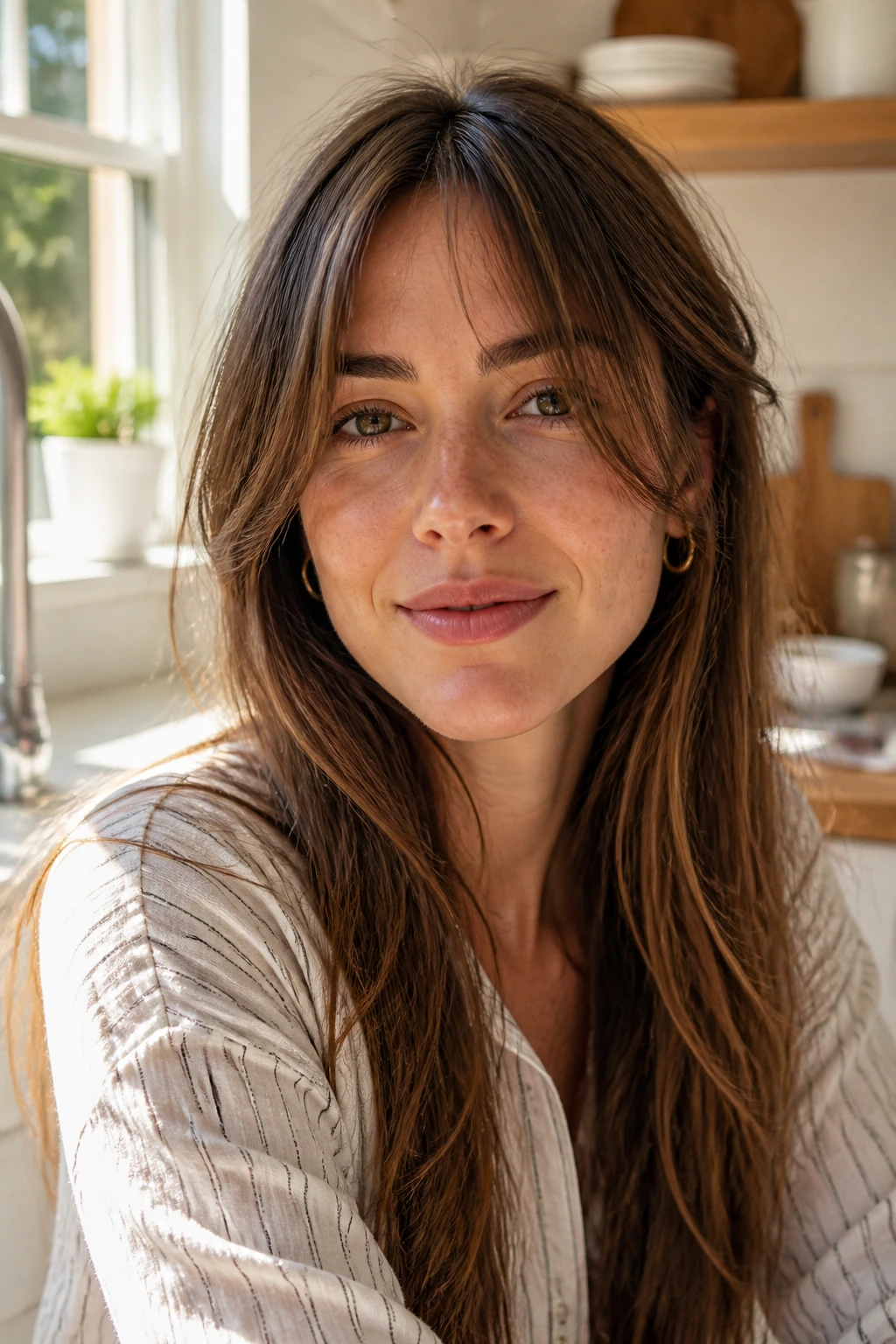
Long bangs do not need a full production every morning. They need direction. That’s the real trick.
Root Direction: Start with the front damp, not soaking wet. Blow the roots forward first, then sweep them into the shape you want while the hair is still warm. That little bit of heat memory is what keeps the bang from separating in weird ways five minutes later.
Round-Brush Trick: For curtain and bottleneck shapes, roll the front under for a second, then turn the brush outward at the ends. The move should be small. You’re creating bend, not making a pageant curl.
Quick Fix: If the bangs are separating in the wrong place, mist the roots lightly with water, brush them side to side for 10 seconds, then reset the part. A tiny restart often works better than piling on product.
Low-Maintenance Route: For wavy or piecey bangs, let them air-dry 70%, then use your fingers and a small dab of styling cream to arrange the front. Brushing too much can make them frizz or fall flat.
Common Mistakes That Make Long Bangs Look Accidental
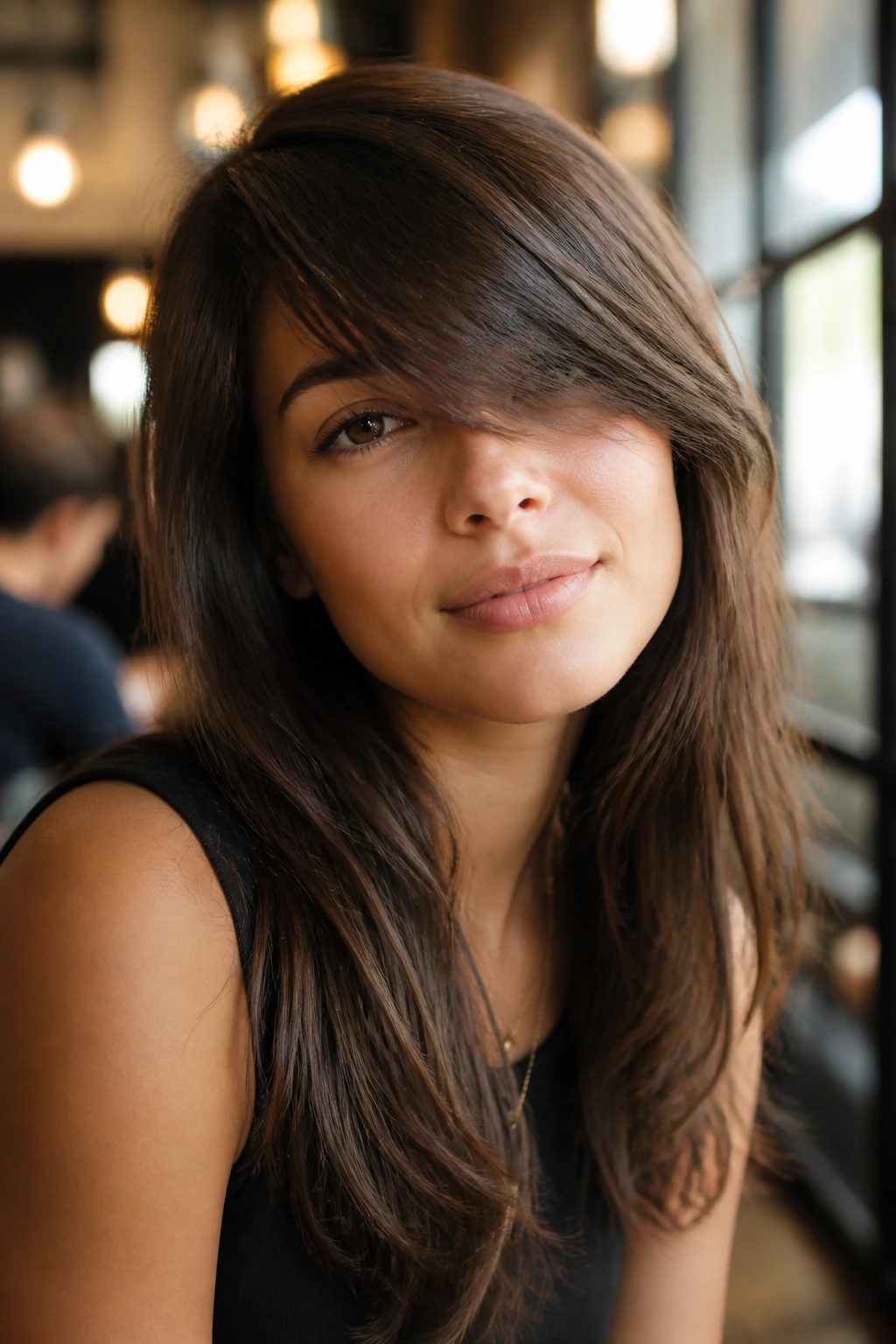
The first mistake is cutting them too short because they look long when wet. They will not stay that way. Hair, especially wavy or curly hair, shrinks when it dries, and bangs feel much shorter than expected once the forehead starts showing. The fix is simple: cut longer than your first instinct and check the dry shape before taking off more.
The second mistake is making the front too thin. Wispy is not the same as sparse. If the fringe has no weight, it separates into little strings that hang around the face without doing anything useful. Keep enough density at the ends so the bang still reads as a shape.
The third one is ignoring the natural part and cowlicks. If your hair wants to split in one place, fight it only if you enjoy daily frustration. A better cut works with the growth pattern, then uses direction and heat to nudge it into place.
And here’s the one I see most: people overstyle the front and understyle the rest. Long bangs are meant to look connected to the haircut. If the fringe is smooth and the lengths are flat, the whole thing breaks apart visually. Give the front and the lengths a similar level of finish.
Variations and Alternatives Worth Trying
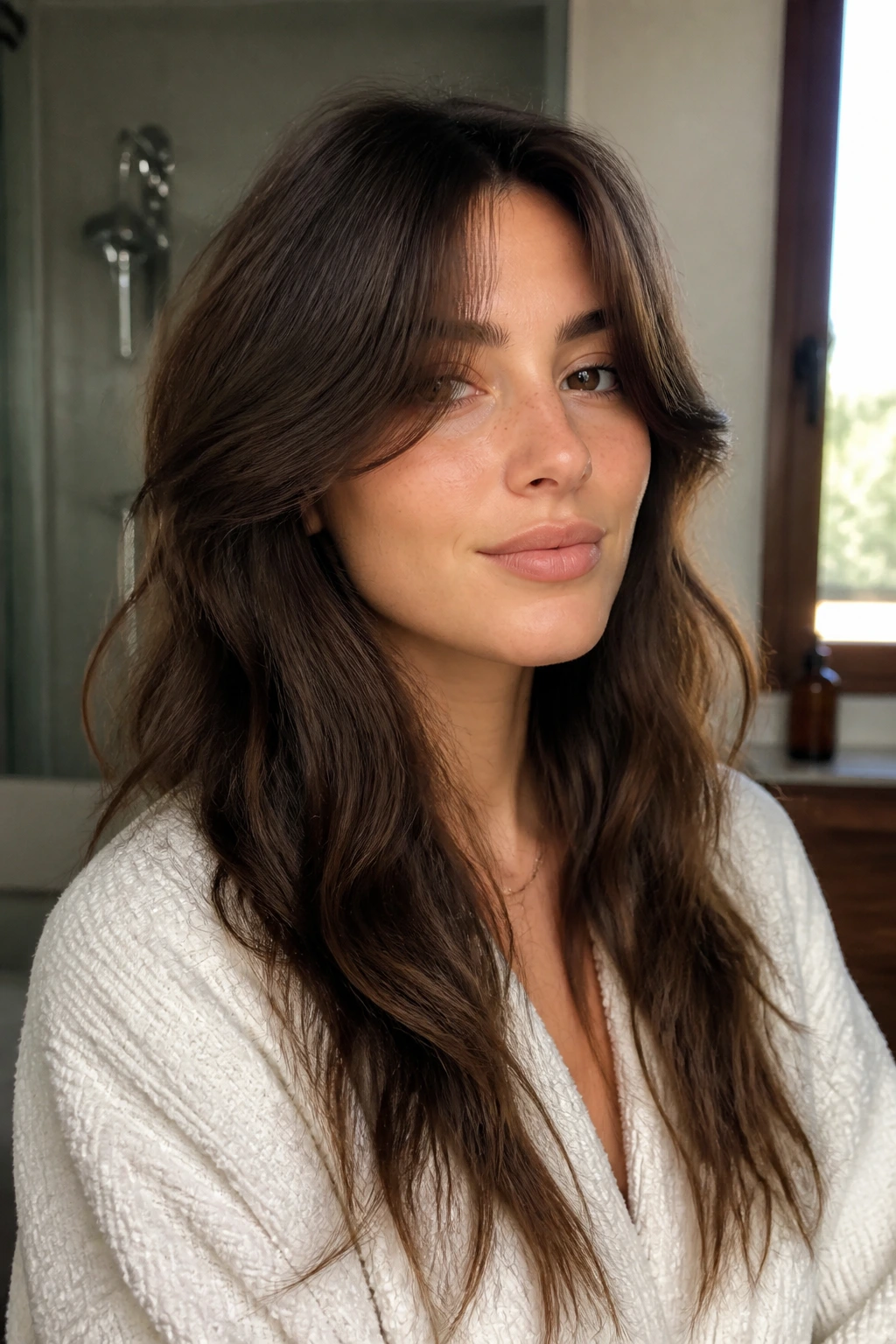
The Air-Dry Curtain: Keep the bangs longer, soften the center, and let the wave or bend do the work. This fits people who do not want to reach for hot tools every morning.
The Polished Blowout Fringe: Use a round brush and a cool shot to keep the front smooth and glossy-looking. It pairs well with straight or slightly wavy hair and reads a little more dressed up.
The Curly Expansion: Let the fringe follow the curl pattern and cut it dry so the shape lands where it actually lives. This is the right move if your hair springs up a full inch or more once it dries.
The Grown-Out Layer Blend: Keep the bangs long enough to tuck, then let them merge into the front layers on purpose. It’s a nice option if you want movement without the upkeep of a more defined fringe.
The Piecey Side Sweep: Separate the front into soft, uneven sections and sweep them to one side. It gives the haircut a looser feel and works well when you want more texture around the face.
Keeping the Shape Between Trims
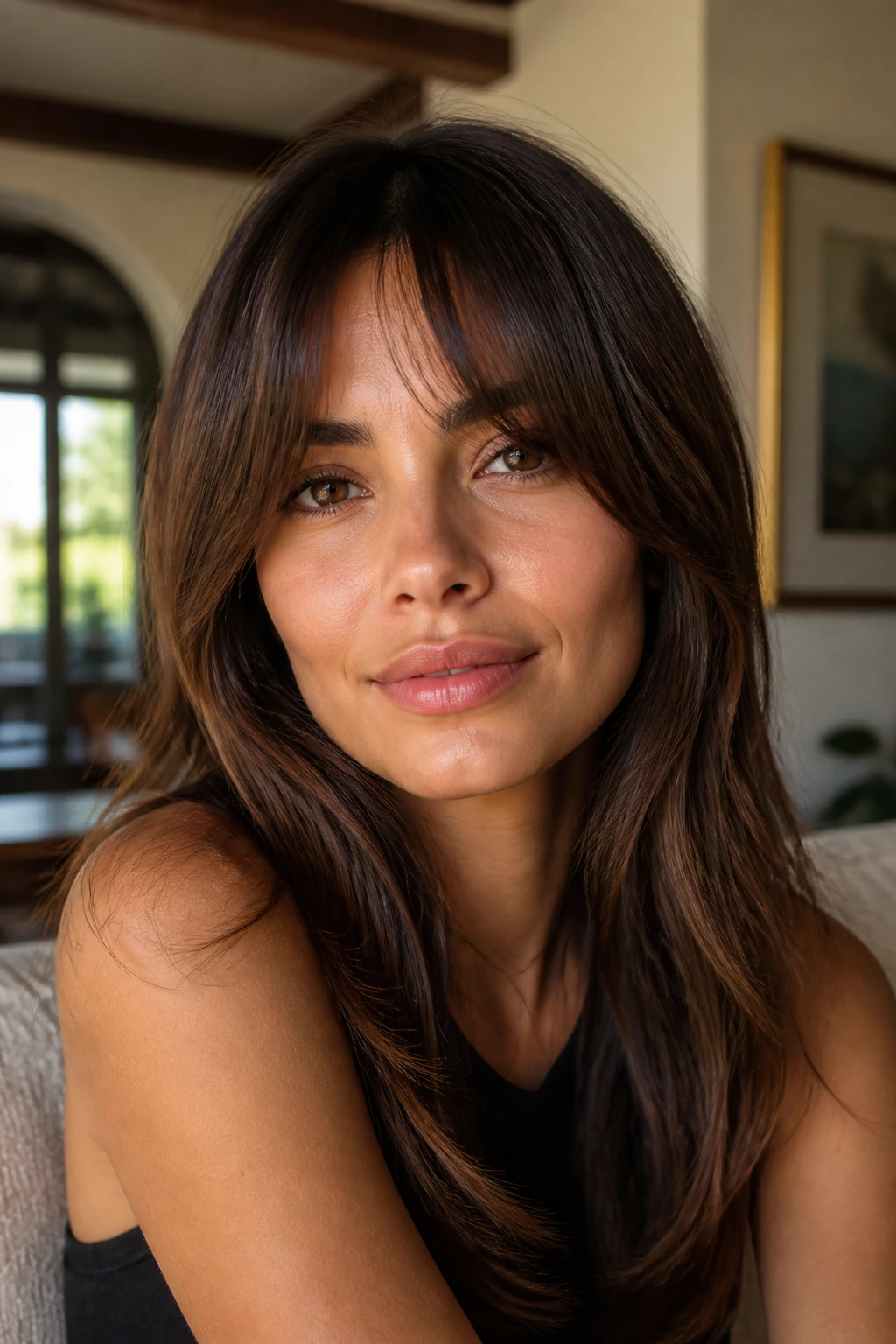
Long bangs need less maintenance than a blunt fringe, but they still need a rhythm. Most people do well with a trim every 6 to 8 weeks if they want the shape to stay clear. If you prefer a softer grow-out, you can stretch that farther, but the front will start slipping into the lengths and lose its definition.
Wash the front as often as it gets oily. For some hair types, that means every 2 days. For others, it means just a quick refresh with dry shampoo at the roots and a light blow-dry of the front. The bangs should never feel weighed down by conditioner, oil, or heavy cream near the roots. Save those products for the mid-lengths and ends.
Sleep also matters more than people admit. If your fringe kinks overnight, pin it back loosely with a soft clip or wrap the front in a silk scarf. That tiny habit saves you from having to rewet and restyle the bangs before breakfast.
Frequently Asked Questions About Long Bangs
Do oval faces suit every long bang style?
Not every version looks equally good, but oval faces can carry more fringe shapes than most. The main difference is whether the bangs add softness, movement, or structure up front — all three can work, but the density and parting need to match your hair texture.
How long should long bangs be on long hair?
A common starting point is somewhere between the brow and cheekbone, with the longest pieces falling toward the lip or jaw. If your hair is wavy or curly, ask for more length than you think you need, because the dry shrink can be real.
Can long bangs work on thick hair?
Yes, but they need internal weight removal so the front does not puff out like a curtain. Thick hair does best when the fringe is shaped to lie next to the face rather than sit away from it.
What if my fine hair goes limp at the front?
Keep the bangs a little longer and use root lift, not heavy cream. A light mousse or a small amount of texture spray gives fine fringe enough structure without making it sticky or flat.
Are side parts or middle parts better for oval faces?
Both can work. Middle parts are cleaner and more open, while side parts add diagonal movement and can hide a strong cowlick. The better choice is usually the one your hair already wants to do with less fight.
How do I grow out long bangs without an awkward phase?
Blend them into the side layers instead of letting them hang as one blunt front section. A small trim every few weeks helps the ends stay soft while they pass the cheekbone and jawline.
Should I cut long bangs on wet or dry hair?
Wet cuts are fine for straight hair, but wavy and curly hair often need a dry or almost-dry cut so shrinkage does not surprise you. If your hair texture changes a lot after drying, dry cutting is the safer bet.
The Fringe That Keeps Its Shape
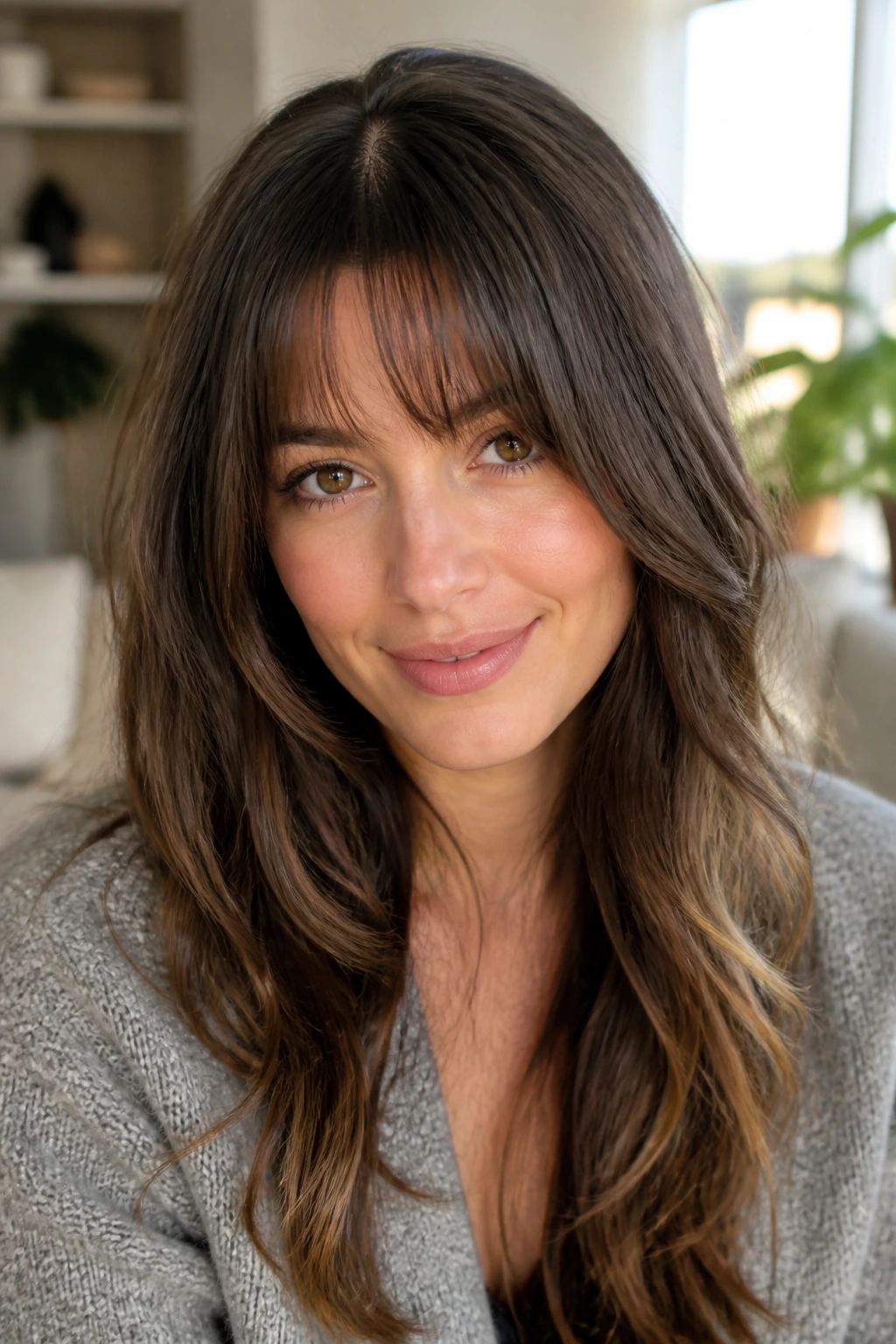
Long bangs work so well on oval faces because they add shape without creating a hard edge where you do not need one. That is the whole game. A fringe can be soft, piecey, swept, blended, or polished, and still do its job if the length lands in the right place and the texture is respected.
The styles that last are usually the ones that leave room for movement. Not room for indecision — room for hair to behave like hair. When the cut matches the way the front dries, you spend less time fighting it and more time noticing that it makes the whole haircut look finished.
If you’re choosing between a few versions, start with the one that matches your daily routine, not the one that looks best in a single salon photo. The right long bangs are the ones you can live with on day three, after sleep, humidity, and a slightly imperfect blow-dry. That’s where the good ones prove themselves.