



If you have a higher forehead and fine strands that lie down the second you look away from the mirror, the wrong haircut can feel like a trap: too much fringe, and your hair collapses; too little, and your forehead takes over the whole face. Big forehead hairstyles for thin hair with curtain bangs work because they solve both problems at once. The center opening breaks up the width at the front, while the longer cheekbone pieces keep the hair from looking chopped into dust.
That balance matters more than people think. Thin hair does not have spare density to waste on heavy, blunt bangs, and a wide forehead usually looks even wider when the front is flat, stringy, or cut too short. Curtain bangs are kinder. They leave room for air, movement, and a little face-framing shadow around the temples, which is exactly where fine hair needs help.
The trick is choosing shapes that keep the perimeter solid and the fringe soft. A good cut here does not try to hide everything. It gives the eye somewhere else to go. That might be a collarbone lob, a feathered bob, a shag with controlled layers, or a ponytail that cheats the crown upward by half an inch. Small changes. Big payoff.
Why This Collection Works
- Forehead balance: Curtain bangs split at the center and taper into the cheeks, which shortens the visible forehead without boxing the face in.
- Fine-hair friendly shape: These styles keep density at the ends and around the perimeter, so the hair looks fuller instead of thinned out by aggressive layering.
- Easy day-to-day styling: Most of these looks need a round brush, a quick bend, and a touch of root lift rather than a full blowout.
- Flexible length choices: You can wear the same fringe idea on a bob, lob, shoulder-length cut, or longer hair and still get the same face-softening effect.
- Better grow-out phase: Curtain bangs blend into face-framing pieces, so the awkward in-between stage is shorter and less annoying than with blunt bangs.
1. Collarbone Lob with Airy Curtain Bangs
A collarbone lob is one of those cuts that quietly does a lot of work. The ends stop right where thin hair still feels dense, and the length gives curtain bangs enough room to melt into the sides instead of hanging like a separate piece. That matters. A fringe that feels attached to the rest of the cut always looks more expensive than a bang line that looks pasted on.
Why it works on fine hair
The lob keeps a single clean edge, which is your friend when the hair is thin. The curtain bangs open at the center and brush the cheekbones, so the forehead reads smaller without needing a heavy wall of hair across the brow.
- Ask for the perimeter to hit the collarbone or just above it.
- Keep the bang opening soft, not blunt.
- Add only light internal layering so the ends stay full.
A quick round-brush bend at the front is enough. If your hair gets flat fast, this is the cut I’d start with.
2. Long Layers with a Soft Center Part
Long hair can work here, but only if the layers behave. Heavy, short layers on thin hair tend to make the bottom look scraggly and the top look even flatter. Long layers are calmer. They keep length, keep weight, and give the curtain bangs something to blend into without stealing too much density from the rest of the head.
What makes this one different
The center part gives the fringe a natural opening, and the front pieces can be cut to graze the cheeks or jaw. That creates the illusion of width where you want it and softness where you don’t. On a tall forehead, that little split at the front matters more than people expect.
Use a light wave or a bend from mid-length down. Straight, pin-straight hair can still work, but the bangs need a slight curve so they don’t separate into two lonely strands. If you like long hair and refuse to chop it off, this is the safest route.
3. Butterfly Cut with Flipped Ends
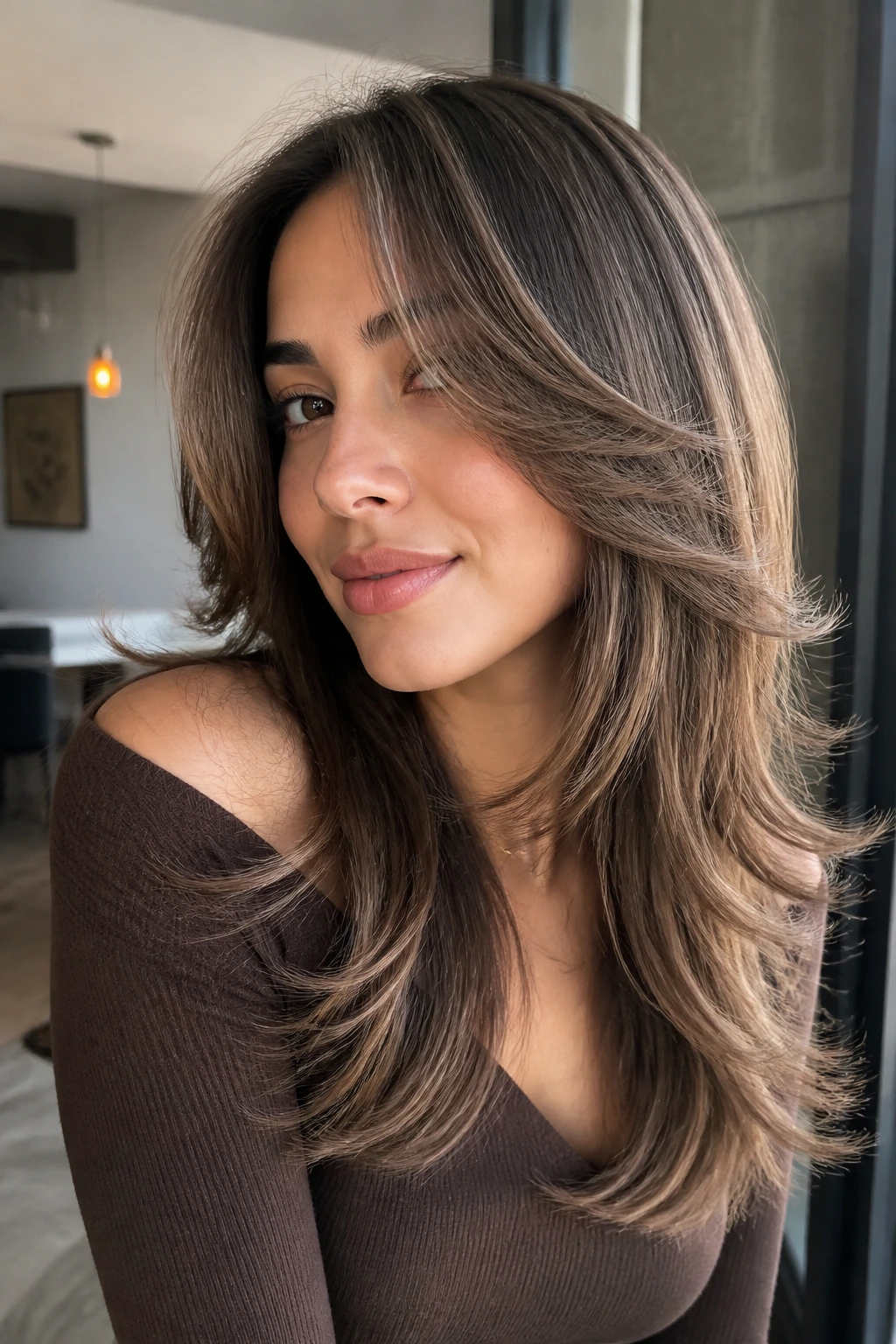
The butterfly cut has a bit of theater in it, and I mean that as a compliment. Shorter layers around the face lift the eye upward, while the longer lengths keep the style from collapsing into a soft mullet if your hair is fine. The flipped ends give the front movement, which is the part that does the real camouflage work.
How to wear it
This cut looks best when the bangs are blown side to side first, then set away from the face with a round brush. The face-framing pieces should hit around the cheekbone or lip line so the forehead doesn’t feel overexposed.
A butterfly shape on thin hair needs restraint. Too many layers and you lose the ends. Too few and the style turns flat. The sweet spot is a lifted crown, open fringe, and length that still feels touchable. It’s a bit polished, a bit airy, and never heavy.
4. Textured French Bob with Feathered Fringe
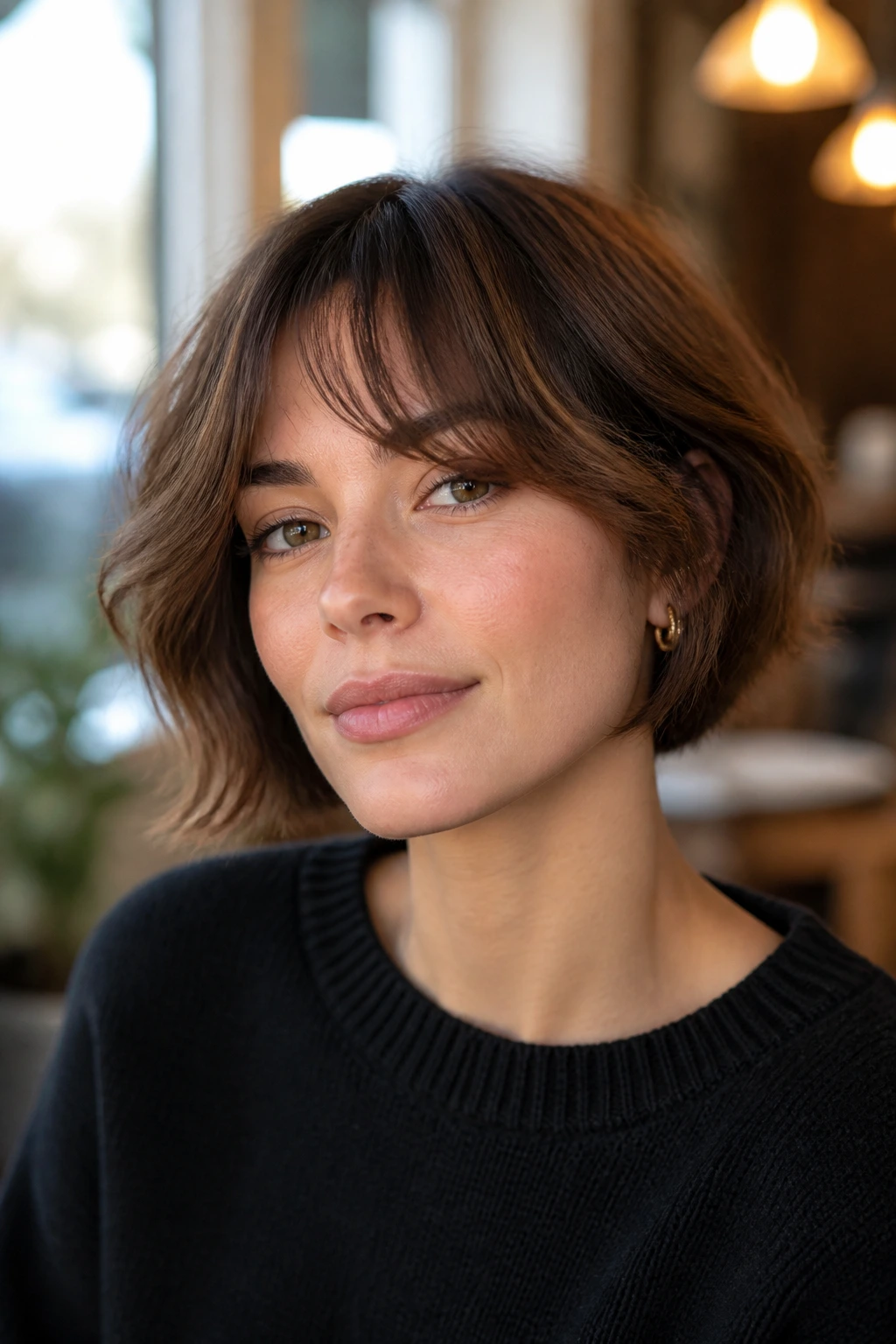
A French bob can be brutal on thin hair if it’s cut too blunt and too short. Done right, though, it becomes one of the best forehead-balancing cuts in the bunch. The trick is keeping the bob just below the cheekbone or at the jaw, with a feathered curtain fringe that breaks the front line.
The feathering softens the bang opening so it doesn’t look like a hard parting. It also stops the face from feeling boxed in, which matters if your forehead is already on the taller side. Think tidy, not severe.
This look works especially well if your hair is straight or has a tiny natural bend. Add a little texture spray at the ends and keep the crown lightly lifted. The cut itself does the rest.
5. Shaggy Midi Cut with Broken Waves
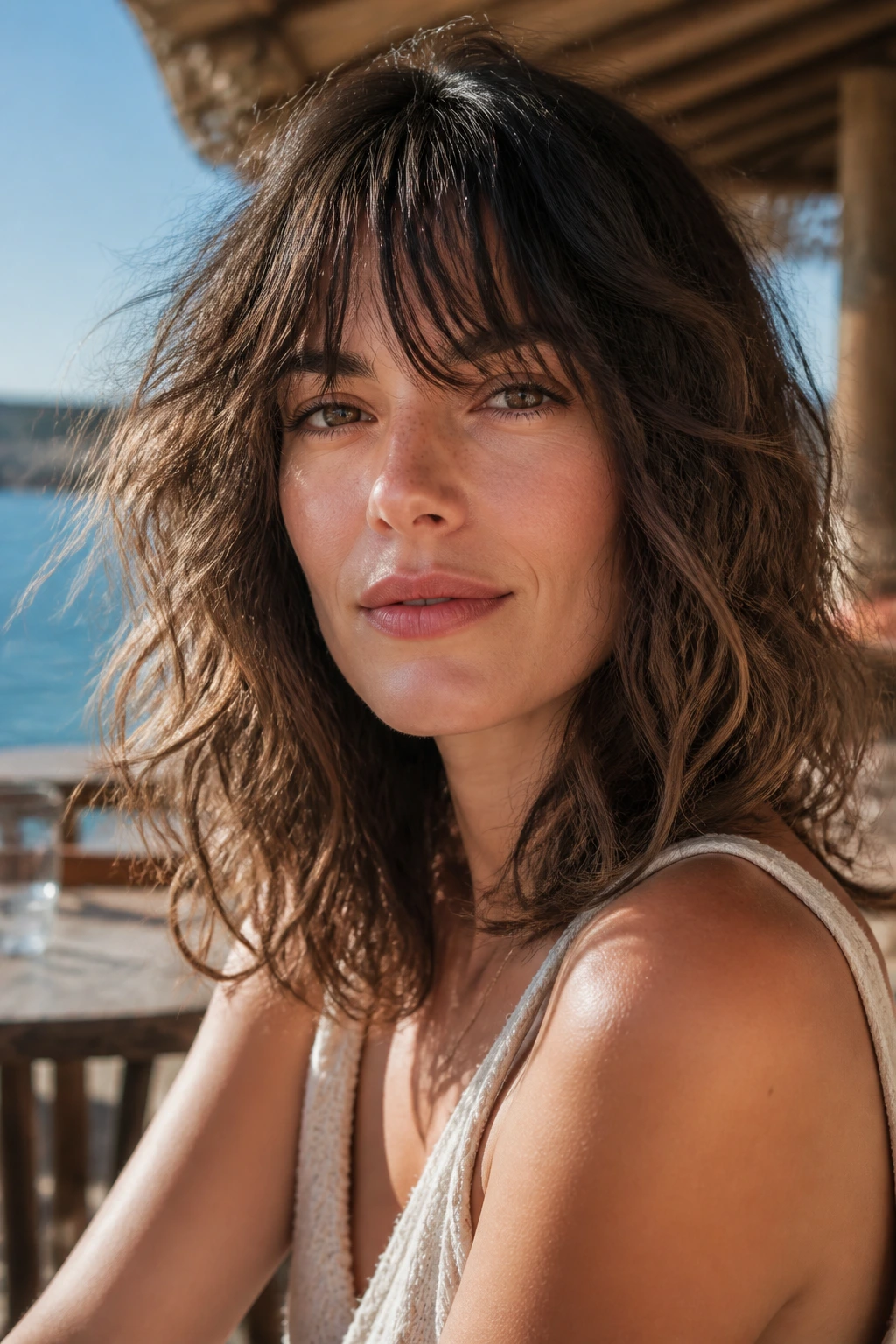
A shag on thin hair can go wrong fast. Too much choppiness and the cut looks hungry. Too little and it loses the point. A midi shag keeps the energy but softens the edges, and the broken waves help the curtain bangs disappear into the rest of the style instead of sitting on top of it.
The reason this works for a bigger forehead is simple: the fringe is active. It moves. It splits. It creates a little irregularity across the front, which is much kinder than a sharp line. Thin hair benefits from that broken texture because it looks intentional, not sparse.
Keep the layers longer through the mid-lengths and ask for the ends to stay soft. If your stylist reaches for the thinning shears too quickly, stop them. You want shape, not smoke.
6. U-Shaped Long Cut with Face-Framing Layers
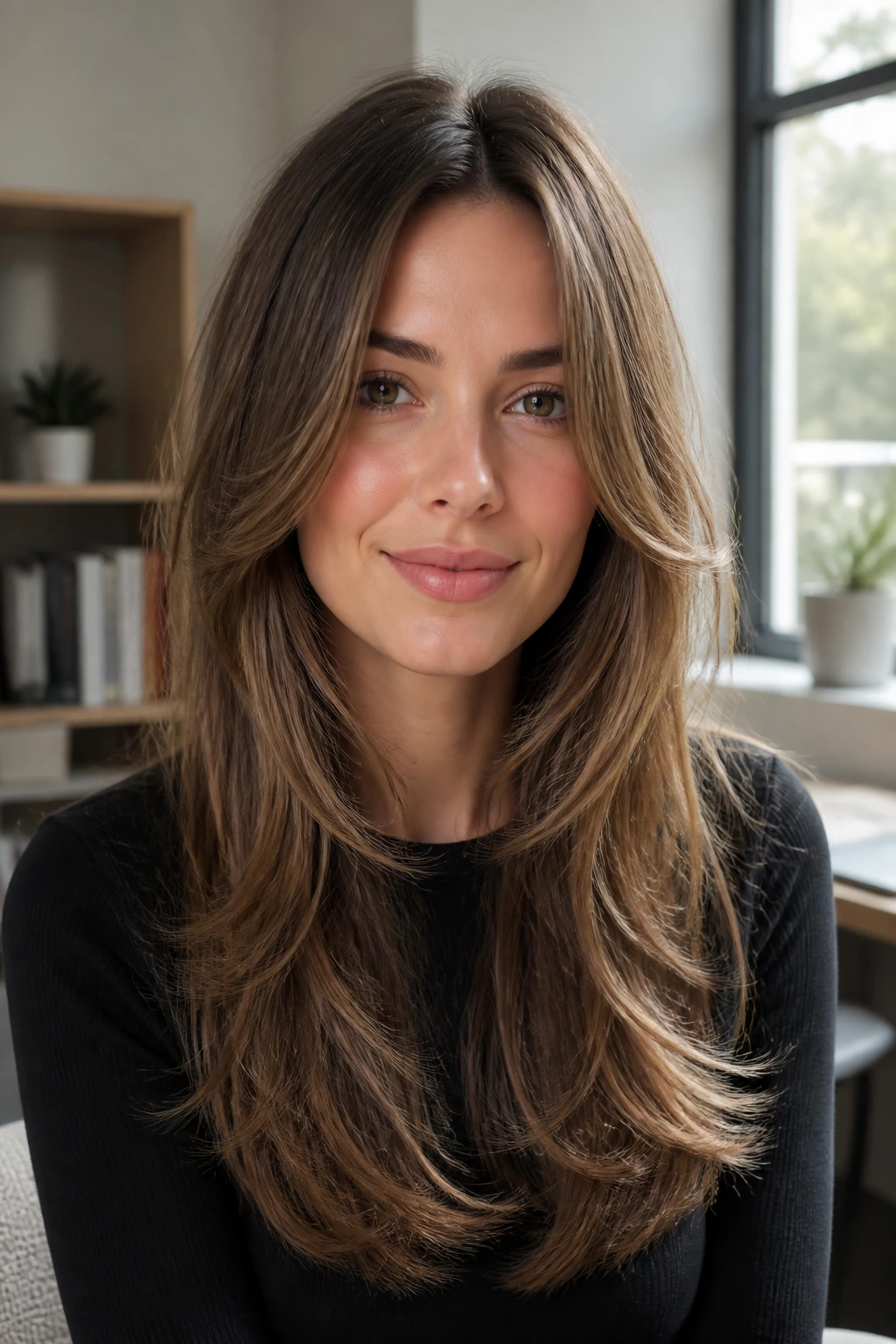
Here’s the quiet solution for someone who wants length without looking flat: a U-shaped cut. The back keeps a gentle curve, the front pieces drop a little shorter, and the curtain bangs bridge the difference. It sounds subtle, and that’s exactly why it works.
The U shape gives fine hair a fuller outline than a straight-across long cut. Straight ends on thin hair can look stringy, especially when the front is parted down the middle. The curved perimeter helps everything read as denser.
If you wear this cut, build the front with a soft bend from eyebrow to chin. Do not over-layer the top. That’s the fastest way to lose the fullness you were trying to keep.
7. Bixie with Wispy Curtain Bangs

A bixie lives between a bob and a pixie, which makes it one of the better short options if you want forehead coverage without dragging a lot of hair around your face. The wispy curtain bang keeps the front soft, and the shorter back gives the crown room to lift.
This cut is especially useful for fine hair because it removes weight without removing shape. That sounds contradictory until you see it cut well. The hair feels lighter, but the silhouette still looks full because the front is left long enough to frame the eyes and cheekbones.
Best for:
- Hair that falls flat at the roots
- A forehead you’d like to soften, not hide completely
- People who want short hair without a blunt micro-bang
You’ll need a little styling each morning. No way around that. But the payoff is a cut with movement and a face frame that doesn’t feel fussy.
8. Clavicut with Soft Bend at the Ends
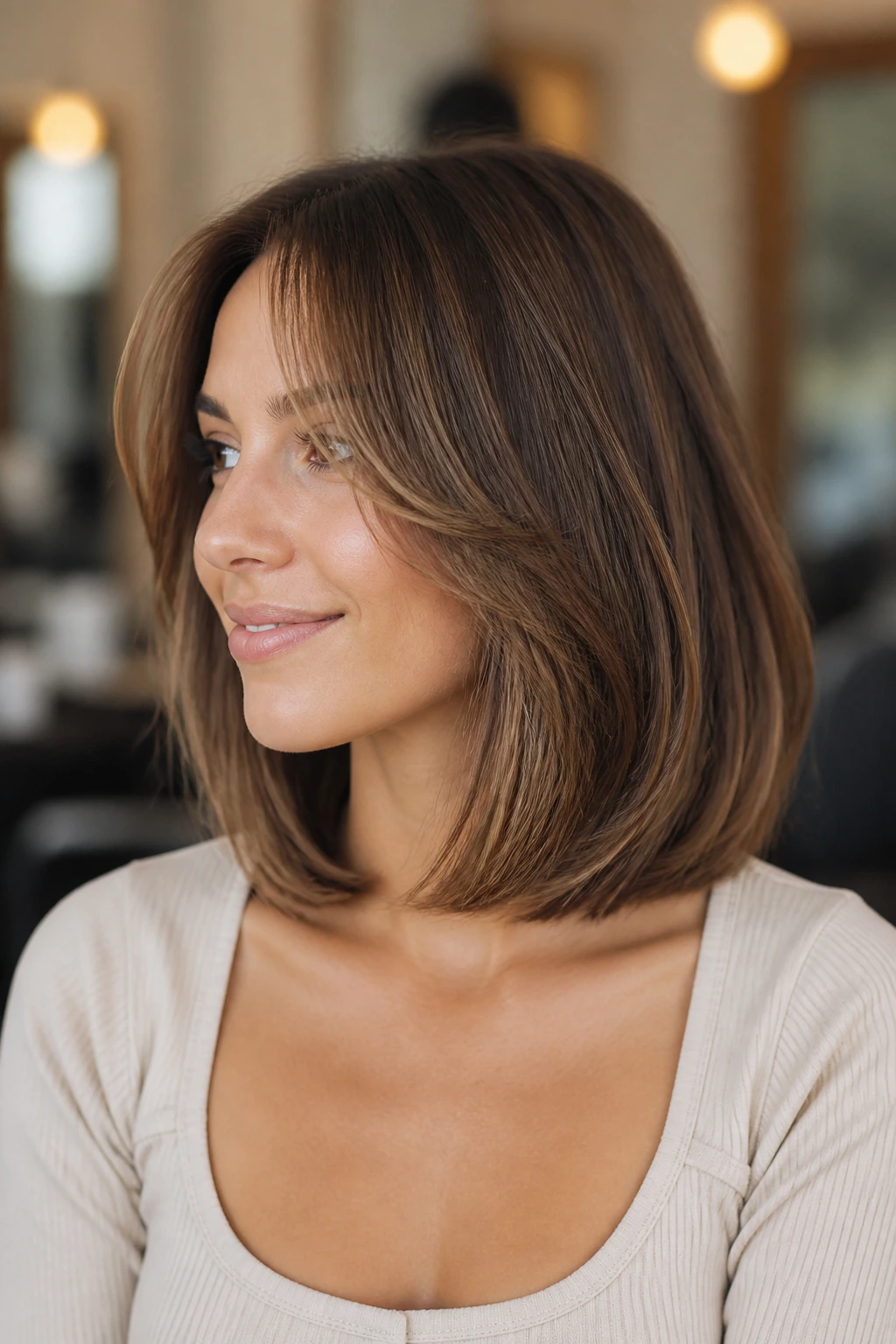
A clavicut sits right at the collarbone, which is one of the smartest lengths for fine hair. It gives you enough weight to keep the ends looking solid, and enough length to tuck, bend, or wave the front pieces around curtain bangs. The result feels relaxed but not limp.
The soft bend at the ends is the whole point. Straight, sharp ends can look stringy on thin strands, while a gentle inward or outward curve gives the illusion of body. That tiny movement changes the cut more than another inch of length ever would.
If you want low-maintenance hair with a proper forehead frame, this one is hard to beat. It’s tidy on day one and still behaves on day three, especially with a little dry shampoo at the roots.
9. Half-Up Claw Clip with Loose Bangs
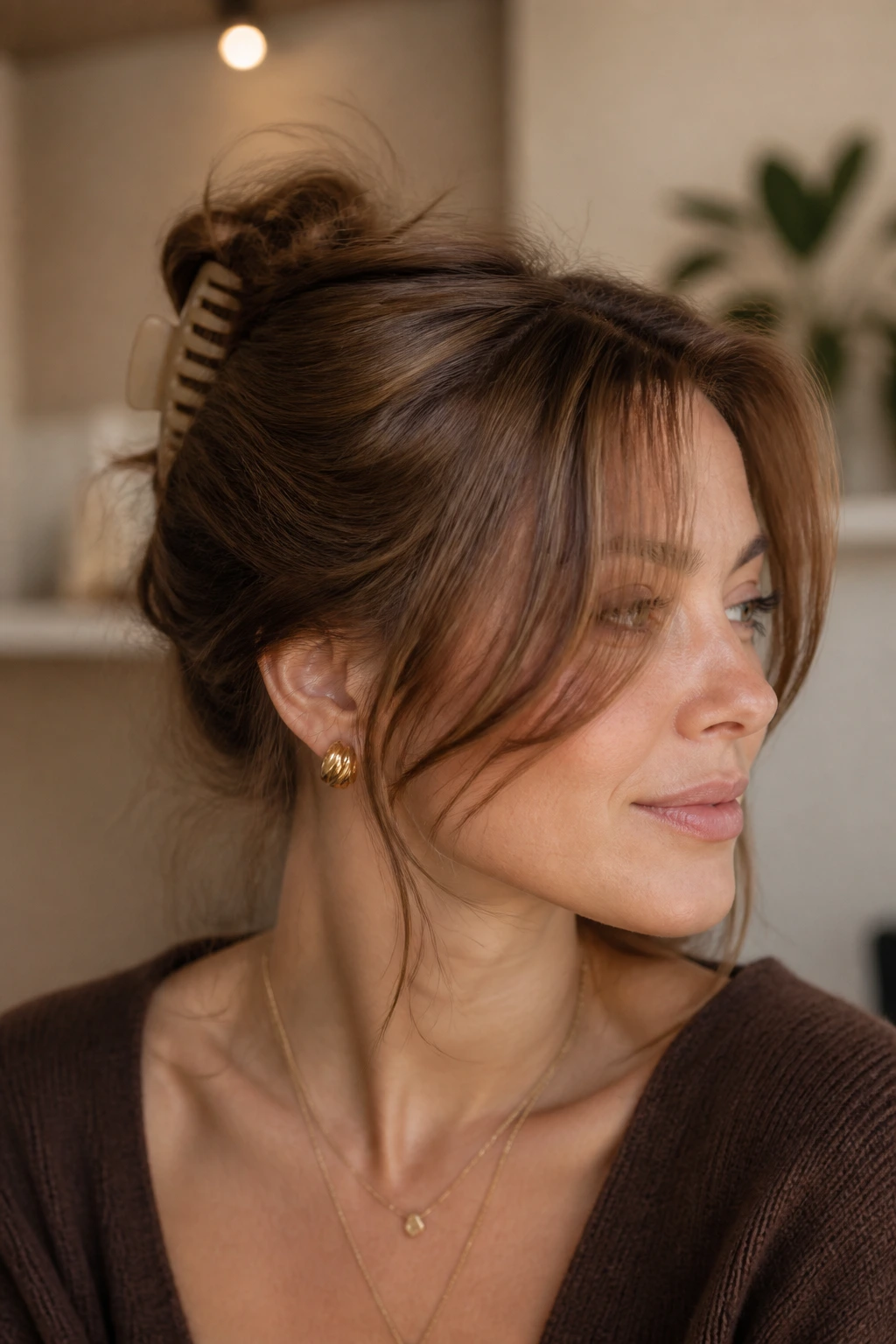
Not every good look here is a cut. Some are a styling trick that makes thin hair look like it has more going on than it really does. The half-up claw clip does exactly that: it lifts the crown, keeps the front loose, and lets curtain bangs break up the forehead without fighting the rest of the hair.
The lift is the secret. Thin hair often looks best when you keep the top section controlled and let the fringe fall with a little bend. That creates height at the crown and softness at the face. Both matter.
This is one of my favorite daytime fixes because it takes about 30 seconds and still looks deliberate. Pull the top section back loosely, leave a few pieces around the ears, and let the bangs sit a touch messy. Messy, not careless.
10. Low Bun with Floating Curtain Pieces
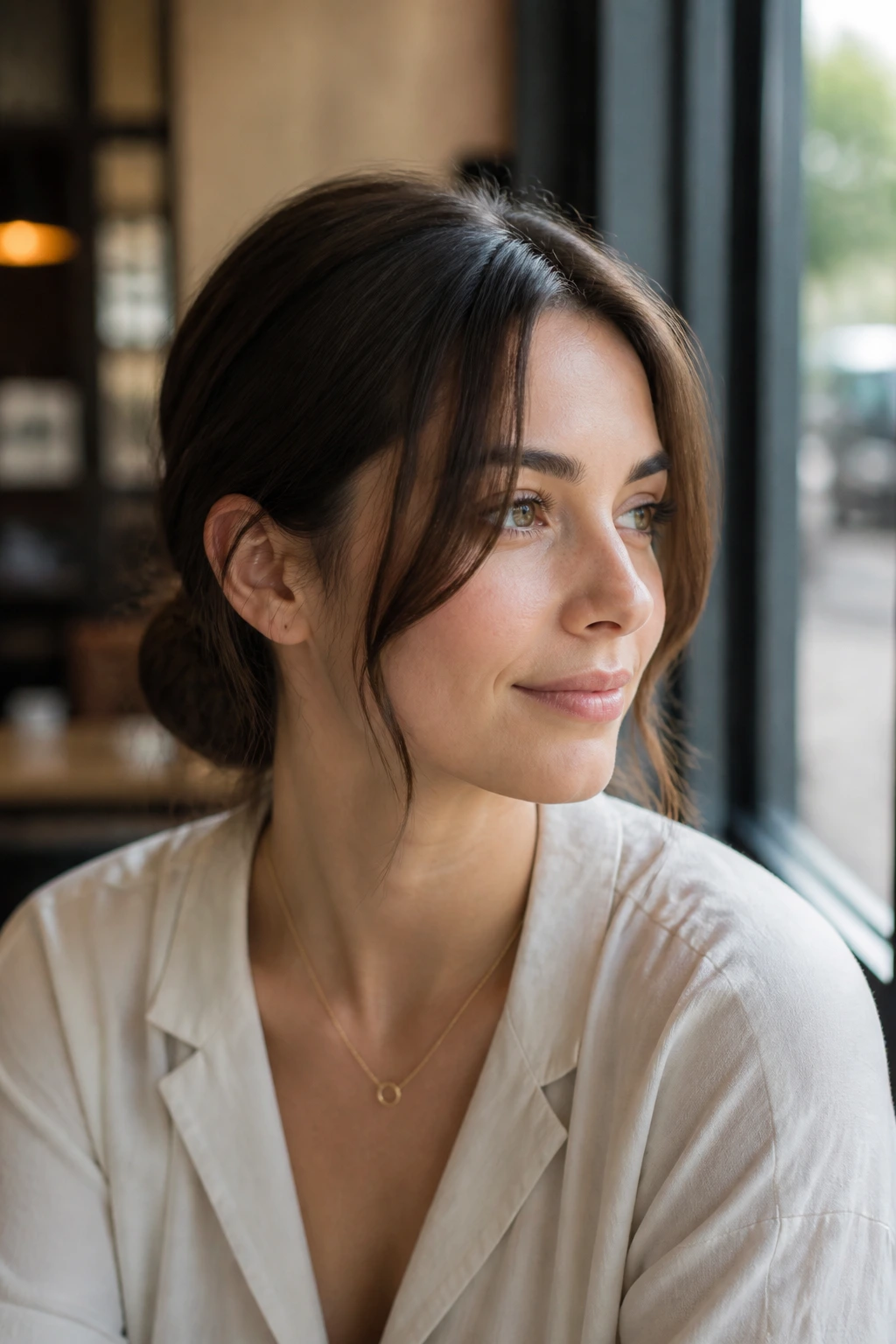
A low bun can feel severe if you pull everything back tightly. Leave the curtain bangs and a few face-framing pieces out, and it changes completely. The front stays soft, the forehead loses some visual width, and the bun gives the hairline a cleaner edge.
Thin hair does better with this style when the bun is not oversized. A compact bun looks neater and keeps the proportions right. Use a texturizing spray before you twist it up so the bun doesn’t look slippery or too tiny against the head.
This is one of those styles that works for dinner, errands, or a polished office day. The bangs do the facial framing; the bun keeps the whole thing from looking too precious.
11. Wavy Ponytail with Crown Lift
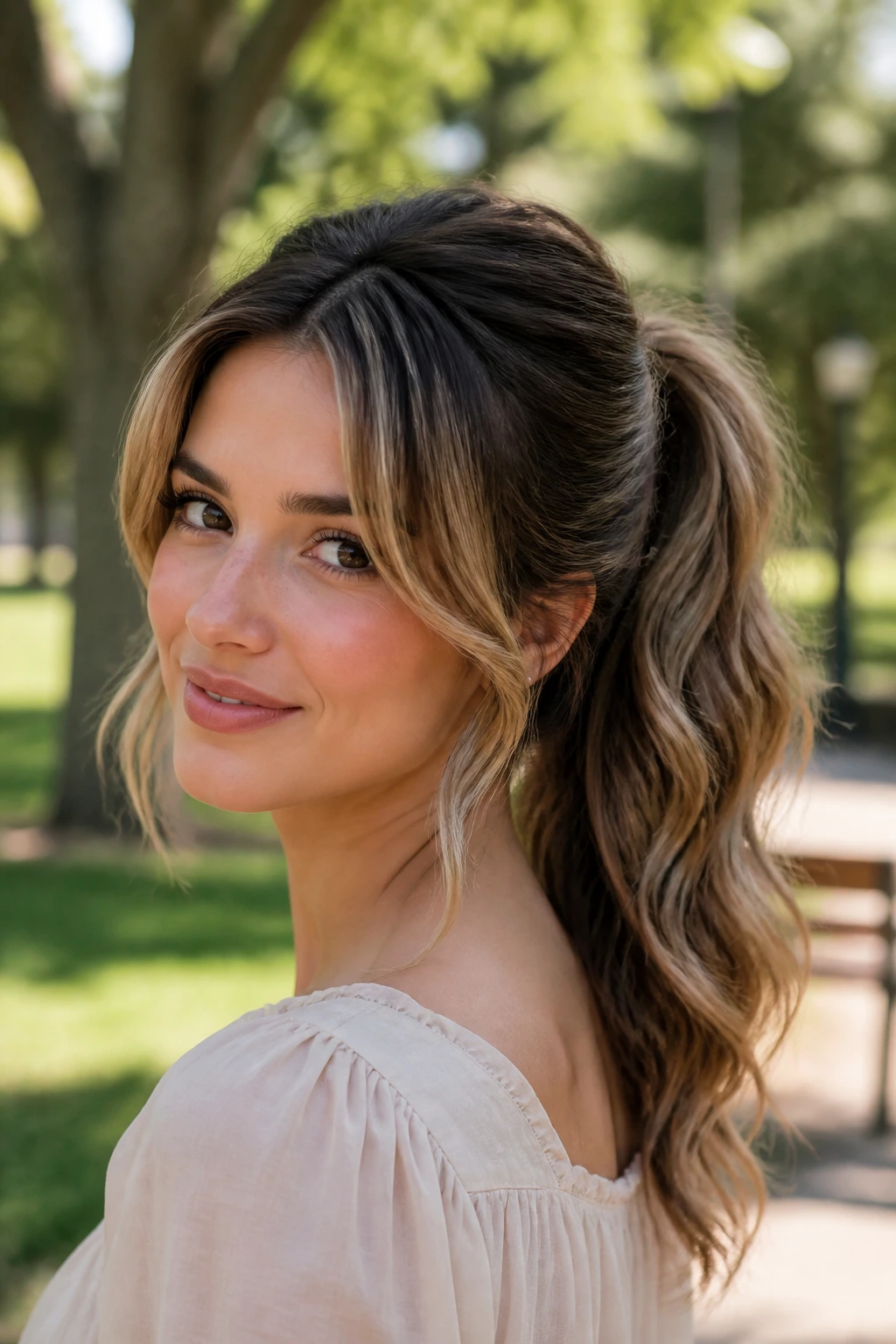
A ponytail sounds too simple to count, but the placement changes everything. Set it slightly higher than a standard low pony, lift the crown with a little root spray, and let curtain bangs soften the front. Suddenly the face looks shorter and the hair looks like it has more body than it actually does.
What to remember
- Keep the ponytail at mid-height, not flat at the nape.
- Tease only the crown a little. You want lift, not knots.
- Wrap a small piece of hair around the elastic if the base looks too bare.
This style is one of the easiest ways to make fine hair read fuller. The bangs pull focus forward, the crown gets a small boost, and the ponytail keeps the rest tidy. Simple. Effective.
12. Side-Parted Blowout with Curtain Bangs
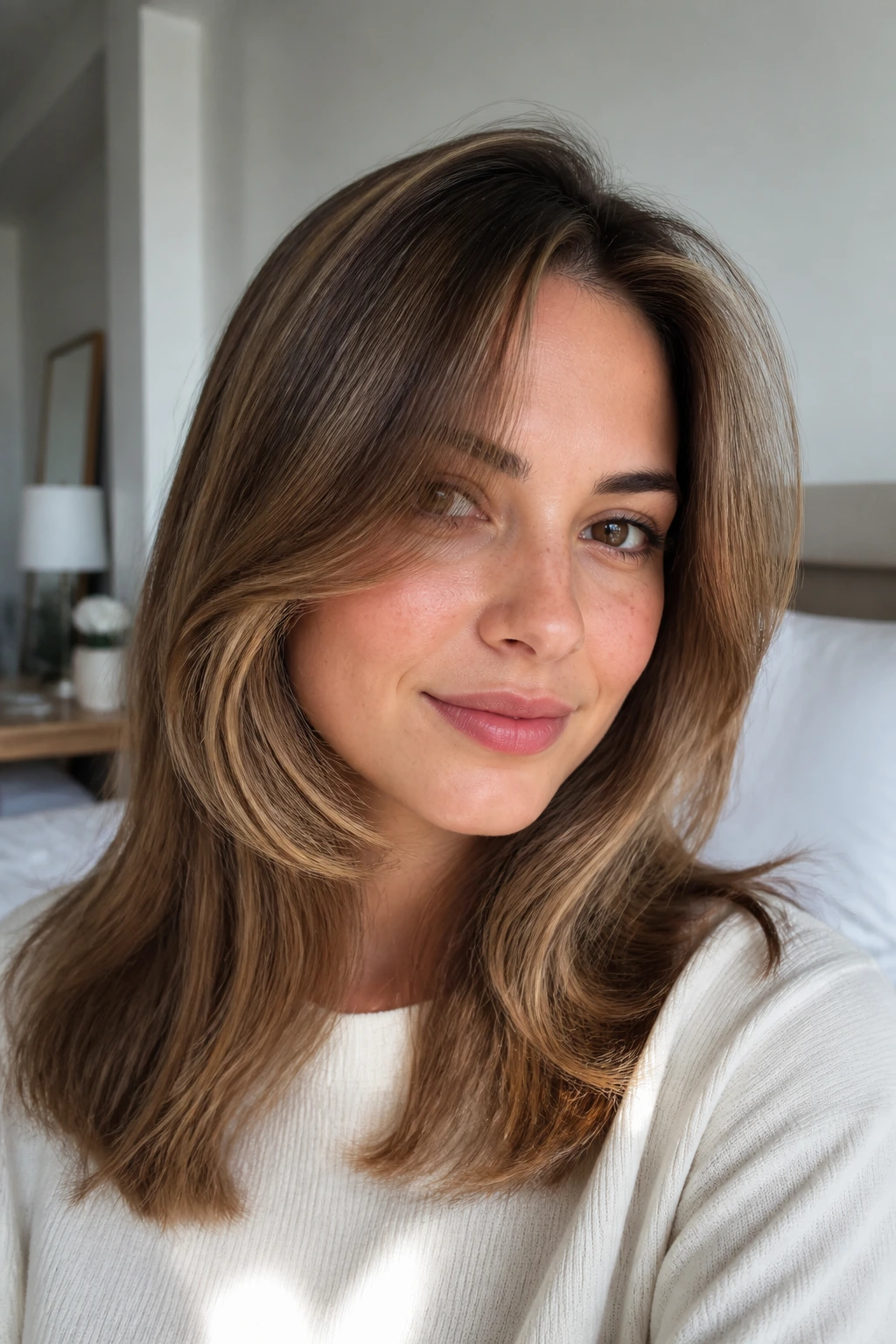
A slight side part can be a small miracle on a taller forehead. It interrupts the straight center line, shifts some volume to one side, and gives the curtain bangs a softer, more natural fall. On thin hair, that off-center shape often looks fuller than a strict middle part.
The blowout matters here. Use a round brush to lift the roots and direct the fringe away from the face first, then let it fall back with a bend. That little bit of movement keeps the hair from separating into flat strips.
I like this style when the hair needs to feel a little more finished than everyday casual. It has polish, but it still leaves the forehead open enough to look balanced instead of bare.
13. Invisible Layers on Shoulder-Length Hair
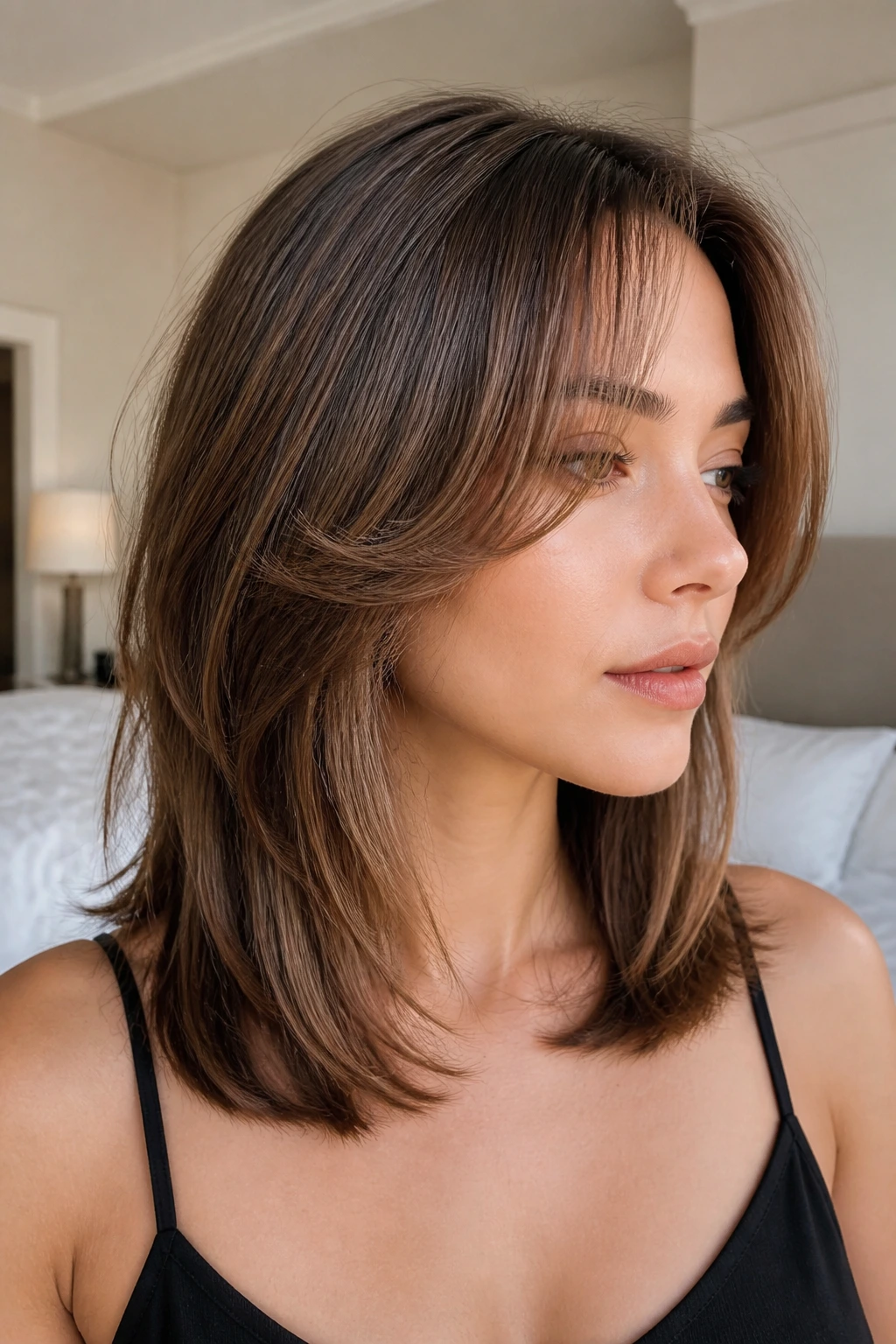
Invisible layers are the kind of cut that sounds boring until you see what it does for thin hair. The layers are tucked inside the shape, so the surface stays smooth and the ends keep their weight. You get movement without the choppy outline that can make fine hair look even finer.
Curtain bangs work well here because the whole cut feels seamless. The front pieces can slide into the side layers without that obvious “bangs plus everything else” split. That smooth transition is what keeps the forehead from feeling too exposed.
This style is good if you want something low-key that still has enough lift to look styled. It’s one of those cuts that makes hair look healthy, which matters more than people admit.
14. Tucked Lob with Slight Bends
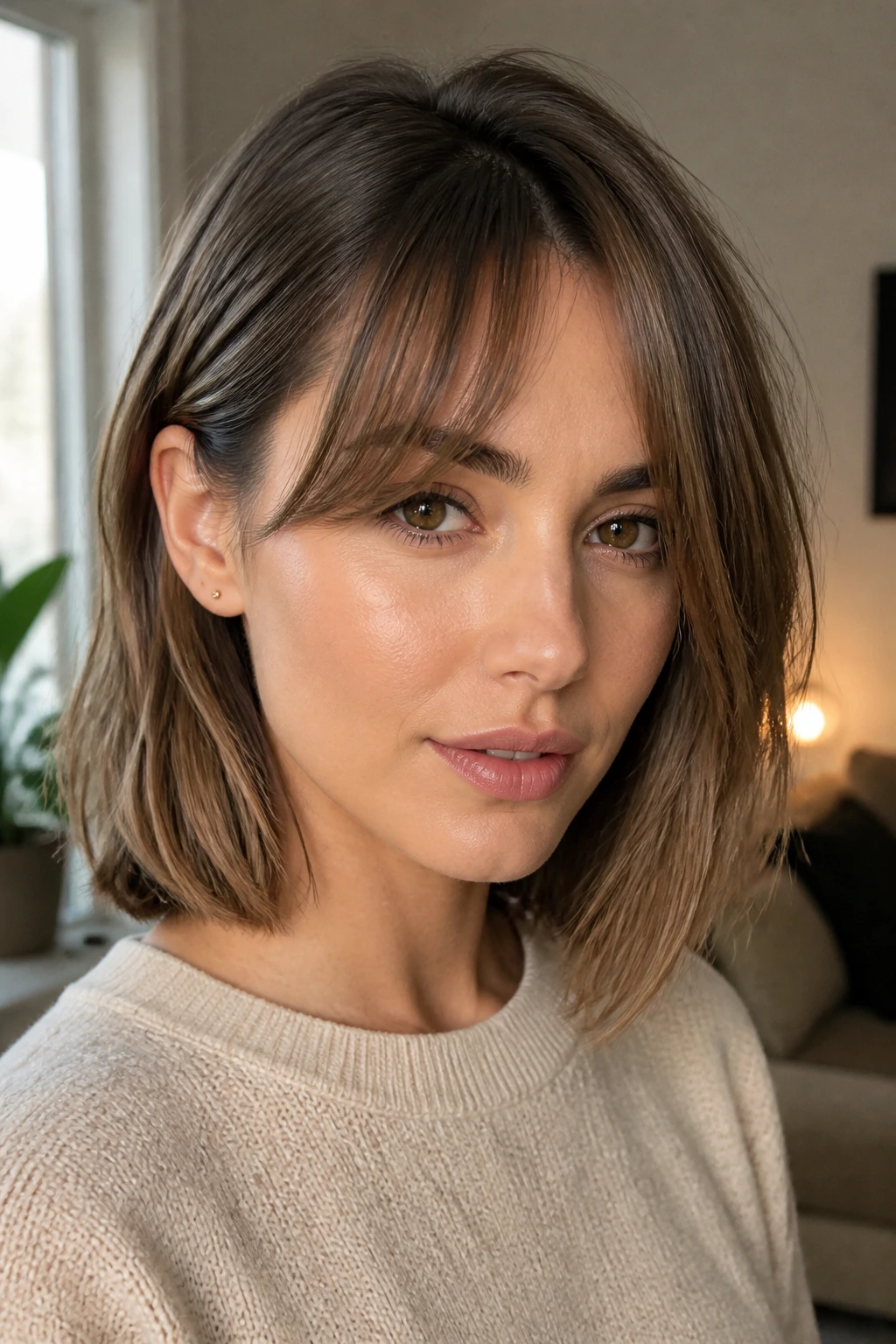
Tucking one side behind the ear sounds too easy to matter, but it changes the balance of the face. The tucked side opens the cheek and jaw, while the curtain bangs keep the forehead from taking over. The slight bends in the lengths keep the style from reading flat or overmanaged.
This works especially well on thin hair because asymmetry can create the illusion of more body. A perfectly even look sometimes exposes how little density is actually there. A little off-kilter shape is kinder.
Let the front pieces sit around the cheekbones, not too short, not too long. If they’re cut well, you get that soft drape that makes the whole haircut feel relaxed instead of precise.
15. Curved Chin-Length Bob
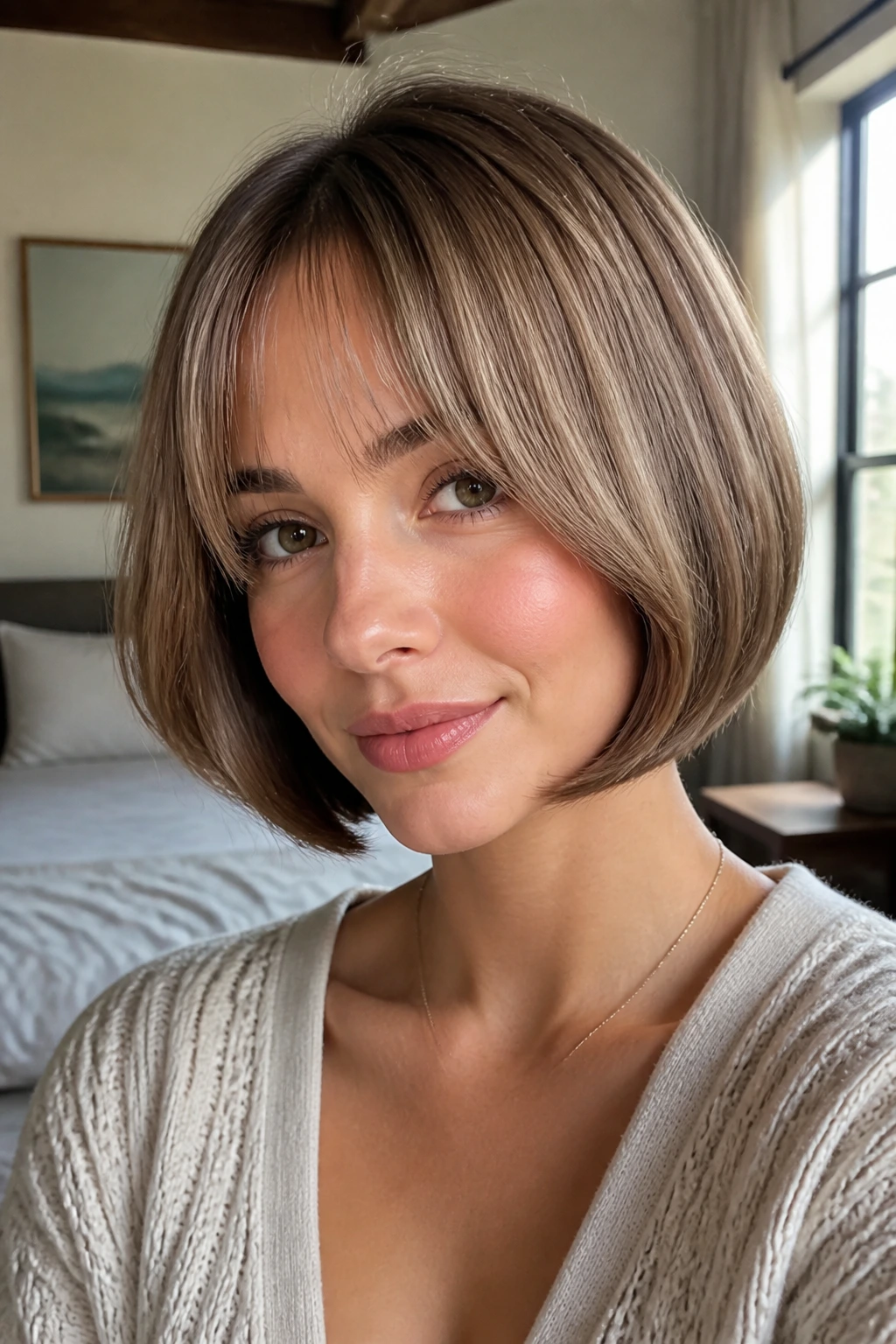
A chin-length bob is bold on thin hair, but the curved shape saves it. The ends bend under toward the jaw, the curtain bangs split softly at the center, and the forehead gets a gentle frame without a heavy block of fringe.
This cut is sharp enough to feel intentional and short enough to look full. That’s the balance. Thin hair often loses shape when it’s left too long, so a clean bob can actually be the fuller option if the ends are kept solid.
You do need to style it. A quick round brush pass under the ends and a soft bend in the bang line keeps the bob from collapsing into a triangle or puffing at the wrong places. The curve is the whole game.
16. Mini Wolf Cut with Soft Fringe
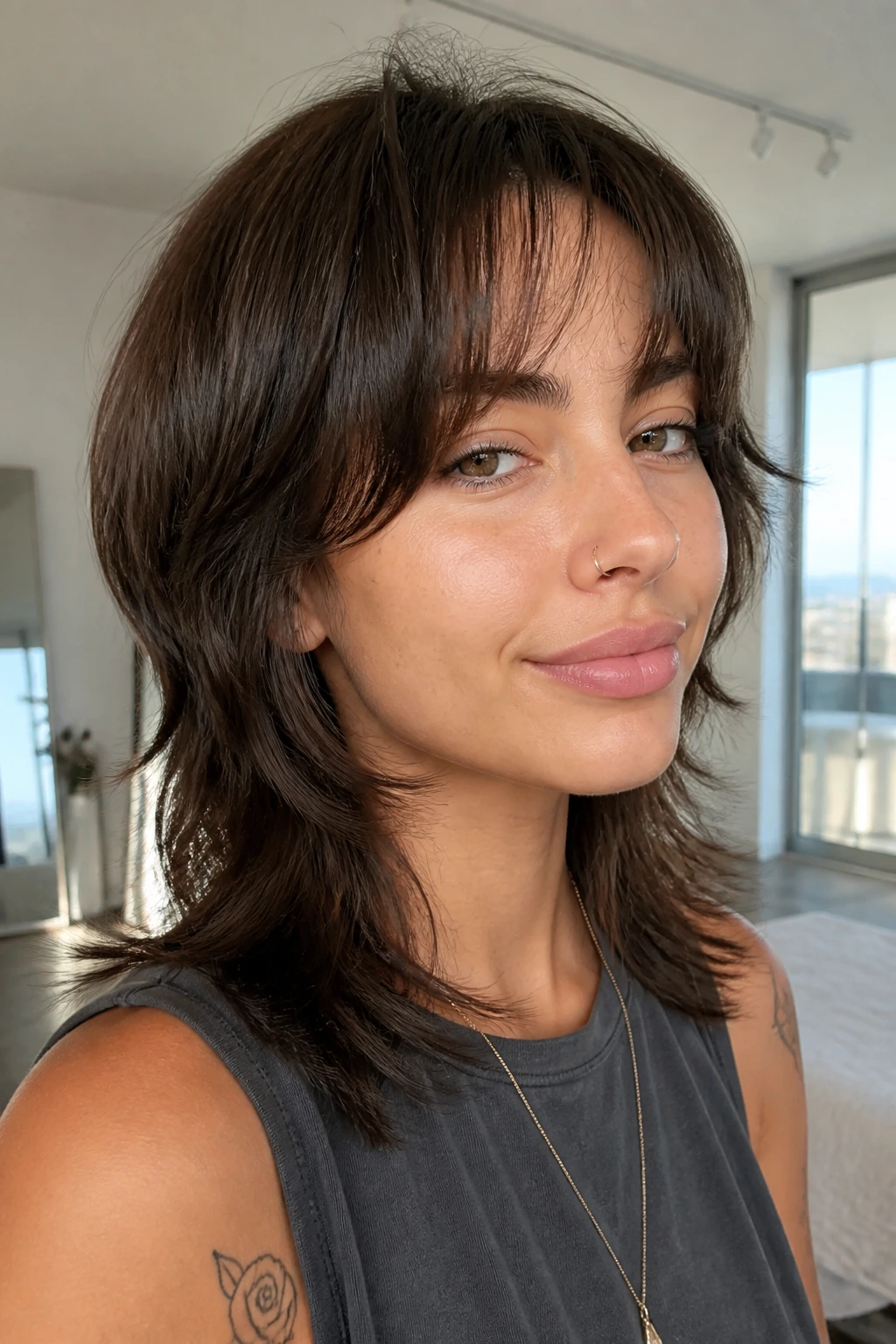
A wolf cut can be a mess on thin hair if the layers are too aggressive. A mini version is a better bet. Keep the shape looser, the crown lightly lifted, and the curtain bangs soft enough to connect the top to the sides without looking chopped to pieces.
The benefit is movement. Thin hair loves movement because it tricks the eye into reading more volume. The problem is too much razoring, which can make the lengths feel wispy and abandoned. So the “mini” part matters.
Why this version works
- Keeps the crown a little higher
- Leaves density in the mid-lengths
- Lets curtain bangs soften the forehead without looking bulky
It’s the most playful option in the group, but it still needs a careful hand. If the shape is overcut, you’ll know within a week.
17. Retro Flip with Rounded Curtain Bangs

The retro flip is back for a reason: the outward bend at the ends gives fine hair a nice little kick, and the rounded curtain bangs keep the front from looking too hard. It has a bit of throwback energy without turning into costume hair.
On a larger forehead, the rounded bang line is the useful part. It creates a gentle arc instead of a straight curtain opening that goes too wide. That arc keeps the eye moving and makes the face feel softer.
This style looks best when the ends are touched with a round brush or a flat iron turned outward just slightly. A two-inch flip is plenty. Too much and it looks theatrical; too little and you lose the shape.
18. Air-Dried Natural Wave Cut
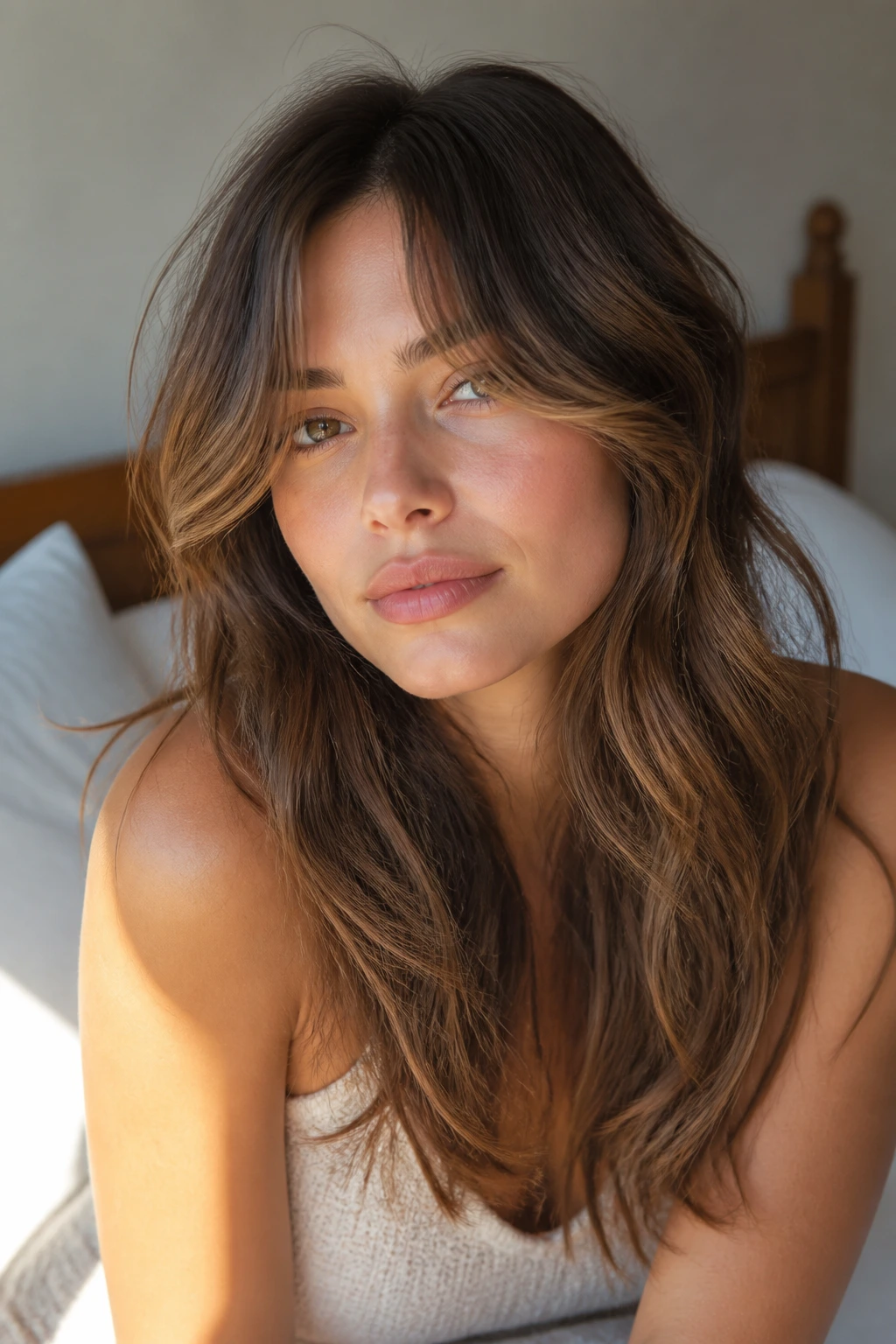
If your hair has even a little wave, use it. Air-dried texture gives thin hair the irregularity it needs, and curtain bangs can be shaped while damp so they dry in a soft split rather than a flat shelf. That natural bend is often more flattering than a highly polished blowout.
The cut itself should support the texture, not fight it. Keep the layers long enough to move, but not so short that the ends fray. Curtain bangs should be left a touch longer so they dry into a loose frame instead of shrinking above the cheekbone.
I like this one for people who hate spending time with a dryer. Scrunch in a light mousse, clip the bang pieces away from the face for a few minutes, then let them fall. Not fancy. Just effective.
19. Loose Curls with Long Curtain Bangs
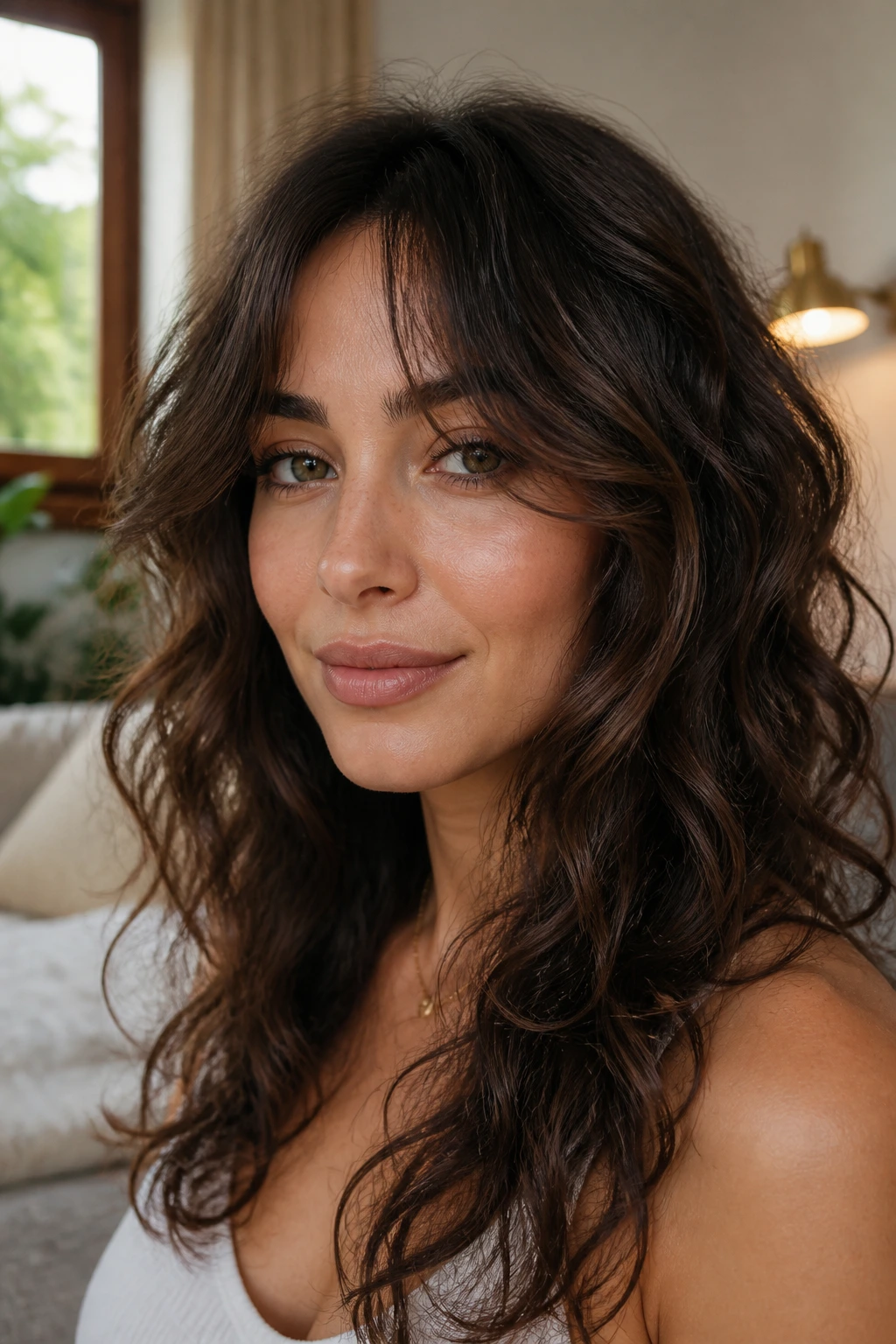
Loose curls and curtain bangs make a good pair because both add width where thin hair usually needs it most. The curls fill out the sides, while the longer fringe keeps the forehead from feeling too open. The trick is to keep the curl pattern relaxed, not tight.
This style works best when the bangs are curled away from the face first, then broken up with fingers once they cool. That keeps them soft and lets them sit at the cheekbone instead of sticking out like one overworked curl.
It’s a strong option for events, but it can also work as a normal wear style if your hair holds curl well. Use a light spray, not a stiff one. You want movement, not shellack.
20. Sleek Low Pony with Face-Framing Pieces
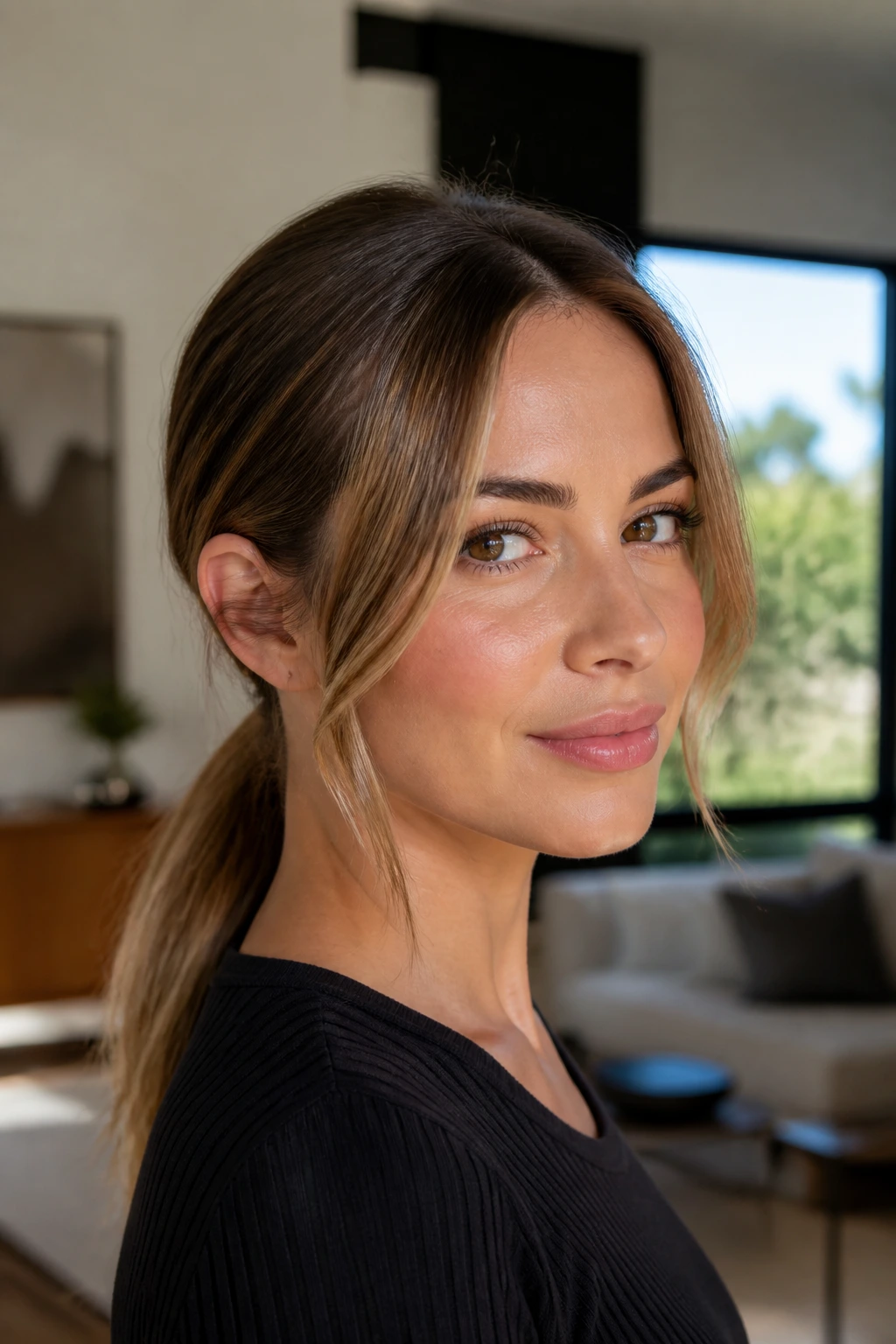
A sleek low pony can look severe fast, especially on a taller forehead. Add curtain bangs and two soft pieces at the front, and the whole thing changes. The forehead feels less exposed, the ponytail looks more intentional, and the hairline has something gentle to break it up.
The key is not to over-slick the top. Thin hair can go limp if you load it up with too much product, so keep the scalp smooth and the front pieces loose enough to breathe. A little shine cream on the lengths is enough.
This is one of the cleaner looks in the group. It works when you need neatness but still want some softness around the eyes and cheekbones. That combination is less common than it should be.
21. Twist-Back Crown with Curtain Bangs
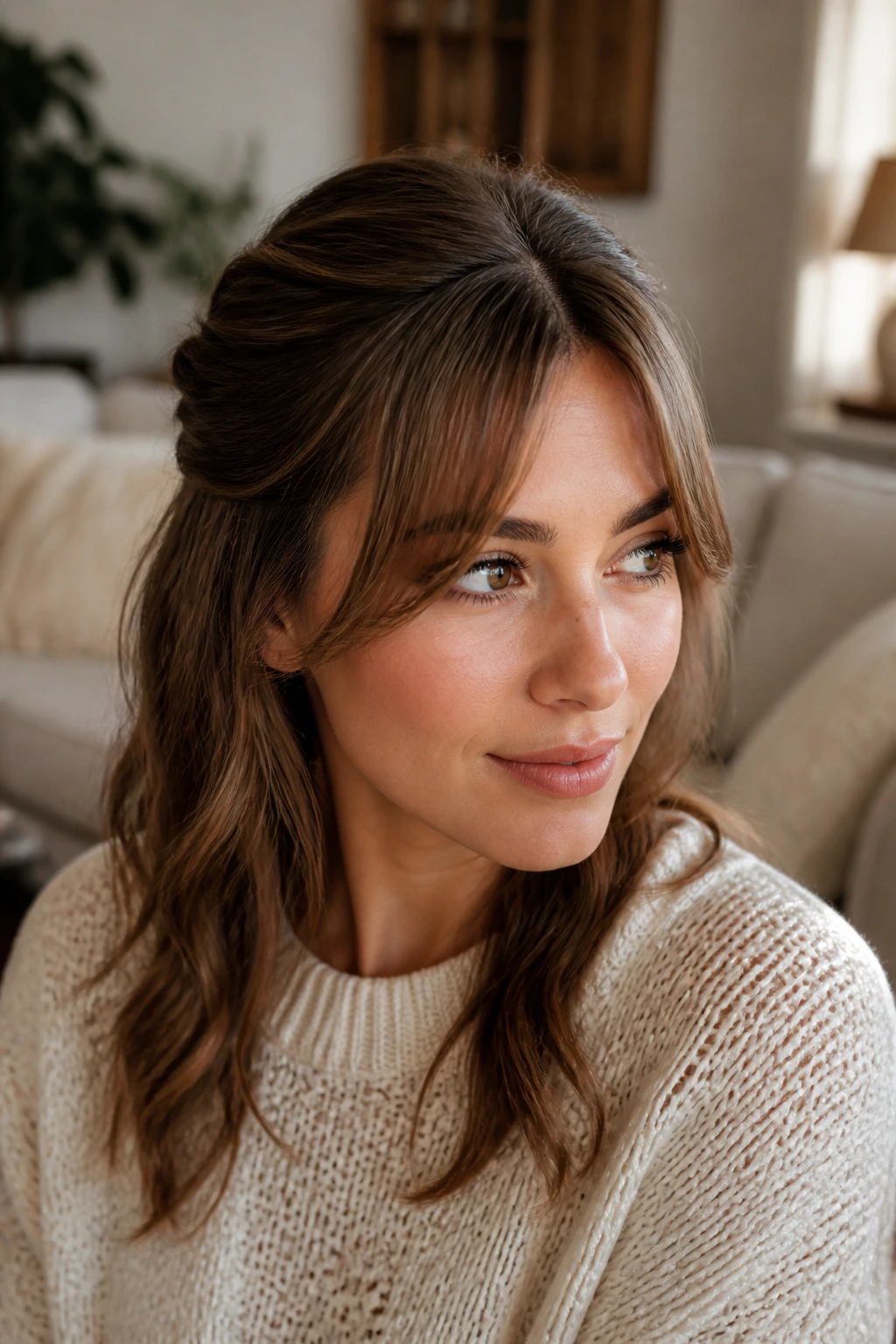
Twisting the sides back gives the crown a bit of lift without making a full updo. Leave the curtain bangs free, and the style solves the forehead problem while keeping the hair looking soft. On thin hair, that lift at the crown is the part that keeps the style from feeling flat.
This one is especially good for second-day hair. The twist adds structure, the bangs keep the front open, and the remaining hair sits low enough to feel easy. It’s a smart fix when the roots need a little help but the ends are still fine.
Use two small pins on each side and hide them under the twist. If the twist is too tight, the whole thing gets stiff. Loose is better.
22. Soft Asymmetrical Lob
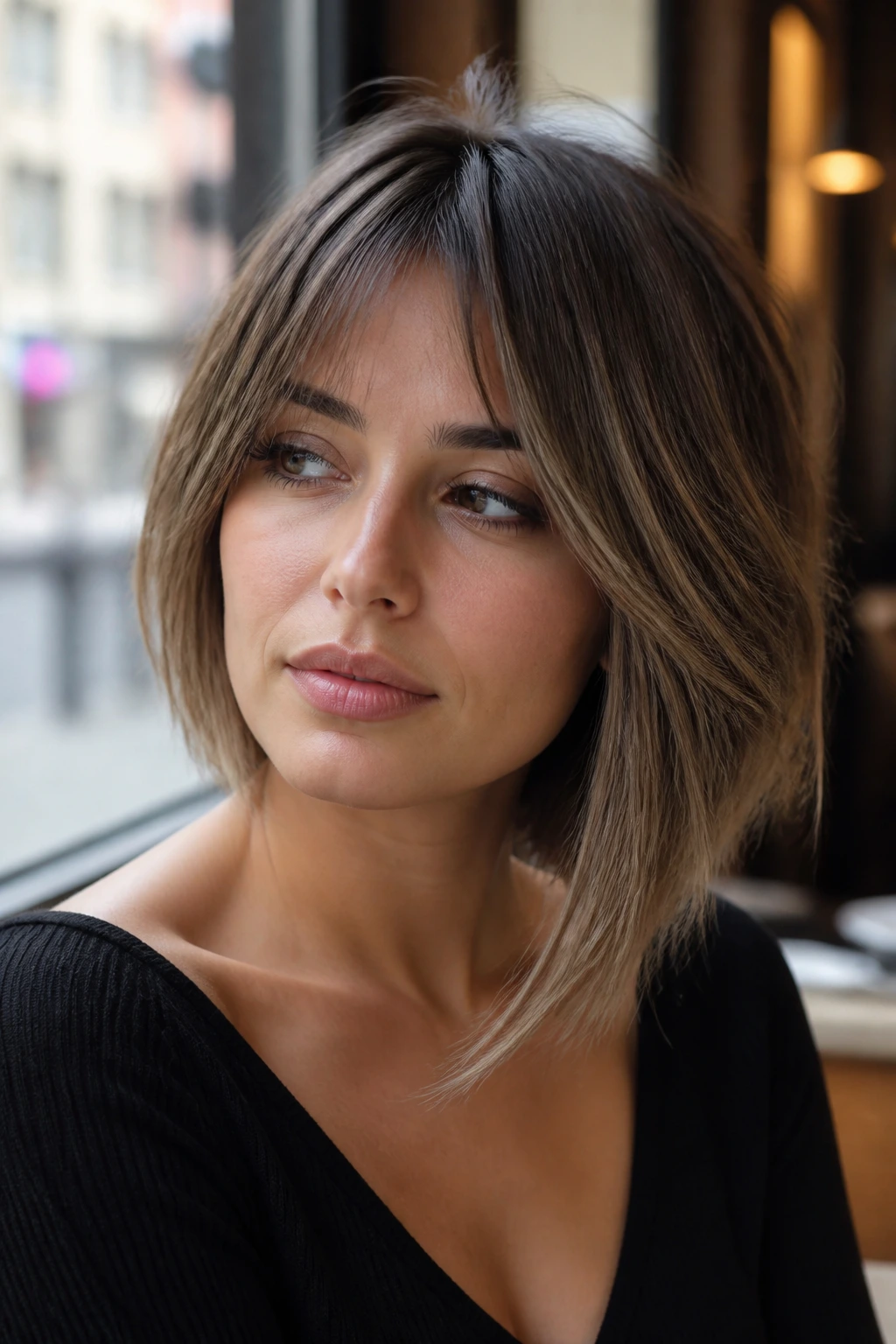
An asymmetrical lob gives the eye a reason to move around the face, which is useful when the forehead is the first thing people notice. One side sitting slightly longer than the other creates a subtle distraction, and the curtain bangs hold the front together so it still looks soft.
This is a good cut for thin hair because the asymmetry adds interest without requiring more density. You’re not adding bulk. You’re adding shape. That’s a cleaner trade.
Keep the difference small, though. Half an inch to an inch is enough. Too dramatic, and the cut starts to look like it’s trying too hard.
23. Rounded Bob with Internal Layers

A rounded bob gives fine hair a fuller outline than a straight, flat bob ever will. The internal layers remove just enough weight for movement, while the curtain bangs soften the top half of the face so the forehead doesn’t dominate the look.
The shape is compact in the best way. It hugs the jaw and cheeks a little, which creates the sense of density that thin hair often lacks. When the ends curve under, the whole cut feels plush.
This is a strong choice if your hair is straight and tends to fall close to the head. The roundness gives it presence. Without that, a bob on thin hair can disappear from certain angles.
24. Braided Half-Up Style with Curtain Fringe
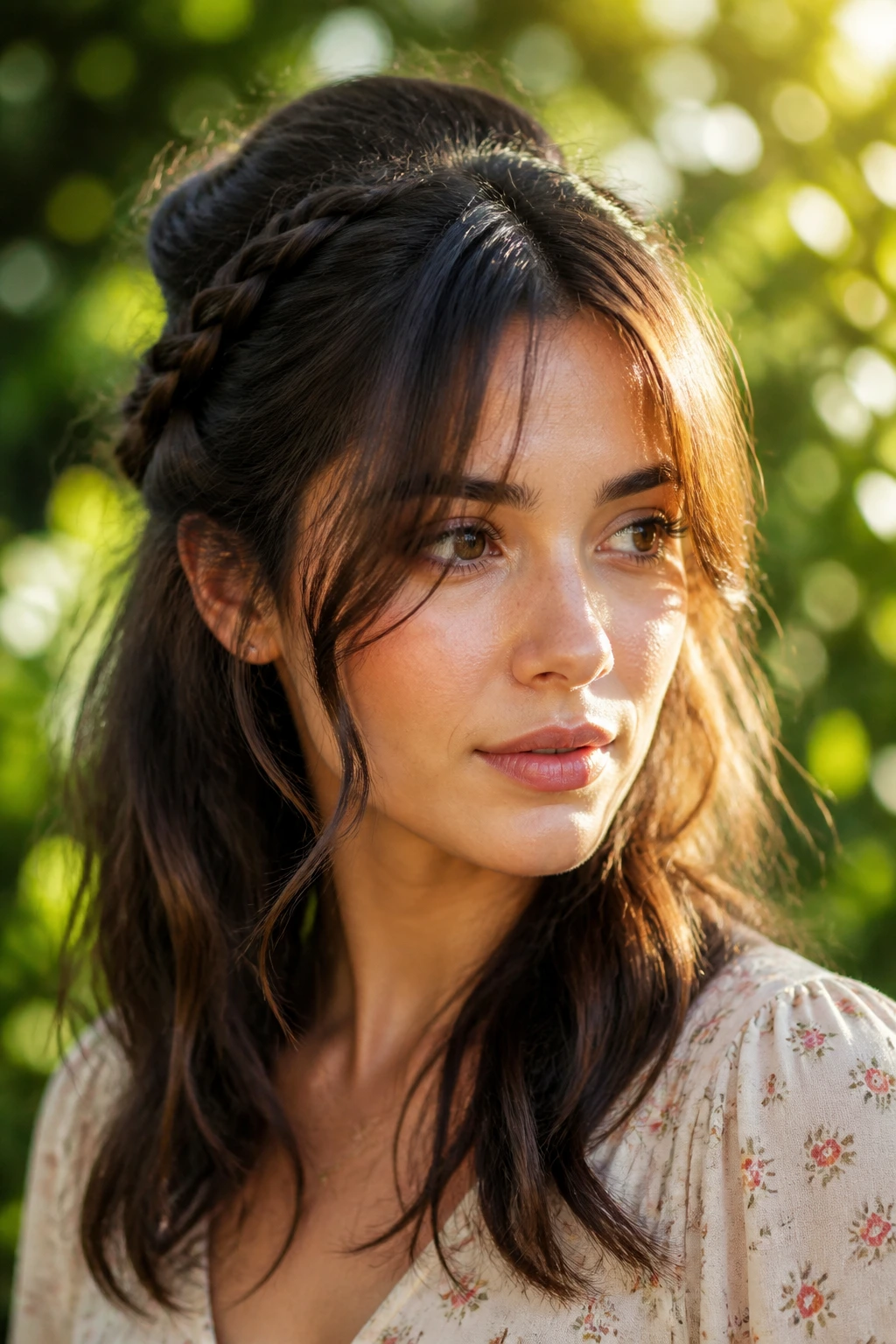
A half-up braid is useful when you want some control at the crown but still need the front to stay soft. The braid lifts the top section, the curtain fringe softens the forehead, and the loose lower lengths keep the hair from looking sparse.
This style is sneaky in the best way. It looks more complicated than it is, and thin hair usually benefits from being arranged into sections rather than left hanging all at once. The braid gives texture where the hair might otherwise look too smooth.
A tiny braid works better than a thick, chunky one if your hair is fine. Too much pulling at the sides can expose the scalp. Keep it loose, and let a few wisps fall around the face.
25. Soft Layered Pixie-Bob
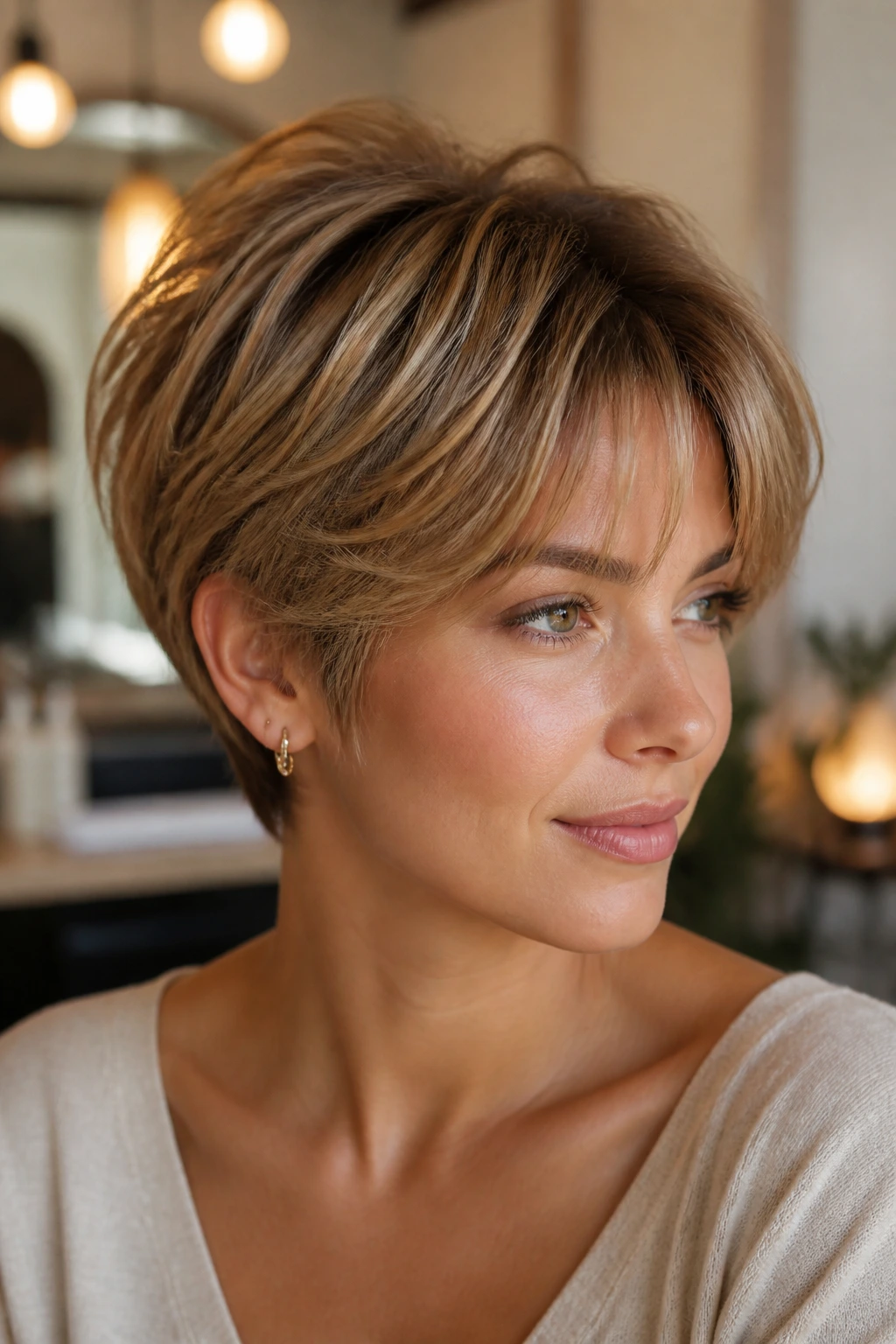
The pixie-bob sits in that useful middle ground where the hair is short enough to feel fresh but long enough to keep some curtain fringe at the front. Soft layers add movement, and the bang area stays long enough to break up the forehead rather than expose it.
This cut is for someone who wants lift without a heavy styling routine. The shorter back and sides keep the silhouette tidy, while the longer front pieces give you room to shape the face. Thin hair often looks better in a cut with clear edges, and this one has them.
Best way to wear it
- Keep the curtain fringe grazing the eyebrows or cheekbones
- Add a little root lift at the crown
- Let the top stay piecey, not fluffy
It’s not the most low-commitment haircut on the list, but it does give a lot back if you like short hair that still frames the face.
Why Curtain Bangs Work So Well on Thin Hair
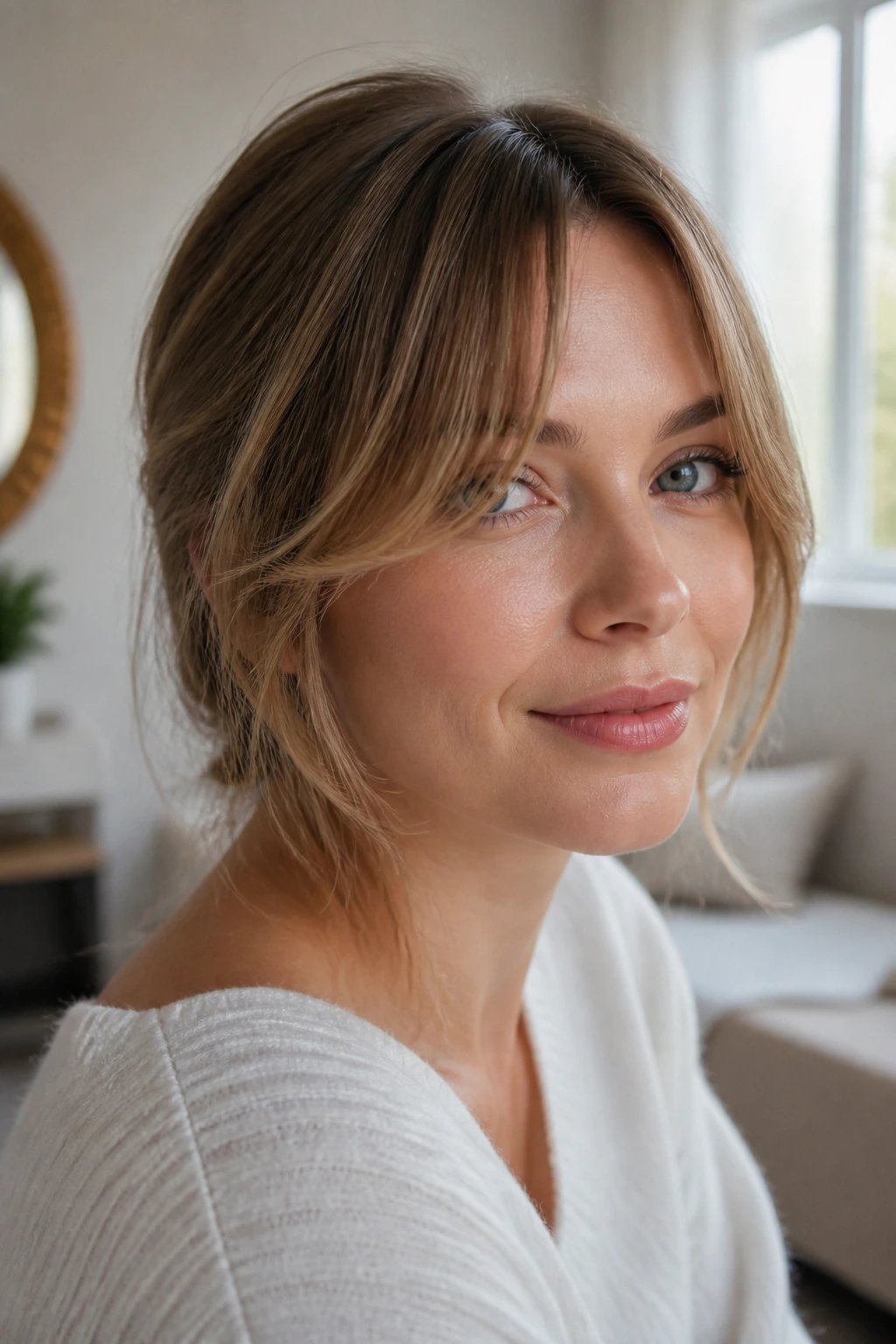
Curtain bangs work because they don’t ask thin hair to do the one thing it’s least willing to do: sit heavy and stay full across the forehead all day. A soft center split keeps the front from looking like a wall. The longer side pieces borrow shape from the cheekbones, and that keeps the eye moving downward instead of straight across the widest part of the forehead.
The other advantage is weight. Or, more accurately, the lack of it. Thin hair hates a dense blunt bang because the front section has to be thick enough to read as a curtain, and most fine hair simply isn’t. Curtain bangs solve that by using angle, not bulk. They frame the face with less hair, which is a smarter trade than trying to force coverage.
The cut also grows out more gracefully. That’s not a small thing. A blunt fringe can turn awkward in a week; curtain bangs usually slide into the rest of the layers and keep working while they grow. For anyone who trims less often or hates a strict salon schedule, that alone is reason enough to choose them.
The Tools and Products That Keep Thin Hair from Falling Flat
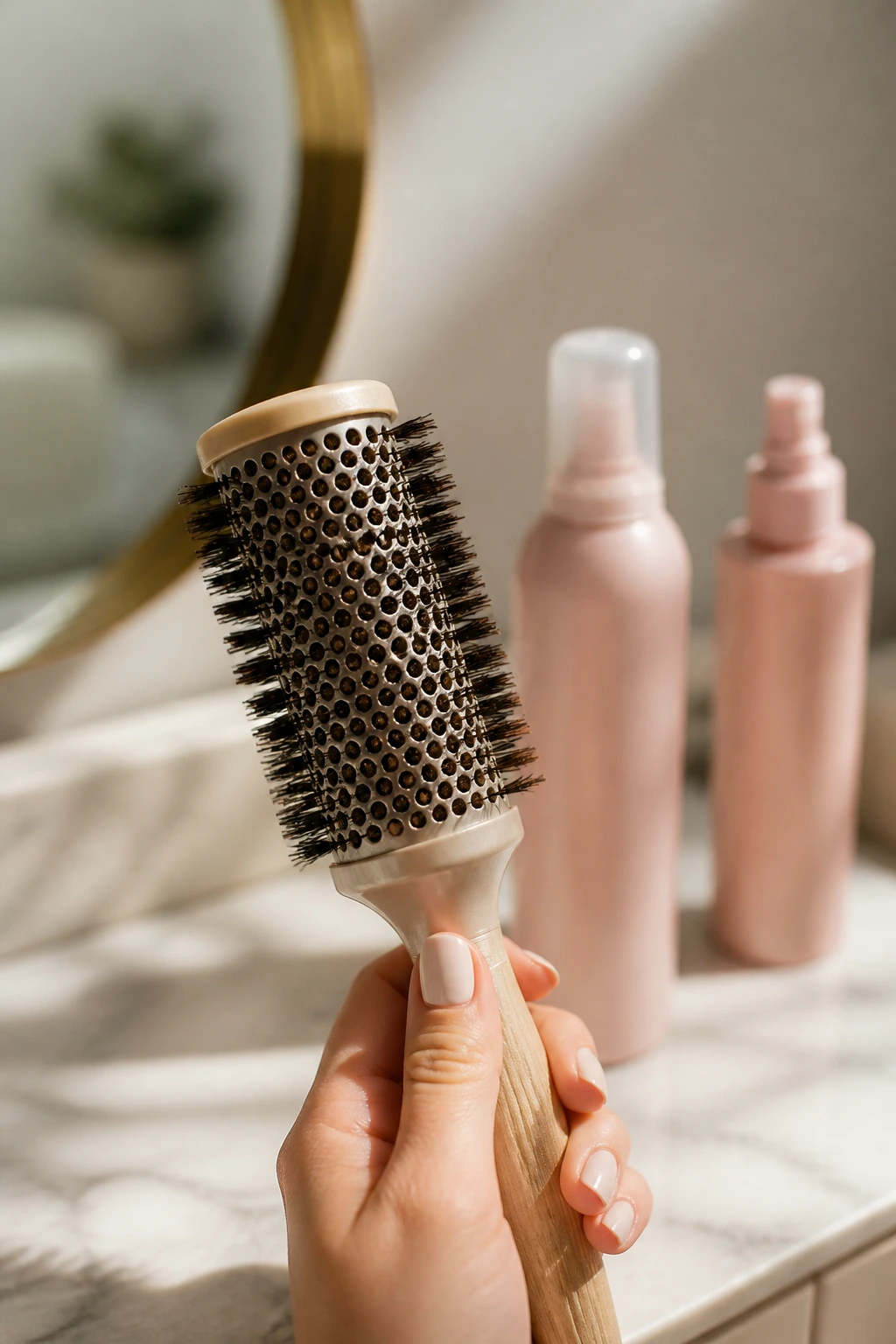
The right tools matter because fine hair collapses fast when it cools in the wrong shape. A round brush and a blow dryer with a nozzle are the backbone of almost every style here. The brush bends the curtain bangs away from the face, and the nozzle keeps the airflow focused so you’re not just blasting the front into submission.
- 1.25-inch round brush: Small enough to shape bangs and face-framing pieces without creating stiff curls.
- Blow dryer with concentrator nozzle: Directs heat where you want lift, especially at the roots.
- Lightweight mousse: Gives roots a little grip before drying; one golf-ball-sized amount is usually enough for shoulder-length hair.
- Root-lift spray: Best applied at the crown and along the part, not through the ends.
- Velcro rollers: Great for setting curtain bangs while you do makeup or get dressed.
- Dry shampoo: Useful on day two or three when the fringe starts separating.
- Flexible-hold hairspray: Keeps the front in place without turning it crunchy.
- Small flat iron: Handy for polishing a bend at the ends or fixing a bang that refused the brush.
- Duckbill clips: Good for pinning the bangs away from the face while they cool in shape.
If you buy only two things, buy the brush and the mousse. Those two do more than a shelf of random products ever will.
What to Ask Your Stylist So the Cut Keeps Its Shape
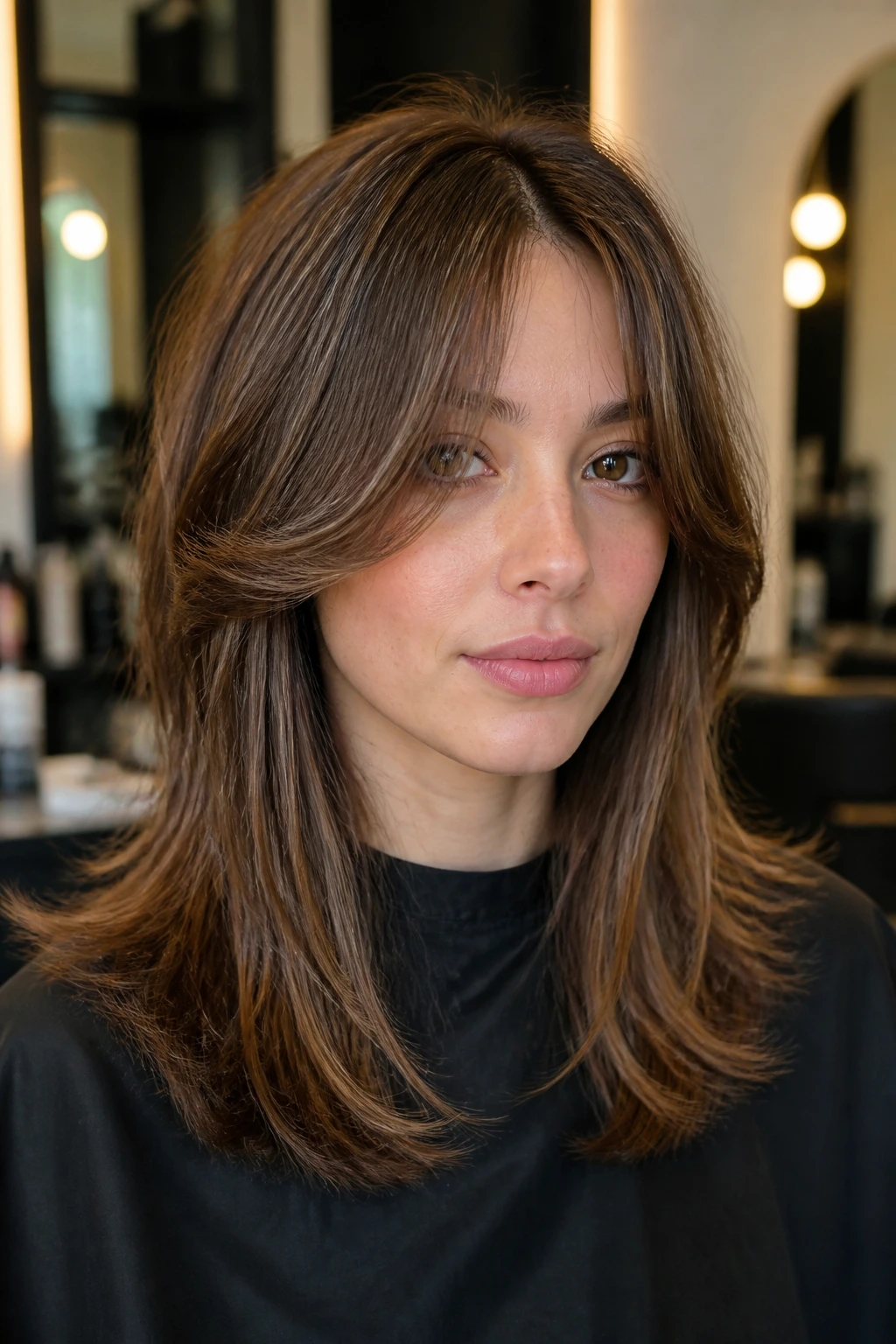
Bring photos, yes, but also bring words that matter. Say you want curtain bangs that start around the cheekbone or the outer edge of the eyebrow, not a thick bang line that sits straight across the forehead. On thin hair, that placement keeps the front from looking heavy while still taking visual attention away from a taller forehead.
Ask for layers that preserve density through the ends. That means less aggressive thinning, less razor work on the bottom, and more care around the perimeter. If your stylist starts talking about “movement” in a way that sounds like code for removing half your hair, slow them down and ask where the weight will stay. You need weight. Just not in the fringe.
Length matters too. A collarbone lob, clavicut, or shoulder-length cut usually gives thin hair the most flexibility. If you go shorter, make sure the silhouette stays clean. If you go longer, the front pieces need enough shape to keep the face from looking open and bare.
How to Style These Looks Without Turning Your Hair into Straw
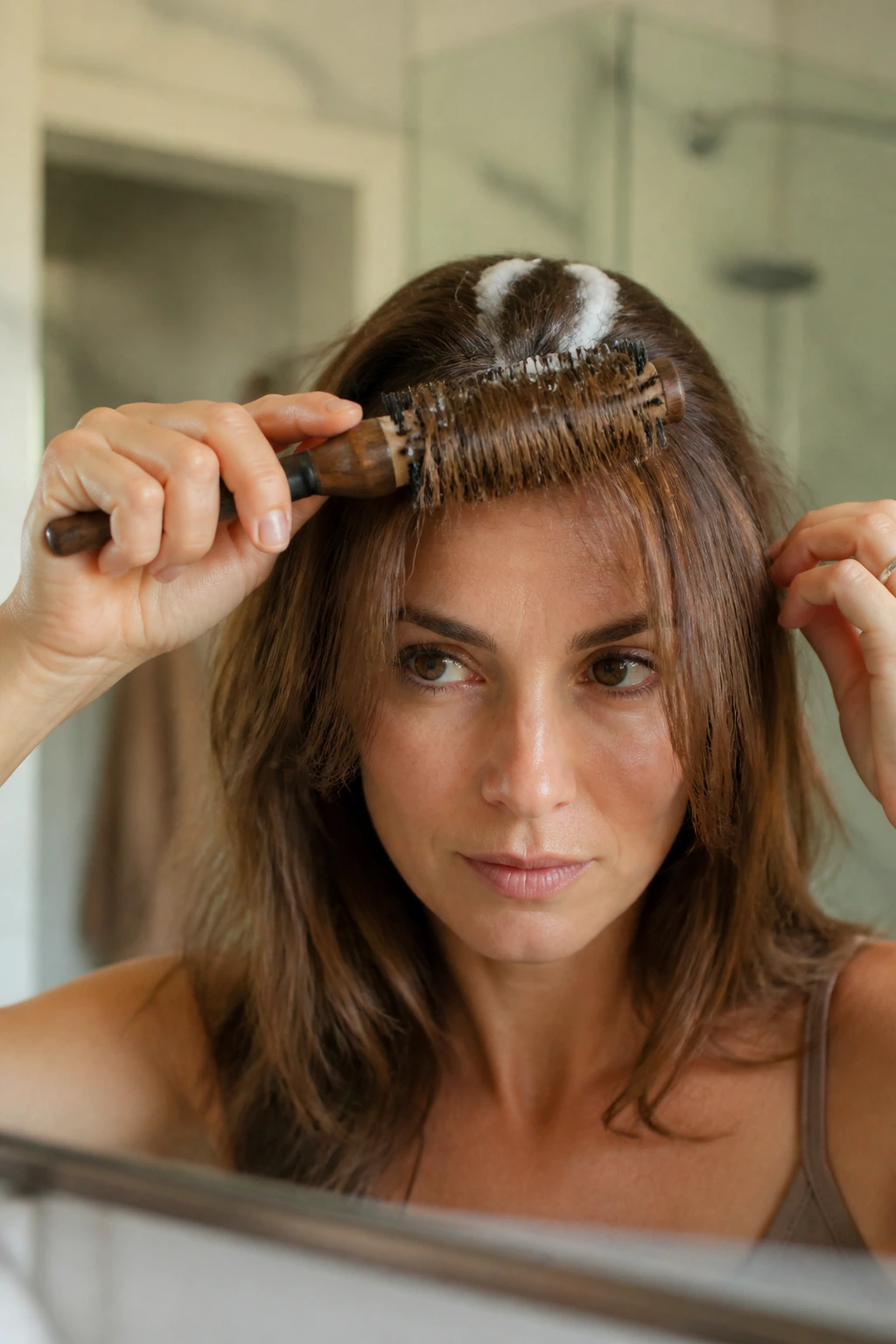
Start with the front. Every time. Thin hair gets tired fast, and curtain bangs are the part that needs the most direction, so dry the fringe first while the roots are still damp. Use a round brush to pull the bangs forward and then slightly away from the face, alternating direction so they don’t split into a single flat line.
A little mousse at the roots goes a long way. Use it before drying, not after. Then set the front pieces with your fingers or two small rollers while you do the rest of your routine. Once the hair cools, shake it out lightly instead of brushing through it. Brushing too hard is where a lot of volume disappears.
If the hair still looks too flat, don’t reach for more cream. That’s usually the wrong move. Add a small spritz of dry shampoo at the roots and lift with your fingertips. Fine hair likes texture. It does not like weight.
The Mistakes That Make This Look Collapse
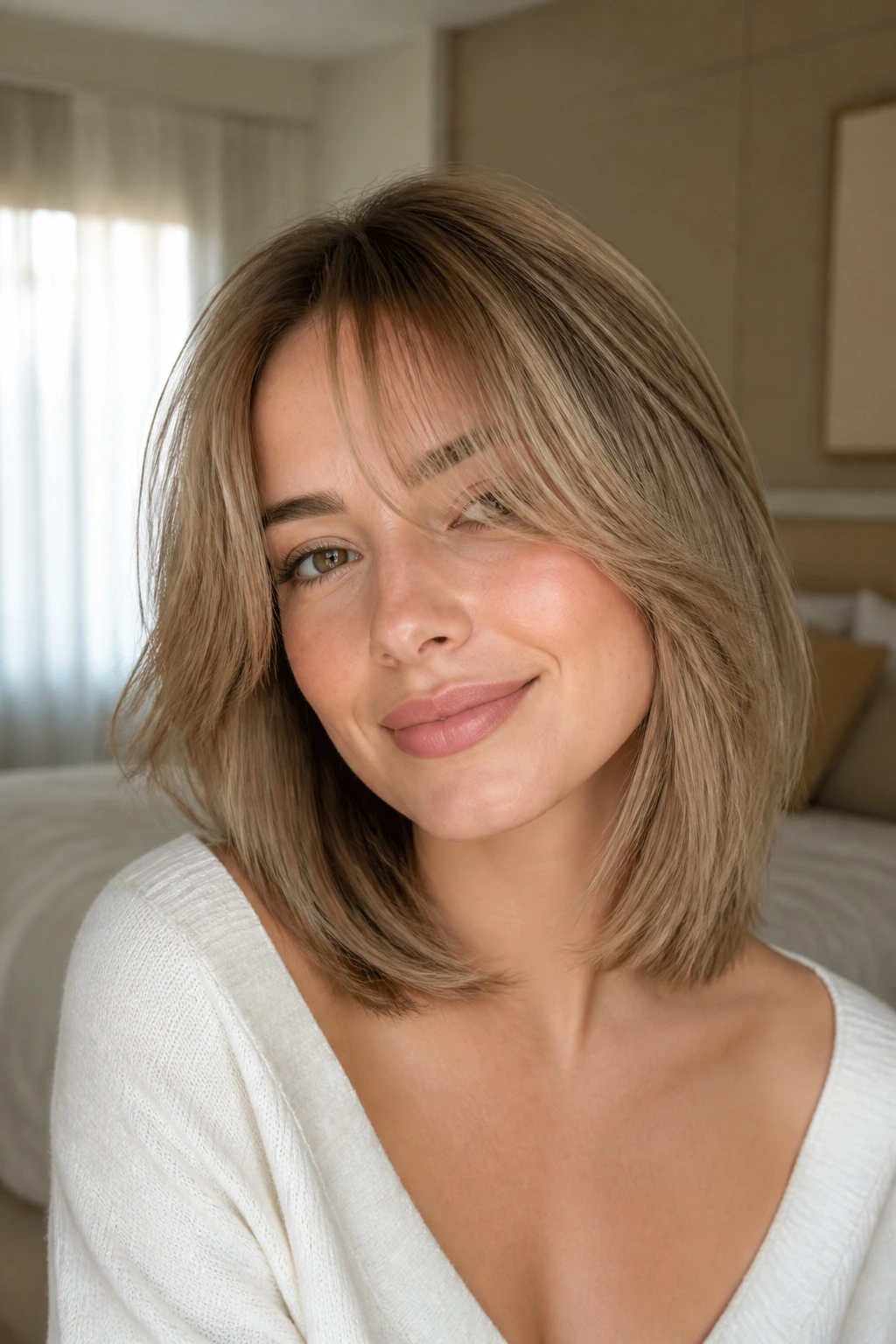
The first mistake is cutting the bangs too short. On thin hair, short curtain bangs often separate too high and expose the forehead more than they frame it. Keep them longer than you think, especially if your forehead is taller or your hairline is straight.
Another common problem is over-layering. Thin hair does not need every inch of the cut to be thinned out. When the ends get wispy and the crown gets chopped up, the whole style loses the dense outline that makes it look healthy.
Heavy products are another trap. Thick oils, rich creams, and too much leave-in conditioner can make the fringe stick together and sit flat against the skin. That’s a fast way to make a soft curtain bang look stringy.
And then there’s the center part issue. A part that’s too wide can expose more forehead than you wanted in the first place. If that happens, tighten the part slightly or let the bangs fall with a little asymmetry. You do not need a ruler-straight line.
Other Ways to Wear Curtain Bangs When You Don’t Want a Full Cut
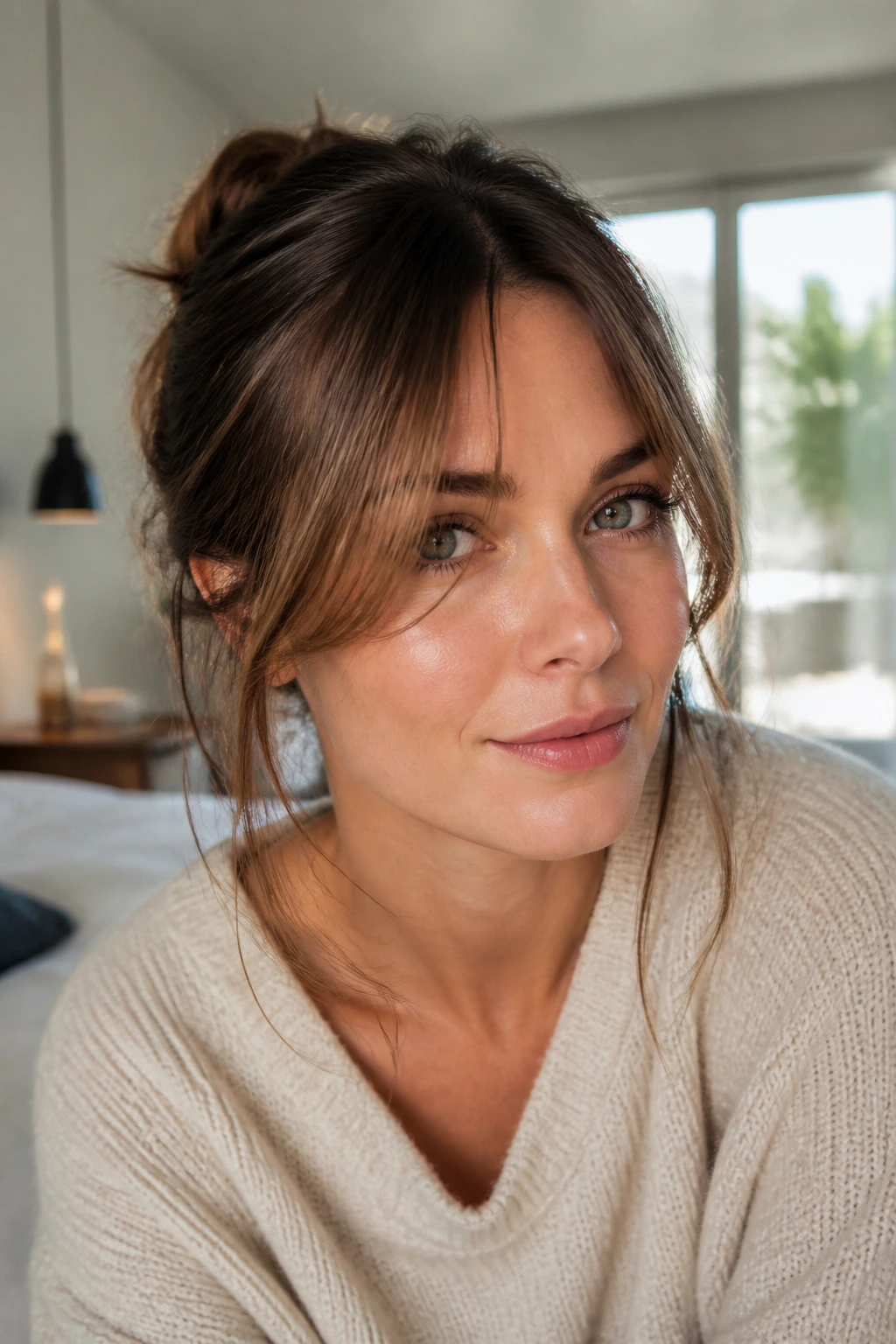
The Grow-Out Curtain Fringe: If you already have bangs that are too short or too blunt, ask your stylist to shape them into longer side pieces instead of cutting them back into a straight line. This is the least painful way to move toward a softer face frame.
The No-Cut Face Frame: For anyone nervous about bangs, keep the front layers long and blow them into a curtain shape with a brush. You’ll get the forehead-softening effect without committing to a fringe line.
The Lightweight Shag: If you like texture but not a heavy cut, ask for a shag with long curtain bangs and minimal bulk removal at the ends. It gives movement without making fine hair look thin.
The Polished Blowout Version: Same cut, different mood. Use rollers or a round brush to create a smoother bend through the bangs and longer layers. This one works well for events or when you want the hair to look a little more done.
The Soft Curl Version: If your hair is naturally wavy or takes curl well, wear the curtain bangs with loose waves rather than a straight bend. The width at the sides helps balance a higher forehead better than a pin-straight style.
How to Keep the Shape Between Washes

Fine hair often needs a smaller maintenance window than thick hair. Curtain bangs usually want a refresh every morning, even if the rest of the hair still looks fine. A quick blast from a blow dryer, a touch of dry shampoo at the roots, and a minute with a round brush can reset the front without redoing the whole head.
For trims, plan on shaping the fringe every 3 to 5 weeks if you wear it shorter, and every 6 to 8 weeks if you prefer a longer grow-out version. The cut itself can stretch longer, but the bang line usually cannot. Once it drops into your eyes, the style loses its shape and starts looking tired.
At night, keep the bangs from getting crushed. A loose pin or a soft roller at the front can stop that weird crease you get from sleeping flat on them. If you shower at night, dry the fringe before bed. Wet curtain bangs almost always dry in the wrong direction if you leave them to their own devices.
Questions People Ask Before Cutting Curtain Bangs
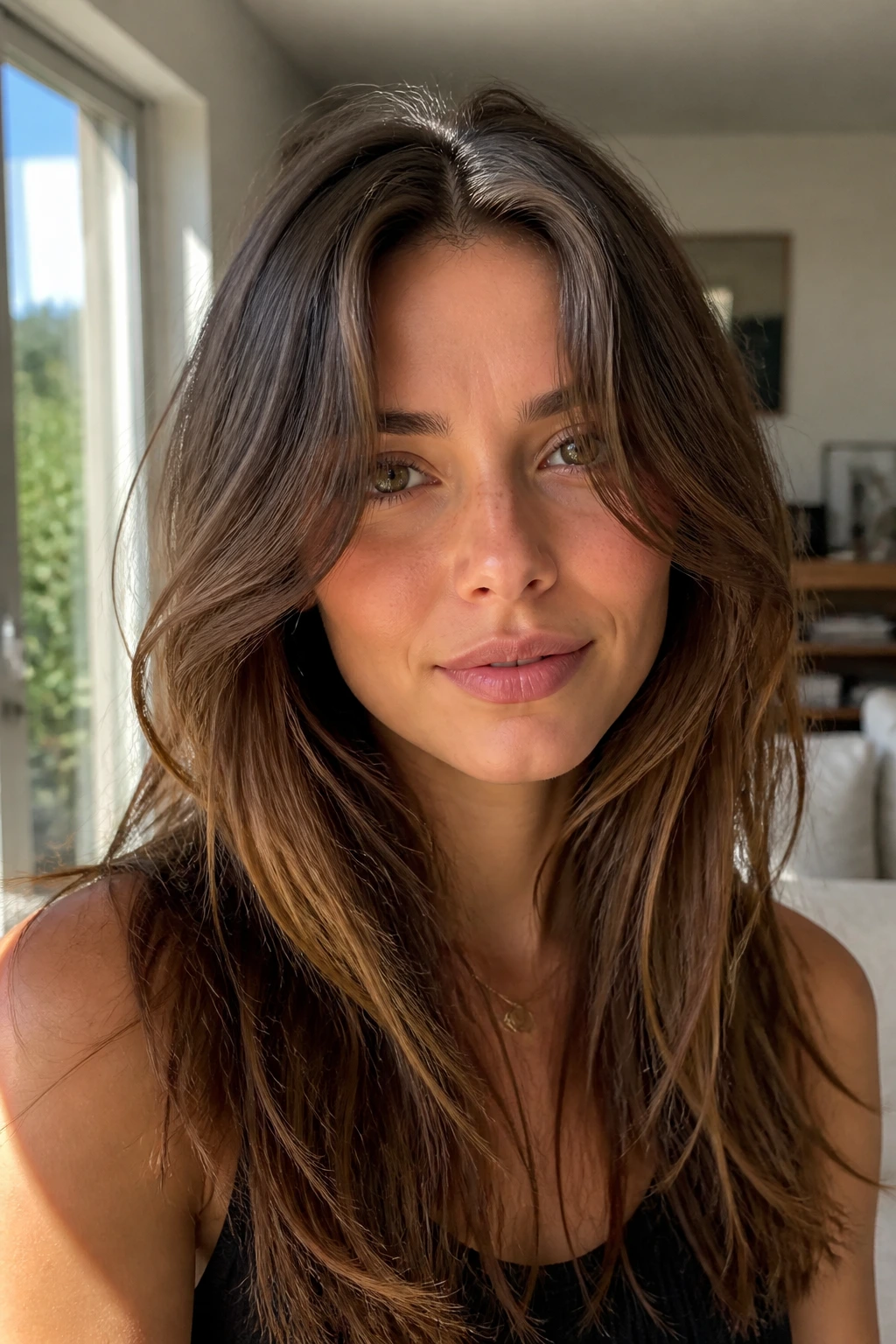
Will curtain bangs really make a big forehead look smaller?
Yes, if they’re cut long enough and styled with a soft bend. The point is not full coverage; it’s visual framing. Curtain bangs interrupt the vertical stretch of the forehead and shift attention toward the eyes and cheekbones.
Do curtain bangs work on very thin hair?
They do, but the cut has to be light and strategic. Thin hair usually looks best with longer curtain bangs, a solid perimeter, and not too much layer removal around the front.
How short should curtain bangs be on fine hair?
Usually longer than people expect. Cheekbone-grazing or eyebrow-skimming lengths are safer than very short bangs, which can split oddly and expose too much forehead.
Can I wear this look with straight hair?
Absolutely. Straight hair often shows the shape more clearly, which is useful here. You’ll just need a slight bend at the front so the bangs don’t separate into a flat line.
What if my bangs keep splitting too far apart?
Use a little mousse before drying, then direct the bangs side to side with a brush while they cool. If they still split too wide, the bang section may be too thin, or the center part may need to be narrowed slightly.
How often should I trim the bangs?
Most curtain bangs need a touch-up every 3 to 5 weeks if you wear them short, and every 6 to 8 weeks if you keep them long and cheekbone-focused. Waiting longer usually turns the fringe into awkward face pieces.
Can I still put my hair up?
Yes, and a lot of these styles are built for it. Half-up clips, low buns, and loose ponytails all work better when the curtain bangs stay out front to soften the forehead.
What should I avoid if my hair is oily at the roots?
Heavy creams near the scalp. They make the bangs separate and the crown sink. Stick to lightweight mousse at the roots and save richer products for the ends.
The Shape That Makes Thin Hair Feel Intentional
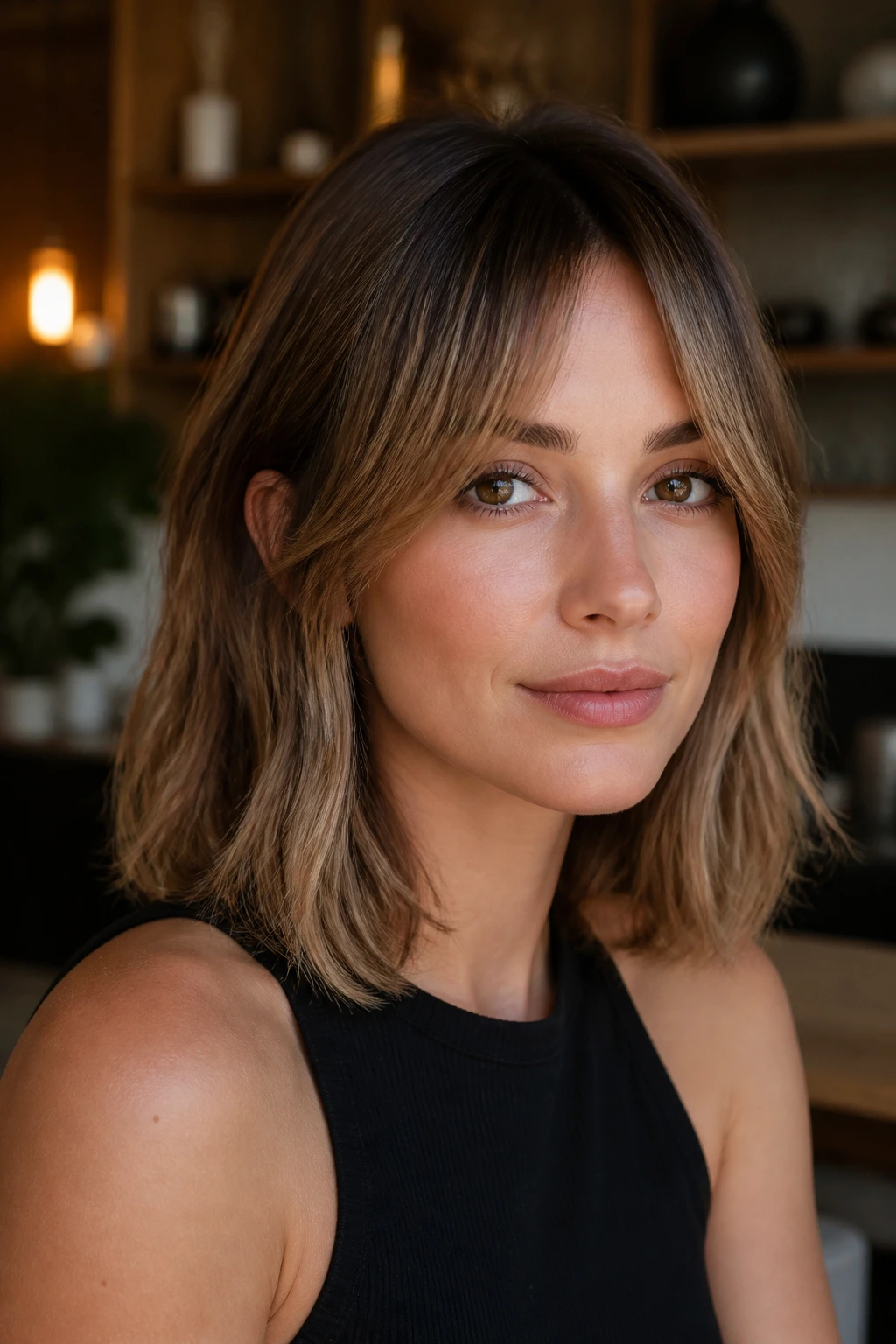
The best version of this look is not the one that hides every inch of forehead. It’s the one that gives your face a soft frame, keeps the ends looking full, and makes the front fall in a way that feels easy instead of forced. Thin hair does best when the cut respects its limits instead of fighting them.
Curtain bangs are useful because they create shape without demanding density you may not have. Pair them with a lob, a bob, a shag, or a longer layered cut, and the result is hair that looks like it was planned by someone who understands how fine strands behave on a real morning. That’s the whole point.
Pick the length that keeps the perimeter solid, keep the fringe a little longer than your first instinct, and let the front pieces do the framing work. The rest gets easier from there.