



Long hair can make the front of a haircut feel like an afterthought. A blunt fringe sitting over chest-length or waist-length hair can look heavy fast, which is why choppy bangs work so well: the ends are broken up, the line moves, and the face gets architecture instead of a solid little curtain of hair.
I like this category because it gives long hair a job at the front. The length in back still does the dramatic, swishing thing, but the fringe keeps the haircut from looking like it was finished in a hurry. Point-cutting, razor softening, narrow temple pieces, and piecey separation all change the mood in a way you can actually see in a mirror.
Some versions are airy and soft. Some are sharper and more graphic. A few are almost shy, which is funny for a haircut that sits right in the middle of your face. The good ones don’t just sit there. They move when you turn your head, split when you run your fingers through them, and get a little better after they’ve been lived in for a day or two.
Why This Collection Works on Long Hair

- The front stops feeling heavy: Choppy bangs break up the solid line that can make long hair drag the face downward, especially when the rest of the cut is one length.
- You keep the length you paid for: The back stays long, so you get a change at the front without giving up inches everywhere else.
- Grow-out looks softer: A fringe with texture starts reading like layers after a few weeks, which means it can slide into the rest of your haircut instead of turning into a hard shelf.
- Flat hair gets shape fast: If your long hair falls close to the head, a piecey fringe gives the top half of the style something to do.
- It works with real life: A ponytail, claw clip, blowout, or air-dried wave all make more sense when the front is cut with a little movement.
- The mood is easy to change: The same long hair can look softer, cooler, sharper, or more romantic depending on how the fringe is sliced and styled.
1. Feathered Curtain Fringe That Opens at the Cheekbones
This is the easiest entry point if you want choppy bangs without a hard cut line. The center sits a little fuller, then the pieces feather out toward the cheekbones so the fringe opens instead of dropping straight down. On long hair, that shape keeps the front from feeling boxed in. It also gives you a nice split even when the hair is a little stubborn.
I like this one on medium to thick hair because the feathering helps the front sit close to the face instead of puffing out. Ask for point-cut ends and longer temple pieces, not a blunt corner. If your hair is fine, keep the texture light; too much thinning and the fringe starts looking sparse in daylight.
A round brush helps, but you do not need a big salon blowout every morning. A quick pass with a small brush and a side-to-side dry works. The fringe should land soft, with the shortest pieces skimming the brows and the outer pieces brushing the cheekbones.
2. Bottleneck Bangs With Choppy Ends
Bottleneck bangs have that slightly narrowed center that opens out as they travel toward the temples, and the choppy ends keep the shape from looking too polished. On long hair, they’re good when you want the front to feel deliberate but not severe. The cut reads structured at first glance, then the broken edges keep it from becoming stiff.
Why the bottleneck shape helps
The narrower center keeps the eyes open, while the longer sides blend into the lengths around the face. That means the fringe can sit near the brows without taking over your whole forehead. If your hairline has a strong natural part or a couple of cowlicks, this shape is kinder than a straight-across bang.
Tell your stylist you want the middle short enough to matter, but not so short that it fights your growth pattern every morning. The outer pieces should melt into the front layers. I’d avoid heavy texturizing here if your hair is already thin; the shape itself does enough work.
3. Brow-Skimming Piecey Bangs
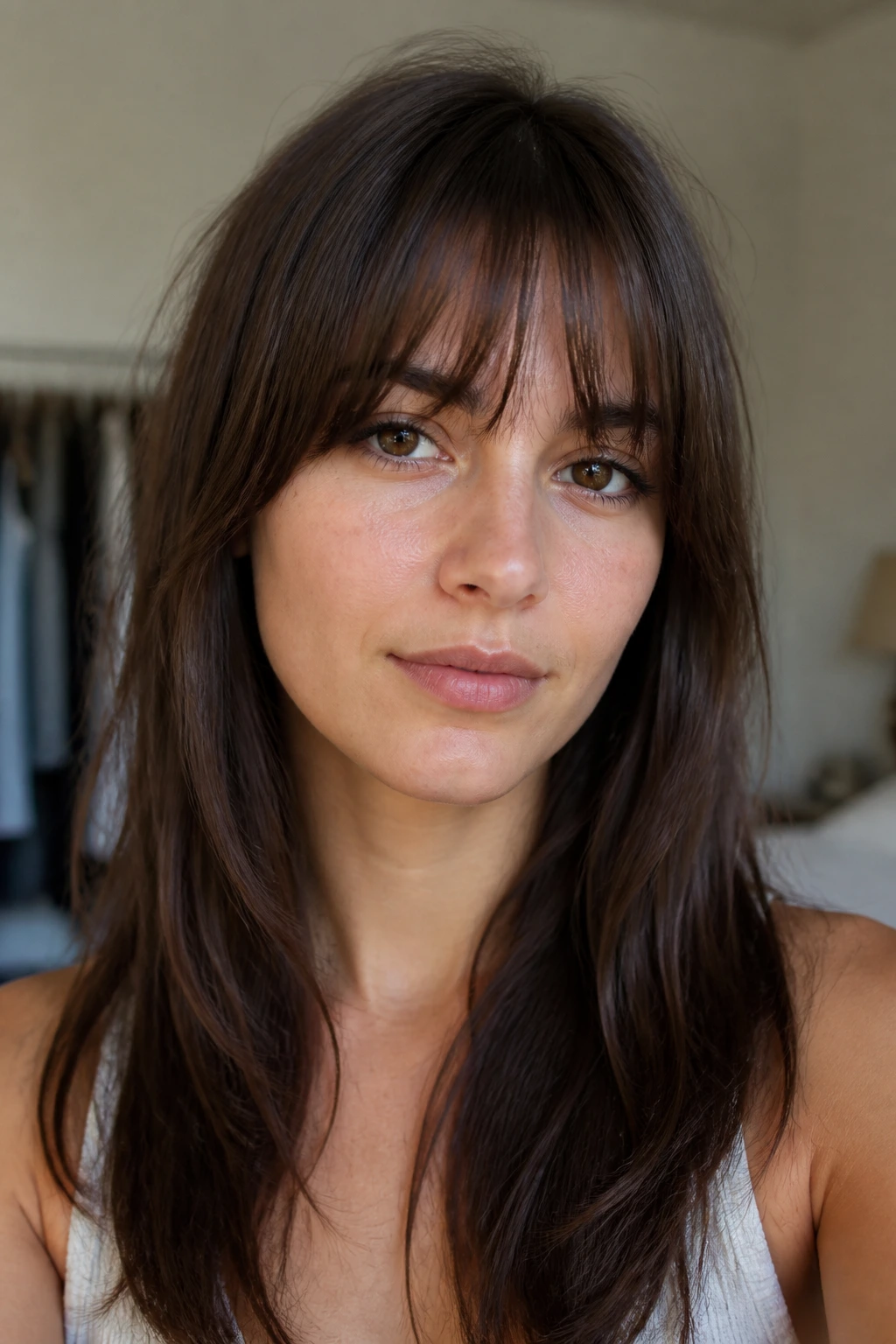
Want the quickest way to make long hair feel less plain? Brow-skimming piecey bangs do it without shouting. The line lands right near the brows, but the ends are broken and separated so the fringe never becomes a flat bar across the face. That little bit of separation is the whole trick.
This cut works especially well if your long hair is straight or only slightly wavy. You get a crisp outline, then the choppy finish keeps it from reading harsh. I like it for people who wear a middle part most of the time and want the front to hold its own when the rest of the hair is worn down.
The styling move is simple: dry the bangs first, then use your fingers to split them while they’re still warm. A touch of dry shampoo at the roots gives them a little grit. Too much oil or cream will make the pieces stick together, and then the whole thing loses its point.
4. Grown-Out Shag Fringe With Soft Layers
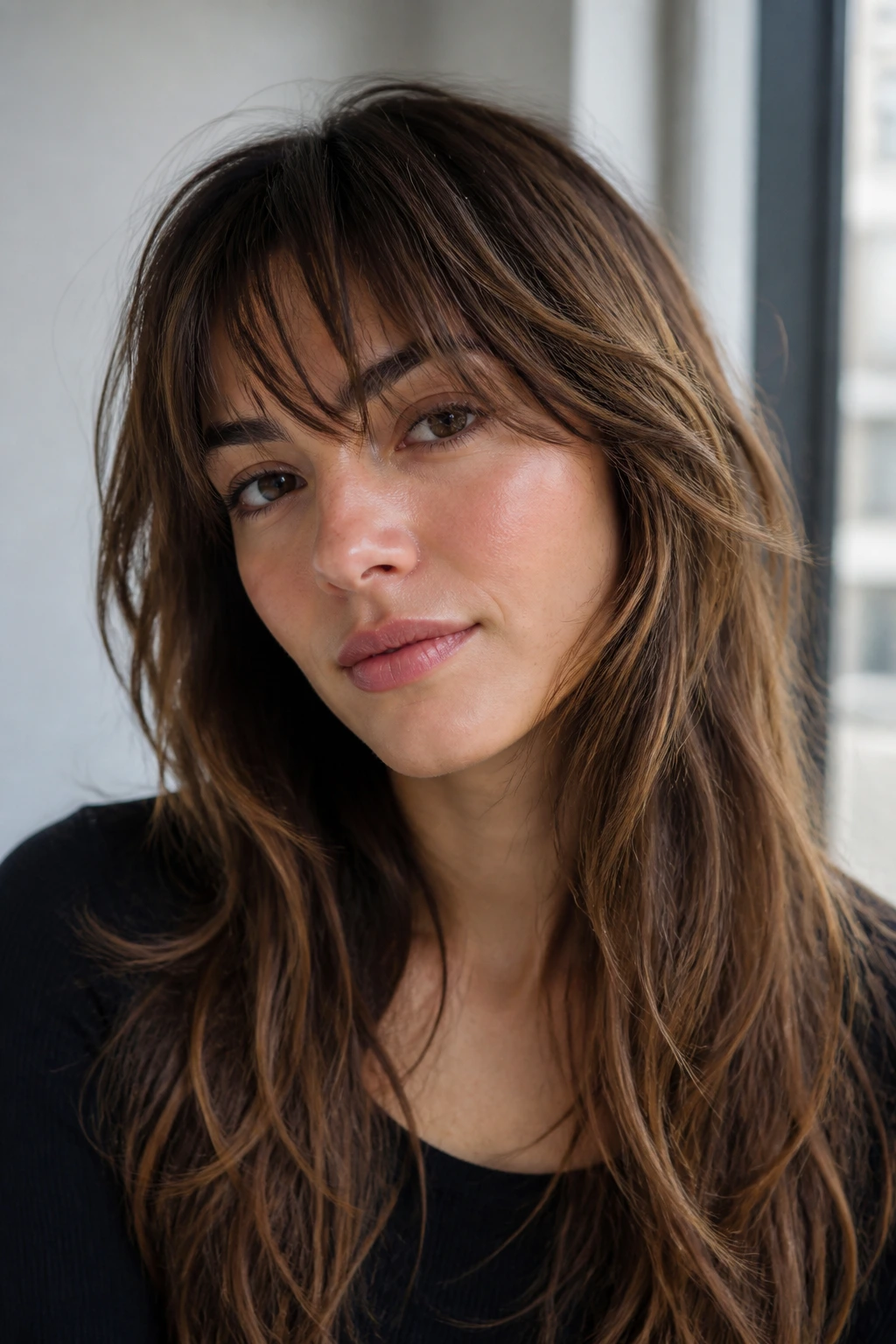
This is what happens when a shag grows up and decides not to apologize for it. The fringe sits longer, the pieces are irregular on purpose, and the top layers blend into the rest of the haircut instead of stopping at one obvious line. On long hair, that gives you movement without needing a dramatic chop.
A grown-out shag fringe is useful if you hate the feeling of “fresh bangs.” You know the one. Too perfect, too exact, too much effort. This version looks better a little messy, especially if your hair has wave or a bend from sleeping on it. The front can brush the lashes one day and sit higher the next without looking wrong.
What to ask for
- Keep the center pieces soft, not blunt.
- Leave enough length at the temples to tuck behind the ear.
- Add texture with point cutting, not heavy thinning.
- Blend the top layers so the fringe feels connected.
5. Razored See-Through Bangs
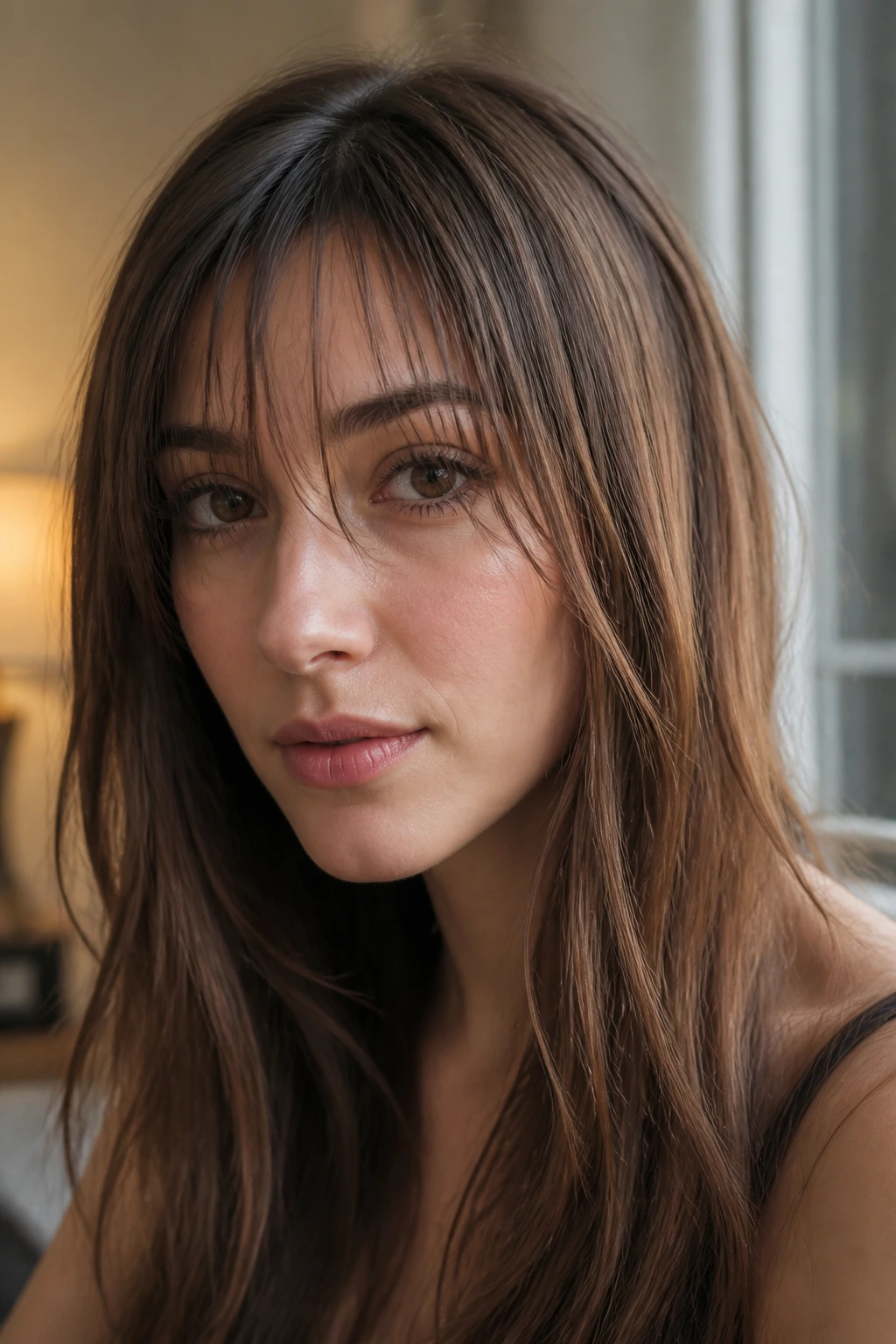
See-through bangs sound delicate, and they are, but the choppy finish keeps them from reading flimsy. A razor or very light texturizing creates gaps between the strands, so the forehead shows through a little. On long hair, that space matters. It keeps the fringe from hiding the face the way a dense bang can.
This style makes sense if you have fine hair and don’t want your fringe to look like a thick block. The trick is restraint. You want a whisper of fringe, not a set of skinny stragglers. The best version still has enough line to frame the eyes, even if it looks airy.
Drying matters here. Go side to side with a small brush or your fingers so the bangs don’t settle in one hard direction. And if you live in humidity, this is the kind of fringe that needs less product, not more. Heavy spray just fills in the gaps and defeats the cut.
6. Side-Swept Choppy Fringe That Falls Softly
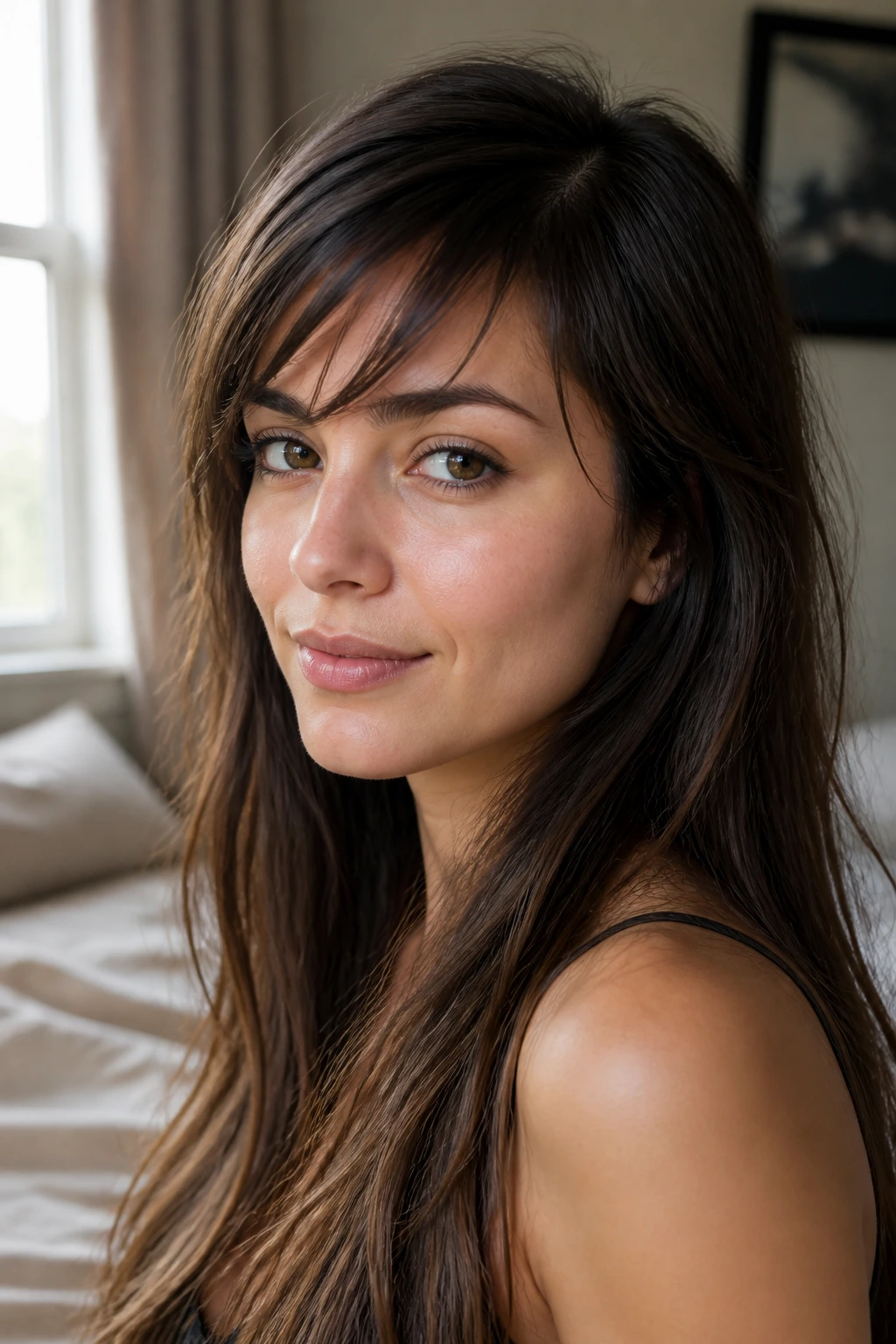
A side-swept choppy fringe has a little old-school glamour in it, but the texture keeps it from feeling dated. The front moves diagonally across the face, then breaks into short, uneven pieces instead of one long swoop. On long hair, that diagonal line can make the rest of the length feel lighter right away.
This is a smart choice if you hate having hair straight down your forehead. The side sweep gives you a bit of coverage without the full commitment of straight bangs. It also behaves nicely when you clip one side back, which is handy on days when you want the fringe to disappear for a while and then come back later.
I’d ask for longer center pieces and a soft taper toward the temple. That keeps the sweep from looking chopped too high. If your hair is thick, the side-swept shape can take weight off the front without making it fluffy. If it’s fine, keep the layers subtle so the fringe doesn’t split into nothing.
7. Micro Fringe With Soft Ends
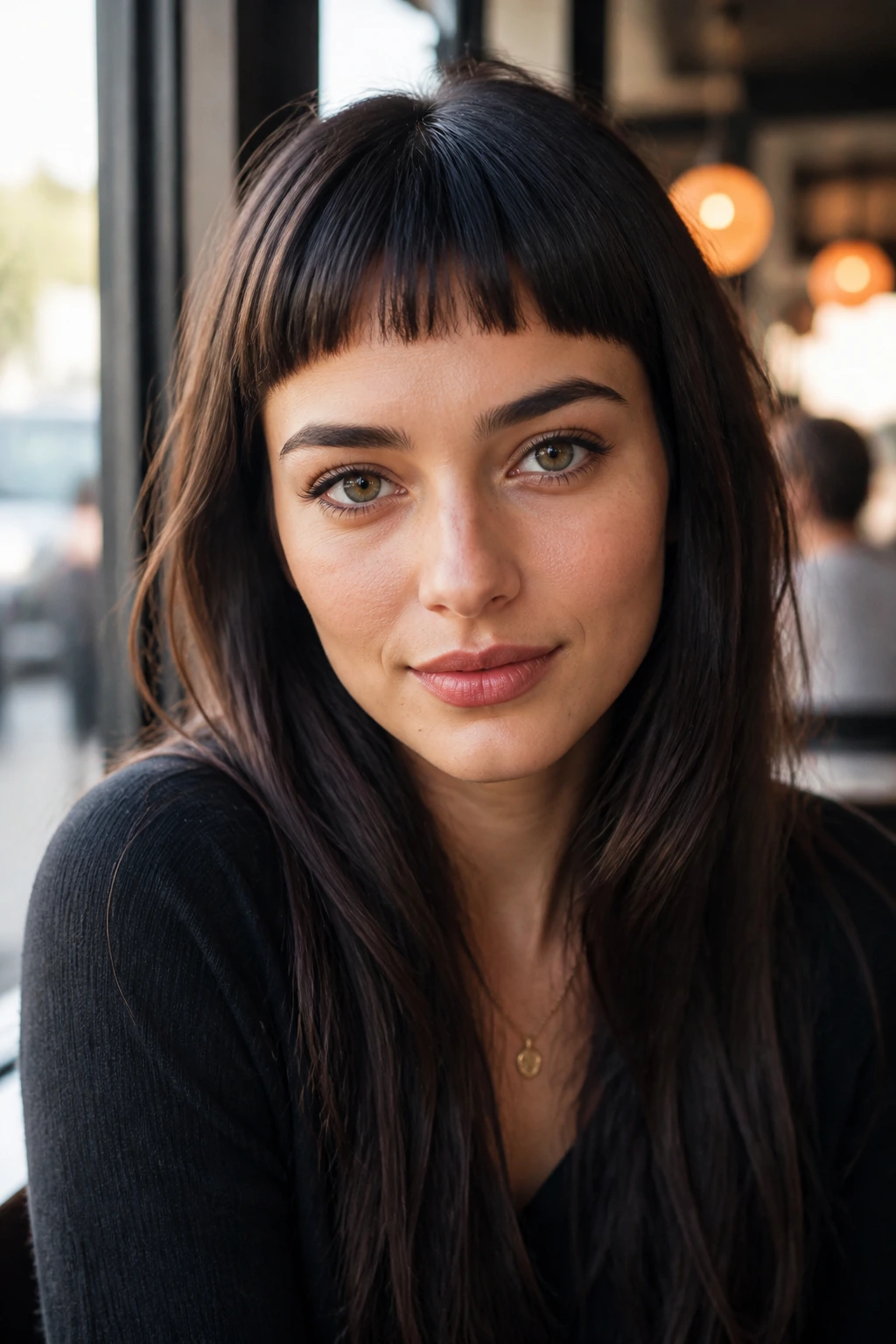
Micro fringe is the bold one in the group. The bangs sit high on the forehead, but the choppy, softened ends stop them from looking harsh or costume-like. On long hair, that contrast is the fun part: the length in back stays graceful while the front gives a sharp little punctuation mark.
Not everyone wants this. Fair enough. But if you like haircuts that feel slightly graphic, this one has a real point of view. It looks especially good on straight hair or loose waves, where the edges can stay separate and visible. Curly hair can wear it too, though it needs a stylist who knows how to cut it dry.
The maintenance is the trade-off. Micro fringe needs more frequent trimming than the longer styles in this list. If you’re someone who likes to forget your bangs for six weeks and hope for the best, skip this one.
8. Arched Feather Bangs That Lift in the Middle
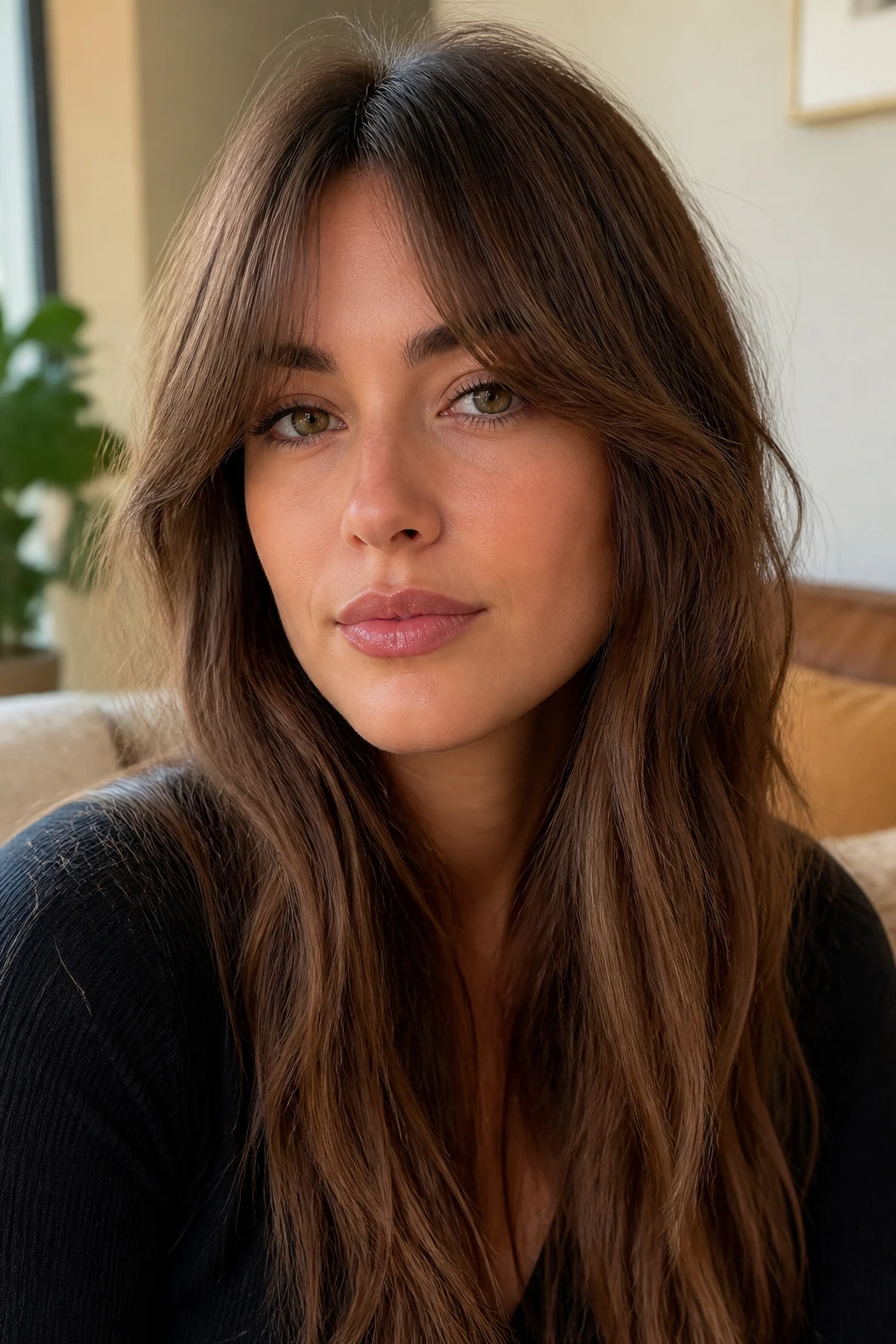
Arched feather bangs have a soft curve that rises just a little in the center, then trails off toward the sides. The choppy texture keeps that arch from looking stiff or pageant-y. On long hair, the lift in the middle helps the face open up without losing the frame around it.
I like this cut on round and oval faces because the arch draws the eye upward. The effect is subtle, not theatrical. You still see the forehead, but the bangs shape the face in a way a straight line never could. If your hair grows in a strong swirl at the front, the arch can actually work with it instead of fighting it.
Styling is about bending the ends, not overbuilding the shape. A small brush and a little heat at the roots is enough. Let the curve happen naturally. If you force it too hard, the fringe gets stiff, and stiff bangs never look as expensive as people think they do.
9. Split Fringe With Long Temple Pieces

Split fringe is what you want when you like the idea of bangs but don’t want a solid wall of hair touching your forehead all day. The middle opens apart, and the longer temple pieces fall away into the layers. On long hair, that open center keeps the cut light even when the rest of the hair is very full.
Best when your part already wants to separate
If your hair naturally parts in the middle, this cut can feel almost inevitable—in a good way. You’re not forcing the fringe to do something unnatural. You’re just giving the front enough shape so the part looks finished. The temple pieces matter here; they keep the split from looking accidental.
Ask for the center to sit somewhere between the brows and the lash line, then leave enough length on the sides to tuck into the rest of your haircut. Too short at the temples and the whole thing loses its softness. Too long in the center and it starts acting like a curtain instead of a fringe.
10. Wispy Birkin Bangs With Choppy Texture
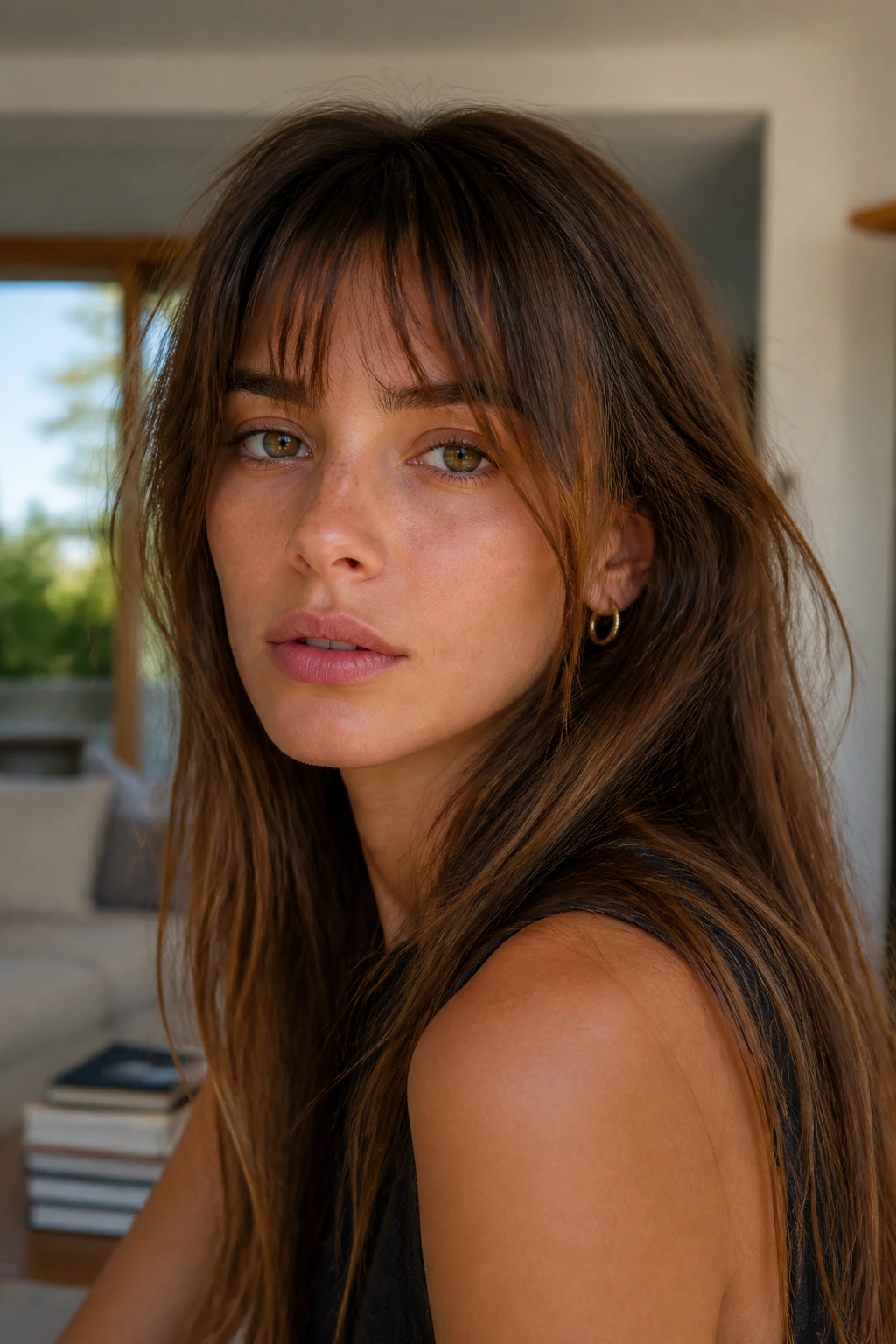
Birkin bangs usually bring to mind a softer, lived-in fringe, but the choppy version gives them a little more edge. The ends are uneven, the line is light, and the fringe sits in that sweet spot where it can move between polished and undone. On long hair, that flexibility is the draw.
This cut is good if you want forehead coverage without a dense bang. The texture lets the fringe sit lightly, and the pieces can separate on their own instead of requiring a ton of styling. If your hair is straight, a quick bend with a flat iron can make it look intentional. If it’s wavy, an air-dry usually gets you there faster.
The only thing I’d watch is over-layering. Birkin bangs already have softness built in. If the stylist thins them too much, they can turn stringy. A little pieceiness is the goal; transparency is not.
11. Cheekbone-Grazing Fringe That Frames From Below

This version is all about where the bang ends. The front falls just at the cheekbones, which means the fringe frames the face from a lower point than most classic bang cuts. The choppy finish keeps the line from looking too neat, and that makes the longer hair around it feel more relaxed.
It’s a smart choice if you want the front to connect with face-framing layers. On long hair, that kind of connection matters because it keeps the whole haircut from feeling disconnected. The fringe doesn’t sit alone; it slips into the layers and lets the rest of the hair carry the shape.
I like this for people who wear glasses, too. The cheekbone length gives a little breathing room around the frames. If the bangs are too short, they can fight the glasses line. This length has a little more grace.
12. Bardot Bangs With Texture and Lift
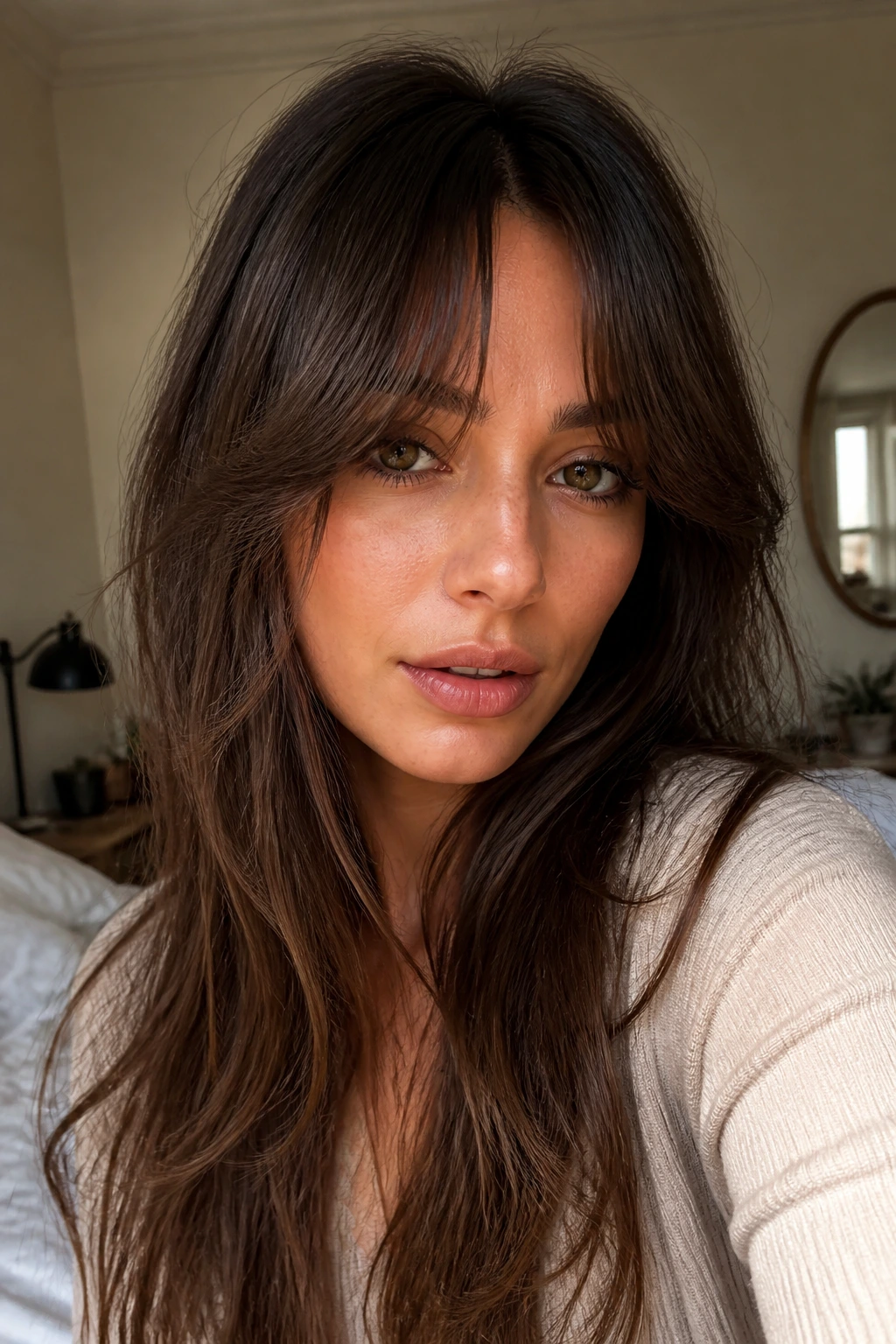
Bardot bangs are the romantic one in the bunch, but the choppy texture stops them from turning too sweet. The center opens softly, the edges feather out, and the whole fringe has a bit of lift through the roots. On long hair, that gives you a face frame that feels plush without getting heavy.
Think of this as a blowout fringe. It likes volume, but not helmet volume. The best version has movement around the eyes and cheeks, then melts into the length around the jaw. If your hair is thick, this can be especially good because the texture keeps the front from sitting like a curtain with no air in it.
A big round brush works, though I’d keep the bend soft. The line should look touchable. If you’re spraying the fringe into place with half a can of hairspray, you’re doing too much.
13. Curved Choppy Fringe That Follows the Brow Line
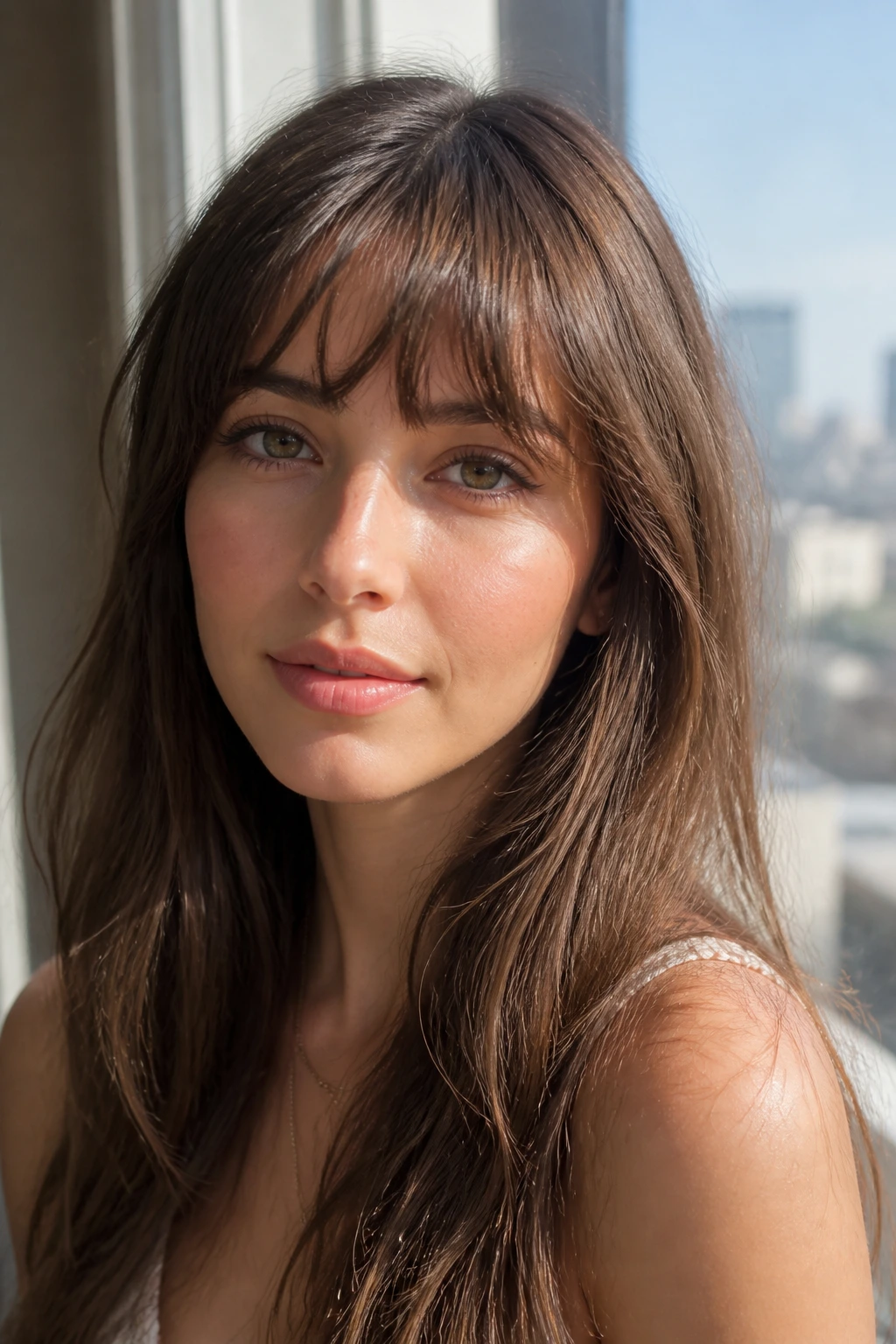
A curved fringe follows the shape of the face instead of cutting straight across it, which makes it feel softer from the start. The choppy ends break up the curve and keep it from looking too perfect. On long hair, that subtle curve can make the whole haircut feel more tailored.
This is one of my favorite options for strong brows or pronounced cheekbones. The curve echoes the face instead of fighting it. It also works well if you don’t want a lot of hair sitting in the center of the forehead. The side pieces can do more of the framing while the middle stays light.
The trick is not to over-shape the arc. A small curve reads better than a dramatic rainbow. Too much arch and you’re styling the fringe more than you’re wearing it.
14. Face-Framing Fringe Blend That Flows Into the Sides
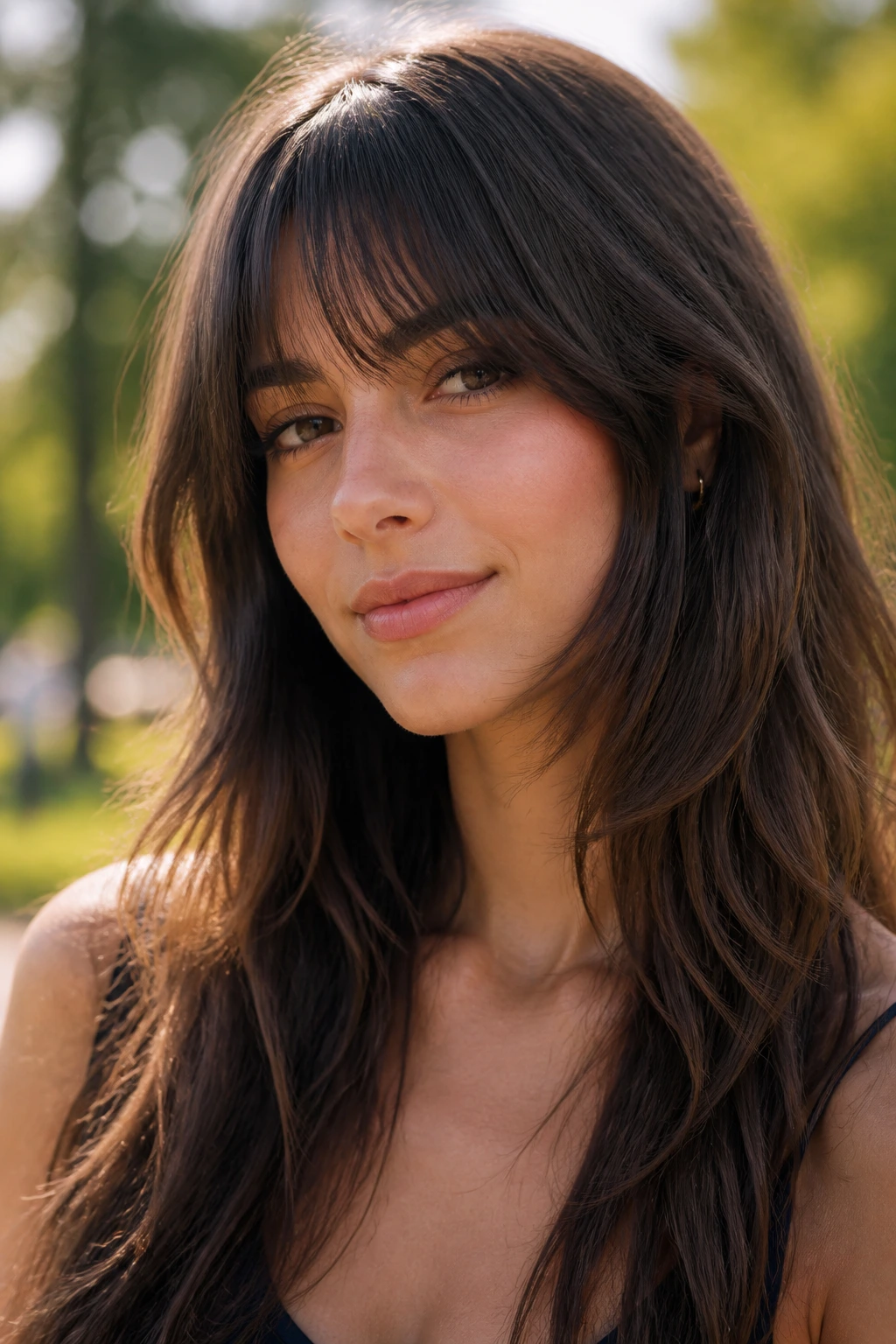
Some bangs look like a separate haircut. This one doesn’t. The fringe starts at the front, but the pieces keep stretching into the face-framing layers so the whole cut feels connected. On long hair, that connection is gold. It keeps the style from looking like two different ideas sitting on the same head.
This cut is handy if you like long layers but want something visible near the eyes. It gives you the presence of bangs without the maintenance of a solid fringe line. The face-framing sections can be tucked back, curled away, or left to fall naturally.
Why it stays easy to wear
The answer is in the transition. The shortest pieces matter near the brows, then the lengths around them take over. You can wear the front with a center part, push it off to one side, or let it air-dry into a loose wave. That kind of flexibility is practical, not theoretical.
15. Textured Blunt Fringe With Choppy Ends
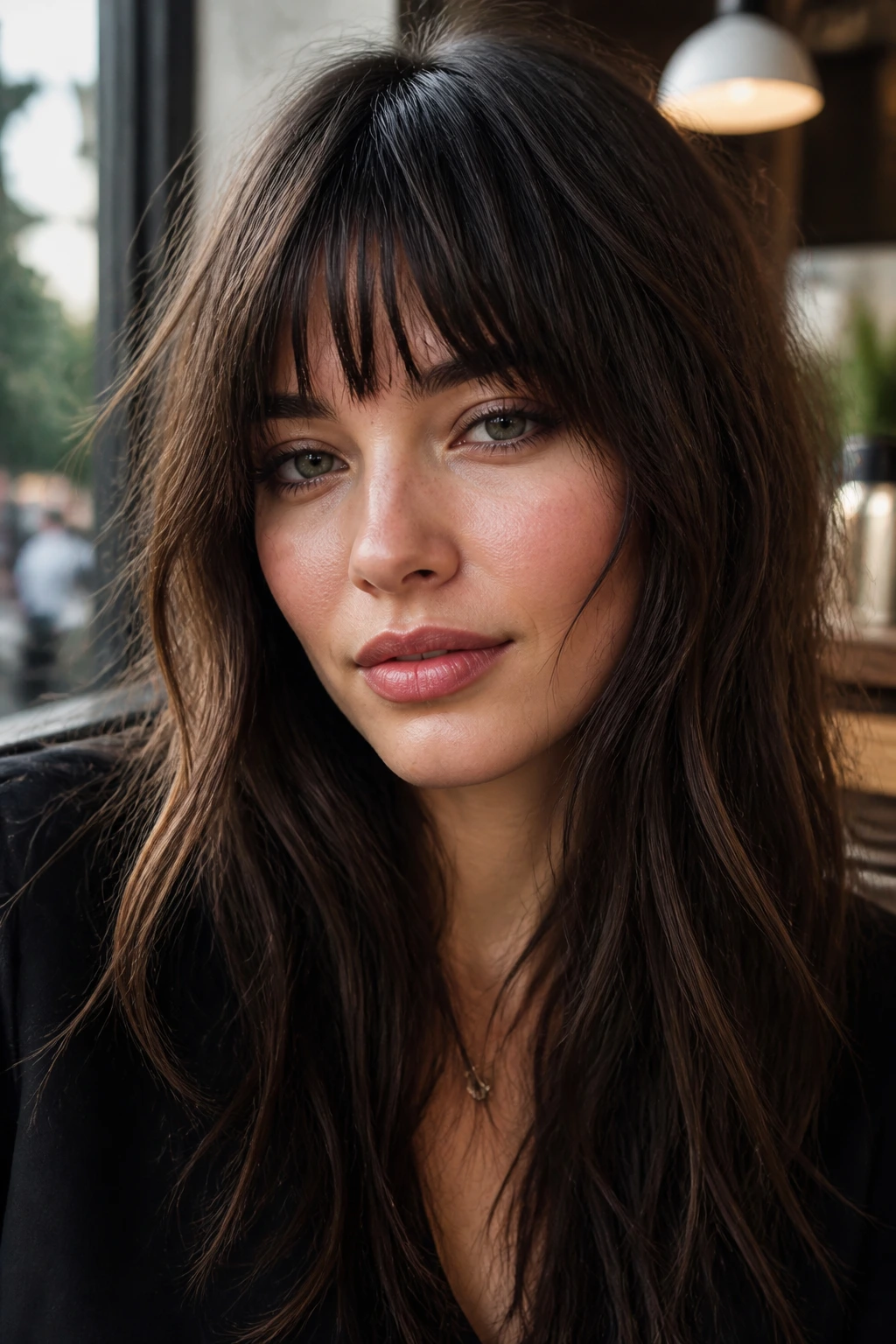
Blunt and choppy sounds like a contradiction, but the mix works. The outline still feels full, which is useful if you want real forehead coverage, yet the ends are chipped away enough to keep the line from becoming dense and flat. On long hair, that balance can look sharp in a good way.
I’d choose this if you like structure but hate the solid weight of a traditional blunt bang. It has a little edge. The haircut says you meant it, but it doesn’t shout. Thick hair handles this best, since there’s enough density to hold the line after the texturizing.
The styling warning here is simple: do not over-blow the ends outward. A fringe like this should sit with a clean edge and a little softness, not with random spikes. Keep the finish controlled.
16. Long Peekaboo Bangs
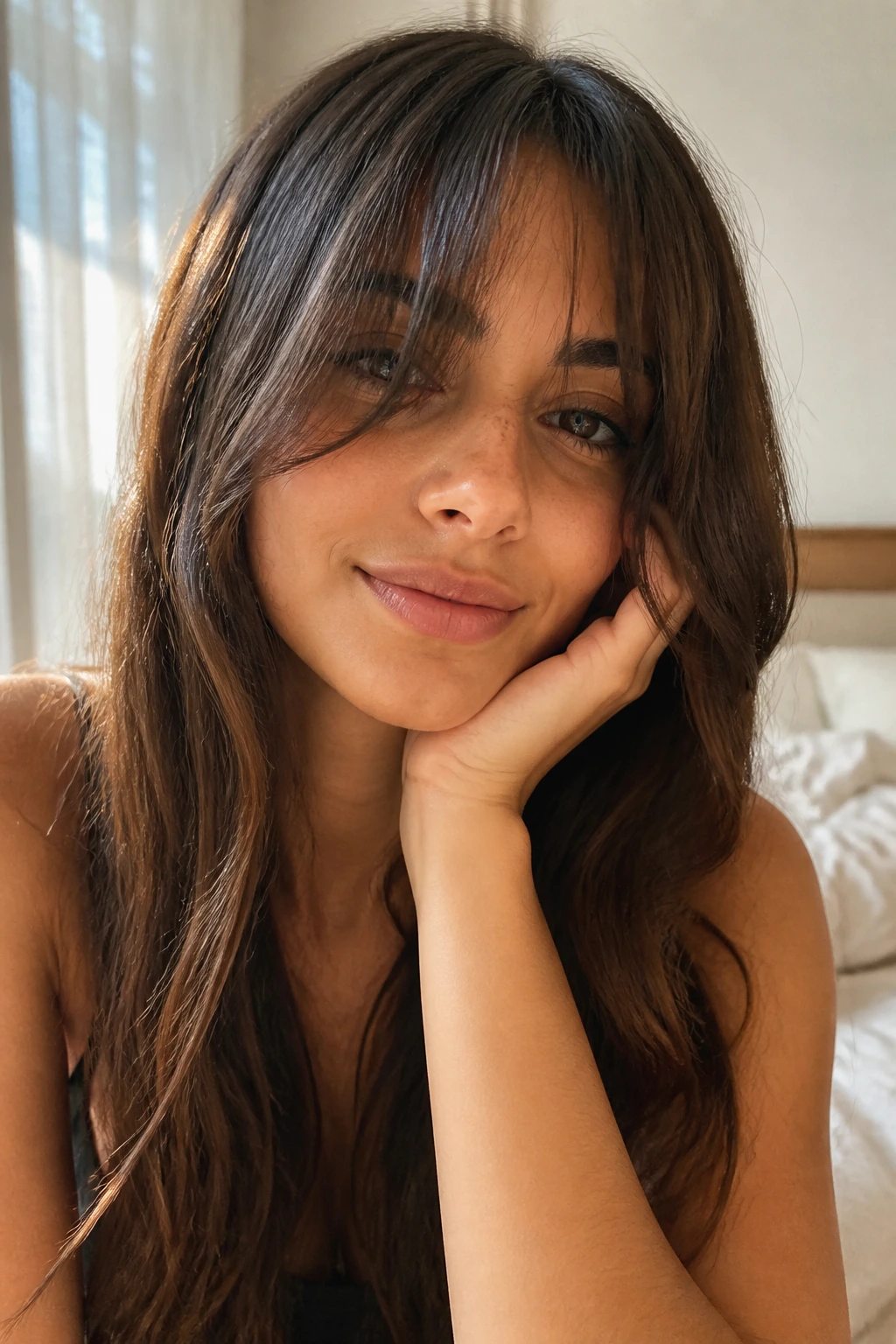
Peekaboo bangs sit longer and quieter, then reveal the eyes as they move. They’re called “peekaboo” for a reason. The choppy texture keeps the fringe from hanging in one slab, and that makes the long hair around it feel lighter without forcing a major haircut change.
This is a good low-stakes option if you want to test the fringe life without going short. The bangs can skim the lashes, then drift aside. On long hair, that softness plays well with big lengths because the front doesn’t compete with the back for attention.
I like these for people who use a middle part one day and a side part the next. The fringe can shift with you. If you want a strong statement, this isn’t the one. If you want movement you can wear from breakfast to bedtime, it earns its place.
17. Air-Dried Natural Fringe That Lives With Your Texture
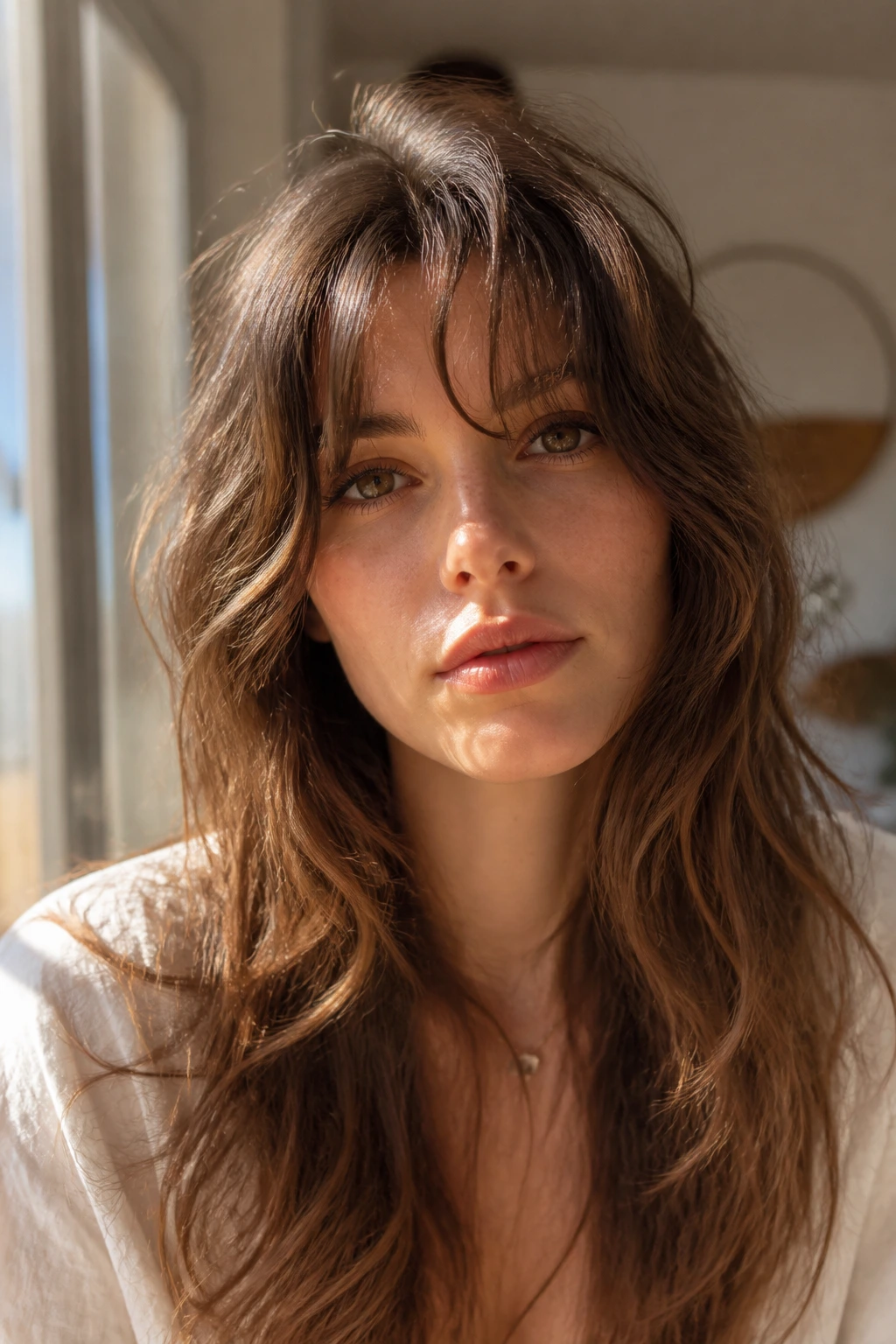
Not every fringe needs a blow-dryer sermon. An air-dried natural fringe leans into whatever bend, wave, or straightness your hair already has, then uses the choppy cut to make that texture look deliberate. On long hair, that can be a relief. The front does not have to fight the rest of the head every morning.
This cut is best when the stylist respects your real texture. If your hair bends left at the crown, the fringe should be cut with that in mind. If it goes puffy when wet, a little longer length is safer. I’d rather see a fringe that moves with your hair than one that only looks good for twelve minutes after a salon blowout.
A little mousse, a little scrunch, done. Maybe a twist of the fingers while it dries. That’s enough for some heads, and honestly, that’s the point.
18. Wolf-Cut Fringe With Rough Edges

Wolf-cut fringe has that slightly wild edge people either love or avoid on purpose. The choppy pieces are uneven, the top is textured, and the front blends into the rest of the hair with a rough, shag-like energy. On long hair, it keeps the length from looking too polished or too precious.
This one thrives on attitude. If your wardrobe leans casual, vintage, band-tee, leather jacket, oversized knit—yes, that sort of thing—it slots right in. The fringe isn’t neat, and it shouldn’t be. A little disorder is the whole appeal.
The best wolf-cut fringe still has shape. Don’t confuse shaggy with careless. There should be a clear line at the front, even if the line is broken. That’s what keeps it from looking like an accident after a windy bike ride.
19. Rounded French Fringe With Soft Choppy Ends

A rounded French fringe gives you softness across the forehead and a little Parisian ease, but the choppy ends stop it from looking too prim. The curve sits gently instead of forming a strict arc. On long hair, that makes the front feel graceful while the rest of the length stays loose.
This works well on finer hair because the rounded shape can create the sense of density without a lot of bulk. If your hair is thick, the texture keeps the fringe from feeling heavy. Either way, the rounded outline is kinder than a straight, flat line.
I’d style it with a light bend under the middle and softer sides that almost disappear into the rest of the cut. Overthink it and the fringe turns formal. Keep it loose and it has more charm.
20. Soft Razor Fringe With Wispy Movement
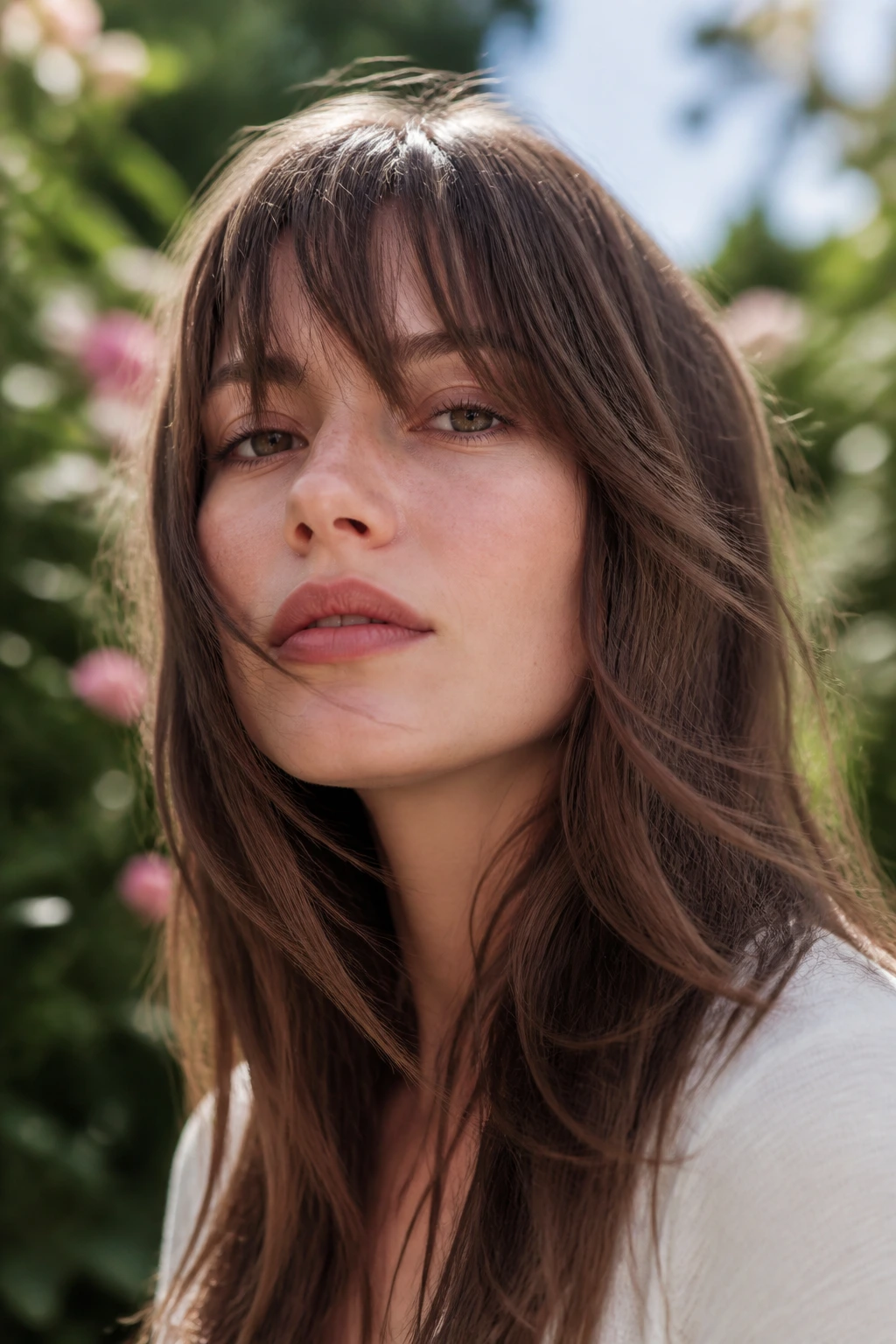
Razored bangs can go wrong fast when they’re overdone. But when they’re cut with a light hand, the result is a fringe that moves like silk threads instead of sitting in clumps. On long hair, that softness keeps the front from feeling too dominant.
This is a good choice if you want visible texture without a lot of bulk. The razor softens the edge, which can help thick hair sit closer to the face. It also gives straight hair a little broken finish that looks better in daylight than a clean blunt cut does.
The main rule here is restraint. If the fringe already looks wispy in the chair, don’t let anyone keep thinning it just because they can. A few sharp pieces are enough. Too many and you end up with a fringe that never gets enough weight to behave.
21. Tapered Temple Bangs That Leave Breathing Room
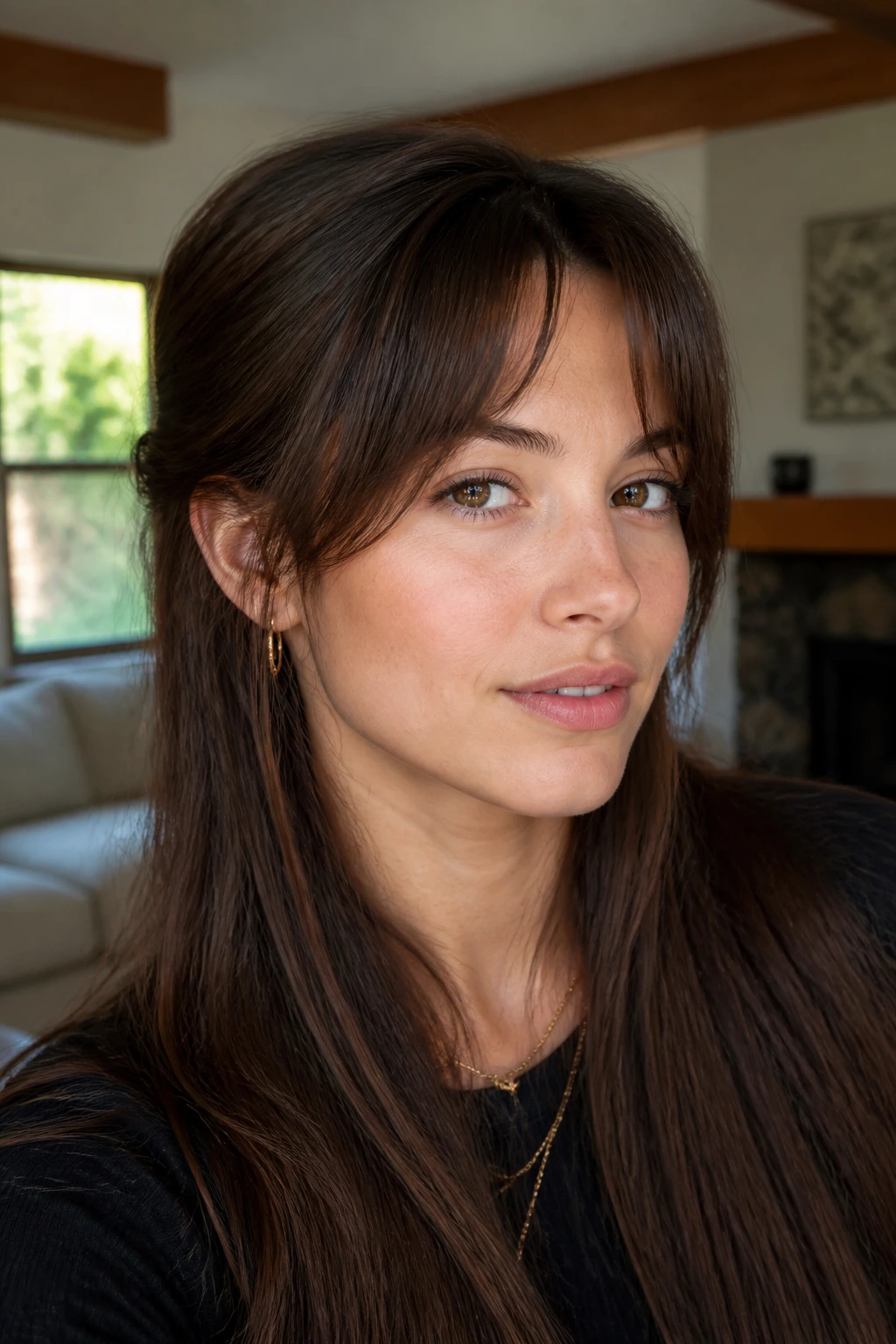
Tapered temple bangs are a smart solution when you want the front to frame the face without loading up the entire forehead. The shortest pieces sit near the center, then the sides taper down around the temples and into the lengths. On long hair, this creates a clean transition that feels calm, not choppy in the messy sense.
I like this for anyone who wears their hair behind the ears half the time. The taper makes the side pieces easy to tuck. It also helps if you have a prominent part line or a cowlick that breaks up a full fringe too much. The cut already expects a little movement.
A small but useful detail
Ask for the temple pieces to stay long enough to blend into the front layers. That tiny bit of extra length saves you from awkward grow-out. It also means the fringe still looks intentional when it’s not freshly styled.
22. Messy Brow-Skimming Fringe That Never Feels Too Fixed
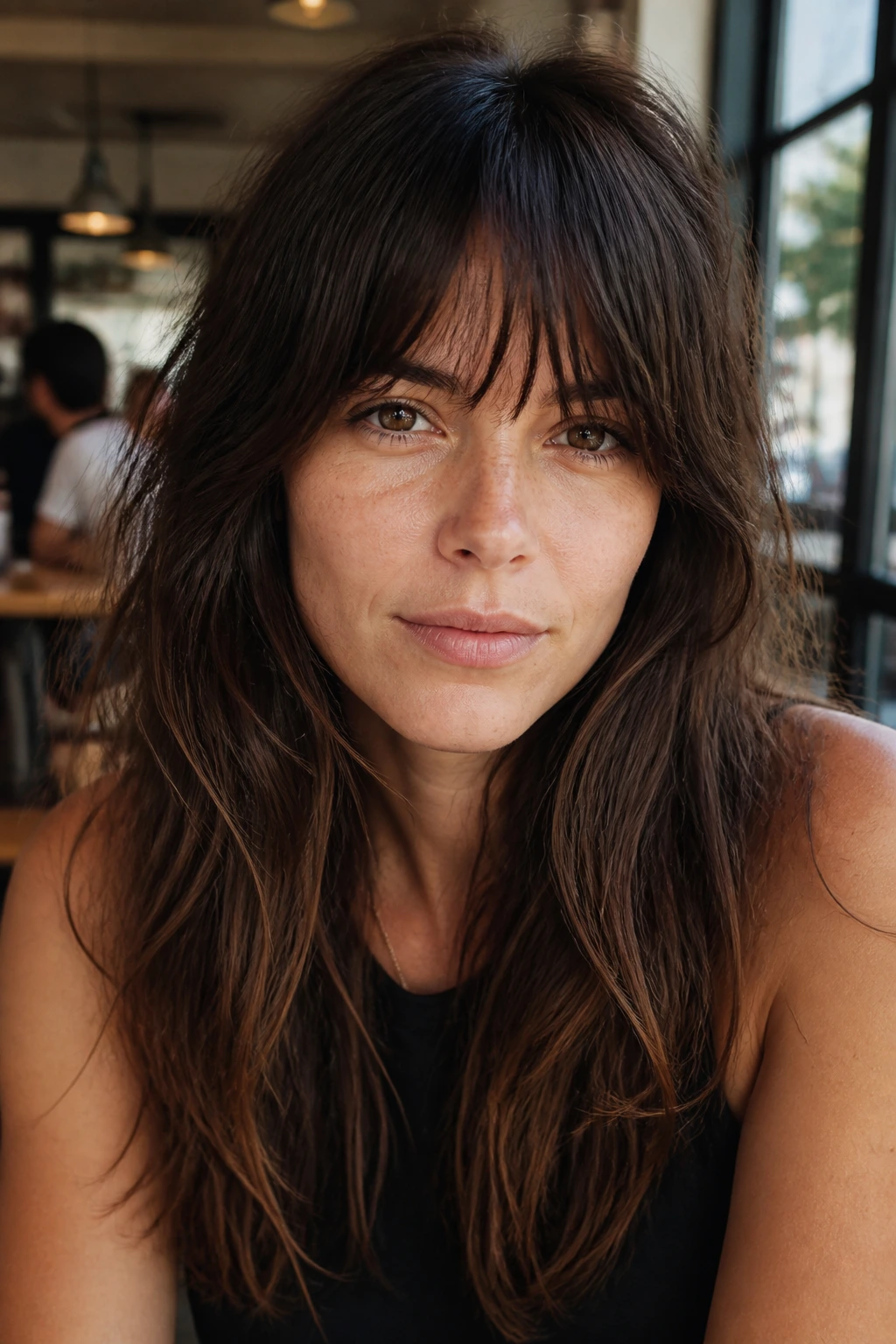
Some bangs need a comb, a brush, a prayer. This is not one of them. A messy brow-skimming fringe is cut to look slightly undone from the start, with piecey ends and a little unevenness that keeps it from settling into one rigid line. On long hair, that casual front softens the whole haircut.
It suits people who prefer hair that can look better after a few hours rather than worse. The fringe can fall across the brows, split at the center, or drift to one side without losing its shape. If your hair has a little natural bend, even better. If it’s pin-straight, a quick bend with a flat iron at the ends will make the pieces separate.
I’d keep product light here. The mess is part of the charm, not a problem to fix.
23. Layered U-Shaped Fringe That Curves Into the Length
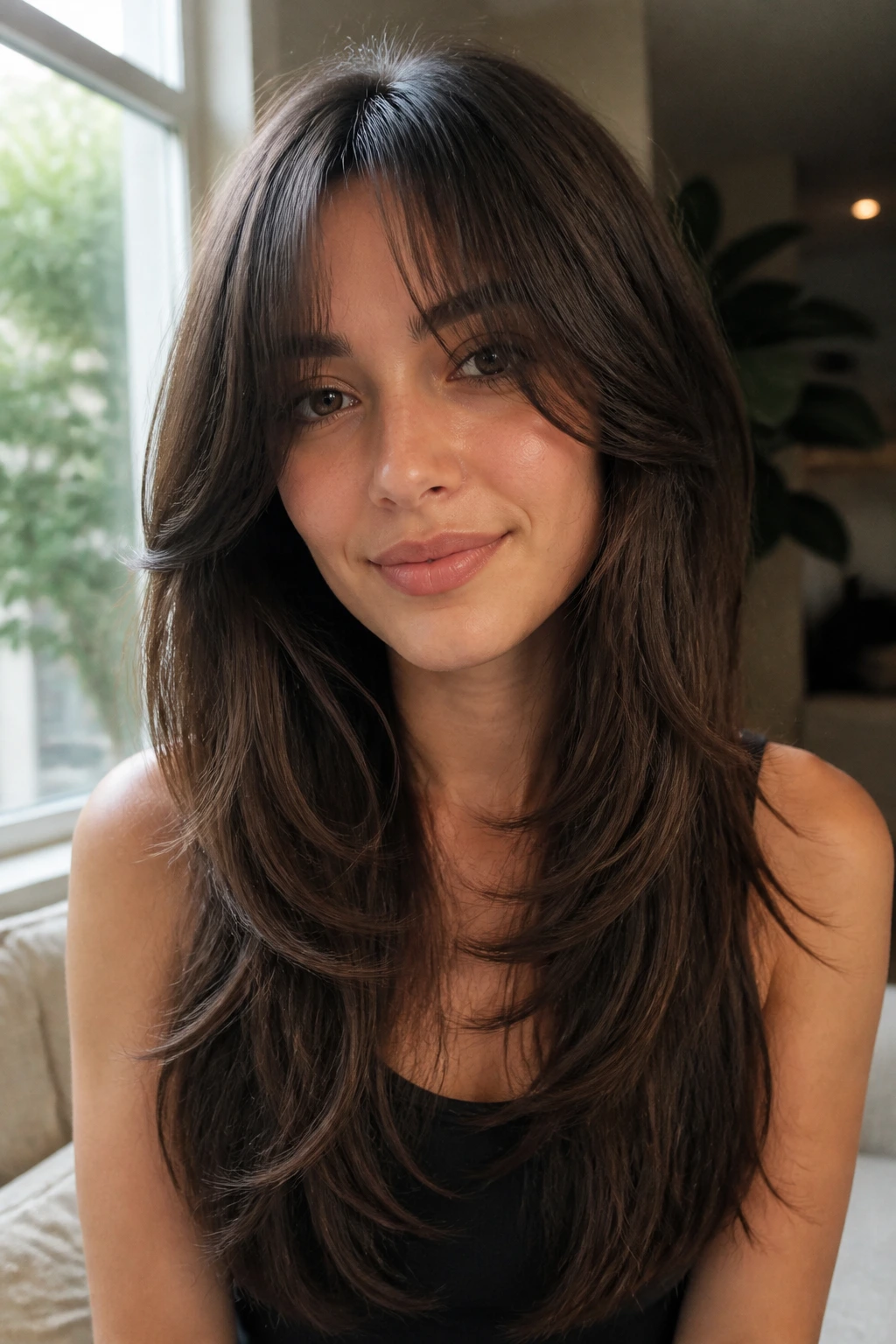
The U-shape gives the center a little more weight, then pulls the sides down gradually so the fringe doesn’t stop like a hard shelf. Choppy layers inside that shape keep it moving. On long hair, that U creates a smooth connection between the front and the rest of the haircut.
This is one of those cuts that looks more refined than it sounds. The curve gives softness, but the layering keeps it from becoming heavy. It’s especially useful if you want the front to shorten the face a bit without taking away too much length near the eyes.
If your face is long or narrow, the U-shape can be flattering because it adds width where you want the eye to linger. If your hair is thick, ask for the layers to be kept internal so the outline stays clean.
24. Disconnected Fringe With Long Side Pieces
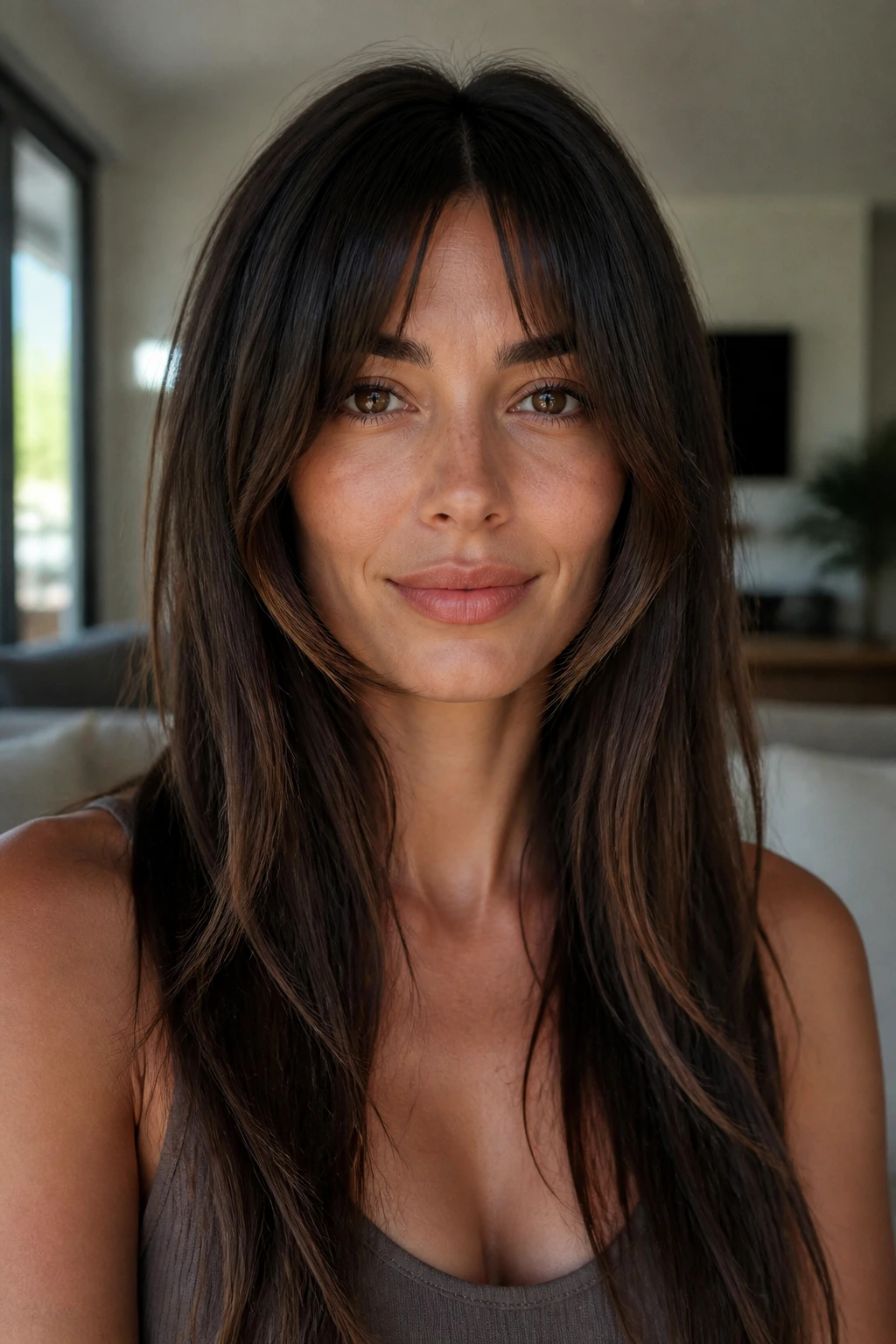
Disconnected fringe is for people who like a little tension in a haircut. The center bang has its own shape, then the side pieces stay long enough to look almost separate from the rest of the hair. On long hair, that contrast can be really good. It makes the fringe feel like its own design instead of part of a single blanket of hair.
This style is not the quietest in the room. Fine. That’s the point. The separation creates interest, especially when the long sides swing around the jaw and collarbone. It’s a good option if you want a haircut that reads modern without needing much styling drama.
Keep the disconnect clear. If the side pieces are cut too short, you lose the effect. If they’re too long and too blended, the fringe turns mushy. There’s a narrow lane here, and it’s worth staying in it.
25. Collarbone-Sweeping Fringe That Blends Into Long Layers
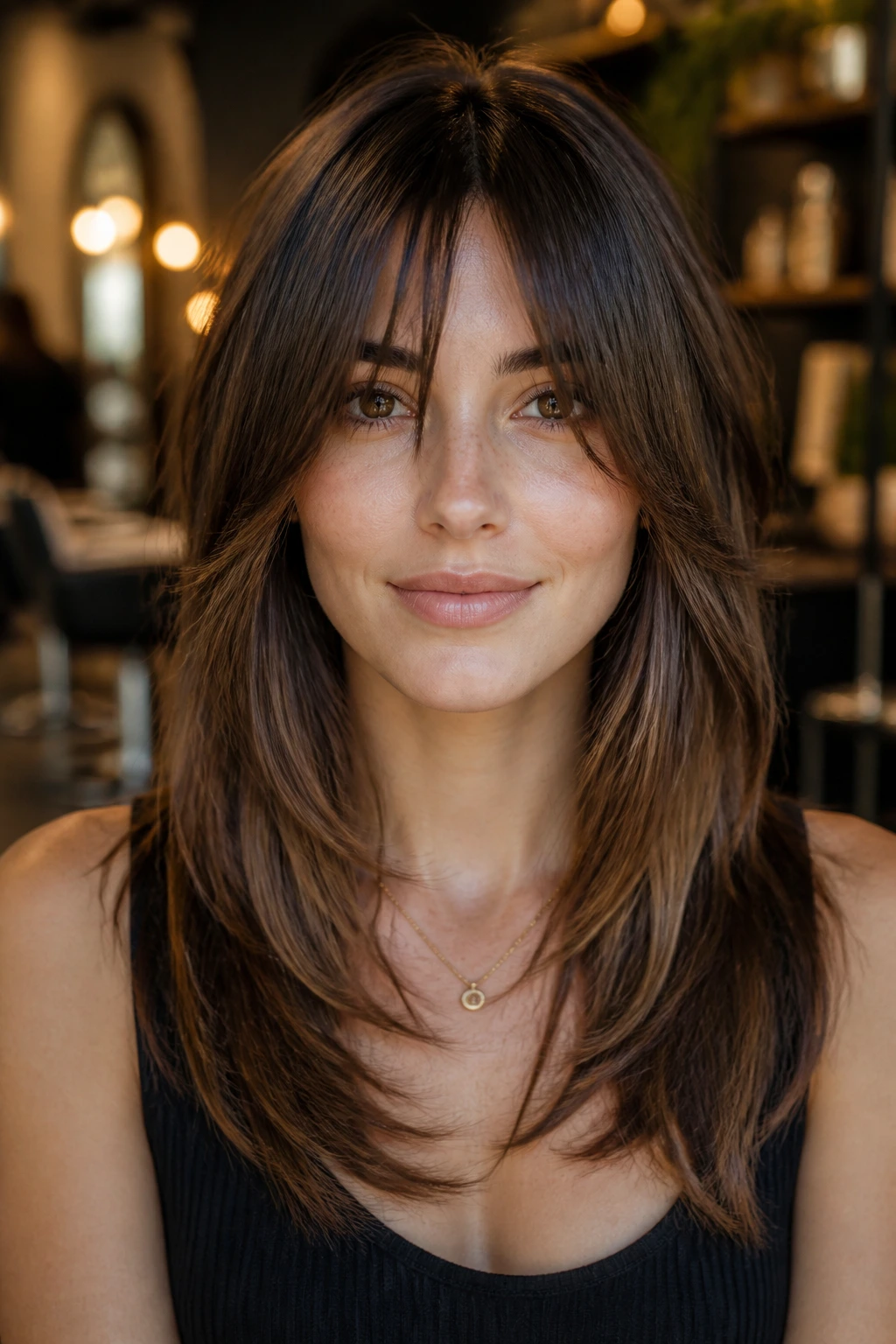
This fringe takes the long idea seriously. The shortest pieces still live near the face, but the outer sections sweep down to the collarbone area and blend into the rest of the length. On long hair, that creates a soft runway from the eyes to the shoulders.
It’s a good option if you want bangs that are more about framing than making a hard statement. The choppy texture gives it movement, but the overall shape stays long and graceful. People who like to tuck hair behind one ear or wear loose twists usually appreciate this one because it cooperates with that kind of wear.
I’d call this one forgiving. It grows out well, and it doesn’t need the same constant correction a shorter fringe does. If you hate fuss, that matters.
26. Heavy Choppy Fringe With Broken Ends
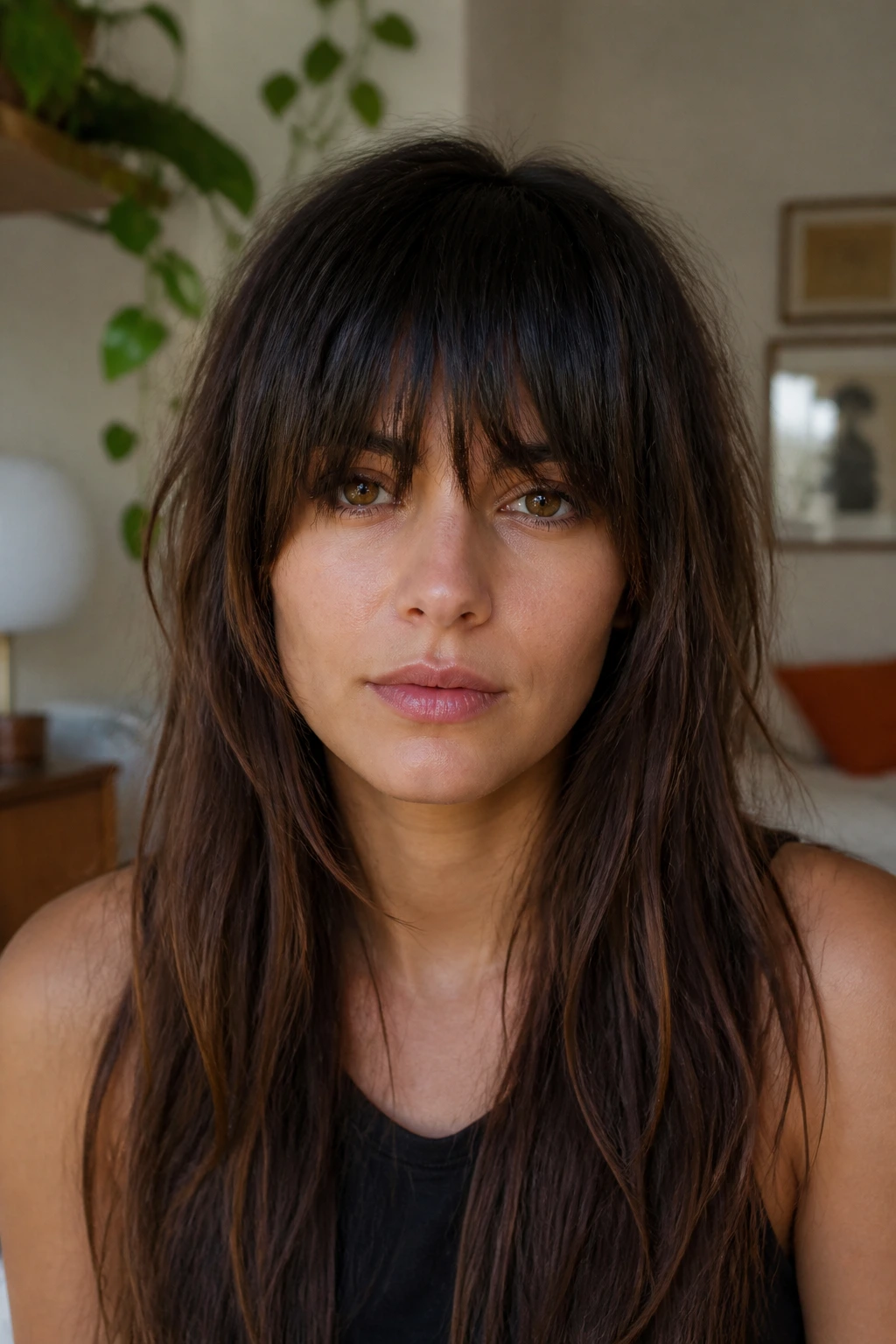
Heavy and choppy is a useful combination if you want a fringe that really shows up. The density gives forehead coverage, while the broken ends keep the edge from feeling blunt or boxy. On long hair, this can make the haircut feel grounded instead of airy.
This is the version I’d point to for thick hair. A little weight through the middle helps it sit properly. The choppiness prevents the fringe from turning into a dark block across the face. If you have fine hair, I’d usually steer you toward something lighter unless you’re very sure you want the fullness.
The key is keeping the texture internal. You want movement inside the bang, not just rough tips. That distinction is easy to miss, and it matters.
27. Thin Sliced Fringe That Skims Instead of Sits
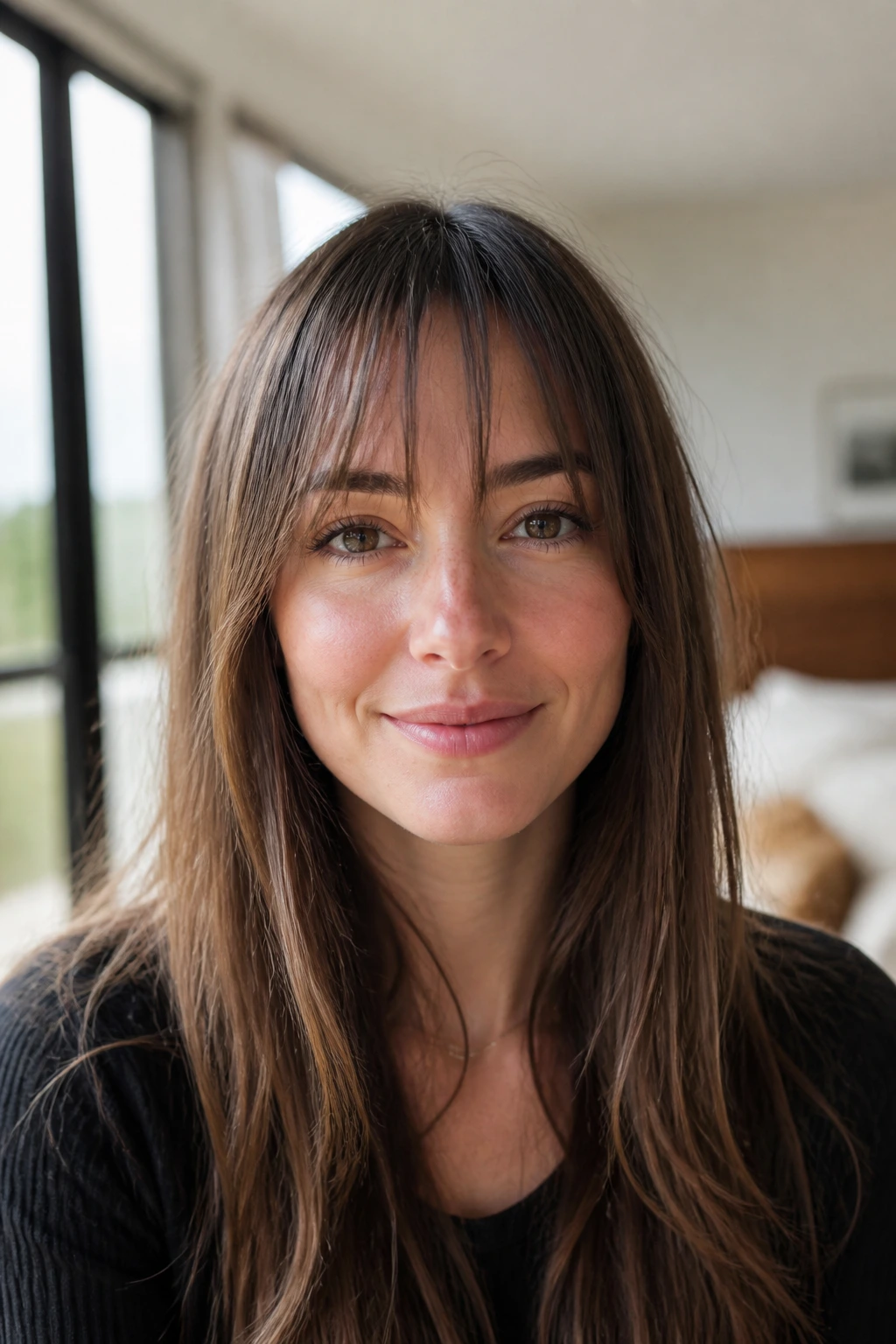
Thin sliced fringe is almost the opposite of the heavy version above. The pieces are kept narrow and clean, then sliced so they skim the forehead instead of sitting in a thick line. On long hair, that lightness can look elegant without feeling precious.
This one behaves well on fine to medium hair when the goal is softness, not drama. The fringe doesn’t need much styling to stay in place. A quick brush-through and a little root lift is enough. If you have a strong cowlick, though, too little weight can make the pieces fly apart.
I like this version because it can disappear when you want it to and still be there when you don’t. That’s a rare trick for bangs. Not magic. Just good cutting.
28. Swept-Over Textured Fringe With a Deep Part
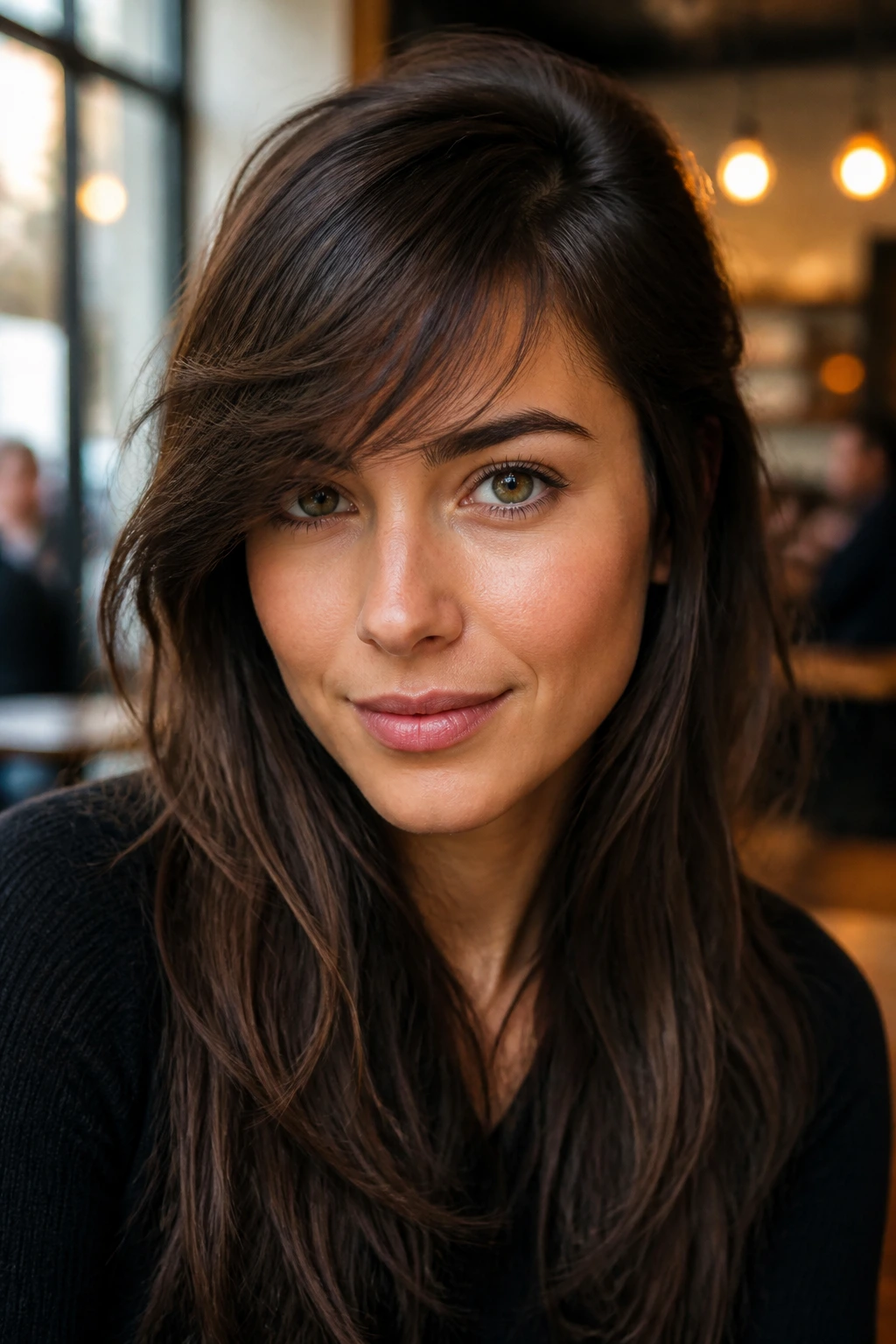
A swept-over fringe changes the face immediately because it shifts the visual weight to one side. The choppy texture keeps the sweep from looking like a formal comb-over. On long hair, that side movement can make the whole cut feel longer and more fluid.
This is a nice option if you already have a deep side part and don’t want to fight it. The fringe follows the part instead of trying to erase it. It can also soften a prominent forehead or bring more attention to the eyes and cheekbones. The line is looser than a classic side bang, which is why it feels modern without trying too hard.
A small round brush or a flat brush with a blow-dryer nozzle gets the job done. If the fringe falls too flat, lift at the roots and bend the ends away from the face.
29. Shattered Fringe With Curtain Sides
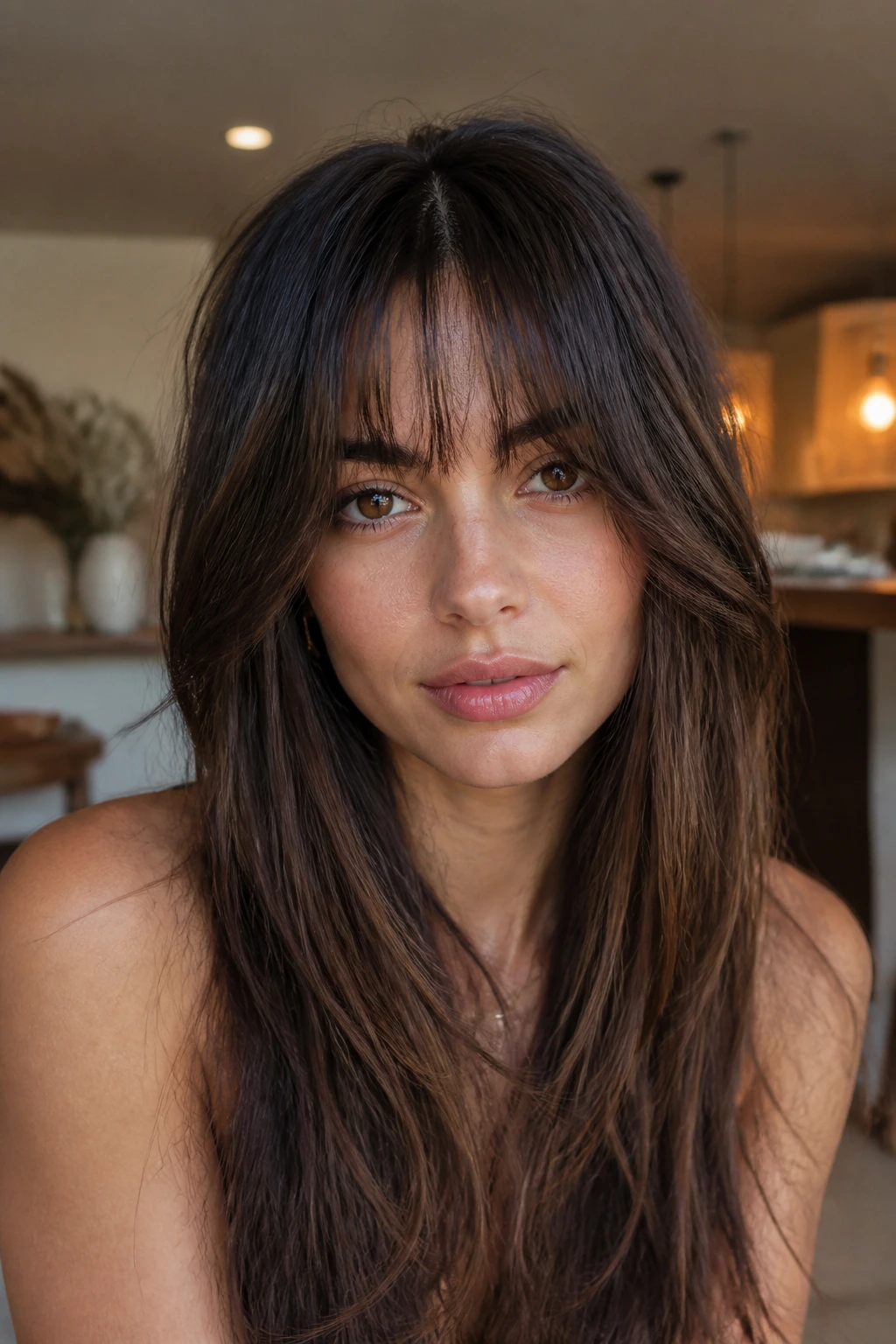
Shattered fringe sounds rougher than it is. The center is broken into short, uneven pieces, and the curtain sides fall out in a softer way so the whole shape doesn’t feel jagged. On long hair, that mix of sharp and soft can be very good. It gives the front some attitude while keeping the rest of the length elegant.
This is one of the strongest shapes in the list for thick or wavy hair. The shattered center keeps the front from puffing up, and the curtain sides calm it down. If your hair is straight, the same cut can look sleek with a quick pass of heat. If it’s wavy, let the texture do the talking.
I’d ask for the sides to be left long enough to tuck and twist. That one detail makes the cut easier to live with, especially on busy mornings.
30. Soft Gothic Fringe for Long Hair

Soft gothic fringe has a little drama in it, but the “soft” part matters. The line sits lower, the ends are choppy rather than blunt, and the fringe frames the eyes in a way that feels moody without going full costume. On long hair, that contrast is the whole story: the lengths can stay lush while the front becomes a quiet statement.
This style works best when you want the face framed more strongly than a curtain bang would do. It can be striking on dark hair, though blondes and redheads can wear it too if the texture is kept loose. The fringe should feel like a shape, not a helmet.
If you go this route, keep the rest of the cut clean. Too many competing layers and the front loses its impact. One strong idea is enough.
Why Choppy Fringe Changes the Shape of Long Hair
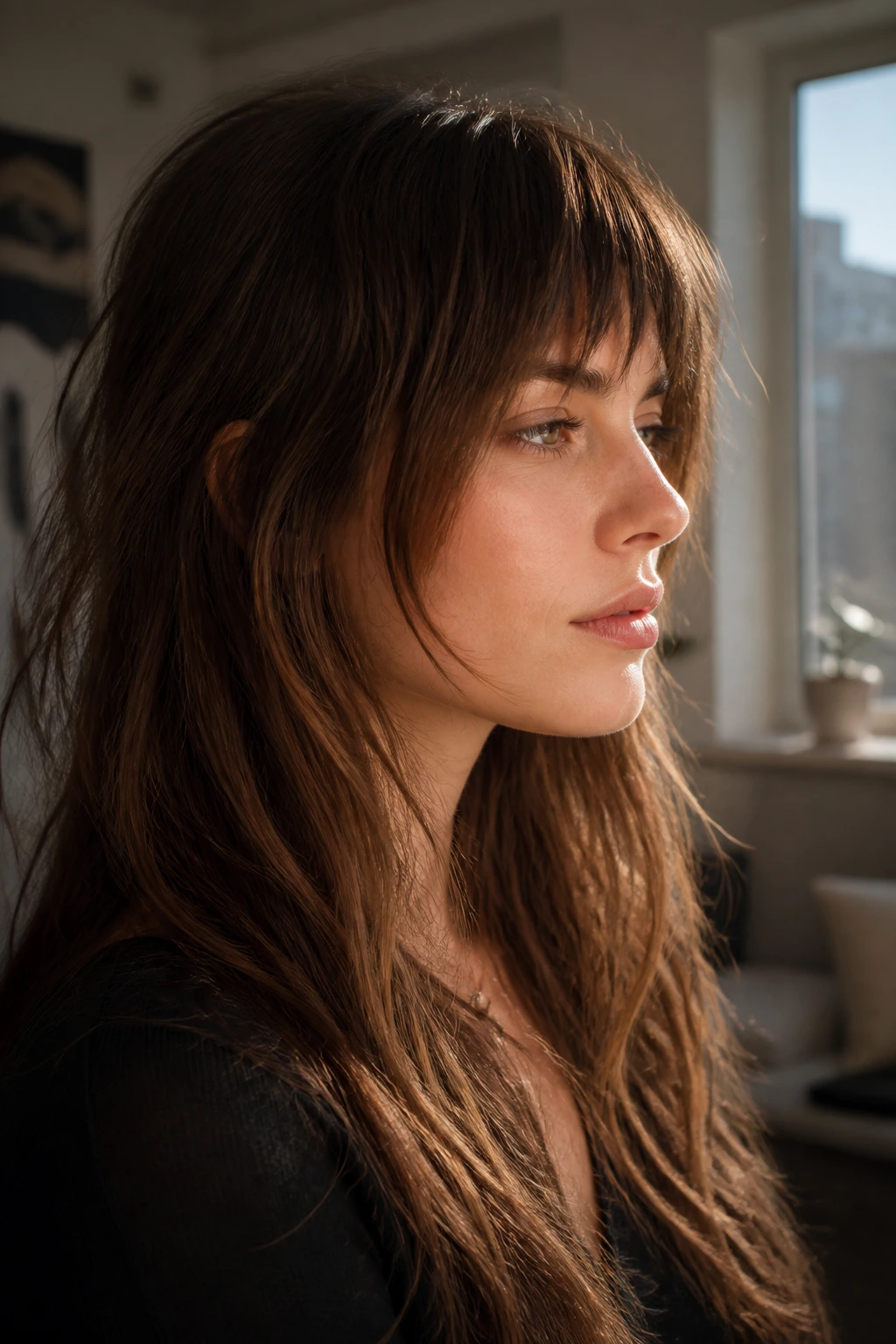
Long hair can be lovely and still look a little blank around the face. That’s the problem choppy bangs solve. They create a front edge that pulls the eye upward, breaks the length of the face, and gives the haircut some structure where it needs it most. Without that front shape, long hair can sometimes fall so straight that it loses its outline.
Texture does more than soften the look. It changes how the fringe moves through the day. A choppy line catches a little air, separates a little at the ends, and grows out in pieces instead of one hard block. That matters if you do not want to book a trim every few weeks just to keep a blunt fringe from eating your forehead alive.
There’s also a practical side people miss. Choppy fringe plays better with ponytails, claws, half-ups, and loose buns because the front still reads as part of the style when the rest of the hair is off the shoulders. A heavy, one-length bang can feel like a separate object. A broken-up fringe feels stitched into the haircut.
Choosing the Right Fringe for Your Texture and Face Shape
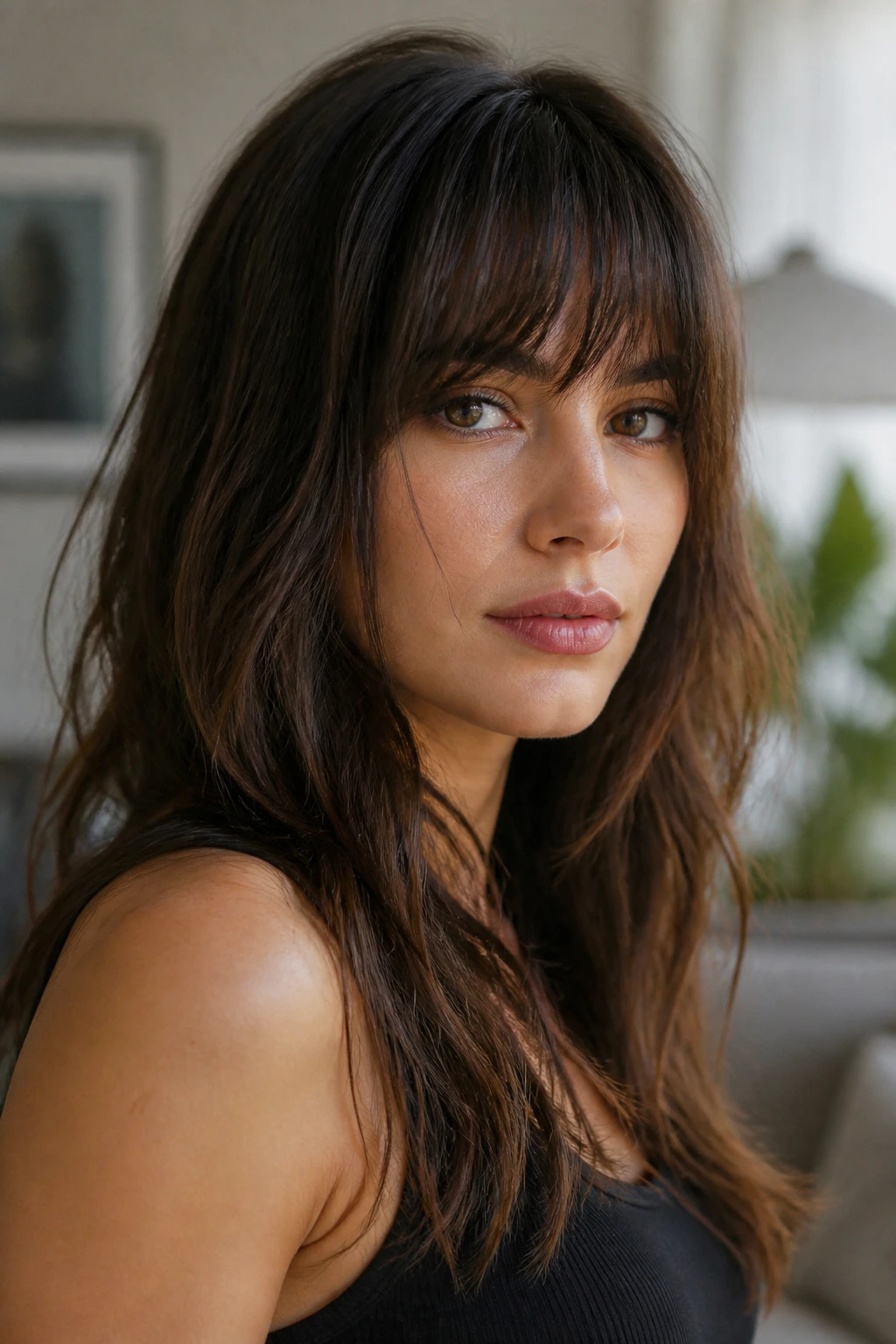
The best fringe on long hair isn’t the one that looks prettiest in a photo. It’s the one that suits your growth pattern, density, and how much time you’re willing to spend in front of a mirror. Fine hair usually does well with lighter, piecey fringes that don’t need much bulk to hold shape. Thick hair usually needs more internal weight removed, not less, or the bang sits like a shelf.
Straight hair
Straight hair shows every line, which is both a gift and a warning. A clean, choppy cut can look sharp and neat, but an over-thinned fringe can turn stringy fast. Ask for texture that breaks the line without removing all the substance.
Wavy hair
Wavy hair can make fringe look fuller and more casual, which is a nice trade. The catch is shrinkage. Leave a little extra length so the bangs do not spring up above the brow line the moment they dry.
Curly hair
Curly fringes need to be cut dry or nearly dry by someone who understands how the curl lands. Choppy bangs on curls should follow the curl pattern, not fight it. A bad cut here looks lopsided in a hurry.
Face shape matters, but not in a rigid way
Round faces often do well with longer, side-swept, or split shapes that open at the cheekbones. Oval faces can handle almost anything here. Long faces often look good with a fuller fringe that shortens the face a little. Square faces usually benefit from softer ends and curves that take the edge off the jaw.
What to Ask for at the Salon
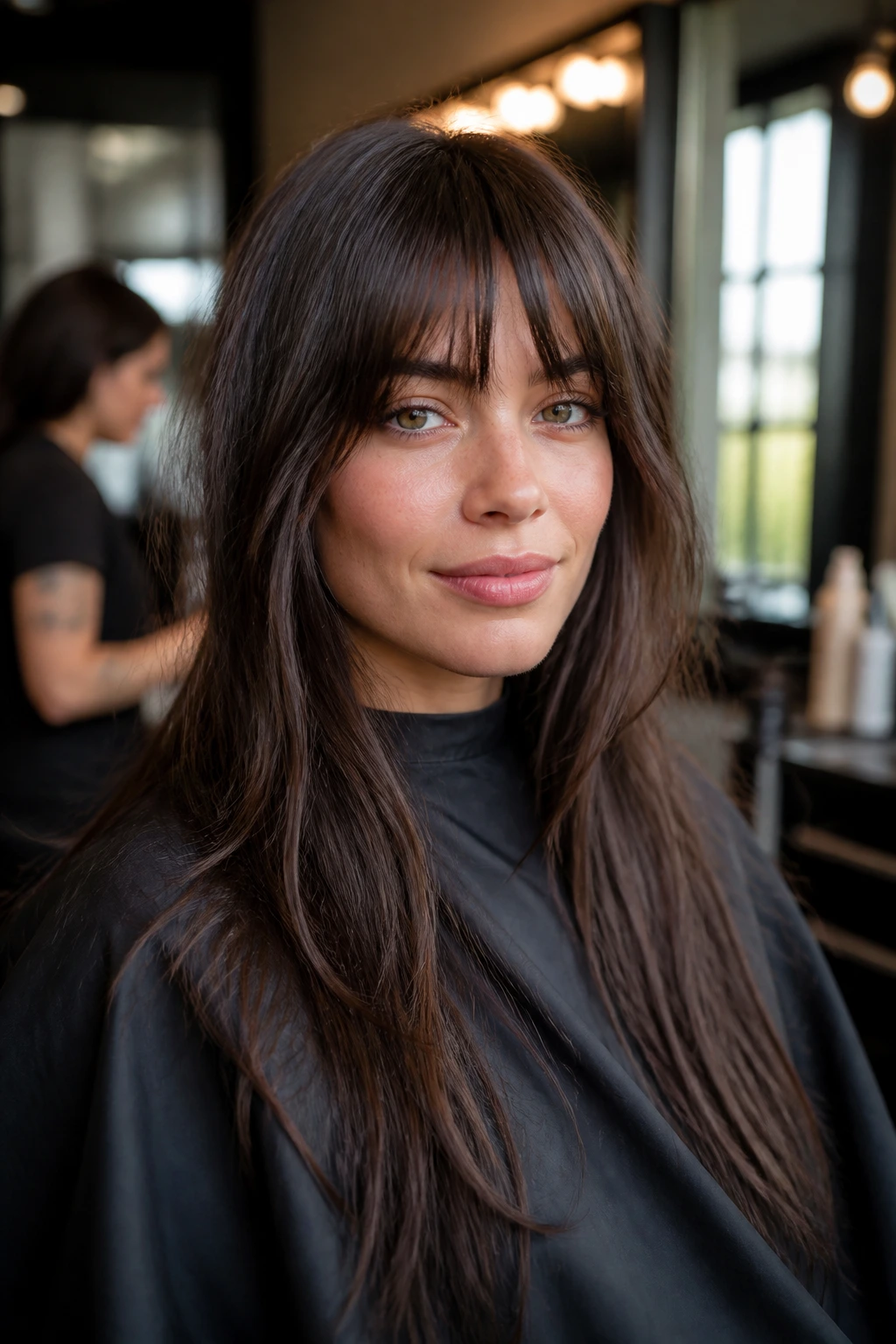
Bring pictures. Two or three is enough. The useful part is not copying a photo exactly; it’s showing the stylist what kind of movement you want. Tell them whether you want the fringe to sit at the brows, the lash line, or lower, and say how much maintenance you’re willing to live with.
Ask for point-cutting if you want the ends broken up without a harsh line. Ask for razor-soft texture only if your hair can take it; very fine hair sometimes needs scissors more than a razor. If you want the fringe to blend into long hair, mention the temple pieces and face-framing layers so the front doesn’t stop too suddenly.
A good phrase is: “I want the front to look piecey and soft, not heavy and blunt.” Another useful one: “Keep enough weight so it doesn’t disappear when I air-dry it.” Stylist language matters here. The more exact you are about the finish, the less likely you are to leave with bangs that fight your routine.
Tools and Products That Keep the Pieces Separated

- Blow-dryer with a narrow nozzle: Directs the air so the fringe dries in the right direction instead of puffing around randomly.
- Small round brush, about 1 to 1.5 inches: Gives a bend at the roots without making the bangs too curly or too polished.
- Flat iron with slim plates: Useful for a quick bend at the ends or for smoothing a stubborn cowlick.
- Lightweight mousse: Adds a little memory to fine or slippery hair without making it sticky.
- Texturizing spray: Good for piecey separation on hair that likes to clump together.
- Dry shampoo: Helps if the fringe gets oily first, which it often does.
- Heat protectant: Worth using if you blow-dry or flat-iron the fringe more than once a week.
- Sectioning clips: Keep the rest of the hair out of the way while you dry the front first.
How to Wear Choppy Bangs in Real Life
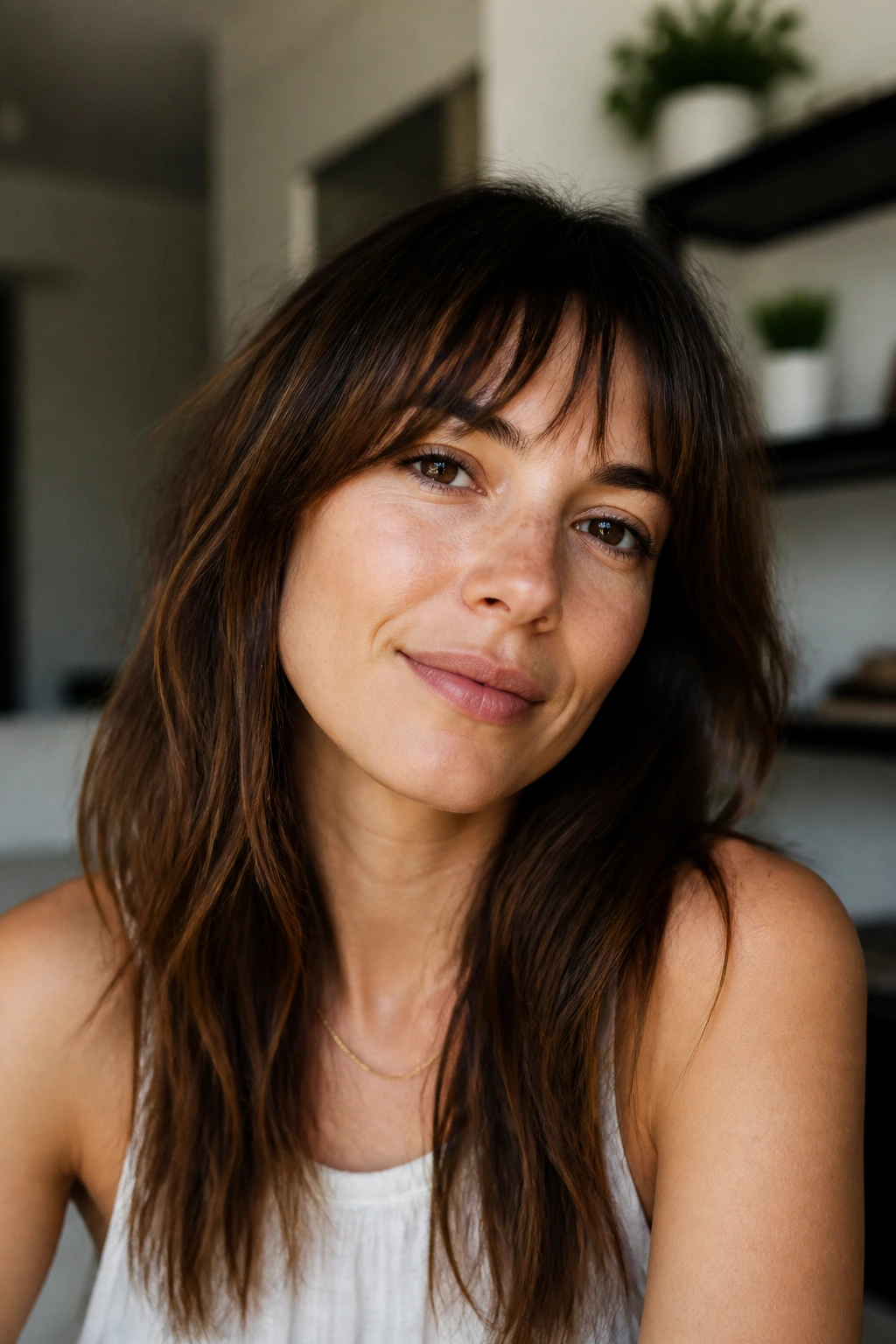
Air-dried: Let the fringe settle with a little mousse or leave-in foam, then separate the pieces with your fingers once it’s mostly dry. This works best for wavy and slightly textured hair that already wants to bend.
Blown out: Dry the fringe first, side to side, then roll or bend the ends just enough to skim the brows. A full round-brush blowout makes sense for fuller fringes, but keep the finish soft.
Pinned back: If you’re running out the door, clip the fringe off your face while it’s drying, then release it later. The roots will bend naturally and the pieces usually fall better than if you had forced them straight down.
With ponytails and buns: Leave the fringe loose and let the front pieces frame the face, or sweep the longest temple bits back with a small clip. Choppy bangs are one of the few bang styles that still look deliberate when the rest of the hair is up.
For dressier days: Curve the fringe slightly away from the face and let the ends separate. A little shine at the roots and a soft bend through the lengths is usually enough.
Small Styling Moves That Make the Fringe Better Every Morning
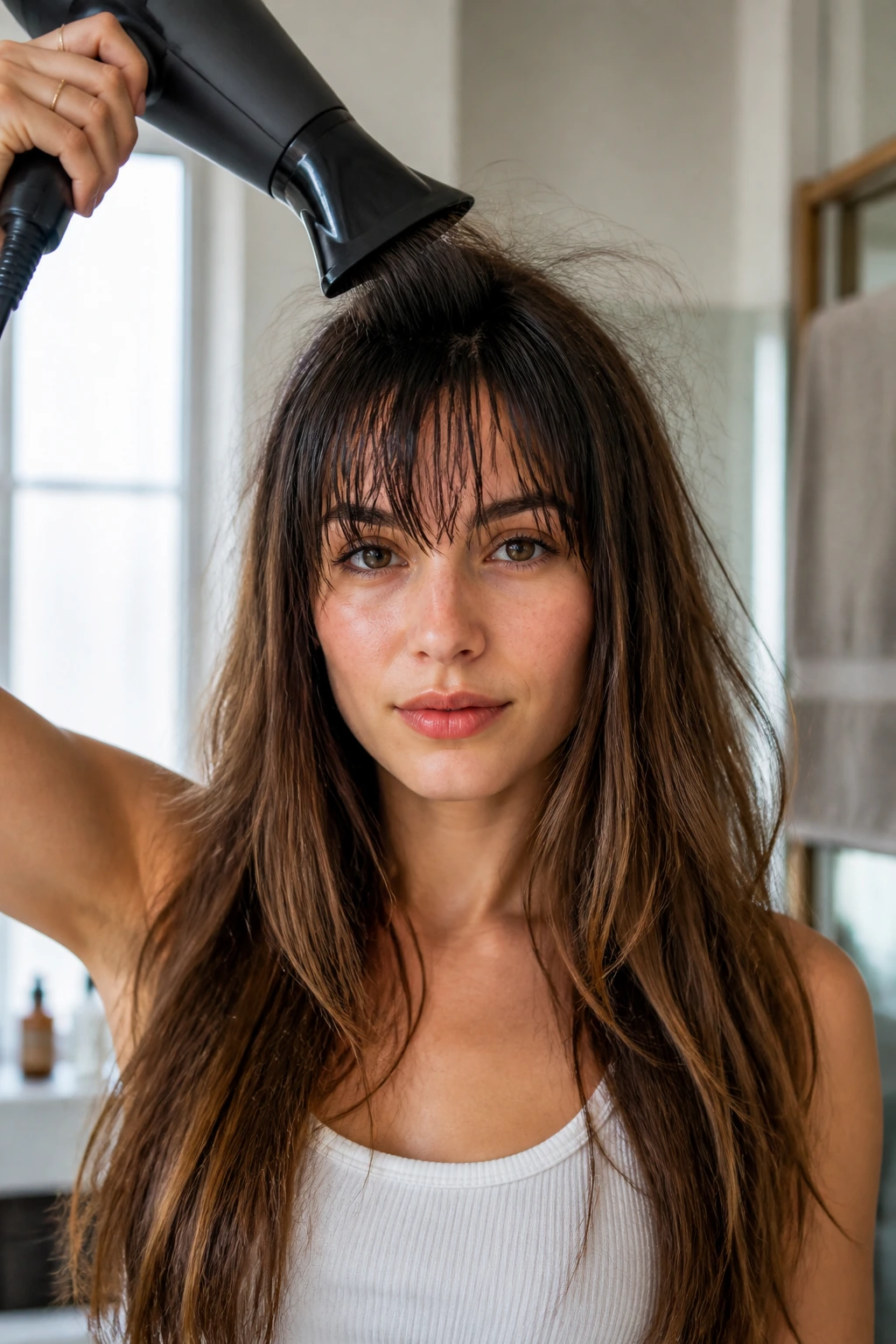
The front of a haircut usually needs less product than people think. Start with the fringe damp, not drenched, and blow-dry the roots first. That one move helps the pieces stay where you want them. If the roots dry the wrong way, the rest of the styling gets harder.
Root control: Dry the bangs in both directions for the first 20 to 30 seconds, then guide them into the final direction. That keeps the root from setting in one stiff bend.
Piece definition: Use a pea-sized amount of styling cream or texturizing spray only on the mid-lengths and ends. If product reaches the roots, the fringe can go flat and separated in an ugly, stringy way.
Fast refresh: If the bangs get bent or oily during the day, mist them lightly with water, blow-dry for 20 seconds, and shake them out with your fingers. It’s quicker than re-washing the whole head, and usually better.
Trim control: If one side starts flipping out more than the other, do not keep flattening it with heat every morning. The cut probably needs a small tidy-up, not another product.
Common Mistakes That Make Choppy Bangs Look Off
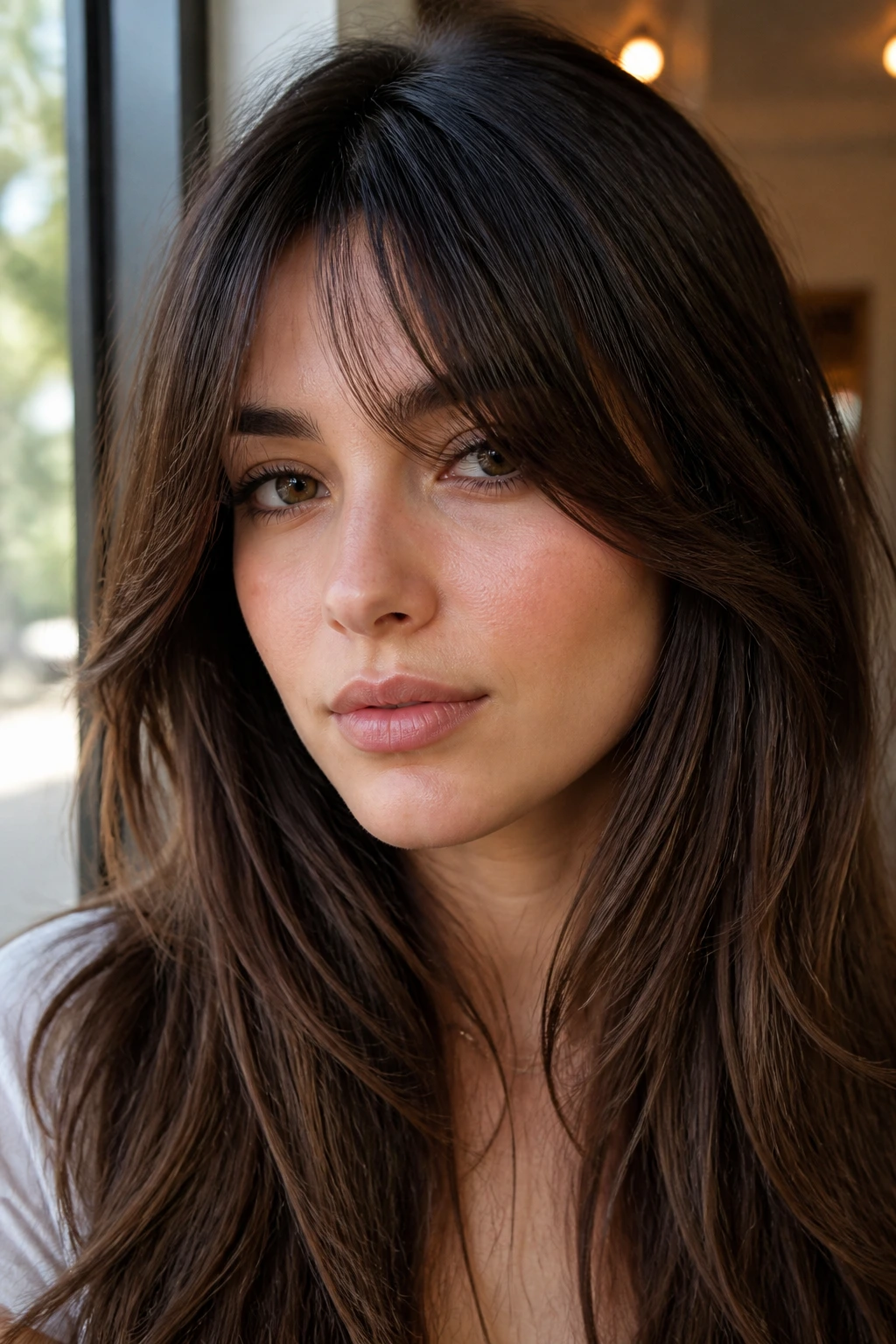
The first mistake is cutting the fringe too thin in the name of “softness.” Thin and soft are not the same thing. If too much hair is removed, the bangs stop framing the face and start looking wispy in a way that feels unfinished. The fix is simple: keep enough weight through the center so the fringe still reads as a shape.
Another problem is ignoring the natural growth pattern. Cowlicks, whorls, and side bends have opinions. If your bangs want to split left, cutting them dead-straight down the middle can become a daily argument. A good stylist cuts with the growth pattern, not against it.
A third mistake is using heavy oils or creams on the front. The fringe gets stringy fast, and all the piecey texture collapses into one greasy strip. Use the lightest amount possible, and stay away from the roots.
Last, people often ask for bangs that are too short for their maintenance level. Short fringe can look sharp, but it also demands trimming and daily styling. If you want easier mornings, choose a length that still blends when it grows out a half inch.
Variations and Adaptations to Try
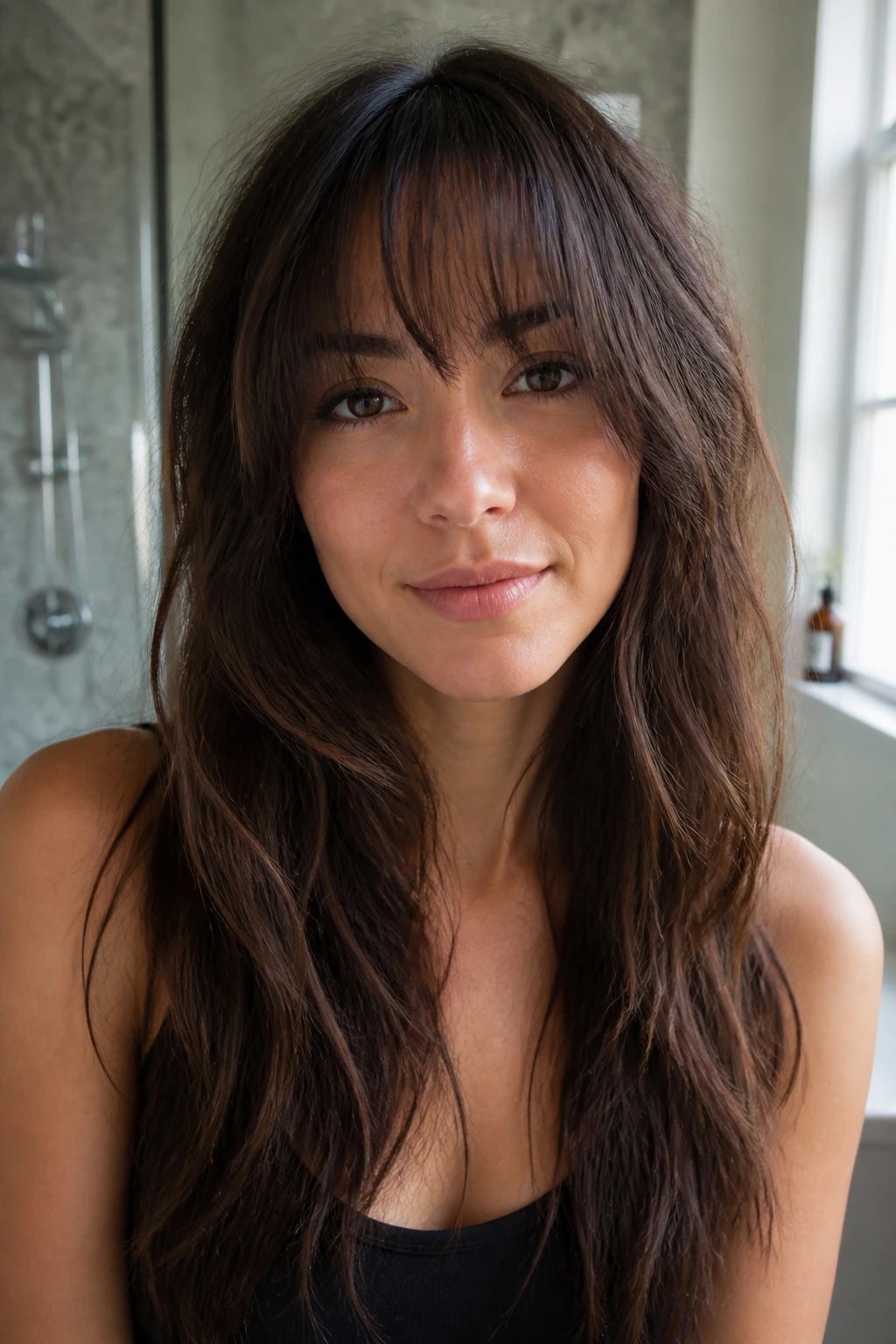
Fine-Hair Feather Cut: Keep the fringe light, but not too sparse. Ask for texture only at the ends so the bangs still hold enough shape to show up on the face.
Thick-Hair Weight Remover: Leave more length through the center and remove bulk underneath. That keeps the front from puffing out like a triangle.
Curly Dry-Cut Fringe: Have the fringe cut dry in its natural curl pattern. Choppy bangs on curls work best when the stylist sees the true shrinkage before taking off too much length.
Low-Maintenance Grow-Out Fringe: Start the shortest pieces a little longer, around the brows or just below. This gives you time before the haircut needs attention again.
Sharper Fashion Fringe: Keep the center a bit shorter and the texture more visible. This is the one for people who want the front to feel stronger and more graphic.
Trim Schedule, Grow-Out, and Daily Maintenance
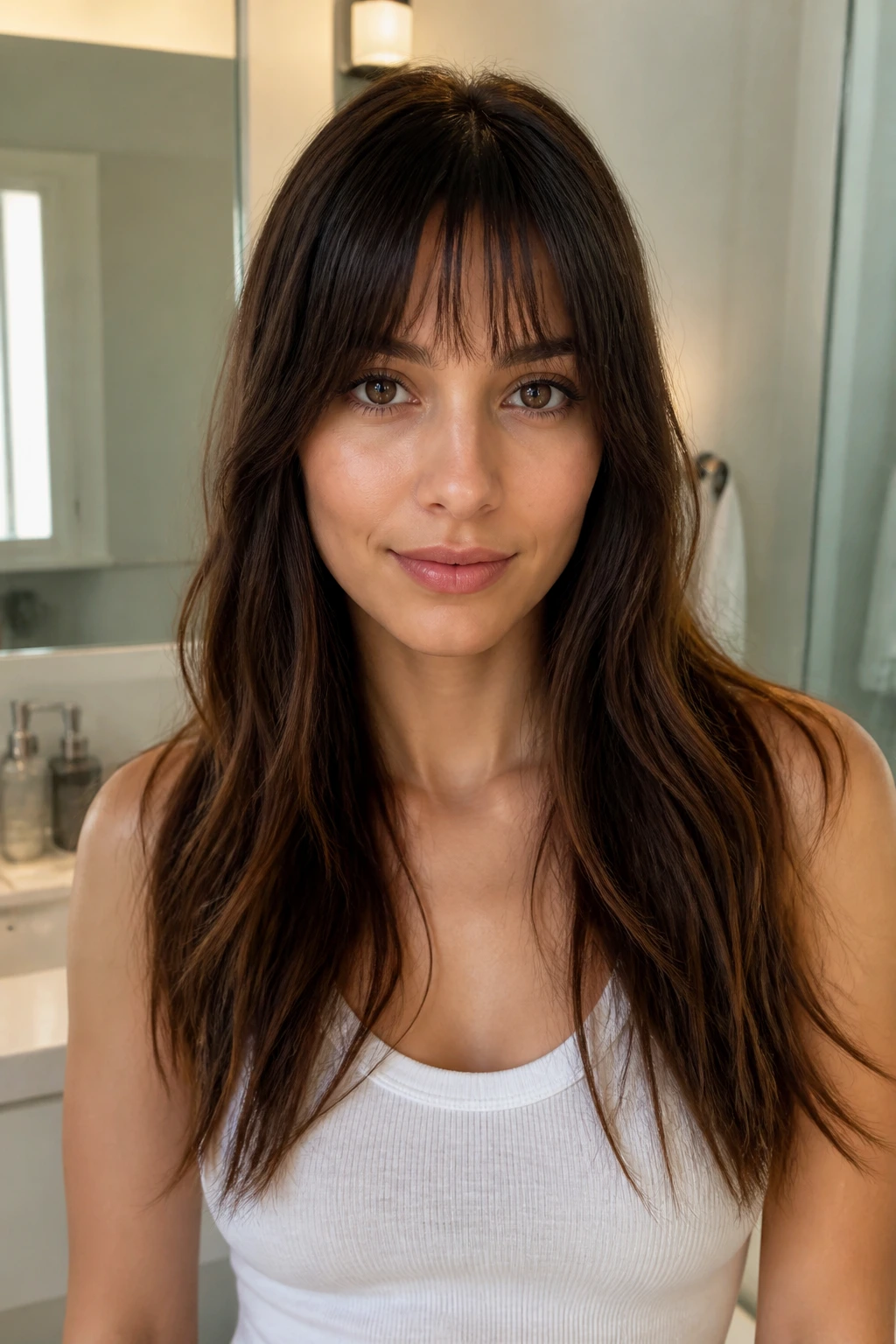
Fringe maintenance is less glamorous than the cut itself, but it makes a huge difference. Shorter choppy bangs usually need a trim every 3 to 5 weeks if you want them to stay crisp. Longer, layered fringe can often stretch to 6 or 8 weeks before it starts losing shape. If your hair grows fast at the front, you already know the drill.
At home, the easiest fix is a quick wash of the fringe only. A sink rinse, a dab of shampoo, and a fast blow-dry can reset the front without washing the full length. That matters on long hair because over-washing the whole head just to refresh bangs is a waste of time and moisture.
Sleeping on a fringe is its own problem. A satin pillowcase helps, and so does clipping the bangs lightly to the side if they’re still damp. If the pieces wake up with a bend, a few seconds of heat and a finger-comb usually bring them back. The key is to deal with the fringe before it gets oily and stuck to the forehead.
Grow-out can be graceful if you let the fringe lengthen into face-framing layers. Once the shortest pieces hit the lashes and the temples are long enough to tuck back, the haircut starts behaving like a layered long cut instead of a bang situation you have to manage.
Questions People Actually Ask About Choppy Bangs
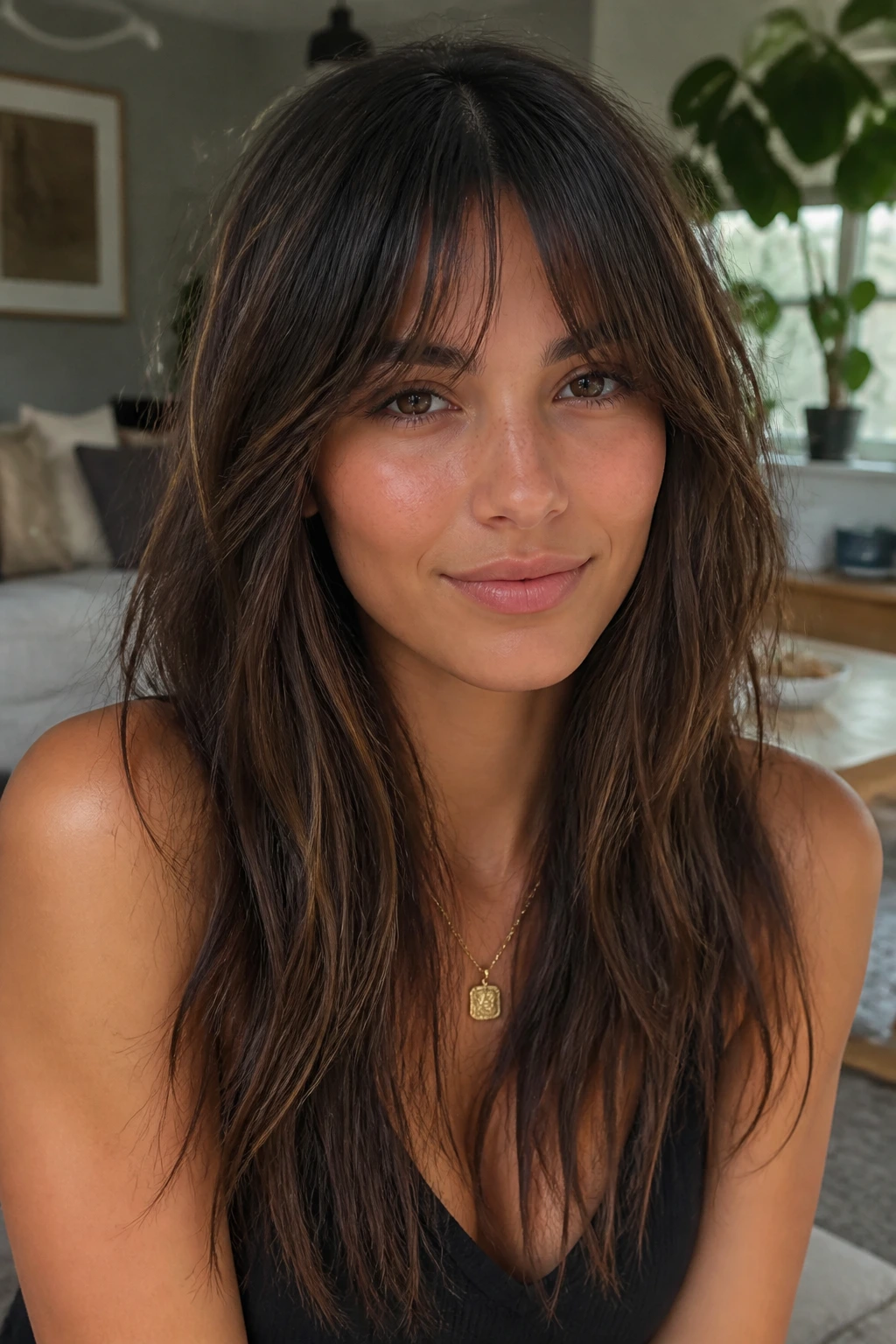
Do choppy bangs work on very long hair?
Yes, and that’s where they often look best. The long length in back gives the front more contrast, so the fringe reads as part of the haircut instead of a disconnected add-on.
Will they work if my hair is thin?
They can, but the cut needs restraint. Ask for piecey texture without over-thinning, or the fringe will separate too much and lose the shape that makes it useful.
Can curly hair wear choppy fringe?
Absolutely, though it should be cut with the curl pattern in mind. Dry cutting usually gives a better result because the stylist can see how much the curls spring up.
How often do I need a trim?
Shorter fringe usually needs attention every 3 to 5 weeks. Longer, blended versions can last longer, especially if the temple pieces are left with enough length to grow out cleanly.
What if my cowlick splits the bangs in the middle?
Pick a style that works with that split instead of fighting it. Bottleneck, curtain, and side-swept versions usually behave better than a heavy straight-across bang.
What should I ask for if I don’t want blunt bangs?
Say you want point-cut ends, soft separation, and a fringe that blends into the face-framing layers. That tells the stylist you want movement, not a hard line.
Can I wear choppy bangs with glasses?
Yes, but the length matters. Brow-skimming, cheekbone-grazing, and split styles usually sit better with frames than very short fringe.
A Fringe That Keeps Long Hair Moving
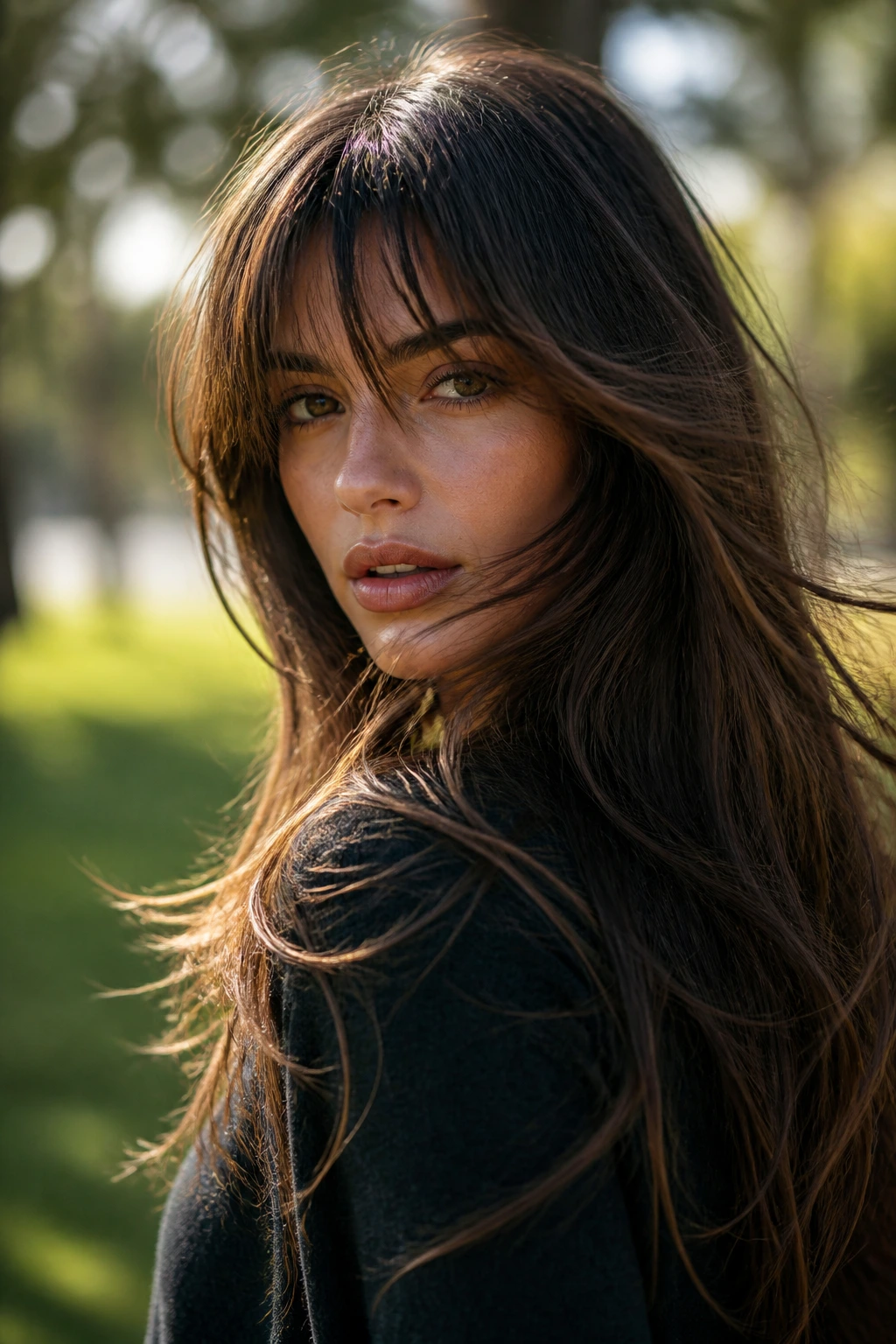
The best choppy bangs on long hair do one thing well: they give the front a reason to exist. That can mean a soft curtain shape, a sharper micro fringe, or a shaggy piecey line that grows out into layers. The style is less about following a trend and more about giving heavy length some movement near the face.
If long hair has started to feel like it’s all length and no shape, a textured fringe is one of the fastest fixes on the table. Pick the version that fits your texture, your growth pattern, and your tolerance for morning styling. Then let the cut do the work. It should look better when you stop fussing with it, not worse.