



Fine hair has a rude habit of looking thinner than it is the second a cut gets too feathery. Add a heart-shaped face to the mix, and the wrong layer map can push even more attention to the forehead while the jaw gets swallowed by wispy ends. The fix is not “more layers.” It’s better-placed layers — the kind that keep enough weight at the perimeter, then move the visual bulk lower on the face where it actually balances things.
That balance matters more than people think. Heart-shaped faces usually carry the widest point around the forehead and cheekbones, then taper toward a narrower chin. Fine hair, meanwhile, shows every cut line, every over-thinned end, every lazy section that was lifted a little too high. A good layered haircut for this combo has to do two jobs at once: make the hair look fuller and make the face look more even.
The best versions feel deliberate. They aren’t fluffy for the sake of fluff. They have a clear shape, a real edge, and a face frame that seems to know where it’s going. When the cut is right, the hair moves, but it doesn’t float away from itself. That’s the whole trick.
Why These Cuts Work So Well on Fine Hair and Heart-Shaped Faces

-
They keep a real perimeter. Fine hair needs a blunt-ish edge somewhere, or the ends start to look see-through under bathroom lights.
-
They shift attention lower. Layers that land near the jaw or collarbone help balance a wider forehead and keep the top half from taking over.
-
They add movement without shredding density. Defined layers give bend and swing, but they leave enough length in each section that the hair still looks like hair.
-
They grow out in a clean way. A good face frame can soften over time instead of turning into odd, floating pieces that need rescuing.
-
They work with simple styling. Most of these shapes need a round brush, a blow-dryer, or a quick bend with a curling iron — not a 40-minute salon ritual.
1. The Collarbone Curtain Layer
This is one of the safest bets for fine hair with a heart-shaped face, and I mean that as a compliment. The longest face-framing pieces brush the collarbone, while the curtain layers open gently around the cheekbones instead of starting too high and creating that over-wide top-heavy look.
What makes it work is the shape, not the drama. Ask for a soft center part, a little shorter movement around the front, and a perimeter that stays full. If the shortest piece lands around the jaw-to-collarbone zone, the cut keeps the lower half of the face from disappearing.
What to ask for
Keep the front pieces long enough to tuck behind the ear without snapping straight back out. If your stylist starts the shortest layer near the eye, that’s probably too high for fine hair.
A quick blowout with a 1.5-inch round brush makes the whole cut look more expensive than it is.
2. The Chin-Grazing Face Frame
If your forehead tends to feel dominant, this cut puts the eye exactly where it should go: lower. The face frame lands at the chin and angles softly down, which adds a little width where a heart-shaped face usually wants it most.
The key is to keep the rest of the hair fairly controlled. Too many short internal layers and the chin pieces lose their job. You want a clean line underneath and just enough movement at the sides to soften the transition from cheekbone to jaw.
This is the kind of shape I like on straight fine hair, especially if you wear a side part or a slight off-center part. It doesn’t need much. It just needs placement. That’s the part most people miss.
3. The Soft Butterfly Shape
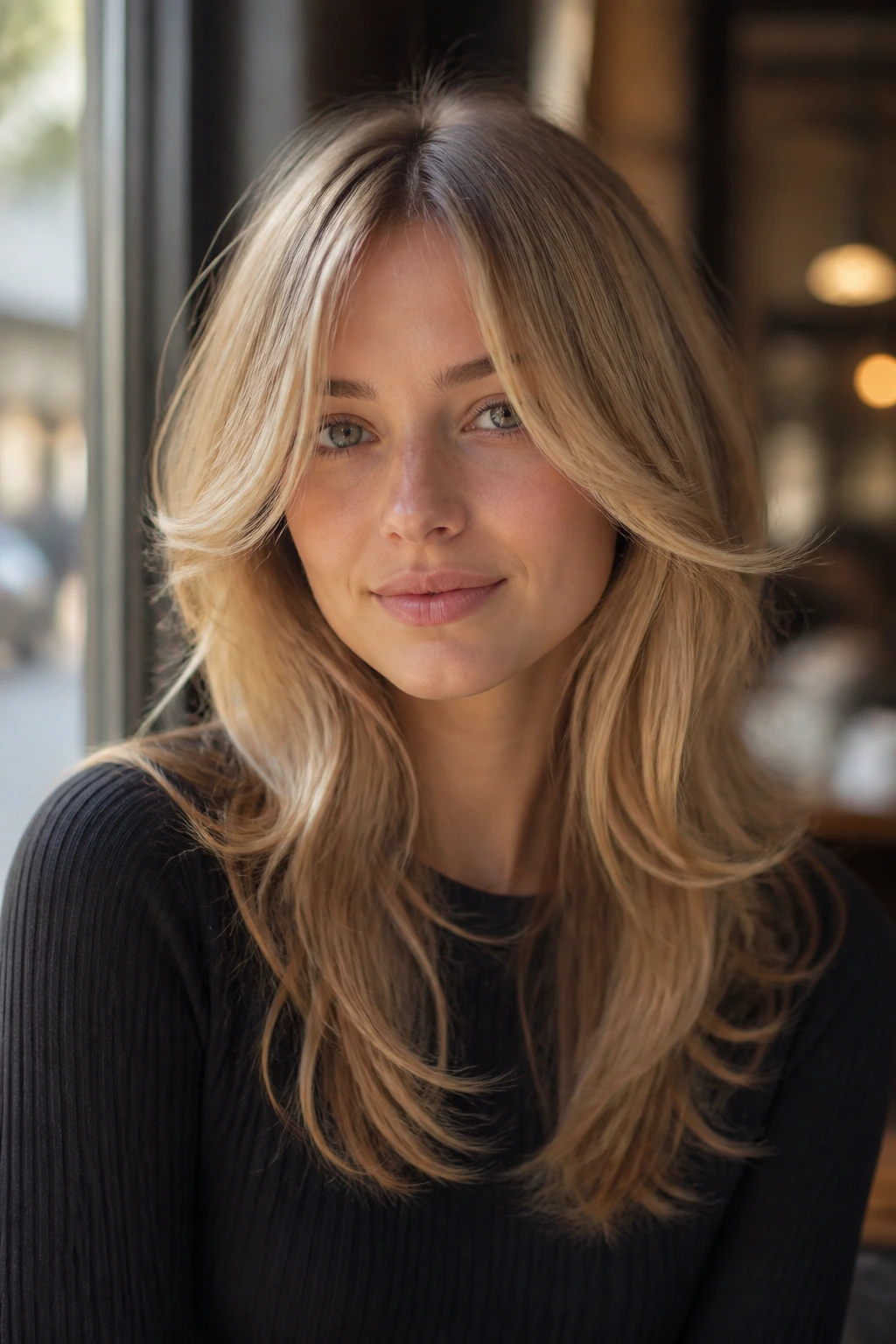
The butterfly cut can be a mess on fine hair if it’s done too high, too choppy, or too aggressively. The soft version is the one worth asking for. The shorter upper layers sit around the cheekbone-to-lip zone, while the lengths stay long and full enough to keep the silhouette from collapsing.
For heart-shaped faces, this is a smart move because the front pieces open the face without sticking out at the temples like little handles. The hair gets lift where it reads as shape, not fluff.
Why it flatters
The upper layers create that airy, blown-out bend, but the lower lengths carry the weight. That matters with fine hair. You want the feeling of motion, not the look of missing hair.
If your hair is pin-straight, this cut behaves best with a round brush or a big-barrel blowout. Air-drying it can work, but it won’t show the same architecture.
4. Invisible Internal Layers
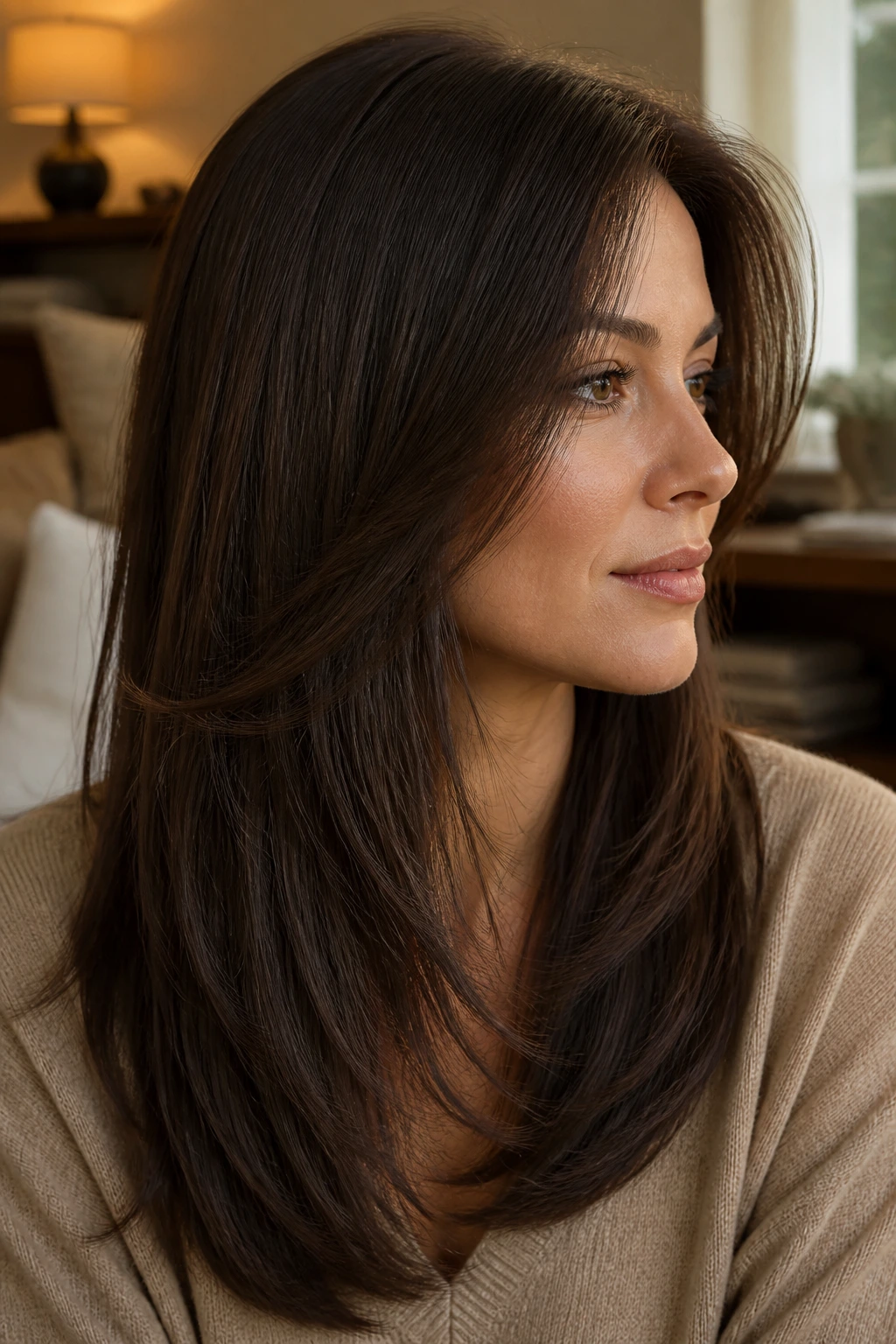
This is the quiet one. No big face frame. No obvious chop. Just internal layers hidden inside the haircut so the outer line still looks clean and dense.
That’s a gift for fine hair, because the perimeter stays full while the inside gets enough release to move. On a heart-shaped face, invisible layers keep the temples from puffing out, which is a problem with more obvious layering. The width stays controlled.
It’s also the cut I’d trust most for people who hate seeing short pieces stick out in every direction by noon. Ask your stylist to remove weight from the interior, not the outline. That one sentence matters.
5. The Long U-Shape With Cheekbone Sweep
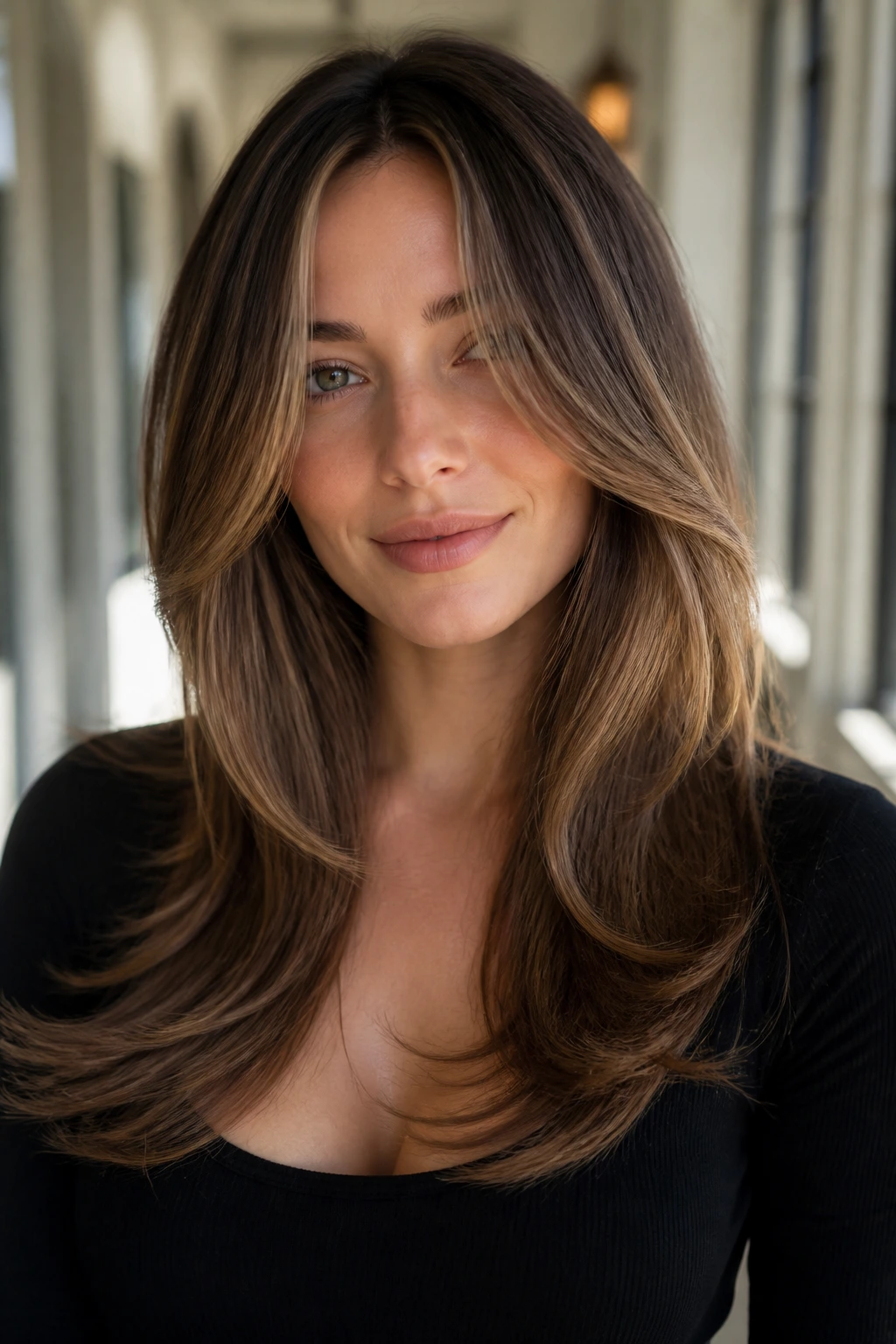
A deep V can make fine hair look stringy fast. A shallow U is kinder. It keeps the bottom line soft and rounded, then sweeps the front pieces across the cheekbones so the face frame has a purpose.
This works especially well if your hair is long and you want movement without losing the feeling of length. The U-shape gives the illusion of fullness because the ends stay connected to the rest of the cut instead of being cut into separate, wandering sections.
Styling note
Wrap the front pieces away from the face with a brush, then let the ends tuck inward just a little. You’re aiming for a curve, not a flip.
6. The Textured Lob With Airy Ends
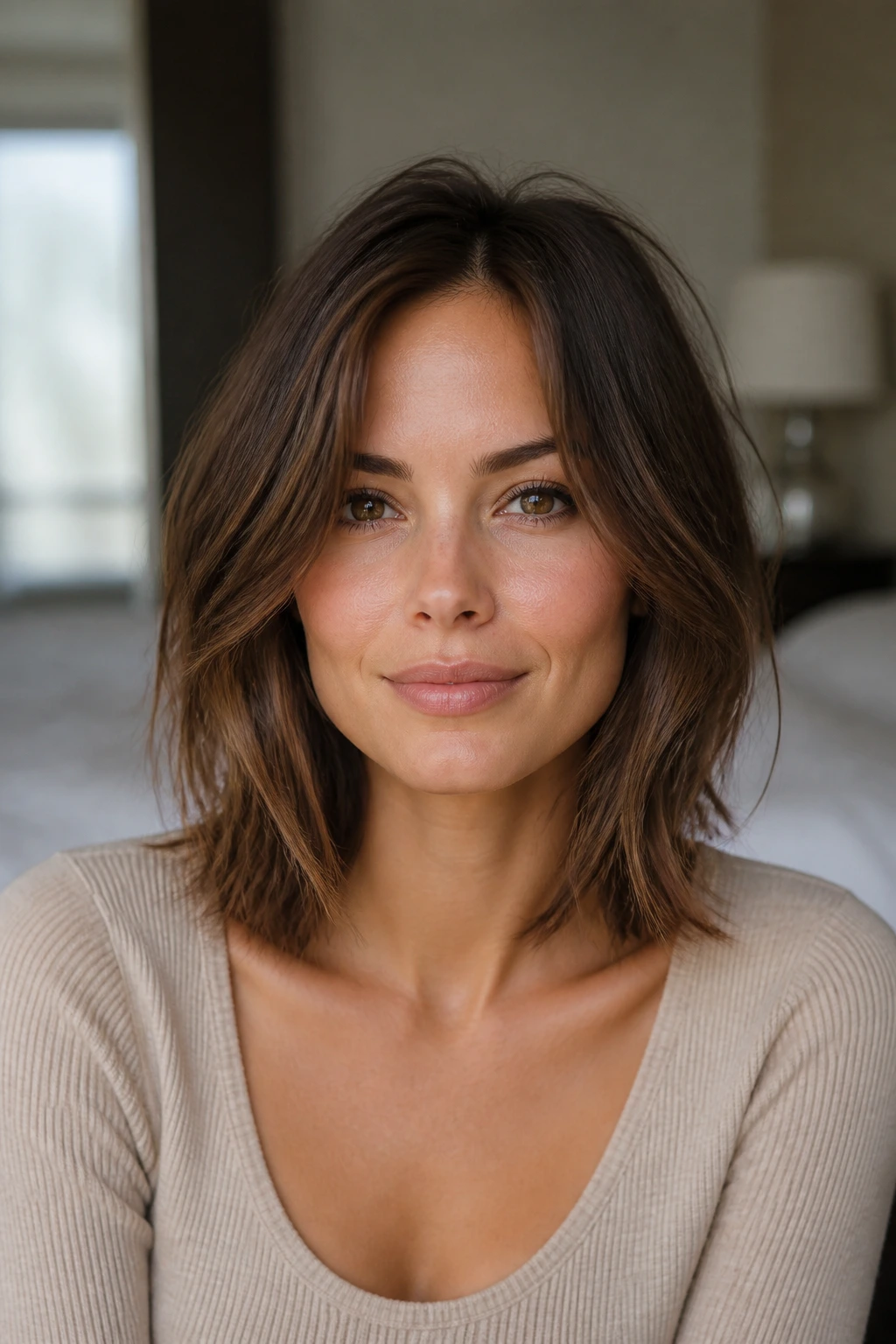
A collarbone lob can be brilliant on fine hair if the texture stays controlled. The ends should be airy, not shredded. That’s the difference between “lifted” and “thin.”
For a heart-shaped face, the lob is especially useful because it gives the jawline some presence. A piecey front that lands just below the chin makes the whole face feel more balanced. Keep the internal layering light and the outline slightly blunt.
The best version has a small bend, maybe a soft wave from mid-length down, and the roots stay cleaner than the ends. If the top is too broken up, the cut loses the structure that makes it work.
7. Bottleneck Bangs and Mini Layers

Bottleneck bangs are one of the few fringe styles that can be kind to a heart-shaped face without swallowing it. They start a little narrower in the center, then open out around the brows and cheekbones, which helps soften a strong forehead without boxing the face in.
On fine hair, the trick is to keep the bangs light but not sparse. And the mini layers around the front should be short enough to matter, long enough to keep from fraying into nothing. That usually means cheekbone length, not much shorter.
What to watch
If the bangs are cut too thick, they’ll sit like a curtain and flatten the top of fine hair. Better to keep them piecey and flexible.
This shape looks best when the ends around the face are styled with a slight bend, not a hard curl. Softness wins here.
8. The Jawline Flip Layer
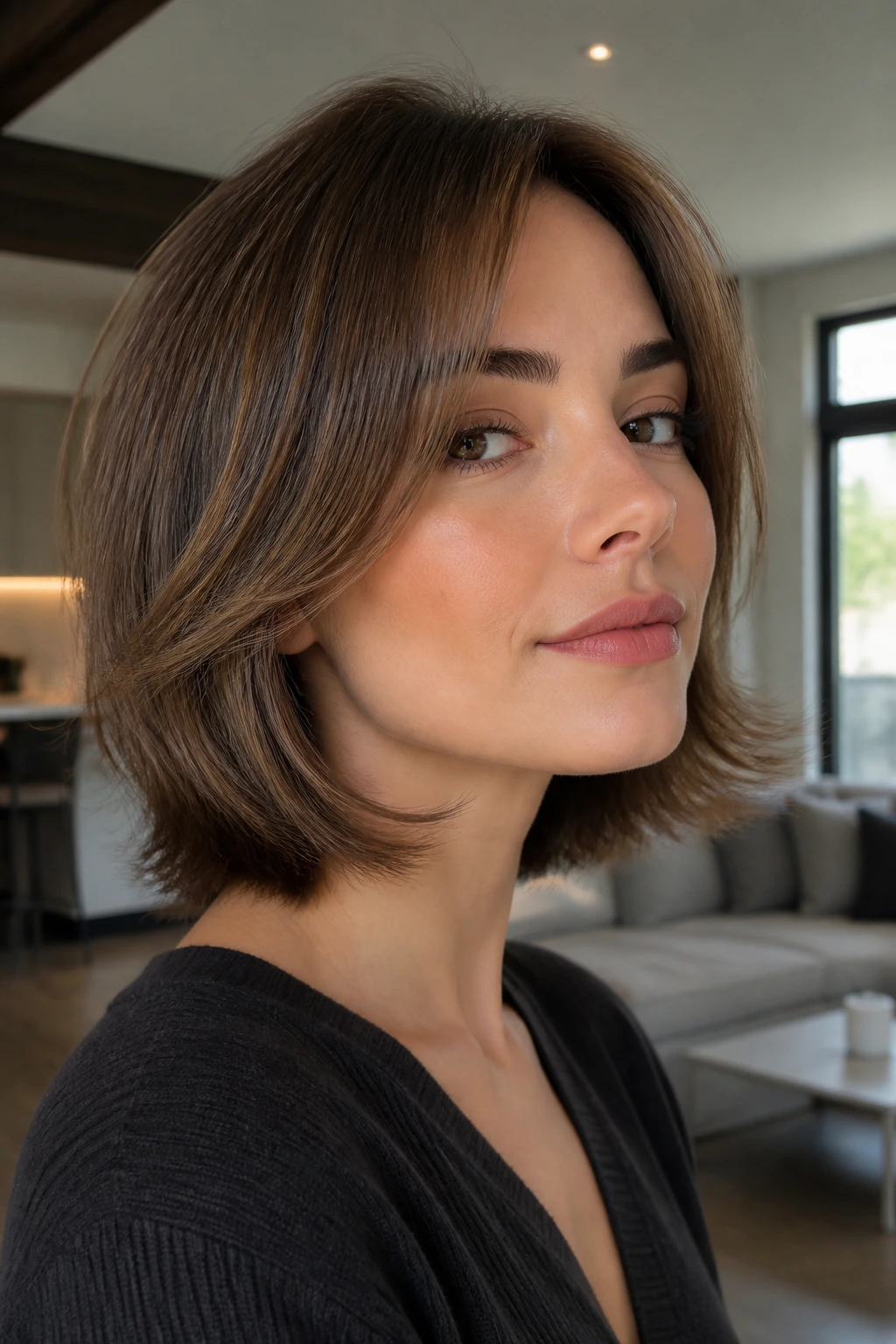
This one is all about movement at the exact point a heart-shaped face needs it. The layers are cut to flip outward or curve at the jawline, which makes the lower half of the face read a little broader and more grounded.
It’s a surprisingly flattering trick on fine hair because you don’t need a ton of density to make it work. You just need the right angle. When the front sections skim the jaw and turn slightly out, the cut feels intentional instead of floaty.
I’d ask for this if your hair tends to hang straight and lifeless around your chin. A round brush and a cool-shot finish will keep the bend in place longer than hot air alone.
9. The Feathered Mid-Length Layer
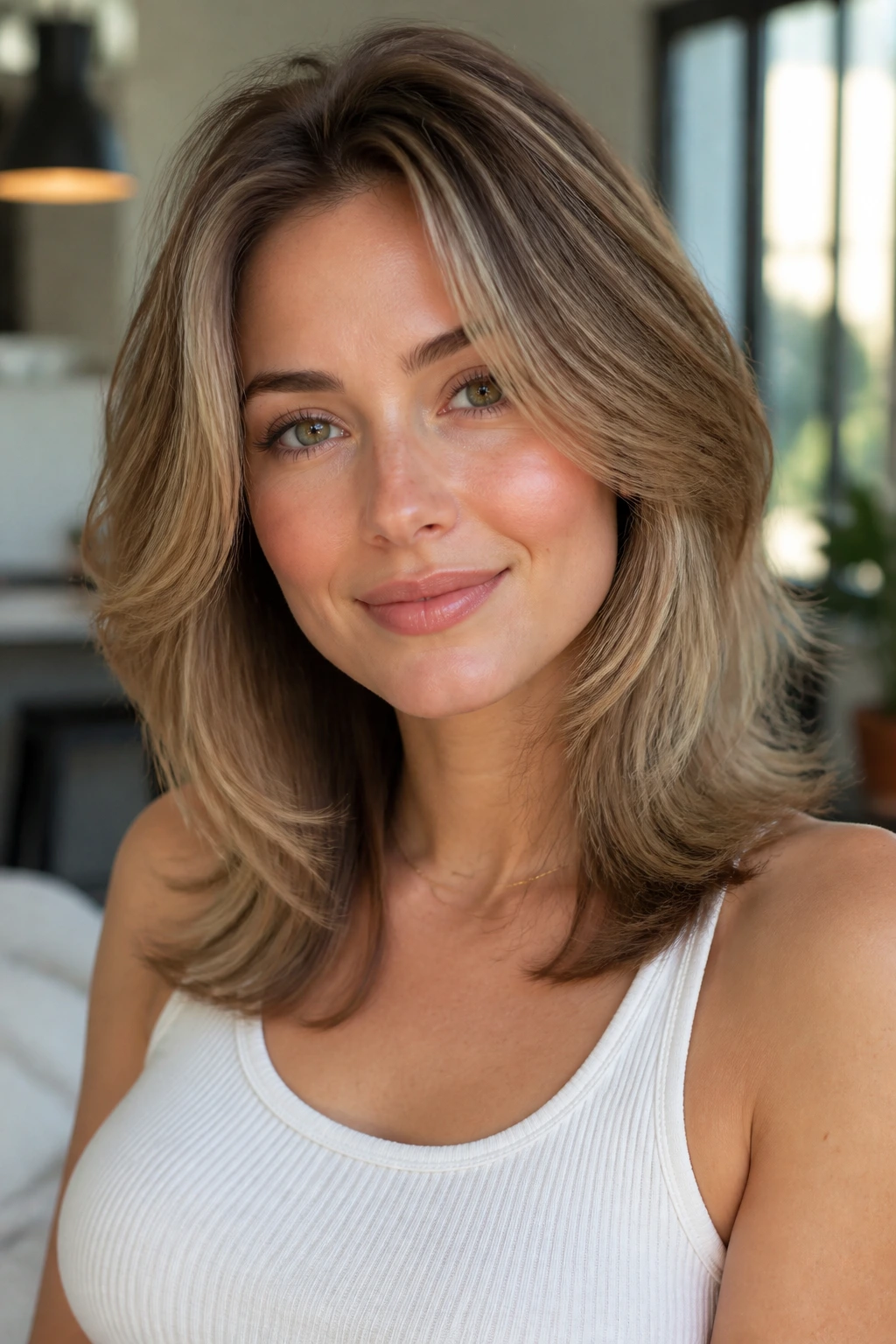
Feathered layers can go wrong fast on fine hair. Too much feathering and the ends look like they’ve been thinned by a windstorm. Done properly, though, a mid-length feather gives the hair a soft, lifted shape without stripping out the weight.
For a heart-shaped face, this is nice because it fills the space around the cheeks and jaw without cutting up the top of the head. Keep the feathering around the mid-lengths and leave the bottom line intact.
This is the cut for someone who wants visible movement but doesn’t want to look “layered” in a loud way. It reads polished, not flashy. And that’s usually the better choice with fine hair anyway.
10. The Light Shag With Polished Ends

A shag sounds like it should work on fine hair, but only if the shape is controlled. The polished version keeps the top airy and the ends clean. That way you get texture without losing the feeling of thickness.
Heart-shaped faces do well with this because the shag’s movement can be directed lower, around the cheek and jaw zones. The fringe and crown get some lift, but the outline stays neat enough to keep the cut from exploding outward.
I’d avoid a heavy shag if your hair is very fine. It can collapse into a scrappy mess. The good version has a little attitude and a lot of restraint.
11. The Side-Parted Sculpted Layer
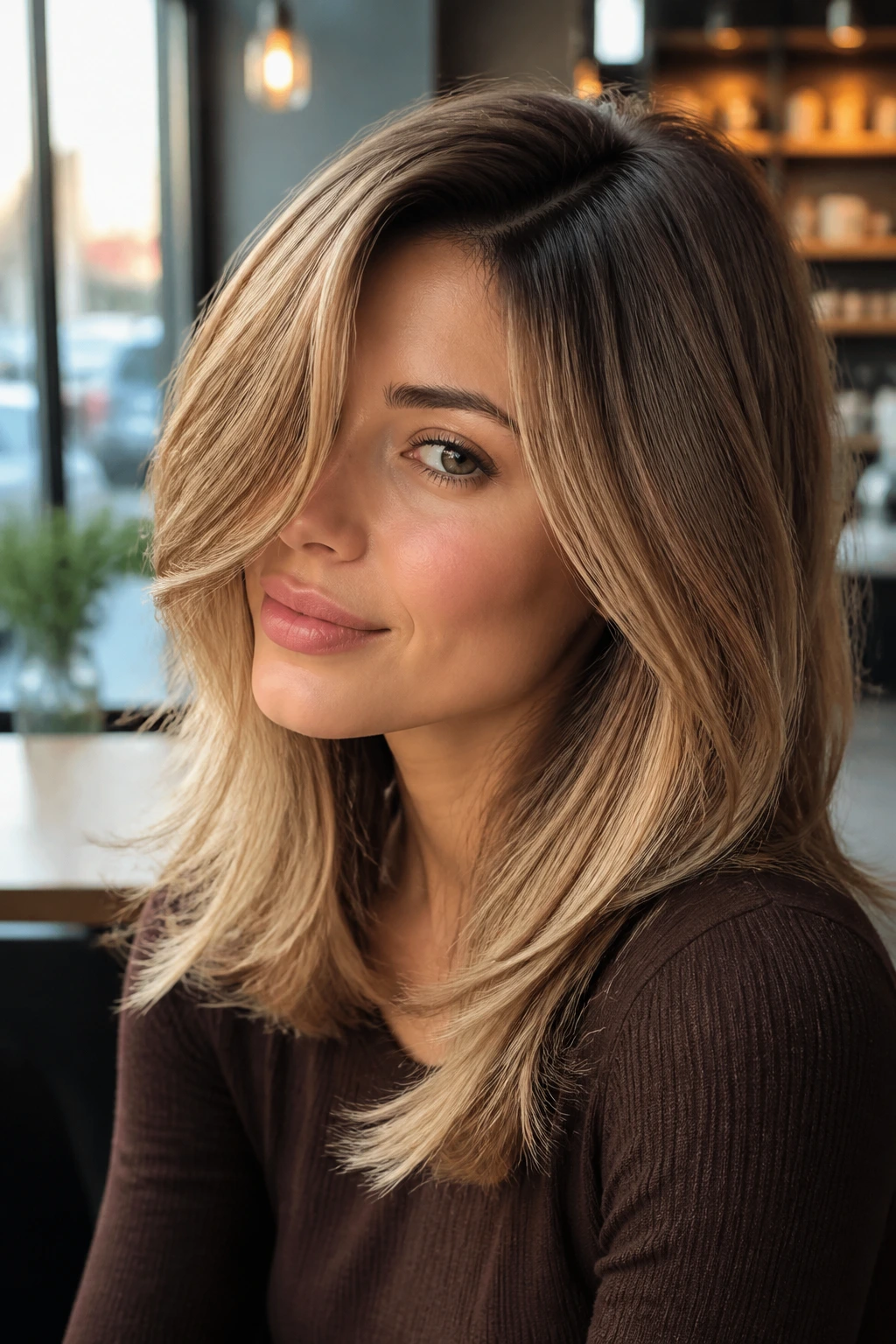
A deep side part changes everything for a heart-shaped face. It takes some visual weight away from the forehead and puts it where fine hair often needs it most: along the crown and outer edge.
The layers here should be sculpted, not choppy. Think gentle bends, soft graduation, and a front section that falls across the brow without cutting the face in half. If your hair has any natural lift at all, a side part can make it look twice as full.
This is one of those cuts that looks expensive when it’s dry-blown well and merely decent when it’s not. That’s fine. The shape still does a lot of the work for you.
12. The Collarbone Shatter With Rounded Ends
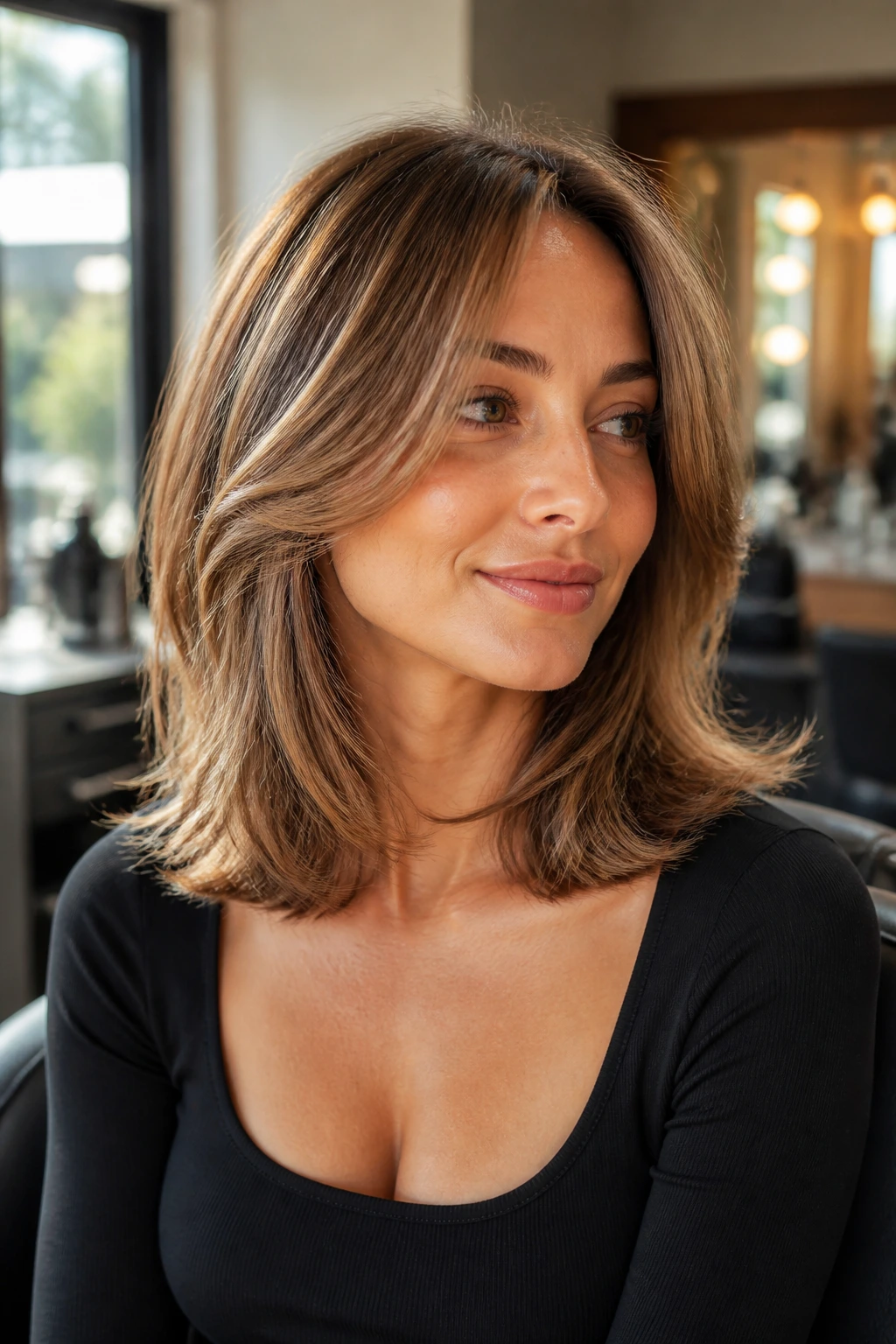
“Shatter” sounds scary, but in this case it just means broken-up movement inside a rounded shape. The perimeter stays soft and curved, while the interior gets a little texture so the hair doesn’t sit like a flat sheet.
That’s useful if your fine hair has a slight wave or bends easily. A heart-shaped face benefits from the rounded outline because it keeps the top from feeling too wide and gives the jaw some softness.
The science behind it
A rounded edge reflects fullness better than a jagged one. You don’t need a lot of layers for this to work. You need the right distribution of them.
Keep the ends healthy and resist the urge to over-razor the bottom. The look depends on the cut holding together.
13. Long Layers With a Center-Part Curtain Fringe
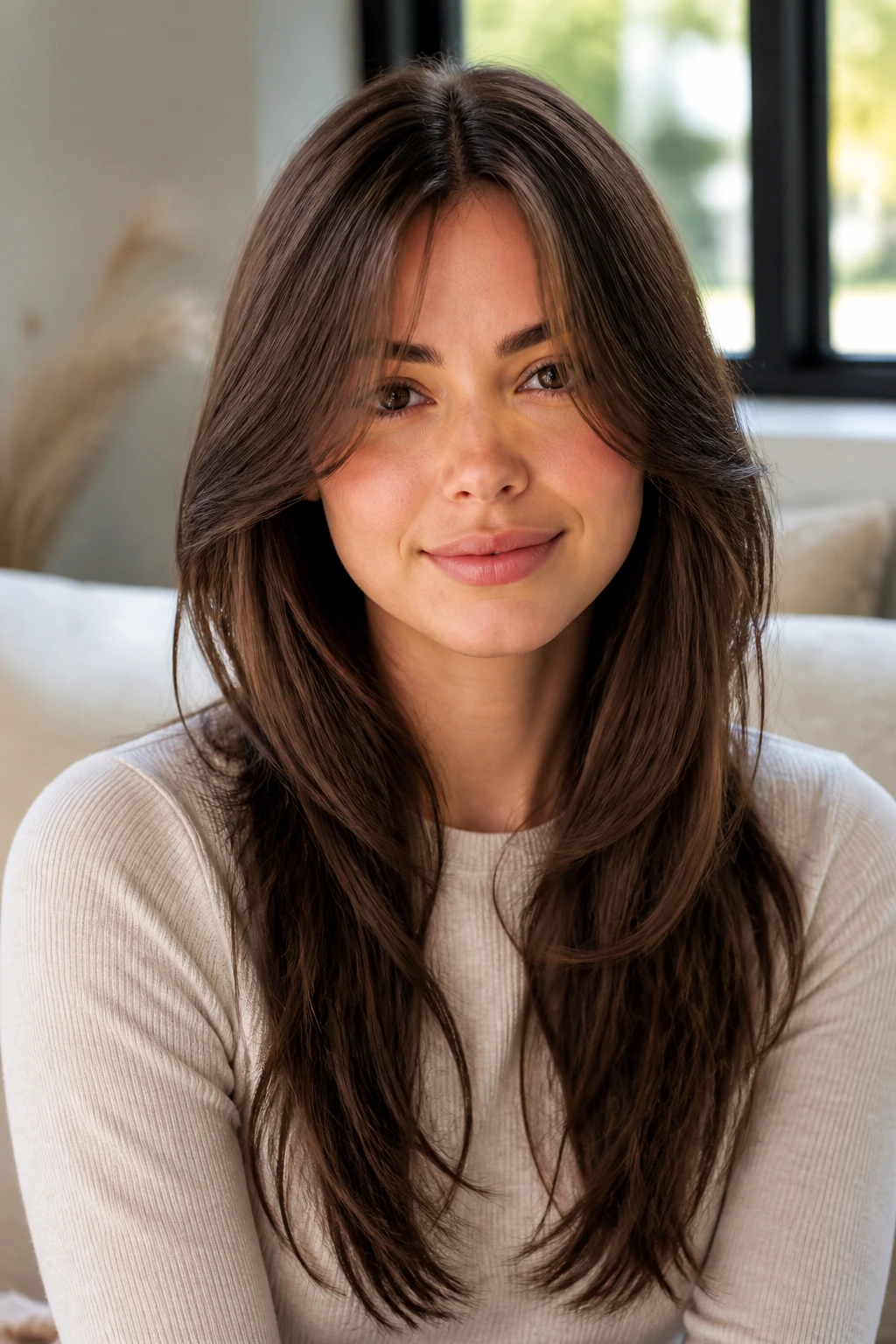
This is the classic answer when you want your hair to stay long but not limp. The fringe opens in the center and falls away from the forehead, while the long layers keep the silhouette moving from top to bottom.
On a heart-shaped face, that center opening is useful because it softens the width at the brow line without forcing the rest of the cut into a side-parted shape. The face frame should land around lip to collarbone length, depending on how narrow your jaw is.
If your hair is fine but dense, this cut can be especially good. You get movement without giving up the feeling of having actual hair on your head. Tiny difference. Big payoff.
14. The Wispy Pixie Shag
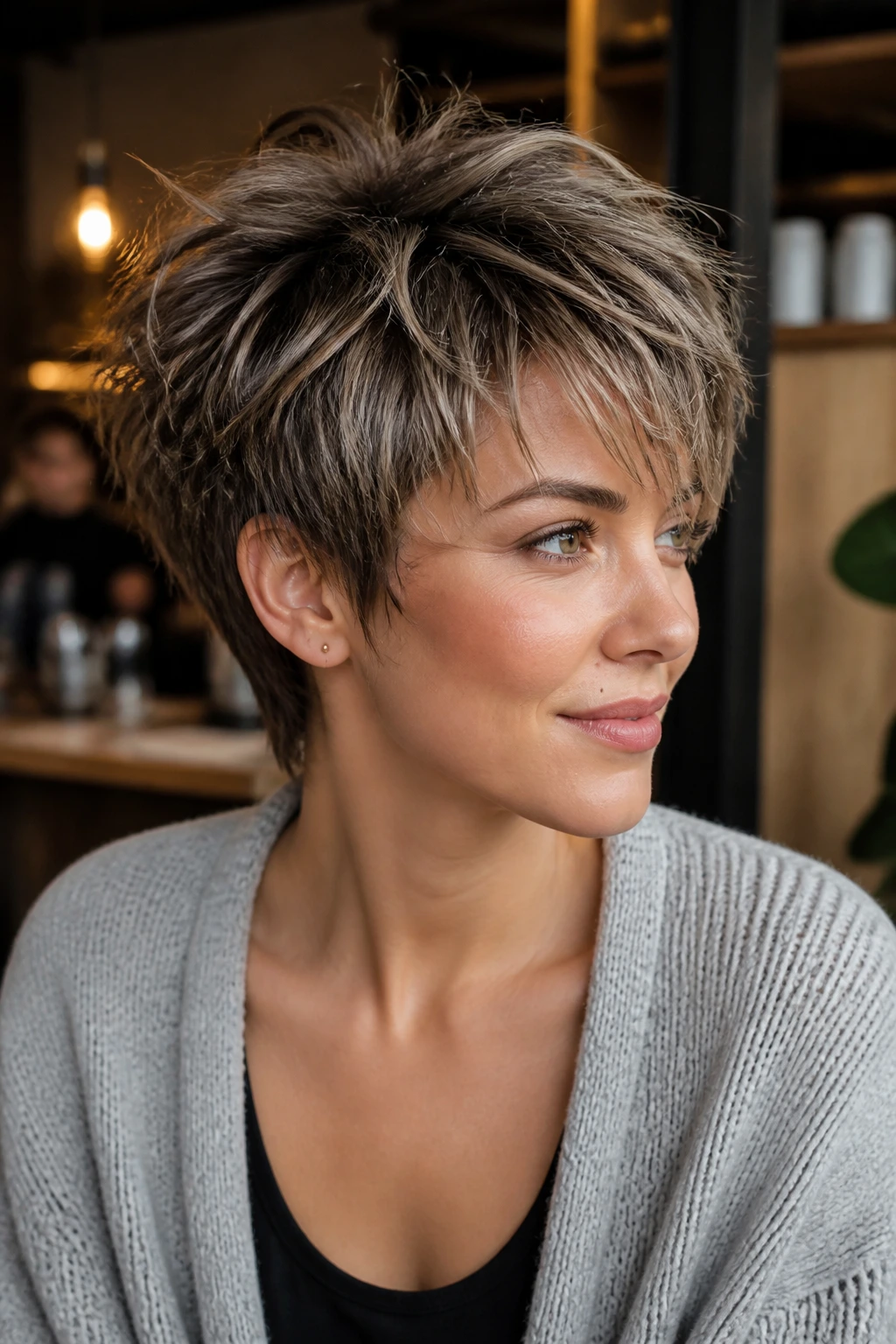
Short hair can be a good move for fine strands, but only if it’s cut with enough shape to keep the crown from lying flat. A wispy pixie shag gives you lift on top, longer movement at the sideburns, and a little pieceiness through the fringe.
For heart-shaped faces, that longer fringe helps keep the forehead from dominating the cut. The top should stay slightly longer than you think, because fine hair shrinks visually once it dries.
I like this cut for people who want air around the face and don’t want to fight with length. It’s not a wash-and-walk-away shape, though. It likes a bit of paste or mousse at the roots, then a finger-rake through the ends.
15. The Micro-Layered Bob
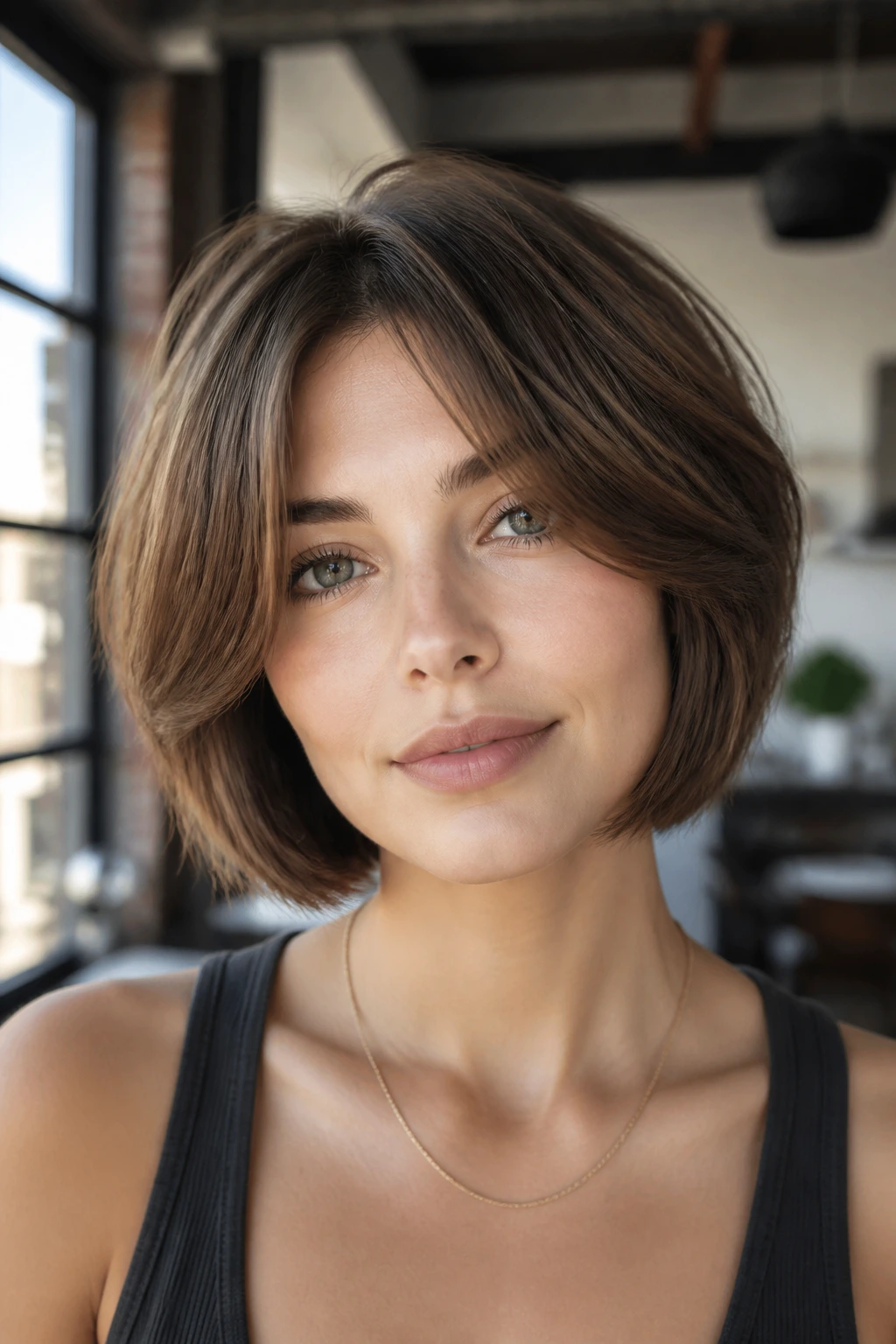
A bob can be brutal on fine hair if it’s cut too heavily inside. The micro-layered version keeps the bob’s outline strong and only nudges the inside enough to stop it from falling into a block.
That’s exactly why it works on a heart-shaped face. A chin-to-jaw-length bob creates some width where the face naturally narrows, and the slight layering stops it from looking helmet-like. The line stays readable. The movement stays subtle.
What to ask for
Tell the stylist you want a bob that still looks full when air-dried. If they start talking about “taking out weight” with thinning shears, back away a step.
This cut loves a side part or a tucked-behind-one-ear style. It gives the face shape a bit of asymmetry, which helps a lot.
16. The Round-Brush Blowout Cut
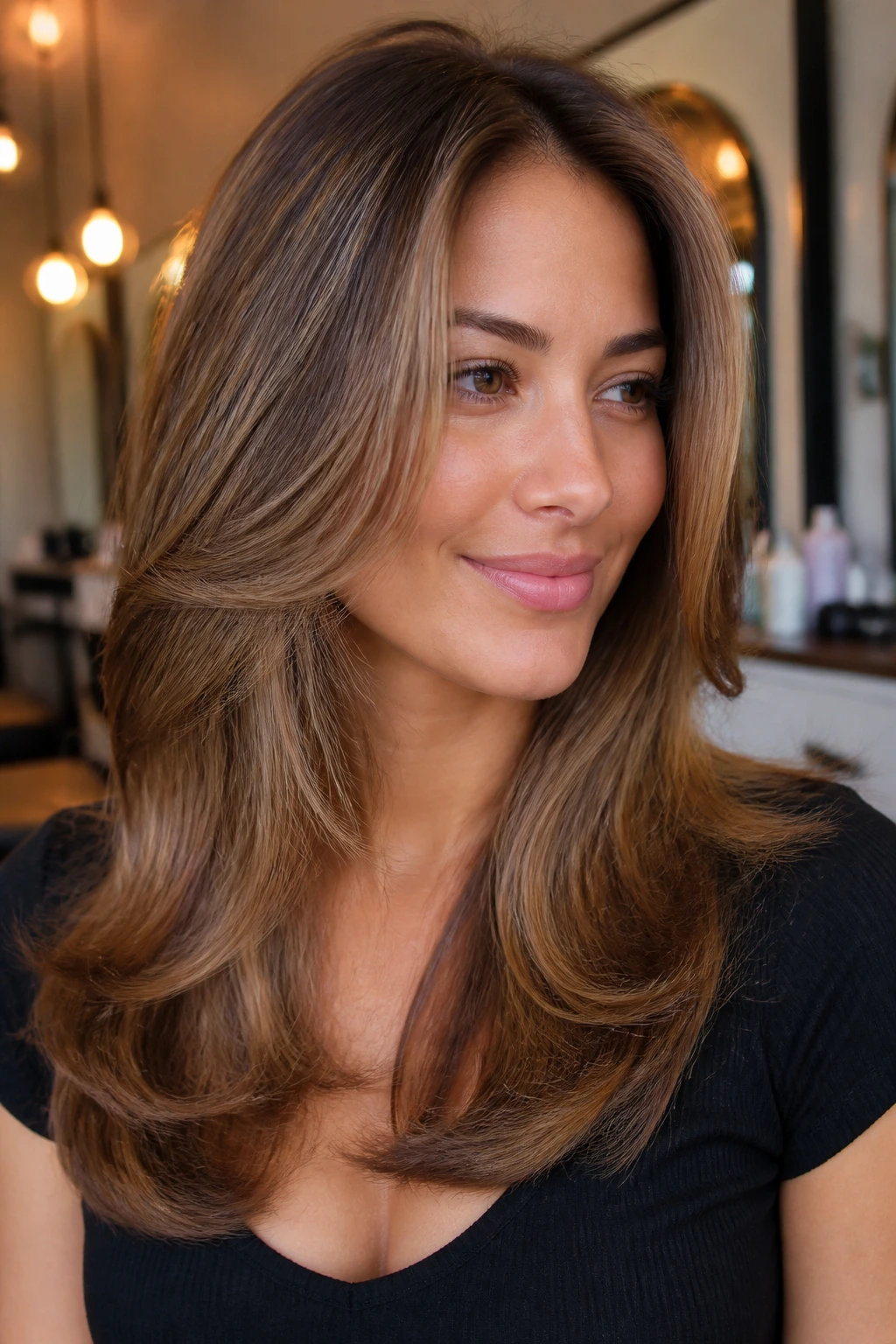
Some cuts are built to air-dry. This one is built to be brushed. The layering sits in all the places a round brush can catch: crown, cheekbones, and the front ends that want to turn under or away from the face.
On fine hair, that means lift without collapse. On a heart-shaped face, it means the front can be molded to soften the forehead and widen the jaw visually. The cut should not be so layered that it falls apart once the brush leaves it.
If you like a polished finish, this is one of the best choices on the list. It also grows out gracefully because the layers are doing a job, not just decorating the head.
17. Graduated Layers That Lift at the Crown
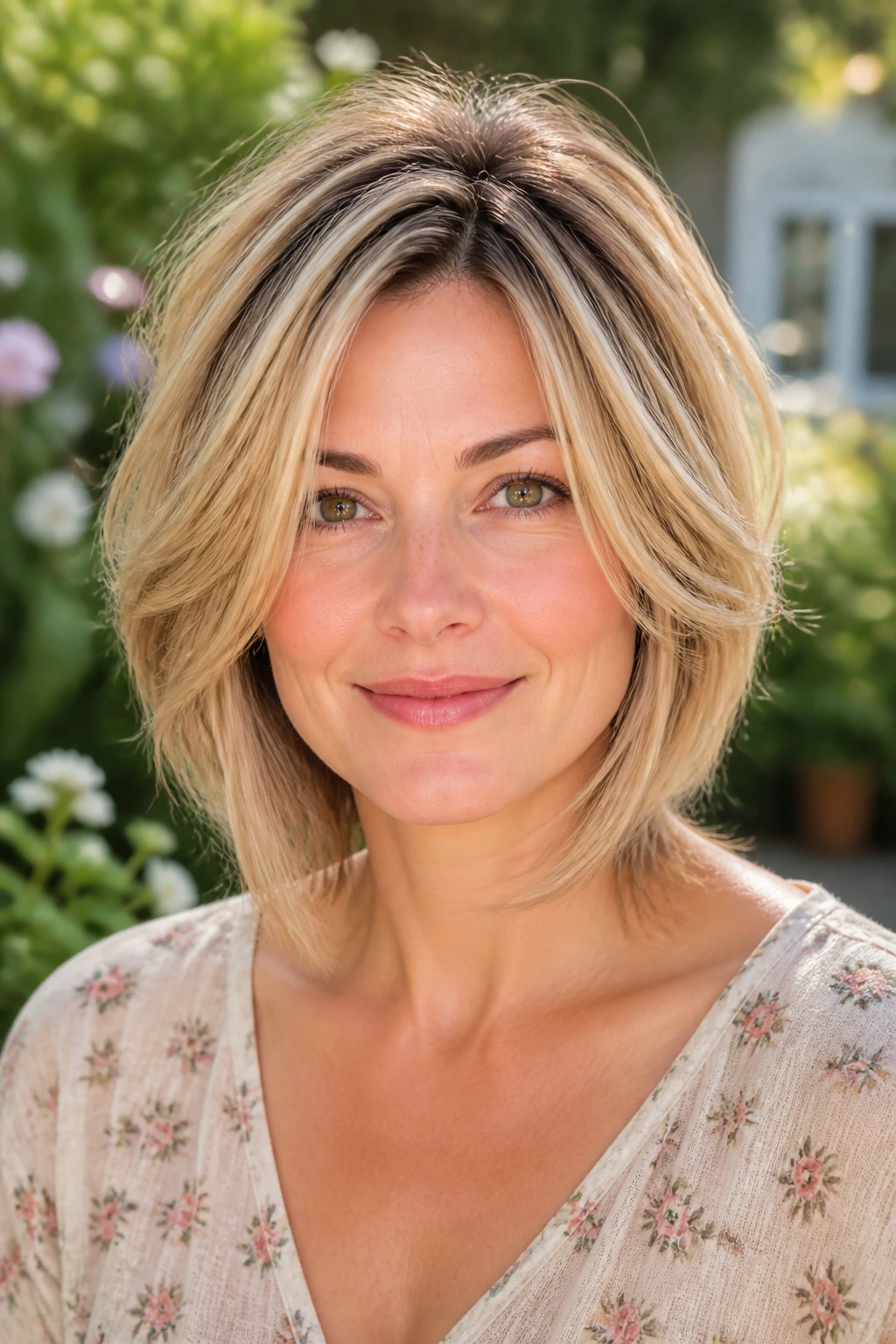
Crown lift is the missing piece in a lot of fine-hair cuts. People focus on the front and forget that a flat crown makes the whole head look smaller. Slight graduation at the top changes that fast.
This shape is useful for heart-shaped faces because it gives height without making the forehead wider. The lift sits above the face, not beside it. That’s a useful distinction.
The trick is to keep the graduation controlled. You want enough stacking to create support, but not so much that the back starts looking stacked like a short wedge. Fine hair needs a little architecture. Not a tower.
18. The Face-Framing C-Shape

A C-shape curves the layers around the face in a soft arc, usually starting around the cheekbone and closing down near the jaw or collarbone. On a heart-shaped face, that curve is a small miracle because it brings the eye downward and inward at the same time.
Fine hair likes this because the shape is visible even when the hair itself is light. You’re not relying on bulk. You’re relying on line. That’s more dependable.
How to use it
If you wear your hair straight, the C-shape should still show through at the ends. If you wear it wavy, the curve becomes even more obvious.
It’s one of the easiest styles to grow out without losing the original idea.
19. The Soft Octopus Cut

The octopus cut has a reputation for being edgy and exaggerated. The soft version is much kinder to fine hair. It keeps the crown layered and airy while letting the lower sections hang longer and move like separate tendrils.
For heart-shaped faces, the lower pieces are the important part. They stop the face from looking top-heavy and give the chin area more presence. The crown gets texture, but not so much that the style turns scrappy.
This cut is best when the ends are left healthy and the layers are spaced thoughtfully. Too many tentacles and it gets stringy. A few deliberate ones, though? That works.
20. The Shoulder-Skimming Rounded Cut
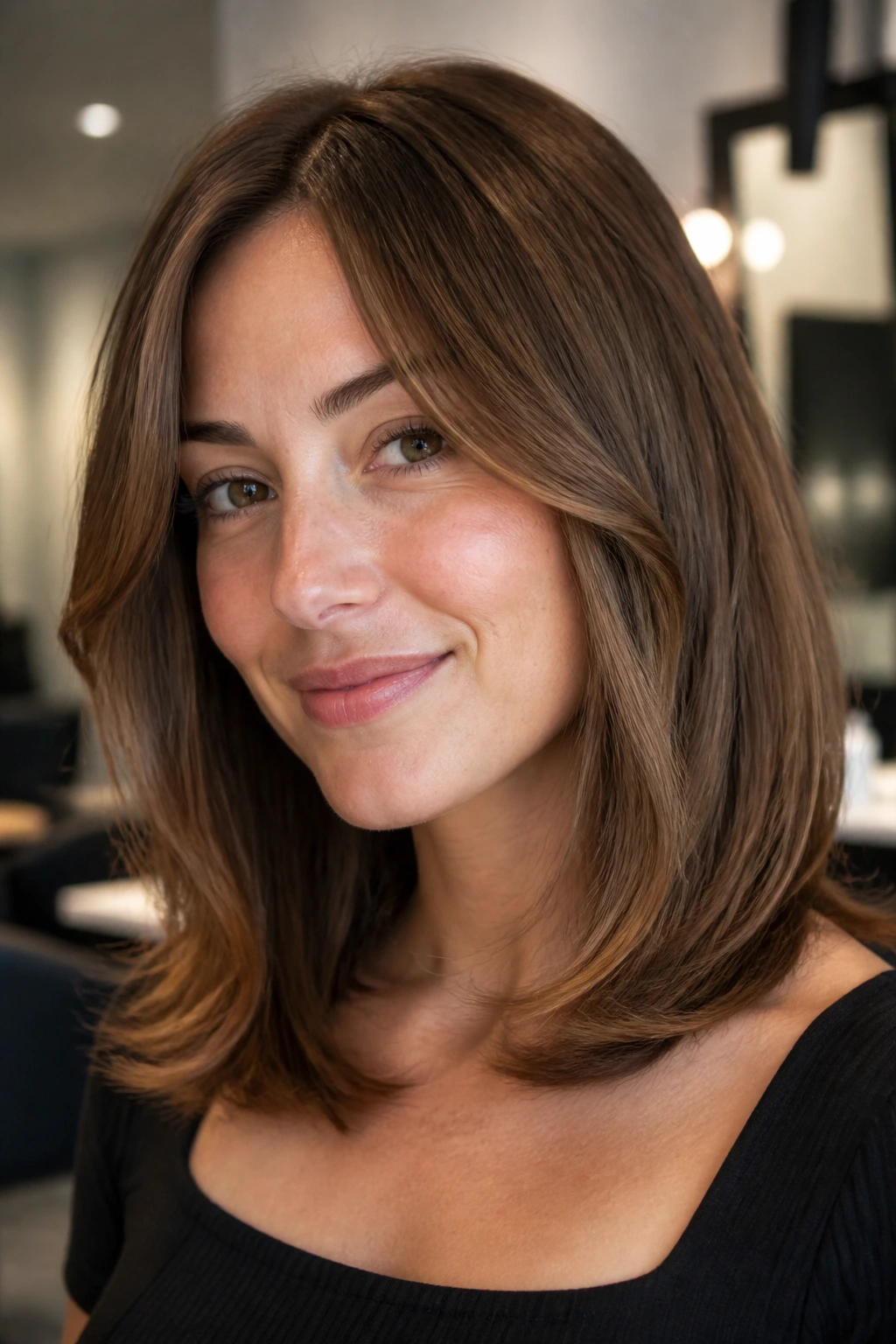
Shoulder length can be tricky. Too blunt and it goes flat. Too layered and the ends vanish. The rounded version lands right in the middle, with gentle shaping that lets the hair curve around the shoulders instead of hanging in a hard line.
That’s good news for a heart-shaped face because the cut adds softness near the jaw without crowding the temples. Fine hair gets a fuller outline, especially if the ends are cut with a slight inward arc.
I like this shape for people who want a middle ground between a lob and longer layers. It’s easy to wear, and it doesn’t scream for a perfect blowout every single time.
21. Long Layers With Tucked-Under Ends
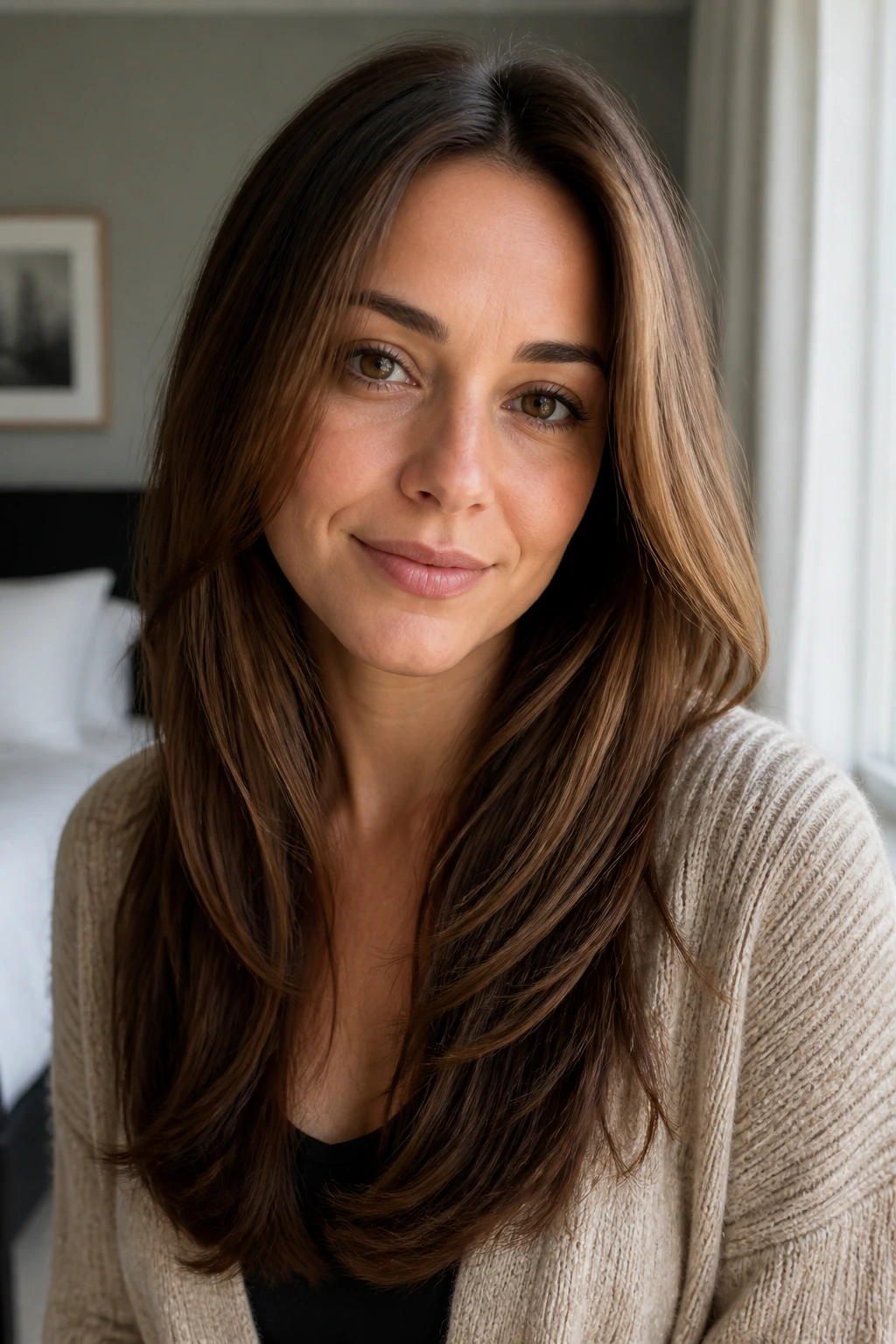
Some long layered cuts go a little too far and end up looking thin by the time they reach the bottom. This version avoids that by keeping the ends weighty enough to tuck under with a brush or blow-dry.
For fine hair, that matters. The tucked-under finish makes the cut look denser, and the long layers still give the hair motion through the mid-lengths. On a heart-shaped face, the inward direction pulls the eye down toward the jaw.
If your hair is naturally straight, this is a strong choice. It looks neat with almost no drama. Sometimes that’s the point.
22. The Brushed-Forward Layered Lob
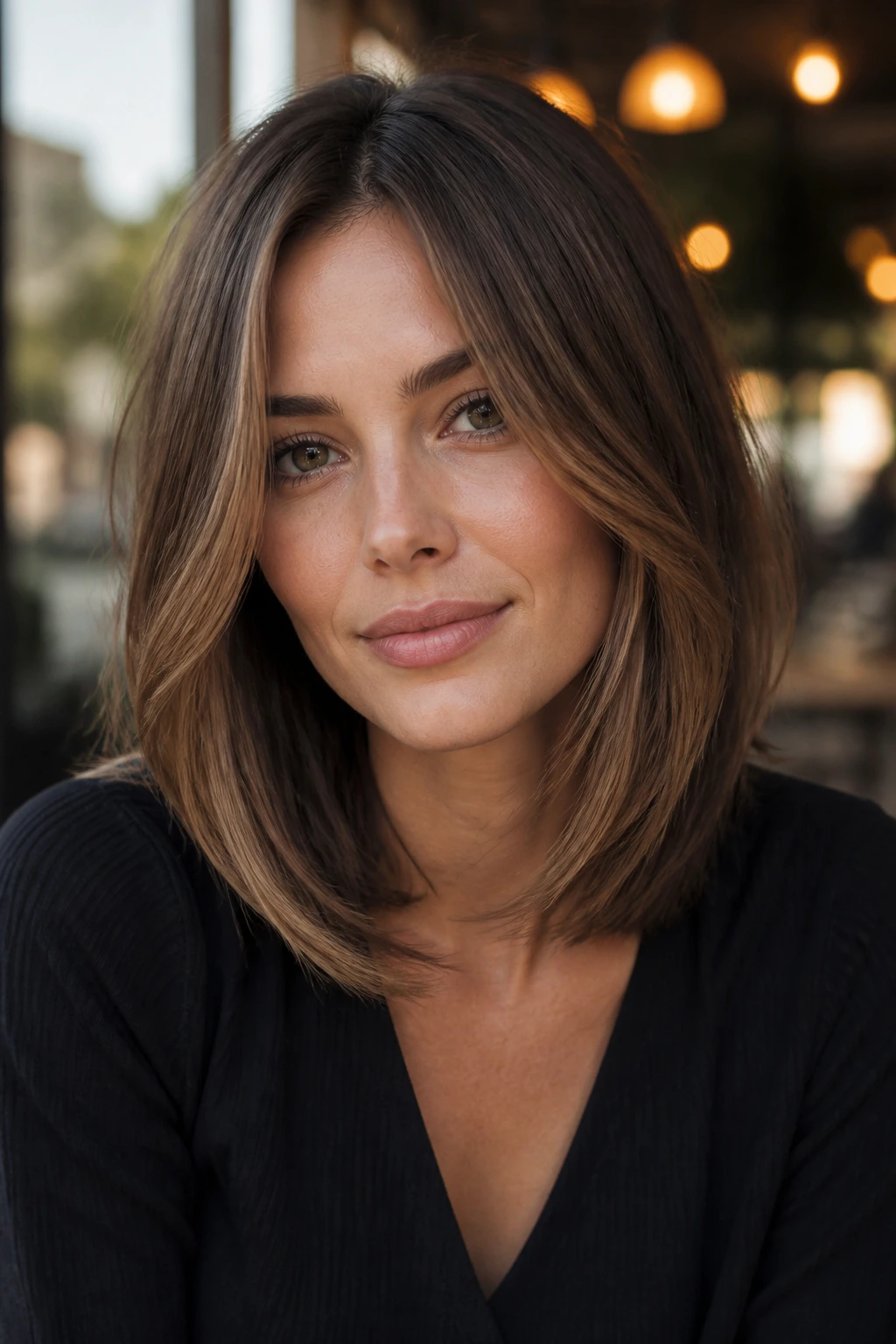
Most people brush hair away from the face by habit. Brushing some of it forward changes the balance. This cut is designed for that forward motion, which creates fullness around the cheek and jaw — exactly where a heart-shaped face often benefits from it.
The layers are placed so the front pieces fall in front of the shoulders instead of behind them. That gives the style a fuller front silhouette, which is useful on fine hair because it keeps the back from being the only place with shape.
Styling note
Try tucking one side behind the ear and letting the other fall forward. That tiny asymmetry can make the cut look more deliberate.
23. The Airy Razor Layer
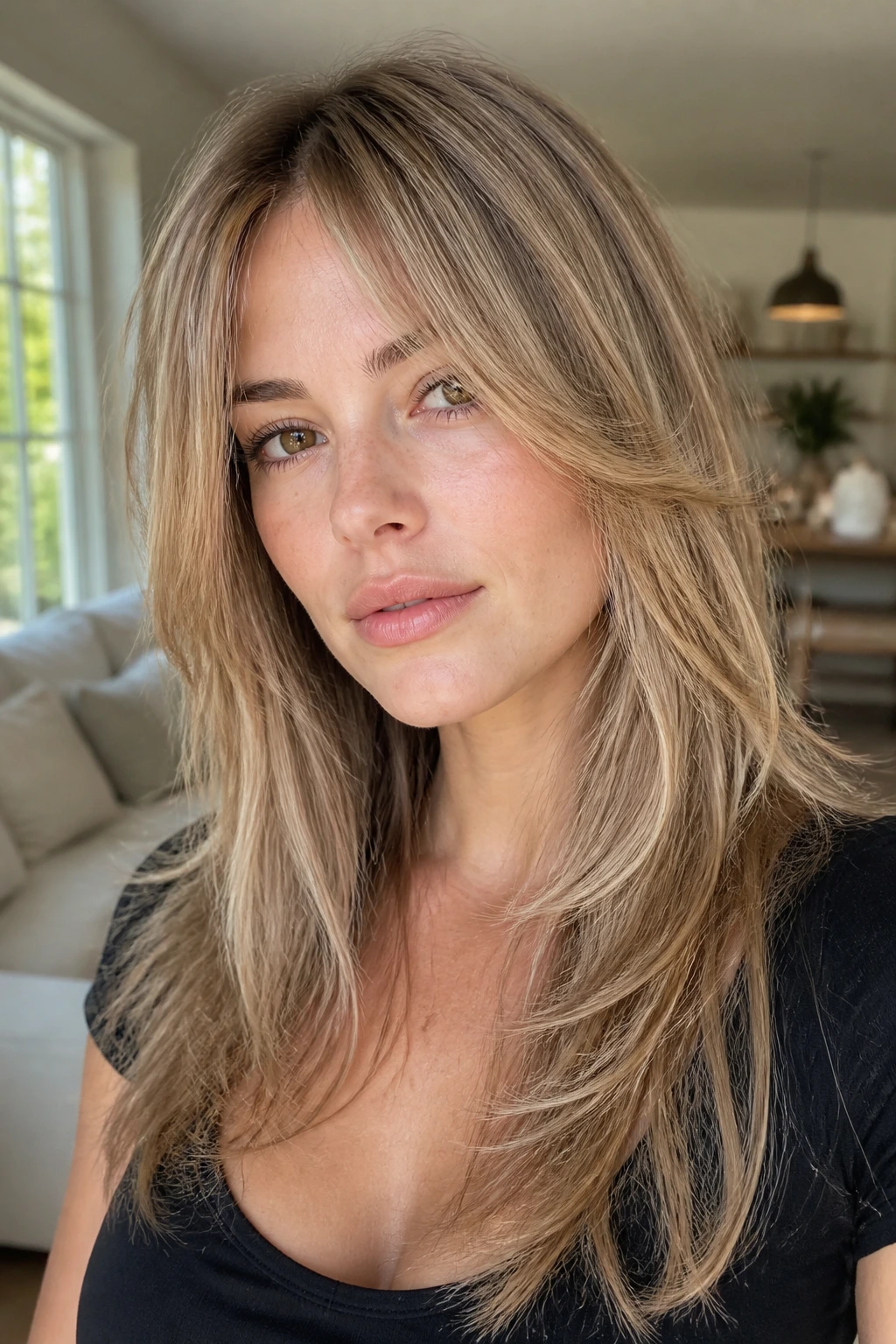
Razor cutting can be lovely on the right hair and a disaster on the wrong hair. On fine hair, it has to be used with restraint. The goal is softness and separation, not a shredded tail.
If your fine hair is silky, healthy, and a little bit dense, a careful razor layer can give the ends a lighter feel without killing the shape. For heart-shaped faces, the layers should still begin low enough to keep the forehead from looking too broad.
I would not ask for this if your hair is dry, frayed, or already weak at the ends. That’s where razor work starts looking wispy in the bad sense. Clean line first. Softness second.
24. Crown-Focused Volume Layers
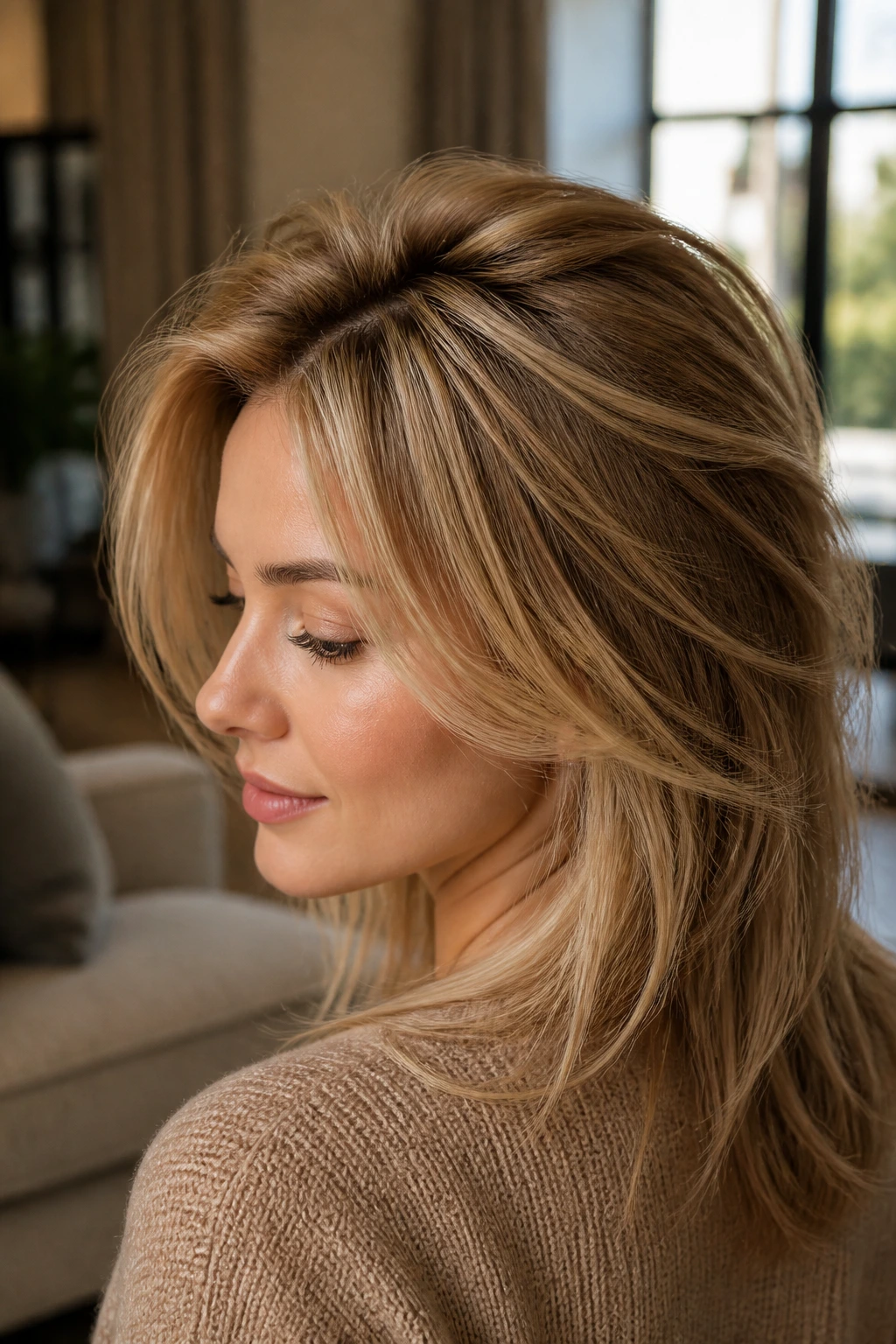
This one is for the person whose crown falls flat the second they blink. The layers live mostly at the top and back of the head, where they can support lift, while the ends stay heavier and more stable.
Heart-shaped faces usually look better when volume sits a little above the temples, not right beside them. Crown-focused layers do that well. They make the head feel taller without widening the forehead line.
A round brush, a root-lift mousse, and a cooling clip at the top can keep this shape in place. It’s a styling-friendly cut, which is nice because the haircut itself is doing the heavy lifting.
25. The Balanced Midi With Cheekbone Pieces

If you want one haircut that can do almost everything without getting fussy, this is the one I’d point to. The midi length keeps enough weight for fine hair, while the cheekbone pieces add shape where a heart-shaped face needs it most.
The cut is neither too short nor too long, neither too layered nor too blunt. That sounds boring until you see it in motion. Then it starts to make a lot of sense.
The best version has a clean perimeter, soft face-framing sections, and just enough internal layering to stop the ends from hanging dead. It’s the haircut equivalent of knowing when to stop talking. Quiet, but effective.
What Makes a Defined Layer Actually Look Full
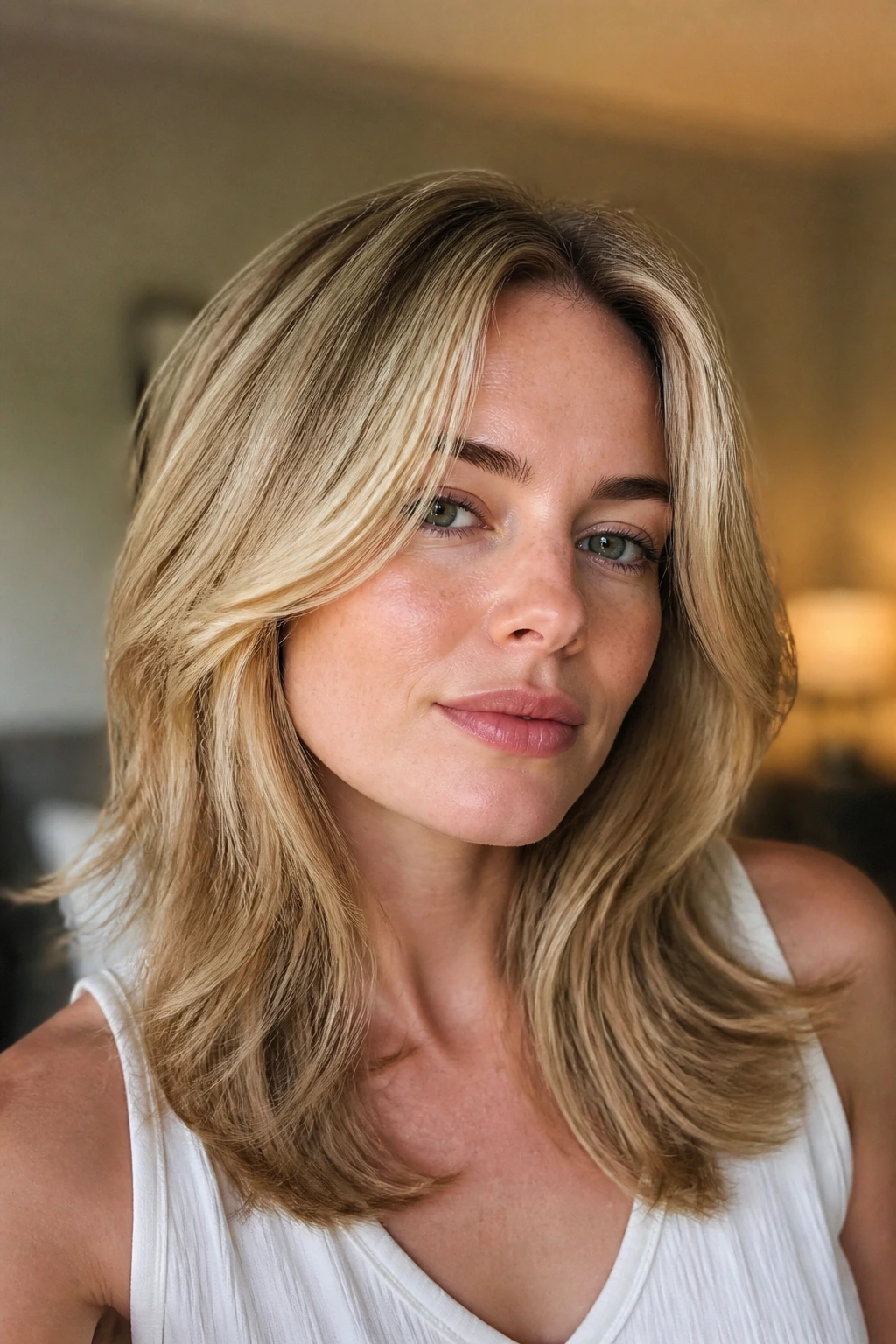
A defined layer on fine hair is not about carving out as much movement as possible. That’s where people get into trouble. The real job is to keep the base strong enough that the cut still looks like it has density after you wash it, blow it dry, and wear it for a day.
Fine hair doesn’t need to be shredded to move. It needs a perimeter that holds, plus layers placed where the eye can read them. Around a heart-shaped face, that usually means the cheekbone, jaw, or collarbone — not the temples and not the very top of the head. The best cuts make the lower half of the face feel more anchored, which softens the natural width at the forehead.
I also prefer cuts that grow out in stages. A good face frame should look intentional at week one and still look decent six to eight weeks later. If the style only works on the day you leave the salon, it’s too fragile for fine hair.
And yes, blunt edges still matter. A little bluntness at the ends can make fine hair look thicker than a dozen tiny broken-up pieces. That’s one reason I’m suspicious of over-texturizing. It’s fashionable to say hair should look airy, but airy is not the same thing as sparse.
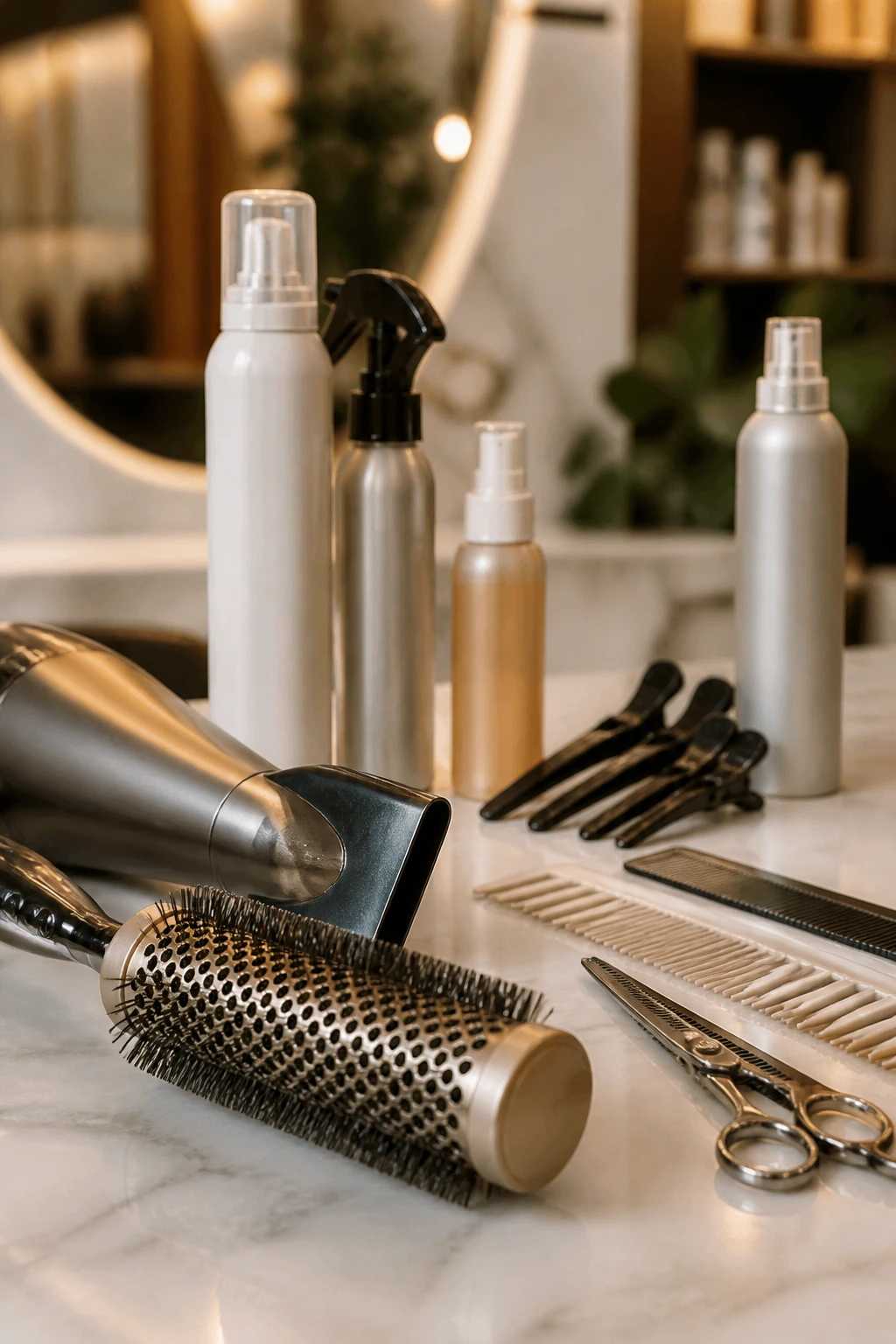
Essential Tools for These Cuts
-
A 1.5-inch round brush: Big enough to bend the front pieces, small enough to create lift at the roots.
-
A blow-dryer with a nozzle attachment: The nozzle helps direct airflow so fine hair doesn’t puff out in random directions.
-
Lightweight mousse: Use it at the roots only; it gives support without turning the lengths stiff.
-
Heat protectant spray: Fine hair burns faster than people expect, especially around the face frame.
-
Duckbill clips or sectioning clips: Handy for setting the crown while it cools.
-
A wide-tooth comb and a fine-tooth tail comb: One for detangling, one for making a clean part.
-
Light texture spray or dry shampoo: Good for day-two lift, as long as you don’t bury the roots in powder.
-
Point-cutting or texturizing shears, in the hands of a pro: Not for home use unless you know exactly what you’re doing.
Smart Salon Notes and Product Picks

Bring photos, but bring the right photos. A front view matters, sure, but a side view shows where the shortest layer actually lands, and that’s the part that changes the whole silhouette. If your face is heart-shaped, point to the exact spot where you want fullness to live — usually lower cheek, jaw, or collarbone.
Say this out loud if you need to: “Keep the perimeter full.” That one line protects fine hair from ending up see-through at the bottom. You can also ask for “movement without removing too much density,” which is salon language for “do not over-thin me.” It’s plain enough that nobody can pretend not to understand it.
Product-wise, avoid heavy oils at the roots. Fine hair goes limp fast, and heart-shaped faces need that upper balance to stay light enough to lift. A root-lift mousse, a heat protectant that dries without stickiness, and a tiny amount of smoothing cream only on the ends is usually enough.
If your hair is very fine but dense, you can handle a little more layering. If it’s fine and sparse, keep the layers longer and cleaner. That distinction matters, and it’s one of the reasons generic salon advice can sound nice and still miss the mark.
How to Wear These Cuts So the Shape Shows
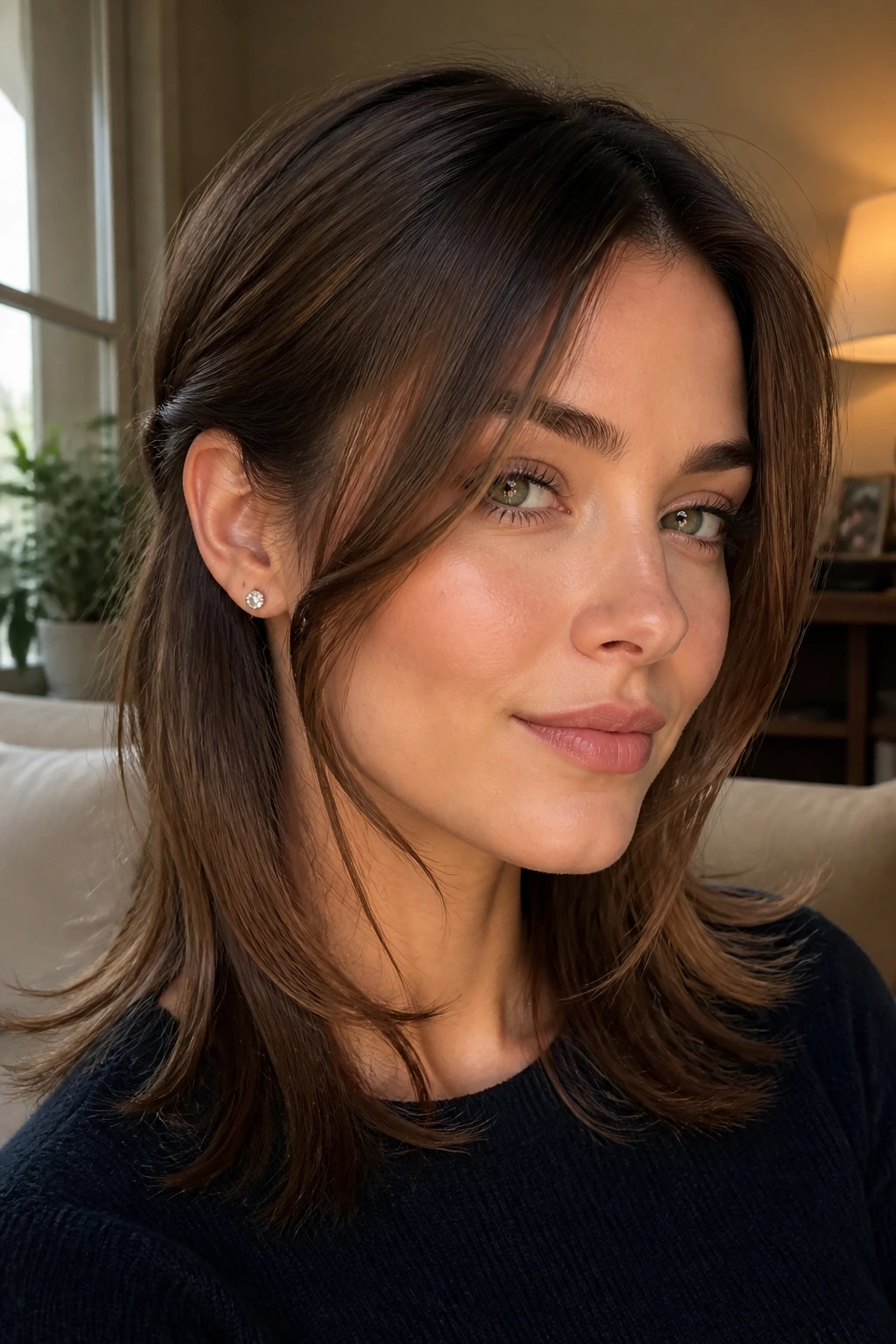
Shape: Let the face frame live in the open, not trapped behind both ears all day. Even a small tuck on one side can change where the eye lands, so keep at least one side visible if you want the layers to read.
Styling partners: A round brush, low-heat blow-dry, and a flexible root spray will do more for these cuts than a pile of heavy serums. If you like waves, keep the bend from the cheekbone down and leave the ends a little straighter so the cut doesn’t balloon.
Finish: Choose either polished or piecey. Mixing both at once usually looks accidental. A polished finish suits lobs, bobs, and rounded shapes; a piecey finish works better for shaggier or more layered cuts.
Best match: Heart-shaped faces usually look strongest when the layers create width below the cheekbone, not beside the forehead. So if you’re deciding between two options, pick the one that pulls visual weight lower.
Styling Moves That Keep Fine Hair Looking Full
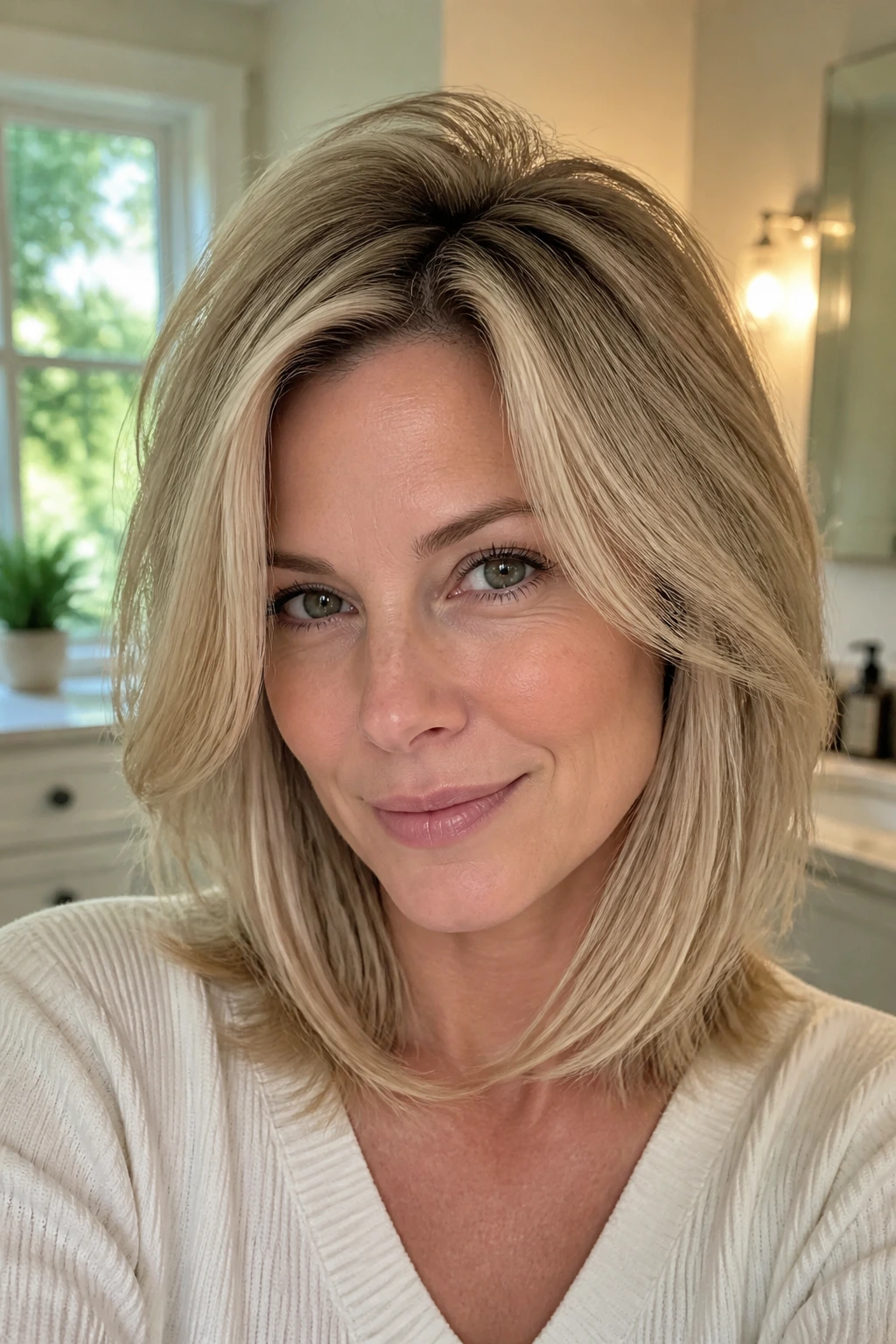
Root Lift: Blow-dry the roots in the opposite direction of your part for the first 20 to 30 seconds, then switch back. That tiny reversal gives the crown more hold than forcing everything straight down from the start.
Body Without Bulk: Wrap the front sections around a round brush for 5 to 8 seconds, then hit them with a cool shot before releasing. The cool shot matters. Without it, fine hair forgets the bend almost immediately.
Time-Saver: If you don’t want a full blowout, rough-dry until the hair is about 80 percent dry, then smooth only the top layer and face frame. The lower sections can keep a little natural movement.
Pro Move: Clip the crown up while you do makeup or get dressed. When you let it down, the roots keep a bit of lift instead of collapsing onto the scalp.
Cost-Saver: Dry shampoo works better when you put it in before the hair looks dirty, not after it has already gone flat. A light mist at the roots on day one or two beats a rescue mission on day four.
Common Mistakes That Flatten the Shape
-
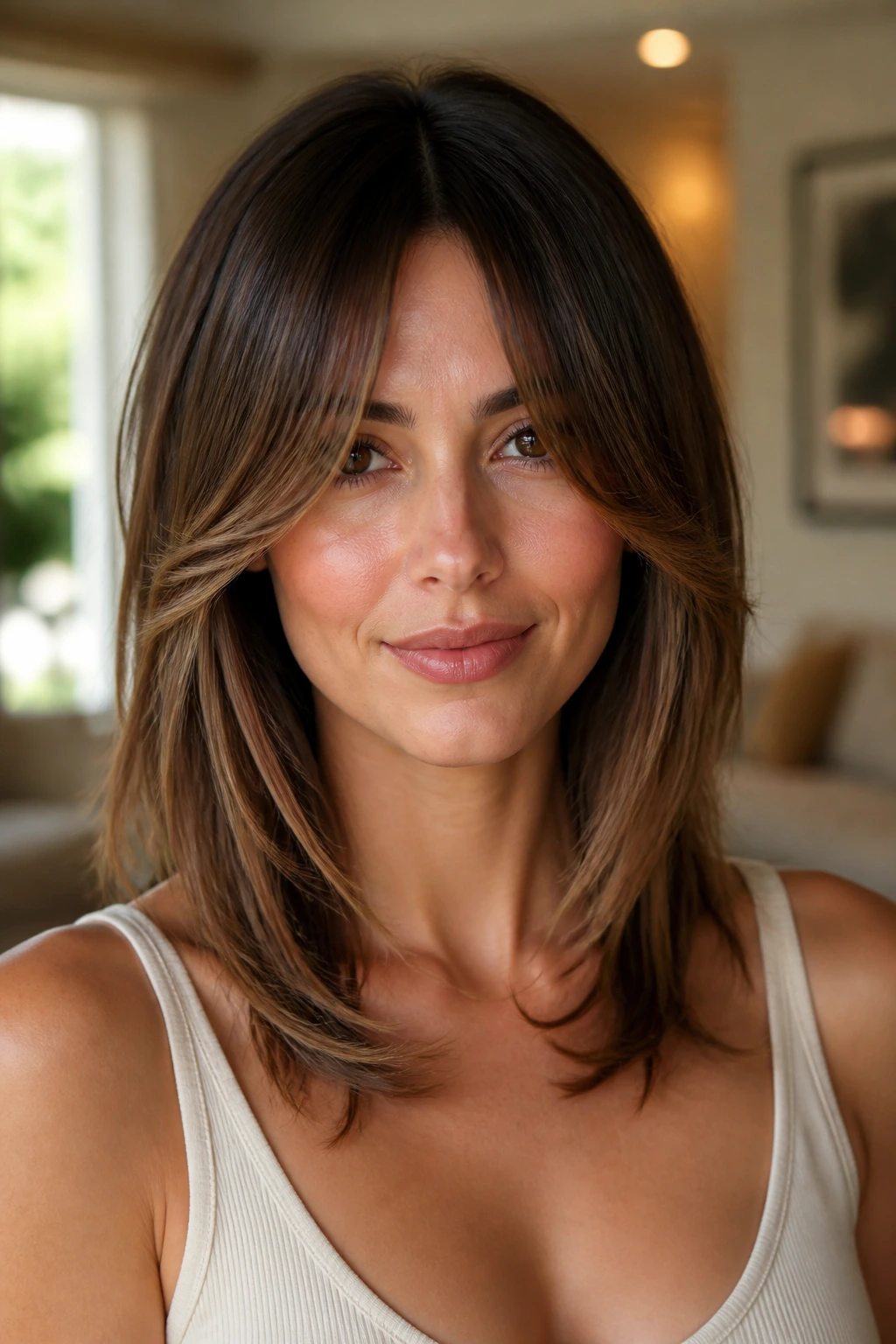
Starting the shortest layer too high. The symptom is a forehead that looks wider and a crown that feels too light. The fix is to keep the first face-framing point at cheekbone or lower.
-
Using thinning shears everywhere. If the ends look translucent in daylight, that’s the warning sign. Ask for point cutting and density-preserving shaping instead.
-
Choosing bangs that are too thick. Heavy fringe can crush fine hair at the front. Bottleneck or curtain bangs usually work better because they move and separate.
-
Blowing the hair straight down. That flattens the crown and makes the cut look smaller. Lift the roots first, then smooth the lengths.
-
Letting the ends fray too long. Fine hair shows split ends fast, and the whole cut gets stringy. A trim every 6 to 10 weeks, depending on length, keeps the shape alive.
Variations and Alternatives to Try
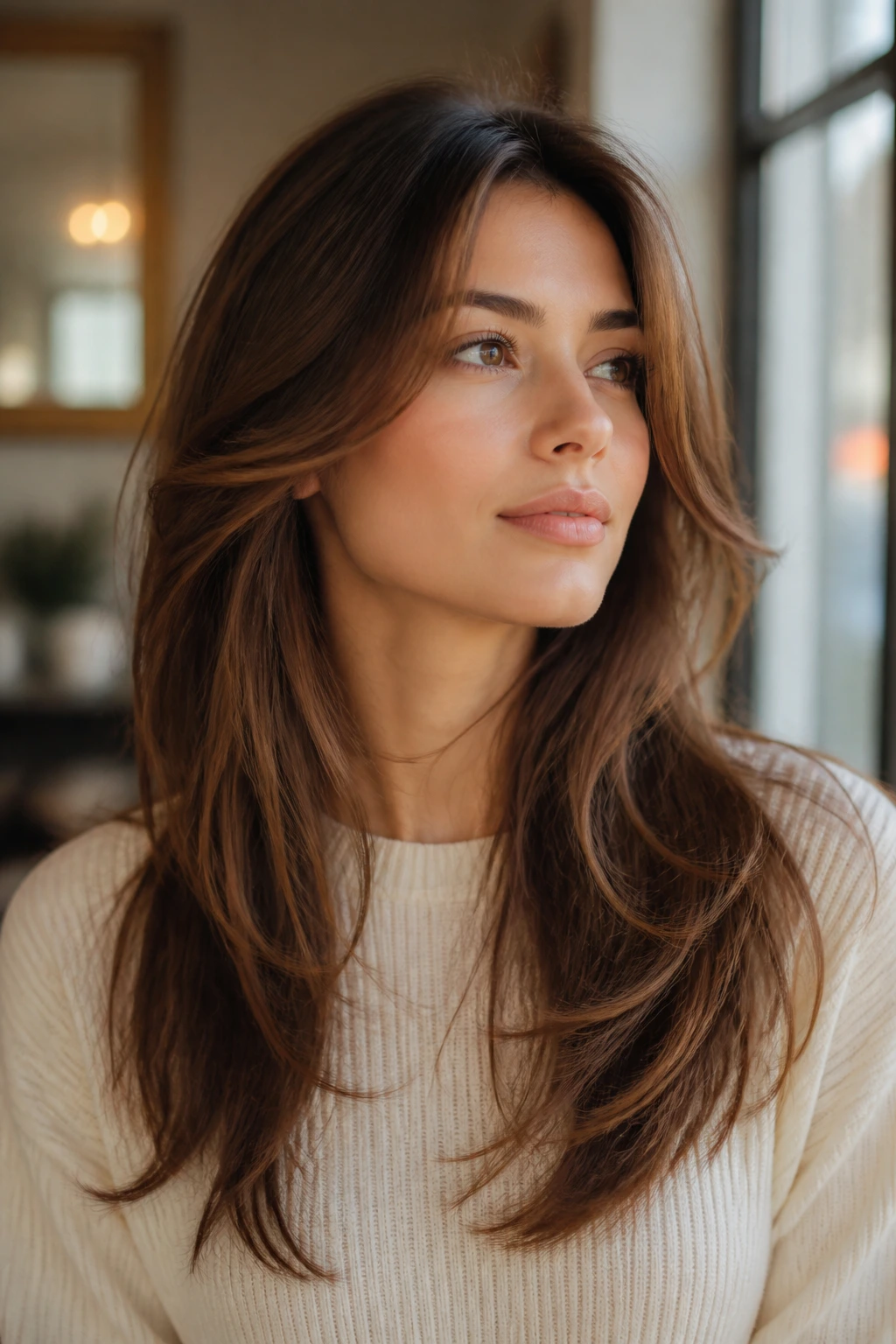
The Softer-Side Version: Keep the layers long and the face frame barely visible. This suits people who want movement but hate seeing obvious steps in the mirror.
The Blowout-First Version: Build more shape into the cheekbone and crown areas, then style with a round brush. It’s a good pick if you like hair that bends and flips instead of falling straight.
The Air-Dry Version: Ask for fewer short pieces and a clean perimeter so the cut still looks full when it dries on its own. This works better than a choppy cut for people who avoid hot tools.
The Short Crop Version: A pixie shag or cropped bob can flatter a heart-shaped face if the top keeps some lift and the fringe stays soft. Fine hair often looks denser in shorter cuts because the weight isn’t dragged down by length.
The Fringe-Forward Version: Curtain bangs or bottleneck bangs can be added to several of the cuts above if you want more forehead balance. The fringe should soften the face, not block it.
The Low-Maintenance Version: Choose a long U-shape or balanced midi with very subtle layers. It grows out quietly and needs less styling day to day.
Keeping the Cut in Shape Between Salon Visits
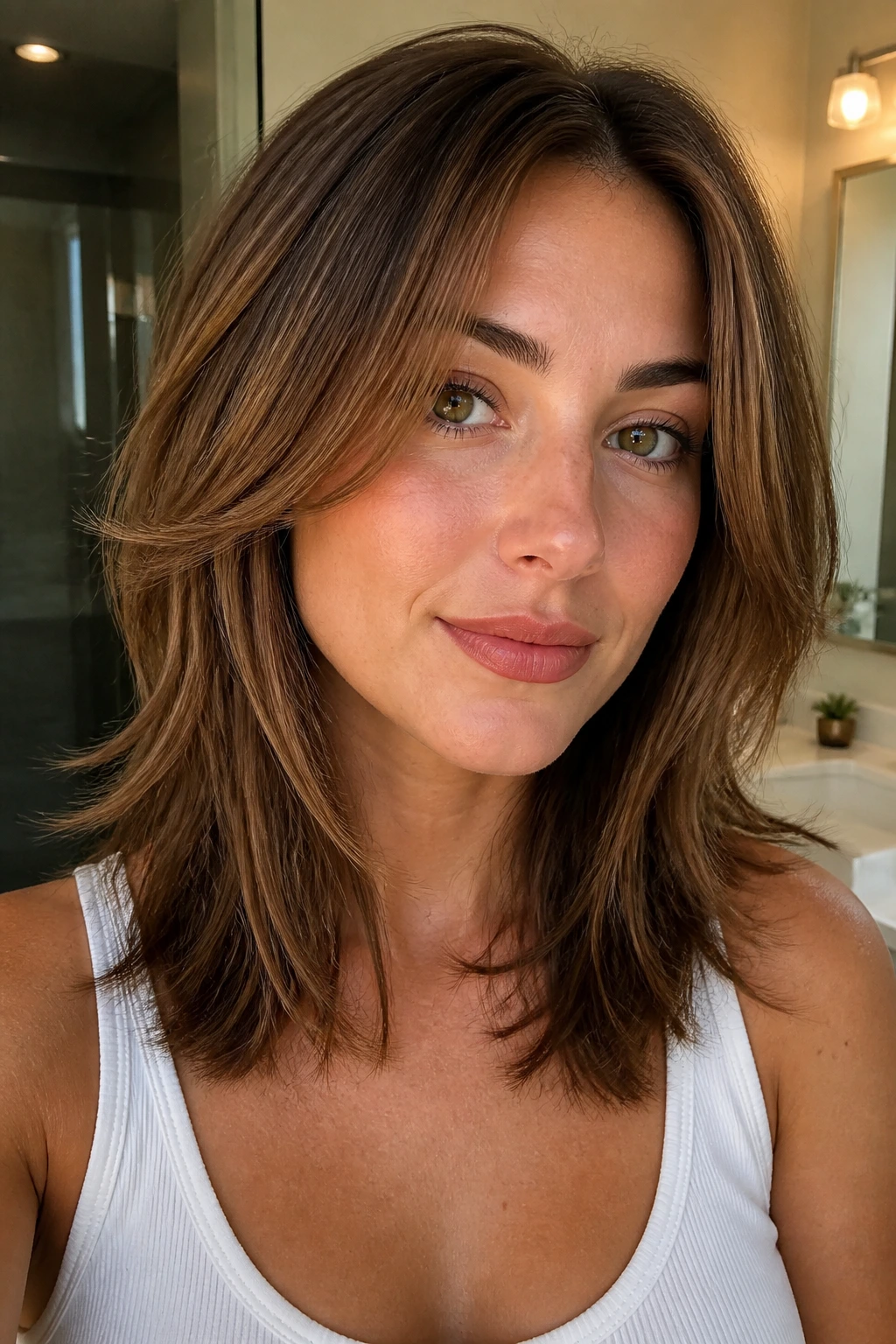
Fine hair tells on itself fast, so maintenance is part of the haircut. For lobs, bobs, and shorter layered cuts, plan on a trim every 6 to 8 weeks. Long layers can usually stretch to 8 to 10 weeks, while a pixie shag may need a tidy-up closer to 4 to 6 weeks if you want the shape to stay crisp.
Wash routine matters too. If your roots flatten easily, skip heavy conditioner near the scalp and keep it on the mid-lengths and ends. A clarifying shampoo every 2 to 4 weeks helps if dry shampoo or root spray starts building up and making the hair feel coated. That buildup is sneaky; it doesn’t always look dirty, just dull and tired.
If you heat-style often, a lightweight heat protectant every time is non-negotiable. Fine hair scorches faster than people expect, especially around the face frame where the strands are the thinnest. And if you like a blowout look, let the roots cool before touching them. Warm hair is forgetful hair.
Sleep habits help, too. A satin or silk pillowcase cuts down on friction, and a loose clip at the crown can keep the front layers from getting crushed overnight. The cut is doing work for you; don’t flatten it out in your sleep and then blame the stylist.
Questions People Usually Ask Before Cutting Fine Hair

Can fine hair really handle layers?
Yes, as long as the layers are placed with purpose. Fine hair usually looks better with defined layers that preserve a strong perimeter than with heavy thinning or short, choppy pieces everywhere.
Do heart-shaped faces need bangs?
No, but the right fringe can help. Curtain bangs, bottleneck bangs, and soft side-swept pieces can balance a wider forehead without making the face look boxed in.
Should the shortest face-framing piece hit the cheekbone?
Sometimes, but not always. On very fine hair, cheekbone length can work if the rest of the cut keeps enough weight; if the hair is sparse, jaw or chin length is often safer.
Is a center part good for heart-shaped faces?
It can be, especially with curtain layers or a balanced midi. If your forehead feels broad, keep the center part soft and let the front pieces open gradually instead of dropping straight down.
How do I keep fine layers from looking stringy?
Keep the ends healthy, use lightweight styling products, and avoid overtexturizing. A blunt or rounded perimeter helps the whole cut read fuller.
Can this work on wavy or curly fine hair?
Yes, but the shortest layer usually needs to sit lower than it would on straight hair. Wavy and curly fine hair can spring up and become smaller-looking if the layers are cut too high.
What should I tell my stylist?
Say you want layers that create shape without removing too much density. Then point to the exact spots where you want fullness — usually lower cheeks, jaw, or collarbone on a heart-shaped face.
How often should I refresh the shape at home?
Day two is often enough. A little root lift, a quick bend on the front pieces, and dry shampoo at the scalp can keep the cut from collapsing between washes.
A Cut That Holds Its Shape

The best layered haircut for fine hair and a heart-shaped face does one thing better than all the rest: it keeps the hair looking like it has substance while it quietly adjusts the face’s balance. That means weight in the right places, not more layers for the sake of more layers.
If you remember only one rule, make it this one: keep the perimeter honest and the face frame low enough to matter. That single decision changes everything. The cut looks fuller. The face reads softer. The whole thing starts to behave like it was planned, which is usually the difference between a flattering haircut and one that just has layers.
Bring a photo, talk about where your hair goes flat, and ask for the shape that keeps the ends full. That’s the version you’ll still like after the first wash, the second wash, and the very ordinary Tuesday when you don’t have time to fight with it.