



Long wavy hair looks easy from a distance. Up close, it can be a little stubborn. One side flips out, the other side collapses, and the ends decide they’d like to live in a triangle if you let them. That’s exactly why low maintenance long layered haircuts for wavy hair matter: the right cut does part of the styling for you, so you’re not fighting your own texture every morning.
The sweet spot is usually a cut that keeps enough weight at the bottom to prevent puffiness, but lifts the right places so the waves can bend instead of hanging flat. Too many layers too high can turn wavy hair into frizz with opinions. Too few layers can make it sit like a heavy curtain. The good cuts live in the middle, where movement shows up without turning your wash day into a project.
There’s also a practical angle that gets ignored far too often. A lot of layered cuts look great only on the day they’re finished at the salon, then grow out in a weird shelfy way that needs constant hot-tool correction. The better long-layered shapes for wavy hair are the ones that still look like a haircut when you let them air-dry, twist it into a clip, or push it behind your ears and go on with your life.
Why This Collection Is Different
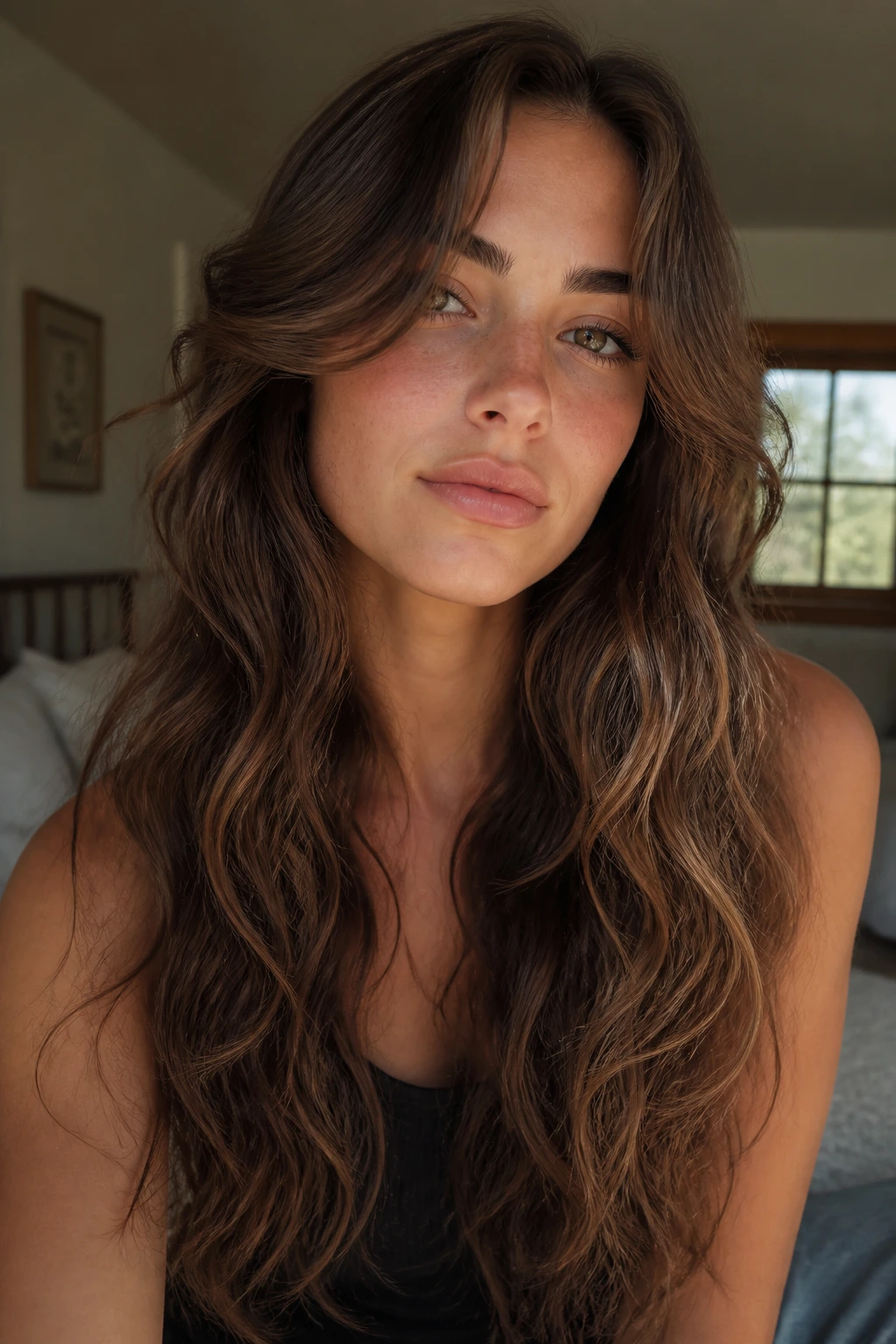
- Built for air-drying: These shapes are chosen for waves that need a little room to move, not a daily round-brush session.
- Long enough to stay polished: The length keeps the cut from looking over-textured or chopped up when your waves stretch out on day two.
- Face-framing without heavy bangs: You get softness around the cheeks, jaw, and collarbone without signing up for a strict fringe schedule.
- Grow-out stays clean: The best versions blend into your length instead of leaving a hard step that screams for a trim every five weeks.
- Works with real wave patterns: From loose 2A bends to fuller 2C texture, these cuts keep the wave pattern in charge instead of flattening it.
- Easy to style with a small routine: A little leave-in, a bit of scrunching, maybe a diffuser if you’re in the mood. That’s enough for most of these cuts.
1. Chin-Start Face-Framing Layers
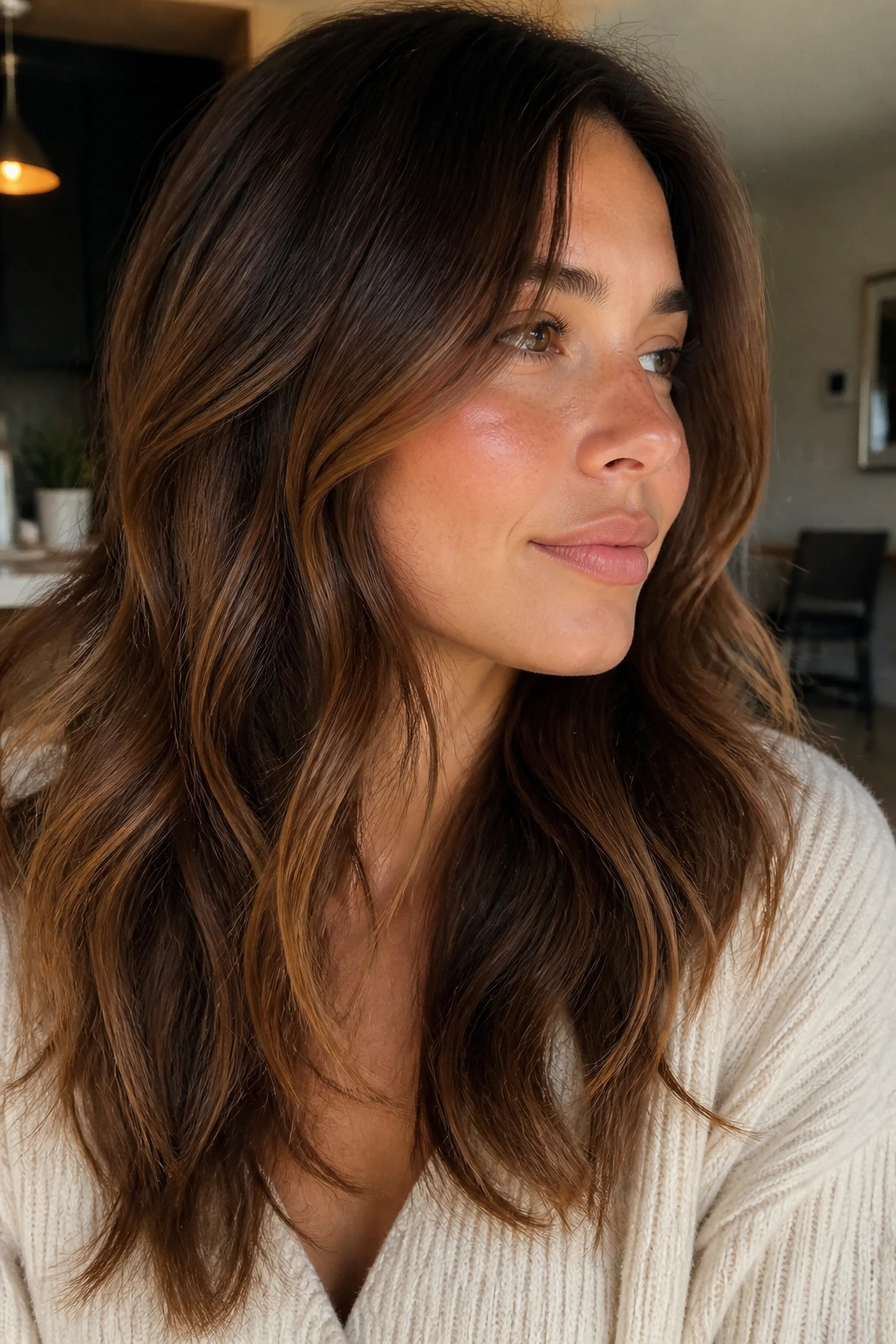
These are the safest place to begin if you want movement without losing the feeling of long hair. The front pieces start around the chin, then melt into the rest of the length, which gives wavy hair somewhere to bend instead of blowing out wide at the sides. It’s a simple shape, but it solves a lot.
The cut works because the front gets visual lift while the perimeter keeps enough weight to hang nicely. If your waves puff out near the ears, this is often the fix. I like it for people who want to air-dry and still look intentional, not “I had 12 minutes and gave up.”
Ask for long layers with face framing that starts at the chin or just below it. If your hair is thick, a little internal debulking through the mid-lengths helps. If it’s fine, keep the ends blunt enough that they don’t look wispy by lunch.
2. Soft Butterfly Layers
Butterfly layers sound dramatic, but the soft version is one of the easiest ways to get lift without giving up length. The top layers sit higher around the cheekbones and upper chest, while the bottom stays long and full. You get that swoopy front without a haircut that looks high-maintenance the second it grows an inch.
This shape is useful if your waves go flat at the crown but have decent movement once they clear the shoulders. The shorter internal layers create bounce; the longer lower section keeps the whole thing from looking too light. It is one of the few layered cuts that can make thick wavy hair feel lighter and fine wavy hair feel less stringy.
What to ask for
- Long top layers that begin around the cheekbone
- A preserved, longer bottom layer
- Soft blending, not obvious steps
Butterfly layers need a touch more shaping on wash day, but they reward you by falling into place quickly once they’re dry. If you want hair that looks styled even when you didn’t really style it, this is a strong pick.
3. Invisible Mid-Length Layers
Invisible layers are the quiet achievers of the haircut world. On the surface, the hair can still look almost one-length, but inside the cut there’s enough removal to stop the bulk from sitting like a block. Wavy hair loves that kind of hidden structure because the wave shows up without having to carry all the weight alone.
This is a smart choice if you like your hair long and don’t want to see obvious stair-steps. It also grows out with less fuss than a heavily layered cut. A trim every 8 to 12 weeks is usually enough to keep the ends neat, and day-to-day styling stays simple.
Why it stays easy
The layers are doing their work underneath, so you don’t get that choppy, obvious “I was just layered” look. The outside still behaves like long hair, which means ponytails, twists, and low buns all still look clean.
4. U-Shaped Length With Soft Ends
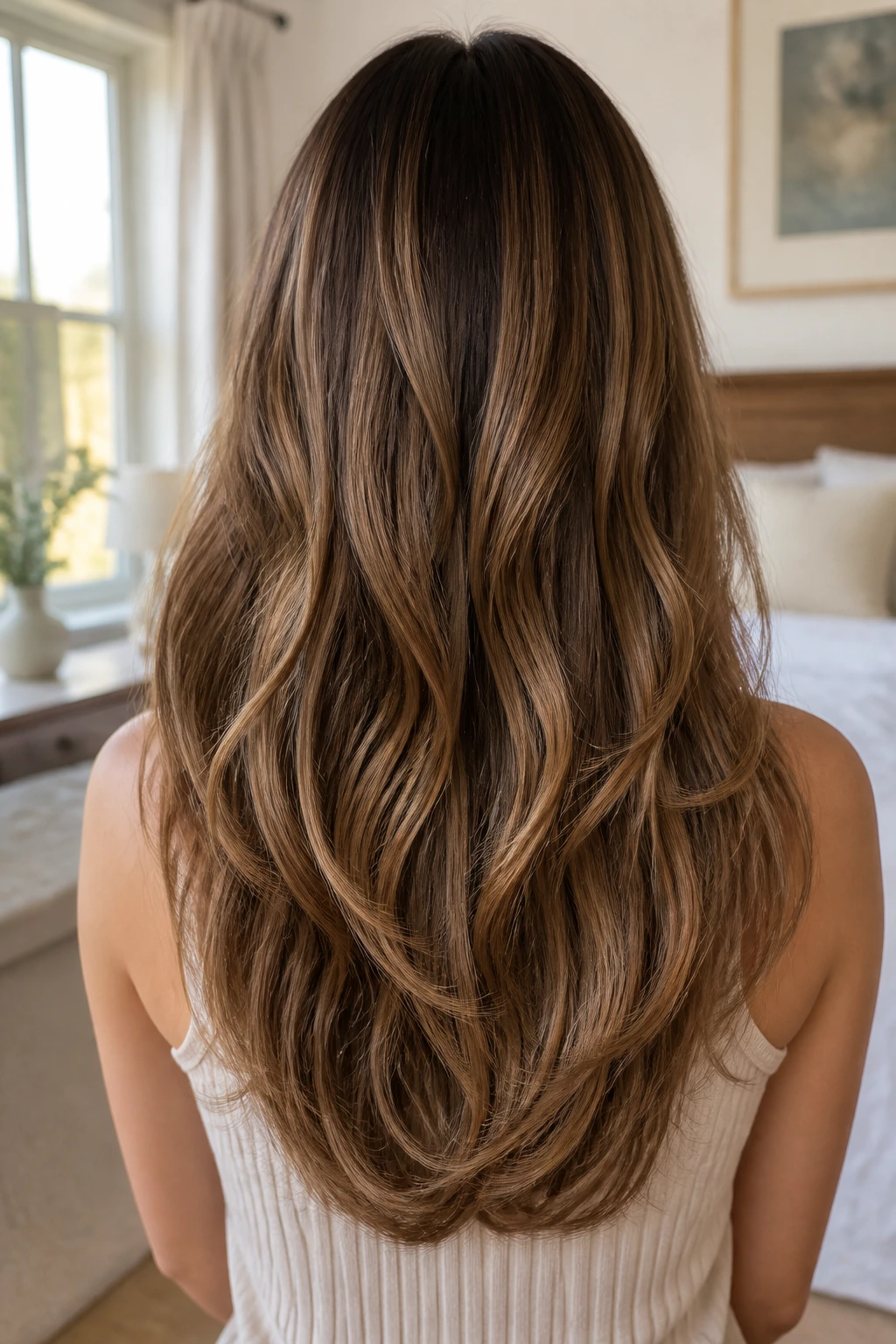
A soft U-shape is one of my favorite low-maintenance answers for wavy hair that wants polish without drama. The perimeter curves gently at the back instead of going straight across, and the layers are kept light enough to create movement without exploding the outline. It looks especially nice when the wave pattern is loose and glossy.
The reason it’s so forgiving is simple: the bottom line stays full. That gives the cut weight, which helps wavy hair settle instead of puffing outward. You can wear it center-parted, tucked behind one ear, or left to air-dry naturally, and it still reads as a haircut instead of just “long hair.”
If you want a version that works well with minimal styling, ask for a soft U-shaped perimeter with long layers that only skim the mid-lengths. This is one of the best choices if you dislike having to restyle the ends every morning. The shape keeps moving without getting fussy.
5. V-Cut Long Layers
The V-cut has a sharper line through the back, and when it’s done well, it can make dense wavy hair look lighter without sacrificing length. The point at the bottom removes some of that blanket effect thick hair can get, especially when the waves stack on each other. It’s a little more defined than a U-shape, which is the whole point.
What I like here is the way the waves fall in a line instead of puffing outward from the shoulders. If your hair is heavy, this cut gives it direction. If your hair is medium density, it adds shape without turning the ends thin and scraggly.
The trick is to keep the V long and soft, not sharp and severe. A hard V can feel dated fast. A long, blended one grows out better and still looks clean when your waves loosen by day two.
6. Long Shag-Lite With Curtain Bangs
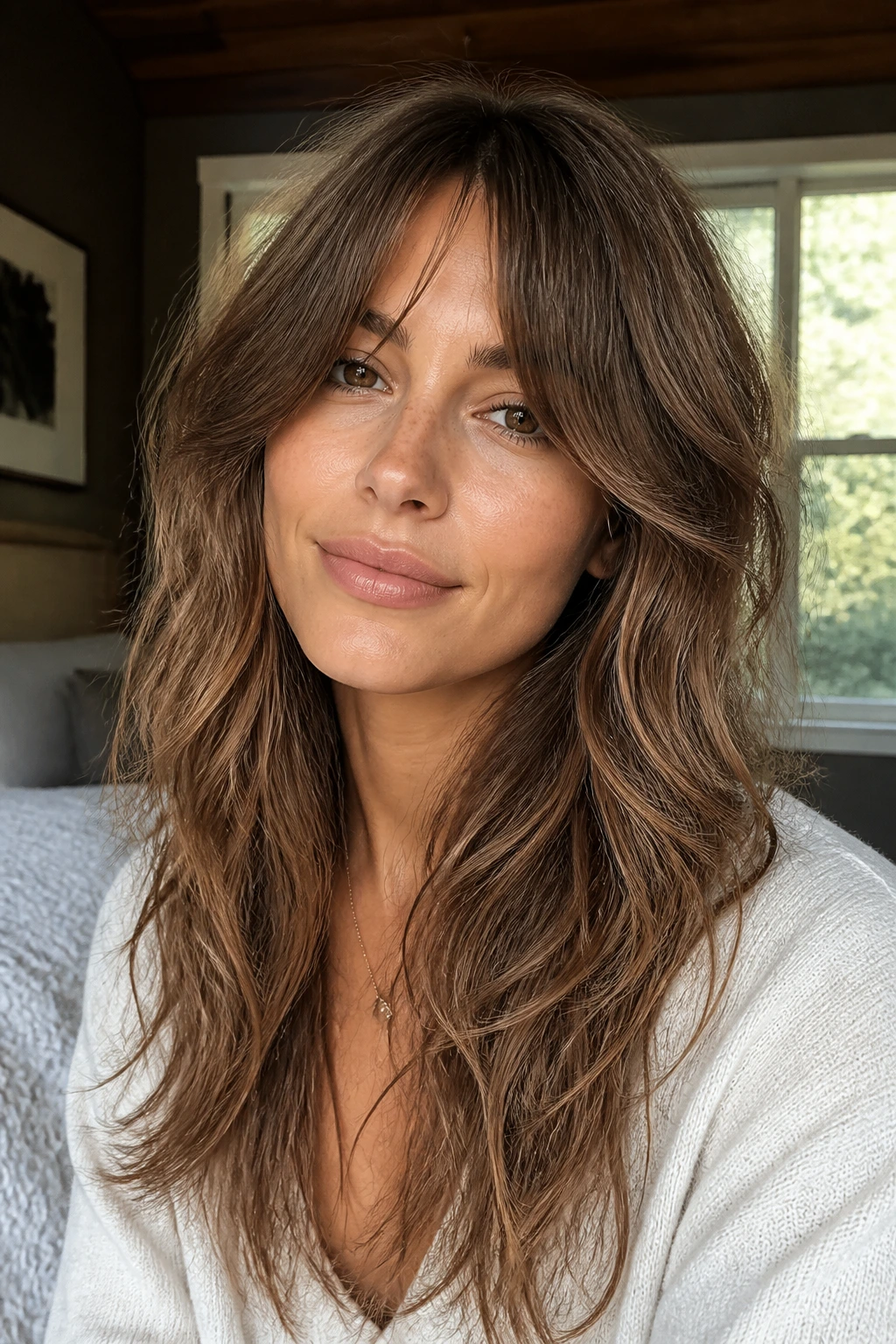
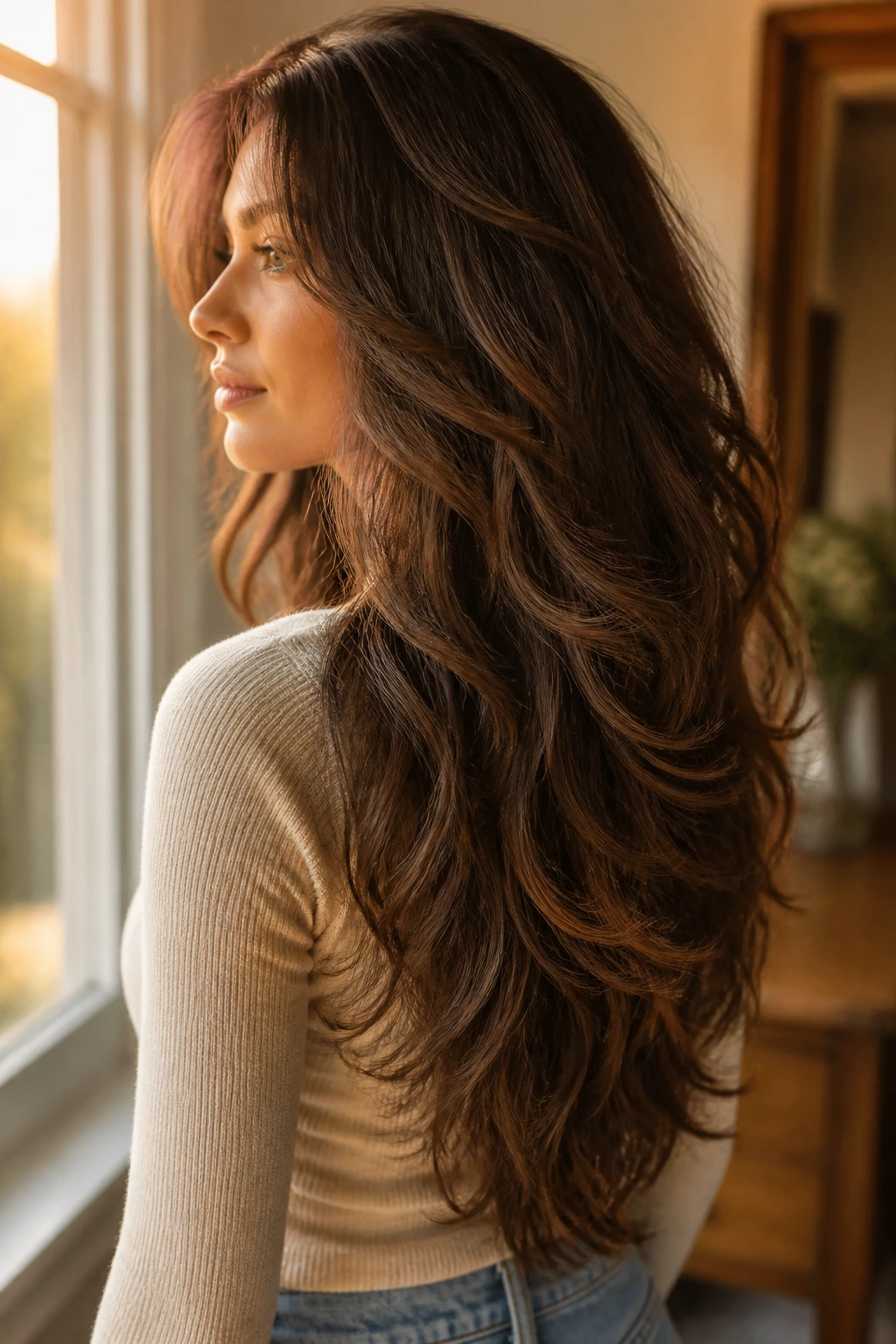
A full shag can be a little much if you want low maintenance. The shag-lite version is friendlier. It keeps the longer length intact, adds some textured layers through the crown and sides, and uses curtain bangs to frame the face without locking you into a blunt fringe routine.
This cut is good for people whose waves come alive once they have a little lift near the top. The curtain bangs open the face, the long layers add movement, and the whole thing looks better when it’s a bit undone. That matters. If a haircut only works when you’ve spent 25 minutes smoothing every strand, I’m not calling it low maintenance.
The best version starts the bangs around the cheekbone and keeps the layers long enough that they blend into the rest of the hair. You want texture, not chaos. A little mousse at the roots and a quick scrunch is often enough.
7. Rounded Layers That Follow the Wave
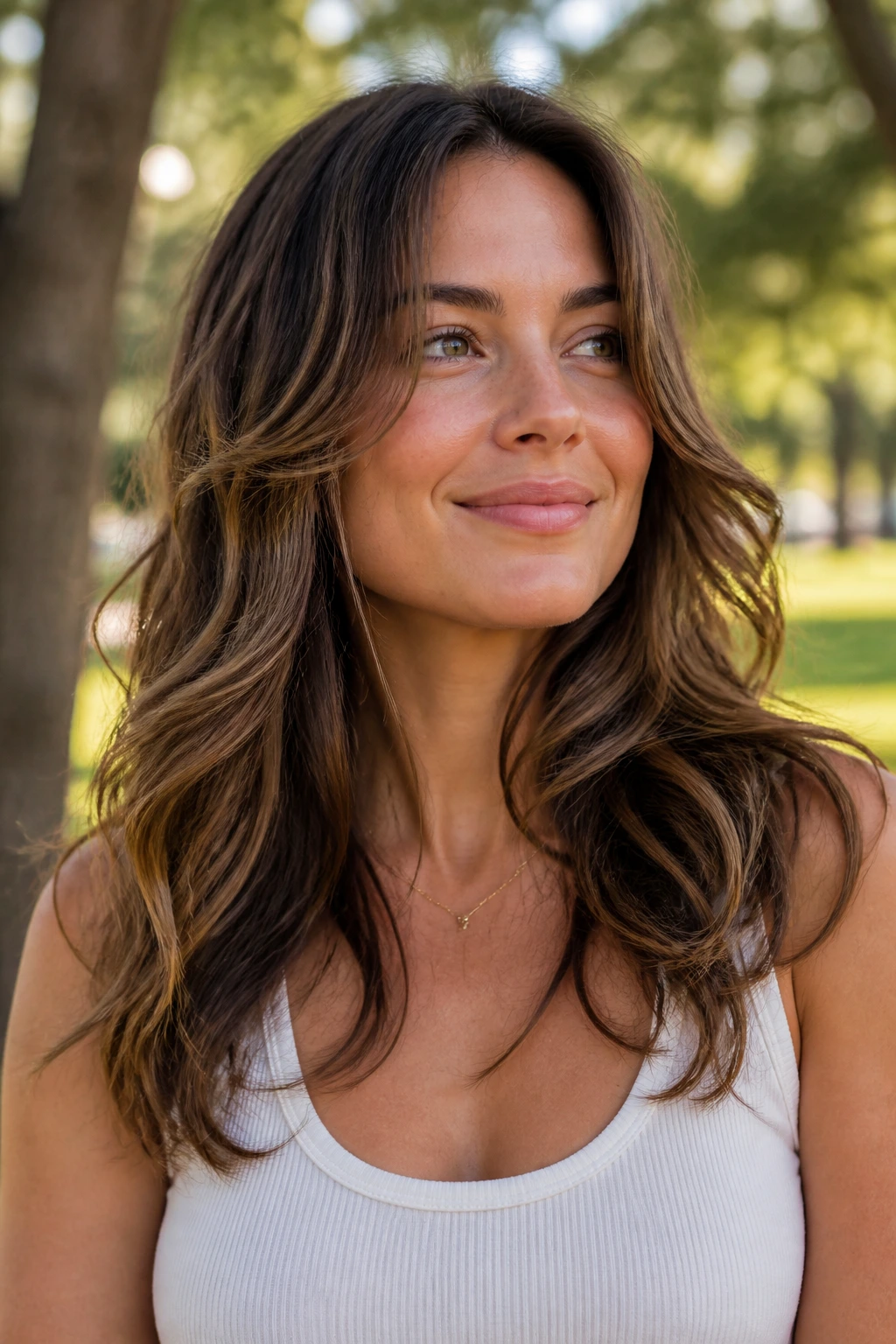
Rounded layers are underrated because they make wavy hair look like it belongs to itself. Instead of cutting straight boxes through the hair, the shape follows the curve of the head and the natural wave fall. That means fewer corners, fewer puffed-out edges, and fewer mornings spent trying to tame one weird side.
This is especially good if your hair tends to widen at the shoulders. The rounded shape keeps the silhouette soft and balanced. It also works nicely when you wear your hair half-up, because the layers still show movement from the sides and back.
A rounded cut should still have length around the perimeter, otherwise it starts acting like a mid-length style. Keep the ends a little heavier than you think you need. Wavy hair tends to shrink and swell, and the extra weight keeps the shape from getting fluffy.
8. Long Layers With Bottleneck Bangs
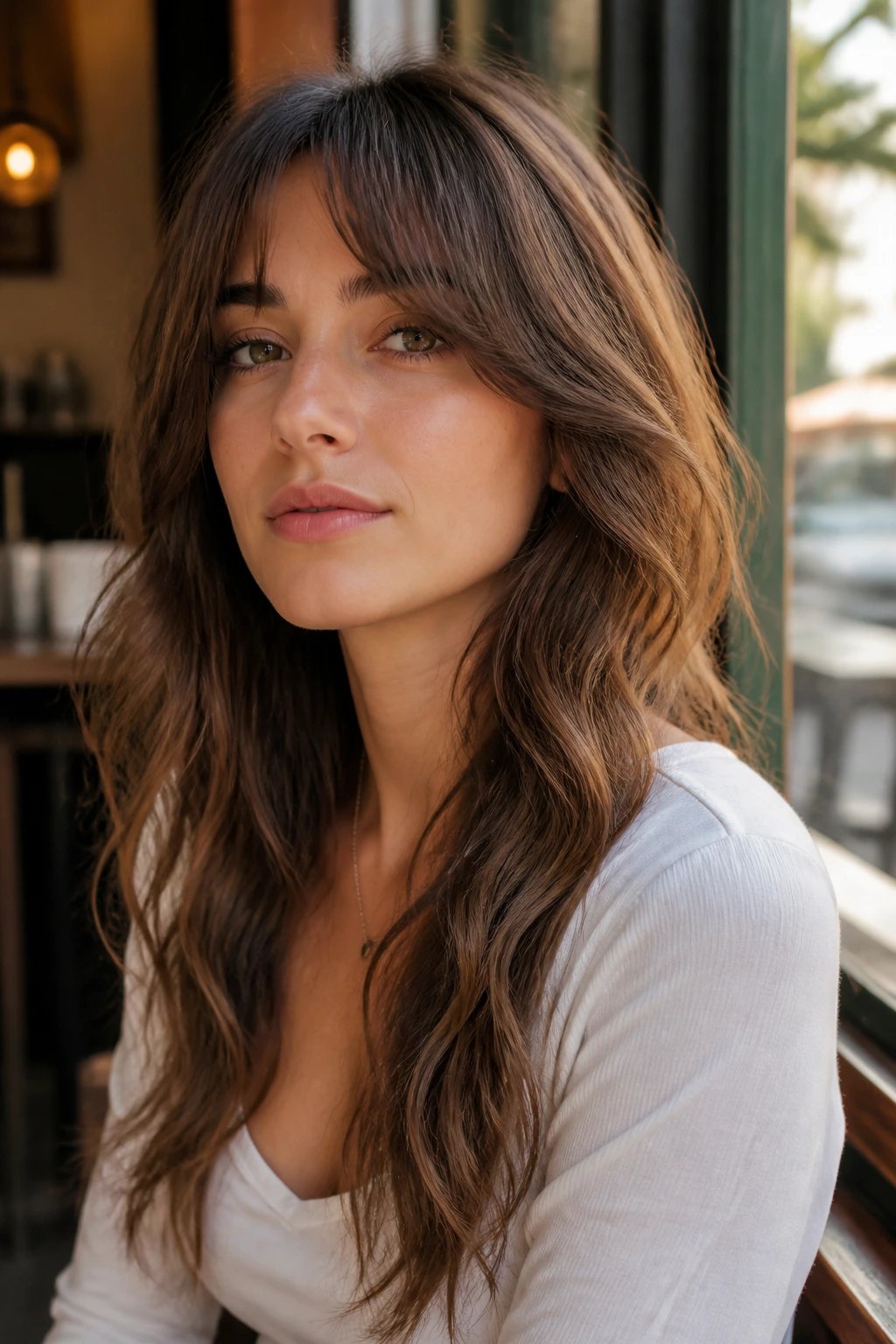
Bottleneck bangs are a gentler answer to blunt bangs, and they suit wavy hair better than most people expect. They’re narrower at the center, then open out as they move toward the cheekbones, which gives a face-framing effect without a hard line across the forehead. When the rest of the cut is layered long, the whole look stays soft.
This cut makes sense if you want a little change near the face but you do not want to babysit your bangs every morning. The narrow center helps the fringe lie flat enough to air-dry, while the longer sides blend into the layers. That blending is what keeps the haircut from looking too separate.
Best for
- People who want forehead coverage without blunt bangs
- Waves that bend well at the front
- Hair that looks better with a little piecey texture
If you hate the feeling of a strict fringe, bottleneck bangs are usually easier to live with than full bangs. They grow out more gracefully too, which matters more than people admit.
9. Deep Side-Part Layers
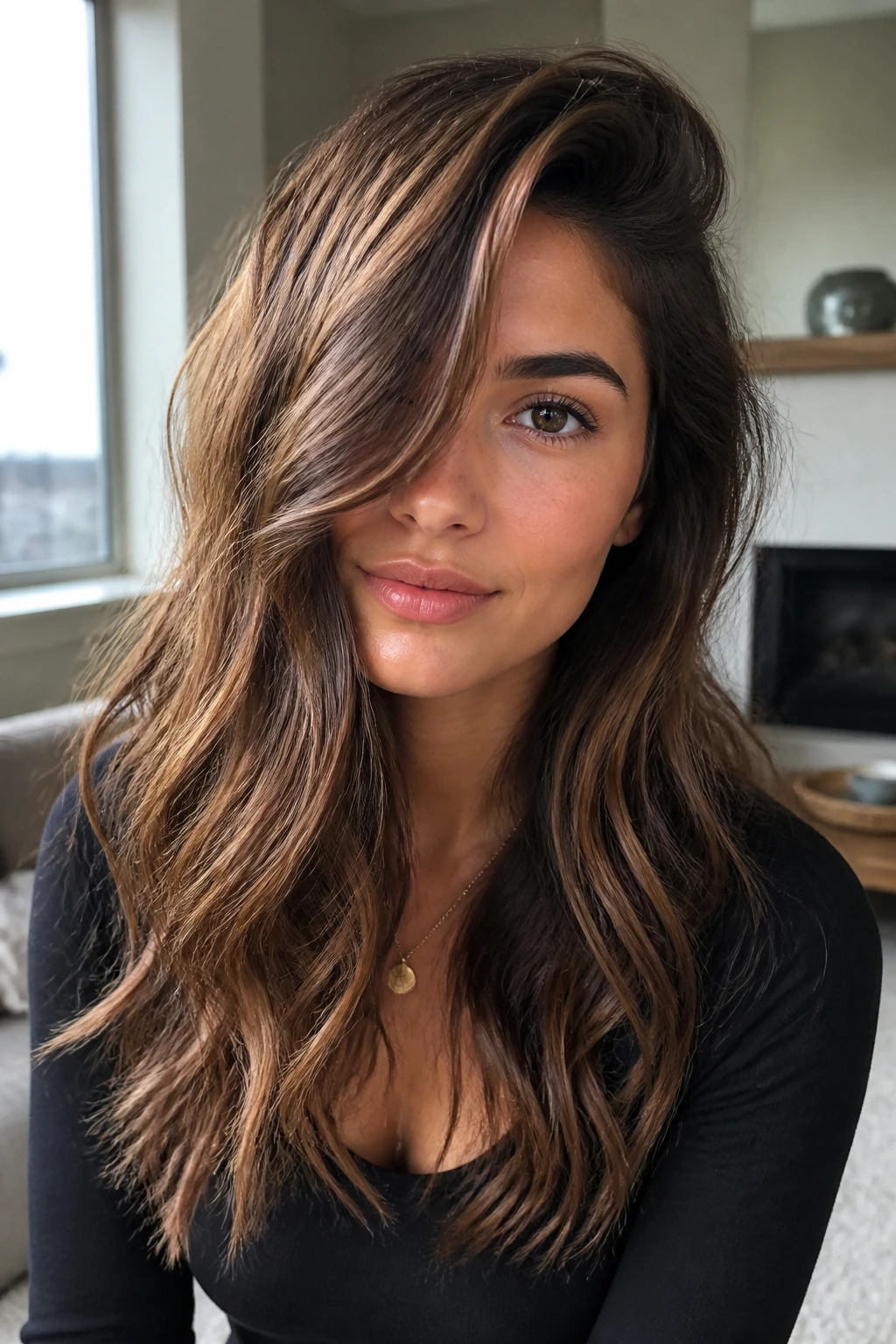
A deep side part can change the whole story of a layered cut. With wavy hair, it gives one side a little lift and lets the other side fall with more weight, which softens the face and hides flat spots. It’s one of the simplest ways to make a low-maintenance cut feel styled.
The best part is that the cut itself doesn’t need to be extreme. You can keep the layers long and soft, then use the part to create movement. If your waves always collapse in the middle, this is a nice way around it. The shape gets more interesting without more work.
I’d pair a deep side part with face-framing pieces that start at the cheekbone or jawline. That keeps the front from getting too heavy. It also plays well with clips, barrettes, and tucked-behind-the-ear styling, which is the kind of real-life stuff that makes a haircut worth keeping.
10. Airy Layers for Thick Wavy Hair
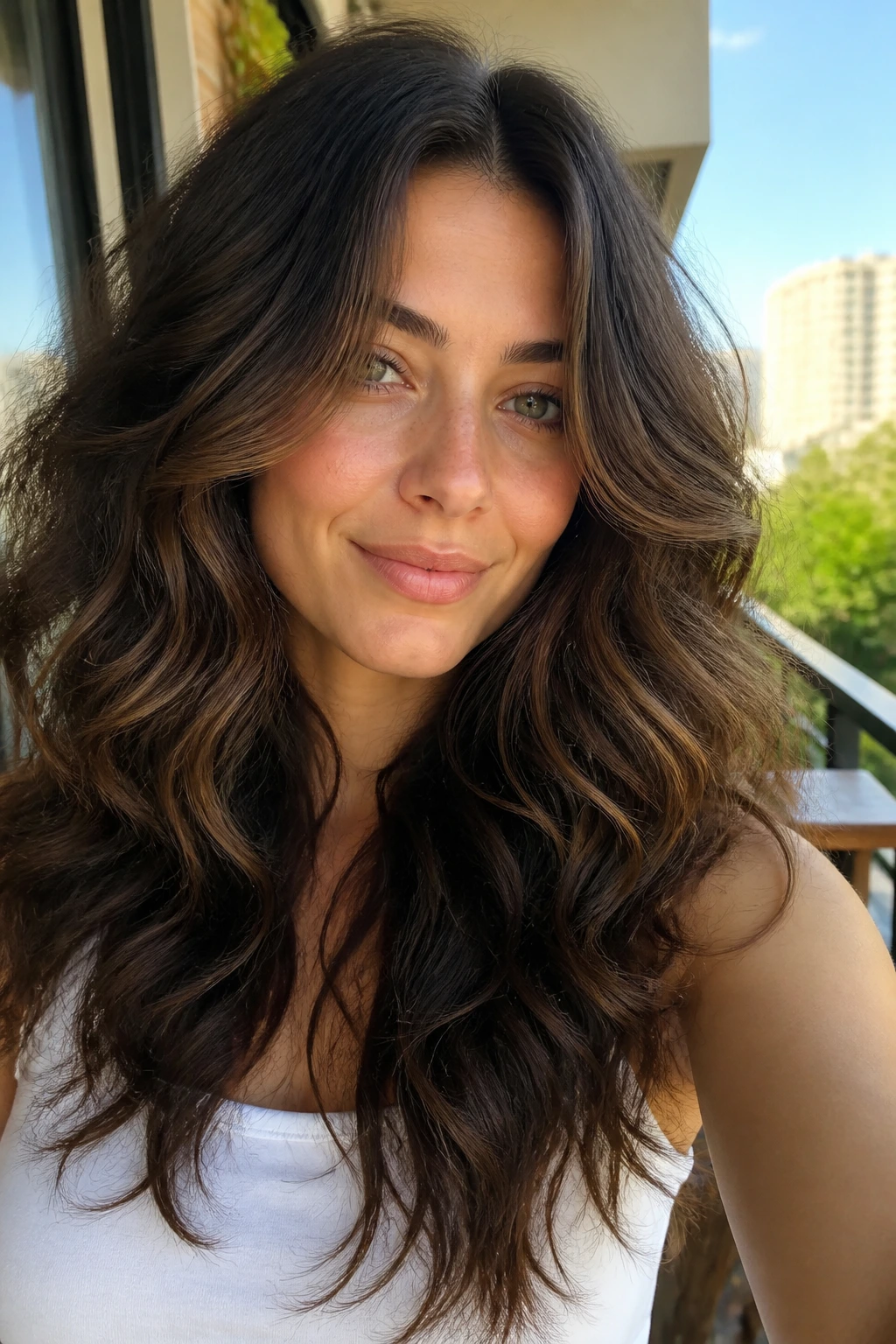
Thick wavy hair often needs relief more than it needs drama. Airy layers remove some interior bulk so the waves can separate instead of stacking into a heavy sheet. The length stays long, which is good, because thick hair usually needs that weight to keep the ends from looking boofy.
This is the cut for people who say, “My hair takes forever to dry,” with a straight face. It still might take forever, but the result will be less bulky and easier to move around. The lower density through the mid-lengths also helps your products go farther, since leave-in and cream can actually spread through the hair instead of sitting on top of it.
How to get it
Ask for internal layers and soft point-cutting through the middle of the hair, not short layers near the crown. That distinction matters. You want movement, not an exploded silhouette.
11. Minimal Layers for Fine Wavy Hair
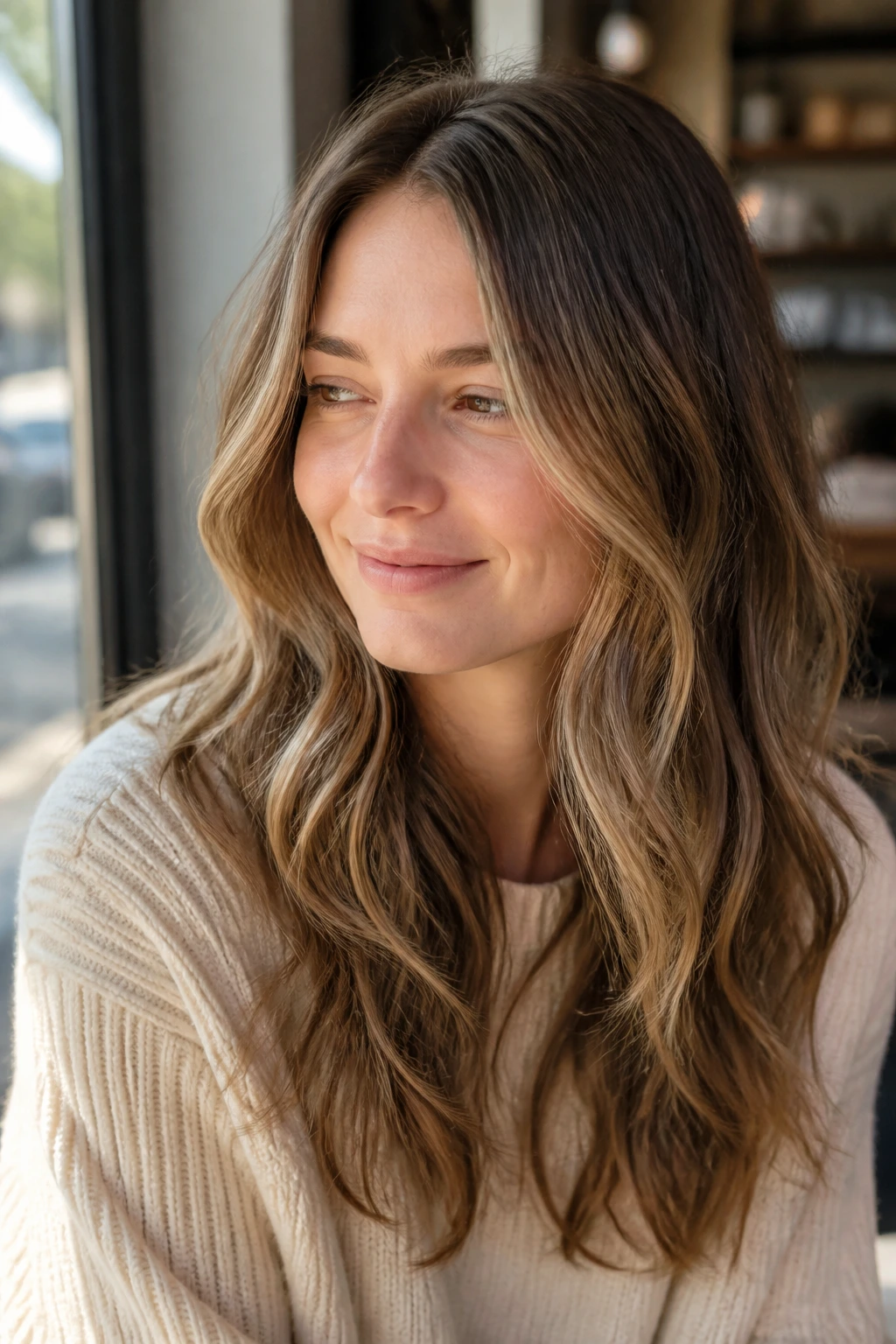
Fine wavy hair can look gorgeous in long layers, but the layers have to be subtle. Too much removal and the ends go see-through fast. A minimal approach keeps the perimeter full while adding just enough face framing and soft internal movement to let the wave show.
This is one of those cuts that looks boring on paper and smart in real life. It gives you wave without giving up density. If your hair flattens easily, minimal layers also keep it from collapsing into limp pieces. You can still scrunch in a little wave cream or use a diffuser, but you won’t be working against a cut that’s too thin.
My rule: if the ends already feel delicate, keep the layers long and the face frame gentle. Fine wavy hair usually looks best when it has a clean line to sit on.
12. Razor-Soft Ends for Piecey Texture
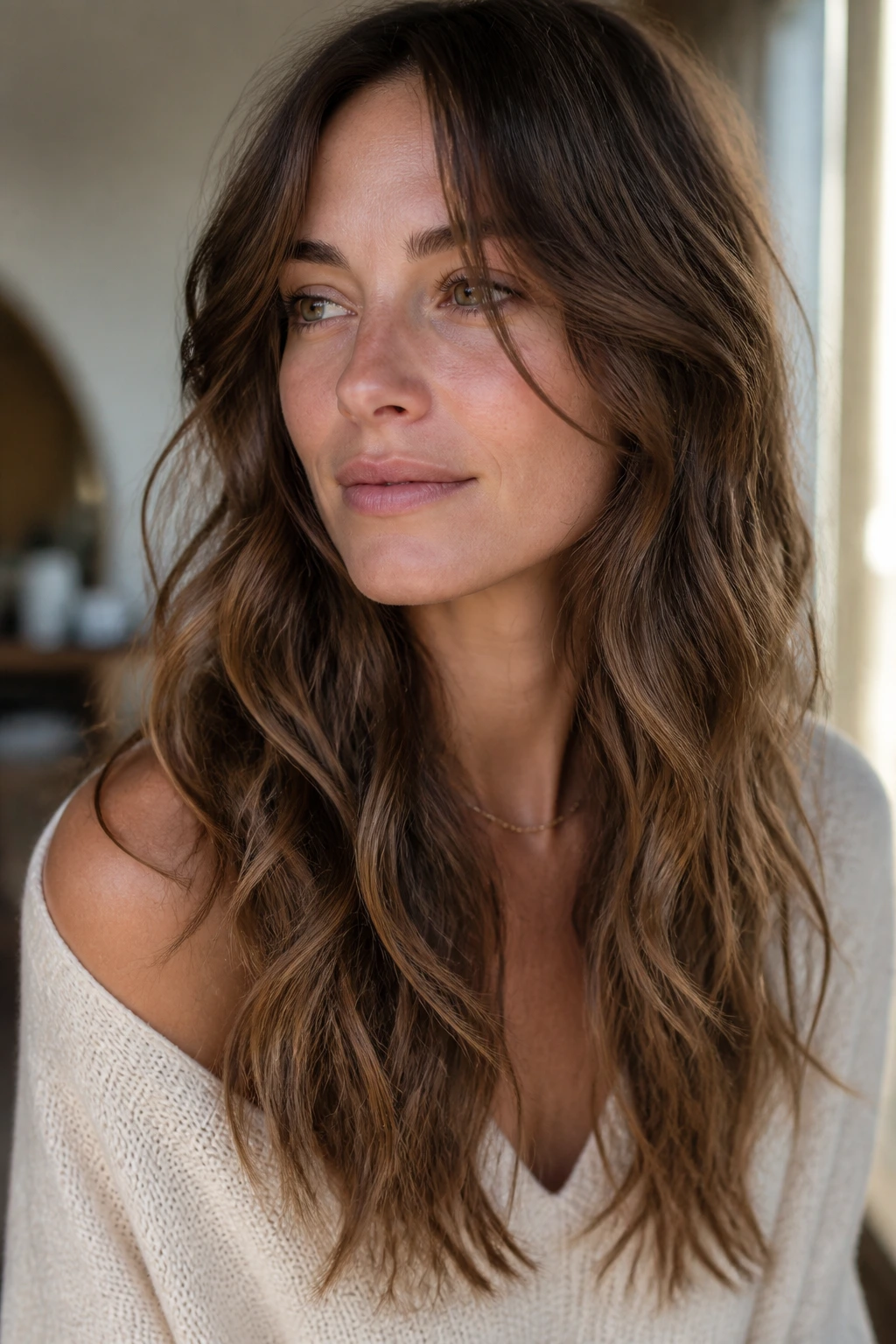
Razor-soft ends can be lovely on wavy hair, but they need a light hand. The point of the razor is to soften the edge so the layers fall in separated pieces instead of one solid block. Done well, that gives you a breezy look that dries fast and doesn’t need a perfect finish.
It’s especially useful if your hair tends to look stiff at the bottom. A little softness at the ends keeps the haircut from feeling heavy. It also lets waves break up a bit more naturally, which is good if you like that undone, piecey shape.
What to watch for
- Ask for soft razor work, not a heavy chop
- Keep the longest layer intact
- Avoid over-thinning if your hair is fine
Too much razor on wavy hair can fray the ends and make them puff. A little goes a long way here.
13. Long Layers With a Blunt Baseline
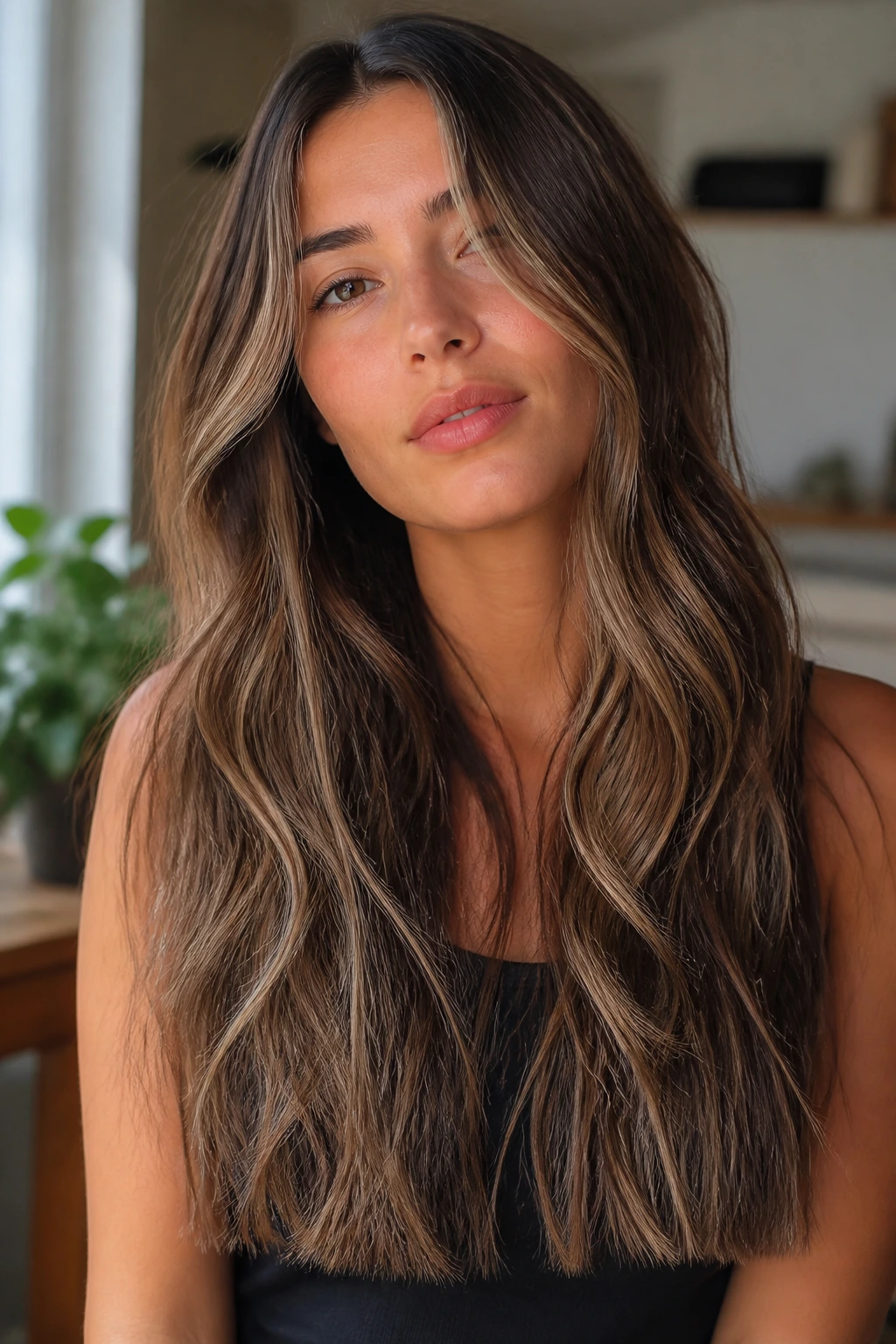
This is one of the best compromises if you like movement but still want your hair to look thick at the ends. The baseline stays blunt, which gives the cut a solid bottom edge, and the layers sit above it. That keeps the silhouette strong while still loosening the bulk in the upper sections.
Wavy hair often benefits from this because the blunt line helps the waves settle. You get the bounce, but you don’t lose the feeling of fullness. I like this cut for anyone who wears their hair down more than up and wants it to look healthy even on day three.
The blunt bottom also makes trims more forgiving. If you go a little longer between salon visits, the shape doesn’t fall apart as fast as a heavily textured cut. It’s practical. Sometimes the most practical haircut is also the prettiest one.
14. Cheekbone Curtain Layers
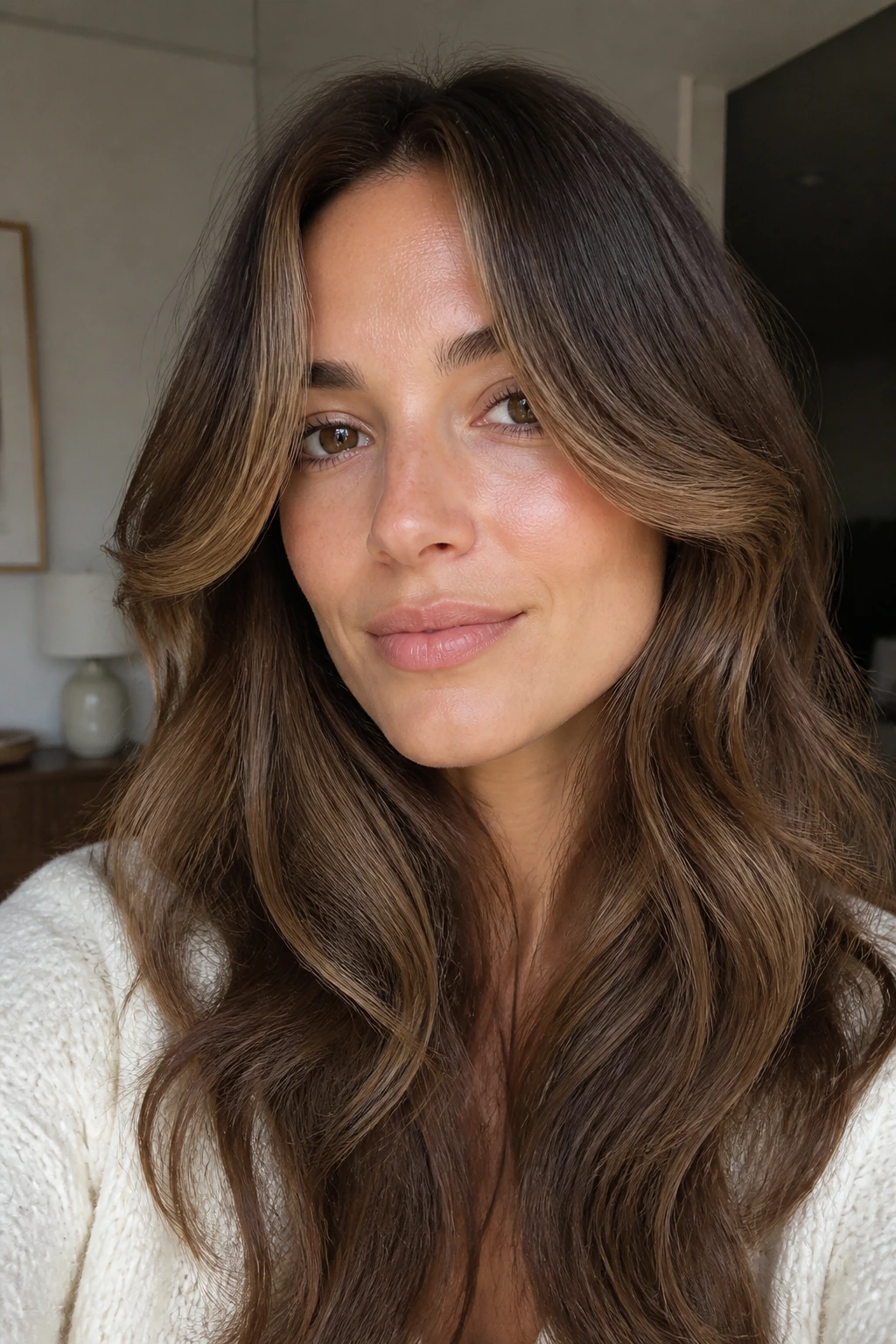
Cheekbone curtain layers bring the eye right to the top half of the face, which can make long wavy hair feel lighter without a drastic chop. The front opens away from the center, then drops into longer layers through the sides. The result is soft, not fussy.
This shape works well if your waves have a loose bend and you want a little face lift without obvious bangs. It’s also nice for people who tuck hair behind the ears often, because the layers still show even when the front is partially pulled back. That tiny detail matters more than you think.
Why it works
The cut creates movement where the face needs it most, and leaves the rest of the hair long enough to stay manageable. You’re not giving up thickness at the bottom, which is usually the difference between “easy” and “why does this feel thin?”
15. Collarbone Face Frame, Long Back
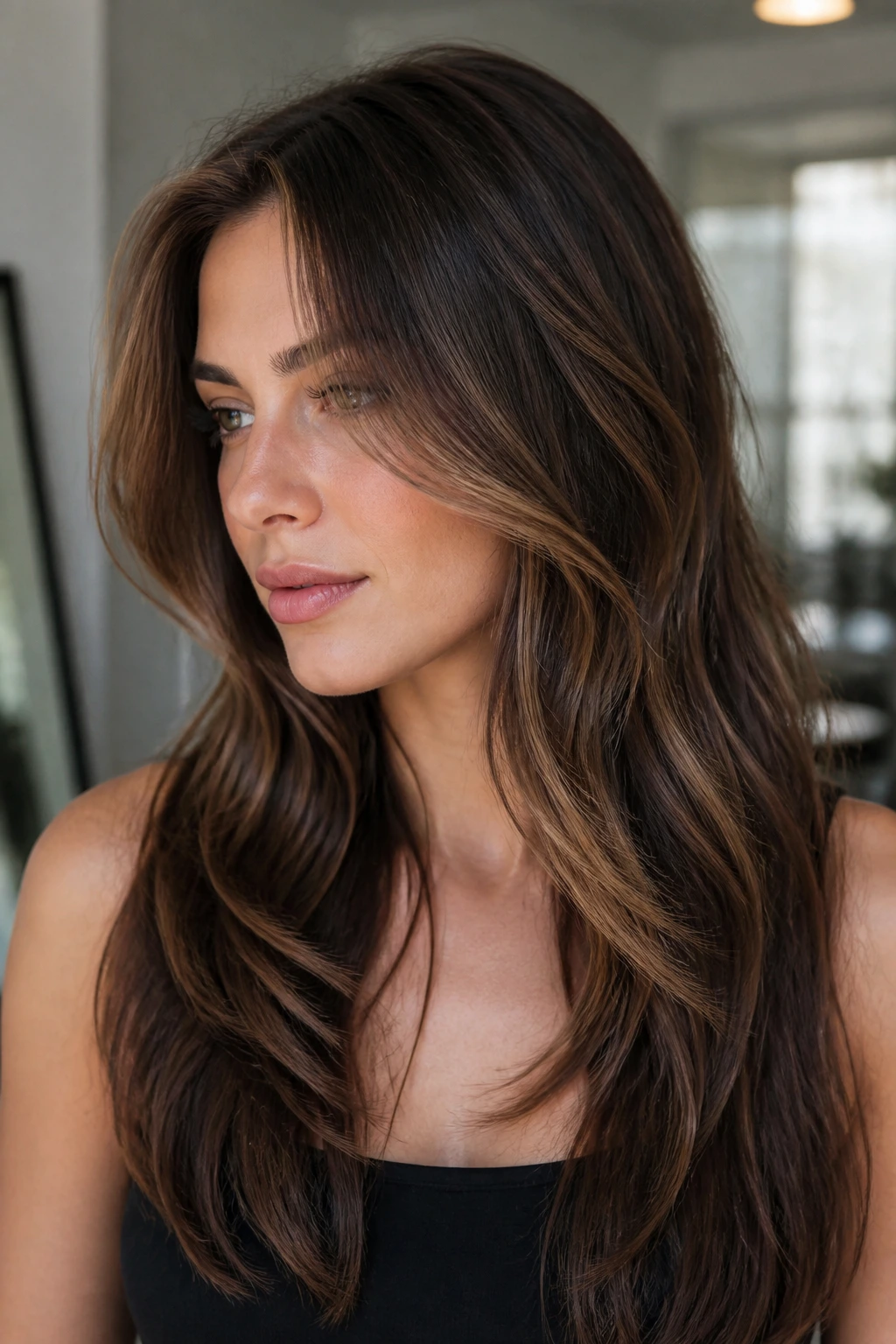
If you want the front to do the talking, this cut is elegant in a quiet way. The face-framing layers fall to the collarbone, then gradually blend into a much longer back section. That gives you shape around the face and a clean sweep over the shoulders.
It’s especially useful if your hair tends to fall flat around the jawline. The collarbone length creates movement without short bangs or a dramatic chop. The back stays long enough for ponytails, braids, and half-up styles, so day-to-day life doesn’t get complicated.
I’d choose this shape if you like your hair to look good both loose and tied back. It’s one of those cuts that survives real life better than a lot of prettier salon photos do.
16. Hidden Underlayers for Extra Movement
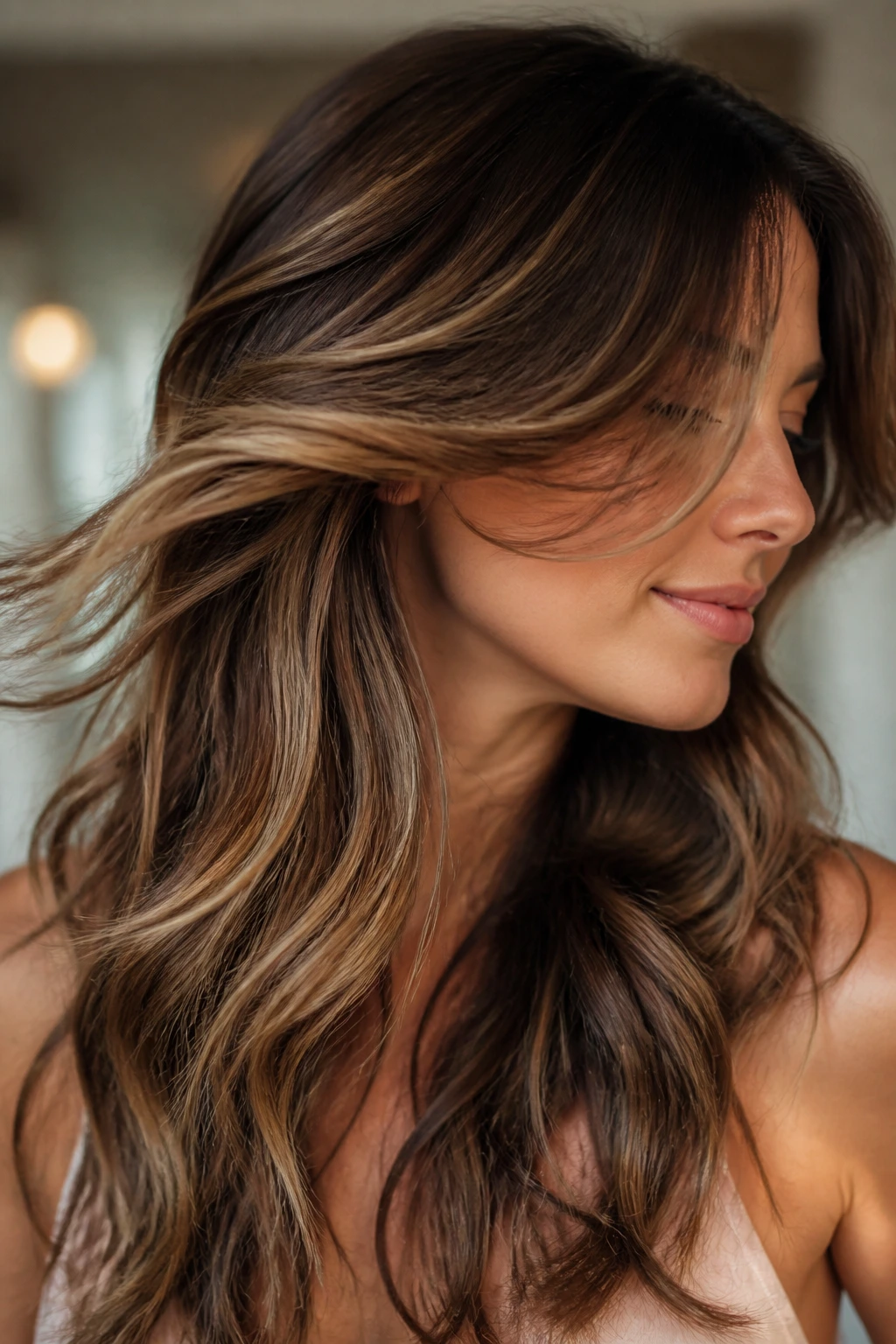
Hidden underlayers are for people who want the top of the haircut to look mostly smooth, but still want the ends to move. The shorter pieces sit underneath the longer top layer, so the texture shows when the hair swings, not when it’s sitting flat against your shoulders. That makes the haircut feel softer without announcing itself.
This is a smart choice for waves that get heavy underneath. The cut lightens the base where the bulk collects, which can make a huge difference if your hair feels like it traps heat. It also helps with dry time, since air moves through the layers a little better.
This one needs a good stylist. If the underlayers are too short, they poke out and the haircut loses its calm. If they’re long and blended, though, the result is subtle and easy to wear.
17. Low-Stacked Layers for a Heavy Wave Pattern
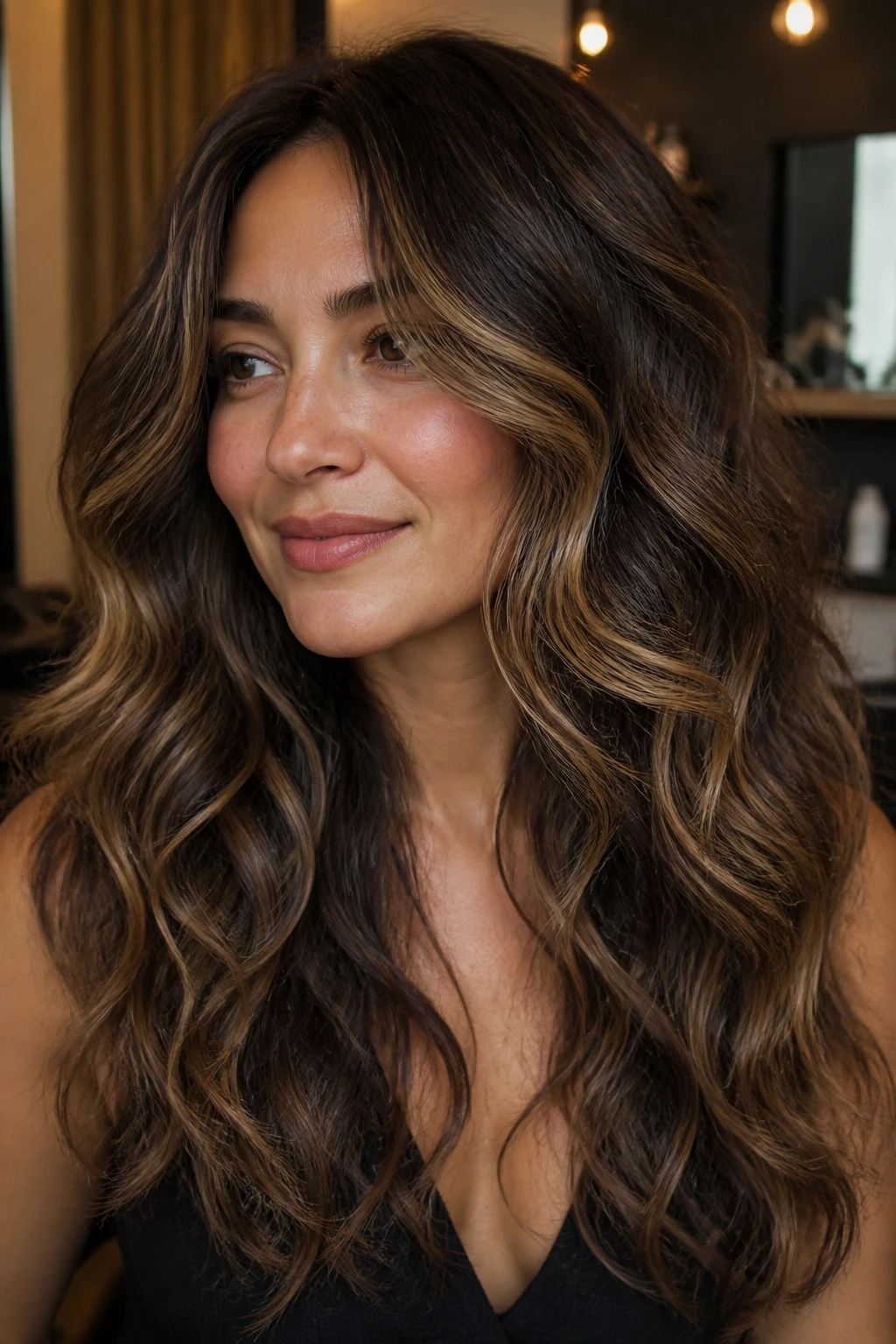
Low-stacked layers sit farther down the length, which keeps the crown from getting too poufy. That matters on wavy hair with a heavy wave pattern, because too much stacking up top can create a halo. The low placement keeps the shape controlled and lets the movement happen lower on the head.
This cut is a good compromise if you want fullness near the top but don’t want the haircut to balloon. The layers start below the widest part of the head, which makes the silhouette look cleaner from the front and the side. It is one of the more overlooked options for people with bigger waves.
A small note
If your hair already has a lot of natural volume, low-stacked layers are usually safer than a high, shaggy shape. You can always add texture later. Taking it away is harder.
18. Polished Layers With a Center Part
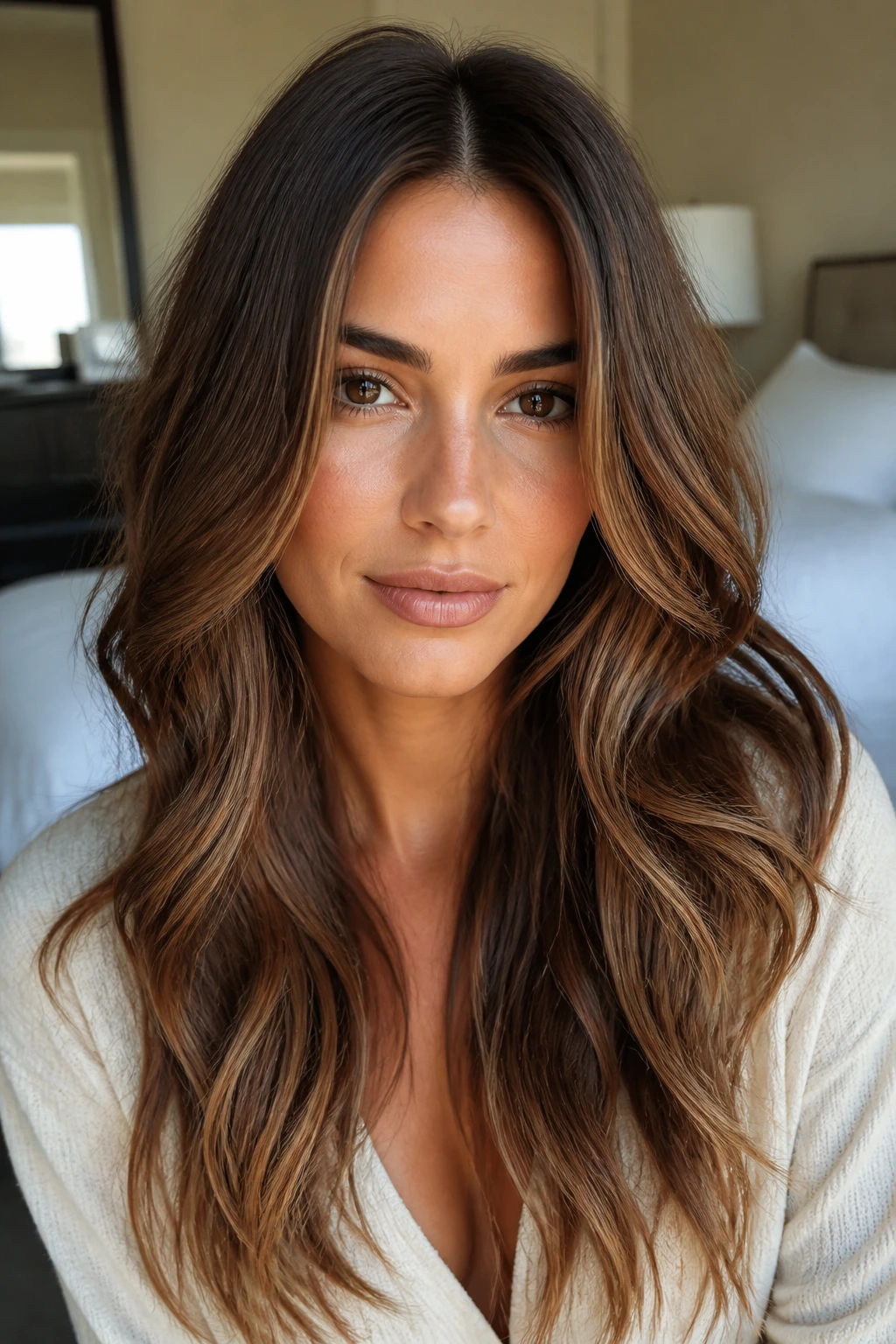
A center part can make long wavy layers look calm and expensive without needing any actual effort. The symmetry shows off the face-framing pieces evenly, and the long layers fall in a tidy way that still lets the waves move. It’s a clean shape, not a stiff one.
This version works best when the layers are long enough to stay blended. You don’t want obvious stairs on either side of the face. Instead, aim for a soft curtain effect that opens around the cheekbones and keeps the ends full. If you like a straight-ahead look that still has texture, this is a strong candidate.
How to wear it
A center part pairs well with air-drying, a loose bend from a diffuser, or even a fast pass with a large-barrel iron on the front pieces only. You do not need to curl everything. Usually the front is enough.
19. Off-Center Layers for a Softer Frame
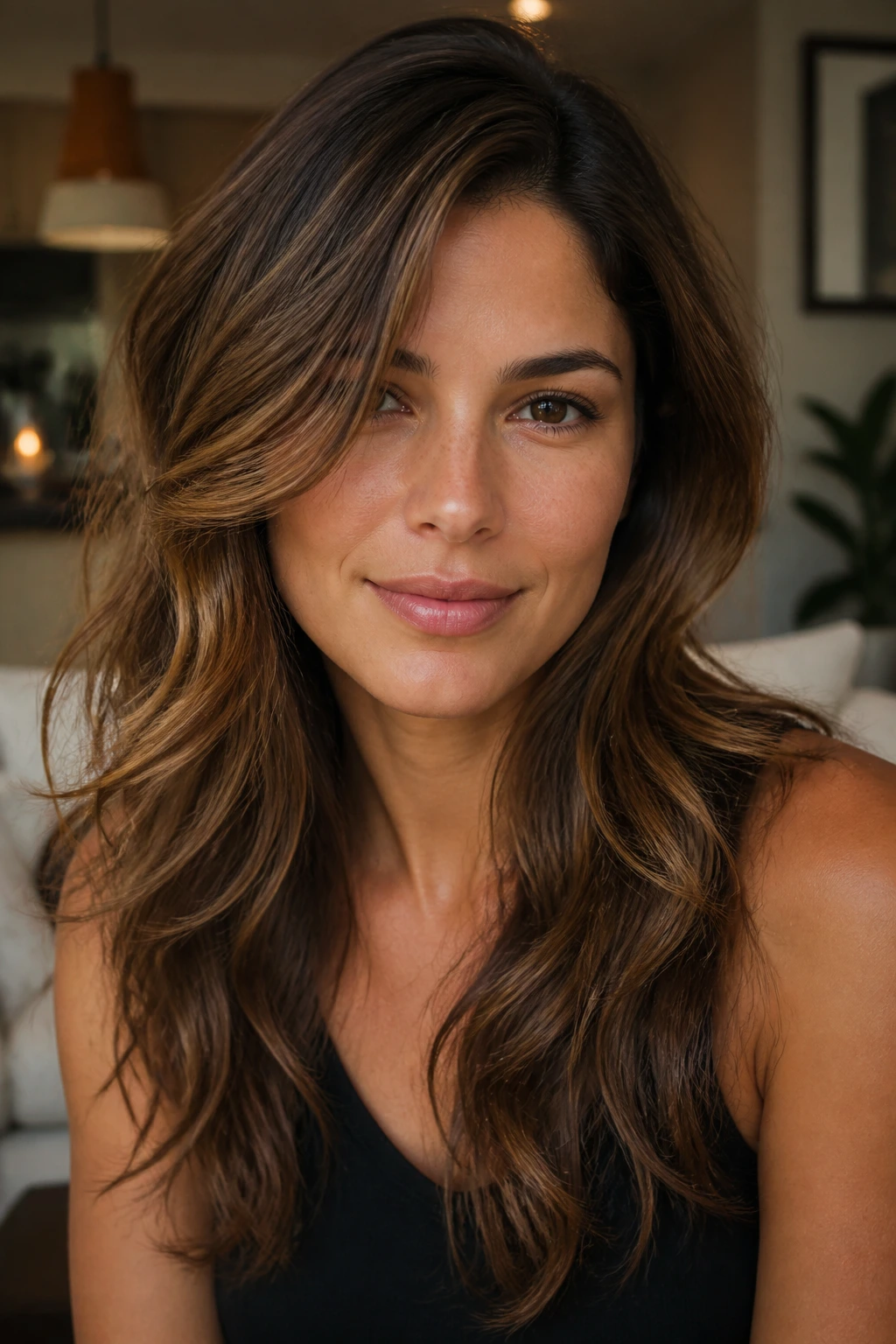
An off-center part is a small change that can make a layered cut feel warmer and less severe. It shifts the wave fall just enough to soften the face and keep the style from reading too symmetrical. Wavy hair usually likes a little imbalance; it looks more natural that way.
This is especially useful if you have one side that always drops flatter than the other. Moving the part a half-inch or so can give the fuller side somewhere to go and stop the cut from feeling stuck. The layers do the rest.
I like this with chin-to-collarbone framing, because it creates a nice sweep without making the haircut look overly styled. If you get bored easily, this is one of the cheapest changes you can make. No scissors needed. Just a comb and a few minutes.
20. Long Layers With a Soft Fringe
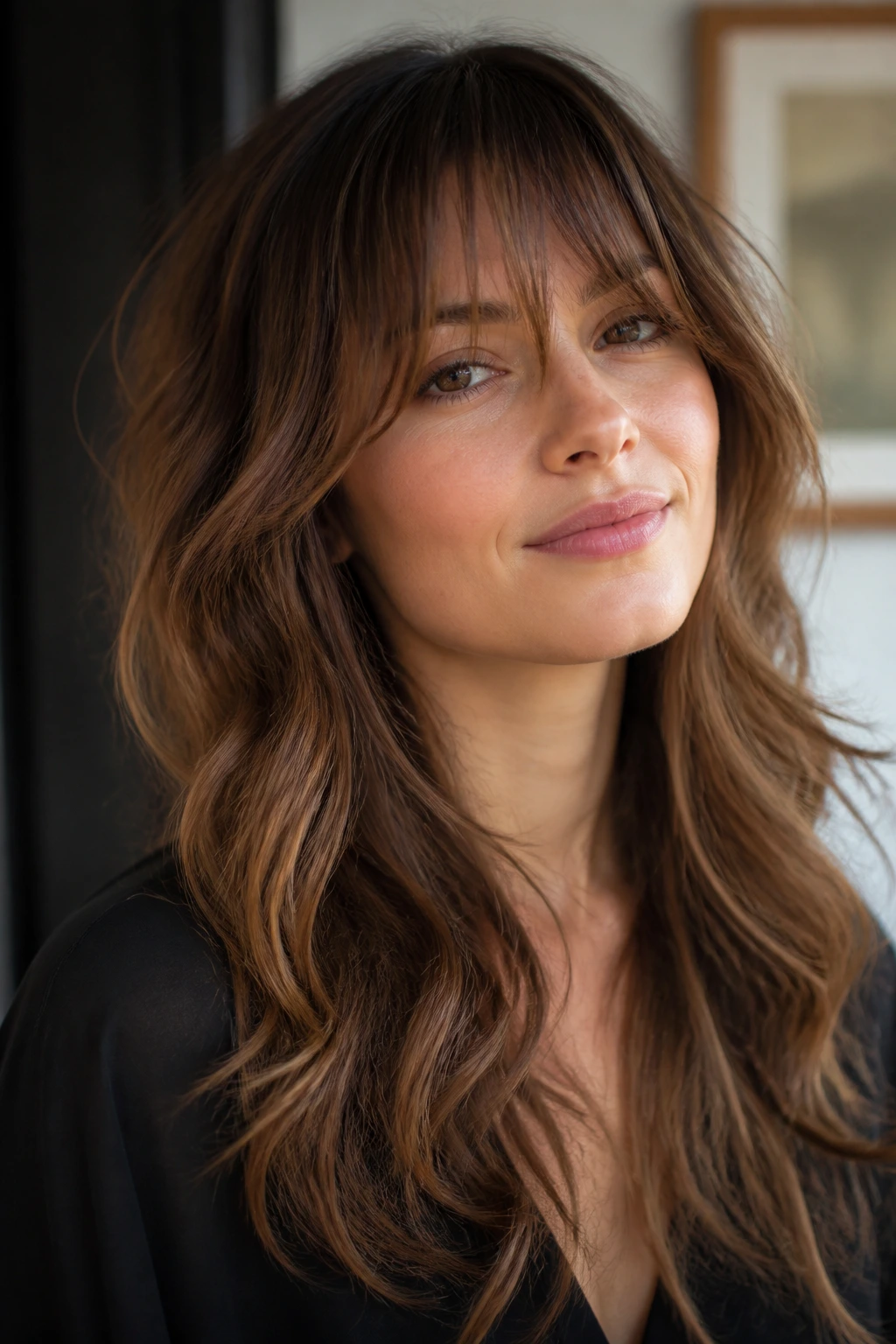
A soft fringe is the diplomatic version of bangs. It gives you some movement around the eyes and forehead, but it doesn’t demand the blunt maintenance that a full fringe does. On wavy hair, that matters a lot because waves can change the fringe’s behavior from one day to the next.
The fringe should stay airy and a little broken up, not heavy and full. That keeps it from separating awkwardly when it dries. The longer layers behind it should blend easily into the rest of the haircut so the front doesn’t feel isolated.
Good fit if
- You want a little forehead coverage
- You air-dry more often than you blow-dry
- You don’t want bangs that need daily ironing
A soft fringe can be forgiving if it’s cut with a bit of texture. It grows out better too, which saves everyone a headache.
21. Long V-Cut Layers for Dense Hair
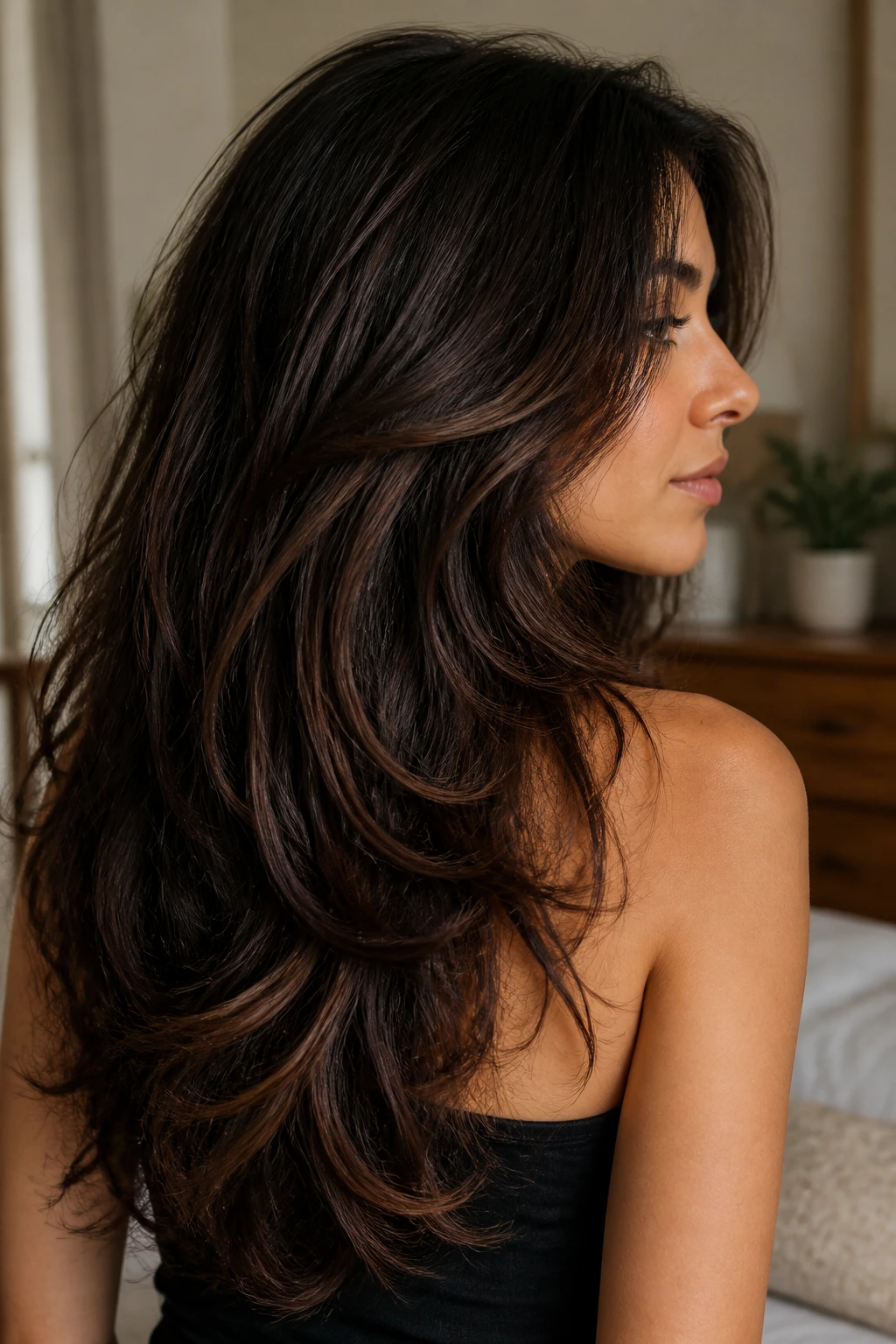
Dense wavy hair often needs a cut that respects both the thickness and the wave pattern. A long V-cut does that by removing bulk toward the back while leaving enough length around the sides to keep the shape balanced. It’s not subtle, but it’s practical.
What I like about this cut is how it lets the hair swing. Heavy wavy hair can sit in one solid sheet if the bottom is too blunt. The V shape breaks that up and gives the hair some direction. It looks especially good when worn down the back, because the point of the V creates movement when you walk.
The key is to keep the angles long and blended. A steep V can feel sharp and dated. A soft one gives you all the movement with none of the theatrical edge.
22. Wavy Layers That Keep Their Bulk
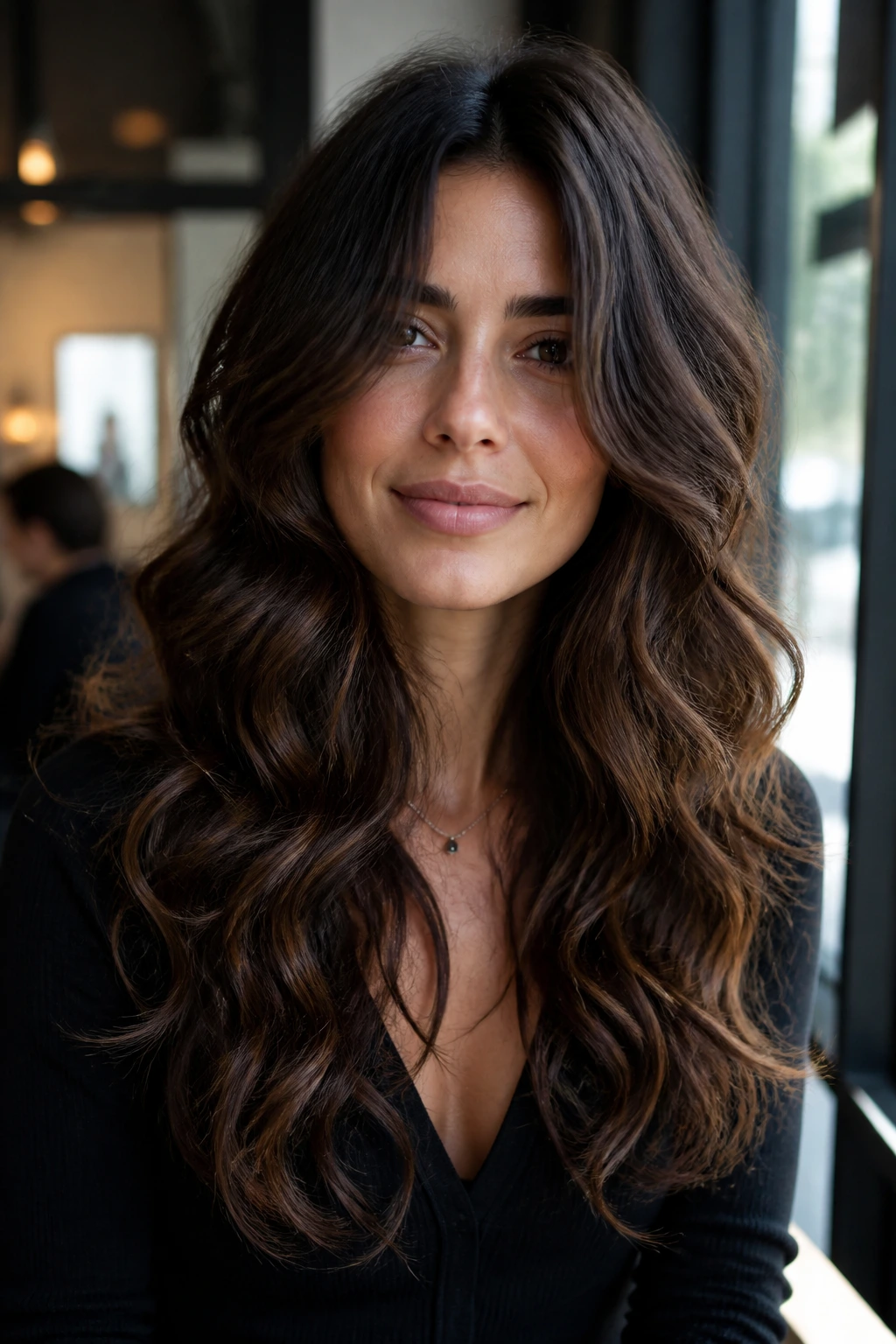
Not every wavy haircut should be light and airy. Sometimes you want the bulk. If your hair is naturally thick, keeping some fullness in the layers helps the wave read rich instead of stringy. This style protects the density while still softening the shape.
It’s a good option for people who like their hair to feel substantial when they pull it into a low ponytail or twist. The cut doesn’t shred the ends. Instead, it lets the wave pattern show in large, soft pieces. That can look cleaner and more expensive than a heavily thinned-out cut.
What to ask for
- Long layers only through the upper half
- Minimal thinning at the ends
- A strong perimeter that keeps weight
This is the cut for people who hate seeing through the ends of their hair. There’s nothing wrong with wanting thickness.
23. Beachy Layers With Tapered Ends
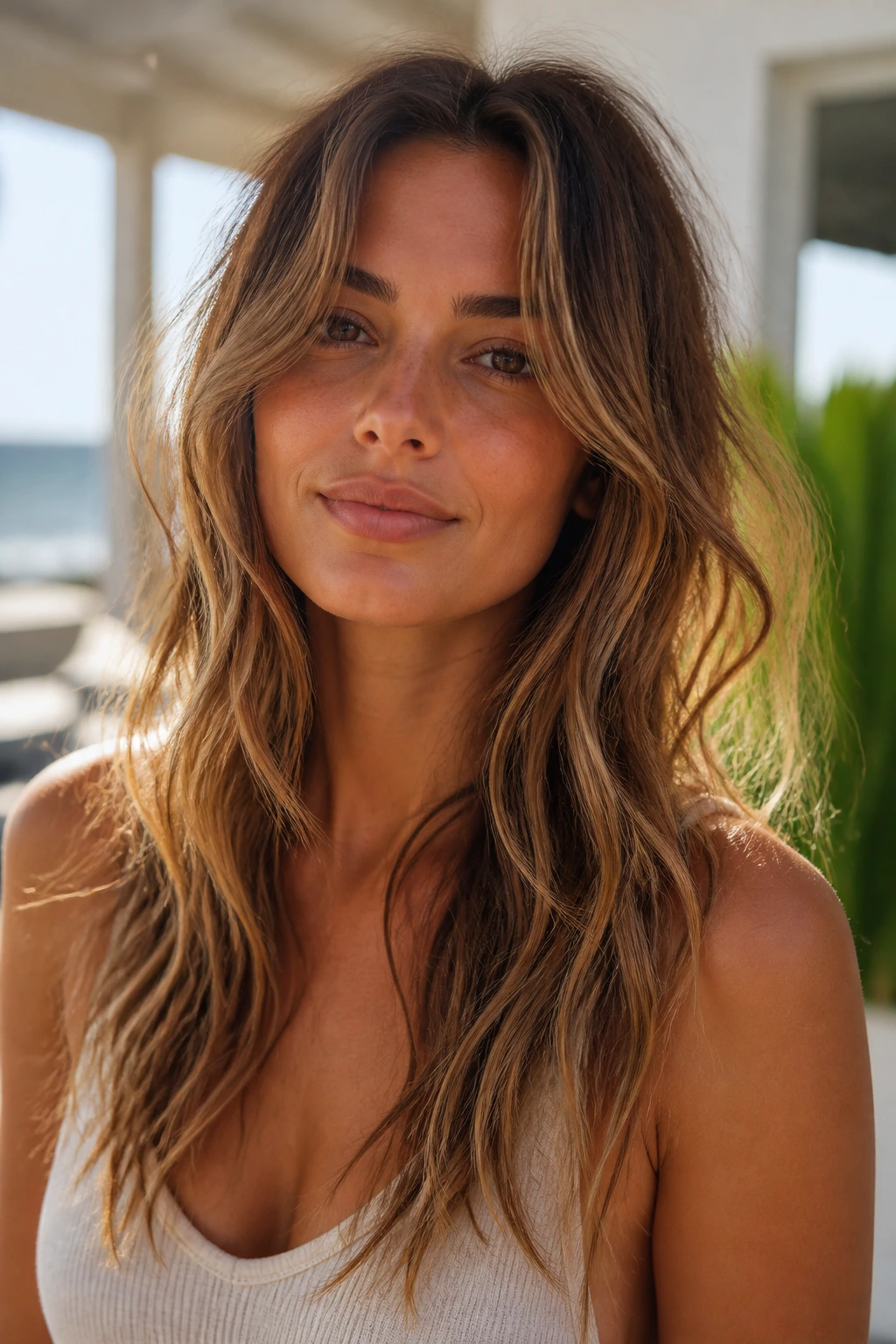
Beachy layers aren’t about looking like you just came from a vacation. They’re about keeping the ends lighter so the wave pattern can separate a little more easily. Tapered ends help the hair move instead of clumping at the bottom, which can make long wavy hair look fresher between washes.
This cut works best when the taper is soft. You want the ends to narrow gradually, not disappear. That creates a more lived-in shape that still holds its outline on day two. If your waves frizz at the ends, though, don’t overdo the taper. Too much removal can make the ends look dry.
A salt spray or lightweight cream can help here, but the haircut is doing most of the work. That’s the point. You want a style that stays interesting even when you’ve done almost nothing to it.
24. Long Layers for Mixed Textures
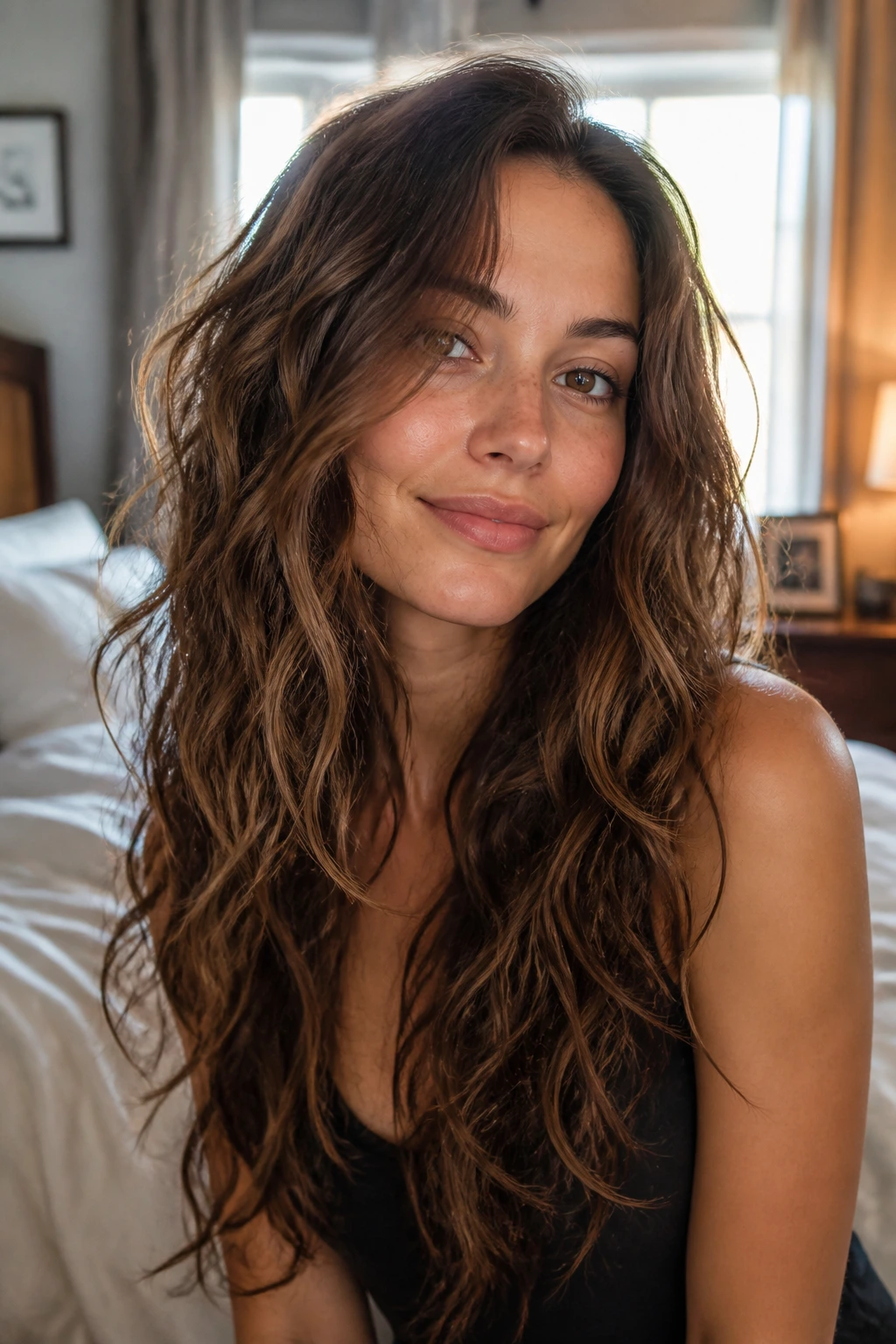
A lot of wavy hair isn’t one even pattern from root to tip. Some sections bend tighter, some stay loose, and a few pieces act like they missed the memo entirely. Long layers for mixed textures give those different pieces room to live together without forcing them into one shape.
The stylist should cut with the texture zones in mind. Shorter, bendier pieces can sit a little higher, while looser sections keep more length. That keeps the overall style from looking uneven once it dries naturally. It also helps if one side is a little more wavy than the other, which happens more often than people admit.
The practical side
This is one of the best cuts for people who air-dry and don’t want to spend time re-training every wave by hand. The shape accepts the variety instead of arguing with it.
25. Feathered Layers Around the Face
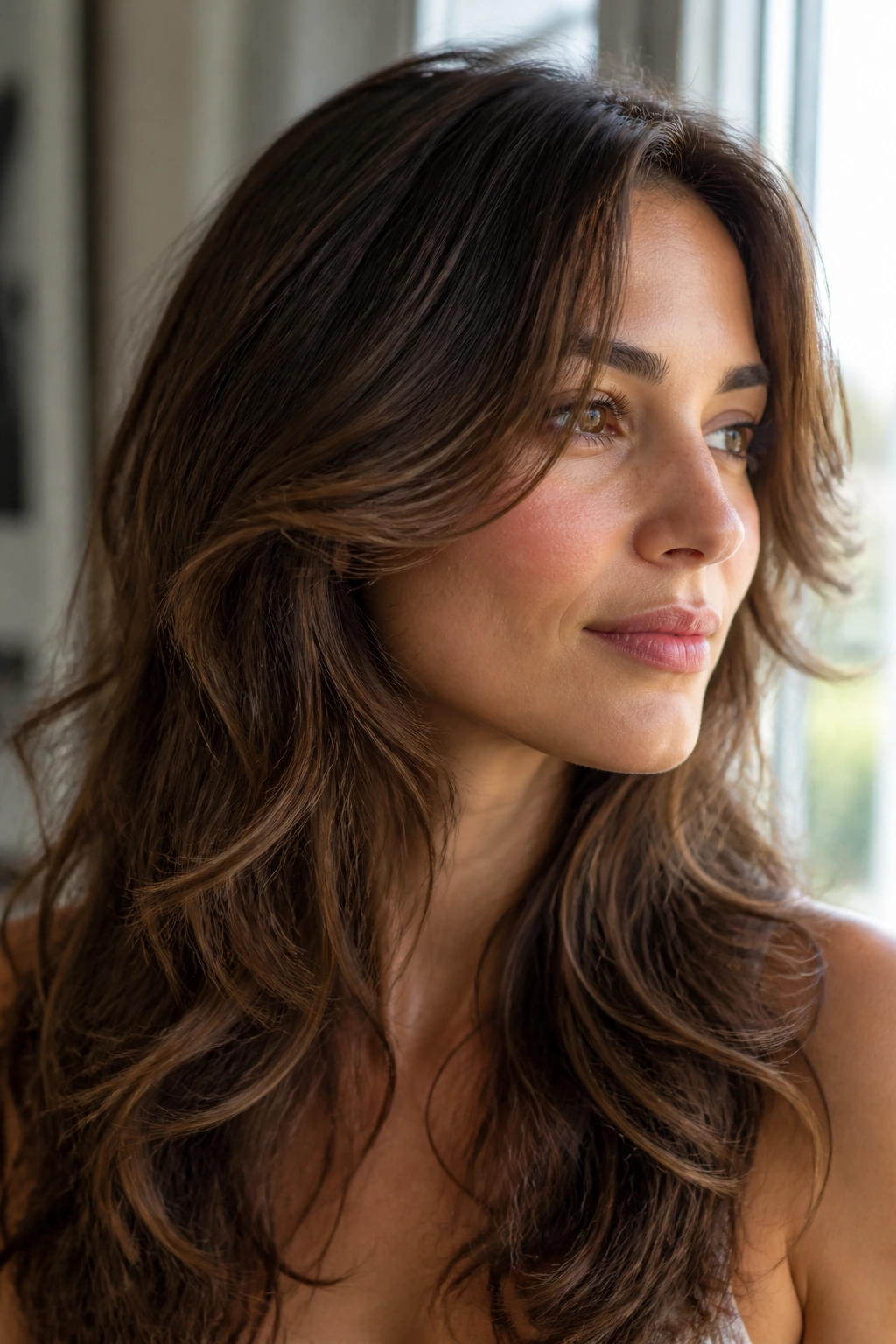
Feathered face-framing layers are softer than blunt framing and more flattering than hard steps. They skim the temples, cheekbones, and jawline in a way that makes the whole haircut feel lighter, but they keep the long length intact. On wavy hair, feathering can be enough to bring the whole shape to life.
The secret is restraint. Too much feathering and the ends start to look wispy. Just enough, and the haircut opens up beautifully around the face. It also grows out well, because the front doesn’t suddenly look disconnected from the rest of the hair.
I like this cut when the goal is gentle movement, not a big style statement. It’s the kind of thing that works with a plain tee, a blazer, or a messy bun. No fuss. No hard lines.
26. Grow-Out Friendly Layers With No Harsh Steps
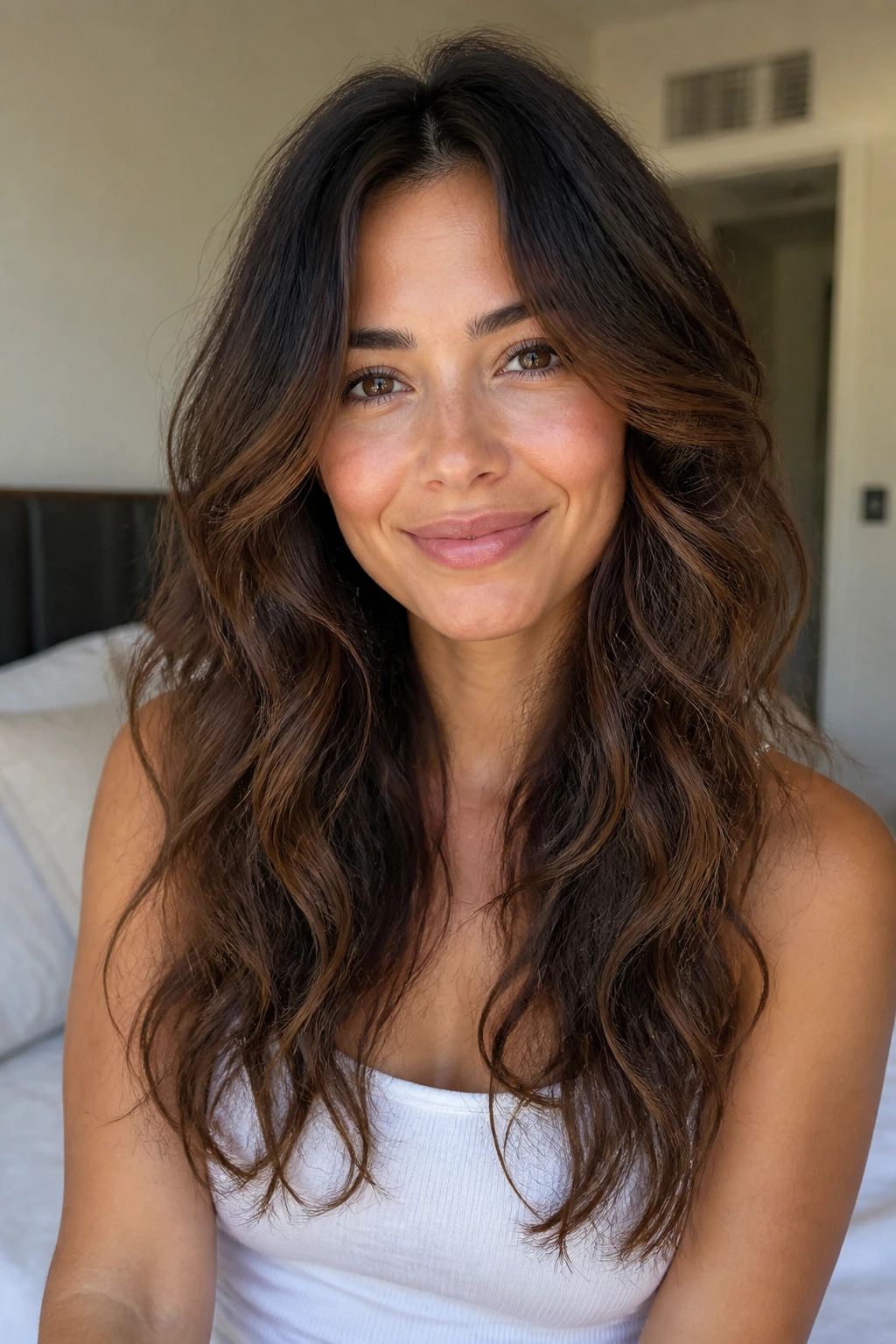
If you don’t want to think about haircuts every six weeks, this is the shape to look at. The layers are long, soft, and blended so the grow-out stays smooth. There are no abrupt shelves or disconnected chunks, which is where a lot of layered haircuts get annoying.
This style is especially useful if your schedule is busy or you just dislike being trapped by maintenance. The haircut still gives movement, but it won’t fall apart if you stretch the trim a little. That alone makes it worth considering.
What makes it work
The first layers usually start lower, the transitions are soft, and the perimeter stays strong. That gives you movement now and fewer complaints later. A good cut should make the next appointment feel optional, not urgent.
27. Long Layers for Salt-and-Pepper Waves
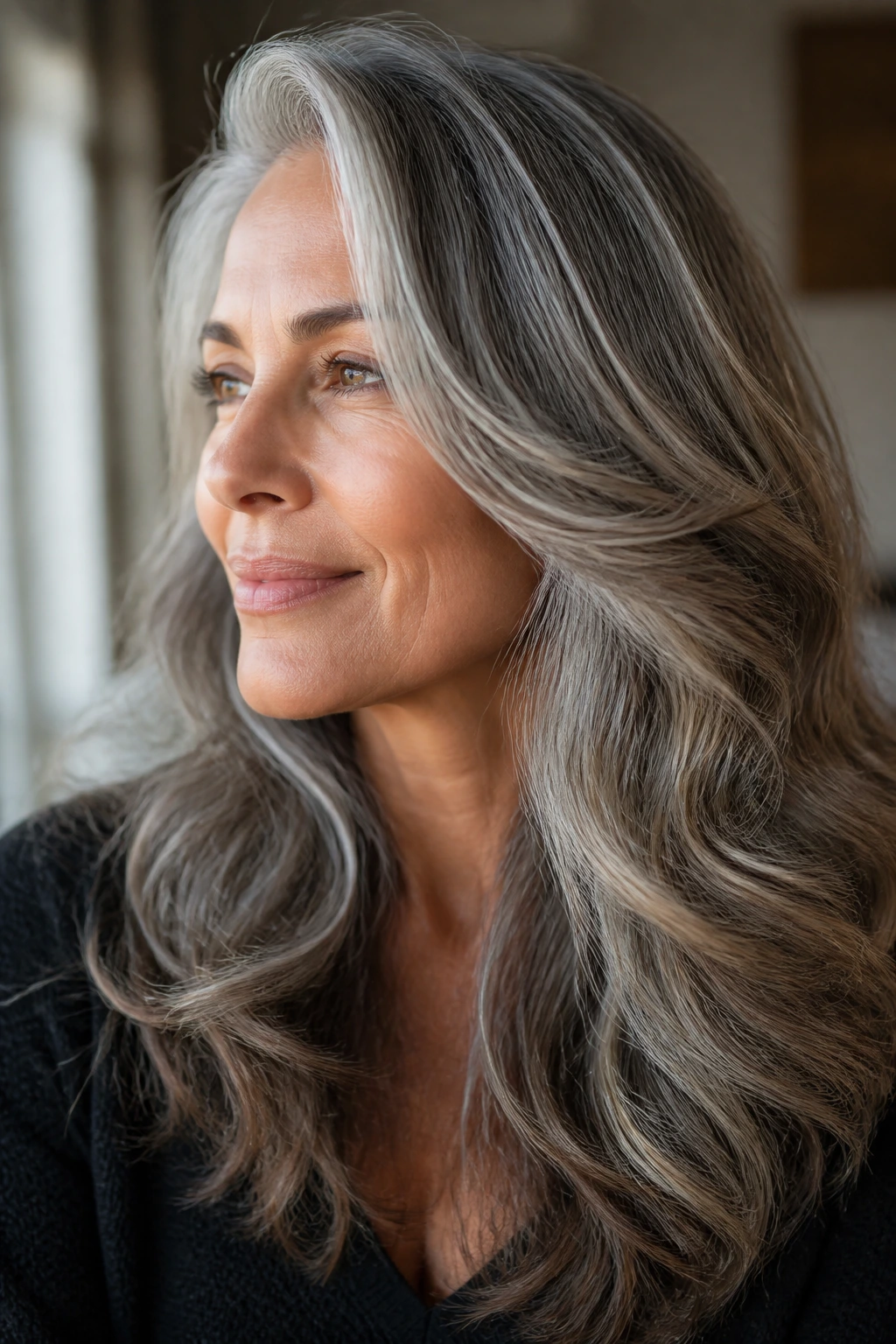
Gray strands and silver streaks can be gorgeous in long waves, especially when the cut lets the texture show. Long layers help the lighter strands reflect differently from the darker ones, which gives the hair more depth without needing extra styling. The movement does the decorating for you.
This is a smart cut if your wave pattern changed as your hair changed color. Gray hair can come in coarser or a little more wiry, and long layers help it settle while still keeping shape. The key is not to over-thin it. You want the cut to honor the texture, not fight it into submission.
A clean, soft layer pattern around the face usually works best here. It keeps the silver pieces from looking bulky near the cheeks and lets the color shift show through the length. Very pretty. Very low fuss.
28. Soft Cascading Layers for Everyday Air-Drying
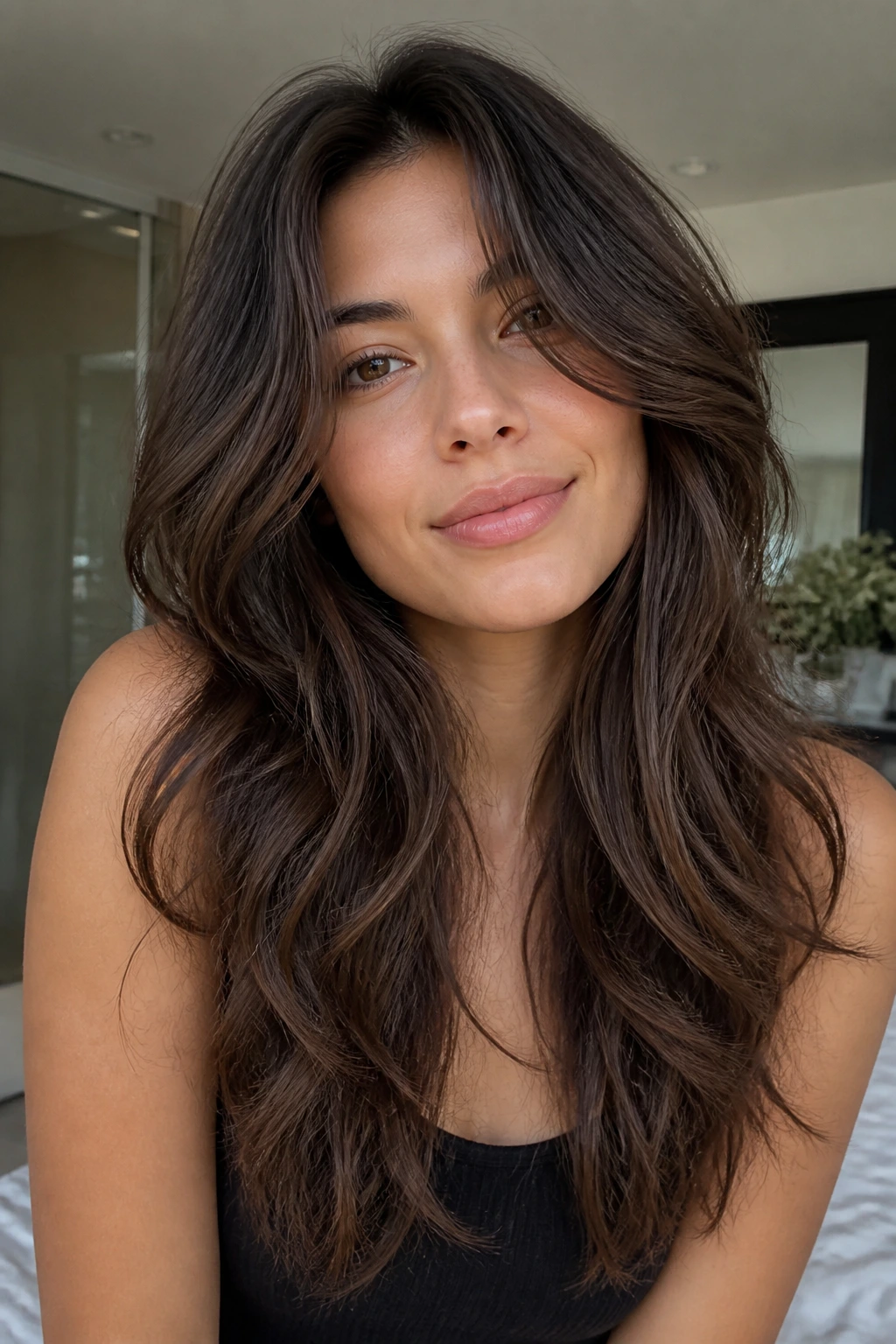
This is the cut I’d hand to someone who wants to wash, scrunch, and walk out the door. The layers cascade down in a soft pattern, with no harsh separation and no fussy piece-y chunks to arrange by hand. The hair falls the way wavy hair wants to fall, which is the whole point.
It works especially well for people who live in the middle of the wave spectrum and don’t need constant heat styling. A little leave-in, a little cream, maybe a diffuser for the roots if they dry flat. That’s enough. The haircut should do the rest.
The ends should stay full, the front should have enough frame to matter, and the shape should still look decent after a loose braid or a clip. If a haircut can survive a normal week, it earns its place. This one usually does.
Why Long Layered Haircuts for Wavy Hair Work Better Than Choppy Cuts
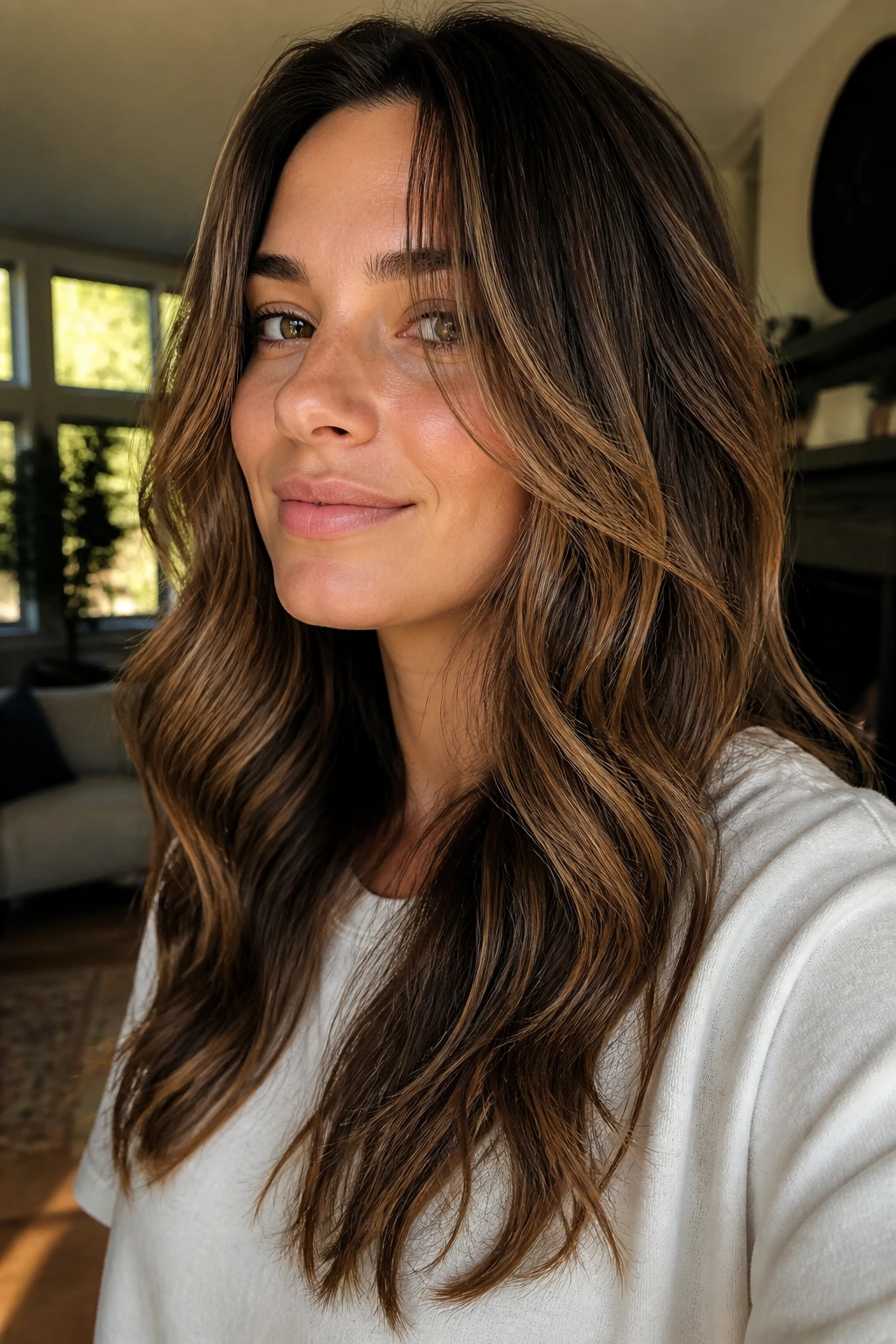
Wavy hair behaves best when it has weight in the right places. Long layers keep the bottom from getting too thin, which helps the waves settle instead of springing into a frizzy halo. Choppy cuts can look cute in a salon mirror, but once the hair dries at home, they often expose every uneven bend and every puff of humidity.
The other reason long layers work is grow-out. A clean, blended layer pattern gives the hair room to change shape without looking messy. That matters if you don’t want to rebuild the cut every few weeks with a flat iron. The better long layered haircut for wavy hair should look good on wash day, day two, and the slightly scruffy day when you forgot the dry shampoo. That’s the real test.
How to Brief Your Stylist So the Cut Grows Out Cleanly
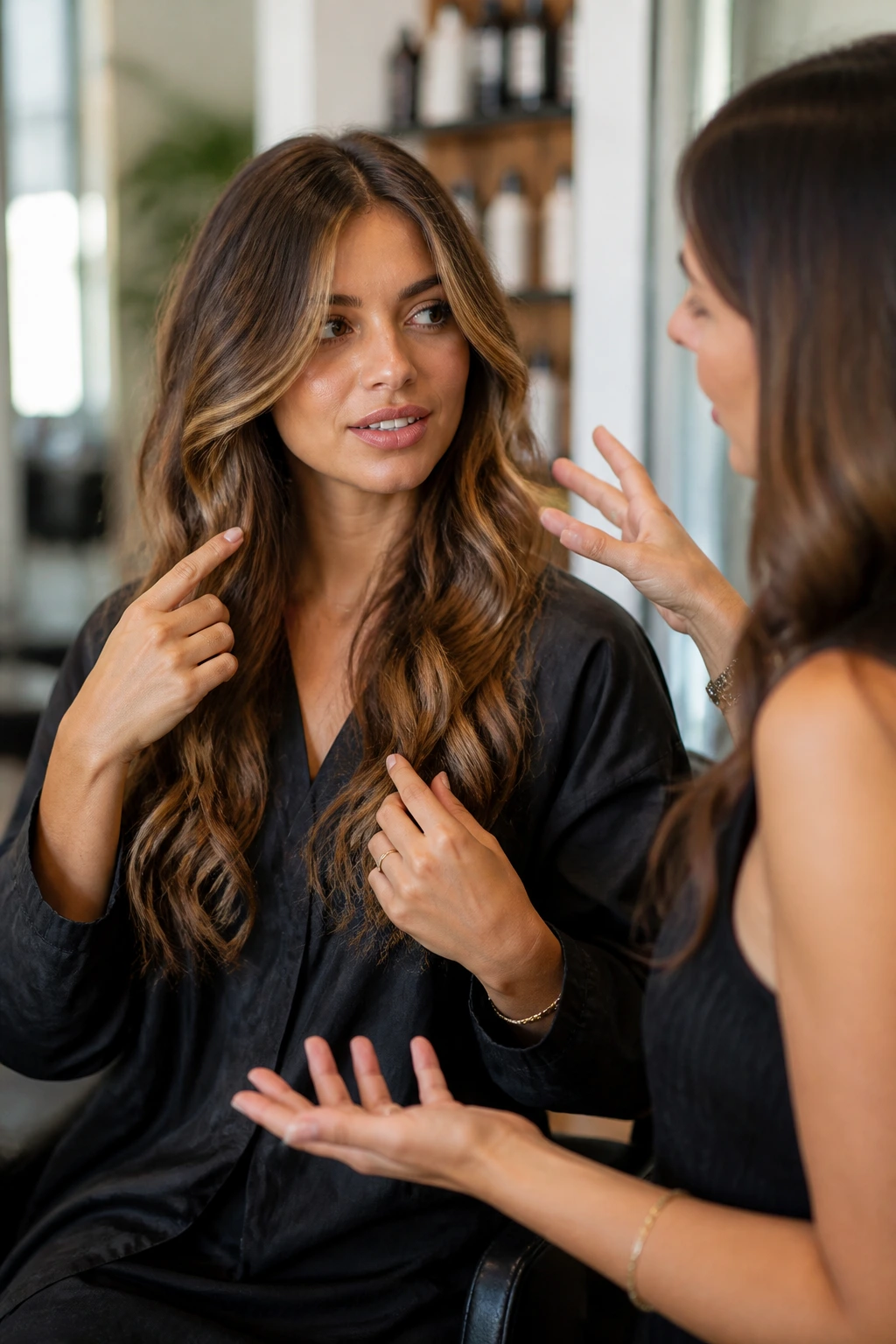
Walk in with a clear idea of where you want the face frame to start. Chin, cheekbone, collarbone — those placements change the whole mood of the cut. If you only say “long layers,” you may get a result that’s technically layered but not actually useful for your wave pattern.
Also say how much length you’re willing to lose in the front versus the back. That one detail saves a lot of regret. For wavy hair, I usually prefer layers that are longer than the client expects at first glance, because hair shrinks when it dries and the layers always read shorter after the cut is over.
Bring down-to-earth notes, not Pinterest poetry. Say things like “I air-dry a lot,” “my waves puff at the sides,” “I want it to ponytail well,” or “I don’t want bangs I have to babysit.” That tells the stylist what shape will actually survive your routine.
The Mistakes That Make Wavy Layers Look Choppy or Flat
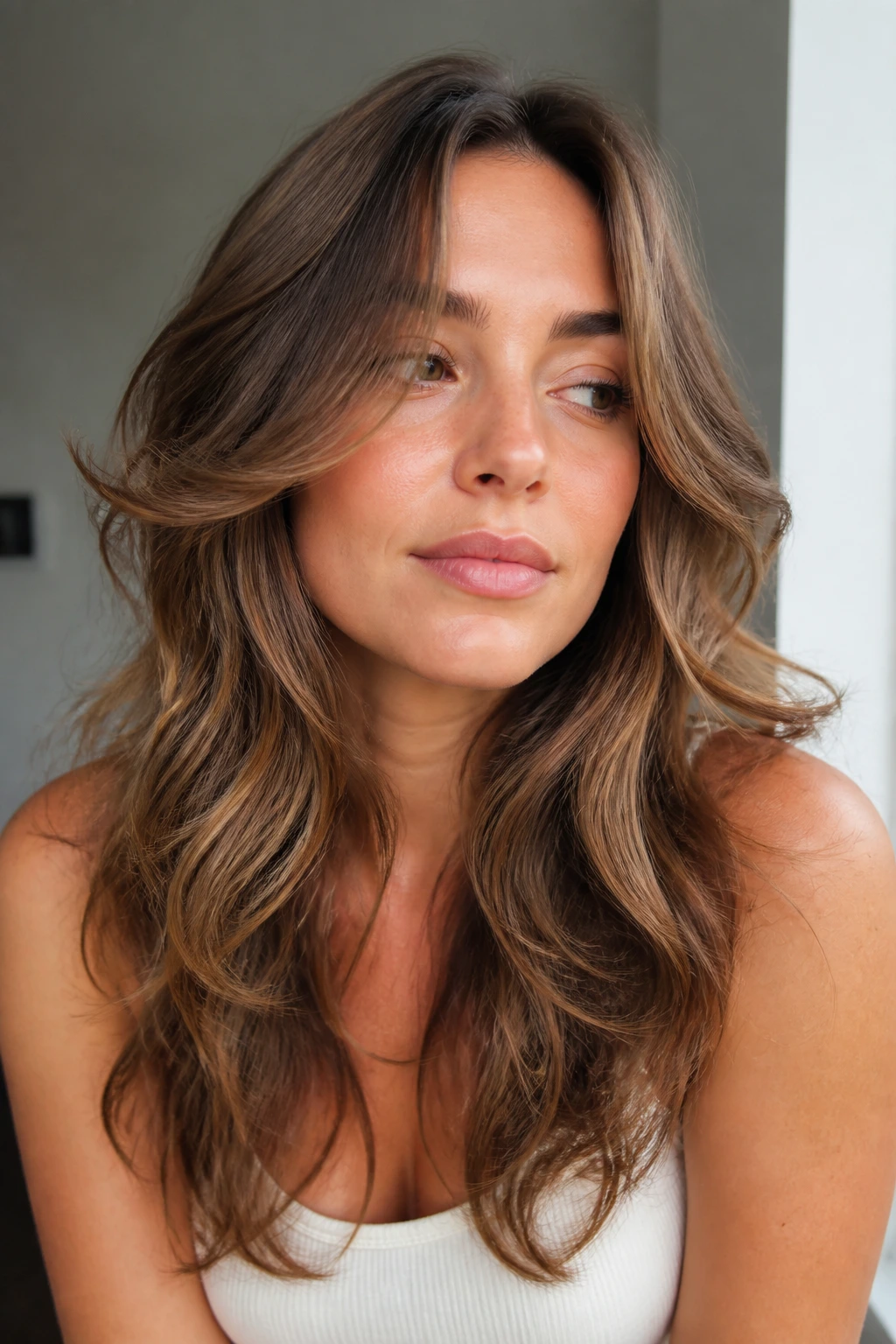
The easiest way to ruin a good layered cut is to start the shortest layers too high. That’s how wavy hair ends up with a crown that flares out and ends that feel too thin. You can see the shape from a mile away, and not in a flattering way.
Another common mistake is over-thinning the ends. On paper, it sounds like it should reduce bulk. In practice, it often makes the bottom look wispy and separated, especially if the hair is fine or the wave pattern is loose. If you want movement, keep some weight at the perimeter.
The third problem is cutting for wet hair only. Wavy hair always looks longer and flatter when it’s wet, and if a stylist ignores the dry shape, the result can surprise you in a bad way. A good cut should be checked with some natural movement in mind. A curl or wave pattern is not a straight strand waiting to be fixed.
Variations Worth Trying When You Want a Different Mood
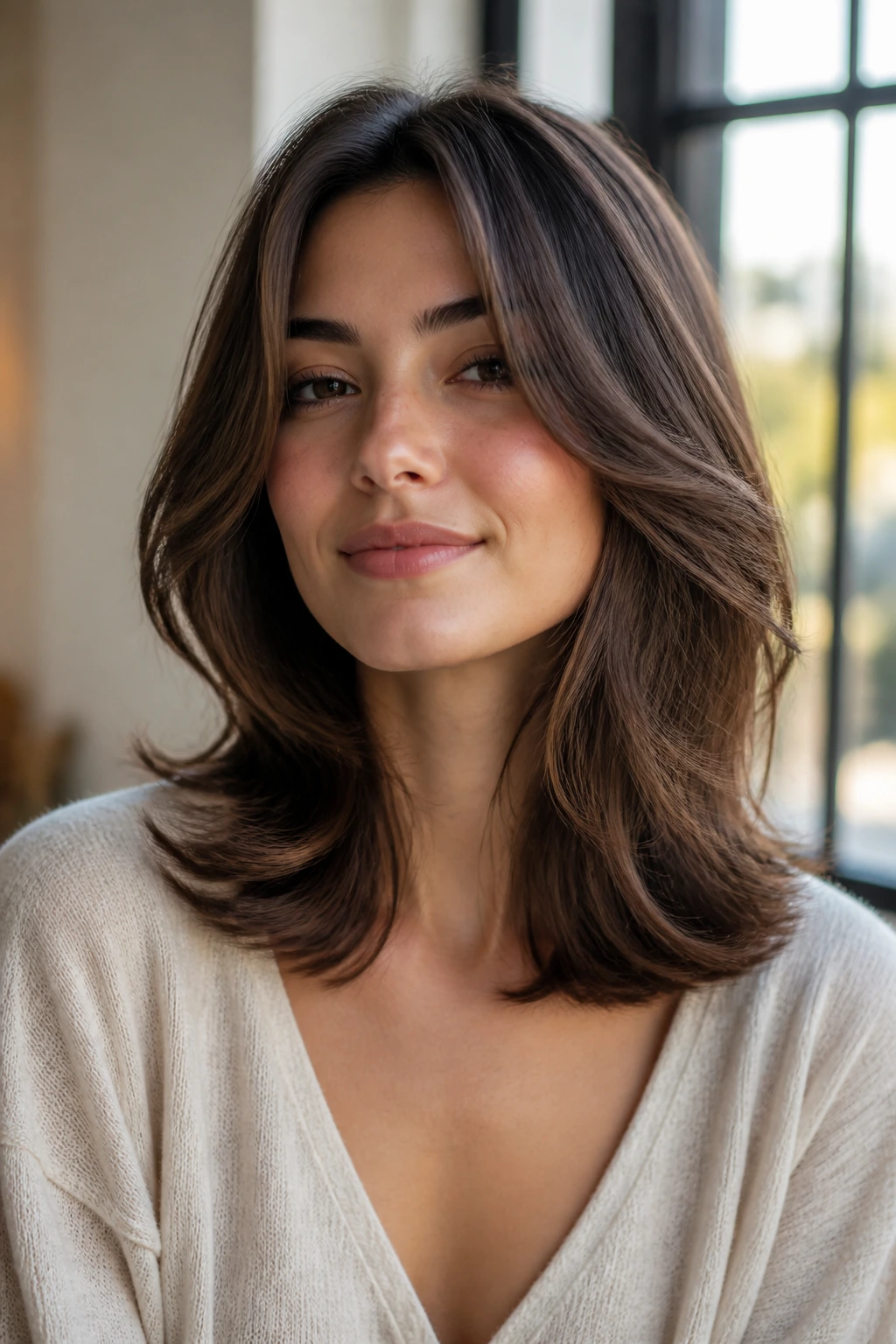
Soft 70s Sweep:
This version uses more feathered face framing and a gentle center part. It gives the haircut a slightly airy, retro shape without turning it into a costume. Good when you want softness around the cheekbones and a little movement at the temples.
Heavy-Ended Luxe Length:
Keep the layers long and the bottom line strong. This works when you want the hair to look thick, expensive, and calm, especially on coarse or dense waves. It’s low maintenance because the shape holds even when you skip heat styling.
Fringe Forward Frame:
Add curtain bangs, bottleneck bangs, or a soft fringe if you want the haircut to feel more styled. This can sharpen up a basic long-layer look fast. It does ask for more upkeep, though, so only pick it if you’re okay trimming the front a little more often.
Beach-Clean Blend:
Go for lots of soft blending and tapered ends if your hair likes to look undone. This is a good move for naturally piecey waves and people who air-dry in a hurry. It’s loose, casual, and easy to live with.
Tools and Products That Make Styling Easier
- Wide-tooth comb: Helps detangle wavy hair without breaking up the pattern too much.
- Leave-in conditioner: A light one keeps ends from looking dry after air-drying.
- Wave cream or curl cream: Good for encouraging bend through the mid-lengths.
- Mousse: Best when you want root lift without heaviness.
- Diffuser attachment: Useful if your roots dry flat and you want more shape without frizz.
- Hair clips: Handy for setting curtain bangs or face-framing pieces while they dry.
- Scissors for split ends, if you know what you’re doing: Most people should leave cutting to a professional, but regular trims matter.
- Microfiber towel or cotton T-shirt: Cuts down on rough towel friction, which can wreck the clean look of long layers.
Keeping the Shape Between Trims
Long layered haircuts for wavy hair usually hold their shape longer than sharp, high-maintenance cuts, but they still need some care. A trim every 8 to 12 weeks keeps the ends from fraying and stops the layers from drifting into awkward territory. If your hair grows quickly or your fringe is part of the look, you may want to clean it up a little sooner.
Between trims, the main job is keeping the wave pattern from getting crushed. Don’t pile soaking-wet hair into a tight bun for hours if you want the front layers to stay smooth. Use a lightweight leave-in on the ends, scrunch the mids, and let the hair dry without too much touching. If you sleep on it, a loose braid or a silk pillowcase helps the layers stay less tangled.
Dry shampoo can help at the roots, but don’t overdo it. Too much product turns wavy layers dull and sticky fast. A small amount at the scalp and a quick finger-comb through the top is usually enough.
Frequently Asked Questions
Which long layered haircut is easiest for air-drying wavy hair?
The easiest shapes are usually the U-cut, soft cascading layers, and invisible layers. They keep enough weight at the bottom that the hair doesn’t puff out while still showing movement where it matters.
Do layers make wavy hair frizzier?
They can, if the layers are cut too high or thinned too aggressively. Well-placed long layers usually reduce frizz because they stop the bulk from forcing the waves outward.
What if my waves are fine and flat at the roots?
Keep the layers longer and ask for a little crown lift rather than short pieces everywhere. Too much texture can make fine waves look sparse, while a minimal layer pattern gives the hair more body to work with.
Can I still tie my hair up with these cuts?
Yes, and some of these styles are especially good for it. Chin-start framing, collarbone face framing, and grow-out friendly layers all work nicely in ponytails, clips, and low buns.
Are curtain bangs a bad idea for low maintenance hair?
Not if you’re okay with a little front-end upkeep. Curtain bangs and bottleneck bangs are far easier than blunt bangs, but they still need occasional trimming and a bit of attention on wash day.
Which layers work best for thick wavy hair that feels too heavy?
Airy layers, hidden underlayers, and long V-cuts are strong choices. They remove weight without making the ends look thin or the shape look overdone.
How do I know if my stylist cut the layers too short?
If the hair flips out near the ears, puffs at the crown, or looks thin at the ends once it dries, the layers were probably placed too high. Long wavy hair usually looks calmer when the shortest pieces start lower than people first expect.
Can I ask for these cuts if my hair is mostly 2A and not very curly?
Absolutely. Loose waves often look best with long, soft layers because they need movement without losing body. Just keep the layering subtle so the ends stay full.
The Cut That Keeps Up
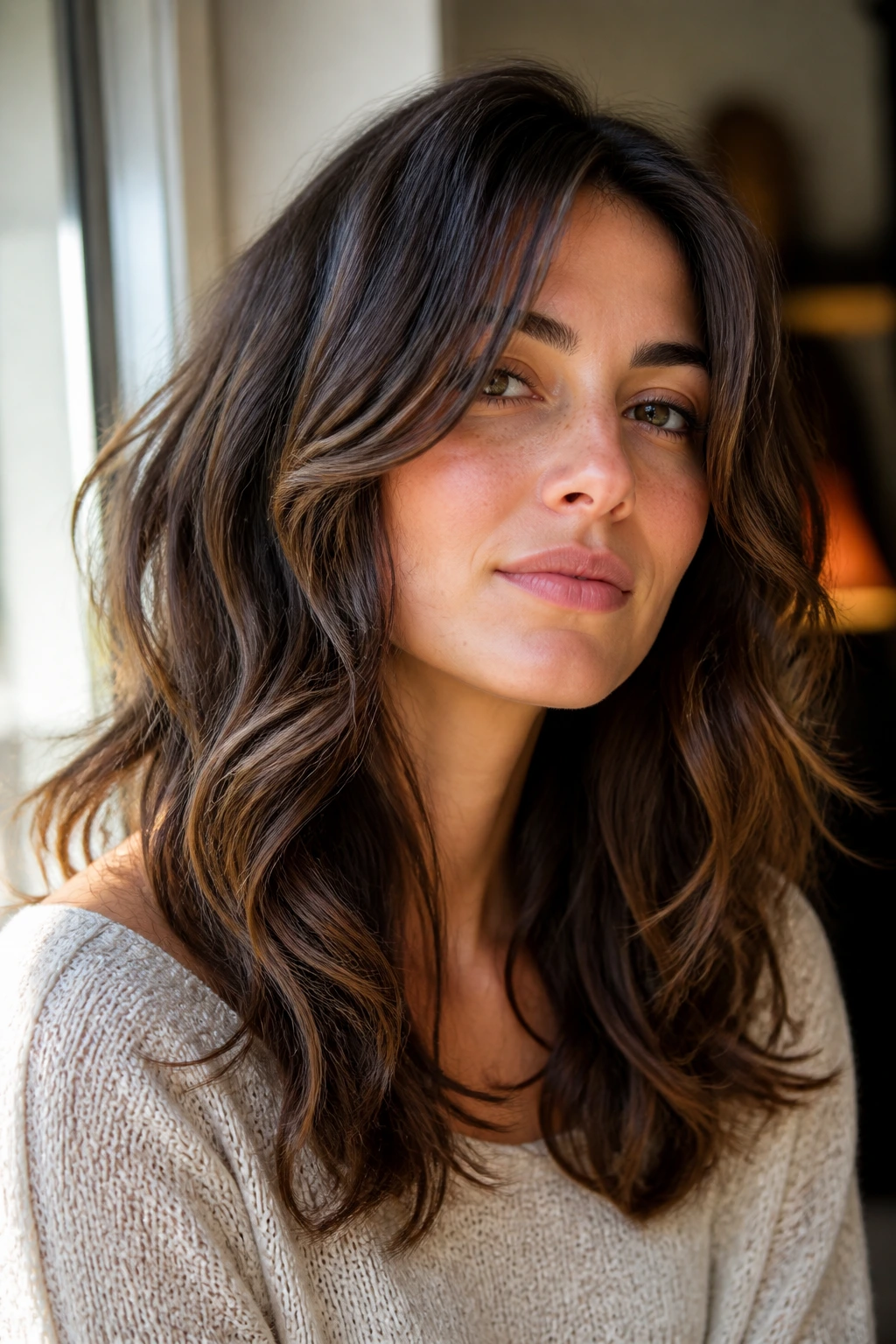
The best low-maintenance long layered haircut for wavy hair is the one that works on a normal morning, not just in a salon chair with perfect lighting. It should let the waves bend, keep the ends full enough to look healthy, and grow out without turning into a haircut emergency.
That’s the real thread running through all 28 of these shapes. Some lean softer, some are more face-framing, some keep more bulk. But the good ones all do the same job: they make wavy hair easier to live with, not more demanding.
Pick the version that fits your texture, your styling habits, and how much trimming you’re willing to tolerate. If you get those three things aligned, the haircut stops being a project and starts behaving like a useful part of your day.