



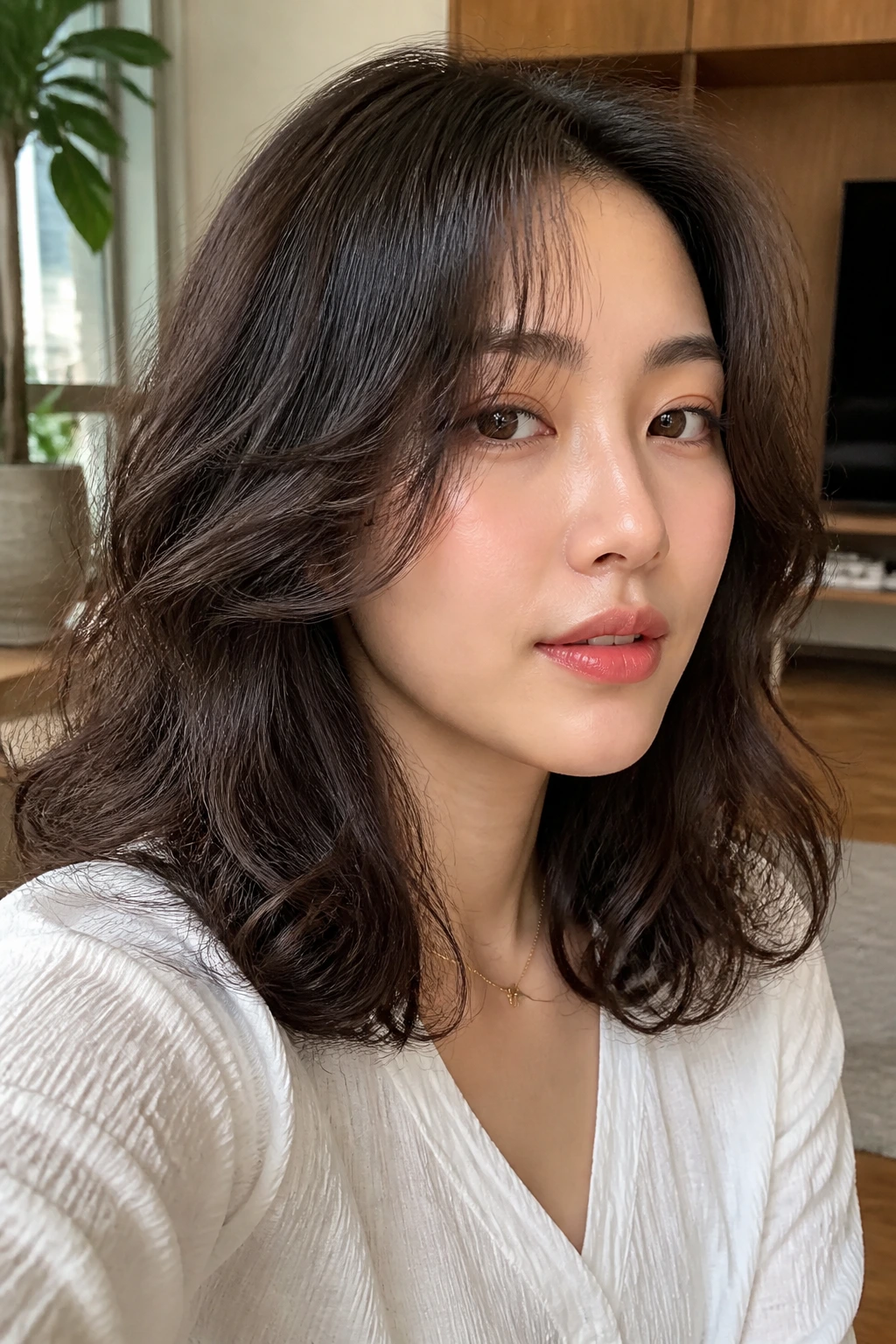
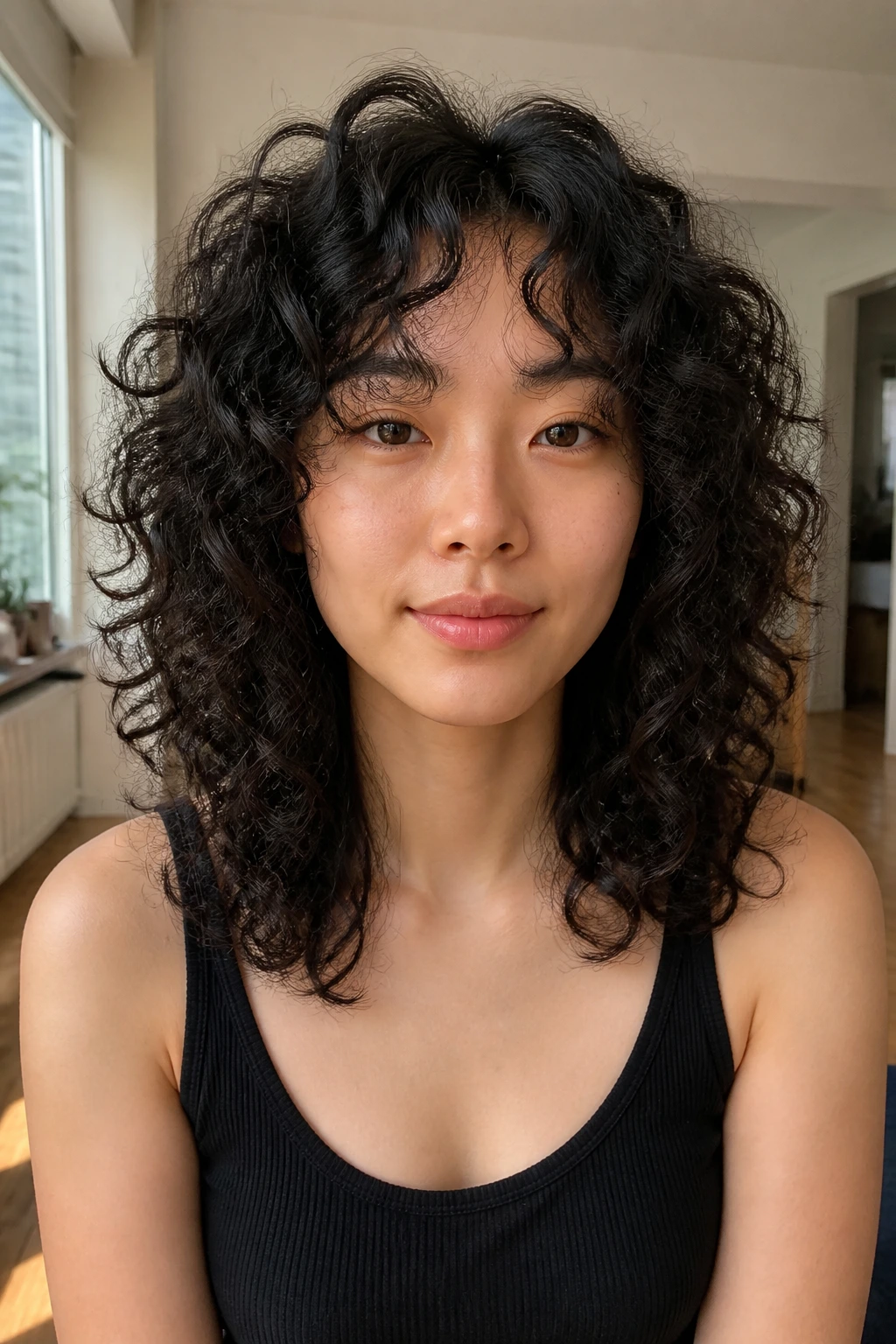
Korean layered medium haircuts for curly hair work because they stop the cut from fighting the curl pattern. A blunt medium length on curls can balloon at the sides, slump at the crown, or flip out in that awkward way that makes you keep touching your hair all day. Korean-inspired layering does something smarter: it trims weight out of the interior, keeps the outline soft, and lets the curls sit in clumps instead of turning into a fuzz cloud.
Medium length is the sweet spot here. Long enough to keep movement. Short enough that the shape still shows. When the layers are placed well, the hair moves when you turn your head, the front pieces land where they should, and the whole style looks planned even on a rough air-dry morning.
I keep coming back to this category because it has restraint. Too many curly cuts go one of two ways: they’re so heavy the shape collapses, or they’re so aggressively layered that the ends look hungry. The best Korean-inspired versions stay balanced. Cheekbone pieces, soft crowns, internal weight removal, and a perimeter that still feels full. That balance is the whole trick.
Why These Cuts Earn Their Place
-
Soft face-framing without losing length: The front pieces usually start around the cheekbone, chin, or collarbone, so the cut opens the face without turning the ends into scraps.
-
Better shape on day two and day three: Korean layering tends to keep enough length at the bottom that curls still stack neatly after sleep, instead of exploding into a triangle.
-
Works with different curl types: Loose 2C waves, springy 3A spirals, and denser 3B textures can all use these shapes, as long as the layers are adjusted for shrinkage and density.
-
Easier to style than a long, one-length grow-out: Medium hair dries faster, needs less product, and gives you more control over root lift and curl clumping.
-
Flexible around bangs and parts: You can go curtain bangs, see-through bangs, a side part, or a center part without changing the whole cut.
-
Looks intentional as it grows: A good layered medium cut doesn’t fall apart after six weeks. It just gets a little softer at the edges.
1. Soft C-Frame Layers That Skim the Cheeks
The cleanest version of Korean layering on curls is often the least dramatic. A soft C-frame cut keeps the longest pieces around the collarbone and lets the front pieces sweep from the cheekbone down toward the jaw. On curly medium hair, that curve matters. It draws the eye inward, which keeps the sides from puffing out like a bell.
This cut is especially nice on 2C to 3A curls that want movement but not a ton of chop. Ask for layers that remove weight through the interior, not the ends. You want the curls to move as a group, not separate into wispy little stair-steps. If your stylist starts talking about “more bounce,” make sure they still leave enough perimeter to keep the silhouette full.
A little face frame goes a long way here. Too short and the front can spring up above your cheekbone in a way that feels abrupt. Too long and you lose the point of the cut. Around the cheekbone to chin is the sweet spot, especially if your curls tighten when dry.
2. Curtain Bangs With Airy Medium Layers
Do curtain bangs on curly hair if you like some softness near the eyes, but do them with respect. These are not blunt, heavy bangs that sit on the forehead like a shelf. The Korean version stays airy, splits at the center, and blends into medium layers that keep the front from feeling chopped off.
The trick is shrinkage. If your curls bounce a lot, the shortest pieces need to be cut longer than you think, often by a full inch or two longer than the dry target. A good stylist will check the curl pattern around the forehead separately from the curls at the cheek. Those spots often behave differently. They always behave differently, actually.
This cut works well when you want a little “done” feeling without a lot of effort. The bangs catch light, the front opens up, and the rest of the hair can stay easy and soft. If you wear glasses, keep the curtain pieces slightly longer so they don’t fight the frames every time your hair dries.
3. The Korean Hush Cut for Curly Medium Hair
The hush cut is the quiet one in the room. It’s all about soft movement, blended layers, and a perimeter that still feels plush. On curly medium hair, that means you get shape without the obvious staircase effect that some layered cuts leave behind. The cut looks like it grew there instead of being carved into place.
What I like about the hush cut is how little it asks for. The layers tend to sit closer to the crown and upper sides, which gives lift without gutting the bottom. That makes it useful for curls that flatten at the top but stay dense through the lengths. If your hair tends to puff under the ears, this is a good place to start.
Best for:
- curls that need movement, not drama
- medium density hair that collapses when left one-length
- people who want a softer grow-out line
- anyone who hates visible layer shelves
4. Butterfly Layers With a Curly Top Shelf
Butterfly layers sound flashy, but on curly medium hair they can be surprisingly wearable. The idea is simple: shorter layers near the top create lift, while the longer layers keep the length hanging below. On curls, that gives you a sort of “top shelf” of volume and a lower curtain of length underneath.
This cut is strongest on thicker 3A or 3B curls that need help at the crown. If your roots are flat but your ends are heavy, butterfly layers can wake the whole shape up. The shorter upper pieces catch the eye first, so the style reads as airy even when the hair is dense. That’s the point.
Don’t overdo the top layers. If they start too high, the cut can feel puffy in the crown and thin at the bottom, which is not the effect you want. The best butterfly version still looks soft from the side and keeps enough weight at the ends to hold the shape.
5. A Softer Korean Wolf Cut
A wolf cut on curly hair can go wrong fast. It can also look fantastic when the edges are softened and the layers are placed with a little restraint. The Korean version is usually less punk, less jagged, and more wearable. You still get crown lift and a little edge around the face, but the cut does not scream at you from across the room.
This is the one for curl types that want personality. Dense curls, strong waves, and medium hair with a natural halo can all use the extra height. Ask for a softer crown and a longer tail so the medium length still feels medium. If the back gets too short, the whole thing shifts into mullet territory quicker than you think.
The sweet spot is a cut that moves when you shake it out, not one that looks intentionally messy. There’s a difference. The best Korean wolf cut on curls has shape, not chaos.
6. Cheekbone-Framing Layers for Round Faces
Round faces and curly medium hair can be a tricky pair because curls love to expand at the widest point of the face. The fix is not to hide the hair. It’s to place the layers with more intention. Cheekbone-framing pieces create a vertical line through the face, which keeps the curls from adding width exactly where you don’t want it.
Ask for the shortest face-framing pieces to start at or just below the cheekbone, then blend down toward the jaw. That line helps narrow the shape visually. A center part can work here, but a slightly off-center part often gives the face a little more length. That tiny shift matters more than people think.
This cut looks best when the front curls are allowed to clump. Don’t rake them apart after styling. Let the pieces fall in distinct groups. If you separate them too much, you lose the slimming effect and the whole front opens up in the wrong way.
7. Collarbone Shag With a Tapered Fringe
A collarbone shag is one of those cuts that sounds louder than it is. On curly medium hair, the shag keeps the length around the collarbone but adds movement through the crown and the sides. The tapered fringe softens the brow area and gives the cut that lived-in shape Korean salons do so well.
What makes this version useful is the balance. The shaggier pieces live higher up, where they can create lift, while the lower length stays intact. That means you get texture without sacrificing the medium silhouette. If you have thick curls and hate the feeling of a heavy helmet, this cut can be a relief.
The fringe needs a light hand. Too much density in the bangs and the front can get boxy. The better move is a feathered fringe that blends into the rest of the cut. It should feel like part of the haircut, not a separate object sitting on your forehead.
8. A U-Shape Layer Cut That Keeps the Ends Full
Sometimes the smartest answer is the one that looks like the least effort. A U-shape layer cut keeps the perimeter fuller in the center back, then rounds gently up toward the sides. On curly medium hair, that curve keeps the hair from looking blunt or square when it dries.
This is a nice fit if you want layering, but not a lot of visible layering. The interior can still be opened up to remove bulk, yet the ends stay plush enough to hold curl clumps. That matters if your curls get stringy when the ends are thinned too much. Some cuts are too eager with the scissors. This one isn’t.
I like this for people who wear their hair down a lot and want a clean shape from behind. The U-line looks polished even when the front is a little messy. It’s one of the easier medium cuts to live with, which is not a small thing.
9. Choppy Layers for Dense, Heavy Curls
Dense curls need respect, not guesswork. If your hair takes forever to dry and feels heavy near the bottom, choppy layers can make a huge difference. The Korean version still keeps the softness, but it removes bulk in a way that lets the curl clumps breathe.
The main goal is to get the hair to lift off itself. That means longer internal layers, not a bunch of tiny cuts at the ends. I’d rather see point cutting through the interior than aggressive thinning shears near the perimeter. The second one can turn into frizz pretty quickly, especially on curlier textures.
What to ask for
- internal weight removal, not razor-heavy ends
- longer layers around the face
- enough density left at the bottom to hold shape
- a dry check before the final trim
That last part matters. Dense curls can hide too much when wet. Once they dry, they can reveal a whole different story.
10. The Curly Octopus Cut, Softened
The octopus cut is a funny name for a cut that can look very good. On curls, it means a lighter top with longer, hanging lower sections, almost like the hair has a lifted cap and then soft tentacles of length underneath. Done badly, it looks bizarre. Done well, it gives medium hair an airy, modern shape.
For curly hair, the softened version works better than the extreme one. You want lift at the crown, but you still need the bottom to feel like hair, not strings. That’s why the longest layer should stay around the chest or collarbone. If the lower length gets too sparse, the cut loses its grounding.
This is a strong choice if your curls are thick, springy, and always trying to poof upward. The lifted crown keeps the top from collapsing, while the bottom length gives the style a little weight and motion. It looks especially good when the curls are defined, not brushed apart.
11. Side-Part Layers That Sweep Away From the Face
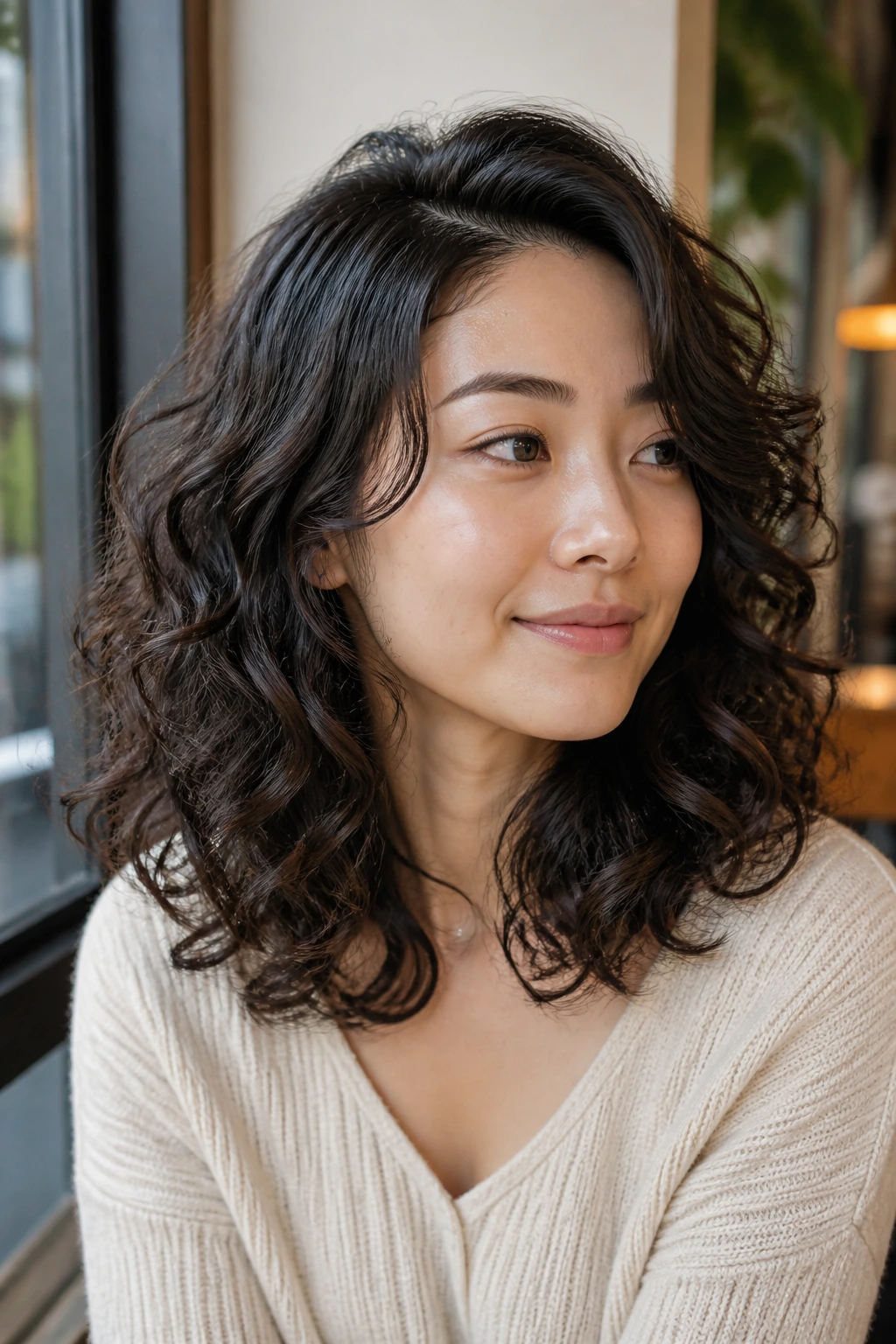
A side part changes the whole geometry of curly hair. It gives one side more volume, pulls the eye diagonally, and keeps medium layers from sitting too symmetrically. On curls, that asymmetry can be the difference between “nice haircut” and “why does this suddenly look expensive?”
The side-part version works best when the front layers are cut to sweep away from the face, not hang straight down. You want the line to open on one side and tuck softly into the other. That movement helps square faces, long faces, and anyone whose curls grow in a slightly uneven pattern. Which is most people, honestly.
If one temple area is flatter than the other, this cut is a gift. It lets you use the natural bend of the curls instead of fighting it every morning. A little root lift at the part and a bit of tuck behind the ear on the heavy side is often all you need.
12. The Invisible Layer Lob
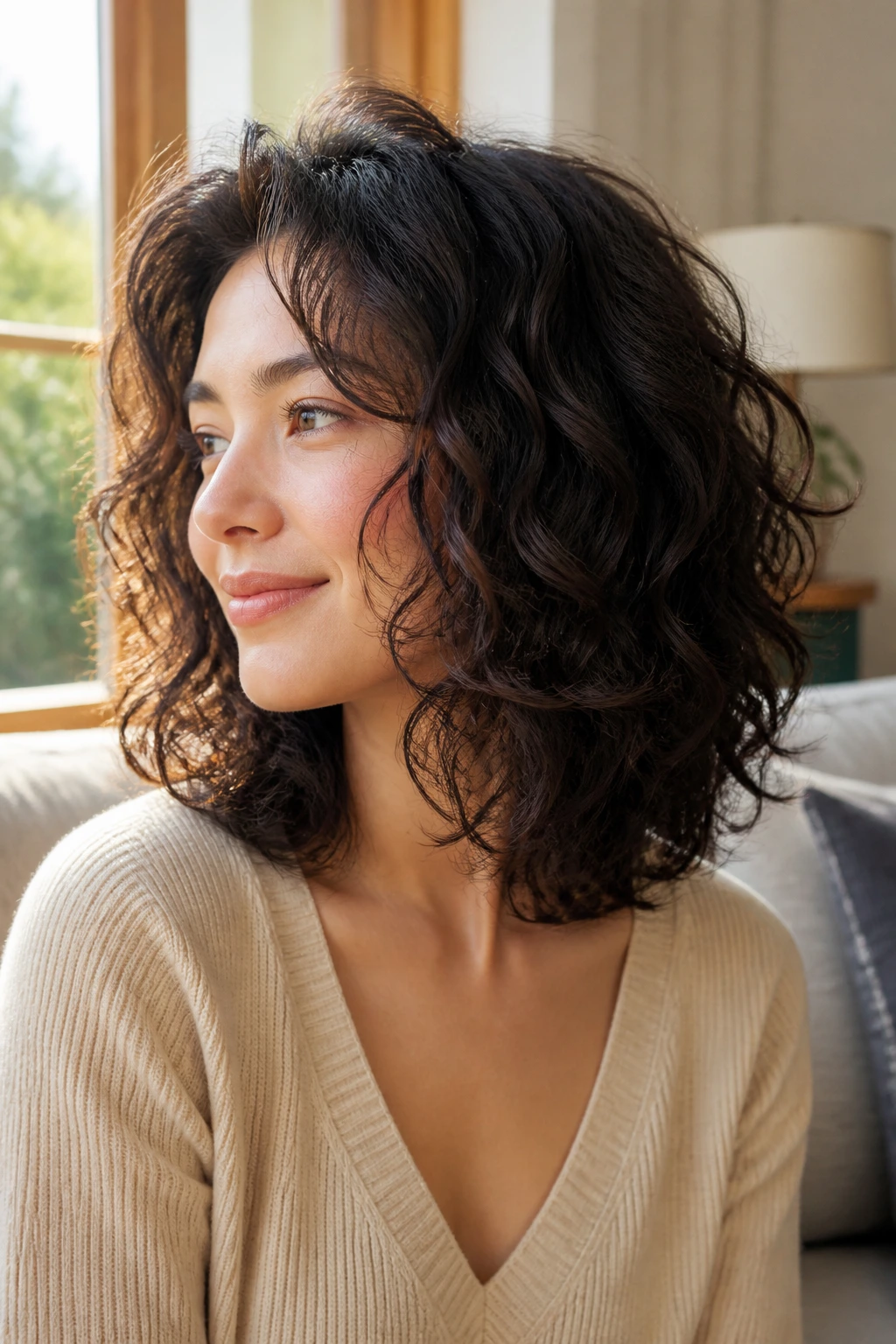
The invisible layer lob is for people who like the idea of layers but not the visible staircase. The cut keeps the top line smooth, then removes weight underneath so the shape still moves. On curly medium hair, this is a quietly clever solution. It looks simple, but the hair behaves better than a blunt lob ever could.
This cut is especially kind to finer curls and looser wave patterns. Too many obvious layers can make those textures look thin, and that’s where the invisible version wins. The perimeter stays full, the silhouette stays tidy, and the curl pattern gets enough room to expand without losing polish.
If you want a haircut that can go from office to dinner without a style change, this is one of the safest picks on the list. It’s low-drama in the chair and low-drama in the mirror, which is its own kind of luxury.
13. Tapered V Layers for Heavy Hair
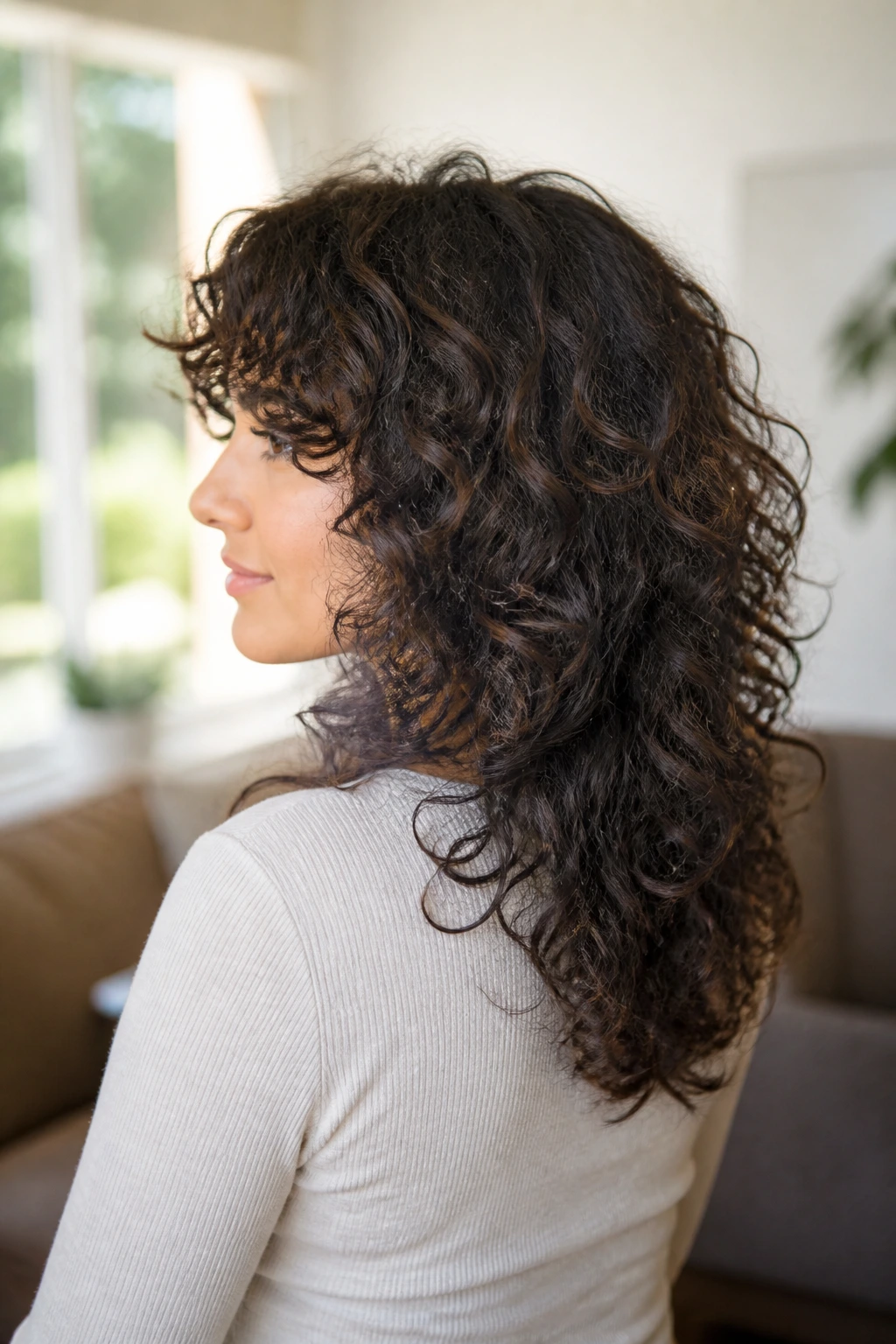
A tapered V cut drops the back into a soft point instead of a straight edge or a rounded line. On thick curly medium hair, that subtle point gives the shape direction. It also removes some of the bulk that can bunch up at the bottom and make the cut feel boxy.
The V is strongest when the layers are long and blended. You do not want a sharp geometric point that looks like it was cut with a ruler. You want a curve that narrows just enough to keep the hair moving. If the hair is very dense, this shape can make washing and drying feel less punishing, too. Less pile-up at the back. Less waiting.
I’d call this a good practical cut. It’s not the flashiest one here, but it solves a real problem: medium curly hair that feels heavy everywhere. The V shape gives it somewhere to fall.
14. See-Through Bangs and Temple Pieces
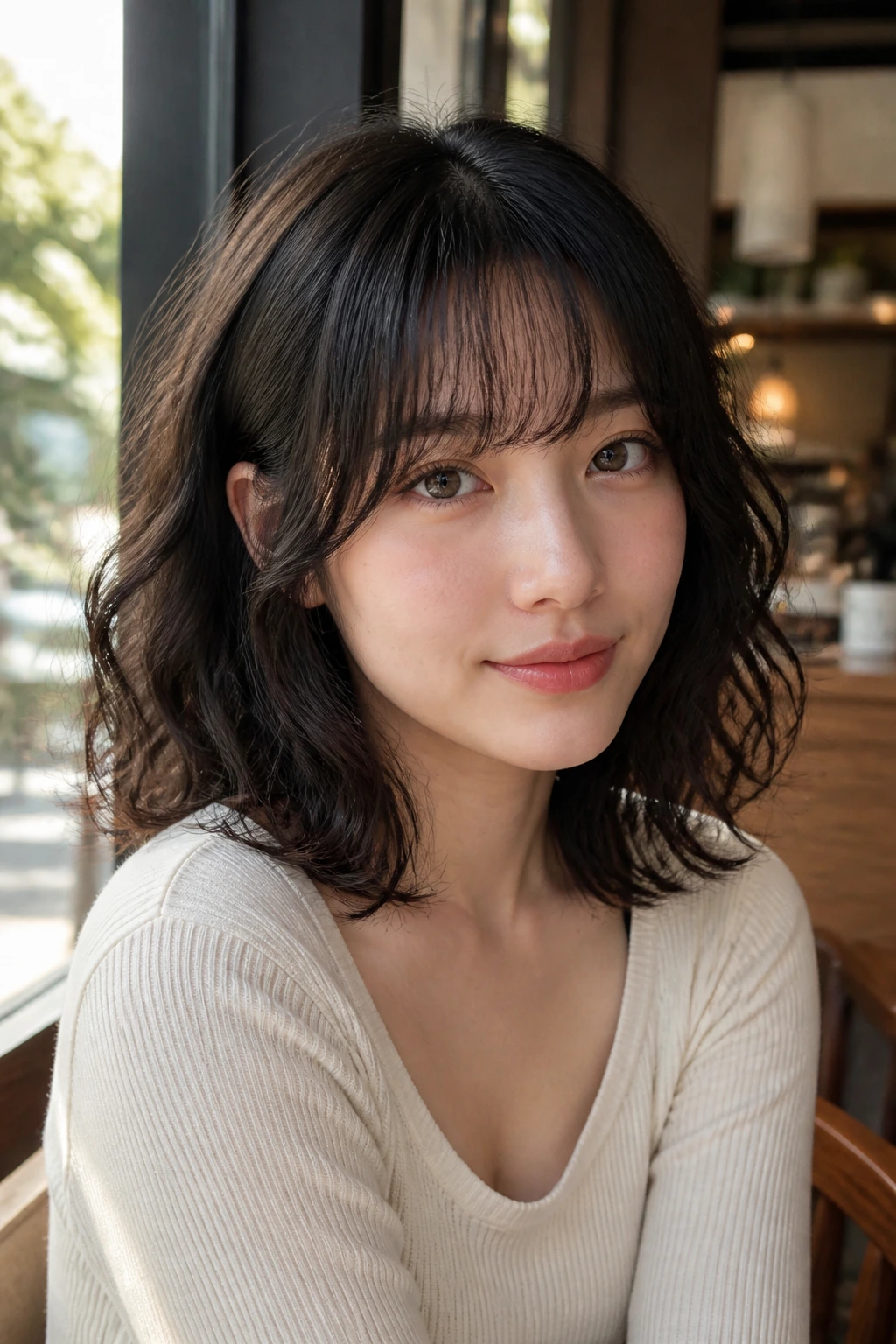
See-through bangs bring a softer forehead line than full bangs, and that softness suits curly medium hair beautifully. The fringe is light enough that it doesn’t sit like a curtain, but present enough to change the face. Temple pieces extend the effect outward so the bangs blend into the rest of the style instead of stopping abruptly.
This cut is great if you want fringe without commitment-heavy bangs. The spacing lets a little forehead show through, which keeps the front from feeling dense. It also means the bangs can survive shrinkage better than a heavy fringe would. Still, they need regular shaping. Bangs on curls are not a “cut once, forget forever” thing. Not even close.
What makes it work
- airy density through the fringe
- longer temple pieces for a soft frame
- trim-friendly length for shrinkage
- a good match for glasses and oval faces
Keep them light. If the fringe gets too thick, the whole front loses its balance.
15. Rounded Curve Layers for Soft Volume
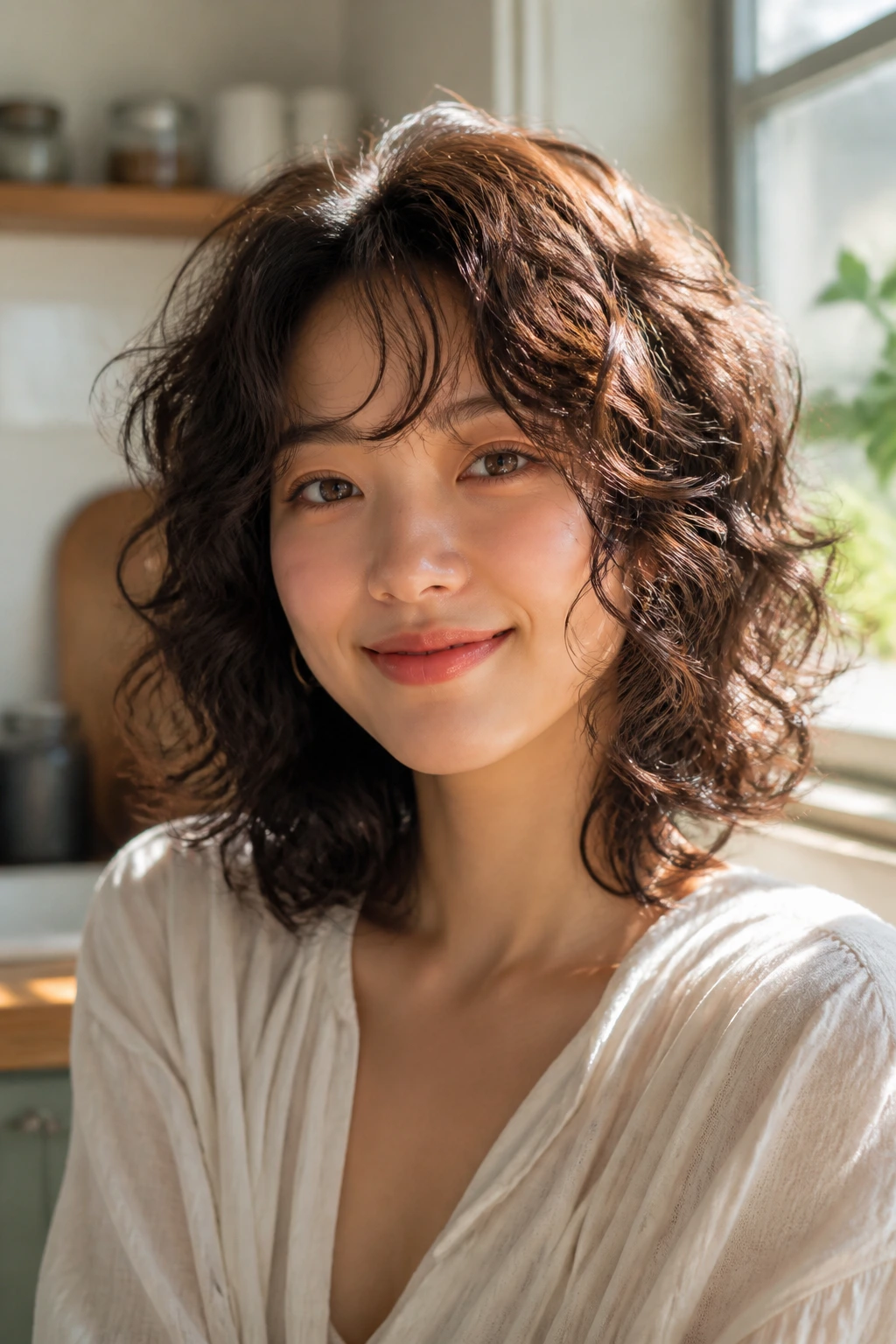
Rounded curve layers follow the shape of the head rather than fighting it. On curly medium hair, that creates a gentle dome of volume through the sides and crown without the harsh corners that some layered cuts leave behind. The outline feels soft, but not flat.
This is a lovely choice when you want the hair to read as full from every angle. It works on curls that expand evenly and on hair that naturally bends away from the face. The curve helps the hair sit close to the cheeks near the top, then open a little lower down. That small shift keeps the cut from spreading too wide.
People often think “volume” means “bigger everywhere.” It doesn’t. Real shape has placement. Rounded layers prove that.
16. Spiral-Friendly Layers for 3A Ringlets
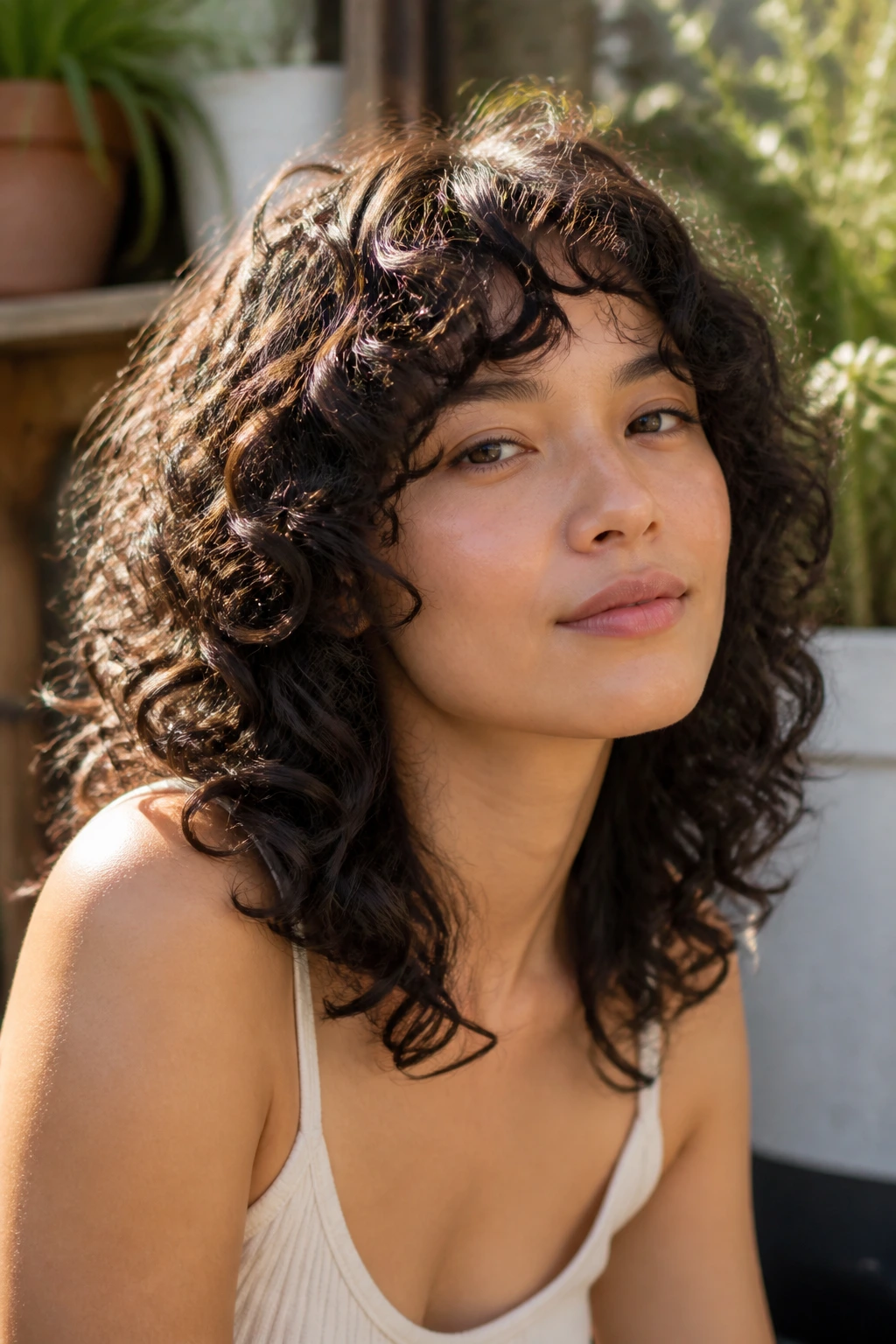
Some curls want to be cut in a way that respects the spiral itself, not just the overall shape. Spiral-friendly layers do exactly that. The stylist places the layers where the ringlets naturally stack, which keeps the pattern clean and avoids breaking up the curl family.
This matters most for 3A ringlets that clump well when left alone. If the cut is too aggressive, those ringlets can separate and lose their bounce. A dry check is often the best way to handle this kind of hair, because the shrinkage is part of the shape, not a surprise to be solved later.
The finished look is neat but not stiff. The curls still move. They just fall into a more flattering line around the face and shoulders.
17. Loose-Wave Layers for 2C Texture
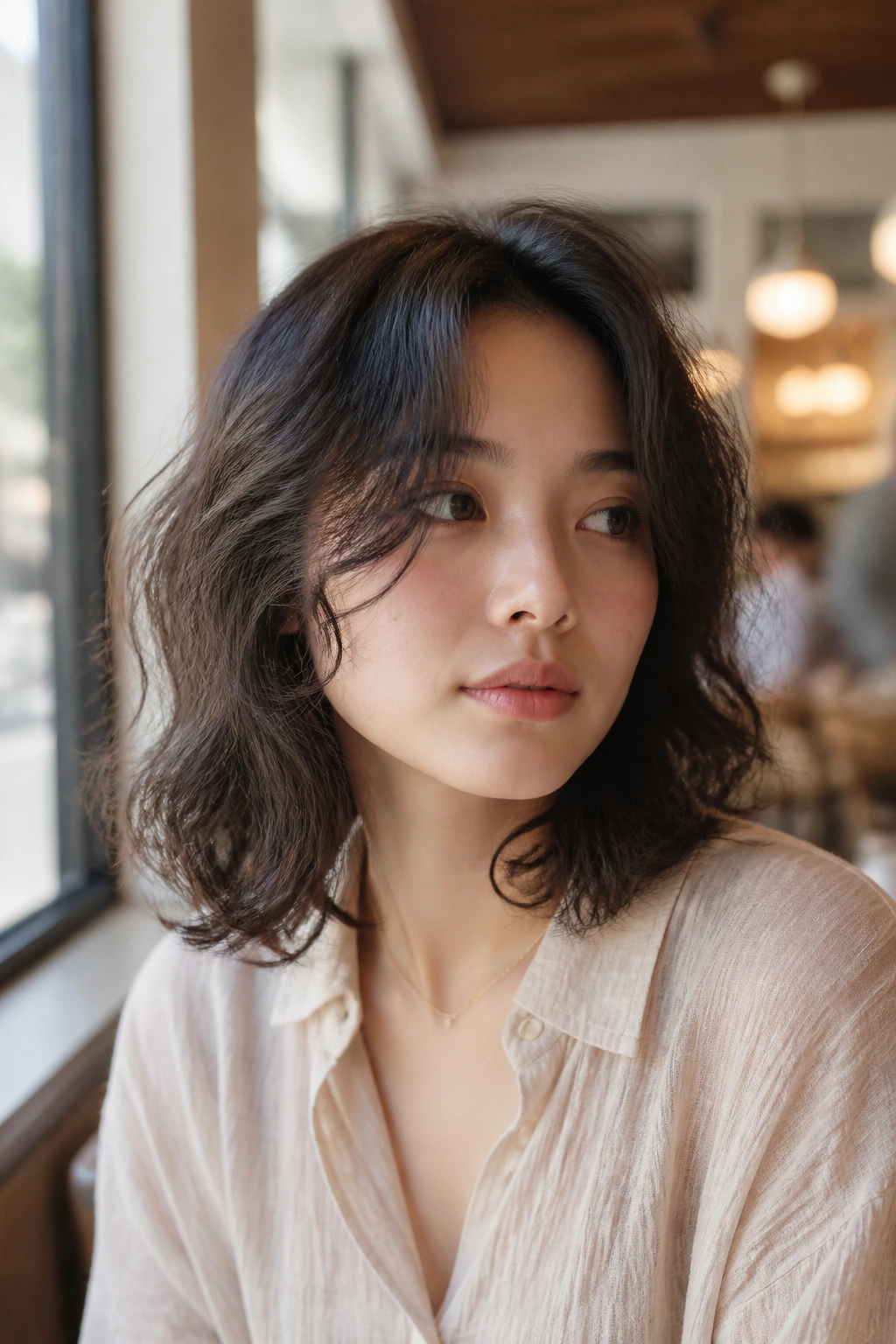
Loose waves can get swallowed by too many layers. That’s the trap. Medium hair with 2C texture often looks fuller when the cut is kept a little longer and the layers are more subtle. The goal is movement, not obvious chopping.
This version usually works best when the face frame starts lower, around the chin or collarbone, and the interior layers stay soft. That keeps the ends thick enough to show off the wave pattern. Too much removal and the hair can start looking stringy, especially once it dries and loses a bit of its bend.
If your hair is in that gray zone between wave and curl, this is a smart place to start. It gives the cut motion without asking the hair to be something it isn’t.
18. Curly Shag With Crown Lift
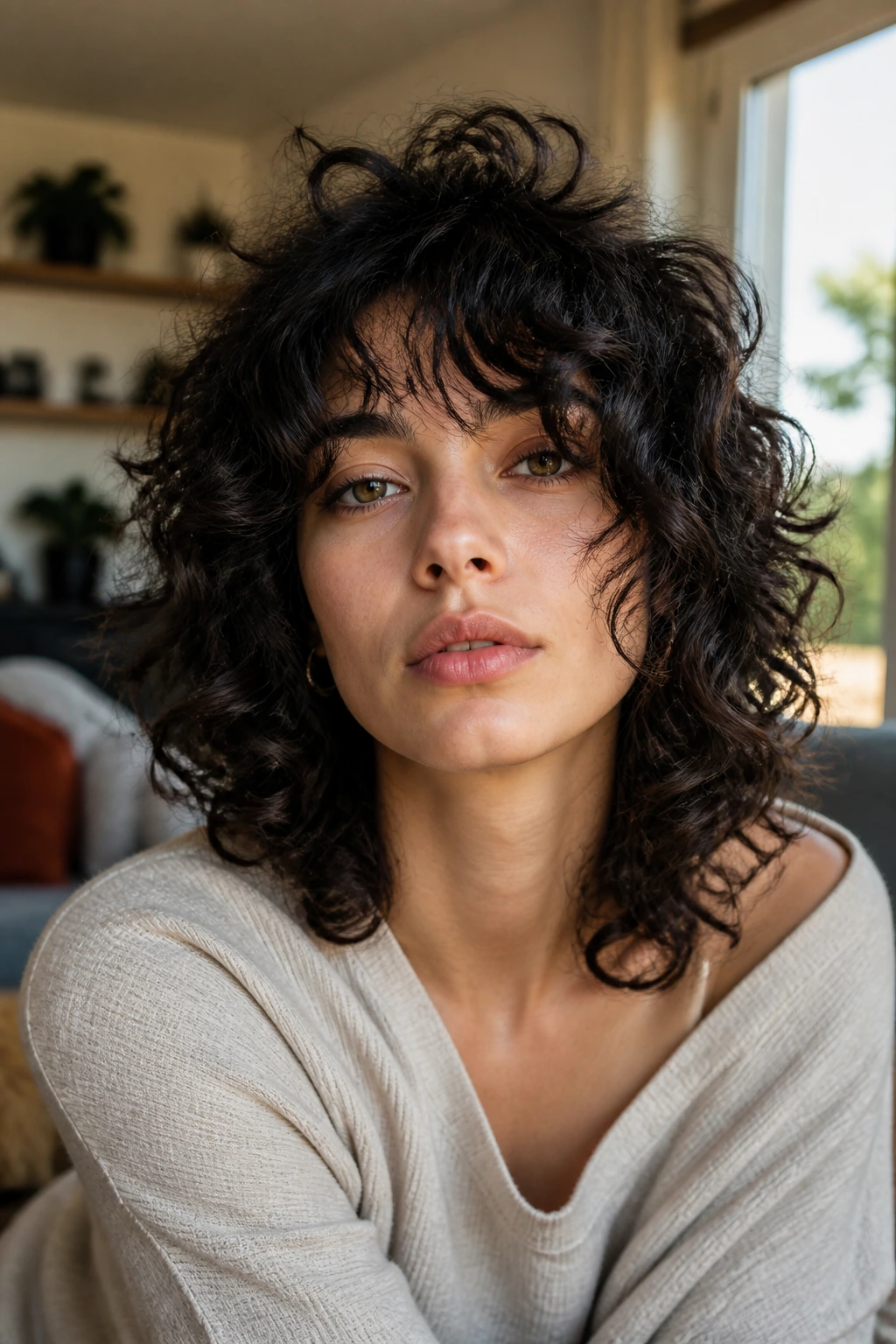
The curly shag is the cut people ask for when they want personality and a little edge, but they still want it to feel wearable. The Korean take softens the shag enough that it doesn’t turn into costume hair. Crown lift, airy sides, and a medium perimeter keep it grounded.
This style loves volume at the top. If your roots tend to lie flat and then balloon halfway down, crown lift can rebalance the whole shape. It works beautifully with diffuser styling, a little mousse at the roots, and scrunching from the bottom up while the hair is still damp. That routine sounds fussy. It isn’t, once you’ve done it twice.
What it feels like in real life
- lighter at the crown
- more motion around the face
- less bulk through the sides
- easier to refresh with water and a little gel
It’s not the quietest cut here. It is one of the most fun.
19. Jaw-Slimming Layers for Square Faces
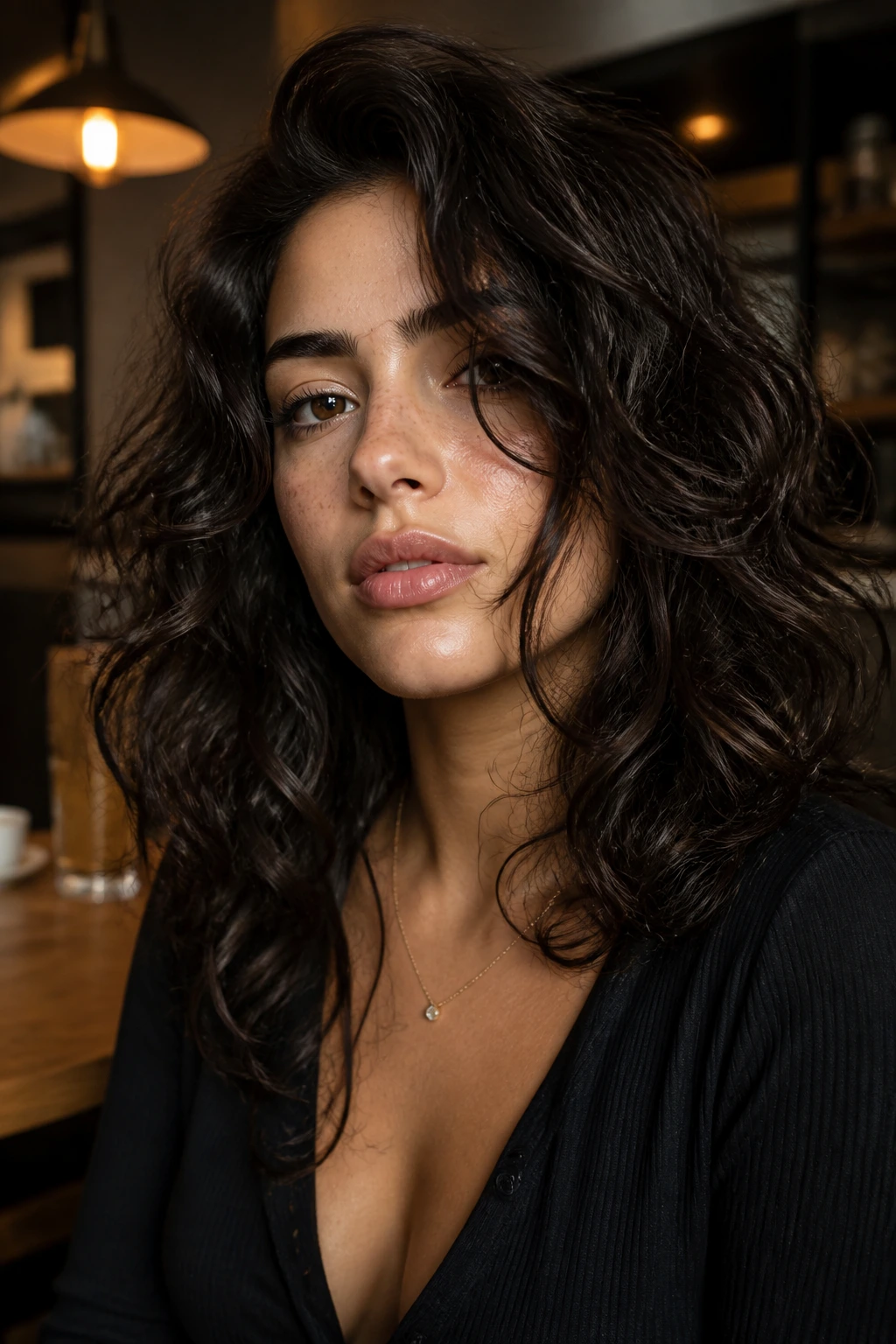
Square faces usually do better with layers that start lower and soften the jaw instead of stopping right at it. On curly medium hair, that means the face frame should skim rather than sit squarely beside the jawline. The result is a softer outline and less visual width in the lower face.
The long front pieces do the heavy lifting here. They should pass through the jaw area and land somewhere near the collarbone, depending on curl shrinkage. If the shortest pieces end exactly at the jaw, the shape can widen there. That is the part to avoid. Curly hair already has a habit of adding width on its own. No need to help it.
This cut pairs well with a side part or a slightly off-center part. Both break up the strong lines that square faces already have, and the curls do the rest.
20. S-Curve Layers Around the Collarbone
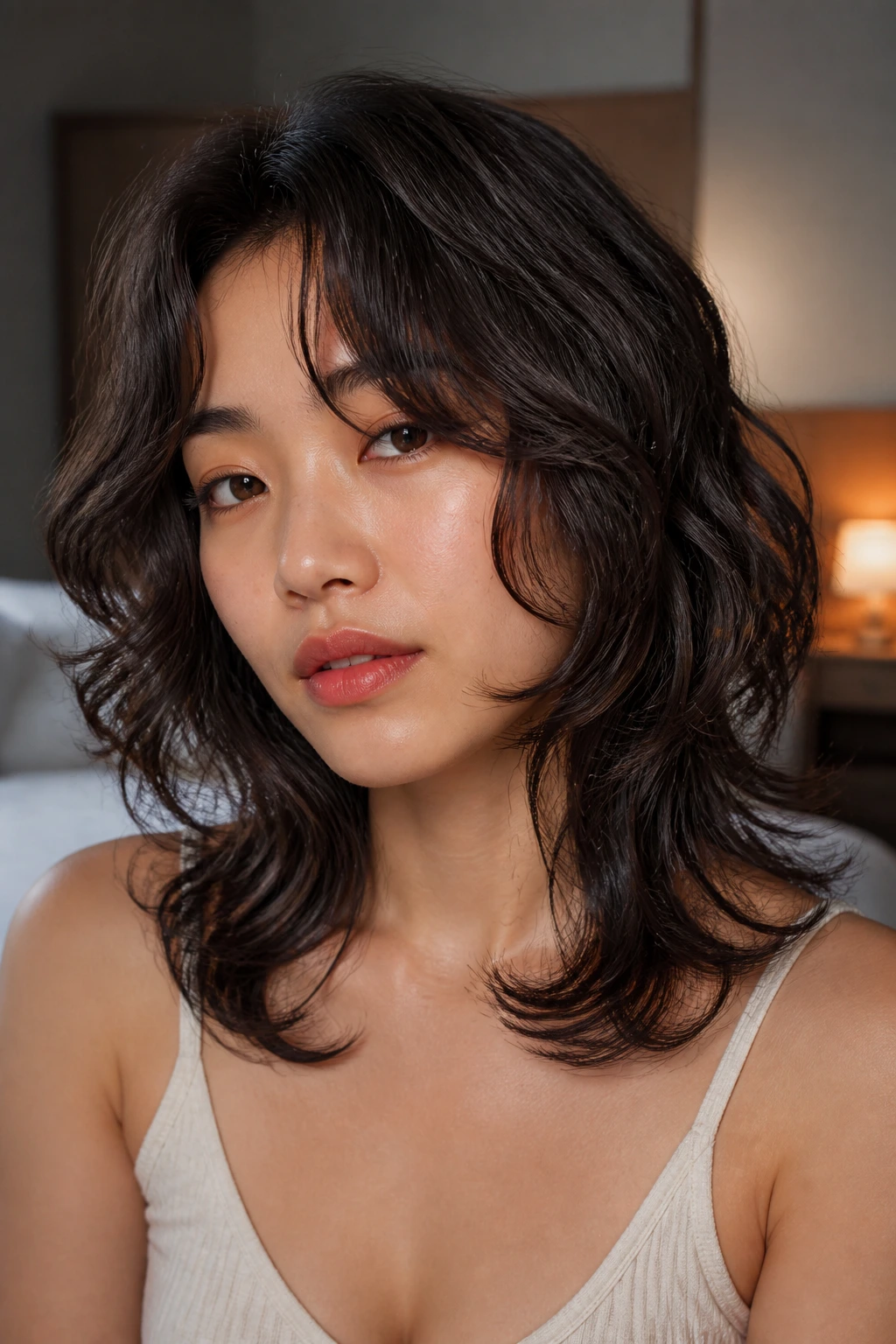
S-curve layers are subtle, but they’re clever. Instead of creating a blunt drop or a hard rounded shape, the layers bend inward and outward as they move around the face and collarbone. On curly medium hair, that gives the silhouette a little rhythm.
This cut is useful for hair that forms defined clumps. The S-shape helps those clumps sit in a way that feels soft, not choppy. It also works well if you like a polished finish without wanting your hair to look overworked. Some cuts announce themselves. This one whispers.
A diffuser helps here, but so does patience. Let the curls set before touching them too much. If you keep fluffing while they’re half-dry, the curve can lose its line.
21. Center-Part Layers for Thick Mid-Length Hair
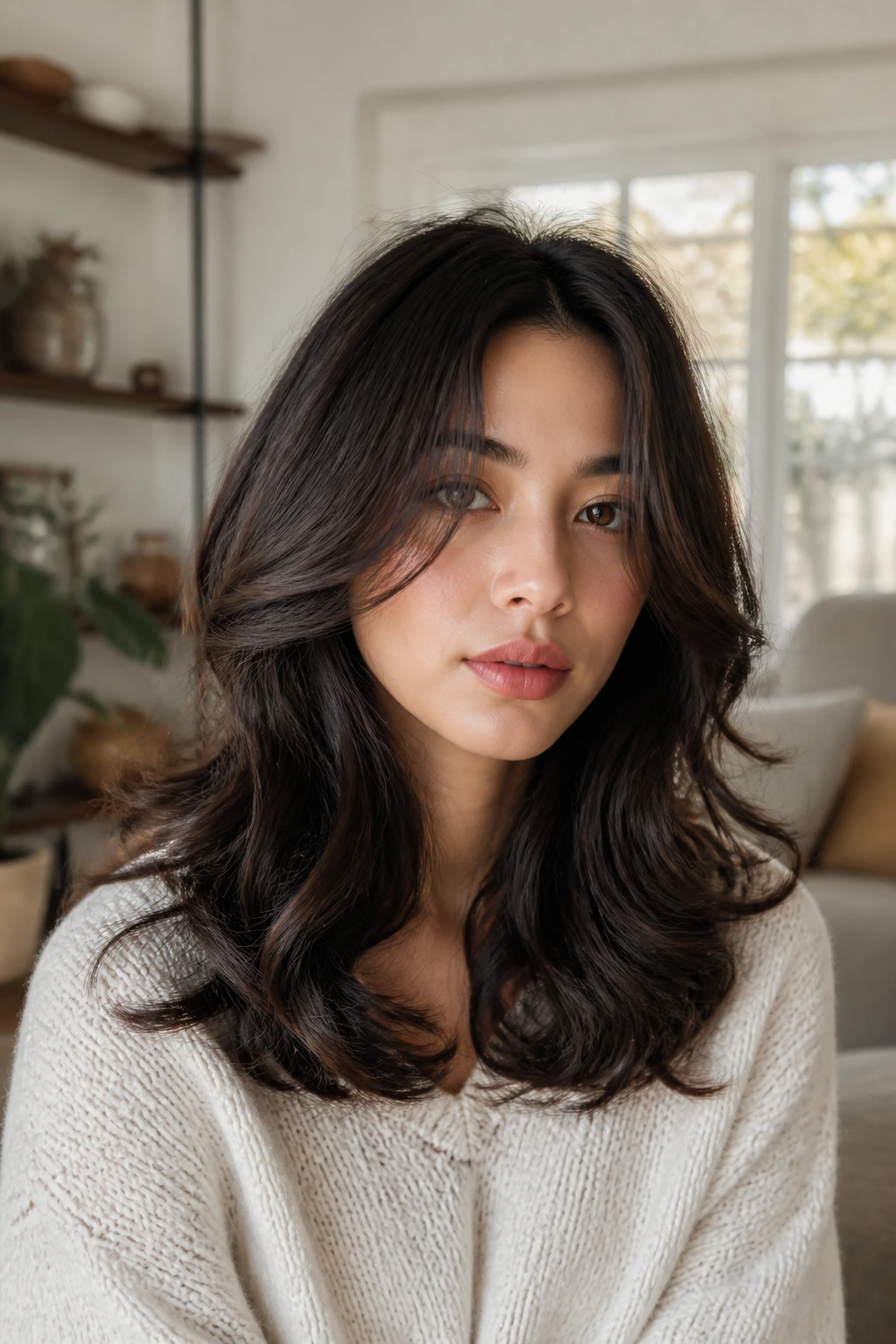
A center part can be beautiful on thick curly medium hair, but it needs the right layering. Without interior removal, the hair can split down the middle and form that broad, triangular shape that makes people reach for a claw clip. The Korean approach softens the center line with long layers that keep both sides balanced.
This cut is especially good if your curls are dense from root to tip and you want a cleaner outline. The front pieces should frame the cheekbones without getting too short, and the overall shape should feel symmetrical without being stiff. I like this one on people who wear glasses, because the balance around the face keeps the frames from getting lost in the hair.
The maintenance is moderate, not scary. You need enough trimming to keep the front honest, but the shape itself is forgiving.
22. The Grow-Out-Friendly Textured Midi

This is the cut for people who want the shape to age well. The textured midi keeps the medium length intact, builds in soft layers, and avoids anything so severe that it turns weird after eight weeks. If you do not want to book your next trim before you’ve even left the salon, this is the practical choice.
What makes it work is how quietly it grows. The layers stay long enough to blend, the face frame softens instead of disconnecting, and the ends keep enough density to still look intentional. It’s one of the best options for curly hair that changes mood with humidity, because the structure is forgiving.
Ask for this if you want:
- a cut that survives grow-out
- less daily styling drama
- medium length with movement
- a shape that still looks clean from behind
It’s not the loudest haircut on the list. It may be the smartest one.
Why Korean Layers Work So Well on Curly Medium Hair
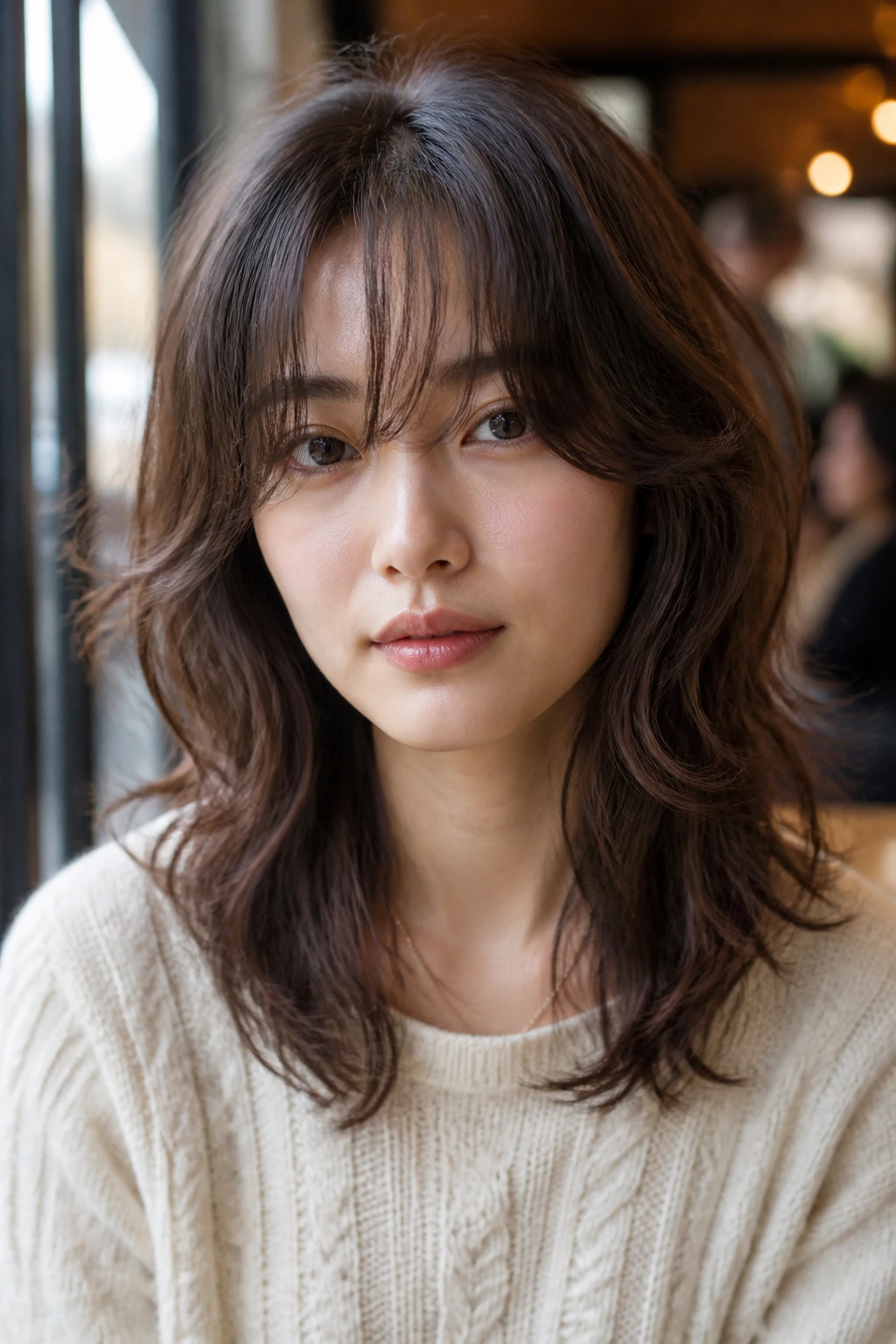
Curly medium hair needs a cut that understands weight. That is the whole game. Too much length and the curls drag each other down. Too much layering and the ends start looking bare. Korean layering sits in the middle by keeping the perimeter soft while removing just enough mass from the interior to let the curl pattern rise.
That matters even more at medium length, because curls at this length can swing between control and chaos depending on how they’re cut. A good Korean-inspired shape gives the hair a place to live. It keeps the front pieces around the cheekbone or jaw where they can frame the face, and it keeps the back full enough that the style doesn’t collapse after a nap or a humid walk outside.
Dry cutting is often the best finishing move, especially for curls that shrink a lot. Wet hair hides too much. It lies. A stylist who checks the shape when it’s dry can see where the curls actually land, where they bunch, and where the silhouette needs more breathing room. That’s where the good versions of these cuts come from.
What to Bring to the Salon Chair
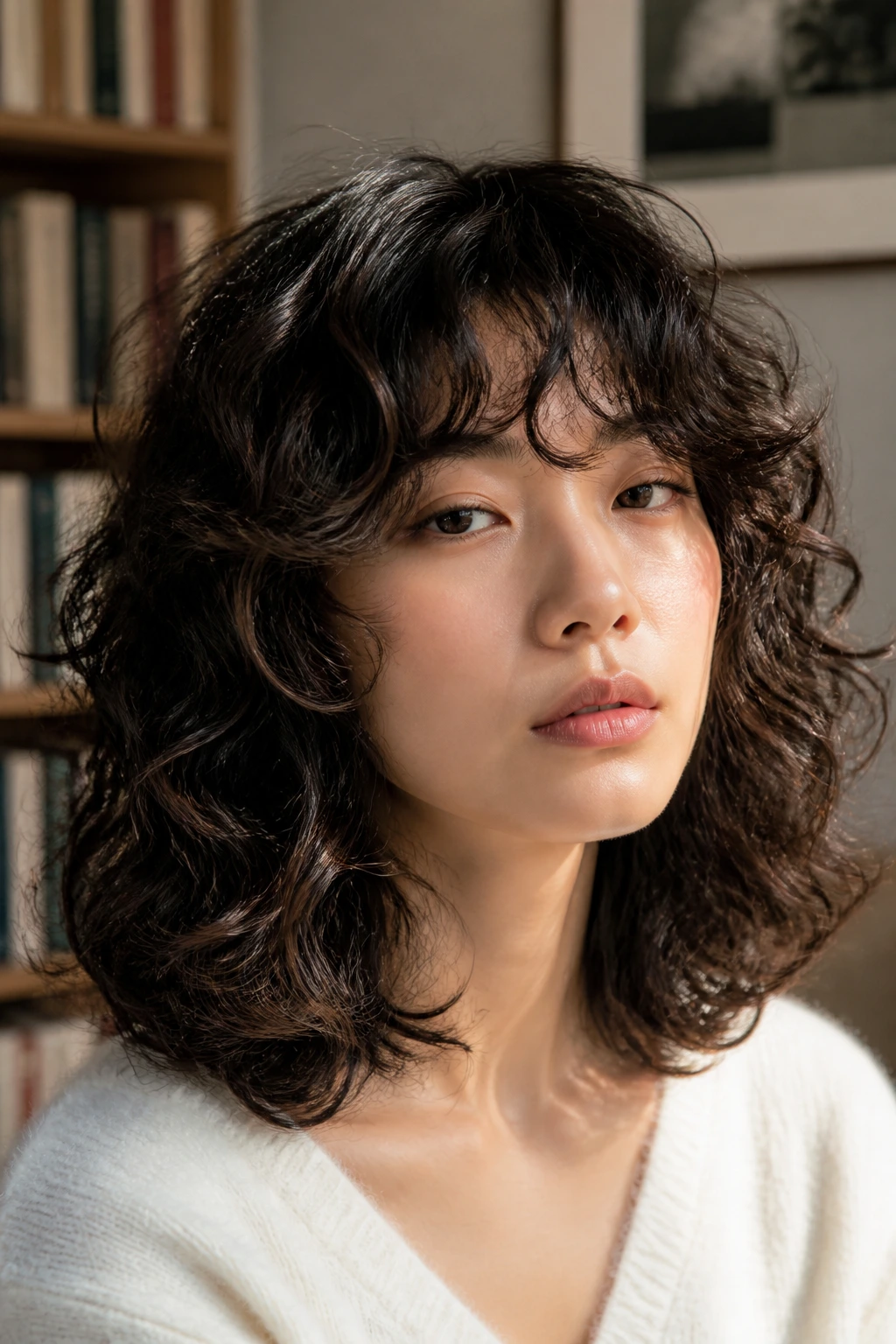
Bring photos, yes, but bring the right ones. One picture should show the front shape you want. Another should show the side or back. Don’t rely on a single photo of a model standing in soft light with a perfect bend in her hair. That photo might be useful for the fringe and completely wrong for the layer depth.
Say what your curls do when they dry. Tell the stylist whether the front tightens more than the back, whether the crown goes flat, and whether the bottom puffs out. Those details are worth more than vague phrases like “I want movement.” Movement can mean almost anything. A sharp cheekbone frame and a soft U-shaped perimeter are both movement, but they do very different jobs.
Also mention your styling habits. If you diffuse for 15 minutes and then air-dry, say so. If you never use a round brush, say that too. A good cut has to live in your real routine, not in a salon fantasy where every curl gets individually polished for an hour.
Essential Tools for Styling and Maintenance
-
A wide-tooth comb: Best for detangling wet curls without breaking the clumps apart.
-
A spray bottle with water: Useful for waking up sections that dry weird or flatten at the root.
-
Curl cream or lightweight leave-in: Enough slip to keep curls soft, but not so much that the shape goes limp.
-
Gel or mousse: Helps the layers hold their line, especially around the face and crown.
-
A diffuser attachment: The easiest way to keep the medium length from drying into a frizzy triangle.
-
Hair clips: Handy for pinning the top layers while you dry the underneath sections.
-
Satin pillowcase or bonnet: Keeps the front pieces and bangs from getting crushed overnight.
-
Small scissors or a bang trimmer: Optional, but useful if your fringe needs tiny cleanup between appointments.
How to Wear These Cuts Without Fighting the Shape
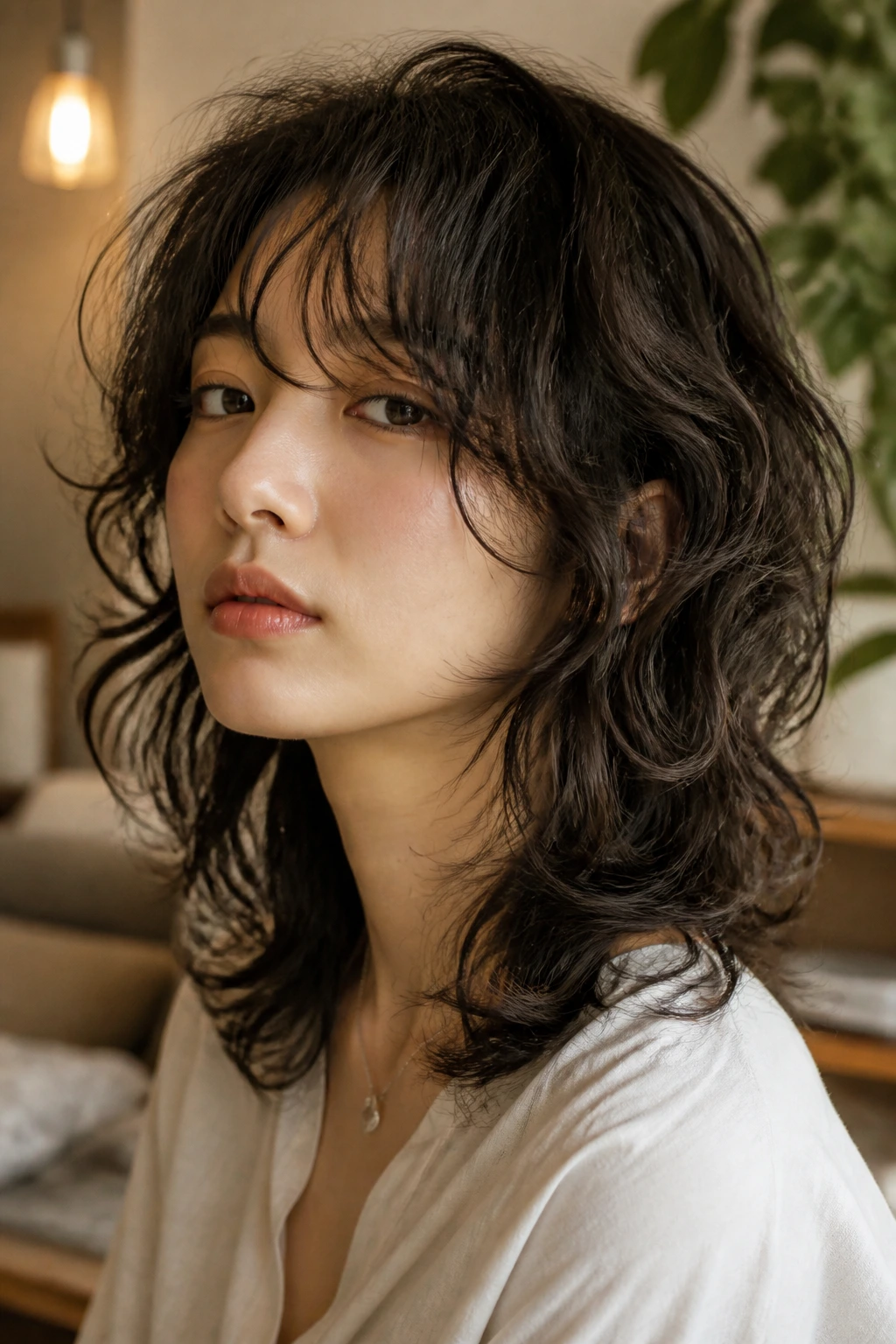
Presentation: Let the cut show its lines. A soft side part makes cheekbone layers stand out, while a center part sharpens the symmetry of a fuller midi. If you want the front to read cleanly, tuck one side behind the ear and let the other side fall loose.
Accompaniments: Round earrings, slim collars, and open necklines tend to work well because they don’t crowd the face frame. Chunky turtlenecks can swallow delicate fringe pieces, while a V-neck or scoop neck leaves the layers room to breathe.
Length Balance: If your hair is dense, keep the face frame longer and let the interior do the work. If your hair is finer, ask for softer layering and fewer short pieces near the crown. Medium curly hair looks best when the ends still feel substantial.
Mood Pairing: A hush cut reads polished and quiet. A soft wolf cut reads a little sharper. Curtain bangs and butterfly layers lean romantic. Pick the one that matches how you actually dress, not the version you hope to become on a Monday morning.
Styling Tricks That Keep the Layers Visible
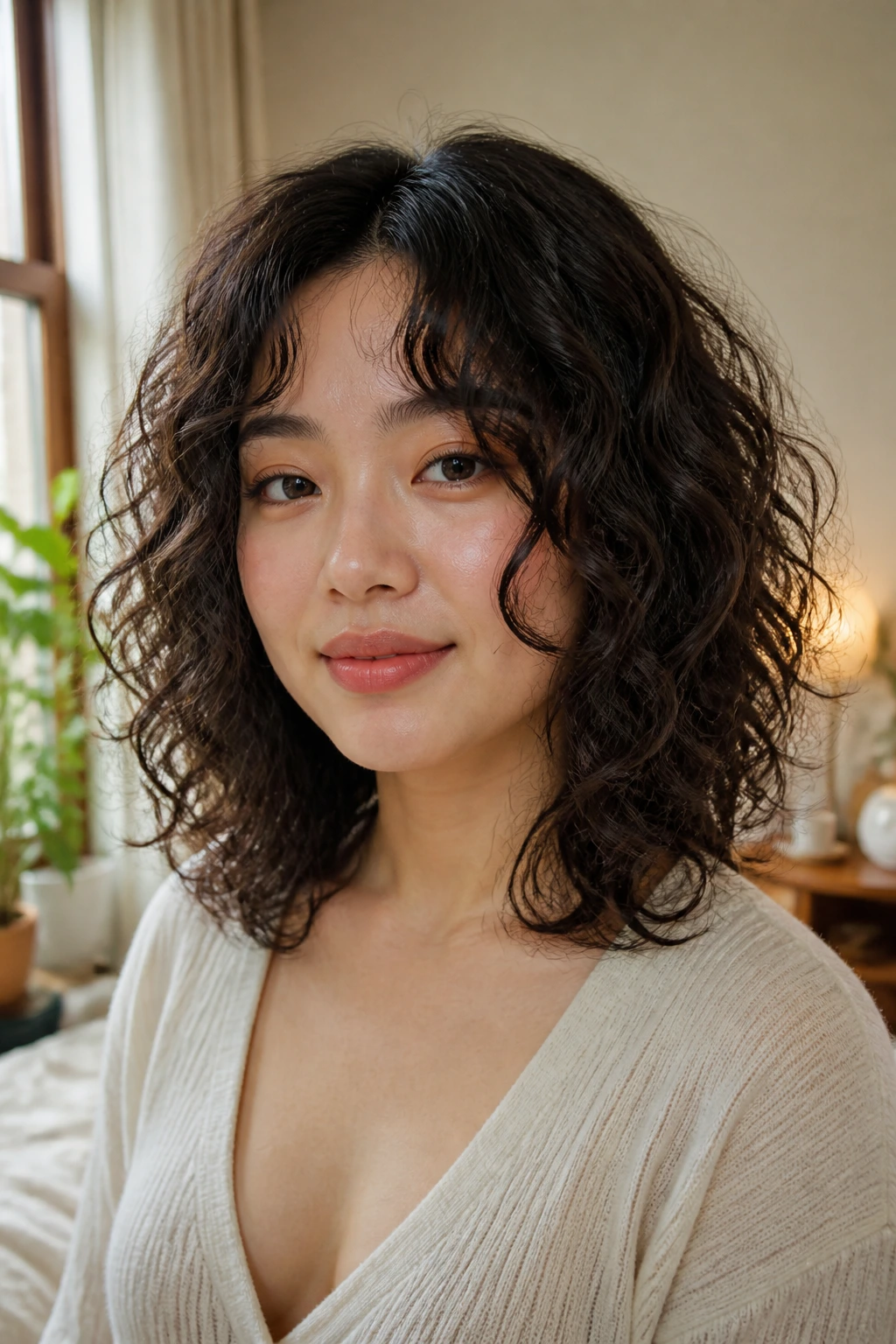
Root Lift: Put mousse or a light foam at the crown while the hair is still damp, then clip the roots for 10 to 15 minutes before diffusing. That keeps the top from sinking into the sides.
Curl Definition: Scrunch in gel with your hands upside down, but stop before the hair turns crunchy all the way through. You want a cast that can be broken later, not a stiff shell.
Diffuser Timing: Dry the hair about 70 to 80 percent before you touch it again. If you keep flipping and fluffing while it’s soaking wet, the layer pattern blurs.
Night Refresh: Pineapple the hair loosely or use a satin bonnet. In the morning, mist the front pieces, smooth a pea-sized amount of leave-in over the ends, and let the curls settle for a few minutes before judging the cut.
Common Mistakes That Flatten the Shape
-
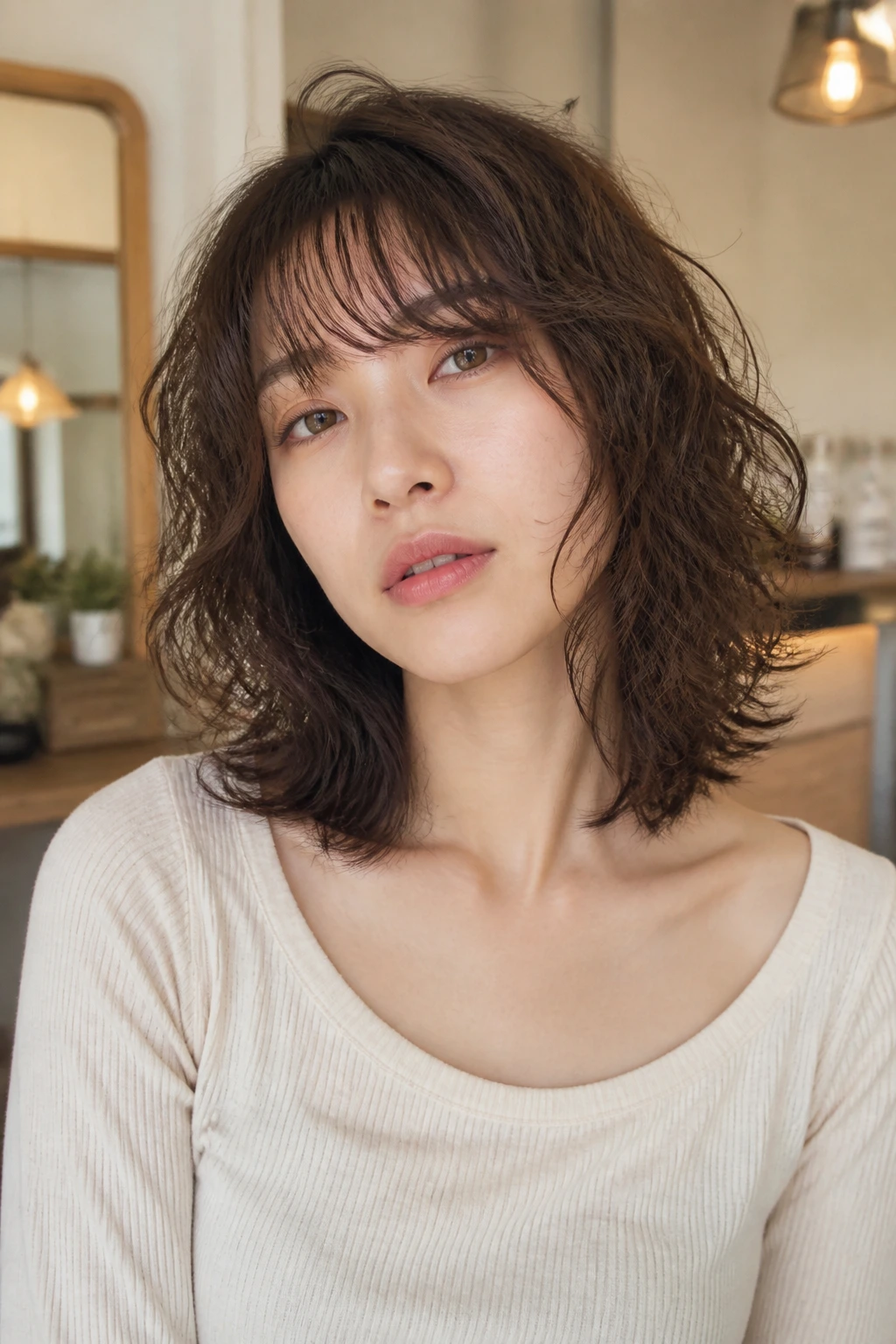
Cutting the fringe too short for shrinkage: The bangs bounce up higher than planned and sit awkwardly above the brows. The fix is to cut longer, then refine once the curls dry.
-
Over-thinning the ends: The bottom turns see-through and loses the plush medium-length shape. Ask for long layers and interior removal instead of aggressive texturizing on the perimeter.
-
Ignoring curl pattern differences across the head: The crown, sides, and nape often curl differently. If the stylist cuts them all the same way, one area will usually misbehave.
-
Using too much cream or oil: The hair gets shiny at first, then collapses at the roots and stretches out at the ends. Light products usually work better on layered medium curls.
-
Trusting wet hair alone: Wet curls can hide both bulk and gaps. A quick dry check at the end of the cut saves a lot of regret later.
-
Forgetting the part line: A center part and a side part can change the entire silhouette. If you always wear one part, say so before the haircut starts.
Variations and Adaptations to Try
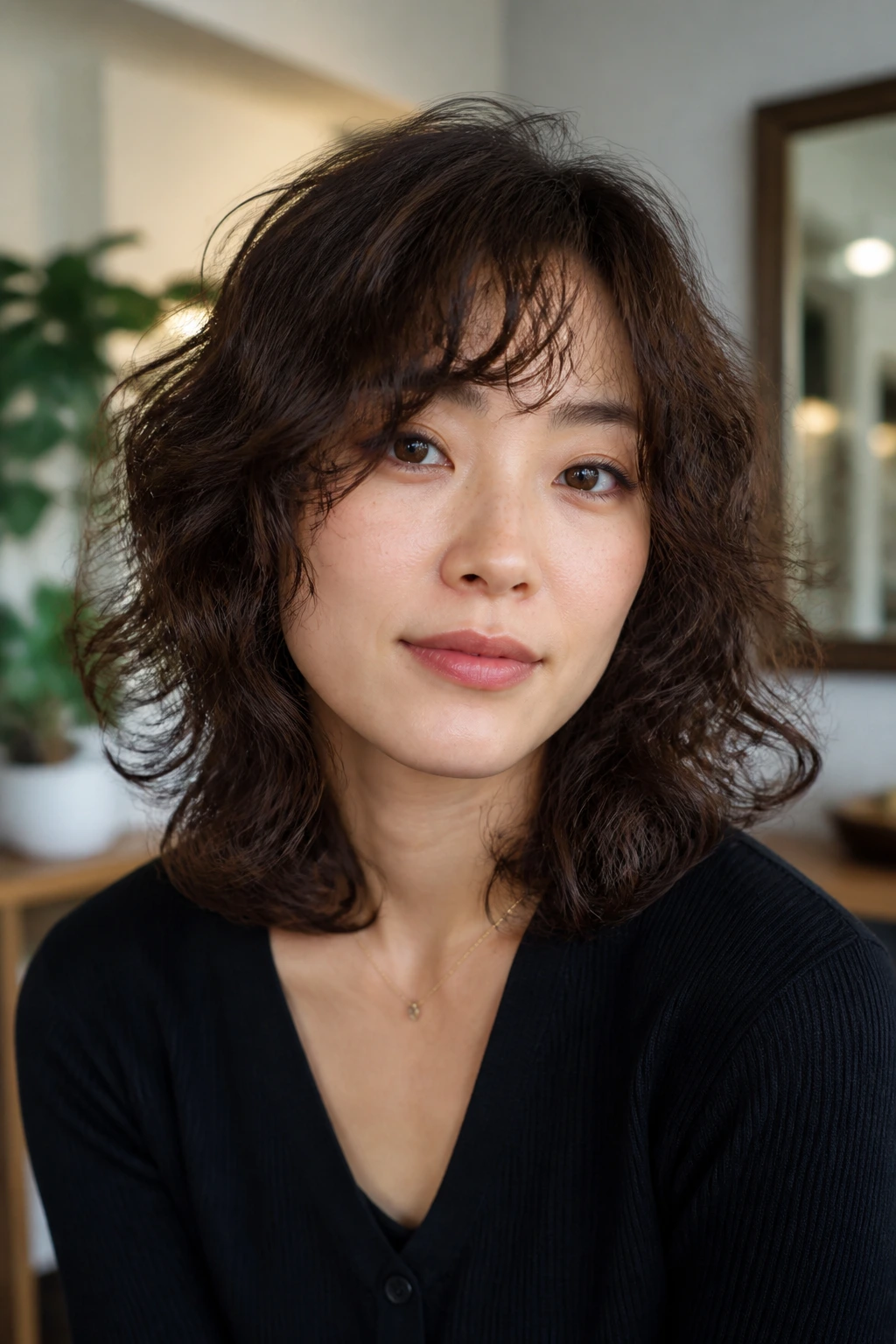
Fine-Curl Feathering: Keep the layers long, the fringe light, and the ends full. This version is better when you want movement without losing density, especially if your curls collapse when over-layered.
Bulk-Control Layers for Thick Hair: Ask for stronger interior removal and a lower starting point for the face frame. This helps dense curls stop sitting like a mushroom around the shoulders.
Soft Bang Version: Replace full curtain bangs with see-through fringe and temple pieces. It softens the forehead without demanding constant trimming every few weeks.
Octopus Lite: Keep the crown lifted, but leave more weight at the bottom than a true octopus cut would. It gives you edge without the extreme silhouette.
Grow-Out Midi: Ask for long layers that can survive 8 to 10 weeks without looking shabby. This is the one to choose if you hate high-maintenance cuts but still want shape.
Keeping the Cut Fresh Between Salon Visits
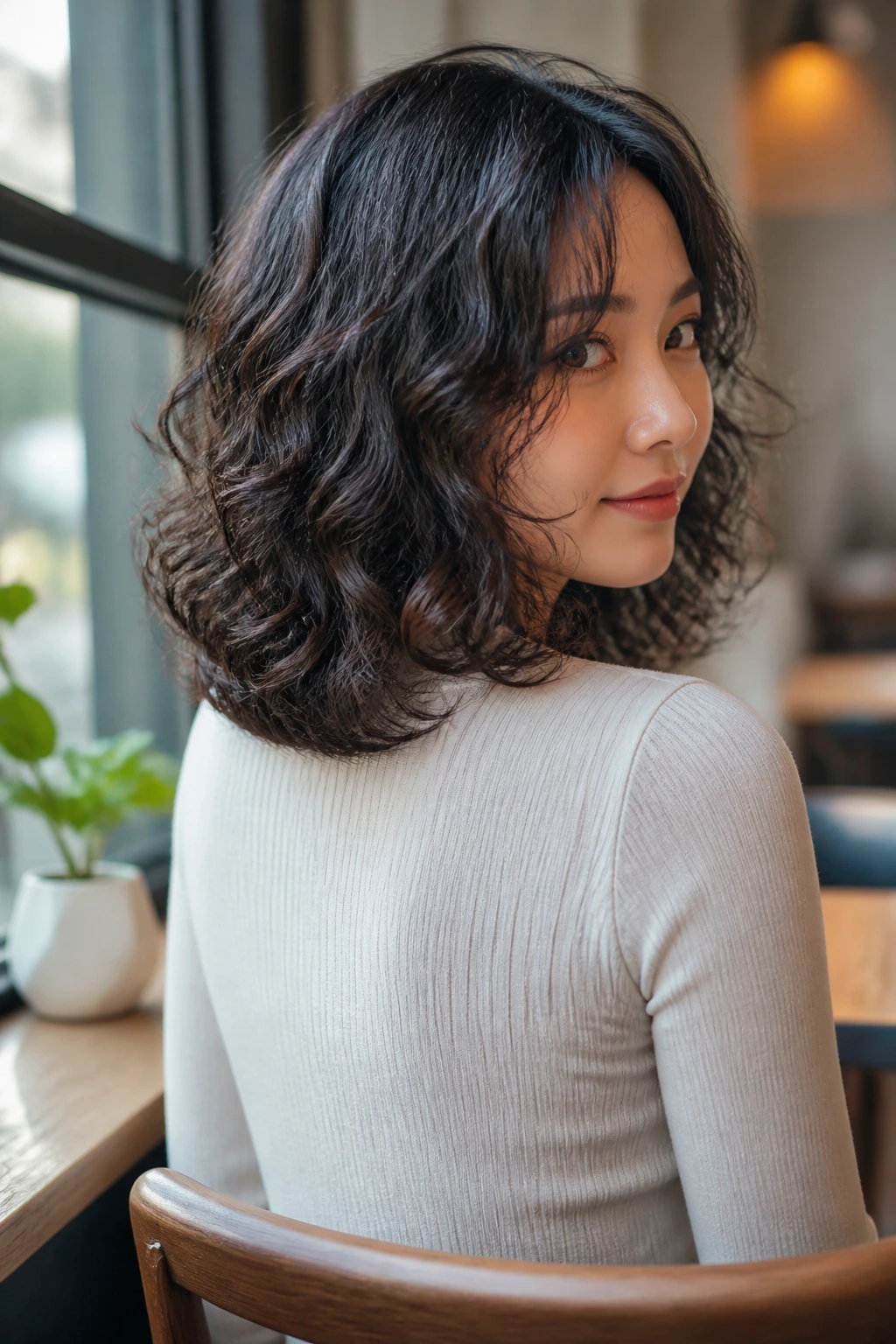
Curly medium hair lives or dies by maintenance, but that does not mean constant work. Most of these cuts hold their shape best with a trim every 8 to 12 weeks, depending on how fast your bangs grow and how much shrinkage you get. If you wear curtain bangs or see-through fringe, the front may need a tiny cleanup sooner than the rest.
The better your night routine, the longer the cut keeps its line. Sleep on satin if you can. It cuts down on frizz and keeps the front pieces from bending into odd shapes. If the crown goes flat overnight, a quick mist of water and a little scrunching is usually enough to bring the layers back.
Wash-day product choice matters too. Heavy butters can bury the layering effect, while a lighter mousse or gel helps the curls stay separated in a clean way. And if the ends start to look stringy before your trim is due, resist the urge to keep adding more oil. That usually makes the problem worse.
Questions People Ask Before Booking the Cut
What makes a Korean layered medium cut different from a regular layered cut?
The Korean-inspired version usually keeps the outline softer and the layers more blended. Instead of harsh steps, you get interior movement, face-framing pieces, and a shape that grows out with less drama.
Will layers make curly hair frizzier?
They can, if the cut is too aggressive or the ends are thinned too much. Good layers should reduce bulk and help curls clump better, which usually makes the hair look cleaner, not puffier.
Should curly hair be cut wet or dry?
A mix works best. Wet cutting helps create the basic shape, but a dry check is useful for curls that shrink a lot or behave differently around the face and crown.
Are curtain bangs hard to manage on curls?
They take more care than no bangs, but they’re manageable if they’re cut with shrinkage in mind. Longer starts, soft density, and regular tiny trims keep them from turning into a surprise fringe.
Which of these cuts works best for thick hair?
The hush cut, soft wolf cut, curly shag, and bulk-control layer cuts are strong choices. They remove enough interior weight to keep the shape from blowing outward.
Which one is safest for fine curls?
The invisible layer lob, the C-frame cut, and the loose-wave version are the gentlest options. They keep the hair looking full while still adding motion.
How often should I trim a layered medium cut?
Most people do well every 8 to 12 weeks. Bangs may need attention sooner, especially if they sit right at the brows when dry.
What if one side of my curl pattern is stronger than the other?
Say that at the salon. A good stylist can balance the part line and place the front pieces so the stronger side doesn’t overpower the whole shape.
The Shape That Still Looks Good at Week Six
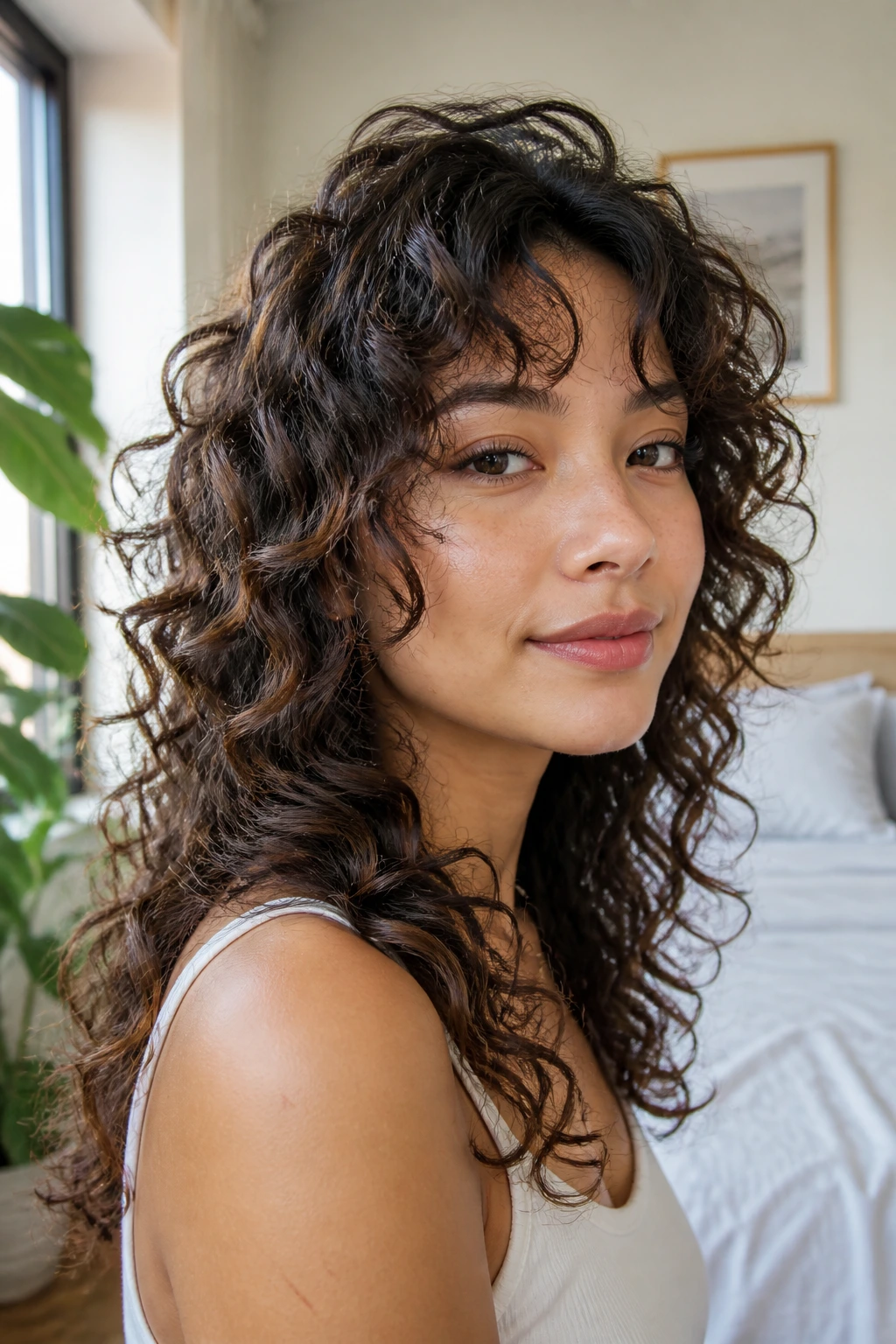
The real appeal of these cuts is not that they look good for ten perfect minutes after a salon blowout. It’s that they keep working when life gets messy. The curls can be air-dried, diffused, pinned back, or left to do their own thing, and the shape still reads as deliberate. That’s a rare thing with medium-length curly hair.
If you’re choosing between a few options, look at how much maintenance you’re willing to give the front. Curtain bangs and see-through fringe need more attention. Hush cuts, C-frames, and invisible layers are calmer. Pick the one that fits your routine, your curl density, and the amount of time you want to spend arguing with a diffuser in the morning.
A good medium cut should make your curls look like they belong to each other. That’s the goal. When it does, you stop thinking about the haircut and start noticing the shape it gives your face.