



The fastest way to make short hair look deliberate is not to keep cutting it shorter. It’s to put the weight in the right places. Medium hairstyles for short hair with face-framing layers do that with a kind of quiet precision: the front pieces brush the cheekbone, the jawline, or the collarbone, and suddenly the whole cut looks shaped instead of accidental.
A front piece that starts at the cheekbone can lift the eyes. One that lands at the chin can soften a square jaw. Push those layers down to the collarbone and the haircut starts behaving like a longer style even when the back is still short enough to dry in ten minutes. That range is the reason these cuts keep showing up in good salons — they don’t just look nice in a photo, they give the hair somewhere to go.
The best part is the flexibility. You can rough-dry one day, tuck one side behind the ear the next, then bend the ends with a flat iron and leave the front pieces loose so the shape still feels intentional. The details are small. They matter.
Why These Layered Cuts Earn Their Keep
-
Cheekbone Lift: Front layers that start around the cheekbone pull the eye upward, which makes the whole cut feel lighter without removing much length.
-
Less Boxy Around the Jaw: A little movement at the front keeps a bob from sitting like a helmet, especially when the jawline is the widest part of the face.
-
Easy to Style Without a Full Blowout: These shapes can look finished with a round brush, a bend from a flat iron, or even a good air-dry and a dab of mousse.
-
Grow-Out Looks Intentional: When the front pieces are longer than the back or slightly tapered, the cut still holds its shape for weeks, not days.
-
Fine Hair Gets a Lift Without Losing Body: Shorter face-framing layers create motion where fine hair usually collapses first — around the temples and cheeks.
-
Texture Stays Visible: Waves, bends, and a little frizz control show up better when the haircut already has a frame built into it.
1. Soft Curtain Lob
A soft curtain lob is the haircut I reach for when someone wants movement without chaos. The length sits around the collarbone, then the front pieces split away from the face in a gentle center part. It’s one of those cuts that looks calm even when the rest of your morning is not.
The trick is the starting point. Ask for the shortest face-framing piece to hit around the cheekbone, then let it taper down toward the collarbone so the line feels soft, not choppy. On straight hair, a 1¼-inch round brush gives the ends a slight bend. On wavy hair, a light mousse and a rough-dry keep the front from puffing out too far.
If your hair tends to fall flat at the crown, this cut fixes that faster than a blunt lob does. The layers in front keep the eyes moving, which is half the battle.
2. Chin-Skimming Side-Part Bob
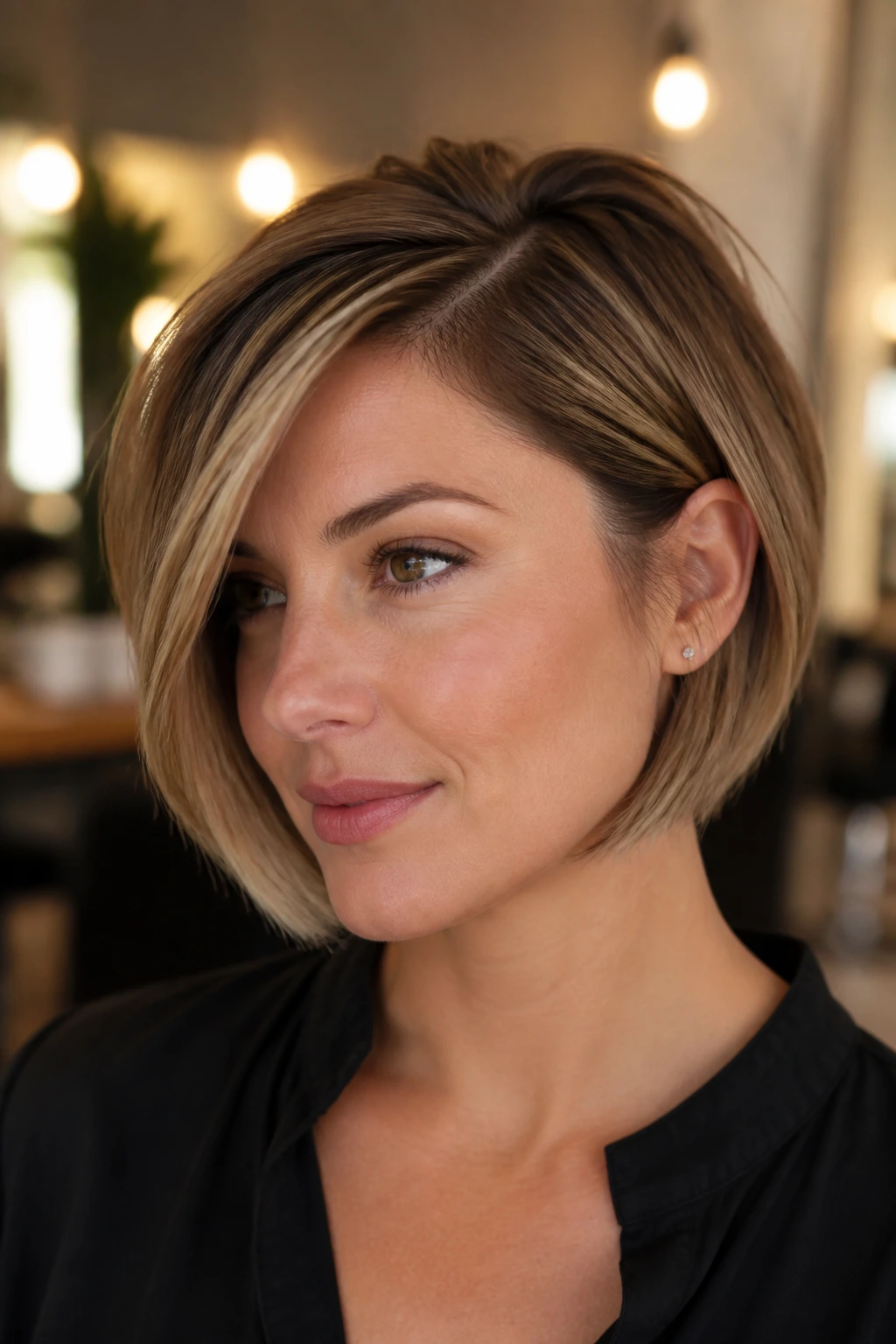
Want a bob that feels sharper without getting severe? Start with a side part and let the front pieces skim the chin. The asymmetry does more work than people expect. One side frames the cheek; the other side creates a little sweep that keeps the cut from sitting square on the head.
Where It Sits
The chin is the money spot here. If the shortest layer lands much above it, the bob can start to flare out. If it drops too low, you lose the crispness that makes the side part interesting.
A flat brush and a quick bend under the ends help this shape stay clean. I’d skip heavy oils near the front; they weigh down the side sweep fast. A pea-size smoothing cream on damp hair is enough.
3. Tousled French Bob
A French bob with face-framing layers has that slightly undone feel that makes it look like you didn’t spend an hour trying to make it casual. The length stays close to the jaw, but the front softens enough that the cut doesn’t feel boxy or stern.
Why It Flatters
The texture is what matters here. You want piecey ends, not fluffy ends. A little bend around the mouth and cheekbone keeps the haircut light, especially if your hair is naturally fine or straight.
Use a salt spray only at the mids and ends, then twist a few front sections with your fingers while they’re damp. Too much product turns the French bob into helmet territory. Too little, and it just falls straight down the face.
4. Feathered Collarbone Shag
The feathered collarbone shag is for the person who wants movement every time they turn their head. It uses shorter crown layers and longer face-framing pieces that brush the collarbone, so the shape feels airy without losing the outline.
This cut is excellent when your hair has some wave but not enough to behave like a full curly cut. The feathering keeps the front from sitting heavy against the cheeks, and the longer pieces in front give you room to tuck, flip, or part the hair in the middle without breaking the shape.
Best styling move: dry the roots forward first, then sweep them back with a round brush. That little bit of lift keeps the shag from collapsing into a triangle.
5. Blunt Lob with Long Face-Framing Slices
This is the lob for someone who likes a clean line but refuses to wear hair that feels static. The perimeter stays blunt, which keeps the cut dense and polished, while two or three longer front slices break up the edge around the face.
That contrast matters. Without it, a blunt lob can read as too even, especially on hair that sits flat at the sides. With it, the haircut has a little motion around the cheekbones and jaw without losing the nice heavy line through the back.
Styling note
Use a flat iron to add a soft C-bend just at the front pieces. Keep the rest straight if you like. The point is not to curl the whole head — it’s to make the face frame look like it belongs there.
6. Airy Wolf Cut
A soft wolf cut can be a smart middle ground if you want shorter hair to feel rough and modern instead of neat. The top gets light, the back keeps some length, and the face-framing layers are a little more obvious than they are in a classic shag.
This one is loud in the best way. The front pieces can start near the brow or cheekbone, then melt down through the jaw, which gives the face a strong edge without hard lines. It’s especially useful if your hair gets flat by noon, because the wolf cut builds texture into the shape instead of asking the product to do all the work.
Do not over-smooth this cut. A little grit is the whole point.
7. Tucked-In Layered Bob
A tucked-in layered bob is one of those cuts that looks expensive even when it’s not trying hard. The back sits close enough to the neck to keep the outline neat, while the front layers curve inward and stay long enough to tuck behind the ear without disappearing.
The cleanest version uses a slight undercurve at the ends. That keeps the bob from flaring out at the sides, which is a common problem with short layered hair. If your hair has a bit of wave, this cut behaves nicely with a quick blow-dry and a round brush. If it’s straight, a flat iron can reinforce the tuck at the jaw.
It’s a good choice when you want polish during the week and less fuss on weekends. The cut does not fight your part change.
8. Bouncy Blowout Layers
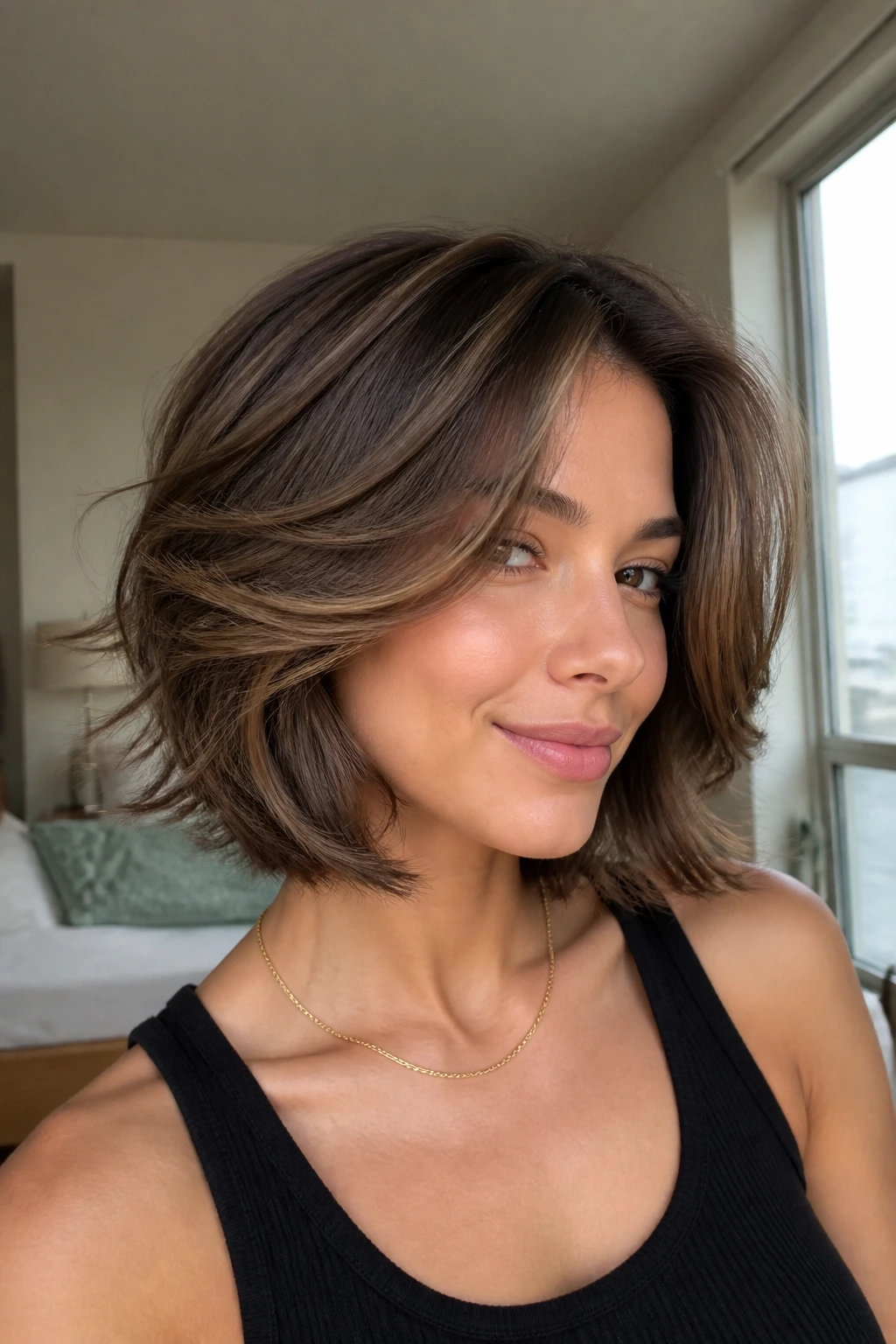
This is the cut for people who like movement with a little bounce at the ends. The layers start around the cheeks and jaw, then feather outward so the whole shape lifts when you round-brush it. On medium-short hair, that bounce can make the hair look fuller without adding bulk.
The visual cue here is simple: the front should swing, not stick. If the ends curl too tightly under, the cut starts looking dated. A large round brush, a concentrator nozzle, and a few clips at the crown give you more control than brute-force heat.
You want the front pieces to curve away from the face, then settle back near the collarbone. Soft. Not puffy.
9. Flipped-Out Ends Lob
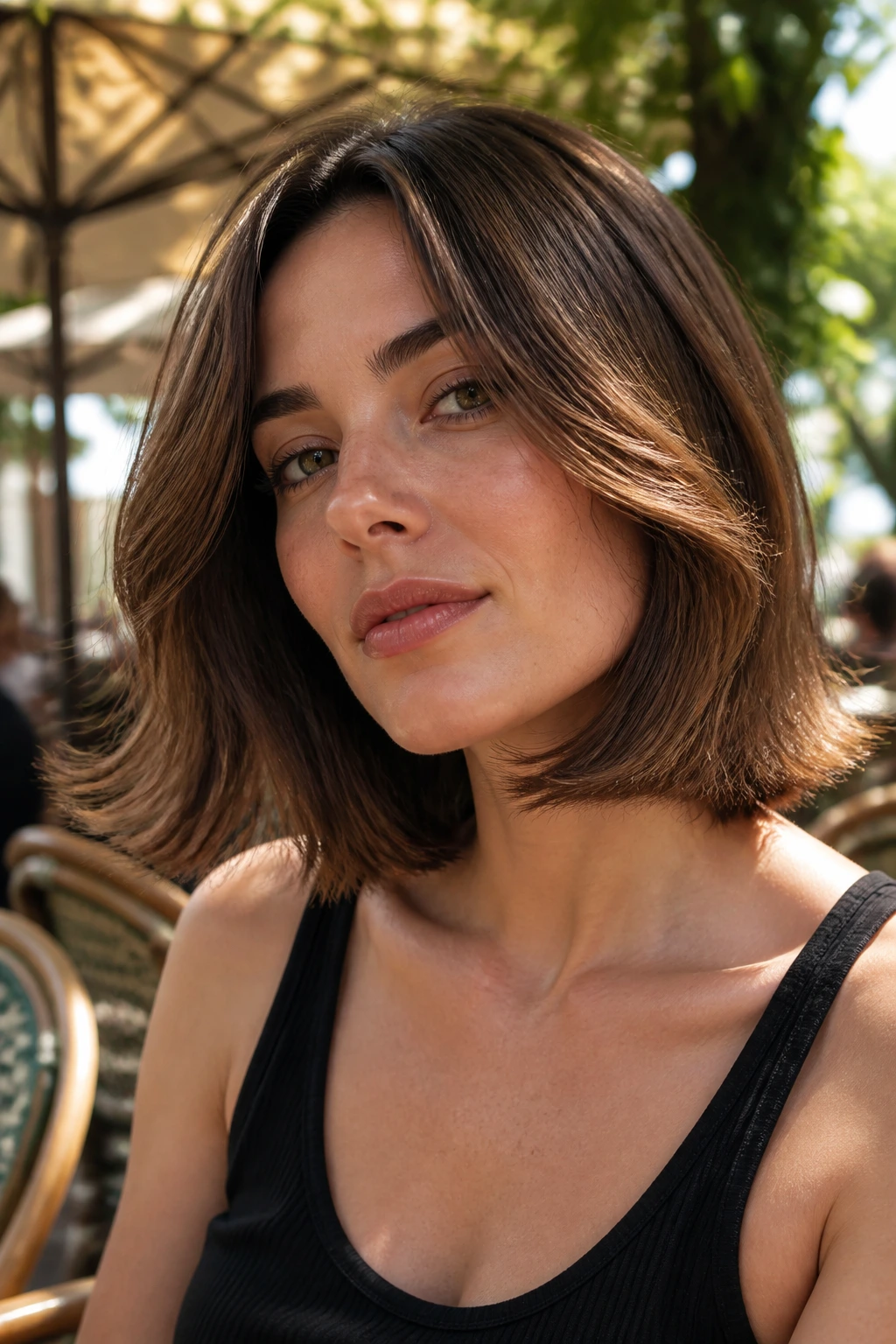
The flipped-out lob is a little playful, and I mean that in a useful way. Instead of turning the ends inward, you send them out with a flat iron or a big brush so the cut feels more open around the jaw and collarbone.
That outward flip gives face-framing layers a clearer job. They no longer just soften the face; they steer attention outward, which is especially nice if your hair sits close to the neck and looks too compact when left straight. A side part makes the flip feel even more deliberate.
Pro tip: keep the flip small. A quarter turn is enough. If you overdo it, the haircut starts looking like a costume from a very specific decade, and not the good one.
10. S-Wave Shoulder Cut
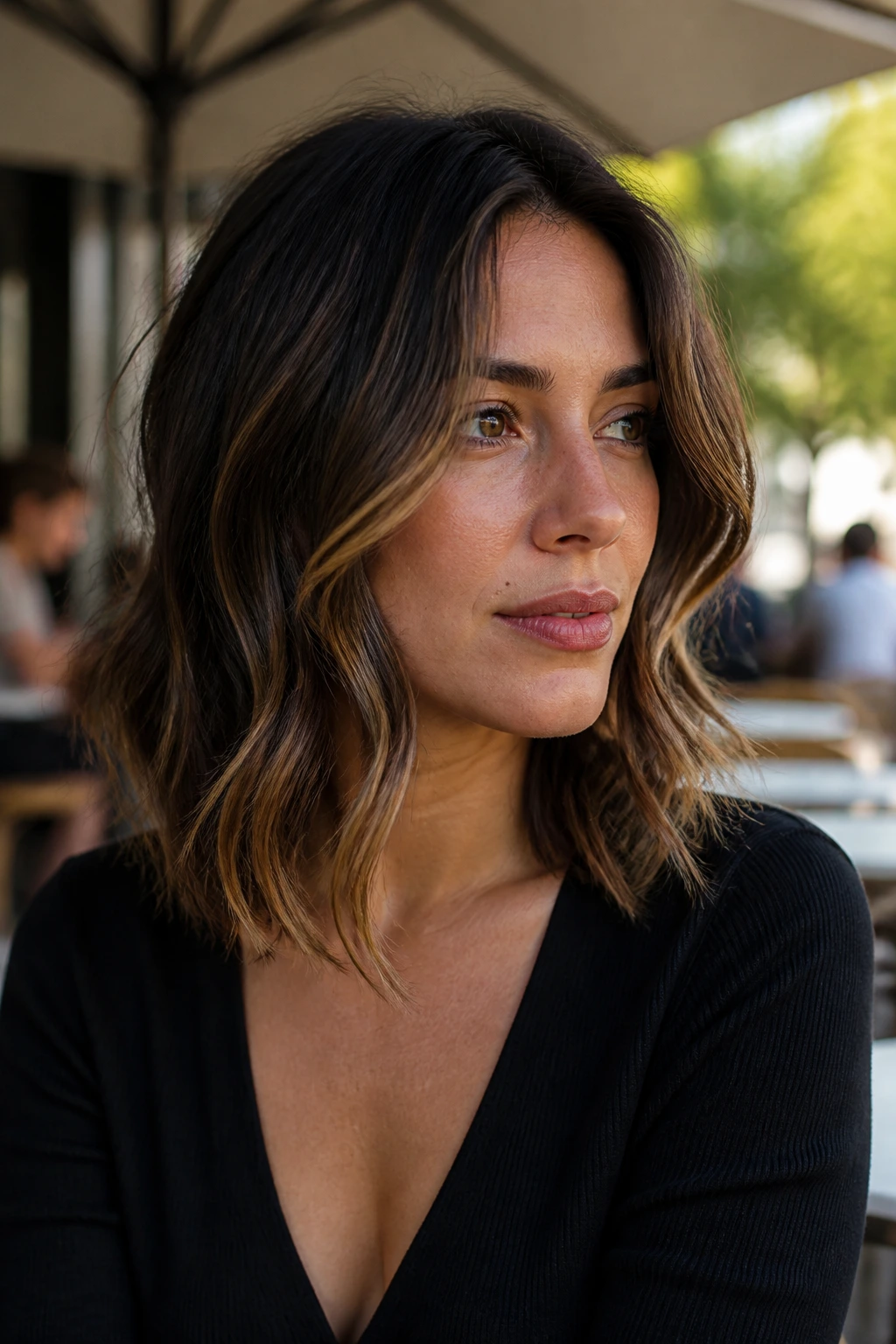
An S-wave shoulder cut is built for hair that bends but doesn’t always cooperate. The layers around the front are long enough to make room for that S-shaped movement, so the wave can fall against the cheekbone and then drift toward the collarbone instead of breaking in odd spots.
The cut works because it gives the wave a path. Straight hair can fake the effect with a flat iron; naturally wavy hair gets it for free if the layers are placed correctly. I’d ask for the front to be slightly longer than the rest so the wave looks like it’s following the face, not floating away from it.
This is one of the easiest styles to wear on days when you don’t want crispness. The bend can be loose and still look finished.
11. Bottleneck Bang Lob

Bottleneck bangs change the whole mood of a lob. The center is shorter, the sides taper longer, and the front pieces slide into the rest of the face-framing layers so the cut feels connected instead of chopped up.
That connection is the reason this shape works on short hair. The bangs and front layers share the same job, which is to soften the upper face and keep the front of the haircut moving. It’s good on medium-density hair that can handle a little structure without getting heavy.
Styling it right
Dry the bangs first, side to side, before the rest of the hair sets. If they dry in the wrong direction, you’ll spend the rest of the day trying to tame them. A light mist of flexible spray is better than hard-hold lacquer; you want the fringe to bend, not freeze.
12. Razored Piecey Shag

A razored shag has edge, but the useful kind — not the kind that looks like it lost a fight with thinning shears. The face-framing layers are cut to separate into little pieces, which gives the front more texture and less bulk.
The danger with this cut is overdoing the razor work. If the hair is fine, too much slicing can leave the ends wispy and dry-looking. On thicker hair, though, a razor can remove some of the heaviness that makes shorter styles fall flat around the face.
Ask for the front to be razored only where it needs softness. The back should still hold enough weight to keep the shape grounded.
13. Polished Rounded Bob

This bob is for anyone who likes order. The perimeter rounds gently around the head, and the face-framing layers sit inside that curve so the shape looks smooth from every angle. It’s neat, but not stiff.
The rounded outline is what keeps the haircut from feeling blunt at the cheeks. The front pieces can be set with a small round brush, then pinned while they cool so the bend stays in place. That’s the part people skip, and then they wonder why the front goes limp by lunch.
A polished rounded bob looks especially good on hair that naturally leans straight. There’s enough curve in the cut to keep it from feeling flat, which is the real win.
14. Half-Up Layered Lob

A half-up layered lob sounds simple because it is simple, but the face-framing layers make the whole style cleaner. You pull the top half back, leave the front pieces loose, and the haircut still has something to say around the face.
That loose front matters. It keeps the style from looking like a generic clip-and-go moment. When the pieces around the cheeks stay out, the head keeps its shape even though the crown is pinned. It’s a very practical style for days when you need the hair off your neck but still want a bit of movement near the eyes.
Choose a small claw clip or a soft elastic. Tight elastics flatten the top and make the front pieces look like an afterthought.
15. Deep Side-Part Layers

A deep side part changes the architecture more than people expect. It gives the front layers a longer sweep on one side, then compresses the other side enough to create height near the crown. That extra lift matters on short hair, where the top can go flat in a hurry.
What it solves
If your hair sits close to the head, a center part can make the front look too symmetrical and too calm. A deep side part adds motion without cutting anything shorter. The face-framing layers suddenly have direction, and direction is what keeps a cut from feeling vague.
Use a root-lift spray at the part and a medium round brush to redirect the front away from the face. The side part should look intentional, not like it got bumped by accident.
16. Textured A-Line Bob
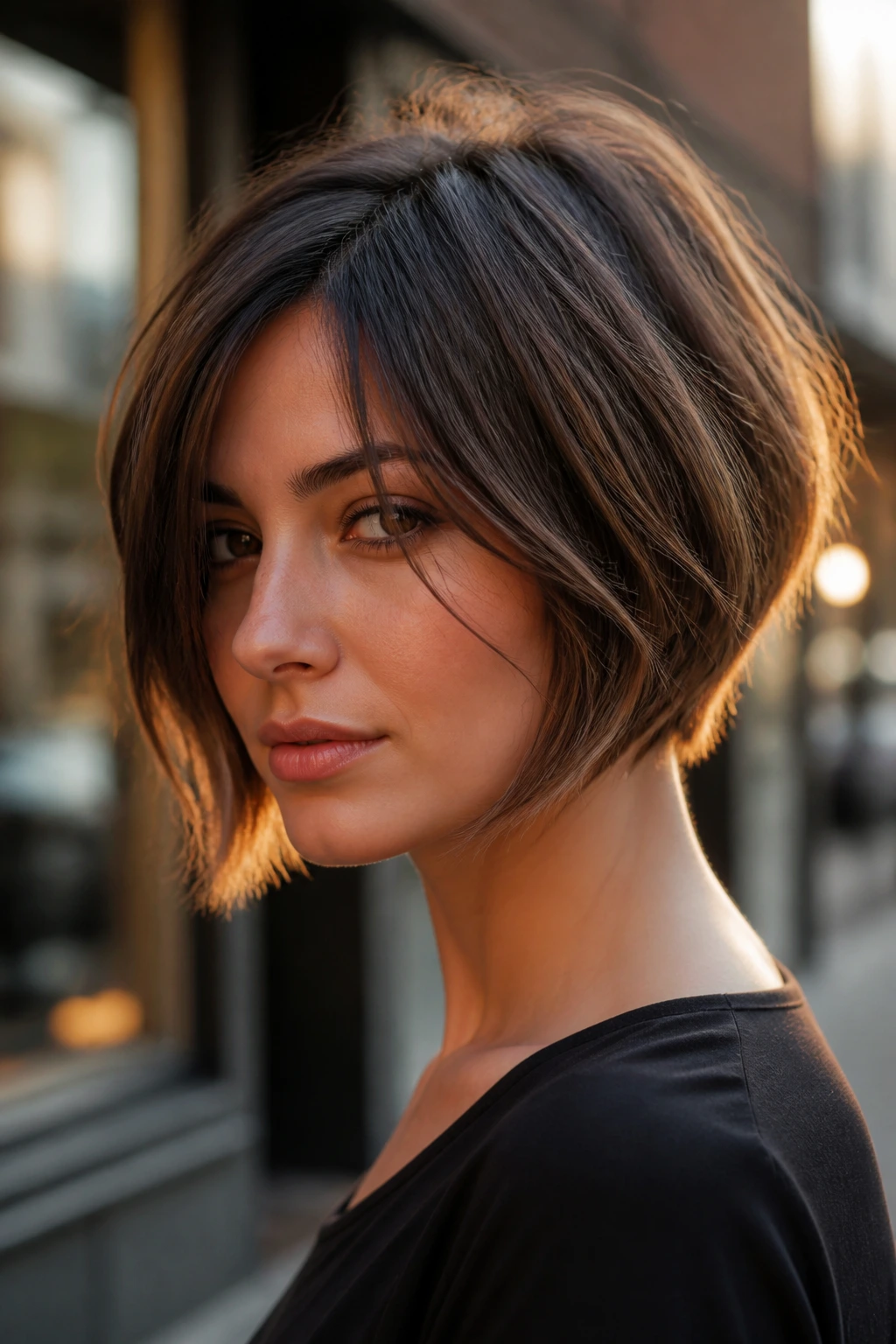
The A-line bob already has geometry built in: shorter in back, longer in front, and angled enough to make the eye move forward. Add face-framing layers and the cut stops reading as strict and starts reading as shaped.
That angle is useful on hair that needs a bit of structure around the jaw. The longer front pieces can skim the chin or just miss it, which softens the angle of the line without blurring it. It’s a good haircut if you like crisp edges but still want the front to feel soft against the face.
Styling tip
Point the blow-dryer nozzle down the hair shaft in the front. If you blow the layers forward and let them dry there, the sides can puff out. That puff is the enemy here.
17. Curly Face-Framing Lob

Curly hair changes the game because shrinkage can turn a nice idea into a surprise. A curly face-framing lob keeps the length around the shoulders or collarbone, then lets the front layers taper around the cheeks and jaw where the curl pattern is strongest.
The best version is cut with the curl pattern in mind, not against it. Dry cutting often helps because the stylist can see where each curl lands instead of guessing. If the front layers are too short, the curls can bounce up and sit at the temples. If they’re too long, the frame disappears.
Use a curl cream with enough slip to separate the pieces, then scrunch with a microfiber towel. You want defined rings around the face, not a soft cloud that hides the haircut.
18. Sleek Center-Part Lob
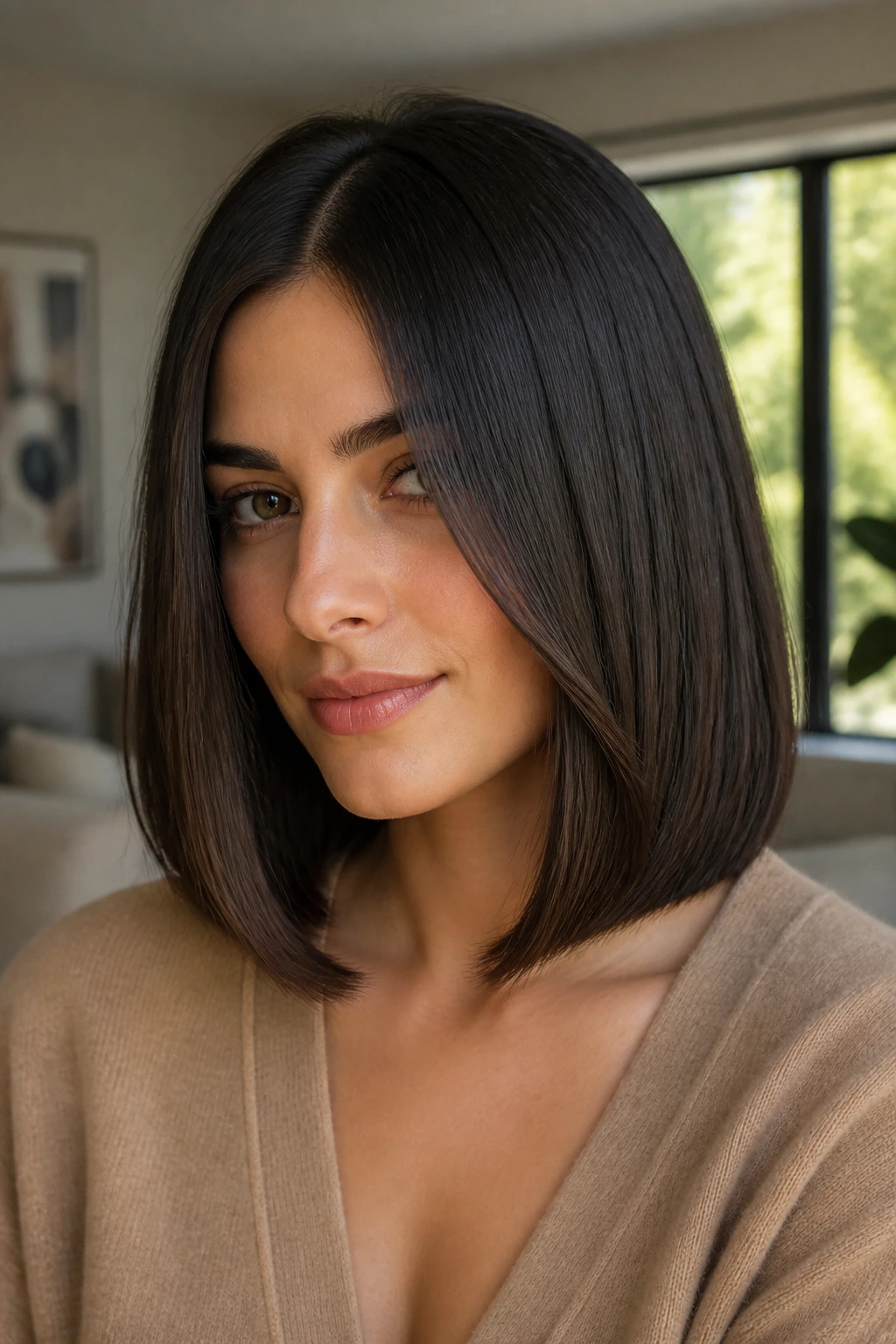
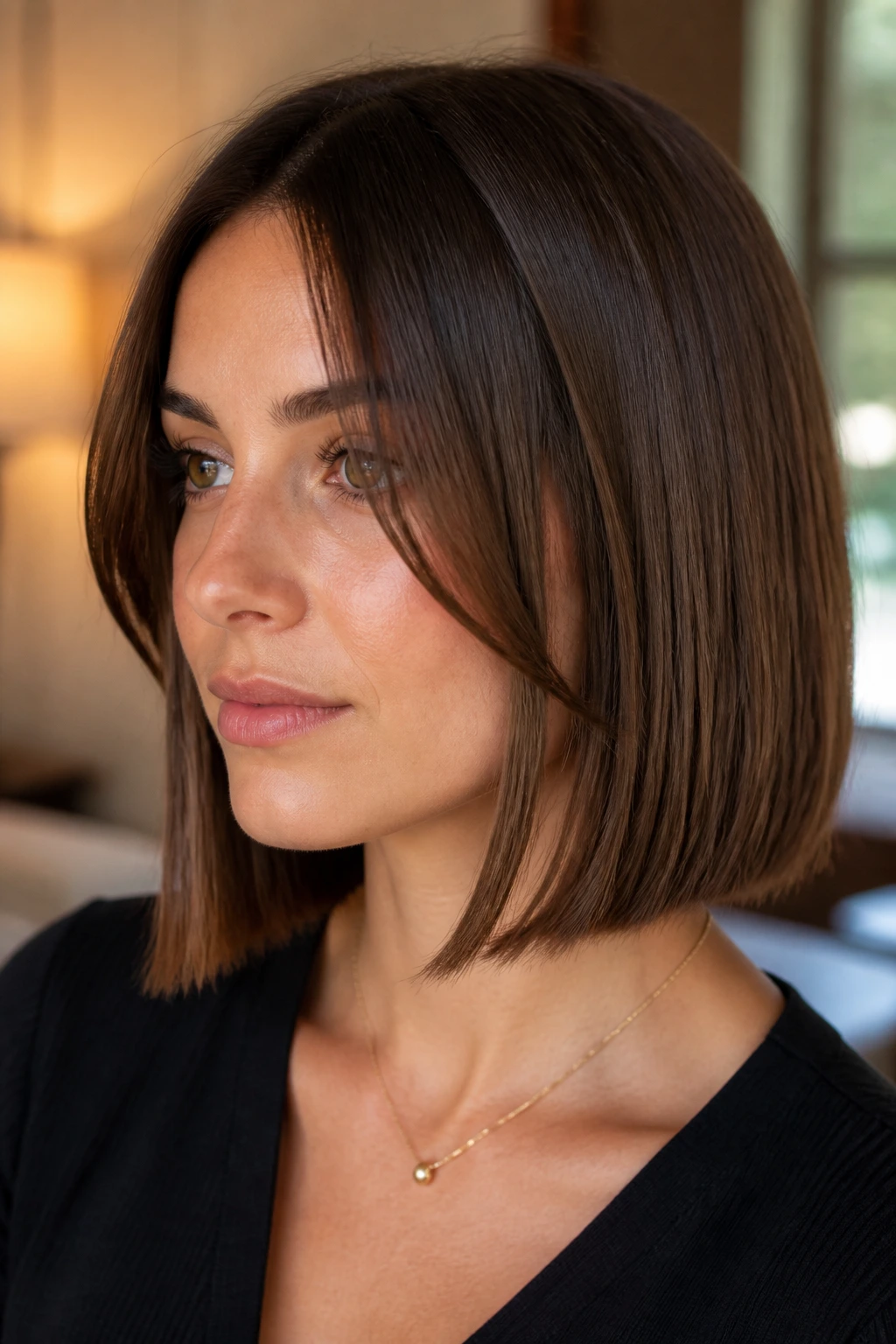
A sleek center-part lob can look almost severe on the wrong haircut. With face-framing layers, it turns elegant instead of flat. The middle part opens the face, and the front pieces drop cleanly along the cheekbones so the shape stays controlled.
The key here is weight. You need enough length in the perimeter to keep the cut grounded, or the center part will expose every weak point in the shape. This is where a smoothing cream and a flat iron earn their keep. Bend the ends under just a touch; dead-straight ends can look unfinished when the hair is sitting this close to the shoulders.
If you like clean lines and low visual noise, this one earns a place.
19. Soft Mullet Lite

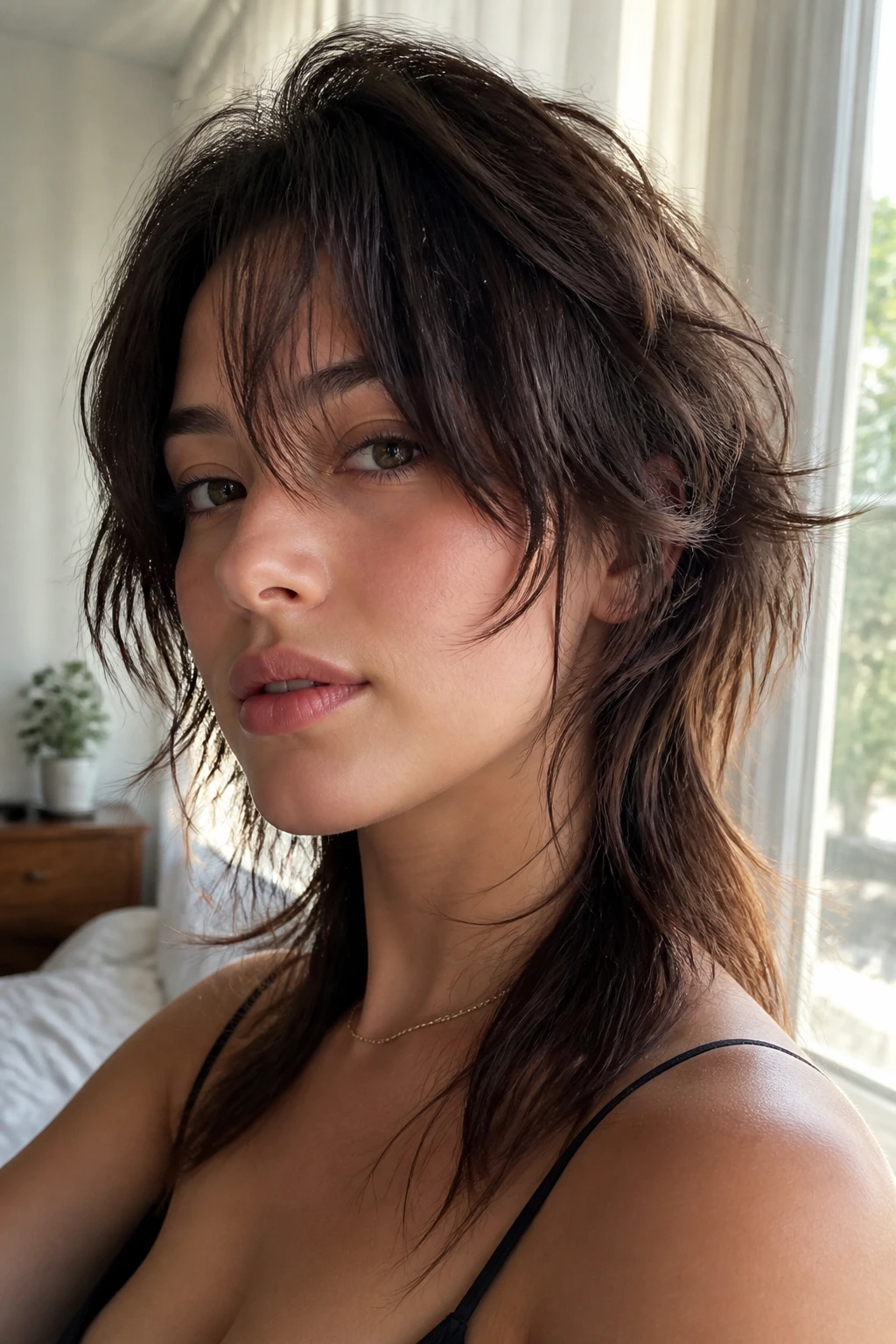
A soft mullet lite is not a full-on editorial cut unless you want it to be. The front stays longer, the crown gets light movement, and the back keeps enough length to avoid the hard jump that a true mullet can have.
The face-framing pieces are what make it wearable. They keep the shape from becoming too much about the back and too little about the face. On wavy hair, this cut can be brushed out for softness or scrunched for grit. On straight hair, a little bend near the front stops the whole thing from looking severe.
This is a good cut if you like hair with personality. It is not shy.
20. Claw-Clip Twist with Layered Front Pieces
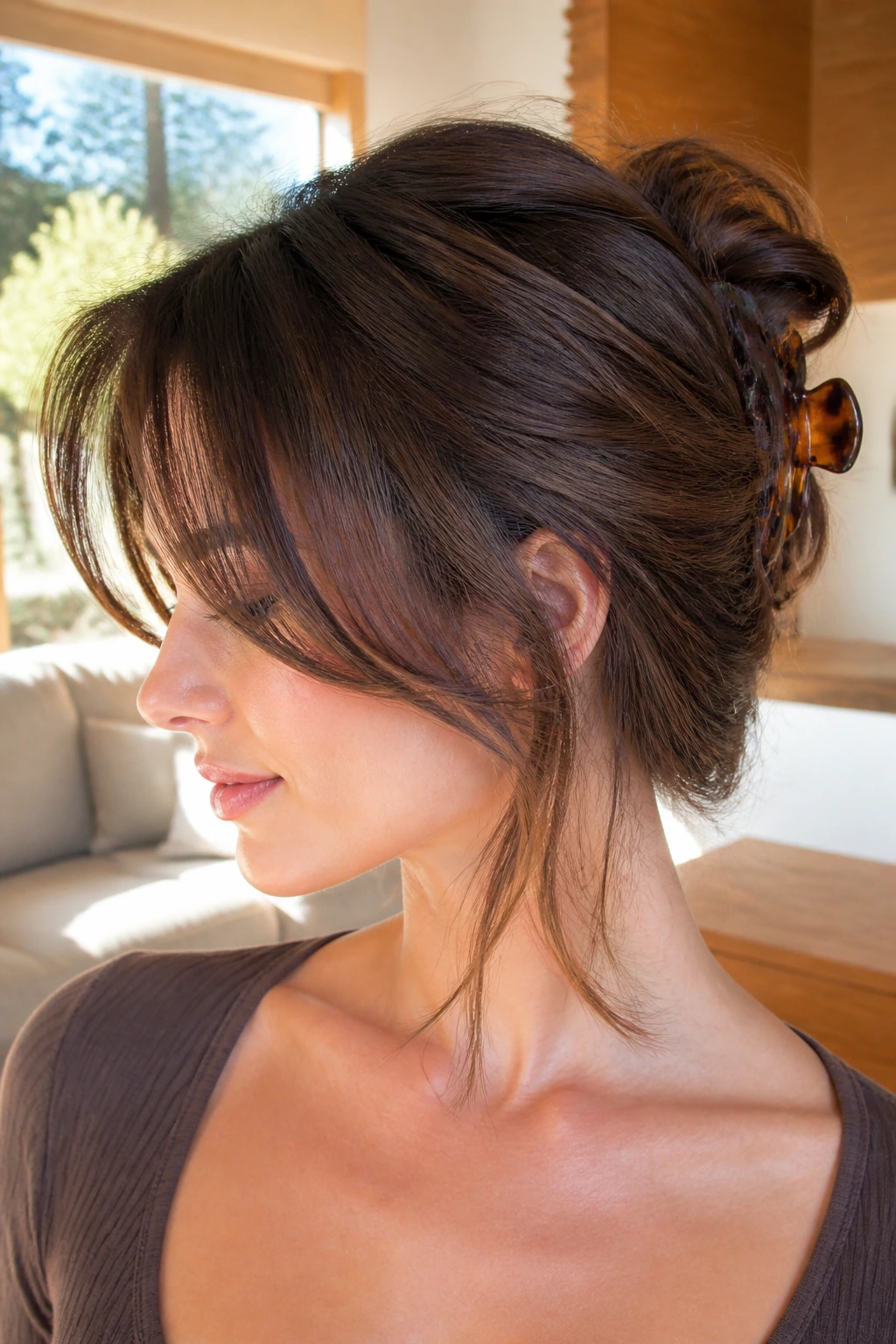
A claw-clip twist is the easiest proof that face-framing layers matter. You twist the back up, clip it in place, and let the front pieces fall loose around the temples and cheeks. Suddenly the style looks considered instead of improvised.
The front layers are the whole point. They keep the face open and stop the clip from making the head look too bare. If the layers are long enough to graze the jaw, they create that little undone edge that makes the style feel finished. A few bends with a flat iron help the front pieces separate instead of hanging in one flat curtain.
Use this when you need the hair off your neck but still want movement around the face. It’s fast. It also beats a tight bun for most medium short cuts.
21. Pixie-Bob Grow-Out with Face Layers
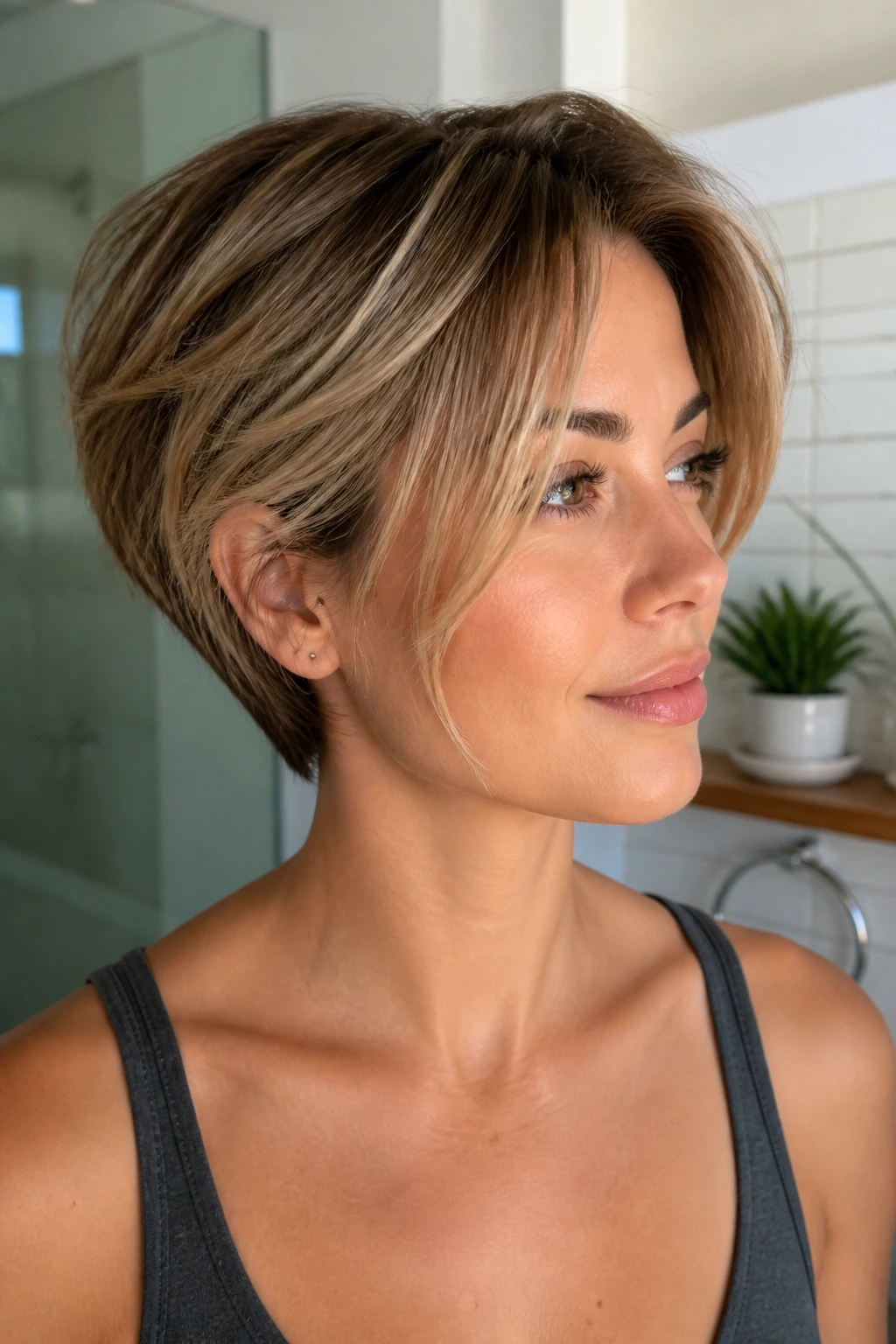
A pixie-bob grow-out can be awkward if the front is ignored. With face-framing layers, the shape becomes useful again. The back stays compact, the sides gain a little length, and the front pieces bridge the gap so the haircut doesn’t look like it’s stuck between two stages.
That bridge is what makes the cut work. The layers around the face keep the grow-out from ballooning at the sides, especially if your hair has some bend. This is the point where a lot of people want to cut it all off again. Usually, they don’t need to. They need a cleaner front shape and a little more patience.
A side part can help a grow-out like this because it gives the top a direction while the front pieces catch up.
22. Blunt Bangs + Side Framing Layers

Straight bangs with side-framing layers sounds like a contrast, and that’s why it works. The fringe gives the haircut a strong horizontal line across the forehead, while the side pieces soften the cheeks and jaw so the whole style doesn’t feel too boxed in.
This is a smart choice if you want attention near the eyes but not a heavy curtain. The bangs do the sharp work. The side layers do the soft work. Keep the side pieces long enough to hit the cheekbone or just below it; shorter than that, and the style can start to feel busy.
Dry the bangs first and keep the side pieces separated while they cool. They need different treatment, or they’ll fight each other by noon.
23. A-Line Lob with Long Front Pieces

An A-line lob already moves forward. The front pieces are longer, the nape is shorter, and the eye follows the slant without much effort. Add face-framing layers and the cut gets a softer edge where it matters most — at the cheeks and jaw.
The reason I like this shape on short hair is simple: it gives you structure without making the whole head look sharp. The longer front can be tucked, curved, or left straight, and each version still reads as the same haircut. That saves you from the annoying “new cut, new styling panic” that happens with less thoughtful shapes.
How to wear it
A side part gives the angle more drama. A center part makes the front feel more relaxed. Both work, which is why this cut is a safe pick if you’re not ready to commit to one styling mood.
24. Air-Dried Midi Flip

An air-dried midi flip is for people who want to spend less time wrestling with tools. The length sits between the jaw and collarbone, and the face-framing layers are cut so they bend away from the face as they dry. That small bend keeps the style from feeling flat or heavy.
The result depends on prep. A lightweight cream gives smoothness; a mousse gives hold; a small amount of salt spray gives more grit than softness. Pick one direction and stick to it. Mixed products can make the front pieces feel sticky at the roots and fuzzy at the ends.
If your hair naturally flips a little at the shoulders, this cut can look good with almost no heat at all. That’s a rare and welcome thing.
25. Sleepy Shaggy Lob

A sleepy shaggy lob has the kind of lived-in texture that looks best after a few hours, which is exactly why it’s useful. The face-framing layers are soft, the crown is a little broken up, and the ends never look too neat. That looseness keeps the style from sitting too carefully on short hair.
It’s the least precious cut on this list. The front pieces can fall around the face in a messy way and still look right because the rest of the haircut is already built for that texture. If your hair has a natural bend, this style will probably feel easier than a polished bob. If your hair is straight, a quick twist with a curling wand on the front pieces is enough to fake the lived-in feel.
The whole point is that the haircut should look like it moves when you do.
What Face-Framing Layers Actually Do Around the Jaw and Cheekbones
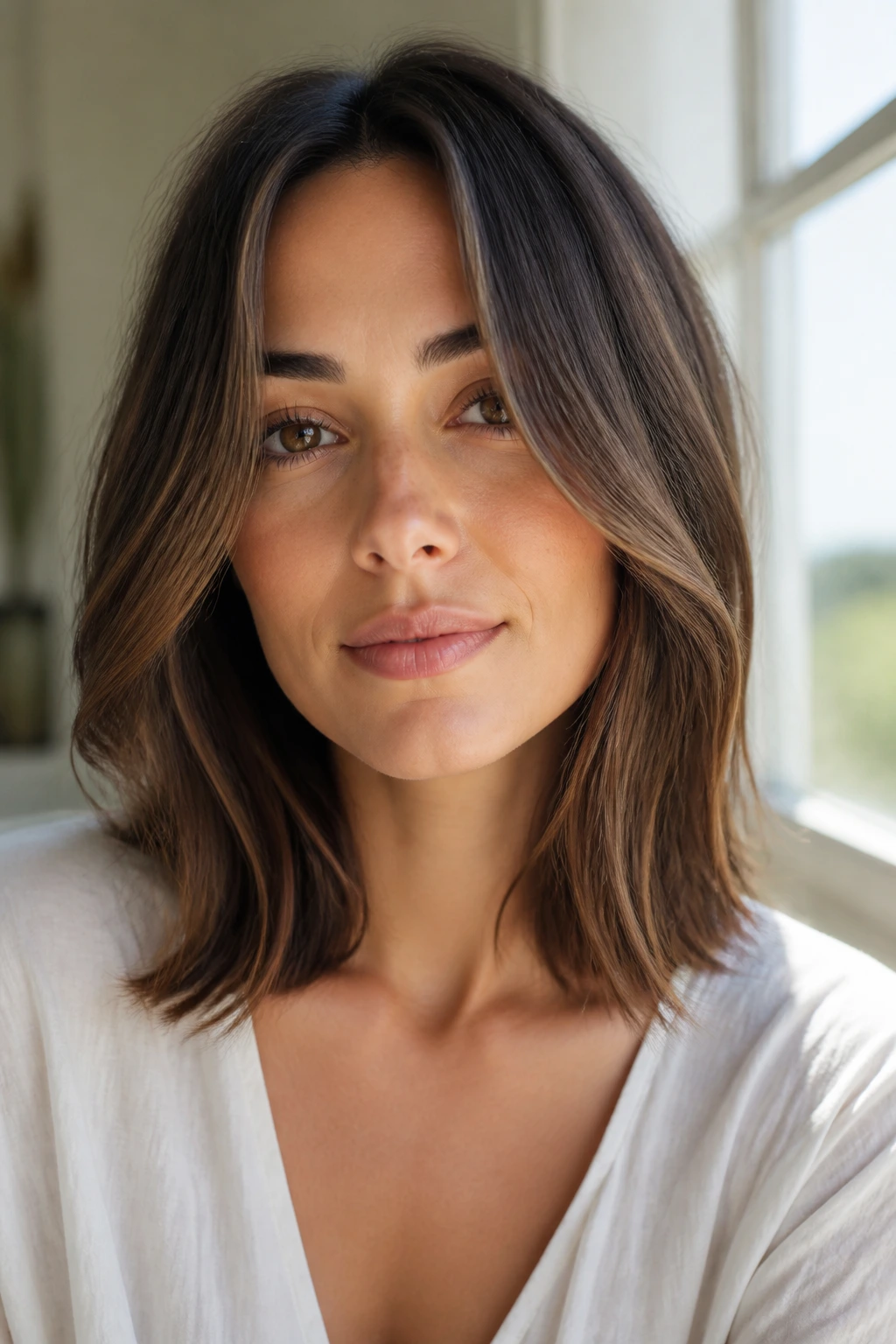
A face-framing layer is not decoration. It’s a steering wheel. The shortest pieces change where the eye lands first, and that changes the whole haircut faster than most people expect.
Start a layer near the cheekbone and you pull attention upward. Start it near the chin and you soften the lower face. Keep the longest front pieces around the collarbone and you get a longer-looking silhouette without committing to true long hair. That’s why these cuts are so useful on shorter lengths — they create the feeling of length without dragging the cut down.
The line matters as much as the length. If the front is too heavily thinned, the ends can look see-through and dry. If the layers are too short, they can pop out at the sides and make the haircut widen. The sweet spot is usually a gentle taper that follows the face instead of hugging it too tightly.
The Brushes, Clips, and Sprays That Make Styling Easier
-
1¼-inch round brush: This is the fastest way to get a bend at the cheekbone or a curve at the ends without making the hair look curled.
-
Blow-dryer with a concentrator nozzle: The nozzle keeps the air focused, which helps the front dry smoother and keeps the layers from puffing out.
-
Flat iron with rounded edges: A rounded plate is better for bends, flips, and S-waves than a stiff, sharp-edged iron.
-
Volumizing mousse: A golf-ball-sized amount at the roots gives short layers lift before heat ever touches them.
-
Heat protectant spray: Non-negotiable if you’re using a brush, iron, or wand on the front pieces.
-
Dry texturizing spray: Good for day-two separation when the layers start sticking together.
-
Duckbill clips: Handy for clipping the front sections while they cool so the bend holds instead of dropping.
-
Tail comb: Useful for clean parts and for lifting the roots where the face frame starts.
How to Style Medium Hairstyles for Short Hair with Face-Framing Layers at Home
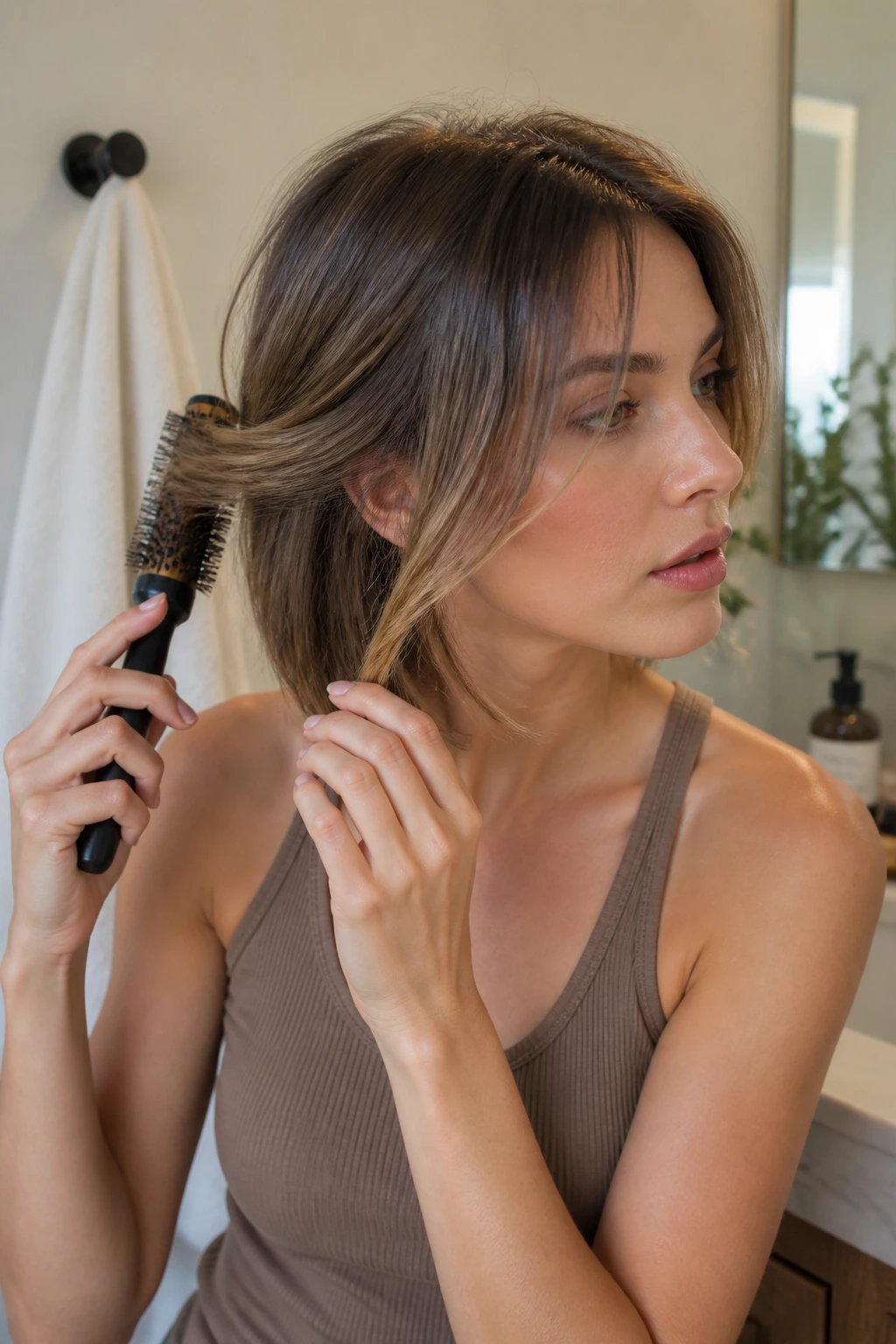
The easiest mistake is trying to make every layered cut behave the same way. A curtain lob wants smoothness. A shag wants lift. A bob with long front slices wants control at the perimeter and a little bend at the front. The cut decides the tool more than the other way around.
Root Lift: Dry the roots first, especially at the crown and around the part. If the top collapses, the face-framing layers lose their job before the rest of the style even starts.
Front Direction: Pull the front pieces forward while they’re damp, then bend them away from the face with a brush or iron. That small motion keeps the line open around the cheeks.
Texture Choice: Fine hair usually likes mousse or a light foam. Thick hair often needs a smoothing cream first, then a touch of spray wax at the ends. Using the wrong product is the fastest route to a flat front or a fuzzy one.
Finish: Stop adding product before the hair feels slick. On short layered hair, a little too much goes a long way and the front pieces can clump together by midday.
Common Mistakes That Flatten the Front

-
Placing the shortest layer too high: If the front starts near the temples instead of the cheekbone or jaw, the cut can balloon out at the sides. Ask for a softer start point.
-
Using heavy cream on fine hair: The front pieces droop, the roots go limp, and the face frame disappears. Swap to mousse or a lightweight volumizer.
-
Skipping root drying: Hair that dries flat at the crown makes every layer look shorter and wider. Dry the roots first, then finish the ends.
-
Over-texturizing with a razor: The ends can look shredded instead of soft, especially on finer hair. Point cutting usually gives a cleaner finish.
-
Ignoring the part: A center part, a deep side part, and an off-center part all change where the layers sit. If the haircut feels off, the part may be the problem, not the cut.
-
Waiting too long for a trim: The front pieces grow into your cheeks and lose their shape faster than the rest of the haircut. They need more attention than the back.
Best Variations for Different Hair Types

Fine-Hair Float: Keep the perimeter blunt and the face-framing layers soft. This gives the cut a thicker edge while still creating movement around the face.
Thick-Hair Air-Release: Add internal layers and longer front pieces so the hair can shed some weight without turning fluffy. This is the version that keeps thick hair from sitting like one heavy shelf.
Curly Coil Frame: Ask for the layers to be cut around the curl pattern, not against it. The front should follow how the curl lands when it dries, which saves you from surprise shrinkage.
Sleek-Line Edit: For straight hair, keep the front longer and use a smoothing cream plus a flat iron bend. The cut looks clean, but not rigid.
Grow-Out Friendly Fringe: Let the front pieces start higher near the brow and taper down to the cheekbones. That gives you more room between trims and a nicer grow-out if you like softer shapes.
Keeping Medium Hair Layers Fresh Between Salon Visits
The front of the haircut will give itself away first when it needs help. Ends start catching on the collar. The bend at the cheekbone disappears. The part stops sitting where it used to. That’s your cue, not the calendar.
A light trim every 6 to 8 weeks keeps the face-framing pieces from swallowing your features. If you wear the cut messier and live in dry shampoo, you can stretch that a bit longer. For polished bobs and lobs, waiting too long makes the front drift past the jaw in a way that changes the whole shape.
At home, refresh the roots before you touch the ends. A little water mist, a dab of leave-in on the front pieces, and a quick round-brush pass can bring the shape back without restyling the full head. I’d avoid cutting the front yourself unless you already know exactly how your hair falls when dry. A tiny mistake near the face shows up from across the room.
Frequently Asked Questions About Medium Hairstyles for Short Hair with Face-Framing Layers
What length counts as “medium” here?
Usually, this means anything from chin length to collarbone length. The cut is still short enough to dry fast, but long enough to let the front layers move around the face instead of sticking out.
Do face-framing layers work on fine hair?
Yes, but the placement matters. Keep the layers soft and longer, and avoid over-thinning the front, or the ends can go wispy fast. A blunt perimeter with light face-framing pieces is usually safer than a heavily razored cut.
Are curtain bangs the same thing as face-framing layers?
Not quite. Curtain bangs are shorter and sit more like fringe; face-framing layers can start lower at the cheekbone or chin and blend into the rest of the hair. They can live together, though, and often do.
How often should I trim the front pieces?
Every 6 to 8 weeks is the sweet spot if you want the shape to stay crisp. If you like a softer grow-out, you can go a little longer, but the face frame will stop looking intentional sooner than the rest of the cut.
Can I air-dry these styles?
Yes, especially the shag, wolf cut, and lived-in lob versions. Use mousse or a light cream, twist the front pieces once or twice while damp, and don’t touch them until they dry.
What if my hair flips out in weird places?
That usually means the ends are sitting on a shoulder line or were blown in different directions. A quick pass with a flat iron or a round brush on the front pieces usually fixes it faster than adding more product.
Which part is better: center or side?
A center part opens the face and works well with curtain-style layers. A side part adds lift and is often better if the crown goes flat or one side of the face frame needs more movement.
Can I make these cuts work if my hair is thick?
Absolutely, but ask for internal weight removal instead of aggressive thinning at the edges. Thick hair needs room to move, yet the front still needs enough length to lie against the face instead of sticking out.
The Cut That Keeps Its Shape
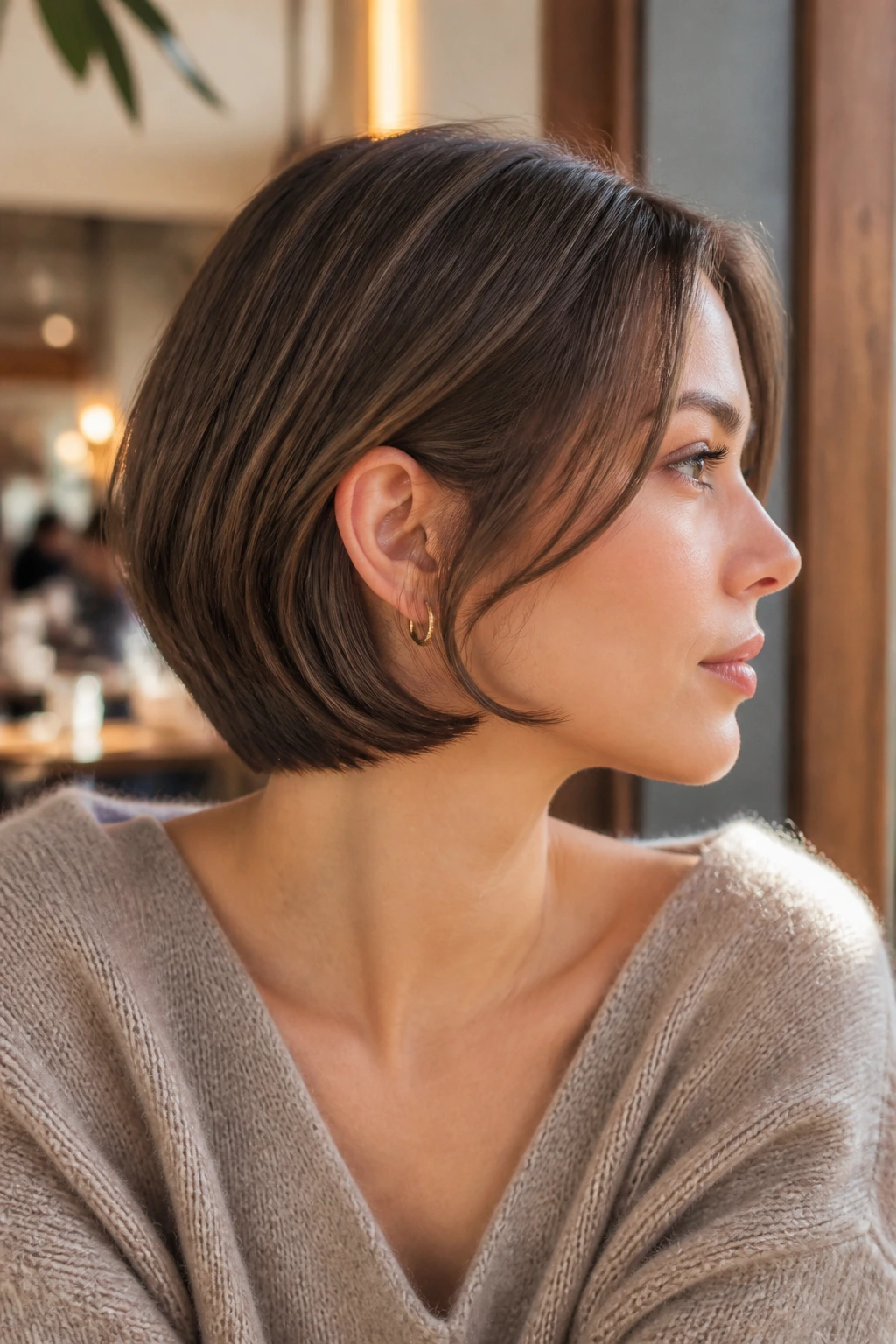
The reason these layered looks stay useful is simple: they keep working after the salon visit ends. The front pieces give you softness, the perimeter gives you structure, and the mix means you can wear the same cut polished, messy, tucked, flipped, or air-dried without losing the shape entirely.
That’s the sweet spot for short hair. Not too precious. Not too plain. A haircut that knows where your cheekbone is and behaves accordingly tends to age well on your head — which is more than most styles can say.