



Medium-length wavy hair has a funny habit: the wrong cut can make it puff at the ends, flatten at the crown, and look like it needs more styling than it ever wanted. The right one fixes most of that in a single appointment.
That is why layered haircuts for medium hair with wavy hair matter so much. You get enough length for movement, enough weight to keep the waves from turning into a frizz halo, and enough shape around the face that the whole cut looks intentional even on the days you air-dry, scrunch once, and call it done.
Wavy hair rarely behaves like one texture from root to tip. The crown may bend once, the mid-lengths may make a soft S, and the ends may kick out in a different direction entirely. Good layers work with that unevenness instead of arguing with it.
Some of the cuts below are polished and office-friendly. Others are shaggy, piecey, and a little unruly in the best way. The point is not to force every wave into the same mold; it’s to give the haircut a shape that still looks good when you tuck one side behind your ear and head out the door.
Why These Cuts Make Wavy Medium Hair Easier to Wear
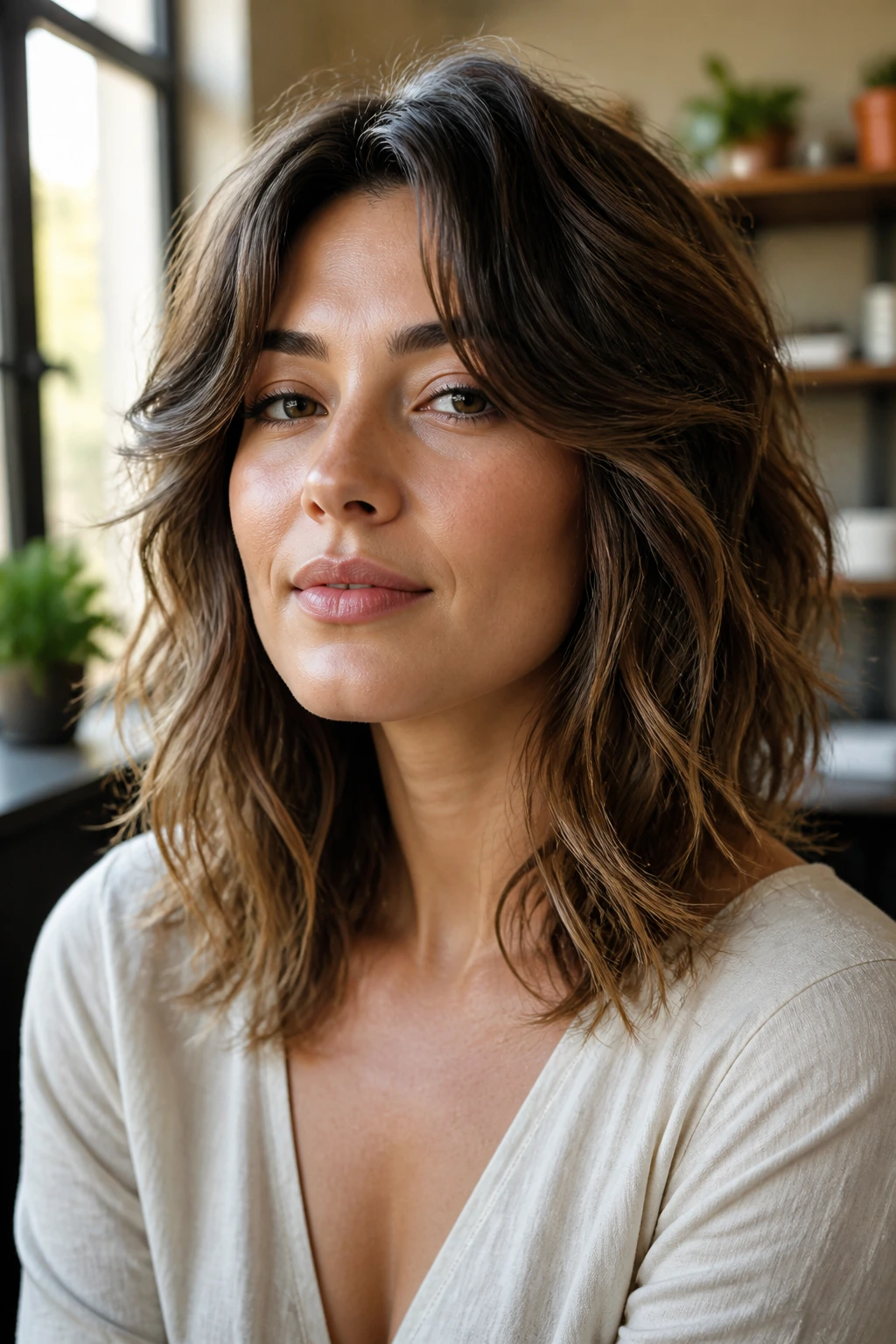
-
They remove weight where waves drag down. Medium hair can go limp fast if the ends are too blunt, and layers keep the bend visible instead of smothered.
-
They give you shape on air-dry days. A good layered cut still looks finished when you skip the iron and use a diffuser for 8 to 12 minutes.
-
They let the face-framing pieces do the work. Cheekbone, jawline, and collarbone layers can change the whole mood of the cut without turning the length into a full shag.
-
They grow out without looking neglected. Soft layers and textured ends blur as they lengthen, so the cut does not go from fresh to awkward in a week.
-
They work with different densities. Fine wavy hair needs lift; thick wavy hair needs weight removed in the right places. Layers can do both, but only if they’re placed with purpose.
-
They make styling faster, not fussier. The right layers reduce the amount of round-brush heroics you need in the morning. That’s the real win.
1. Soft Collarbone Layers with Light Face Framing
Collarbone-length hair is one of those lengths that looks plain on the wrong head and effortless on the right one. With soft layers, it starts moving the second you shake it out.
Why it works
This cut sits right at the point where medium wavy hair still has enough weight to fall, but not so much that the wave pattern gets crushed. The layers are subtle, usually starting below the cheekbones and tapering toward the front, which keeps the silhouette clean.
A collarbone cut also gives you the easy tuck-behind-the-ear effect without losing all your shape. If your waves tend to look wider at the ends than at the roots, this cut corrects that fast.
Good for: anyone who wants movement without a shaggy finish.
Best styling trick: scrunch in a light mousse, then let the front pieces air-dry forward so they frame the face before you move them back.
Watch for: if the layers start too high, this cut stops being soft and starts looking choppy.
Pro tip: ask for the face-framing pieces to graze the cheekbone, then angle down toward the collarbone. That one detail keeps the cut from puffing out near the jaw.
2. Butterfly Layers with Floating Front Pieces
Butterfly layers are the closest thing medium wavy hair has to instant lift. They separate the top from the bottom in a way that makes the hair look lighter, but not thin.
The front pieces are usually cut to swoop away from the face, then blend into longer interior layers. That shape matters. It gives you the illusion of shortness around the crown and length at the ends, which is a neat trick when your hair wants to lie flat in the back.
On wavy hair, butterfly layers work best when the layers are not razor-thin. If they get too wispy, the wave pattern breaks apart and the whole thing looks over-texturized. You want swing, not static.
This cut is especially good if your hair is medium density and you like a blowout look one day, air-dried waves the next. It handles both without looking like two different haircuts.
The sweet spot is around shoulder to collarbone length. Much shorter and the “butterfly” effect gets lost; much longer and the lift disappears.
3. Soft Shag with Piecey Ends
Why does a shag work so well on wavy medium hair? Because it stops pretending the wave pattern should be tidy.
The soft shag uses shorter crown layers, broken-up sides, and ends that look lightly feathered instead of blunt. That keeps the whole cut from falling into a triangle, which is a common problem with medium hair that has real body. The goal is movement that feels a little wild, but still shaped.
How to style it
Use a golf-ball-sized amount of mousse on damp hair, then scrunch from the ends upward. Let the roots dry with a clip or two if you want more lift at the top.
A diffuser helps, but don’t hover and blast the hair until it frizzes. Cup sections in the diffuser, dry on low heat, and stop when the hair is about 80 percent dry. The last bit is where the shape settles.
This is a cut for someone who doesn’t mind texture showing. In fact, texture is the point. If your waves form uneven bends and you’ve spent years trying to flatten them, this is the cut that says, fine, let them bend.
A soft shag looks best when the perimeter is still visible. Keep the edges soft, not shredded, or you’ll lose the clean outline that keeps it wearable.
4. U-Shape Cut with Long Inner Layers
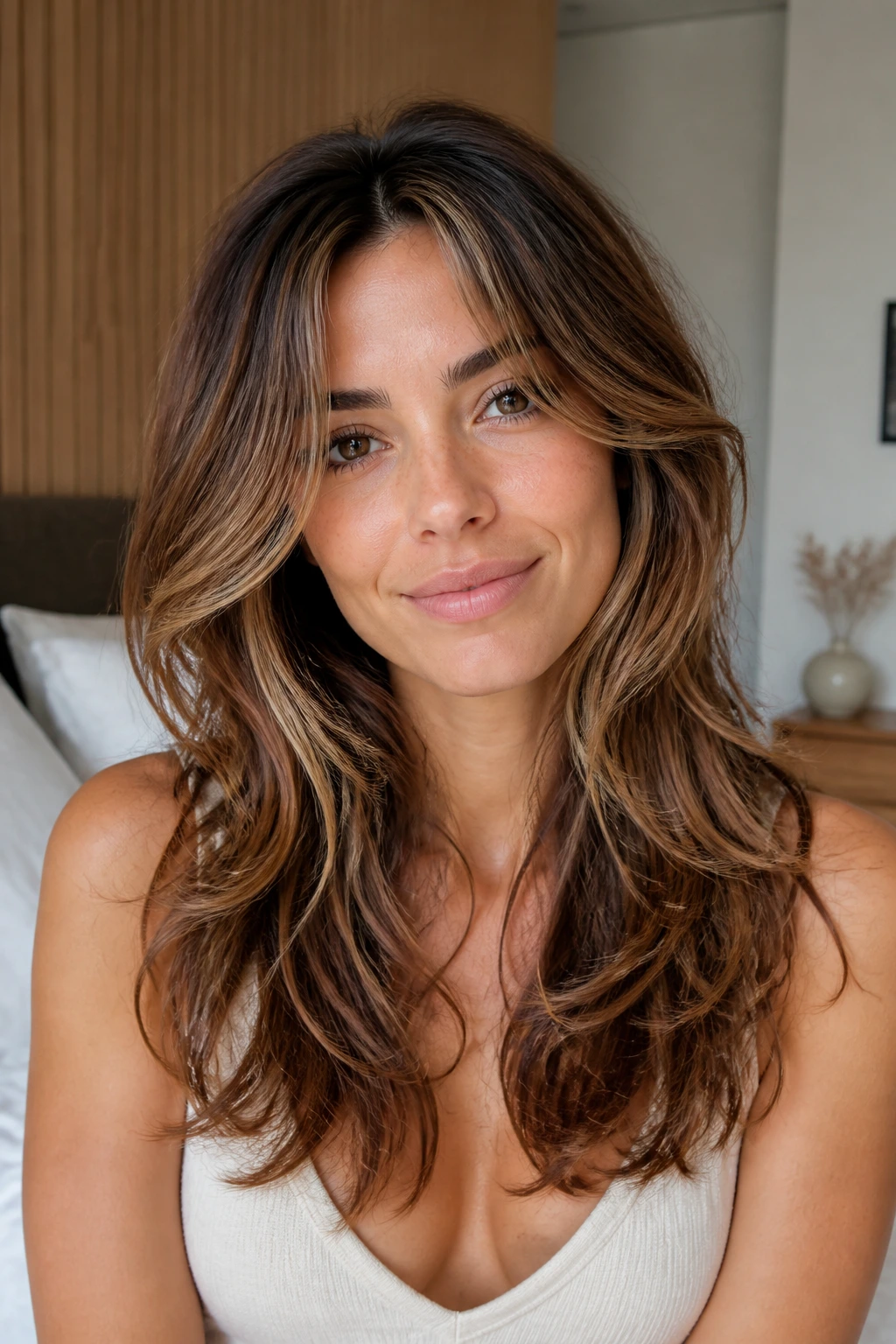
Picture a medium cut that looks full from behind but still moves when you turn your head. That is the U-shape.
The outer line stays rounded instead of blunt, and the inner layers take out weight from underneath. On wavy hair, that matters because a blunt base can make the hair flare at the bottom while the top stays flat. The U-shape gives the hair a cleaner fall.
This cut is a good answer if you want length to stay obvious. It keeps the ends from looking chopped up, which some people love and others hate. The interior layers do the real work, so the outline stays polished.
Key details to ask for
- Keep the longest length near the collarbone or just below it.
- Start the inner layers below the cheekbones.
- Avoid aggressive thinning at the ends.
- Ask for soft blending, not a stacked finish.
The U-shape grows out neatly, too. That’s the underrated part. It doesn’t scream for a trim every few weeks, which makes it one of the calmer choices on this list.
5. Curtain Bangs and Shoulder-Length Layers

Curtain bangs can be fussy on the wrong hair, but on medium wavy hair they often land in that sweet spot between undone and flattering. The trick is keeping them soft enough to split naturally.
The layers around the shoulders do most of the balancing. They prevent the bangs from stealing all the attention and make the cut feel connected instead of bolted on. If the bangs are too short, the wave pattern can spring them up in odd directions. If they are too heavy, they sit like a curtain rod.
This cut looks especially good when the front pieces skim the cheekbones and the longest layers hit right at the shoulders. That combo opens the face without exposing every line of the jaw at once.
It’s a cut with a little personality. Not loud. Just enough.
Ask for the bangs to be cut dry if your stylist knows how to read waves. Wet, they always look longer than they really are, and that can turn into a surprise you did not want.
6. Invisible Layers for Thick Wavy Hair
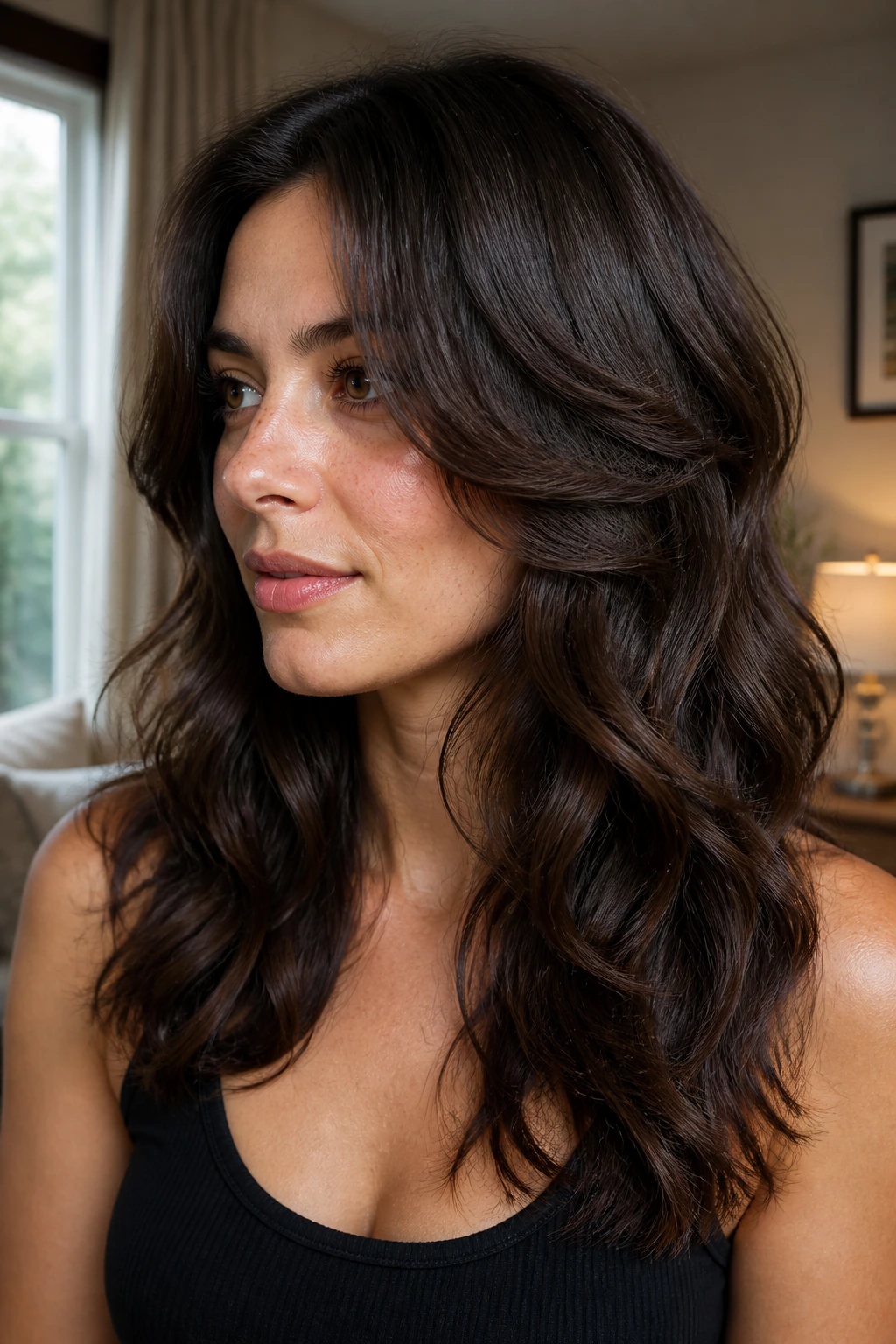
Invisible layers are the quiet fix when thick wavy hair starts acting like a helmet. From the outside, the cut looks clean. Underneath, weight has been removed in small, controlled sections.
Unlike a blunt cut, this version keeps the perimeter smooth while reducing bulk inside the shape. That means the hair still swings, but it doesn’t sit there like a heavy sheet. The wave pattern gets room to move.
This is the cut I’d point to for anyone who likes a finished look but hates obvious choppiness. It works because the layers are hidden. You feel them more than you see them.
It’s also useful if your hair expands in humidity. Less internal weight means less of that mushroom effect around the middle of the head. The cut still needs product—usually a leave-in and a soft-hold cream—but it behaves better before styling starts.
If you have thick waves and keep getting triangular hair, this is one of the smarter fixes.
7. Chin-Skimming Layers That Open the Face

A chin-skimming layer can change the whole geometry of medium wavy hair. One line at the jaw, and suddenly the cut stops pulling everything downward.
These layers are especially useful for rounder faces or softer jawlines, because they create a vertical point of interest right where the face needs it. They also help waves that tend to bend outward at the ends instead of inward. The chin length gives them a place to land.
What to ask for
- Shortest front pieces at or just below the chin.
- Soft blending into the rest of the length.
- No heavy stacking in the back.
- Texturizing only at the ends if needed.
This cut can look chic with a side part or more relaxed with a center part. The center part gives symmetry; the side part gives a little asymmetry and movement. Both work.
If your hair is medium density and your waves are loose, chin-skimming layers can keep the cut from feeling too plain. If your waves are tighter, make sure the stylist does not over-layer the front or you’ll get pieces that spring up too short.
8. Textured Lob with Choppy Ends
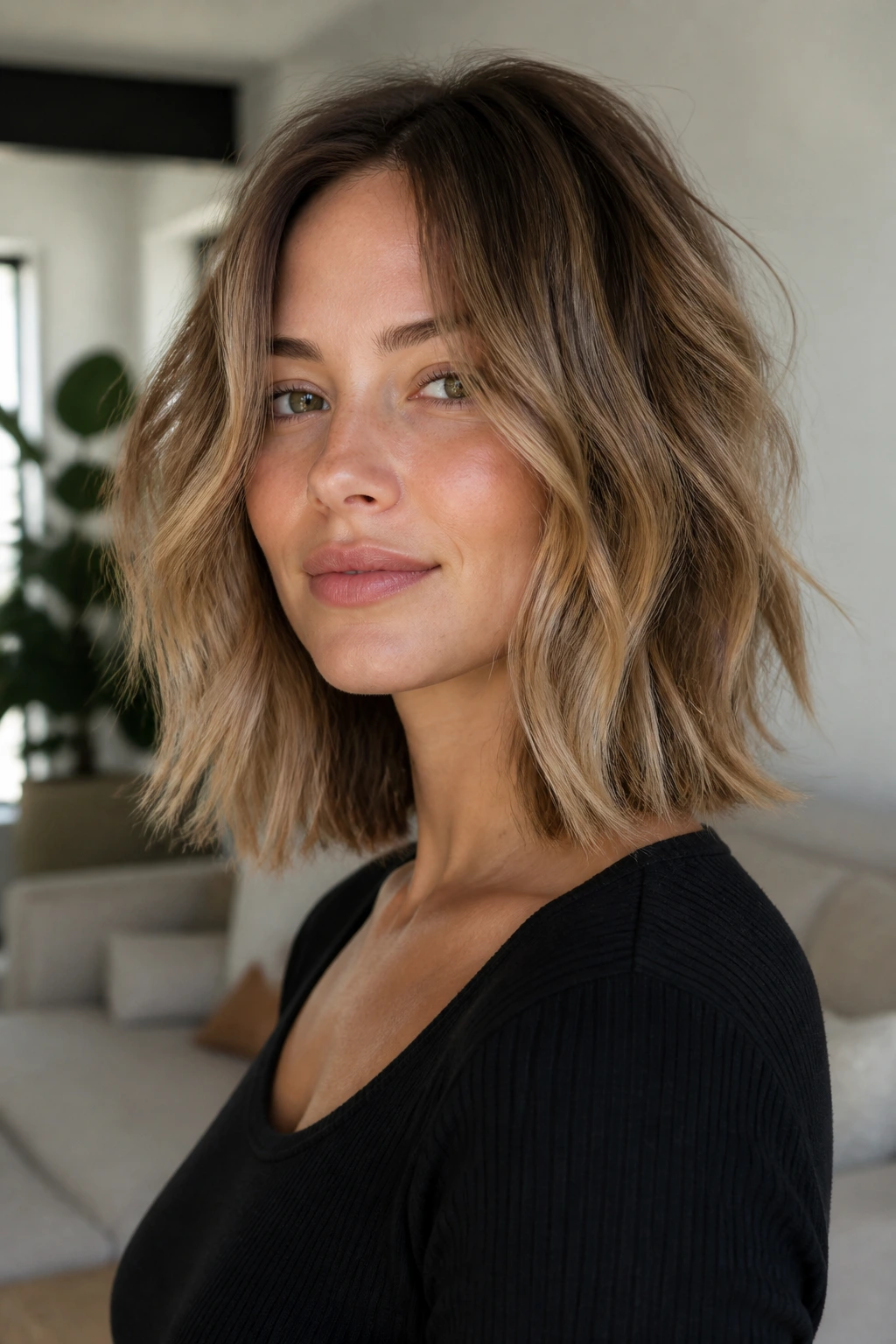
A textured lob is the easiest cut on this list to wear badly and still look decent. That sounds like a backhanded compliment, but it’s not. It means the haircut carries you.
The lob, or long bob, stays around shoulder length and relies on choppy ends to keep the line from becoming stiff. On wavy hair, that slight roughness at the perimeter helps the hair bend naturally instead of flipping in one solid shape.
The best version is not shredded. It’s textured enough to show movement, but not so broken up that the ends look see-through. Think soft edge, not feathery mess.
This cut is a strong choice if you want something modern without leaning into shag territory. It still looks polished at work, but it won’t fight you on weekends when you air-dry and go.
If your hair is fine, keep the texture light. Too much chopping can make the ends look thin. If your hair is dense, choppier ends help the shape feel lighter without sacrificing visual fullness.
9. The Octopus Cut for Bouncy Waves
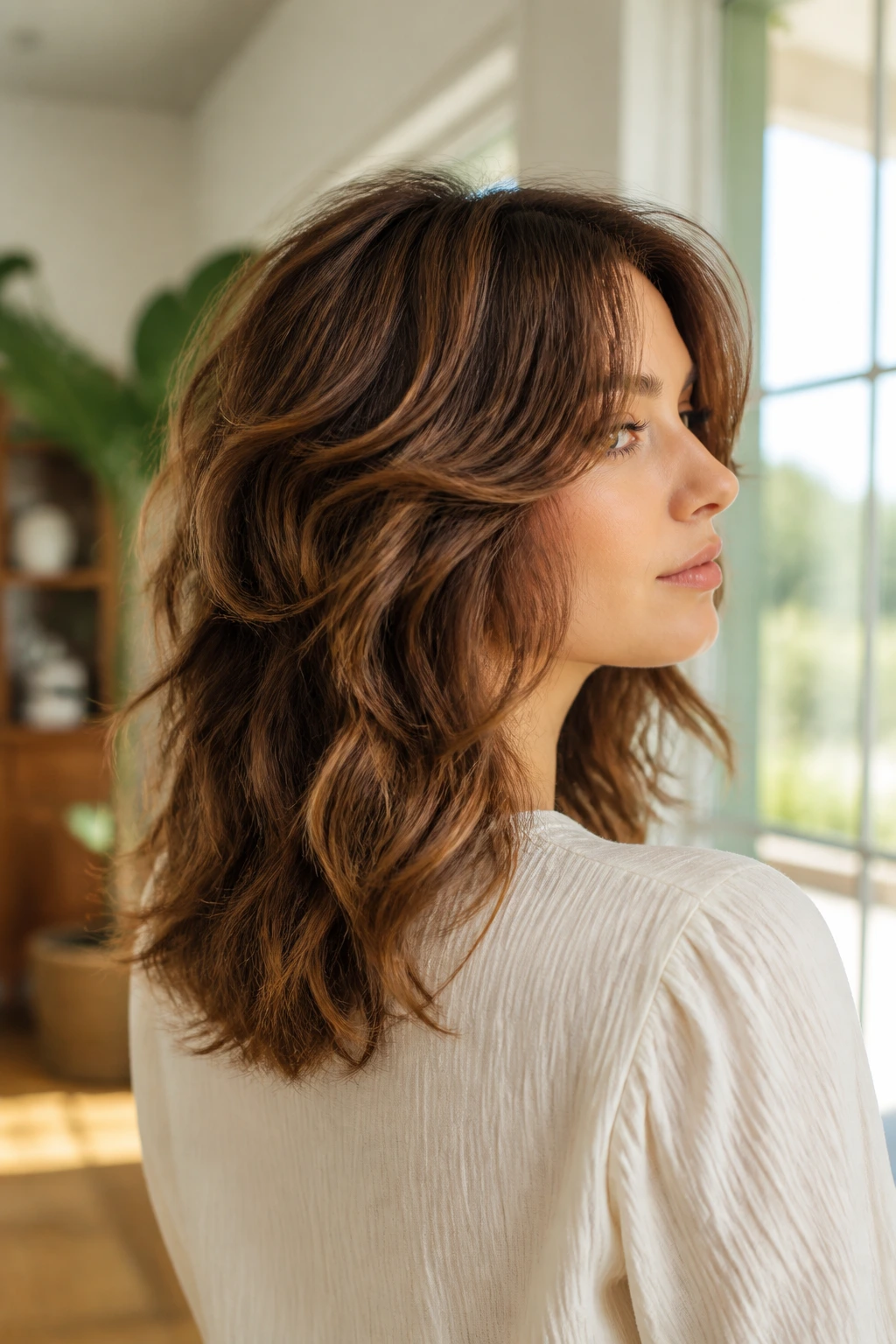
The octopus cut sounds odd until you see what it does. Then the name starts making sense: volume at the top, softer length below, and a rounded shape that hangs like it has actual spring in it.
For medium wavy hair, it gives the crown a lift while preserving the lower length. That matters because waves often collapse near the root while puffing at the bottom. The octopus cut flips that balance.
It’s a bold cut. Not outrageous, just deliberate. The layers are usually shorter around the top and cheek area, then they taper into long, wispy ends. If you want your hair to look airy, this is one of the sharper options.
The catch is maintenance. A sloppy octopus cut looks like overgrown layers in two weeks. A well-done one looks alive. Big difference.
It suits people who like shape and don’t mind styling with a diffuser, a curl cream, and a bit of scrunching. If you are allergic to any routine at all, this may be more shape than you want.
10. Long Razor Layers with Airy Movement

Razor layers can be risky. Done well, they give wavy medium hair a feathered, floating finish. Done badly, they fray the ends and make the cut look tired before it has a chance.
When they work, though, they’re beautiful in motion. The blade softly thins the ends and creates a gentler transition between lengths. On wavy hair, that means less blockiness and more swing.
This cut likes hair that already has a bit of bend. Tightening the edges with a razor can wake up the wave pattern and make the whole shape feel lighter. The hair moves when you move, which is half the point.
I’d ask for razor work only on the interior or very ends if your hair is fine. Thicker waves can handle more. Fine waves, not so much. They can go stringy fast if too much weight is removed.
It’s one of the better cuts for someone who wants a softer, less “done” finish without jumping fully into a shag.
11. Midi Wolf Cut with Tapered Crown

The wolf cut has a reputation for being a bit wild, and honestly, that’s fair. But the midi version is more wearable than the internet makes it sound.
With medium wavy hair, the tapered crown gives lift where you usually need it most, while the longer perimeter keeps the cut from turning into a full-on mullet. That balance is the whole game. You get energy at the top and enough length at the bottom to anchor the shape.
This cut looks best when the waves are visible in layers, not forced into curls. It should feel piecey, slightly messy, and full of movement around the face. If your hair has some natural bend and you want a little edge, this is a good place to land.
Best for
- Hair with medium to high density
- Waves that need crown lift
- People who like texture over polish
The midi wolf cut does need regular shape-ups. The crown can grow out in a way that loses its point fast. Keep that in mind before you fall for the photos.
12. Side-Swept Fringe with Cascading Layers
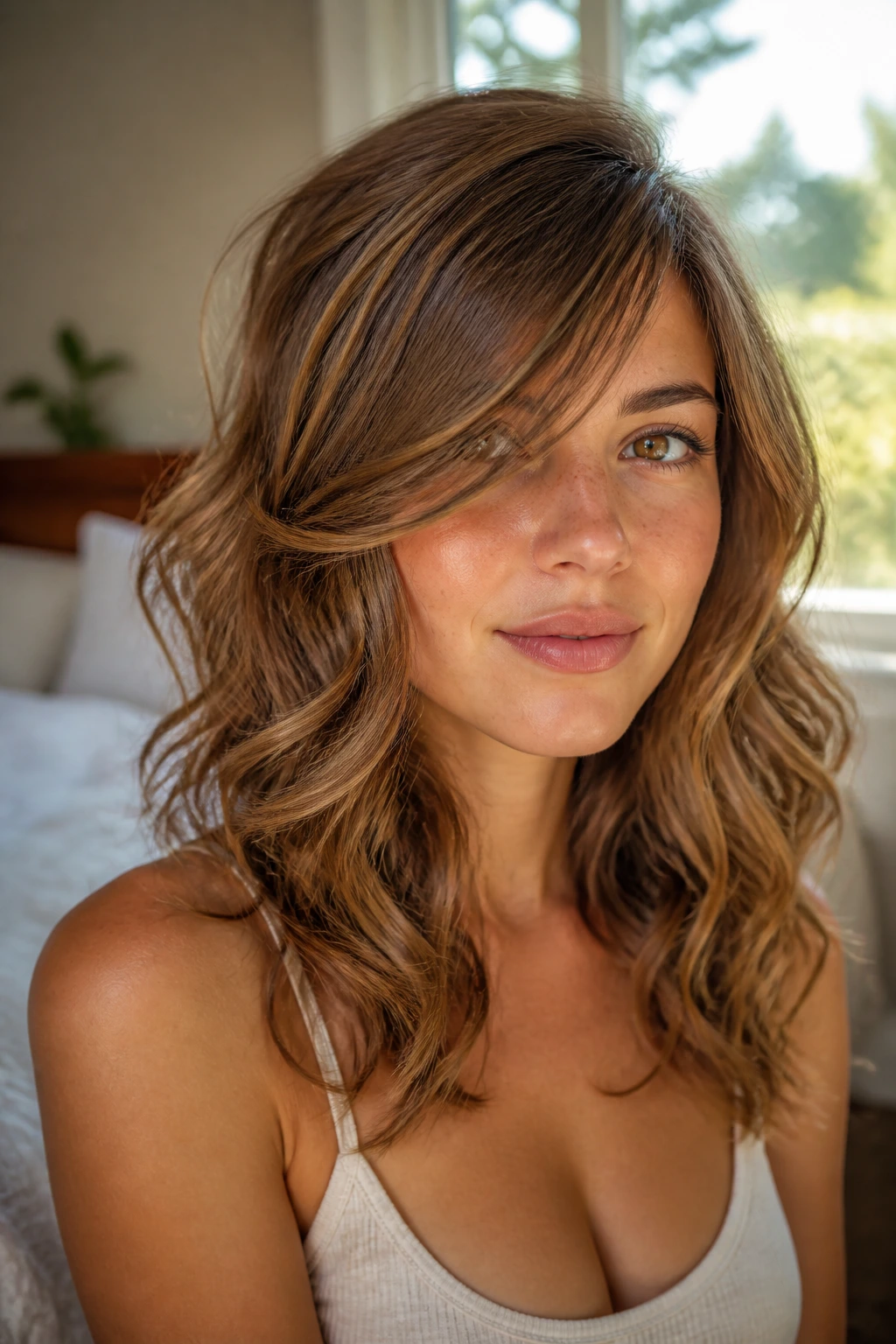
A side-swept fringe is one of those old-school moves that still works because it solves a real problem: flatness at the front. On medium wavy hair, it adds a diagonal line that makes the face look longer and the hair look less symmetrical in a stiff way.
The cascading layers underneath keep the fringe from floating alone. They continue the line down the side of the head and into the rest of the cut. That keeps the style from feeling chopped into separate pieces.
This is a smart choice if a center-part curtain bang feels too obvious. Side-swept fringe gives you face framing with less commitment. It also behaves better on days when your wave pattern is doing something random near the front.
Ask for the fringe to blend into the side layers, not sit on top of them. If those two parts are disconnected, the cut looks dated fast. Blended, it feels smooth and deliberate.
13. Face-Framing Layers Starting at the Cheekbones
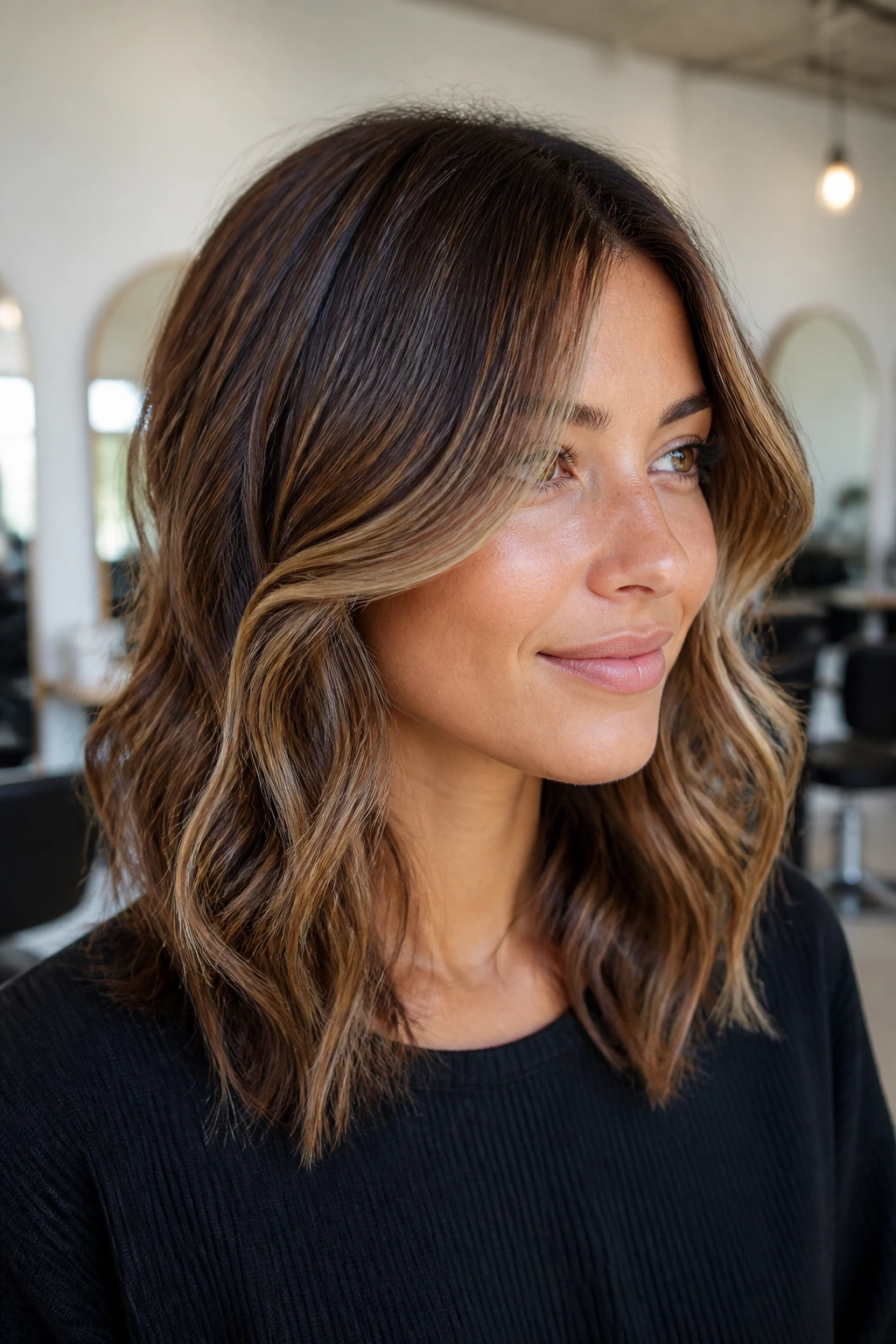
Cheekbone layers are the haircut equivalent of drawing a line where the face naturally wants one. They pull attention upward, which can sharpen softer features and add lift without cutting much length.
This is a favorite of mine for medium wavy hair because it gives definition without changing the whole silhouette. The longest part of the cut can stay medium and easy, while the front pieces do the work around the eyes and cheeks.
How it behaves
The wave pattern usually kicks in right away around the front, which means the face-framing pieces show up even on a lazy styling day. That is rare. A lot of cuts promise it and then disappear the second hair air-dries.
Keep the layers soft if your waves are loose. If they’re stronger, the cheekbone pieces can be a bit more obvious. Either way, the shape should curve inward near the face, not swing out like a curtain rod.
It’s a nice option when you want something visible but not dramatic. The haircut does the talking. Your styling routine does not have to.
14. Blunt Base with Hidden Layers

A blunt base can sound like the opposite of a layered cut, but that’s the point. The hidden layers sit underneath and remove weight without disturbing the clean outer line.
On medium wavy hair, this gives a sleek top layer with movement below. It’s a useful compromise if you like a polished edge but your hair gets too bulky to sit flat all the way around. The outside looks neat; the inside behaves better.
This style is especially good if you wear your hair straight some days and wavy others. The blunt perimeter keeps both versions looking intentional. Hidden layers do the work when the waves are out, and the shape doesn’t fall apart when you smooth it down.
It’s not the most exciting cut on this list. I’ll say that plainly. But it’s one of the most wearable if you want order with a little softness underneath.
Ask for internal layering only around the mid-lengths and lower back sections. Too much removal near the ends defeats the point.
15. Feathered Layers for Fine Wavy Hair
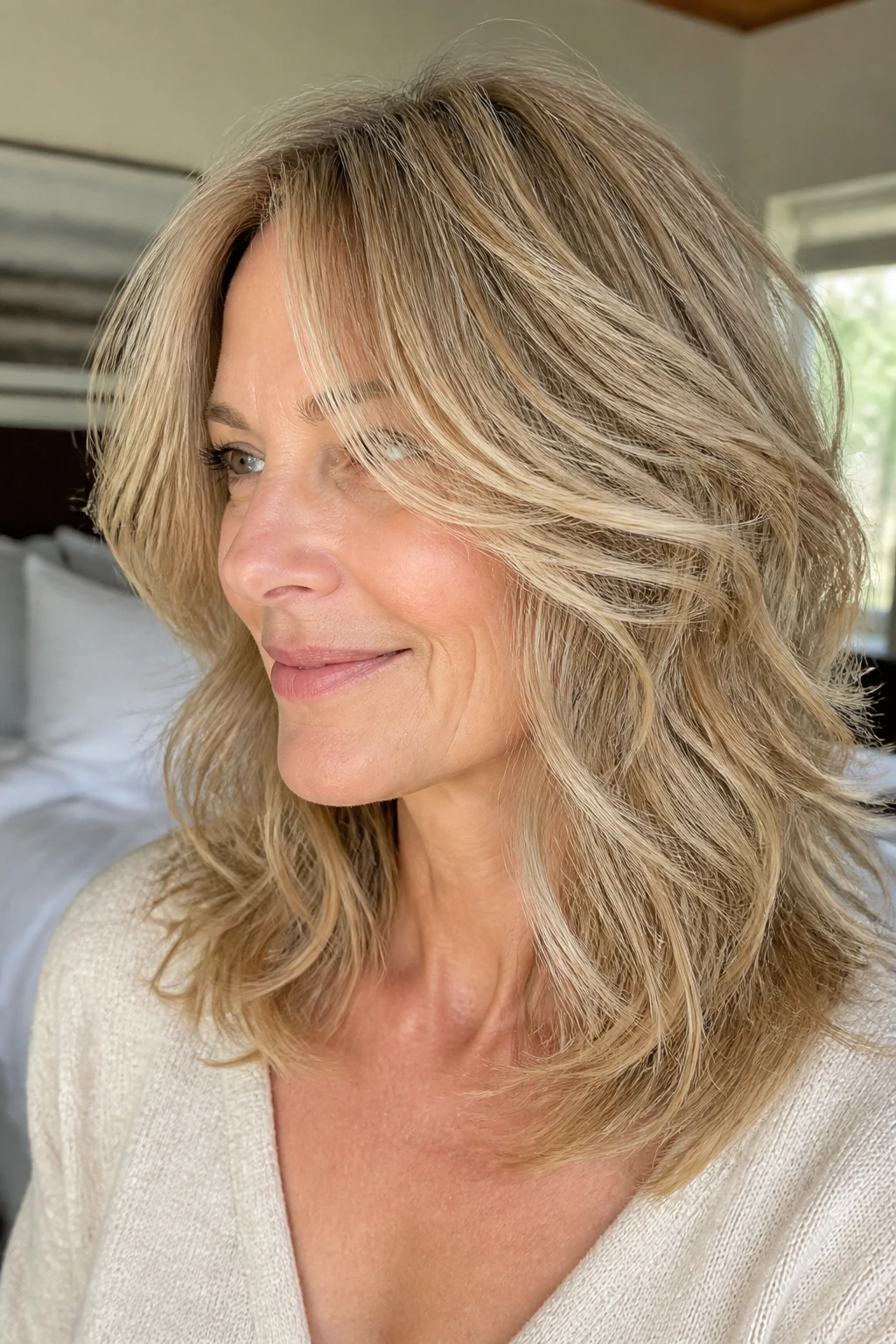
Fine wavy hair needs a careful hand. Heavy layering can strip away the little bit of substance it has, and then the cut starts looking sparse instead of airy.
Feathered layers solve that by keeping the ends light without carving out huge gaps. The pieces taper softly, so the hair still reads as full, just less dense at the edges. That gives fine waves a better chance to show their shape.
The move here is subtlety. Short layers near the crown can help with lift, but only if the rest of the cut keeps enough length to hold the wave. If you go too short on fine hair, the pattern can break apart into fluff.
This cut pairs nicely with a lightweight mousse and a very small amount of cream. Too much product will steal the volume back. Fine wavy hair does not need a heavy hand. It needs restraint.
16. Curved Layers Around the Jawline
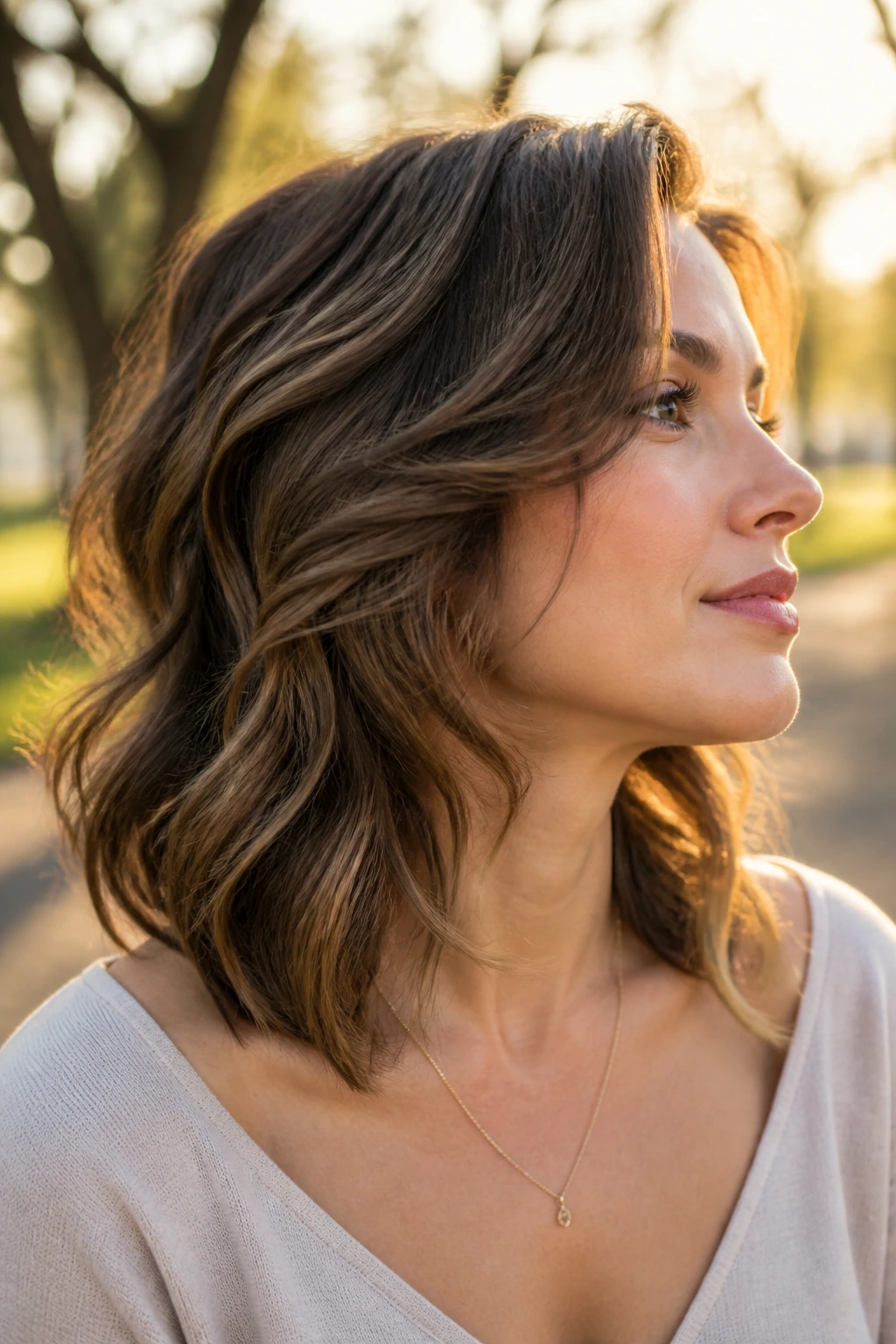
Some cuts are about length. This one is about contour.
Jawline layers create a gentle curve around the lower face, which can sharpen the profile of medium wavy hair without making the ends look chopped. The effect is a little sculpted, but still soft because the waves blur the edges.
It works well if your hair tends to puff near the bottom. The curve redirects that bulk and prevents the shape from widening at the wrong point. That’s why this cut often looks especially good from the side.
Use this if you want the haircut to feel balanced rather than trendy. It doesn’t depend on a dramatic fringe or a big shagginess factor. The shape is doing the heavy lifting.
If the hair is very dense, the jawline curve should be paired with internal weight removal. Otherwise the lower section can still feel too heavy.
17. Shoulder-Grazing Curls-and-Waves Hybrid Cut

Medium hair that sits between waves and loose curls needs a cut that doesn’t insist on one texture. This hybrid shape gives the hair room to do both.
The shoulder-grazing length keeps enough weight to encourage definition, while the layers add room for spring. It’s a useful cut if some sections form looser bends and others curl more tightly. That mix can look messy in the wrong shape. In the right one, it looks full of personality.
This cut tends to perform best when dry-cut or shaped while the hair is in its natural state. Wet cutting can hide how much the wave compresses, and that leads to a surprise shrinkage issue after the first wash.
It’s a quieter version of a curly cut, really. Less roundness, more swing. If your wave pattern has a temper and changes from season to season, this is one of the safer bets.
18. Deep Side Part with Asymmetrical Layers
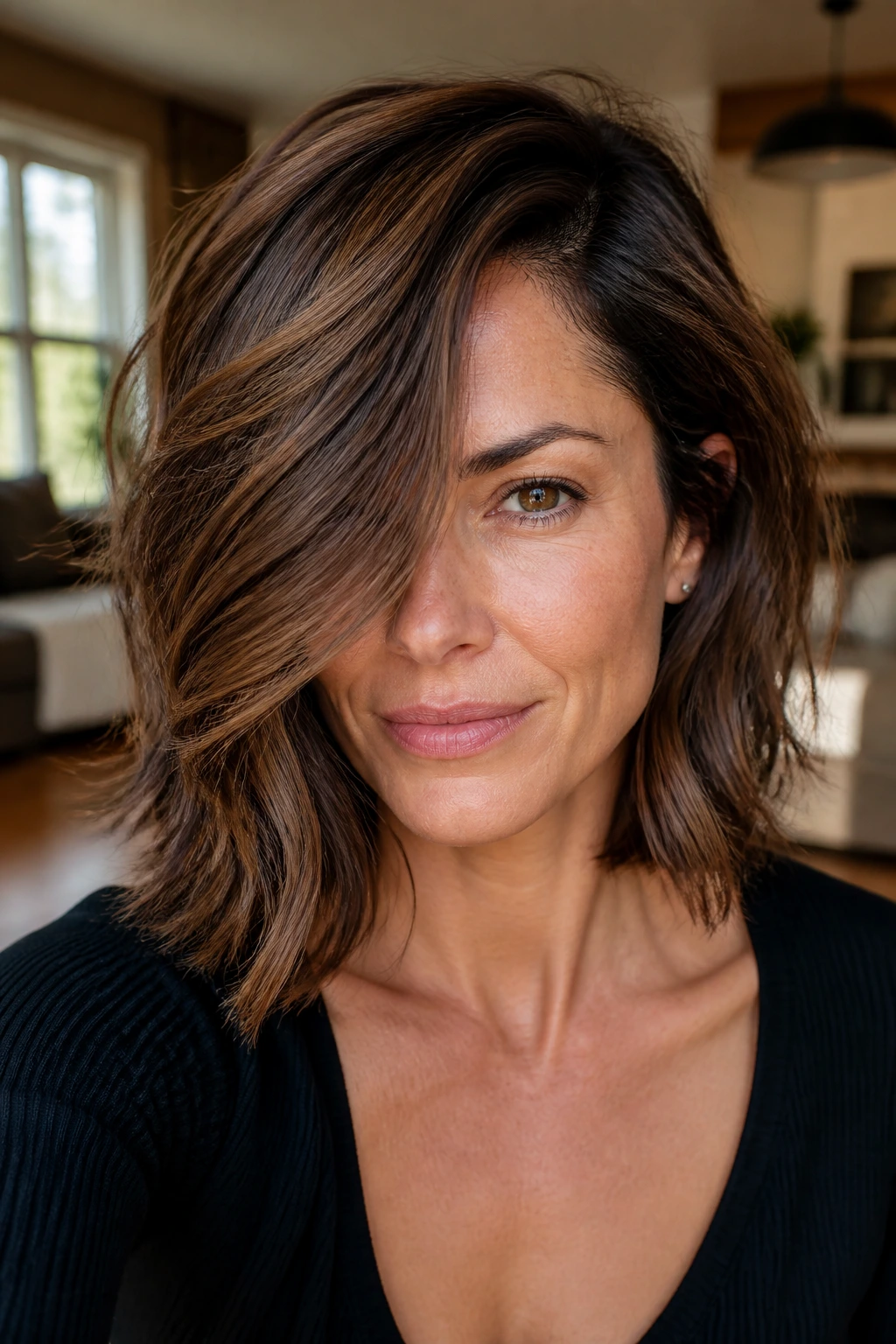
A deep side part can rescue medium wavy hair that sits too evenly and feels flat on top. Add asymmetrical layers, and the result gets a bit more drama without needing a major cut.
The longer side softens the face. The shorter side gives volume near the roots. Together, they make the whole head look more dynamic, which is handy if your waves tend to fall into one boring shape.
What makes it different
The asymmetry should be obvious enough to notice, but not so sharp that it turns into a statement cut. That balance matters. If one side is too much shorter, the style starts fighting your wave pattern instead of working with it.
This is a nice option for people who want to switch parts and refresh the cut without changing the length. Move the part a little, and the volume moves with it.
If you do not like fuss, skip this one. A deep side part likes commitment, even if it’s just a small one.
19. Bouncy Mid-Length Layers with Rounded Ends
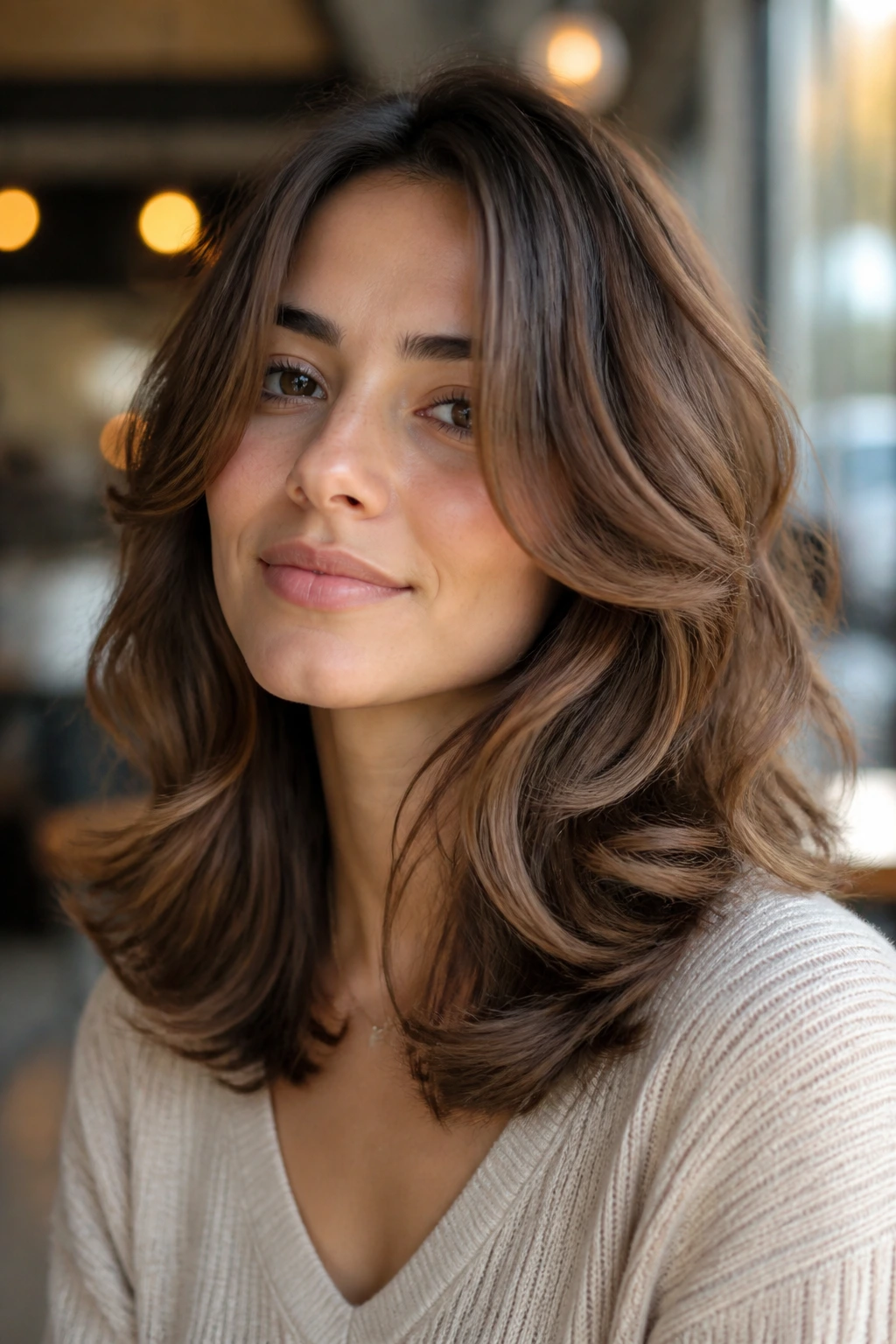
Rounded ends give medium wavy hair a softer finish than blunt-cut points or razor-thin tips. The whole shape reads as full, curved, and a little plush.
That roundness matters if your waves tend to stick out at the corners. Instead of letting the cut form a boxy edge, the layers roll the shape inward. The result is better movement and less “triangle hair,” which has ruined more good wavy cuts than people want to admit.
This is a great in-between style if you want layers but not a shag. The layers are there, but they hide under the shape instead of sitting on top of it. On air-dried hair, the rounded ends keep the finish soft. On blown-out hair, they help the ends curl under a bit.
A tiny round brush or a bend through the ends with a flat iron can sharpen the shape. Use only a slight curve. Too much and the cut starts looking old-fashioned fast.
20. Modern Rachel-Inspired Layers for Waves
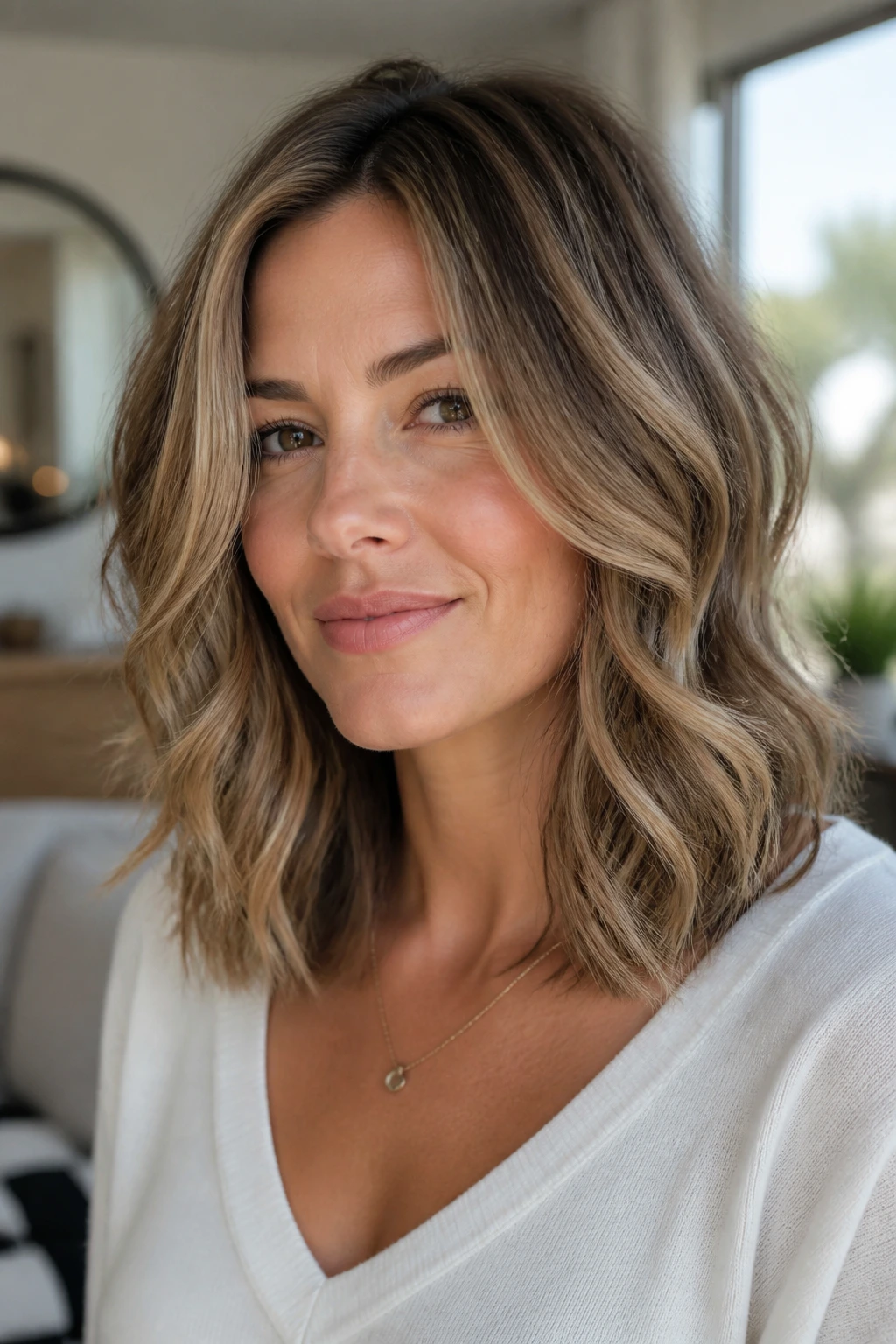
The Rachel influence shows up in layered medium cuts all the time, and for good reason: it gives movement around the face and body through the mids without leaving the hair dead at the bottom.
A modern version keeps the shape softer, less stacked, and more natural on wavy hair. The layers still flip and swing, but they do it in a looser way. That keeps the cut from feeling stuck in a specific decade, which is a mercy.
This works best when the layers are blended enough to let the wave pattern stitch everything together. If the layers are too defined, the haircut starts looking busy. If they are too soft, the shape disappears. You want a middle ground.
Ask for a rounded face frame, visible motion through the mids, and a perimeter that still has enough weight to hold the style. That sentence alone is usually more useful than asking for a reference photo from a hair icon nobody has thought about in years.
21. Tousled Mid-Length Cut with Micro-Texturizing

Micro-texturizing is one of those things that sounds minor until you feel the difference. Tiny adjustments at the ends can change how medium wavy hair separates, lifts, and falls.
This cut keeps the length around the shoulders and uses small internal texture work to stop the hair from clumping. That is useful if your waves tend to stick together in big ropes or puff in random sections. Micro-texturizing breaks that up without making the ends wispy.
How it feels in real life
The hair should move in soft sections, not in one stiff sheet. You’ll notice it most when you shake your head or tuck one side back. The pieces fall differently, but not in a chaotic way.
It’s a useful cut if you like a lived-in finish and don’t want the hair to look freshly straightened all the time. It thrives on a little bend, a little mess, a little separation.
Tell your stylist not to overdo the texturizing shears. A couple of careful snips go farther than a heavy-handed pass.
22. Grown-Out Shag with a Softer Perimeter

A grown-out shag has better manners than a full shag. That may be the nicest way to describe it.
The crown still has lift, the sides still have texture, and the perimeter stays softer and more even. On medium wavy hair, that means you get the character of a shag without the aggressively choppy finish. It’s easier to wear to work, easier to grow out, and less likely to scare you on day one.
This cut suits people who want texture but not a full haircut identity. It reads relaxed instead of styled. The soft perimeter keeps the ends from feeling too shattered, which helps if your waves already have some natural texture and need just a nudge.
If you have a blunt history with your hair and want to ease into layers, this is a good bridge cut. Not too neat. Not too wild.
23. Wispy Layers with Bottleneck Bangs

Bottleneck bangs are the understated cousin of curtain bangs. They start narrow at the center, open slightly around the eyes, and blend into wispy layers that suit medium waves nicely.
The main advantage is softness. The bangs shape the upper face without cutting a hard line across the forehead. The layers then continue that softness through the length, so the whole haircut feels connected.
This is a flattering choice if you like face-framing but hate the maintenance of heavier fringe. The bottleneck shape grows out better than blunt bangs and can be pushed aside when needed.
Be honest about your styling habits before choosing this one. Bottleneck bangs look best when you are willing to blow-dry the front for a few minutes or let them air-dry with a little direction. If you never touch them, they can split in unhelpful places.
24. Layered Lob with a Soft V-Line
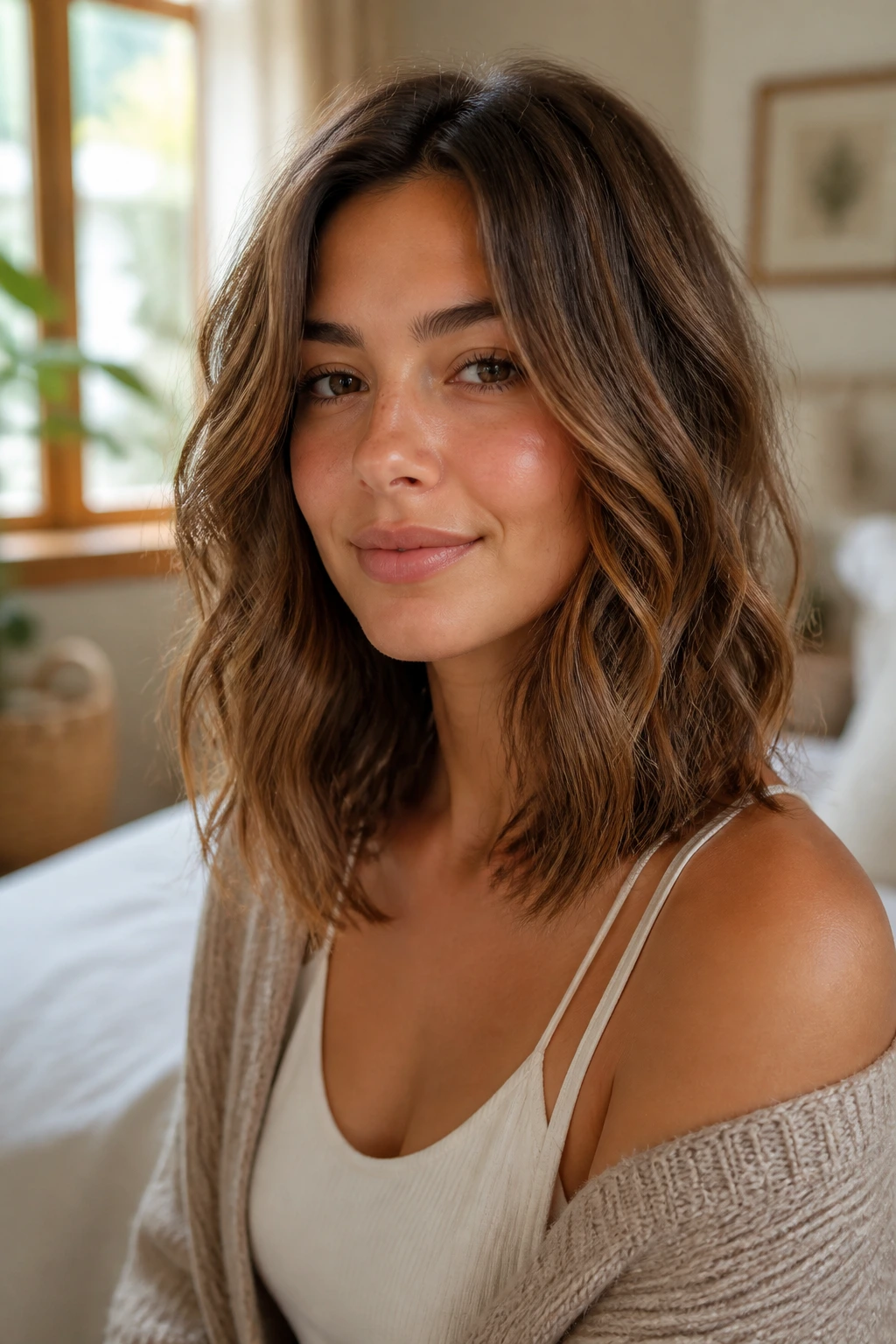
A soft V-line gives medium wavy hair a touch of direction without making the back look pointy or severe. The ends dip slightly longer in the center, and the side layers help the shape taper inward.
This works especially well if you want the cut to feel sleek from the back but still full of movement on the sides. It keeps the silhouette from feeling boxy, which is a common problem when wavy hair is cut all one length at the shoulders.
Best for
- Medium density hair that needs shape
- Waves that flip out at the ends
- People who like a clean outline with soft movement
The V-line should be subtle. A sharp point can look dated fast and gets awkward as it grows. A soft one blends better and keeps the cut easy to maintain.
If you wear one side behind the ear a lot, this shape also keeps the haircut from looking lopsided.
25. Ribbon Layers for Dense Wavy Hair
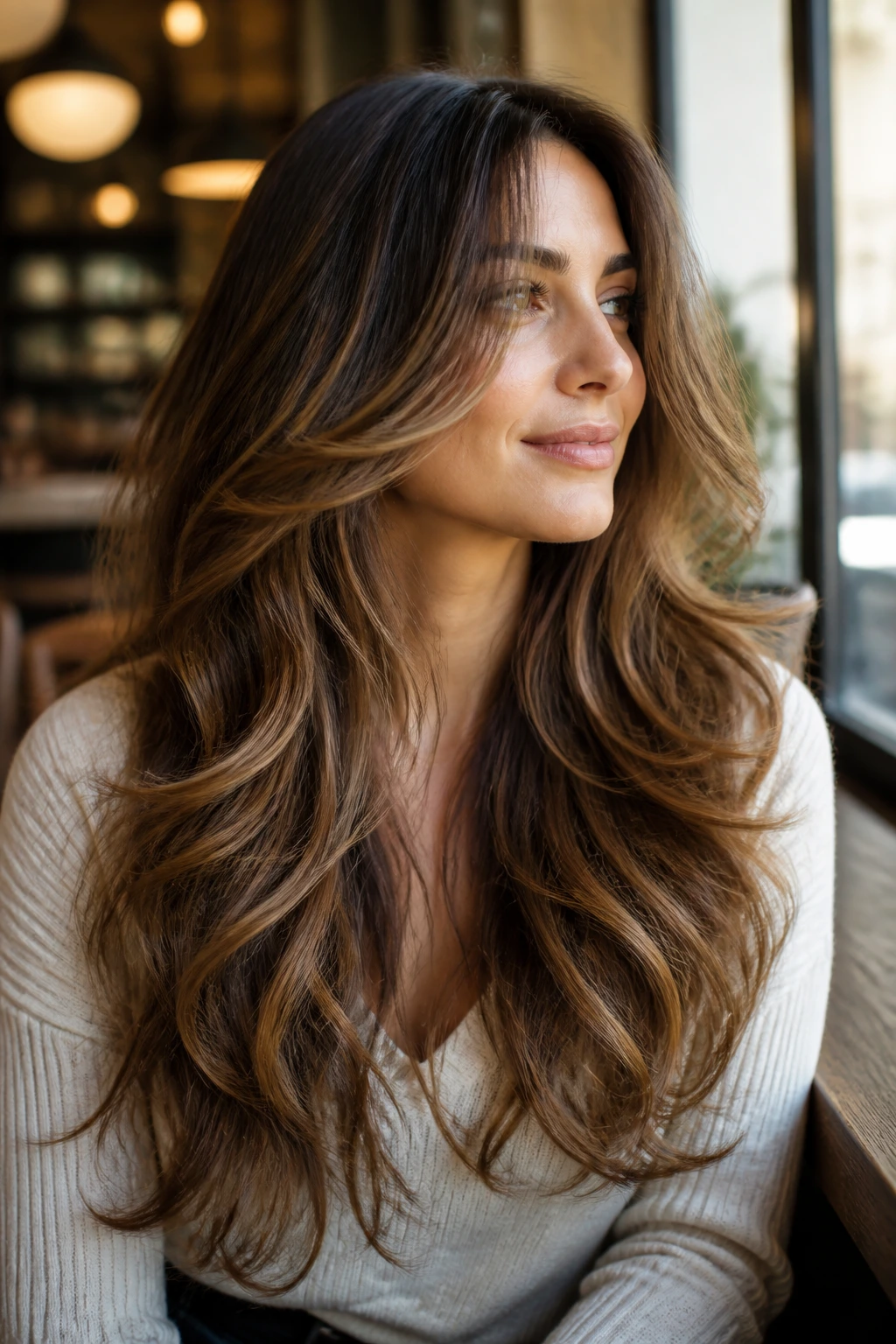
Dense wavy hair often needs a cut that looks lighter without sacrificing the fall of the length. Ribbon layers do that by creating long, flowing sections that separate like strands of ribbon rather than stacking into a block.
The result is movement through the body of the hair, not just at the ends. That matters because dense medium hair can look heavy even when it’s healthy. Ribbon layers spread the weight around so the hair bends instead of bulging.
This is a strong option if your waves are already strong enough to hold shape. The layers will show, the curls will not disappear, and the hair won’t sit there like a thick curtain. It also grows out gracefully, which dense hair tends to appreciate.
Ask for long, narrow sections rather than short chopped layers. The goal is flow. Too much removal and the hair loses the fullness that makes the style work in the first place.
Why Layering Changes the Way Medium Waves Behave
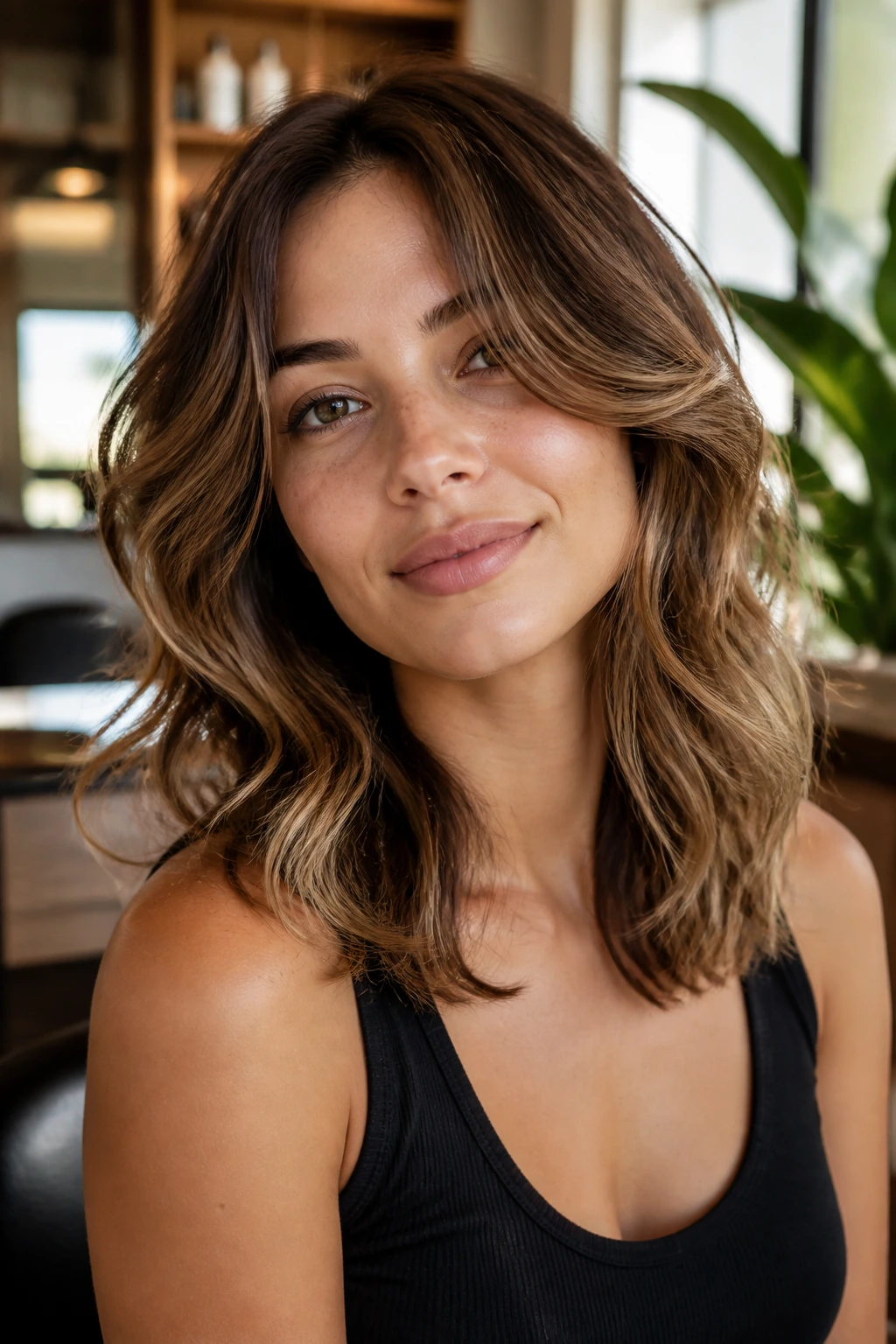
Wavy medium hair is a balancing act. Too blunt, and the hair can look boxy or heavy. Too many short layers, and it can turn frizzy, puffy, or stringy in the same week. The sweet spot lives in between.
Layering works because waves need room to bend at different points. A single length forces the whole head to behave like one sheet, and that almost never fits real hair. When the layers are placed well, the wave pattern appears cleaner, the shape opens up, and the ends stop fighting the rest of the cut.
The part most people miss is weight distribution. Thick wavy hair needs some weight removed from the inside. Fine wavy hair needs the length preserved so it doesn’t collapse. Medium hair sits right in the middle, which is why it can handle a wide range of layering styles if the cut is built with the wave pattern in mind.
Dry cutting, point cutting, and careful face framing all help. So does patience. Wavy hair tells the truth when it’s dry, not when it’s soaked and stretched by gravity.
The Tools and Products That Actually Help
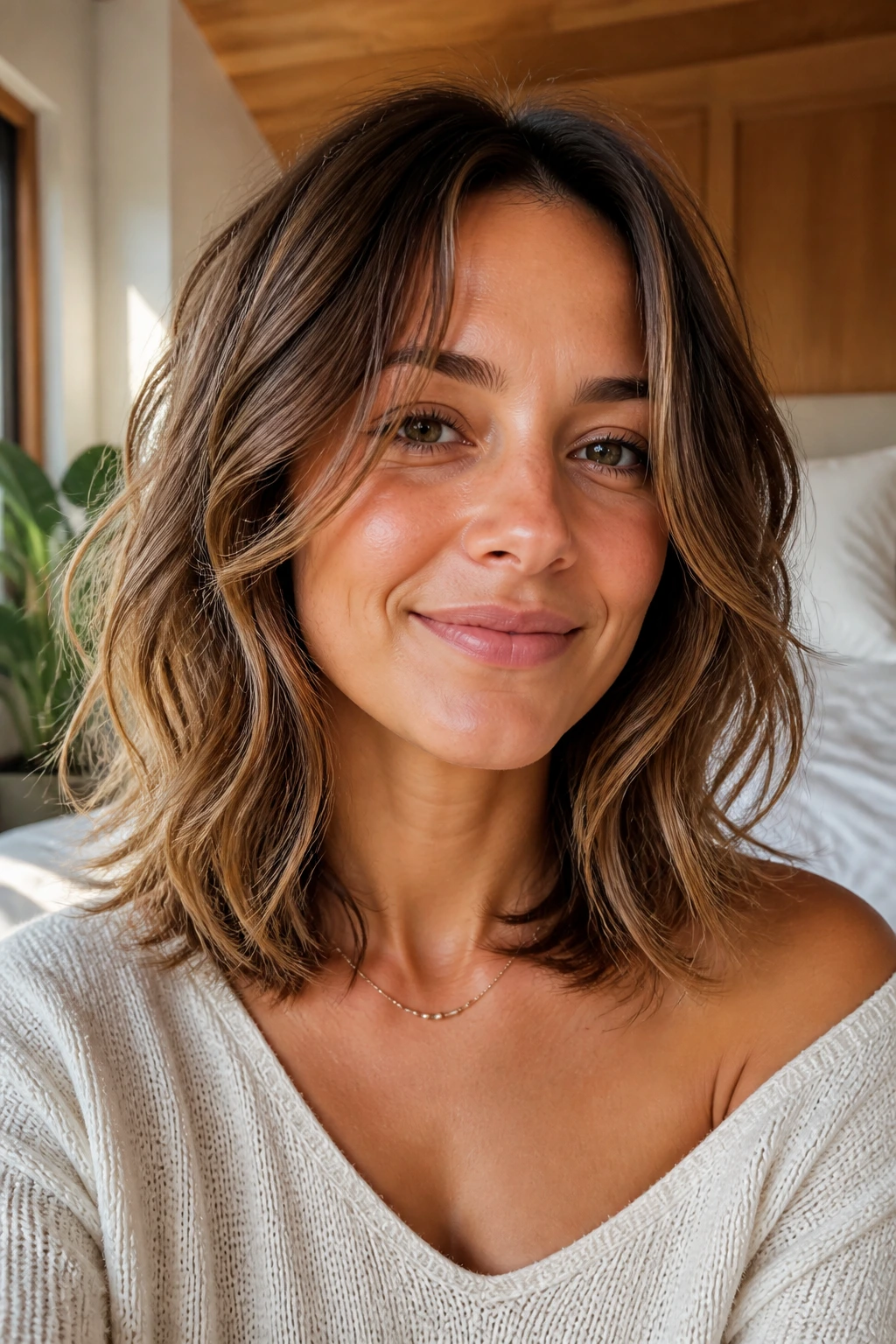
You do not need a dresser full of miracle products. You need a few things that match the way wavy hair behaves.
- Wide-tooth comb: Use it on wet hair after conditioner to detangle without pulling the wave apart.
- Microfiber towel or T-shirt: A rough bath towel roughs up the cuticle and feeds frizz. A softer cloth is gentler.
- Mousse or foam: Gives lift at the roots and holds the shape of medium waves without making them crunchy.
- Curl cream or lightweight leave-in: Helps define the wave, especially on dry ends or porous hair.
- Diffuser attachment: Useful if you want volume without blasting the pattern loose.
- Sectioning clips: Good for air-drying the front pieces in the direction you want them to fall.
- Hair shears or salon-grade trimming scissors: If you trim fringe or tiny pieces at home, dull scissors will chew up the ends.
- Heat protectant: If you smooth the front or bend the ends with a hot tool, use it. Frizz is annoying; heat damage is worse.
One thing I’ll say bluntly: a lot of people buy a heavy cream because it sounds nourishing, then wonder why their waves collapse. If your hair is medium and wavy, start lighter than you think. You can always add more.
How to Ask for the Right Layered Cut at the Salon
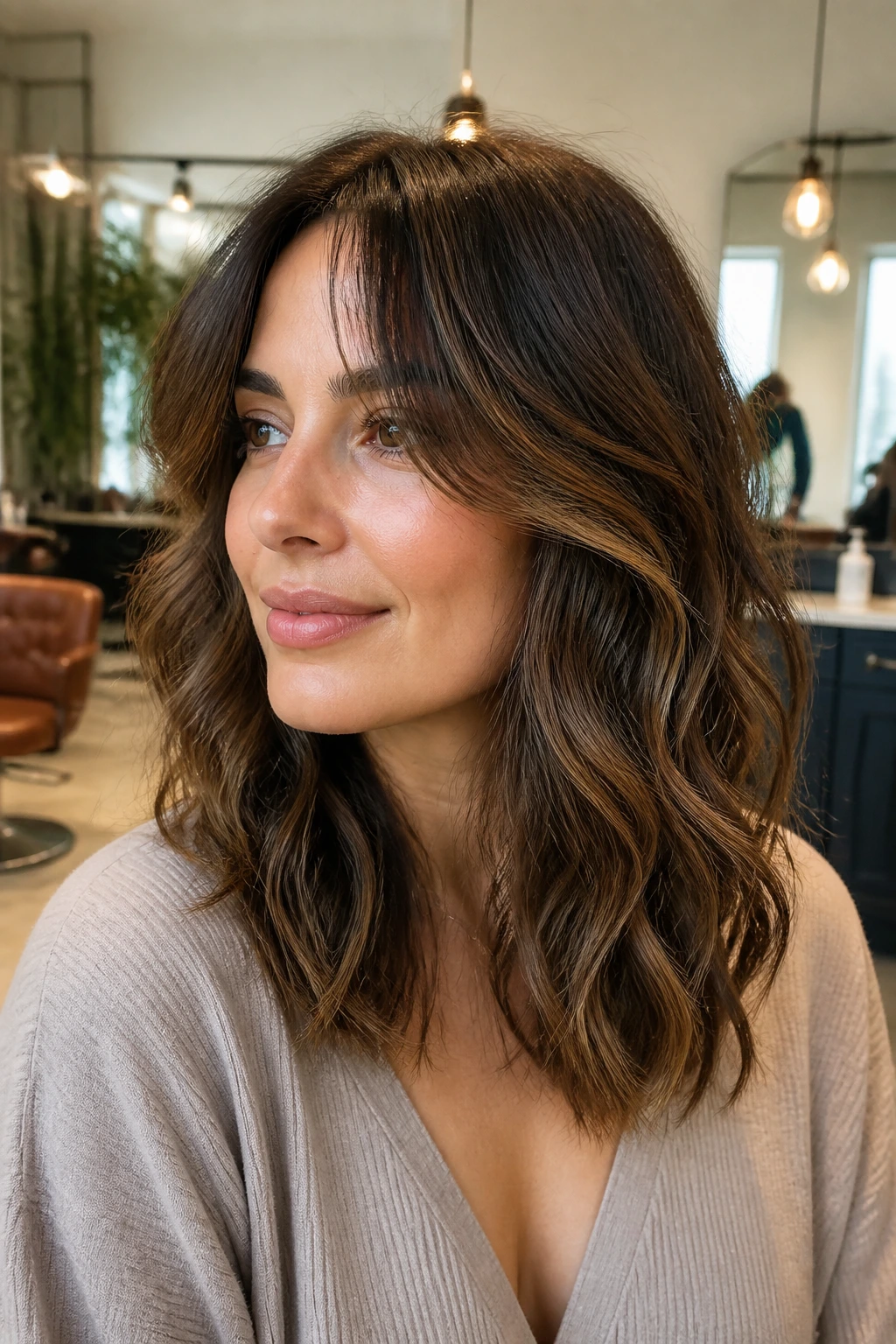
A good haircut starts before the first snip. If you walk in and say “layers,” you’ll get whatever the stylist thinks you mean. That is too vague for wavy hair.
Bring a photo, but bring words too. Say where you want the longest length to sit—collarbone, shoulders, or just below—and point to the shortest front pieces you’d like. Mention whether you air-dry, diffuse, or use a blowout brush, because that changes how the layers should be placed.
Ask about dry cutting if your hair is very wavy or changes shape a lot when it dries. Wet hair stretches, and waves lie about their true length. Some stylists cut in sections while the hair is dry, then refine it damp. That can be a good approach when the wave pattern is strong and uneven.
Be specific about what you do not want. If you hate triangle shape, say that. If you hate pieces that flip outward at the jaw, say that too. Stylists can work around those issues, but only if they know what has been bothering you.
One practical tip: tell them how much styling time you’re willing to spend. Five minutes and a diffuser are a different world from twenty minutes with a round brush.
Styling Medium Wavy Layers Without Fighting the Hair
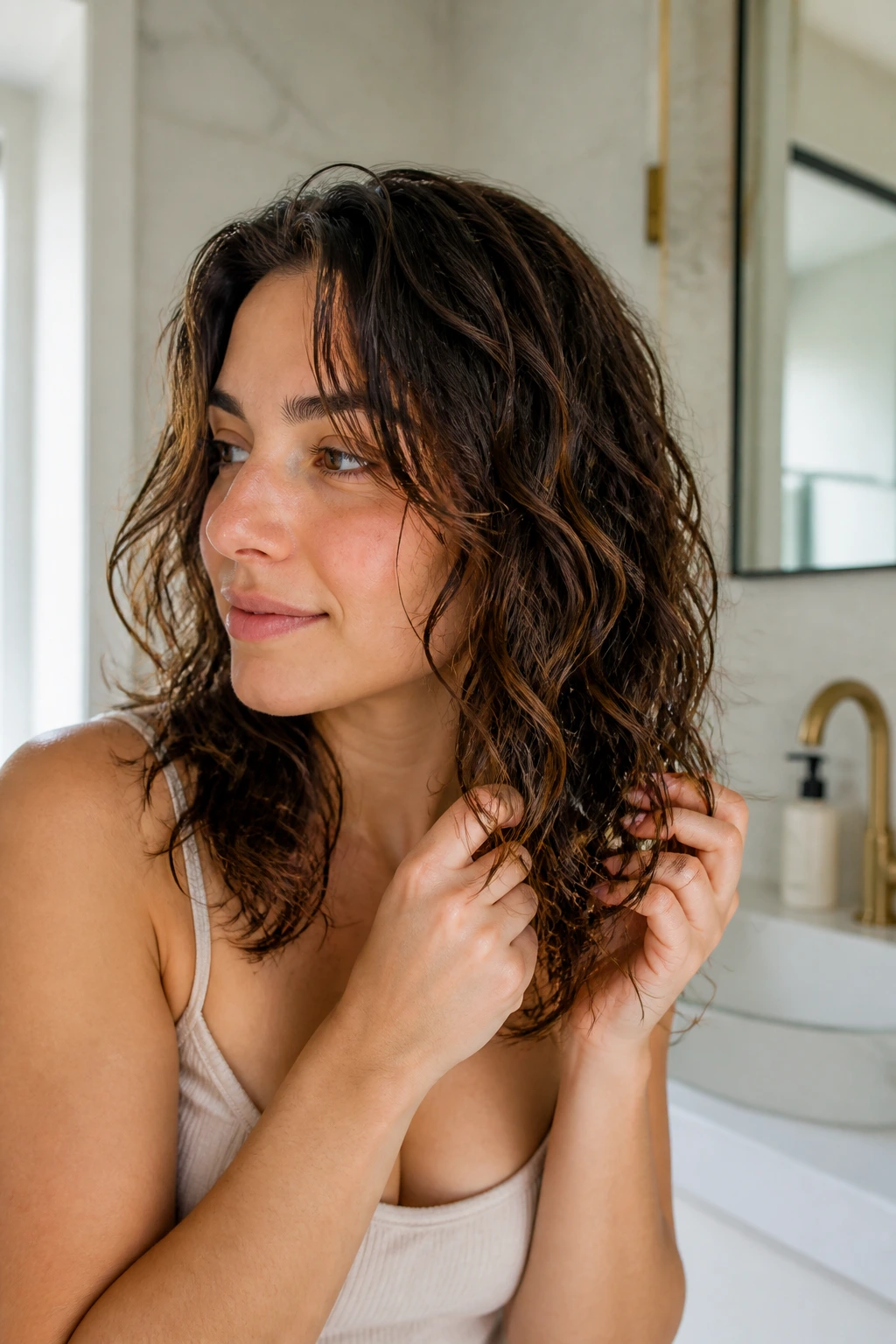
The best styling routine for layered wavy hair is the one you can repeat without cursing at the mirror.
Air-dry route
Work in a light leave-in and a small amount of mousse on damp hair. Scrunch upward with your hands, then clip the front pieces where you want them to fall. Let the hair dry without touching it too much. Once it’s set, break the cast if the product feels stiff.
Diffuse route
Use low heat and medium airflow. Cup the ends in the diffuser and hold sections still for 10 to 15 seconds at a time. Don’t shake the hair around like you’re trying to wake it up. That only creates frizz.
Blowout route
If you prefer a smoother finish, use a round brush only on the front and the top layers. Leave the ends a little bendy. That contrast makes layered cuts look richer and less helmet-like.
The mistake most people make is trying to force every wave into perfect symmetry. Wavy hair looks better with a little mismatch. One piece bends a touch more. One side tucks back. That’s normal. That’s also what keeps the haircut from looking fake.
How to Keep the Shape Between Trims
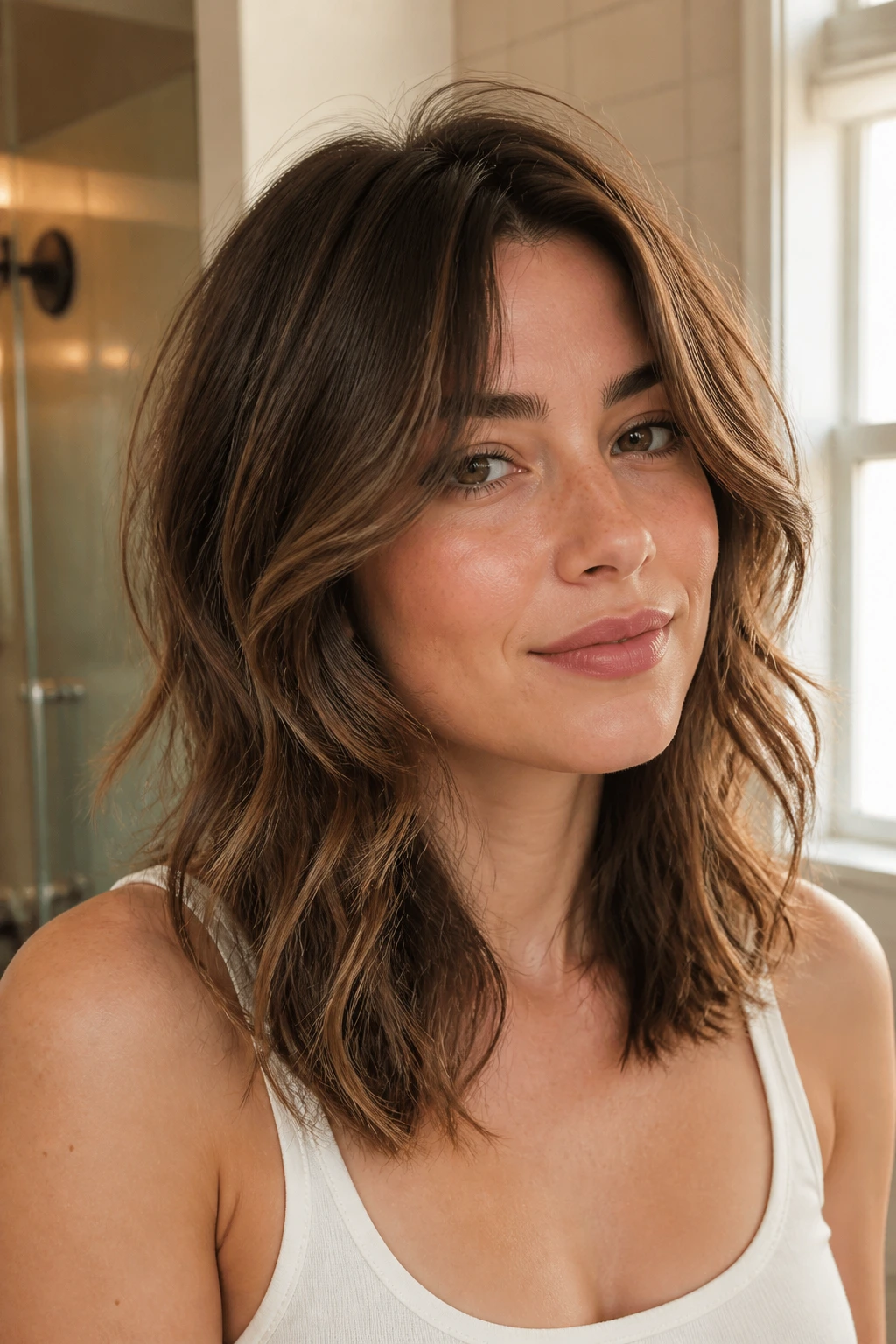
Medium wavy layers need maintenance, but not the kind that eats your calendar. A trim every 8 to 12 weeks usually keeps the shape readable, especially if the cut has bangs or face-framing pieces.
Fringe and cheekbone layers tend to show the first signs of wear. They grow into the eyes, then into the cheeks, and suddenly the cut loses its crispness. A small dusting trim can fix that without taking off much length.
Sleep also matters. A loose silk or satin bonnet, or even a satin pillowcase, can keep the wave pattern from getting crushed. If your hair wakes up flattened at the crown, try clipping the top section very loosely at night so it does not get pressed into the pillow.
If the hair starts to frizz between washes, refresh the mids with a water-and-conditioner mix or a tiny bit of leave-in emulsified in your palms. Go light. Heavy refreshers usually make the layers clump in strange places.
The thing to watch is grow-out around the face. If the front pieces get too long, the whole cut can fall flat even if the back still looks fine.
Common Mistakes That Flatten Wavy Layers
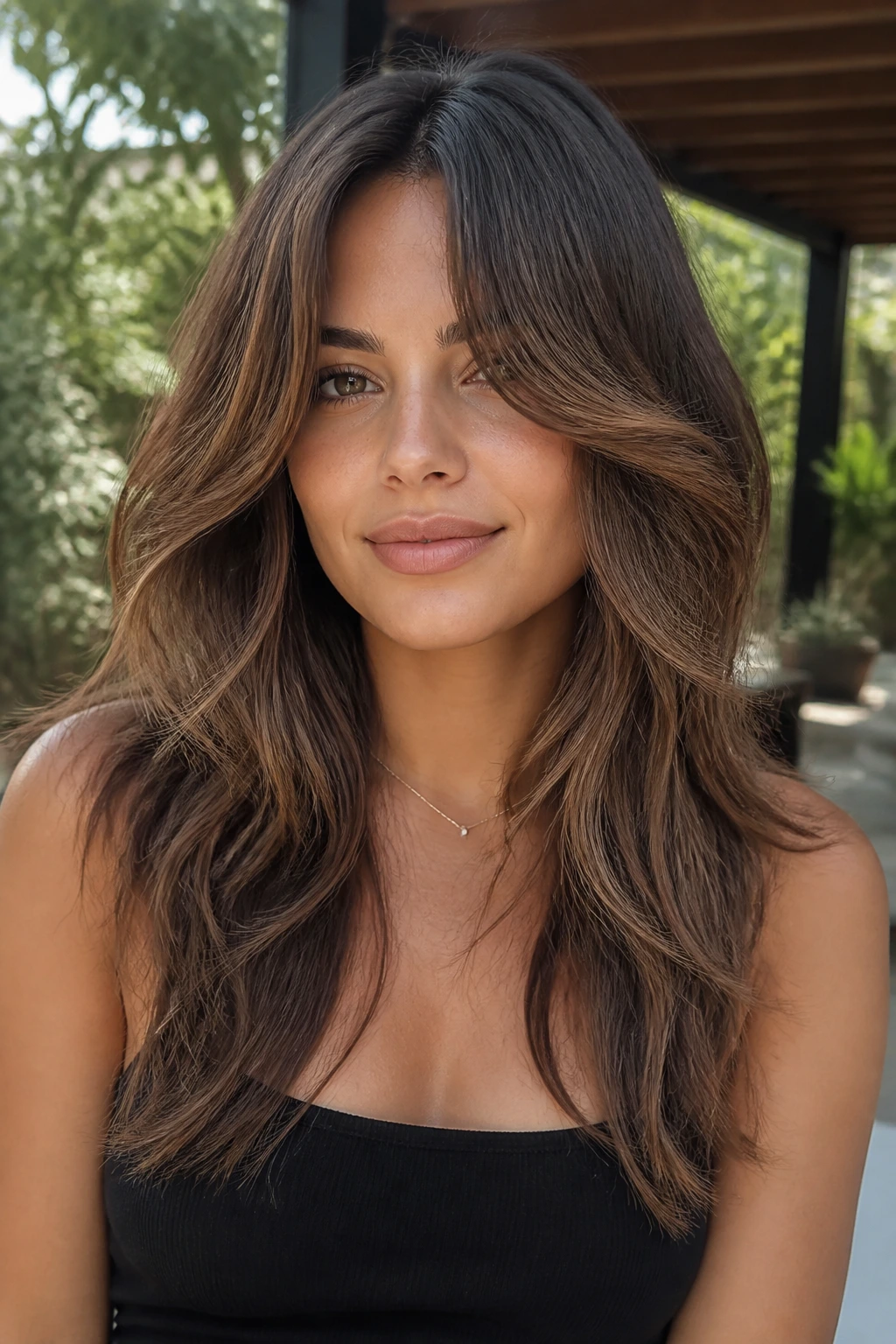
Layered wavy hair looks easy until a few small mistakes stack up. Then it starts acting weird.
-
Over-thinning the ends: The cut looks airy in the chair, then stringy and weak after the first wash. Ask for soft removal, not aggressive texturizing, unless your hair is very dense.
-
Cutting waves too wet: Wet hair stretches, and the layers often end up shorter than planned. On wavy textures, that can mean a surprise bounce once it dries.
-
Starting layers too high: This creates puff at the crown and a fuzzy outline. The result is a triangle, which nobody asked for.
-
Using too much heavy cream or oil: The layers collapse, especially around the face. A dime-size amount can be enough for medium wavy hair.
-
Ignoring the part: A cut that looks balanced with one part can fall apart with another. If you switch sides often, tell your stylist before the cut.
-
Skipping trims too long: Layers do not vanish, but their shape does. The front pieces grow into nothing, then the cut loses its structure.
Each of these has a fix, and most of them are about restraint. Wavy hair usually needs less aggression, not more.
How to Adjust the Cut for Face Shape and Density

The same layered haircut can look totally different depending on where the layers sit and how much hair you have.
For round faces
Use longer face-framing pieces that start near the cheekbones or just below the chin. That adds vertical shape and keeps the cut from widening at the cheek area.
For long faces
Curtain bangs, side-swept fringe, or shorter front layers can bring the eye level down a bit. You want some softness near the forehead so the face does not look stretched.
For fine hair
Choose lighter layering with a blunt or softly rounded perimeter. Fine waves need body left in place, not sliced away in chunks.
For thick hair
Internal layers, invisible layers, and ribbon layers can remove bulk without wrecking the outline. Thick waves usually need shape control more than drama.
For dense, coarse waves
Keep the base strong and remove weight in measured sections. A cut that looks too soft in the chair can swell up later if the bulk isn’t managed.
The secret is not one perfect haircut. It’s the right version of the haircut for the amount of hair on your head.
Frequently Asked Questions About Layered Haircuts for Medium Hair with Wavy Hair

Will layers make my wavy hair look thinner?
They can, if the layers are too aggressive or start too high. A soft layered cut should create movement and reduce bulk without exposing too much scalp or making the ends look see-through.
Should wavy medium hair be cut wet or dry?
Dry or lightly damp cutting often works better when the wave pattern is strong, because it shows how the hair really falls. Wet cutting is fine for some people, but it can hide shrinkage and lead to surprise shortness near the front.
Are curtain bangs hard to maintain on wavy hair?
They need more attention than no fringe, but not as much as blunt bangs. A quick round-brush pass or a minute or two with a diffuser usually keeps them in line, and they grow out more gracefully than straight-across bangs.
What if my waves are uneven from side to side?
That’s normal, and the cut should account for it. Ask your stylist to look at how each side dries separately and to balance the layers based on your natural part, not a theoretical center line.
Can I still wear my hair straight with a layered wavy cut?
Yes, and the right cut should still look good smoothed out. Soft layers, invisible layers, and blunt-base cuts tend to behave best when you straighten them, because the outline stays clean.
How often should I trim layered medium hair?
Most layered cuts stay in shape with a trim every 8 to 12 weeks. Bangs or short face-framing pieces may need a little cleanup sooner if they start dropping into your eyes.
What if my hair gets frizzy after layering?
The cut may be fine; the styling routine may need a reset. Try less product, gentler drying, and a cut that removes weight from the inside instead of shredding the ends. Frizz often comes from over-thinning, rough towel drying, or too much heat.
Which layered cut is best for thick wavy hair?
Invisible layers, ribbon layers, and a softly shaped U-cut usually work well. They take out bulk without turning the hair into flyaway pieces that stick out at odd angles.
Can medium wavy hair handle a shag without looking messy?
Absolutely, if the shag is softened at the perimeter and not over-texturized. The difference between stylish texture and chaos is usually how much weight is left at the ends.
The Cuts That Keep Their Shape
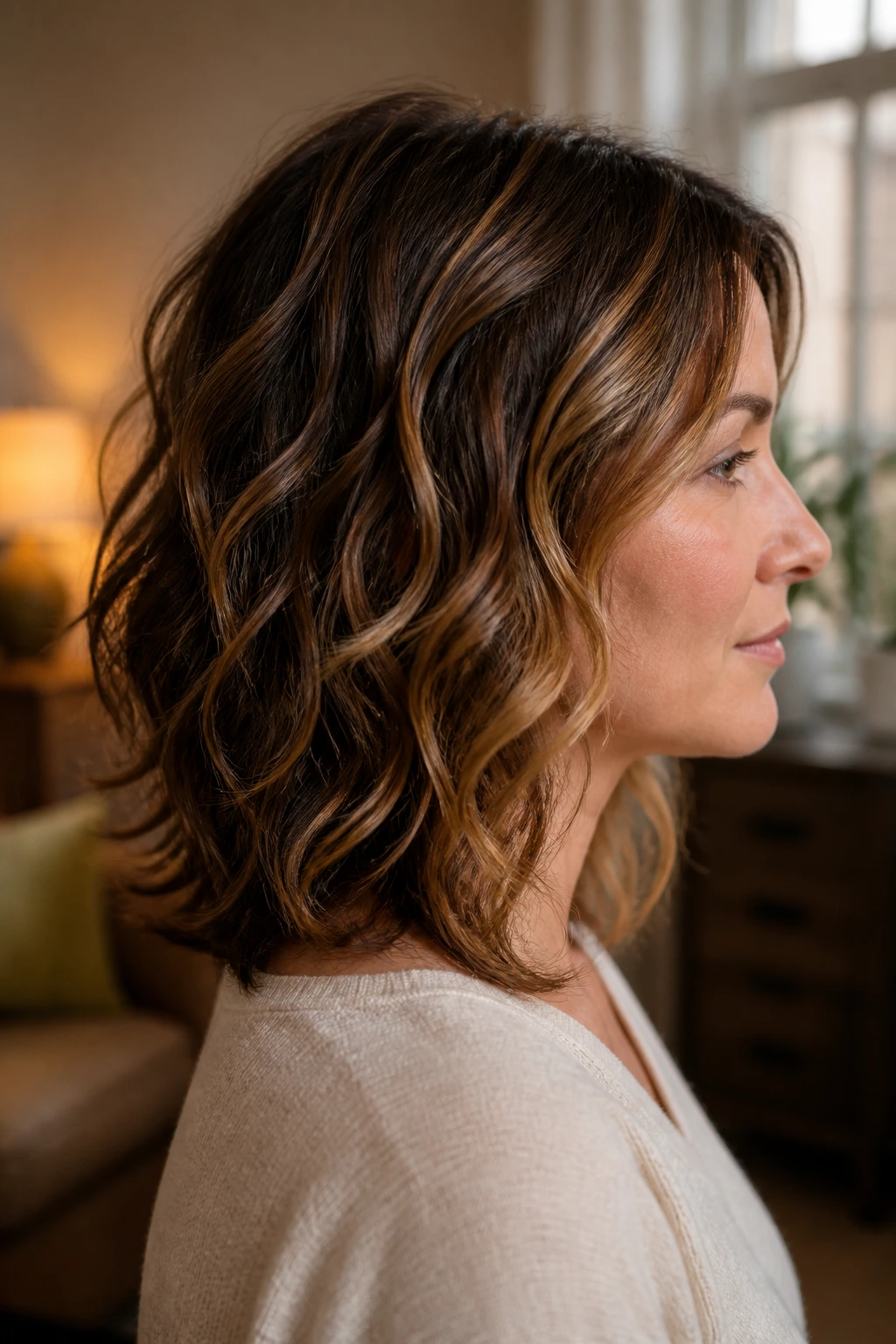
The best layered haircut for medium wavy hair is the one that still looks good after the first humid morning, the second day of wear, and the lazy air-dry you did because you were busy. That is the real test.
Some cuts lean polished. Some lean shaggy. Some sit quietly in the middle and make your hair look more expensive than it is. The point is to match the layer placement to the way your waves already move, not the way a flat iron would like them to behave.
If you get that part right, medium-length wavy hair stops being a shape you manage and starts being a shape that does some of the work for you. And that is the kind of haircut worth keeping around.