



Medium hair with soft layers has a lucky problem: it already wants to move. The cut gives you bend around the face, a little swing through the ends, and enough weight that it does not puff up like a feather duster the second you pin one side back. That middle ground is why so many casual hairstyles look better on shoulder-grazing hair with soft face-framing pieces than they do on blunt, heavy cuts.
The trick is not to fight the shape. The trick is to let the layers do half the work. A loose twist can look polished because the shorter pieces near the cheekbones break up the line. A low ponytail looks intentional because the ends do not hang in one dead curtain. Even the simplest half-up style gets a little lift from the layers around the crown, which is exactly where flat hair usually goes to die.
And that is the sweet spot here: styles that look done without feeling stiff, fussy, or over-sprayed. If you have medium hair with soft layers, you do not need a full salon blowout every time you leave the house. You need a few styles that use the cut the way it was meant to be used — with movement, with shape, and with a little bit of mess in the right places.
Why These Styles Work So Well on Soft-Layered Medium Hair
Face-framing pieces do the hard part: The soft layers around the cheeks keep even a simple ponytail from looking severe, because they break up the outline before the eye reaches the back of the head.
Medium length gives you room, not weight: Hair that hits somewhere between the collarbone and shoulders is long enough for clips, twists, and braids, but short enough to avoid the sagging you get with very long hair.
The styles hold up on second-day hair: A little texture at the roots gives pins and elastics something to grab, which means you can skip the struggle of a too-slippery fresh wash.
You can switch between casual and neat fast: The same half-up twist can look relaxed with loose ends, then cleaner with a tighter wrap and a couple of hidden pins.
Most of these styles take five minutes or less: That matters. If the layers are soft and the shape is forgiving, you do not need a mirror marathon to leave the house looking like you made an effort.
1. The Soft Bend Lob
A soft bend lob is the style I keep coming back to when hair needs to look awake without looking overworked. The ends curve in different directions, the face-framing layers lift away from the cheekbones, and the whole shape lands in that easy place between “I tried” and “I still have places to be.”
Why It Works
A collarbone-length cut with soft layers has enough movement to take a bend from a curling iron or flat iron, but not so much length that the shape drags itself straight again by noon. The bend keeps the hair from looking like one flat sheet. That matters on medium hair, because the layers need room to separate a little.
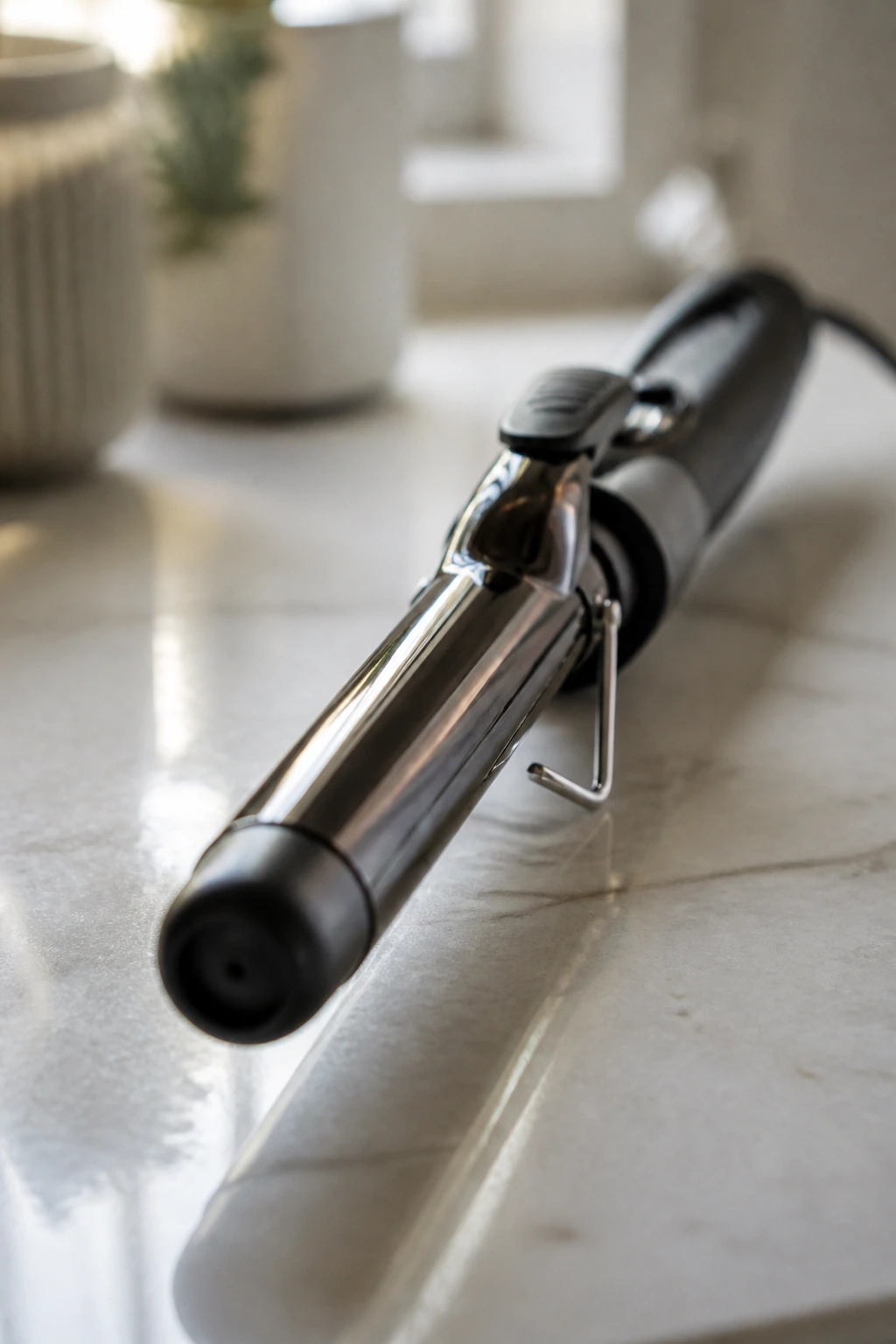
Use a 1-inch or 1.25-inch iron and leave the last inch of each section out. That one detail keeps the ends airy instead of curled into tiny springs.
- Wrap 1-inch sections away from the face.
- Alternate the direction on the mid-lengths for a looser finish.
- Shake the curls out with your fingers, not a brush.
- Finish with a light mist of texture spray, especially at the ends.
Best tip: Let the top layer cool before you touch it. Warm hair falls faster, and soft layers need that cooling time to keep their bend.
2. The Mini Claw-Clip Twist
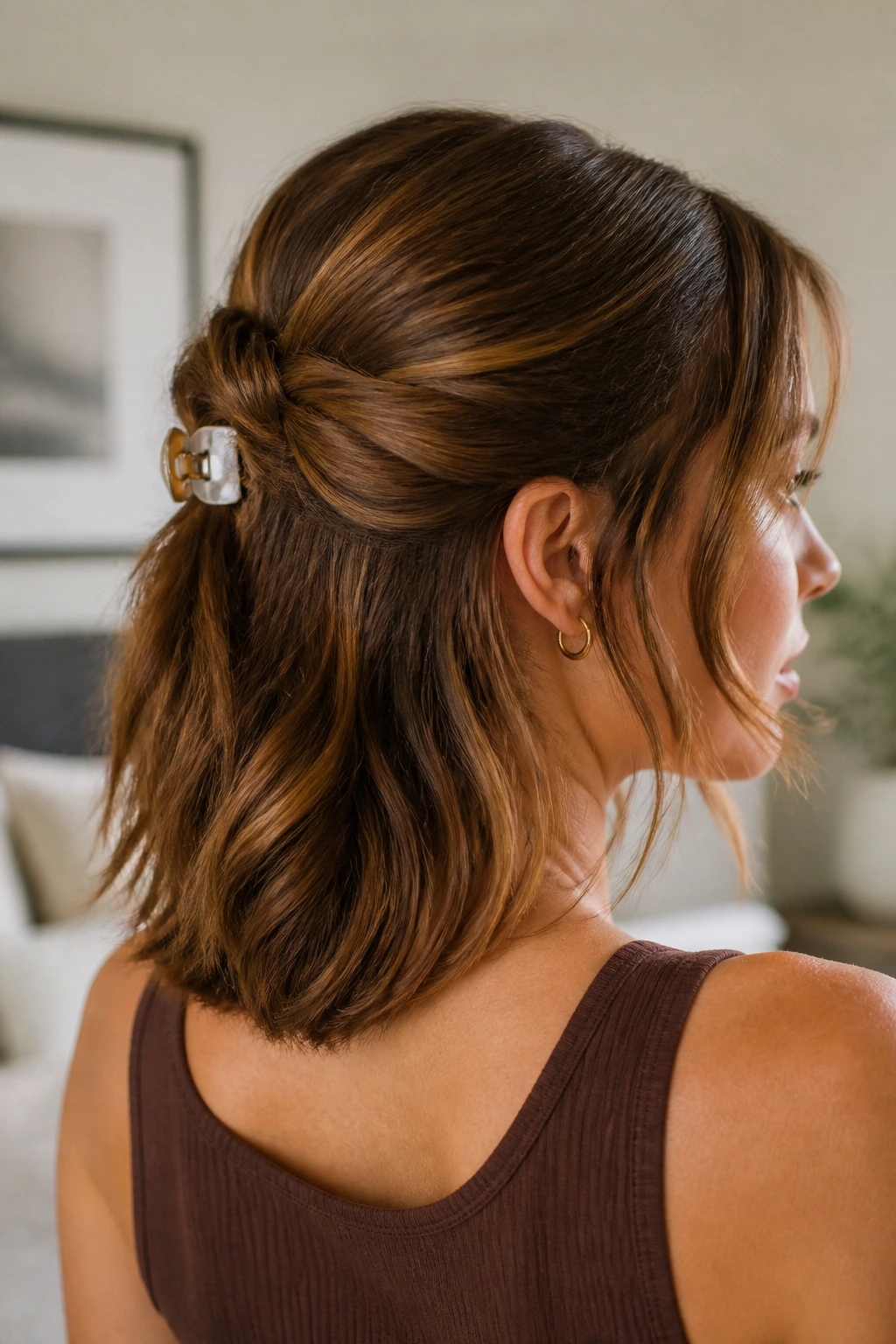
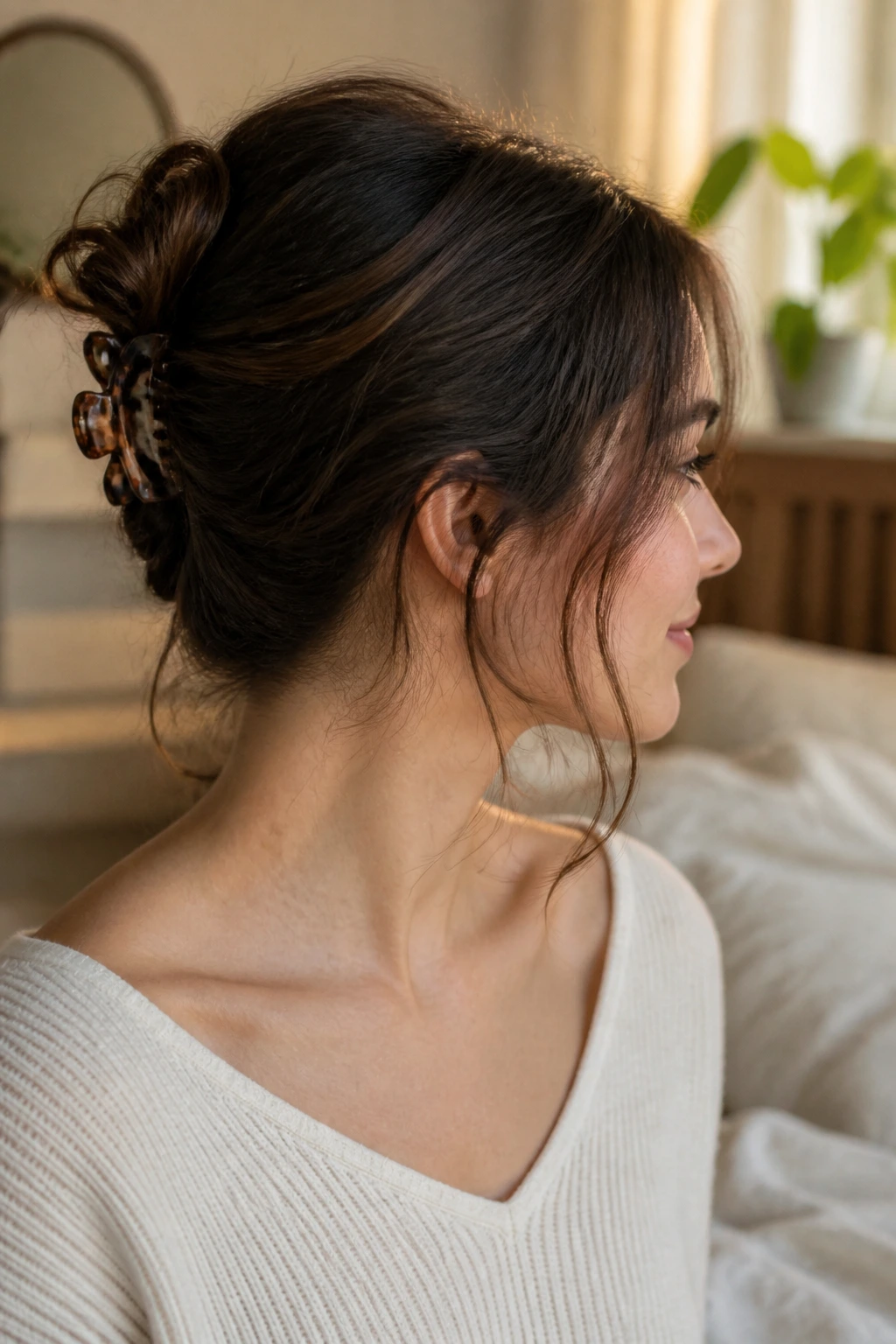
Here’s my blunt opinion: if your hair reaches your shoulders and your layers keep escaping from a ponytail, the small claw clip is your friend. Not the giant one that swallows half your head. A medium one. The kind that lifts the back section and leaves the face-framing pieces loose enough to move.
What Makes It So Easy
This style works because it uses only the middle and lower part of the hair, where soft layers are usually a little longer and easier to gather. You twist the back section once or twice, secure it with a clip, and let the shorter pieces around the front stay loose. That keeps the style casual instead of severe.
It also gives you a useful amount of lift at the crown without making the top feel lacquered down. Fine hair benefits from that, but so does thicker hair that tends to collapse under heavy clips.
Start with a small cloud of dry shampoo at the roots if the hair is slippery. Then twist the back section upward, tuck the ends under, and clip across the twist rather than straight down. The clip bites better that way.
3. Curtain-Bang Blowout Lite
Why does this one keep working? Because it gives the front of the haircut a job. Curtain bangs, or even soft face-framing pieces that behave like them, can make medium hair look deliberate with almost no styling at all.
How to Wear It
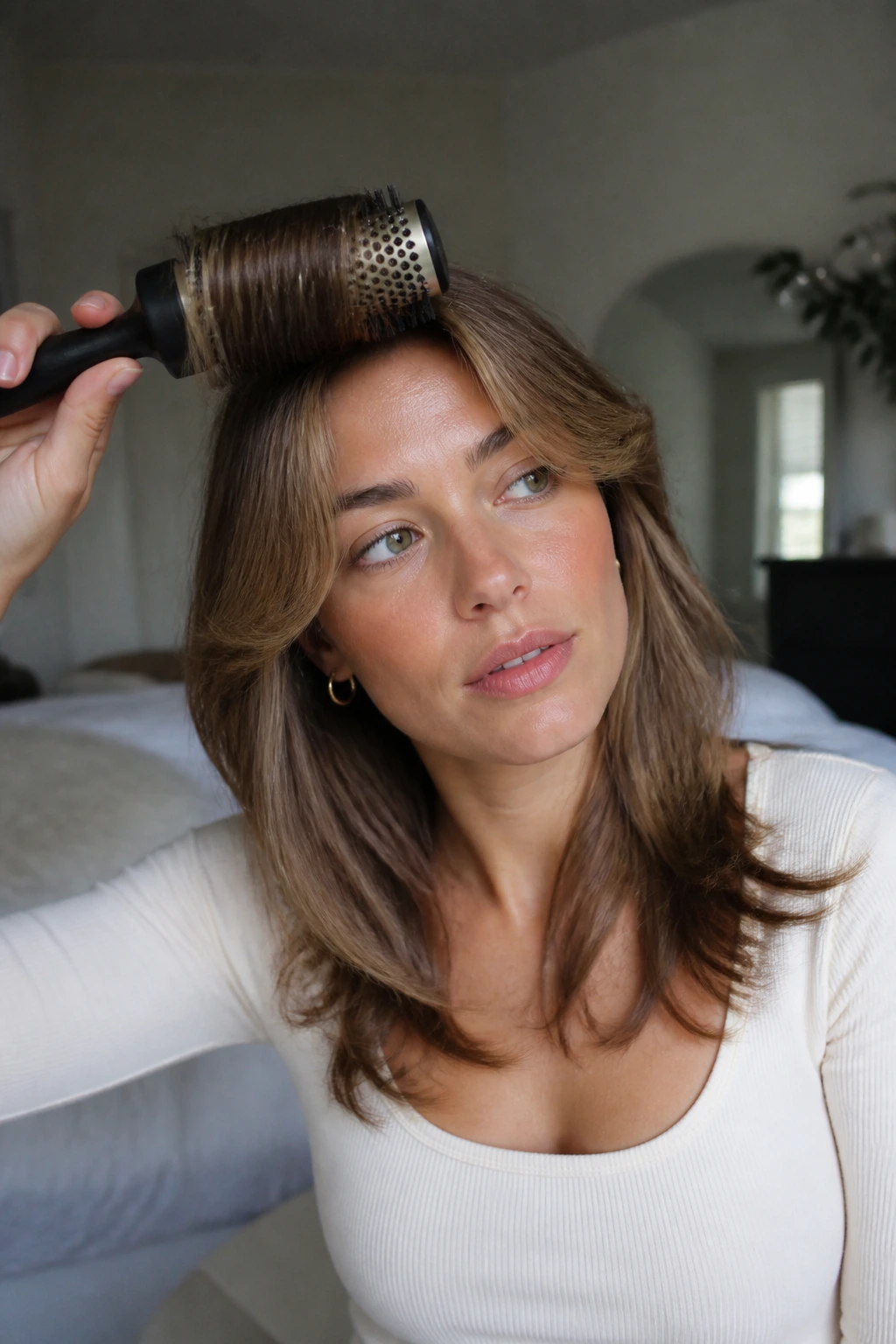
Use a round brush or a blow-dryer brush and lift the front sections away from the face for the first few seconds of drying. Then bend the ends back and away, not under. That small change keeps the pieces from clinging to your cheeks.
The rest of the hair can stay air-dried or rough-dried. You do not need a perfect blowout. You need the front pieces to fall in a soft arc so the layers around the face do their job. If the roots are flat, the whole thing looks sleepy. If the front is too curled, it looks dated fast.
A tiny dab of lightweight cream on the ends helps keep the shape from frizzing. Use a pea-sized amount. More than that and the hair starts to separate in greasy-looking strands, which is a bad trade.
4. The Five-Minute Low Knot
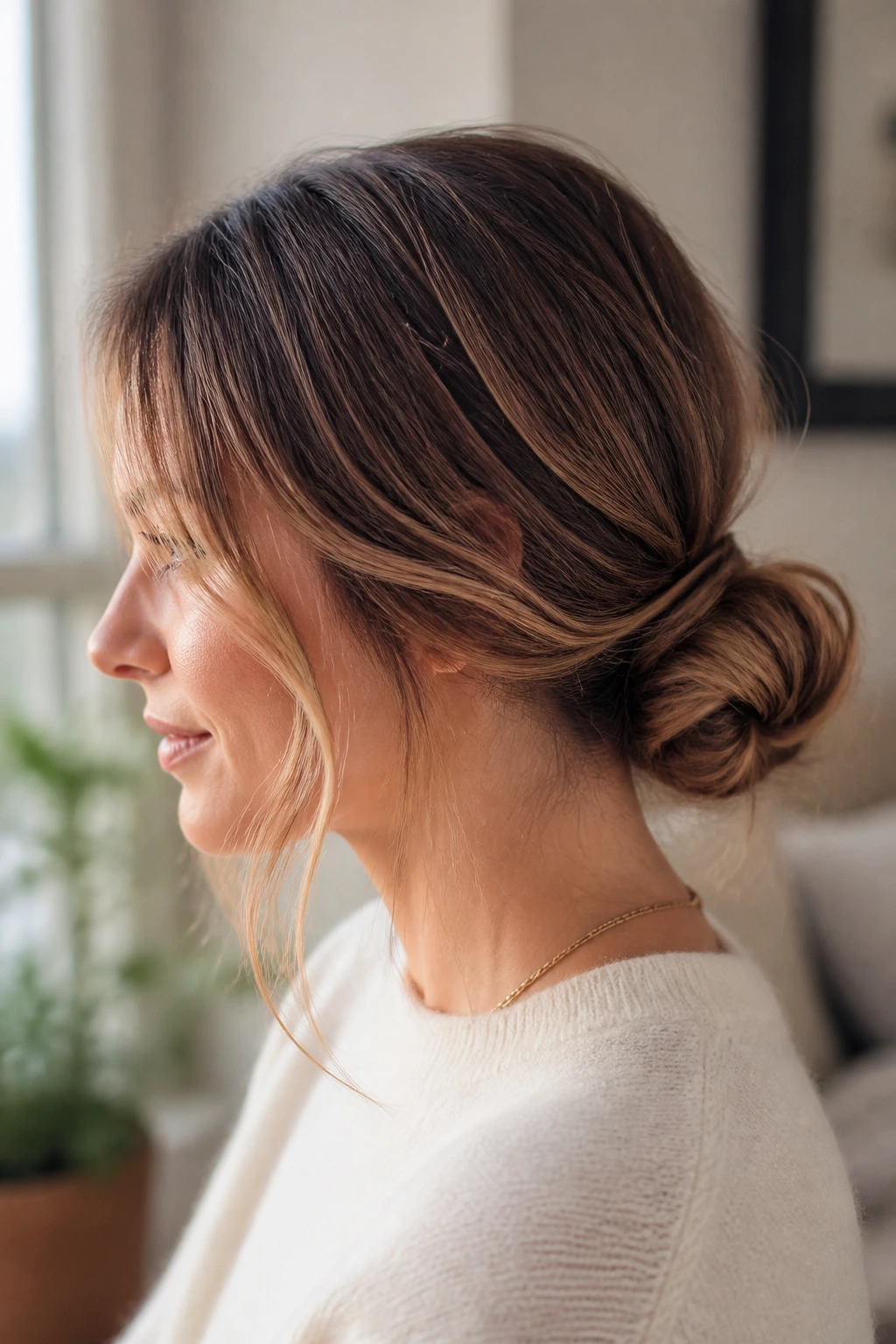
If you have to leave in a hurry, this is the knot that saves the day without making the back of your head look like a lunch break disaster. It sits low, skims the nape, and lets the soft layers around the front stay loose enough to soften the shape.
Key Details That Matter
The knot works best when it is not too tight. Gather the hair into a low ponytail, twist it once, wrap it into a loose coil, and pin or tie the ends in place. Don’t tuck every end in. A few pieces sticking out make the style feel current instead of fussy.
- Keep the knot centered at the nape.
- Pull a couple of face-framing pieces out before you secure it.
- Use two bobby pins crossed in an X if the hair is slipping.
- Leave the ends a little undone for texture.
A low knot like this is also kind to medium-length layers, because the shorter pieces can fall around the jaw instead of fighting the bun. That gives you shape without a lot of handling.
5. The Side-Swept Ear Tuck
Some styles do more with one pin than other styles do with ten. The side-swept ear tuck is one of them.
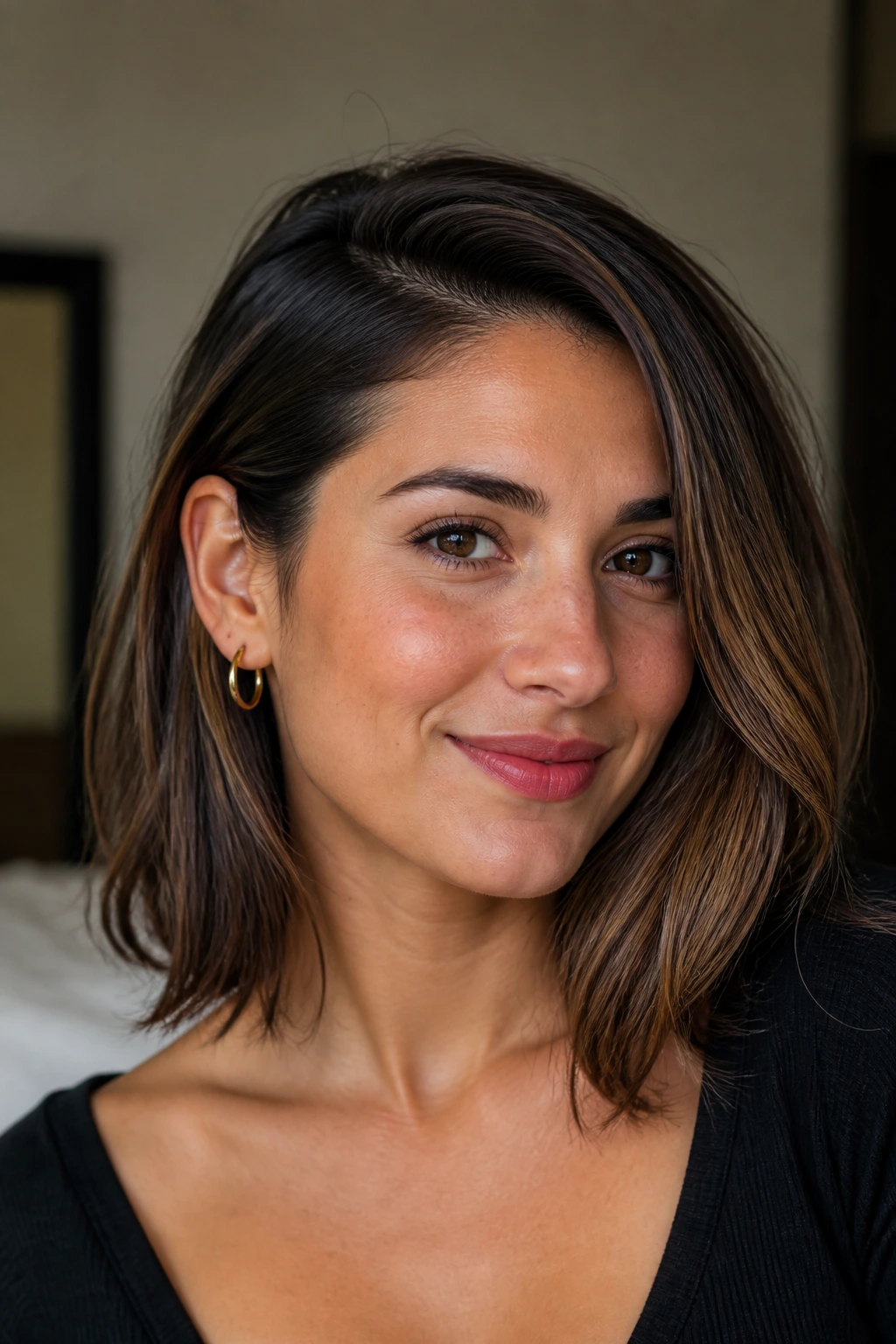
The move is simple: sweep one side behind the ear, secure it with a hidden pin if you need to, and let the rest of the hair fall forward in a soft frame. The asymmetry keeps the style from looking too proper. Soft layers love that, because the front pieces can curve around the jaw while the back keeps its natural swing.
This one is especially good on day-two hair. Freshly washed hair can slide out of the tuck, but slightly lived-in hair has enough grip to stay in place. If the front section is too slick, mist a little dry shampoo at the roots before tucking it. The texture changes everything.
I like this style when one side of the haircut has a better bend than the other. You don’t have to fix that. Use it.
6. The Claw-Clip French Twist
A full French twist can feel too serious for medium hair, but a looser claw-clip version has the right amount of ease. It lifts the hair, keeps the neck clear, and leaves enough texture around the crown that the layers do not get crushed flat.
The difference is in the finish. A strict twist wants every strand tucked in. This one does not. Twist the hair upward from the nape, fold it once, and let the ends stay slightly loose before clipping. The result looks casual, not formal.
This style is best when the hair has a little bend already. If the ends are dead straight, the twist can look stiff. A few waves through the lengths solve that fast. A mist of flexible hairspray at the top helps the clip stay put without turning the whole thing crunchy.
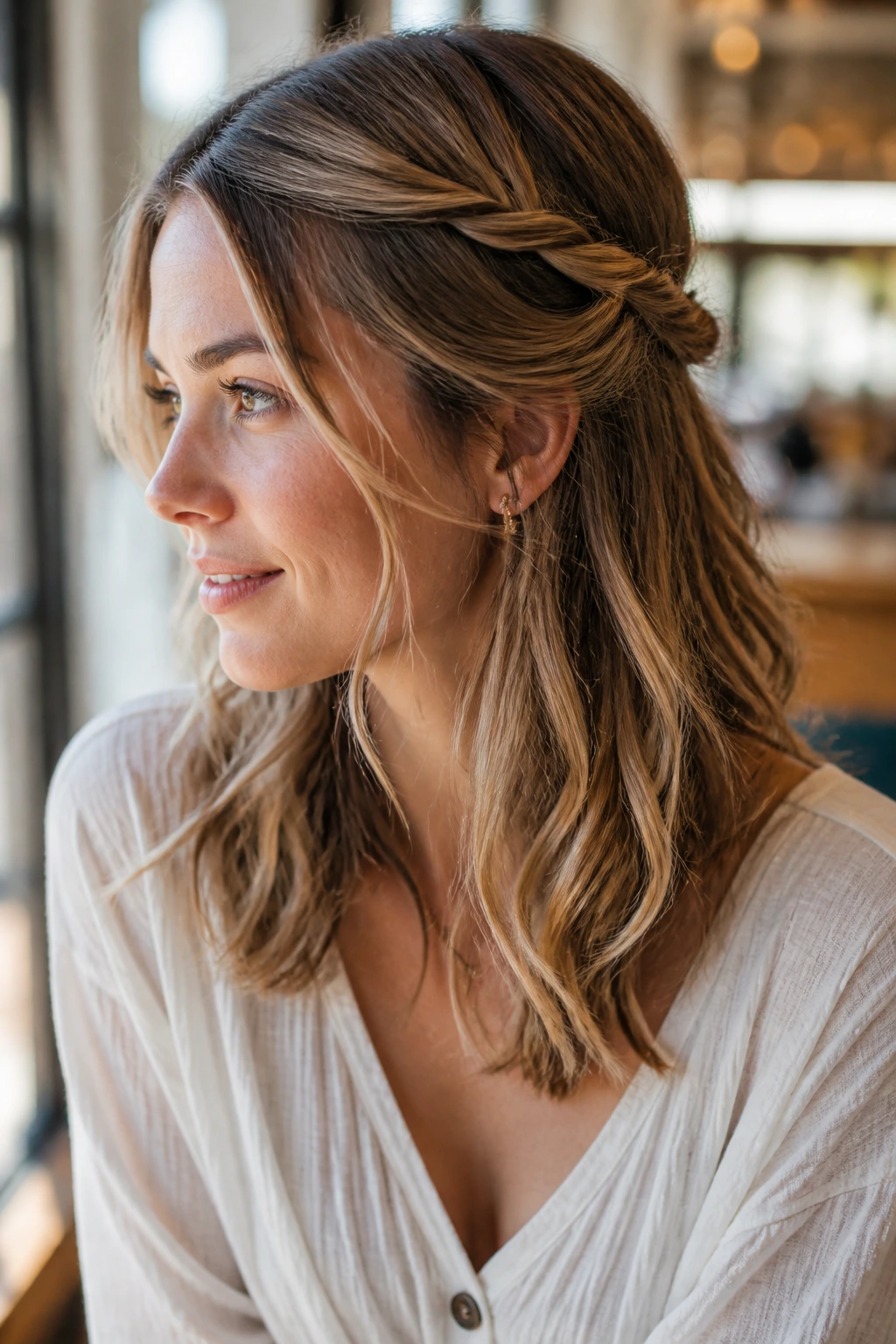
7. The Rope-Braid Half-Up
Rope braids are the answer when a three-strand braid feels too fussy and a plain half-up style feels too flat. They also show off soft layers in a smart way, because the front pieces twist backward and leave the lower lengths free to move.
Twist two small sections from each side of the face, cross them at the back, and secure them with a small elastic or a couple of pins. That’s the whole idea. The beauty of this style is that it does not ask for perfect symmetry. If one side is a little fuller, the layers hide the difference.
How to Get the Most From It
Use medium tension. Too tight, and the front looks severe. Too loose, and the twists unravel before lunch. A light spritz of texturizing spray on the hands before twisting makes the strands hold together better, especially if the hair is silky.
The rope-braid half-up works well for anyone who wants to keep hair off the face but still show length through the back. It also sits nicely with soft layers around the cheekbones, because those pieces fall out on purpose and make the style look lived-in.
8. The Deep Side-Part Bend
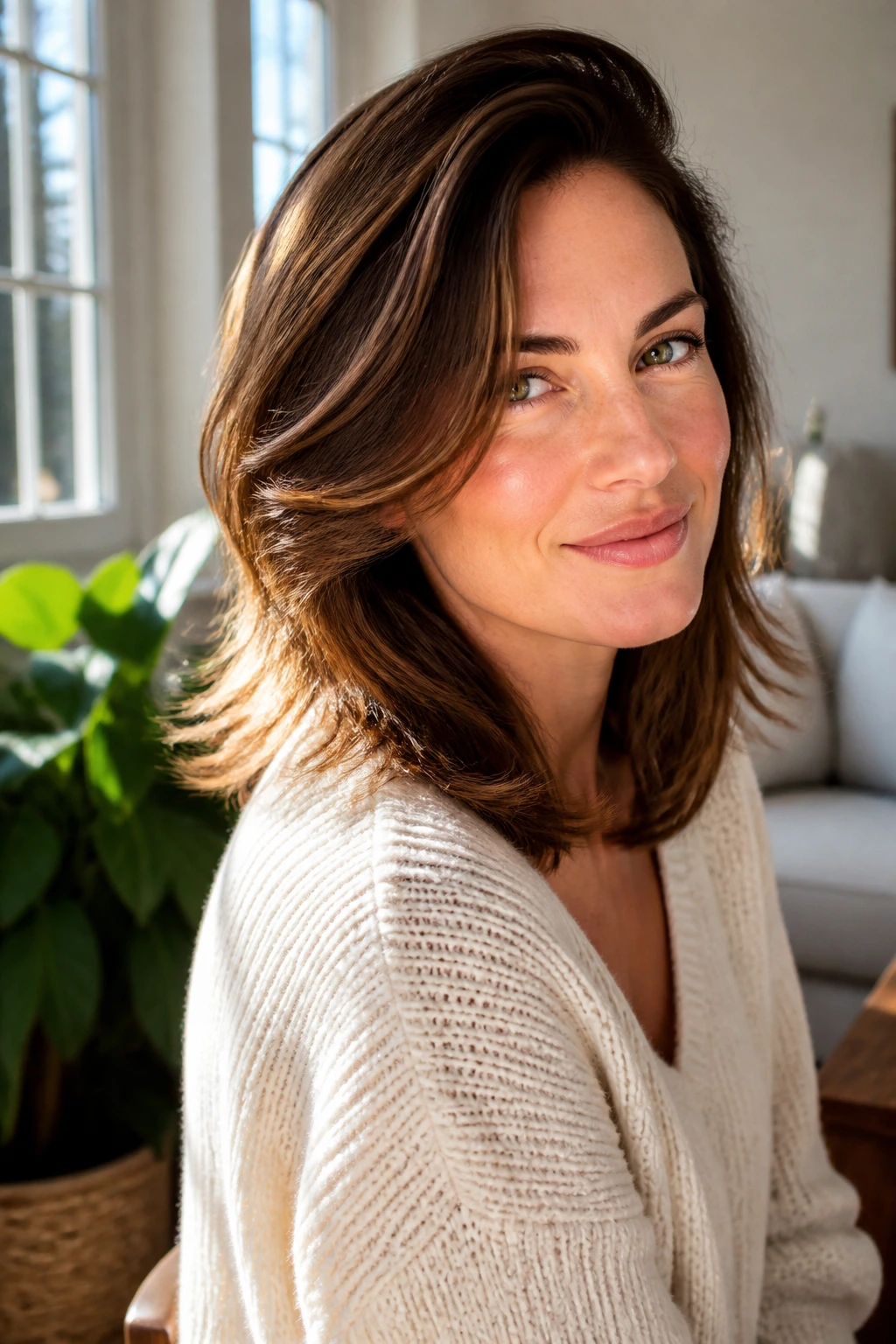
A deep side part changes more than people expect. It changes the weight of the hair, where the volume lands, and how the layers frame the face. On medium hair, that matters because the cut already has movement built in.
Sweep the part several inches off center, then create a soft bend through the lower lengths with a flat iron or large-barrel iron. The heavier side gives the illusion of more volume near the roots. The lighter side falls across the cheekbone in a way that makes soft layers look intentional, not accidental.
This is a good style when the hair feels too ordinary in a center part. Same haircut. Different mood. Pulling the part over changes the whole balance of the face-framing pieces, and you can do it in two minutes flat.
9. The Messy Low Ponytail
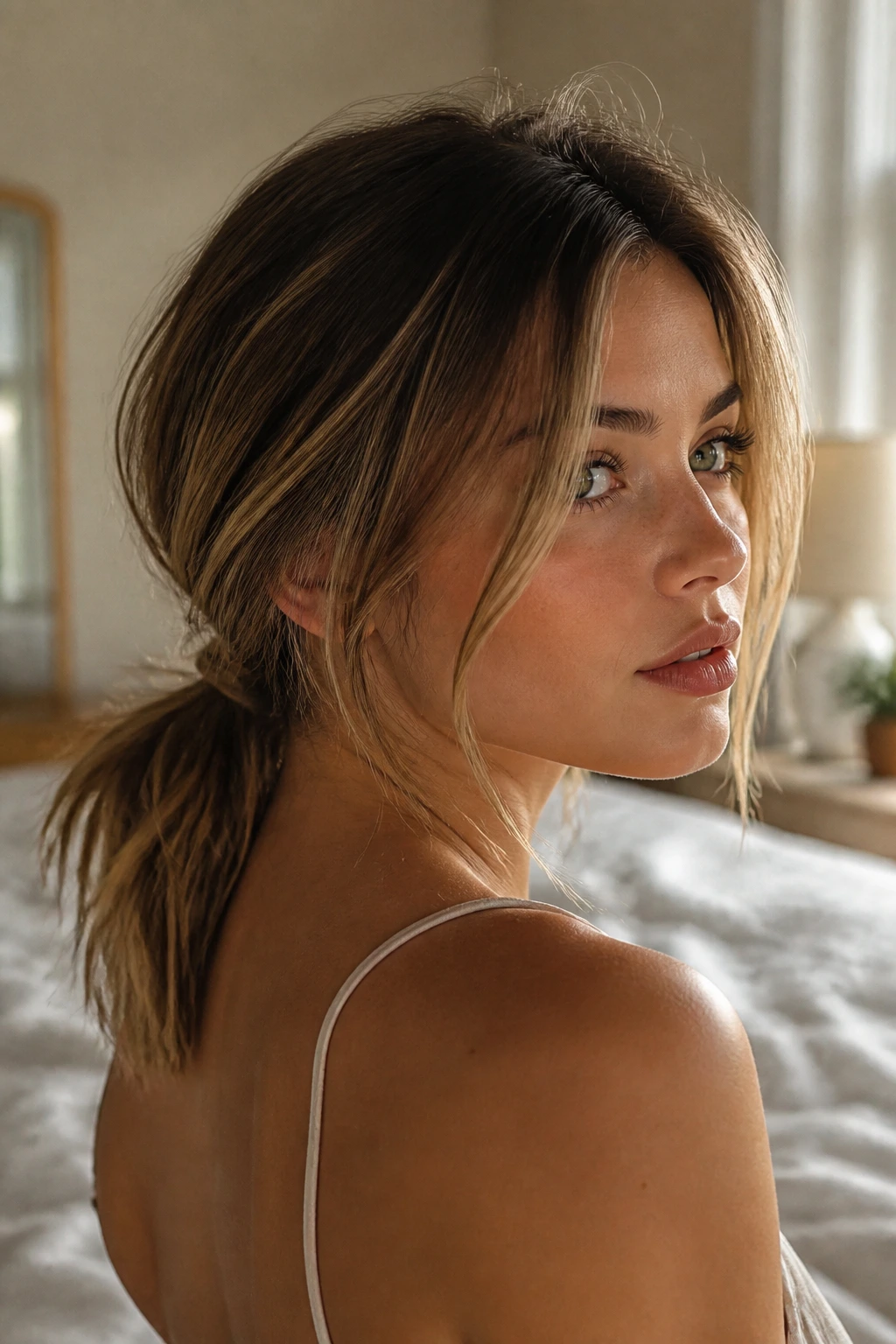
A messy low ponytail is the kind of style people underestimate until they see it on hair with good layers. Then it makes sense. The pony sits low, the front pieces soften the face, and the ends have enough unevenness to look textured rather than limp.
Gather the hair at the nape, secure it with a soft elastic, and pull a few strands out around the temples. If you want the pony to look fuller, split it above the elastic and flip the tail through once. That tiny trick adds a little lift without turning it into a full topsy-tail situation.
Use a small piece of hair to wrap around the elastic if you want it cleaner. I like that move. It takes ten seconds and hides the plain rubber band, which always makes a ponytail look more finished than it has any right to be.
10. The Bubble Ponytail
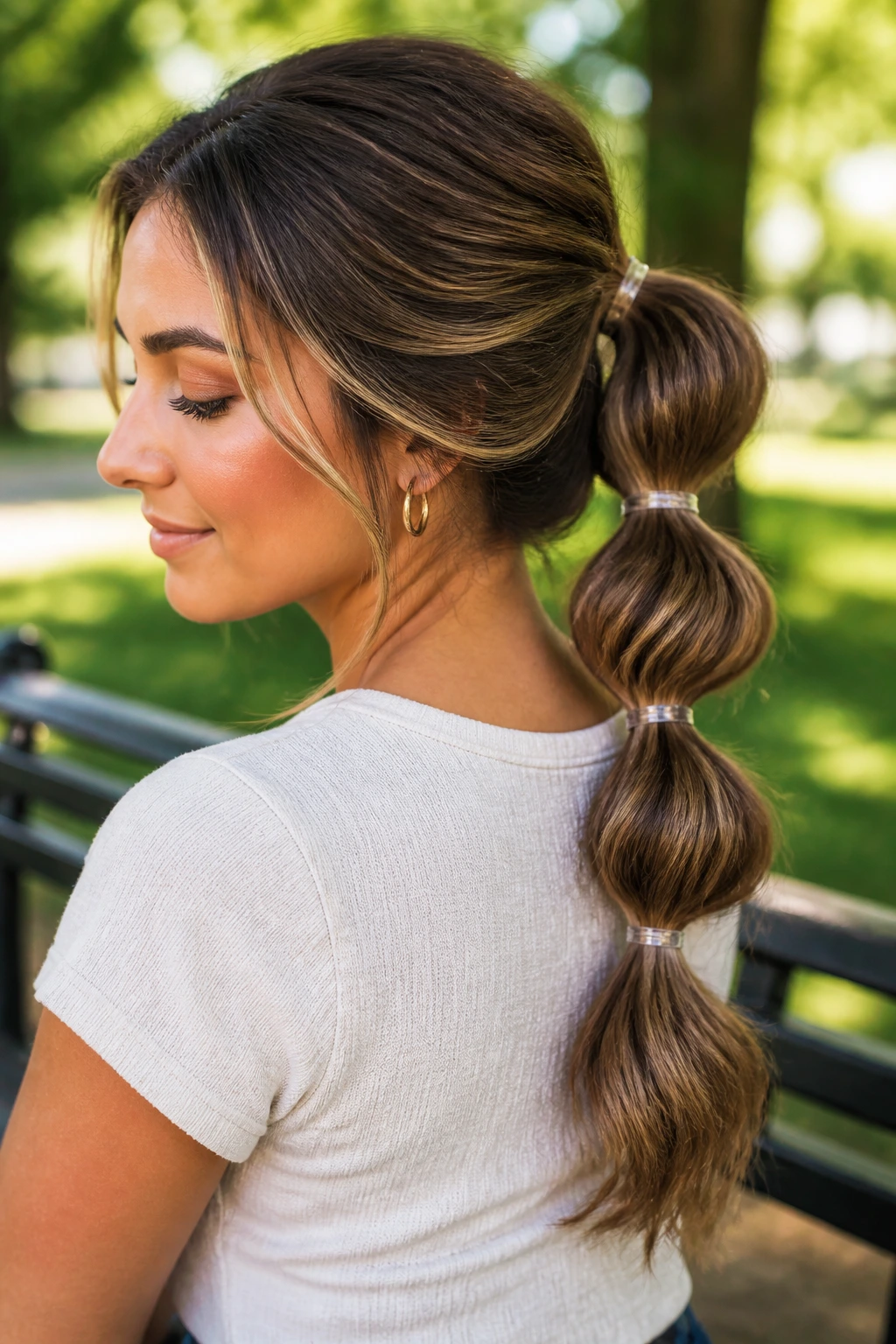
Bubble ponytails are fun, yes, but they also solve a real problem for medium hair: long ponytails can look too thin at the ends, while layers often make the body of the pony look uneven. The bubbles create shape where the hair naturally wants to flatten.
Start with a low or mid-height ponytail. Add clear elastics every 2 to 3 inches down the length, then gently tug each section outward until it puffs a little. The bubbles should look rounded, not overstuffed.
This one works best when the hair has some texture. Slippery hair needs a mist of dry shampoo or texturizing spray first. If the layers are short around the face, leave them out and tuck them behind the ears or pin them back loosely. That keeps the whole thing from looking too busy.
11. The Mini French Twist
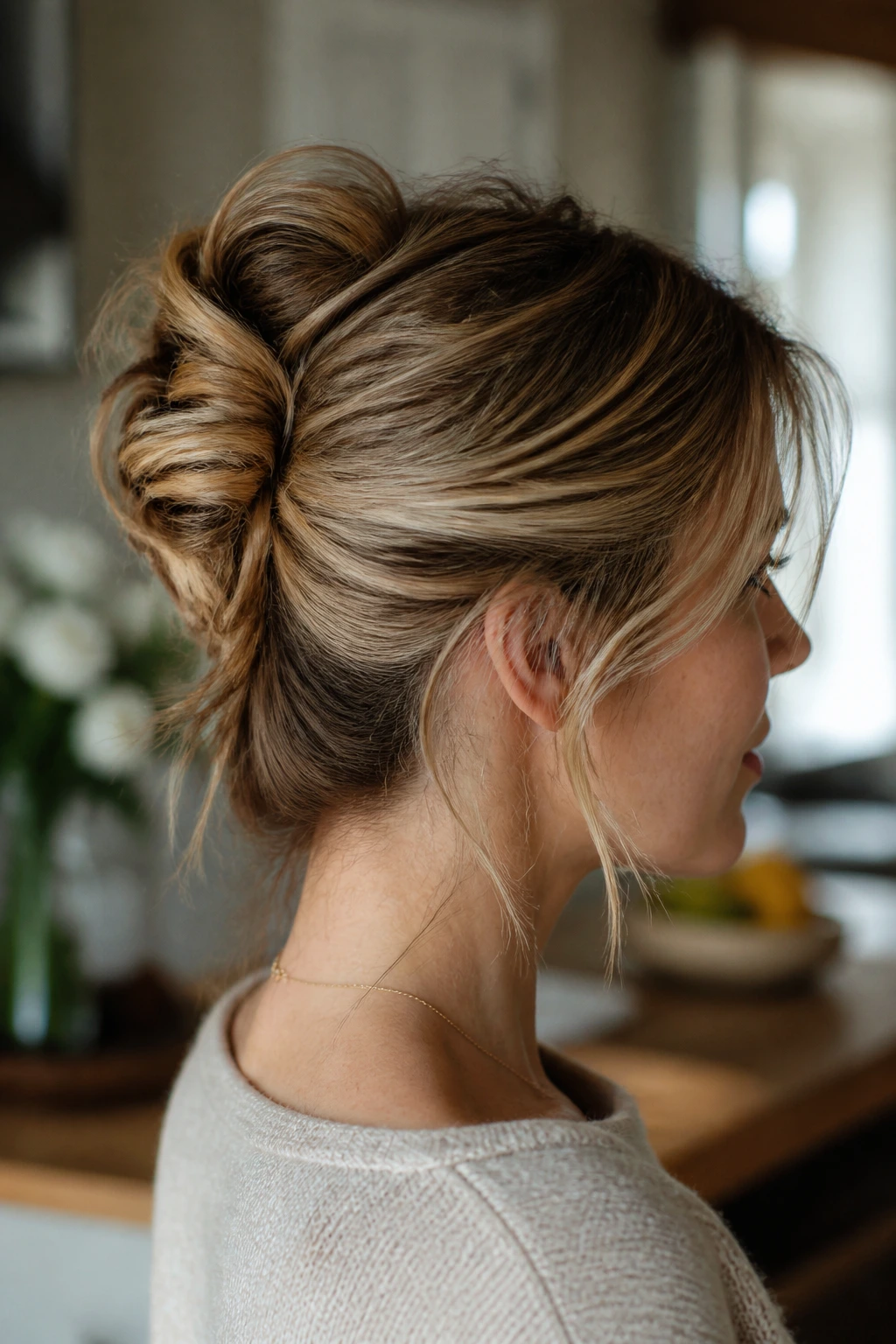
A mini French twist is the casual cousin of the formal version. It gives medium hair a neat back without forcing the whole style into special-occasion territory.
Twist the hair upward from the nape, fold the length into a short vertical roll, and pin it in place with two or three bobby pins. Leave the ends loose if the haircut is too short to tuck fully. That little bit of undone texture keeps soft layers from looking stuffed into the twist.
The style sits beautifully on medium hair because the length is enough to twist, but not so much that the roll becomes bulky. If you have a stronger face-framing cut, pull out a few pieces around the jaw. They make the back look more relaxed.
12. The Headband Tuck
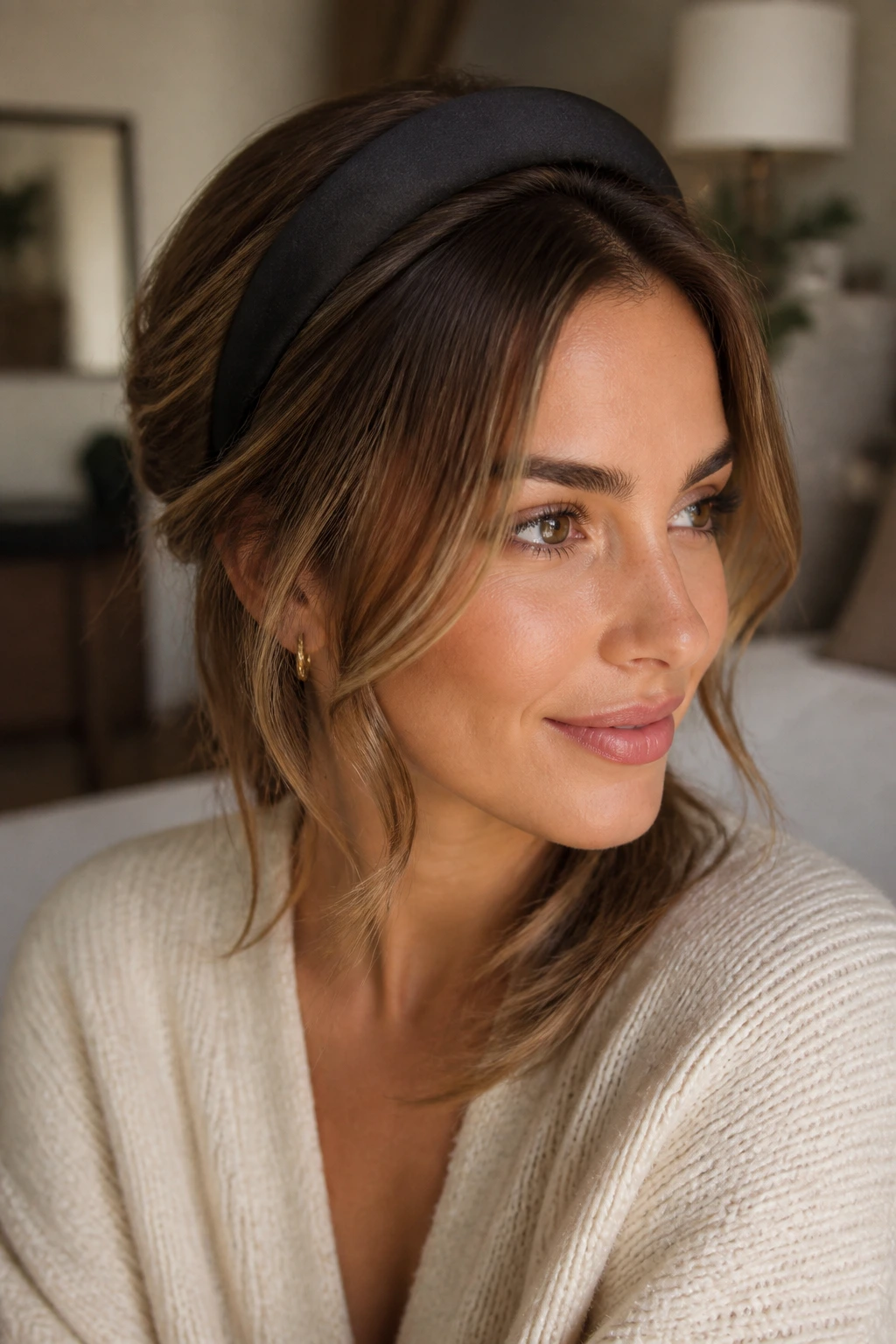
A headband tuck is one of those styles that looks older than it is, in the best possible way. It works when the hair needs to stay off the face but you still want the soft layers around the front to be visible.
Slide a headband on, then tuck the hair into it section by section from the nape upward. Leave the front pieces a little loose if the cut has shorter layers near the cheekbones. That keeps the style from turning into a perfectly hidden roll, which can look too flat on medium-length hair.
The texture matters here. A little wave gives the tucked sections more body, while straight hair makes the shape cleaner and more polished. I like a slightly padded headband for this because it gives the style enough structure without squeezing the top of the head.
13. The Half-Up Top Knot
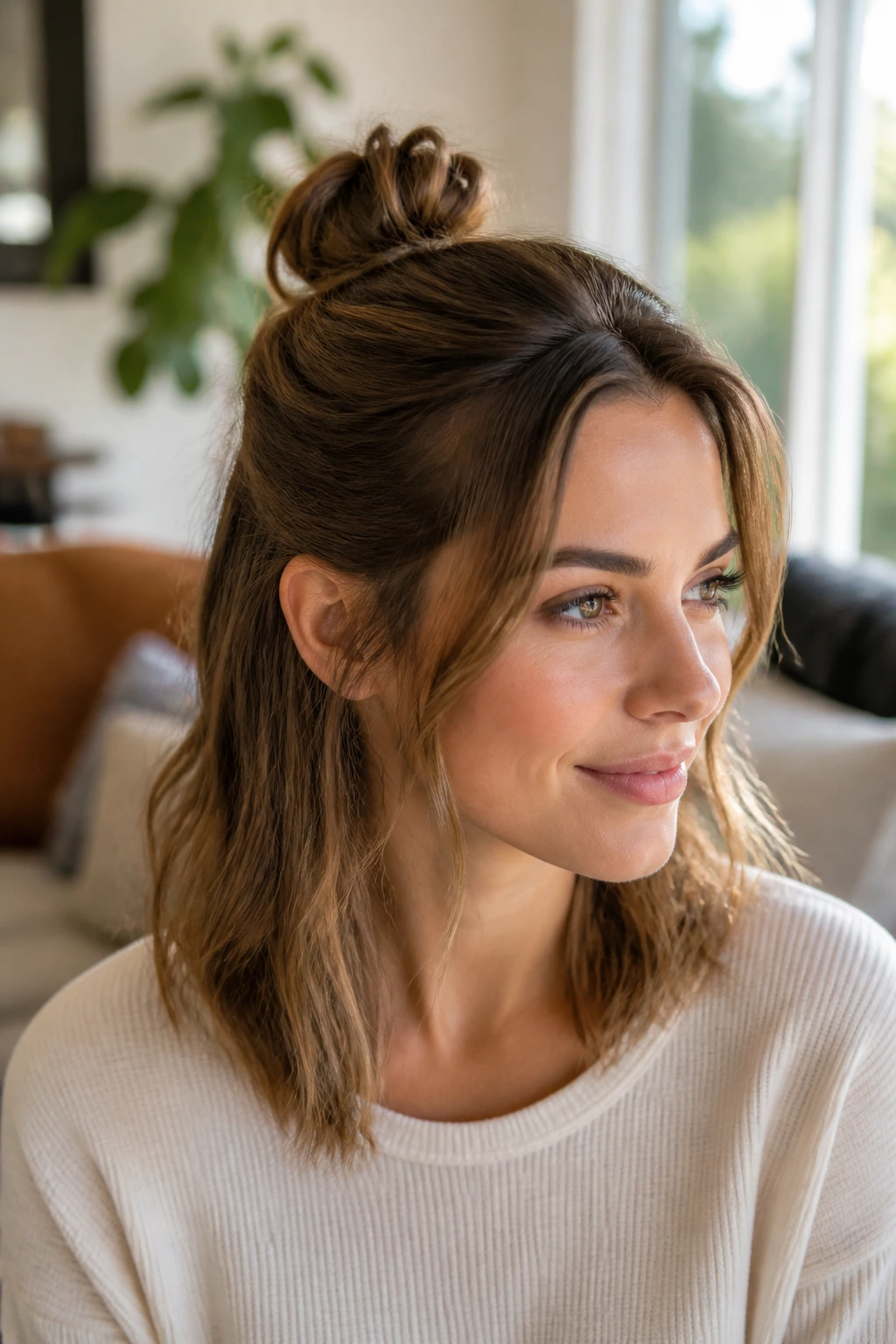
A half-up top knot can look either playful or chaotic. Soft layers decide which way it goes, and the trick is to keep the knot small enough that the rest of the hair still has room to move.
Gather only the top section from the temples up, twist it into a small knot, and secure it with a tiny elastic or two pins. Leave the lower lengths loose. That contrast — tight up top, free underneath — is what gives the style its shape.
Why It’s a Solid Match for Medium Hair
Medium hair has enough length to make the top knot visible, but not so much that it drags the knot down. The face-framing layers keep the front from looking severe, and the loose ends beneath add a softer line.
If the knot feels too neat, pull it apart slightly with your fingers. You want the top to look like a quick lift, not a tiny bun made for a ballet studio.
14. The Braided Crown Accent
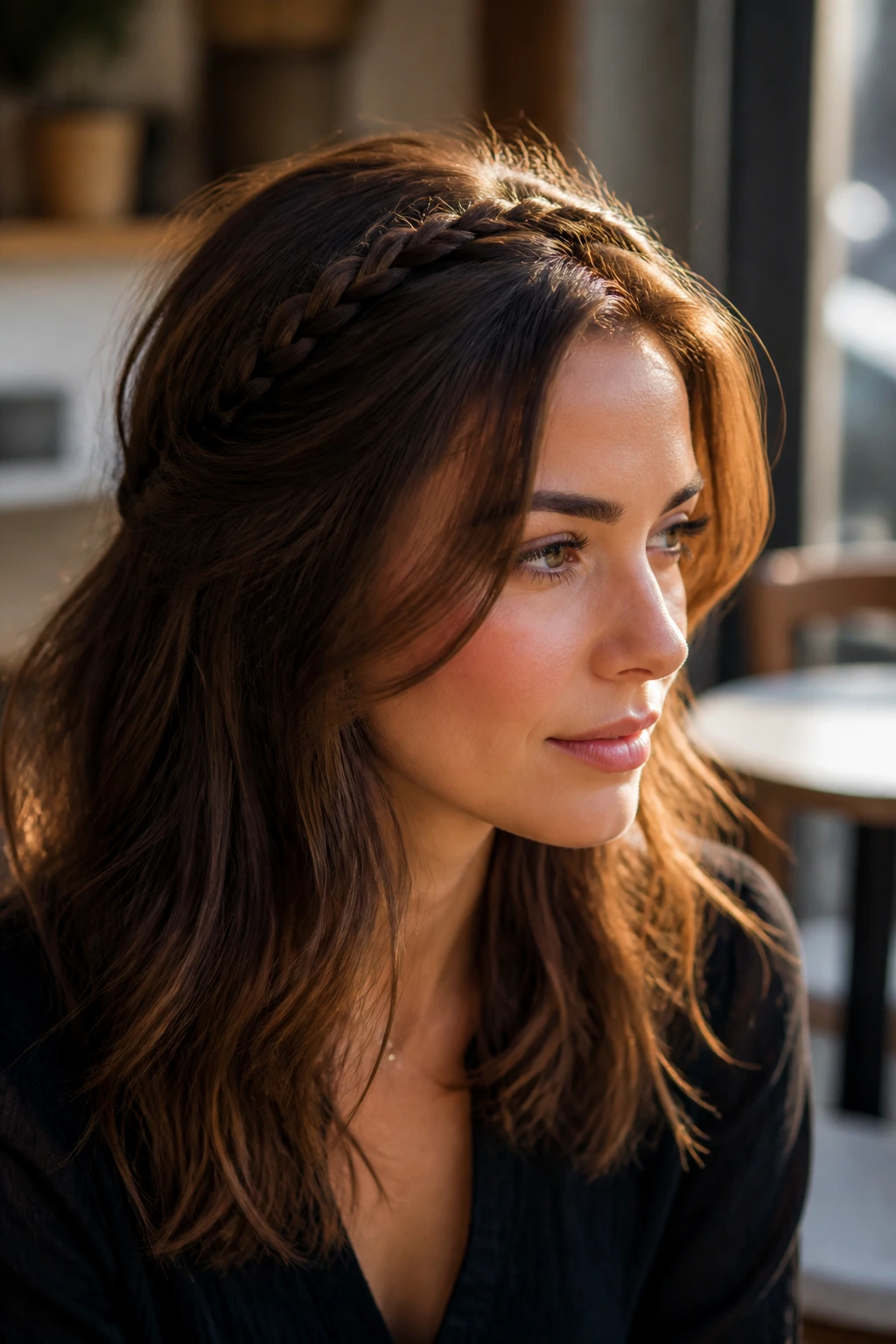
A braid across the crown can sound fussy, but a thin braid used as an accent is one of the quickest ways to make soft-layered hair look styled. It keeps the front pieces controlled and lets the rest of the hair stay loose.
Take a small section from one side near the part, braid it back toward the opposite ear, and pin it in place. That’s enough. A single braid across the top line of the head gives the rest of the hair a reason to fall around it, which makes the layers look more dimensional.
I like this style on hair that has a bit of bend through the mid-lengths. The braid itself adds structure, so the rest of the hair can stay softer. A flat style underneath can make the braid look pasted on. A little movement solves that.
15. The Loose Side Braid

A side braid is not subtle. That is the point. It brings all the hair over one shoulder, where the soft layers create a messy, airy finish instead of a tight rope.
Start the braid low, not at the crown, so the top stays relaxed. A loose three-strand braid works fine. After tying it off, pancake the braid by tugging the edges outward one section at a time. That widens the shape and gives the layers a chance to show.
This style looks best when a few shorter face-framing pieces escape on purpose. If everything is pulled in neatly, the braid can feel too school-uniform. Let the layers do what they do best: fall a little differently on each side.
16. The Pinned-Back Wave Trio
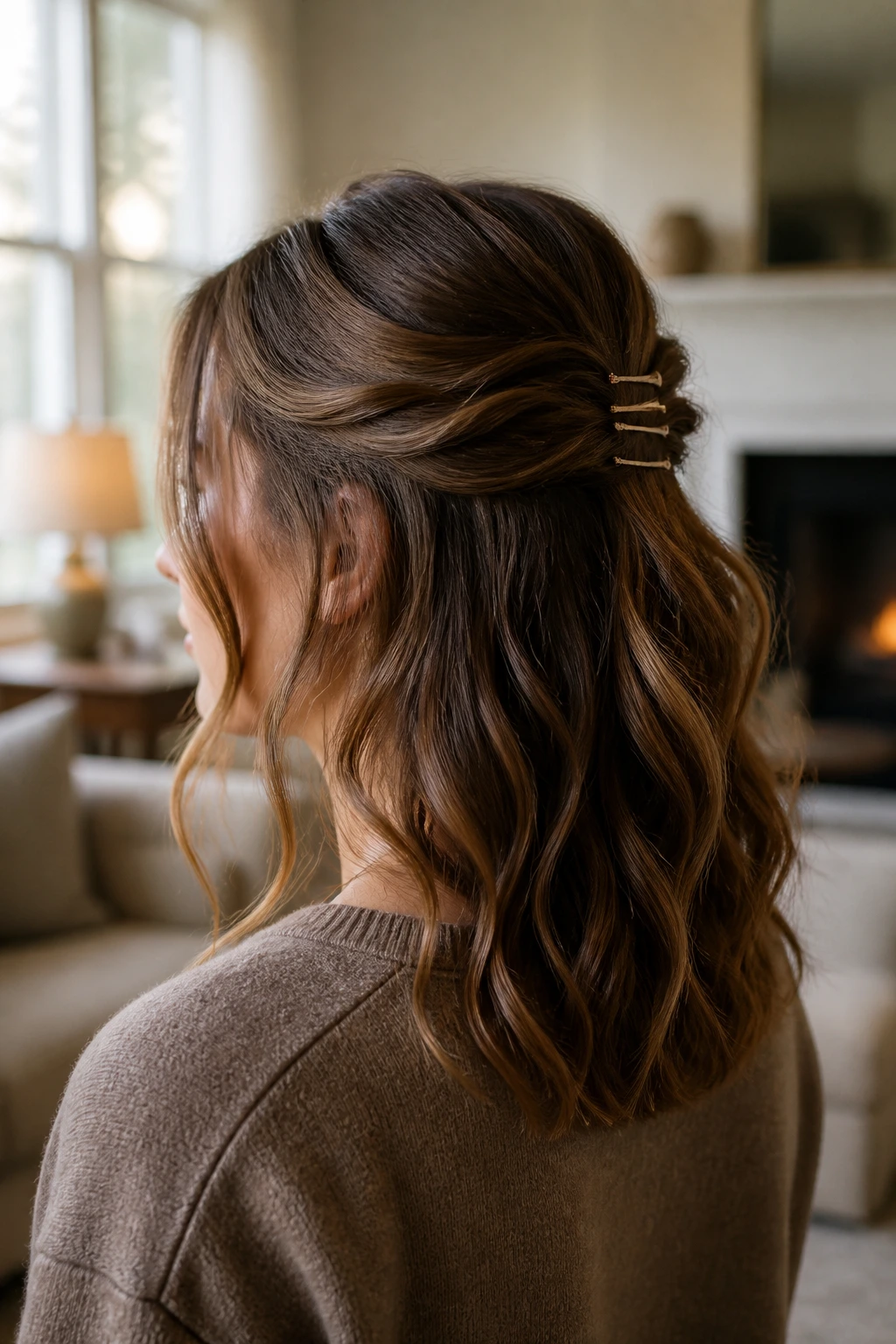
Three pins. That’s all. Sometimes that is enough.
Take the front sections from both sides, twist them back once, and pin them at the back of the head with a row of bobby pins or decorative clips. Leave the rest of the hair in loose waves. The contrast is clean and casual at the same time, and medium hair handles it well because the lengths aren’t too heavy to hold the shape.
This is a style I like for hair that has a strong face frame. The front stays open, the layers around the cheeks stay visible, and the back keeps its movement. It also takes almost no time. If one side sits higher than the other, fine. That small unevenness often looks better than perfect symmetry.
17. The Wavy Low Bun
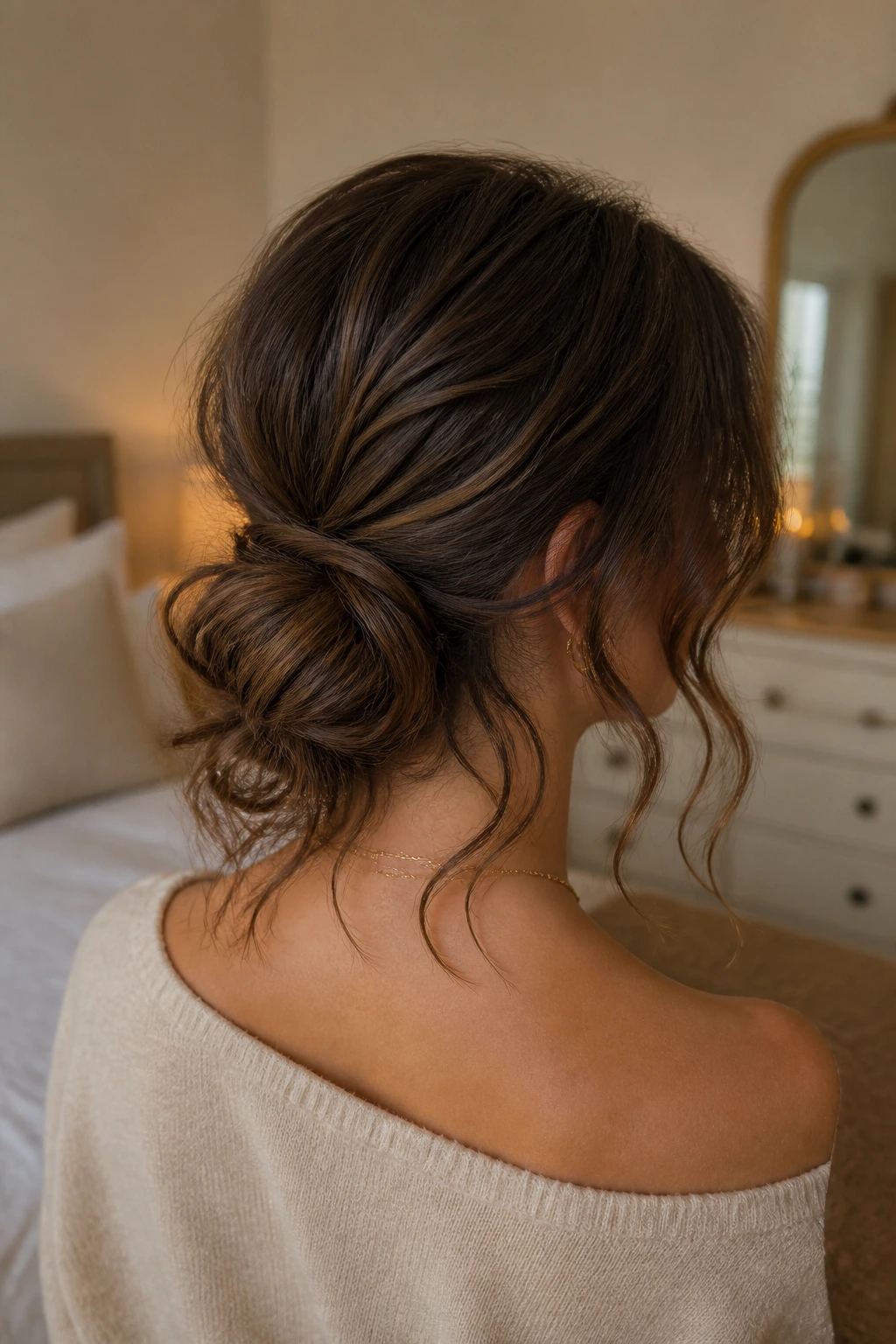
A wavy low bun has a much softer feel than a slick bun because the layers don’t all disappear into the knot. Some stay loose around the temples, some peek out at the neck, and the bun itself has enough texture to look like hair, not a sculpture.
Pull the hair into a low pony, twist it into a bun, and leave a few ends unpinned. Then tug gently at the sides until the shape loosens a little. That’s where the charm lives. If the bun is too tight, medium hair can look pinched and the layers lose their shape.
This is one of the better options for someone who wants to hide day-two roots without flattening the haircut. A little wave through the lengths helps, but not much. The bun does the rest.
18. The Scarf-Tied Ponytail
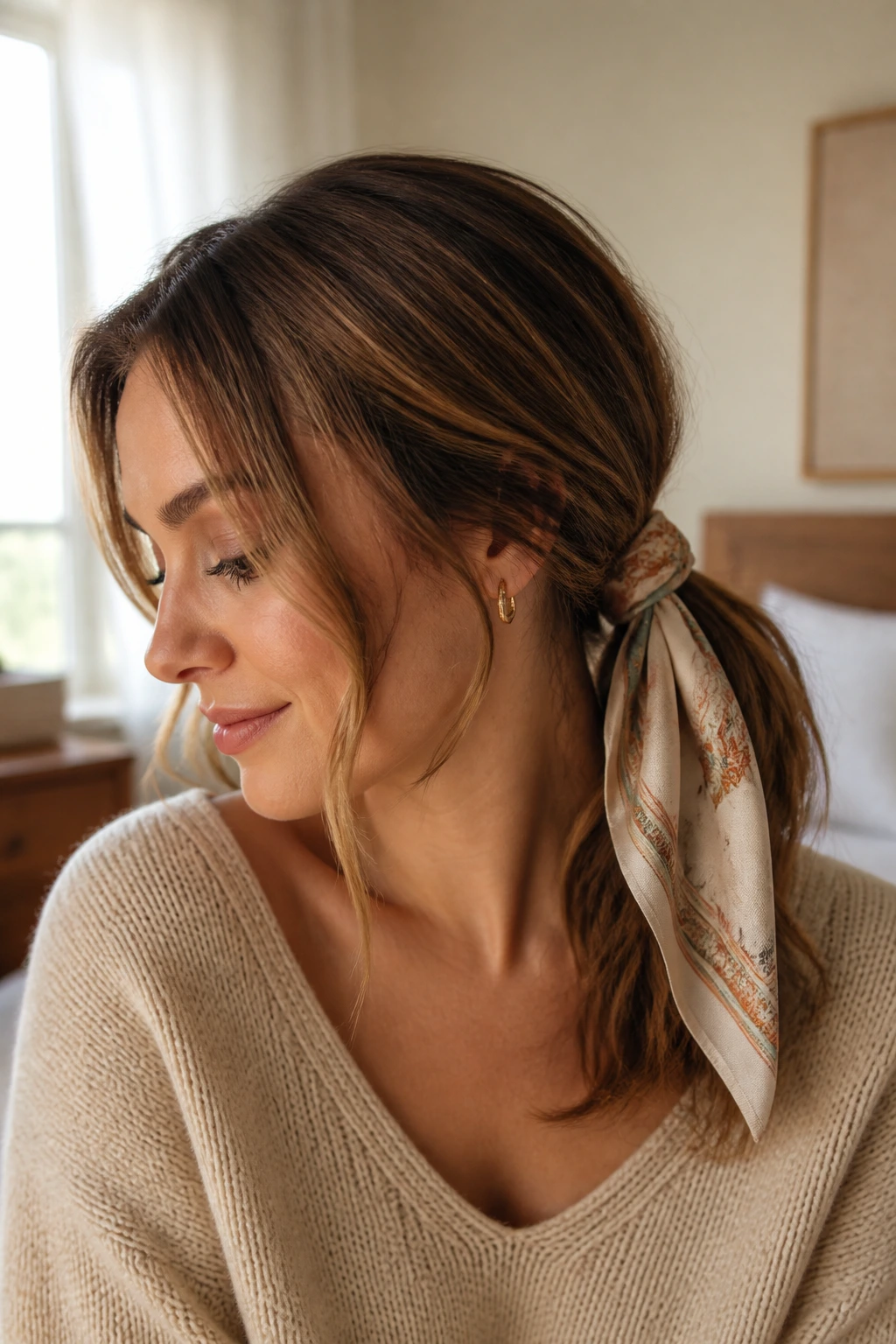
A scarf changes a ponytail faster than almost anything else. It adds color, but more useful than that, it changes the way the eye reads the shape. On soft-layered medium hair, that can be the difference between “plain” and “pulled together.”
Tie the hair into a low ponytail first. Then knot a silk or cotton scarf around the elastic, letting the ends hang or drape to one side. If the hair is layered around the front, pull out a few face-framing pieces so the scarf does not swallow the haircut.
This one is especially handy when the hair is not cooperating at the roots. The scarf gives your eye a place to land. And if the pony is a little uneven underneath, the scarf hides the problem well enough to stop you from caring.
19. The Twisted Halo Half-Up
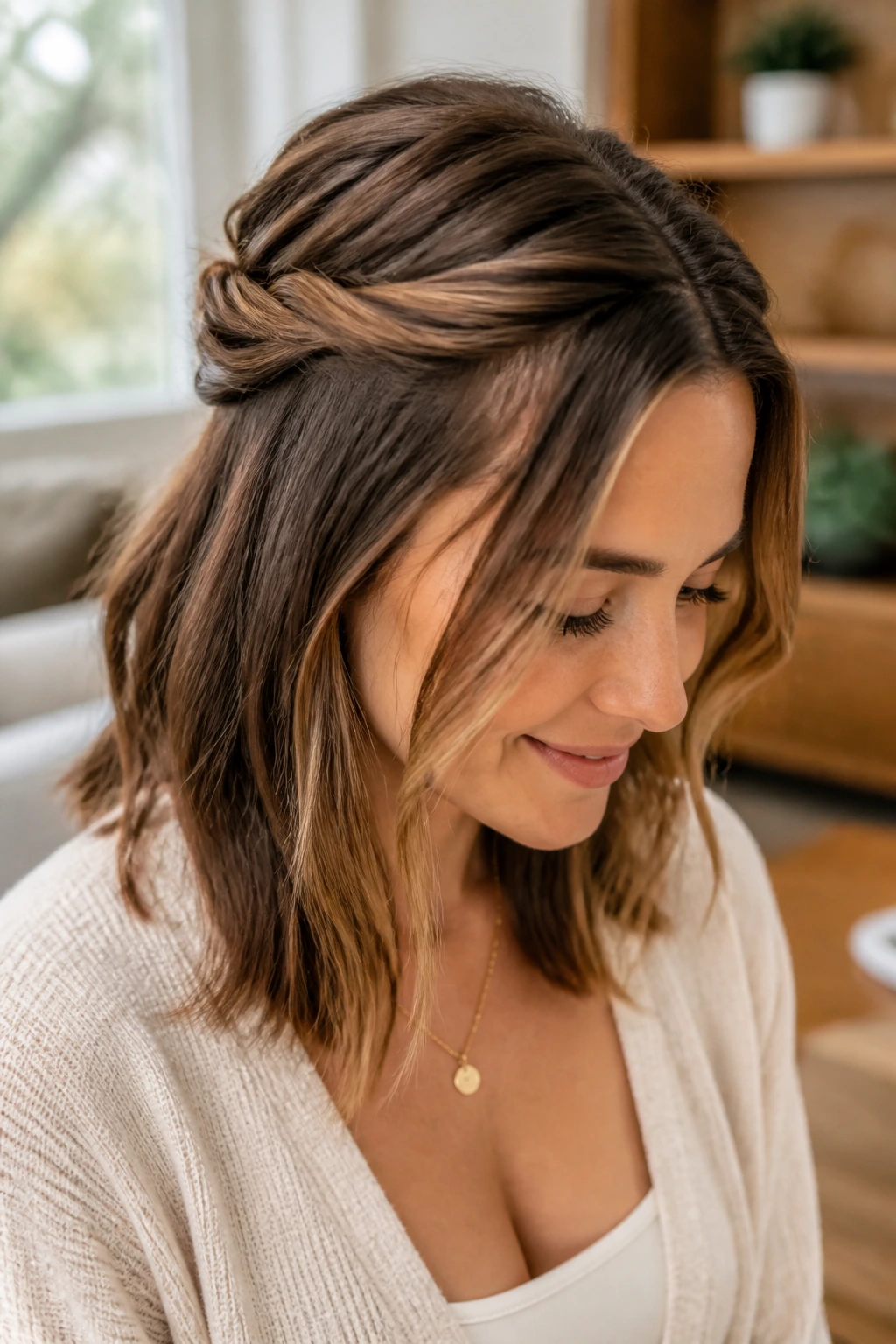
A halo half-up is softer than a full crown braid and easier than it looks. Two front sections twist back toward the middle, and the loose lengths stay down, which keeps the hair moving around the shoulders.
Twist each side from the temples back toward the crown, then pin the two sections together or overlap them. Leave the lower half loose. The style creates a kind of soft frame around the face, which works nicely when the haircut has layers that start at the cheekbone or jaw.
It’s a good option when you want something a little prettier than a clip but not as involved as a braid. The twists hold better if the hair has some texture. Freshly washed hair can slide, so a little dry shampoo at the roots helps.
20. The Hidden Elastic Half Pony
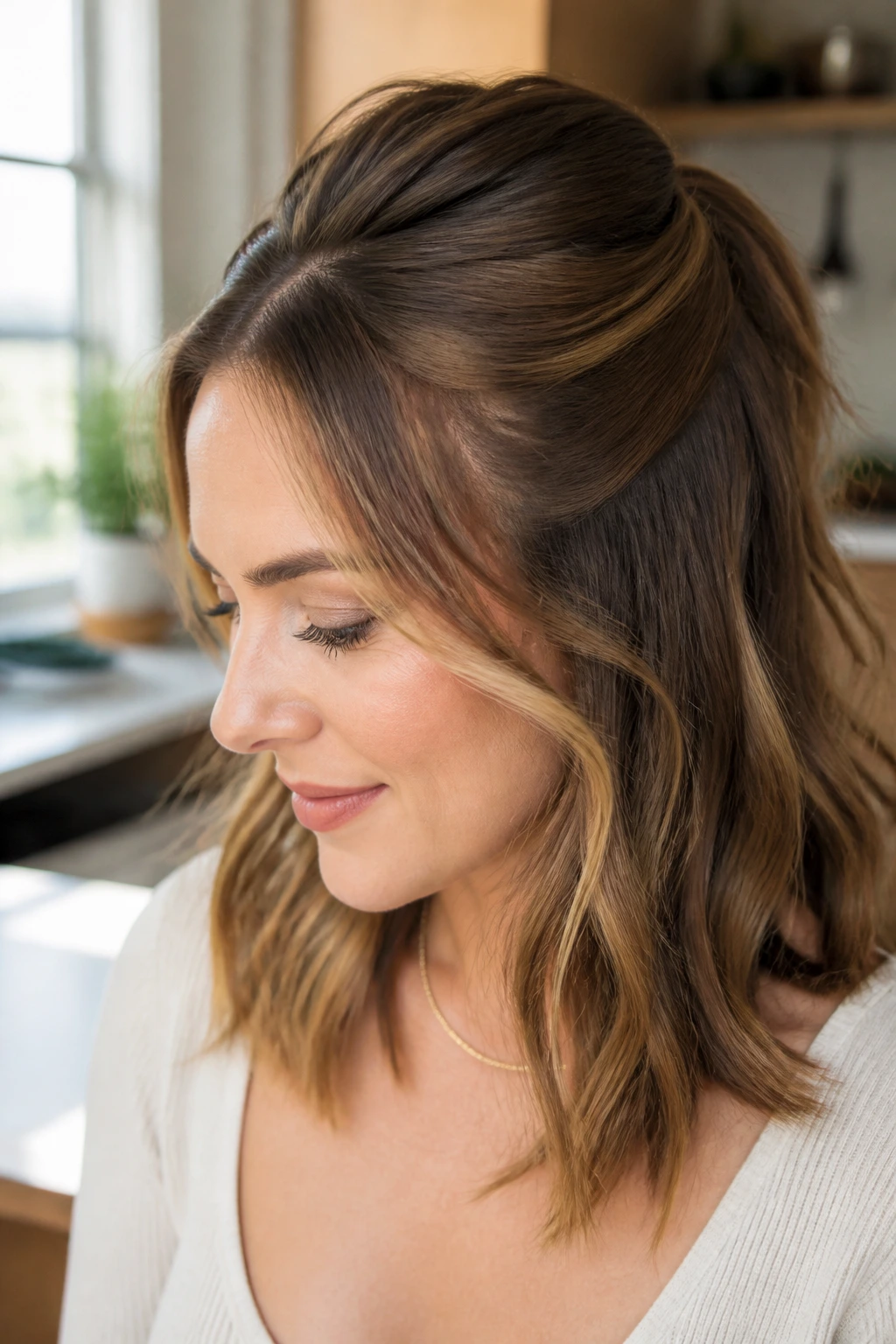
A hidden elastic half pony looks like a standard half-up style until you notice that the hair tie is tucked under a wrapped section. That little disguise keeps the style from feeling juvenile.
Take the top half of the hair, secure it with a small elastic, then pull a thin piece from underneath and wrap it around the tie. Pin the end underneath. Leave the rest loose and let the soft layers frame the sides of the face.
The beauty of this style is that it gives a small lift at the crown without collapsing the rest of the length. It also works on medium hair that tends to puff out when fully tied up. You get control at the top and movement at the bottom.
21. The Soft Flip Ends
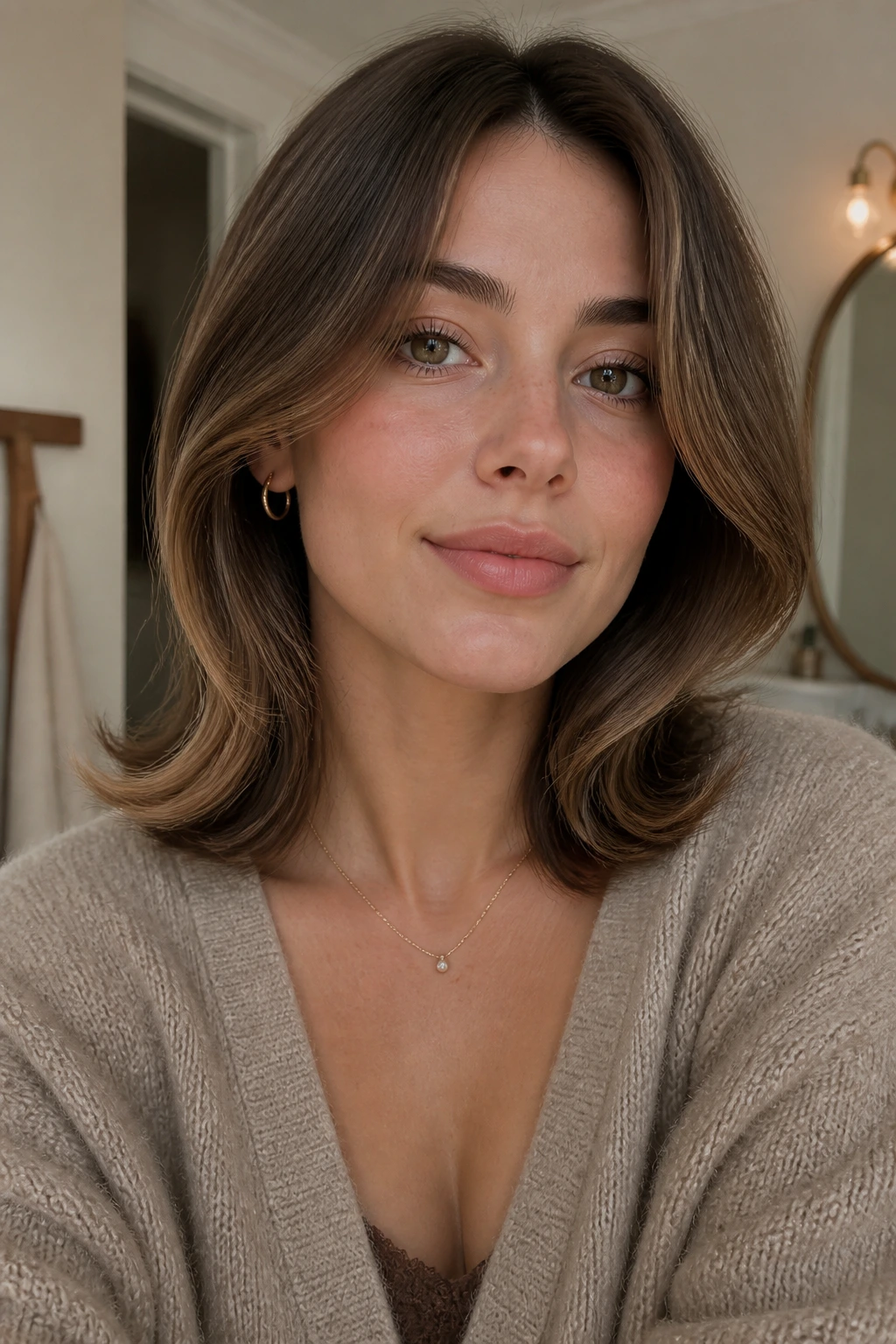
Soft flip ends are the easiest way to make medium hair look deliberately styled with almost no effort. The entire point is that the ends turn away from the neck or toward it in a loose, rounded way.
Use a round brush while drying or a flat iron to bend the bottom inch of hair. Flip the front pieces away from the face and let the rest follow the same loose curve. That lift at the bottom stops soft layers from hanging straight and dull.
This style is handy when you want to keep the haircut visible. A tucked bun hides the shape. A flip shows it. And because the bend starts low, you can leave the crown plain if you’re short on time.
22. The Double Mini Braids
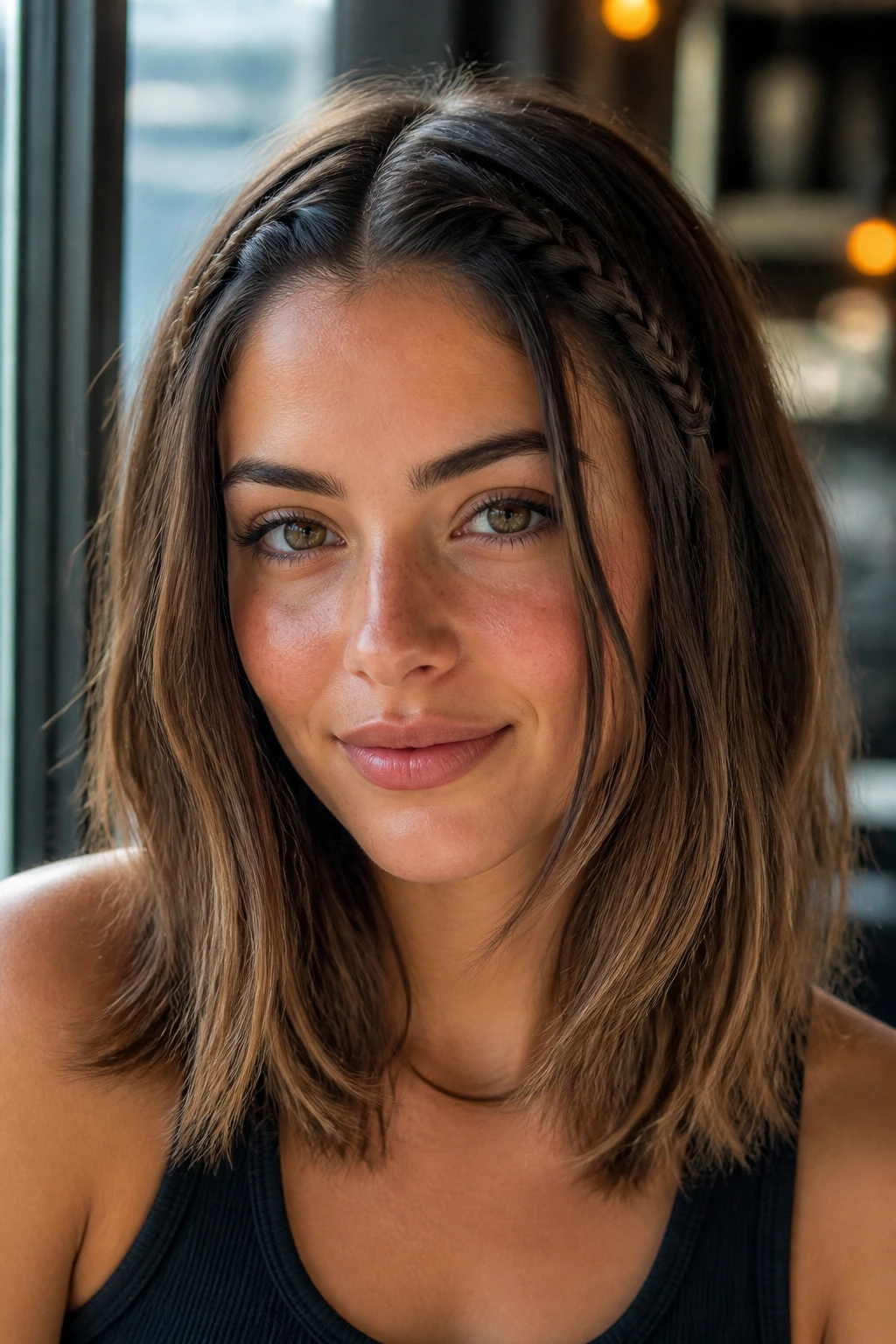
Two tiny braids near the face can do a surprising amount of work. They pull the front pieces away from the eyes, add texture around the cheeks, and keep the rest of the hair free.
Take a thin section from each side, braid it loosely, and tie or pin the ends back along the hairline. The braids should feel almost like an accent, not the whole style. On soft-layered medium hair, that matters because the loose lengths underneath need room to move.
I like this one for straighter hair that needs a little detail. It gives the front a point of interest without asking the back to do anything complicated. If the hair is wavy, the mix of braid and loose texture looks especially natural.
23. The Sleek-Tucked Lob
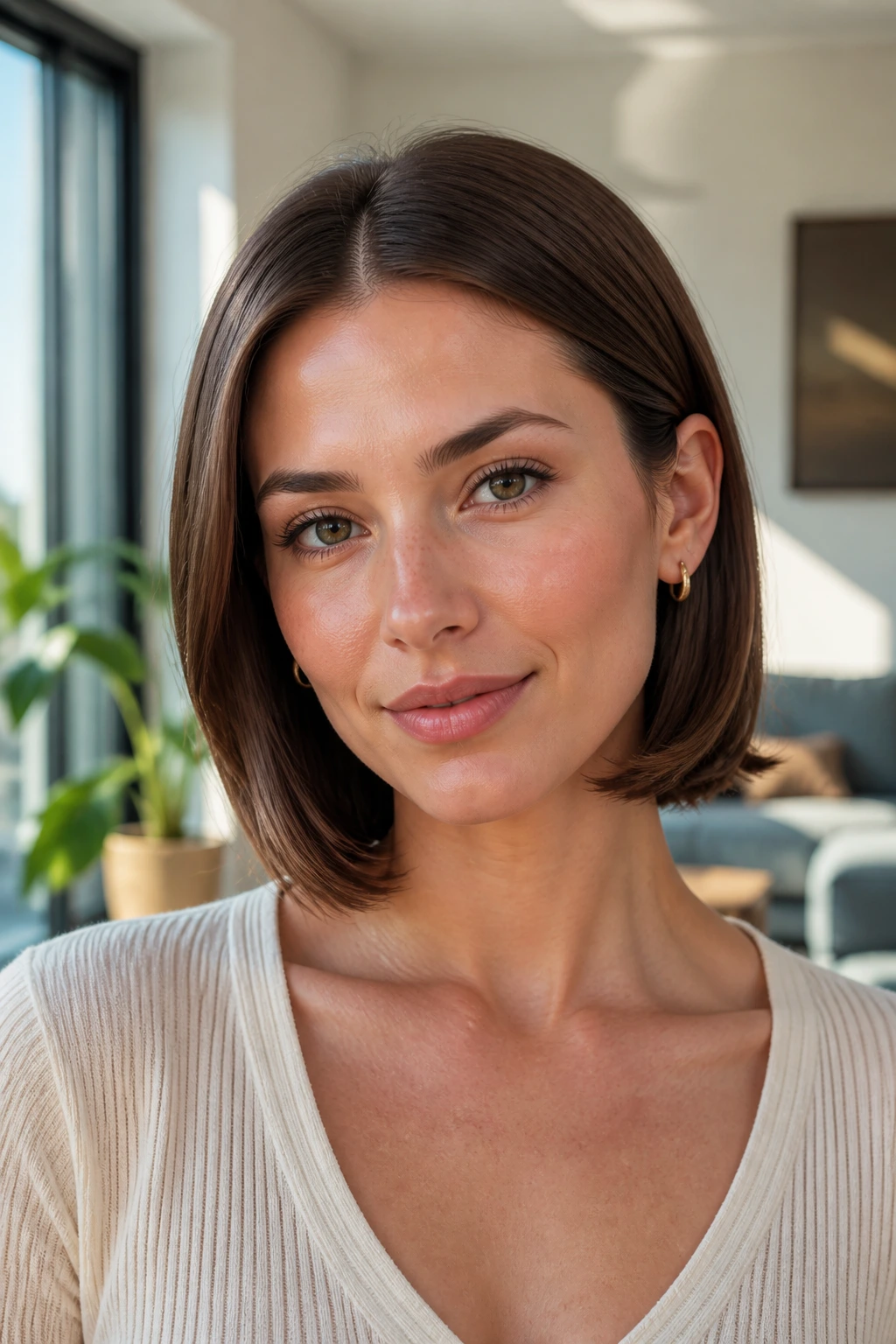
A sleek-tucked lob is what happens when you want polish without losing the softness around the edges. The top stays smooth, the ends are tucked behind the ears or curved inward, and the layers still show through the movement at the bottom.
Use a light smoothing cream on the surface, then blow-dry or flat-iron the hair so it lies close to the head. Tuck both sides behind the ears or leave one side out for a more casual line. The ends should still bend a little. That bend is what stops the style from looking severe.
This is a smart option for medium hair with layered face-framing pieces, because the sleek top makes those layers stand out instead of disappear. It reads neat without feeling stiff. That’s a hard balance, and the cut helps.
24. The Nape Twist with Pins
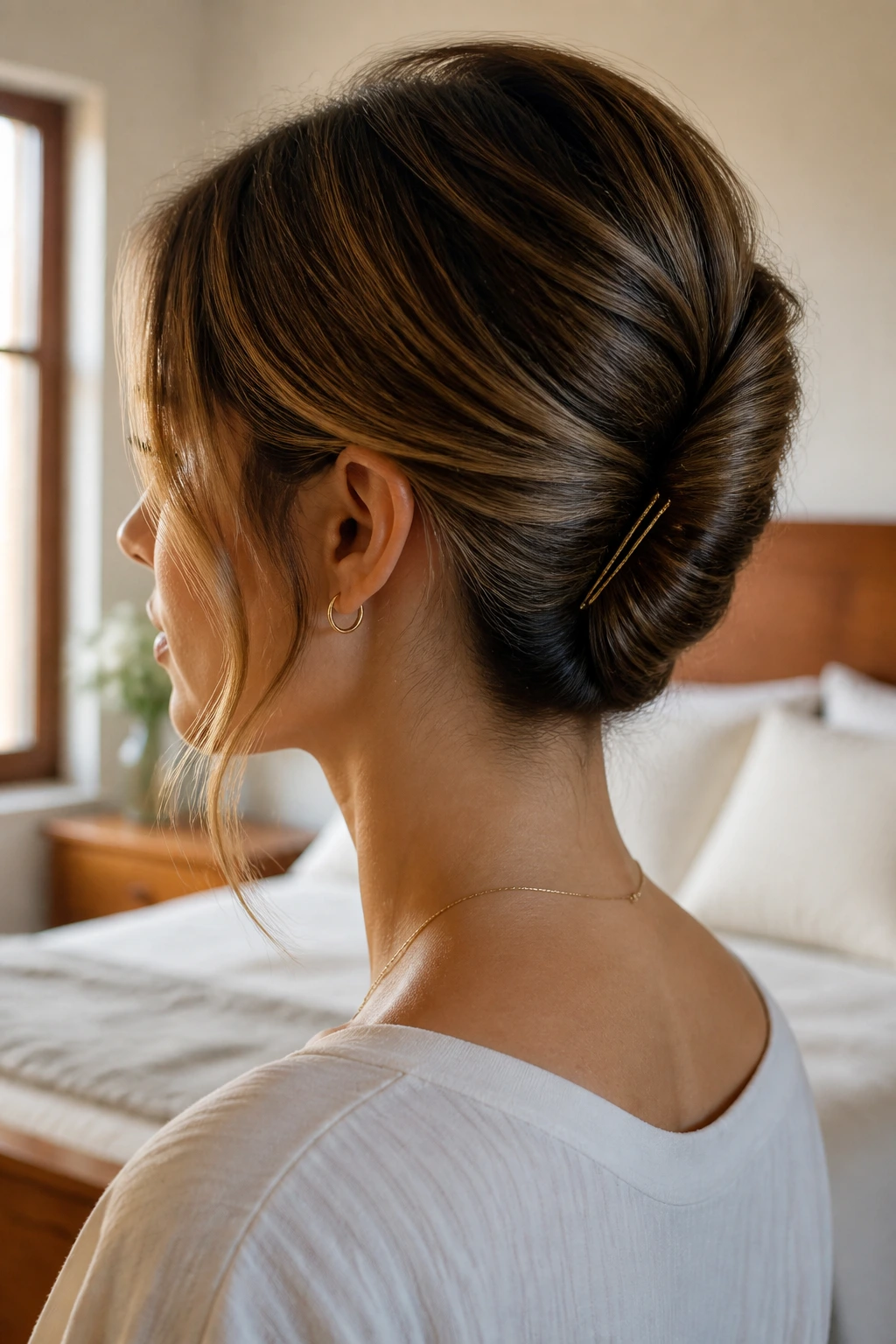
A nape twist with pins is the sort of style that looks like you spent longer on it than you did. The hair is gathered low, twisted upward in a narrow roll, and pinned flat against the back of the head.
The twist sits below the crown, which keeps the top from going flat. Soft layers around the face can stay out, or you can tuck them loosely behind the ears. Either way, the style stays grounded at the neck, where medium hair usually behaves better than it does higher up.
This works especially well if your hair is a bit layered at the ends. Those pieces tuck into the twist more easily than blunt ends, which makes the shape stay cleaner for a longer stretch.
25. The Face-Framing Pony with Curved Ends
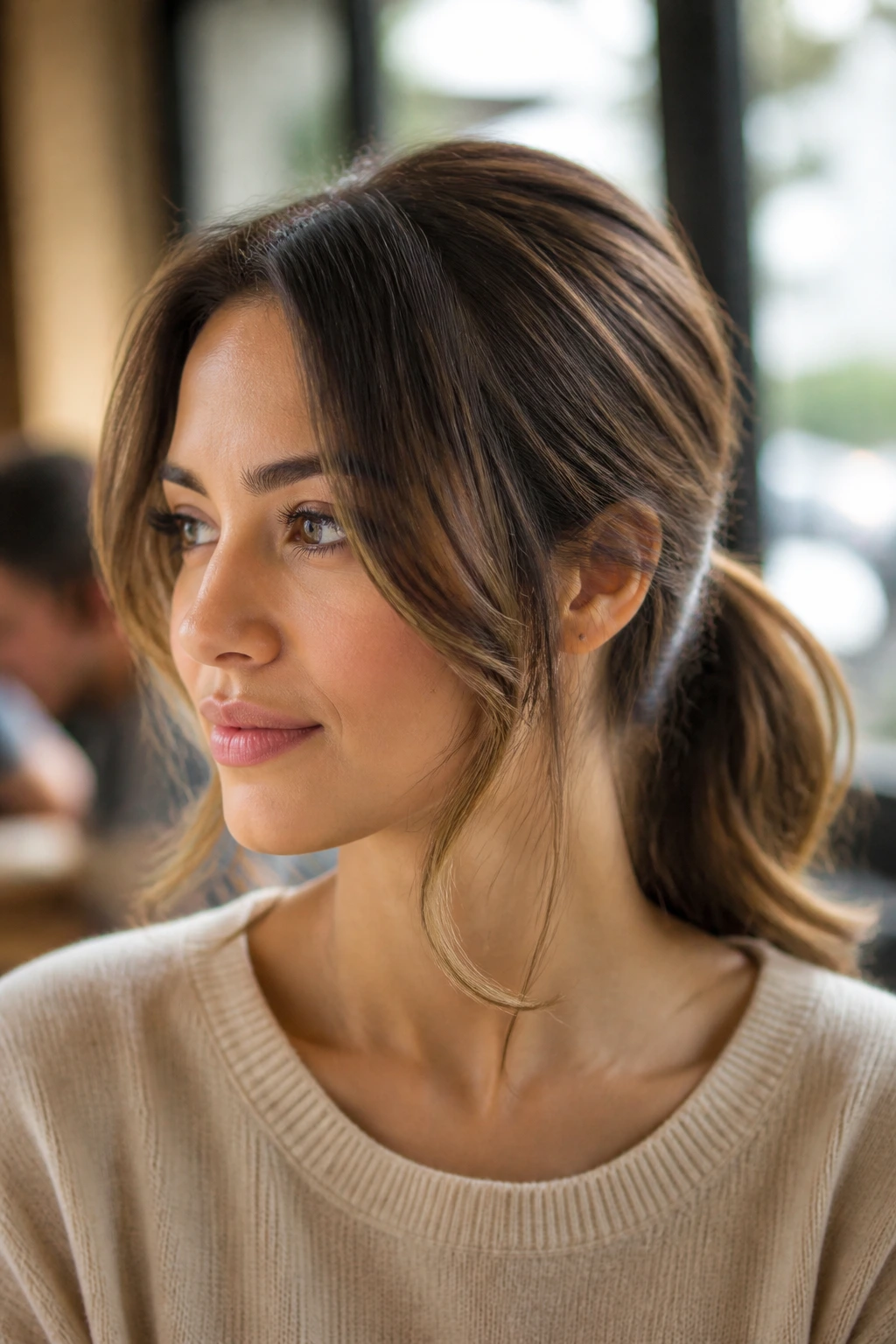
A face-framing ponytail with curved ends is the kind of style I’d recommend to anyone who wants the easiest possible lift without sacrificing the haircut. The pony sits low or mid-height, the front pieces stay loose, and the ends get a little bend so they don’t hang like a rope.
Tie the ponytail, then curl or brush-bend the last few inches of the tail under or away from the face. Pull out a soft strand near each temple. That little bit of curve is what makes medium hair with soft layers look lively instead of tired.
It is one of the most forgiving styles in this whole group. If the elastic is hidden, great. If not, the face-framing pieces carry the look. If the pony is slightly uneven, the curved ends make it seem intentional.
Why Medium Hair with Soft Layers Makes Casual Styling Easier
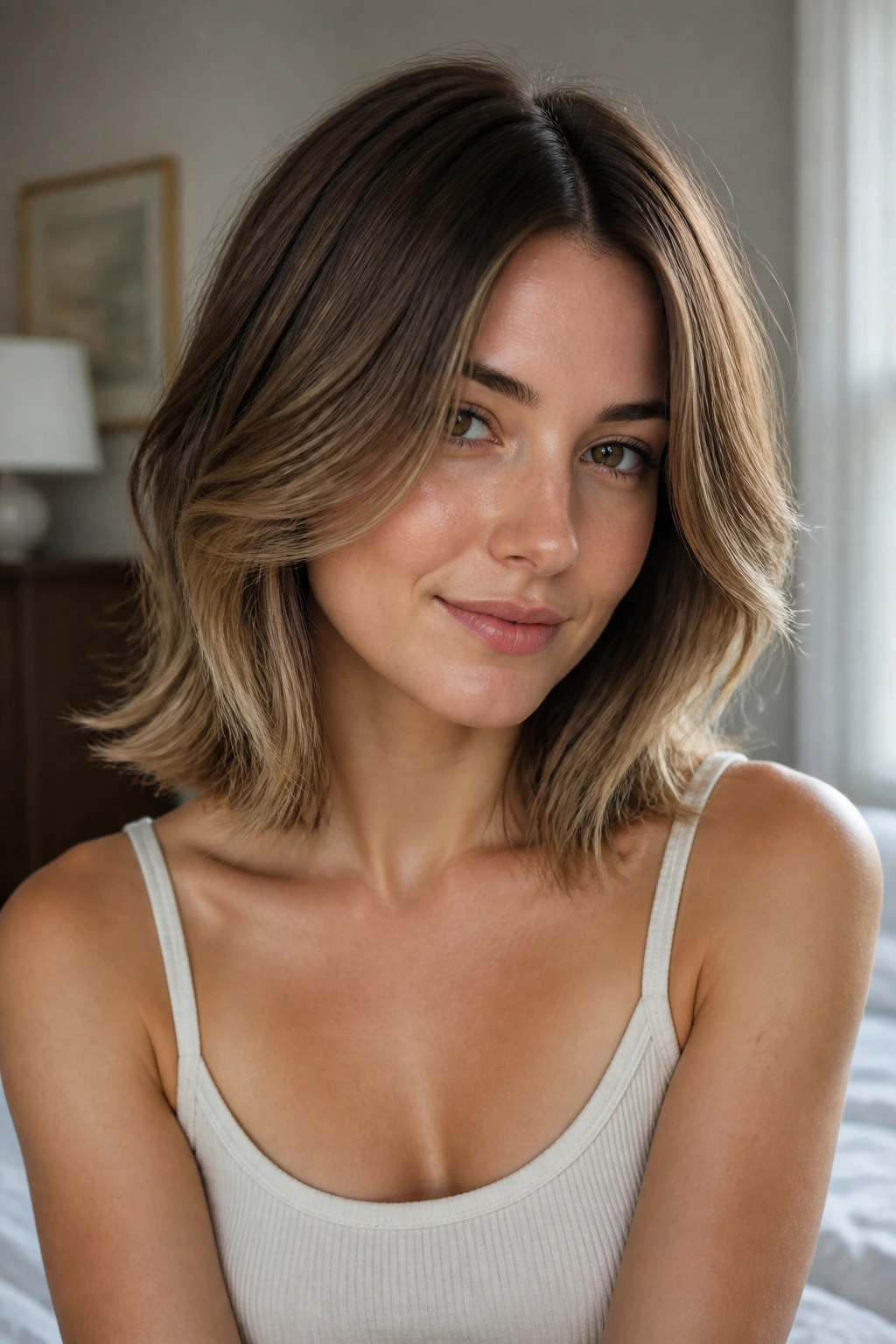
Soft layers change the whole job description of medium hair. Instead of hanging in one blunt block, the hair catches air at the cheekbones, around the collarbone, and through the ends. That gives clips, pins, braids, and low ponies something to work with. A style that would look flat on a one-length cut can look relaxed and textured here because the layers break up the line.
There is also a practical side to this. Medium-length hair does not need a giant bun to stay contained, and it does not drag itself down the way longer hair can. The length is manageable in the hand. The layers keep it from feeling heavy. That’s a useful combination when you’re trying to get out the door without a hot-tool production.
Soft face-framing layers are the secret weapon. They soften hard edges near the jaw and cheekbones, which means even the neatest styles feel wearable. You can pin the back, leave the front loose, or tuck one side and still keep the haircut visible. That flexibility is why this cut works so well with casual styling.
Essential Tools for These Hairstyles
- Small clear elastics: Good for half-up styles, bubble ponytails, and hidden-tie tricks without adding bulk.
- Bobby pins in two sizes: Standard pins for most twists, and smaller ones for face-framing pieces or tiny braids.
- Medium claw clip: The sweet spot for shoulder-length hair; big clips can slip, small ones can pinch.
- Tail comb: Makes clean parts, sectioning for braids, and root lifts much easier.
- Soft-bristle brush or paddle brush: Useful for smoothing the crown without flattening the layers.
- 1-inch or 1.25-inch curling iron: Best for loose bends and soft flips on medium lengths.
- Blow-dryer or blow-dryer brush: Helps shape curtain pieces, flips, and smooth top sections.
- Heat protectant spray: Use it before any hot tool; soft layers show damage fast because the ends are visible.
- Dry shampoo: Adds grip at the roots and keeps second-day styles from sliding.
- Texturizing spray: Gives braids, twists, and half-up styles enough bite to hold shape.
- Flexible-hold hairspray: Keeps frizz in check without freezing the layers in place.
- Hand mirror: Handy for checking the back of twists and clip placement, especially with low buns.
How to Prep Medium Hair with Soft Layers Before Styling
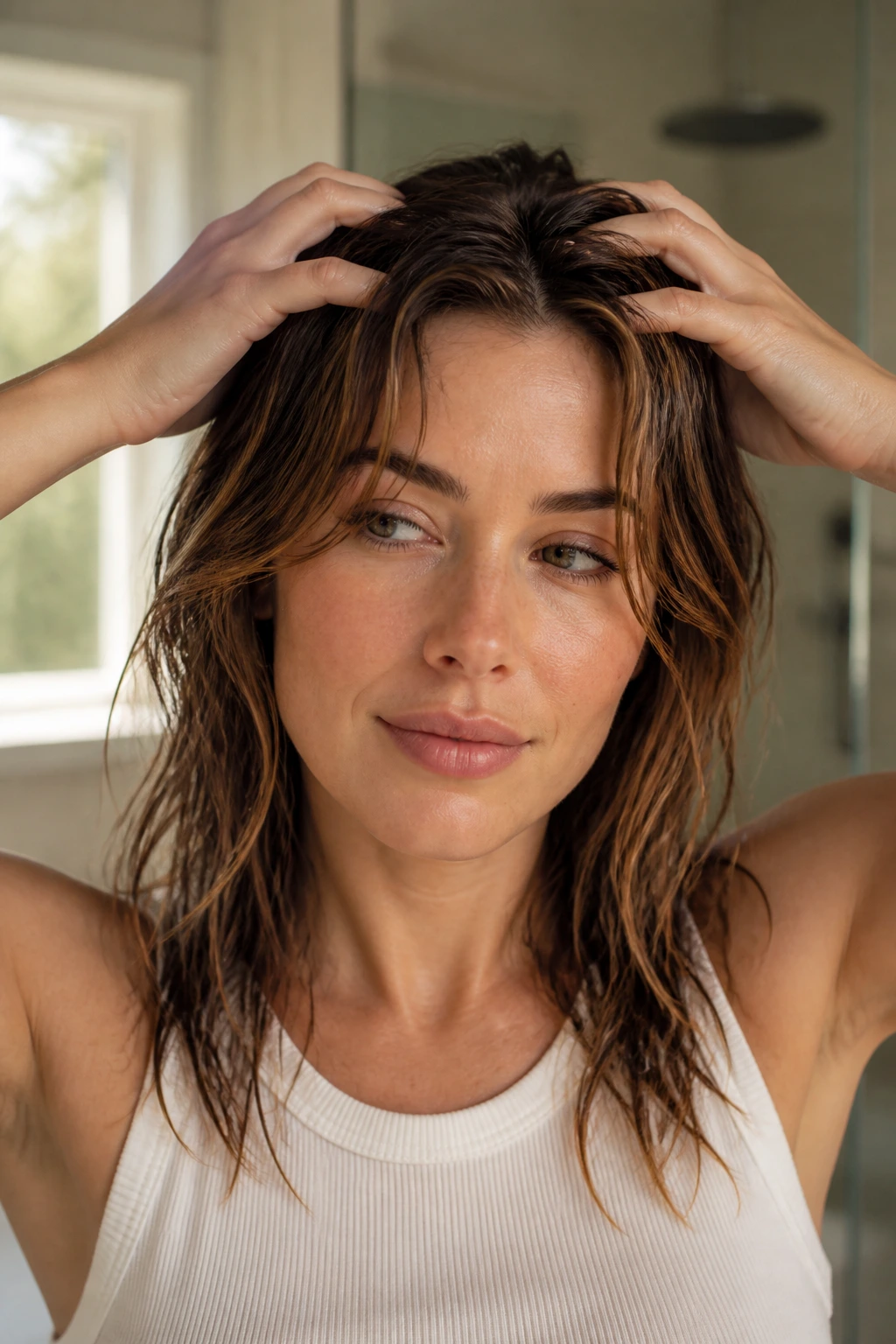
Freshly washed hair looks clean. It also slips out of everything. That’s the part people leave out. For casual hairstyles on medium hair with soft layers, a little lived-in texture usually helps more than squeaky-clean softness. If the hair is very slippery, a small amount of dry shampoo at the roots and a light spray of texture product through the mids can make the style hold better without turning it rough.
Sectioning matters more than most people think. Soft layers around the face want to fall where they want to fall, which is lovely until you try to pin them all at once. Separate the front pieces first, then work the back. If you wait until the end, the pieces around the cheekbones tend to get pulled too tight and lose their shape.
Heat is useful, but not for every style. A quick bend at the ends or the front sections can make a style look finished in a way air-dried hair sometimes misses. Use heat protectant first, and keep the temperature moderate. Medium hair with soft layers does not need high heat to show movement; it needs direction.
Practical Tips for Getting the Most Out of These Styles
Root Lift: If the top goes flat fast, lift the crown with a comb and a short burst of dry shampoo before you pin or clip anything. Flat roots make every style feel older and heavier.
Face-Framing Control: Pull out the front pieces before you secure the rest of the hair. If you leave that step until the end, you’ll end up tugging too much and the face frame loses its softness.
Grip Without Crunch: Use texture spray at the mids, not the roots, when you want braids or twists to stay put. Roots need lift; lengths need friction. Different jobs.
Time-Saver: Keep a small elastic, two bobby pins, and a clip in one drawer or pouch. Most of these styles need the same three tools, and hunting for them wastes more time than the styling itself.
Pro Move: For low ponytails and buns, wrap a thin strand of hair around the elastic. It takes ten seconds and makes the style look more finished than a bare band ever does.
If the Ends Flip Oddly: Don’t fight every piece. Soft layers will sometimes kick out in different directions, and that can look better than smoothing them into one flat line.
Common Mistakes That Make Soft-Layered Hair Look Flat
The biggest mistake is pulling everything back too tight. Soft layers need a little give, especially around the face. If you yank the front sections cleanly into a ponytail or bun, the haircut loses its shape and the style starts looking borrowed from a different head.
Another common problem is using too much cream or oil. Medium hair with layers can show product buildup fast, especially on the ends. The hair starts separating in slimy-looking strings instead of moving in soft pieces. Use a small amount, spread it through the fingers first, and keep it off the roots unless the hair is truly frizzy.
People also skip texture before using clips or braids. That’s why the style slides out by lunch. A touch of dry shampoo or texturizing spray changes the grip enough to matter. You do not need a gritty finish. You do need something the hair can hold onto.
One more: leaving the front pieces untouched and assuming they’ll “fall out naturally.” Sometimes they do. Often they get trapped in the wrong place and sit awkwardly beside the cheek. Decide where the face-framing pieces should live before you secure the style. It saves you from constant readjusting.
Variations and Alternatives to Try
For Fine, Slippery Hair: Pick styles that use dry shampoo, braids, or wrapped elastics. Fine hair usually needs more grip at the roots and less weight in the back, so clipped half-up looks and bubble ponytails hold better than oversized buns.
For Thicker Hair: Use stronger clips, more pins, and lower placement. Thick medium hair can overwhelm tiny accessories, and high ponytails can feel heavy fast. A low knot or low pony gives the shape better support.
For Wavy or Curly Hair: Skip full smoothing. Let the texture lead and choose styles that leave the ends visible, like the side-swept ear tuck or the scarf-tied ponytail. A wave pattern looks better when it’s not pinned into submission.
For Straight Hair: Add bend at the ends before styling. Straight hair can make the same twists look too neat, so a little curve from a flat iron or round brush helps the layers stand out.
For Shorter Face-Framing Layers: Favor half-up styles, pinned-back waves, and loose braids. If the front pieces are too short for a ponytail, stop forcing them into one. Let them frame the face and work with that length instead of against it.
Keeping the Style Alive Through the Day
A style that looks good at 8 a.m. and limp by lunch is not much use. Soft layers on medium hair usually do better when the roots have a little texture from the start, because that grip slows the collapse. If the hair feels too clean, refresh the roots before you style. If it gets flat later, flip the part or lift the crown with your fingers and a touch more dry shampoo.
Night care matters too. Loose styles survive better if you secure them with a silk scrunchie or clip before bed rather than sleeping with everything pinned hard against the head. A soft pony, a loose braid, or even a loose twist can keep the mid-lengths from tangling and save you a little styling time the next morning.
For second-day wear, warm the front pieces between your fingers, smooth the part, and mist the ends lightly with water or a leave-in spray if they’ve gone dry. That tiny reset works better than redoing the whole head.
Frequently Asked Questions
Which styles work best if my layers are heavily face-framing?
Half-up looks, side tucks, and loose braids are the safest bets. They let the shorter front pieces stay visible instead of trying to trap them inside a tight ponytail or bun.
Do these styles work better on clean or second-day hair?
Second-day hair usually holds pins and elastics better because it has more grip. If your hair is freshly washed, add dry shampoo at the roots first so the style does not slide around.
How do I stop bobby pins from slipping out?
Cross two pins in an X shape and push them in with the wavy side facing the scalp. That grip matters more than the pin itself, and it works especially well for twists and side tucks.
What if my medium hair is very straight and smooth?
Add texture before styling. A quick bend with a curling iron, a mist of dry shampoo, or a rough blow-dry gives the layers enough roughness to hold clips and braids.
Can curly hair do these looks too?
Yes, but the best versions leave the curl pattern intact. A low bun, scarf ponytail, or pinned-back wave trio works better than styles that demand a glass-smooth finish.
How short can the face-framing layers be and still work in these styles?
Even shorter cheekbone pieces can work if you stop trying to force them into the main ponytail. Leave them out, pin them back loosely, or let them fall beside the ear.
What if my crown goes flat after an hour?
Lift the roots with your fingers, add a bit of dry shampoo, and change the part slightly. A tiny shift in placement often does more than adding more hairspray.
Can I do these without heat tools?
Absolutely. The braid, clip, knot, and tucked styles do not need heat at all. For the smoother looks, air-dry with a little texture product or sleep in loose braids to create bend overnight.
The Shape That Moves With You
Medium hair with soft layers is forgiving in the best way. It gives you enough structure to build on, but enough movement that the style never has to look stiff. That balance is why these casual looks work so well: they borrow from the cut instead of flattening it under pins, sprays, and rules.
If your mornings are busy, keep the small gear close — a claw clip, a few bobby pins, a dry shampoo, maybe one good elastic that doesn’t snag. The difference between a rushed hair day and a decent one is often two minutes and one better tool. That’s not glamorous. It is useful.
And useful wins. Every time.