



A bob can sharpen a square face in a hurry if the line is wrong. The same cut can also soften it, slim the jaw a little, and make the whole head shape feel lighter if the wave lands in the right place. That’s why wavy bobs for older women and square faces work so well when the movement is built into the cut instead of added as an afterthought.
The trick is not “more hair.” It’s smarter hair. A wave that starts below the cheekbone, a part that sits off-center, a front piece that bends away from the jaw instead of stopping on it — those small choices matter far more than most salon chatter gives them credit for. And once hair starts to lose a little density or shine, which happens to nearly everyone at some point, a blunt one-length bob can turn severe fast. A wavy bob usually does the opposite.
These 25 shapes cover the full range: low-maintenance air-dry cuts, polished bobs with a little swing, fringe-heavy versions, and longer bobs that graze the collarbone. Some are good for fine hair. Some calm down thick, triangular hair. Some are made for glasses wearers, silver strands, or anyone who wants a cut that doesn’t need ten minutes of heat styling to look alive. The common thread is simple. They all break up hard angles without making the hair look fussy.
Why These 25 Cuts Keep a Square Jaw from Looking Boxy

- They bend the eye, not the face: Soft waves interrupt the straight line that tends to emphasize a square jaw, which is why the cut looks gentler than a pin-straight bob.
- They work with changing texture: When hair gets finer, drier, or a little coarser, movement keeps it from sitting flat against the head.
- They leave room for glasses and earrings: A bob that stops cleanly at the jaw can fight your frames or crowd your neckline; a wavy version usually plays nicer.
- They’re easier to refresh: You do not need a perfect blowout every morning. A quick bend with a wand or a scrunch of mousse can bring the shape back.
- They look good with gray hair: Silver and salt-and-pepper strands catch light differently, and waves show that off instead of flattening it.
- They can be tailored hard or soft: The same basic bob can feel sleek, shaggy, French, or modern depending on the part, fringe, and layering.
1. Chin-Length Bob with Side-Swept Waves
A chin-length bob can be a little dangerous on a square face if it lands flat and straight. Put a loose side-swept wave into it, though, and the cut starts to do a much better job of softening the jaw instead of sitting on top of it. The sweet spot is just below the chin, where the front pieces brush the jawline rather than ending right on it.
Why the side sweep matters
A side part breaks up the symmetry that makes square faces look extra angular. It also gives the crown a bit of lift, which is useful if hair has started to lie lower than it used to. Keep the wave loose — not ringlet-y — so the shape feels airy, not busy.
- Front length: just under the chin
- Best part: deep or soft side part
- Best styling tool: 1-inch curling iron or flat iron bend
- Works especially well on: medium-density hair
Tip: Leave the last inch of the ends straighter than the rest. That little detail keeps the bob modern instead of puffy.
2. Collarbone Bob with Feathered Ends
This is the safest cut in the bunch, and I mean that in the best way. A collarbone bob gives you room to move, room to curl, and room to grow it out without panic. The feathered ends keep it from looking heavy, which matters if your hair has gotten thicker through the years or if the jawline already feels strong on its own.
What makes this version kind to a square face is the length. It slips past the jaw, so the eye doesn’t stop there. Add soft bends from cheekbone to collarbone, and the cut feels long enough to slim without crossing into true long-hair territory.
Use a light mousse at the roots and a wave spray through the mid-lengths. The whole point is swing, not stiffness. If the ends fan out like a shelf, you’ve gone too far.
3. French Bob with a Long, Soft Fringe

Can a French bob work on a square face? Yes, if the fringe is soft and the wave stays loose. The hard, graphic version of this cut can look sharp in a way that fights the jaw. The gentler version — chin to jaw length, with a slightly longer fringe that grazes the brows — brings all the charm without the harsh edge.
What to ask for
Tell your stylist you want the fringe to split easily and the ends to be point-cut, not chopped straight across. That keeps the front from sitting like a helmet. On older hair, this matters more than people think because blunt fringe plus blunt bob can feel boxy very fast.
This cut suits women who like a little structure but do not want a fussy style. It also works well with silver or white hair, since the shorter length makes the texture look deliberate.
4. Angled Bob with Loose S-Bends
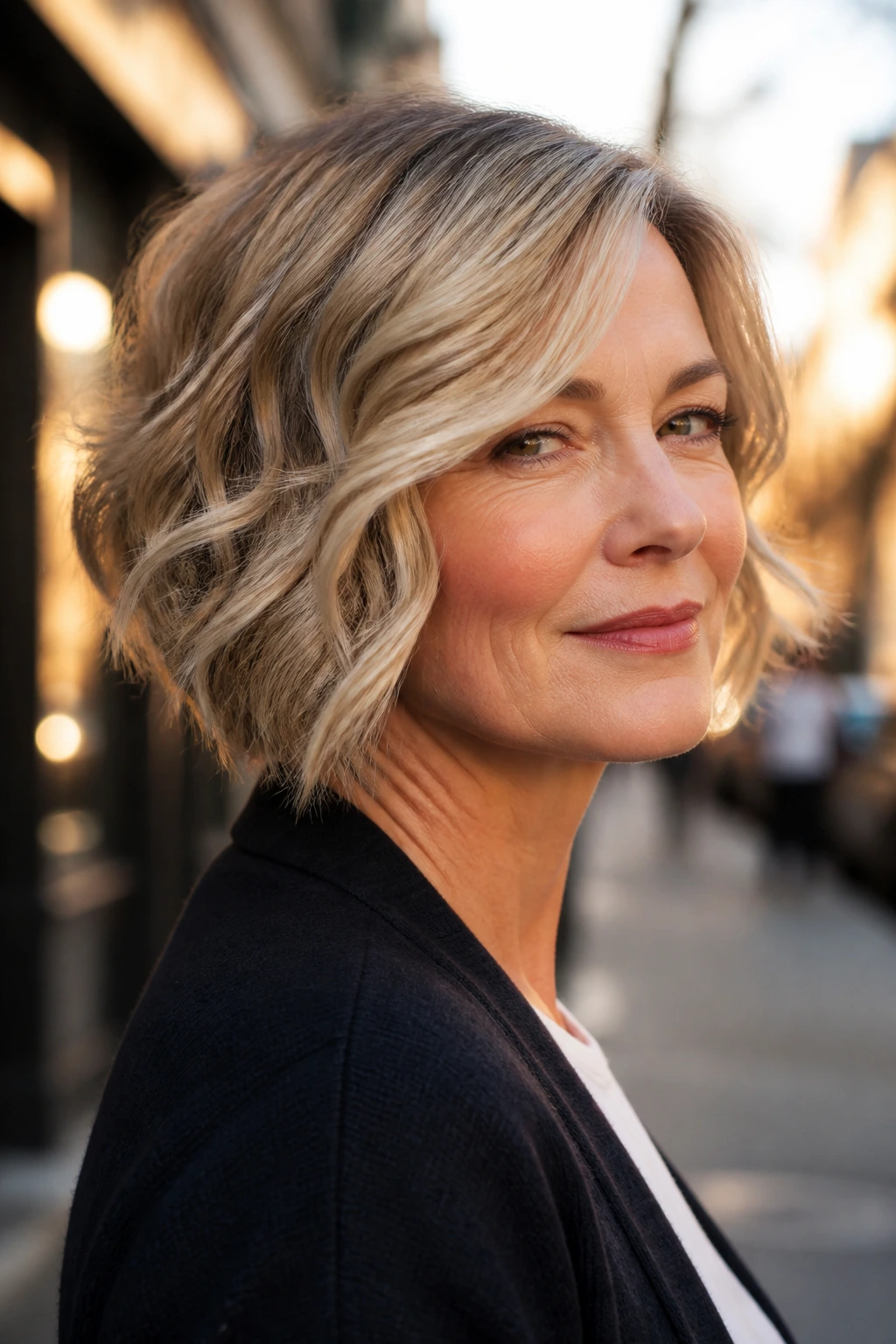
An angled bob gives square faces a useful trick: it nudges the eye downward in a diagonal line instead of letting it sit on the jaw. Add loose S-bends and the shape feels softer, longer, and less square all at once. The front can sit at chin length while the back stays a touch shorter, which keeps the neck open.
This is one of those cuts that looks best when the wave is imperfect. A few pieces can bend more than others. Good. That unevenness is what keeps it from reading as overstyled. Use a flat iron or curling wand to create alternating bends, then rake through with your fingers once the hair cools.
If you have denser hair, ask for internal weight removal, not razor-thin ends. You want movement, not frizz.
5. Layered Bob with Curtain Bangs

Curtain bangs and a bob are a natural pair for square faces because they split the visual width across the forehead instead of adding one hard line. The layers around the face should start below the cheekbone, where they can skim the jaw without clinging to it. That small bit of distance is doing a lot of work.
How to wear it
Part the fringe slightly off center and let the waves fall away from the temples. That opens the face and keeps the bob from boxing you in. If your hair is fine, ask for invisible layers so the cut keeps fullness at the perimeter.
This version has one big advantage: it grows out gracefully. The bangs lengthen into face-framing pieces, and the bob turns into a longer lob without awkward stages. Handy. Very handy.
6. Deep Side-Parted Bob with Crown Lift
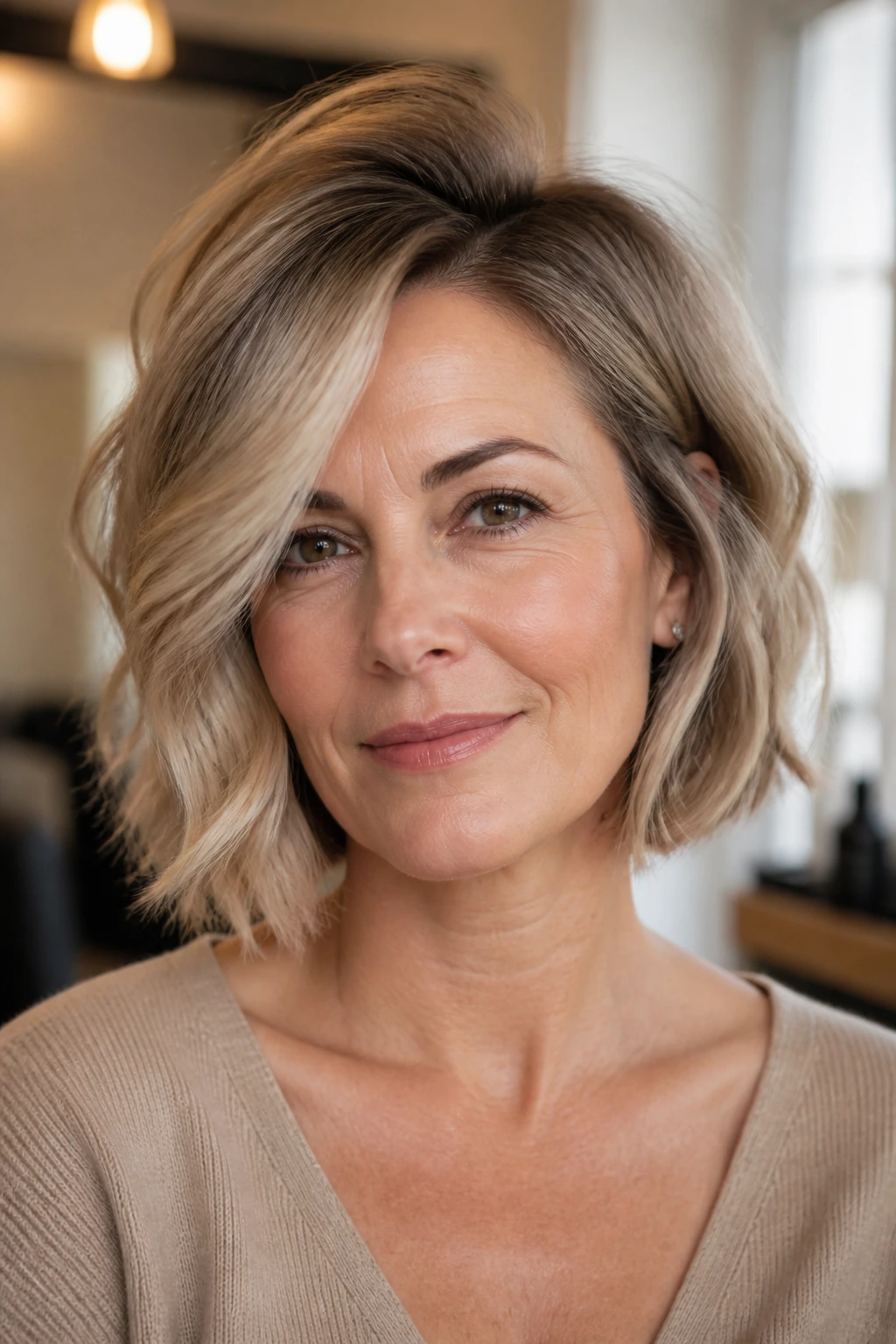
A deep side part is one of the easiest fixes for a square face, and I wish more people used it. It creates an asymmetrical line at the top of the head, which softens the jaw before the hair even starts moving. Add a bob that sits between the chin and the collarbone, and you get lift where older hair often needs it most: the crown.
This shape is especially good if your hair has lost a little root volume. Blow-dry the roots up and away from the part, then bend the lengths loosely under or away from the face. Don’t overthink the curl pattern. The goal is movement at the top, not a pageant curl at the bottom.
The side part also helps if one side of your face feels stronger than the other. Most faces are not perfectly even. Thank goodness.
7. Jaw-Skimming Bob with Piecey Texture
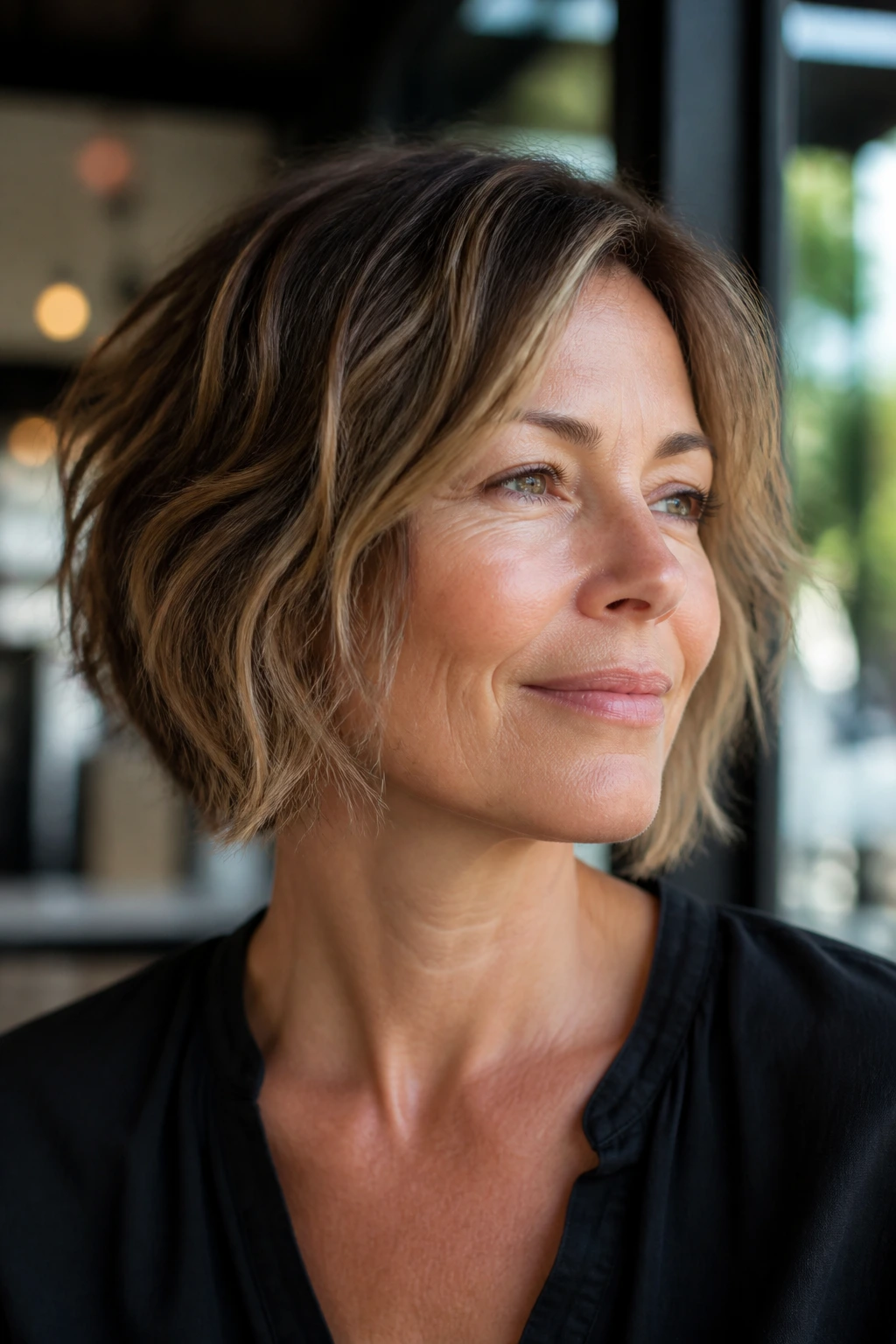
A jaw-skimming bob can either be your best friend or your worst enemy. On square faces, the difference is in the texture. Keep it piecey and separated, and the cut looks modern, lightly edgy, and much less boxy than a blunt finish would. The pieces should move around the jaw instead of forming a solid line along it.
Quick details that matter
- Ask for point-cutting at the ends.
- Keep the wave loose and directional.
- Use texture spray on dry hair, not wet hair.
- Avoid a heavy, uniform bend at the ends.
This cut works best when it has a little grit. Too polished, and the jawline becomes the star of the show. A bit of separation takes that pressure off.
8. Rounded Graduated Bob
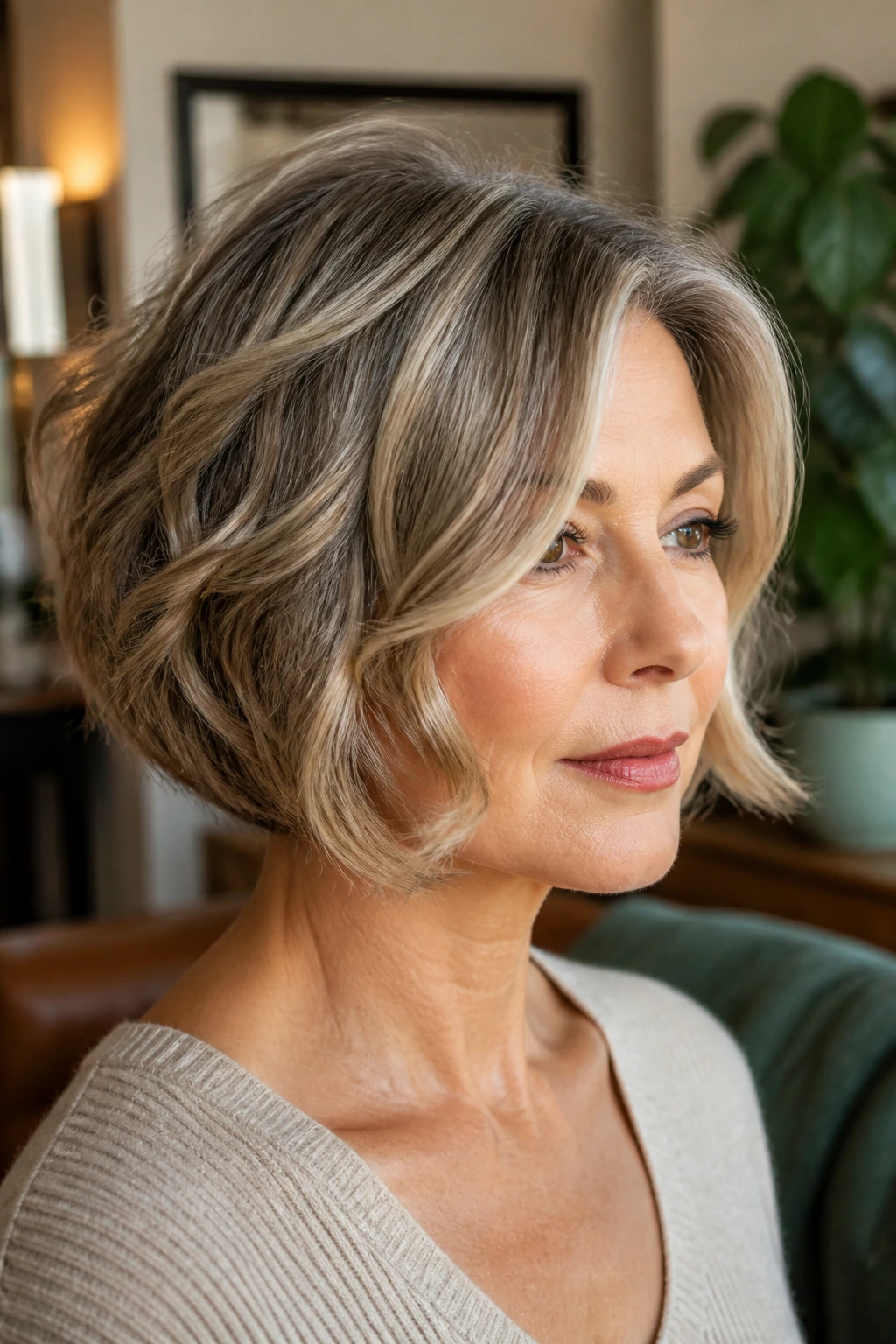
A graduated bob builds fullness at the back and tapers toward the front. On a square face, that rounded back can help the overall silhouette feel softer, especially if the front pieces slide a little below the chin. It’s one of the better choices for women who want shape without a lot of daily styling.
The danger here is overbuilding the back. If the graduation is too steep, the head can look stacked and dated. Keep it subtle. The front should still have enough length to sweep around the jaw, and the wave should live mostly through the sides, not just the ends.
This is a strong option for thicker hair. The cut gives body a place to go, which prevents that heavy triangle look.
9. Lob with Face-Framing Layers
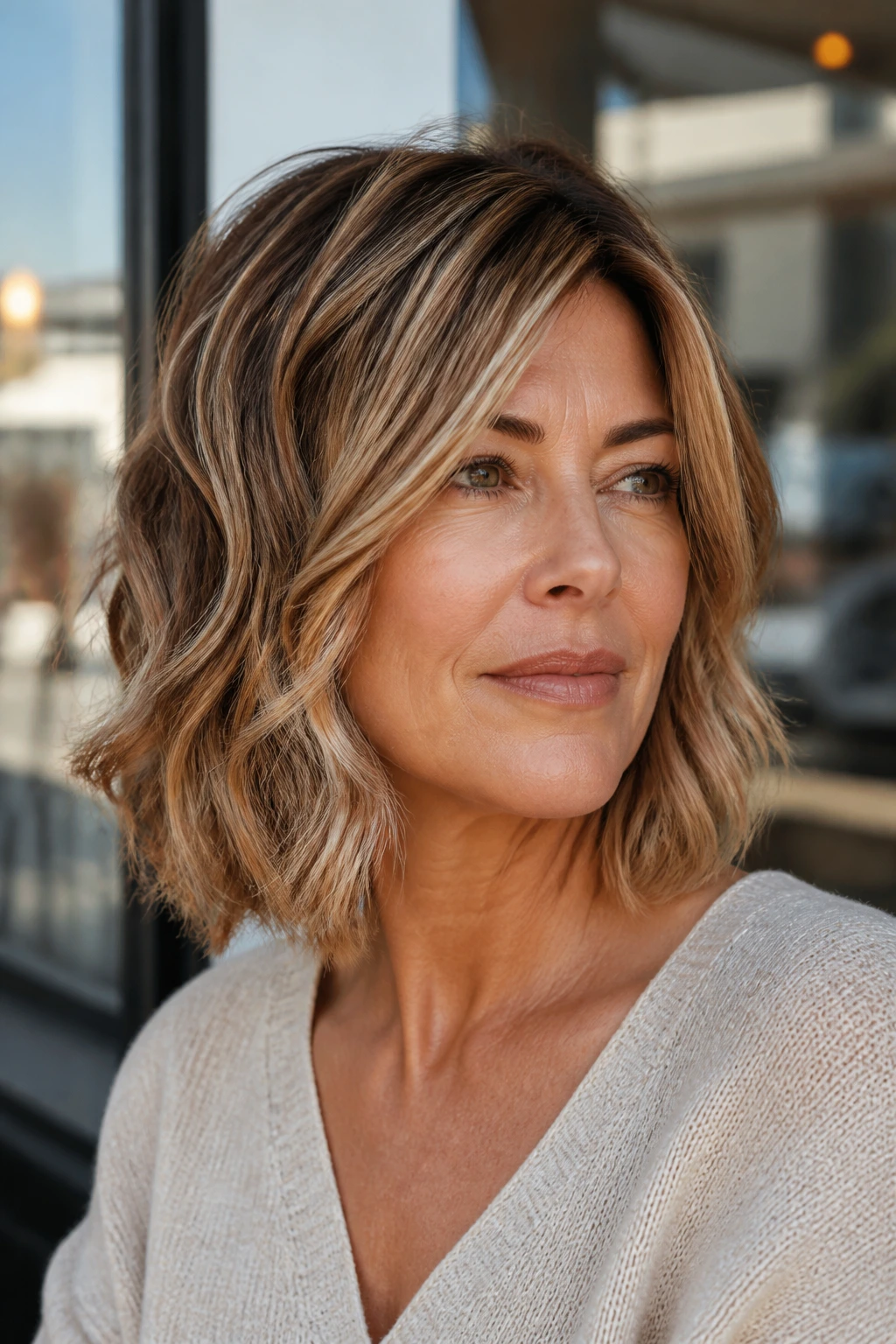
A lob is the easiest answer when you want the bob idea without giving up length. Face-framing layers let the cut skim around a square jaw instead of sitting on it, and the extra inches make the shape feel softer on mature features. It’s also one of the best cuts for people who still like to tuck some hair behind one ear.
The layers should start around the cheekbone or just under it. Too high, and the face framing turns choppy. Too low, and the cut reads as plain long hair with a wave. The middle is where the good stuff happens.
Use this if you want a cut that works with air-drying, curling, or a quick bend with a large barrel iron. It is flexible in a way shorter bobs sometimes are not.
10. Diffused Wavy Bob for Natural Texture
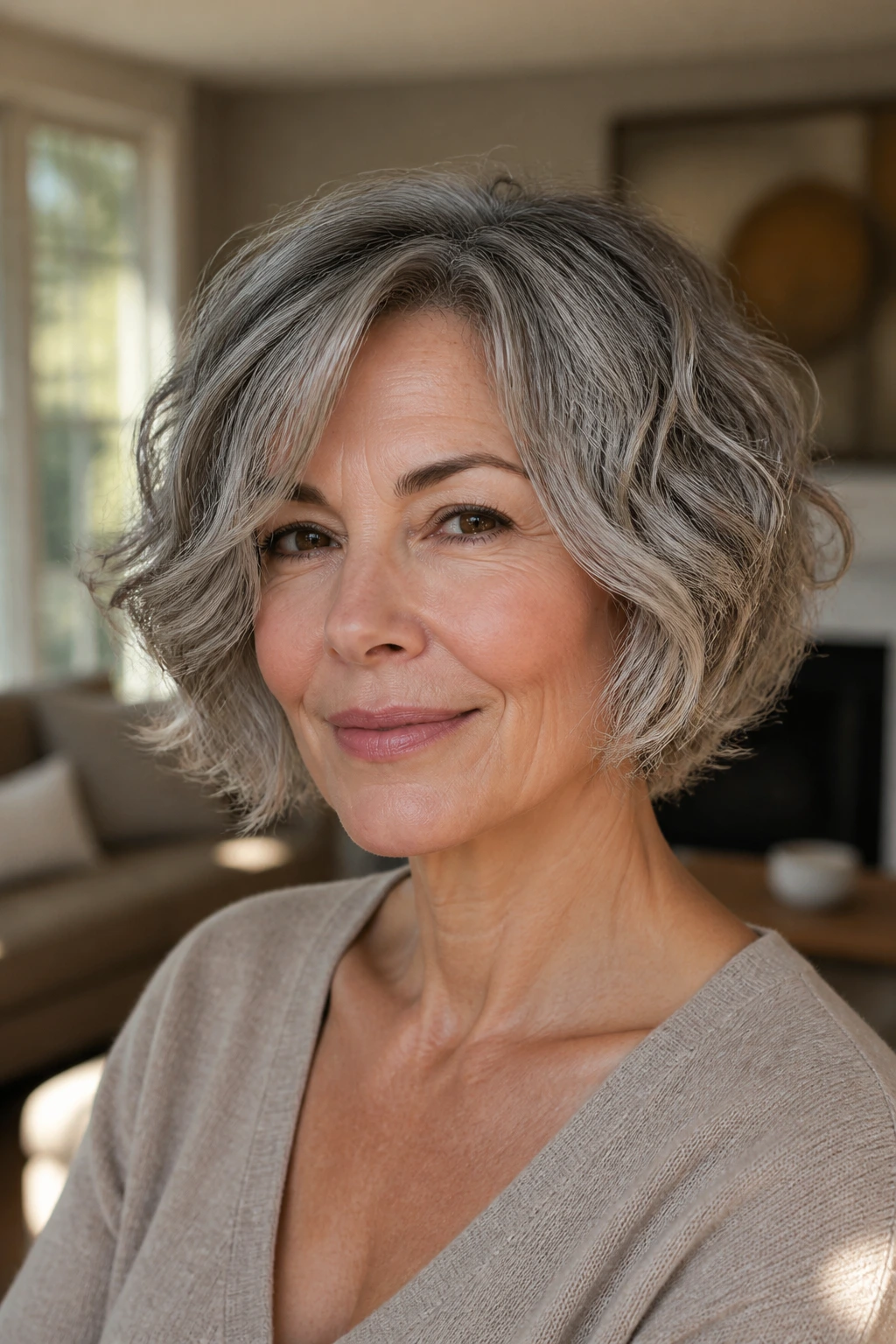
If your hair already waves on its own, stop fighting it. A diffused bob keeps the natural pattern in place and lets the haircut do the shaping instead of the iron. On square faces, that has a nice effect: the texture breaks up the outline of the jaw without looking too styled.
The best version usually lands at the chin or just above the collarbone. Scrunch in mousse, diffuse until the roots are dry and lifted, then stop before the hair turns puffy. That last part matters. A lot.
A diffuser is worth using here because it lets the wave form with less frizz. If you have a lot of silver or salt-and-pepper hair, this style can look especially lively because the texture catches light in a way straight cuts don’t.
11. Blunt Bob with Invisible Layers

A blunt bob on a square face sounds like a bad idea until you see it with invisible layers and a soft wave. Then it becomes a whole different animal. The perimeter stays clean, which can make fine hair look fuller, while the hidden layers keep the silhouette from reading as heavy or boxy.
The key is length. Let it sit an inch or two below the jaw so the blunt line doesn’t land exactly where your face is widest. Then add a loose bend, not a curl. The wave softens the edge just enough.
This cut suits women who like precision. It has a little drama, but not a lot of fuss. Good glasses pair with it too, especially frames with rounded corners.
12. Silver-Highlight Bob with Soft Bend

Gray hair doesn’t need to be hidden to look polished. In a bob with soft bends, silver highlights can make the cut feel brighter around the temples and top layers, where older hair sometimes looks flatter. A few well-placed highlights also help the wave show up more clearly.
Keep the bend broad and relaxed. Tight curls can make silver strands frizz or look busy, while a smooth wave lets the color do its thing. If you’re blending grays, ask for lighter pieces around the hairline and crown rather than all over. The effect is cleaner and less stripe-like.
This style has a nice side benefit: it grows out without a hard line. That matters if you don’t want to live at the salon every few weeks.
13. Bob with Bottleneck Bangs

Bottleneck bangs are the sneaky little fringe that flatters square faces better than a heavy straight bang. They start narrow at the center, open slightly near the brows, and then blend into the rest of the bob. That shape pulls attention upward without chopping the forehead in half.
What makes it work
The bangs give the bob softness where a square face often needs it most. The wave should stay loose through the ends so the fringe doesn’t feel disconnected. Ask for enough length to tuck the bangs aside if you get tired of them — that flexibility is the whole point.
This is a smart cut for women who want a little face-framing but do not want full bangs sitting on the forehead all day. It’s less rigid than it sounds. Much less.
14. Wedge-Inspired Bob with Modern Waves
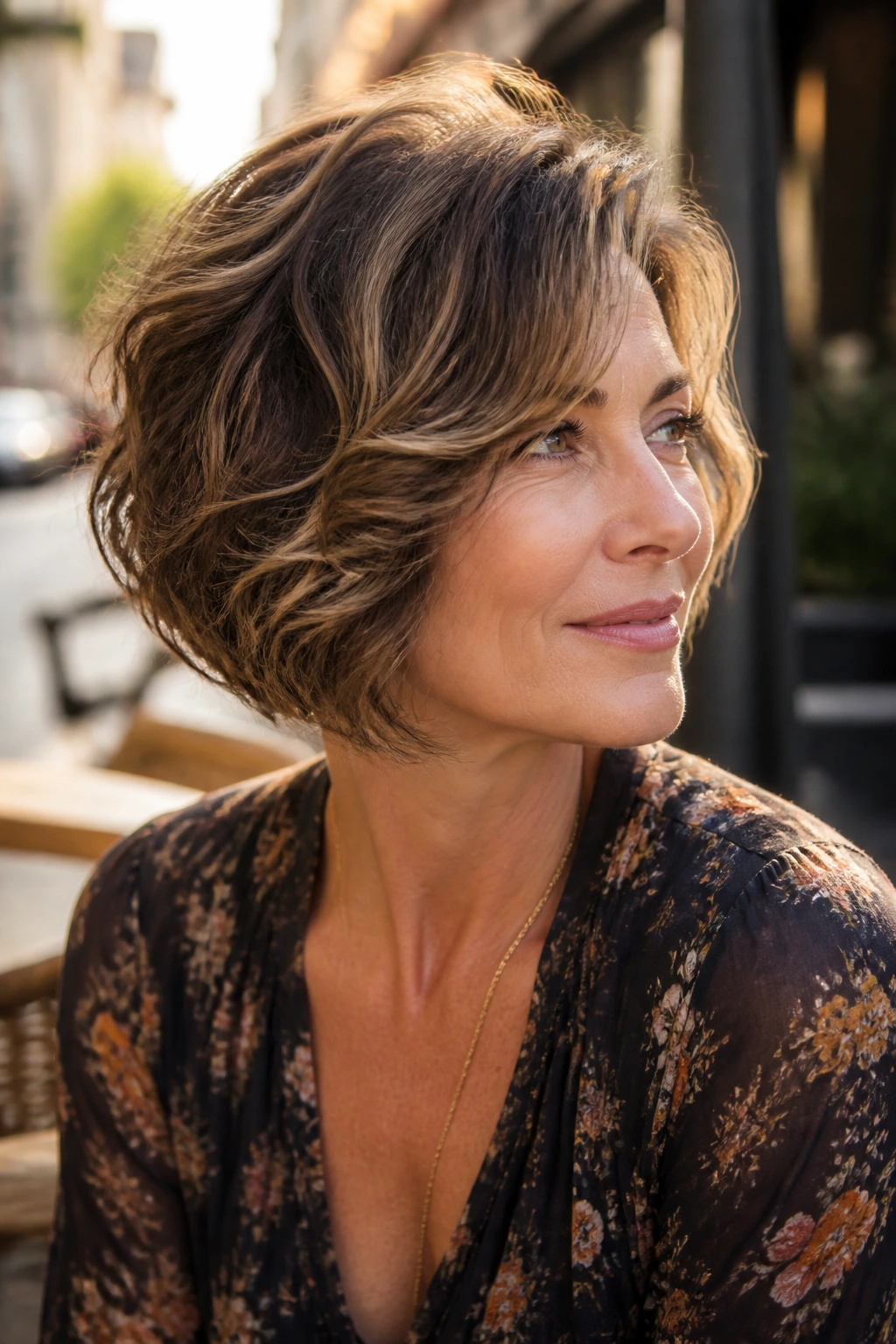
Old wedge cuts could get stiff and helmet-like. This version keeps the shape but throws out the severity. A gentle wedge-inspired bob uses stacked back layers for lift and long, wavy sides for softness, which is exactly what a square face tends to appreciate.
The back should hug the nape without puffing out. The front can extend toward the jaw or just below it, where the waves soften the transition. If the styling gets too round and too perfect, it can tip into dated territory fast, so leave some movement in the ends.
This works especially well on hair that naturally wants body. The structure gives you a shape; the waves keep it from feeling hard.
15. Shaggy Bob with Airy Layers

A shaggy bob is not for everyone, but it’s a smart pick if your hair has become wiry, uneven, or oddly flat at the roots. The airy layers break up the bulk and keep the shape from sitting as one solid block around the face. For square faces, that looseness can be a gift.
Keep the layers soft rather than choppy. You want a little swing at the cheek and jaw, not a full rock-and-roll triangle. A texture cream through the mid-lengths helps the ends separate without drying them out.
This style has a casual feel that suits women who do not want to spend time coaxing perfect waves every morning. It looks better a bit undone anyway.
16. Nape-Hugging Bob with Longer Top Layers
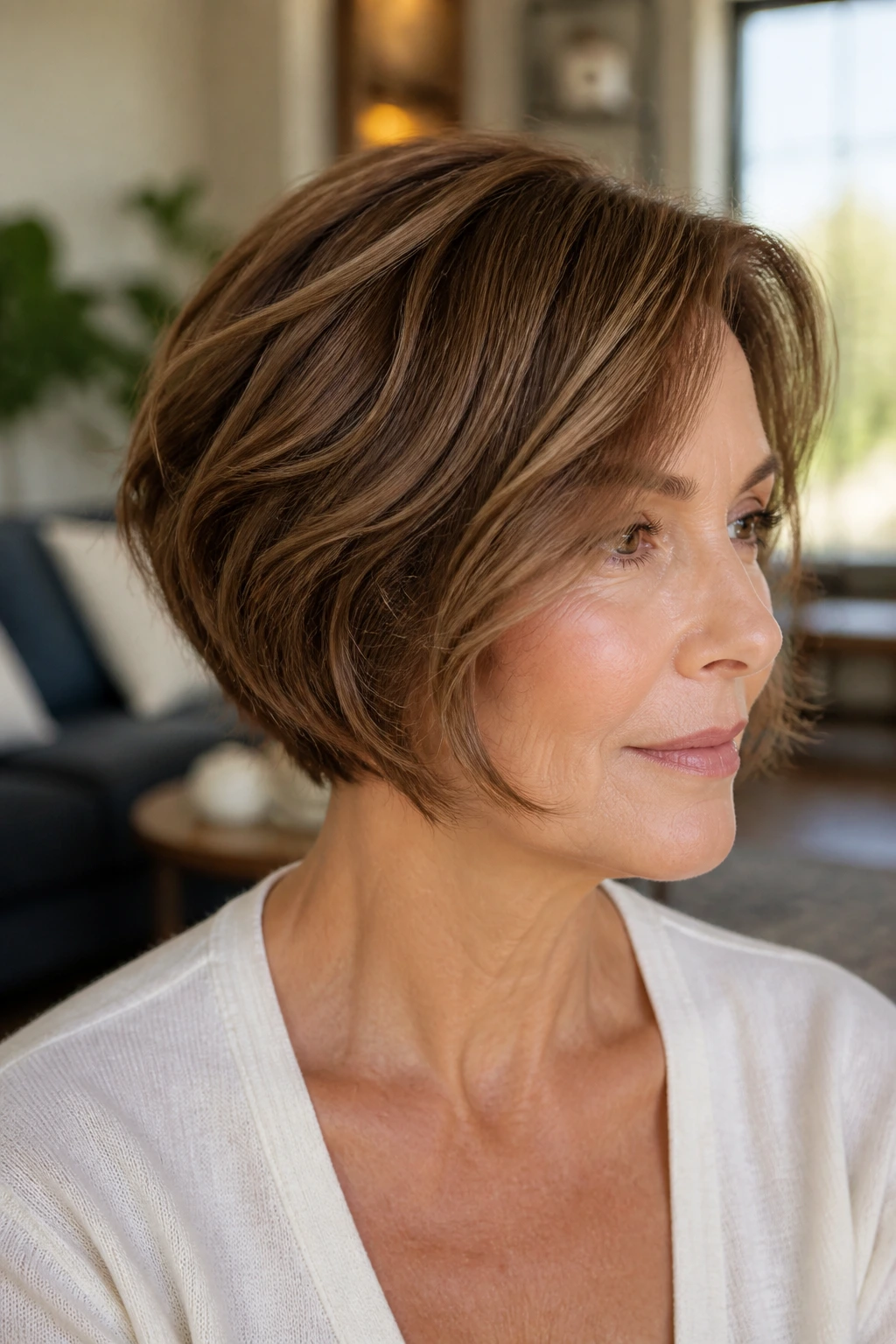
This one is all about balance. A nape-hugging bob shortens the back just enough to clean up the neck area, while the longer top layers create movement through the crown and sides. On square faces, that top length is what keeps the cut from feeling severe.
The shape works best when the front stays soft and curved instead of sharply angled. You want the eye to move from crown to chin without hitting a hard corner. That’s the whole game with square jaws: guide the eye, don’t trap it.
If your hair is thick, this cut can feel lighter than a standard bob because the back is kept close and controlled. If your hair is fine, ask for understated graduation so it doesn’t go flat.
17. Asymmetrical Bob with Soft Movement

An asymmetrical bob sounds bold, but the soft version is more wearable than people expect. One side falls a little longer than the other, which creates a diagonal line that flatters square faces by breaking up symmetry. Add loose waves and the cut looks thoughtful rather than severe.
The longer side should not be dramatically longer unless you want a very visible statement. A subtle difference of half an inch to an inch is enough to change the shape. That small offset can be kinder to the jaw than a perfectly even bob.
This cut works well for women who like a little edge but still want softness near the face. It also looks good with one earring showing and one side tucked back.
18. Wavy Bob with Dimensional Highlights

Dimensional highlights can make a wavy bob look fuller without adding bulk. The contrast between lighter and darker strands helps each bend show up, which is useful if your hair is fine or if the wave pattern needs a little help. On square faces, the moving color softens the outline in the same way movement does.
Ask for highlights around the crown, temples, and the front layers, not just the bottom. That keeps the face bright and the top from looking flat. A warm beige, cool beige, or soft caramel can all work depending on your base color.
This is one of the better choices if you want the bob to look lively in daylight. The color and the wave do half the styling for you.
19. Rounded Bob with Interior Layers

A rounded bob is a strong pick if your hair wants to puff at the sides. Interior layers remove weight from inside the shape, which lets the outside line stay smooth and curved. That roundness can be very flattering on square faces because it gently contrasts the jaw.
How to keep it from getting bulky
Do not overlayer the perimeter. Keep the shape clean at the edges and let the movement live inside the cut. That way the bob has body without turning into a triangle. A brush-dry with a round brush usually brings this one to life.
It’s a practical cut for people who like order. You can make it look neat, but it never has to look stiff.
20. Center-Part Bob with Soft S-Curls
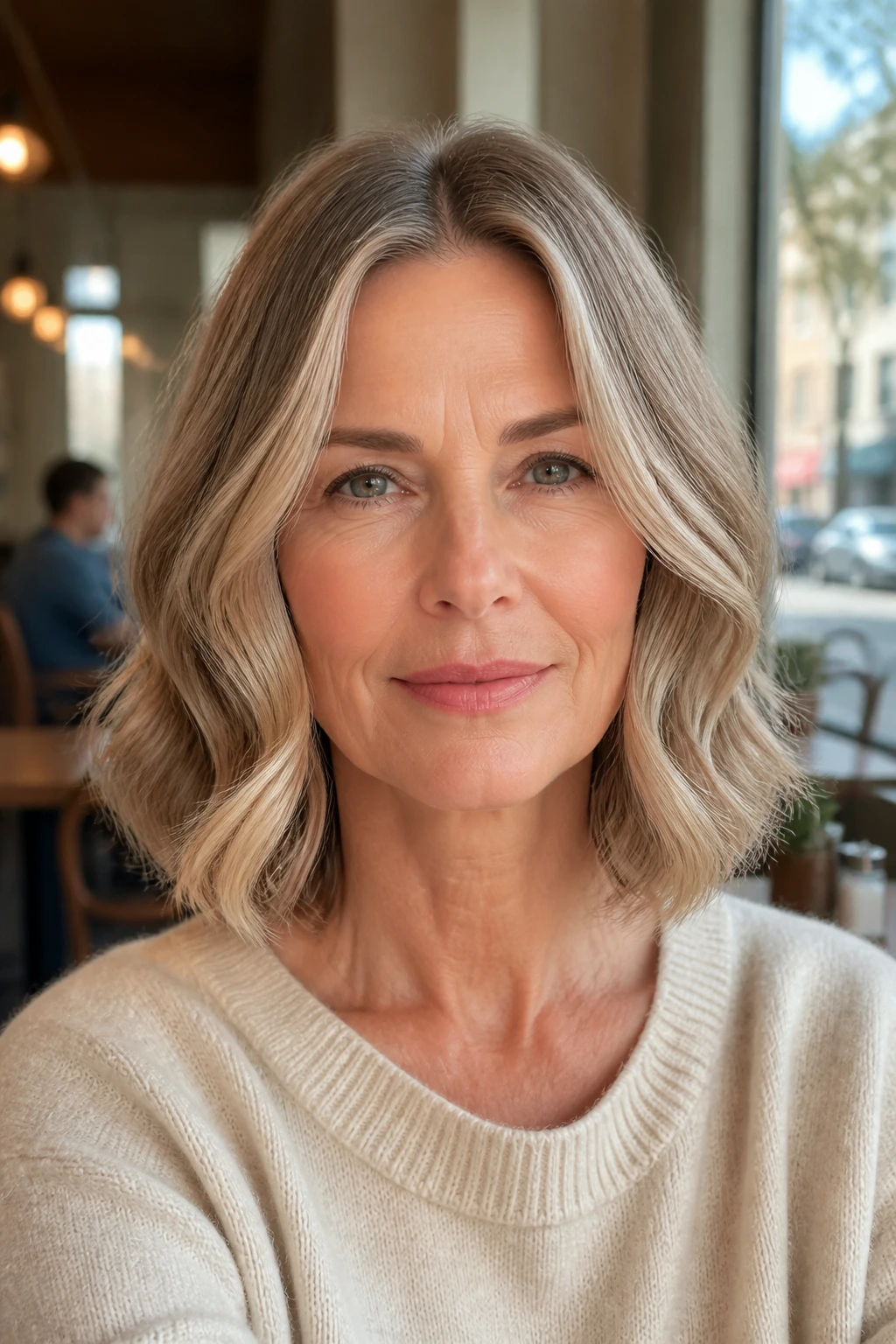
A center part can work on a square face if the curls are soft enough to stop the style from feeling rigid. The center line gives the face symmetry, while the S-curls break up the hard angles at the jaw. Used together, they can look calm and elegant without being severe.
The cut itself should not be too short. Aim for chin to collarbone length, then keep the front pieces a touch longer so the hair can sweep around the face. Too short, and the center part gets bossy. Too long, and you lose the bob shape.
This version feels neat, but not pinched. It’s a good match for women who like a controlled silhouette with a little romance in the wave.
21. Tucked-Behind-Ear Bob
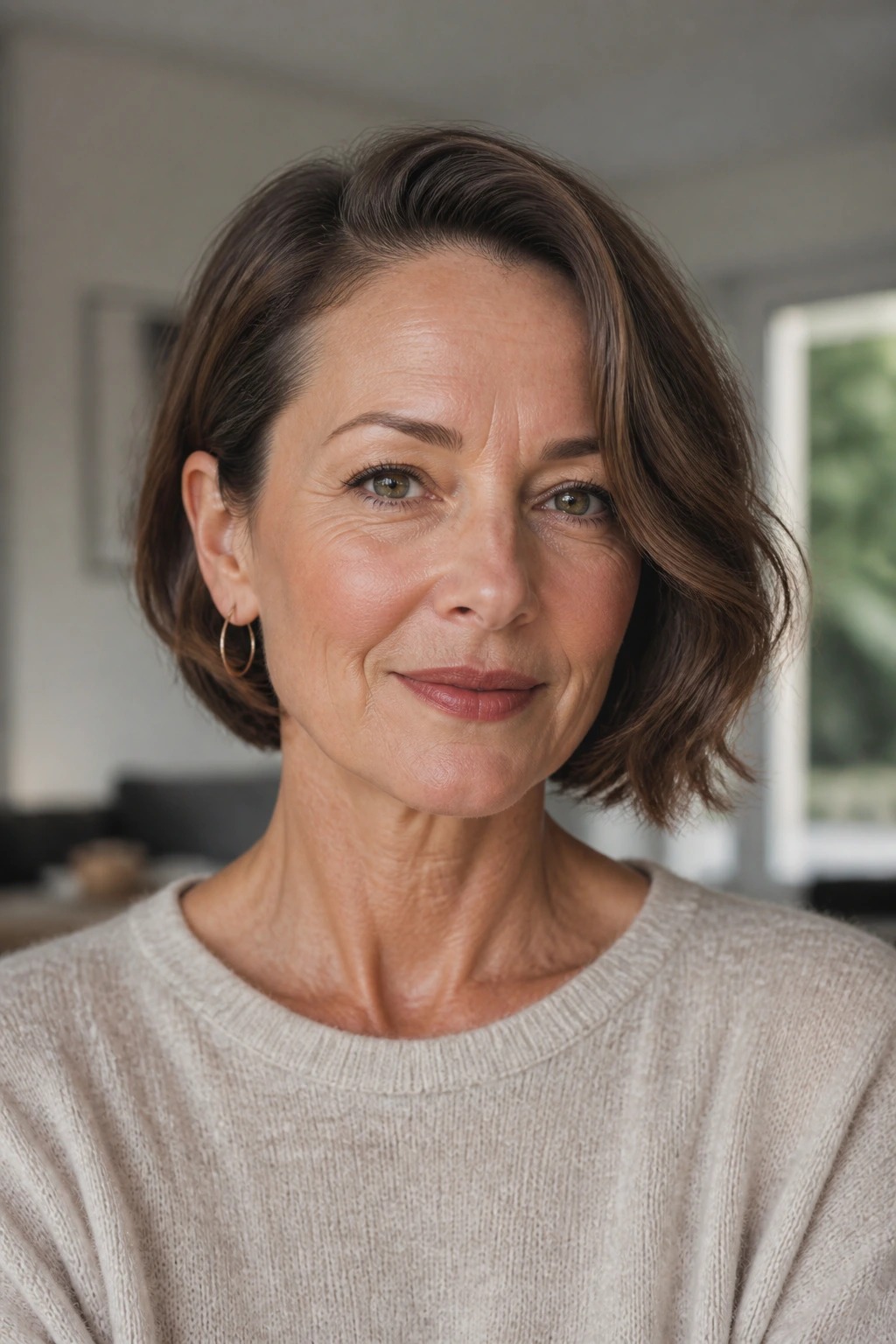
Some bobs look best when they’re not trying to cover everything. A tucked-behind-ear bob opens one side of the face, which can look sharp in a good way on square features. The wave on the untucked side keeps the overall shape soft, so the style doesn’t become too geometric.
Small details that help
- Keep one side slightly fuller than the other.
- Leave enough length to tuck behind the ear without the ends springing out.
- Use a light styling balm at the ends so they stay smooth.
- Let the exposed ear carry a hoop or drop earring.
This is a low-effort way to make a bob feel intentional. One tuck changes the whole mood.
22. Air-Dried Wave Bob
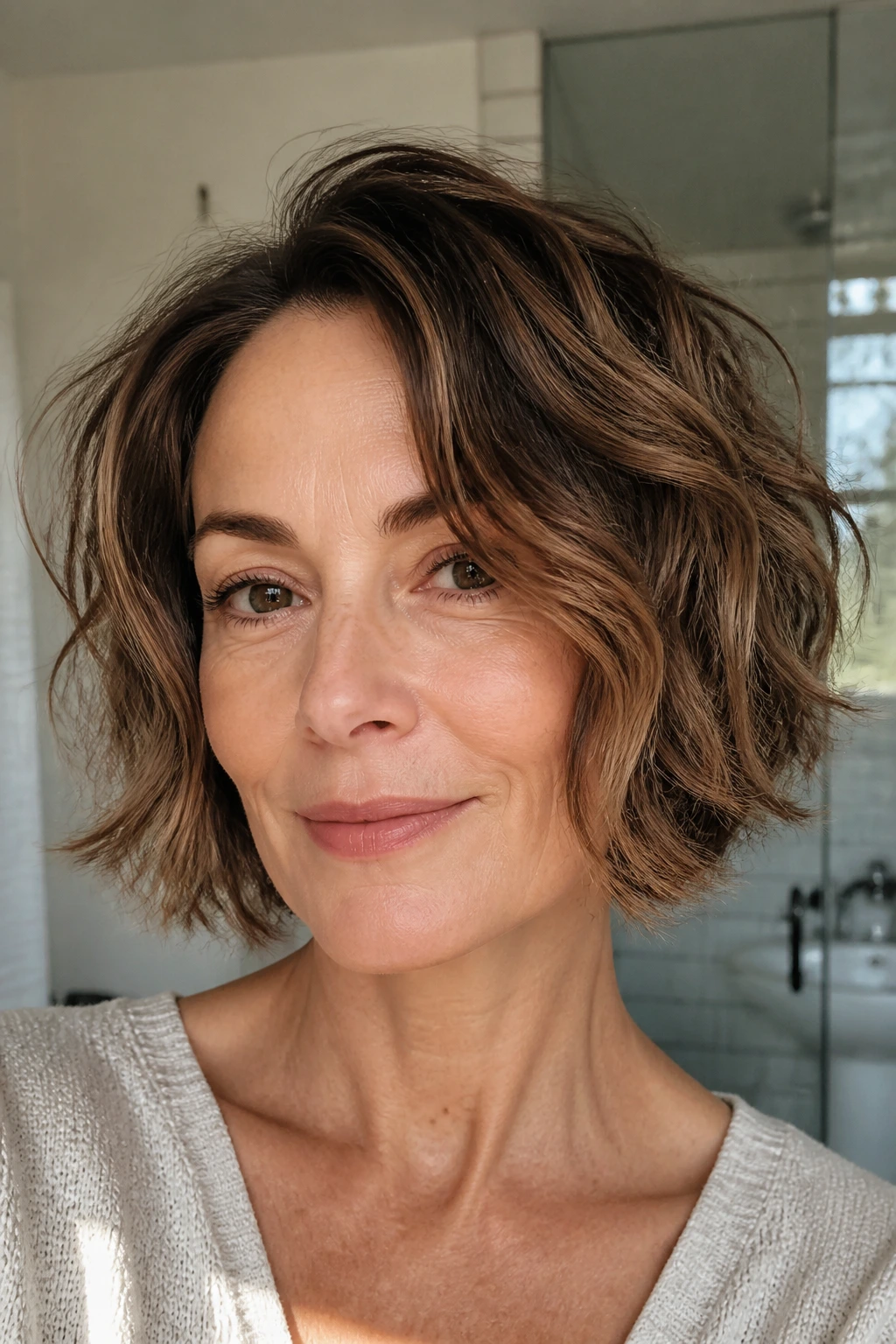
If heat styling feels like a chore, this is your cut. An air-dried wave bob uses the hair’s natural bend and a decent cut to do most of the work. That’s especially useful for women whose hair has become drier over time, because less heat usually means less roughness at the ends.
The best version is cut with enough layering to support motion but not so much that it frizzes out as it dries. A bit of mousse, a little scrunching, and patience are enough. Let the hair dry fully before touching it, or the wave will separate in odd places.
This style suits a square face because it looks casual and soft instead of structured. It has an easy feel that straight cuts rarely manage.
23. Long Bob with Fluttery Ends

Fluttery ends are the whole point here. A long bob with ends that flick slightly away from the face can make square jawlines look gentler, especially if the front sits below the chin. The cut still feels like a bob, but the extra length gives it more room to move.
Use a large barrel iron or a blow-dry brush to make the ends bend away just a little. Not a flip. Just enough motion to keep the line from sitting flat. If the ends all point inward, the style can feel heavy.
This is a safe cut for women who want versatility. Wear it smooth on one day, wavier on the next. It handles both.
24. Bob with Wispy Bangs and Flipped Ends
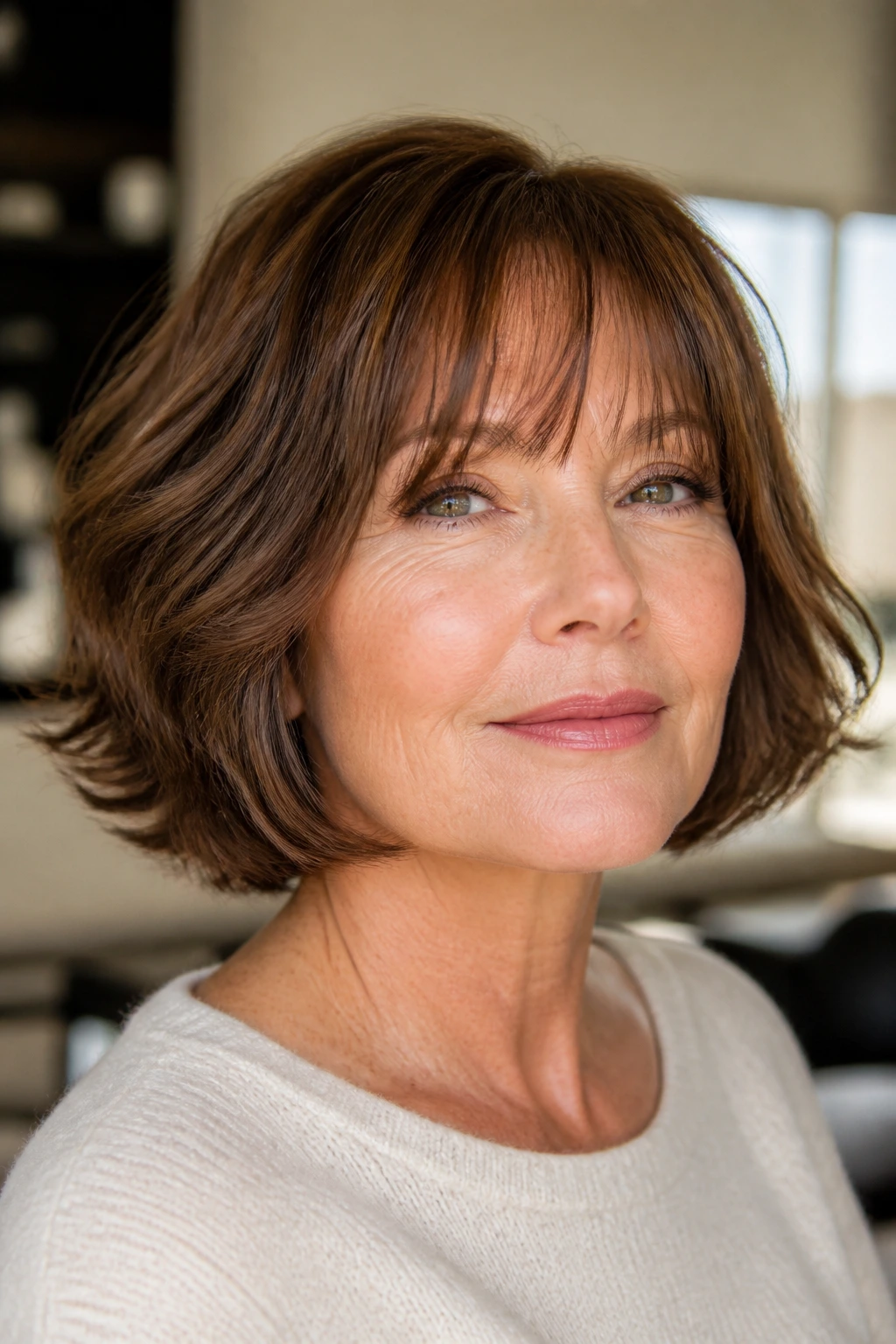
Wispy bangs are lighter and easier than blunt fringe, which is why they work so well with a square face. Add ends that flip out slightly, and the bob gains a little lift around the jaw instead of hanging straight down. The overall shape feels playful, but not childish.
This cut is a nice fix for hair that has lost some top fullness. The fringe draws the eye upward, while the flipped ends keep the lower half of the face from looking boxed in. If you wear glasses, keep the bangs a touch longer so they don’t fight the frames.
The style can be brushed into place in minutes. That alone makes it worth considering.
25. Polished Soft-Wave Bob
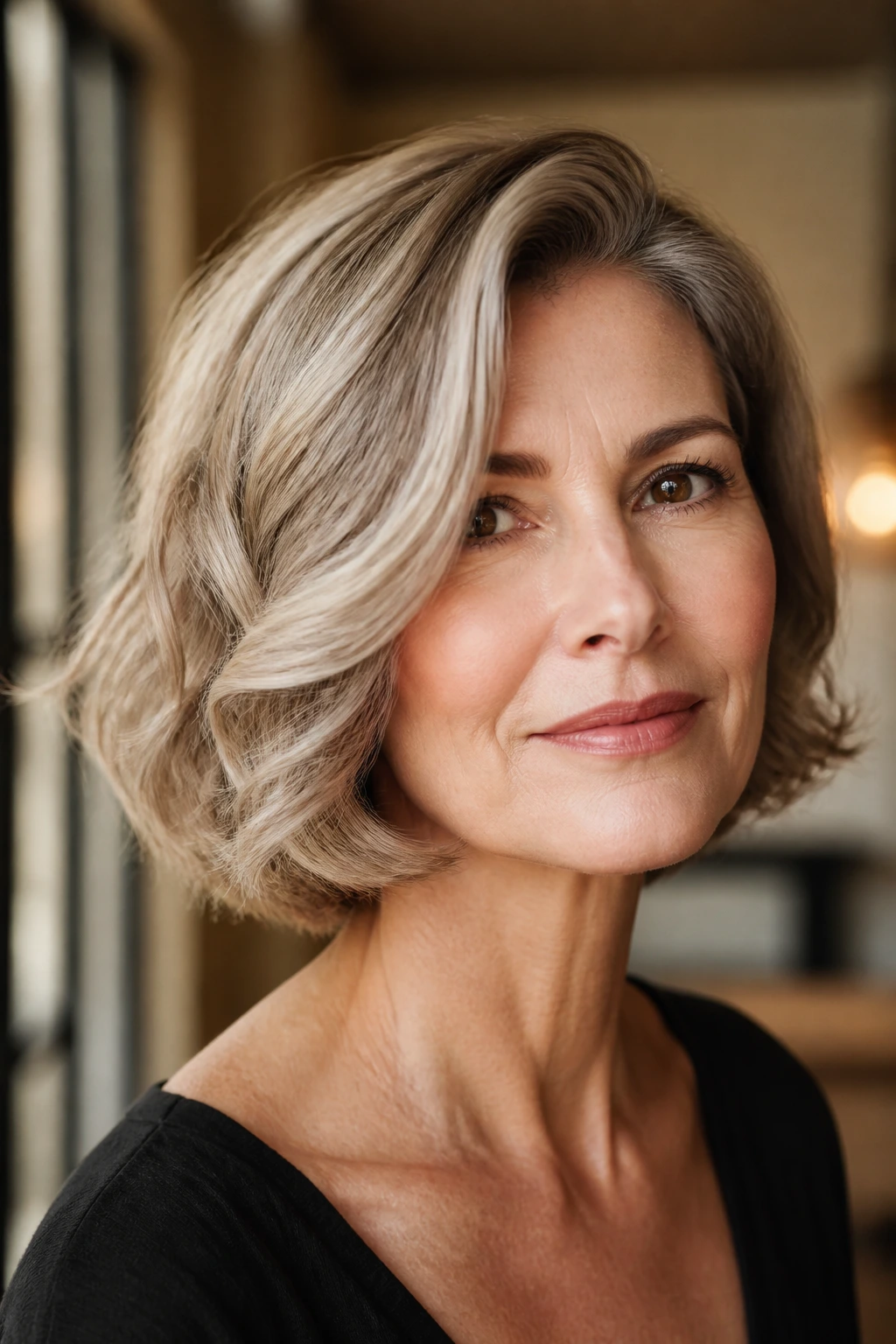
A polished soft-wave bob is what I’d call the dress-up version of the whole category. It keeps the line clean, the waves smooth, and the finish neat enough for dinner, photos, or any day you want your hair to look deliberate without looking stiff. On square faces, that softness around the jaw matters right away.
The wave should sit in broad curves, not tight ripples. A deep side part or subtle off-center part usually gives the best line. If your hair is silver, this style is especially handsome because the smooth wave shows the color change without making the cut feel severe.
It’s the kind of bob that looks expensive without trying to act expensive. Which is a better trick, honestly.
Why the Wave Softens a Square Jawline
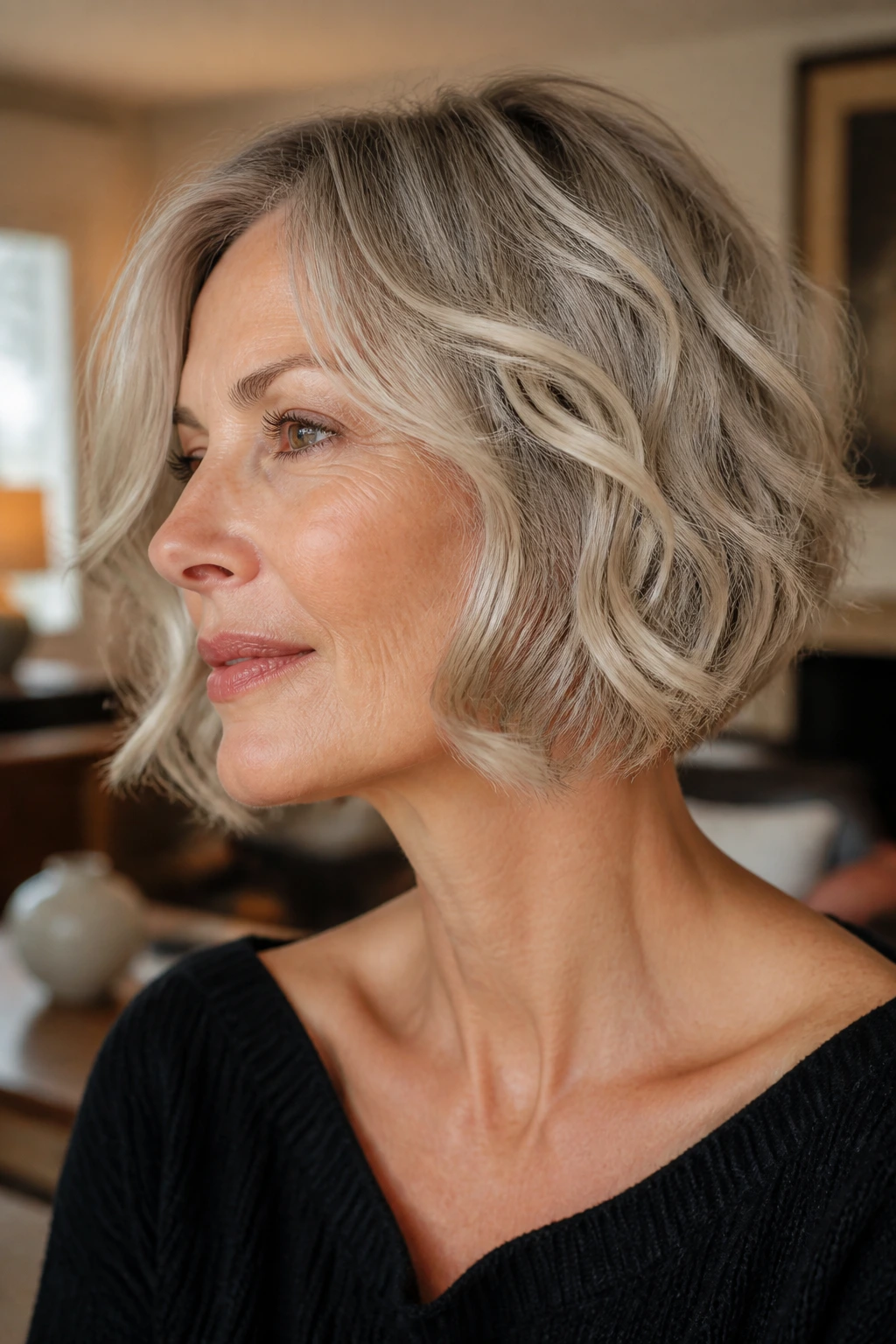
A square face usually has a strong jaw, a broad forehead, and sides that read as fairly even from top to bottom. That structure can look striking, but a hard bob can make it feel even more geometric. Waves help because they interrupt the straight edges and keep the eye moving.
The length matters too. If the ends stop right at the jaw, the cut can box the face in. If they sit a little below it, or if the front pieces sweep away from the jaw, the shape opens up. That is why shoulder-grazing bobs and chin-length cuts with movement often feel more flattering than a rigid one-length bob.
Older hair adds another layer. It may be finer at the temples, drier through the ends, or less cooperative with straight styling. A wave gives the cut life without needing a perfect blowout. Loose bends also make gray strands look dimensional instead of flat. Good haircuts do not fight change. They work with it.
How to Ask for the Right Length, Layers, and Wave
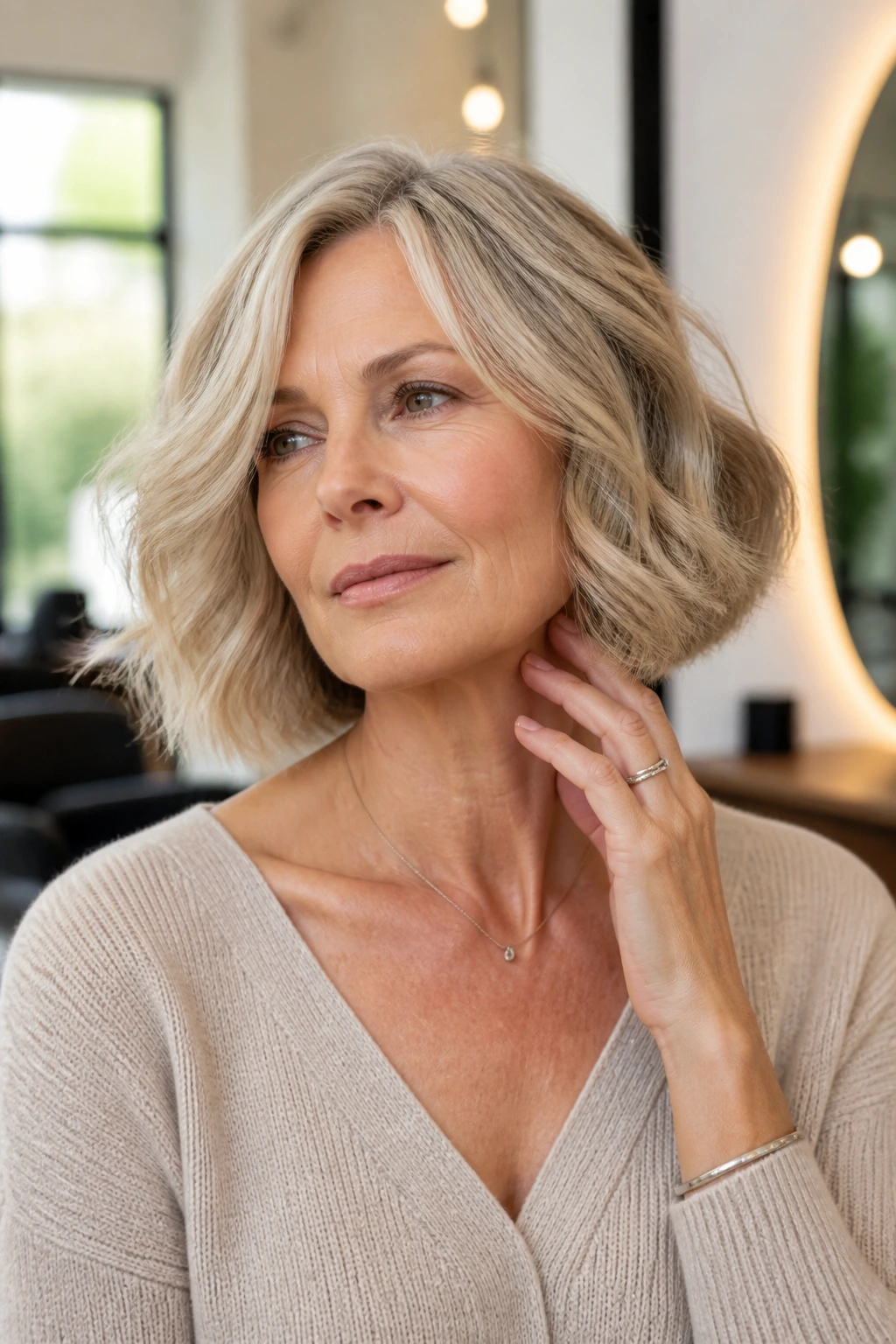
Bringing a photo is useful, but don’t stop there. Point to where you want the front to hit: chin, just below the jaw, or collarbone. That one choice changes the whole effect on a square face. Then tell the stylist whether you want the wave to feel polished, relaxed, or somewhere in between.
Ask for point-cutting or soft texturizing if your hair is fine and you want movement at the ends. If your hair is thick, ask where weight should come out so the bob doesn’t puff at the sides. “Less bulk through the interior” is the phrase that tends to matter more than “more layers.” Too many layers can make the cut fray out.
If you wear glasses, say so. Frames can collide with bangs, side pieces, or a strong cheek-length perimeter. A good stylist will adjust the face-framing so the hair clears the temples instead of sitting on them. And if you want a bob you can air-dry, say that before the scissors come out. Styling plan first. Cut second.
How to Wear These Bobs With Glasses, Earrings, and Everyday Clothes

Glasses: Rounded or slightly upswept frames usually soften a square face better than hard rectangles, and a bob with movement should leave enough room around the temples so the hair doesn’t jam into the frames. If your frames are bold, keep the bob a little lighter around the cheeks.
Earrings: Shorter bobs show earrings off fast. Hoops, drops, and small geometric pieces all work, but the haircut should not hide them under a heavy side section. Tuck one side back if you want the jewelry to matter.
Necklines: Open necklines — V-necks, scoops, soft collars — suit a bob because they keep the whole look from feeling crowded. High turtlenecks can work too, but they ask for a more polished wave and a cleaner jawline.
Everyday wear: A wavy bob is one of the few cuts that still looks intentional with a plain sweater and no jewelry. That’s the real win. It carries shape on its own.
Essential Tools and Products for These Cuts
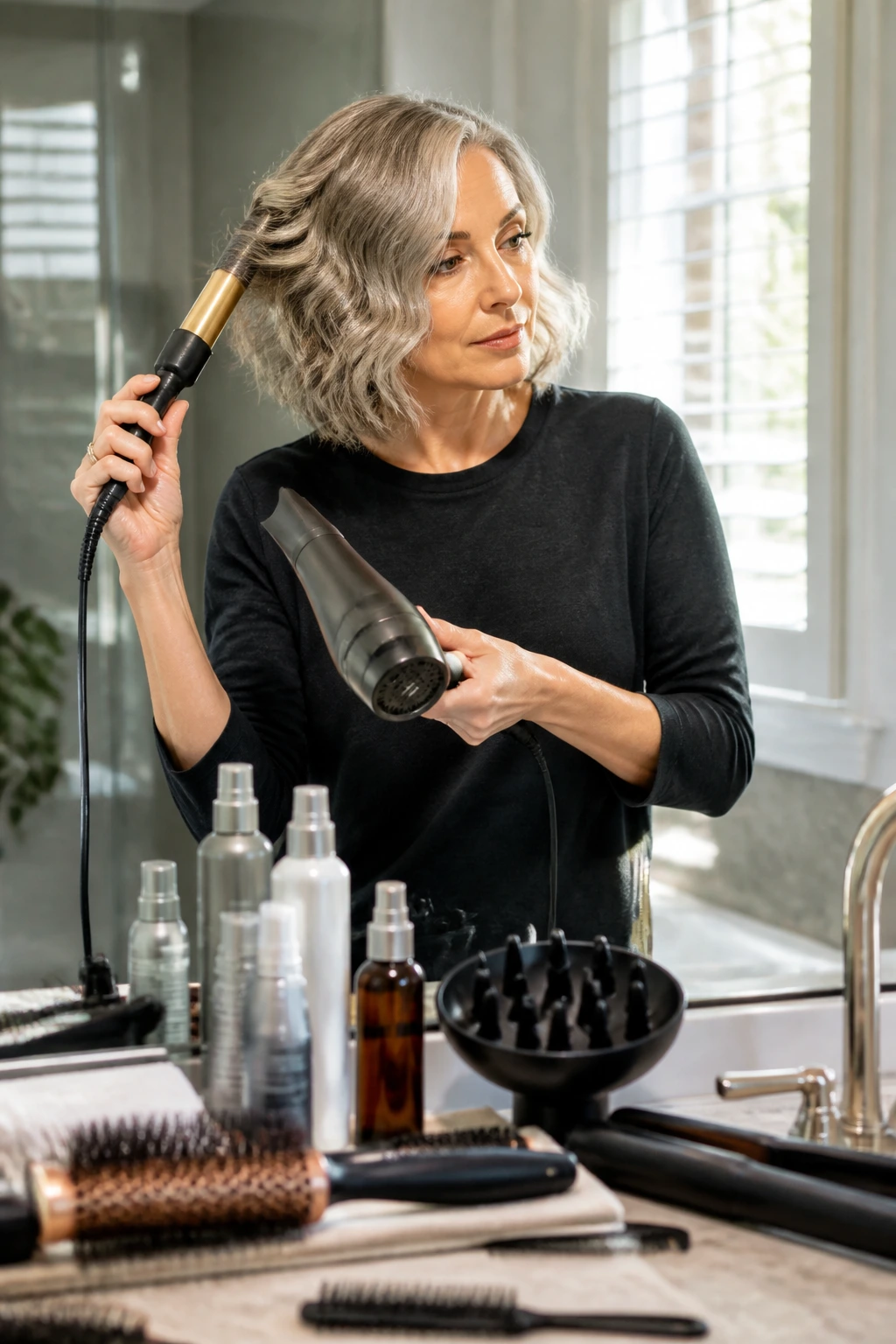
- Blow dryer with a concentrator nozzle: Helps direct the hair away from the jaw and gives the roots lift without scattering the wave.
- 1-inch curling iron or wand: Good for creating loose bends on chin-length and jaw-length bobs.
- Flat iron: Useful if you prefer an “S” bend or just want a polished wave through the front.
- Diffuser: The best friend of natural waves and curls; it keeps the texture intact while cutting down on frizz.
- Round brush: Handy for smoothing the ends under or away from the face during a blow-dry.
- Heat protectant spray: Non-negotiable if you use hot tools more than once a week.
- Light mousse or root lift foam: Gives fine hair a little body without making it sticky.
- Texture spray or wave spray: Helps piece out the ends and keep the bob from feeling too neat.
- Wide-tooth comb and clips: Useful for sectioning and preserving the wave pattern.
- Microfiber towel or cotton T-shirt: Better than rough terry cloth for air-dried styles.
Keeping the Shape Between Salon Visits
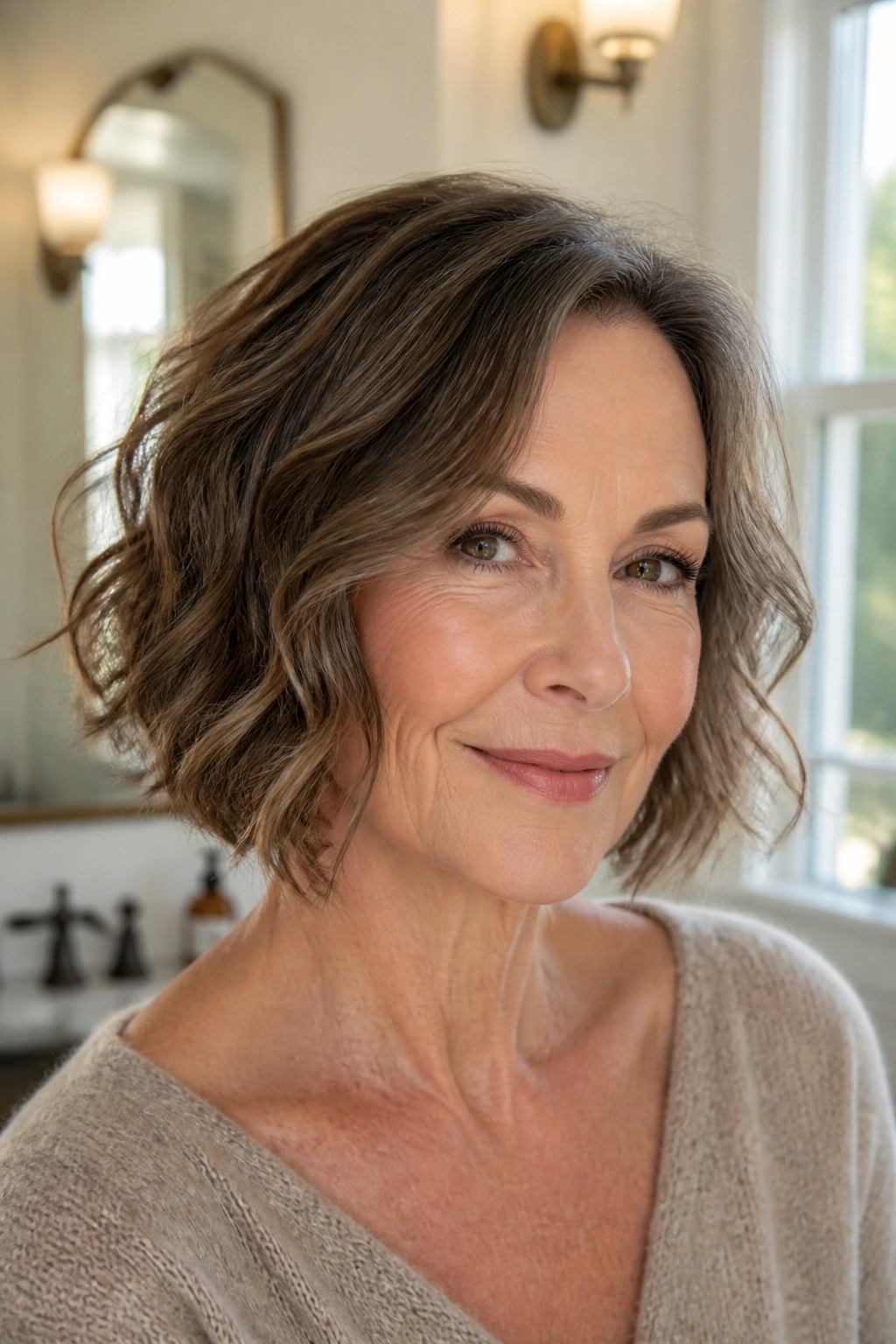
A wavy bob grows out more gracefully than a strict blunt cut, but it still needs a little attention. Plan on a trim every 6 to 8 weeks if the shape hits right at the jaw or chin. Let it go past 8 to 10 weeks, and the ends start to drop, which is usually when square faces lose the soft outline that made the cut work in the first place.
Styling refreshes are easier. On most mornings, a mist of water, a touch of mousse, and a 1-minute bend with a wand on the pieces around the face are enough. If the hair goes flat overnight, flip the part, mist the roots, and dry the crown for 2 to 3 minutes. That tiny reset changes the whole profile.
Color upkeep depends on what you have going on. Silver blending, gray coverage, or highlights each have their own rhythm, but the bob itself usually looks best when the color stays soft at the hairline. Harsh grow-out lines can make even a pretty cut look choppy.
Common Mistakes That Make a Bob Feel Boxy
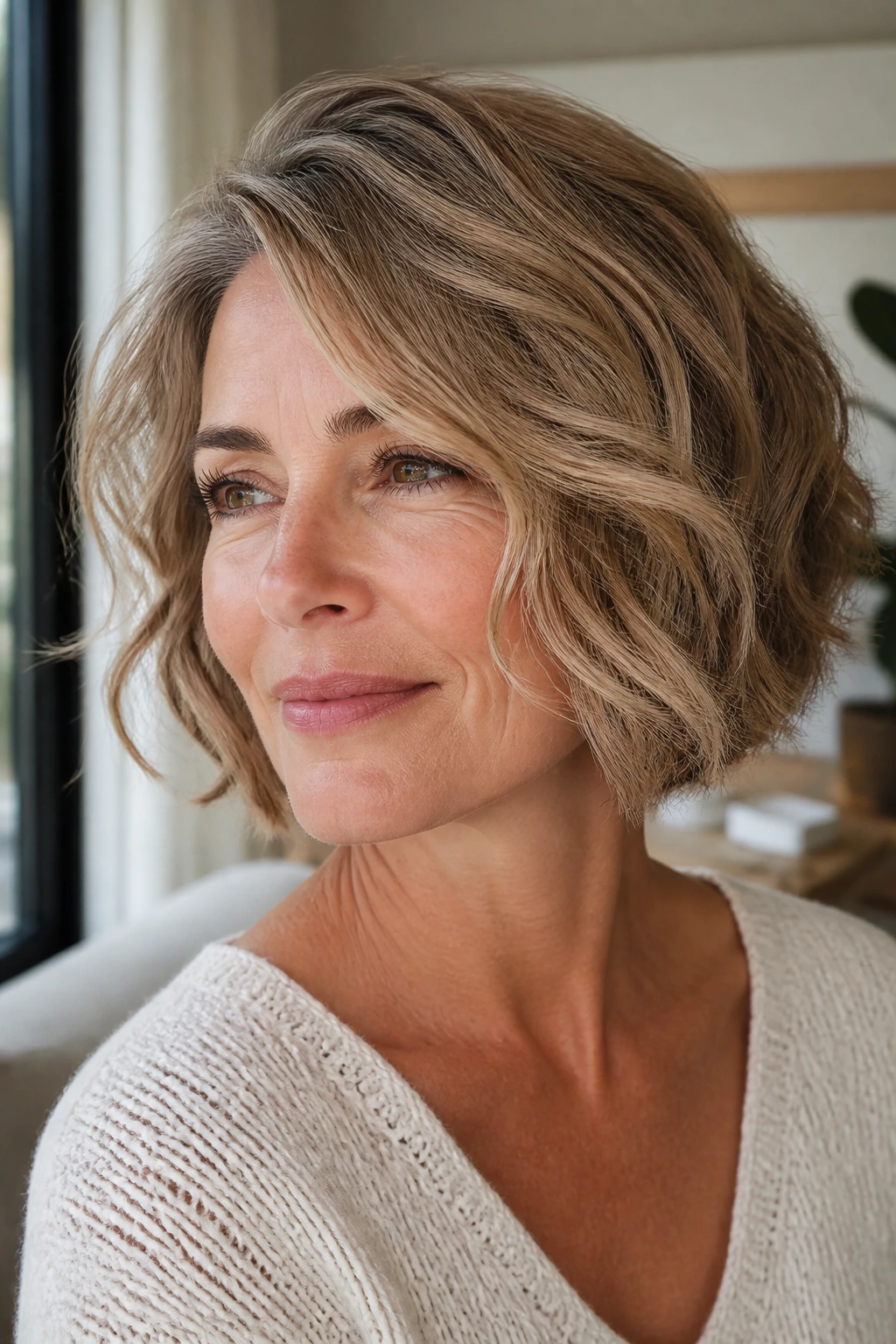
- Ending the cut exactly at the jaw: That’s the fastest way to make a square face look wider. Push the line a little below the jaw or soften it with wave.
- Using one uniform curl pattern everywhere: Same-size curls from root to end can make the bob look dated and helmet-like. Mix up the bend and leave some pieces straighter.
- Letting the sides balloon out: If the hair widens at the cheek, the face can look heavier. Ask for weight removal inside the cut, not just at the ends.
- Choosing a blunt fringe that’s too heavy: Thick straight bangs can make the whole look feel boxed in. Softer fringe or a side sweep tends to work better.
- Overusing volume at the crown only: Big top volume with flat sides looks odd on a bob. Keep the lift balanced through the shape.
- Skipping heat protectant and then blaming the haircut: Dry, frayed ends make every bob look older than it is. The cut can’t save fried hair.
Easy Variations on the Same Basic Shape

The Glasses-Friendly Sweep: Ask for side-swept front pieces that clear the temples and sit just below the cheekbone. This keeps the hair from crowding the frames and gives the face a gentler line.
The Silver-Blend Bob: Add soft highlights or lowlights around the face and crown so gray hair looks dimensional instead of one flat tone. The wave will show the color change beautifully.
The Fine-Hair Lift Cut: Keep the perimeter crisp, but add invisible layers and a root-lifting blow-dry. This helps the bob feel fuller without puffing out the sides.
The Thick-Hair Debulk: Request internal weight removal, a softer wedge at the back, and longer front pieces. It trims the bulk while keeping the shape from collapsing.
The Air-Dry Version: Cut the bob to work with your natural wave and use mousse plus scrunching instead of curling. This is the one for people who would rather be done in ten minutes.
The Dress-Up Wave: Leave the ends smooth, put a soft bend through the mid-lengths, and finish with a shine serum. It’s the most polished version and the easiest to wear for events.
Frequently Asked Questions

What length is most flattering for a square face?
Usually, the safest lengths sit between the chin and the collarbone. That range lets the front pieces soften the jaw without stopping right on it, which is where square faces can look widest. If you like shorter hair, make sure the wave starts below the cheekbone.
Do bangs work with square faces?
Yes, but heavy straight bangs are the risky version. Soft curtain bangs, bottleneck bangs, or wispy fringe usually work better because they break up the forehead without forming one hard line across the face. A little separation is your friend here.
Can fine hair pull off a wavy bob?
Absolutely. Fine hair often looks better in a bob than in longer lengths because the shape gives it more presence. Keep the layers subtle, use a mousse or root spray, and avoid over-thinning the ends.
What if my hair is thick and puffy?
Ask for interior weight removal and avoid too much width at the sides. Thick hair does well when the shape is controlled underneath and softer at the front. A wave can help, but only if the cut handles the bulk first.
Do I need heat to make a wavy bob work?
No. Natural wave, mousse, and a diffuser can do the job if your hair has any bend at all. Heat tools just give you more control over the direction of the wave, especially around the jaw.
How often should I trim it?
Most wavy bobs need a tidy-up every 6 to 8 weeks. Shorter versions that land near the jawline lose their shape faster than collarbone-length cuts, so they tend to need closer attention. Waiting too long makes the bob slide into a triangle.
Will a bob work with glasses?
Yes, but the cut should leave room at the temples. Side parts, softer fringe, and face-framing pieces usually help. A blunt side section that lands right on the frame arm is the thing to avoid.
What if my wave pattern is uneven?
That’s normal. Don’t try to force every strand into the same curl. Work with the unevenness by alternating the direction of the bend and leaving some ends a little straighter, which reads as texture instead of mistake.
The Cut That Softens the Edge

A square face does not need to be hidden, and a mature bob does not need to look severe. The best of these cuts have one job: they make the jaw feel softer, the hair feel lighter, and the whole head shape feel a little more alive. That can happen with a side part, a long fringe, a collarbone length, or a bend that barely counts as a curl.
The funny thing about a good wavy bob is how un-dramatic it can be. It does not need to shout. It just needs the right length and a little movement in the right place. Once those two things line up, the rest gets easier — glasses sit better, gray hair looks brighter, and morning styling stops feeling like a negotiation.
If you’re sitting between lengths or tired of blunt edges that seem to square the face even more, one of these shapes will probably feel like a reset. Not a reinvention. Just a better line.