



Wavy hair has a habit of telling the truth, especially once it’s cut to the jaw. If the shape is wrong, you see every wobble, every frizz halo, every flat spot at the crown. If the shape is right, the whole head comes alive with a bend that looks intentional instead of accidental.
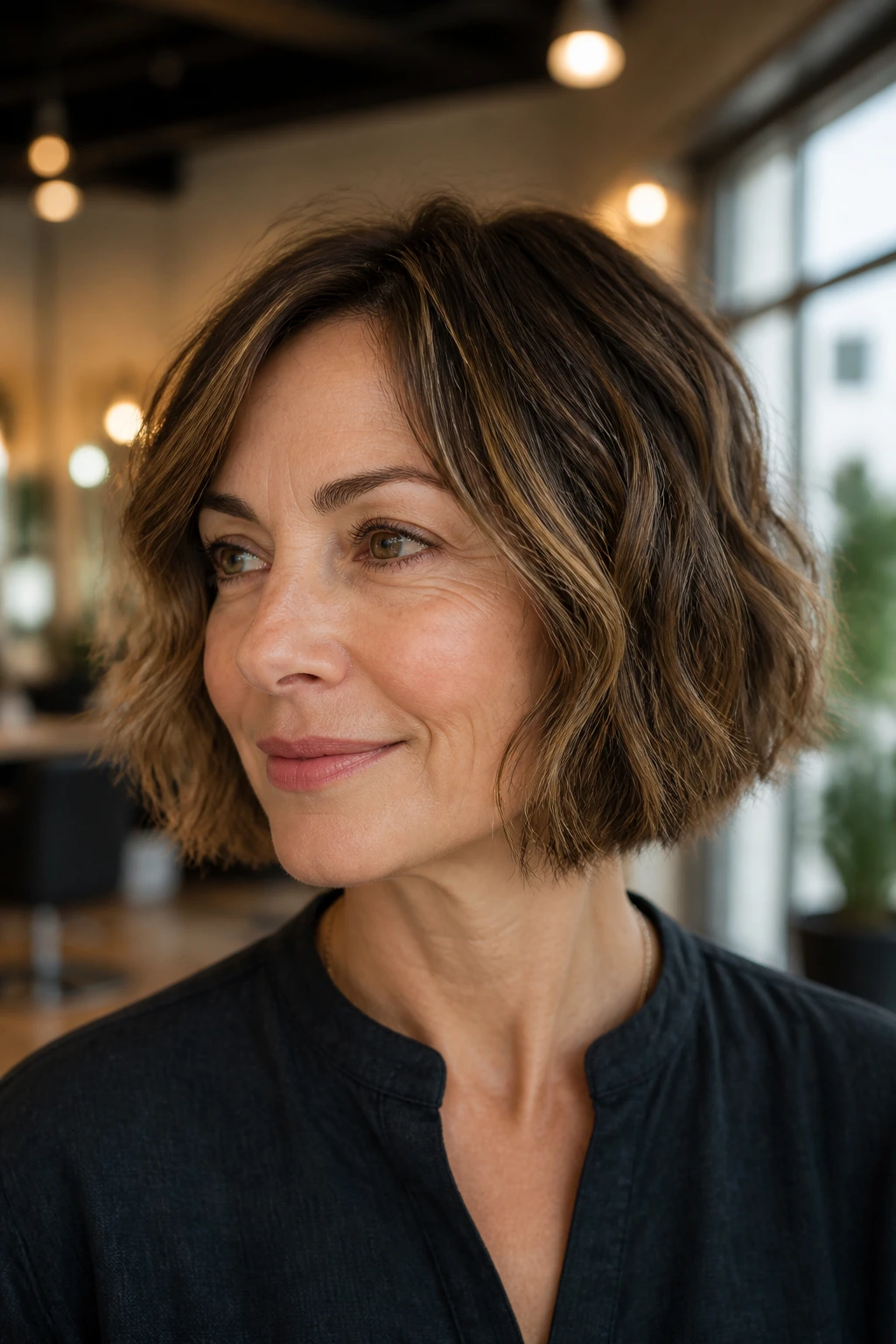
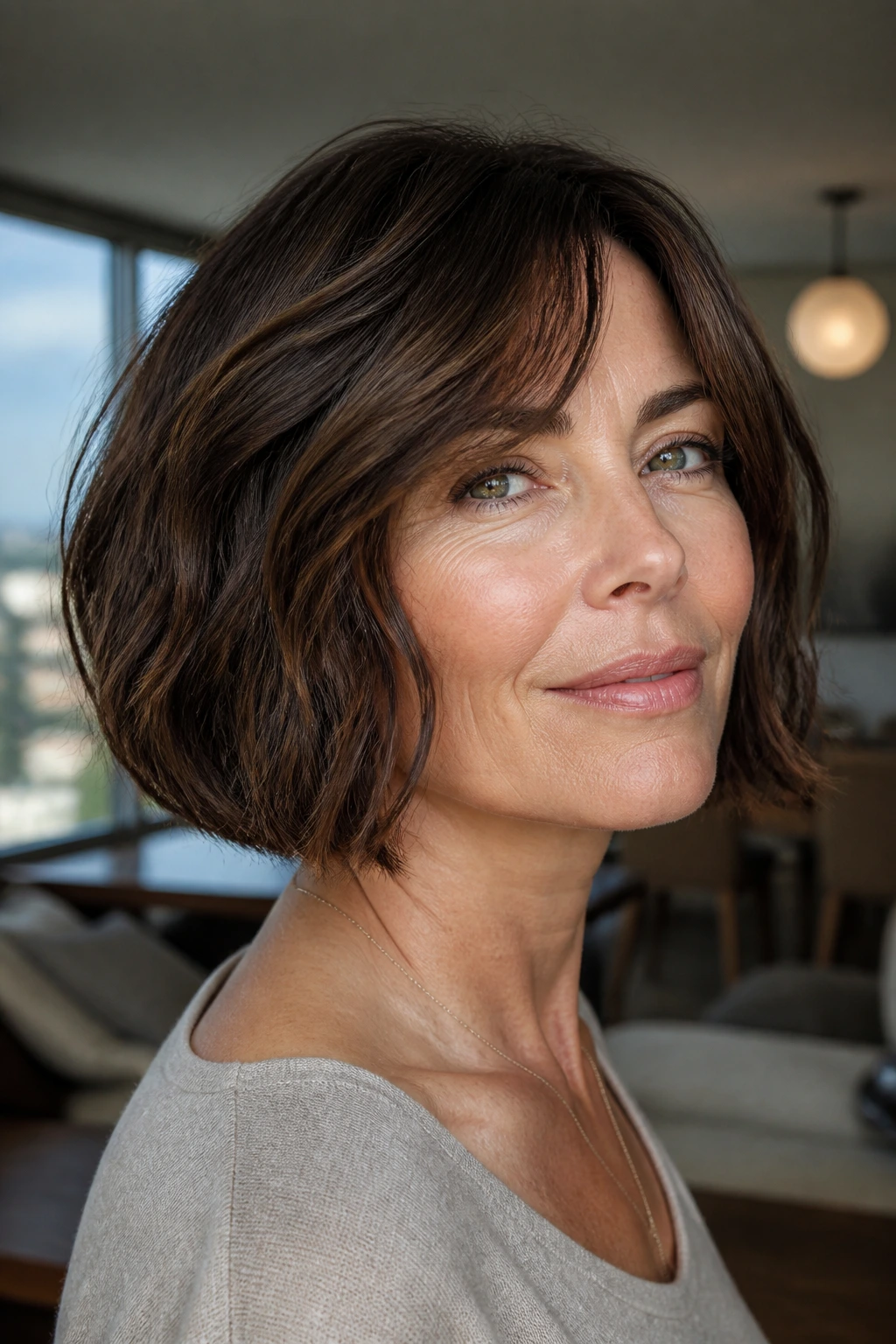
That’s why short layered bobs for women over 40 with wavy hair can be such a smart cut. The best versions don’t fight the wave pattern; they give it a cleaner outline, a little lift at the roots, and enough movement through the ends so the hair doesn’t sit there like a helmet. A good bob on wavy hair should feel like the hair got organized, not shortened for the sake of being shorter.
There’s a catch, though. Wavy hair is picky about where the weight falls. Layers cut too high can puff out. Layers cut too low can leave the bottom blunt and bulky. The sweet spot sits somewhere between those two mistakes, and that’s where these cuts earn their keep. Some are crisp and cheekbone-friendly. Some are softer and more forgiving. A few are terrific if your hair is thick, silver, fine, or doing that annoying half-wave, half-straight thing around the nape.
Why This Collection Is Different
-
Wave-first shape: Every cut here is built around the way wavy hair bends, so you’re not forcing texture into a shape it doesn’t want to hold.
-
Face-softening lengths: Chin, jaw, and collarbone placements can change the whole mood of the cut, which matters a lot when you want structure without harshness.
-
Real-world styling range: These bobs work air-dried, diffused, or rough-blown with a round brush, so you’re not locked into one morning routine.
-
Better grow-out: A short layered bob with a thoughtful outline tends to grow in cleaner, which means fewer awkward weeks between trims.
-
Gray-friendly movement: Wavy gray or salt-and-pepper hair can look a little coarse at the wrong length; the right layers keep it light around the face and avoid that puffed-out triangle effect.
-
Low-drama maintenance: A good bob should need a trim schedule, not a rescue mission. That’s the whole point.
1. The Chin-Length French Bob with Soft, Swooping Layers
This is the cut I reach for when someone wants the cleanest possible outline without losing the bend in the hair. It sits right around the chin, which gives wavy hair enough room to swing without dragging the shape down. The layers are soft, almost hidden, so the ends stay tidy while the wave does the visible work.
The charm here is in the balance. You get cheekbone lift, a neat neck line, and enough softness that the cut doesn’t read severe. On hair that bends in a loose S-pattern, it looks especially polished with a center part and a little root lift at the crown.
A touch of mousse at the roots and a diffuser on low heat are usually enough. Too much cream kills the movement. Too much heat roughs up the ends. This one wants restraint.
2. The Collarbone Lob with Invisible Interior Layers
This is the safer choice if you like the idea of a bob but don’t want to give up much length. The cut skims the collarbone, which keeps the wave from springing too short, and the internal layers remove bulk without showing off every snip. It’s a quieter haircut, but a smart one.
On thicker wavy hair, that hidden layering matters. Without it, the shape can balloon at the ends and tip into triangle territory. With it, the hair moves in a softer sheet, and the collarbone length gives you room to tuck one side behind the ear or wear it half up without the whole thing collapsing.
This cut also grows out with manners. A few weeks later, it still looks like a deliberate style instead of a compromise. That’s not nothing.
3. The Side-Swept Bob with a Long, Face-Skimming Fringe
What if you want softness around the face more than you want a dramatic cut line? Then this is the one to look at. The side part opens up the forehead, and the long fringe falls into the cheekbone area instead of sitting straight across it.
That detail matters. Wavy hair can puff or split if bangs are cut too bluntly, especially when the front has its own bend. A long, side-swept fringe gives the wave room to settle, and it’s flattering on glasses, strong brows, or a face that you want to soften without hiding.
Best for a little movement near the eyes
Ask for the fringe to be cut on the dry side, or at least left a touch longer than feels comfortable in the chair. Waves bounce up. They always do. If the stylist leaves room for shrinkage, the fringe lands where you wanted it instead of halfway up your forehead.
4. The Razor-Textured Bob with Piecey Ends
This cut is for anyone who likes a little grit in the shape. A razor-textured bob softens the perimeter and breaks up the ends so the waves fall into separate ribbons instead of one dense block. On hair that tends to look heavy when cut blunt, it can be a relief.
But there’s a line here, and it’s worth respecting. Razor work on fragile or very dry hair can make the ends look fuzzy fast. On healthy wavy hair, though, the effect is airy and modern in the practical sense, not the glossy-magazine sense. It gives you that piecey finish that looks best with a dab of texture cream and finger styling.
If your hair is thick and wants to sit out from your head, this is one of the better options. If your strands are already delicate, ask for point-cutting instead of a full razor pass.
5. The Curved-In Bob That Hugs the Jawline
This is the bob that makes the jawline look deliberate. The ends curve slightly inward, which keeps the shape neat even when the wave pattern gets a little unruly by midday. It’s a great cut if you want structure, but not a stiff one.
The key is placement. The shortest part should land around the jaw, not above it, or the haircut starts to fight the face. That inward bend can be done with a round brush or a flat brush and a quick twist at the ends, but the cut itself should already know where it wants to sit.
I like this one for hair that has a medium wave and a bit of natural body. It doesn’t need a lot of product. In fact, too much product can make the tucked shape lose its clean edge.
6. The Crown-Lift Shag Bob
This one has a little attitude. The top gets more lift, the layers are more visible, and the whole thing feels looser than a classic bob. If your roots collapse by noon or your waves flatten at the crown, the shag influence gives the top some much-needed air.
How it behaves in real life
The back stays short enough to keep the neckline open, while the crown layers add movement that doesn’t depend on curl definition alone. That’s useful if your waves are inconsistent from one side to the other. A shag bob can hide a patchy pattern better than a tidy, one-length cut.
It’s also one of the easiest cuts to wear a little messy. Not sloppy. Messy on purpose. A diffuser, a rough dry, and a touch of salt spray near the mid-lengths are usually enough.
7. The Stacked Bob with a Gentle Back Curve
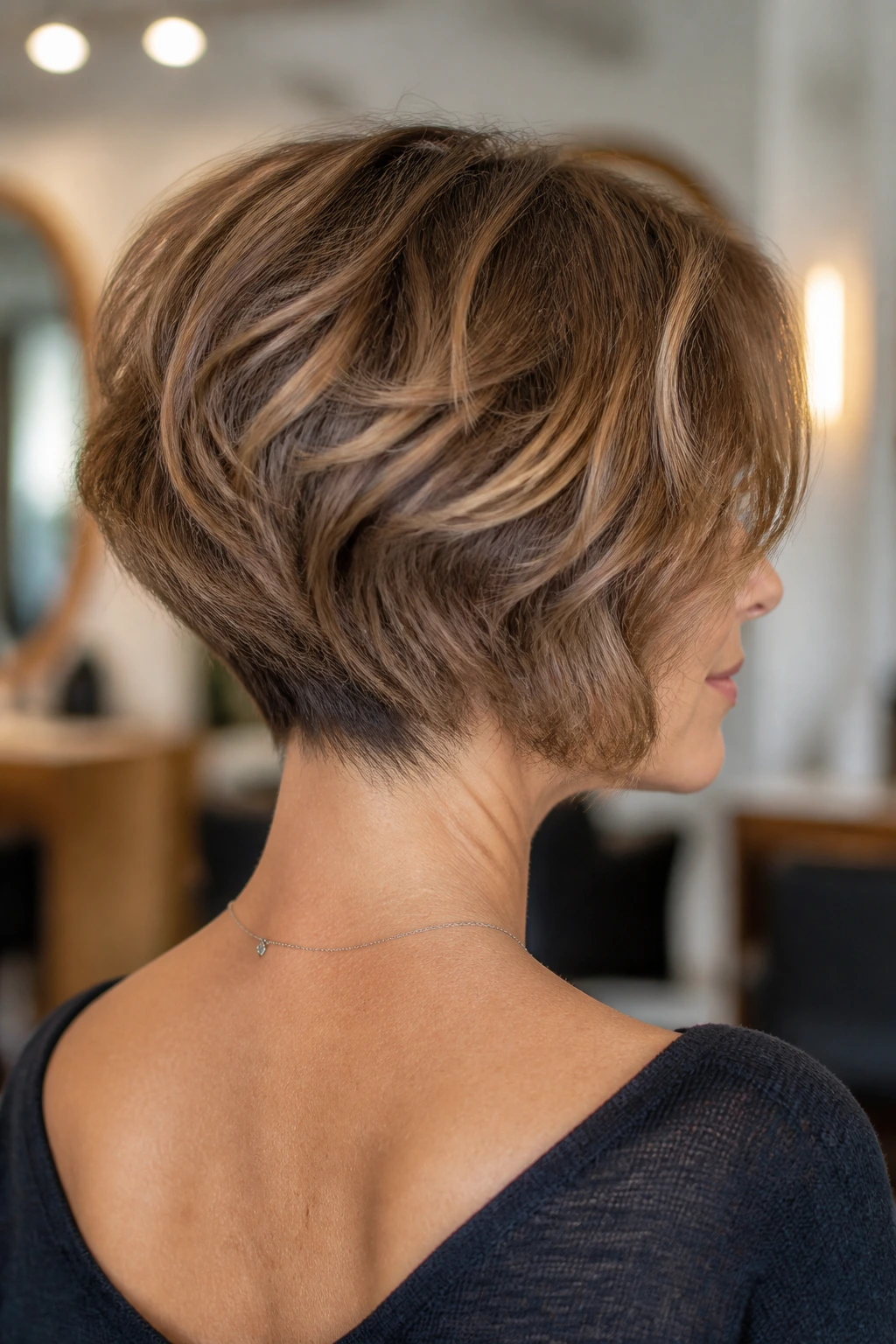
Stacked bobs can go wrong fast. Too much stacking, and you get a hard shelf at the back. Too little, and the whole shape loses the reason for being there. The sweet version here has a gentle graduation through the nape, which gives the back a soft curve and keeps the silhouette neat.
This is a strong choice for wavy hair that’s thick at the back or tends to puff near the neckline. The shorter layers underneath take some weight out, so the top layers can move instead of sitting on a block. It also works well if you like a cut that looks tidy from behind, which is something a lot of people overlook until they see themselves in a mirror.
A quick note: this is not the bob to ask for if you hate frequent trims. The shape depends on keeping the nape clean.
8. The Blunt Bob with Hidden Movement
A blunt bob sounds severe, but it doesn’t have to be. On wavy hair, a solid perimeter with a few hidden interior layers can be the best of both worlds: enough weight to keep the shape grounded, enough movement that the cut doesn’t look flat.
This is especially good for finer waves that disappear if you remove too much hair. The blunt edge gives the impression of density, while the subtle layers prevent the sides from puffing out like a triangle. It’s a neat trick, and one I wish more people knew about before they let someone thin their hair to bits.
The finish matters here. Air-dried with a small amount of mousse, the cut looks soft. Blown smooth, it looks sharper. That flexibility is the whole point.
9. The Deep Side-Part Bob with Loose Wave Definition

A deep side part changes the geometry of a bob in a way people underestimate. It creates height on one side, length on the other, and just enough asymmetry to make wavy hair look fuller without extra cutting.
This cut is useful if your hair falls flat at the crown or if one side of your wave pattern is stronger than the other. The deeper part lets the stronger side carry more visual weight, which helps the whole cut look intentional. It’s also a nice move if you wear glasses, because the part keeps the frame area from feeling crowded.
Try tucking the lighter side behind the ear and letting the other side fall forward. Small move. Big difference.
10. The Feathered Bob with Wispy Bangs

Feathering belongs in the modern world when it’s done with restraint. On a wavy bob, feathered layers soften the edges and keep the haircut from feeling boxy, while wispy bangs break up the forehead line without shutting it down.
What to watch for
The bangs need to be cut with shrinkage in mind. Wavy hair springs up when it dries, and wispy fringe can jump from “soft” to “too short” faster than people expect. I like this look best when the bangs are long enough to blend into the sides, not sit like a separate piece.
It’s a nice cut if you want your face to look a little more open and your forehead line a little less blunt. The tradeoff is regular bang maintenance. If that annoys you, skip it.
11. The Jaw-Length Choppy Bob

This one is a little sharper, a little more casual, and a lot better than people think for hair with a loose wave. The jaw-length cut makes the wave visible right away, and the choppy layers keep the ends from sitting in one heavy line.
If your hair has texture but not enough curl to build a rounded bob, this cut gives you shape without demanding perfect styling. It looks good with a side part, a few bends made with a small iron, or no hot tools at all if your wave pattern is cooperative.
A chop like this can show off the neck and the jaw in a clean way. It also grows out cleanly into a shorter lob, which is one of the better reasons to wear it.
12. The Soft Asymmetrical Bob

A little imbalance can do more work than a severe cut ever will. In a soft asymmetrical bob, one side stays slightly longer than the other, but the difference is subtle enough that it reads as movement, not drama.
This is a strong option if your face is round or if you want the haircut to feel less predictable. Wavy hair helps the asymmetry, because the texture breaks up the line and keeps the longer side from looking too obvious. If the difference is only about an inch or so, the effect stays refined.
I like this one when the hair needs a bit of visual stretch on one side of the face. It’s a small trick, but it changes the whole silhouette.
13. The A-Line Bob with a Slight Forward Sweep

The A-line bob has been around forever because it works. The back sits a little shorter, the front sits longer, and the line moves forward just enough to lengthen the neck and soften the jaw. On wavy hair, the effect is gentler than it sounds.
This cut is ideal if you want the security of length in front without carrying too much weight in the back. The slight forward sweep gives you face-framing movement, and the shorter nape keeps the silhouette from going square. It’s especially nice on hair that falls a little flat behind the ears.
How to wear it
Keep the front pieces polished and let the interior do the messy work. That contrast keeps the cut from turning into a shapeless grow-out.
14. The Deconstructed Curly-Wave Bob
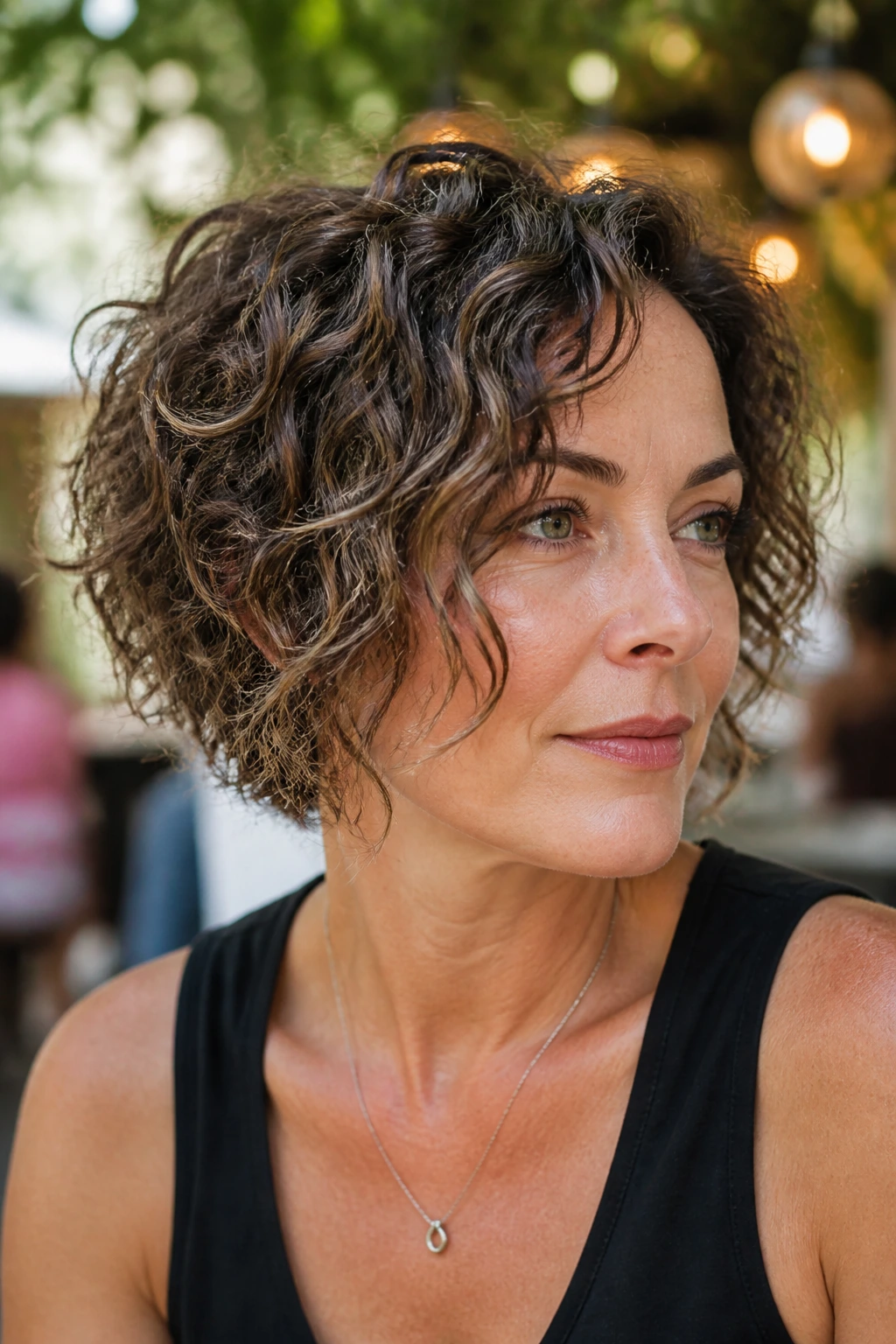
If your waves bend closer to curls, this cut makes more sense than a strict bob line. The deconstructed shape leaves space between the clumps, so the texture can live instead of being pressed into a flat outline.
The best version keeps the perimeter loose and the internal layers arranged to support curl formation, not chop it apart. That matters. Too many short layers can scatter the wave pattern and leave the ends looking thin. A better cut works with the natural clumping your hair already wants to do.
This is one of the more forgiving options for humid weather. Not frizz-proof. Nothing is. But more forgiving.
15. The Silver Bob with Airy Layers

Gray and silver hair can be gorgeous in a bob, but it often needs a little room to move. Coarse silver strands can feel stiff if the cut is too blunt, while airy layers help the shape bend and keep the sides from widening.
This is one of my favorites for wavy silver hair because the texture reflects light and shows off the cut line without needing fancy styling. A clean perimeter at the bottom and soft internal layering above it keep the silhouette from turning heavy. If the hair has a bit of coarse texture, the bob can look thicker and more alive, not frizzy.
It also plays well with a low-maintenance routine. A little leave-in on the ends. A quick diffuse. Done.
16. The Curtain-Bang Bob That Opens the Face

Curtain bangs are a safer way to frame the face than a straight fringe, especially on wavy hair. They part near the center, bend softly around the cheekbones, and blend into the bob instead of sitting on top of it like a separate haircut.
The trick is keeping the shortest point long enough to survive shrinkage and waving. If the bangs start too short, they can stand up or split awkwardly. Longer curtain pieces are more forgiving and easier to tuck back on days when you don’t want fringe in your face.
Best feature here
The face opens without losing softness. That’s the big win, and it’s one of the reasons this cut stays useful long after the first salon-blowout feeling wears off.
17. The Tapered Bob for Thick, Dense Hair
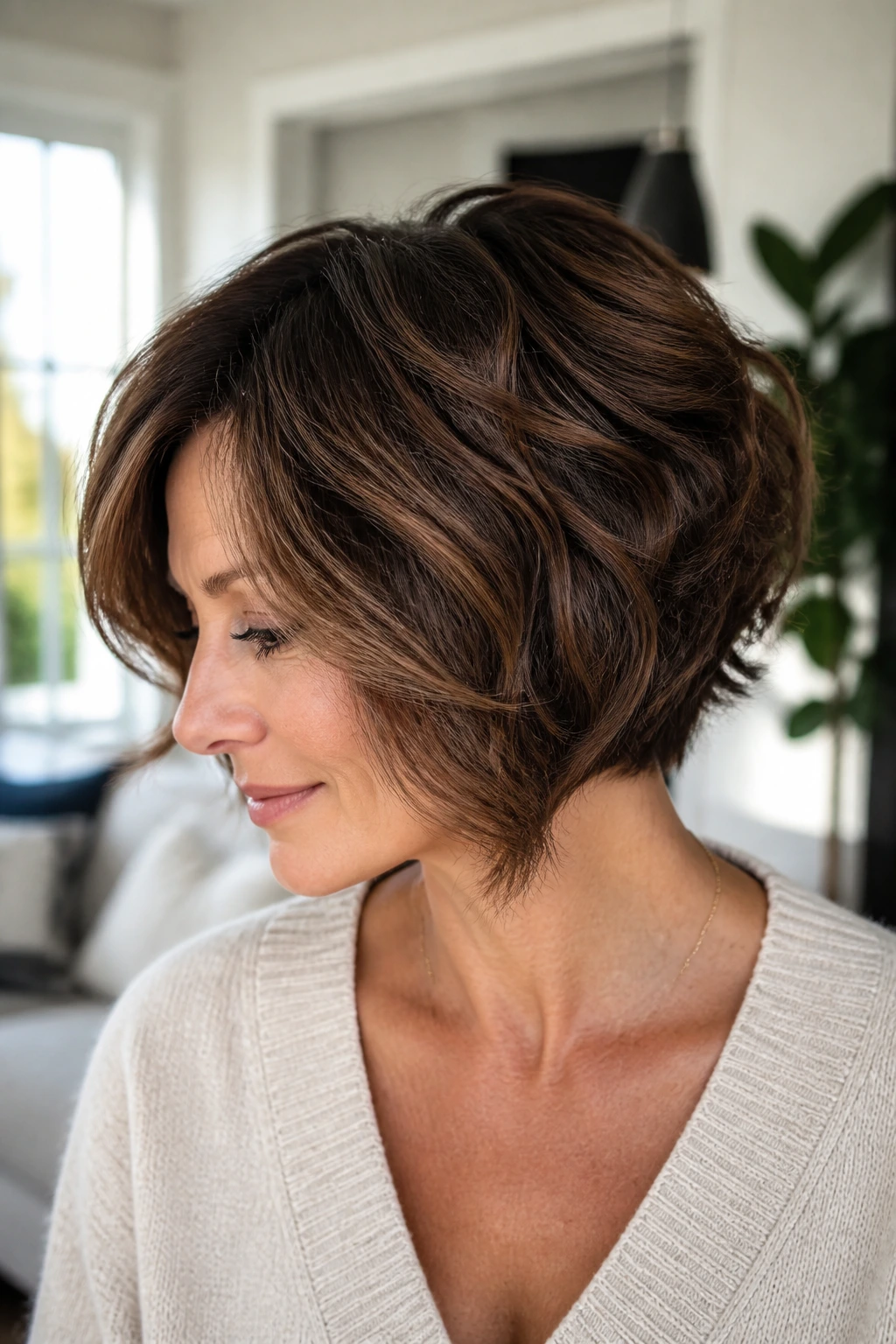
Thick wavy hair can turn a bob into a triangle if the inside stays too bulky. The tapered bob solves that by removing weight through the interior while keeping the outline controlled. The goal is not to thin the hair into wisps. The goal is to let it fall.
This works best when the taper is gradual from the back through the sides, with enough length left at the perimeter to hold shape. If the hair is dense at the nape, ask for debulking in the right places rather than aggressive thinning all over. That difference matters more than most people realize.
It’s a practical cut. Less puff. Less fight. More room for the waves to settle where they want.
18. The Sleek Wavy Bob with Tucked Ends

Not every wavy bob has to look tousled. Sometimes you want a cleaner line with just enough bend to keep it from feeling stiff. The sleek wavy bob does that by keeping the ends lightly tucked under or brushed into a soft curve.
This one works especially well if you wear structured clothes, strong collars, or a lot of earrings. The haircut gives you a neat frame without erasing the wave pattern. A quick pass with a round brush or a bend from a one-inch iron is usually enough.
A practical note
Use a heat protectant and keep the tool moving. Wavy ends can crisp up fast if you hold the iron too long in one spot.
19. The Rounded Bob with Crown Volume
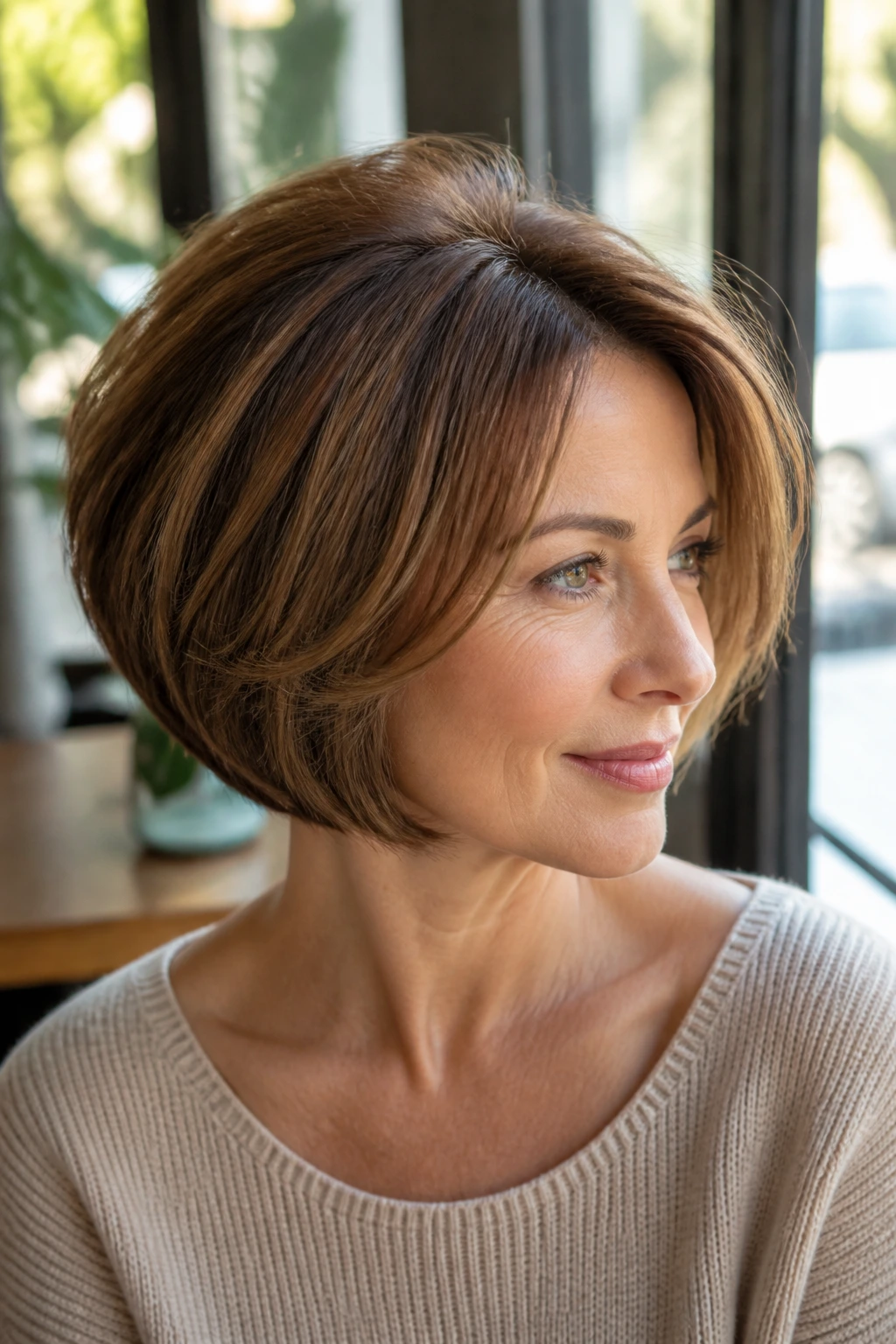
A rounded bob gives the head a softer profile, which can be flattering if the crown tends to lie flat or the sides fall straight. The shape is subtle. It does not need to look old-fashioned or over-polished. It just needs a bit of curve.
This cut is strongest on wavy hair that has enough body to hold a gentle dome at the crown without ballooning. The layers are placed so the top stays lifted and the sides tuck inward a little. If the outline gets too round, it can feel dated. If it stays soft, it reads as deliberate and easy to wear.
I like this one for hair that looks best after a quick blow-dry. The round silhouette gives the dryer something to work with.
20. The Air-Dried Bob with Almost-No Layers

Some people want a haircut that looks like it was styled by weather and a clean mirror. Fair enough. This version keeps the layers minimal and the outline steady, so the wave pattern can do its own thing without a lot of coaxing.
It’s the best choice if your waves are loose and your hair doesn’t like too many shorter pieces. Too many layers can make fine waves fray. Here, the cut line stays calm, and the movement comes from the bend in the hair rather than from the scissors.
How it behaves
On a good day, this looks effortless. On a bad day, it still looks like a haircut. That’s a useful quality.
21. The Inverted Bob with Soft Movement
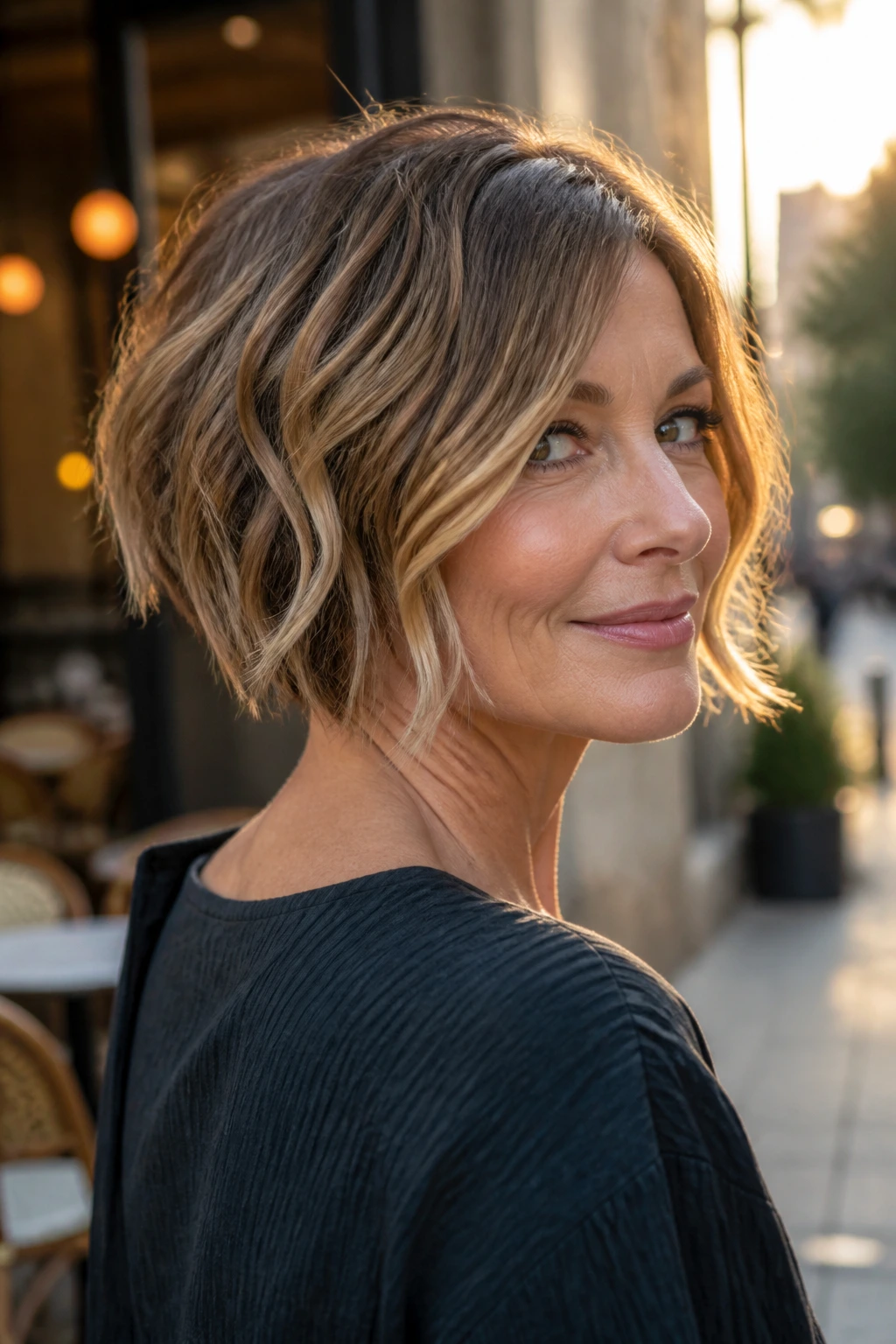
The inverted bob leans shorter in the back and longer in the front, but the soft version avoids the sharp angle that can feel too hard for wavy hair. The front glides forward gently, which keeps the face framed and the neck visible.
This shape is useful if you want a bit of structure without the stiffness of a classic angled cut. Wavy hair softens the line naturally, which is why this version feels lighter than it sounds on paper. It’s also a good match for people who want the back off the neck but don’t want to lose the sense of length in front.
It does need a clean neckline. If the nape gets fuzzy, the whole silhouette loses its edge.
22. The Side-Bang Bob with Internal Layers
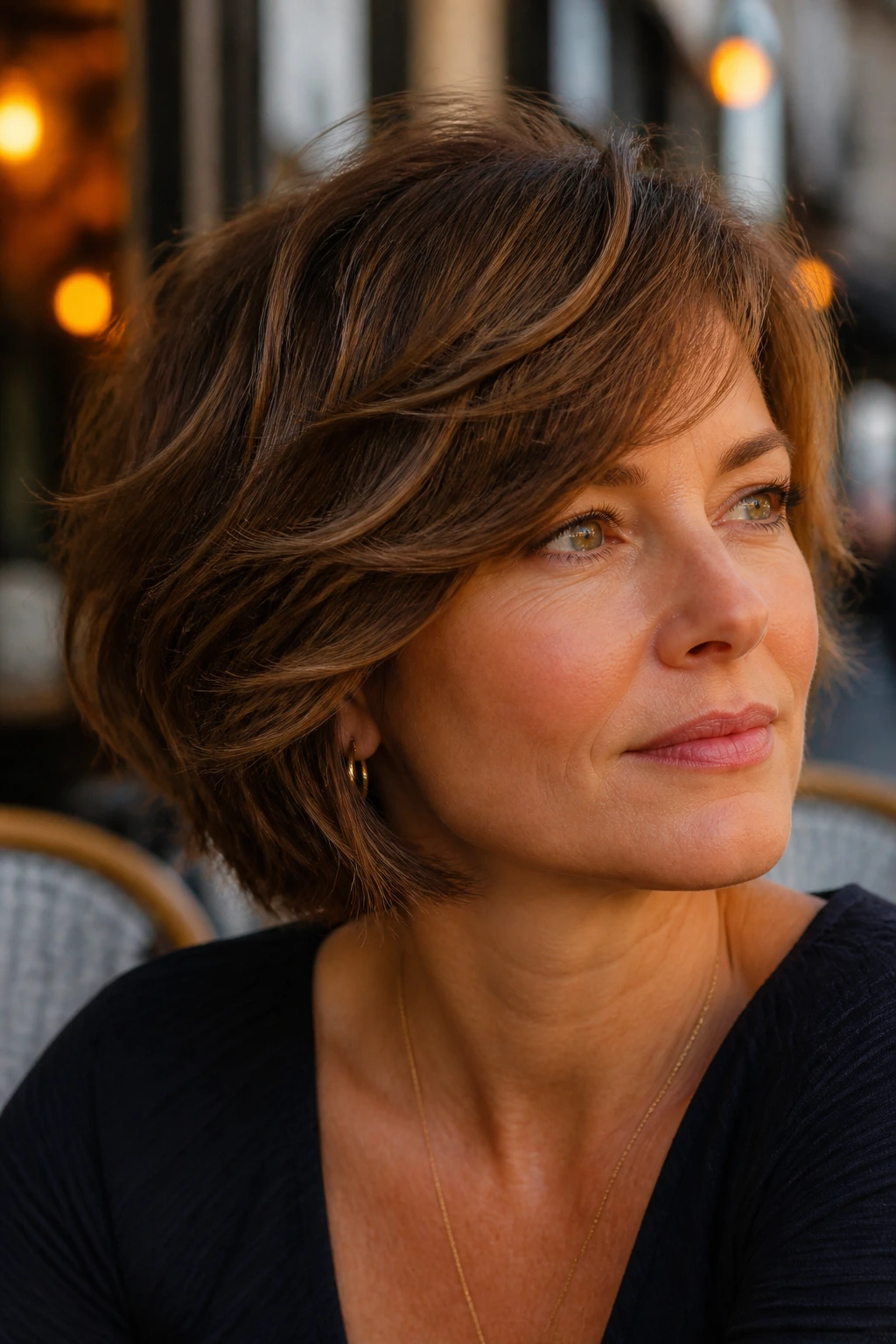
Side bangs are the quiet workhorse of bob haircuts. They soften the forehead, keep the wave from breaking across the face in odd places, and blend better than blunt fringe when your texture refuses to sit still.
The cut itself should rely on internal layers rather than a lot of visible choppiness. That keeps the outline clean and gives the side bang something to fall into. It’s a good option if you wear glasses, since the bang can angle around the frame instead of fighting it.
Who it suits
People with a strong side part. People with a little forehead width they’d like softened. People who want fringe without a heavy maintenance schedule. All three.
23. The Beachy Mid-Neck Bob

This is the bob that sits between polished and casual without getting mushy. It lands around the mid-neck, which gives the waves enough room to stack a little movement without becoming shoulder-length and shapeless.
The beachy part is in the finish, not the cut alone. A few longer layers, a lightweight texturizing spray, and a scrunch-dry routine can give the hair that easy broken-up look, but the perimeter still needs to be defined so it doesn’t wander. That line is what keeps the cut from looking like an overgrown shag.
If you want a style that can handle jeans, blazers, and a day when you can’t be bothered, this one earns its space.
24. The Fine-Hair Bob with Light, Strategic Layers

Fine wavy hair needs a careful hand. Too much thinning and it disappears. Too little shaping and it hangs like wet ribbon. The answer is light, strategic layers that add lift near the crown and keep the ends from feeling strung out.
This cut usually works best at chin to jaw length, where the wave can show without dragging the shape down. The layers should be long enough to preserve fullness, with a blunt-ish edge that gives the hair some visual thickness. It’s the difference between “I have a bob” and “my hair is trying to evaporate.”
A root spray and a small round brush can do more here than a pile of heavy cream ever will. Fine hair likes support, not sludge.
25. The Grown-Out Bob That Sits Between Bob and Lob
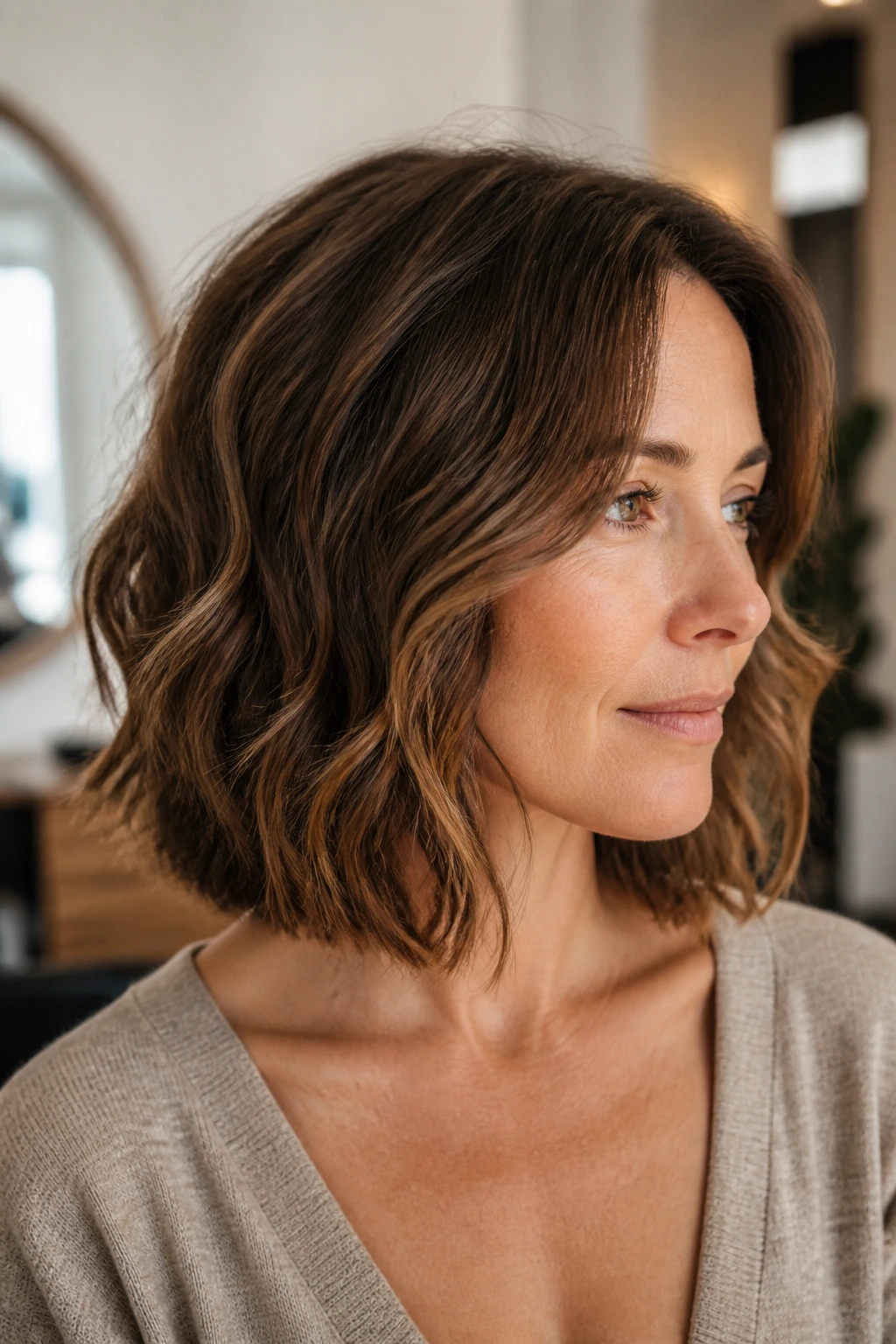
Not everyone wants a cut that demands attention every six weeks. The grown-out bob sits in that useful middle zone, where the shape still reads as short and intentional but has enough length to survive a missed appointment or two.
This is one of the most practical choices for women who want a layered bob but live with real schedules. The perimeter can graze the collarbone in front and sit a little shorter in back, with soft layers that keep the wave from collapsing. It looks good tucked behind one ear, split down the middle, or pushed off the face on a humid day.
It’s a grown-up cut in the best sense. Calm. Adaptable. Not precious.
Why Short Layered Bobs Work So Well on Wavy Hair
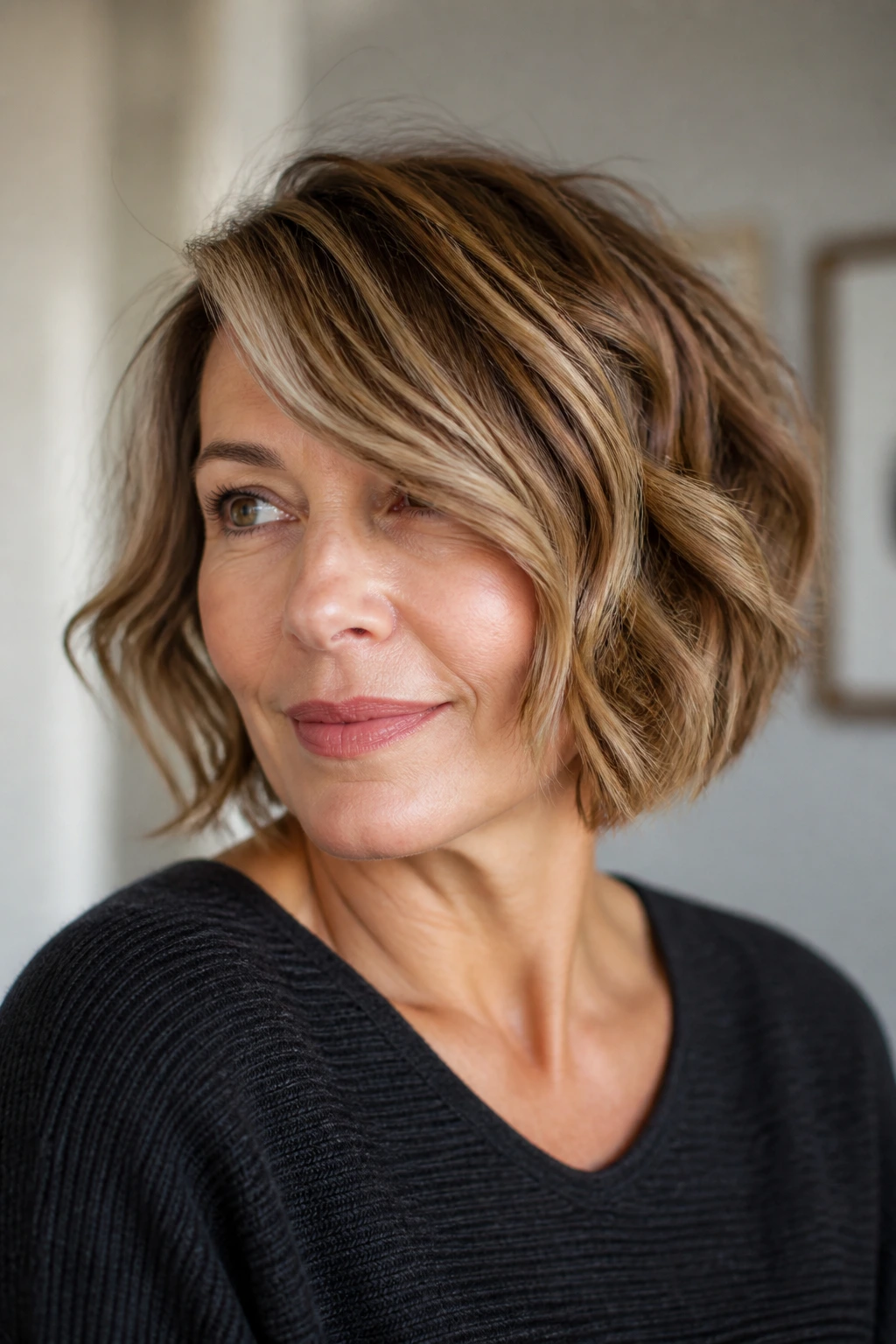
Wavy hair behaves best when it has some freedom, and a short layered bob gives it exactly that. Long lengths can pull the wave pattern downward, which makes the hair look stretched and a little tired by the end of the day. Shorter shapes lift that weight off the bend, so the movement stays closer to the face where it matters most.
The other thing a bob does well is expose the cut line. That sounds minor, but it changes how the whole style reads. A wavy bob with a clean perimeter feels crisp even when the texture is loose. It doesn’t need a perfect curl pattern. It just needs a sensible outline and a few layers placed where the hair actually bends.
There’s also a practical reason these cuts suit women over 40 so well. Hair often changes with time. It can get drier, a little coarser in places, and less predictable around the crown or temples. A well-placed bob handles those shifts better than very long hair, which can start to look stringy if the ends thin out. The right short cut gives the hair back its shape. That’s the job.
Tools That Make the Cut Easier to Style

-
Sharp haircutting shears: Dull blades chew the ends, and wavy hair shows that damage fast.
-
Diffuser attachment: This keeps the wave pattern intact while drying the roots and taking down frizz.
-
1-inch to 1.5-inch curling iron or wand: Useful for fixing a few flat pieces without restyling the whole head.
-
Medium round brush: Good for smoothing the front, curving the ends, and adding root lift at the crown.
-
No-crease clips: Handy for setting the crown while the hair cools or for pinning a deep side part in place.
-
Lightweight mousse: Gives the wave memory without coating the hair in heavy residue.
-
Heat protectant spray: Non-negotiable if you blow-dry or use a hot tool even once a week.
-
Microfiber towel or cotton T-shirt: Reduces rough drying and helps the wave clump instead of puff.
-
Wide-tooth comb: Better than a brush for wet hair; it keeps the bends from stretching out.
-
Hand mirror: The back shape matters. A lot. Check it.
How to Choose the Right Bob Length for Your Face and Wave Pattern
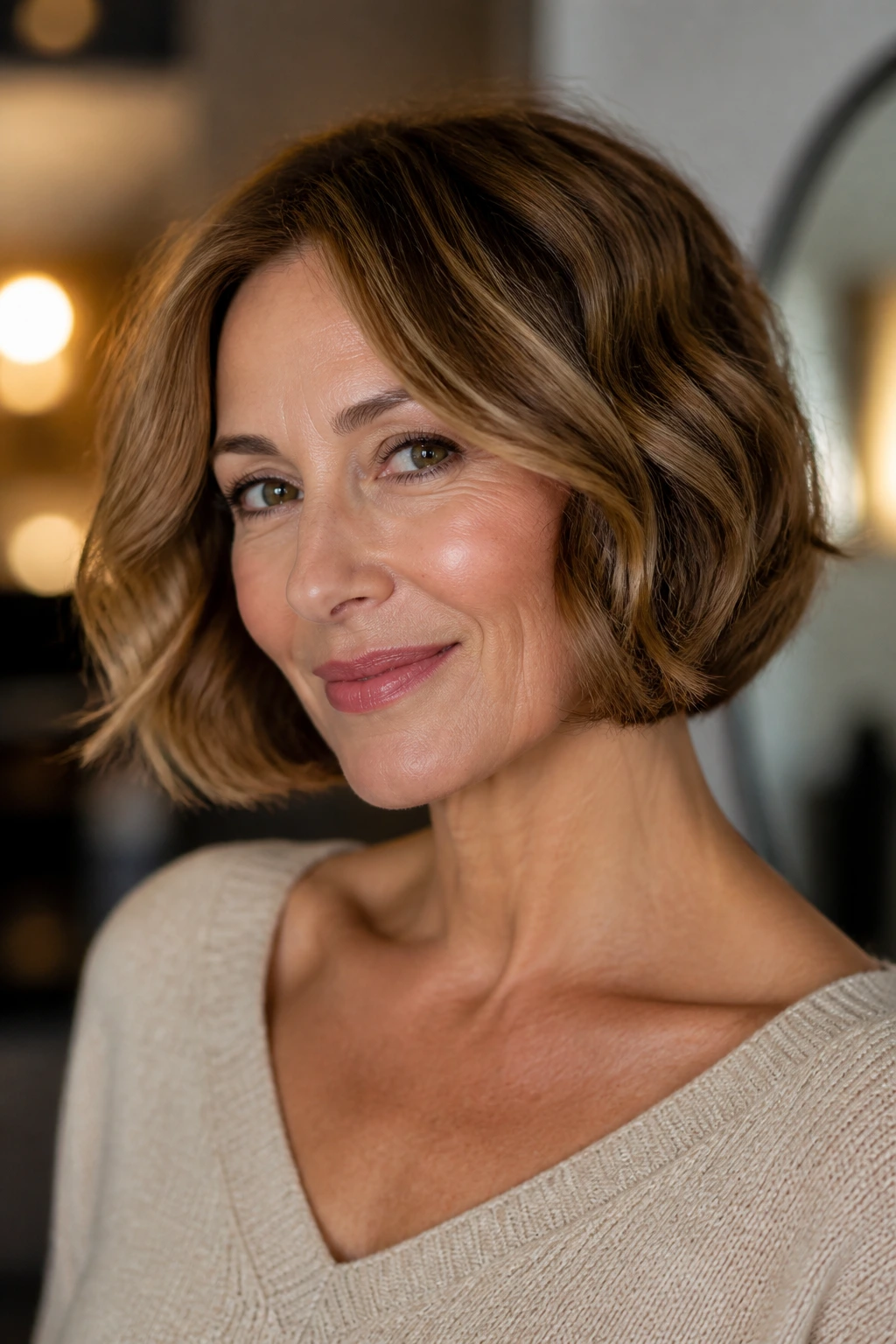
The best bob length is not the one that looks cutest on a model with different hair. It’s the one that lands where your waves have room to move without getting too wide. Loose waves usually look strongest around chin or collarbone length. Tighter waves or loose curls can handle a slightly shorter bob because they spring upward and create their own shape.
Face shape matters, but not in the stiff rulebook way people love to repeat. A shorter chin-length bob can sharpen a soft jaw. A slightly longer lob can stretch a rounder face. A side part or fringe can shift the visual weight more than a half-inch of length ever will. That’s why photos should show not only the style you like, but the texture and front view.
If your hair is dense
Ask for interior debulking, not all-over thinning. Dense waves need room inside the shape, but they still need a strong perimeter.
If your hair is fine
Keep the ends fuller and the layers longer. Fine wavy hair loses body fast when the scissors get too enthusiastic.
If you wear glasses
Leave enough room around the temples and brows so the frames don’t fight the fringe. Side bangs and curtain pieces tend to behave better than blunt fringe.
How to Wear These Cuts Day to Day
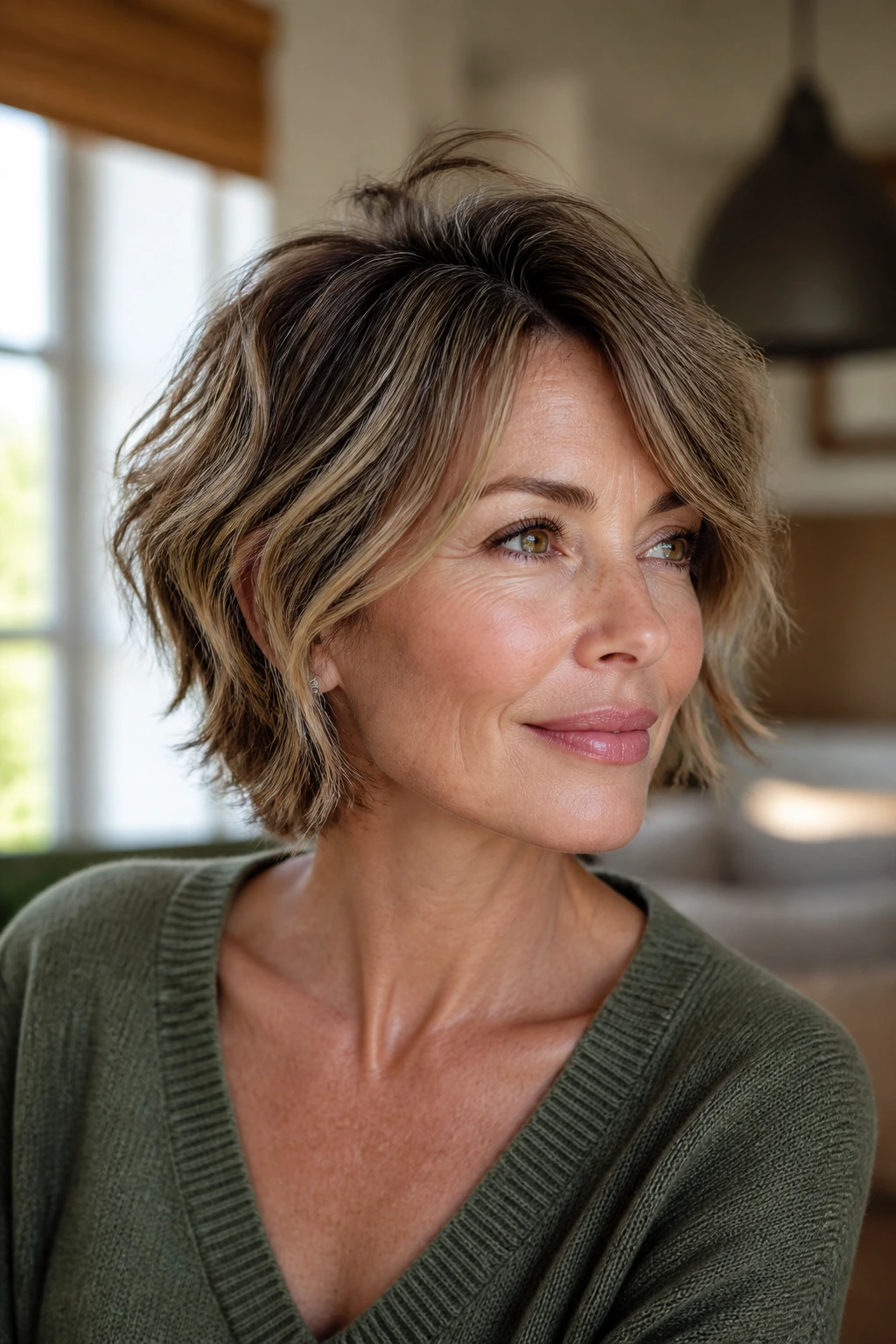
Presentation: Decide where the bob should do the work. A center part makes most layered bobs look modern and open; a deep side part adds lift and breaks up a wide forehead. Tucking one side behind the ear can change the entire mood of the cut in ten seconds.
Accompaniments: Earrings, glasses, and collar shapes matter more than people think. A jaw-length bob looks sharp with hoops or a clean neckline. A collarbone bob plays well with blazers, scarves, and anything that would swallow a shorter cut.
Proportion: If your waves are strong, keep the shortest layer somewhere that still leaves room for movement — cheekbone, jaw, or just below. If the hair is finer, a little extra length keeps the outline from feeling too skimpy.
Finish: Air-dried works when the cut is balanced. Diffused works when you need lift. A round brush works when you want the ends to bend in a neater way. You do not need all three on the same day, which is a mercy.
Styling Moves That Save Time in the Morning
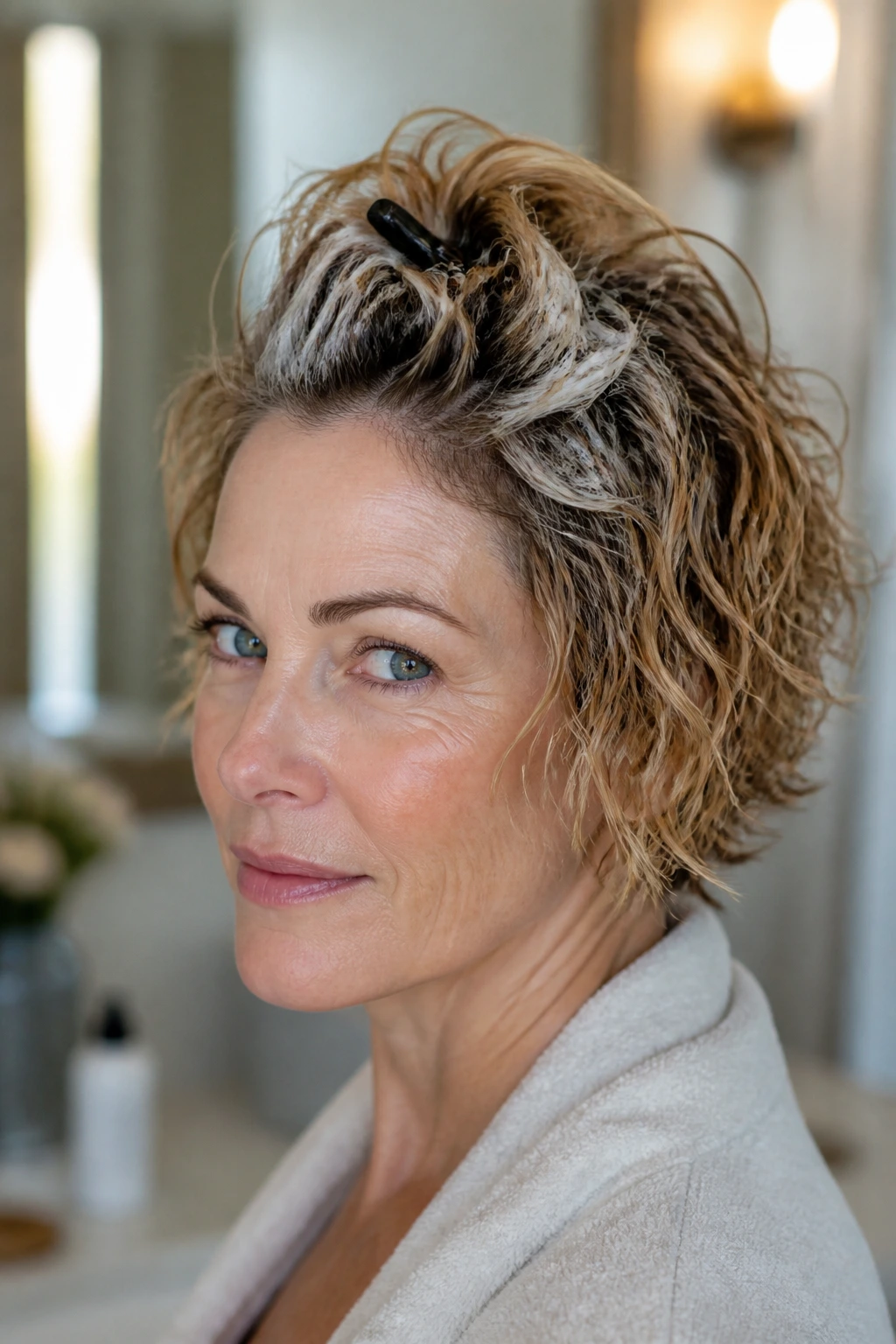
Root Lift: Put mousse at the roots while the hair is still damp, then clip the crown for ten minutes before diffusing. That tiny pause makes more difference than another handful of product.
Wave Definition: Twist two-inch sections around your fingers while the hair is damp, then stop touching it. Wavy bob styles go from soft to fuzzy when you keep fussing.
Frizz Control: Use serum only on the last inch or two of the hair. Slathering it higher up collapses the volume and leaves the scalp looking flat by noon.
Quick Fix: If one side has gone weird, mist it with water, scrunch once, and hit it with a low diffuser for a minute or two. Usually that’s enough. Usually.
Make-It-Yours: Add a side part for lift, a curtain fringe for softness, or a tucked-behind-the-ear finish for a sharper line. Small changes matter more than dramatic styling.
Mistakes That Make a Wavy Bob Lose Its Shape
-
Layers cut too high at the crown: The hair sticks up and looks puffy instead of lifted. Ask for softness through the top, not choppy bits that stand away from the head.
-
A blunt line with no interior movement: On wavy hair, that can turn into a wide block. The fix is subtle internal layering so the ends don’t spread outward.
-
Too-short fringe on a wavy front section: Waves shrink and split, and the bangs can sit awkwardly above the brows. Leave fringe a touch longer and cut with dry movement in mind.
-
Heavy creams all over the head: The bob loses root lift and collapses around the face. Keep richer products on the ends and use mousse or spray at the roots instead.
-
Ignoring the back view: A bob can look neat in front and messy at the nape. Check the back in a mirror and ask for a clean neckline if you want the shape to hold.
Variations and Adaptations to Try

The Glasses-Friendly Bob: Keep the fringe side-swept or curtain-style and avoid a heavy piece right where the frame sits. This keeps the eye area open and stops the cut from feeling crowded.
The Thick-Hair Debulked Bob: Ask for internal weight removal and a strong outer line. This keeps the haircut from turning into a triangle when the wave expands.
The Fine-Hair Lifted Bob: Use long layers, a blunt perimeter, and a shorter crown-to-nape distance. Fine waves need support more than they need texture.
The Silver-Blend Bob: Leave the layering airy and let the color work with the shape. Silver strands show movement fast, so the cut can stay simpler and still look lively.
The Low-Maintenance Air-Dry Bob: Keep the length around the collarbone or jaw, with minimal layers and a part that feels natural to your growth pattern. This is the one for people who want shape without hot tools.
The Edgier Asymmetrical Bob: Shift one side longer by about an inch or two and keep the rest clean. It gives the haircut a little angle without turning it into a statement piece you have to defend every day.
Keeping the Shape Between Salon Visits

A short layered bob needs regular attention, but not an obsessive amount. For a true chin-length cut, a trim every 6 to 8 weeks keeps the ends from flipping out in the wrong places. A longer bob or lob can stretch to 8 or even 10 weeks if the shape is soft and the layers are forgiving.
Morning care matters too. Sleep on a silk or satin pillowcase if your hair tangles easily; it won’t solve everything, but it cuts down on the roughness at the nape and crown. If you wake up with one side flattened, mist the area lightly, scrunch it, and let it air for a few minutes before adding heat. That usually revives the bend without starting from scratch.
Product choice should stay light. A small amount of mousse, a leave-in on the ends, and a touch of texture spray are enough for most of these cuts. If your hair gets oily fast, dry shampoo at the roots on day two or three can buy you another wear day, but use it sparingly or the bob starts to feel dusty.
Humid weather changes the game. In that case, keep the style a little softer, not shellacked. Wavy hair that’s forced into place tends to rebel later. Hair that’s allowed some movement usually looks better by dinner.
Questions People Ask Before They Chop Their Hair
Will a short layered bob make my wavy hair look frizzy?
Not if the layers are placed well. Frizz tends to show up when the cut removes too much weight or the styling products are too heavy and uneven. A clean outline, light mousse, and a diffuser usually help the wave stay together.
Is this cut a bad idea for thick hair?
No, but thick hair needs interior debulking instead of random thinning. A blunt edge with controlled weight inside the shape usually works better than a heavily shredded finish.
What if my waves are loose and not very defined?
That’s actually one of the easiest textures for a bob. Loose waves tend to look soft and polished at chin or collarbone length, especially when the cut has a little face-framing movement.
Can I wear it straight sometimes?
Yes. A short layered bob often looks cleaner when blown smooth for a few days. The trick is to keep the shape balanced enough that it still looks good when the wave returns.
How short can I go if I’m nervous about it?
Start at the collarbone or just below the jaw. Those lengths give you room to test the shape before moving up to a chin-length version.
Do bangs work with wavy bobs?
They can, but they need more planning than most people expect. Side bangs and curtain bangs usually behave better than blunt fringe because they move with the wave instead of against it.
How often should I trim it?
Every 6 to 8 weeks for a short bob, a little longer for a lob. Once the ends start widening or the nape loses its line, the cut is telling you it’s time.
What if one side of my hair waves more than the other?
That’s common. Ask for the cut to be balanced around your stronger side and part the hair where it naturally wants to sit. Fighting the growth pattern usually makes the asymmetry more obvious.
The Cut That Makes Wavy Hair Feel Intentional
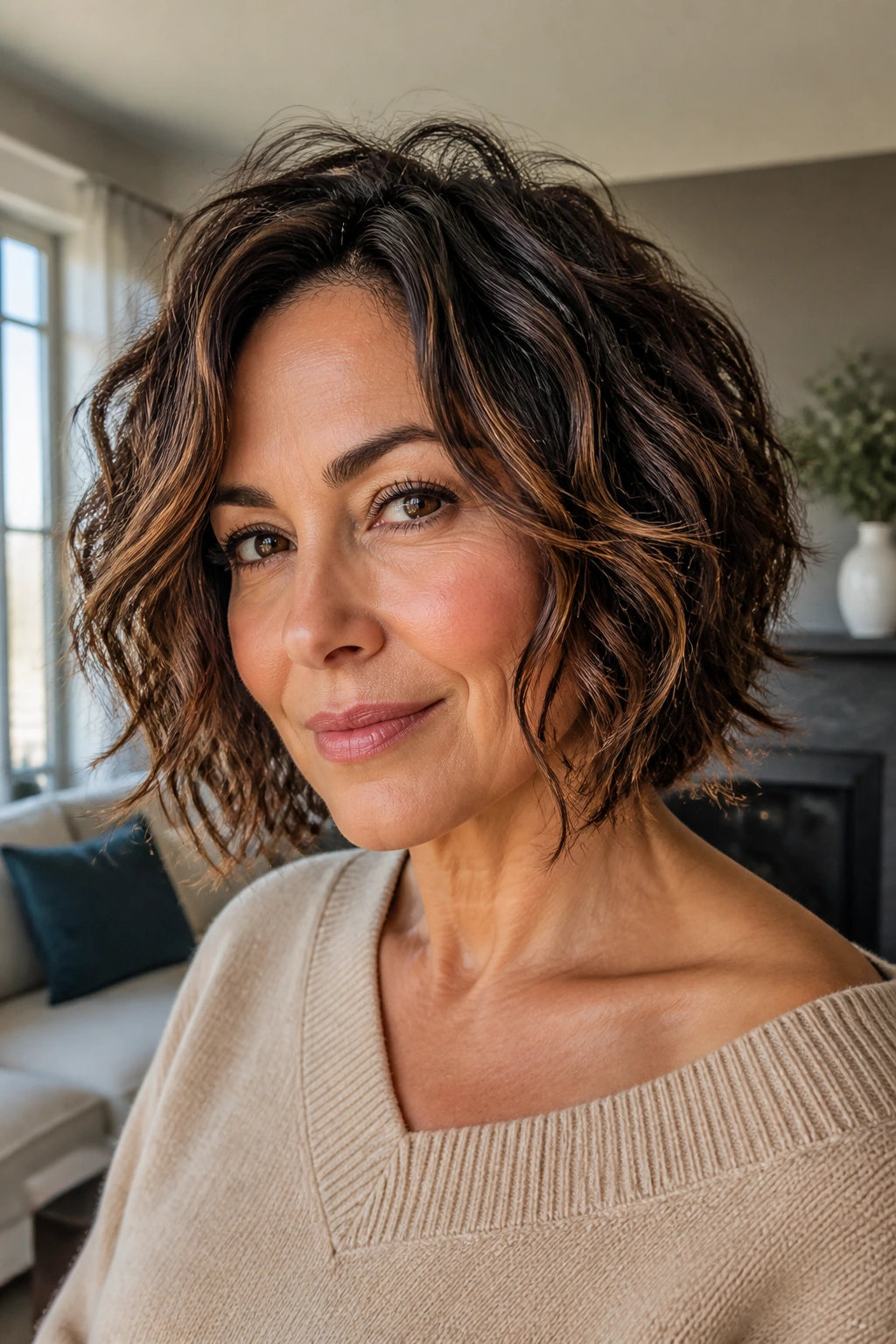
The best short layered bob doesn’t try to flatten wavy hair into obedience. It gives the wave a shape to live inside. That difference is the whole game. When the length, layers, and outline land in the right place, you stop fighting the hair every morning and start working with the parts that already look good.
The nicest thing about these cuts is how practical they are without feeling plain. They can be sharp or soft, silver or brunette, fine or thick, air-dried or brushed smooth. And when the cut is right, all of those versions still look like the same person. That’s the sort of haircut worth bringing to a stylist with confidence.