



Soft bobs for natural hair and round faces work because they use shape, not stiffness, to do the flattering. A blunt line that lands right at the cheeks can make a face look wider than it is; a softer hemline, a little lift at the crown, and a side part with some movement do the opposite. They pull the eye up and down instead of letting it sit only across.
Natural hair changes the game in the best possible way. Coil shrinkage, curl clumping, and texture at the ends all create a bob that looks alive instead of shellacked. But that same shrinkage can betray you if the cut is planned only on wet hair. A bob that looks tidy at the sink can land two inches shorter after it dries, and round faces usually need that length to sit with a bit of breathing room.
I like a soft bob here because it doesn’t demand a perfect, glassy finish. It can be fluffy, stretched, defined, or a little piecey around the face and still read as intentional. The cut has to understand the face shape and the curl pattern at the same time. That’s where the good ones start to separate themselves from the generic chin-length chop that looks fine in the salon mirror and less fine once you live with it.
Why These Soft Bobs Work So Well
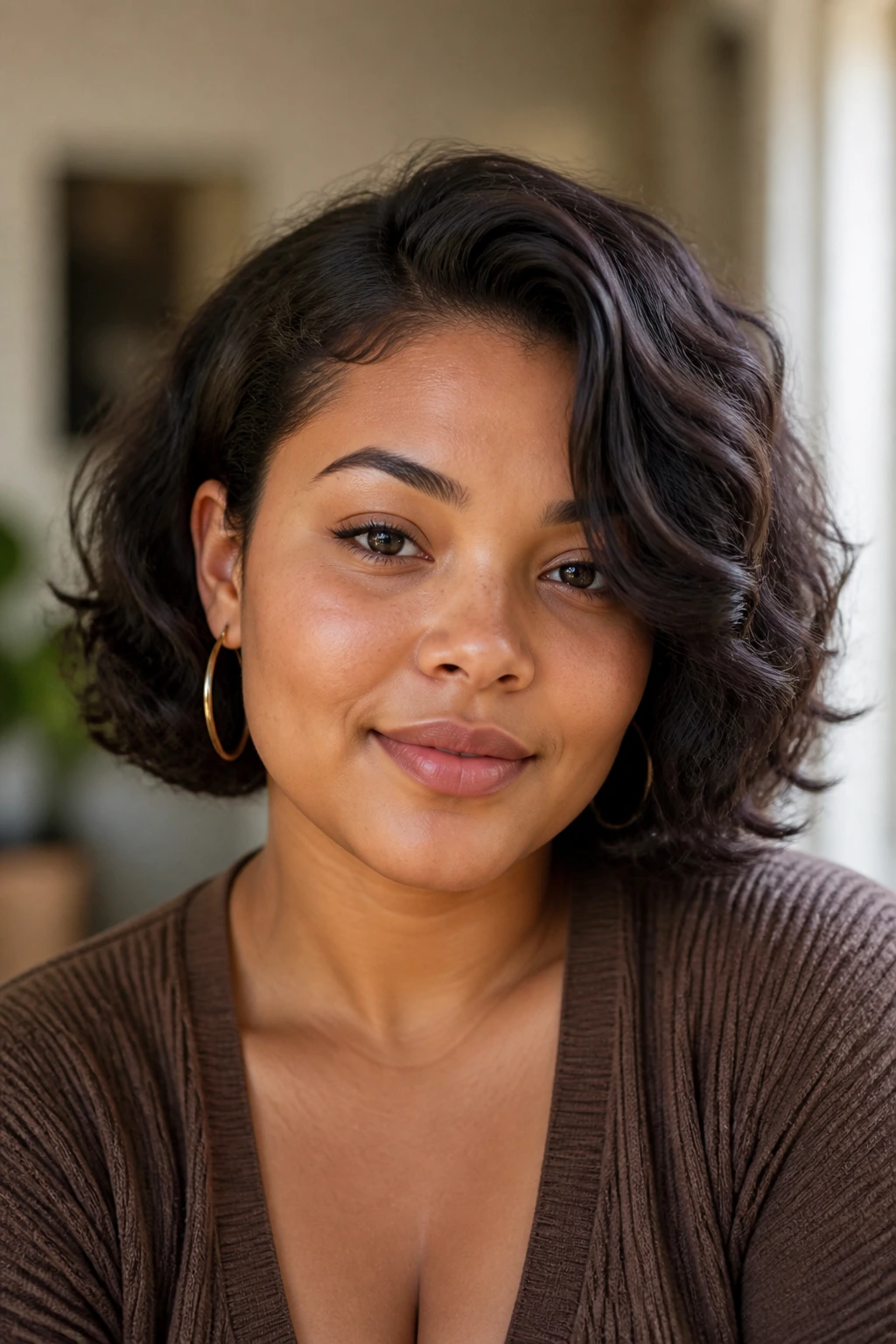
- They add vertical line: A bob that falls just below the jaw or angles slightly forward lengthens a round face without making the cut feel severe.
- They respect shrinkage: Natural hair can lose an inch or more as it dries, so the best versions are cut with that movement in mind instead of against it.
- They keep the edges soft: Rounded ends, face-framing pieces, and internal layers keep the silhouette from looking boxy around the cheeks.
- They work with more than one routine: Wash-and-gos, twist-outs, stretched sets, and light blowouts all fit into this collection without changing the basic shape.
- They grow out better: A soft bob usually looks intentional for longer because the perimeter is blurred a little, not cut into a hard shelf.
- They can carry volume without adding width: Crown lift and side parting can give the bob air up top, which is where round faces often benefit from a little extra height.
1. Chin-Grazing Soft Bob with a Curved Side Part
A chin-grazing bob gets dangerous when it’s cut flat and even. This version curves the front pieces slightly longer, so the line slips past the widest point of the cheek instead of sitting right on it. On natural hair, that tiny difference matters more than people think.
Why It Flatteres a Round Face
The side part breaks up the symmetry that can make a round face feel extra circular. A curved part, rather than a dead-straight one, also helps the front pieces fall with a little swing. That swing keeps the eye moving.
Ask For This
- A bob that lands at or just below the chin when dry
- Longer front pieces by about 1/2 inch to 1 inch
- Soft shaping around the face, not a hard blunt edge
- Enough weight left in the perimeter so the cut doesn’t puff out
Best with: 3c to 4a curls, especially if your hair clumps well after a leave-in and gel.
One thing I’d avoid: a super-short chin line if your cheeks are the widest part of your face. You want the bob to pass that point, not park there.
2. Collarbone Bob with Long Face-Framing Pieces
If you want the safest length for a round face, this is the one I keep coming back to. Collarbone bobs buy you more vertical line, and the long front pieces do the flattering work without turning the cut into a shag.
The shape is soft enough to wear curly, stretched, or blown out. That flexibility is a gift. You can keep the back cleaner and let the front graze the jawline, which stops the face from feeling boxed in. I also like this cut for people who are nervous about going short. It still feels like a bob, but it doesn’t have that abrupt little shock when you look in the mirror.
How to wear it
Wear it with a middle part if your density is even, or a side part if you want the face to look longer right away. On wash day, a diffuser helps the front pieces sit away from the jaw instead of collapsing inward. If you stretch the hair, keep the ends bent, not pin-straight. A little movement at the hem is the whole point.
3. Tapered Curly Bob with a Close Nape
Why does a tapered nape matter so much? Because it clears out bulk where the eye doesn’t need it. When the back is neat and the shape lifts toward the crown, the front can stay fuller without making the whole bob look wide.
This cut is one of my favorites for dense curls that naturally grow outward. The shorter nape keeps the silhouette from ballooning at the neck, while the top and sides still feel soft and round. It’s tidy without looking severe. That’s a hard balance, and this one gets close.
What to ask for
- A shorter back that hugs the neck
- Graduated layers that keep the top from collapsing
- Front pieces that skim the jaw
- No razor-thin ends; natural hair needs some weight
How it wears: beautifully in a defined wash-and-go or a stretched twist-out. If your curls are tighter, the taper makes the shape easier to maintain between wash days.
4. Rounded Coil Bob with Internal Layers
Some people hear “rounded bob” and think it means extra width. Not here. The trick is that the shape is round on purpose, but the weight is removed from the inside, not the outside. That keeps the perimeter soft while the profile stays slimmer than it looks.
This is a good choice if your coils like to sit in a halo and you don’t want the sides to jut out. Internal layers let the curls pile on top of each other in a cleaner way. The result is fuller-looking hair with a neater line around the jaw.
Quick shape notes
- Keep the layers inside the cut, not chopped visibly at the ends
- Ask for the sides to be balanced against the crown so one area doesn’t puff harder than the other
- This works especially well on type 4 hair that needs room but not bulk
A bob like this looks best when the coils are hydrated and clumped. Dry, thirsty ends will separate and make the cut look uneven fast.
5. Blended A-Line Bob That Skims the Jaw
A-line bobs can look harsh if the angle is dramatic. The softer version keeps the front slightly longer than the back — enough to slide past the jaw, not enough to scream geometry. That subtle slope gives the face a slimmer read without turning the cut into a statement piece.
I prefer this shape when someone wants a little structure but not a hard edge. On natural hair, the angle gets softened by texture, which is exactly why it works. The coil pattern blurs the line just enough. You still see the shape. You just don’t see a ruler.
This one is especially useful if your face fills out at the cheeks and you want the eye to move down. The front pieces should touch near the chin or just below it, while the back sits a little shorter. Keep the layers quiet. Too many layers and the whole thing can puff out like a triangle.
6. Fluffy Wash-and-Go Bob with a Deep Side Part
A fluffy wash-and-go bob is not the same as a shapeless puff. The deep side part gives it direction, and the root lift on the heavier side keeps the look from sitting flat across the face. That’s the real trick.
Natural hair that dries into clumps can make a bob look almost sculptural. I like that, especially on round faces, because the shape feels easy but still deliberate. A little asymmetry takes the fullness off the cheeks and moves it upward. If your curl pattern likes to shrink back hard, a diffuser and a light-hold foam will keep the front from collapsing into the jawline.
A small styling note
Do not pile heavy cream on the sides. It makes the bob hang low and wide. Use just enough product to define the curl, then let the cut do the work.
7. Feathered Bob with Curtain Bangs
Curtain bangs on natural hair can go wrong fast if they’re cut too heavy. Done lightly, though, they split the face in a really useful way. The center part opens the forehead, and the longer sides skim the cheekbones instead of cutting across them.
Why It Works
The feathering keeps the bangs from sitting like a curtain wall. That’s the whole point. You want movement, not a thick fringe that shortens the face. On a round face, those softer bangs create a diagonal line from the brow into the bob, which is more flattering than a blunt front.
Best details to request
- Bangs that begin around bridge-of-the-nose length
- Soft tapering at the sides so they blend into the bob
- Layers that start low enough to avoid too much crown fluff
This cut loves a twist-out or a blow-dried bend. If you wear it in its natural state, just make sure the fringe isn’t fighting the rest of the bob. The front should soften the face, not crowd it.
8. Stretched Twist-Out Bob with Tucked Ends
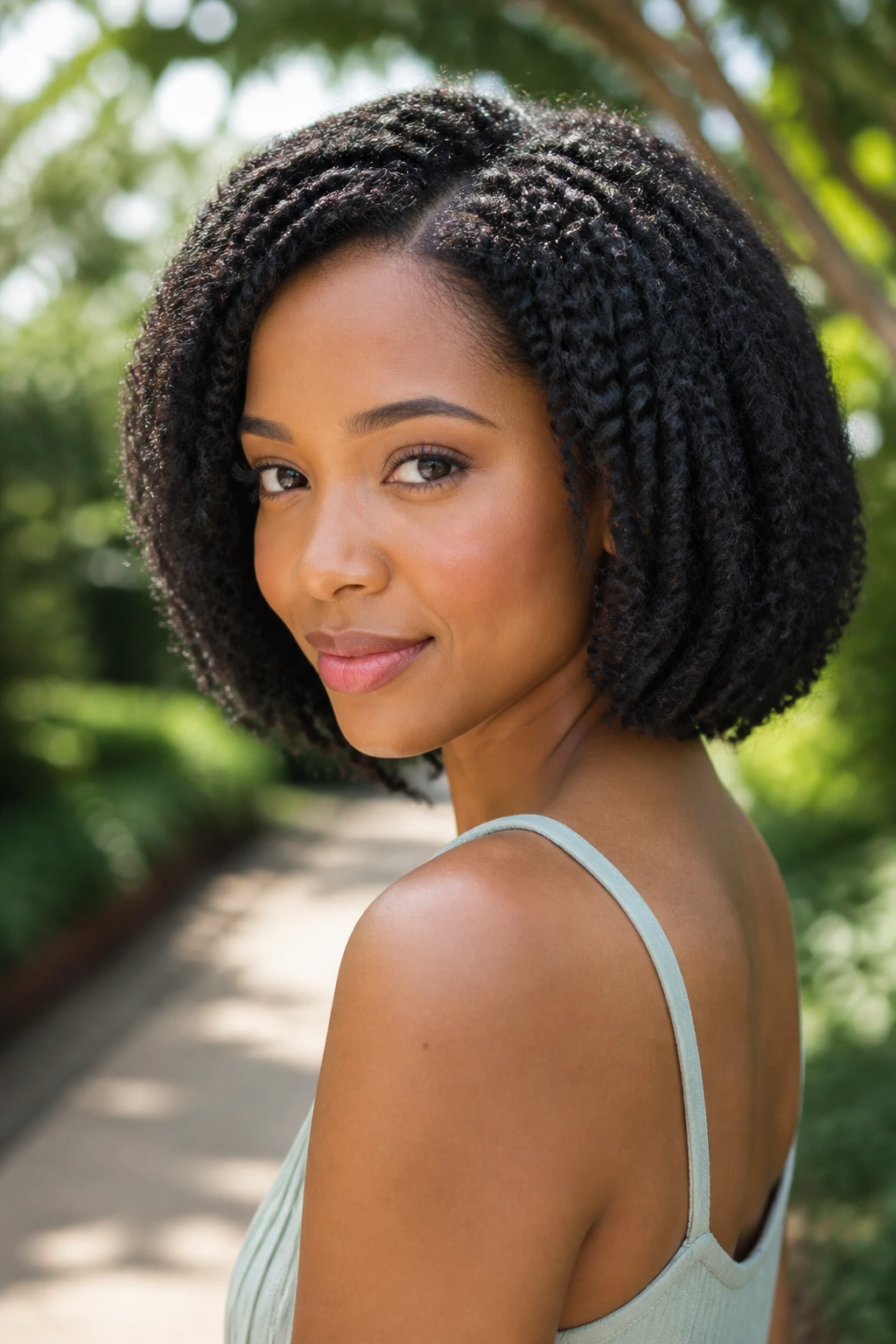
A stretched twist-out bob buys you two things: length and control. The stretch takes the edge off shrinkage, and the tucked ends make the silhouette look polished instead of frizzy at the hem. That’s useful when you want a bob that reads clean from a distance but still has texture up close.
I like this shape on 4b and 4c hair because it gives the curls a little more room to hang. It can land anywhere from jaw to collarbone depending on how much you stretch. A set of medium twists, dried fully before unraveling, usually gives enough definition without locking the hair into a helmet.
A small detail matters here: tuck the ends inward or under with your fingers once the twist-out is separated. That softens the edge and keeps the jawline from looking heavier than it is.
9. Slim-Perimeter Coily Bob for 4C Hair
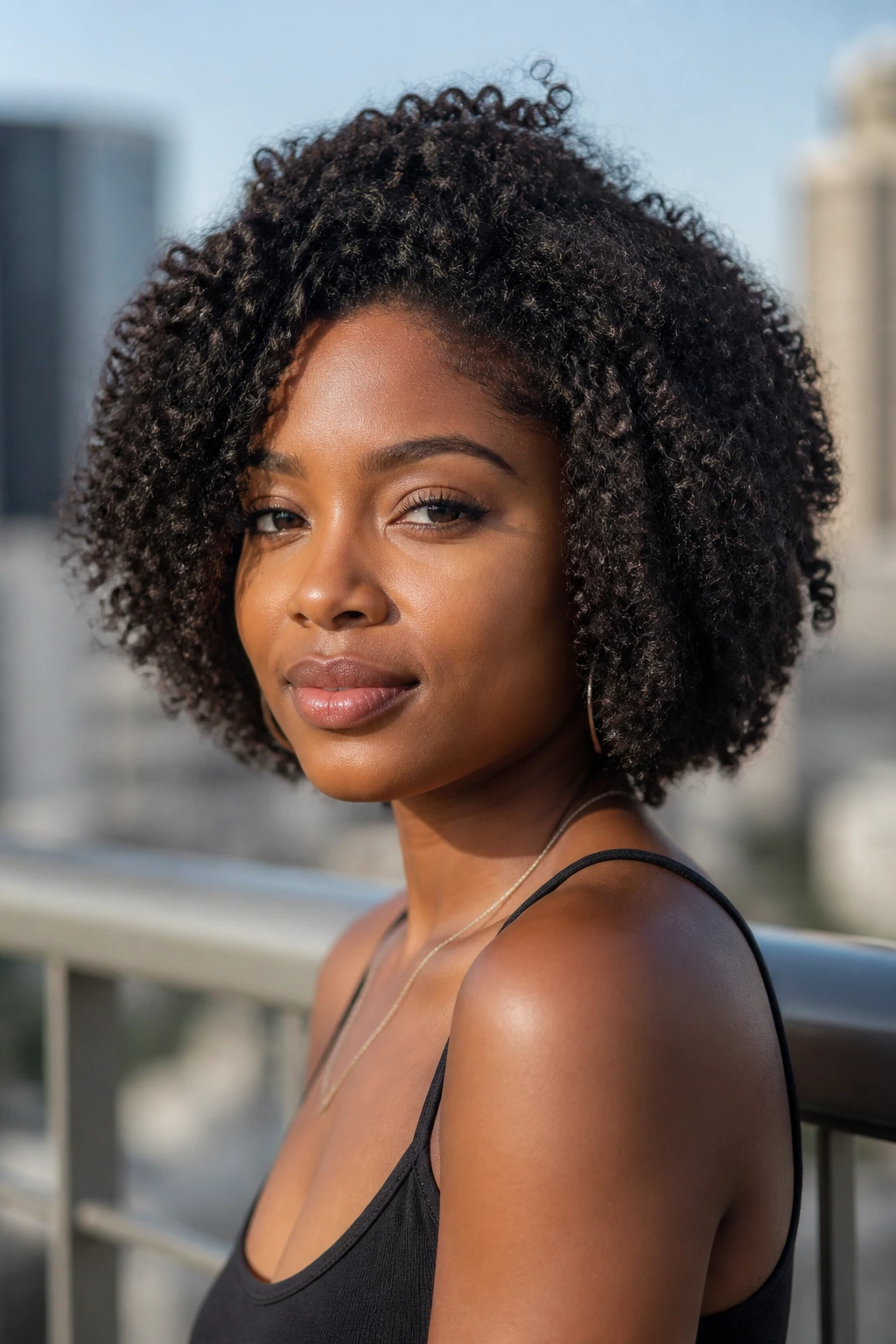
What if you want the volume, but not the width? This is that cut. The perimeter stays slim and tidy while the crown and upper sides carry the shape, which keeps the bob from ballooning outward at cheek level.
What makes it different
On tight coils, the perimeter can get bulky if the line is cut too blunt. A slim perimeter removes that shelf. The result is a bob that feels rounded and full but still narrow enough to flatter a round face.
Quick shape cues
- Keep the side line just below the jaw
- Build lift at the crown, not at the cheeks
- Avoid too much thinning at the ends; it can make the silhouette look wispy instead of soft
This one works best when the hair is moisturized and separated into small, consistent coils or twist-outs. If the texture is uneven, the silhouette starts to wander.
10. Side-Swept Bob with Long Front Pieces
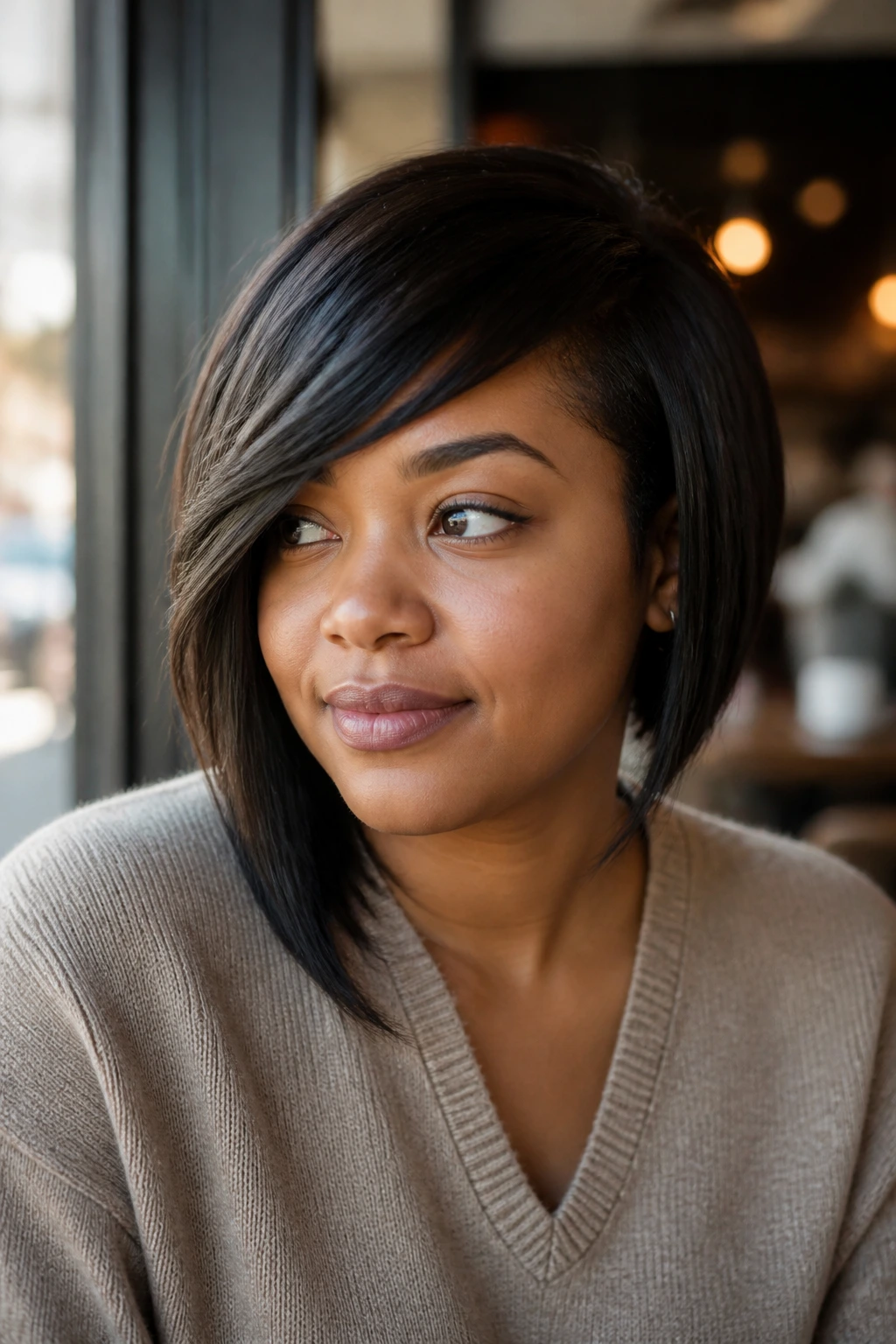
Some cuts flatter a round face by adding length. This one does that by sneaking the eye across the forehead and down one side. A side-swept bob with long front pieces creates a diagonal line, and diagonal lines are your friend when you’re trying to avoid width.
It’s also just a nice change from the usual symmetrical bob. One side can sit closer to the cheek, while the other falls forward and drapes past the jaw. That unevenness feels modern without being fussy. On curly or coily hair, the movement reads even better because the texture breaks up the line a little.
If your face is especially full at the cheeks, ask for the longest front piece to hit just under the chin. Too short and the sweep loses its job. Too long and it stops feeling like a bob.
11. Soft Blowout Bob with Bends at the Ends
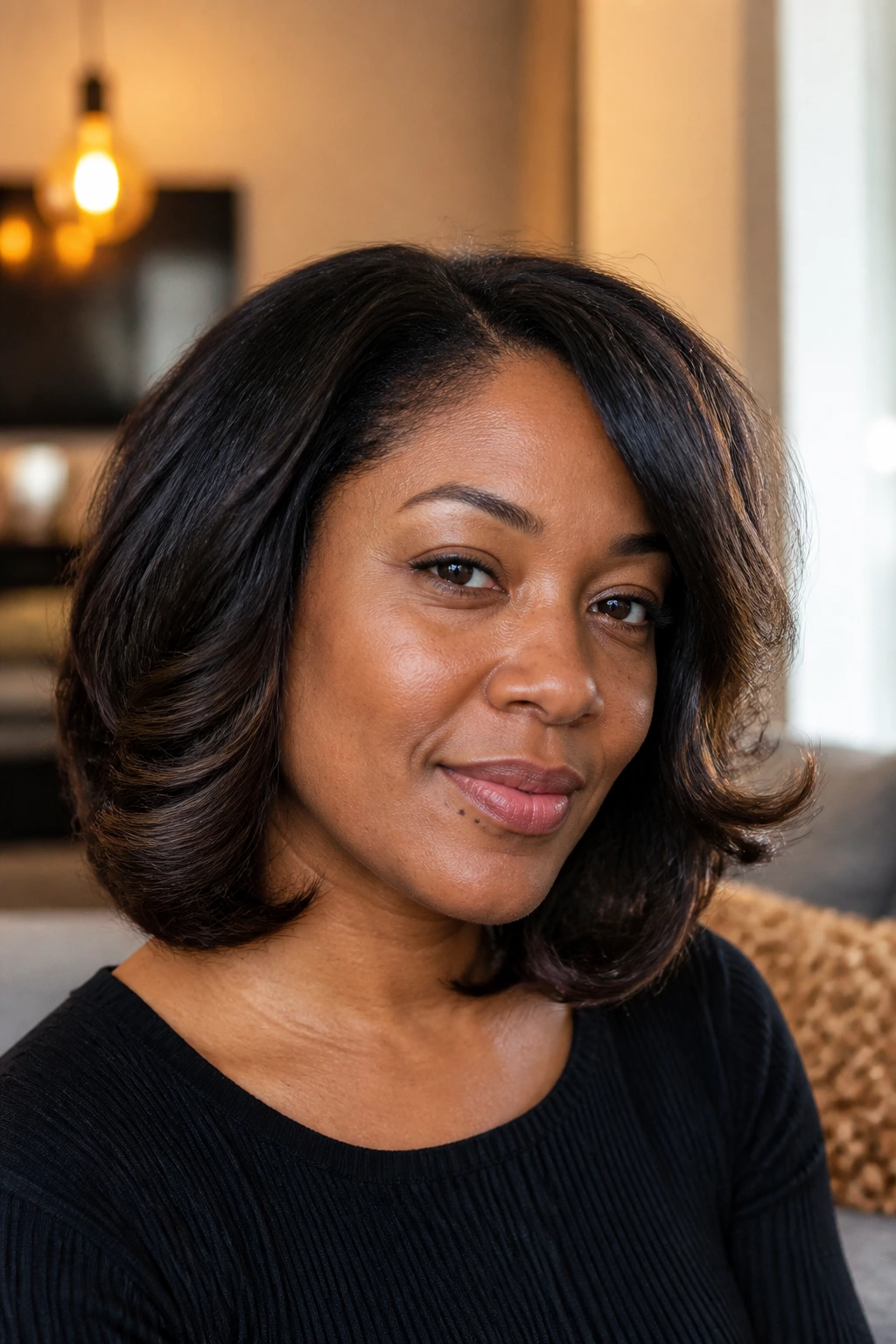
A blowout bob on natural hair doesn’t have to be pin-straight and stiff. In fact, I prefer it with just a bend at the ends. That slight curve keeps the style soft around the jaw and prevents the cut from looking too sharp against a round face.
This is the version for people who like a sleeker finish but hate the helmet effect. The hair should move when you turn your head. A round brush, a tension blow-dry, or a stretched blowout on medium heat all work. I’d still keep the ends tucked under or slightly flipped so the line doesn’t shoot straight across the cheeks.
Heat protection matters here. Use it evenly, especially around the face where the hair often gets the most direct pass from the dryer. Don’t chase bone-straight perfection. A little bend looks better and grows out better.
12. Center-Part Bob with Curved Layers
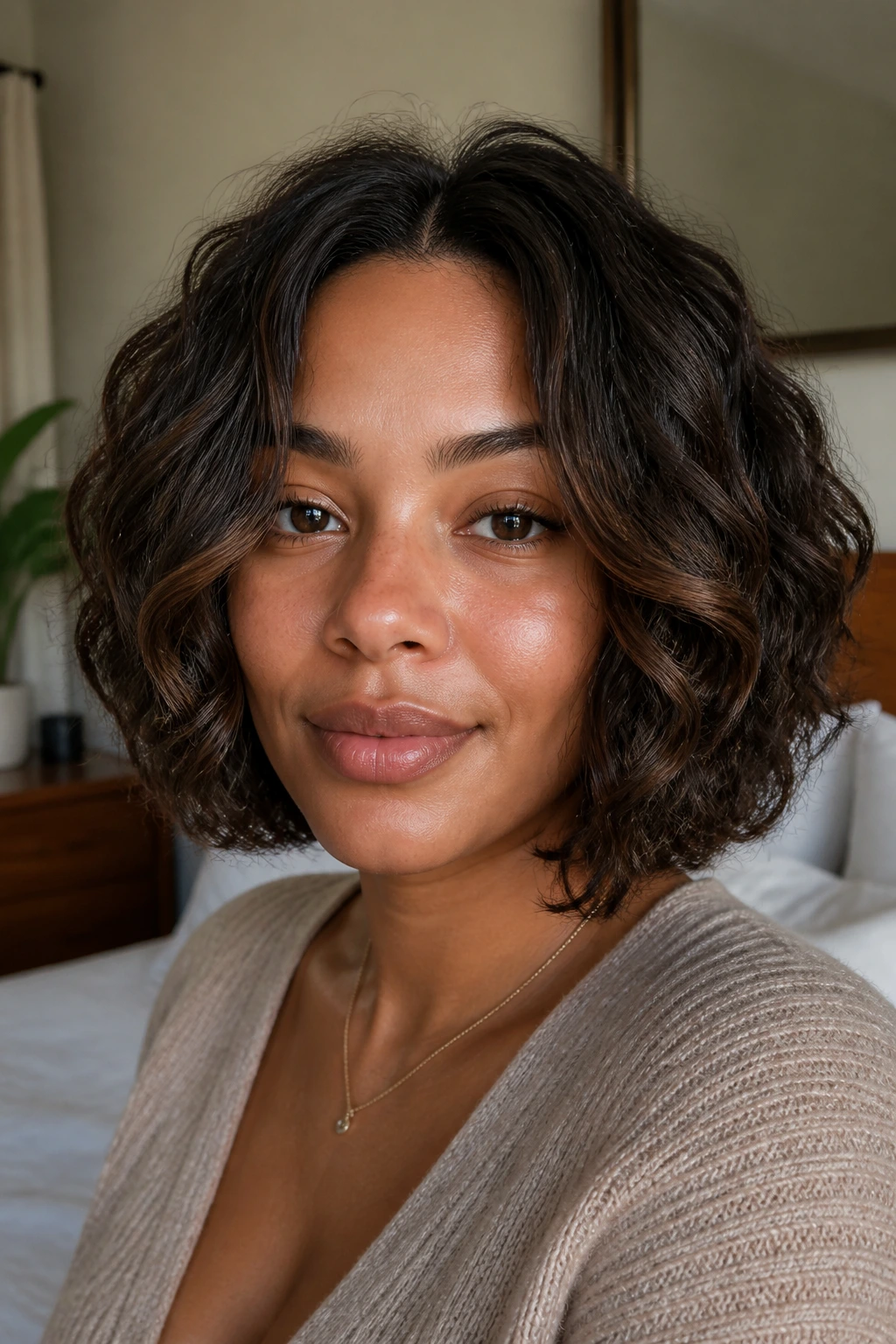
A center part can work on a round face if the rest of the cut does some of the balancing. Curved layers around the face keep the line from feeling too broad, and the part creates a strong vertical center that can make the face read longer. The cut lives or dies on the layers.
This is not the blunt, heavy middle-part bob that sits like a shelf. It’s softer. The front pieces should arc away from the cheekbones, and the length should sit low enough to avoid widening the jaw. If you’re wearing it curly, a little root volume at the top keeps the middle from flattening the face.
I like this on people with even density on both sides. If one side is much fuller than the other, the center part can expose that fast.
13. Mini Fro Bob with Temple Width Control
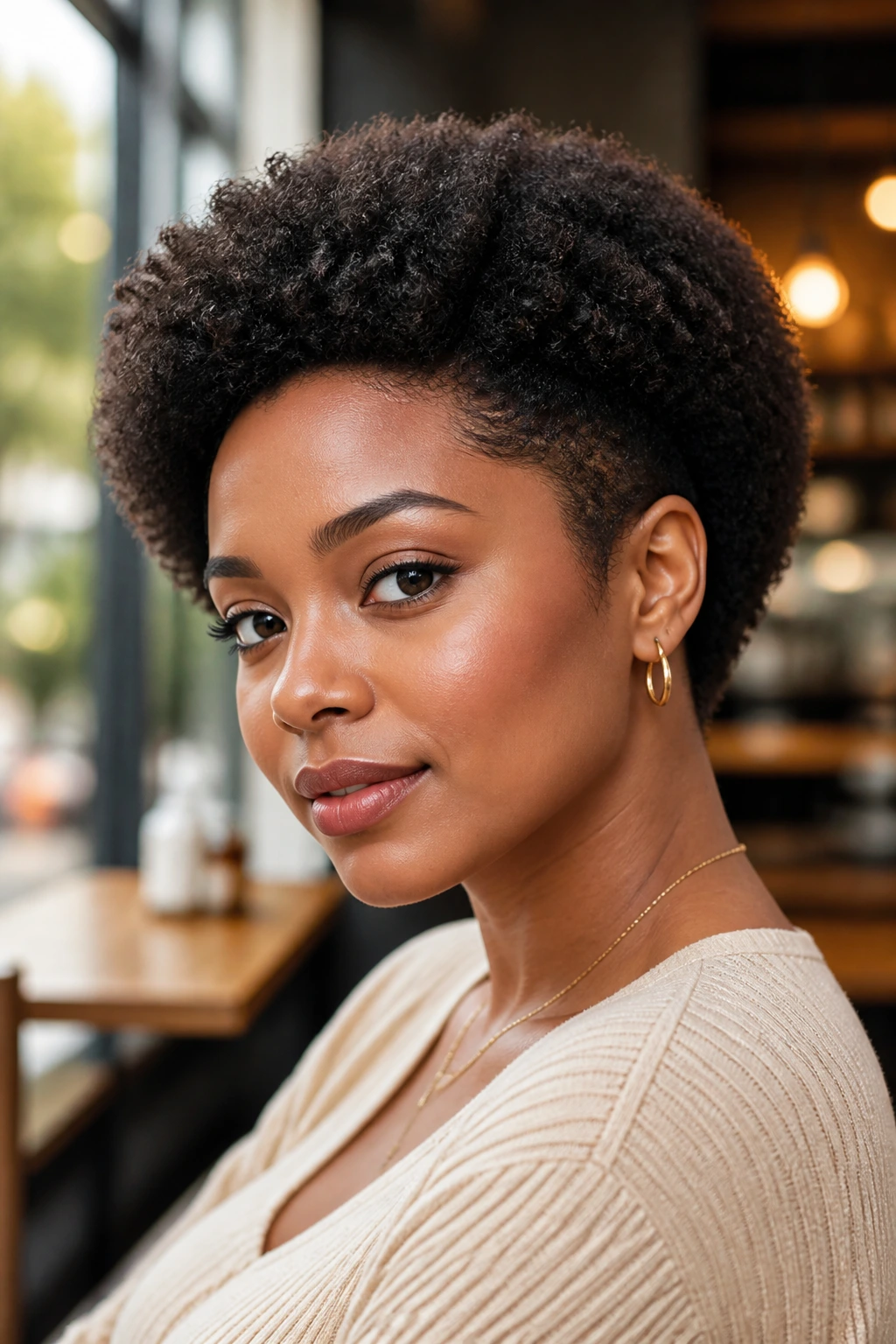
A mini fro bob has charm when it’s shaped with intention. The trick is to control the temples and keep the bottom edge soft, so the silhouette doesn’t puff widest right where the face is already full. A little taper at the sides makes a huge difference.
What to ask for
- A shape that skims the ears without flaring hard at the temples
- Enough rounded fullness at the crown to lift the eye
- A soft hemline that sits near the jaw or just below it
This is one of the best looks for 4b and 4c hair when you want to wear your texture as texture. It doesn’t need stretching to be flattering. It just needs a smart outline. And yes, that outline matters more than trying to force every curl into the same size.
A small pick at the roots can help lift the crown without making the sides explode.
14. Bouncy Lob with Rounded Ends
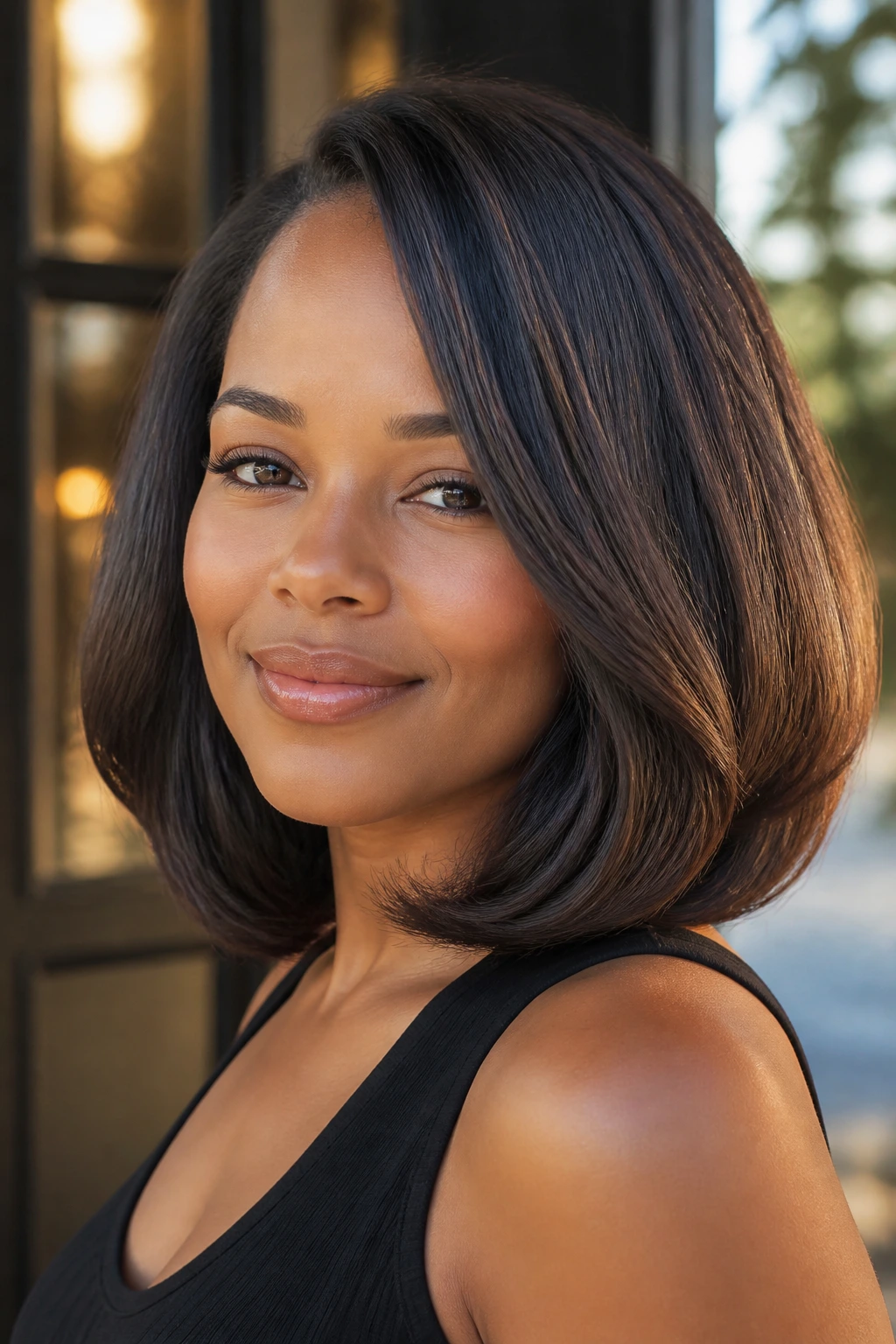
This is the safe choice, and I mean that in the best way. A lob gives you enough length to soften a round face while still feeling like a bob, and rounded ends stop it from looking too blunt or boxy. If you’re bob-curious but not ready to lose much length, start here.
The rounded finish matters because it keeps the bottom from feeling like a straight shelf. On natural hair, those ends can sit slightly under or turn out a bit, and either one works. I like this cut when the hair is stretched or lightly blown out, but it can also wear beautifully in a large twist-out.
It’s the kind of shape that tends to survive a busy week with less complaint than a very precise chin bob. There’s a little more grace in the grow-out.
15. Protective Twist Bob with Loose Tips
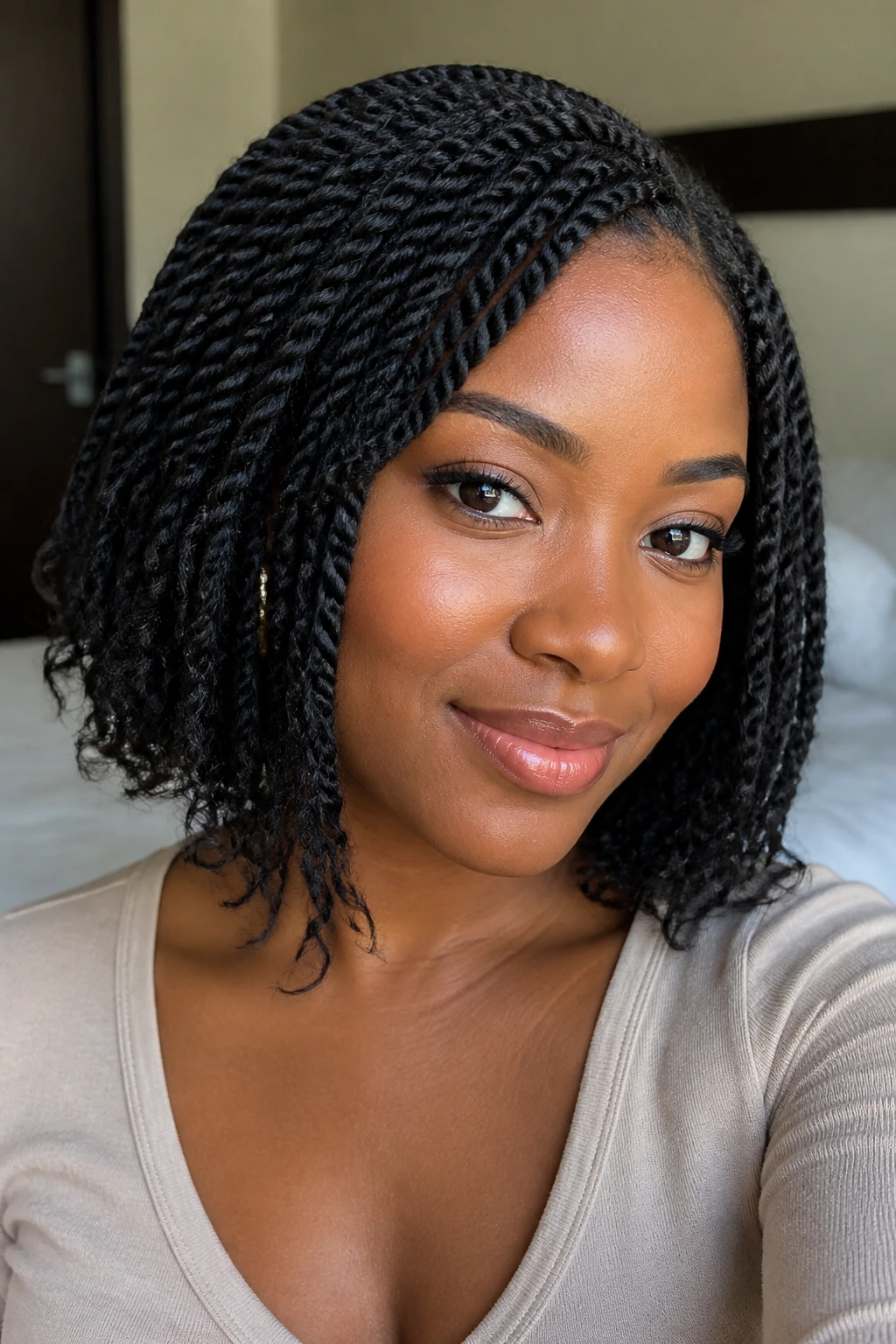
Need a bob that still behaves when you don’t have time to style every morning? A protective twist bob is a smart answer. Mini twists, flat twists, or two-strand twists can all be set to fall around bob length, and the loose tips keep the look from feeling too tight or severe.
The texture here does the flattering. The twists create vertical lines, which are helpful on round faces, and the shape around the jaw can be softened with a side part or a few face-framing pieces left out. If your ends are sealed neatly, the whole style holds together longer between refreshes.
Best for
- Low-manipulation routines
- Hair that needs a break from daily combing
- People who want shape without heat
This one is also easier to sleep on than a full loose curl set. The twists stay put. Less drama.
16. Chin-Length Bob with Piecey Bangs

Piecey bangs save a chin-length bob from looking too solid. Instead of one heavy fringe, the front breaks into smaller sections that show some forehead, some curl, and a little skin in between. That softness matters on a round face because it stops the front from becoming one big visual block.
I like this version when the rest of the bob is compact and tidy. The bangs add movement near the eyes, which pulls attention upward. The bob itself can be rounded or a bit tapered in the back, depending on how much fullness you want. Just keep the fringe light enough that it doesn’t hog the whole style.
A small amount of styling cream on the bangs is enough. Too much, and they clump into a heavy strip.
17. Angled Bob with Hidden Layers
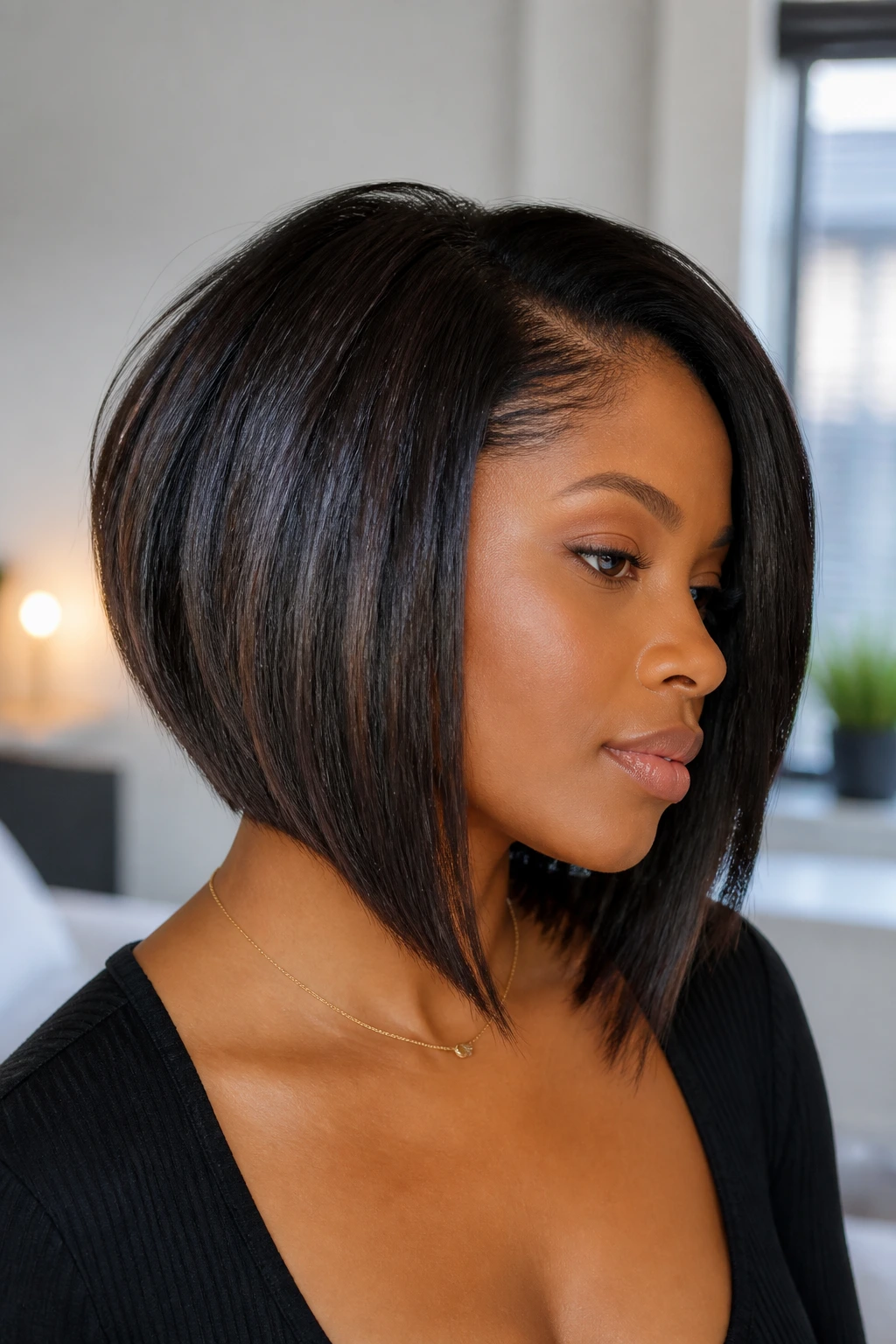
A harsh angled bob can feel severe. Hidden layers fix that. They remove bulk from the inside so the outside keeps its shape, which means the angle stays soft instead of square. That’s a useful distinction on natural hair, where density can make a simple cut swell outward.
This cut is a good fit if you want structure but don’t want the face framed too tightly. The front should be longer than the back, but the transition needs to feel smooth, not obvious. You should see a slope, not a staircase.
It also grows out with grace. As the layers loosen, the cut turns into a softer lob instead of a messy grow-out. That alone makes it worth considering.
18. Deep Side-Part Coil Bob with a Narrower Cheek Line
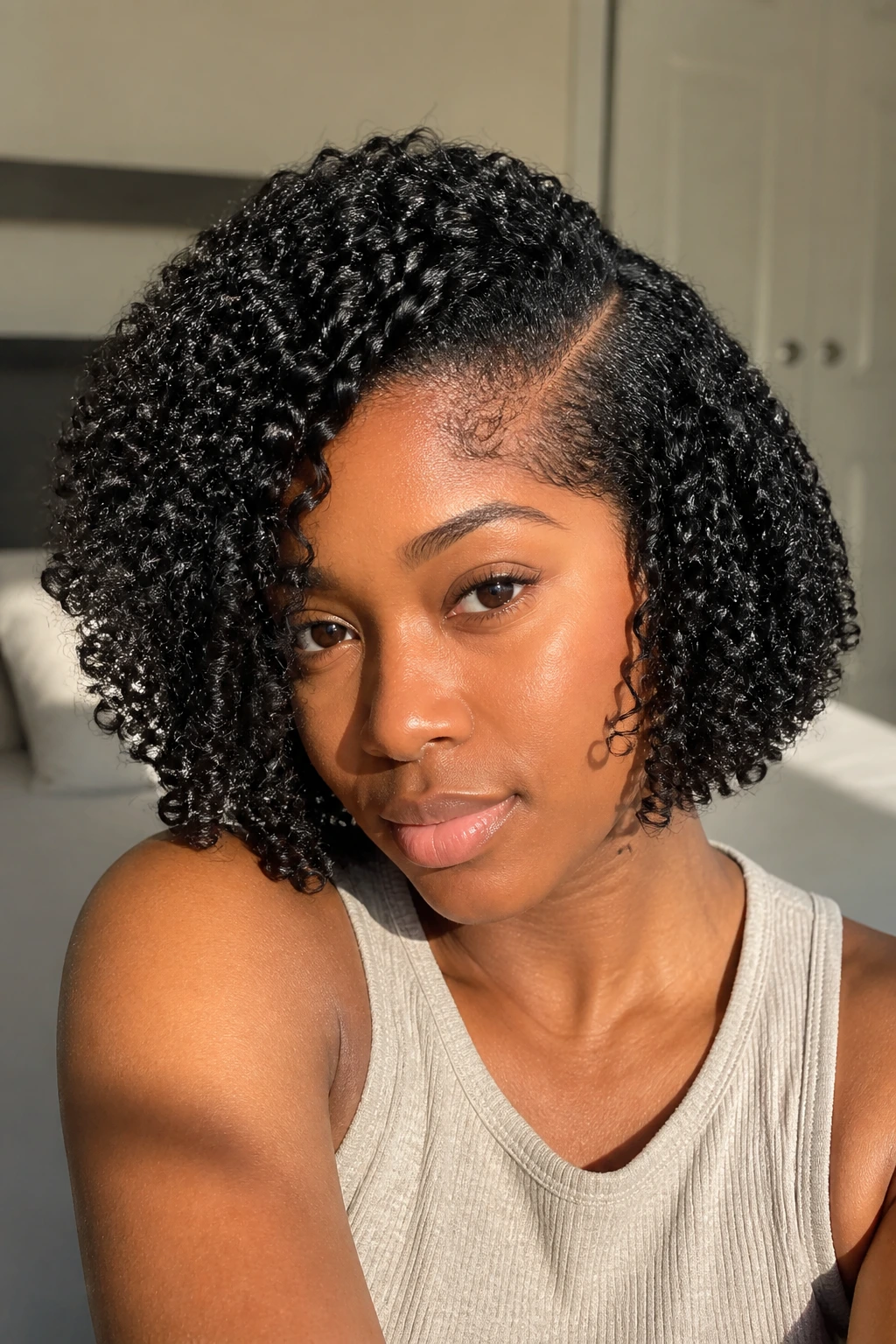
A deep side part is one of the quickest ways to reshape a round face. It changes the balance before the haircut even gets involved. On a coil bob, the part can shift the bulk away from the cheeks and place it higher on the head, where the eye reads length instead of width.
Why this works
The side with more hair creates a visual line that starts at the part and falls diagonally across the face. That diagonal is doing serious work. It narrows the cheek area, opens one side of the forehead, and gives the bob some drama without needing extra length.
Styling notes
- Keep the heaviest part of the bob above the jaw, not right on it
- Let the front pieces move instead of pinning them flat
- Use a light gel or mousse so the coils keep shape without stiffness
This is one of those styles that looks even better when it isn’t overdone. A little asymmetry. That’s enough.
19. Flipped-Out Bob with Airy Ends
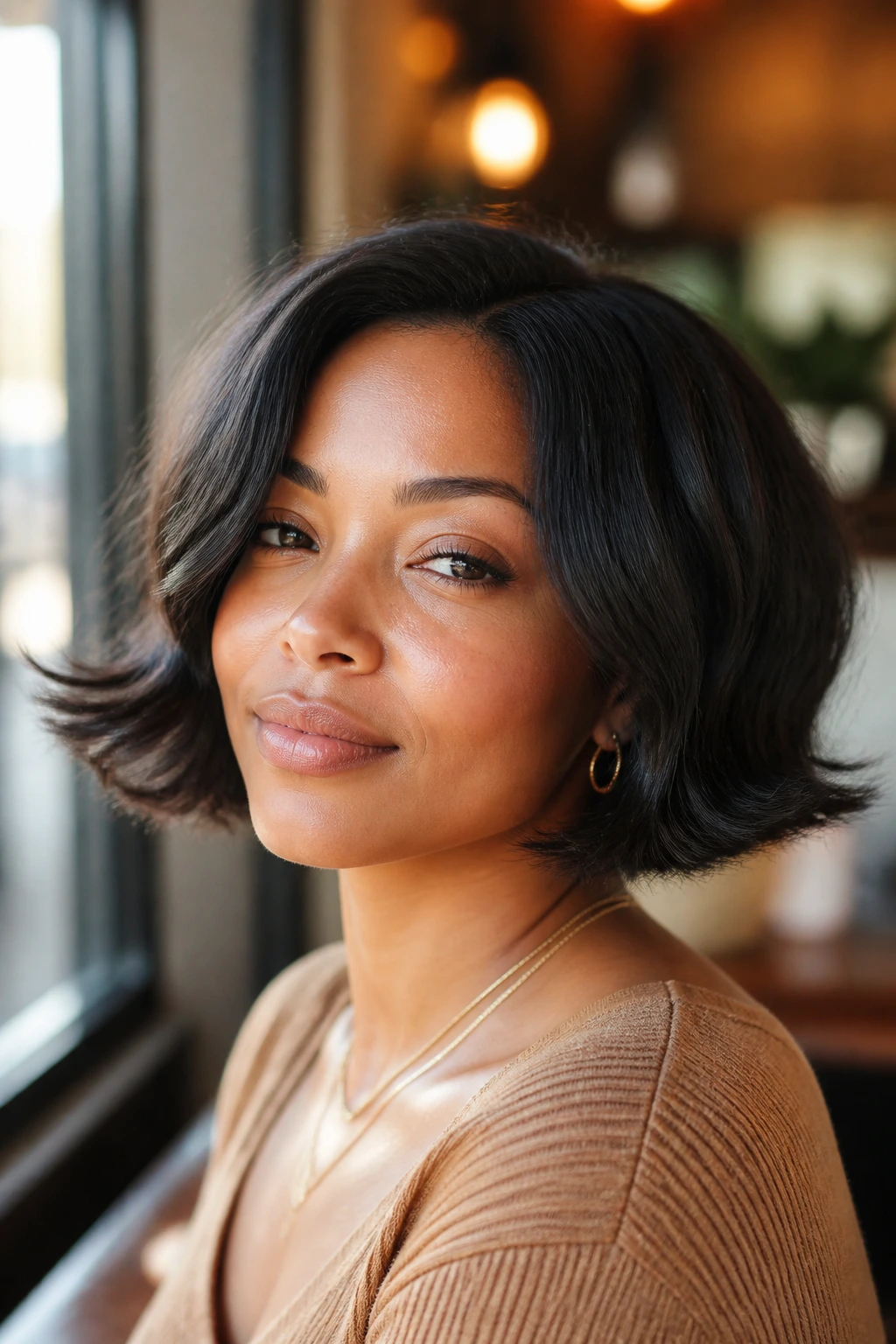
A flipped-out bob can go cute fast, or it can look like an old-school helmet. The difference is in the texture and the ends. Keep the flip loose, airy, and slightly broken up, and the whole cut feels lighter around the cheeks.
This works especially well on stretched natural hair. You can add the flip with a brush, a roller at the end, or even a quick pass of flexi rods on the last inch or two. The result is a bob that opens away from the face instead of pressing inward. That matters more than people admit.
I also like the way it keeps the bob from feeling too serious. Not every cut needs to sit still.
20. Ear-Tuck Bob with Cheekbone Sweep
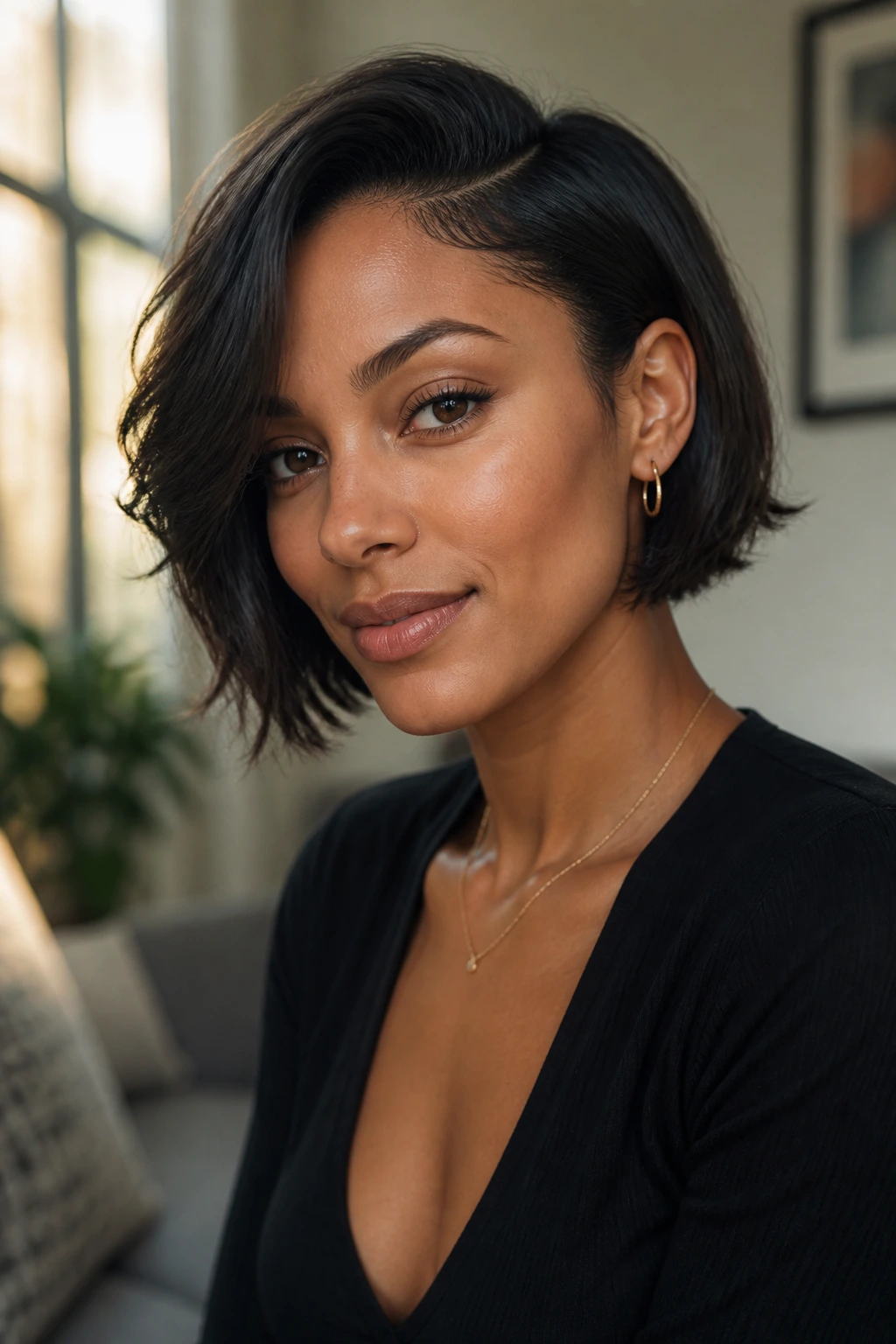
An ear-tuck bob is a small styling move that changes the whole silhouette. One side goes behind the ear, exposing the cheekbone and creating a break in the width of the face. The other side stays loose and soft. That contrast is the point.
It’s especially good when you want your hair to frame the face but not crowd it. The tucked side gives structure; the loose side gives softness. If you wear earrings, this cut loves them. A small hoop or a clean stud keeps the styling from getting cluttered.
Don’t flatten the tucked side into your scalp. Leave a little lift at the root so the shape still feels intentional. Otherwise it can look accidental, and nobody wants that.
21. Shrinkage-Friendly Bob That Sits at the Collarbone
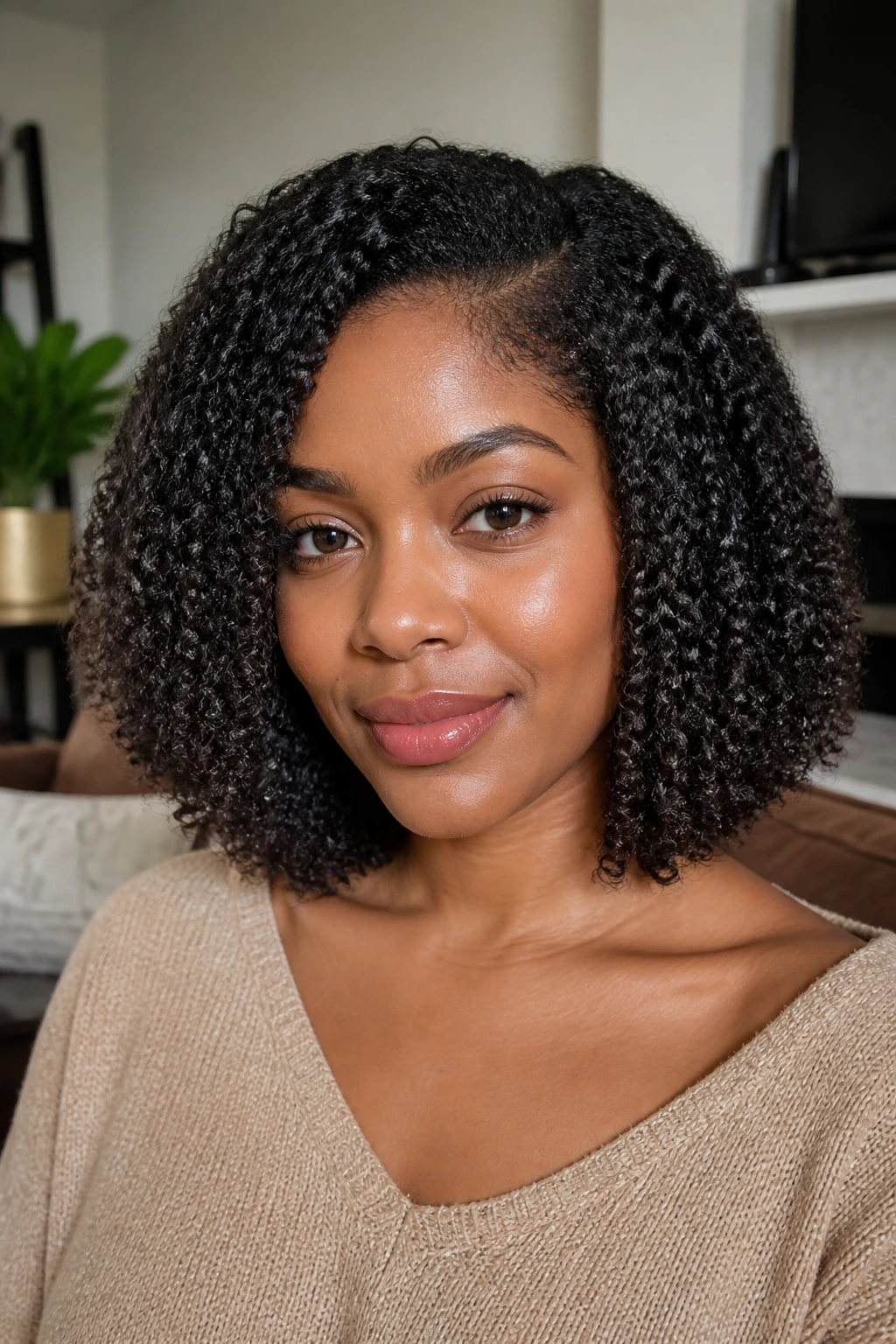
What if you want a bob that still looks like a bob after your hair dries? This is the answer. A shrinkage-friendly bob starts longer on purpose — usually at the collarbone or a touch above it — so the final dry length lands where you actually want it.
That matters on natural hair, especially if your curls or coils shrink hard. Cutting it “to the chin” while wet can leave you with a look that lands much higher than expected. This version gives you a cushion. It still feels neat, but it won’t surprise you.
Best with
- Dry shaping or a very careful stretch before the final trim
- Defined twists, braid-outs, or a soft blowout
- People who want the option to wear the hair stretched one day and shrunken the next
I would rather see this cut a little too long than too short. Too short is hard to recover from.
22. Floating Soft Bob with a Light, Rounded Silhouette
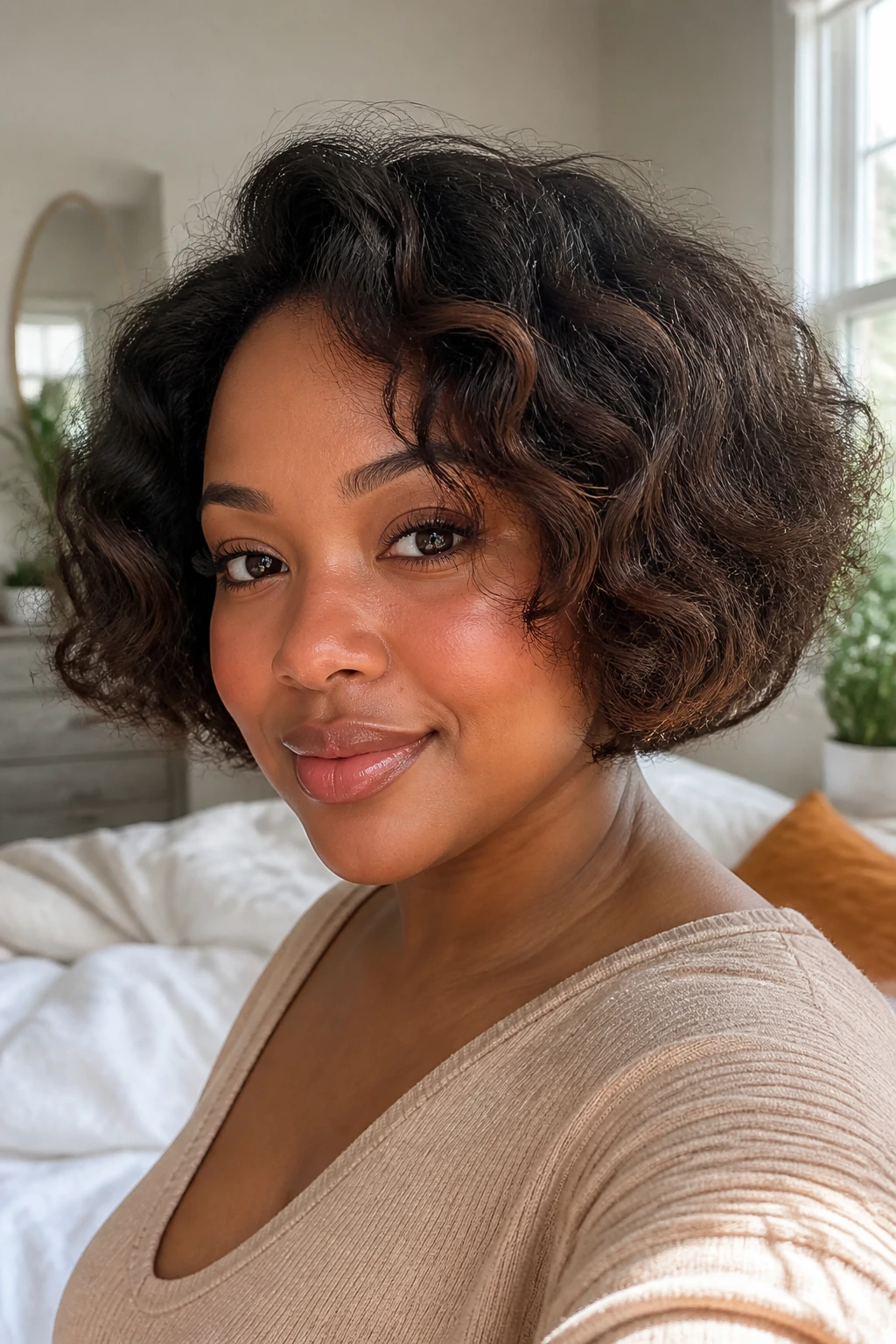
The floating bob is the one I’d pick for someone who wants movement above all else. It has a rounded outline, but the ends are light enough that the whole shape seems to hover instead of sit heavily on the jaw. That floating effect is useful on a round face because it keeps the eye from getting stuck at one width.
It works especially well as a grow-out shape. Even when the layers start to soften, the cut keeps its outline. The bob looks relaxed, not forgotten. That’s a big difference. If you like a style that can be worn a little fluffy one day and more defined the next, this is a strong place to land.
Why Soft Bobs Work on Natural Hair and Round Faces
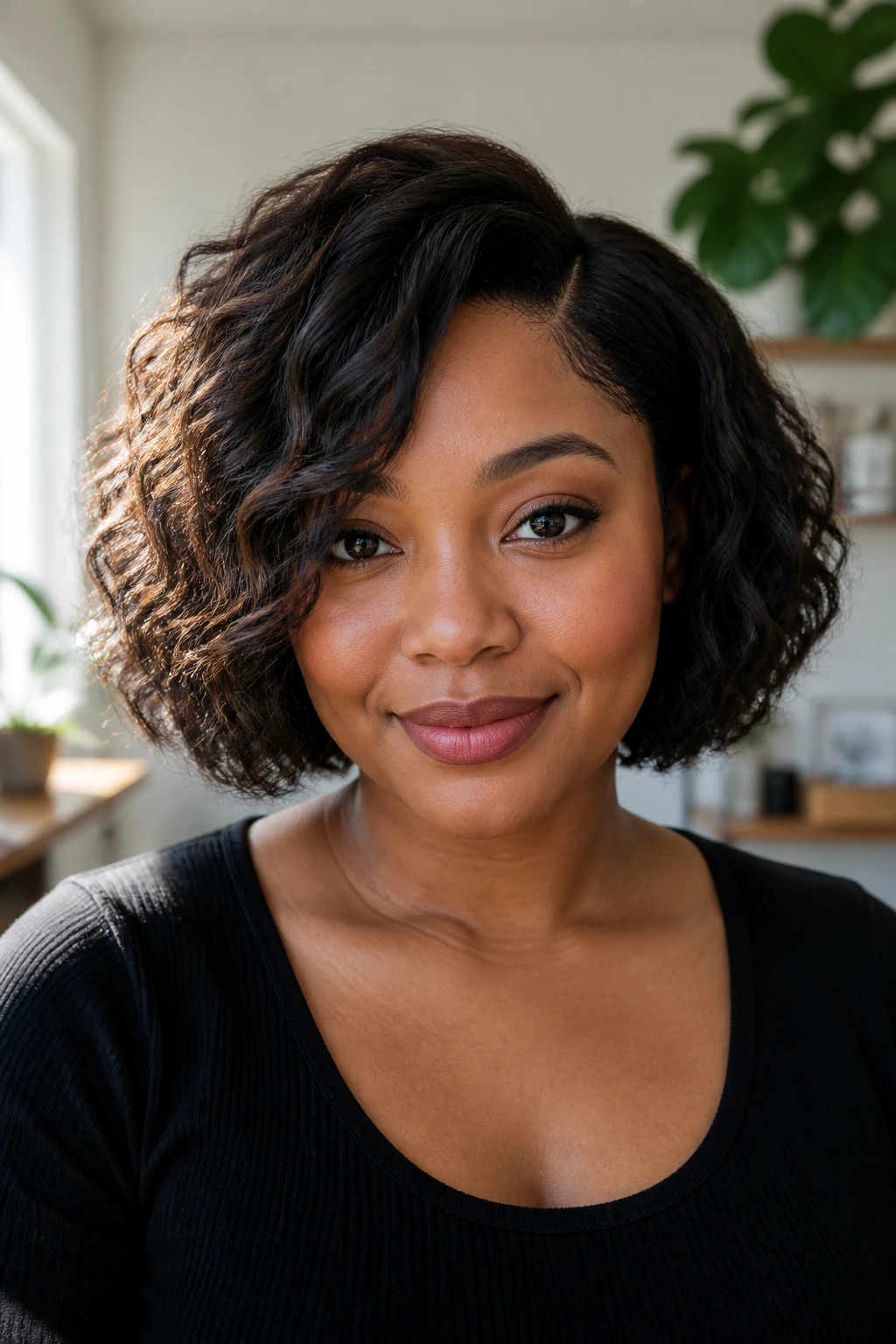
The best soft bob for this face shape does three things at once: it adds length, it breaks up width, and it lets natural texture move instead of fighting for control. A round face usually has the same width and length more or less in balance, so the cut needs to create a little extra vertical line. That can happen with collarbone length, a side part, long front pieces, or even a tapered nape. You do not need all four. One or two is enough when the shape is right.
Natural hair brings its own rules. Shrinkage changes the final length. Density changes the way the sides sit. Curl pattern changes whether the bob puffs outward or falls inward. If a stylist ignores those things and cuts a pretty line on wet hair, the result can look neat for about ten minutes. Then it dries. Then it tells the truth.
I’m also a fan of softness because it gives the haircut room to live between wash days. A perfectly blunt bob on coily or curly hair can look crisp in photos and fussy by day three. Soft edges, internal layers, and slightly curved lines age better. They tolerate frizz at the perimeter, which is just part of being natural, not a problem to erase.
What to Tell Your Stylist Before the First Snip
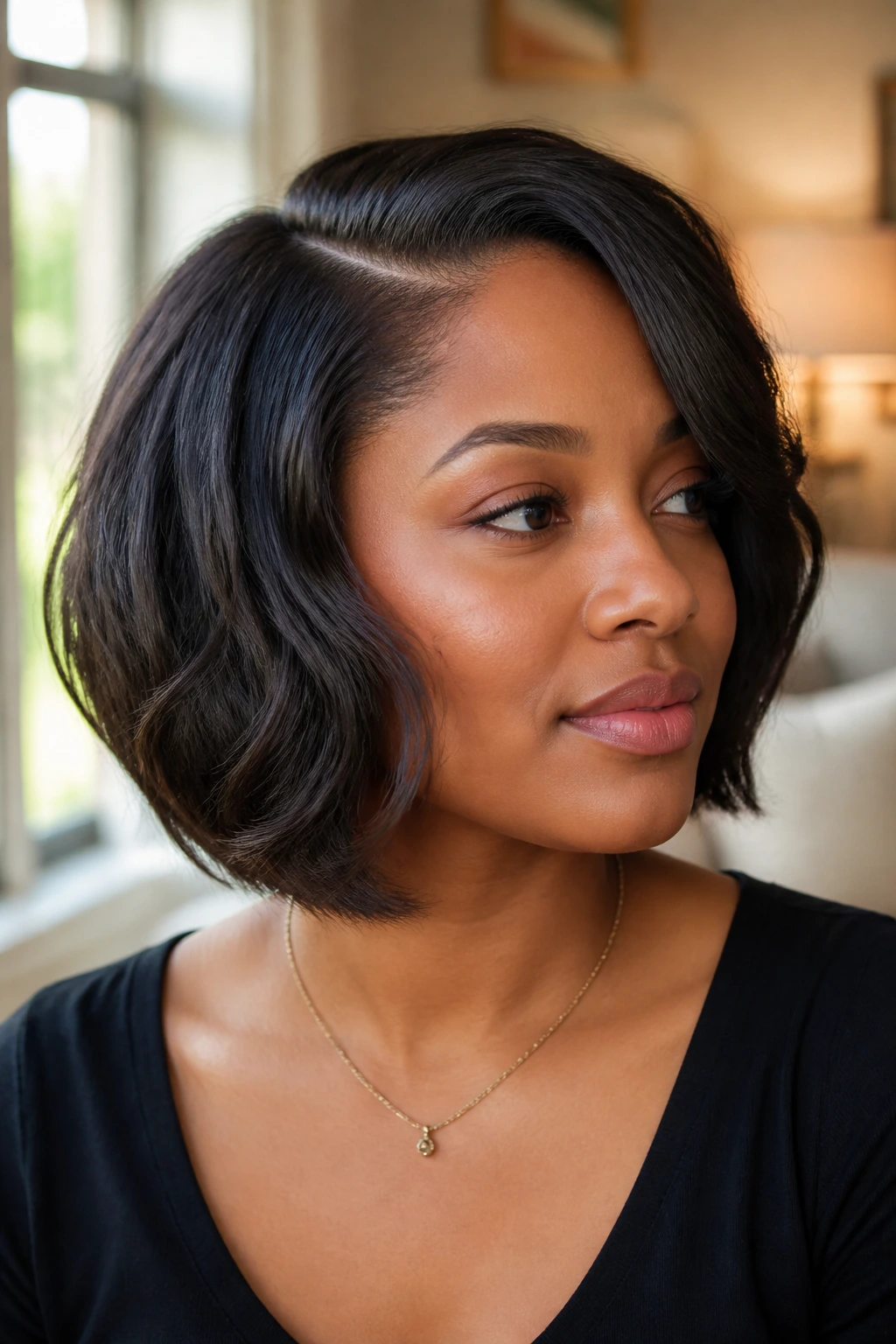
Bring a photo, but bring the right kind of photo. A picture of a sleek bob on straight hair won’t help if your hair lives in twists, curls, or coils. You want a reference with a similar density, similar shrinkage, and similar parting habit. That saves everyone a headache.
Tell your stylist where you want the cut to sit when dry. Say chin, jaw, or collarbone, not just “short.” That one detail saves more bad haircuts than any product ever will. If your hair shrinks a lot, ask for a dry check before the final line is set.
Be clear about your routine, too. If you never diffuse, say so. If you like twist-outs more than wash-and-gos, say that. A bob can be cut for almost any styling habit, but the cut has to know which life it’s going to live.
The Tools That Keep a Soft Bob From Puffing Up
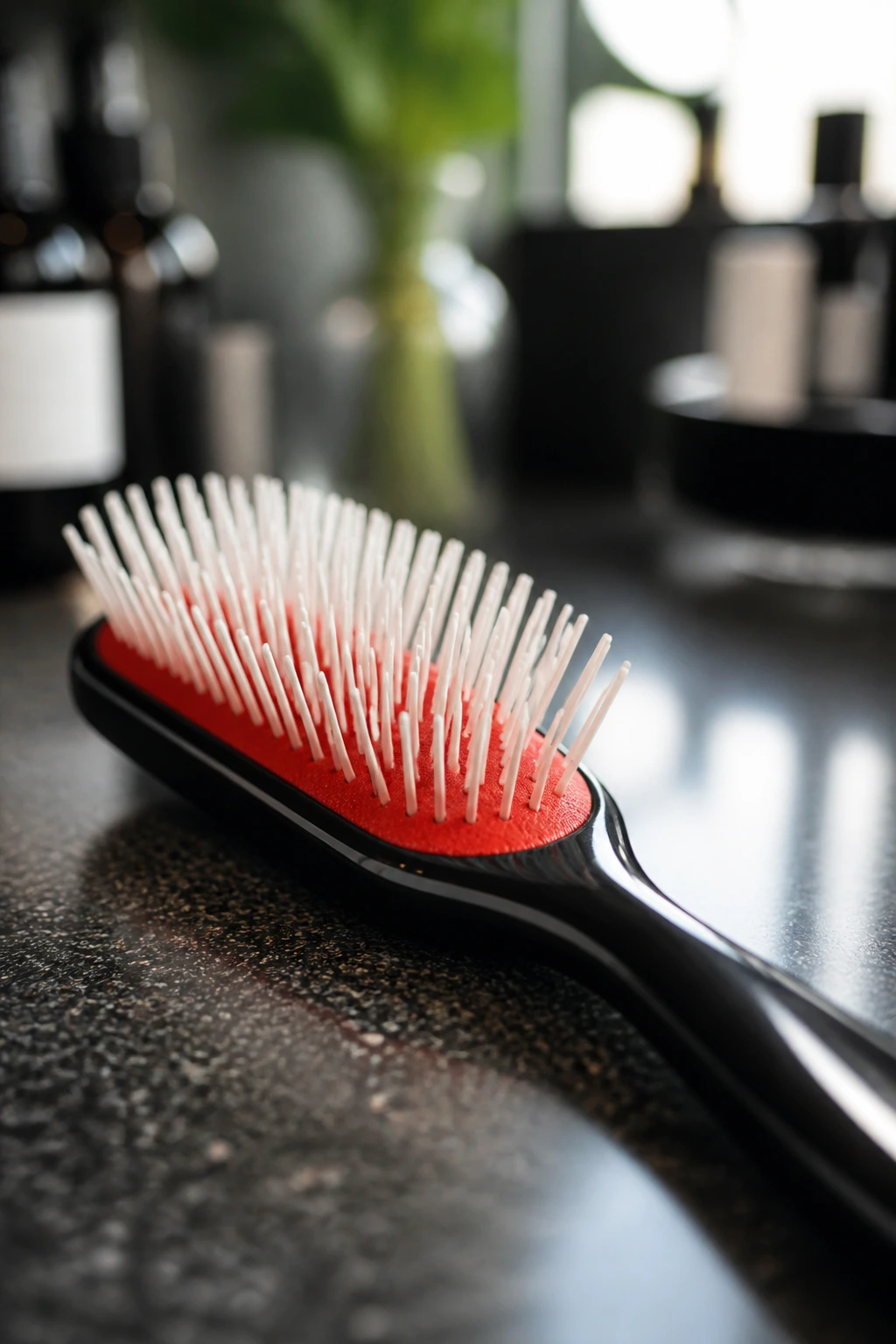
- Wide-tooth comb: Best for detangling wet hair without ripping through curl clumps.
- Duckbill or sectioning clips: Useful when you’re working the top layer or setting a side part.
- Spray bottle with water: Helps re-wet sections without soaking the whole head.
- Denman-style brush or styling brush: Good for defining curls at the ends or smoothing the front pieces.
- Diffuser attachment: Keeps the shape soft while drying, especially when you need root lift.
- Hooded dryer or bonnet dryer: Helpful for twist-outs and stretched sets that need even drying.
- Light mousse or foam: Adds hold without the heavy, crunchy finish that can make a bob sit flat.
- Medium-hold gel: Best when you want a wash-and-go with clean edges and less frizz at the perimeter.
- Satin bonnet or pillowcase: Not optional if you want the bob to keep its shape overnight.
- Sharp hair shears: Only if you trim at home; dull scissors create rough ends fast.
How to Get the Most Out of a Soft Bob
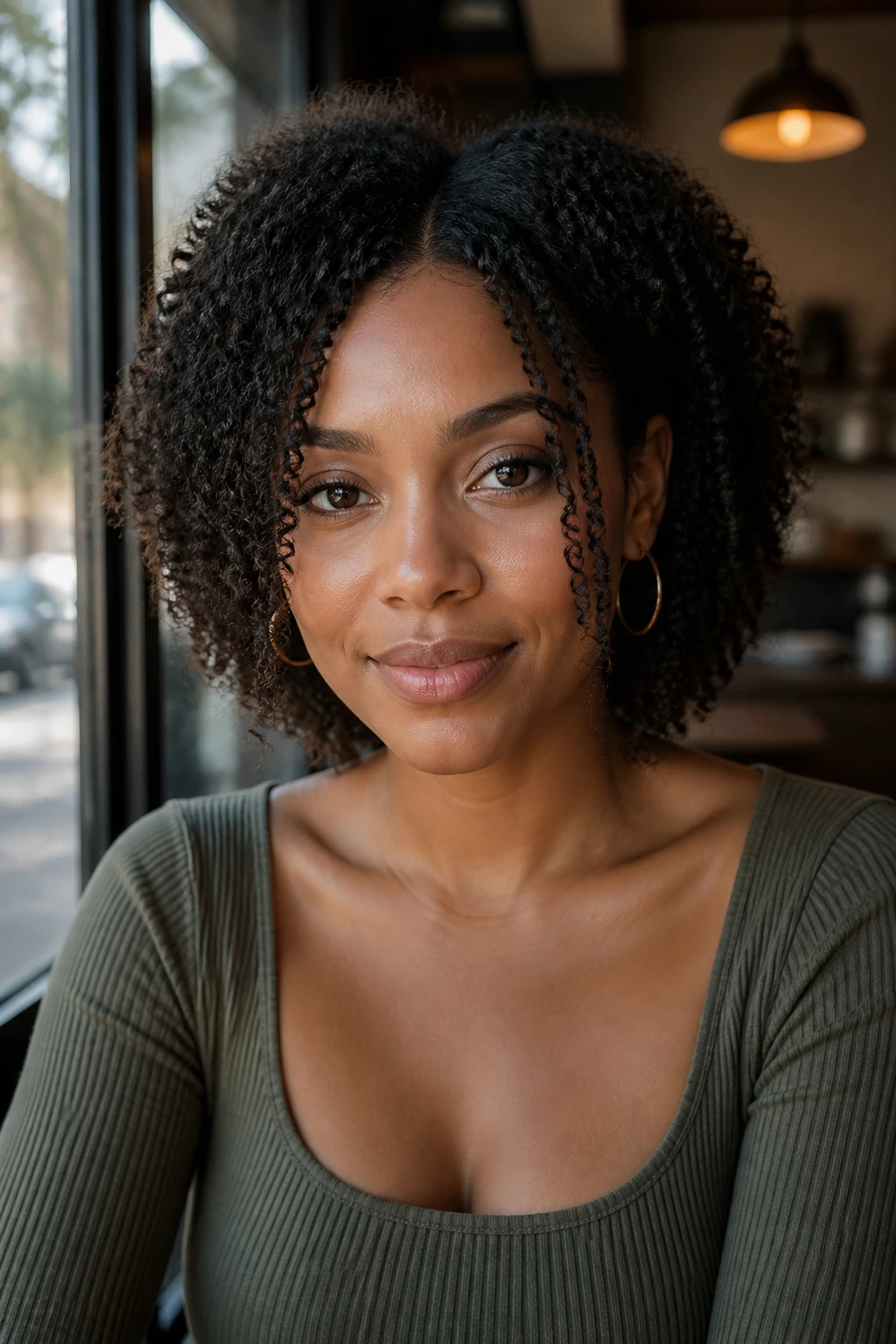
Length map: Decide where the bob should land when the hair is fully dry, then cut for that spot. If you know your shrinkage is dramatic, choose a length with some cushion.
Part placement: Move the part around instead of fixing it forever. A side part one week and a center part the next can change the whole balance of the face without a cut.
Product weight: Use the lightest product that still gives the curl enough memory. Heavy creams tend to widen the sides and blur the shape in a bad way. Foams and light gels often keep the bob cleaner.
Refresh rhythm: Mist the front pieces and rework the ends before the whole head gets frizzy. That’s faster than starting over, and it keeps the perimeter from looking fuzzy first.
Heat strategy: If you stretch the hair, use heat only where it helps the line. You do not need to straighten every inch. Sometimes the best bob is half-stretched, half-textured.
Common Mistakes That Make a Bob Look Wider or Stiffer
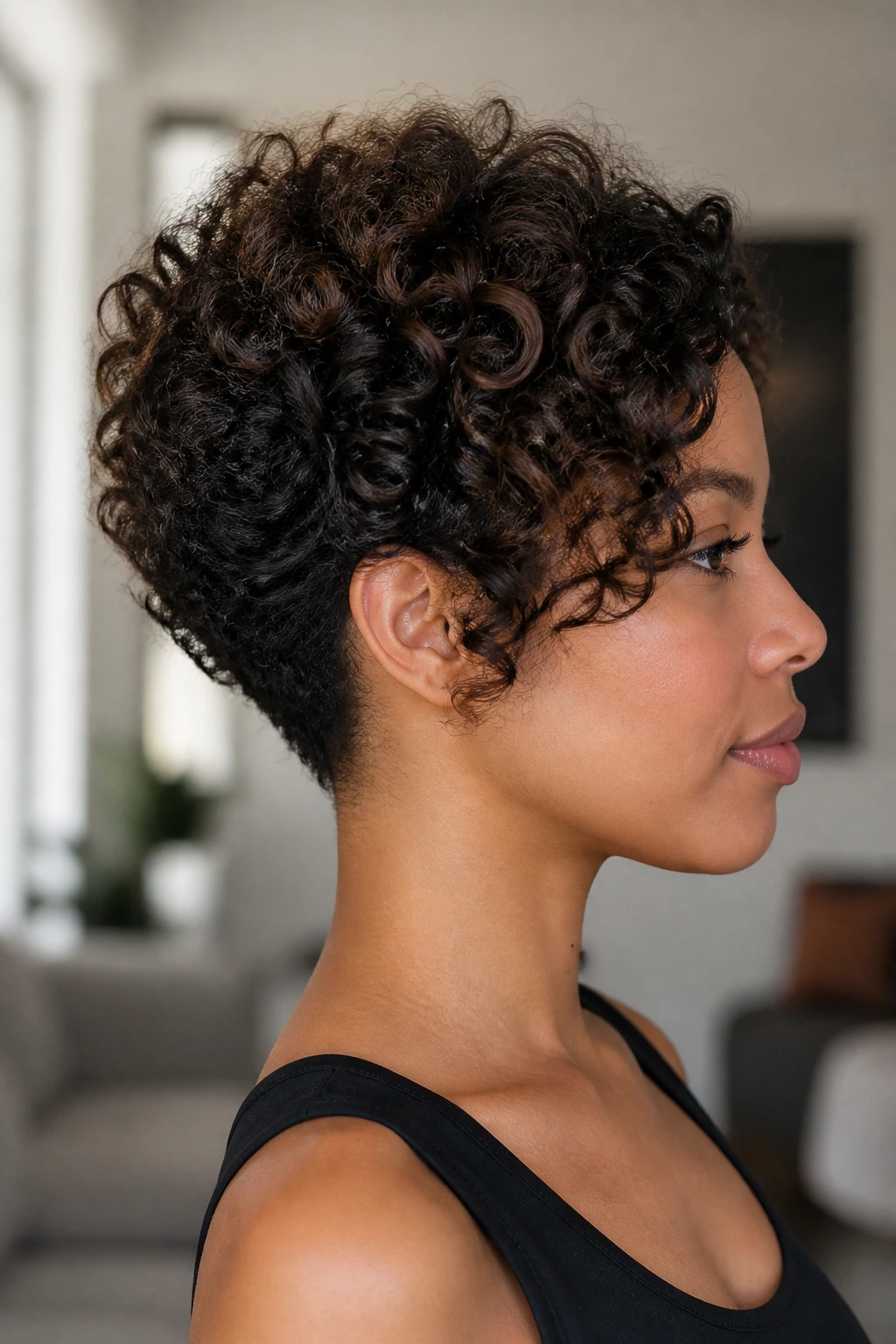
The biggest mistake is cutting the bob to hit the widest part of the cheek. It sounds small, but the visual effect is huge. The face looks fuller, the bob looks boxy, and the whole thing loses the length you needed in the first place.
Another problem is over-layering the sides. A little movement helps. Too much layering turns the cut into a puffed-out cloud that sits right where the face needs space. If you’ve got dense hair, ask for layers that stay mostly inside the shape.
Heavy product can also sabotage the cut. Thick butters and sticky creams drag the sides down and make the bob sit wider. A lighter gel or foam usually gives better shape, especially on day one.
And then there’s the wet-cut trap. Wet hair lies. If your curls shrink a lot, the salon mirror can be a liar with good lighting. Dry check. Always.
Variations and Alternatives to Try
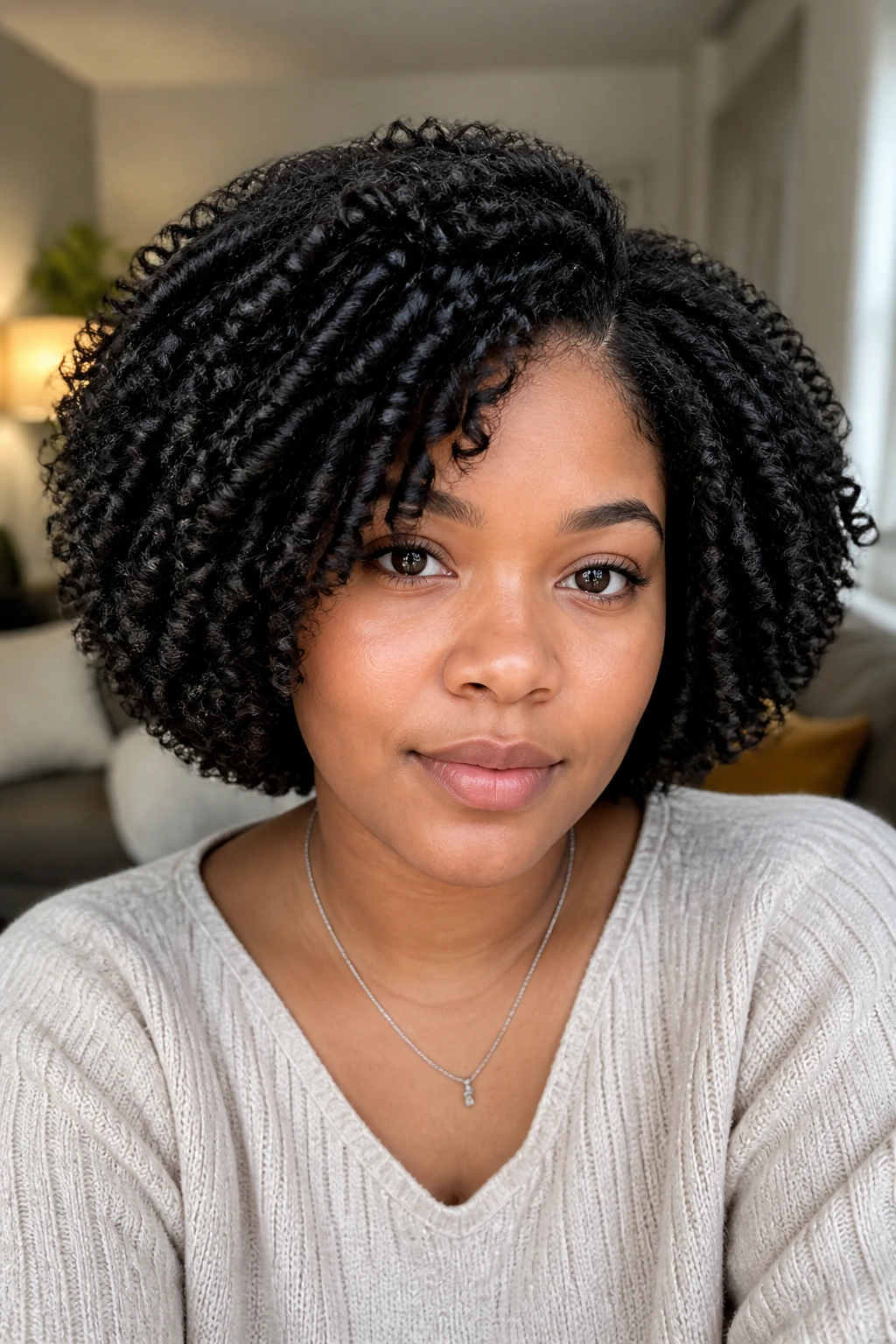
Twist-Out Lob: If you want more length without giving up the bob idea, a lob cut that’s styled in a twist-out gives you the easiest compromise. It works well when you want softness near the jaw but not a short perimeter.
Protective Mini-Bob: For low-manipulation wear, mini twists or flat twists cut to bob length give you a style that lasts longer between wash days. It’s tidy, and it doesn’t need much daily handling.
Blowout-and-Bend Bob: If your curl pattern feels hard to shape at the sides, a stretched blowout with bent ends can create a slimmer outline. I like this for events, photos, or any week when you want less volume at the cheeks.
Curly Curtain Fringe: If bangs feel too committed, curtain pieces are the safer move. They soften the forehead and let the bob stay open around the face instead of closing in.
Rounded Fro Bob: For tighter coils, the rounded fro bob keeps the outline soft while letting the texture stay full and honest. It’s a strong option when you want shape more than polish.
Maintenance, Night Care, and Grow-Out Rhythm
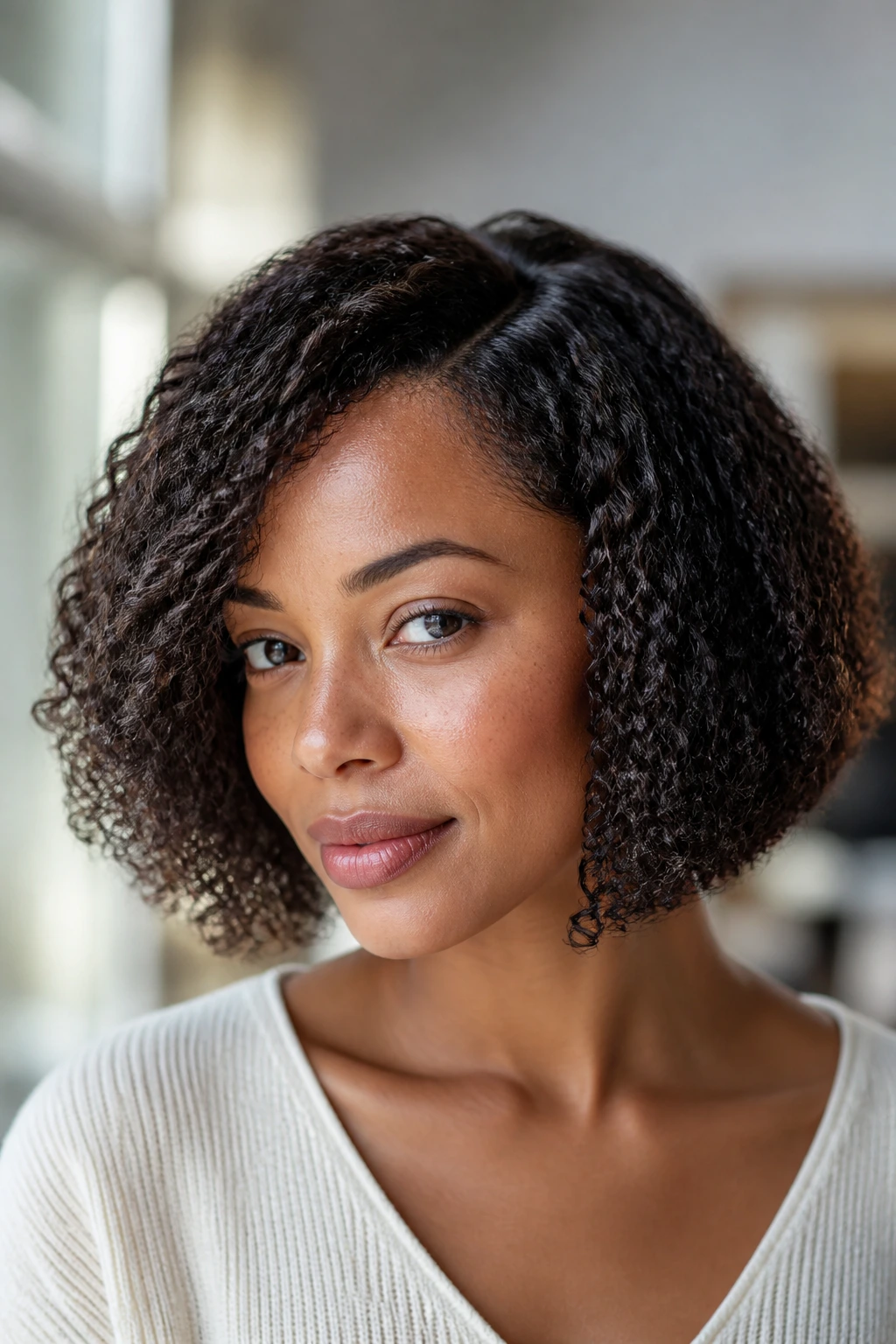
A soft bob needs a little attention, but not a lot of drama. Most natural-hair bobs hold their shape best with trims every 8 to 12 weeks, depending on how fast the perimeter frays and how much shrinkage you have. If the front starts touching the jaw in a way that feels heavy, that’s usually your cue.
Night care is where the cut either lasts or slowly loses the plot. A satin bonnet works for shorter bobs; a satin pillowcase helps if your curls hate being contained. For longer soft bobs, a loose pineapple, two loose twists, or a gentle wrap with the front pieces left free can keep the shape from flattening.
Wash day is easier when you don’t wait until the cut is screaming for attention. A bob that starts to feel crunchy at the ends or weighted down at the roots usually needs a reset, not another layer of product. I’d rather rinse and restyle than pile more cream on top of old cream. That only makes the silhouette blur.
If you’re growing the cut out, keep the perimeter soft rather than trying to hold a hard line forever. The grow-out looks cleaner when the edges are a little blurred and the layers are allowed to shift.
Frequently Asked Questions About Soft Bobs for Natural Hair and Round Faces
What bob length is most flattering on a round face?
The safest lengths are usually just below the chin, around the jaw with front pieces that extend lower, or collarbone length. Those spots create more vertical line and keep the cut from sitting on the widest part of the face.
Can a center part work on a round face?
Yes, if the bob has enough length and the layers curve inward or downward around the cheeks. A flat, blunt center-part bob is the risky version. A soft one with movement works much better.
Do natural bobs need layers?
Usually, yes, but not too many. Internal or soft layers help the hair move and prevent the sides from puffing out like a triangle. Heavy, obvious layers can make the outline messy fast.
How do I stop my bob from shrinking too short?
Ask your stylist to cut for the dry finish, not the wet illusion. If your curls shrink hard, choose a collarbone or jaw-plus length and check the shape after the hair dries.
Can I wear bangs with a round face and natural hair?
Absolutely, but keep them soft. Curtain bangs or piecey fringe work better than a thick, straight-across bang because they don’t shorten the face or crowd the forehead.
What if my bob looks too wide on the sides?
Shift the part, reduce heavy cream, and ask for more weight removal inside the cut rather than at the edge. Sometimes a quick root lift at the crown changes the shape more than a full restyle.
How often should I restyle a natural-hair bob?
Most people get the cleanest shape by refreshing every 2 to 4 days, depending on weather, density, and product load. The front and the ends usually need attention before the whole head does.
Is a twist-out better than a wash-and-go for a bob?
Neither is automatically better. A wash-and-go gives more curl definition and can look lighter; a twist-out gives more stretch and usually helps with face length. Pick the one that works with your shrinkage and your morning patience.
A Bob That Keeps Its Shape

The best soft bobs for natural hair and round faces don’t try to hide texture. They use it. That’s why they feel better than the rigid, overcut versions that look sharp for a moment and then fight the hair every time it moves. A soft bob should sit close enough to the face to feel intentional, but not so close that it traps the cheeks in a square frame.
If you take one thing from all of this, let it be the shape map: a little length past the jaw, a little lift at the crown, and enough softness around the perimeter to keep the cut from getting heavy. That’s the combination that keeps showing up for a reason.
And once you find the version that fits your texture, you’ll stop thinking of the bob as a haircut you’re “trying” and start treating it like the shape it was meant to be.