



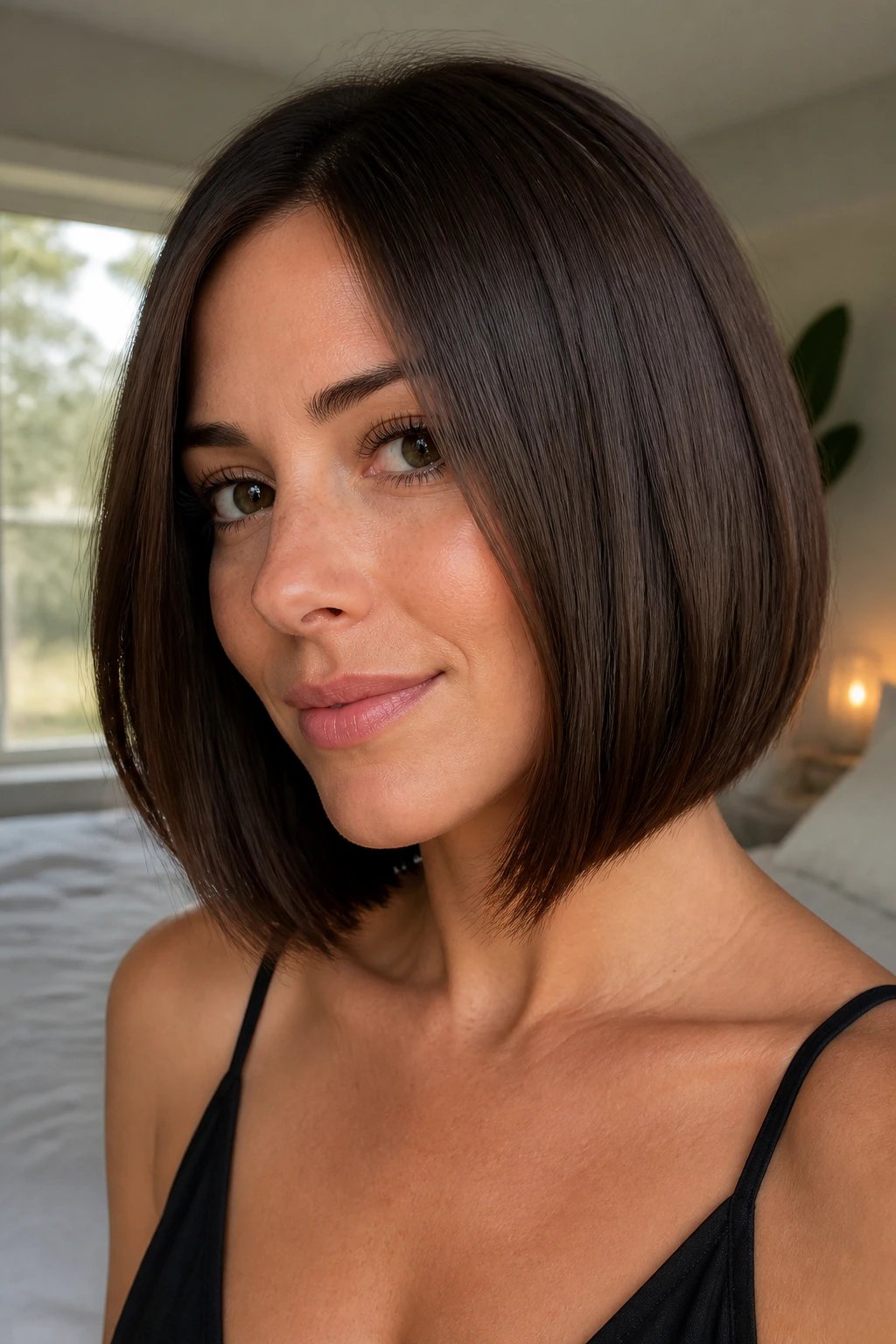
Sleek bobs for fine hair and oval faces work only when the cut knows where to keep its weight. Take too much out of the ends and they go wispy fast; leave the shape too soft and the whole thing slumps by lunch. The bobs that hold up best solve both problems at once: a clean perimeter, a little softness where it won’t hollow out the hem, and a length that lands on an oval face without fighting the proportions.
Oval faces are the easy part. They can wear a chin cut, a jaw cut, or a collarbone cut without needing tricks to “fix” anything, which means the real job is making the hair look denser than it is. That usually comes down to a blunt edge, a gentle bevel, and a very light hand with layering—thinning shears are the enemy here.
These 18 looks stay polished, not fussy. Some sit right at the cheekbone and make the face feel sharper; some skim the collarbone and give you a little more swing. All of them keep soft layers in their proper place: inside the shape, where they help movement, not at the ends where they can make fine hair look hungry.
Why These 18 Bobs Earn Their Keep
-
Fuller-looking edges: A blunt or softly beveled hem makes fine hair read thicker because the eye catches one clean line instead of a see-through fringe of ends.
-
Oval-face flexibility: Oval proportions can take a shorter bob or a longer lob without looking off-balance, so the choice is about mood, upkeep, and how much neck you want to show.
-
Soft layers, not shredded layers: The right layers live inside the shape and move with the hair; the wrong layers chew through density and leave the bottom half looking thin.
-
Easy styling physics: A round brush, a paddle brush, or one pass with a flat iron can make these cuts sit properly, which matters when you do not want a 40-minute blow-dry every morning.
-
Better grow-out: Clean bob lines usually age better over 6 to 8 weeks, especially on fine hair, because the shape softens gradually instead of collapsing in a week.
-
Useful on day two: These cuts still look intentional with a little dry shampoo at the roots and a quick bend through the ends, which is half the battle with finer textures.
The Shape Rules Behind a Clean Bob
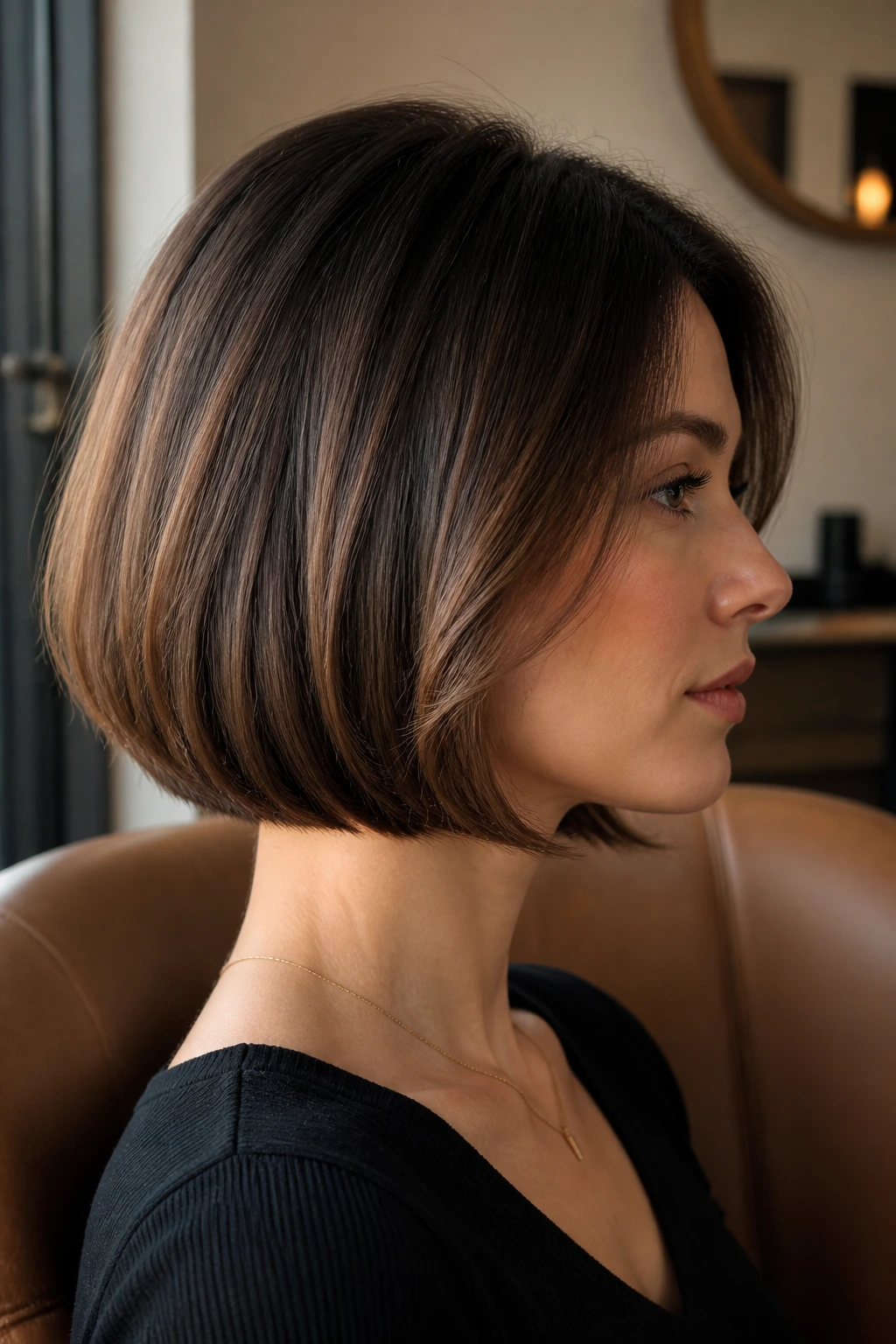
A good bob on fine hair has one job: keep the eye on the line, not on the lack of density. That means the perimeter matters more than almost anything else. If the edge is weak, choppy, or over-layered, the cut will look tired even when it’s freshly done.
The smartest versions keep most of the softness inside the shape. Think hidden layers, not obvious slicing. Think gentle point-cutting, not aggressive thinning. A stylist can remove weight under the top layer without making the bottom edge look see-through, and that’s the difference between “fine hair” and “flat hair.”
Where the layers should live
Soft layers work best when they start around the crown or just under it, then disappear before the hemline. That tiny bit of internal movement stops the bob from hanging like a helmet, but it still leaves the ends solid enough to look thick in a mirror and in daylight.
Why oval faces make the decision easier
Oval faces are lucky here. The forehead, cheekbones, and jaw already balance well, so a bob can sit almost anywhere from the cheekbone to the collarbone without throwing the face off. The real question is where you want the shape to pull attention: jaw, lips, neck, or collarbone.
The finish that keeps the cut polished
A sleek bob needs a finish that bends, not a finish that freezes. The best versions have a slight undercurve at the ends, enough gloss to show the line, and enough air at the roots that the top of the head doesn’t go limp by noon.
1. Chin-Length Glass Bob with a Blunt Hem
A chin-length glass bob is the bluntest version in the bunch, and that is exactly why it makes fine hair look thicker. The edge sits right at the jaw, so the line feels crisp and deliberate instead of soft and floaty. On an oval face, that short, clean stop reads elegant rather than severe.
What keeps it from looking harsh is the finish. Ask for a blunt perimeter with only the lightest internal softness under the top layer. Not choppy. Not piecey. Just enough give so the cut moves when you turn your head.
Why it works on fine hair
- The hem stays solid, which makes the ends look denser.
- The short length keeps weak mid-lengths from dragging the whole shape down.
- A tiny bevel under the jaw gives the cut that expensive, polished swing without a lot of styling time.
If you like a sharp line and you are tired of ends that disappear into air, this is a strong place to start. Dry it with a nozzle attachment, brush the hair forward at the crown, then bend the last half-inch under with a flat iron. That tiny curve matters more than people think.
2. Jaw-Skimming Curve Bob
If you want the bob to frame the face instead of sitting there, this is the one. The jaw-skimming curve bob lands right where the face narrows, then turns softly under so the shape hugs the jaw instead of floating away from it. On fine hair, that curve fakes fullness better than a razor-sharp straight line.
I like this cut because it looks expensive in daylight. The ends do not need much work; they just need to be persuaded inward with a round brush or a quick pass of a flat iron. Oval faces can handle the length easily, and the curve keeps the eye moving around the face instead of down the neck.
Ask for a blunt baseline with a soft underbevel at the last inch. That wording matters. If a stylist hears “curve,” some will start layering too much. You want bend, not breakup.
3. Collarbone Lob with Invisible Layers
Can a longer bob still look thick? Yes, if the layers stay hidden. The collarbone lob is the version I reach for when someone wants movement but refuses to give up density. It grazes the collarbone, which is a nice place for fine hair to land because the ends can sit on clothing or bounce just enough to look fuller.
The trick is keeping the layers almost invisible from the outside. The surface should read smooth and uninterrupted, while the interior has a little removal of weight so the length does not collapse into a straight sheet. On an oval face, the collarbone cut adds softness without hiding the cheekbones.
How to style it
- Dry the roots first so the top doesn’t go flat.
- Use a 1.25-inch round brush or a wide barrel brush to give the ends a gentle turn.
- Finish with a pea-sized drop of serum on the last two inches only.
If your hair tends to go lank at shoulder length, this is the safer choice. The length gives you room, but the invisible layers keep the shape from turning heavy.
4. Side-Parted Bob with Tucked Ends

On mornings when hair lies flat at the crown, a side part changes the whole cut. A side-parted bob with tucked ends adds lift where fine hair usually needs it most, then lets the length sweep softly across the face. The effect is quiet, not dramatic. That’s the appeal.
The side part creates a little root volume on the heavier side and a clean line on the other, which keeps the bob from looking symmetrical in a stiff, dated way. Fine hair often benefits from that asymmetry. Oval faces can wear it easily because the shape still stays balanced overall.
A few details make this version work:
- Keep the ends at jaw to neck length.
- Ask for soft internal layers only around the crown.
- Tuck one side behind the ear so the face sees a little skin and a little hair.
This is a good cut if you like a bob that can be dressed up without much fuss. A quick blow-dry at the roots and a light bend at the ends is enough.
5. French Bob with a Soft Fringe
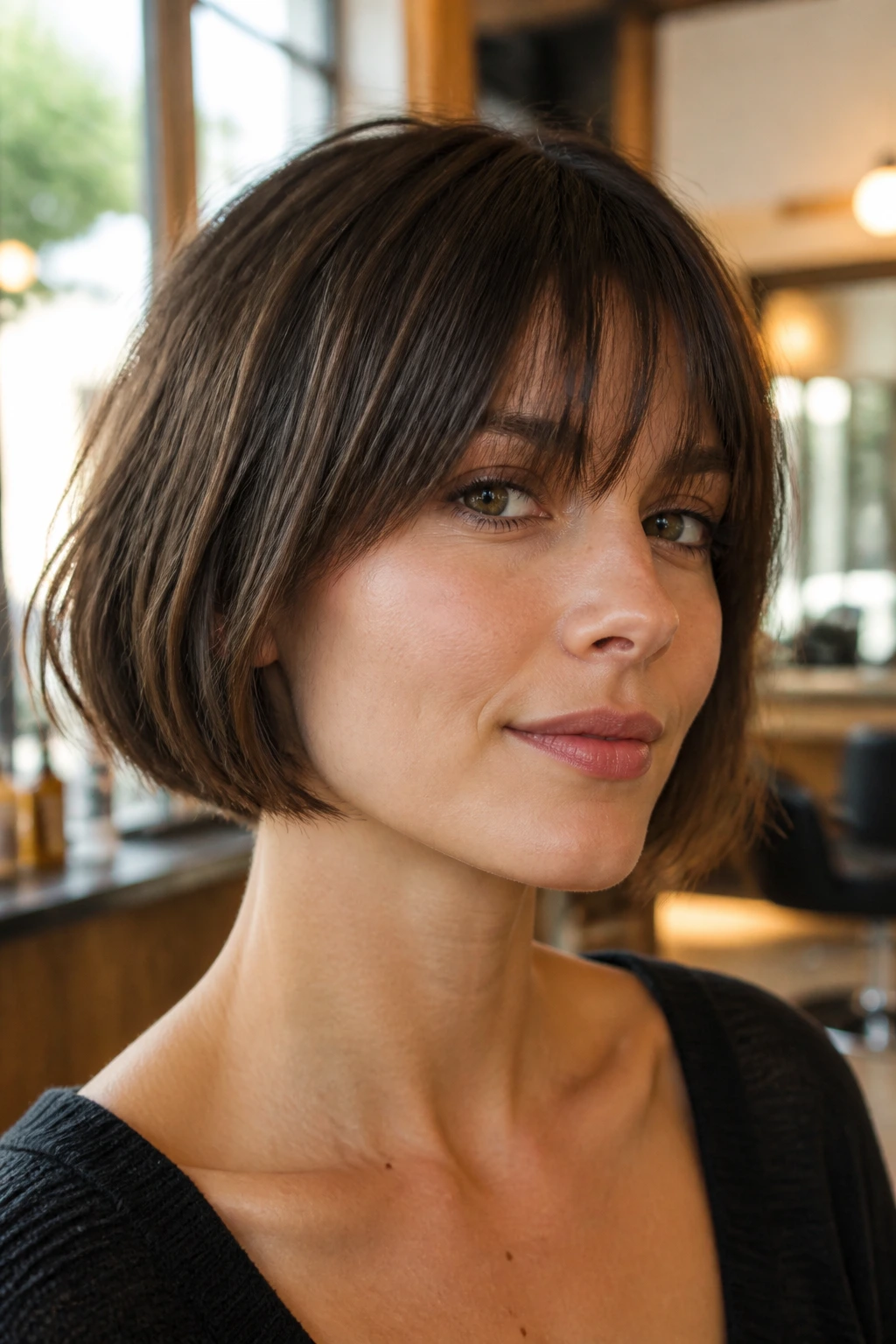
A French bob can be a trap on fine hair if the fringe gets too heavy. The good version stays airy: chin length, a little cheekbone room, and bangs that skim rather than smother. On an oval face, that soft fringe brings attention upward and gives the cut a little attitude without stealing density from the rest of the hair.
I prefer the fringe to hover near the brows, not sit in them. Once bangs get too thick on fine hair, they take over the whole cut and make the rest look stringy by comparison. A soft fringe should feel almost borrowed from the haircut, not bolted onto it.
This version looks best when the ends are beveled just enough to tuck under slightly. That keeps the silhouette neat. If the texture is naturally straight, a small round brush and a cool shot at the roots will do more for this cut than any styling paste ever will.
6. Italian Bob with Rounded Volume
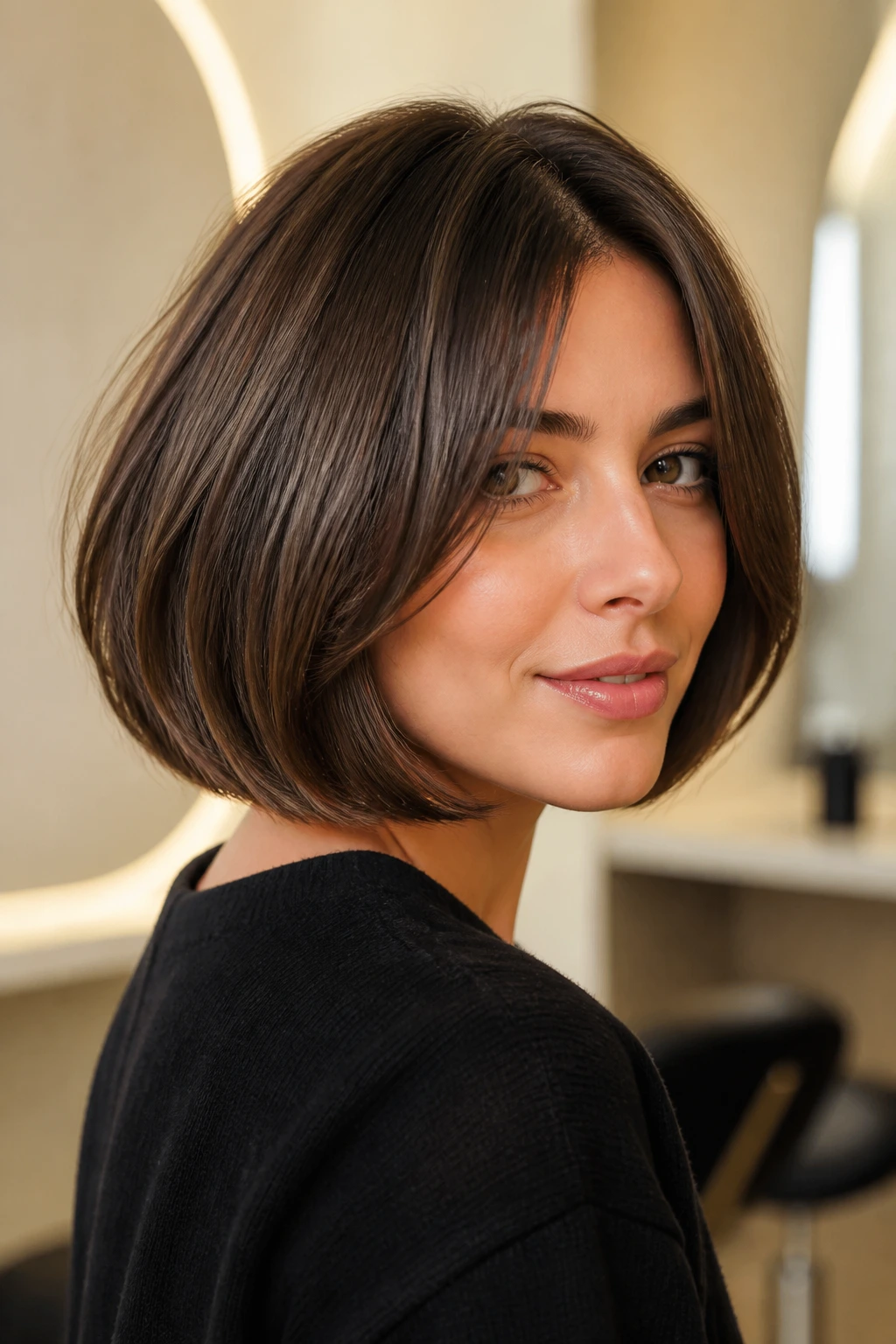
Unlike a pin-straight chin bob, the Italian version wants a rounder silhouette. It still looks sleek, but the body sits a little fuller through the middle, which helps fine hair stop looking like it was pressed thin. The line curves softly around the face and neck instead of stopping abruptly.
That rounded shape can be very flattering on oval faces because it follows the bone structure rather than fighting it. Think polished, not puffed. The best versions look like they were brushed into place with intention, not teased into existence.
I like this cut for hair that has a bit of natural bend. It does not need to be wavy, but it should be willing to curve. If your hair is stick-straight, ask for a rounded blow-dry shape and a slight underbevel at the ends. That keeps the bob from looking boxy.
7. A-Line Bob with a Clean Front Angle
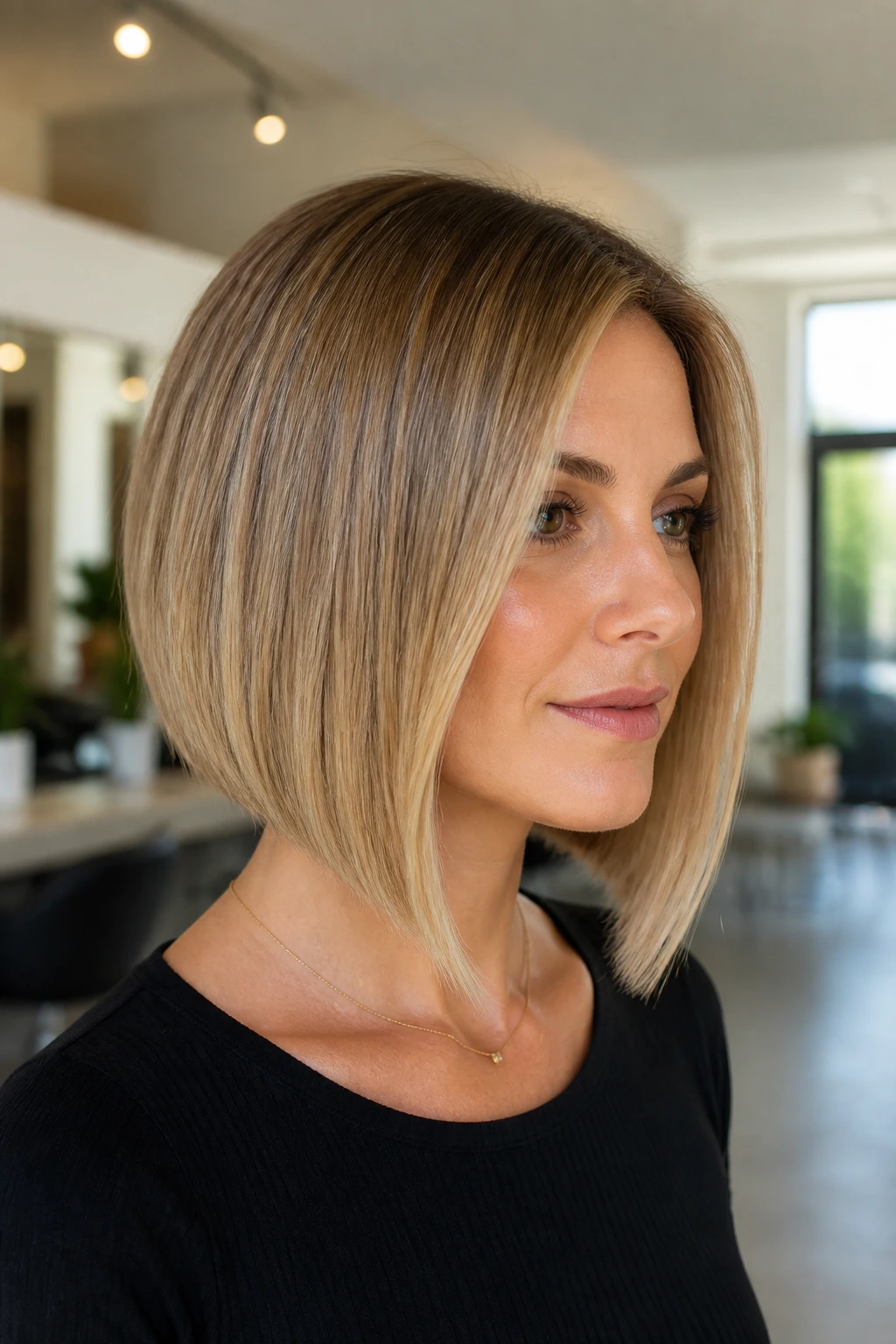
A subtle A-line bob is one of the smartest cuts for fine hair because it builds the illusion of fullness at the back while letting the front fall longer and sleeker. The shorter nape gives the hem a little lift. The front angle keeps the face open, which works well on oval faces that can handle a stronger line.
This cut is not about drama. It is about shape. The front pieces should glide past the chin or just kiss the collarbone, while the back stays a little tighter against the neck. That contrast creates a clean profile and a more deliberate outline.
Best way to wear it
- Center part for symmetry.
- Deep side part for a softer, more sculpted feel.
- Flat iron only the last inch if you want the angle to stay visible.
If your hair loses shape fast, this cut is a good bet. The built-in slope means even a modest blow-dry still looks done.
8. Center-Part Bob with Cheekbone Ribbons
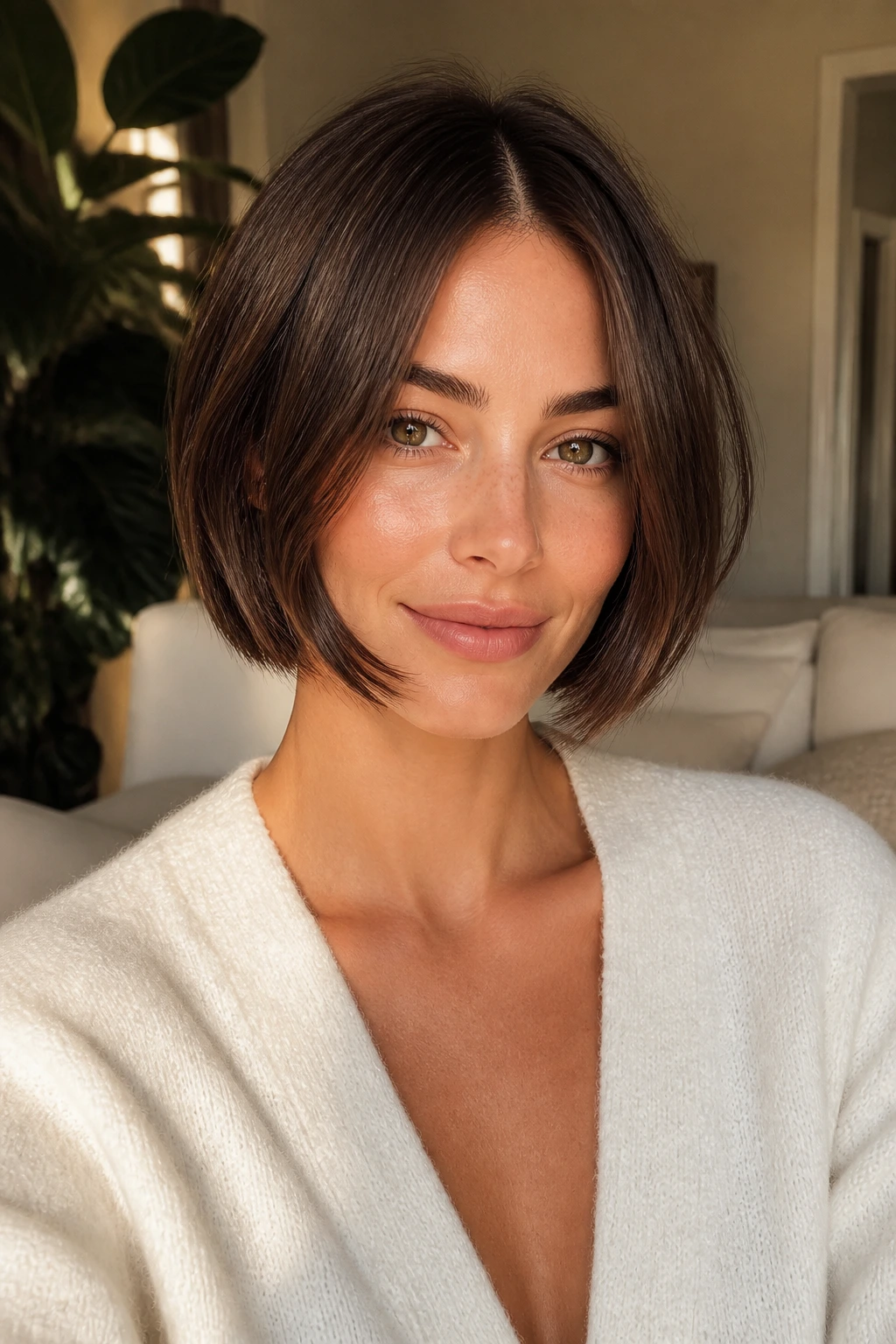
A center part can be the smartest move on an oval face when the face-framing pieces are kept soft. The center line shows off symmetry, while the little ribbons around the cheekbone stop the cut from feeling severe. On fine hair, that matters. A blunt middle part with no framing can go flat fast. A middle part with two soft pieces feels cleaner.
The key is restraint. You want two delicate front pieces, not a full curtain of layers. If the front gets sliced too much, the bob loses its body. Keep the outer line strong and let the pieces around the cheeks do the softening.
This is a good option if your hair naturally falls straight and you like a tidy look. It also plays well with glasses, because the face-framing pieces sit just outside the frames instead of fighting them.
9. Curved-Under Bob with an Underbevel
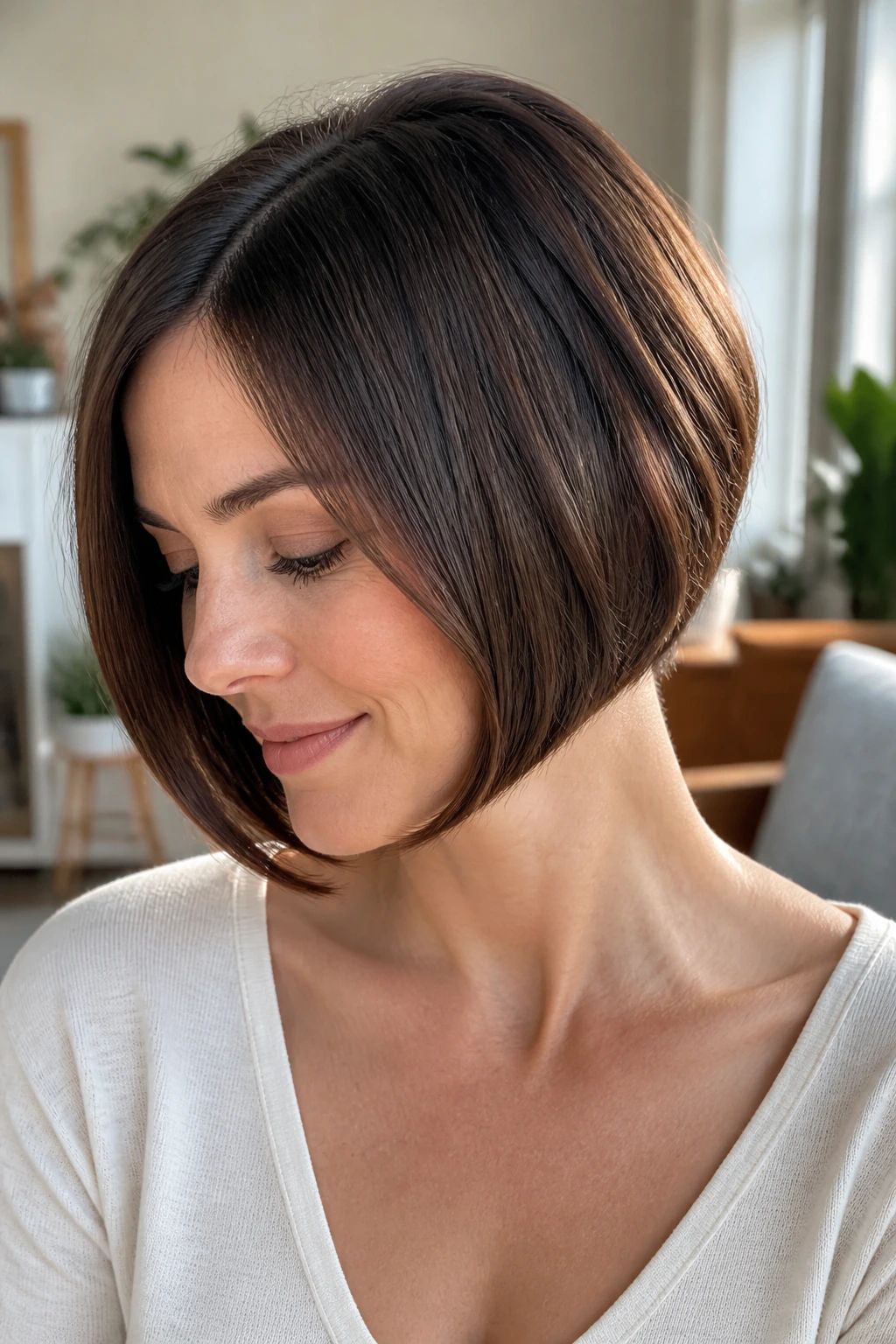
A curved-under bob is a very useful cut when fine hair starts to flick out at the ends. The underbevel quietly pushes the perimeter inward, which makes the whole shape feel neater and thicker. It is one of those haircuts that looks like it took more effort than it actually did.
Oval faces can wear this length almost anywhere from jaw to shoulder, but the sweet spot is usually just below the chin. That gives the curve enough room to show. Too short, and the bend can look abrupt. Too long, and the shape loses its snap.
The styling is half the point. Blow-dry with tension, aim the brush under the ends, and let the last inch roll in rather than hanging straight. If your hair tends to flip outward, this version is the fix I’d reach for first.
10. Blunt Bob with Hidden Interior Layers
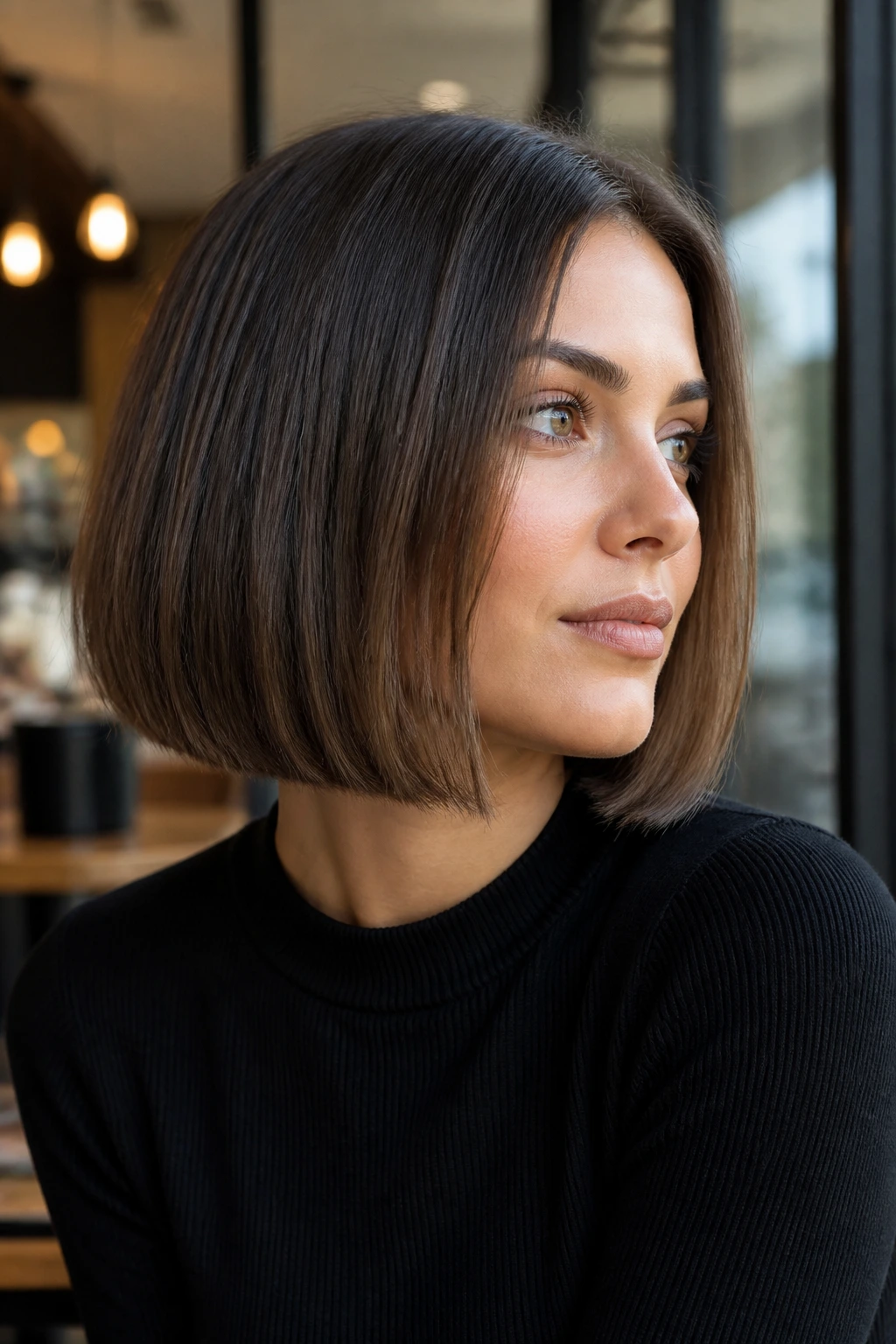
This is the cut I’d choose for the finest hair in the room. The perimeter stays one length, clean and blunt, which gives the illusion of weight. Inside that shell, the stylist takes out only a small amount of volume so the bob can move without looking hollow.
That hidden work is everything. You do not want layers that show from the outside. You want the shape to feel lighter when you run your fingers through it, but still look solid when it’s hanging still. Oval faces can wear this cut at jaw length or slightly lower because the symmetry keeps the shape from feeling too boxy.
If you like a sharp edge and low-stress styling, this is a quiet winner. A middle part keeps it modern; a side part makes it softer. Either way, the line should look deliberate, not accidental.
11. Long Bob with a Barely-There Slope
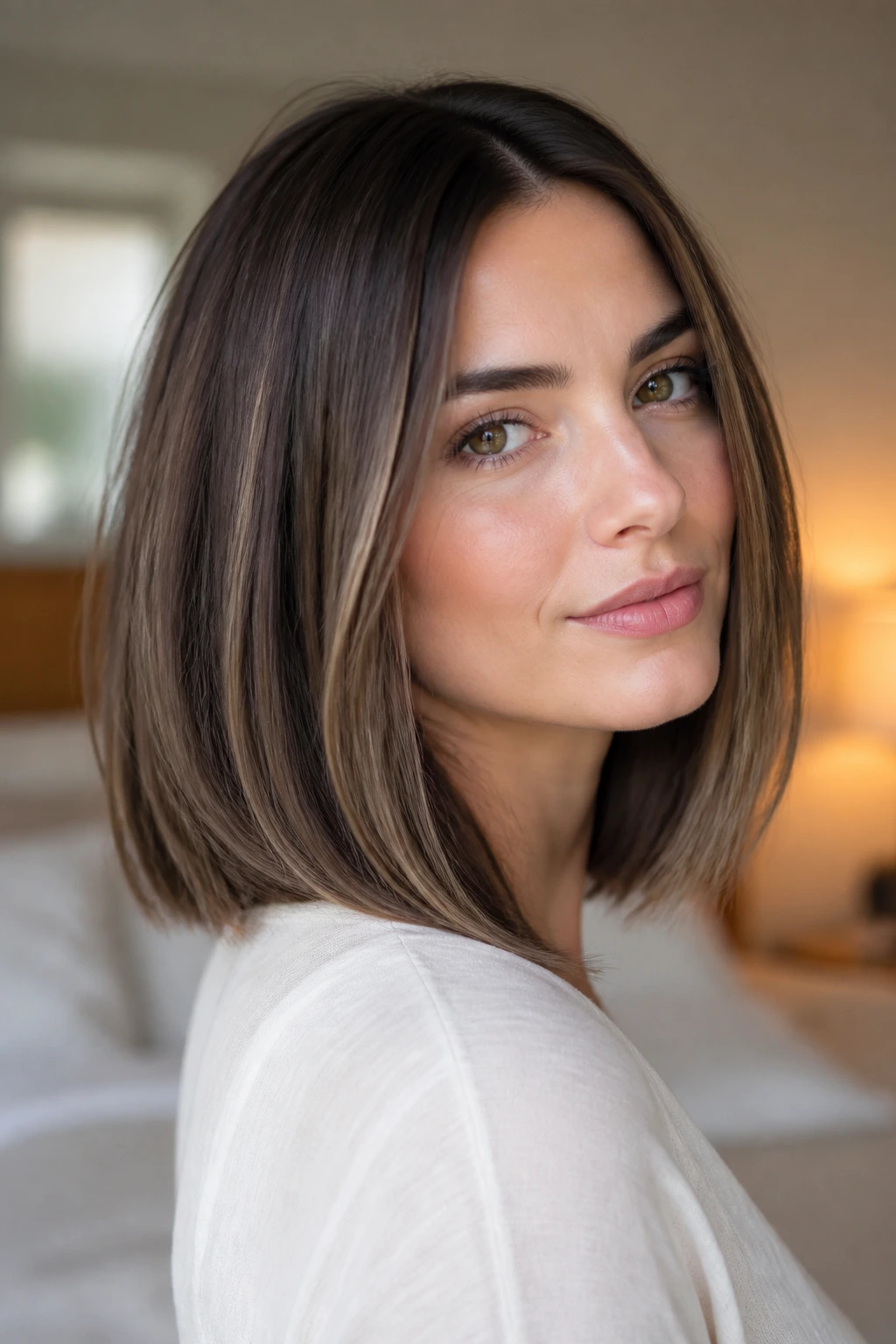
If you keep tucking your hair behind your ears, a shoulder-grazing bob is less fussy. The long bob with a barely-there slope gives you room to move, but the shape still reads polished. Fine hair often does better here than in a medium cut with lots of layers, because the long line stays visible.
The slope should be subtle. Shorter at the back, a touch longer toward the front, but nothing so steep that it starts shouting for attention. On an oval face, that quiet angle pulls the eye downward just enough to elongate the neck without making the face look stretched.
This is also one of the easiest shapes to grow out. If you like flexibility, there is a lot to love here. The cut can be worn straight, tucked, or bent at the ends, and none of those choices require much extra product.
12. Micro Bob with a Soft Nape
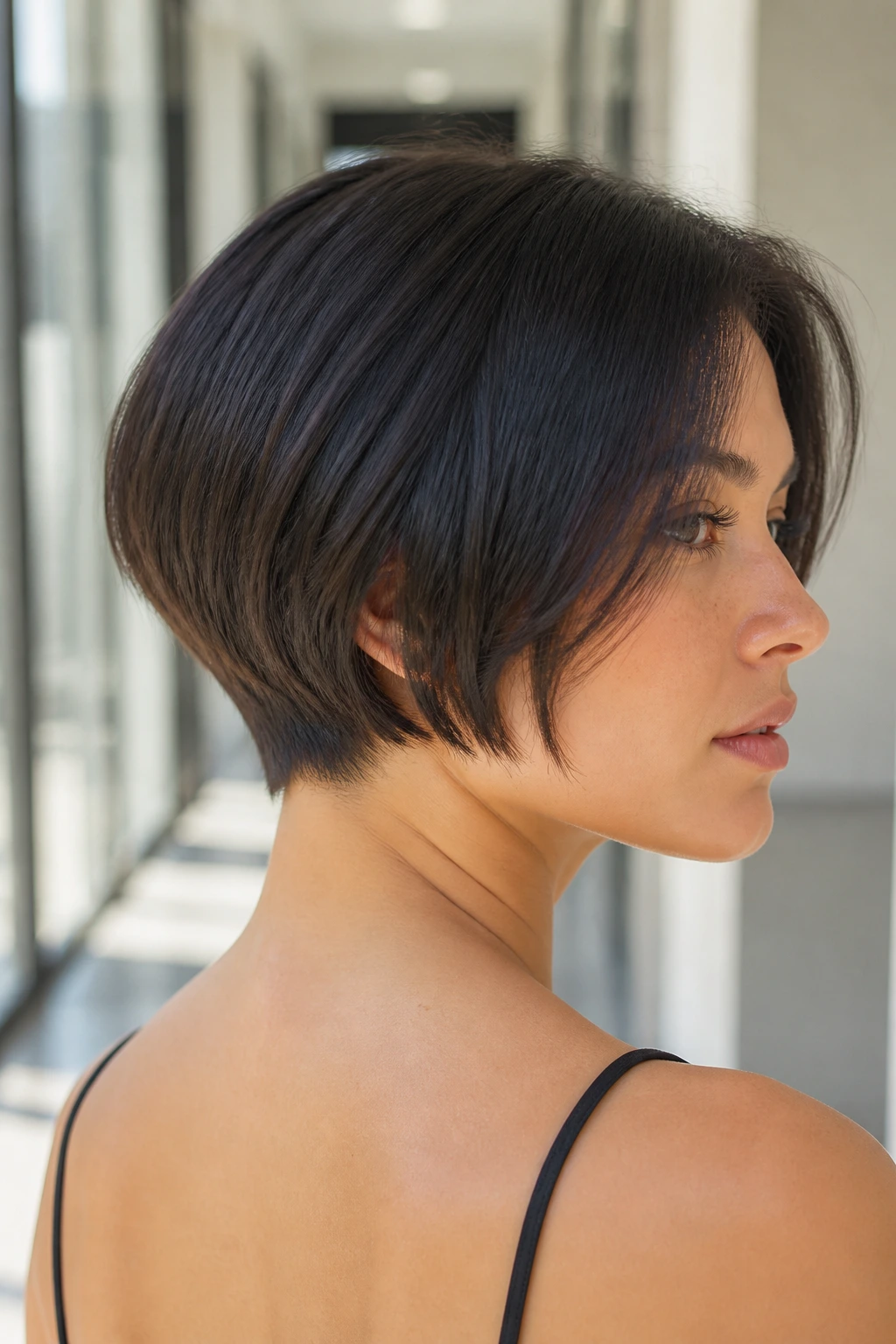
Short hair can look fuller than long hair when the perimeter is tight enough. A micro bob with a soft nape keeps the neckline neat and the body compact, which gives fine hair more presence than people expect. It is not a haircut for someone who wants to hide behind length. It is a haircut that shows off bone structure, especially on an oval face.
The soft nape is the important part. You do not want a hard stack or a stiff, dated graduation. You want a slight lift through the back so the head shape looks clean from every angle. That lift helps the cut sit away from the neck without puffing out.
This version works best on straight to slightly wavy hair. If your hair bends hard at the ends, you will spend more time smoothing than you’d like. But on the right texture, it has a crisp, modern feel that makes fine hair look more deliberate.
13. Curtain-Bang Bob with Polished Length
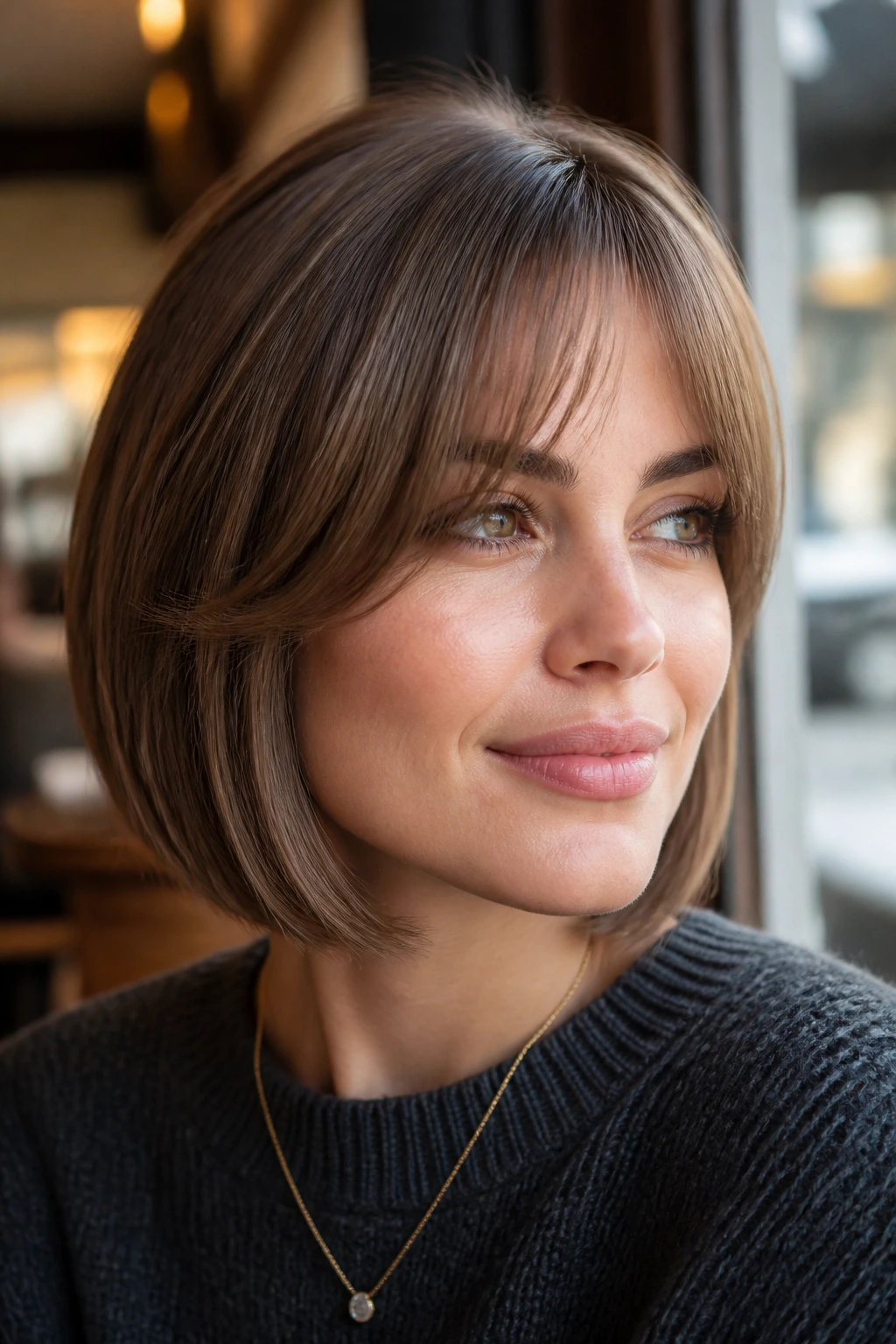
Do curtain bangs and fine hair play nicely together? They can, if the fringe is kept light and the length stays polished. On an oval face, curtain bangs split the difference between softness and shape. They add movement around the cheekbones without taking too much density from the sides.
The secret is keeping the center of the fringe wispy and the outer pieces longer, so they blend into the bob instead of sitting on top of it. If the bangs get too thick, the haircut can look heavy in front and too thin elsewhere. That’s a bad trade.
I like this cut best when the bob hits just below the chin or near the collarbone. The longer length gives the bangs room to fall naturally, and the whole shape feels a little more relaxed. If you use a round brush, flip the fringe away from the face for a few seconds, then let it cool. That keeps the bend soft instead of helmet-like.
14. Feather-Light Bob with Airy Movement

This is not the choppy, over-thinned bob that made fine hair look worse in old salon chairs. A feather-light bob keeps the outline sleek and only adds movement where it helps: just inside the ends, maybe a little around the crown, never all over the surface. The goal is air, not gaps.
That kind of restraint is useful on fine hair because the cut can feel lighter without looking sparse. Oval faces get a soft frame, especially if the front pieces are allowed to brush the cheekbones. It is a good choice when you want motion but not a dramatic shape shift.
Ask for point-cutting on the inner layers rather than a razor-heavy finish. A razor can be beautiful on some hair, but fine hair often pays the price at the ends. If you want the cut to move, let the styling do some of the work.
15. Deep Side-Sweep Bob with Root Lift
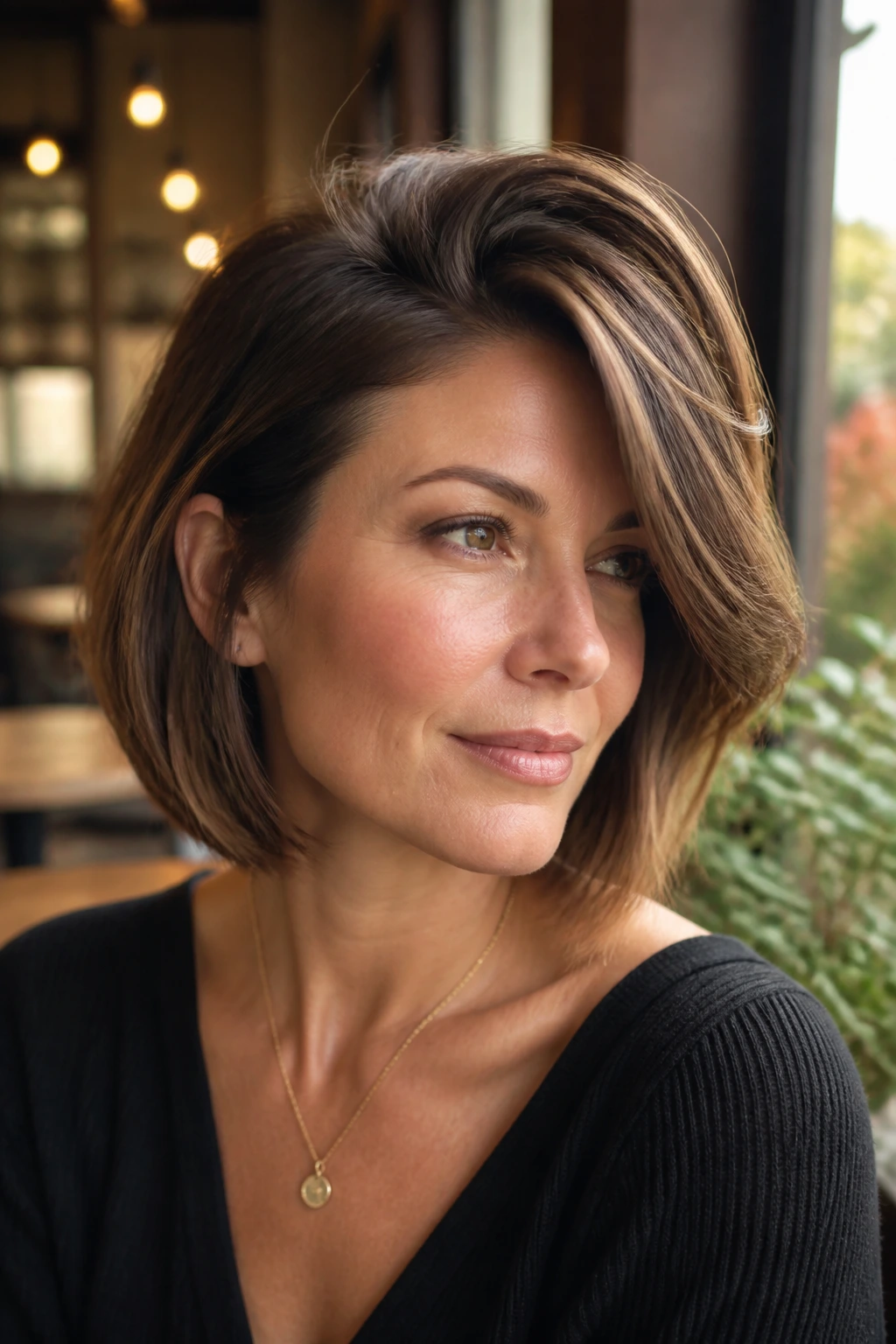
If your crown collapses by noon, move the part and the whole head wakes up. A deep side-sweep bob creates instant lift at the roots and a clean sweep across the forehead, which helps fine hair look fuller without adding a single extra inch. On an oval face, it adds a little drama without throwing off the balance.
This cut looks especially good when the front is left a touch longer than the back. The sweep has somewhere to land, and the hair can tuck neatly behind one ear. The shape feels intentional, not over-styled.
The styling is straightforward. Blow-dry the roots in the opposite direction of the part first, then flip them back. That one move gives the hair more lift than a heavier mousse ever will. Finish with a light mist of flexible spray, not a sticky lacquer that turns the front piece stiff.
16. Rounded Bob with a Cheekbone Finish
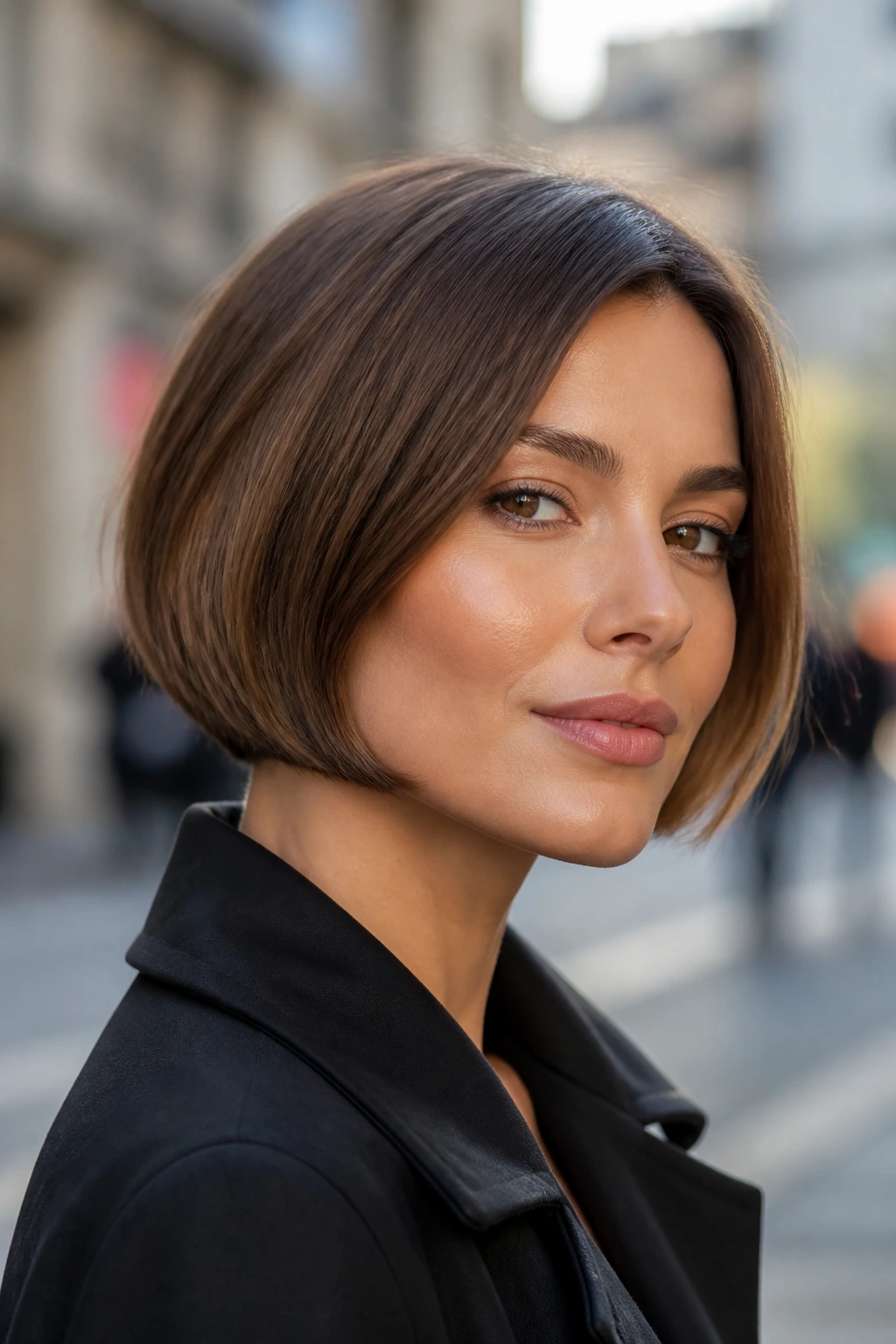
Why do some bobs make cheekbones stand out and others just sit there? Because the line lands in the right place. A rounded bob with a cheekbone finish softens the lower face and directs the eye to the middle of the face, which is flattering on oval faces that can handle a little curve.
The shape should be smooth through the sides and slightly fuller near the cheekbones before tapering at the ends. That gives fine hair a sense of body without overloading the bottom. The result is soft, clean, and easy to wear with a center or side part.
This is the cut I’d pick for someone who likes a polished silhouette but does not want the edges too severe. It works especially well if your hair has a slight bend and responds well to a round brush. A little bounce goes a long way here.
17. Shoulder-Skimming Bob with a Clean Hem
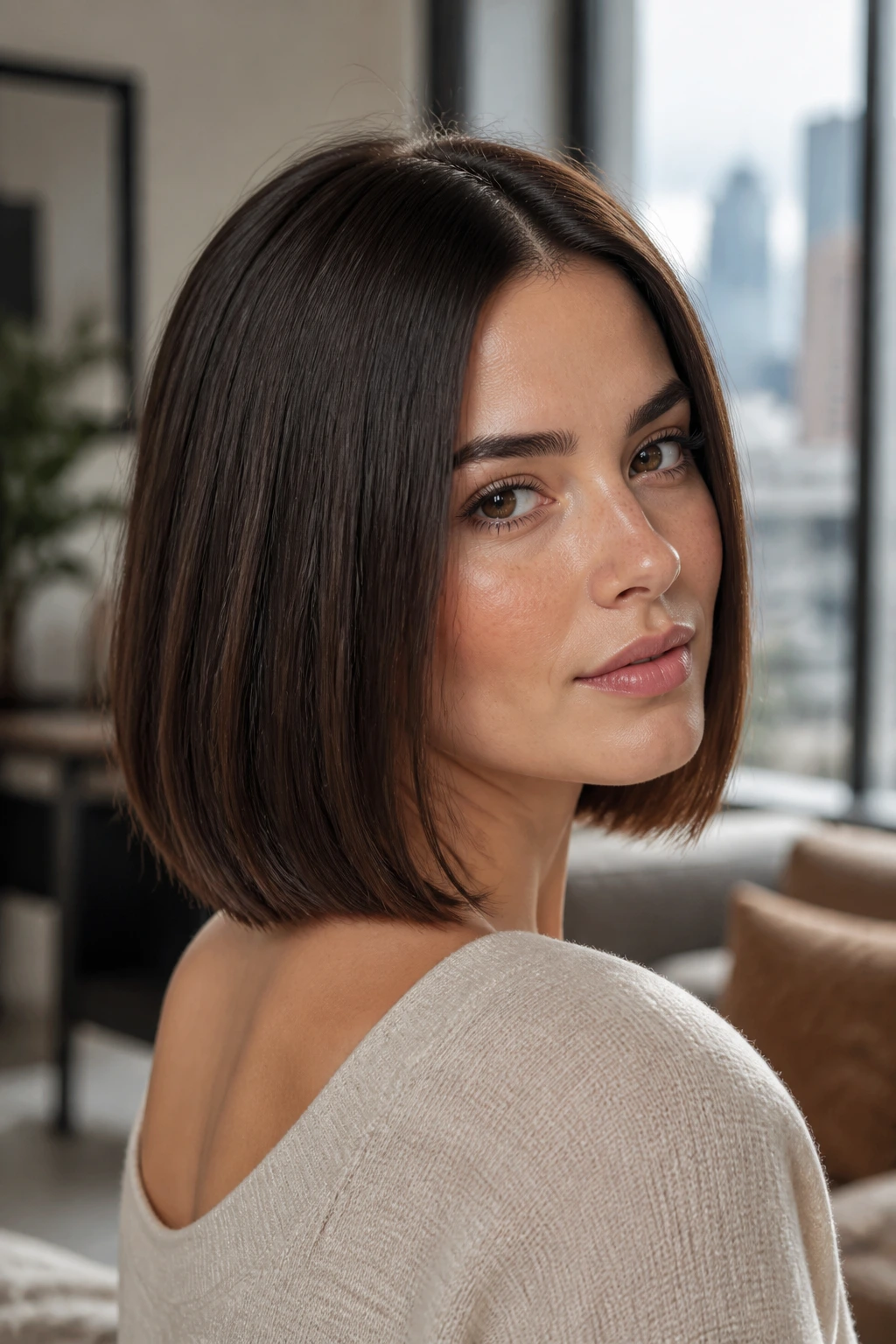
The longest version here is for people who want bob polish without giving up ponytail territory. A shoulder-skimming bob can still look sleek if the hem stays crisp and the layers stay hidden. On fine hair, the long line helps the ends hang together instead of flaring out.
The danger with this length is softness in the wrong place. Too many layers and it starts to look thin around the shoulders. Keep the hem strong, keep the internal movement subtle, and let the cut glide rather than feather apart.
This is a very practical length if you wear blazers, coats, or scarves a lot, because the bob still reads neat after moving around all day. It is also one of the easiest cuts to style quickly: dry the roots, bend the ends under, and go.
18. Soft-Inverted Bob with a Glassy Finish
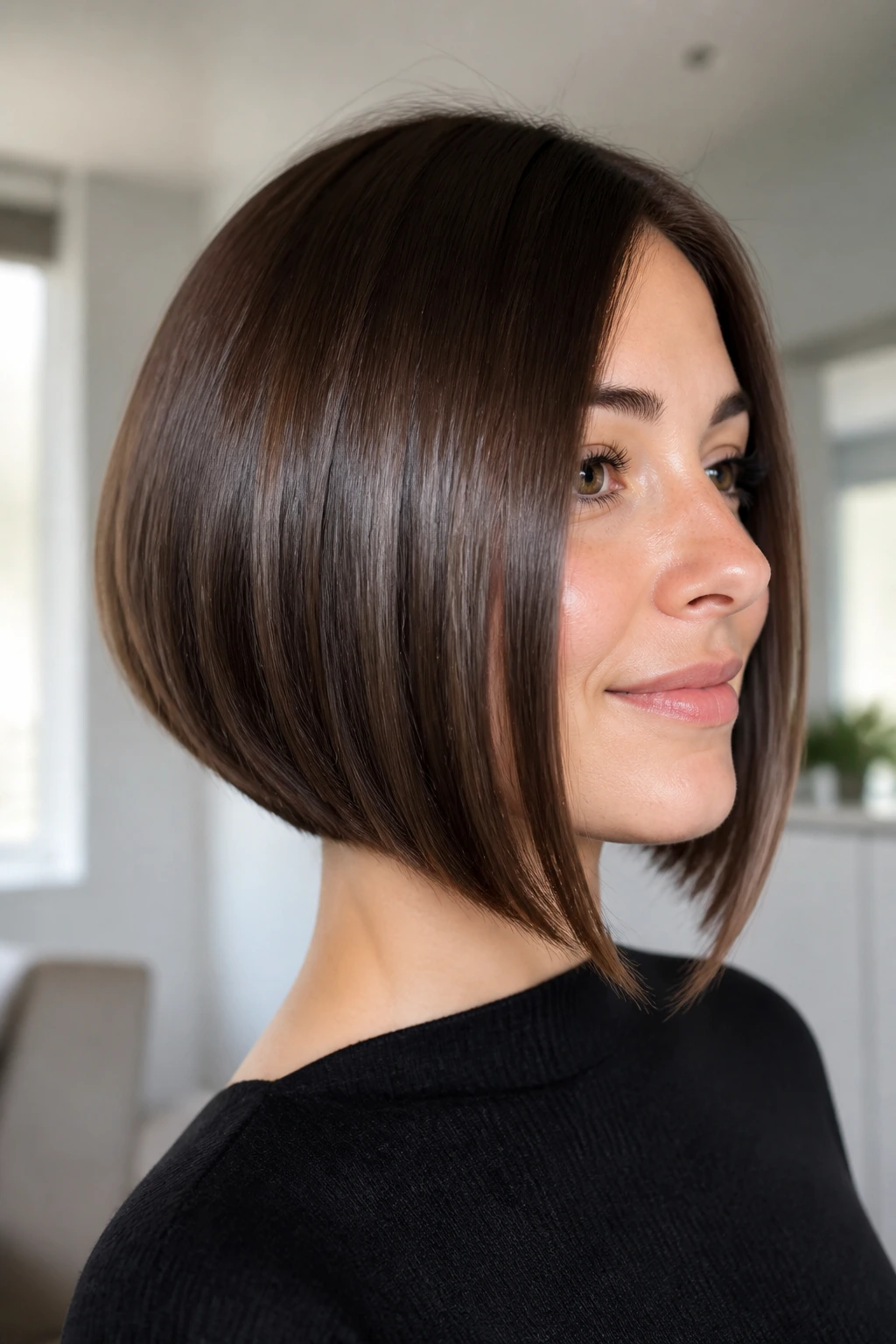
This one has structure, but no stiffness. A soft-inverted bob gives you a slightly shorter back and a longer front, which helps fine hair look more purposeful and gives oval faces a neat frame. The inversion should be subtle. Think whisper, not wedge.
The glassy finish is what makes it land. Smooth the surface with a blow-dryer and brush, then use a flat iron in small sections only where the ends need help. Do not chase every hair into obedience; the cut should move a little when you turn your head.
This is a strong final option if you like a clean profile and a sharp neckline. It feels modern without leaning harsh, and the longer front pieces keep it from looking too abbreviated. If I had to pick one cut that gets the most shape out of the least amount of hair, this would be close to the top.
How to Style a Sleek Bob Without Flattening It
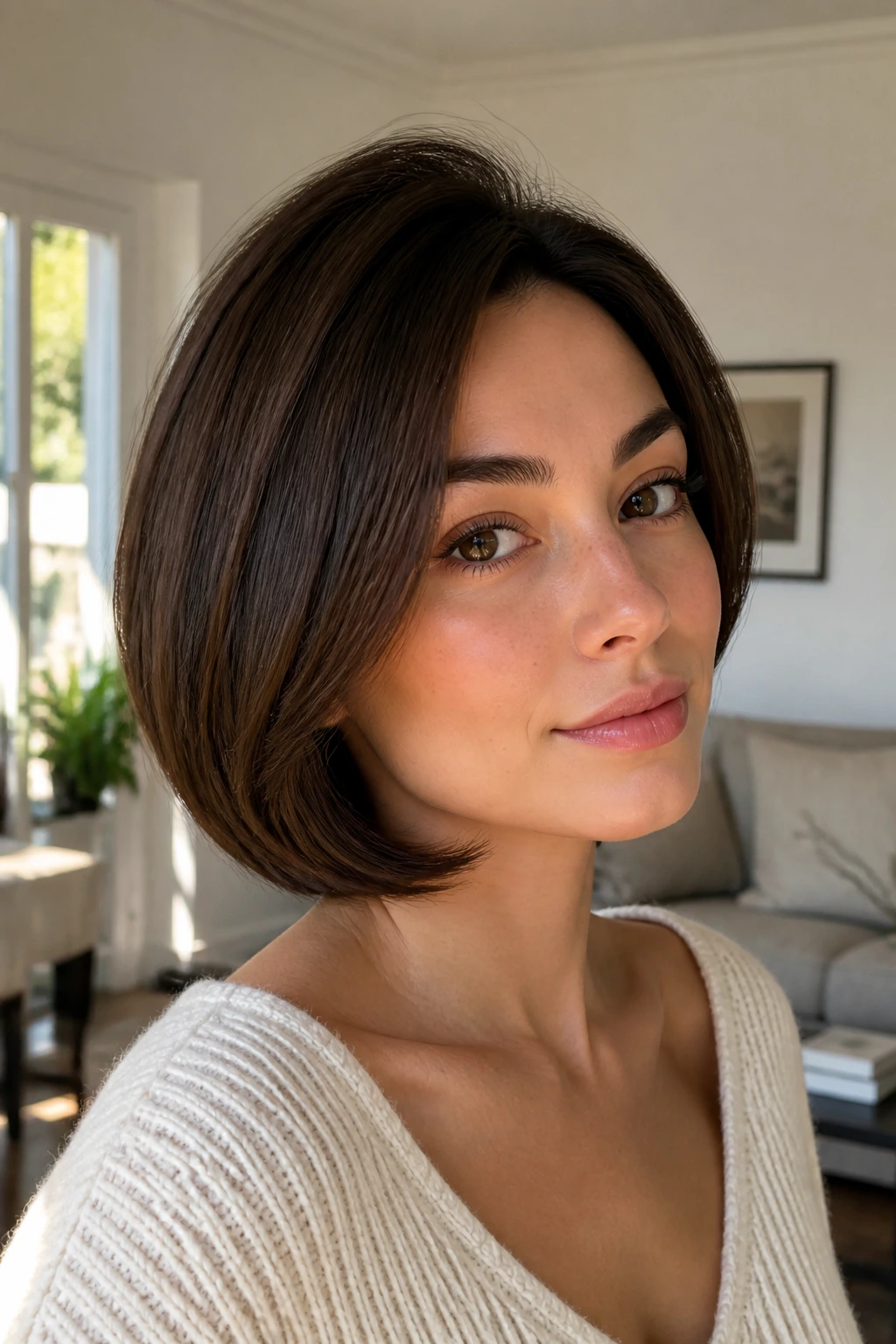
Fine hair does not need a mountain of product. It needs the right products in the right places. Start with a lightweight volumizing mousse at the roots, then work a heat protectant through the mid-lengths and ends. Heavy creams are usually a waste here; they make the hair slide instead of hold.
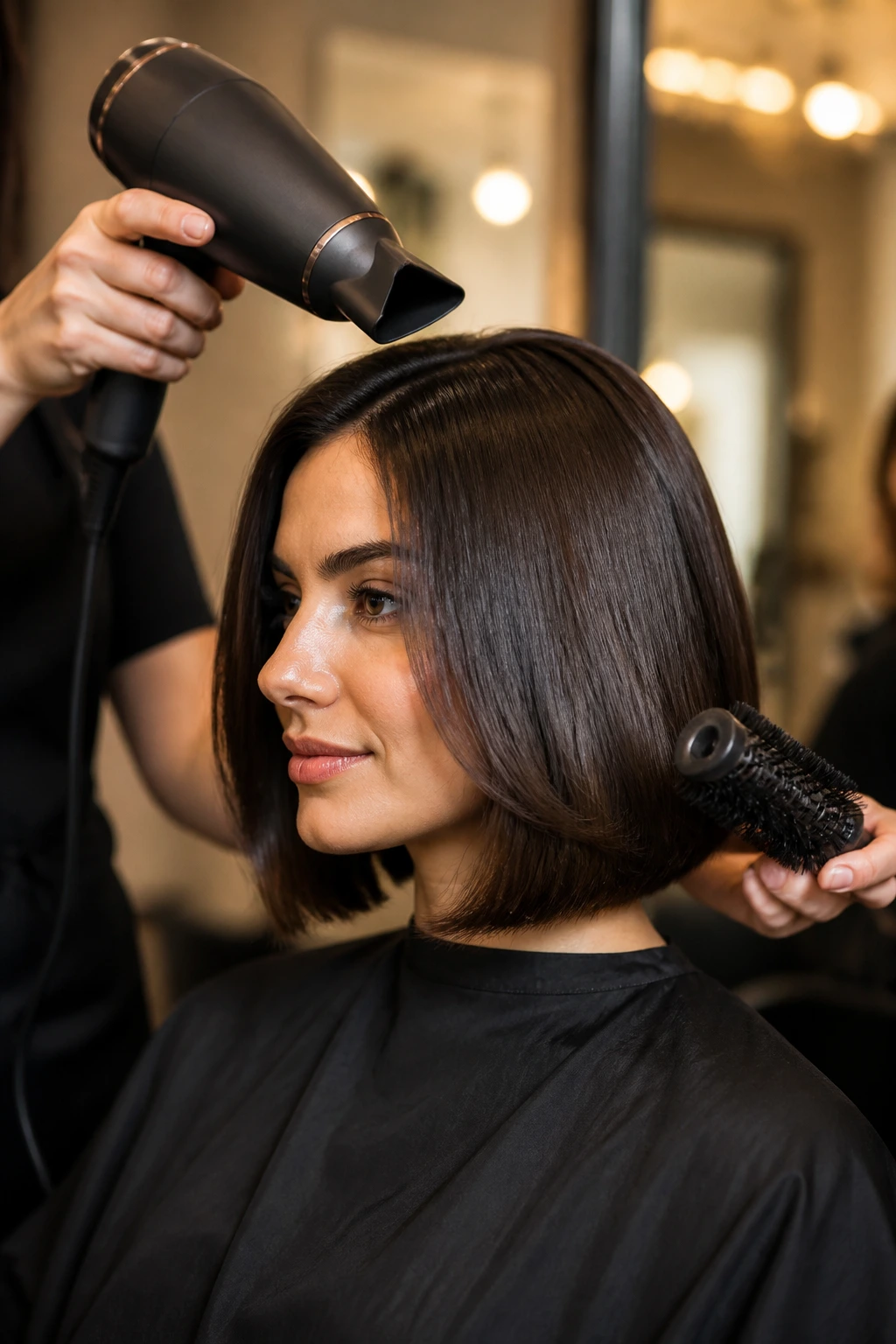
Blow-dry with a nozzle attachment and a brush that matches the length you chose. A paddle brush is good for a long bob or a blunt chin cut. A round brush gives the ends that soft undercurve that makes a sleek bob feel finished. If the crown is stubborn, dry it in the opposite direction of your part for the first minute or two, then put it back where it belongs.
A flat iron should be a finisher, not the whole plan. On fine hair, a single smooth pass at about 300 to 325°F is usually enough. Bend the wrist slightly at the last inch so the ends do not stick out like little shelves. That tiny bend is the difference between “done” and “stiff.”
Day two is where dry shampoo earns its keep. Use it at the roots, wait a minute, then brush it through before the powder turns chalky. If the ends look dull, a pin-sized amount of serum on the fingertips is enough. More than that, and the cut starts to look greasy by lunch.
The Mistakes That Make Fine Hair Look Thinner Than It Is
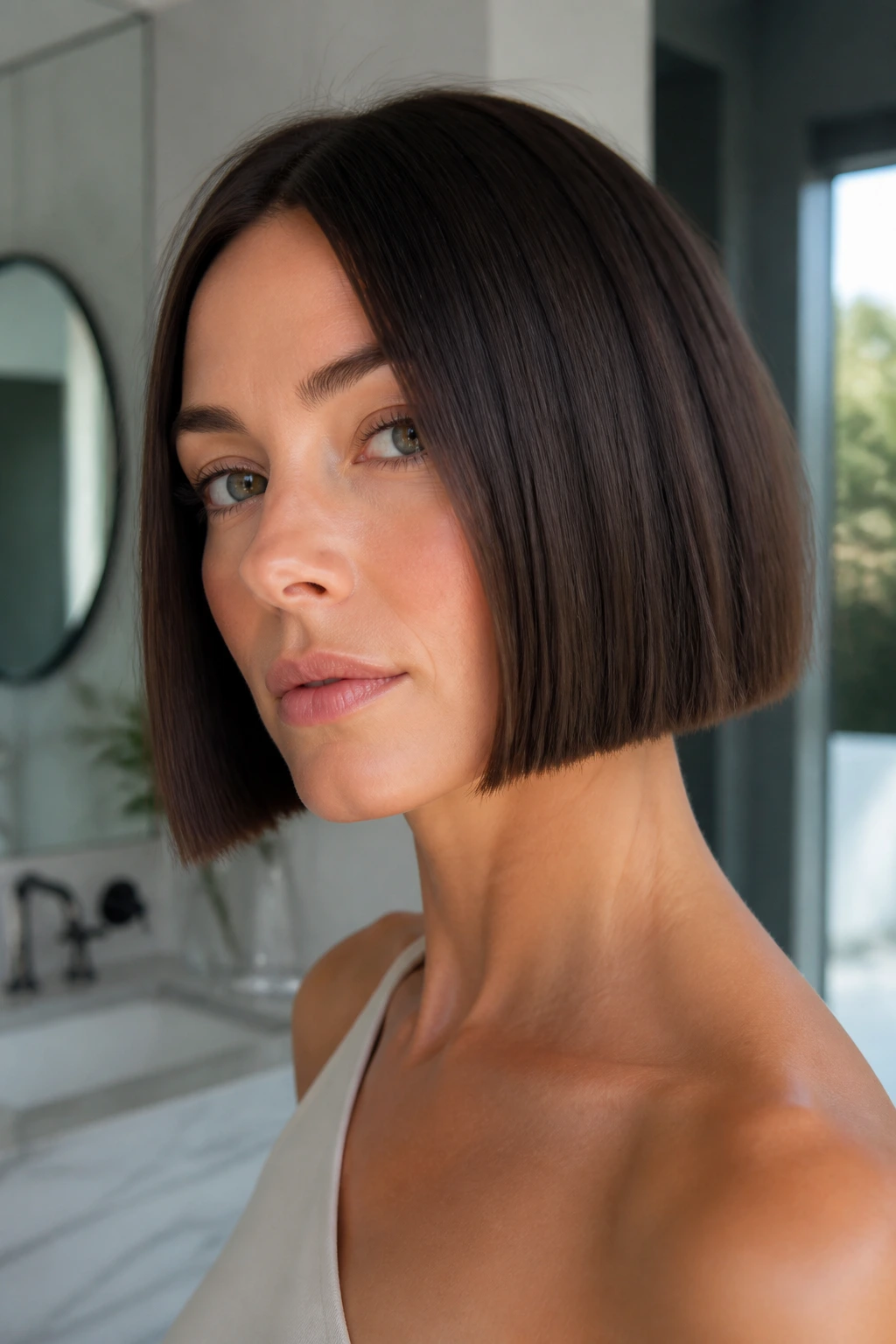
The most common mistake is over-layering. You can spot it fast: the ends look see-through, and the bob seems to lose weight the second you move. The fix is simple, though not always easy to hear at the salon—keep the outer line stronger and move the softening inside the shape.
Heavy products are the second problem. Thick creams, oily leave-ins, and anything that promises a “sleek finish” in a rich formula can flatten fine hair before you’ve even picked up the brush. Use lighter mousse, sprays, and a tiny amount of serum only at the tips if they need it.
Another one: cutting the bob too long and too soft at the same time. Shoulder length can be flattering, but if the perimeter is weak and the layers are obvious, the hair starts to flick and separate. A cleaner line above the shoulders or a sharper shoulder-skimming hem usually works better.
Small errors that matter
- Too much thinning: Fine hair cannot afford aggressive texturizing. It looks airy for five minutes, then sparse.
- Ends cut too blunt without a bend: A hard, straight edge can look like a ruler unless the finish is slightly curved.
- Bangs that are too heavy: Thick fringe steals density from the rest of the cut.
- Ignoring the part: A part that fights your growth pattern will flatten the bob every morning.
The easy fix is to think in terms of weight distribution. Keep the bottom line clean, keep the crown light but not empty, and let the styling do just enough work to show the shape.
Variations and Soft Swaps for Different Moods

The Paris-Soft Bob: Keep the length at the jaw, add a light fringe, and round the ends inward for a softer, more lived-in finish. This works well if you want the cut to feel polished but not severe.
The Minimal Line Bob: Strip the style back to a single blunt edge with almost no visible layering. It suits the straightest fine hair and looks especially sharp on an oval face with strong cheekbones.
The Soft Power Lob: Move the length to the collarbone and keep the internal layers nearly invisible. It gives you more styling room, and it is the easiest option if you need to tuck hair behind the ears or clip it back.
The Air-Dry Bob: Choose a slightly longer bob with a gentle undercurve, then let it dry with a light mousse and a touch of cream only at the ends. This is the friendliest route if heat styling is not something you want to do every morning.
The Side-Sweep Bob: Shift the part deep to one side and let the front pieces sweep across the forehead. It’s a good swap when you want more lift at the crown and a bit more softness around the face.
Tools That Make a Sleek Bob Behave
-
Blow dryer with a nozzle attachment: Directs air where you want it and keeps the cut smoother at the surface.
-
1-inch or 1.25-inch round brush: Good for turning the ends under on shorter bobs or giving a little curve to longer ones.
-
Paddle brush: Best for a collarbone lob or a blunt cut when you want a straighter finish with less volume at the sides.
-
Flat iron with adjustable heat: Useful for the last pass on the ends; fine hair usually does not need high heat.
-
Lightweight volumizing mousse: Adds grip at the roots without making the hair tacky.
-
Heat protectant spray: Non-negotiable if you use a blow dryer or flat iron often.
-
Root-lift spray: Handy for a side part or any crown that flattens easily.
-
Dry shampoo: Helps on day two and keeps the part from going greasy first.
-
Light serum or oil: Use only on the ends, and only a small amount.
-
Tail comb and section clips: Make blow-drying much easier because the hair stays organized instead of getting blasted everywhere.
Keeping the Shape Between Salon Visits
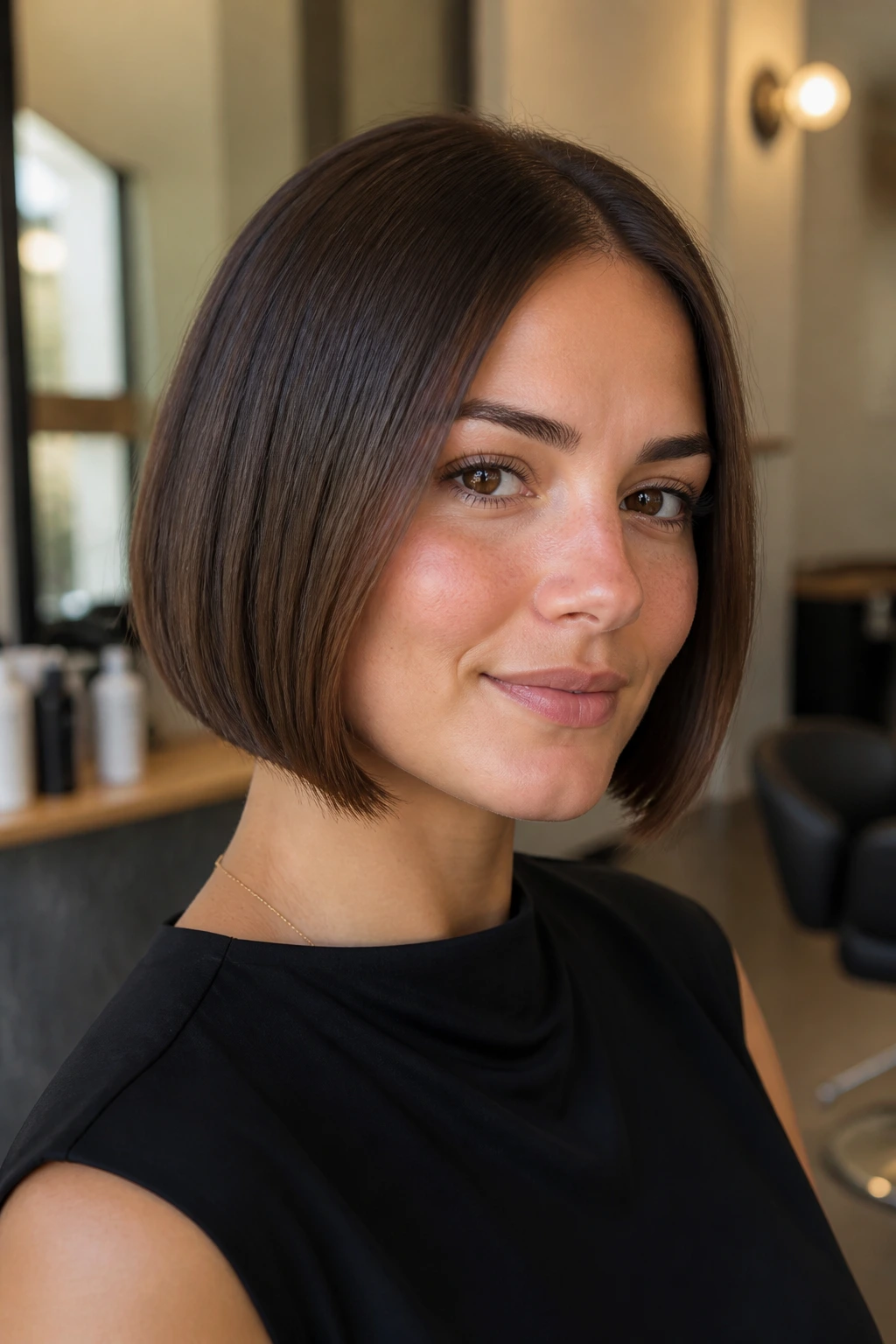
A sleek bob lives or dies by the last half-inch. Once those ends start to fray, the whole cut looks older than it is. On fine hair, I’d trim every 6 to 8 weeks if you want the hem to stay crisp. Stretch it longer if you must, but know the shape will soften fast.
At home, keep washing honest. If you use mousse, dry shampoo, or a fair bit of heat styling, a clarifying shampoo every 1 to 2 weeks helps stop buildup from dragging the roots down. Follow it with a light conditioner on the ends only. Fine hair does not need conditioner from root to tip; that usually just makes the crown limp.
Sleep matters too. A satin pillowcase or a loose clip at the crown can keep the bob from getting mashed flat overnight. If the ends flip out in strange ways, dampen them slightly in the morning and bend them back with a brush or flat iron. Do not keep adding more heat over and over on the same dry strand. That’s how fine hair starts breaking at the edge.
Color can change the cut’s look as well. Subtle highlights around the front or a soft glaze can make the layers easier to see, which helps a sleek bob look fuller without changing the haircut itself.
Common Questions About Sleek Bobs for Fine Hair and Oval Faces
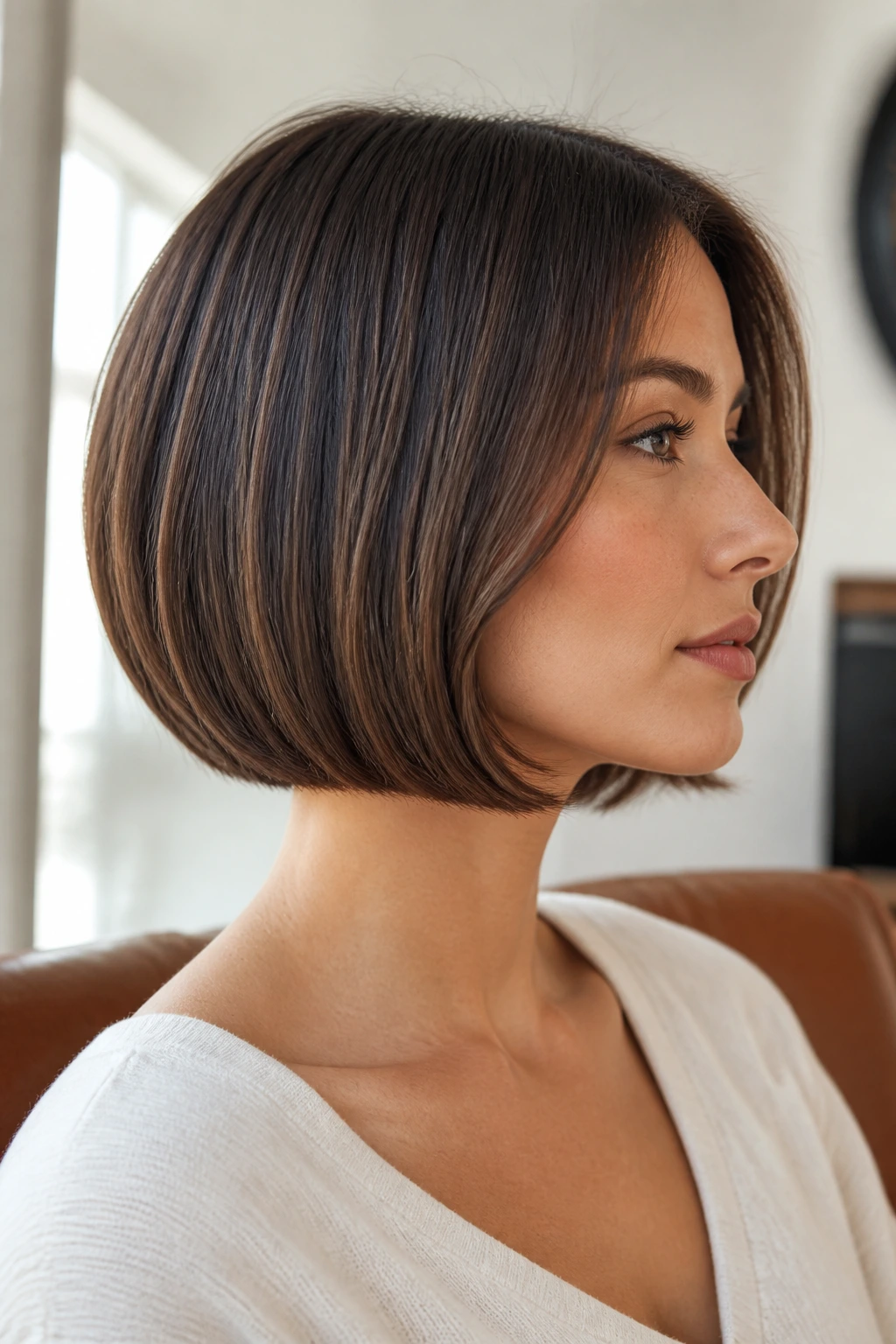
Which bob length is most flattering for fine hair and oval faces?
The safest bet is usually chin to collarbone length. Chin-length cuts make the ends look denser, while collarbone lengths give you more movement and tuckability. If your hair is very fine, a clean chin bob often looks fuller with less work.
Are layers bad for fine hair?
No, but too many visible layers are. Fine hair usually does better with hidden internal layers or a soft bevel instead of choppy pieces through the bottom half. The line should stay strong enough that the ends look intentional.
Can I wear a bob if my hair is pin-straight?
Yes, and straight hair often looks very clean in a bob. The trick is giving the ends a slight bend under and keeping the roots from falling flat. A blunt shape with a little movement usually looks better than a heavily textured cut on straight fine hair.
Do curtain bangs make fine hair look thinner?
They can, if the fringe is too thick or the rest of the cut is too layered. Kept soft and light, curtain bangs add shape around the face without stealing too much density. On oval faces, they can look especially balanced.
What should I tell my stylist if I want one of these cuts?
Use simple language: ask for a blunt or softly beveled bob, invisible internal layers, and only light point-cutting at the ends. If you want bangs, say how heavy you want them and where you’d like them to hit. The clearer you are about keeping the hemline full, the better.
How do I stop a bob from flipping out at the ends?
That usually means the haircut is landing at a troublesome length, or the ends are too light. A slight underbevel, a different brush angle, or moving the length a touch shorter or longer can fix it. Shoulder-grazing bobs are the most common place for the flip to show up.
Can I air-dry these bobs?
Some of them, yes. The longer lobs and softer rounded cuts are friendlier to air-drying, especially with a little mousse and a bend from your fingers. The sharper chin-length versions usually look better with at least a partial blow-dry.
How often should I get the bob trimmed?
Every 6 to 8 weeks is the sweet spot if you want the line to stay clean. Fine hair shows split or wispy ends fast, and once the perimeter softens too much, the whole bob loses that polished feel.
What if my hair is thin at the temples?
Choose a cut that keeps the front pieces a little longer and softer, rather than a super-short bob that exposes the temples. A side part or light fringe can help balance that area without making the haircut feel heavy.
A Clean Finish
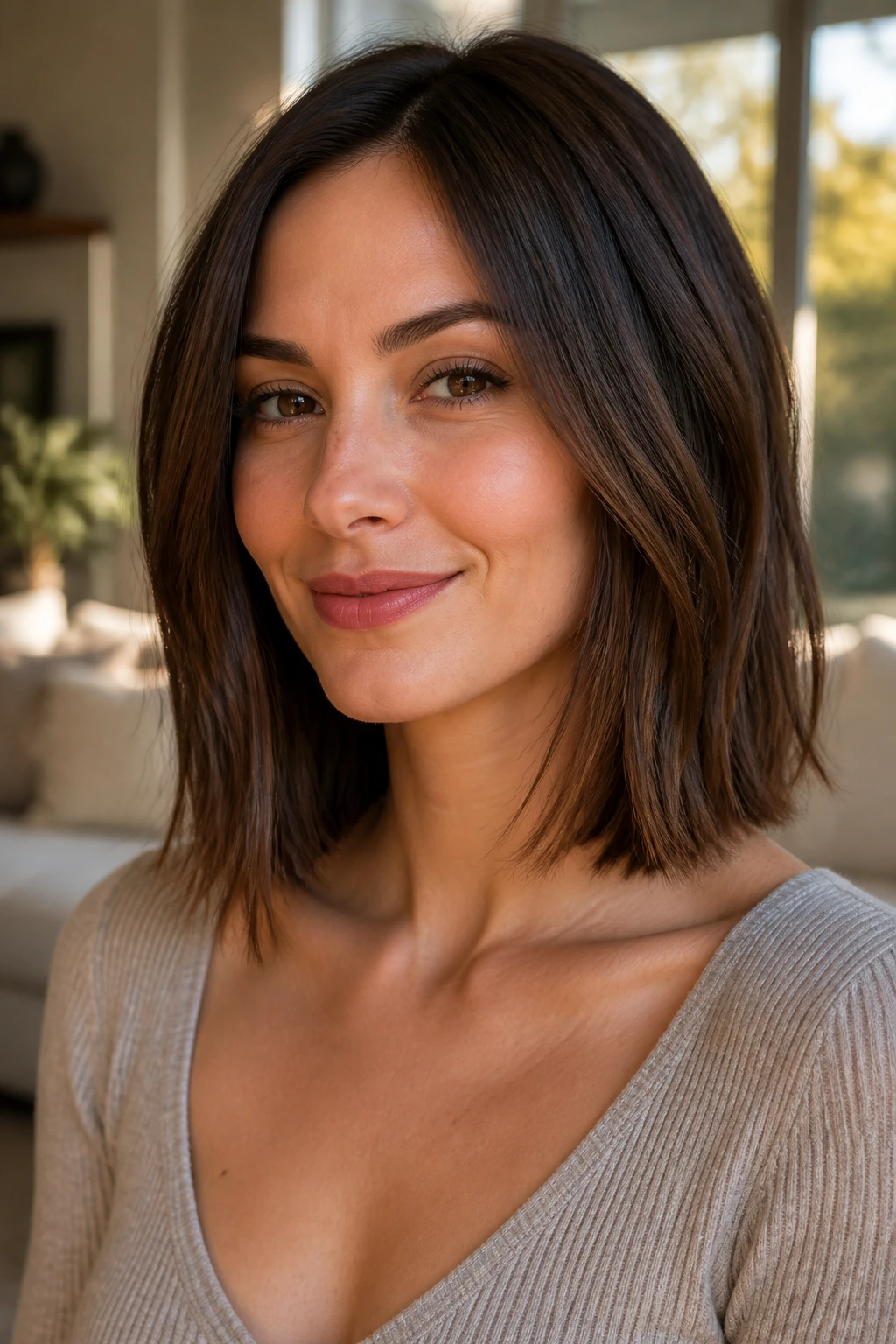
A good bob on fine hair does not need drama. It needs judgment. Keep the perimeter strong, leave the softness inside the shape, and let the face shape do part of the work instead of piling texture everywhere and hoping for the best.
Oval faces make that easier, not harder. They can carry shorter chin cuts, longer collarbone cuts, and everything in between, which means the better question is not “Can I wear a bob?” It’s “Where do I want the line to land?” Once you answer that, the rest gets far simpler.