



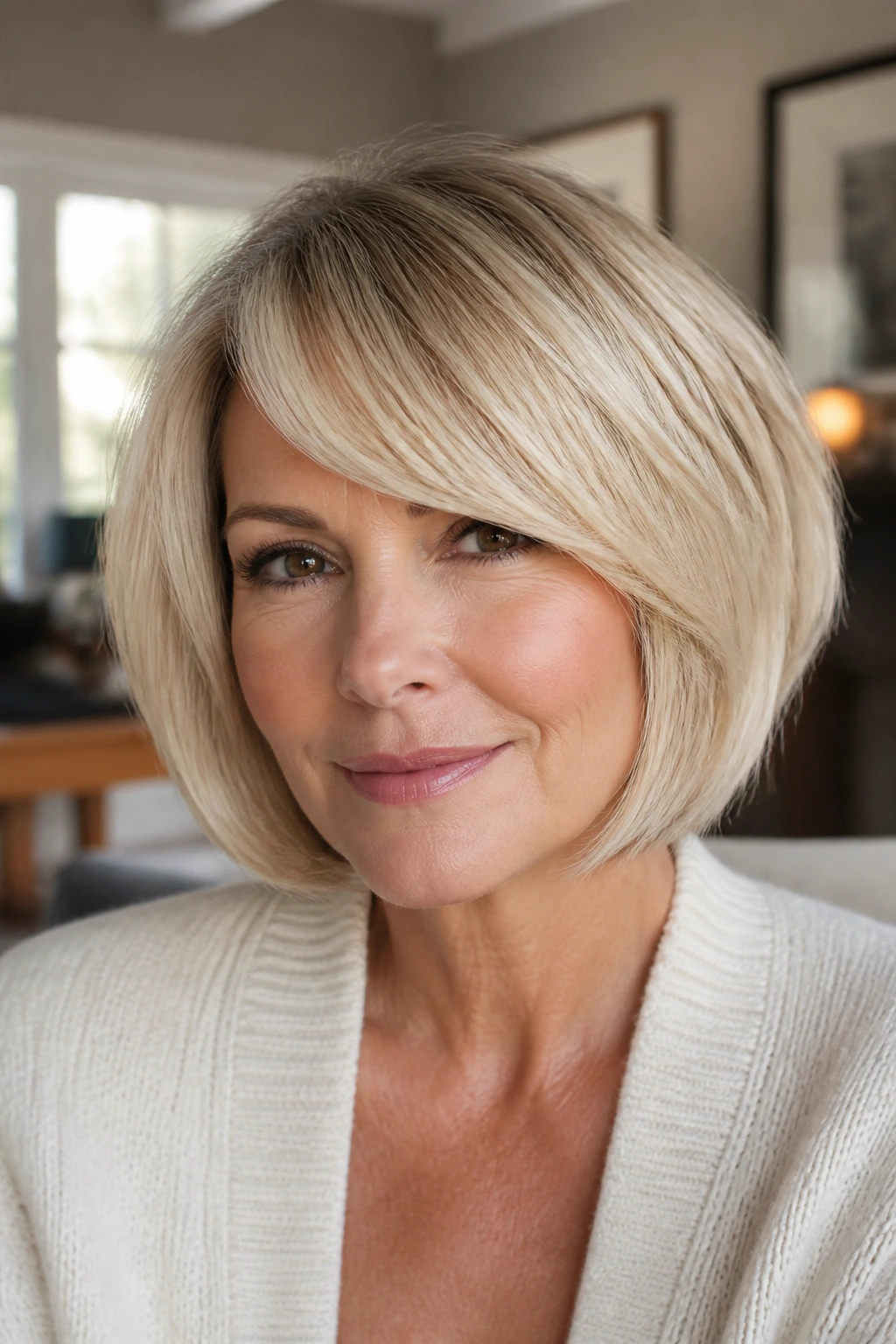
Thick hair can make a bob look expensive, or it can make it balloon into a triangle by lunch. The difference usually isn’t the blonde shade. It’s the shape. Blonde bobs for women over 50 with thick hair work best when the cut removes bulk in the right places and leaves enough weight at the edge to keep the line clean.
And that’s where a lot of bob advice falls apart. Thick hair does not need to be “tamed” into something flat and sleepy. It needs direction. A good bob gives the ends somewhere to sit, keeps the sides from flaring, and lets the blonde do some work around the face instead of sitting there in one solid block of color.
Color matters more than people think, too. Beige, champagne, honey, pearl, and silver-blonde tones can soften the outline of a dense cut, brighten the skin near the cheekbones, and make gray regrowth less obvious between salon visits. Done badly, blonde on thick hair can look stripy or brassy. Done well, it looks crisp, modern, and much easier to live with than long hair that fights you every morning.
Why These Cuts Earn Their Keep
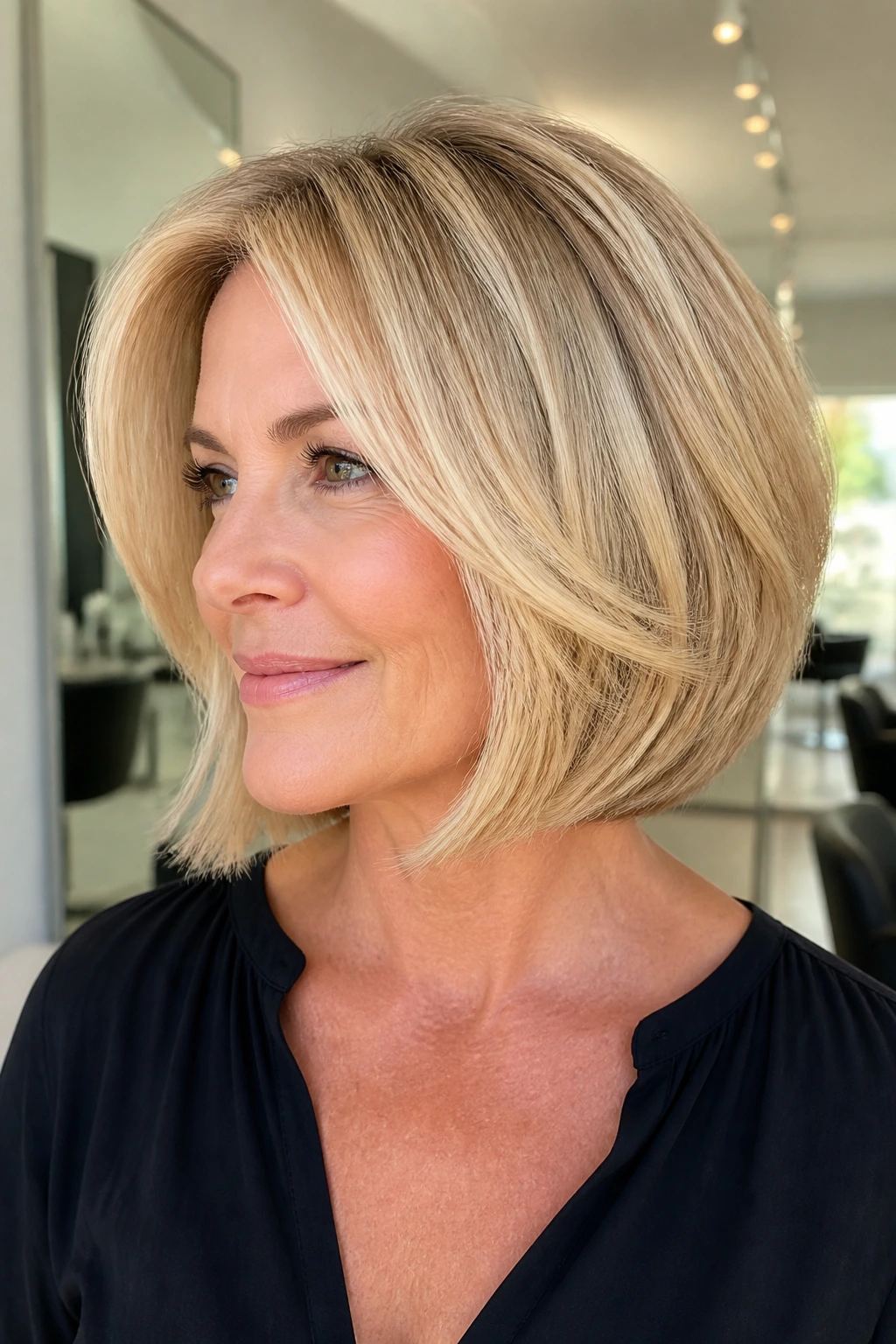
- Shape control: Thick hair needs internal weight removal, or the bob widens at the cheek and jaw instead of falling cleanly.
- Face-softening color: Blonde ribbons around the front of the face make a heavy cut feel lighter without shaving off length.
- Gray blending: Rooted beige, champagne, and silver-blonde tones hide grow-out better than a single flat color.
- Less daily drama: A well-cut bob dries faster than longer hair and usually needs fewer round-brush passes.
- Neck and jaw balance: The right length can skim the jaw, tuck under the chin, or float at the collarbone without adding bulk.
- Real-life wearability: These cuts can handle cowlicks, strong density at the nape, and a little wave without turning into a puff ball.
1. Champagne Layered Bob
This is the bob I’d hand to someone whose thick hair keeps trying to spread sideways. The champagne blonde keeps the cut bright near the face, while soft internal layers take weight out of the middle so the sides don’t swell out like a bell. It feels polished, but not stiff.
The key is restraint. The perimeter should still look like a bob when you shake it loose, which means the layers stay hidden until the hair moves. Ask for length that lands around the jaw, then have your stylist carve out bulk below the crown and just behind the ears. That tiny bit of reduction makes a big difference.
A 1.5-inch round brush and a smoothing cream are enough for most styling days. Blow the ends under, not outward. That little bend keeps the shape neat instead of fluffy.
2. Honey A-Line Bob
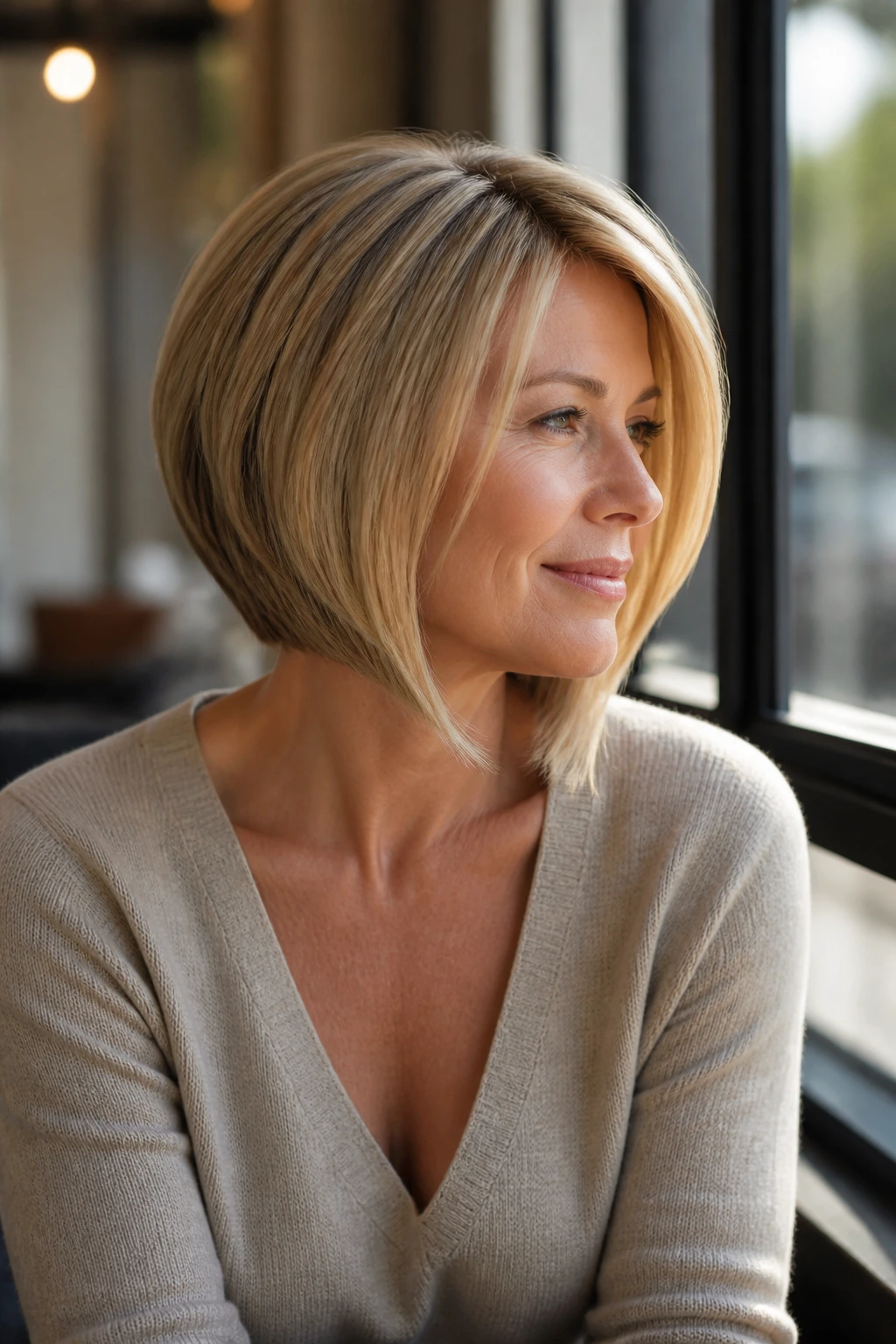
A honey A-line bob gives thick hair a built-in slimming line. The back sits a touch shorter, the front falls a bit longer, and the angle pulls the eye downward instead of outward. It’s one of those cuts that looks intentional even when you only spent ten minutes on it.
Honey blonde keeps the geometry from feeling harsh. On dense hair, an angled cut can look severe if the color is too flat or too cool. The warmer blonde softens the edge and makes the front pieces glow around the cheekbones. If you wear glasses, this shape is especially kind. The longer front pieces keep the frame from feeling crowded.
Ask for a subtle angle, not a sharp one. Too steep, and the cut starts to feel dated fast. A mild A-line sits better on thick hair and grows out more gracefully.
3. Butter Blonde Blunt Bob
People get nervous about blunt bobs on thick hair, and I get it. If the interior is left untouched, the result can feel like a helmet. But with the right debulking underneath, a blunt butter blonde bob becomes one of the cleanest shapes you can wear after 50.
The blunt edge gives the haircut authority. Butter blonde keeps it from looking hard. That combination works especially well if your hair is coarse or naturally straight, because the ends hold a crisp line and the color keeps the whole cut from looking heavy. It’s a very specific kind of neat.
Tell your stylist you want a blunt perimeter with hidden internal removal, not heavy layers through the ends. Then style with a round brush or flat brush and keep the finish smooth. If your hair puffs in humidity, a pea-sized amount of anti-frizz cream through the mid-lengths helps more than a heavy oil.
4. Beige Feathered Lob
A beige feathered lob is for the person who wants to keep some length without feeling buried in it. Collarbone length gives thick hair room to move, and the feathered ends stop the hemline from looking dense or square. Beige blonde is the quiet part of the formula, and it matters.
That softer blonde tone tends to flatter mature skin better than icy platinum if you don’t want a lot of contrast. It also lets subtle highlights blend into gray regrowth more naturally. On thick hair, that softness keeps the shape from shouting at you every time you catch your reflection.
This cut works best with a bend, not a curl. Wrap the ends around a large brush or a 1.25-inch iron, then leave the last inch straighter. That slight looseness keeps the lob from turning into pageant hair.
5. Silver-Blonde Stacked Bob
A silver-blonde stacked bob is sharp in the best way. The back is built up with graduation, so the nape sits snug, while the front stays a little longer and lighter. On thick hair, that stack controls bulk where it usually starts to billow.
The silver-blonde tone gives the cut real purpose. It can help blend natural gray instead of fighting it, and it keeps the shape from looking too warm or too sweet. If your hair is dense at the crown and heavy at the neck, this cut can make your head feel lighter without going short-short.
You do need maintenance here. Stacked bobs lose their line when they grow for too long, and thick hair will expose that fast. A trim every six to eight weeks keeps the shape tight.
6. Creamy Bob with Side-Swept Fringe
A side-swept fringe changes everything on a thick bob. It breaks up the forehead, softens the front of the haircut, and gives the rest of the shape a little breathing room. Creamy blonde is the right partner because it keeps the fringe area bright without making it look choppy.
This is a good option if your hair feels heavy around the temples or if you want something that doesn’t sit straight across the face. The fringe pulls the eye diagonally, which makes the entire cut look less boxy. It’s a small shift with a big effect.
Keep the fringe light. Dense bangs on thick hair can eat up half the styling time in the morning, and they’ll separate in odd places if they’re cut too full. Ask for softness at the corners and a bit of movement near the brow.
7. Tousled Shag Bob in Soft Gold
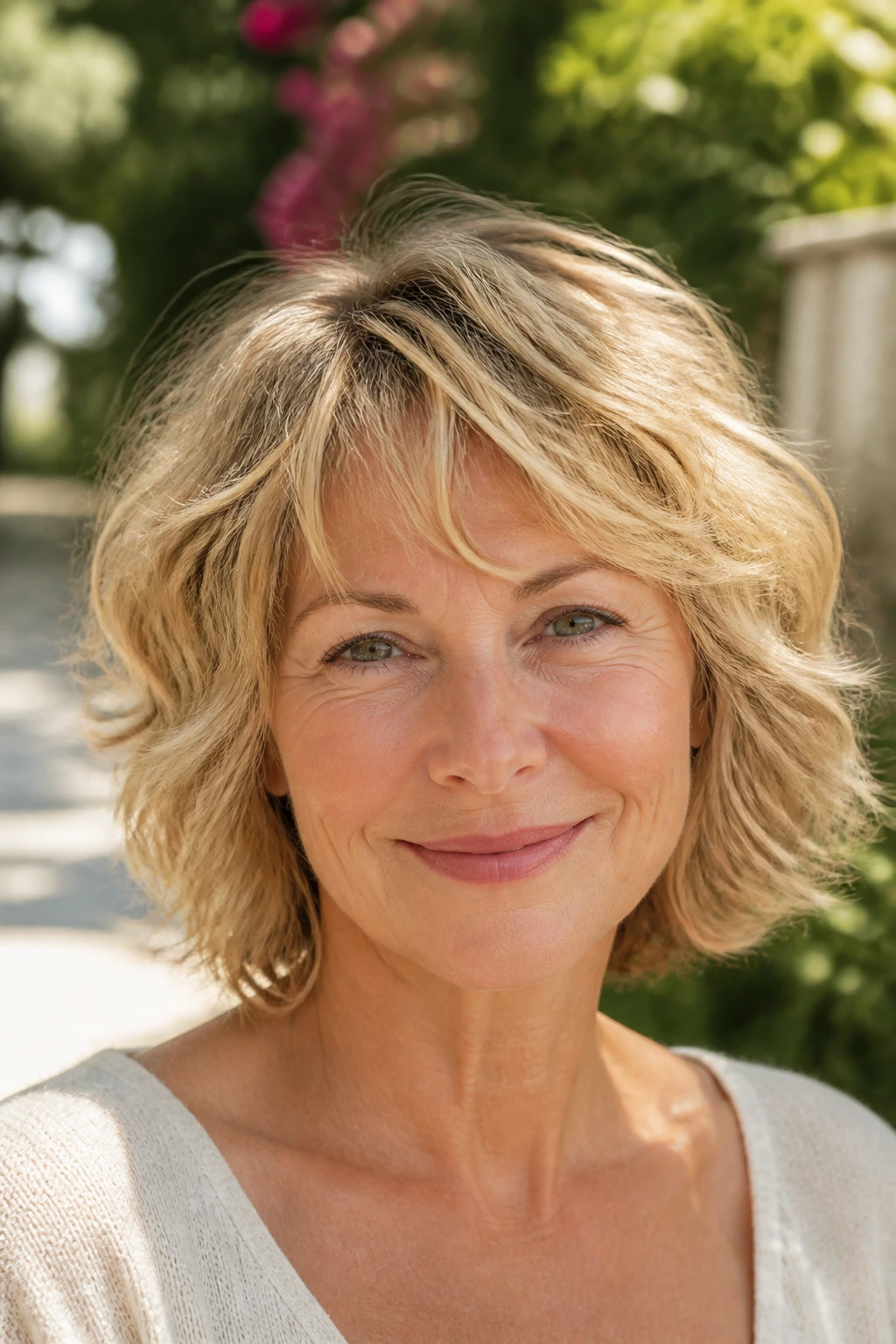
If your thick hair has a natural wave, don’t fight it into a flat shape. A tousled shag bob in soft gold lets the texture do some of the work, and soft golden blonde keeps the layers warm instead of ragged. The trick is making the cut airy, not over-thinned.
This bob has more movement than a classic one, but it still needs a perimeter. Without that outer line, shag layers can wander off and look messy. Ask for internal texture and shorter face-framing pieces, then leave enough length at the bottom so the whole cut still reads as a bob.
A diffuser is your friend here. So is a lightweight curl cream, used sparingly. Too much product and the layers stick together. Too little and the ends spread out.
8. Chin-Length French Bob
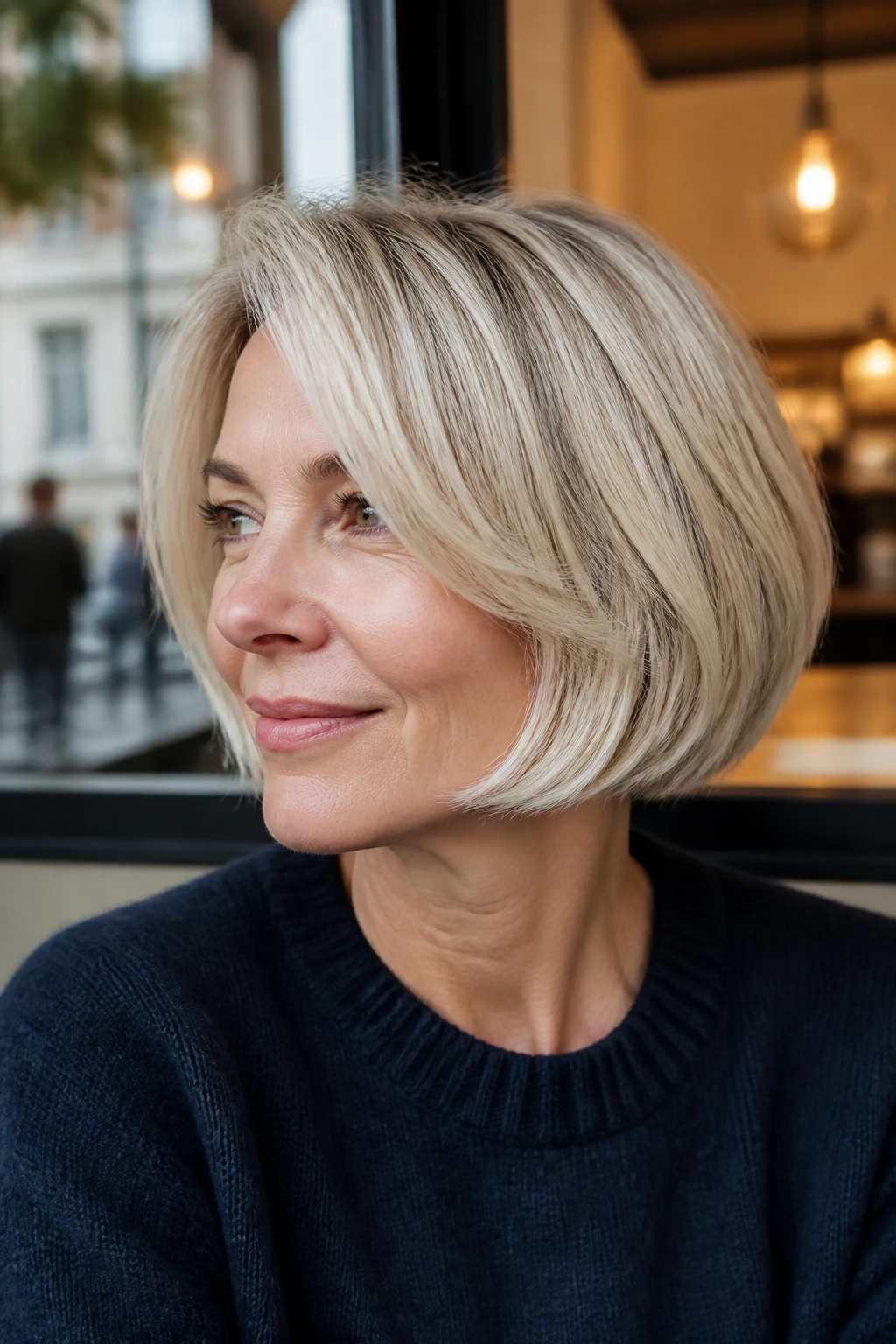
A chin-length French bob is a strong choice if you like a clean outline and don’t mind showing the jaw. On thick hair, the chin line creates a neat boundary, which keeps the bulk from dropping into the neck. Add a soft blonde tone and the cut stops looking severe.
I like this style best when the ends are tucked under just a little. That tiny curve gives the bob a chic finish without turning it into a rounded helmet. It also works well with a slight off-center part, especially if you want the front to feel less formal.
This is not the place for tons of layers. A French bob lives or dies by the edge. Keep the inside controlled, the ends crisp, and the blonde bright but not icy. That balance keeps the cut looking clean as it grows.
9. Collarbone Lob with Invisible Layers
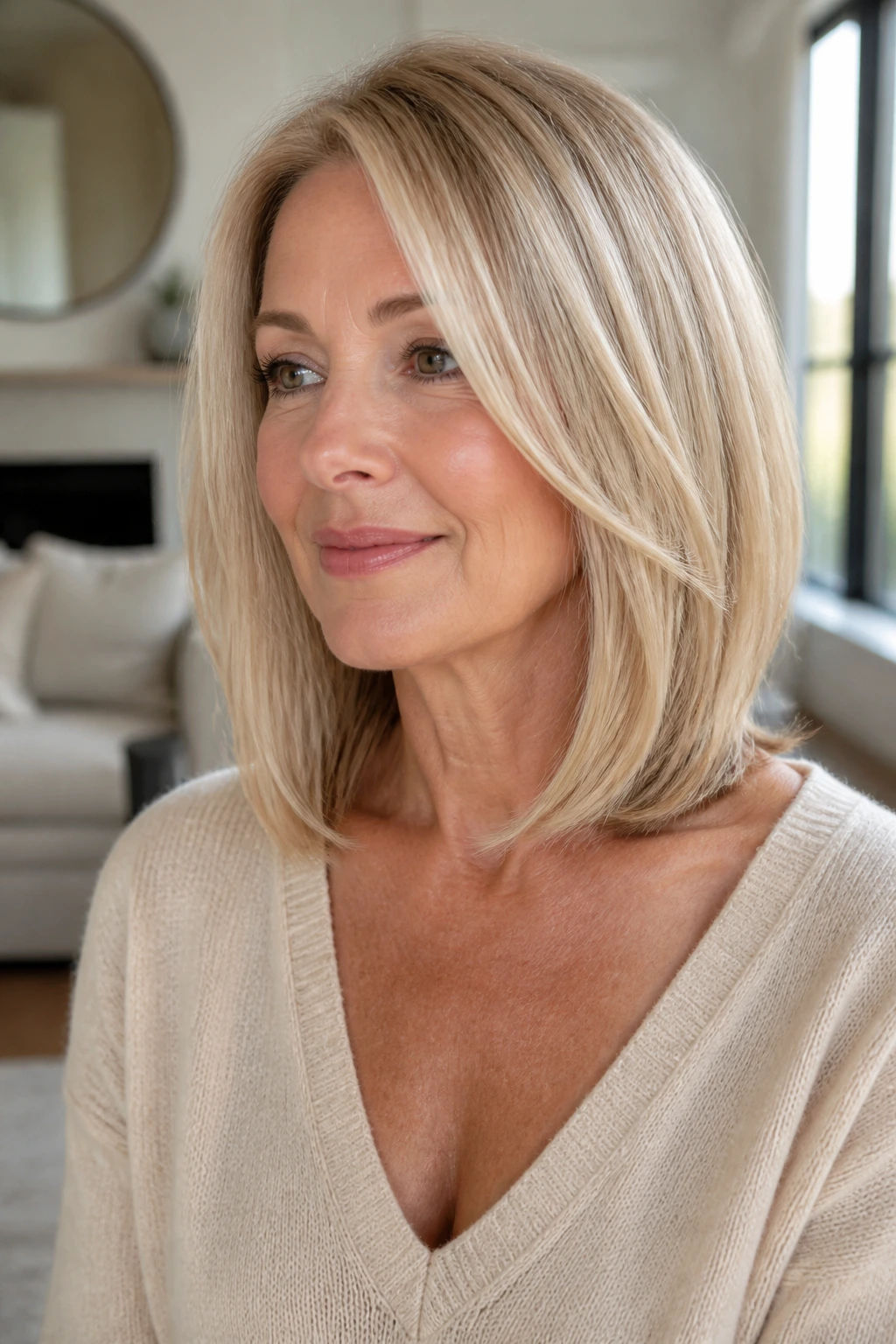
This is the safe place to land if you’re not ready to lose length. A collarbone lob with invisible layers lets thick hair sit a little longer while removing enough weight that the ends don’t pile up. The layers are there, but they disappear into the body of the cut.
The blonde tone can be almost anything here, but I especially like a beige or creamy level 8–9 blonde because it adds light without fighting your skin. On women over 50, that matters more than people admit. A cut that sits near the collarbone already brings attention upward; the color should help, not compete.
Style it with loose bends, not tight curls. Thick hair holds shape well, and a soft wave through the middle keeps the length from feeling blunt and heavy.
10. Angled Bob with Deep Side Part
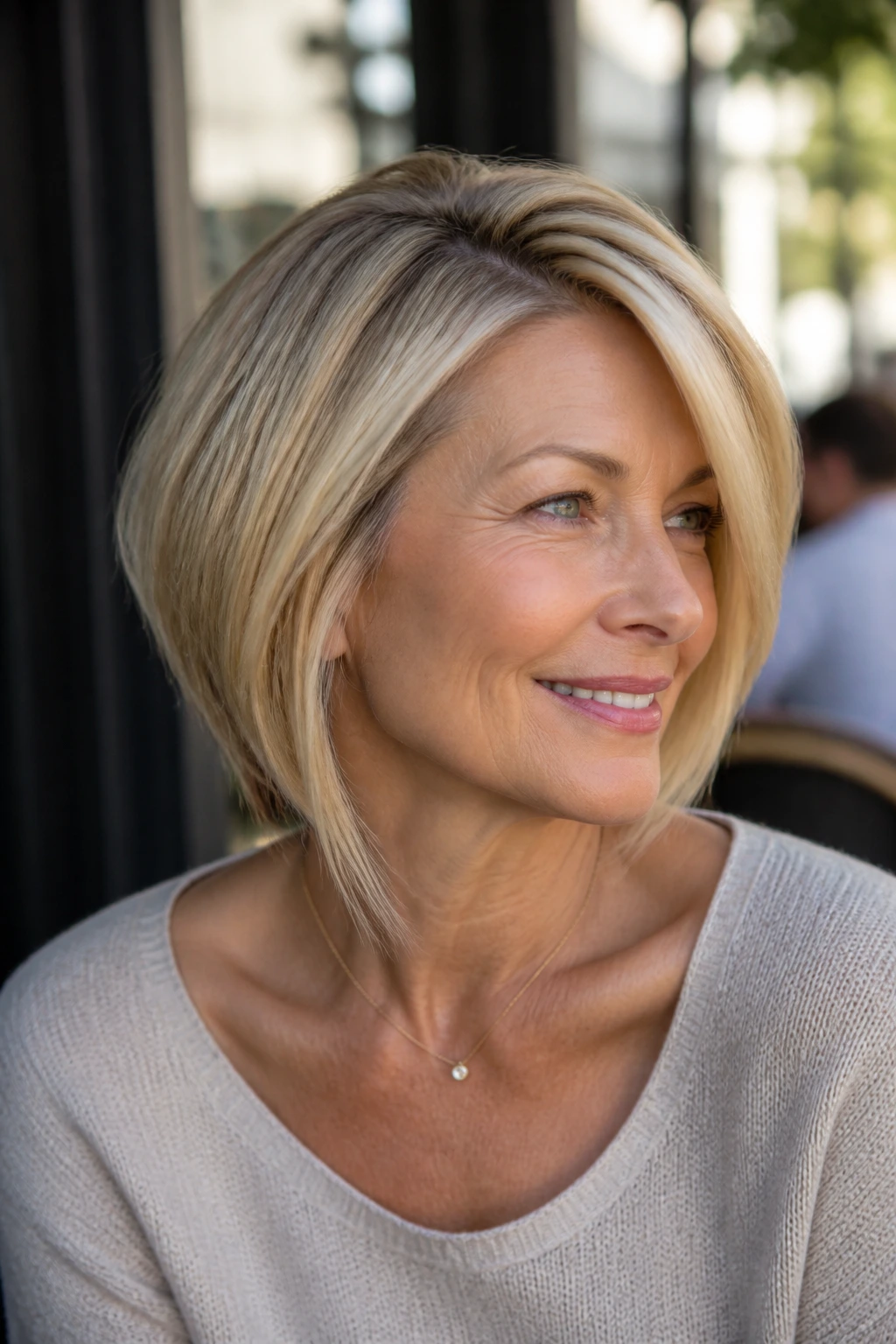
A deep side part gives thick hair instant movement. Combine that with an angled bob, and you get a shape that feels lifted at the crown and longer through the front. It’s a smart choice if your face feels wider at the cheeks or if your hair tends to fall flat on top.
The angle should be gentle, not dramatic. A severe front drop can drag the cut down and make the ends seem heavy. What you want is a diagonal line that helps the bob skim the jaw. A few lighter blonde pieces at the front can sharpen the effect without making it obvious.
Root lift matters here. Blow-dry the part first, lifting the roots with a brush or fingers, then guide the ends under. If you start with flat roots, the whole look collapses.
11. Rooted Blonde Bob with Money Piece
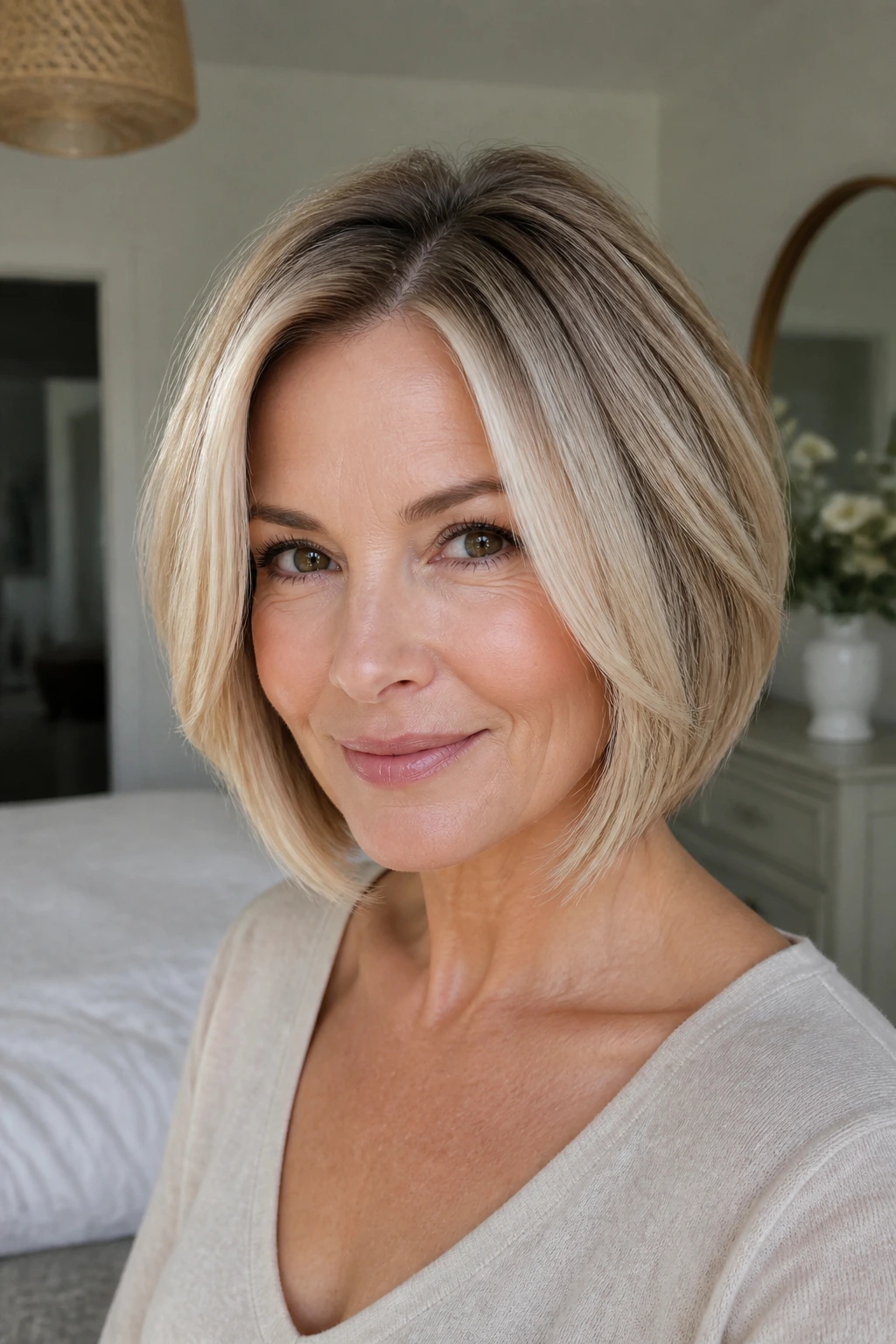
This is the least fussy blonde bob in the bunch, and that’s a real advantage. A rooted blonde bob with a money piece lets your natural color stay visible at the crown while brighter front sections frame the face. The grow-out is softer, which means less panic between salon visits.
Thick hair loves this style because the darker root gives the cut depth. Without that shadow, dense blonde can look one-note and a little puffed out. The money piece around the face adds brightness where it counts most, near the eyes and cheekbones.
Ask for a root shadow that is only one or two levels deeper than the blonde lengths. If the contrast is too strong, the cut can look stripey. If it’s too light, you lose the blending that makes this style easy to live with.
12. Curved Under Bob
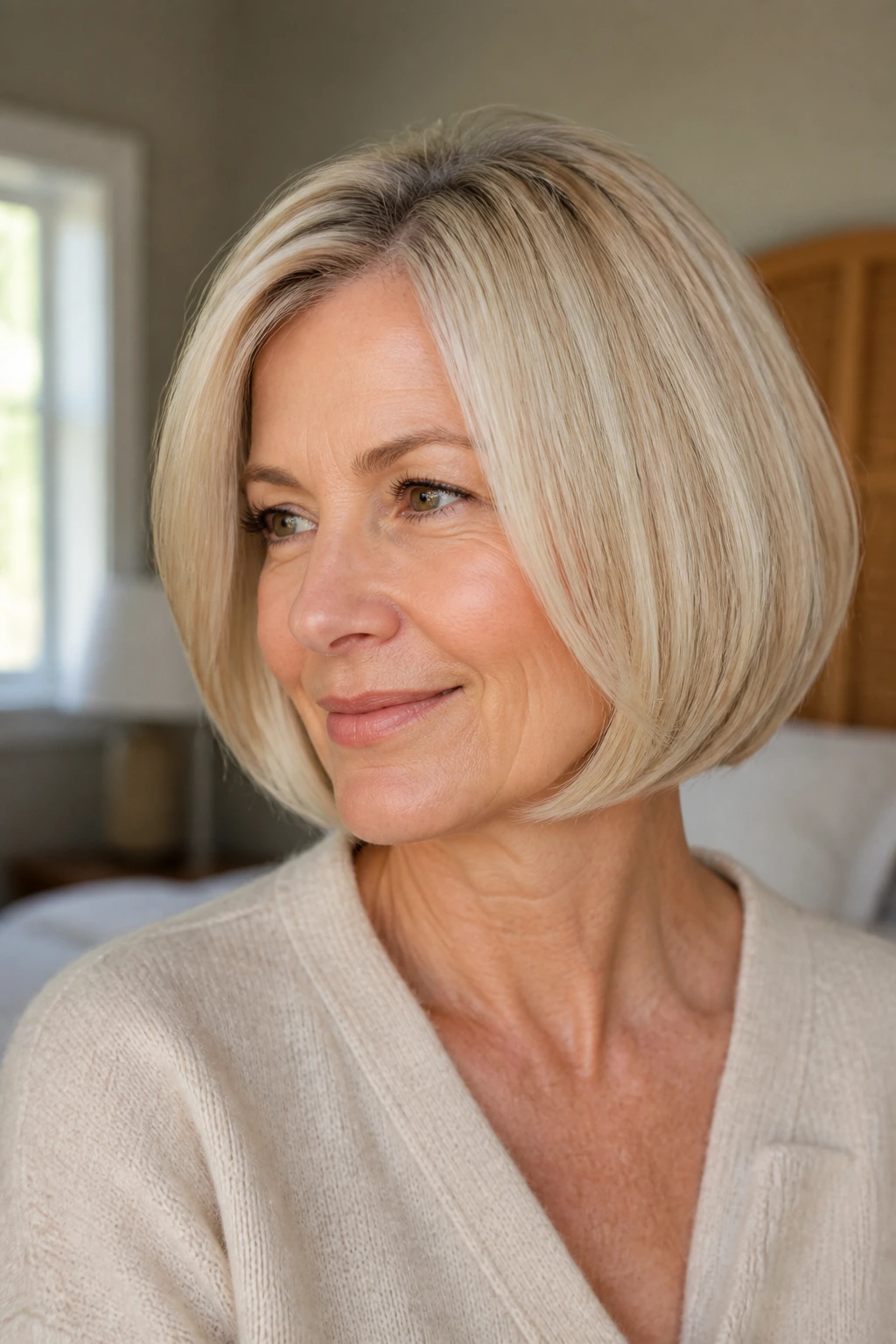
A curved-under bob solves one of the old problems of thick hair: the ends flipping every which way. This cut is shaped to bend inward toward the neck, which gives the outline a softer, rounder finish. It’s tidy without feeling stiff.
The blonde shade should support that curve, not compete with it. Think creamy beige or a soft vanilla tone with a little dimension at the roots. That keeps the shape from looking like a solid block and helps the ends show movement when they tuck under.
Round brushing makes the difference here. Dry the hair until it’s about 80 percent dry, then guide the ends under section by section. If you try to force the shape with a hot tool on damp hair, you’ll get steam, not polish.
13. Polished Rounded Bob
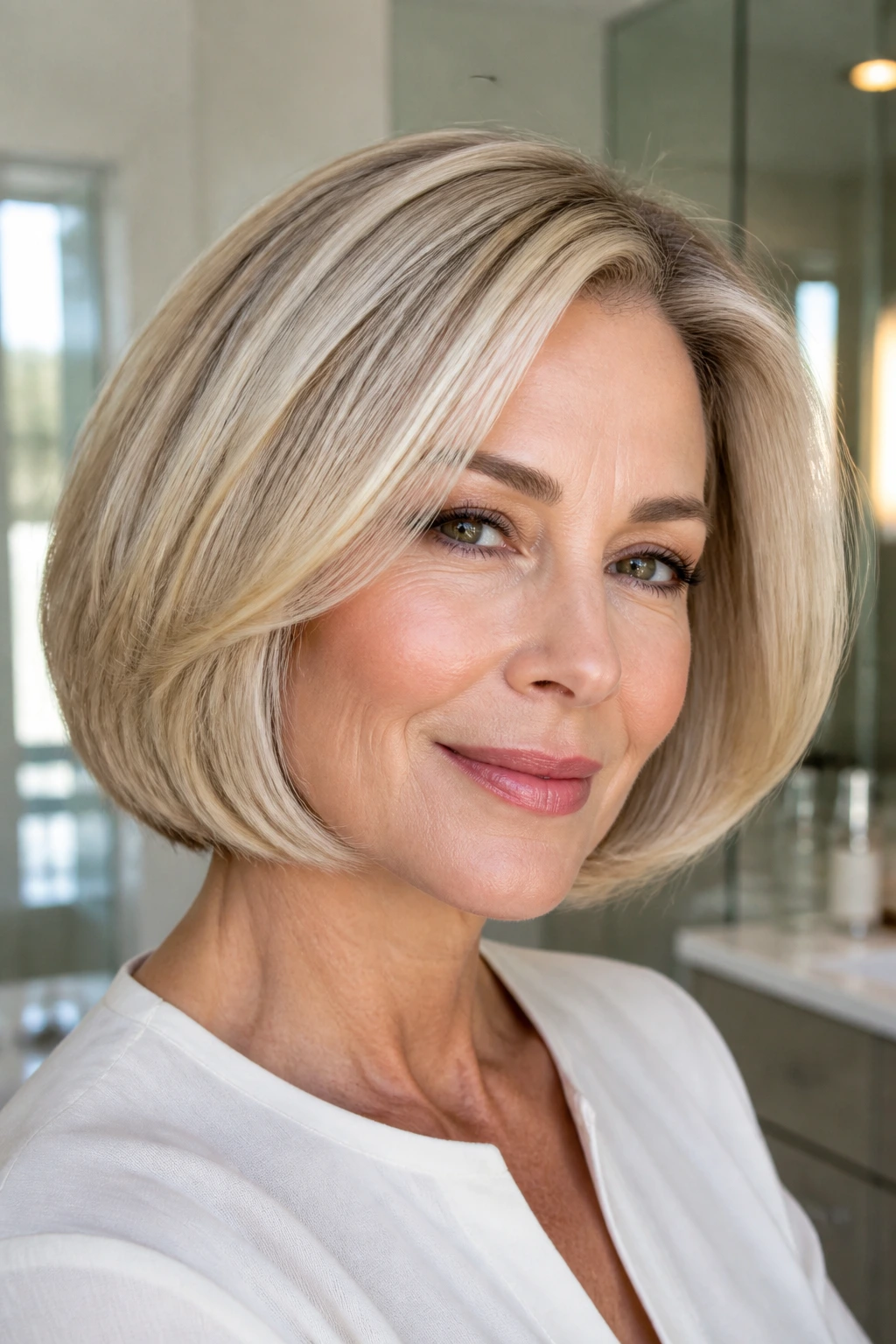
A polished rounded bob is all about discipline. The silhouette stays softly curved from crown to ends, which helps thick hair look controlled instead of wide. On straight or slightly wavy hair, this shape feels especially neat.
The blonde should be even but not flat. A soft pearl or beige blonde with a little root depth helps the rounded outline feel dimensional. If the color is too stark, the smooth curve can start to resemble a wig. Nobody wants that.
This bob does best with a blow dryer, a nozzle, and a medium round brush. Pull the hair forward first, then tuck it under as you round the brush through the ends. The finish should look smooth and touchable, not lacquered to death.
14. Razor-Cut Piecey Bob
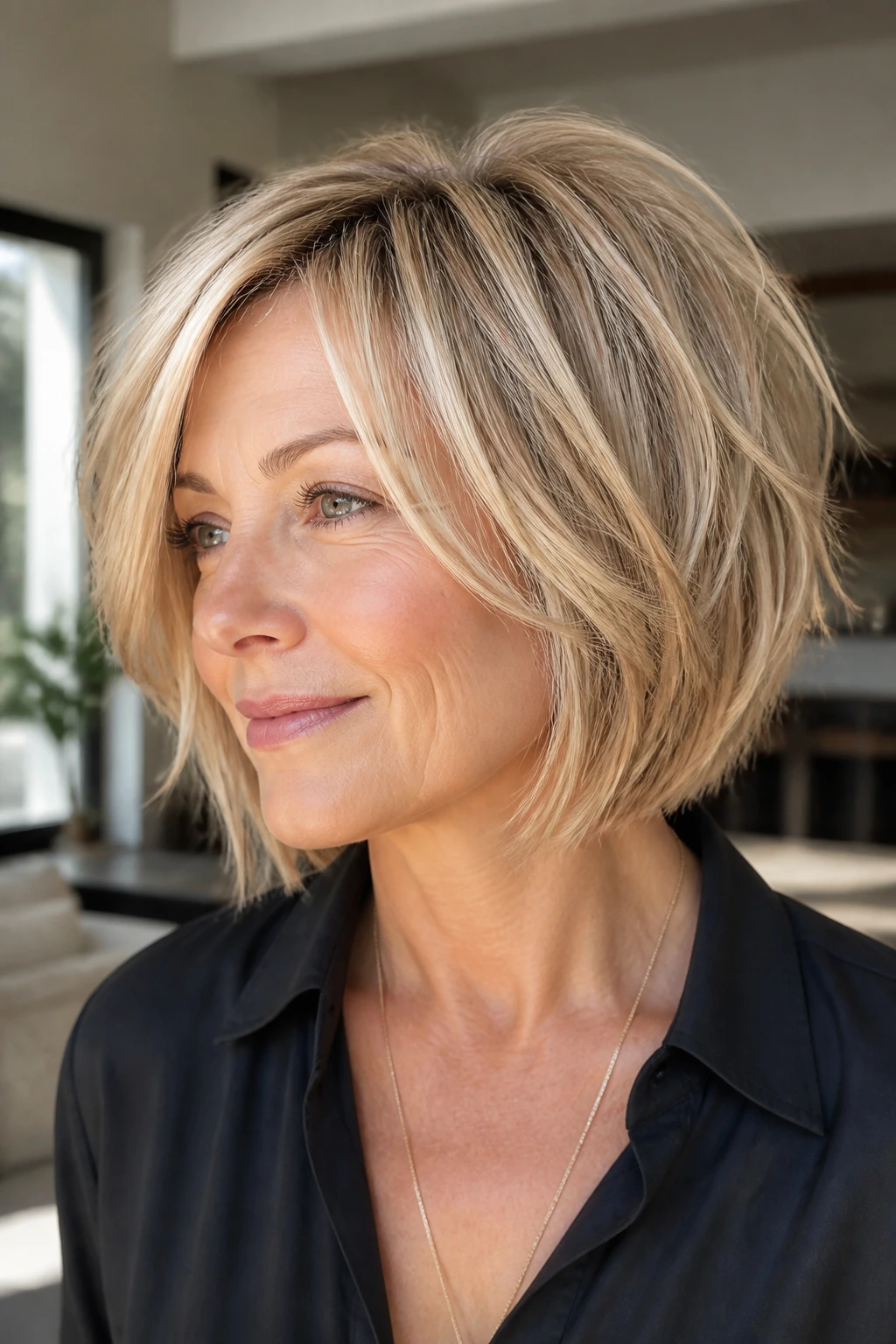
A razor-cut piecey bob is for thick hair that likes texture and movement. The razor removes some of the heavy edge, so the ends separate into visible pieces instead of landing in one solid line. That can be a blessing if your hair feels dense and stubborn.
I’d be cautious with this one if your hair is coarse, frizzy, or very porous. Razor cutting can make those textures look frayed. But on healthy thick hair with a little natural bend, the piecey finish gives the bob a lighter, more modern edge.
Keep the blonde tone warm enough to show off the separation. A pale beige or soft golden blonde catches the individual pieces better than a flat ash tone. A little texture spray through the mid-lengths is usually enough.
15. Soft Inverted Bob
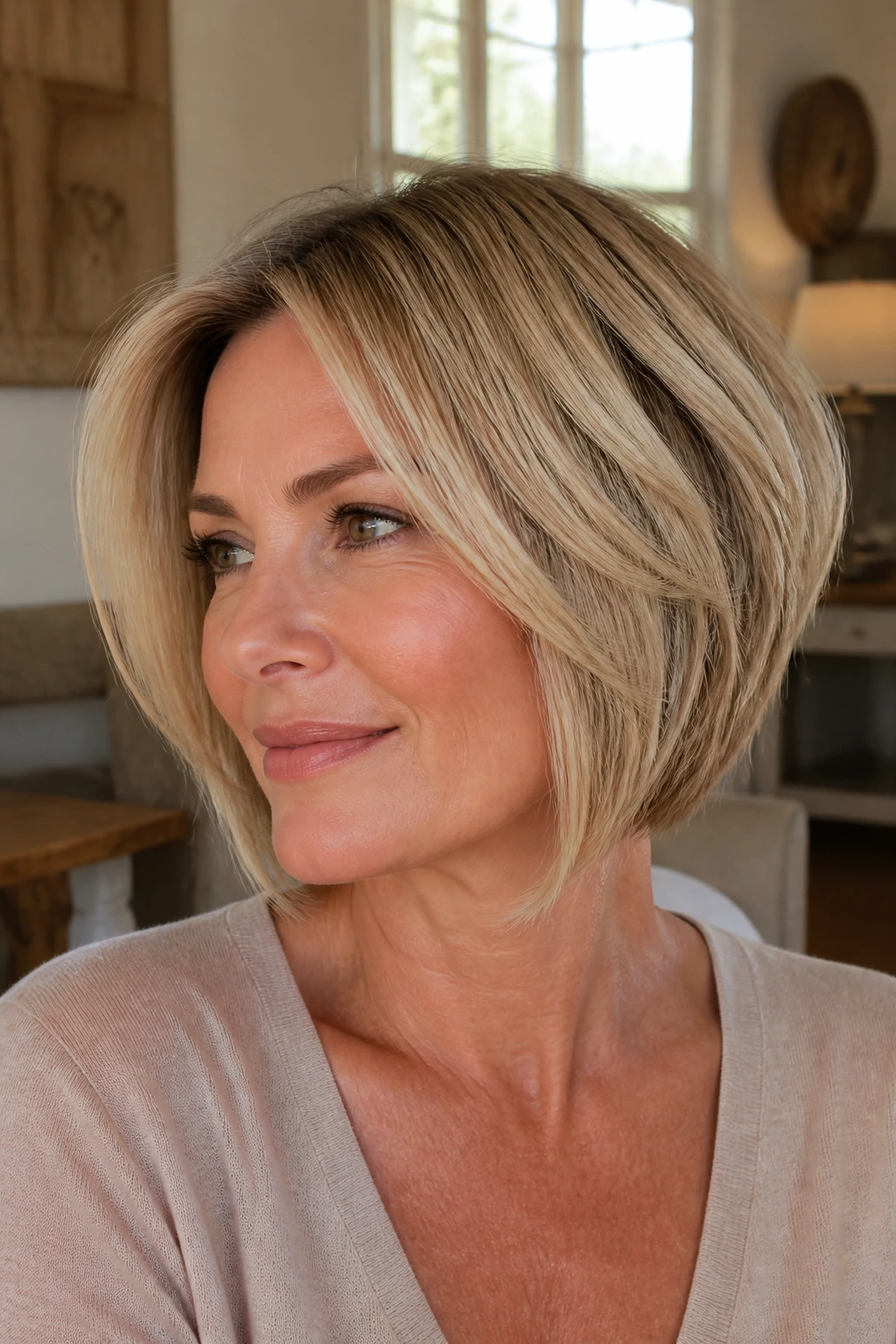
A soft inverted bob gives you the benefits of the classic shape without the hard line at the nape. The back lifts a bit, the front stretches a bit, and thick hair gets a cleaner silhouette than it usually does in a straight cut.
This is one of my favorite shapes for women who want definition but not drama. It trims the weight at the back, which is where thick hair can go full triangle, and it keeps the front long enough to feel elegant. A buttery blonde tone makes the whole thing warmer and less severe.
Ask for a soft inversion, not a steep one. The difference is huge. Too much angle can make the front drag and the back look chopped. A subtle version wears better, especially if you like to air-dry on busy mornings.
16. Feathered Shoulder-Grazing Lob
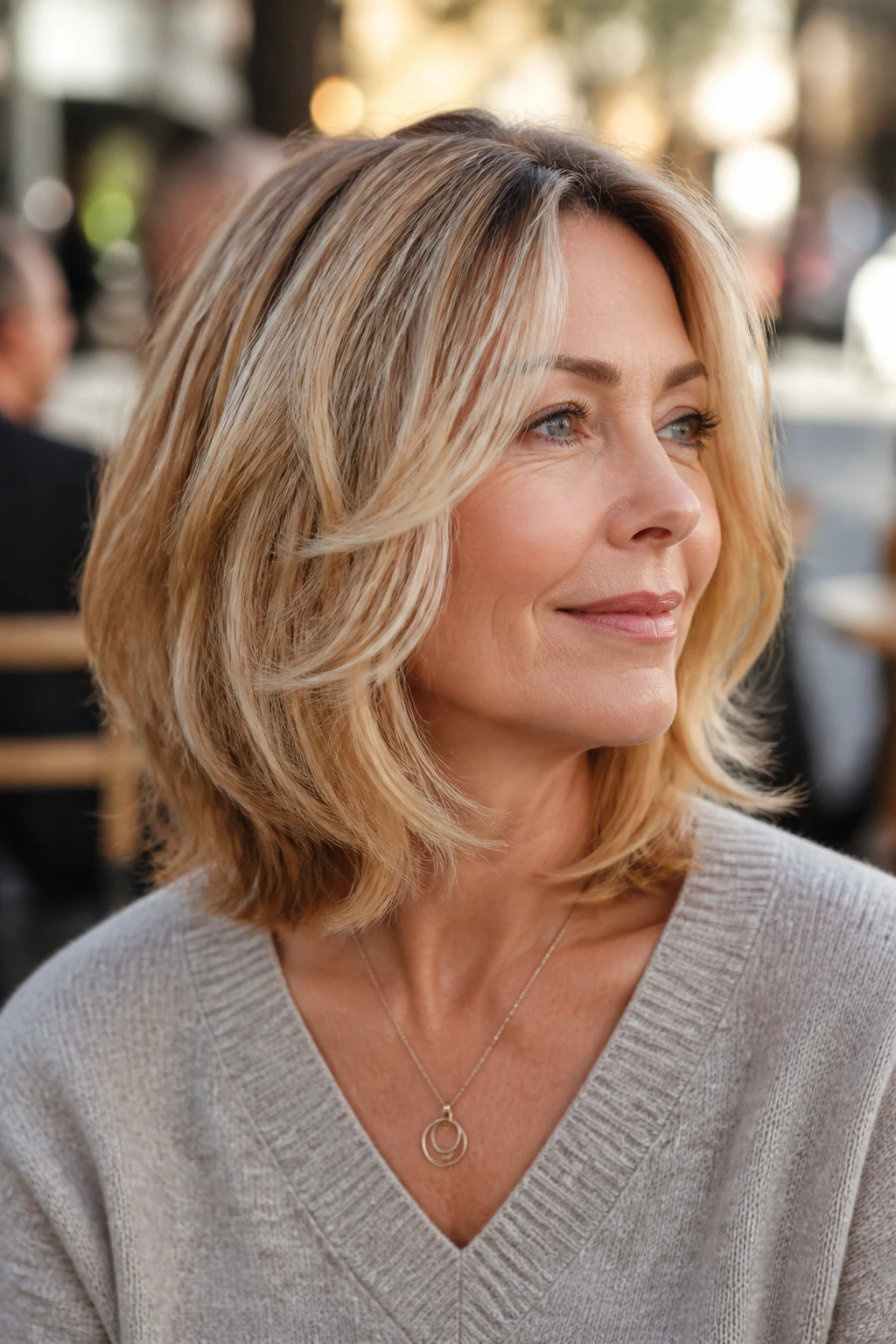
If you’re easing into shorter hair, a feathered shoulder-grazing lob is the sensible choice. It gives thick hair room to move, brushes the shoulders instead of sitting on top of them, and looks softer than a blunt mid-neck cut. Feathering the ends keeps the hemline from feeling like a shelf.
The blonde can be honey, beige, or champagne. The important part is that the lighter pieces sit near the face and the crown doesn’t go too pale. Thick hair has enough visual mass already. You don’t need the color to add more.
This cut works well with loose bends or a quick blowout. If the hair starts to kick out at the shoulders, take the brush and wrap just the last inch of the ends under or away from the neck. Tiny adjustment. Big payoff.
17. Curly Blonde Bob with Internal Layers
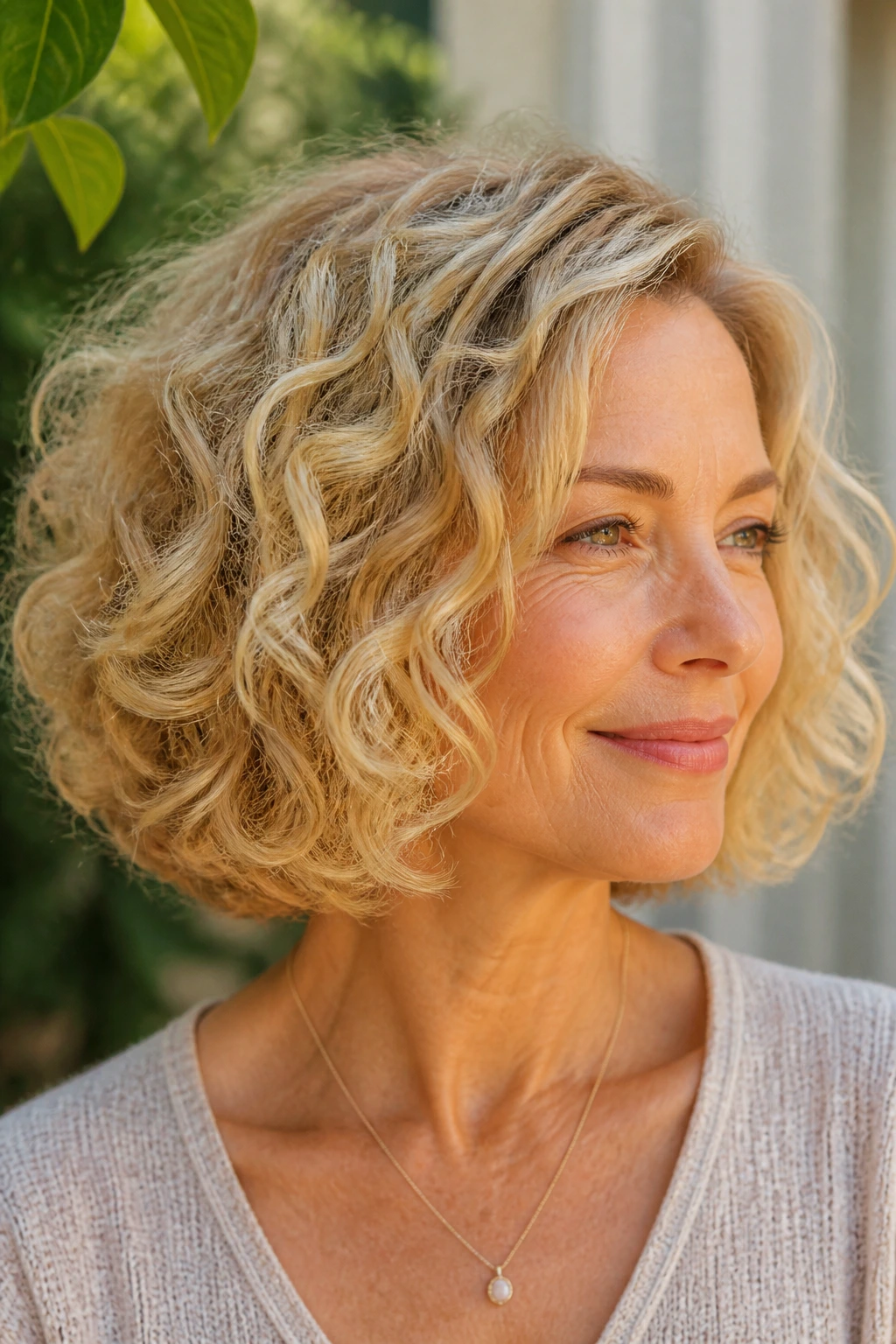
Curly thick hair needs a different kind of bob. You cannot cut it like straight hair and hope for the best. A curly blonde bob with internal layers lets the curls spring up without creating a cube, and the blonde highlights make the curl pattern easier to see.
The trick is leaving the perimeter long enough that shrinkage doesn’t jump the cut up to your ears. Internal layers reduce bulk, but they should be placed carefully so the curls stack in a flattering way instead of puffing around the head. A warm blonde with lighter ribbons around the face helps the curls look lively, not fuzzy.
This cut is best shaped dry or nearly dry. If your stylist cuts curly hair wet without checking how it falls, ask for a little caution. Curl pattern changes everything.
18. Sleek Center-Part Bob
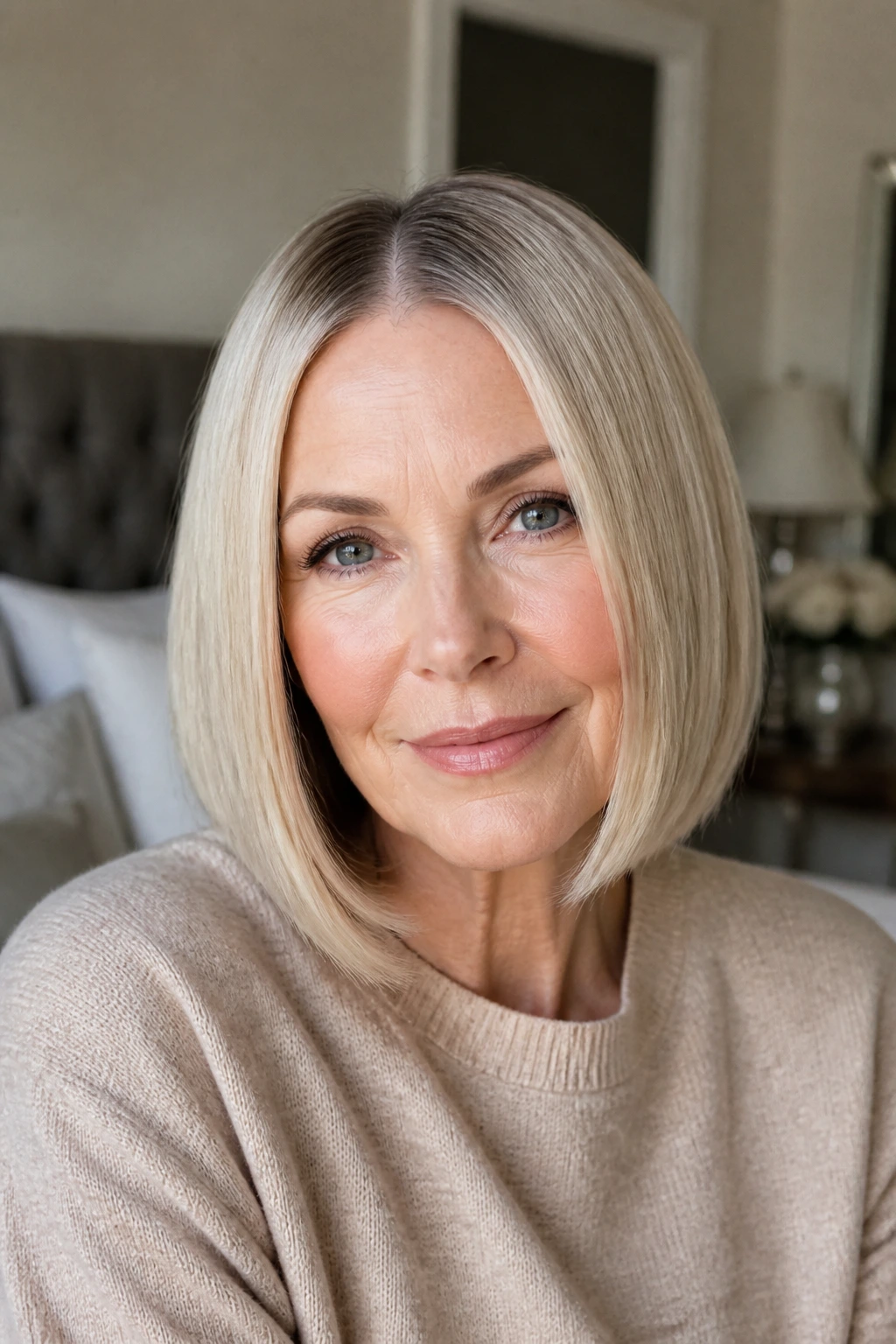
A sleek center-part bob looks cleaner than almost anything else on thick hair when it’s done right. The center line creates symmetry, and the straight finish keeps the volume under control. It’s a sharp style, but not an unfriendly one.
I like this version best when the blonde has a slight root shadow and a cool-beige finish. That combination keeps the center part from feeling too harsh around the face. If your hair is thick at the sides, the smooth surface helps the cut lie close instead of flaring outward.
Flat iron the ends only if you need to. The body can stay slightly rounded so the cut doesn’t look over-pressed. A little movement at the bottom keeps it from feeling stiff.
19. Wispy Fringe Bob
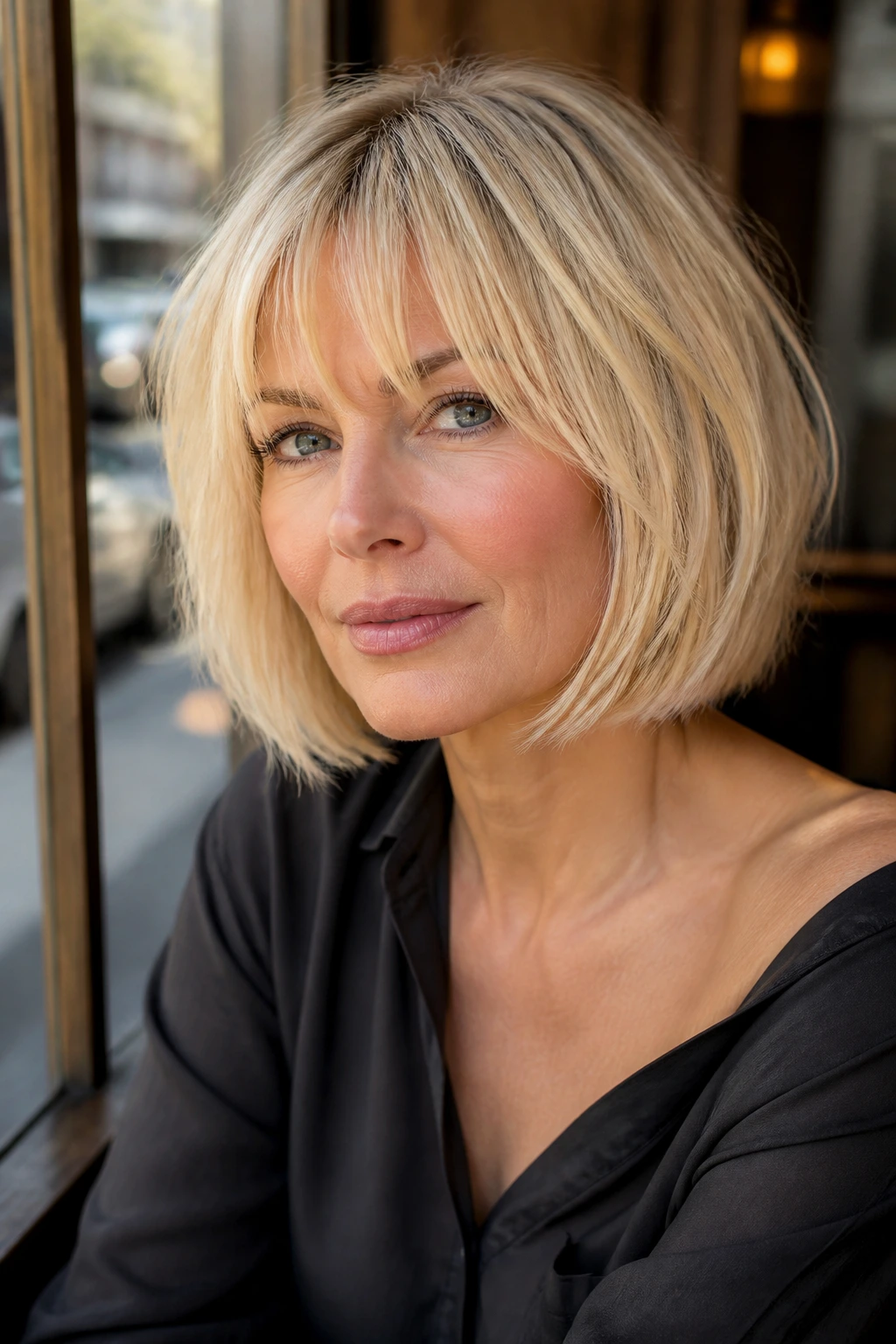
A wispy fringe can rescue a heavy bob. It takes the focus off a wide forehead, softens the top of the haircut, and makes thick hair look lighter around the face. The fringe should be airy, not dense. That’s the whole point.
The blonde works best when the fringe and front panels are brighter than the back. It creates a little halo effect around the face without making the color look busy. On women over 50, that softness can take years off the feel of the haircut without trying to look younger than it is.
Keep the fringe long enough to tuck away when you’re tired of it. That flexibility matters. Short fringe on thick hair can become a daily negotiation. Longer wispy fringe gives you options.
20. Tapered Neck-Length Bob
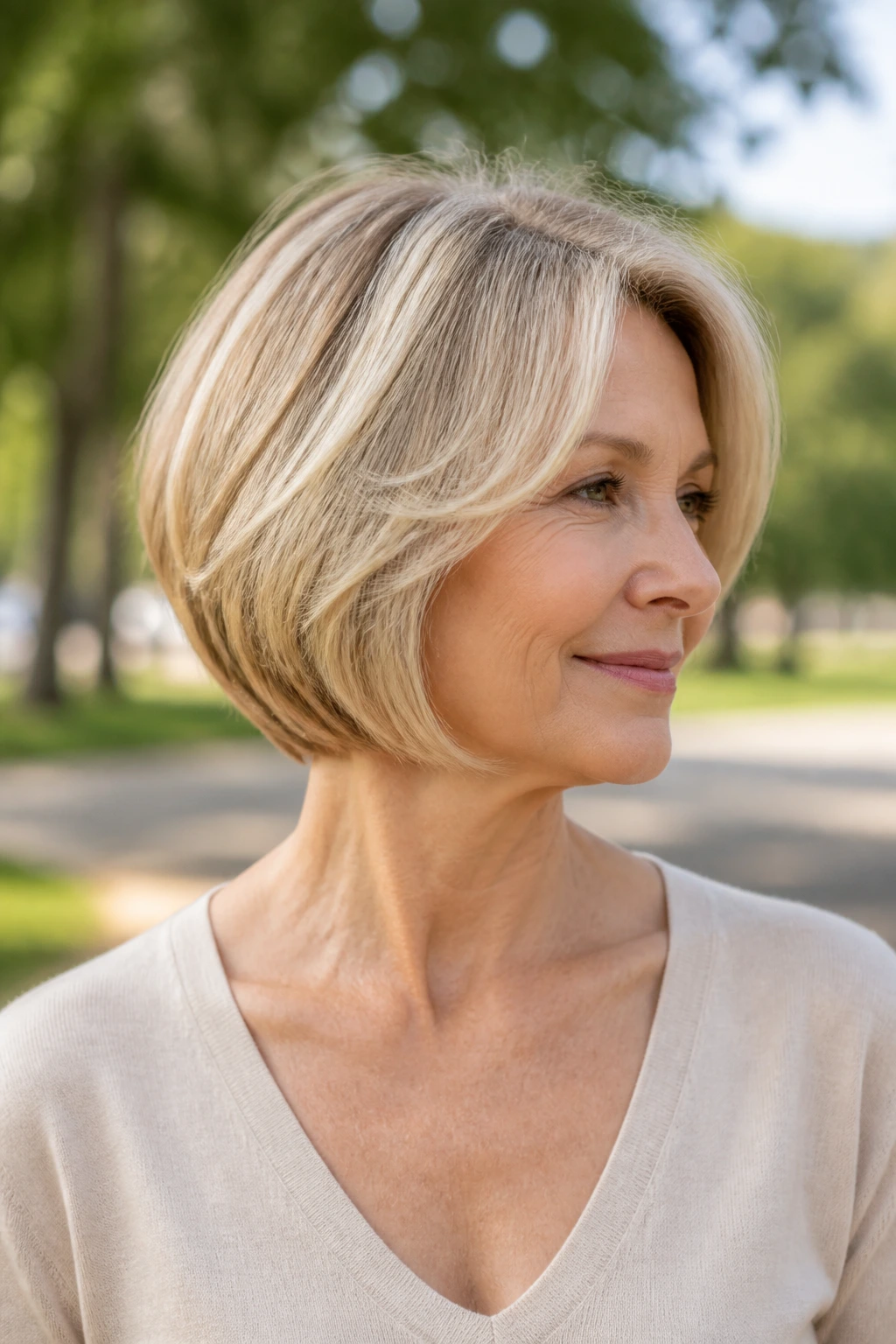
A tapered neck-length bob is one of the neatest shapes for thick hair because it clears the neck without going too short. The taper removes bulk at the nape, where dense hair tends to collect and stick out. That alone can make the whole head feel lighter.
The blonde here should be clean and bright, but not one-dimensional. A soft neutral blonde with a few lighter threads around the crown keeps the cut from looking blocky. You want a haircut that feels tailored, not helmet-like.
This cut is a strong match for glasses and earrings because it leaves the face open. If your hair grows fast at the nape, schedule trims more often than you think you need. The back shows growth first.
21. Sunlit Bob with Face Framing
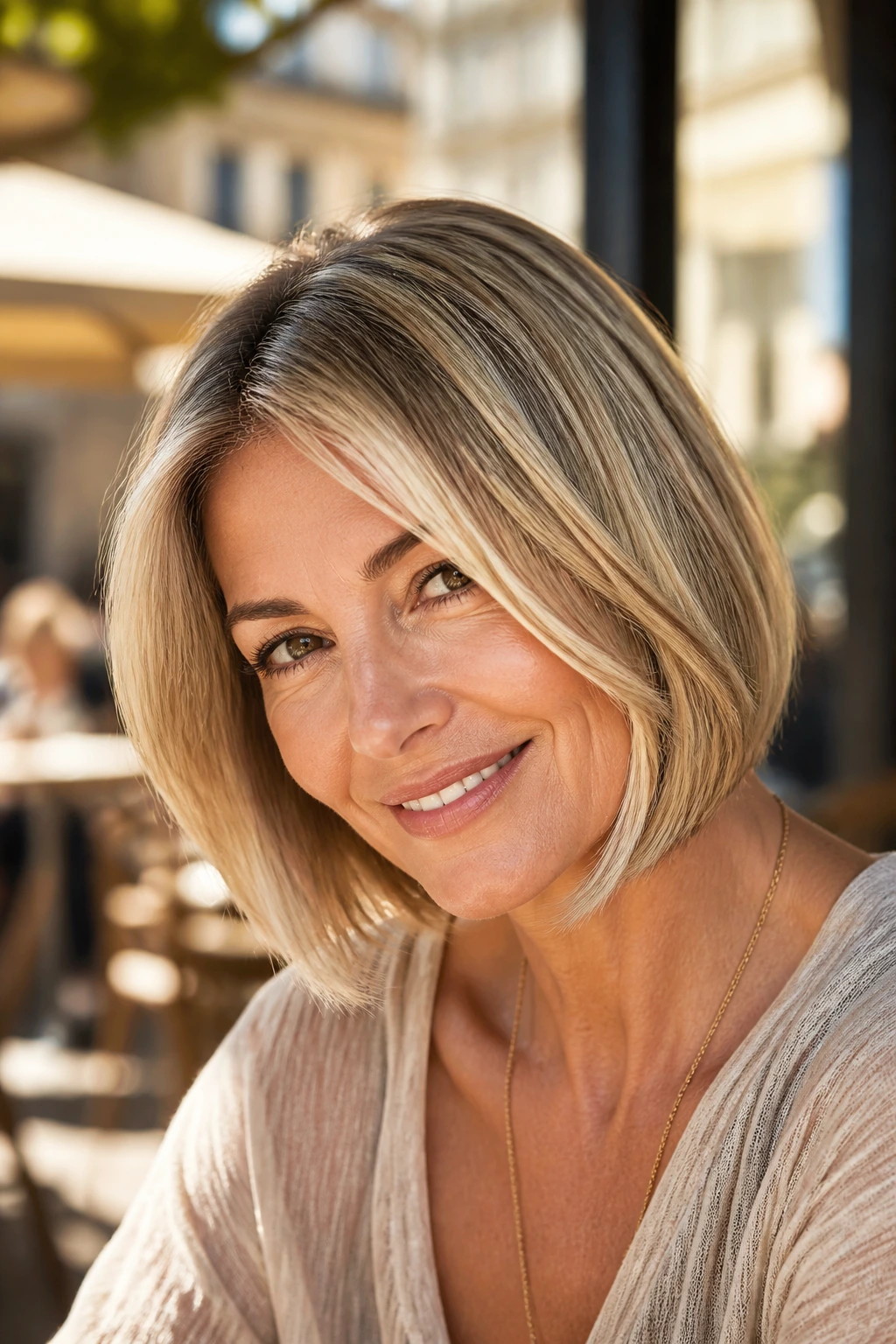
This is the version I’d choose for someone who wants brightness around the face more than anything else. A sunlit bob uses lighter pieces at the front and softer depth underneath, so thick hair doesn’t sit in one heavy block. The face-framing layers catch the eye first.
The color placement matters. Keep the lighter blonde around the temples, cheekbones, and ends near the chin. Leave enough depth in the interior that the cut still looks grounded. If everything is highlighted, the hair can start to look frizzy instead of dimensional.
It’s a forgiving style for growing out gray as well, because the face-framing brightness distracts from the root line. That’s not magic. It’s just smart placement.
22. Graduated Stack Bob
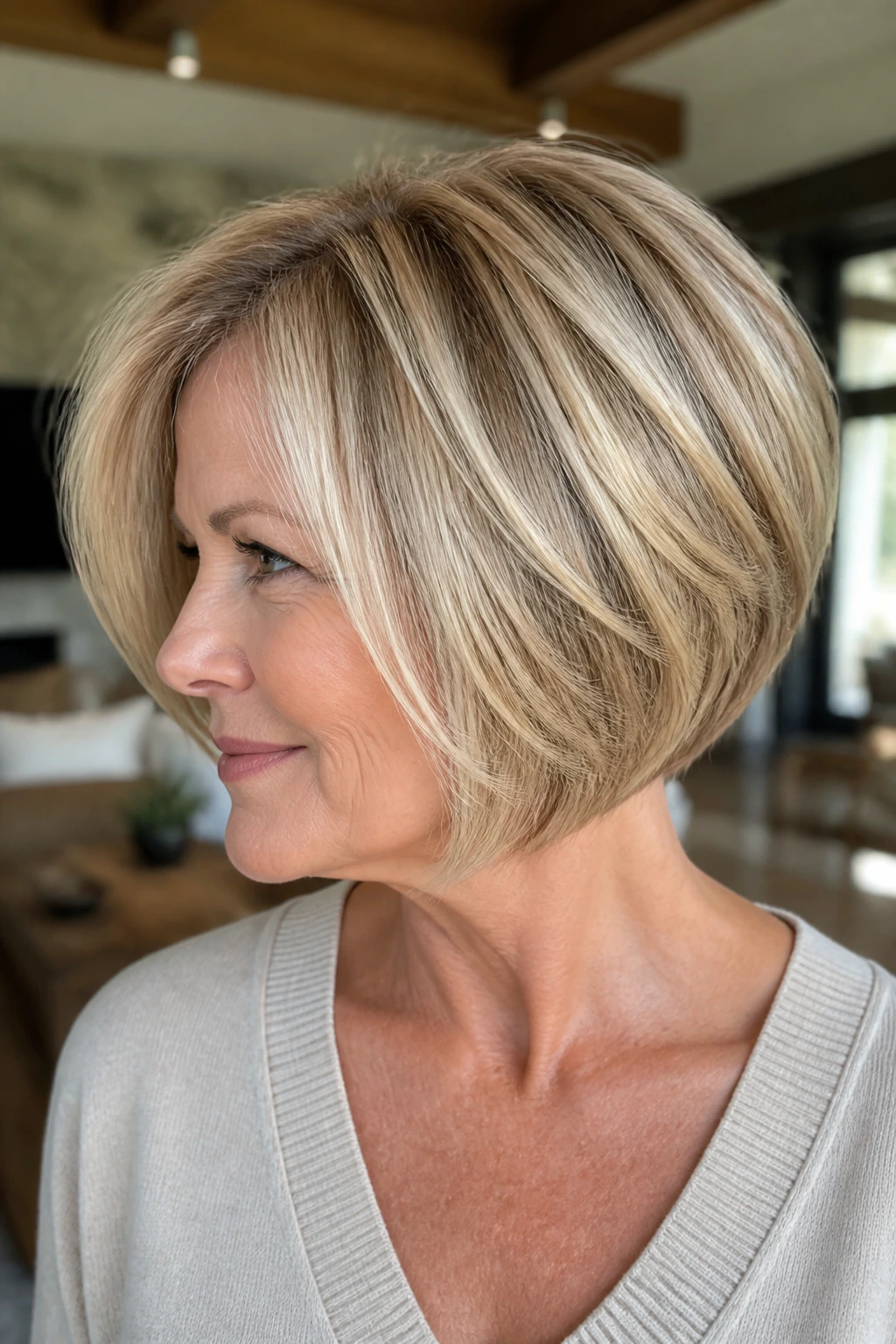
A graduated stack bob gives thick hair structure where it wants to collapse. The back is cut shorter and built upward, which removes bulk and lets the front sit more cleanly. If your hair tends to poof at the crown and sink at the ends, this cut fixes both problems at once.
The blonde should be clear and slightly multi-tonal so the stacked shape isn’t too hard. A pale beige base with lighter ribbons through the top works better than a one-note platinum. You want to see the layers, not have them shout.
This is the bob for people who like a little architecture in their haircut. It does need maintenance, though. The shape loses its snap as it grows, and thick hair won’t hide that.
23. Beachy Lob with Soft Bends
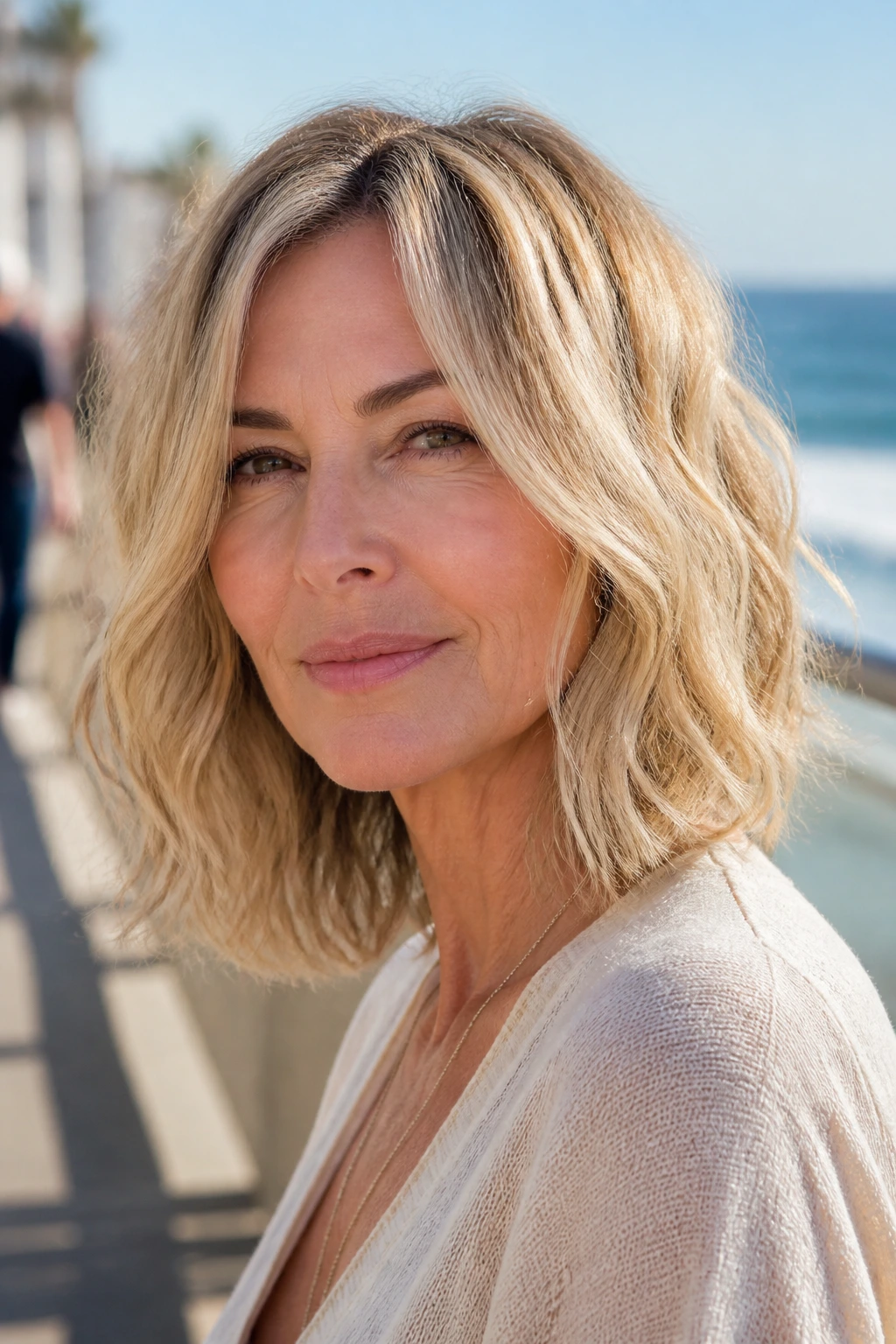
A beachy lob is the easygoing cousin in this group. It sits a little longer, gives thick hair more swing, and looks best with loose bends rather than polished curls. If you don’t want to fight your hair every day, this is a good place to land.
The blonde should be sun-touched, not stripey. Think soft gold and beige with a brighter front edge. That gives the lob enough contrast to look alive without making it high-maintenance. The texture should feel casual, but the cut still needs a clean perimeter.
Air-dry this one if your texture allows it. Scrunch in a light cream, twist two-inch sections while damp, and leave the last inch straighter so the ends don’t fray. It’s a small trick, but it keeps the lob from looking messy.
24. Glassy Blonde Bob
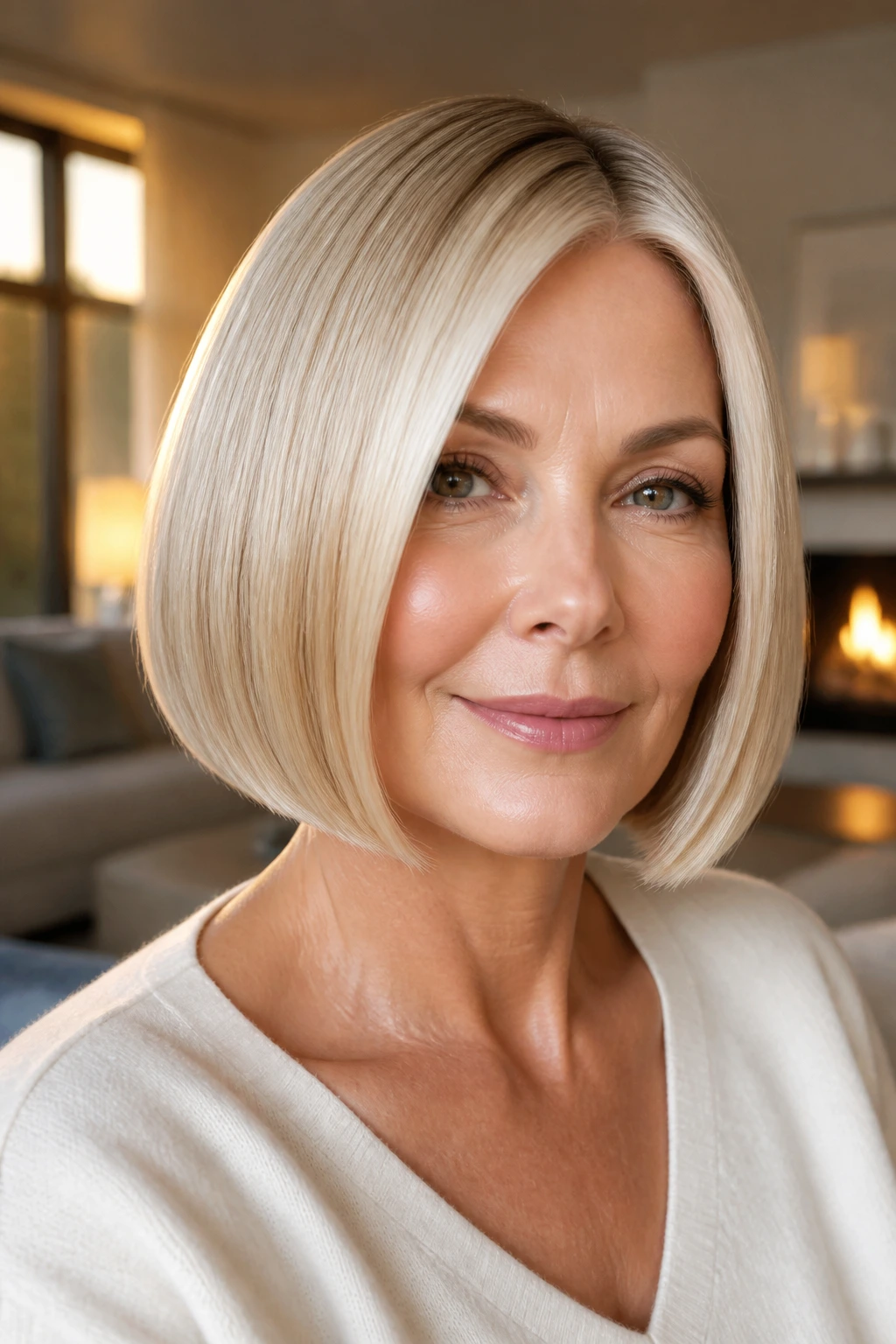
A glassy blonde bob is the sleekest option here. The finish is smooth, the surface is shiny, and the lines are precise. On thick hair, that shine matters because it stops the cut from reading heavy.
This is not a lazy haircut. It asks for careful blow-drying, a concentrator nozzle, and a smoothing serum used with a light hand. The blonde should be polished too — a creamy or pearl tone tends to reflect light best when the cut is straight and controlled.
The upside is real. When this bob is done well, it looks sharp even on second-day hair with a quick brush and a touch of heat at the ends. That makes it a good option if you want something neat without a full salon-level blowout every morning.
25. Soft Undone Bob with Long Layers
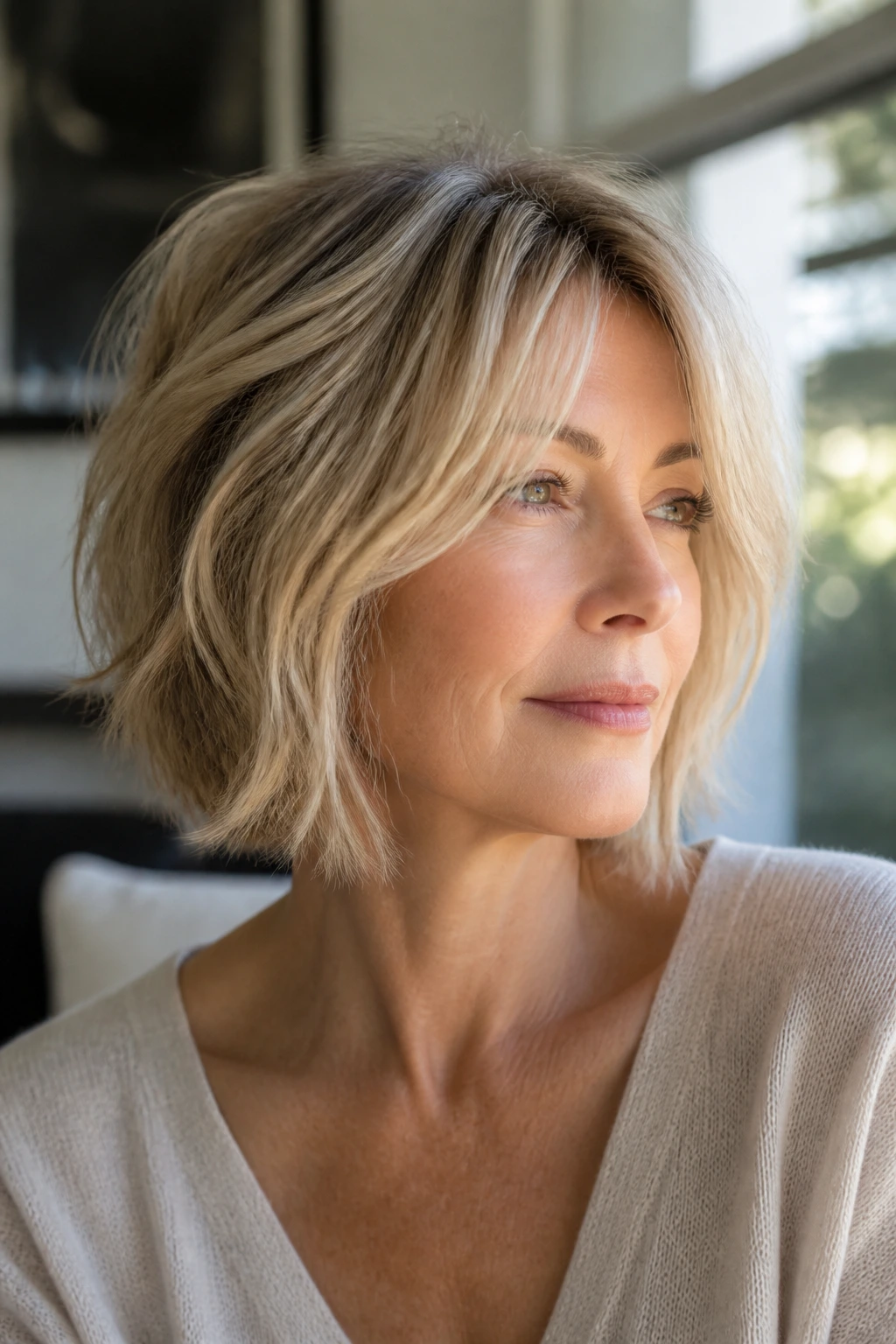
If you want a bob that doesn’t feel too “done,” this one is the easiest to live with. The long layers keep thick hair moving, and the blonde can be whatever flatters your skin best — honey, beige, champagne, even a soft silver blend if you’re embracing gray.
The shape should stay loose. Not sloppy. Loose. That means the ends still have a line, but the interior has enough movement that the cut doesn’t sit like a block. It’s a smart style for women who want softness around the face and a bit of freedom on days when heat styling is the last thing on earth they want to do.
A few bends with a flat iron, a little root lift, and a fingertip amount of cream through the ends is usually enough. The haircut does most of the work.
What Thick Hair Needs From a Blonde Bob
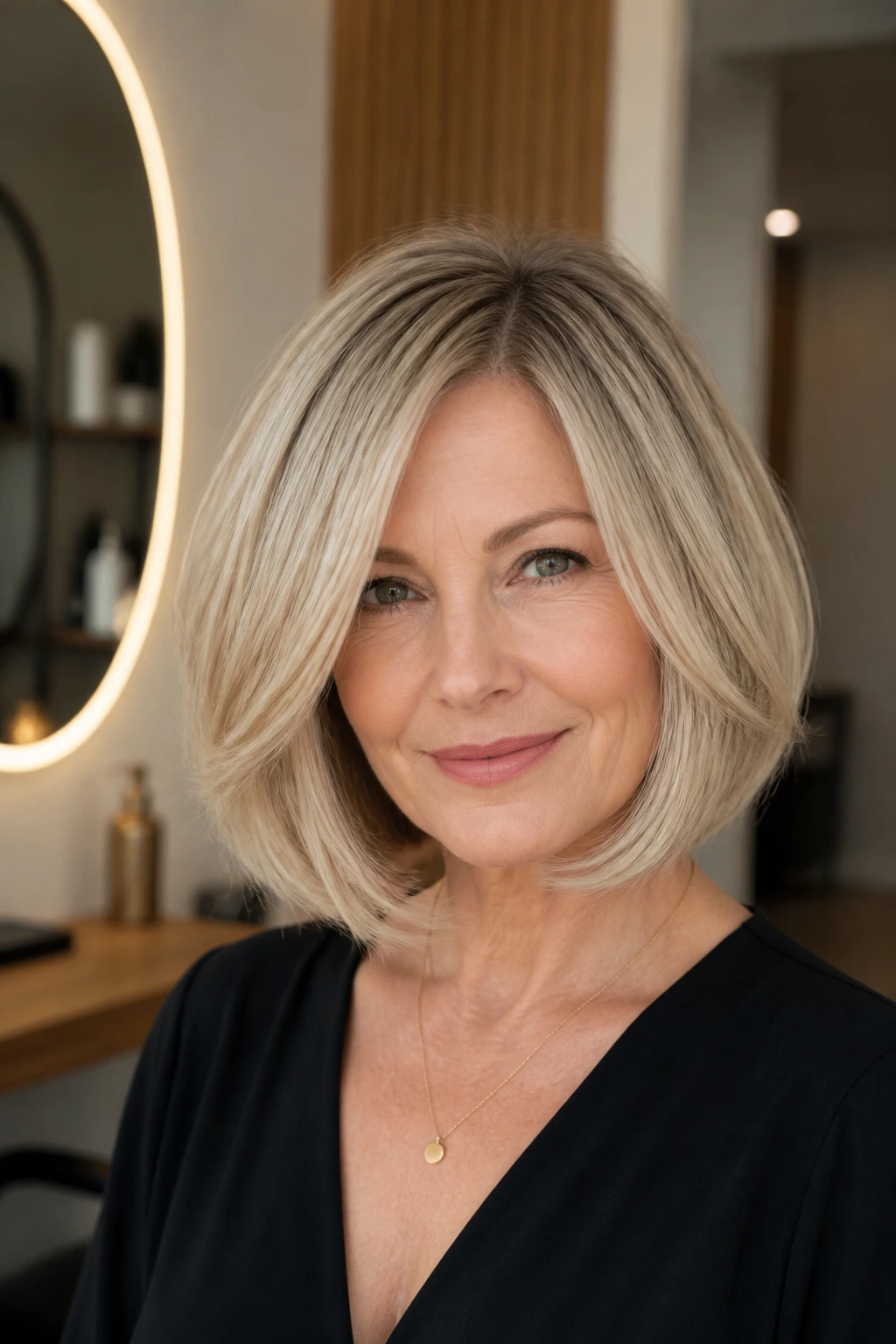
Thick hair needs a bob with a plan. If the cut is too one-length and too full through the sides, it spreads. If the layers are too aggressive, it frays. The sweet spot is a perimeter that still feels solid, with internal removal that keeps the bulk from sitting in all the wrong places.
The nape matters more than people think. A dense neckline can make even a nice bob look bulky from the side, which is why graduation, tapering, and a little hidden undercut work so well. You do not need a big dramatic shave. Sometimes a few carefully cut sections under the top layer are enough to keep the shape from stacking up under your collar.
Color is part of the shape. A warmer blonde can soften hard lines; a cooler blonde can sharpen a cut that risks looking too round. Gray blending, root shadowing, and face-framing brightness are not separate “color tricks” here. They’re part of the haircut’s silhouette.
The Tools That Make Styling Thick Hair Easier
- 1.25-inch or 1.5-inch round brush: Big enough to smooth thick hair without creating tiny, over-curled ends.
- Blow dryer with a concentrator nozzle: Directs airflow where you want it, which matters a lot on dense hair.
- Root-lifting mousse: A small amount at the crown keeps the bob from sitting flat against the scalp.
- Lightweight smoothing cream: Controls the mid-lengths and ends without turning them greasy.
- Heat protectant spray: Thick hair can take heat, but that doesn’t mean it should.
- Fine-tooth tail comb: Useful for clean parts, sectioning, and a neater blow-dry.
- Purple shampoo or gloss shampoo: Helpful for cooler blondes that pick up brass.
- 1-inch flat iron, optional: Best for bending ends under or polishing a few face-framing pieces.
How to Ask for the Cut at the Salon
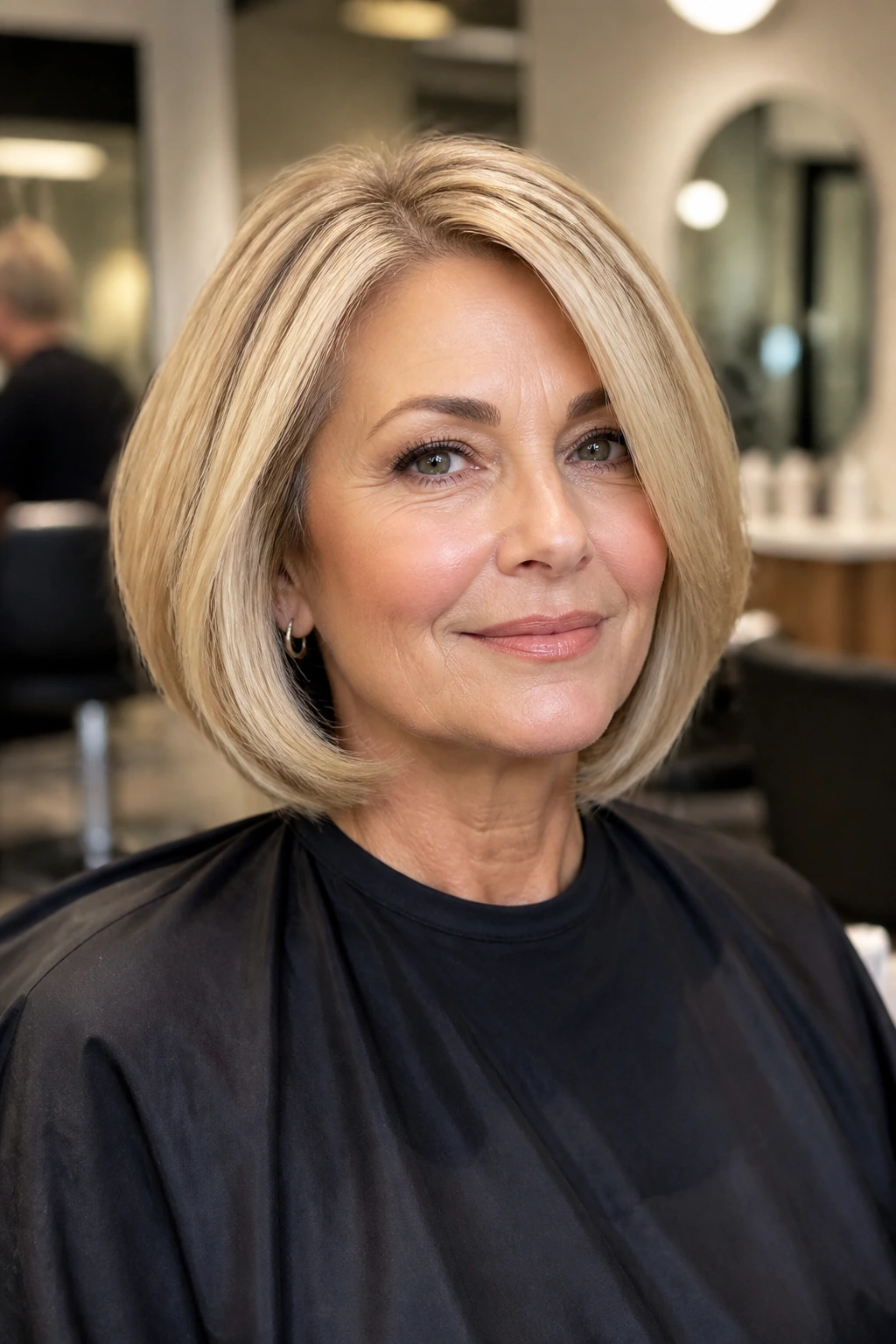
Bring photos, but bring the right ones. Show one from the front, one from the side, and one from the back if you can find them. A single front photo hides the parting, the neckline, and the amount of graduation, which are the parts that matter most on thick hair.
Say what your hair does, not just what you want it to look like. Tell the stylist if your hair swells at the sides, flips at the nape, sits flat on top, or frizzes when it’s layered too much. That tells them where to remove weight and where to leave it alone.
Be specific about the blonde too. Do you want a rooted beige blonde, a brighter champagne, or something that blends gray with lowlights? If you’re not sure, ask for a tone that looks good with your face and your grow-out. That second part saves headaches later.
How to Wear These Bobs Day to Day
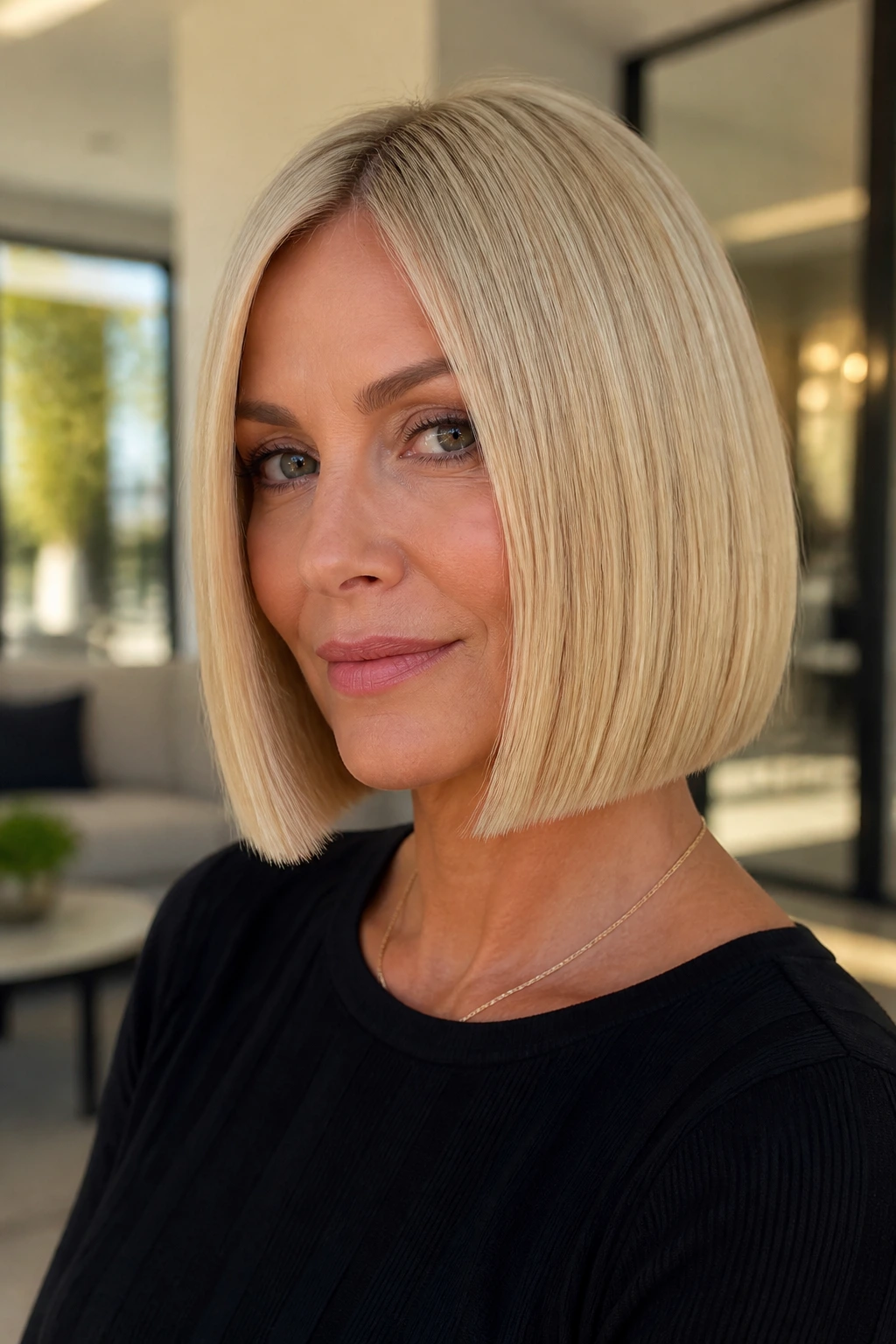
Polished finish: If you like a neat look, round brush the ends under and keep the crown smooth. This works especially well with blunt, curved, and rounded bobs.
Air-dried finish: For wavy or curly hair, scrunch in a light cream and let the shape dry with movement. A beachy or shag-style bob usually looks better this way than when it’s over-blown.
With glasses: Choose face-framing pieces that stop just above or below the frame line, not right on it. That tiny difference keeps the whole look from feeling crowded.
For a softer feel: Leave a little bend in the ends and choose blonde shades with depth near the roots. Flat, ultra-light blonde can make a dense bob look harsher than it needs to be.
Styling Moves That Keep the Shape Clean
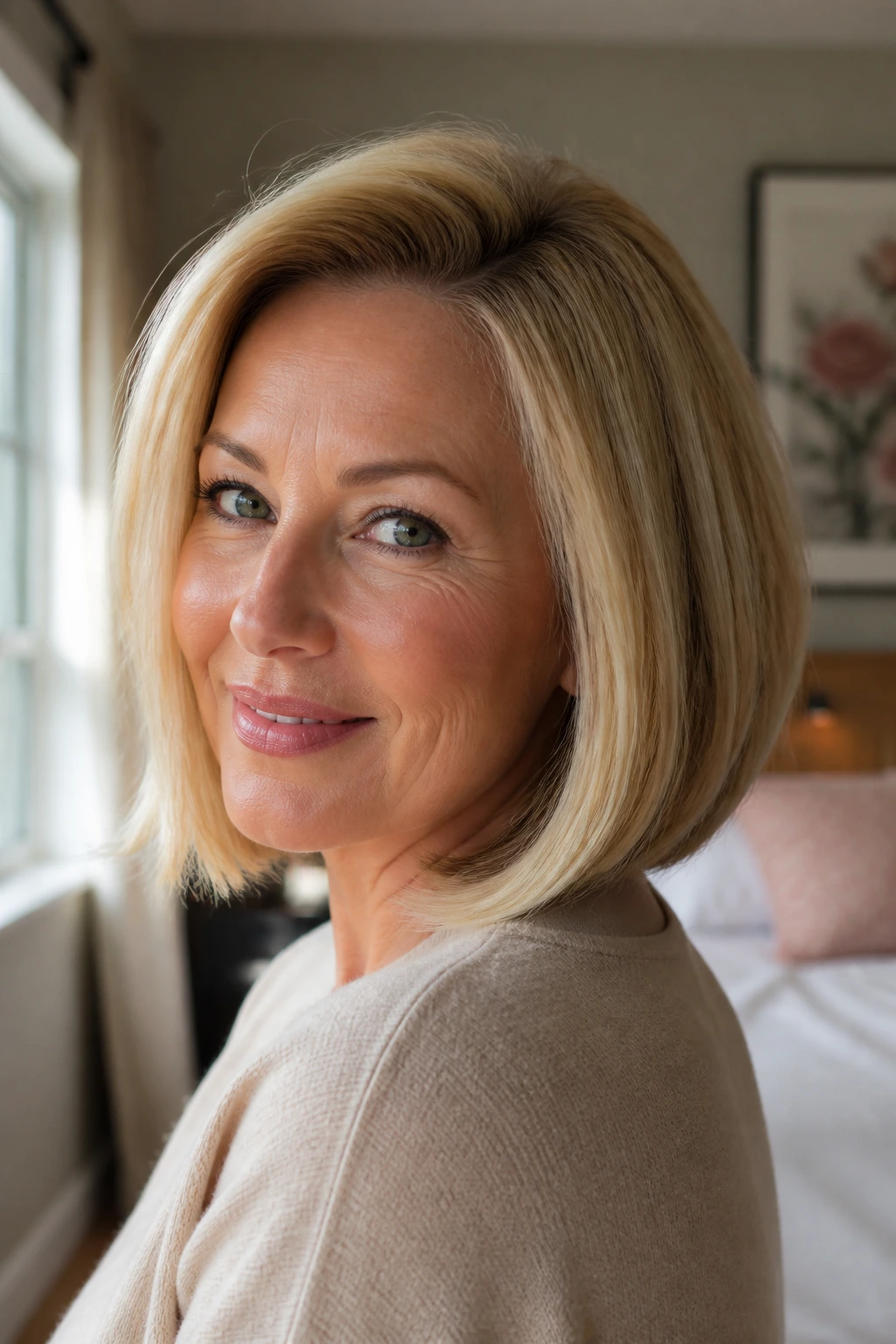
Root lift first: Start at the crown with mousse or spray, then dry the roots before you worry about the ends. If the roots stay flat, thick hair pulls the whole bob downward.
Section in thin slices: Thick hair styles better in smaller sections than in giant ones. Four big chunks are not enough. Six to eight smaller sections make smoothing faster and more even.
Don’t overload the ends: A dab of cream is usually enough. Heavy oil on thick blonde hair can flatten the cut and make the blonde look dingy.
Finish with one direction: Whether you turn the ends under or let them bend outward, pick a direction and stick to it. Mixed ends make thick hair look messy fast.
Common Mistakes That Make Thick Hair Look Boxy
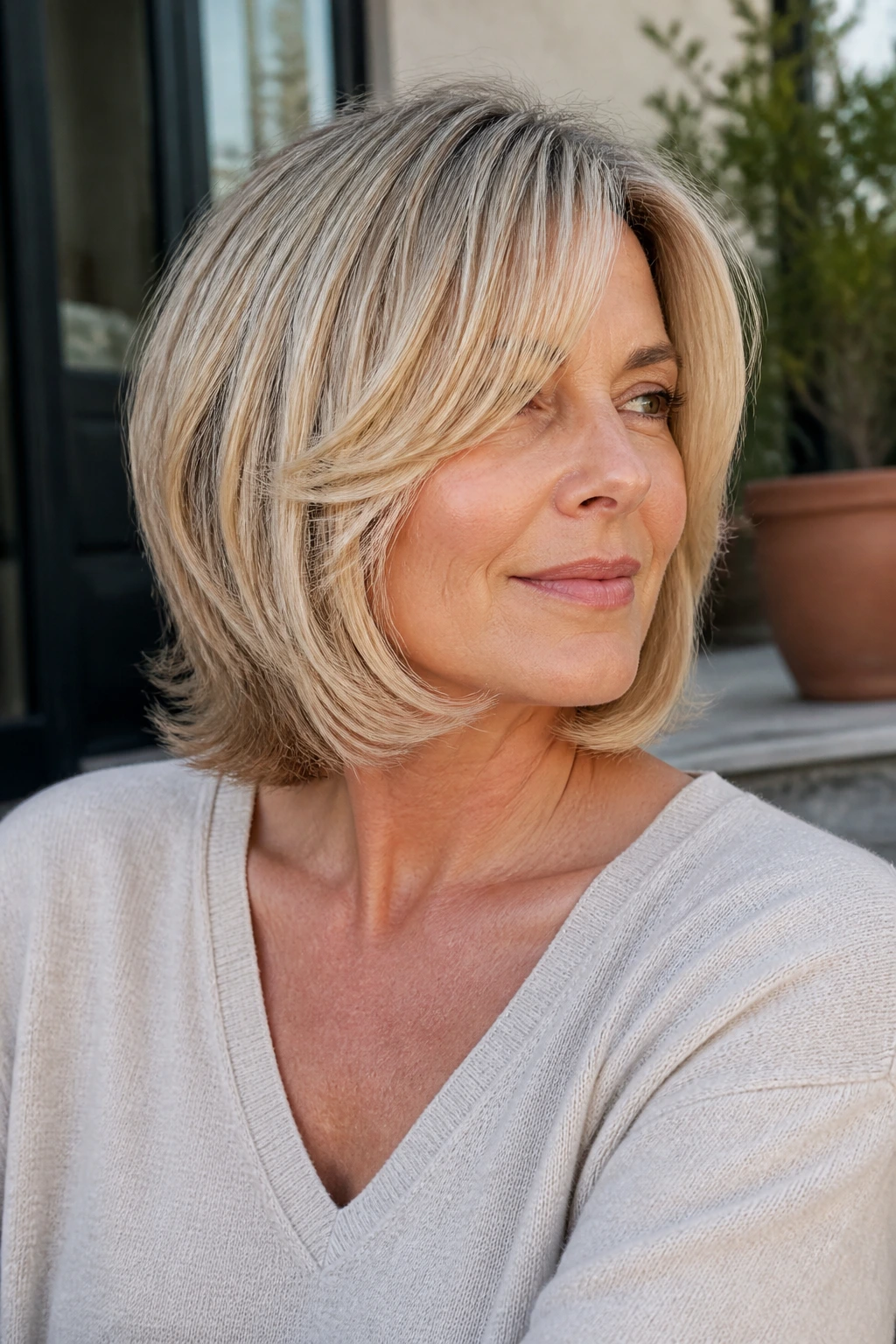
- Too much bulk left at the sides: The bob widens near the cheek and jaw. Ask for internal debulking, not more length.
- Over-layering the perimeter: Ends start to look see-through and fuzzy. Keep the outer line solid.
- Going too light all over: Flat, pale blonde can make thick hair look larger, not lighter. Leave some depth at the root and underlayers.
- Ignoring the neckline: A heavy nape makes the back puff out. Taper or stack it enough to stay close to the head.
- Cutting bangs too dense: Thick fringe eats styling time and can separate in ugly chunks. Ask for softness or a side-swept shape.
- Skipping maintenance: Bobs show growth faster than long hair. If you stretch trims too long, the shape loses its edge and the bulk comes back.
Blonde Shades, Bangs, and Face-Framing Tweaks
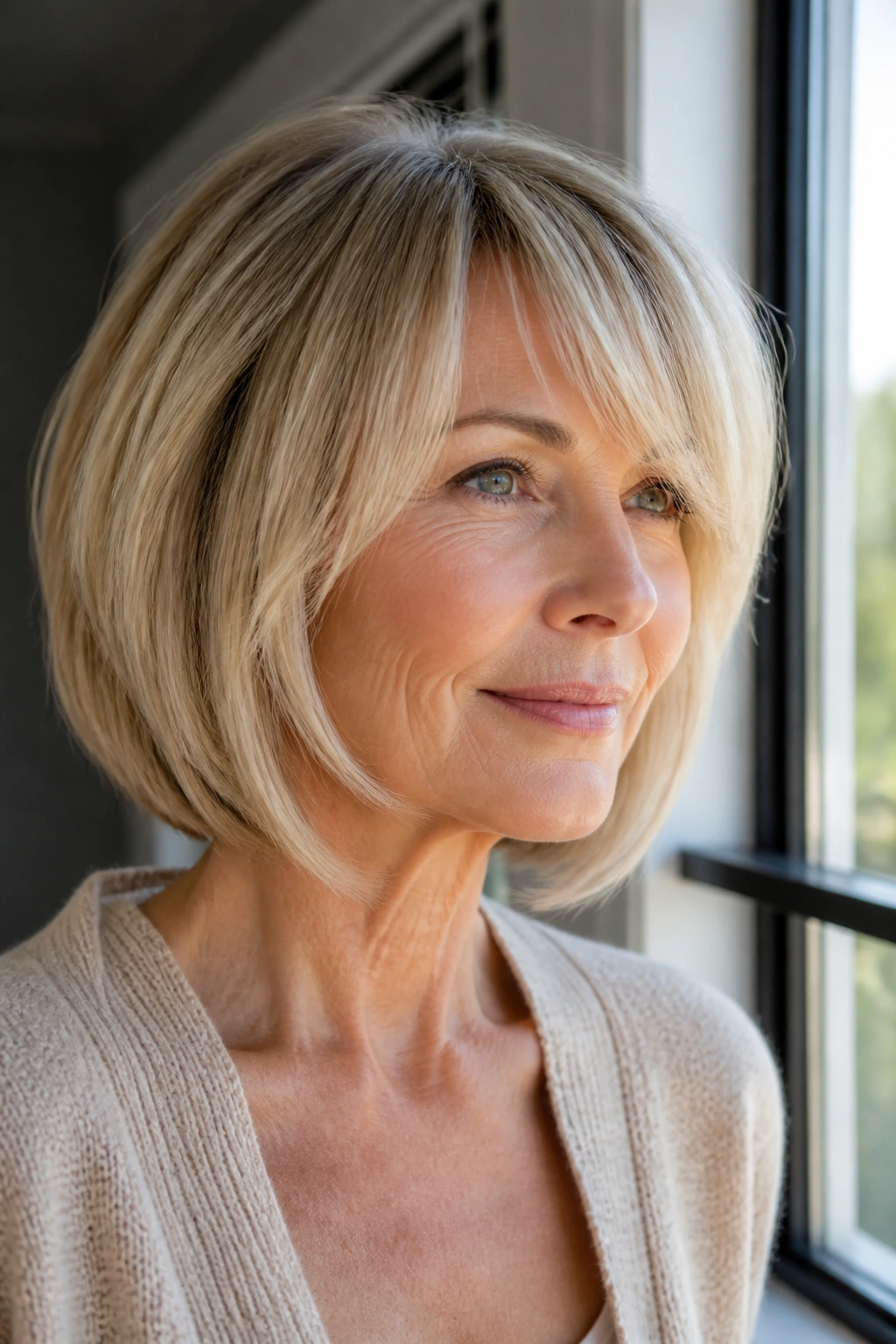
Champagne glow: Best when you want brightness without brass. It suits layered and polished bobs because it reflects light without screaming for attention.
Honey warmth: Good if your skin reads warmer or if you want the cut to feel softer around the jaw. Honey also hides a little root regrowth better than very pale blonde.
Silver blend: Works beautifully with gray hair when the goal is to look intentional, not covered up. Add lowlights if your hair needs depth at the base.
Fringe or no fringe: A fringe can soften a strong forehead or balance a long face, but thick hair needs a light hand. Side-swept, wispy, or longer curtain fringe usually ages better than a blunt wall of bangs.
Face-framing pieces: These are worth asking for. A few lighter strands near the cheekbones can pull the eye upward and make the haircut feel lighter without changing the whole head.
How to Keep the Cut Fresh Between Salon Visits
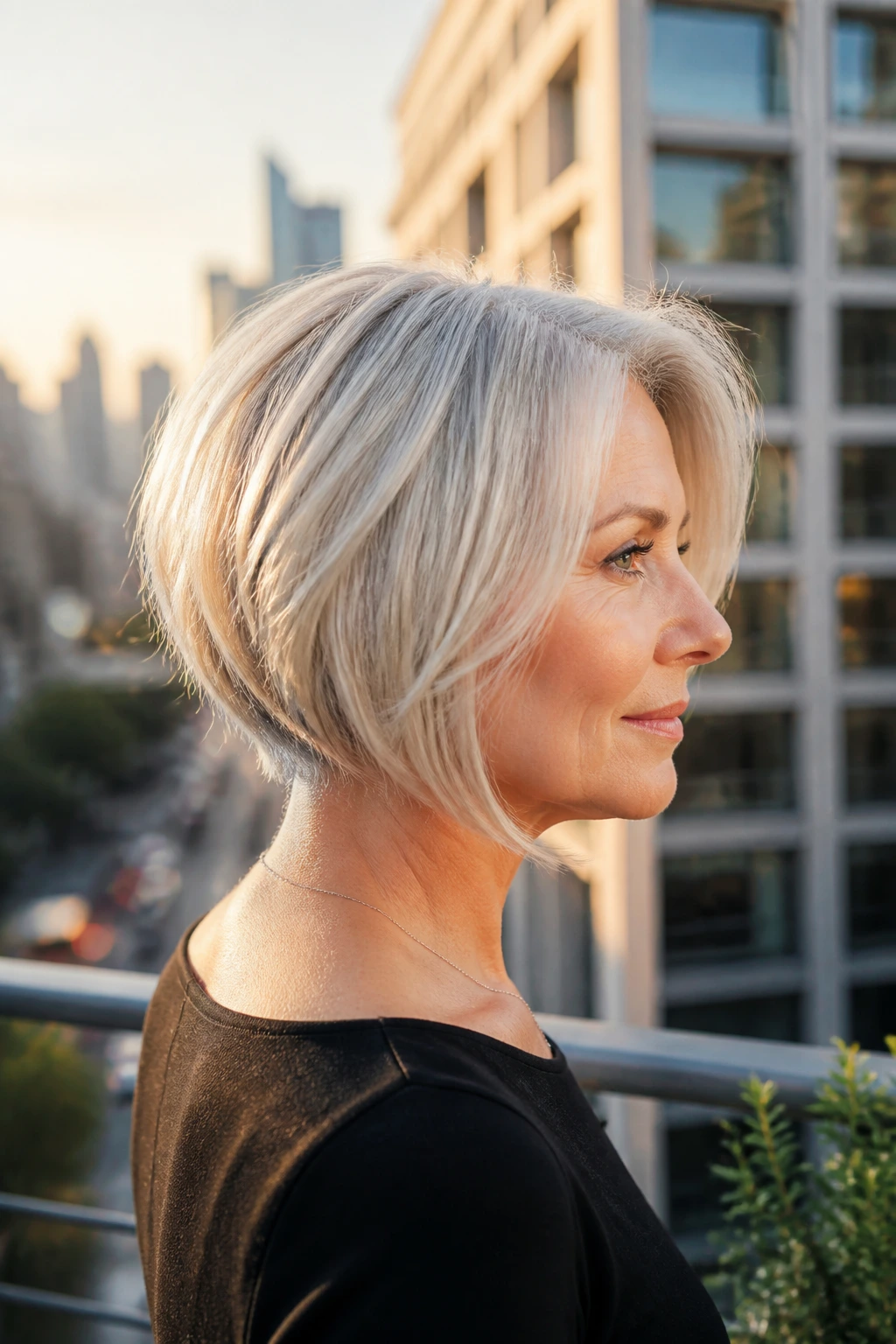
A bob on thick hair usually needs a trim every six to eight weeks if it sits at the chin or nape. Longer lobs can sometimes go eight to ten weeks, but only if the cut was built with enough shape to survive the grow-out. Once the outline starts flipping or the sides begin to flare, it’s time.
Color maintenance depends on the blonde tone. Cooler blondes often need a toning shampoo or gloss every few washes to keep brass away. Rooted blondes can stretch farther because the shadow softens regrowth. If you’re blending gray, that softer grow-out is the thing that keeps the style calm.
At home, keep the ends from drying out. Thick hair can look healthy and still feel rough if the blonde has been lifted a lot. A light leave-in on the mid-lengths, plus a heat protectant before blow-drying, keeps the cut from puffing up and losing its clean edge.
Questions Women Ask Before Going Short
Will a bob make my thick hair look wider?
It can, if the cut is all one length and no weight is removed inside. A good bob reduces bulk under the surface and keeps the perimeter controlled, so the shape falls instead of flaring.
Is a blunt bob too severe after 50?
Not if the color and interior structure are handled well. A butter blonde or beige blonde blunt bob can look crisp and fresh, not hard, when the ends are kept clean and the interior isn’t overloaded.
Should thick hair have layers in a bob?
Yes, but not the kind that shred the ends. Internal layers and careful graduation are better than obvious choppy layering because they remove bulk without losing the line.
What blonde shade is easiest to maintain?
Rooted beige, honey, and silver-blend tones are usually the most forgiving. They stretch farther between appointments and handle grow-out better than very bright all-over blonde.
Can I wear a bob if my hair is wavy or curly?
Absolutely. Just make sure the cut is shaped for texture. Curly and wavy bobs need length left in reserve so shrinkage doesn’t pull them up too far.
What if my bob flips out at the ends?
That usually means the cut is a little too blunt for your hair pattern or the blow-dry is setting the ends in the wrong direction. A round brush and a touch of bend inward usually fix it. A neck-length taper can help, too.
How do I know if I should choose a bob or a lob?
If you want more control and a cleaner silhouette, choose the bob. If you want more flexibility and less frequent styling, a lob gives thick hair a little more room to behave.
The Bob That Fits Your Hair
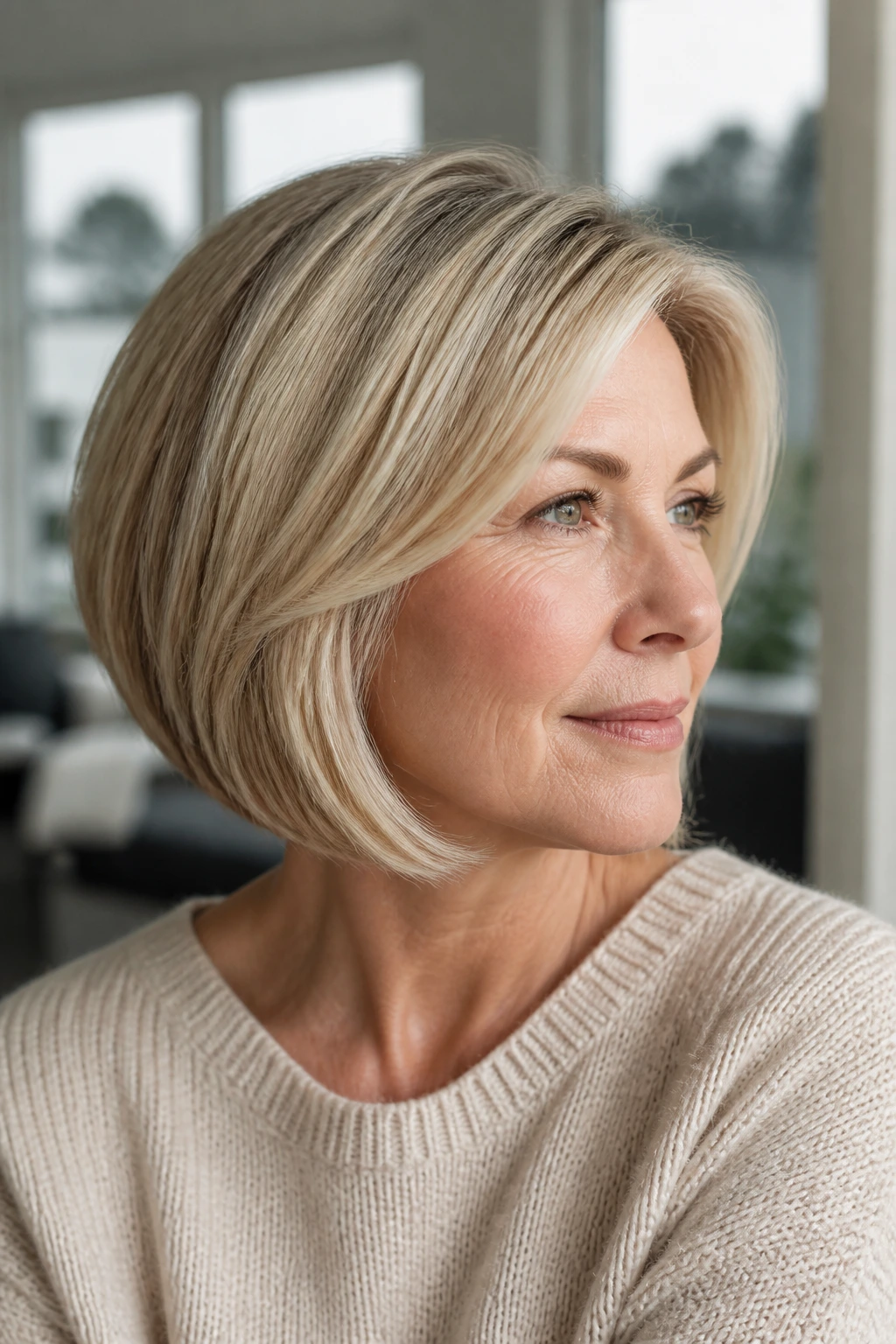
The best blonde bob for thick hair is the one that respects the hair you actually have. Not the hair in a glossy photo. The hair that swells a bit when it’s humid, sets strong at the nape, and needs a cut that knows where to stop.
That’s why these shapes matter so much. They solve different problems: width, bulk, grow-out, gray blending, frizz, flat roots, all of it. Once you match the cut to the texture and choose a blonde shade that works with the structure, the whole style stops feeling like work.
A good bob should make your hair feel lighter without making it look thin. That’s the sweet spot, and it’s worth asking for.