



Straight hair tells on a haircut. Every line shows. Every shelf shows. Every snip that was a little too eager on one side shows, too. That’s why long bobs with layers for straight hair can look razor-sharp in the best sense or look oddly boxy if the shape is off by even half an inch.
The sweet spot is a cut that keeps a clean outer line while stealing just enough weight from the inside to let the ends move. Not bounce. Move. Straight hair does not fake texture the way wavy hair can, so the cut has to do the work honestly. If you heat-style often, that honesty matters even more; the American Academy of Dermatology has long advised using a heat protectant before blow-drying or flat-ironing, and straight strands tend to show dryness and split ends faster than people expect.
What I like about this length is how unfussy it can be when it’s cut well. You can tuck it behind one ear, wear it dead-center and polished, bend the ends under with a brush, or leave it air-dried with a little bevel at the bottom. The shape does not have to shout to make a point.
The 22 versions below cover the full range, from barely-there interior layers to more sculpted cuts with a visible bend. Some are quietly elegant. Some have a little attitude. All of them work with straight hair instead of fighting it.
Why These Cuts Keep Straight Hair Moving

Collarbone length does the heavy lifting: The hair lands at a spot where it can graze the shoulders without getting trapped at the neck, so the silhouette stays clean instead of puffing out.
Layers are doing interior work, not perimeter damage: The best layered lob keeps the outer edge solid and removes weight from inside the cut, which is why it moves without looking thin at the tips.
Straight hair shows precision better than any texture: A clean angle, a soft bend, or a face frame reads instantly, so the haircut looks intentional instead of accidental.
The grow-out is kinder than a short bob: When the cut sits a touch below the chin or on the collarbone, you can stretch it a few weeks longer without the shape falling apart.
Styling stays flexible: You can wear it sleek, bent, tucked, flipped, or air-dried with a little support at the roots, which makes the cut easier to live with than a highly structured shape.
1. Collarbone Sweep with Invisible Layers
This is the lob I recommend when someone wants movement but does not want to see layers shouting from across the room. The perimeter skims the collarbone, and the layering happens so quietly inside the shape that the haircut still reads as one smooth line from a distance.
The trick is in the weight removal. Instead of carving obvious steps, the stylist keeps the front and bottom line solid and slips in long internal layers that release bulk from the middle. On straight hair, that means the ends can curve under a little instead of hanging like a board.
Why It Works
The haircut looks especially good when straight hair is medium to thick, because the hidden layers stop the bottom from feeling heavy. If your hair tends to lie flat at the crown and then explode at the ends, this shape fixes that split personality.
It also grows out gracefully. The outline stays long enough that you are not racing back for a trim every few weeks, and the invisible layers blend as the hair grows.
Cut Details
- Ask for a collarbone-length perimeter with the longest pieces grazing the top of the shoulders.
- Keep the layering long and internal, starting below the cheekbone.
- Use a soft bevel at the ends rather than a sharp stack.
- Best for hair that is straight, medium-density, or just thick enough to need weight removed.
Best tip: Tell your stylist to check the cut in your usual part before they finish. A lob can look balanced in the chair and slightly lopsided once it meets your real life.
2. Blunt-Edge Lob with Feathered Interior
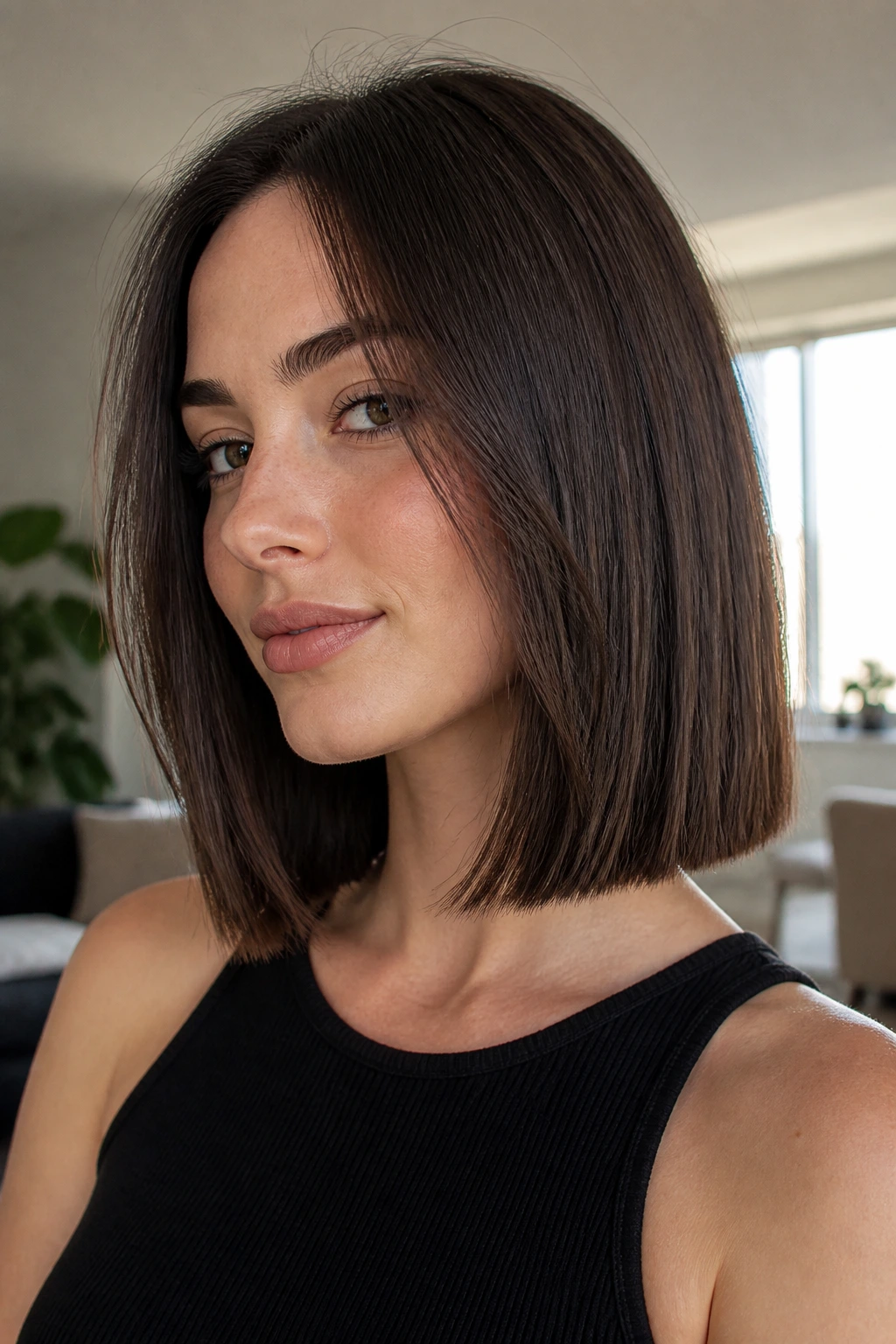
A blunt edge gives straight hair its best posture. You get that crisp, tailored bottom line, then the feathered interior keeps the shape from turning into a block.
That contrast is the whole point. Without the inside work, a blunt lob on straight hair can look like one heavy shelf. With it, the hair still looks polished, but the sides settle a little better and the ends do not hang with that stiff, over-constructed feel.
This version is especially useful if your hair is thick and stubbornly straight. You keep the density where it matters and trim out the bulk where it causes puffiness.
3. Center-Part Lob with Face-Framing Ribbons

Why does a center part change the whole mood? Because it turns the lob from casual to clean-lined in one move, and straight hair shows that split all the way down the front.
The face-framing pieces should start around the cheekbone or just below it, then slide longer toward the collarbone. You want the front to feel like two ribbons falling forward, not a fringe built from chopped-up layers. That keeps the shape soft around the face while the rest of the cut stays neat.
How to Ask for It
- Keep the part dead center if your hair naturally behaves there.
- Ask for two long face-framing pieces that hit somewhere between the chin and collarbone.
- Keep the rest of the layers low and blended so the middle part still feels sleek.
- Use a round brush only at the front if you want extra bend.
If your hairline has a strong cowlick, be honest about it. A center part that fights your scalp will collapse by lunchtime, and nobody needs that drama.
4. Side-Part Lob with Chin-Skimming Layers
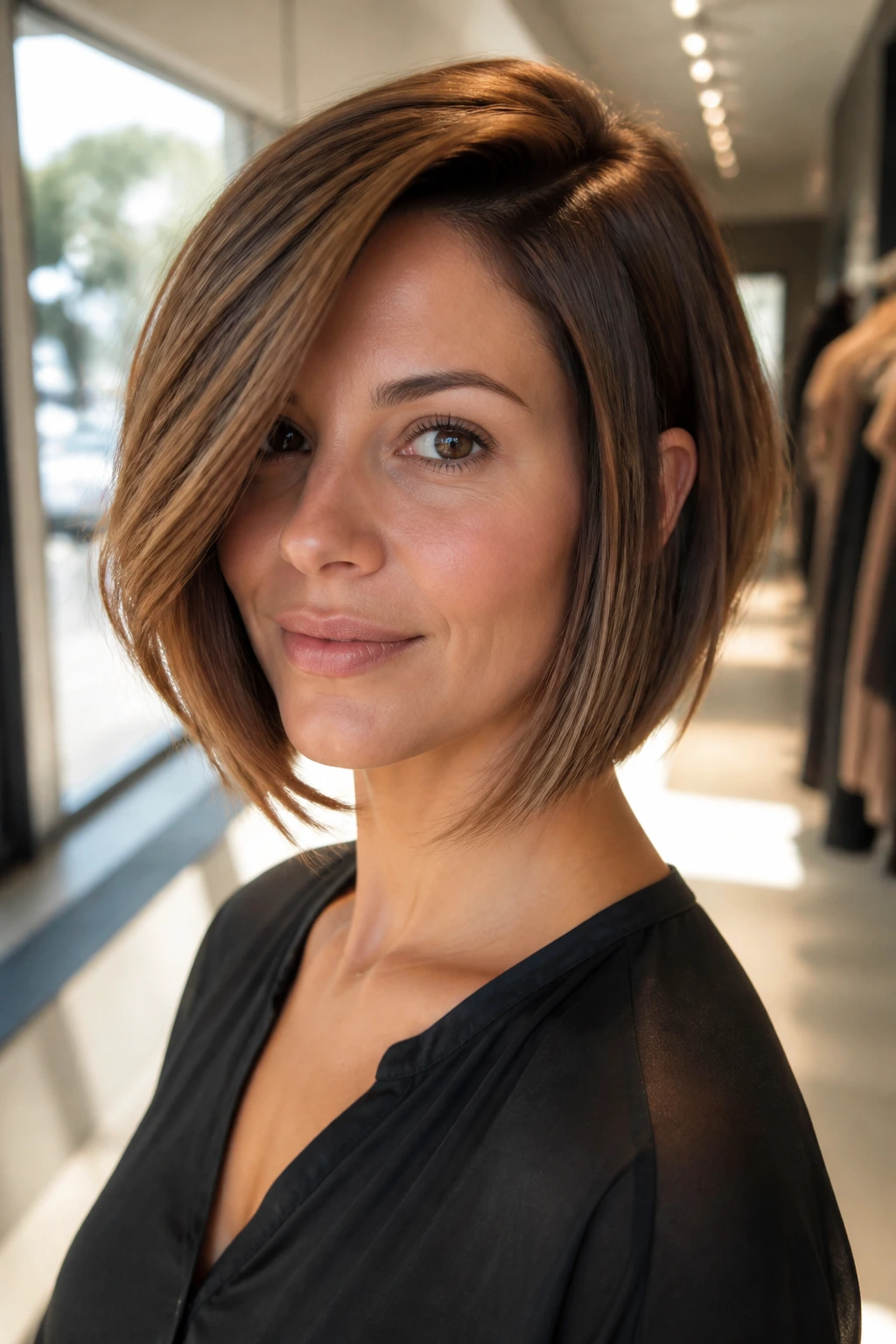
A deep side part gives straight hair built-in lift before the blow-dryer even comes out of the drawer. One side rises at the root, the other side falls into a softer curtain, and the whole cut feels fuller around the crown.
The chin-skimming pieces matter because they keep the front from getting too severe. On straight hair, a side part can make the whole look feel a little too formal if the front is cut blunt and straight down. Those shorter layers soften the shift.
Key Details
- Put the part two to three inches off center for a noticeable lift.
- Keep the shortest face pieces at or just below the chin.
- The back can stay a touch longer so the silhouette still feels like a lob, not a short bob.
- Best if one side of your hair always lies flatter than the other.
You do not need a lot of product here. A small amount of root spray at the side that needs lift, then a quick blow-dry with the nozzle aimed upward at the roots, is enough.
5. Feathered Lob with Razor-Lite Ends
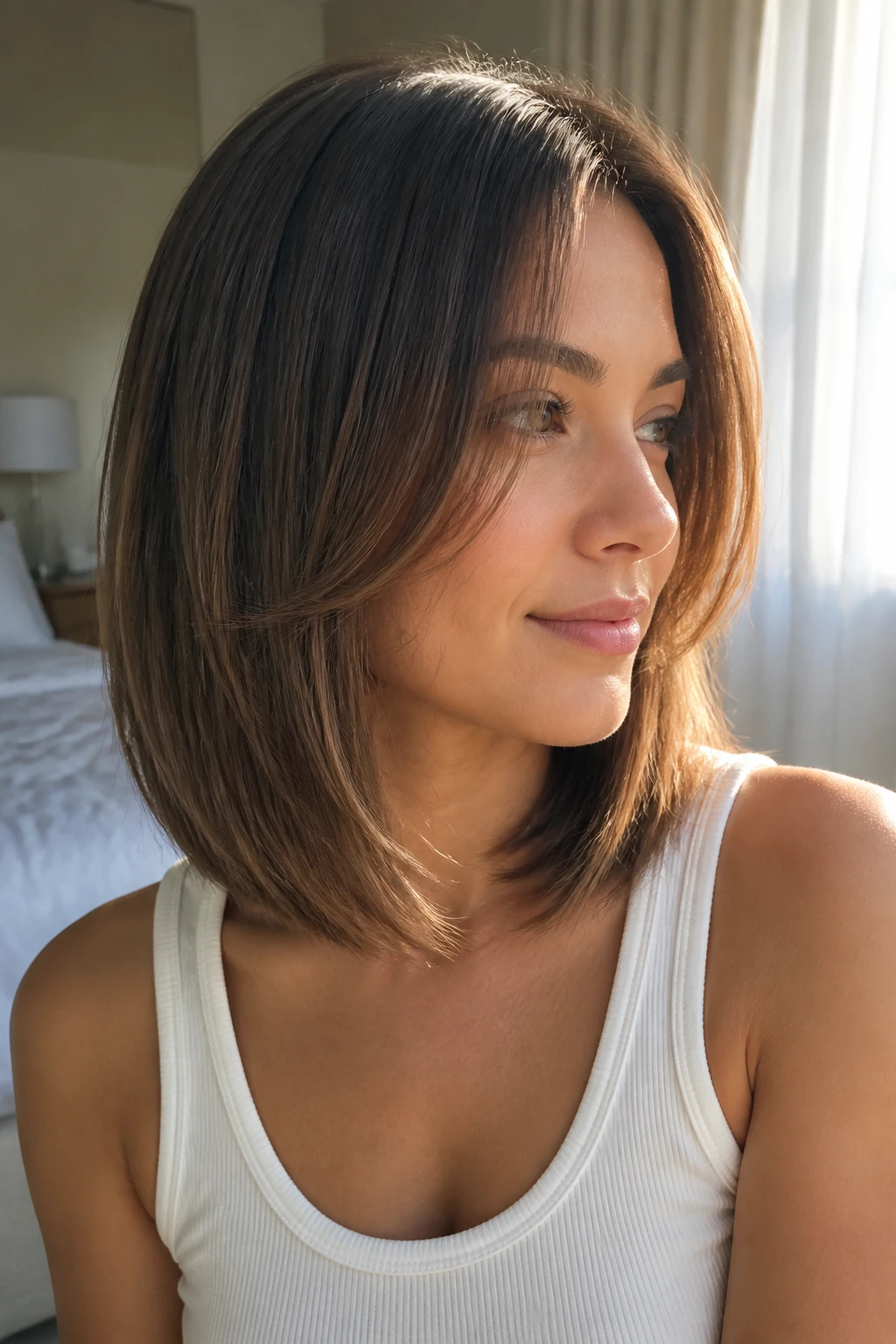
Feathered does not mean fluffy. That word gets misused constantly. Here, it means the ends were softened so the hair does not land with a blunt little thud at the bottom.
On straight hair, razor-lite ends can look beautiful when the hair is healthy and not too fragile. The movement comes from the texture at the last inch or two, not from chopping the cut all over the place. That is the part people get wrong when they ask for “something textured” and accidentally end up with a mess.
If your hair is fine but abundant, this cut can take away that slightly heavy, curtain-like look at the bottom. If your hair is already dry or prone to splitting, keep the feathering mild. Too much razor work can leave the ends looking wispy in the wrong way.
6. Rounded Lob with a Polished Bend
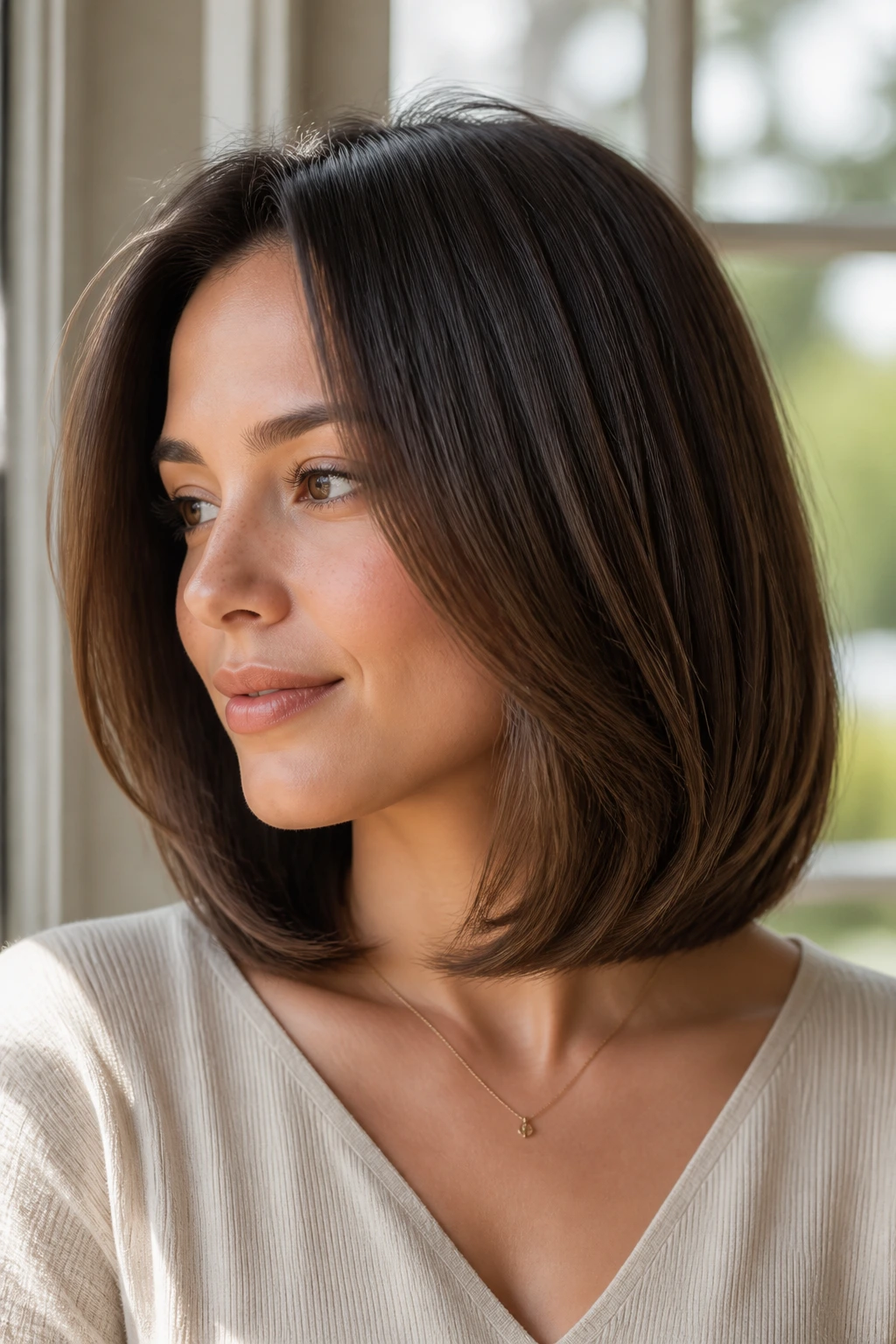
A blunt lob can look severe on straight hair. A rounded lob fixes that by bending the ends inward just enough that the shape feels finished instead of flat.
The profile is the whole story. From the side, you see a smooth sweep from the cheek down to the collarbone, with the bottom edge curving under instead of hanging straight. It is the kind of cut that looks especially nice in daylight, where straight hair’s shine shows every curve.
This is the version I reach for when someone says they want “simple” but means “I want it to look expensive without much effort.” You still need a brush or iron to finish it, but the result reads softer than a pin-straight line.
7. Curtain-Bang Lob with Soft Layers
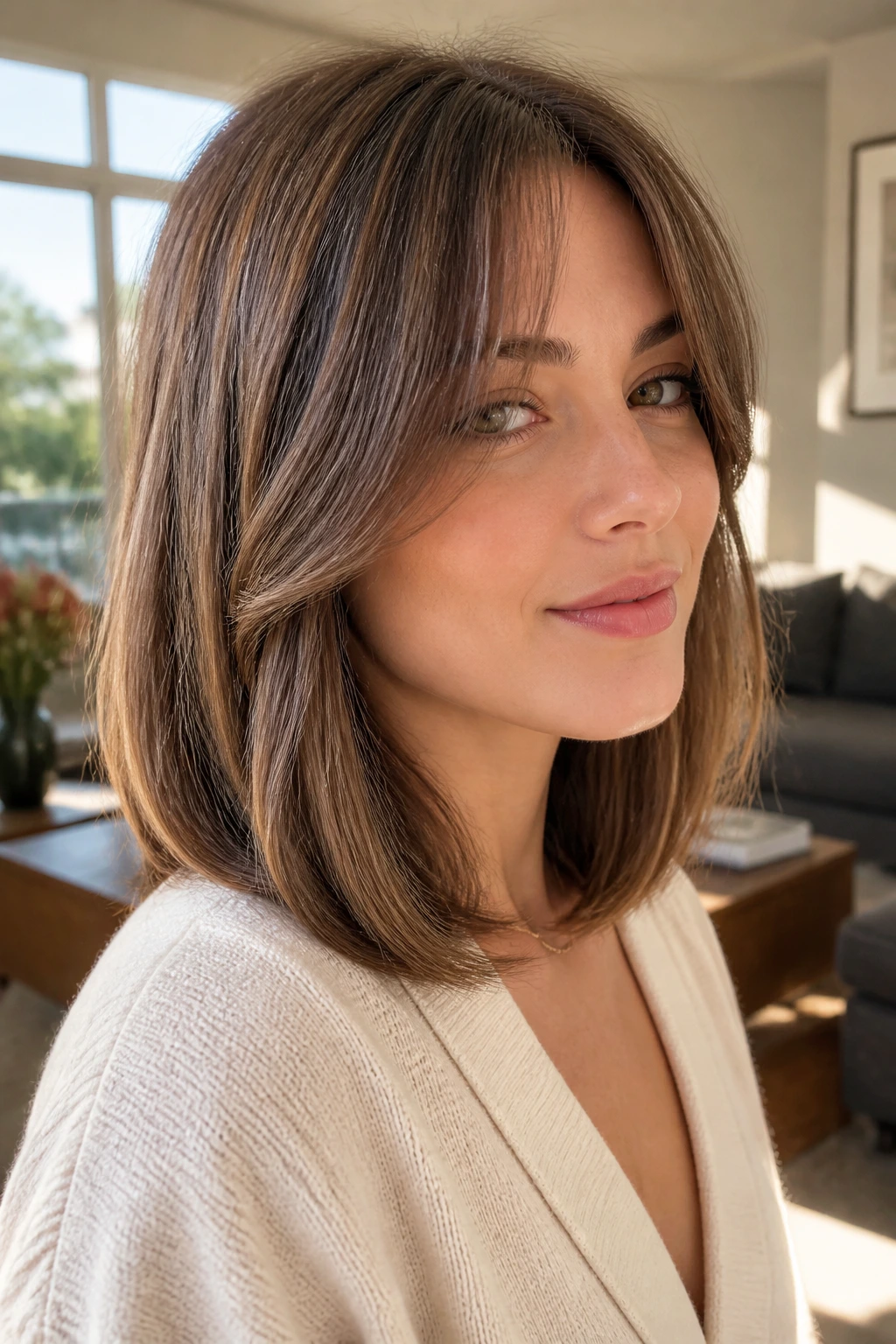
Curtain bangs and straight hair can be a little bossy, but in a good way. The bangs pull the eye toward the center, and the long layers keep the rest of the cut from looking top-heavy.
The key is length. Short curtain bangs on pin-straight hair can pop out in awkward little angles. Longer ones, grazing the cheekbones or brushing the lashes, settle into the lob more naturally. The layers around them should be soft enough to blend, not sliced so high that they look disconnected.
What to Style First
- Dry the bang area first so it does not set in the wrong direction.
- Use a small round brush or hot brush to keep the front pieces from splitting.
- Keep the rest of the hair smooth and slightly bent under.
- Best for people who like to tuck the sides back on some days and let them fall on others.
This cut does ask for a little daily attention. Not a lot. Just enough that the bangs do not wander off and make their own decisions.
8. A-Line Lob with a Tapered Back
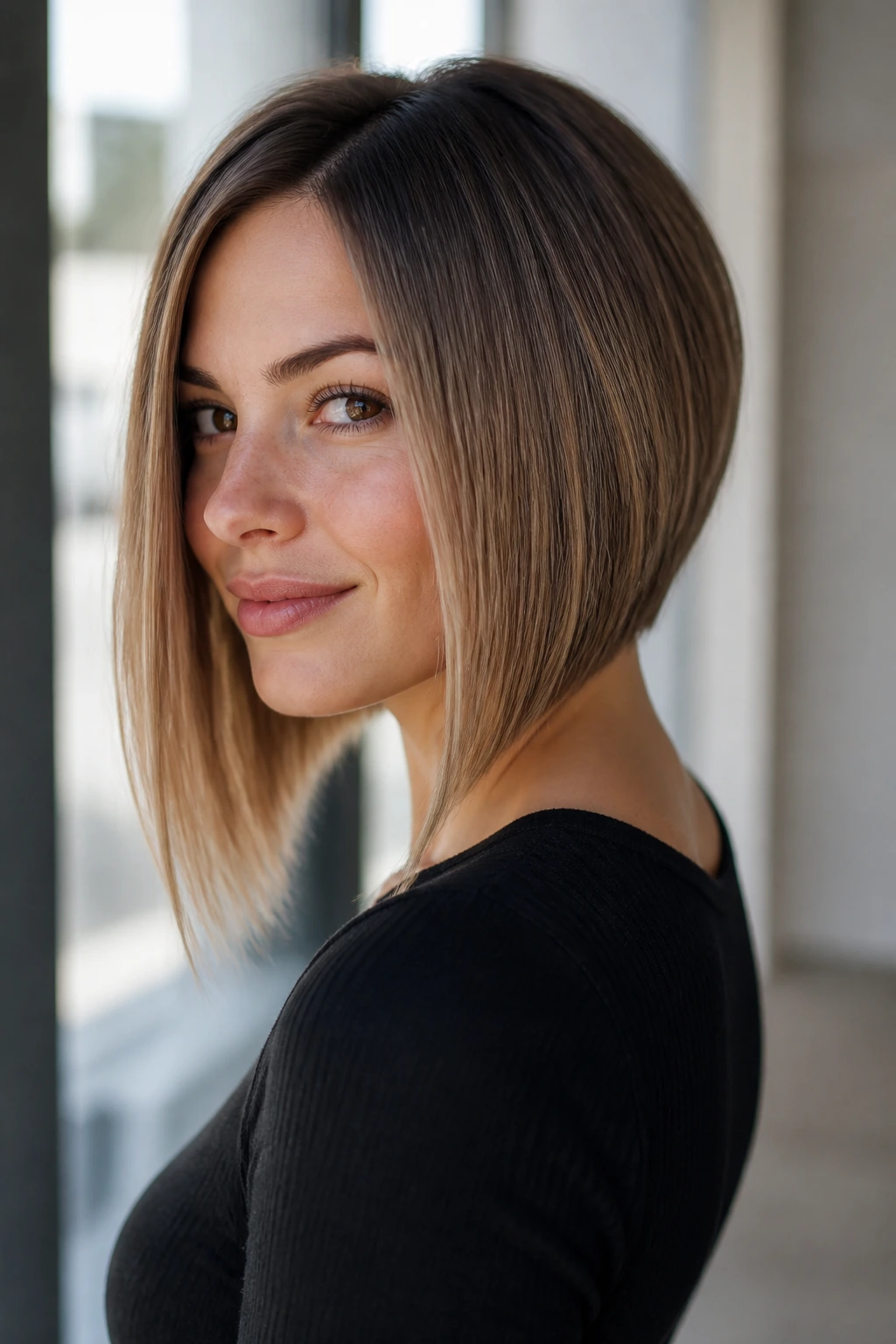
The A-line version is the neat one. Shorter in the back, longer in the front, with the whole shape sliding forward like it was drawn with a ruler and then softened by a careful hand.
Straight hair loves this cut because the angle stays visible. On wavier hair, the front pieces can blur into the rest of the cut. On straight hair, the line shows cleanly, and the tapered back keeps the neck area tidy.
It also makes thick straight hair easier to live with. The back does not build that heavy curtain at the nape, and the front has enough length to tuck, sweep, or bend under with a flat iron.
9. Shattered Lob with Piecey Ends
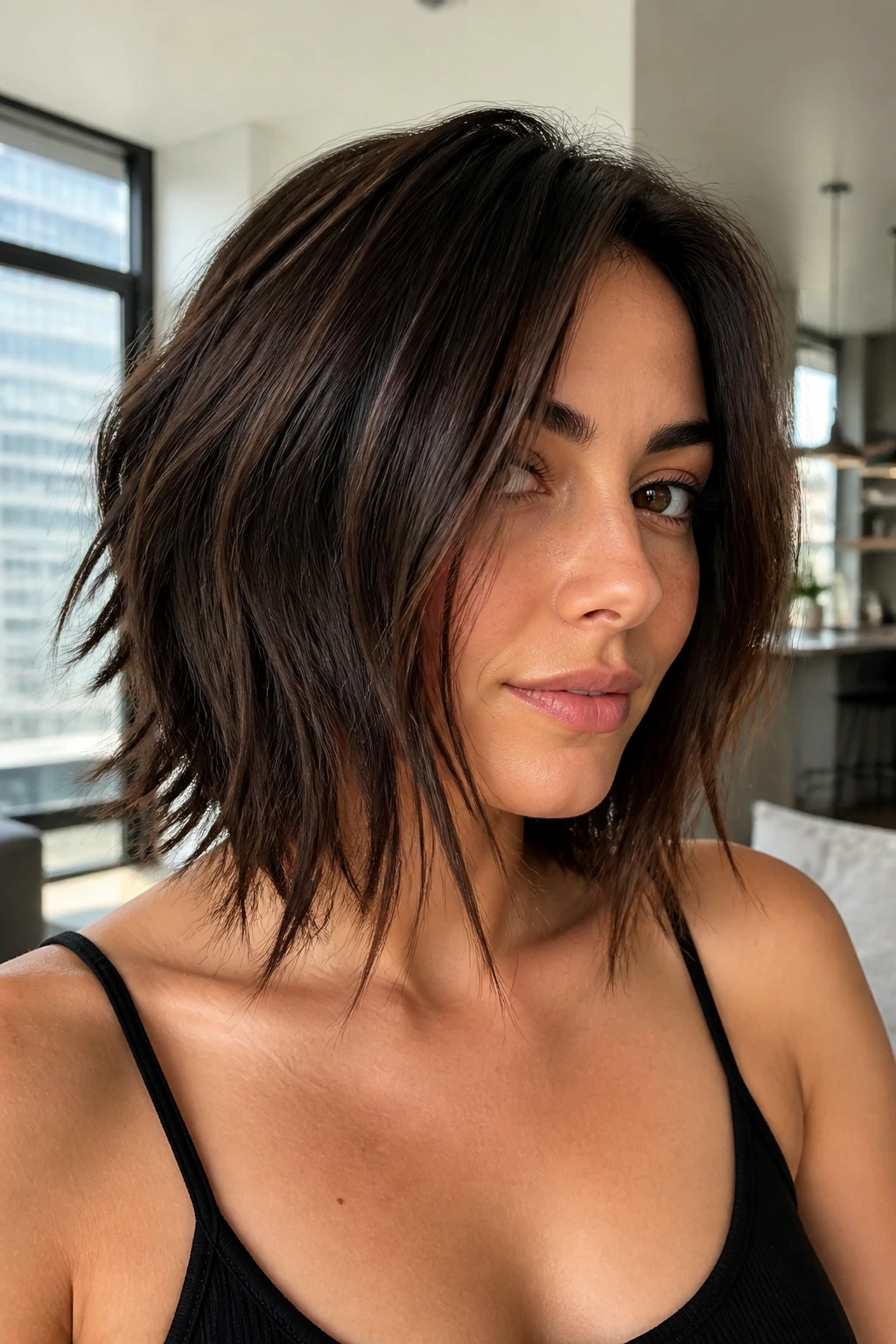
Why does this work on pin-straight hair when some textured cuts do not? Because the layers are broken up at the very ends, not hacked through the middle of the cut.
The point here is controlled movement. The perimeter still has shape, but the last inch reads a little more separated, so the hair does not behave like one solid sheet. It is a useful choice if your straight hair sits too neatly and you want just a little edge without turning the cut into a shag.
How to Keep the Pieces from Fraying
- Ask for point-cutting at the ends, not heavy thinning.
- Keep the layers long and low, so the shape stays a lob.
- Use a pea-sized amount of light serum on the last two inches only.
- Best for healthy straight hair that can handle a bit of edge.
The finish should look separated, not shredded. If the ends look see-through under normal indoor light, the scissors went too far.
10. Money-Piece Lob with Bright Front Layers
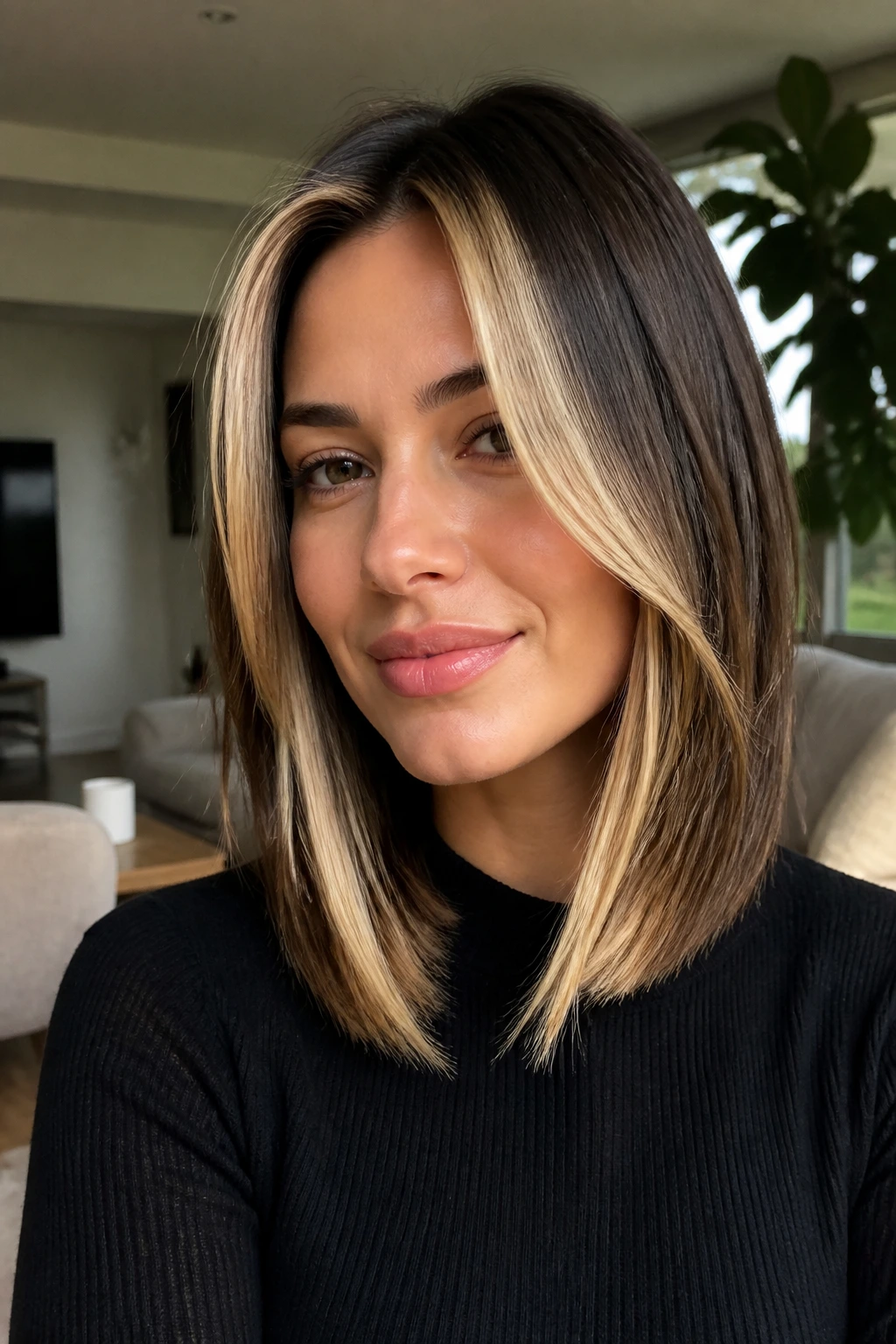
A bright front layer changes the whole cut. Even a subtle lighter panel around the face makes the long bob with layers show up more clearly because straight hair reflects color in clean, flat bands.
This version is especially useful if the rest of your hair is one tone and you want the cut to have more shape without adding extra length drama. The front pieces act like a frame. They catch light, show movement, and keep the eye moving toward the jaw and collarbone instead of straight down.
The cut itself should stay calm. If the front is too chopped up, the color starts looking busy. A little brightness at the face and a smooth lob underneath is enough.
11. Graduated Lob with a Lifted Nape
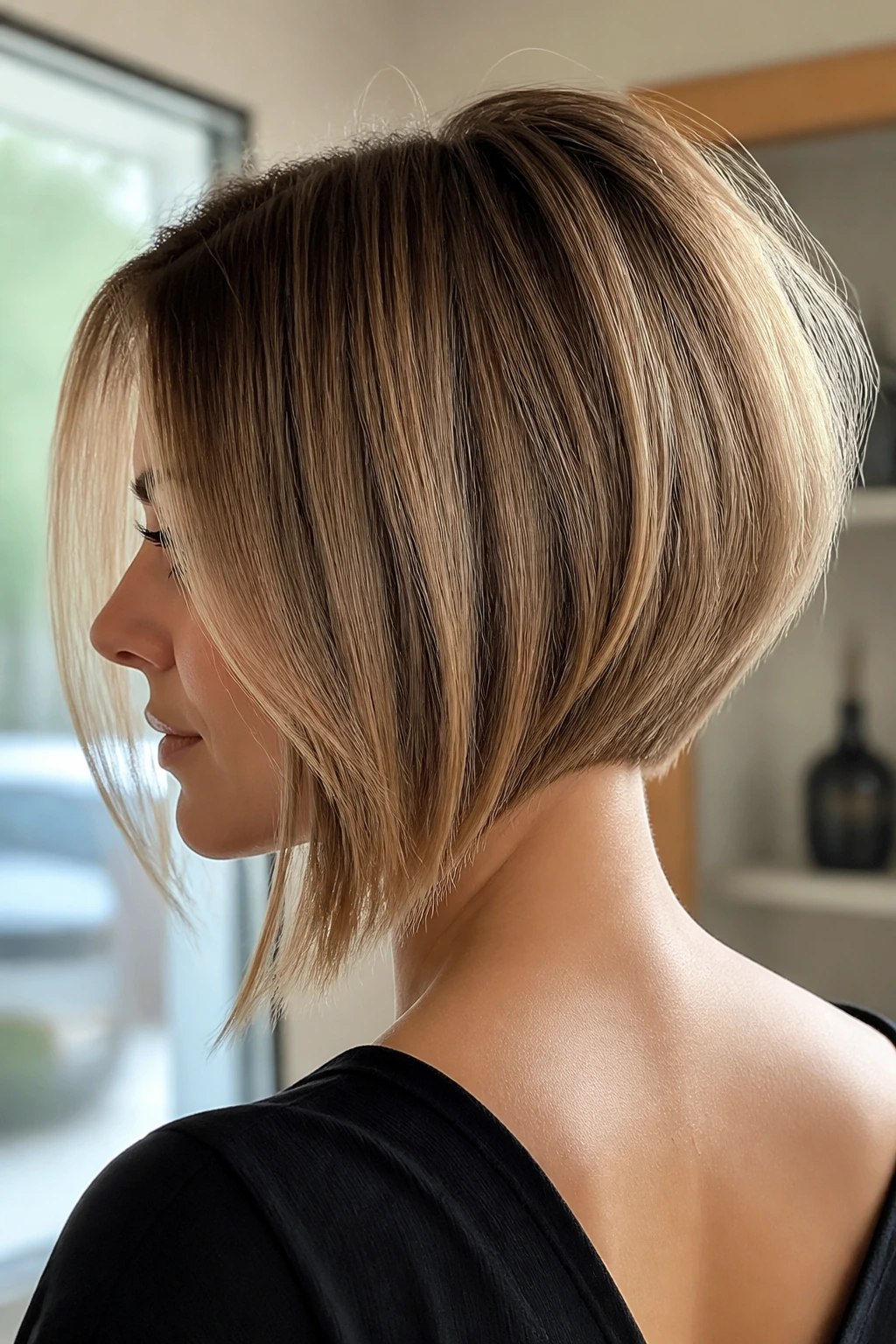
A graduated lob gives straight hair some backbone. The back sits a little shorter and fuller through the nape, which lifts the whole cut off the neck and keeps the silhouette from collapsing.
This shape is a favorite of mine for thicker straight hair that tends to swing outward at the ends when it gets too long. The graduation removes some of that drag. You still have length in the front, but the back looks compact and neat.
The neckline matters here. If the cut is too high in the back, it starts reading like a stacked bob. If it is too low, you lose the lift. The sweet spot is just enough graduation to keep the nape clean while the front still lands at the collarbone or just below.
12. Long Face-Frame Lob with Feathered Front Pieces
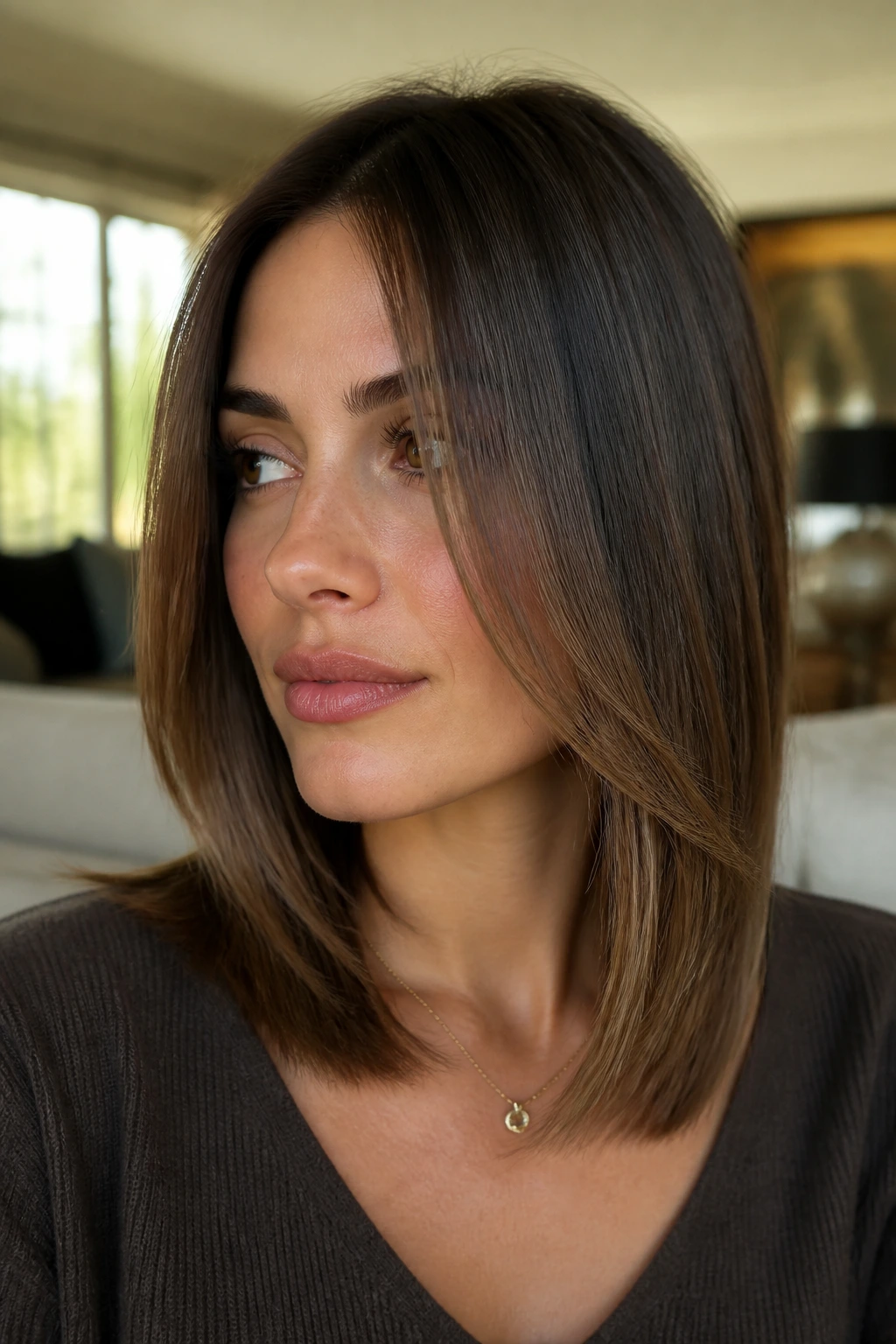
A long face frame gives straight hair shape without forcing you into bangs. That matters if you like to tuck your hair behind your ears half the time and would rather not babysit fringe every morning.
The front pieces should start low enough that they blend with the rest of the haircut. Think cheekbone to jawline, not short little slices that stop the cut cold. When the hair falls straight, those long pieces make a soft edge around the face and keep the lob from feeling too square.
What Makes It Different
Unlike curtain bangs, this version keeps the forehead open. Unlike a pure one-length lob, it still gives you movement where the eye first lands.
It is a smart pick if you wear glasses, because the front can curve around the frames instead of fighting them. It is also easier to grow out, which I appreciate more than I should admit.
13. Glassy Lob with Micro-Layers
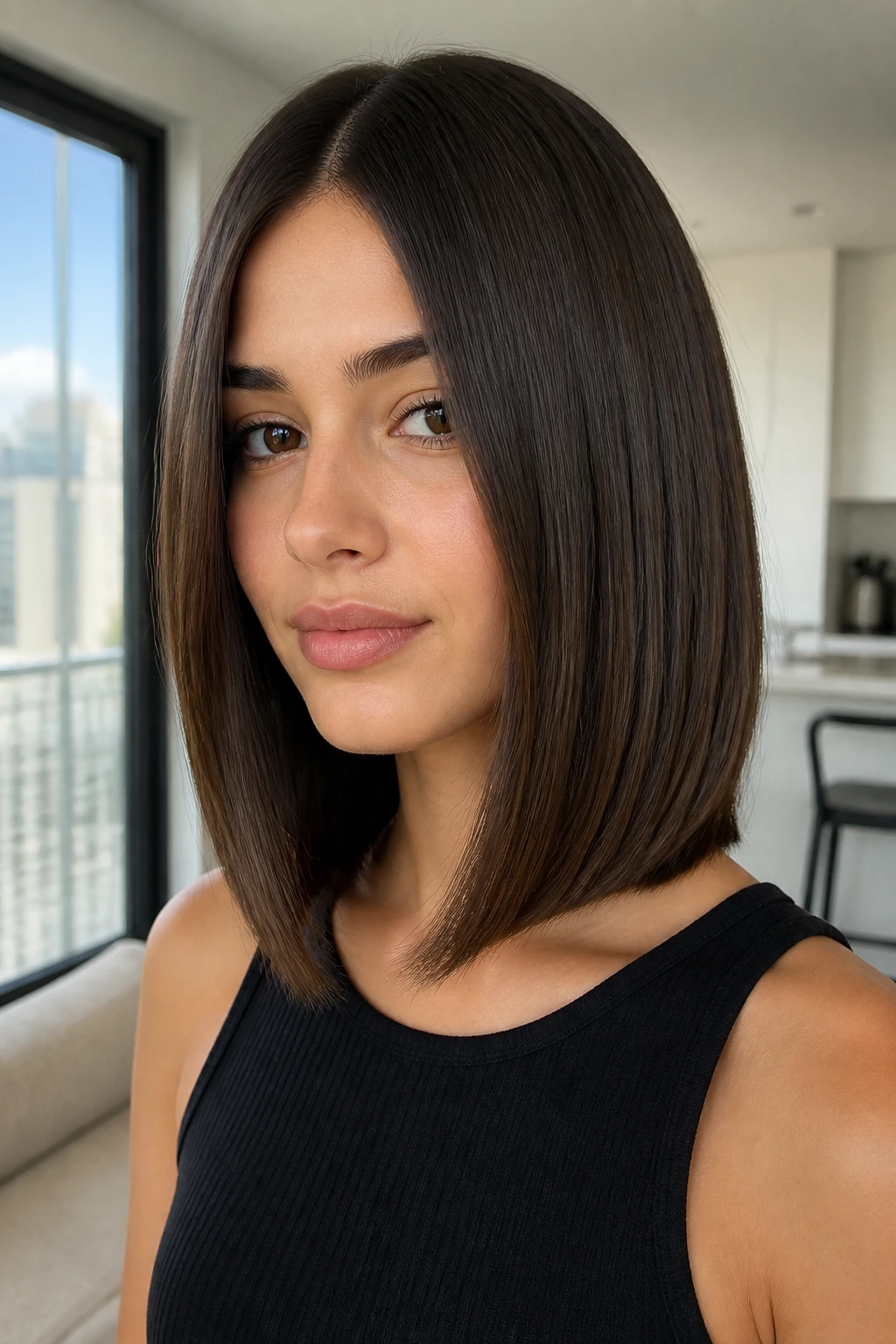
Fine, pin-straight hair can look stunning in a glassy lob, but it has to be handled with restraint. Too many layers and the whole thing loses its expensive, reflective surface.
Micro-layers are the answer. They sit just inside the shape and take out a whisper of weight so the hair does not collapse, but they do not create visible steps. The perimeter stays smooth, the shine stays obvious, and the ends still look thick.
Why Micro-Layers Matter
- They stop the hair from lying in one dead-flat block.
- They keep the ends from separating into wisps.
- They preserve that sleek, mirror-like finish straight hair does so well.
- They make air-drying more manageable if you are not a daily blowout person.
If your hair is fine, this is one of the smartest layered lobs you can ask for. The cut gives movement without stealing the density you actually need.
14. Deep Side-Sweep Lob with Polished Volume

A deep side sweep is one of the quickest ways to make straight hair feel styled without much fuss. The front moves across the forehead, the crown gets a touch of lift, and the rest of the lob stays smooth.
The layers should support the sweep, not compete with it. That means the front side can be slightly shorter and the opposite side can fall longer and sleeker, creating a soft diagonal line across the face. Straight hair makes that diagonal easy to read, which is half the charm.
This is a good pick if you want a cut that can look office-ready at 8 a.m. and a little more deliberate by dinner. One change in parting. That’s it.
15. Stacked Lob with Soft Back Lift
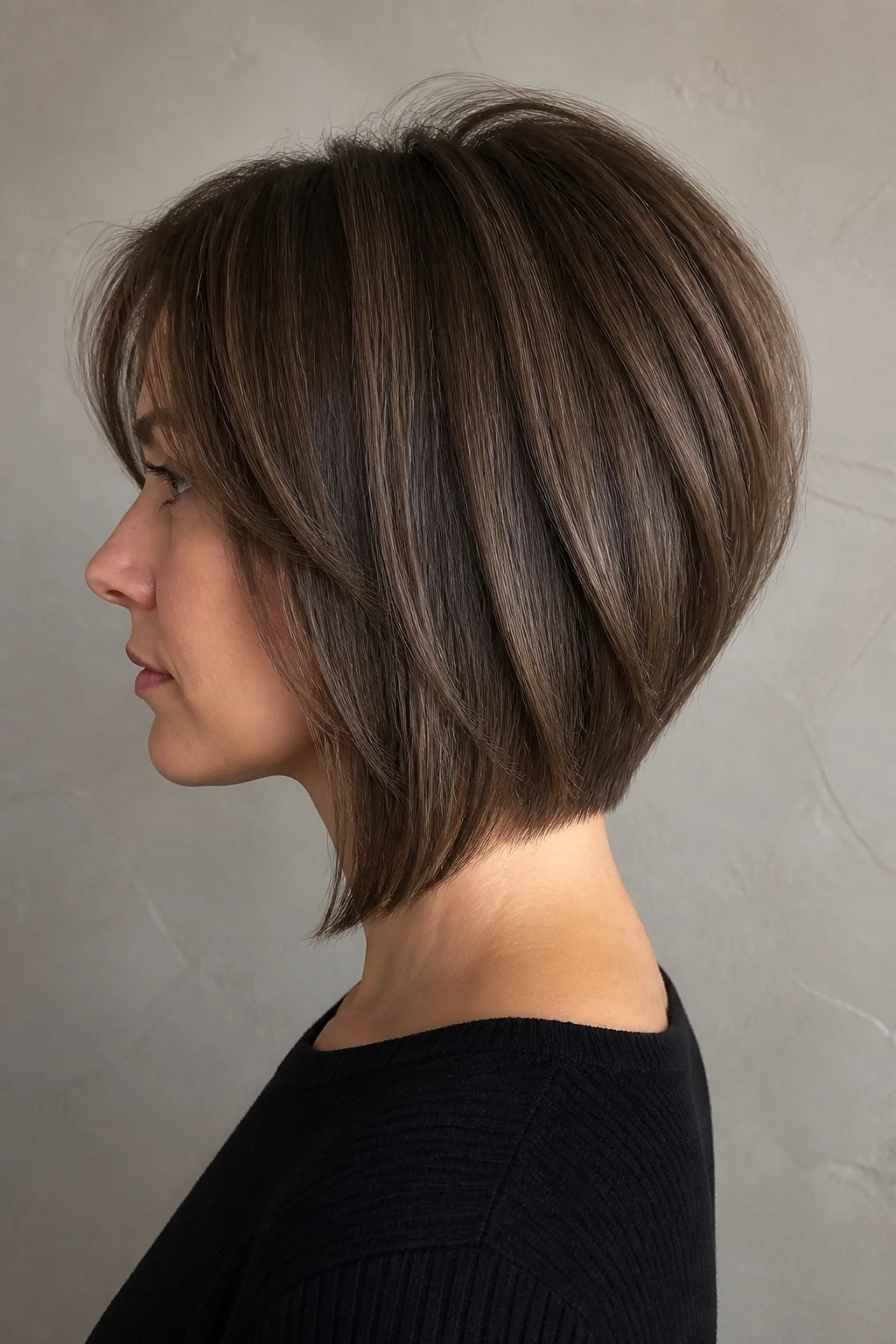
The stacked lob is what you reach for when the back of the head needs shape. Straight hair often falls too flat at the crown and then droops at the ends; a little stacking corrects that balance.
Soft stacking is the key phrase. You want lift, not a hard shelf. The back should feel rounded and supported, while the front stays long enough to keep the cut firmly in lob territory.
The result looks clean from the side and tidy at the nape. If you wear jackets, scarves, or high collars a lot, this cut avoids the awkward bunching that a longer blunt bob can create.
16. Barely-There Layer Lob
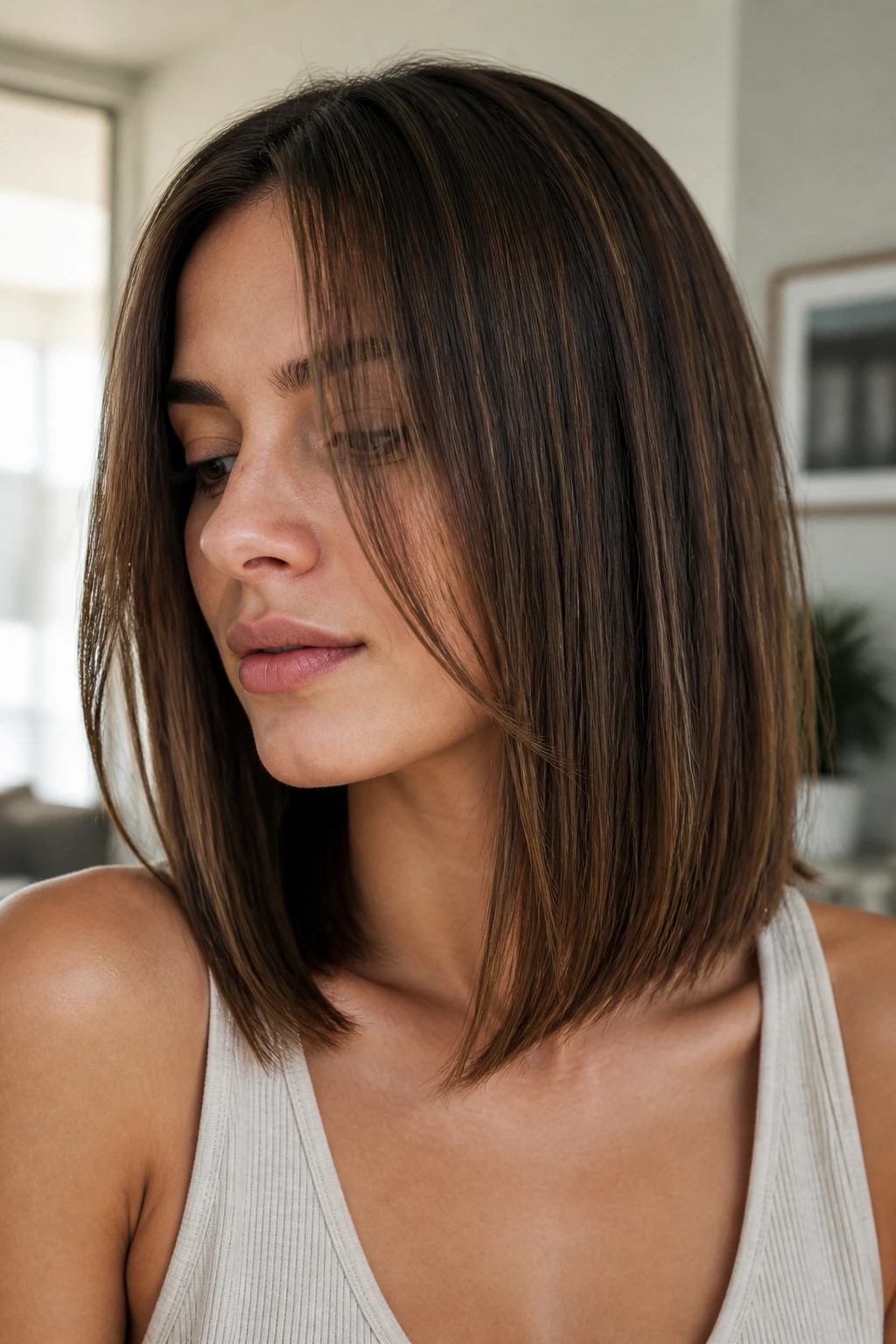
Some people hear “layers” and think of a chopped-up mess. Fair. That is why a barely-there layer lob exists.
The layers are so subtle that the haircut almost reads one-length, but the slightest internal adjustment keeps the bottom from feeling dense and stuck. Straight hair benefits from this because even tiny changes in weight can affect how the ends fall. A quarter-inch too much on a fine head of hair can make the difference between “clean” and “see-through.”
How to Ask for Almost No Layering
- Request a solid perimeter with only a touch of internal release.
- Keep the longest pieces around the collarbone or just below.
- Avoid aggressive texturizing unless your hair is very thick.
- Best for people who want movement but still like a controlled, tidy outline.
This is the safest choice if you’re nervous. It gives you the long-bob shape without handing the scissors too much freedom.
17. Razor-Edge Lob with Broken Tips

A razor-edge lob has a little attitude in it. The ends are broken up enough to keep the silhouette from feeling too neat, and on straight hair that creates a sharper, more editorial look.
The difference between this and the feathered version is texture. Feathered tips are softer. Broken tips have a more visible separation, which makes the cut feel lighter and less polished. That can be a good thing if your wardrobe leans simple and you want the hair to carry a bit more edge.
It is not the right move for fragile or dry hair. Razor work can make weak ends look even weaker. On healthy, dense straight hair, though, it can be excellent.
18. Mid-Length Lob with Internal Layers

This cut sits in that friendly middle space where it is not quite a long bob and not quite shoulder-length hair. Straight hair likes that middle ground because the shape can stay long enough to feel soft while the internal layers keep it from hanging like a sheet.
I like this version for people growing out a shorter bob or backing away from longer hair. The transition looks deliberate instead of awkward. The layers are placed inside the cut, so the outline stays clean even if the hair is thick or the ends have a tendency to flip.
The nice part is how little styling it demands. A quick blow-dry with the nozzle pointed downward, a small bend at the bottom, and it looks finished. No circus.
19. Flip-End Lob with Retro Movement

A flipped end on straight hair can look charming or can look like the haircut has a mind of its own. The difference is in where the layers sit and how much bend you give the bottom.
This lob uses long layers to support the outward flip, especially around the front. The ends turn away from the neck just enough to feel playful, but the cut keeps enough weight that the flip does not spread into frizz. If you like a little retro energy, this is a fun place to land.
What to Watch For
- Do not cut the layers so high that the ends turn into little wings.
- Use a flat iron twist or a round brush to guide the flip, not fight it.
- Keep the hair well-conditioned so the ends stay sleek.
- Best for straight hair that naturally bends outward anyway.
This one looks especially good with a clean middle part and a sharp earring. Yes, that matters more than people admit.
20. Curved-Front Lob with Sculpted Sides

Unlike a center-part lob, which splits the face cleanly, this version curves the front around the cheeks and jaw. That small shift changes everything. The eye moves in a soft arc instead of a straight line.
The layers are concentrated at the sides, where they can sculpt the face without chopping up the length. Straight hair makes the curve obvious, so the cut needs to be precise. A little too much weight and the front droops. A little too little and the shape loses its balance.
It suits anyone who wants structure but not severity. If you wear a blazer, a crewneck, or a high collar often, the curved front keeps the cut from disappearing into your clothes.
21. Low-Maintenance Lob with Floating Layers

This is the version for people who do not want to stand in front of a mirror for twenty minutes every morning. The layers are long enough to “float” through the body of the hair without being obvious, and the perimeter stays easy to manage.
The shape works because the layers are placed where straight hair naturally wants to bend. Around the mid-lengths. Near the face. Just enough to help the hair move when you tuck it, part it, or dry it with a rough blow-dry.
Why It Grows Out Well
- The layers are long, so they blend instead of forming steps.
- The shape still looks deliberate after a few weeks.
- You can air-dry it and still keep the outline.
- It is one of the easiest lobs to refresh with a quick trim.
If you want something that behaves without constant heat, this is near the top of the list.
22. Editorial Lob with Disconnected Front Panels
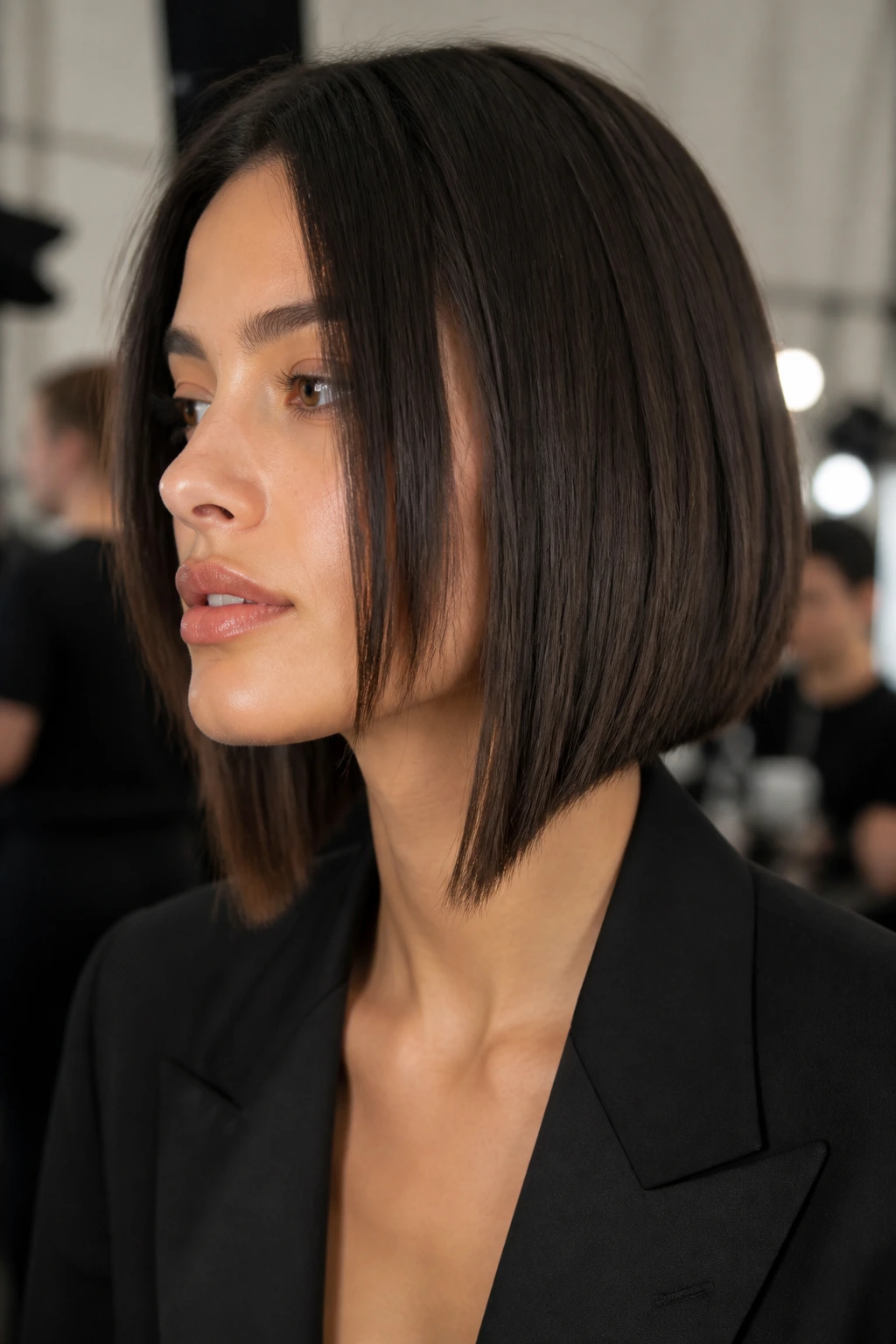
The most fashion-forward version in the bunch is also the most dependent on a confident cut. The front panels are a touch more disconnected, which gives the lob a sharper angle and a slightly bolder shape around the face.
Straight hair is the perfect canvas for this because the line stays visible. The hair does not blur the geometry. You see the panels, the longer rear, the precise edges. It looks intentional because it is.
How to Keep It Looking Sharp
- Ask for clear front panels that frame the face instead of soft, fuzzy layers.
- Keep the back clean and smooth so the contrast reads.
- Blow-dry with tension so the cut stays crisp.
- Best for straight hair that can hold a polished finish without much effort.
This is not the lob I would hand to someone who wants to forget about their hair. It is the lob for someone who likes walking past a mirror and seeing a line that has some nerve.
Why Long Bobs with Layers Look So Clean on Straight Hair
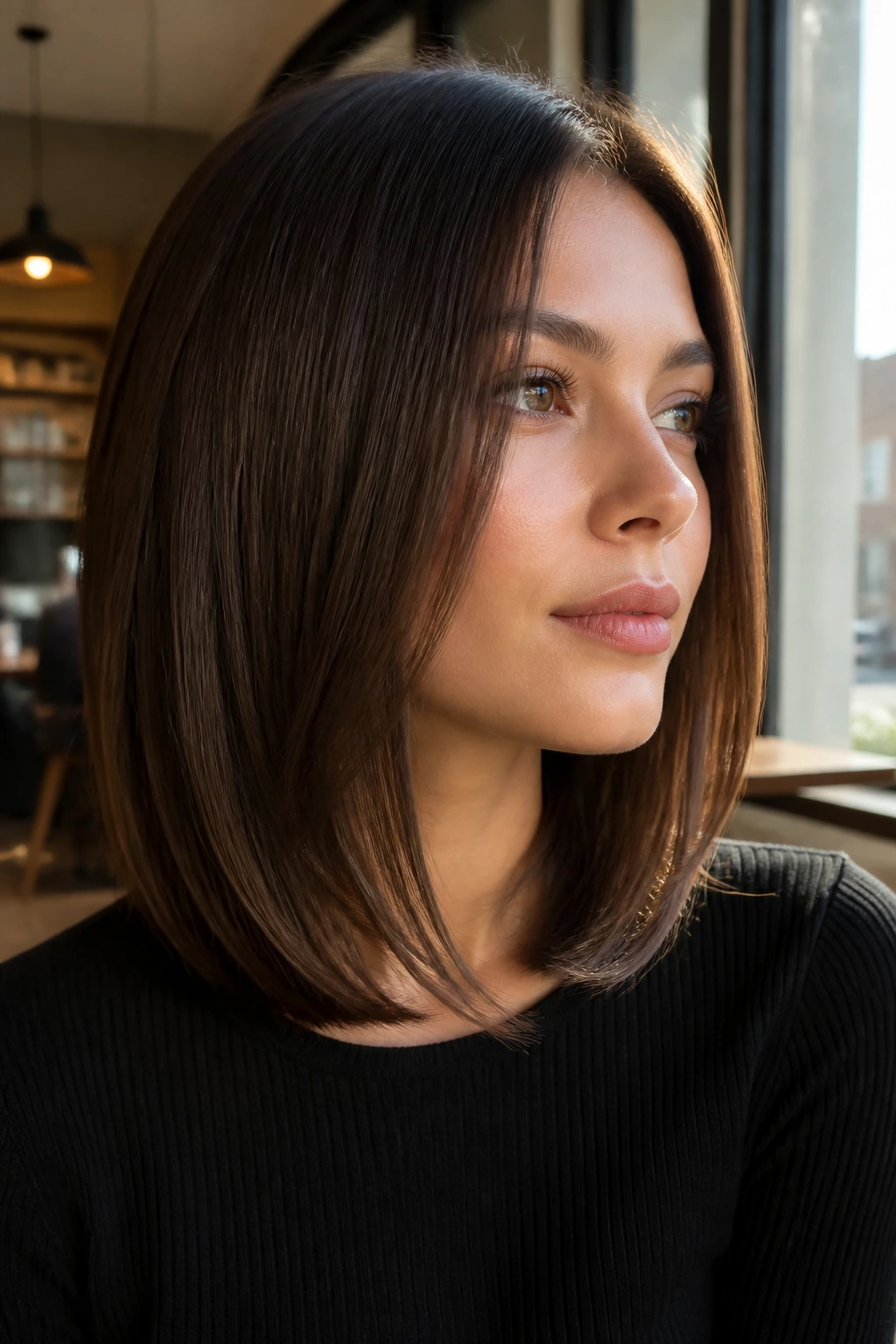
Straight hair is generous and unforgiving at the same time. It gives you shine, smoothness, and a shape that can look expensive with very little product. It also tells the truth about a haircut. If a layer is too short, you see it. If the edge is uneven, you see it. If the layers were carved without a plan, you see that too.
That is exactly why the long bob works here. The length gives the hair enough weight to settle, while the layers remove just enough bulk to keep the ends from dragging. The strongest versions keep a solid perimeter and use the interior to create movement. That balance is the whole game. Not every stylist phrases it that way, but they should.
There is another reason these cuts keep showing up in chair after chair. Straight hair grows out in a way that makes a bad cut obvious fast, and a good cut equally obvious. A line that starts at the collarbone and tapers gently at the front can still look smart weeks later. A ragged, over-layered lob starts looking tired almost immediately.
Heat styling plays a part, too. Straight hair often gets flat-ironed or blown smooth in ways that can make damage show up at the ends first. The American Academy of Dermatology has repeatedly pointed people toward heat protection and less aggressive hot-tool use for exactly that reason. If the cut already has movement, you do not need to work the hair as hard to make it look finished.
Essential Equipment for These Cuts
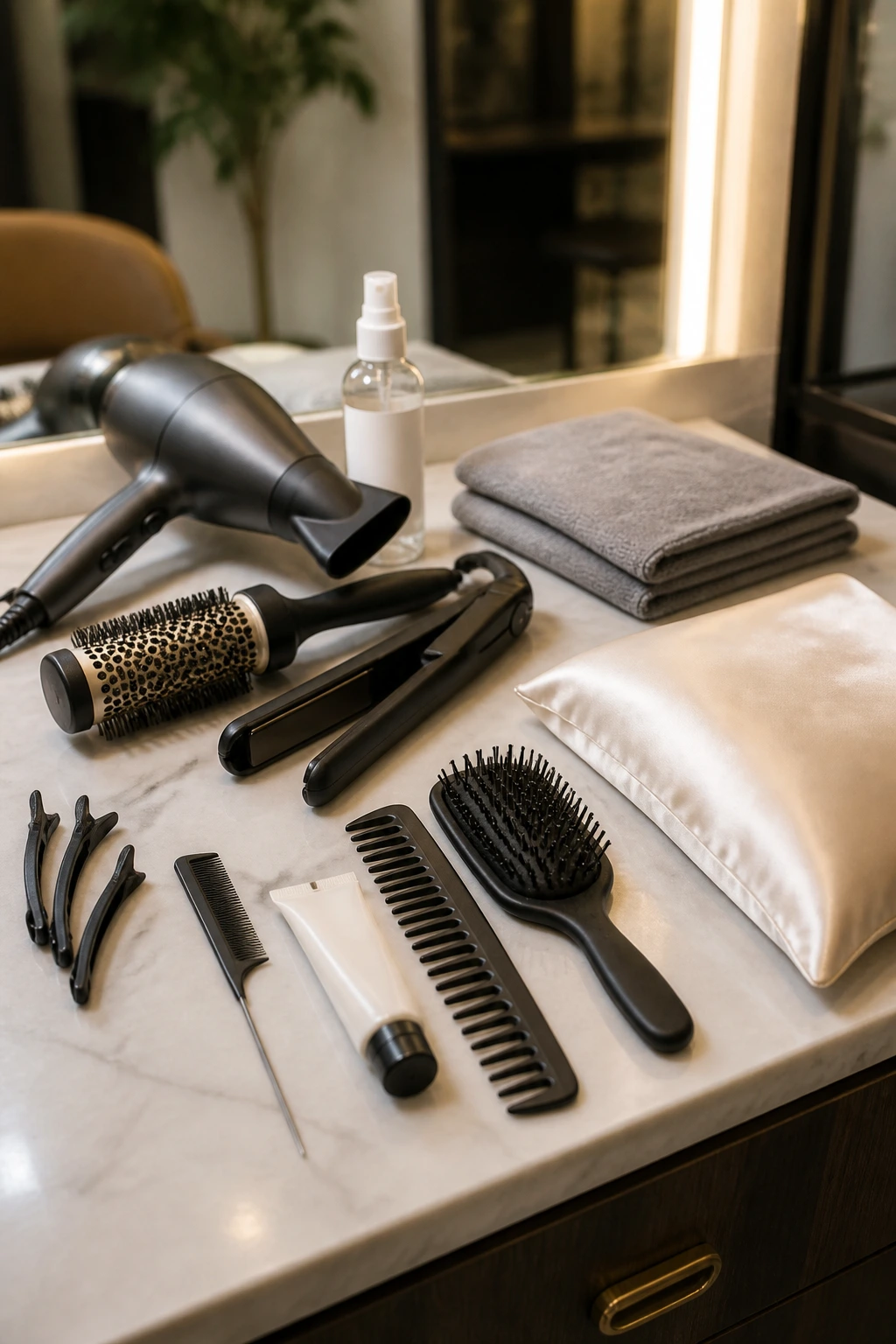
- Hair dryer with a concentrator nozzle: Directs airflow down the hair shaft so the cut dries smoother and frizz stays lower.
- 1-inch to 1.5-inch round brush: Big enough to bend the ends under without making them curl into a ring.
- Flat iron with rounded edges: Useful for a tiny bevel, a face-frame bend, or a polished finish on the front pieces.
- Heat protectant spray: Worth using every time you touch the hair with heat; straight hair shows dryness fast.
- Sectioning clips: Keep the crown, sides, and nape separate so you do not flatten the whole shape while styling.
- Tail comb: Handy for clean parts and for lifting small sections around the face.
- Lightweight smoothing cream: Helps tame static and keep the ends from looking fuzzy.
- Microfiber towel or soft T-shirt: Reduces roughness after washing, which matters more than people think on sleek cuts.
- Dry shampoo: Useful at the roots on day two or three when the lob starts to lose its shape.
- Wide-tooth comb: Good for detangling wet hair without stretching the ends too hard.
- Small paddle brush: Fine for quick smoothing if you do not want a full blowout.
- Silk or satin pillowcase: Helps the ends keep their bend overnight instead of getting crushed into odd angles.
What to Tell Your Stylist Before the First Snip
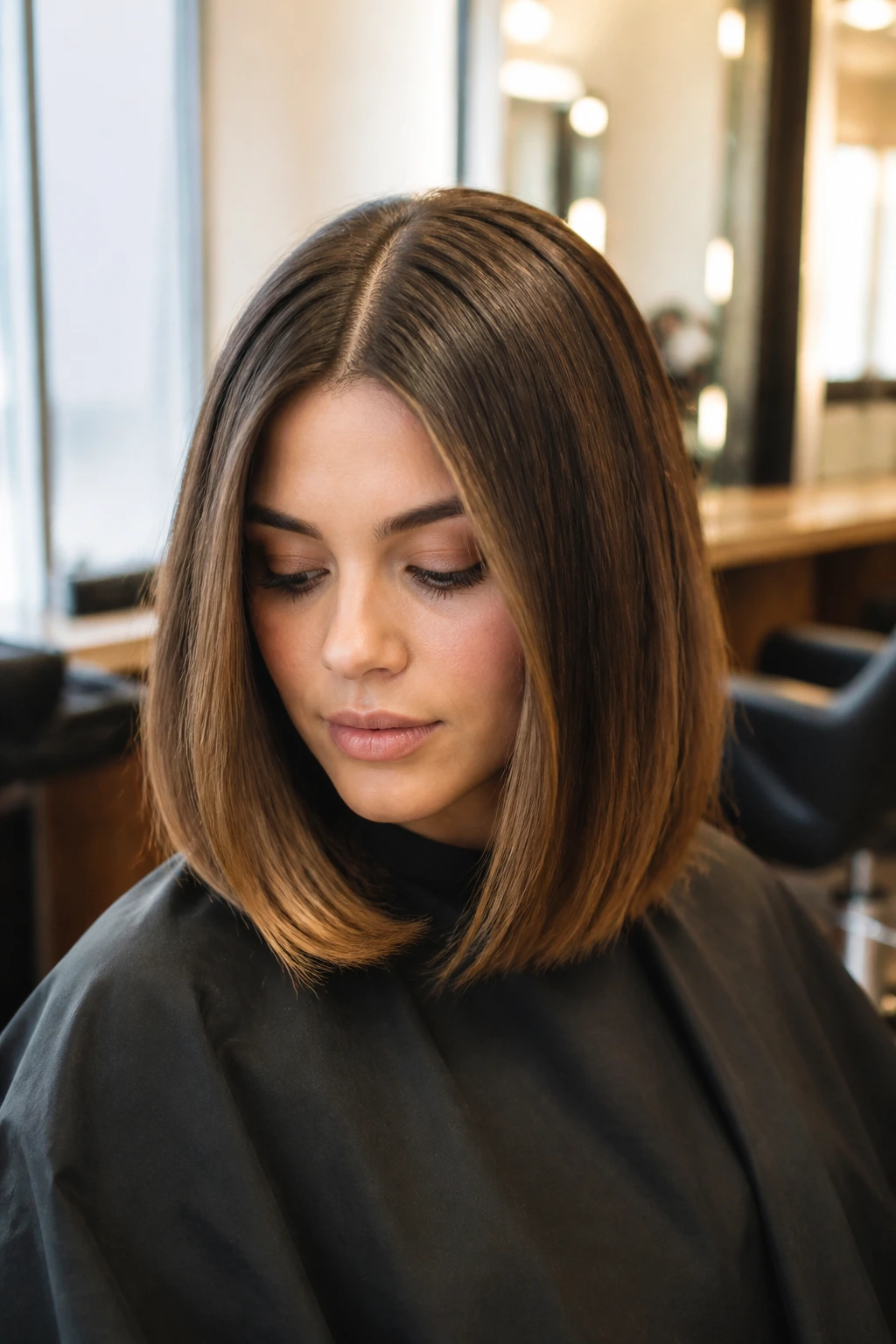
Bring photos, yes, but do not stop there. A picture of a lob is helpful; a picture plus a clear explanation of how you wear your hair is much better. Tell the stylist whether you part it in the center, on the side, or somewhere in between. Straight hair behaves differently in each part, and the cut should be built around the part you actually use, not the part that looks good for three minutes in the chair.
Be specific about length. “Long bob” can mean anything from chin-length to well below the collarbone depending on who says it. If you want the longest pieces to skim the collarbone, say that. If you hate hair touching your neck, say that too. The same goes for the shortest layers: if you want movement without visible steps, ask for long internal layers and keep the outside edge solid.
Talk about density, not just texture. Fine straight hair needs a different plan from thick straight hair, even though both may feel “smooth.” Fine hair usually does better with fewer layers and more perimeter weight. Thick hair often needs the inside relieved so the cut does not puff outward at the bottom. If your hair flips out at the shoulders, mention that. If one side always falls flatter than the other, mention that too.
And speak up about styling habits. If you air-dry most days, the cut has to look good without a brush. If you flat-iron every morning, the layers can be a little more sculpted. If you barely use heat, the shape should hold on its own with a little bend from the cut itself. A strong consultation saves you from sitting in the chair later, staring at a result that seemed clever in theory and annoying in real life.
How to Wear These Cuts From Workday to Weekend

Best parting: Center parts keep the shape sleek and modern, while a deep side part gives the crown more lift and the front more swing. If your hair lies limp at the roots, switch the part by an inch or two and let the lob do half the work.
Best finish: A soft bend at the ends looks cleaner than a full curl on straight hair. Keep the line calm, then let the front pieces curve under or away from the face by a fraction of an inch. That tiny move keeps the style from looking rigid.
Best accessories: Hoops, narrow headbands, barrettes, and one strong clip behind the ear all work well with a layered lob. Heavy, bulky clips can fight the shape, especially if the cut has a clean A-line or a face frame.
Best outfit pairings: High collars, crewnecks, turtlenecks, and sharp blazer necklines all show off the lob because they give the haircut a frame. If you wear dangling earrings, a tucked side and a clean bend at the front keep the look from getting too busy.
The nice thing about this length is that you can make it read different ways with almost no effort. Sleek for a meeting. Softer for dinner. A little flipped at the ends if you want the haircut to do something interesting while the rest of you stays simple.
Extra Styling Tweaks That Make the Shape Behave
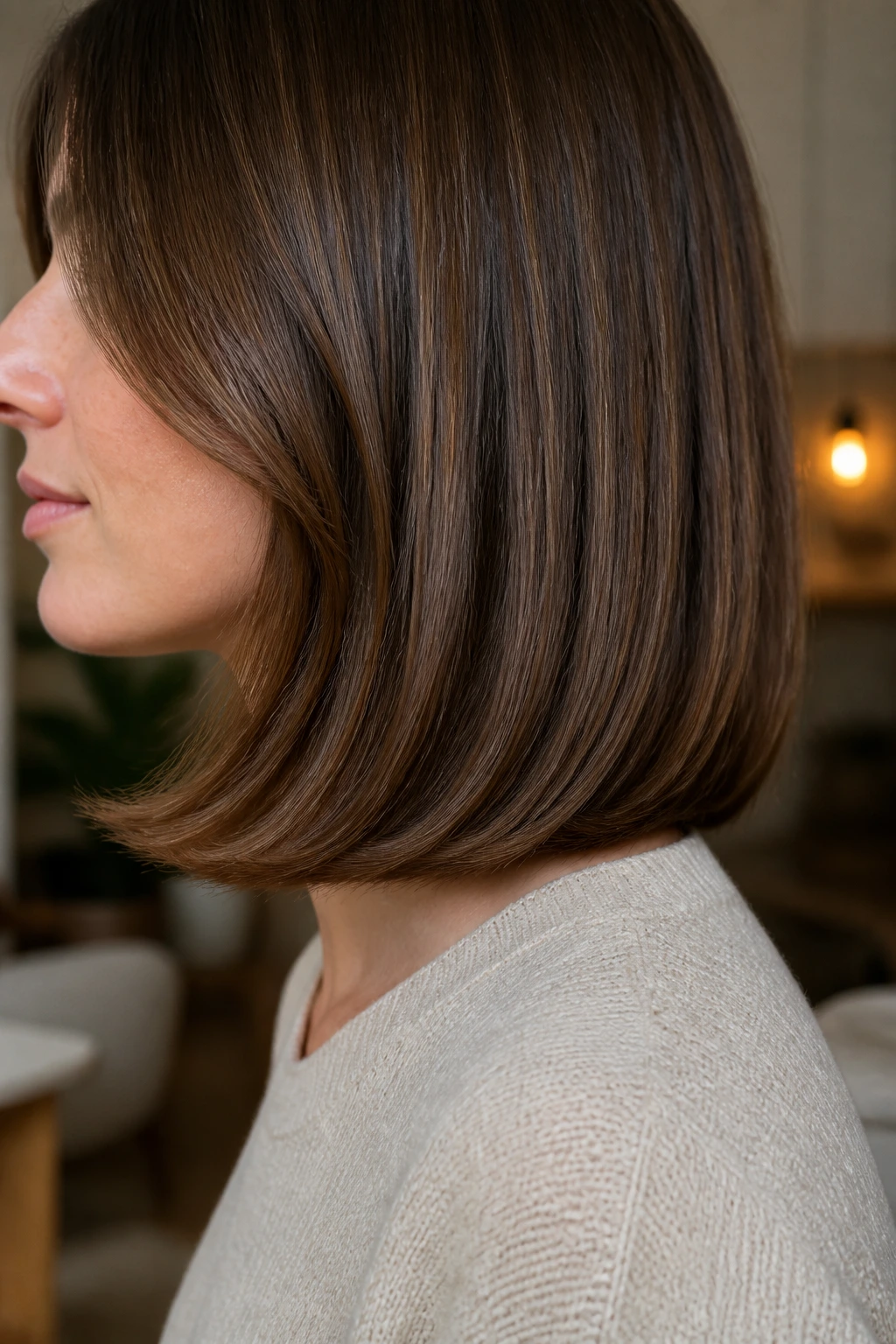
Root lift: Dry the roots first, lifting small sections with a nozzle or brush so the crown does not collapse. On straight hair, root work matters more than people think because flat roots can make the whole cut look heavier than it is.
Smoothing: Use a tiny amount of cream or serum only from the mid-lengths down. If it reaches the roots, the lob goes limp fast. That is the trade-off.
Bend: Wrap the bottom inch of hair around a round brush or touch it with a flat iron for a soft under-turn. A big curl changes the character of the cut; a small bend keeps it polished.
Make-it-yours: If your hair is fine, keep the layers low and the edge blunt. If it is thick, ask for more internal removal so the bottom does not feel bulky. If you like a slightly undone finish, point-cut the ends rather than roughing them up with too much product.
A small detail can change the whole read of the haircut. A cleaner part. A cooler blow-dry shot. Less serum than you thought. Straight hair punishes excess fast, so restraint tends to win.
Common Mistakes That Make Straight Hair Look Flat
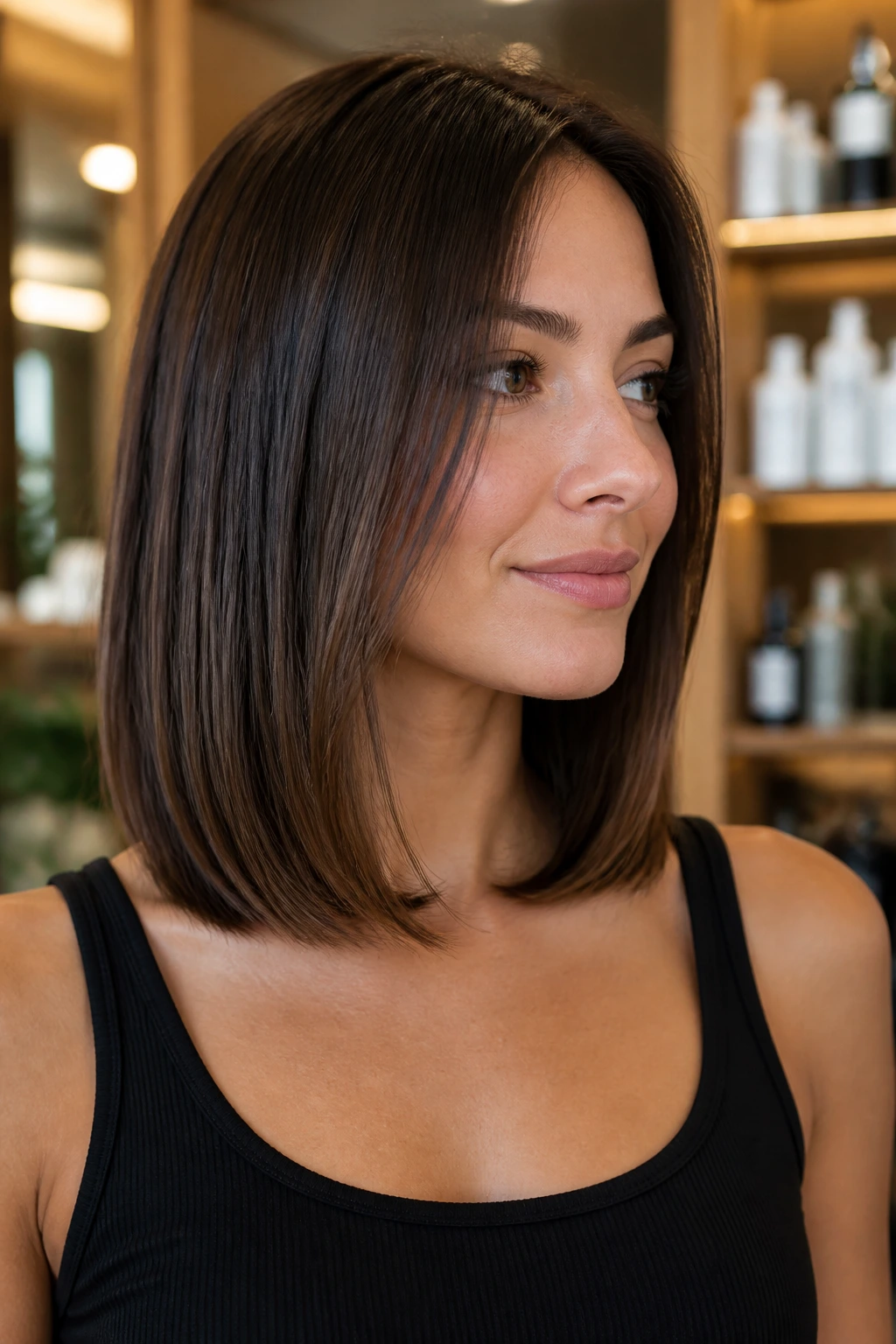
- Layering too high: When short layers start near the cheekbones on fine straight hair, the ends can look stringy and the perimeter loses weight. Ask for lower, longer layers unless you want a more editorial shape.
- Over-thinning the ends: Thinning shears can make straight hair look wispy and ragged, especially under bright light. Point-cutting or soft internal layering usually gives a cleaner result.
- Ignoring the natural part: If you cut the hair for a center part but wear it side-parted every day, the shape can collapse on one side. Cut and style it the way you live.
- Using too much oil or cream: Straight hair only needs a small amount of product. Too much and the lob goes greasy at the roots and stringy at the ends.
- Flat-ironing every bend out of it: A dead-straight finish can look sleek, but it also erases the shape of the cut. Leave a tiny bevel at the ends so the layers still show.
- Skipping trims too long: Once the bottom line splits and the ends get see-through, the whole lob loses its structure. The cut stops looking intentional and starts looking tired.
Variations and Alternatives to Try
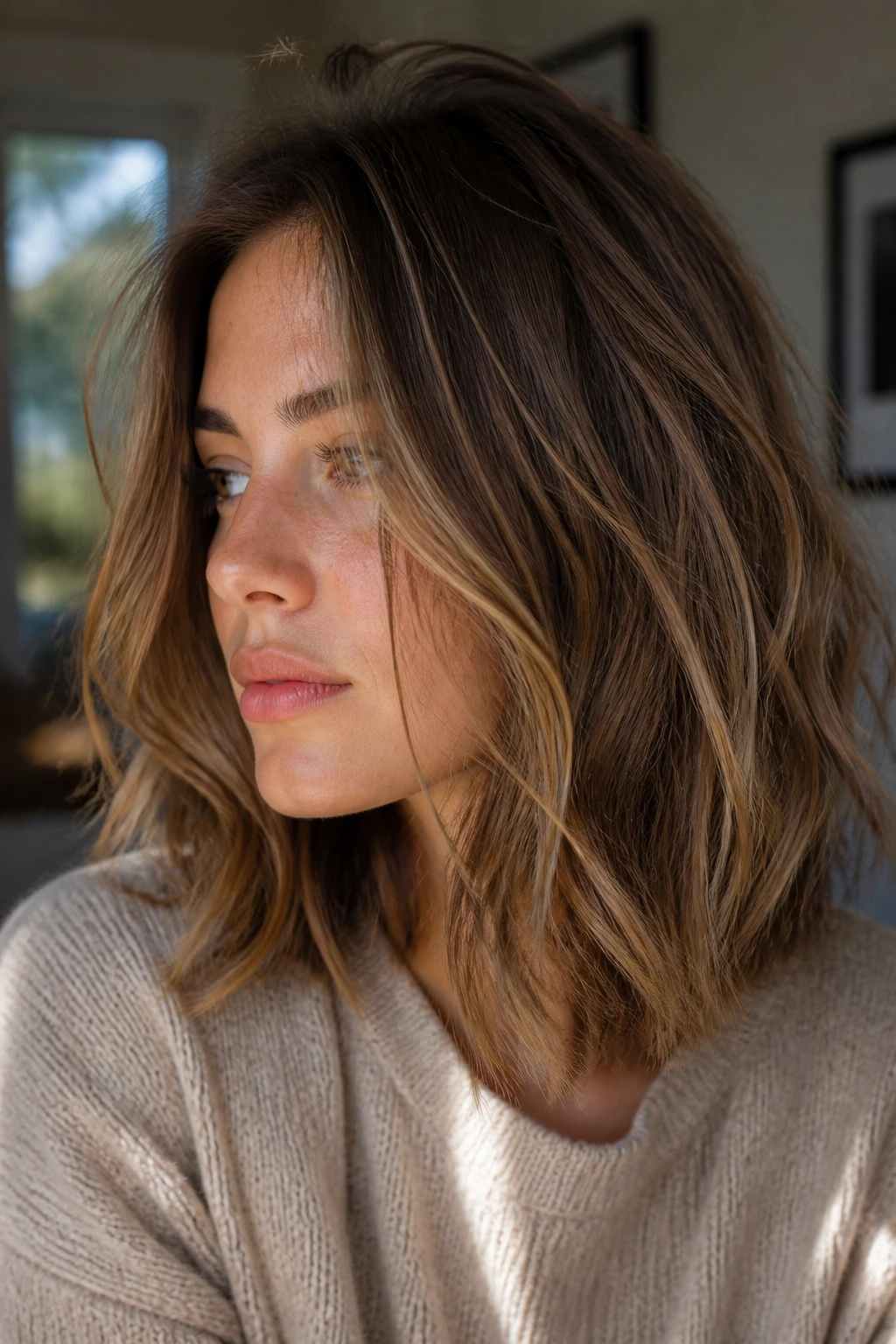
The Air-Dry Lob: Keep the layers long and the perimeter blunt so the cut can dry with a natural bend. This works best if your straight hair has a little body on its own and you do not want a brush in hand every day.
The Glass-Straight Lob: Keep the surface sleek, the part clean, and the ends beveled by a fraction of an inch. It is the neatest version of the cut and works well when you like a polished finish that shows off shine.
The Thick-Hair Relief Lob: Ask for more internal weight removal and a slightly longer front so the bottom does not balloon outward. This one is built for dense straight hair that feels heavy by lunchtime.
The Fine-Hair Lift Lob: Keep the outer edge strong and only add a few long internal layers. That gives the illusion of movement without stealing the density that fine hair needs to look full.
The Grown-Out Lob: Let the front sit closer to the collarbone and keep the layers low enough that they blend as they grow. This is the version for people who want shape but hate living on a six-week trim schedule.
Tools, Products, and Salon Terms Worth Knowing
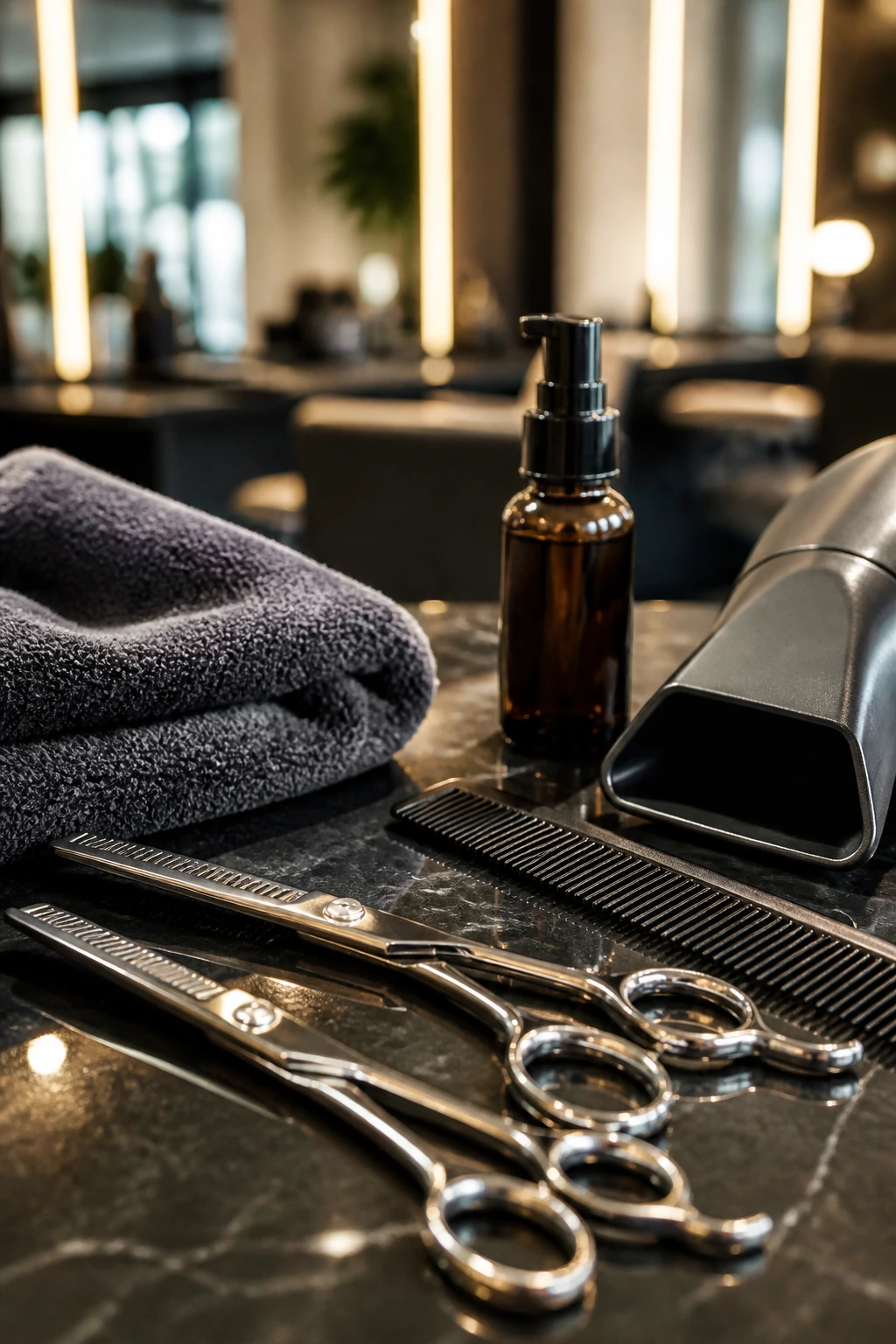
- Point cutting: A cutting method where the stylist snips into the ends at an angle; useful for softening a blunt line without shredding it.
- Internal layers: Hidden layers inside the haircut that remove weight while leaving the outer edge smooth.
- Bevel: A slight bend at the ends, usually inward, that keeps straight hair from hanging dead-straight.
- Texturizing shears: Best used carefully on thick hair; too much can make the ends look sparse.
- Round brush: Helps create lift at the roots and a soft curve at the bottom.
- Flat iron: Good for polish, but use a heat protectant and keep the temperature sensible.
- Concentrator nozzle: A small attachment for the dryer that directs airflow and helps keep the cut sleek.
- Root-lift spray: Useful on the crown if your lob tends to collapse during the day.
- Lightweight serum: Smooths the ends without making them look oily.
- Microfiber towel: Reduces friction after washing, which helps the surface stay smoother.
- Silk pillowcase: Cuts down on morning bends and roughness from sleep.
- Tail comb: Helpful for clean part lines and sectioning before you blow-dry.
Keeping the Shape Between Salon Visits
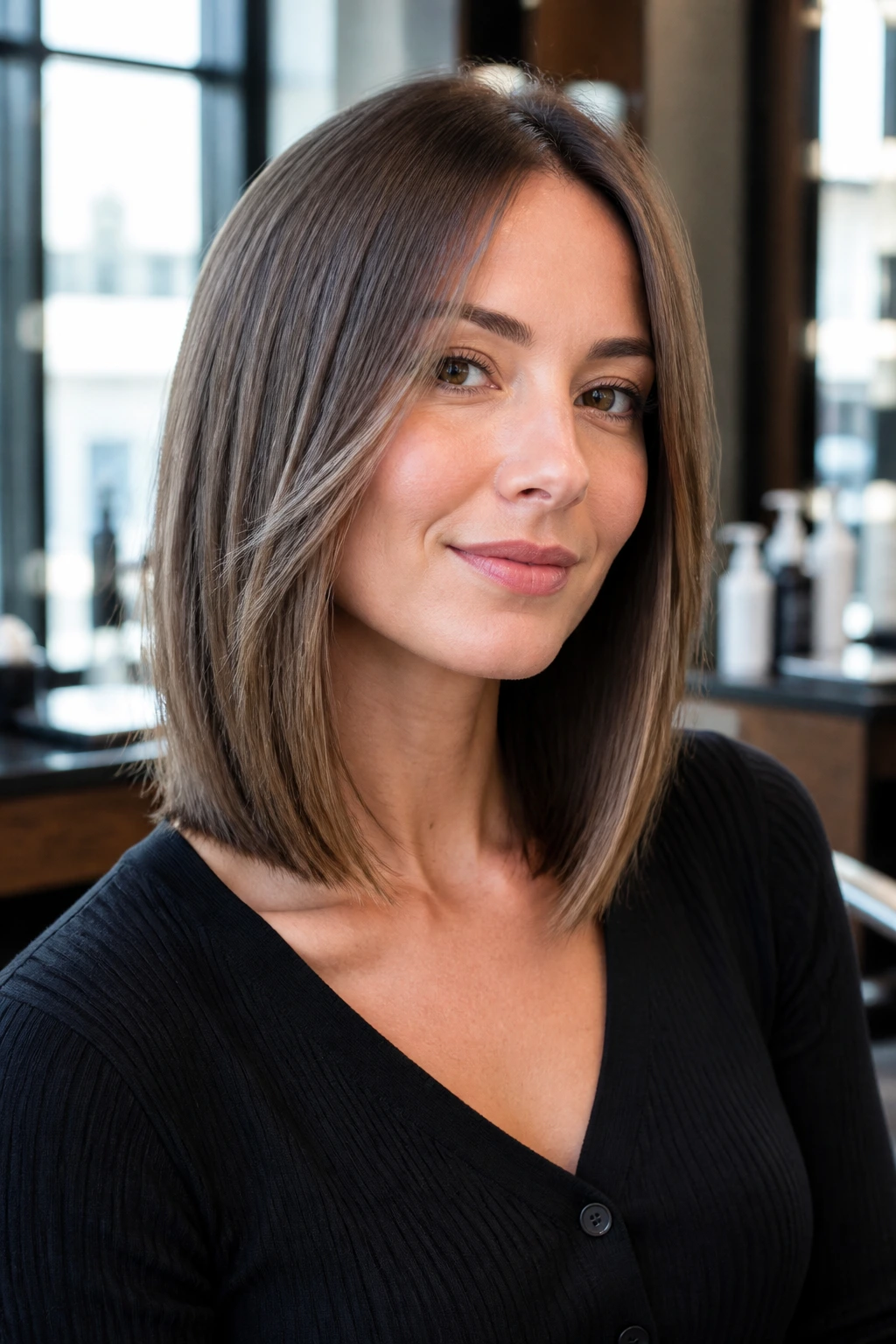
A layered lob on straight hair looks best when you stay ahead of the edges. Once the perimeter gets too blunt and the layers grow past their sweet spot, the cut starts to hang instead of move. A trim every 8 to 12 weeks keeps the outline honest. If you wear curtain bangs or a strong face frame, you may want a quick cleanup around 4 to 6 weeks just for the front.
Washing habits matter, too. Straight hair often shows product buildup fast, especially at the roots, so a clarifying shampoo every 2 to 4 weeks can keep the crown from going limp. If you use a lot of dry shampoo or smoothing cream, lean toward the shorter end of that range. If your hair is dry or color-treated, be gentler and follow the clarifying wash with conditioner on the mid-lengths and ends.
At night, let the hair cool and dry fully before you sleep on it. Half-damp hair pressed into a pillow tends to wake up with a bend in the wrong place. A silk pillowcase helps, but it is not magic; it just reduces friction so the cut holds its shape a little longer. If the front pieces keep flipping out, a quick pass with a brush and cool air in the morning usually fixes it faster than a full rewash.
Heat styling should stay measured. If you blow-dry every day, keep the dryer on medium heat and finish with a cool shot. If you flat iron, do one slow pass rather than three fast ones. That keeps the shine intact and gives the haircut a smoother finish without chewing up the ends.
Straight-Hair Lob Questions People Ask
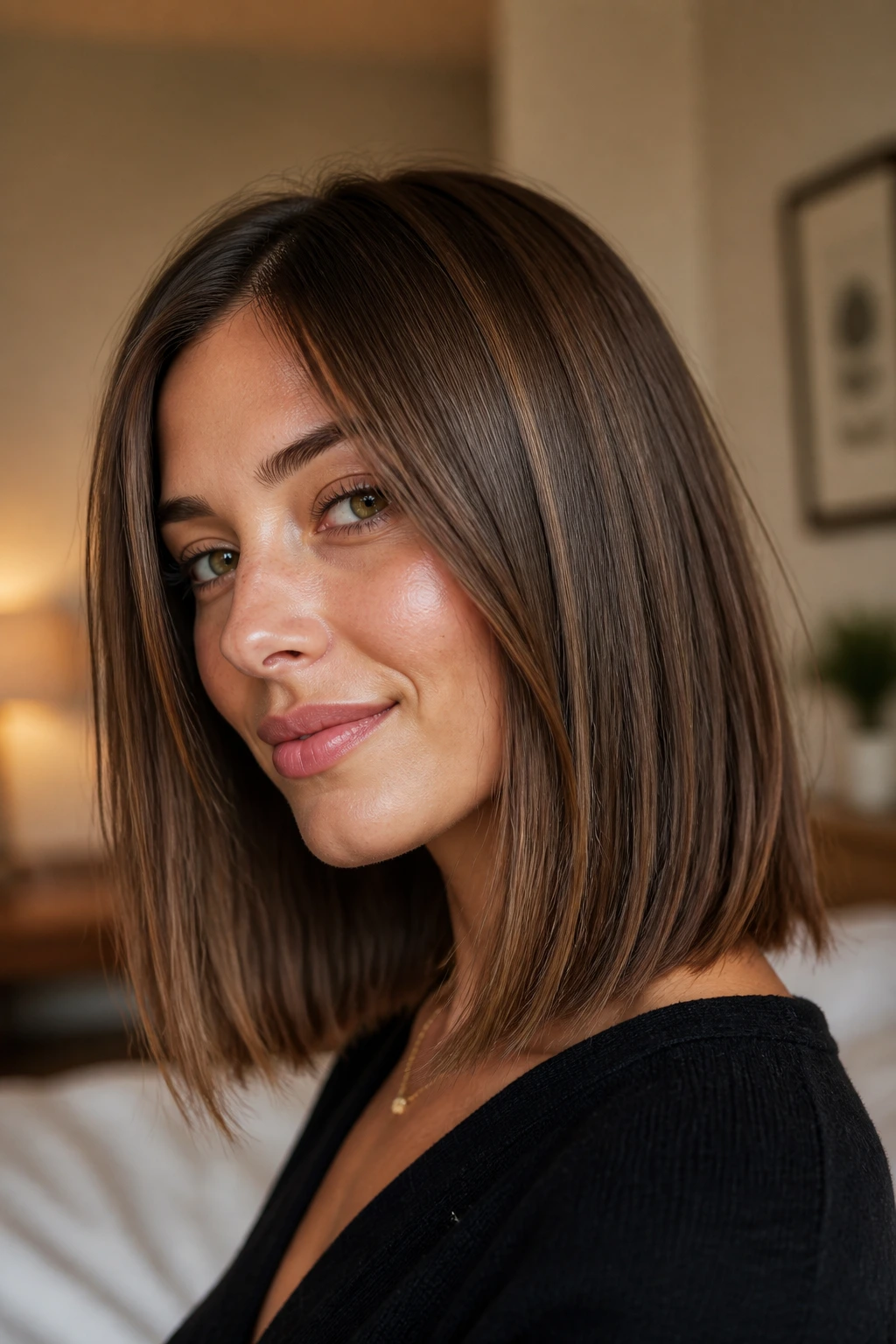
Will layers make straight hair look thinner?
They can, if the layers are too high or too many. The safer move is long internal layers that keep the perimeter full while removing bulk from the middle.
What length is best for a layered lob on straight hair?
Collarbone length is the sweet spot for most people because it gives the hair room to move without turning into a short bob. If you want more styling room, let the front sit a touch longer than the back.
Can I air-dry a layered lob and still have shape?
Yes, if the cut is built for it. Ask for low, long layers and a slight bevel at the ends so the hair dries with a soft bend instead of hanging straight down.
Is a side part better than a center part for straight hair?
Neither is automatically better. A side part adds lift at the root, while a center part looks cleaner and more balanced; the right choice depends on your cowlicks and where your hair naturally falls.
What if my straight hair flips out at the ends?
That usually means the perimeter is hitting the shoulders at a point where friction pushes it outward. A longer cut, a slight bevel, or a different layer placement can calm that down.
How often should I trim a long bob with layers?
Every 8 to 12 weeks is a good target for keeping the line neat. If the front is heavily layered or you wear bangs, add a small maintenance trim in between.
Will a layered lob work on very fine straight hair?
Yes, but keep the layering subtle. Fine hair usually looks better with a stronger outer line and just enough internal movement to prevent the bottom from feeling heavy.
What should I ask for if I want movement but not a shag?
Ask for a blunt perimeter with long internal layers and soft face-framing pieces. Say you want the hair to move when you turn your head, not look choppy at the ends.
The Shape That Keeps Its Edge
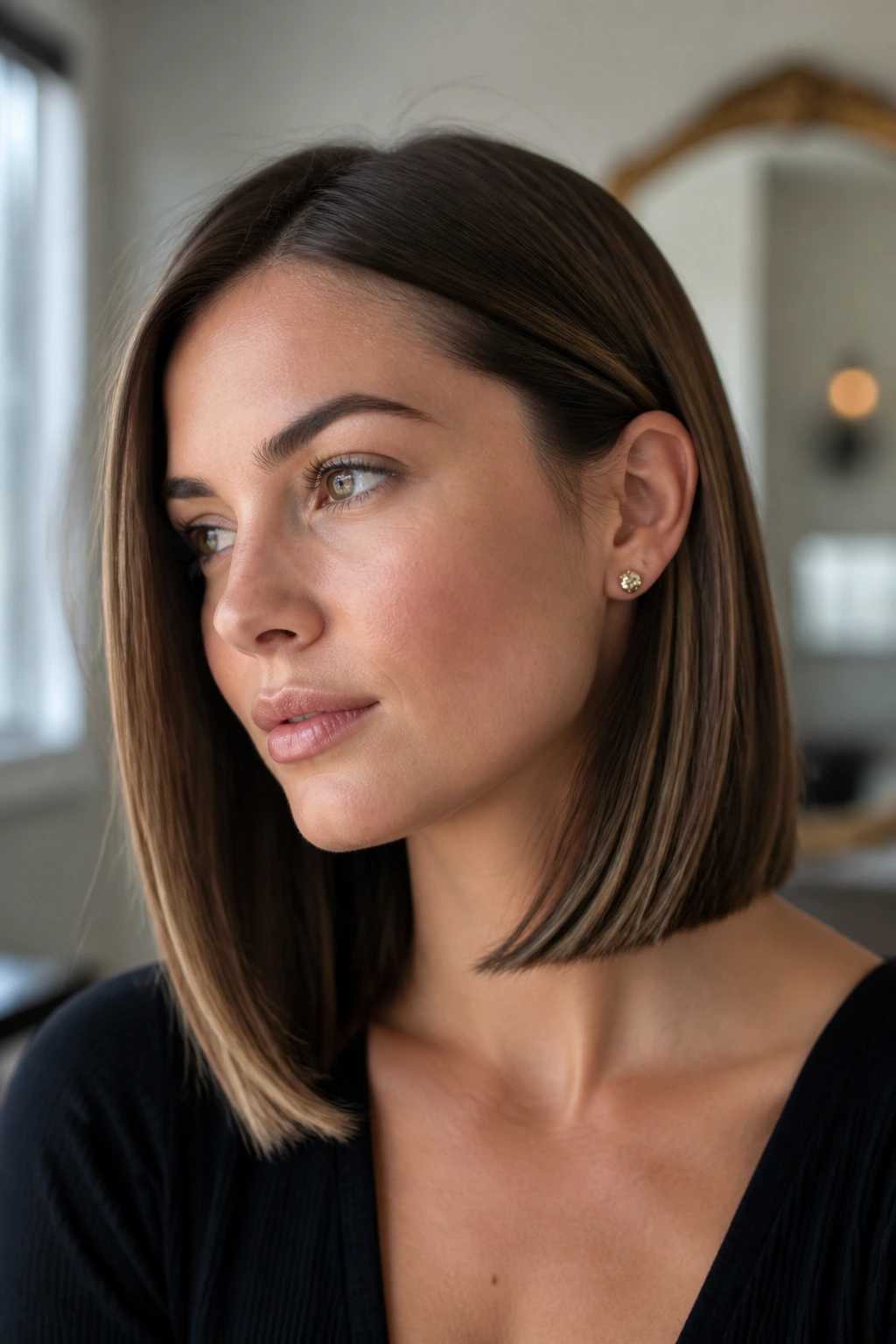
A good lob on straight hair does not need to be loud. It needs to be precise. Once the perimeter is clean and the layers are placed with restraint, the cut starts doing that satisfying thing where it looks polished from across the room and even better up close.
That’s the part worth chasing. Not gimmicks. Not over-texturizing. Just a shape that stays clear when you tuck it behind your ear, brush it smooth, or let it air-dry with a small bend at the bottom.
If you bring one clear photo, one honest note about how you style your hair, and one realistic idea of how much maintenance you want, you can land on a long bob that feels like it belongs to you instead of a salon poster. And once you find the right version, straight hair finally stops looking like something to manage and starts looking like what it is: clean, sharp, and a little bit expensive.