



A choppy bob on wavy hair can look polished in the chair and a little unruly by lunch if the cut lands in the wrong place. Add a heart-shaped face—wider through the forehead and cheekbones, narrower at the chin—and the difference between “fresh” and “why does this feel off?” comes down to a few inches of length, a little internal texture, and where the front pieces stop.
The good versions of choppy bobs for wavy hair and heart-shaped faces do one quiet thing well: they move the eye downward. Sometimes that means a jaw-grazing line with broken ends. Sometimes it means a collarbone lob with face-framing pieces that soften the upper half of the face. Sometimes it’s a bang shape that trims the forehead visually without flattening the wave pattern. The wrong cut fights the wave and ends up wider at the temples. The right one seems to know where your hair wants to bend.
That’s why these 25 cuts are not just “different versions of the same bob.” They’re different answers to different hair realities—fine waves, thick waves, loose waves, strong side parts, air-drying habits, and the very real fact that some people tuck one side behind the ear every time they walk into a room. A good choppy bob should work with that, not against it.
Why These Cuts Make Sense on Real Hair

- Heart-shaped balance: The best shapes add visual weight near the jaw or collarbone, which keeps the forehead from feeling like the whole story.
- Wave-friendly movement: Choppy ends let 2A to 2C waves separate into clumps instead of swelling into one wide block.
- Lower styling pressure: A smart cut can air-dry with a little mousse and still look intentional by midmorning.
- Better grow-out: Broken edges hide the awkward stage better than a hard blunt line.
- Room for your habits: Side parts, tucks, bangs, and one-sided volume all change the result, which is exactly why the same haircut can work five different ways.
1. Chin-Grazing French Chop
A chin-grazing French chop is the shortest cut in this group that still feels friendly to a heart-shaped face. The ends stop right around the jaw, then get broken up enough that they don’t sit like a helmet. On wavy hair, that matters. One solid line at this length can puff out. A few sharp points keep it breathing.
Why it flatters heart-shaped faces
The cut lands where the face starts to narrow, which means it adds presence low down instead of crowding the temples. If your forehead feels broad, this shape gives the eye somewhere else to go.
- Keep the front pieces brushing the chin.
- Ask for point-cutting on the perimeter, not heavy thinning.
- A soft side part adds movement fast.
- Skip dense bangs unless you want more focus up top.
Best detail: Let the hair dry about 70% before diffusing. That keeps the wave from blooming into frizz.
2. Soft A-Line Bob
A tiny bit of length in front solves a lot of heart-face frustration. The soft A-line bob looks almost plain in a salon mirror, then turns smart the second the front pieces fall forward and skim the jaw. That forward angle is doing the work.
The back usually sits about 1 to 2 inches shorter than the front. Not dramatic. Just enough to pull the eye diagonally instead of letting it stop at the widest part of the face. Wavy hair likes that diagonal. It bends into it.
Wear this one with a deep side part if your forehead feels wide, and keep the ends soft rather than razor-thin. The cut should feel tidy, not severe. If you like to tuck one side behind the ear, this is a good bob for it.
3. Collarbone Lob with Face-Framing Pieces
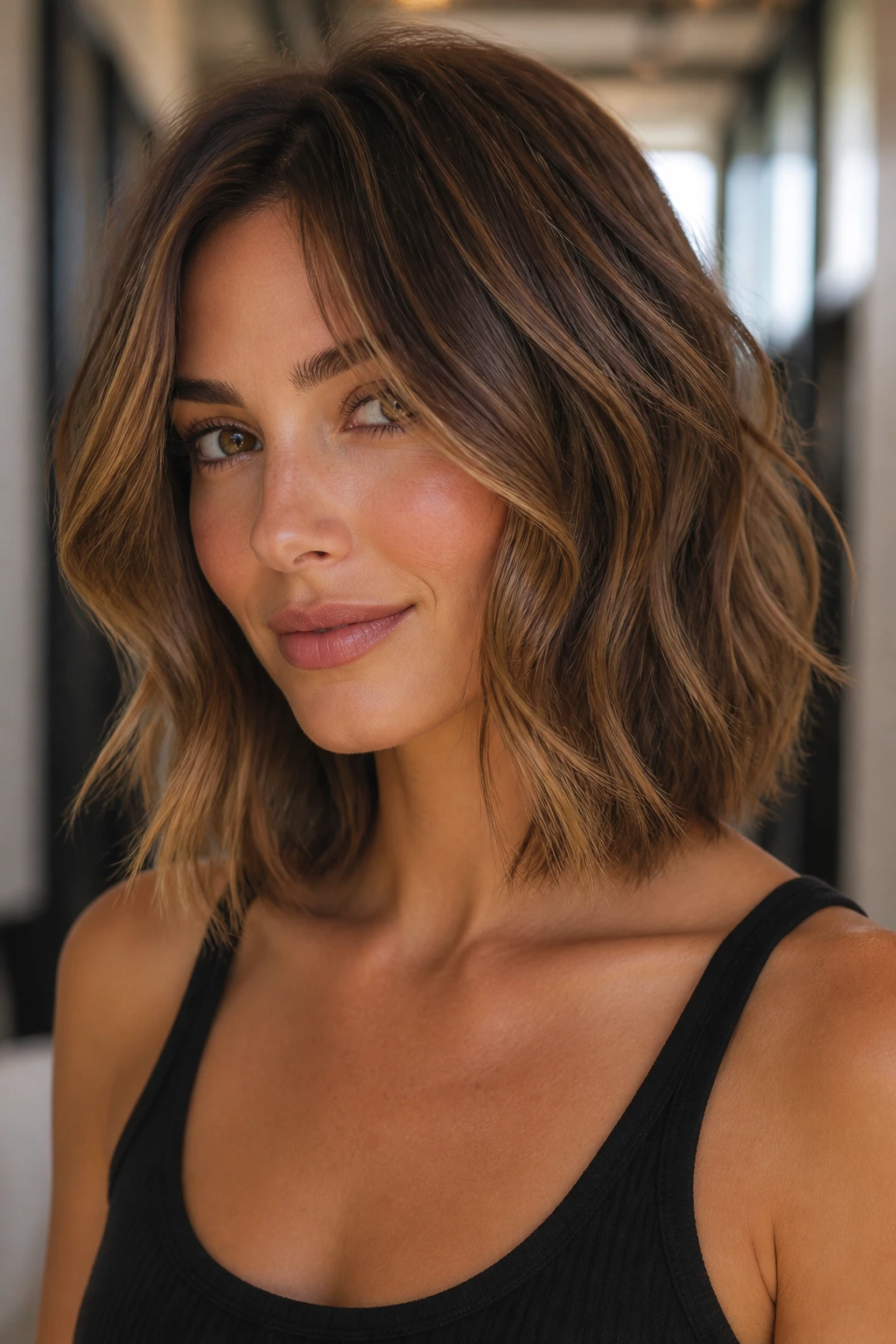
Why does this still count as a bob? Because once the length settles at the collarbone and the front pieces graze below the chin, the haircut behaves like a longer bob, not a medium-length layer festival.
The collarbone gives wavy hair an anchor. Instead of bouncing right at cheekbone height and making the upper face feel wider, the bends fall lower and move down the neck. That lowers the visual center of gravity, which heart-shaped faces usually need.
How to wear it
- Ask for the face-framing pieces to start at the chin and taper down.
- Let the roots get a little lift, but keep the ends soft.
- This length works well with scarves, collared shirts, and winter coats because it doesn’t explode into static as fast.
- If you hate constant trims, this is one of the safer places to live.
4. Curtain-Bang Razor Bob

Picture a bob that opens at the forehead and then falls away from the cheeks in soft slices. That’s the curtain-bang razor bob. It has a sly way of making heart-shaped faces look less top-heavy without losing edge.
The curtain bang breaks up forehead width, while the razored ends keep the bottom from feeling heavy. On wavy hair, each piece can bend a little differently, and that unevenness is the point. The cut never needs to look stamped out.
- Keep the bang length just below the brow if you want the eyes open.
- Start the face frame around the cheekbone.
- Use a light mousse or foam, not a heavy cream.
- A quick round-brush bend on the fringe can help on loose waves.
Watch for this: If your waves are very soft, the bangs may need a tiny bit of heat or they’ll split in odd places.
5. Side-Part Swoop Bob

The side-part swoop bob is what I recommend when someone wants movement without obvious layering. The side part creates a long diagonal across the forehead, and that diagonal is a gift on a heart-shaped face. It softens the widest part and pulls the eye down toward the jaw.
The cut itself can stay fairly simple: a lightly choppy perimeter, a little extra length in the front, and enough texture to keep the ends from sitting flat. The magic is in the part. Wavy hair catches that swoop and runs with it.
If your hair naturally tries to split down the middle, this is the cut that lets you choose the fight. Wear one side tucked, one side loose, and keep the crown from getting too tall. You want lift, not a mushroom shape.
6. Stacked Nape Bob
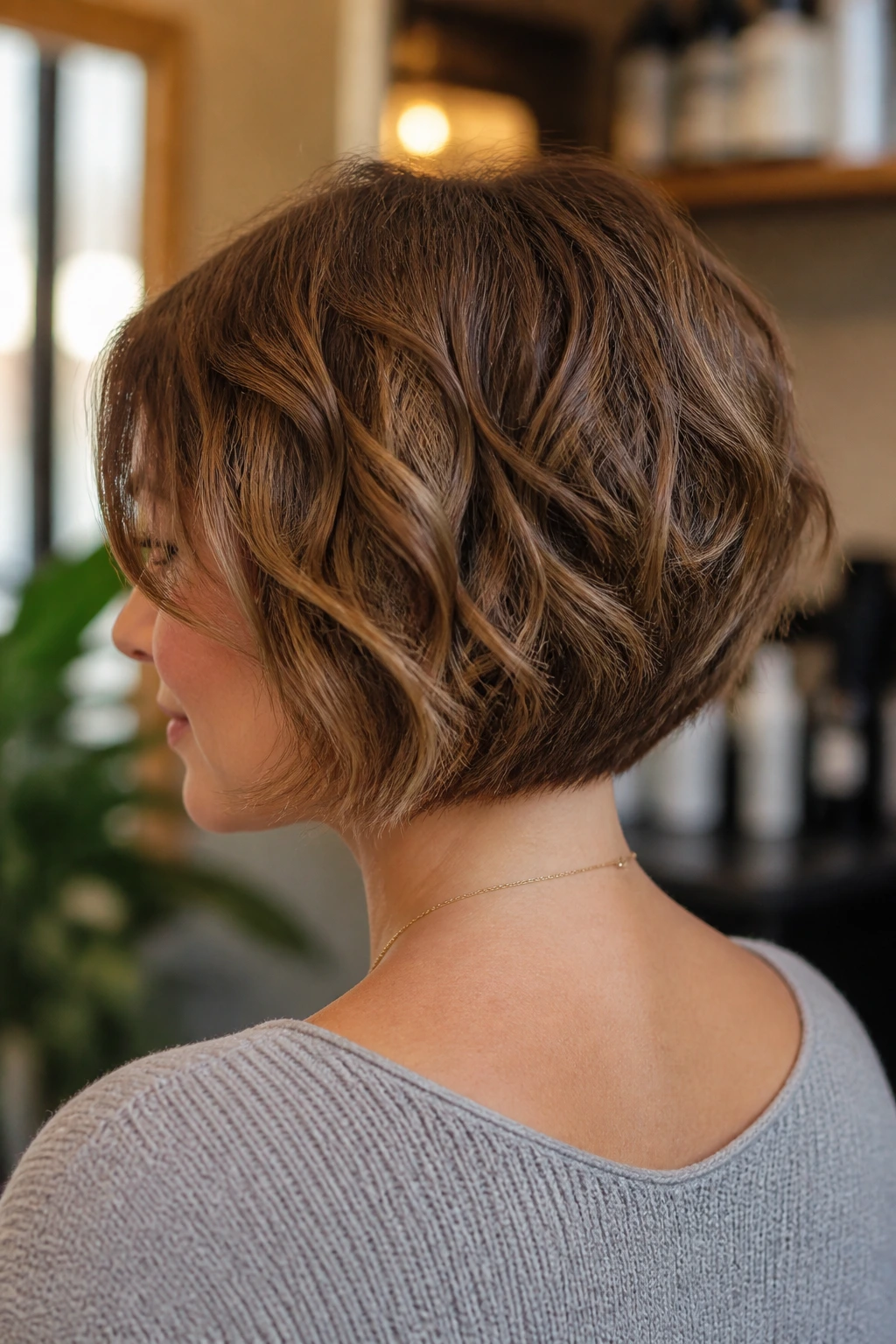
Unlike a collarbone lob, the stacked nape bob is built from the back first. The shorter nape lifts the silhouette, while the longer front pieces soften the chin and keep the cut from feeling severe. On fine wavy hair, that stack gives the illusion of density without piling on product.
It’s a neat shape. Maybe the neatest in this whole set.
That means the haircut rewards regular trims. Let the nape go fuzzy for too long and the whole thing loses its line. If you like crisp edges, a shorter neckline, and a little height at the back, this one has a lot to offer. If you prefer messy, wide volume at the crown, pass.
7. Shaggy Piecey Bob

A shaggy piecey bob is what happens when you want the cut to look like it already knows how to style itself. The texture is built in: shorter internal layers at the crown, broken pieces around the cheekbones, and a perimeter that refuses to sit in one hard line.
Why it stays controlled, not fluffy
Wavy hair needs enough removal inside the shape to keep the ends from ballooning, but not so much that the whole thing frays. Ask for the temple area to stay a little longer and the nape to be lightly broken up, not shredded.
- Best on medium-to-thick waves that expand after washing.
- A nickel-size amount of mousse at the roots usually beats a heavy cream here.
- Dry with your head tilted to one side so the clumps fall instead of spreading.
- Hands off while it dries. Touching it early makes the texture fuzzy.
My opinion: This cut is better slightly undone than overly polished.
8. Blunt-Edge Texture Bob
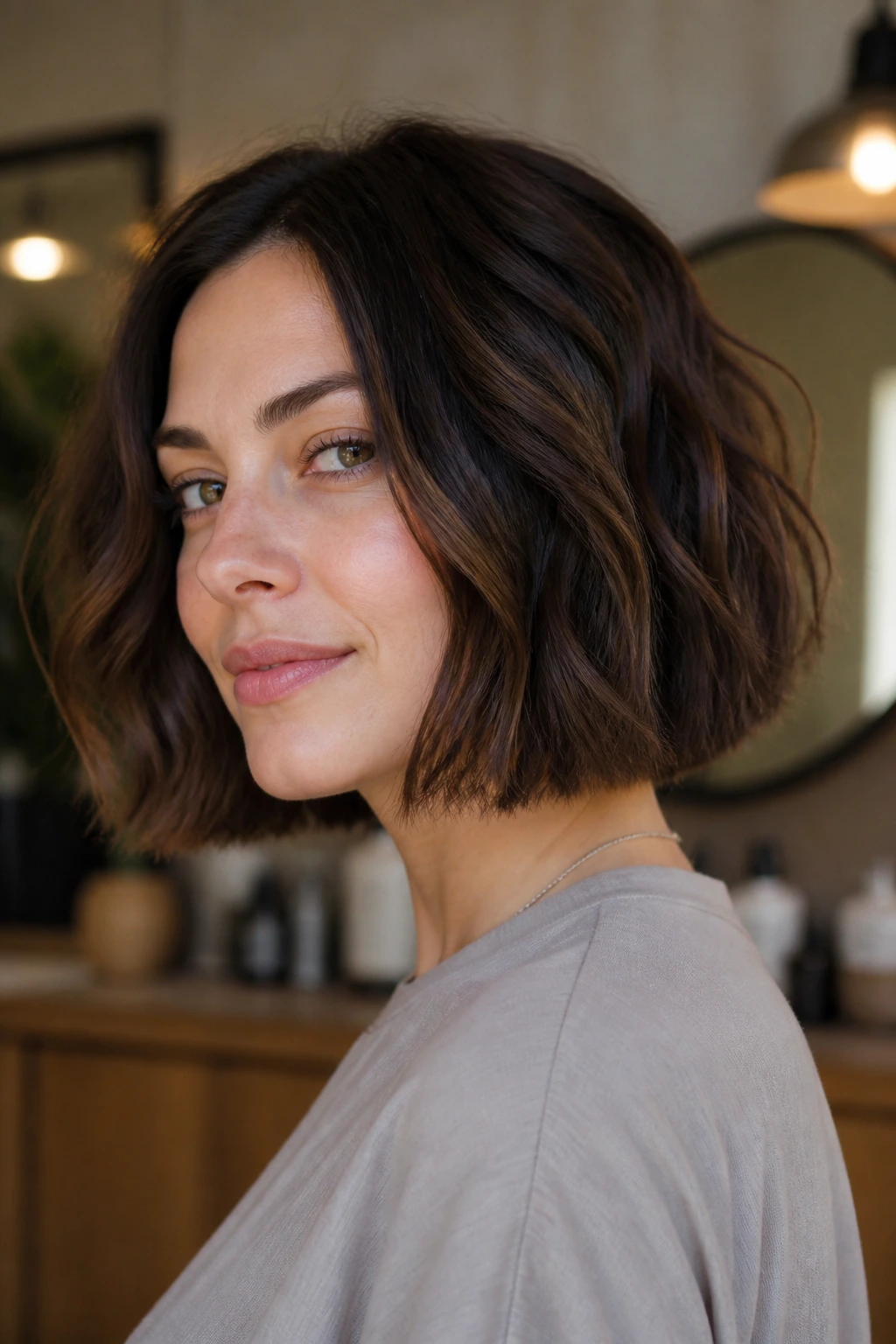
Blunt does not have to mean stiff. A blunt-edge texture bob keeps enough weight at the bottom to give a heart-shaped face some visual ballast, then sneaks movement into the interior so the shape doesn’t lock up.
That weight is useful. On wavy hair, the bottom edge can disappear if the cut gets too layered, and then the whole bob starts to feel airy in the wrong way. A blunt perimeter gives you a cleaner base, especially if your waves are fine.
Ask your stylist to leave the edge solid and do only subtle point-cutting on the last quarter-inch. Too much thinning near the ends is what ruins this cut. You want the line to read firm, not see-through.
9. Asymmetrical Front-Heavy Bob

If one side of your hair always falls flatter, use it on purpose. The asymmetrical front-heavy bob leans a little longer on one side—usually by 1 to 1.5 inches—and that small difference changes the whole face shape.
Heart-shaped faces often look sharpest through the chin, so the longer front panel pulls attention down and off the forehead. On wavy hair, the asymmetry shows up in motion instead of in a rigid slash, which makes the cut feel softer than it sounds.
Tuck the shorter side behind the ear and let the longer side skim the jaw. That little shift is enough. Go too dramatic and it becomes a style choice that fights everything else you wear. Keep it subtle, and it looks like the cut simply knows your face.
10. Bottleneck-Bang Lob

Unlike curtain bangs, bottleneck bangs stay a little denser through the center before opening wider near the cheekbones. That makes them especially useful for heart-shaped faces because they trim forehead width without looking airy or gapy.
The lob length gives the bangs a clean landing spot. Hair that ends somewhere between the chin and collarbone lets the fringe do its job while the rest of the cut stays easy to move. On wavy hair, the fringe usually bends a little off-center anyway, and that’s fine. It should feel lived in, not symmetrical to the millimeter.
Style the center of the fringe forward first, then separate it with your fingers. If you only blow-dry the outer edges, the center can collapse and the whole thing starts to look stringy. Keep the bend soft and you get a face frame that doesn’t overtalk the rest of the haircut.
11. Face-Skimming Lob with Long Front Ribbons

This is the haircut I reach for when someone wants softness without bangs. Long front ribbons fall from the cheekbone to the collarbone, and they do that quiet work of narrowing the forehead visually while giving the jaw more presence.
Wavy hair likes this because the front pieces can bend around the face while the rest of the length stays easy. The ends don’t need to be overtextured; in fact, too much chopping makes the face frame lose its shape. You want a clean path from cheek to jaw.
Wear it with a slight off-center part and let one side sit forward. The longer front pieces can be tucked behind the ear on one side, which gives the cut a little asymmetry without committing to a full asymmetrical bob.
12. Feathered Thick-Hair Bob

If your hair is dense enough to eat its own shape, the feathered thick-hair bob can save your sanity. It removes bulk where thick waves tend to puff—around the crown, behind the ears, and through the lower sides—without making the perimeter look thin.
The trick is feathering, not over-thinning. You want air between the strands, not wisps sticking out like broom bristles. On a heart-shaped face, that feathering softens the upper half while keeping enough fullness lower down to balance the chin.
Ask for weight removal underneath the top layer, then leave the outer line slightly longer. If the haircut gets too carved up at the ends, thick waves can turn into a triangle by the third day. A smart feathered bob should still look like a bob.
13. Rounded Corner Bob

A rounded corner bob is what happens when a square shape gets softened at the edges. The line is still clean, but the corners near the jaw are gently curved so they don’t fight a narrower chin.
Why the corners matter
Heart-shaped faces can take a little width lower down, but not a hard shelf right at the cheekbone. The rounded corner version gives you presence at the jaw without making the face look boxy.
- Keep the front corners soft, not sharply angled.
- Ask for the perimeter to be curved under slightly.
- A side part helps the rounded edge show up better.
- This shape works well with wave patterns that flip out at the ends.
The cut has a nice “I woke up with this and it still behaves” quality. That’s not nothing.
14. Micro Bob with Tucked Ends
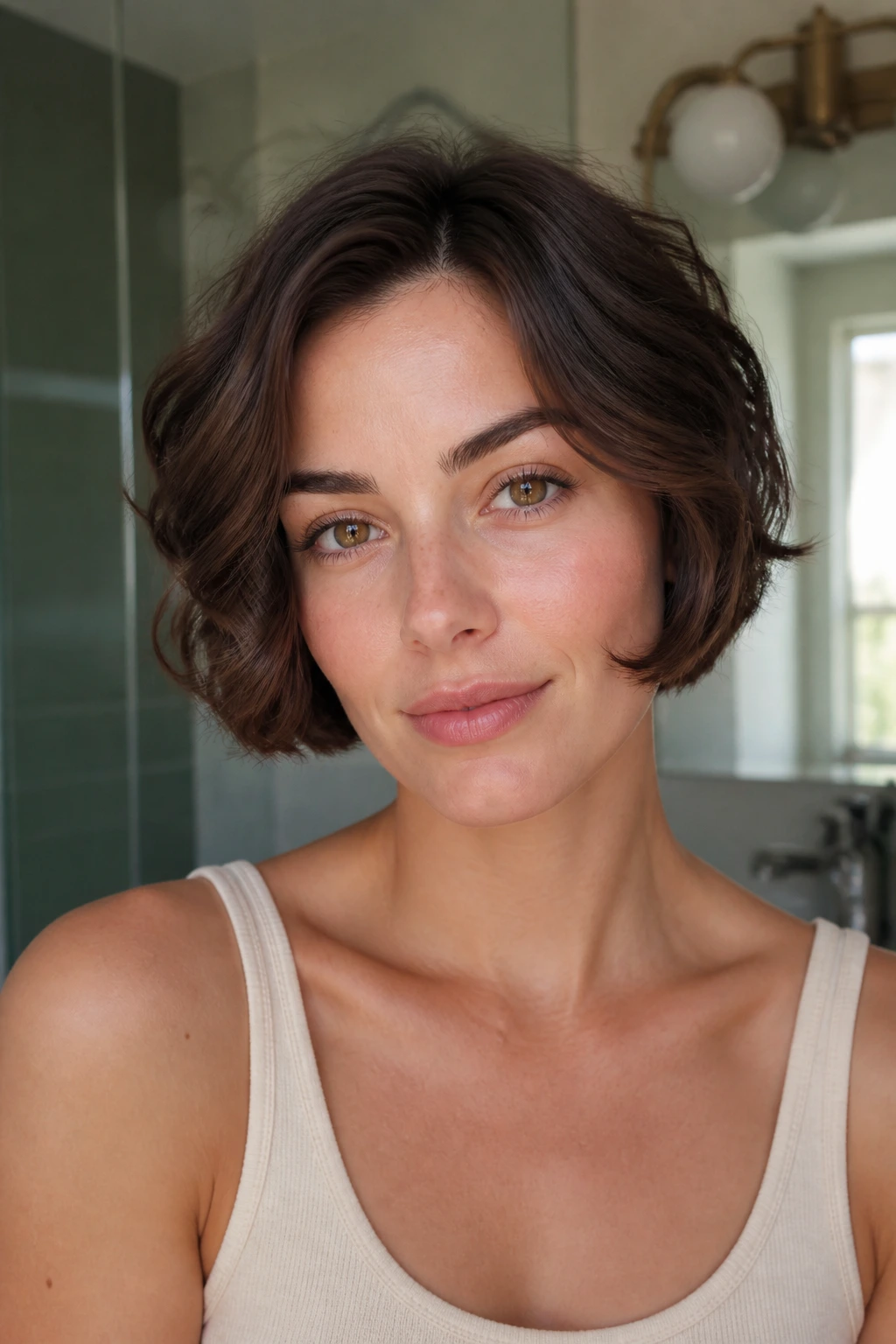
A micro bob sits above the jawline, which sounds risky on a heart-shaped face until the front pieces are left long enough to brush the chin. The tucked-under finish keeps the ends from flaring outward and gives the haircut a neat little curve.
This one is best when your waves are loose and your neck likes to be seen. If your wave pattern gets springy or your face is already quite petite, move the length down another inch. Proportion matters more here than with almost any other cut in the list.
The micro bob is not a “lazy hair” haircut. It needs regular trims and a little product discipline. But when it’s right, it looks sharp without feeling hard.
15. Grown-Out Bixie Bob

What if you want short hair without a hard bob line? The grown-out bixie bob lives in the middle: cropped at the nape, longer through the top, and soft around the ears. It gives heart-shaped faces a little forehead cover while keeping the neckline clean.
The longer top means the wave has room to stand up instead of lying flat and widening the sides. That matters more than people think. A short cut can get triangular fast if the top is too short and the sides hold too much weight.
Who should pick it
- People who like a bit of edge.
- Anyone okay with fringe trims.
- Waves that loosen when the length gets too heavy.
- Readers who don’t want to spend time with a round brush every morning.
16. Invisible-Layer Lob

The best haircut nobody notices at first glance is often the one that grows out best. The invisible-layer lob looks almost one-length, but the inside has enough movement removed that wavy hair falls into ribbons instead of one bulky sheet.
That hidden structure is useful on heart-shaped faces because it keeps the eye moving down the length, not parked at the widest point of the forehead. The front can still be long enough to soften the chin, but the cut doesn’t scream “layers” from across a room.
I like this for people who work in a setting where hair needs to look tidy. You can still bend the front with a curling iron if you want, but the cut does not depend on styling to make sense.
17. Deep Side-Part Sweep Lob

A deep side-part sweep lob creates a strong diagonal across the face, and diagonals are flattering here. They break up forehead width, add movement through the top, and let the lower face feel a little fuller.
The length usually sits around the collarbone, which keeps the bend from widening at the cheeks. Wavy hair follows the sweep easily, especially if you clip the heavier side for a few minutes while it dries. That one little habit helps the root remember where to go.
If you like a softer look, keep the part deep but not severe. The difference between elegant and theatrical is often just an inch or two of part placement.
18. Razor-Sliced Collarbone Cut

Unlike a blunt lob, the razor-sliced collarbone cut is built for softness. The razor gives the ends a feathery bend, which can be lovely on medium waves that want movement without bulk.
This cut works because it keeps the length long enough to balance the forehead while adding enough separation at the edges that the hair doesn’t sit as one block. That’s a good trade on a heart-shaped face. You get shape without heaviness.
Use this one carefully if your strands are very fine or fragile. Too much razor work can leave the ends airy in the wrong way. Ask for a light touch, especially through the front pieces.
19. Soft Box Bob

A soft box bob keeps a clean, almost square outline, then rounds the corners so it doesn’t fight the face. On a heart-shaped face, that little square feel adds presence near the jaw, which is exactly where the balance tends to be missing.
What makes it work
The base is fairly straight, but the front corners are softened and the interior is lightly point-cut. That keeps wavy hair from puffing into a triangle while preserving a neat edge.
- Keep the bottom line strong.
- Ask for rounded corners around the jaw.
- Let the side part sit a touch off-center.
- Avoid too many short layers at the temples.
This is the bob for someone who wants structure with a bit of bend, not a shag.
20. Undercut Density Bob
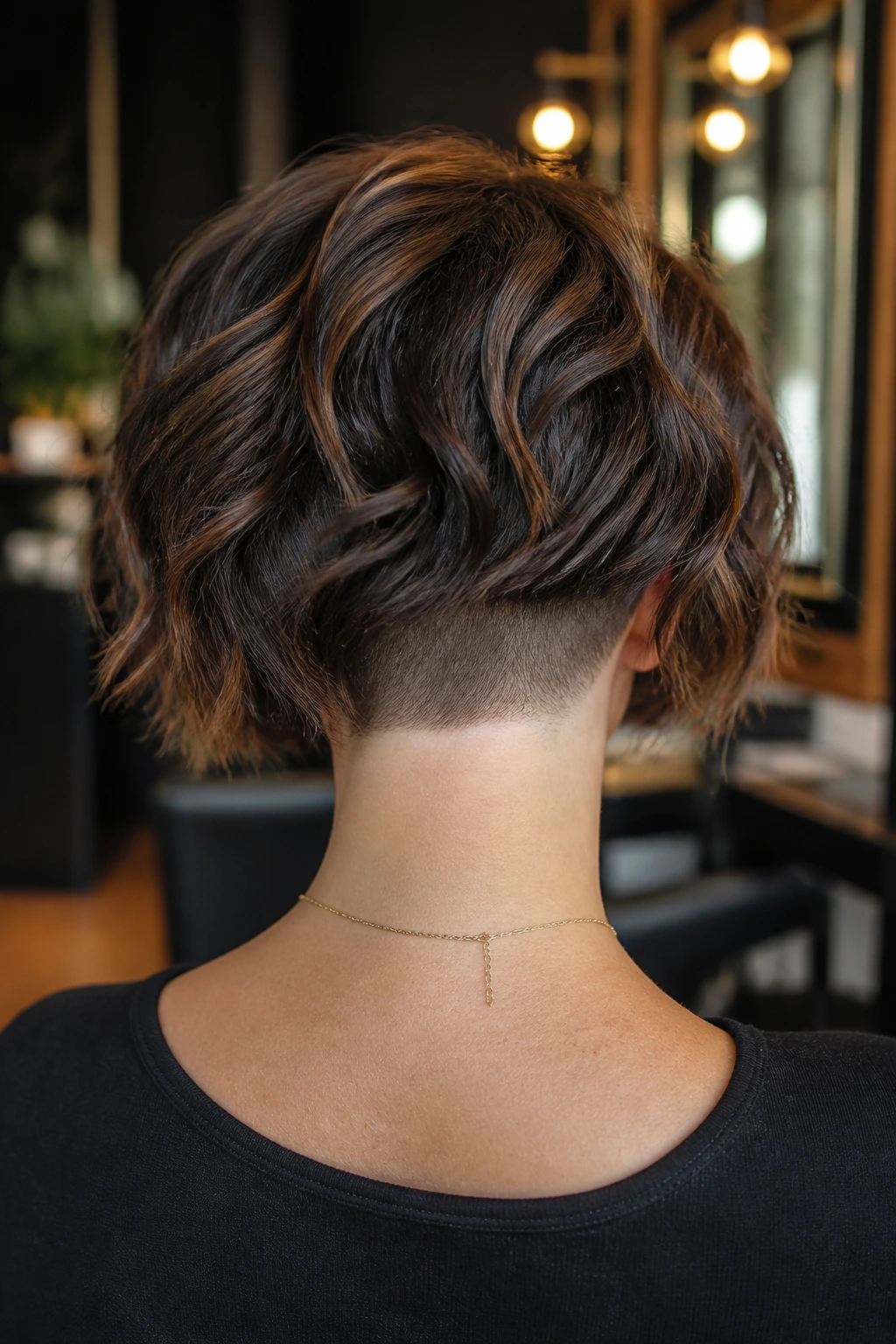
If your waves are thick enough to swallow shape, the undercut density bob can change the whole experience. A hidden undercut or aggressive internal debulking at the nape removes bulk where it causes the most puff, so the outer shape stays cleaner.
The face-framing pieces should stay long enough to soften the chin and keep the top half from feeling too wide. That’s the balancing act. Thin the wrong place and you lose body. Thin the right one and the haircut suddenly has room to breathe.
This one needs a stylist who understands heavy hair, not someone who reaches for the thinning shears every five seconds. Hidden bulk removal is the point. Random thinning is a mess.
21. Wedge Bob with Lived-In Texture
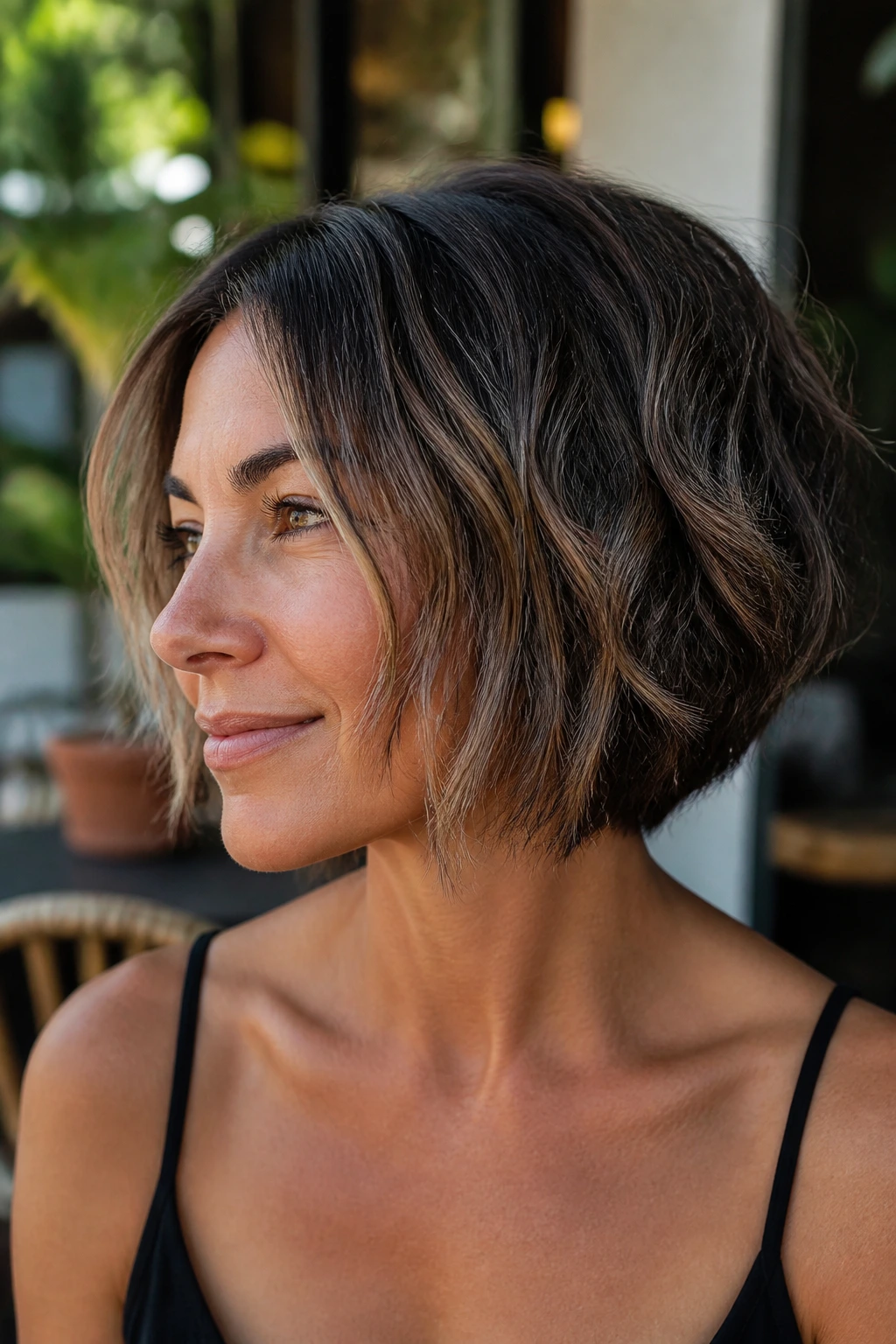
Why bring a wedge bob back? Because the old shape knew how to build lift at the back without making the front feel heavy. The lived-in version keeps that short nape, then softens the surface with broken texture so it doesn’t look helmet-like.
Heart-shaped faces do well with the extra lift behind the head because it shifts attention away from the forehead. Wavy hair helps too; the bends keep the wedge from reading too crisp. You get shape, but it doesn’t look formal.
A modern wedge bob should feel a little relaxed around the face. If the front gets too severe, the cut starts shouting. Keep the edges soft and the nape neat.
22. Cascade Cheekbone Bob
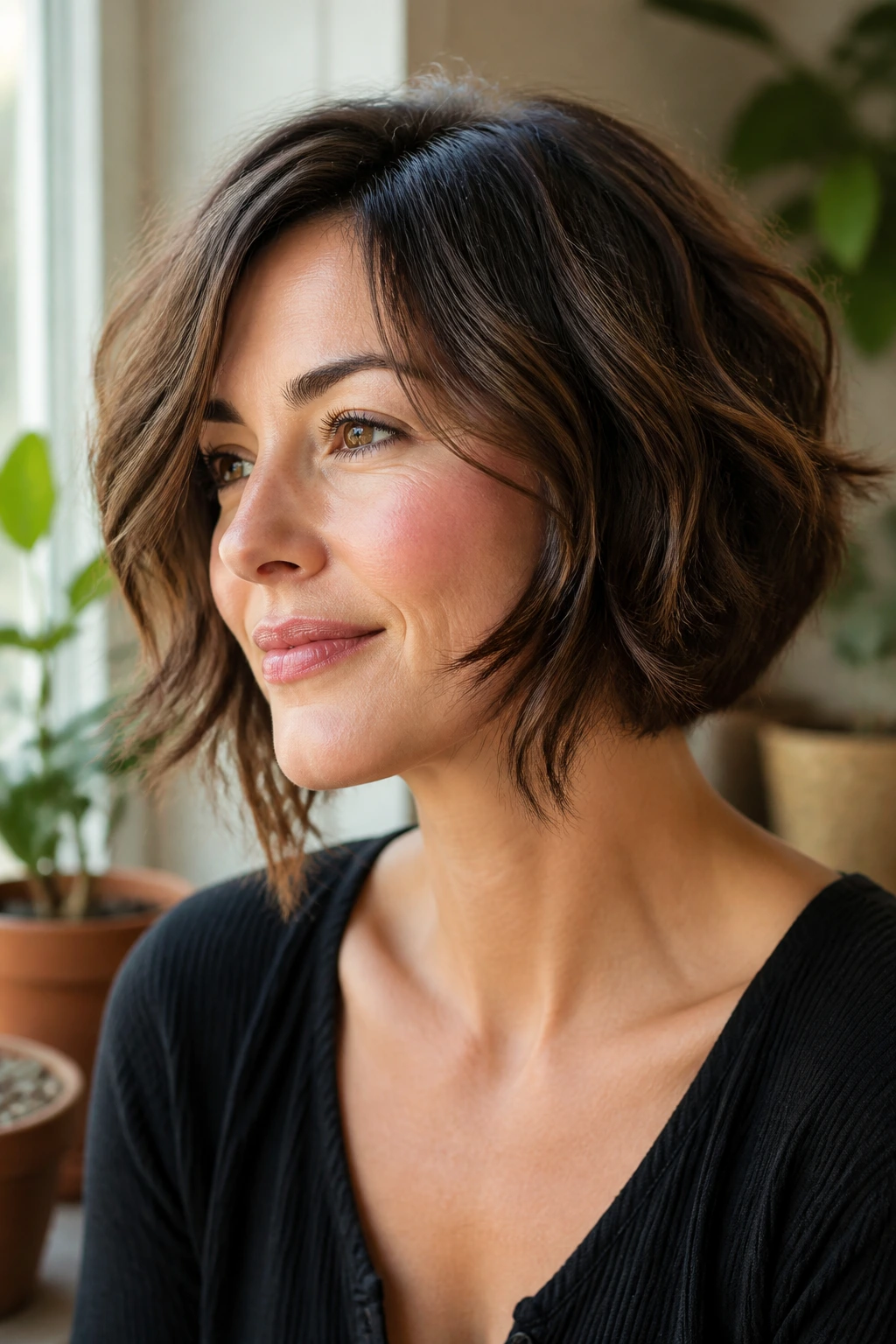
The cascade cheekbone bob is for someone who wants movement right where the face changes shape. Pieces step down from the cheekbone to the jaw, which softens a broad forehead and gives the chin more company.
What to ask for
- Shorter face-framing pieces at the cheekbone.
- Longer pieces that continue toward the jaw.
- A soft internal graduation rather than a hard stair-step.
- Enough texture to keep the front from sitting flat.
This cut is lovely when waves are naturally different from side to side. The cascade hides a little asymmetry instead of forcing both sides to behave identically. That’s one reason it ages well on real hair.
23. Soft Wolf-Bob Hybrid

The soft wolf-bob hybrid is the rowdy cousin in the group. It keeps a bob-length base, then borrows crown texture and loose face-framing layers from a softer wolf cut. On wavy hair, that can look fantastic.
The trick is restraint. Too many short layers around the temples and you make the forehead look bigger, not smaller. Keep the heaviness lower and let the top move without exploding. Heart-shaped faces usually look best when the wildness lives a little below the widest part of the face.
This cut is for someone who likes movement, a little edge, and not much interest in perfect lines. It should look a touch undone. If it looks too tidy, the shape probably isn’t layered enough.
24. Air-Dry Lob

Unlike cuts that want a round brush and a patient wrist, the air-dry lob is built to settle on its own. The length usually lands around the collarbone, which gives wavy hair enough weight to form clean clumps while still keeping the face open.
That’s why it’s so forgiving on heart-shaped faces. The length lowers the emphasis, the front can stay slightly longer, and the wave pattern gets to do most of the styling. You still need a smart cut—usually with subtle layers or a broken perimeter—but you don’t need a heavy hand every morning.
If you air-dry, this is one of the safest bets in the whole list. Just don’t overbrush it wet. That’s how the shape turns puffy before it even leaves the bathroom.
25. U-Shape Tousled Bob

The U-shape tousled bob finishes the list with a curve that feels easy on the eye. The center sits a touch shorter, the front pieces stay longer, and the whole outline forms a soft U instead of a hard straight line.
That shape does a nice job on heart-shaped faces because it keeps the jaw from feeling overly sharp. The longer front pieces soften the lower half, while the wavy texture keeps the cut from reading too polished. It’s a good final option if you want structure, but not too much of it.
A subtle U-shape also grows out with less drama than a sharply angled bob. If you know you’ll stretch trims, that’s worth something.
Why Choppy Bobs and Lobs Work on Wavy Hair and Heart-Shaped Faces

The face shape and the texture are doing half the work before the scissors even come out. Heart-shaped faces tend to carry the widest point through the forehead and upper cheeks, then taper toward a smaller chin. Choppy bobs help by placing visual weight lower—at the jaw, below the cheekbone, or at the collarbone—so the face feels more even.
Wavy hair changes the math again. A clean blunt bob can be beautiful, but waves don’t stay flat for long. They expand. They bend. They separate into little clumps and, if the cut is wrong, they puff into the sides like they’ve had a disagreement with humidity. A smart choppy cut lets the wave pattern show up without building too much width at the temples.
The sweet spot is usually somewhere between chin and collarbone, with face-framing pieces that move diagonally rather than straight across. Shorter than that can work, but it needs a very deliberate shape. Longer than that becomes a lob, which is fine too—especially if you want an easier grow-out and less maintenance around the forehead.
How to Ask for the Right Cut at the Salon
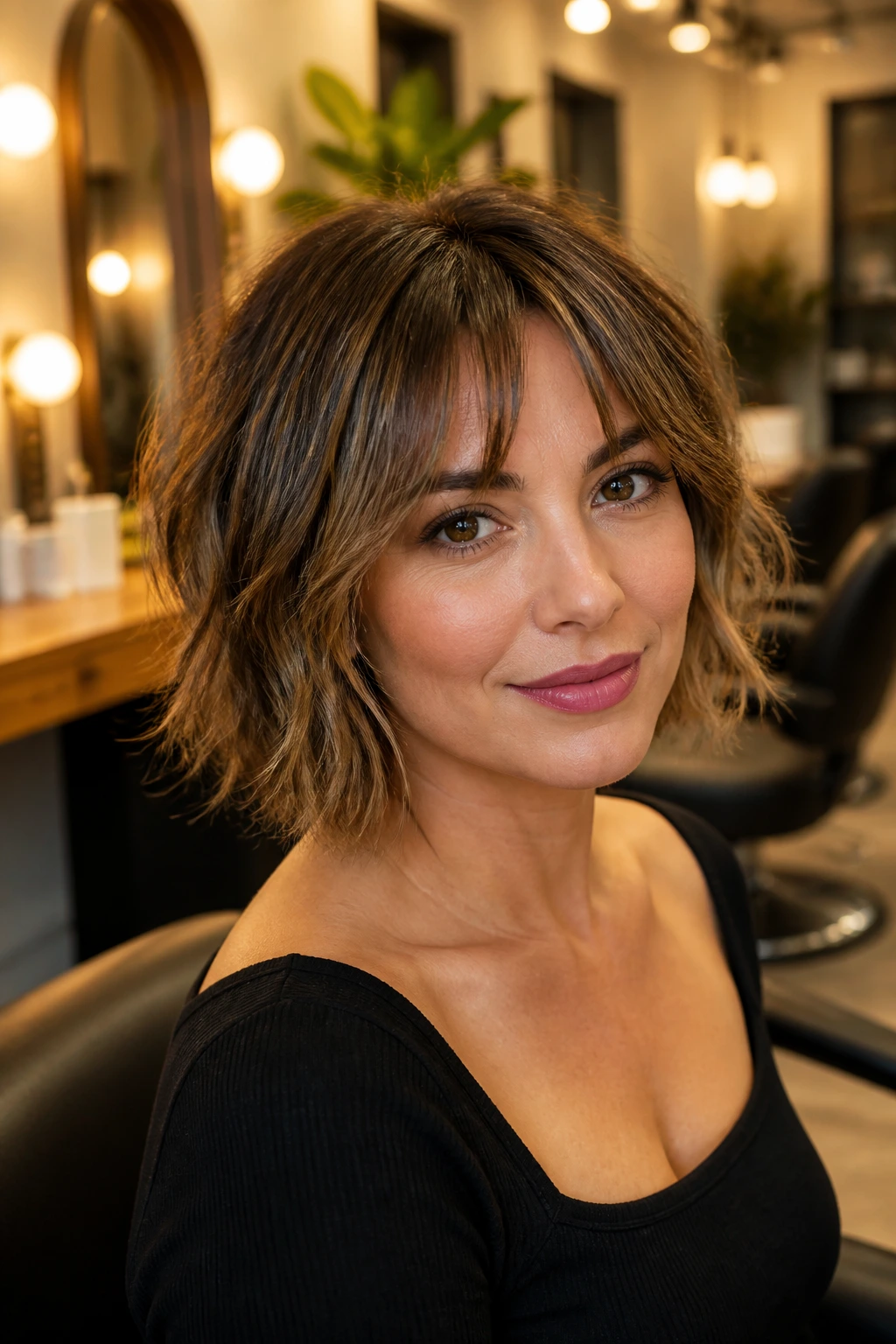
Bring photos, but bring the right kind. One picture should show the length you want. Another should show the front view and the bang or face-frame shape. A third should show texture that matches your own hair density. A photo of a blunt bob on pin-straight hair does not help if your waves are loose and your hair swells when it dries.
Say where your hair naturally parts. Say whether you air-dry, diffuse, or blow-dry. Say if you tuck one side behind the ear, because that tiny habit changes the balance more than most people realize. And if your forehead feels wide or your chin disappears in shorter cuts, say that plainly.
A useful phrase is: “Keep the front at or below my chin, and don’t stack too much width at the temples.” That sentence tells a stylist more than “I want something choppy.” Another good one: “I want texture inside the cut, not shredded ends.”
If your waves are strong, ask whether the perimeter can be checked dry. Dry cutting or dry refinement often shows the real shape better than cutting everything damp and hoping for the best. That single question can save you from a triangle.
Tools That Make These Cuts Easier to Style
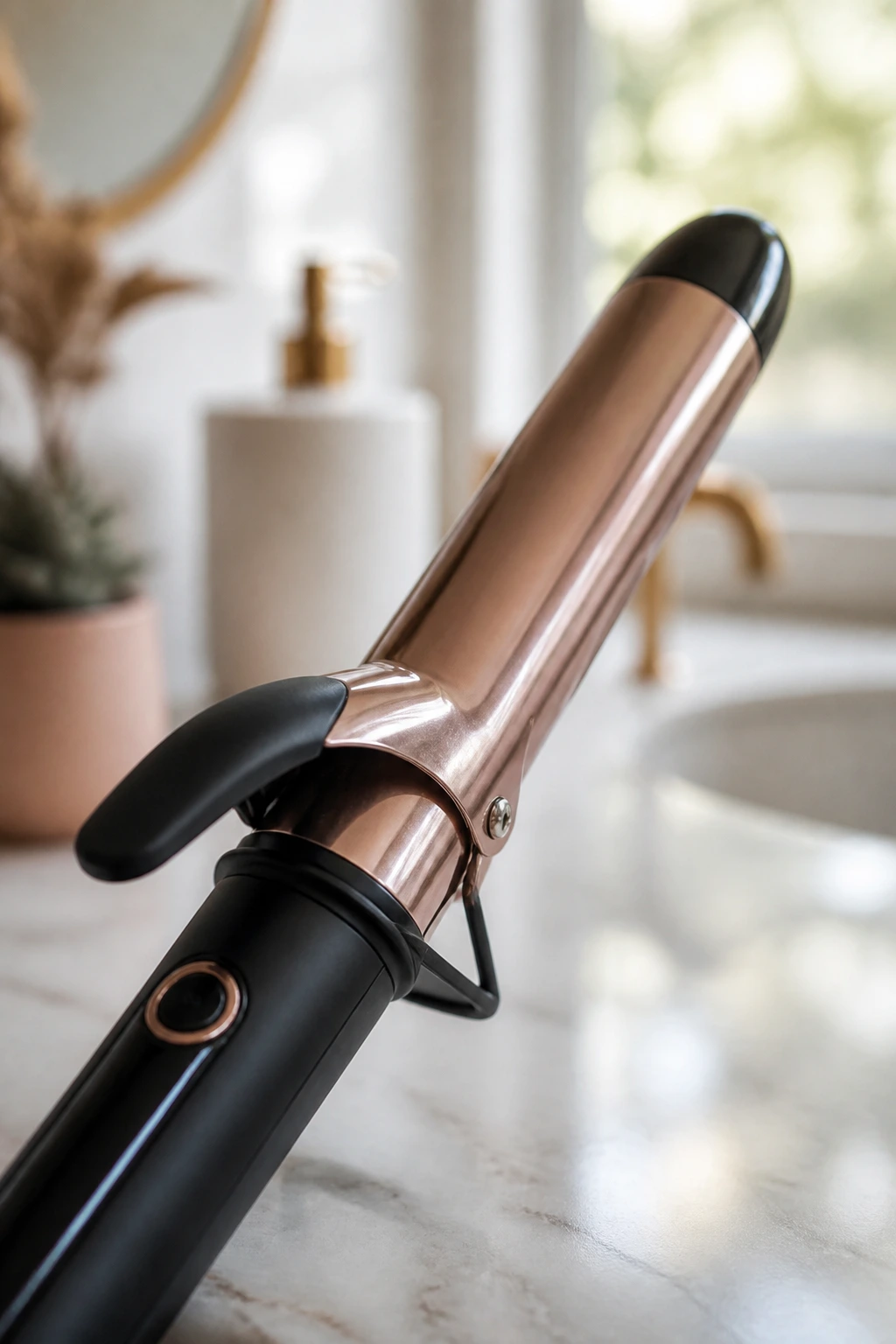
- Diffuser attachment: Helps set wave clumps without blasting them apart.
- Microfiber towel or soft T-shirt: Cuts down on frizz when you squeeze out water.
- Wide-tooth comb: Detangles without stretching the wave pattern.
- Duckbill clips: Useful for clipping the top section while the lower layers dry.
- 1-inch curling iron or wand: Handy for polishing the front pieces on day two.
- Lightweight mousse or foam: Gives root support without turning the ends hard.
- Texture spray: Best on mids and ends when you want separation.
- Spray bottle with water: The simplest second-day reset tool you can own.
- Dry shampoo: Helps the crown stay lifted between washes, especially on fine waves.
Styling Moves That Keep the Shape From Puffing Out

Air-Dry Setup: After washing, squeeze water out with a microfiber towel and put your styling product mostly at the roots and mid-lengths. Scrunch the ends once or twice, then stop touching it. The first ten minutes matter more than people think.
Diffuser Finish: Use low heat and low speed. Start at the roots to build lift, then cup the ends only until they’re about 80% dry. If you dry every strand to a crisp finish, the wave usually frizzes up later.
Front-Section Polish: For chin-length bobs and lobs, polish just the front pieces with a 1-inch iron if they want to flip the wrong way. One bend away from the face, one bend toward it. That tiny correction keeps the cut from looking lopsided.
Second-Day Reset: Mist the top lightly, not the whole head, then scrunch in a pea-size amount of cream or a puff of mousse. If the roots are flat, dry shampoo goes in first. If the ends are dry, do not pile more product on them. They already told you no.
Product Choices for Fine, Medium, and Thick Waves
Fine waves usually need more lift than moisture. A foam mousse or root spray gives the bob some body without collapsing the perimeter. Heavy creams can make the crown fall flat, which is a problem when the cut already sits close to the face. If your hair is fine, keep oil to the very ends, and use less than you think.
Medium waves usually do well with a lighter cream on the mids and ends plus a bit of mousse near the root. That combination keeps the shape soft and controlled. If you like a more piecey finish, add texture spray only after the hair is mostly dry.
Thick waves need more discipline, not more product. A stronger-hold cream or lotion can help the cut settle, especially if the perimeter is razor-sliced or heavily layered. If humidity is an issue, use an anti-frizz serum on the outer layer only. Rub it between your palms first. Slapping it on straight from the bottle leaves the top greasy and the ends too slick.
Common Mistakes That Flatten a Choppy Bob

- Cutting it too short at the widest part of the face: The symptom is a forehead that suddenly feels bigger and a chin that seems smaller. The fix is to keep the front at jaw level or lower.
- Over-thinning fine waves: If the ends look wispy, see-through, or fuzzy by the second day, the cut has been thinned too hard. Ask for point-cutting instead of aggressive texture removal.
- Building too much volume at the crown: That creates the triangle effect, especially on thick waves. A lower, softer crown and a deeper part usually solve it.
- Using heavy product at the roots: The cut collapses and the sides spread. Product should mostly live from ear level down.
- Ignoring how your hair falls when dry: Wet hair lies. Dry hair tells the truth. A bob that looks balanced damp can split and shift once the waves wake up.
Variations Worth Asking For

Fine-Wave Airy Version: Keep the perimeter a little blunter and the internal layers minimal. Use mousse at the roots and a light spray on the ends so the cut keeps its shape without losing body.
Thick-Wave Weight-Removal Version: Ask for internal debulking underneath, especially near the nape and behind the ears. That keeps the sides from puffing out while preserving the outer line.
Fringe-Friendly Version: Swap in curtain bangs or bottleneck bangs if your forehead feels too prominent. Both shapes break up width without forcing the hair into a heavy fringe.
Heat-Free Everyday Version: Choose a collarbone lob or invisible-layer lob and keep the face frame soft. These cuts let wave pattern do the work, which is useful if you don’t want to style with heat most days.
Short-and-Sleek Version: Pick a micro bob or soft box bob, but keep the front long enough to touch the chin. That one detail keeps the cut from feeling too high or too severe on a heart-shaped face.
Trim Schedule and Grow-Out Rhythm
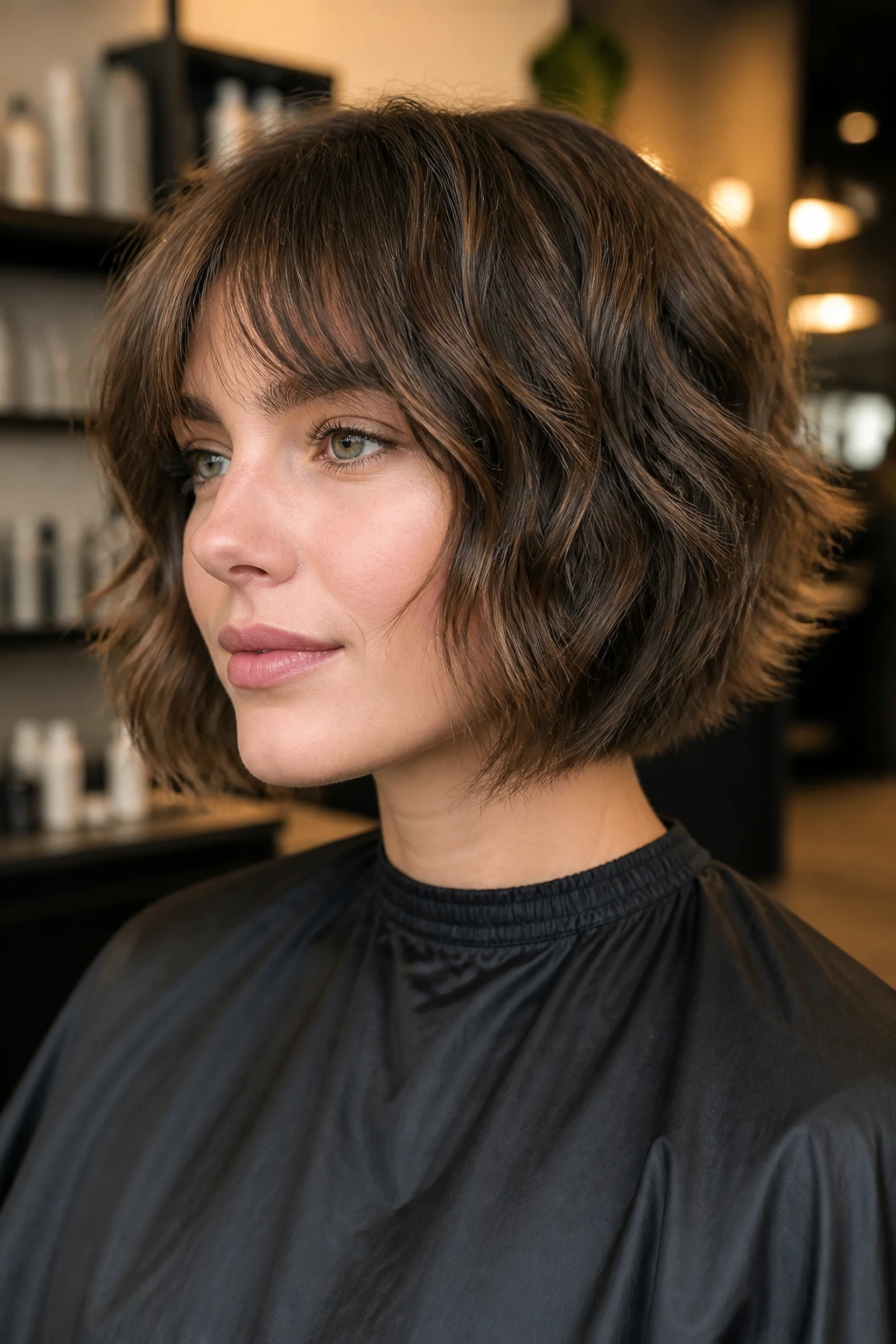
Shorter choppy bobs need more attention than lobs. If you’re wearing a chin-length version, plan on a trim every 5 to 7 weeks if you want the shape to stay sharp. Let it go past that and the perimeter starts to widen, which changes the whole balance.
Lobs are more forgiving. An 8- to 10-week trim rhythm usually keeps the shape in place without making you feel chained to the salon chair. If you have bangs, they may need a touch-up every 3 to 4 weeks even when the rest of the cut is fine.
If you’re growing the bob out, ask for only the perimeter to be cleaned up and the interior left alone for one appointment or two. That keeps you from losing all the movement at once. And pay attention to how the hair behaves after the second wash, because that’s when the shape usually tells the truth. If the ends puff, the cut may need a softer line, not just more product.
Questions People Ask Before the Chop
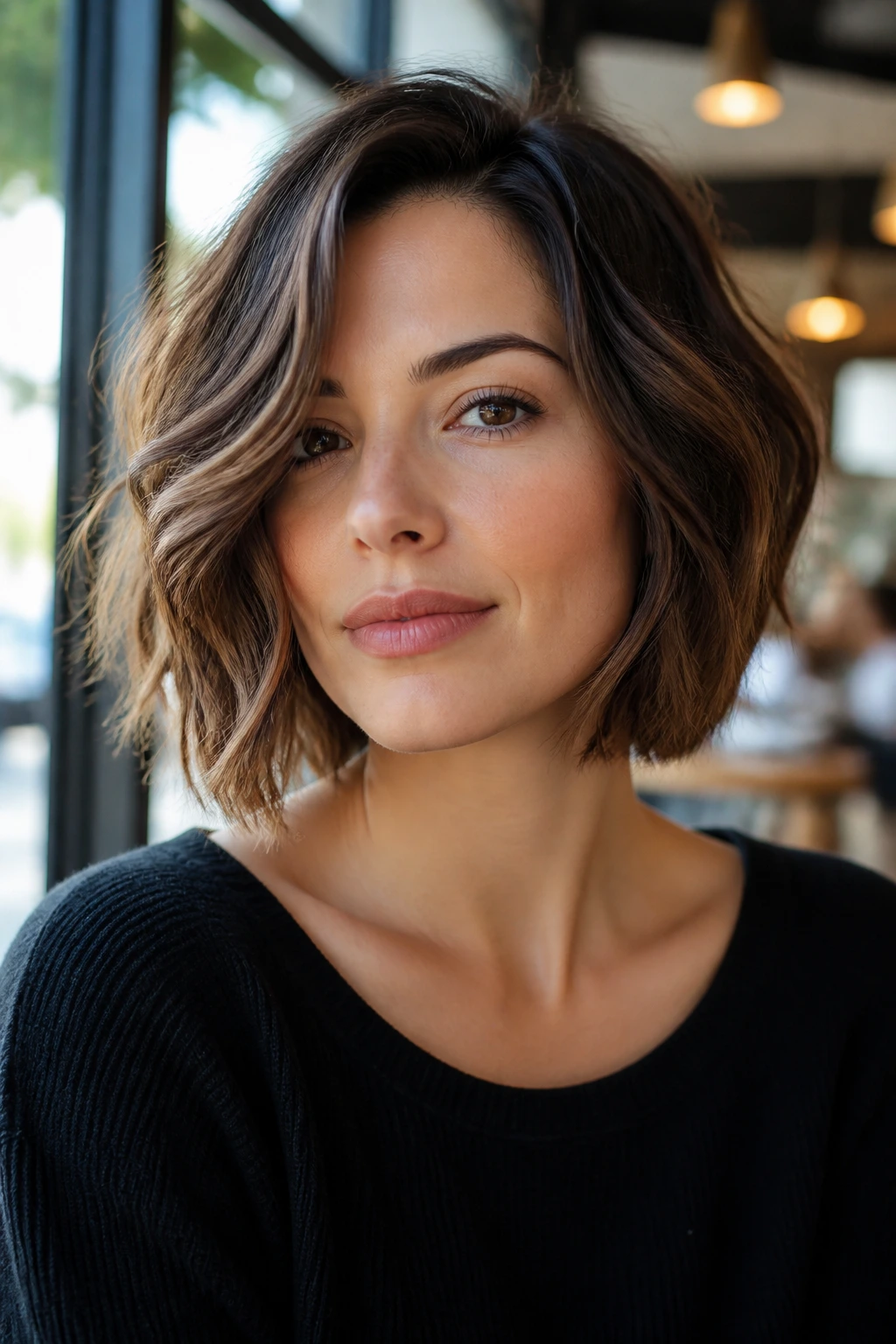
What’s the most flattering length for a heart-shaped face?
Usually somewhere between the jaw and the collarbone, depending on density and how much forehead you want to show. Jaw-length can work, but it needs softness around the corners. Collarbone length is safer if you want more room to style.
Can fine wavy hair wear a choppy bob without looking thin?
Yes, but the cut has to keep some weight at the bottom. Too many layers make fine waves look stringy. A blunter perimeter with light internal texture usually works better.
Do I need bangs with a choppy bob?
No. A side part, face-framing ribbons, or a deeper sweep can do the same visual job. Bangs help, but they are not required.
Is a razor cut a good idea for wavy hair?
Sometimes. On medium-to-thick waves, a razor can soften the edges nicely. On fragile or very fine hair, too much razor work can leave the ends weak and fuzzy.
How do I keep the sides from puffing out?
Keep the front pieces long enough to drop below the cheekbone, and don’t overbuild the crown. A light root product plus a diffuser at low speed helps more than a heavy cream ever will.
Can I air-dry these cuts?
Absolutely. A good choppy bob should still behave when air-dried, but you need the right product and a little patience in the first fifteen minutes. Touch it too much and the texture turns frizzy.
How often should I trim it?
Short bobs usually need a trim every 5 to 7 weeks. Lobs can stretch to 8 to 10 weeks. Bangs may need attention sooner.
What if my hair is thick and my face is heart-shaped?
Ask for internal bulk removal, not a shredded perimeter. Keep the front a bit longer, and let the stylist reduce weight underneath instead of slicing the ends to bits.
The Shape That Keeps Evolving

The nicest thing about a choppy bob on wavy hair is that it keeps a little life in it. It doesn’t need to be pinned down into one rigid shape to look good. That matters for heart-shaped faces, because the best version isn’t about hiding the forehead or pretending the chin is something else. It’s about giving the hair a lower, softer landing zone.
A good cut here should look even better when it’s a little imperfect. A side part that shifts. A piece that flips. A front ribbon that moves after lunch. Those small changes are not flaws. They’re the point.
If you’re bringing one of these shapes to a stylist, bring the silhouette you want and say what your hair does on a normal Tuesday. That’s where the useful haircut lives.