



Fine hair can turn on you fast. One extra layer, one blunt edge, and the front starts to hang like damp ribbon by lunchtime. Long side-swept part layered bangs for fine hair solve that problem by doing something smarter than chasing volume with product: they use angle, softness, and a little movement to make the front look fuller without stealing too much density from the rest of the cut.
I like this shape because it respects what fine strands actually do. They don’t hold a heavy fringe for long. They flatten, separate, and show every bad trim line. A side-swept front gives you room to breathe. It bends with the face instead of laying there like a shelf, and when it’s cut well, the hairline looks lighter and the whole cut feels less trapped.
Some versions lean polished and blow-dried, some look better a little piecey, and some are made for people who’d rather air-dry and get on with their day. The common thread is the same: keep the front long enough to move, light enough to lift, and layered enough to avoid that thin, see-through bang line that fine hair gets when somebody tries to make it do too much.
Why These Side-Swept Bangs Work So Well on Fine Hair
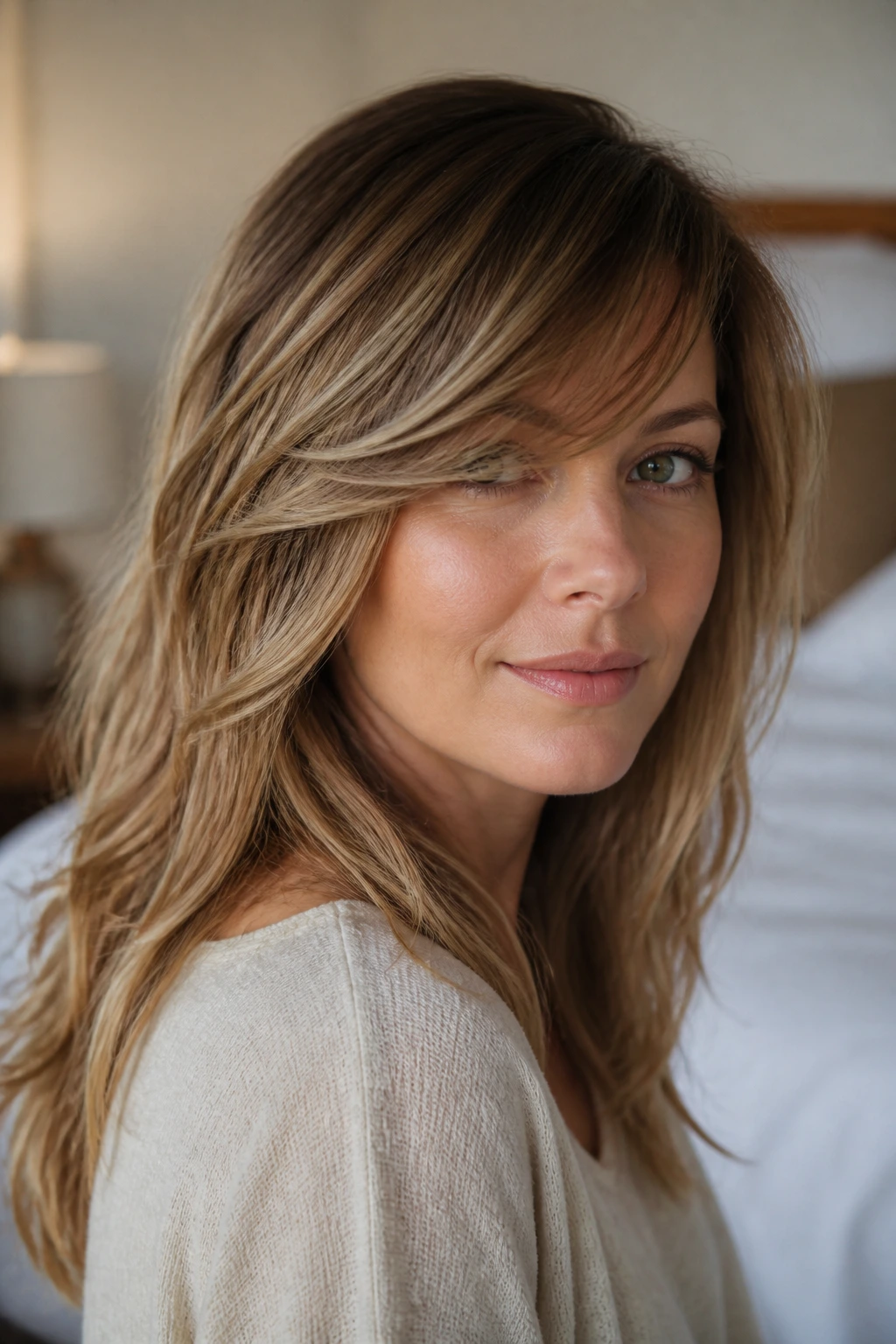
Lightness is the point. Fine hair usually looks best when the front isn’t packed into a dense block. A long side sweep leaves air between the pieces, which makes the fringe look softer and often fuller than a blunt line ever does.
The diagonal matters. A side-swept part creates a line the eye can follow. That diagonal pulls attention across the face instead of stopping at the forehead, and that tiny visual trick does a lot of work when the hair itself is delicate.
Grow-out is kinder. Short bangs on fine hair can hit that awkward phase fast, but layered side pieces slide into face-framing lengths instead of turning into a heavy curtain. You get more wear out of the cut, and fewer days spent pinning it back in annoyance.
The front can support the rest of the cut. When the bang area stays soft and long, the rest of the hair can stay a little fuller through the ends. That’s the trade-off I prefer. Give the front movement, keep the perimeter honest.
It plays well with root lift. A side part creates natural direction at the crown, which makes the front sit with a little bend instead of sinking flat against the scalp.
- Best length range: cheekbone to jawline is the sweet spot for many fine-hair cuts.
- Best finish: soft, not choppy to the point of fraying.
- Best styling tool: a small round brush or a flat brush with a quick bend at the ends.
- Best mindset: the goal is movement, not fake thickness.
My rule: if the front starts looking like one narrow strand after three minutes of wear, it’s been cut or styled too thin.
1. Feathered Sweep with Air Between the Strands
This is the version I’d hand to someone who wants fringe without fuss. The front pieces are feathered just enough to separate, then left long enough to fall past the brow and skim the cheekbone. On fine hair, that little bit of separation keeps the bang from turning into a soft but see-through sheet.
Why It Works on Fine Hair
Feathering removes visual weight without making the front look hacked apart. The shape still feels connected to the haircut, which matters a lot when the strands don’t have much bulk to spare.
Ask for the shortest point to sit around the brow arch, then let the longest pieces drift toward the cheek. That soft taper is what keeps the fringe from looking abrupt.
- Good for: everyday wear, low-maintenance styling, soft grow-out.
- Skip if: you want a dramatic block fringe or a sharp editorial line.
- Style with: a light mousse and a round brush, rolled away from the face.
- Best detail: the ends should look lightly brushed, not ragged.
Tip: cut this one a little longer than feels safe. Fine hair lies flatter when it’s wet, and it often ends up shorter-looking once it dries.
2. Deep Side Part and Cheekbone Sweep
A deep side part gives fine hair instant shape. That single move creates root lift before the blow-dryer even comes out, and the longer front section gets to arc across the face instead of collapsing forward.
This version is for the person who wants the bang to feel intentional but not fussy. The sweep should start high on the heavier side, then slide toward the cheekbone with enough length to tuck behind the ear by the end of the day. It’s not a stiff side bang. It’s a soft slash of hair that keeps moving.
The trick is balance. If the part is too deep and the front too short, the thinner side can start looking sparse. Keep the longest pieces generous. Fine hair needs that extra inch more than people think.
I like this shape with straight hair that tends to fall flat at the temple. The diagonal line gives the eye somewhere to go, and the crown gets a little lift without teasing or sticky spray. That’s a fair trade.
3. Soft Curtain Bend with a Side Bias
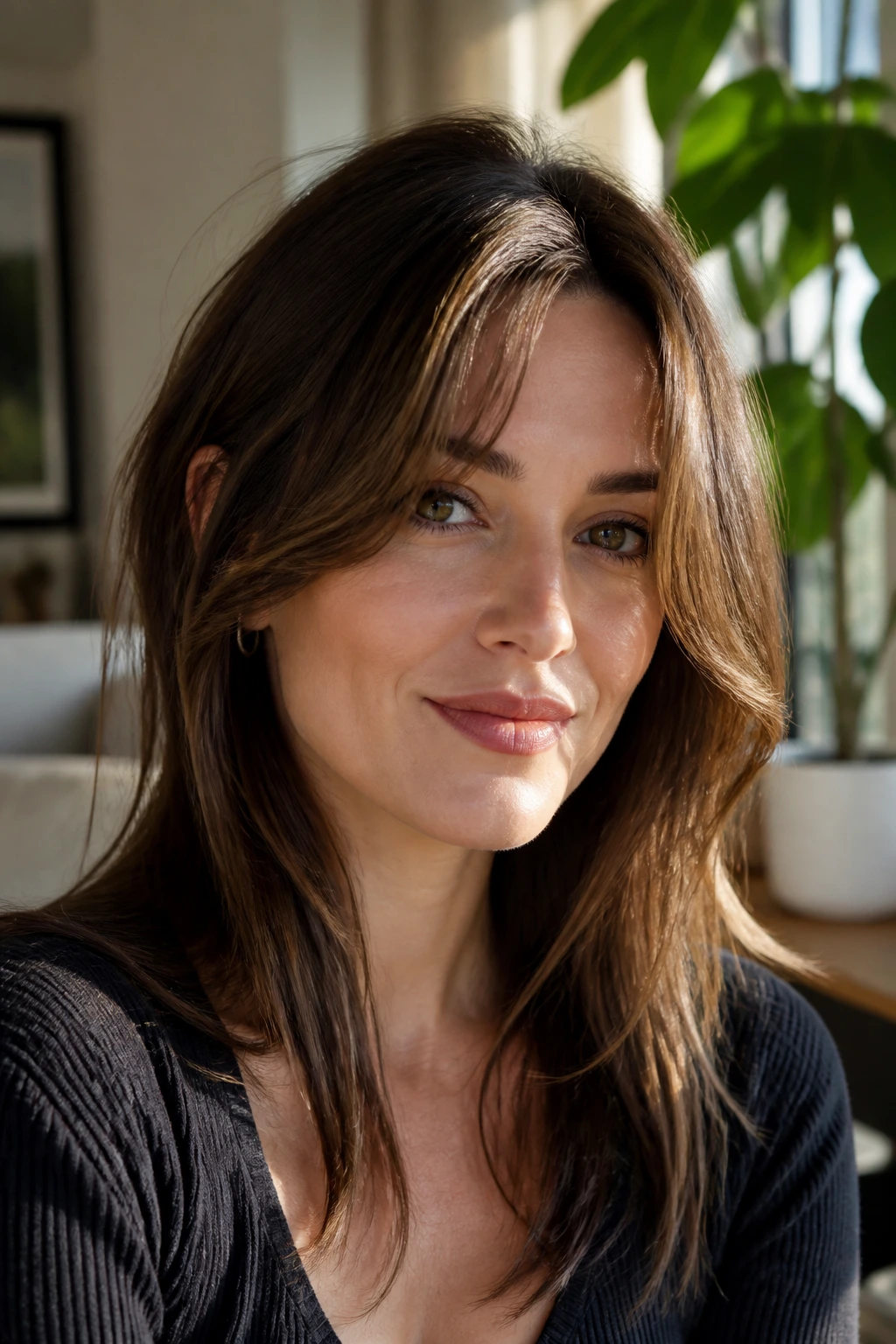
What if you like curtain bangs but don’t want the middle split? This is the compromise that actually works. The front opens slightly off-center, then the two sides bend outward in a soft arc, with the shorter side swept a touch more firmly across the forehead.
How to Wear It
The shortest pieces should land near the inner brow or just below it. The outer pieces can ride down toward the cheek and jaw, which keeps the fringe looking light instead of boxy.
This shape is kind to fine hair because it doesn’t depend on fullness right at the center. The parting creates room, and the longer edges carry the visual weight. That means you can move, clip, tuck, or push it around without it falling apart.
I’d choose this if you wear your hair in loose waves or a soft bend. It has a lazy, almost accidental feel when it’s cut right, but not in a sloppy way. More like you ran your fingers through it and it happened to fall well.
A little round-brush lift at the roots is enough. You do not need a barrel curl. The line should curve, not curl.
4. Collarbone Lob with Face-Framing Layers
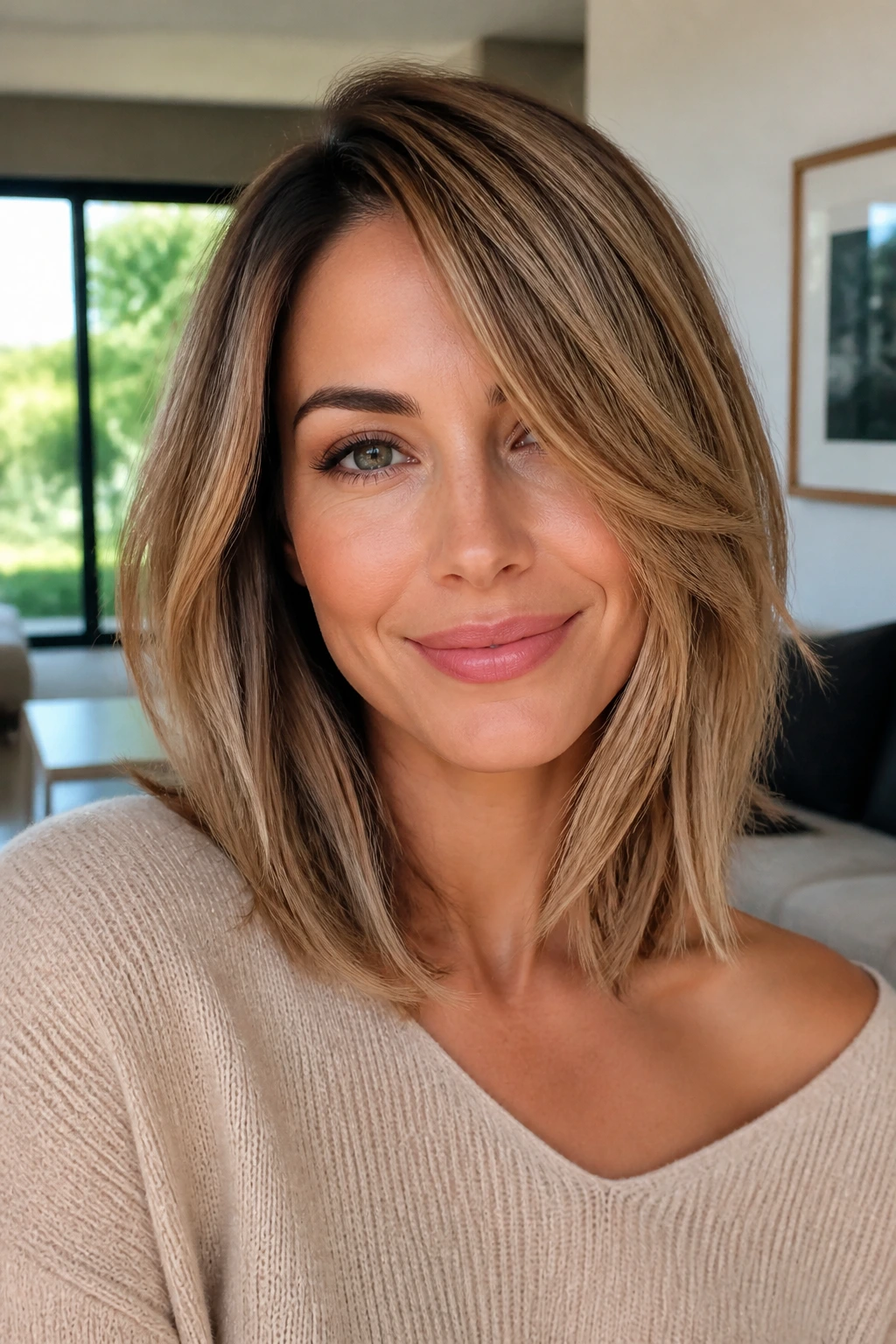
Picture a collarbone lob that barely grazes the top of a shirt and then gets a long side sweep in the front. That’s the version that keeps fine hair from disappearing into itself. The lob gives the ends enough substance, and the layered front stops the haircut from looking like one flat piece.
The reason this works is simple: fine hair often looks better when the cut is not too long. Once the length drags past a point, the strands lose body fast. A collarbone lob keeps the perimeter near the shoulder where it can still swing.
The face frame should be soft, not chunky. If the bang area and front layers are both too thin, the whole cut loses weight at the temples. Keep the front pieces long enough to drape into the lob instead of floating apart from it.
This is one of my favorite choices for people who want long side-swept bangs but need the haircut to feel like a haircut, not just a fringe glued onto long lengths. It’s tidy. It moves. It behaves.
- Best pairing: a rounded blowout or loose bend through the mids.
- Avoid: over-layering the ends if the hair is already very sparse.
- Ask for: a soft graduation from bang to cheekbone to collarbone.
5. Round-Brushed Fringe with a Polished Finish
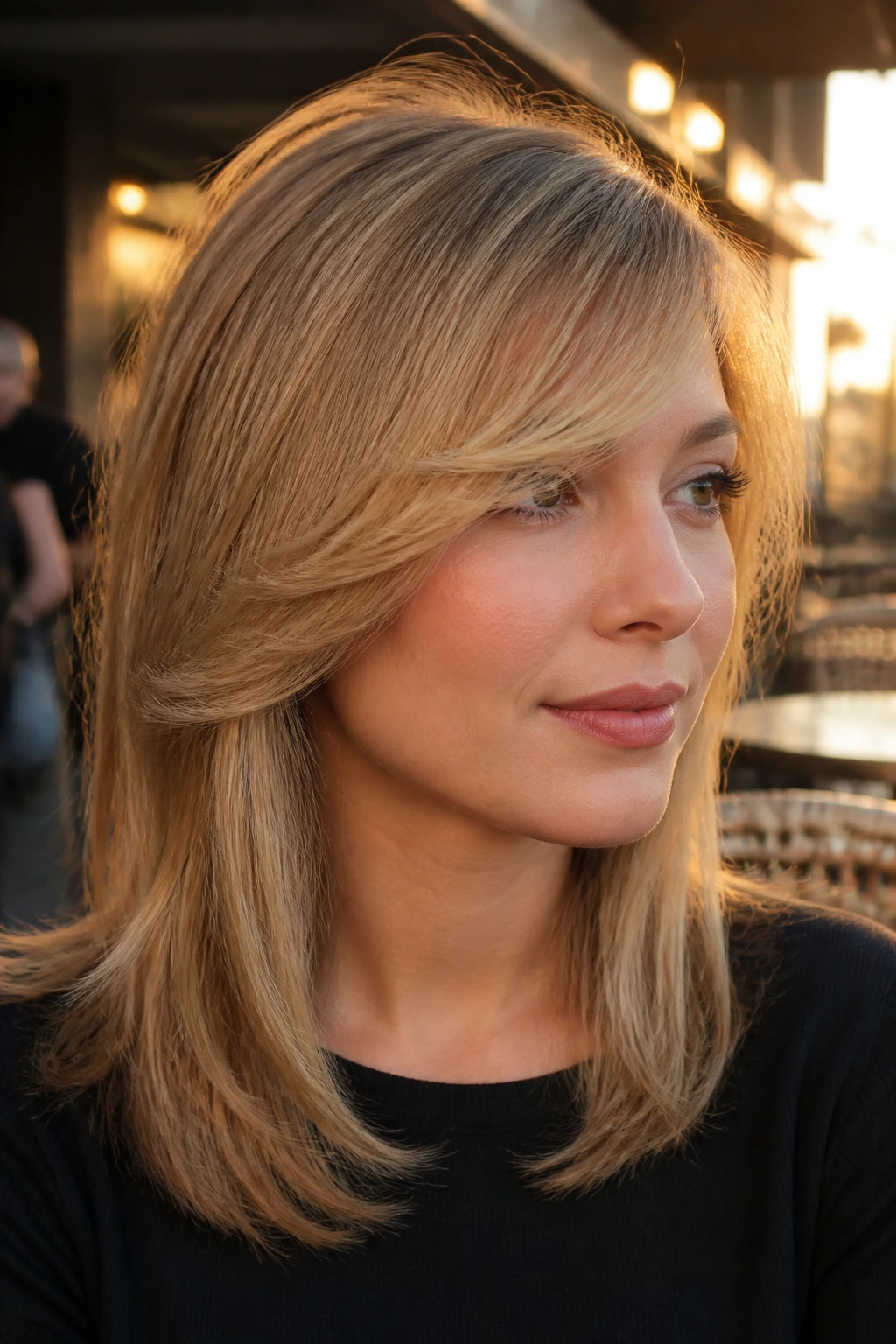
This is the sleek version, and I mean sleek in the practical sense, not the overdone salon sense. The fringe gets blown forward, rolled under, and swept across the forehead with a brush that actually does the shaping instead of leaving the hair to guess.
Fine hair likes this because the round brush gives the front a memory. One pass can set the bend, and if you dry it with the nozzle pointed down the strand, the ends stay neater instead of fluffing out.
There’s a rhythm to this look. Dry the roots first, then focus on the bang area while the hair is still a little damp. If you wait until it’s dry, the front can already have chosen its own direction, and fine hair is stubborn about changing its mind.
I prefer this on a blunt-ish lob or a shoulder-length cut with gentle layers. Too much choppiness makes the polished finish feel disconnected. Here, the front should look smooth, curved, and clean at the ends.
6. Piecey Side Bangs with Separated Ends
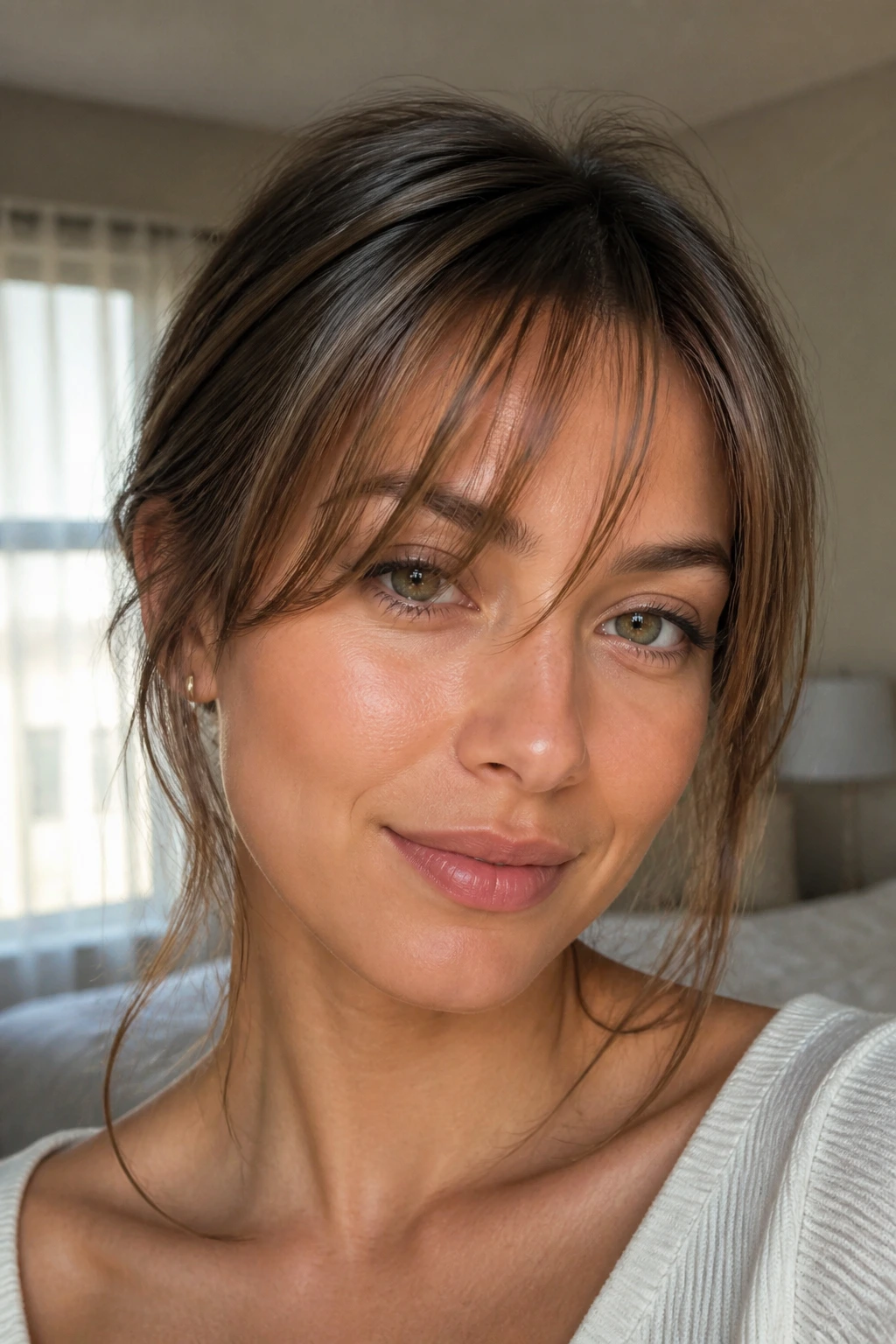
Separation is not the enemy. On fine hair, a piecey fringe can look richer than a perfectly smooth one because the eye reads the gaps as texture instead of scarcity.
This style depends on controlled spacing. The front should break into 3 or 4 visible ribbons, not 12 wispy bits that look unplanned. That’s the hard part. Too much texturizing turns piecey into sparse. Too little leaves the bang looking like a flat flap.
The best way to wear it is with a slight bend at the midlengths and softer ends. A tiny amount of lightweight cream, worked through the tips only, can help the pieces stay separate without clumping. Avoid heavy wax. It kills the movement and makes fine hair look greasy by noon.
I like this version for hair that naturally drifts a little wavy or for anyone who wants a more relaxed front. It looks especially good when one side is tucked back and the other falls forward. Messy, but in a specific way. There’s a difference.
7. Razored Fringe with Light, Flicked Tips
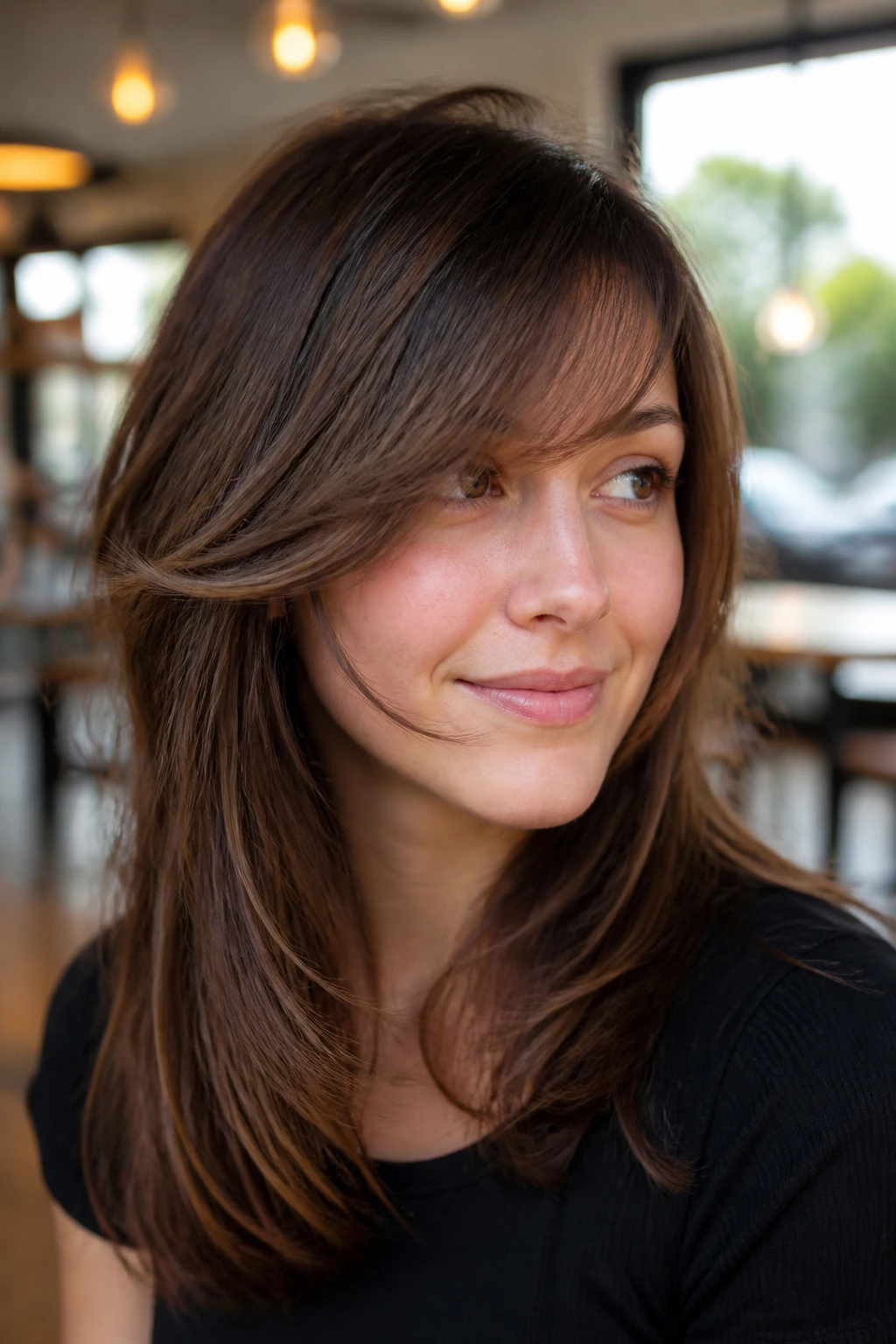
A razor can be a friend or a disaster. On fine hair, it works only when the hand is light and the ends are left soft, not shredded. The point is to make the fringe skim and flick, not fray.
The shape here starts with a diagonal part and tapers into the long front pieces with almost no hard line. The ends bend out a little, which keeps the bang from clinging to the forehead. That flick is tiny, but it makes the cut feel airy.
This look suits people who hate heavy styling. A quick blow-dry with the fingers, a touch of heat, and you’re done. The razor-cut tips catch motion fast, so the shape wakes up with barely any effort.
Do not overdo the razor. Seriously. If the ends look see-through in the chair, they’ll look even thinner once you wash the hair and lose all that salon polish.
8. Bottleneck Side Bangs That Narrow at the Brow
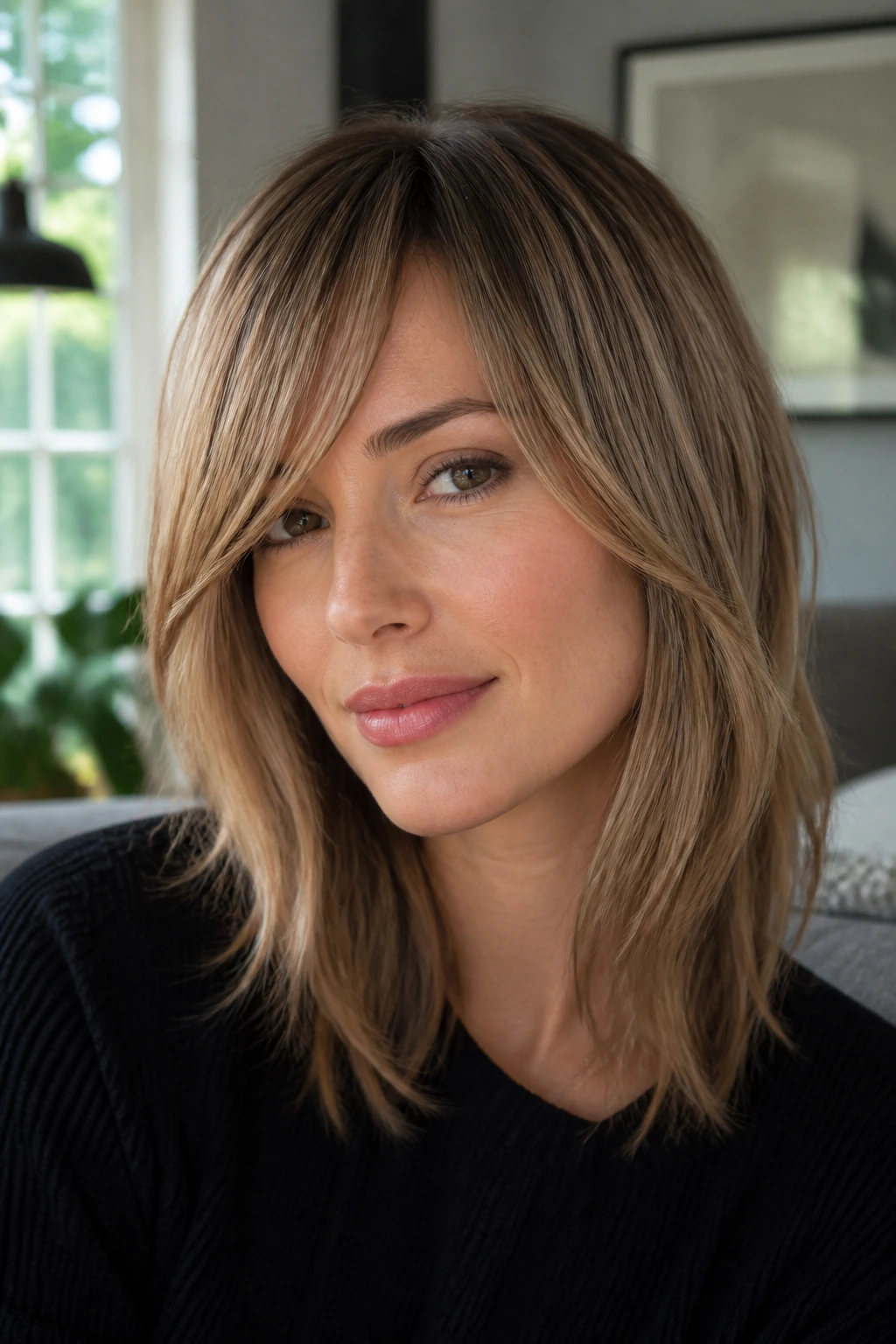
The bottleneck shape can work beautifully with a side bias. It starts a little fuller near the part, then narrows as it crosses the forehead and opens again toward the cheek. On fine hair, that narrowing helps keep the front from looking bulky at the root.
What I like here is the controlled shape. It gives the illusion of density where you want it and keeps the edges soft where you don’t. The front feels intentional without turning into a harsh band.
This version needs careful length placement. The shortest point should still be long enough to move, and the outer edge has to be kept light, not chopped bluntly. Fine hair doesn’t forgive shortcuts here. If the inner corner is cut too short, the whole thing starts to wobble.
Best use case? Someone who wants fringe that reads modern but not severe. The silhouette is neat. The styling stays loose.
9. Glasses-Friendly Fringe That Stops Above the Frame

If you wear glasses, this one saves you a lot of forehead wrestling. The front sweeps across the face, then stops just high enough to avoid riding on top of the frames all day.
That matters more than people think. Fine hair that touches the lenses too often can separate into tiny strings, especially if you use a lot of heat or push it back with your hand. A clean stop above the frame keeps the line tidy and makes the hair look like it belongs there.
I’d keep the shortest pieces soft around the brow, with the longest edge tapering toward the cheek. If your frames are bold or thick, give the bang a little more length so it doesn’t disappear into the top rim.
This cut also makes mornings easier. You can sweep it to the side, pin it back, or let it fall naturally without creating a dent that takes the rest of the day to fix. That’s a small thing until you live with it.
- Best frame shapes: medium-width frames, narrow rectangles, soft cat-eye styles.
- Avoid: cutting the fringe so it lands exactly on the top rim.
- Styling note: blow-dry the front away from the face first, then redirect it sideways.
10. Grown-Out Side Bangs That Barely Need Trimming
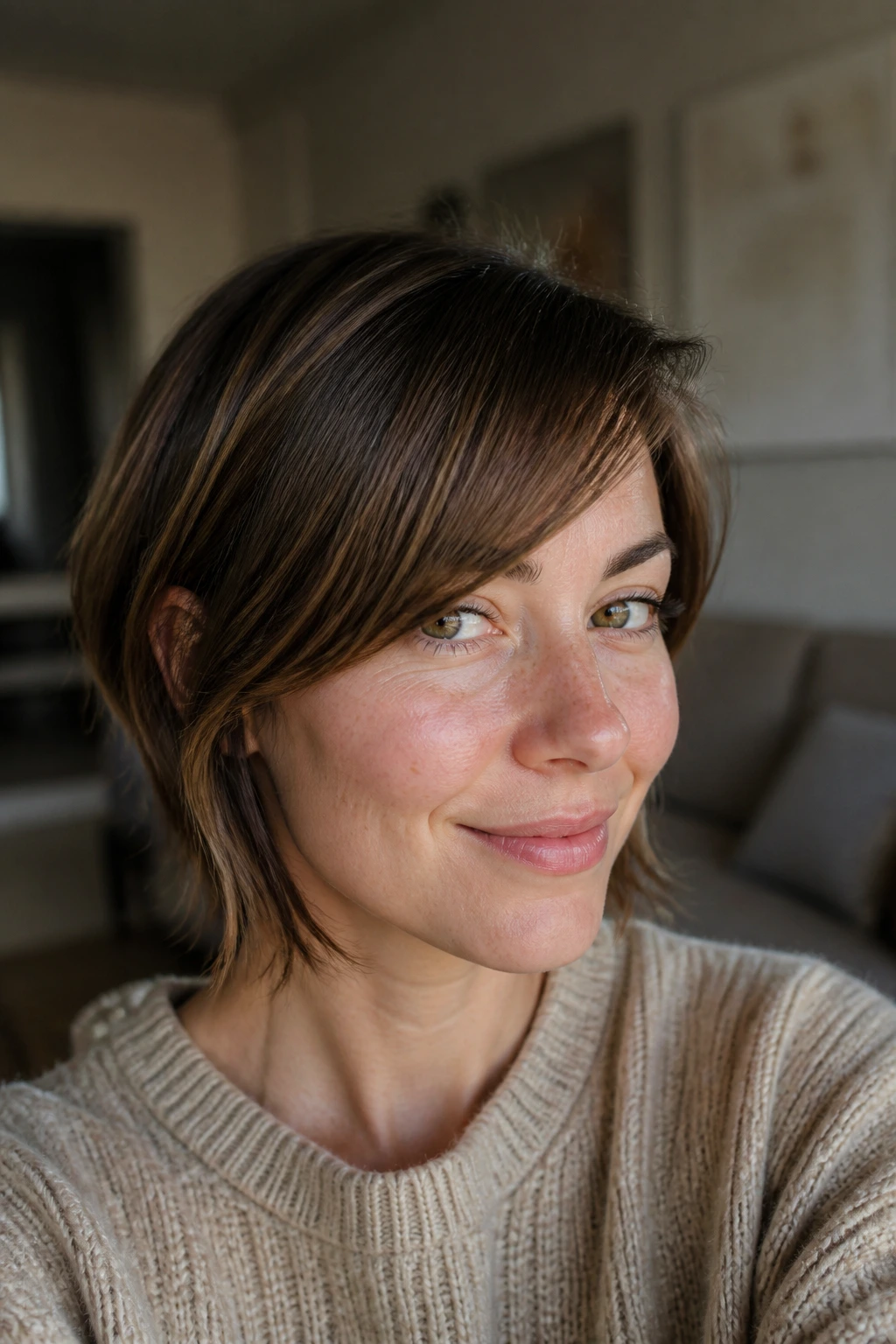
This is the low-maintenance version I respect most. It keeps the side sweep long enough to blend into face-framing layers, which means the haircut survives busy weeks without looking messy.
The shape starts with a long diagonal at the front and ends with soft pieces around the jawline or even the top of the neck. Fine hair benefits from this because it avoids abrupt demarcation. A harsh edge shows too much scalp. Long, gradual pieces don’t.
The styling is easy. A finger-dry, a quick brush-through, maybe a dab of dry shampoo at the root. That’s it. When the front is long enough, it can be pushed over, tucked behind one ear, or split into softer pieces without losing the whole point of the cut.
I like this for people who are growing out shorter bangs or who know they will not book trims every four weeks. The shape looks relaxed on purpose, which is a lot better than looking overgrown by accident.
11. Root-Lift Side Sweep with a Little Height
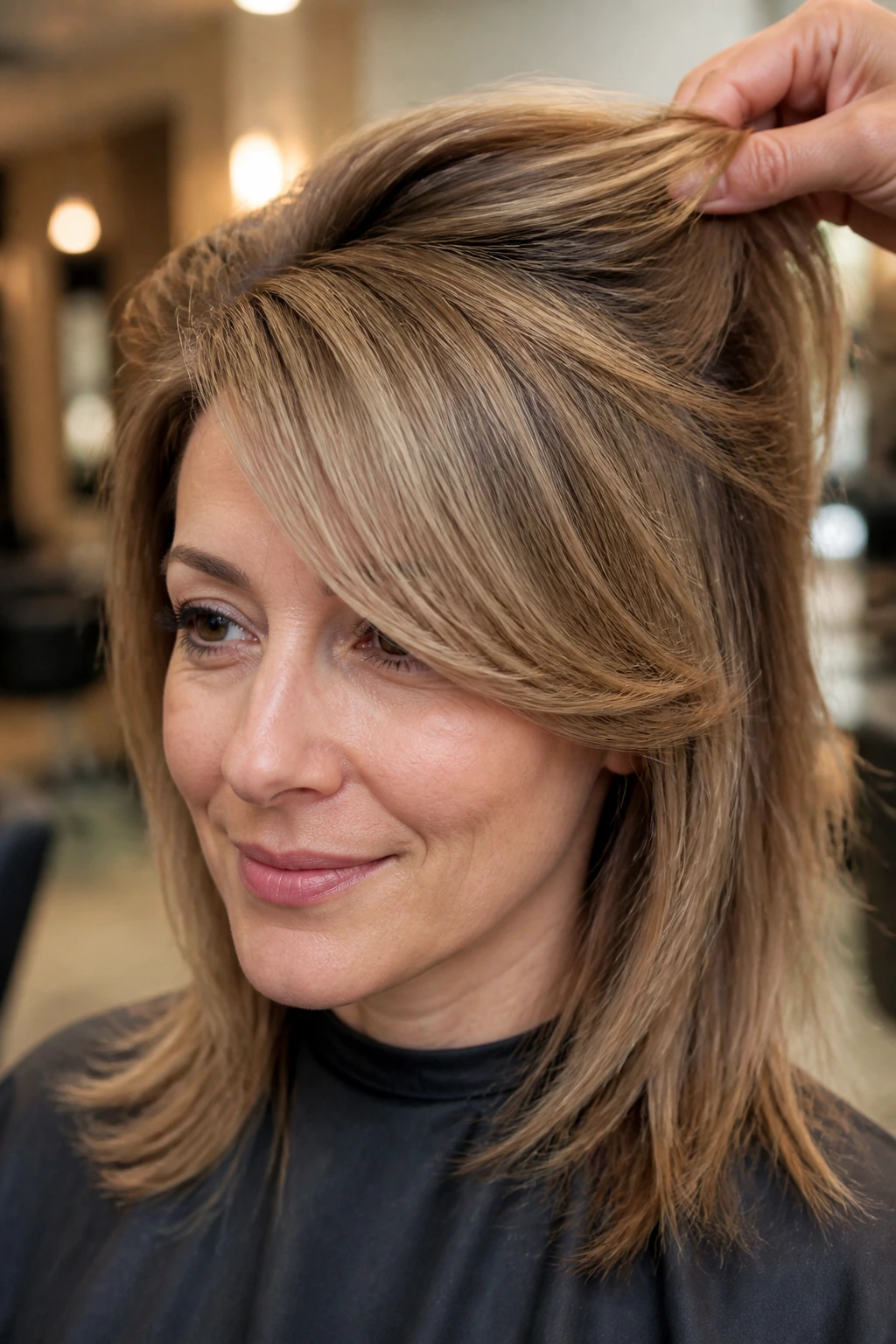
A little height at the root changes everything on fine hair. Not a teased nest. Just a clean lift right where the side part starts.
This style is built around that idea. The bang is kept long, but the root is directed upward during drying so the front doesn’t settle flat against the scalp. The result is a front that moves away from the forehead instead of sticking to it.
I’m fond of this shape for people whose hair has a soft bend but no staying power at the crown. A duckbill clip or two at the root while the hair cools can make the difference between a limp side sweep and one that holds through lunch.
It pairs well with layered cuts because the added lift in front prevents the whole head from looking bottom-heavy. You want the front to feel buoyant, not sprayed into a shell.
One small warning: if the root is lifted and the ends are left too skinny, the style can look airy in a bad way. Keep some substance through the length.
12. Shag Layers with a Loose Front Bend
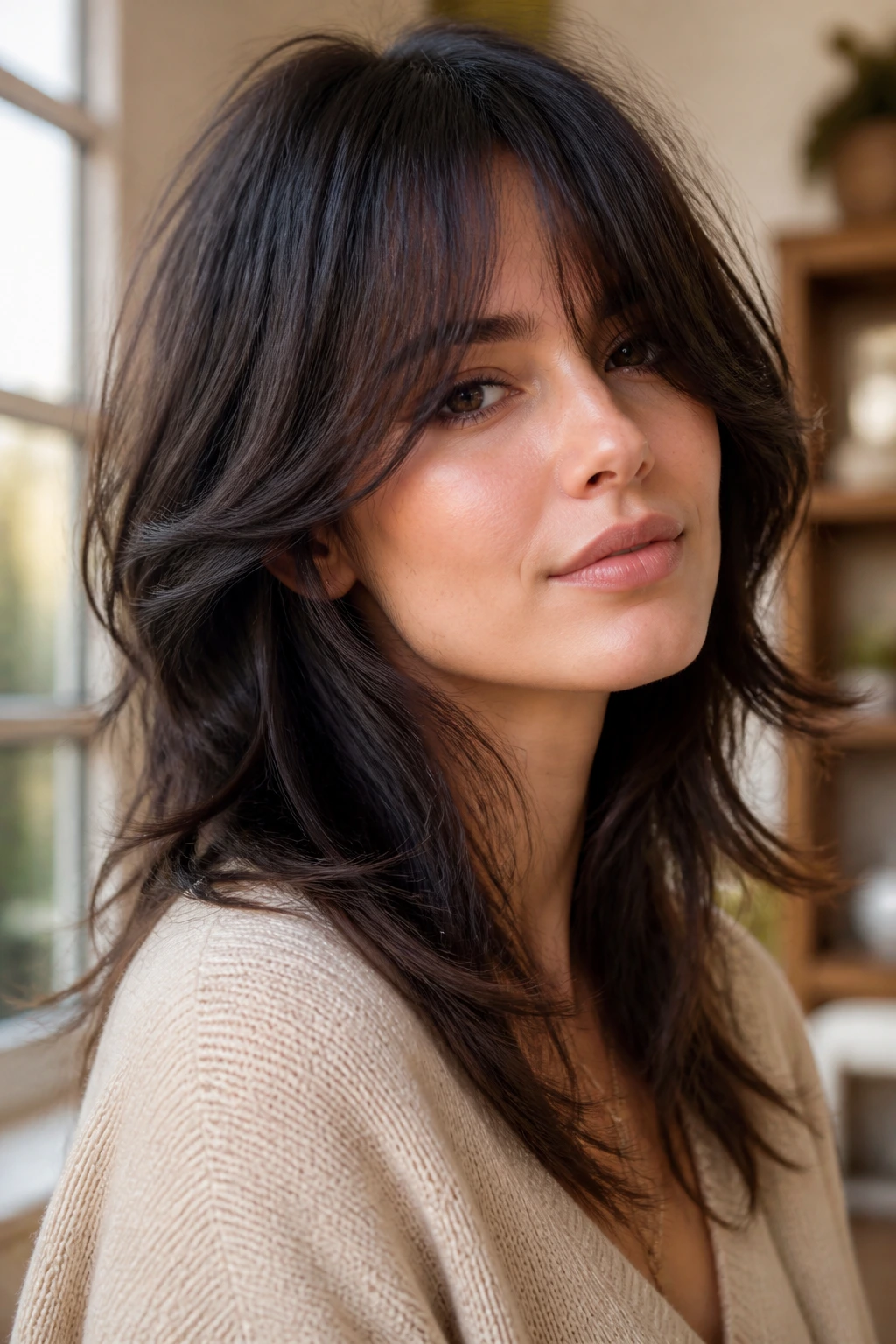
A shag can be friendly to fine hair, if it’s cut with restraint. The bangs stay long and side-swept, while the layers around them stay soft enough to avoid turning the whole head into a feather duster.
What works here is the looseness. The front bends across the face, then dissolves into the layered mids. That means the bang doesn’t need to stand alone. It has support from the rest of the haircut, which is useful when the hair itself is delicate.
I’d choose this if you like a bit of edge but still want movement. A shag with fine hair can go wrong fast when the layers are overdone, so the trick is keeping the perimeter honest and the fringe long. The face frame should still have weight. No shredded ends at the temples.
This version loves a light curl or wave. It does not need perfection. In fact, a little unevenness gives it character. Too smooth and the shag loses its point.
13. Lob and Side Fringe for Thin Ends
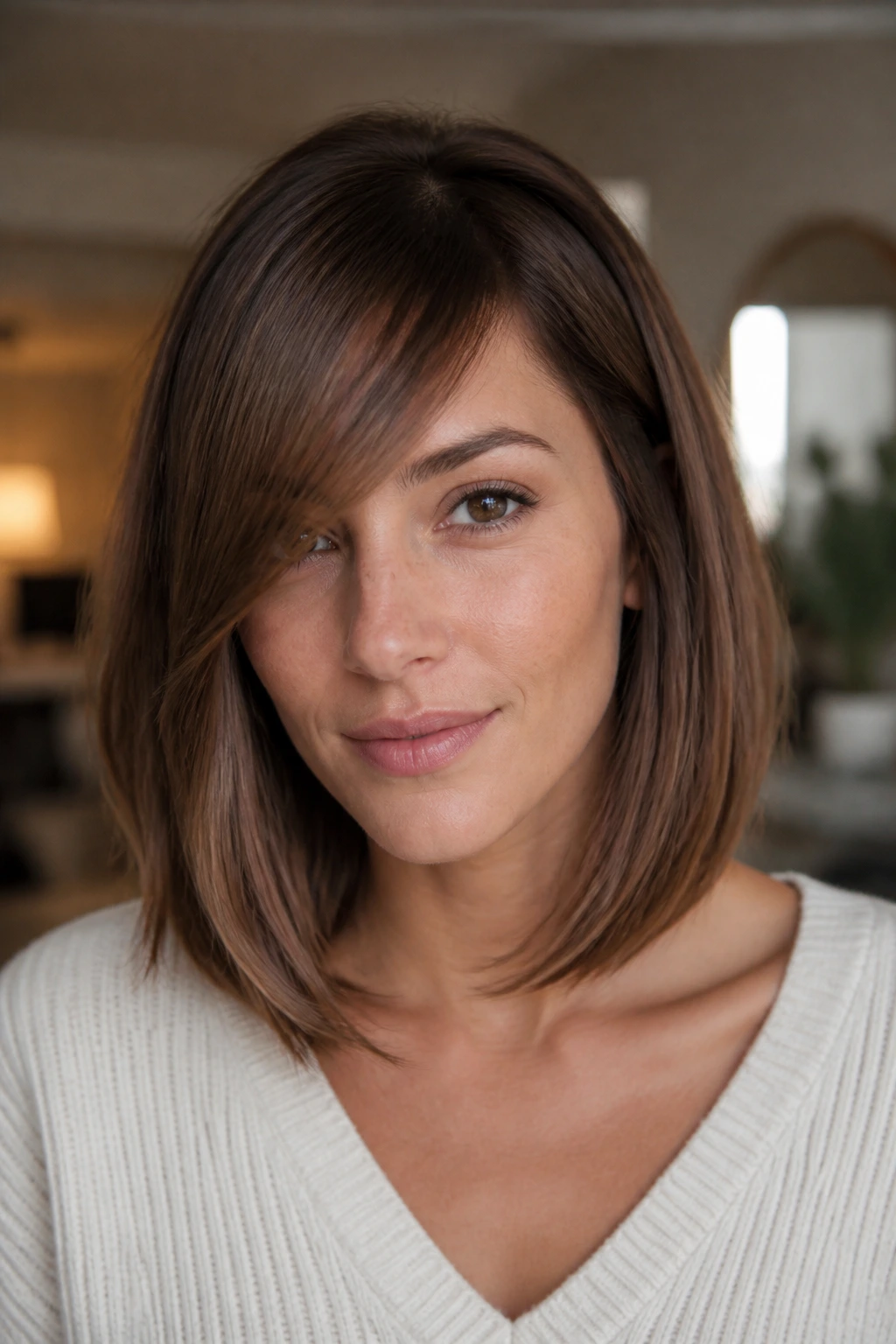
A lob gives fine ends a place to land. Add a side fringe, and the whole cut starts looking thicker without trying to fake it.
The lob should sit around the collarbone or just above it, which keeps the hair swinging instead of hanging. The side bang then draws attention upward and inward, so the eye sees shape before it notices how fine the ends are. That’s smart haircutting, not trickery.
This is a good option when the hair grows long but starts to feel wispy near the bottom. The lob takes some pressure off the length, and the fringe keeps the front lively. You get movement at two points instead of one.
Ask for soft layering around the face, not heavy internal thinning. Thin ends need support, not more removal. I’d rather see a slightly fuller edge than a cut that looks airy in the mirror and flimsy after one wash.
14. Wavy Side Bangs That Blend Into the Length
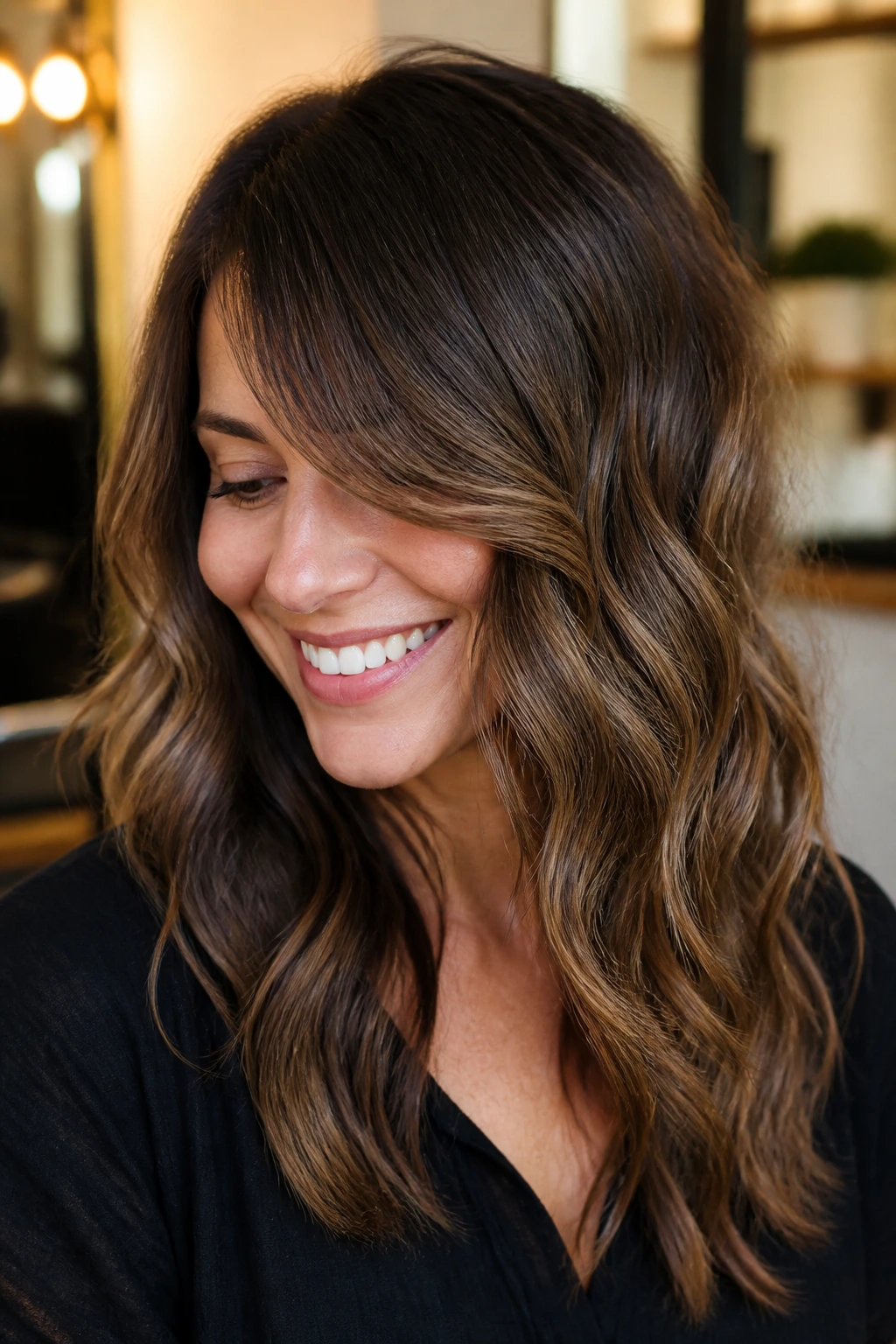
When fine hair has a natural wave, the front should follow it instead of fighting it. A side-swept bang that melts into the rest of the hair gives the wave a clean path across the forehead.
This works because the wave itself adds body. You don’t need a dense bang line when the bend in the hair is doing the lifting. Keep the layers soft and let the front curve down into the cheek and jaw rather than stopping abruptly.
A diffuser can help, but I actually like a simple hands-off dry better here. Scrunching too hard can make fine waves separate into frizz. Let the strand pattern stay visible. That pattern is half the look.
Use a small amount of curl cream only if the hair really needs it. Too much and the front gets sticky, which is the fastest way to ruin the airy shape.
15. Straight-Hair Sweep with a Clean Edge
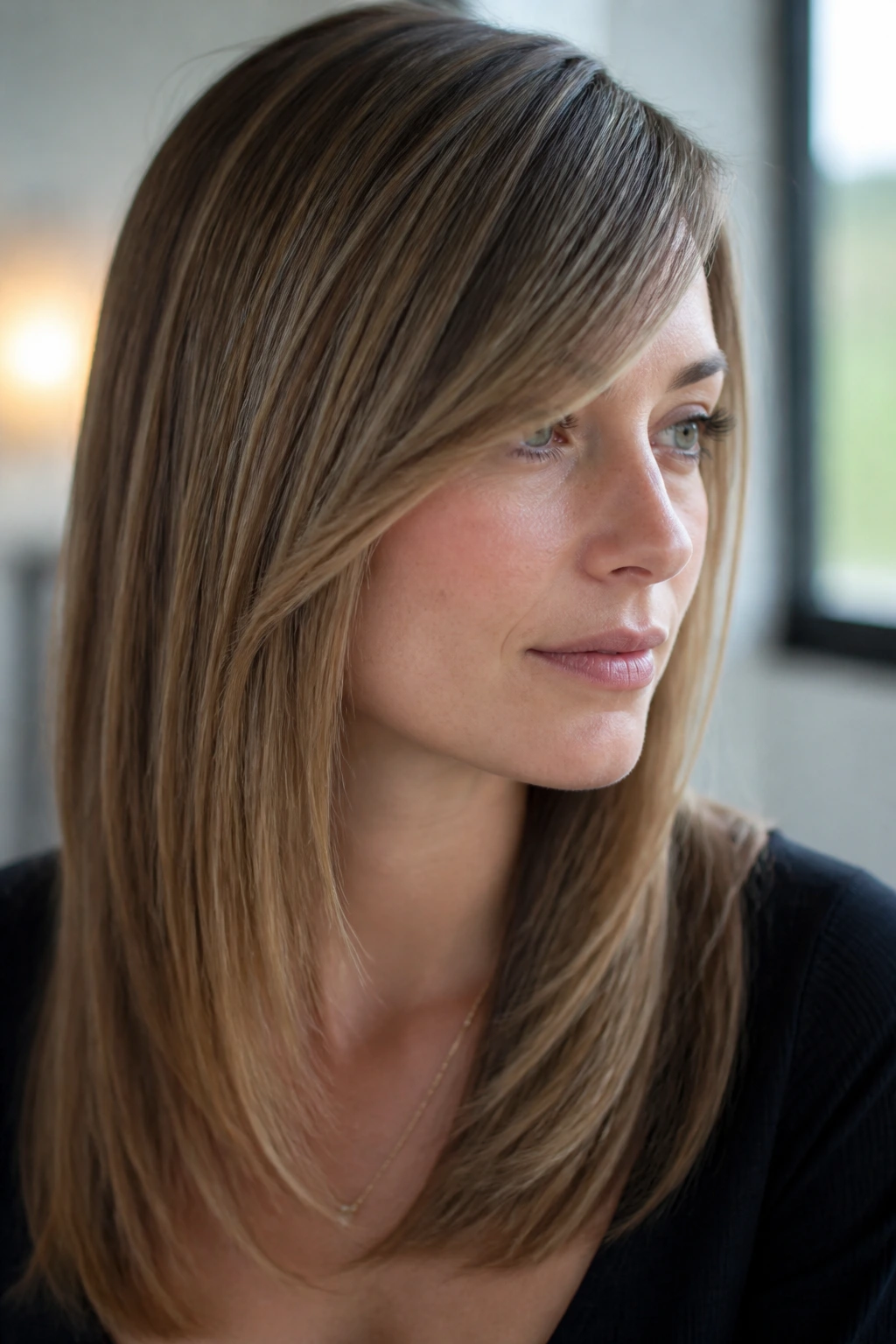
Straight fine hair can wear a side sweep beautifully when the line is clean. The trick is not to over-layer it into nothing.
This version gives you a neat front section that slides across the forehead and lands in one smooth arc. No frizz, no puff, no over-texturizing. The end should look soft, but it should still have enough shape to read from across the room.
I like this cut when the rest of the hair is mostly one length or has very gentle layering. Straight fine hair often looks best when the front has one clear movement and the rest of the haircut stays calm. Too many competing layers make the style feel busy.
The styling is straightforward. Blow-dry the root first, then bend the lengths with a brush or flat iron just at the ends. You’re aiming for a line that moves, not a curl that fights the hair’s natural smoothness.
16. Air-Dried Side Bangs for Natural Texture
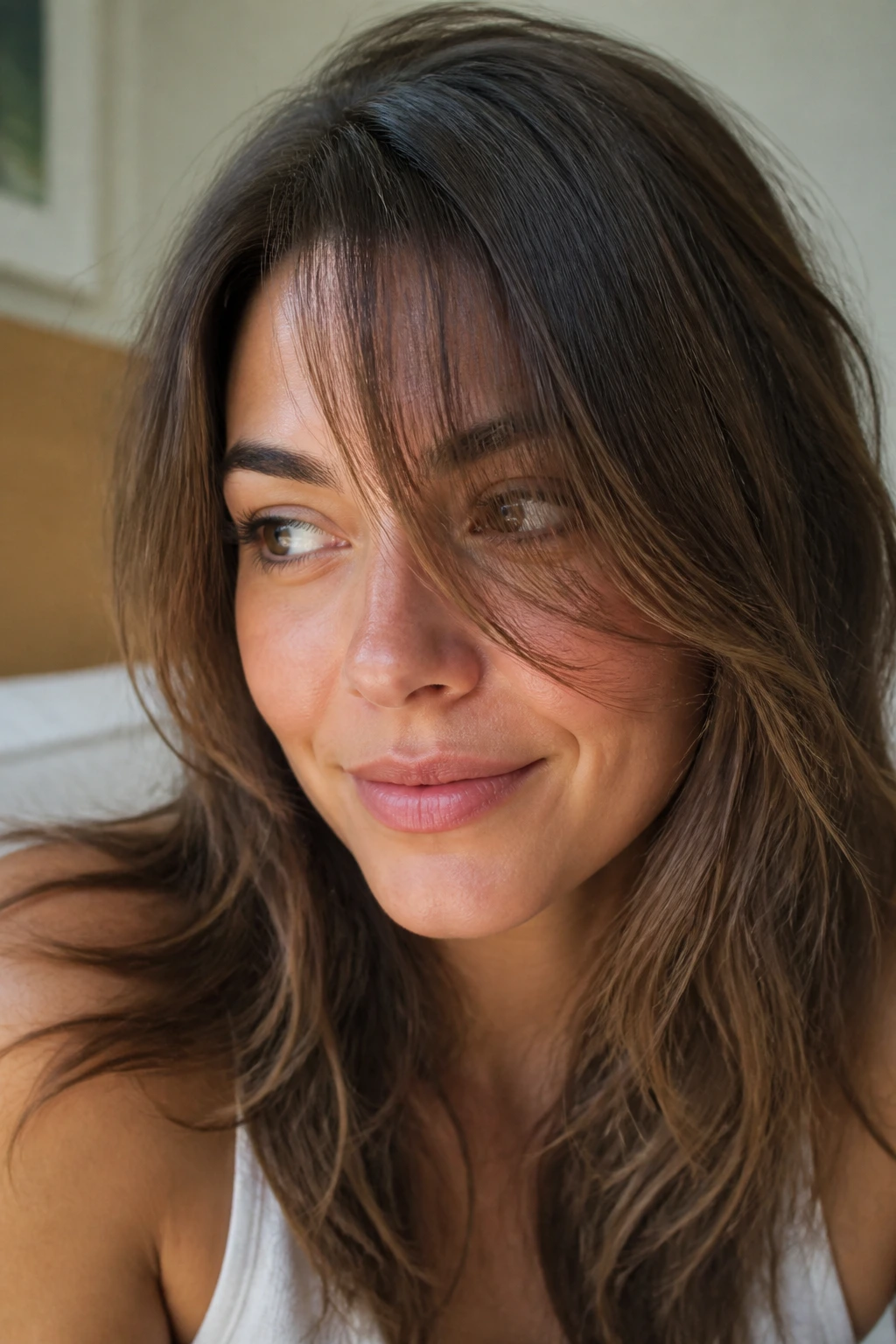
Can you let side-swept bangs air-dry on fine hair? Yes, if the cut is long enough and the front is shaped to cooperate.
The key is leaving enough length for the bang to settle into a curve on its own. If it’s cut too short, air-drying usually means random flips. If it’s cut with a gentle side bias, the hair can fall into a soft diagonal that looks relaxed rather than unfinished.
This version suits people who do not want to round-brush the front every morning. I’d still suggest a little root clip while the hair dries, because fine strands like to collapse where they’re told to. Remove the clip once the front is almost dry, then finger-shape the sweep into place.
Do not load it with cream. A tiny mist of leave-in is enough. Heavy product makes air-dried bangs stringy fast, and stringy is the one thing we’re avoiding here.
17. Curly and Coily Side Fringe with a Soft Arc
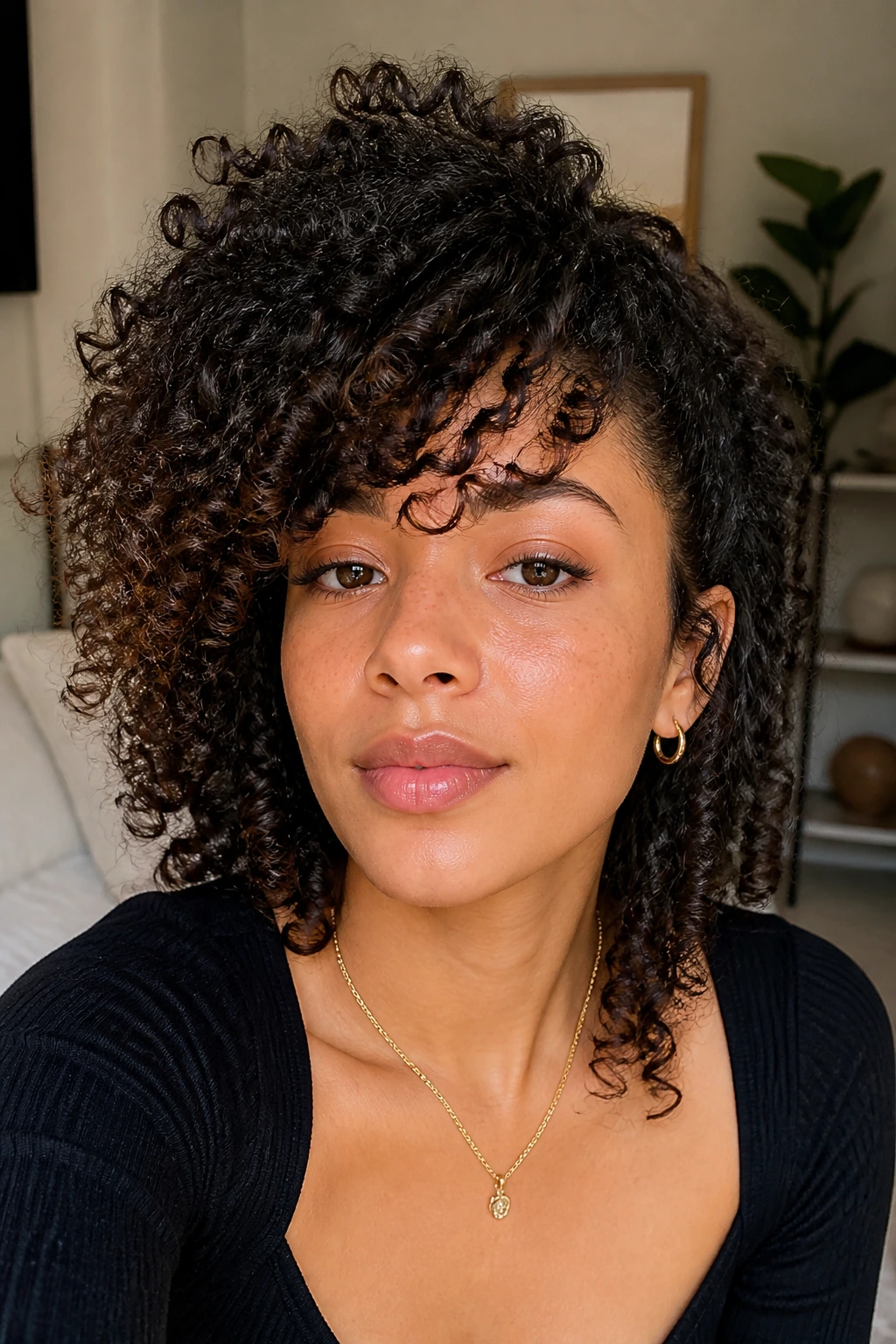
Fine hair does not stop being fine because it’s curly. And that means the fringe still needs a shape that respects both the curl pattern and the density.
A side-swept front on curly hair should be longer than you think, especially if the curl springs up when it dries. The arc should move away from the face in a soft curve, not hang as one narrow curl right in the middle of the forehead.
This style looks best when the stylist cuts it dry, curl by curl, and leaves room for shrinkage. The layering has to be gentle. Too much removal at the front leaves a gap that’s impossible to hide once the curls dry.
I like this on short-to-medium cuts with a little layered body. The side fringe becomes a soft frame, not a separate section. That’s the whole trick. Keep it connected.
18. Side Bangs for Round Faces That Stretch the Silhouette
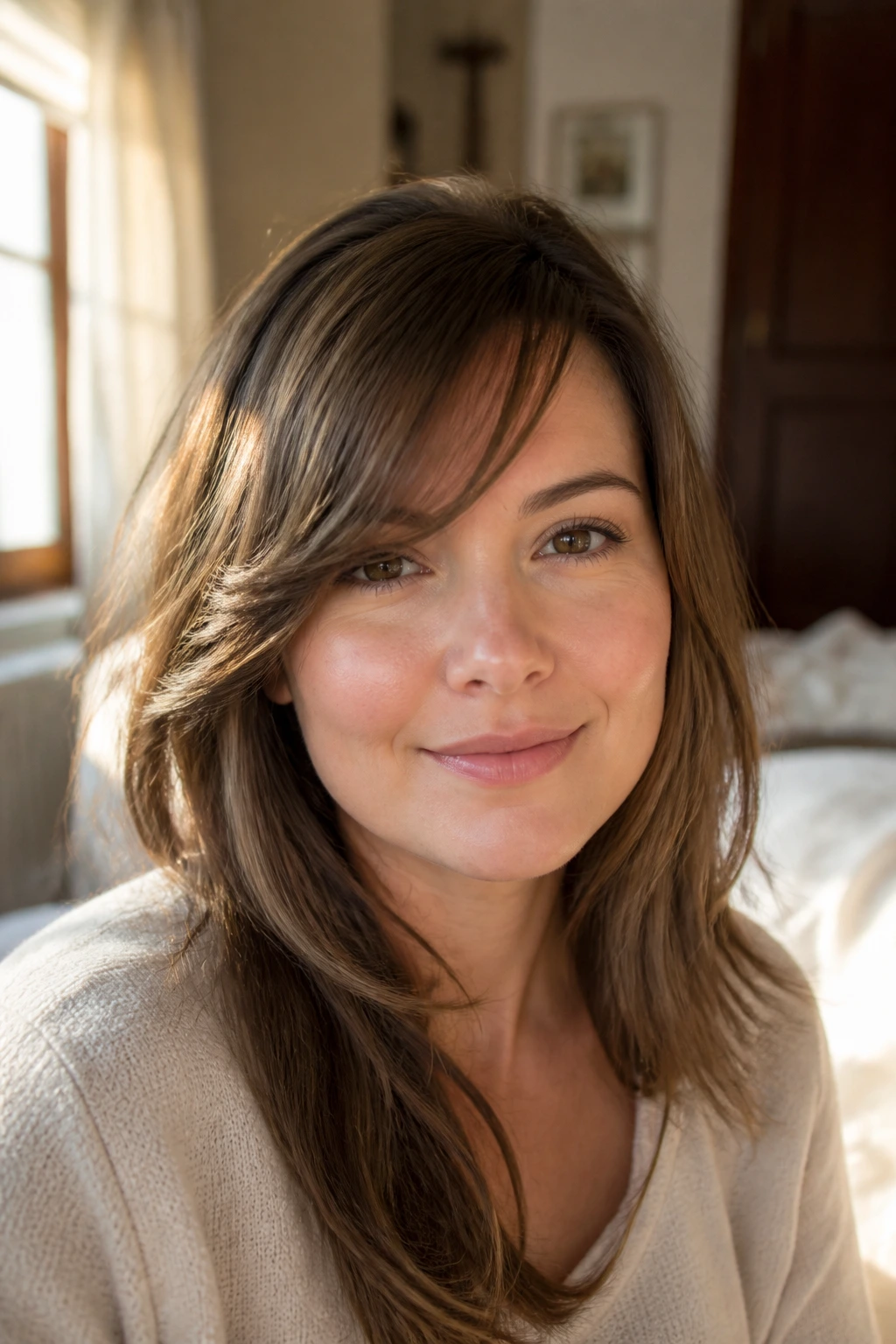
A side sweep can quietly lengthen a round face without making the haircut look stiff. That’s the useful part. The diagonal line leads the eye upward and across, which helps the face feel a little longer.
Keep the shortest point near the brow or slightly above the brow, then let the longest edge drift past the cheekbone. That long line matters. It gives structure without cutting the face in half. Fine hair benefits because the front stays airy while still doing shape work.
I’d avoid a fringe that ends too high or too abruptly. On round faces, a tiny cropped side bang can widen the middle of the face instead of balancing it. Long, angled pieces are the safer bet.
The best styling touch is a soft bend at the ends. A flat, straight sweep can look harsh. A little curve keeps things gentle and flattering.
19. Side Bangs for Square Jawlines That Soften the Edge
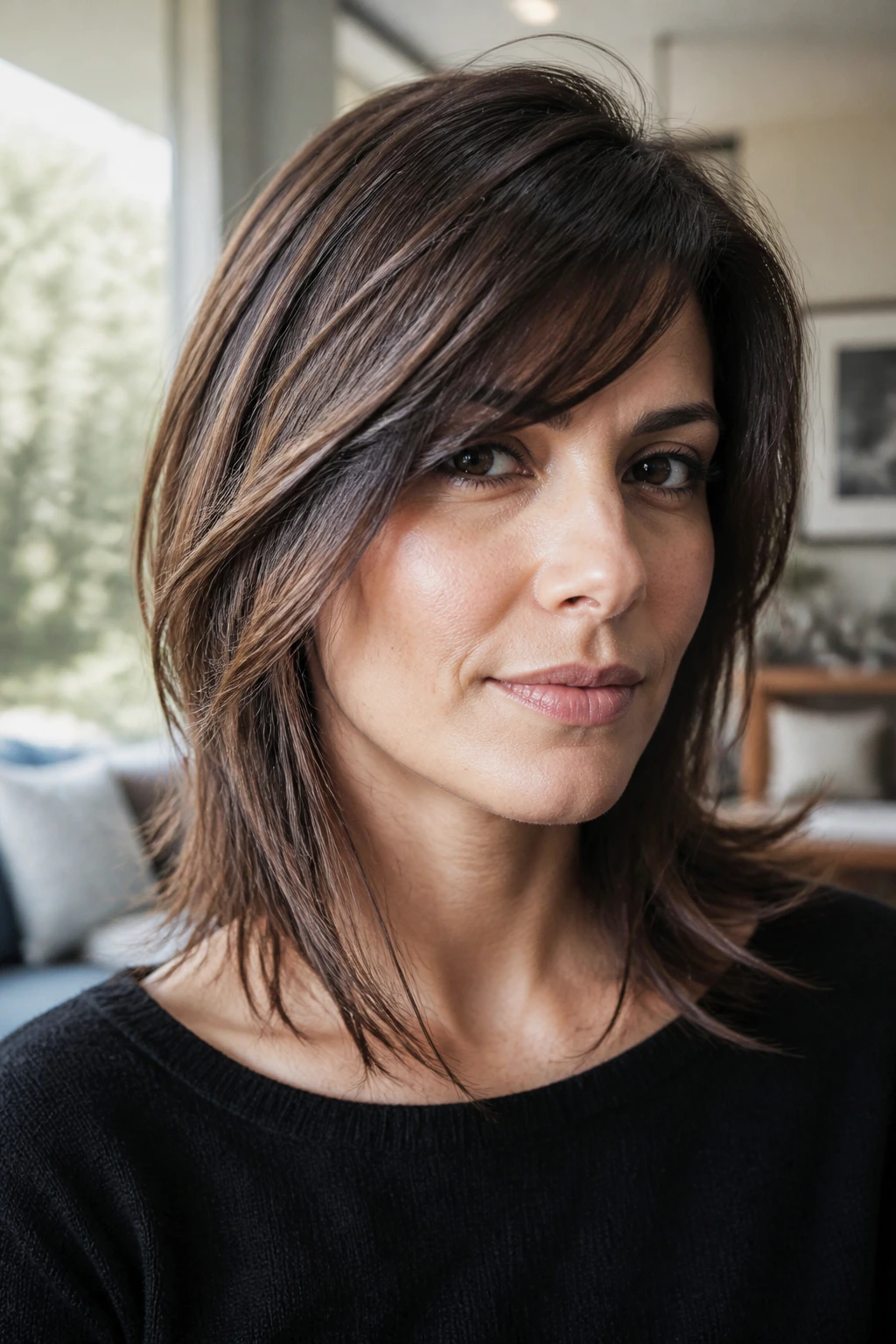
A square jaw often looks striking with a side sweep because the bangs interrupt the straightness of the lower face. The front should fall in a soft diagonal that starts near the temple and skims the cheek.
The goal is to break up hard corners, not hide them. Fine hair is good at this because it can make a light veil across the face without feeling bulky. Keep the ends feathered and long enough to move when you turn your head.
This is one of those cuts that looks better when the bang is slightly imperfect. A little bend, a little tuck, a little asymmetry — that’s the sweet spot. If it’s too precise, it can make the jawline feel more rigid.
I’d pair it with layers that start below the cheekbone so the front and body don’t compete. The bang should soften, not crowd.
20. Side Bangs for Oval Faces That Keep Balance
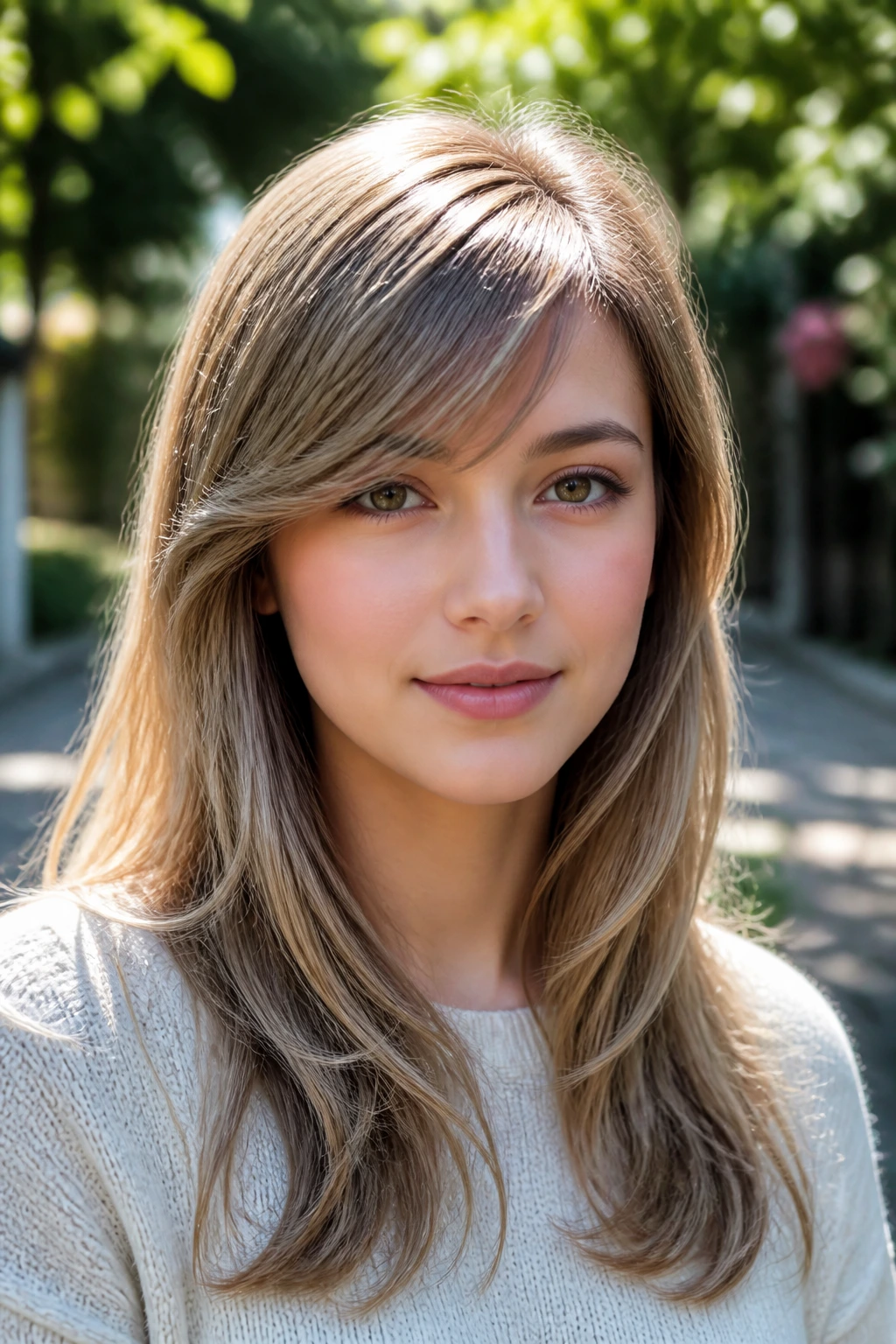
Oval faces can wear a lot, but that doesn’t mean every fringe needs to be strong. A long side sweep keeps the proportions calm and lets the haircut do the talking.
This shape is about restraint. The front should move across one side of the forehead and stop before it overwhelms the face. Fine hair makes this easier because the layer can stay light and low-key. You don’t need a big bang moment here.
I like this version when the rest of the hair is already layered or has face-framing pieces. The fringe should feel like part of the overall shape, not a separate event. If it feels too bold, shorten the width, not the length.
There’s a nice quietness to this look. It’s not trying to dominate the face. It just gives the front a soft sweep and leaves the rest alone.
21. Side Bangs for Long Faces That Avoid Extra Height

Can a side part make a long face look longer? Sure, if you push too much height at the crown and cut the bangs too short. So this version is about control.
Keep the side sweep long and a little fuller at the cheekbone, not lifted sky-high. The diagonal should be gentle. The front should shorten the visual space just enough to balance the face, not stretch it. That means less root tease, more soft fall.
Fine hair is useful here because it can create a delicate frame without adding bulk. A heavy bang would crowd the forehead. A light side sweep gives shape and keeps the top half of the face from feeling empty.
I’d choose a version that lands around the eye or cheek rather than the brow if the face is already long. It’s a small adjustment, but it changes the whole feel.
22. Half-Up Style With a Swept Front
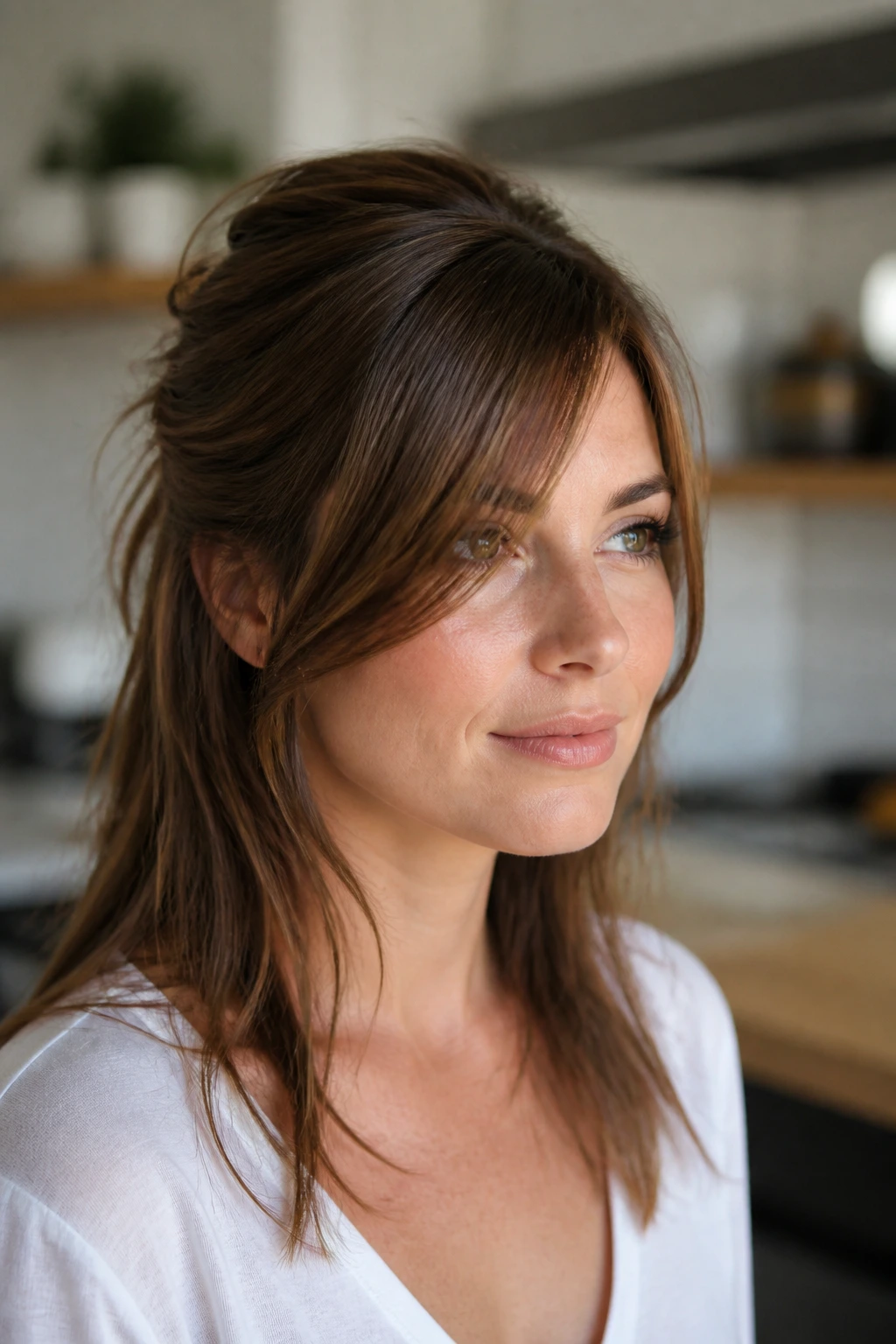
A half-up style can be brutal on fine hair if the front pieces are too short. A long side-swept fringe solves that by staying soft around the face while the rest of the hair gets pulled back.
The bang should be long enough to fall naturally beside the cheek when the top section is pinned or tied back. That way the style looks styled instead of scraped away from the face. A few loose pieces near the temple make the whole thing breathe.
I like this with a low bun, a small claw clip, or a half-up twist at the crown. The fringe gives those styles a front story. Without it, fine hair can look too bare at the hairline.
A quick pass with a round brush or straightener at the front is enough. You are not building a prom curl here. Just giving the sweep enough bend to live through the rest of the style.
23. Ponytail Fringe That Stays Light at the Hairline
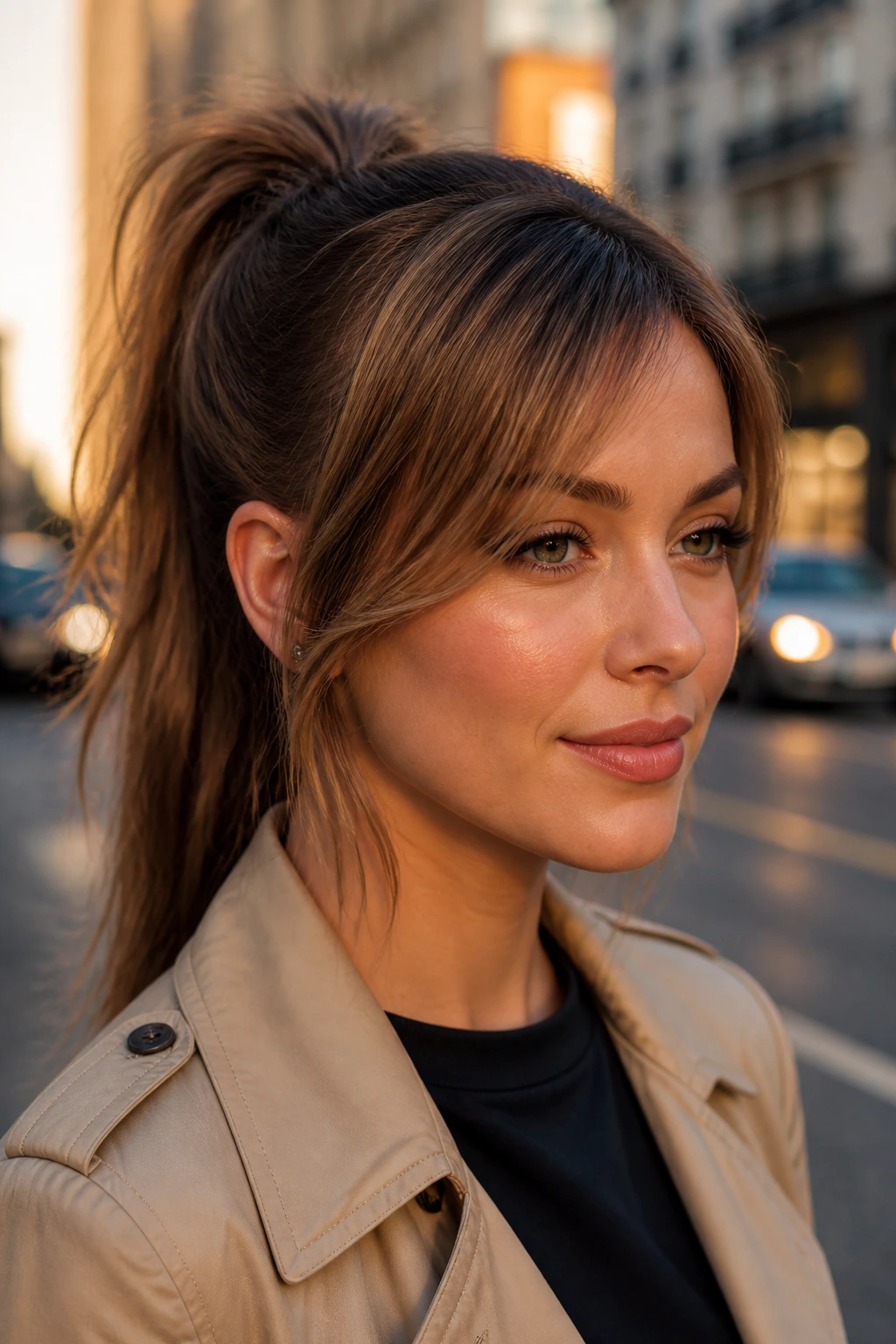
The right side sweep makes a ponytail look finished instead of accidental. On fine hair, that matters because a pony can expose every awkward line around the front.
This version keeps the fringe long enough to fall beside the ponytail, not get trapped under the elastic. The side pieces should skim the temple and cheekbone, then sit lightly against the face. That soft edge gives the ponytail a frame and keeps the hairline from looking too stark.
I’d keep the crown smooth but not flattened. A little root lift at the front helps the style feel intentional. If the fringe is too short, the ponytail can make the front look patchy. Long side pieces are far more forgiving.
This is one of the most practical side-bang looks for busy mornings. It works with low ponies, mid ponies, and messy knots. The fringe does the polishing for you.
24. Tuck-Behind-the-Ear Sweep for Busy Days
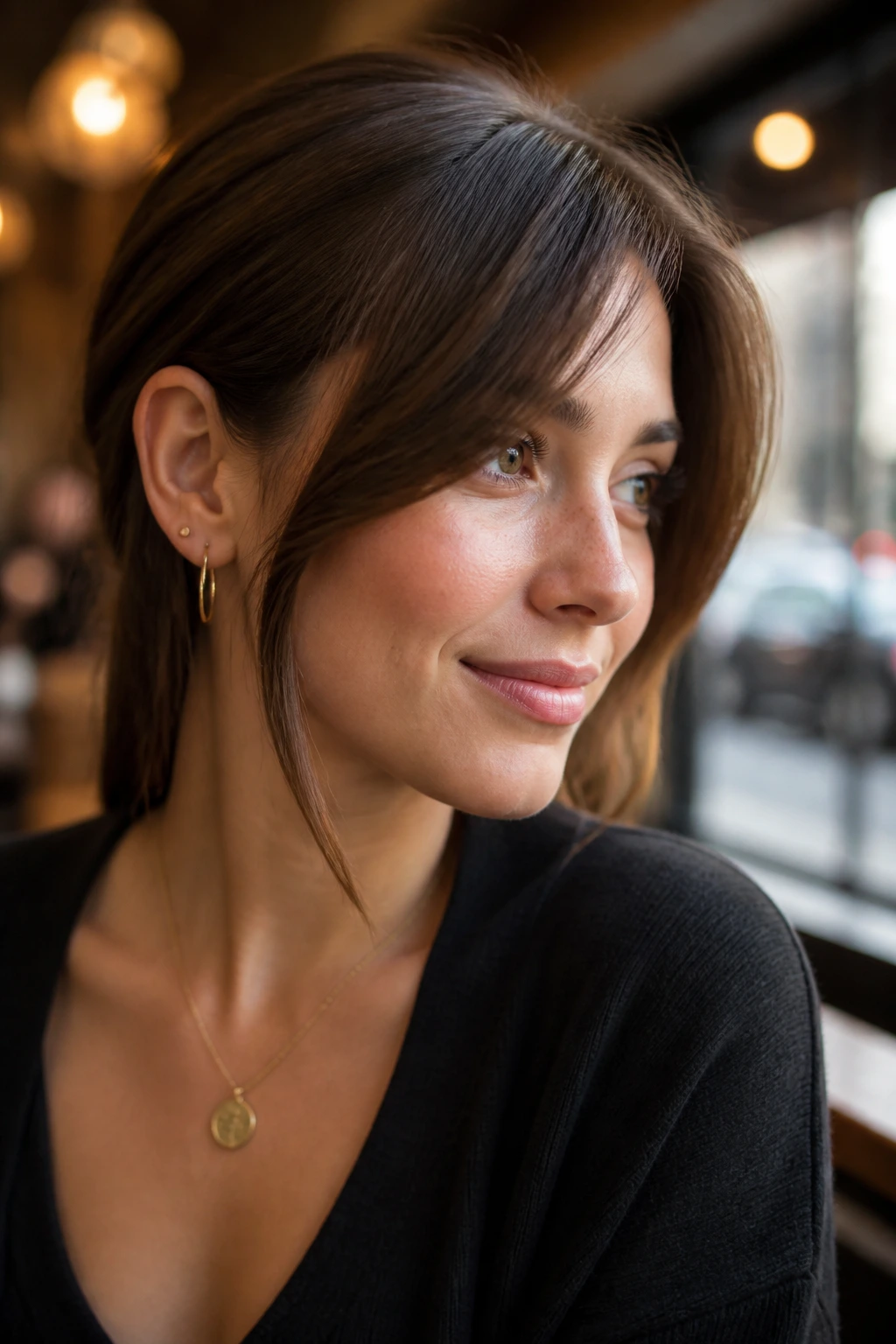
Some haircuts need a full styling session. This one should survive a tuck behind the ear and still look right.
The side sweep stays long enough to move off the face without leaving a hole at the temple. That’s the magic. Fine hair often loses shape once it’s tucked, but a longer front piece keeps a little drape even when one side is pinned or tucked away.
This is a good choice if you wear earrings, glasses, or scarves often. The front can cooperate with all of that without turning into a mess. It also helps on days when you want the bangs gone for an hour, then back again later.
I like this version a little messier than perfect. If the front swings loosely and one side sits flatter than the other, that’s fine. It should look lived-in, not staged.
25. Flip-Out Ends with a Breezy Front
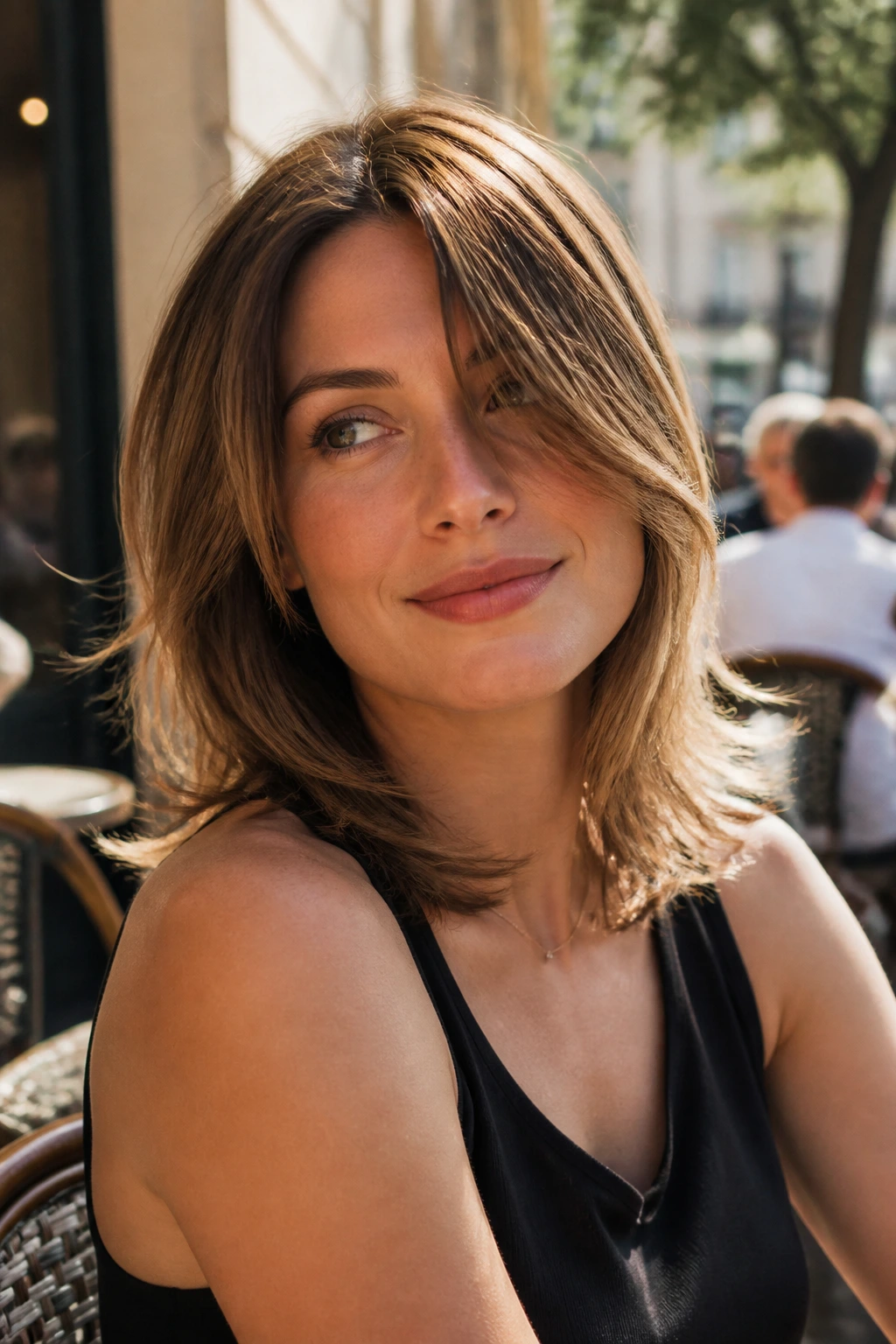
A slight flip at the ends can make fine hair look more awake. The trick is keeping the front sweep long and soft so the flip-out doesn’t turn cartoonish.
This style works because the ends turn away from the face instead of curling under it. That tiny outward bend gives the bang movement and stops it from clinging to the forehead. Fine hair tends to look livelier with this kind of direction change.
I’d pair it with shoulder-length cuts or a lob. The front and the ends can echo each other, which gives the haircut some rhythm. If the rest of the hair is pin-straight, just the bang flipping out can look disconnected.
Use a flat iron only at the last inch or so. Too much heat and the front starts to look sharp instead of soft.
26. Dimensional Color That Makes the Fringe Read Fuller
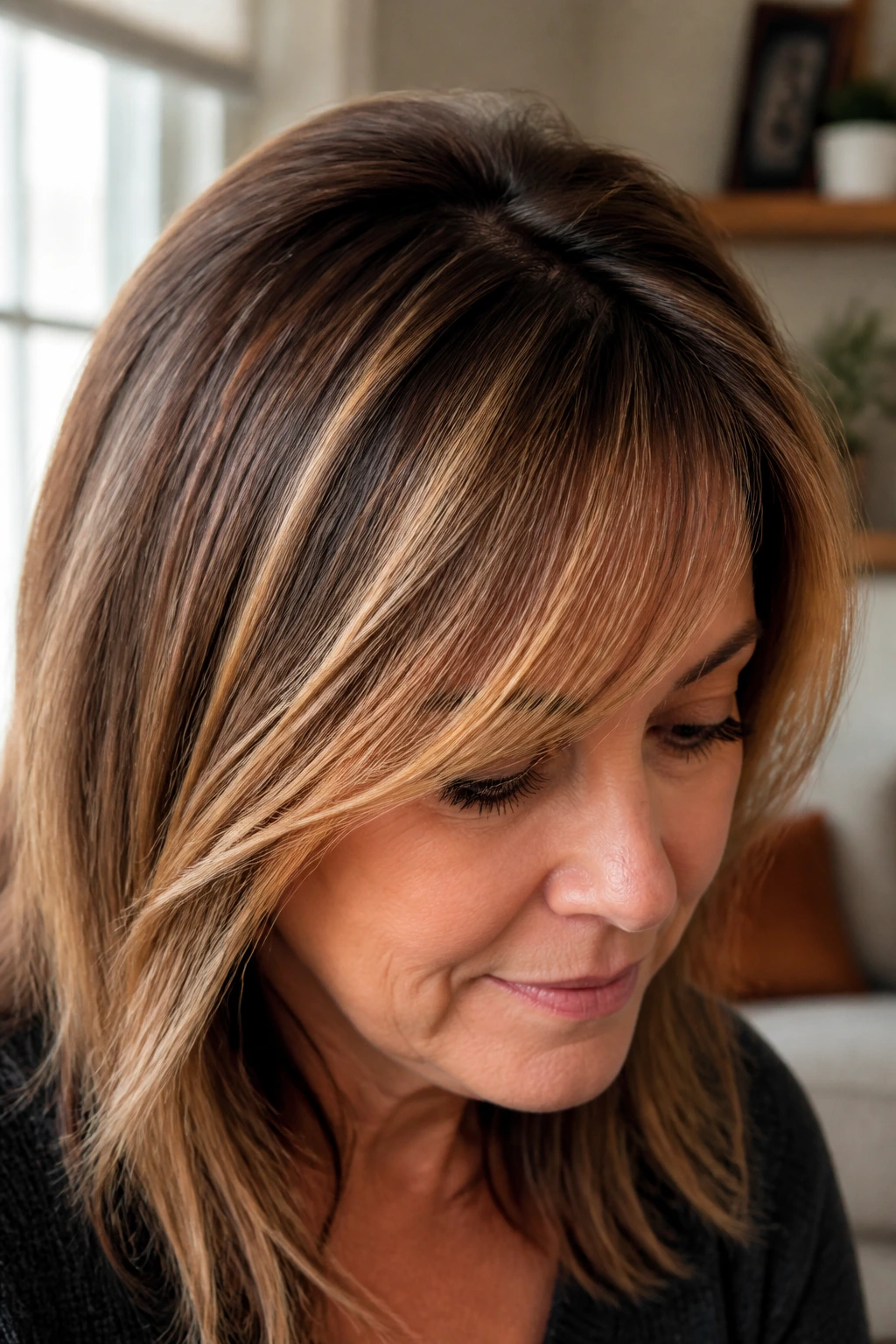
Color can change how fine bangs land on the face. A little dimension near the front — darker lowlights, soft highlights, or a gentle root shade — helps the layers show up without needing more bulk.
This is especially useful with side-swept bangs because the line already moves diagonally. A little depth makes each piece visible. The fringe can read thicker, softer, and more shaped, even when the actual hair density is modest.
I’m not talking about stripey highlights. Those can make fine hair look broken up in the wrong way. Keep the color subtle and blended. The front should have enough contrast to show movement, not enough contrast to look striped.
If the haircut is light and the color is flat, the bangs can disappear. Add depth at the root and a touch of brightness where the fringe bends, and the shape suddenly has more presence.
27. Long Side Bangs That Grow Into Layers
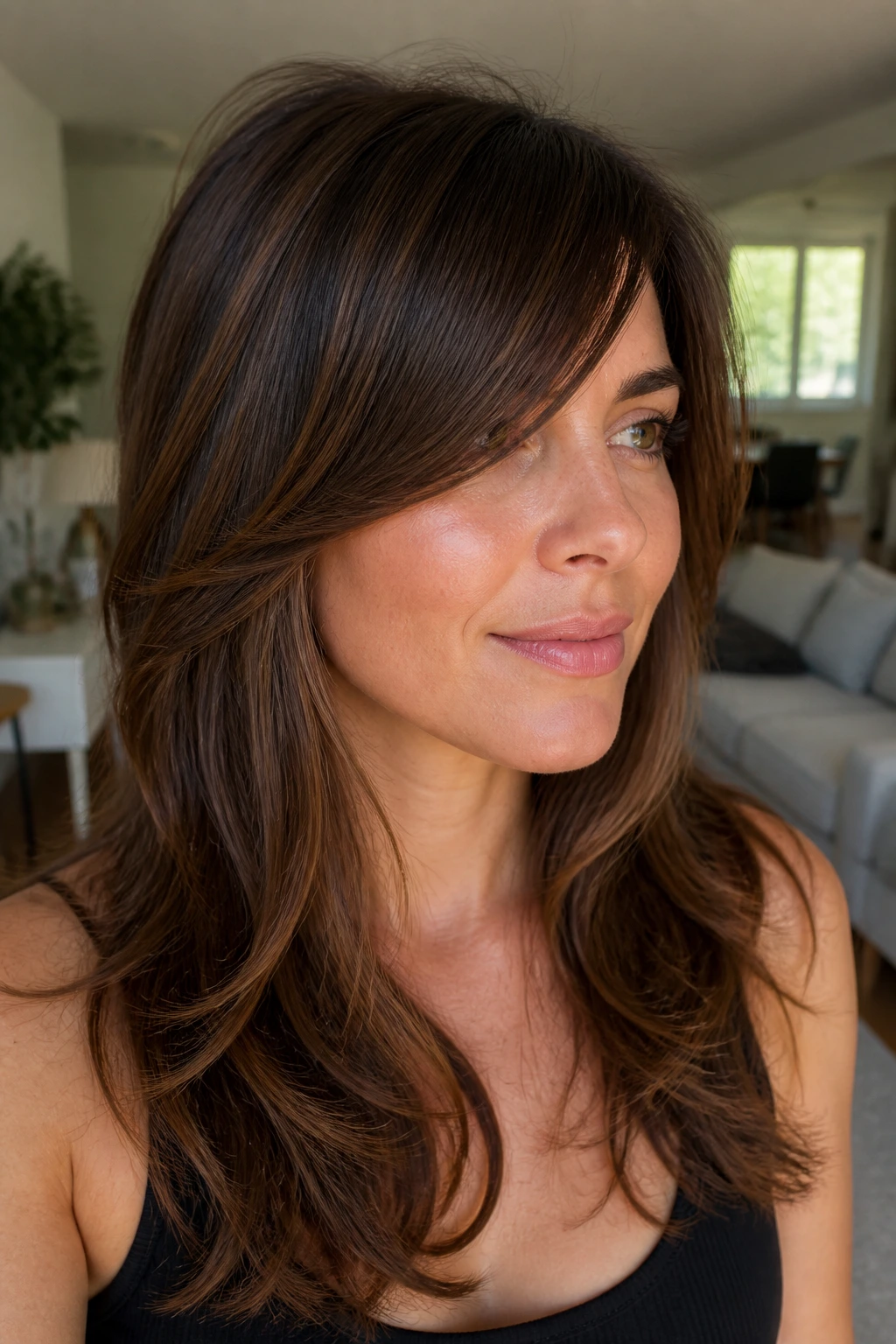
This is the one to choose when you know you’ll want to change your mind later. The front starts as a side bang, then becomes a face frame, then becomes part of the overall cut.
That slow shift is perfect for fine hair. There’s no harsh line to outgrow, no obvious chop to fight with, and no awkward middle ground where the bangs look too short and too thin at the same time. The pieces just keep sliding into longer layers.
I like this for anyone nervous about commitment. It gives you the idea of a fringe without locking you into a strict maintenance schedule. You can pin it back, split it, tuck it, or let it fall forward, and it still makes sense.
The key is not to thin the ends too aggressively. Let the length do the work. The grow-out will be cleaner if the front stays soft and connected from the start.
- Best feature: it still looks deliberate at four, six, or eight weeks out.
- Ask for: long perimeter pieces that can merge with face-framing layers.
- Style note: a quick bend at the ends keeps it from hanging flat.
28. Soft S-Curve Bangs for the Most Undone Finish
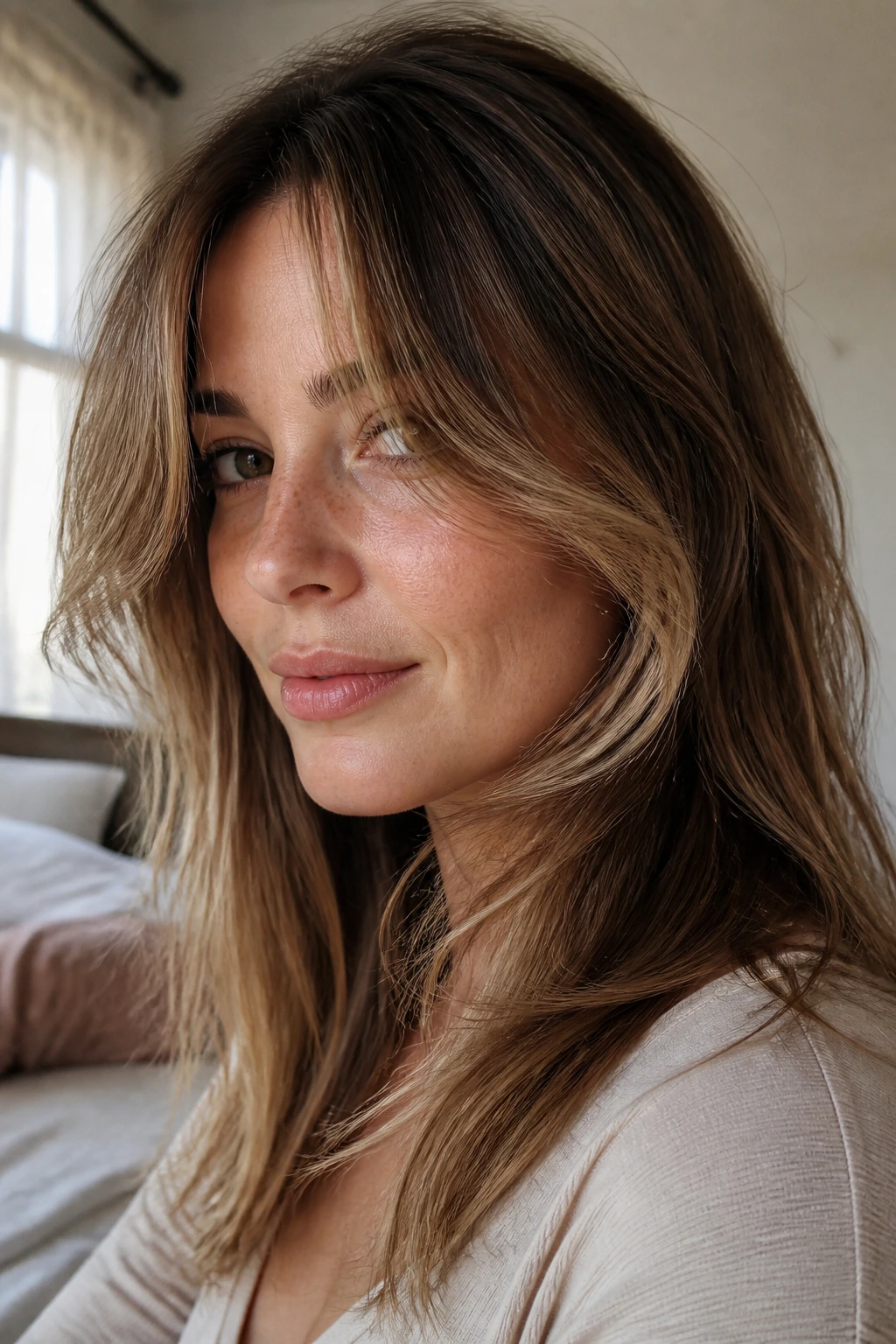
What if you want the front to look like it fell into place on its own? The S-curve does that. The hair bends in, then away, then softens into the rest of the cut.
On fine hair, that shape can be gorgeous because it uses movement instead of thickness. The front does not need to be dense to look full; it needs a line that travels. An S-curve gives you exactly that, with a little bend near the cheek and a softer drop toward the jaw.
This is my favorite relaxed version for people who hate over-styled bangs. It looks best when the root is lifted just enough and the midlengths are left loose. If you curl it too tight, the whole thing loses the easy feel.
Keep the ends airy and the side part honest. The curve should look like a natural decision, not a forced one. That’s the difference between a front piece that fights your hair and one that gets out of the way.
Why Side-Swept Layers Give Fine Hair More Movement
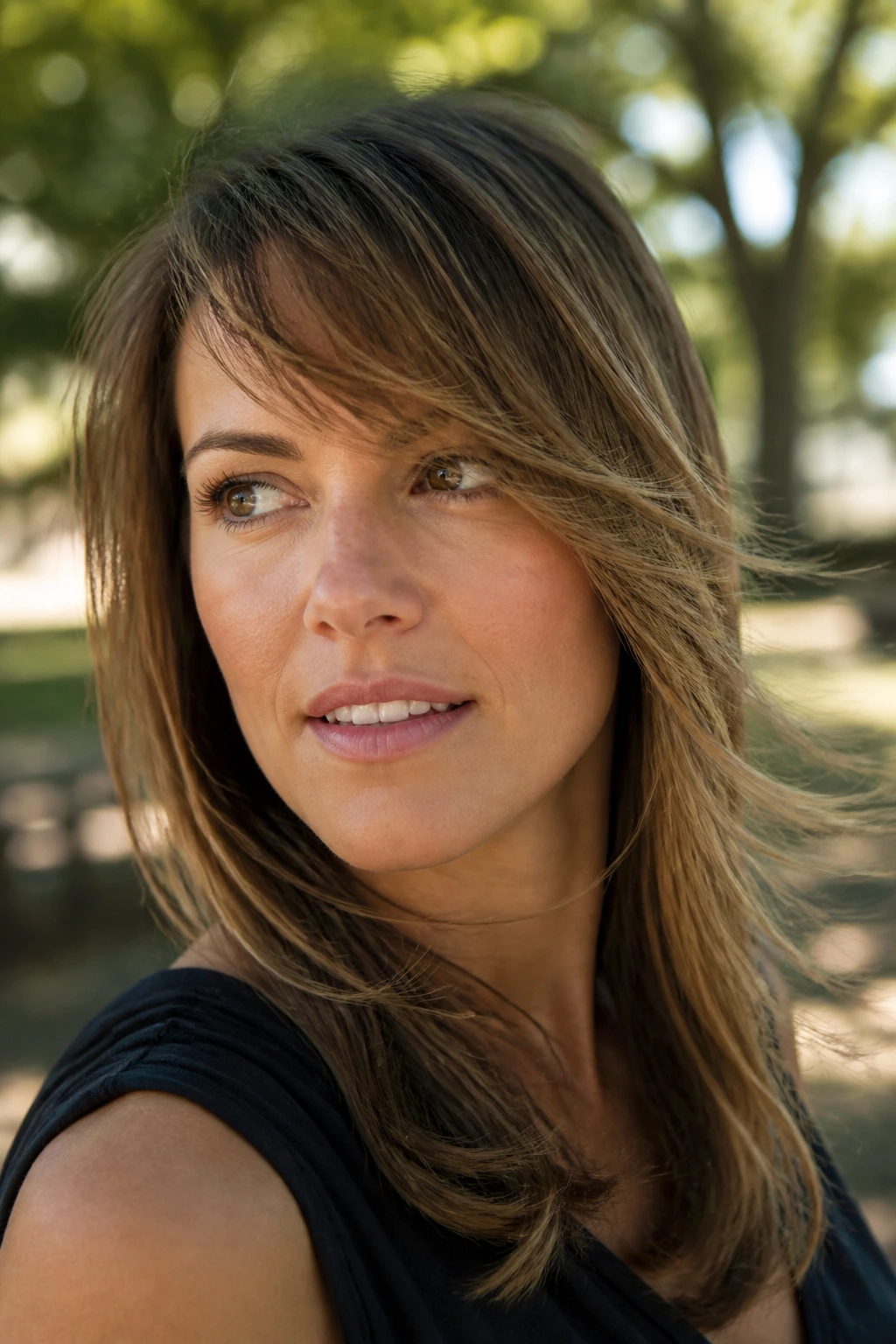
Fine hair tends to look flat when it has to carry too much weight in one place. A blunt fringe, a dense front section, or a heavy line across the forehead can drag the whole haircut down. Side-swept layered bangs break that problem apart. They redistribute the visual weight, leaving some forehead visible, some hair moving, and enough shape to keep the front from disappearing into the rest of the cut.
The diagonal line helps too. Hair doesn’t have to be thick to look active. A side part creates direction, and direction reads as movement even before the hair lifts off the scalp. That’s why a simple sweep can look fresher than a fuller-looking bang that sits dead still. The eye follows the line. The cut feels alive.
There’s another quiet advantage: grow-out is easier. Fine hair often shows every transition, and that can make shorter bangs annoying to live with. A long side sweep melts into face-framing layers as it grows, which means the haircut can blur instead of break. That matters if you don’t want to return to the salon every few weeks for a tiny trim.
And yes, product plays a role, but only after the shape is right. If the cut is too blunt or too sparse, no amount of mousse will save it. The shape has to do the heavy lifting first.
What to Ask for at the Salon and What to Look for in Products
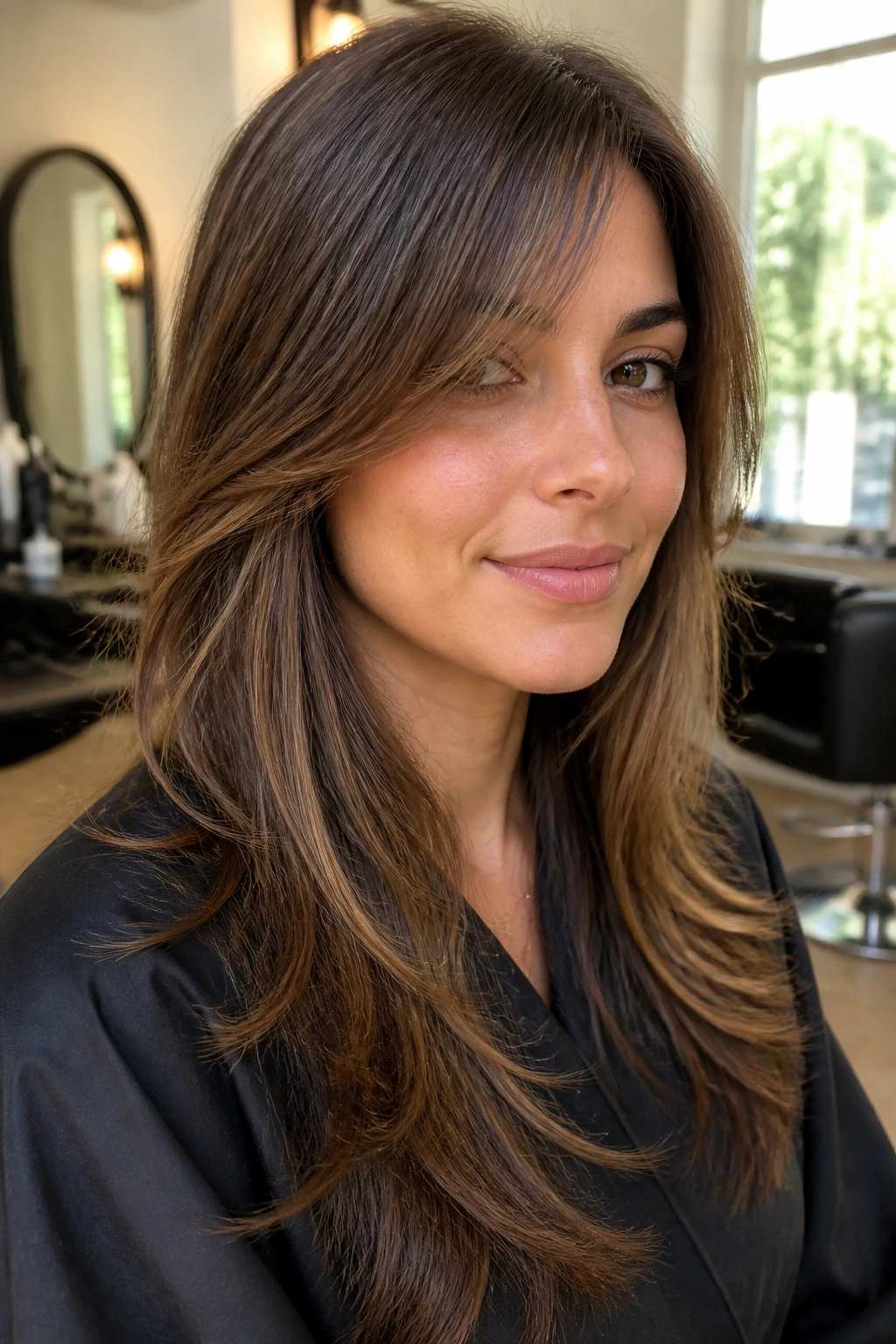
Bring photos, but bring the right kind. Show your stylist a fringe that has the same density as your own hair, not a picture of thick hair pretending to be fine. That single mistake causes more disappointment than people admit. A look can be beautiful and still not be built for your texture.
Ask for long side-swept bangs with soft layering through the front, and be specific about the shortest point. If you want movement, tell the stylist where that shortest point should sit — brow, eye, or cheekbone — and where the longest pieces should land. If the answer is “somewhere in the front,” you are not getting enough detail.
For the cut itself, point cutting or light slide cutting usually keeps the edges softer than a hard horizontal line. I’d be cautious with heavy razor work on very fine hair unless the stylist knows how the hair behaves dry. Too much removal at the ends can leave the fringe see-through before you even leave the chair.
Product choice matters just as much. Look for a lightweight root-lift mousse, a heat protectant that doesn’t feel slick, and a flexible hairspray that sets the front without turning it crunchy. Creams that are too rich can make the bangs collapse, and thick oils can make the separation look greasy.
A small amount of dry shampoo at the root can help the front keep shape between washes. The front gets oily first on fine hair. That’s not a flaw. It’s just how the hairline works.
The Tools That Make Styling Easier
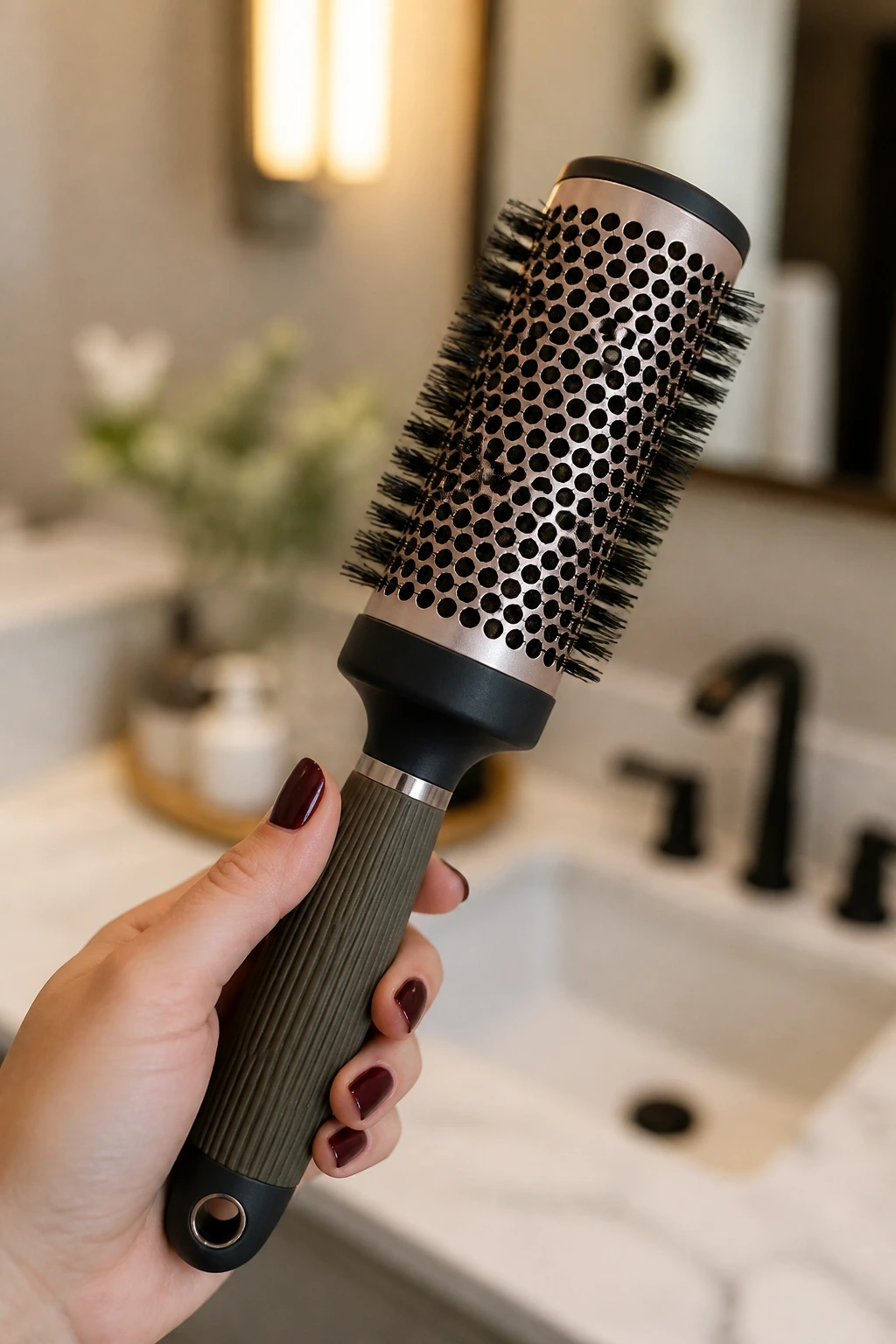
You do not need a drawer full of gadgets. You need a few tools that actually match fine hair.
- Small round brush, 1 to 1.25 inches: Gives the front a bend without overcurling it.
- Blow dryer with a nozzle: Directs airflow so the fringe dries in the shape you want.
- Duckbill clips: Hold the front up while it cools and help build root lift.
- Fine-tooth tail comb: Makes a clean side part and helps separate the bang section.
- Lightweight mousse: Adds body at the root without coating the strand.
- Heat protectant spray: Keeps the ends from drying out when you use a brush or iron.
- Flexible-hold hairspray: Sets the sweep without freezing it in place.
- Dry shampoo: Helps the front survive day two and day three when oil starts to win.
- 1-inch flat iron or curling iron: Useful for a quick bend at the ends if your hair won’t hold a brush set.
- Paddle brush: Handy for smoothing the rest of the hair so the front stays the focus.
A Velcro roller is optional, but I like it for the front when you want a little lift without direct heat. It’s old-school, and it works.
How to Wear Long Side-Swept Bangs Day to Day
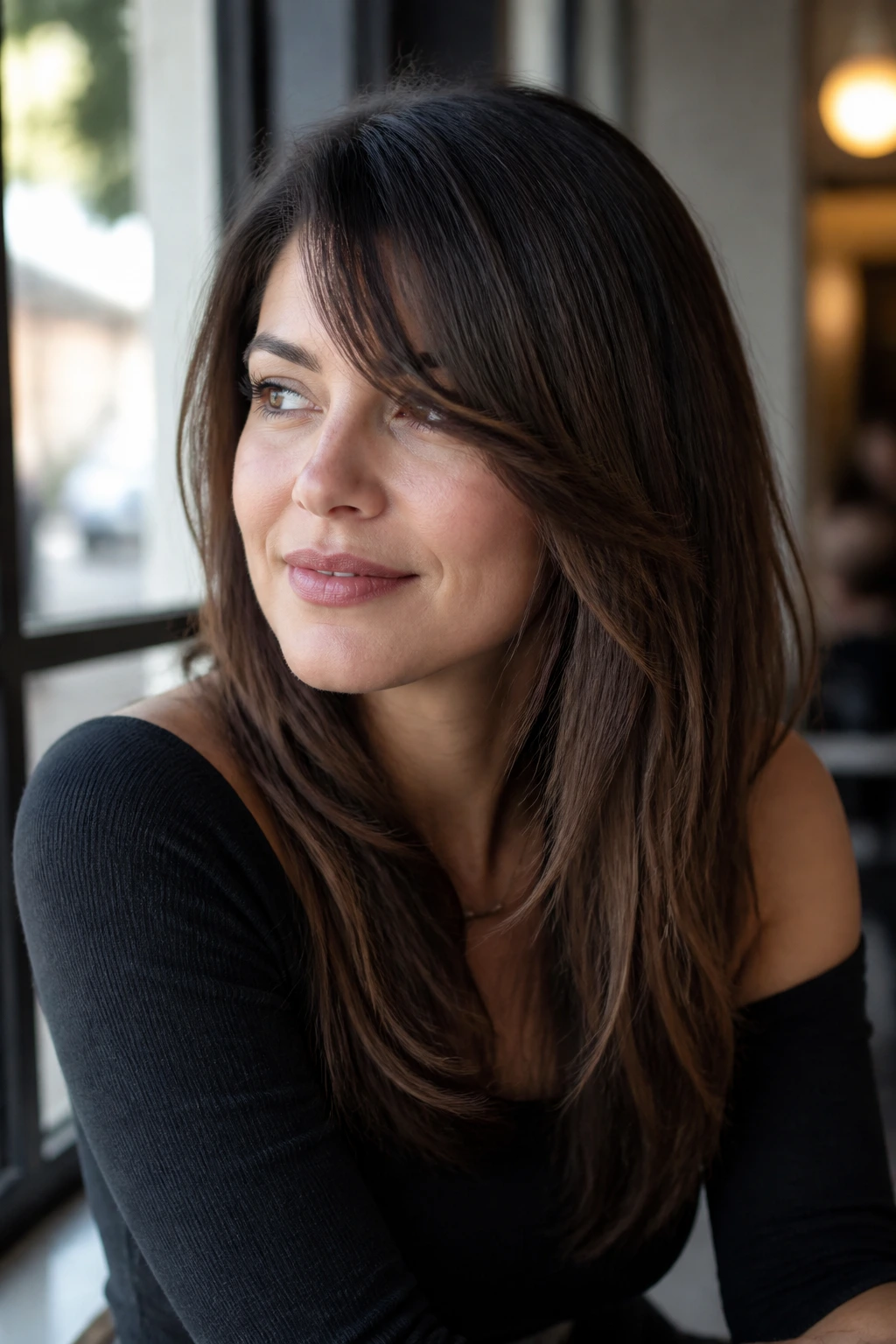
Presentation: Keep the part slightly off center and let the shortest front piece sweep across the forehead instead of lying straight down. The shape should feel like a line, not a curtain.
Pairings: These bangs sit well with loose waves, a low ponytail, a half-up clip, a lob, or even a sharp blouse collar. The front softens harder shapes and gives plain styles some motion.
Scale: Fine hair needs a narrow bang section more often than a wide one. If the front is cut too broad, the hair can spread thin and show too much scalp. Narrower pieces with longer ends usually behave better.
Finish: A touch of flexible spray or a pea-size amount of texture cream on the ends is enough. Heavy product at the root makes the front collapse, and once it goes limp, it takes more effort to fix than it should.
I also like the way this shape plays with glasses, earrings, and scarves. The front can tuck, sit free, or sweep back over one temple without needing a full restyle. That’s not glamorous. It’s better. It means the haircut fits the day.
Extra Tips for More Lift, Bend, and Softness
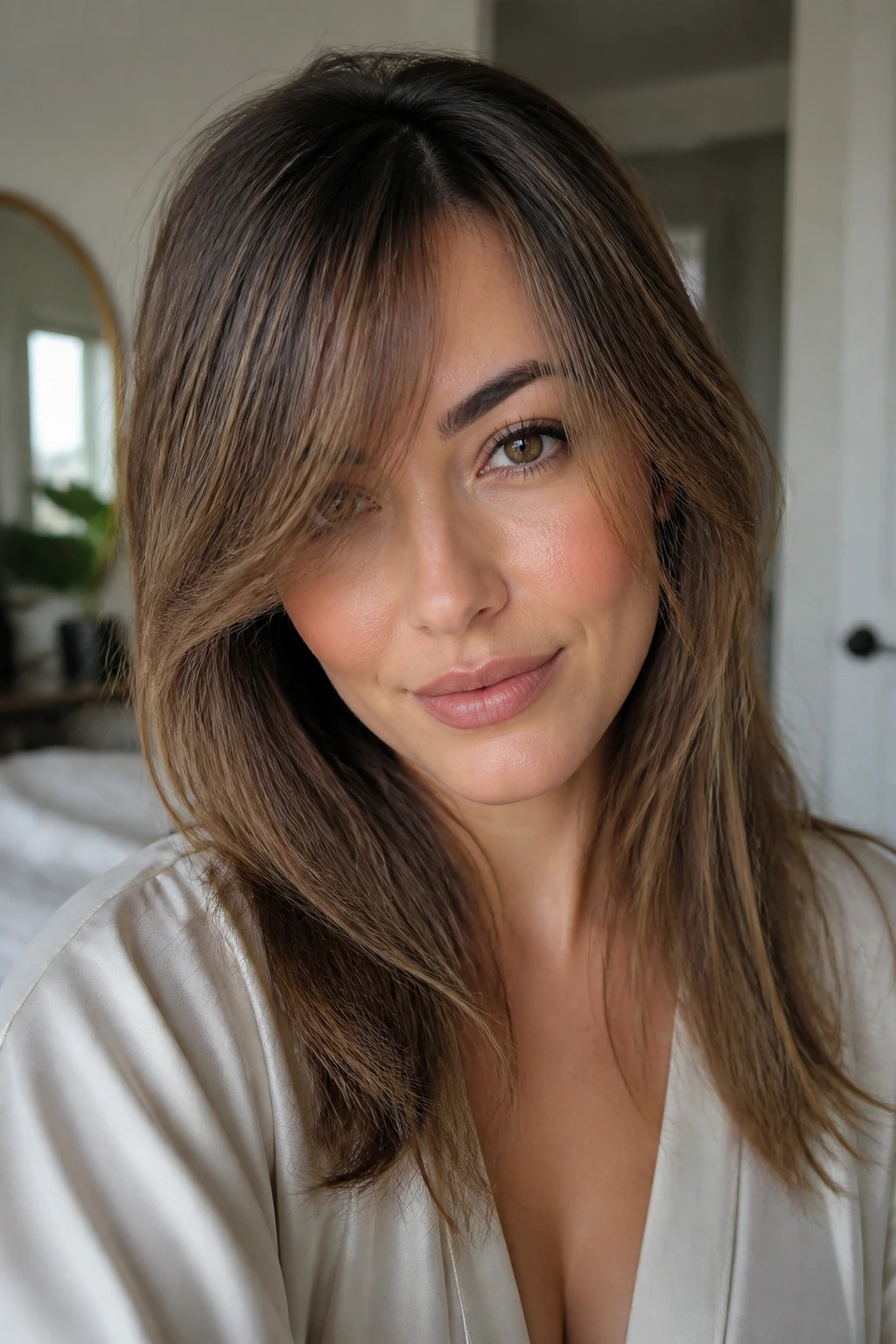
Root Support: Blow-dry the bang section first, while it’s still damp, and direct the hair opposite the way you want it to sit for the first few seconds. Then sweep it back into place. That little switch gives fine hair more lift than drying it flat from the start.
Cool-Down Trick: Clip the fringe up for a minute or two after drying. Hair sets as it cools, and fine strands need all the help they can get. If you release it too soon, the root loses its shape in about five minutes.
Product Choice: Use mousse at the root, not oil. I know that sounds almost too obvious, but the wrong product is what makes fine bangs look stringy. Put the rich stuff in the mids and ends if you need it. Keep the front light.
Shape Control: If one side of the fringe keeps splitting, change the part by a quarter inch instead of fighting the split with spray. Fine hair remembers where it wants to fall. Work with that memory.
A quick finger-twist at the ends can also help. Nothing dramatic. Just enough to guide the hair into a soft bend before it dries.
The Mistakes That Flatten Fine Hair Fast
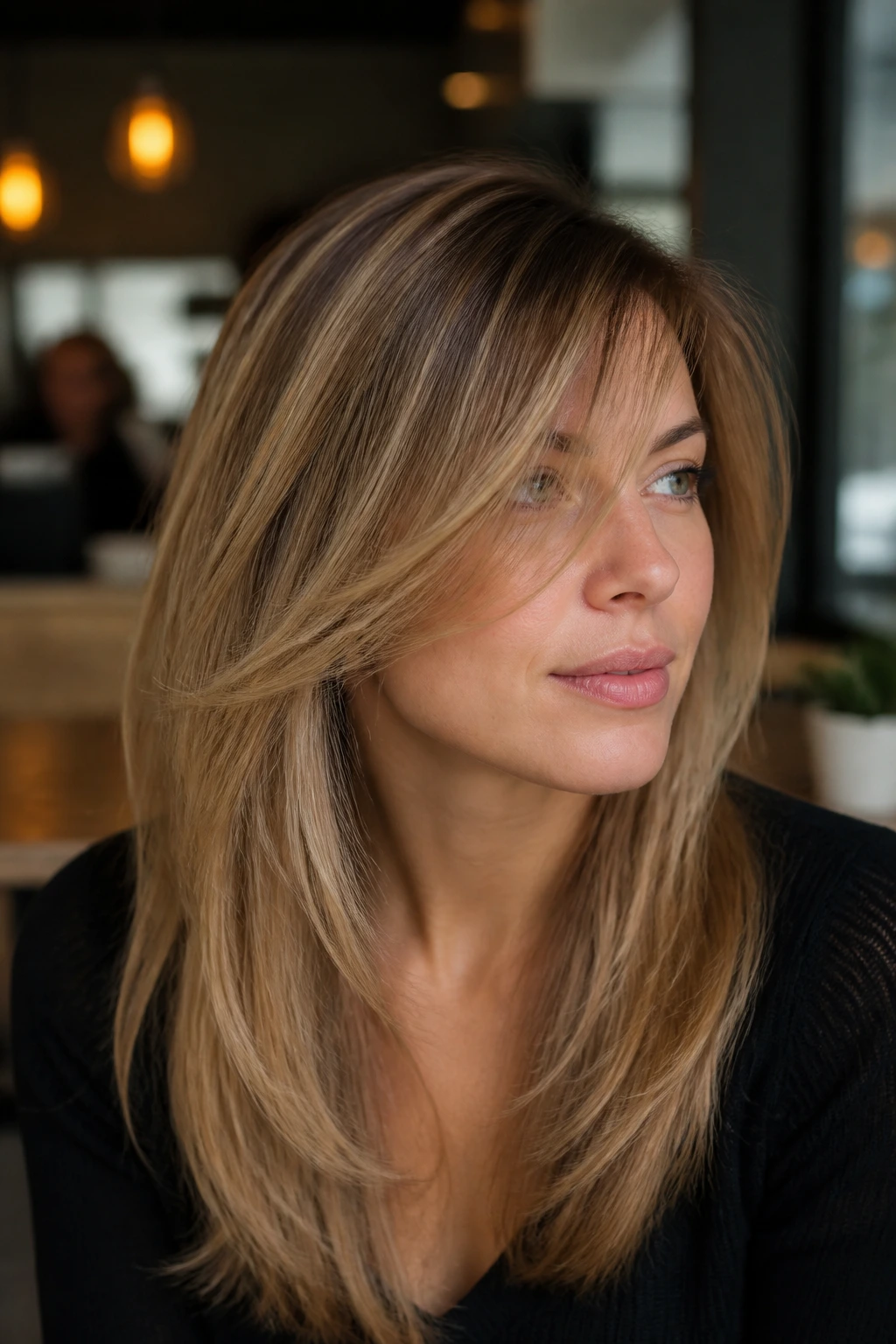
Cutting the bangs too short. Fine hair springs and settles in ways people underestimate. A fringe that looks fine in the chair can jump a half-inch or more once it dries. The fix is to leave extra length and check the cut after the hair is fully dry.
Over-thinning the ends. This is the fastest route to a see-through front. The bang starts to separate into sad little bits, and the rest of the haircut loses its frame. Ask for soft layering, not aggressive texturizing.
Using heavy cream near the root. Fine hair can’t carry rich product on the front section without looking oily. If the bang looks shiny in a bad way by noon, that’s probably the reason. Move the cream to the ends and keep the root airy.
Ignoring the natural growth pattern. Cowlicks and whorls matter. If the front naturally parts a little left, trying to force it dead center creates a fight you’ll lose every morning. Work with the growth pattern, not against it.
Drying the front in one direction every single time. That can make the fringe press flat against the scalp. Flip the front side to side during drying once in a while, then settle it into the chosen sweep at the end.
Leaving the face frame too wide. Wide bangs can make fine hair look sparse because they spread the density too far. Narrower sections usually look fuller.
Variations for Different Textures and Routines
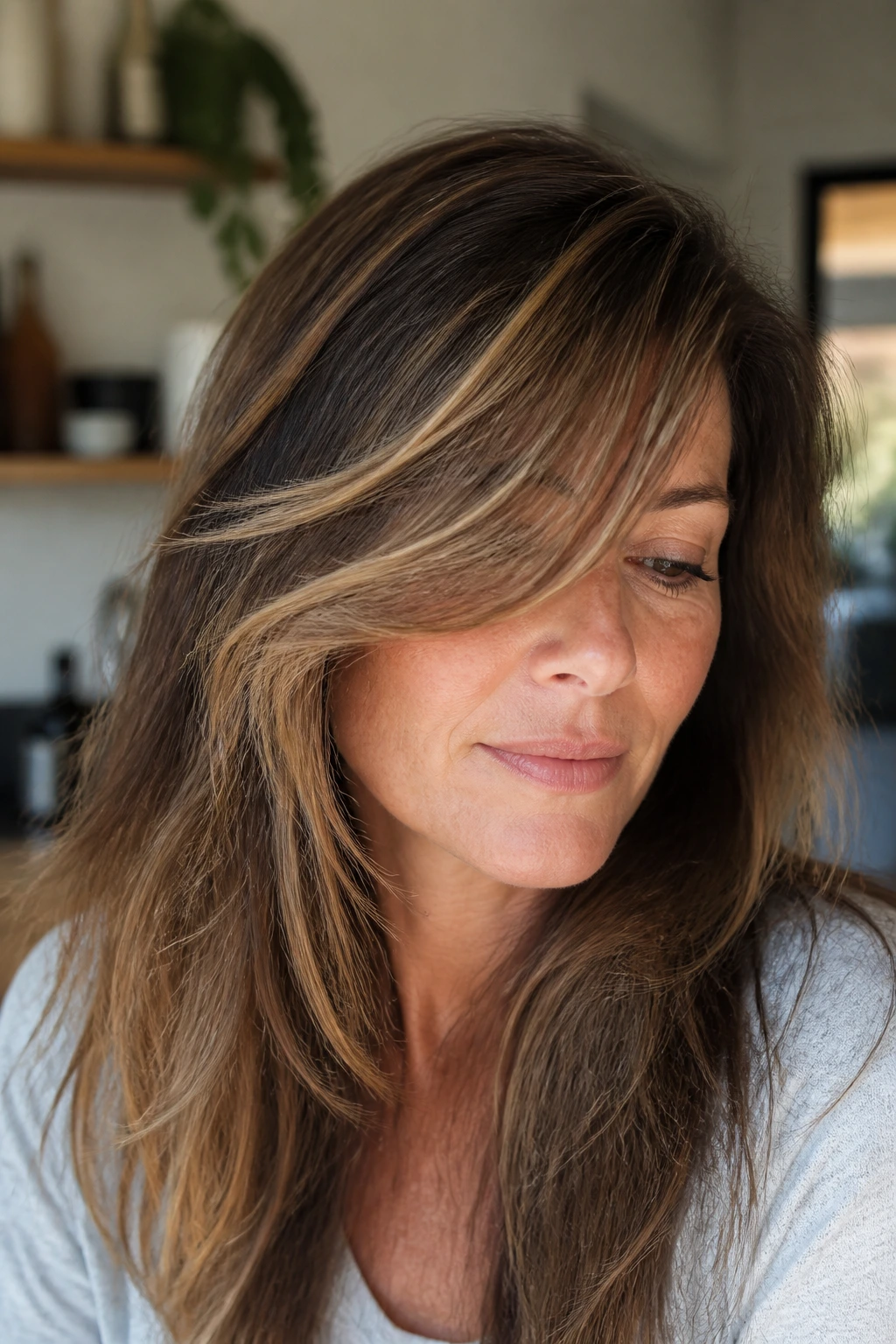
The Barely-There Sweep: A whisper-light fringe with a long side fall. This one works when you want the idea of bangs without giving up too much hair at the front. It suits very fine strands that can’t handle extra weight.
The Glossy Blowout Front: Polished, smooth, and bent with a round brush. Good for straighter fine hair and for anyone who likes a neat finish that lasts through the day. It does ask for a little more styling time.
The Air-Dried Arc: A relaxed bend that follows the hair’s natural texture. Best for waves and softer curls that already have some body. Keep the layers long so the front doesn’t puff.
The Grow-Out Blend: Long side pieces that drift into the rest of the haircut. This is the one I recommend when you want a fringe now but a softer shape later. It’s the easiest to live with if you don’t chase trims.
The Dimensional Frame: A side sweep paired with subtle highlights or lowlights near the front. The color adds depth so the bangs read thicker without adding actual bulk. Subtle is the key word here. Loud color stripes can make fine hair look thinner, not fuller.
Keeping the Fringe in Shape Between Cuts
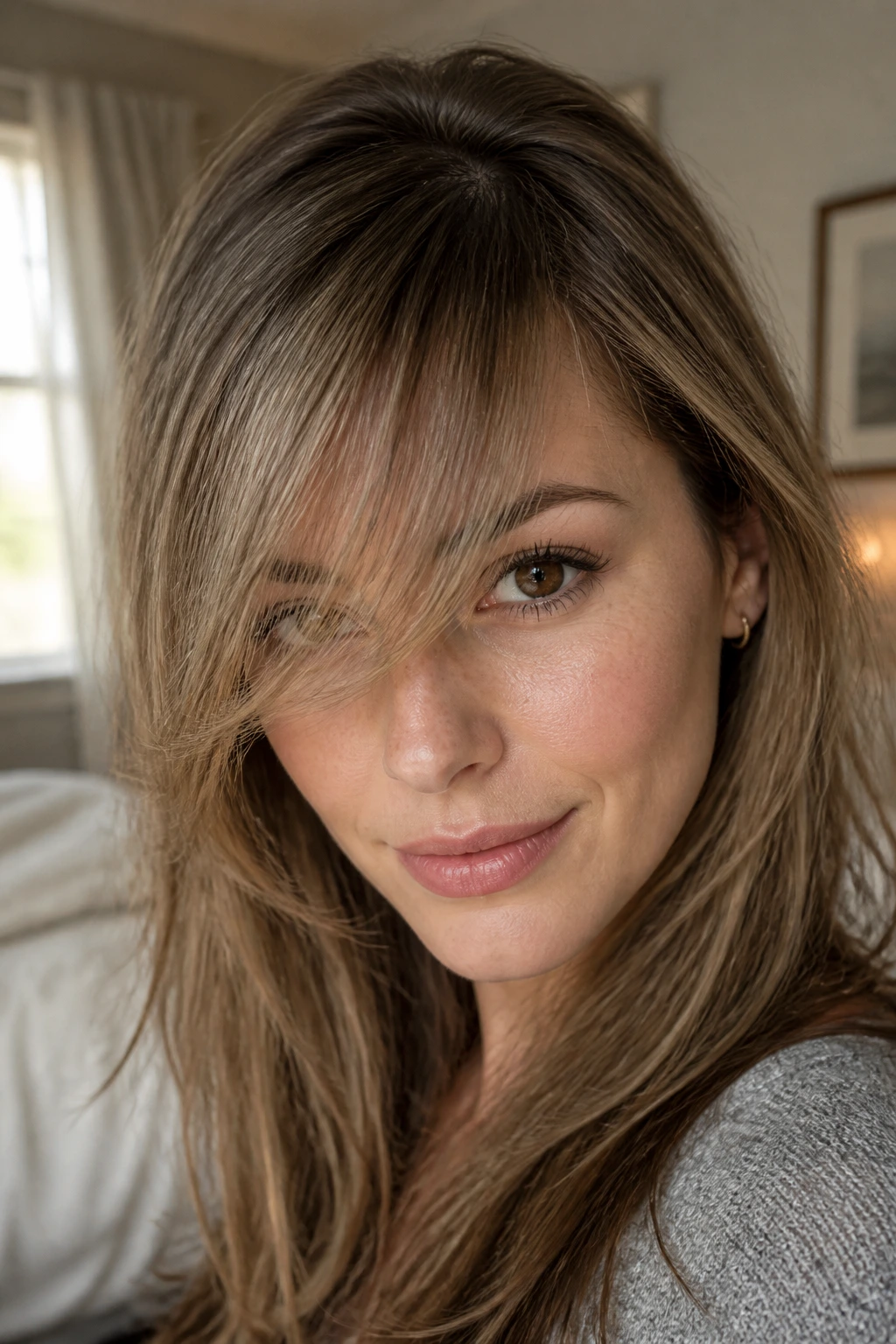
Fine hair does not need a brutal maintenance schedule, but it does need a little attention. Bangs grow fast enough to blur the shape and slow enough to become annoying in the middle. That usually means a trim every 5 to 7 weeks if you want the side sweep to stay crisp. If you prefer a grown-out look, stretch that to 8 weeks and let the fringe blend into the layers.
Between washes, a small mist of water at the front can reset the bend. Re-dry just the bang area with your fingers or a small brush. You do not need to wash the whole head every time the front gets flat. In fact, that can make fine hair feel weaker.
Dry shampoo belongs at the root, not sprayed all over the front. A little at the part and temple can buy you another day of lift. Too much and the fringe turns chalky. That texture is hard to hide.
At night, I like a loose clip or a soft tuck to keep the front from getting mashed into the pillow. If the bangs wake up with a hard bend, a quick pass of heat or a side-to-side re-dry usually fixes it. Fine hair responds fast, which is useful for once.
Questions People Ask Before the Chop
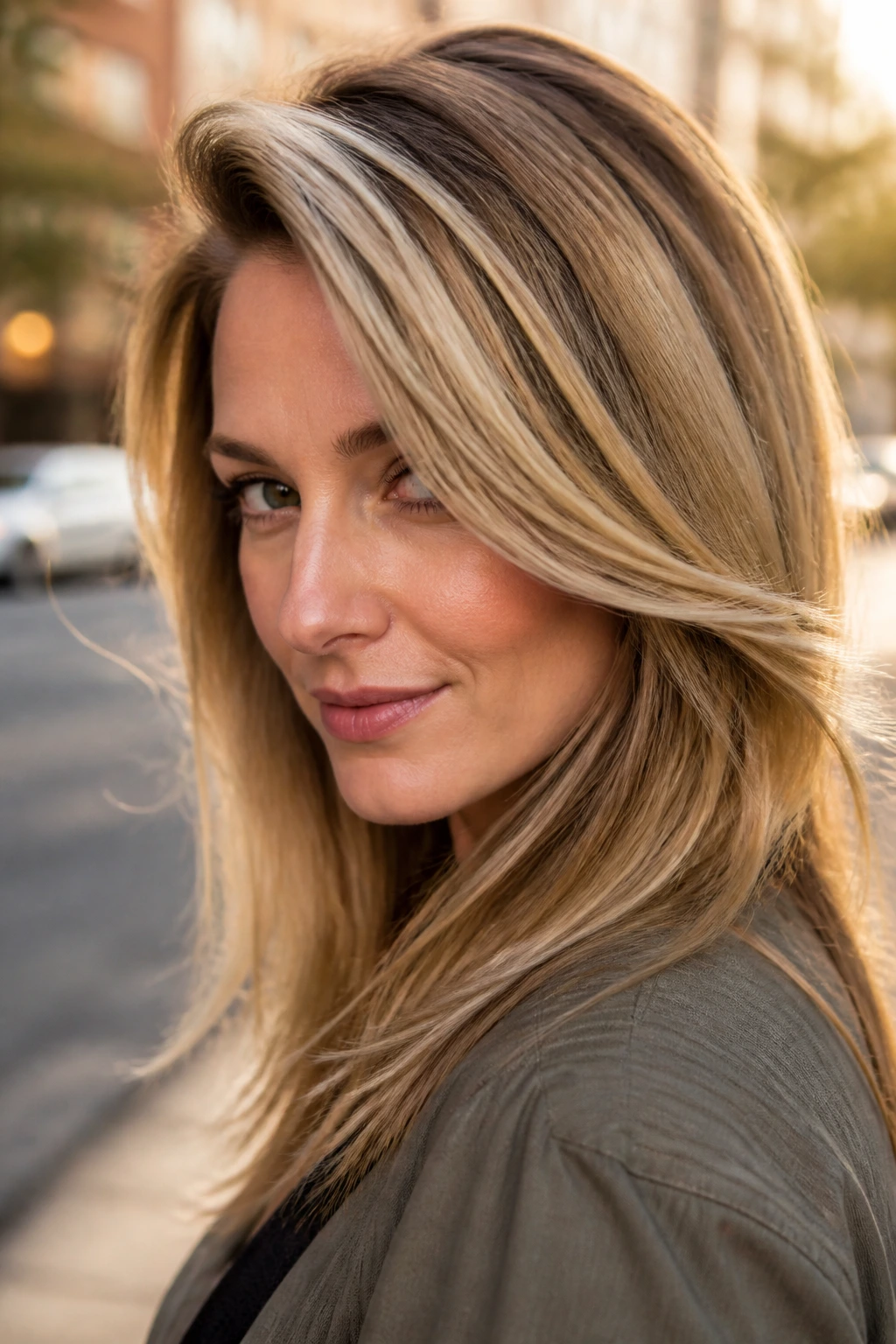
Will side-swept bangs make fine hair look thinner?
Not if they’re cut with enough length and kept soft through the edges. A blunt, dense fringe can make fine hair look heavy or sparse in the wrong places, but a long side sweep usually gives more movement and better balance.
How often do these bangs need trimming?
Most fine-hair side bangs need a touch-up every 5 to 7 weeks if you want the shape to stay clean. If you’re okay with a more relaxed, grown-out look, you can wait longer and let the front blend into layers.
Can I wear them with glasses?
Yes, and that’s one of the nicest things about this shape. Keep the fringe long enough to stop above or just beside the frame so it doesn’t sit in the lenses or split awkwardly across the bridge.
Do they work on wavy or curly fine hair?
They do, but the cut has to respect shrinkage. The front should be longer than it would be on straight hair, and the layering should stay soft so the curl pattern can move without puffing out.
What if my bangs split in the middle?
That usually means the part wants to sit there or the roots are too flat. Try drying the front in the opposite direction for a few seconds, then sweep it back into place and clip it while it cools.
Can I air-dry them and still have them look decent?
Yes, if the fringe is long enough and not over-thinned. A little root clip while the hair sets helps a lot. Fine hair that air-dries from wet to dry with no guidance often chooses a weird bend near the temple.
Should I ask for layers everywhere?
No. Fine hair usually looks better with careful layering, not blanket thinning. Keep the face frame soft and let the stylist preserve enough weight through the rest of the cut so the bangs have something to sit against.
How do I grow them out without looking awkward?
Keep the side sweep long and let it merge into face-framing layers. That way the front can stay intentional while it gets longer, instead of turning into a short piece that just gets in your eyes.
A Fringe That Stays Soft
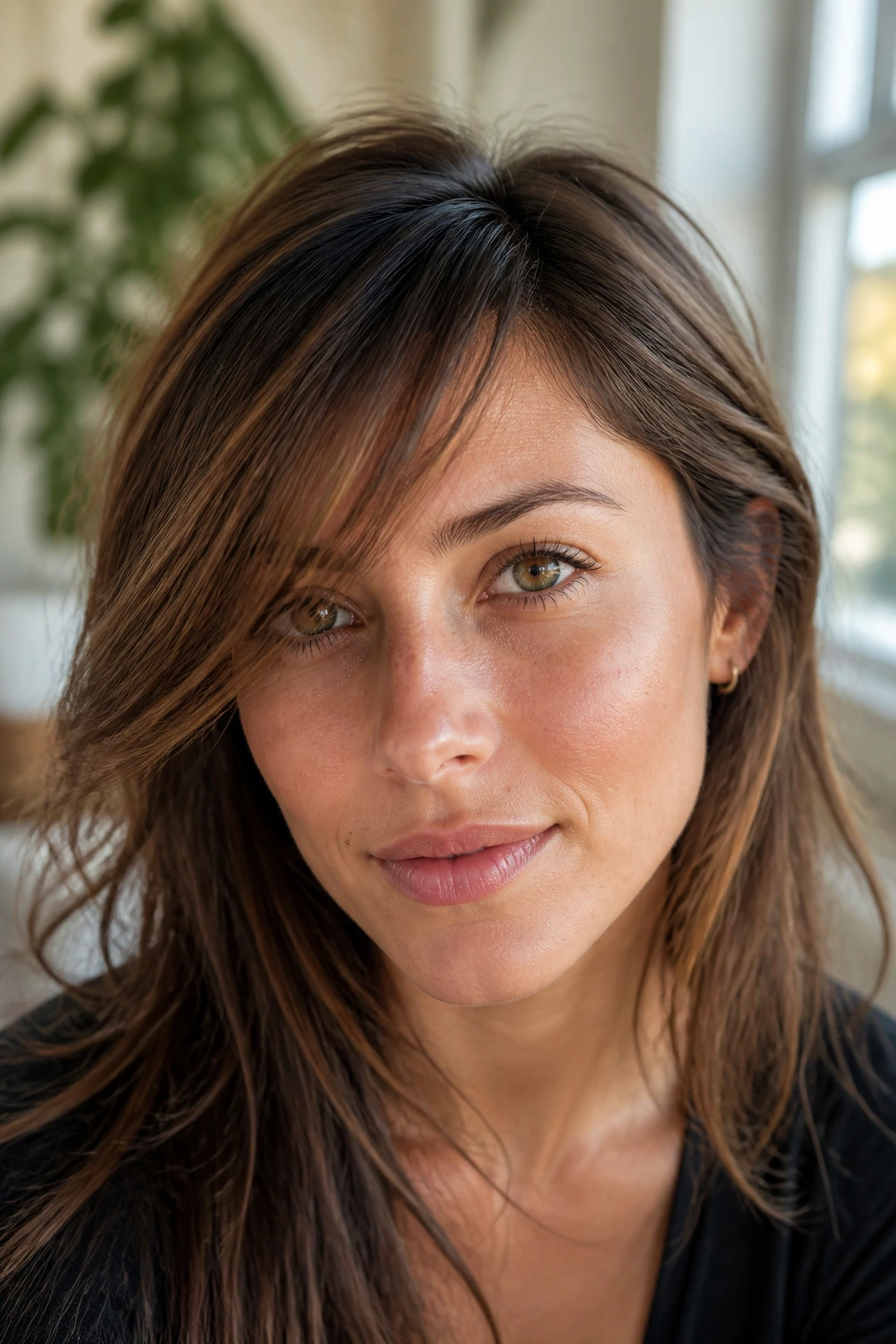
The best thing about long side-swept part layered bangs for fine hair is that they don’t ask your hair to become something it isn’t. They work with the strand thickness, the movement, the little cowlicks, the flat spots, the days when you barely style it, and the days when you actually do. That’s a useful haircut. Not dramatic. Useful.
If you want the front to feel lighter, cleaner, and easier to live with, this shape gives you a lot of room to play. Start with one version that matches your texture, then make small adjustments in length and parting until it sits where you want it. Hair like this usually tells you pretty quickly when the cut is right.
The sweet spot is a fringe that moves when you move, not one that collapses the second you stop paying attention. That’s the difference worth chasing.