



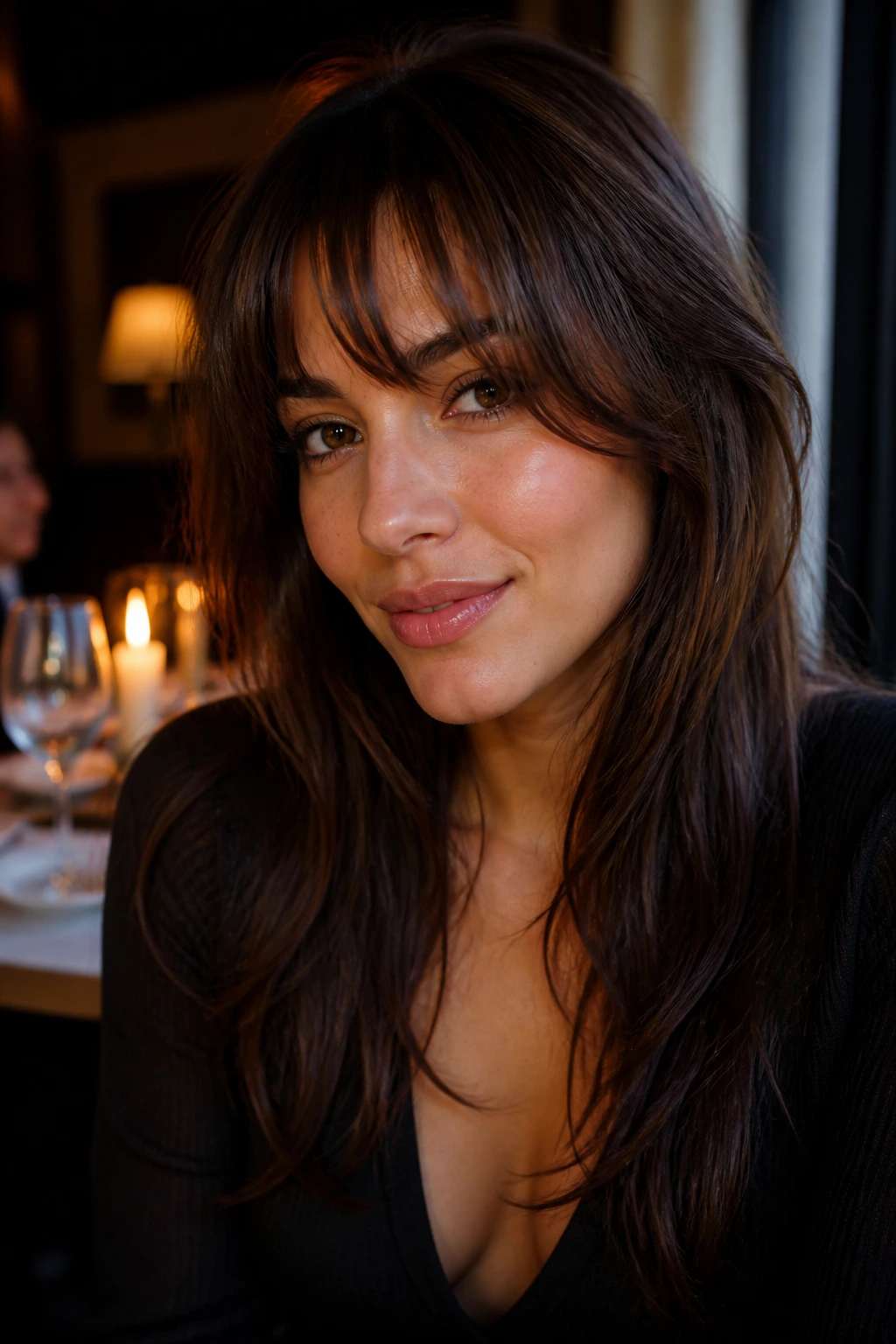
A good date-night haircut has one job: keep your face alive when the lighting gets soft and the conversation gets close. Long face-framing layers with bangs do that better than a blunt curtain of hair because they steer the eye toward the eyes, cheekbones, and mouth instead of letting the whole shape sit there like one heavy sheet. Under restaurant lamps, that difference is bigger than people think. A blunt cut can read flat. A layered frame moves.
And movement is the whole point here.
A clean middle part, a cheekbone-skimming curtain bang, a sweep of hair tucked behind one ear — those small changes change how your features read from ten feet away and from two feet away. That’s why this haircut family keeps showing up whenever somebody wants their hair to look intentional without looking stiff. It’s romantic, yes, but not in a sugary way. More like: you look like you know exactly where the flattering bits are.
Why These Cuts Work on a Dinner Table Distance
-
They lift the face without shouting about it: A shortest layer that starts around the cheekbone pulls the eye upward, which keeps the jawline from feeling heavy in low light.
-
The bangs do the first conversation for you: Curtain, bottleneck, or feathered fringe opens around the eyes, so the haircut feels friendly instead of severe.
-
They still move after you tuck hair behind your ear: That matters on a date, because hair that only looks good from one angle gets annoying fast.
-
They play well with second-day texture: A little bend, a little dry shampoo, and the shape looks lived-in rather than slept on.
-
They work with lipstick, earrings, and bare skin: The front pieces frame whatever you’ve done elsewhere, which is useful when you want one part of your look to carry the evening.
-
They can be polished or messy without changing the cut: The same shape can go glossy, tousled, or blowout-smooth depending on how much time you’ve got.
1. Curtain Bangs with Collarbone-Skimming Layers
There’s a reason this shape keeps hanging around. The center part opens the face, the bangs split softly at the brows, and the long front pieces graze the collarbone in a way that feels easy rather than precious. It’s one of those cuts that looks like it fell into place, even though it depends on very deliberate length placement.
Why it flatters after dark
The shortest part of the frame usually starts around the cheekbone, then drifts longer as it reaches the jaw and collarbone. That gives your face a soft diagonal line, which is especially nice if you’re wearing a fitted top or a necklace that sits close to the throat. The hair doesn’t compete with those details. It sits around them.
On a date, that matters more than it sounds. You’re not staring straight ahead the whole time; you’re turning your head, leaning in, laughing, tucking one side back, then letting it fall again. Curtain bangs and long layers hold up through all of that because the shape is forgiving.
Ask for a soft center part, a fringe that grazes the brow at the middle and gets longer toward the temples, and face-framing pieces that hit the collarbone or just below. If your hair is thick, make sure the front isn’t over-thinned. Thin curtain bangs can split too easily and start looking stringy by dessert.
2. Bottleneck Bangs and Butterfly Layers
This is the most “styled on purpose” look in the bunch. Bottleneck bangs narrow at the center, then open wider near the temples, which gives the fringe a gentle lift instead of a hard line. Paired with butterfly layers, the whole cut gets that airy, brushed-out feeling that makes people think you spent longer on your hair than you did.
The magic is in the shape. The front layers usually begin around the cheekbone, then fall away toward the chest, which gives the haircut a fluttery, open structure. It looks especially good when the ends are blown under just a little and the crown has some lift.
- Best for: medium to thick hair that can hold a curve
- Styling note: use a round brush or large hot rollers on the front pieces
- What to ask for: a narrow center fringe, wider temple pieces, and long layers that are layered enough to move but not choppy
Do not flatten this cut with heavy cream on the fringe. A tiny bit of smoothing product in the lengths is fine. The bangs need air.
3. A Soft Shag with Wispy Fringe
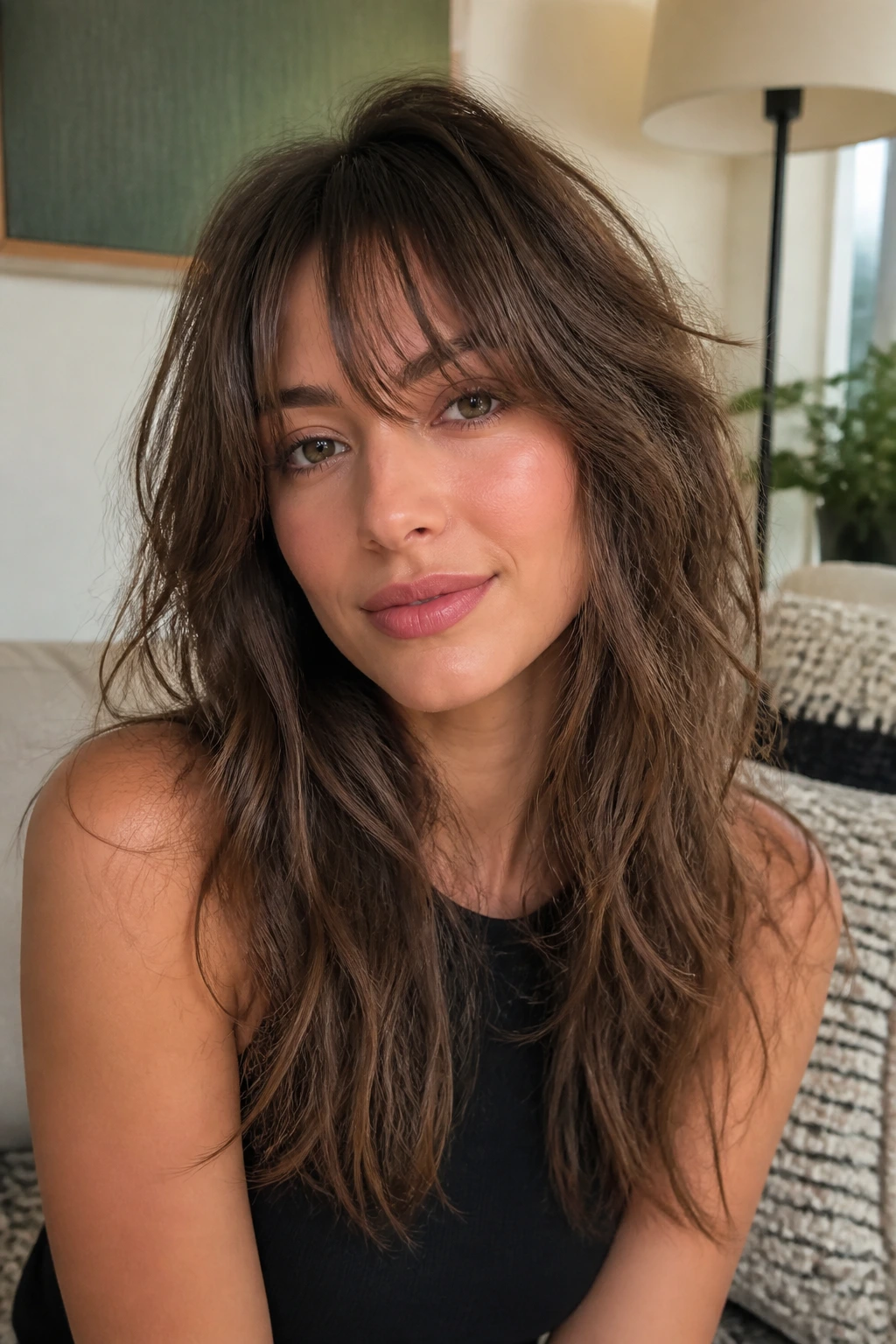
Want hair that says you touched it once and stopped? This is the one.
The soft shag keeps the length, but the internal layers add that little bit of grit that makes waves and bends look intentional. The fringe stays wispy, not dense, which keeps the whole thing from turning into a helmet. On a date night, that looseness reads relaxed in the best sense. You look like you’re comfortable in your own skin, and the hair backs that up.
What makes it work
The front pieces should be cut to skim the cheekbone, then drop into longer layers that skim the jaw and collarbone. That creates movement without taking away length. If your hair has any natural wave at all, the shag shape will catch it and do half the work for you.
I like this cut most on people who hate the feeling of over-styled hair. A light mousse at the roots, a diffuser, and a quick scrunch with texturizing spray is enough. If you try to make it sleek, it loses the whole point.
A shag only feels date-night ready when the fringe is soft, not shredded. Ask for texture, not holes.
4. Side-Swept Bangs and Long Swooping Layers
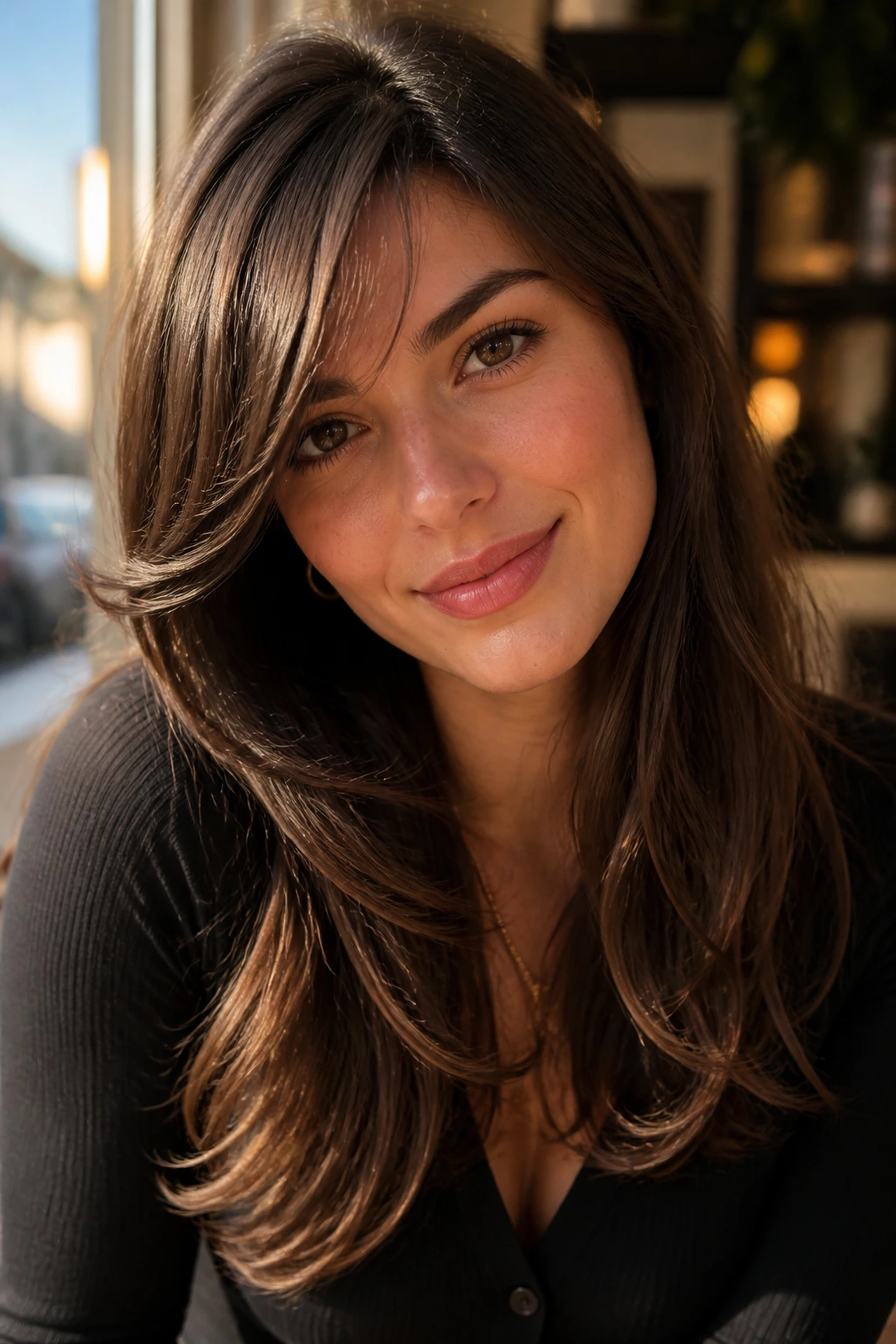
A side part changes the whole mood of the haircut. Straight away, it feels a little more classic, a little more dressed up, and a lot more forgiving if one side of your hair likes to lie flat. The sweep of the bangs creates a diagonal line across the forehead, which can soften a strong brow or balance a rounder face.
The front layers should start high enough to give shape, but not so high that the ends look thin. When they’re long and swooping, they move like a ribbon when you turn your head. That’s the good part. The less good part is that they need a bit of root support, or the sweep collapses by the time you’re in the car.
A large round brush and a light blowout spray are enough here. Dry the bangs in the direction you want them to sit, then let them cool on the brush before you touch them. That tiny cooling pause keeps the bend in place longer than brute force ever will.
5. Rounded Blowout Layers with Brow-Grazing Bangs
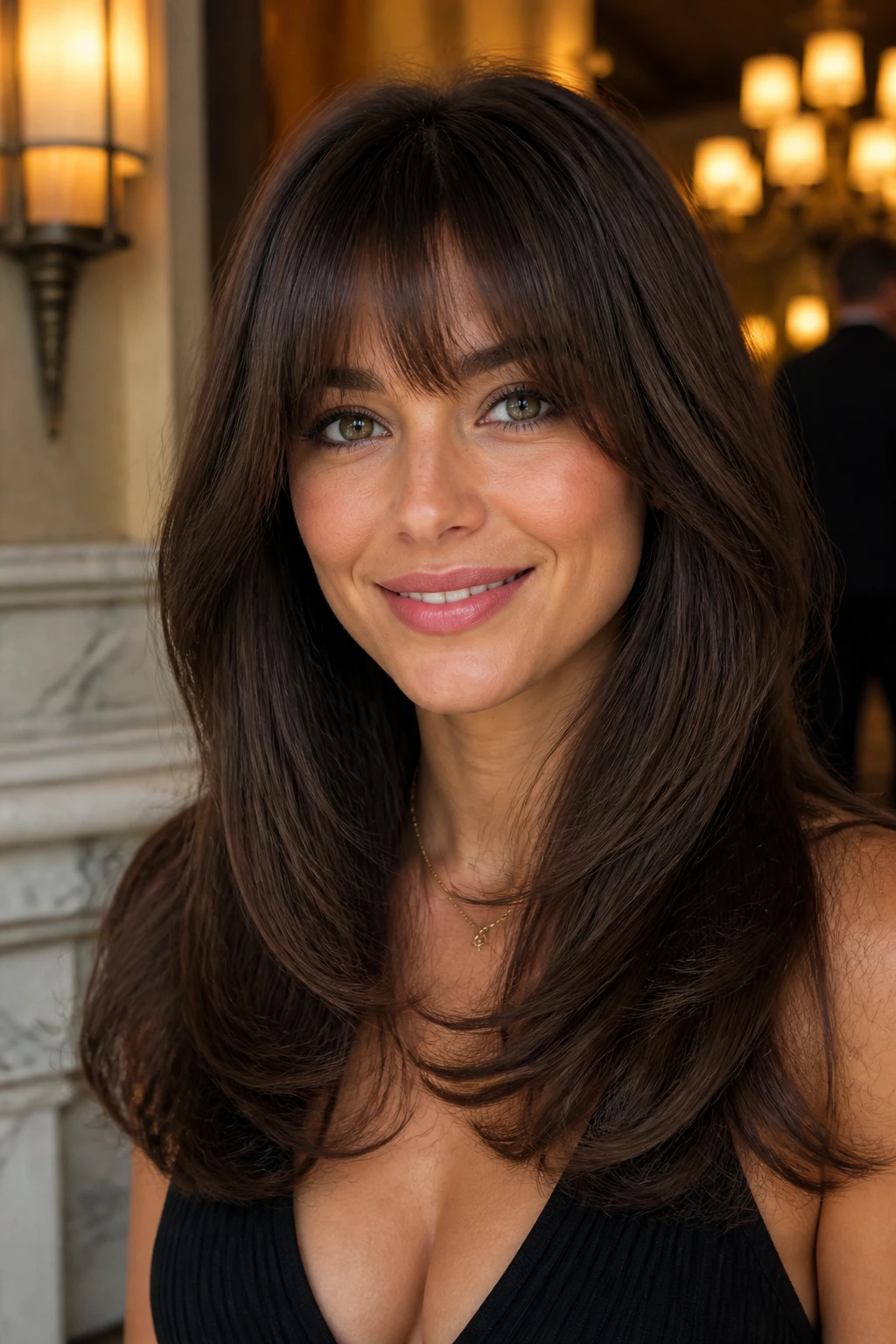
This one has the most old-school dinner reservation energy on the list. The silhouette is rounder, fuller, and more polished, with the ends turned under just enough to make the whole haircut feel finished. Brow-grazing bangs add a sharp little line across the front, which looks especially nice if you like a red lip or a strong necklace.
The shape is built for hair that wants weight. Thick hair benefits from the rounded outline because it keeps the ends from going boxy. Coarse hair also behaves better when the layers are placed in a curve rather than left to hang straight.
Use a smoothing cream before blow-drying, but keep it off the fringe roots. That’s where things go limp fast. The ends should roll inward, not curl into a big arcade of hair around the chin. The difference is subtle in theory and obvious in the mirror.
A round brush around 1.5 inches wide gives the best bend without making the blowout feel too 90s. Good 90s, maybe. Too much of it and the hair starts looking like it’s dressed for a different party.
6. C-Cut Layers with Airy Curtain Fringe
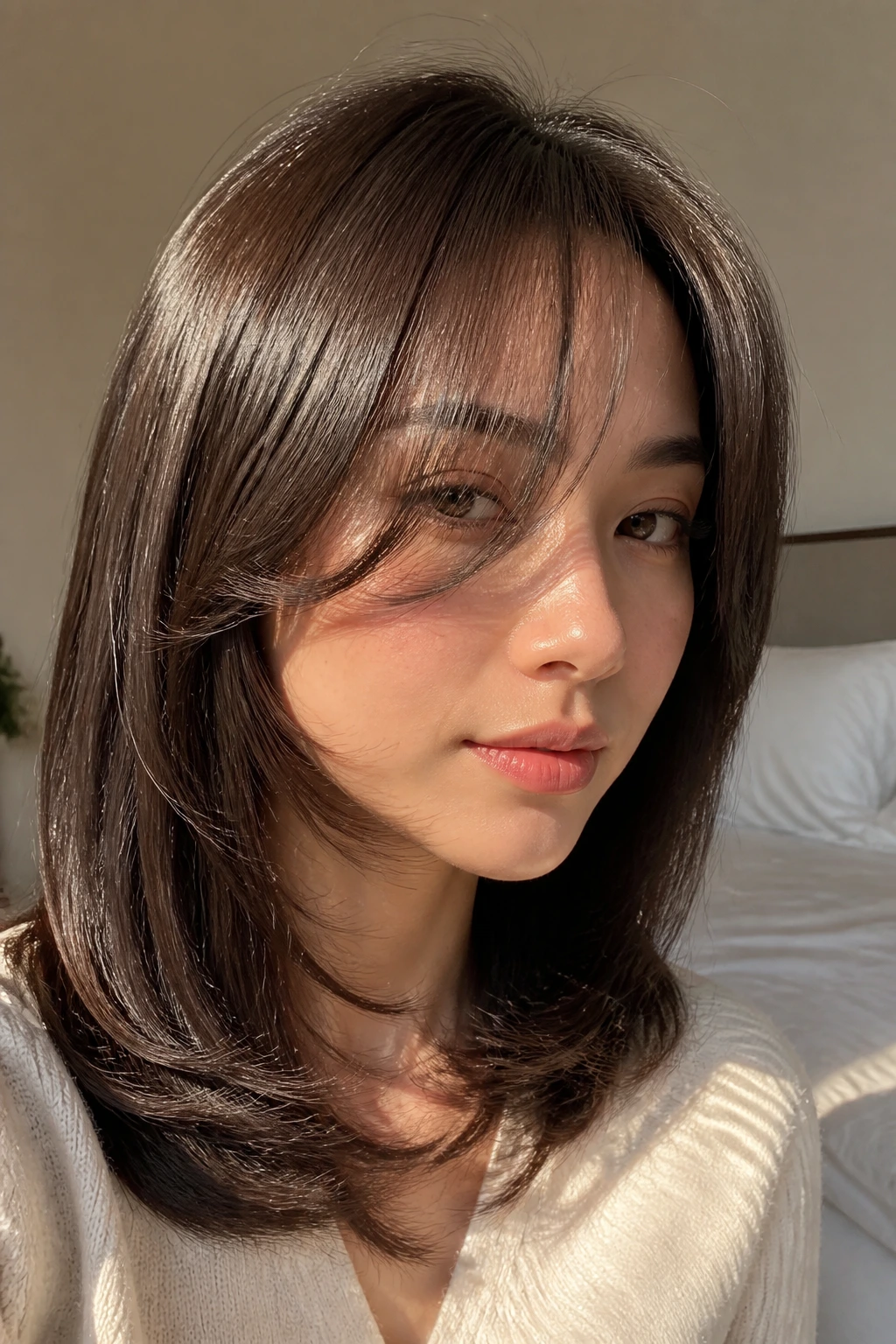
This is the cut for people who want softness but not fluff.
A C-cut curves around the face in one smooth arc, usually from the cheekbone down toward the collarbone, which makes the front look sculpted without looking carved. The curtain fringe stays airy and lets light through at the center, so the face doesn’t get boxed in. It’s clean, elegant, and a little underrated.
Unlike a blunt perimeter, the C shape doesn’t stop the eye at one hard line. It travels. That makes the haircut feel longer and more fluid, especially when the hair is straight or lightly waved. If you like a minimalist dress and a glossy lip, this is the haircut that behaves like a good frame around the whole look.
How to ask for it
Tell your stylist you want the shortest front pieces to hit around the cheekbone, then curve down toward the jaw and collarbone. Ask for the shape to stay soft through the ends, not sliced to pieces. If your hair is fine, this cut gives movement without making the ends look thin.
7. Face-Hugging Layers with a Polished Middle Part
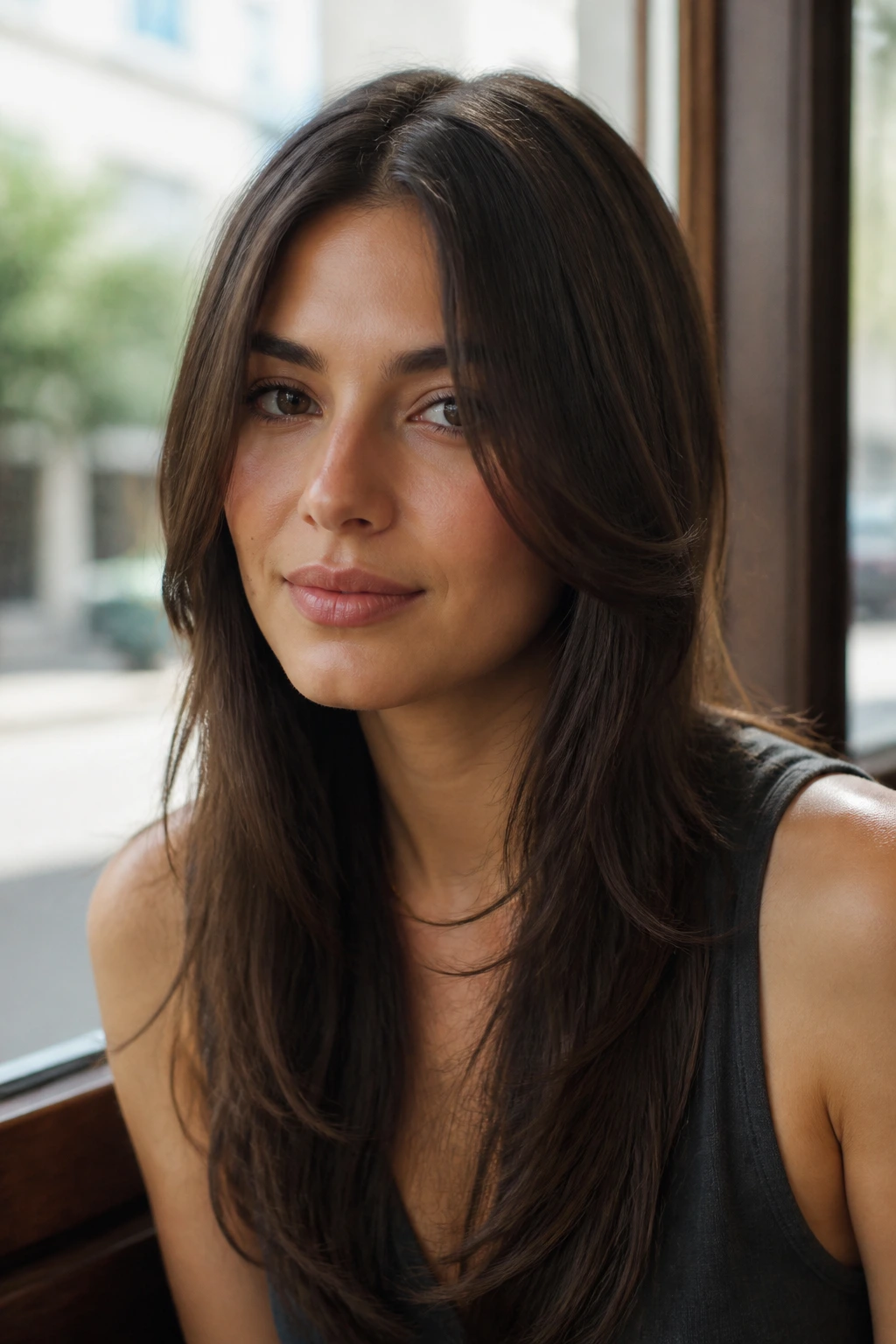
Some cuts shout. This one doesn’t.
It’s quiet, but not plain. The face-hugging layers sit close to the cheeks and jaw, then drift longer into the body of the hair so the outline stays smooth. The middle part keeps the balance even, which is useful if you want the haircut to frame your features rather than turn into the main event.
How to style the smooth version
A paddle brush and a blow-dryer nozzle are enough for the everyday version. For the date-night version, add a flat iron bend through the front pieces only — a tiny curve, not a full curl. That detail keeps the front from hanging dead straight, which is the quickest way to make this shape lose its charm.
This style works especially well with bold earrings or a neckline that leaves the collarbone open. The hair doesn’t fight those pieces. It makes room for them.
If your hair tends to puff at the sides, ask for internal layering rather than rough thinning. The difference shows up in the way the cut settles after an hour, and that hour matters.
8. Piecey Waves with Brow-Opening Bangs
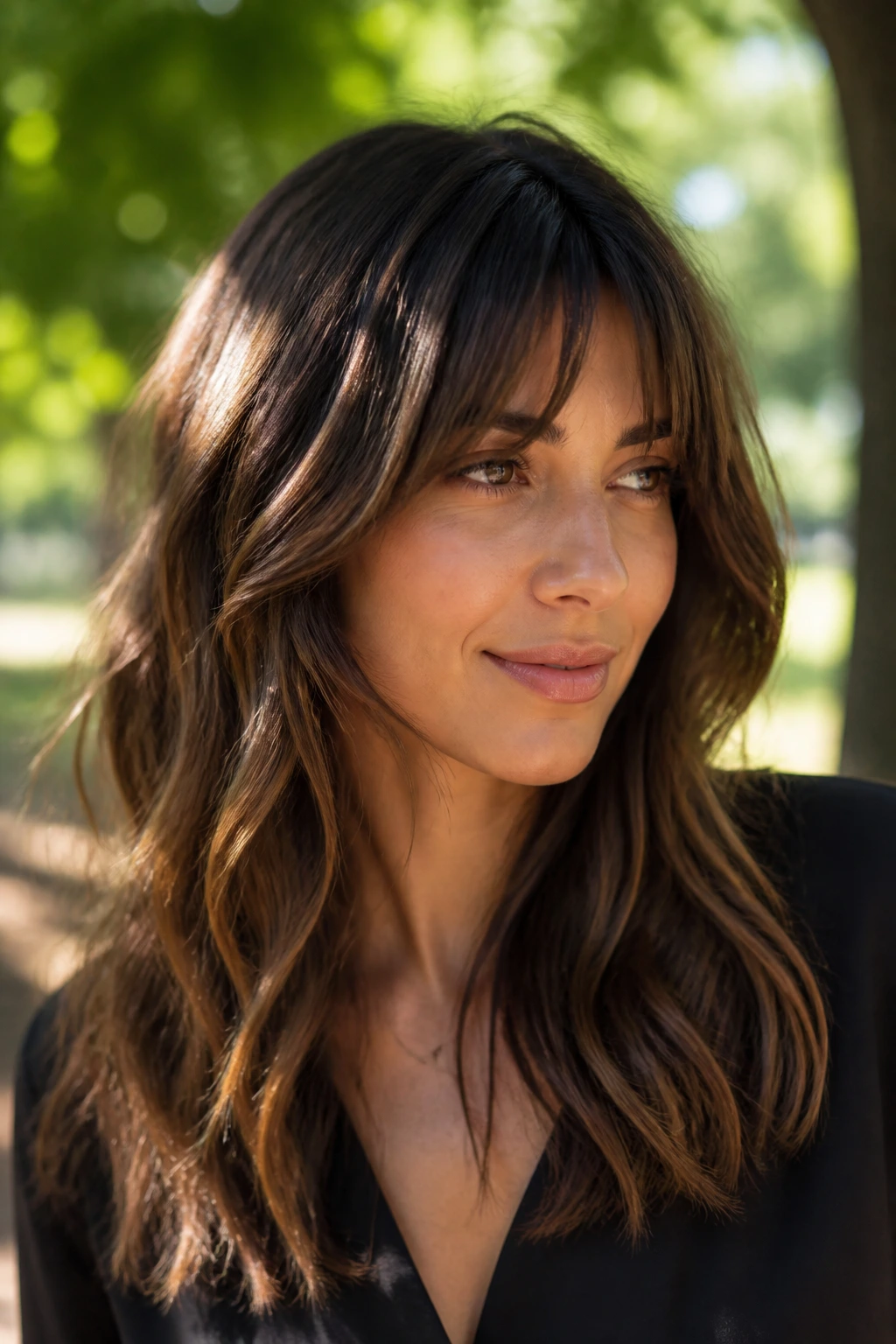
This is probably the most forgiving cut on the list. The waves can be soft or loose, the bangs can sit a touch higher or lower, and the haircut still feels deliberate because the front has clear shape. Brow-opening bangs keep the forehead visible, which keeps the whole thing from becoming too heavy.
Piecey texture helps here. Instead of one smooth curl pattern, you want a few visible bends that separate the front from the lengths. That little bit of texture makes the hair feel touchable, and touchable hair tends to read as romantic without trying too hard.
The trick is to keep the bangs light but not wispy to the point of disappearing. A small amount of dry shampoo at the roots can help them hold a bend instead of clinging to the forehead. If your hair is naturally wavy, don’t brush the wave out completely. That’s how this style gets its charm.
A 1.25-inch wand creates a loose bend that looks good from the front and from a side angle. Smooth the top first, then add the wave only where the light catches it.
9. U-Shape Cascade with Feathered Fringe
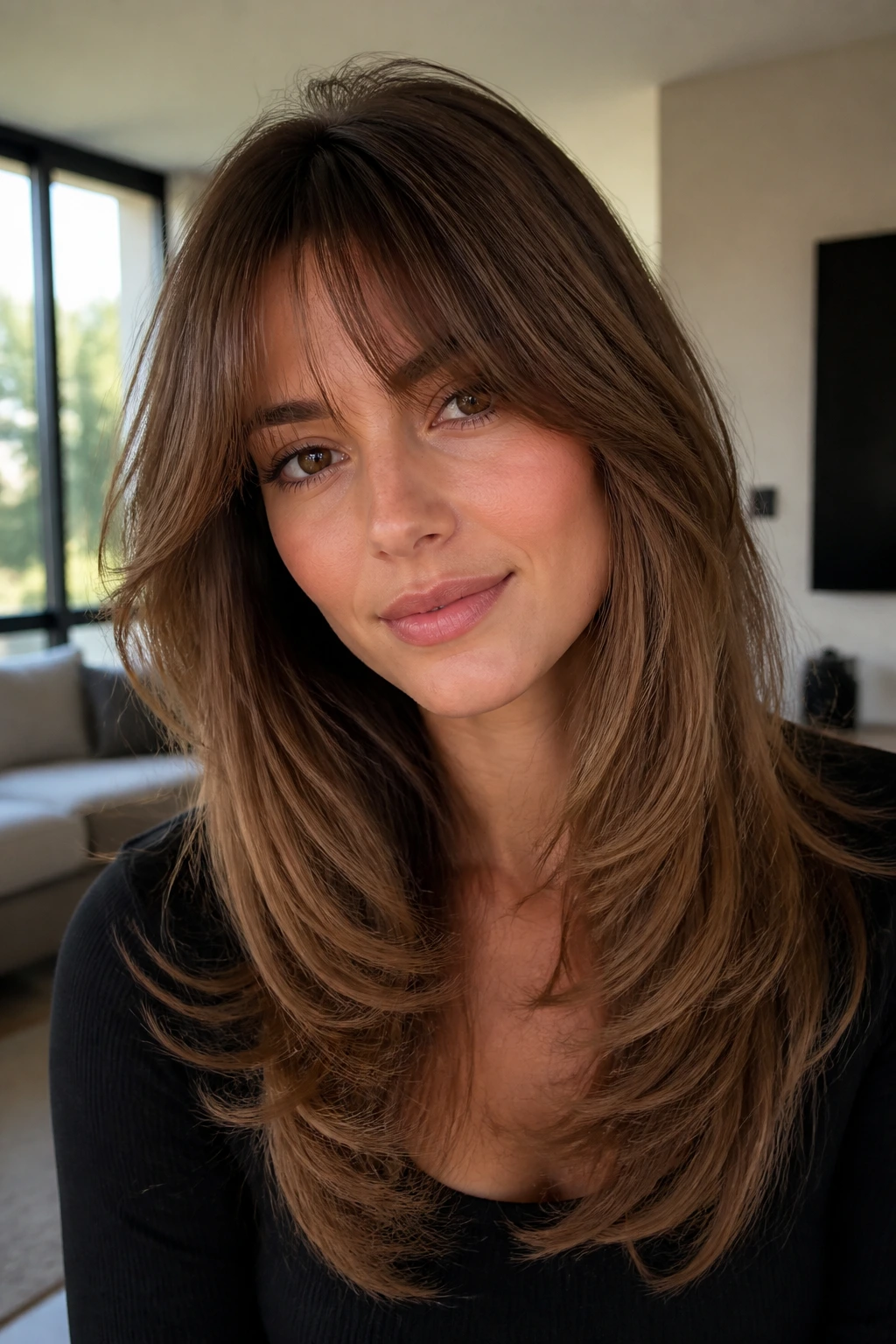
If you like length but hate the feeling of one heavy line across your back, a U-shape is a smart move. The outline is softer and rounder than a straight cut, with the longest pieces falling at the center back. In front, the feathered fringe keeps the whole thing from feeling too serious.
I’ve always liked this shape on thick hair, because it gives the length somewhere to go. Instead of looking like a wall, the hair falls in a cascade. That little bit of curve around the face matters when you’re wearing a dress or top with some structure. The hair becomes a frame, not a blanket.
Use a light hand with the fringe. Feathered means feathered. Not shredded. Not see-through to the point of vanishing. The ends should move when you shake your head, then settle back into place without sticking out like little flags.
A loose blow-dry with the brush turned inward at the ends gives this cut a very nice finish. Nothing rigid. The elegance is in the flow.
10. V-Cut Layers with See-Through Bangs
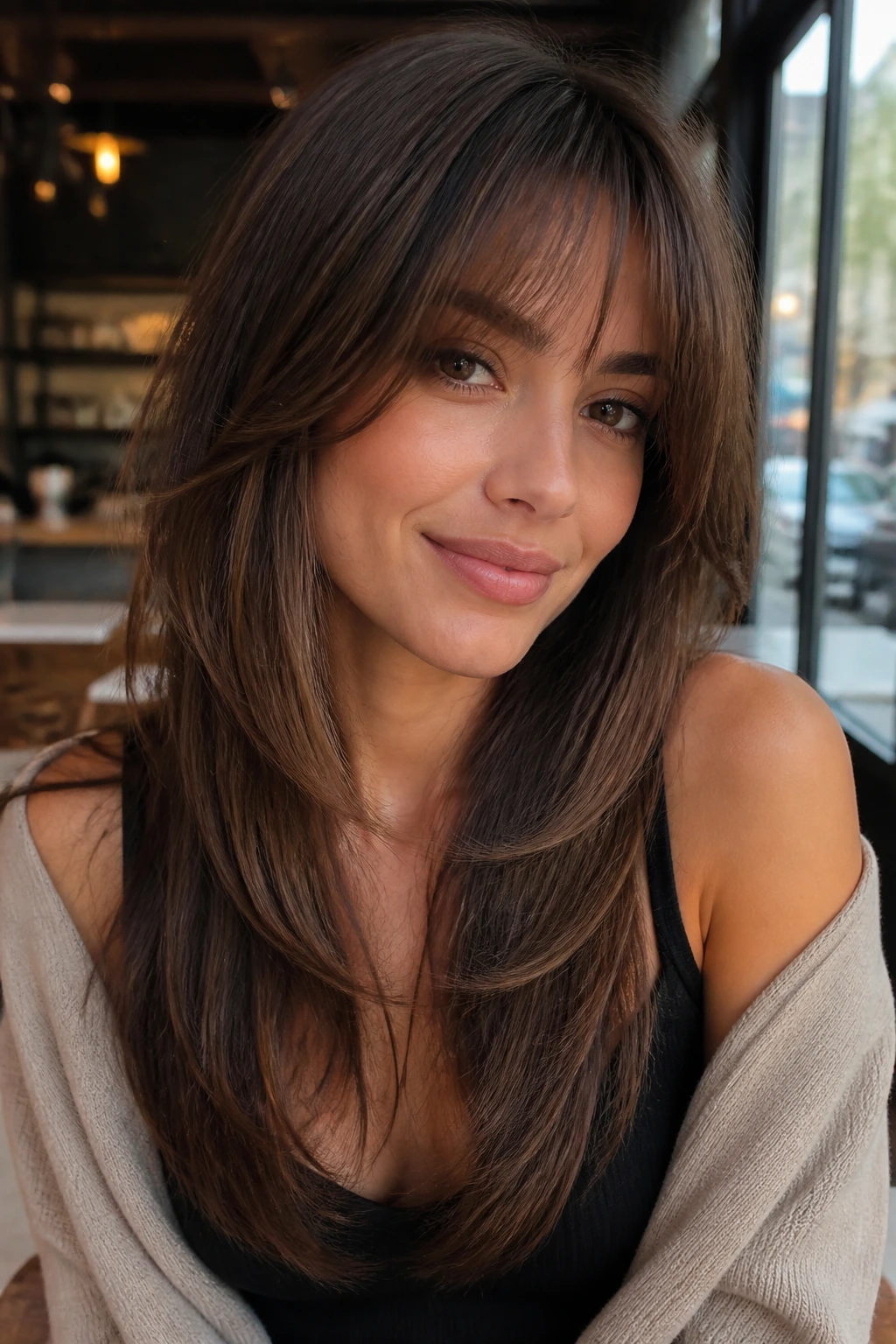
A V-cut gives long hair drama without sacrificing the length people are usually trying to keep. The back drops into a point, which makes the hair look longer and swingier, while the see-through bangs keep the front airy and light. If you like dramatic earrings, a smoky eye, or any outfit with a little edge, this cut plays well with it.
Why does it work? Because the eye gets two different motions at once. The bangs stay soft and transparent enough to show skin at the forehead, and the long back pulls the whole shape downward in a sleek line. That contrast keeps the style interesting from every angle.
How to use it
Keep the fringe light, but not so sparse that it disappears after two hours. A dry shampoo mist at the roots helps see-through bangs keep their shape. For the lengths, a wave only from mid-shaft down makes the V shape stand out more clearly.
This cut is a nice option if you want length but also want the back to feel less heavy when you move.
11. Hollywood Flip Layers with Long Side Fringe
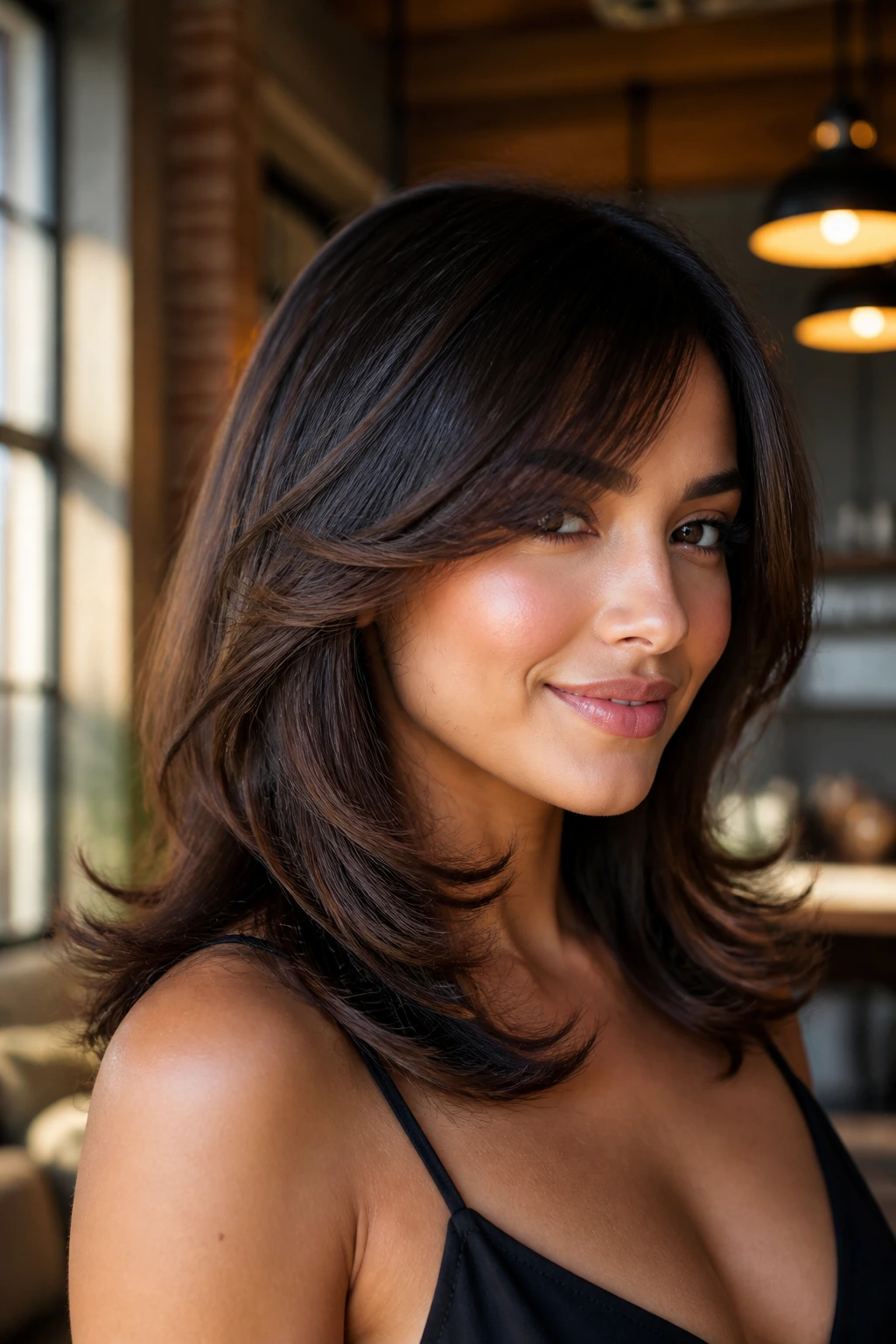
Not every date-night haircut needs to be soft and airy. Sometimes you want the hair to walk into the room before you do.
The Hollywood flip does that. The ends are styled away from the face, usually with a round brush or rollers, so the silhouette feels lifted and polished. The long side fringe keeps it from going too formal. That side sweep is what makes the whole thing feel wearable instead of costume-y.
This is a strong choice for thicker hair or for hair that naturally likes to hold a bend. The flip at the ends creates movement around the shoulders, which looks good when the front of your outfit is simple. If you’re wearing a clean neckline, the haircut does a lot of the visual work.
Use a heat protectant with a little hold, then set the front pieces while they’re still warm. Let them cool before brushing them out. That’s where the shape lives.
One more thing: this cut looks better when the roots have a little lift. Flat roots with flipped ends can feel disconnected. A quick lift at the crown ties the whole look together.
12. Glossy Straight Layers with Blended Bangs
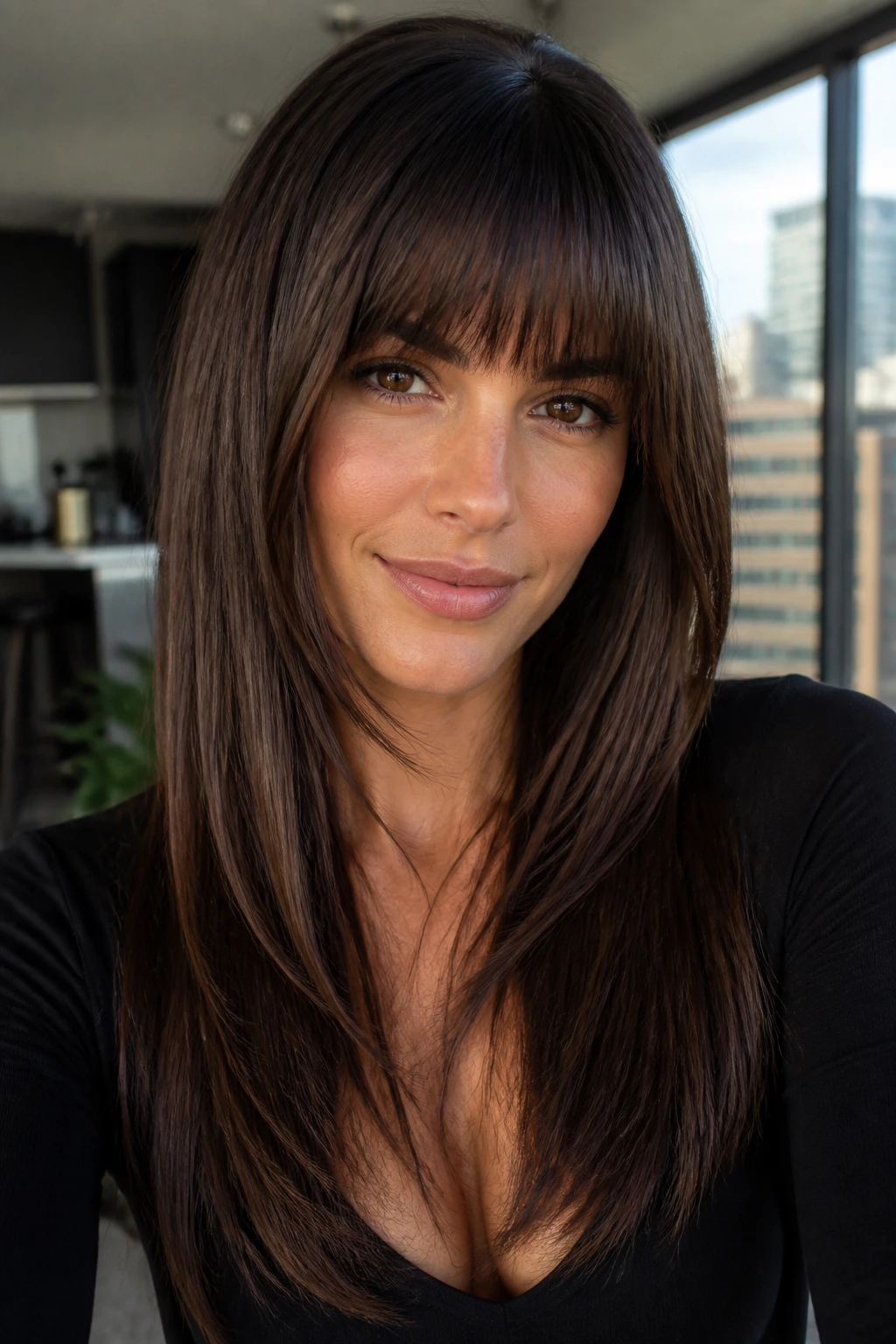
Straight hair doesn’t have to mean static hair. When the layers are blended enough to disappear into the length and the bangs skim just under the brows, the whole thing reads sleek, modern, and expensive-looking in the plain old sense of finished and clean. No muss. No pile of texture product on top.
The draw here is shine. The front pieces guide the eye down the face, while the smooth surface makes the light catch in one clean sheet. If you’re wearing a strong lip or a sharp blazer, this haircut lets the outfit take some of the attention without leaving your hair behind.
The key is restraint. Use a flat iron only if you need it, and keep the bend subtle. A sharp curl at the ends would fight the whole mood. A light serum through the mid-lengths and ends is enough. Put almost nothing on the fringe or it will separate.
This style is also a good pick if you want a haircut that can move between dinner and drinks without needing a full restyle. It starts neat, and it stays neat.
13. Tousled Mermaid Layers with Soft Curtain Bangs
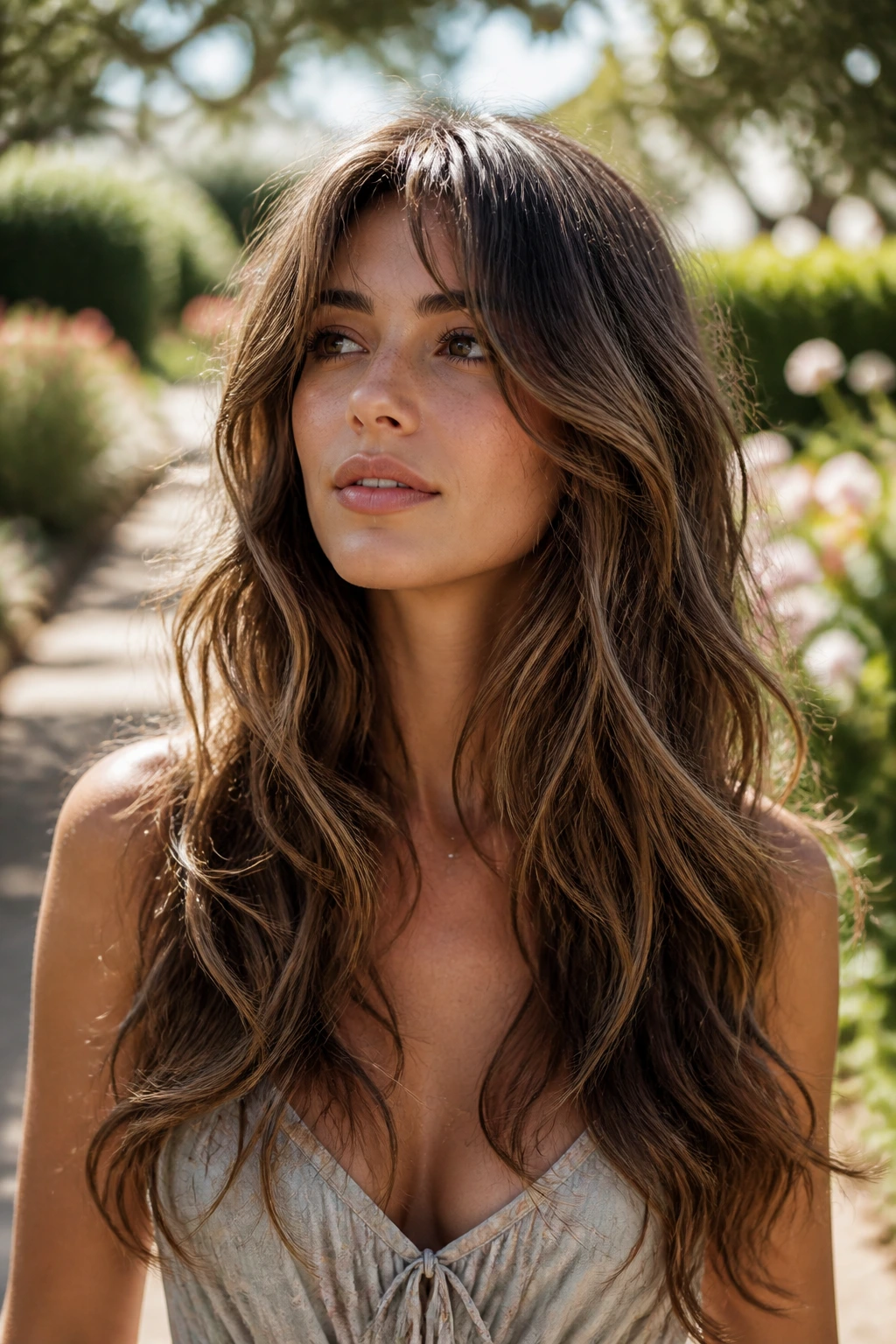
This one leans romantic without getting fussy. The lengths stay long and soft, but the layers add enough movement that the hair feels alive when you walk. Soft curtain bangs break up the forehead and keep the front from disappearing into the rest of the length.
Unlike a polished blowout, this cut can live a little rough around the edges. That’s part of why it works. If you have natural wave, the texture shows off the layering instead of fighting it. If your hair is straighter, loose bends from a wand can fake that same sense of movement.
- Best on: medium to thick hair with some natural bend
- Good styling tool: a 1.25-inch wand or large-barrel iron
- Finish: a light spray that separates the waves, not a crunchy texture mist
The goal isn’t a perfect curl pattern. It’s a soft cascade that still looks like hair, not a set piece. Leave the ends a little imperfect. That’s where the charm lives.
14. Voluminous Round Layers with Bottleneck Fringe
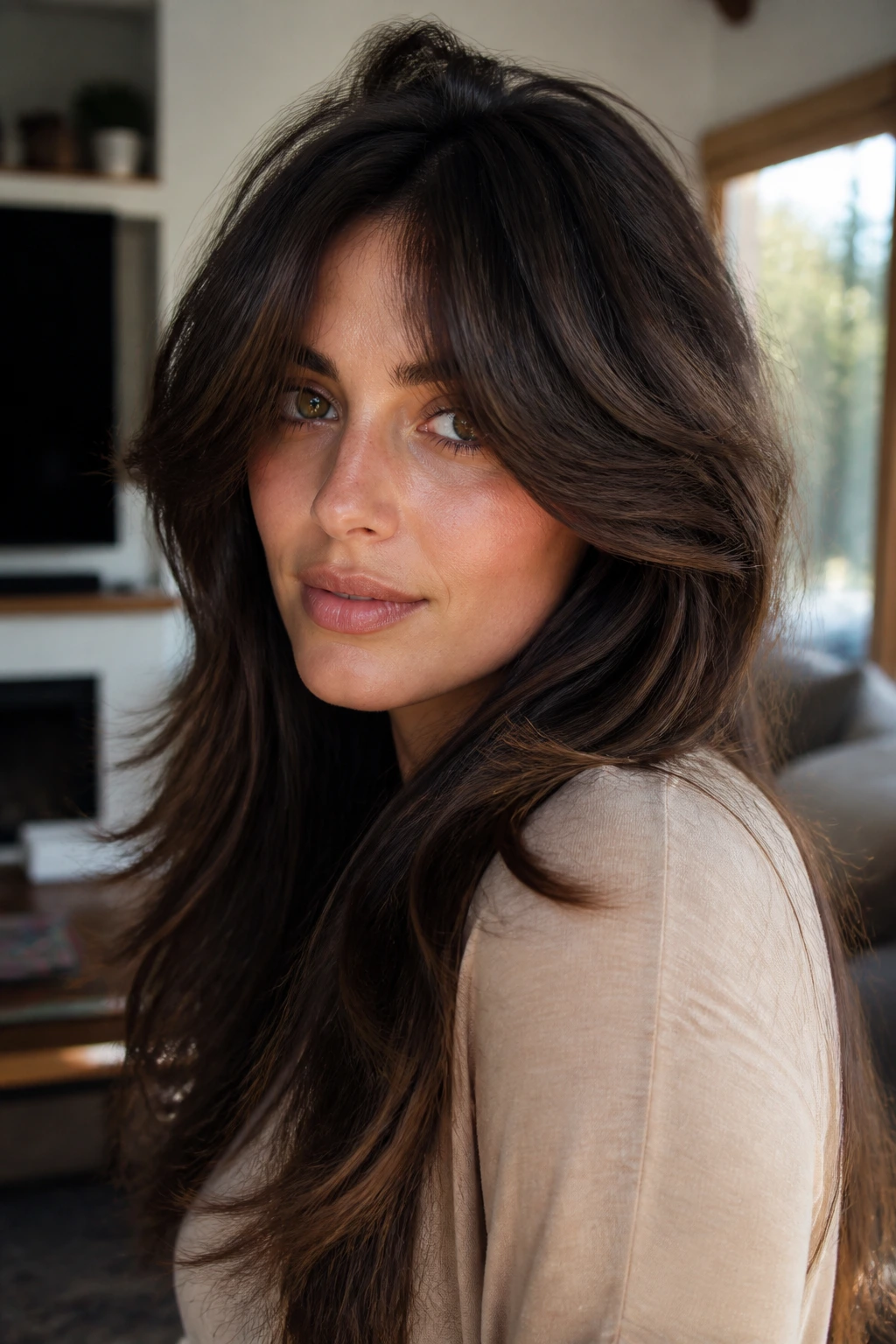
Do you want more lift at the crown without making the ends bulky? This cut solves that problem.
The round layer pattern gives the hair a fuller halo shape, which can be very flattering if your hair falls flat at the top or if you like a more styled silhouette. Bottleneck fringe adds a neat little opening in the center of the forehead, then broadens near the temples. That shape frames the eyes in a way that feels both soft and decisive.
The shape is especially useful for thick or medium-thick hair that tends to build weight at the bottom. Instead of dragging the whole style down, the rounded layering keeps the body distributed more evenly. You can still wear it straight or wavy, but the outline will have more lift than a standard long cut.
Dry the roots first. Really first. If the crown lies flat, the roundness disappears. Once the top has some height, the rest of the style falls into place.
15. Wolf-Cut Lite with Long Bangs
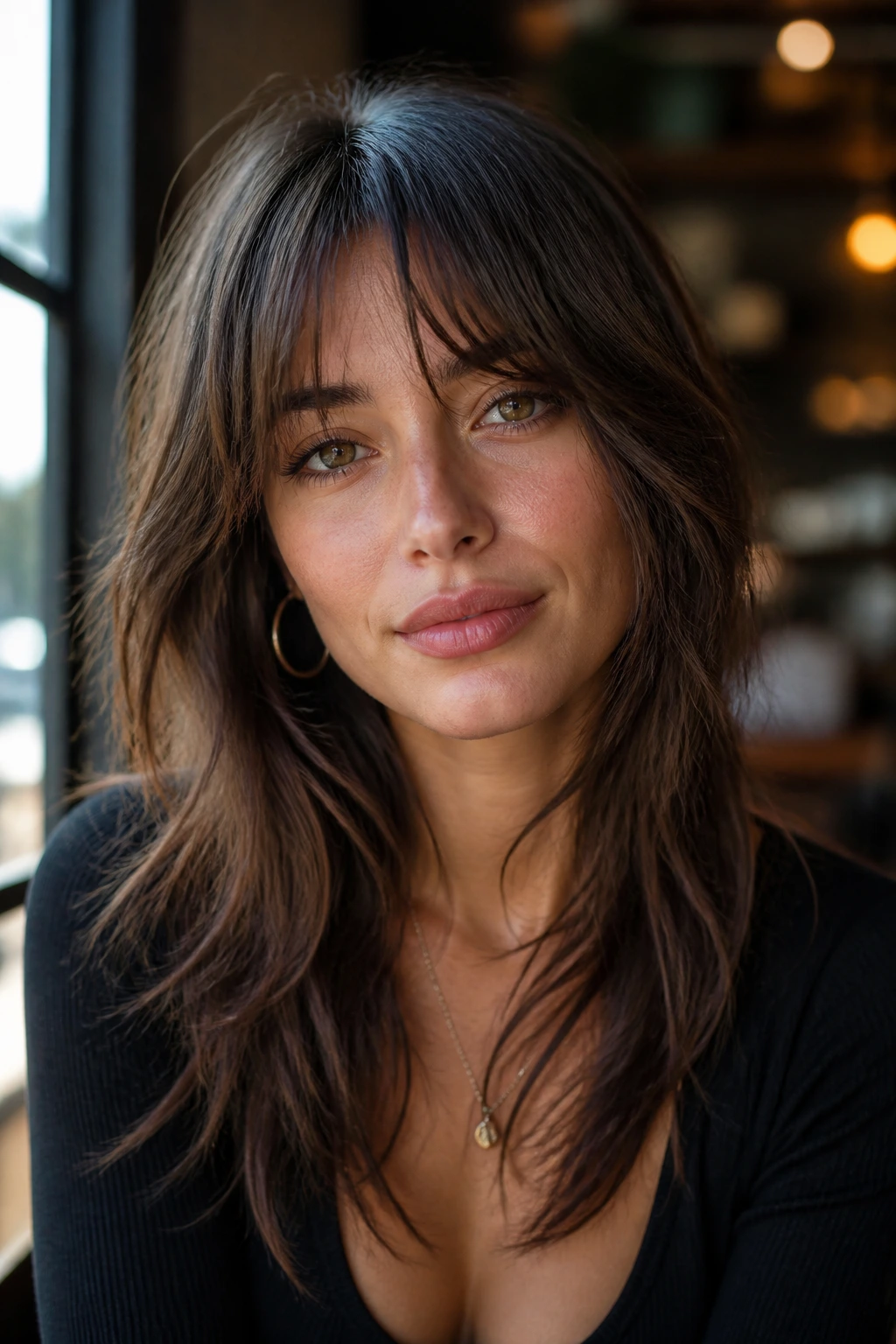
A full wolf cut can be a lot. This version keeps the attitude and trims the excess.
Think of it as the friendliest way to wear choppy texture on long hair. The crown gets some movement, the face frame gets a little edge, and the fringe stays long enough to brush aside when you need to. It’s the right fit for somebody who wants texture that says “I didn’t overthink this,” even though, yes, the haircut was thought through.
What makes it different
The shorter layers sit higher than they would in a classic long cut, but not so high that the hair explodes into a shaggy halo. The bangs should be long and soft enough to grow out gracefully, because the whole point is to keep the haircut versatile. You can rough-dry this one, add a little pomade to the ends, and go.
It’s especially nice on dense wave patterns that need internal movement. A brush can actually make it look too tidy. Fingers do a better job here.
16. S-Swoop Layers with Swept Curtain Bangs
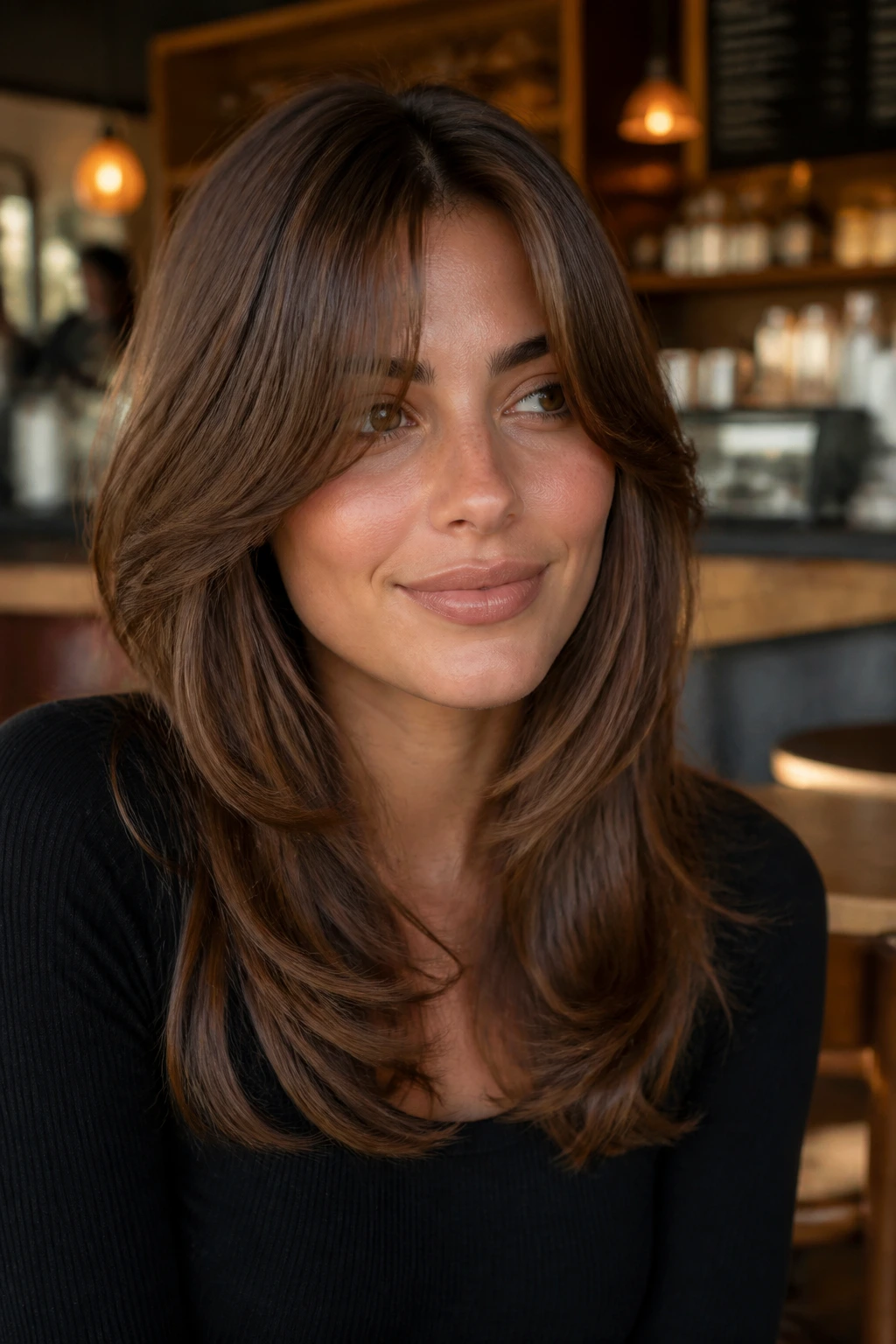
This is the sleeper hit for people who want softness with a little shape. The layers move in an S pattern around the cheek and jaw, which creates that little curve that makes the whole haircut feel sculpted. Swept curtain bangs lean into the same motion, so the front and sides feel connected instead of separate.
The effect is subtle from far away, then noticeably flattering up close. That’s useful on a date, because hair that rewards a second look has a different kind of charm than hair that announces itself immediately. If you wear a side part often, this shape slides into place fast.
A round brush or even a large Velcro roller can give the bangs the right sweep. Aim for bend, not curl. Too much curl in the front will break the line and make the face frame look stiff.
This shape is a smart pick if you like your hair to look done but not rigid. There’s a difference, and this cut knows it.
17. Air-Dried Natural Layers with Face-Opening Bangs
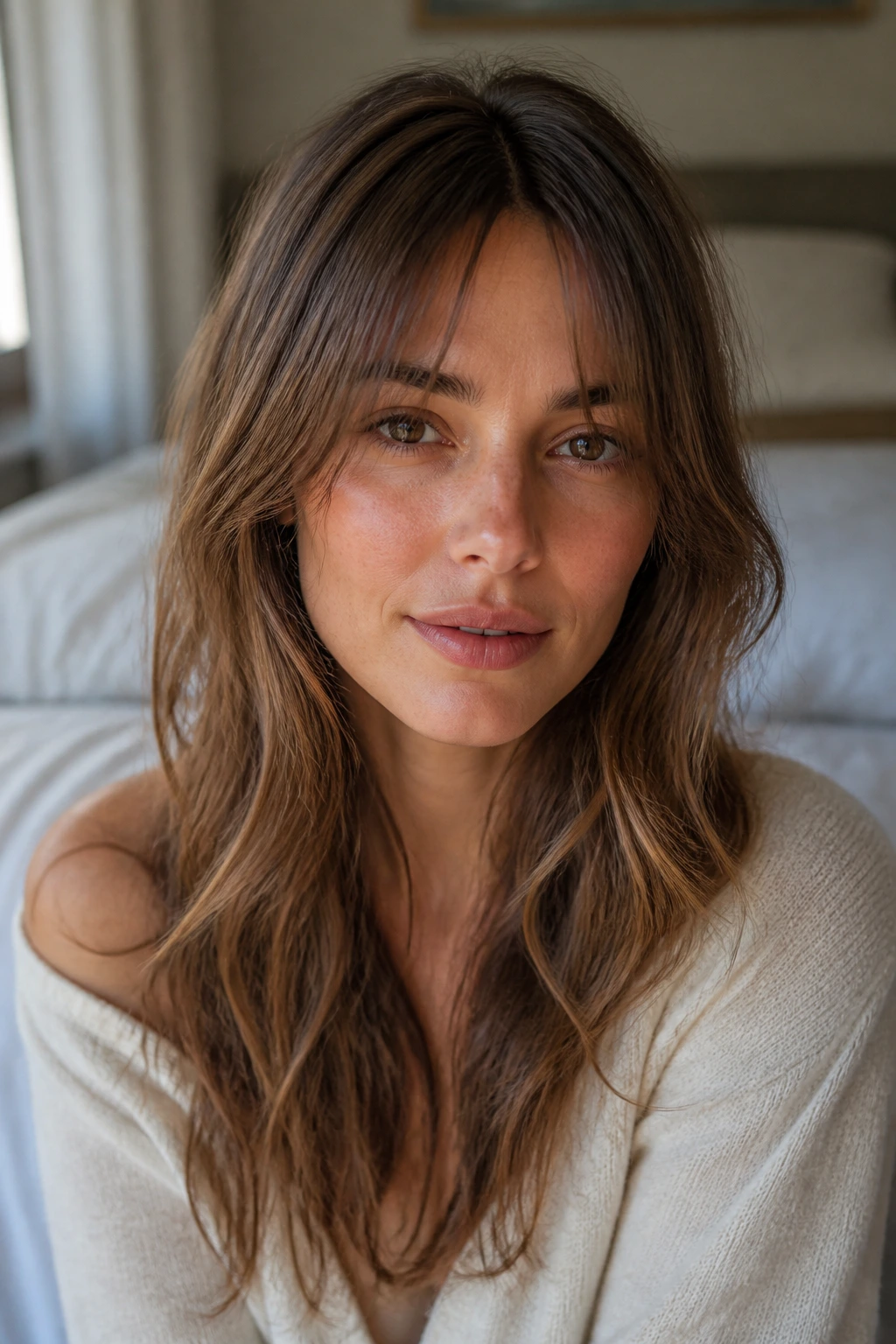
Some evenings call for a full blowout. Some do not.
This cut is for the second kind. The layers are placed to work with your natural texture, not against it, and the bangs stay face-opening so they can move with the rest of the hair rather than sitting in a hard block across the forehead. It’s an easy shape for wavy, curly, or bend-prone hair that looks better after a little leave-in and a good scrunch than after a marathon with the round brush.
The front pieces should still be intentional. Ask for the shortest face frame to sit around the cheekbone so the layers do something visible even when the hair dries on its own. If you skip that detail, air-dried hair can start to look unfinished fast. The haircut needs a job.
Use a curl cream or light styling milk, then resist the urge to keep touching it. Hands-on drying ruins the pattern. Let the hair settle.
18. Luxe Cascade Layers with Brow-Frame Fringe
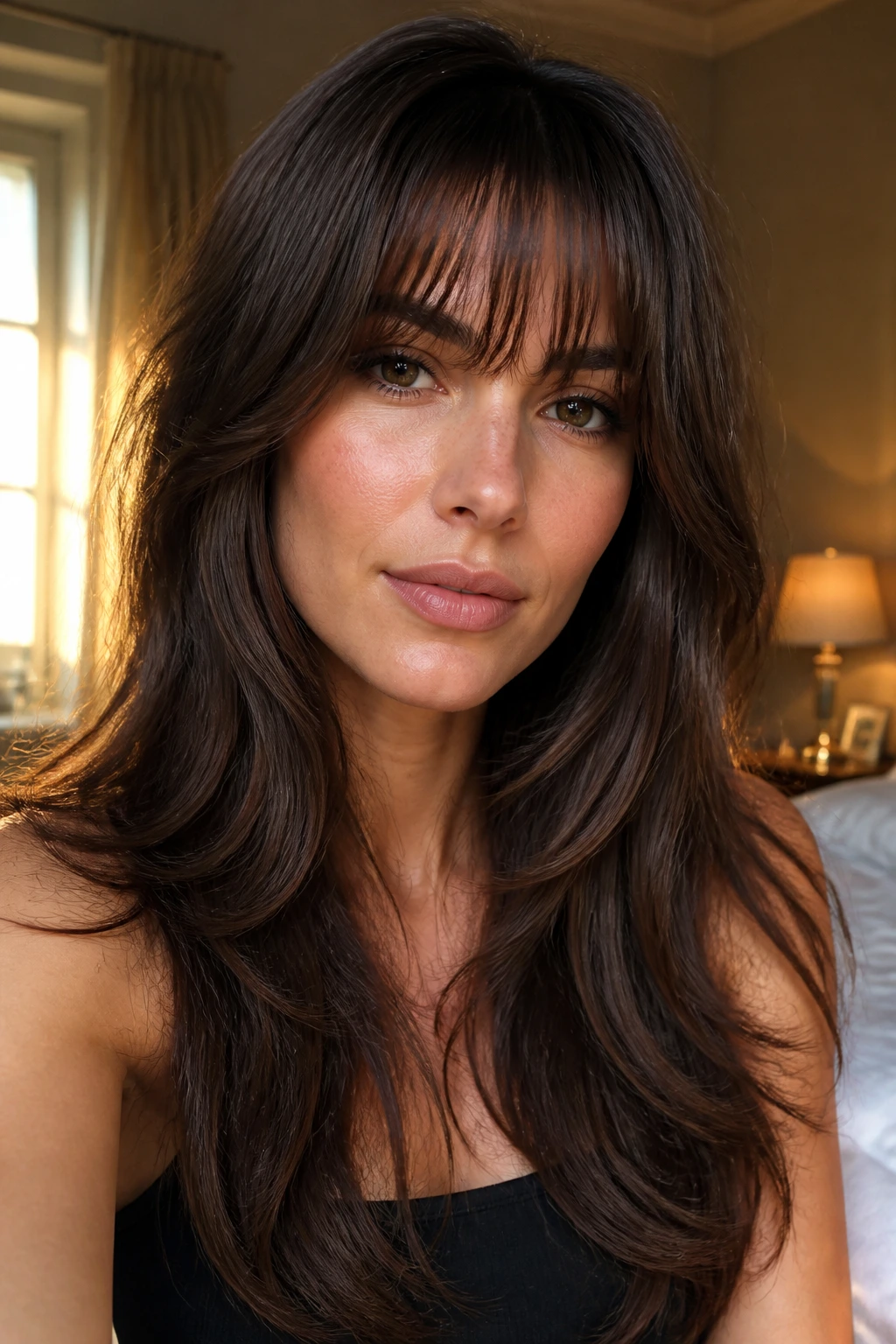
This is the smoothest, most blended option in the set. The layers fall in long, expensive-looking tiers — not in the financial sense, but in the sense of being polished, soft, and carefully shaped. The fringe sits right at the brows, where it gives the eyes a frame without taking over the forehead.
It’s a good final choice because it doesn’t try too hard. The lengths do the talking. The bangs just sharpen the picture a little.
A good cascade cut needs balance. The front should feel open, the side layers should feather down gently, and the back should keep enough weight that the ends don’t go flyaway after one hour of wear. If the cut is done well, the hair swings when you turn your head and settles back into place without needing a full reset.
This is the kind of style that looks best when the finish is clean and the texture is controlled. A satin shine spray on the mid-lengths and ends can make the whole thing feel more deliberate, especially if you’re heading somewhere with softer lighting.
Why These Layers Look Better When You’re Two Feet Away
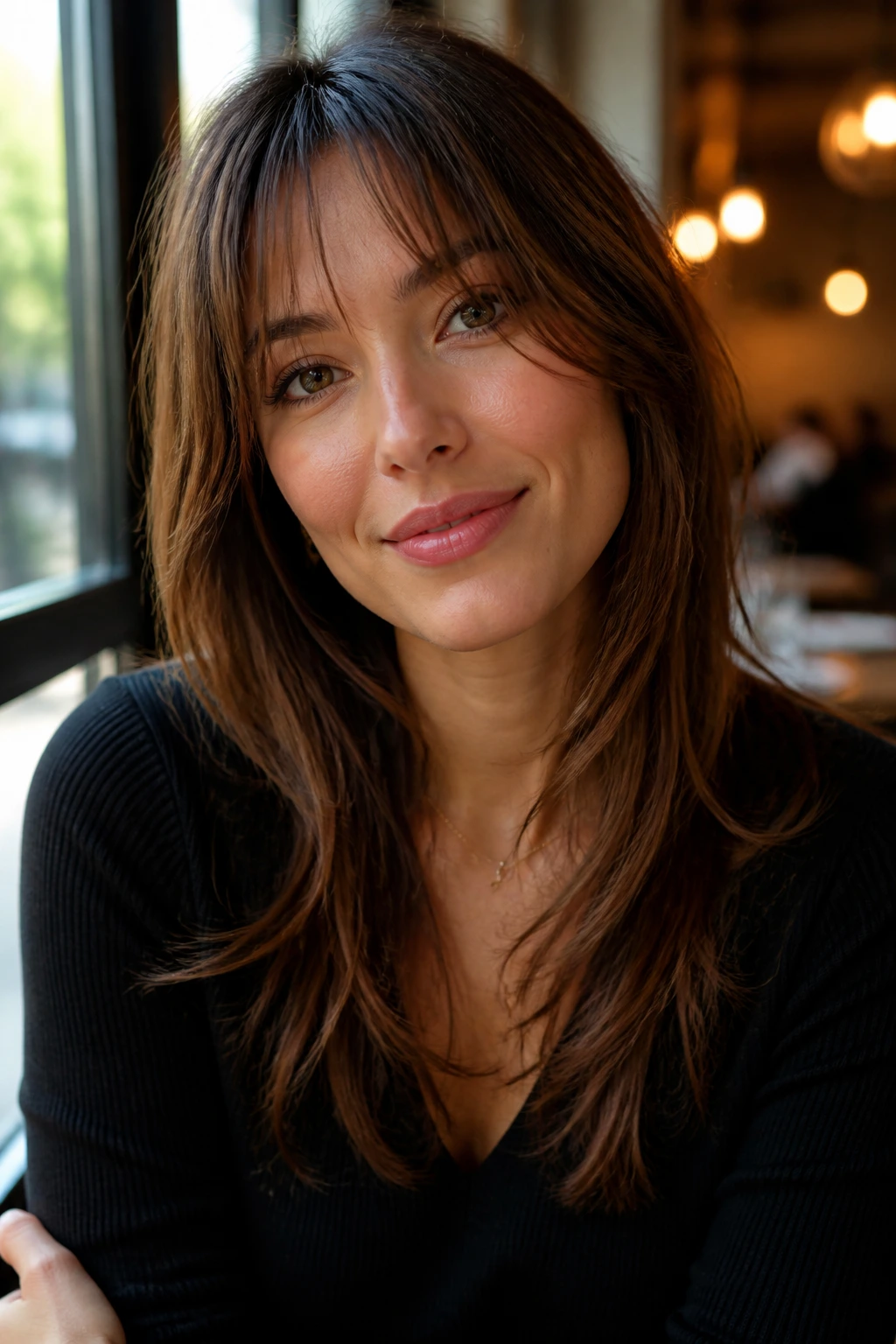
A date night haircut has a strange test built into it: it has to look good across the table and while someone is leaning in to listen to you. That’s why long face-framing layers with bangs do so well. They create motion near the face without making the whole style fragile. The eyes stay visible. The jaw gets softer. The length still feels like length.
The strongest versions of this shape share one habit: they give the front pieces a job. They aren’t just decoration. They guide the eye, soften the profile, and keep the haircut from turning into one heavy block under warm light. A blunt edge can be chic, sure, but it’s not as forgiving when the room gets dim and the hair starts losing shape.
The other thing I like here is that the cut can be dressed up or down without changing its bones. A round brush makes it glossy. A wand makes it romantic. Fingers and a little dry shampoo make it lived-in. The haircut doesn’t care which direction you go, as long as the front still has intention.
What to Tell Your Stylist So the Face Frame Falls Right
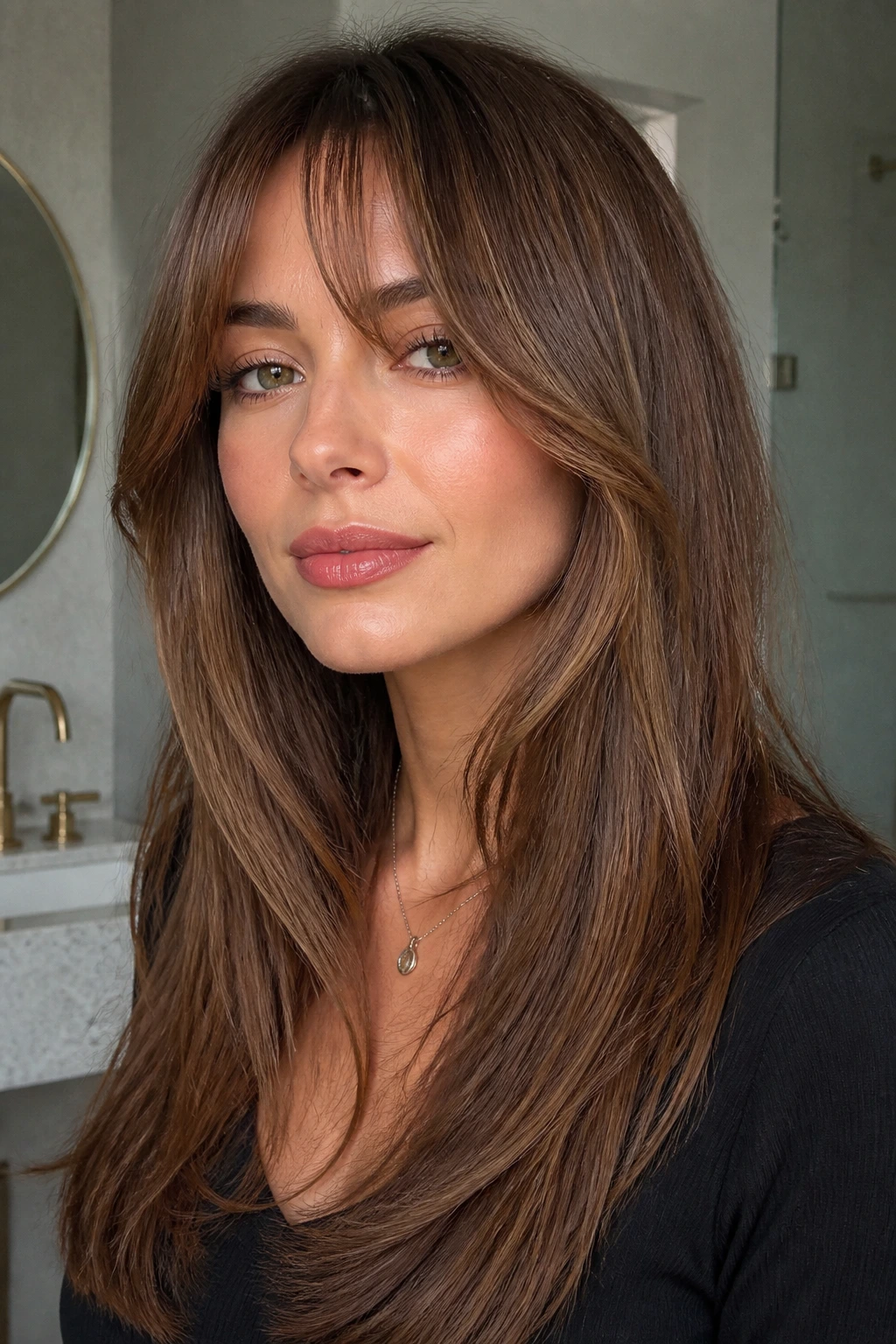
A good photo helps, but words matter here because the difference between “face-framing layers” and “too many layers” is not small. The first thing to say is where you want the shortest front piece to land. Cheekbone. Jaw. Chin. Those are not interchangeable. If you want lift near the eyes, say cheekbone. If you want softness near the mouth, say jaw or chin.
Then be specific about the bangs. Curtain bangs that split on their own need a different cut than a straight fringe that gets brushed apart later. If you wear glasses, say so. If you tuck one side behind your ear almost every day, say that too, because the face frame needs to hold up when one side disappears.
A few useful phrases sound plain because plain works:
- “I want the shortest face frame at the cheekbone.”
- “Keep the fringe soft, not dense.”
- “I need the layers to move, but I still want length at the back.”
- “Please don’t over-thin the front.”
- “My hair part sits here when it’s dry.”
Bring the conversation down to how you wear your hair on an ordinary Thursday. That tells a stylist more than a pile of adjectives ever will.
The Tools That Make These Styles Behave
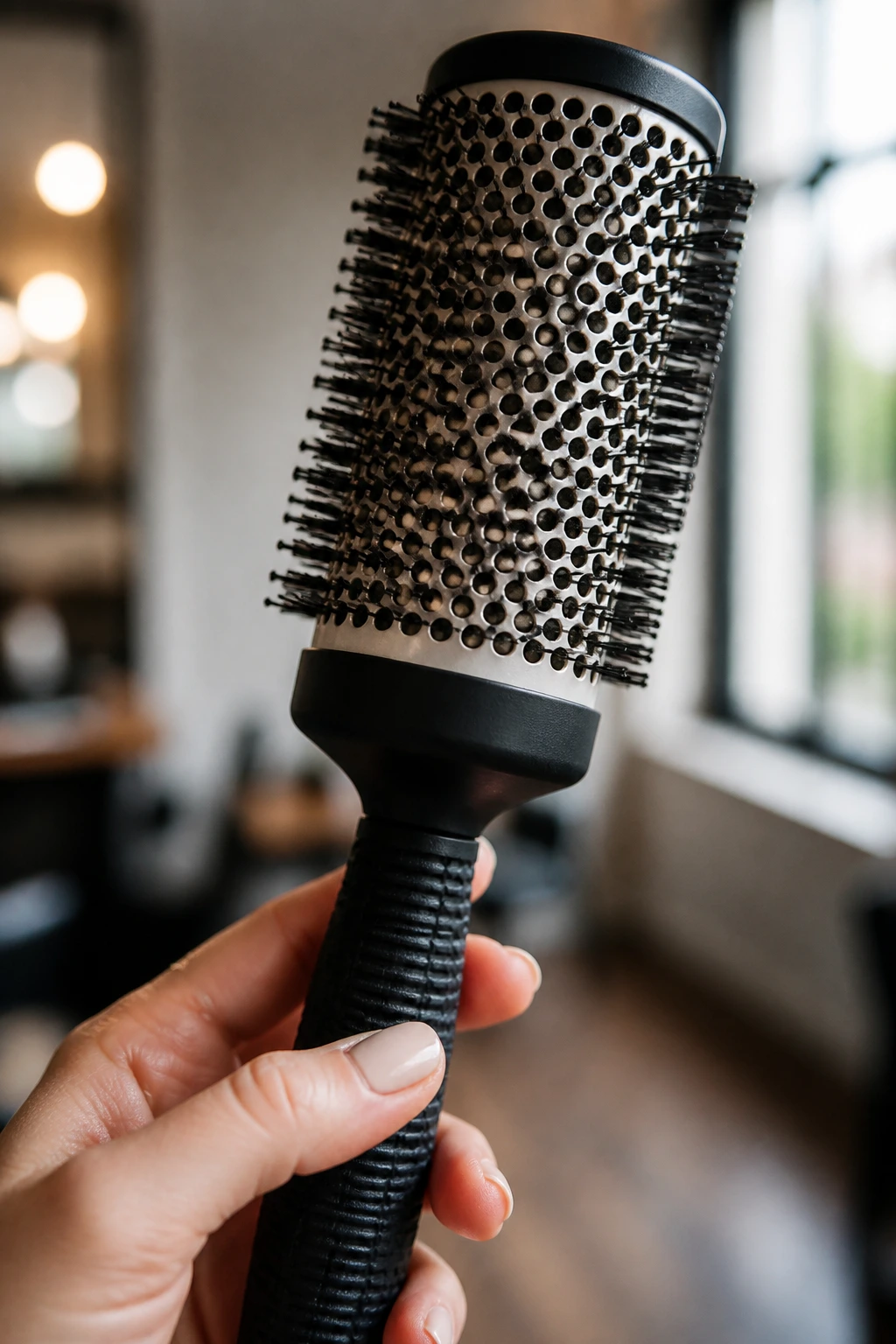
A lot of layered haircuts live or die by the styling tools, and I mean that literally. The same cut can look flat or lifted depending on whether you dry the fringe with control or let it collapse on its own.
- Blow dryer with a nozzle attachment: Directs air where you want it and keeps the fringe from blowing all over the room.
- Round brush, 1.25 to 1.5 inches: Small enough to shape the bangs, large enough to keep the front from curling too tight.
- Paddle brush: Good for smoothing long lengths without flattening every bit of bend.
- Flat iron: Useful for a soft bevel at the ends, not for pressing the hair into a ruler-straight line.
- 1.25-inch curling wand or iron: Creates the soft bend and loose wave that makes the front pieces move.
- Duckbill or sectioning clips: Worth having. They keep the top layers out of the way while you style the fringe.
- Velcro rollers or hot rollers: Optional, but excellent for a fuller blowout shape at the crown and front.
- Flexible-hold hairspray: Holds the bend without turning bangs into a shell.
- Heat protectant spray: Non-negotiable if you use hot tools.
- Dry shampoo: Helps bangs stay airy instead of stringy, especially on day two.
Choosing the Right Products for Your Hair Texture
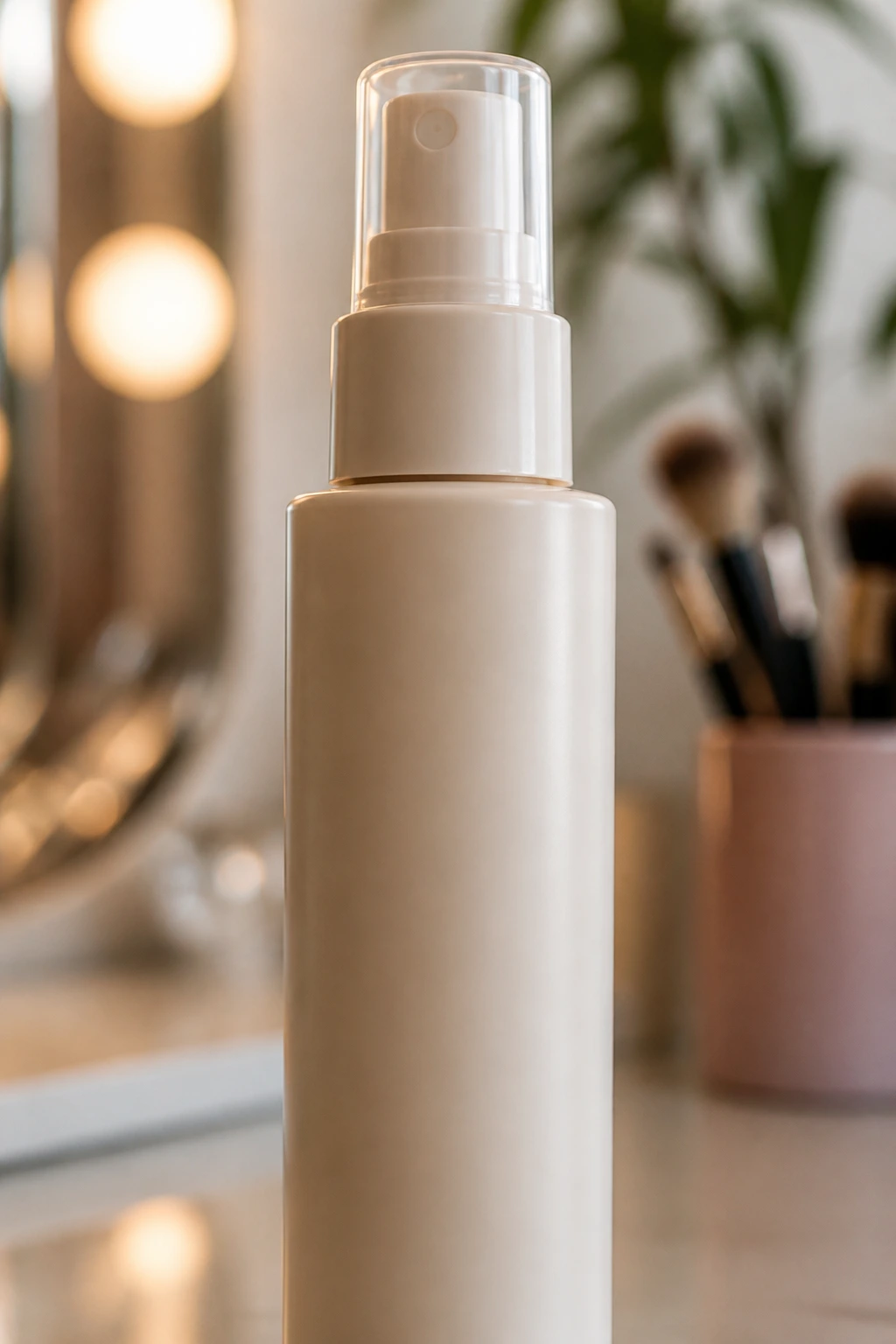
Product choice matters more with bangs than people expect. The fringe sits at the forehead, where oil, sweat, and heat from your skin can flatten it faster than the rest of the hair. A heavy cream that makes the lengths look silky can turn bangs into a sad little clingy strip. That’s the wrong trade.
For fine hair, look for a light mousse or root-lift spray that adds structure before blow-drying. You want grip, not weight. Fine strands get overwhelmed fast, so a product that says “smooth and rich” often works against you. On the other hand, thick hair usually wants a smoothing cream or blow-dry balm in the mid-lengths and ends so the layers don’t puff out around the face.
Wavy hair usually behaves best with a curl cream or light styling milk under a diffuser, then a touch of flexible spray after it’s dry. If the wave is strong, a little gel at the fringe can keep the front pieces from splitting too much. Straight hair tends to need a bit more help with shape, so a volumizing mousse at the roots and a round brush at the front gives the haircut some lift.
Skip heavy oils on the bangs. Save those for the ends, and even there, use less than you think. The front of the hair is always the first place to show product overload.
How to Wear These Styles on Date Night
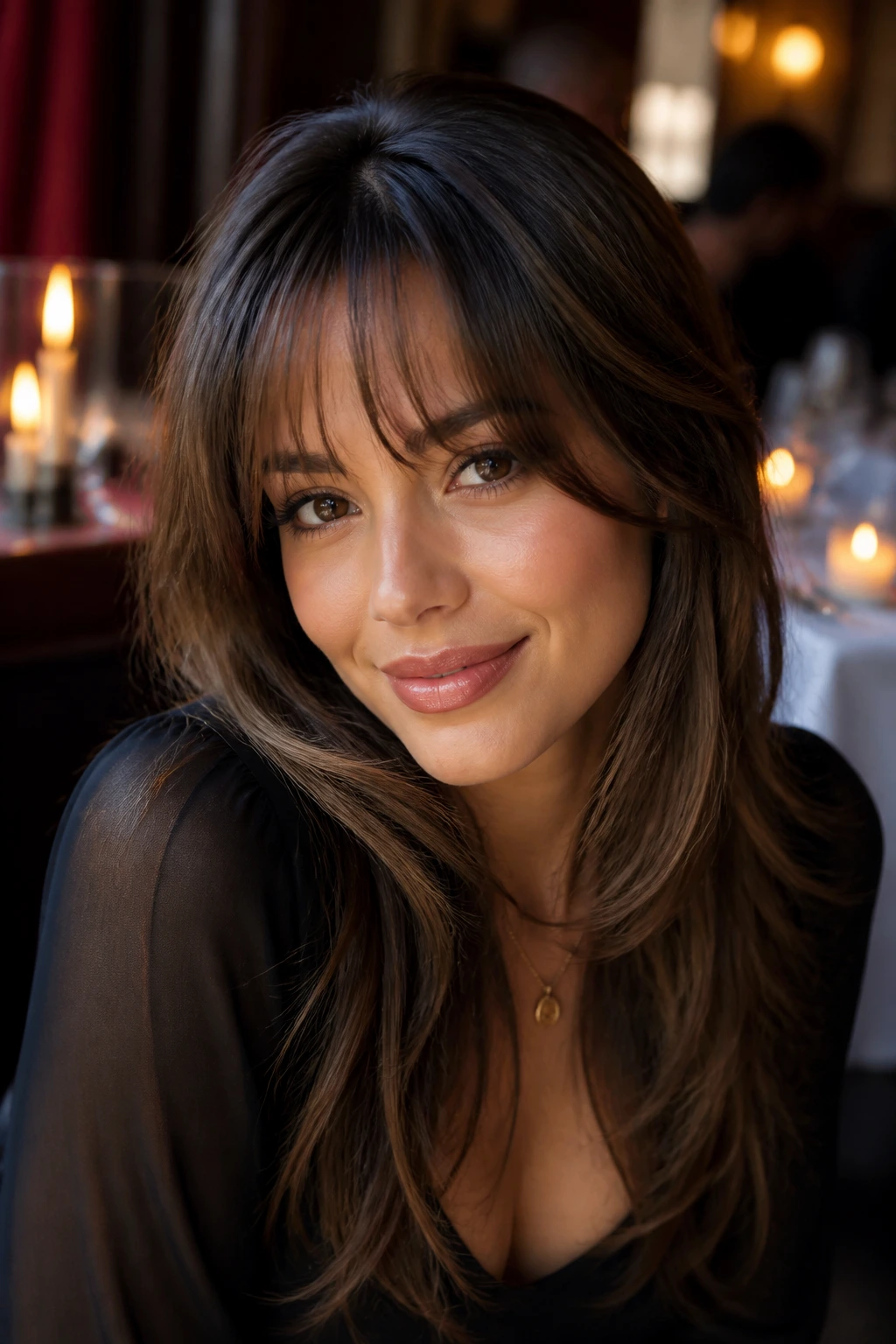
Presentation: Think in terms of the neckline and the front pieces together. If the hair is fuller around the face, leave the neckline cleaner so the whole look doesn’t feel crowded. If the layers are airy and soft, you can wear a more structured top or a stronger earring without overloading the frame.
Texture: Match the texture to the mood of the evening. A smooth blowout says polished and deliberate; a loose wave says easy and slightly undone. Both work. The bigger mistake is having the front look like one style and the lengths look like another.
Accessories: One tucked side can change the whole haircut. A small clip, a barrette behind one ear, or a pair of earrings that stop at the jawline all draw attention to the face frame. If you wear glasses, keep the bangs a touch longer so they don’t sit awkwardly over the frames.
Outfit Pairing: Scoop necks, square necks, and open collars give these layers room to move. High necks can still work, but then the hair should be softer and less dense around the face. Otherwise the top half starts to feel crowded.
Back-up plan: Carry a mini comb or a tiny dry shampoo. Fringe and humidity have a personal grudge, and it’s better to fix the front once than keep touching it every ten minutes.
Small Styling Moves That Make the Cut Feel Finished
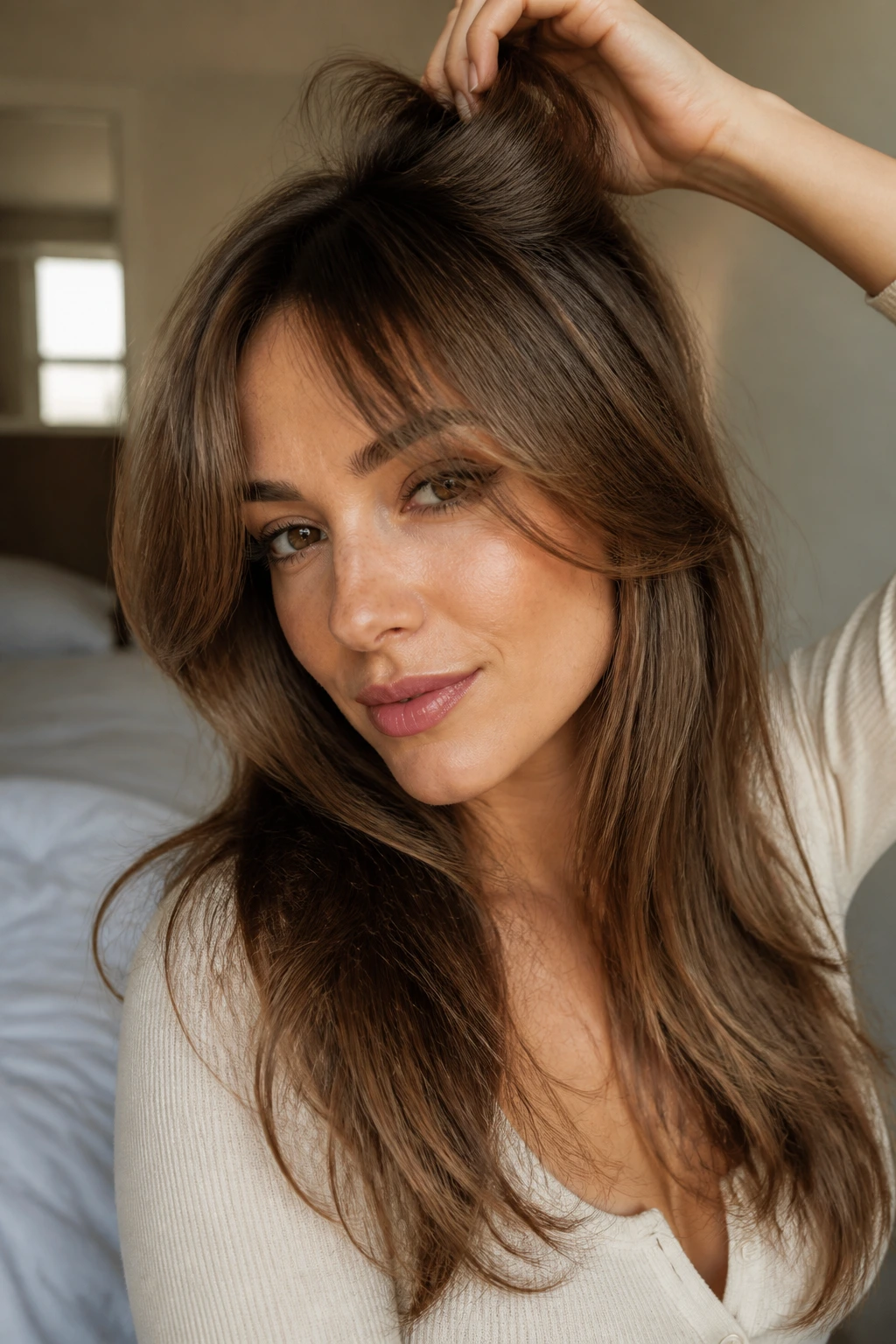
Root Lift: Dry the top section first, lifting the roots with your fingers or a brush so the front doesn’t fall flat before you finish the lengths. If the crown collapses, the whole haircut loses energy.
Face-Frame Emphasis: Curl or bevel only the first one to two inches around the face, then leave the rest softer. That contrast is what makes the layers visible instead of just “there.”
Gloss Without Grease: Use a shine spray on the mid-lengths and ends, never near the bangs. A shiny fringe usually turns oily fast. A shiny shoulder-length section, though, can look clean and very intentional.
Second-Day Rescue: Mist the bangs with water, hit them with the blow dryer for 20 to 30 seconds, and brush them into the shape you want. That small reset works better than dumping on more product and hoping for the best.
How to Keep the Shape Between Salon Visits
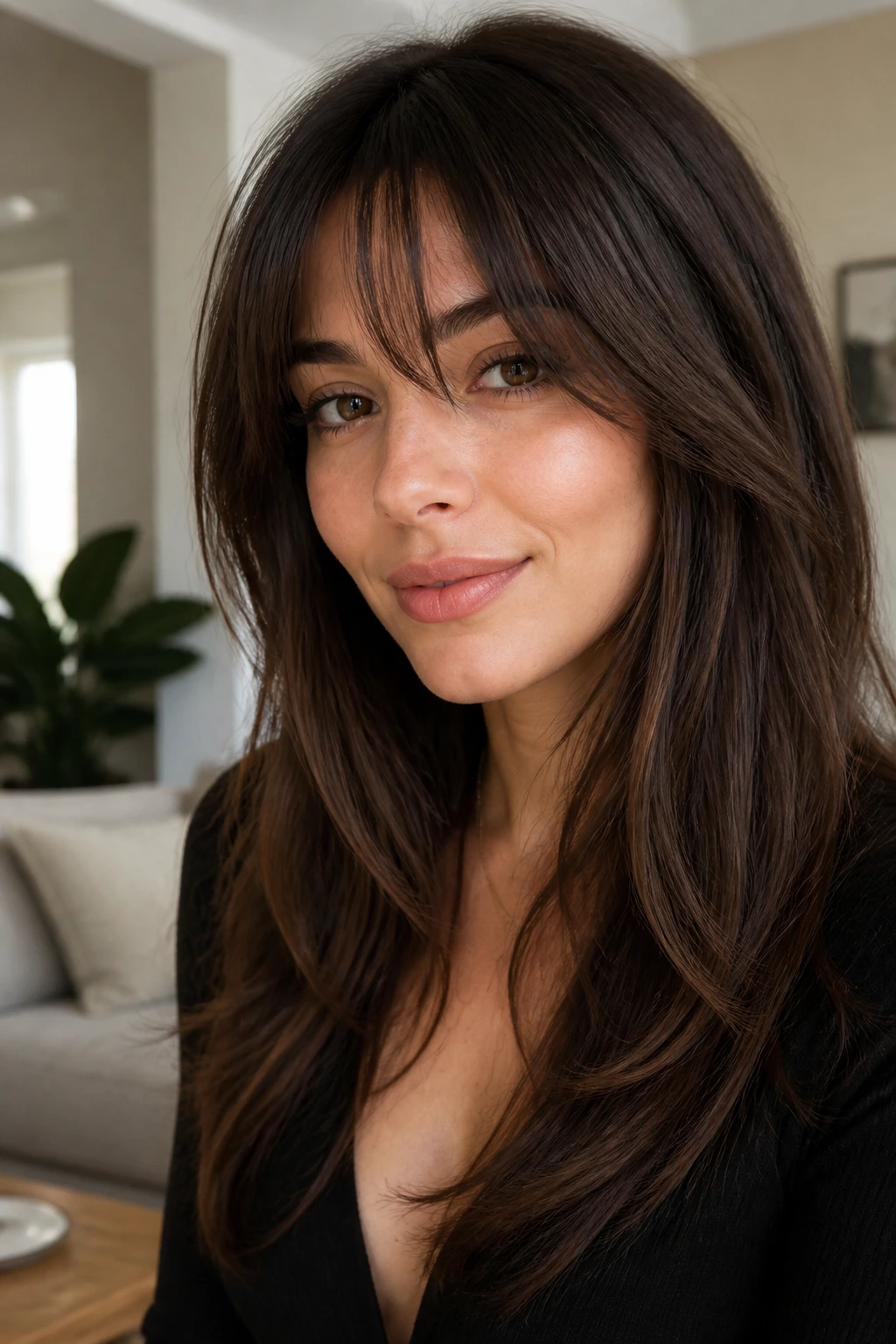
Date-night hair only works if the cut still has shape on a random Tuesday. That means maintenance. Bangs grow fast enough to change the whole line of the face in a few weeks, while the long layers lose their shape more slowly but still need shaping before they turn into one flat length.
Straight fringes usually need a trim every 3 to 5 weeks if you want them to sit above the brows. Curtain bangs can stretch longer, often 5 to 7 weeks, because the split and length variation make them easier to wear while they grow. Long layers tend to hold up for 8 to 12 weeks, depending on how fast your hair grows and how blunt your ends are.
Wash the fringe more often than the rest of the hair if it gets oily. That can be as simple as a quick sink wash or a damp washcloth at the roots, followed by a blow-dry. It’s a tiny nuisance, but it keeps the front from looking tired when the rest of your hair still feels fine.
At night, clip the bangs loosely away from the face or roll them on a large Velcro roller if you want a little morning bend. A satin pillowcase helps the ends stay smoother, especially if your hair frizzes the second it meets cotton.
Variations and Adaptations to Try
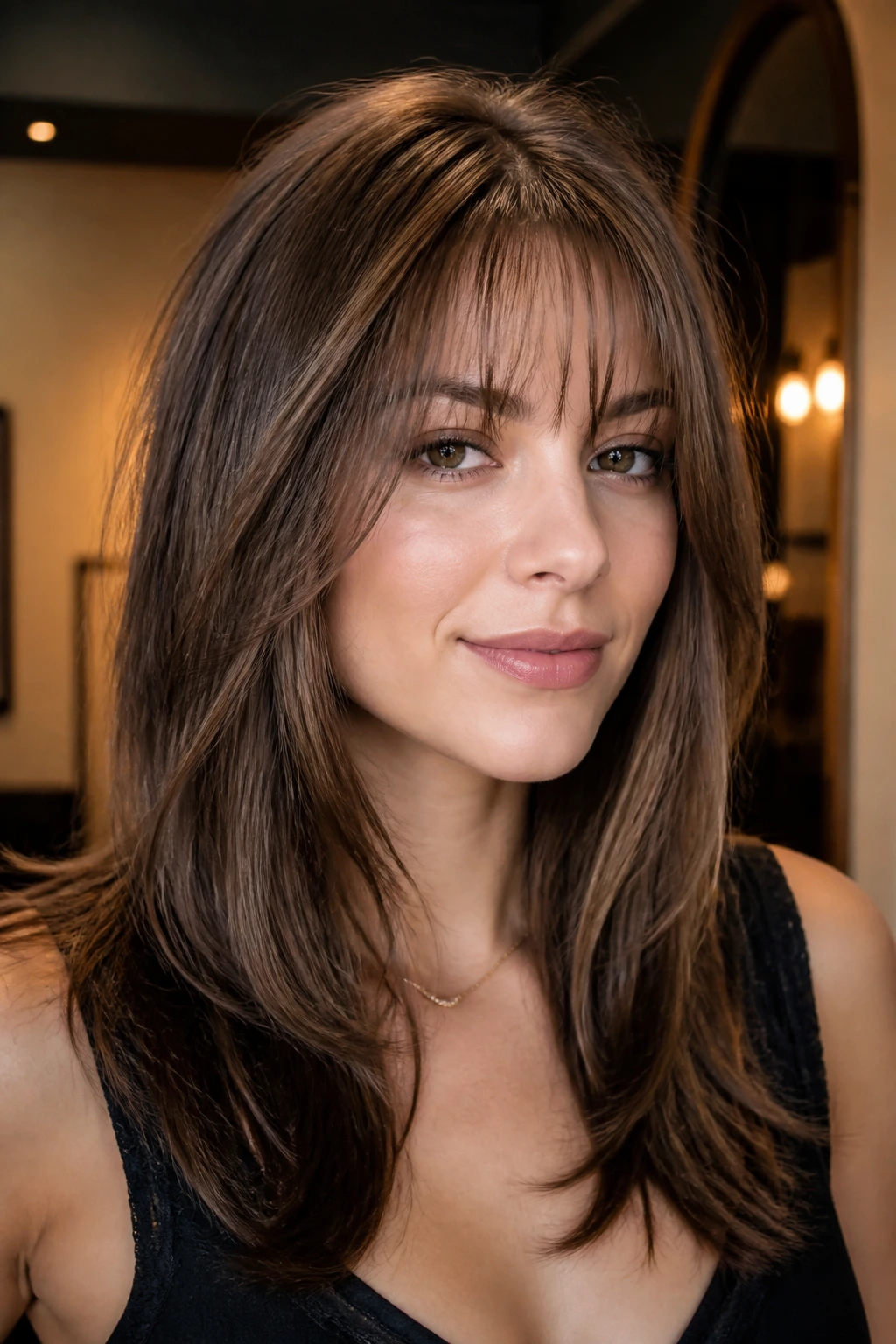
Fine-Hair Lift Version: Keep the face frame long enough to preserve density, but ask for slightly higher root layering at the crown. Use mousse, not heavy cream, and keep the bang line a touch lighter so it doesn’t collapse.
Thick-Hair Softening Version: Ask for internal layering and point-cut ends around the face so the front doesn’t flare out like a triangle. A smoothing balm in the lengths keeps the cut from turning into a puffed halo.
Curly-Hair Frame Version: Let the stylist cut the front longer than the finished shape needs, because curls spring up as they dry. The fringe should open around the forehead, not sit as one hard block across it.
Low-Heat Air-Dry Version: Ask for more movement in the cut itself and less dependence on a hot-tool finish. That means good face-framing placement, a bit of texture, and a fringe that falls into place with leave-in and a little scrunching.
Side-Part Romance Version: Shift the whole face frame off center by an inch or two. The result is softer than a strict middle part, and it’s a nice choice if your face shape feels better with one side carrying a little more weight.
Glossy Straight Finish Version: Keep the layers blended and the bangs longer, then finish with a flat iron bend and a shine spray on the lengths. Clean edges and a controlled front give this version its appeal.
Common Mistakes That Flatten the Whole Look
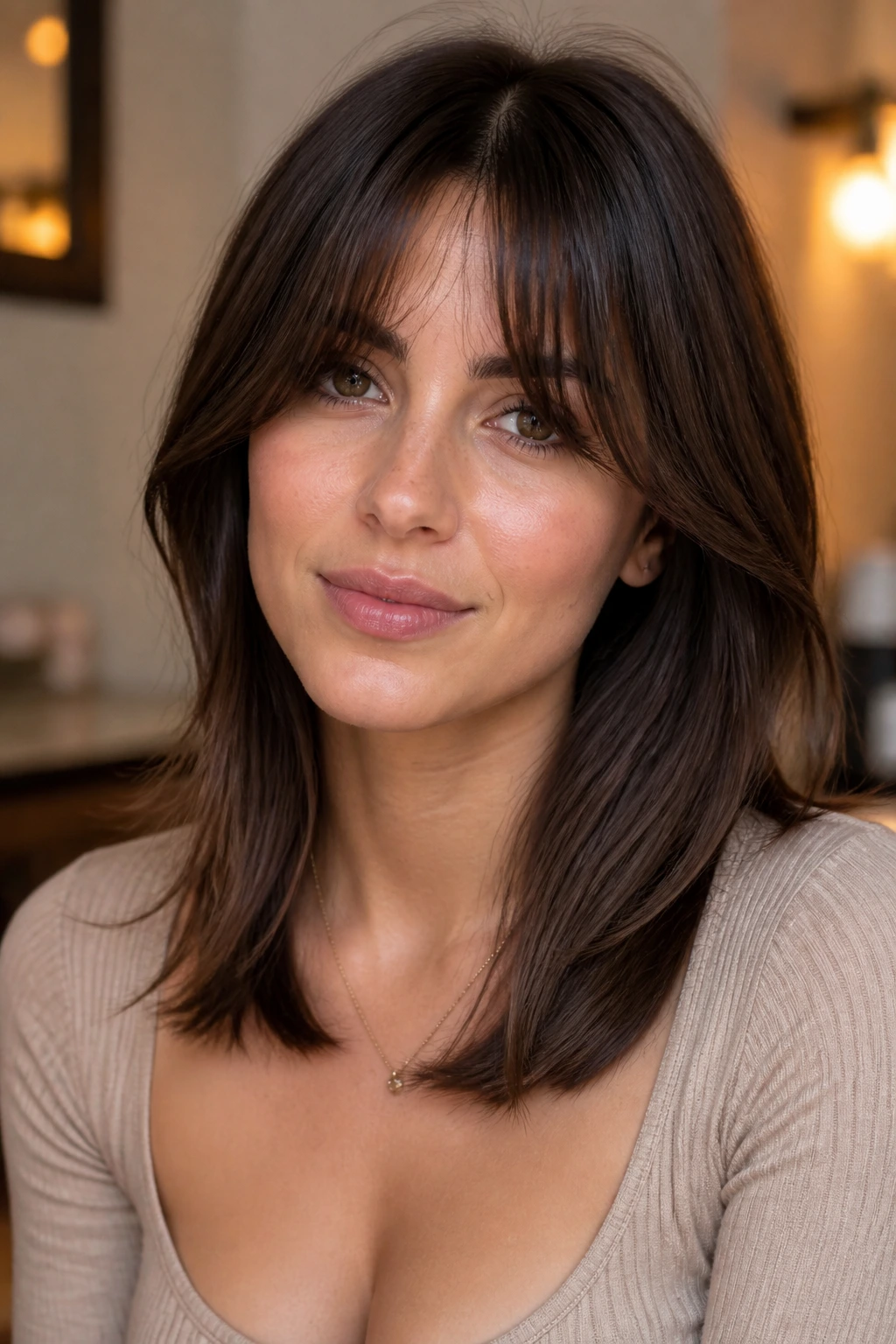
Cutting the bangs too short: Curly, wavy, and even slightly strong straight hair can spring up after drying. If the fringe lands too high, it can look severe in a way that is hard to fix without waiting for it to grow.
Starting the shortest layer too high: When the face frame starts near the temples instead of the cheekbone or jaw, the hair can lose weight fast and puff out at the sides. Ask for the shortest piece to be placed with a purpose, not just “somewhere in front.”
Loading the fringe with heavy product: A pea-sized amount can be too much. If the bangs start separating, clumping, or sticking to the forehead, the product is winning the fight.
Ignoring the natural part or cowlick: Hair that wants to split in one direction will keep doing that unless the cut and the dry-drying pattern respect it. Fighting a cowlick every morning gets old. Fast.
Curling every front piece in the same direction: That’s how the face frame starts to look stiff. Alternate direction or leave the ends slightly straighter so the movement feels softer.
Letting the blow-dryer blast the bangs from the front: Direct air from above and slightly side-on instead. Blowing straight at the fringe lifts it in the wrong places and leaves the ends crooked.
Questions People Actually Ask Before Getting This Cut
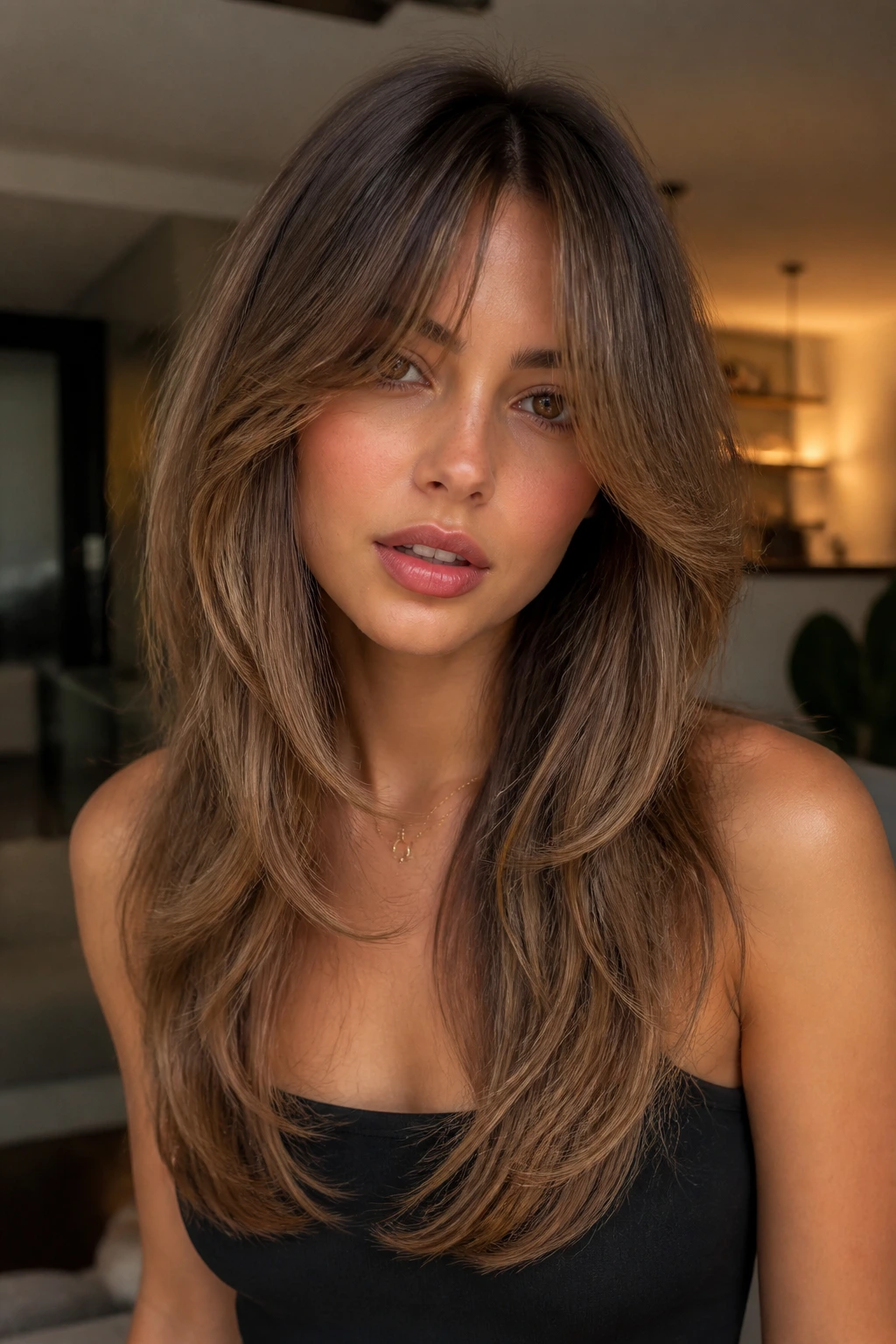
Will long face-framing layers with bangs work if my hair is fine?
Yes, but the layers need to be placed carefully so the ends don’t look wispy. Ask for a lighter fringe and preserve enough density at the front to keep the shape visible after styling.
Are curtain bangs easier to grow out than blunt bangs?
Usually, yes. Because curtain bangs already split and blend into longer pieces, the grow-out phase looks softer and less awkward than a hard line across the forehead.
How often do bangs need trimming?
Straight bangs usually need the most upkeep, often every 3 to 5 weeks. Curtain or bottleneck bangs can go longer because the length variation hides growth better.
Can this cut work on curly or wavy hair?
Absolutely, but the cut has to be adjusted for shrinkage. Curly hair should be shaped with the finished curl pattern in mind, and the fringe should be left longer than you think you need.
What if my bangs separate in the middle by dinner?
That usually means the fringe is a little too heavy with product or the roots need a quick reset. A 20-second blow-dry at the roots and a touch of dry shampoo can bring the split back together.
Do I need hot tools to make these styles look good?
No, but hot tools make the shape more obvious. Air-drying can still work if your haircut has enough built-in shape and your texture naturally supports movement.
What should I ask for if I wear glasses?
Keep the fringe a touch longer and make sure the shortest front pieces clear the top of the frames. Bangs that sit right on the glasses can feel fussy and end up being brushed away all night.
Will layers make thick hair too thin at the ends?
They will if too much weight gets removed too high up. Ask for long layers with controlled shaping at the face and keep the ends full enough to hold a curve.
The Last Mirror Check
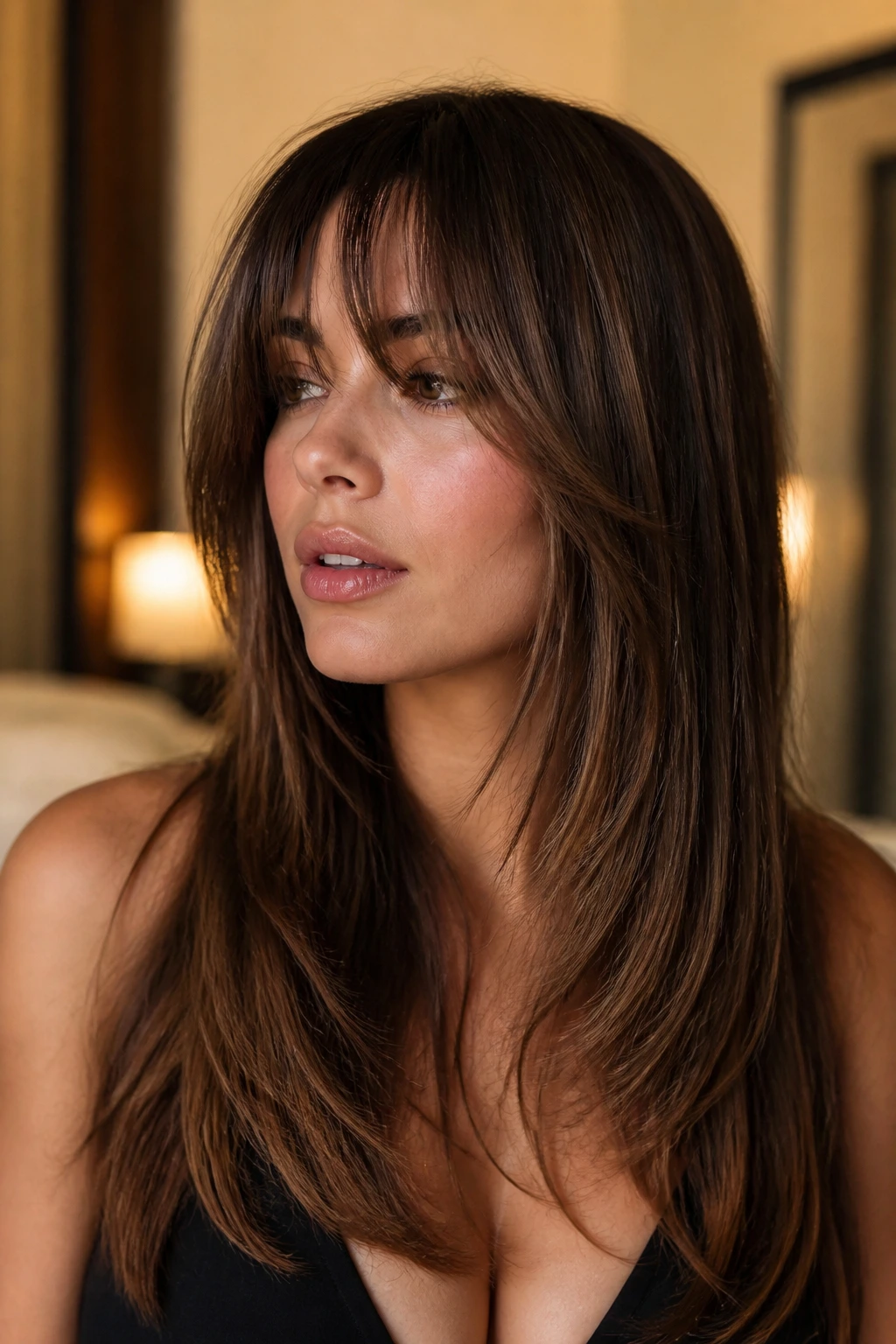
The best date-night hair doesn’t need to announce itself from across the room. It just needs to keep doing its job when you lean forward, turn your head, or let one side fall naturally over your shoulder. That’s where long face-framing layers with bangs earn their keep. They soften the face without hiding it, and they keep the haircut alive even when the rest of the evening is moving fast.
Pick the version that matches how much time you actually want to spend in front of the mirror. A glossy blowout says you like polish. A shaggy, air-dried version says you prefer texture and a little edge. Either way, the right front pieces do half the flattering before you’ve even touched your lipstick.
The next time you want your hair to look like it understands the assignment, start with the frame.