



Thin hair can look flat in one bad cut and deliberate in one smart one. A little diagonal fringe changes the whole read of the face, and that is why contouring hairstyles for thin hair with side-swept bangs keep showing up in the better salon notebooks: they redirect attention, build a soft line across the forehead, and make sparse areas less obvious without forcing the hair into a helmet.
I keep coming back to side-swept bangs for fine hair because they do three jobs at once. They soften a high forehead, they hide a slightly weak hairline, and they let the rest of the cut stay light instead of overloaded with layers that chew up density. The trick is balance. Too much thinning, and the ends look see-through. Too little shape, and the whole style sits there like a sheet.
The 25 looks below range from cropped and sharp to long and airy, but they all use the same idea in different ways: place the weight where the eye needs it, then let the bangs sweep across the face like a soft frame. Some are better for round faces, some trim down a strong jaw, and some are just plain helpful when your hair has that fine, slippery texture that refuses to hold volume for more than an hour.
Why These Hairstyles Earn Their Keep

-
They break up a wide forehead: A side sweep cuts across the face at an angle, which takes attention off a flat hairline and moves it toward the eyes and cheekbones.
-
They fake density without piling on bulk: The best versions use a blunt edge, a curved part, or a lifted crown so the hair reads fuller instead of frizzier.
-
They grow out better than blunt fringe: Long side bangs can slide into layers, so you do not end up with that awkward half-grown curtain sitting in your eyes.
-
They work with thin ends instead of fighting them: A smart cut keeps the perimeter strong and uses movement near the front, where the eye lands first.
-
They can be styled fast: A round brush, a little root lift, and a swipe of dry texture spray are often enough. No wrestling match required.
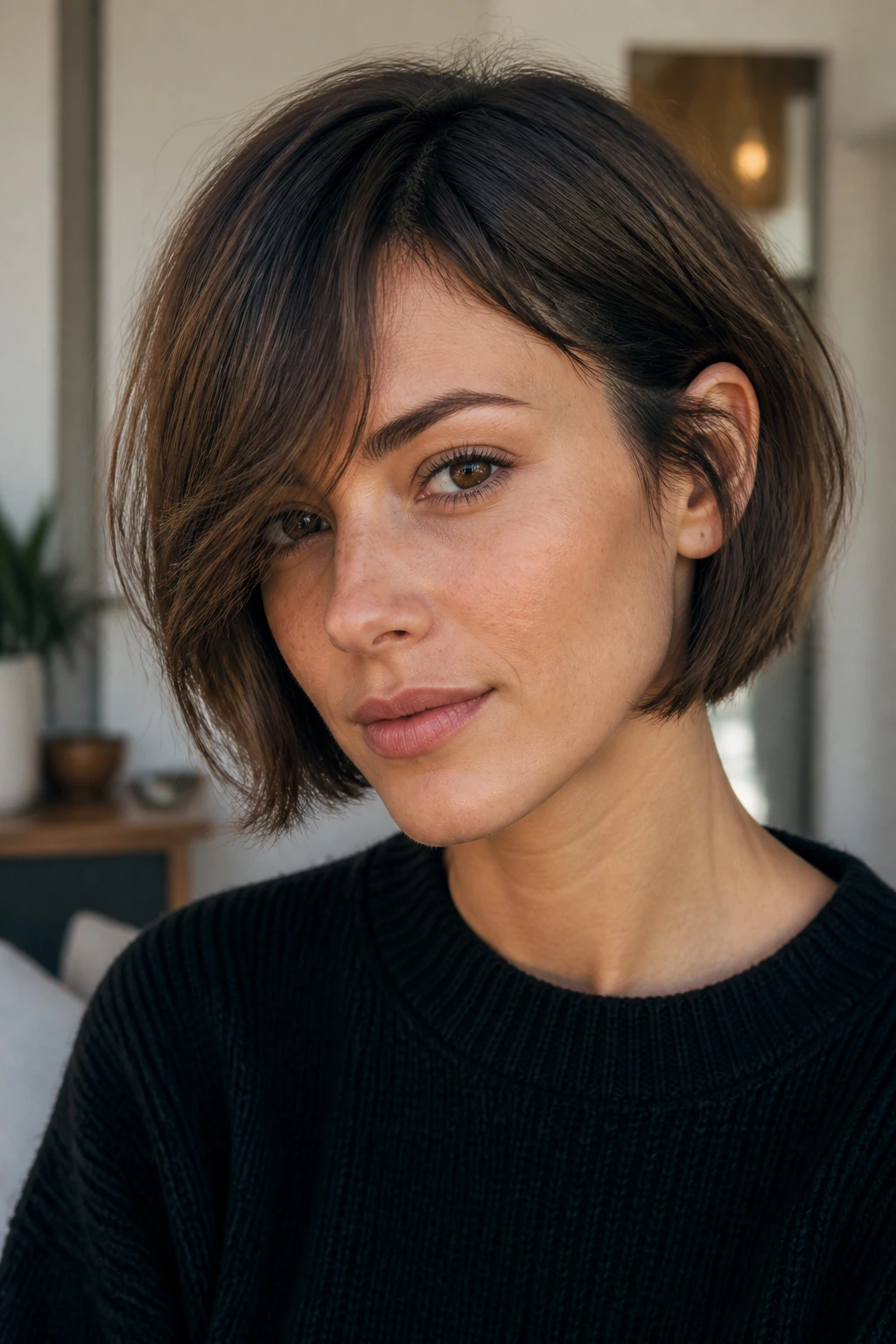
1. Deep Side-Part Pixie with Feathered Bangs
Short hair gets misread all the time. People hear “pixie” and think flat, but a deep side part and feathered bangs can give thin strands a lot more shape than a longer cut that collapses by noon.
This version works because the eye lands on the sweep first, not on the crown. Keep the shortest pieces at the nape and let the front bang fall long enough to skim the outer brow or cheekbone. That diagonal line gives the face contour and keeps the top from looking like a little cap.
Ask for soft point-cutting through the fringe, not heavy thinning shears. Those can make fine hair look ragged fast. A tiny bit of lift at the root — even 1 inch of overdirection when blow-drying — changes the whole cut.
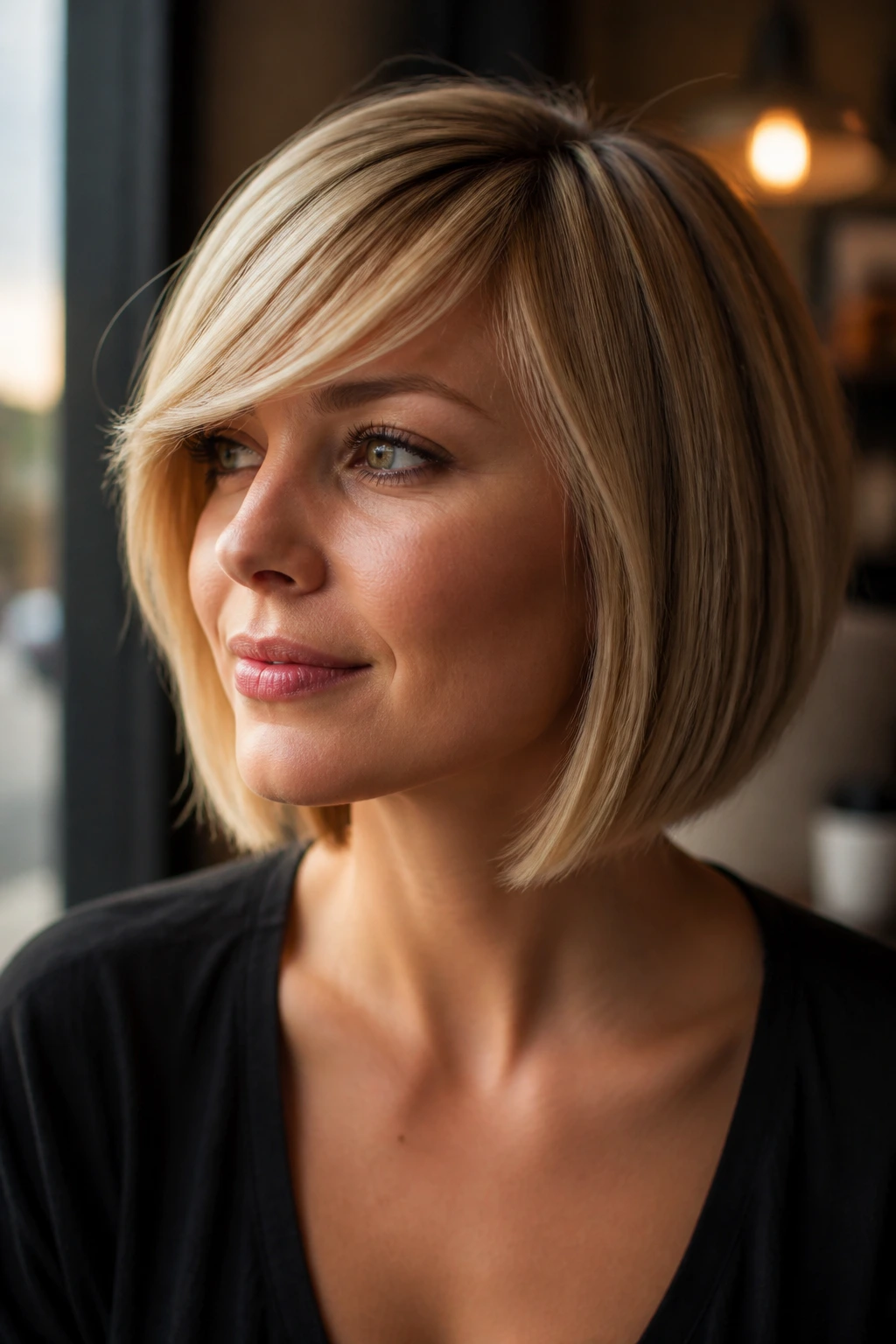
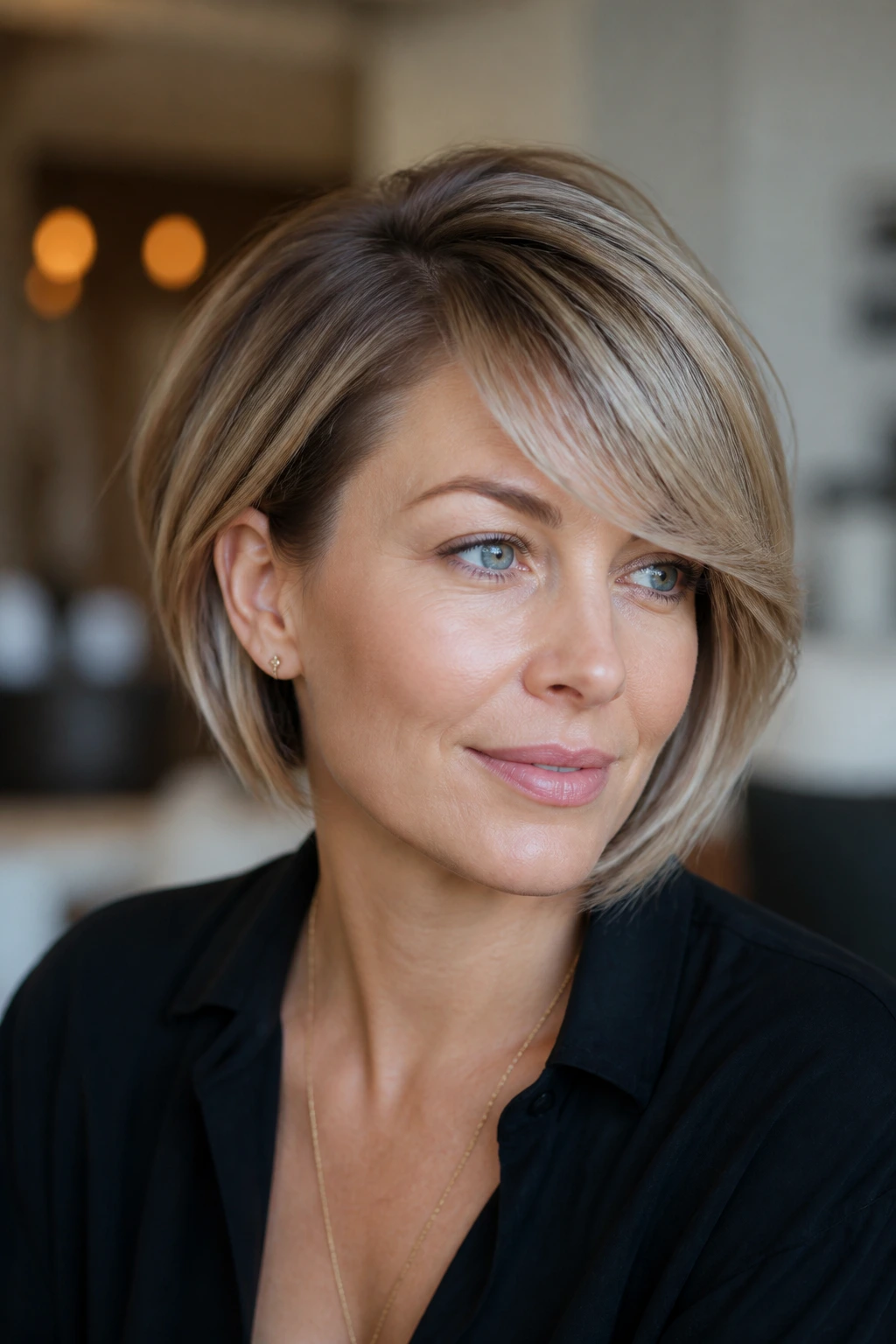
2. Chin-Length Blunt Bob with a Swooping Fringe
Why does a blunt edge help thin hair? Because the eye sees a solid line, and a solid line reads as thickness. A chin-length bob with a side-swept fringe is one of the cleanest ways to make delicate hair look more expensive without adding a lot of product.
The bob should sit right at the jaw or just below it. That placement sharpens the face and keeps the ends from draping onto the neck like they’ve given up. The bang should start high on one side and arc across the forehead in one clean bend, not a choppy series of little pieces.
This one is especially good if your hair is straight or only slightly wavy. Blow it dry with a 1.25-inch round brush, then tuck the heavier side behind one ear to show the cheekbone. Simple. Effective.
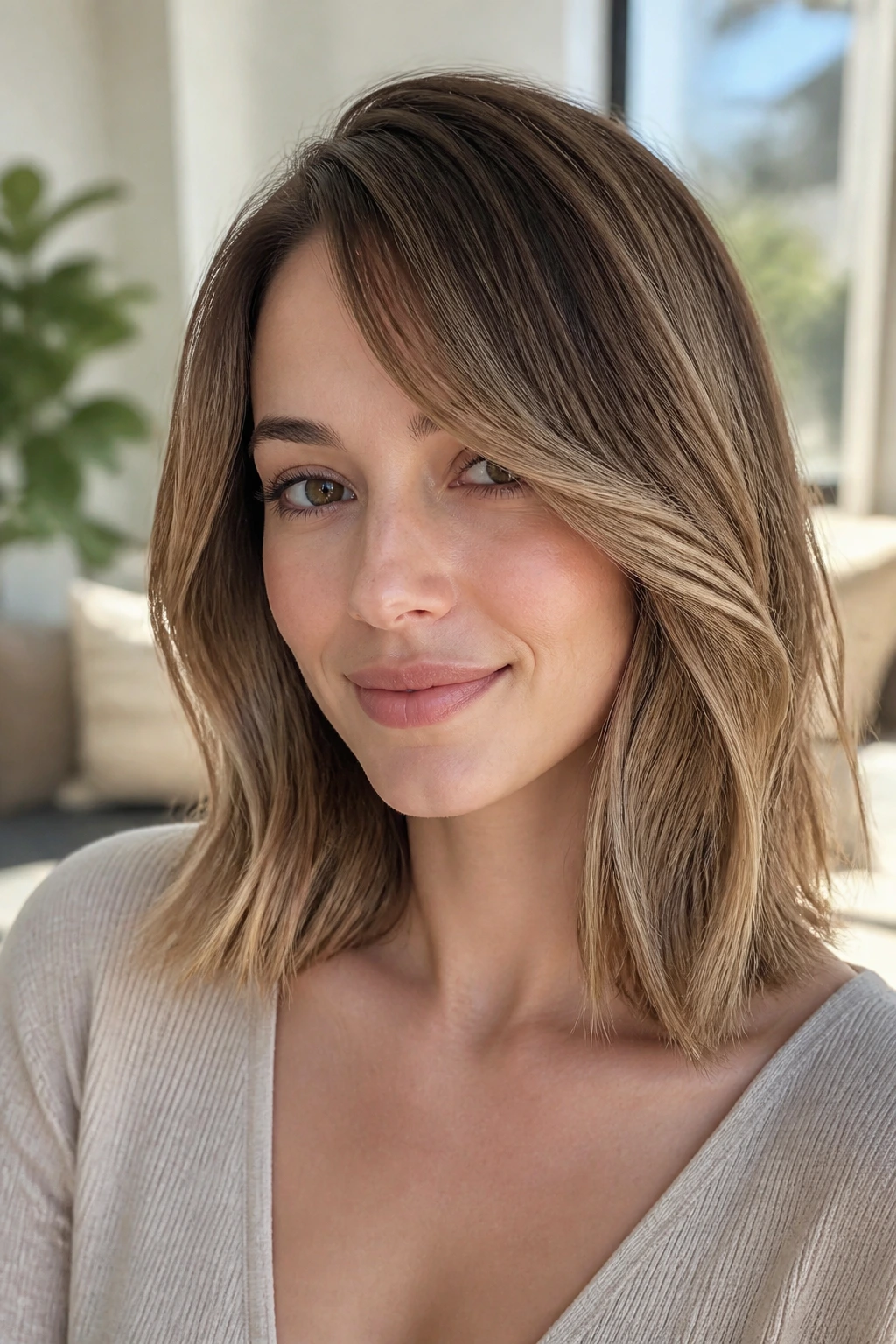
3. Collarbone Lob with Soft Bends and Side Sweep
If you want a little more length, the collarbone lob is the sweet spot. It gives thin hair enough weight to move, but not so much that the ends look stringy by the time you leave the house.
Soft bends matter here. Not curls. Bends. Use a 1-inch iron or a flat iron wave, then leave the last inch straighter so the line doesn’t turn puffy. The side-swept bang should merge into the front layer, which makes the haircut look like one shape instead of separate parts.
I like this cut on longer faces and anyone who wants to hide a narrow temple area. The bang leads the eye sideways, then the collarbone length gives the whole style a little swing. It’s neat, but not stiff.
4. Tucked-Behind-Ear French Bob with Long Bangs
A French bob can be very unforgiving on thin hair if it’s cut too blunt and worn too neat. But when you keep the length around the cheek or just below the ear, then leave a long side fringe, it turns into a sharp little frame that actually flatters low-density hair.
Tucking one side behind the ear matters more than people think. It exposes a little skin, which creates contrast, and contrast makes hair look fuller by comparison. The long bang softens the front so the cut never feels boxy.
This one has a cool, slightly undone look. If your hair sits fine and straight, mist the roots with a light volumizing spray before blow-drying, then finish with a small dab of paste only on the ends near the face. Do not pile product everywhere. Thin hair remembers.
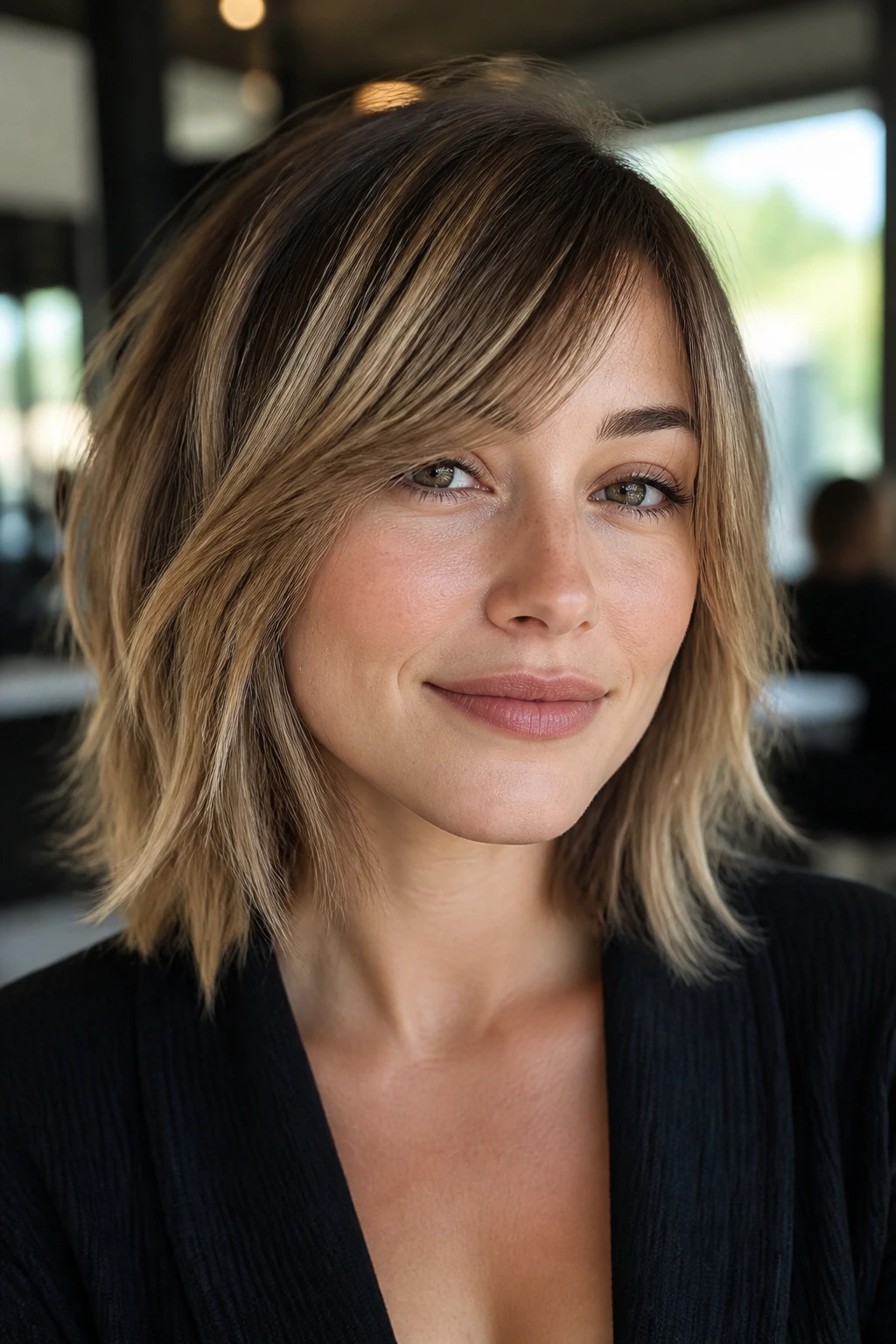
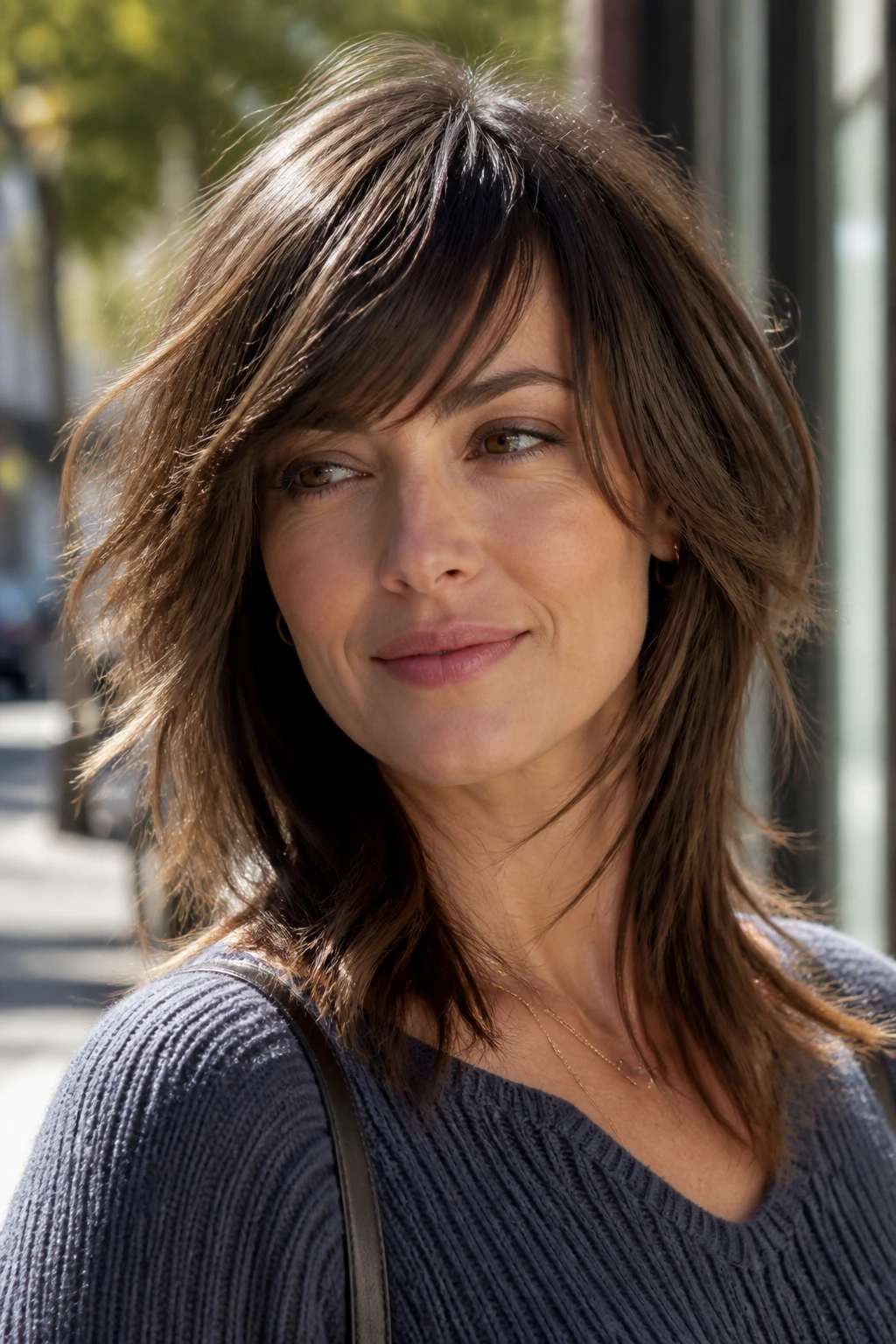
5. Layered Shag with Airy Side Fringe
A shag can work on thin hair, but only if the layers are handled with restraint. Too much slicing turns the ends into confetti. Done right, though, a layered shag gives fine hair a little lift, movement, and that casual bend people keep trying to fake.
The side fringe should stay airy and separated, not heavy. I like this cut for wavy or slightly curly hair because the texture helps the layers sit apart in a good way. The best version has a softly beveled perimeter and longer pieces around the cheekbone, so the face gets framed without losing its outline.
This is the cut for someone who wants hair that moves when they turn their head. A diffuser helps, but you can also air-dry with a little mousse scrunched through the mids. The crown should sit soft, not puffy. That’s the whole point.
6. Rounded Shoulder-Length Cut with Face-Framing Ends
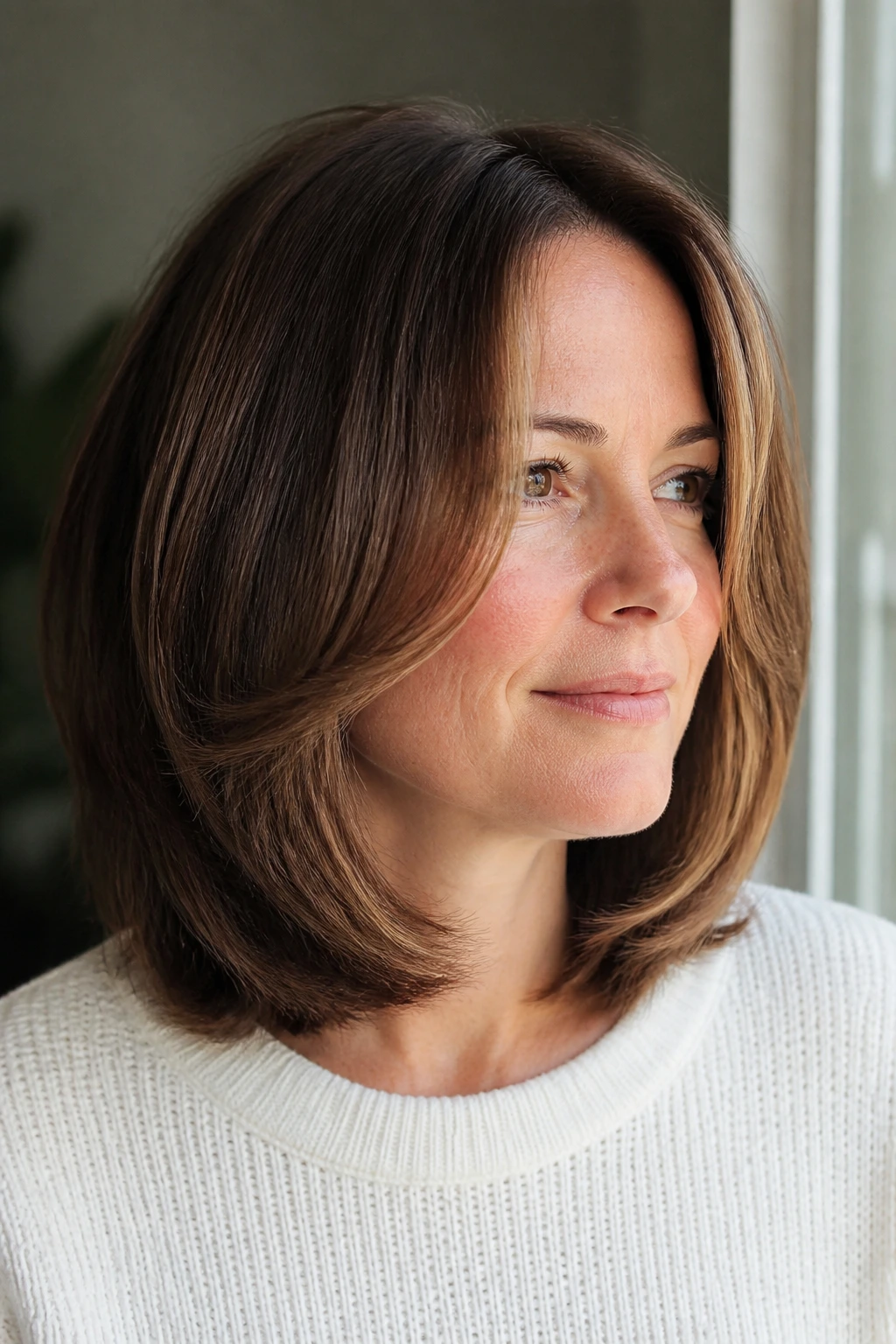
A rounded outline sounds old-school, but on thin hair it can be a quiet miracle. The shoulder-length shape gives enough weight to stop the hair from flying apart, while the rounded front pieces make the face look softer and narrower in the right places.
The side-swept bangs should curve into the cheek area rather than stop abruptly at the brow. That connection matters. It keeps the cut from looking chopped into sections, which is one of the fastest ways to make fine hair look thinner than it is.
This style works well if your hair falls flat at the top but has decent ends. Ask your stylist to keep the interior light, not shredded, and to leave enough density at the perimeter to hold the shape. A quick round-brush bend at the ends does most of the heavy lifting.
7. Asymmetrical Bob with a Long Draped Bang
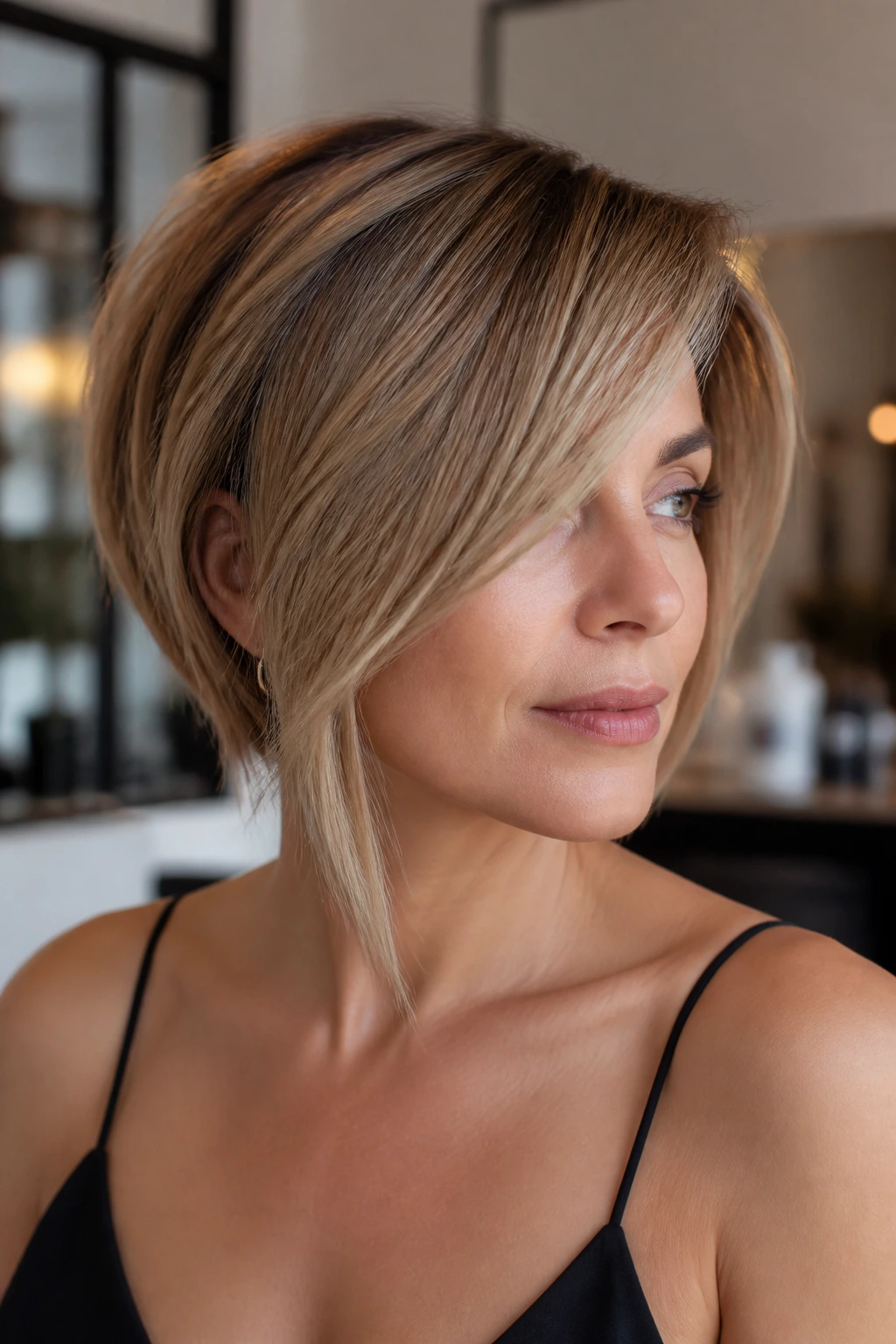
Some cuts help thin hair by being symmetrical. This one helps by being slightly off. An asymmetrical bob gives the eye a line to follow, and a long draped bang softens that line so it feels polished instead of severe.
Keep one side just a touch longer — think half an inch to an inch, not a dramatic angle unless you want the haircut to shout. The bang should fall from the heavier side and skim across the forehead like a curtain drawn diagonally. That shape narrows broad cheeks and gives a little drama to otherwise delicate strands.
I like this on hair that is fine but has a good straight pattern. It lets you get away with less styling because the shape does the work. If your hair is slick and slippery, a root powder at the part can keep the front from slipping back into place.
8. Bouncy C-Curl Lob with Side-Swept Bangs
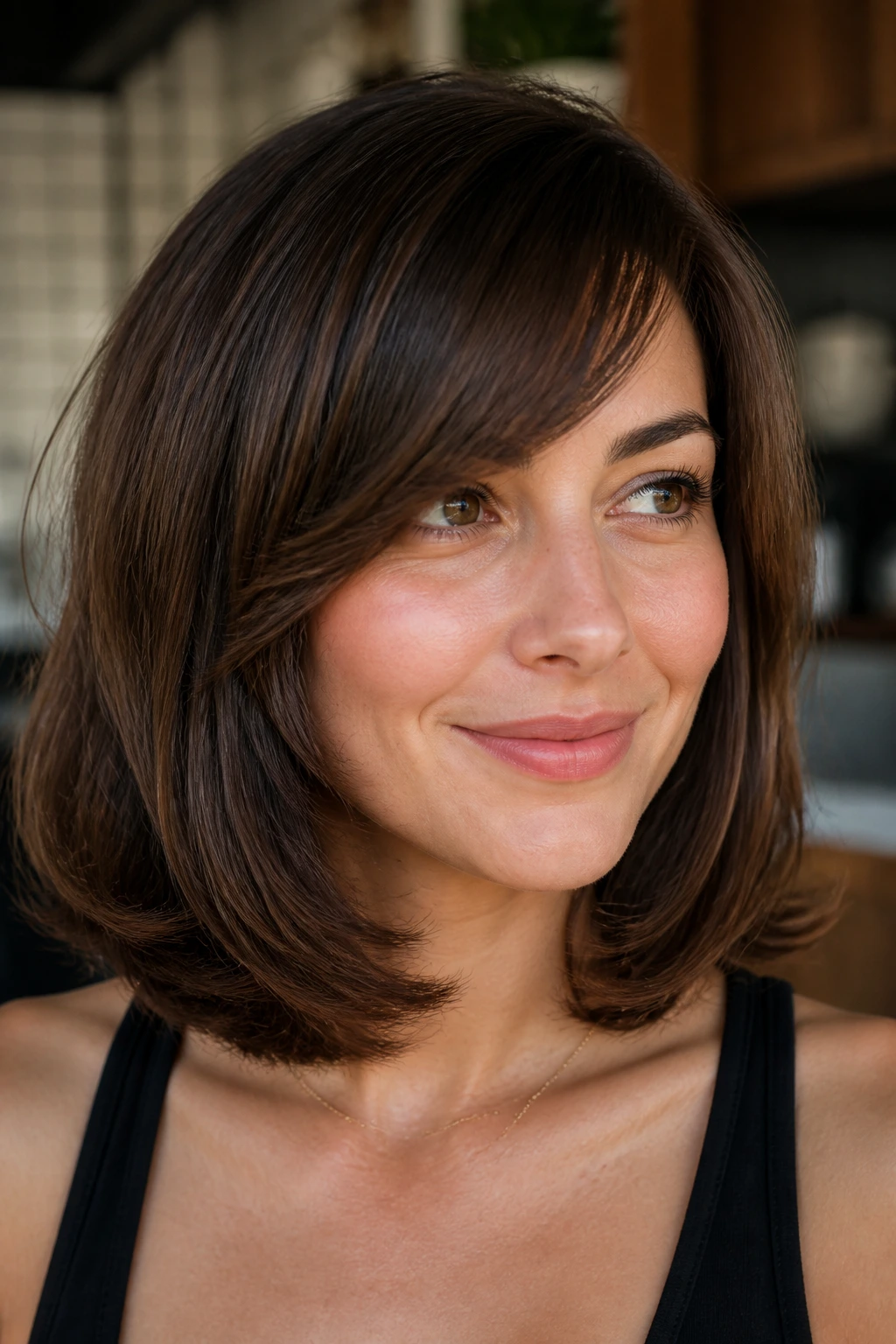
This one is about ends that curve inward just enough to catch the jaw. A C-curl lob looks fuller than a pin-straight lob because the bend adds a visual edge, and thin hair needs that kind of help.
The side-swept bangs should stay long enough to connect to the front section. You want one continuous flow from fringe to cheek to collarbone. A 1.25-inch round brush can create that bend in five minutes if you blow-dry the roots first and then guide the ends under only at the very last second.
It’s a tidy style, but not severe. That’s why it flatters so many face shapes. The curve around the jaw softens square lines, and the fringe takes care of the forehead without cutting the head in half.
9. Sleek Glass Bob with a Soft Arc of Fringe
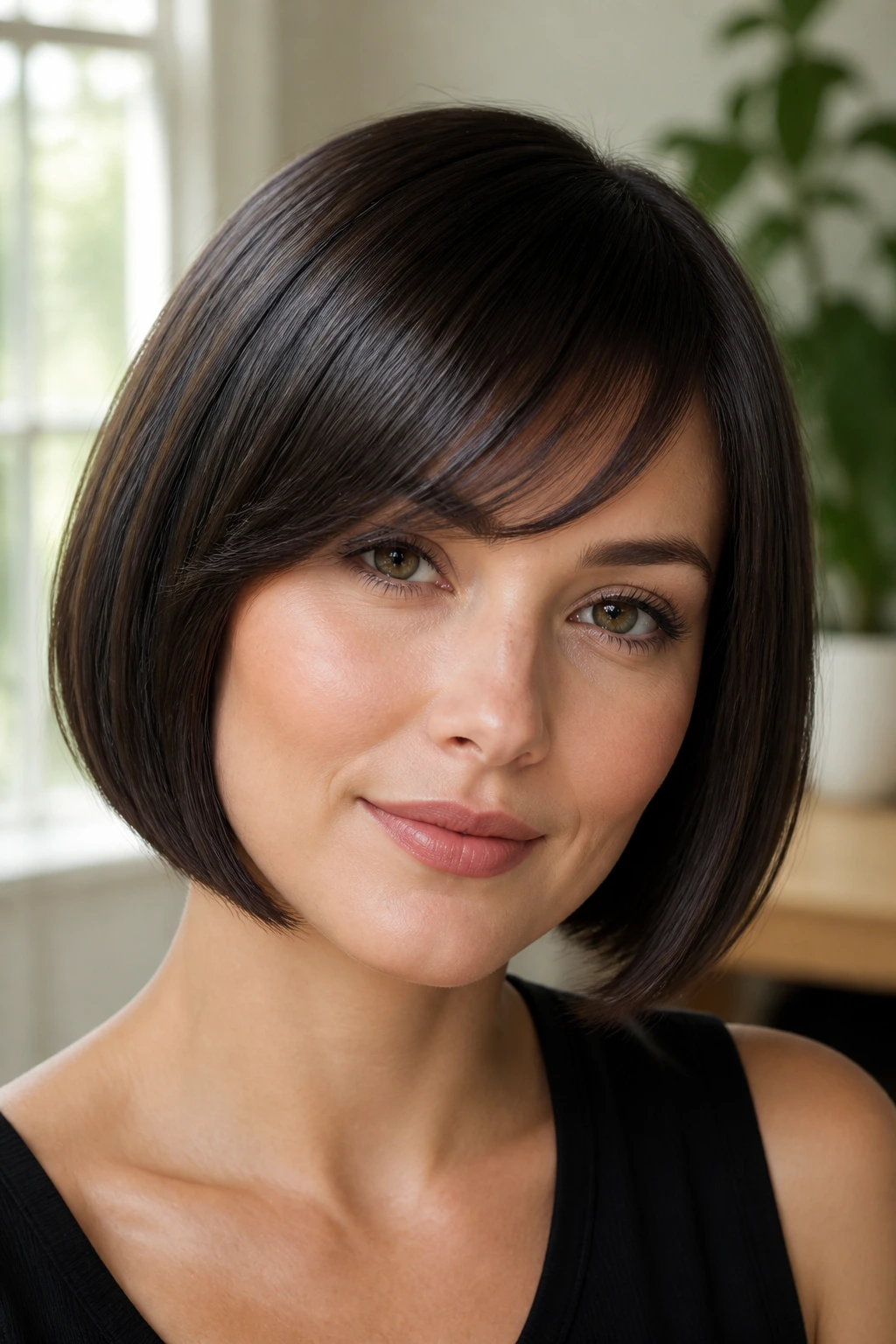
Sleek hair gets a bad reputation with thin textures because people assume it has to look limp. Not true. If the cut is sharp and the fringe has a soft arc, a glassy bob can look crisp and full at the same time.
The trick is a clean perimeter and controlled shine. Use a heat protectant, blow-dry smooth, then press the ends with a flat iron only if they need it. The bang should arc from a deeper side part and land just above the eyebrow tail on the shorter side, longer toward the opposite cheek.
This style suits straight, fine hair that refuses to hold texture but does hold shape. It’s also one of the easier cuts to maintain, since the blunt line does the visual work. Keep conditioners off the roots. A shiny root plus too much weight can flatten the whole thing.
10. Wispy Shoulder Cut with Invisible Layers
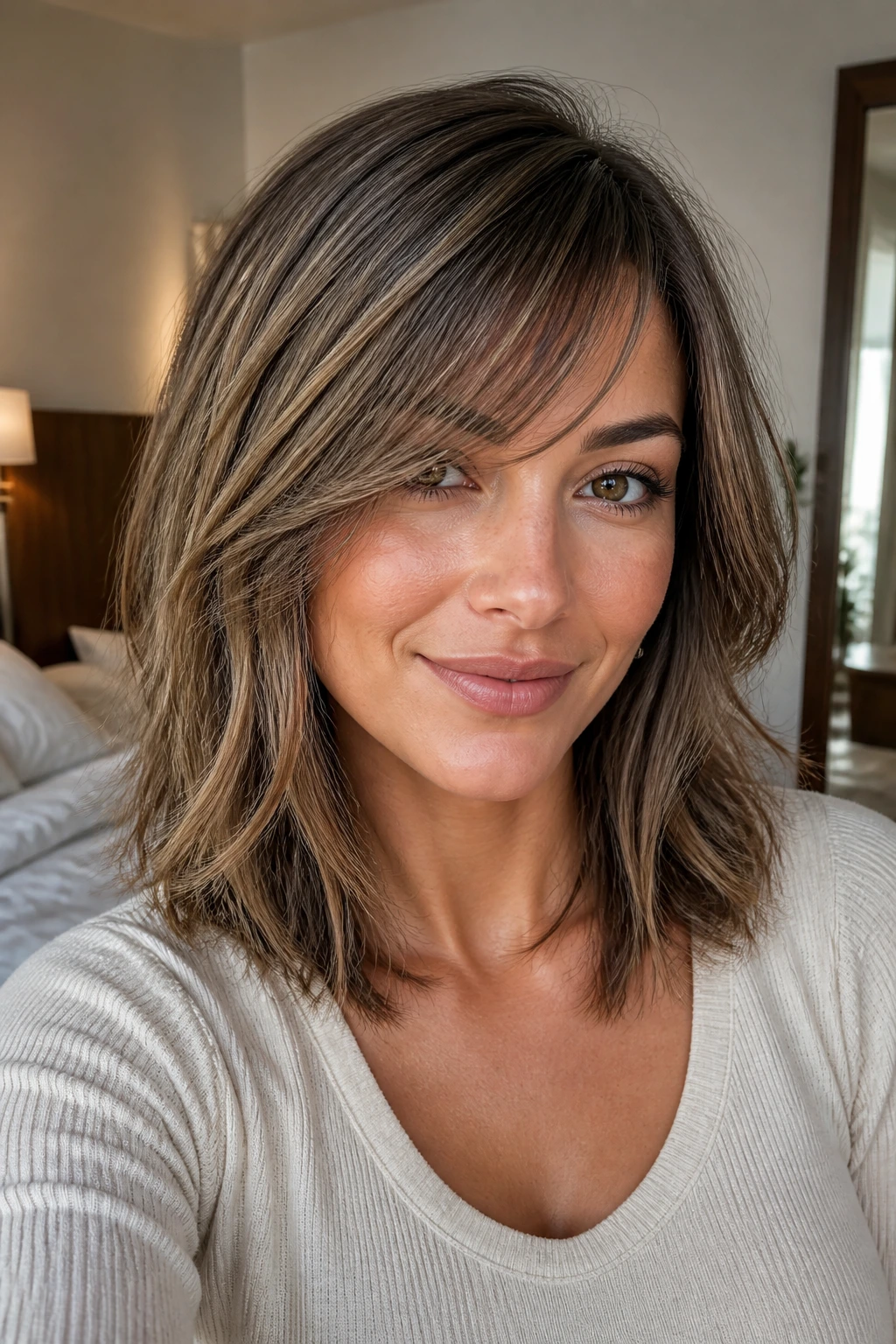
Invisible layers are a smart move when you want movement without losing bulk. On thin hair, obvious layers can leave gaps; subtle internal layering keeps the shape light while preserving the ends.
The side-swept bangs should be wispy enough to soften the forehead, but not so thin that scalp shows through. Think narrow ribbons of hair, not a wispy halo. The shoulder length helps because it gives the hair room to fall in a single line, which reads denser than a bunch of broken pieces.
This cut is useful if you wear your hair both straight and waved. It doesn’t demand a lot. A quick bend through the mid-lengths and a sweep across the front usually does it. The result is easy on the eyes and easier on the hair.
11. Jaw-Length Crop with Overdirected Bangs
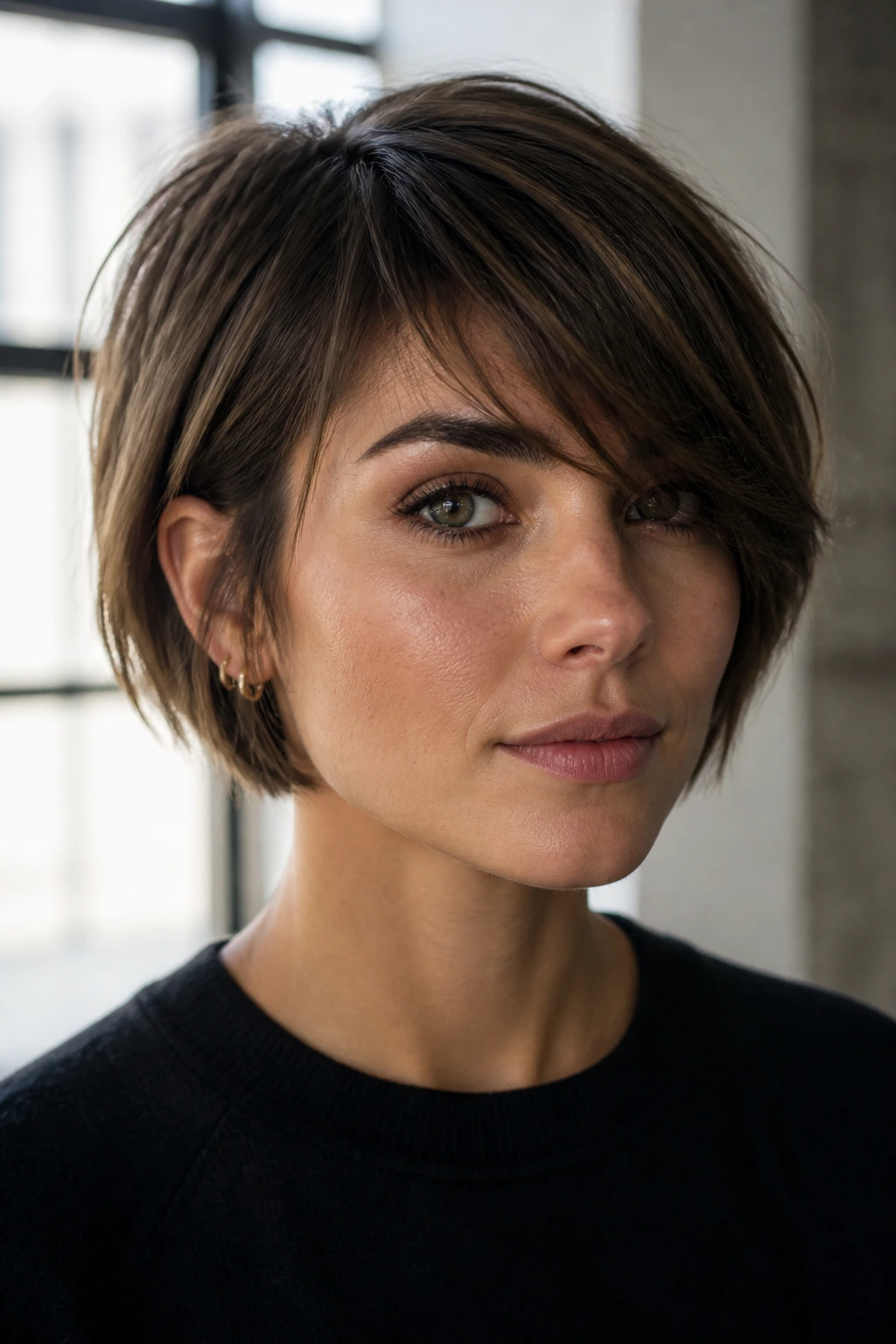
A jaw-length crop can make thin hair look surprisingly strong, especially when the front is overdirected during the cut. That means the stylist pulls the hair away from its natural fall before cutting, which builds extra length into the bang and creates a more dramatic sweep.
The best part is how it sharpens the jawline. If your face is round or heart-shaped, this cut can bring a little structure where you want it. If your jaw is already strong, keep the bang softer and longer so it doesn’t feel boxy.
This is a good haircut for people who like a little edge. It’s clean, direct, and not precious. You can blow it out smooth for polish or rough it up with texture spray for a more lived-in finish.
12. Long Layers with a Side-Swept Curtain Hybrid
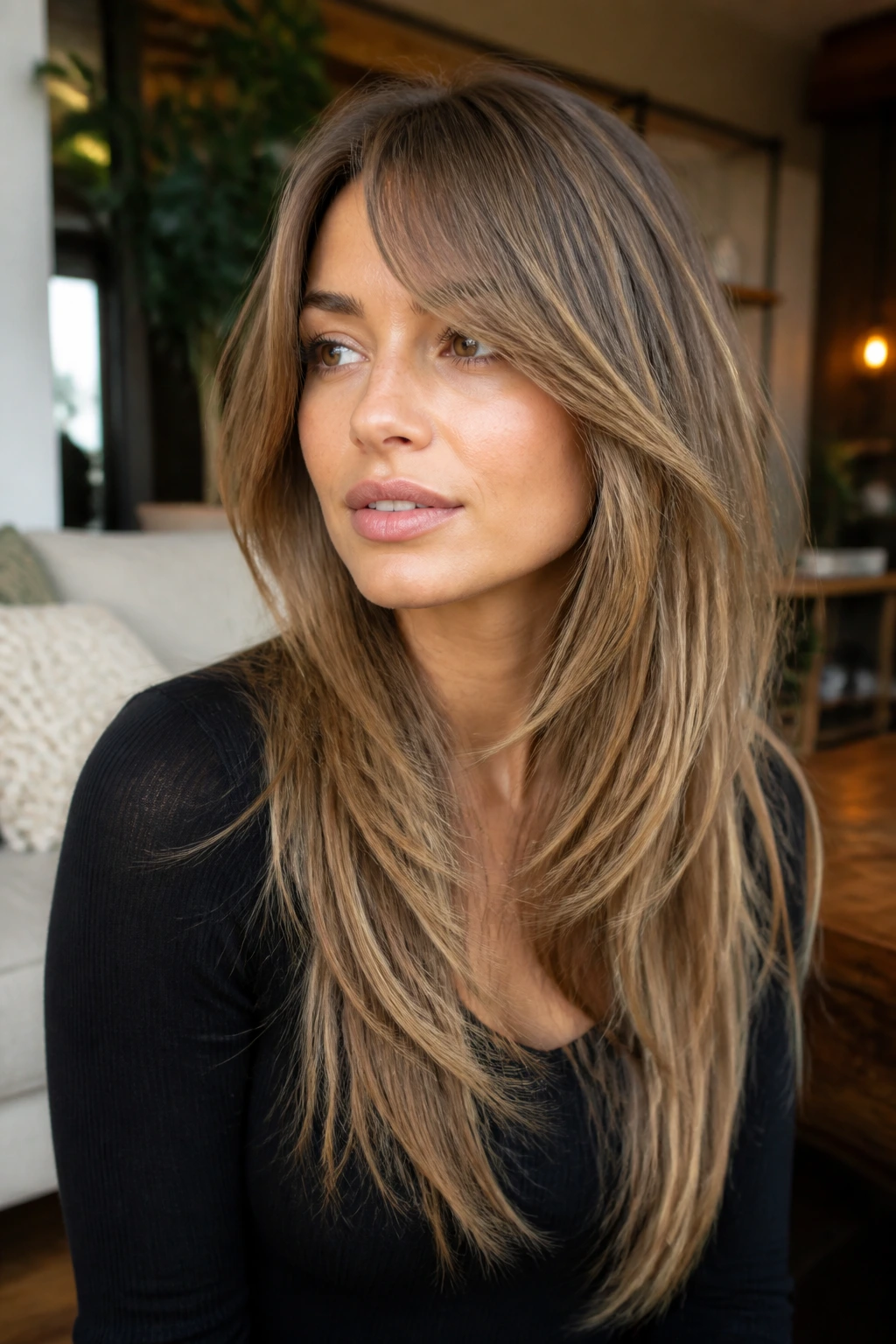
Can long hair with thin ends still look full? Yes, but the layers have to be chosen carefully. A side-swept curtain hybrid gives the front some shape while leaving the back long enough to hold weight.
The bang starts off-center and splits just enough to brush the temples, then drops into the front layers. That means the haircut frames the face without carving the length into too many little pieces. If your hair is fine, this is a safer route than heavy layering from the jaw down.
I like this cut for people who are attached to long hair but tired of it looking limp around the face. A light wave through the mids and a soft bend at the ends help a lot. The whole thing should feel airy, not stringy.
13. Tousled Italian Bob with Lift at the Crown
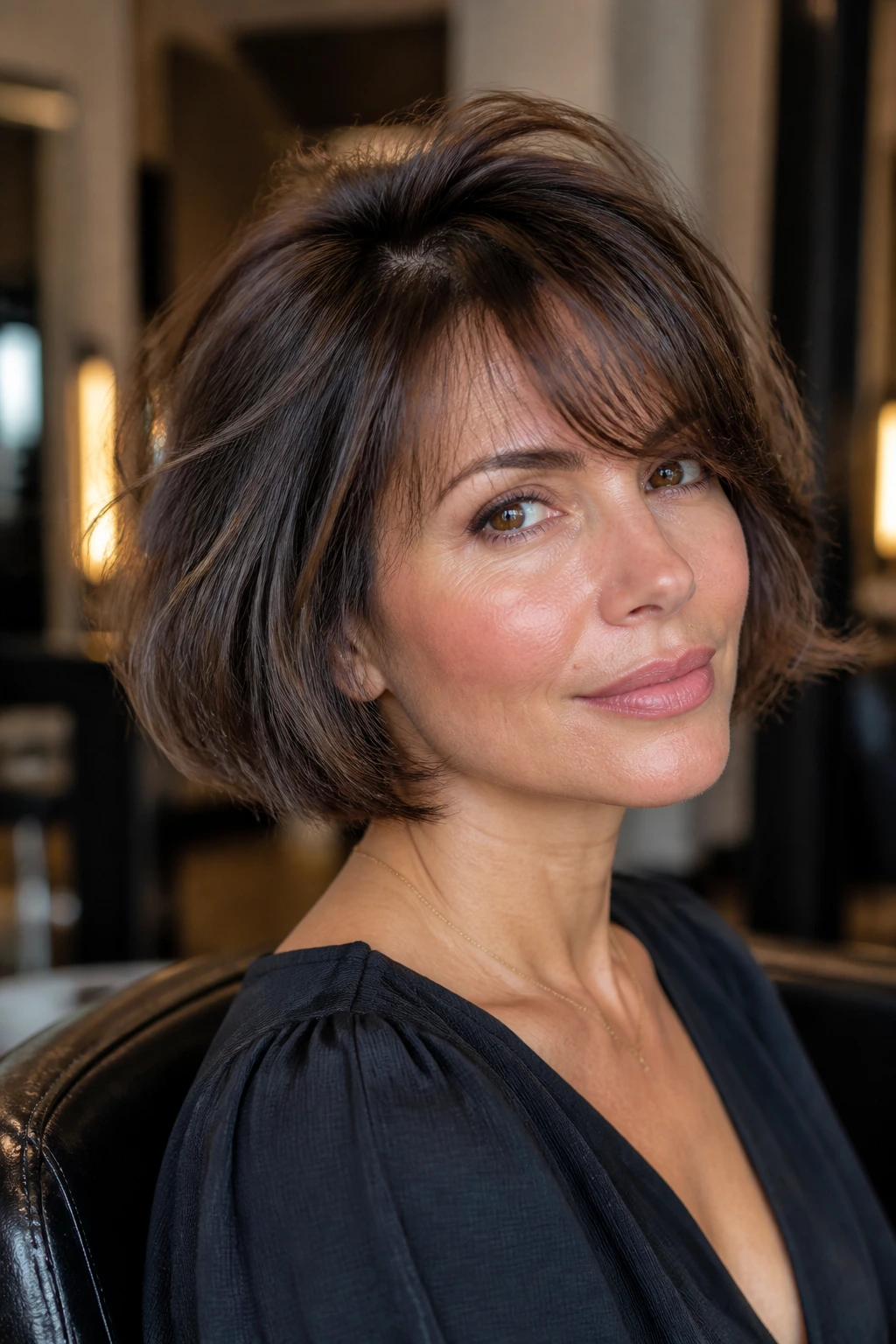
There’s a reason this shape keeps coming back. The Italian bob has body, but the body lives where it should — at the roots and around the perimeter — instead of in mushy, over-layered mids.
Side-swept bangs give it a little softness so the whole haircut doesn’t become too blocky. The crown needs lift, though. Use a volumizing mousse before blow-drying, and direct the top section up and back with a round brush for 10 to 15 seconds per section. That tiny bit of tension matters.
This style suits thin hair that needs a little glamour without drama. It’s especially good if you like a blowout look that can still be worn slightly undone. Do not flatten the crown with heavy serum. That is where the shape lives.
14. Soft Mullet with a Swept Fringe
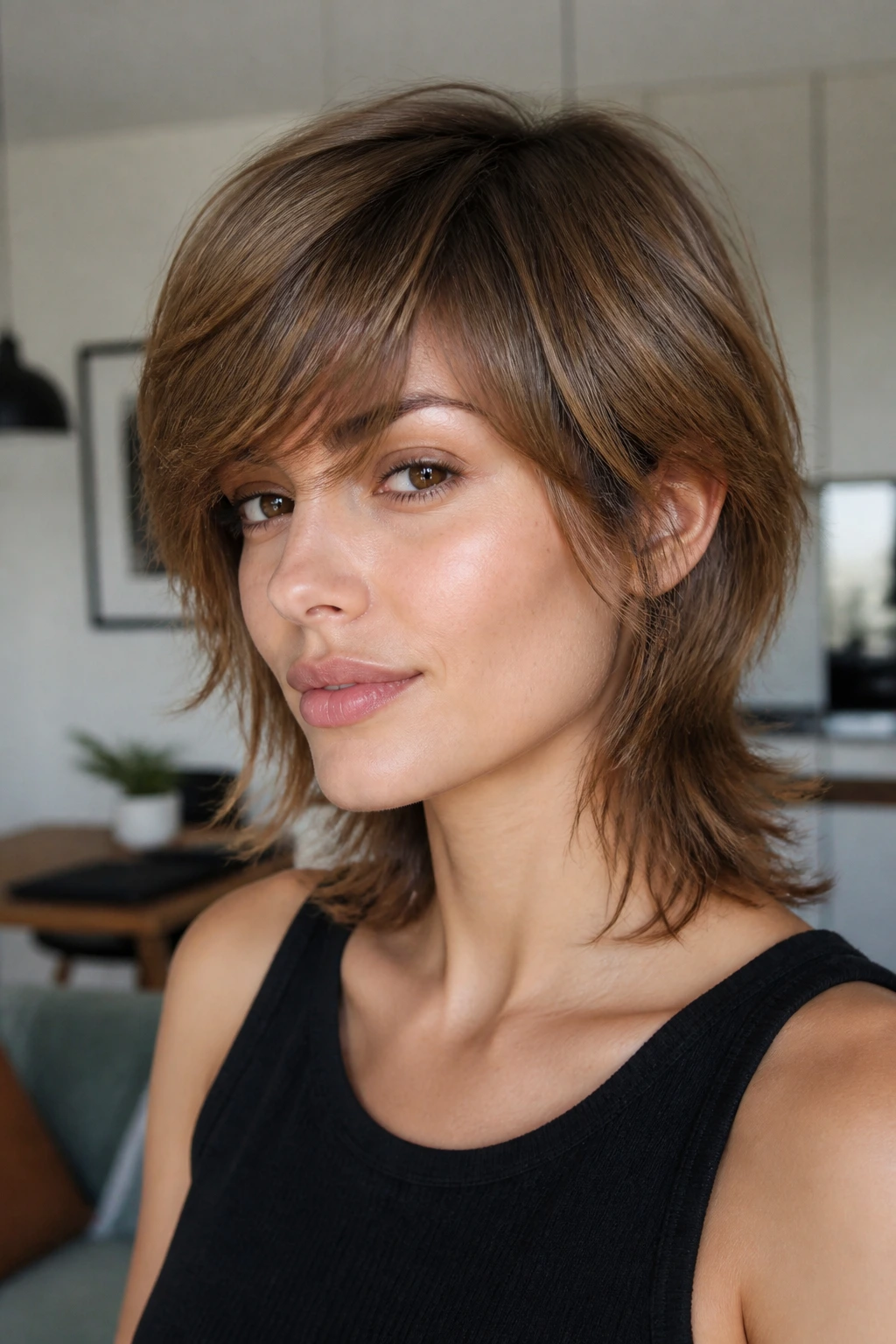
A soft mullet sounds scary to some people, but on thin hair it can be a smart way to keep the front and crown lively while letting the back stay light. The keyword is soft. The layers need to blend, not spike.
The swept fringe keeps the cut from feeling too severe or too retro. It narrows the forehead and gives the whole shape some polish. Ask for longer pieces around the cheek and ear, with the nape kept slightly lighter so the silhouette doesn’t drag.
This cut is for someone who wants movement more than neatness. It works well on wavy hair, but straight hair can wear it too if you add a few bends with a flat iron. The result is airy and modern, not fluffy.
15. Air-Dried Wavy Lob with a Light Bang Sweep
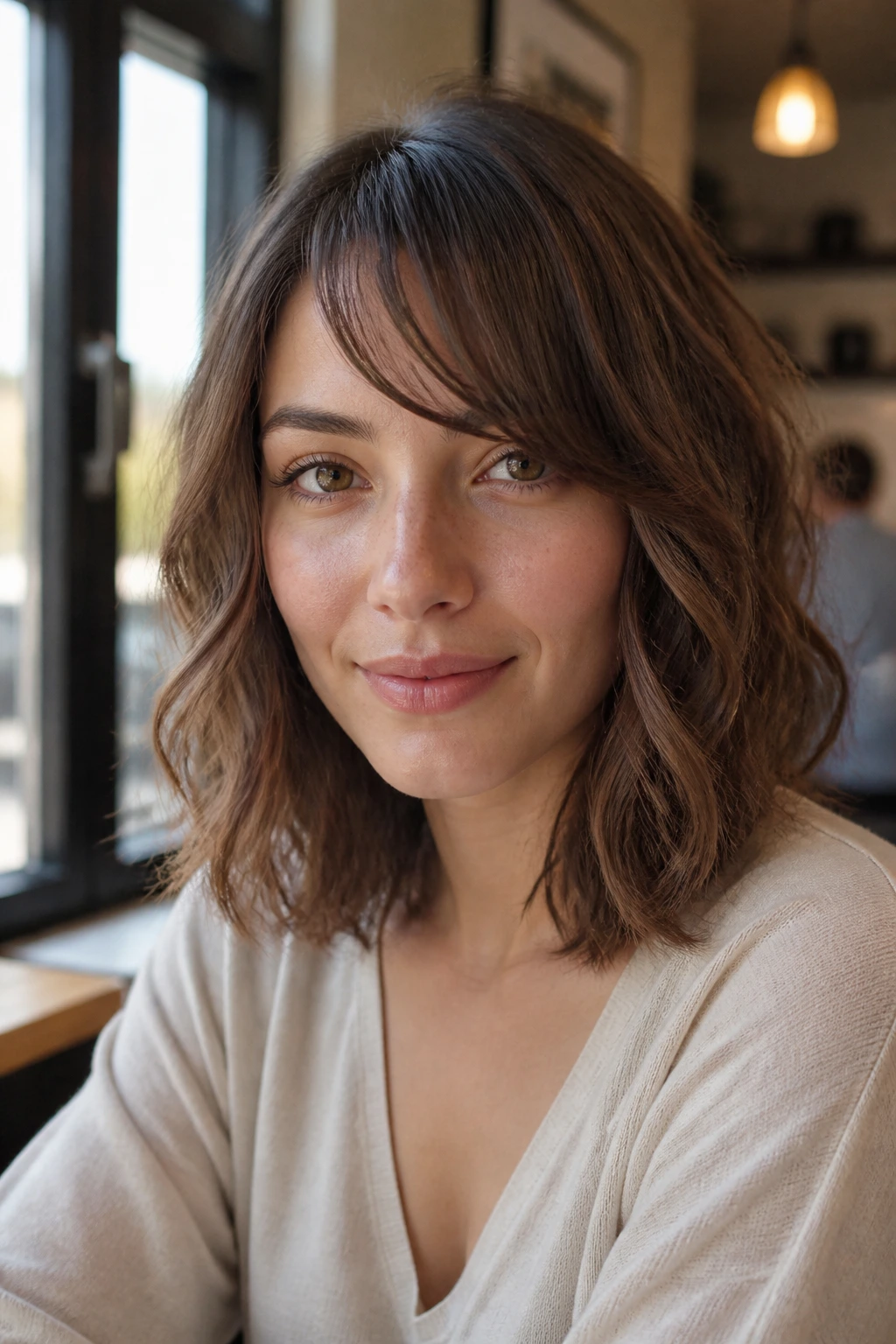
Air-dried styles are tricky on fine hair because the hair can dry in odd bends and collapse in other places. A lob with a light bang sweep gives you enough structure to air-dry without looking forgotten.
The sides should be cut to allow natural wave, not fight it. Put a small amount of mousse through damp hair, sweep the fringe to one side with your fingers, and clip it there for 10 minutes while the roots set. That little trick helps the bang fall in the right direction instead of separating down the middle.
This is one of my favorite everyday options because it does not ask for a full heat styling routine. If your wave pattern is loose, it looks easy in a good way. If your hair is straighter, you still get a soft, face-framing bend.
16. Curved Inverted Bob with Long Front Pieces
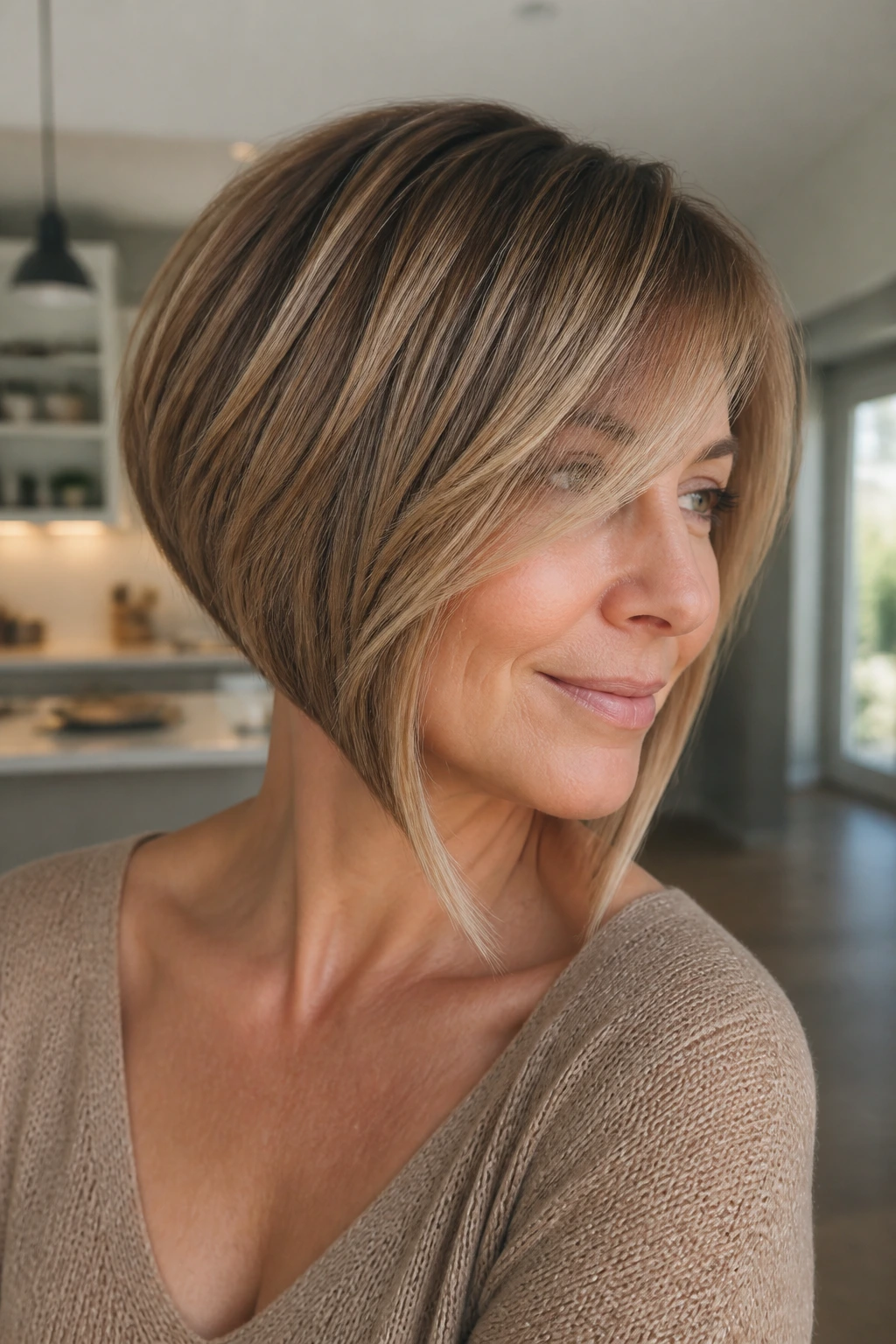
An inverted bob gives you built-in structure. The back sits a little shorter, the front a little longer, and thin hair gets the illusion of volume from the angled line alone.
The long front pieces should graze the jaw or just below it, while the side-swept bang connects into the longer front edge. That curve is what contours the face. It lifts the cheek area visually and keeps the chin from looking too sharp.
This cut loves a smooth blowout. I’d use a medium round brush and direct the front pieces under for the last 20 seconds of drying. The back should not be over-layered. Keep the graduation clean so the style keeps its shape.
17. Half-Up Medium Cut with Side Bang Balance
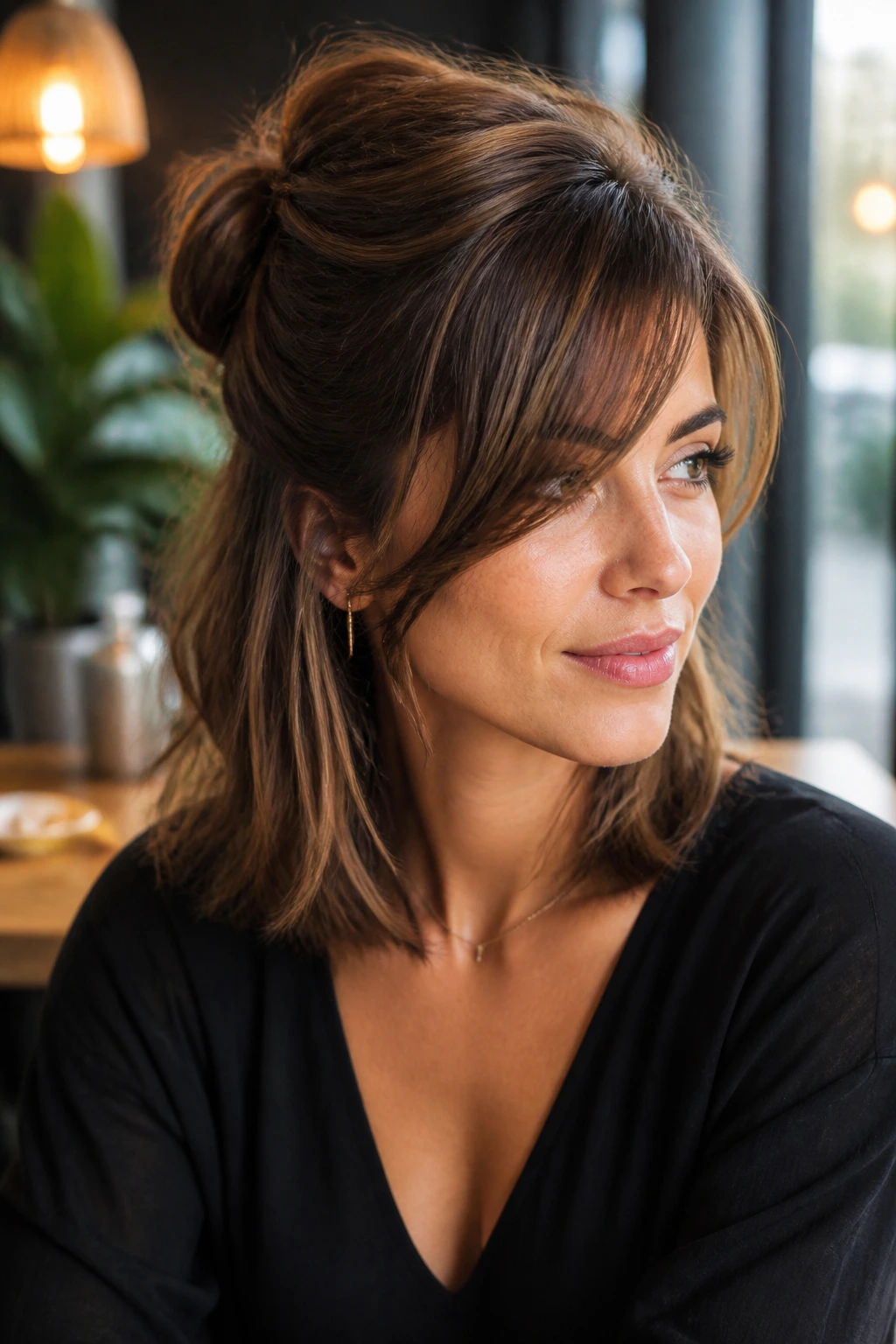
Half-up styles are underrated for thin hair. They let you create crown lift without exposing every piece of scalp, and side-swept bangs keep the front from looking pulled too tight.
A medium-length cut works best here because you need enough hair to pin back the top section without losing the illusion of fullness. Leave the bang long enough to tuck or sweep, then twist the top half loosely instead of yanking it into a hard elastic. A small claw clip often looks better than a tight tie.
This is a useful option for people who want a shape that can go from desk to dinner without much effort. The front stays soft, the top gets lift, and the back still falls with some weight. It’s practical, but not boring.
18. Shoulder-Grazing Butterfly Lite Cut
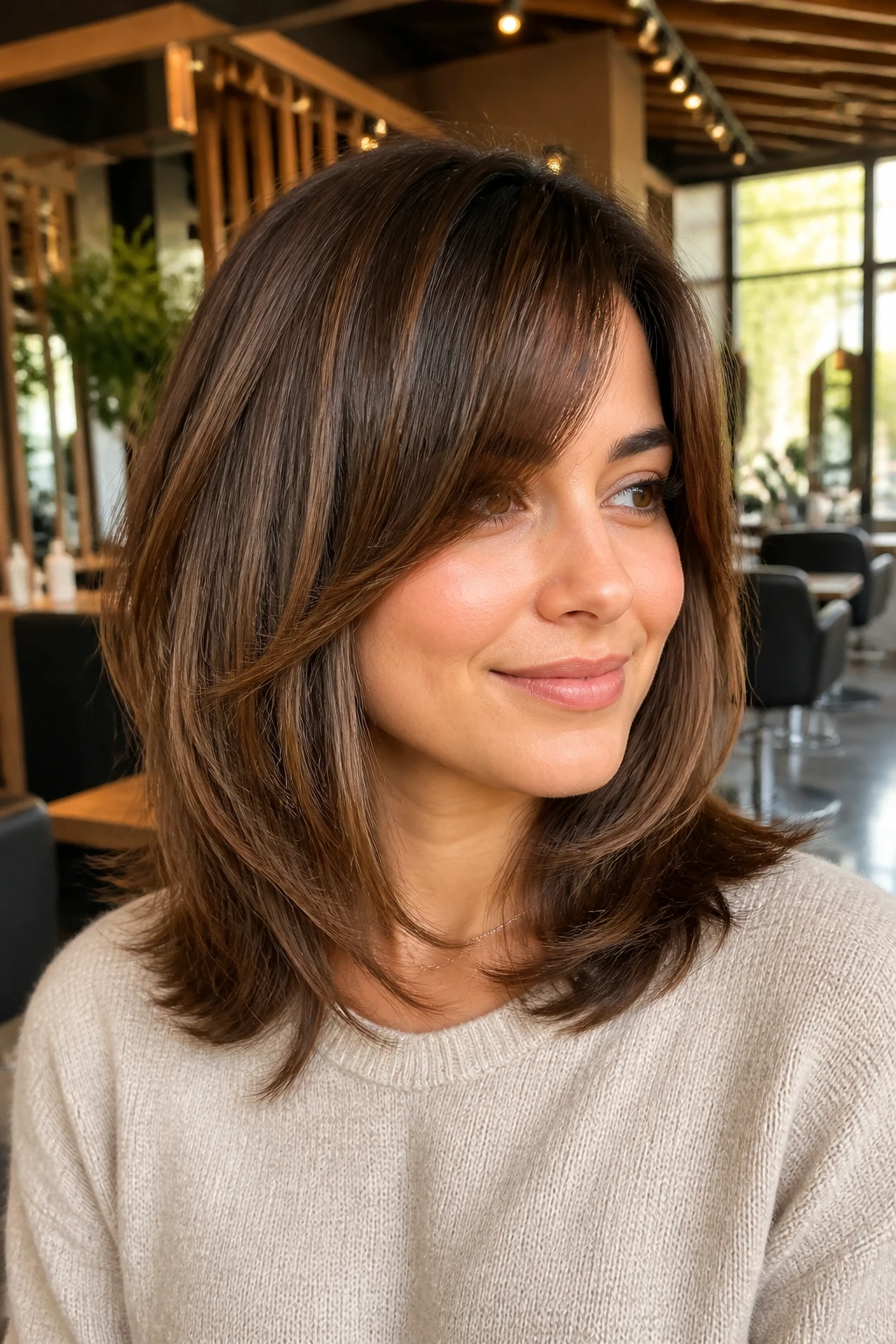
The full butterfly cut can be too much for thin hair if the layers are overdone. A lighter version keeps the face-framing effect without hollowing out the mids.
The side-swept bangs should blend into the shortest front layers, which then taper into longer shoulder pieces. That creates a little contour around the face and gives the illusion of density near the temples. The butterfly-lite shape is good when you want movement but don’t want the ends to look chopped.
This cut shines with a round brush blowout or a soft bend set. If you like volume, focus it at the crown and leave the lengths a little loose. That contrast is what keeps the style from going flat.
19. Side-Parted Pageboy with Modern Texture
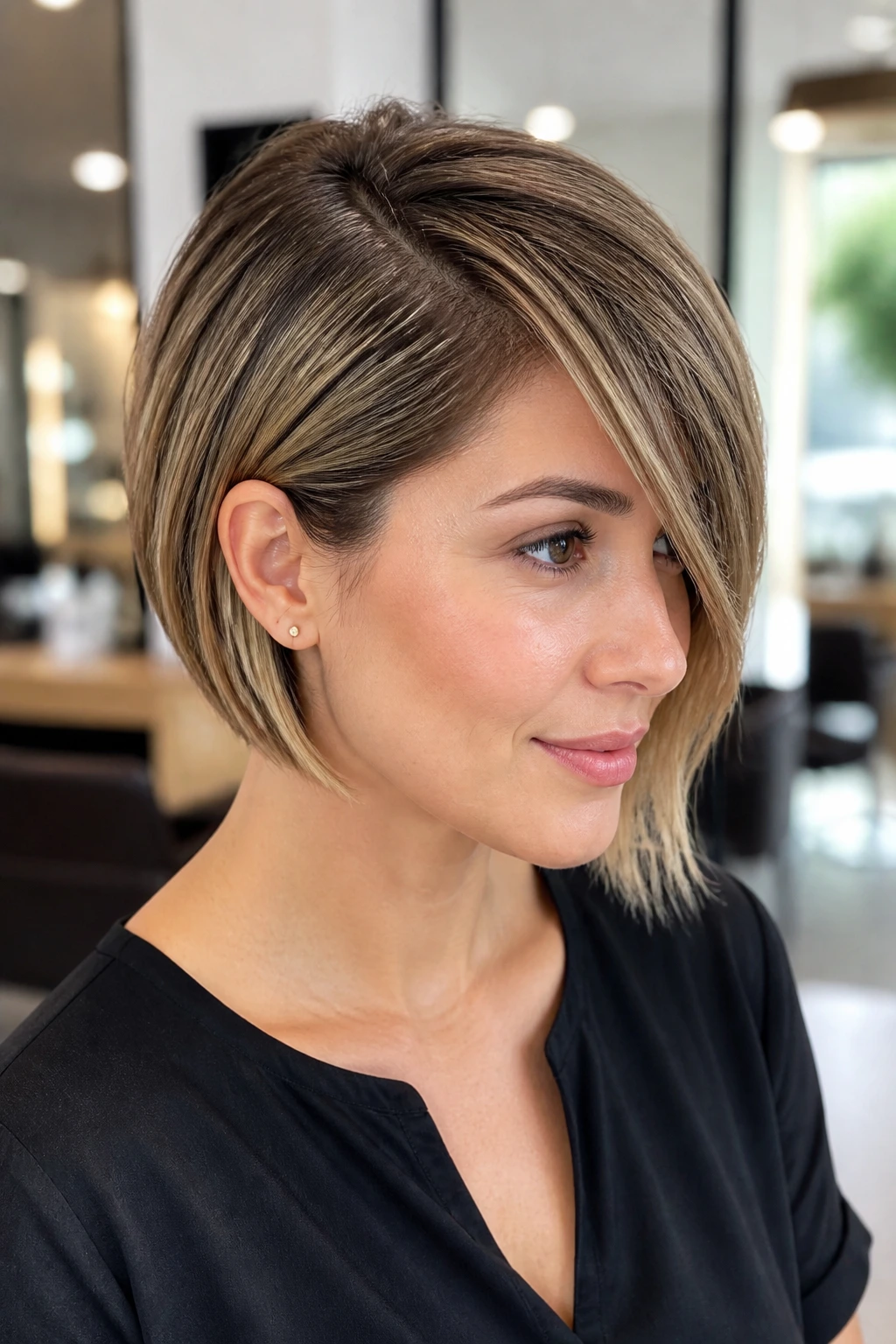
A pageboy can look rigid if it’s too polished and too round. Add modern texture, though, and it becomes a neat, face-shaping option for fine hair that needs a clear outline.
The side part is what makes it feel current. It cuts the face on a diagonal, and that diagonal does a lot of visual contouring on its own. Keep the fringe longer on the heavier side and tuck the opposite side behind the ear to show a little skin.
This one suits sleek hair especially well. It does not need much product. A light spray wax at the ends and a quick bend under with a brush is enough. If your hair is naturally limp, this cut gives you a shape that still behaves at the end of the day.
20. Root-Lifted Blowout with Long Eyebrow Bangs
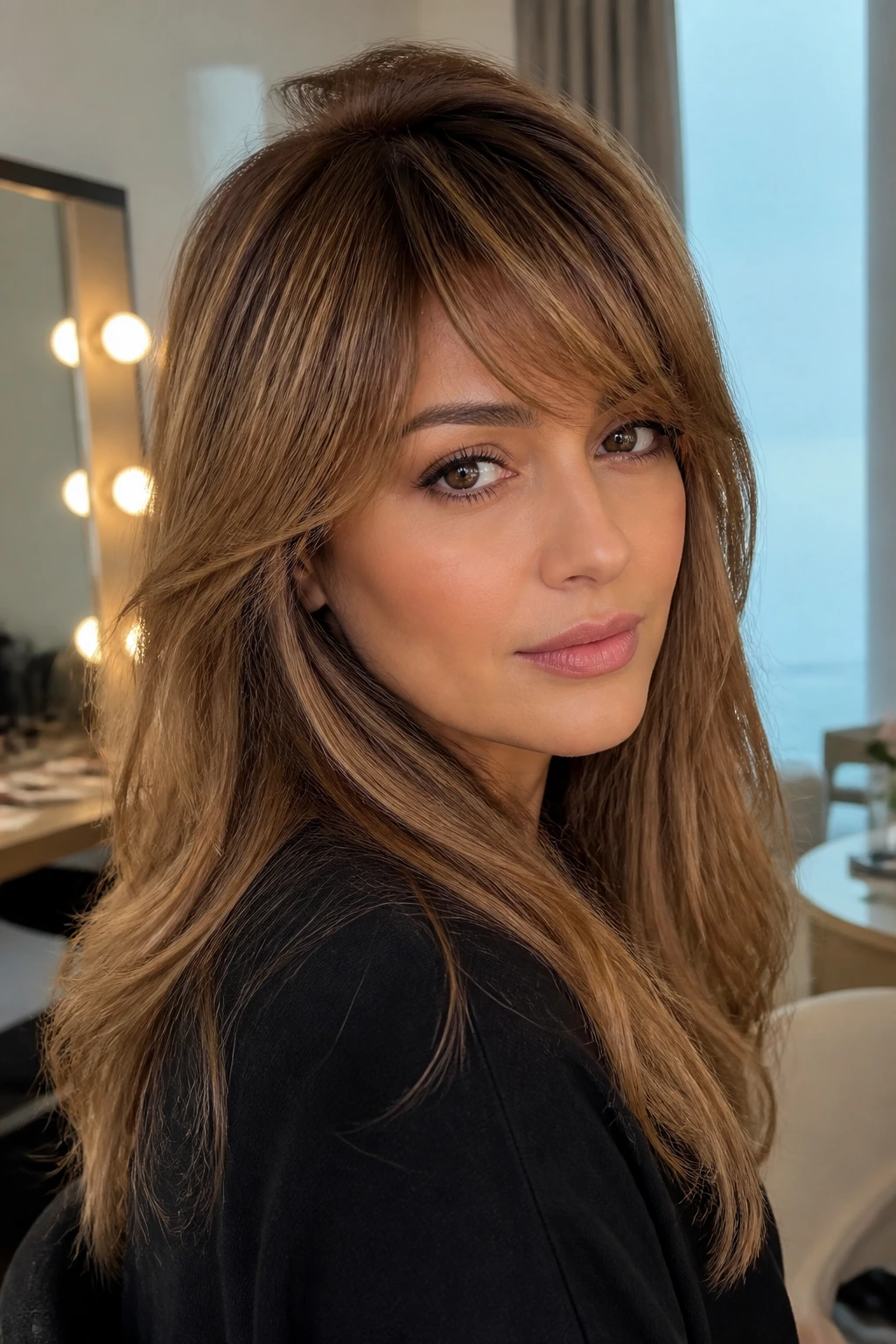
A blowout is not a cut, exactly, but it might be the most useful styling shape for thin hair with side bangs. Long eyebrow-length fringe gives you room to sweep, and root lift keeps the crown from folding in on itself.
The basic move is simple: mousse at the roots, blow-dry up and away from the scalp, then set the top in a loose clip for five minutes while it cools. That cooling step matters more than people think. Hair locks shape as it cools, not when it’s still warm and soft.
This look works if you want polished hair that still has life. The fringe skims the brow, the crown rises a bit, and the whole head looks fuller from the front. It’s one of those styles that can rescue a haircut you already have.
21. Textured Crop with Piecey Side Fringe
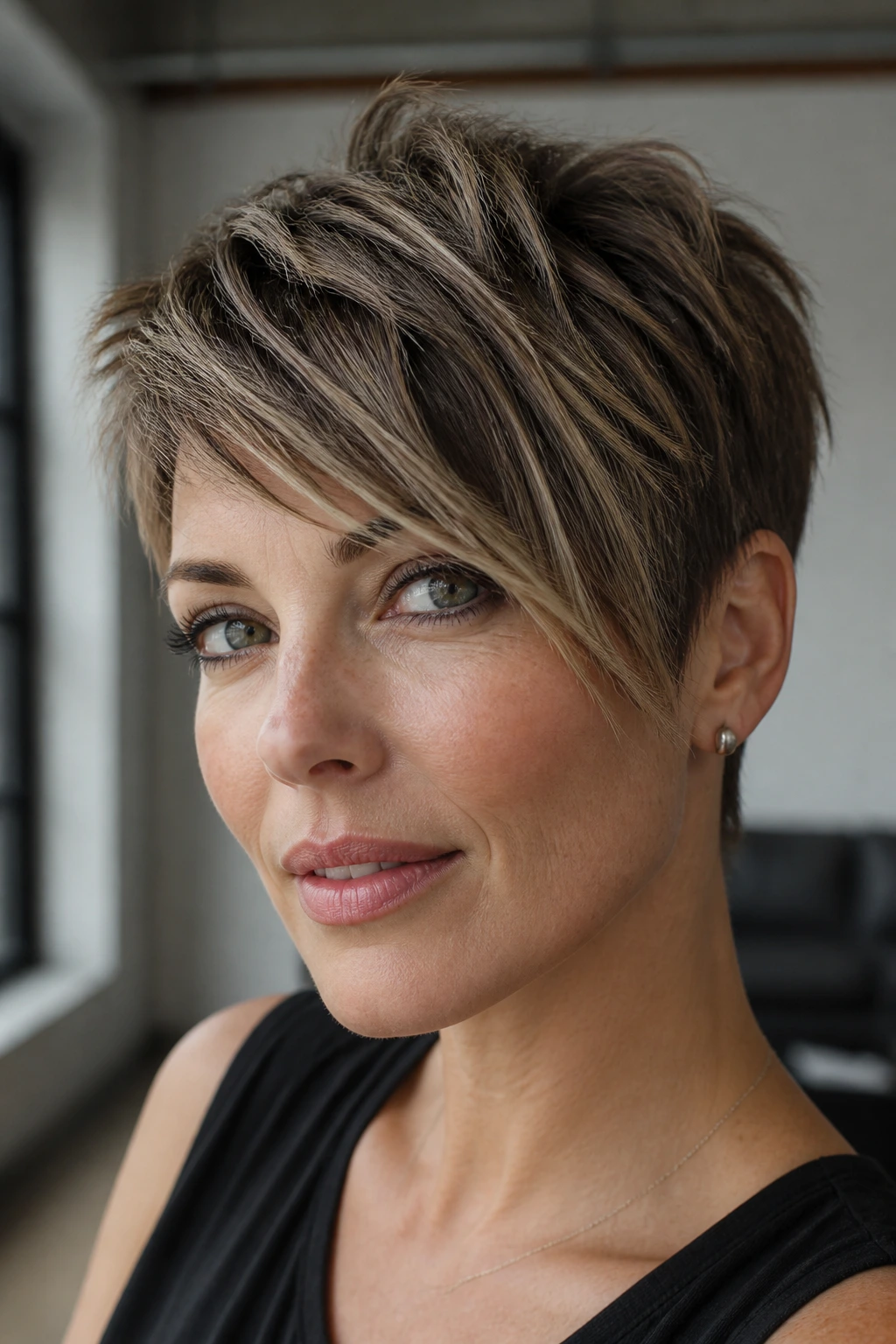
Short, piecey, and controlled is a nice place for thin hair to live. A textured crop with a side fringe gives the face definition without requiring a lot of density through the sides.
The pieces should be separated just enough to show movement, but not so much that the scalp becomes a feature. I like a matte cream or soft paste for this cut, applied only to the ends. The side fringe should fall forward first, then sweep off to one side so the forehead is softly divided.
This haircut is low-fuss and sharp at the same time. It flatters fine hair that wants to lie close to the head but still needs shape. If you’re tired of fighting volume, this can be a relief.
22. Low-Maintenance Midi Cut with Internal Layers
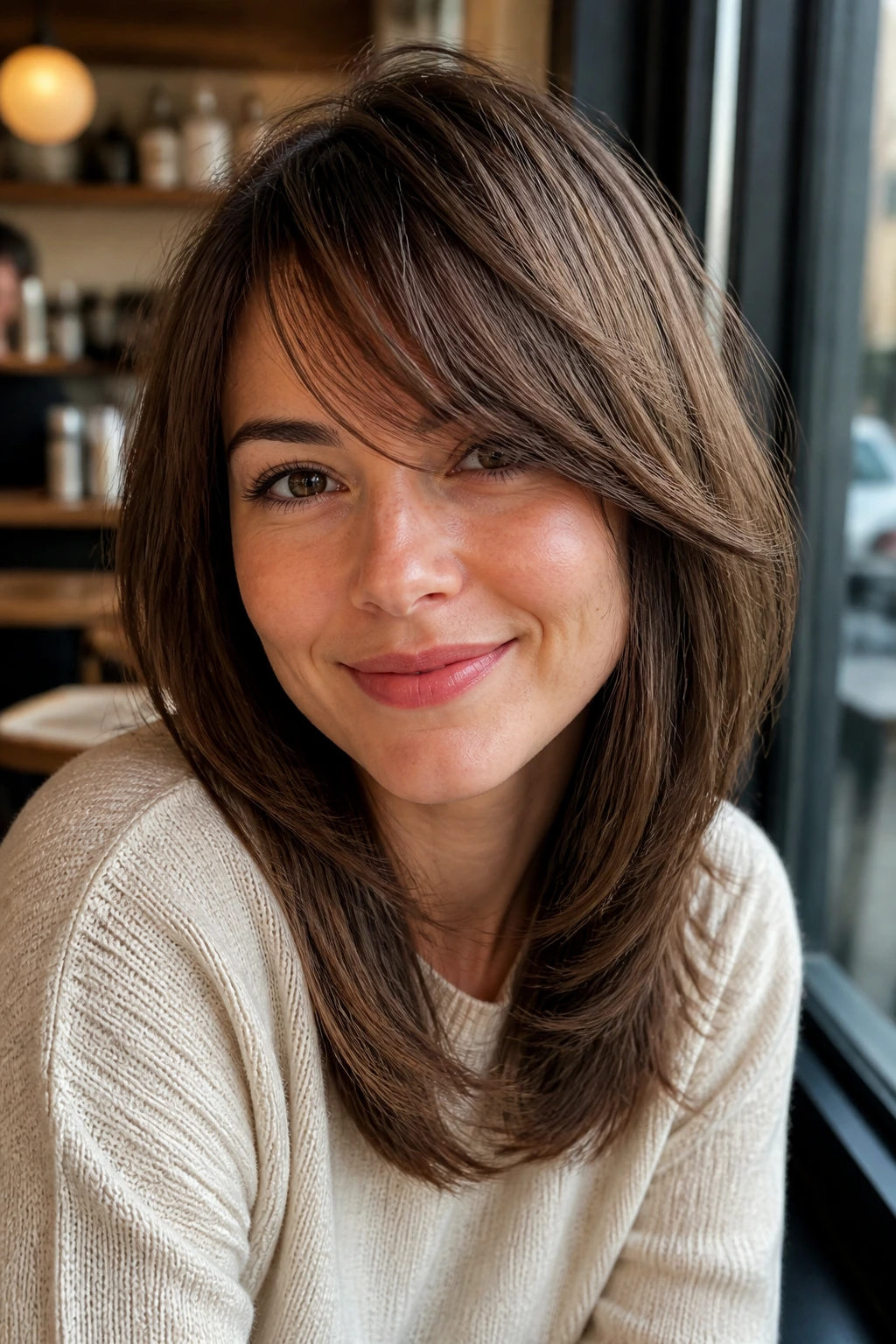
A midi cut sits in that useful middle ground between bob and long hair. The trick for thin hair is internal layers only — enough movement to keep the cut from feeling heavy, not so many that the ends disappear.
Side-swept bangs give the front a little architecture. They also help disguise any widening at the temples, which is a common issue with finer textures as the hair grows out. Ask for the longest bang point to reach the cheekbone; that length gives you wiggle room as it grows.
This style is good if you like to air-dry sometimes and blow-dry other days. It does both jobs without forcing the same finish every morning. The cut stays calm. That’s its charm.
23. Polished Tucked Lob with a Soft Diagonal Bang
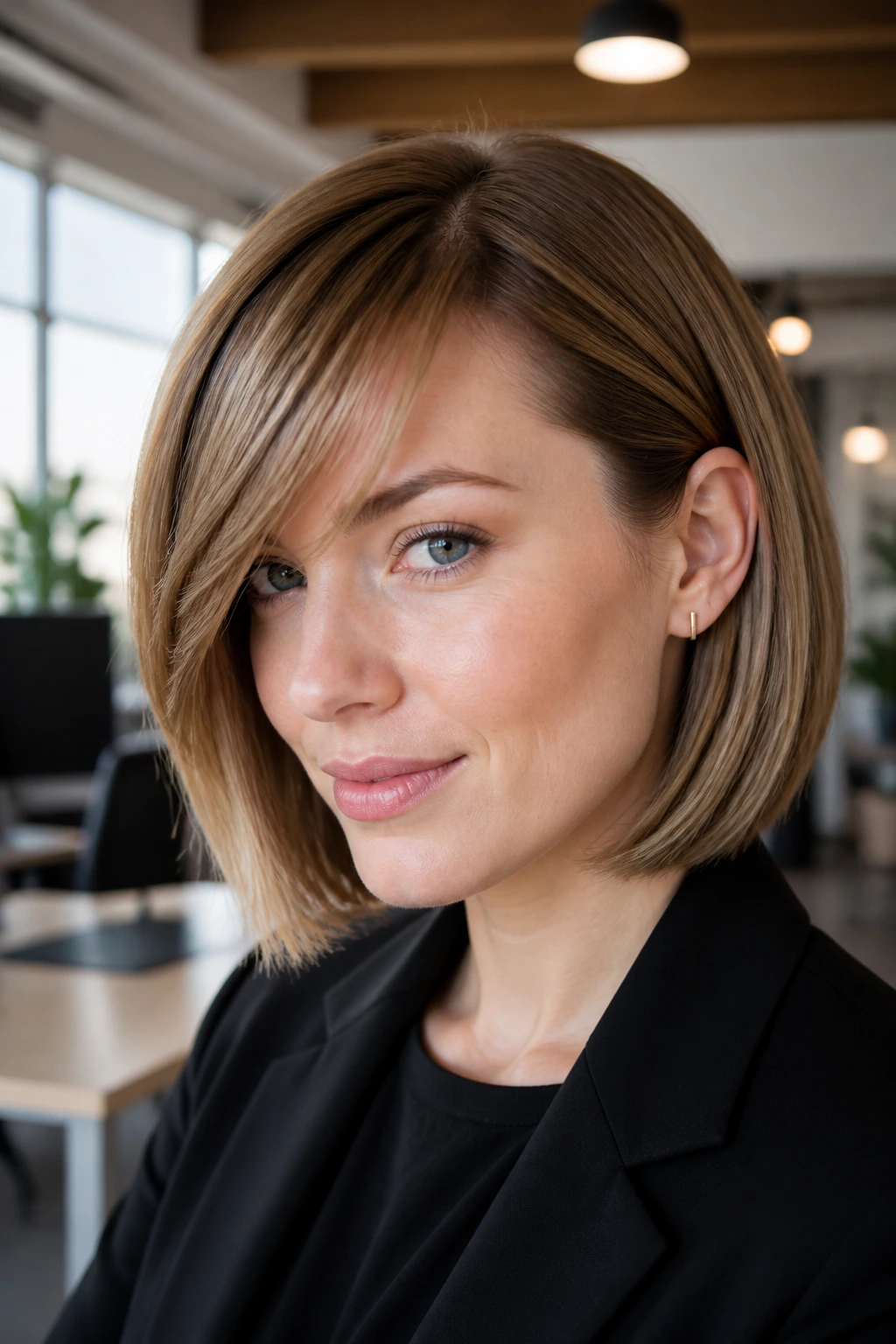
A tucked lob looks clean because it gives the face some open space on one side and a soft line on the other. For thin hair, that contrast can be worth more than extra layers.
The diagonal bang should fall from a side part and land across the forehead without cutting straight across it. When one side tucks behind the ear, the face looks slightly longer and the jawline gets a cleaner edge. A small bevel at the ends keeps the lob from looking like a sheet.
I like this for work settings and dressier days because it stays tidy. It also photographs well in real life, which matters more than people admit. A little shine spray on the mid-lengths is enough. Don’t soak the roots.
24. Soft Razor Cut with Feathered Movement
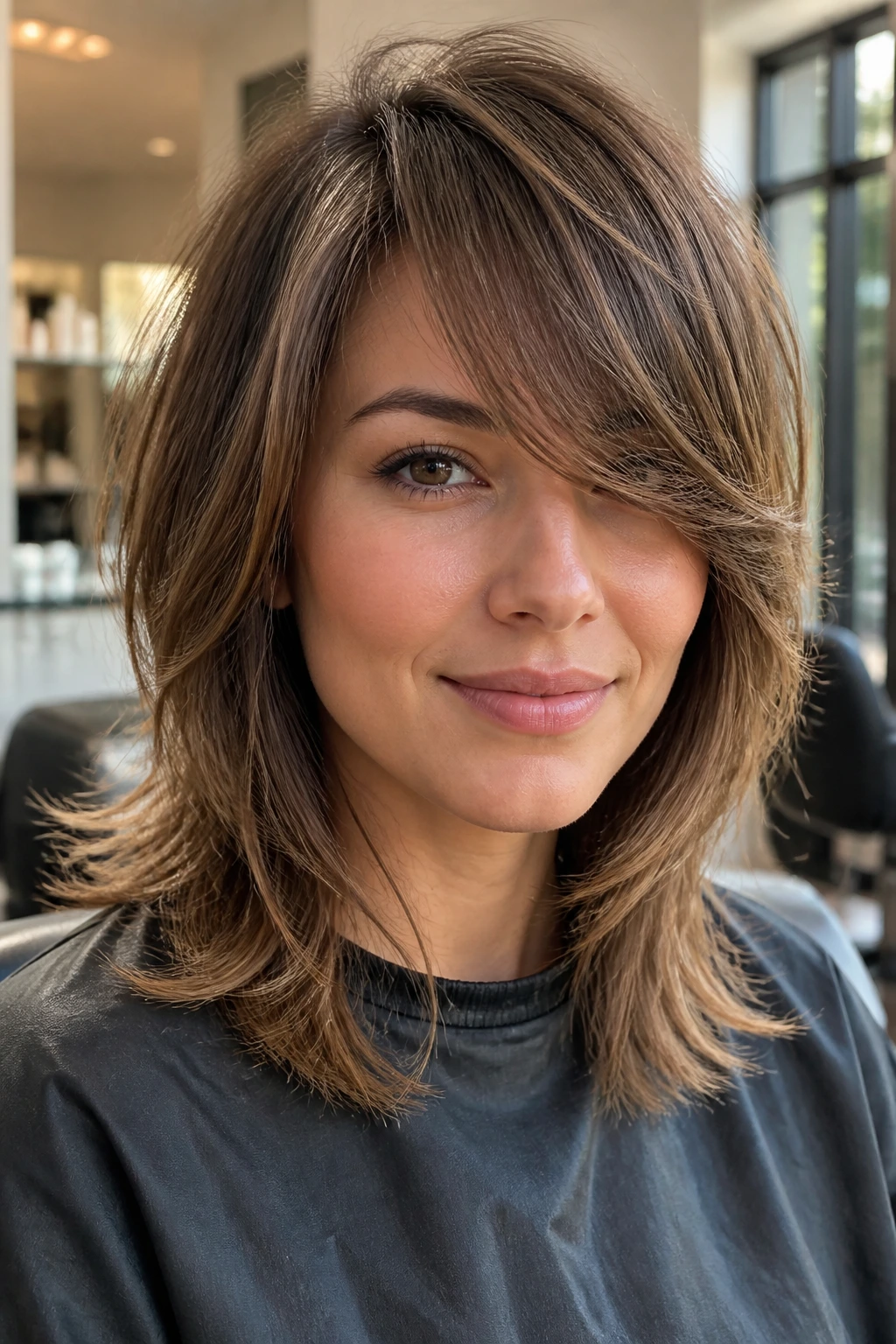
Razor cutting gets overused, and thin hair can pay the price. But when it’s done softly and only through the right sections, it can create feathered movement that keeps the hair from looking stiff.
The side-swept bangs should be feathered, not shredded. That means the ends look light but still have some body. Razor work near the face can contour the cheekbones and jaw, while leaving the perimeter a little stronger protects against that see-through finish.
This cut suits hair that has some wave or natural bend. If your strands are very fine and very straight, ask for a restrained version. Too much razor work and the ends start to fray in a bad way.
25. Face-Contouring Waves with a Sweepy Side Fringe
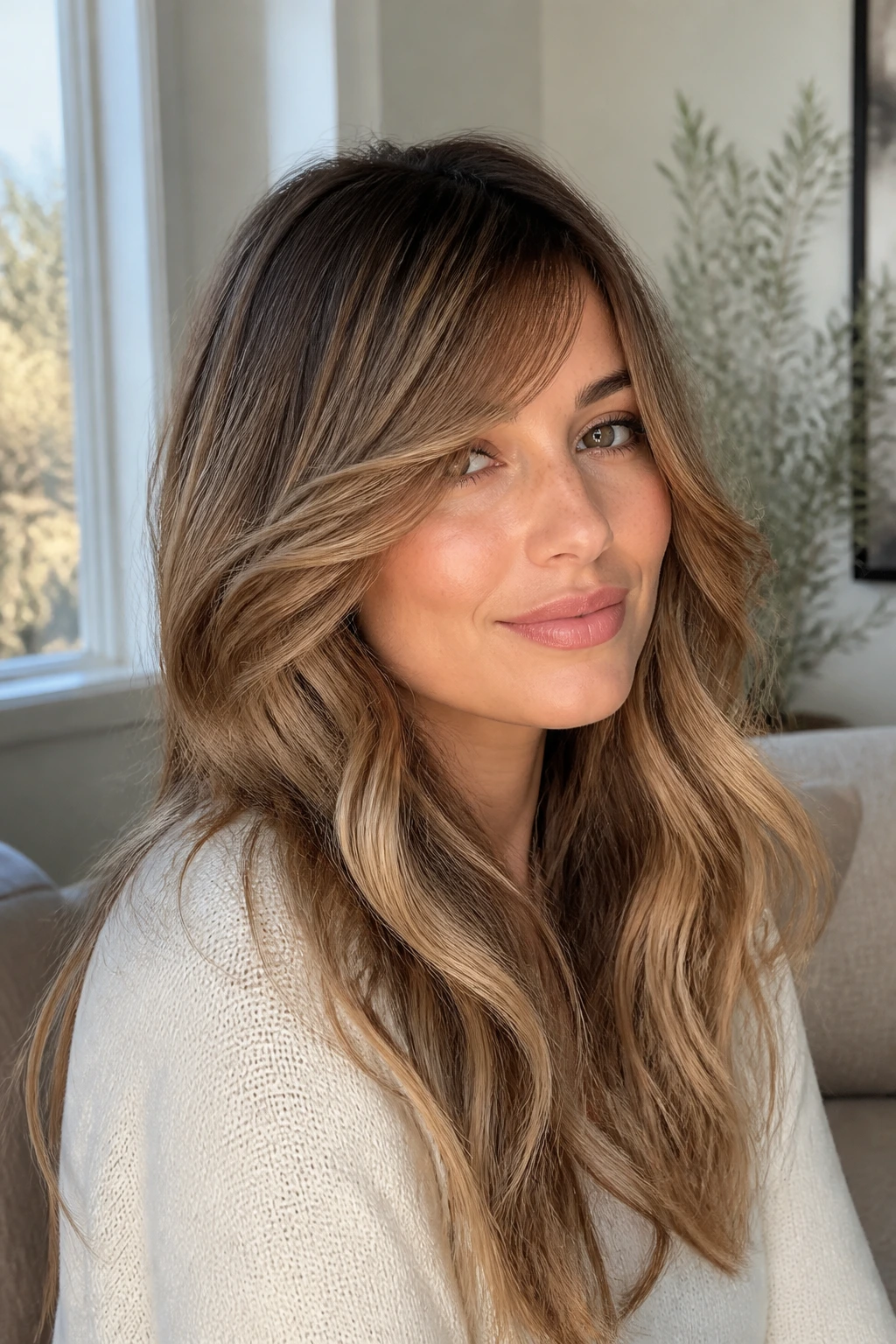
Long hair on thin strands can still look rich if the waves are placed with purpose. A sweepy side fringe gives the front a focal point, and the waves keep the lengths from hanging straight and sparse.
The secret is not more curl. It’s better placement. Wrap the front pieces away from the face on a 1-inch iron, leave the ends out by half an inch, and brush through only when the hair cools. That leaves a softer wave that frames the face instead of turning into pageant hair.
This style is best when you want length but need shape near the face. The fringe hides a wide forehead, the wave adds width where the hair is thinest, and the lower half stays airy. It’s one of the most forgiving looks in the bunch.
Why Side-Swept Bangs Change the Shape of Thin Hair
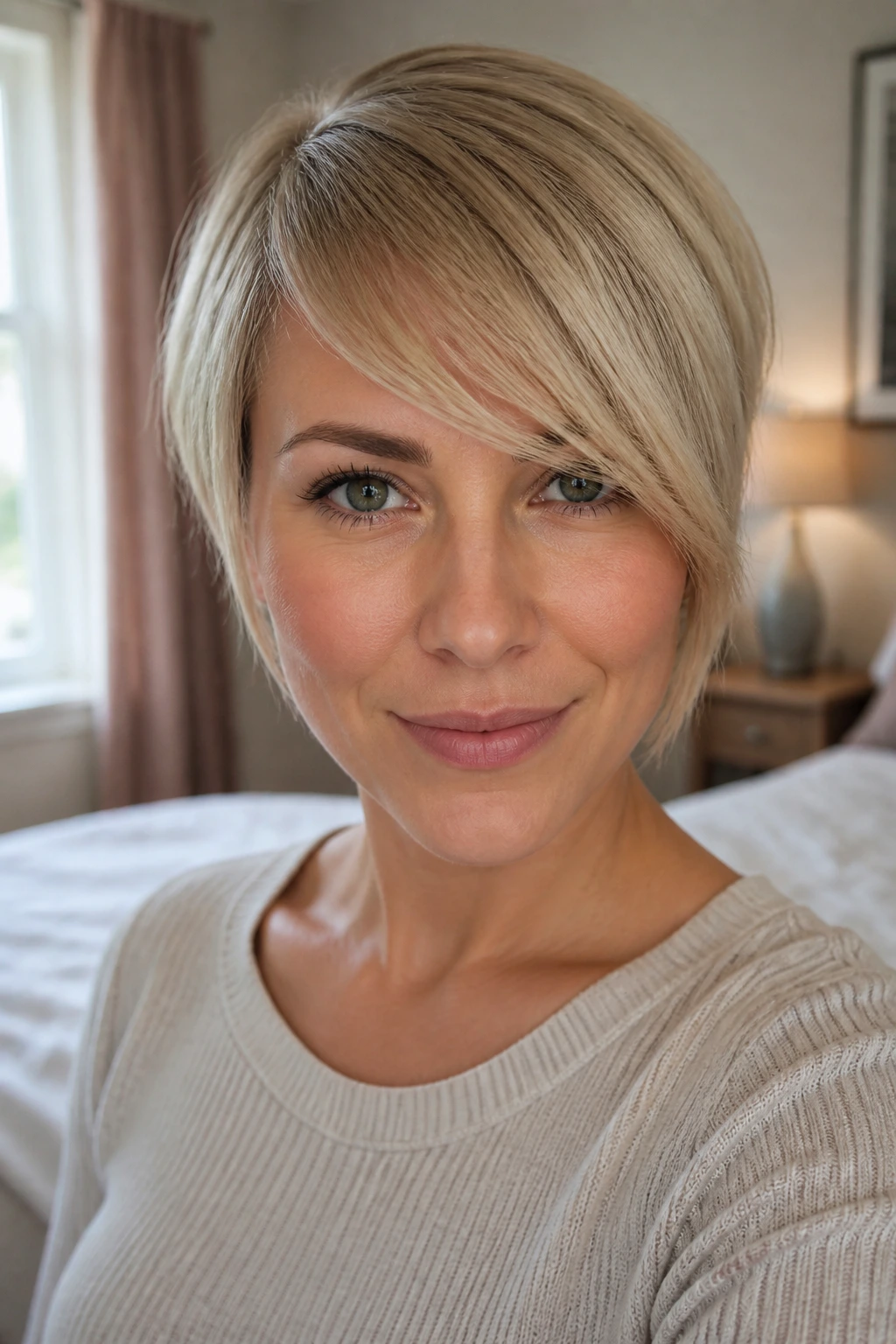
Side-swept bangs do a lot more than cover a forehead. They change the geometry of the whole haircut. A straight fringe makes a hard horizontal line, and hard horizontal lines can expose thinness fast. A diagonal line, though, pulls the eye across the face and gives the front hair a sense of movement even when the actual density is modest.
That movement matters because thin hair often looks best when it has direction. Not volume for the sake of volume. Direction. A sweep from temple to cheekbone creates a soft shadow over the forehead and leaves the rest of the hair free to stay lighter, which is useful when the ends tend to separate or look see-through.
There’s also a practical side people skip over. Side bangs are easier to grow out than blunt fringe, and they give you a buffer during awkward in-between stages. If your hairline has a cowlick or one side grows faster, a long side sweep can hide the mismatch without a daily battle with the blow dryer. That alone saves a lot of frustration.
Essential Tools for Thin Hair and Side Swept Bangs
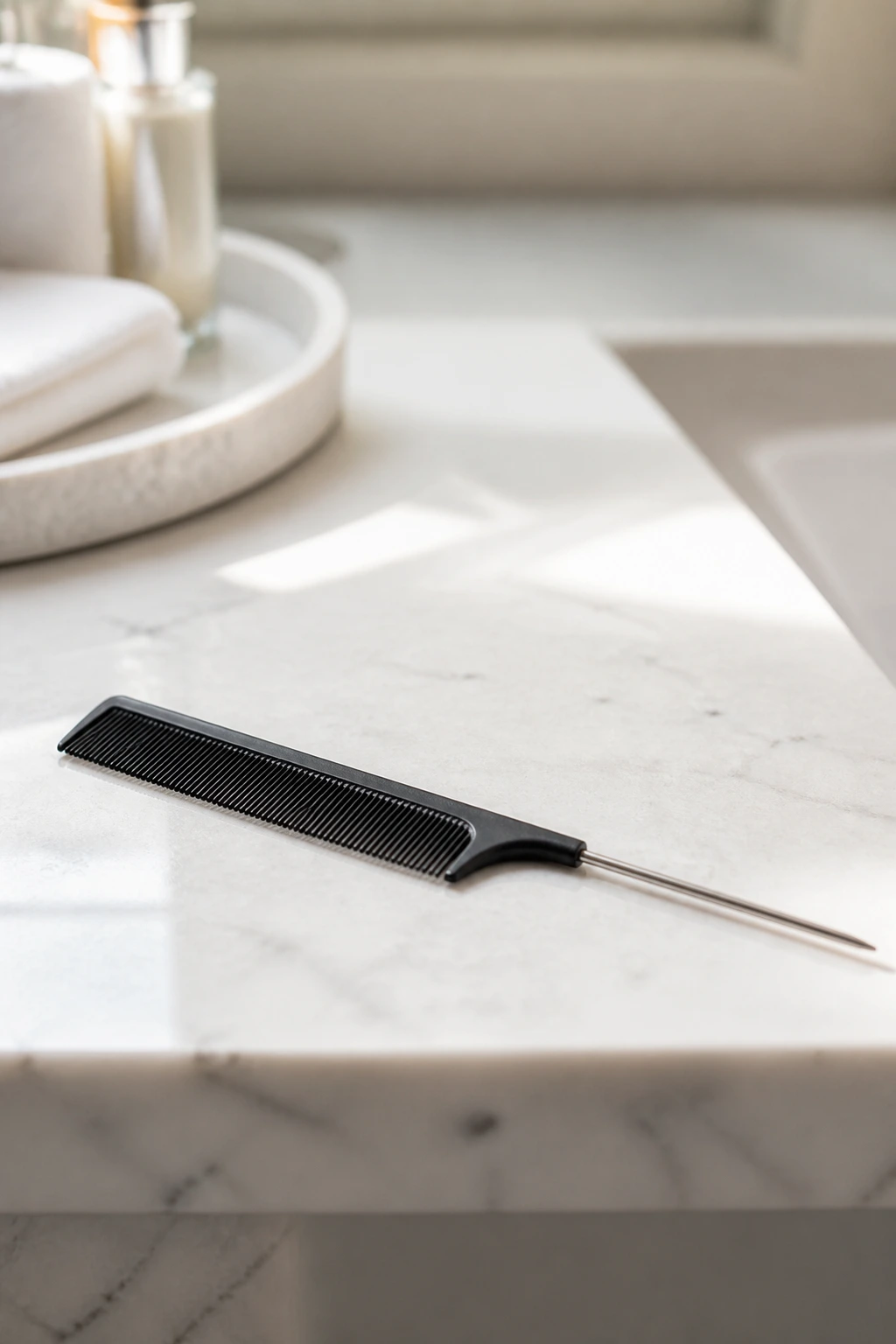
-
Fine-tooth rat-tail comb: Clean parts and controlled sectioning make side bangs sit where you want them.
-
1-inch or 1.25-inch round brush: The smaller brush gives thin hair a better bend at the front and a little lift at the root.
-
Blow dryer with a nozzle attachment: The nozzle keeps airflow pointed where you need it instead of blasting the fringe sideways.
-
Lightweight mousse: A golf-ball-sized amount at the roots adds support without making the hair sticky.
-
Heat protectant spray: Thin hair can fry fast, and a light mist before hot tools saves the ends.
-
Dry texture spray: Use this on the mids and crown, not the roots, when the hair needs a little grit to stay up.
-
Small clips or duckbill clips: These help set the fringe in the right direction while it cools.
-
Flat iron or 1-inch curling iron: Optional, but handy for adding a bend to the front pieces or smoothing a stubborn side sweep.
-
Velcro rollers: Not glamorous. Very useful. One or two at the crown can make the top sit higher without teasing.
Smart Cutting and Product Choices for Thin Hair with Side-Swept Bangs
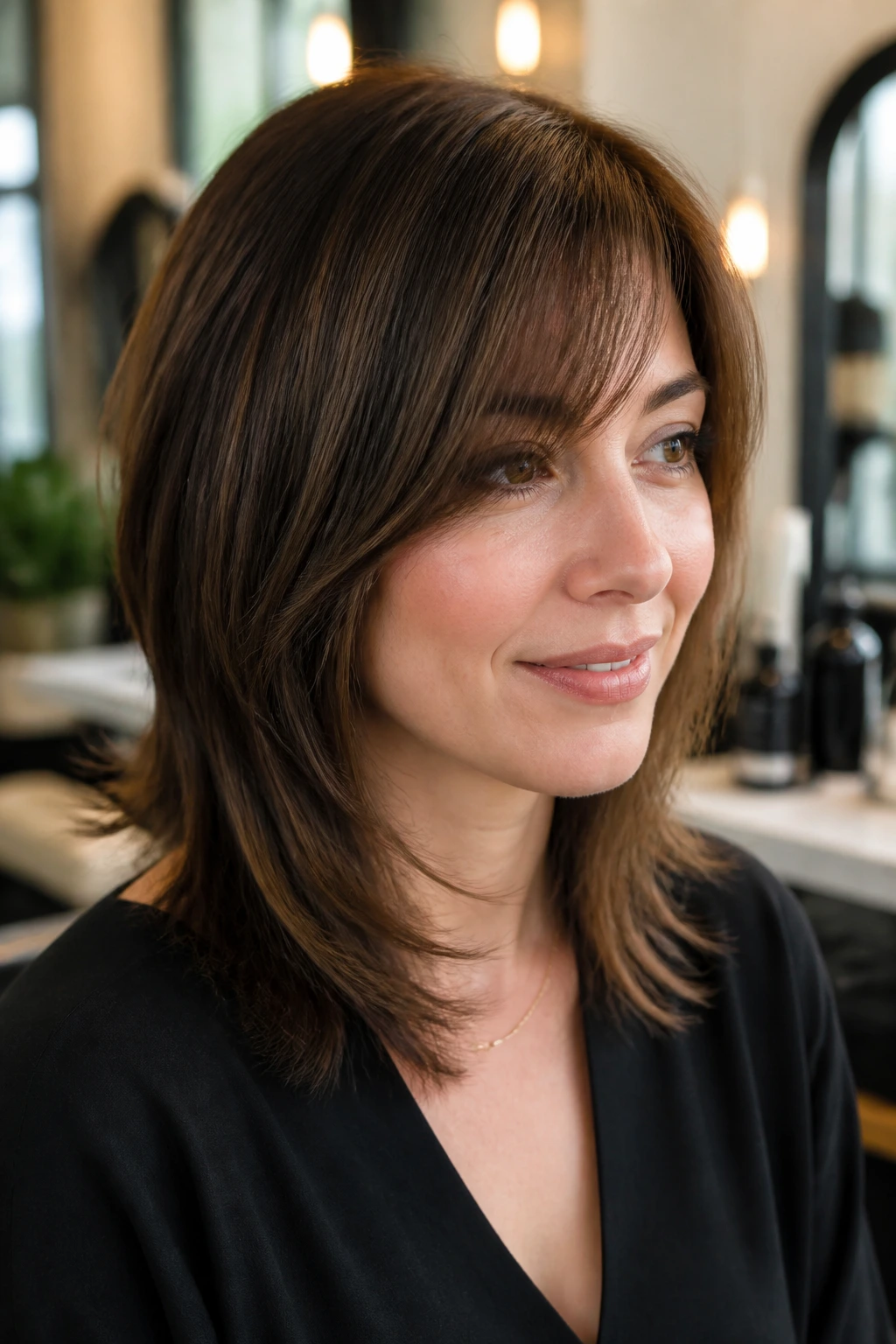
The cut matters more than the product, but the wrong product can undo a good cut in about ten minutes. Fine hair usually likes clean edges, controlled layering, and a bit of internal movement rather than lots of shredded ends. If you ask for layers, ask for them to be hidden inside the shape, not carved into the surface where they can break up the outline.
For side-swept bangs, length is your safety net. I usually like the longest point to brush the cheekbone or outer brow, because that gives you room to style the fringe across the face or tuck it back if you’re having one of those days. Shorter bangs can work, but they are less forgiving when the cowlick wins.
Products should be light. Mousse near the roots, a small amount of heat protectant on the mids, and a little dry texture spray when the shape starts to sag. Heavy oils, thick creams, and sticky finishing sprays can make thin hair clump in odd places, which tends to expose the scalp more, not less. If your hair is very fine, even conditioner placement matters — keep it from the ears down and rinse well.
Color can help, too. A bit of dimension around the face, or a soft root shadow, gives the cut more depth. Uniform flat color is neat on thick hair. On thin hair, a little visual variation often reads as fullness.
How to Wear These Looks Without Overthinking Them
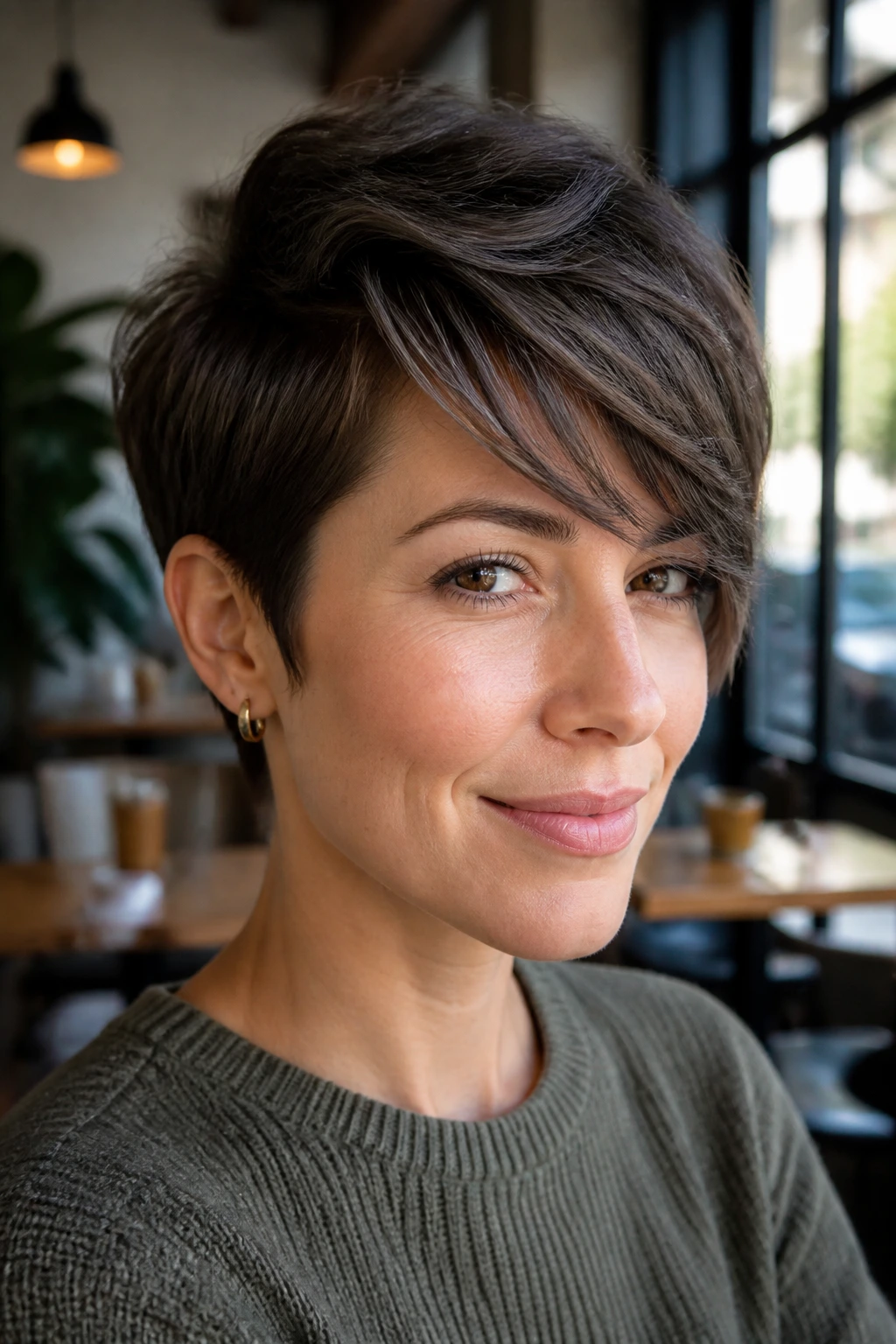
Best Face Shapes: Round and square faces usually gain the most from a side sweep that opens the forehead and softens the cheek line. Heart-shaped faces get a useful balance from longer fringe pieces, while longer faces benefit from bangs that sit a little fuller and cut across more of the forehead.
Styling Time: If you have five minutes, choose a blunt bob, a pixie, or a tucked lob. If you can spend ten to fifteen, the lob and bob shapes above hold a brushed bend better, and the fringe can be trained into a clean arc with a round brush.
Hair Texture Match: Straight fine hair likes sharp outlines and root lift. Wavy fine hair can handle shaggy or feathered shapes, but the layers need to stay light. If your hair is slightly curly, keep the bang longer than you think you need; curls spring up and can turn a side sweep into a little kink if the cut is too short.
Salon Ask: Say where you want the weight to live — crown, jaw, cheekbone, or collarbone. That gives your stylist a map instead of a vague request for “more volume,” which can mean ten different things in ten different chairs.
Extra Styling Moves That Add Lift and Softness
Root Lift: Dry the fringe and crown in the opposite direction first, then flip them back into the part. That little overdirection makes thin hair stand up for longer than just pushing it into place from the start.
Movement: Bend the front pieces away from the face, not all toward it. Alternating the direction slightly keeps the style from turning into a round helmet, which is the fastest way to make fine hair look thin and overworked at the same time.
Fringe Control: If the bangs split, clip them side to side while they cool. Ten minutes is often enough. You do not need a giant amount of hairspray; a light mist on the brush is usually cleaner.
Texture vs. Polish: If the hair is clean and slippery, add dry texture spray at the mids. If it’s already a little rough, skip the spray and use a touch of shine serum only on the ends. Too much grit on already dry hair makes the fringe look tired.
Common Mistakes That Make Thin Hair Look Flatter
-
Cutting the side fringe too short at the temple: The bang can expose scalp and widen the forehead. Keep the longest point at least to the cheekbone if density is low.
-
Over-thinning the perimeter: Heavy razor work or aggressive thinning shears can leave the ends wispy. Ask for blunt structure first, then light texture where it helps the shape.
-
Using rich creams near the root: Fine hair collapses under weight. Put conditioning products from the ears down and keep root products airy.
-
Ignoring the natural part or cowlick: A fringe that fights the growth pattern separates all day. Work with the part that the hair wants, then shape around it.
-
Curling every section the same direction: Uniform curls can create a hard, round shell. Mix up direction or leave the ends slightly straighter so the style moves.
-
Skipping trims on the bang line: Side-swept bangs lose their shape fast. Once they pass the cheekbone in an awkward way, they start dragging the whole cut down.
Easy Variations and Swaps for Different Hair Lives
The Low-Heat Air-Dry Version: This is for hair that hates hot tools. Keep the cut in a lob or shoulder length, use mousse on damp roots, and clip the fringe in its sweep until it sets. The finish stays soft, and the hair keeps some natural movement.
The Big Meeting Blowout: Choose a blunt bob, a polished lob, or a curved inverted cut. Blow-dry the fringe with tension, set the crown with a roller while you get dressed, and finish with a light shine spray on the mids. Clean. Controlled. Not stiff.
The Curly-Fine Adjustment: If your hair is fine but curly, keep the bangs longer and let them bend instead of forcing them straight. A softer shag or rounded shoulder cut usually works better than a blunt line because the curl already gives the shape some volume.
The Grow-Out Friendly Shape: Ask for a side fringe that blends into the front layer. That way, every trim still leaves you a soft sweep even as the bang gets longer. This is the move if you hate that awkward “I need a haircut yesterday” stage.
The Short-and-Chic Swap: If length is not your thing, go for a pixie, pageboy, or jaw-length crop. These shapes keep the density where it matters and use the bang to contour the face without asking the ends to do too much.
Keeping Thin Hair and Side Bangs in Shape
Thin hair asks for regular maintenance, but not the kind that eats your life. Side-swept bangs usually need a trim every 4 to 6 weeks if you want the diagonal line to stay clean. If you let them grow too long, they start falling into your eyes or splitting at the temple, and the whole contour effect weakens.
Wash rhythm matters as much as cutting rhythm. Fine hair often looks best when the roots are fresh but not stripped, so many people do well with washing every 1 to 2 days. If your scalp is oily, a quick dry shampoo at the roots can buy you another day, but use it before the hair looks greasy — not after it already has that slick, weighed-down feel.
Sleep can flatten the front faster than a bad product choice. A silk or satin pillowcase helps, but a loose clip or soft wrap around the fringe can also keep the bang moving in the right direction overnight. If the front wakes up bent the wrong way, a quick 30-second blow-dry on low heat at the roots usually resets it.
Heat styling should be modest. The hair does not need a full hot-tool pass every day. A round brush at the front, a little root lift at the crown, and a mid-length bend when needed is enough for most of these shapes. Overdoing it only dries the ends, and dry ends make thin hair look thinner.
Frequently Asked Questions
What bang length works best for thin hair?
The safest range is usually between the eyebrow and the cheekbone, with the longest point landing near the outer eye or cheek. That gives you room to sweep the fringe, and it keeps the front from looking sparse if a few pieces separate.
Will side-swept bangs make my face look slimmer?
They can, especially on round or square faces, because the diagonal line pulls the eye across the face instead of straight down the middle. The effect is softer than a blunt fringe and less severe than a hard side part alone.
Can thin hair handle layers without looking stringy?
Yes, but the layers need to be controlled. Ask for internal movement or face-framing pieces rather than lots of short surface layers, which can leave the ends see-through fast.
What if my bangs keep splitting apart?
That usually means the growth pattern or part is fighting the cut. Blow-dry the fringe from side to side first, then sweep it into place while it’s still warm, and use a tiny clip while it cools.
Is a deep side part better than a middle part for thin hair?
Often, yes, because a deep side part creates height and a clear line for the bangs to fall across. A middle part can work on some faces, but it exposes more scalp at the crown if the hair is very fine.
Do these styles work on straight hair that won’t hold texture?
Absolutely. Straight fine hair is often the best candidate for blunt bobs, sleek lobs, and polished crops because the cut can do the shaping. You just need a bit of root lift and a clean bend at the front.
How often should I trim side-swept bangs?
Every 4 to 6 weeks is a good rhythm if you want the diagonal shape to stay tidy. If you are growing them out, you can stretch that a bit, but the front may start to fall into your eyes and lose its contour.
Can I still get volume if my hair is very fine and flat?
Yes, but the volume has to be placed smartly. Focus on a lifted crown, a strong perimeter, and a side sweep that creates movement across the face. Backcombing the whole head usually looks worse than a clean cut with one good round-brush pass.
The Shapes That Do the Heavy Lifting
Thin hair does not need to be bullied into looking thick. It needs shape, line, and a little direction. Side-swept bangs are useful because they give the eye a place to land, and once that front line is working, the rest of the haircut can stay light and flexible instead of heavy and overbuilt.
The best cuts in this group do one thing very well: they make the front of the hair do more visual work than the back. That is why a deep side part, a clean bob edge, or a soft fringe can feel more flattering than layers stacked everywhere. You are not chasing bulk. You are choosing where the fullness should appear.
If you sit in the chair with one clear thought — cheekbone, jawline, crown, or forehead — the right contouring shape becomes much easier to find. And once it is cut well, thin hair can stop apologizing for itself and start looking like it was planned that way.