



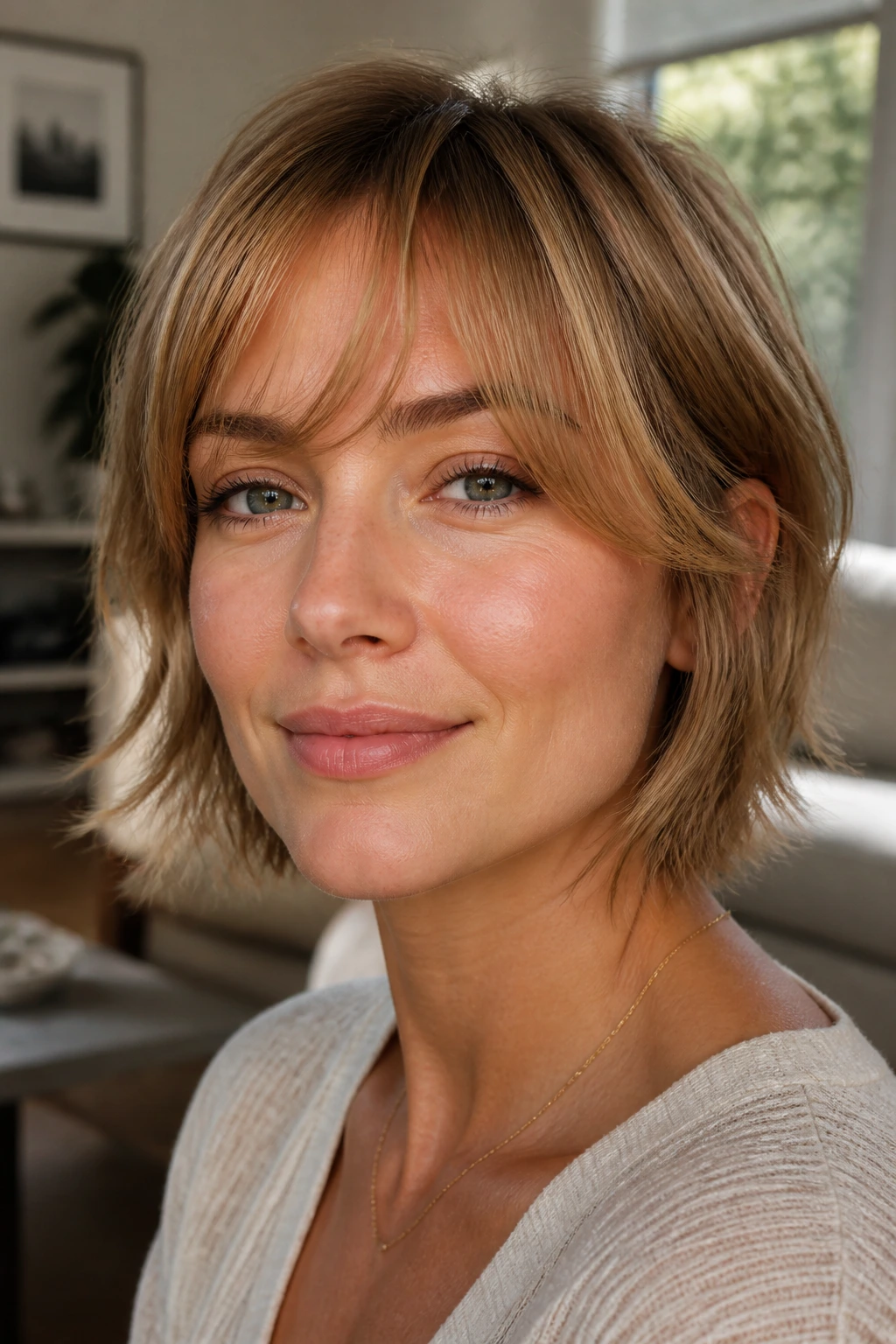
Long fringe for fine hair and square faces works best when it behaves like a soft interruption, not a curtain dropped flat across the face. That sounds picky, and it is. Fine hair doesn’t forgive heaviness, and a square face doesn’t need another hard line parked right across the forehead.
The sweet spot sits somewhere between the brow and the cheekbone. That’s where the fringe can blur the jaw a little, soften the width through the temples, and still leave enough air around the front hairline so the hair doesn’t look sparse by lunchtime. The wrong cut in this category can feel heavy on day one and thin on day three. The right one moves.
There’s a reason long fringe keeps showing up in good salons for this face-and-hair combination. It can be brushed aside, split in the middle, tucked into layers, or worn piecey when you want less forehead coverage. And because the length stays below a blunt brow line, it usually grows out with less drama. That matters. A lot.
Why These Fringe Ideas Work on Fine Hair and Square Faces
-
They break the hard line: Square faces look strongest when the front of the haircut has some curve or diagonal movement, because a straight horizontal fringe can echo the jaw in a way that feels boxy.
-
They keep the front light: Fine hair needs shape without bulk. A long fringe lets the stylist remove weight at the corners and keep the center soft instead of building a thick shelf.
-
They leave room for movement: Pieces that graze the cheekbone or nose bridge can be worn center-parted, side-swept, or tucked into face-framing layers, which gives you more ways to style the same cut.
-
They grow out better: A fringe that starts soft and layered usually slides into curtain pieces or long front layers without that awkward “helmet” stage. Short, blunt bangs are the ones that demand constant trims.
-
They suit real mornings: If you have fine hair, you already know the front can go flat fast. These fringe shapes respond well to a quick round-brush pass, a small Velcro roller, or even a clip while the roots cool.
1. Feather-Light Curtain Fringe at Cheekbone Length
A feather-light curtain fringe is the safest place to start if you want softness without losing the idea of fringe altogether. The center opens just enough to show a bit of forehead, then the sides drift down toward the cheekbones instead of stopping abruptly at the brows.
Why it behaves so well
That open shape keeps a square face from looking boxed in, and the light density helps fine hair avoid that heavy, see-through line that can happen when too much hair is left in the front. Ask for the shortest point to sit a little below the brows, with the corners tapering out toward the cheekbone. Not chin level. That tends to drag the face down.
A tiny round brush and a quick bend away from the center are enough most days. The whole point is movement. If it looks like you spent half an hour forcing it into place, the cut is too dense.
Best for: Hair that parts easily in the middle and has fine strands but enough overall density to support a split fringe.
2. Side-Swept Fringe with a Soft Diagonal
A side-swept fringe is still one of the easiest ways to soften a square face, and I’m not saying that lightly. The diagonal line changes everything. It breaks the width across the forehead and pulls the eye down and across instead of letting it stop at one blunt edge.
Fine hair likes this cut because it doesn’t need a heavy curtain to make an impact. A clean side sweep can look fuller than a thick bang that collapses at the roots. The trick is the angle: keep it long enough to graze the outer brow and cheekbone, then cut the ends soft so they don’t land in one solid block.
What to ask for
- A long, diagonal fringe that starts around the arch of the eyebrow
- Soft, point-cut ends
- Enough length to tuck behind the ear on no-wash days
- A little longer at the temple so the fringe melts into the layers
This is the fringe for people who want one quick blow-dry and out the door. It’s tidy. It’s forgiving. And when the hair does what fine hair always does and slips a little, the shape still reads on purpose.
3. Bottleneck Fringe with Longer Corners
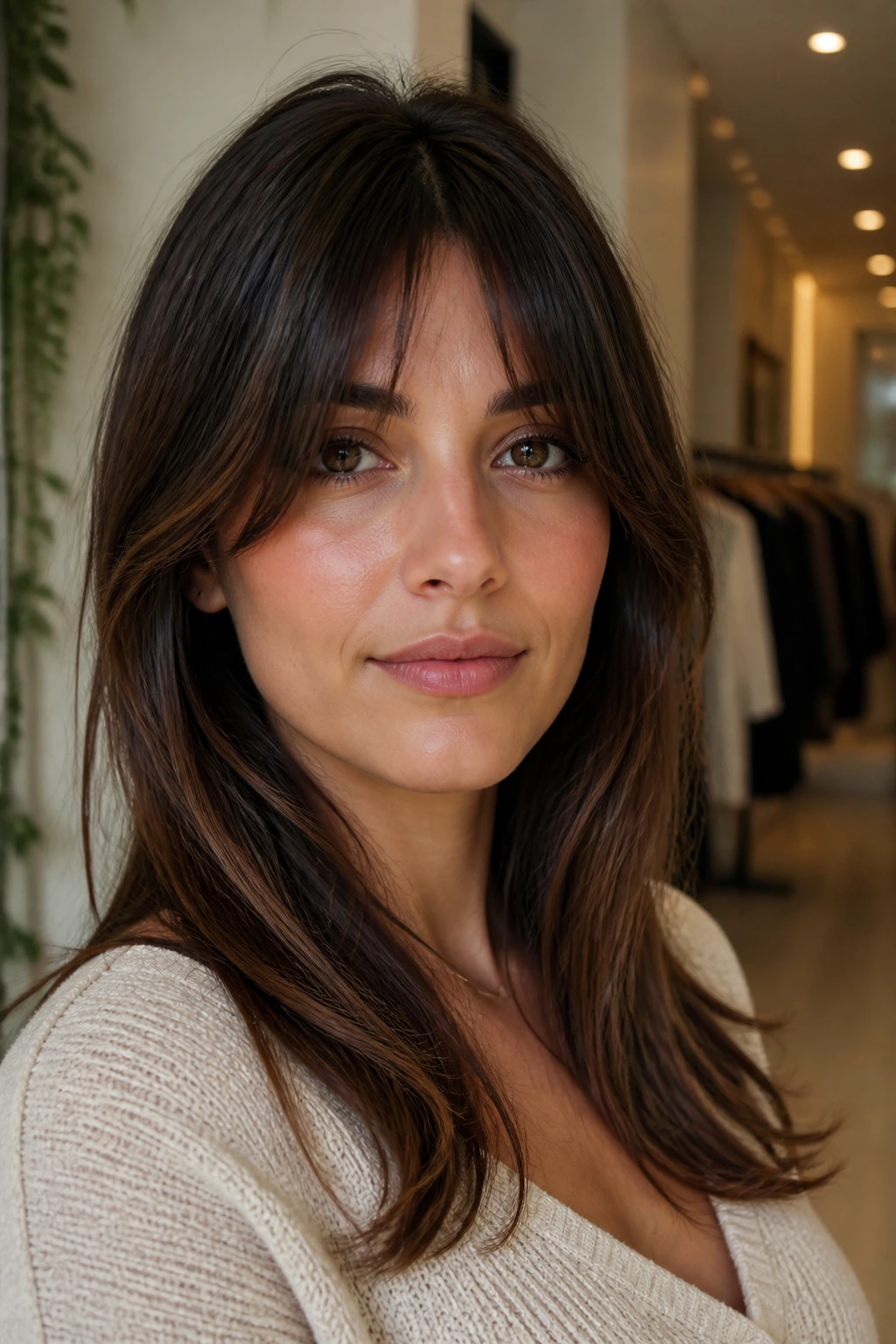
Want forehead coverage without a heavy wall of hair? Bottleneck fringe does that job well. The center is shorter and slimmer, then the corners stretch out so the eye sees a gentle taper instead of a blunt shelf.
That taper matters on square faces because it softens the temple area, which is where width often reads first. It also helps fine hair feel less patchy. The short center gives you the sense of fringe, while the longer sides do the smoothing work around the face.
How to wear it
Part the center with your fingers, not a comb, then bend the corners away from the face with a small round brush. Let the ends stay a little imperfect. Bottleneck fringe looks better when it has a bit of slack in it.
If your hairline has a cowlick, this cut usually behaves better than a fully centered curtain fringe. The longer corners give the hair somewhere to go instead of fighting straight down the middle.
4. Lash-Length Piecey Fringe
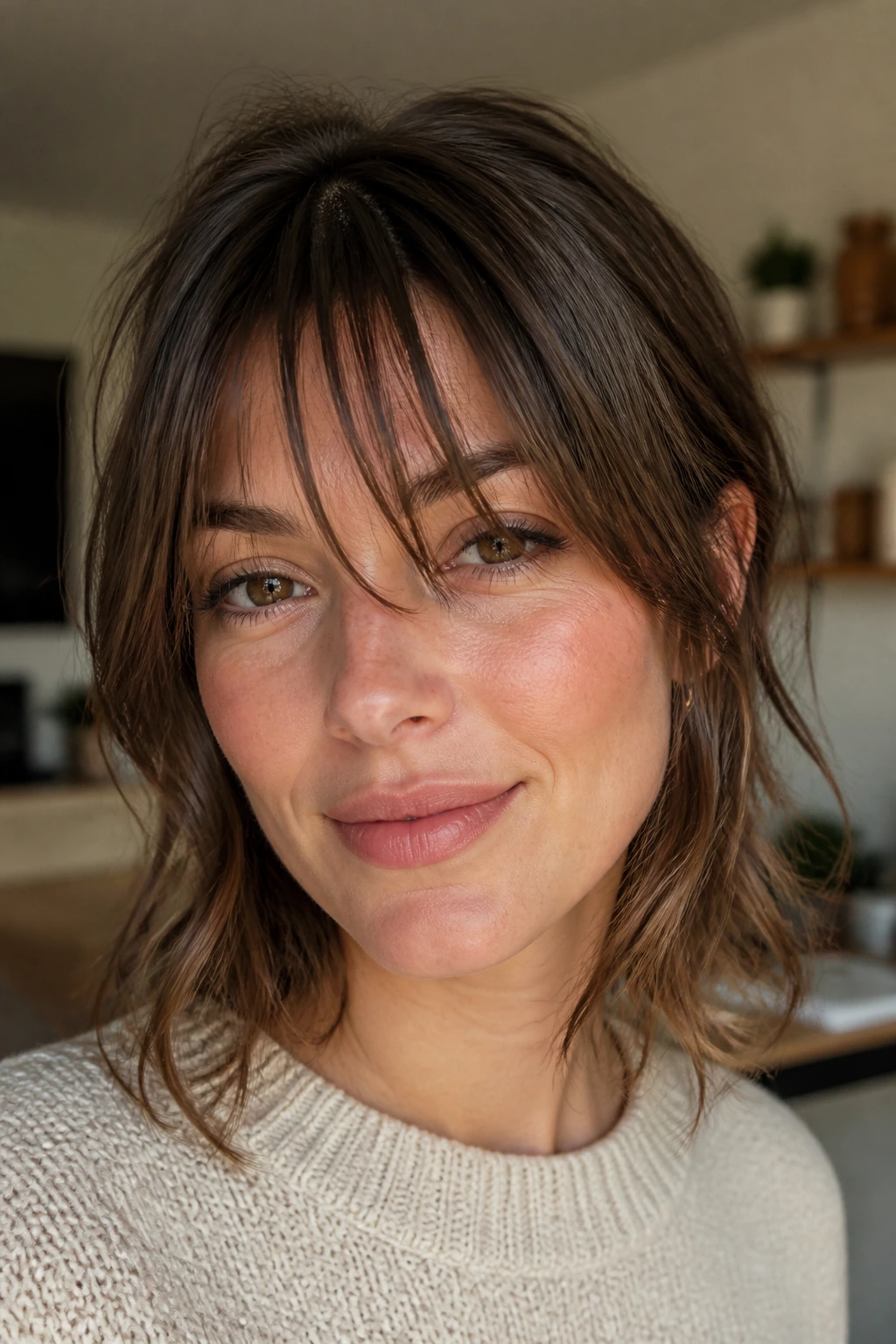
This one sits right near the lashes and separates into slim pieces instead of a single sheet. That separation is the whole point. On fine hair, a piecey finish can make the fringe look fuller than it really is because the eye reads texture and movement instead of density alone.
Square faces benefit from the broken edge. A fringe that lands around lash level with a few translucent gaps feels softer than one that stops in a hard line above the brows. It also photographs better in real life, which matters more than people admit.
A little dry texture spray at the roots and a quick finger-twist through the front is enough. Don’t overbrush it. The more you smooth it, the flatter it gets.
Good if: You like fringe with a little attitude and don’t mind seeing a bit of forehead through the strands.
5. Rounded Fringe That Skims the Brows
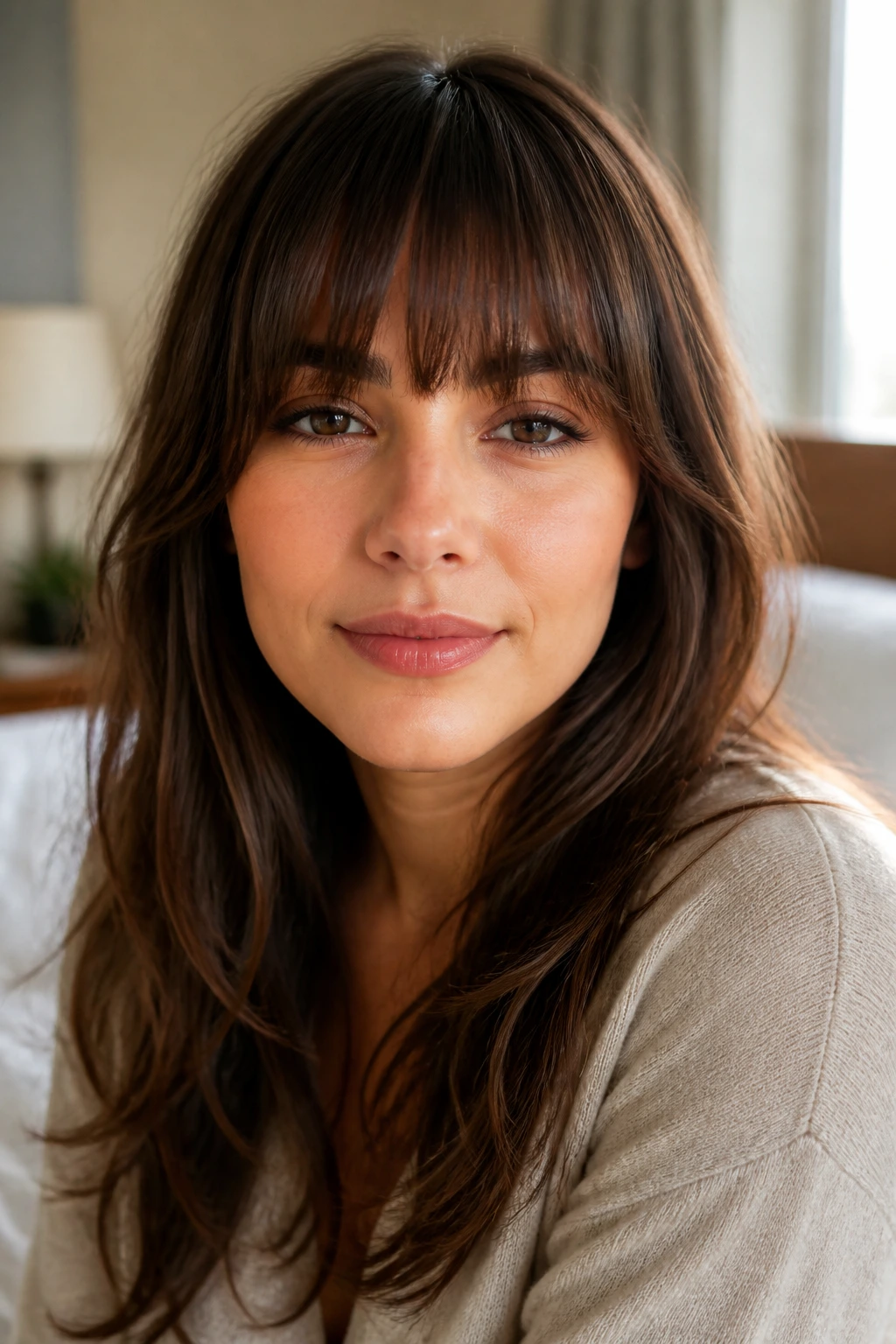
Rounded fringe is one of those cuts that sounds more dramatic than it actually wears. The curve is subtle, not helmet-like. The center can sit just above or at the brows, while the outer edges bend downward and melt into the front layers.
That shape works on square faces because it interrupts the straightness of the forehead line. It also gives fine hair a little visual thickness in the center without making the sides bulky. The key is to keep the corners feathered. If they’re too blunt, the whole thing starts to read severe.
I like this style on hair that dries with a slight bend already. It doesn’t need much help. A soft round brush pass and a cool shot at the end are usually enough. No need to build a whole routine around it.
6. Sliced Fringe with a Deep Side Part

A sliced fringe is thinner by design, which is good news for fine hair and mixed news for people who want a lot of coverage. The payoff is worth it, though. By keeping the fringe light and combing it into a deep side part, you get a diagonal sweep that cuts across the square shape of the face instead of repeating it.
This is one of the best choices if your front hairline is busy, your part shifts on its own, or you’ve got one side that always wants to fall forward anyway. Work with the tendency. Don’t fight it.
The cut should look soft, not wispy in a sad way. That’s the difference between a purposeful slice and hair that looks like it’s trying to disappear.
7. Wispy French Fringe with Air Between the Strands

A true French fringe is never thick and blunt. It sits somewhere between polished and slightly undone, which is exactly where fine hair often looks best. The strands should feel light enough that you can see a little forehead through them.
Square faces need that air. A dense front can make the middle of the face feel shorter and wider, while a wispy French fringe breaks the surface without boxing it in. The shape is less about full coverage and more about softening the front edge.
What makes it work
- The ends are feathered, not chopped blunt
- The center is a touch shorter than the sides
- The fringe can be worn with a middle part or a loose side part
- It responds well to finger-drying and a tiny bit of cream, not heavy paste
If your hair is fine and a little silky, this may be the easiest fringe to live with. It doesn’t ask for perfection. Good news, because perfection and fine hair rarely get along for long.
8. Razor-Soft Fringe with Bendy Ends
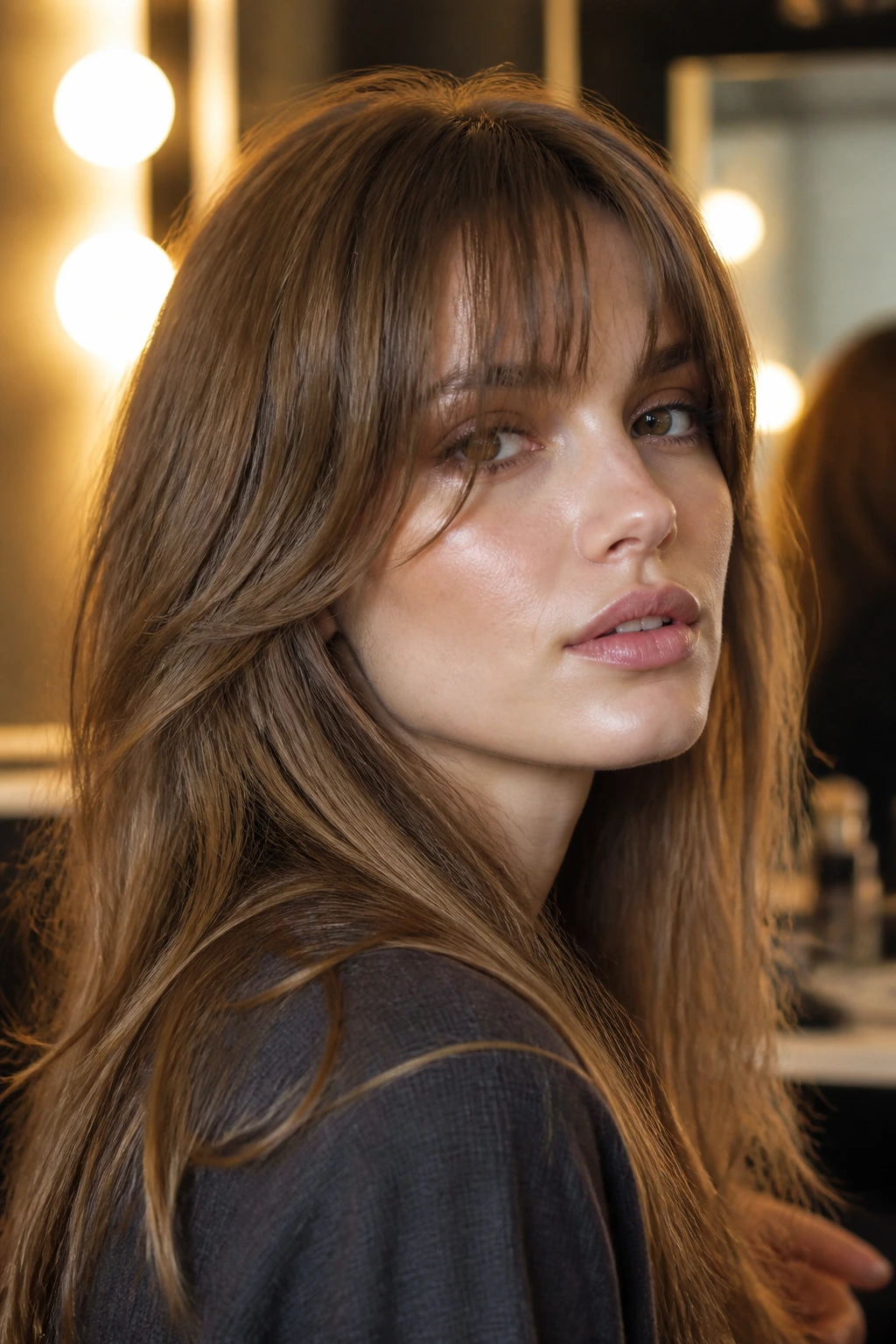
Can a razor cut work on fine hair? Yes, but only if the stylist uses restraint. A razor-soft fringe removes weight and gives the front a looser edge, which can look gorgeous on square faces when the ends bend instead of hanging stiffly.
The danger is over-thinning. Too much razor work on already fine hair can leave the fringe looking scratchy and weak, especially at the temples. Ask for a soft razor finish, not shredded ends.
A small flat iron or a round brush can add one gentle bend under the fringe, which keeps it from clinging flat to the forehead. That little curve helps the cut read as deliberate.
9. Shag Fringe with Face-Framing Layers
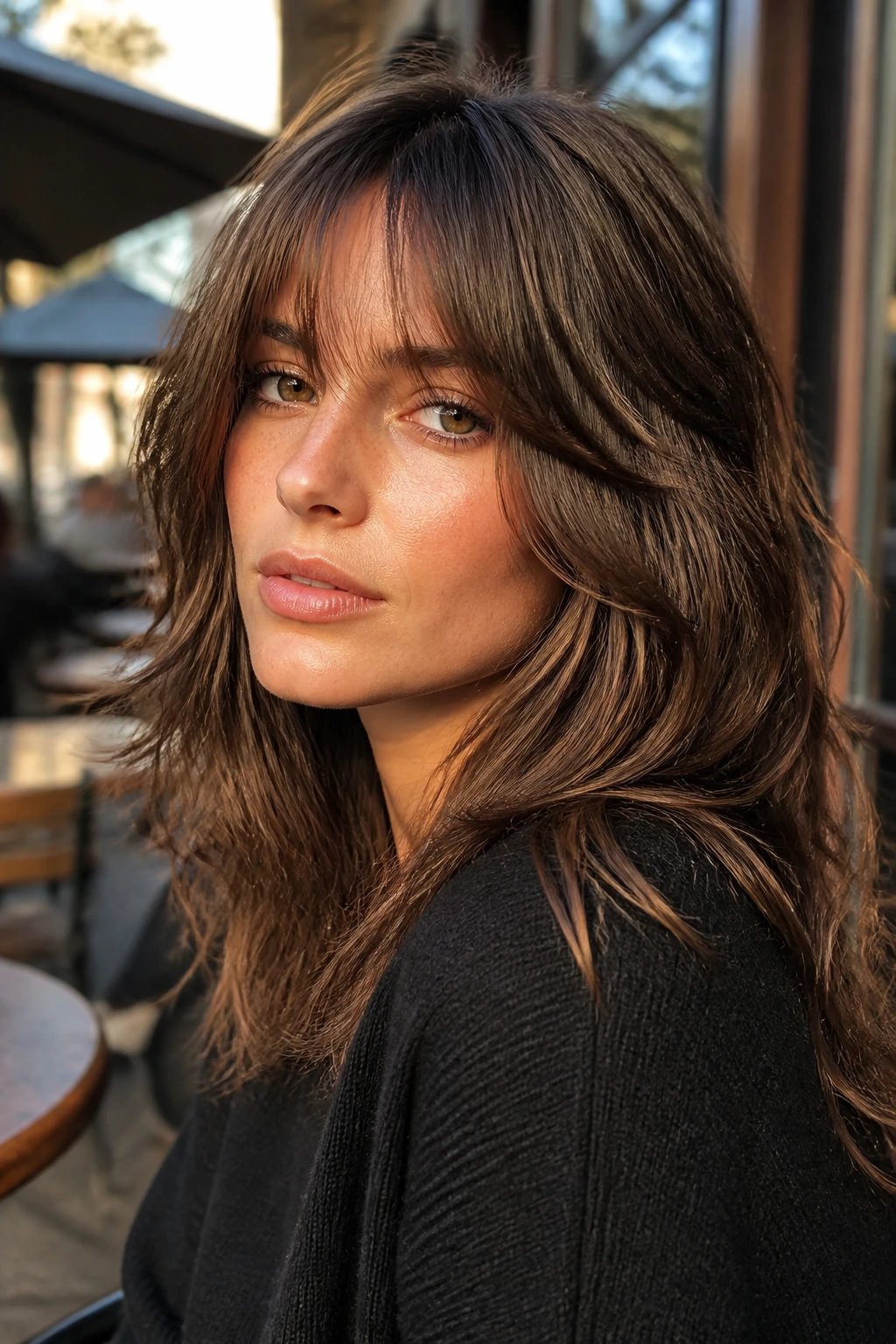
This is the fringe for someone who wants the front pieces to do more than just sit there. A shag fringe folds into the rest of the haircut, so the bangs don’t read as a separate object parked on top of the face.
That matters for square faces because the layers around the cheekbone and jaw pull the eye downward. The front stops being a hard line and becomes part of a softer frame. Fine hair benefits too, since the shag structure creates movement without demanding a huge amount of density.
It does need some styling. Not much. Just enough lift at the roots and a bit of separation through the ends so the layers don’t collapse into one thin sheet.
10. Off-Center Fringe That Breaks the Boxy Line
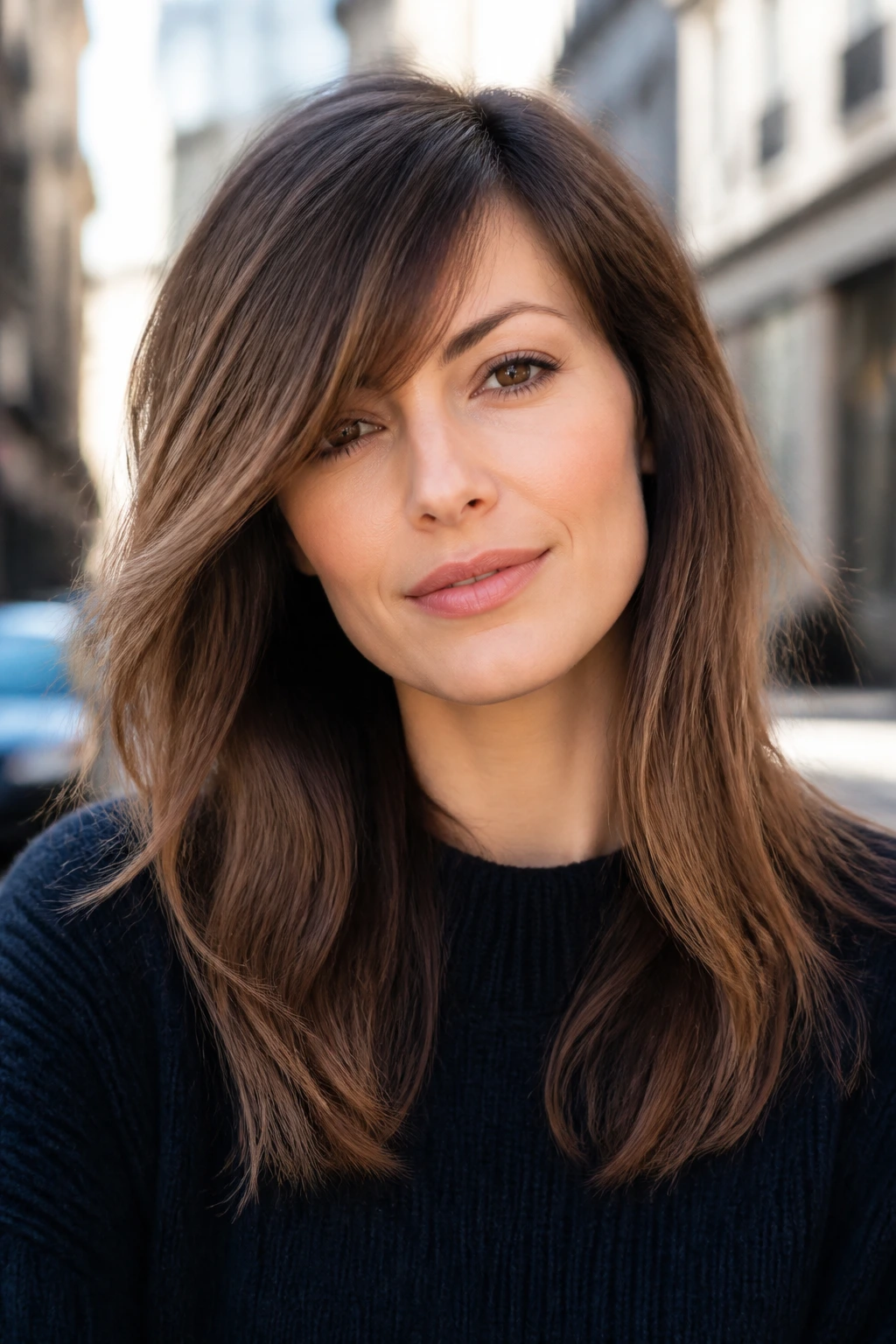
A tiny shift off the center can change the whole mood of a fringe. You don’t need a dramatic deep side part. Sometimes moving the split by an inch is enough to break the symmetry that can make square faces look wider through the upper third.
Fine hair likes this because the roots lift more easily when they’re not divided into two perfect halves. The front gets a little extra body near the part, and that helps the fringe sit with more shape.
This is a good choice if you want fringe that feels easy and a little modern without looking styled to death. It’s the haircut version of a slightly crooked necklace. More natural. Less polished. Better for most mornings, honestly.
11. Tapered Fringe That Ends at the Cheekbone

A tapered fringe starts with some presence in the center, then gradually narrows as it travels toward the cheekbone. The cut avoids that blunt stop that can make a square face feel even more angular.
The taper is useful for fine hair because it keeps the ends light. A full-width fringe can swallow a delicate hairline, but a tapered edge lets the face show through in a way that feels airy, not sparse. That difference is small in theory and obvious in the mirror.
Ask for the outer corners to be point-cut into the layers around your face. If the stylist leaves them too full, the whole front can look like a triangle. Nobody wants that.
12. Blended Layer Fringe with a Hidden Part
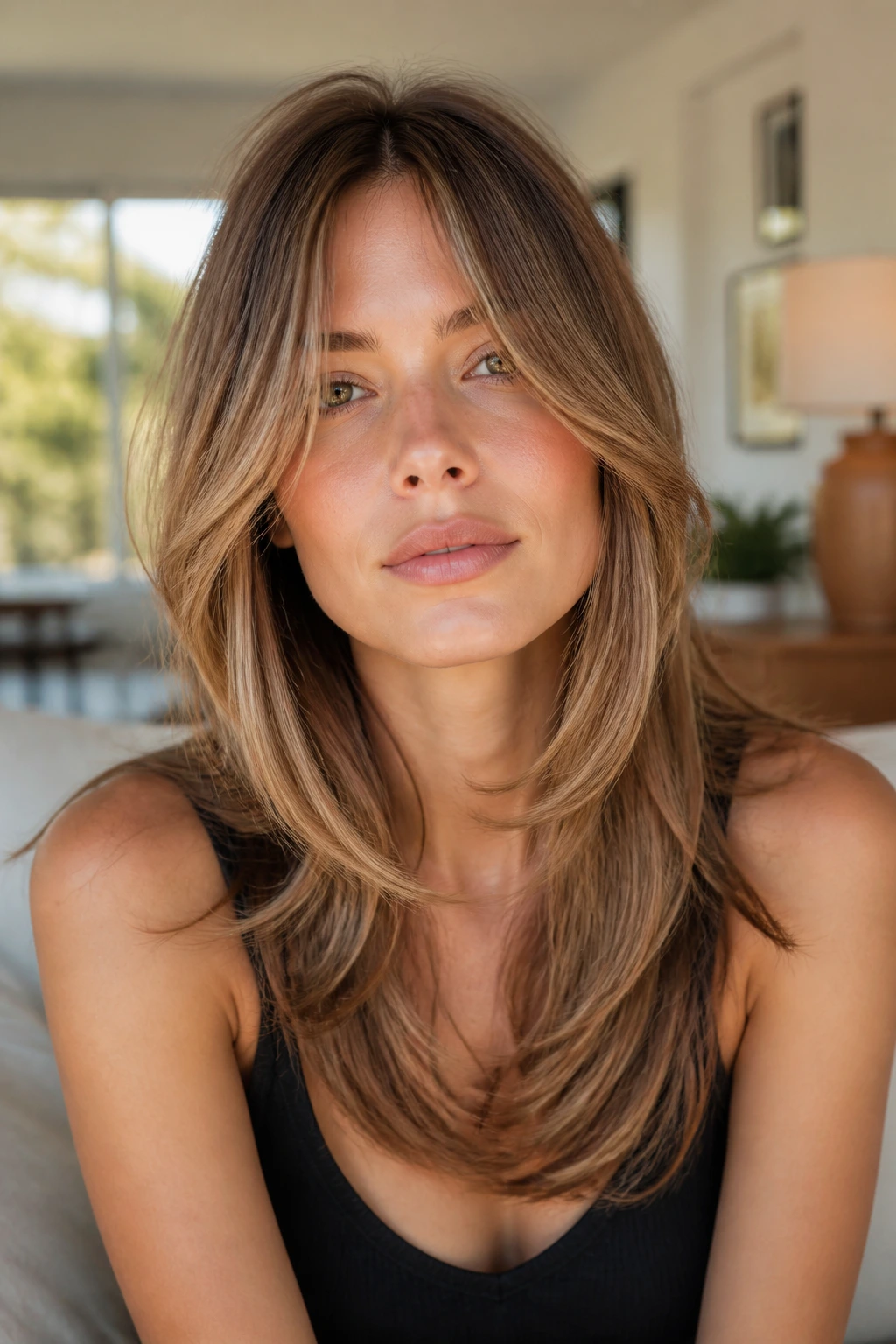
If your hair splits itself by noon, this is the fringe to look at. The hidden part keeps the front from fighting your natural growth pattern, and the layers around it make the split feel intentional instead of accidental.
The result is a fringe that disappears into the haircut when you want it to, then comes forward when you push it. Square faces get the benefit of softened edges without a hard bang line, and fine hair gets a little extra movement at the roots.
I like this on people who hate seeing the same parting every day. It gives you options. Some days it looks like a fringe. Some days it looks like a face frame. That flexibility is the point.
13. Soft Arched Fringe for a Fuller Forehead

A soft arch is a quiet way to add shape without adding weight. The middle sits a touch shorter, then the fringe rises slightly toward the sides before dropping into the front layers. It’s a curve, not a crescent moon.
That curve is flattering on square faces because it softens the flatness across the forehead while keeping the top of the face open. Fine hair can wear this well if the arch stays subtle. A big, dramatic arch needs more density than most fine hair can comfortably give.
The best version is almost invisible in motion. You notice it when the hair falls back into place and the center still looks tidy. That’s the trick with a good arched fringe. It should be shape, not decoration.
14. Grown-Out Curtain Fringe That Stays Polished

There’s a point where curtain fringe stops looking “grown out” and starts looking intentional. This is that point. The shortest pieces are long enough to part easily, but not so long that they drag the whole haircut down.
For fine hair, this is a blessing. The fringe doesn’t have to be freshly cut every few weeks, and the extra length gives the front a little more substance. Square faces like the open middle and longer sides because the shape eases the width at the temples.
If you’re between trims, this is usually where the hair naturally wants to live anyway. The smart move is to shape the grow-out so it stays polished, not let it wander until it’s in your eyes and your mouth and every coffee cup you own.
15. Peekaboo Fringe for Barely-There Forehead Coverage
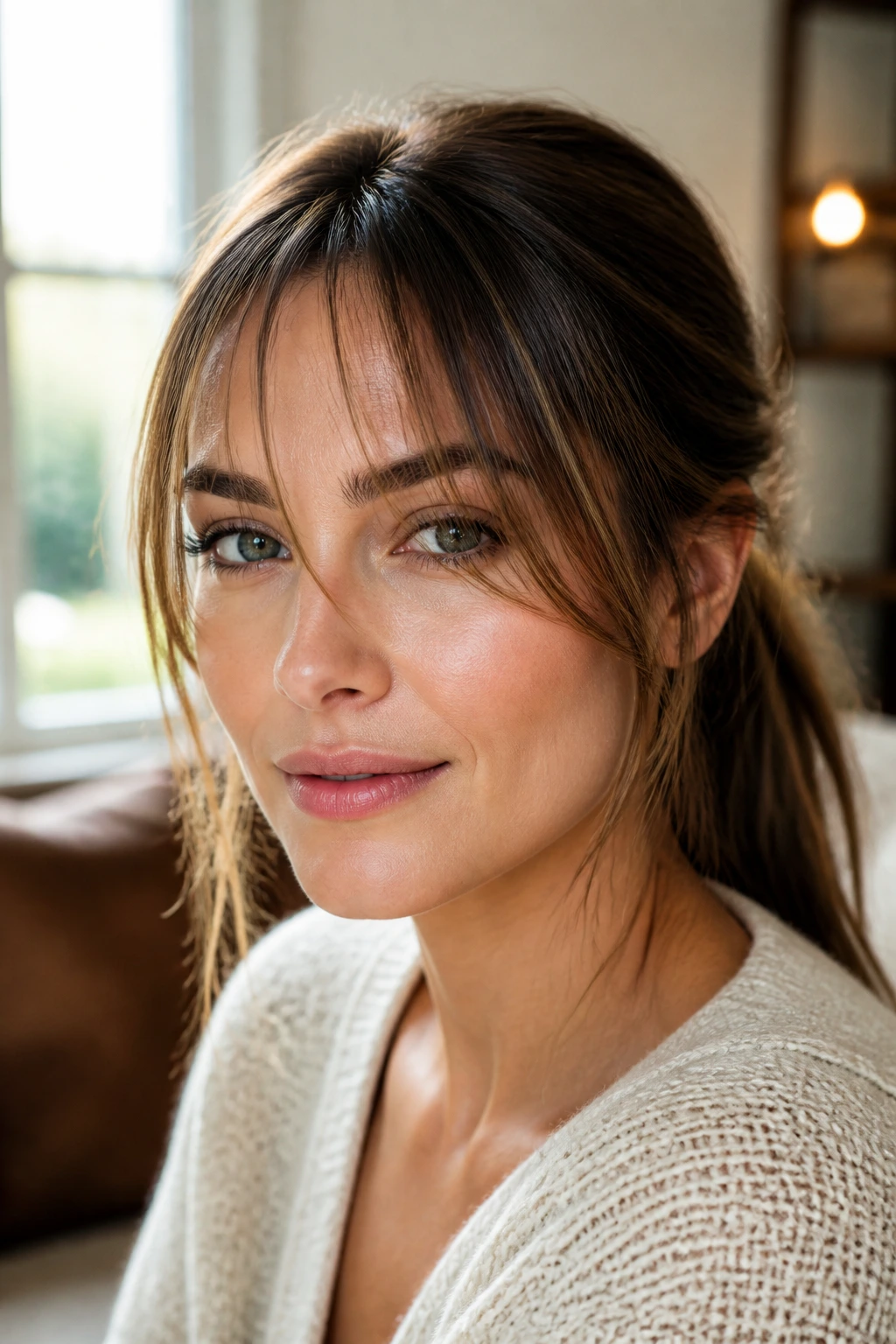
This one is for the person who wants the idea of fringe more than a heavy forehead blanket. Peekaboo fringe sits so lightly that the skin shows through in places, which is exactly why it works on fine hair. There’s no bulky front to collapse.
Square faces benefit from the softness, too. Instead of laying another hard edge across the top third of the face, the fringe flickers in and out as it moves. That keeps the haircut from reading static.
It’s not the right choice if you want full coverage. No pretending. But if you want a whisper of bang that can be tucked aside in two seconds, this has a lot going for it.
16. Swept-Back Fringe That Trains Easily
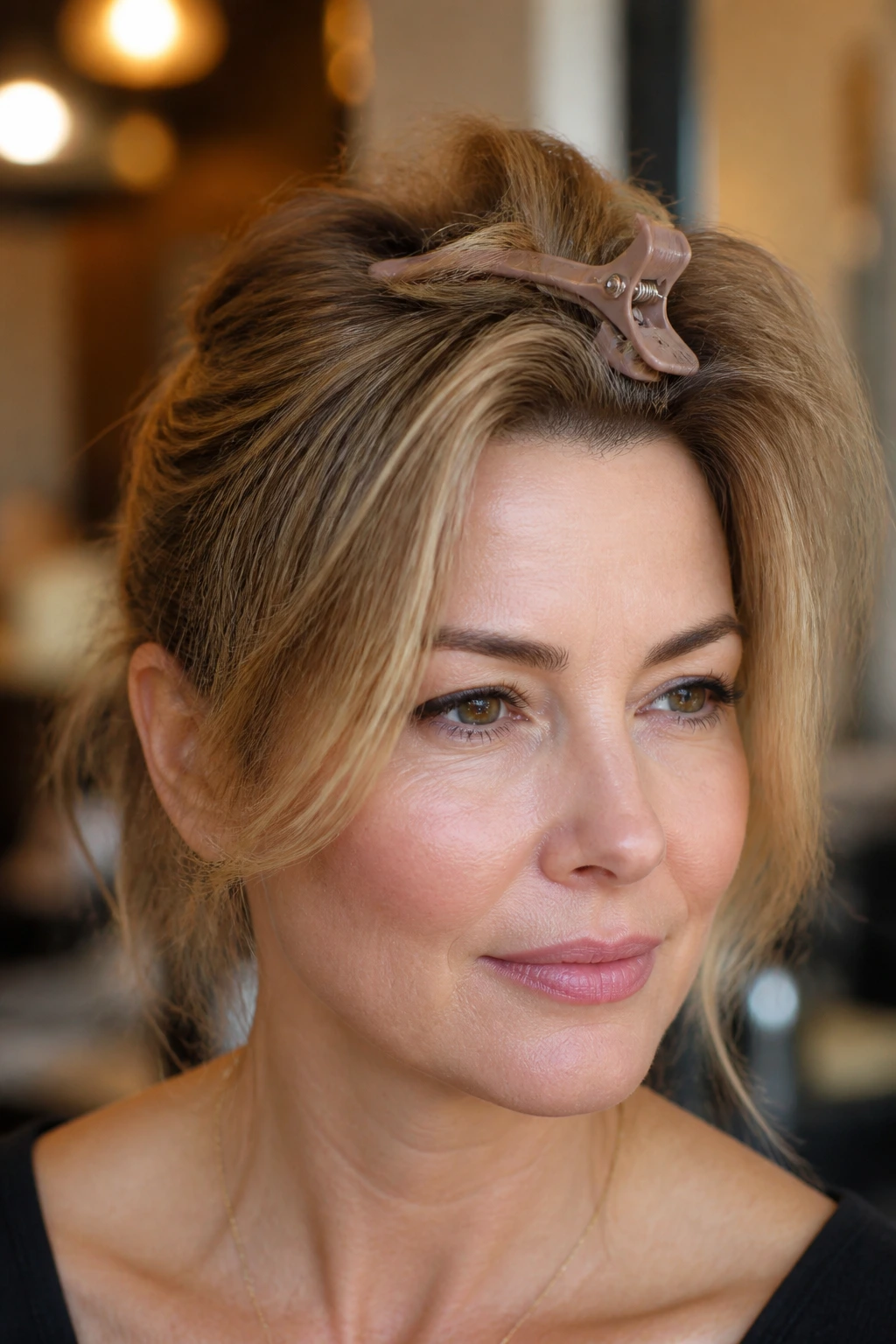
Not every fringe needs to live on the forehead. A swept-back fringe can be trained to open away from the face on good days and fall forward only when you want it there. That kind of flexibility suits fine hair, which often changes shape depending on humidity, sleep, and whether you touched it too much on the commute.
Square faces get a softer outline because the front stays open. The face frame can still do the work around the jaw and cheekbone, but the forehead isn’t visually crowded.
A duckbill clip at the root while the hair cools makes a bigger difference than most people think. Hold the front up for a few minutes, let it set, then release. It’s not glamorous. It works.
17. Collarbone-Grazing Face-Frame Fringe
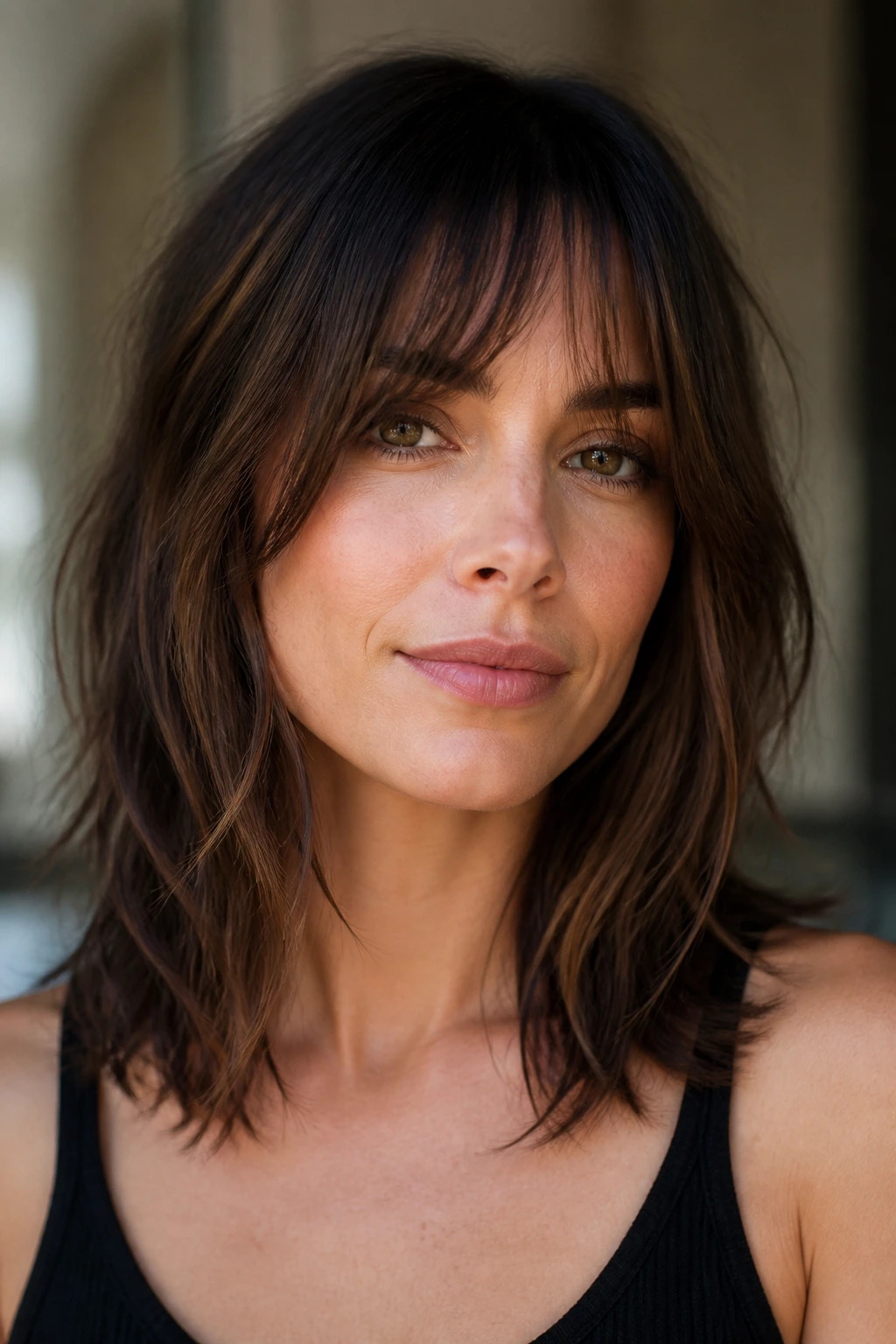
This is really a fringe-plus-front-layer situation, and I mean that in a good way. The fringe blends into longer pieces that continue all the way toward the collarbone, which gives a square face a long vertical line instead of a square one.
Fine hair likes the seam between fringe and layer because it doesn’t need a thick chunk at the front to feel styled. The whole shape can stay light. Ask for the shortest front pieces to skim the lower brow or cheekbone, then let the rest of the face frame taper down.
If you wear your hair half up, this cut gets even better. The front pieces escape just enough to soften the face while the back stays off the neck. Easy. Clean. No drama.
18. Piecey Center-Split Fringe

A center-split fringe can be sleek or piecey, and for fine hair I usually prefer the piecey version. The separation gives the hair some visible texture, which makes the front appear fuller than a smooth, flat split would.
Square faces get a softer read from the center opening. The split pulls the eye toward the middle, then the loose pieces travel outward instead of stopping in one straight horizontal line. That shape feels less rigid around the jaw.
A pea-sized amount of styling cream or a light pomade on the ends is enough. Too much product and the fringe goes stringy fast. Fine hair only needs a whisper.
19. Feathered Temple Fringe with Lift at the Edges

Here’s the detail most people miss: the temples matter. If the sides of a fringe are too full, they can widen the face right where a square face already has strength. Feathering that area makes a big difference.
This style keeps the center soft and gives the edges a little lift so the fringe doesn’t droop into the temples. Fine hair benefits because the haircut doesn’t pile too much weight into one small zone. The result is lighter, cleaner, and easier to move around.
It’s a good option if you wear glasses or push your hair behind your ears a lot. The fringe can live with that habit instead of fighting it.
20. Root-Lift Fringe That Keeps the Front Alive

A flat fringe is where fine hair goes to look tired. Root lift fixes that. Even a good cut can sink if the roots are glued to the forehead, and square faces usually need that front section to stay soft, not plastered down.
This style is less about the exact shape and more about the way it sits. A little mousse at the roots, a quick blow-dry upward and forward, and maybe a small roller while you do makeup can give the fringe enough body to hold its own.
If you have ever looked in the mirror halfway through the day and thought, “Well, that disappeared,” this is the version to study. Lift changes everything.
21. Razored Fringe with Bent Ends
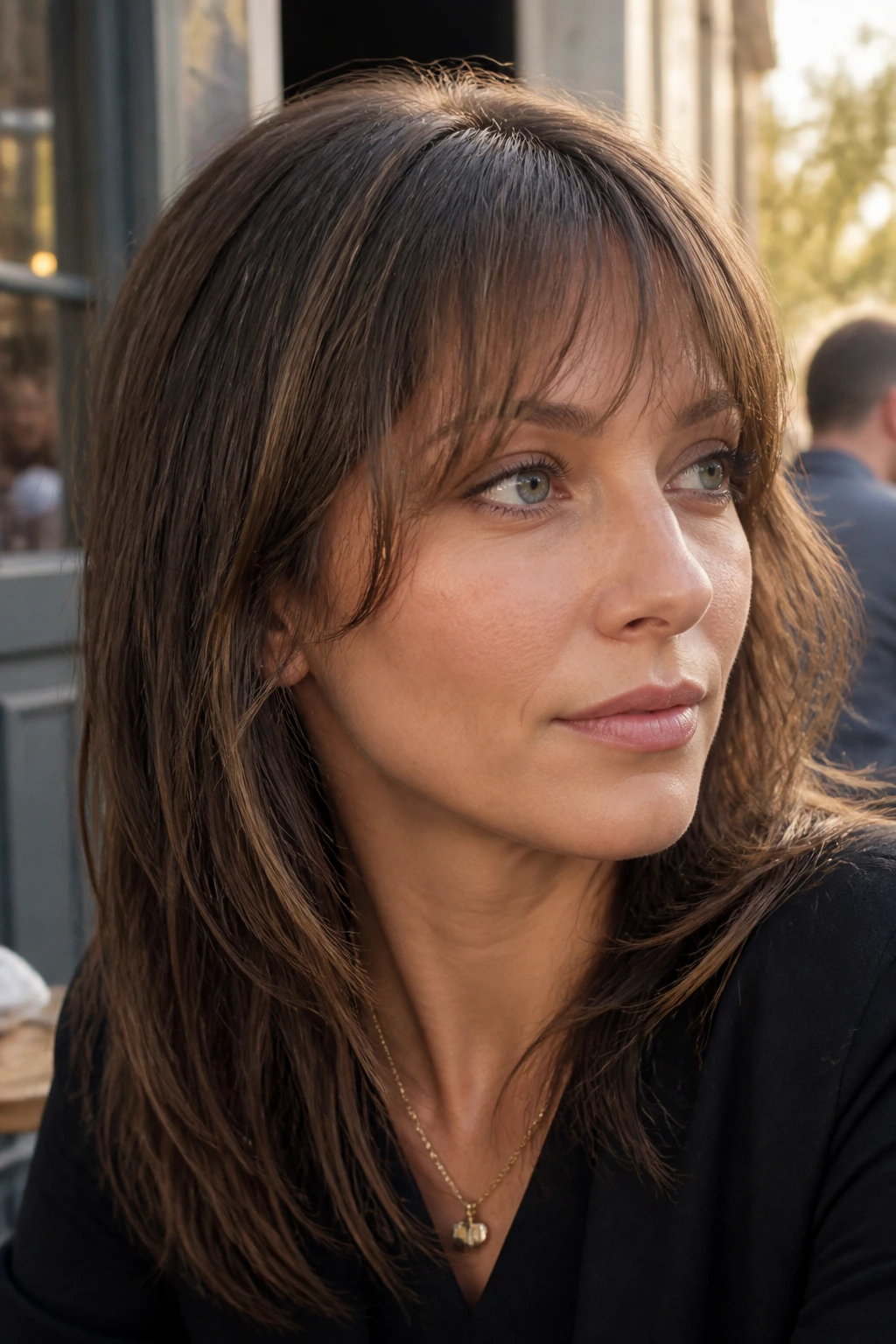
A razored fringe can look sharp in photos and too fragile in real life if it’s cut badly. Done well, though, it has a nice airy edge that suits fine hair because it doesn’t put all the emphasis on density.
Square faces benefit from the broken line at the ends. The fringe bends slightly rather than forming a hard bar across the forehead, which softens the overall shape. Ask your stylist to leave enough length so the ends can be tucked or turned under, not chopped so short that they sit like little hooks.
This one needs a light hand with product. Use a touch of cream, not paste. The cut should look soft even when you’ve barely styled it.
22. Soft Wolfy Fringe with a Broken Edge

A wolfy fringe borrows from shaggy, lived-in haircuts, but the front stays long enough to count as fringe rather than a short bang. The edge is broken and irregular in a way that works well for square faces because it keeps the front from becoming one hard geometric line.
Fine hair can wear this if the stylist preserves some length in the center. Too much thinning and it starts to look starved. The fringe should feel separated, yes, but not wispy in a way that exposes every scalp line.
This is a solid choice if you already wear layered hair or if you like a little edge around the face. It’s not neat. That’s part of the charm.
23. Polished Blowout Fringe That Sits Smoothly
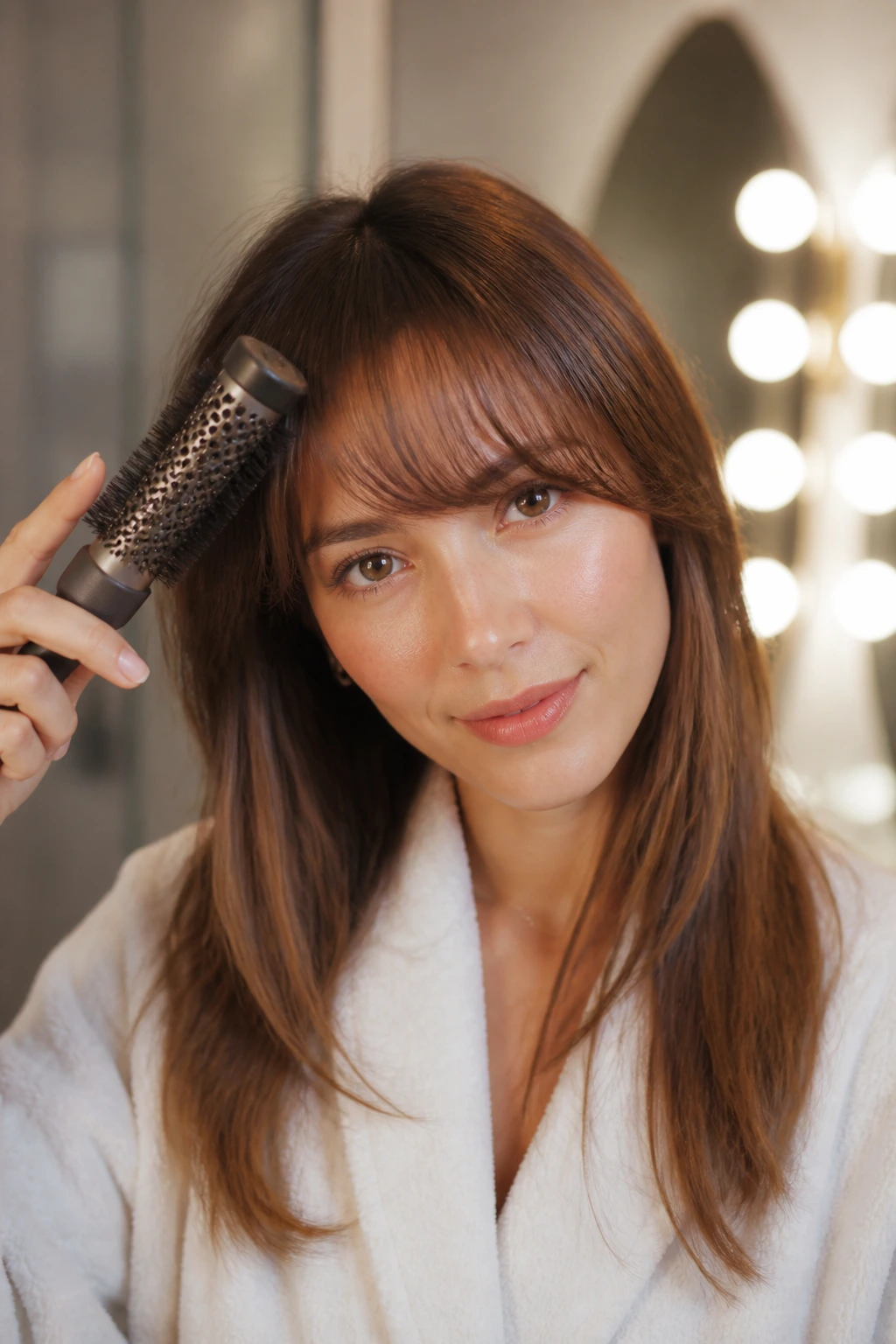
Some people want fringe to look soft. Others want it to look finished. A polished blowout fringe sits in that second camp, and it can be a lovely option for fine hair because a smooth curve often looks fuller than an over-textured mess.
The important part is not to overdo the brushing. Use a small round brush, pull the fringe forward, then slightly under at the ends. That little bend helps the fringe skim the forehead without sticking to it. Square faces get a gentle break in the front line, which keeps the shape from feeling severe.
This style is best if you don’t mind a few extra minutes after washing. It rewards the effort. It also holds up well when you pin the sides back later.
24. Low-Maintenance Grow-Out Fringe
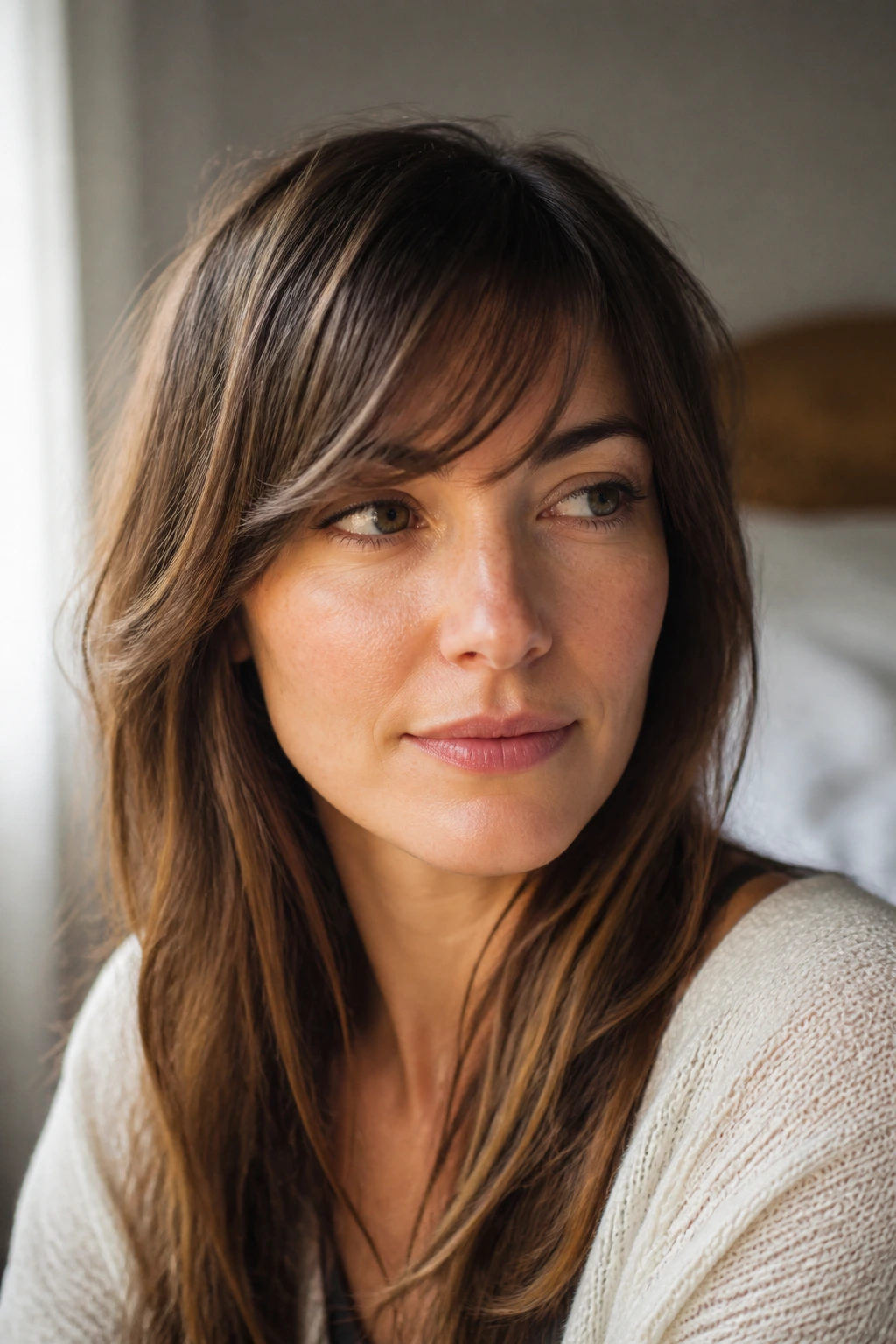
Some fringes are designed for the salon chair. This one is designed for the week after the salon chair. A low-maintenance grow-out fringe starts long enough to stay flattering even when it slides a bit, and that matters if you don’t want to chase a trim every month.
Fine hair needs that breathing room. The hair can move without falling apart. Square faces benefit because the longer length keeps the forehead soft while the front pieces keep merging into the rest of the haircut.
If you’re honest with yourself about maintenance, this is probably the smartest option on the list. It gives you fringe energy without locking you into frequent upkeep. That’s not lazy. That’s efficient.
25. The Best-of-Both-Worlds Fringe

If you can’t decide between curtain softness and side-swept ease, this is the cut to bring to your stylist. The center has enough opening to lighten the forehead, while the corners are long enough to sweep either way. You can wear it middle-parted on one day and off-center the next.
That flexibility is especially useful for square faces, which often look best when the front isn’t too rigid. Fine hair gets the benefit of a lighter shape that still reads as fringe from the first glance. It’s one of the few styles that can be polished, undone, or tucked back without looking like it lost the plot.
I keep coming back to this one because it solves the real problem. Not every day is a round-brush day. Not every haircut needs to ask for one.
Why Long Fringe Works on Fine Hair and Square Faces

-
It softens the forehead line: A square face reads strongest when the top third has a blunt edge. Long fringe breaks that line and gives the face a softer start.
-
It avoids a dense front block: Fine hair often looks weaker when too much of it is cut forward. Longer fringe can be cut lighter and still give shape.
-
It creates sideways movement: Side-swept and split fringe send the eye outward, which is useful when the jawline already carries width.
-
It grows out with less awkwardness: A long fringe slides into face-framing layers more easily than a short, heavy bang that demands constant reshaping.
-
It works with natural parting: If your hair wants to live slightly off center, many long fringe shapes can follow that habit instead of fighting it every morning.
How to Style Long Fringe So It Doesn’t Collapse

Blow-Dry Direction: Start at the roots and aim the airflow up and slightly across the face, not straight down. Fine hair flattens fast when it gets pinned under hot air and then left to cool there.
Root Lift: A pea-size amount of mousse or a light root spray at the front makes a real difference. Use too much and the fringe turns sticky; use none and it drops by noon.
Shape, Not Shellac: A tiny round brush or even a flat iron bend at the ends gives the fringe enough curve to soften a square face. You do not need a crisp, lacquered finish unless that’s your whole style.
Day-Two Rescue: Dry shampoo at the roots and a quick blast of cool air usually bring the fringe back faster than washing it again. If the ends look stringy, wipe a trace of cream between your fingers and tap it onto the last inch only.
Salon Ask: Say you want the fringe to stay light at the corners and soft at the center. That one sentence saves a lot of bad fringe.
The Mistakes That Make a Long Fringe Look Heavy or Boxy

The first mistake is cutting the fringe too thick. On fine hair, that usually looks strong for one day and then starts clinging to the forehead like wet paper. Ask for density only where it supports the shape, usually through the center, not at the temples.
The second mistake is stopping the fringe in a hard straight line. Square faces already have structure; another straight edge across the brow can make the whole haircut feel stubborn. A slight taper or curve is doing more work than people think.
The third one is over-thinning with a razor. A little airy texture is useful. Too much makes the fringe look frayed, and fine hair rarely recovers well from that.
The fourth is ignoring the parting pattern. If your hair keeps splitting one way, don’t force a center-part curtain just because it looks good in a photo. A fringe that fights your cowlick will spend its life losing.
And then there’s the product problem. Heavy creams and thick pastes can turn a smart long fringe into limp string within an hour. Stick to light mousse, a touch of dry texture spray, or a tiny bit of serum on the ends only.
Variations and Alternatives to Try
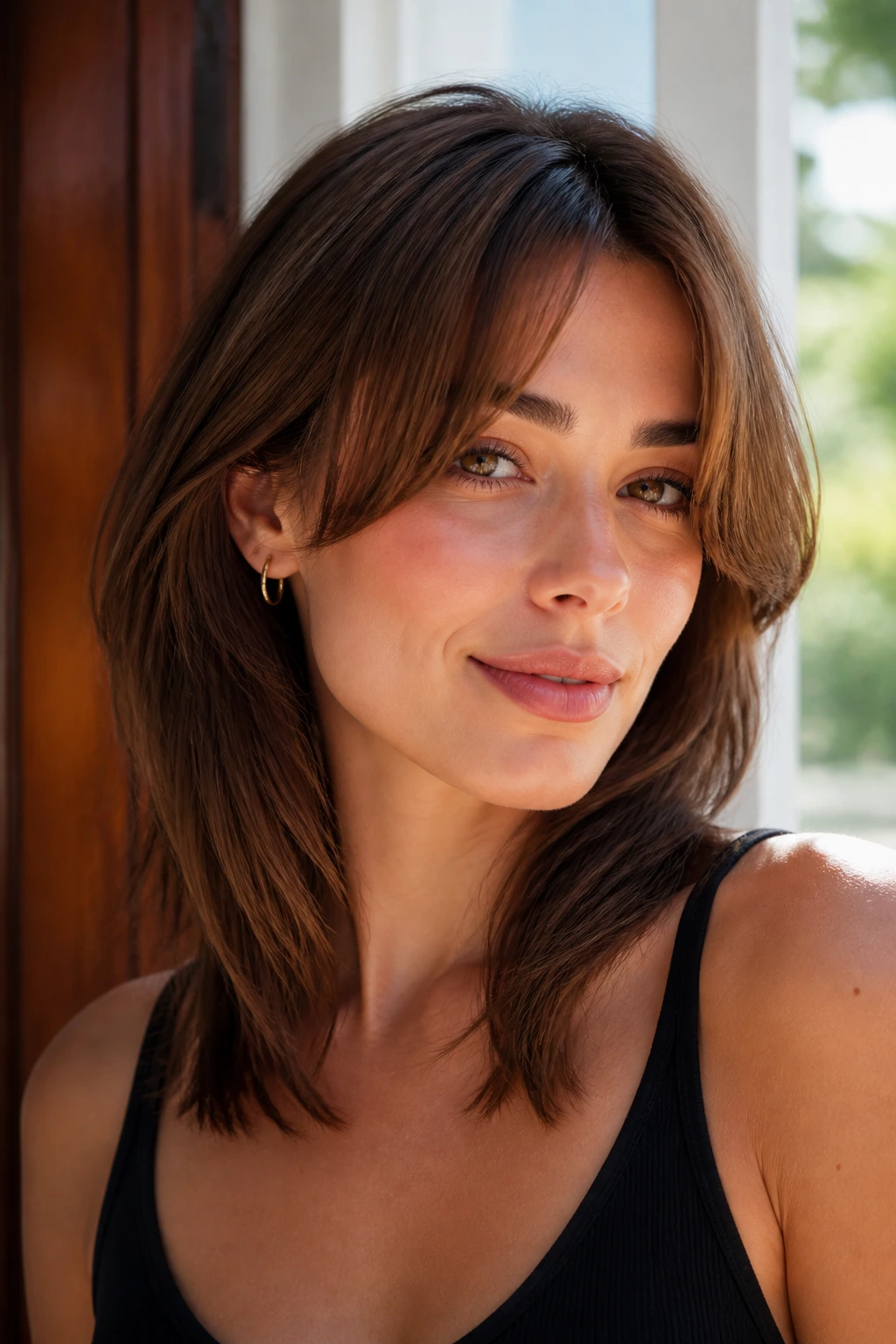
The Softer Split: If you like curtain fringe but want less forehead coverage, ask for a deeper center opening with longer outer corners. It still softens a square face, but it leaves more skin visible at the brow.
The Side-Sweep Escape Hatch: If your hairline refuses to behave in the middle, build the fringe around a side part from the start. This version works especially well when one temple is fuller than the other.
The Sparse-Hair-Friendly Veil: For very fine hair, a translucent fringe with more space between the strands can look cleaner than a dense cut. The trick is keeping the shape intentional so it reads airy, not weak.
The Polished Layer Blend: If you hate seeing a separate bang line, blend the front pieces into longer face-framing layers. It’s a good fit for someone who wants the idea of fringe without obvious maintenance.
The Grow-Out Plan: If you’re nervous about commitment, start with the longest version on this list and trim up from there. Long fringe is easier to shorten than a blunt bang is to grow out.
Styling Tools That Make a Long Fringe Behave
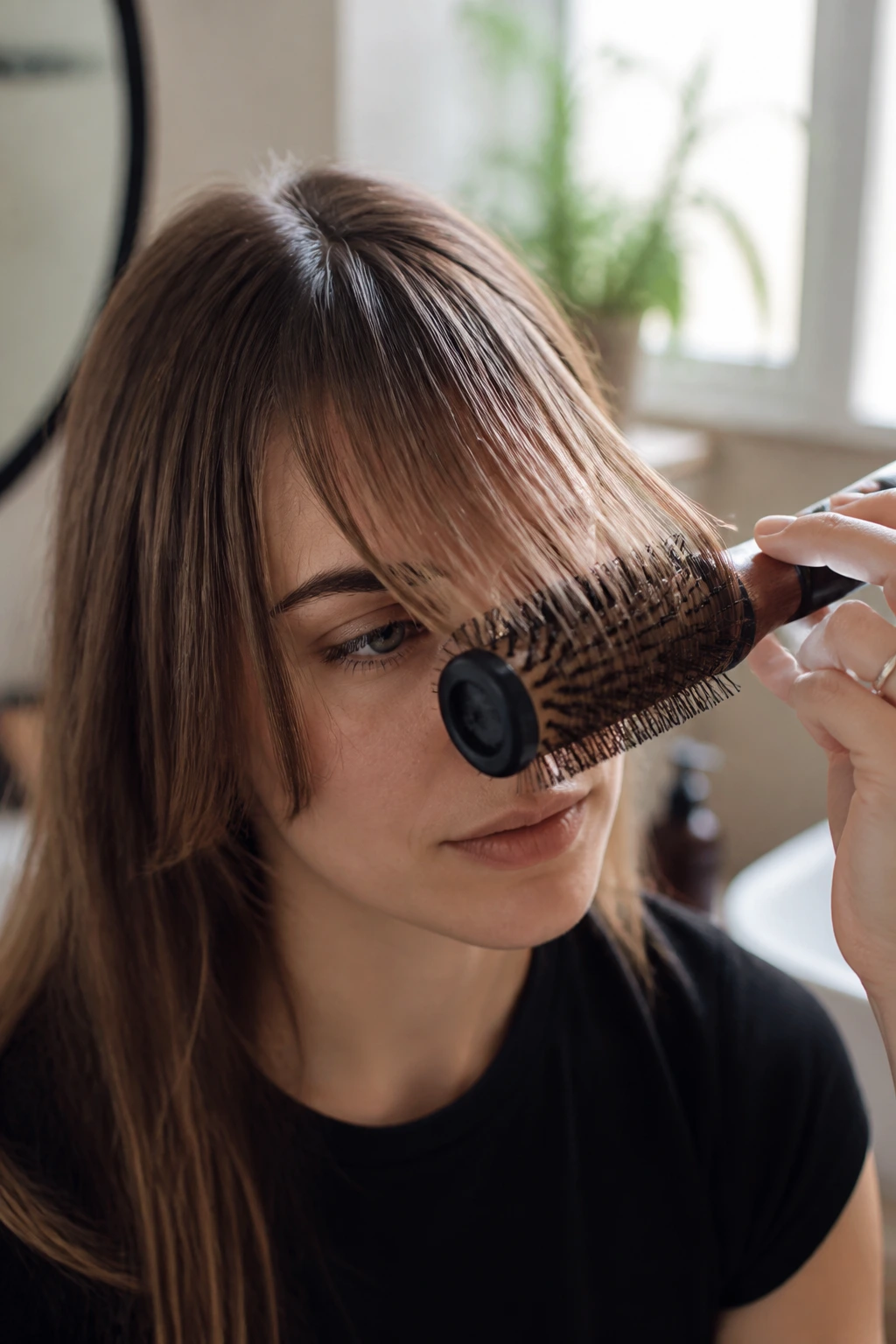
- Small round brush: The easiest way to add a soft bend at the ends without making the fringe puff out.
- Blow dryer with a narrow nozzle: Helps direct air at the roots so fine hair lifts instead of scattering.
- Fine-tooth comb: Good for separating a center split or keeping an off-center fringe tidy.
- Duckbill clips: Useful for training the front while it cools after blow-drying.
- Mini flat iron: Handy for a tiny curve or quick reset on day two.
- Light mousse or root spray: Gives the front some memory without making it stiff.
- Dry shampoo: Saves a fringe that starts to look oily by lunch.
- Light texturizing spray: Best for piecey fringe that needs separation, not slickness.
Keeping the Shape Between Cuts
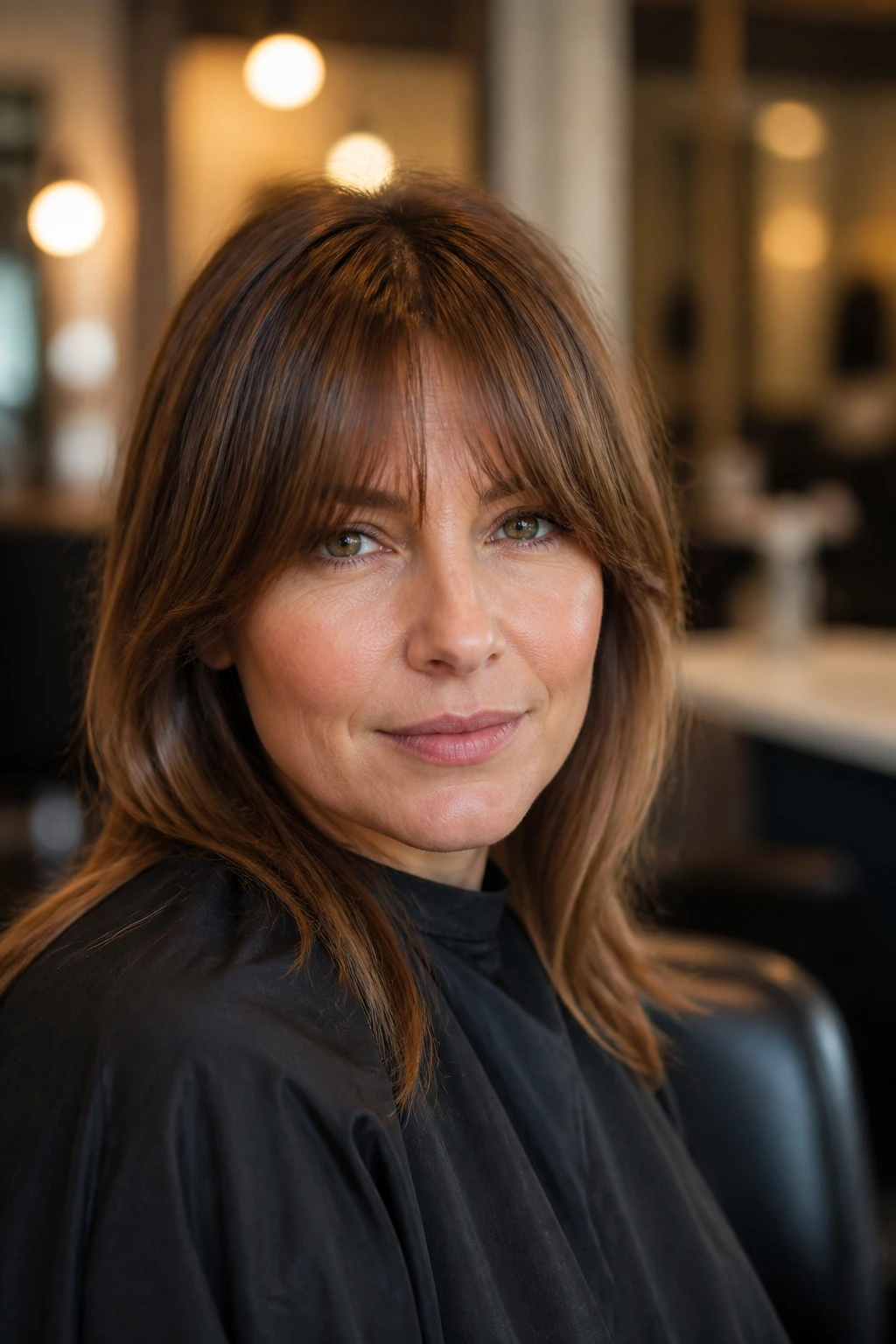
Long fringe looks best when it’s trimmed on a predictable schedule. Most people with fine hair do well with a tidy-up every 4 to 6 weeks if the fringe is meant to stay in shape, or every 6 to 8 weeks if it’s a grow-out version. Leave it longer than that and the corners start to drop into the eyes or the whole thing begins to feel vague.
Washing matters, too. Fine hair often gets oily at the roots faster than thicker hair, so a fringe may need a quick sink rinse or a front-only wash even when the rest of the hair is fine for another day. Dry it right away. A damp fringe on fine hair turns limp fast.
At night, don’t smash the front flat under a heavy clip or sleep with it soaking wet. That’s how you wake up with odd bends and little forehead dents. A loose pin at the crown or a gentle side clip can keep the front from sticking in weird directions.
Questions People Ask Before Cutting Long Fringe
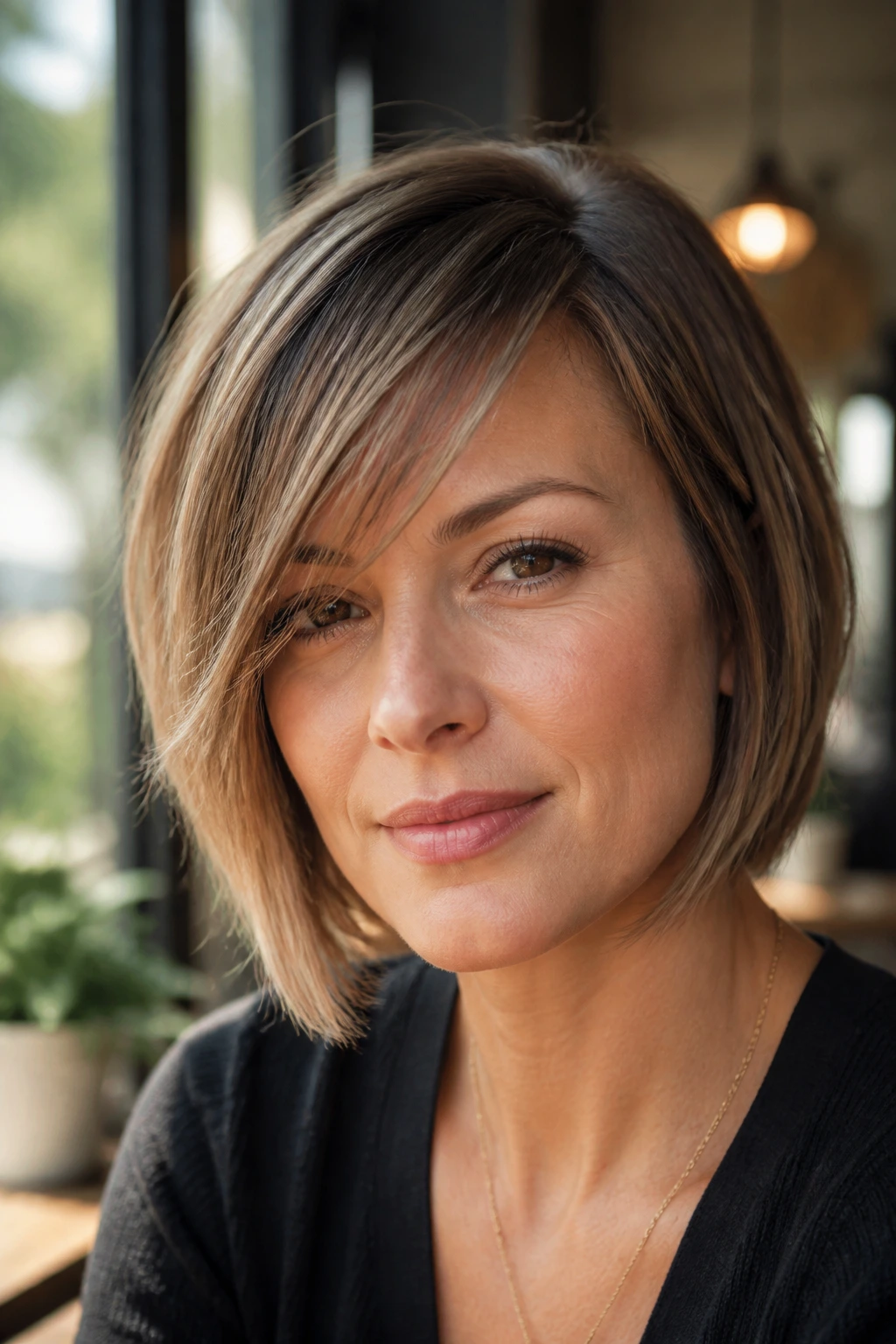
Will long fringe make a square face look wider?
Not if the shape is right. A fringe that opens in the middle, sweeps diagonally, or tapers at the corners usually softens the width instead of adding to it. The blunt, straight-across versions are the ones that tend to emphasize the square shape.
Is curtain fringe good for fine hair?
Yes, if it’s kept light. A heavy curtain can sink fast on fine hair, but a feathered split with longer corners usually moves well and grows out cleanly.
How often should I trim it?
Plan on 4 to 6 weeks for a neat fringe and a little longer if you want it to grow. Fine hair can look overgrown faster because the shape collapses sooner than thick hair does.
What if my hair has a strong cowlick at the front?
Start with a side-swept or off-center version. Those shapes usually work with the cowlick instead of forcing a fight at the hairline every morning.
Can I air-dry a long fringe?
You can, but the shape matters. Piecey or wispy fringe usually air-dries better than a polished blowout version. If you want a smoother finish, dry the fringe first and let the rest of the hair air-dry later.
Should I avoid razor cutting if my hair is fine?
Not always. A light razor finish can remove bulk and keep the fringe airy, but too much can make fine hair look thin at the ends. The stylist’s restraint matters more than the tool.
Which parting is most flattering for square faces?
A soft off-center part is often the easiest win. It breaks symmetry without looking extreme and gives the front a bit of lift where fine hair tends to flatten.
A Fringe That Softens the Edges
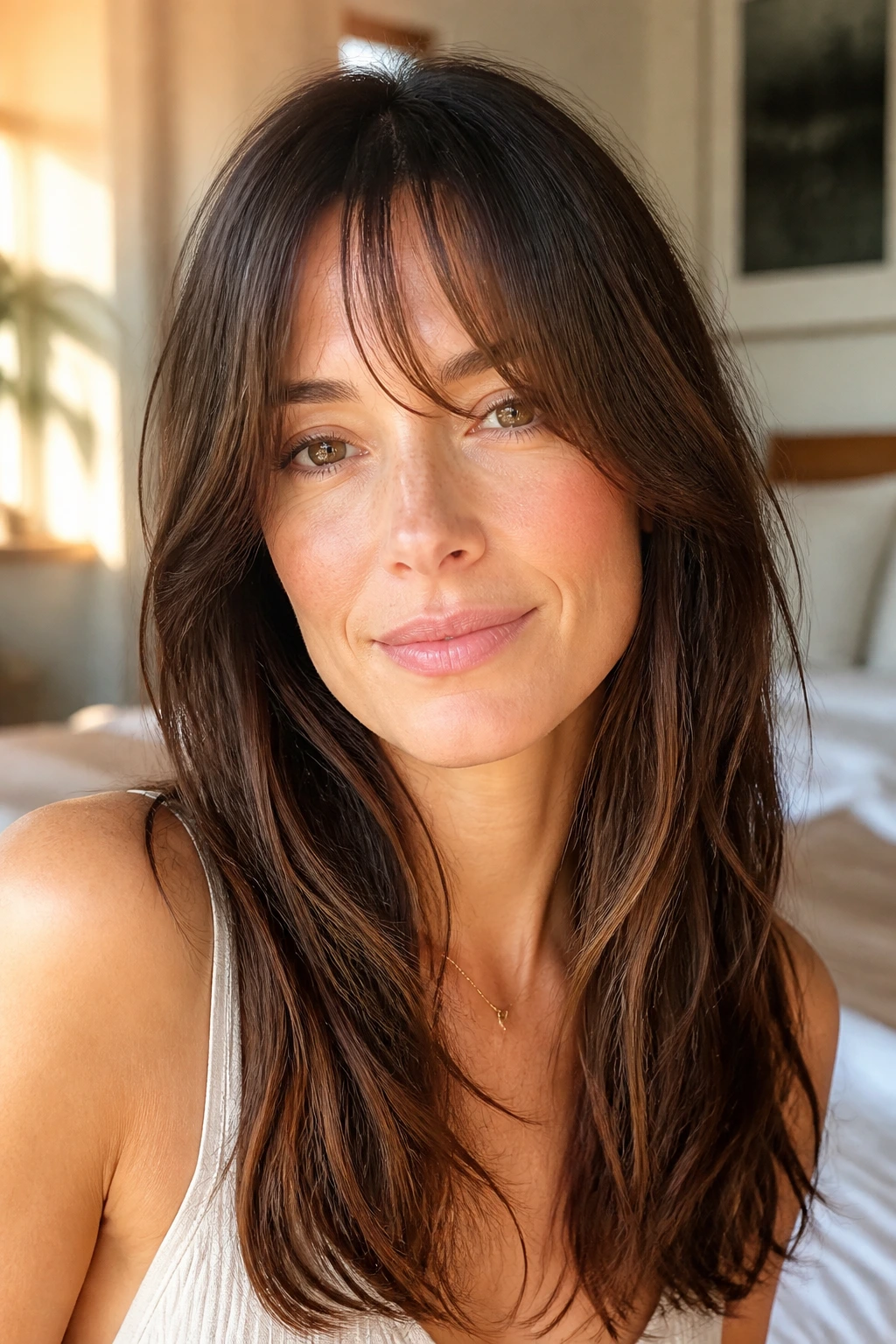
Long fringe works here because it does something blunt bangs can’t: it softens without hiding the face. Fine hair gets a lighter front. Square faces get curves, diagonals, and movement where they need them most.
The best version is the one that still looks good when you’re late, the roots are a little oily, and you’ve only got two minutes in front of the mirror. That’s the real test. Not the salon chair. The Tuesday morning mirror.
A good long fringe should feel like part of your haircut, not a separate project. Get that balance right, and the whole face opens up in a way that feels easy to wear, which is exactly what most people wanted in the first place.