



Honey blonde can go wrong fast on deep skin. Too pale and it turns chalky. Too yellow and it starts looking loud in a way that has nothing to do with shine. The versions that work best keep a darker root, a warm gold through the mids, and just enough light on the ends to catch movement when the hair swings.
That’s why warm honey blonde balayage for deep skin tones has such staying power. It isn’t about making the whole head lighter. It’s about placing warmth where it flatters the face, then leaving enough depth underneath so the color has somewhere to land. On dark brown, espresso, mahogany, and blue-black bases, that contrast can look soft and expensive, or flat and overdone, depending on the hand behind the brush.
The sweet spot lives between caramel, amber, toasted gold, and a soft butter gloss. Not pale. Not brassy. Warm enough to glow against rich skin, deep enough to keep the hair from looking stripped. Once you see the difference, it’s hard to unsee it.
Why This Collection Works So Well on Deep Skin
-
Warmth does the heavy lifting: Honey, caramel, amber, and butterscotch sit naturally against deep complexions, especially when the root stays a shade or two deeper.
-
Placement matters more than lightness: A few ribbons around the face can brighten the skin more effectively than blasting the whole head with blonde.
-
Texture changes the whole read: The same honey tone looks softer on curls, sharper on a silk press, and more dimensional on layered waves.
-
Grow-out stays softer: Balayage leaves a blurred transition, so the color doesn’t shout at you the moment the roots start coming in.
-
The photos are easier to judge: These looks make it obvious whether you want subtle glow, bold contrast, or that in-between space where the hair looks sunlit but not pale.
-
The style range is wide: You can wear honey blonde on long curls, a blunt bob, a lob with bangs, or tight coils without repeating the same result twice.
Warm Honey vs. Flat Blonde on Deep Skin
The difference between a rich honey tone and a flat blonde is usually a matter of depth and undertone. On deep skin, the prettiest versions rarely sit at the palest end of the blonde spectrum. They live around level 7, 8, or 9, where the hair still holds gold, apricot, caramel, or bronze, instead of going washed out.
A lot of people ask for “blonde” when what they really want is glow. Those are not the same thing. Glow keeps some shadow in the root and some warmth in the lightest pieces; it gives the face shape. Flat blonde often lifts too far, then gets toned into a beige that looks sleepy beside rich skin.
If your skin leans warm, golden honey, amber, and caramel usually play nicely. If your undertone is neutral or cool, the safest move is still warmth, but it should be softened with beige-gold rather than orange-gold. That tiny adjustment matters. A lot.
1. Golden Ribbon Balayage on Long Curls
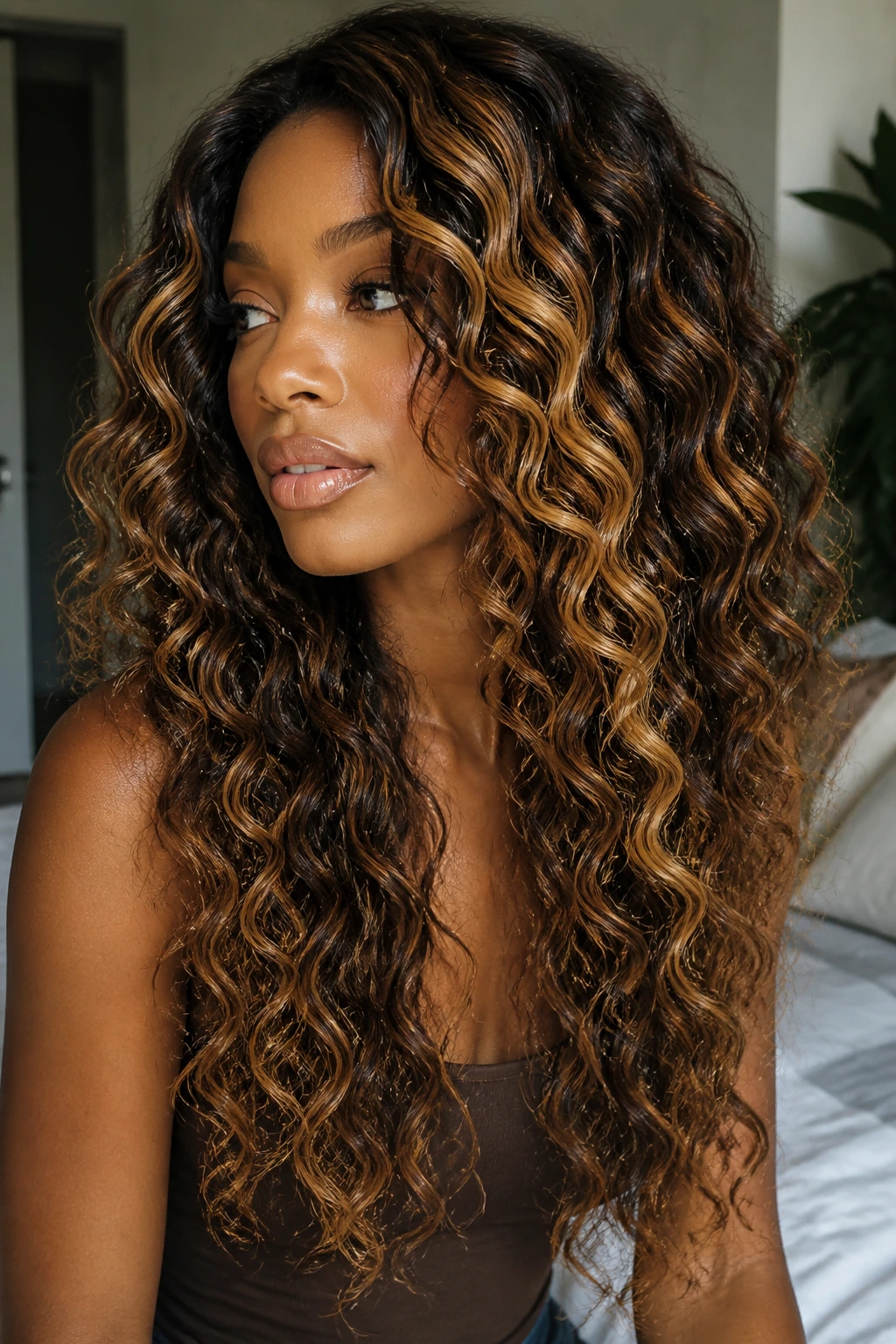
Golden ribbons threaded through long curls make the curl pattern look fuller without turning the whole head into a sheet of light. The trick is spacing: the brighter pieces should sit on the outer curve of the curl, not packed right at the scalp. That gives the color movement, which is what deep skin really loves here.
Why It Works
Ask for thin, hand-painted ribbons starting around cheekbone level and running to the ends. Keep the root at least one to two levels deeper than the lightest honey so the contrast stays rich, not striped.
- Best on dense, springy curls that need shape.
- Ask for level 8 honey with a soft caramel gloss.
- Style with a diffuser and a light cream, not heavy butter.
Pro tip: If the curl clumps are chunky, widen the spacing between the lighter pieces. The hair will look fuller, not lighter.
2. Rooted Honey Melt With a Shadow Root
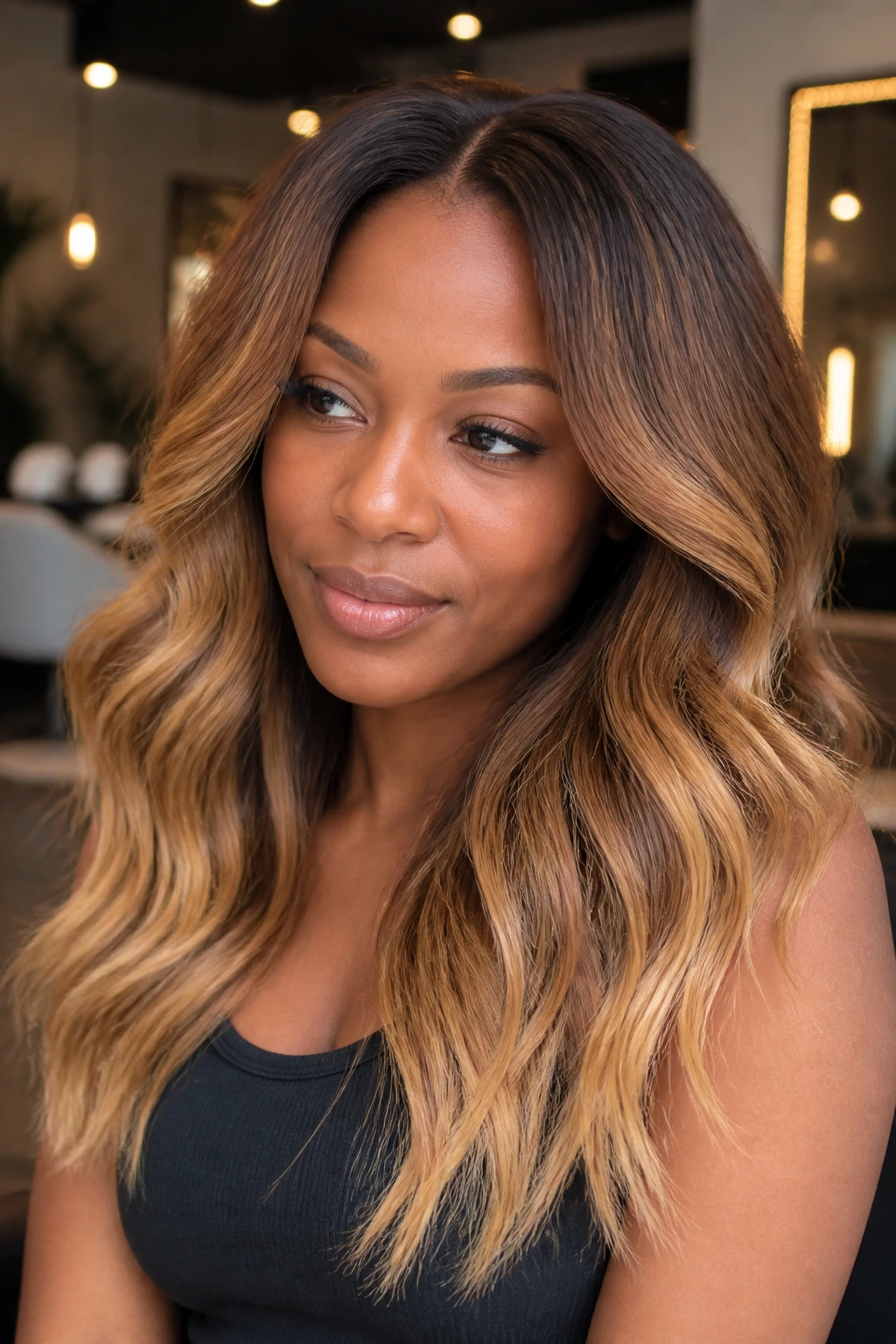
A rooted honey melt is the least fussy way to wear blonde on deep skin. The shadow root keeps the color grounded, while the honey midlengths and ends brighten only where the hair moves. It’s a smart look when you want color that grows out cleanly and doesn’t need constant babysitting.
The root should still look like hair, not a helmet. A good colorist usually leaves the top section deep and melts the lightness in gradually, so the shift feels like a blur instead of a line. This one works especially well on straight or softly waved hair, because the blend shows off the smooth transition.
If you like low maintenance and hate harsh regrowth, this is the one to bookmark. It’s calm, polished, and a little sneaky.
3. Buttered Money Piece Around the Face
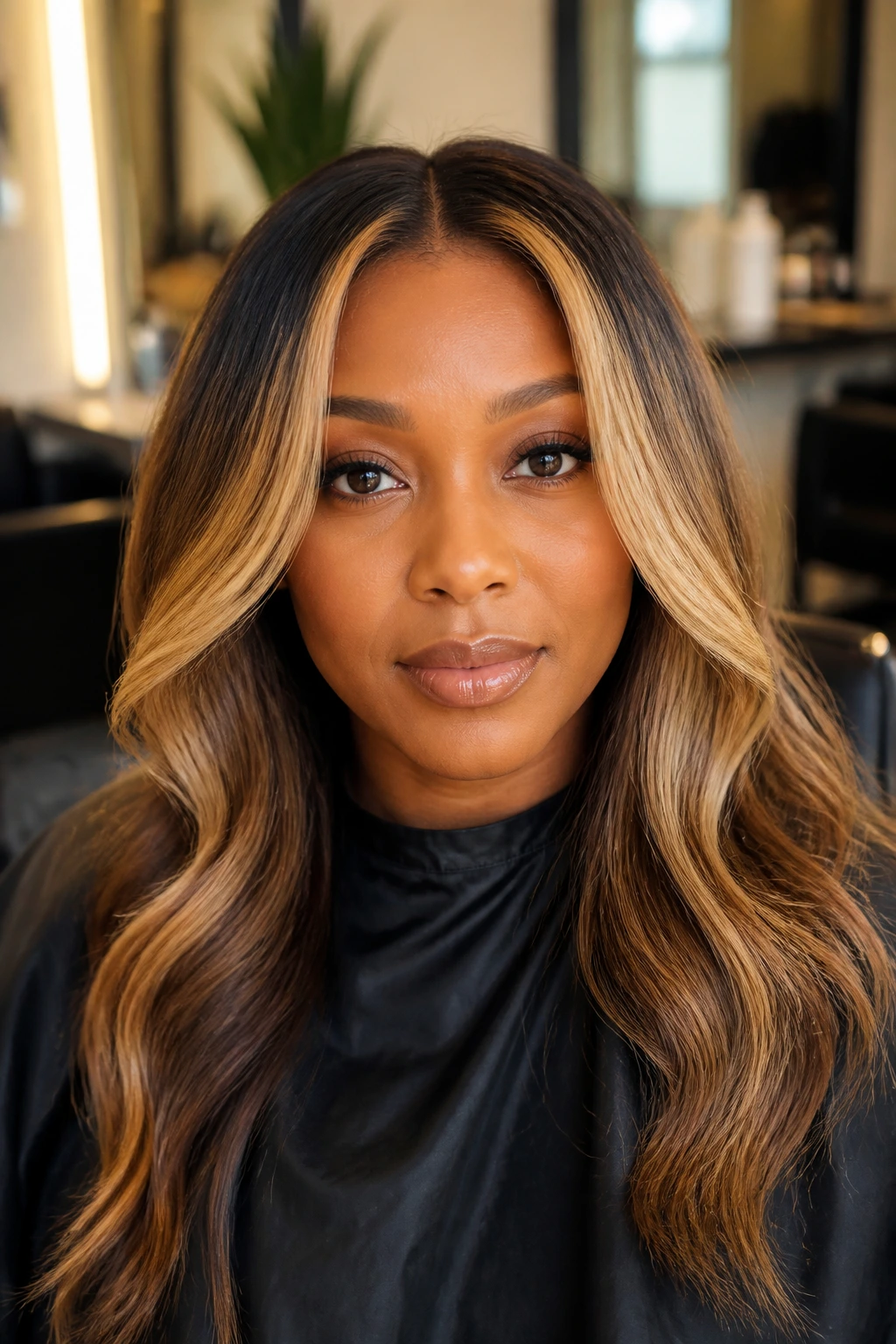
Why does a bold money piece look so good on deep skin? Because the contrast lands exactly where the eye goes first. A buttery frame around the face can brighten the forehead, cheeks, and cheekbones without turning the rest of the hair into overprocessed lightness.
How to Wear It
Keep the money piece a touch warmer than the rest of the balayage so it doesn’t go icy. Ask for the brightest lift near the temples and the front of the hairline, then let it soften as it drops toward the jaw.
- Best with center parts and soft bends.
- Works on natural curls, blowouts, and straight styles.
- Ask for golden-beige or honey-gold, not ash.
Watch for: If the front pieces are too thick, the look becomes loud fast. Slimmer panels usually flatter the skin more.
4. Caramel Honey Lob With a Deep Side Part
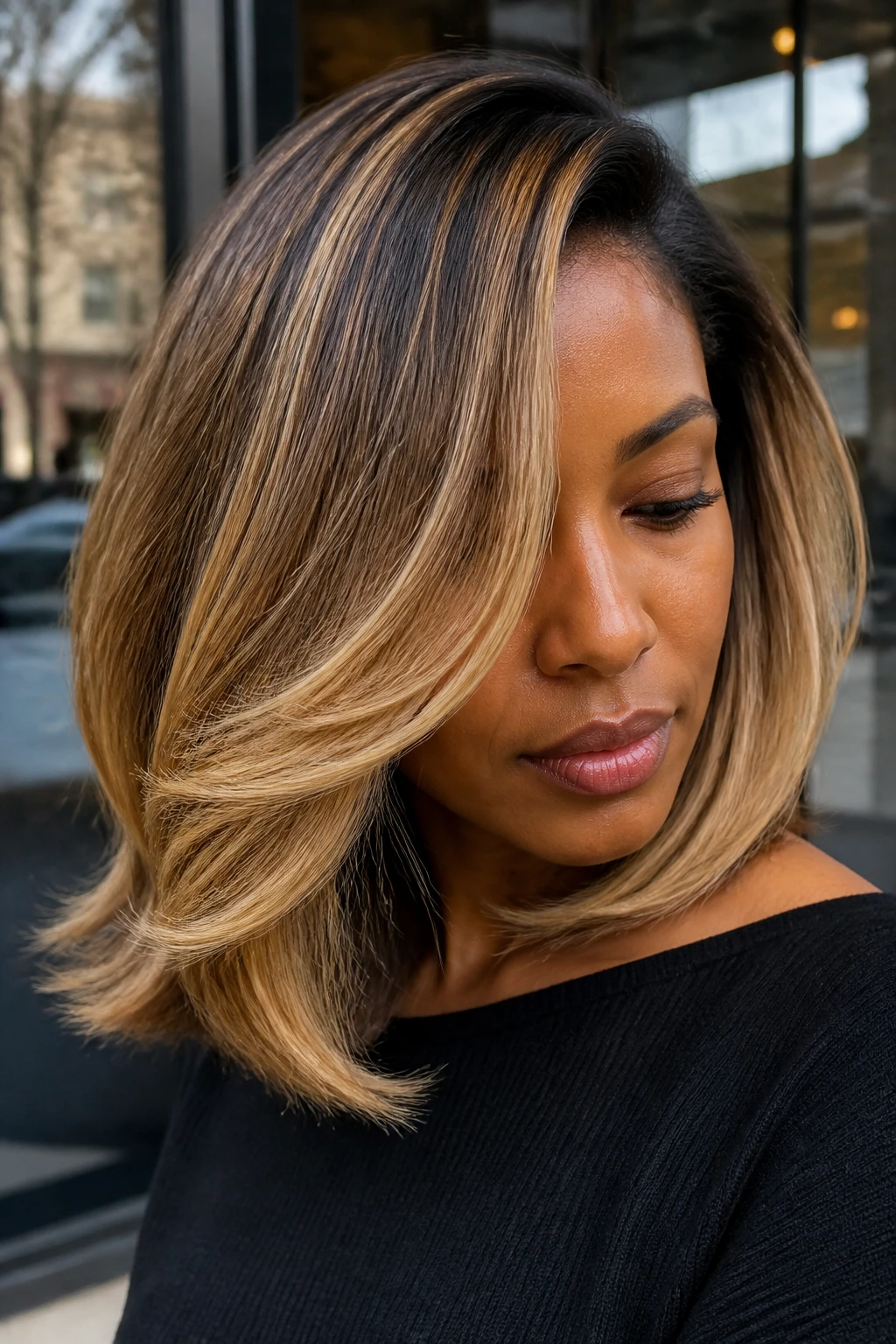
A lob with a deep side part gives honey balayage a little drama without needing big contrast. The longer side lets the light sweep across the cheek, and the warmer caramel pieces keep the cut from feeling heavy at the bottom. On deep skin, that balance can look sharp in the best way.
This is the kind of style that looks good even when the hair is not freshly curled. A bend at the ends, a polished blow-dry, or a soft flat-iron wave all work. The color sits in the shape instead of fighting it.
If your hair is medium density and you want movement without layers everywhere, this is a clean place to start.
5. Amber Halo Balayage on Natural Curls
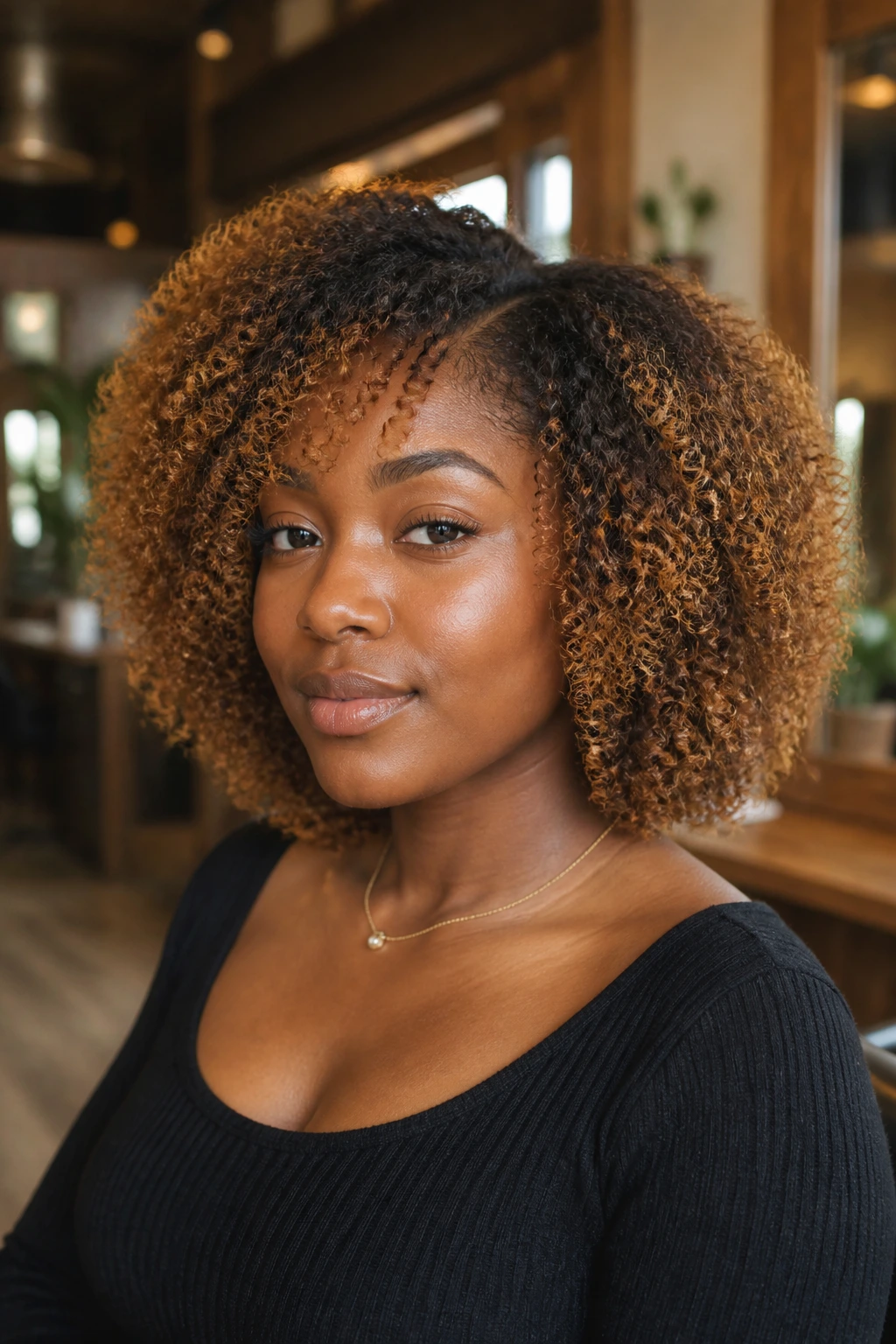
There’s something especially good about a halo placement on curls. Instead of scattering brightness everywhere, the lighter amber pieces sit around the upper crown and outer perimeter, which lets the curl shape stay visible. That matters on deep skin, where too many light panels can flatten the pattern.
The halo approach also keeps the color from disappearing when the curls shrink. The bright bits are still easy to see from the front, but they don’t interrupt the whole head. Ask for warm amber, not pale gold. That one detail keeps the look rich.
This is a strong choice if you wear your curls natural most days and want the color to show without constant heat styling.
6. Butterscotch Ends on a Silk Press
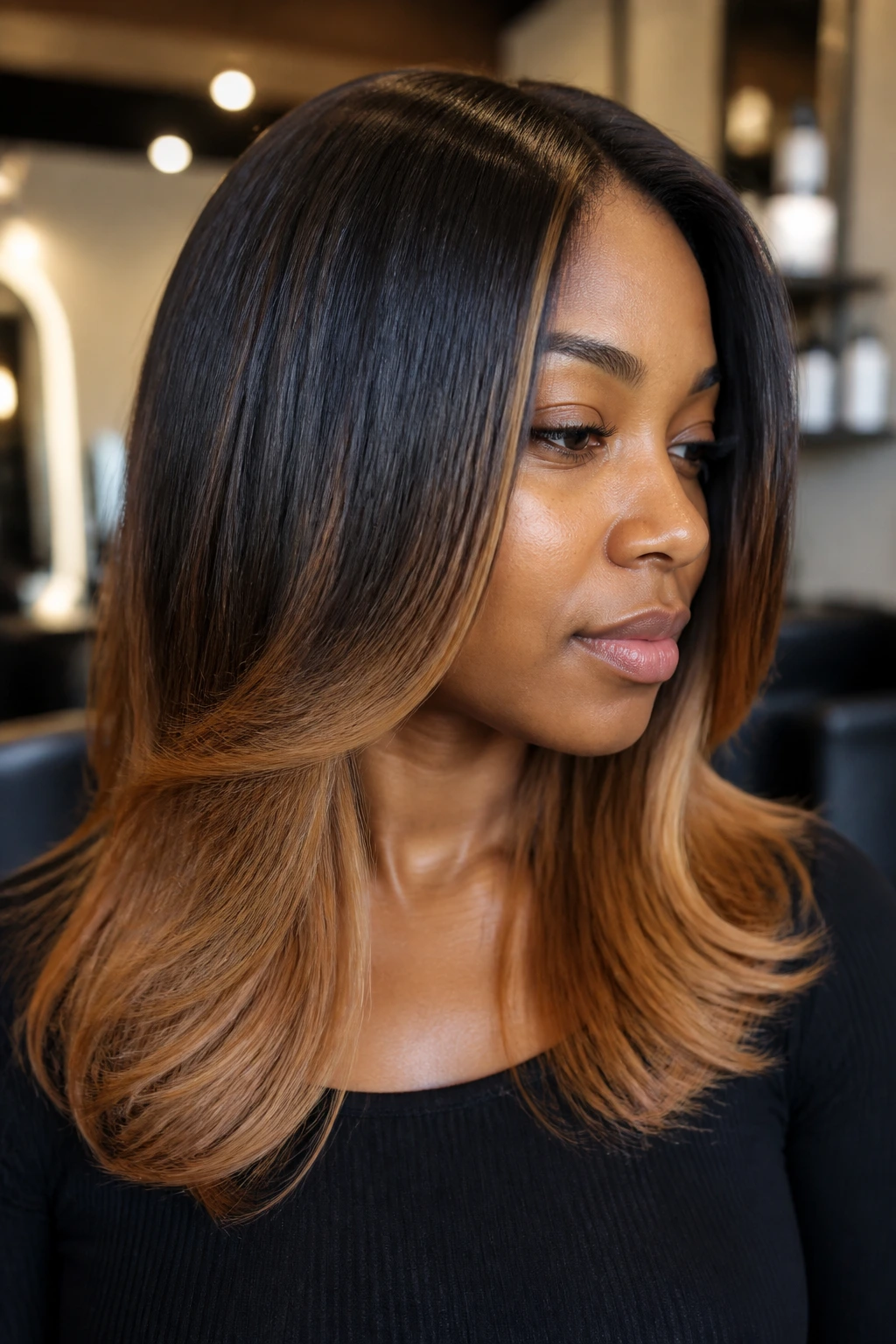
Butterscotch ends are a cleaner answer than a full blonde transformation. The lightness stays on the bottom few inches, so the color appears only when the hair moves or the ends fan out under light. On a silk press, that creates a glossy finish that can look almost liquid.
The danger here is over-lightening the ends until they feel thin and dry. Avoid that. Keep the top layers dark enough to frame the face, then let the ends do the talking. You want warmth, not fried-looking tips.
This is one of those styles that looks especially good with sharp edges and a clean center part. It’s neat. It’s warm. It doesn’t try too hard.
7. Toasted Almond Balayage With Curtain Bangs
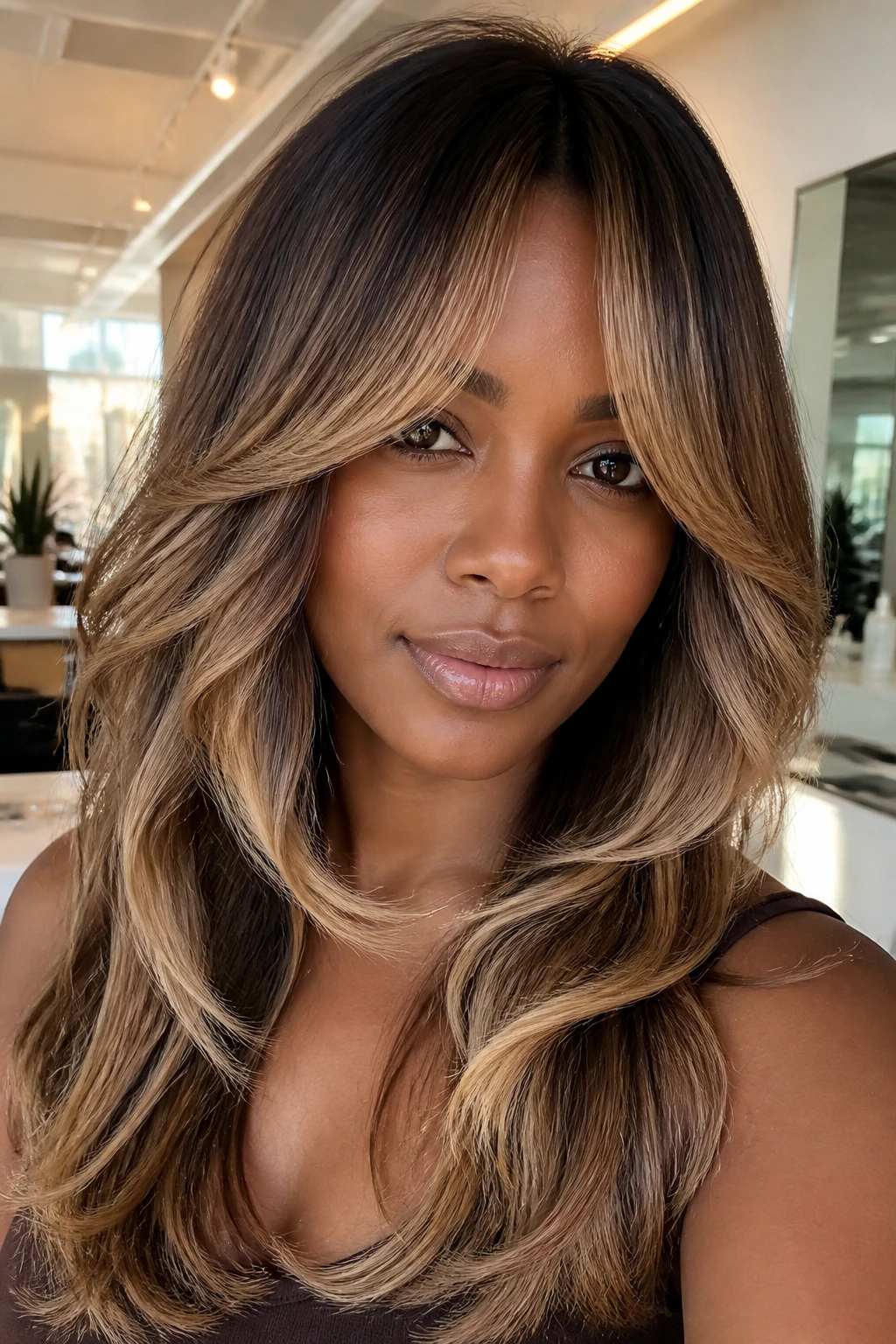
Curtain bangs are a sneaky-good place to put honey blonde because they break up the face without needing full-front brightness. A toasted almond tone running through the bangs and front layers softens the cheek area and makes deep skin look lit from above, not washed out from the front.
What to Ask For
Ask for the bangs to be a touch lighter than the rest of the cut, but still warm. You want the pieces that fall beside the eyes and cheekbones to glow first, then fade into deeper brown through the sides.
- Best for layered lobs and shags.
- Ask for toasted almond, honey beige, or light caramel.
- Keep the root smoky so the bangs don’t look like a separate wig piece.
Good sign: The bangs should move with the cut, not sit on top of it like a sticker.
8. Bronzed Ombre on Waist-Length Waves
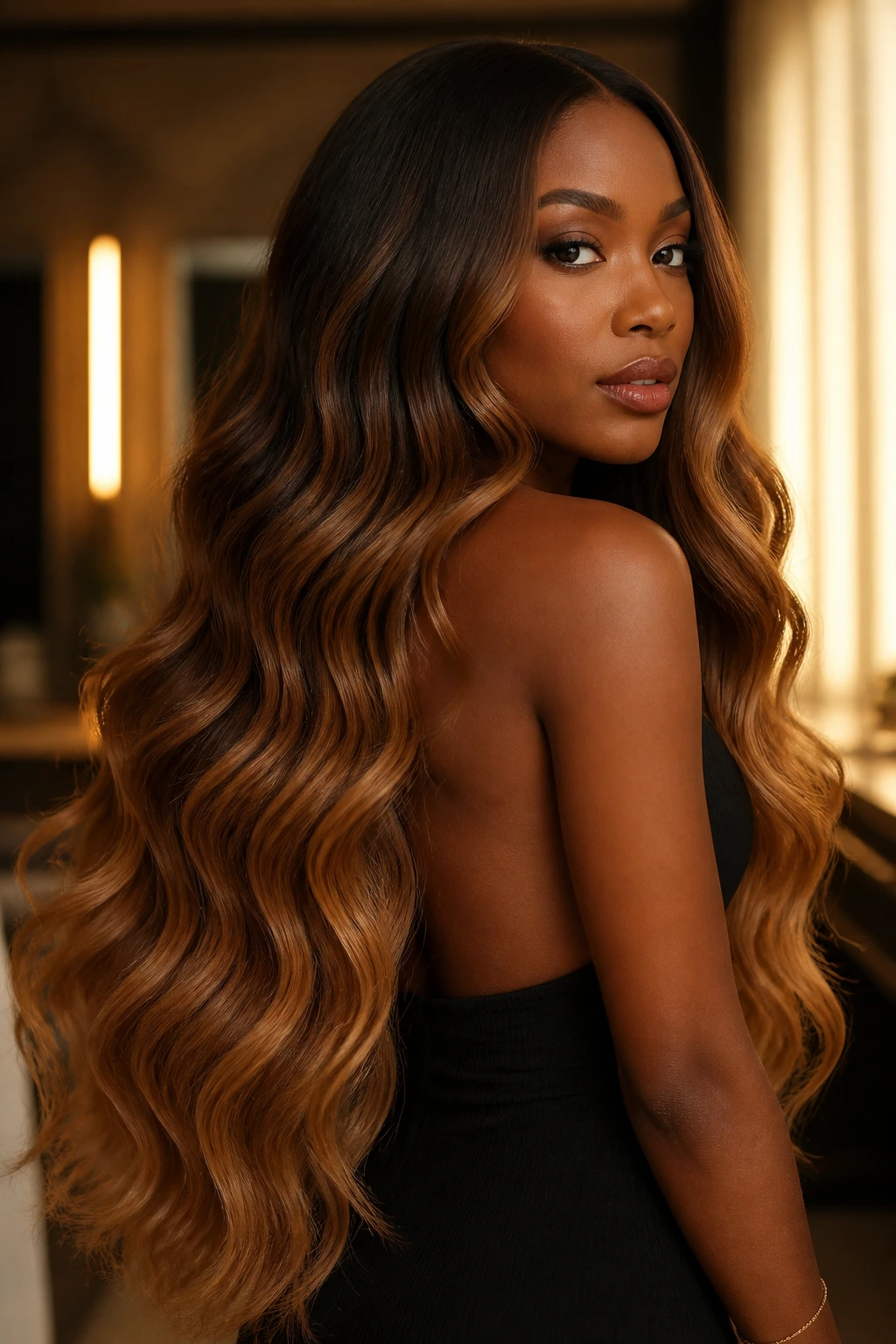
A bronzed ombre is for the person who wants obvious length and obvious color, but not a hard line. The transition starts deep at the root, shifts through bronze in the mids, then lands in honey at the ends. On deep skin, that bronze middle stage matters. It keeps the blonde from jumping too light too fast.
This works best when the hair has enough length for the gradient to breathe. Waist-length waves give each tone room to show. If the ends are curled loosely, the lighter pieces peek through instead of shouting.
The mood here is glamorous without being brittle. If you like movement, this one has it.
9. Copper-Honey Ribbons on Coily Hair
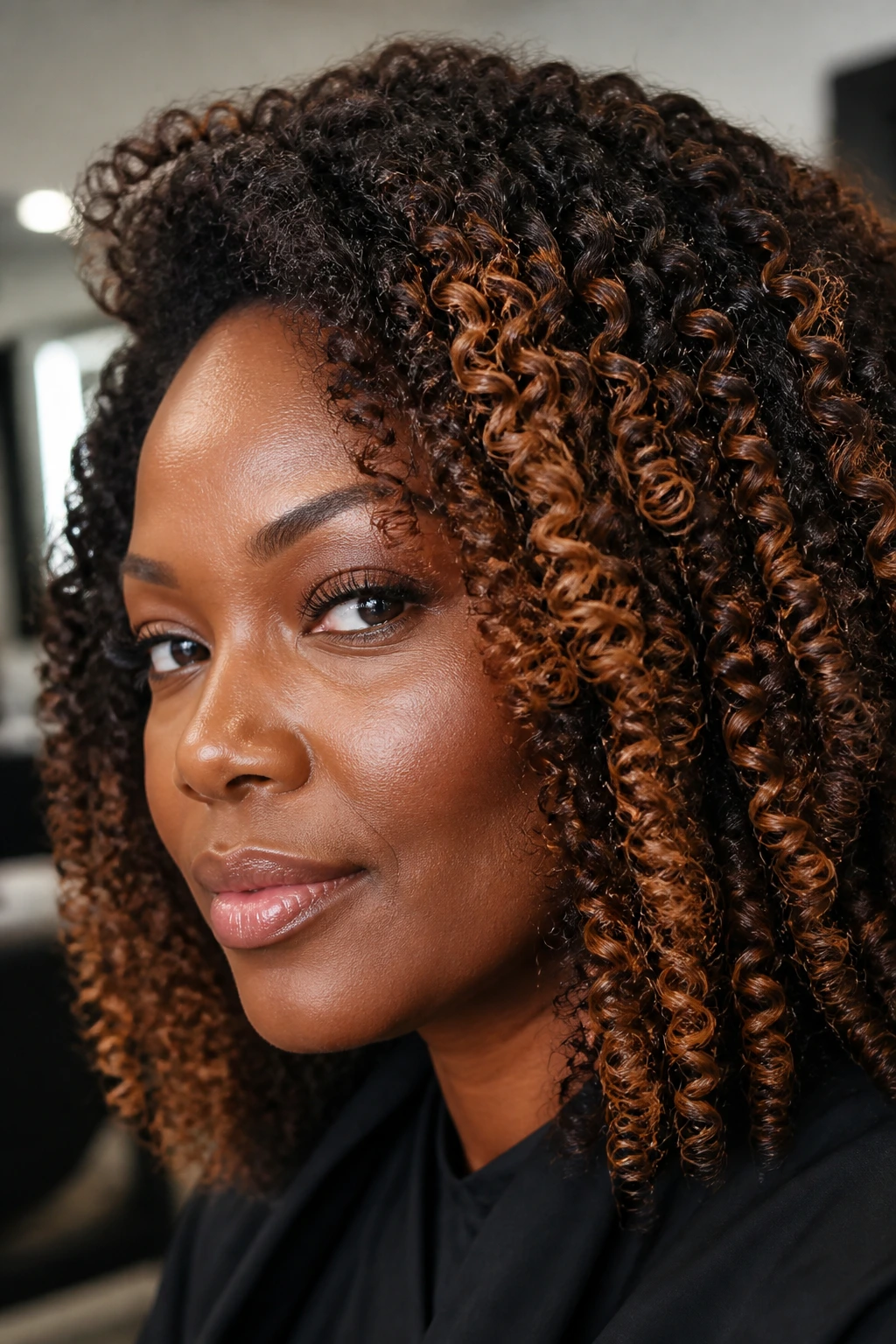
Coily hair can wear honey blonde beautifully when the placement respects the pattern. Thin copper-honey ribbons painted along the outside of the coil create shine without flattening the texture. The warmth also keeps the blonde from reading dull against deep skin.
The key is restraint. Too many light pieces can blur the coil definition, and then the whole style loses shape. The better route is a few ribboned sections around the front, crown, and top layers, with the rest left deep and dimensional.
This is not the place for a pale, icy blonde. Copper-honey, with a little amber in it, usually looks much better and feels more alive.
10. Tiger Eye Balayage for Deep Brown Hair
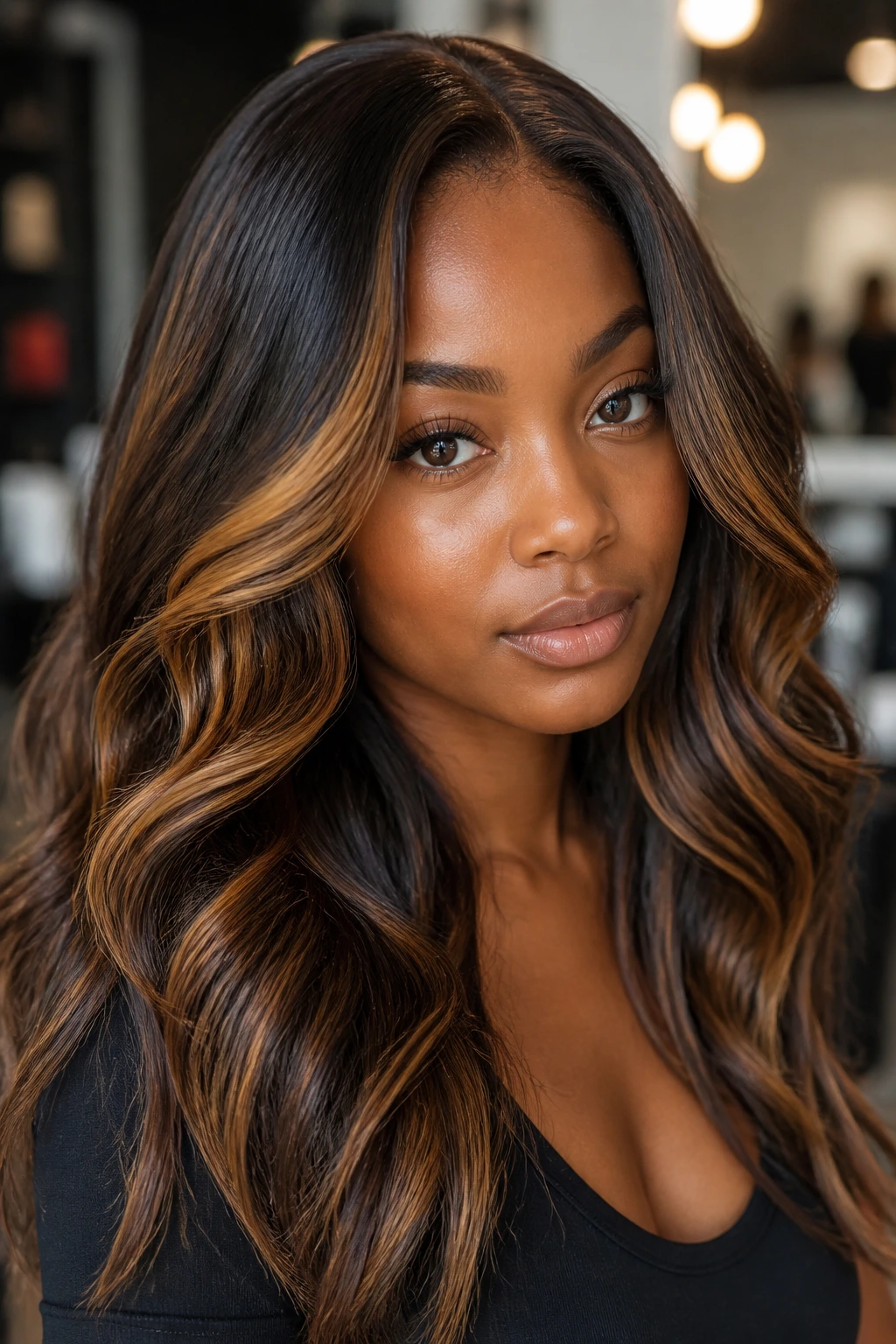
Tiger eye hair is basically a color cheat code for deep skin. It mixes caramel, honey, gold, and chestnut in a way that looks expensive without needing ultra-light blonde. The result is dimensional, warm, and a little bit glossy in the same way polished stones are glossy.
What makes it work is the stripe logic. The light and dark pieces should be woven, not dumped on top of each other. You want the eye to travel through the hair, not stop at one bright panel.
If your natural hair is deep brown and you want something richer than plain blonde, this is a smart lane. It has enough warmth to glow and enough depth to stay believable.
11. Lived-In Honey Melt With Soft Lowlights
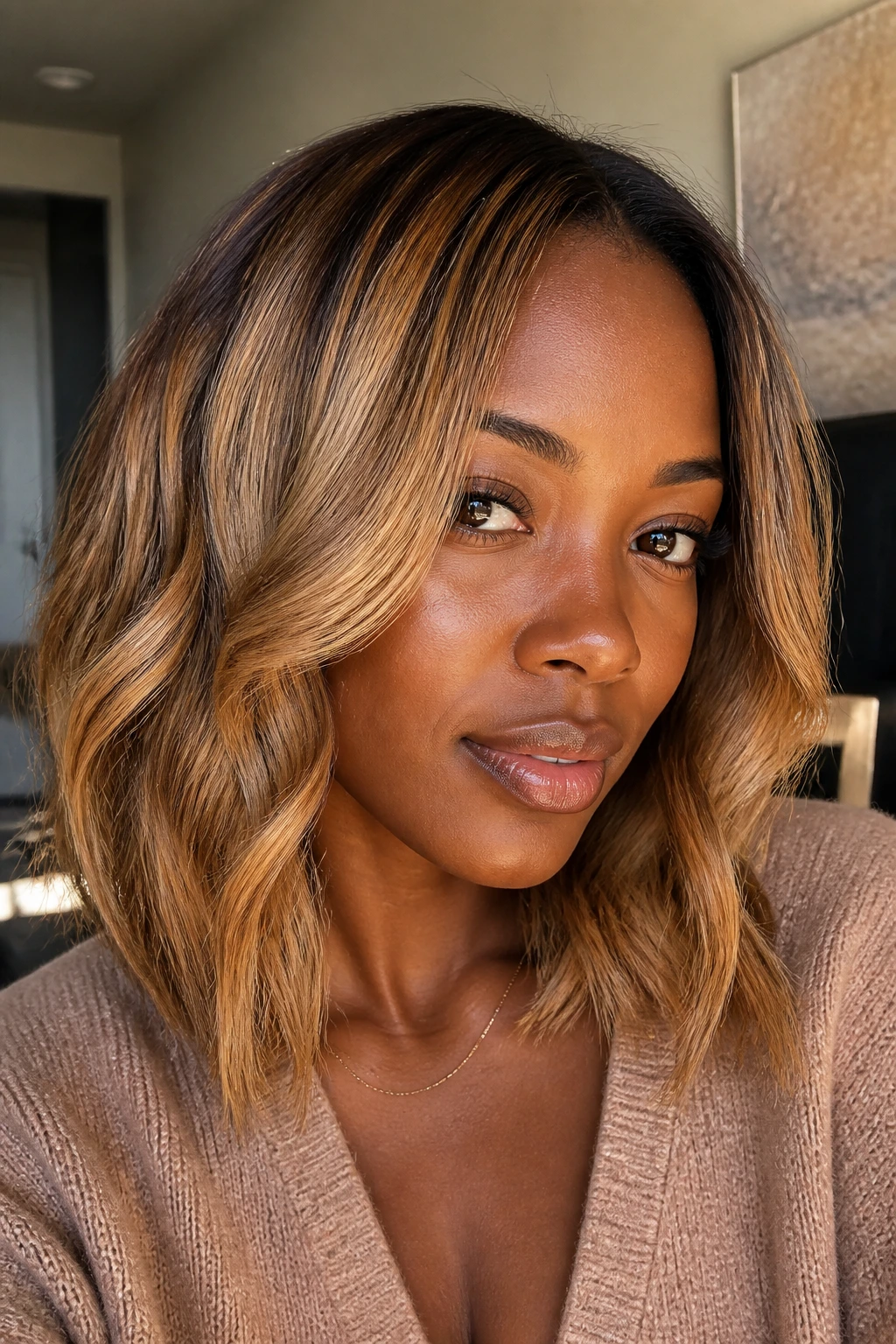
A lived-in honey melt gets better when a few soft lowlights are added back in. That sounds counterintuitive, but it’s the reason the color does not look overprocessed. The darker threads keep the blonde from becoming a single flat shade, especially on deep skin where dimension matters more than brightness.
Soft lowlights are also useful if you already have some lighter pieces and want to tone them down without starting over. They break up the lightness just enough to make the honey look richer.
This is the look for someone who wants to stretch appointments and still have the color read polished. It’s mellow, grown-up, and far less fussy than a high-lift blonde.
12. Golden Chestnut Balayage for Layered Cuts
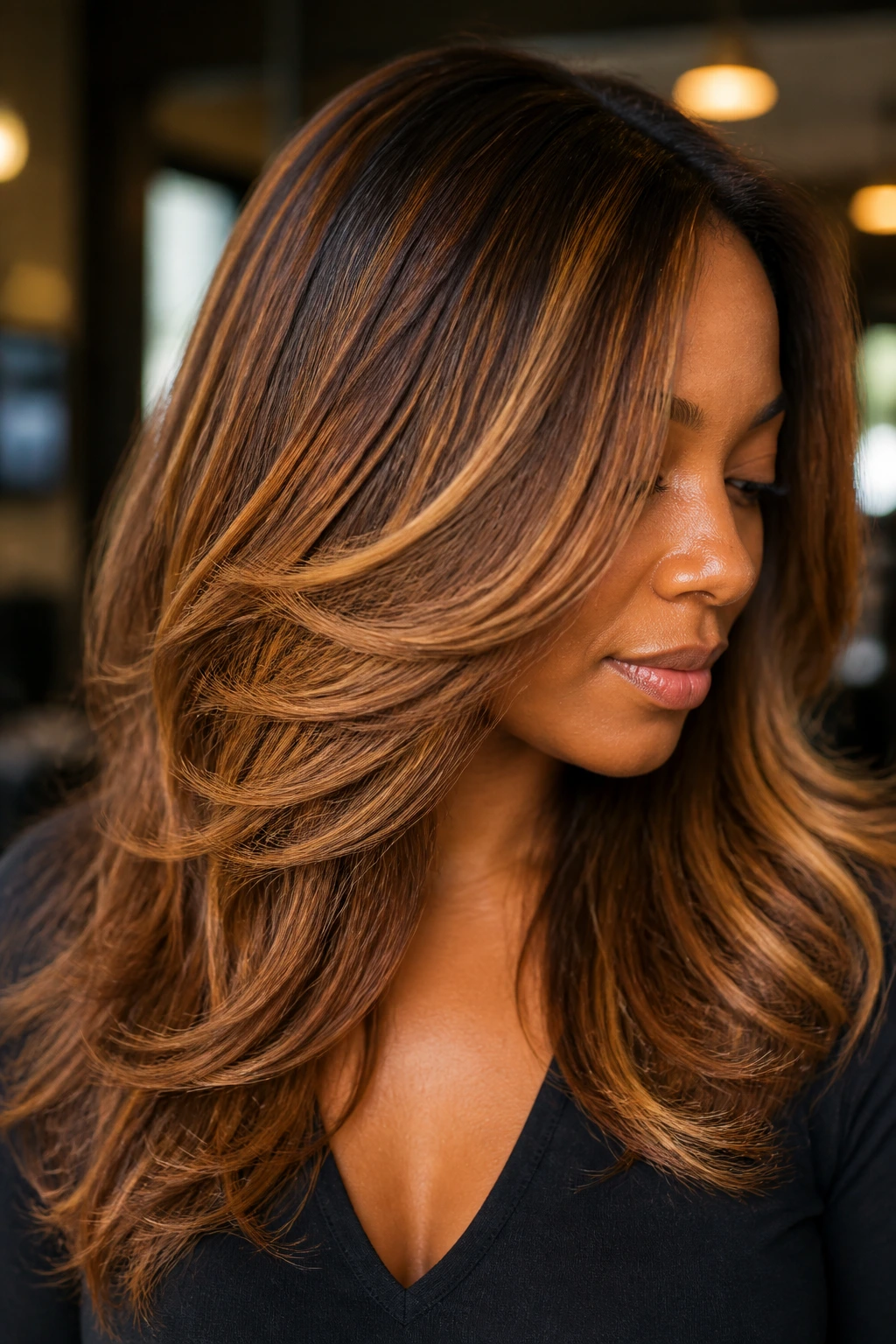
Layered cuts love honey blonde because each layer catches light differently. Add a golden chestnut tone and the result feels warm from root to tip without looking monochrome. On deep skin, the chestnut base keeps the color from drifting too light while the gold threads brighten the movement.
Why the Layers Matter
Without layers, the color can sit like one block. With layers, the ribboning shows up in motion. That’s where the money is.
- Best for feathered cuts and long internal layers.
- Ask for chestnut lowlights between the honey pieces.
- Finish with a soft bend, not pin-straight hair.
Tip: If your layers are shorter around the face, lighten those first. They carry the color where people actually see it.
13. Honey Contour Highlights Around the Cheekbones
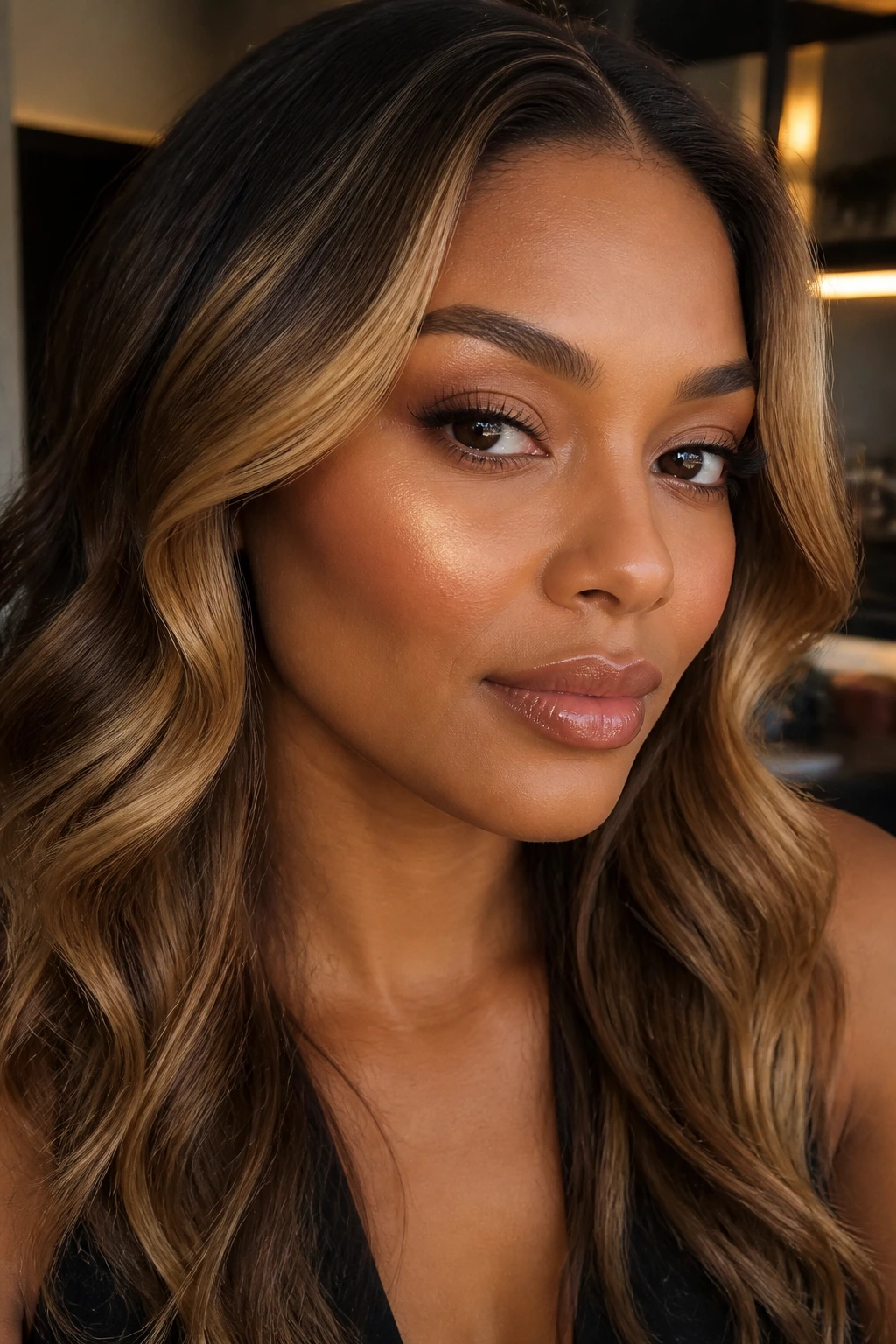
Contour highlights are exactly what they sound like: lighter pieces placed to shape the face. Around deep skin, honey contouring can brighten the cheekbones and jaw without needing an allover blonde. It’s tidy, strategic, and surprisingly flattering when the placement is right.
The front pieces should be narrow near the roots and brighter through the middle and ends. That keeps the face frame soft, not blocky. A colorist who understands placement will usually angle the highlights slightly backward so the color falls with the hair instead of straight down like stripes.
If you love the idea of blonde but do not want the whole head to change, this is the safer and smarter bet.
14. Apricot-Honey Blend for a Shaggy Lob
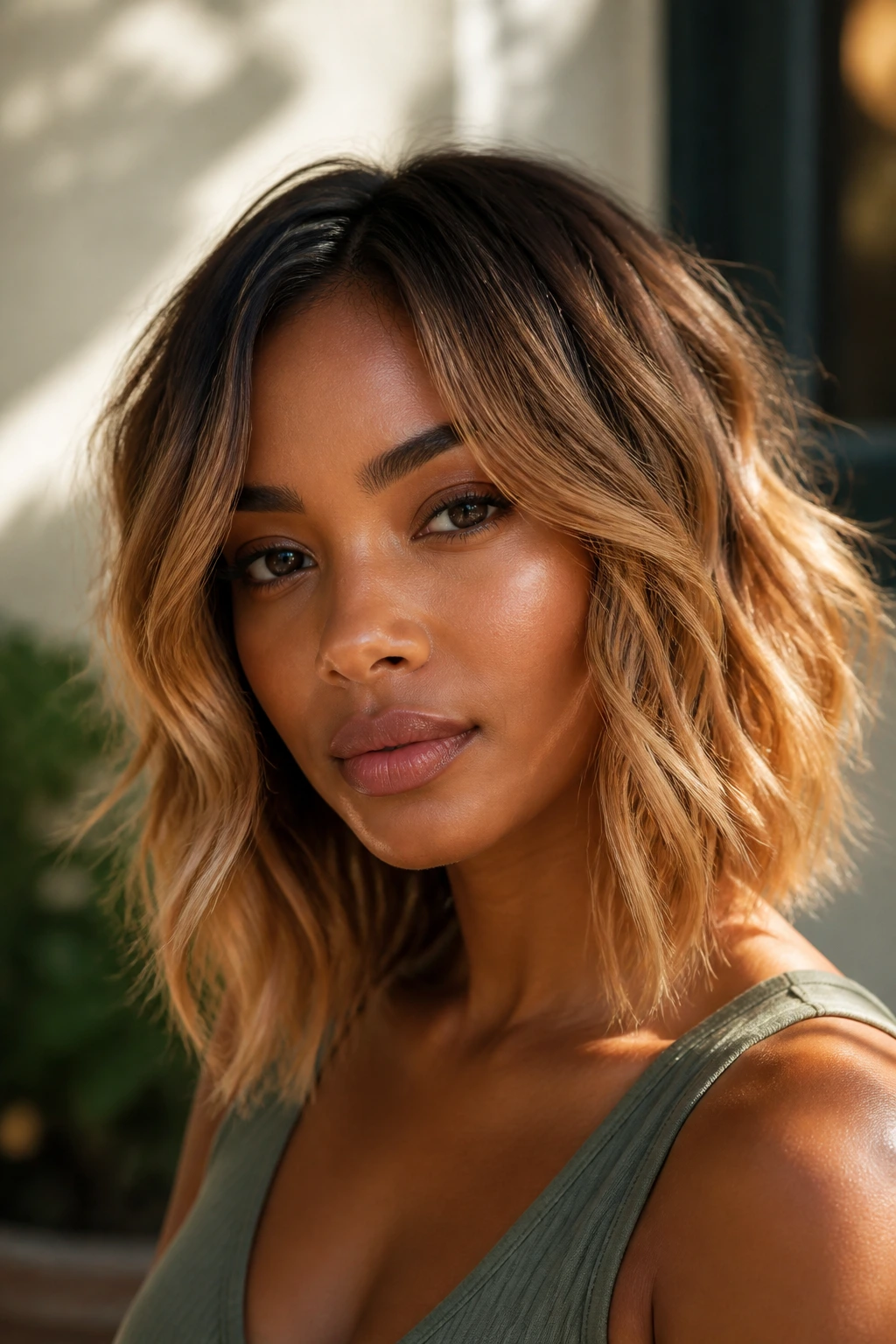
A shaggy lob gives apricot-honey room to do something a little more playful. The apricot brings a peachy warmth that looks especially nice against deep skin, while the honey stops it from going too orange. On a tousled lob, that mix looks casual rather than careful.
The trick is to keep the ends slightly lighter than the crown and leave enough depth around the roots. That way, the color feels sun-warmed, not painted on. If you wear waves, the texture will break up the tone beautifully. If you wear it straight, the shine becomes the feature.
This one is for someone who likes movement, softness, and a little edge in the haircut.
15. Reverse Balayage With Honey Midlights
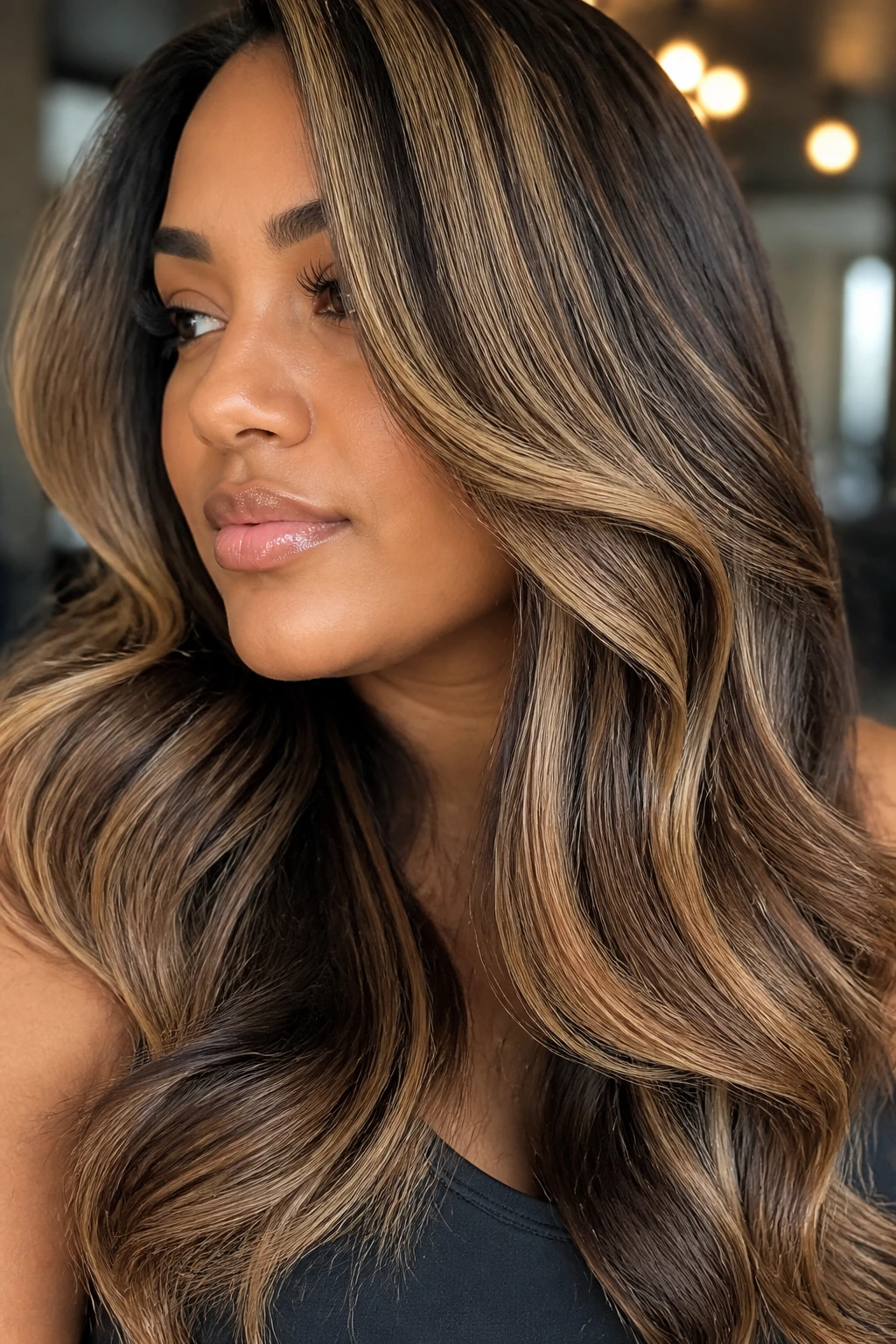
Reverse balayage is a smart move when the hair has gone too light and needs depth back. Instead of only adding blonde, the colorist paints deeper pieces through the underside and uses honey midlights to keep the overall look warm. On deep skin, this can be the fix that turns a tired blonde into something lush again.
It also makes the hair look thicker. The darker threads create shadow, and the honey sits on top like reflected light. That’s especially useful if your natural hair is fine or has been lifted more than once.
If your current blonde feels flat, dry, or too bright, this is the repair path I’d look at first.
16. High-Contrast Honey Streaks on Dense Curls
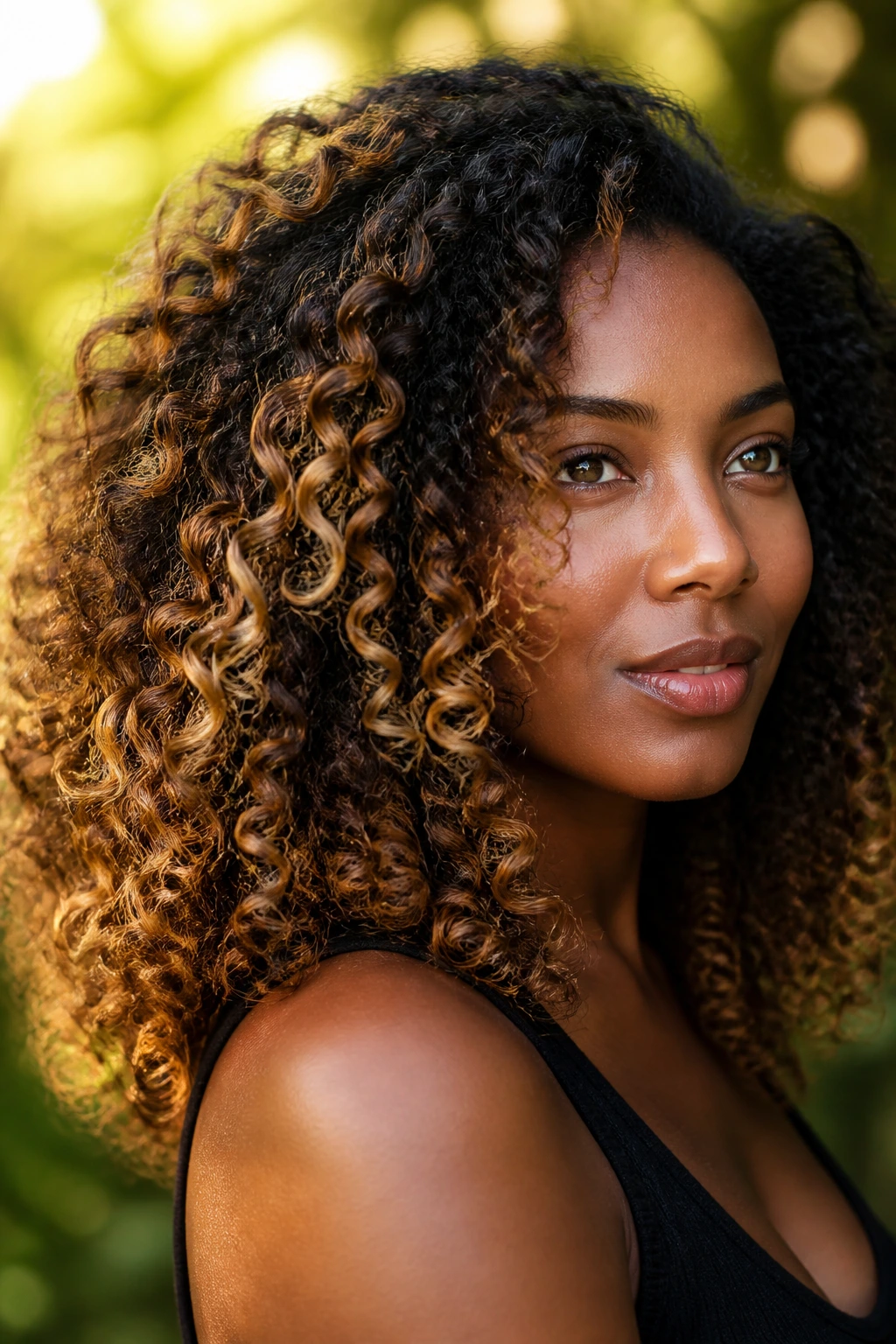
Dense curls can handle more contrast than people think. The trick is to keep the streaks intentionally placed and not too many. High-contrast honey pieces on the outer ring of the curls create a graphic look that still respects the pattern, especially when the base stays deep and cool enough to make the warmth pop.
This style is not subtle. That’s the point. If you want the curls to show up in photos and under indoor light, brighter ribbons can help. Just keep them separated enough that each coil still reads individually.
A little boldness works here. Too much, and you lose the curl map.
17. Warm Beige Honey on a Blunt Bob
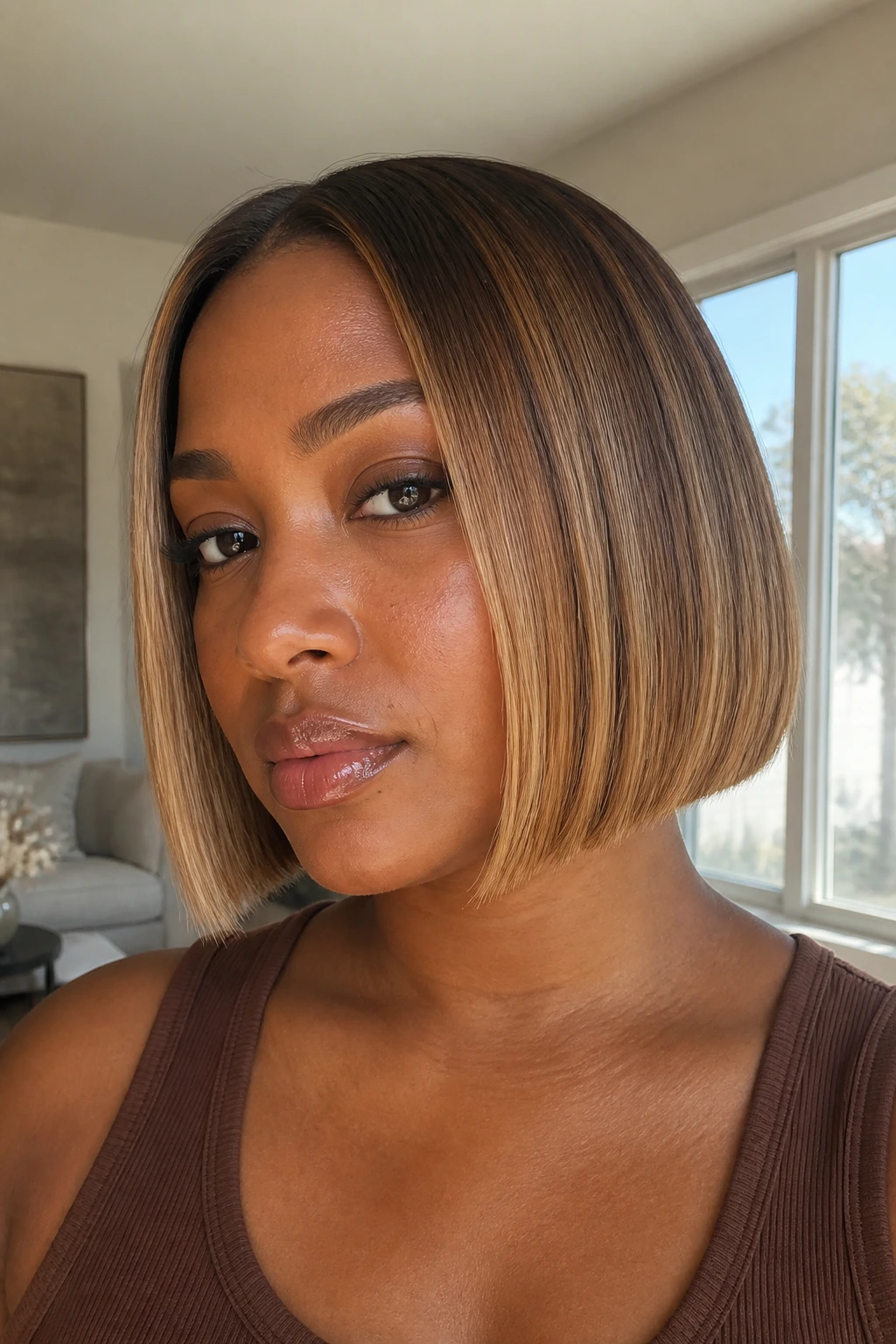
A blunt bob needs a cleaner color story than a long layered cut. Warm beige honey gives it one. The lightness sits in soft panels that sharpen the edge of the bob without making it look chunky, while the beige note keeps the blonde from shouting against deep skin.
This is a good choice if you like sleek styling, chin-grazing lines, and a hair shape that holds its own. Straight, tucked behind the ear, or curled under at the ends, the cut stays neat. The color just adds depth.
The biggest mistake with a blunt bob is over-lightening the whole perimeter. You only need enough honey to lift the line.
18. Sunlit Honey Balayage on a Pixie Bob
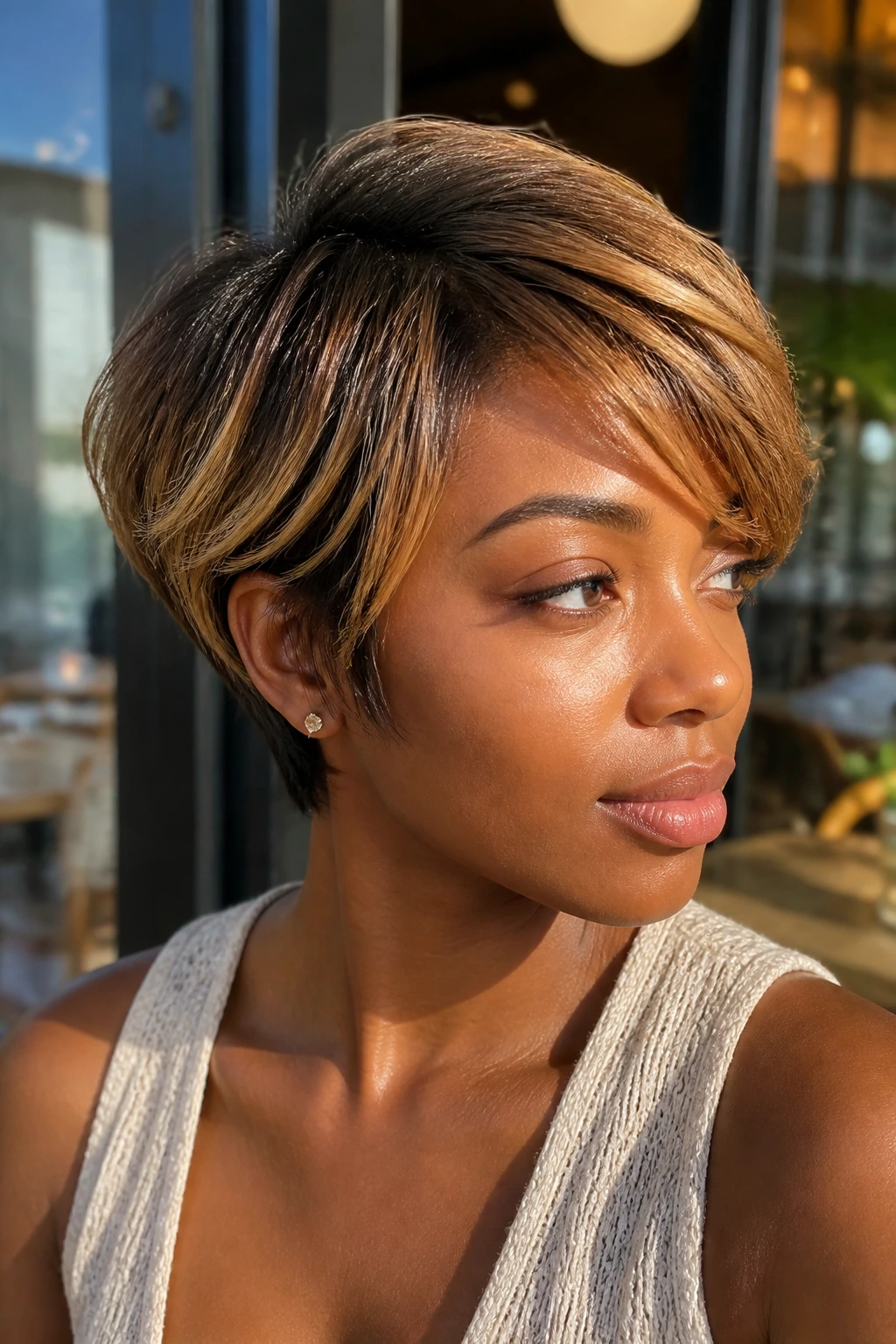
Short hair does not need a lot of color to make a point. On a pixie bob, a few sunlit honey pieces can change the whole cut. The light catches the top layers, the temple area, and the front sweep, which gives deep skin a warm frame without a ton of maintenance.
The placement has to be deliberate. Short cuts leave no room for sloppy painting, because every bright piece is visible. Ask for pieces that follow the movement of the cut, not random placement that ignores the shape.
This one works best if you like air-dried texture, quick styling, and color that reads instantly when you turn your head.
19. Mahogany-to-Honey Transition on Long Layers
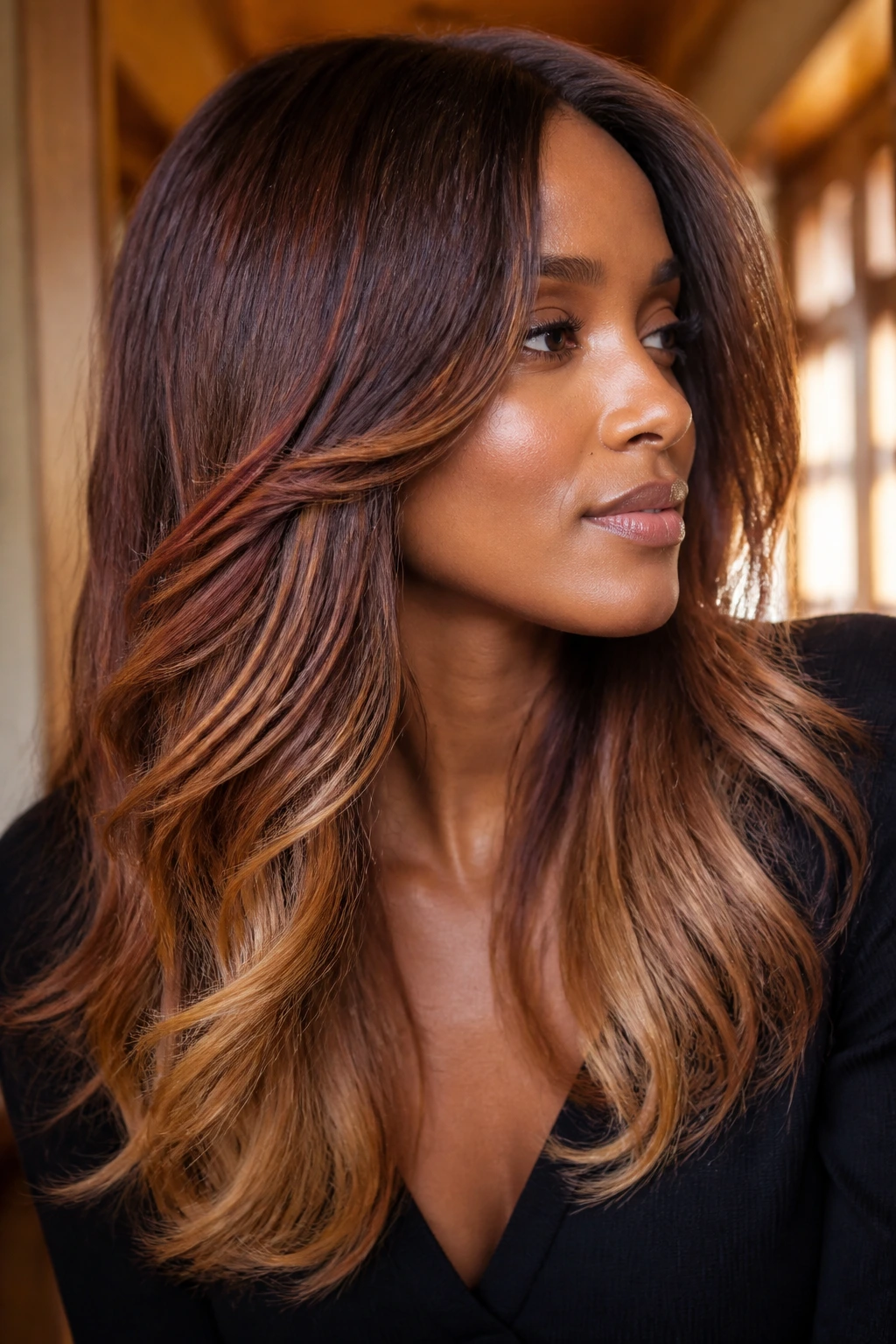
Mahogany into honey is one of the richest transitions in the whole family. The deep red-brown base makes the honey feel warmer and more luxurious, especially on deep skin. Long layers help the change move gradually from darker roots to brighter ends, so the color looks intentional from every angle.
It is a stronger look than plain caramel, but still wearable. If you like hair color that looks expensive in low light and glows in daylight, this is where I’d point you. The reddish undertone also plays nicely with warm complexions, though neutral skin can wear it too if the honey stays soft.
No need to go pale here. The mahogany does half the work.
20. Soft Gold Face Frame on Coils
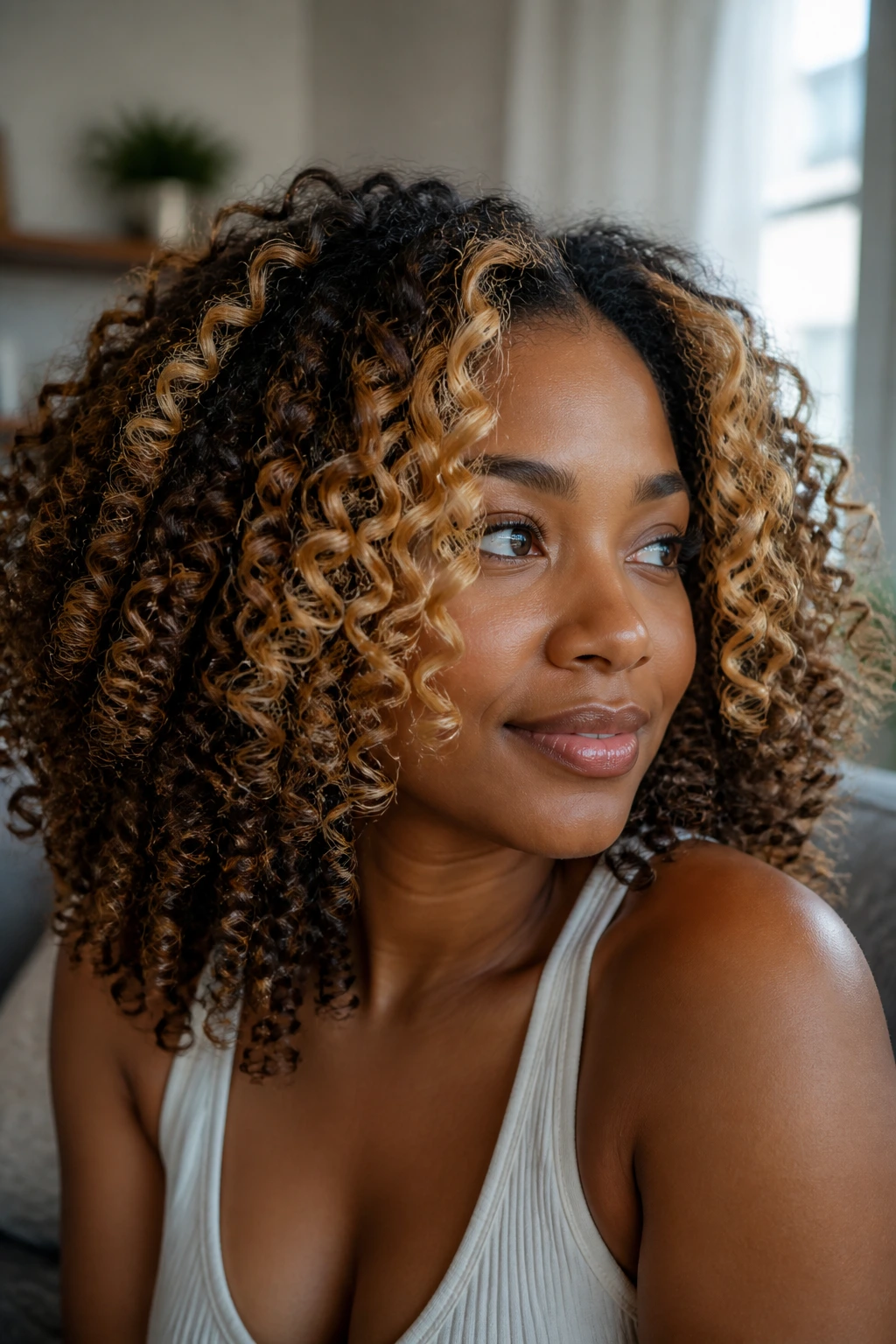
A soft gold frame around coils is a subtle way to change the whole mood of the face. The brightest pieces should live just inside the outer halo, where they catch light as the coils move, then fade into deeper honey toward the top layers. That gives the hair shimmer without stealing the shape.
For deep skin, this is one of the smartest options when you want visible color but not a full blonde shift. The warm gold near the face acts like a reflector. It brightens the complexion, but the dark base keeps everything anchored.
If your coils shrink a lot, make sure the lightness isn’t tucked too far underneath. You want it to show even when the style compresses.
21. Honey Dip-Dye Ends for Extra Length
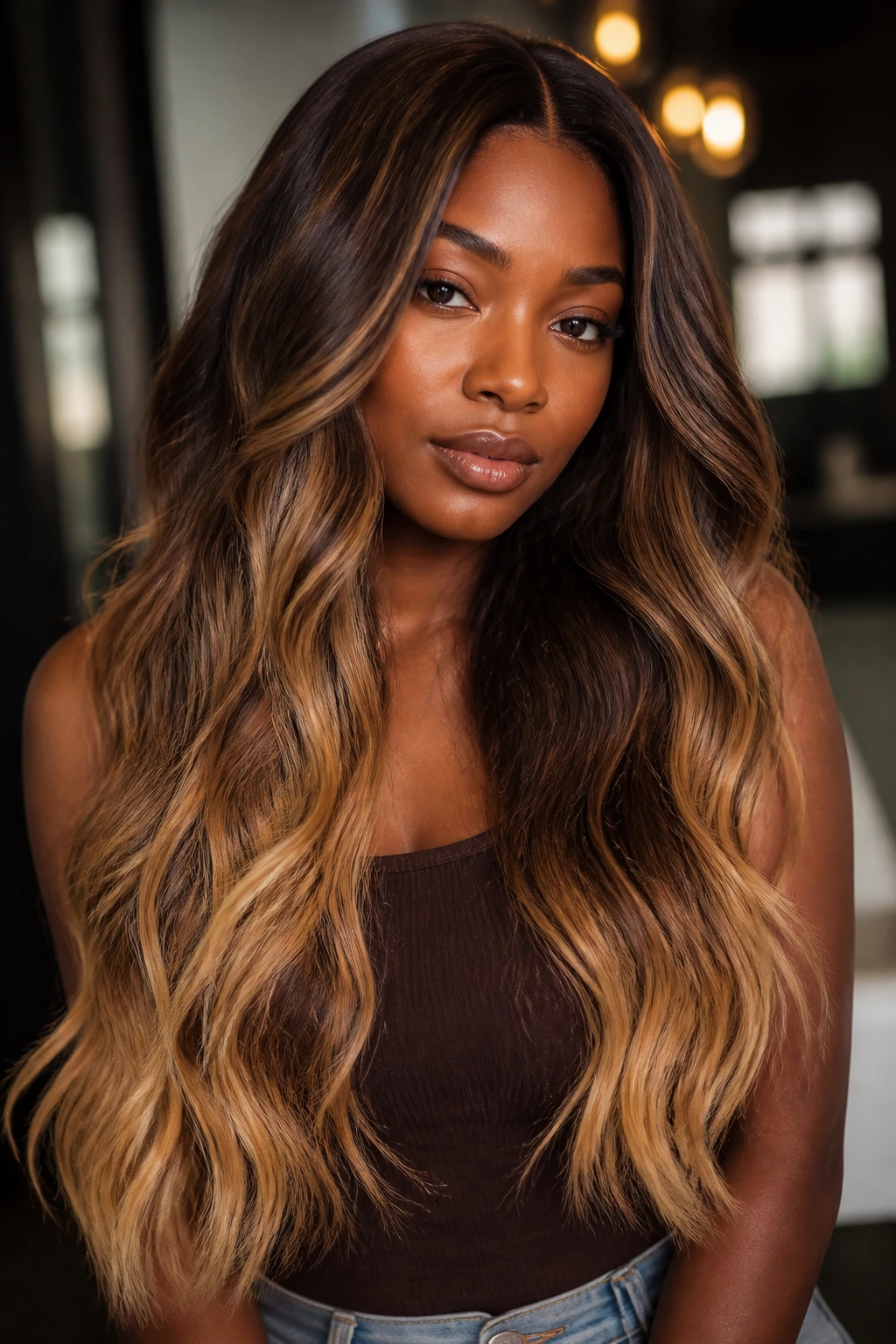
Dip-dyed ends are blunt, but they can work if the line is softened just enough. On very long hair, honey on the ends can make the length feel even longer because the eye drops straight to the lightest point. Deep skin gives the contrast room to breathe, so the ends read as glow rather than damage.
Best Way to Wear It
Keep the transition blurred with a few painted pieces above the line, not a hard stop. The goal is still balayage energy, just pushed lower.
- Best on thick hair with healthy ends.
- Ask for a soft ombre edge, not a sharp band.
- Works well with big waves or a smooth blowout.
Use this when: you want the color to be dramatic but easy to grow out.
22. Dimensional Honey Blonde With Ribboned Lowlights
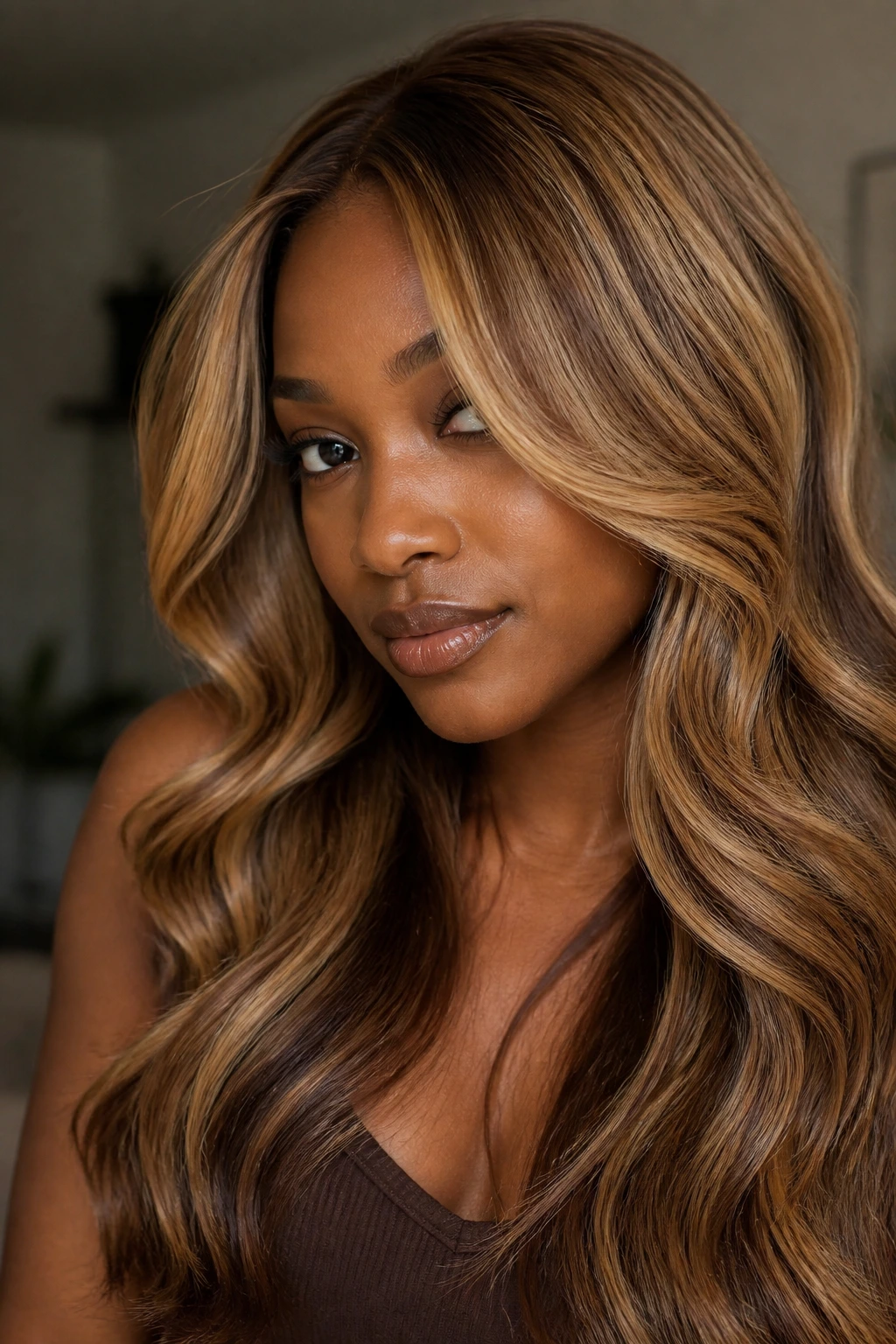
When honey blonde starts looking one-note, ribboned lowlights fix it. They carve out the lighter pieces and keep the whole head from drifting too pale. On deep skin, that dimensionality matters more than a super-bright finish, because the contrast stays plush instead of thin.
This style is especially good if you already have some blonde and want to make it look more natural. The lowlights should be a warm brown, not muddy or gray, and they should be painted in the same direction as the light pieces. That keeps the hair from looking patched.
If you like movement, this one gives it to you in a quieter way than bold streaks do.
23. Cinnamon-Glaze Balayage on a Blowout
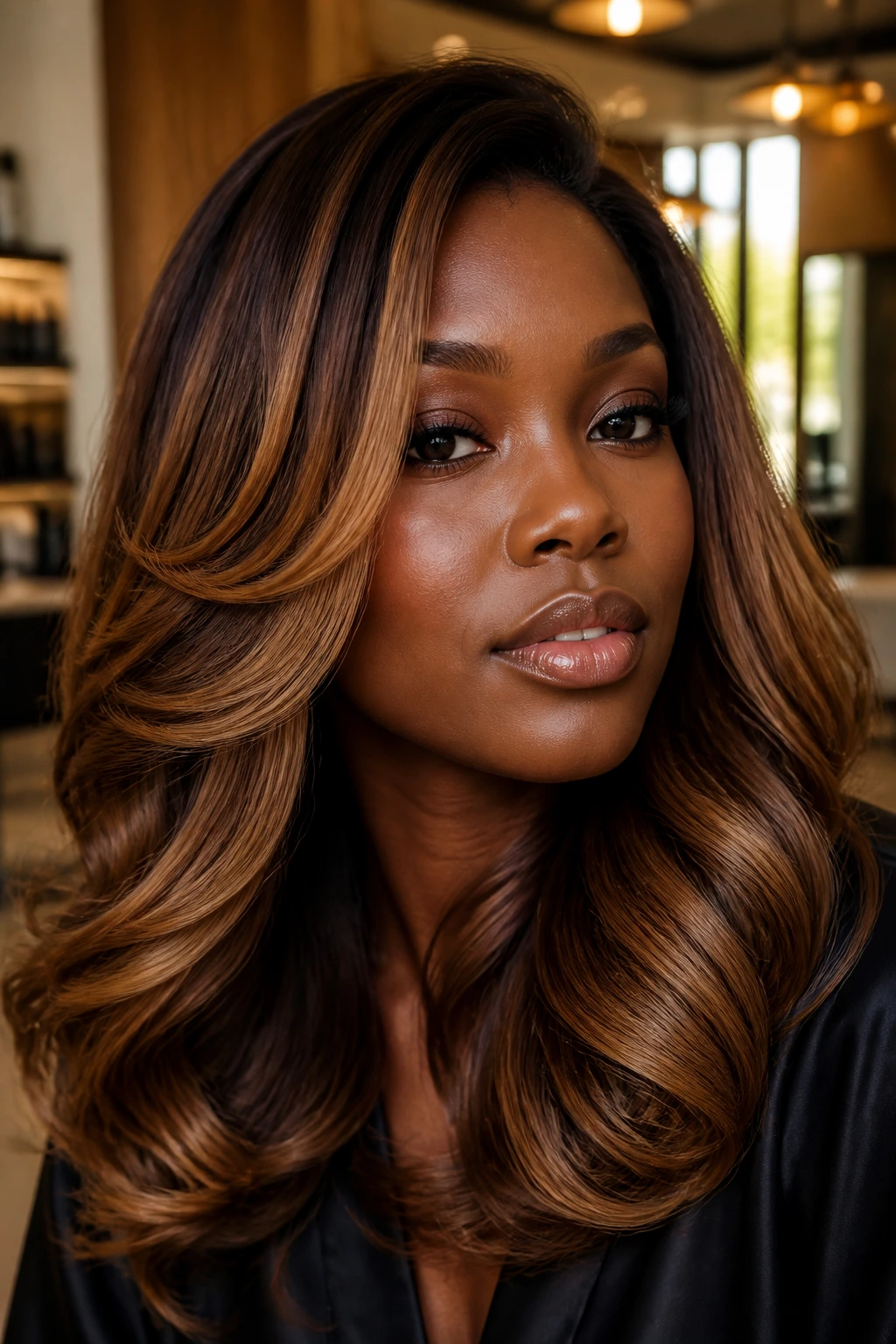
A cinnamon glaze over honey balayage brings the whole look back into warmth. On a blowout, the gloss reflects across the surface, and the cinnamon notes keep the blonde from looking too yellow under indoor lights. Deep skin tends to wear this kind of warmth well because the tone feels rich, not frosty.
This is a very polished finish. Not loud. Not flat. Just smooth, warm, and touchable-looking. If your hair has gone too neutral after toning, a glaze like this can bring it back without a major recolor.
It’s also one of the easier ways to refresh old balayage when you do not want to re-lighten the hair.
24. Golden Hour Balayage for Side-Swept Waves
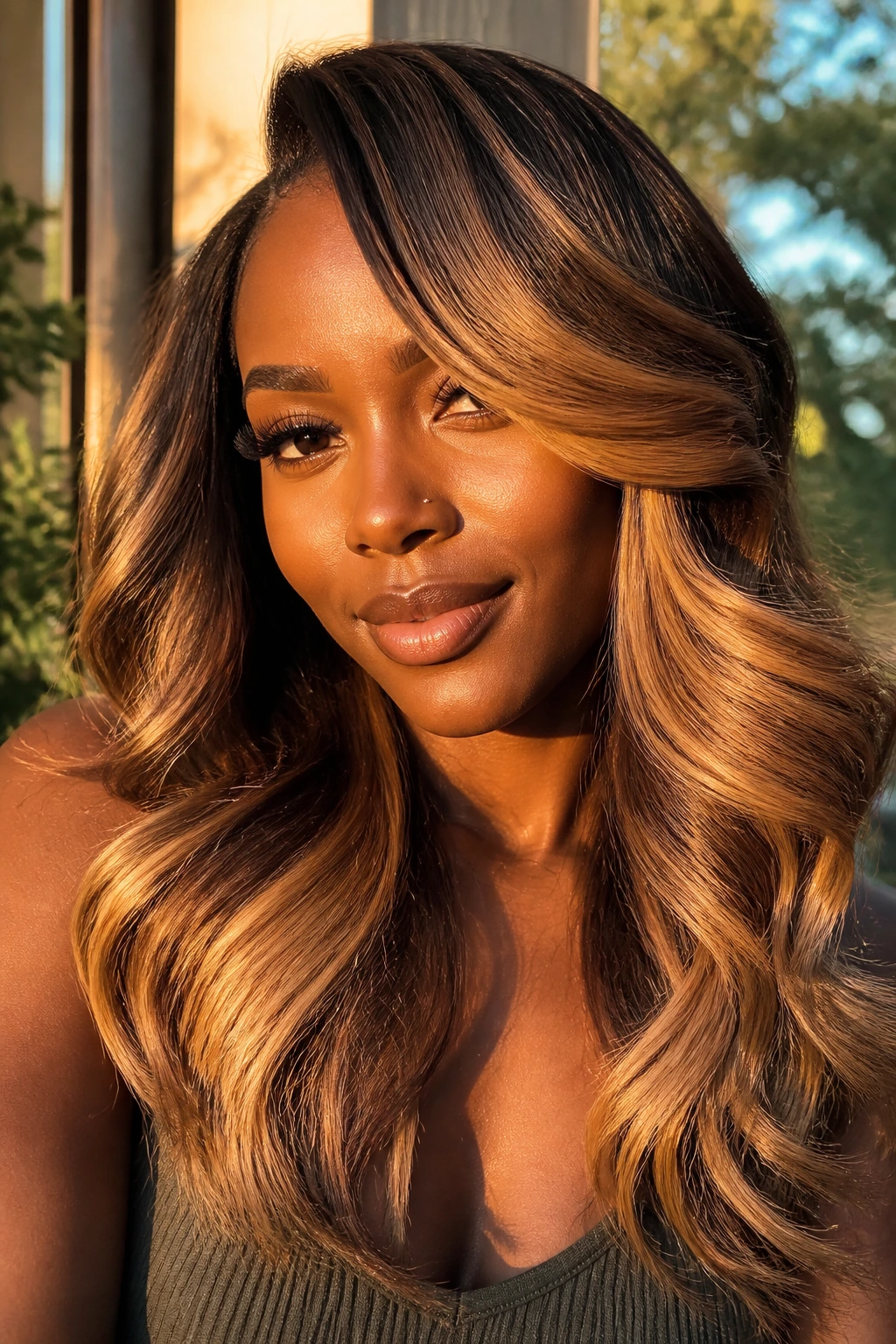
Side-swept waves create their own light pattern, which makes them a strong match for golden hour honey pieces. The front side can carry more brightness, while the back stays deeper and gives the style a little swing. On deep skin, the result is warm and sculpted without being stiff.
This style loves long layers and a generous bend through the mid-lengths. If the waves are brushed out, the gold pieces melt together. If they stay more defined, you get a little more contrast and a cleaner view of the placement.
It’s a good “event hair” version of honey balayage, but it still works on ordinary days. That’s a nice trick.
25. Classic Honey Blonde Balayage With a Root Smudge
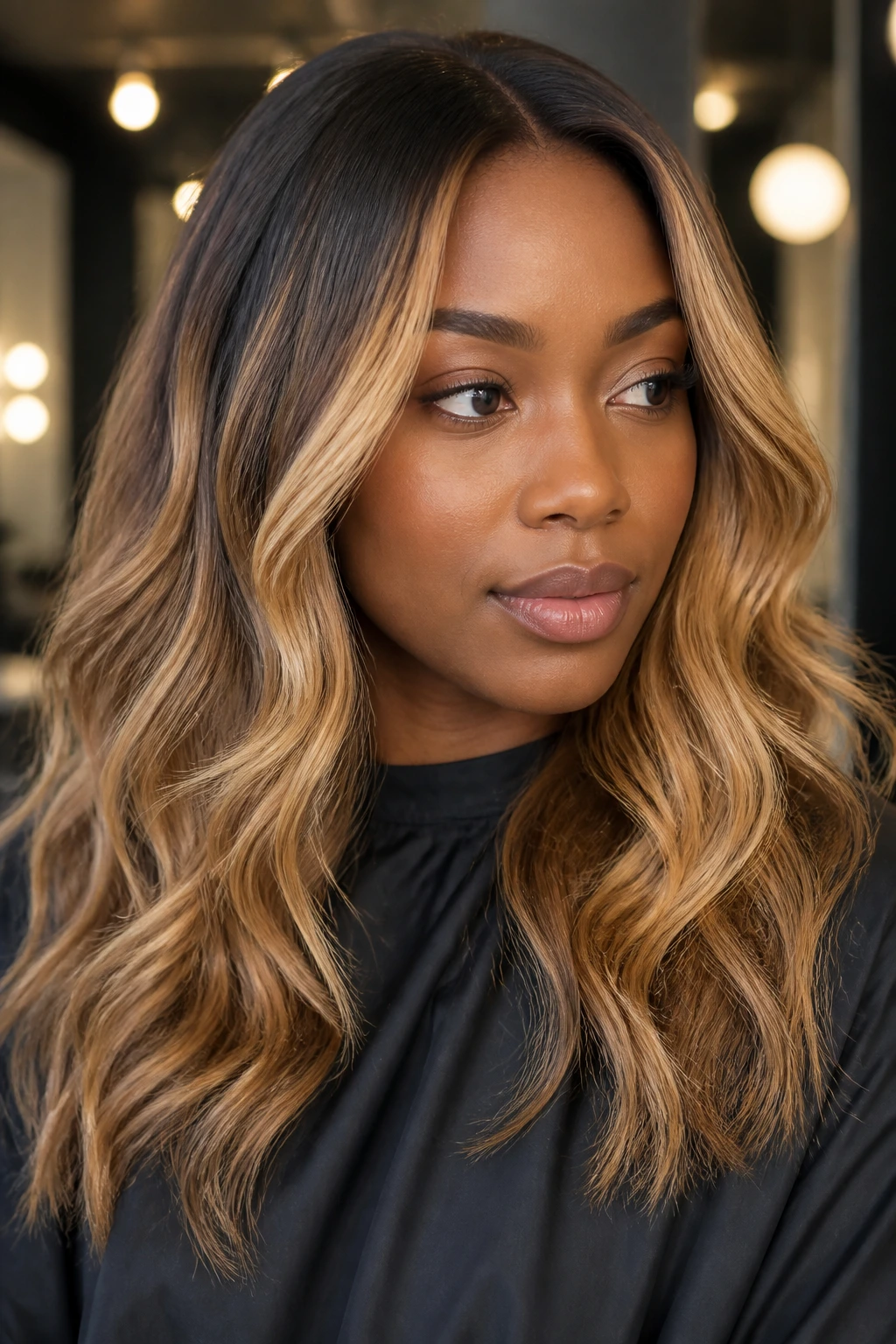
Classic honey blonde with a root smudge earns its spot at the end because it’s the version most people can actually live with. The root shadow keeps the grow-out sane, the honey through the midlengths adds warmth, and the ends get just enough brightness to show movement. On deep skin, this is the baseline that keeps everything from turning washed out.
The smudge should not be harsh. It should look brushed in, then softened until you can barely tell where one tone ends and the other begins. That blur is doing real work. It keeps the look modern, but more important, it keeps it believable.
If you want one reference photo to bring to the chair, this is the safe one.
Why Placement Matters More Than the Blonde Itself
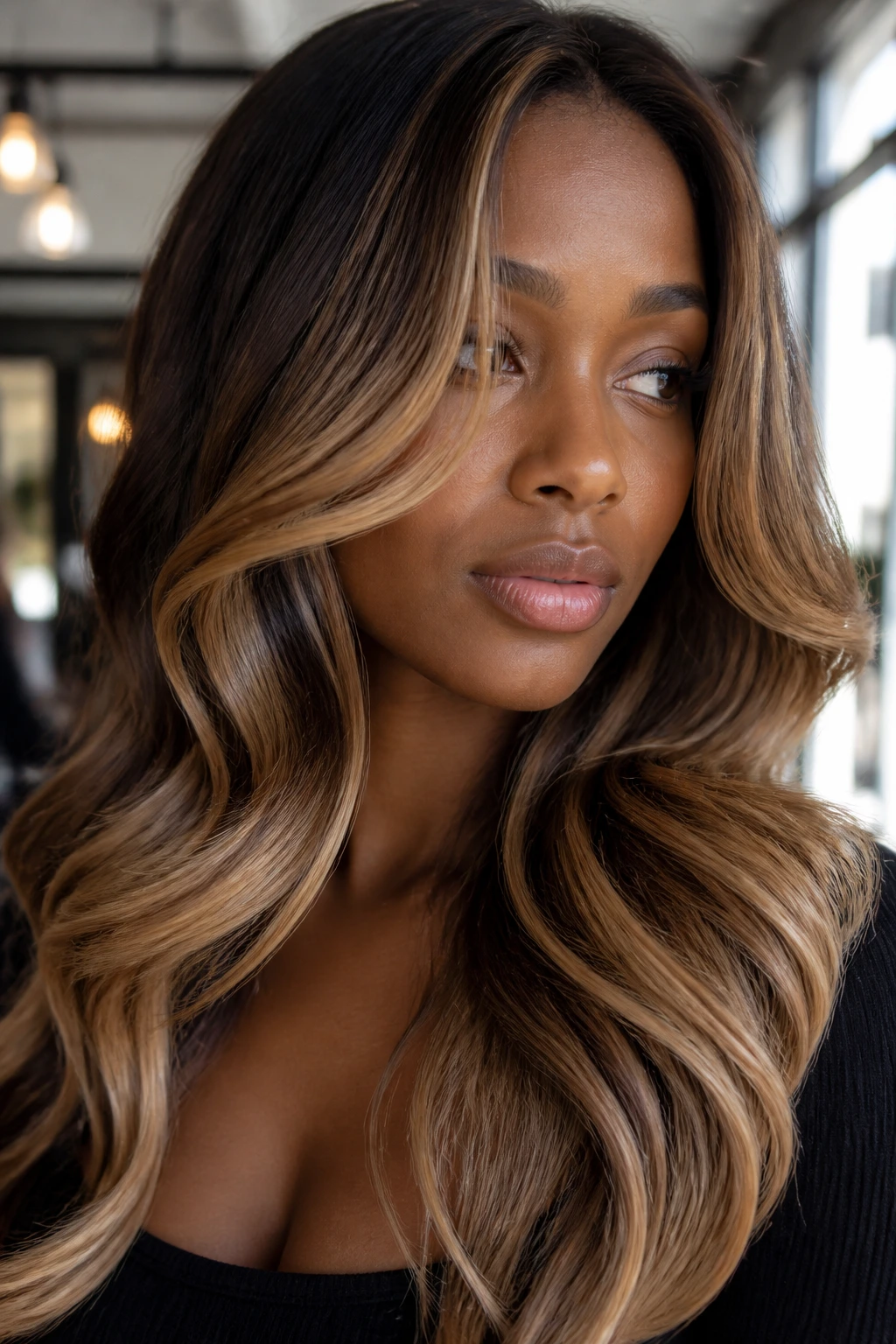
Honey blonde can be flattering on deep skin and still fail hard if the placement is off. That’s the part people miss when they get stuck on the shade names. Golden, amber, and caramel all sound warm on paper, but the actual result depends on whether those tones sit near the face, through the midlengths, or only at the ends.
A well-placed balayage lets the dark base do some of the visual work. The root shadow creates depth. The lighter ribbons make the skin glow. The space between them keeps the style from turning into one flat, over-bleached surface. That empty space is not wasted space. It gives the eye a place to rest.
If you wear curls, coils, waves, or a blowout, the placement should also follow the movement of the hair. A highlight painted against the direction of a curl or bend can disappear the second the style shifts. A good color map respects the shape first, then the tone.
What to Tell Your Colorist Before the Foils Come Out
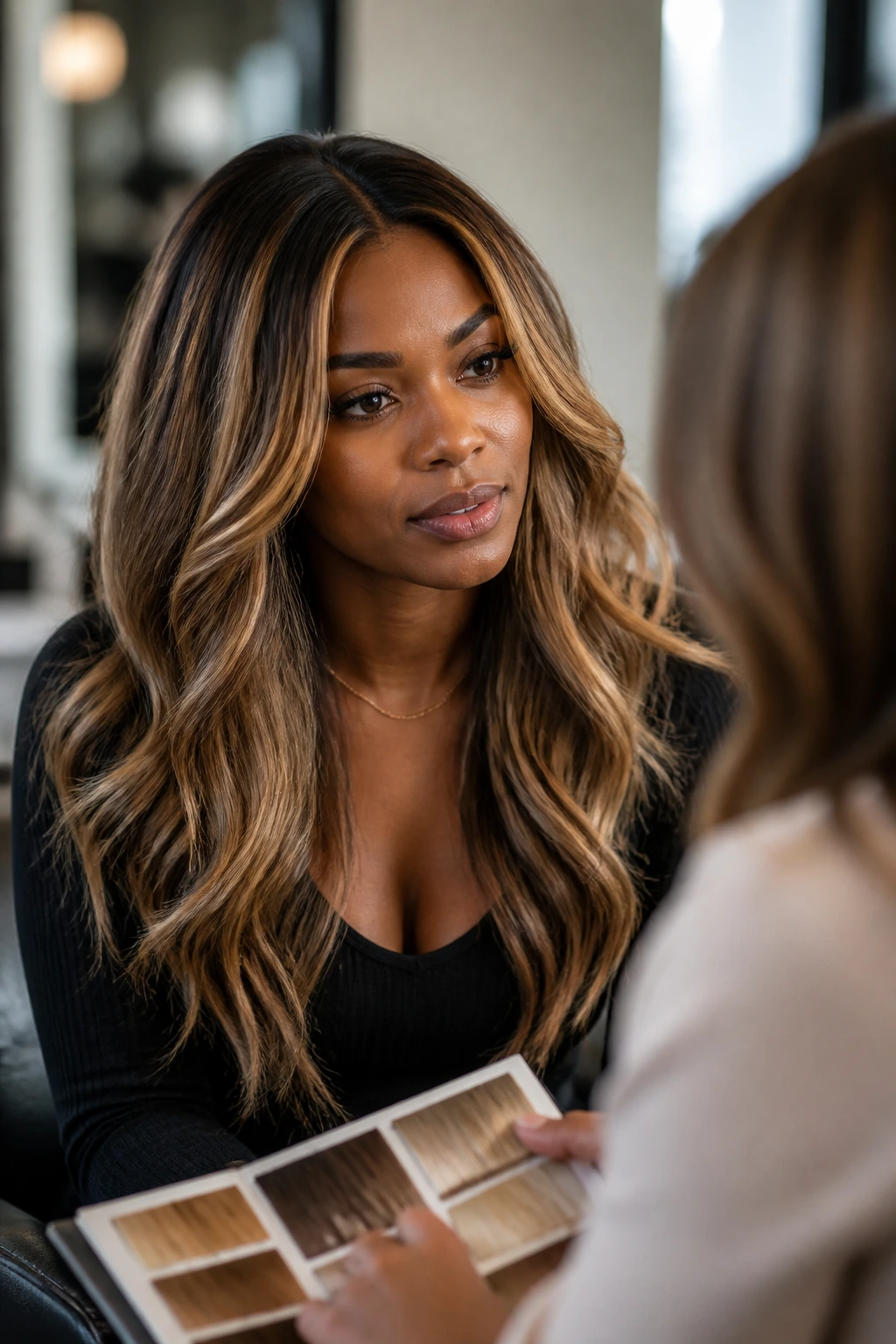
The cleanest honey balayage results usually start with plain, specific language. “Make me blonde” is too vague. “I want warm honey pieces around the face, deeper roots, and no icy toner” tells a colorist what to avoid and where to focus.
Bring photos that match your base color and texture, not just the color. A honey balayage on loose waves can look completely different on tight curls or a silk press. If your hair is dark and previously colored, say that up front. It changes lift, timing, and how much warmth can stay in the final tone.
A few phrases are worth repeating in the chair:
- Keep the root shadow soft and deep.
- Leave some warmth in the midlengths.
- Brighten the front pieces, not the whole head.
- No ash-heavy toner.
- Place the light where the hair moves.
That last one matters more than people think.
Essential Tools and Salon Photos Worth Bringing
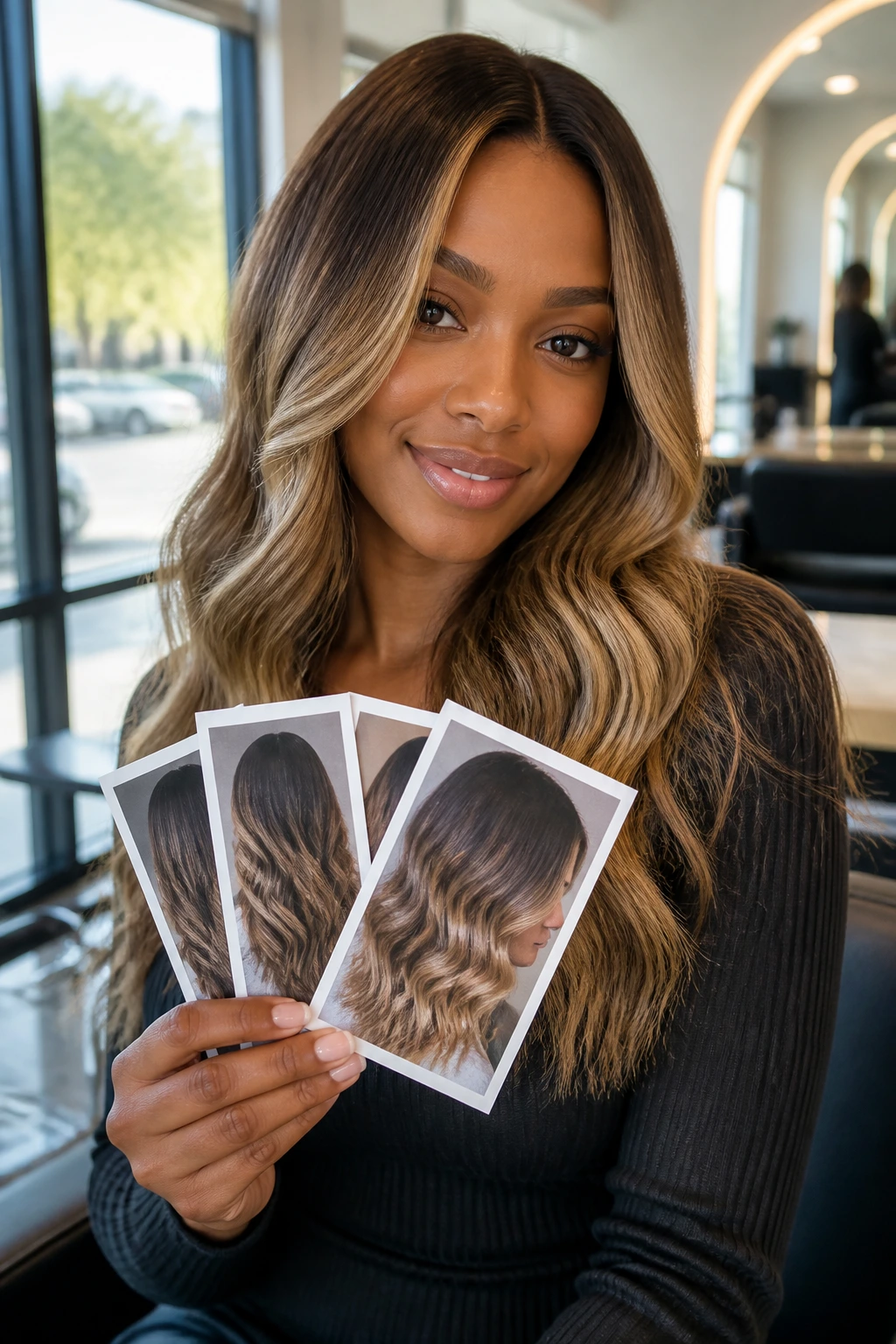
You do not need a suitcase full of gear to plan good hair color, but the right reference points save everyone time. A stylist can read a lot from a photo, though only if the photo matches your hair type, lighting, and desired maintenance level.
- 3 to 5 reference photos — Pick images with a similar base color and texture so the placement reads realistically.
- A daylight photo of your current hair — Natural light shows brass, faded ends, and root depth much better than a bathroom mirror.
- A sulfate-free shampoo — Keeps honey tones from fading fast and helps the cuticle stay smoother.
- A color-safe conditioner or mask — Use it weekly if your ends are dry or lightened.
- Heat protectant spray or cream — Needed any time you use a blow-dryer, flat iron, or curling iron.
- A wide-barrel curling iron or wand — A 1.25-inch barrel usually shows balayage ribbons well on medium to long hair.
- A silk pillowcase or bonnet — Cuts down on friction, which matters more once the ends have been lightened.
- A gloss appointment reminder — Honey tones look best when they’re refreshed on schedule, not when they’ve already gone dull.
How to Wear Honey Balayage So It Reads Rich, Not Harsh
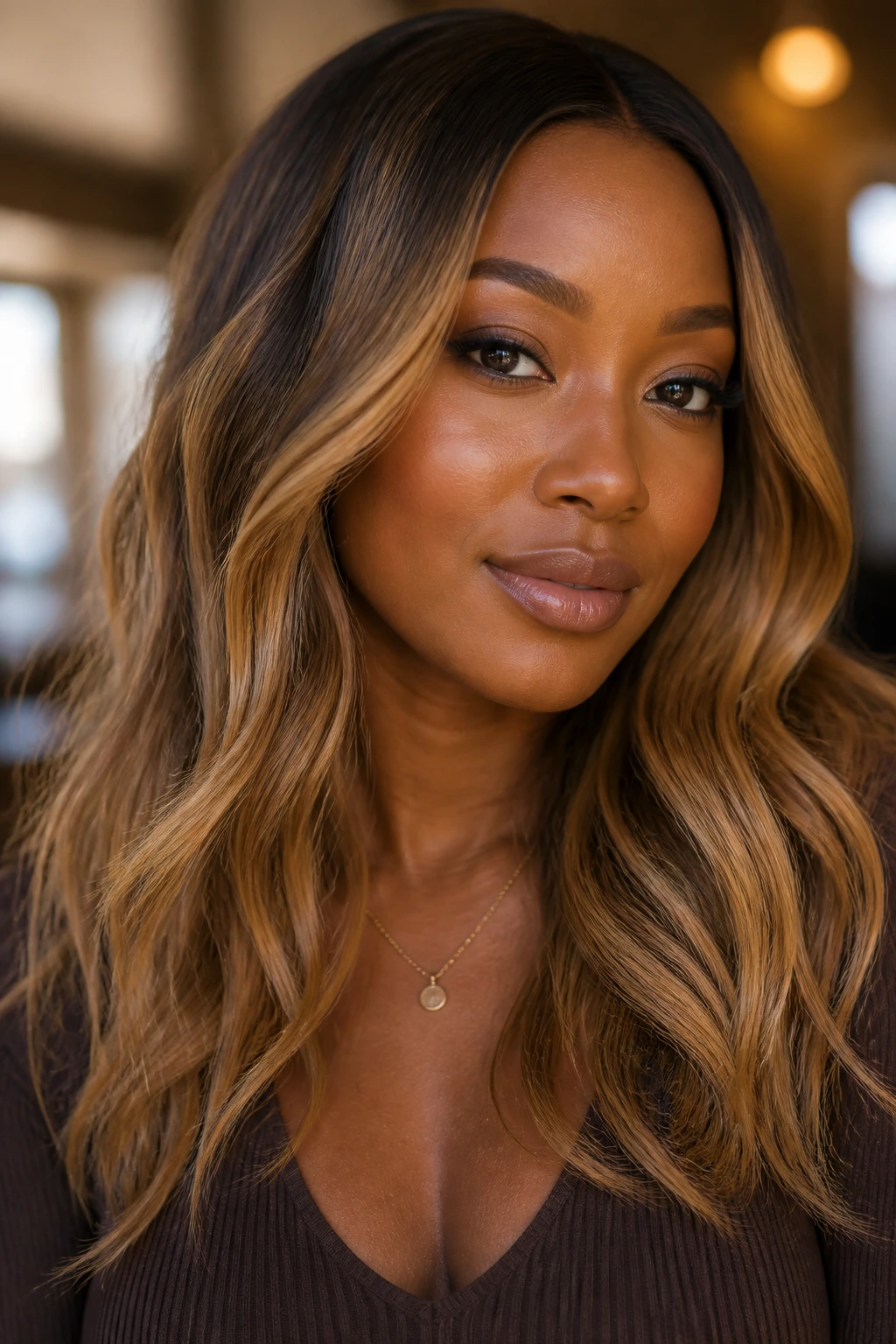
Best Parting: A middle part gives symmetry and makes face-framing honey pieces look intentional. A deep side part throws more light to one side and makes the color feel softer and a little more dramatic.
Best Finish: Loose bends show off the ribboning. Brushed-out curls soften the contrast. A straight blowout makes the tone look sleeker, but it also exposes any uneven placement, so that finish asks for better painting.
Best Cut Pairings: Long layers keep the color moving. Curtain bangs put brightness near the eyes. A blunt bob needs cleaner, narrower pieces. Coils and curls need spacing that respects shrinkage, or the color gets swallowed.
Best Wardrobe Match: Warm neutrals, cream, olive, rust, chocolate, and black let honey blonde do what it does best. Neon can work too, but it’s the harder road. The hair already has enough presence.
Keeping Warm Honey Blonde Glossy Between Visits
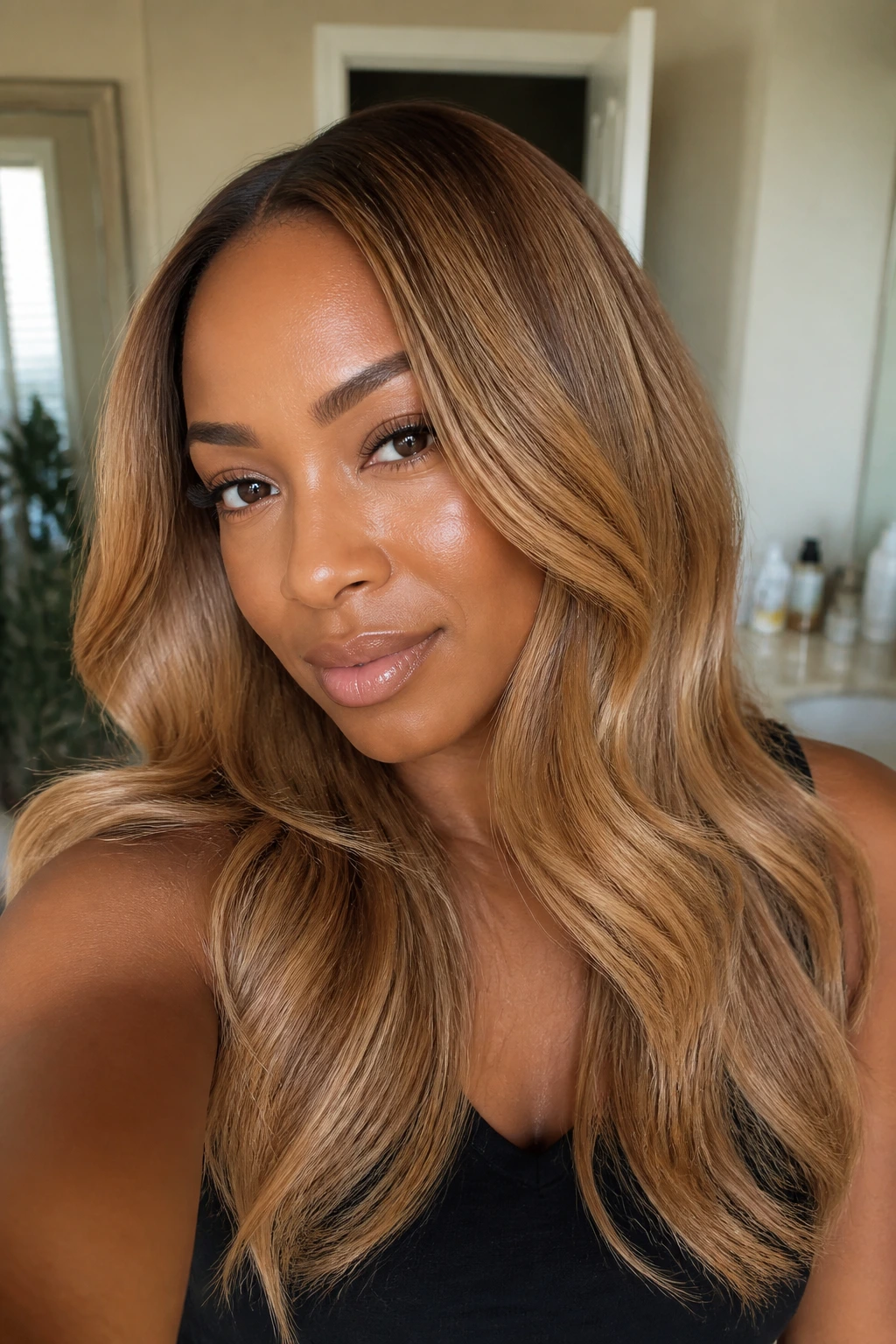
Honey shades fade in a way that sneaks up on you. One week they look golden. The next week they start leaning dry or yellow. Washing less often helps, but so does water temperature. Lukewarm is the sweet spot; hot water roughs up the cuticle and pulls warmth out faster.
For most people, 2 to 3 washes a week is enough. Curls and coils can often go longer, especially if the scalp doesn’t need frequent cleansing. A deep conditioner once a week keeps the lighter ends from feeling crunchy. If the blonde starts looking too yellow, use a purple or blue-violet product sparingly — every wash is too much for a warm honey tone, because it can turn the shade muddy.
Plan a gloss or toner refresh every 6 to 8 weeks if you want the honey to stay clean. Root touch-ups usually stretch longer, often 10 to 14 weeks, because balayage is built to grow out softly. Heat styling should stay controlled, too. A flat iron held too hot and too often will make the ends look fried faster than the color itself fades.
Practical Tips for a Cleaner, Richer Finish
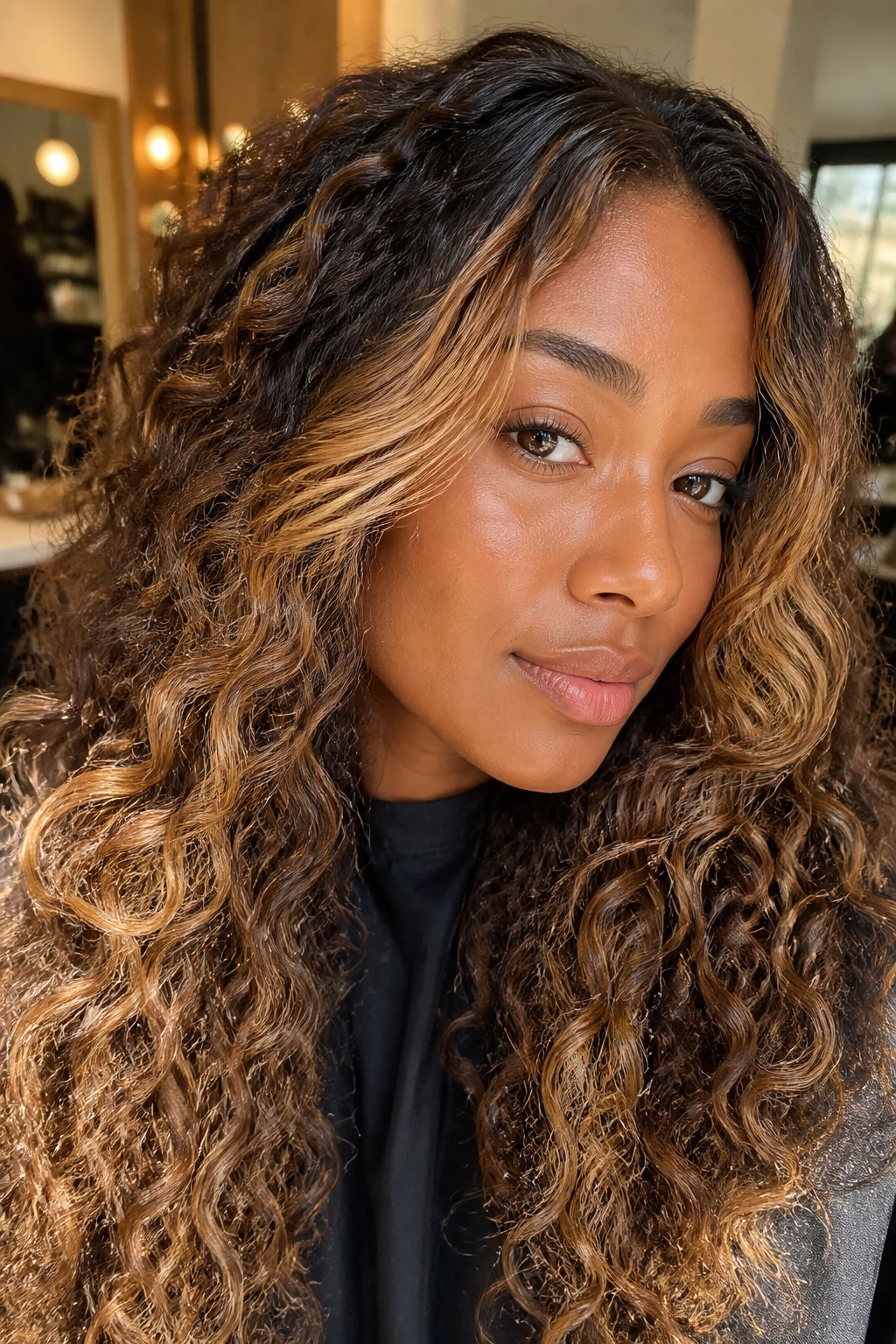
Color Placement: Ask for the lightest pieces near the face and on the outer curve of curls or waves. That keeps the brightness where people actually see it.
Budget Move: If a full balayage session is too much, start with a money piece, a few midlength ribbons, and a gloss. That still gives dimension without the full maintenance load.
Tone Saver: Avoid purple shampoo on repeat. Use it only when the blonde starts drifting yellow, then go back to color-safe moisture. Honey needs warmth, not heavy correction.
Texture Tip: On coils and curls, keep the lighter pieces spaced apart enough that the pattern still reads. If the highlights are too close together, the hair can look busy and the curl shape gets lost.
Pro Move: Ask for one to two levels of depth left at the root even if you want bright honey ends. That contrast is the difference between glow and glare.
Mistakes That Turn Honey Blonde Flat or Brassy
-
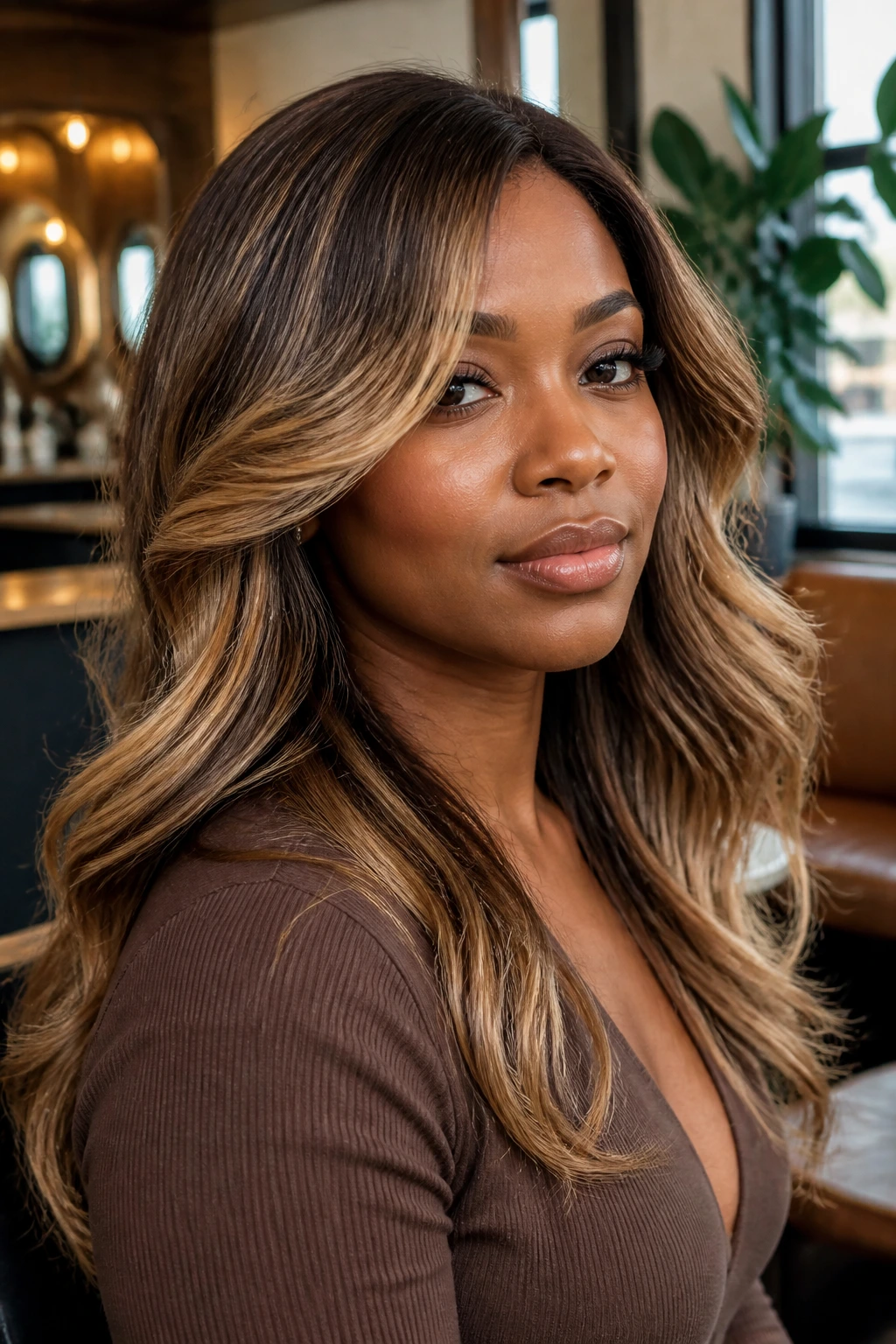
Going too pale too fast: The hair ends up looking washed out against deep skin. The fix is staying in the honey-gold range instead of chasing pale beige.
-
Putting the brightest pieces right at the scalp: That creates a stripe effect and makes the grow-out rough. Keep the root deeper and let the brightness start lower.
-
Using ash toner to “clean” the blonde: Ash can mute the warmth that makes the shade work. A gold-beige gloss usually keeps the color richer.
-
Ignoring the haircut: Balayage placed on a cut with no movement can feel stiff. Layers, bends, or shape around the face help the color show.
-
Overusing heat on the ends: The lighter pieces dry out first and start looking rough. Use a heat protectant and keep the iron temperature modest.
Variations and Adaptations to Try
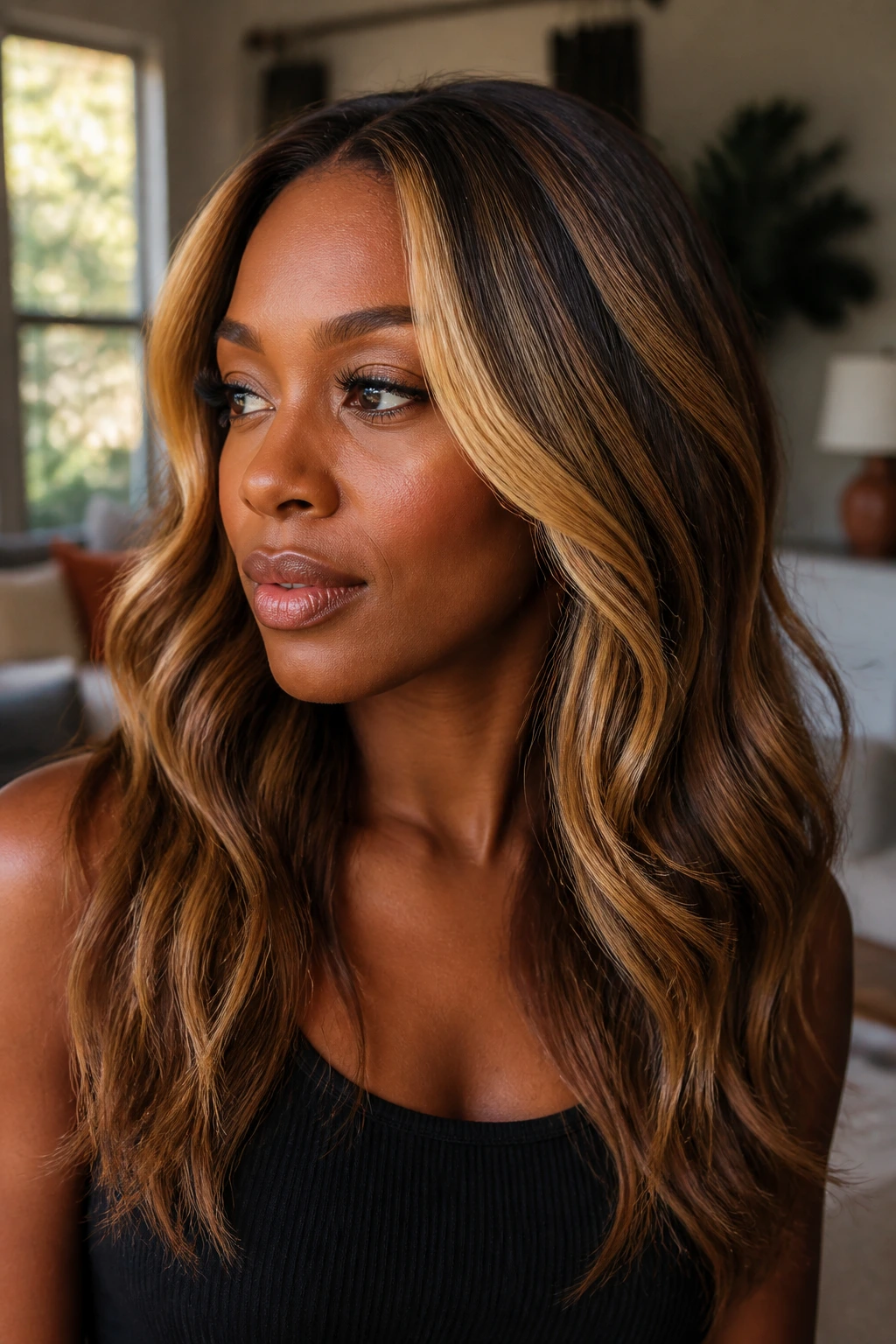
Soft Honey Starter Frame: Ask for only the front pieces and a few midlength ribbons. It gives glow without a major color commitment.
Bronze Honey Melt: Keep more brown in the formula and let the blonde live at the ends. This is a good fit if you want warmth without bright contrast.
Curly Halo Honey: Place the lightest pieces around the crown and outer ring of curls. It keeps the pattern visible and the face bright.
Bold Money-Piece Honey: Go a little brighter around the temples and cheekbones, then soften the rest of the head. This is the loudest option in the group, and it works best when the root stays deep.
Gloss-First Honey: If your hair is already lightened, skip more bleach and refresh with a warm beige-gold gloss. It restores shine without pushing the hair further.
Common Questions About Warm Honey Balayage
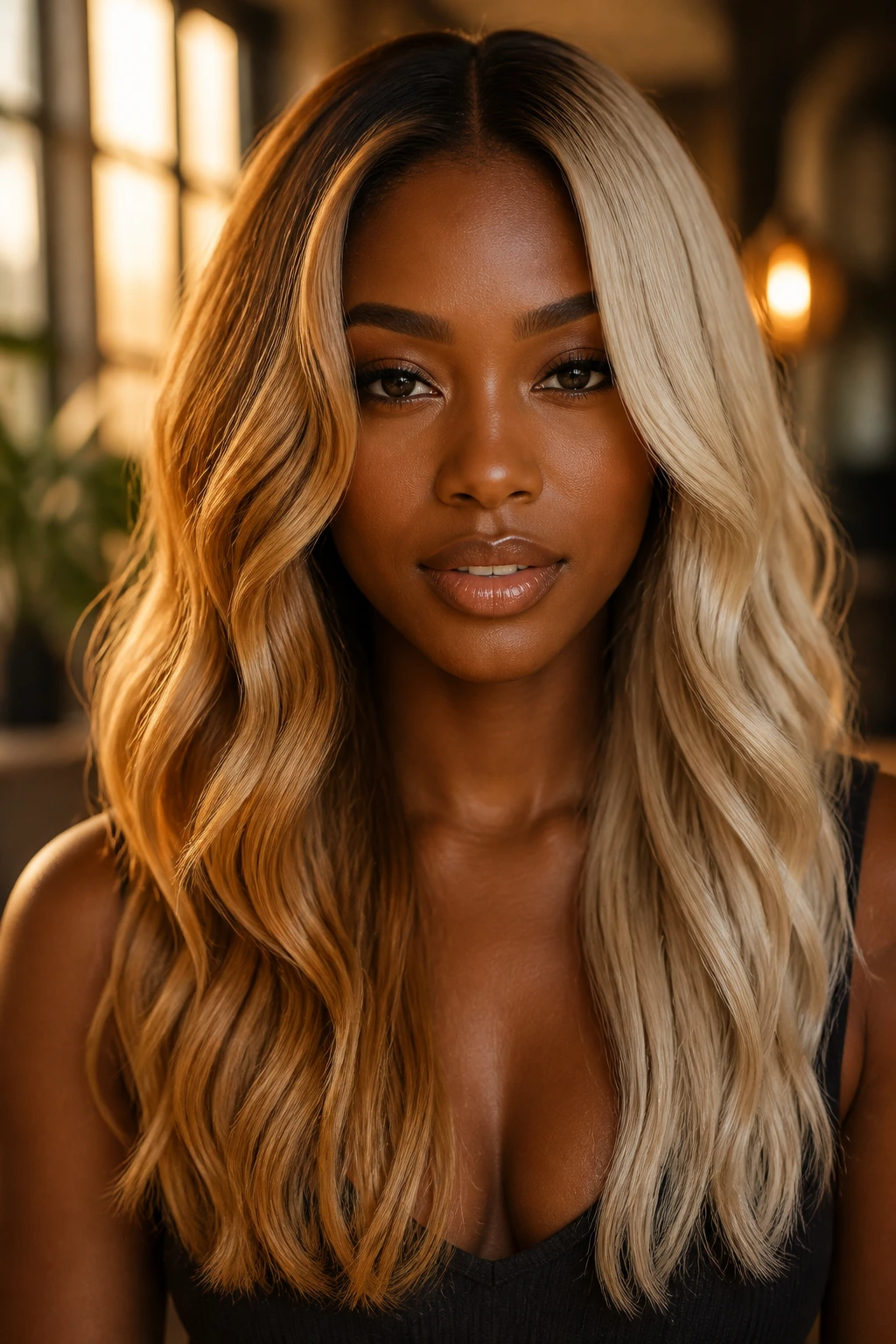
Will honey blonde balayage work on very dark hair?
Yes, but it usually needs more than one visit if you want real lightness without rough ends. The best version often starts with warm caramel or bronze pieces, then builds up toward honey over time.
How light should the blonde go on deep skin?
For most people, level 7 to 9 looks richer than a pale level 10 blonde. The warmth stays visible, and the hair does not drift into that dry, chalky zone.
Is balayage better than full highlights for deep skin tones?
Usually, yes, if you want softness and grow-out that does not scream maintenance. Full highlights can work, but balayage gives the color more breathing room and usually looks less stripy.
Can curls and coils handle honey balayage?
They can, as long as the color is placed with the curl pattern in mind. Wide spacing, gentle lift, and a warm gloss make a huge difference.
How often should I get a gloss or toner?
A lot of colorists refresh honey tones every 6 to 8 weeks. If your hair fades fast, or you wash often, you may want it a little sooner.
Can I get this look without bleach?
Not if you want true honey blonde. You can do a richer caramel or bronze glaze without heavy lift, but actual honey blonde needs lightening.
What if my hair gets brassy?
Do not panic and do not attack it with heavy purple shampoo every wash. One cooling wash can help, but a warm gloss from the salon usually fixes the tone more cleanly.
What if my ends are already dry?
Trim them first, or at least be honest about their condition. Lightening tired ends is how you end up with a blonde that looks good for one week and rough for six.
The Shade That Keeps Its Warmth
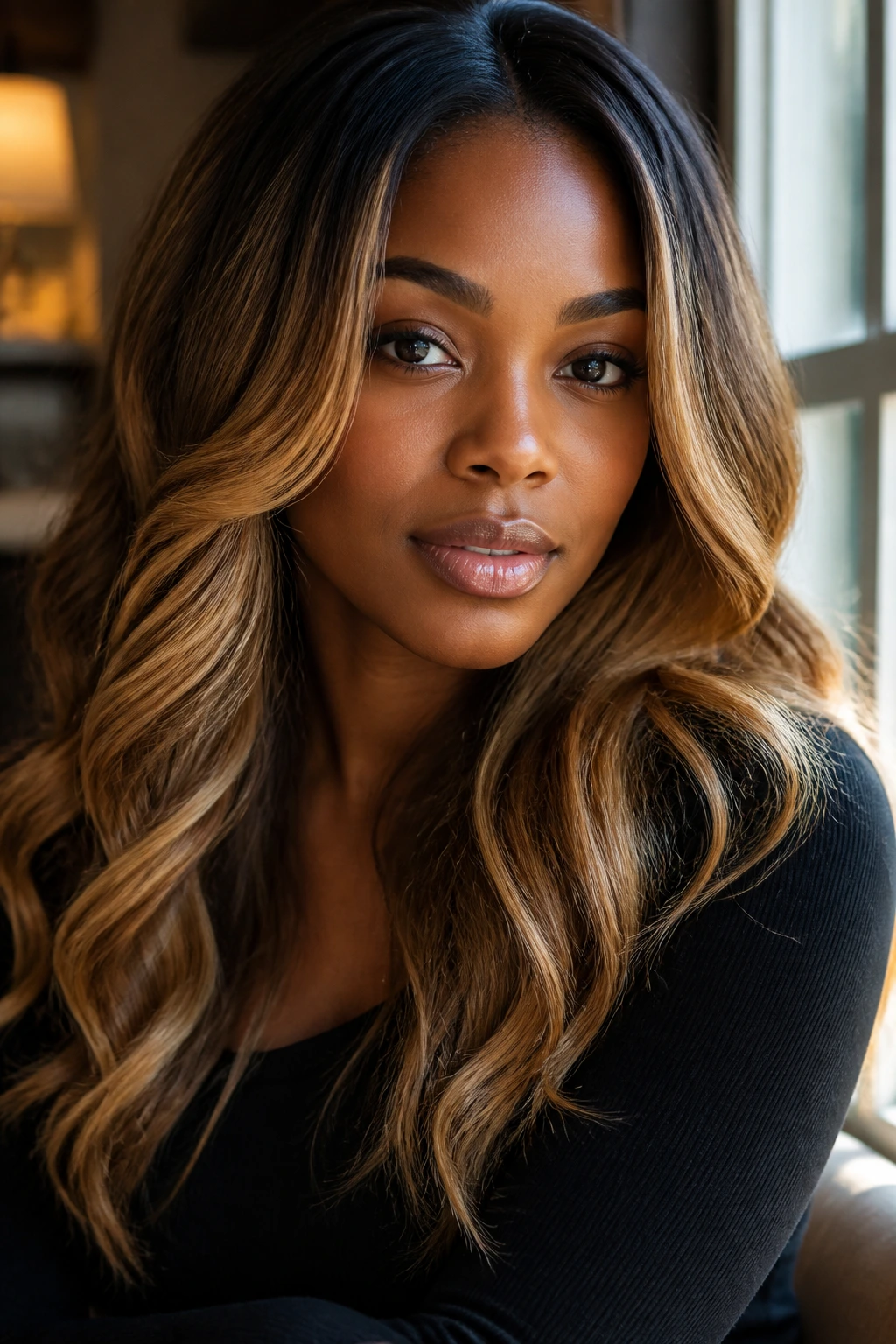
Honey blonde is one of those colors that rewards restraint. On deep skin, the best versions do not try to outshine the complexion. They sit beside it, warm and bright, and let the contrast do the work. That’s why the rooted melts, face frames, bronze ombres, and ribboned curls in this collection hold up so well.
If you are taking one idea to the salon, make it this: keep some depth, keep some warmth, and place the light where the hair actually moves. That small shift changes everything. And once the color is sitting right, the whole look feels easier to wear, which is usually the point.