



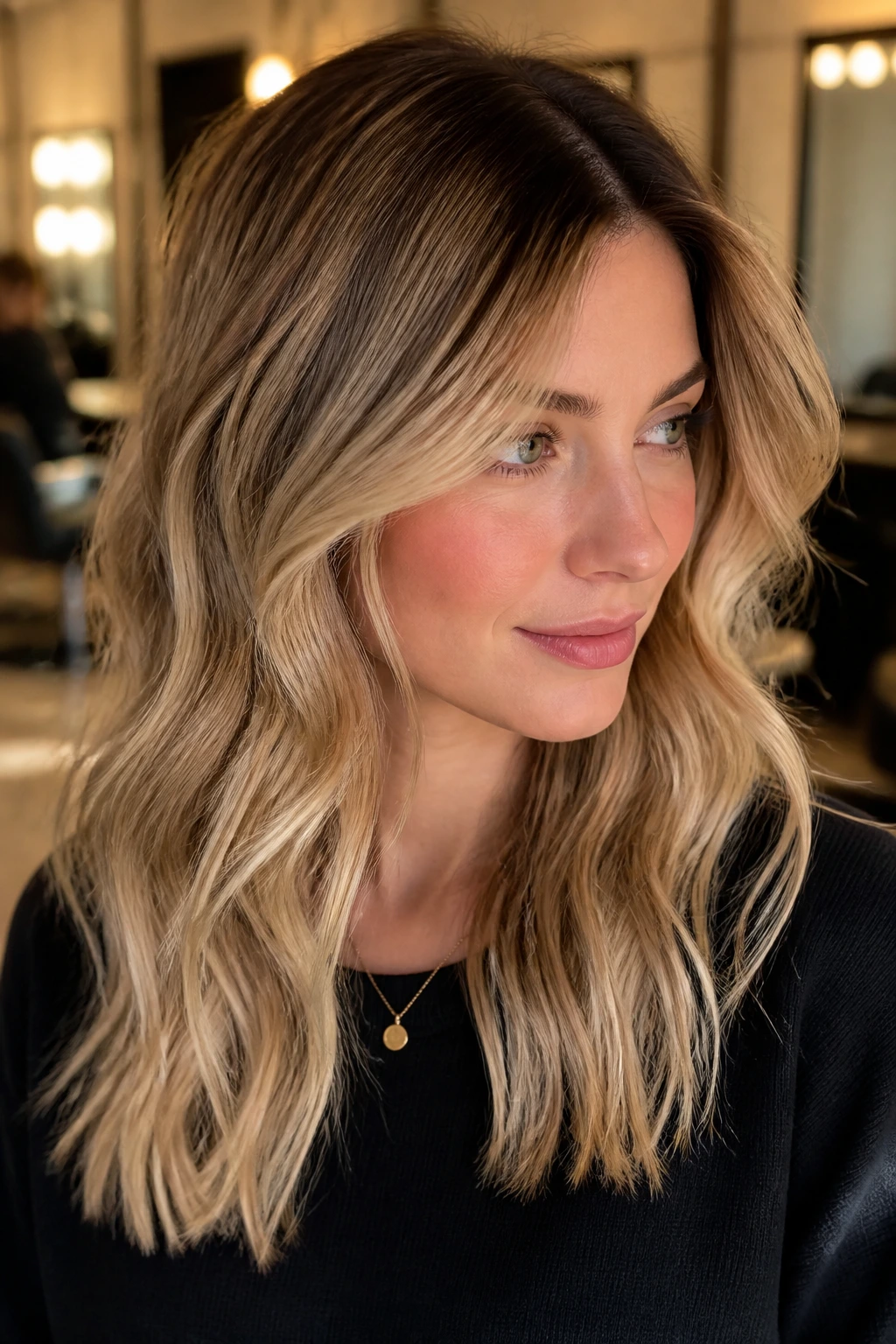
Warm golden blonde balayage for cool skin tones works best when the warmth is handled like light, not like paint. Too much yellow, and the face can look pinker, sharper, or a little tired. The right gold sits softer — more champagne, honey, beige-gold, and pale amber — so it gives brightness without fighting the undertone underneath.
Balayage matters here because placement does half the work. A warm blonde painted a little lower through the lengths can make cool skin look clearer than a chunky highlight slapped right at the hairline. Root shadow, gloss, and the exact level of lift matter too. The trick is not “go warmer” in a vague way. It’s “go warmer, but keep it diffused.”
That’s why this color family has so many good versions. Some are barely there. Some lean brighter and more face-framing. A few are built for curls, a few for bobs, and a few for brunette bases that need patience and a clean grow-out. The first job is finding the version that lets your skin stay cool while the hair carries the warmth.
Why This Shade Family Earns Its Keep
-
Beige beats yellow: The prettiest versions stay in champagne, honey, or beige-gold territory, which softens pink or blue undertones instead of fighting them.
-
Placement matters more than hype: A ribbon behind the cheekbone looks warmer than a stripe on the hairline, and that small shift changes the whole read of the face.
-
Roots stay calm: A soft shadow root keeps regrowth from looking harsh, which matters when your natural color is cooler brown or dark blonde.
-
Texture changes the payoff: Waves turn tiny ribbons into visible streaks of light, while straight hair shows every placement line for better or worse.
-
You can go subtle or bright: The same color family can look quiet on a lob or more obvious with a money piece and brighter ends.
-
Salon language gets easier: Terms like foilayage, root melt, and beige gloss help you ask for a result instead of hoping for luck.
1. Soft Champagne Veil
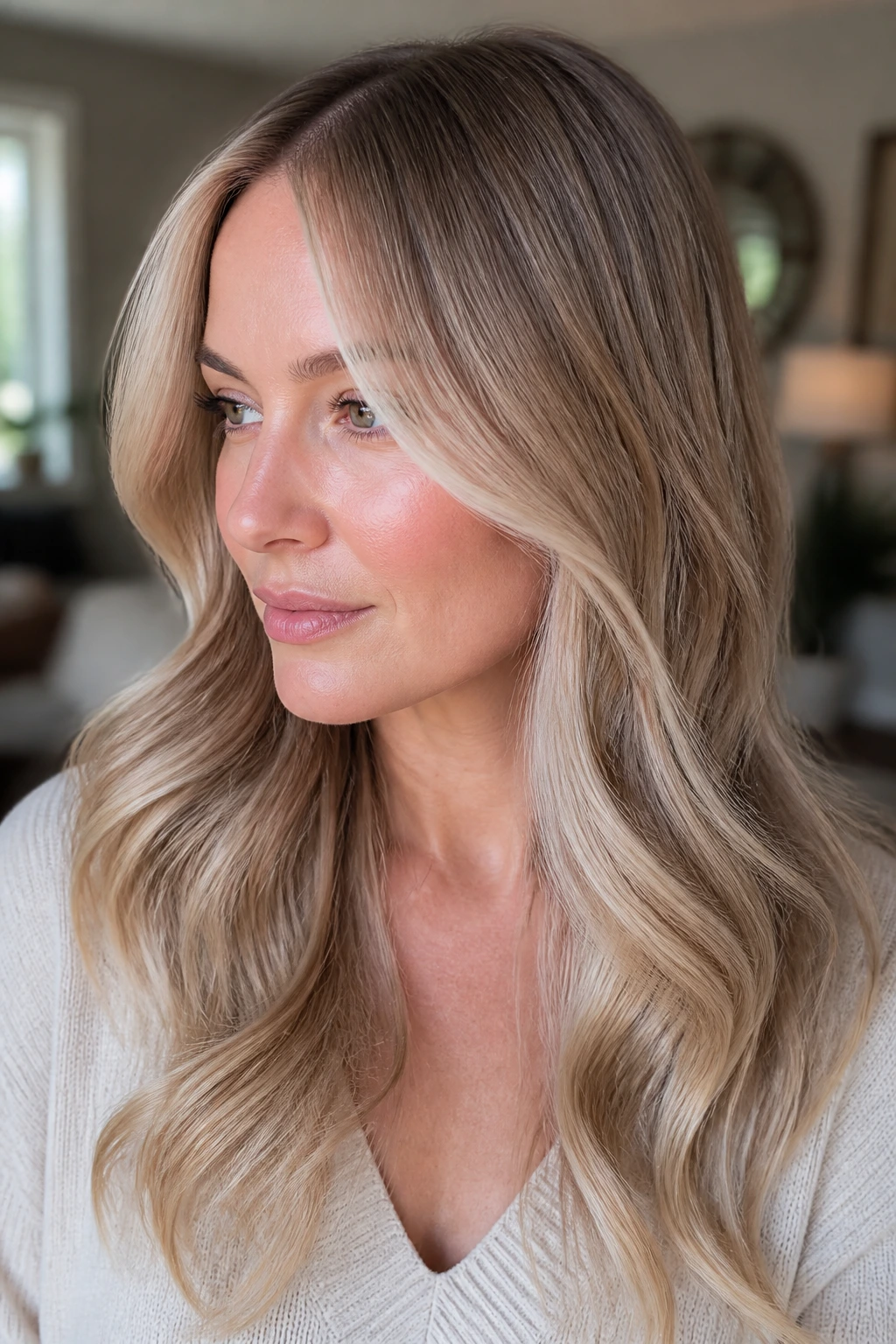
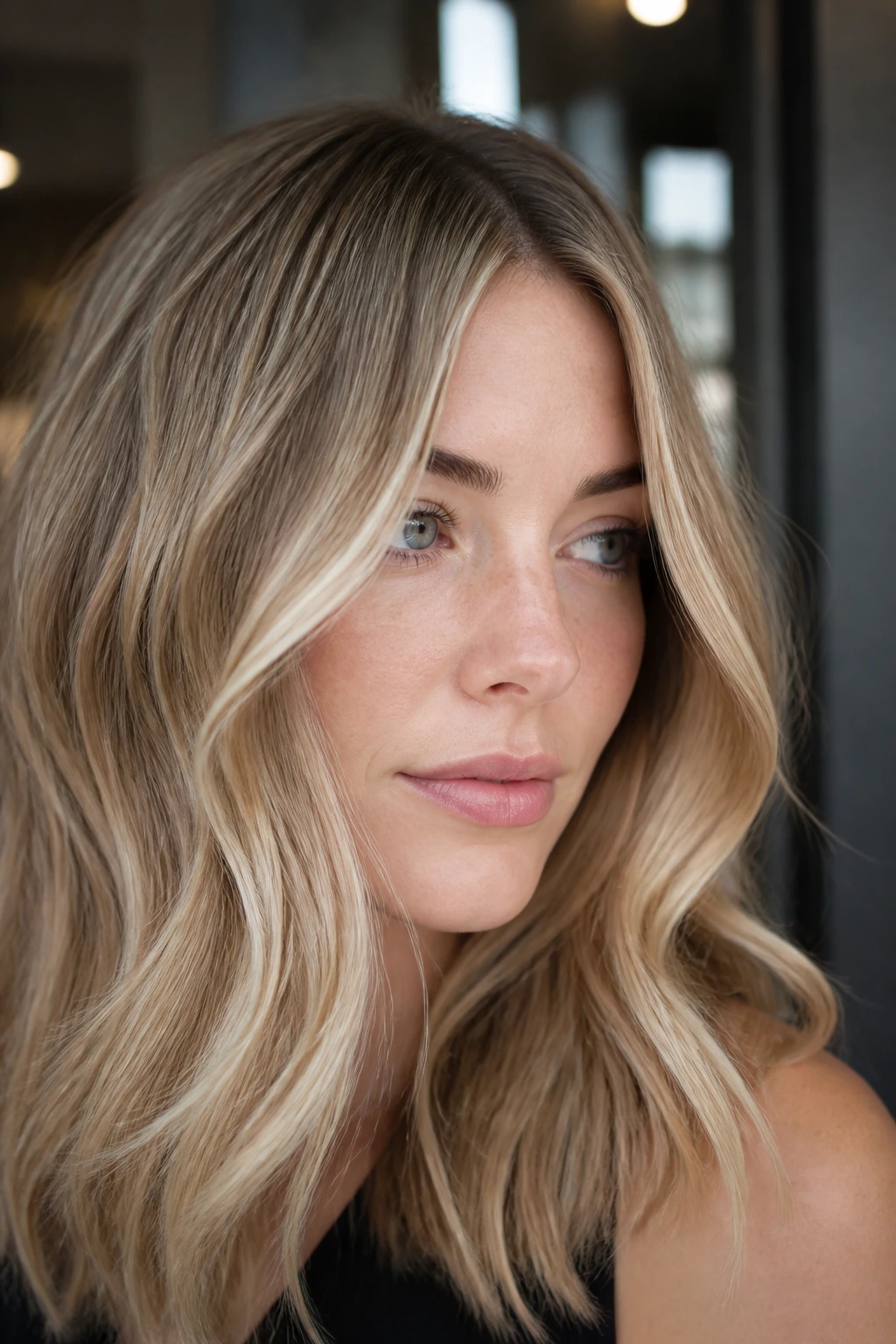
A whisper of champagne is the safest warm blonde to start with if your skin runs cool and fair. The color sits in the hair like diluted sunlight, not a loud stripe, which keeps it flattering instead of buzzy. It’s the version I’d pick for someone who wants warmth but flinches at anything that looks yellow in the mirror.
Ask for very fine balayage through the top layers, with the lightest pieces kept below the part line and through the ends. A beige-champagne gloss after lightening keeps the finish soft and prevents that sharp lemon note some blondes pick up. On straight hair, it reads elegant; on waves, it looks even more dimensional.
This one works especially well when the base is a cool dark blonde or light brown. The contrast stays gentle, and that matters. You want the eye to notice shine first, then color.
2. Honey Money Piece
A thin honey money piece can change the whole face without turning the rest of the hair loud. If your cool skin leans pink around the cheeks, keep the face frame narrow and slightly diffused so the warmth sits like a glow, not a spotlight. That’s the difference between “fresh” and “too much.”
Best for: shoulder-length cuts, medium brunettes, and anyone who wants an obvious change without losing dimension.
Ask for: a soft money piece in honey-beige, plus lighter ribbons through the ends so the front doesn’t feel disconnected from the rest.
This style looks best when the front sections are blown smooth or tucked behind the ears. The shape around the face matters as much as the color. If the front piece is too thick, it starts wearing the face instead of flattering it.
3. Beige Gold Root Melt
What happens when you want warmth but hate a hard line at the scalp? You get a root melt. The stylist keeps the root close to your natural level — sometimes a neutral brown, sometimes a smoky beige — and lets the gold bloom two or three inches down the shaft.
That buffer matters on cool skin because it stops the blonde from sitting like a bright bar against the face. Ask for beige-gold through the mids and ends, and keep the root soft enough that the grow-out never looks engineered. The best versions don’t look dipped. They look poured.
If you wash your hair often or wear it straight, this is one of the easiest places to start. It buys you time between salon visits and makes the warmth feel more expensive than flashy. Quiet color. Good color.
4. Buttery Ends on a Dark Blonde Base
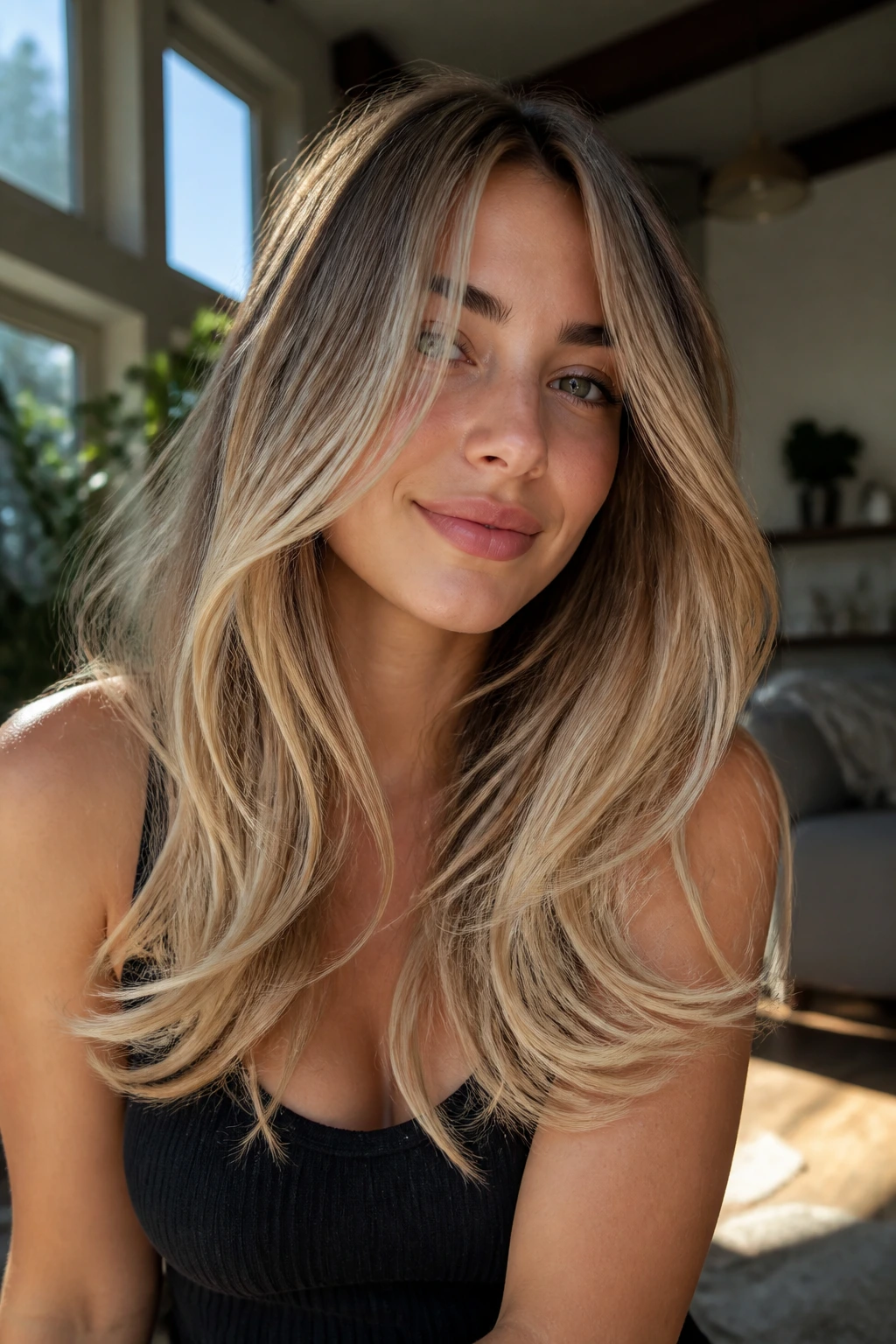
If your natural color is already in the dark-blonde range, don’t chase platinum. Buttery ends usually do enough. Keep the top closer to your base, then brighten only the lower lengths and the very tips.
That lower placement keeps the face calmer on cool undertones and makes the whole look feel lived in instead of newly dyed. It’s also kinder to fine hair, because the visual lift is concentrated where the hair moves the most. When the ends swing, the gold appears and disappears. That little flicker is the charm.
Good note: this style looks best on layered cuts where the ends can move. A blunt one-length cut can make the lightening feel too heavy.
5. Caramel Ribbon Foilayage
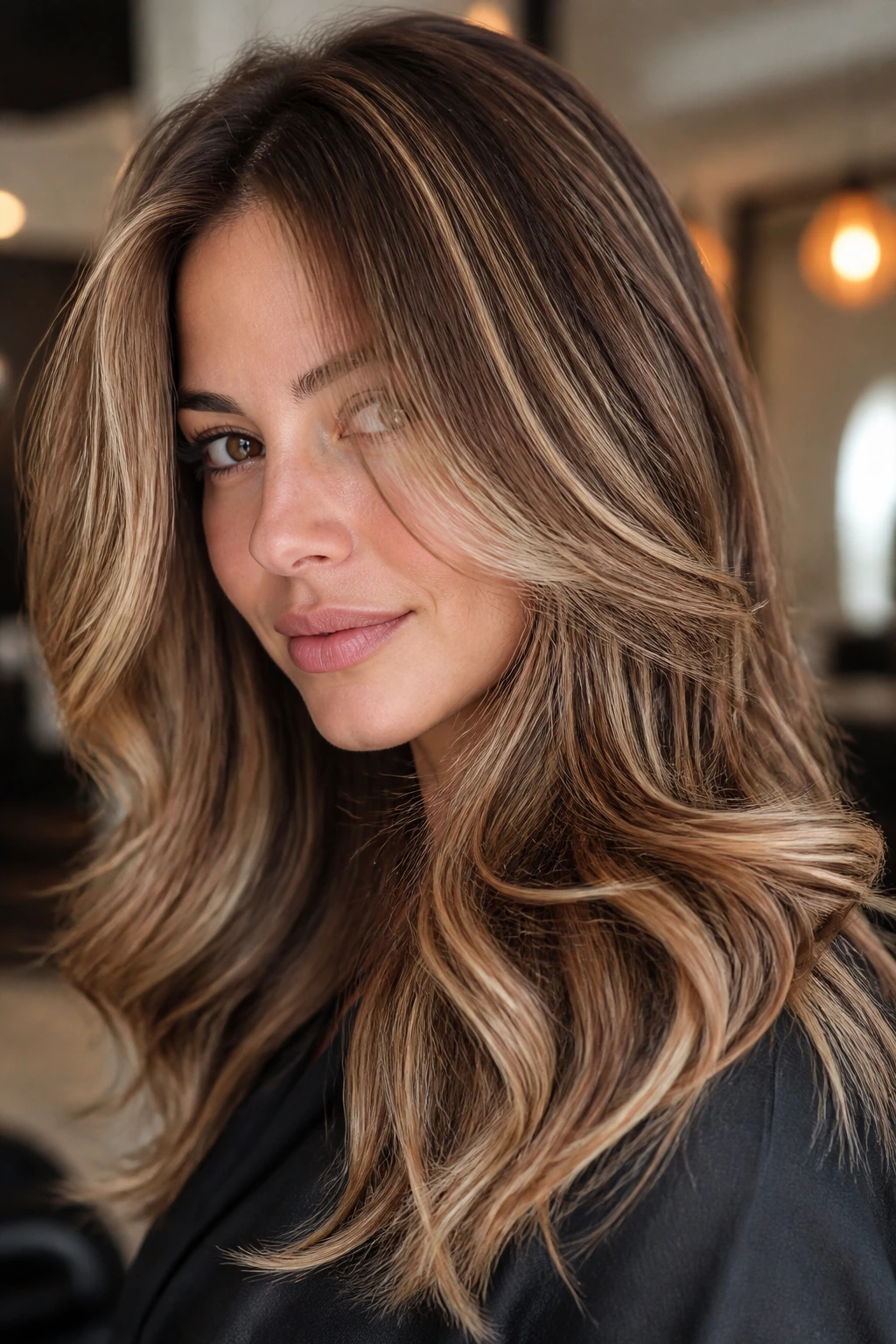
Thick hair can hold more color contrast than fine hair ever should. That’s why ribbon foilayage works so well here. The stylist paints broader strokes of caramel-gold, then uses foils or a foilyage approach to get enough lift without losing the soft hand-painted look.
On cool skin, keep the caramel in the beige lane rather than the amber lane. Too much orange and the face can start looking flushed. The right version, though, gives movement and makes dense hair feel lighter around the face and ends.
This is one of those looks that benefits from a blowout. The ribbons show up better when the layers separate a little. If the hair is always air-dried into a single shape, some of the dimension gets buried.
6. Curtain Bang Glow
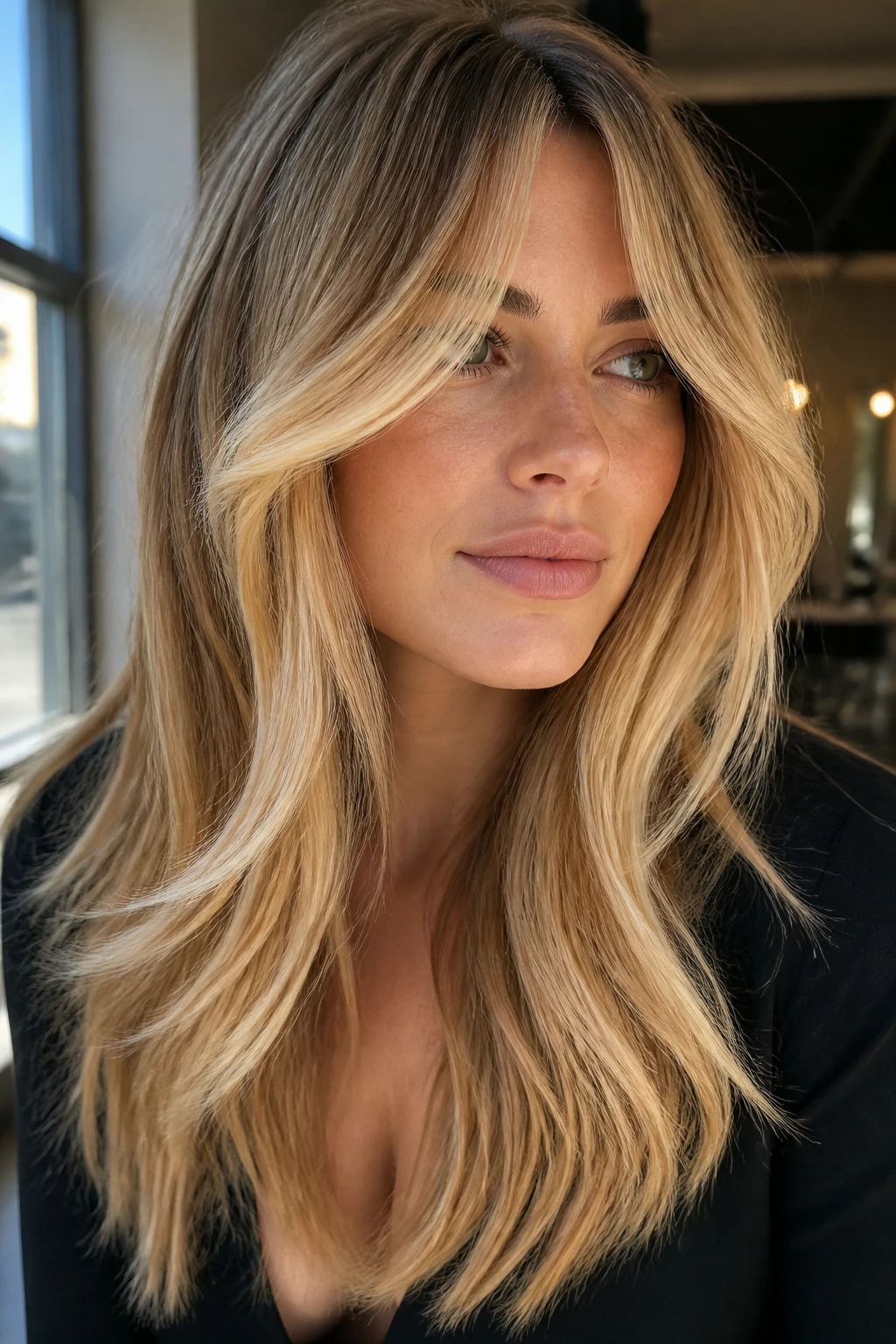
Curtain bangs are where warm blonde gets tricky, because they sit right beside the face and can either soften everything or light up every pink patch on the skin. The fix is simple: keep the bang area light, but not too pale, and tone it toward beige rather than banana.
A soft golden sweep through the curtain bang and the temple area gives lift without making the forehead or cheeks look shiny. The rest of the balayage can stay quieter. That asymmetry is doing work here, and it’s worth keeping.
If your bangs are long enough to split and fall into the cheekbone, this look is lovely. Too-short bangs can fight the placement. Long curtain fringe gives the gold somewhere to breathe.
7. Curly Halo Balayage
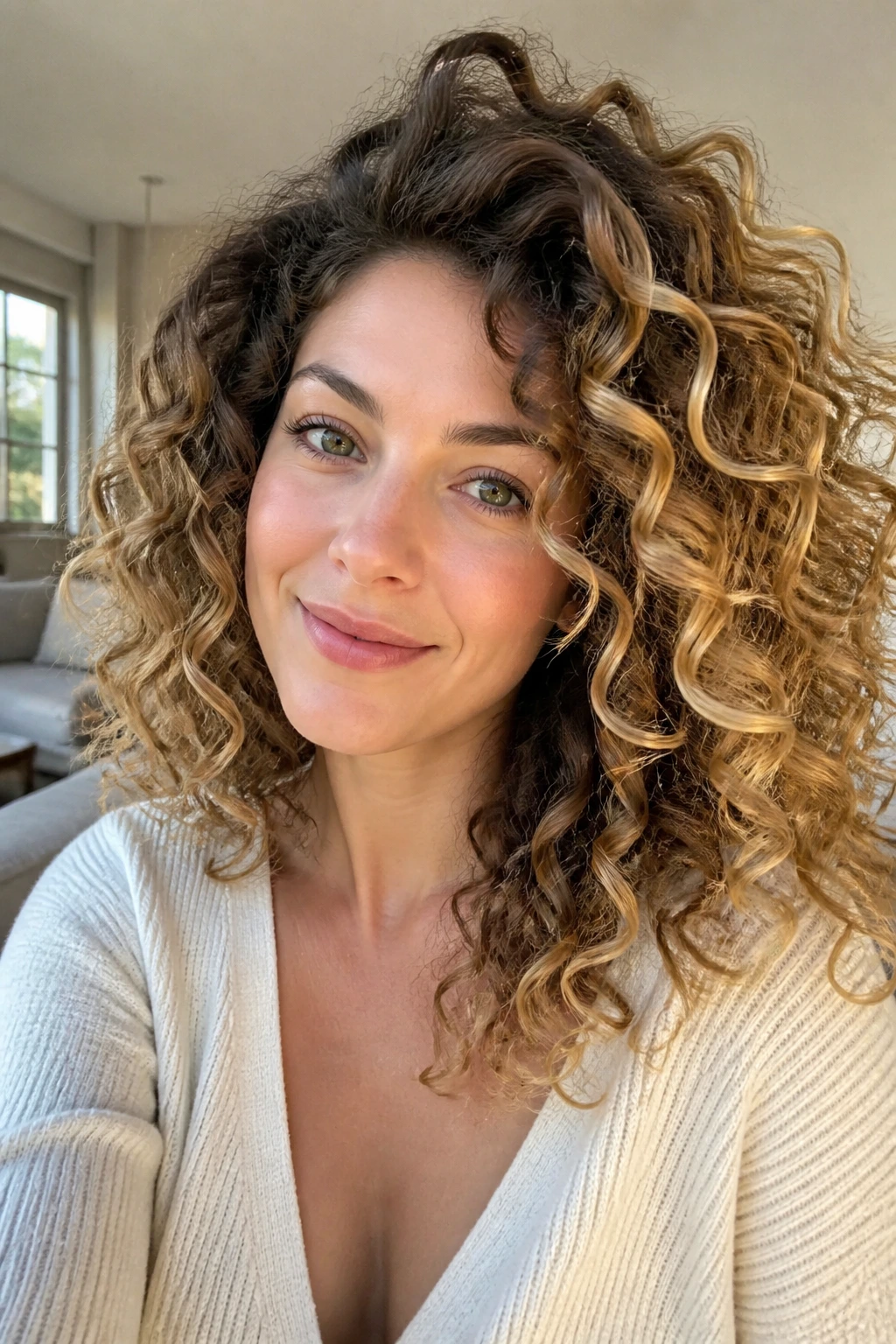
Why does warm blonde look so different on curls? Because curls bend the light. A little gold goes a long way. Instead of painting the whole surface, ask for a halo pattern — brightening the outer ring of curls and a few interior spirals so the color moves through the shape.
This keeps the warmth from sitting flat against cool skin. The curls catch it in pieces. The effect is softer, more natural, and much less stripey than a chunky highlight map would be.
Curly hair needs patience here. The color should be lifted enough to show, but not so much that it turns dry or fuzzy. A beige-gold gloss and a good curl cream can make the difference between shiny and fried.
8. Lob-Length Sunlit Sweep
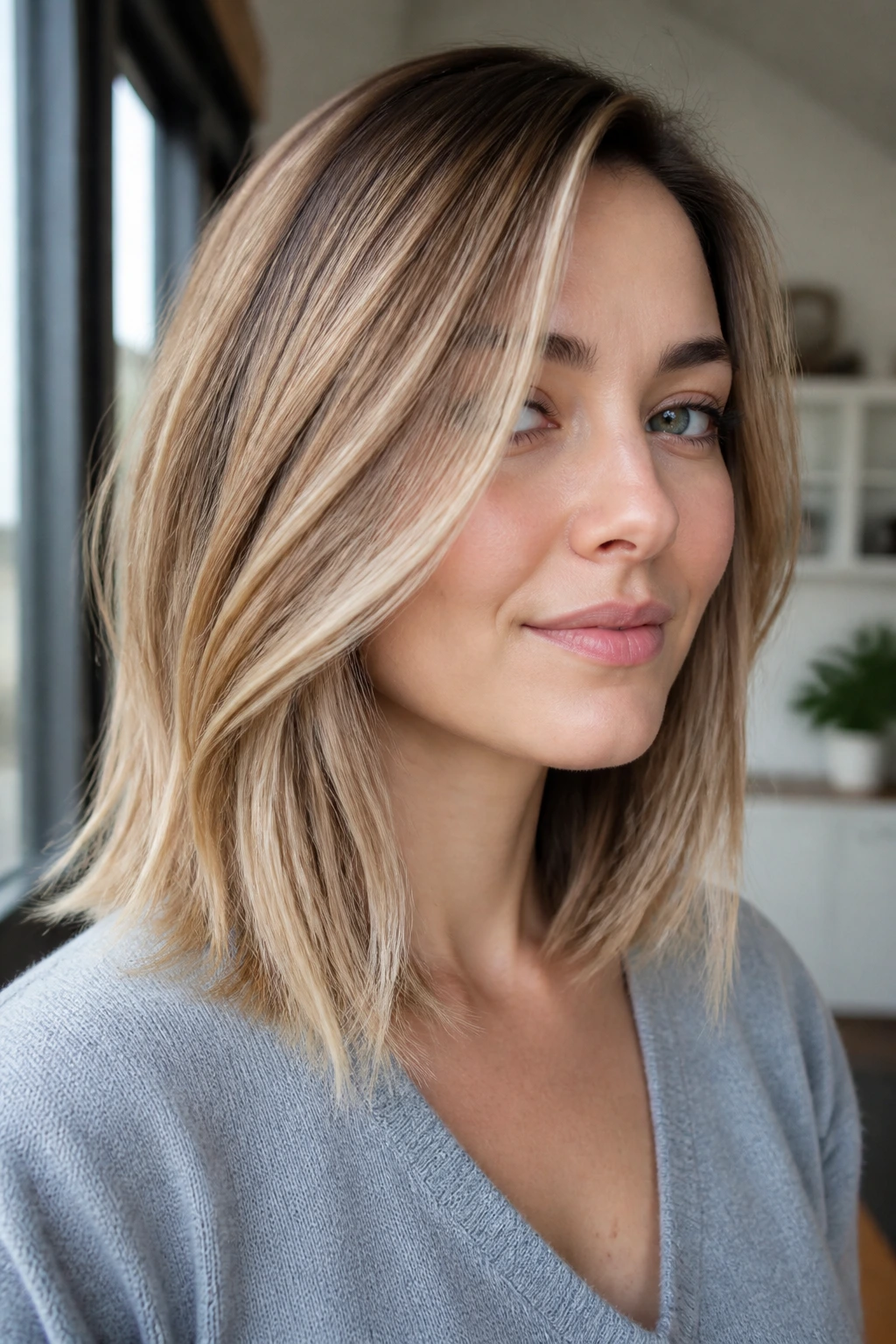
A lob does not need a heavy highlight map to look finished. In fact, too much color on collarbone-length hair can make the shape feel busy. A diagonal sweep of warm blonde through the top layers and ends gives you movement without crowding the cut.
This is a nice option for cool skin that wants brightness near the jaw but not directly on the cheeks. The gold lands lower, where it adds warmth without broadcasting it. That’s a subtle thing, but subtle is usually the smarter play around the face.
If your lob is blunt, keep the ribbons soft and spaced. If it’s layered, you can go a little more aggressive. The haircut decides how much color it can carry.
9. Long-Layer Waterfall Blonde
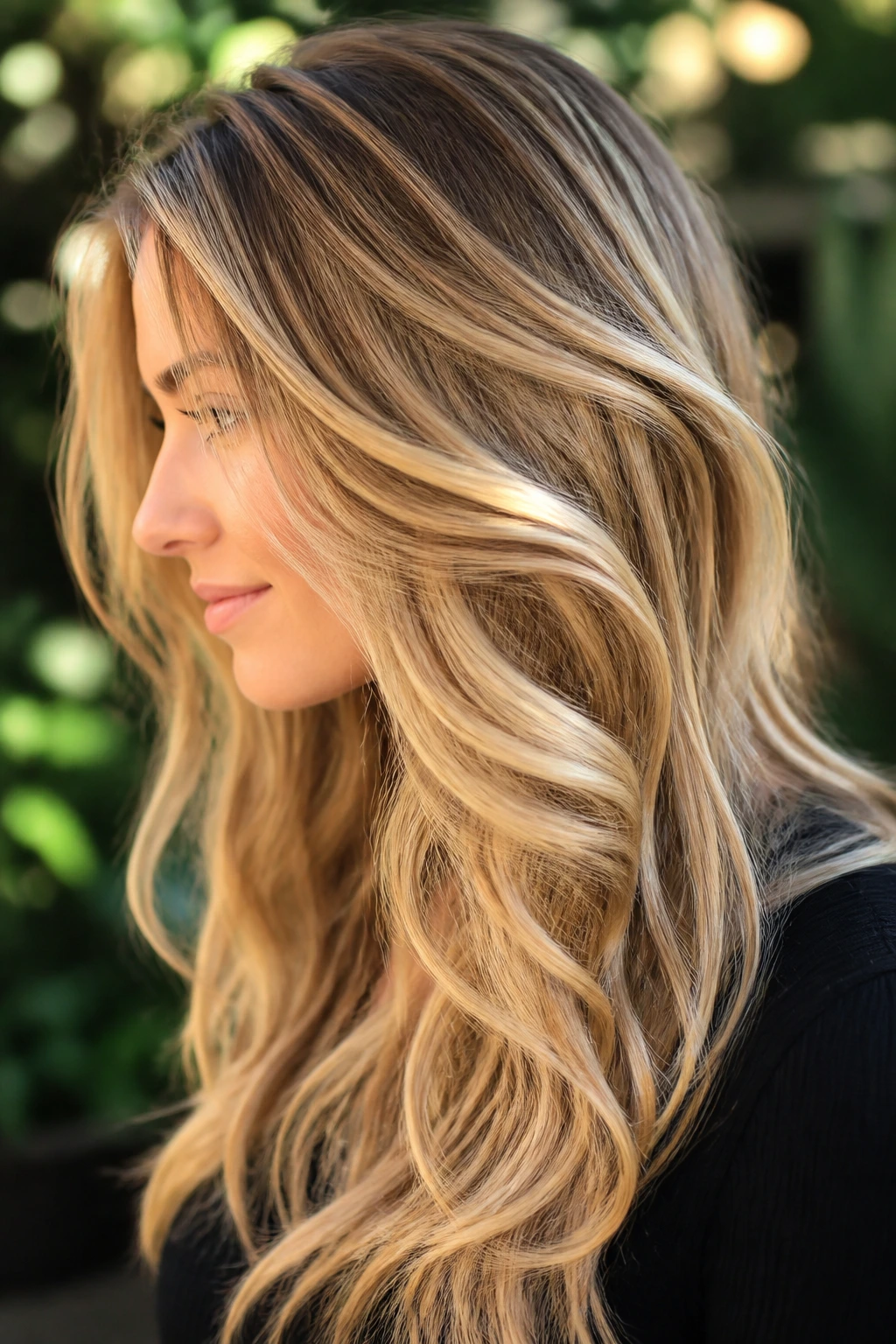
Long layers love a waterfall effect. The gold falls in ribbons instead of blocks, which keeps the color from feeling heavy at the top. On cool skin tones, that matters because the eye can follow the movement in the hair without getting stuck on one glaring piece.
Ask for low-contrast surface lights near the crown, then brighter ends through the lower lengths. That gives the color a cascade shape. You see it when the hair swings, not all at once from the front.
This is the kind of blonde that looks more expensive when it’s brushed out than when it’s freshly curled. A soft wave, a little separation at the ends, and you’re done. No need to pile product on it.
10. Bronde-to-Gold Fade
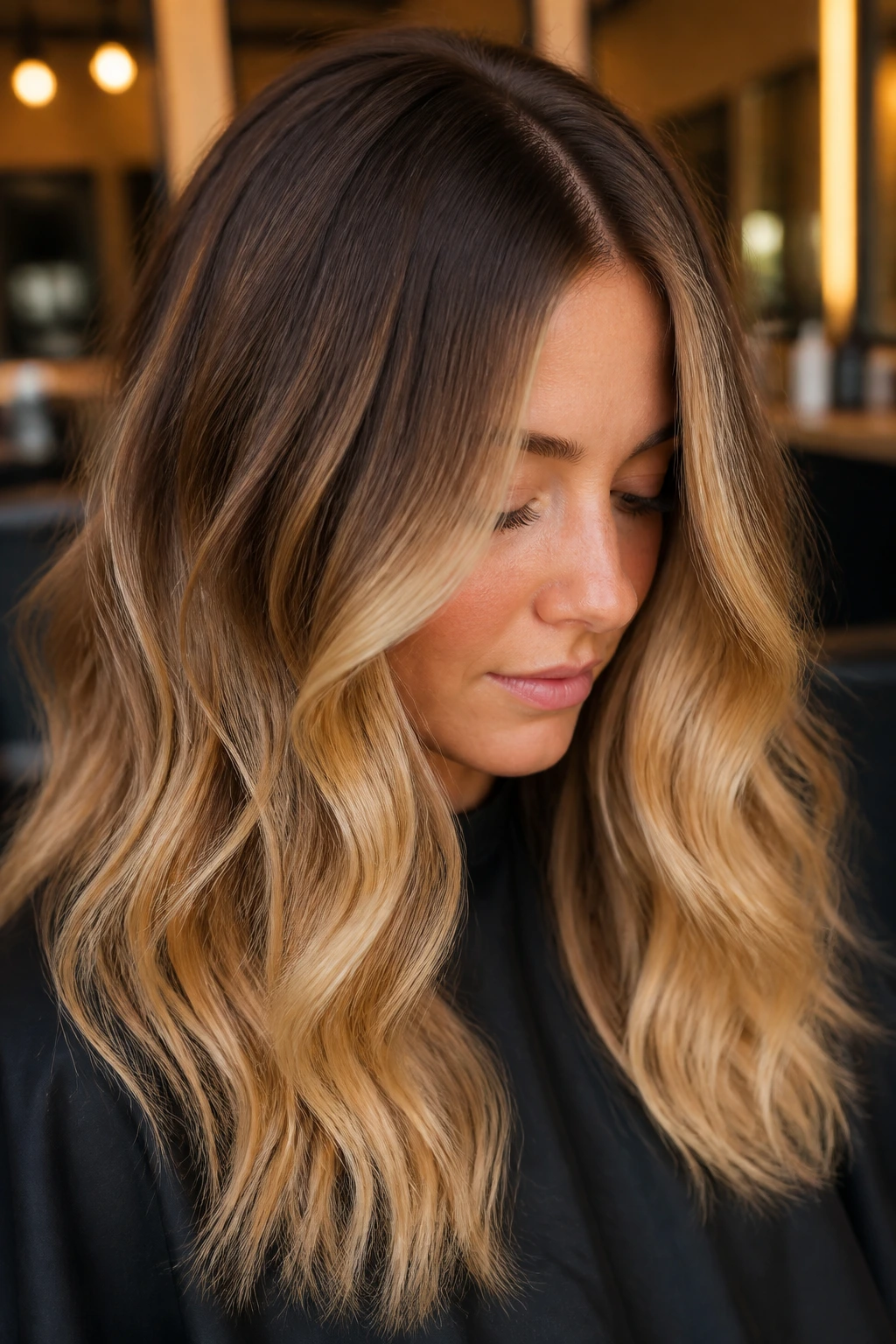
A brunette-to-gold fade is a smart bridge for anyone who isn’t ready to jump straight into blonde. The root stays brown or deep bronde, the mids warm up to beige-gold, and the ends get lighter. On cool skin, that gradation keeps the face from getting washed out.
The reason this works is simple: the warmth is concentrated where hair moves, not where skin is most sensitive to color. If your complexion goes rosy in warm weather or when you flush, this fade gives you warmth without making the redness louder.
It’s also one of the best long-term choices if you don’t want harsh maintenance. The grow-out has shape. It doesn’t look like a mistake three weeks later.
11. Smoky Gold on Brunette Hair
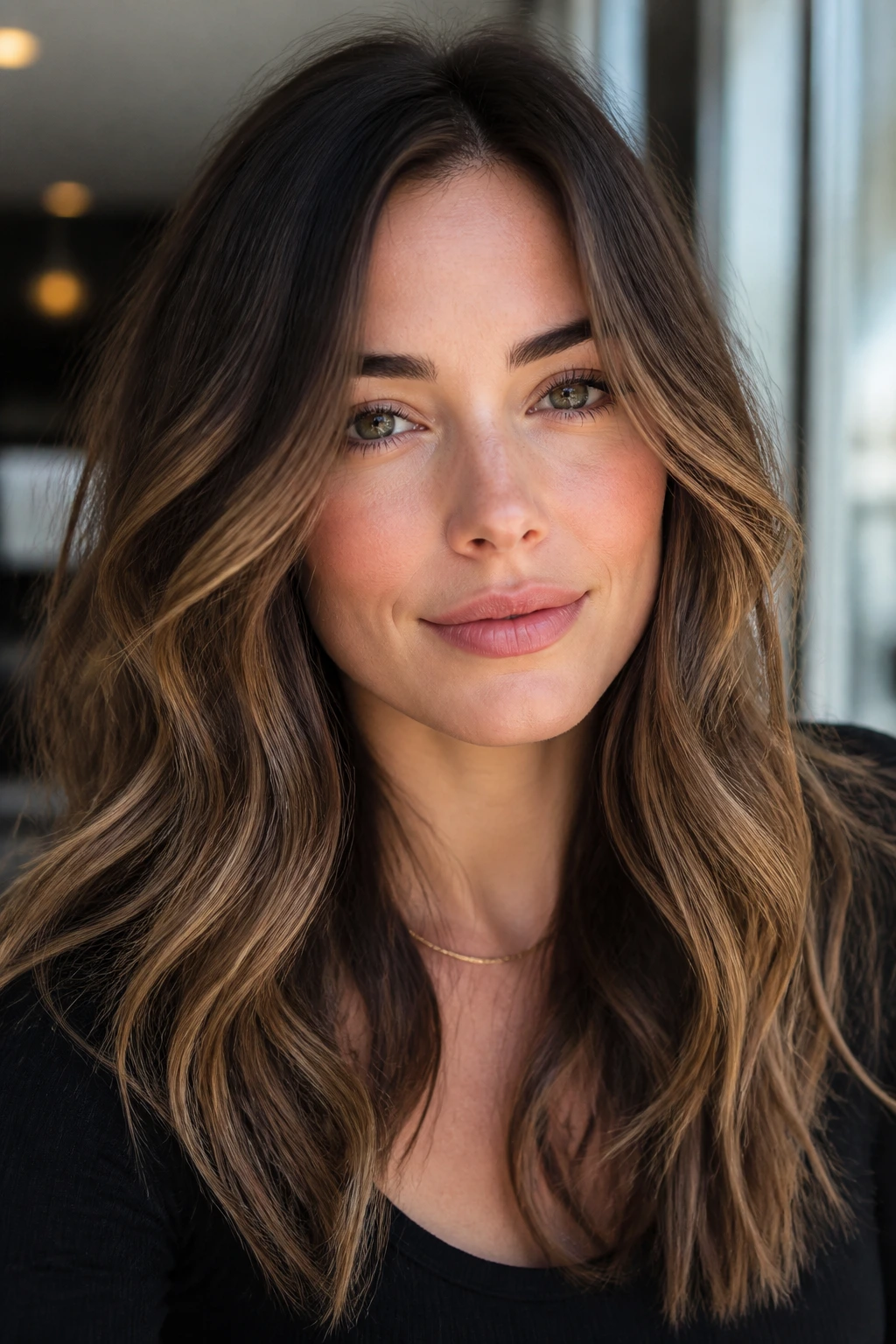
Some people think warm blonde has to be sunny. It doesn’t. A smoky gold on brunette hair is a calmer, more understated take that keeps the warmth low and the depth intact. The gold is there, but it’s filtered through beige and brown so it never turns brassy.
That’s a strong option for cool skin with darker brows. The hair still reads warm, but the contrast doesn’t jar against the face. It’s a good compromise if you like brunette depth and just want a little light where the hair bends.
This one works especially well when the colorist leaves a few pieces denser near the bottom layers. You want dimension, not a blanket of blonde.
12. Vanilla Honey Face Frame
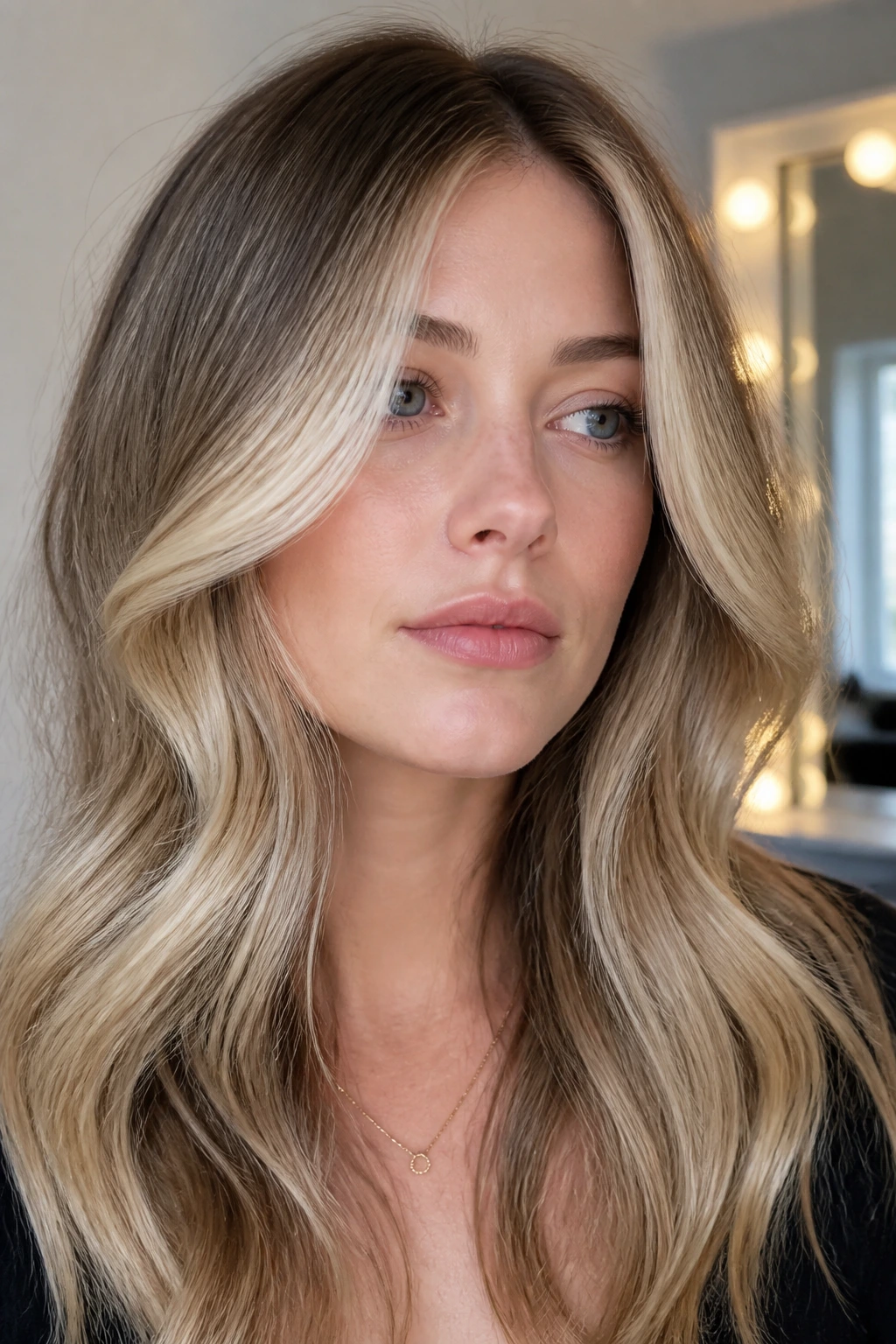
A vanilla-honey face frame has a slightly sweeter feel than a straight honey money piece. The front pieces are brighter and creamier, while the rest of the hair stays softer and more diffuse. That keeps the face open without making the whole color too hot.
For cool skin, the key is control. The frame should be bright enough to wake up the eyes, but not so pale that it screams yellow next to the cheek. The surrounding lengths can stay more muted, which gives the face frame room to work.
If you wear your hair half-up or tucked behind the ears, this style earns its keep fast. It keeps showing up from every angle. That’s the nice part.
13. Golden S-Bend Ribbons
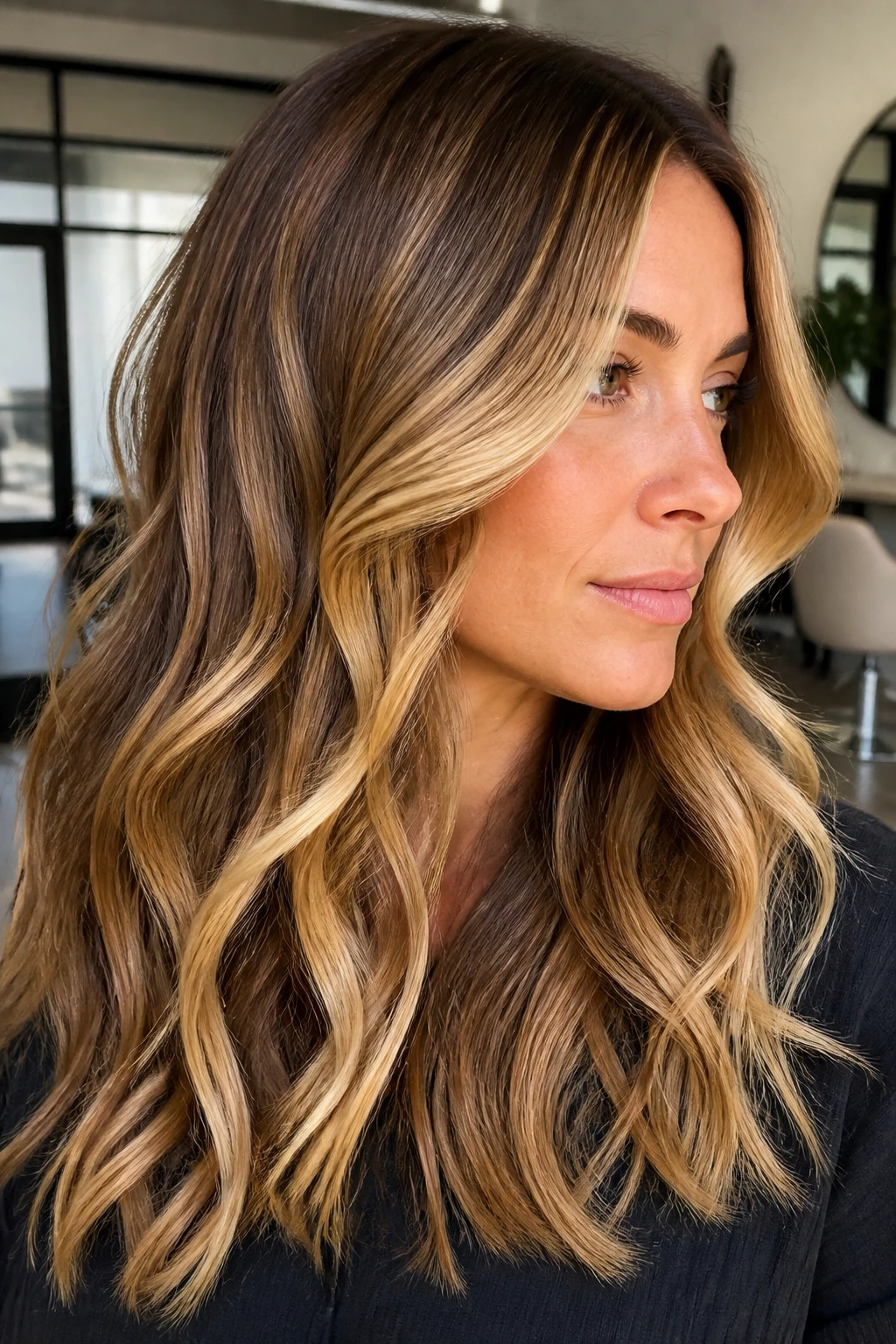
This is the kind of color that looks best once the styling brush has done its work. Golden S-bend ribbons are painted thin and then revealed through a loose S-wave, so the gold appears in soft bends instead of straight streaks. That shape helps warm blonde feel gentler against cool skin.
The placement should stay delicate around the temples and a touch brighter through the mid-lengths. Straight, flat hair can make the ribbons look too obvious. A soft bend gives them a better job to do.
I like this option for medium-density hair. It creates motion without needing a huge contrast jump. A little shine spray on the mids and ends doesn’t hurt either.
14. Rooted Bright Ends
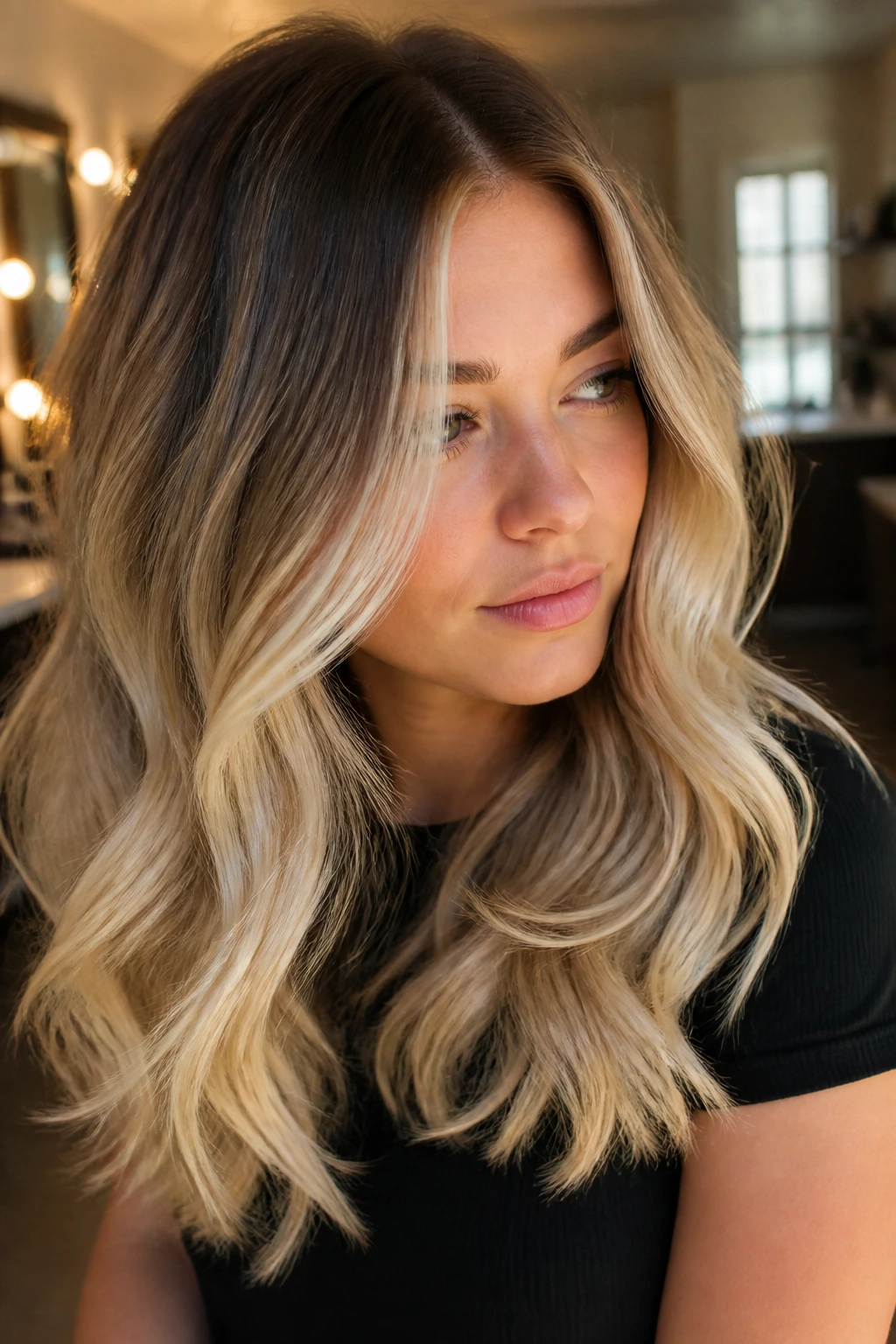
If you like high brightness but want to keep the face calm, put the lightest color at the ends. Leave the root rooted and the upper mids a shade deeper, then let the last few inches carry the gold. That keeps warm tones away from the most sensitive part of a cool complexion.
The result is a bit like light pooling at the hem of a dress. It looks deliberate. It also grows out well, because the root doesn’t need constant babysitting.
This is a good choice for people who wear their hair up often. The blonde still shows in a ponytail or bun, which is a nice little bonus. You’re not losing the work when the hair goes back.
15. Mushroom Brown to Warm Gold
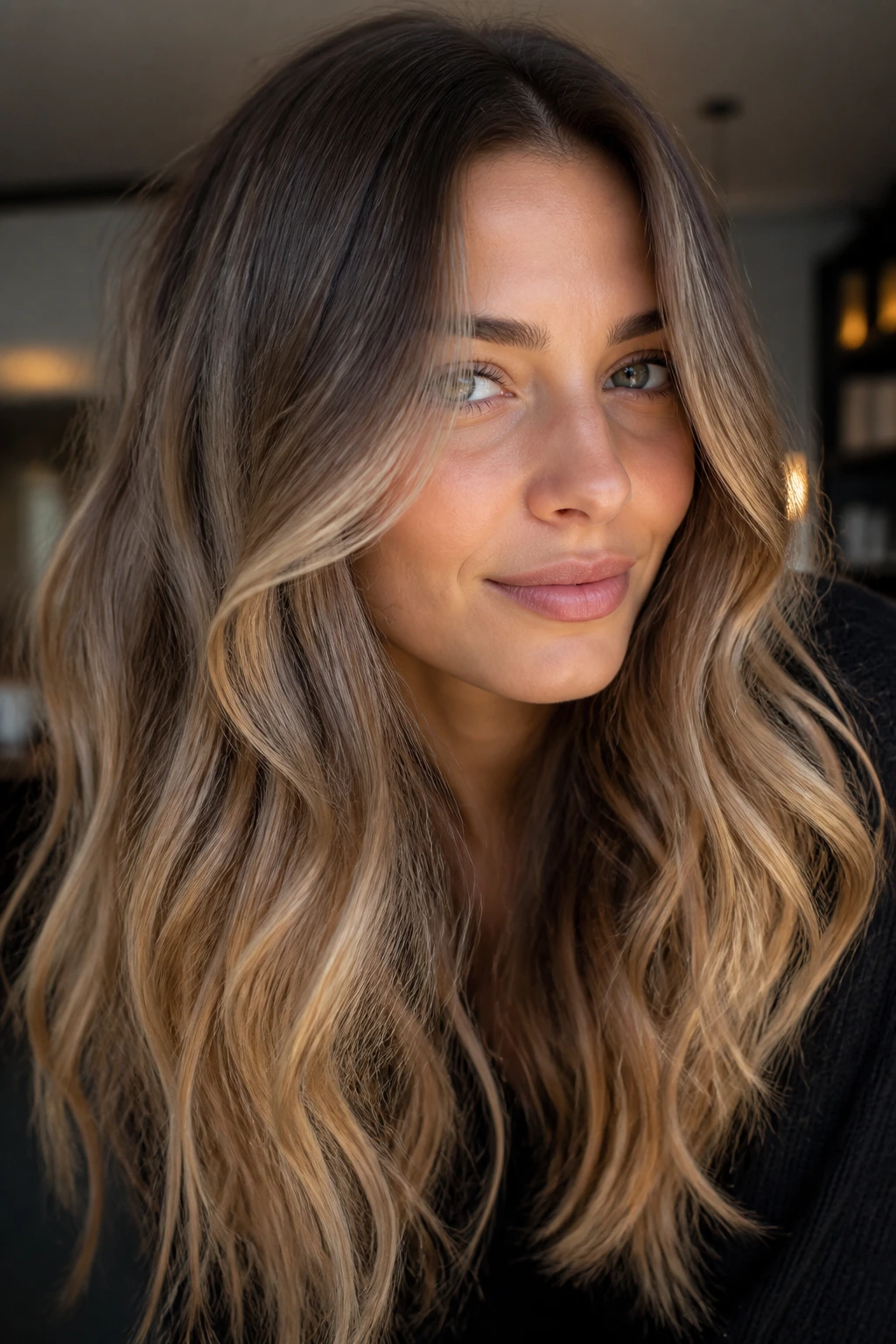
Mushroom brown is one of the easiest bases to warm up without losing cool-skin harmony. The color starts earthy and muted, then drifts into gold through the mids and ends. That shift keeps the look dimensional and keeps the warmth from feeling like it was dropped on top.
On cool skin, this works because the brown-root section acts like a frame. The gold gets to glow, but it has a neutral border. That border saves you from the “why does my hair look louder than my face?” problem.
The finish should stay soft and matte-ish at the root, then brighter and shinier below. If both areas look equally reflective, the whole thing flattens out. The difference between zones is what makes it good.
16. Thick-Hair Panel Lights
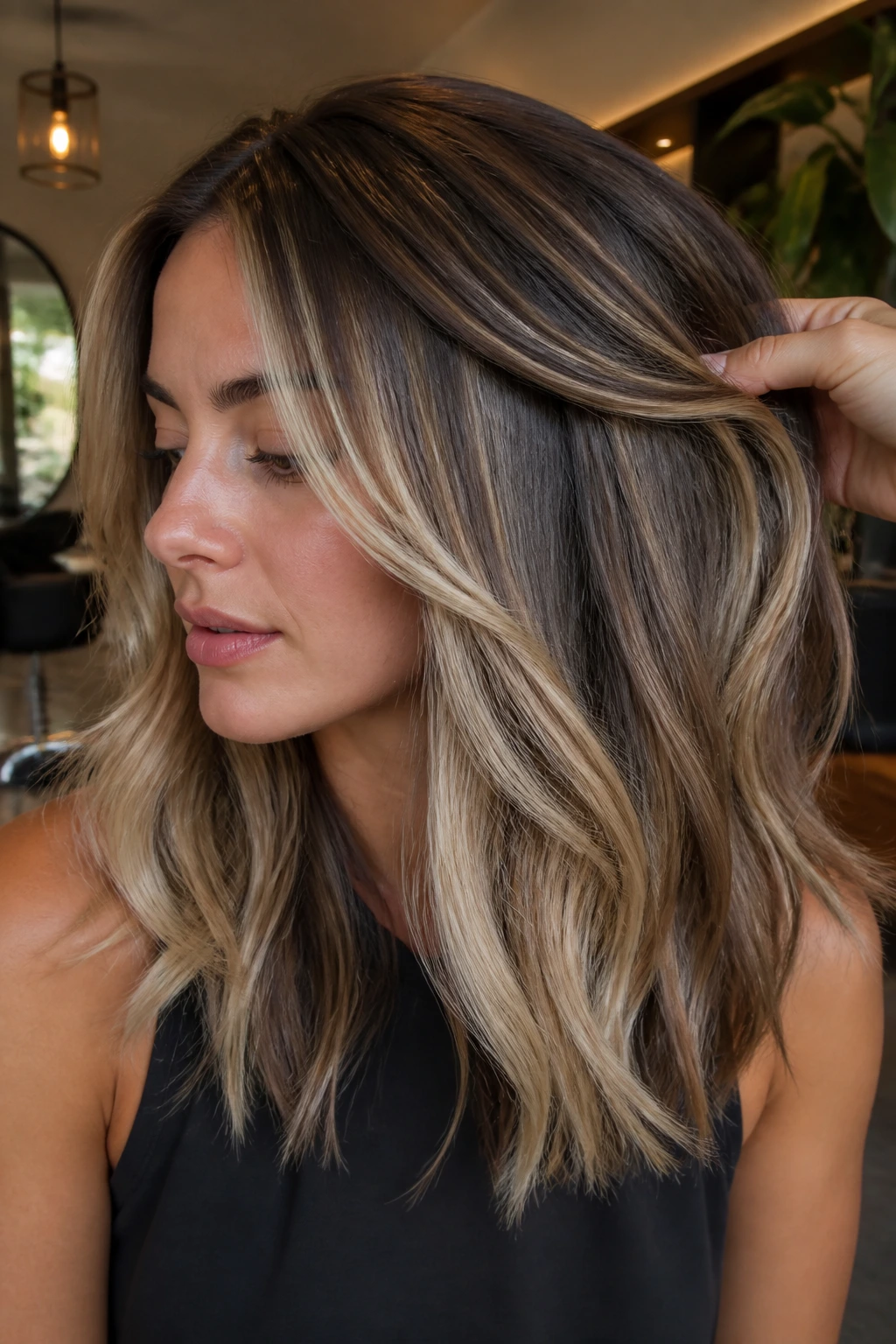
Thick hair needs a different map. Tiny ribbons disappear, and too many of them can make the hair look busy. Panel lights solve that by placing broader sections under the top layer so the color shows when the hair moves, not just when it’s parted in a certain way.
For cool skin, keep the panels warm but beige. You want dimension, not yellow blocks. This technique looks especially good on shoulder-length or longer cuts, where the movement exposes the different layers naturally.
The upside is that it gives the illusion of fullness and lightness at the same time. Thick hair can get heavy around the face. These panels break that up without making the look fussy.
17. Fine-Hair Micro Balayage
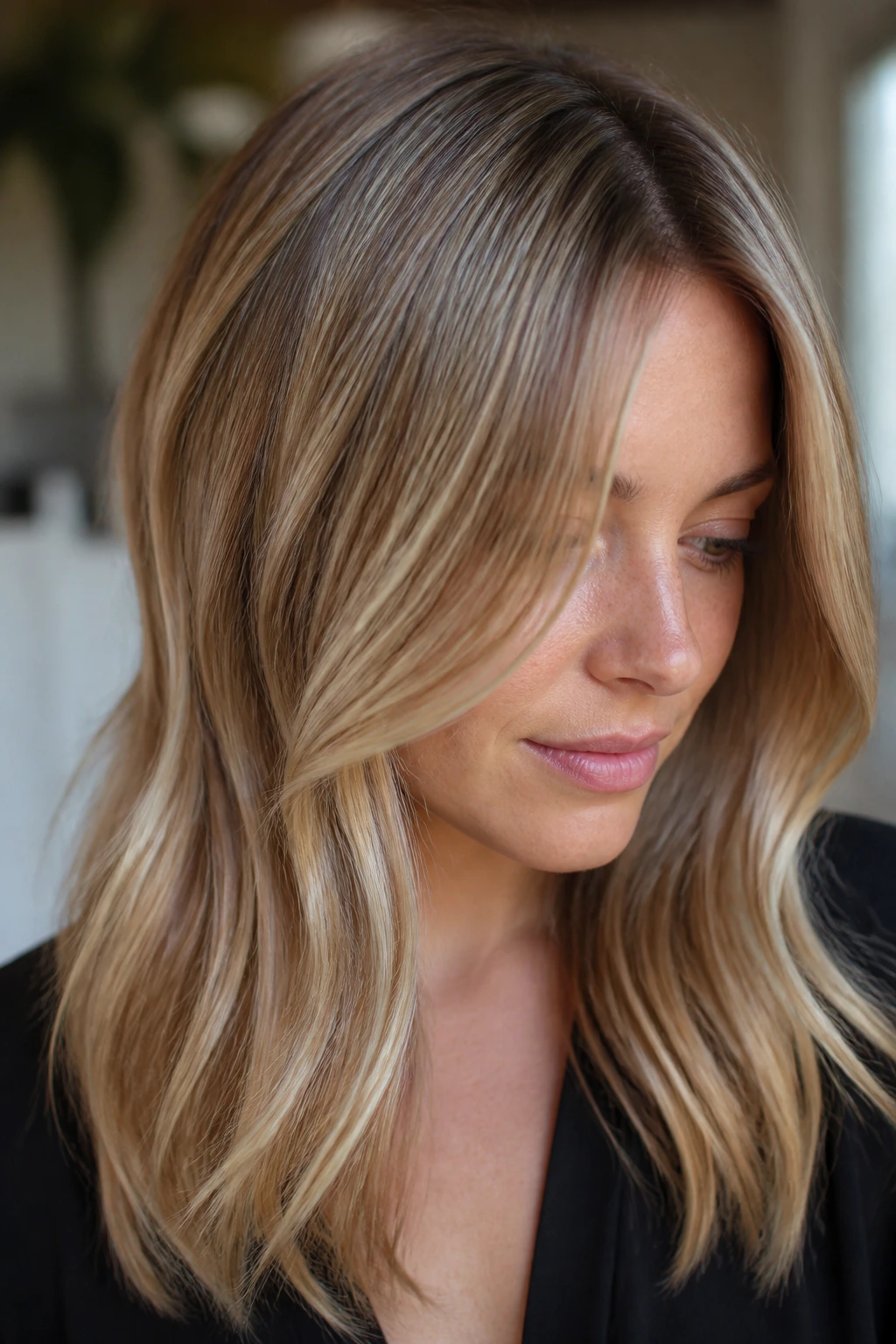
Fine hair usually looks best with lots of tiny decisions, not one dramatic one. Micro balayage uses narrow painted sections that blend into the base instead of sitting on top of it. On cool skin, that soft blend keeps the warmth from looking pasted on.
The color should sit around level 8 or 9 with a beige-gold finish. Anything too pale can make fine hair look thin, and anything too yellow can look abrupt. The sweet spot is a creamy blonde that catches light in a whisper.
This is the version I’d choose for someone who wants body more than drama. The hair looks fuller because the eye can’t find one hard stripe. It just sees movement.
18. Warm Gold on Copper-Adjacent Brown
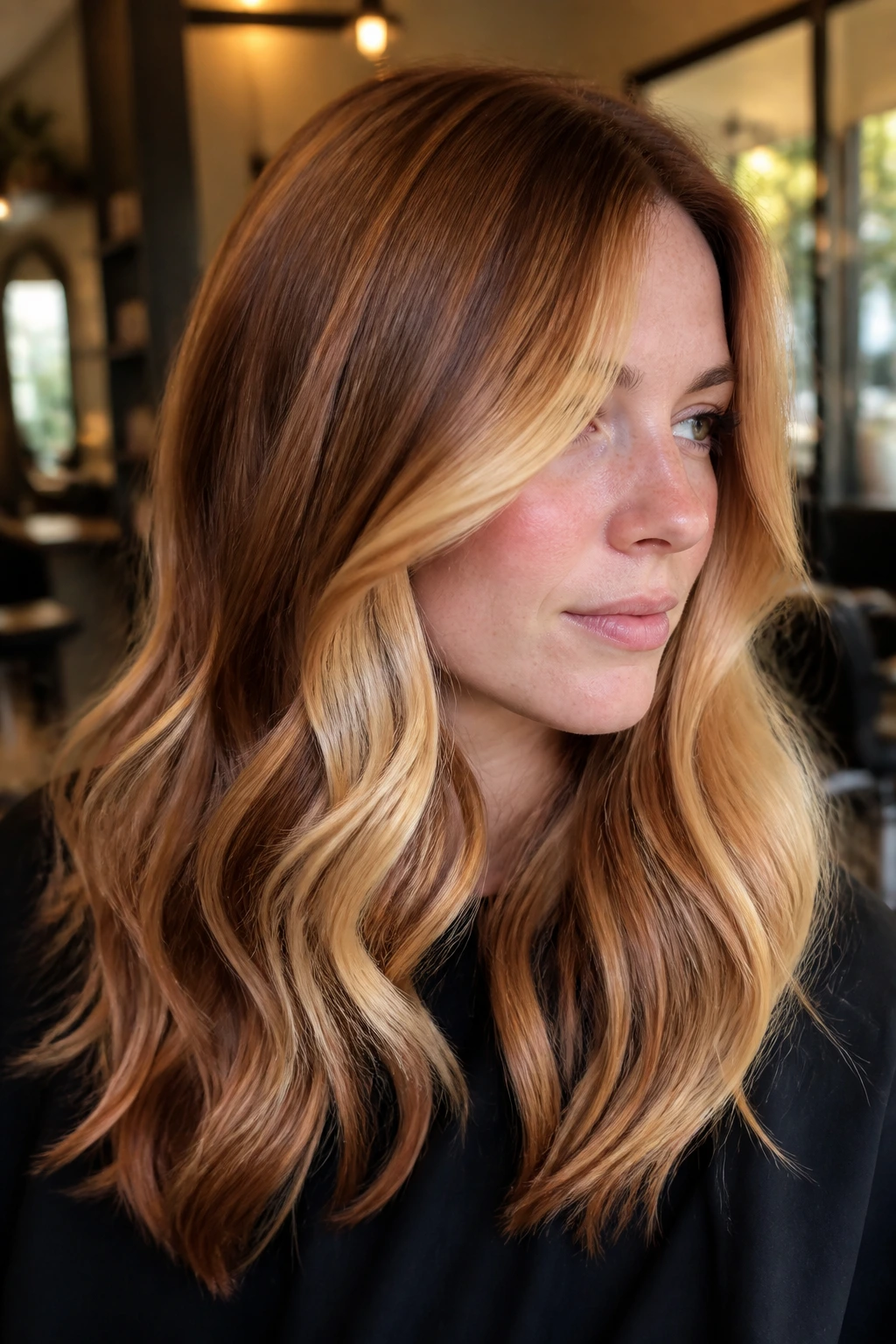
Redheads and auburn brunettes can wear warm gold too, but the gold has to be chosen carefully. Too much orange and the skin can look windburned. Too little warmth and the hair loses its connection to the natural base.
The best version keeps the gold in a champagne or apricot-gold range, then lets the copper underneath show through in the lower pieces. That balance can be gorgeous on cool skin if the copper is muted, not fire-engine bright.
This is one of those shades that benefits from a gloss more than a heavy lift. The goal is harmony. The blonde should feel like it belongs in the hair, not like a separate idea.
19. Short Bob With Almond Gold Ends
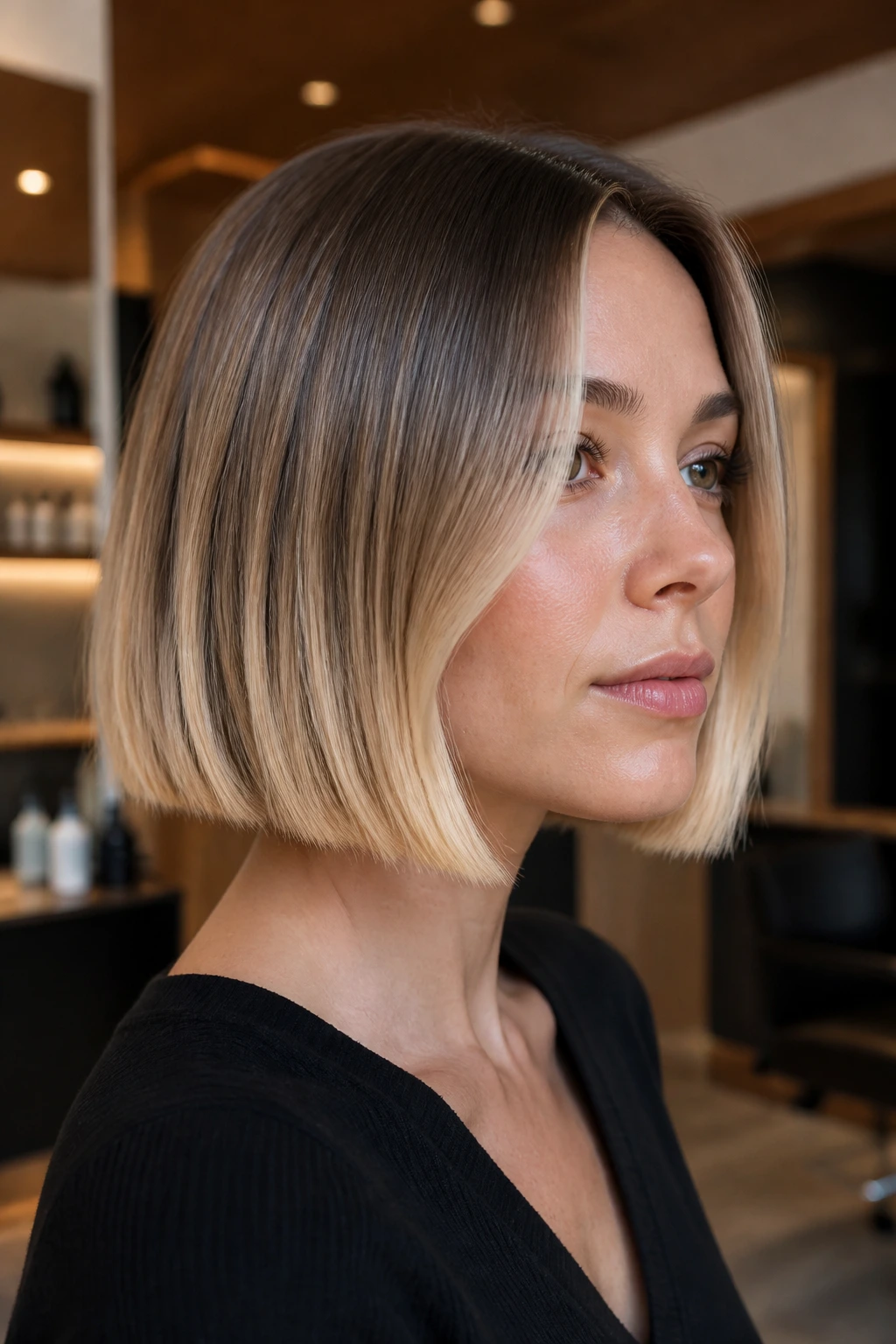
Short bobs do not have the space for sprawling color stories. They need a sharp edit. A bob with almond-gold ends keeps the root and midsection deeper, then gives the ends a creamy glow that turns with the cut.
On cool skin, that low placement works because the warmth sits away from the face line. The color shows up most when the bob tucks under or swings outward. That little movement is the whole point.
If the bob is blunt, keep the gold very clean and precise. If it’s textured, you can soften the placement a bit more. Either way, the ends should look polished, not fried.
20. Gray-Blending Gold Halo
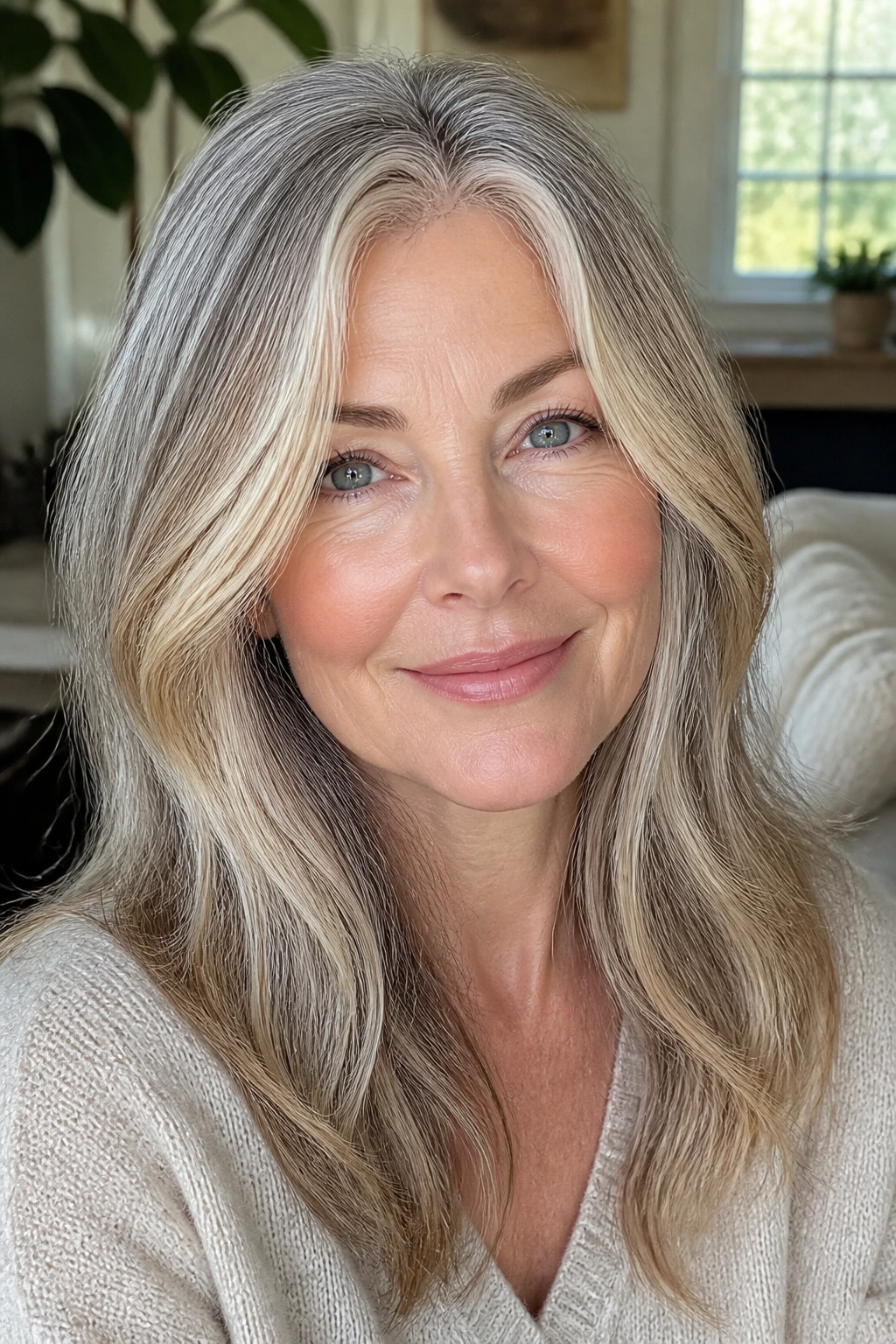
Gray blending is one of the most underrated uses of warm blonde. A halo of gold around the face and crown can soften silver strands without making the whole head too warm. On cool skin, this matters because too much ash can make gray hair look flat and the complexion look drained.
A warm halo gives life back to the front sections. The warmth should stay sheer and balanced, not orangey. Beige-gold is your friend here. It melts into gray in a softer way than a very cool toner would.
This style is especially good if you want the gray to stay visible. You’re not covering it; you’re giving it a better neighbor. That’s a much nicer way to wear it.
21. Glossy Beige Gold Bob
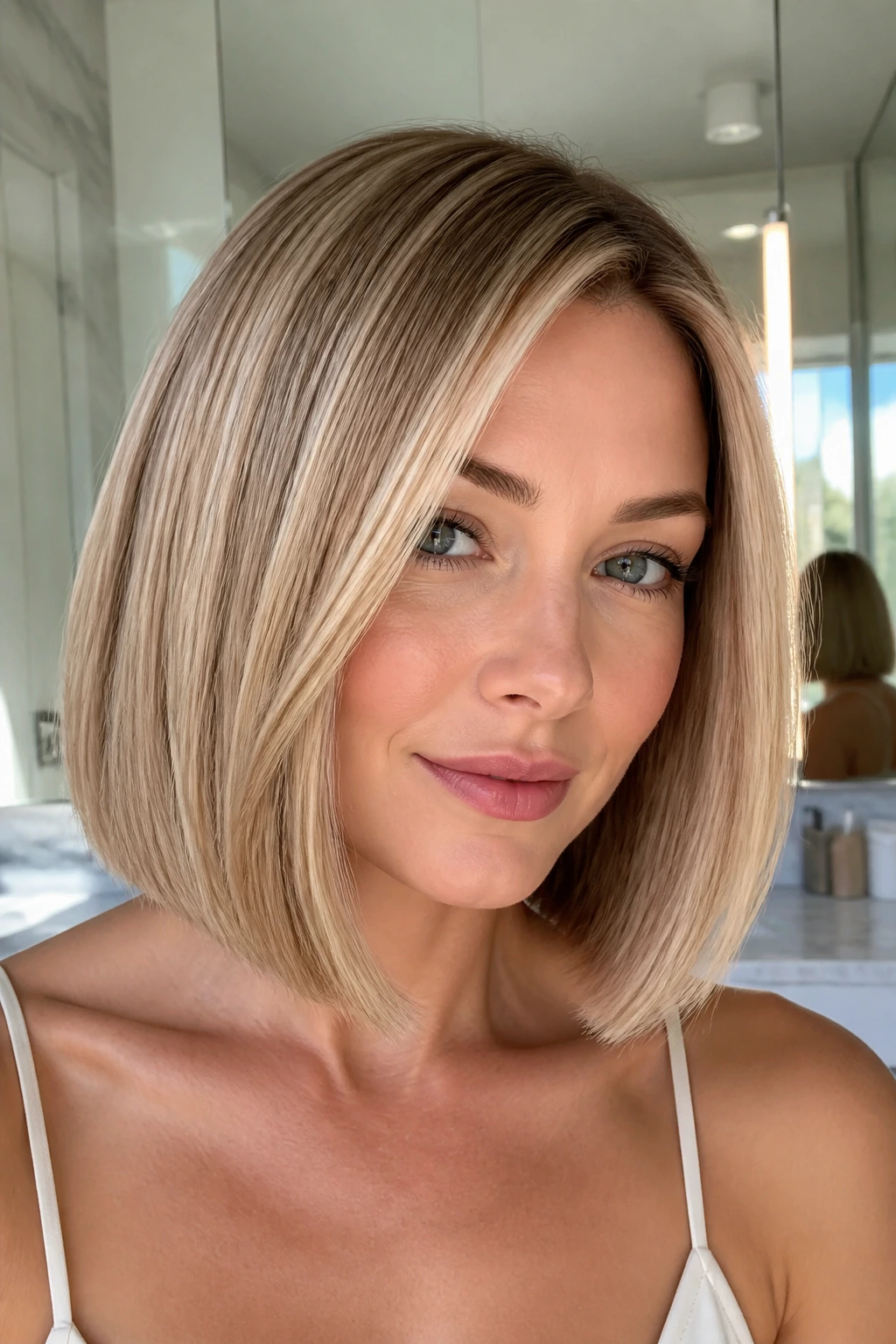
A sleek bob with beige-gold balayage is all about shine control. Straight hair shows every line, so the color has to be blended well from root to tip. The beige tone keeps the warmth elegant instead of loud, which is exactly what cool skin tends to need.
This is a good answer for someone who likes a polished finish and does not want to spend all morning curling hair. A round brush blowout or flat iron pass is enough. The gloss does the rest.
The bob shape benefits from a slightly deeper root and lighter mids. That contrast keeps the cut from looking helmet-like. Sharp shape, soft color. Nice combination.
22. Golden Balayage with a Deep Side Part
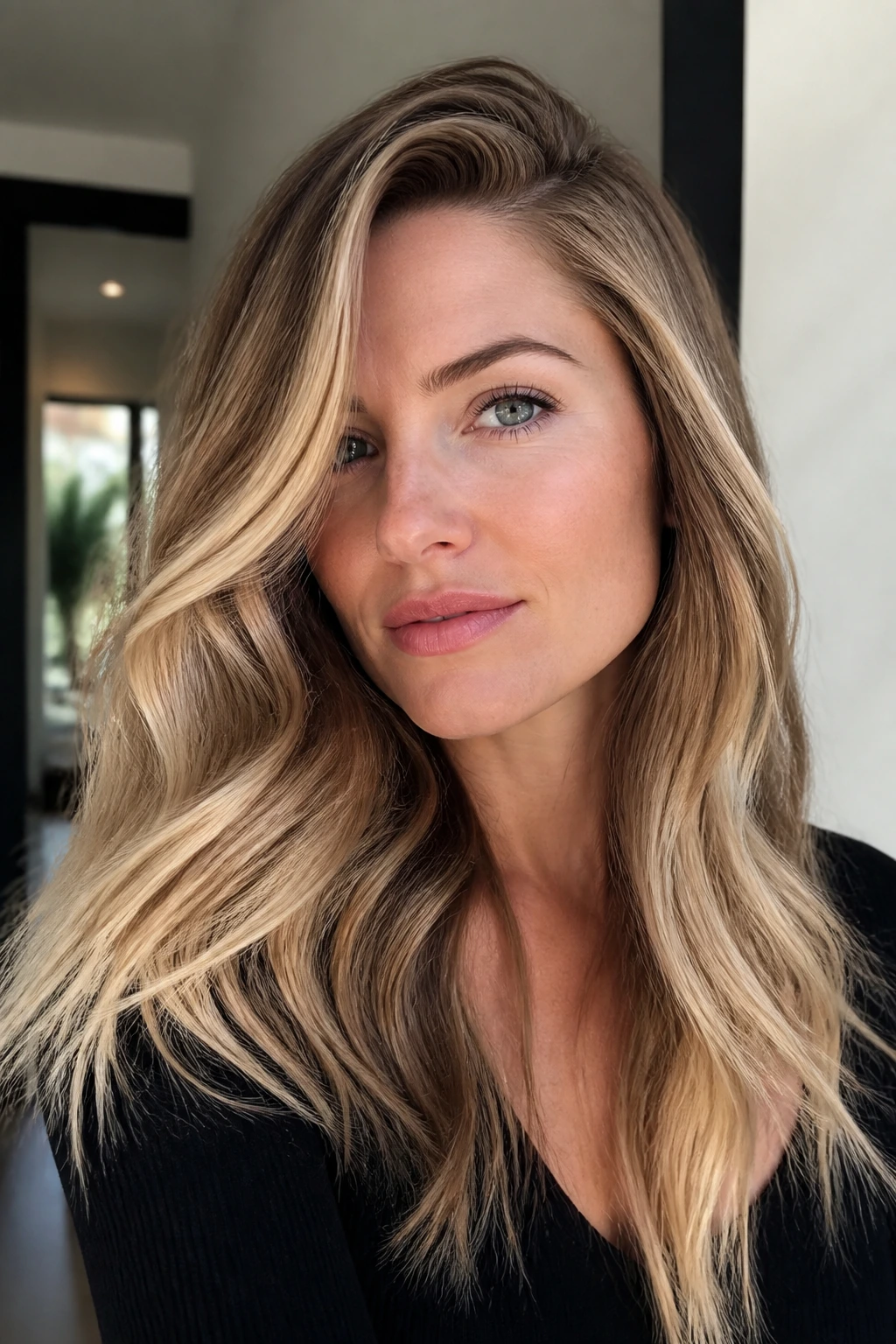
A deep side part changes more than the silhouette. It changes where the light lands. Shift the part, and the warm blonde starts reading like a sweep instead of a spread-out wash, which can be flattering on cool skin if you want one side to lead the look.
The brightest pieces should sit on the heavier side of the part and around the cheekbone, not right at the temples. That keeps the warmth from crowding the face. If your hair is medium to long, the movement gets even better once the lengths settle.
This is a clever way to make existing color feel new without changing the actual formula much. Sometimes the best fix is not more lightening. It’s a better part.
23. Airy Feathered Layers
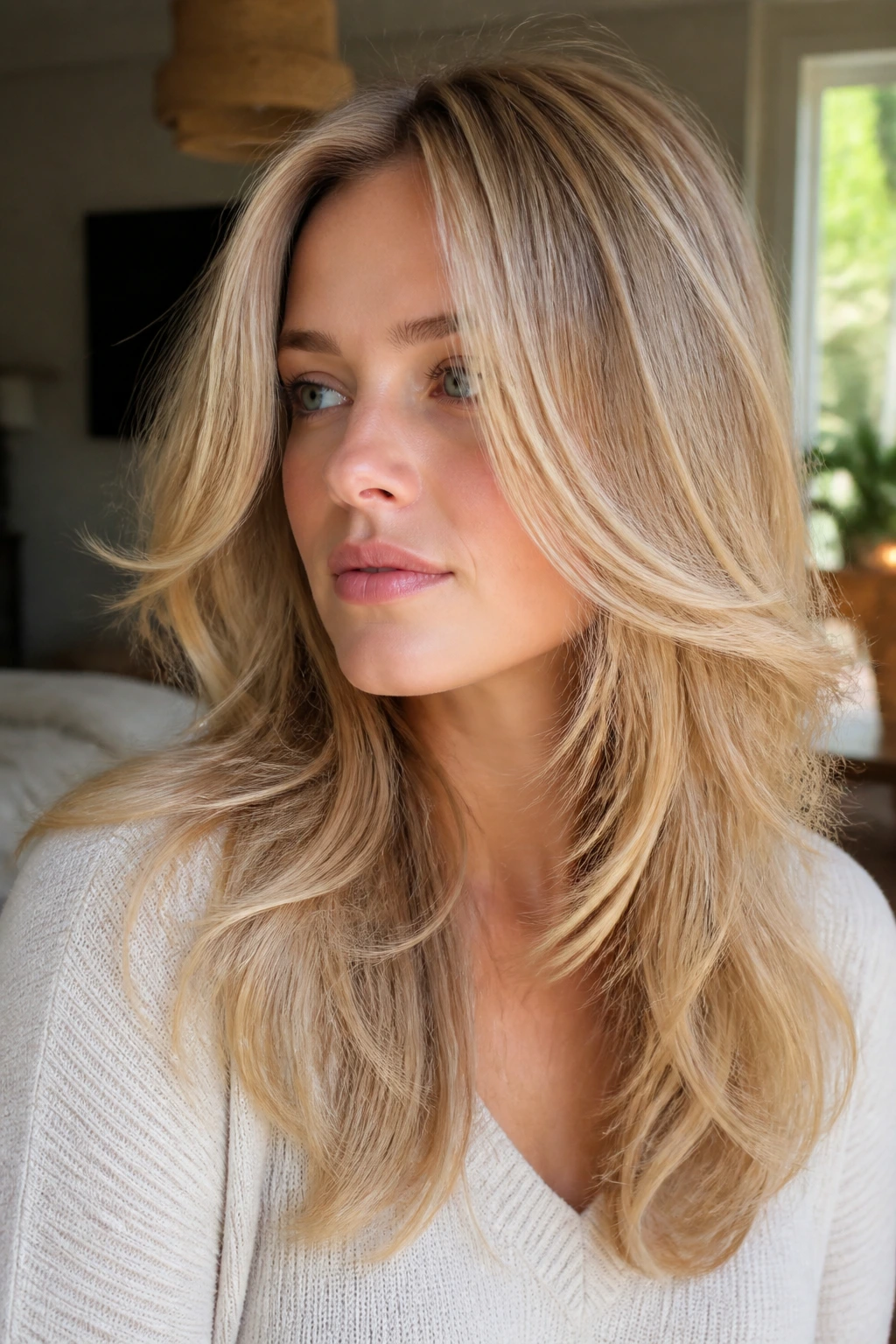
Feathered layers love warm blonde because the ends separate so cleanly. The light catches the edges of the layers, which makes the gold look soft rather than blocky. On cool skin, that lightness around the perimeter helps warm up the hair without flooding the face.
Keep the ribbons airy and slightly spaced. You want the layers to show through, not disappear under a solid blonde sheet. This is especially useful on medium-density hair that tends to fall flat by lunchtime.
A blowout helps a lot here. The layered movement is doing the work, and the color just keeps it visible. It’s a good reminder that haircut and balayage should always talk to each other.
24. Honeyed Spiral Curl Blend
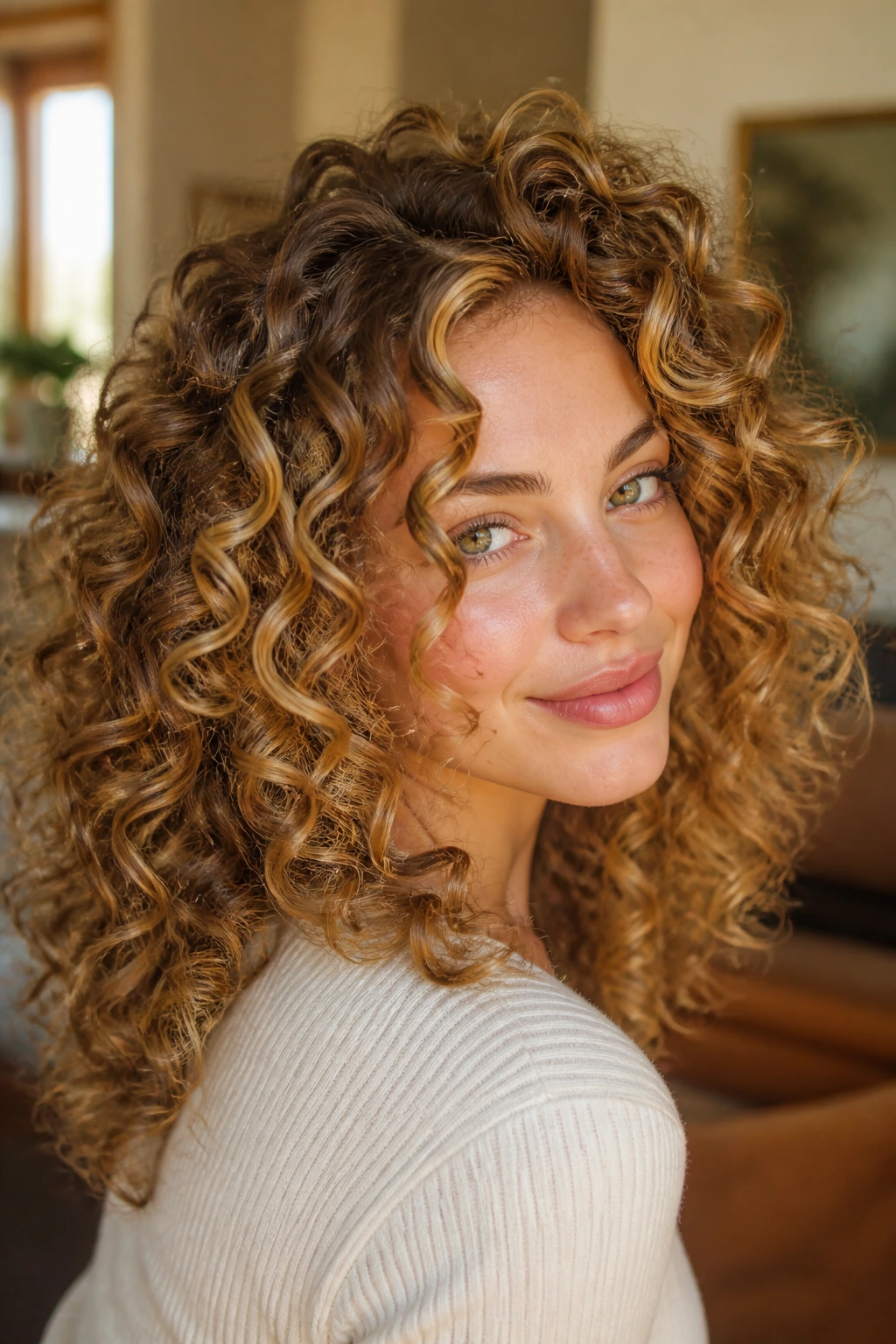
Dense curls need warmth tucked inside the shape, not just sitting on the outside. A honeyed spiral blend paints into the curl family so the gold appears as the curl opens and closes. That keeps the warmth from sitting as one bright halo around the head.
For cool skin, the important part is restraint near the hairline. Keep the front pieces softer and let the center and lower lengths carry the richer honey. That way the face stays calm while the curls stay alive.
This is one of those looks that gets better after the first week. Once the curls settle and the products stop being fresh-from-the-salon slick, the ribbons look more natural. A little frizz control helps, but too much product can hide the pattern.
25. Luxe Champagne Blonde Halo
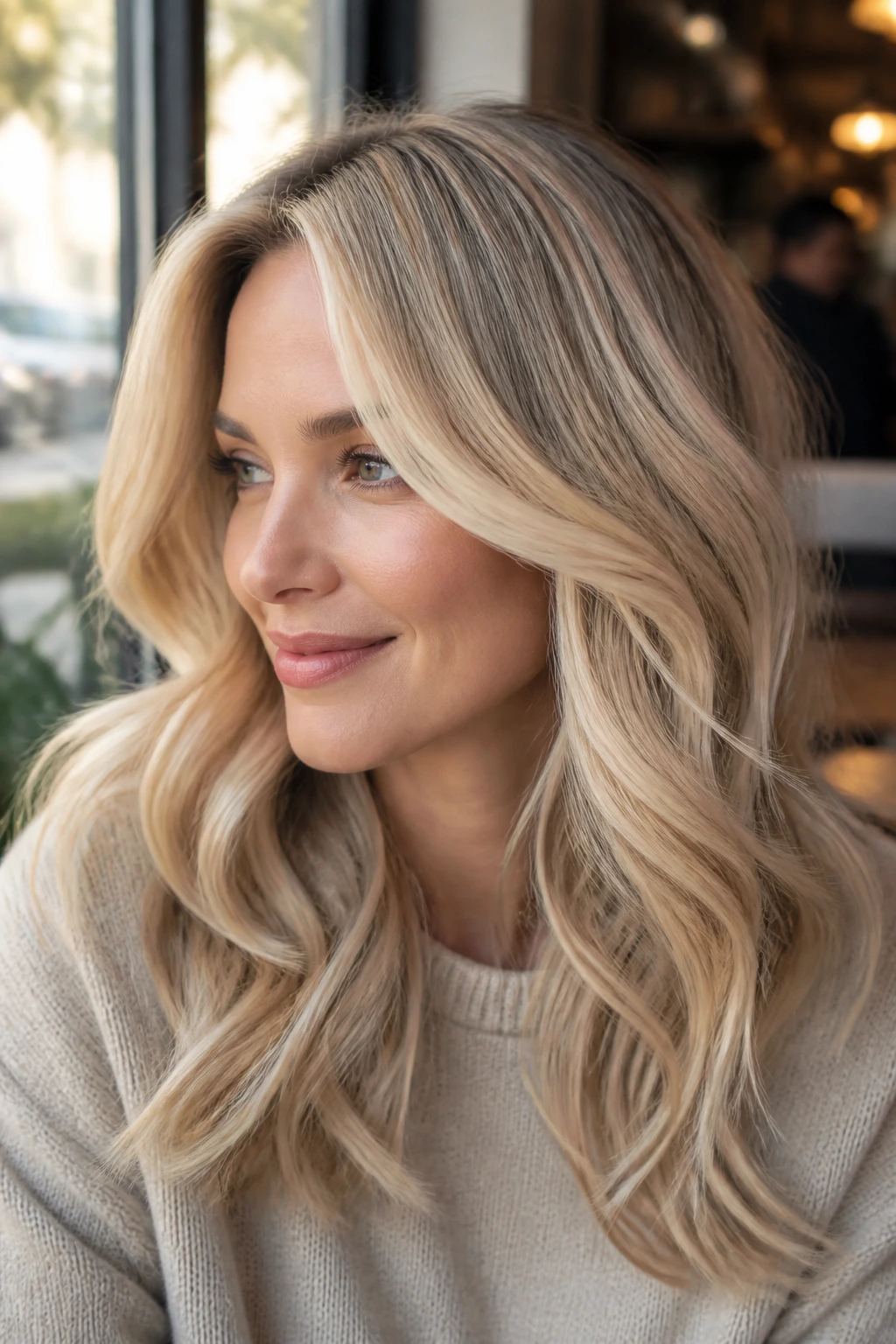
If you want the brightest version in the whole group, make it champagne and keep it haloed. The lightest pieces should circle the crown, temples, and upper mids so the glow sits around the head instead of flat across the front. On cool skin, that shape keeps the color luminous without crossing into harsh yellow.
This is the version that feels polished, not messy. The root stays soft, the mids stay dimensional, and the ends carry enough brightness to matter. It’s still warm blonde, but it’s been edited with a steady hand.
I like this one most on layered cuts or long waves. The halo catches movement. Static hair flattens it. Give it texture and it starts behaving like a real finish, not a salon sample.
Why This Warm Gold Works Without Turning the Face Red
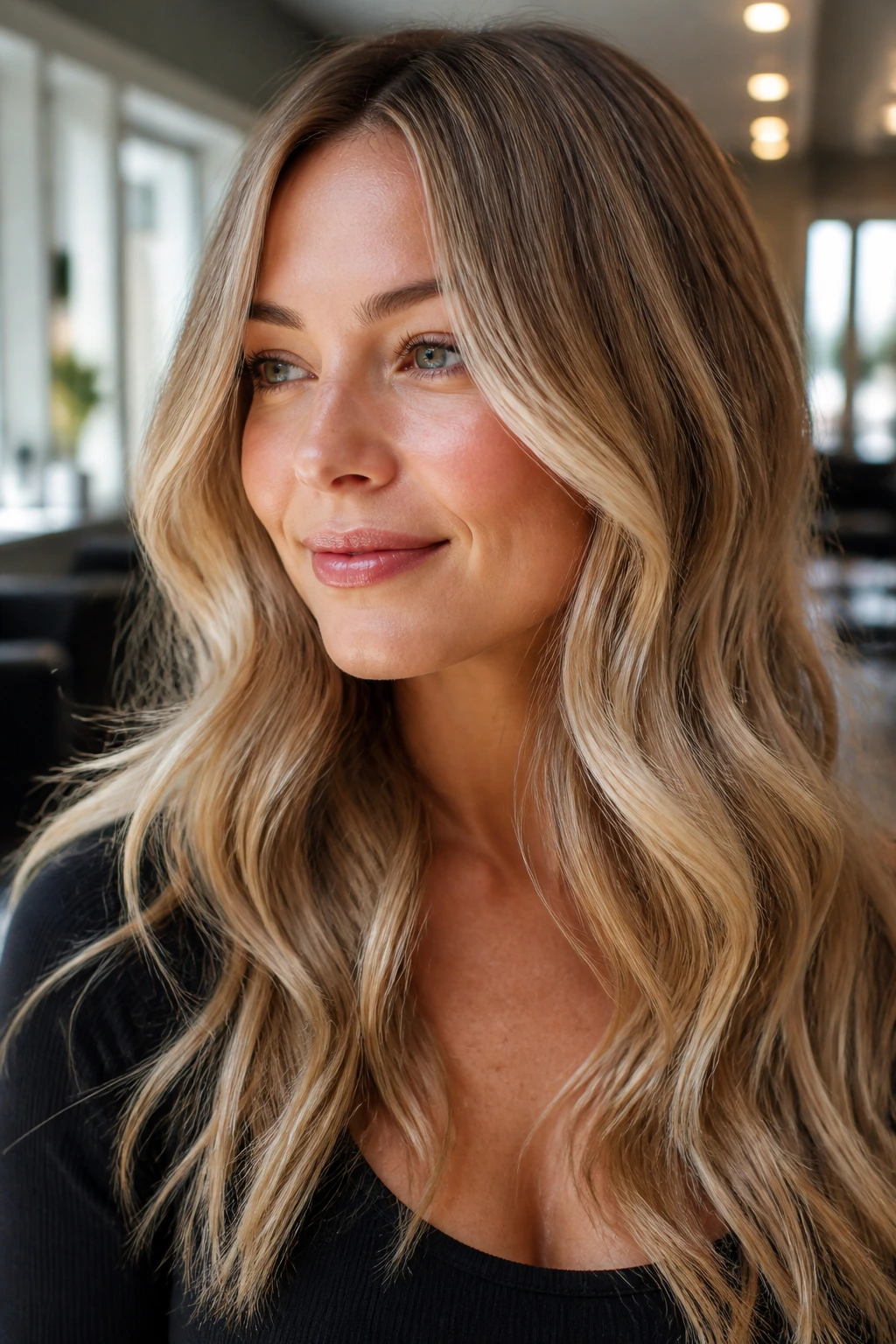
A good warm blonde for cool skin is more about balance than temperature. The color needs enough gold to keep the face from looking washed out, but not so much yellow that it starts echoing the pink in the skin. Beige, champagne, honey, almond, and soft amber are the shades that usually land in the sweet spot.
Placement matters just as much. When the brightest pieces sit under the part line, lower through the mids, or around the ends, the eye reads shine first and warmth second. That’s a useful order. Put the brightest color directly at the hairline and you get more risk, more maintenance, and more chance of seeing every little flush in the cheeks.
The gloss is the quiet hero. A beige or neutral-gold toner can make the same lift look expensive instead of brassy. That’s why two blondes at the same level can look totally different on the same head. The finish decides the story.
What to Bring to the Salon Chair
-
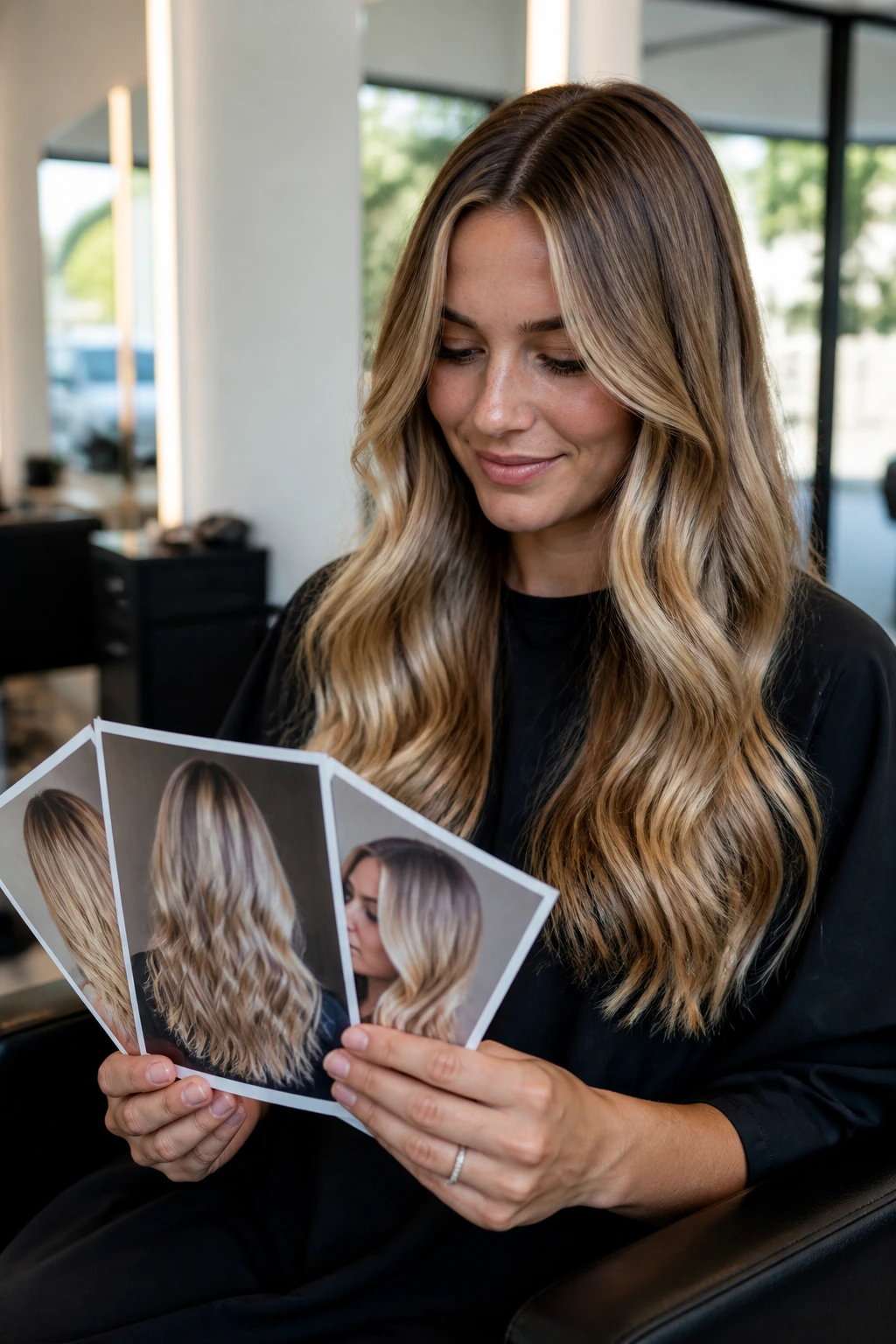
Reference photos with one clear idea: Bring 2 or 3 images that show placement, not just “pretty blonde.” A good photo is worth more than a vague description.
-
A picture of your hair in daylight: Natural light shows the true base color, which helps the stylist judge how much lift is realistic.
-
A note about your skin reaction: If your face flushes easily or you wear minimal makeup, say so. It changes where the brightness should sit.
-
A few words for the finish: Terms like beige-gold, champagne, honey, root shadow, and balayage give the stylist direction.
-
Your usual styling routine: Straight, curly, air-dried, blown out — the cut and placement should fit the way you actually wear your hair.
-
Current product list: Especially if you use purple shampoo, heavy oils, or bond treatments. Those can affect how the color processes and how it fades.
How to Read Shade Names Without Getting Burned
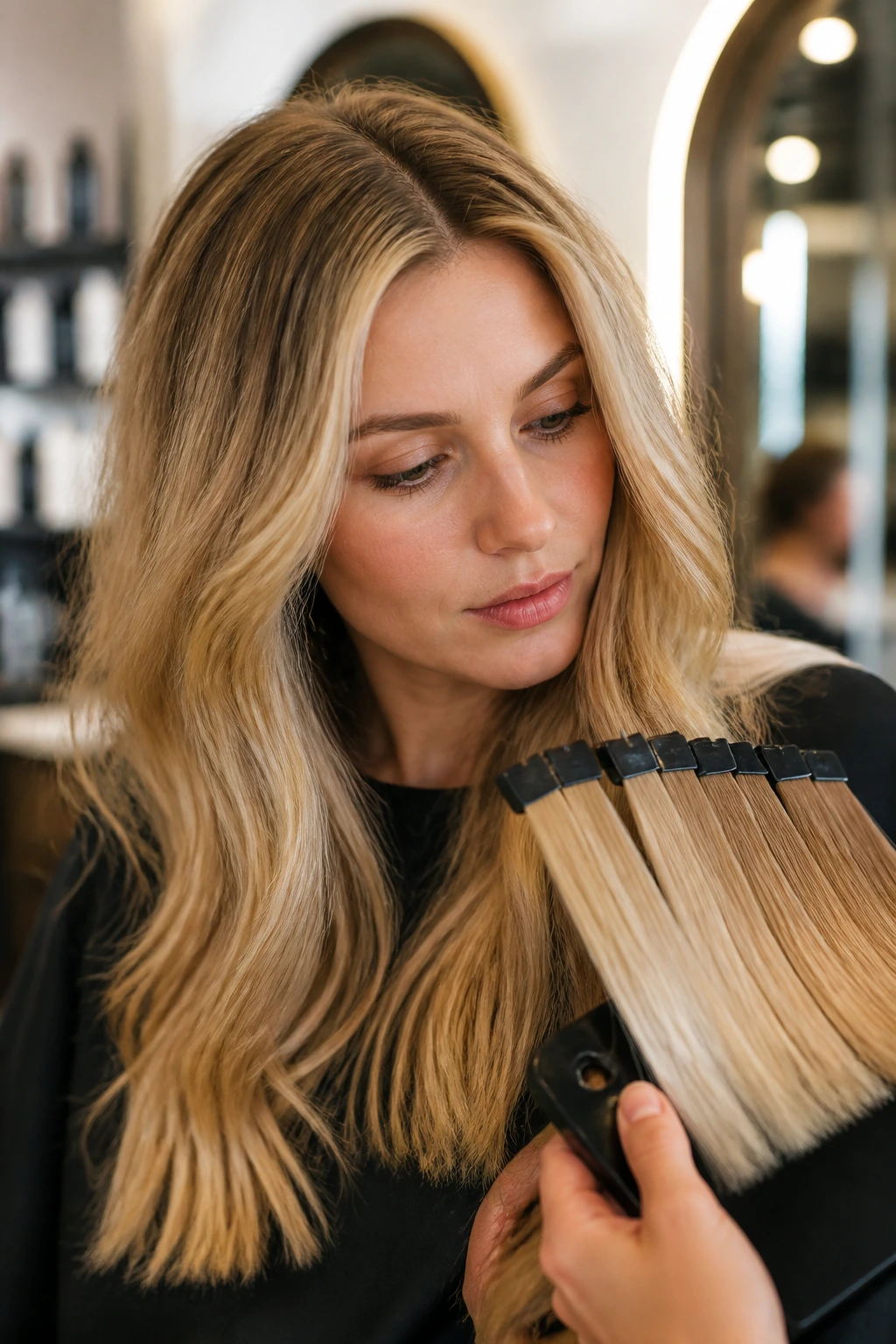
Shade names sound friendly until they don’t. “Gold” can mean beige-gold, butter gold, yellow gold, or a tone that borders on orange. “Honey” usually leans softer. “Champagne” often reads lighter and cooler in finish, even when it still feels warm. Those words are not interchangeable, and the wrong one can send you home with hair that fights your skin instead of flattering it.
If your undertone is cool, ask for a warm blonde that finishes in beige or champagne rather than a bright yellow result. That little qualifier matters. A cool-skinned client can wear gold well when the gold is softened with neutral or slightly cool glossing after the lift. The warmth should show as reflection, not as a flat yellow layer.
One more thing: the level matters as much as the tone. Level 8 and 9 blondes tend to read softer and more controlled than a level 7 gold that hasn’t been lifted enough. Underprocessed gold often turns muddy. Properly lifted gold looks cleaner on the skin.
How to Wear the Color Without Letting It Wear You
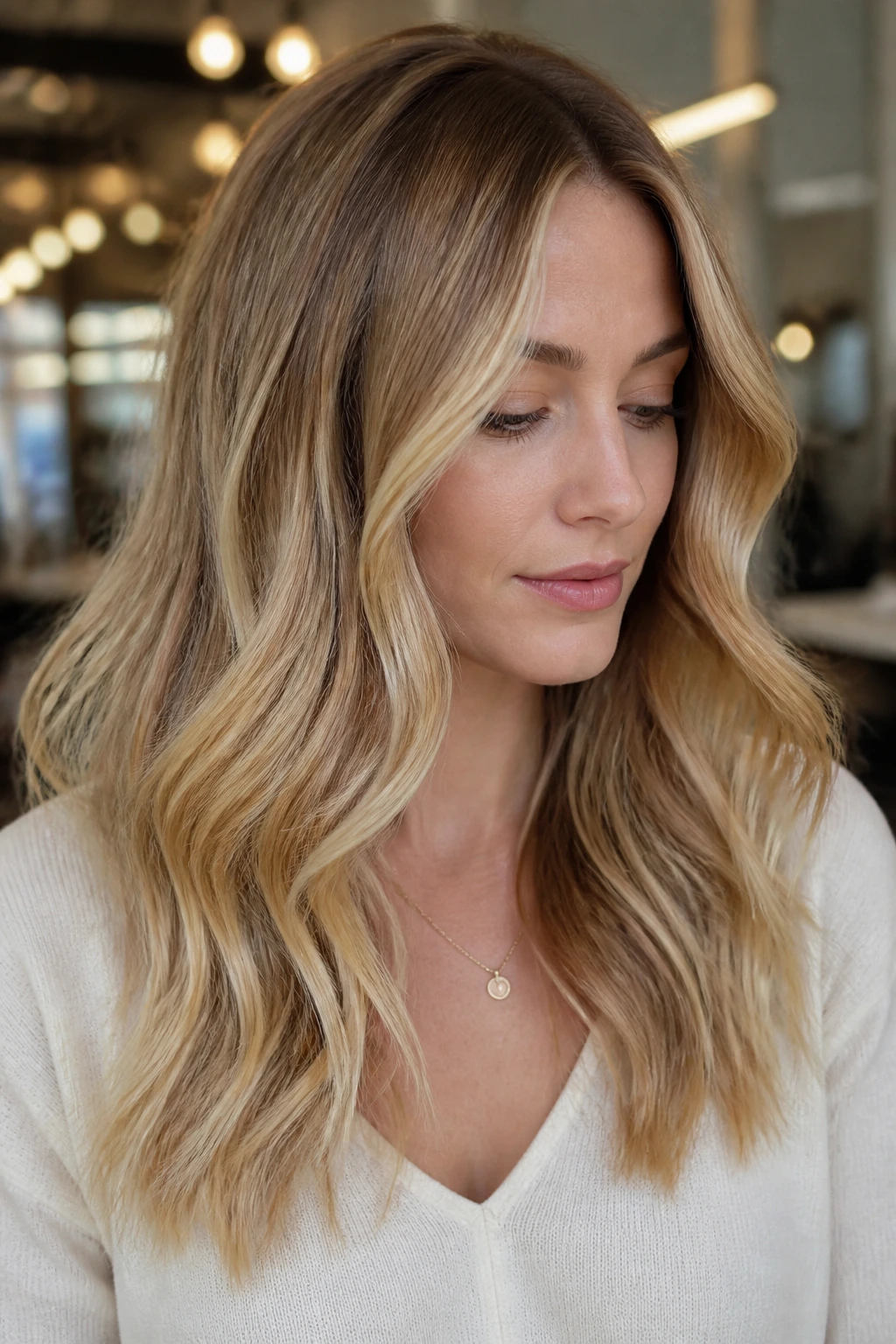
Styling: Loose waves show balayage ribbons better than tight curls or super-straight ironed hair. If you want the gold to look expensive, bend the mid-lengths and leave the ends a little broken up.
Makeup Pairing: Cool skin with golden hair usually likes rosy blush, berry lips, taupe shadows, and a soft brown liner more than orange blush or peachy bronzer. The hair is already bringing warmth.
Wardrobe Pairing: Charcoal, navy, black, soft white, and muted jewel tones keep the color from looking too yellow. Cream works too, but a very warm beige outfit can make the hair feel more yellow than it really is.
Parting and Shape: A center part gives a calm, blended read. A deep side part adds lift and turns the highlights into a sweep. Try both. The same color can look unexpectedly different once the part moves.
Additional Tips and Color Boosters
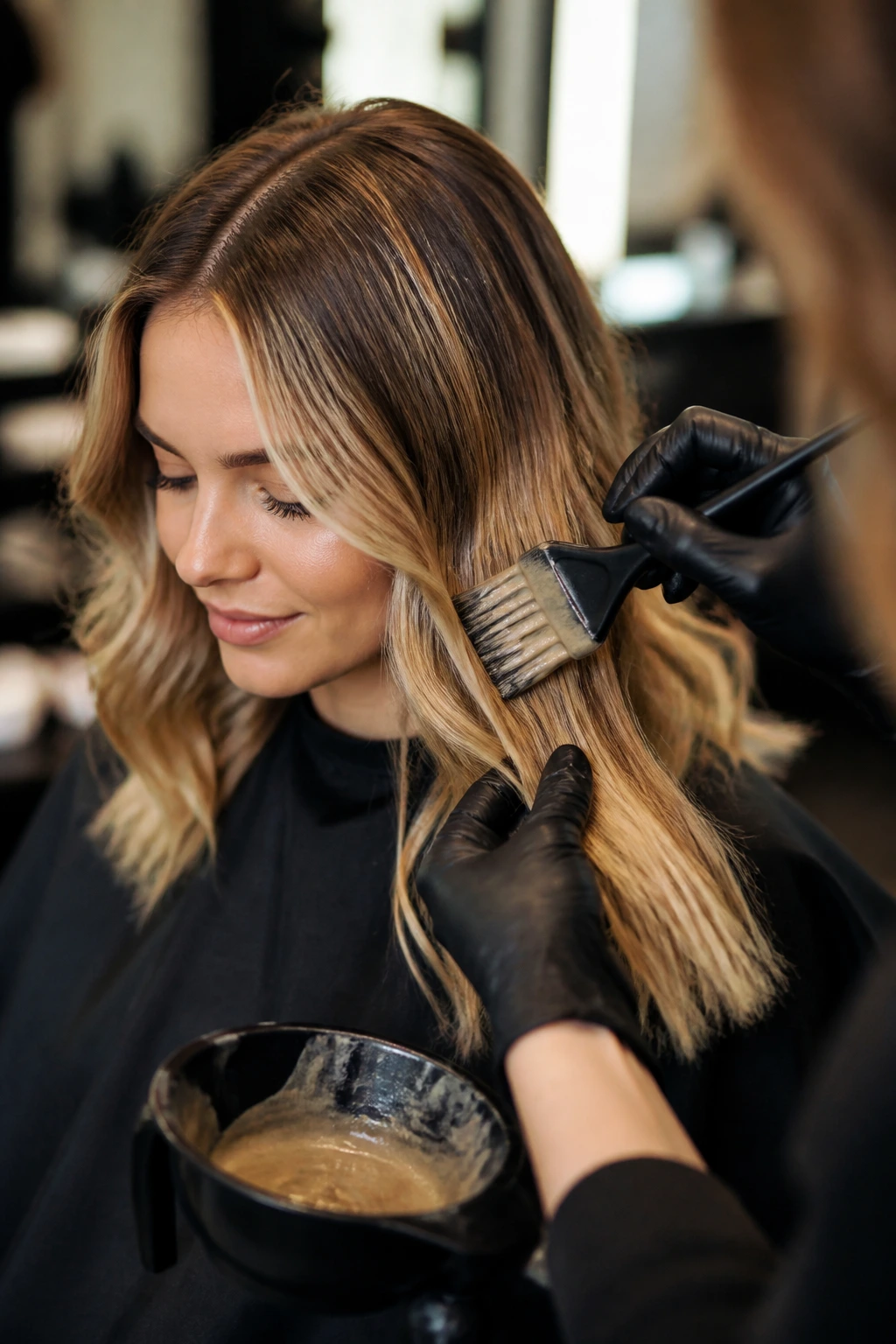
Tone Booster: Ask for a beige or champagne gloss instead of a generic gold toner. The word “gold” alone can land too yellow, and that is not the look you want if your skin already runs cool.
Placement Trick: Keep the brightest ribbons a little lower around the face if your cheeks redden easily. That one change can make the whole color feel softer and much easier to wear.
Styling Finish: A 1.25-inch curling iron or a round brush blowout brings the ribbons to life. Brush the curls out a bit. The color should look woven, not stamped.
Make-It-Yours: If you want more contrast, ask for a deeper neutral root and brighter mids. If you want the softest version, keep the root close to your base and ask the stylist to glaze everything one shade warmer, not three.
Shine Saver: A lightweight oil on the ends makes warm blonde look polished, but too much oil at the root will flatten the dimension. Two drops is often enough. More usually just means greasy.
Keeping the Blonde Fresh Between Appointments
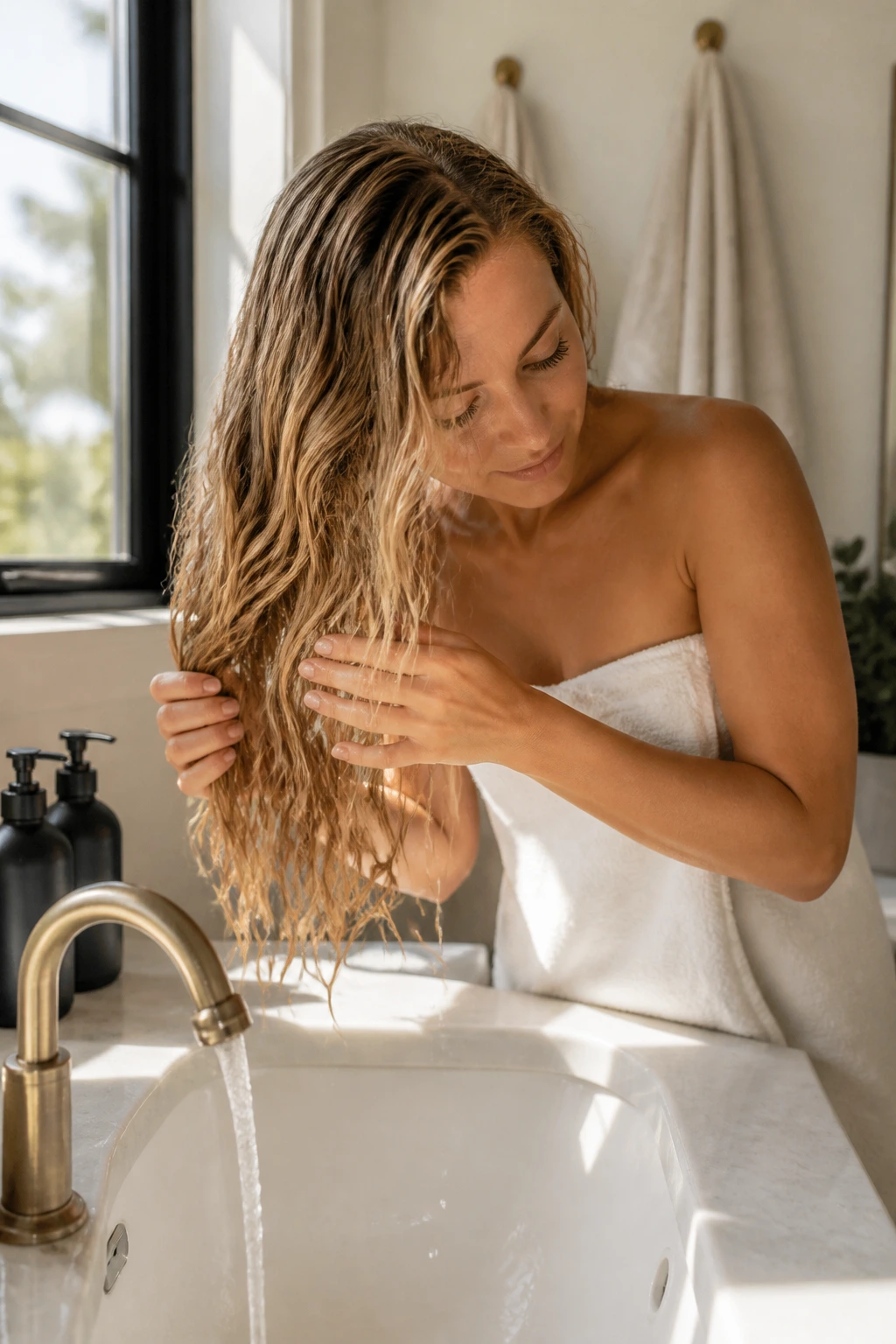
Warm blonde fades in a particular way. The gold softens first, then the hair can start looking a bit dull or washed. If you want the color to stay flattering, treat the gloss like part of the service, not an afterthought. That means washing with lukewarm water, using a sulfate-free shampoo, and backing off the hot tools when you can.
A good rhythm for most people is washing two or three times a week, using a deep conditioner every one to two weeks, and booking a gloss refresh every six to eight weeks if the gold starts losing shape. Full balayage refreshes can usually stretch longer than that, especially with a rooted look, but the toner is the part that keeps the warmth elegant.
Purple shampoo is a tool, not a personality. Use it sparingly if your blonde starts drifting too yellow, but do not hammer warm gold with violet every wash. Too much purple can make the hair look muddy or khaki, which is worse than brass. Heat protectant matters too. Warm blonde shows dry ends fast.
Variations and Adaptations to Try
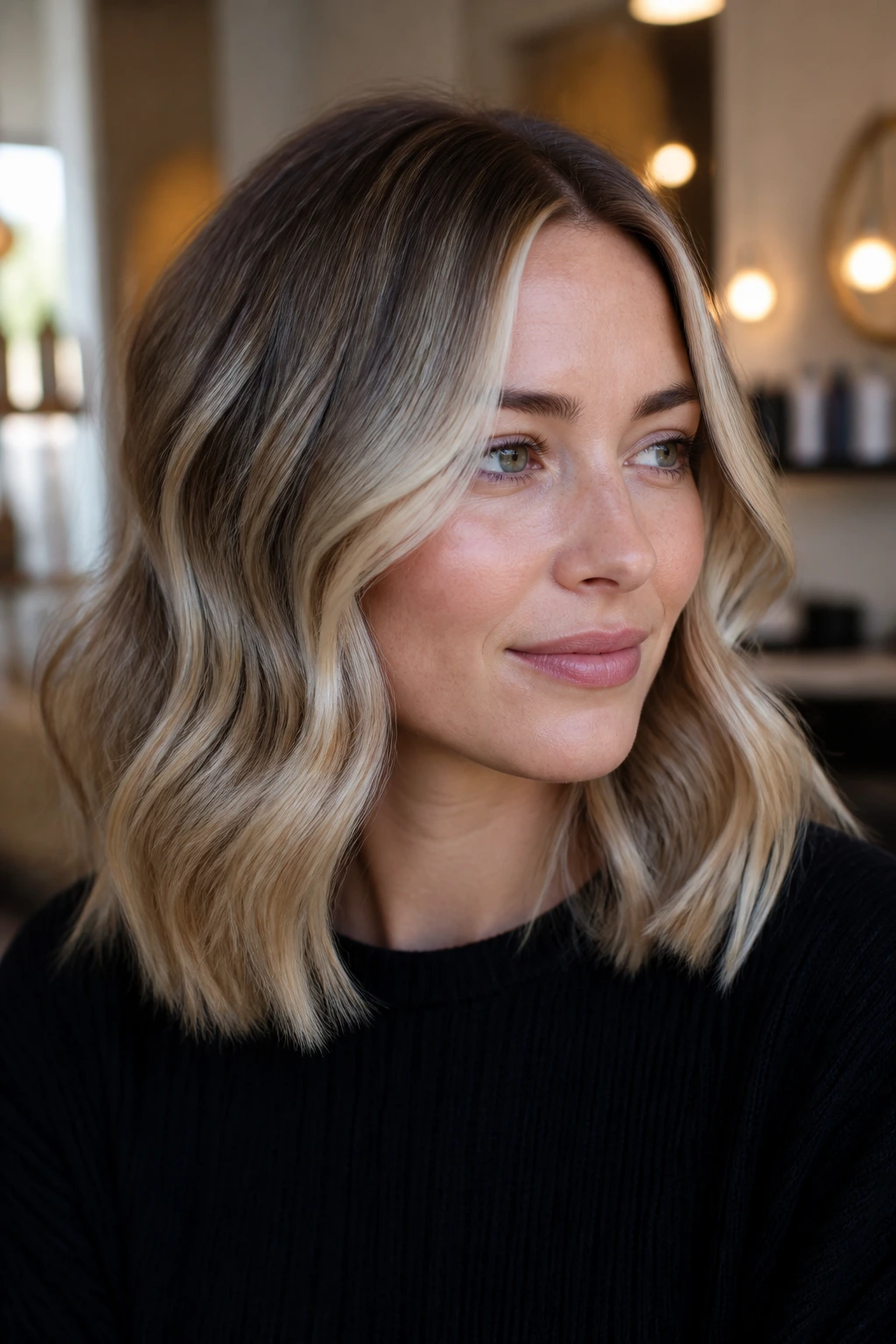
Rosy-Skin Champagne Melt: Keep the front pieces in champagne-beige and let the mids melt into a softer honey. This is a smart choice if your cool skin flushes easily but you still want visible warmth.
Curly Halo Gold: Push the brightness into the outer curl ring and let the interior stay deeper. The result is more movement, less frizz, and a much softer read next to the face.
Low-Maintenance Rooted Bronde: Leave more of your natural brown at the root and lighten only the lower half. That makes grow-out quieter and gives you a few extra weeks before the color starts feeling tired.
Bright Money Piece and Quiet Ends: If you want the face to pop, brighten the front sections and keep the lower lengths softer. This makes the color read modern without forcing the whole head into high maintenance.
Short Bob Glow-Up: On shorter hair, concentrate the warmth at the ends and around the part. A bob doesn’t need much more than that to feel finished.
Gray-Softening Halo: If silver has started showing through, place the gold in a halo around the top and temples. It gives the gray something warmer to sit beside without hiding it.
Common Mistakes That Age the Color
-
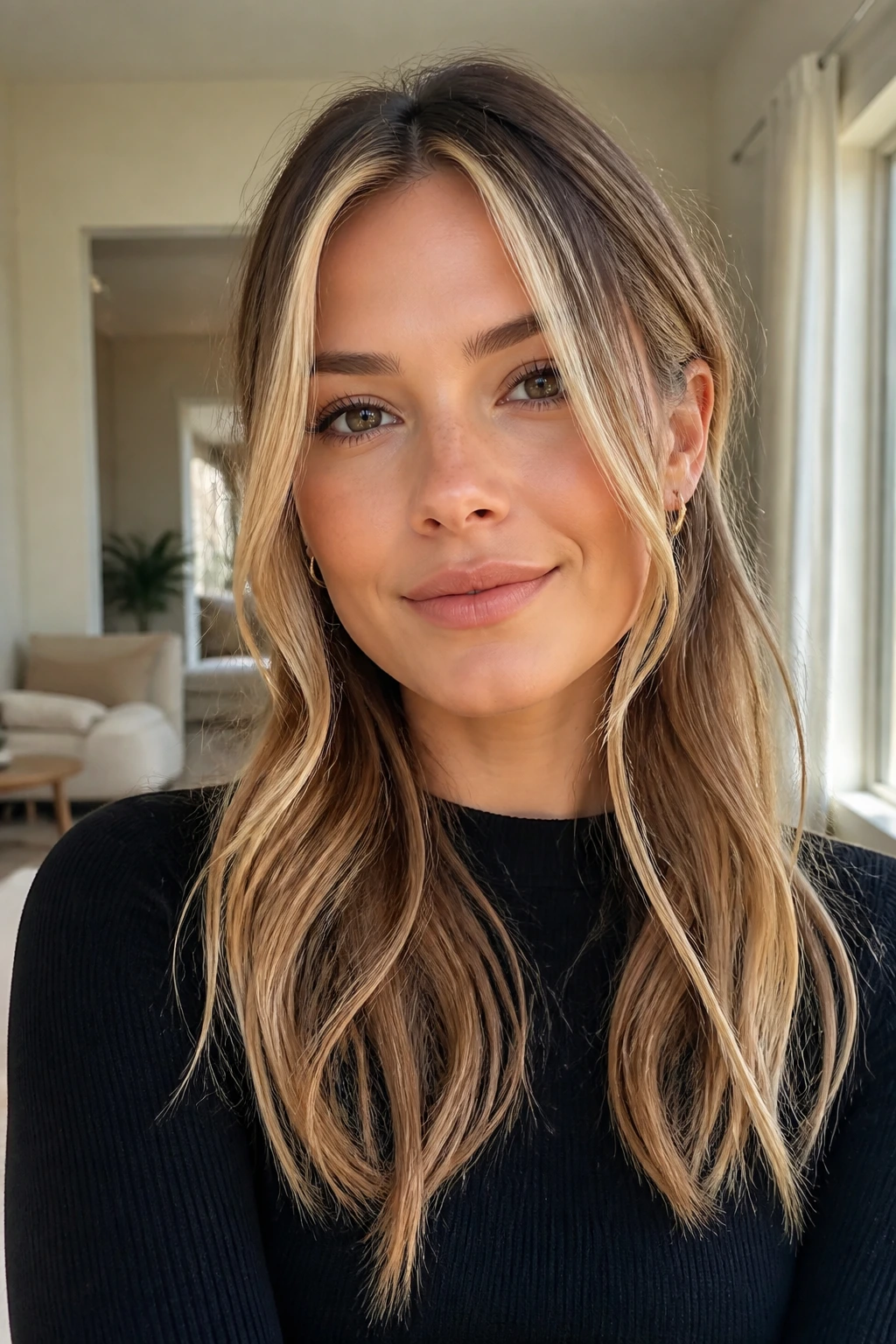
Going too yellow at the face: The symptom is a bright banana tone that makes the skin look pinker or more flushed. The fix is a beige or champagne gloss and softer placement away from the hairline.
-
Skipping the root shadow: A flat blonde from scalp to ends can look harsh fast. A neutral root gives the gold somewhere to land and makes the grow-out less obvious.
-
Over-toning with purple shampoo: Hair turns dull, smoky, or even greenish in weird light. Use purple shampoo only when the blonde starts leaning too warm, and rinse it out before it sits forever.
-
Painting too much brightness near the temples: That’s where redness shows first. Keep the brightest pieces a little lower if your skin is easily irritated or naturally rosy.
-
Forgetting the haircut: Heavy, one-length hair can hide the balayage and make the color look chunky. Layers, movement, or at least some internal shaping help the warm ribbons breathe.
Frequently Asked Questions
Will warm golden blonde balayage make cool skin look too warm?
Not if the gold is softened with beige, champagne, or honey tones. The problem is usually not warmth itself; it’s yellow warmth placed too high or too close to the face.
What shade should I ask for if my skin is fair and pink?
Ask for champagne blonde or beige-gold, not bright yellow gold. Those tones still glow, but they don’t shout against rosy skin.
Can brunettes do this without going orange?
Yes, but the lift has to be controlled. A brunette-to-gold fade or smoky gold balayage is usually safer than chasing a pale blonde in one appointment.
Is balayage better than foils for this look?
Balayage gives a softer grow-out, while foils can create more lift and brightness. Many colorists mix the two, which is often the smartest route for cool skin that needs warm blonde without brass.
How often do I need toner?
A gloss refresh every 6 to 8 weeks is a solid starting point for most people. If you wash often, swim, or use a lot of heat, you may need it sooner.
Does this work on curly hair?
Absolutely, and curly hair can make the gold look even richer. The key is painting in a curl-aware pattern so the warmth follows the shape instead of sitting on one flat surface.
What if my blonde turns brassy?
Reach for a beige or violet-balanced shampoo sparingly, then book a gloss if the brass is stubborn. If the hair feels dry and the color looks loud, the fix is usually a tone refresh, not more washing.
Can I keep it low-maintenance?
Yes. A rooted melt, bronde fade, or ends-only version keeps the grow-out softer. Those choices are better than chasing all-over brightness if you hate frequent salon visits.
A Blonde That Still Feels Like You
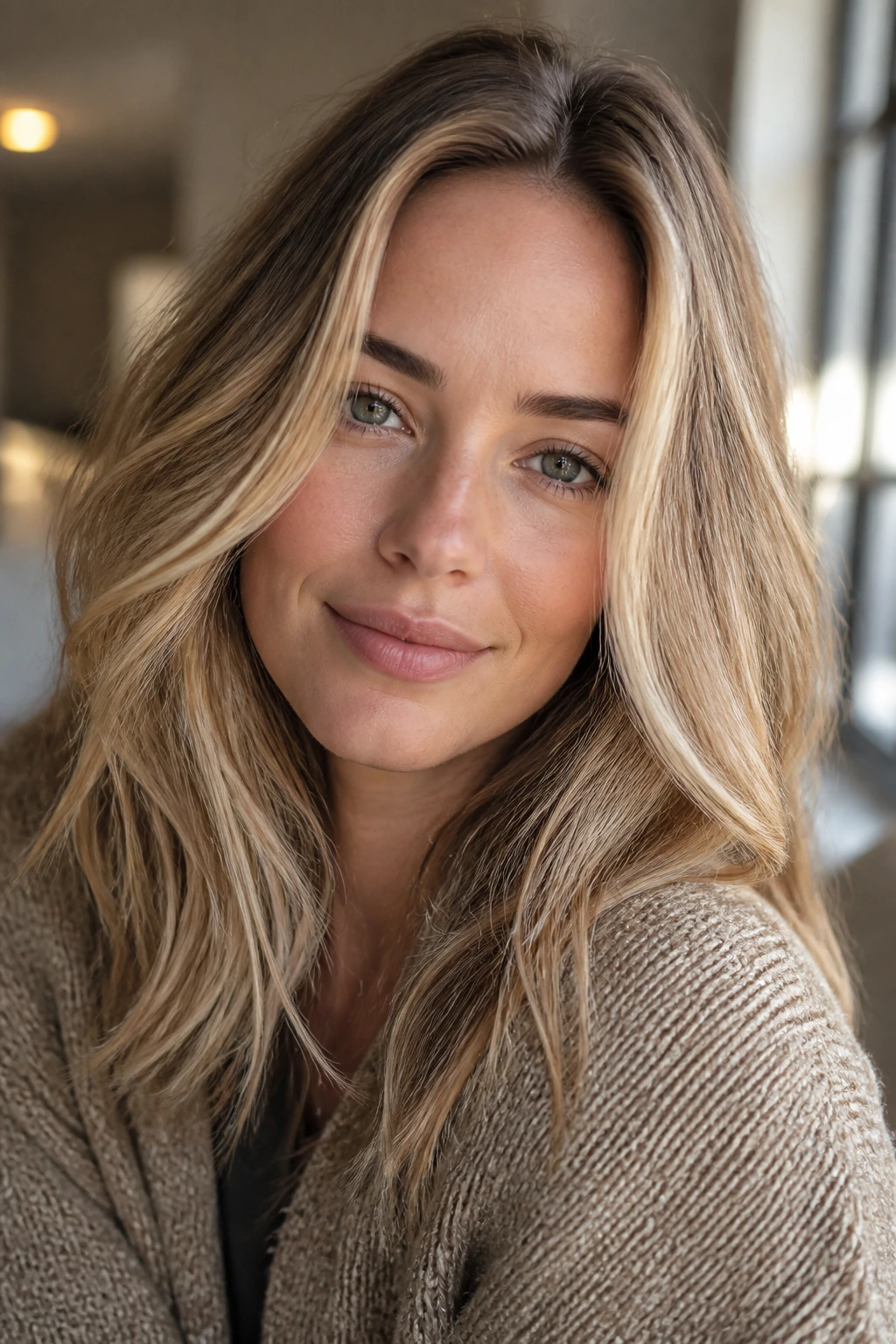
Warm gold on cool skin only works when the tone is edited with a little restraint. That’s the theme running through all 25 looks here. The best versions don’t force your complexion to change its mind. They give it something better to stand beside.
If you’re choosing between a harsher bright blonde and a softer golden one, I’d take the softer version nine times out of ten. It grows out better, it flatters more face shapes, and it tends to look richer after a few weeks instead of worse. That matters.
The smartest next move is simple: pick the placement first, then the tone, then the gloss. In that order. Get those three pieces right and warm golden blonde balayage can sit on cool skin with a kind of easy confidence that never looks accidental.