



Caramel brown balayage can look silk-soft on cool skin tones, or it can swing straight into brass, and the difference usually comes down to one thing: whether the caramel leans beige or orange. On pink, blue, or cool olive undertones, the prettiest versions keep the warmth tucked into mocha, mushroom, chestnut, and soft beige territory instead of shouting gold from the top of the head.
I prefer the brunettes that still read brunette first. The caramel should show up when hair moves, when daylight lands on a bend in the wave, or when a face-framing piece slips forward — not as a flat stripe sitting on top of the cut like it’s trying too hard.
If silver jewelry looks cleaner than yellow gold against your skin, you already know why this matters. The shades below stay in that cooler lane, from smoky root melts to airy money pieces, and each one gives you a different way to wear caramel without letting it run warm in the wrong places.
Why These Caramel Shades Work on Cool Skin
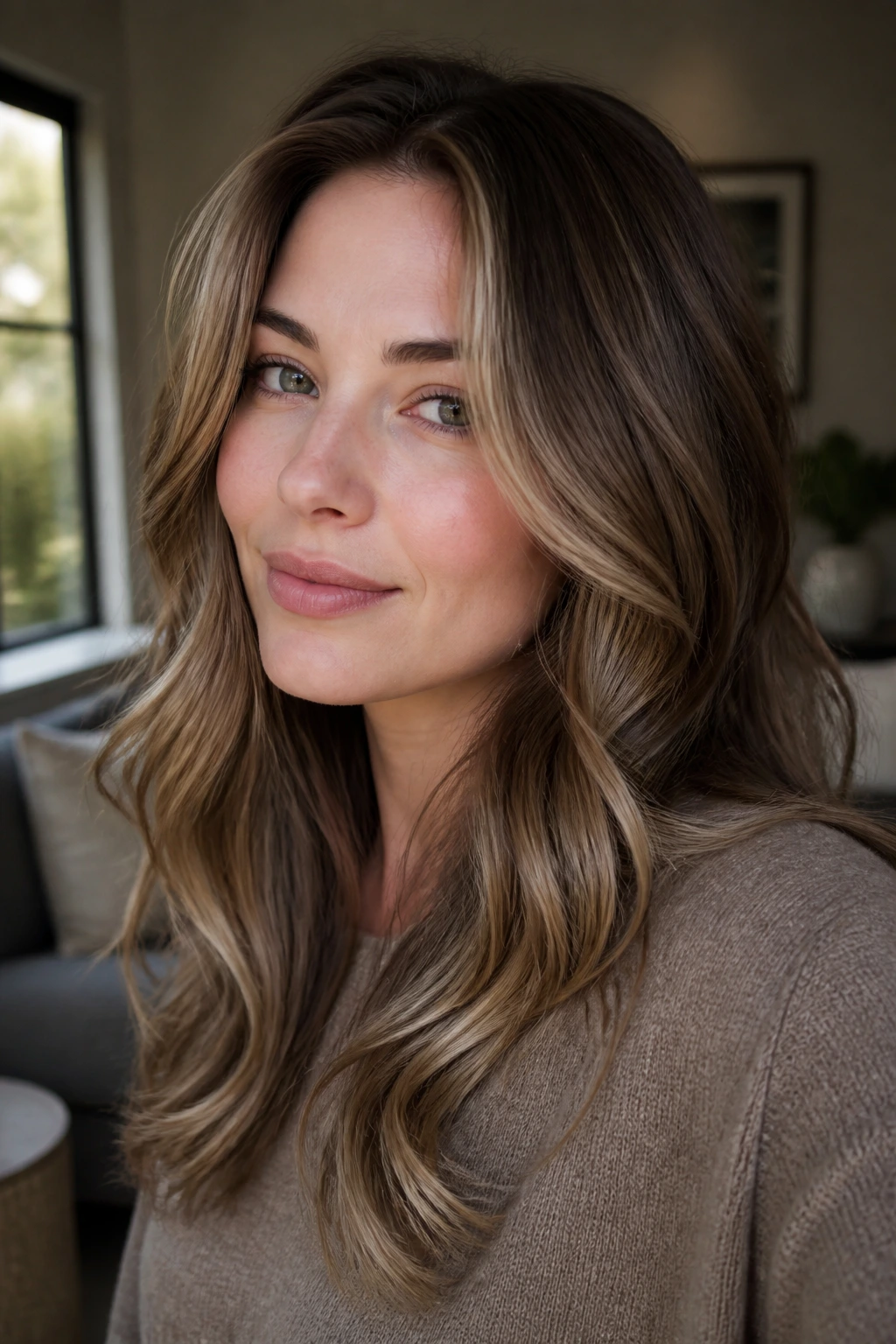
- Muted warmth keeps the face calm: Beige, mushroom, and mocha caramel sit close enough to brunette that they don’t wake up redness or make cool undertones look flushed.
- Placement matters as much as tone: A soft root shadow and carefully placed face-framing pieces make the color feel intentional instead of streaky.
- Depth keeps the finish rich: Cool skin usually looks better with dimension than with pale, high-contrast blonde bits everywhere.
- Texture changes the read: The same caramel looks softer on brushed-out waves and more graphic on straight hair, so the cut matters just as much as the toner.
- Low-maintenance grow-out is built in: Balayage lets the root stay deeper, which means the color can fade without looking harsh at the scalp.
How to Read the Right Caramel Before You Book
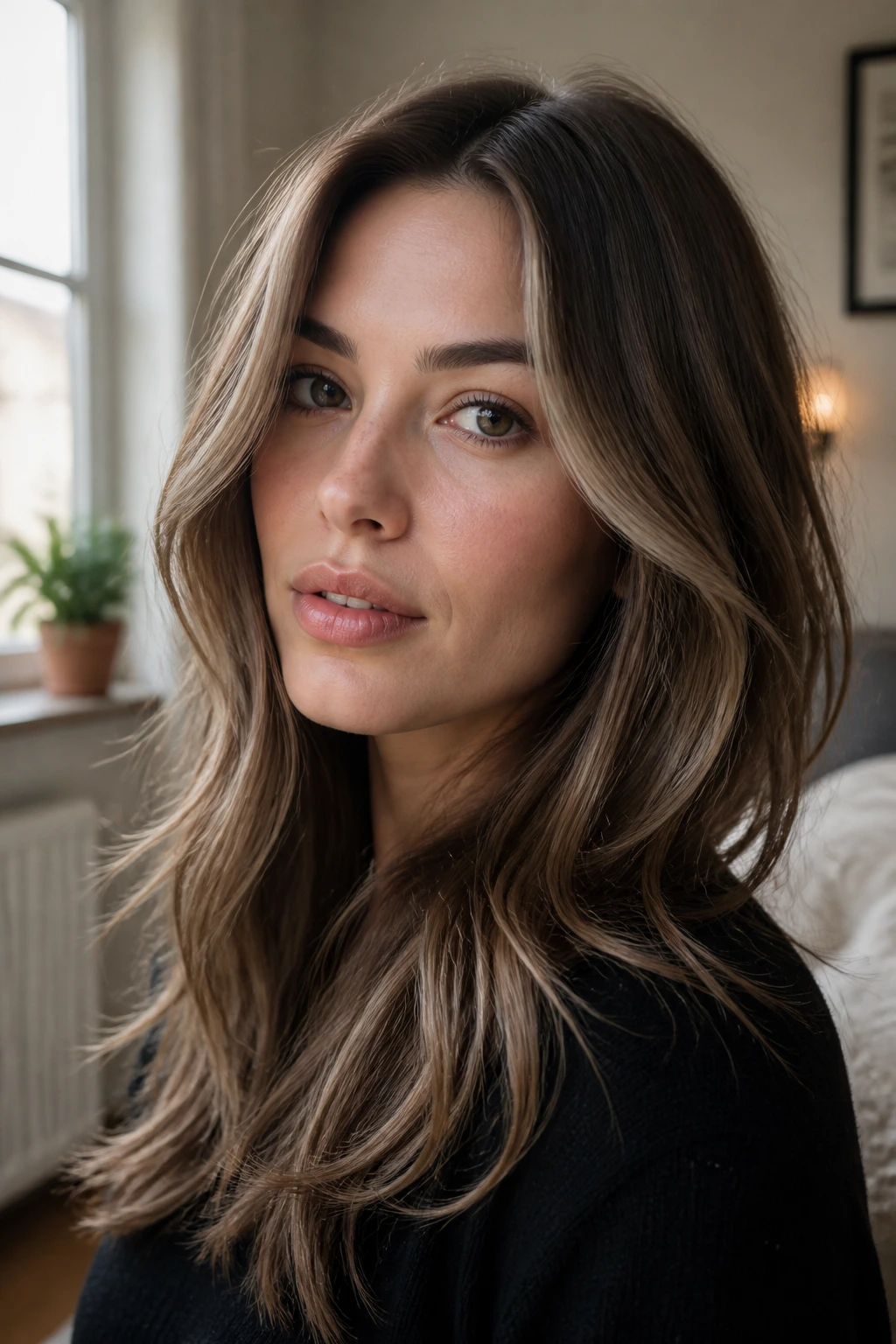
Before you choose one of these looks, decide how close you want to stay to your natural brunette. If you like color that whispers, stay in the mushroom, mocha, and ash-brown lane. If you want the hair to show more movement, step up to beige caramel around the face and mids, but keep the root soft so the contrast doesn’t turn harsh.
Cool skin usually likes caramel when the warmth is buffered by brown. That means the toner matters as much as the lift — beige, pearl, smoke, mushroom, and chestnut are the words that should keep showing up in the conversation. If your stylist starts talking about bright honey or buttery gold and your face already leans pink, I’d slow that down.
- Beige caramel: Safest if you want brightness near the face without orange.
- Mushroom or ash-brown caramel: Best when you want the quietest finish.
- Chestnut caramel: Useful on deeper cool skin or darker bases where pale pieces would look disconnected.
- Gloss matters: A beige gloss can turn a warm lift into something much softer.
Bring one photo in daylight and one indoors. Caramel changes fast under warm bulbs, and the version that looks soft in a bathroom mirror can read a lot hotter by the window.
1. Smoky Root Melt with Caramel Ribbons
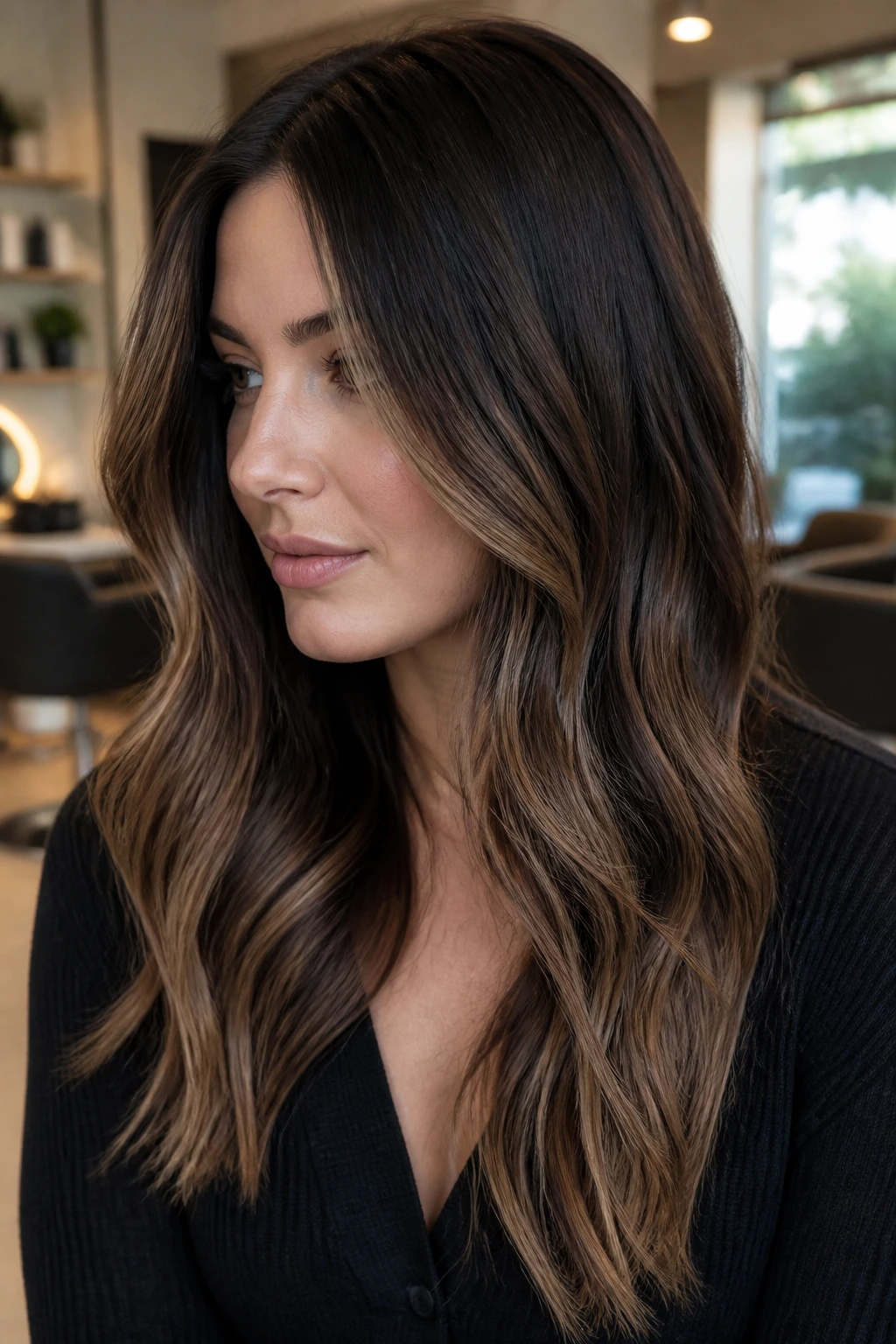
This is the version I’d hand someone who wants caramel but doesn’t want caramel announcing itself. The root stays deep — usually a level 4 or 5 brunette — and the lighter pieces drift through the mid-lengths in thin, beige ribbons that look more expensive than chunky highlights ever do.
Why It Flatters Cool Skin
The smoky root keeps the face from getting too bright at the scalp, which matters when your skin already leans cool. The beige caramel lands like shine, not a shout, and that keeps the whole look calm.
Quick notes for the chair:
- Ask for a 1–2 level root shadow so the grow-out stays soft.
- Keep the brightest ribbons around the cheekbones and collarbone.
- Ask for a beige or neutral gloss, not a golden one.
My tip: if your base is dark, let the root do more work than the lightener. That’s what keeps this from tipping into stripe territory.
2. Beige Money Piece on a Cool Brunette Base
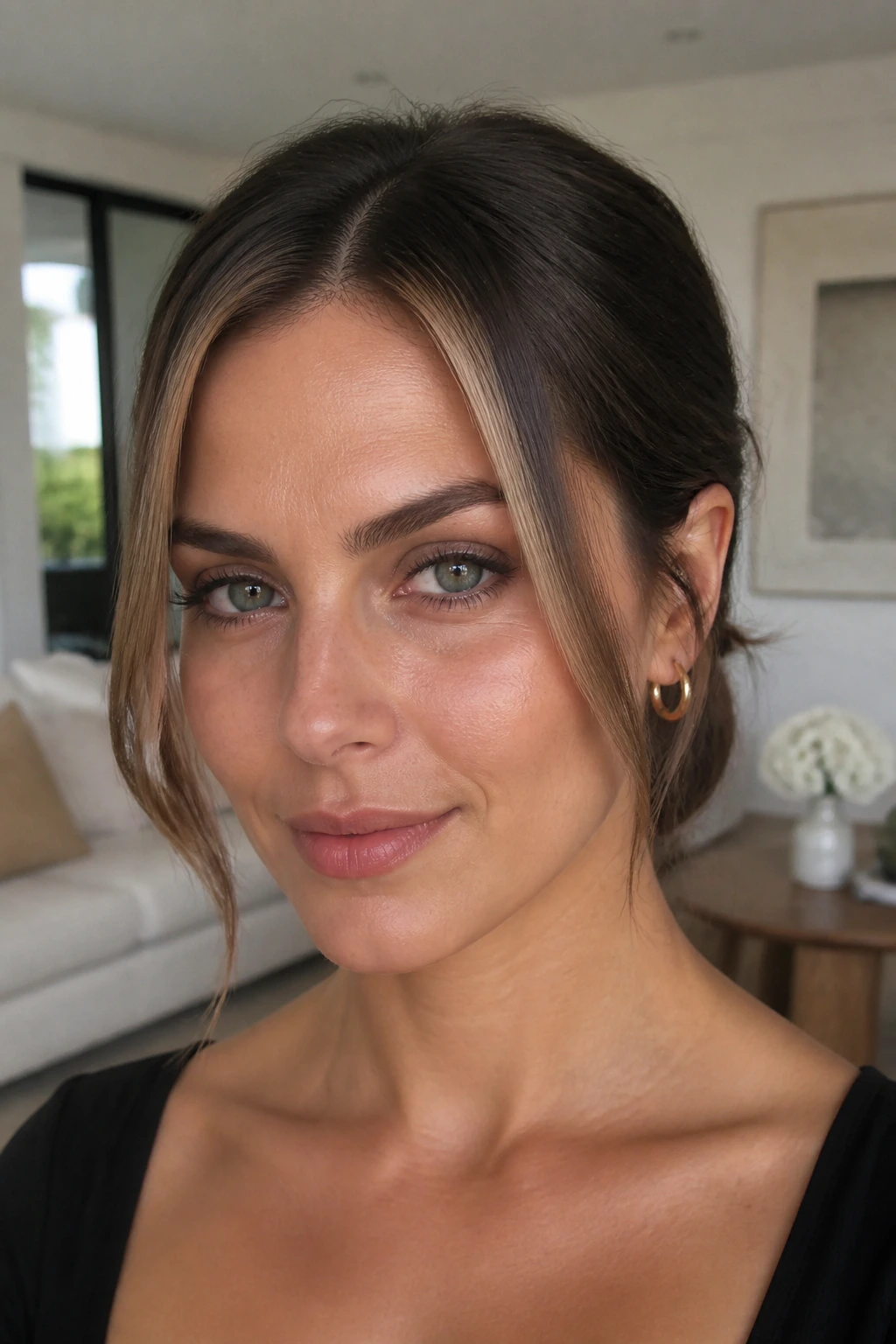
A money piece does not need to scream to work. On cool skin, a narrow beige front piece can wake up the eyes and soften the face without dragging the whole head into brass.
I like this version when someone wears their hair tucked behind the ears a lot. The lighter strip catches the light at the temples and cheekbones, then disappears into a deeper brunette through the back, which feels balanced rather than overdone.
The trick is to keep it creamy, not yellow. If the front pieces climb too light or too gold, the face starts looking flushed. Keep the piece narrow, feather the edges into the crown, and let the rest of the balayage stay quieter.
3. Espresso-to-Caramel Ombre Waves
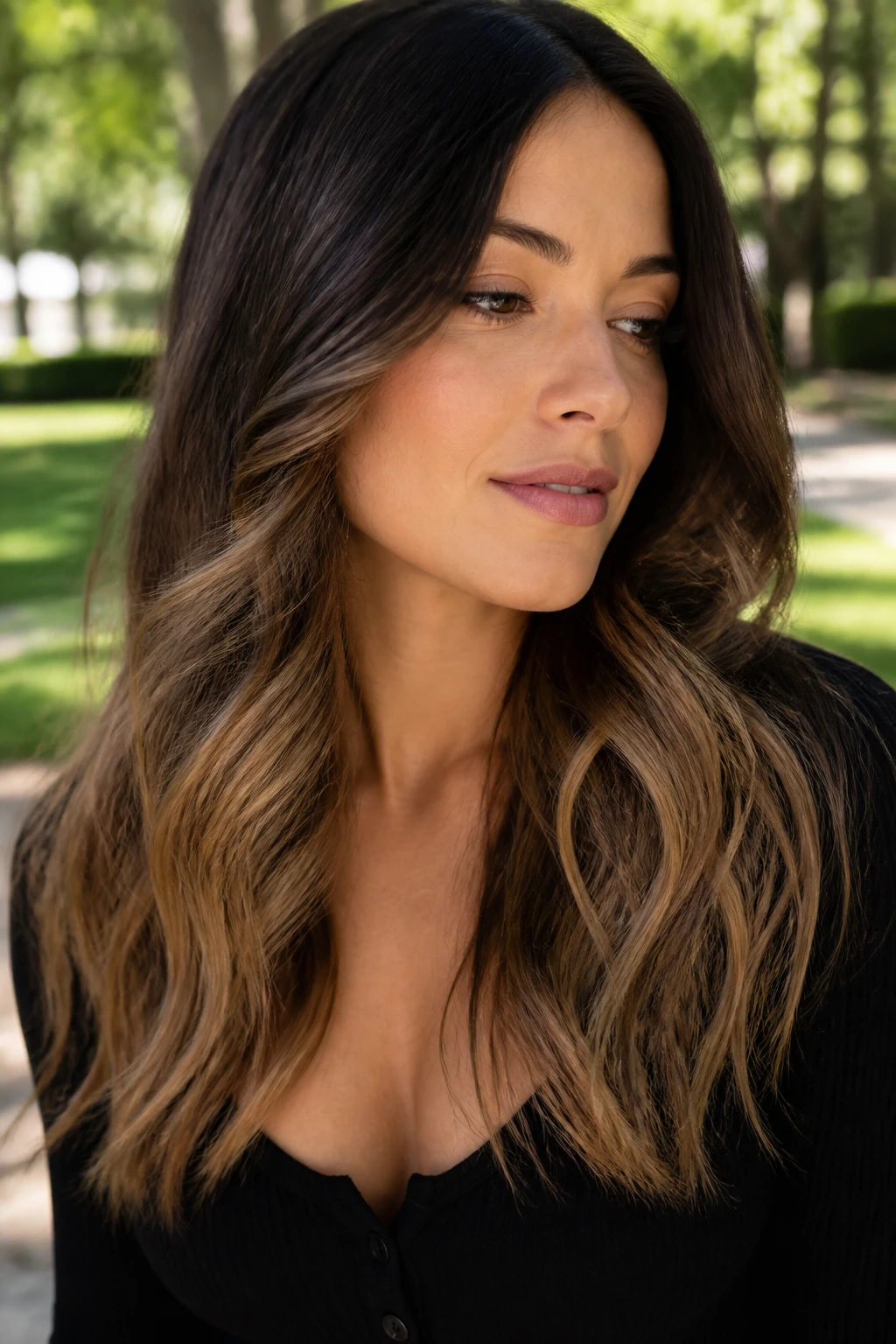
Want the strongest contrast without orange? This is the lane. The top third stays espresso-dark, then the color slides gradually into caramel at the ends so the shift feels smooth rather than blunt.
How to Keep the Fade Soft
The fade needs length. If the transition happens too high, ombre can look blocky, especially on cool skin where harsh warmth shows fast. Keep the lift concentrated through the last half of the hair, then tone the ends toward beige-caramel instead of honey.
- Ask for the fade to start below the cheekbone on long hair.
- Keep the upper section mostly untouched for a brunette-first look.
- Brush the waves out after styling so the gradient reads soft instead of stripey.
This is one of the better options if you like your color with a little drama but still want your skin to stay the center of the picture.
4. Curly Caramel Ribboning for Spirals
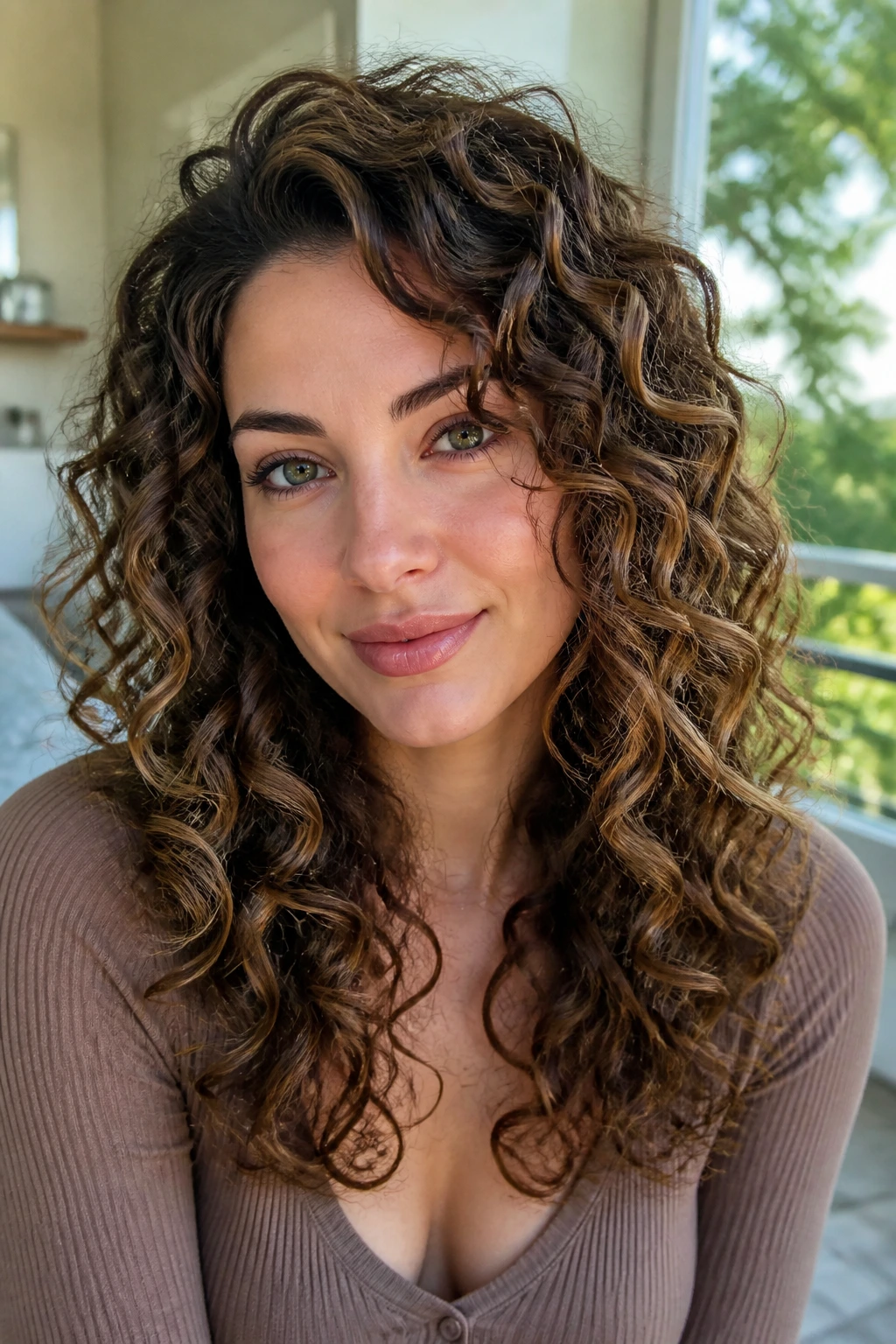
Curly hair tells on bad color placement fast. Paint the wrong spots, and the whole head looks busy; paint the right curl groups, and the caramel moves like it was always there.
The best version uses thin ribbons painted where the curls naturally split and bend. That keeps the shade from sitting on top of the curls like a helmet of color. On cool skin, I’d keep the caramel in the beige-to-chestnut lane and leave plenty of depth at the root so the curls still feel rich.
What to paint and what to leave alone:
- Paint the outer curve of each curl cluster.
- Leave some interior depth so the pattern has room.
- Ask for a cool gloss if the ends start flashing gold.
- Use a hydrating mask weekly; curls need it after lightening.
The result looks soft, not busy. And that matters.
5. Mushroom Brown Balayage with Muted Caramel Veils
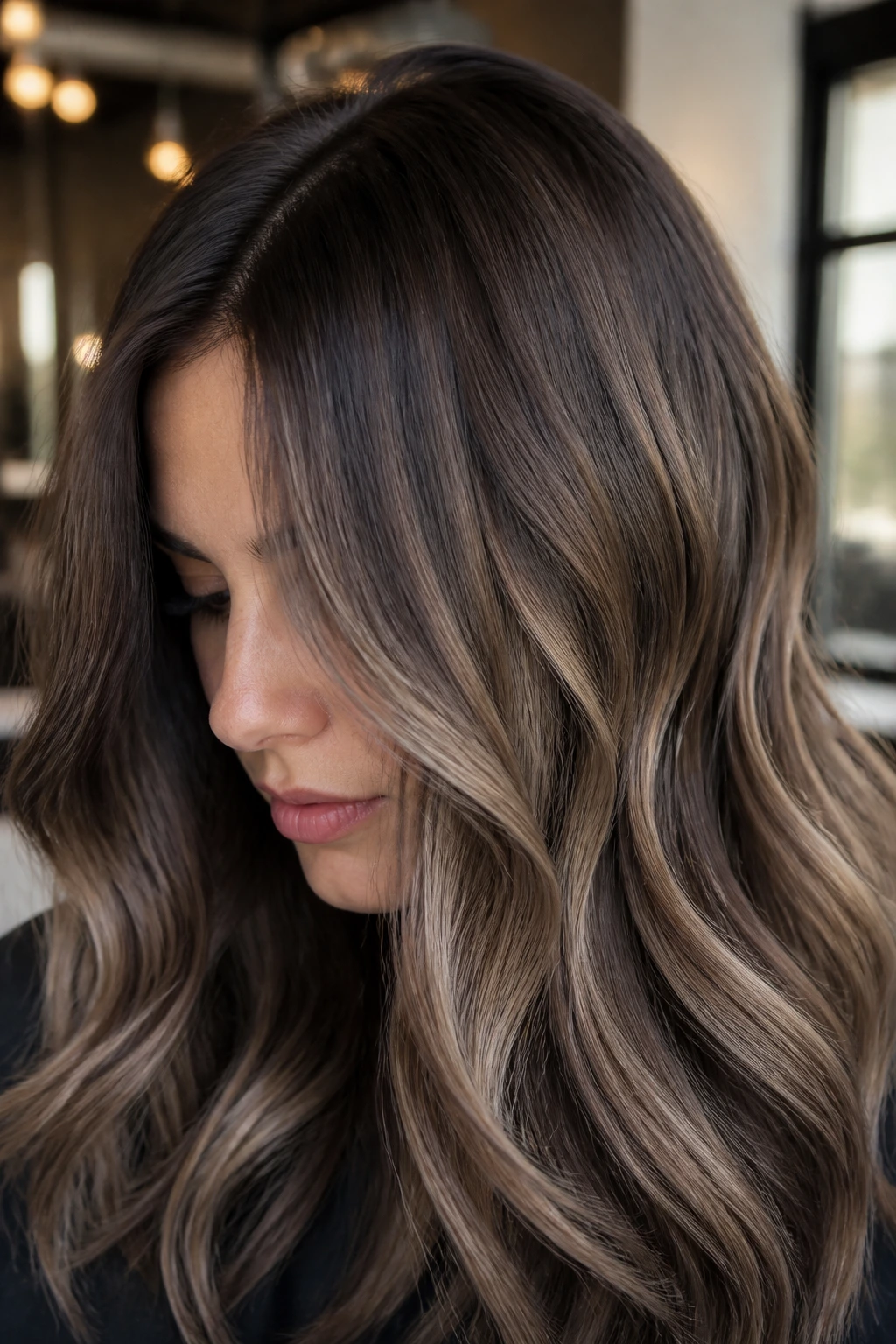
Mushroom brown is one of my favorite places to park caramel for cool undertones because it already lives in that smoky, neutral lane. Add a few muted caramel veils, and the whole head gets movement without losing the brown base that makes the face look calm.
The caramel here should read like a warm reflection, not a color block. Think beige-brown, taupe-brown, maybe even a little smoky chestnut if your skin is deeper. That gives you dimension without fighting cool eyes or rosy cheeks.
This is the look I’d choose for someone who wants people to notice the hair’s texture before they notice the color itself. Quiet. Controlled. A little moody, in the good way.
6. Blunt Lob with Soft Caramel Ends
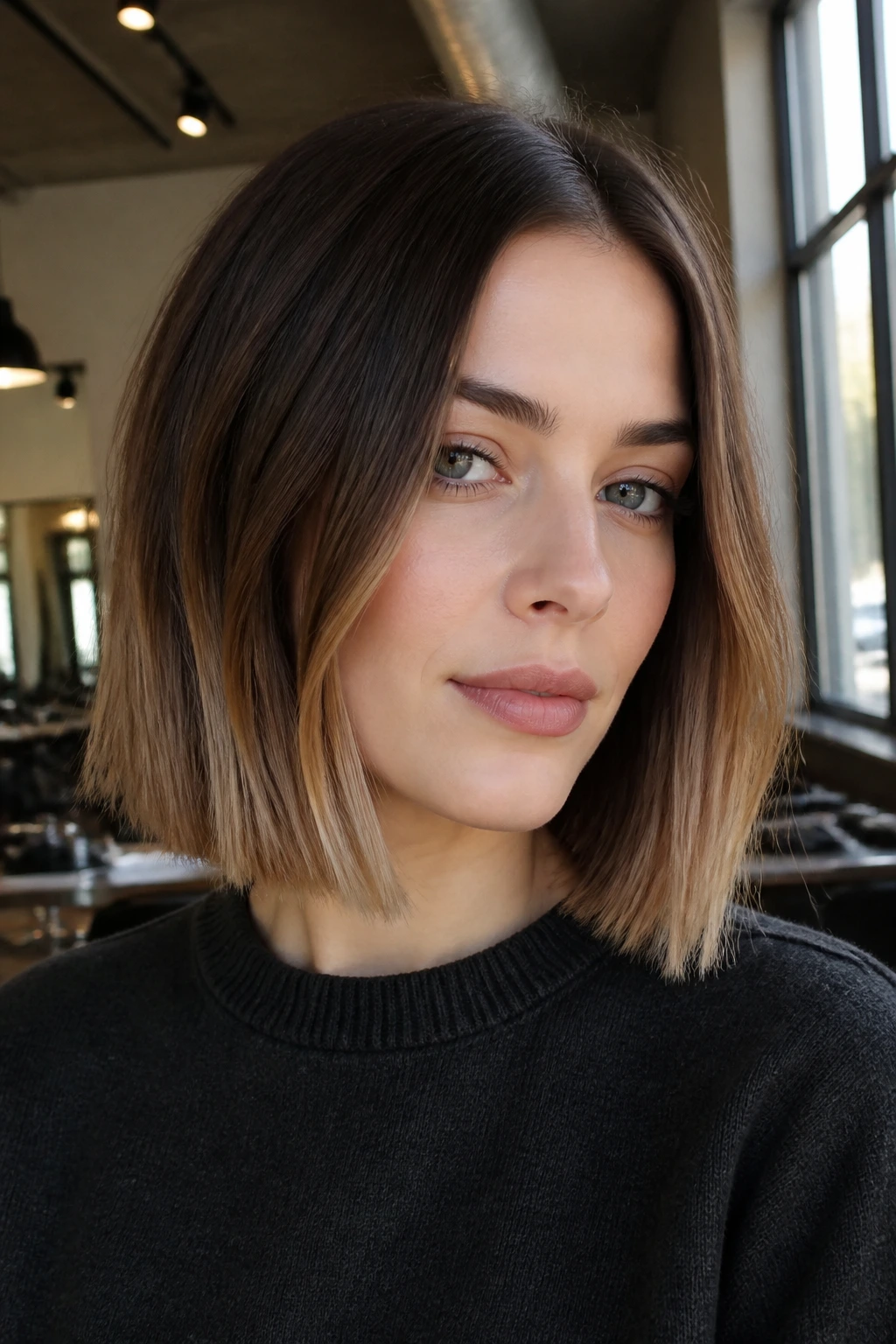
A blunt lob does not need chunky color. It needs restraint. When the cut is sharp and the line is clean, thin caramel ends are enough to keep it from looking flat.
I like this on cool skin because the brightness stays away from the scalp and lives where the cut already moves: the edges, the bends, the ends that skim the jaw. If the caramel climbs too high, the bob starts to fight itself.
Unlike a layered cut, a blunt lob looks better when the highlights are narrow and blurred. Ask for pieces that are soft at the top and a touch lighter at the bottom, then finish with a polished blowout or a loose bend. That’s the whole trick.
7. Curtain Bang Frame with Light Caramel
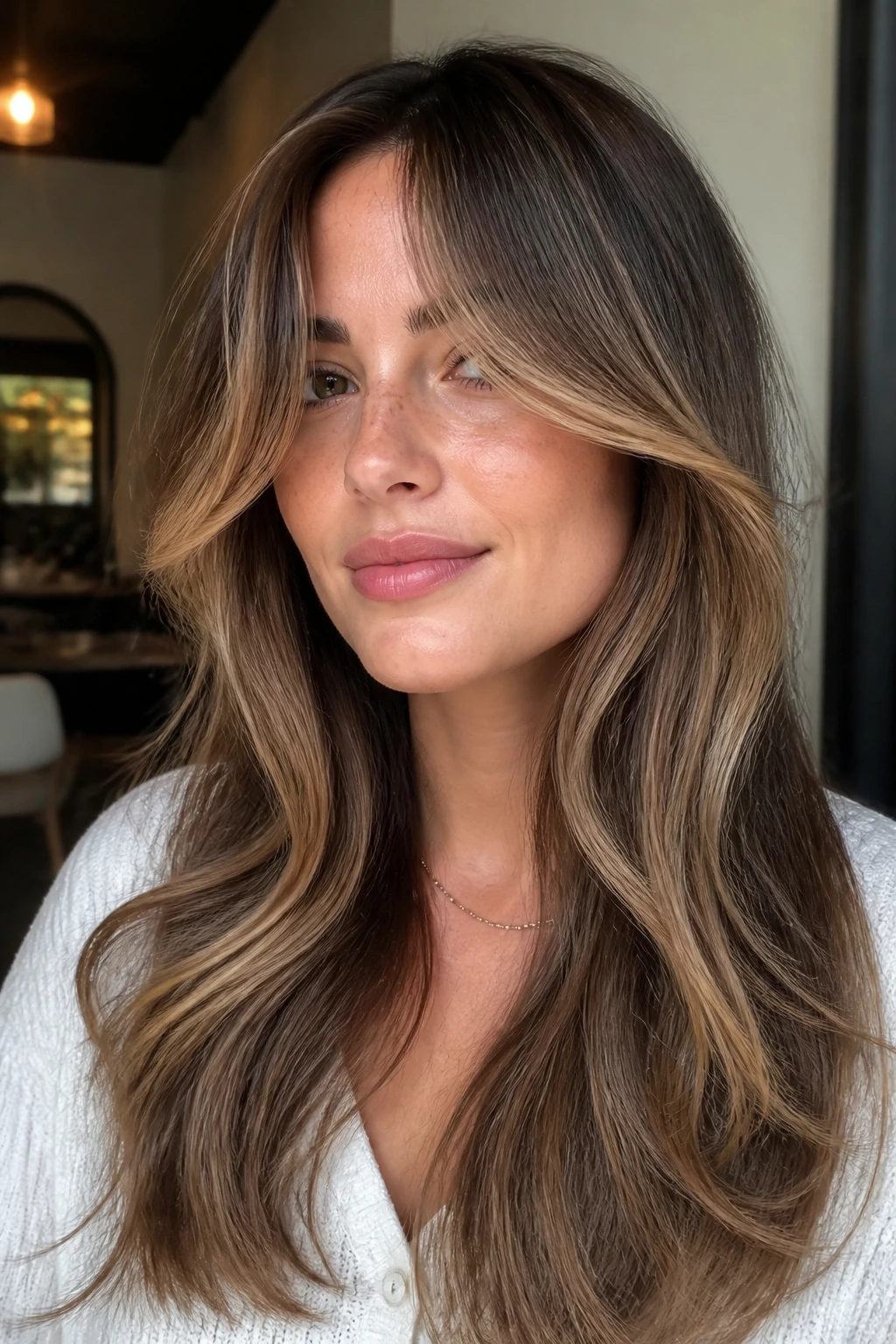
Brighten the front, leave the rest alone. That’s the cleanest way to wear caramel around cool skin when you want some face-lift energy without committing to a full lightening job.
Where the Brightness Should Sit
The lighter pieces should begin near the cheekbone and feather through the curtain bangs, not start right at the scalp. That keeps the face frame airy and avoids the hard stripe that can make cool skin look redder than it is.
- Keep the bang pieces one shade brighter than the rest.
- Let the side pieces melt into the lengths instead of stopping at the jaw.
- Ask for a beige glaze so the front doesn’t drift gold.
This works especially well with soft makeup — berry blush, cool pink lip, a little mascara. The hair and face start speaking the same language.
8. Ash Brown Balayage with Whisper Lights
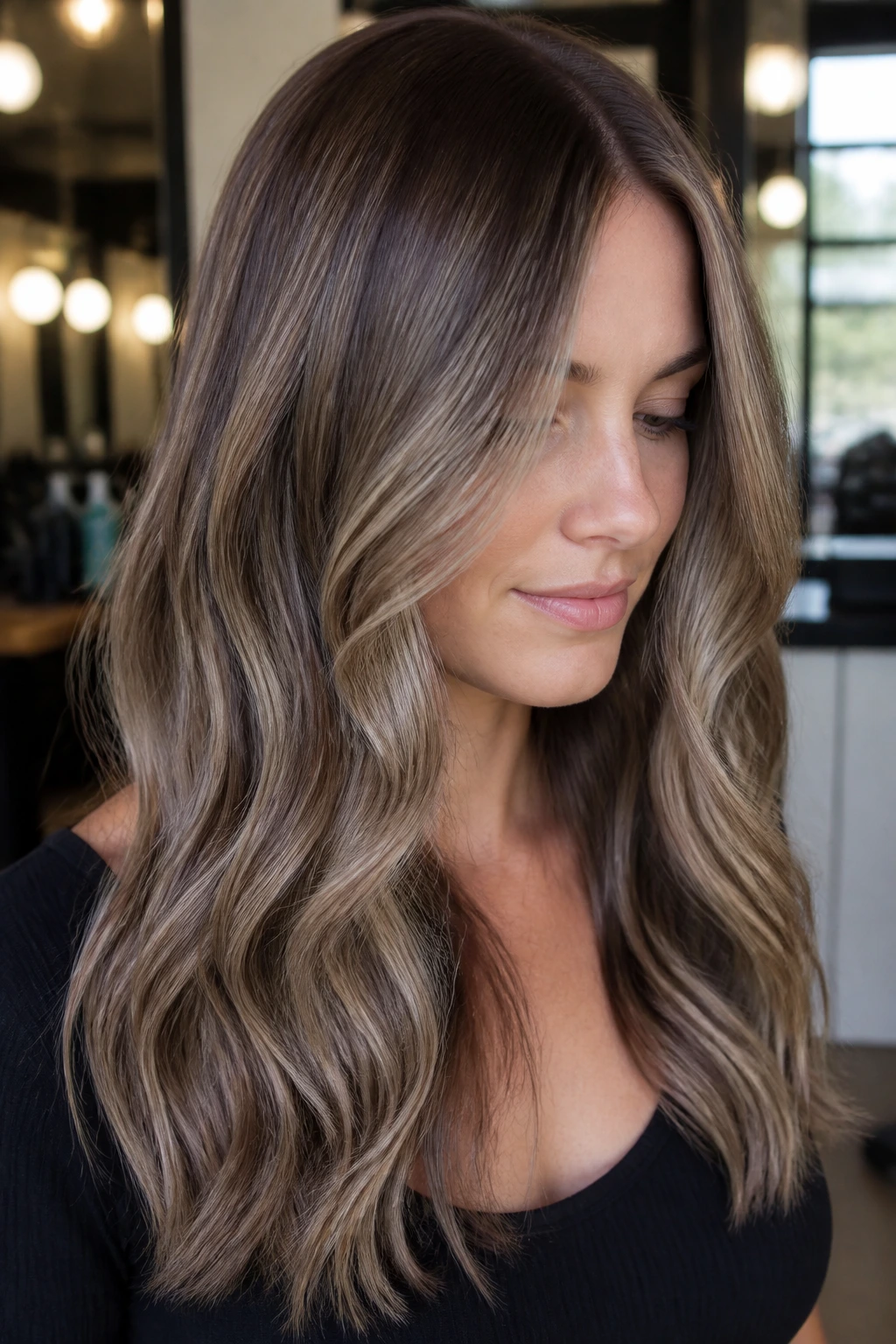
How quiet can caramel get and still look intentional? Pretty quiet, actually. This version sits close to ash brown, then slips in just enough light beige to catch movement in daylight.
It’s a strong pick for people who want dimension more than contrast. The color never gets loud, which is exactly why it works on cool skin. The undertones stay in the smoky lane, and the caramel acts more like a sheen than a stripe.
Quick shade check:
- Best if you like low contrast around the crown.
- Choose this when you wear cool-toned makeup more often than warm bronze.
- Ask for a neutral beige toner so the ends stay clean.
This is one of those styles that looks even better on day two hair. The bend settles, the shine softens, and the whole thing looks lived in without trying.
9. High-Contrast Caramel Foils on Deep Brunette
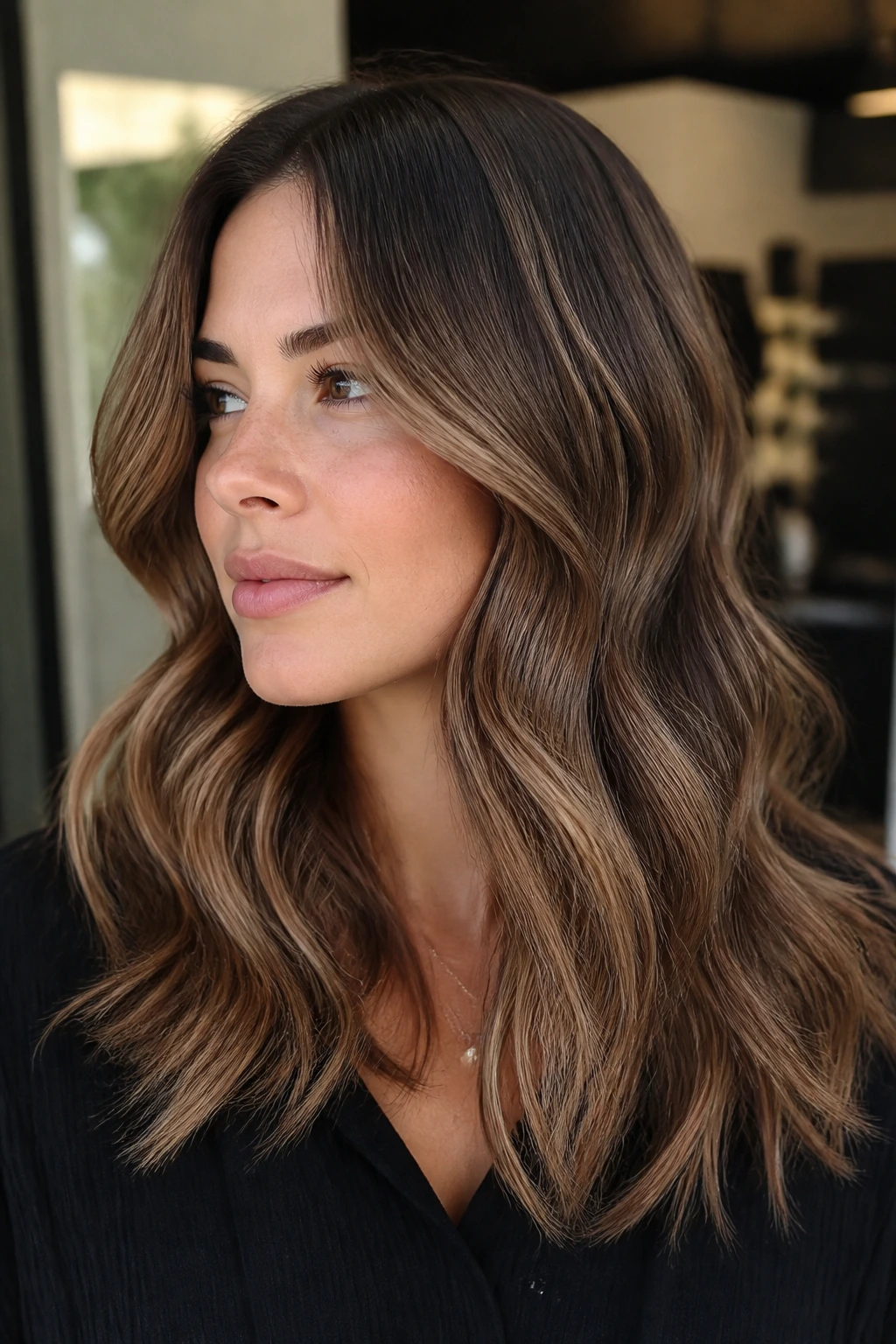
Not every cool-skin caramel has to be shy. On a deep brunette base, narrow foils in a cool caramel can create real depth, especially if the light pieces are chestnut-beige instead of gold.
The key is control. Chunky foils make dark hair look striped. Fine foils, spaced with breathing room, create that glossy ribbon effect that moves when the hair moves. On cool skin, that movement matters because it keeps the brightness from sitting too close to the face all at once.
If your hair is very dark, I’d keep the lift realistic and the tone soft. Coffee-with-milk caramel. Not candy. Big difference.
10. Barely-There Caramel for First-Time Color
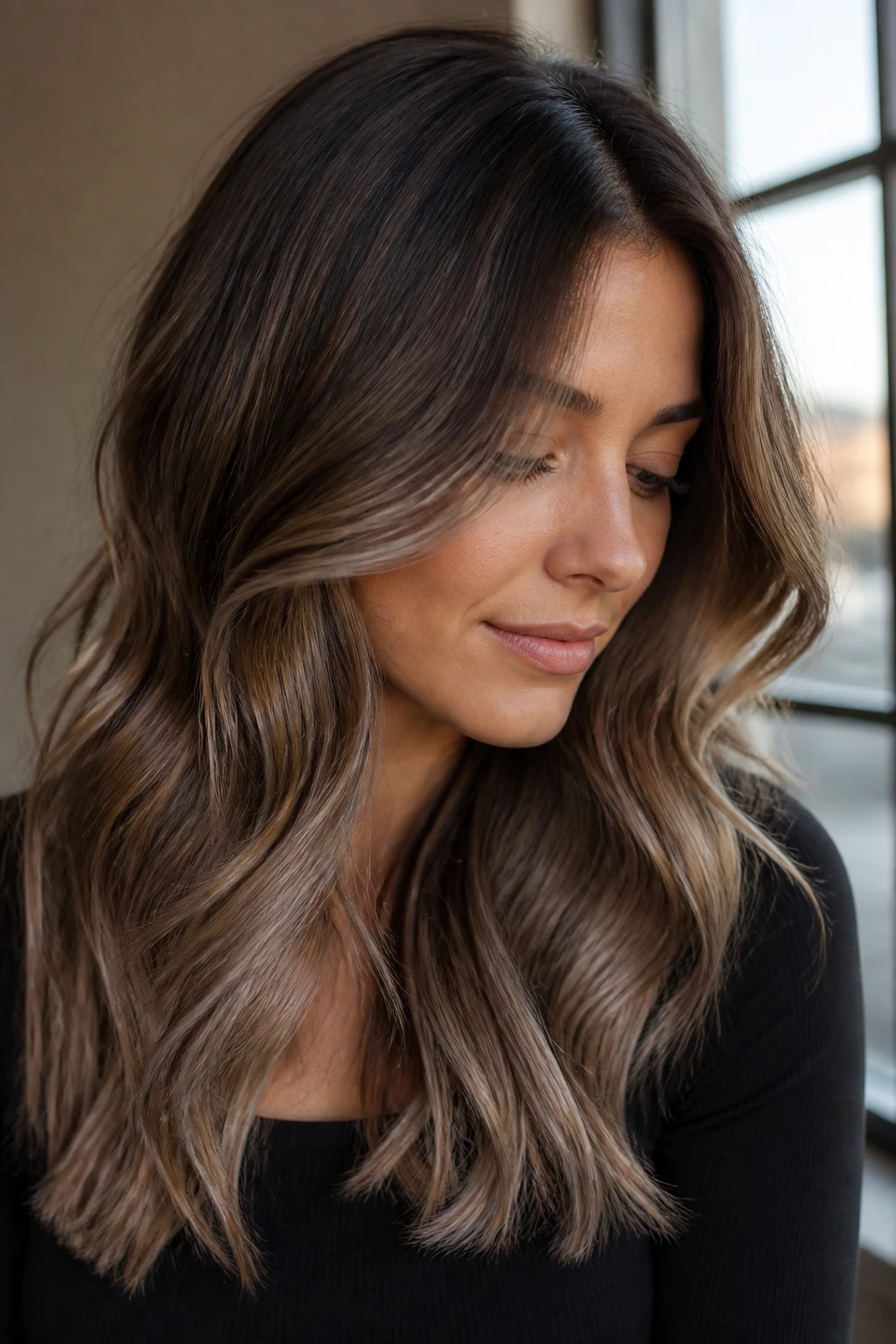
This is the safest way in if you’ve never lightened your hair before. The pieces are soft, the contrast stays low, and the caramel sits mostly through the mid-lengths and ends so you can see how you feel about warmth before you commit harder.
The appeal is simple: it gives dark hair a little motion without changing the whole personality of the cut. On cool skin, that matters because even a small amount of gold can feel loud if it’s placed badly. Keep the tone beige and the pieces diffused, and you’ll get shine instead of shock.
I like this for people who want to test the water. No drama. No stripey front. Just enough caramel to make the brunette move.
11. Feathered Shag with Caramel Swings
A shag is built for movement, so the color should move with it. If the layers are feathered and airy, the caramel needs to be broken up the same way — little swings of light that follow the cut, not blocks that sit on top of it.
Why the Layers Matter
The shorter layers around the crown can take tiny, smoky pieces, while the longer pieces through the bottom can carry slightly warmer beige ribbons. That mix gives the shag depth from every angle, which is the whole point of wearing one in the first place.
- Keep the root soft so the layers don’t look disconnected.
- Let the color get a touch brighter on the fringe and face frame.
- Finish with a texture spray, not a heavy oil.
On cool skin, the feathered motion keeps the caramel from feeling too sweet. It reads textured. A little gritty. Better for the cut, honestly.
12. Layered Mid-Length Caramel Sweep
Mid-length hair can swallow weak placement. It needs a color pattern that starts to show around the cheekbones and keeps going through the collarbone area, where the hair actually moves.
I like a sweeping placement here because it keeps the look soft while still giving the eye something to follow. The caramel should be there, but not everywhere. If you go too bright at the ends and too light near the root, the whole style starts looking disconnected.
The sweetest version has a brunette base, a muted beige-caramel midsection, and just enough light at the surface to break up the density. That’s a very good shape for cool skin, especially if you want a cut that stays pretty even when you throw it into a clip or tuck it behind one ear.
13. Sleek Straight Hair with Thin Caramel Panels
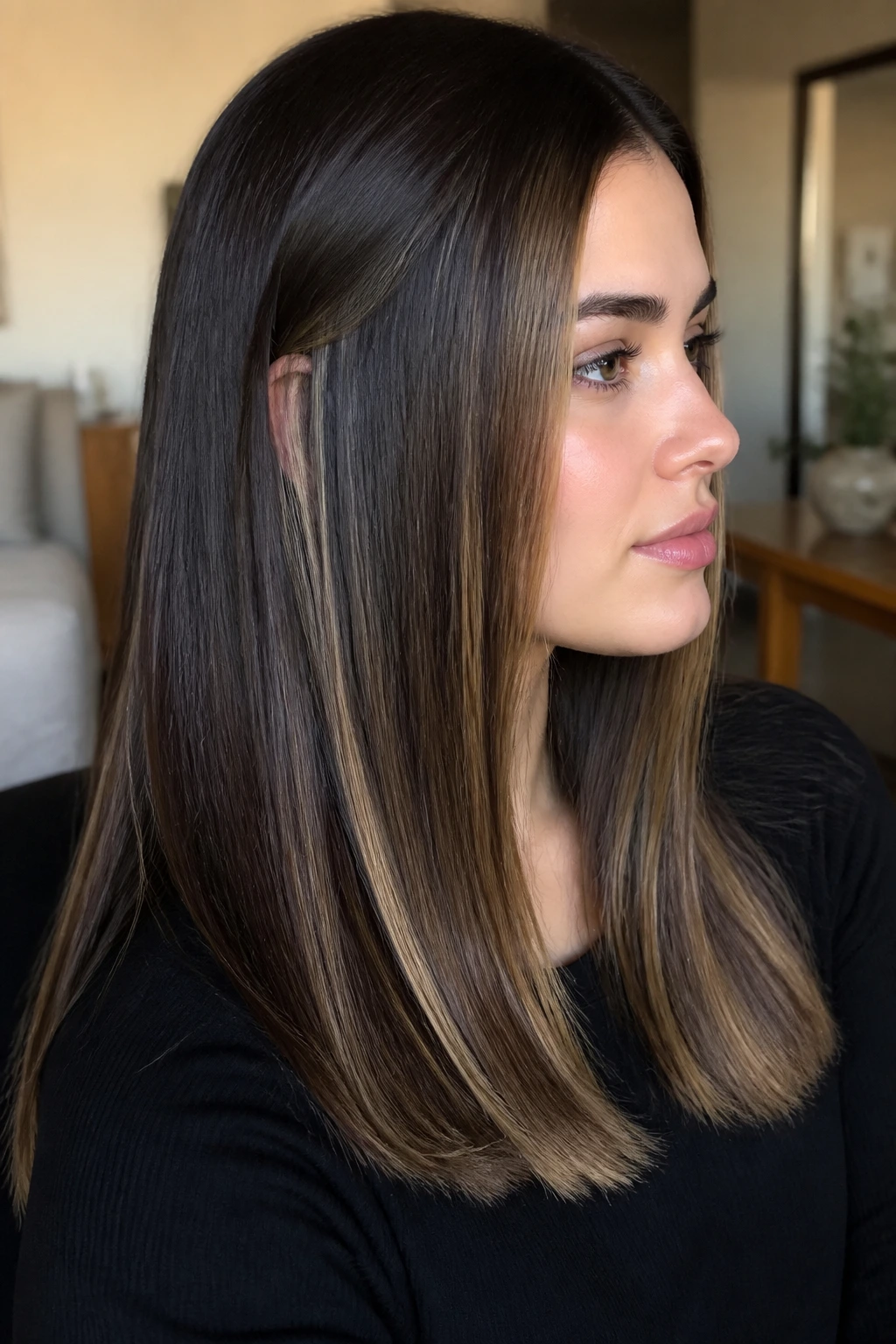
Straight hair is honest. It shows every line, every bend, every choice. Which is why thin caramel panels matter so much here — chunky pieces look obvious fast.
Thin Panels Beat Chunky Stripes
On cool skin, fine panels feathered through the lengths make the hair look glossy instead of stripy. A narrow panel near the front, another just behind the ear, and a few through the lower lengths are usually enough.
- Keep the panels soft at the root and brighter at the ends.
- Use a flat iron bend instead of pin-straight styling if you want the color to pop.
- Ask for the toner to stay beige-neutral, not yellow.
This is a strong option if you love polished hair and don’t want waves doing all the work. The placement does the talking here.
14. Gray-Blending Caramel Balayage
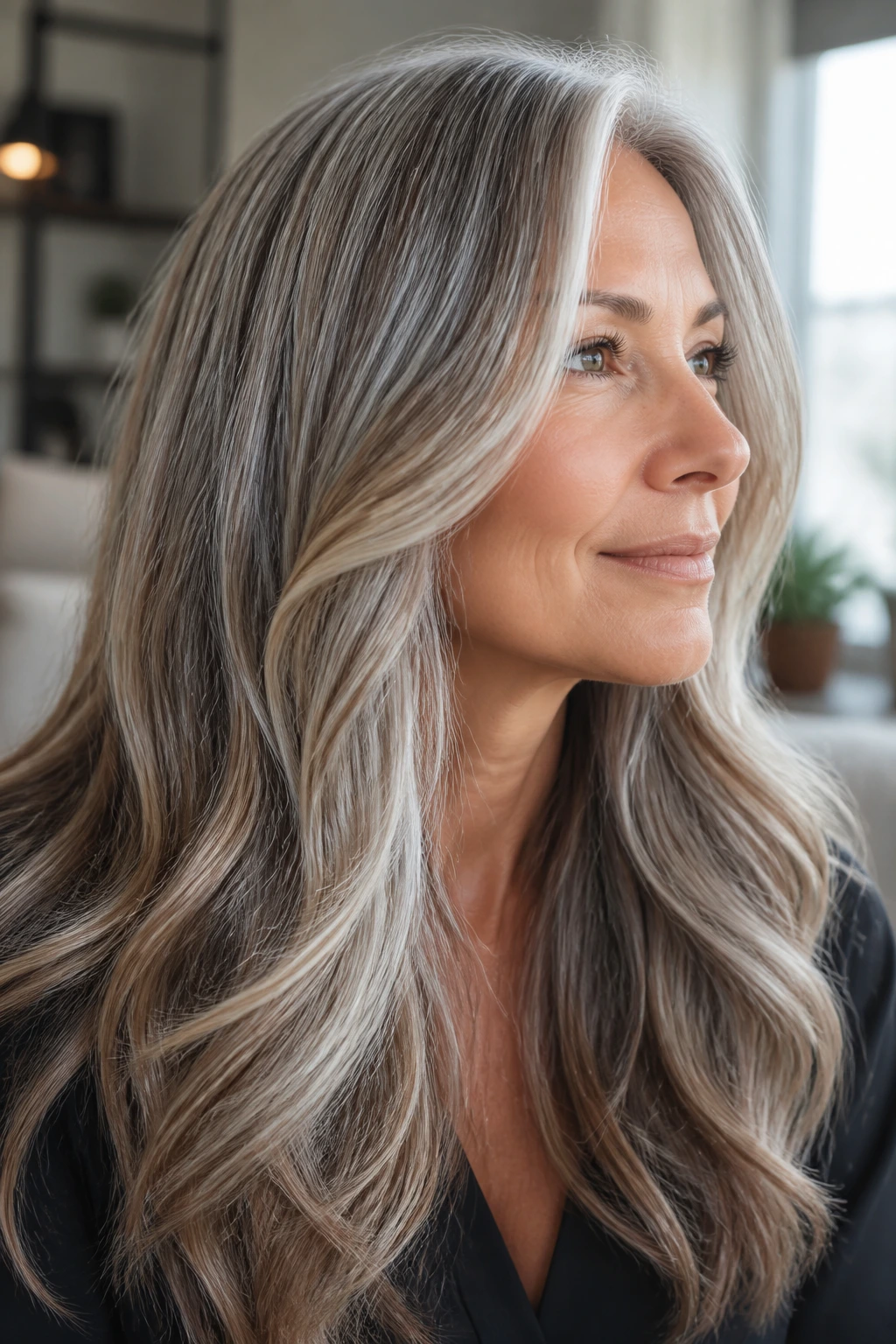
Gray blending is less about covering silver and more about turning it into part of the pattern. Caramel can do that beautifully when it stays smoky and reflective instead of opaque.
The trick is to mix the silver, brunette, and caramel rather than trying to hide one under the other. On cool skin, that kind of transparency is flattering because the hair looks soft around the face instead of heavy. A beige gloss helps a lot here, especially if the silver at the temples wants to read wiry or bright.
What gray needs from caramel:
- A soft root so regrowth doesn’t draw a line.
- Thin ribbons near the face for brightness.
- A cool-toned gloss to keep the silver from flashing yellow.
This is one of the most forgiving caramel looks if you’re blending in gray and want the result to feel intentional.
15. Black Hair with Soft Caramel Contouring
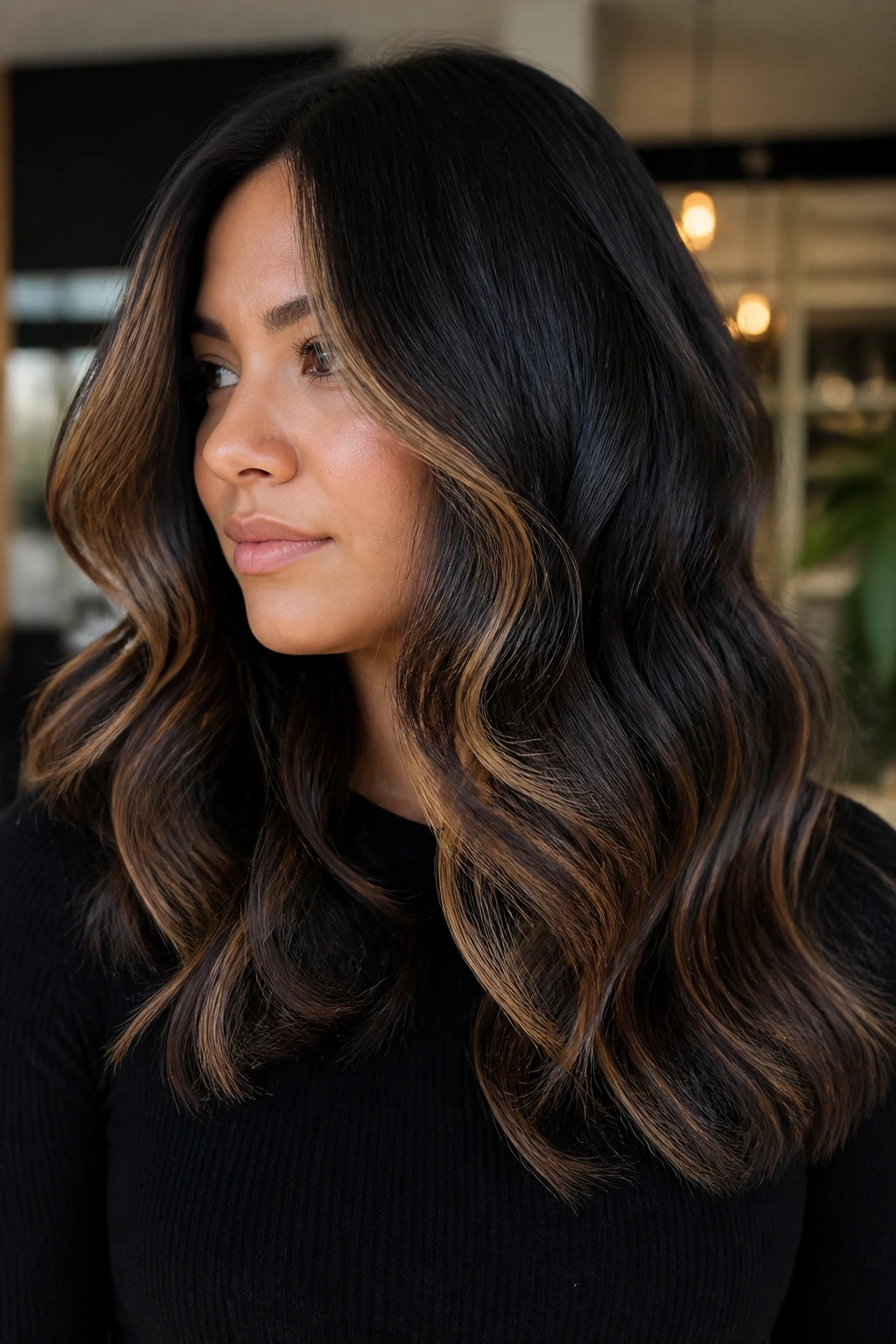
On black hair, caramel needs to be treated like jewelry — not sprayed everywhere, not piled on, just placed where it counts. Around cool skin, that usually means the face frame, the ends, and a few hidden panels through the top layer.
The lift here has to be controlled. Push too hard, and the caramel goes orange. Keep it soft and reflective, and the contrast looks rich instead of harsh. I’d usually keep the brightest pieces narrower than people expect, because black hair can swallow weak placement in a second.
This is the look for someone who wants movement without losing that inky brunette base. It’s dramatic, but in a quiet, smart way.
16. Neutral Caramel for Cool Olive Skin
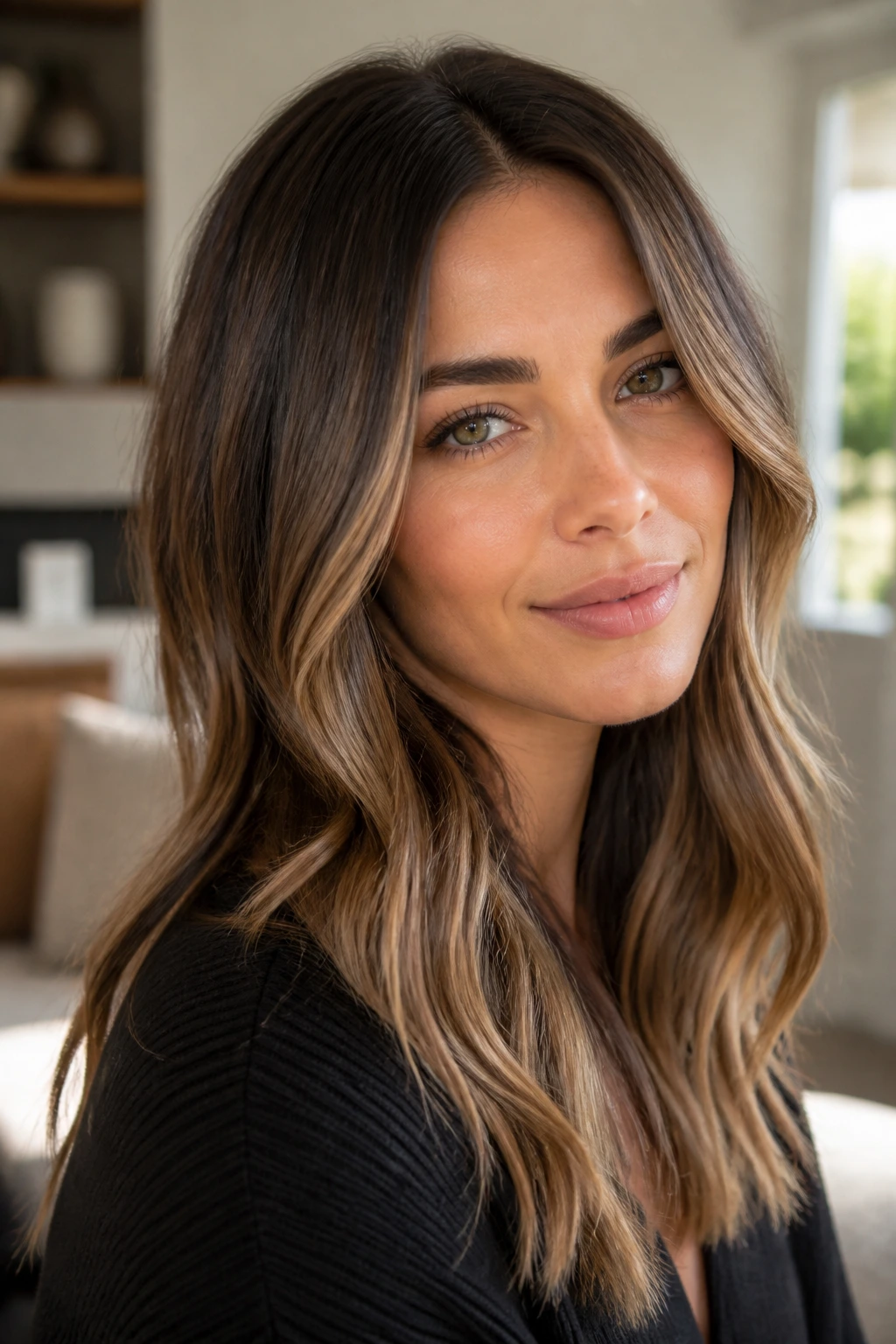
Can caramel work on cool olive skin? Yes — but only if the tone stays neutral. Too much ash can make olive skin look flat, while too much gold pulls the face toward yellow. The middle lane is where this lives.
The Neutral Caramel Lane
Ask for a beige-caramel melt with a soft root and a gloss that doesn’t push golden. That keeps the hair luminous without making the skin look muddy.
- Choose neutral beige instead of bright honey.
- Keep the face frame soft, not stark.
- If your skin leans olive, avoid a toner that goes too gray.
This version is especially good if you like soft makeup and a balanced, polished finish. It doesn’t fight the complexion. It sits with it.
17. Rooted Caramel Bob with Lived-In Depth
A bob looks best when the dimension stays below the eye line, where it can swing and catch light. That’s why a rooted caramel bob works so well on cool skin — the darker top keeps it grounded, and the lighter ends keep the cut from collapsing into one flat block.
I like this with a little bend at the ends and a strong side part or soft center part, depending on how much brightness you want around the face. Keep the caramel muted, not syrupy. The bob should feel modern, not sugary.
If you’re the type who likes a haircut to do most of the work, this is a good lane. The color supports the shape instead of overpowering it.
18. Thick Hair with Bold Caramel Ribbons
Thick hair can swallow subtle color, so it needs bigger ribbons and more spacing between them. Otherwise the dimension disappears into the bulk and all you get is a faint warmth at the ends.
For cool skin, I’d keep the ribbons beige-chestnut and place them with enough breathing room that each one can show up. Not too many. Not too tiny. Thick hair looks better when the color has room to land.
Why thicker hair needs a different hand:
- Bigger sections stop the color from getting lost.
- Slightly stronger contrast shows movement in heavy waves.
- A cool gloss keeps the caramel from reading too orange after styling.
This is one of the few times where a little more visible color is the right move. Dense hair can take it.
19. Fine Hair Micro-Balayage
Fine hair needs delicacy, not drama. Micro-balayage gives you the appearance of fullness without exposing too much scalp contrast or making the pieces look chunky.
Tiny painted sections around the part, temples, and upper layers create a soft shimmer that makes the hair look denser. On cool skin, that whisper of caramel keeps the face bright without turning the head into a highlight map. It’s subtle, but not boring.
How Micro-Balayage Adds Fullness
The smaller sections create more visual texture. Your eye reads more movement than there actually is, which is exactly what fine hair benefits from.
- Keep the lightness close to the surface, not in large bands.
- Ask for a cool beige gloss so the pieces stay soft.
- Finish with loose waves or a blowout; pin-straight styling hides the effect.
If you’ve been told fine hair “can’t hold balayage,” that’s lazy advice. It just needs a lighter hand.
20. Bronde Caramel with Icy Brown Toner
Bronde sits in the middle, which is why it can flatter cool skin so well when the gloss stays icy-brown instead of warm gold. You get the lightness of caramel, but the overall read is still brunette.
The best bronde versions have a deep root, softer mids, and ends that hover between beige and brown. That makes the hair shimmer instead of flash. If you want the color to look costly in the sense of polished and controlled, this is one of the strongest options.
I’d choose it for anyone who wants dimension without the maintenance of a bright blonde. The toner is doing a lot of the work here. Let it.
21. Mocha Silk Caramel Blend
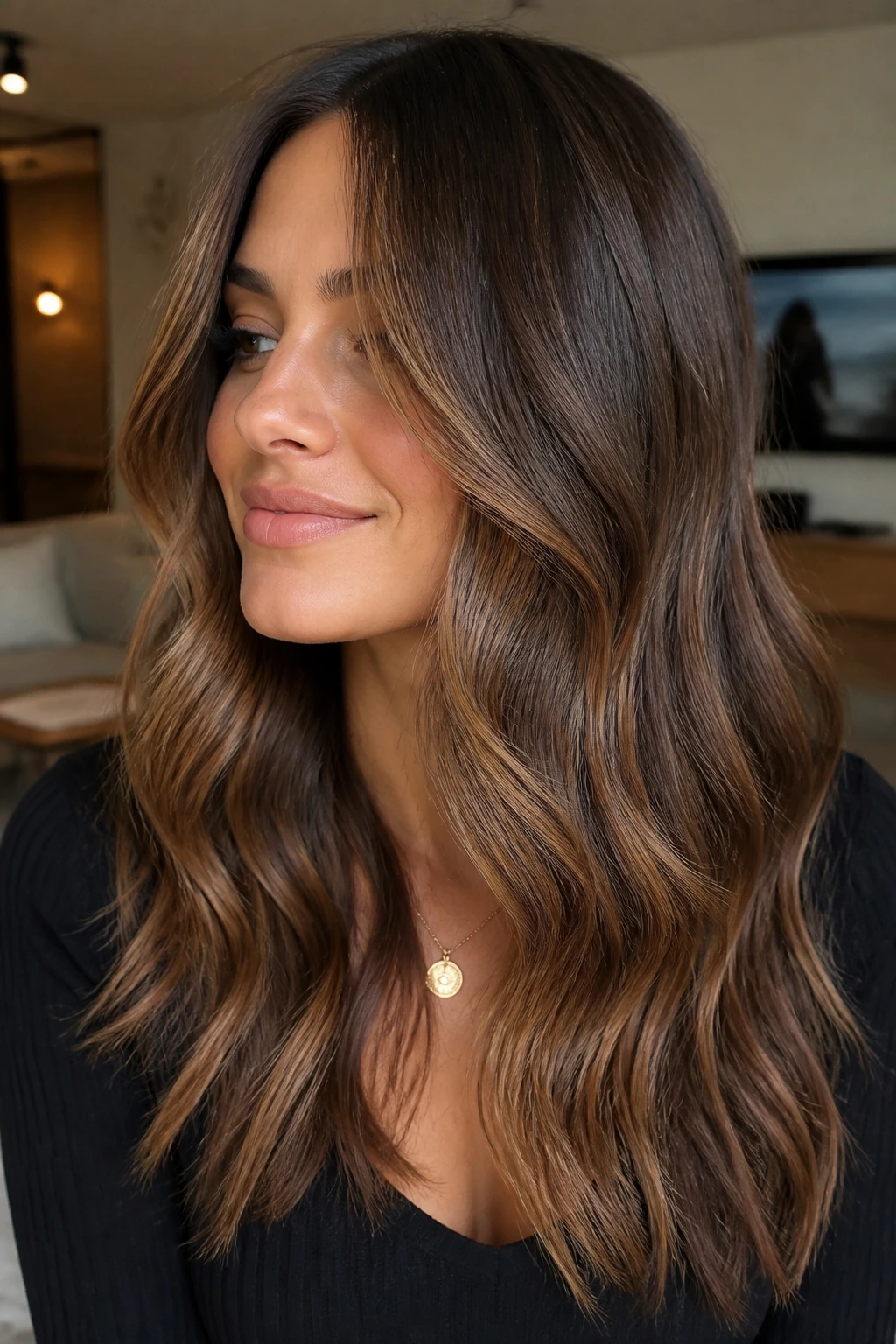
Mocha silk caramel is the version I like for people who want movement but don’t want to look highlighted from across the room. The color feels smooth, almost satin-like, with caramel tucked into the folds of the brunette rather than sitting on top of it.
On cool skin, that low-drama blend is flattering because it doesn’t spike warmth near the face. It just softens the edges. A little beige around the front, a little mocha through the lengths, and the whole thing starts reading as polished instead of loud.
This is one of those looks that works whether the hair is freshly blown out or a day old and slightly bent. The color does not depend on perfect styling. That’s a good sign.
22. U-Shaped Caramel Sweep for Long Hair
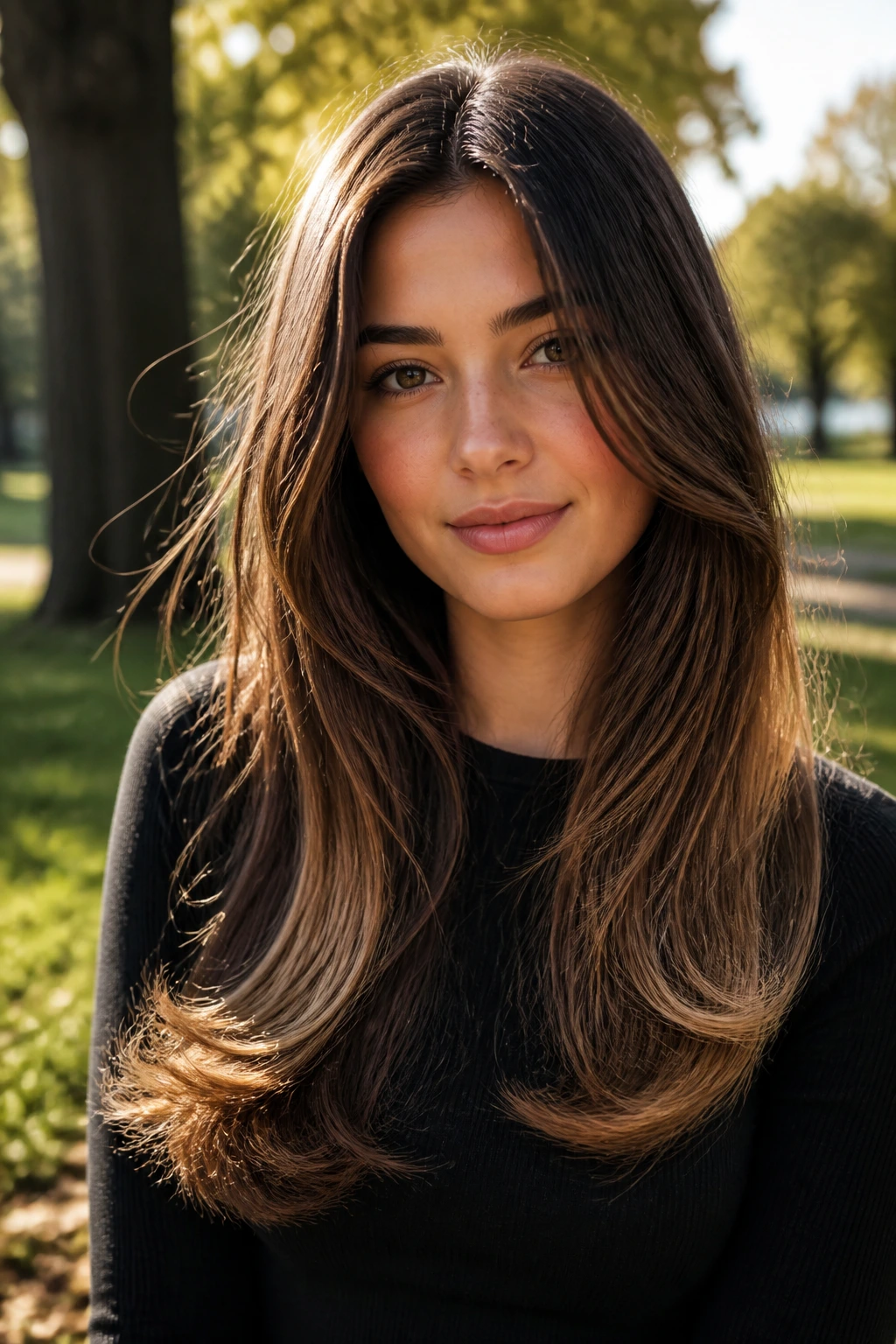
If your hair is long enough to swing, the placement matters. A U-shaped cut lets the caramel follow the perimeter of the hair so the ends feel fuller and the front gets the brightness it needs.
Why the U-Shape Matters
The curve naturally pulls the eye downward, so the caramel can live where the hair has movement without spreading too far up the head. That keeps cool skin from getting overwhelmed by warmth at the roots.
- Brighten the outer curve of the U more than the interior.
- Keep the root shadow soft and mobile.
- Ask for a beige-to-chestnut fade if your base is medium brown.
This is one of the most flattering options for long hair because it keeps the length looking alive. Straight down long hair can go flat fast; this doesn’t.
23. Money Piece Plus Hidden Caramel Panels
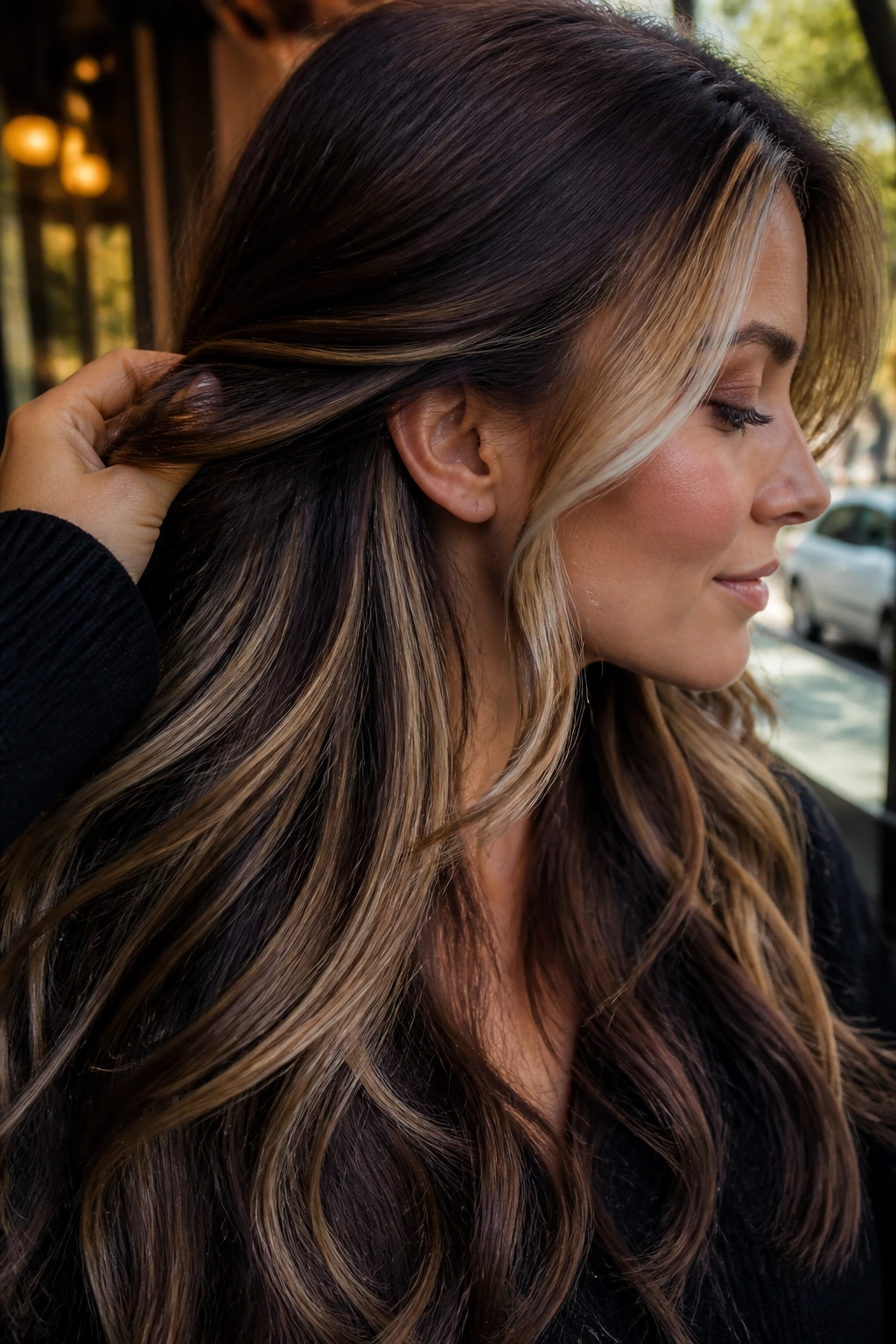
A lot of people stop at the money piece. I like the money piece with hidden panels underneath, because it gives you movement when the hair flips, clips, or tucks behind the ear.
The hidden pieces do a sneaky job. They keep the color from looking too face-heavy and they make the whole head seem more dimensional when the wind catches it. On cool skin, that’s useful because you can keep the front bright without letting the warmth sit only in one obvious spot.
This works especially well if you like wearing your hair half-up. The brighter pieces peek out in flashes, then disappear again. That little bit of motion is enough.
24. Shadow Root with Cooler Gloss Finish
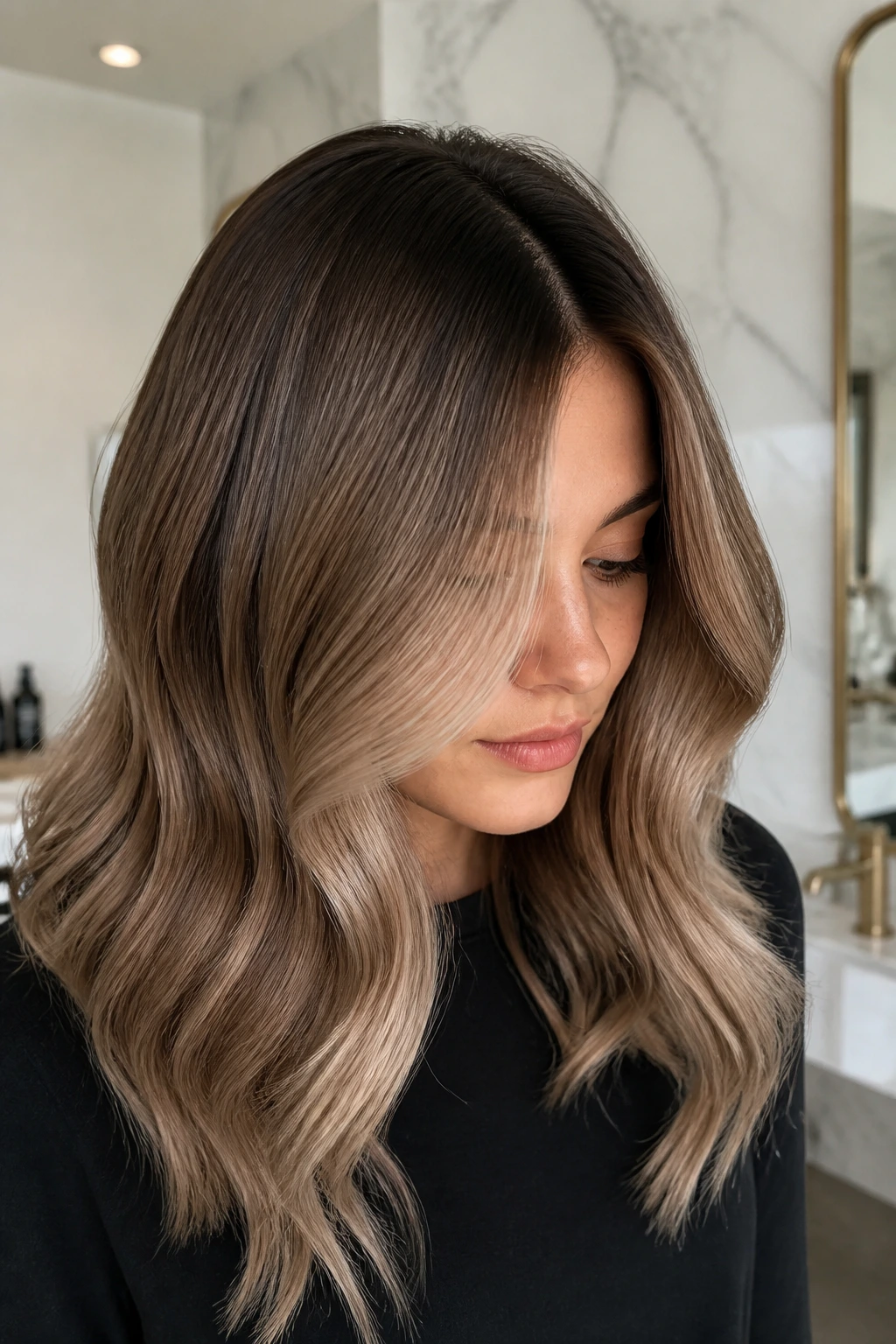
A shadow root is the anchor, and the gloss is the rescue. If your caramel starts looking too warm, the finish is usually the thing that fixes it fastest.
The Gloss Test
When the root stays deeper and the gloss leans beige or cool neutral, the whole style settles down. The lighter pieces still show, but they stop shouting yellow.
- Keep the root one to two levels deeper than the mids.
- Ask for a cool beige gloss on the lightened areas.
- Refresh the toner when the ends start to look coppery, not after they’ve already gone orange.
This is a smart choice for anyone who wants cool-skin-friendly caramel that stays wearable for longer stretches between salon visits. The root shadow buys you time. The gloss buys you tone.
25. Polished Low-Contrast Caramel for a Luxe Look
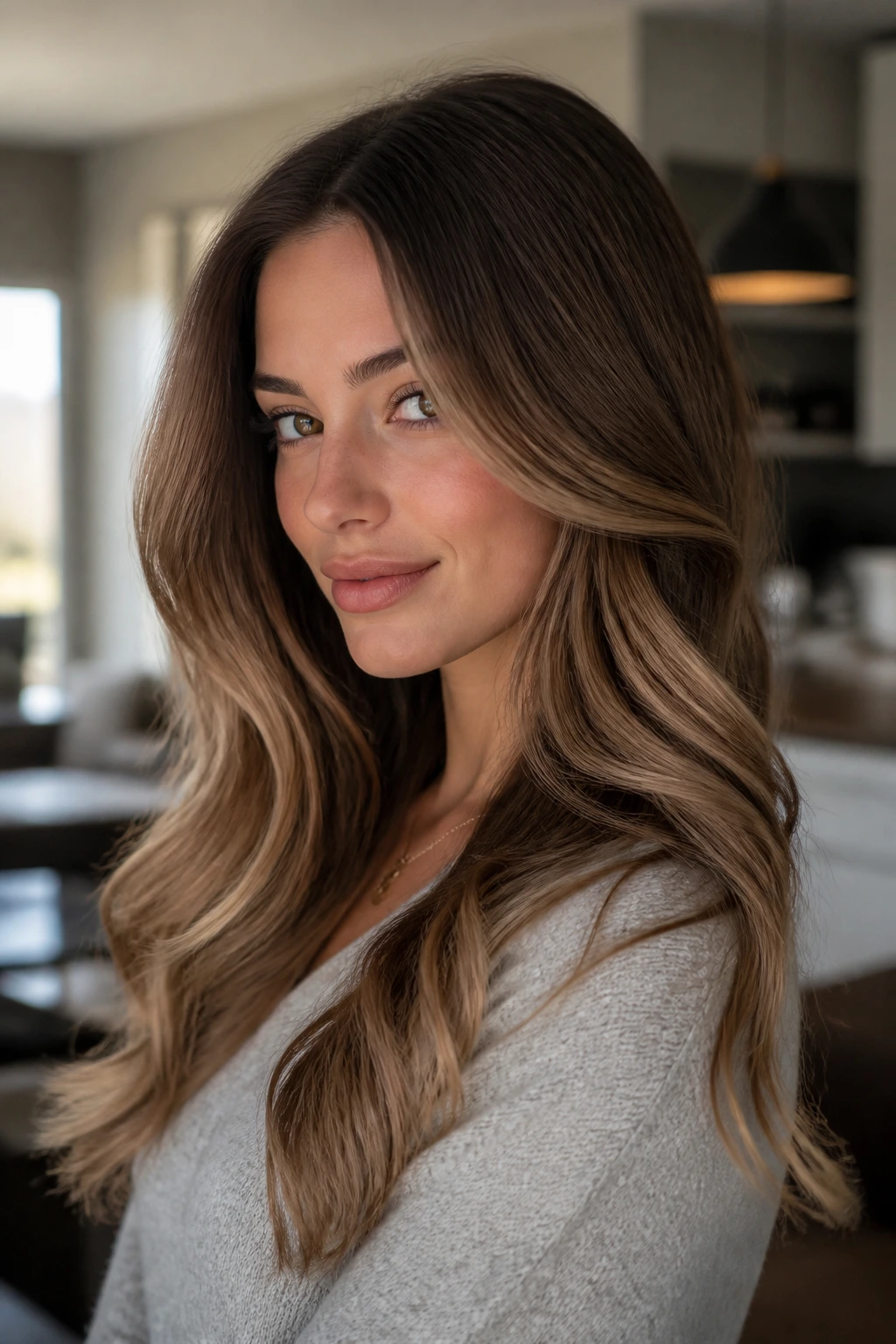
This is the version I reach for when someone wants calm dimension and a grow-out that doesn’t ask for attention every three weeks. The contrast stays low, the root stays soft, and the caramel lives in the beige, mocha, and chestnut range so the hair reads polished in daylight and easy indoors.
Low contrast suits cool skin because it doesn’t throw warmth at the face from every angle. The color moves in the light, then settles back into brunette when the lighting changes. That kind of shift is what makes the look feel expensive, if I’m being honest — not because it’s loud, but because it knows when to shut up.
If you want one style that works in the office, at dinner, and in a messy clip on a Sunday, this is the one. It’s quiet, but it isn’t flat. Big difference.
Why Beige Caramel Beats Gold on Cool Skin
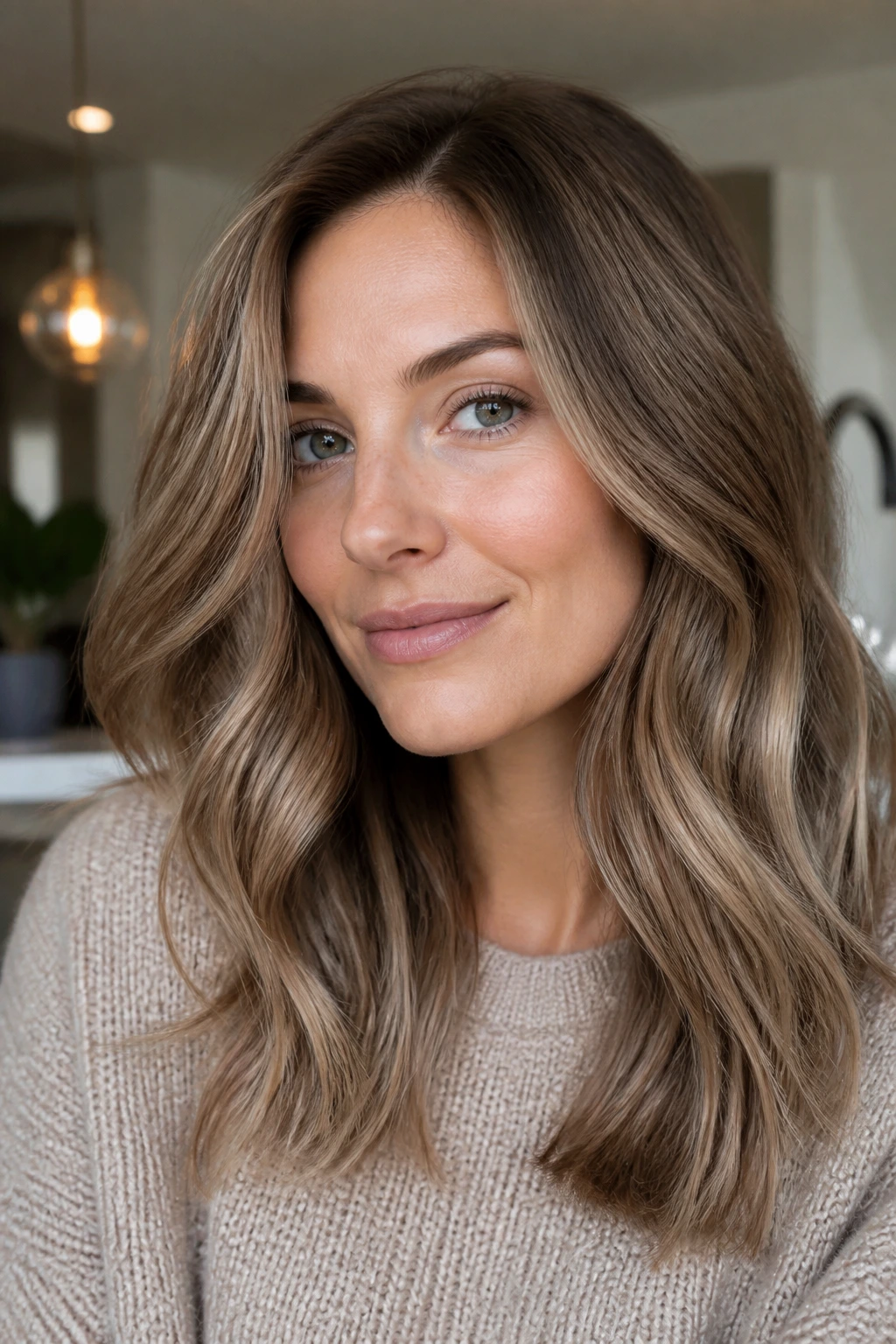
Bright gold caramel can be pretty, but on cool undertones it often lands with too much heat near the face. Pink skin can look pinker. Blue-based skin can look a touch flushed. Even cool olive skin can go muddy if the warmth is too loud and the root is too light.
Beige, mushroom, mocha, and smoky caramel behave differently. They sit closer to brunette, so they read as shine first and color second. That matters because the eye sees the whole head at once, not just the highlight swatch. When the warmth is buffered by brown, the face usually looks calmer.
Professional color charts tend to place caramel somewhere around levels 6 to 8, depending on how soft or bright you want the finish. On cool skin, I like the lower end of that range at the root and the middle or lighter end only where the hair actually moves. It keeps the color from floating above the face like a gold helmet. No one needs that.
What to Ask for at the Salon Chair
Bring pictures, yes, but also bring words. Photos show mood; words keep the tone from drifting too warm. Say you want caramel brown balayage that reads beige, neutral, or smoky, not gold or copper. That one sentence does a lot of heavy lifting.
Be specific about placement. Tell your colorist whether you want a brighter money piece, a soft root melt, or a low-contrast sweep through the mids. If you already know your hair tends to grab warmth, say that out loud. Porous ends often turn brighter and warmer faster than the crown, and a good colorist will adjust.
- Ask for a soft root shadow if you want lower maintenance.
- Ask for a beige gloss if you want the caramel to stay cool.
- Ask for narrower pieces if your hair is fine.
- Ask for bigger ribbons if your hair is thick.
If your hair has old box dye, red pigment, or black dye in the lengths, mention it before the foils come out. That changes everything.
Choosing the Right Caramel for Light, Medium, and Deep Cool Skin
Light Cool Skin
Lighter cool skin usually looks best with soft beige caramel, mushroom brown, and pale chestnut pieces that stay diffused. Too much gold can make the face look flushed faster than people expect, especially around the temples and hairline. Keep the root deeper and let the brightness live a little farther from the scalp.
Medium Cool Skin
Medium cool skin can handle a little more warmth, but I’d still stay in the mocha, beige, and neutral chestnut lane. That’s where the color looks glossy instead of orange. A face frame that’s one shade brighter than the rest usually does enough work on its own.
Deep Cool Skin
Deeper cool skin often looks richer with caramel that stays slightly darker and more reflective. Think chestnut caramel, not pale blonde. The shine matters more than the lightness here, because a richer brown base lets the highlights look intentional instead of disconnected.
If you’re cool olive, go neutral before you go ashy. Pure ash can flatten the skin. A balanced beige toner usually does the nicer job.
Essential Tools and Products for Maintenance
- Color-safe sulfate-free shampoo: Keeps the caramel from fading too fast and helps the brunette base stay rich.
- Blue shampoo or blue mask: Useful if the caramel starts to swing orange; use it sparingly so the hair doesn’t go dull.
- Hydrating conditioner or mask: Lightened ends dry out faster than the root, and this keeps them smoother.
- Heat protectant spray: Essential before blow-drying, curling, or flat ironing; lightened hair shows heat damage fast.
- 1.25-inch curling iron or wand: A loose bend shows balayage dimension better than a tight curl.
- Wide-tooth comb or detangling brush: Helps distribute conditioner without snapping the lighter pieces.
- Microfiber towel: Cuts down on friction, which matters when the ends are processed.
- Satin pillowcase or bonnet: Keeps the color from frizzing up and rubbing off into roughness.
- Glossing serum: A drop on the ends adds shine without making the caramel greasy.
- Salon gloss or toner appointment: Not a home product, but a real maintenance tool; it keeps the tone in the beige lane.
Small Details That Make the Shade Work Harder
Parting: A center part shows off face-framing ribbons, while a soft side part lets the root shadow do more of the talking. If you want the color to feel subtler, switch your part every few washes.
Wave pattern: Loose S-waves make caramel look dimensional. Tight curls or stiff straightening can hide the placement or make it look chunkier than it is. A brushed-out bend is usually the sweet spot.
Gloss: A beige or neutral gloss every 6 to 8 weeks keeps warmth from sliding into brass. If the color is already lifted, glossing is the cheaper fix before you ask for more lightening.
Heat setting: Keep hot tools around 300 to 325°F if your hair is lightened. Higher heat can flatten the finish and dry the ends into a dusty texture that makes the caramel look tired.
Makeup and clothing: Cool blush, berry lipstick, charcoal, navy, and silver jewelry usually make these shades look cleaner against the skin. Warm bronze makeup can push the whole look hotter than you meant.
How to Style the Dimension So It Shows
A good balayage can still disappear if the styling is wrong. The easiest way to make caramel brown balayage show up on cool skin is to create movement that bends the hair rather than crimping it. A 1.25-inch curling iron wrapped away from the face works well, especially if you leave the last inch out so the ends don’t look too ringlet-y.
Blowouts can do the same job. Lift at the root, smooth the mid-lengths, then bevel the ends just enough to catch light. If the hair is straight and you love that look, add a soft bend near the face frame and at the bottom few inches. That tiny shift keeps the highlights from looking like straight lines.
The other thing people miss is cooling the style before brushing it out. Let the bend set, then loosen it with your fingers or a soft brush. That’s when the caramel starts to separate and show its placement. Rush that step, and the hair turns into one flat sheet. Patience. Annoying, yes. Worth it, absolutely.
Keeping the Tone Fresh Between Appointments
Caramel fades in two directions: it lightens out, and it warms up. On cool skin, the second part is usually the one that causes the most trouble. Once the tone drifts too gold or copper, the face frame can start to look louder than it should.
Wash 2 to 3 times a week if your hair can handle it. Less if it’s dry. Use lukewarm water, not hot water, because heat opens the cuticle and makes both color and moisture leave faster. A sulfate-free shampoo is the default here; it cleans without stripping the gloss off the lightened pieces.
Blue shampoo helps if the caramel turns orange. Purple shampoo helps more if the ends look yellow. Don’t use either every wash unless your hair truly needs it — too much can leave the brunette base dull and grabby. Once every 1 to 2 weeks is plenty for most people.
A salon gloss every 6 to 8 weeks keeps the shade clean. Trims every 8 to 12 weeks help too, because ragged ends make caramel look dry even when the tone is right. If you swim often or spend a lot of time in the sun, add a UV protectant or swim cap. The hair will thank you later.
Common Mistakes That Make the Shade Read Wrong
- Choosing gold instead of beige: The symptom is a warm halo around the face that makes cool skin look flushed. The fix is a beige or mushroom toner and a root shadow that stays brunette.
- Going too chunky on fine hair: The color looks striped and the scalp can show between pieces. Fine hair usually needs narrower ribbons and more blur at the root.
- Lifting too high on the head: When the lightness starts too close to the scalp, the grow-out looks harsh fast. Keep the brightest pieces lower unless you specifically want a money piece.
- Skipping the gloss: The hair may lift nicely in the salon and turn orange after a few washes. A toner or gloss is what keeps the caramel in line.
- Overusing blue shampoo: It can make the brunette base muddy and the ends flat if you use it too often. Use it only when brass actually shows up.
- Ignoring previous color: Old dye changes how lightener behaves, especially on dark or red hair. If there’s box color in the mix, expect a slower lift and ask for a strand test.
Variations and Adaptations to Try
Beige Candlelight: This is the softest version, with narrow beige pieces around the face and through the top layer. It’s perfect if you want movement but not contrast. I’d choose it for first-time color or anyone who lives in a low-key makeup routine.
Mushroom Mocha Melt: Dark brunette roots fade into smoky mocha mids and slightly lighter mushroom ends. The whole thing stays cool and grounded, which is why it sits so well on cooler skin. It’s the version I’d pick if you want the hair to look rich in any lighting.
Silver-Laced Caramel: This one is built for gray blending. The caramel is muted, the silver is left in the pattern, and the root stays soft so regrowth doesn’t shout. It works especially well when you want dimension without full coverage.
Curl-First Placement: For curly and coily hair, place the caramel where the curl clumps naturally separate instead of trying to paint every strand. That gives you movement without a blotchy pattern. Keep the gloss cool so the curls still look deep and shiny.
Gloss-Only Refresh: If your balayage already exists but has gotten too warm, don’t rush to more lightening. A beige gloss, a trim, and a better styling routine can bring the color back to life without another round of lift. Sometimes the fix is tone, not bleach.
Frequently Asked Questions
What caramel shade looks best on cool skin tones?
Beige, mushroom, mocha, and smoky chestnut are the safest bets. They sit close enough to brunette that they don’t fight pink or blue undertones, which is where gold can go sideways.
Can cool skin tones wear caramel brown balayage at all?
Yes, and usually better than people expect. The trick is tone and placement: keep the root soft, keep the caramel muted, and let the brightness live mostly through the mids and ends.
Will caramel balayage make my face look red?
It can if the caramel is too gold or too bright near the hairline. A beige gloss and a deeper root shadow usually fix that problem before it starts.
Is balayage better than foil highlights for cool undertones?
Balayage usually looks softer because the placement is diffused and the grow-out is less obvious. Foils can still work, but they need narrower sections and a cooler toner so they don’t turn stripey.
Can I do caramel balayage on black hair?
Yes, but it usually needs patience. Dark hair often needs more than one lift to get into the right caramel range, and rushing it is how you end up with orange pieces that fight the skin tone.
How often should I tone caramel balayage?
Most people do well with a gloss or toner every 6 to 8 weeks. If your hair pulls warm fast, you may need a refresh a little sooner, especially around the face and ends.
Does caramel balayage work on curly hair?
It works beautifully when the placement follows the curl pattern. Paint the clumps, not every strand, and keep the ribbons thin so the color moves with the curls instead of sitting on top of them.
What if my caramel turns brassy after a few washes?
Use blue shampoo if the color has gone orange, not just yellow. If the problem is mostly warmth near the face, a salon gloss is often cleaner than trying to correct it at home over and over.
How do I keep the color low-maintenance?
Keep the root deeper, ask for diffused balayage rather than chunky highlights, and stay away from very light money pieces if you don’t want frequent upkeep. A soft grow-out always starts with softer placement.
Final Thoughts
The best caramel brown balayage for cool skin tones doesn’t try to be blonde. It stays in that beige, mocha, and smoky range where the color looks soft in daylight and calm under indoor lights. That restraint is doing the real work. Not the shine alone. Not the lift alone. The balance.
If you save one thing before your next appointment, save this: cool skin usually looks better when caramel behaves like a reflection, not a spotlight. Bring photos, ask for beige over gold, and let the root stay deeper than the mids. The result will look considered on day one and still make sense when the grow-out starts showing.