



A blunt band of blonding across the cheekbones can make a round face look wider than it is. Pale skin doesn’t always help either; the wrong pale blonde goes flat fast, and the wrong ash shade can read a little gray around the edges. Soft balayage solves both problems when it’s placed with a little restraint and a little nerve: the brightness stays airy, the root stays soft, and the light falls where the eye wants to travel downward instead of side to side.
That’s the real trick here. You do not need loud contrast to get dimension. You need the right tone, the right placement, and enough shadow left in the root area to keep the face from looking boxed in. When a colorist keeps the brightest pieces a touch lower than the cheekbone and lets the front soften around the jaw, the whole effect changes. The hair looks longer. The face looks slimmer. And the color stops fighting your features.
The 25 looks below lean into that idea from every angle: cool, warm, beige, pearly, smoky, coppered, and softly bronde. Some are made for lobs and bobs, some for long waves, some for curly shags, and some for the kind of pale skin that goes pink if you even think about the wrong toner. A few are barely there. A few carry more contrast. All of them are built to flatter round faces without turning the hair into stripes.
Why This Collection Works for Pale Skin and Round Faces
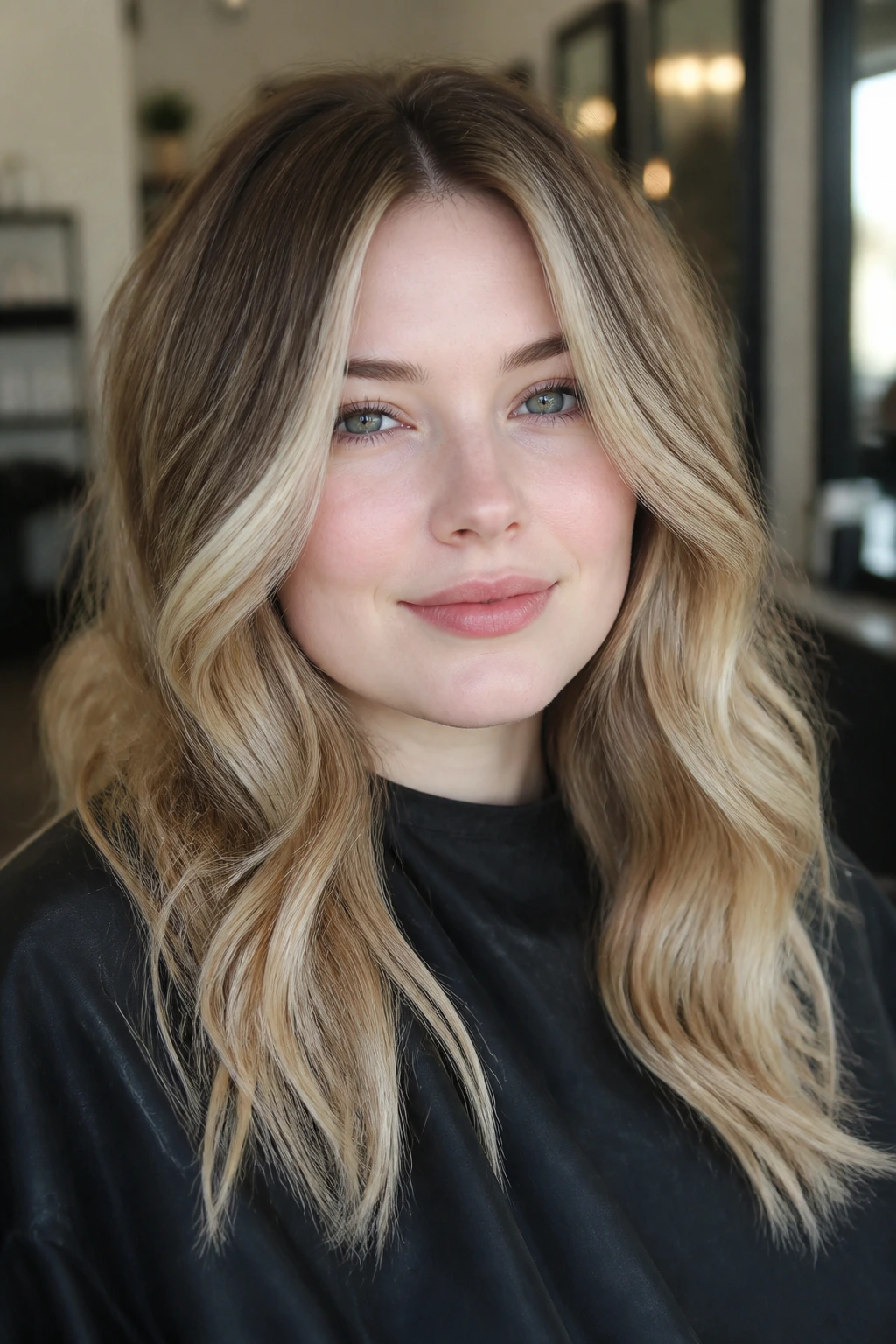
-
Face-slimming placement: The lighter pieces sit lower and more vertical, so the eye moves down the length of the hair instead of across the widest part of the cheeks.
-
Pale-skin friendly tones: Beige, pearl, champagne, mushroom, oat, and softened copper keep the complexion from looking washed out or chalky.
-
Soft grow-out: Balayage keeps the root shadow gentle, which means the color can live past the first salon visit without looking harsh.
-
Works on more than one cut: These ideas fit lobs, long layers, curtain bangs, shags, and shorter bobs as long as the front is framed with care.
-
Easy to adjust: A stylist can push any of these cooler or warmer by changing the gloss, not by repainting the whole head.
-
Photo-friendly without being loud: The dimension shows in daylight, in indoor light, and in that awkward half-light by a window where flat color usually dies.
1. Champagne Veil Soft Balayage
Champagne is the shade I reach for when pale skin needs life, not glare. The color sits somewhere between beige blonde and soft gold, which keeps it from going icy or brassy.
Why It Works
The root stays one or two levels deeper than the mids, so the color has a real shadow line near the scalp. That shadow matters on a round face because it narrows the upper section without looking severe. The lighter ribbons begin below the cheekbone and drift toward the collarbone, which gives the face a longer read. On pale skin with neutral or slightly warm undertones, champagne adds warmth without making the complexion look orange. If your skin runs pink, ask for more beige in the gloss and less yellow.
How to Ask for It
- Ask for a soft balayage with champagne-beige ribbons and a root that stays natural at the crown.
- Keep the brightest pieces below the cheekbone, not right at the widest part of the face.
- Request a gloss in neutral beige or pale champagne, not a strong gold toner.
- Wear it with loose bends, not tight curls, because the loose bend shows the dimension better.
Best note: This shade looks especially good on shoulder-length cuts where the light can drop from the cheek area to the ends in one clean line.
2. Mushroom Beige Ribbon Balayage
Mushroom beige is the quiet one in the room, and that’s why it works. It has enough coolness to suit pale skin, but the beige keeps it from turning flat and muddy.
Why It Works
This is the smartest shade for pale skin that leans pink or cool. The mushroom base gives the hair depth near the root and mid-lengths, while the beige ribbons keep the overall effect soft. Round faces benefit because the lighter strands are broken up into thin, vertical ribbons instead of chunky horizontal sections. That means the color reads as movement, not width. If you have a lot of natural flush in your cheeks, this tone does not compete with it. It sits beside it.
Ask a colorist for micro-ribbons through the front and sides, not broad streaks. You want a glazed, smoky-beige finish with low contrast at the root. On straight hair, this can look almost understated to the point of being shy; on waves, the ribbons wake up and show their shape. I like it most on lobs and long bobs because the cut gives the color a place to swing.
3. Pearl Blonde Face Frame
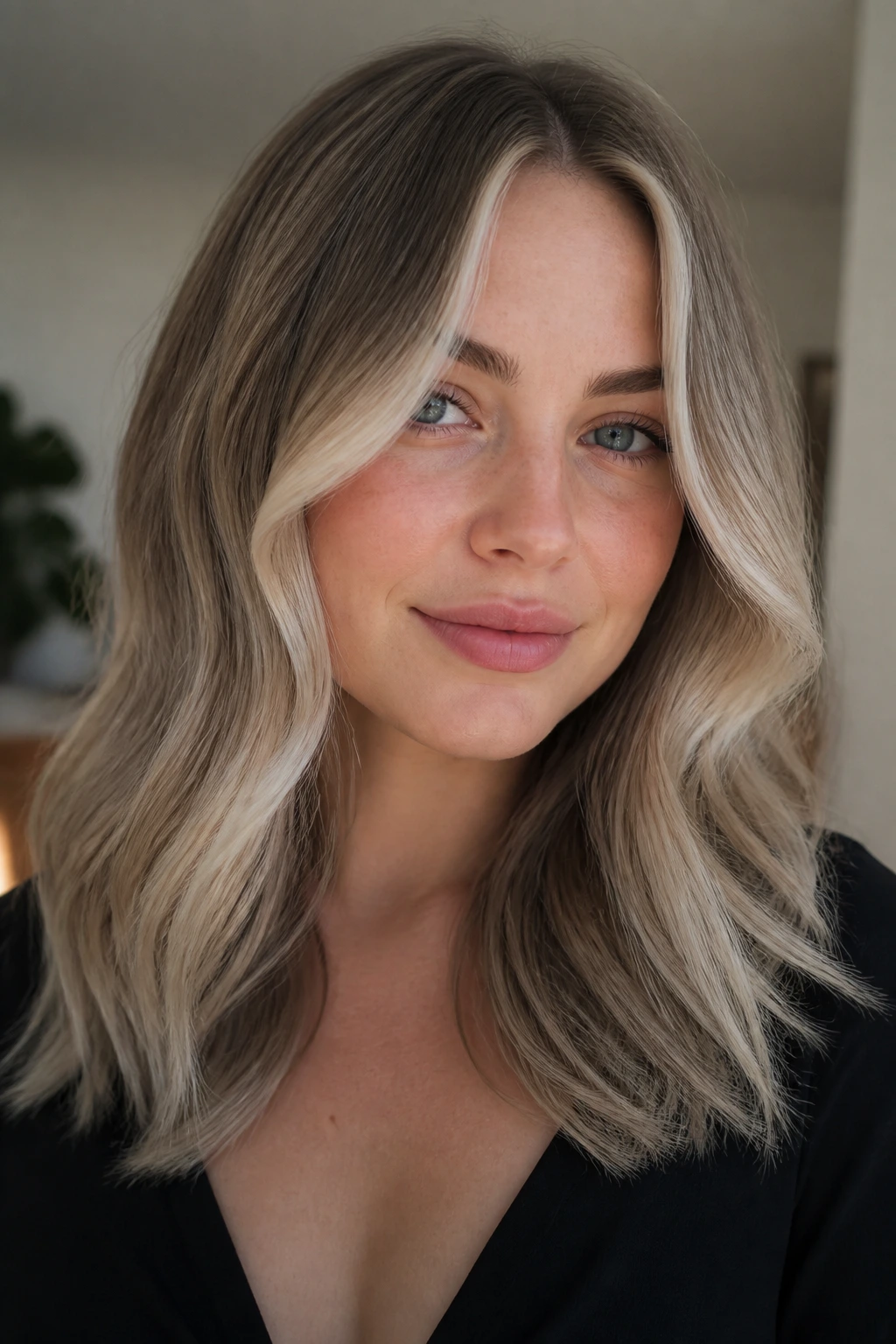
Can pearl blonde work on pale skin without washing you out? Absolutely, if the pearl is used as an accent and not as the whole story.
Why It Works
Pearl blonde has that cool, reflective finish that can be stunning on very fair complexions, but the face-framing pieces need a little restraint. If you push the light too high at the temples, a round face can look broader. Keep the brightest strands starting around the lip line or chin, then let them melt into a softer blonde through the ends. That gives you brightness near the face without a hard edge.
How to Ask for It
- Ask for pearl blonde face-framing pieces that start low and taper softly.
- Keep the base in smoky beige blonde so the pearl has something to sit against.
- Use a purple shampoo only once every 1-2 weeks if the hair is lifting yellow; overdoing it can make pearl tones look chalky.
- Style with a center part and loose S-waves if you want the face to look longer.
Pearl blonde is at its best when it looks expensive in a subtle way, not when it screams from across the room. That’s the difference.
4. Caramel Bronde Waves
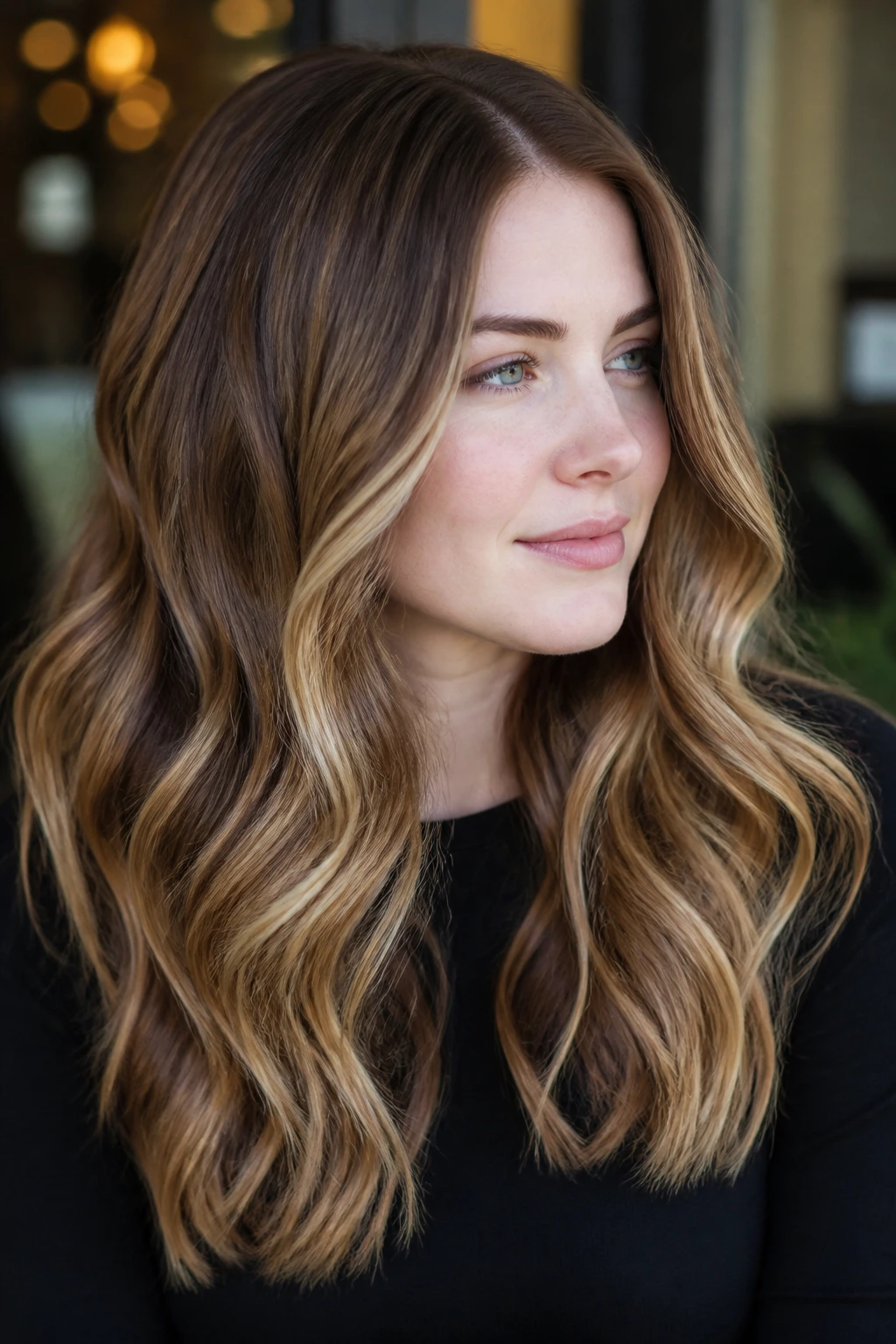
Caramel bronde is where pale skin gets a little warmth without tipping into brass. The trick is keeping the caramel muted and woven through a brown base instead of flooding the whole head with gold.
Why It Works
A round face needs length in the visual line, and this is where caramel bronde earns its keep. The darker brown underneath creates a soft frame, while the caramel pieces run from mid-length to end in long, open ribbons. The result is vertical movement with enough contrast to show texture in waves. On pale skin, the warmth of the caramel wakes up the complexion, especially if your undertone is neutral or peachy.
This look also forgives grow-out. The root stays close to your natural level, so the balayage can shift a little over time without looking obvious. I like it on people who want lightness but do not want the maintenance of a full blonde. It reads richer, not brighter, and that matters if your skin can get lost under platinum.
5. Smoky Taupe Balayage Lob
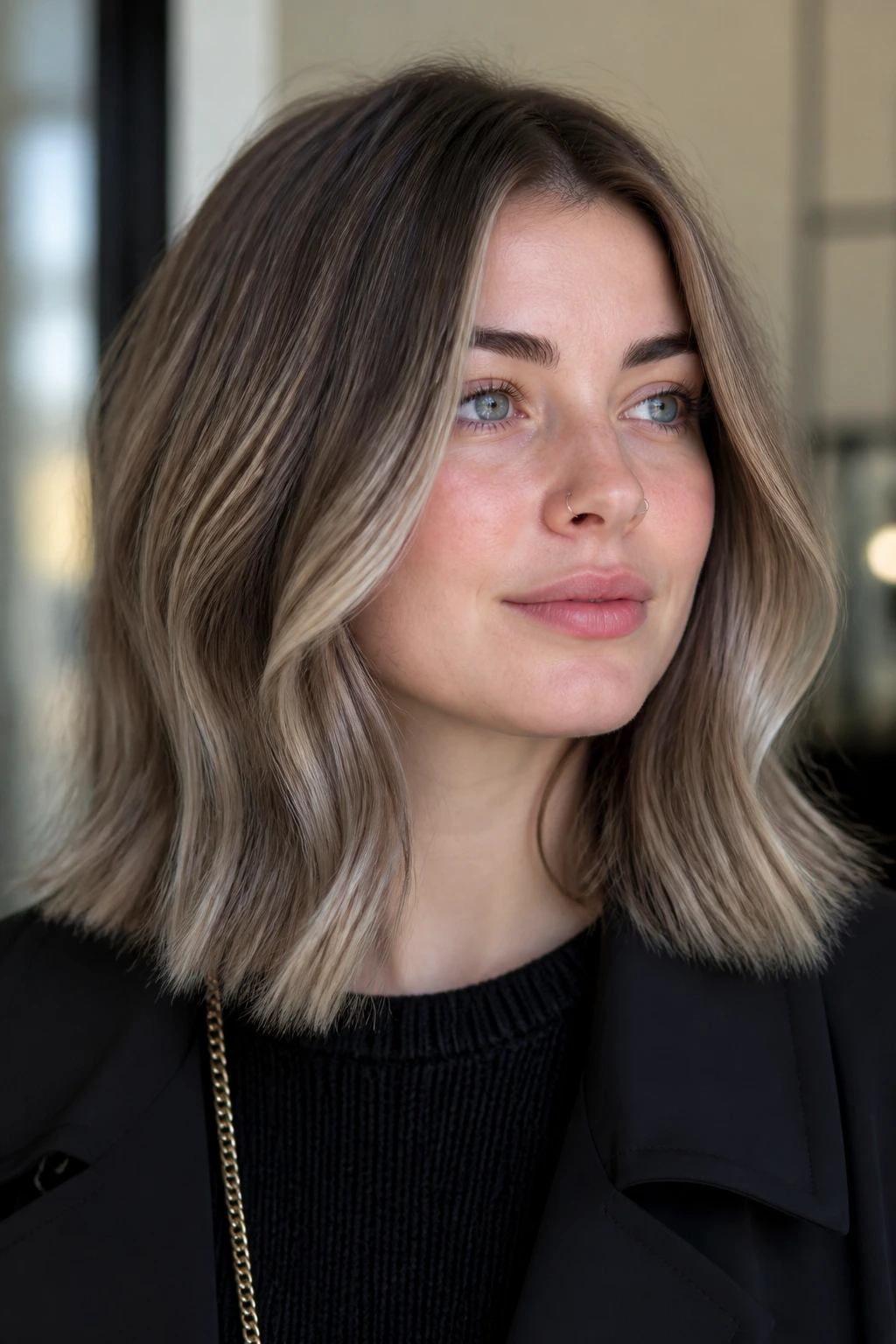
Smoky taupe on a lob has a neat little trick up its sleeve: it gives the hair movement without shouting for attention. Pale skin can wear it well when the taupe leans soft and beige instead of slate.
Why It Works
The lob shape does half the work here. Because it ends around the collarbone, the lighter pieces have a clean place to land, and that keeps the face from looking boxed in. Taupe adds a cool haze through the mids, which flatters pale skin with cooler undertones, while the balayage placement keeps the face from getting swallowed by one solid block of color. The front pieces should start just below the cheekbone and sweep down. Nothing blunt. Nothing stripey.
This is a strong choice if you wear minimal makeup or you prefer a more muted wardrobe. The hair doesn’t need to compete with the rest of you. It sits there looking expensive and a little smoky, which is a nice thing to have in your corner. If the ends are too pale, the whole style can get washed out, so ask for a gloss that keeps the finish beige-taupe rather than silver.
6. Creamy Vanilla Ends
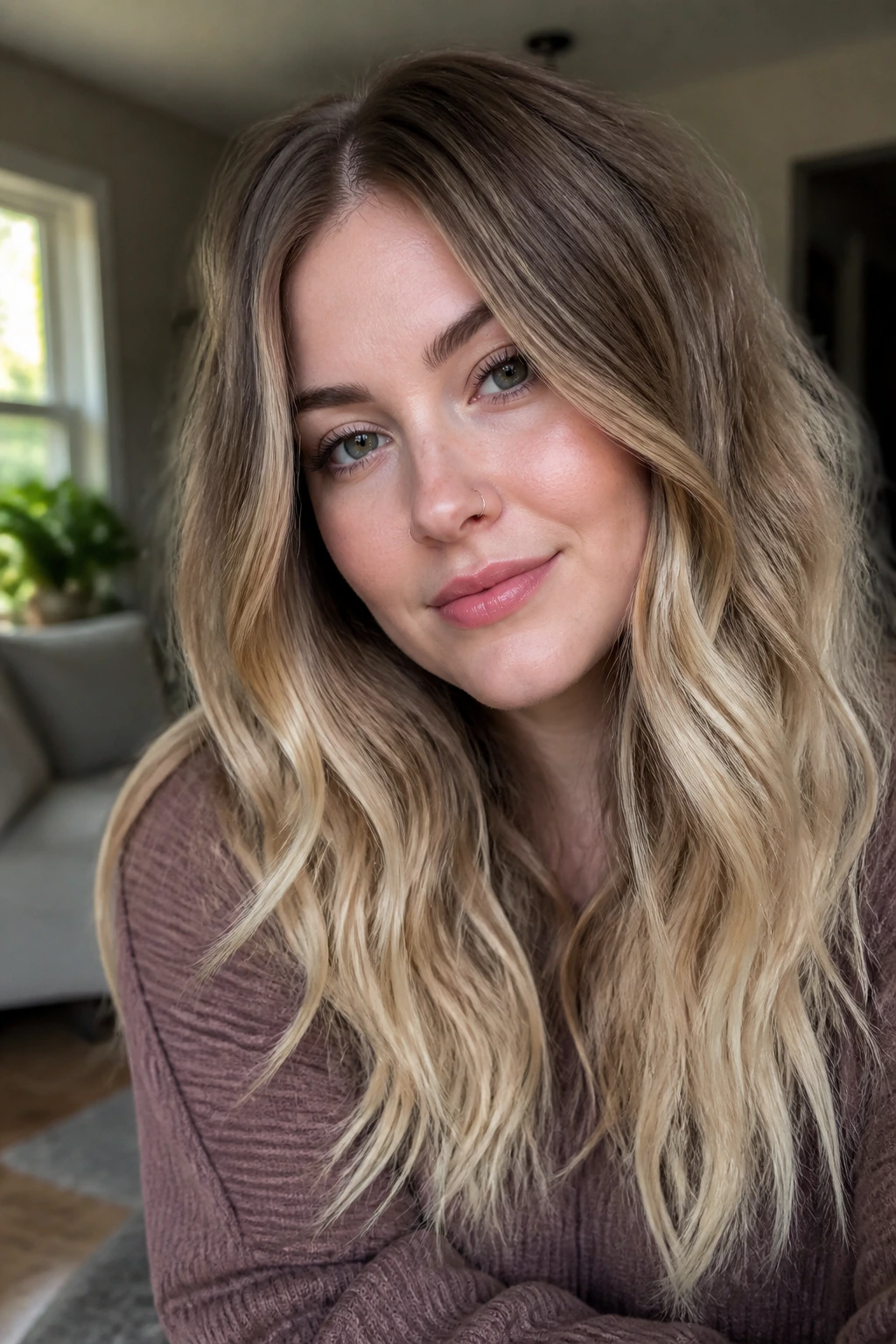
Creamy vanilla ends are softer than platinum and less yellow than butter blonde. They’re the kind of lightening that lets pale skin breathe instead of glare.
Why It Works
Unlike a full head of light blonde, this look keeps the root and mid-lengths soft brown or beige, then drifts into creamy ends. That creates a long, narrow line on a round face, especially if the front pieces stay tucked around the jaw instead of flaring at the cheeks. The creamy finish works on pale skin because it brings light without the harsh contrast that can make the complexion look tired. It’s especially useful if your natural hair is a medium brunette and you want a softer blonde story.
This one does best when the ends are blurred, not bleached bluntly. Think drift, not dip-dye. On wavy hair, the vanilla catches in the bends and looks airy. On straight hair, it becomes more of a clean fade. Either way, it’s the kind of blonde that looks less like a statement and more like a small, smart decision.
7. Rose Gold Whisper Balayage
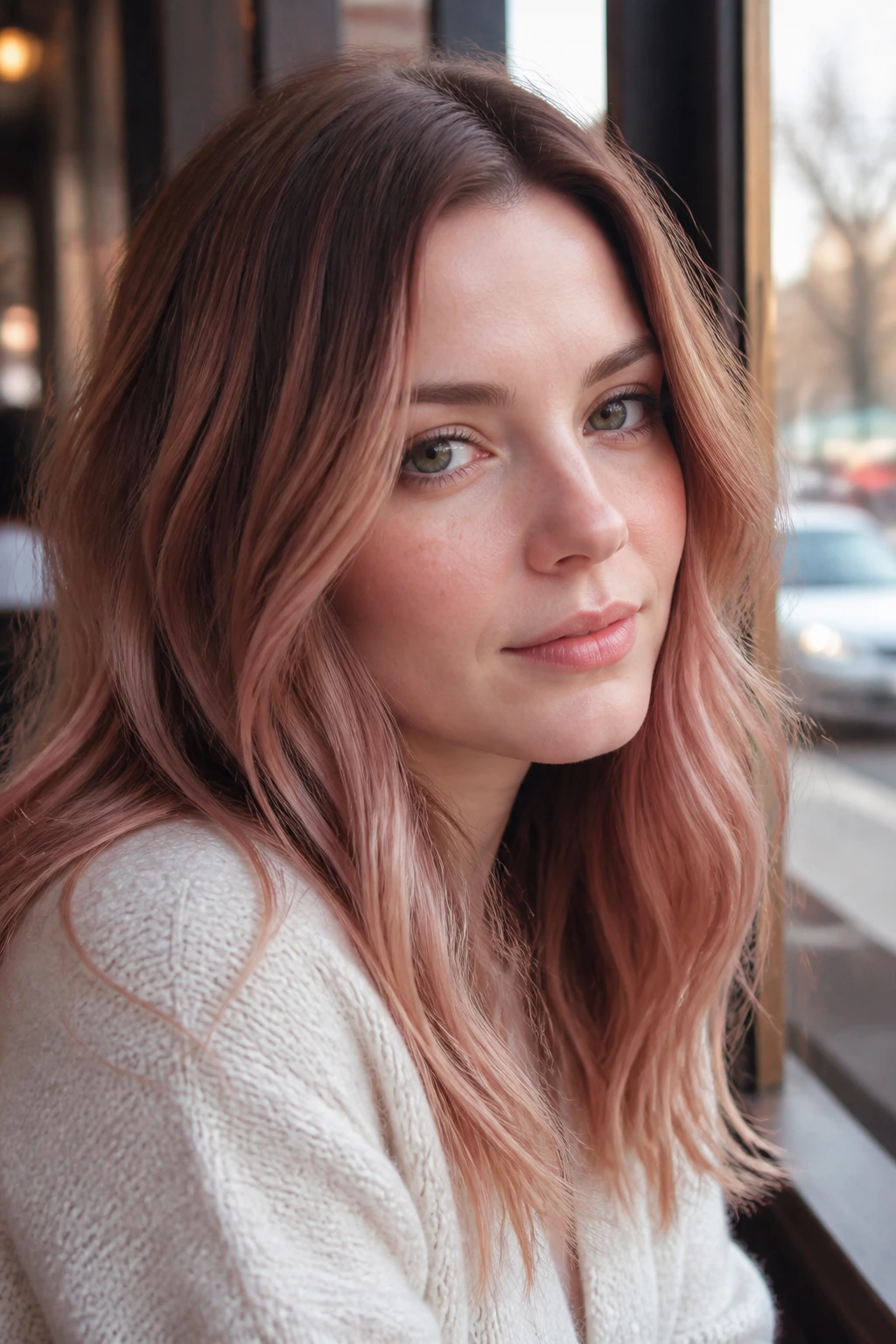
Rose gold can go wrong fast. Too pink, and it looks costume-like. Too gold, and it loses the whole point. The whisper version keeps it restrained.
Why It Works
A pale complexion can carry a blush-toned balayage if the shade is soft enough to read like a tint rather than a dye job. The pink here should sit in the gloss, not scream from the hair shaft. That makes it work on round faces because the color is still moving vertically through the lengths instead of landing as a broad band across the width of the face. Keep the base neutral brown or soft beige so the rose tone has depth behind it.
This is a good pick if you want something a little more playful than blonde but still wearable at work or in a simple black sweater. The rose tone can look especially nice on fine hair, where a darker base can sometimes feel heavy. A sheer wash of rose gives the hair air.
8. Sand Blonde Curtain Balayage
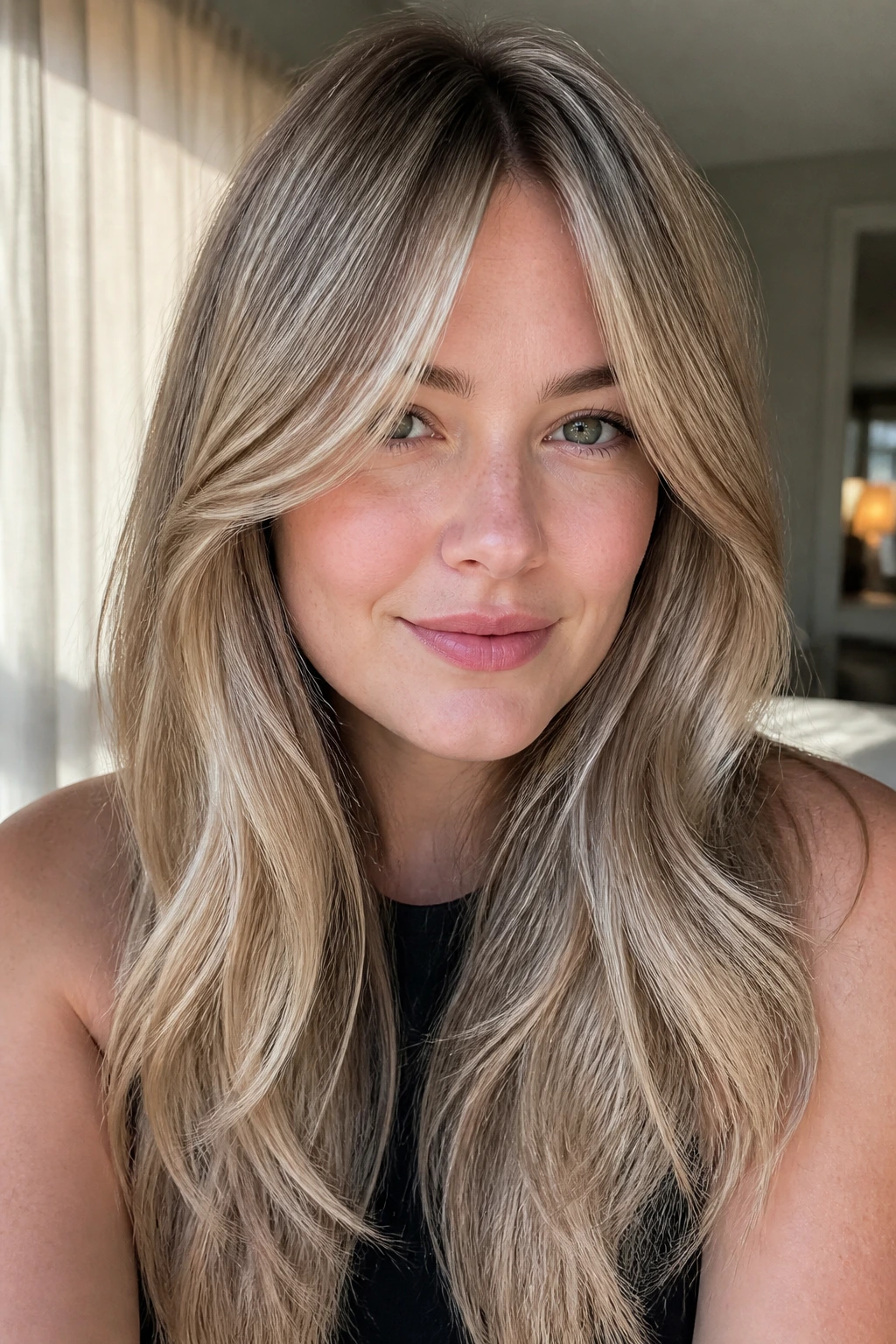
Sand blonde is one of those shades that looks plain in a bowl and expensive on the head. That’s because the tone is soft, not brassy, and curtain bangs give it a place to fall.
Why It Works
This is one of the easiest ways to soften a round face without changing the cut dramatically. Curtain bangs open in the center and sweep outward, so the lighter sand pieces travel around the face instead of across it. The blonde should be kept airy and slightly beige, never flat yellow. On pale skin, sand gives a sunlit effect without turning the complexion green or gray.
Ask for the brightest pieces to hit around the cheekbone and then soften toward the jaw. If the bangs are lightened too close to the root, the face can look wider at the top. The whole look depends on softness, which is why a strong toner is a bad idea here. Keep it gentle. Keep it sandy.
9. Chestnut-to-Toffee Melt
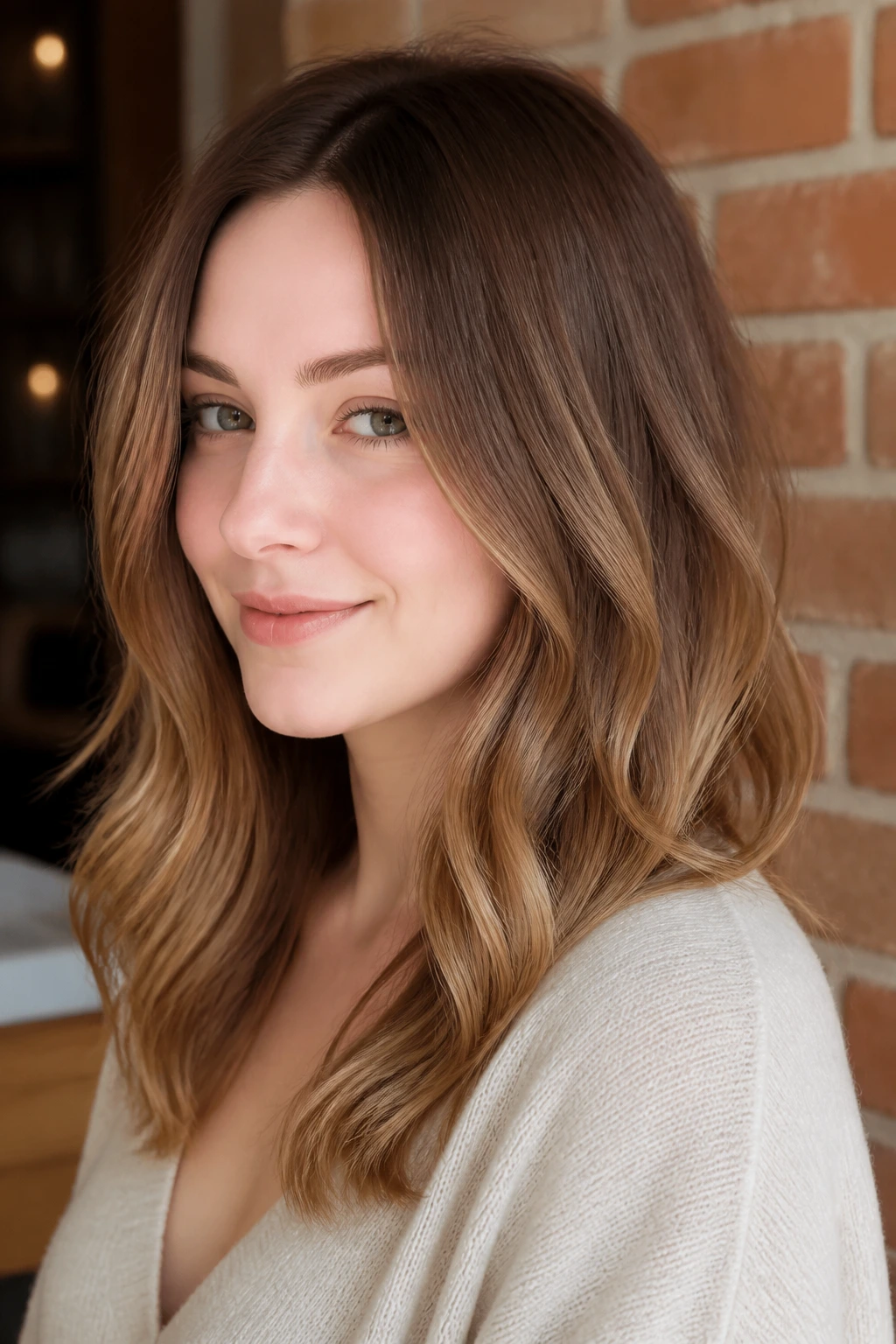
Chestnut into toffee is for people who want dimension but do not want to look blonde from the parking lot. It’s darker, richer, and easier to wear than a high-contrast highlight pattern.
Why It Works
The chestnut root gives depth around the crown and temples, which helps a round face look longer. Then the toffee melt begins lower down, around the mid-lengths, so the light doesn’t hit the cheek area too hard. That shift matters on pale skin because the warm toffee lifts the complexion without making the hair look orange. It’s especially good if your natural color is medium brunette and you want the balayage to feel believable.
I like this on layered cuts because the movement of the layers catches the different brown tones. If the hair is one length, the blend can still work, but you’ll need soft waves to show the transition. It’s not flashy. That’s the point. Some of the best color lives in the quieter range.
10. Ash Beige Money Pieces
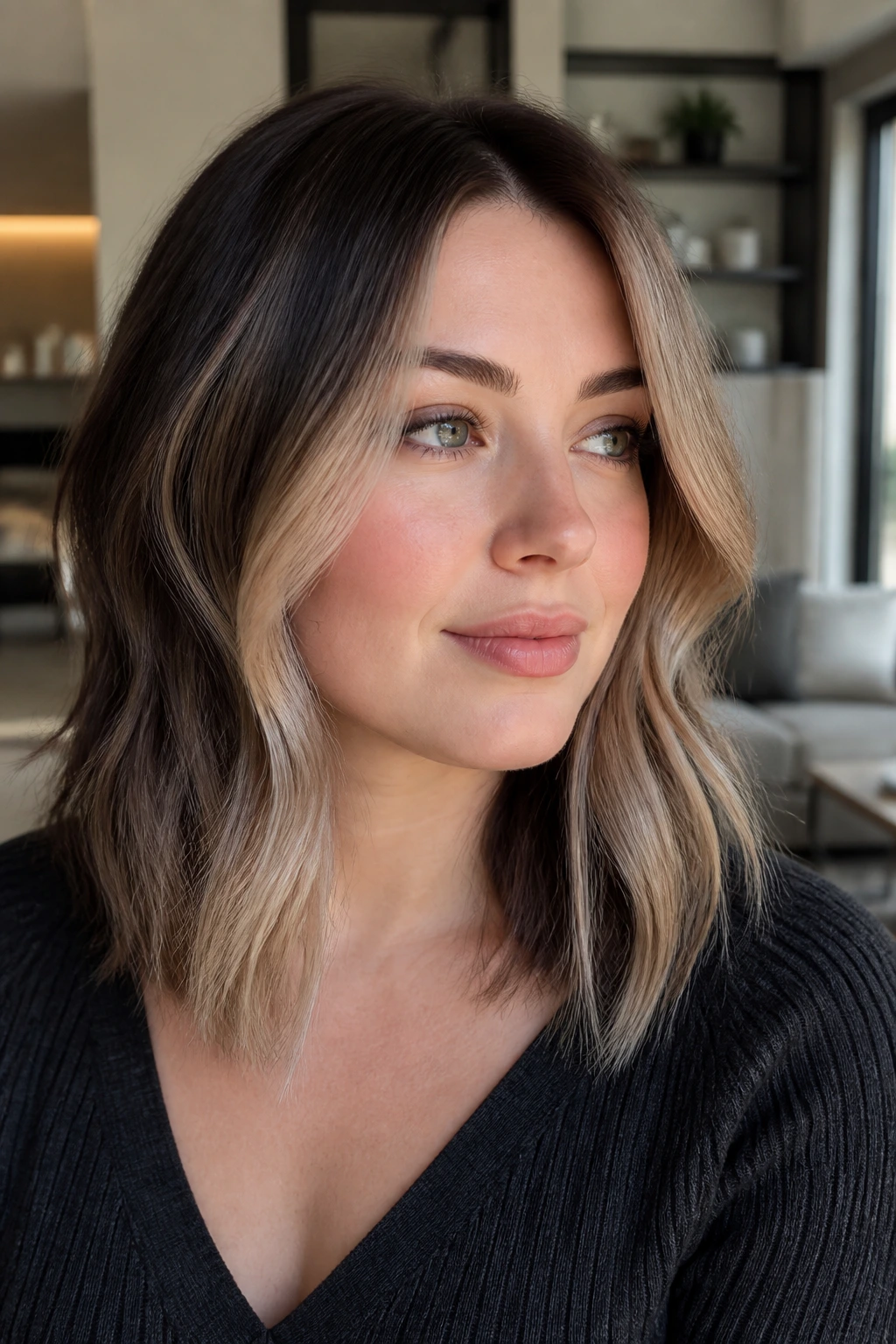
Money pieces do not have to be loud, and for pale skin with a round face, loud is often the wrong move. Ash beige keeps the front bright but calm.
Why It Works
The front sections are light enough to break up the darkness around the face, yet the ash-beige tone avoids the harsh yellow that can fight cool undertones. A round face benefits when these pieces are narrow and angled downward, not thick and horizontal. They should skim the outer cheek and end near the collarbone. That pulls the eye down, which is the whole game.
If your hair has a naturally darker base, this look can be a smart compromise between full balayage and chunky highlight strips. It gives a noticeable face frame, but it does not turn the hair into a stripe map. I’d keep the rest of the balayage low-key so the money pieces stay the star. Too many competing lights and the face starts to widen again.
11. Strawberry Blonde Dusting
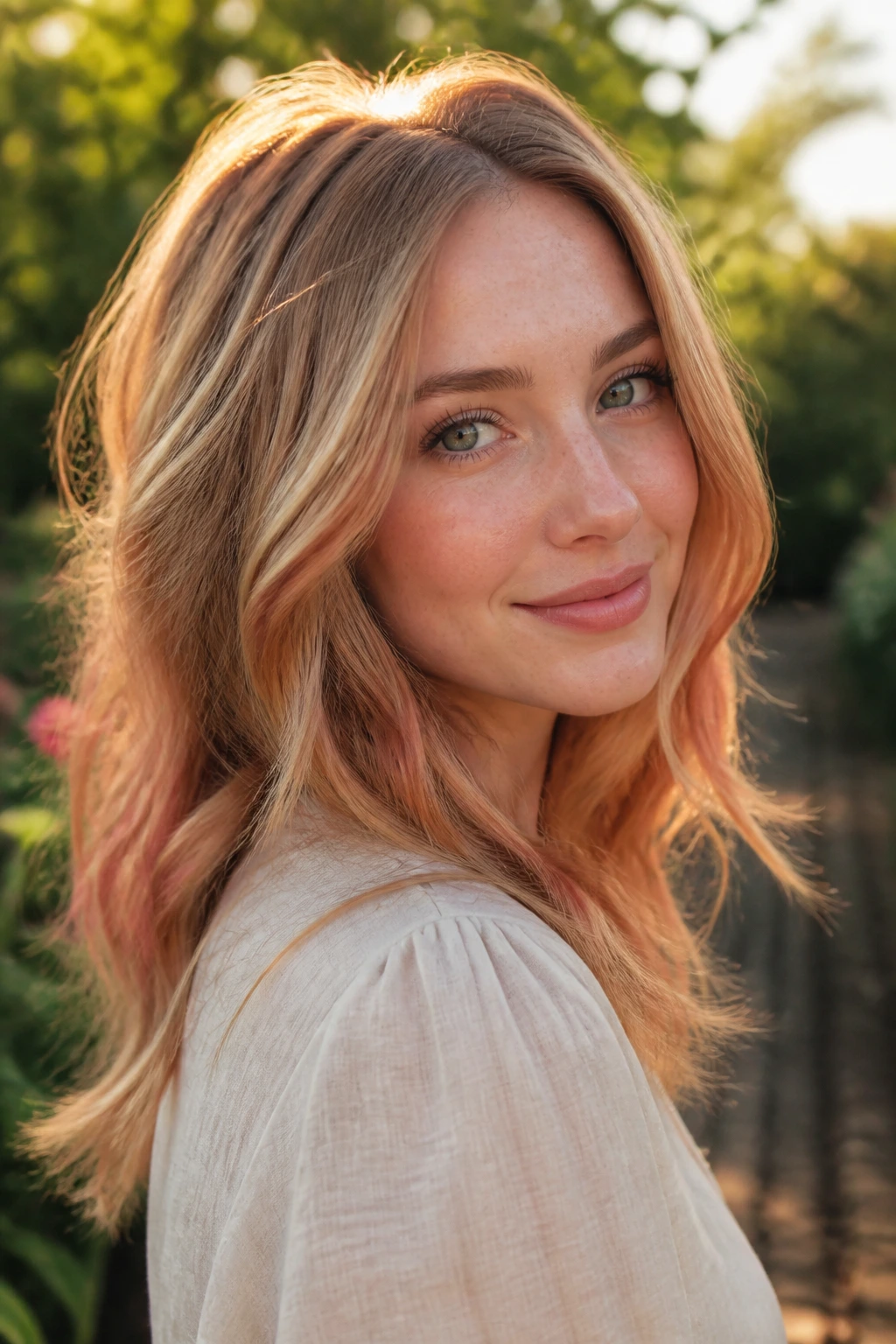
Strawberry blonde is one of the prettiest shades for pale skin when it stays dusty and soft. Heavy copper can look costume-y. A dusting reads more natural.
Why It Works
This tone brings warmth to very fair skin that might otherwise vanish under beige or ash. The soft red-gold blend gives the complexion a little color without relying on heavy contrast. For round faces, the placement should stay around the lower face and the ends, not all through the sides of the head. That keeps the shape lengthened. If the face-framing pieces are too bright near the temples, the effect gets wider.
This is especially nice on layered lobs, loose waves, and hair with a little natural wave. The texture helps the strawberry tones flick in and out of view, which makes the color feel richer. If your skin flushes easily, ask for less red and more gold-beige. You want the hair to warm the face, not echo every bit of redness in it.
12. Cocoa and Milk Balayage
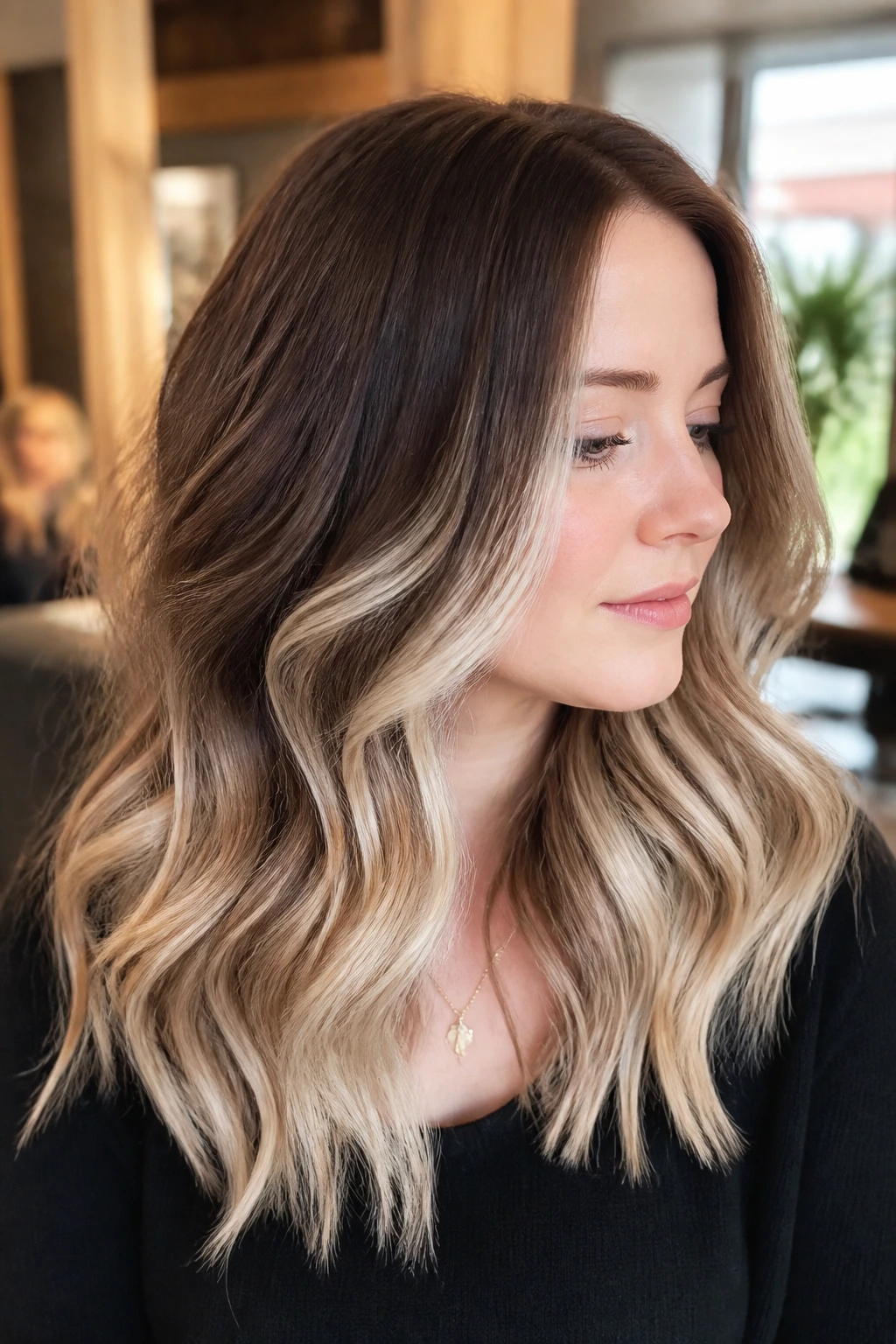
Cocoa and milk sounds dessert-like, but the color is really about contrast that stays soft. The darker cocoa root keeps the head grounded; the milk lighter pieces brighten the mids and ends without a hard line.
Why It Works
For pale skin, the cocoa base should be deep brown rather than near-black. Black on very fair skin can feel too hard unless the styling is airy and the cut is sharp. The milk ribbons lighten the lower half of the hair, which is helpful on round faces because the eye gets drawn down and out through the lengths. It works best when the front pieces are blended, not carved.
The reason I like this one is that it gives drama without losing softness. The contrast is there, but it doesn’t shout. On wavy hair, the lighter pieces break over the bends and make the hair look thick. On straight hair, the palette reads sleeker and more polished. Either way, it has range.
13. Vanilla Chai Balayage
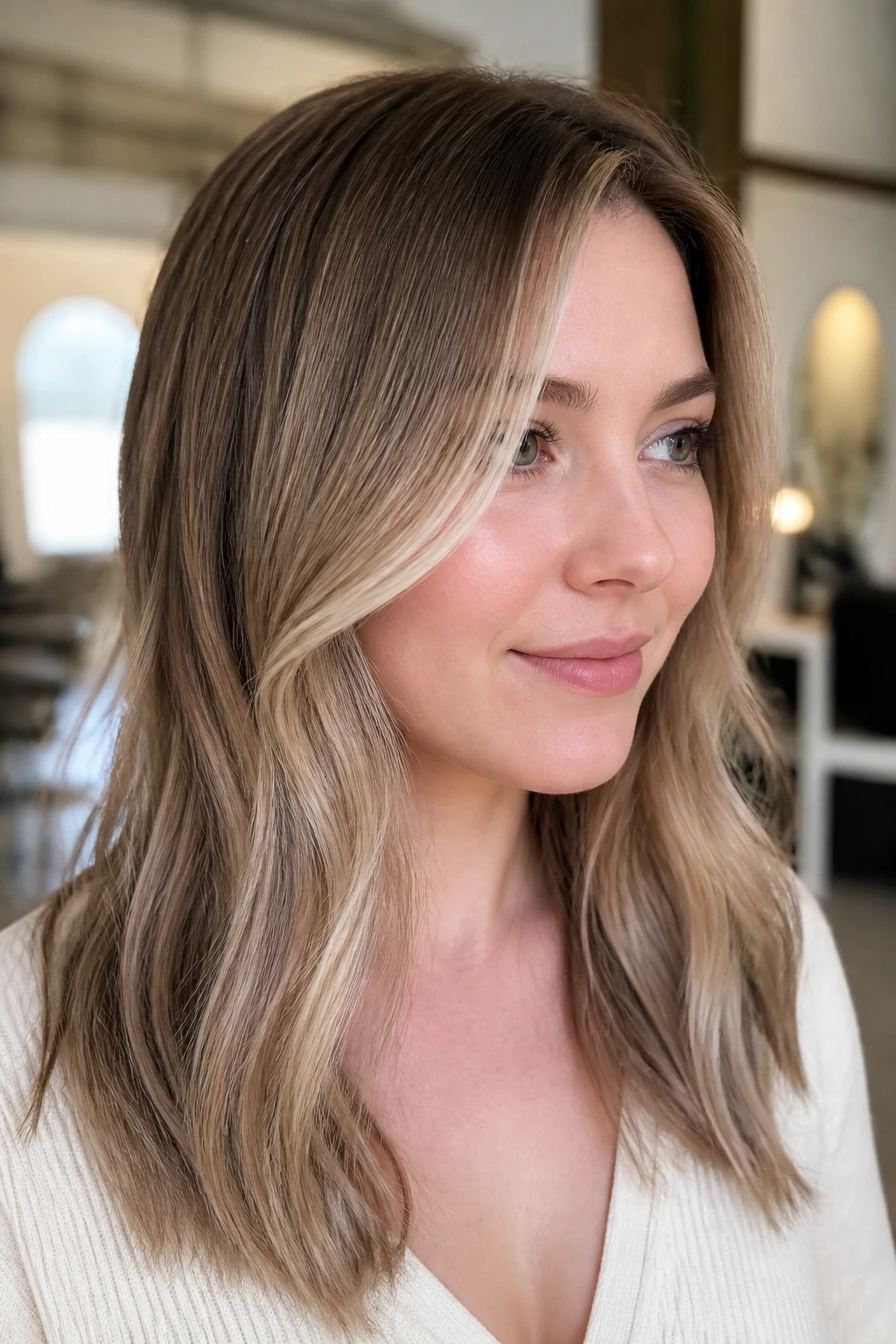
Vanilla chai is what happens when beige blonde gets a little spice. It’s a warm-neutral color that flatters pale skin without turning overtly golden.
Why It Works
The base should stay around light brown or dark blonde, then the vanilla chai pieces are painted in thin, scattered ribbons through the mid-lengths. That keeps the width of a round face from expanding at the sides. The warmer beige lifts pale skin with a soft glow, especially when your undertone is neutral or slightly olive. Cool skin can wear it too, but the beige should stay dusty rather than honey-rich.
Quick Fit Notes
- Best on long layers or a collarbone cut.
- Ask for thin ribbons around the face, not a full bright frame.
- Keep the ends lighter than the crown so the hair pulls the eye downward.
- Works well with a soft wave or a rounded blowout brush.
This is one of those shades that looks calm from across the room and richer when you get close. That’s usually a good sign.
14. Cool Beige Slices
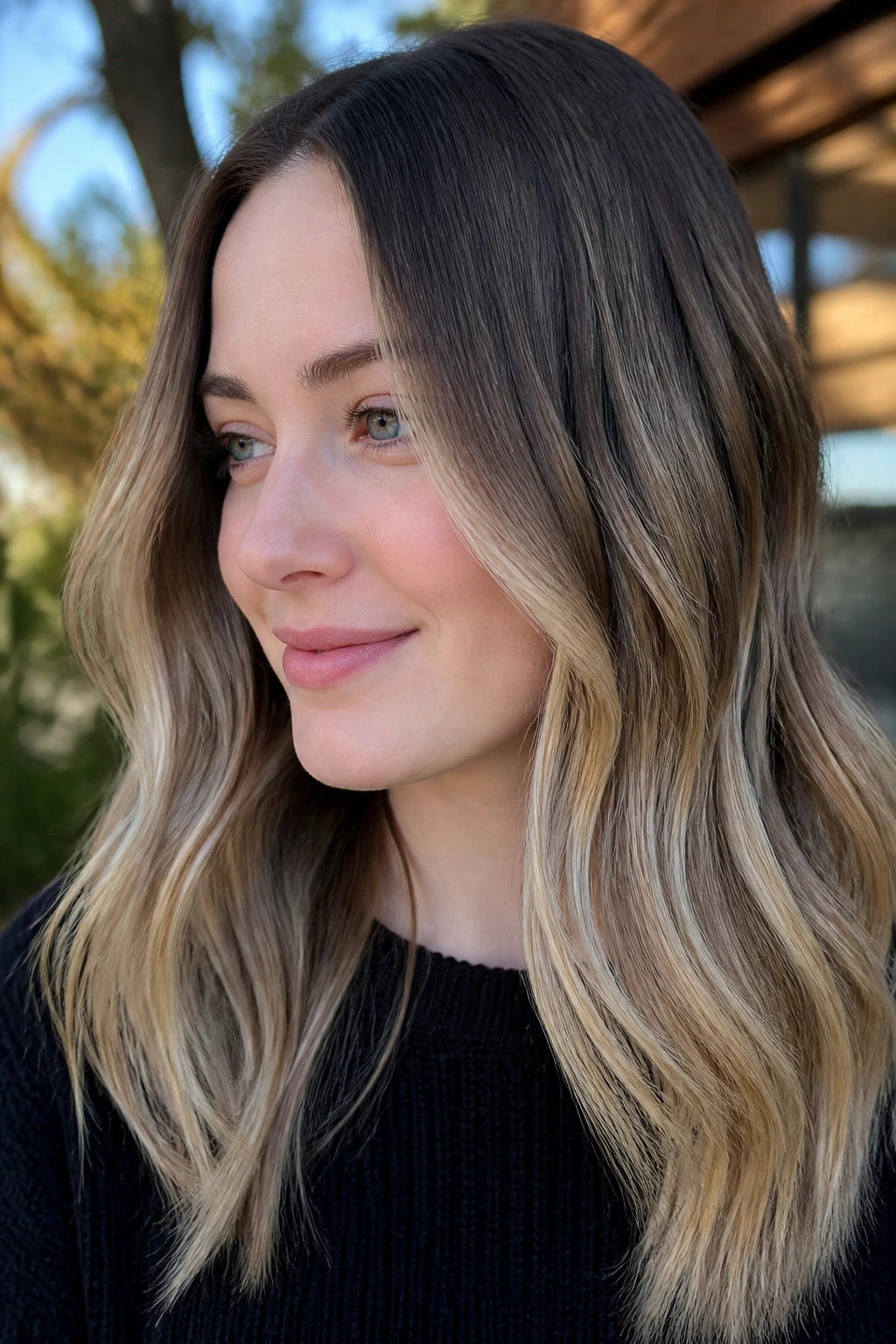
Cool beige slices are for people who want definition, not sparkle. The slices are thinner than old-school highlights, and the cool beige tone keeps the whole thing soft against pale skin.
Why It Works
The biggest mistake with round faces is too much width at the cheeks. Cool beige slices avoid that by running vertically through the lengths and leaving the top area darker. The cool tone blends neatly into fair skin that leans pink, rosy, or neutral. It doesn’t try to warm the complexion; it sharpens the contrast just enough to show the cut.
This one likes movement. If the hair is curled tightly, the slices can start to read busy. If the hair is given loose bends or a smooth blowout, the color falls into place. It’s a solid choice for someone who wants a little edge but still wants the color to look wearable under office lights and not just in selfies.
15. Apricot Glow Ends
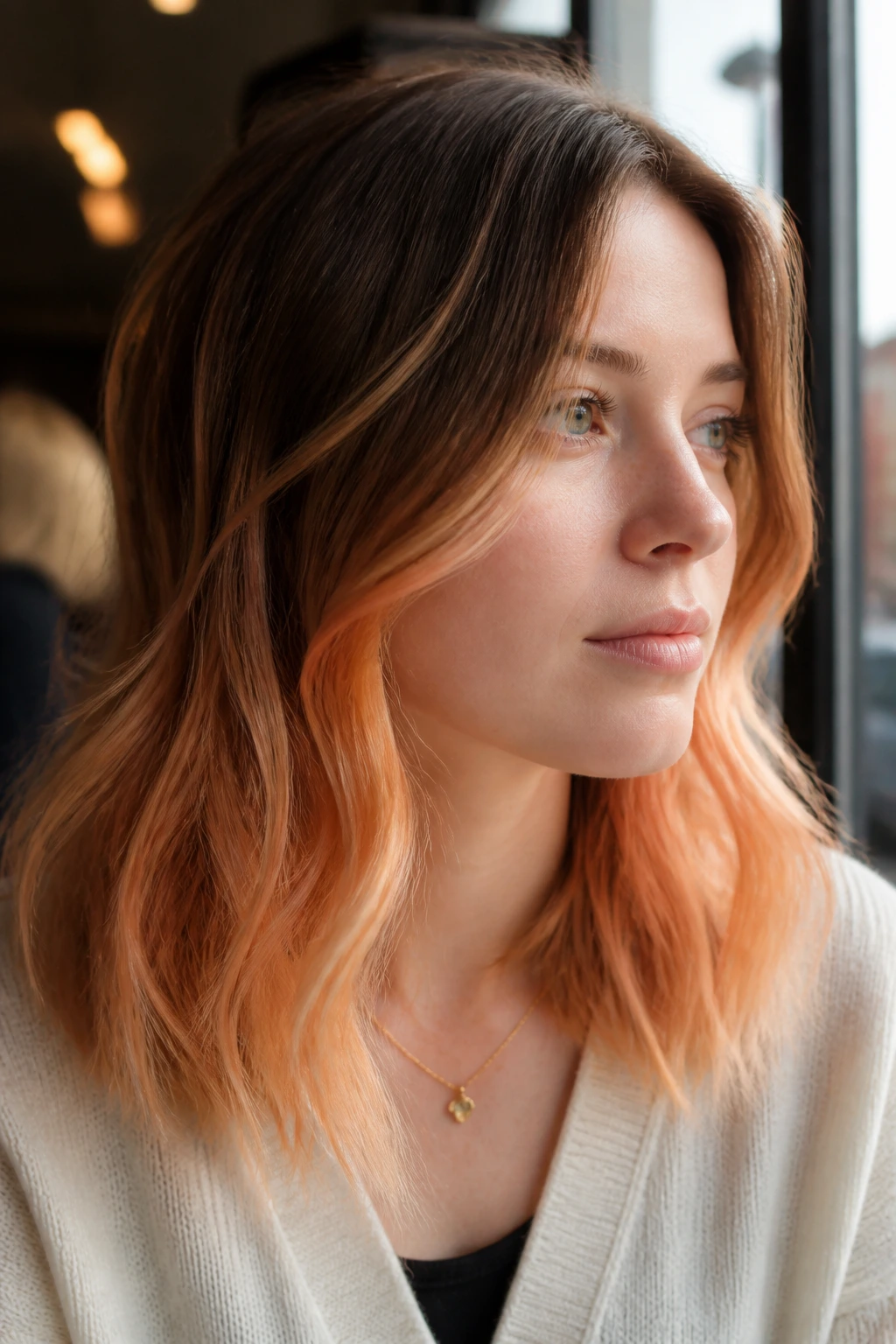
Apricot is one of the most underrated warm tones for pale skin. It gives a soft, peachy lift that can make a complexion look healthier without crossing into brassy orange.
Why It Works
The glow stays mostly at the ends, where the lightest color can live without broadening the face. On a round face, that lower placement matters a lot. If the apricot starts too high, the cheeks can look fuller. Kept low, it draws the eye to the ends and creates a gentle downward line. Pale skin with warm or neutral undertones tends to take this shade well, and even cool skin can wear it if the tone stays muted.
This is a fun one on layered cuts because the lighter ends flick out and catch movement. It works especially well if you don’t love icy blonde but want something brighter than brunette. I’d call it cheerful without being sugary, which is rare enough to matter.
16. Smoky Bronze on a Bob
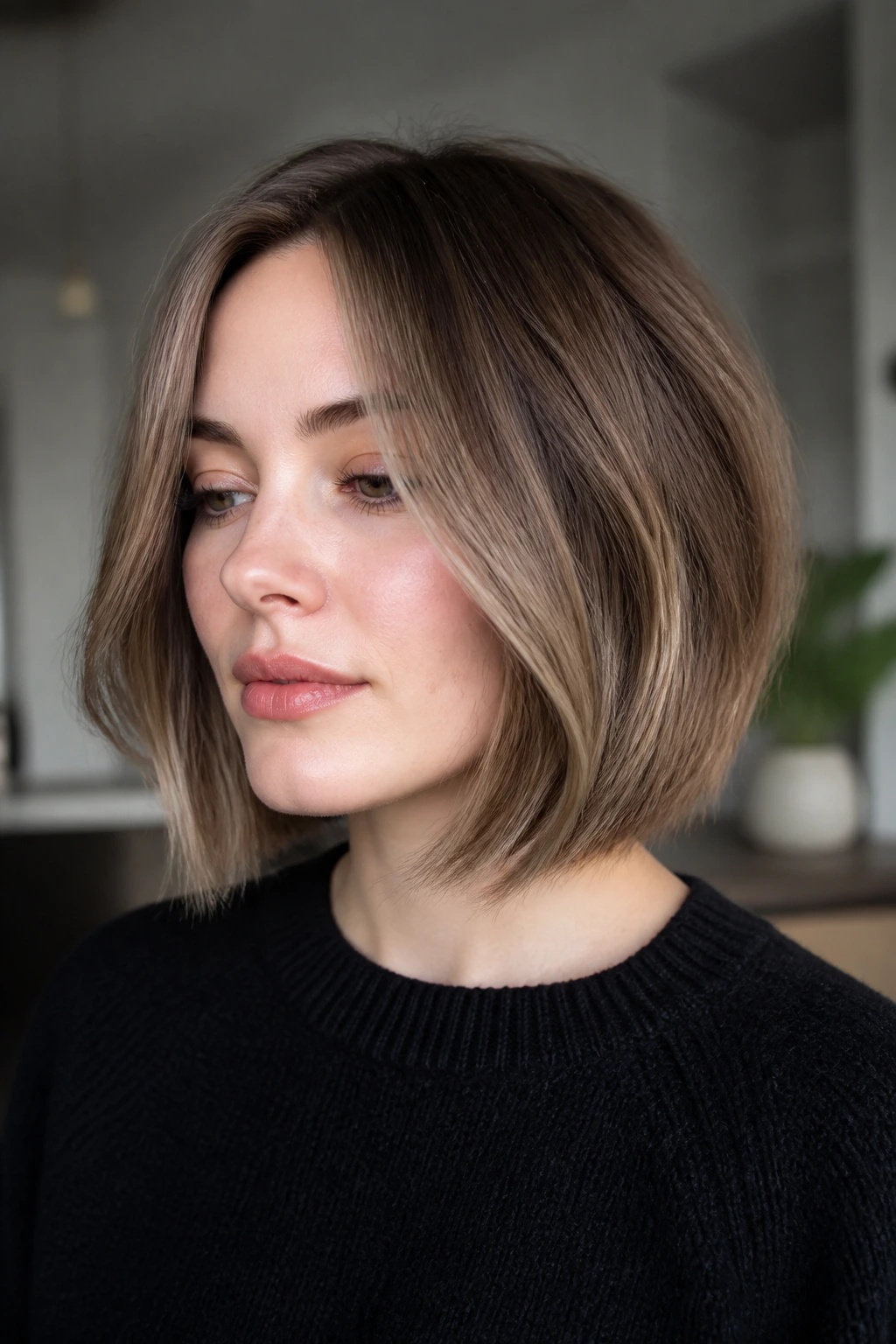
A bob can swallow color if the highlights are too soft. Smoky bronze gives it enough depth to read on the page and in real life.
Why It Works
The bronze tone offers warmth for pale skin, but the smoky finish keeps it from going orange. On a bob, the brighter pieces should land mostly from the mid-lengths down, with just a few careful threads near the front. That prevents the face from looking wider at cheek level. Because the cut is shorter, the color placement has to do more of the shaping work, and that’s where the smoked-out root helps.
This look feels strongest with a slightly beveled bob or one with underlayers that tuck in. The bronze glows when the ends turn inward a little. If the bob is blunt and one-length, keep the contrast softer; otherwise the shape can get boxy. I like this on fine hair because the tonal shift makes the hair look thicker without needing a lot of highlight density.
17. Buttercream Ribbon Layers
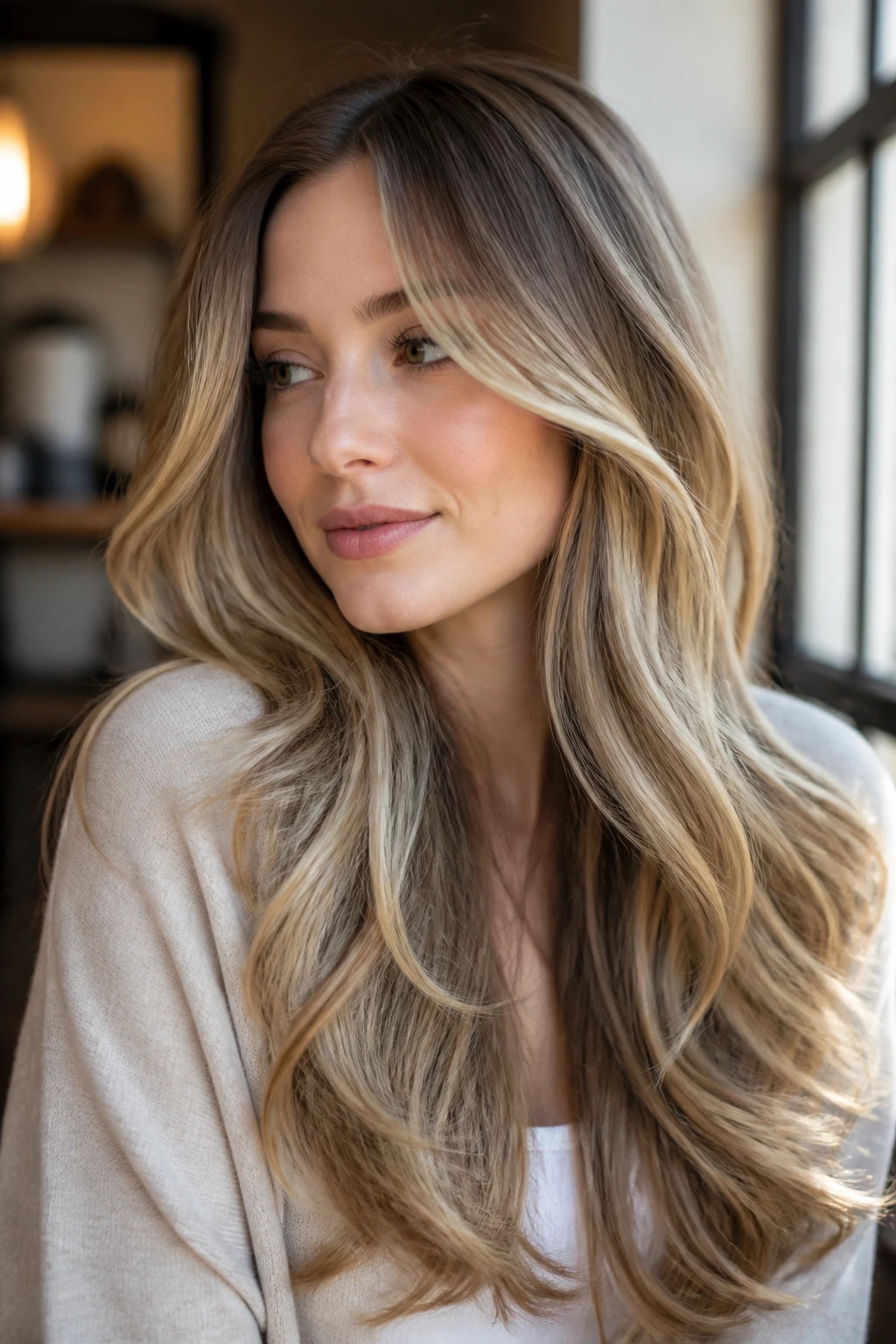
Buttercream is softer than classic blonde and less flat than beige. Ribbon layers give it motion, which keeps the hair from looking like a single pale sheet.
Why It Works
The palette is warm, but only just. That little bit of cream helps pale skin look more awake, especially if the complexion tends to run dull in flat light. The ribbons should be painted through long layers so the dimension shows when the hair moves. On a round face, layers and ribbons are a good pair because they both create the illusion of length. The front should stay softer than the sides, with brightness tapering down toward the chest.
I’m partial to this on hair that has a little natural volume. The ribbons catch on the bends and make the layers easier to read. If the hair is pin-straight, you may need a round brush or large-barrel bend to keep the effect from flattening out. Buttercream is forgiving. It does not need a dramatic contrast to do its job.
18. Dusty Peach Face Frame
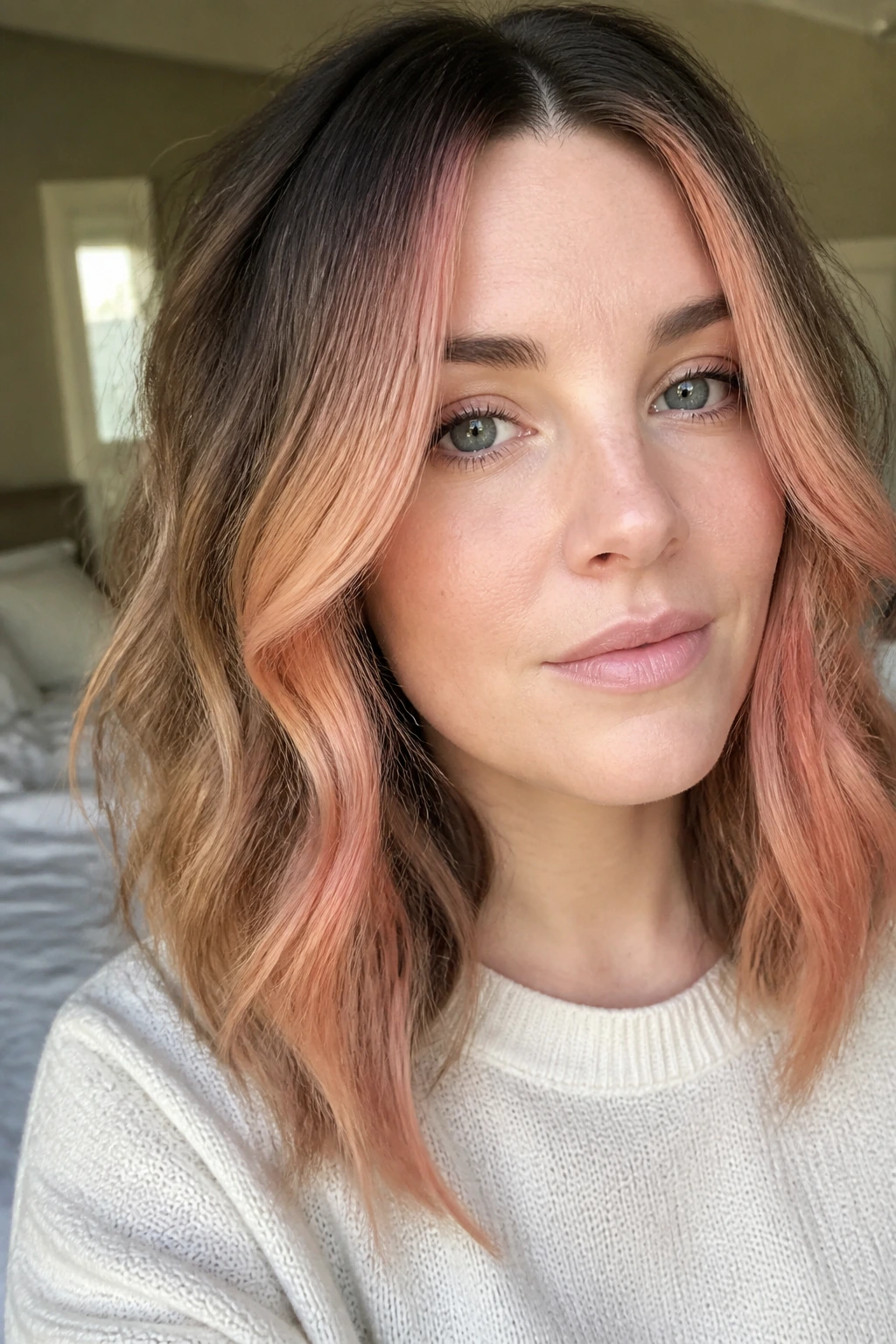
Dusty peach is the color for someone who wants warmth with a little personality. It isn’t loud, and that’s the reason it works for pale skin.
Why It Works
Unlike a sharp copper, dusty peach can sit near the face without taking over the whole complexion. The tone has enough softness to flatter fair skin, but enough color to keep the hair from reading beige and forgettable. For a round face, the face frame should be slim and angled low, starting around the lips and moving toward the ends. That pulls focus downward. Heavy peach right at the temples would do the opposite, and you do not want that.
This one looks best when the base remains neutral brown or dark blonde. If the whole head is peach, it loses the shape. Keep the color concentrated in the face frame and a few woven pieces through the mids. That gives you a warm accent without making the hair look dyed in one pass.
19. Maple Latte Balayage
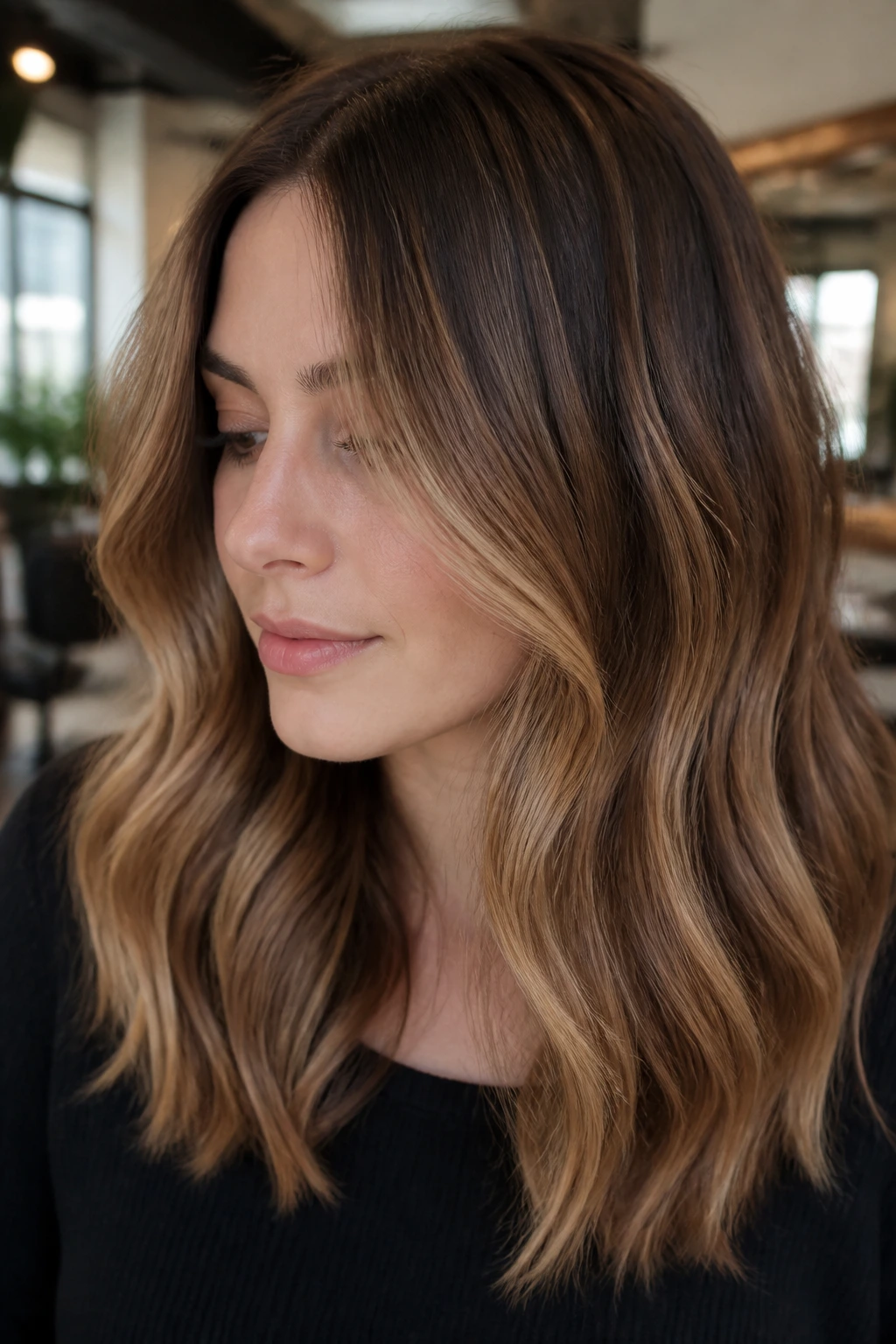
Maple latte has a cozy name, but the color itself is all about controlled warmth. Think brown with a softened caramel lift, not syrupy gold.
Why It Works
This is one of the more flattering choices for pale skin that can handle warmth but needs the warmth to stay subtle. The maple tones brighten the ends and mid-lengths, while the latte base keeps the scalp area gentle and close to natural. On a round face, the lighter pieces should stay longer than they are wide. That means painting down the lengths instead of across the sides. The whole point is to stretch the visual line.
It works well on layered hair, especially if the layers are longer around the front. The color follows the cut and gives it motion. If you wear your hair up often, the maple tones still show in braids and half-up styles, which is useful. Some colors only look good loose. This one has more range than that.
20. Pearlized Mushroom Brunette
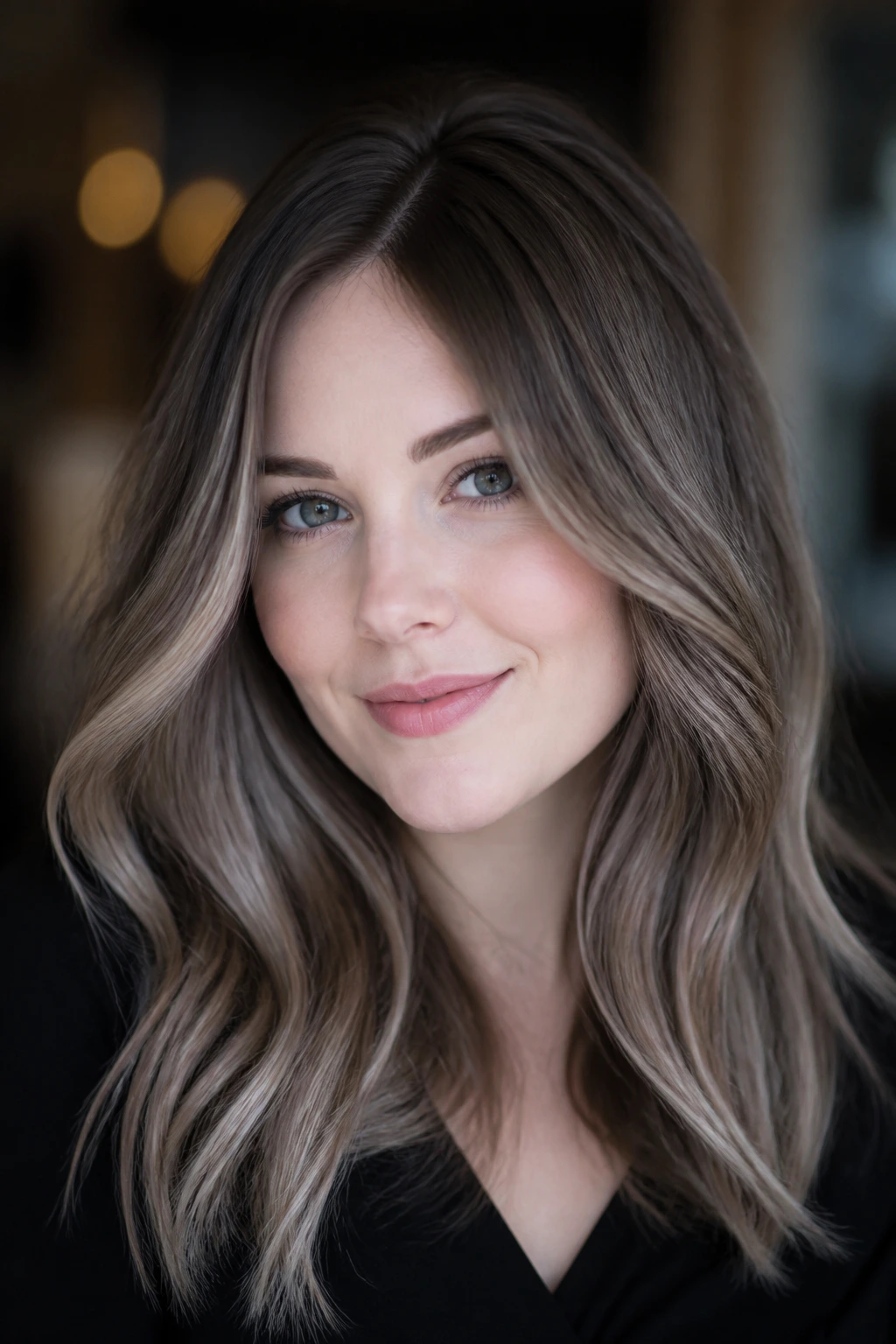
Pearlized mushroom brunette is a mouthful, but it’s one of the nicest cool-brunette ideas for pale skin. It has depth, haze, and just enough lightness to keep the hair from going flat.
Why It Works
The brunette base keeps the hair anchored, which is useful on a round face because the color does not widen the upper cheeks. The pearlized mushroom pieces are thin and cool, almost silvery-beige in certain light, but they stop well short of icy platinum. That lets pale skin keep its softness. If your complexion is very fair and prone to redness, this shade can be a calm counterpoint.
This is a strong option if you prefer a low-key look that still has visible dimension. It’s not trying to be bright. It’s trying to be smart. A side part can work here if the hair is very fine, but a soft center part with broken waves usually shows the blend better. Keep the ends slightly lighter than the mids and the whole thing feels more expensive.
21. Soft Mocha Melt with Light Ends
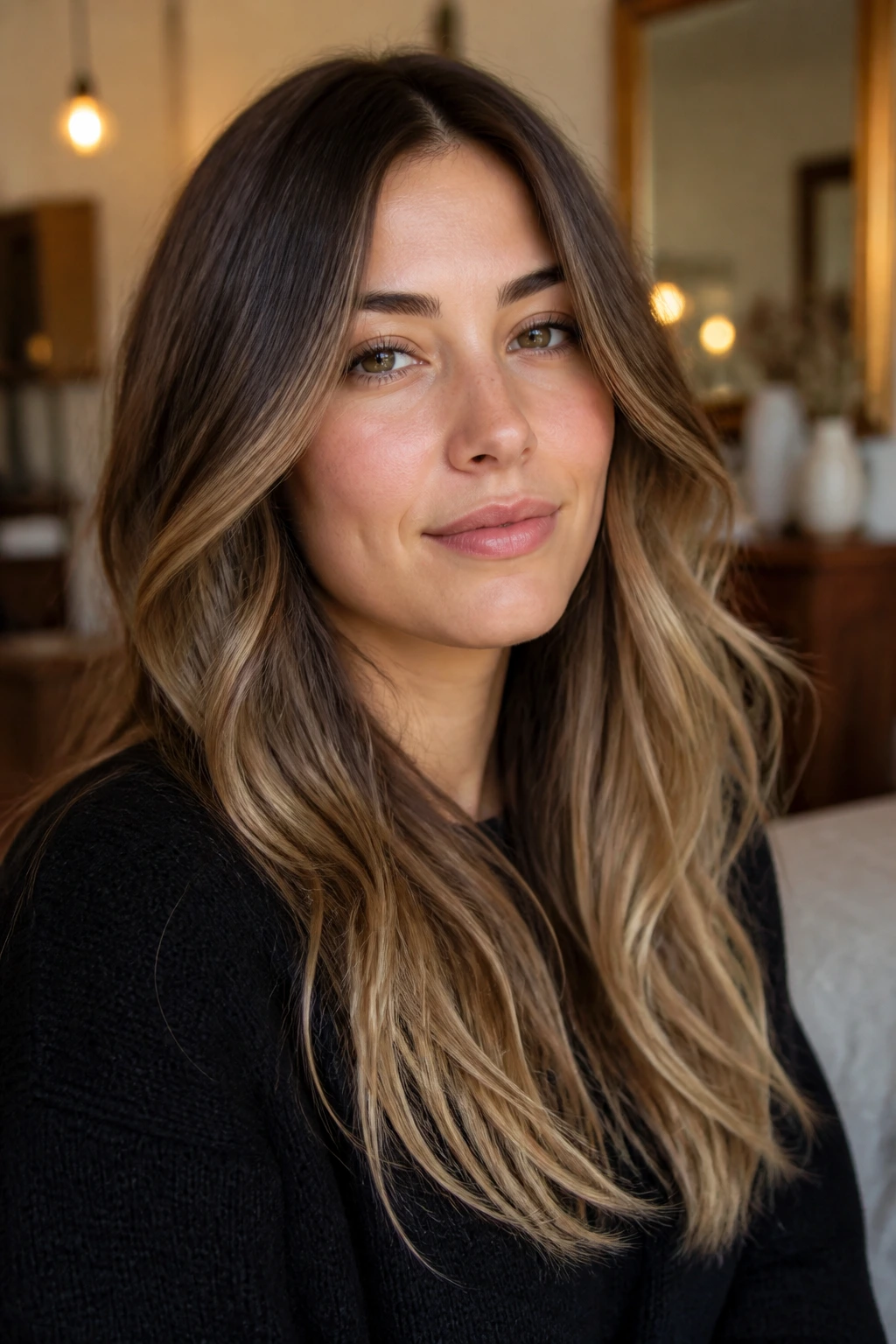
What happens when you want brunette depth but still want the ends to breathe? You get a soft mocha melt.
Why It Works
The mocha base gives pale skin contrast without the harshness of black or espresso, and the lighter ends keep the hair from feeling heavy around the face. On a round face, this is especially useful because the darker top section narrows the silhouette while the lighter ends draw the eye down. The melt should be gradual, not abrupt. No stripe. No line. Just a steady shift from mocha to a lighter beige-brown at the tips.
This shade is a good fit for thicker hair because it can take the depth without disappearing. It also works well if your hair is naturally dark and you want a softer grow-out. The maintenance is kinder than a full blonde, which matters if you dislike salon chair marathons. The light ends can be tuned warmer or cooler depending on your undertone, and that flexibility is the real draw.
22. Frosted Beige Pixie-Bob
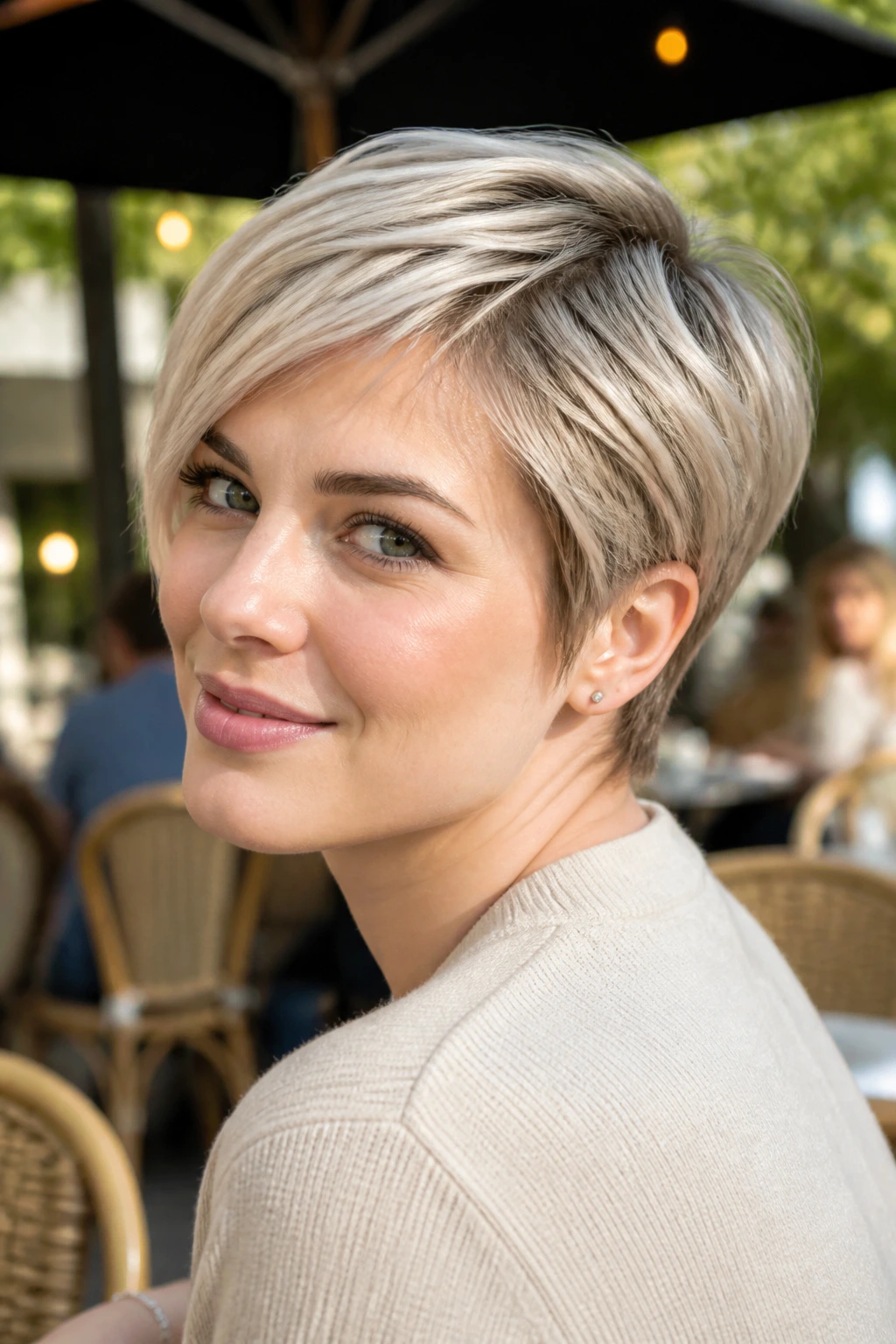
A pixie-bob needs color that can define the shape without cluttering it. Frosted beige keeps the cut crisp and light.
Why It Works
The shorter length means placement has to be careful. The frosted beige should sit mainly on the top layers and around the front, with just enough lightness through the sides to keep the cut from looking helmet-like. Pale skin can wear this shade because it isn’t stark white-blonde; it has beige in the middle, which softens the overall effect. On a round face, the added height on top and the softer sides help create a more oval read.
This is one of my favorites for someone who wears earrings, glasses, or a bold lip. The hair stays quiet enough to let those things matter. If you go too light on a pixie-bob, the shape can disappear. Beige keeps the geometry visible. That’s the whole point of short hair with color.
23. Honeyed Oat Balayage
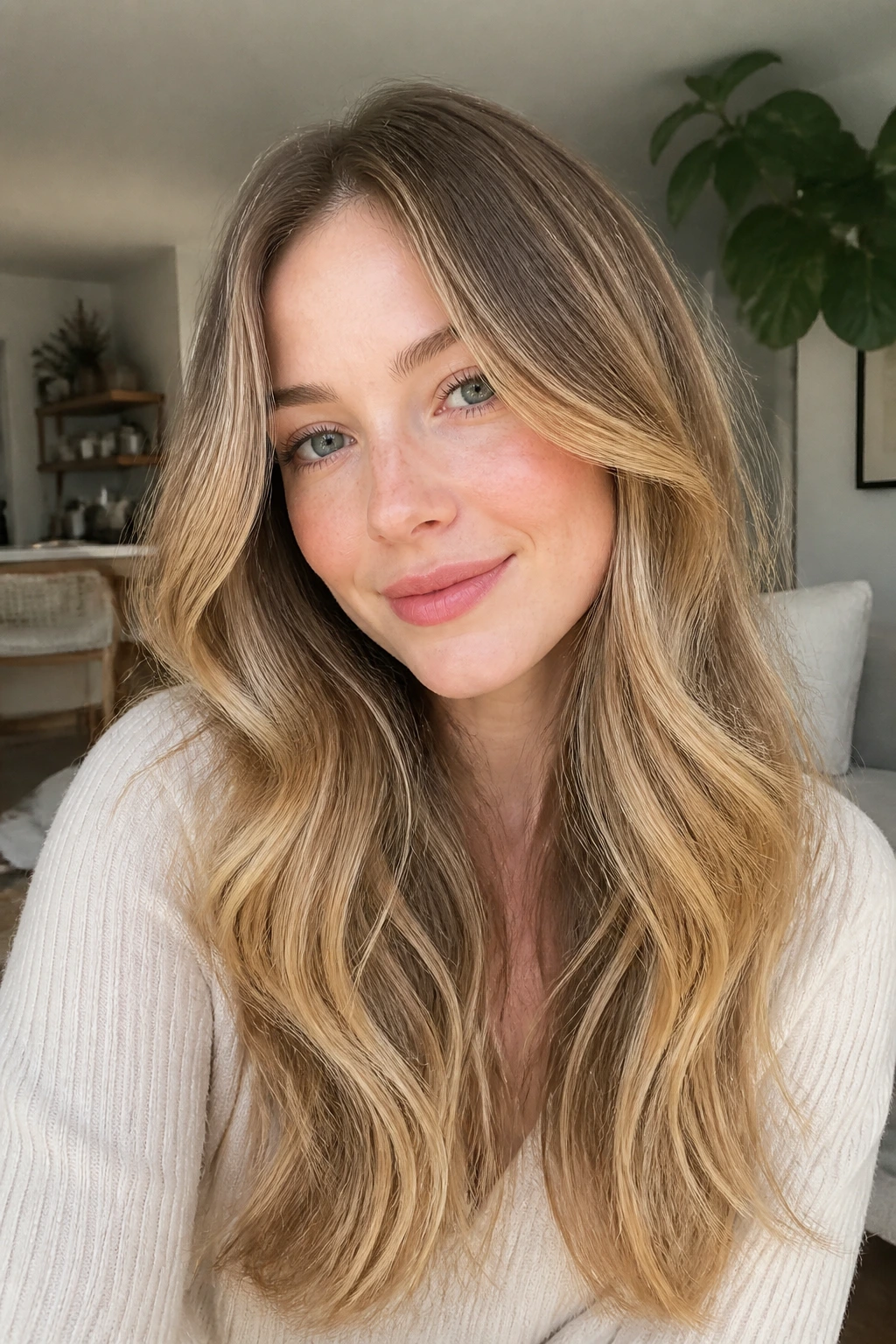
Honeyed oat sounds soft, and it is, but there’s a reason it works better than plain honey on pale skin: the oat base cools the sweetness down.
Why It Works
A round face benefits when the color brightens the lower half of the hair instead of building a bright ring around the cheeks. Honeyed oat does that by keeping the root and upper mids soft beige-brown, then adding a gentle honey lift through the ends. The oat note keeps the warmth from getting syrupy. On pale skin, that means the face gets a little glow instead of a golden cast.
This is especially nice if your hair is naturally medium brown and you don’t want to jump straight to blonde. The transition feels easy on the eye. Loose waves show the honey better, but straight hair works too if the ends are textured. If you want the color to lean more neutral, ask for a matte beige gloss over the warm pieces. That one move changes the whole tone.
24. Rose Beige Layered Shag
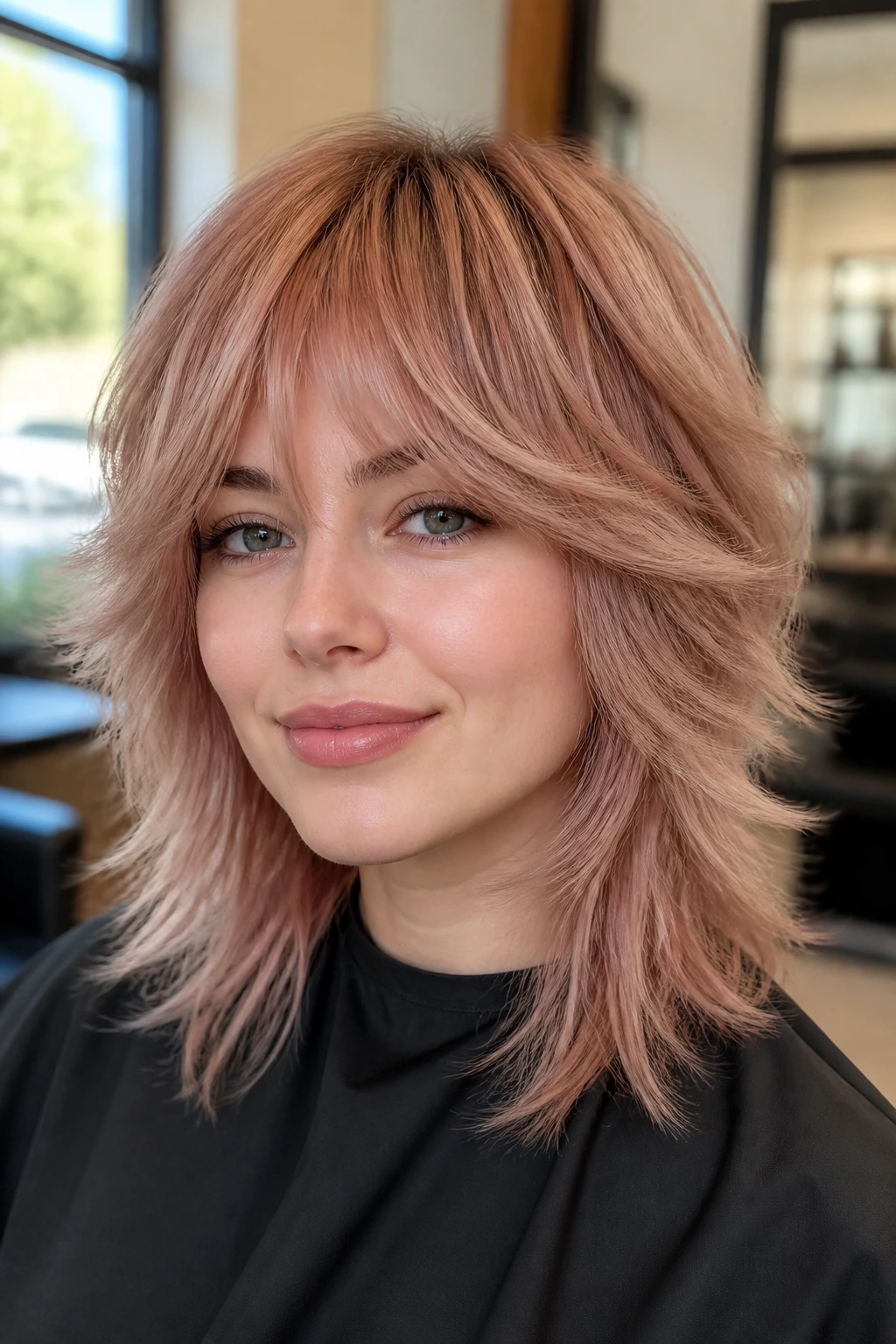
A shag loves movement, and rose beige gives it a soft, airy color that doesn’t weigh the shape down. This is one of those combinations that feels a little cooler and a little warmer at the same time.
Why It Works
The layers in a shag already do some of the slimming work on a round face by breaking up the outline. Rose beige adds to that by painting brightness in scattered, feathered sections rather than a solid face frame. The pink-beige tone flatters pale skin without looking sugary because the beige keeps it dry and soft. If the pink goes too strong, the color can start to feel childish. Kept muted, it looks modern and easy.
This one is especially good if you like texture sprays, airy blowouts, or a lived-in wave. The shade does not need perfection. It needs movement. A shag with rose beige can look a little undone in the best way, which is a relief if you hate hair that feels too finished.
25. Soft Espresso and Champagne Contrast
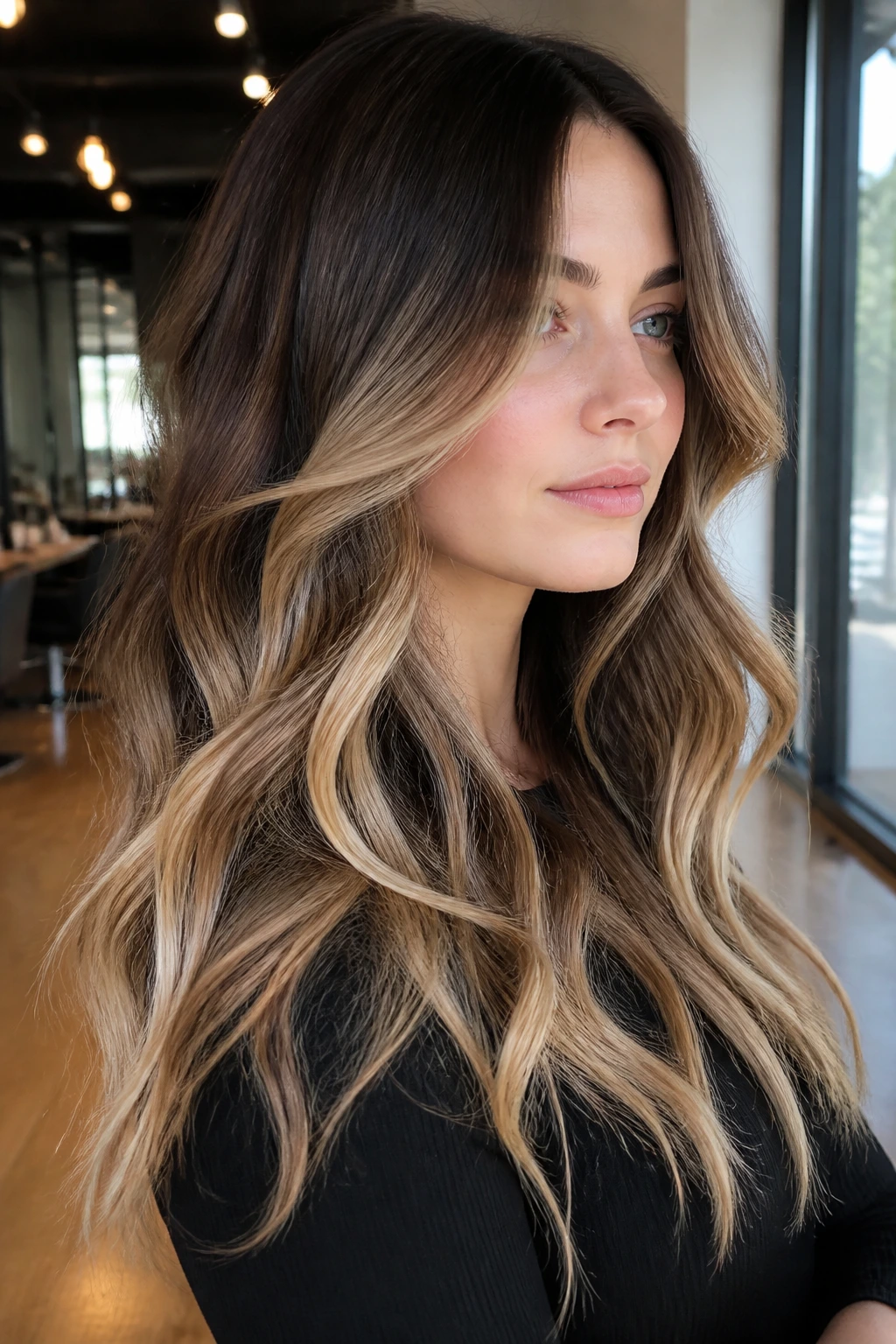
Soft espresso with champagne contrast gives you the strongest visual shift in this collection, but the softness keeps it wearable. It’s for the person who wants definition and light, not one or the other.
Why It Works
The espresso root gives the face a darker frame, which can be useful on a round face because it narrows the sides and creates a cleaner outline. The champagne ribbons then run through the lower half of the hair, brightening the look without turning it brittle or stripey. Pale skin usually needs a little care with contrast, and this one handles that by keeping the champagne airy and the espresso soft rather than pitch-black. The effect is crisp, but not harsh.
This style suits thicker hair, long layers, and cuts with some movement at the ends. On very fine hair, the contrast can get a little heavy unless the ribbons are kept sparse. If you like a center part, this shade can still work; if you wear a side part, it gets even more shape. It’s a stronger finish than some of the others here, and sometimes that’s what the face needs.
Why Soft Balayage Flatters Pale Skin and Round Faces
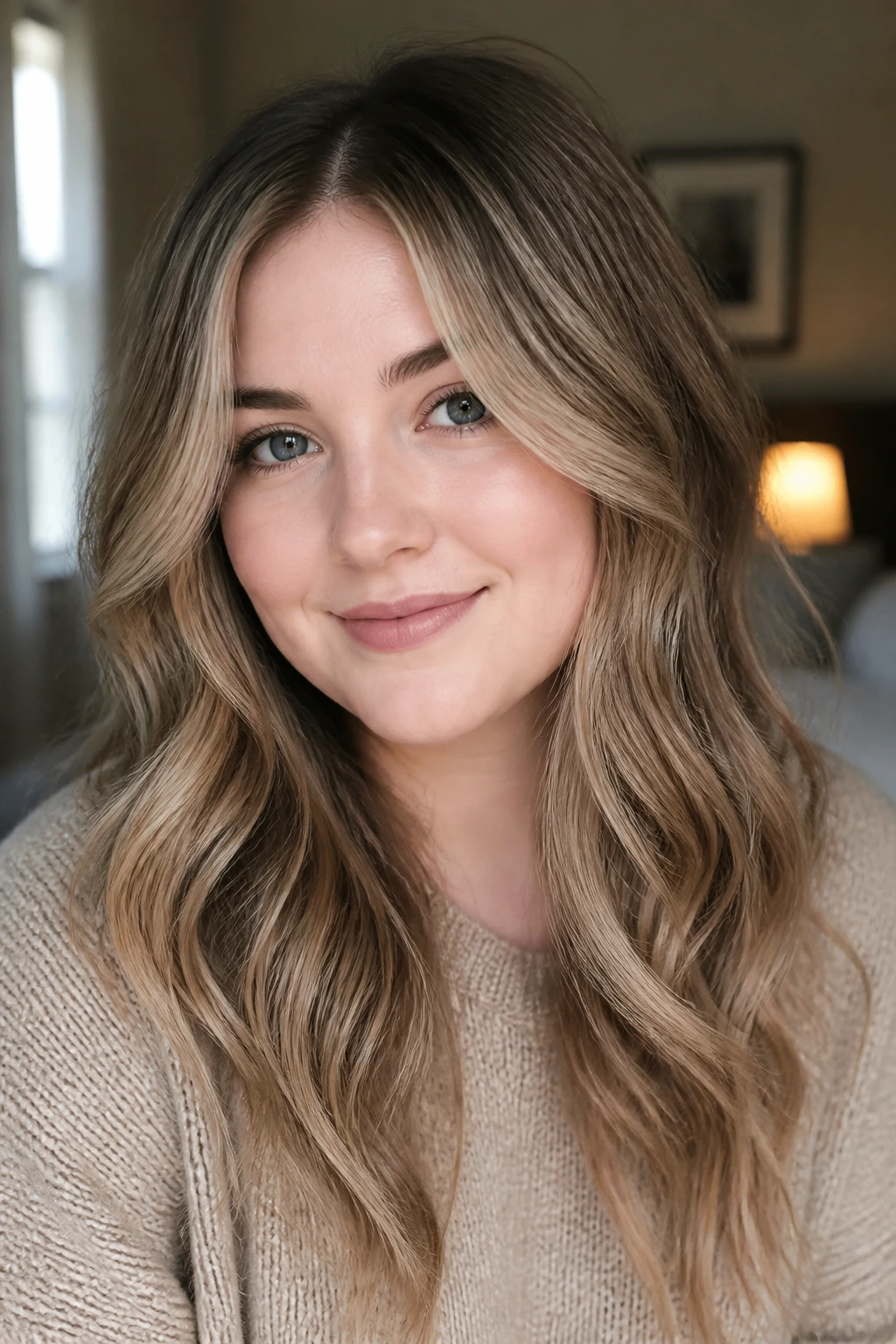
Tone does half the work before placement even starts. Pale skin tends to show undertones fast, which means a toner that looks beige in the bowl can read almost orange or gray once it’s on the hair and sitting next to the face. That’s why champagne, pearl, mushroom, oat, and muted caramel keep showing up here. They live in the middle range. They don’t shout.
Placement matters just as much. On a round face, the lightest pieces should usually start lower than people think — around the lips, chin, or collarbone — not right at the broadest part of the cheeks. That lower start point draws the eye down and gives the cut a longer line. If you imagine the face as a circle, soft balayage works by stretching the circle into an oval. Not dramatically. Just enough to change the read.
A center part can help if the face-frame pieces are kept narrow, but it is not a law. A soft off-center part can carve a little more shape on fine hair, and a side part can add lift if the crown needs height. What matters most is that the light and shadow do not sit in one blunt horizontal stripe across the face. That’s the move that causes trouble.
Essential Tools for These Looks
-
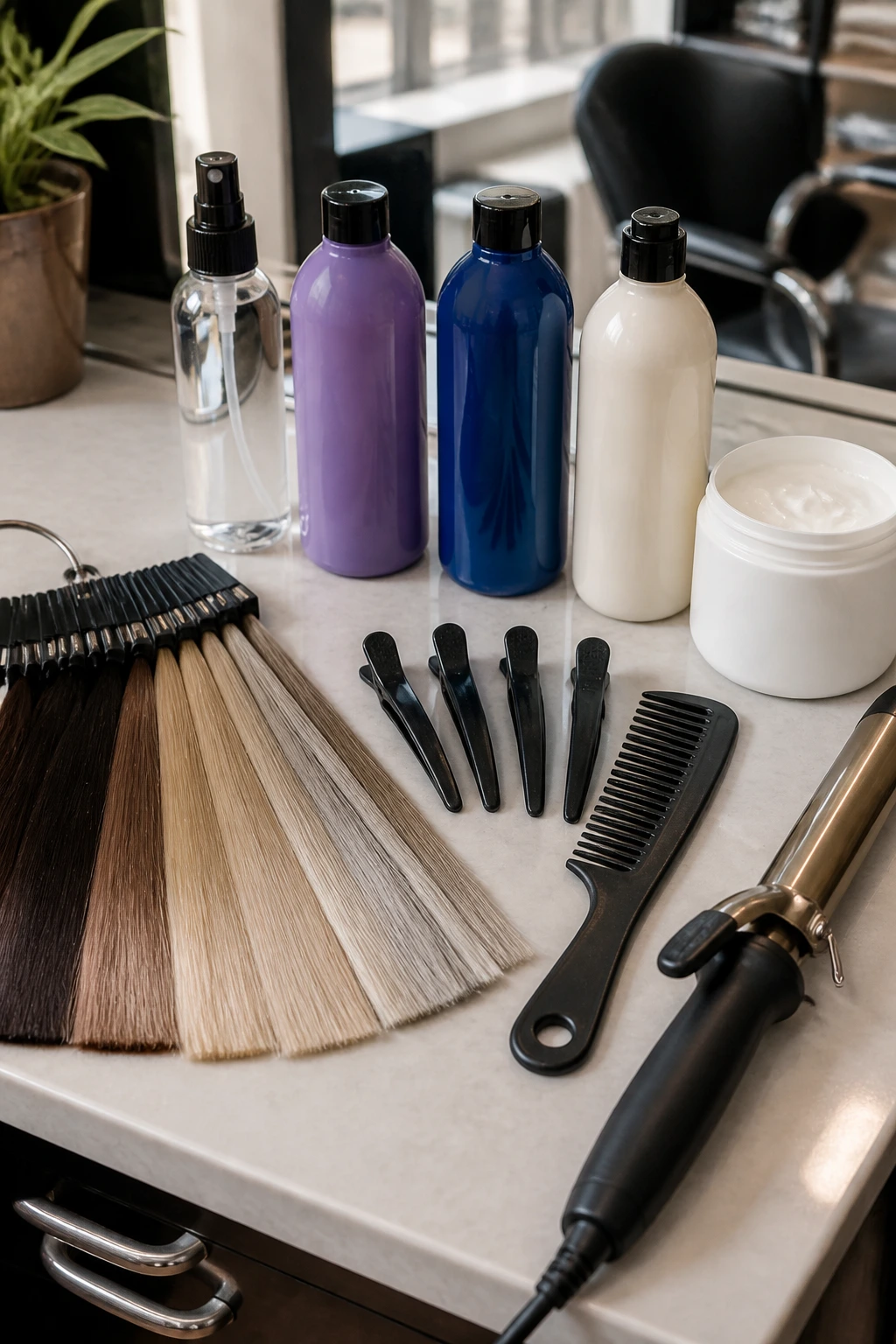
Color reference photos: Bring 3 to 5 pictures with similar skin tone, cut length, and lighting; one good photo beats ten random screenshots.
-
Sectioning clips: Strong clips help keep the face-frame pieces separate so the lightest ribbons land where you actually want them.
-
Heat protectant spray: If you style with a wand, brush, or blow dryer, this keeps the lighter pieces from drying out fast.
-
Purple shampoo or blue shampoo: Use purple for blonde, pearl, and champagne shades; use blue only if the brunette ends start drifting orange.
-
Color-safe sulfate-free shampoo: This slows down fade, which matters more with soft tones than with deep brown.
-
Deep conditioning mask: A weekly mask helps the highlighted mids stay smooth instead of fuzzy and porous.
-
Wide-tooth comb: It’s kinder to toned, lighter ends than a brush when the hair is damp.
-
1-inch or 1.25-inch curling iron or wand: Loose bends show balayage ribbons better than tiny curls, which can blur the shape.
What to Tell Your Colorist at the Chair
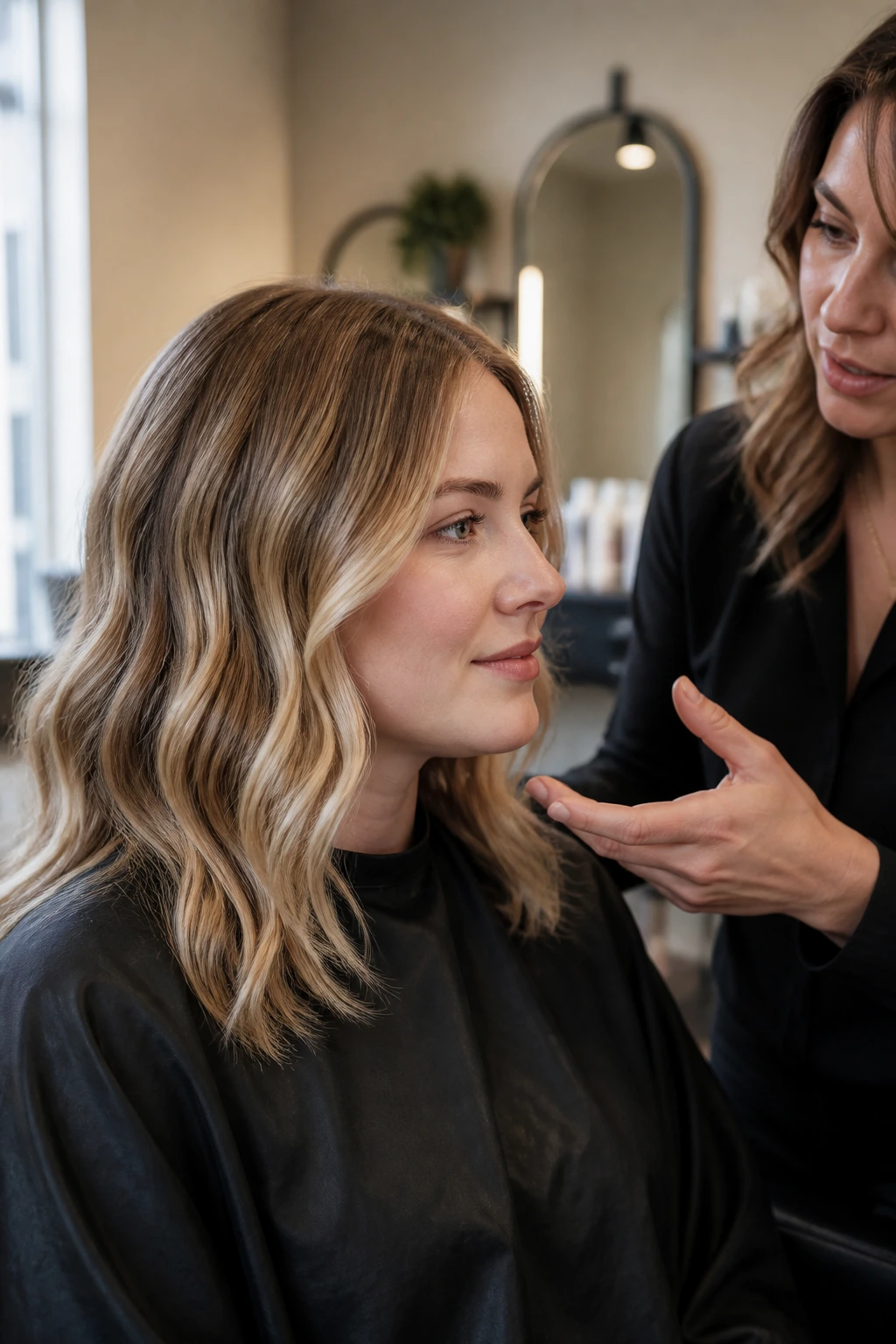
Don’t ask for “soft blonde” and leave it at that. That’s how people end up with something brighter, wider, or ashier than they wanted. Bring the conversation back to three things: tone, placement, and contrast.
Say where you want the lightest pieces to start. If you have a round face, be specific about keeping the brightness below the cheekbone or around the lip line. Ask for the front pieces to taper downward instead of flaring outward at the temples. That one detail changes the whole face shape.
Then talk about tone in plain words. Beige, champagne, pearl, mushroom, honey, rose beige — those are useful words. So are “less yellow,” “less ash,” and “not too bright near the root.” If your skin is very fair, mention whether you go pink, sallow, or neutral in daylight. Salon lights can lie. A lot. Bring a photo taken outdoors if you can.
How to Style These Shades So the Dimension Shows
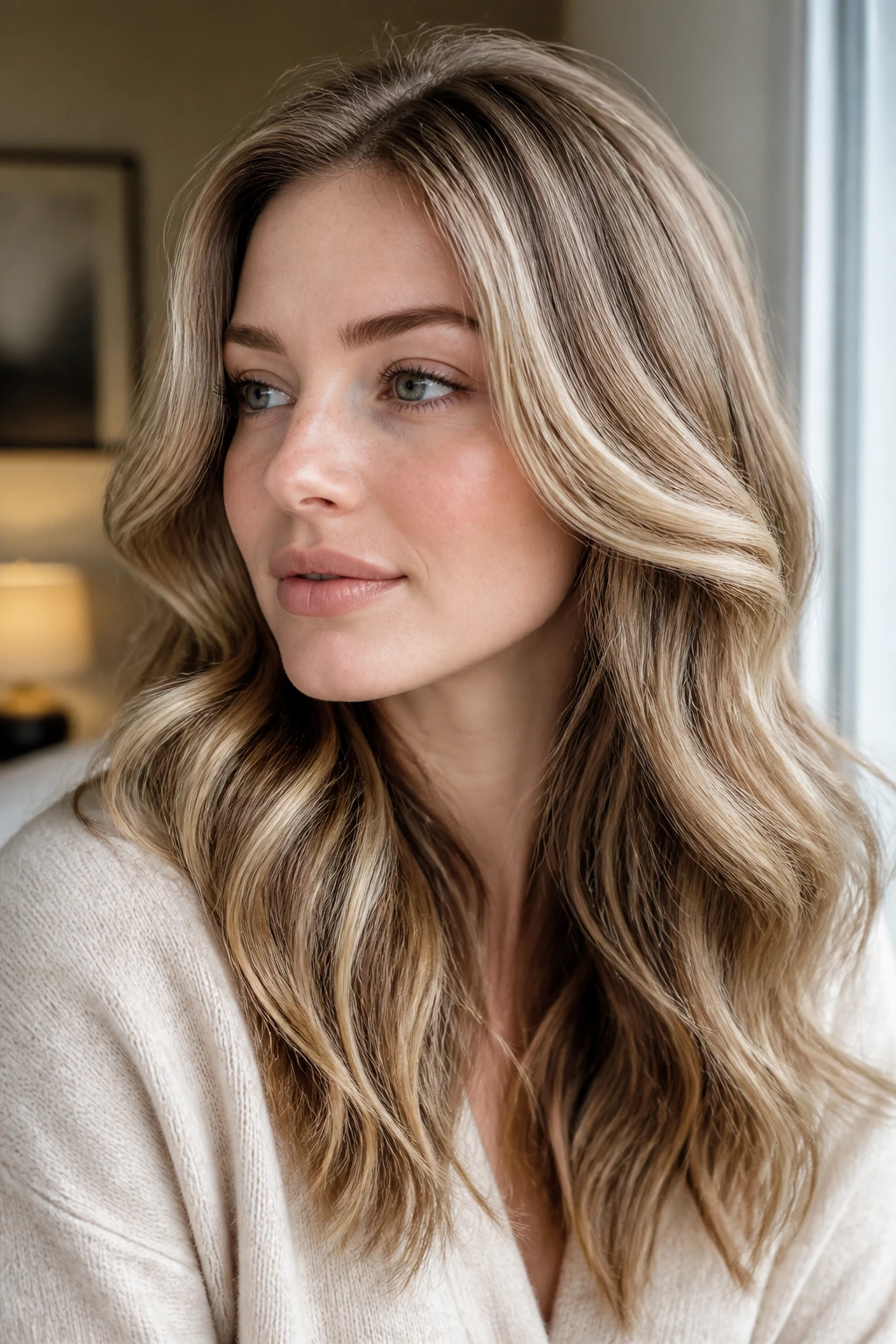
Loose bends win here. Tight curls can make soft balayage look busy, and straight hair can flatten the ribbons if the color is too subtle. A bend from a 1-inch iron, brushed out with fingers, usually shows the placement best. If you air-dry, scrunch a little wave into the front so the face frame doesn’t sit dead flat.
Parting changes the whole read. A center part draws the face longer when the front pieces are soft and narrow. A slightly off-center part can give more lift at the crown, which helps if the face feels very full at the sides. Keep the front pieces draped forward for a little while before tucking them behind the ears. That’s where the slimming effect lives.
Necklines matter more than people admit. V-necks, scoop necks, and open collars keep the eye moving downward. A very high crew neck can make the face color work harder, especially if the balayage is warm. Earrings help too, but the hair should still be the main event.
Extra Ways to Personalize the Shade
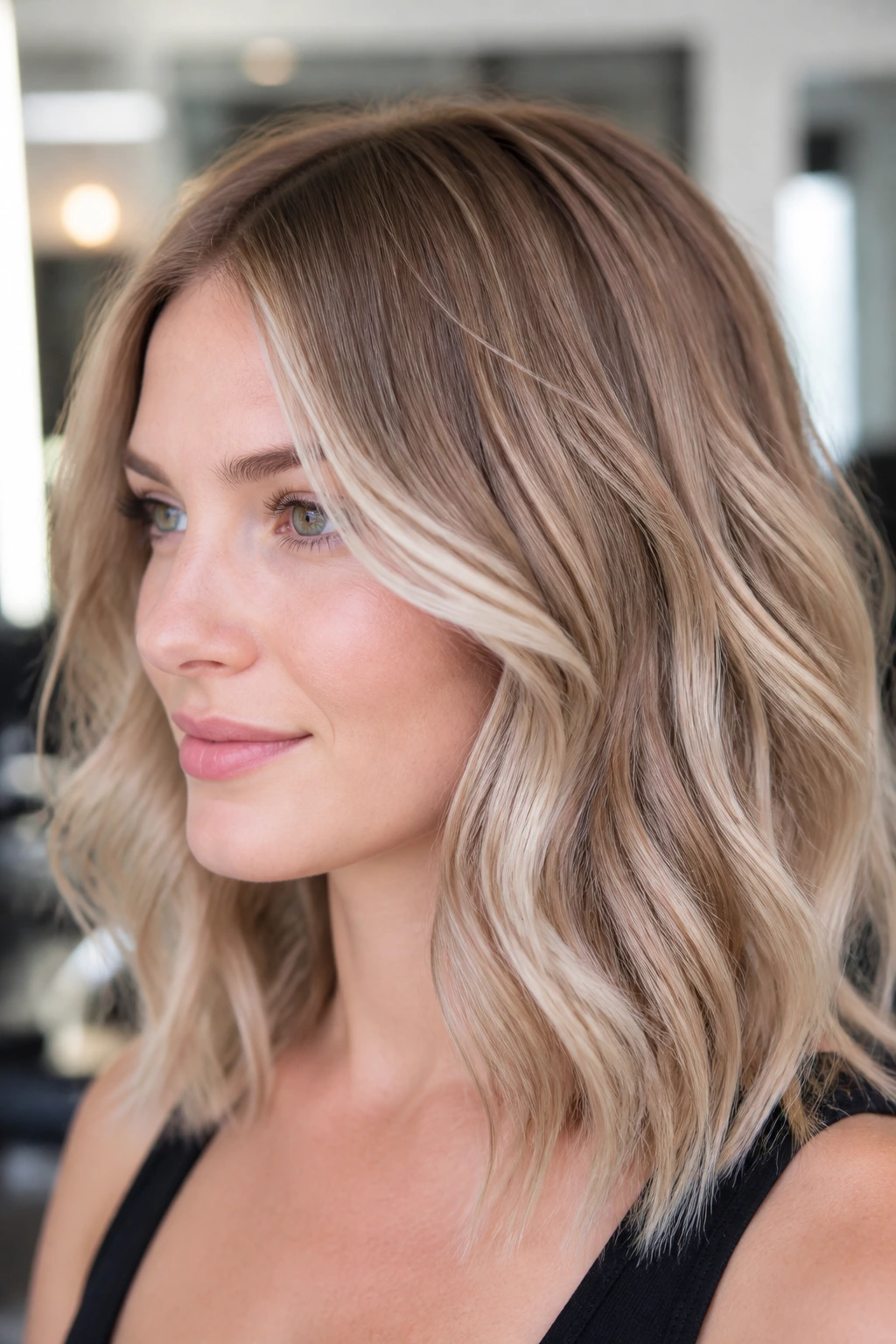
Tone Control: If the blonde pieces look too sharp, ask for a neutral beige gloss. If they look dull, a touch of champagne or pearl can wake them up. For warmer shades, keep the gloss dusty, not golden.
Placement Tweaks: If your face is very round, shift the brightest ribbons lower and narrower. If your face is round but long in the forehead, a little lift near the crown can balance things out without widening the sides. Small moves matter.
Texture Boost: Soft balayage shows best when the cut has movement. Long layers, a shattered bob, or airy curtain bangs give the color a place to sit. A blunt one-length cut can still work, but the color has to do more shaping.
Make-It-Yours: If you wear glasses, keep the brightest pieces just outside the frame so the color doesn’t fight the lenses. If your hair is fine, keep contrast low and ribbons thin. If your skin is very warm, tilt the gloss toward beige or apricot. If it’s cool, lean pearl, mushroom, or smoky beige.
Care, Refreshes, and Grow-Out Between Appointments
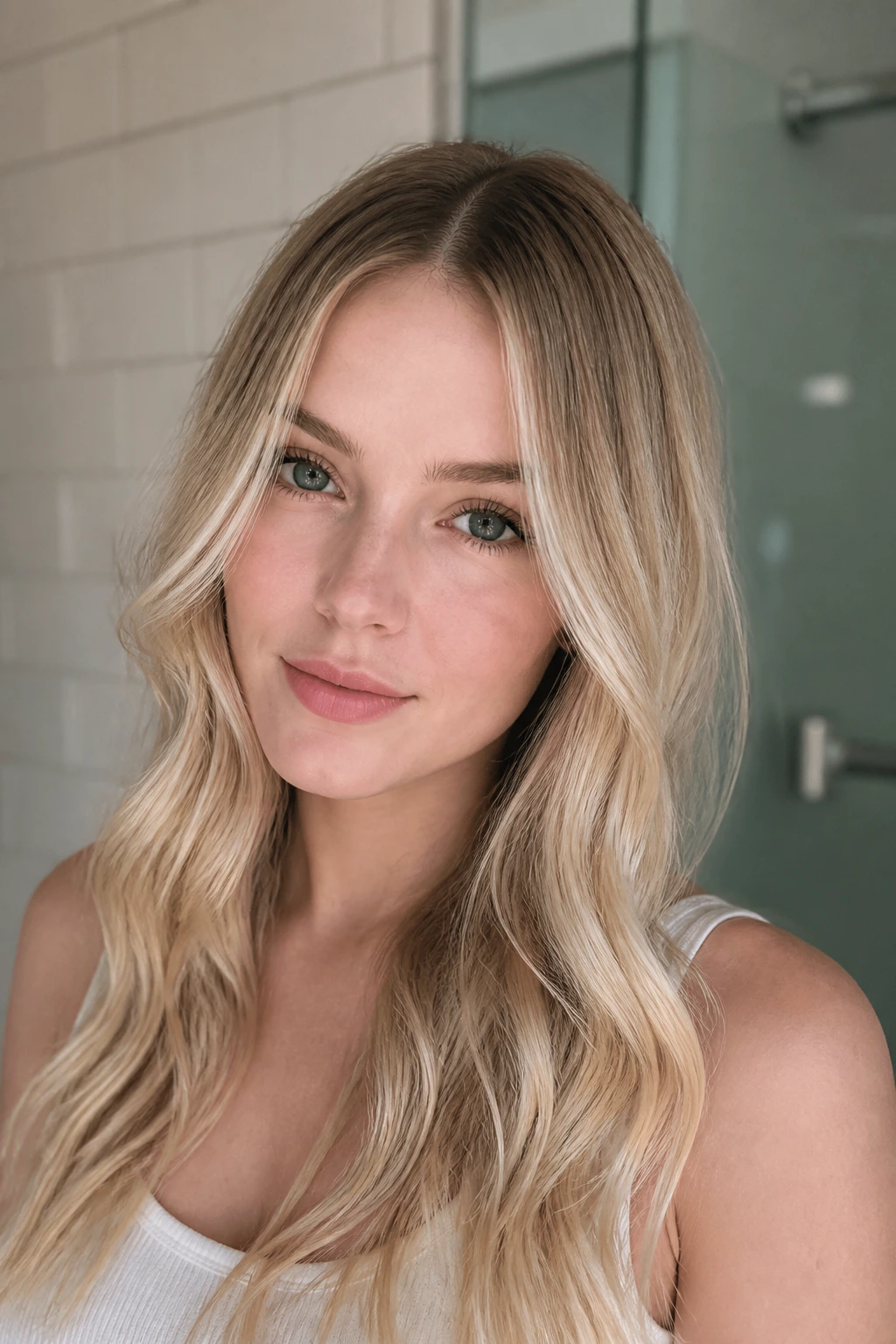
The first 24 to 48 hours after a color service are usually not the time to wash aggressively, scrub with hot water, or pile on clarifying shampoo. Once the cuticle settles, switch to color-safe shampoo and cooler rinses. That matters with soft balayage because the whole look depends on tone staying clean, not brassy.
For maintenance, many people do well with a gloss refresh every 4 to 8 weeks and a balayage touch-up every 3 to 6 months, depending on how much contrast they want and how fast their hair grows. If you’re blonding pale skin with pearl or champagne, a purple shampoo once every 1 to 2 weeks is usually enough. If you use it too often, the hair can go dull and dusty.
Deep condition weekly, especially on the lightest ends. Use heat protectant every time you blow-dry or curl. If your water is hard, a chelating or clarifying wash once a month can keep mineral buildup from turning beige tones muddy. That step is boring. It also saves the color.
Variations Worth Trying
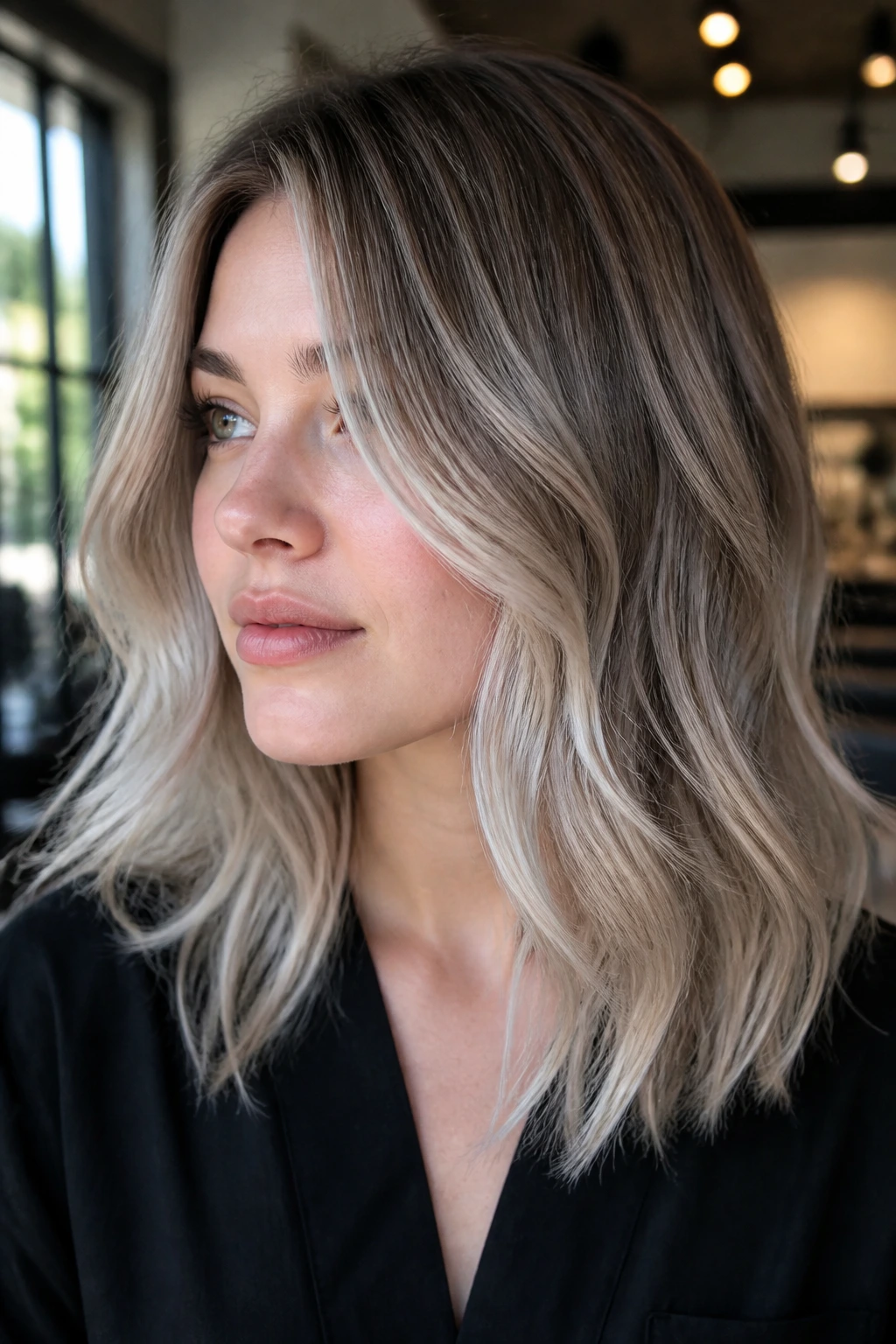
Cool Porcelain Melt: This version leans pearl, mushroom, and pale beige, with the lightest pieces kept narrow and low. It suits very fair skin with cool undertones and gives the hair a hushed, smoky finish.
Honeyed Soft Glow: Swap the cooler gloss for soft honey and oat tones. It works best if your skin is neutral or slightly warm and you want the face to look brighter without going fully blonde.
Copper Kissed Beige: Add a muted apricot or soft copper glaze over a beige balayage. The red warmth stays light and wearable, which makes it a good pick for pale skin that looks washed out under ash.
Brunette Smoke Veil: Keep the base deep mocha or espresso, then glaze the ribbons in smoky taupe. It gives round faces strong contour through the sides without hard stripes.
Curly Halo Balayage: On curls, keep the brightest pieces a little below the surface so the shape stays soft instead of halo-heavy. This works especially well on pale skin because the color peeks through the curl pattern rather than sitting on top of it.
Bob-Friendly Ribbon Lights: For short cuts, keep the ribbons thin and concentrated around the front and top layers. Too much brightness on a bob can make the shape square; thin ribbons keep it airy.
Common Mistakes to Avoid
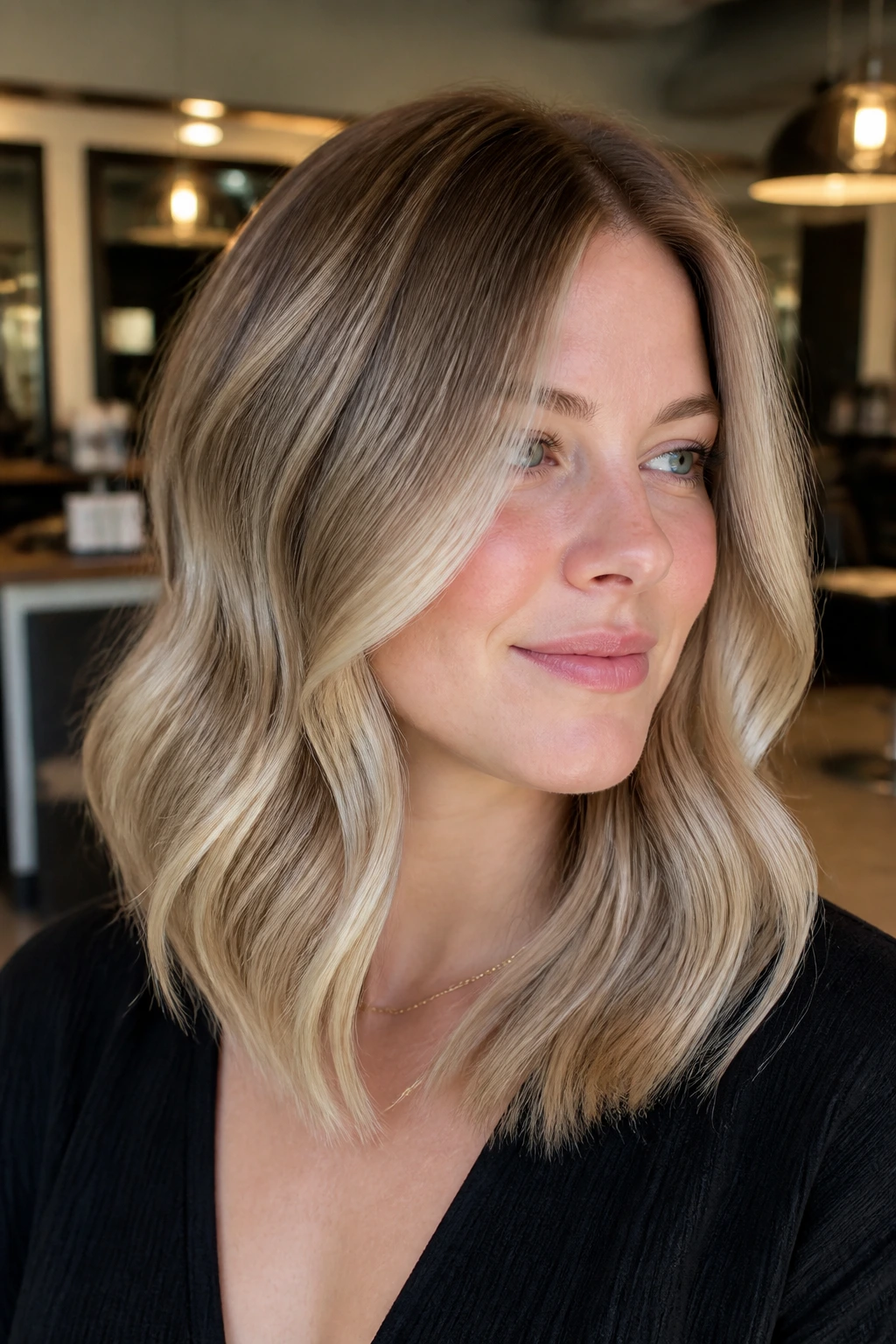
The first mistake is placing the brightest pieces at cheek level. On a round face, that creates a horizontal band right where you do not want one. The fix is simple: push the light lower and let it taper through the ends.
The second mistake is choosing a toner that fights your skin tone. Too much ash can make pale skin look gray; too much gold can turn pink skin ruddy. Ask for a beige, pearl, or mushroom gloss and adjust from there.
Third, people often go too chunky at the front. Big money pieces can look trendy on some faces, but on a round face they can widen the look fast. Thin face-framing ribbons do the same job with less visual weight.
Another one: forgetting about styling. Soft balayage can disappear if the hair is flat, oily, or overcurled. A loose bend or rounded blowout shows the dimension much better.
And then there’s maintenance neglect. Beige and pearl tones drift faster than darker brunettes, especially if you use hot water and harsh shampoo. Keep the gloss fresh, and don’t wait until the hair looks yellow before you do something about it.
Frequently Asked Questions
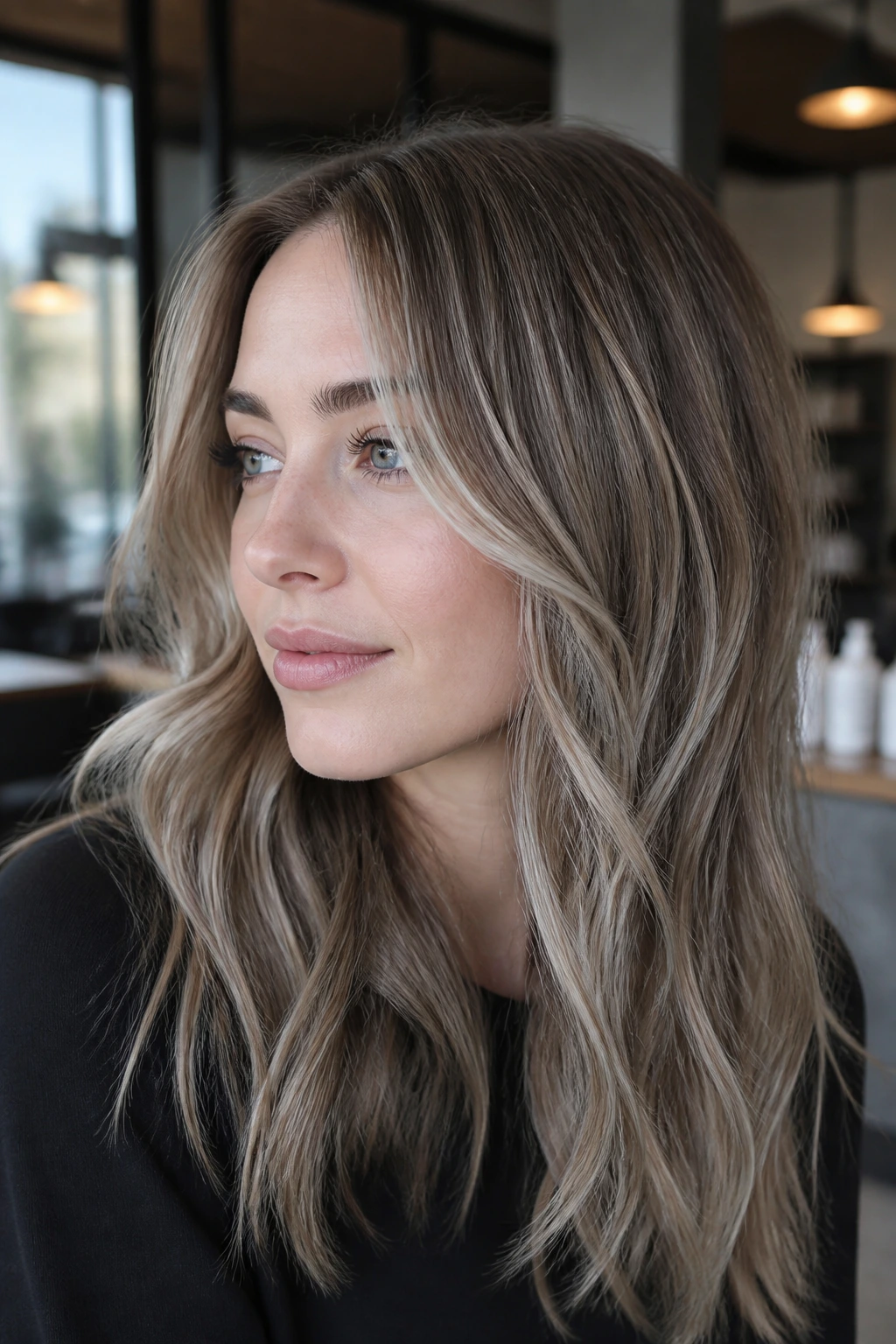
What balayage shade is best for pale skin?
Beige, pearl, mushroom, champagne, and softened caramel are the safest starting points. The best one depends on whether your skin leans pink, neutral, or warm. Very cool ash can work, but it needs careful toning so it does not make the complexion look flat.
Does balayage make a round face look wider?
It can, if the lightest pieces sit across the cheekbones in a broad band. Soft balayage avoids that by keeping brightness lower, thinner, and more vertical. The placement matters more than the shade.
Should I choose warm or cool tones?
If your pale skin turns pink easily, mushroom, beige, pearl, and smoky taupe usually behave better. If your skin has peach or golden undertones, champagne, honey, apricot, and caramel can bring more life. The wrong extreme is where trouble starts.
Can this work on short hair?
Yes. A bob or pixie-bob can look especially good with soft ribbons because the color helps shape the cut. Just keep the front pieces narrow and avoid bright blocks that stop at the cheeks.
How often will I need to refresh it?
Many soft balayage looks need a gloss every 4 to 8 weeks and a bigger touch-up every few months. The lighter and cooler the tone, the more often you’ll usually want a toner refresh. Darker bronde versions can go longer.
What if the blonde turns yellow?
Use a purple shampoo once in a while, not every wash. If the brass is strong, a salon gloss is better than trying to fix it with home products every day. Overcorrecting with too much purple can leave the hair dull and chalky.
Can fine hair wear soft balayage without looking thin?
Yes, if the highlight density stays light and the ribbons are thin. Fine hair does better with softer contrast and a few well-placed bright pieces than with heavy blonding. Too much light can make the ends look see-through.
Should I keep a center part or switch it up?
A center part usually helps elongate a round face when the face frame is soft and narrow. A slight side part can add lift if the hair is flat on top. Try both. One will usually feel obviously better in the mirror.
A Softer Frame, Not a Stripey One
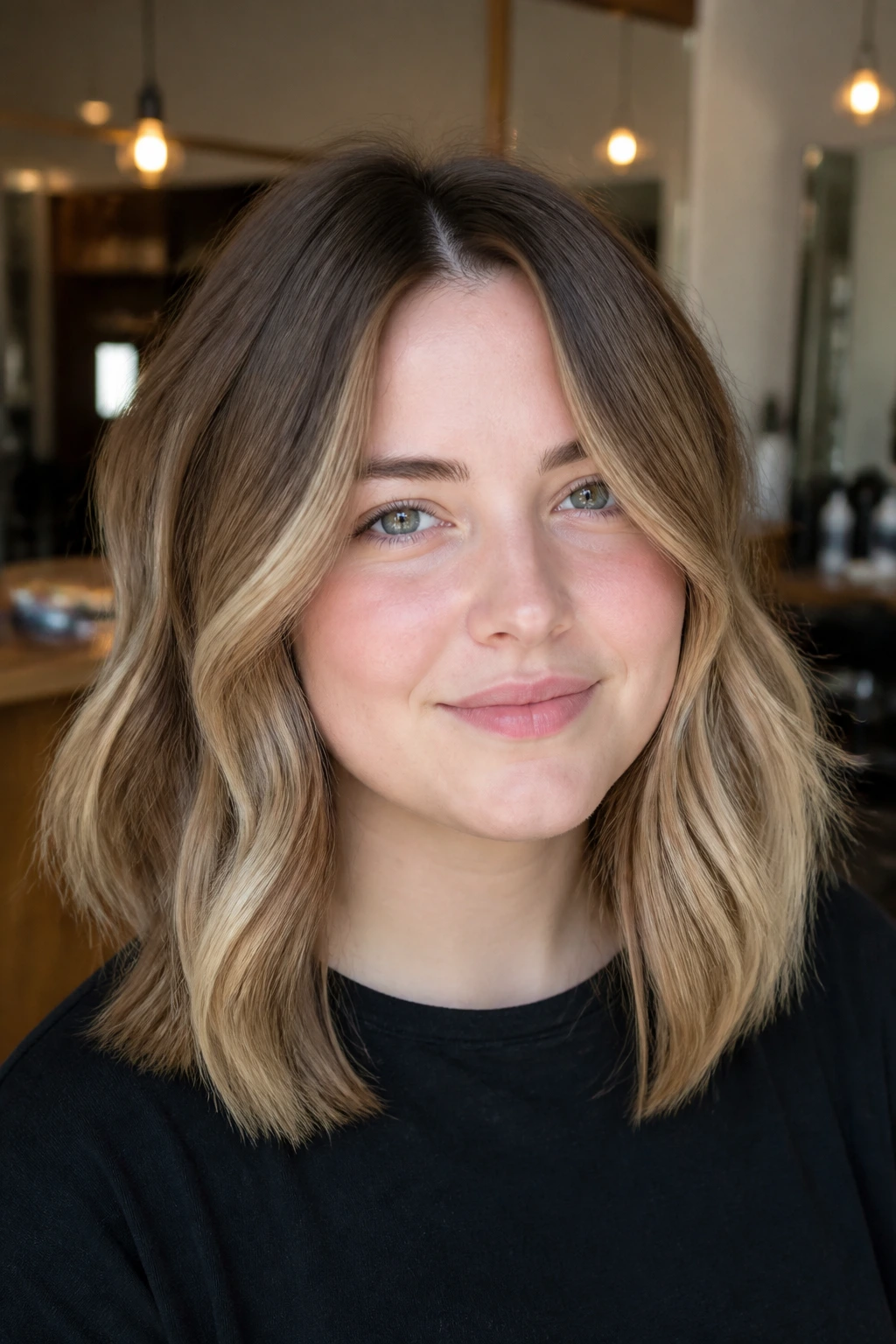
The best versions of this look do something almost sneaky: they change the shape of the face without advertising the trick. That’s why the tones stay soft, the face-framing pieces stay narrow, and the brightest light usually shows up lower than people expect. The hair still feels light and dimensional, but the color never turns into a loud stripe map across the widest part of the face.
If you’re pale and your face runs round, that combination is not a limitation. It just asks for better placement and a little more judgment at the chair. Champagne, pearl, mushroom, beige, caramel, rose beige — all of them can work when they’re painted with enough restraint.
Pick the version that matches your undertone, bring a photo with the front pieces and the part you actually want, and keep the gloss soft. The rest falls into place pretty quickly.