



Balayage on curly hair behaves differently than balayage on straight hair. A few painted ribbons can hide inside a curl spiral, then flash honey, caramel, or beige only when the light hits the bend; that is exactly why subtle balayage for medium skin tones with curly hair works so well when the tone is chosen with a light hand.
Medium skin can take warmth, but not every warm tone belongs there. A level 7 caramel that looks soft on one head can turn loud on another, and curls make that contrast even more noticeable because every ringlet creates its own little shadow. The prettiest versions keep the root a shade or two deeper, feather the lightness through the mid-lengths, and let a few brighter pieces live around the face where the curl pattern opens.
That balance is the whole point here: dimension without stripes, brightness without brass, movement without losing the curl clumps. Some looks stay deep and glossy; others lean honey, bronzed, beige, or barely coppered, but each one keeps enough depth near the scalp to grow out cleanly. Start with the tones that suit your undertone, because once those ribbons sit inside curls, they read more textured than bold, and that’s the sweet spot.
Why These 25 Looks Work So Well on Curly Medium Skin Tones
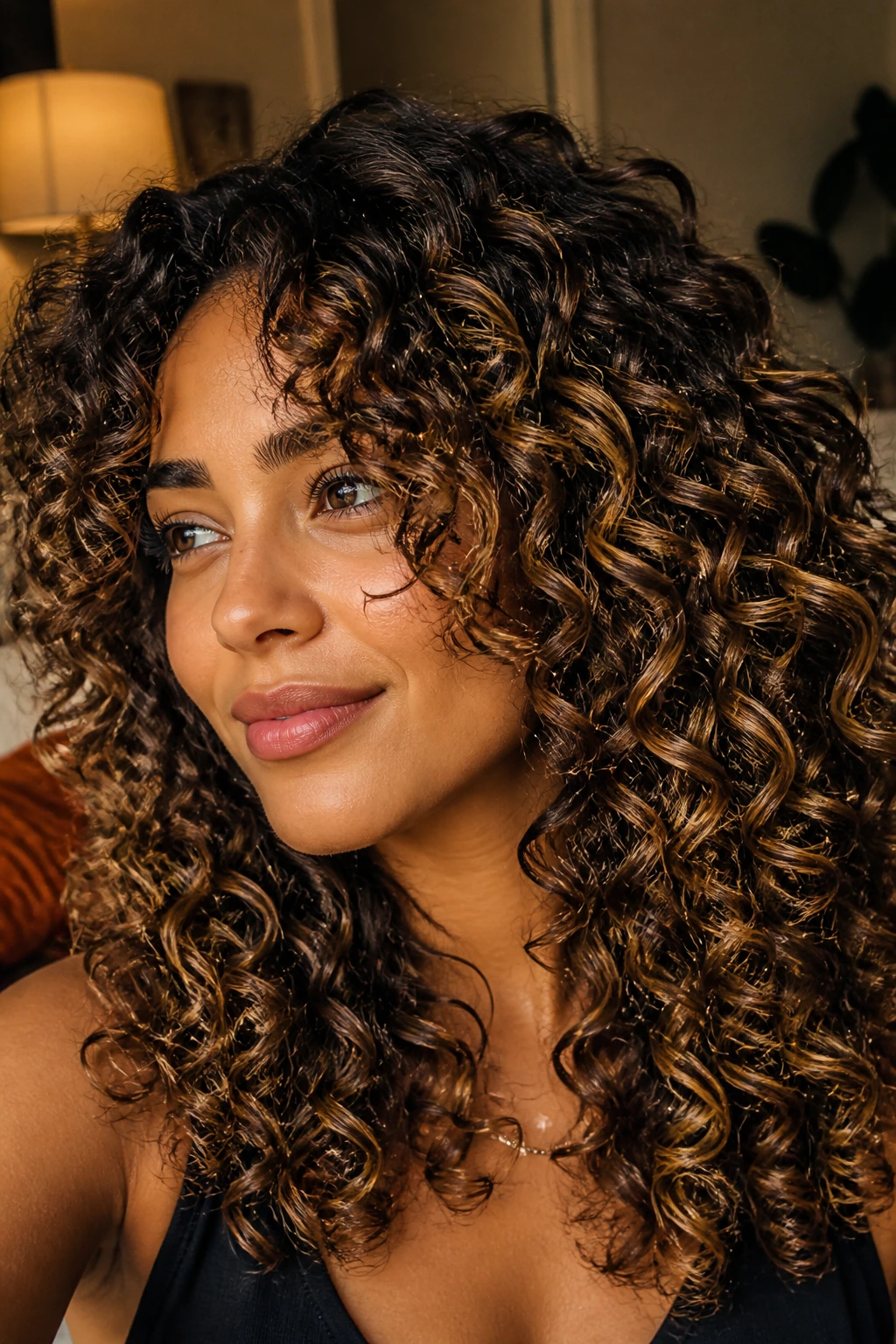
Soft grow-out: The root stays rich, so you do not get that hard line that shows up when a curl starts to separate at the part.
Curl-aware placement: Painted ribbons land on the curl clumps, not across them, which keeps the color from looking streaky once the hair dries.
Skin-tone balance: Honey, caramel, bronze, and beige all brighten medium skin without flattening the face the way a too-icy blonde can.
Low-contrast options: Plenty of these ideas stay just one or two levels lighter than the base, so you get depth first and brightness second.
Room to adjust: A good colorist can nudge these warmer, cooler, or richer without changing the whole vibe, which matters when your curls already do half the visual work.
1. Honey Ribbon Balayage
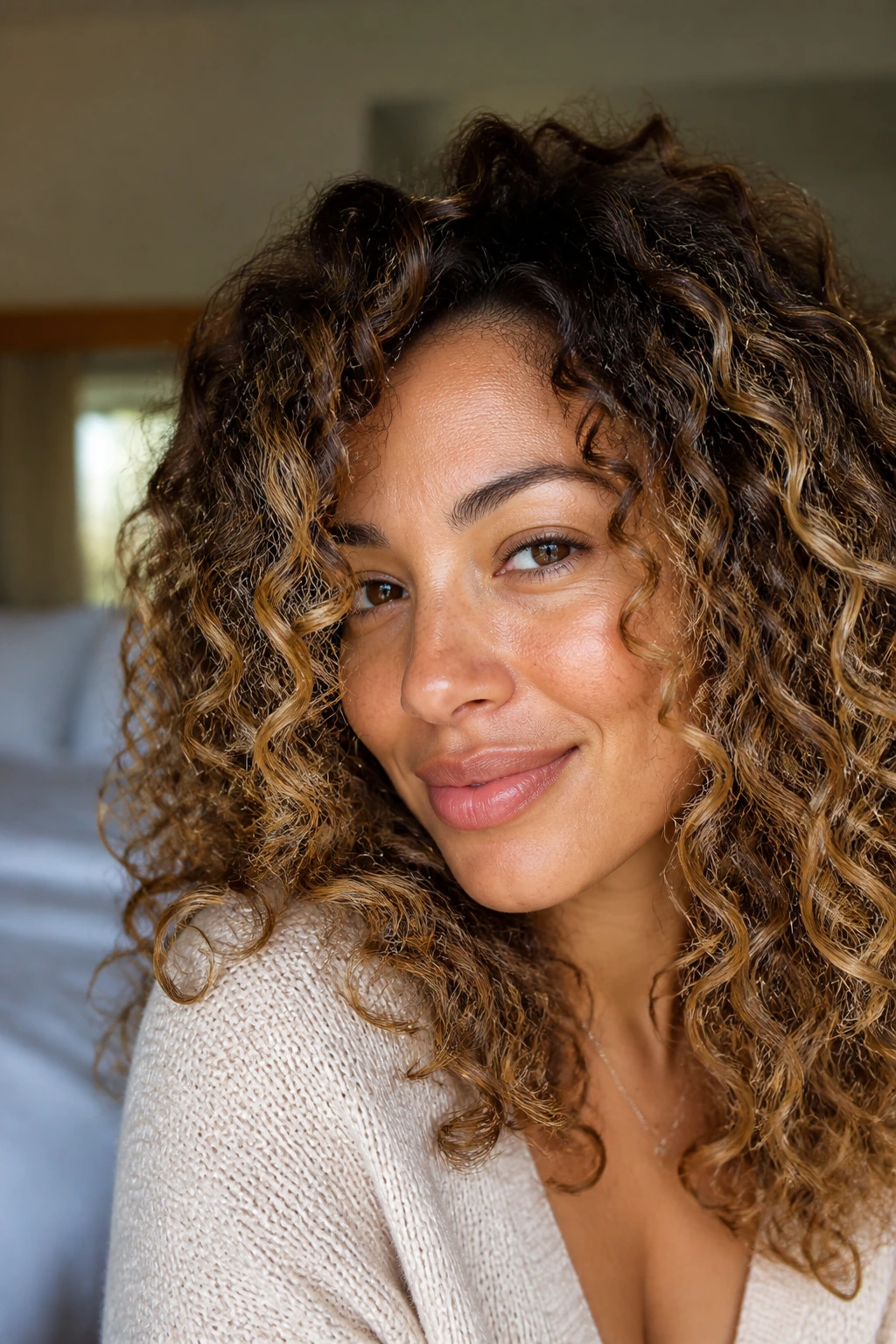
Honey ribbon balayage is the one I’d hand to someone who wants lightness but refuses to look stripey. The color lives in thin, hand-painted pieces through the top layer and a few brighter bends around the face, so medium skin gets a warm lift instead of a washed-out blonde halo.
Why Honey Ribbons Work on Curls
Curls make honey look deeper and richer than it does on straight hair. A 3A to 3C pattern catches those ribbons at the bend, so the light moves instead of sitting flat.
- Ask for one to two levels lighter than your natural base, not a full blonding job.
- Keep the root shadow soft and cool so the face stays framed.
- Let the lightest pieces sit on the outer curve of the curl.
- A beige gloss after lifting keeps the honey tone from turning brassy.
Tiny rule: if your curls are dense, paint fewer ribbons than you think you need. The curl shrinkage will do the rest.
2. Caramel Cloud Balayage
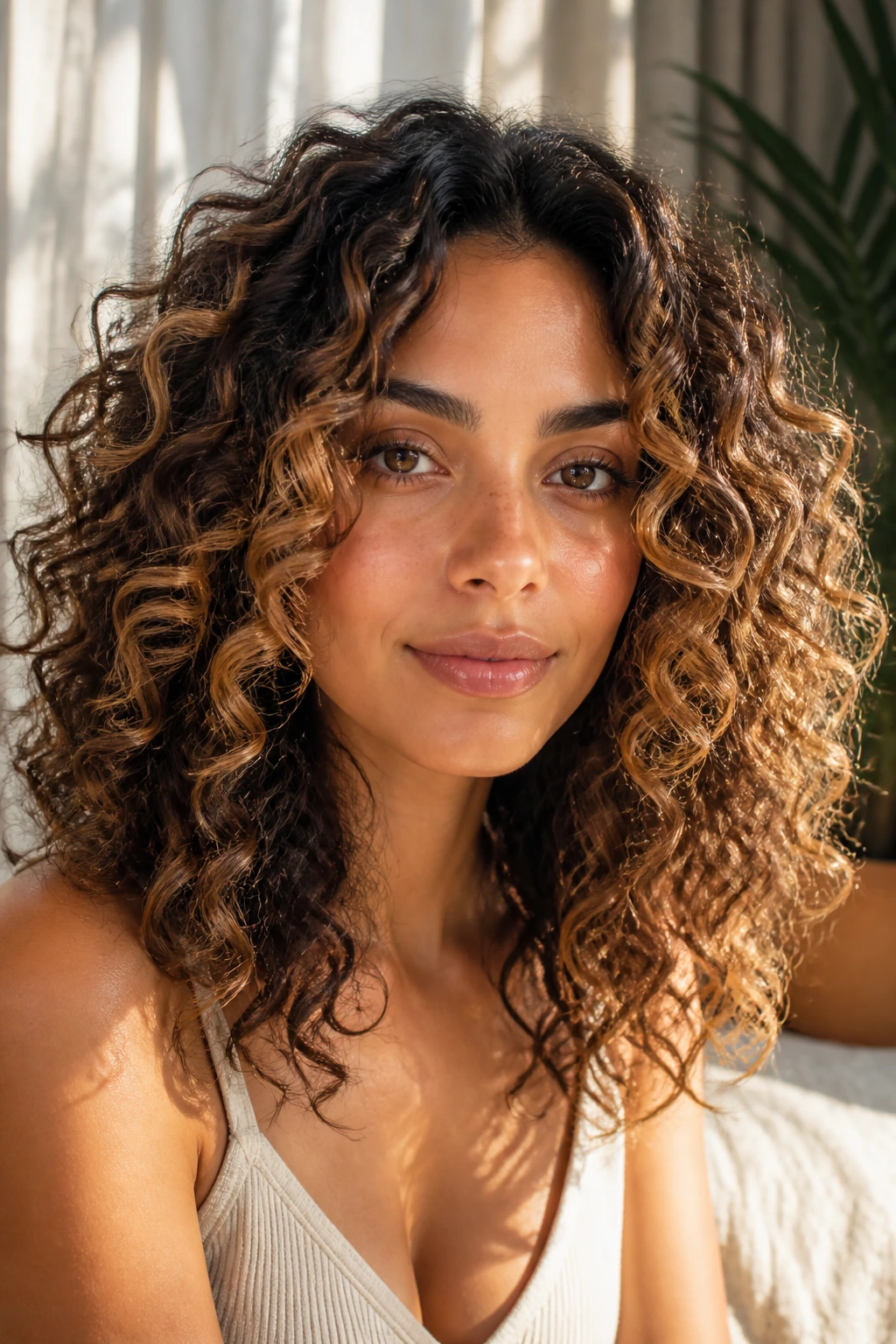
Caramel cloud balayage is my favorite “safe but not boring” move for medium skin with curls. It sits in that middle zone where the color reads warm, glossy, and expensive-looking without drifting into orange or pale gold.
What makes it work is the softness of the contrast. The base stays deep, often a rich brunette or dark brown, while the caramel pieces hover through the mid-lengths like a warm fog. On looser curls, that gives a clouded, sun-warmed effect; on tighter curls, it looks more like movement than color blocks.
If your skin leans neutral or golden, this is a strong starting point. Ask for face-framing brightness and a few interior ribbons, not a full head of light pieces. You want the curls to look lifted, not outlined.
3. Mocha Melt Balayage
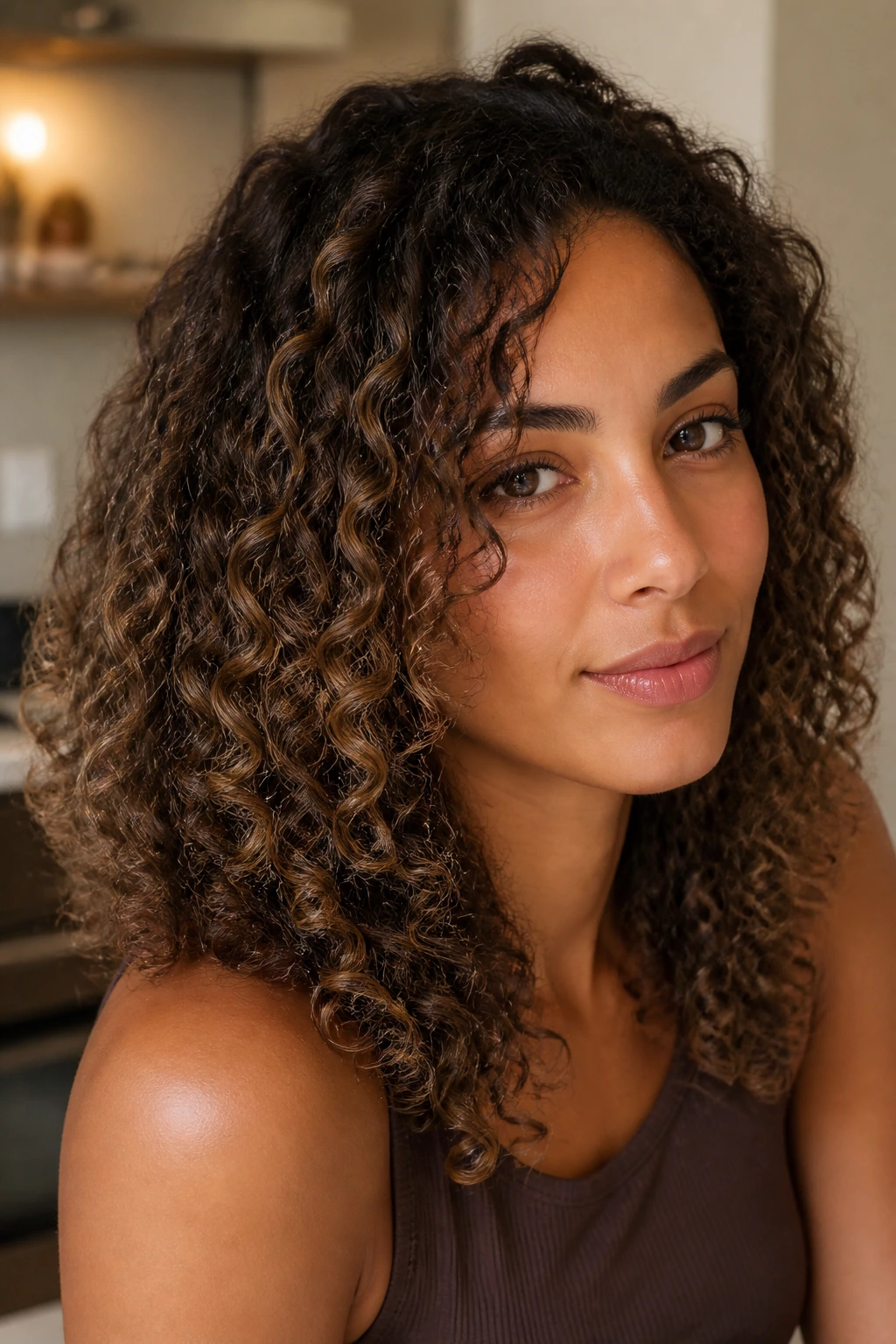
Want brightness that still looks grounded? Mocha melt balayage keeps the whole look anchored in deep brown, then slips in soft toffee and milk-chocolate ribbons where the curls open.
What Makes It Different
Unlike blonde-leaning balayage, mocha melt never fights medium skin. The contrast stays gentle, so the curls keep their shape and the color reads rich instead of loud.
It’s a smart choice for tighter textures too, because the darker base prevents the color from disappearing once the hair shrinks. If you wear a diffused wash-and-go, those mocha ribbons show up in the bends and on the outer layer, which is exactly where you want the eye to go.
Ask the stylist for painted ends and a root area that stays nearly untouched. That keeps the grow-out soft and avoids the patchy look that can happen when light pieces start too high.
4. Cinnamon Sheen Balayage
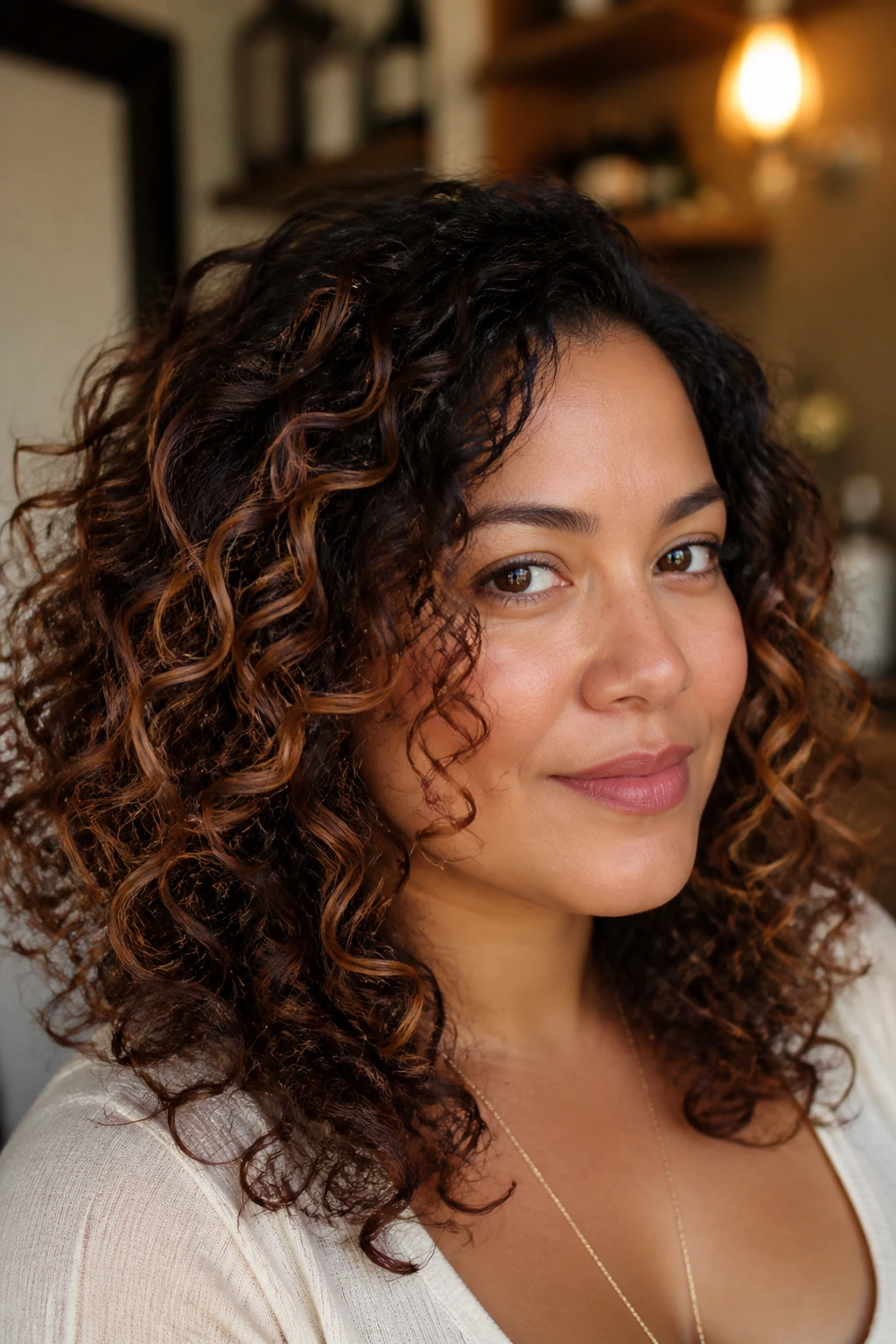
Cinnamon sheen balayage has a little spice, but it stays restrained if the copper is muted with brown. On medium skin, that matters. Too much red can read aggressive near the face; cinnamon with a brown base reads warm, glossy, and intentional.
Picture soft auburn light on the curl ends and a few warmer pieces around the temple line. It’s the kind of color that looks especially good on layered curls because the movement does half the work. The ringlets keep the red-brown tone from looking flat.
If your natural hair already has warm pigment, this is an easy upgrade. Ask for a gloss-heavy finish, not a blazing copper lift, and keep the lightest pieces under the crown if you want the color to stay subtle.
5. Beige Bronze Balayage
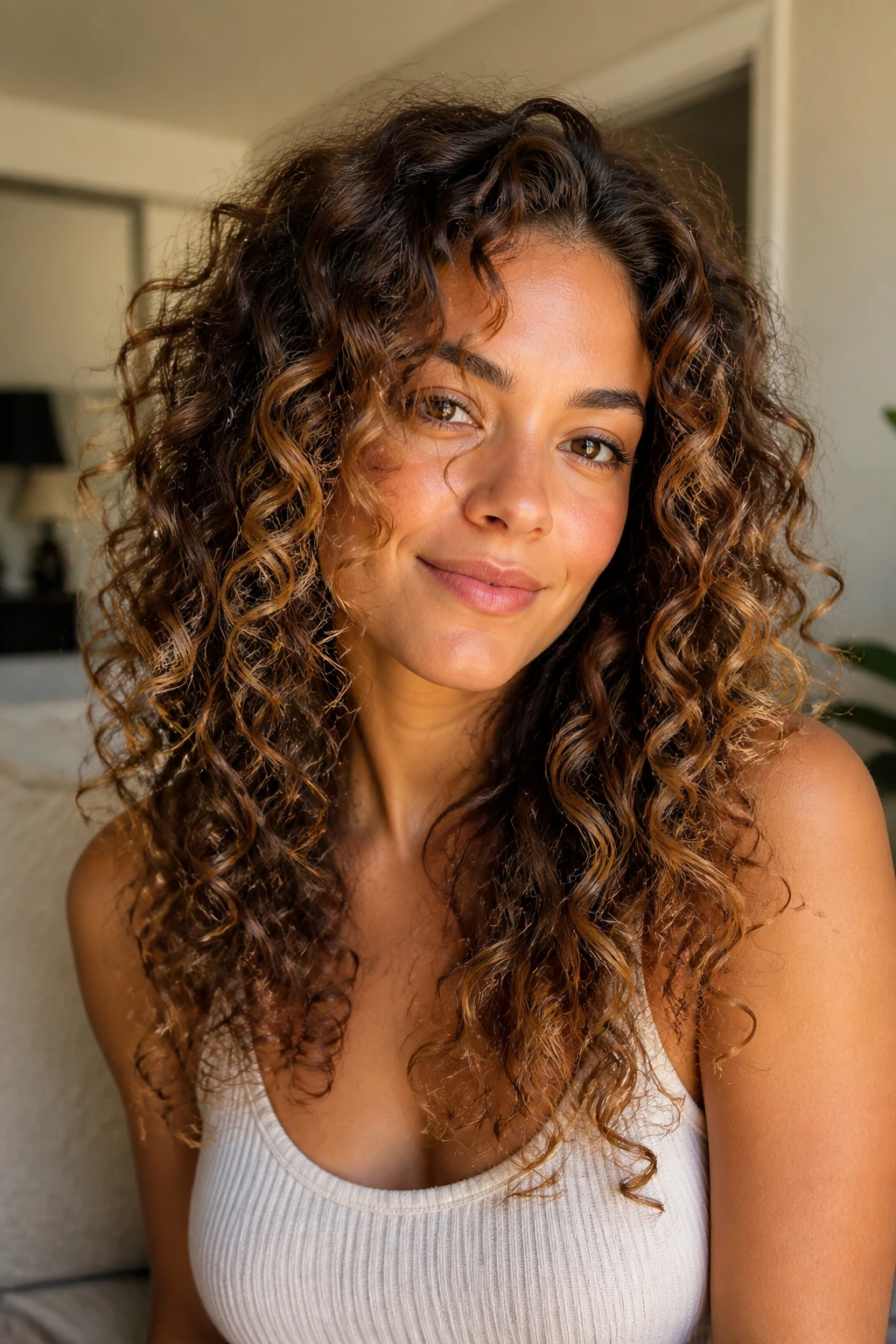
Beige bronze balayage works because it avoids both extremes. It is not icy, not orange, not muddy. It sits in that middle lane where medium skin still looks alive, and curly hair gets enough contrast to show shape.
The beige keeps the color soft around the face, while the bronze stops it from going flat on darker mids and ends. On olive-leaning skin, this pairing is especially useful; the bronze warms things up, and the beige keeps it modern.
I like this on curls that already have a little frizz or texture, because the two-tone mix hides uneven shine. If the hair is very tight and dense, ask for fine ribbons rather than broad swaths. Thick stripes are the quickest way to lose the subtle part.
6. Toffee Face-Frame Balayage
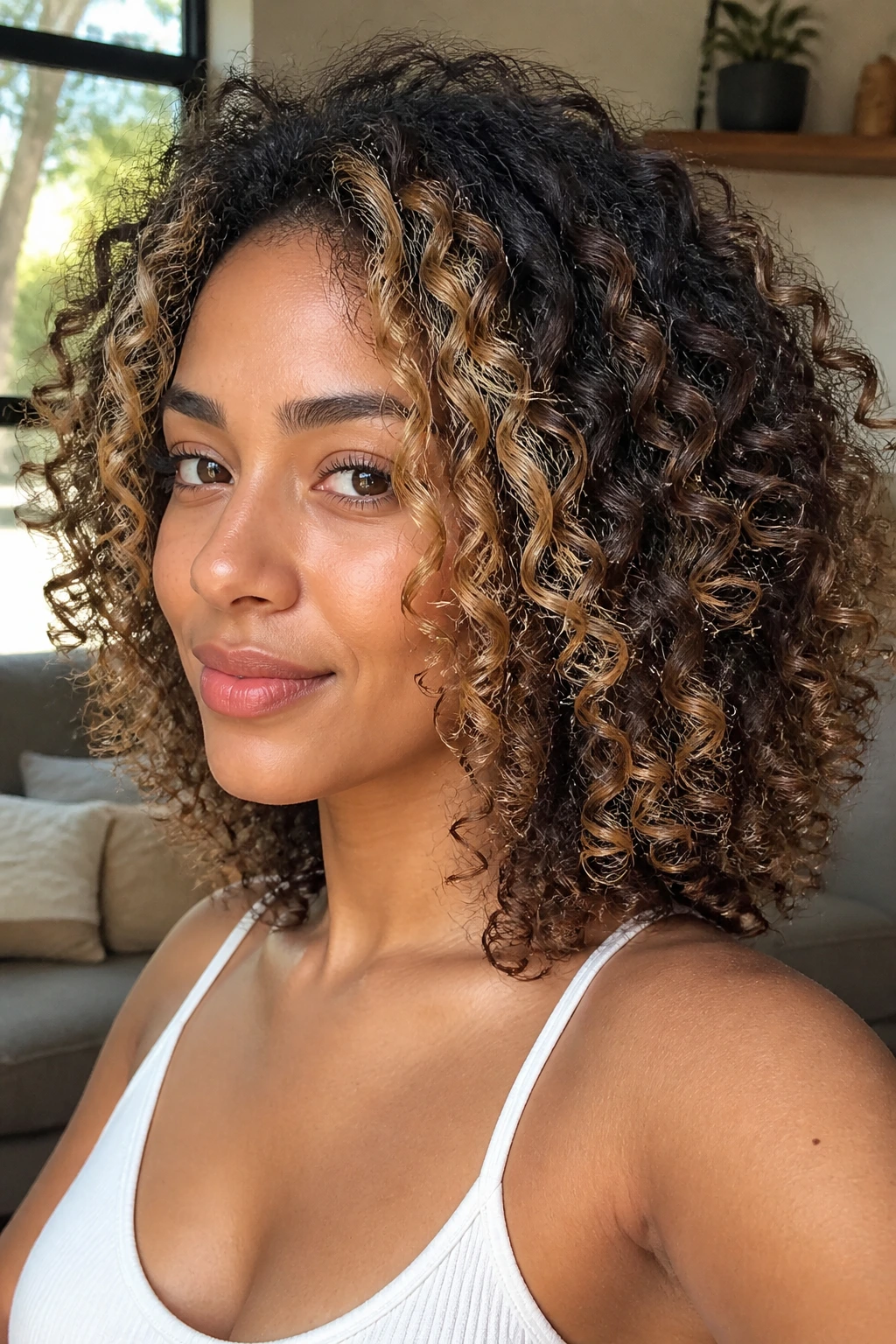
Toffee face-frame balayage is for the person who wants people to notice the curls first and the color second. The brightest pieces stay around the cheekbones, temples, and outer front curl clusters, while the rest of the hair keeps a darker, quieter base.
That face-framing placement matters on medium skin because it adds light where skin naturally catches it. The toffee tone warms the face without turning the whole head lighter, and curly hair makes the effect feel woven in rather than painted on.
Compared with full-head balayage, this is easier to keep soft. It’s a strong choice if your curls are dry at the ends or if you want less upkeep between salon visits. A gloss every six to eight weeks keeps the toffee from drifting too gold.
7. Chestnut Shadow Balayage
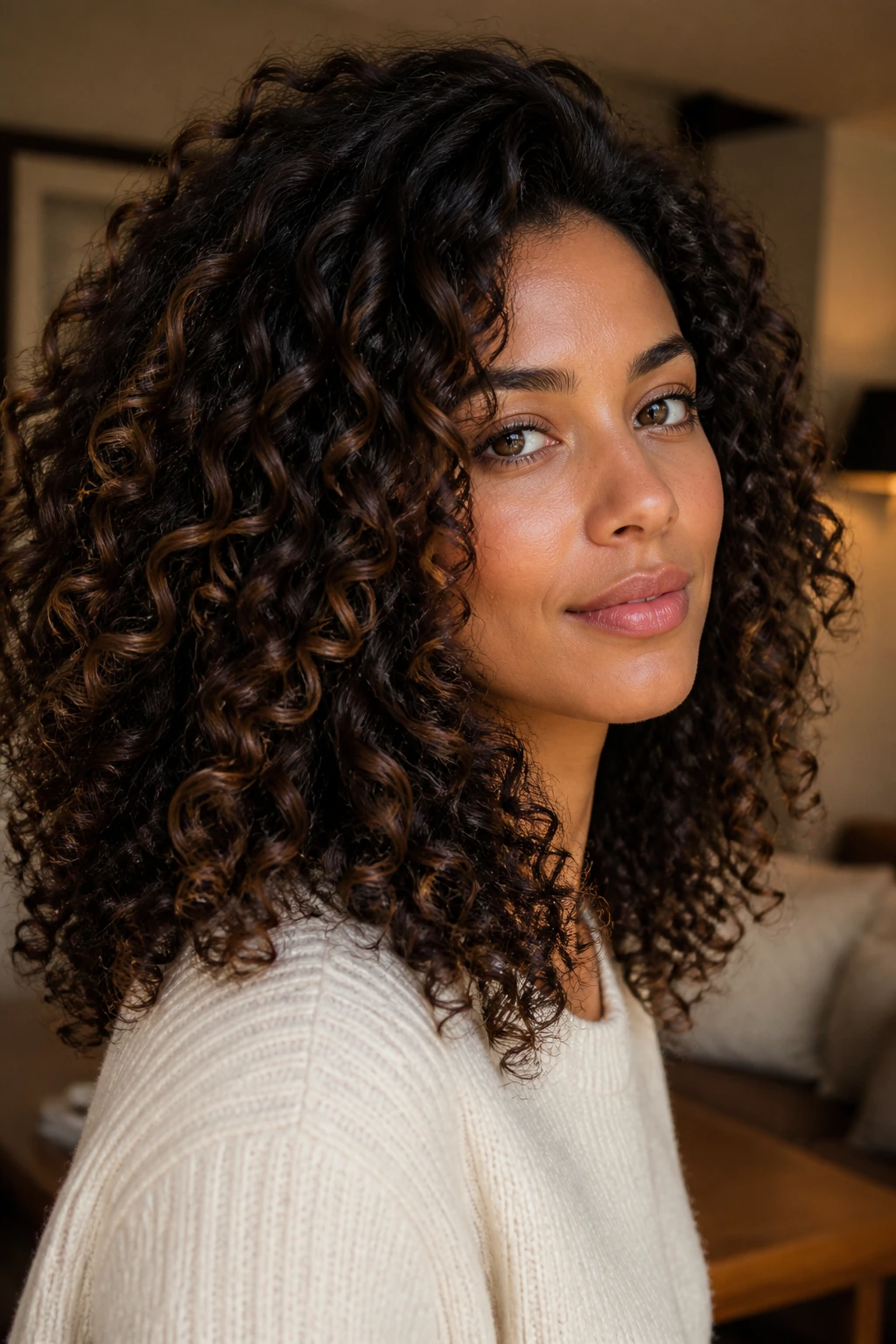
Chestnut shadow balayage is the one I’d pick for someone who wants dimension with almost no drama. The color shift is modest: a chestnut base, a few warm ribbons, a touch of light around the surface. That’s it. No stripey business.
The shadowy root keeps medium skin looking balanced, especially if your undertone is neutral or a little olive. On curls, the chestnut pieces peek through in motion, which makes the color feel deeper than it looks in a still photo.
This is a good “first color” choice. It gives the feeling of change without the maintenance headache of a high-contrast blonde. If you like rich knit sweaters, gold hoops, and dark denim, this shade fits that whole mood without trying too hard.
8. Copper Glaze Balayage
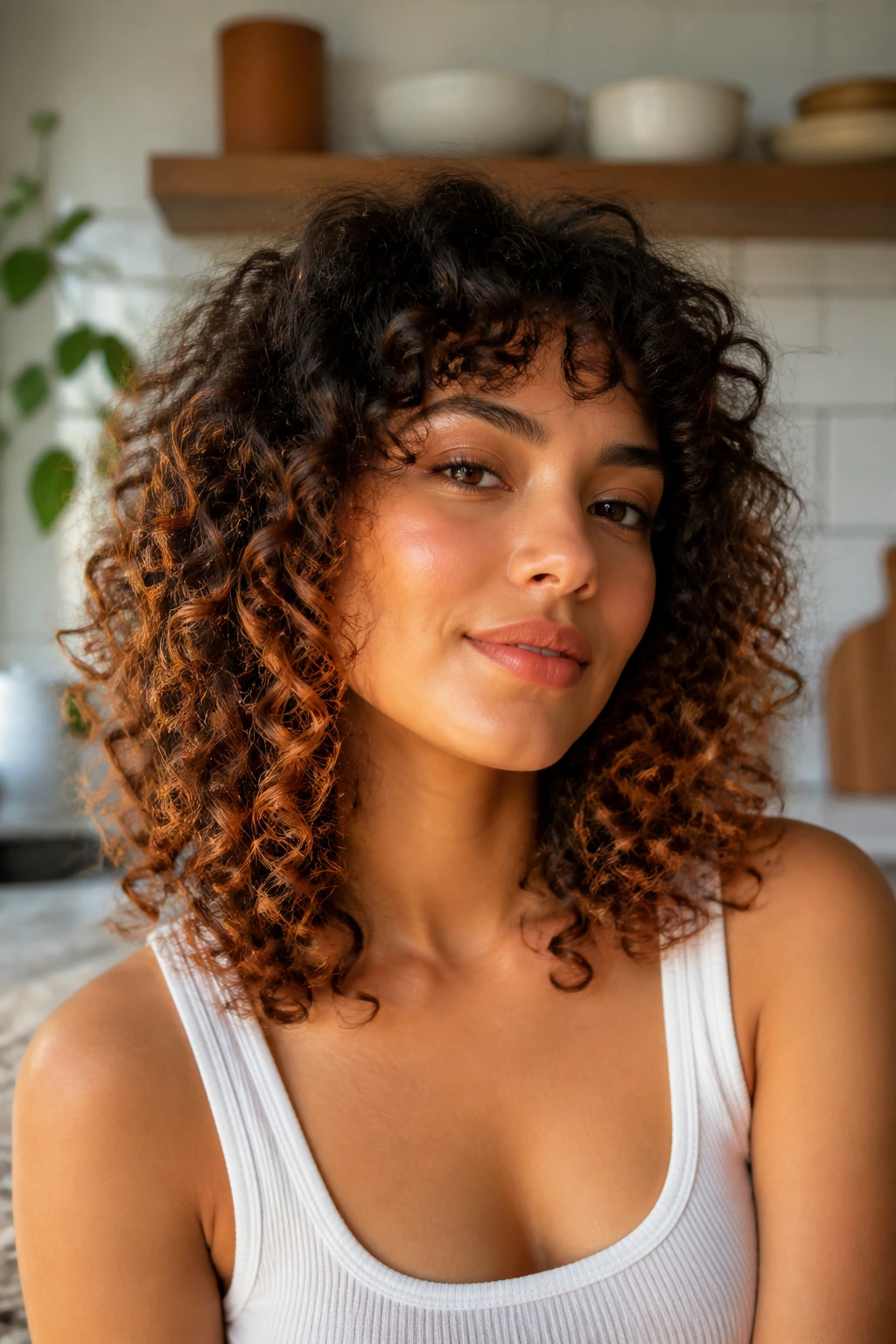
Copper glaze balayage can go wrong fast if the copper is too bright. Keep it soft, and it becomes one of the nicest warm options for medium skin with curls. The glaze warms the ends, catches on the outer ringlets, and gives the hair a coppery fire without shouting.
Best for Warm Medium Skin
Warm or golden undertones usually wear this easiest. If your skin flushes red easily, ask the stylist to mute the copper with brown so the face doesn’t look more pink than you want.
A good copper glaze should look like light passing through tea, not neon paint. That means a demi-permanent gloss or a very gentle lift, especially if your hair is already porous from heat or previous color. Curls show copper beautifully, but they also show damage quickly. Don’t skip the bond treatment.
9. Mushroom Brown Balayage
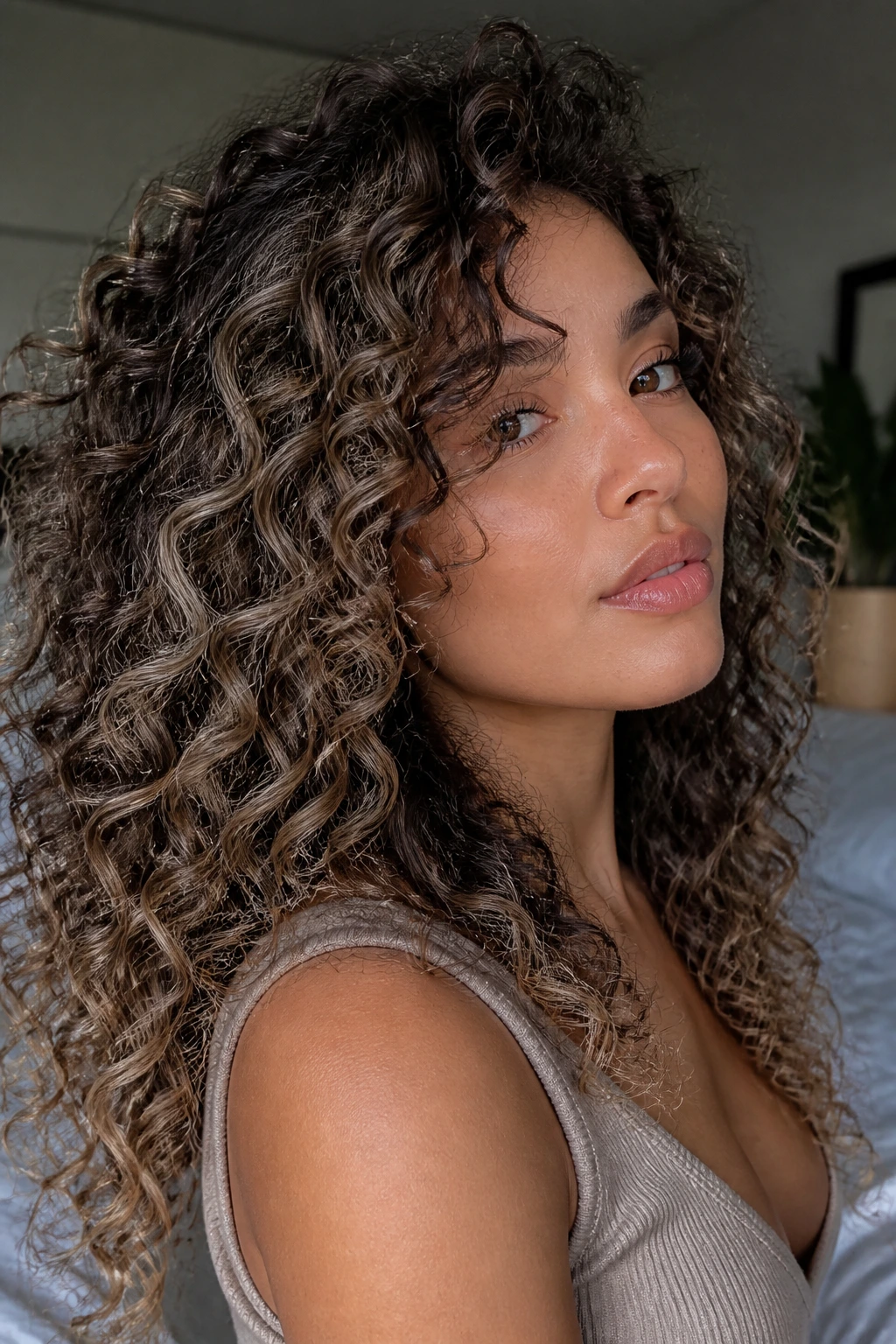
Mushroom brown balayage is where cooler beige and soft brown meet, and it is a smart pick if warm highlights tend to look too orange on your hair. The result is subtle, a little smoky, and very easy on medium skin that leans neutral or olive.
The trick is contrast control. You want cool-leaning ribbons that are still soft enough to sit inside the curl pattern, not against it. On textured hair, mushroom brown can look almost velvet-like, especially when the curl clumps are defined and the surface has a little shine.
If you wear a middle part, this color can feel especially balanced. If you prefer a side part, the lighter pieces can be pushed into the heavier side for a more dimensional frame.
10. Bronde Halo Balayage
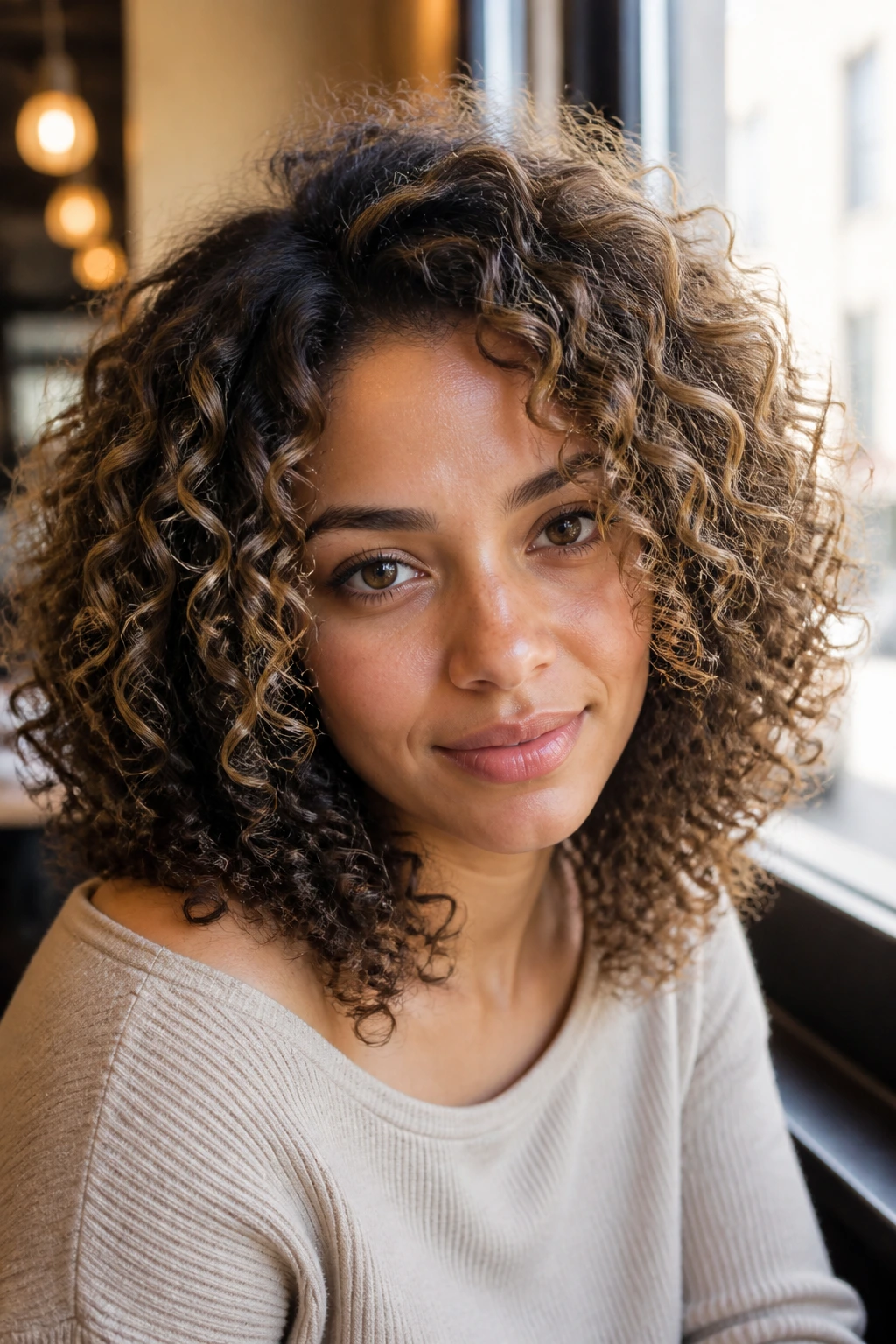
Bronde halo balayage is what happens when brunette and blonde stop arguing and agree to share the head. The halo effect puts the lightest pieces around the outer perimeter and crown, so the curls look lit from above rather than streaked from below.
On medium skin, bronde works best when the blonde side stays creamy or beige, not icy. That keeps the face warm and stops the curl ends from looking dusty. The deeper brunette underneath gives the whole shape a bit of weight, which curls usually need.
This is a nice option if you like to wear your hair up in a puff, clip, or half-up style. The perimeter color stays visible even when the curls are gathered, which makes the placement pull its weight.
11. Apricot Auburn Balayage
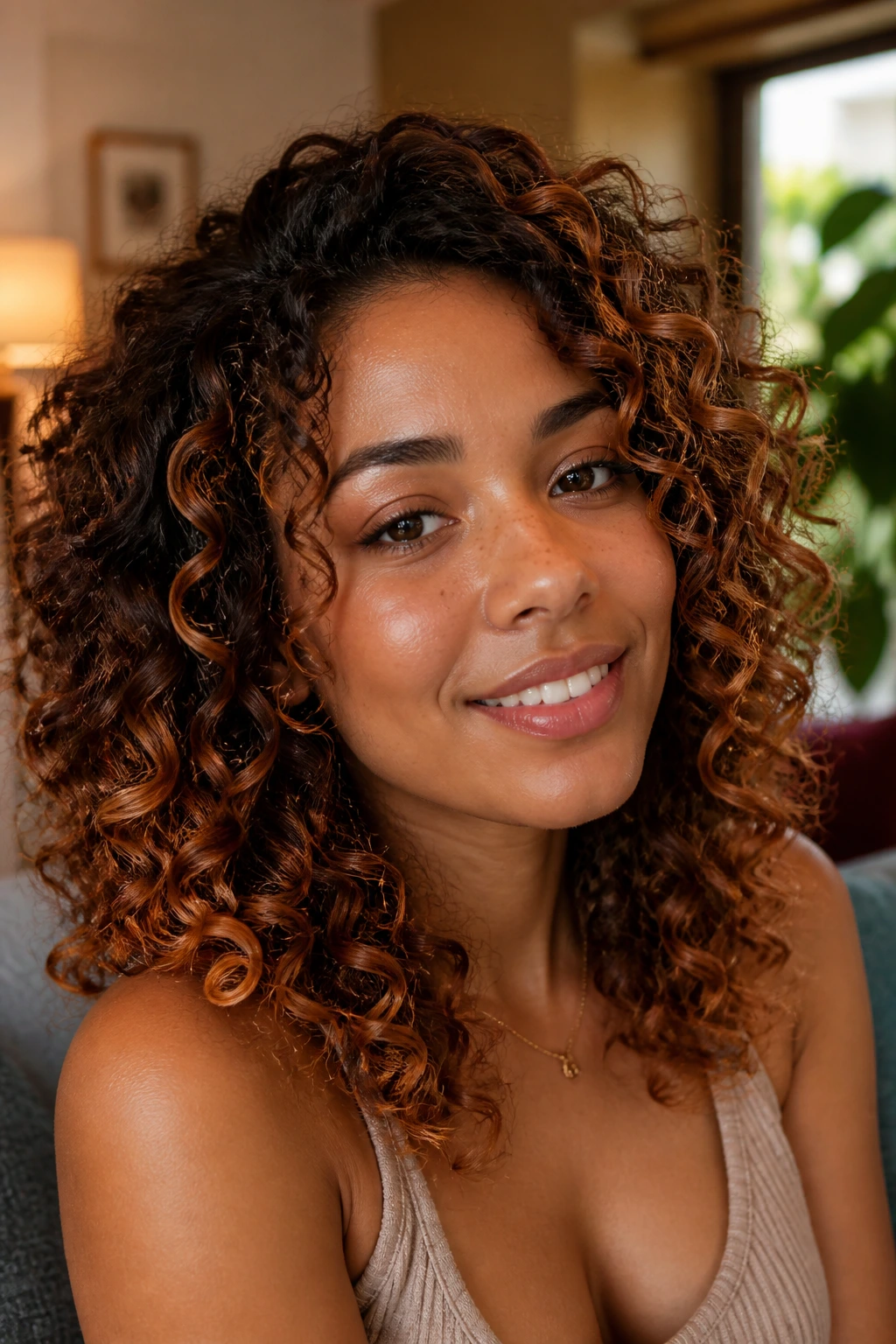
Apricot auburn balayage brings in a softer red note without pushing the look into full copper. The color sits between peach, auburn, and warm brown, and on medium skin it can be very flattering when the lift is controlled.
It works best when the apricot shows up in small ribbons through the ends and around the face, not everywhere. Curls naturally soften red tones, so the color reads more wearable than it might on straight hair. If your base is dark, ask for a brown-backed apricot rather than a bright orange lift.
This one feels best on medium skin with warm or neutral undertones. It has personality, but it still grows out like a lived-in color, which is the whole reason to choose balayage in the first place.
12. Espresso Dimension Balayage
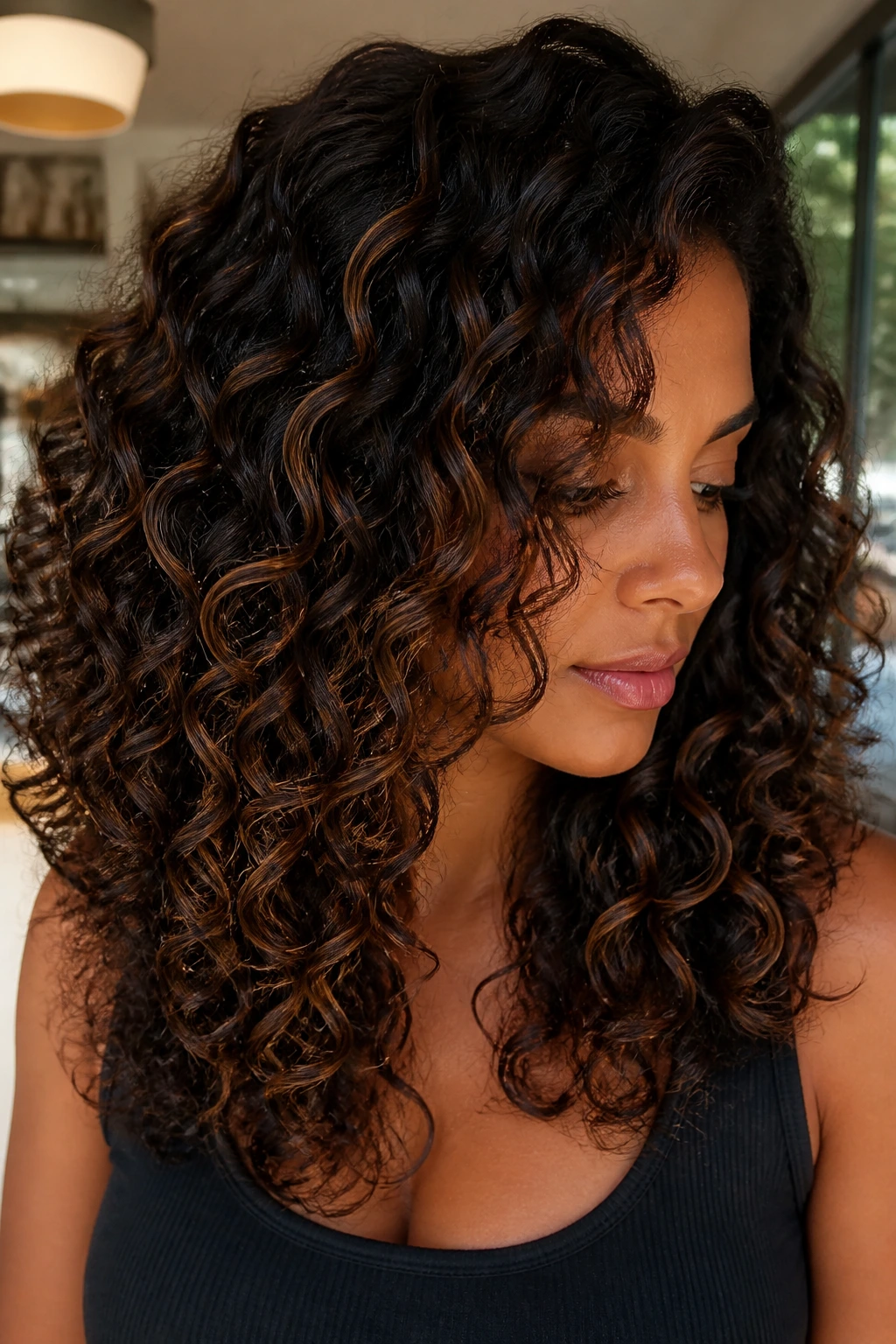
Espresso dimension balayage is proof that “subtle” does not have to mean “light.” Sometimes the prettiest move is to keep the hair nearly dark and add just enough warmer espresso and cocoa variation that the curls stop looking like one flat block.
That low-contrast approach is especially good for deeper medium skin. It lets the hair stay rich while the curl pattern creates movement on its own. In daylight, you get soft brown variation; indoors, the hair reads glossy and controlled.
I like this on dense curls and coils because it keeps the silhouette strong. If you want the color to show a little more, ask for a few warm ribbons around the face only. That’s enough.
13. Almond Latte Balayage
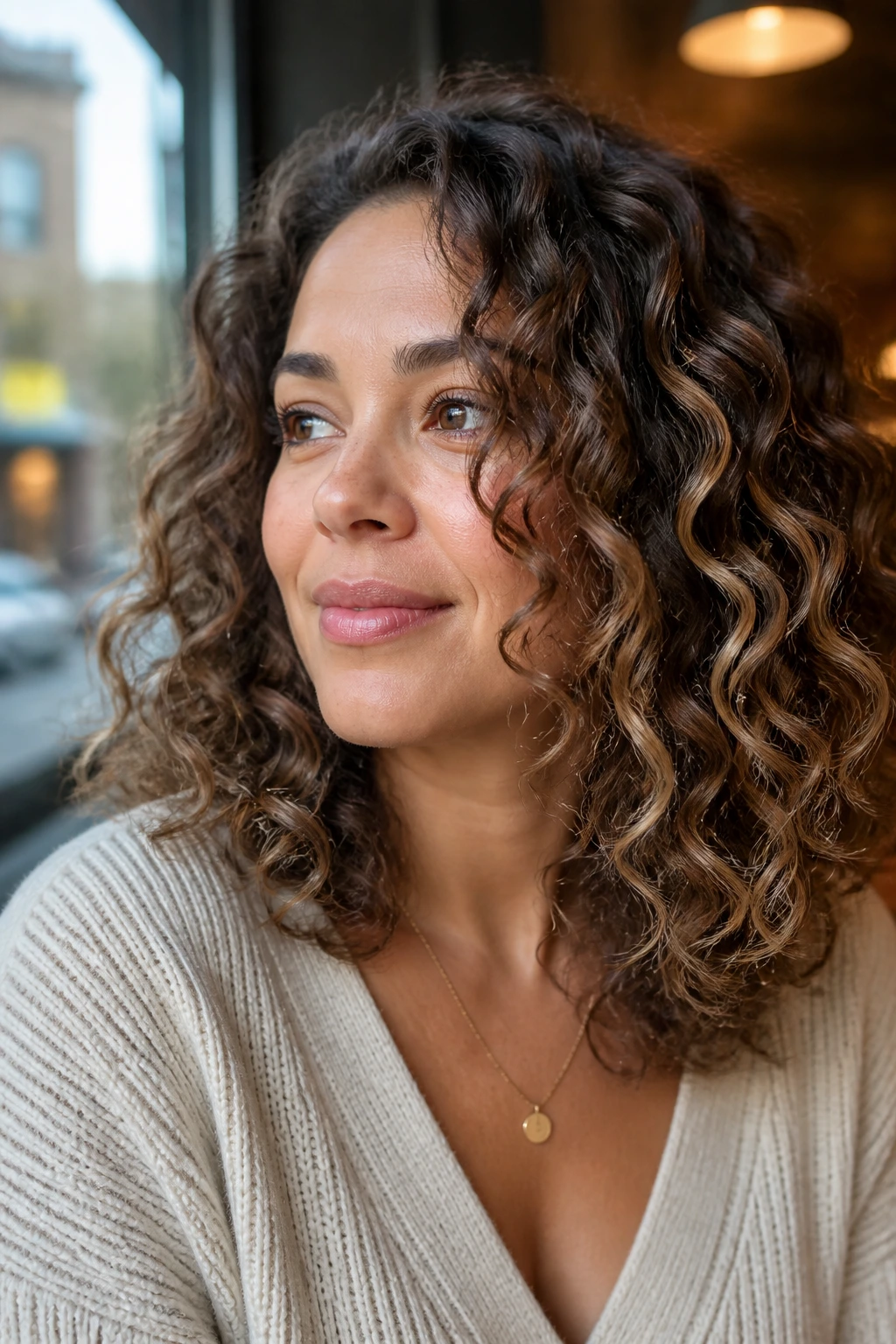
Almond latte balayage is creamy, brown, and slightly beige, like the softest version of a café color. It flatters medium skin because it has warmth without turning copper and brightness without drifting icy.
Could this work on looser curls and shoulder-length cuts? Absolutely. The lighter ribbons sit best through the mid-lengths and under the top layer, where they peek through as the curl settles. The almond tone keeps the overall look soft enough to wear every day.
What to Ask For
Ask for a brunette base with almond-beige ribbons and a gloss that keeps the finish silky, not chalky. If the stylist pulls the light pieces too high, the whole look gets louder than it needs to be.
14. Sand Beige Balayage
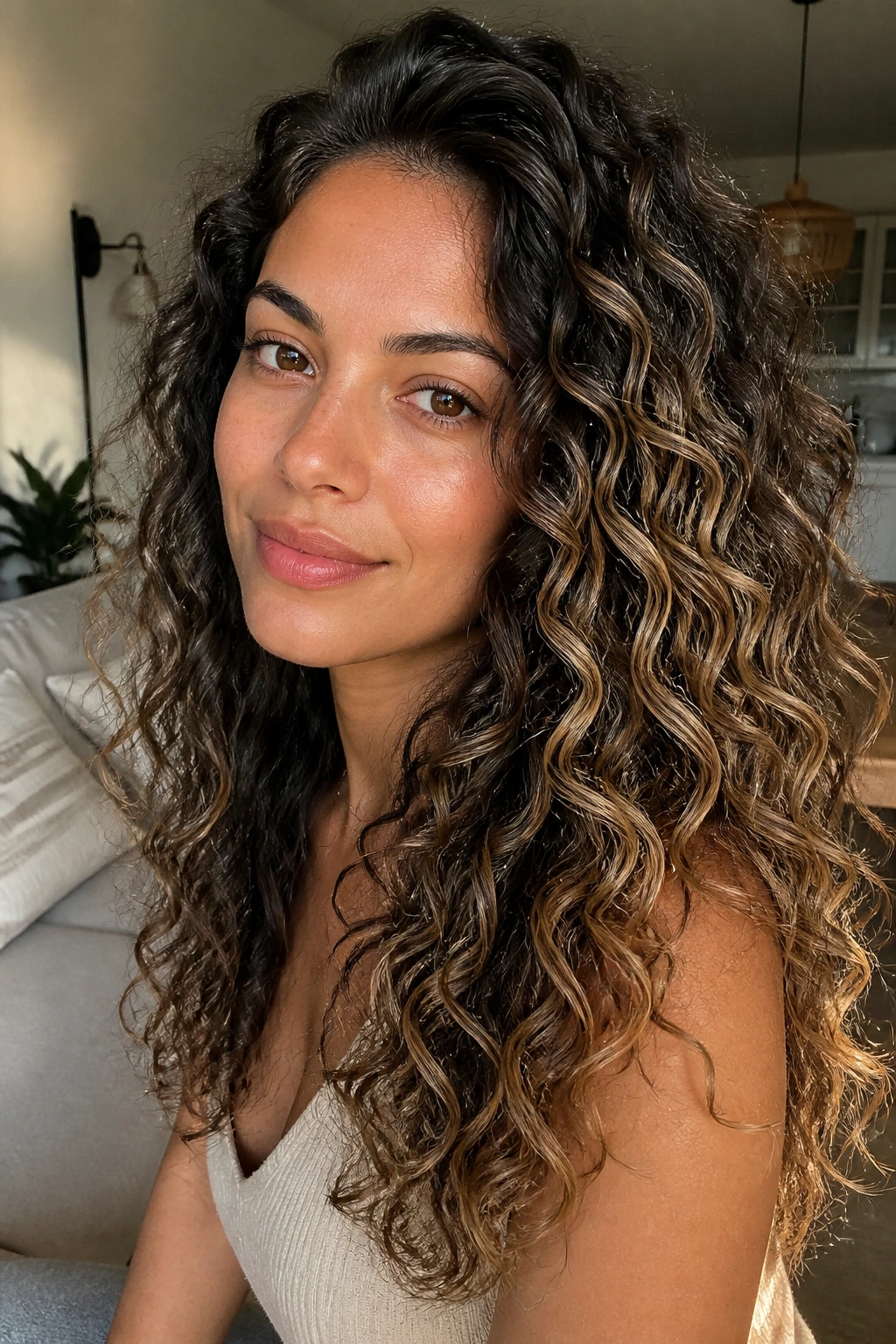
Sand beige balayage is quietly pretty in a way that gets better the longer you stare at it. The color is light enough to brighten the curls, but it stays muted enough to suit medium skin that doesn’t love strong gold or strong copper.
The best version keeps the base deep and puts sand-colored ribbons on the outer layer and ends. On curls, that gives a soft outline without making the hair look overprocessed. It also photographs well in natural light because the beige pieces catch shine without looking flat.
If your skin tone leans cool or pink, this can be a smart compromise. The beige softens the warmth, and the darker root keeps everything from washing out. I’d keep the toner creamy, not icy.
15. Walnut Ribbon Balayage
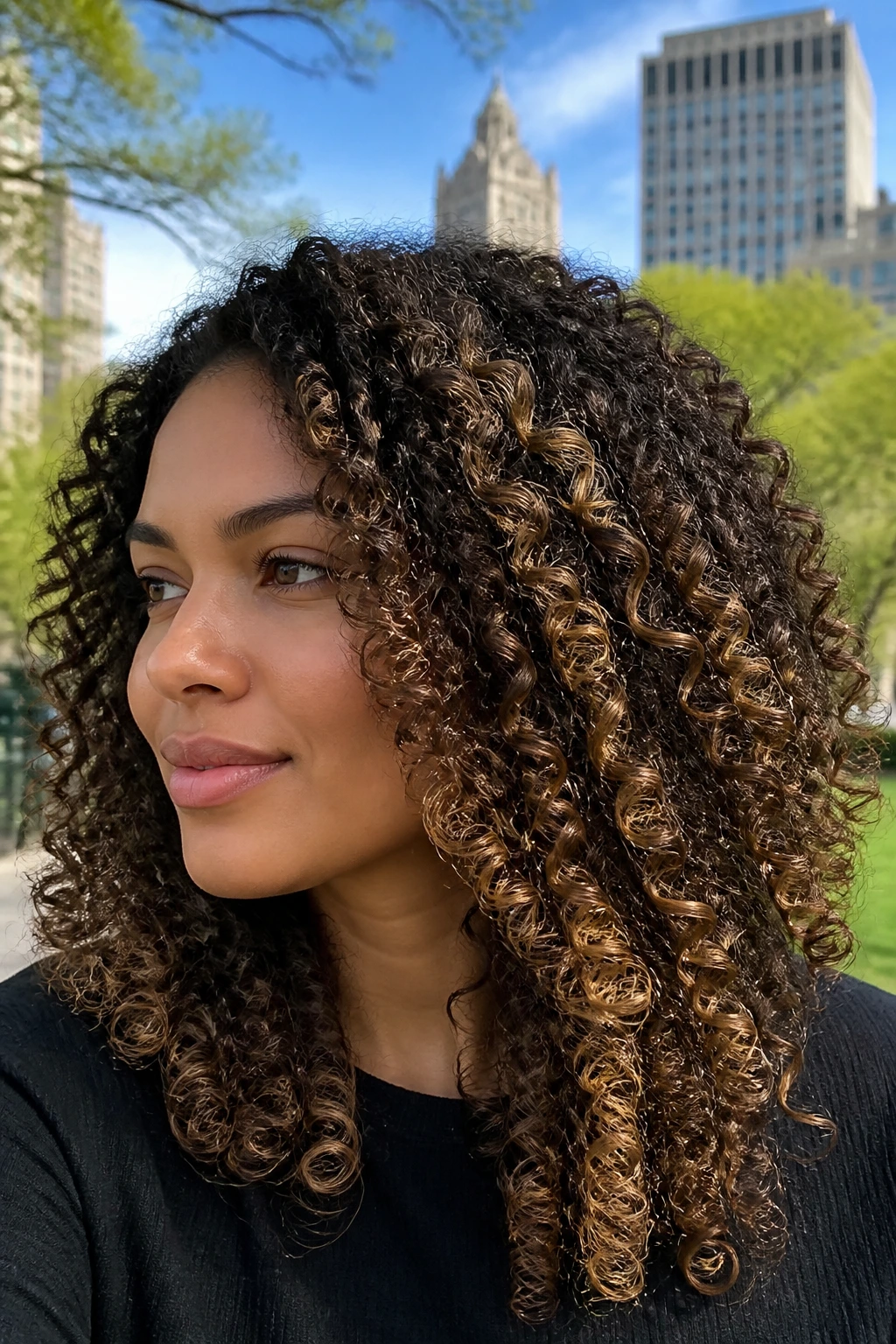
Walnut ribbon balayage is what I recommend when someone says, “I want color, but I’m nervous.” The walnut pieces are just lighter than the base, so the overall effect is low drama, rich, and believable.
On curly hair, that little shift in depth does more than you’d think. The ribbons settle into the curl clumps and make the pattern look fuller, almost denser. Medium skin benefits from the warmth in walnut because it brightens the face without stealing attention from it.
This is especially good for tighter curls or coils, where too much contrast can break up the shape. Keep the pieces narrow, keep the root dark, and let the shine do the talking.
16. Champagne Brown Balayage
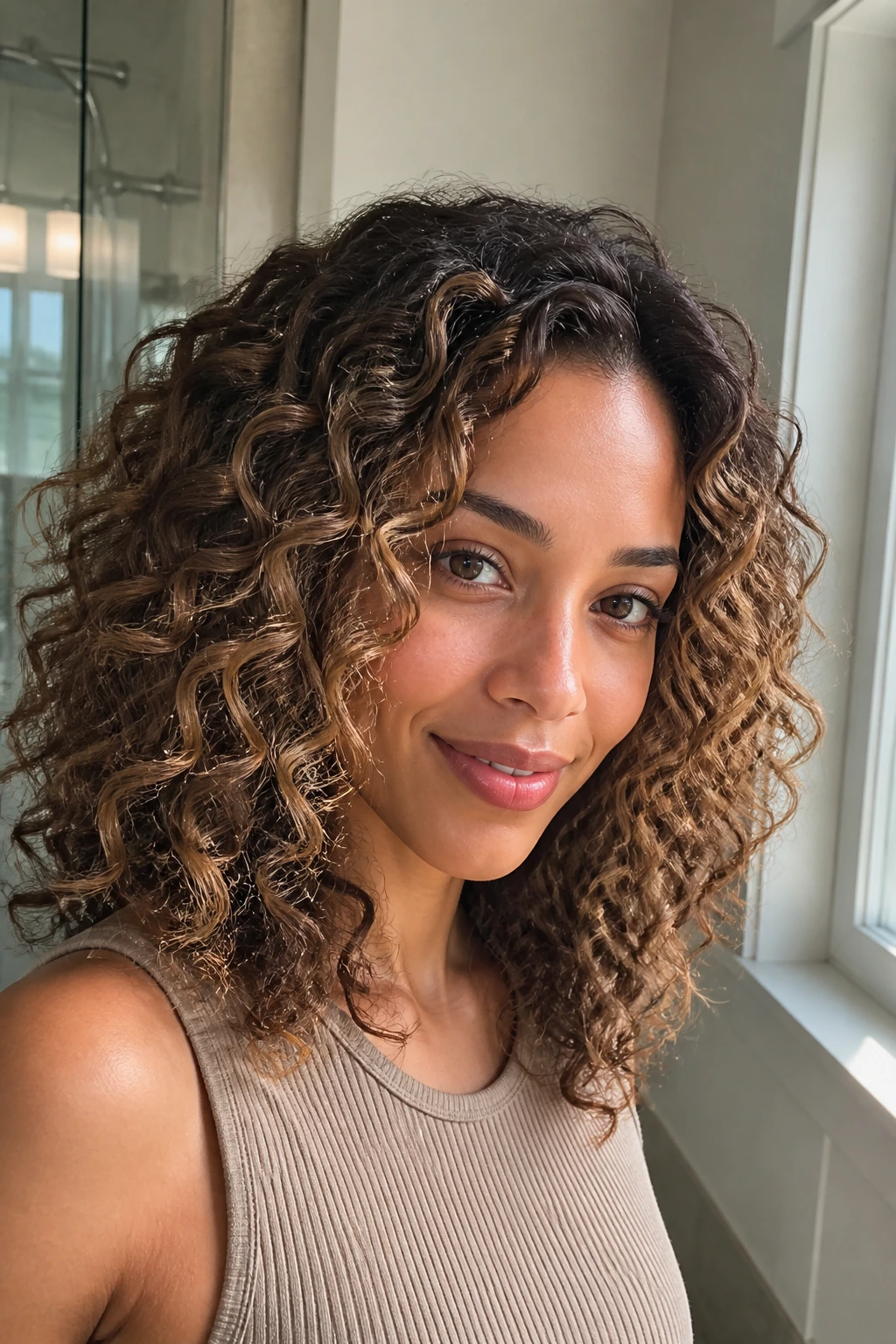
Champagne brown balayage gives you a little sparkle without the coldness that sometimes comes with blonde. Think brunette base, creamy beige-brown light pieces, and a finish that sits somewhere between polished and casual.
What I like here is the flexibility. On medium skin, champagne brown can lean warmer or cooler depending on the gloss, so a stylist can tune it toward your undertone. On curls, the effect is softer than it would be on straight hair because the bends break up the light.
If your hair tends to frizz, this tone is helpful because the mixed shades hide texture instead of fighting it. The color never has to be the loudest thing in the room.
17. Amber Glow Balayage
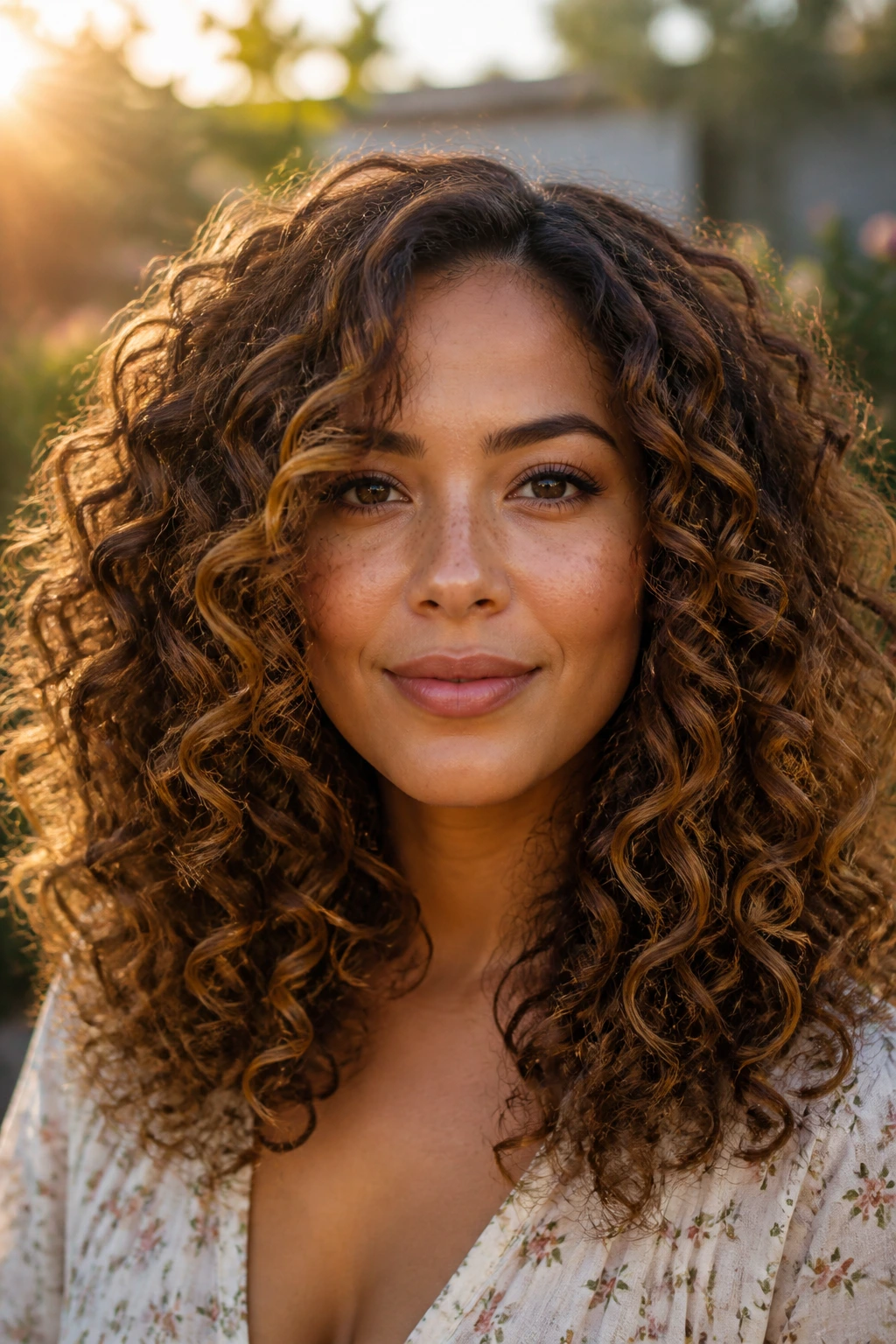
Amber glow balayage is warm, honeyed, and a little richer than plain gold. The amber note makes the color feel deeper, which suits medium skin beautifully when you want warmth but not bright blonde.
A few amber ribbons around the face can be enough. On curly hair, those pieces open up as the hair dries, so the color reads woven and dimensional. The rest of the head can stay a soft brunette or chestnut, which keeps the grow-out calm.
If you like a warm lip, gold jewelry, and deep earth-tone clothes, amber glow tends to work with that palette without competing with it. It’s a color that looks even better when the curls are a little imperfect.
18. Cocoa Cream Balayage
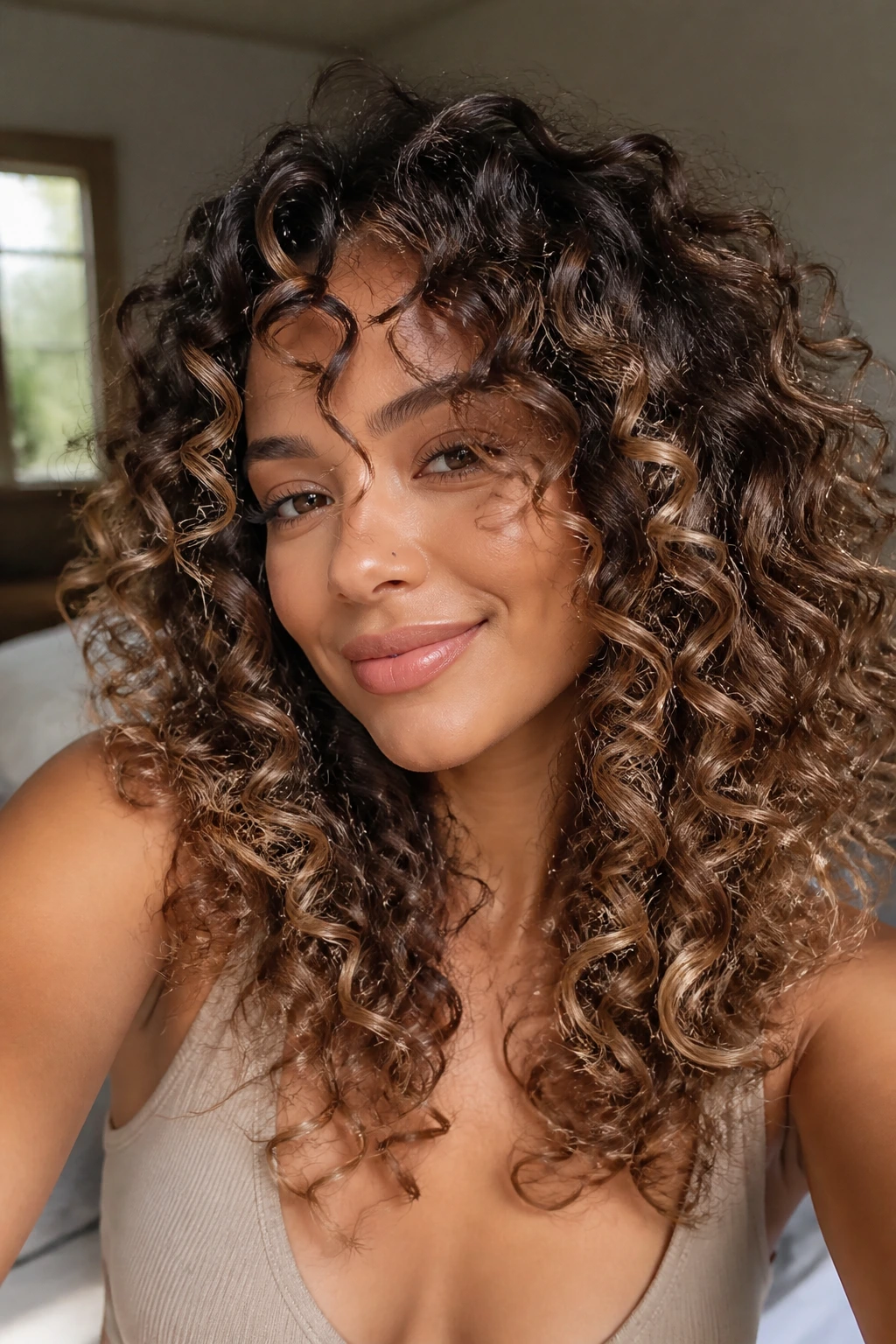
Cocoa cream balayage is rich at the base and softly lightened at the ends, like someone stirred cream into dark chocolate just around the edges. On medium skin, that mix gives enough warmth to flatter the face without turning the whole look golden.
The cream pieces should be narrow and slightly diffused, not blocky. Curly hair needs that feathered placement or the contrast can get loud fast. A cocoa base also gives room for a gloss to do real work, because the shine shows up better against depth.
If you’re tired of blonde-adjacent looks, this is a strong alternative. It still feels fresh, but it doesn’t ask for constant maintenance or frequent toner appointments.
19. Rose Gold Brown Balayage
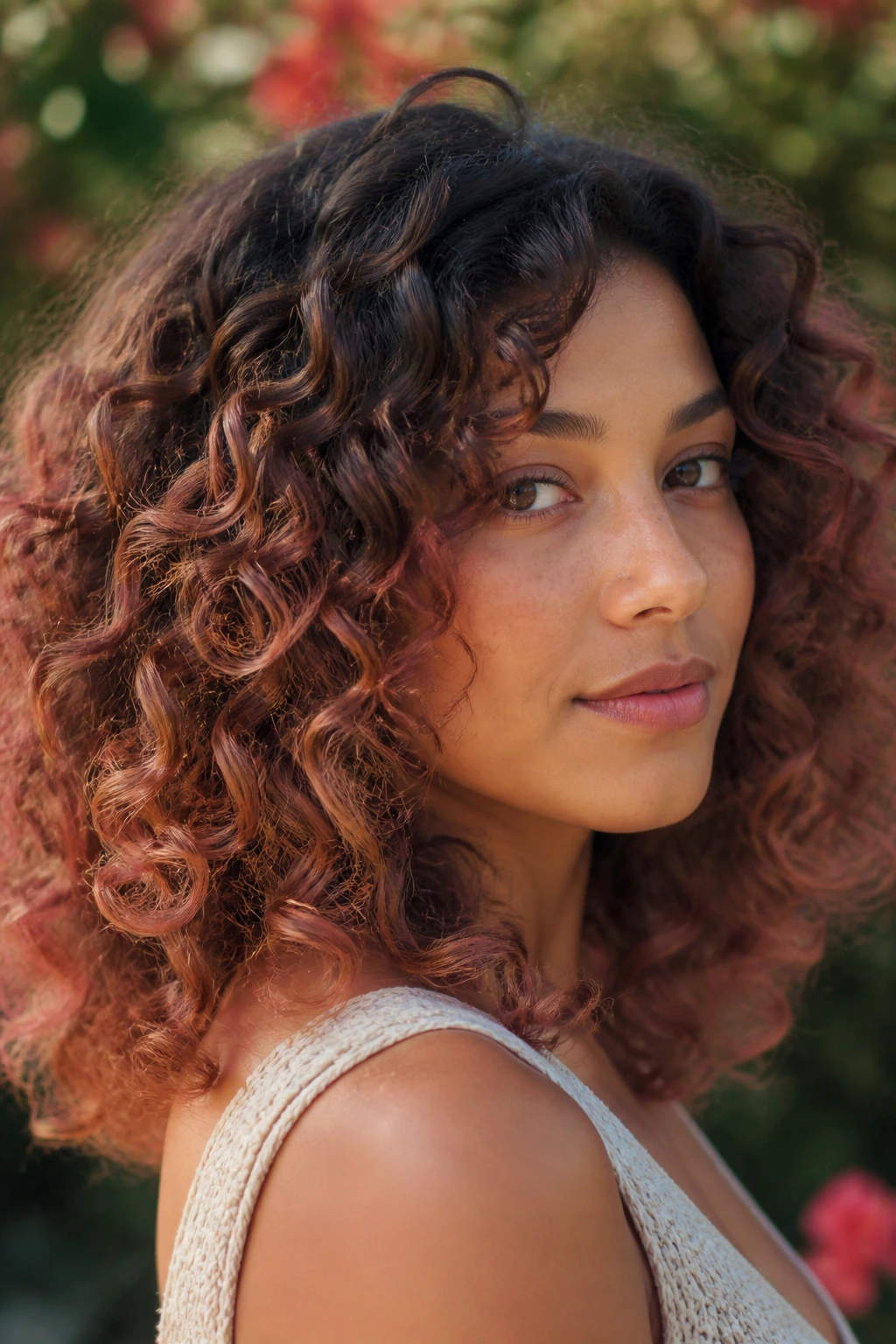
Rose gold brown balayage is the subtle fashion color in the group. The rose is softened so far down that it reads as a warm blush-brown reflection, not bubblegum. On medium skin, that slight pink warmth can look elegant if the base stays rich.
This works best when the rose sits in the mid-lengths and ends, with a brunette root that keeps the color from floating away. Curly hair helps a lot here because the bends catch the pink-gold notes in tiny flashes instead of broadcasting them all at once.
Ask for restraint. That’s the whole trick. Too much rose and the look tips playful; a little rose, plus brown depth, reads polished and a little unexpected.
20. Smoky Beige Balayage
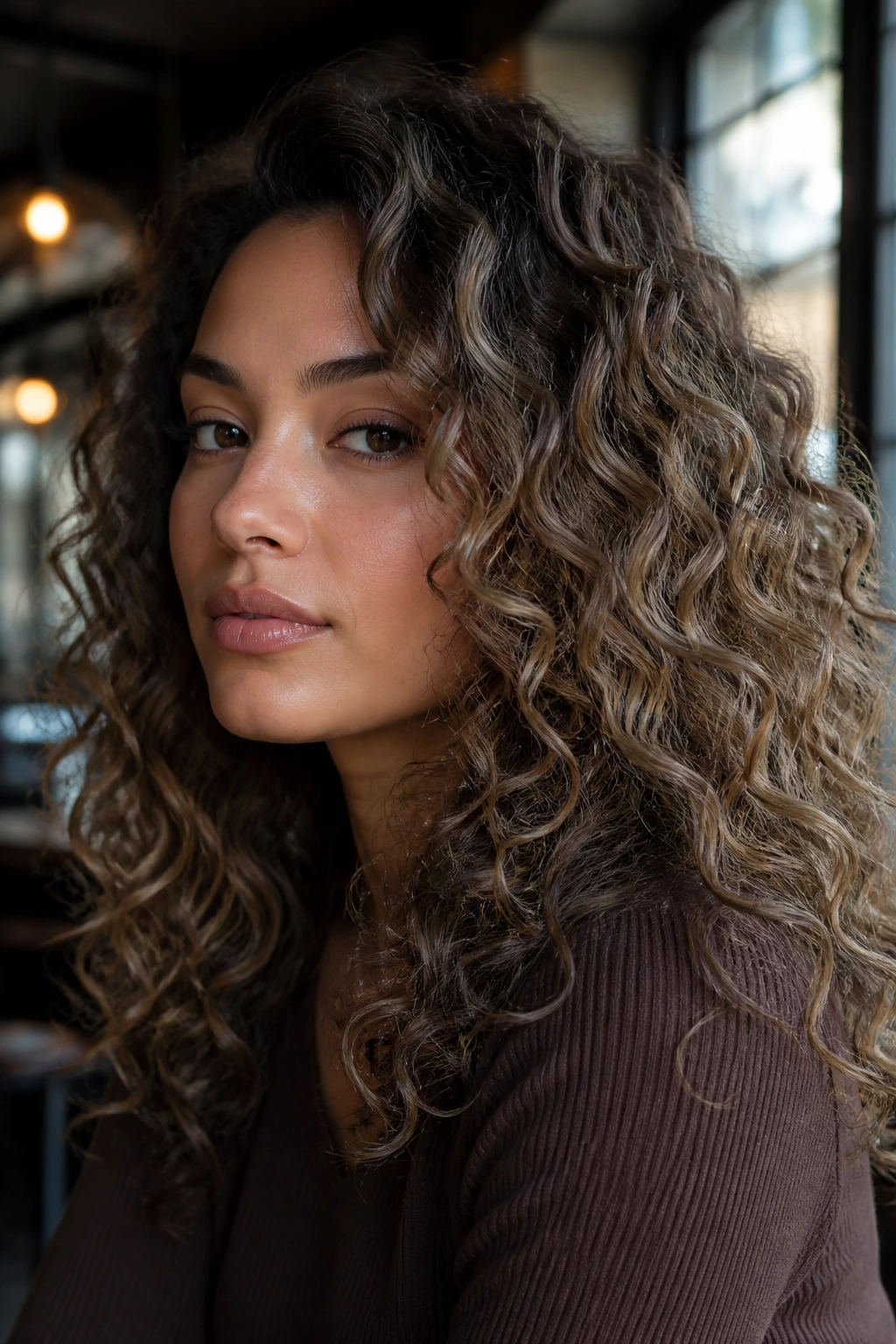
Smoky beige balayage is the cool sister of sand beige. It uses ashier beige ribbons and a muted brown base, which makes it a better fit for medium skin with olive or neutral undertones that can look too yellow under warm highlights.
The smoky finish matters because curls can make ash tones look flat if they are too dense. A good colorist keeps the smoky beige airy, with enough warmth underneath that the hair still looks alive. You want mist, not mud.
This is one of the best choices if you like minimal makeup, black clothing, or silver jewelry. It has a cooler edge, but it still feels soft on textured hair.
21. Golden Mocha Balayage
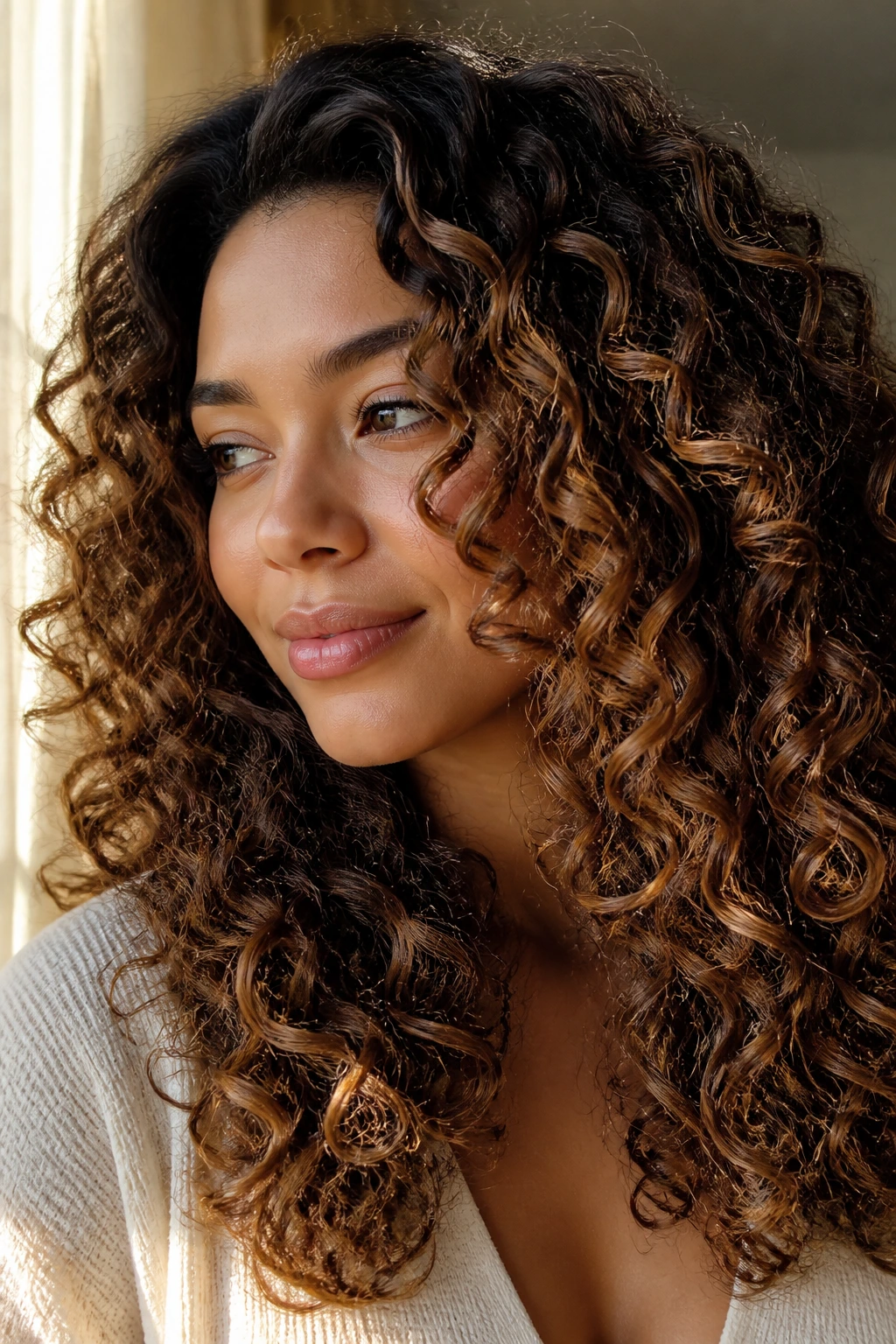
Golden mocha balayage sits between rich brown and soft gold, and that middle ground is where a lot of medium skin looks happiest. The gold is not loud; it just gives the curls a warm shine that shows up when the hair bends.
Compared with honey balayage, golden mocha is darker and a little more grounded. That makes it good for long curly cuts where you want the ends to look lighter without losing the weight at the root. The contrast is easy on the eyes and easy on grow-out.
If your hair takes warmth quickly, this is safer than a brighter caramel. Ask for gold that’s folded into mocha, not perched on top of it.
22. Chestnut Copper Balayage
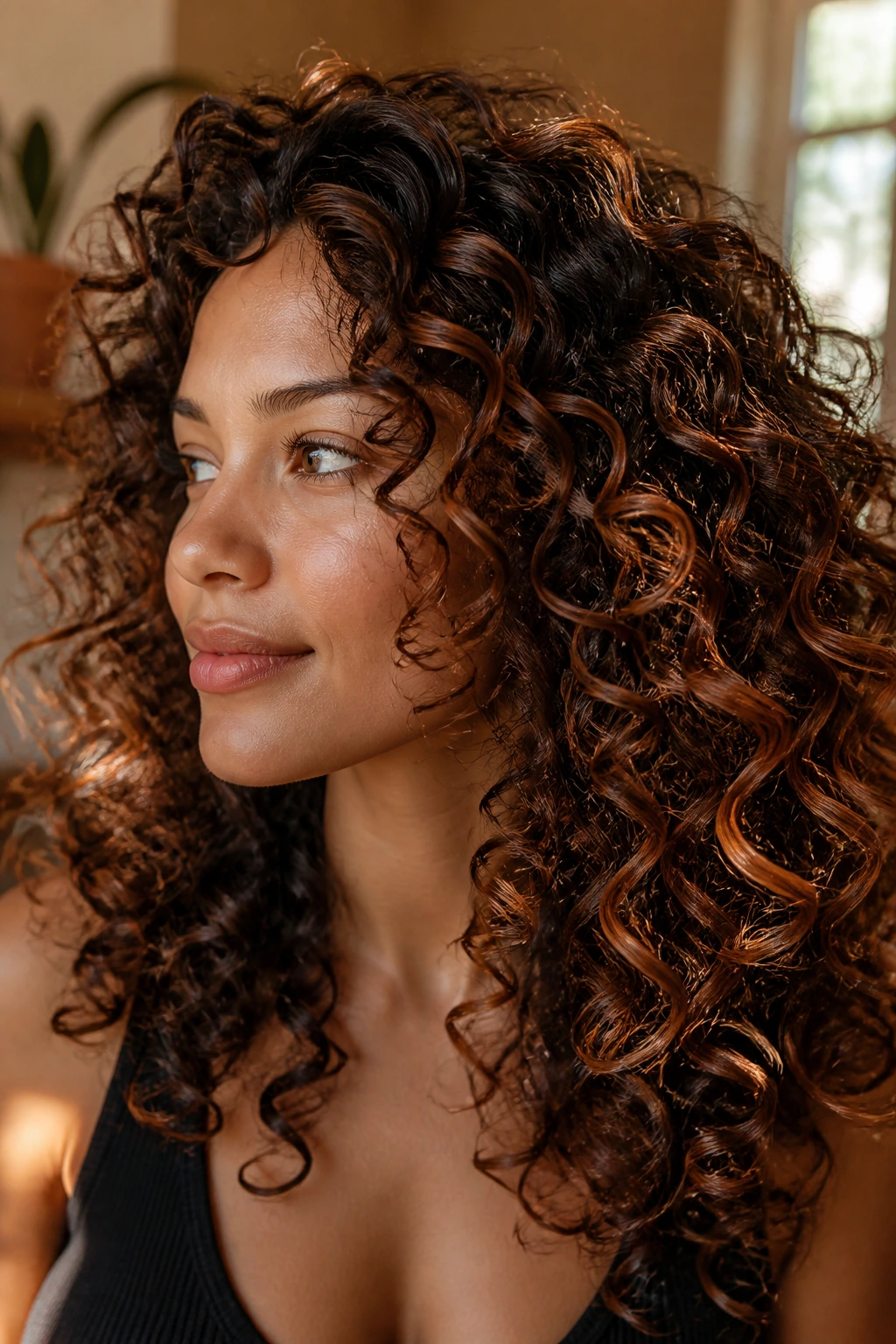
Chestnut copper balayage gives you the charm of copper without the shock of full red. The chestnut base keeps it wearable, while the copper ribbons add movement and warmth through the curls.
This is a strong choice for medium skin that already has a golden cast. The copper pieces light up in the outer curls, but the chestnut underneath keeps the look from becoming too vivid. It’s especially nice if you wear layered cuts, because the lifted pieces show on different levels as the curls stack.
If you’re nervous about red, ask for the copper to stay in the ends and around the front. That keeps the whole thing softer and easier to tone down later.
23. Sun-Kissed Brunette Balayage
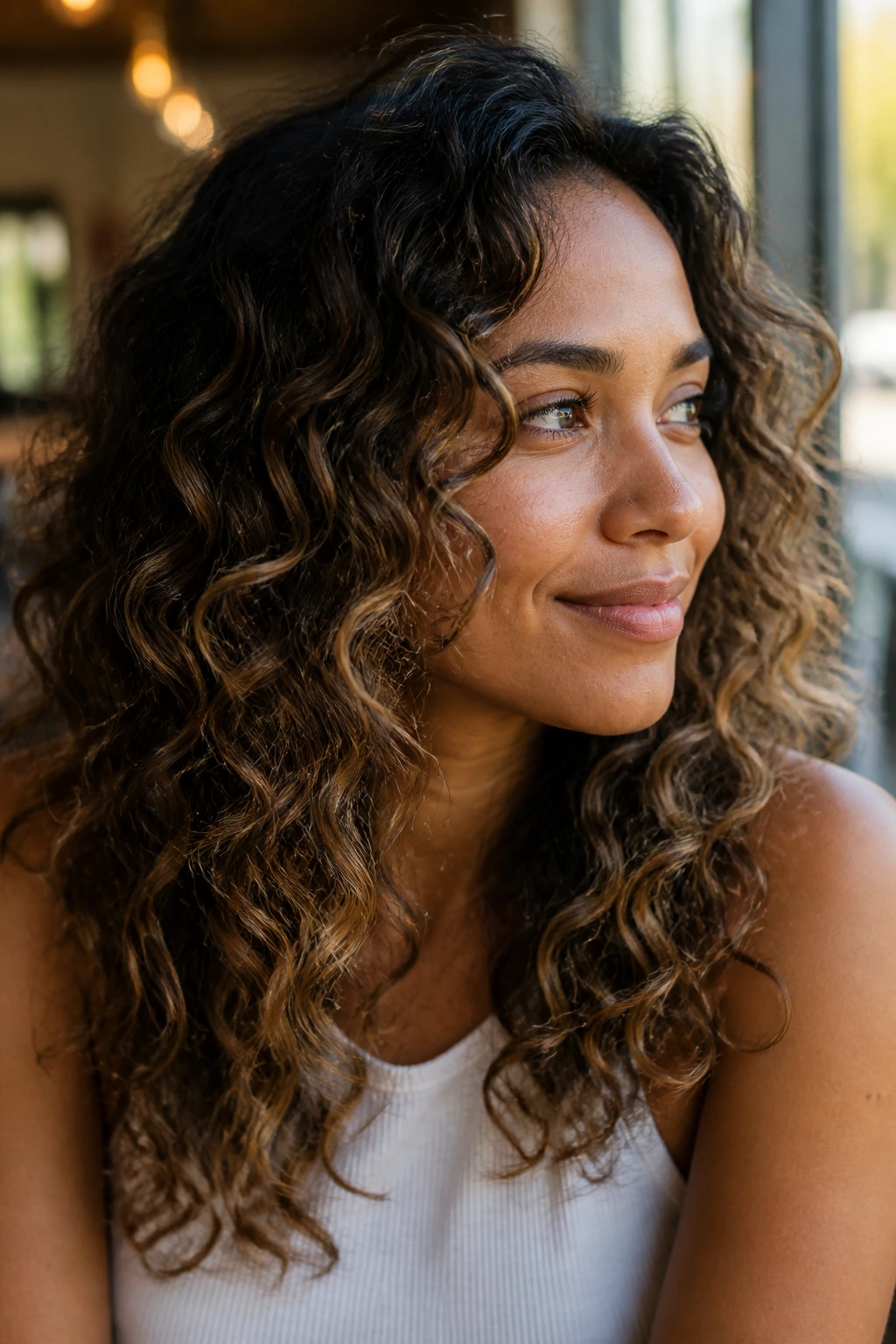
Sun-kissed brunette balayage is the classic answer for someone who wants the hair to look like it’s been touched by light, not transformed by it. The base stays brunette, the highlights stay narrow, and the overall effect is soft enough for medium skin to wear every day.
The key is restraint around the root area. Curls need depth there so the shape doesn’t get frayed. When the lighter pieces live through the mid-lengths and ends, the hair keeps its body and the color looks natural even on a close-up.
This is one of those looks that works with almost any curl pattern. The final result depends more on placement than on brightness, which makes it easy to customize.
24. Maple Syrup Balayage
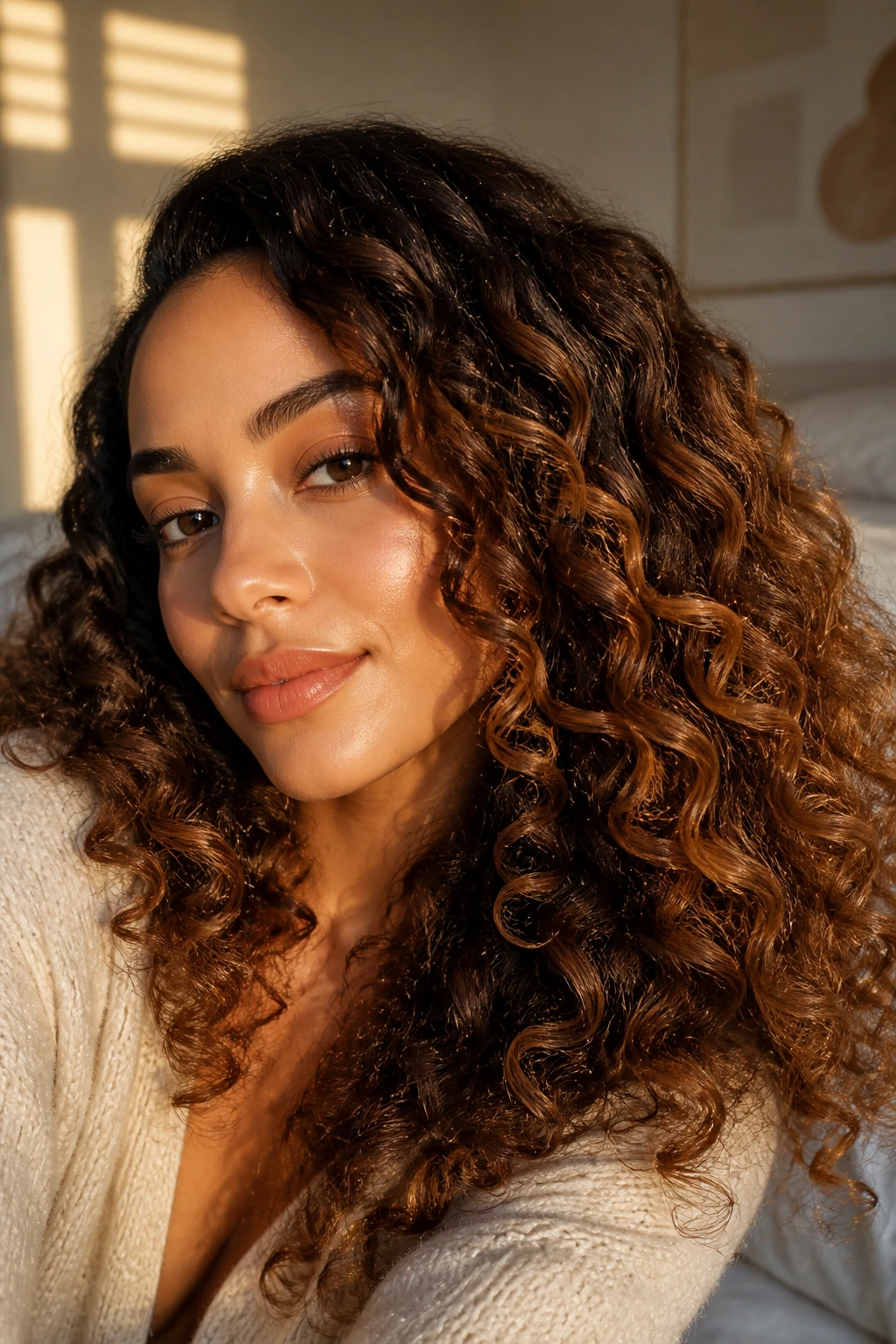
Maple syrup balayage has a warm brown-gold sweetness that sits beautifully on medium skin. It is richer than honey and softer than copper, which makes it a nice middle path when you want warmth without turning orange.
The maple tone should live in narrow ribbons through the outer curls and a few end pieces. On curly hair, that gives a glossy, syrupy look that feels soft instead of streaky. If the base is a dark brunette, the color pops without needing a dramatic lift.
I like this shade on longer curls, where the movement has room to show. The tone changes slightly as the hair shifts, and that’s part of the appeal.
25. Sable Honey Balayage
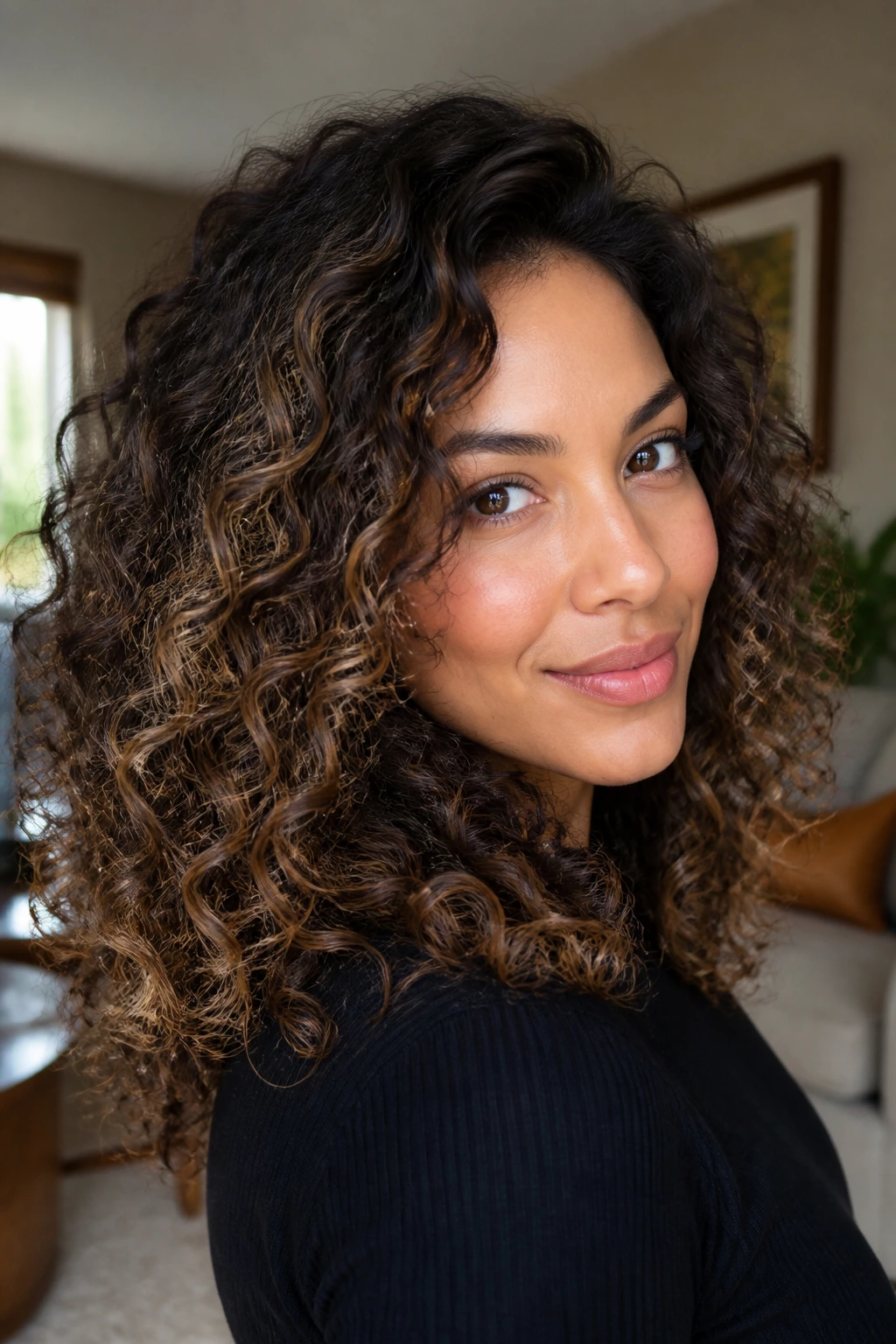
Sable honey balayage is the best finish for someone who wants a deep base with just enough brightness to catch the eye. The sable keeps the overall look rich, while the honey pieces keep the curls from disappearing into the dark.
This works especially well on medium skin with neutral or warm undertones. The honey sits on the outside of the curl and around the face, so the skin gets a soft glow without the whole head going light. It’s subtle, practical, and easy to wear with nearly any cut.
If you want one shade that feels polished but not fussy, this is the one I’d keep on the shortlist. The color grows out with grace, and curly hair usually makes that grow-out look better, not worse.
Why Curly Balayage Needs a Softer Hand
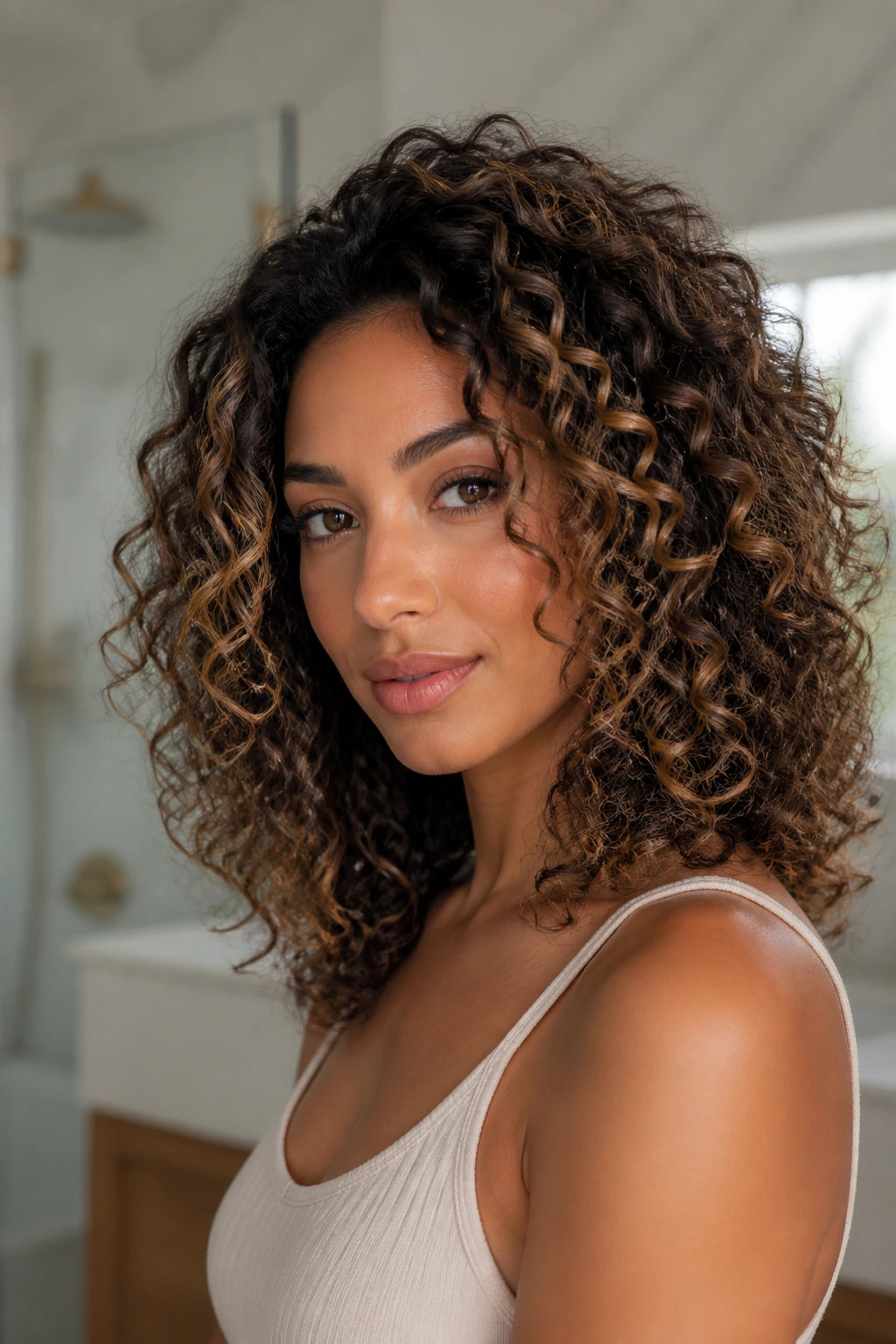
Curly hair changes the math. A painted ribbon on a stretched strand can vanish into a curl once the hair springs back, which is why the placement has to follow the curl pattern instead of fighting it. A good colorist usually looks at the hair dry or close to its natural shape so the light pieces land where they’ll actually show.
Medium skin adds another layer. If the highlight is too pale, the color can sit above the face instead of around it, and the contrast gets harsh fast. A deeper root, a softer gloss, and a few lighter threads near the front usually read better than a full sweep of light blonde through the whole head.
The sweet spot is balance. You want enough contrast that the curls look fuller, but not so much that the pattern breaks into stripes. That’s why caramel, honey, bronze, beige, smoky brown, and muted copper keep showing up in these looks—they move with the hair instead of sitting on top of it.
Painted, Not Stamped
Hand placement matters more than the number of highlights. Fine ribbons around the face and outer canopy can do more than chunky pieces all over the head.
Why Medium Skin Loves Controlled Warmth
Warmth around the mid-lengths and ends brightens medium skin without making it look washed out. A soft root shadow keeps the face framed and the grow-out calm.
Essential Tools and Salon Staples
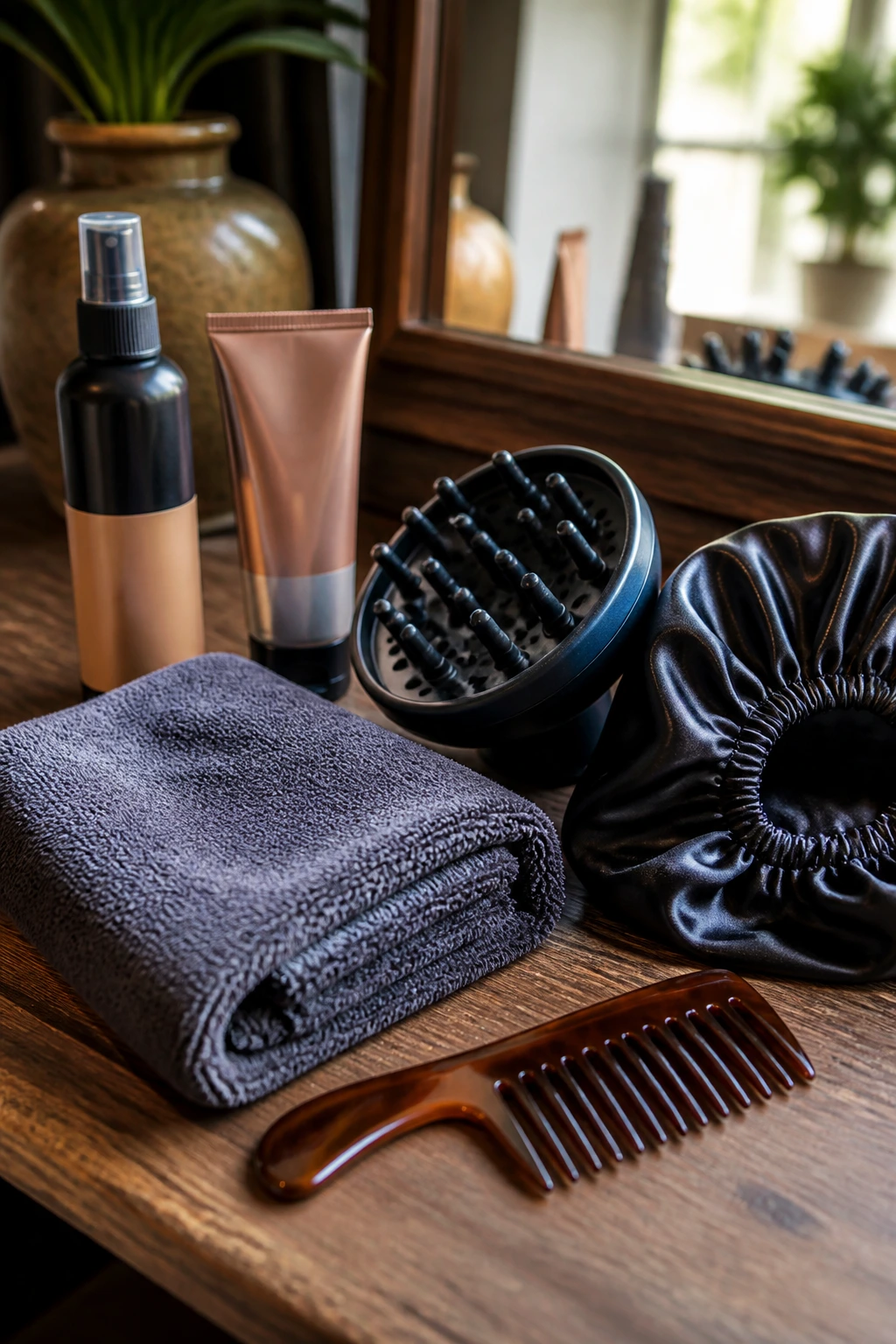
- Reference photos of your own curls: Bring pictures of your hair in its natural state, not only straightened shots, so the stylist can see shrinkage and density.
- A color-safe shampoo: Use one without harsh sulfates so the toner and gloss do not rinse out too fast.
- Moisturizing conditioner or mask: Lightened curls usually want more slip, especially on the ends.
- A bond-building treatment: Helpful after any lift, because it keeps the curl pattern from feeling rough or stretched.
- Microfiber towel or cotton T-shirt: Cuts down on frizz while the hair dries.
- Diffuser attachment: Lets you dry curls with less puff and more shape.
- Wide-tooth comb or fingers: Better than brushing through highlighted curls when they’re dry.
- Satin bonnet or pillowcase: Keeps the ends from snagging and dulling overnight.
- Heat protectant: Use it before diffusing or any hot-tool finish, even if you only use heat once in a while.
- Color glaze or toner: Not a home tool exactly, but worth asking about if you want the beige, caramel, or smoky tone to stay clean.
Smart Shade Choices for Medium Skin Tones
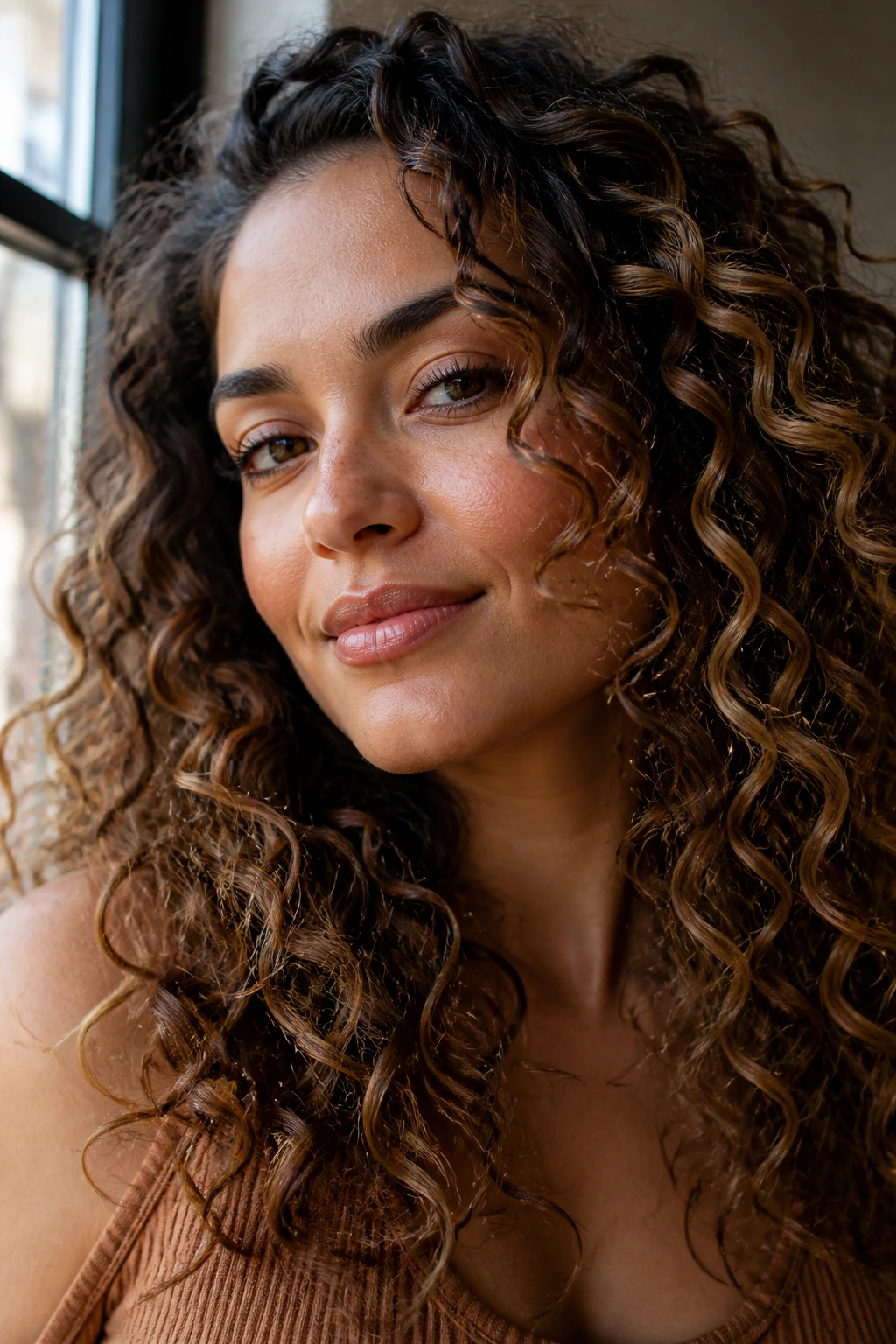
Medium skin is not one note, and that matters more than people think. Warm medium skin usually likes honey, caramel, amber, maple, and soft copper because the warmth echoes the skin instead of fighting it. Neutral or olive skin often prefers beige bronze, mushroom brown, smoky beige, or champagne brown, since those shades keep the face from going too yellow.
Cooler or red-leaning medium skin can still wear warm balayage, but the copper needs to be muted and the beige needs to stay creamy rather than icy. If the face already has pinkness, very gold highlights can make that redness stand out. A smoky gloss or a deeper root shadow usually fixes that faster than trying to lift the color lighter.
When in doubt, stay a shade deeper than your first impulse. Curls create visual brightness on their own because of the bends and shadows, so you do not need the kind of high contrast you’d ask for on straight hair. A few face-framing pieces and a soft ribbon through the crown often do more than an entire head of highlights.
Warm, Golden, and Olive Undertones
Caramel, honey, chestnut copper, and golden mocha tend to sit well here. Ask for gloss warmth, not brass.
Neutral and Balanced Undertones
Beige bronze, champagne brown, almond latte, and mushroom brown give you range without tilting too hard warm or cool.
Cooler or Red-Leaning Medium Skin
Smoky beige, mocha melt, and sable honey keep the color flattering without amplifying redness.
How to Wear the Color So the Ribbons Show
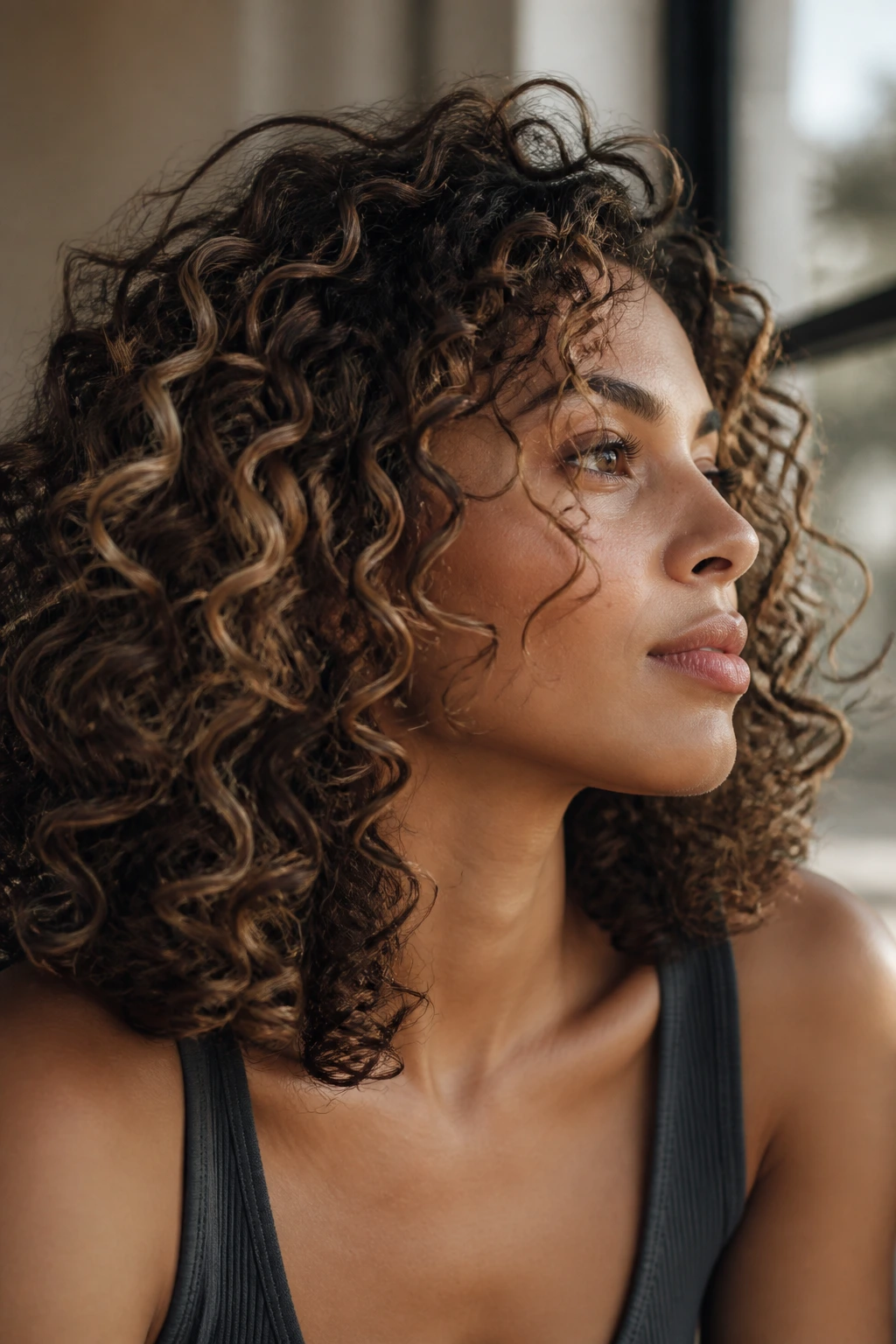
Presentation: Let the lightest pieces sit where curls naturally open—around the face, at the crown, and on the outer layer. A side part adds lift, while a center part keeps the color symmetrical and soft.
Accompaniments: Gold hoops, cream tops, rust sweaters, olive green, and deep brown clothing all make these tones look richer. Harsh black can work too, but it tends to make warm balayage feel a little sharper.
Portion: If you want subtle, ask for a small amount of lightness through roughly a quarter of the head. If you want more movement, go closer to a third, but keep the root shadow strong so the color still grows out cleanly.
Best Styling Moment: Diffused curls at about 80 percent dry show the ribbons best. If you stretch the curls too much, the color looks flatter; if you leave them too damp, the highlights can disappear into the frizz.
Additional Tips and Shade Boosters
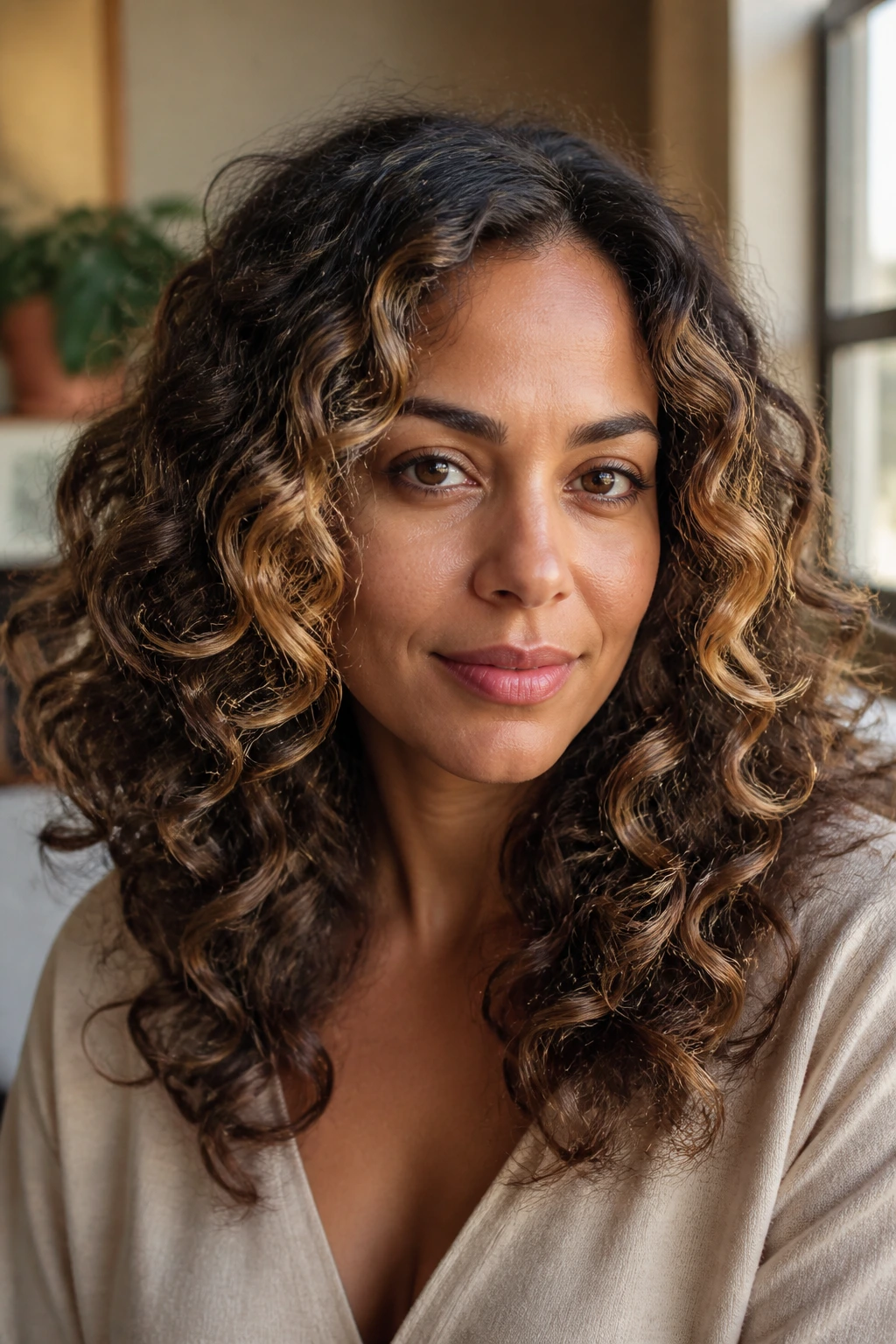
Gloss Refresh: A beige, caramel, or clear gloss every 6 to 8 weeks keeps the lighter pieces from turning dull or too warm. If you see brass first around the face, tone just that area instead of redoing the whole head.
Customization: Ask for a tiny money piece if you want more brightness, or add lowlights if the curls need more depth. On curly hair, a little lowlight can make the whole color look fuller.
Finish: A pea-sized amount of lightweight cream on the ends keeps the lighter pieces from puffing out and looking dry. Heavy oils can mute the color, so go light.
Make-It-Yours: If you wear wash-and-go curls, keep the ribbons narrow. If you usually stretch your hair in braids, twists, or a diffuser set, you can handle a slightly broader paint pattern because the shape stays more controlled.
Keeping the Color Fresh Between Salon Visits
Color on curly hair lasts best when you stop beating it up between appointments. Wait 48 to 72 hours before the first wash after coloring if your stylist recommends it, then keep washing to a reasonable rhythm—usually 1 to 2 times a week, not every day. That helps the toner and gloss stay put.
Deep condition once a week. If the hair feels stretchy or rough, add a protein treatment every 3 to 4 weeks, but do not pile protein on top of already stiff hair. Highlighted curls need softness more than they need extra strength every single time.
For heat, keep things mild. Diffuse on low to medium heat, and if you reach for a flat iron or wand, use a protectant and stay under about 375°F whenever possible. If the color starts to yellow or skew brassy, a beige or purple-toned cleanser can help, but only use it on the lighter parts and not every wash.
Most subtle balayage appointments can stretch about 10 to 14 weeks if the root shadow is done well. Glosses usually happen sooner, around 6 to 8 weeks, because tone fades before placement does. That’s the nice part about this style: the color can soften a little and still look good.
Common Mistakes That Flatten Curly Balayage
The biggest mistake is painting too high at the root. On straight hair, that may look sleek. On curls, it can turn into a banded halo that pops as soon as the hair dries and shrinks.
Another problem is going too light around the entire head. Curls need shadow. If every curl clump is bright, the pattern loses depth and the hair starts to look thinner, even when it isn’t. A few darker ribbons fix that fast.
People also choose the wrong tone for their skin. Bright icy beige can make medium skin look flat, while strong copper can bring out redness. The fix is almost always a softer gloss, not a louder highlight.
Heavy oils create a fourth mess. They can weigh down the light pieces, make them look darker, and turn the finish greasy instead of shiny. Use lighter creams and save richer oils for the driest ends only.
Variations and Adaptations to Try
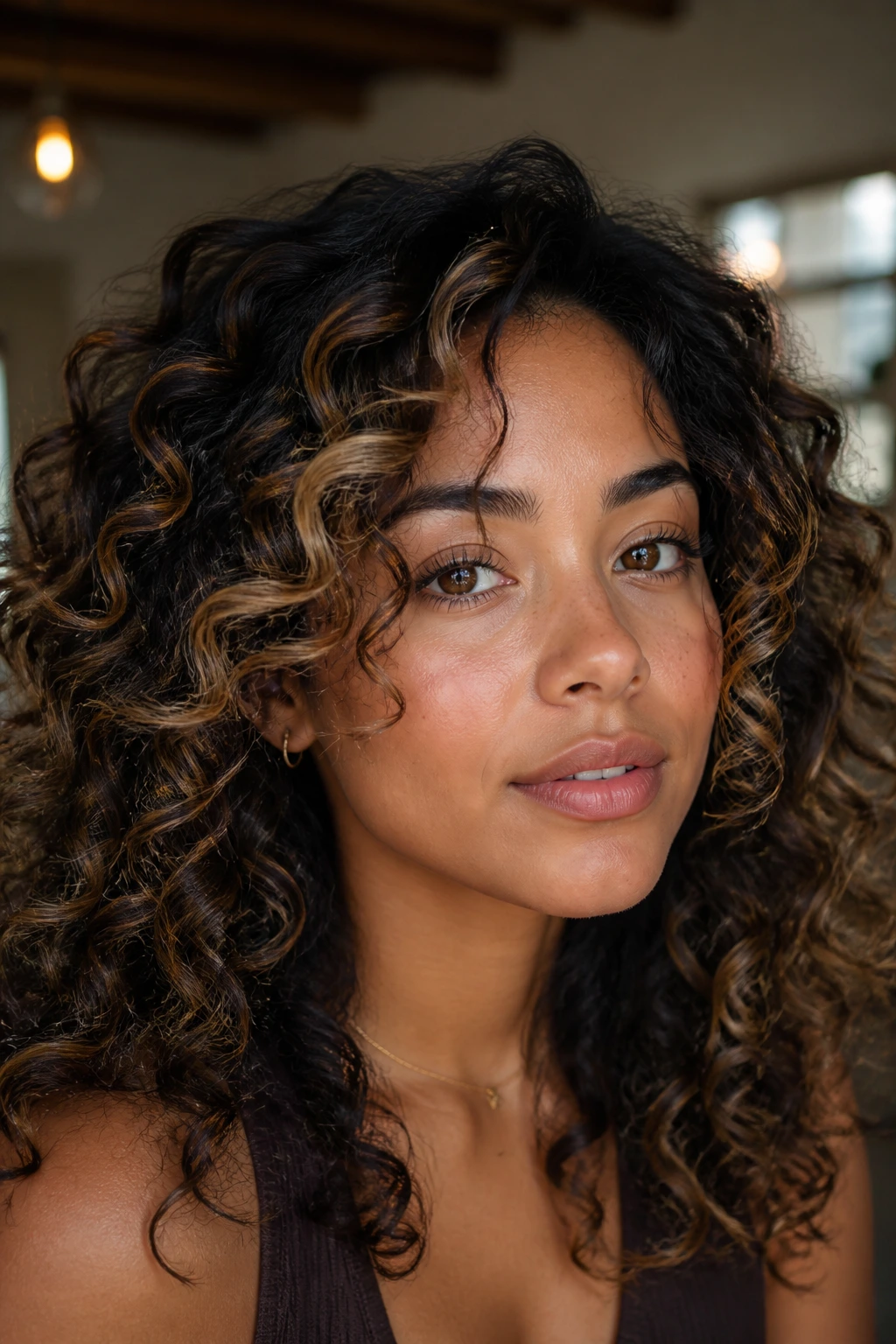
The Barely-There Bronze: Keep the base deep and lift only a few narrow ribbons around the face and crown. This works well if you want the color to read in motion, not in every mirror glance.
Smoky Bronde Drift: Blend mushroom brown with beige-bronde pieces and a cool gloss. It’s a good fit for olive medium skin and curly cuts that need softness more than warmth.
Copper Threading: Add thin copper accents only through the outer layer and the front curls. The copper shows movement without becoming the whole story, which makes it easier to wear.
Espresso Melt: Stay close to your natural dark brown and add just enough mocha lightness to separate the curl clumps. This is the most understated option here and one of the easiest to maintain.
Bronze Coil Sweep: For tighter coils, ask for broader bronze placement on the outer canopy and ends. The result is richer and more dimensional than a standard ribbon pattern, and it shows up nicely when the coils shrink.
Frequently Asked Questions
How light should subtle balayage be on medium skin tones?
Usually one to two levels lighter than your base is enough. Curly hair creates its own brightness through shape, so you do not need a huge jump in level to see dimension.
Is balayage safer for curls than traditional highlights?
Usually, yes, because balayage can be placed more selectively. That means less overall lift and fewer foils, which often helps the curl pattern stay softer.
Will ash blonde look good on medium skin with curls?
Sometimes, but only if it is softened with beige or mushroom tones. Too much ash can make medium skin look flat or slightly gray, especially near the face.
Can I get balayage if my curls are very dark?
Yes, but the smartest version may take more than one session. Deep brown and black curls usually look best with caramel, bronze, or chestnut first, then lighter pieces later if you still want them.
What should I tell the stylist at the salon?
Say you want soft hand-painted ribbons, a dark root shadow, and no chunky stripes. Bring photos of curls that match your texture, not only the color.
How often will I need a gloss or toner?
Many subtle looks need a refresh every 6 to 8 weeks, especially if the tone is beige, honey, or copper. The placement can stay fine longer than the tone does.
Can I keep this color healthy at home?
Yes, if you use color-safe cleanser, weekly conditioner, and a heat protectant. The biggest mistake is over-washing and blasting the curls with too much heat.
What if the highlights turn brassy?
A beige or blue-violet toner can help, depending on how warm the brass is. If the brass is only on the ends, a spot gloss is usually enough.
Soft Grow-Out
The nicest thing about subtle balayage on curly hair is that it does not fight the curl pattern. The ribbons live inside the movement, so even when the color softens a little, the shape still looks intentional.
Medium skin tones give you a wider lane than people think. Honey, caramel, bronze, smoky beige, chestnut, and muted copper all work when the placement stays gentle and the root keeps its depth. Pick the tone that belongs next to your undertone, not the one that looks loudest on a swatch strip.
And if you want my honest bias, keep the lightness around the face and through the outer curls first. That is where the color shows up with the least fuss, and it tends to age better as the weeks go by.