



Thick hair can carry color in a way fine hair never can. It can hold a wide ribbon of light, hide a soft root shadow, and make a hand-painted blonde look expensive instead of patchy — if the placement is right. And with balayage for olive skin with thick hair, placement matters twice as much. Olive skin can turn muddy under the wrong toner, while dense hair can swallow subtle highlights whole.
That’s the part a lot of people miss. They ask for “some caramel,” then leave the salon with a color that looks flat in daylight, too yellow under bathroom bulbs, and oddly heavy at the ends. The fix isn’t more blonde. It’s smarter blonde: controlled lift, the right undertone, and enough dimension that the hair still moves when you turn your head.
I’ve always liked balayage on olive skin because it rewards restraint. You don’t need to fight the complexion. You work with it — beige, caramel, mushroom, chestnut, copper, soft gold — and then let thick hair do what it does best: hold depth under the surface and brightness where the light actually lands. The result can look glossy and lived-in instead of striped or over-processed. That’s the sweet spot.
Why These Balayage Choices Work on Olive Skin and Thick Hair
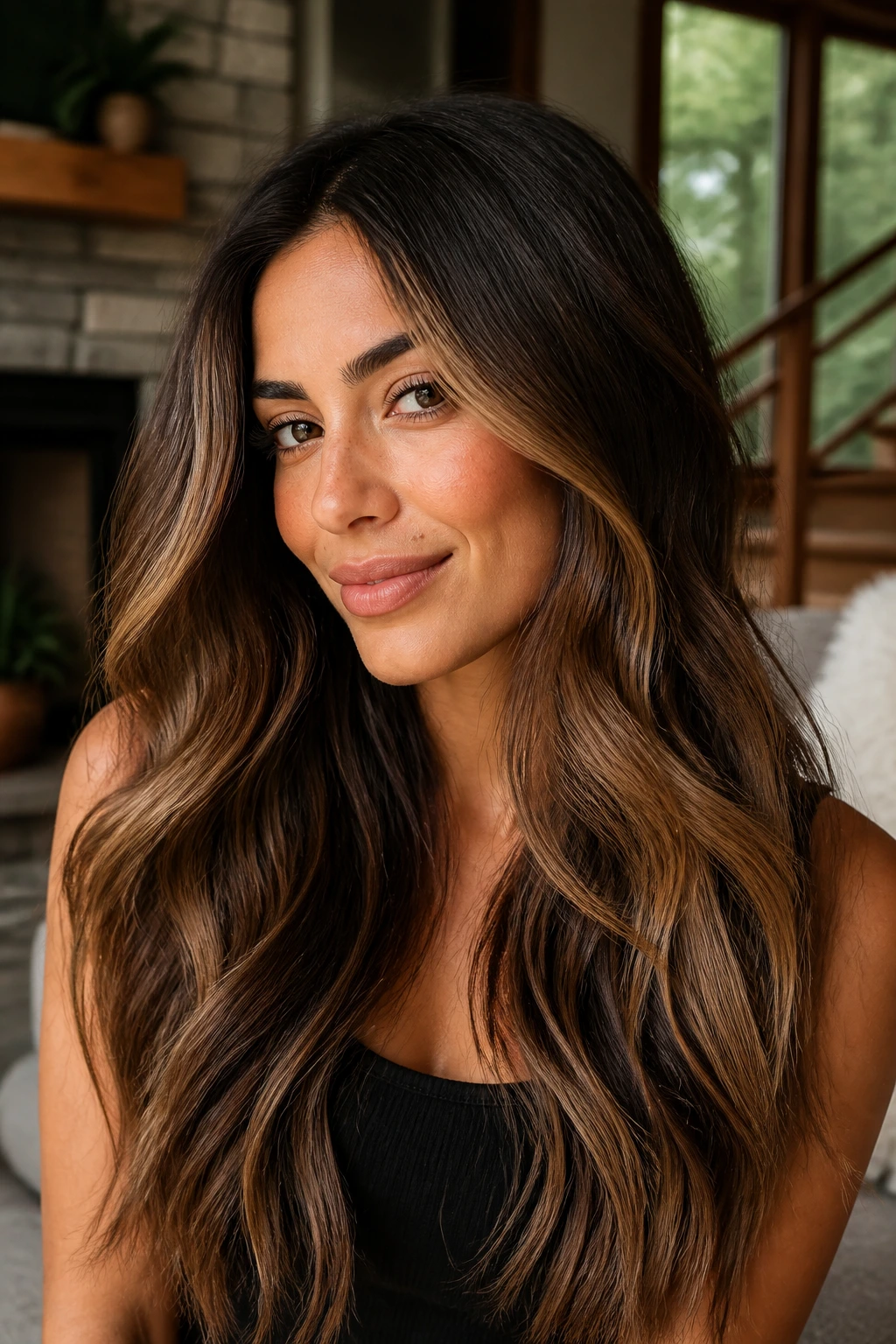
Undertone balance matters more than brightness. Olive skin usually looks best when the blonde stays in the beige-caramel-bronde family, because those tones keep the face warm without pushing it into brassy orange or chalky ash.
Thick hair needs bigger decisions, not more chaos. Dense hair hides soft placement, so you need ribbons, panels, or a strong face frame that show up even when the hair is down and slightly compressed.
Shadow roots are your friend here. A root that sits one to three levels deeper than the mids gives thick hair shape and keeps regrowth from looking blunt after six weeks.
Dimension beats uniformity. A mix of fine lights, medium ribbons, and a few lowlights keeps the color from reading like one solid sheet. On thick hair, that flat-sheet problem shows fast.
Glossing is not optional. A demi-permanent toner or clear glaze softens the tone, controls brass, and keeps olive skin from looking sallow when the hair starts to fade.
1. Caramel Contour Balayage
This is the safest, smartest place to start if you want movement without a dramatic color shock. Caramel contour balayage places warm ribbons around the cheekbones, jawline, and the first few inches of the front layers, which is where olive skin tends to wake up instead of go flat.
Why it works
The warm caramel sits in a useful middle zone: light enough to brighten, deep enough not to look washed out. On thick hair, those face-framing pieces stay visible even when the rest of the hair is full and heavy.
Ask for a soft root shadow at level 5 or 6, then caramel ribbons that peak around level 7 or 8. That keeps the look polished, not stripey.
2. AirTouch Beige Melt
AirTouch is the technique people mention when they want that whisper-soft blend, and for thick hair it’s a solid move. The stylist uses the air from the dryer to push out shorter, finer hairs before lightening, which leaves a cleaner, softer section behind.
What to watch for
On olive skin, the beige melt has to stay beige. If it drifts too icy, the face can lose warmth; if it drifts too gold, the hair can go orange. A toner in the beige-pearl family usually lands in the right place.
This is the choice for someone who hates obvious highlight lines and wants the grow-out to fade like watercolor instead of a hard stripe.
3. Foilayage for Bright Ends
Foilayage gives you the freehand look of balayage with the lift of foils. That matters on thick hair because dense strands can be stubborn, and open-air painting sometimes stops short of the brightness you actually wanted.
Placement notes
Use foilayage when the ends are dark, coarse, or resistant. The foil traps heat and lifts more evenly, which is handy if your hair usually turns gold before it turns light.
For olive skin, keep the brightest pieces from starting too high on the head. Bright ends are flattering; bright roots can feel harsh and overdone.
4. Rooted Bronde Ribboning
Bronde is the sweet, unflashy cousin of blonde, and thick hair loves it. The technique uses a deeper root and medium-light ribbons through the mids, so the color reads dimensional from across the room but still looks believable up close.
Why this one gets asked for so much
It doesn’t fight olive skin. That’s the real reason. The mix of brown and blonde keeps the complexion from looking drained, and the darker base gives thick hair a shape that pure blonde often lacks.
If you wear your hair long and straight, this technique keeps the lengths from turning into one big pale curtain. If you wear soft waves, the contrast gets even better.
5. Curtain-Bang Money Piece
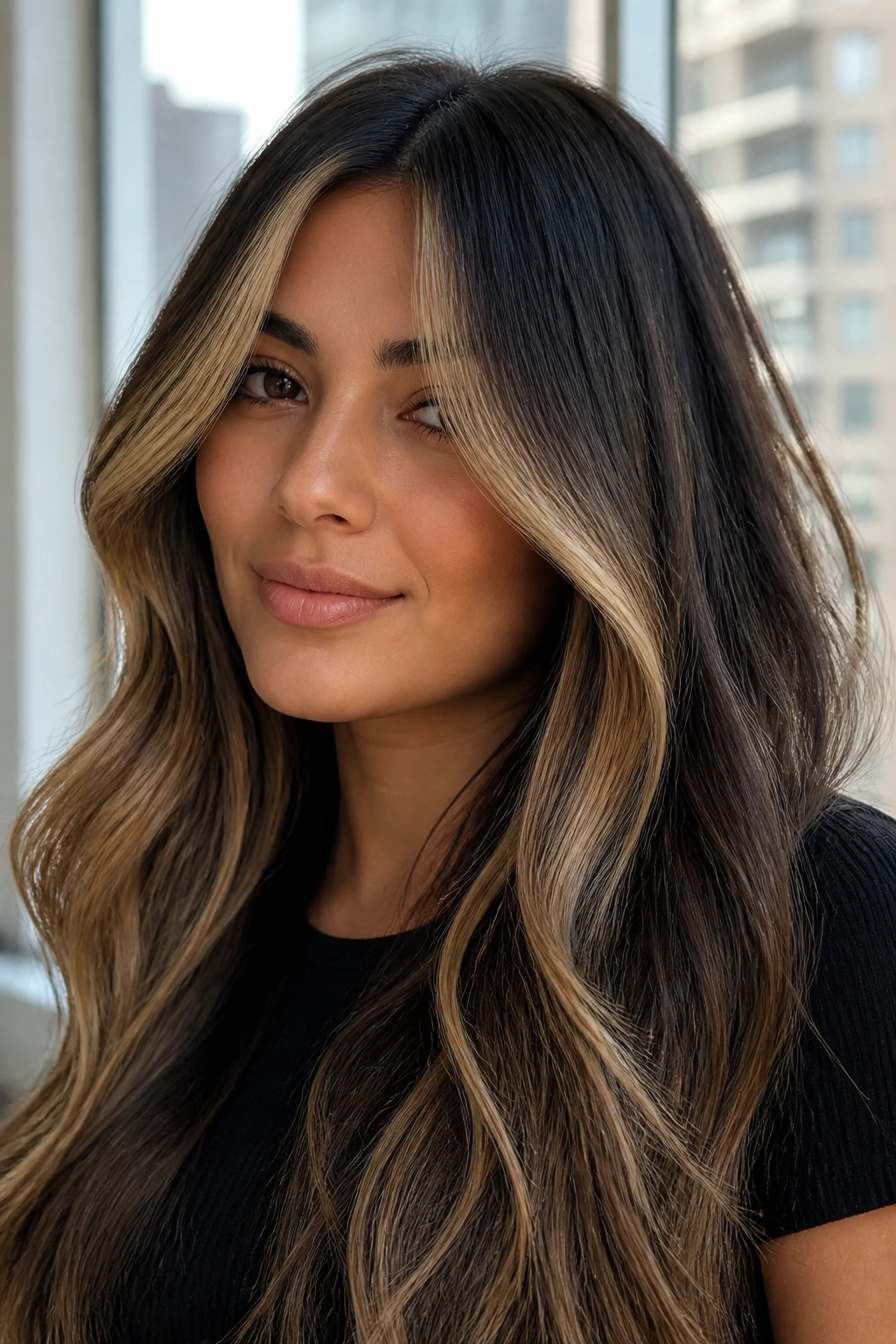
A money piece can go wrong fast on olive skin if it turns too bright or too yellow. But a curtain-bang money piece — kept slightly beige and softly rooted — gives the face lift without shouting about it.
The trick is placement. The brightest part should sit just off the cheekbone and feather into the curtain bangs, not blast straight from the scalp. Thick hair makes this easier because the surrounding density frames the light instead of exposing it.
This is one of my favorite choices when someone wants a visible change but not a full-head commitment. It gives you the little jolt in photos and in daylight. That’s enough.
6. Mushroom Brown Shadow Balayage
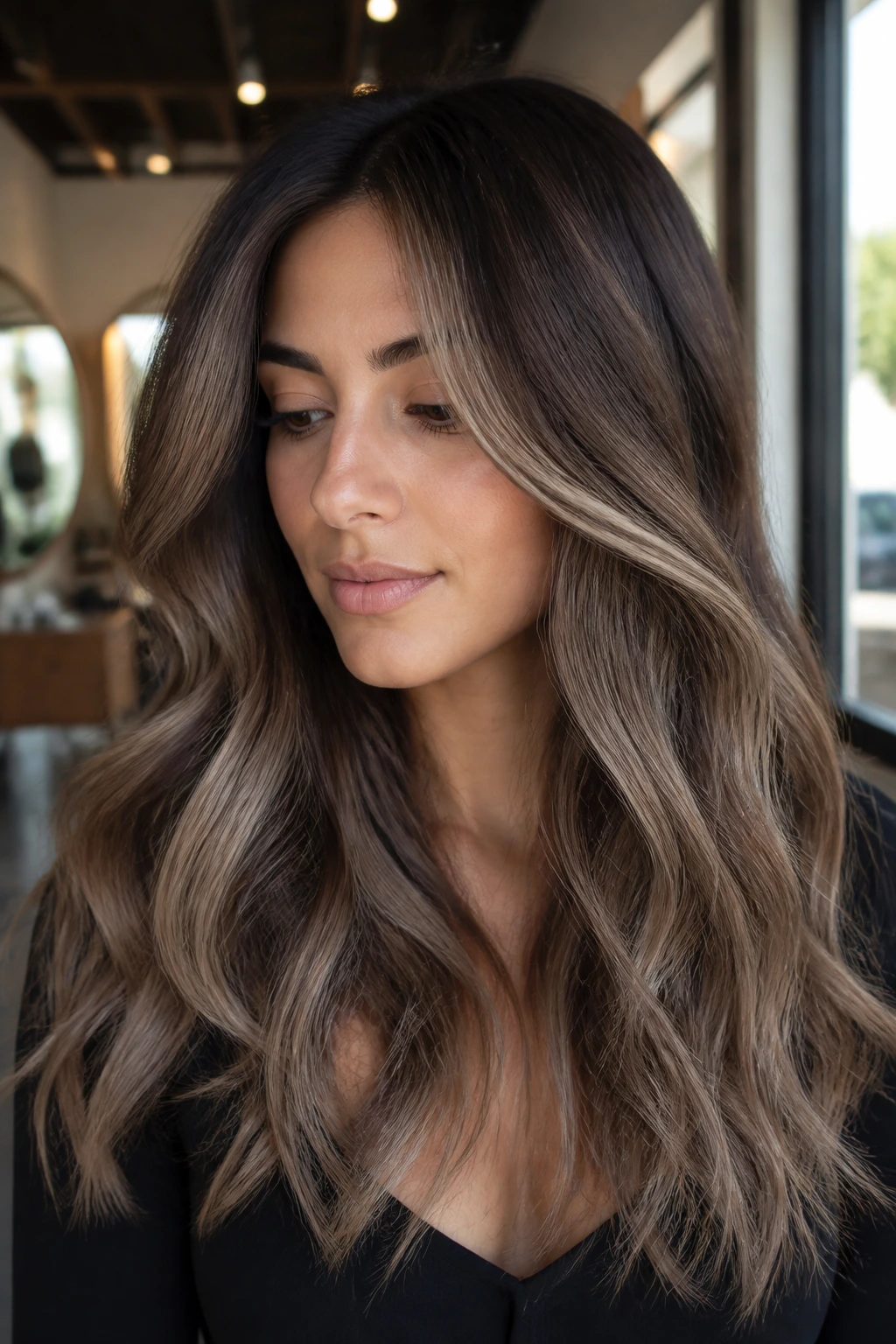
Mushroom brown is where cool and warm stop fighting and start cooperating. On olive skin, that neutral-smoky tone keeps the face from looking pink or ruddy, and on thick hair it adds depth without making the hair seem heavy.
The color placement should stay soft around the crown and a touch brighter toward the ends. Think smoky ribboning, not solid ash. If the toner is too matte, the hair can look dusty; if it’s too golden, you lose the point of the mushroom tone.
Best for people who like a quiet finish. Not invisible. Quiet.
7. Copper-Gold Slices
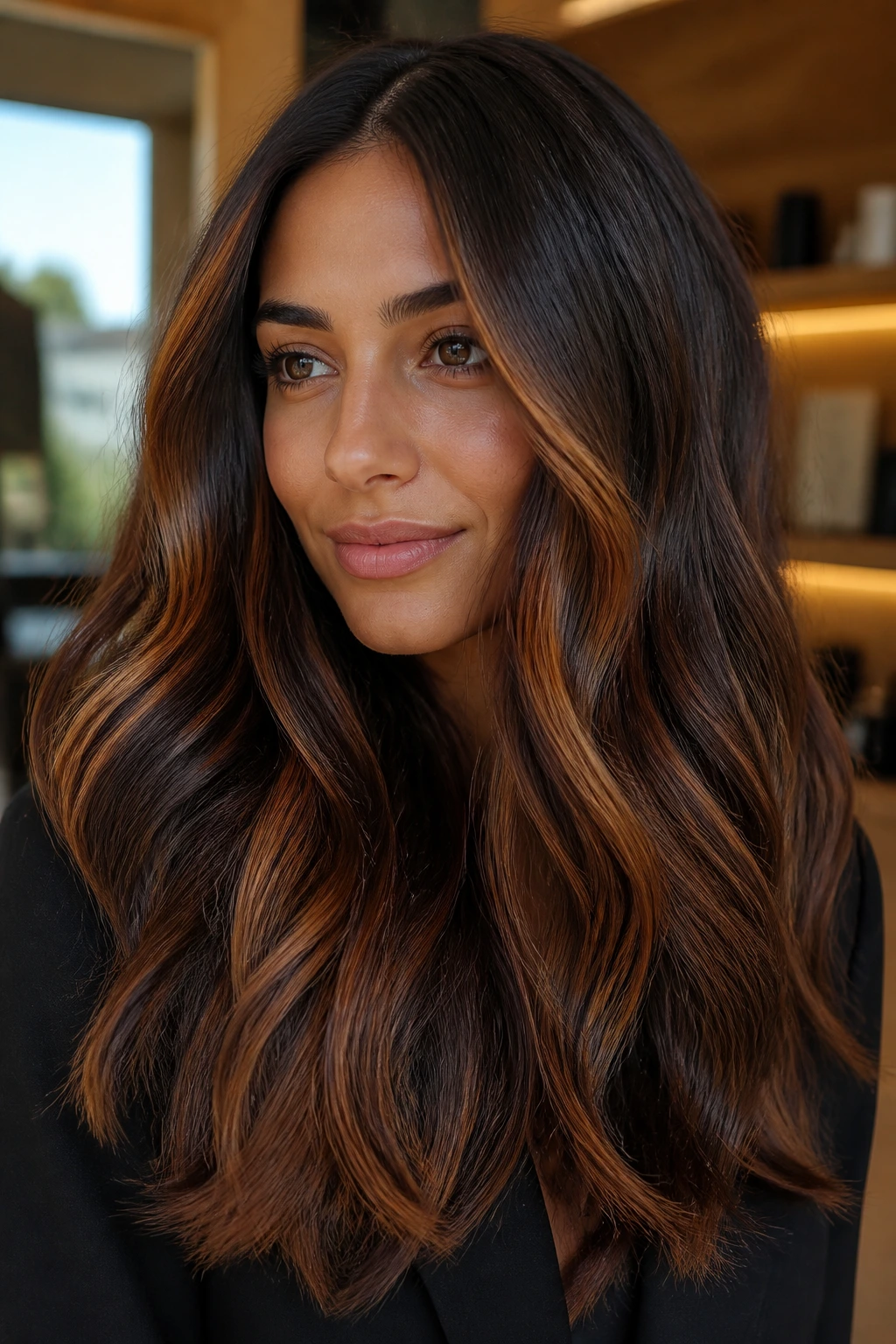
Copper sounds bold, but on olive skin it can be gorgeous when it’s handled like an accent instead of a full-body color change. Thin copper-gold slices through thick brown hair catch light in a way flat caramel never quite does.
The mechanic here
Thick hair can swallow subtle red tones, so the slices need to be deliberate and slightly wider than baby lights. You want them visible enough to flash when the hair moves, not so broad that they read as streaks.
This technique is a good match for warm olive undertones, especially when the skin already holds some golden or bronze warmth. It can look rich, almost burnished, when the undertone is right.
8. Teasylights Through the Crown
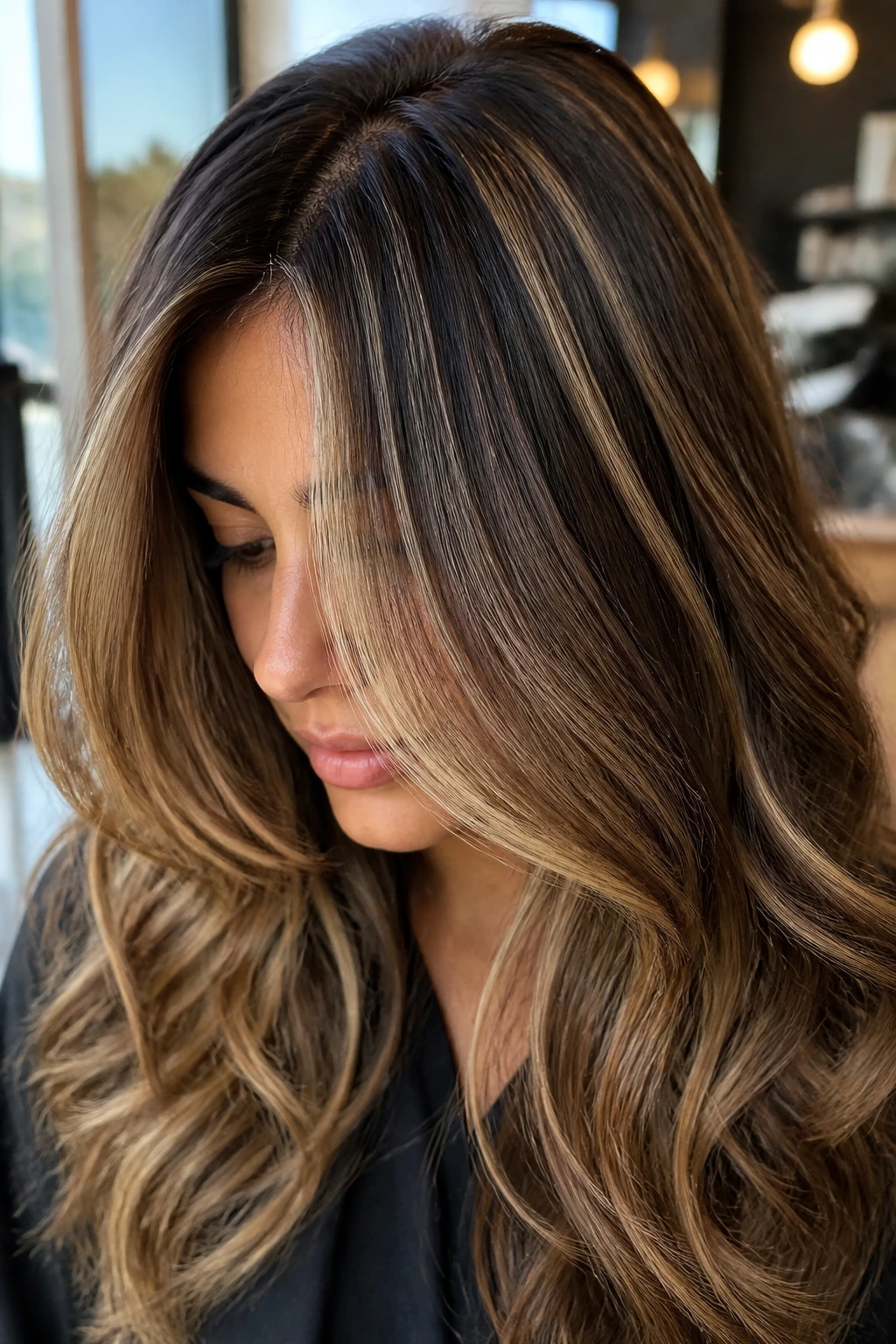
Teasylights are the answer when someone wants brightness but hates obvious starts. The stylist backcombs each section before lightening, which diffuses the line of demarcation and lets the root melt softly into the rest of the hair.
That’s a strong choice for thick hair because density can make clean lines look blunt. The teasel gives the color a feathered edge, and that edge is exactly what keeps olive skin from getting boxed in by a hard highlight line.
If your hair resists blending, teasylights are the answer. Not perfect for every head, but very good on hair that likes to keep its own agenda.
9. Reverse Balayage for Depth
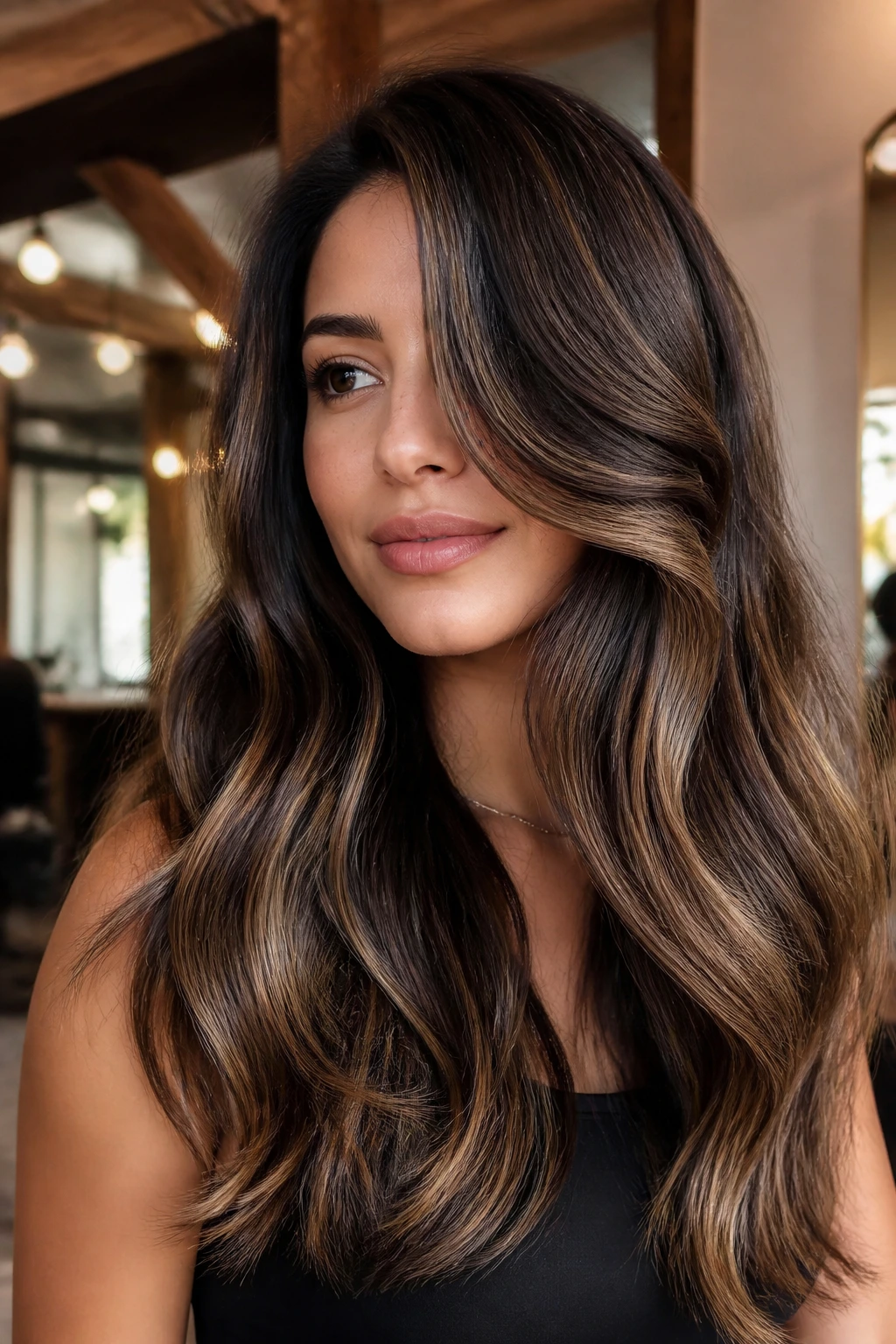
Reverse balayage is what you do when the hair has gone too light or too flat and needs its shape back. Instead of lightening more, the colorist paints in deeper lowlights and shadows to rebuild the contrast.
For olive skin, this can be a gift. Deep mocha, chestnut, or smoky brown lowlights can make the lighter pieces look richer and prevent the complexion from getting washed out. Thick hair takes reverse balayage especially well because it can handle the extra depth without looking muddy.
Use this when the hair feels hollow. That’s the easiest way to describe it.
10. Micro-Balayage for Dense Hair
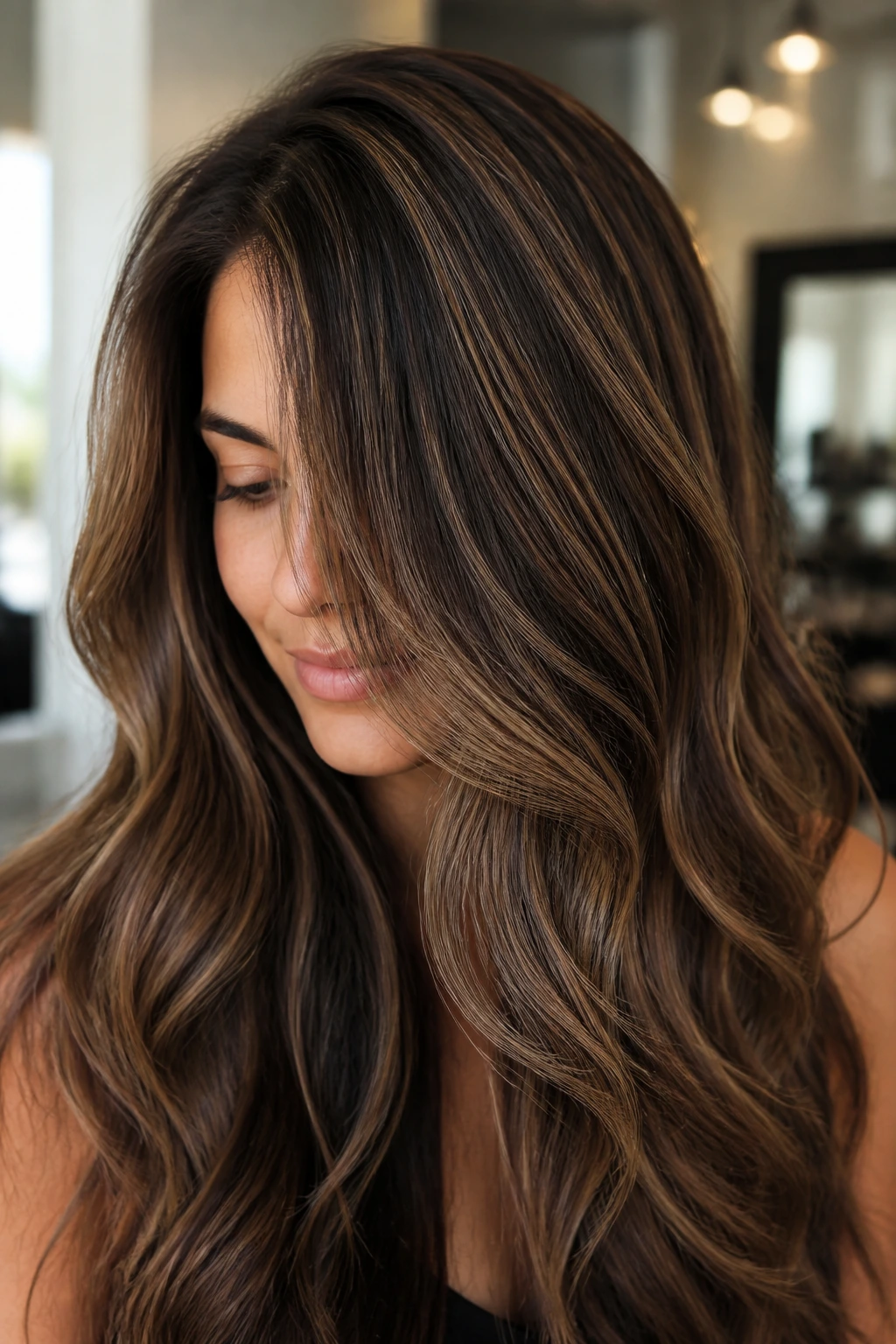
Micro-balayage is tiny painting with a big payoff. The sections are narrow, the placement is careful, and the final effect is a soft shimmer instead of visible stripes.
Why it suits thick hair
Dense hair can look blunt if the lightening is too broad. Micro-balayage breaks that bulk up from the inside, giving the hair a lighter movement line without sacrificing its weight.
On olive skin, this works best with a beige or caramel toner. Keep the contrast subtle, because the charm here is softness. The color should look like it was always there, just slightly brighter after a few weeks in the sun.
11. Chunky Panel Pop
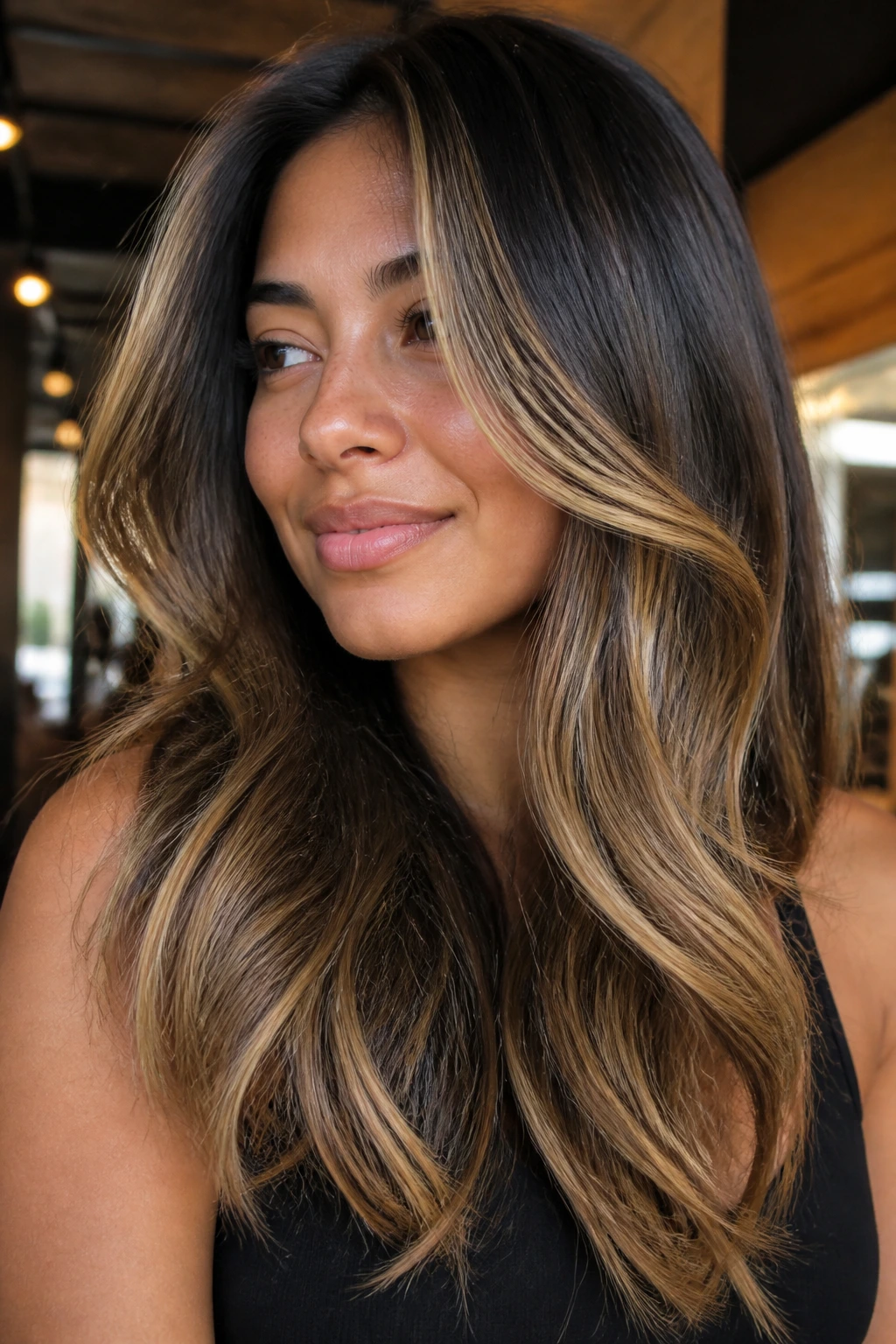
Sometimes you need more than whisper-soft. Thick hair can carry a chunky panel beautifully, especially around the front and lower half of the head where the sections actually show.
This technique gives a bolder result without turning the whole head into a grid. The panels are usually placed where the hair naturally falls apart — near the part line, around the face, and in the top layer of the mid-lengths.
On olive skin, use caramel, honey, or soft gold rather than pale yellow. Big panels need a forgiving tone, or they start to look harsh. A good colorist will leave some deeper hair between them so the whole thing breathes.
12. Espresso Lowlights With Warm Beige Ends
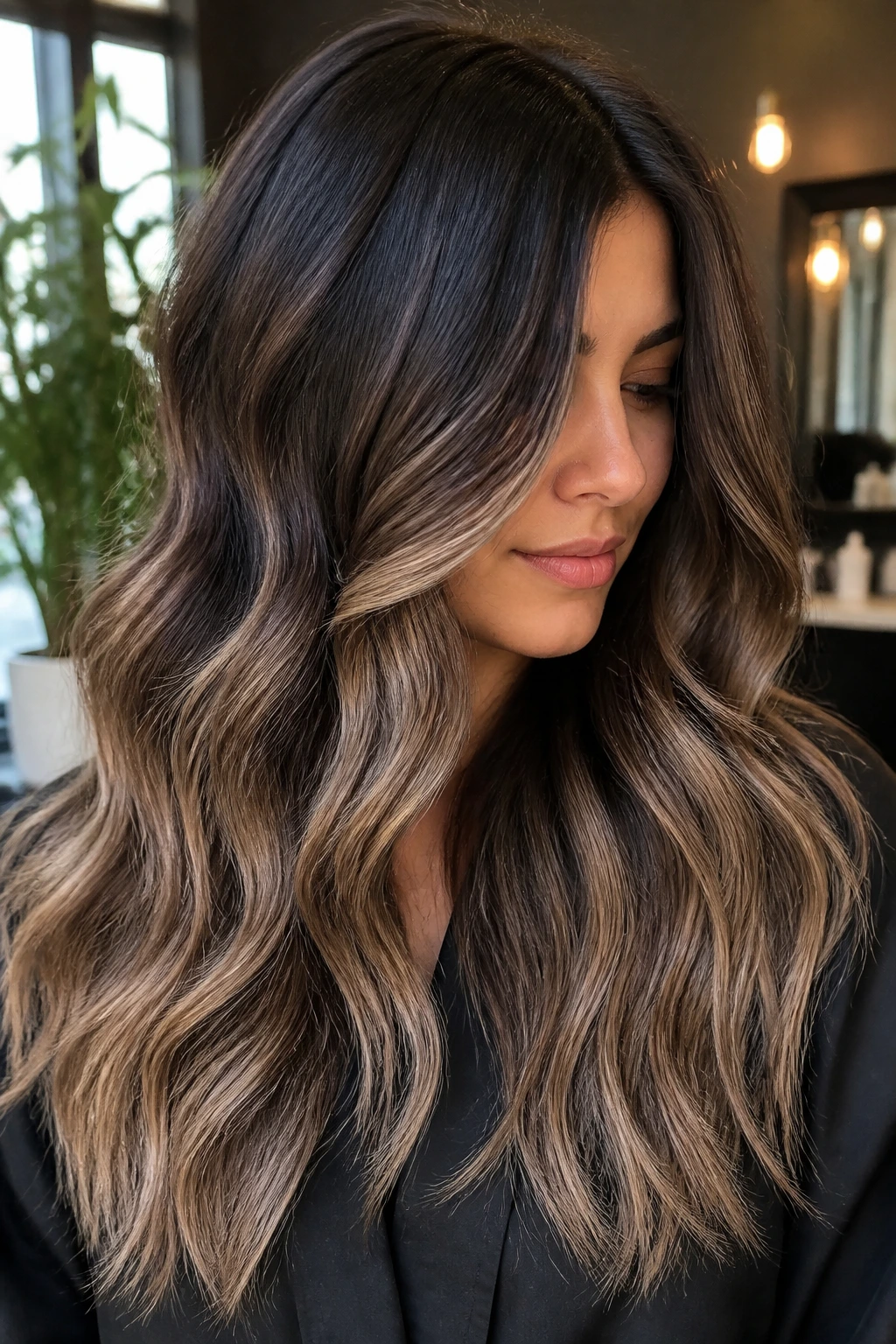
This is one of the best choices for someone whose hair is naturally dark and very thick. The espresso lowlights anchor the base, while the warm beige ends keep the whole look from getting too brown or too severe.
The effect is elegant in a practical way. You can still see the color at the ends, but the roots don’t demand constant attention. That matters when the hair has a lot of density, because the regrowth line can show fast if the base is overlightened.
Not a flashy look. A useful one.
13. Honey Veil on Natural Brunette
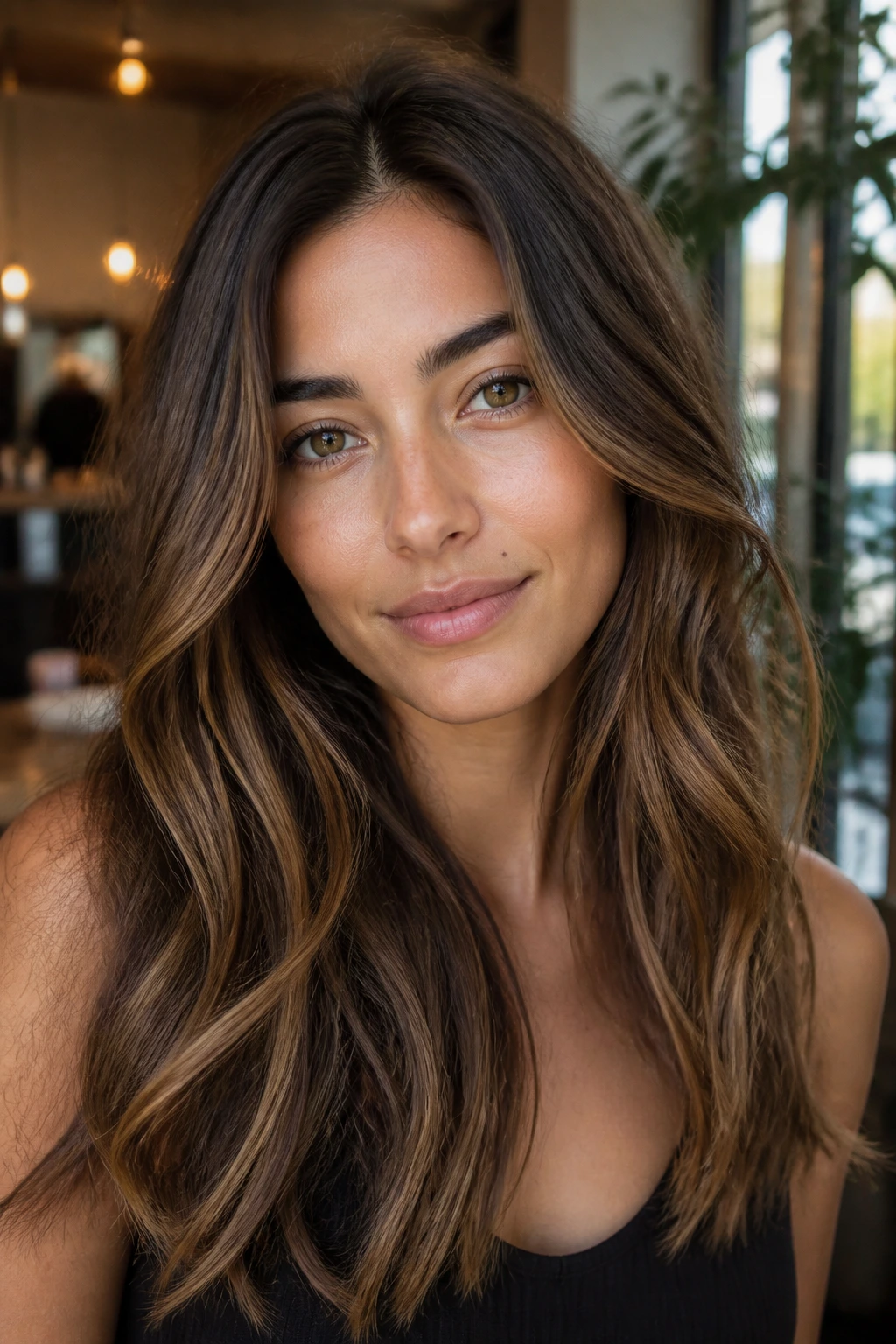
Honey balayage can be beautiful on olive skin, but only when it stays soft. This version keeps the honey as a veil over brunette lengths instead of a bright gold blanket.
The word I’d use is lifted. You should see warmth, not yellow. On thick hair, honey through the mids and ends adds shine and softness, especially when the cut already has long layers or movement around the face.
If your skin leans golden-olive, this one tends to glow rather than fight. If your skin is cooler olive, keep the honey muted and pair it with a deeper root.
14. Airy Face-Frame With Dimensional Interior
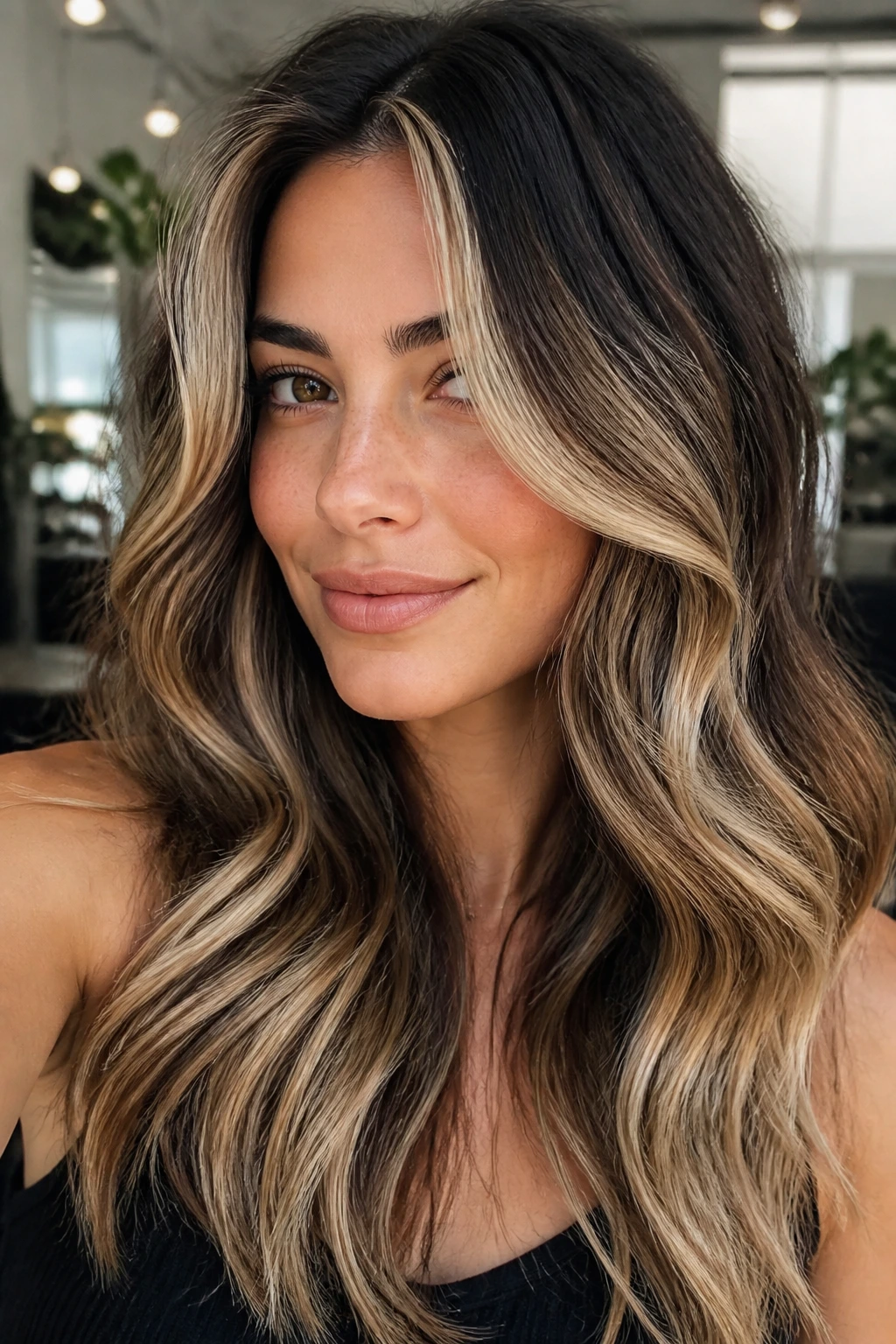
A lot of people ask for face-framing money pieces and forget the rest of the head. That works badly on thick hair, because the front gets loud and the interior stays dark and heavy.
This technique fixes that by combining a visible face frame with softer interior balayage. The front pieces brighten the complexion; the hidden sections stop the color from collapsing into a flat curtain when the hair is pulled back or tucked behind the ears.
It’s a smart choice if you wear your hair in ponytails, clips, or loose buns a lot. Those styles expose the interior, and this placement keeps the color from disappearing when the hair isn’t down.
15. Ash-to-Caramel Neutral Blend
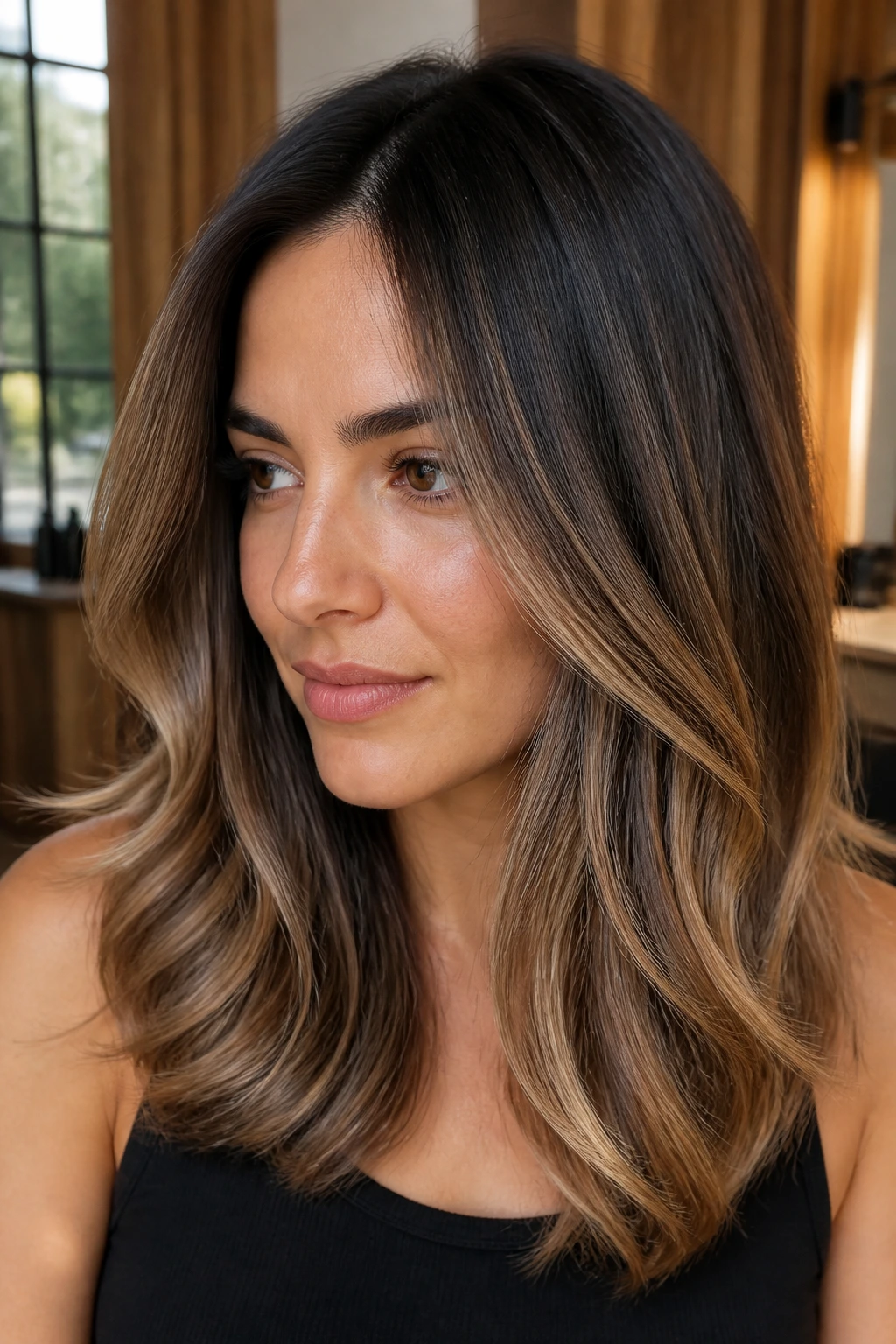
Why choose between ash and warmth when olive skin often sits right in the middle? This blend starts cooler at the root or crown, then warms toward caramel through the lengths, which gives the hair a layered, lived-in feel.
The technique works because thick hair can hold contrast without looking busy. The cool root keeps things modern; the caramel ends keep the face from looking flat or gray. It’s a balancing act, but one worth trying if pure gold feels too sunny and pure ash feels too dry.
This one reads best on shoulder-length hair or longer. The movement matters.
16. Curl-Specific Balayage
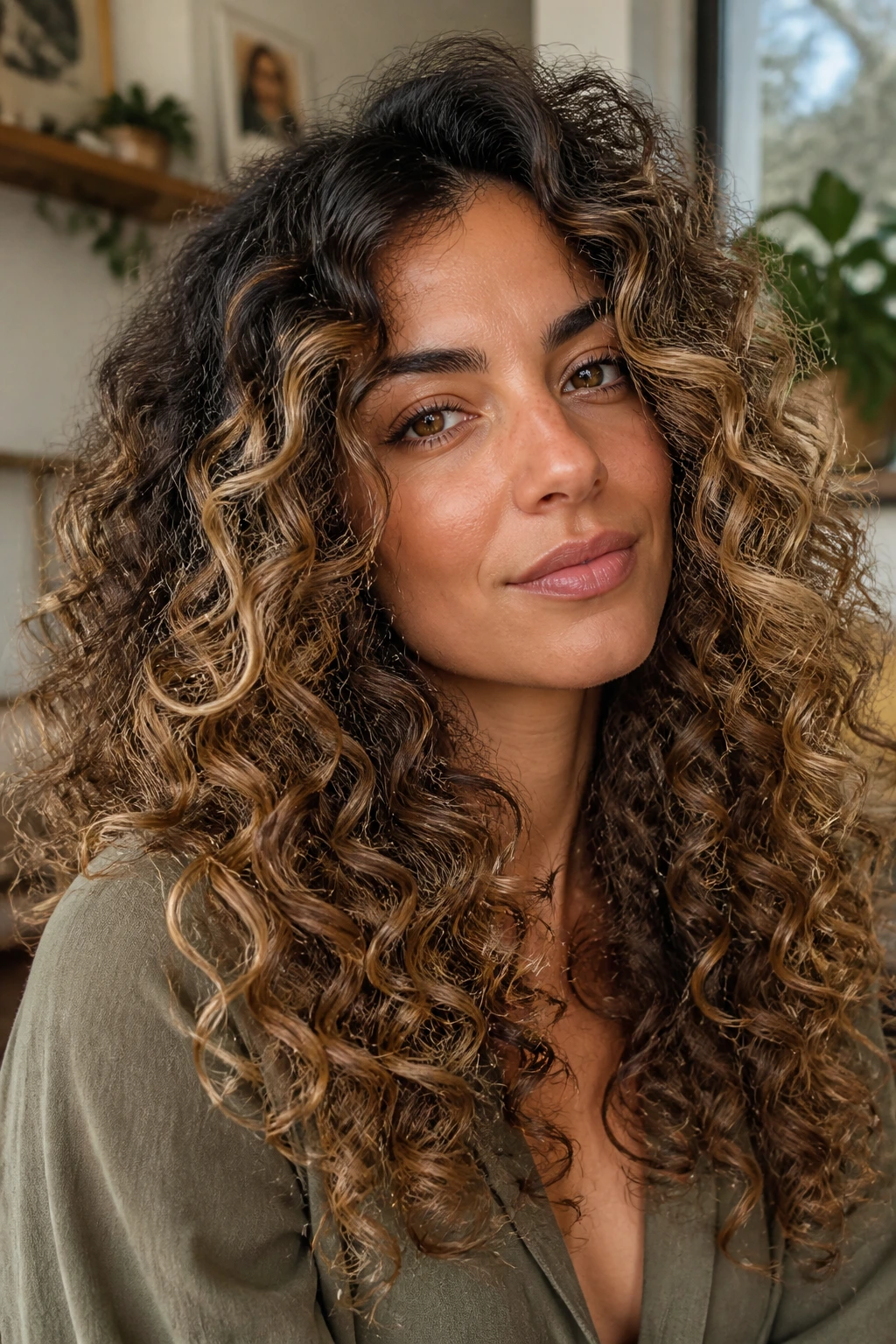
Curls need a different map. If the hair is thick and curly, balayage has to be placed where the curl bends and catches light, not just on the surface when the hair is blown straight.
What to ask for
Ask for lights that follow the curl pattern, with a little extra brightness on the outer canopy and around the face. The goal is dimension inside the curls, not a stripe that only makes sense when the hair is flat-ironed.
Olive skin pairs well with warm beige, soft gold, or muted copper here. Harsh blonde can interrupt the curl pattern visually and make the texture look separated instead of plush.
17. S-Bend Ribbon Balayage
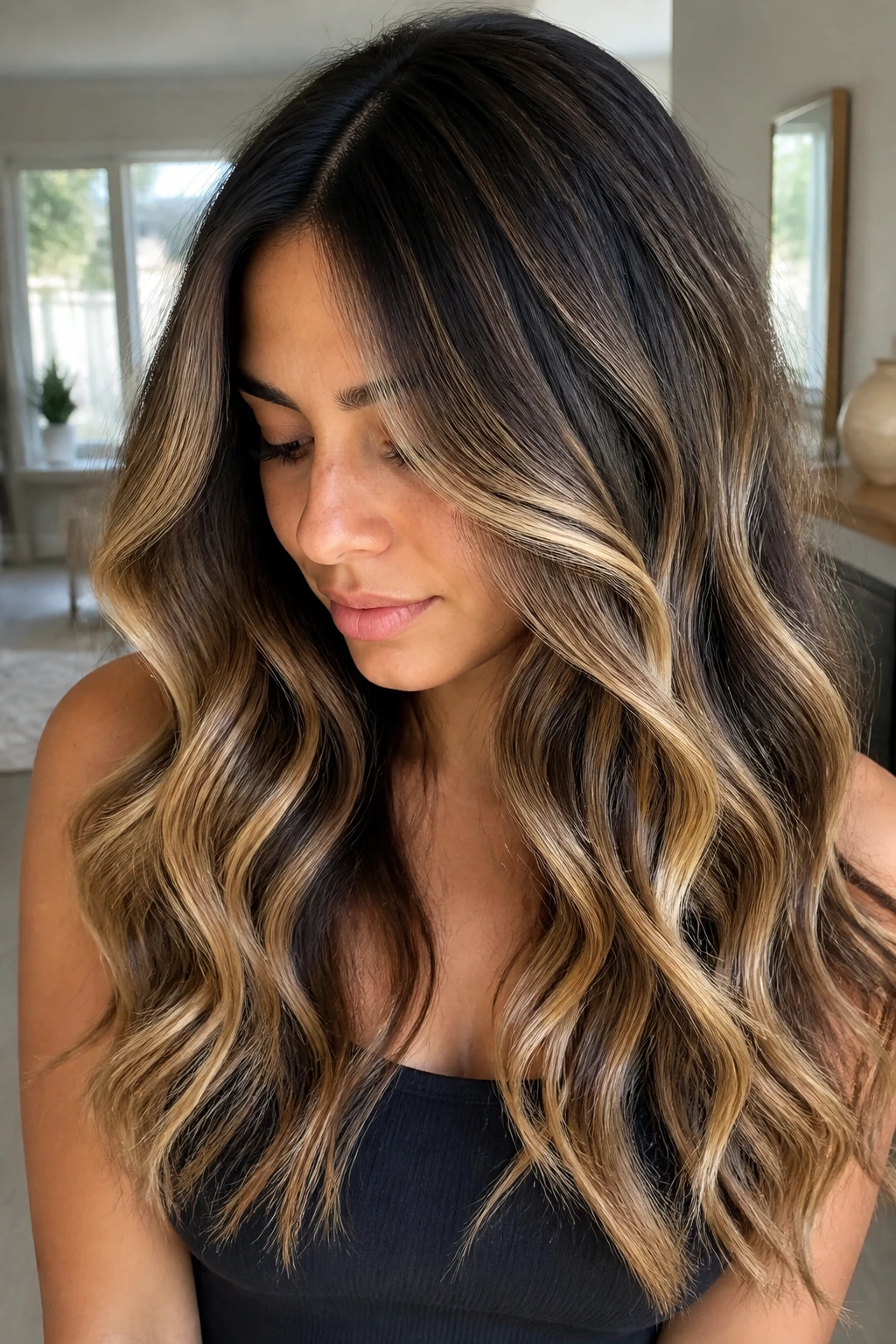
This is the look for anyone who loves soft waves and wants the color to move with the bend of the hair. The ribbons are painted to follow an S-shaped flow from mid-shaft to ends, which makes the waves look fuller and more expensive in the low-key sense of that word.
Thick hair benefits from this because the eye follows the light through the wave instead of getting stuck on a hard line. Olive skin usually reads well with ribbons in beige, toasted almond, or warm champagne.
The key is not overload. Too many ribbons and the pattern gets noisy. Too few and you lose the effect.
18. Brunette-to-Champagne Melt
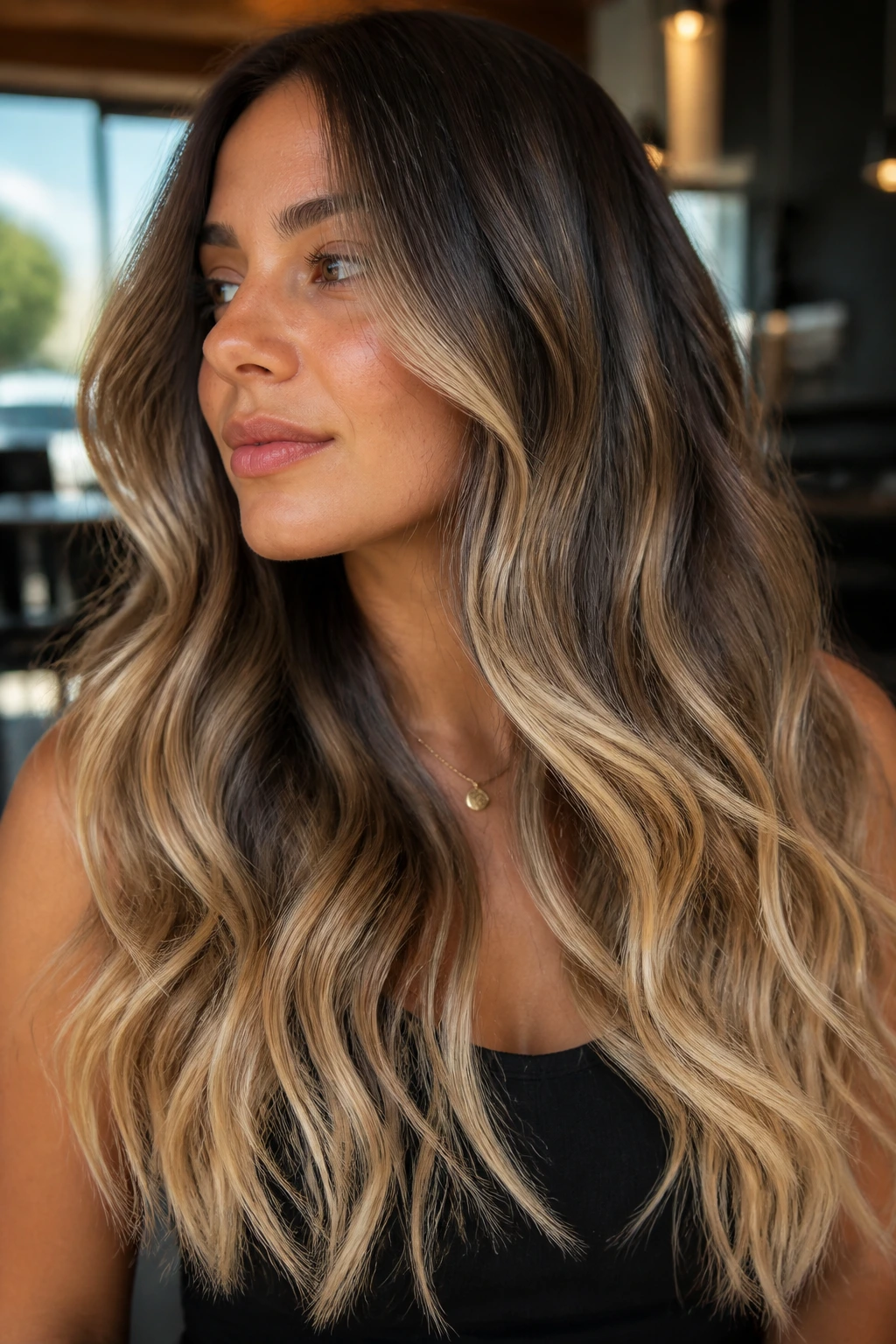
Champagne blonde can be tricky on olive skin, but the brunette-to-champagne melt solves some of that by keeping the base warm and deep enough to support the lighter ends. The transition matters more than the blonde itself.
On thick hair, this melt has to stay soft through the mid-lengths so the ends don’t look detached. A strong root shadow and a gloss that keeps the champagne slightly beige usually make the difference between pretty and brassy.
If your skin has neutral or golden olive undertones, this can look fresh without going white-blonde. That’s the appeal. Bright, but not harsh.
19. Mahogany and Cinnamon Contour
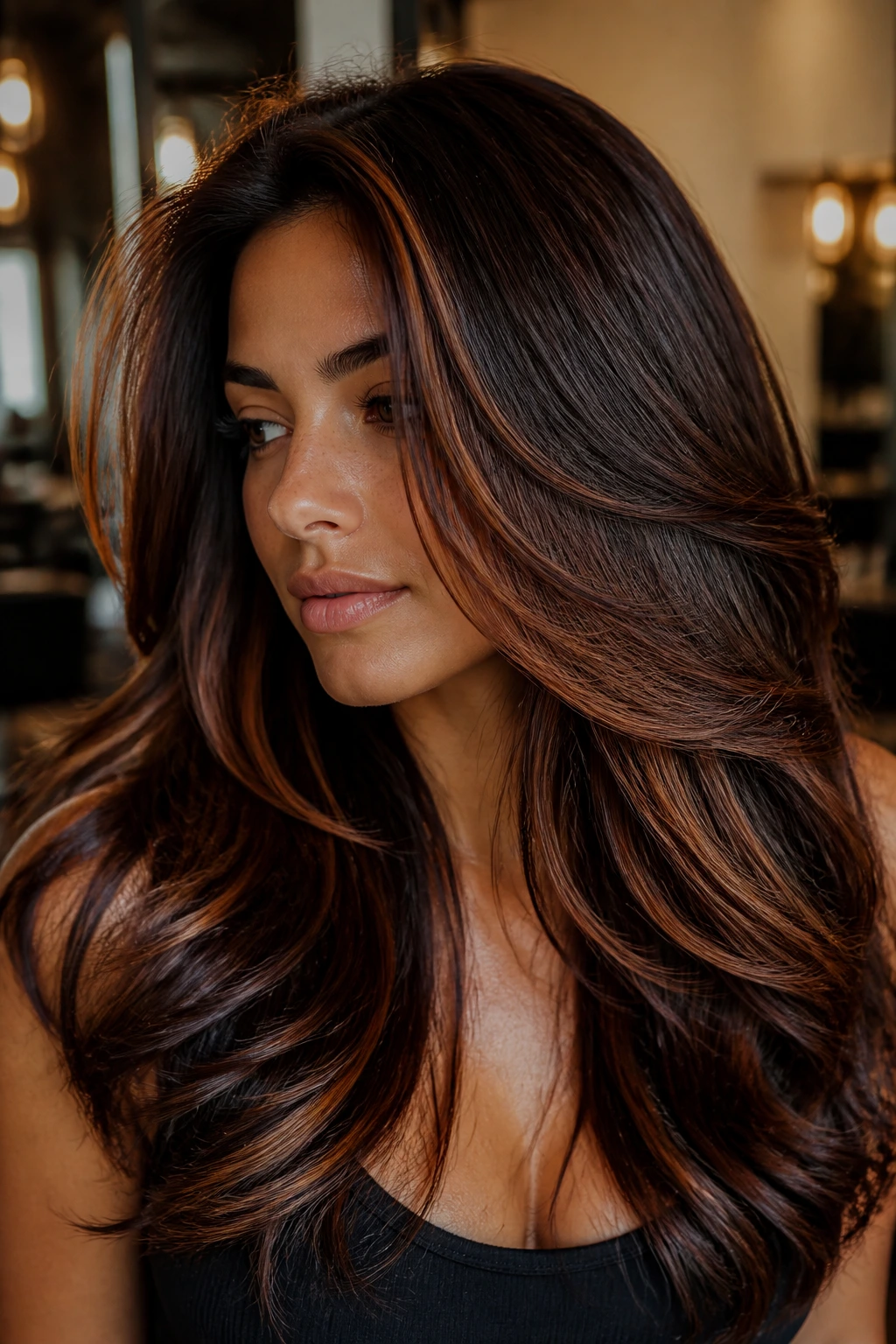
This is a more underrated choice, and I think it deserves more attention. Mahogany and cinnamon pieces can be stunning on olive skin because they echo the warmth already in the complexion without turning the whole head orange.
The placement should stay around the front and surface layers, with deeper brown underneath for contrast. Thick hair handles this especially well because red-based tones show best when they’re layered over depth.
If you’re tired of blonde maintenance, this is a strong pivot. It still counts as balayage, but it lives closer to rich brunette with dimension than to classic blonde highlights.
20. Half-Head Balayage for Low Maintenance
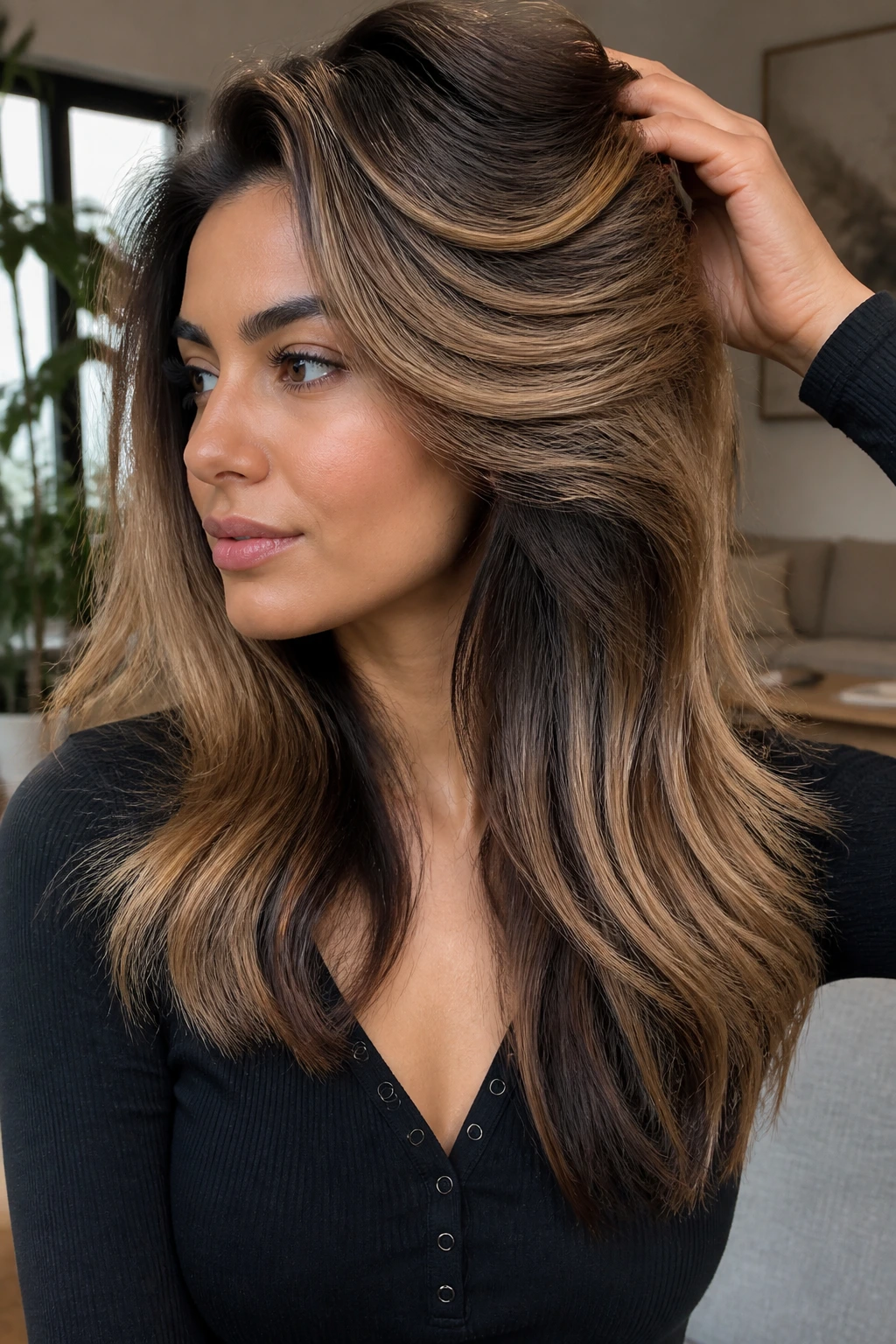
Not every head needs full saturation. Half-head balayage keeps the lightening mostly on the top and sides, with the underside left deeper for structure and grow-out control.
That’s useful on thick hair because the underside often holds weight and hides movement. By leaving it darker, you keep the silhouette full while letting the visible sections carry the brightness.
Olive skin benefits from the reduced contrast if you like softer color. It’s a practical technique, but not a boring one. The best versions still have a face frame and a few brighter ends so the whole thing doesn’t drift flat.
21. Glow-Up Gloss Balayage
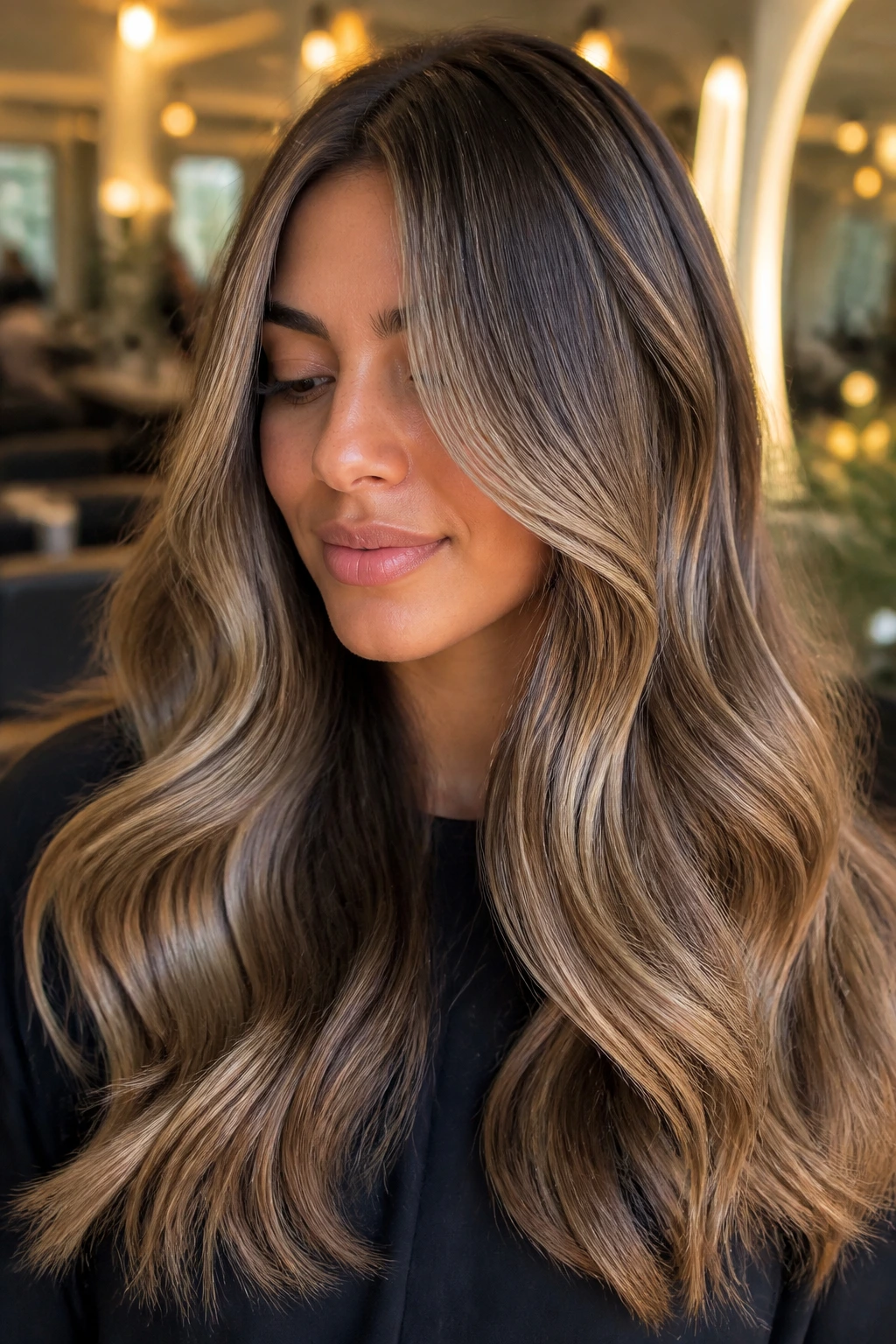
A gloss isn’t a side note here. It’s the part that makes the rest of the color look finished. On olive skin, a clear or demi gloss in beige, caramel, or soft pearl can pull too-brassy tones back into line.
This technique works after any balayage placement, but especially on thick hair where the lightening may lift unevenly in some sections. The gloss smooths that out and adds slip, which thick hair tends to love because it reflects a lot of shine once the cuticle lies flat.
If the hair feels a little dry after lightening, this is the rescue step. Not glamorous. Very useful.
22. Black Hair Lift With Toffee Ends
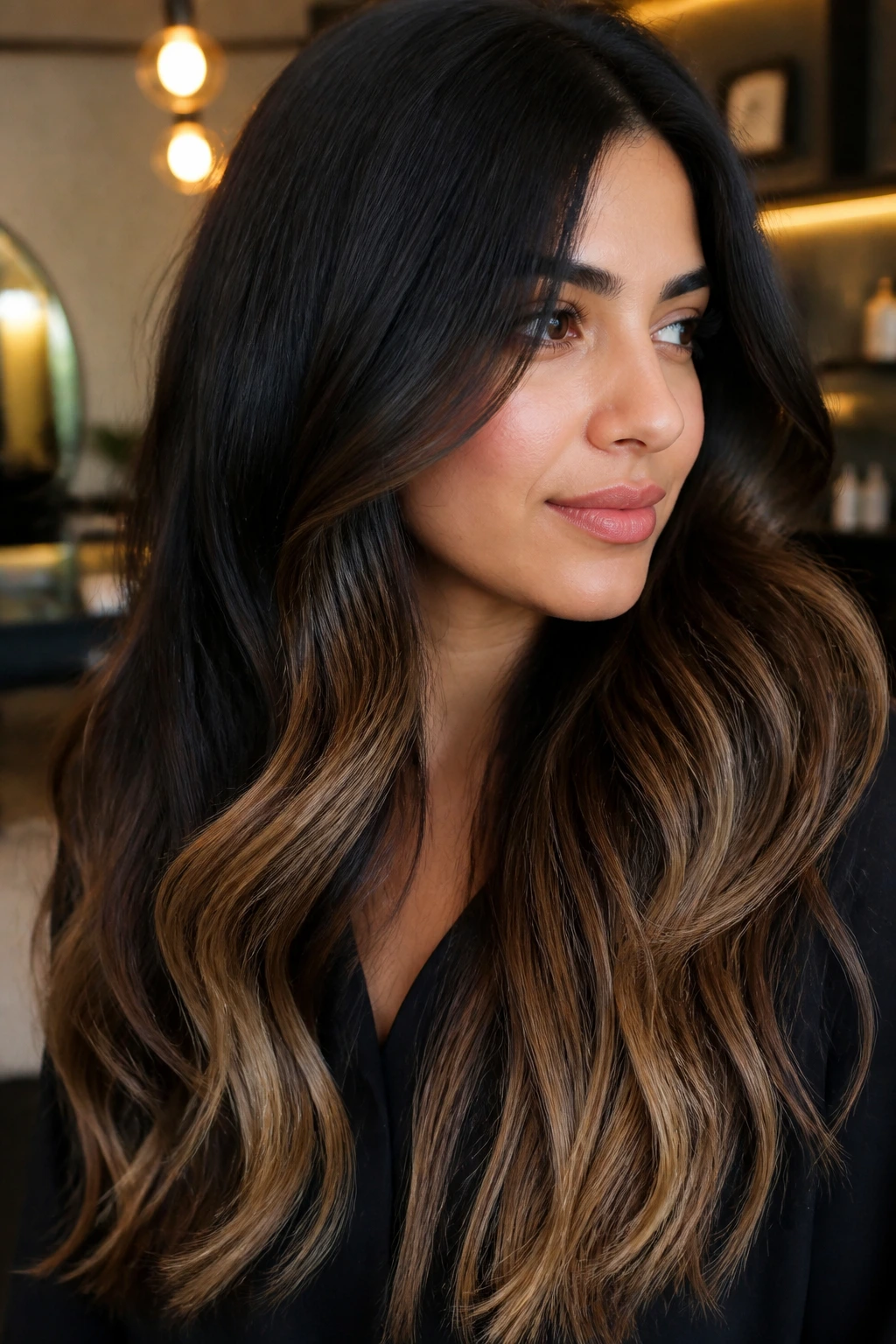
Black or near-black hair needs respect. It takes longer to lift, often exposes warmth mid-process, and can feel unforgiving if the placement is too ambitious.
Toffee ends are a smart target because they sit in that rich brunette-blonde middle ground. On olive skin, they keep the look grounded and avoid the cartoon contrast that pale ends sometimes create.
This is a good one to do in stages. Lighten carefully, tone warmly, then decide whether you want more brightness later. Thick hair can handle a staged plan better than a rushed one.
23. Soft Contrast Bronde
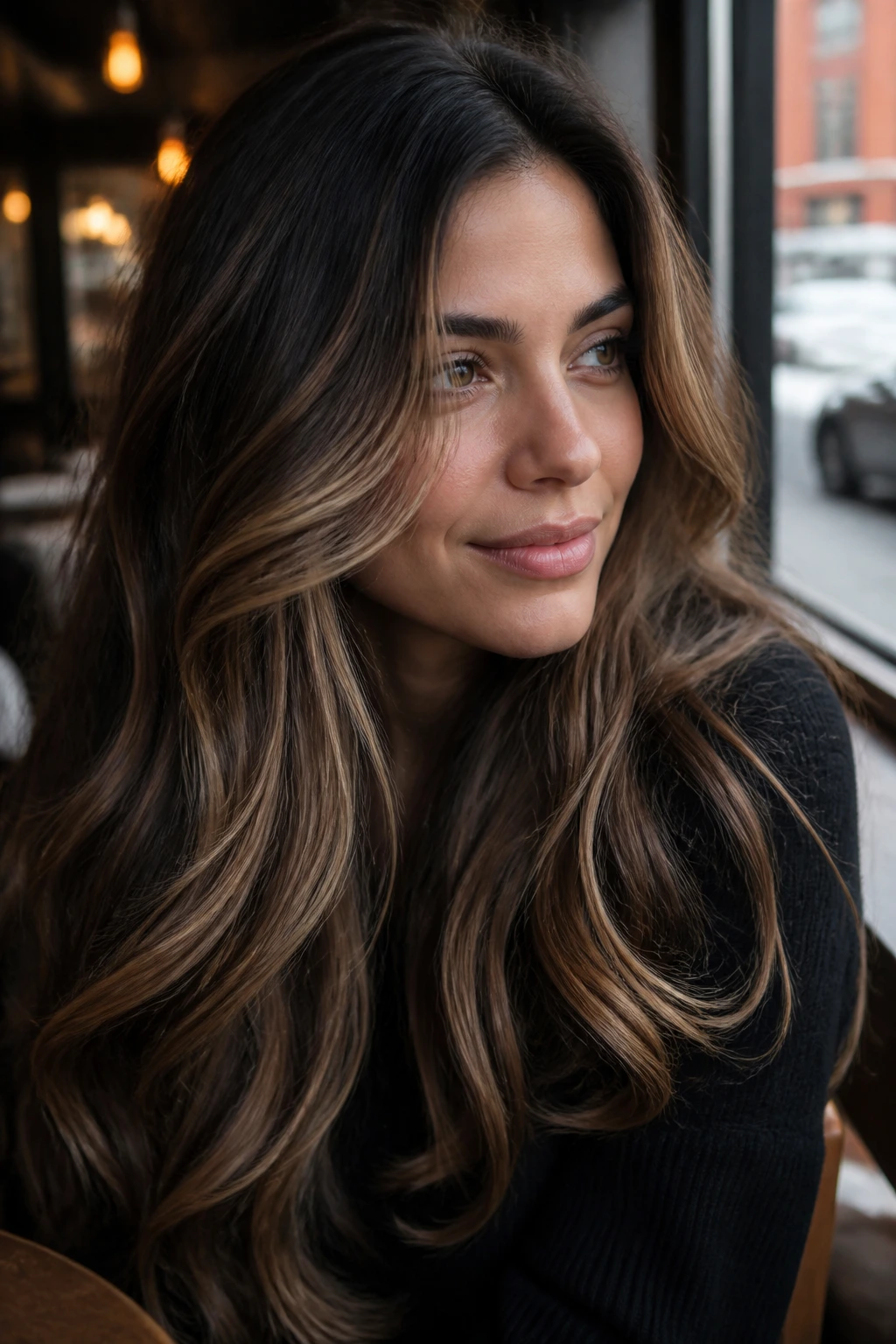
Brunette and blonde aren’t opposites here. They’re neighbors. Soft contrast bronde keeps them close enough to blend, but distinct enough that the dimension survives even on a very full head of hair.
Why this one lasts visually
Thick hair can flatten a delicate highlight pattern, but it can also make a soft contrast look luxurious if the lowlights and highlights are placed with enough space between them. Olive skin tends to like the balance because the brunette preserves depth while the blonde catches the face light.
If you want a color that doesn’t scream for attention but still looks deliberate, start here.
24. Hidden Pop Underlayers
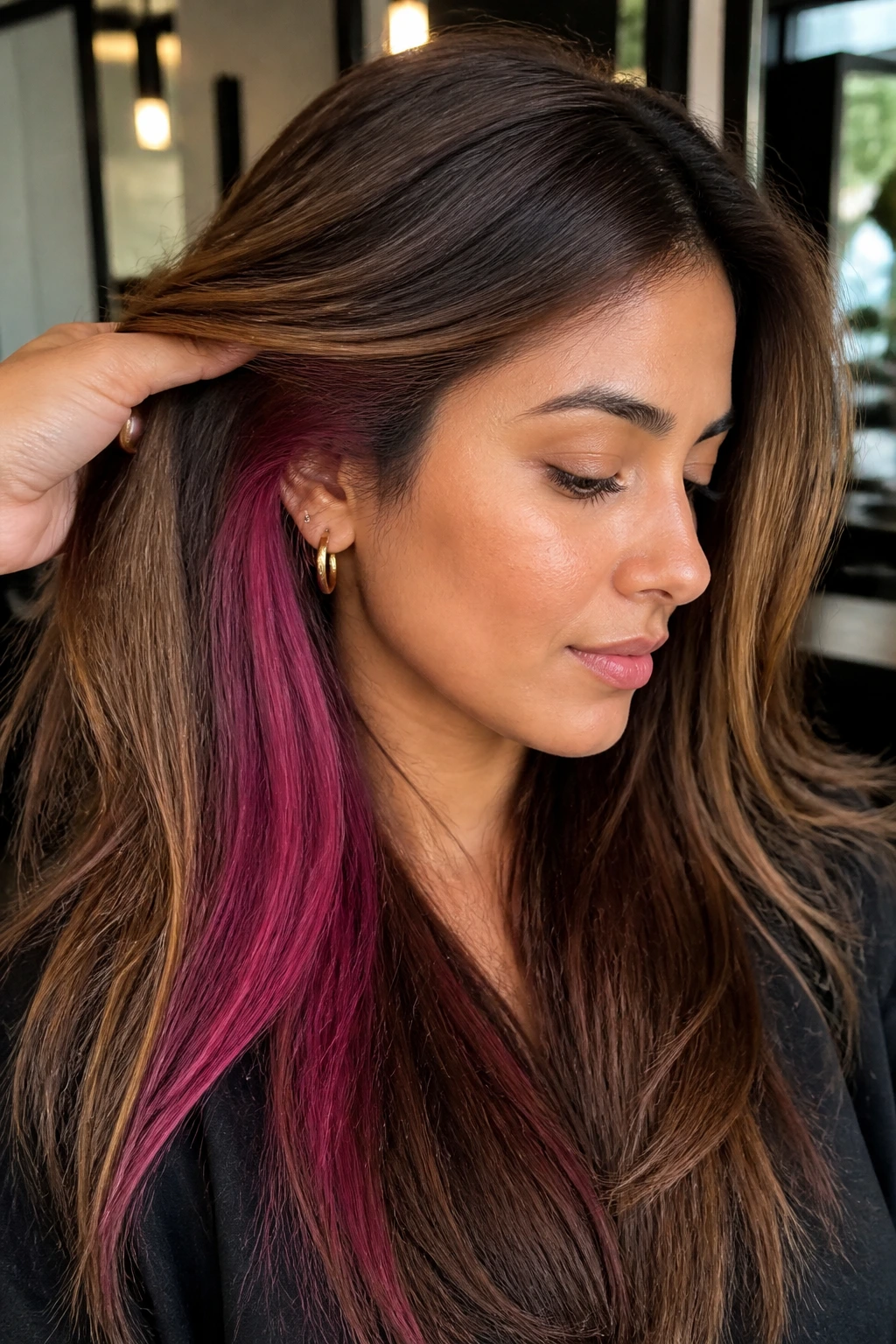
This is one of my favorites for people who like restraint with a little mischief. The brightest pieces sit underneath the top layer, so the color flashes when the hair swings, moves, or gets tucked behind the ear.
On thick hair, that hidden placement makes sense because the density gives you a built-in curtain. You can have a calmer surface and still reveal brightness when you want it. Olive skin looks especially good with this when the visible top layer stays brown, chestnut, or mushroom with warmer light underneath.
It’s subtle. Then it isn’t.
25. Root-Smudge Sunset Balayage
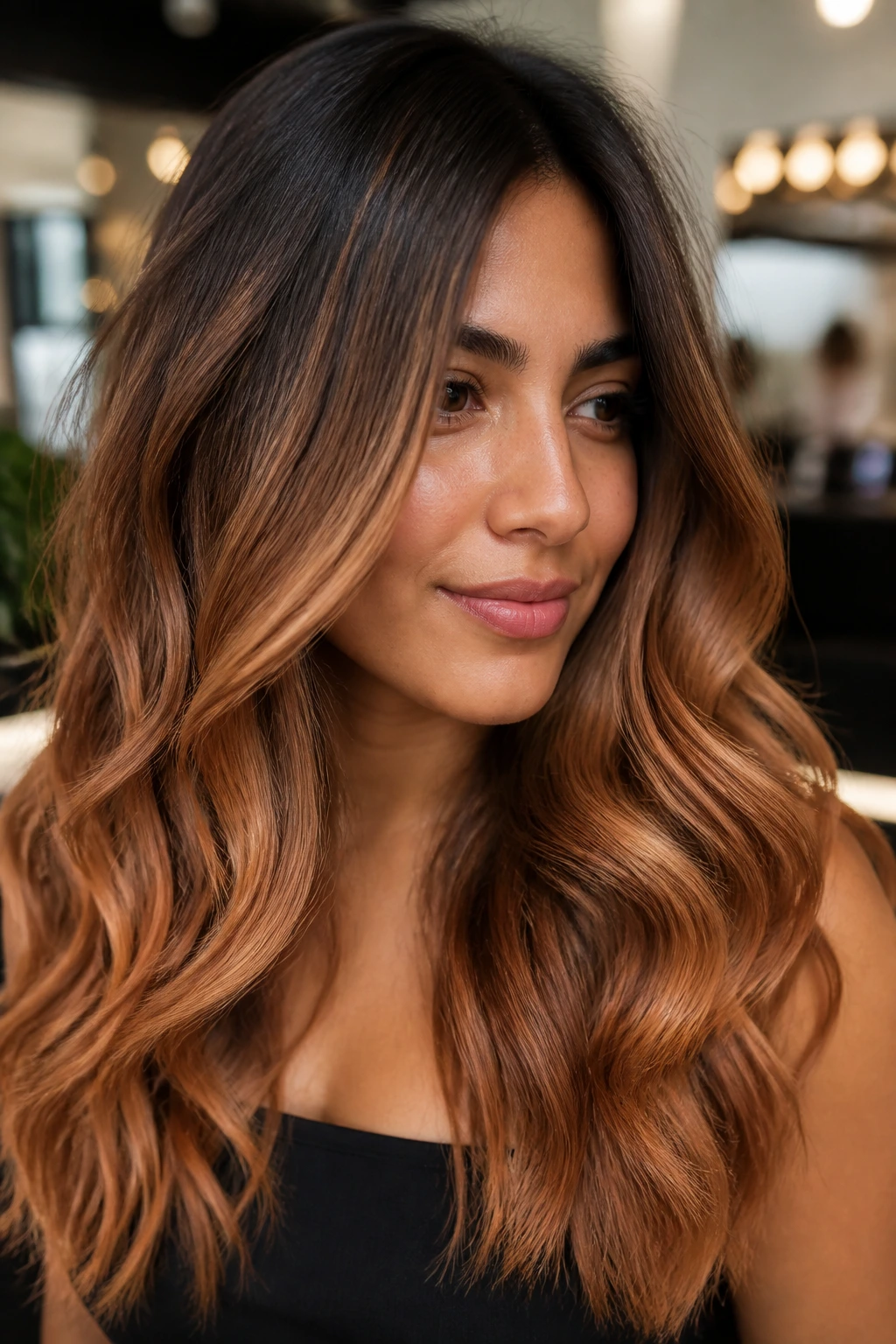
A root-smudge sunset blend mixes warm gold, amber, and soft copper through the ends while keeping the roots softly blurred. It’s richer than standard blonde, and on olive skin that richness matters — it stops the color from looking too pale against the face.
Thick hair makes the sunset effect look expensive because the different tones have room to layer without collapsing into one flat shade. The root-smudge keeps regrowth soft, while the warmer ends catch the eye when the hair moves.
If you like warmth and depth in the same look, this is the one I’d show a stylist first.
Why This Placement Strategy Works on Thick Hair
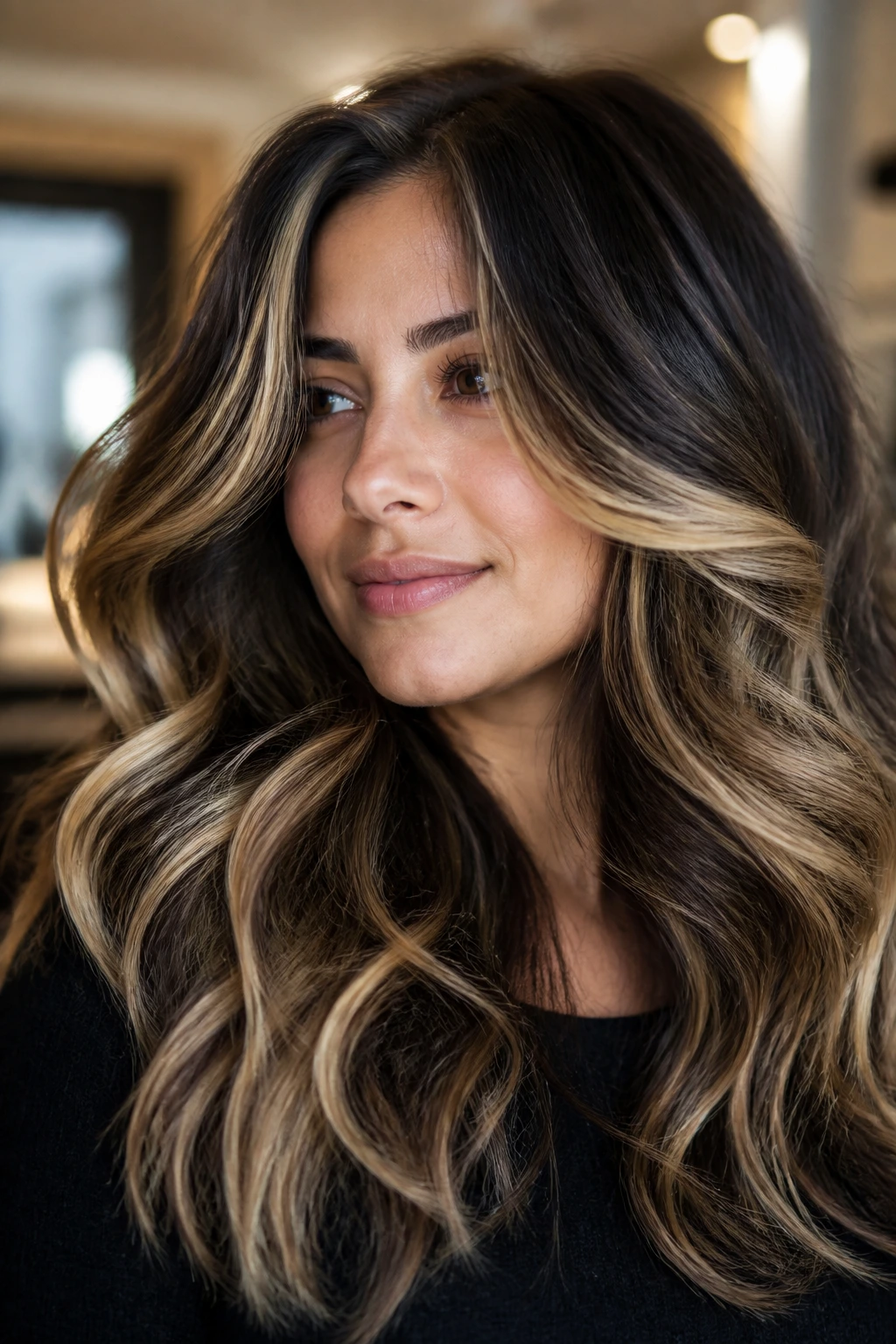
Thick hair doesn’t need to be “managed” into looking thinner. It needs placement that respects its weight. That’s the whole game.
A good balayage on dense hair uses contrast where the eye actually lands: around the face, through the outer canopy, and in the ends that swing when you move. If every section is lightened evenly, the finish can go puffy or busy. If the lights are too sparse, they disappear. The sweet spot sits in the middle, and it usually means mixing wide ribbons with finer lights underneath.
I also like to see stylists leave at least one deeper lane of color somewhere in the head. That lane gives the light somewhere to rest. Without it, thick hair can turn into one broad, over-lightened sheet that loses its shape the second you blow-dry it straight.
Essential Tools for These Balayage Techniques
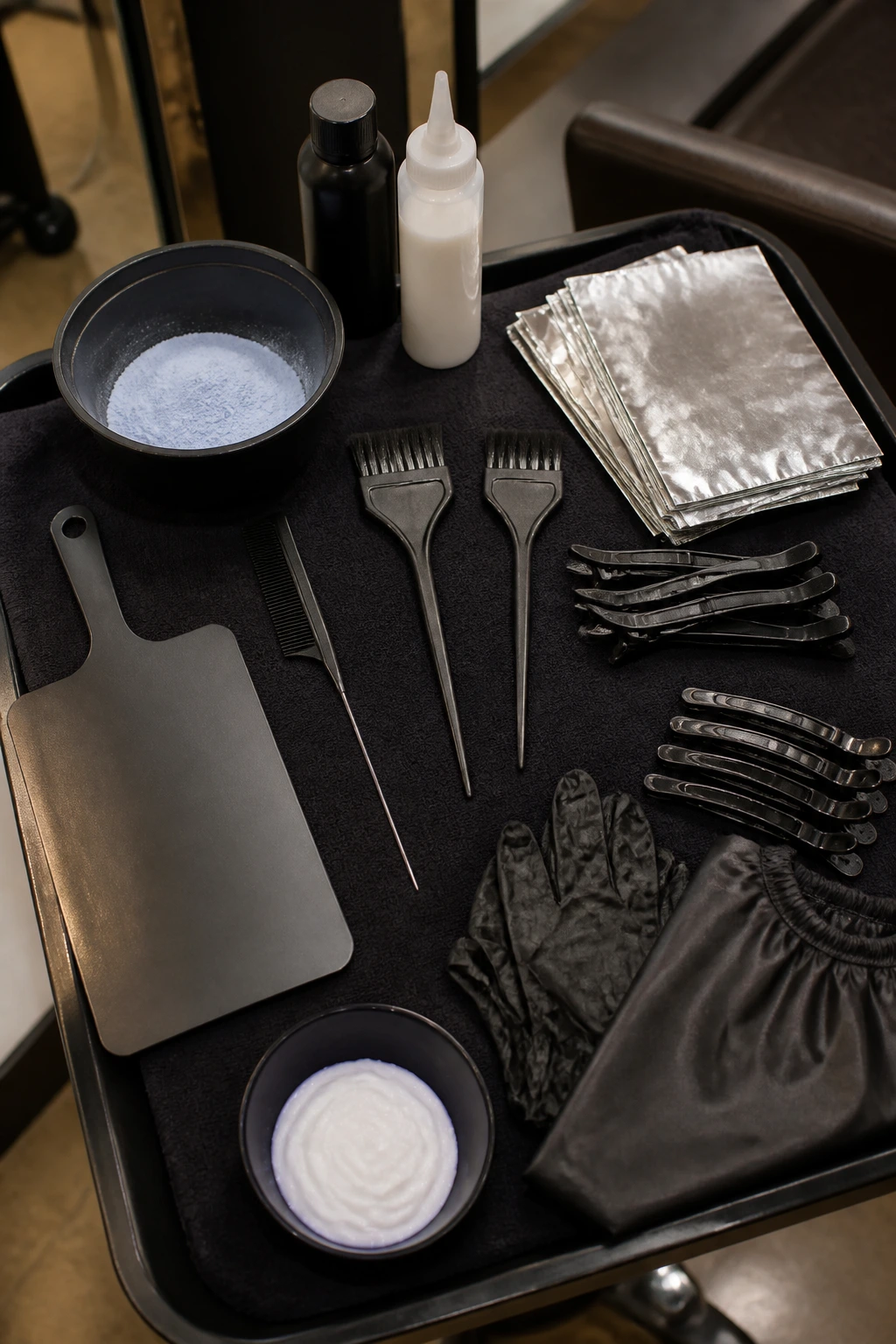
- Balayage board or paddle: Helps support thick sections so the lightener paints on evenly instead of slipping through dense hair.
- Tail comb: Useful for clean sectioning, teasylights, and narrow face-framing pieces.
- Tint brush in two widths: A wider brush for ribbons and a narrow one for detail work around the hairline.
- Clips with a strong grip: Thick hair laughs at weak clips. Use ones that hold through a full section.
- Lightener powder and developer: A reliable lightener matters more than fancy packaging; use the developer strength the hair can actually tolerate.
- Foils or film: Great for foilayage, higher lift, or areas that need more controlled processing.
- Gloves and color cape: Non-negotiable. Bleach drips have a way of finding the one shirt you like.
- Demi-permanent toner or gloss: This is what keeps olive skin from looking too brassy or too dull.
- Sectioning clips and rat-tail comb together: The pair saves time when the hair is very dense and wants to spring back on itself.
Smart Toner, Lightener, and Developer Choices
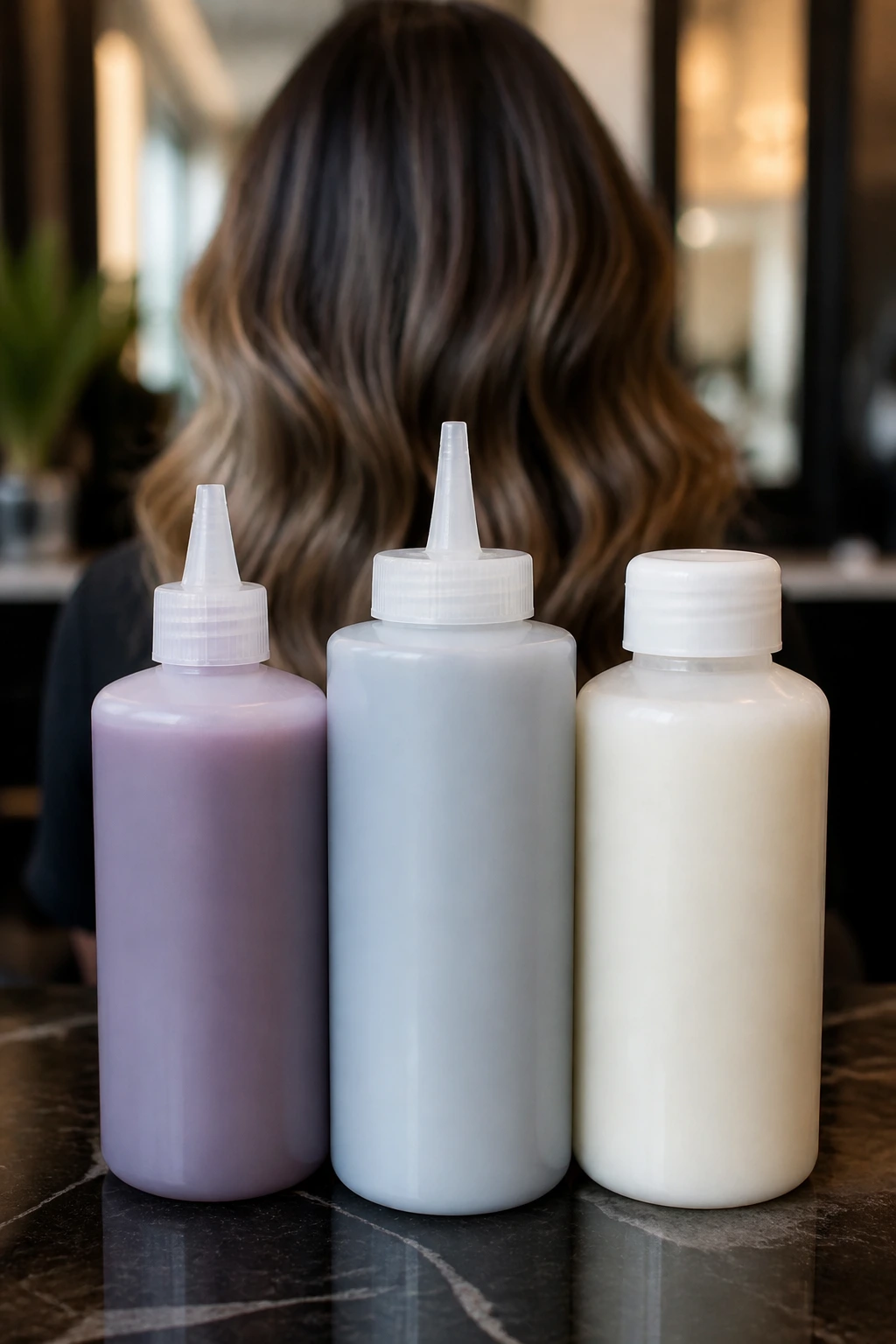
Olive skin gives you a little room, but not endless room. The tones that tend to flatter most are beige, caramel, soft gold, mushroom, chestnut, and muted copper. Those shades keep the skin looking alive. Too much icy ash can flatten the face. Too much bright yellow can make the complexion look tired.
On thick hair, lift level matters as much as tone. If you’re starting from a medium brunette, a clean level 7 to 8 is often enough for bronde and caramel work. For a brighter blonde effect, you may need to reach level 8 to 9 — but only if the hair can handle it without getting gummy or frayed. Dense hair often looks healthiest when it isn’t dragged all the way to pale banana yellow.
Developer choice should match the job, not ego. 20 volume is usually enough for most balayage work on already-lightened or fragile lengths. 30 volume can make sense on resistant virgin hair that needs more lift, especially in thick sections that process slowly. 40 volume is where the tone gets risky and the hair can get stressed fast, so I wouldn’t reach for it unless there’s a very specific correction plan and a professional actually knows why it’s being used.
A strand test saves headaches. So does porosity awareness. Thick hair can be resistant in the middle and porous on the ends, which means one section may lift like a dream while another grabs toner and goes dark. That’s the sort of thing that makes a color look uneven even when the placement was fine.
How to Wear and Show Off the Color
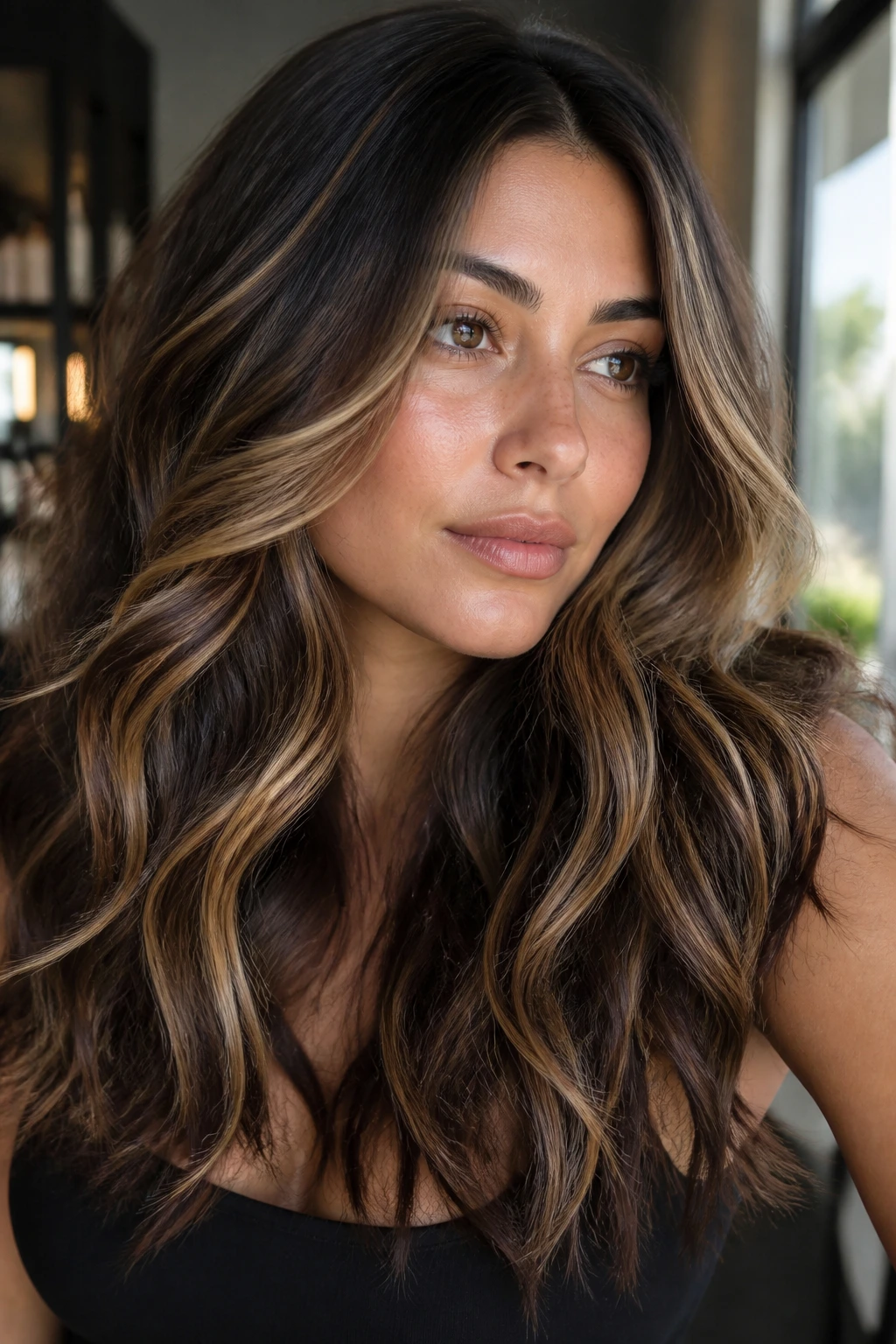
Presentation: Soft waves show the most dimension, because the ribbons bend with the hair and flash light at different points. If you wear it straight, use a round brush or a soft bend with a 1¼-inch iron so the ends don’t sit like a hard curtain.
Best Haircuts: Long layers, a butterfly cut, curtain bangs, and a collarbone-length lob all let balayage breathe. Thick hair with a blunt cut can still look good, but the color needs stronger contrast to show up through the density.
Contrast Level: Ask for a face frame that’s one to two levels lighter than the rest, then keep the interior softer. That balance usually flatters olive skin better than a full blonde halo.
Styling Pairings: A glossed finish, a light serum on the mids and ends, and a side or off-center part can all change how the color reads. The part is a big deal. Move it a half-inch, and suddenly the whole placement looks more deliberate.
Additional Tips for Better Dimension
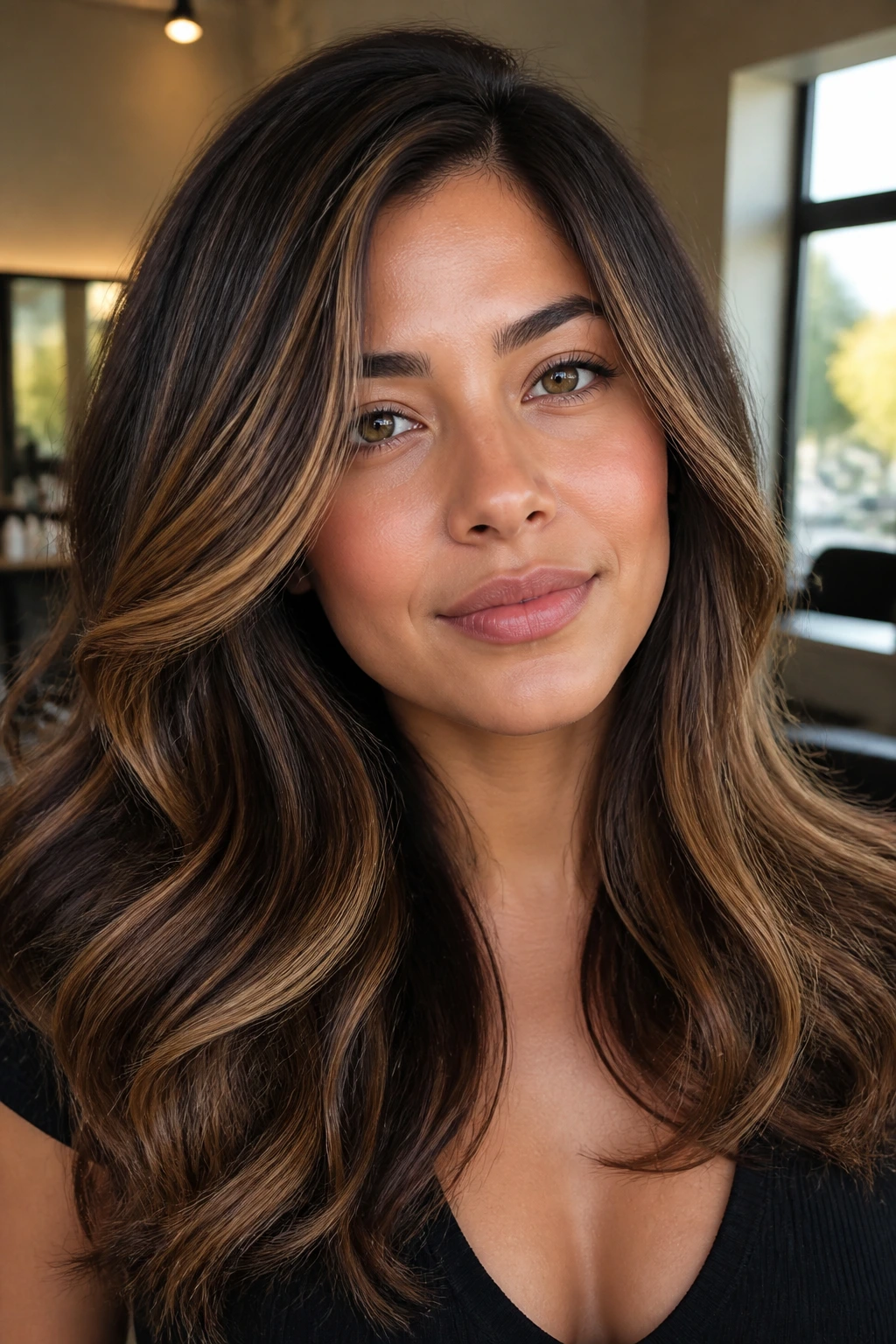
Tone Boost: If the blonde starts leaning yellow, ask for a quick beige or pearl gloss rather than another round of lightening. Tone first, lift second — that saves the hair.
Customization: For a bolder look, ask for brighter face-framing ribbons and softer interior lights. For a quieter look, keep the face frame only one level lighter than the base and concentrate brightness from the ear down.
Serving Suggestions: A few drops of shine serum on the ends, plus a heat protectant before any blow-dry or iron, keeps thick hair from swallowing the light. Dry texture spray can also help the ribbons separate a little, which is useful if the color feels too blended.
Make-It-Yours: If your olive skin leans warm, stay in caramel, honey, and copper. If it leans neutral, mushroom, beige, and toasted almond usually behave better. If you wear your hair curly, ask the colorist to paint the curl pattern, not the stretched length.
Color Missteps That Make Olive Skin and Thick Hair Look Off
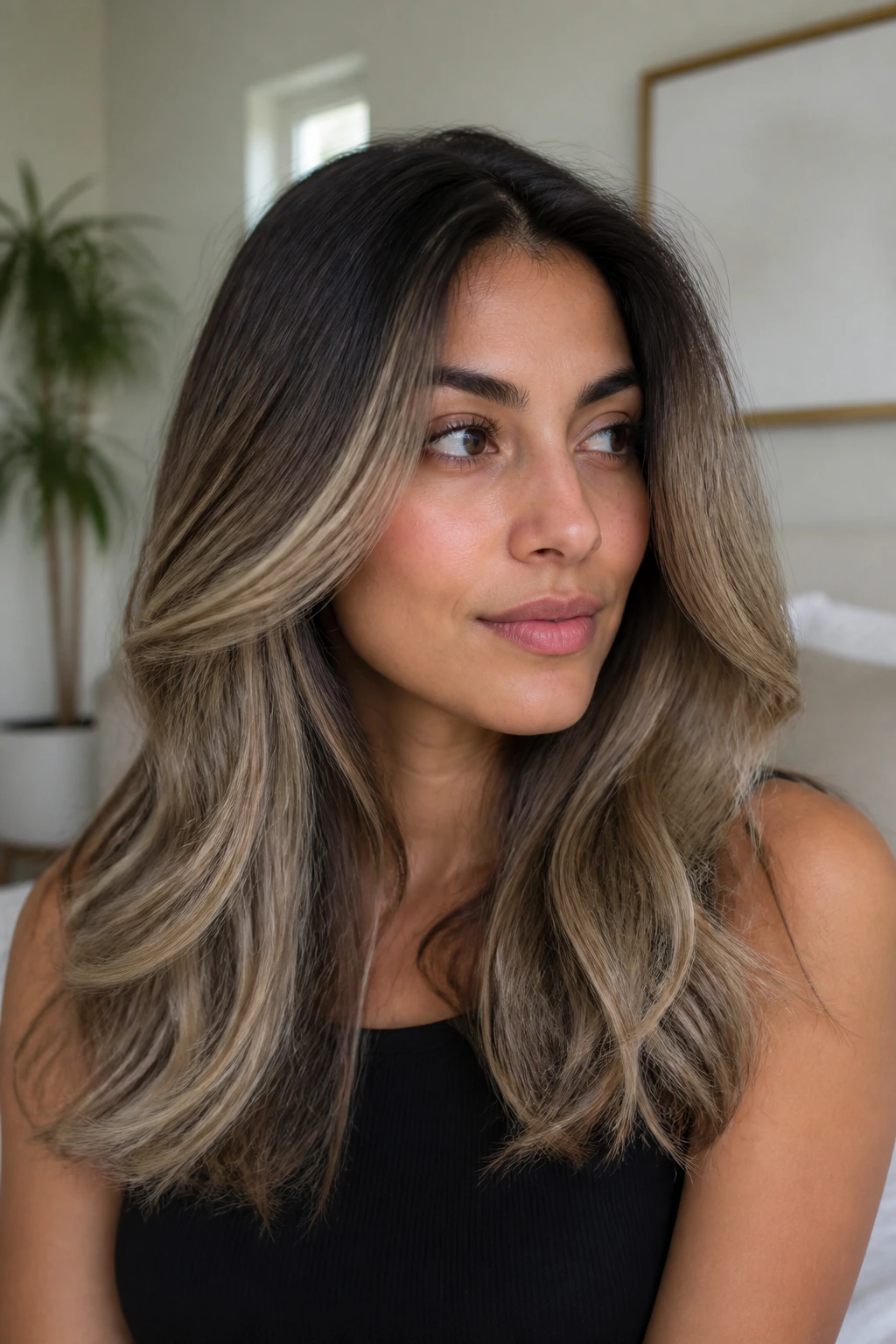
Going too light too soon: Thick hair often needs a staged plan. If you rush to pale blonde in one visit, the ends can feel dry and the tone can look harsh against olive skin. The fix is to stop at a strong bronde or beige blonde, then build lighter over time if the hair can handle it.
Using one tone from root to tip: All-caramel or all-ash can flatten dense hair. You need depth near the root and a slightly lighter finish through the ends so the haircut still has shape.
Ignoring porosity: The porous ends of thick hair grab toner fast, which can make the last two inches look darker than the mids. A strand test and a careful toner timing window save you from that muddy finish.
Too much yellow near the face: Bright yellow against olive skin can pull the complexion off balance. Keep the front pieces beige, honey, or soft gold, and leave the neon warmth for someone who wants a stronger fashion tone.
No maintenance plan: Balayage is lower maintenance than a full highlight, not maintenance-free. If you never gloss or hydrate, the color drifts brassy and the hair loses that smooth ribbon effect that made the style worth doing.
Variations and Adaptations to Try
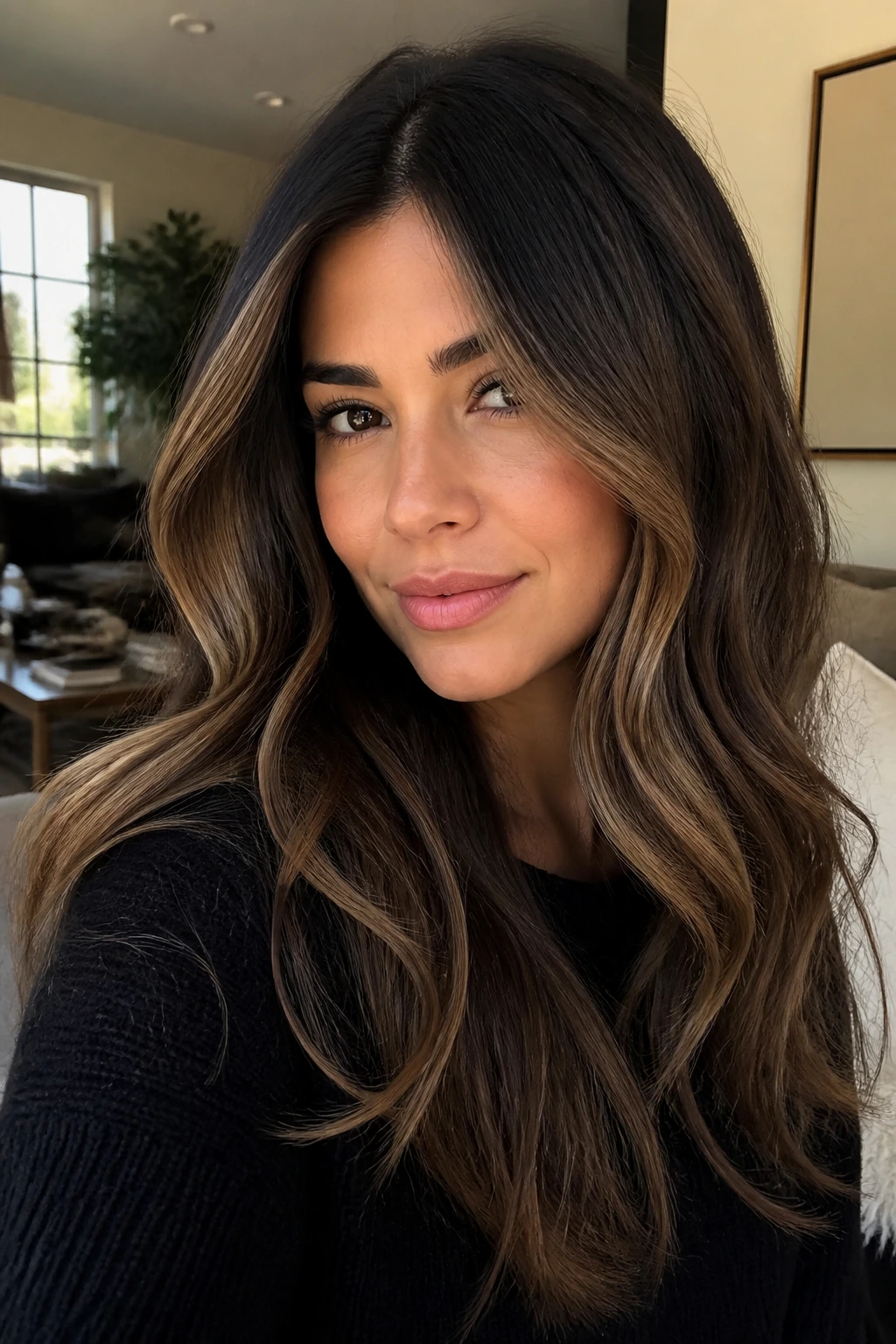
Warm Olive Glow: Use caramel, amber, and soft honey through the face frame and ends. This version suits olive skin with golden undertones and gives thick hair a polished, sunlit finish.
Mushroom Bronde: Keep the root a neutral brown and tone the mids with smoky beige. This is the better pick if your skin leans cool-neutral and you hate anything too yellow.
Curly Halo Placement: Lighten the outer curl canopy and the pieces that sit around the face. It keeps the curl pattern intact while still giving the hair movement and lift.
Low-Maintenance Shadow Melt: Leave a deeper root and keep the brightness below the ears. Great if you want a color that can grow for 8 to 12 weeks without screaming for a correction.
High-Contrast Editorial Pop: Add bolder money pieces and a few brighter panels through the lower layers. This one is more visible, more fashion-forward, and best when you want the balayage to show in photos and under bright light.
Copper-Brown Shift: If blonde isn’t the goal, lean into cinnamon and mahogany. Olive skin often looks rich beside red-brown tones, and thick hair tends to hold those shades with real depth.
Maintenance, Glosses, and Grow-Out Timing
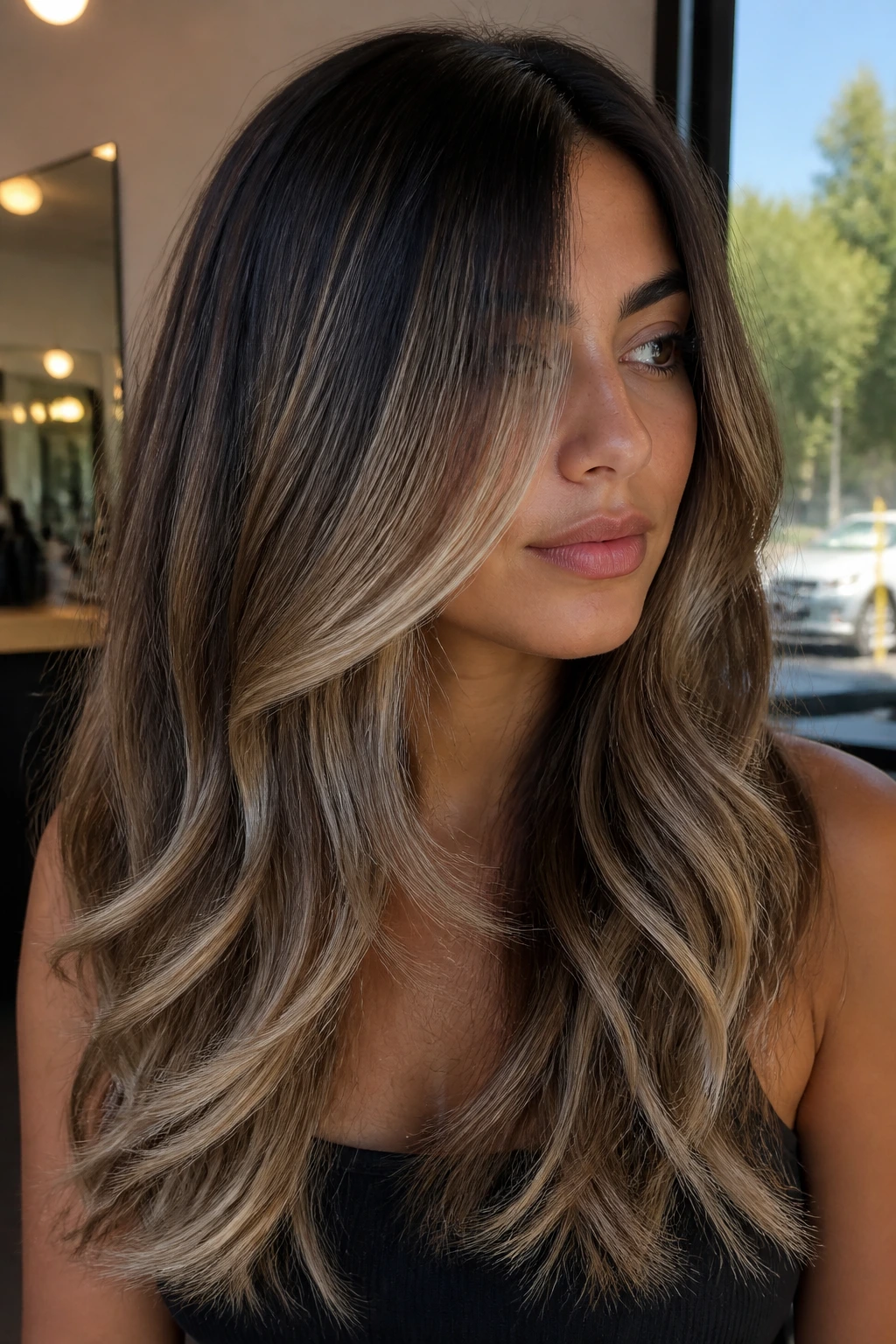
Balayage on thick hair usually grows out more gracefully than an all-over blonde, but it still needs a plan. A gloss every 6 to 8 weeks keeps the tone from drifting brass, especially if your water is hard or you use hot tools often. If the hair was lifted quite high, a refresh every 4 to 6 weeks may feel better because the ends can lose their beige tone faster than the root shadow loses its shape.
For washing, a sulfate-free shampoo keeps the cuticle calmer and helps the tone hang on longer. If the blonde is warm and caramel-based, purple shampoo should be used sparingly — once every 1 to 2 weeks, and only if the tone starts to yellow. Too much purple on olive skin can make the hair look cold and slightly flat.
Deep conditioning once a week helps thick hair stay pliable. I’d also use a bond-building treatment every week or every other week if the hair was lifted on the stronger side. Heat protection before styling is not a suggestion; hot tools will chew through gloss faster than anything else.
If you like a lived-in grow-out, ask for a root shadow that sits around one to three levels deeper than the mids. That spacing gives you time. A lot of time, actually. And that’s the point.
Frequently Asked Questions About Balayage for Olive Skin and Thick Hair
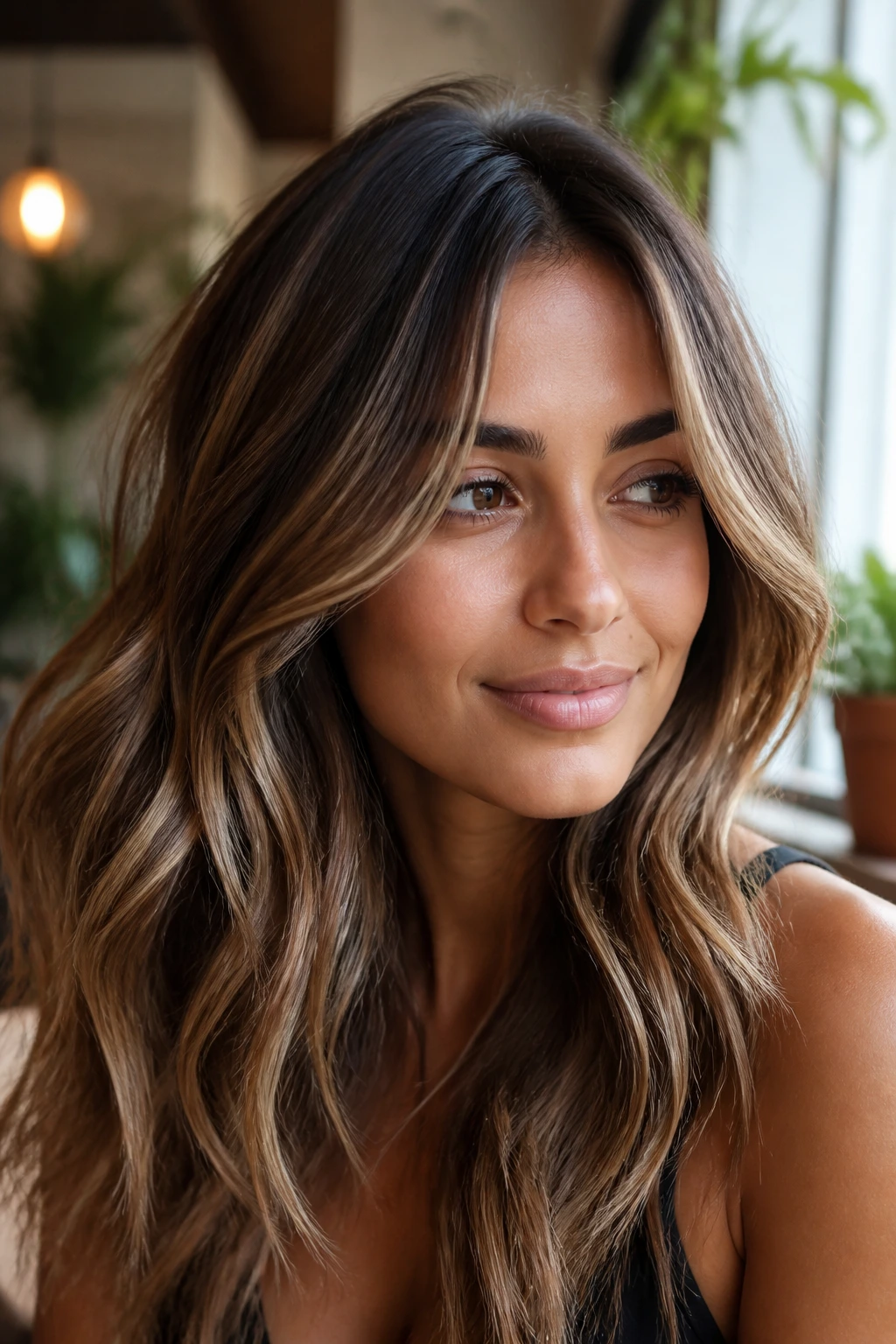
What balayage tones flatter olive skin best?
Beige, caramel, toasted almond, mushroom brown, soft gold, and muted copper are the safest bets. They keep the skin looking warm and alive without pushing it into brass or icy gray.
Is thick hair harder to balayage?
Harder, yes — but also better suited to it. Dense hair can hide the line of the painting, hold deeper roots, and carry chunky and fine ribbons together, which gives you more dimension than finer hair can.
Should I choose foilayage or freehand balayage?
Foilayage is better when you need more lift or the hair is resistant. Freehand balayage is better when you want a softer, more diffuse result. Thick hair often does well with a mix of both.
Can olive skin wear ash blonde?
Sometimes, but it depends on the exact undertone. Neutral olive skin can wear soft ash-beige blends; very cool ash on its own can make the face look tired or gray. A touch of beige usually solves that.
How often should balayage be toned?
Most people do well with a gloss every 6 to 8 weeks. If the hair lifts warm fast, or if you swim, heat-style, or wash often, you may want toner a little sooner.
What if the highlights turn orange?
That usually means the hair didn’t lift enough before toning, or the toner wasn’t cool enough for the underlying pigment. A color-correcting gloss can help, but if the orange is deep, the hair may need another careful lightening session rather than a stronger toner.
Can I get balayage if my hair is curly and thick?
Yes, and it can look fantastic when the placement follows the curl pattern. The big thing is not to overlighten the inner curl structure; keep the brightness where the curls bend and catch light.
How do I keep balayage from looking flat on dense hair?
Mix at least two levels of depth, keep some shadow at the root, and avoid one-tone blonde. Thick hair needs contrast or it starts to read like a single mass instead of a textured style.
Do I need a haircut before or after the color?
Usually after, or at least a light dusting before and the real shaping after. The cut shows the placement, and on thick hair the layers decide whether the balayage looks airy or buried.
The Color That Grows Out With Grace
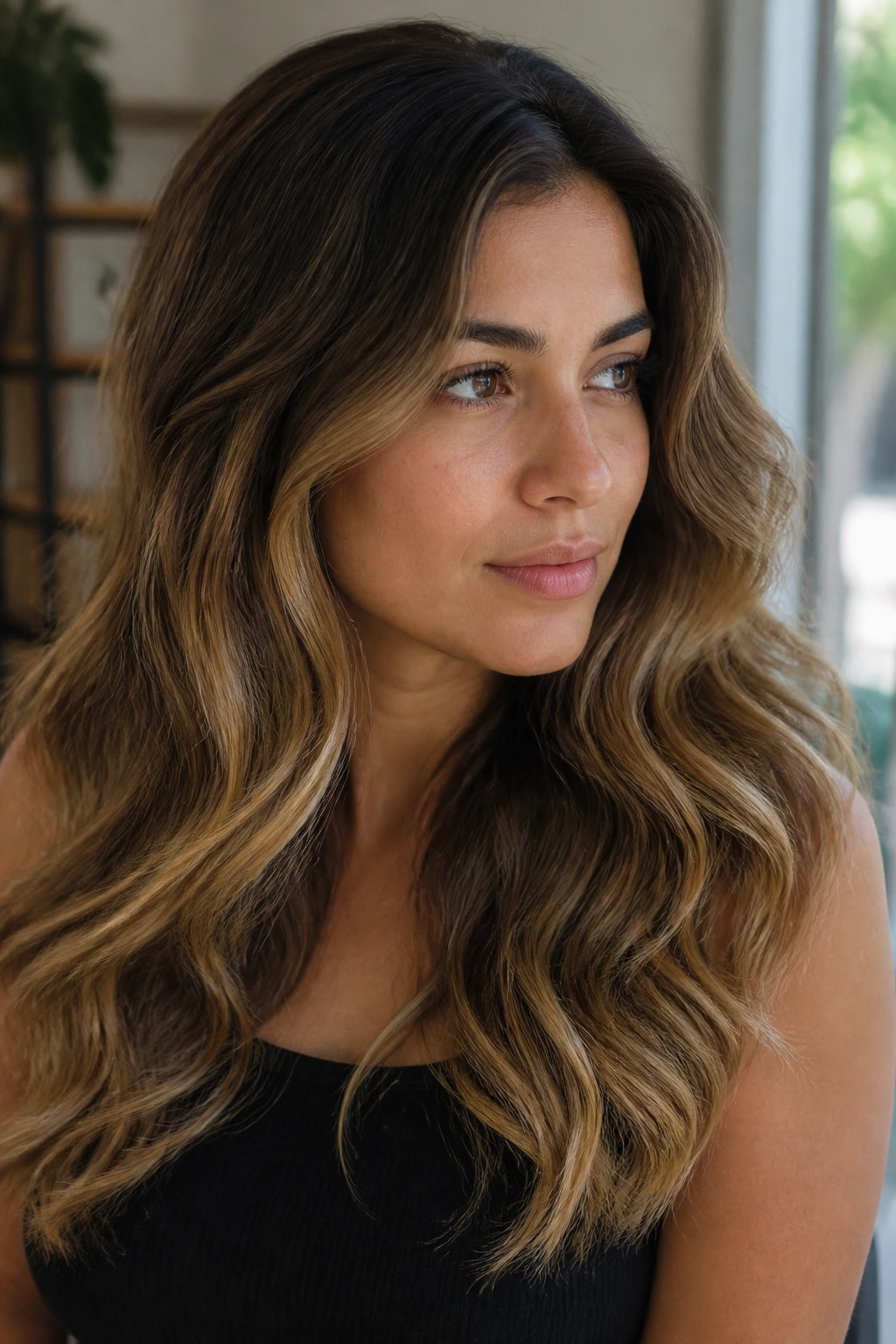
The best balayage for olive skin with thick hair does not try to erase the hair’s density or bleach the skin into a different undertone. It works with both. That usually means beige over white, caramel over yellow, shadow over flatness, and enough interior depth that the color still looks good when the hair is pulled back.
Thick hair can take richer placement than people think. Olive skin can handle more warmth than people think. Put those two truths together, and the whole category opens up: bronde, mushroom, honey, copper, toffee, champagne, chestnut. There’s a lot of room there if you stop chasing the palest blonde in the room.
If you bring one thing to the salon, bring a clear idea of how much contrast you want — soft, medium, or bold — and how much maintenance you’re willing to live with. That single decision tends to shape everything else, and it’s the difference between color that fights your hair and color that settles in like it belongs.