



Curly hair gets its best shape when the cut and the color stop arguing with each other. That’s why volumizing haircuts for curly hair with babylights are such a useful pairing: the cut lifts the silhouette, and the babylights trace the bends, rims, and top layers so the curls look deeper, not flatter. When the foil work is done in tiny slices — think skinny ribbons, not chunky streaks — the result is movement that reads as fullness instead of striping.
The trick is restraint. Too much lightening can make curls look frayed at the ends and puffy at the root, which is the exact opposite of what most people want. But a well-placed babylight, especially around the crown and cheekbone area, adds a little glint every time a curl turns. On dark curly hair, that glint can do more visual work than an inch of extra length ever will.
A good curly cut with babylights doesn’t chase one look. It can be tidy and rounded, shaggy and lived-in, blunt at the ends, or airy with bangs. What matters is where the weight sits, where the curl springs up, and where the brightness lands. Get those three things lined up, and the shape does the rest.
Why These Cuts Keep Curls Looking Full
-
Root Lift Matters: Curly hair collapses fast when the perimeter is overloaded, so these cuts remove weight where the hair hangs instead of carving out the ends until they look stringy.
-
Babylights Add Depth, Not Just Light: Thin highlights placed through the top layer and around the face make the curl pattern easier to read, which gives the whole head more visual density.
-
The Shape Stays Round: Most of these styles keep a curved outline at the sides and back, which helps the curls stack on themselves instead of spreading outward like a triangle.
-
Grow-Out Is Softer: Babylights that stay fine and scattered grow out with less contrast at the root, so you’re not stuck with a hard line when the color starts to move.
-
They Work With Curl Clumps: Instead of fighting the natural clump pattern, the color follows it. That matters. A highlight that slices through a curl bundle in the wrong place can make the whole section look broken.
-
You Can Tune Them Up or Down: The same haircut can read polished, edgy, or soft depending on how bright the babylights are and how much lowlight is left underneath.
1. Curly Lob with Face-Framing Babylights
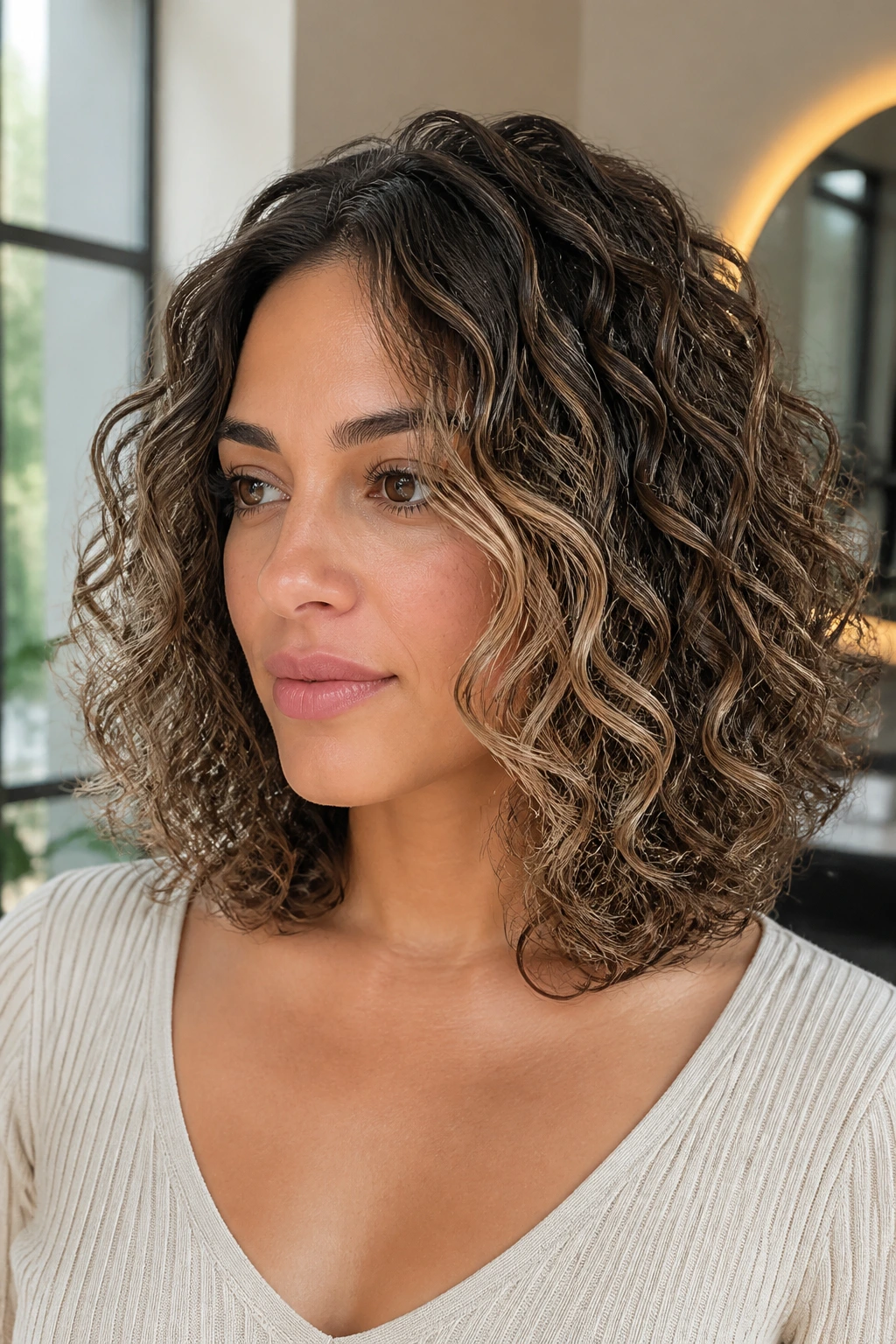
A curly lob sits right around the collarbone and does one very specific thing well: it gives curls room to spring without dragging them down. The face-framing babylights should start a little below the root — not right on it — so the brightness lands where the curls curve around the cheek and jaw. That little bit of light near the face makes the whole cut look fresher, even when the rest of the color is subtle.
I like this cut for medium-density curls because it keeps the ends blunt enough to look full. Ask for soft internal layering, not a shredded finish. Babylight placement: concentrate on the top two inches around the hairline and the outer shell, then leave the underside deeper. That darker base is what keeps the lob from turning airy in a bad way.
Why it works
The lob has enough weight to avoid puffing out at the sides, but it’s short enough that the curls bounce instead of droop. If your hair tends to sit flat at the crown, this is one of the easiest shapes to wake up.
2. Rounded Curly Shag with Micro-Brightening
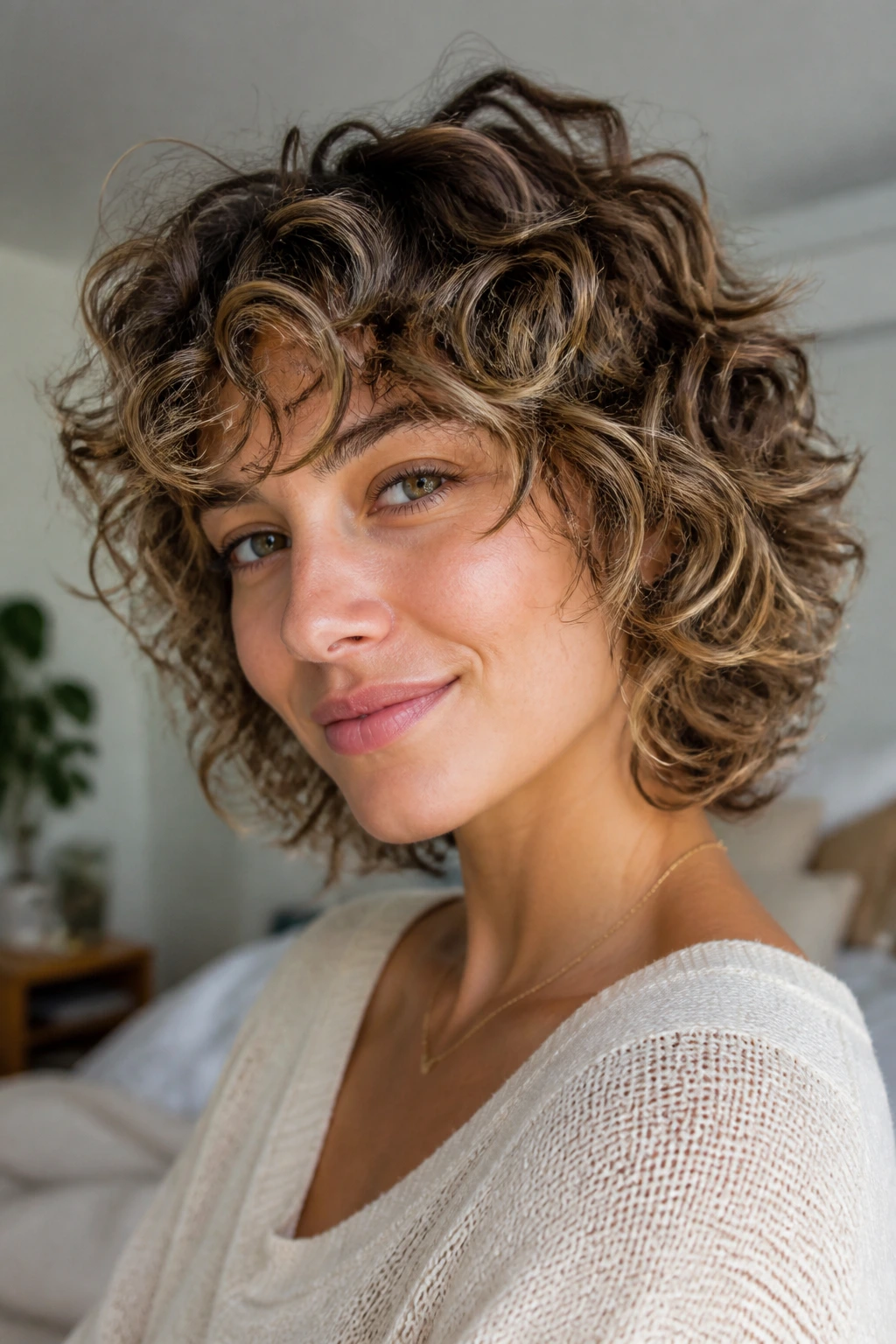
The rounded curly shag is the haircut for people who want height without looking like they spent an hour fluffing every morning. Layers are cut to encourage lift at the crown and movement through the sides, and the babylights are kept tiny so the shape stays soft. Think fine threads of brightness, not obvious stripes.
This one really shines on 2C to 3B curls. The top gets the most texture, while the bottom keeps enough length to hold the silhouette together. What to ask for: a dry cut, rounded perimeter, and babylights that hit the fringe, temples, and the first layer of the crown. That placement catches light when the hair moves, which is half the point of the shag.
What makes it different
A shag can go too flat if the layers are chopped too evenly. The round version avoids that by leaving the outline curved, so the volume sits up top instead of exploding sideways.
3. Shoulder-Skimming Deva Cut with Ribbon Babylights
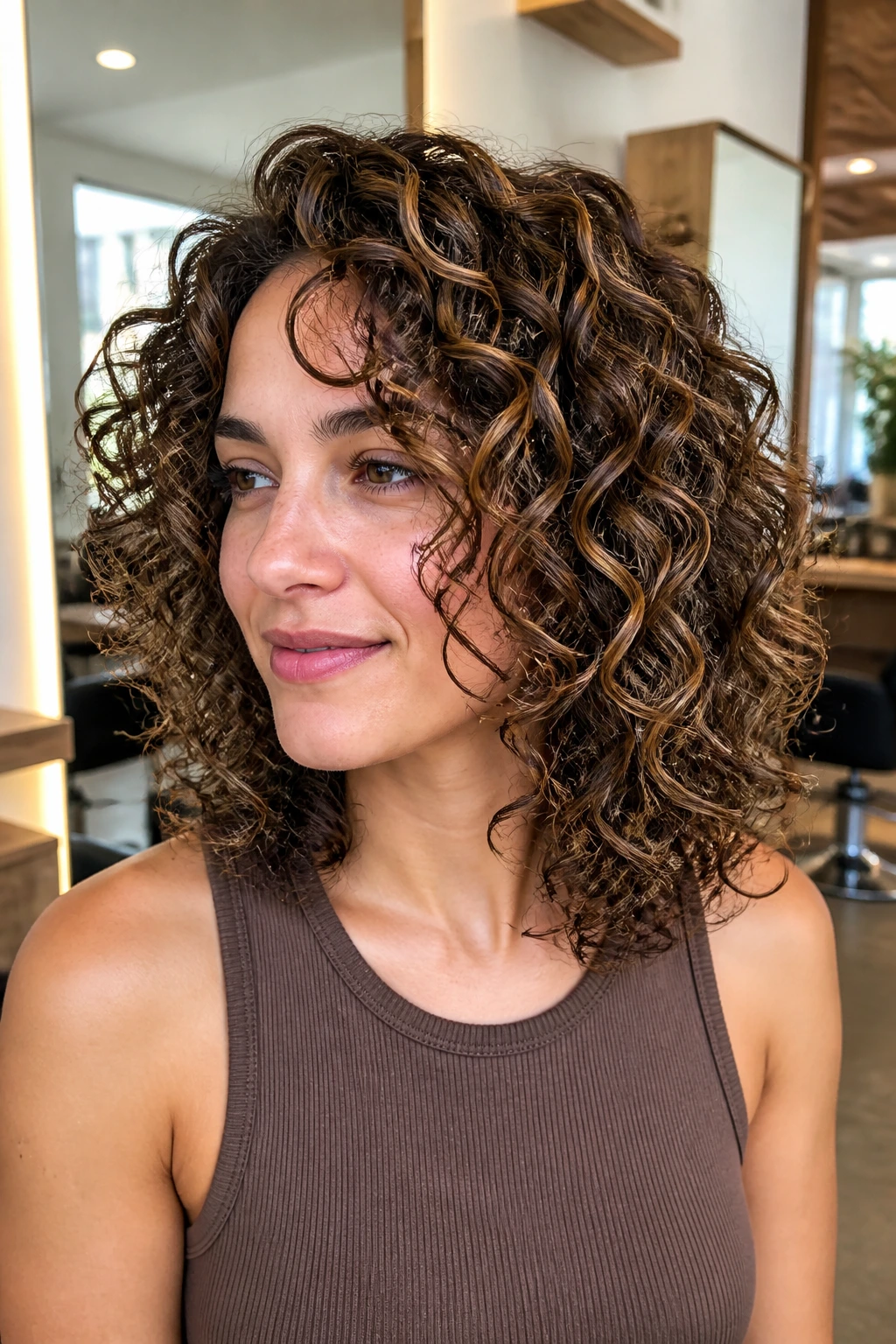
This is the polished cousin in the group. A Deva-style cut is usually shaped curl by curl, and at shoulder length it gives you enough body to keep the curls springy without the ends getting wispy. Ribbon babylights — narrow, slightly longer painted sections — work well here because they move with the curl pattern instead of sitting on top of it like decoration.
I’d ask for color that starts around the upper mid-lengths and gets brighter near the outside layers. Leave some deeper pieces underneath. That contrast is what makes the shape look thicker from across the room. If your curls are medium-to-tight, this cut keeps the halo effect controlled, which is a nice change from the usual triangle trouble.
4. Long Layers with Sunlit Ends
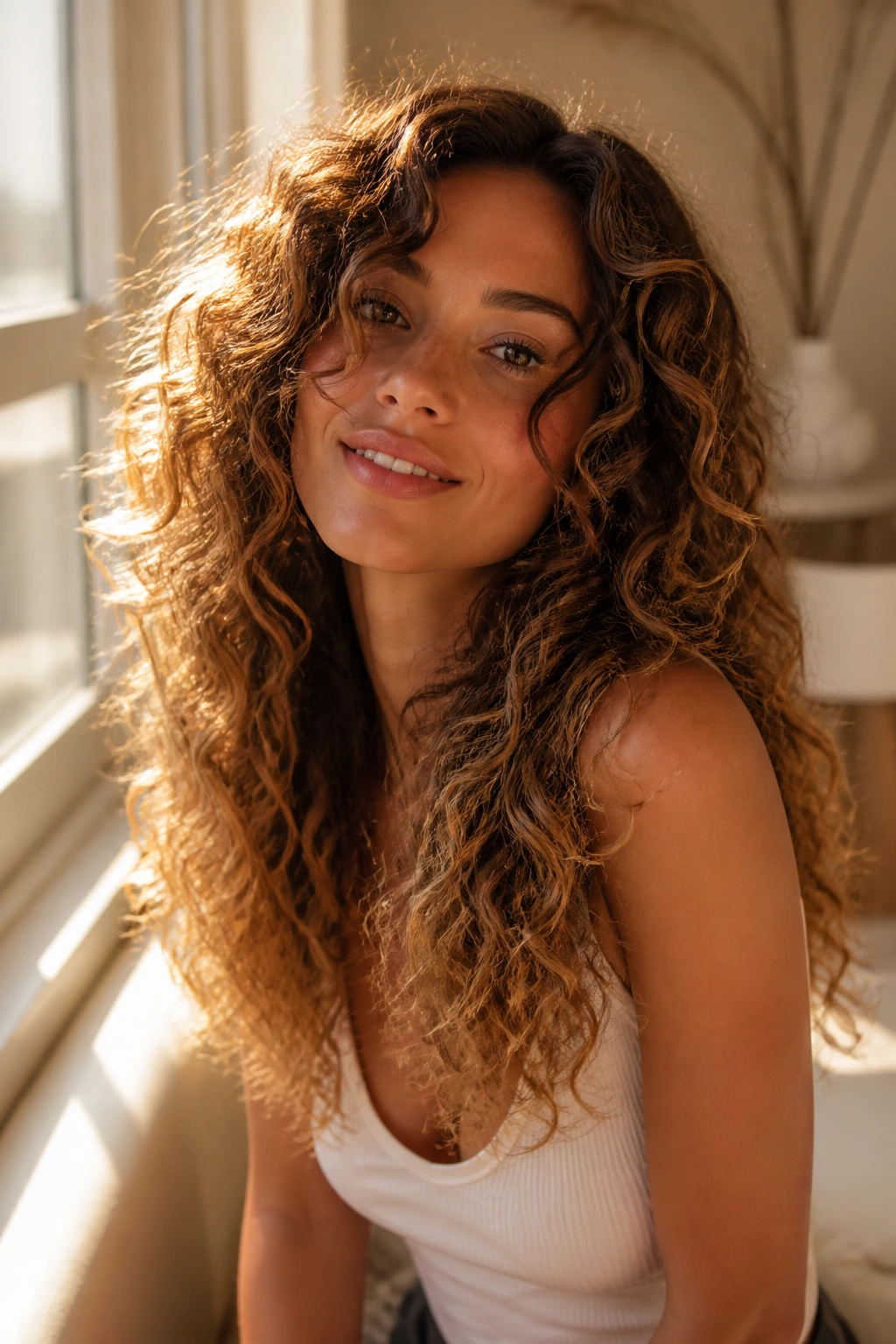
Long curly hair can look expensive and weightless when the layers are cut with discipline. Not too many. Not too short. Just enough to let the curls stack and breathe. Babylights on this shape should stay soft through the ends and a little denser around the face and crown, so the bottom doesn’t look faded out.
This cut is for people who want to keep length but hate the heavy, draped look that long curls sometimes get. The layers should begin below the chin on most curl patterns. That gives the top room to lift while the length stays lush. A small warning: if the ends are already porous, keep the lightening away from the very tips. Dry, bright ends can make the whole cut read thinner than it is.
5. Curly Pixie with Crown-Lift Babylights
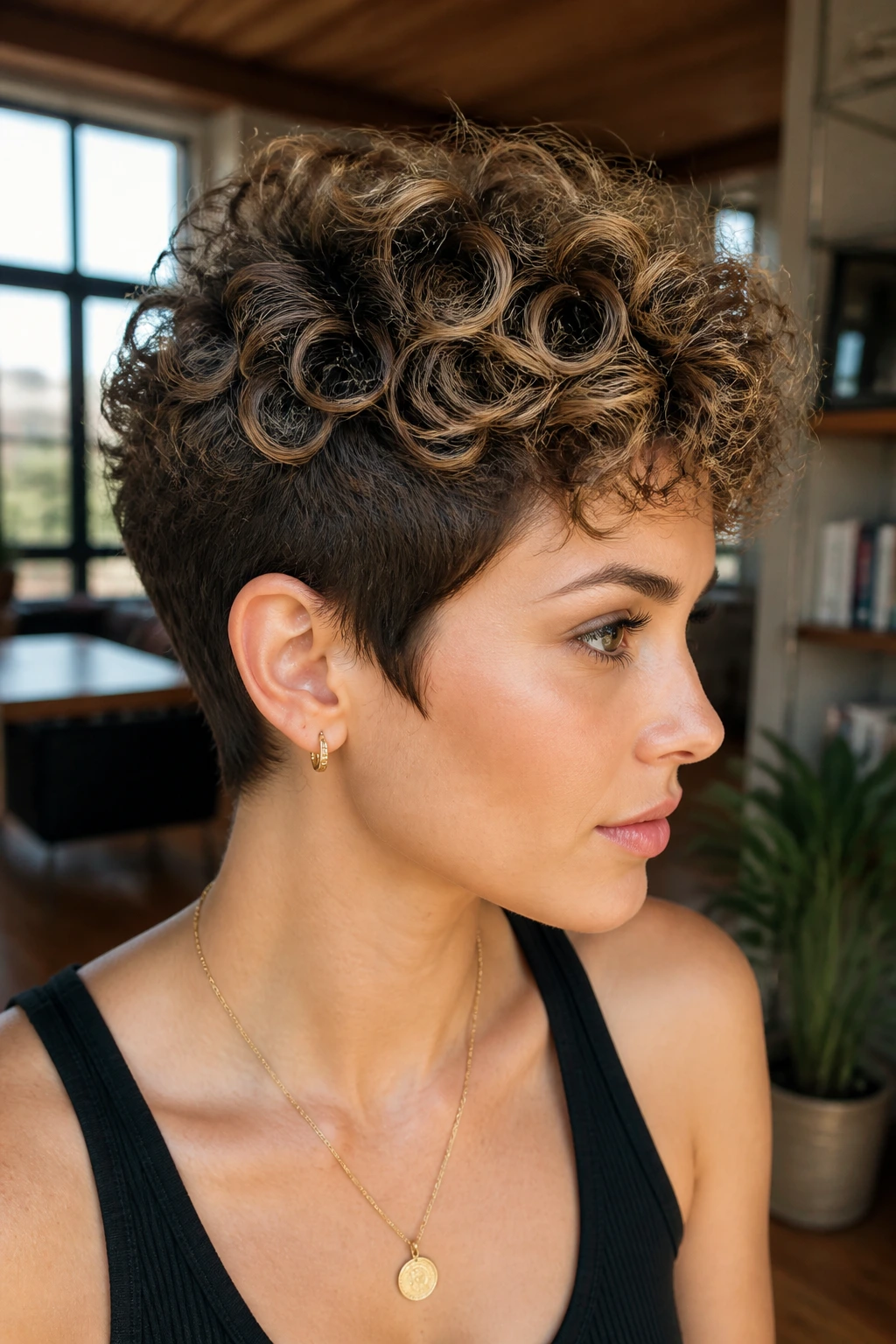
Short curls need a different kind of courage. A curly pixie works because it removes weight everywhere except the crown, where the curl pattern needs a little encouragement to stand up. Crown-lift babylights are placed through the top and just behind the fringe so the highest point of the head catches the most light.
This is a strong choice for fine curls or looser coils that collapse when they get too long. The sides should be tapered neatly, not buzzed down to the scalp unless that’s your thing. A little length around the temples keeps the cut from looking harsh. On this one, color placement matters more than saturation. A few well-aimed light pieces can make the crown look taller than an all-over highlight ever would.
6. Butterfly Layers on Curly Hair
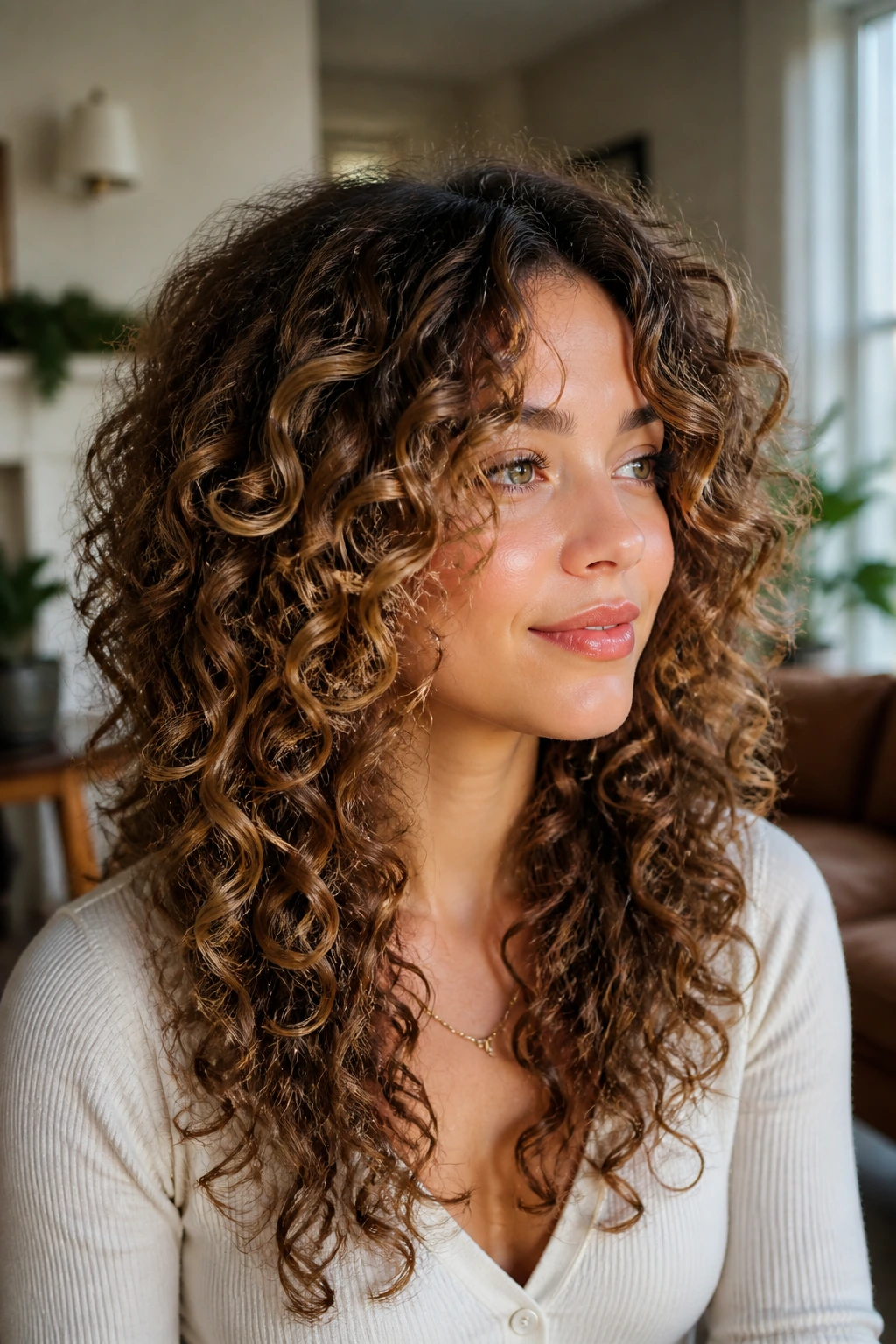
Butterfly layers are a smart answer if you want movement without losing the feeling of length. The top layers are shorter and lighter, while the bottom remains longer, which gives curls two levels of bounce. Babylights can follow that split: brighter around the upper face frame and crown, softer through the long ends.
The cut works especially well if your curls are dense and tend to sit heavy near the shoulders. The shorter top pieces create a little lift when the hair moves, and the babylights keep those layers from disappearing into the rest of the head. I’d skip chunky highlights here. The whole point is that the shape looks airy, not busy.
How to wear it
Diffuse upside down for the first few minutes, then flip upright and scrunch the top layer with a light gel. That’s when the babylights start to show the most depth.
7. Tapered Afro with Honey Babylights
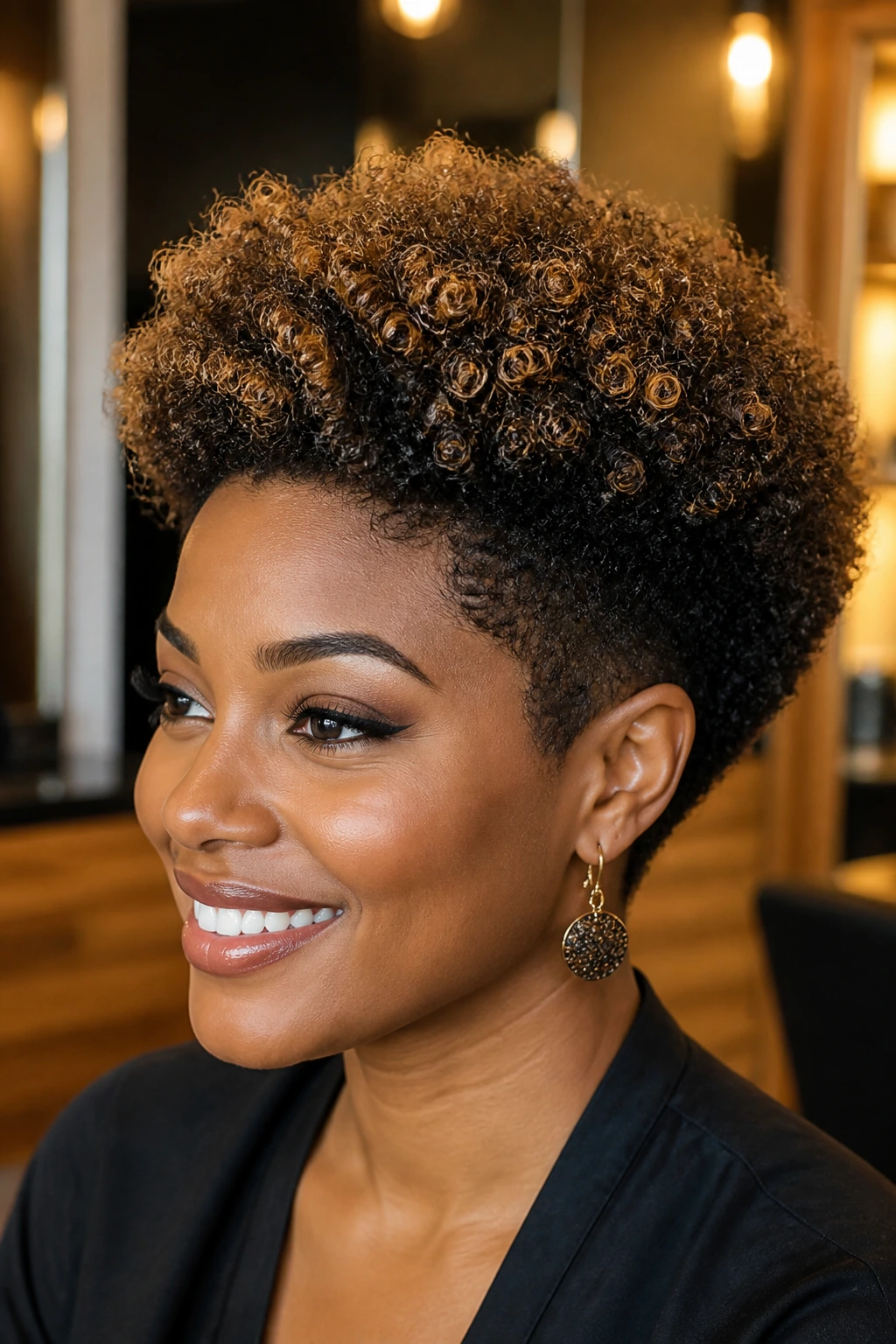
A tapered afro has built-in architecture. The sides stay tighter, the crown stays rounded, and the silhouette grows upward instead of outward. Honey babylights add warmth to the top and outer edges without breaking up the shape. They should be placed like tiny sparks through the upper third of the cut, not scattered randomly through the whole head.
This style is especially good on coils that hold a strong shape on their own. The taper keeps the outline neat, while the babylights soften the mass so the hair doesn’t look like one dark block. Best detail: keep some darker roots and interior sections. That contrast gives the crown a fuller read, which is exactly what you want when volume is the goal.
8. Wolf Cut for Coils and Waves
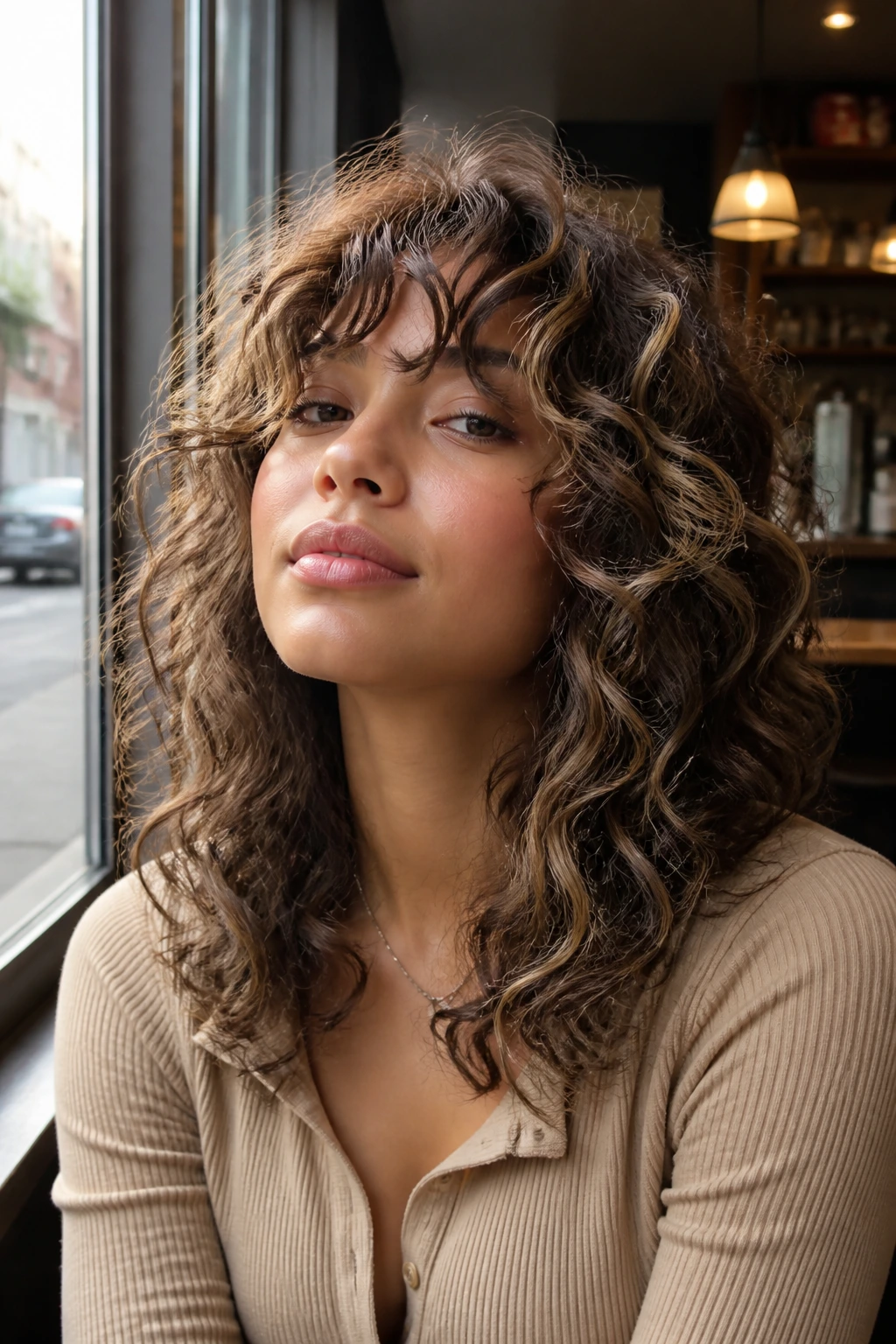
The curly wolf cut is messy in the best way, but it’s not the same as “just add layers.” The top is shorter, the ends are longer, and the whole thing leans into texture. On curly hair, babylights should be placed to exaggerate that texture: around the fringe, along the top ridge, and in a few scattered front pieces.
This cut suits people who like a bit of edge and don’t mind hair that has a personality. It’s not a neat shape, and that’s the charm. Keep the lightening light enough that the curls still read as bundles rather than streaks. If the color gets too even, the wolf cut loses its bite and starts looking soft in a dull way.
9. Collarbone Cut with Internal Layers
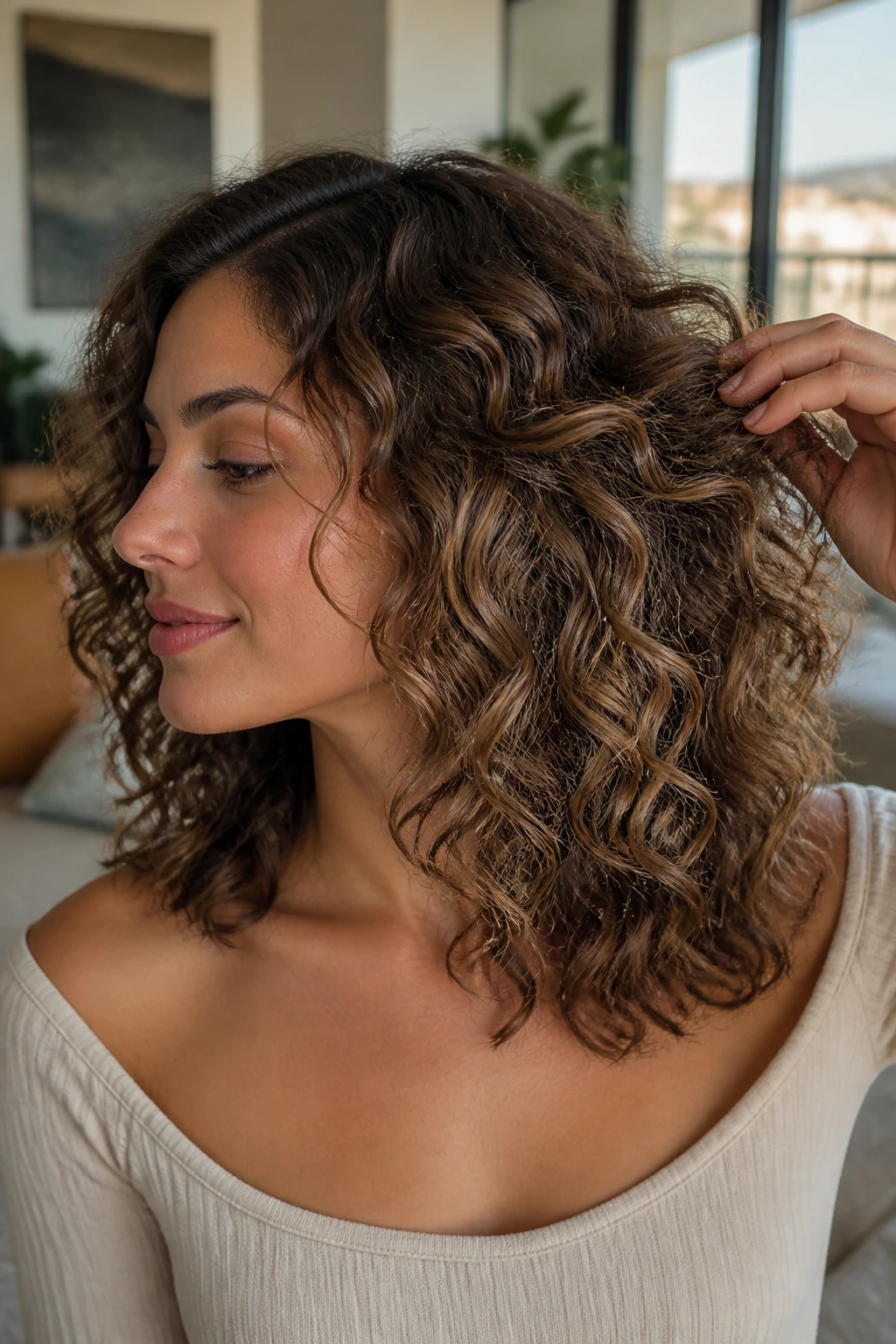
This one is sneaky. From the outside, it looks like a clean, collarbone-grazing cut. Underneath, internal layers remove weight in a way that lets curls lift from the inside out. Babylights are best placed in those upper hidden layers, so the brightness shows when the hair sways or when the curls separate a little.
It’s a favorite of mine for medium-density curls because it gives shape without announcing itself. The silhouette stays tidy, but the movement is there when you need it. Ask your stylist for: interior debulking, not perimeter thinning. There’s a difference, and it matters. Thin the wrong area and the ends get see-through fast.
10. Curly Bob with Curtain Bangs
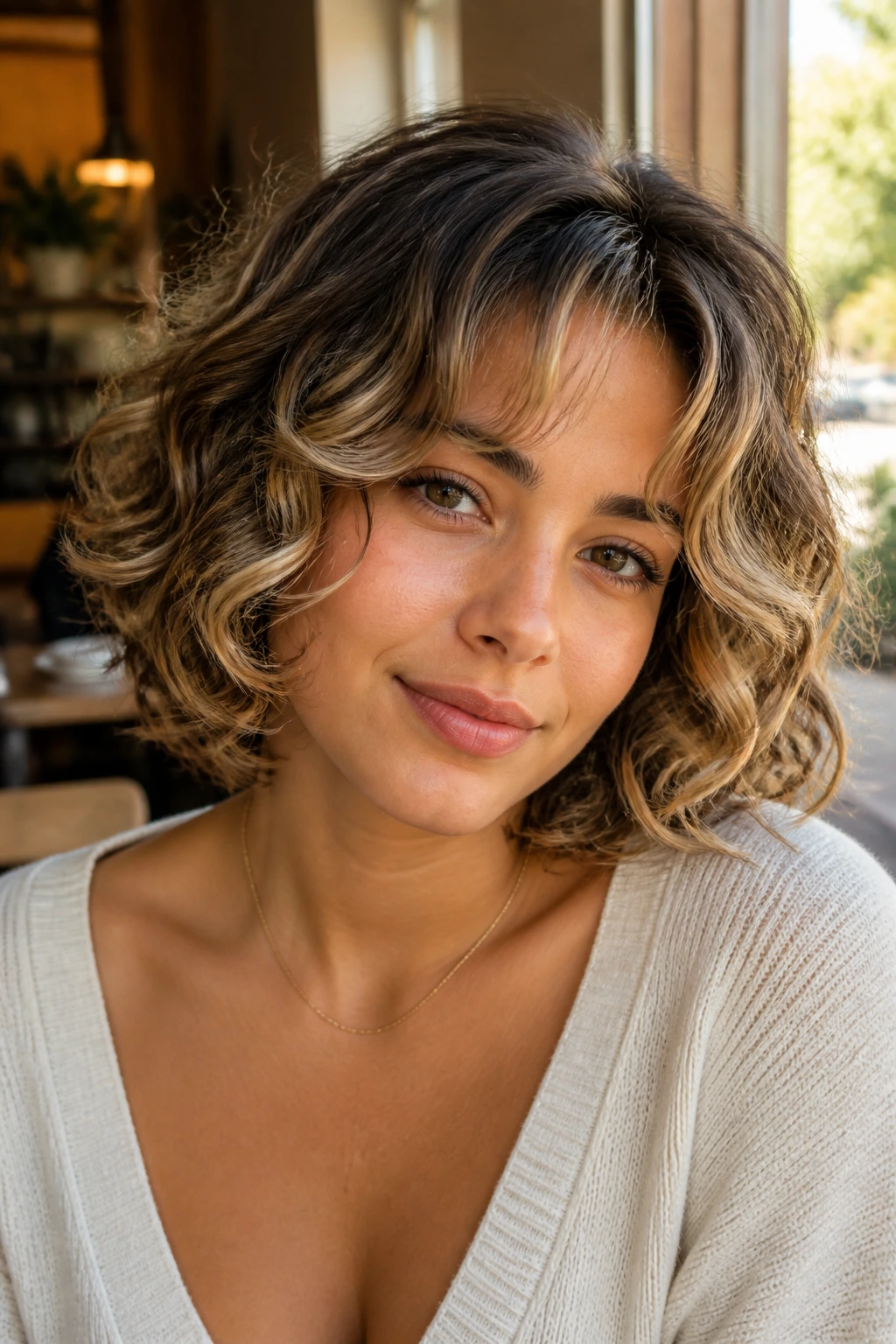
If you want the head to look fuller fast, the curly bob is hard to beat. Add curtain bangs and the whole cut opens up around the eyes and cheekbones. Babylights should be a touch brighter on the bang pieces and the outer fringe, because that’s where the eye lands first.
This is one of those cuts that looks easy but lives and dies by placement. The bob should sit somewhere between chin and jaw for most curl patterns, with enough length to keep the curls from springing up too high. Curtain bangs work best when they’re left soft and a little longer than the shortest face frame. Brighten them too much and they’ll look separate; keep them fine and they melt into the rest of the shape.
11. U-Shaped Midi Cut with Seamless Babylights
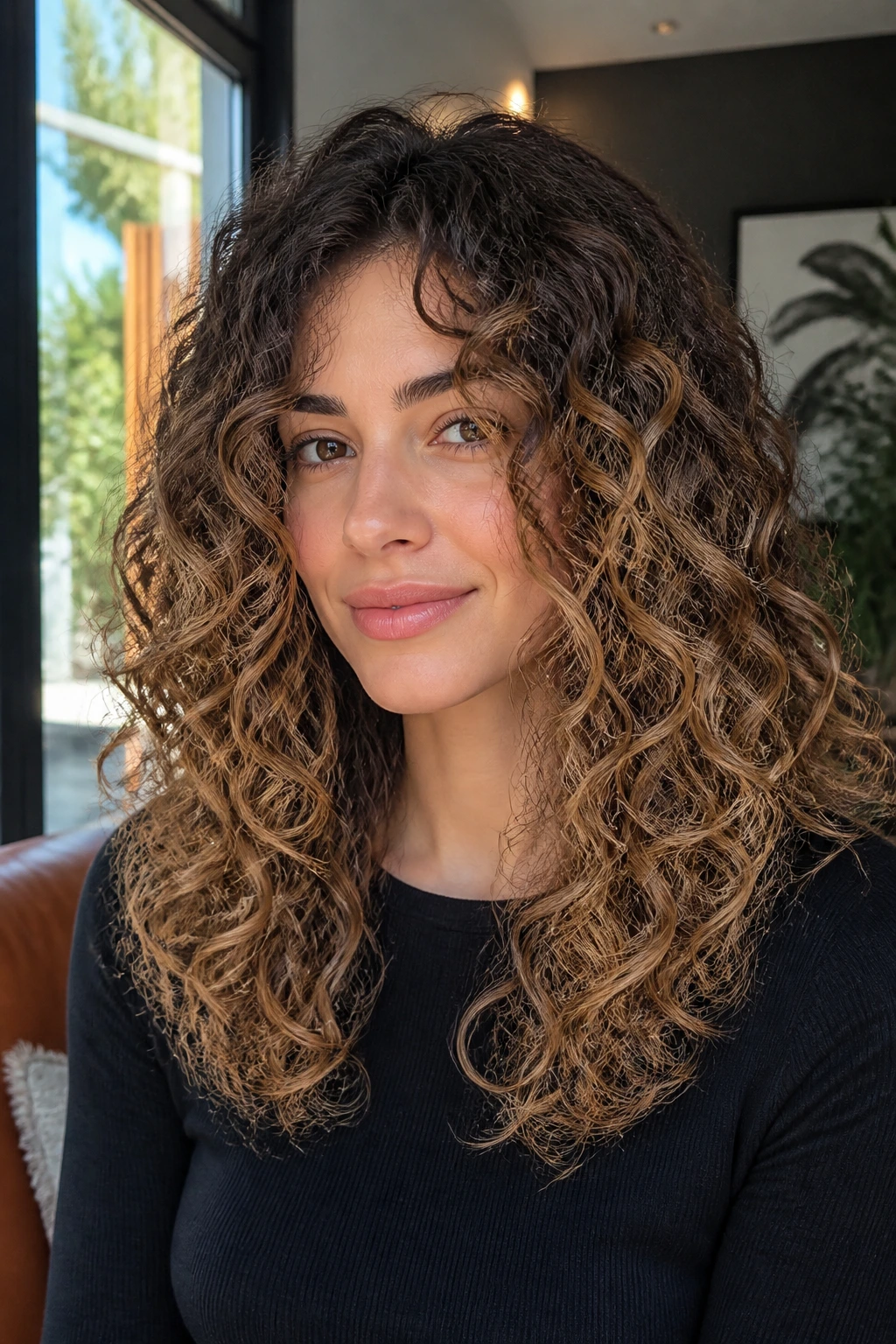
A U-shaped midi cut keeps length in the center while the sides fall a little shorter, which gives curls a softer drape than a blunt line. It’s a nice option if you like fullness but don’t want the ends to look heavy. Seamless babylights are painted so the brightness fades from the front toward the back, keeping the eye moving around the head.
This cut is especially good when your curls need a little help at the crown and around the temples. The shape builds a gentle taper without stealing too much bulk. I’d keep the lightest pieces off the very bottom layer; that’s where the density lives. If you lighten there too much, the cut can lose its grounded feel.
12. Soft Mullet with Dimensional Highlights
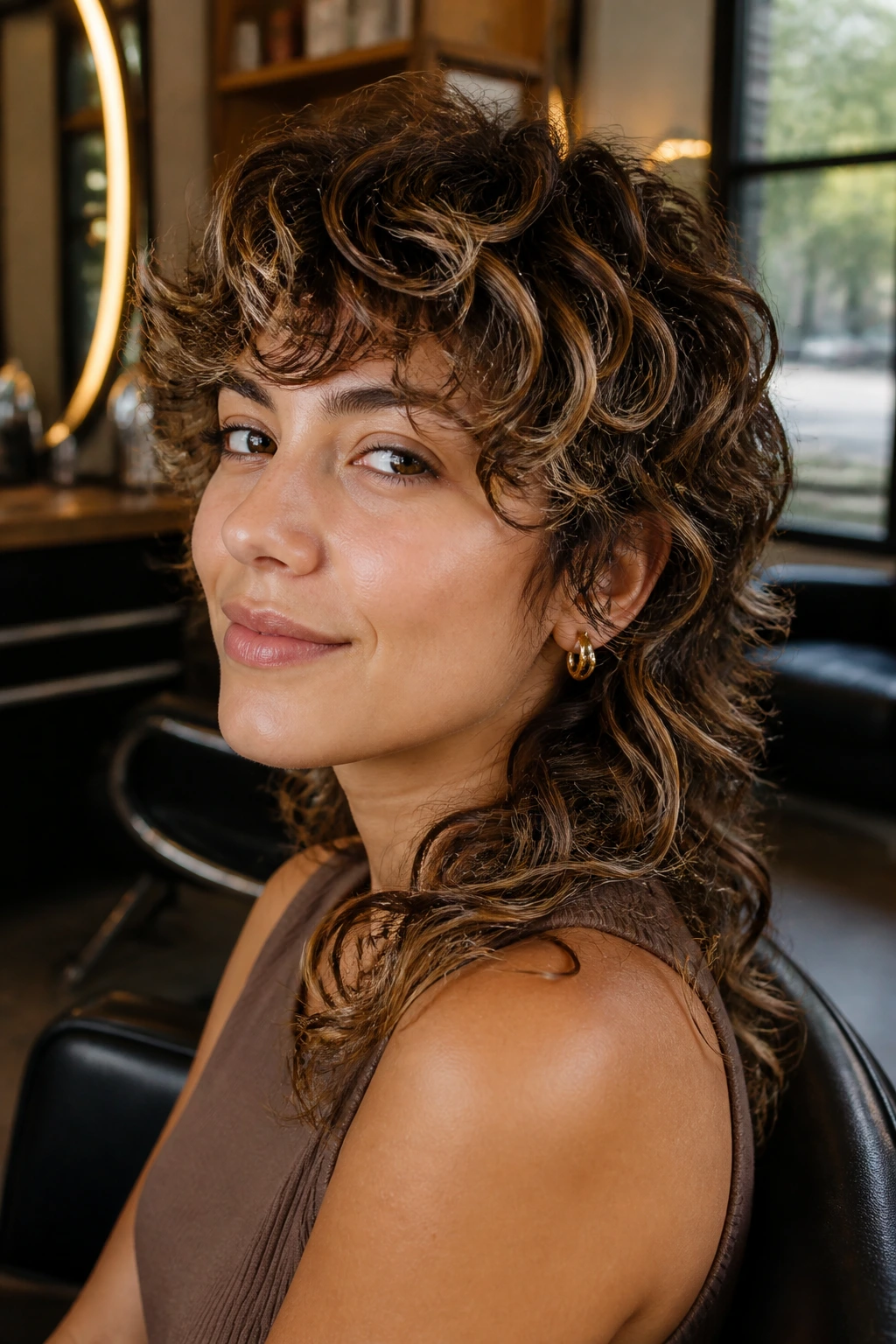
A soft curly mullet sounds wild on paper, and sometimes it is. But the good version is balanced: short around the face, a little longer through the back, and layered in a way that gives lift without turning puffy. Dimensional babylights help here because they separate the short pieces from the longer ones instead of letting the whole cut blur together.
This shape works best if your curls already have a loose, playful bend. It’s not a cut for someone who wants everything neat. Color note: a few darker pieces left in the interior keep the front from looking too busy. That contrast is what lets the shorter layers pop without screaming for attention.
13. Asymmetrical Curly Bob
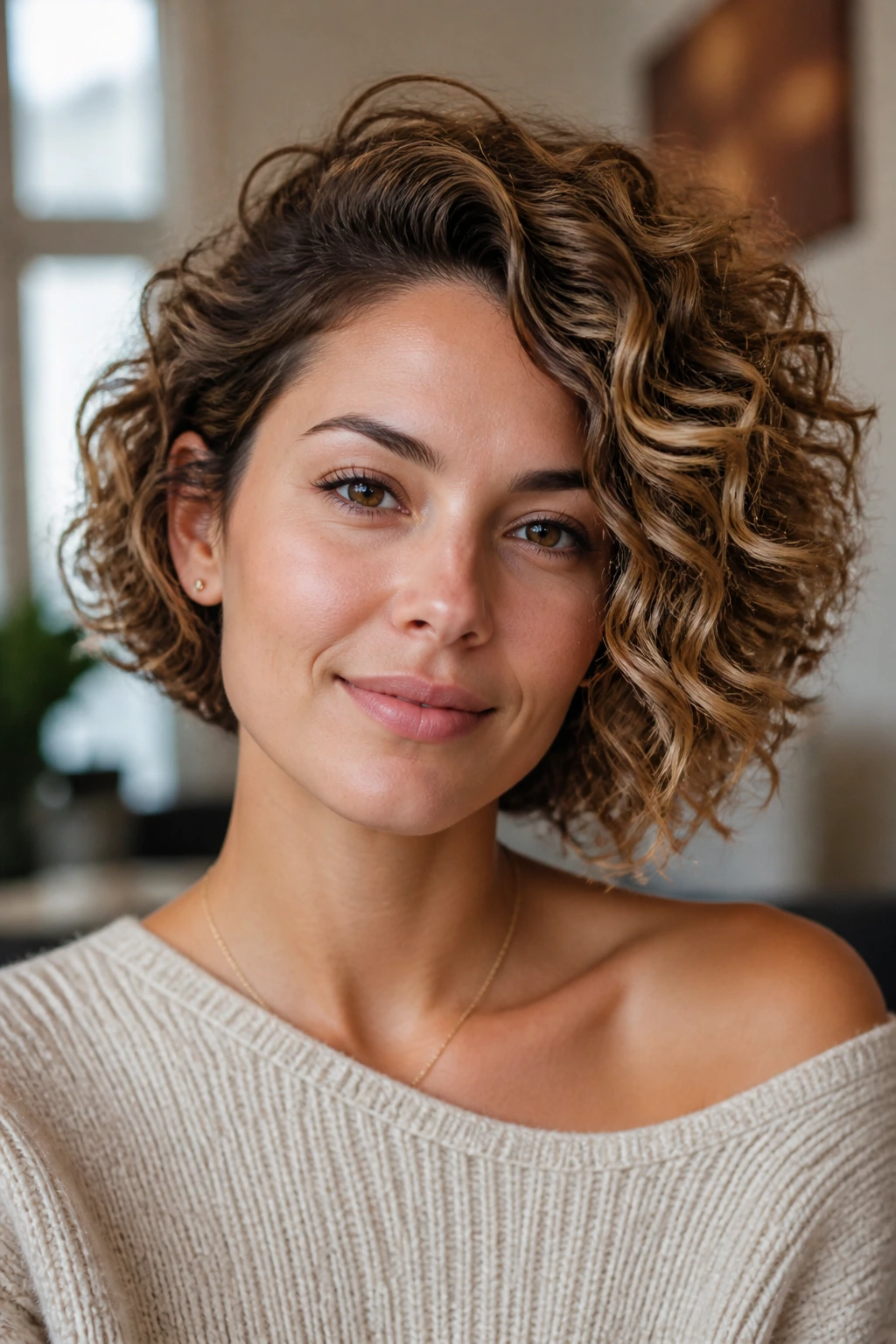
One side a little longer than the other is enough. You do not need a dramatic slant to get the effect. The asymmetrical bob creates movement by making the eye travel, and babylights can follow that diagonal so the shape feels intentional rather than random. Keep the lighter pieces concentrated on the longer side and the front edge.
This cut is good when you want your curls to feel modern but not overdone. The asymmetry gives shape; the babylights give lift. If the curls are tight, I’d keep the difference subtle — maybe half an inch to an inch. Too much contrast in the cut plus too much brightness can make the hair look chopped up instead of full.
14. Long Layers with Peekaboo Babylights
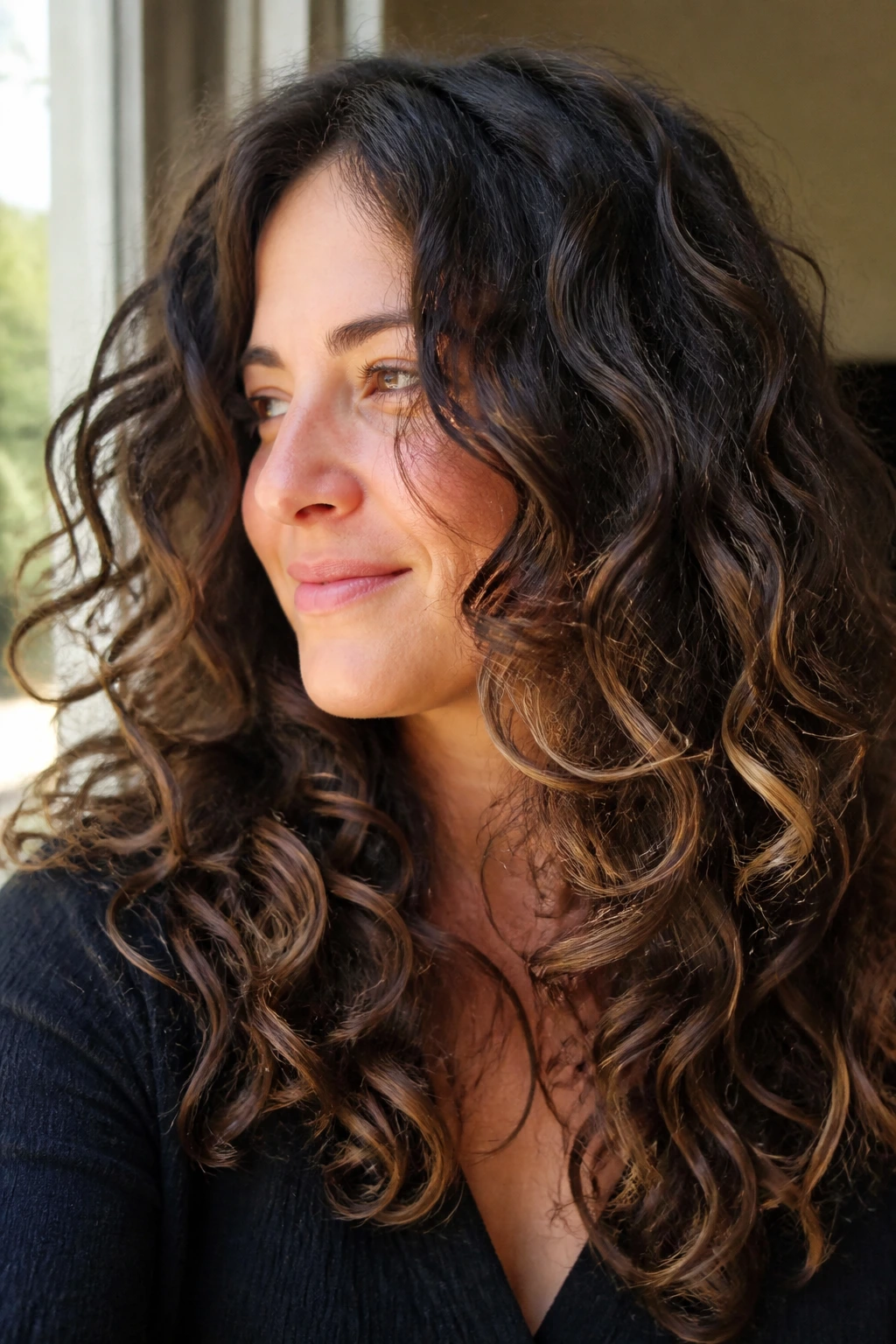
Peekaboo babylights are one of my favorite tricks for long curly hair because they do the visual work without shouting. The top stays mostly natural, while the lighter pieces sit under the upper layer and around the interior bends. When the curls separate, the brightness flashes through.
The haircut itself should be long-layered and light around the crown so the roots don’t sag. That gives the hair a higher profile. This style is nice if you want to keep length for buns, braids, or wash-and-gos, but still want the cut to feel alive. It also grows out well because the hidden brightness is less obvious when the hair shifts.
15. French Bob for Curly Hair
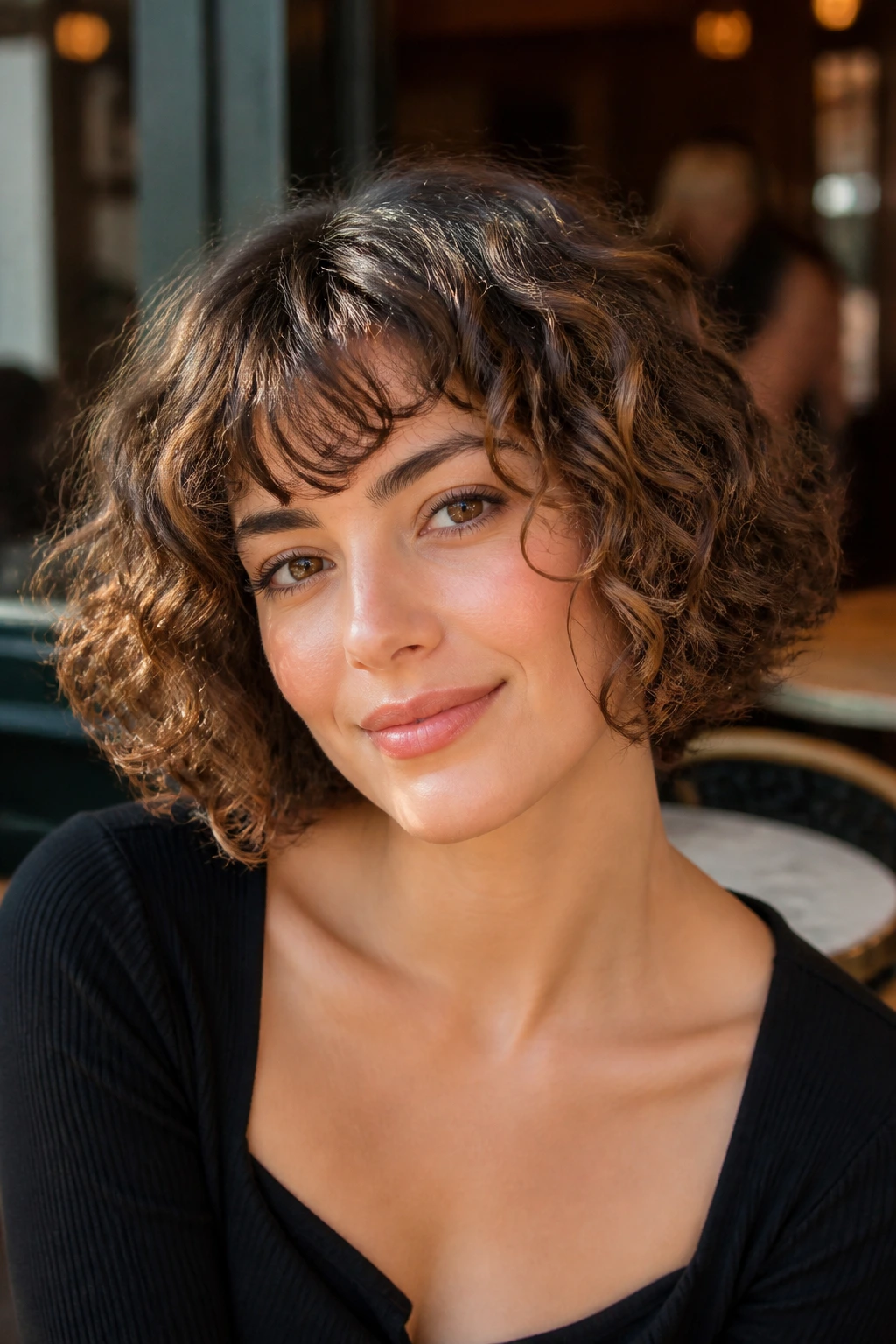
A curly French bob has a clean outline and a little attitude. It usually sits at or just below the jaw, with a soft fringe or face frame that keeps the cut from feeling too square. Babylights should be fine and close to the top layer, with a few brighter pieces near the fringe so the cut doesn’t get lost in shadow.
This shape flatters smaller faces and tighter curl patterns because it sits close to the head without flattening it. The trick is not to over-layer. You want the bob to feel compact, not chopped. A few bright ribbons around the temples can make the jawline look sharper and the overall head shape look fuller at the top.
16. Face-Framing Layers on Coily Hair
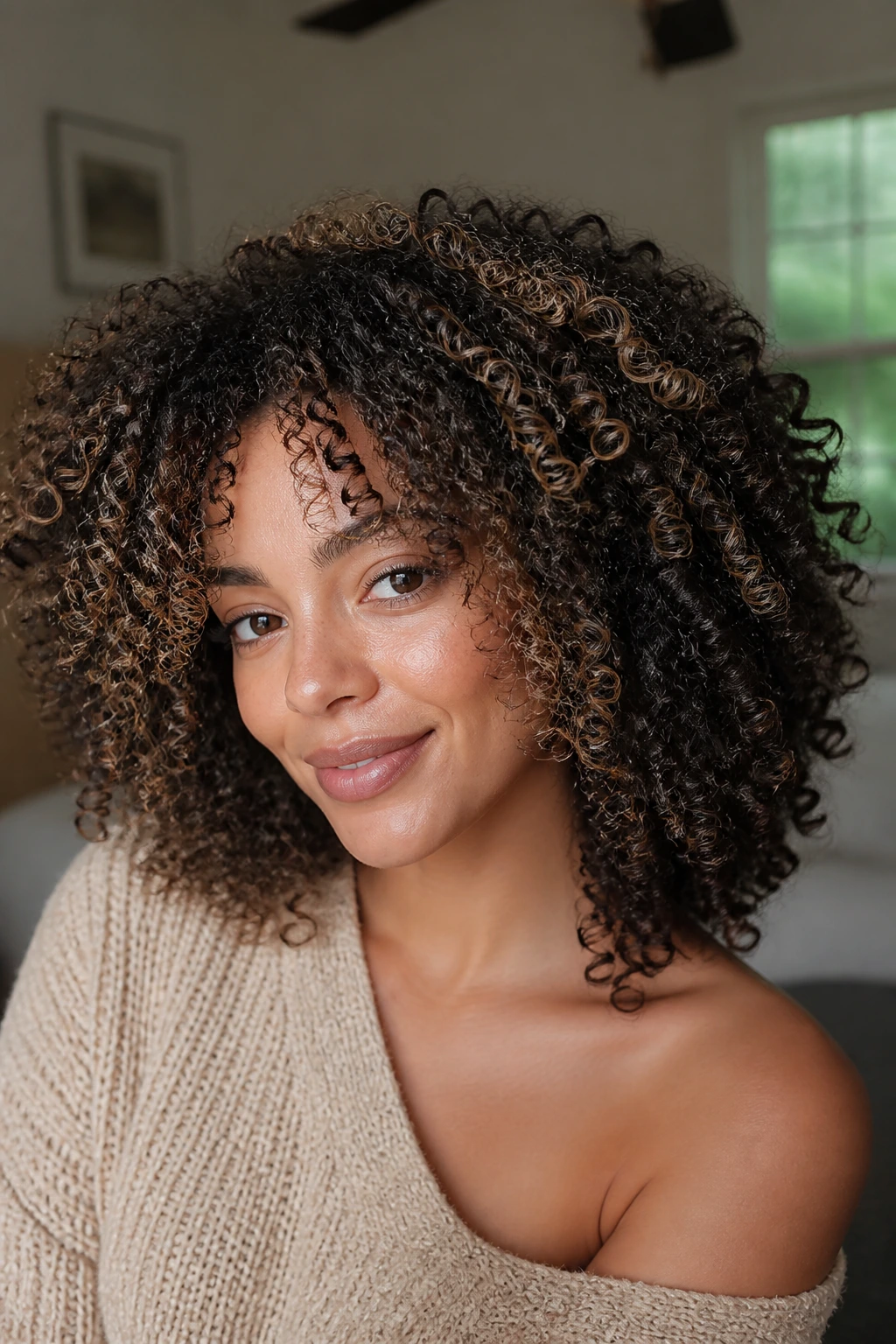
Coily hair doesn’t need to be long to look full. A well-cut face frame can change the whole mood of the style. These layers should start high enough to open the face but not so high that the haircut turns into a halo of short pieces. Babylights belong on the top of the frame and the crown edge, where the shape can catch light without losing depth.
This is a strong option for people who wear their coils picked out, defined, or stretched. The face frame adds movement around the eyes and cheekbones, and the babylights keep that movement visible. I’d keep the color placement narrow. Coily textures have a lot of built-in volume already; too much lightening can make the edges look fuzzy instead of plush.
17. Mixie Cut with Bright Pop Babylights
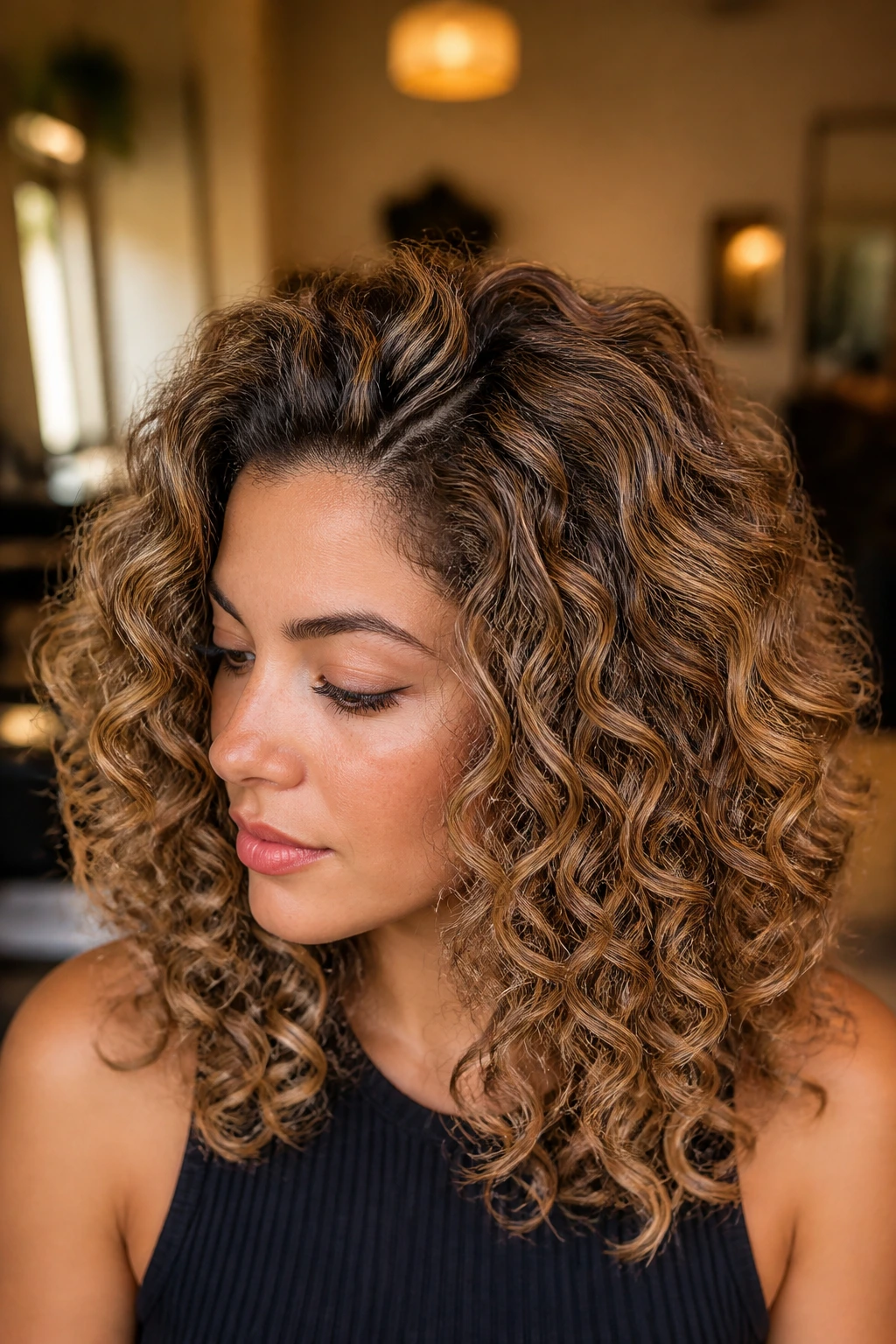
The mixie sits between a mullet and a pixie, which means it has short, cropped energy up front and a little length in the back. On curly hair, that shape needs bright accents in the right places or it can look flat. Put the babylights on the top ridge, around the fringe, and in a few back pieces so the cut has contrast from every angle.
This one is for people who like texture and don’t mind a little edge. It looks best when the curls are piecey rather than overly polished. A good rule: keep the brightest strands where the haircut already has movement. Bright color cannot fix a dead shape, but it can make a lively one look even sharper.
18. Cascade Layers with Soft Lowlights
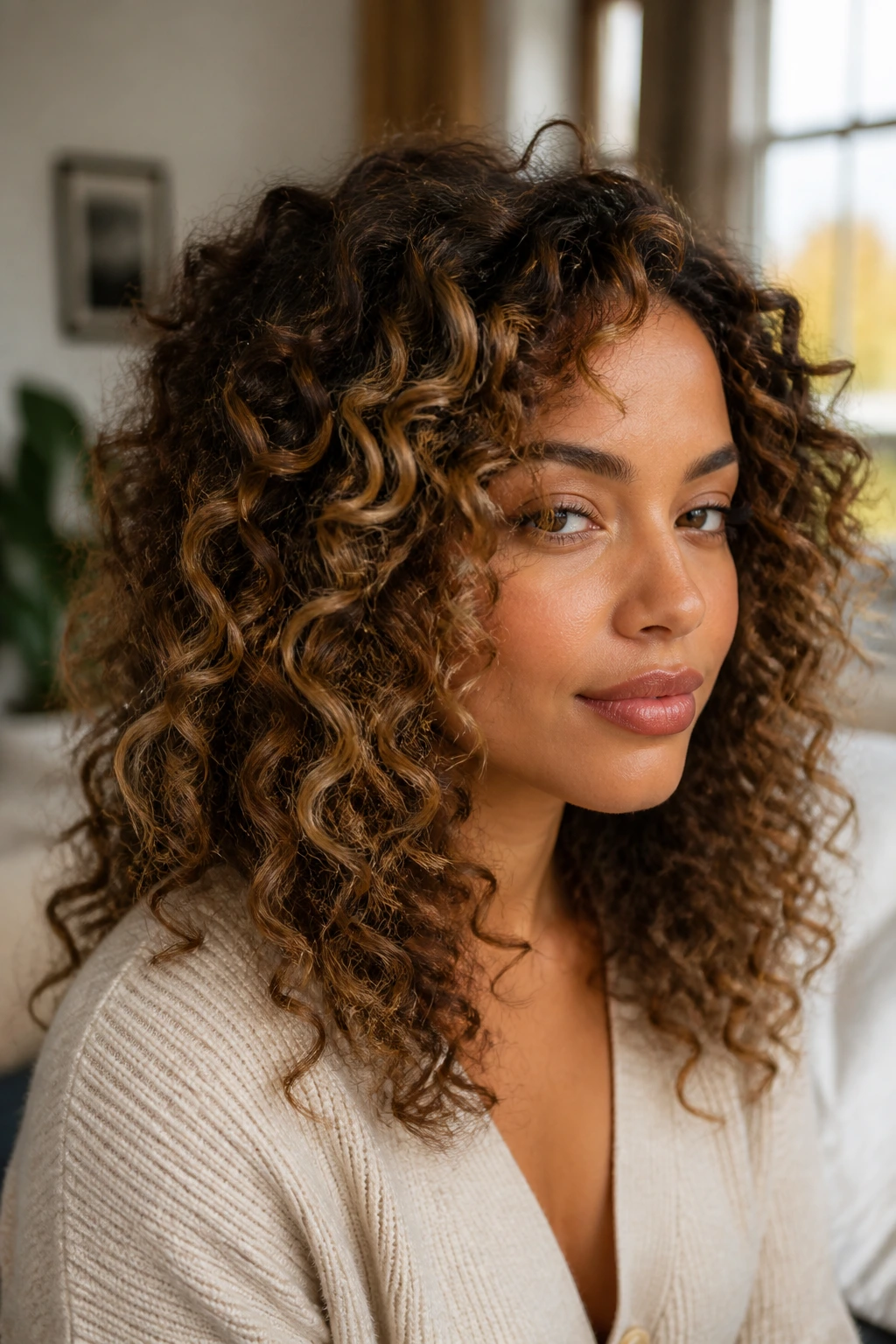
The cascade cut is all about flow. Layers fall one into the next, which is a nice way to build height through the top and width through the sides. Babylights alone can make it a little too airy, so I like soft lowlights worked underneath to keep the body from disappearing. That mix of light and shadow is what gives the style depth.
This is a good choice for thick curly hair that tends to spread. The layers break up the mass, while the lowlights anchor the shape. The babylights should be strongest around the face and upper crown, then fade as they travel downward. You get the lifted look at the top and the grounded feel below. That balance matters more than people think.
19. Midi Cut with Halo Brightening
A midi cut lands between the shoulders and the chest, and it’s one of the easiest places to build visible volume. Halo brightening means the lightest babylights sit around the upper perimeter — like a soft ring around the head — while the inside stays deeper. The effect is subtle but powerful. The curls look fuller because the edges are easier to read.
I like this for anyone who wants a clean, balanced shape without a shaggy finish. The cut can be rounded or slightly U-shaped. Either way, the halo placement helps the style feel lifted even when the hair air-dries. It’s a smart option for people who wear their hair down a lot and want the shape to look finished from every angle.
20. Waterfall Layers with Dimensional Ribbons
Waterfall layers fall longer and softer than a classic shag, which makes them a nice fit for people who want movement without a choppy look. The color should follow that same idea: dimensional ribbons that start near the face and drift downward through the outer layers. The result is light that seems to move with the curl, not sit on top of it.
This cut works best on curls that shrink a lot after drying. The extra length gives the shape some insurance. Keep the babylights fine near the crown and a touch more open through the front if you want the hairline to feel brighter. Too much brightness at the bottom can pull the eye down and make the cut feel heavy, which is backward.
21. Stack Bob with Lift at the Nape
A stacked bob builds volume by keeping the back shorter and graduating the weight toward the top. On curly hair, that can look fantastic because the curls naturally pile up over the nape. Babylights should live mostly on the upper stack and around the crown, where they help the height read even more clearly.
This cut is especially good for finer curls that need shape more than length. The stacked back gives you a little architecture, and the brightness keeps the top from looking dark and dense. I’d keep the perimeter neat. A messy outline plus a stacked shape can get bulky fast, and the whole point here is lift, not mushroom.
22. Curly Pageboy with Soft Fringe
The pageboy is making a quiet comeback in curly form, and honestly, it makes sense. The curve under the hair gives the cut a smooth outline, while the soft fringe opens the face. Babylights work best as tiny pieces through the fringe, temples, and top curve, which keeps the rounded shape from looking heavy.
This one suits curls that like to hold a definite line. It’s neat, but not stiff. If you want structure without the hard edge of a blunt bob, this is a good middle ground. A little brightness at the fringe matters more here than in many other cuts because the fringe is where the style either feels fresh or feels old-fashioned.
23. Razor Shag with Textured Bangs
A razor shag is for people who want movement first and neatness second. The textured ends give curls a piecey finish, which can be gorgeous if the hair has enough density to support it. Babylights should be scattered through the bangs, crown, and outer layers, keeping the highlights thin enough that the texture still reads clearly.
This is a cut with opinions. It looks best when styled with a diffuser and a light hold cream or gel, not brushed into submission. The bangs are the part to watch: if they’re too heavy, they cover the eyes; if they’re too light, they disappear. Fine babylights through the fringe help them sit in the cut instead of floating apart from it.
24. One-Length Curly Cut with Internal Brightening
Not every volumizing cut has to be layered to the roof. A one-length curly cut can look surprisingly full if the curl pattern is strong and the ends are healthy. Internal brightening keeps the surface calm while bringing light into the middle of the shape. That means the outline stays solid, but the cut doesn’t read as a dark block.
This is a smart option for people who hate too many layers. The key is density through the bottom and selective brightness through the middle. I would not overdo the foil work here. A few hidden babylights around the sides and crown are enough. The haircut carries the weight; the color just keeps it from looking flat.
25. Rounded Volume Cut with Strategic Babylights
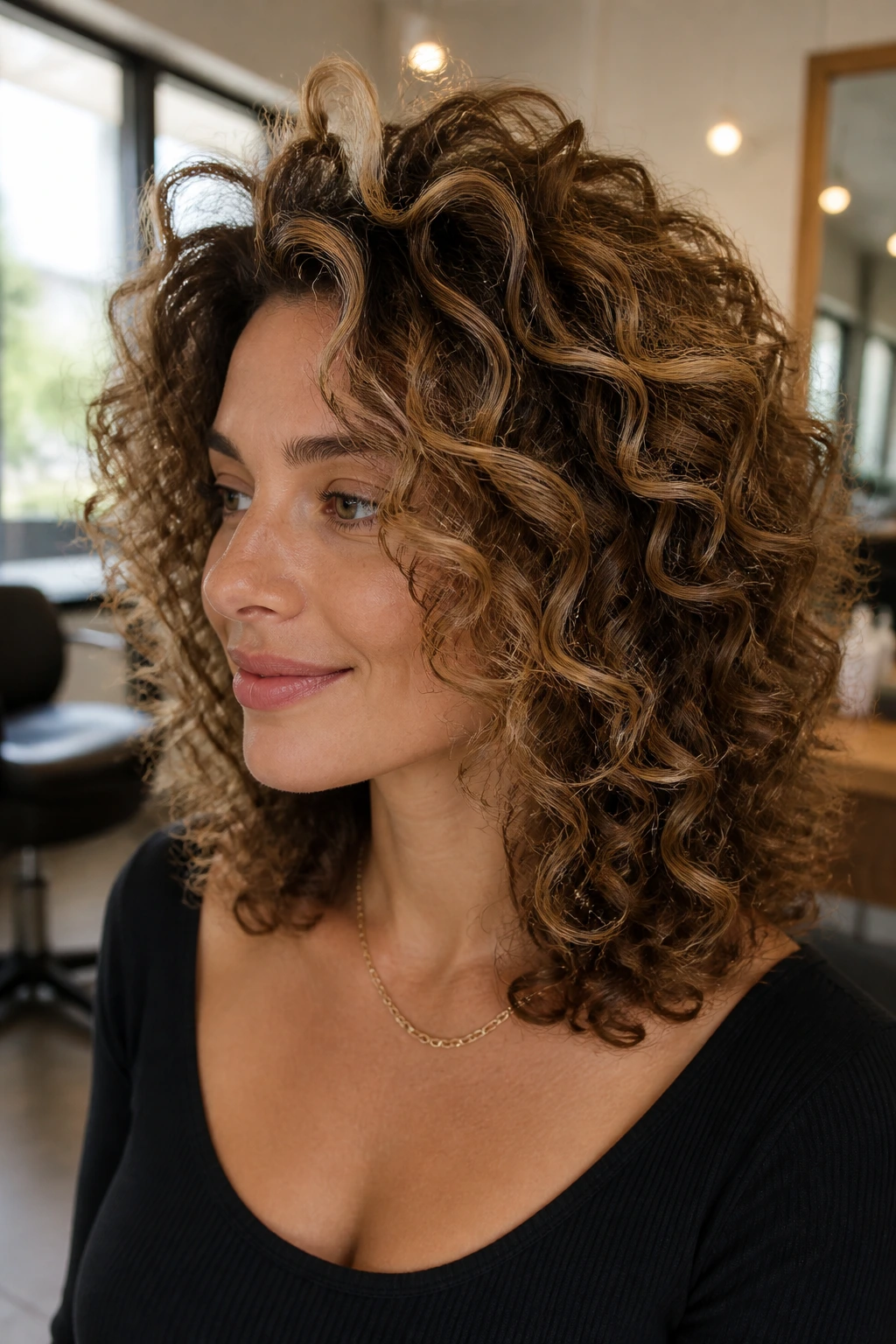
This is the most classic “big curl” shape in the group. The outline stays round, the sides are full, and the crown gets enough lift to keep the head from collapsing inward. Strategic babylights should emphasize the top curve, the front pieces, and the highest arcs of the curls so the shape looks even taller.
If you only want one sentence of advice here, it’s this: keep the interior darker than you think. That shadow is what makes the round silhouette look plush. Brighten the outside shell, leave the underside alone, and the whole cut reads thicker. Simple. Effective. Hard to mess up if the placement is thoughtful.
Why Babylights Change the Geometry of Curly Hair
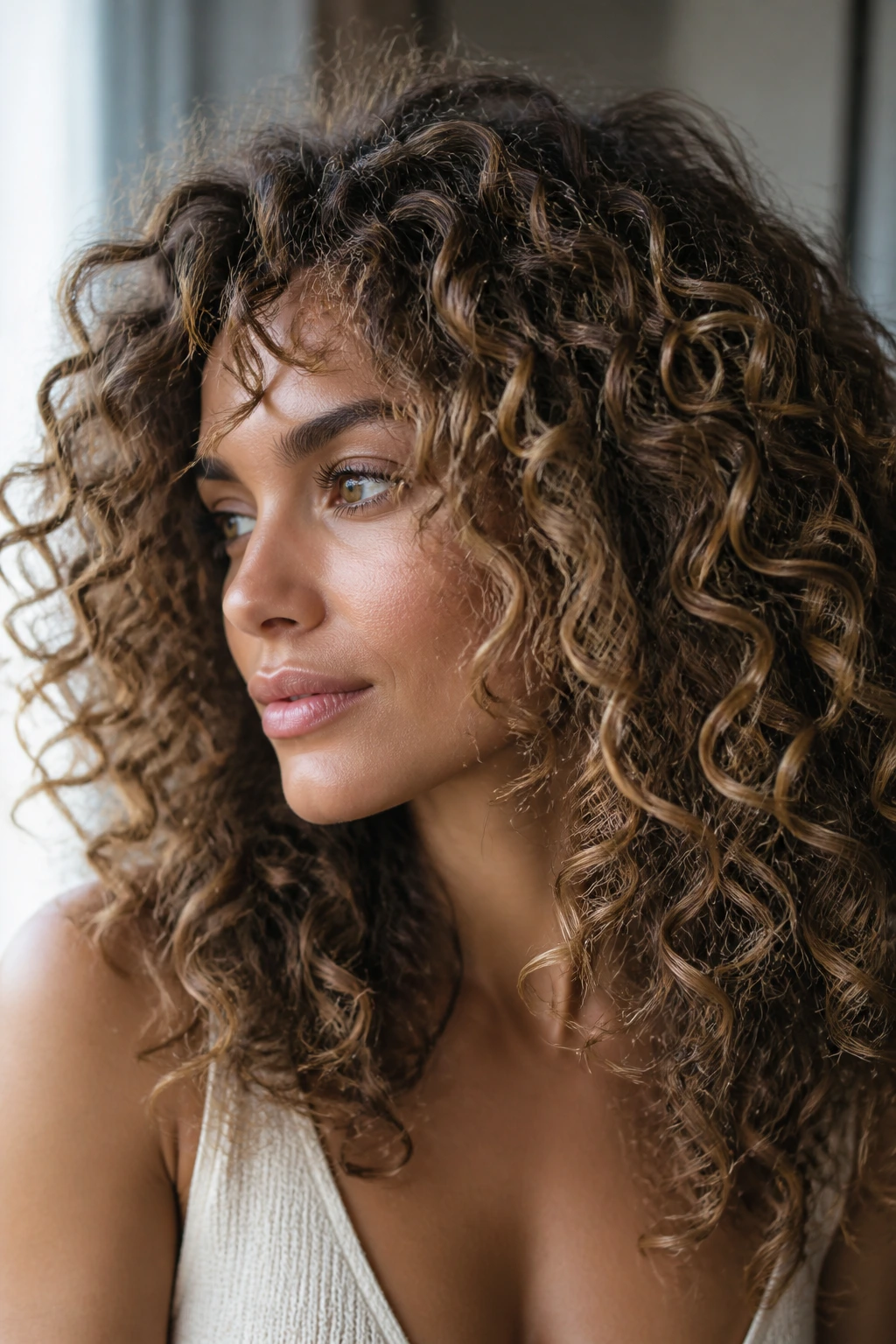
Babylights are tiny, but on curls they do a lot. A broad highlight stripe can sit on top of a curl and break the shape. A fine babylight follows the bend. That difference matters because curly hair isn’t a flat surface; it’s a moving stack of arcs, shadows, and turns.
The best placement usually starts where the light would hit naturally: around the crown, the outer layers, the hairline, and the ends of the top pieces. Leave the underside deeper and the whole style looks fuller. That’s the part many people miss. If every layer is bright, nothing stands out. A little contrast makes the roundness visible.
The sweet spot
For most curly heads, the most flattering highlights are thin enough that you notice the shine before you notice the streak. If the color announces itself before the shape does, the balance is off.
Smart Salon Notes for Curly Hair with Babylights
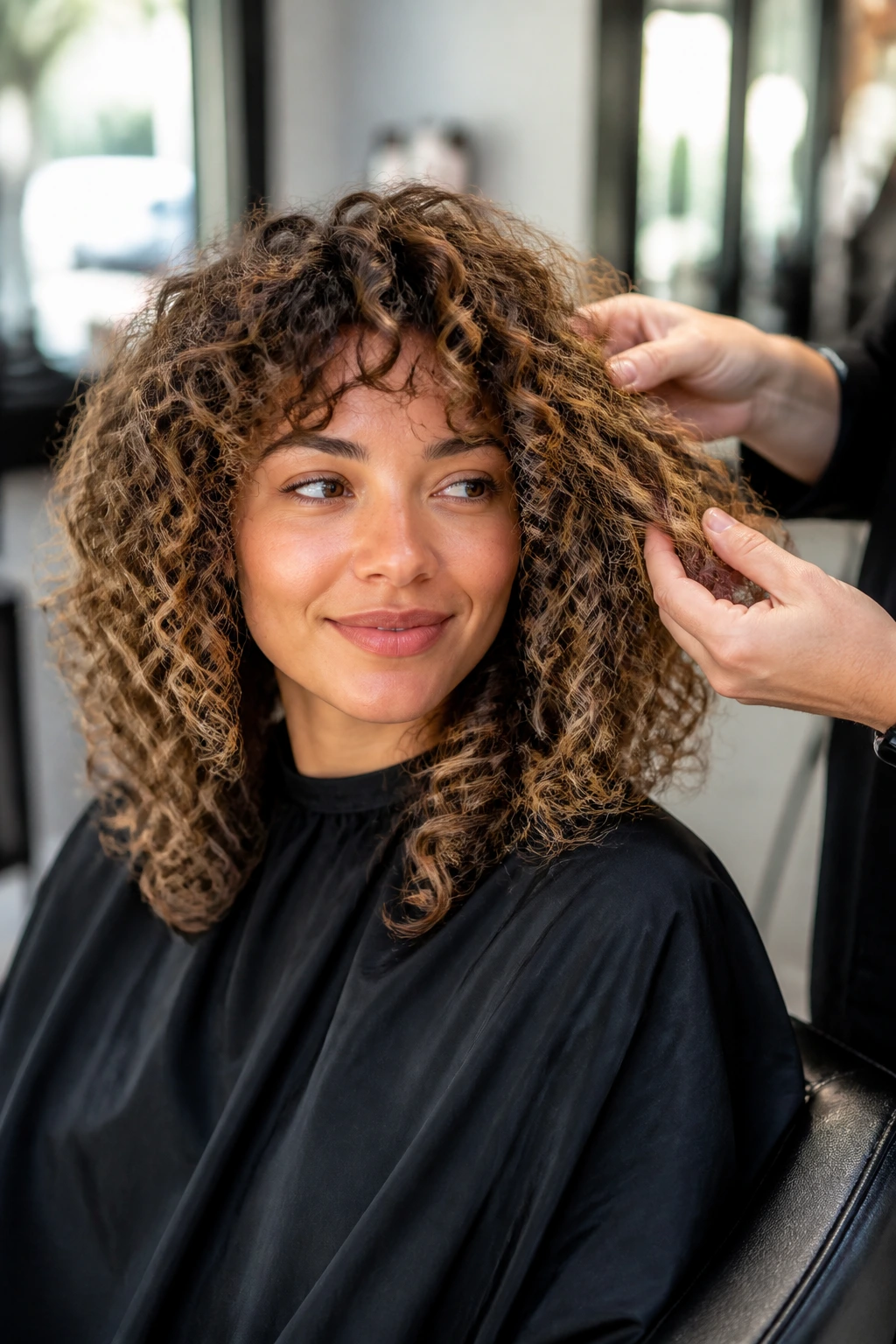
Bring pictures, but bring opinions too. Tell the stylist where your hair gets heavy, where it falls flat, and whether you wear it diffused, air-dried, stretched, or brushed out. Those details change everything. A shoulder-skimming cut that looks airy on a tight coil may need more internal structure on a loose wave.
Ask for a dry-cut consultation if the salon works that way. Curly hair behaves differently wet, and babylights should be planned around the natural fall of the curls, not just the straight sections between them. If you color your hair often, speak plainly about history: bleach, box dye, heat damage, previous toner, all of it. That isn’t small talk. It tells the colorist how bright they can go without wrecking the ends.
What to ask for
- Babylight thickness: ask for fine slices, often about the width of a thread or two, not chunky ribbons.
- Placement: request brightness around the face, crown, and top layer first.
- Tone: warm honey, caramel, beige, or cool beige should match your base and skin tone, not fight it.
- Dimension: ask the stylist to leave some depth underneath so the curl pattern stays visible.
Tools That Help the Cut Keep Its Shape
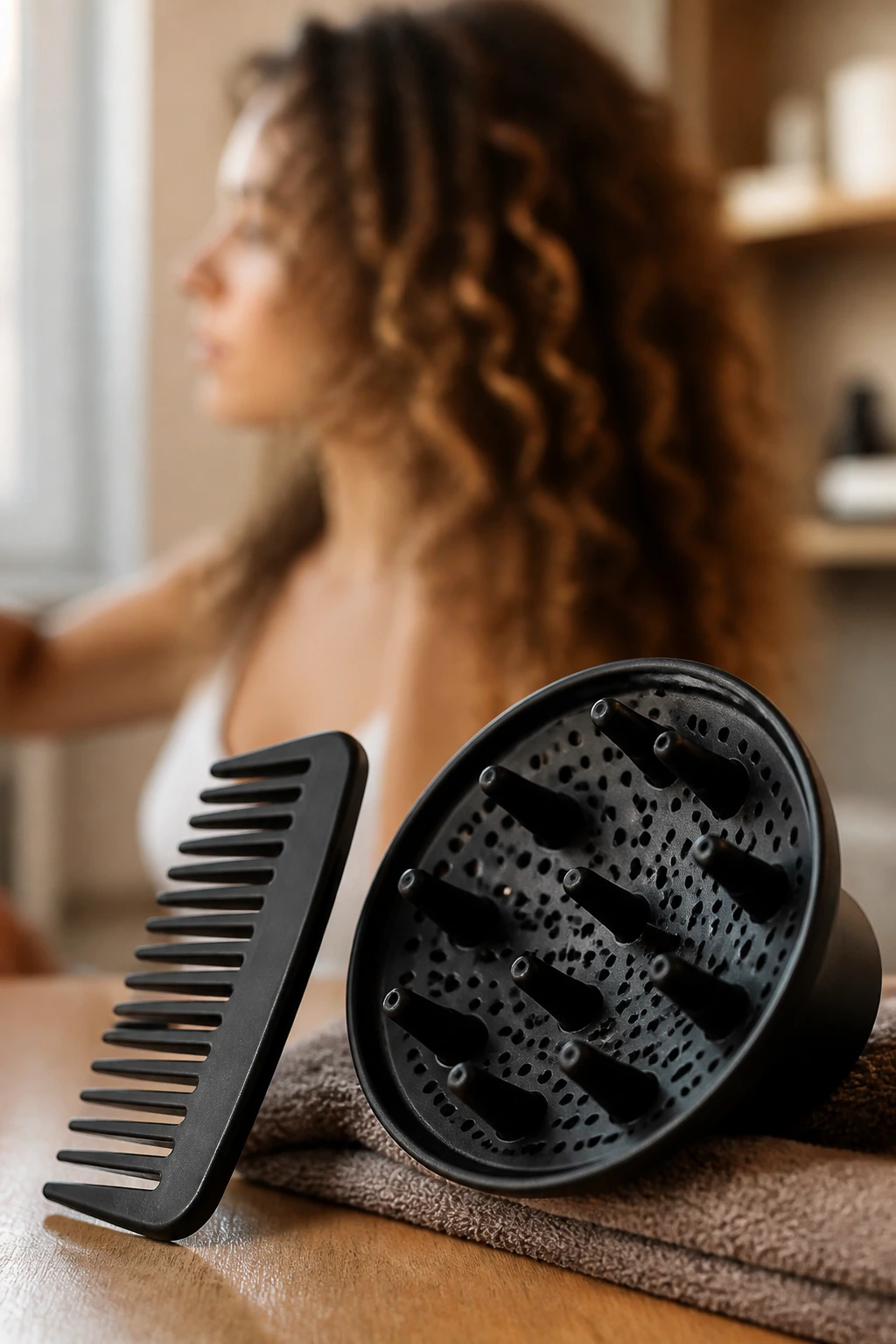
You don’t need a drawer full of gadgets, but a few things make curly volume easier to keep. A diffuser matters if you want lift at the roots without blowing the curl pattern apart. A wide-tooth comb helps separate wet curls without turning them into frizz. A microfiber towel or cotton T-shirt is better than a rough bath towel because it doesn’t rough up the cuticle as much.
For color care, a sulfate-free shampoo, a rich conditioner, and a heat protectant are the basics. If your babylights are warm-toned, a color-safe gloss or toner between salon visits can keep the brass down. On tighter textures, a leave-in cream with a little slip makes the highlighted pieces sit together instead of fraying at the ends.
How to Wear These Cuts So They Actually Look Voluminous
The haircut is only half the job. The way you dry and part curly hair changes the final shape more than people expect. A center part usually adds symmetry, while a deep side part can throw a little lift into the crown. If your hair is fine, that side part can be the difference between “nice curls” and “whoa, your hair looks full.”
Presentation: Put the brightest babylights where your curls move first — bang pieces, cheekbone pieces, top layers. That way the eye catches the light before it notices any flat spots.
Styling Pairings: Diffuser, root clips at the crown, and a gel or mousse that dries with a cast are the easiest mix for lift. Once the hair is fully dry, scrunch the cast out gently so you keep the shape but lose the crunch.
Finish: A tiny bit of serum on the ends can make the babylights gleam without making the curls limp. Tiny. A drop, not a pour.
Extra Moves That Make Babylights Look Better on Curls
Root Boost: Clip the roots at the crown for 10 to 15 minutes while the hair dries, then remove the clips once the section has memory. That little bend gives the top more height without teasing.
Shine Boost: Use a glossing conditioner or a light finishing spray only on the outer shell of the hair. Bright ends look nicer when the surface isn’t dry and fuzzy.
Customization: If your hair is dark, ask for caramel, amber, or copper babylights instead of a pale blonde lift. The color will look richer and usually needs less maintenance.
Humidity Shield: A thin anti-humidity gel on the canopy of the hair helps the babylights stay defined on damp days. It’s boring product advice. It works.
Common Mistakes That Flatten Curly Hair
Too much lightening at the ends: That’s the fastest way to make curls look see-through. The ends carry the visual weight, so if they’re overprocessed, the shape loses body. Keep the lightest pieces away from the driest tips unless the hair is healthy and dense.
Layering every section the same way: Curly hair needs zones. If every layer is cut with the same tension and length, the haircut can turn into a puff ball or a triangle. Strong volume comes from selective weight removal, not random snipping.
Ignoring the curl pattern when placing color: A babylight that cuts across a curl clump can look stripey once the hair dries. Place highlights where the curl naturally bends, not where the hair is straight on the foil.
Over-styling the root: Heavy creams at the scalp can collapse the top before the hair even dries. Keep richer product from the first half inch of the roots unless the texture is very coarse and thirsty.
Skipping trims: Curly hair can hide split ends for a while, then suddenly the bottom looks fuzzy and thin. A clean trim keeps the shape rounded and lets the light bounce cleanly off the ends.
Variations and Adaptations to Try
Honey Glow Version: Best for brown bases and medium curls. Keep the babylights warm and thin, then add a soft gloss every so often to keep the tone from looking brassy.
Cool Beige Version: If your skin leans cooler or your natural color is ashier, ask for beige babylights with a soft shadow root. The effect is cleaner and a little more polished.
Coily Halo Version: For tighter textures, keep the highlights concentrated on the outer crown and front edge. You get brightness where the eye lands and depth where the coils need strength.
Low-Maintenance Blend: Ask for babylights that are no lighter than two or three levels above your base. The grow-out is softer, and the regrowth line stays quiet.
Bold Ribbon Version: If you want more contrast, use slightly wider ribbons around the front and crown, but keep the underside darker. That keeps the style from turning flat.
How to Keep the Cut and Color Looking Fresh
Curly cuts usually need shape trims every 8 to 12 weeks, depending on how fast your curls lose their outline. Babylights typically hold their best look for about 10 to 14 weeks before toner or a gloss refresh starts making a visible difference, though the exact timing depends on how much lightening you asked for.
Wash with cool or lukewarm water when you can. Hot water strips the color faster and can make the cuticle open up, which leaves the curls fuzzy. If you diffuse, keep the heat moderate and the airflow not too wild. You want the curl to set, not boil.
At home, refresh the shape with a little water, leave-in, and a dab of gel on the canopy. If the root has gone a bit flat, clip-lift for a few minutes while drying. That’s usually enough to keep the haircut looking intentional between appointments.
Frequently Asked Questions
Do babylights damage curly hair more than regular highlights?
They can, if the lightener is too strong or left on too long, but babylights are usually kinder because the sections are so fine and the stylist can control placement. The real issue is not the size of the highlight; it’s the condition of the hair before and after the service. Porous ends need less processing, not more.
What curl types work best with volumizing haircuts and babylights?
Loose waves through tight coils can all wear this look, but the cut has to match the density and shrinkage of the hair. Fine 2C curls often do best with a lob or bob, while thicker 3B to 4A textures can carry shags, rounded cuts, and tapered shapes with more drama.
Should curly hair be cut wet or dry?
Dry cutting usually gives the most honest result because you can see the curl’s actual spring and where the weight sits. Some stylists use a hybrid method, which is fine, but I’d be cautious about a fully wet, blunt approach on highly textured hair.
Can I get babylights if my curls are already dry or color-treated?
Yes, but the consultation matters more. A stylist may need to keep the lightener away from the most fragile ends, use a bond-building step, or choose a softer tone instead of pushing for a pale blonde result.
Which cuts are easiest to style with a diffuser?
Rounded shags, butterfly layers, and curly bobs tend to air-dry well or diffuse quickly because the shorter top layers set up fast. Longer cuts can work too, but they usually need more product control at the root so the crown doesn’t fall.
How do I stop babylights from making my curls look frizzy?
Keep the highlights thin, avoid over-lightening the driest parts, and use conditioner and leave-in on the mid-lengths and ends after every wash. Frizz usually shows up when color and dryness team up. Fix one, and the other gets easier to manage.
Can I ask for babylights without any obvious blonde pieces?
Absolutely. That’s often the best move on curly hair. Caramel, amber, toasted beige, and soft copper can add depth and shine without drawing attention to the color itself.
What if my roots go flat after styling?
Clip the crown while the hair cools, then lift the roots with your fingers once everything is dry. A touch of lightweight mousse at the scalp before diffusing can help too, but don’t pile on cream near the roots. That’s how volume disappears.
The Shape That Keeps Its Bounce
The best curly haircut is the one that still looks good when you stop fussing with it. Babylights help because they give the curls something to do visually — a little flash here, a little shadow there — and that movement makes the shape feel bigger without making the hair feel busy.
If you’re choosing between cuts, start with where your curls naturally sit when they’re left alone. Then decide how much lift you want at the crown, how much face framing you like, and how bright you want the color to read. Get those answers straight, and the rest gets easier. Hair has opinions. Better to work with them than against them.