



Deep brown skin and warm fall color have a way of making sense together that icy blondes often don’t. The best fall highlighted hairstyles for deep skin tones usually lean into copper, cinnamon, honey, bronze, auburn, mahogany, or a deep caramel that sits a shade or two away from the base, not ten. That small difference matters. Too much lift can turn stripy fast; the right warmth looks like the color was always meant to be there.
Placement matters just as much as tone. A money piece at the cheekbones, a few painted ribbons through curls, or a soft amber peekaboo under braids can change the whole read of a style without flooding the head with lightness. I’m partial to warm highlights on deeper complexions because they give dimension without making the hair fight the skin. The effect is cleaner, richer, and usually easier to live with for more than a weekend.
And because fall hair should work with scarves, coats, and drier air instead of against them, this mix includes curls, puffs, braids, twists, silk presses, short cuts, and protective styles. Some are low-drama. Some are bold. A few sit right in the middle, which is where the smartest color usually lives.
Why These Warm Highlights Work So Well
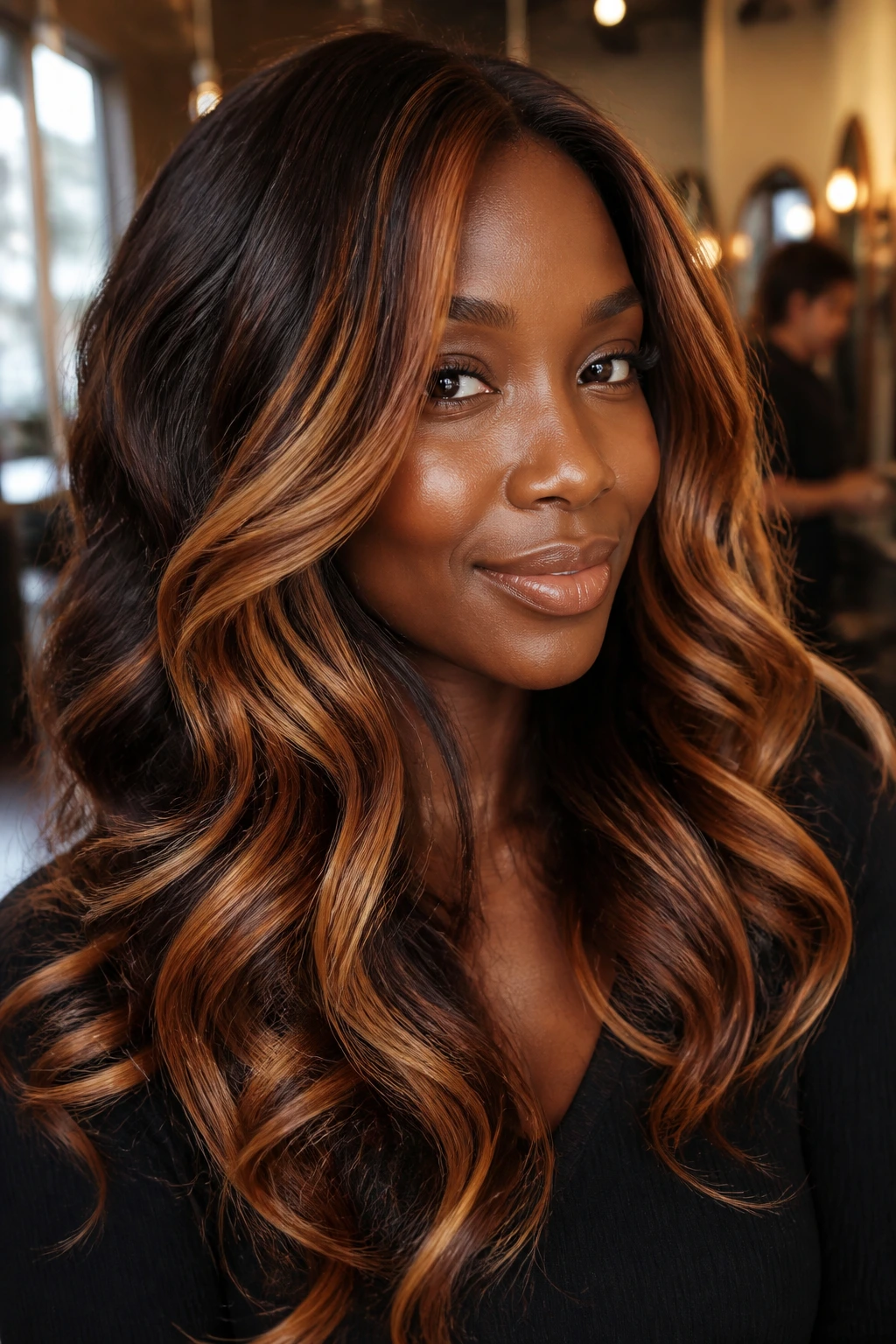
Warm tones do the heavy lifting. Copper, caramel, bronze, and honey sit naturally against deep brown skin, so the highlight reads as depth, not a random streak of light.
Placement beats quantity. Two face-framing ribbons can do more than ten scattered foils if they land where the eye already goes: temples, cheekbones, crown, and ends.
Texture changes the color story. On curls and coils, warm highlights break up the pattern in a softer way; on silk presses and bob cuts, they show up sharper and cleaner.
Protective styles can still look polished. Braids, locs, and twists hold warm color well when the root stays darker and the lighter pieces are kept to the mid-lengths or ends.
Fall is the right season for depth. Richer shades look better when the light gets lower and the air gets drier. Gloss matters more, and shiny hair wins.
1. Cinnamon Ribbon Curls
Cinnamon ribbon curls are the safe bet that doesn’t look safe at all. The color sits between brown sugar and copper penny, which gives deep skin a warm glow without going so bright that the curl pattern starts to look striped.
Ask for painted ribbons about 2 to 3 levels lighter than your base, with the brightest pieces near the front and around the outer curve of the curls. A shoulder-length cut makes the color move, but longer curls work too if the layers aren’t too heavy.
What to ask for at the salon
Request soft balayage ribbons, not chunky highlights. The difference is huge. Balayage keeps the root darker and lets the cinnamon sit where curls naturally bend and catch light.
2. Honey-Lifted Lob
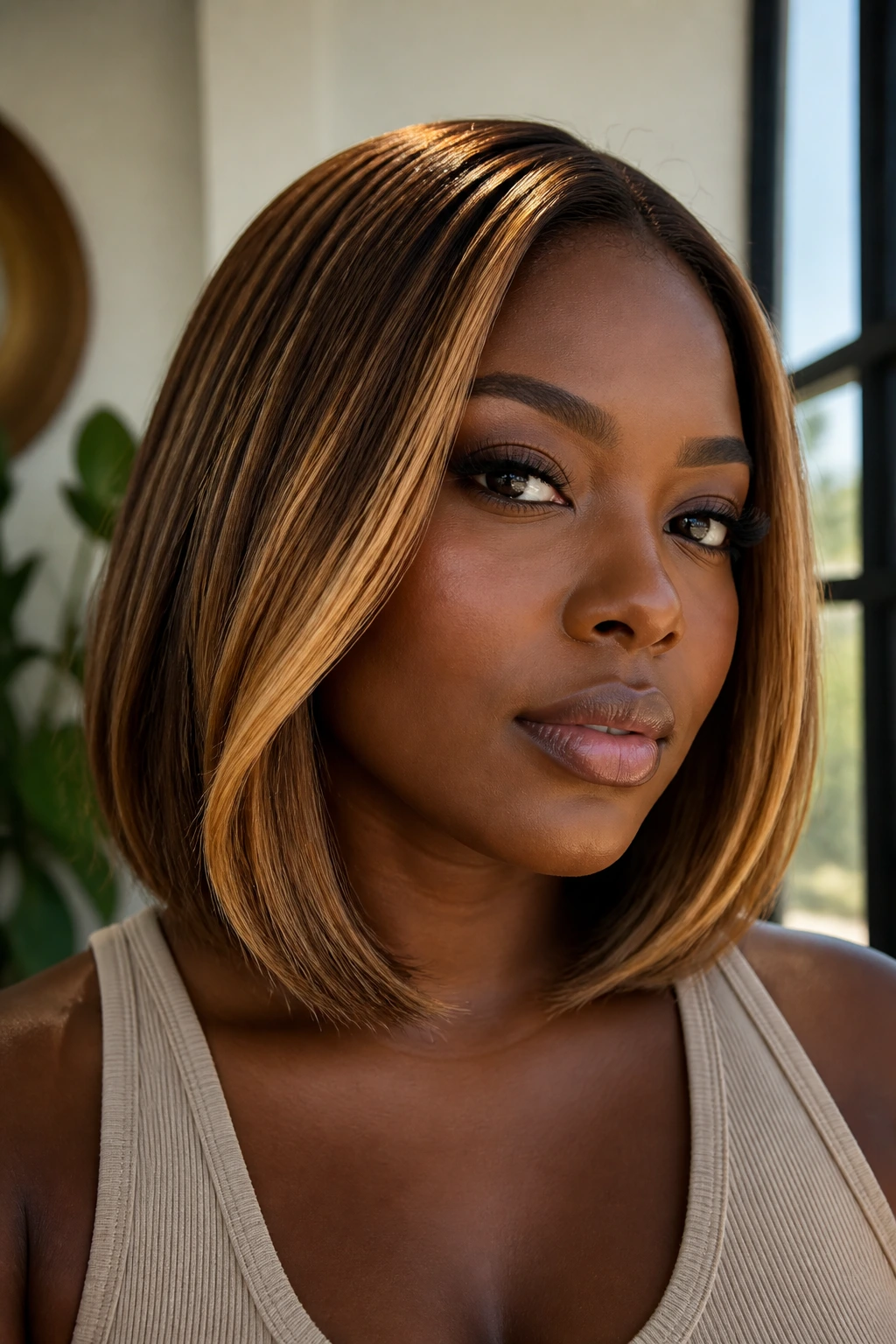
A lob with honey highlights is one of those styles that looks calm from across the room and expensive up close. The lob keeps the outline sharp, while the honey pieces soften the whole thing just enough for warm skin to do its thing.
I like this on straight, blown-out, or lightly waved hair because the line of the lob shows off the lighter strands. If you want a little more dimension, ask for honey placed only through the top layer and around the chin.
3. Copper Money Piece Afro
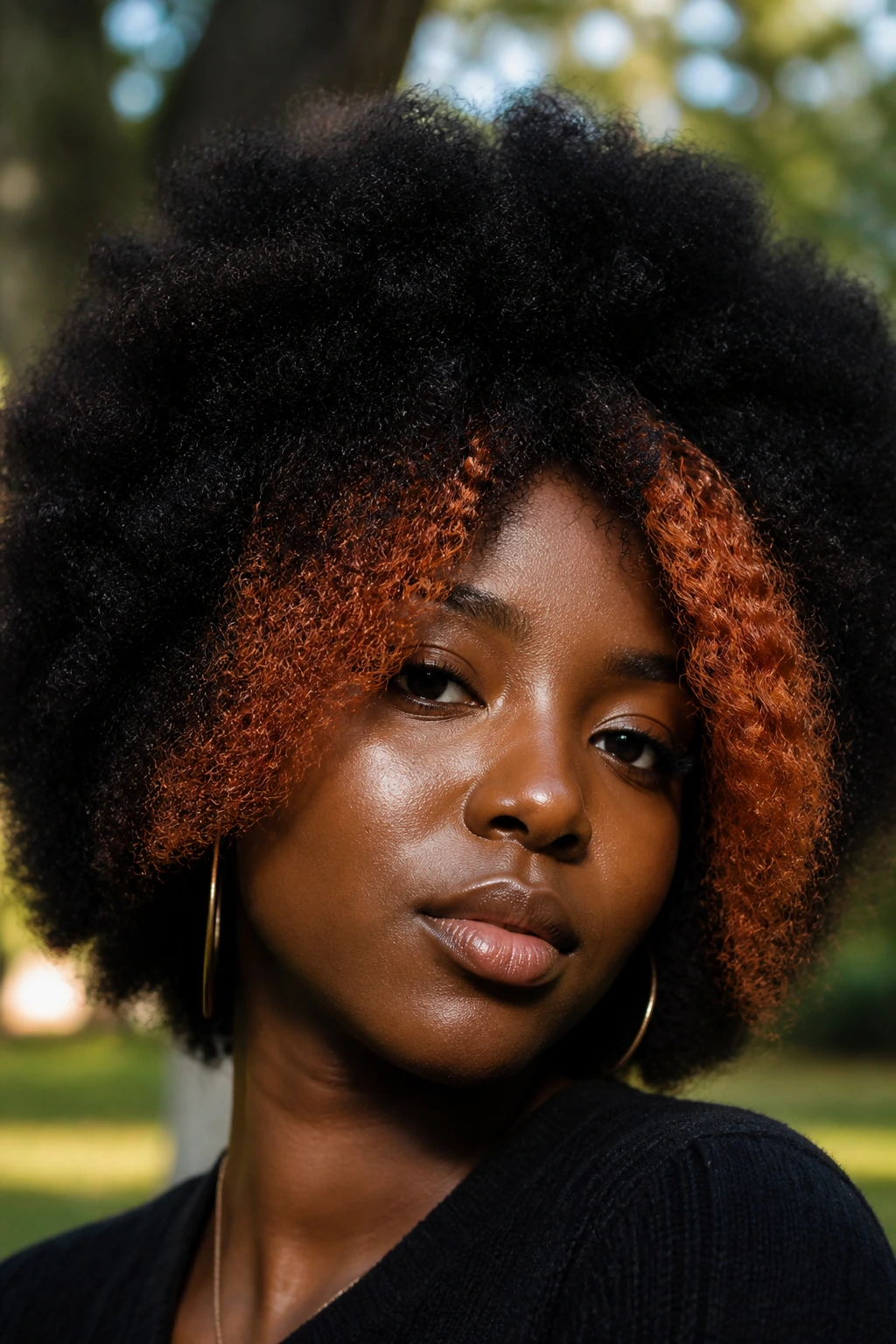
If you want one bright move and nothing else, do the money piece. A copper frame around a rounded afro can wake the whole face up in about five seconds, and the contrast against deep skin is the point.
Keep the rest of the afro close to your natural shade so the front pieces do the talking. That keeps the style from turning loud in a messy way. It reads deliberate. Sharp. Clean.
4. Caramel Face-Frame Layers
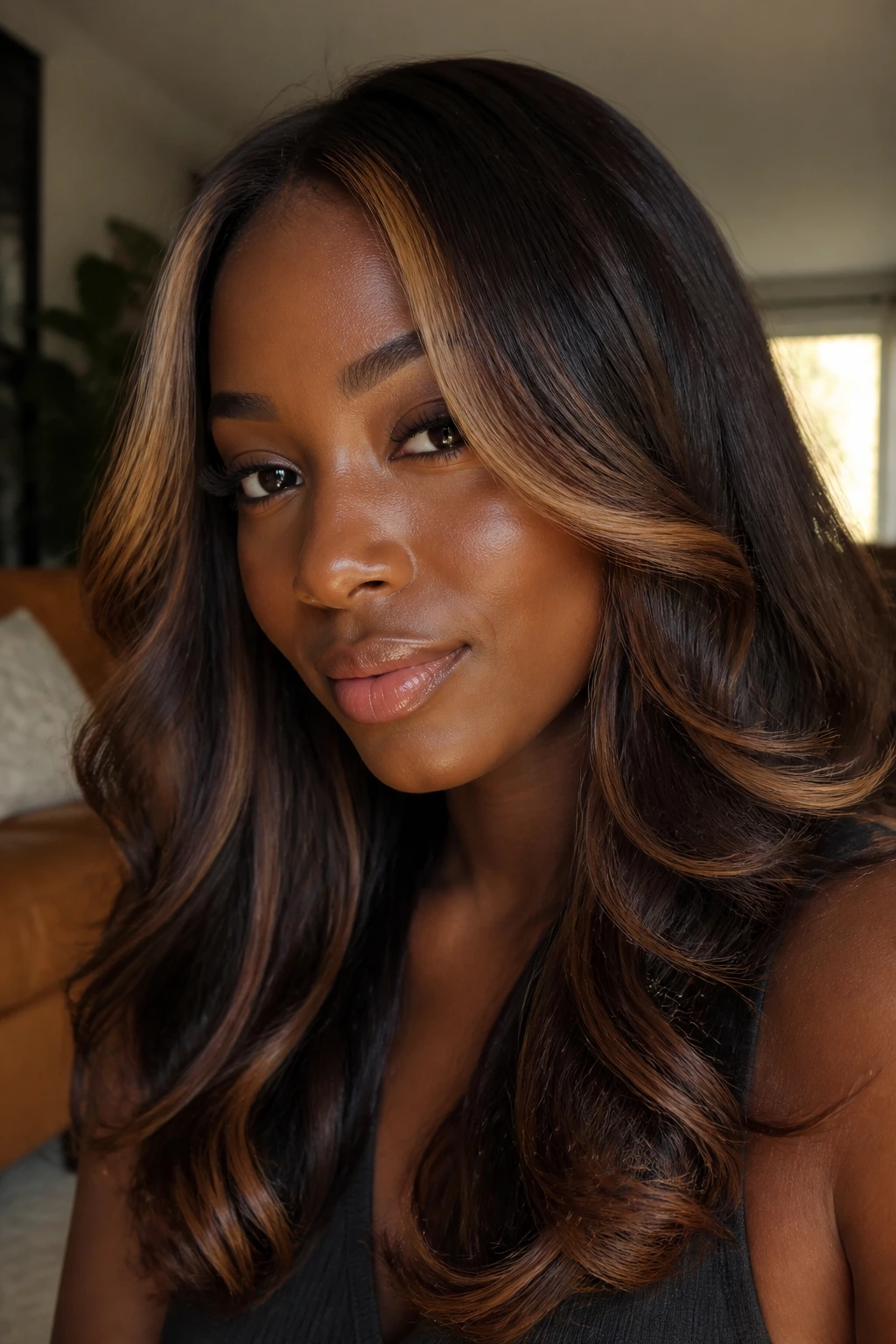
Caramel around the face is one of my favorites because it doesn’t depend on a perfect curl day. Layered blowouts, soft waves, and stretched natural hair all show the color well, especially when the lightest strands sit at the temples and cheekbones.
A good colorist will keep the face frame soft, not streaky. That’s the part people miss. You want two or three gentle ribbons, not a heavy stripe that sits like a marker line.
5. Chestnut Silk Press
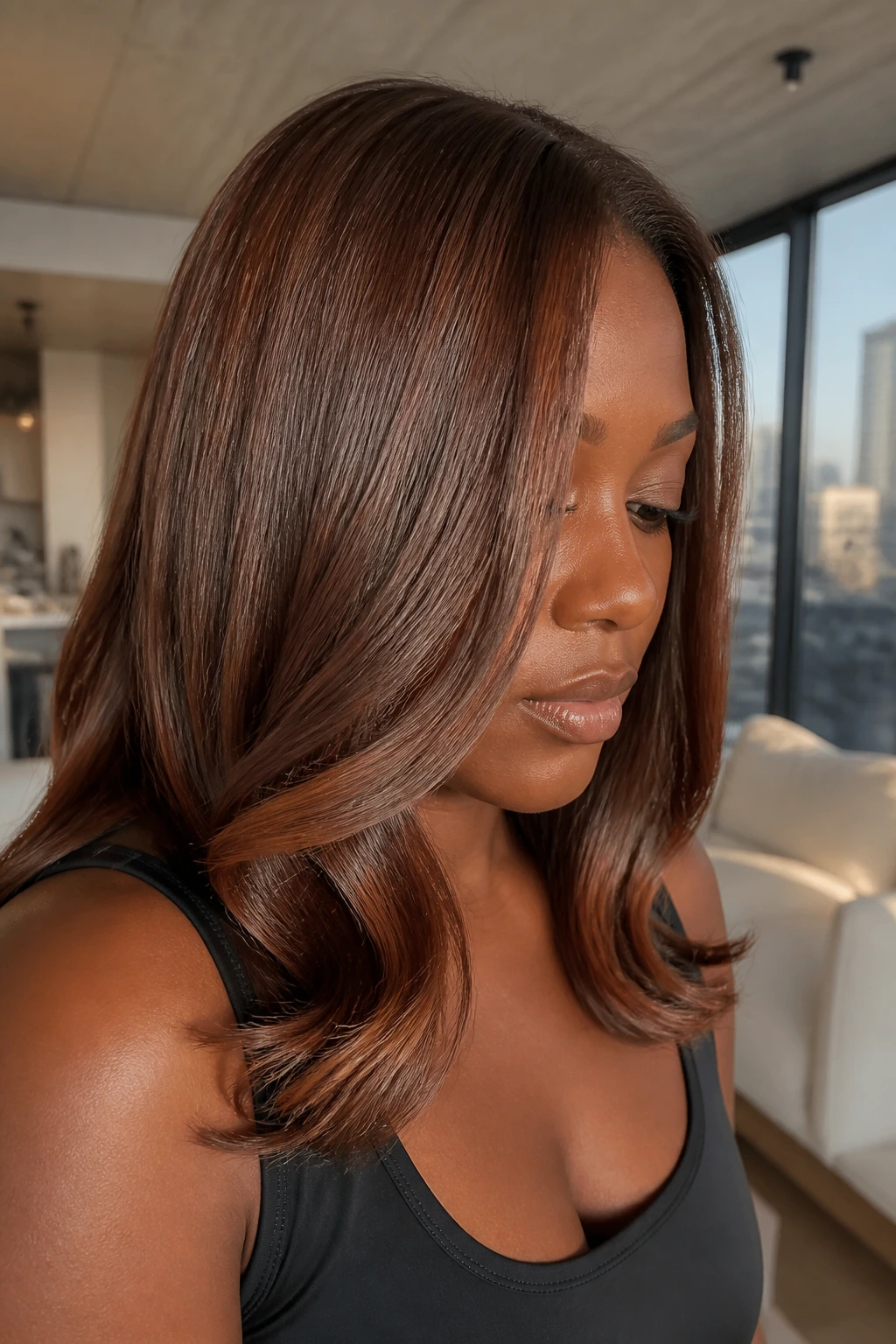
Chestnut on a silk press is for anyone who wants shine first and color second. The highlights are subtle, but on deep skin they still show, especially when the hair swings and the ends catch light at the shoulder.
This works best when the chestnut pieces stay a little deeper than caramel. Too pale and the press starts looking flat. Too dark and the color disappears. That middle ground is where the style earns its keep.
6. Auburn Curly Shag
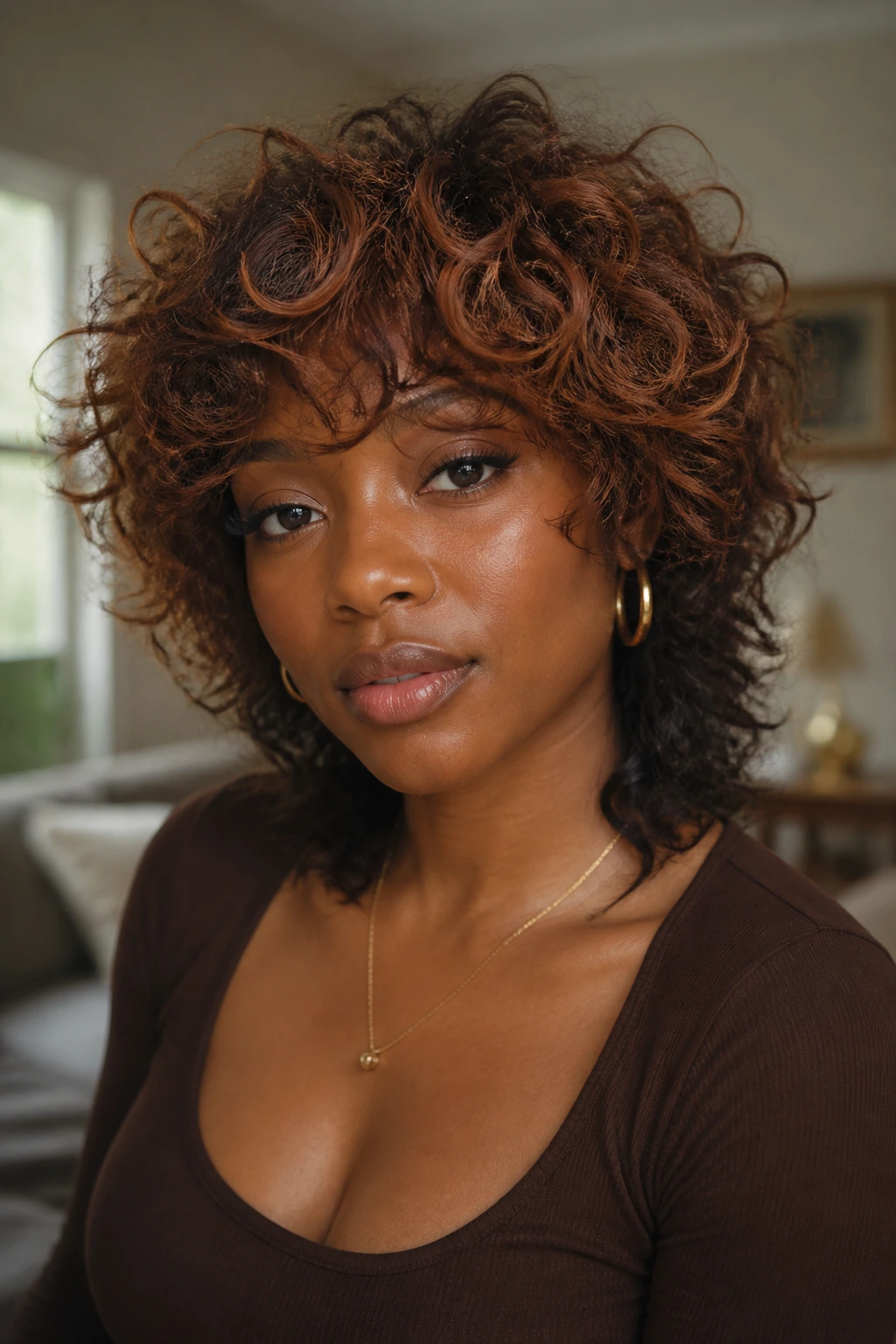
A curly shag with auburn pieces has real personality. The layers do the visual work here, because every curl sits at a slightly different height and the color breaks up faster than it would in a one-length style.
Why it works
Auburn has enough red in it to pop against deep skin, but not so much that it looks costume-y. I’d keep the brightest bits on the top layers and around the fringe, then leave the underlayers darker so the cut doesn’t lose shape.
7. Bronze Braided Bob
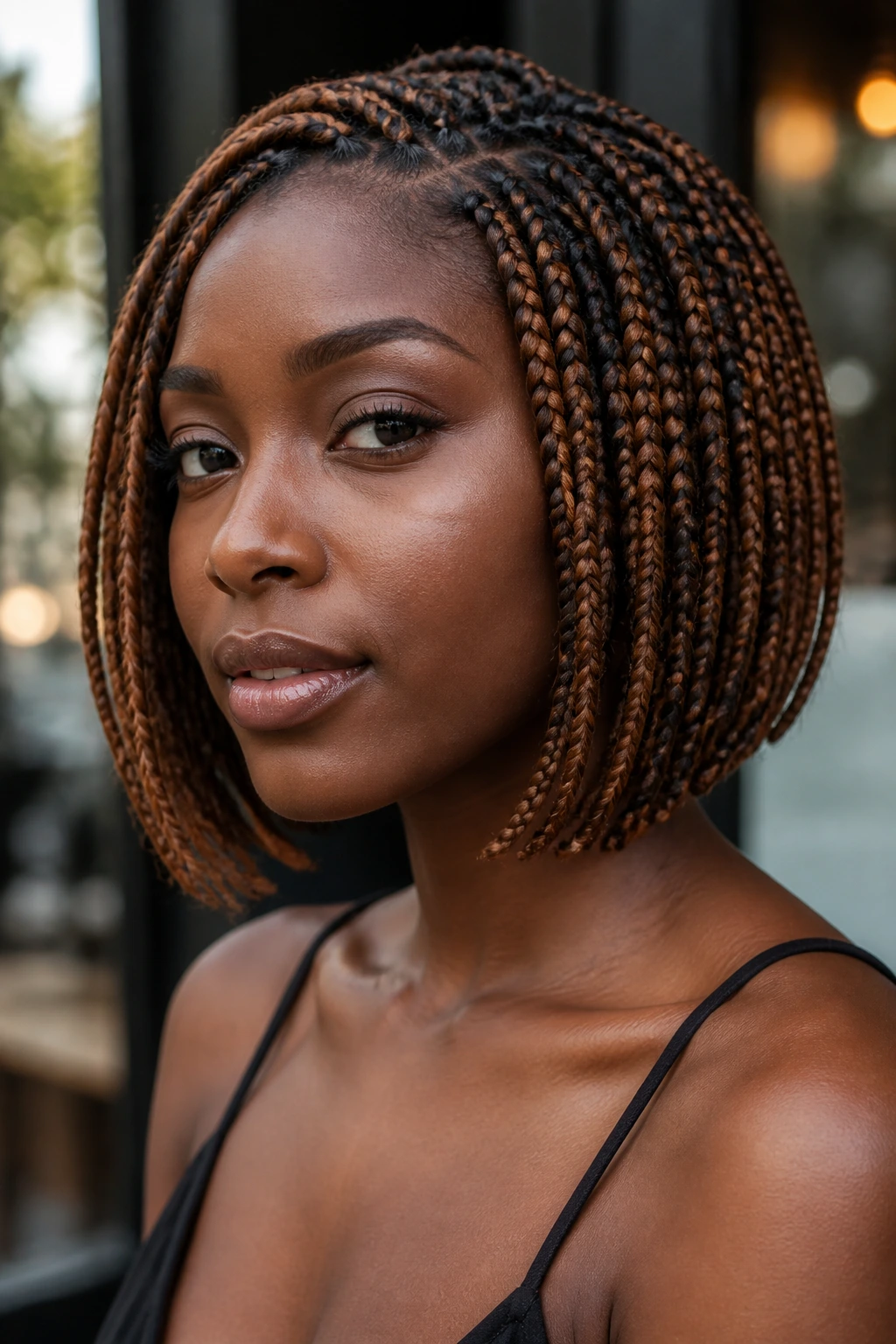
Braids don’t have to be long to make a statement. A chin-length braided bob with bronze accents feels neat and modern, and the shorter shape keeps the color from getting lost in too much hair.
A bronze blend works better than a yellow-gold one here. Bronze sits deeper, so it looks richer next to dark skin and doesn’t fight the base. If you like a cleaner finish, keep the roots dark and bring the bronze into the lower half only.
8. Toffee High Puff
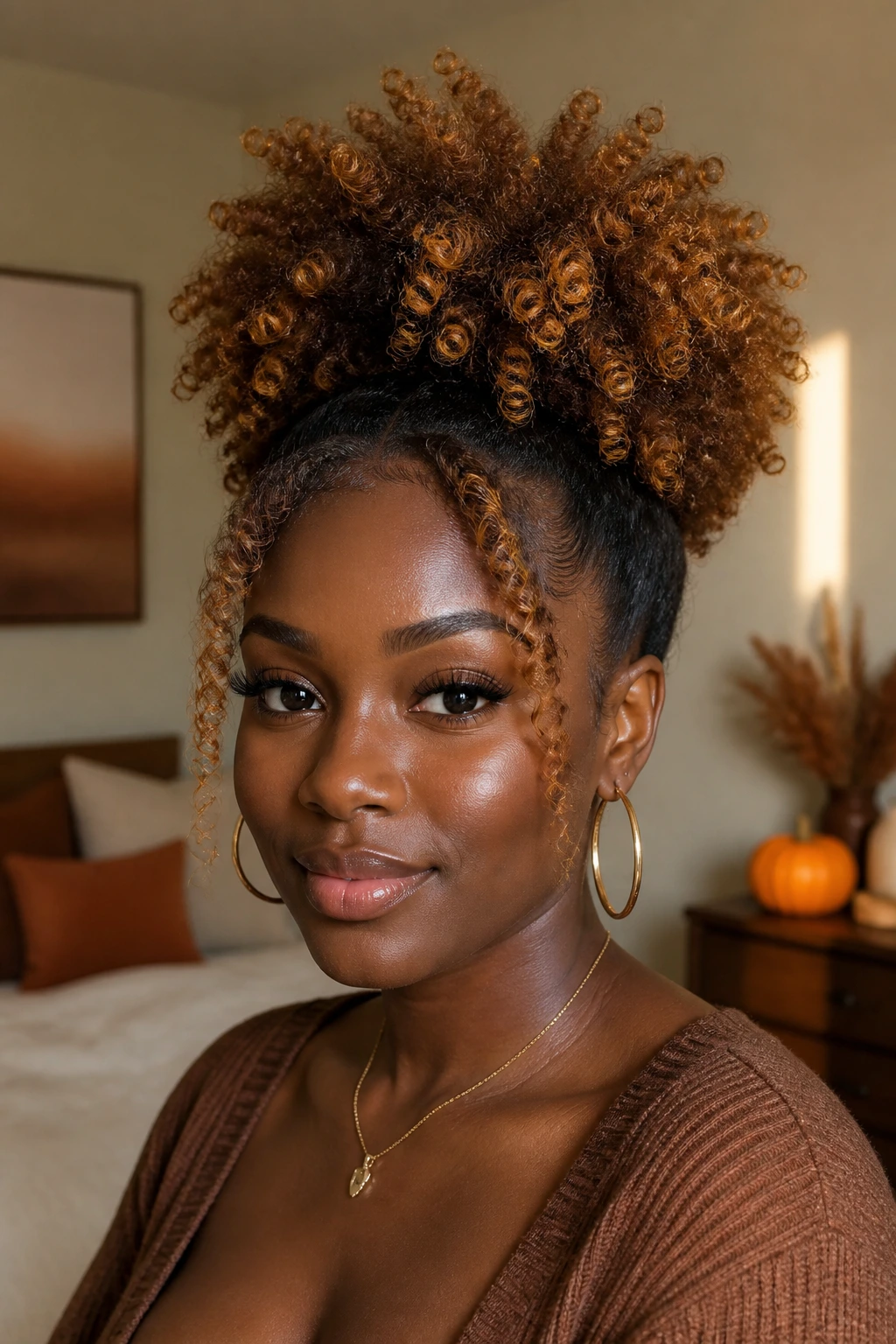
A high puff with toffee ends is casual in the best way. The puff gives height, and the lighter ends or color-wrapped face pieces stop the style from looking flat at the crown.
This one is especially nice if you want visible color without a full commitment to bleach. A toffee tone around the perimeter can frame the face while the center stays close to your natural shade. It’s quick, and that matters on real mornings.
9. Maple Brown Box Braids
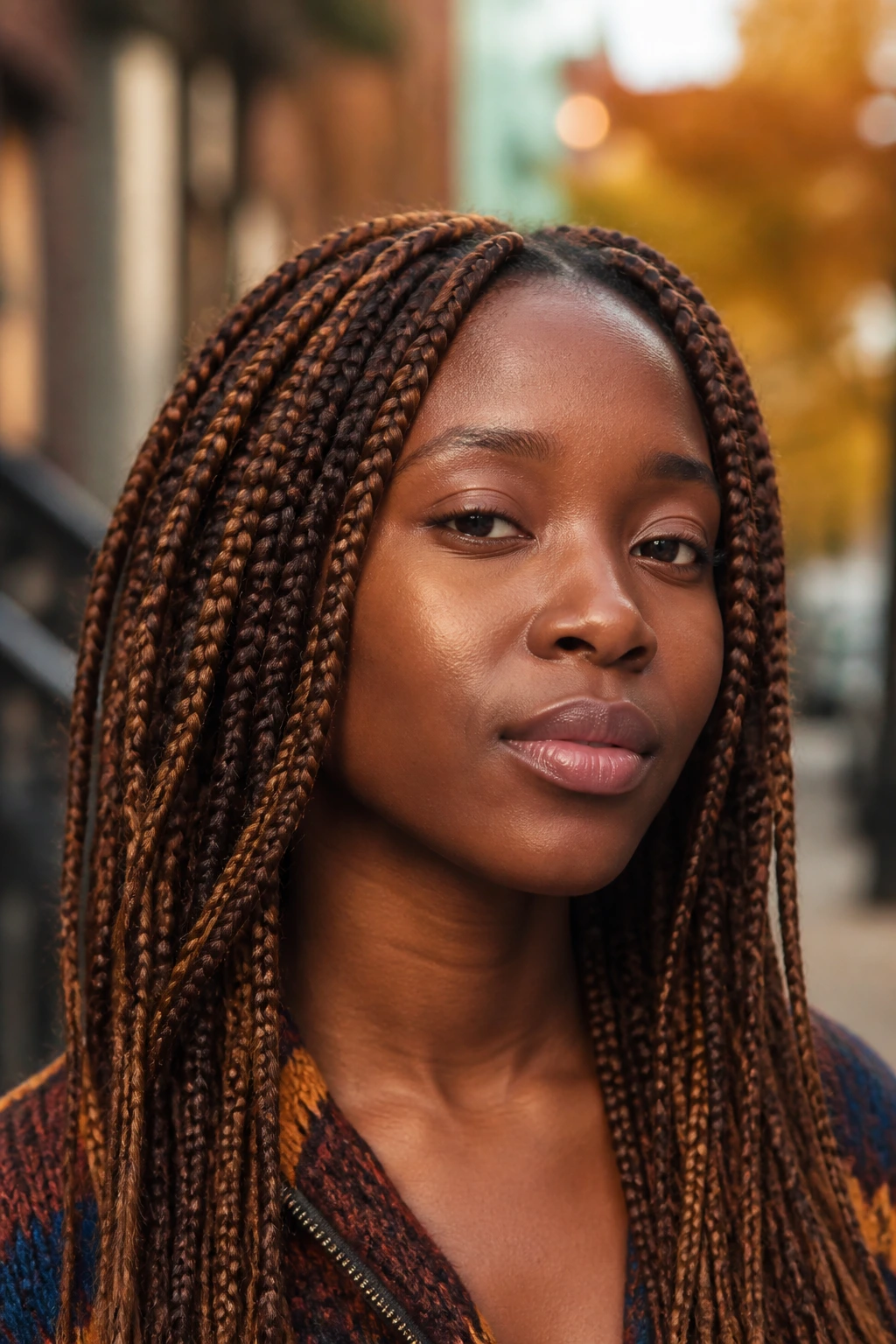
Maple brown box braids are one of the easiest ways to get warmth without touching your natural hair color too aggressively. The mix of deeper brown and maple tones keeps the braid pattern visible, which is the whole trick.
Ask for this look if you want low upkeep
Bring a hair blend with two warm brown shades, not one flat color. A touch of depth keeps the braids from reading fake under indoor light, and the warmer strands make the style feel softer against deep skin.
10. Burgundy Twist-Out
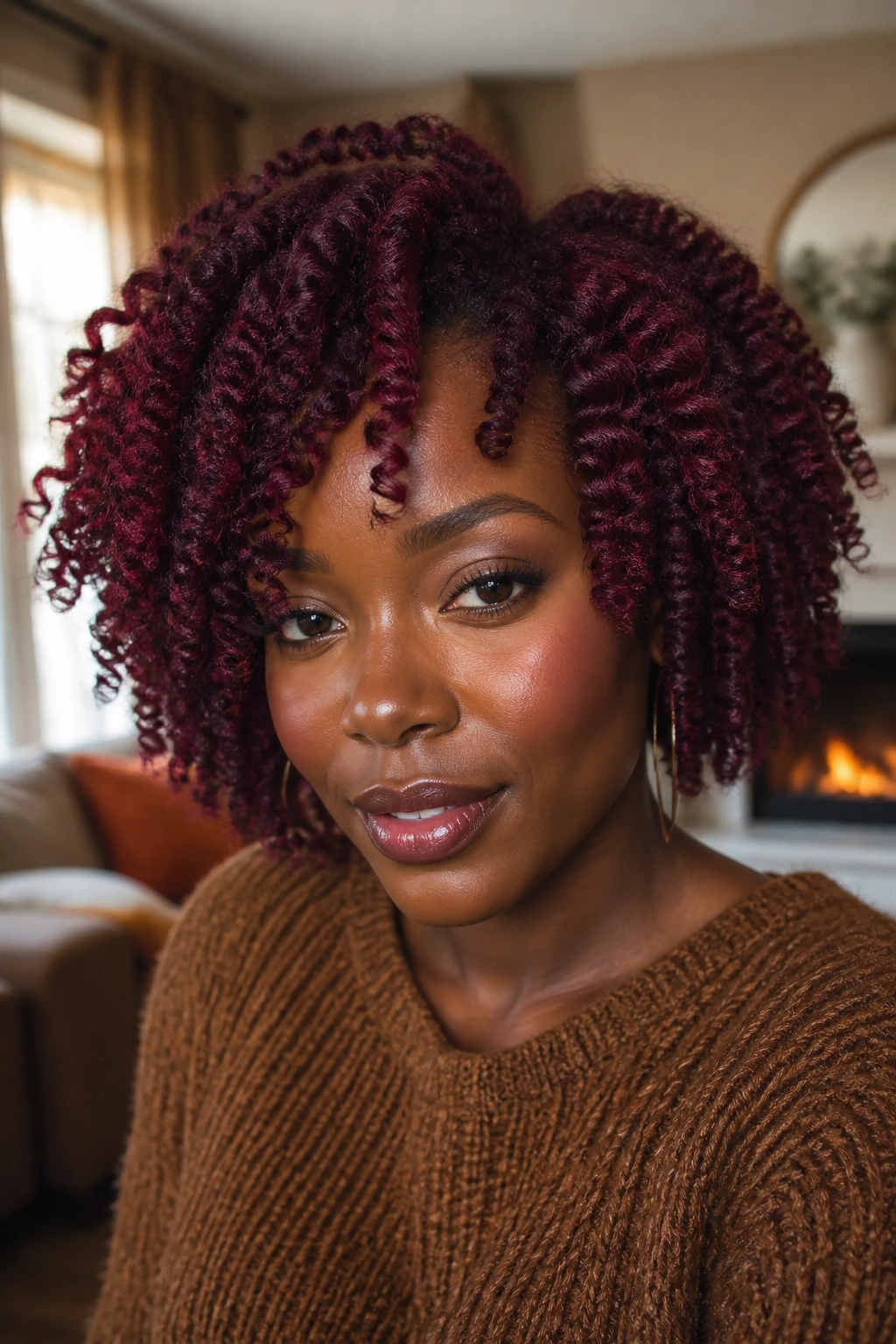
Want color that feels a little moodier than caramel? Burgundy is the move. A twist-out in a wine or berry shade gives deep skin a rich contrast that still looks intentional in fall light.
The key is keeping the hair moisturized, because burgundy shows dryness fast on textured hair. Use a leave-in, then a cream that holds the twist pattern without leaving the curls crunchy.
11. Smoky Mocha Bantu Knot-Out
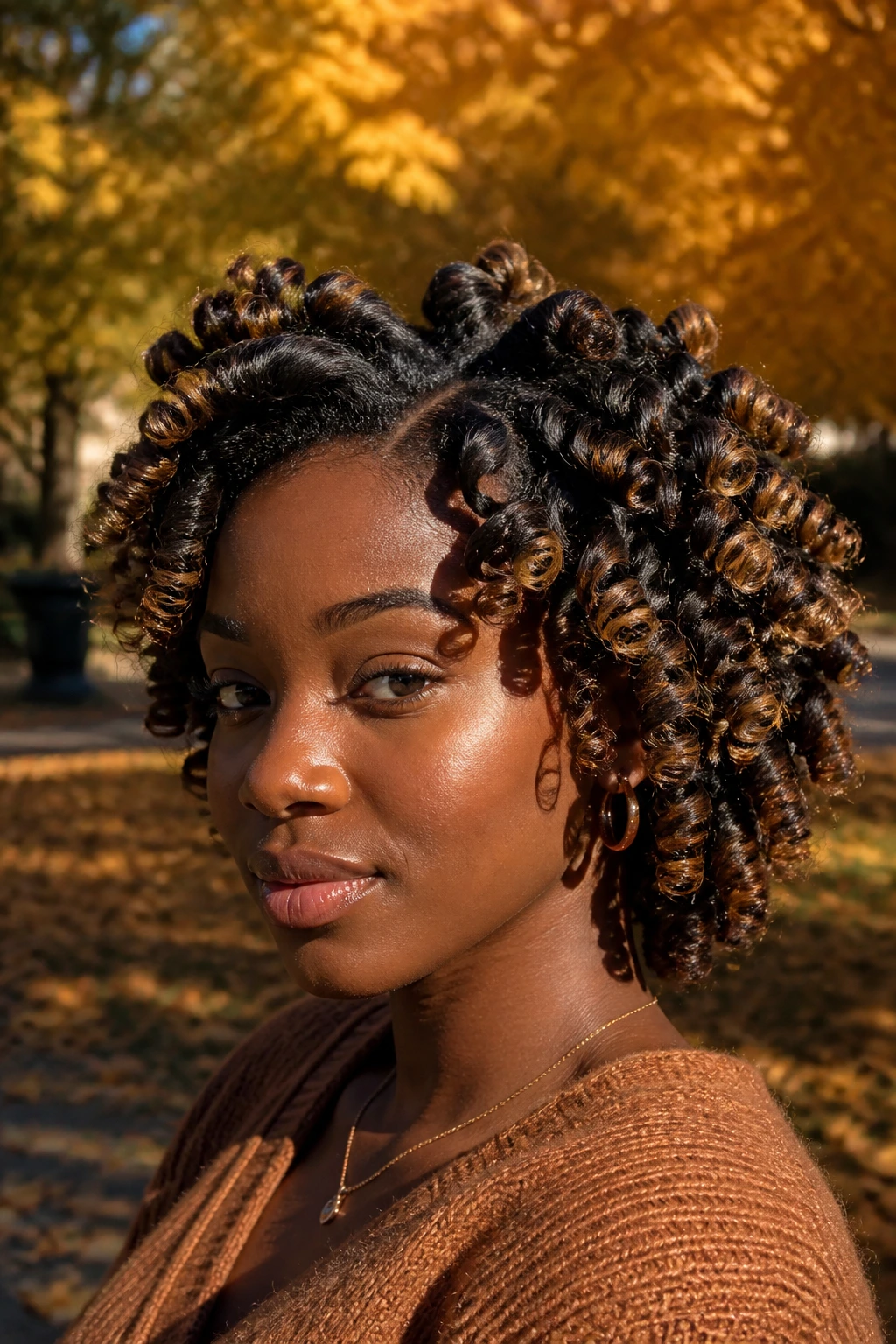
Smoky mocha sounds subtle, and that’s the point. This is for the person who wants dimension without a bright color story. The lighter mocha pieces should sit just above the midshaft so the style keeps its depth.
A bantu knot-out makes the color flicker a little as the curls separate. That movement matters more here than the brightness. The style looks best when the ends stay soft and the roots keep their darker base.
12. Ginger Pixie
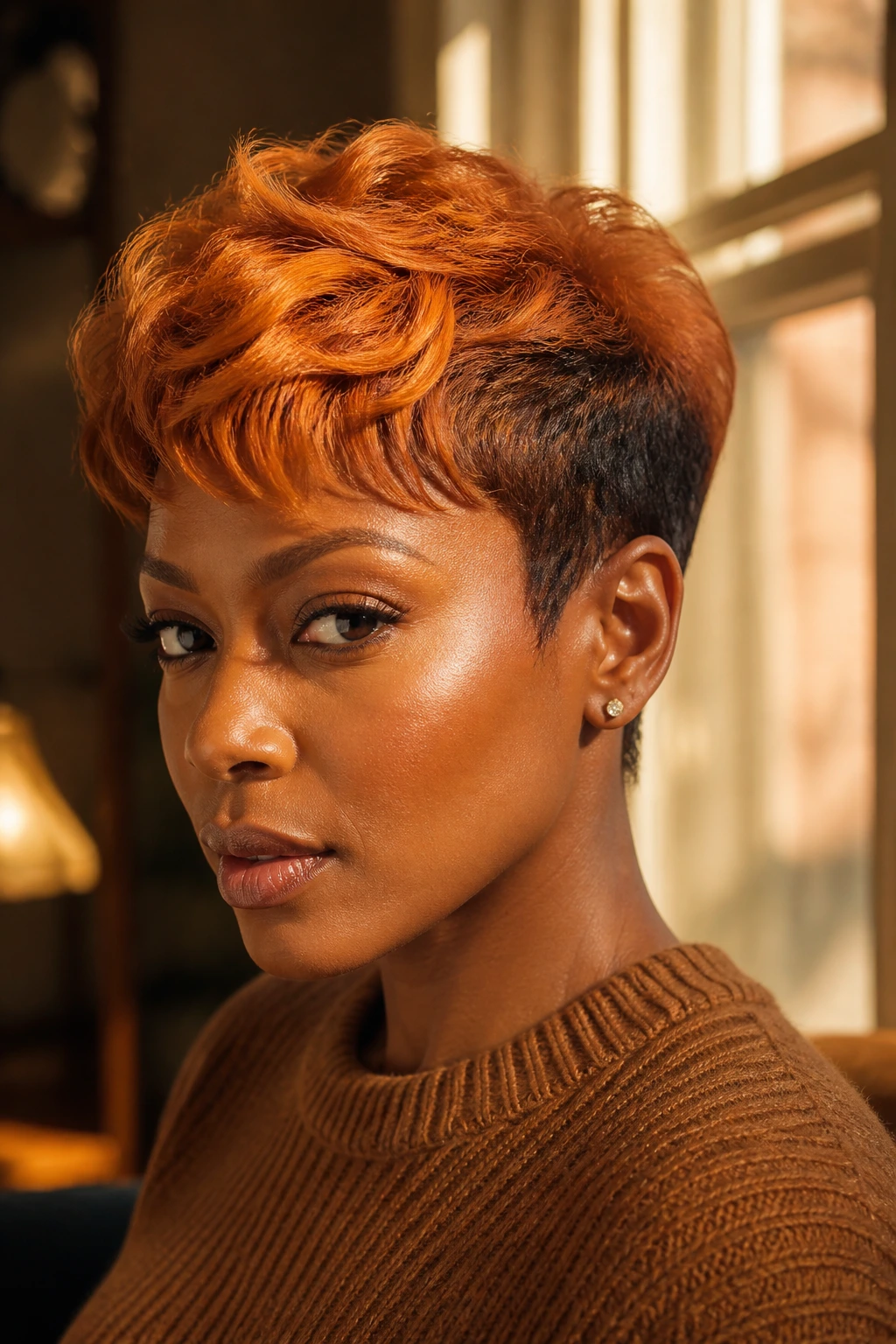
A ginger pixie is not shy, and it shouldn’t be. On deep skin, a short cut with ginger or copper warmth can look crisp, especially when the edges are clean and the top has a little texture instead of being ironed flat.
What to keep in mind
A pixie needs color placement that follows the cut, not the other way around. The top can hold the lightest tone, while the sides stay a shade darker. That contrast keeps the shape visible instead of turning into one bright blob.
13. Golden Butterfly Locs
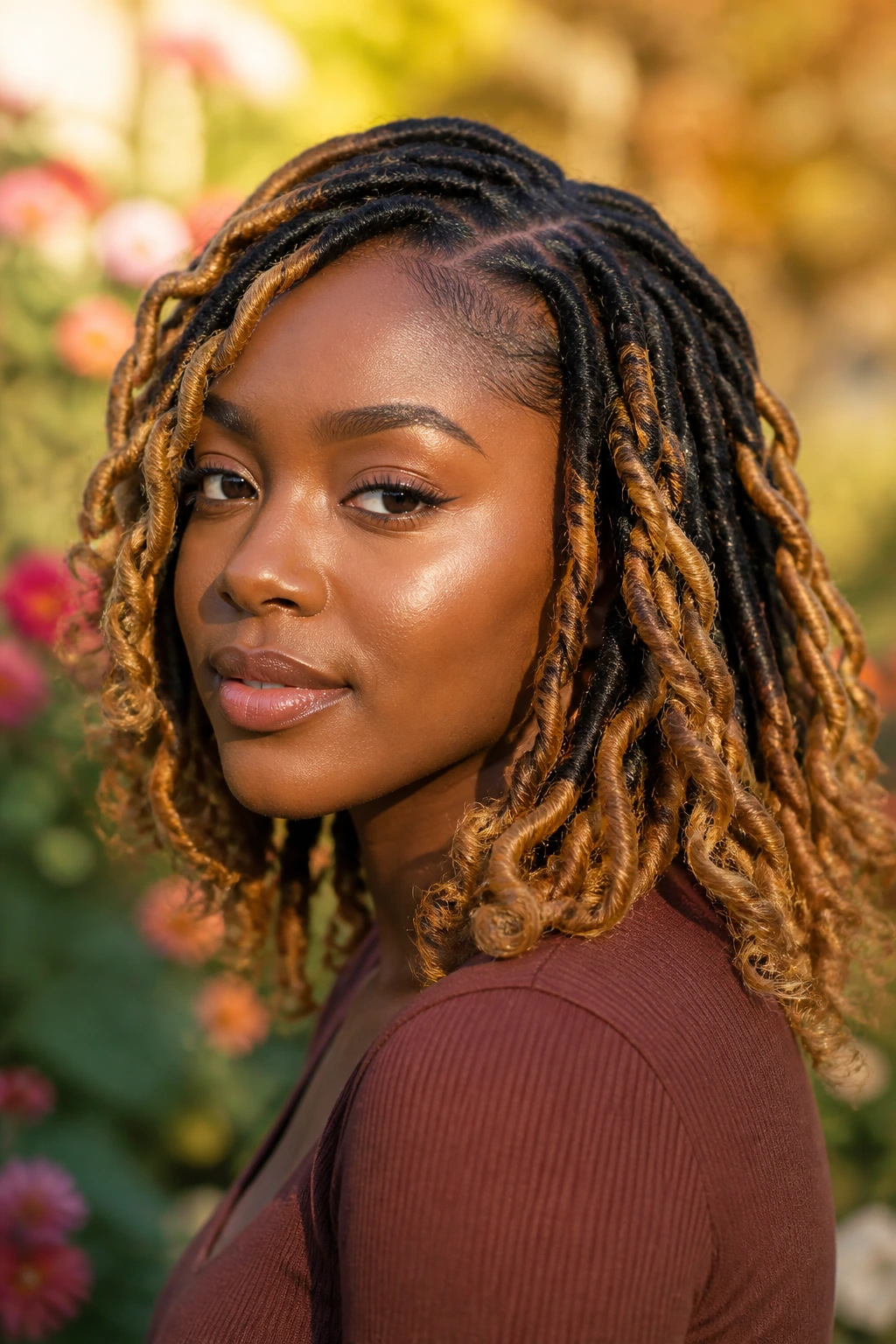
Butterfly locs with golden accents have a soft, airy feel that still holds up in colder weather. The golden pieces work best when they’re mixed through the lengths and not dumped all at the front.
I like this look with a darker root because it gives the locs a grounded base. Without that base, gold can go flat against deep skin. With it, the style looks layered and expensive without trying too hard.
14. Chocolate Cherry Curly Lob
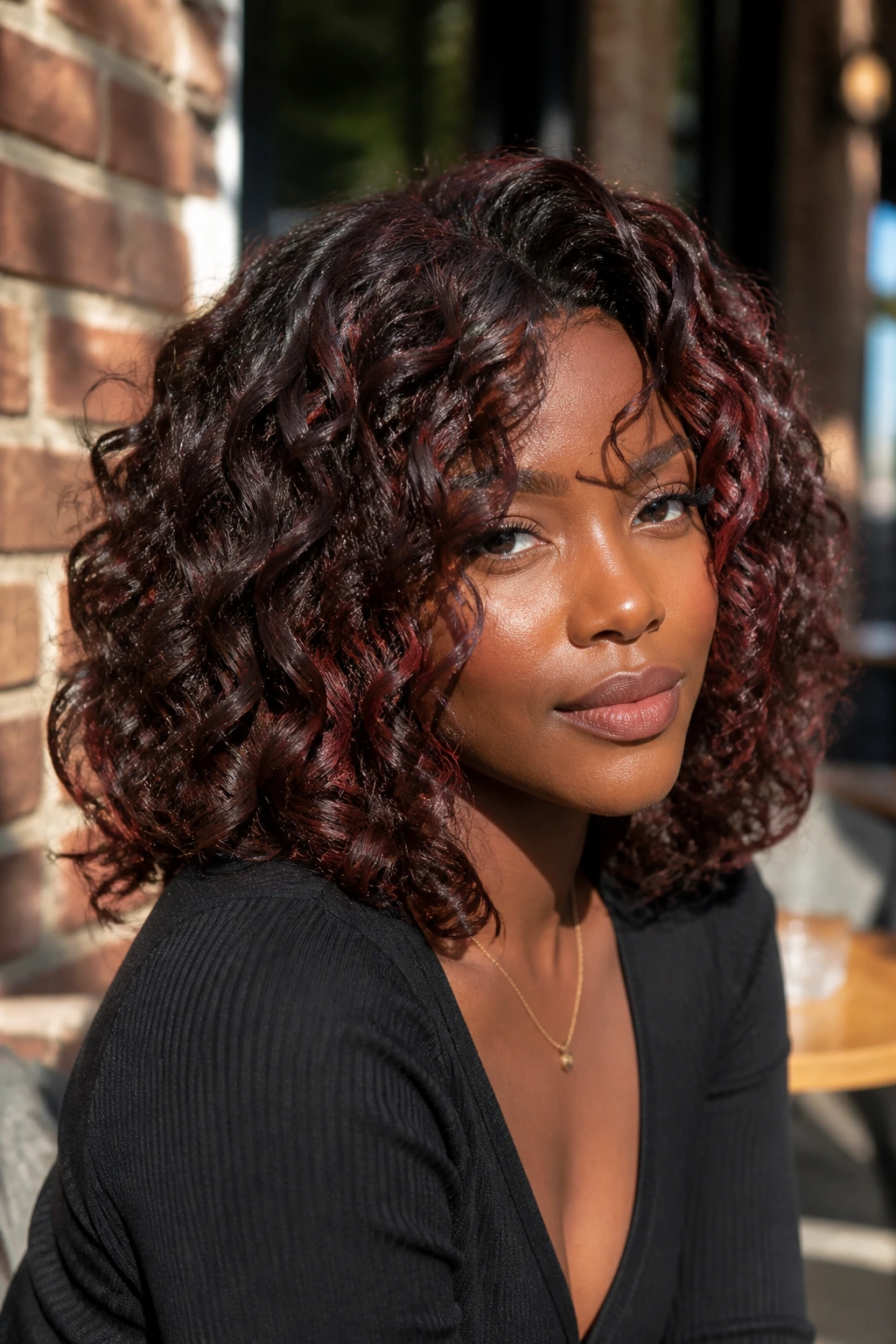
Chocolate cherry is one of those shades that looks almost quiet indoors and then suddenly wakes up in daylight. On a curly lob, the red-brown mix sits right between dramatic and wearable.
If you hate full red, this is a smart compromise. The chocolate base keeps things grounded, while the cherry ribbons add a little burnish around the curls. It’s richer than plain brown, but not as loud as true red.
15. Butterscotch Cornrow Ponytail
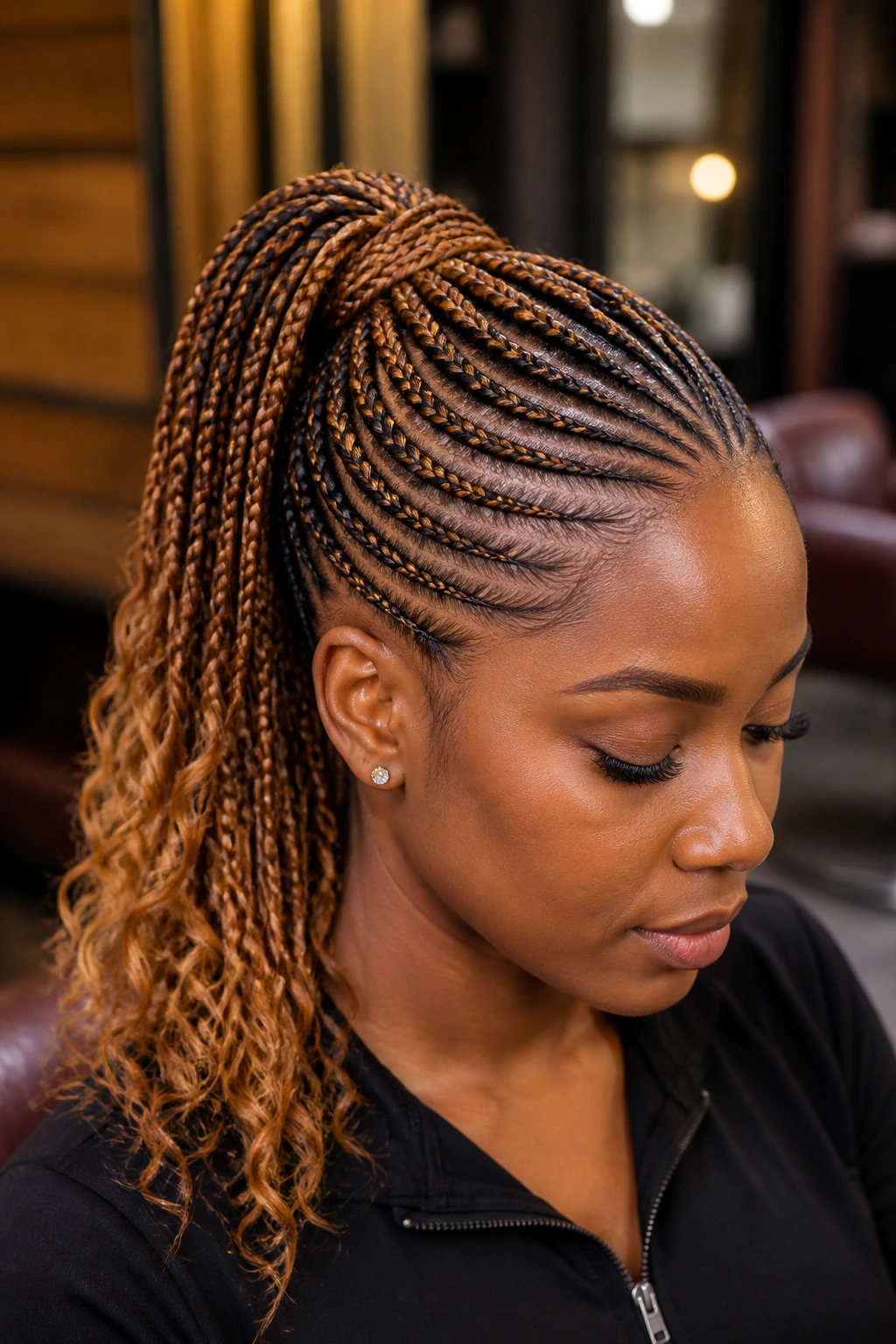
A cornrow ponytail with butterscotch accents is sleek at the front and playful at the back. The highlight can live in the ponytail length, the wrap, or a few thin braid pieces near the part, which keeps the style from getting overworked.
Keep the cornrows tight but not stressful. Color and tension are not the same thing, and the style looks better when the scalp can breathe. The butterscotch tones should lean warm and creamy, not pale yellow.
16. Espresso Peekaboo Amber
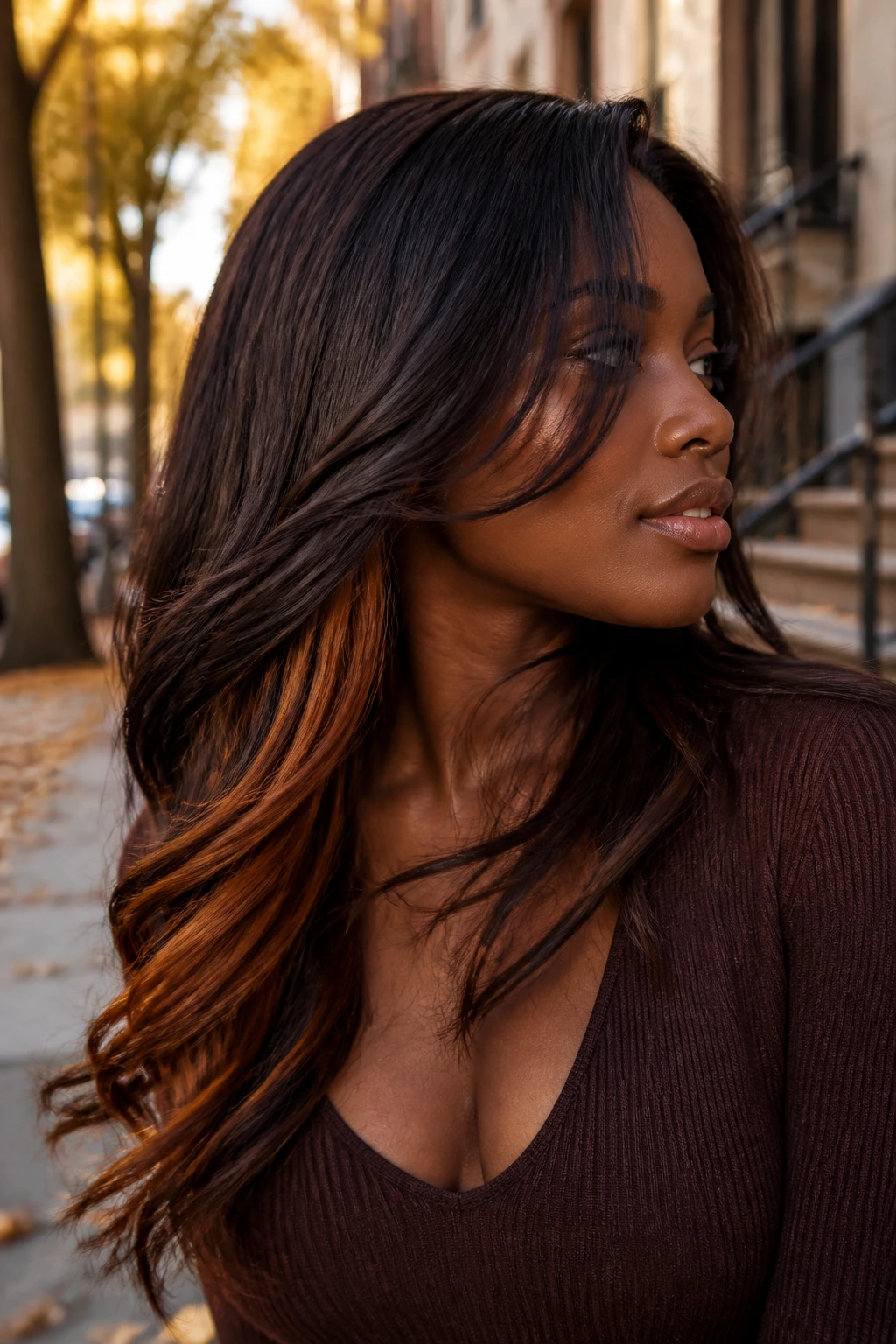
Peekaboo amber is for the person who wants color that shows up only when hair moves. Dark espresso on top keeps the style grounded, while amber underneath flashes out at the ends or in the inner layers.
That hidden placement is useful on deep skin because it gives you contrast without brightness sitting on every surface. I like it on layered cuts, tucked buns, and wavy styles where the underneath color gets a chance to peek.
17. Warm Ombré Knotless Braids
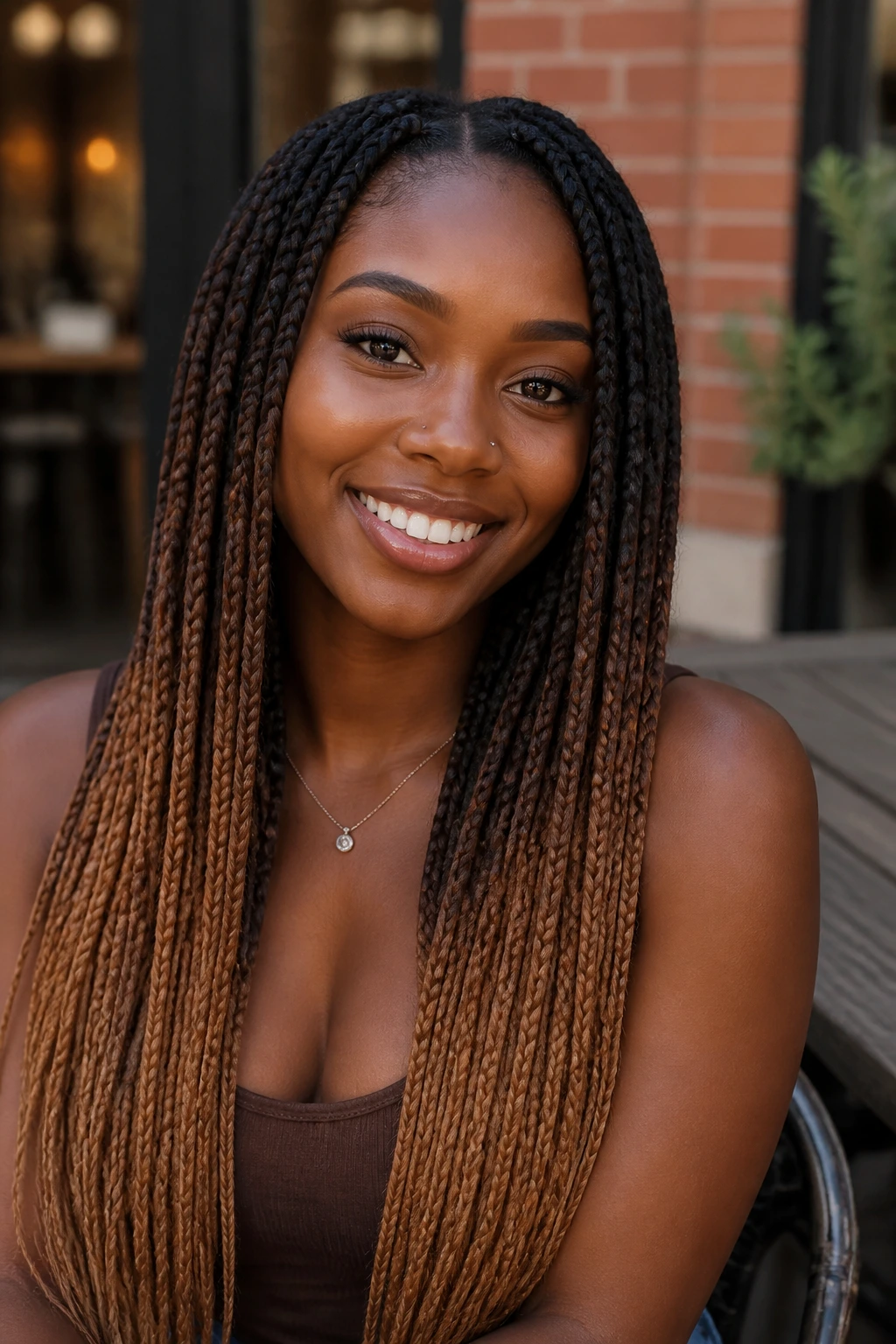
Warm ombré knotless braids are a good answer if you want color and protective styling in the same chair session. Start the roots dark, move through chestnut or maple, then finish with caramel or honey at the ends.
This keeps the style softer as it grows out. The root-to-end shift should look gradual, not painted on in bands. The lighter ends move the eye, while the darker root keeps the whole look anchored.
18. Cinnamon Halo Braid
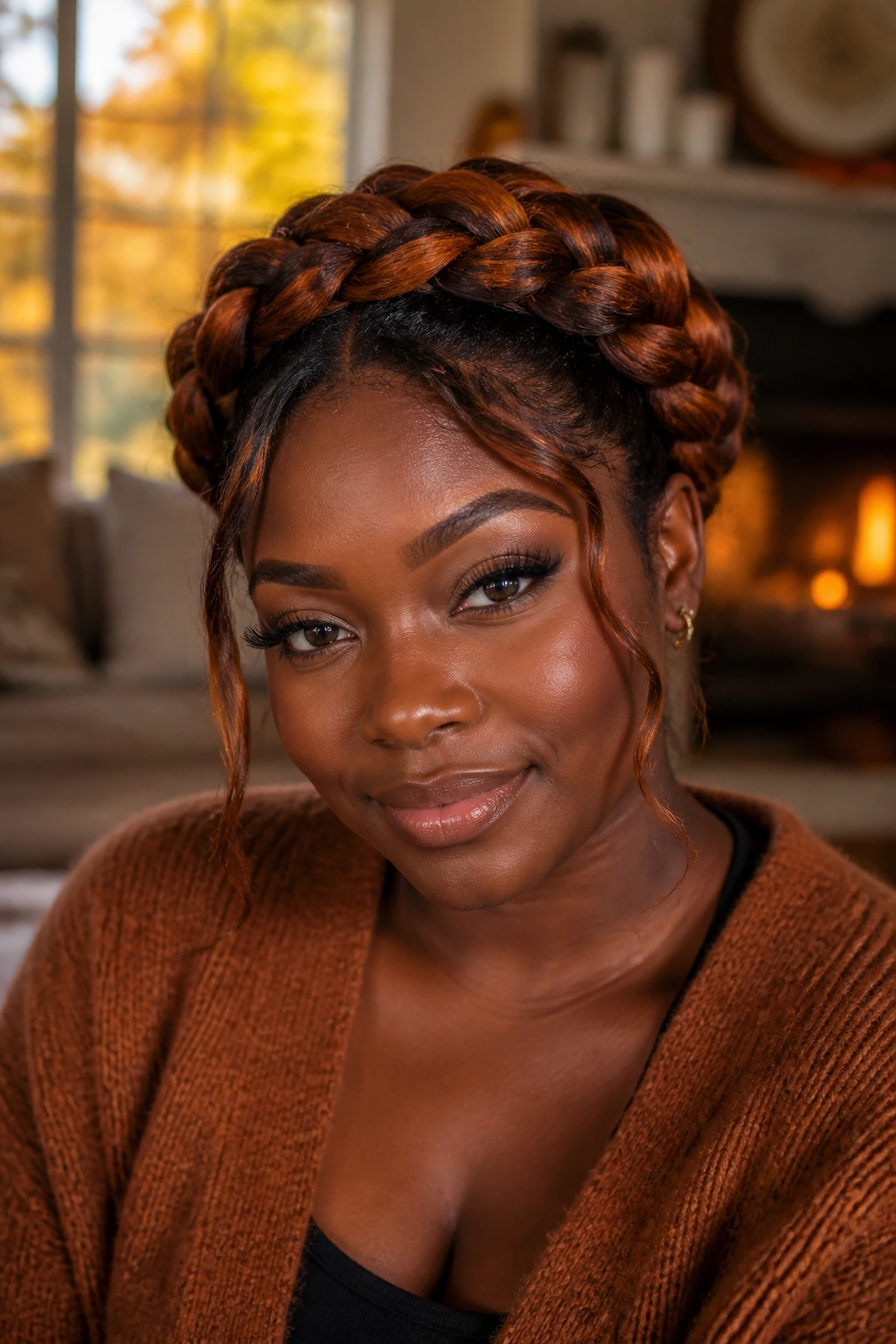
A halo braid with cinnamon tones has a soft, wrapped feel that suits deep skin beautifully. The braid itself does the structural work, and the cinnamon color gives just enough warmth to keep the crown from looking too severe.
If the braid is built from added hair, use a shade that sits close to dark brown with a warm cast. Too much gold and the braid starts to look disconnected. Too little warmth and you lose the point of doing highlights at all.
19. Mahogany Curly Bob
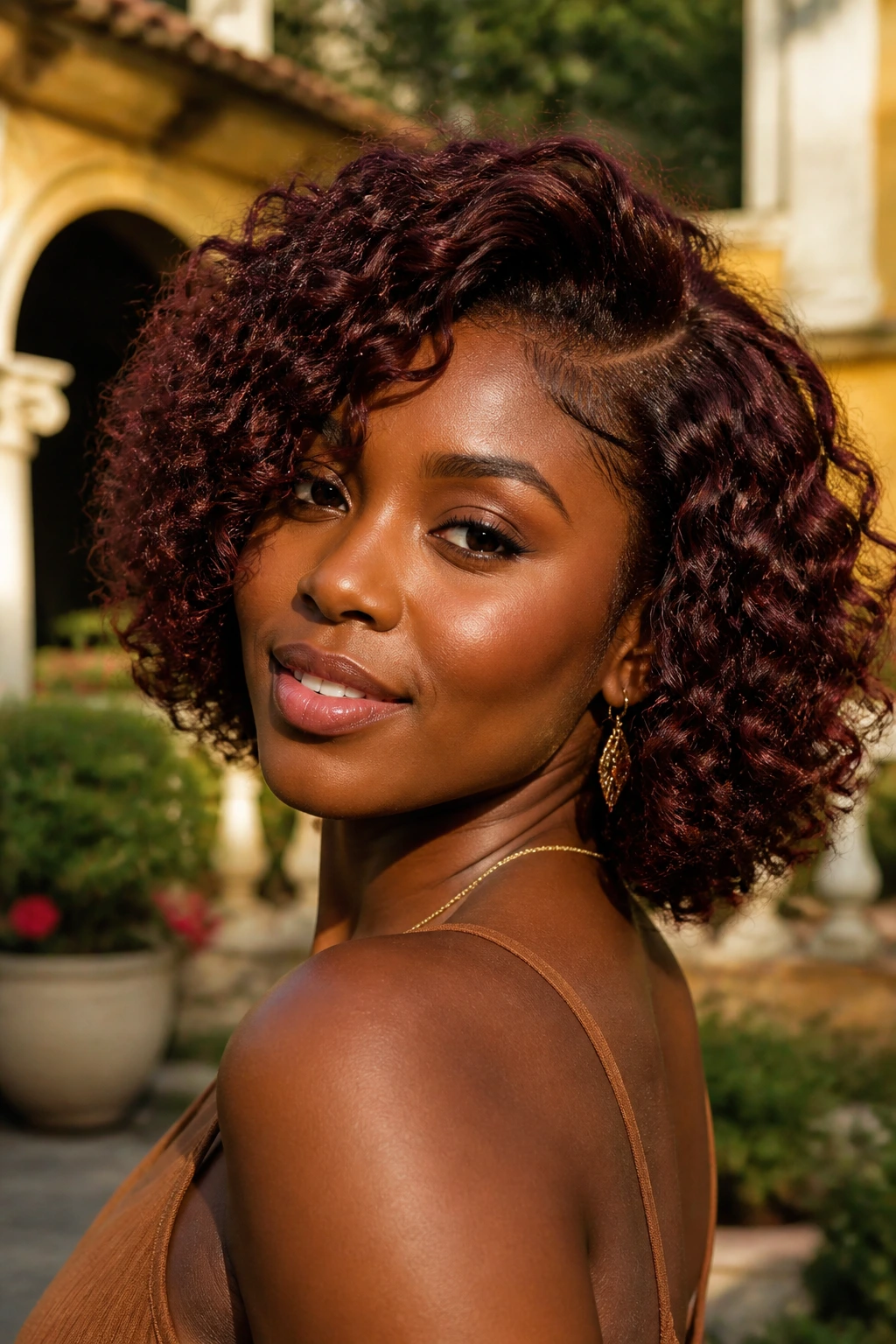
Mahogany is deeper than auburn and richer than plain brown, which is why it plays so well on a curly bob. It gives the curls a wine-dark glow without making them look red from every angle.
This is one of the easiest colors to wear if you like depth. The curls need shape, not a heavy stack of light pieces, so the color should be scattered, not striped. A side part helps the mahogany flicker a little more.
20. Honeyed Tapered Cut
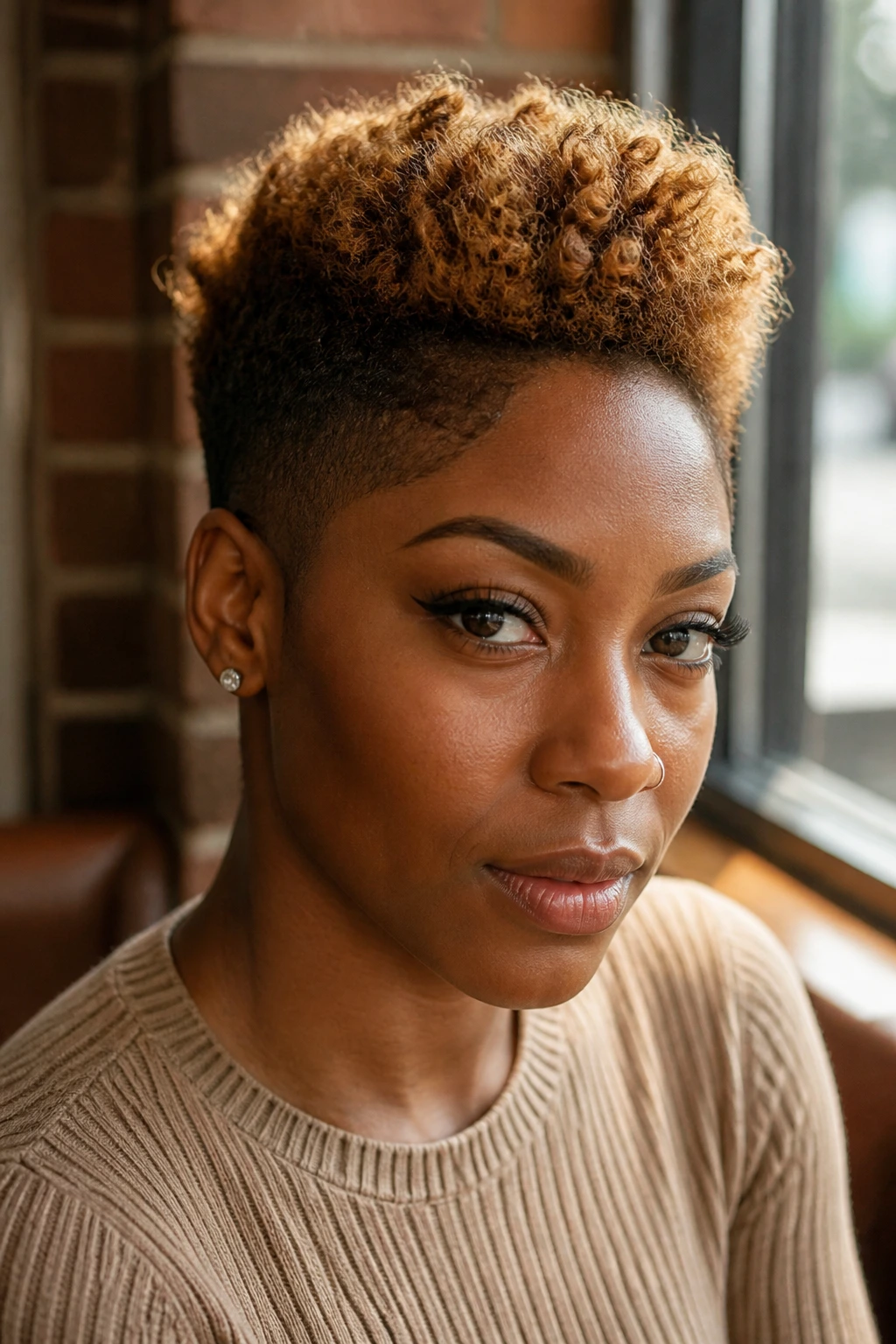
A tapered cut with honey accents is sharp, simple, and easier to style than people think. The short sides keep the shape clean, and the honey through the top gives the curl pattern a little lift.
Best part about it
You do not need much color here. A few lifted curls on top are enough. That makes it a smart option if you want a warm fall shift without committing to full-head lightening or long salon visits.
21. Auburn Silk-Press Layers
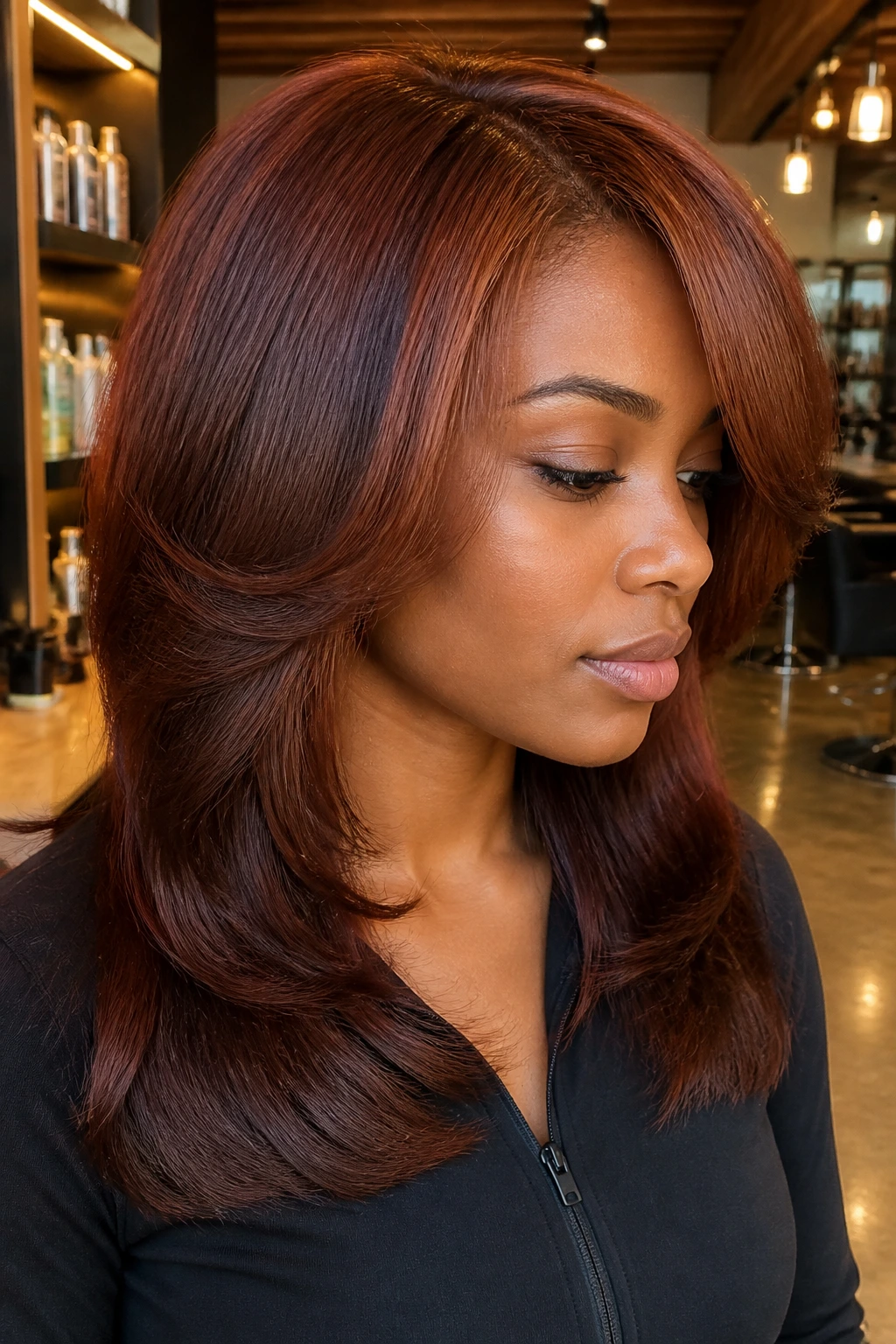
Auburn on layered silk-pressed hair gives a long, rich sweep of color that moves when you move. The layers stop the auburn from looking like one solid sheet, which is the mistake most people make with straight styles.
The tone should stay deep enough to read brown first and red second. That balance matters on deep skin because it keeps the finish elegant instead of fiery in a way that feels disconnected.
22. Bronze Flat Twists
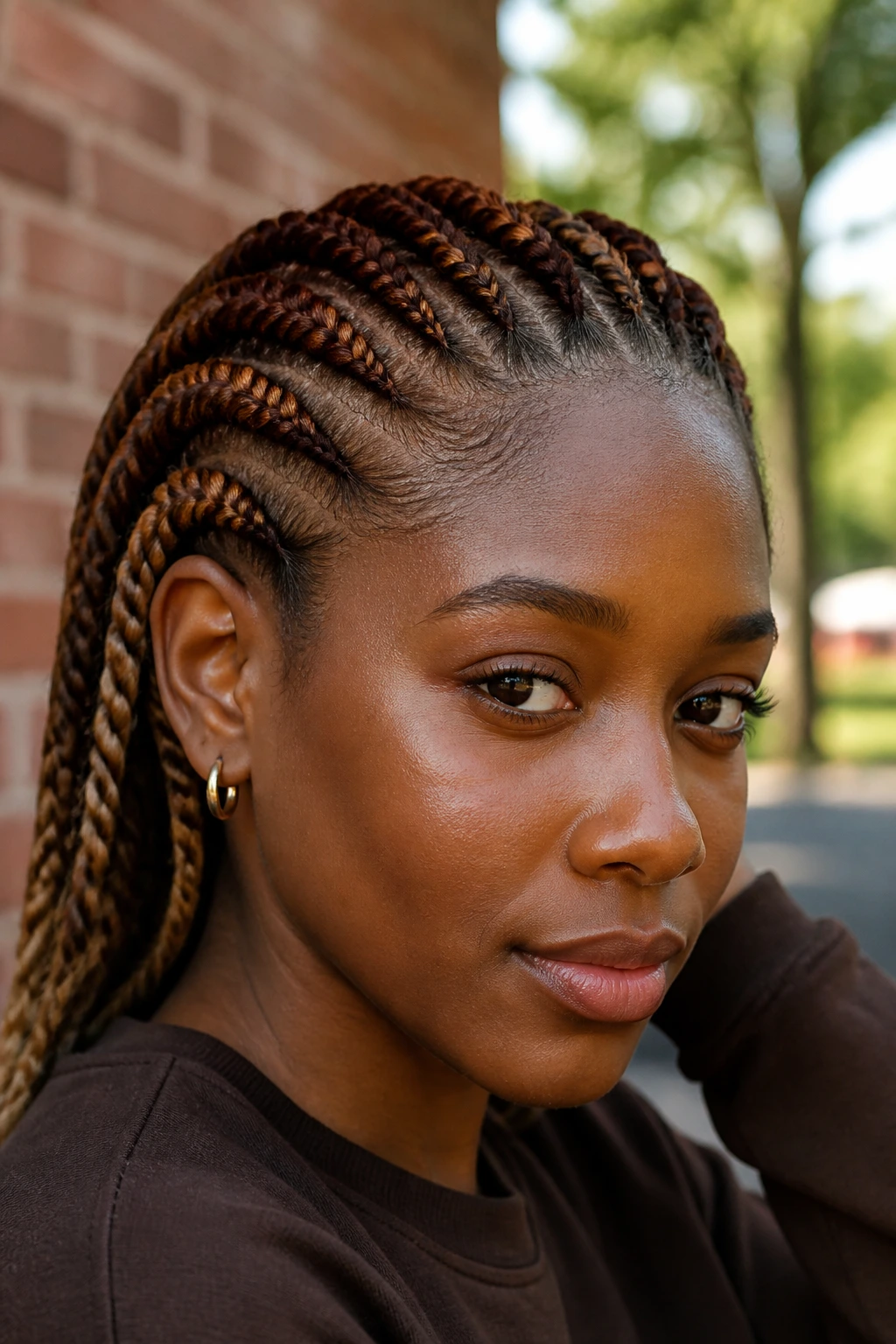
Flat twists with bronze strands woven in can look surprisingly polished. The pattern is close to the scalp, so the color needs to be warm and controlled, not bright enough to shout over the twist lines.
This style works especially well if you want something that can survive a long week and still look finished. Bronze gives just enough shine to separate the twists, which is what your eye wants. Clean lines help. A lot.
23. Caramel Curly Bangs
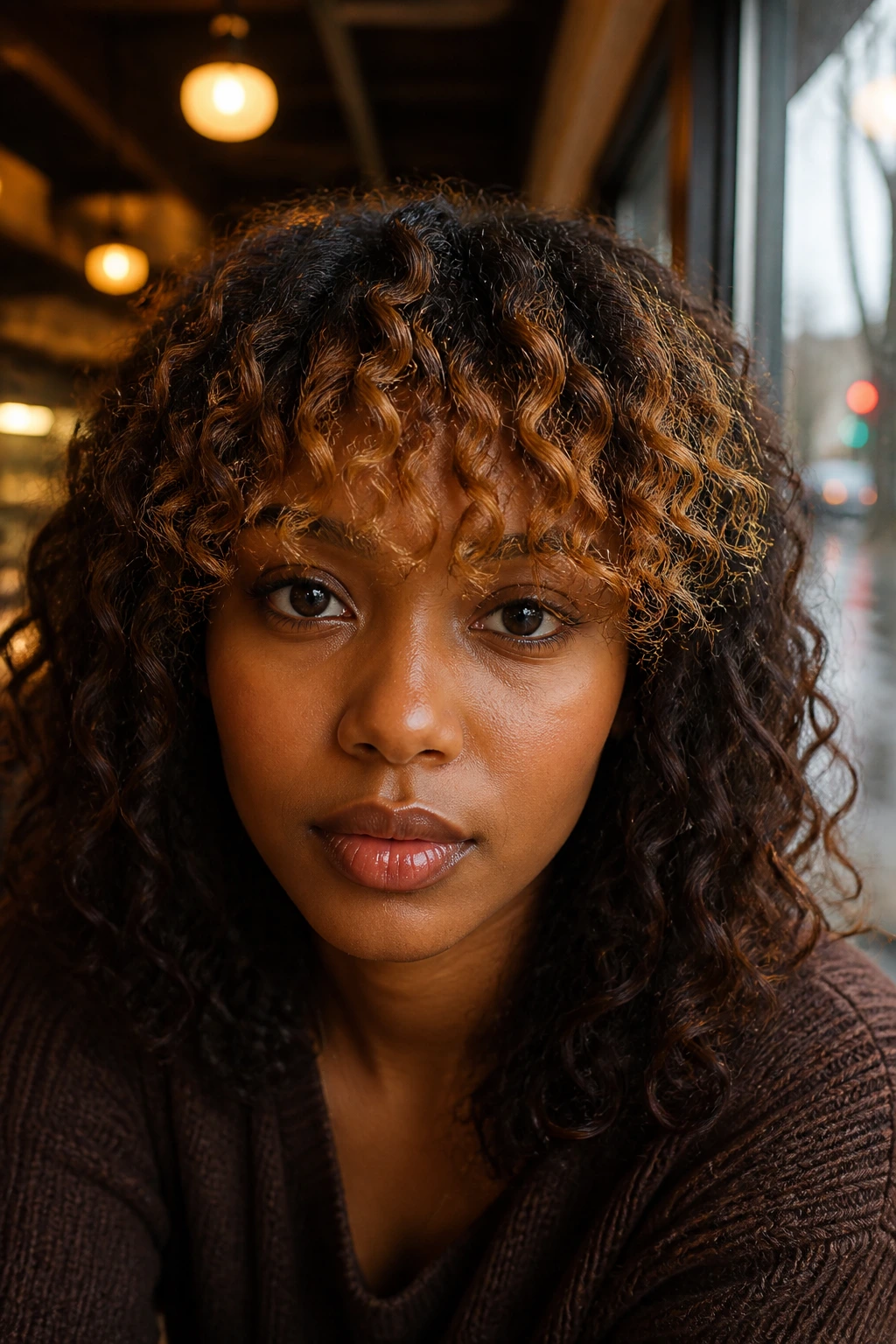
Curly bangs with caramel pieces are a smart way to frame the face without touching every section of the head. The bangs get the most attention anyway, so that’s where the warmth should live.
Keep the rest of the hair a little deeper in tone. That contrast makes the bangs feel intentional, not random. On deep skin, caramel around the eyes can soften the whole face faster than a full color job.
24. Spiced Plum Protective Updo
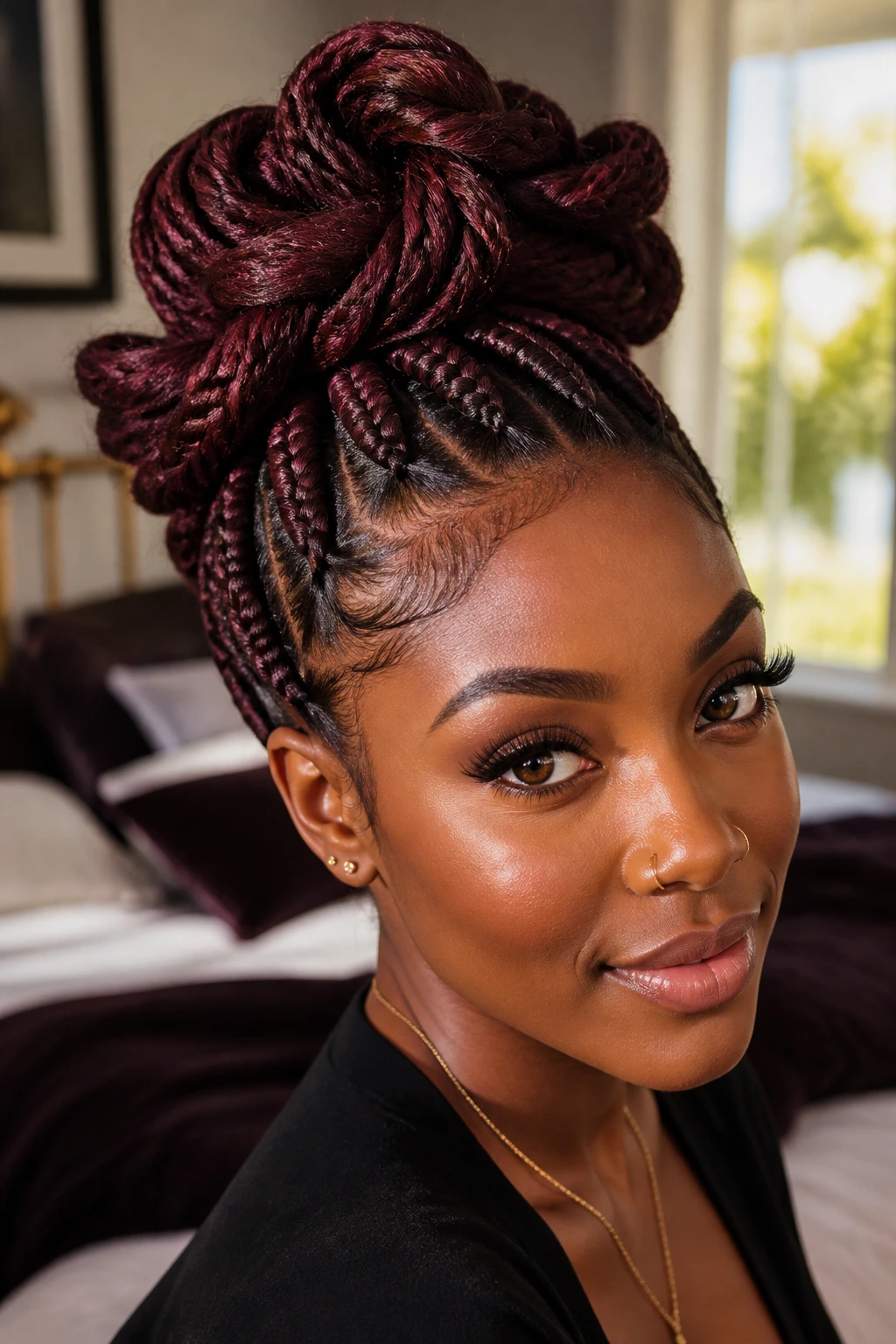
A protective updo in spiced plum is for the person who wants color with edge. The plum tone sits between berry and brown, which means it can look moody instead of neon when the base is deep enough.
Why it lands well
Plum works because it keeps the warmth low and the pigment rich. I’d use it on twisted buns, tucked rolls, or braided updos where the color can show in folds and curves. The style should look expensive without trying to behave like blonde.
25. Chestnut Coils with Face-Framing Highlights
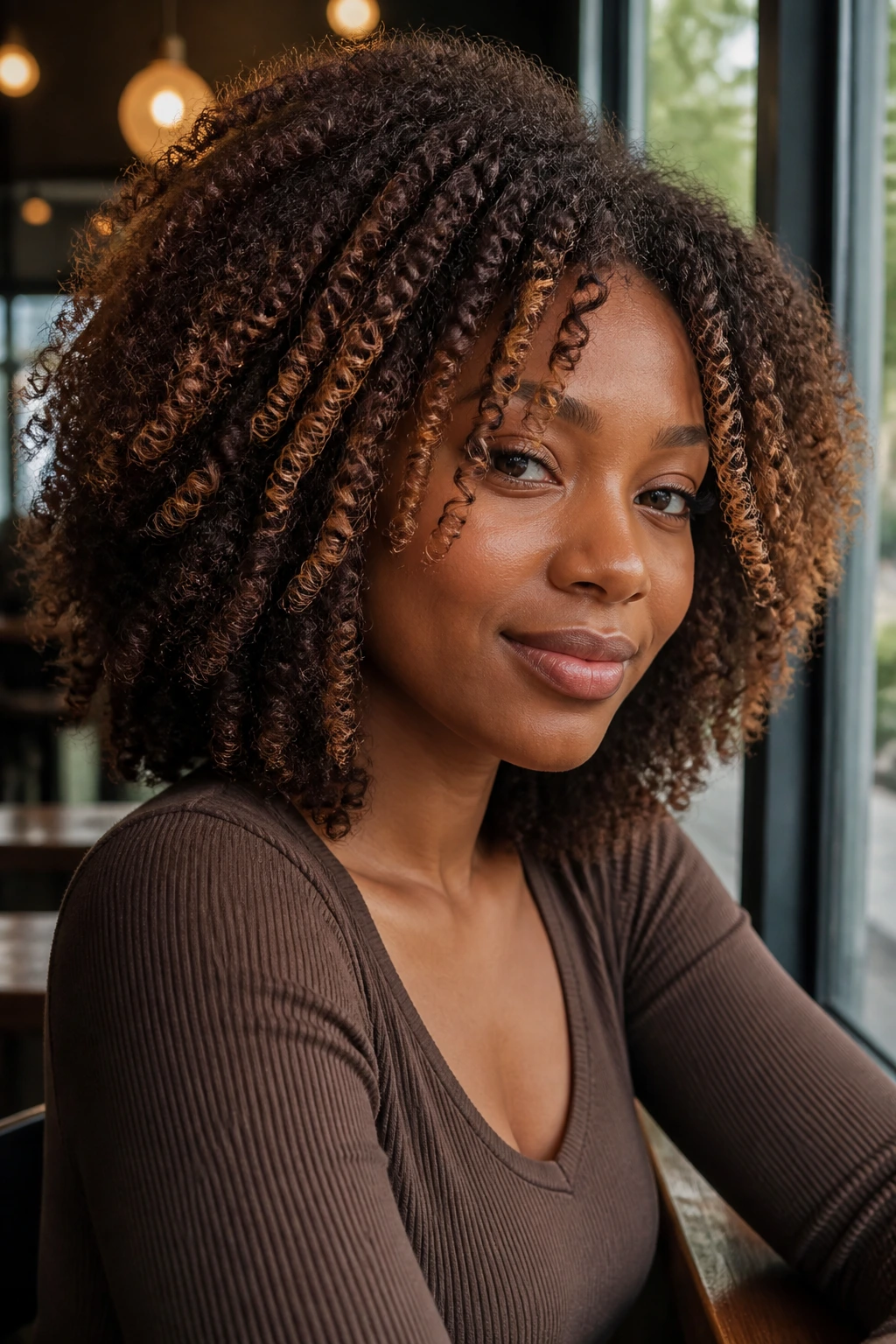
Chestnut coils with front highlights are the quiet closer in this set, and honestly, they’re one of the smartest options. The coils keep the texture honest, and the lighter pieces around the face do the softening work where you need it most.
If you want something wearable every day, this is the one I’d keep near the top of the list. Ask for chestnut through the body of the coils, then a slightly brighter caramel or amber at the hairline. That tiny change is enough.
Why Warm Dimension Reads Better Than Harsh Lightness
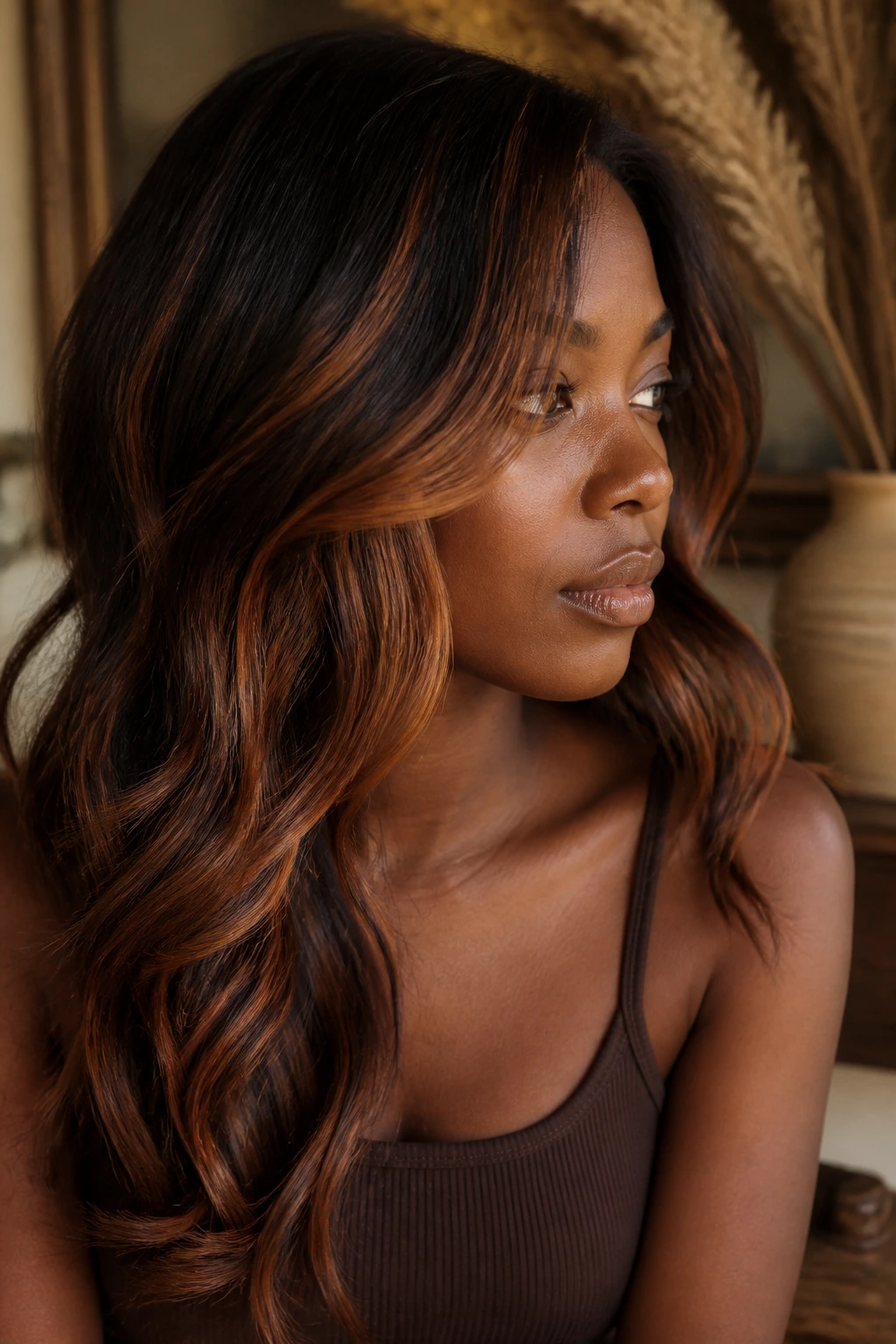
A lot of highlight advice still pushes people toward the palest blonde possible, and that’s lazy thinking on deep skin. The hair does not need to be the lightest thing in the room. It needs contrast that feels like it belongs there.
Warm dimension works because the color family stays in conversation with melanin instead of shouting over it. Honey, cinnamon, bronze, copper, auburn, mahogany, maple, and caramel all do that differently. Some are louder. Some are quieter. None of them need to be icy to look rich.
The other thing people miss is grow-out. A warm highlight with a dark root usually lasts longer in a visually pleasing way than a high-contrast blonde stripe does. Once the root starts showing, the style still has shape. That buys you time, which is a luxury nobody talks about enough.
The Tools That Keep These Styles Looking Intentional
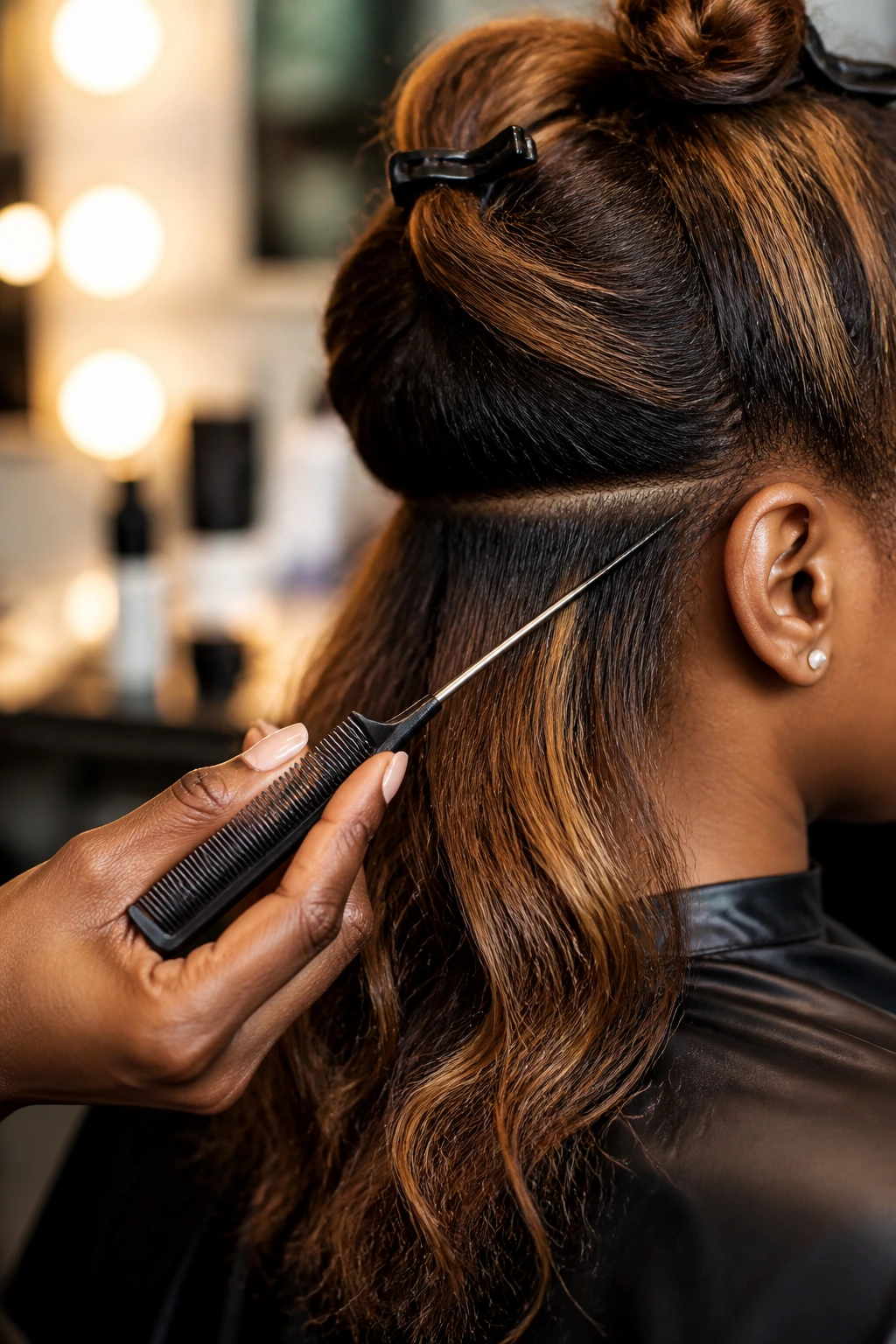
You do not need a bathroom full of gadgets, but a few things matter more than people admit.
- Tail comb: Clean parts make braids, pixies, and sectioned highlights look sharper.
- Sectioning clips: These save you from losing pieces when you style curls, twist-outs, or blowouts.
- Color-safe sulfate-free shampoo: Harsh shampoo dulls copper, caramel, and auburn faster than you want.
- Moisturizing mask: Lightened curls and coils usually need weekly moisture, especially after heat.
- Heat protectant spray or cream: Silk presses, curls, and blowouts should not touch hot tools bare.
- Light serum or shine oil: A pea-sized amount on the ends keeps highlights from looking dusty.
- Satin bonnet or pillowcase: Friction roughs up the finish overnight. Satin does not solve everything, but it helps.
- Curling wand or flexi rods: These define the highlight bands on layered cuts and lobs.
- Edge brush and soft-hold gel: Useful for ponytails, pixies, and braided styles that need a clean hairline.
Picking the Right Shade Before You Sit in the Chair
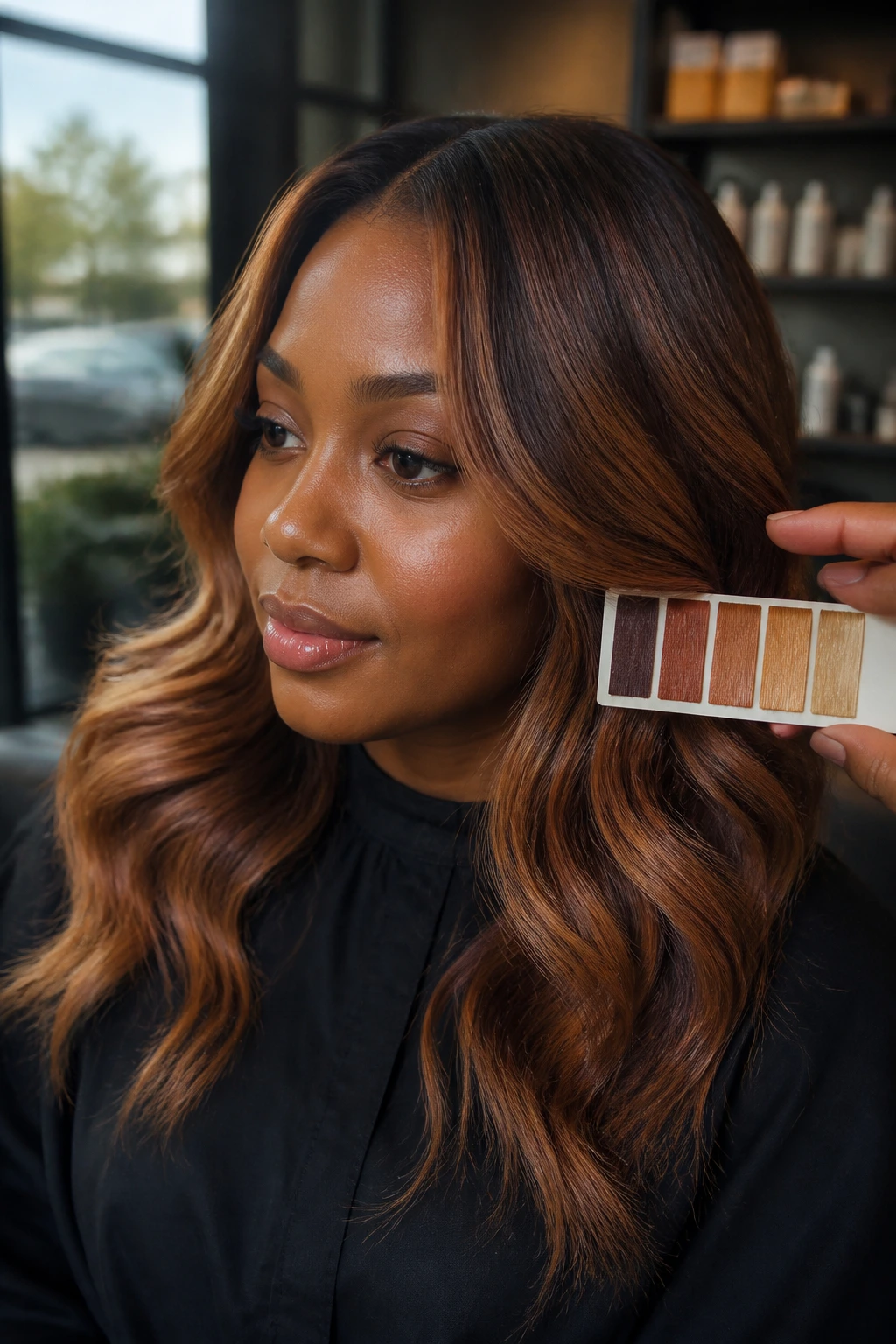
Warm highlights can still miss if the tone is wrong by even a little. A copper that leans orange can look loud in a way that fights deep skin, while a honey that leans too yellow can flatten out instead of glowing. That’s why the color family matters more than the trend label.
If your base is very dark, ask for highlights that are one to four levels lighter, not a giant leap. The farther you jump, the more likely the hair starts to look separated from the base. That’s especially true on curls and coils, where texture already creates visual contrast.
Bring photos, yes, but bring the right kind. Look for images shot in natural daylight and not in heavy ring light. Salon light lies. A lot. If the inspiration photo only works because the camera blasted the hair with white light, it will probably look rough in real life.
I also like to ask for a shadow root or deeper base with warm ribbons. That gives the stylist a place to anchor the color, and it keeps the finished look from turning thin or patchy. The richer the base, the more natural the highlight usually feels.
How to Wear These Styles Without Fighting the Color
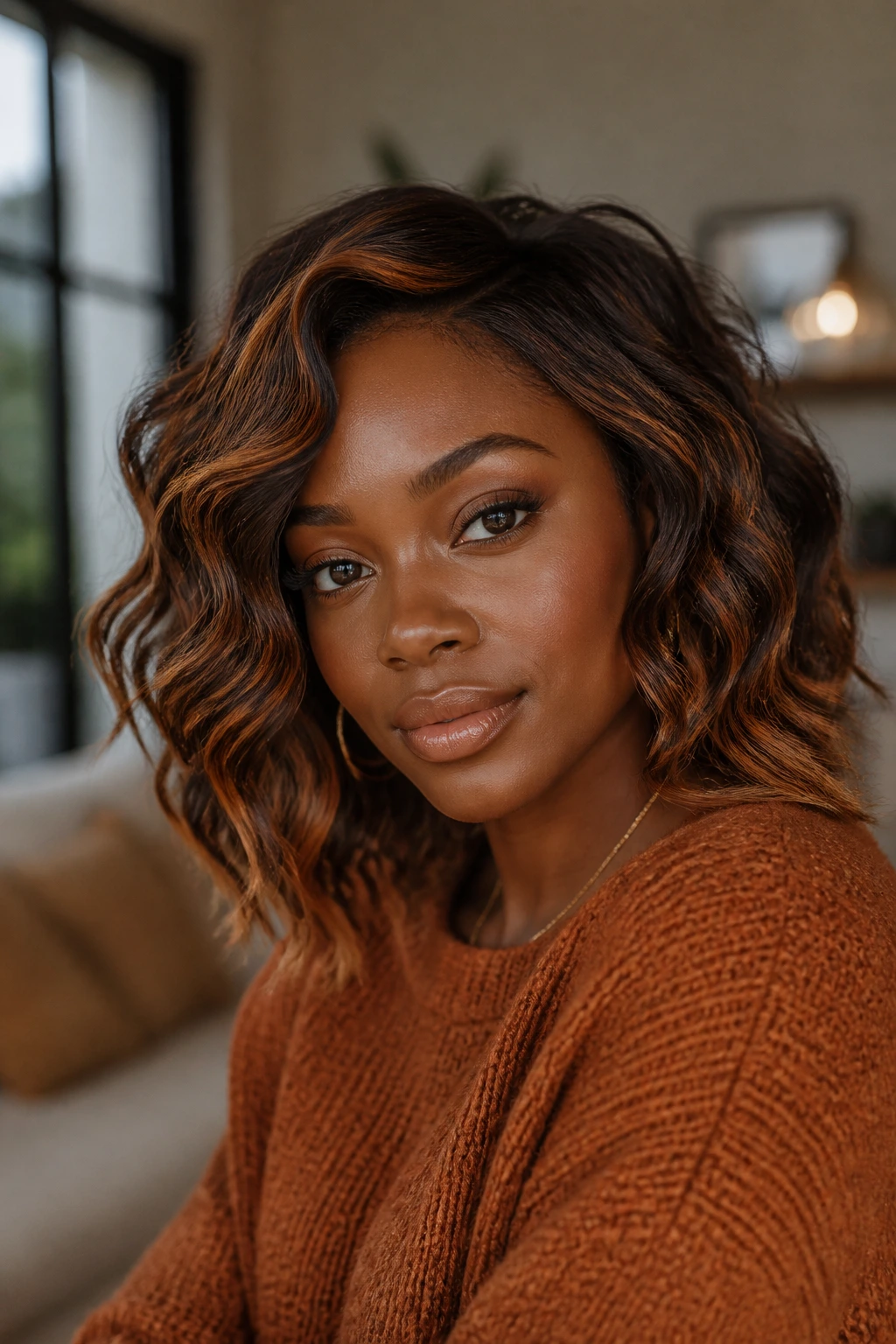
Face Shape: Put brightness where you want movement. Cheekbones, temples, crown, and ends usually matter more than the exact shade count. A rounded face often benefits from lighter pieces higher up, while a longer face can take color a little lower around the jaw.
Texture Match: Tight coils and dense curls usually need fewer, clearer highlight pieces because the hair itself already has visual texture. Straight silk presses and sleek ponytails need stronger placement or the color disappears into the surface.
Outfit Pairing: Rust, olive, camel, cream, chocolate brown, and deep plum make warm highlight tones look richer. Gold jewelry helps. So do matte fabrics with some structure, like wool coats, knit sweaters, or crisp cotton shirts.
Finish: If the style is curly, let the shine live on the mid-lengths and ends. If it’s sleek, keep product light near the roots or the highlight will look greasy instead of glossy.
Small Styling Moves That Make the Color Look Better
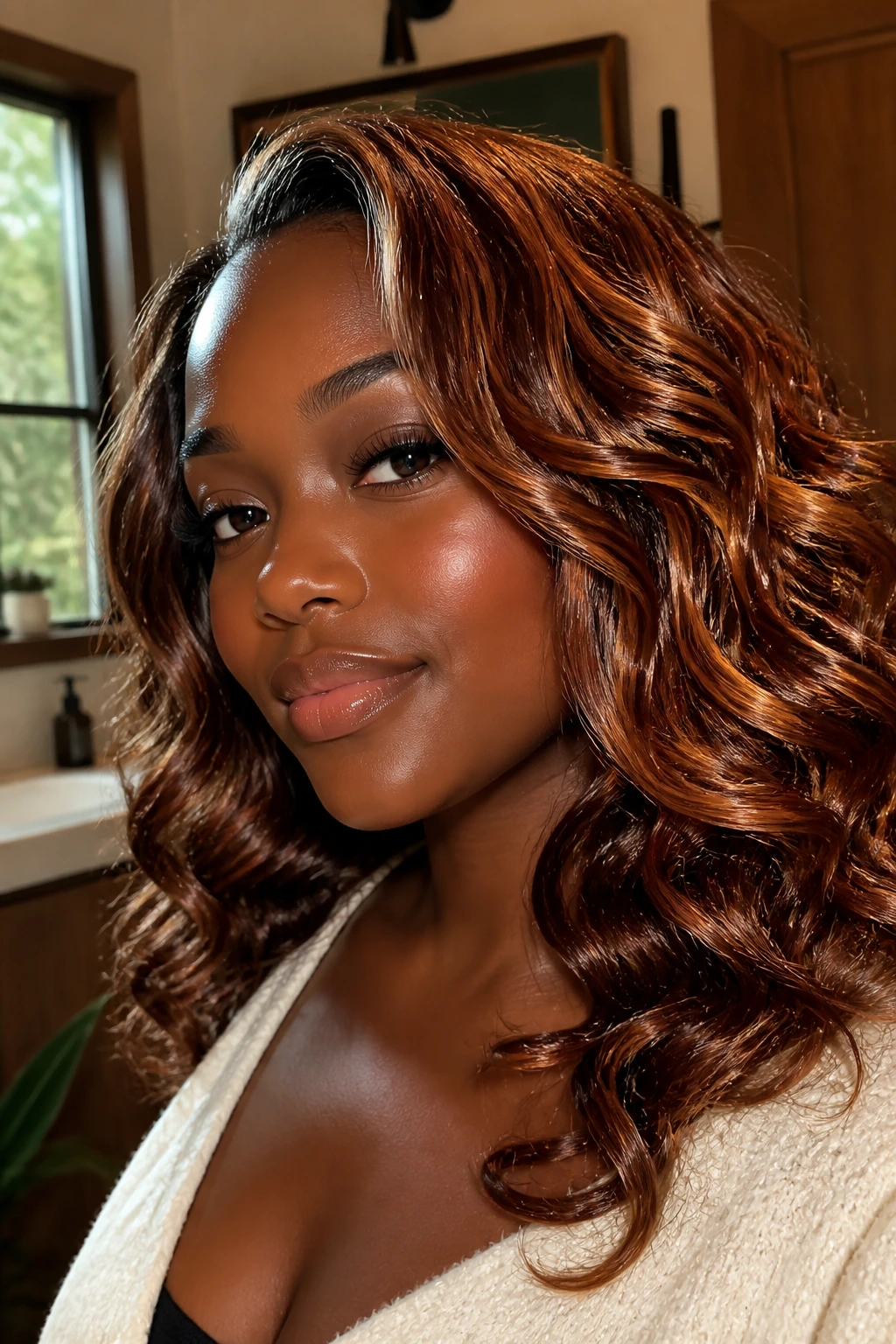
Gloss Boost: A clear or warm-brown gloss every 4 to 6 weeks keeps copper, caramel, and honey from turning flat. On lightened curls, this is often more useful than adding more dye.
Depth Boost: Ask for one deeper shade woven in with the lighter pieces. Chestnut next to caramel, or espresso under amber, keeps the color from reading one-note.
Texture Boost: Use a twist-out, braid-out, flexi rods, or a large barrel iron to make the highlight placement visible. Flat hair hides good color. Defined hair shows it off.
Make-It-Yours: If you want soft, keep the brightest pieces near the front only. If you want drama, push the warm color toward the ends or add a burgundy accent panel in the back.
Common Color and Styling Mistakes to Avoid
-
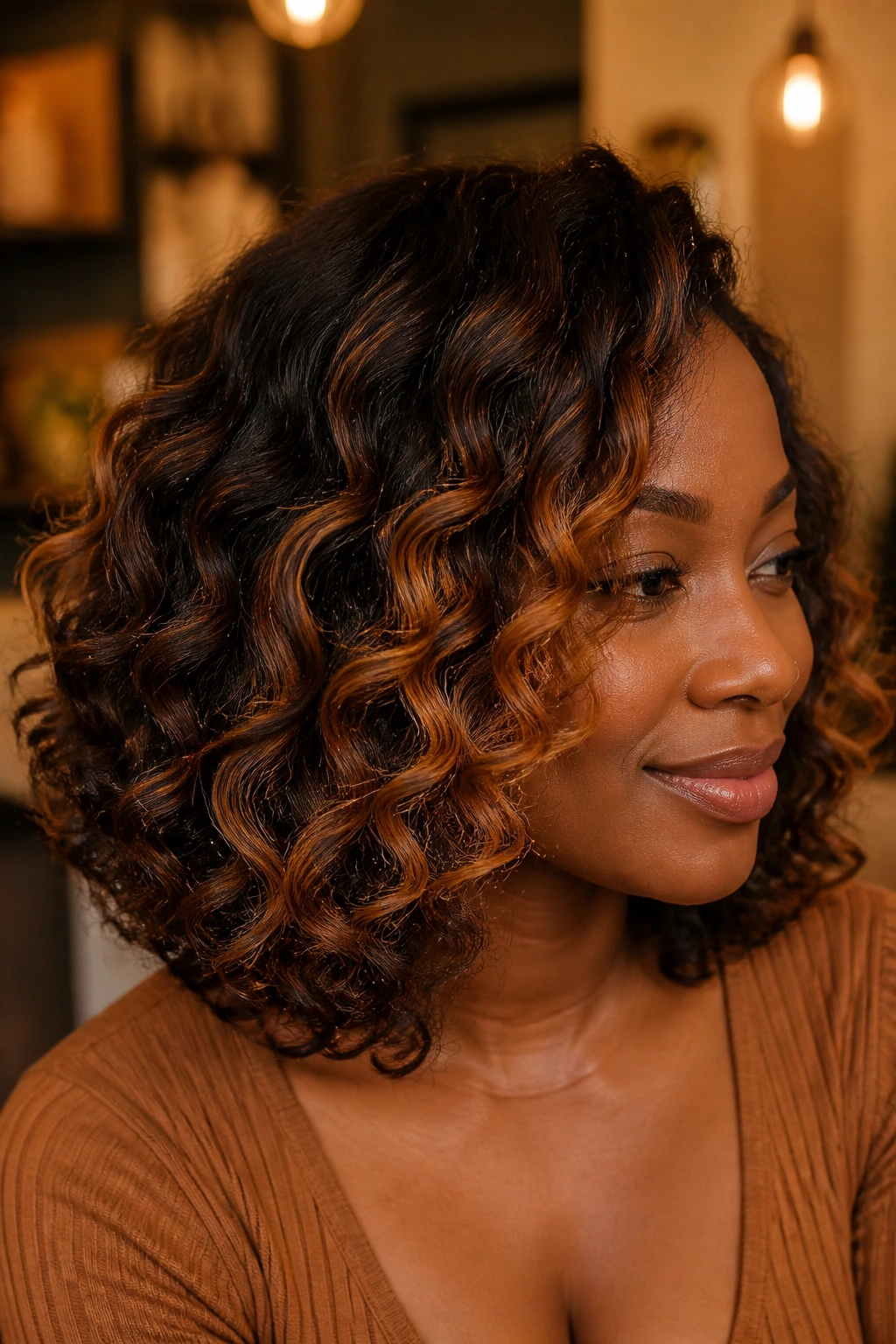
Going too light too fast: If you jump from dark brown to pale blonde in one appointment, the highlights can look stripy and the ends can feel fried. A slower lift or warmer tone usually looks better on deep skin.
-
Choosing ash or gray-beige highlights: Those shades often drain warmth from the face and make the hair look dusty. Copper, bronze, caramel, and auburn are safer bets unless your stylist is deliberately balancing a very specific undertone.
-
Highlighting every strand: On curls and coils, too much lightening can blur the pattern and make the hair look fuzzy instead of defined. Leave some deep base in the mix.
-
Skipping moisture after bleaching: Dry highlighted hair turns rough fast. Weekly masks, leave-in conditioner, and lower heat protect the finish.
-
Letting braids or twists sit with too much tension: Color can draw the eye to a tight part or a stressed hairline. If the scalp hurts, the style is too tight. That’s not a styling choice; it’s a warning.
-
Ignoring grow-out: A high-contrast highlight needs upkeep. If you want a softer schedule, ask for a shadow root or choose styles where the lighter pieces live in the lengths instead of at the scalp.
Variations and Alternatives to Try
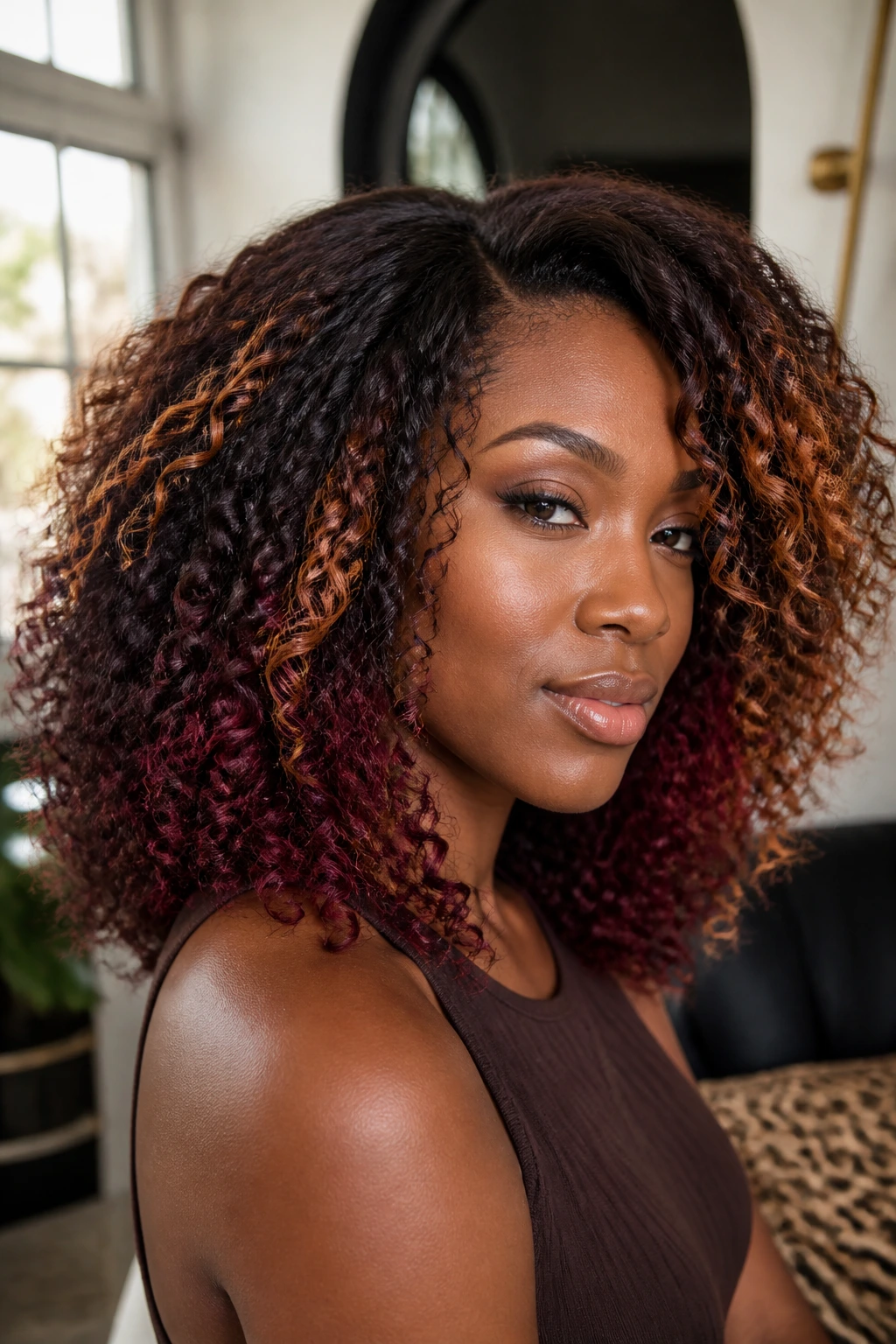
Soft Copper Fade: Keep the copper pieces thin and scattered so the change is subtle from week to week. This works well if you want warmth without a bold salon day.
Bronze and Mocha Ribbon Mix: Blend bronze with a darker mocha base for curls, lobs, or braided lengths. The result feels rich and low contrast, which makes it easy to wear.
Cherry-Deep Drama: Add burgundy or chocolate cherry panels to curls, twists, or a bob. It gives fall depth without slipping into orange territory.
Protective Style Glow: Use caramel, honey, or maple extension hair in braids, twists, or locs while leaving the root darker. This keeps the style easy to maintain and still gives you color.
Neutral-Warm Balayage: If your undertones lean neutral, a beige-gold caramel can work, but it should still have warmth. Full ash tones are the wrong kind of cool on most deep complexions.
Keeping the Color Rich Between Visits
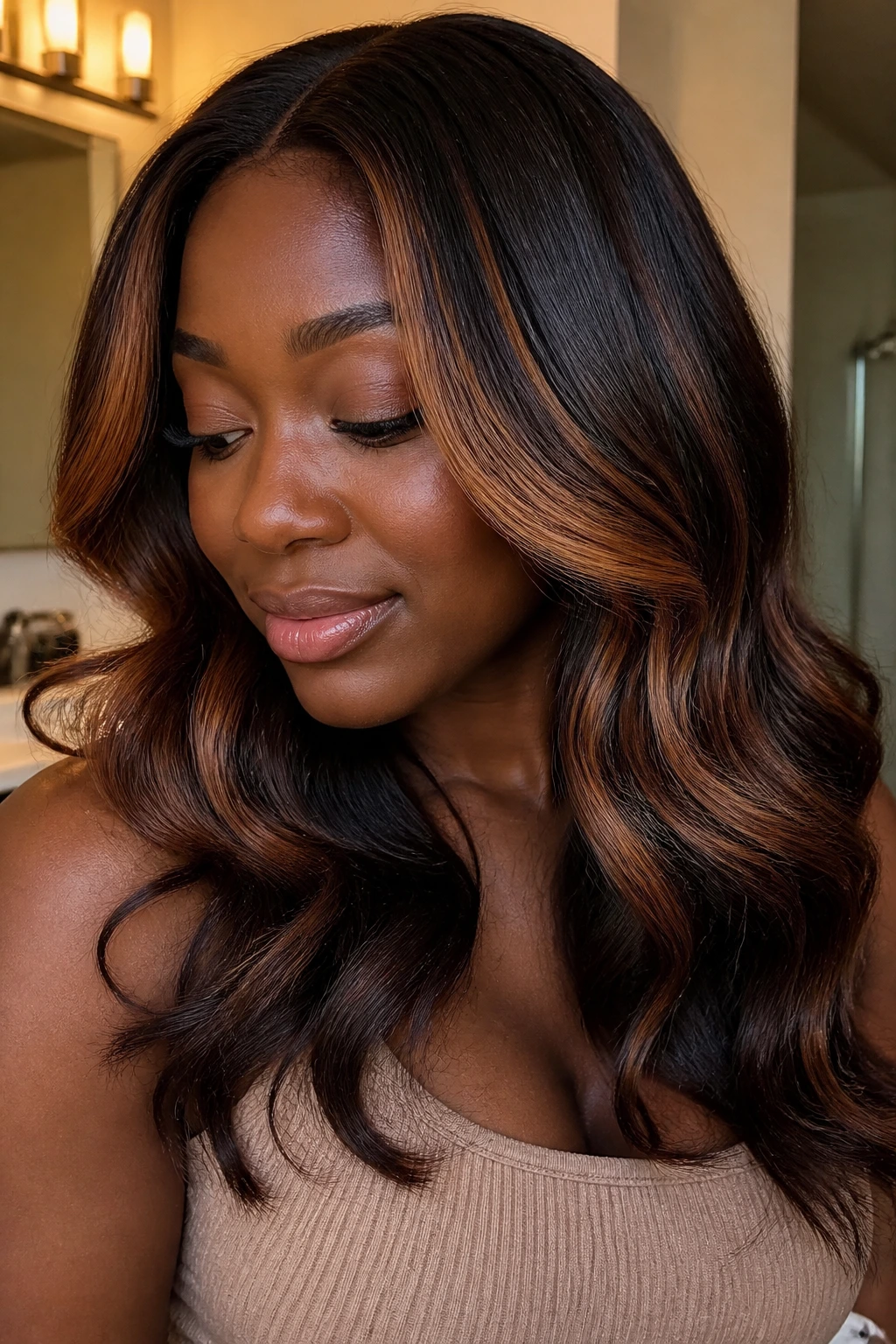
Warm color fades in its own way. Copper can lose its punch. Caramel can go dull. Honey can turn brassy if you wash it hard and heat-style it every day. The fix is boring, but it works: less friction, less scorching water, and better conditioner.
For curly and coily textures, I’d wash highlighted hair about every 7 to 10 days unless your scalp needs more frequent cleansing. Use lukewarm water, not hot water, because heat strips warmth from color faster than most people realize. If the hair is heavily lightened, a deep conditioner once a week is non-negotiable.
On silk presses and sleek styles, the main issue is heat. If you can, keep hot tools to once a week or less and use a protectant every single time. If the ends start feeling rough, skip the iron for a few days and use a moisturizing serum instead. More heat is not a fix.
Protective styles need their own rhythm. Braids and twists should be slept on with a satin bonnet or pillowcase, and the scalp should be cleaned gently every 2 to 3 weeks if product starts building up. For locs and braided installs, a light scalp oil every few days is enough. Drenching the roots just makes the hair look tired.
If you want the color to stay fresh, plan on a gloss or toner touch-up every 4 to 6 weeks for warm lightened shades, and root maintenance around 8 to 12 weeks for more obvious highlights. That window can stretch if the style is subtle and the base is dark. It gets shorter if you chase brighter tones.
Questions People Ask Before Booking Warm Highlights
Which highlight shades usually look best on deep skin tones?
Copper, cinnamon, caramel, honey, bronze, auburn, chestnut, mahogany, burgundy, and maple brown tend to sit well because they have warmth or depth. The trick is keeping the shade rich enough to read intentional, not washed out.
Are warm highlights always better than cool blonde shades?
Not always, but warm shades are easier to place on deep skin without looking disconnected. Cool blonde can work, yet it usually needs a stronger stylistic reason and more upkeep to keep from looking chalky.
Can natural coils and curls handle highlights well?
Yes, but the lift should be planned carefully. Curls and coils need moisture after lightening, and the highlight should follow the curl pattern so the color looks like part of the texture, not paint dropped on top of it.
What if I want something subtle, not dramatic?
Choose face-framing pieces, a shadow root, or peekaboo placement under the top layer. Subtle color lives better on deep skin when it stays warm and close to the natural base.
How do I stop copper or caramel from going brassy?
Use color-safe shampoo, wash with lukewarm water, and book a gloss before the shade gets muddy. If the tone starts slipping, a tinted conditioner can help, but it should match the warmth you already have, not fight it.
Can braids or locs still count as highlighted styles?
Absolutely. Warm extension hair, ombré ends, or a few lighter woven pieces can give braids and locs the same fall dimension that painted curls do. The root should usually stay darker so the style has balance.
What should I tell the stylist if I want low-maintenance grow-out?
Ask for a dark root, soft ribbons, and a shade that is only a few levels lighter than your base. That combo grows out more gracefully than high-contrast streaks sitting right at the scalp.
Do I need bleach for every one of these looks?
No. Some styles use colored extensions, temporary color, glaze, or warm-toned hairpieces instead of lifting your natural hair. That matters if your hair is fragile, already dry, or you want a less aggressive change.
Warm Light, Better Placed
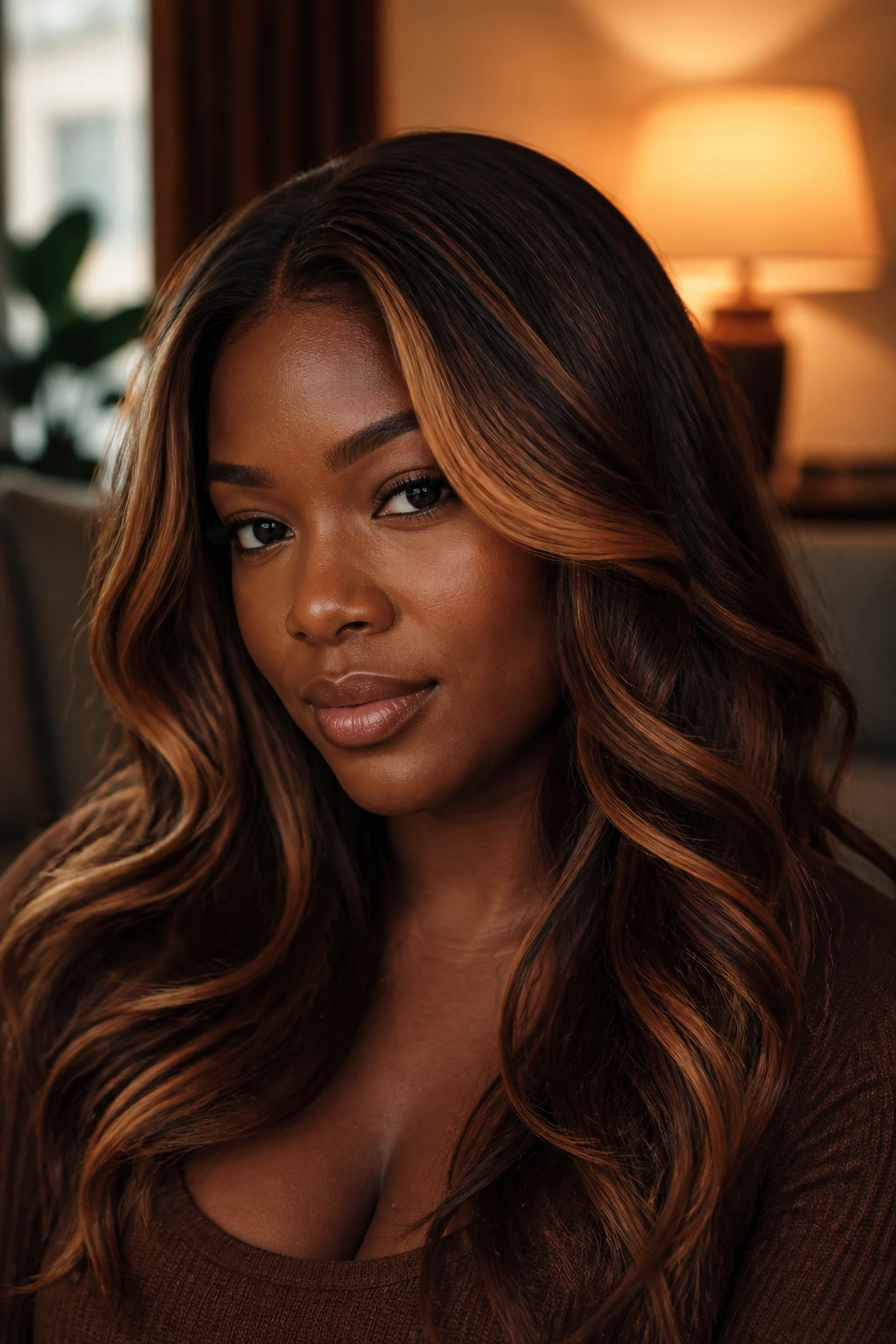
The smartest highlighted hair on deep skin usually doesn’t try to be the lightest thing in the room. It tries to be the richest. That’s a very different goal, and it gives you more room to work with copper, caramel, cinnamon, auburn, bronze, and the darker reds that sit so well against melanin.
That’s why the styles here range from tiny front pieces to full braids and curls. You do not need one giant color leap to make hair feel seasonal or fresh. A few warm ribbons, placed with a little restraint, can do the job better than a whole head of pale streaks ever will.