



The nicest brunette blonde lowlights with highlights are the ones that look like they grew that way. Not the stripey, overworked version that sits on top of the hair like a reminder. The good ones have a brunette base that still feels alive, blonde pieces that catch the eye only where you want them, and a few deeper ribbons tucked underneath so the whole color doesn’t turn into one flat beige sheet.
That balance matters more than people think. Blonde without shadow can look loud on day one and thin by week three. Add a few lowlights — not black, not muddy, just one or two levels deeper than the base — and the blonde suddenly has somewhere to land. The result is softer around the face, thicker through the mids, and far less fragile-looking at the ends.
Colorists think in levels, placement, and tone. So should you. A level 5 brunette can carry caramel, beige, honey, ash, champagne, or mushroom notes, but the placement changes the whole mood. A face-framing ribbon reads completely differently from a few hidden lowlights under the crown. That’s where the good stuff lives.
Why This Blend Looks Rich Instead of Flat
- Depth Without Darkness: A few deeper strands under the blonde stop the color from reading as one solid light brown or one hard block of highlights.
- Softer Grow-Out: Root shadow and interior lowlights blur regrowth, so the line at the scalp stays less obvious between salon visits.
- More Body on Fine Hair: Alternating light and dark pieces creates the illusion of thicker strands, especially near the part and crown.
- Tone Flexibility: The same placement can lean caramel, beige, ash, honey, mushroom, or champagne depending on the toner and your base.
- Less Brass Panic: When the blonde sits beside brunette depth, a little warmth looks intentional instead of orange.
- Works With Real Haircuts: Waves, bobs, lobs, curls, and long layers all catch these colors differently, which is exactly why the mix stays useful.
1. Espresso Base with Caramel Ribbons
This is the version I’d send to someone who wants movement without giving up their dark roots. The espresso base keeps the hair grounded, while the caramel ribbons sit in the mid-lengths like strands of warm light. Add a few lowlights under the crown and the whole thing stops looking stripy.
Why It Works
The contrast stays close enough to look polished, not loud. Caramel highlights around a deep brunette base bring out shine, while lowlights in the underside keep the top layer from floating away visually. It’s especially good on medium to thick hair, where more depth gives the cut some actual shape.
Quick Notes
- Ask for caramel highlights two to three levels lighter than your base.
- Keep lowlights one level deeper, not jet black.
- Best on loose waves, because bends in the hair show the ribbons better.
Pro tip: Keep the brightest pieces near the cheekbones and collarbone. That one placement choice does half the work.
2. Mushroom Brown with Beige Blonde Veils
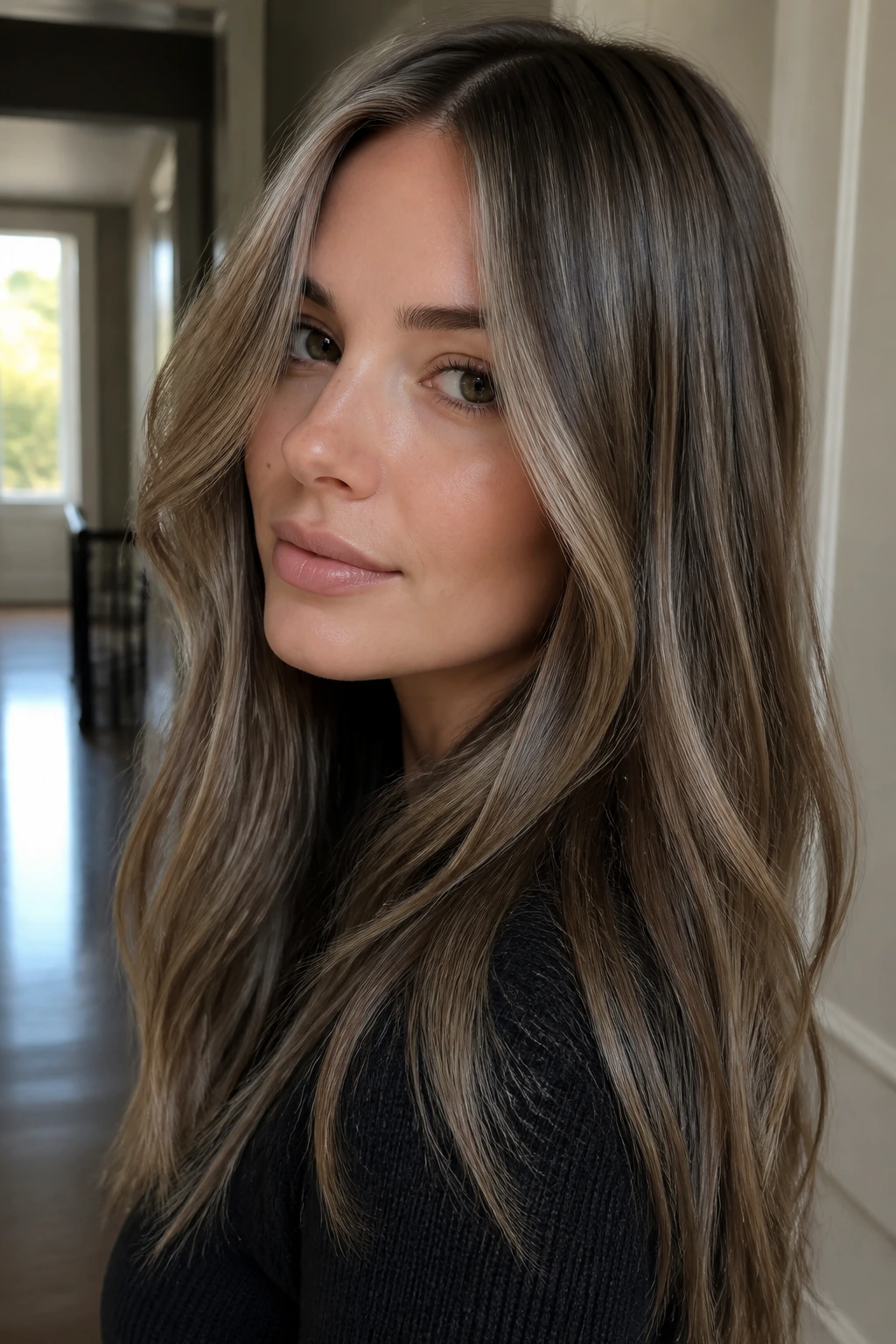
Flat blonde is the enemy here. Mushroom brown with beige veils feels cooler, quieter, and a lot more expensive-looking than a loud golden mix. The brunette leans taupe, the blonde sits in that soft beige zone, and the lowlights keep the whole thing from drifting too pale.
On straight or softly waved hair, this color reads almost blurred. That’s the point. You want the eye to move across the surface and notice lightness in layers, not in chunky blocks. If brass shows up fast in your hair, this is one of the safer directions because the tone stays controlled.
It’s a smart pick for people who like ashier makeup, charcoal clothes, silver jewelry, or anything with a clean neutral palette. The result can go flat if the lowlights are too close to the base, so ask for some depth under the top layer. Not much. Enough to keep the light pieces honest.
3. Honey Bronde with Shadow Roots
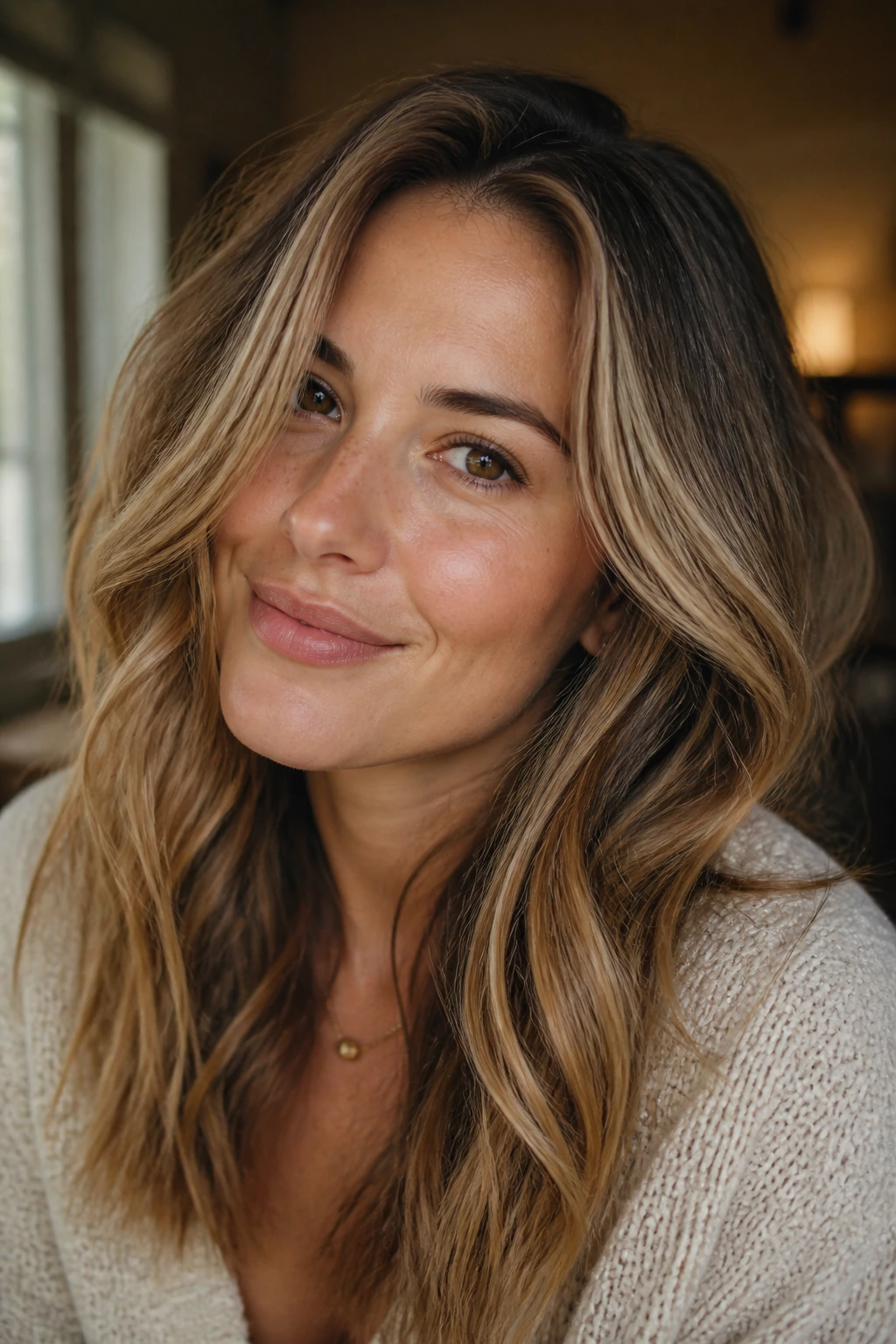
Why does honey bronde work on so many brunettes? Because it steals the best part of blonde — brightness — without making you live in toner appointments. The shadow root keeps the scalp area darker, the honey pieces brighten the mids, and the lowlights under the surface stop the ends from looking fried.
How to Ask for It
- Keep the root shadow close to your natural level.
- Ask for honey-blonde ribbons around the face and top layer.
- Add a few soft lowlights under the crown so the color doesn’t bloom into one wide warm sheet.
If you like air-dried hair, this one has a nice habit of looking better when it’s a little imperfect. The shadow root softens the grow-out line, which means the color keeps its shape even when the blowout is gone. I’d choose this for someone who wants to stretch salon visits without giving up brightness.
4. Cool Ash Brunette with Champagne Highlights
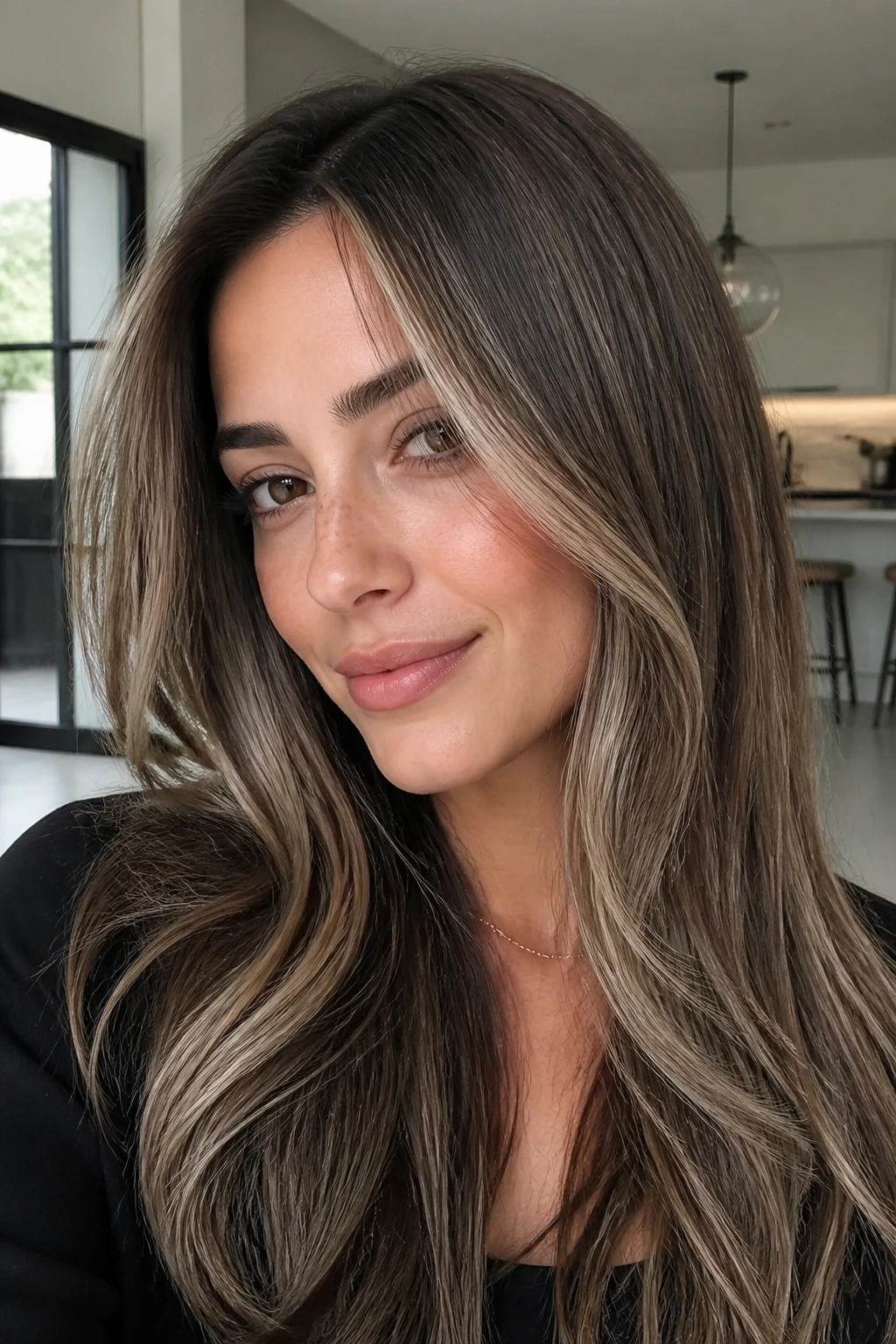
Picture a brunette base that looks almost smoky in the sunlight, then a few champagne highlights that flash just enough to keep the hair from sinking into one color. That’s the charm here. It’s cooler than caramel, softer than platinum, and much easier to wear if gold tones make your hair turn brassy by the second shampoo.
The lowlights should stay ash-brown or neutral brown, not muddy. That distinction matters. Too dark, and the hair can look heavy. Too warm, and the whole idea collapses into beige. Champagne works best when it’s placed in thin slices through the mids and around the face, where it catches light without taking over.
This color sings on sleek styles and soft bends. If you wear your hair straight, the contrast reads crisp. If you wear it waved, the pieces scatter in a way that looks deliberately expensive rather than accidental.
5. Chestnut Melt with Face-Framing Brightness
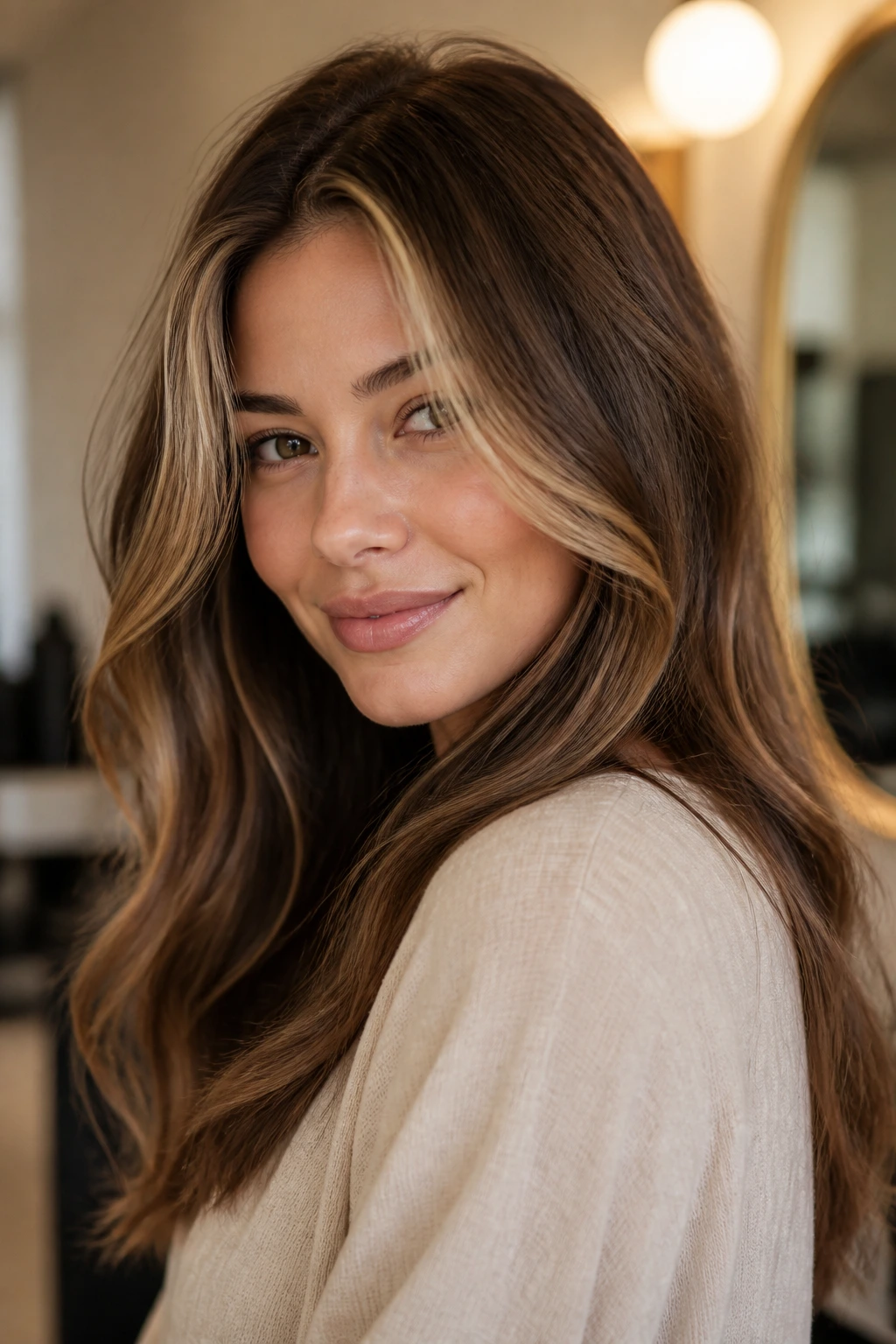
Chestnut is one of those colors that gives the blonde something to do. Without it, blonde on brunette can feel a little too obvious. With it, the transition softens into a melt — richer at the root, lighter around the face, deeper underneath, no hard line in sight.
This look is especially nice if you want brightness near the eyes but don’t want the rest of the hair to shout. The face-framing pieces can sit a half-shade lighter than the rest of the highlights, while the lowlights under the back sections keep the cut from puffing out visually. That helps longer hair look glossy instead of washed out.
It’s a solid choice for layered cuts and curtain bangs. The bangs catch the light first, then the rest of the chestnut blend follows behind. Simple trick. Big payoff.
6. Toffee Balayage with Soft Lowlight Panels
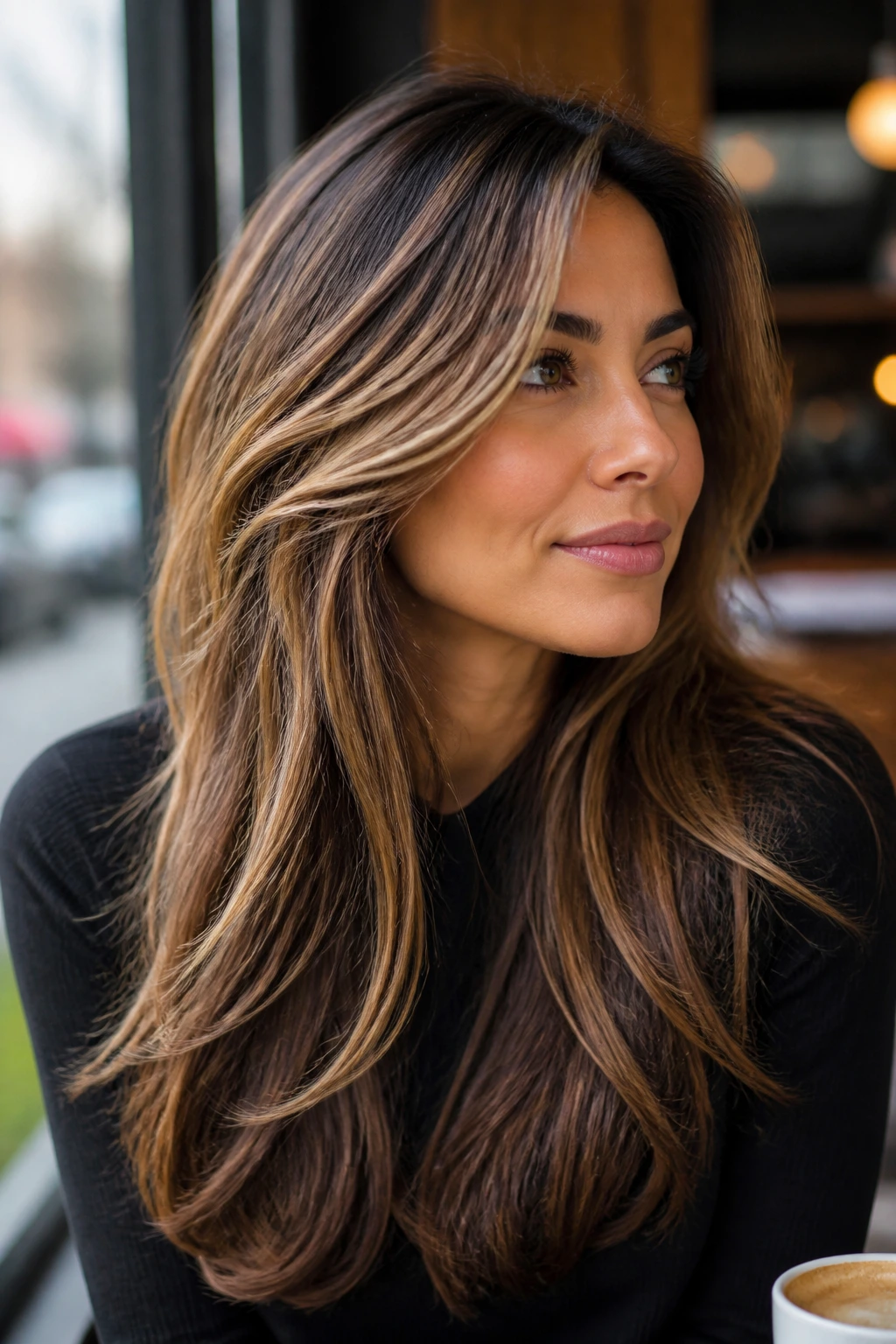
Toffee balayage has a warmer, creamier feel than straight caramel, and the lowlight panels make it look finished instead of overly sweet. The blonde is painted in broad, soft sweeps, not in tight stripes, so the hair keeps that hand-painted look people ask for but don’t always get.
This one works especially well on layered lengths. The toffee tones sit in the mid-lengths, while slightly deeper panels underneath hold the shape together. If you have thick hair, this is where the lowlights earn their keep; they keep the color from turning into a bright blur with no structure.
Ask your colorist to leave some natural brunette near the root and under the interior sections. That contrast gives the balayage room to breathe.
7. Cocoa Brown with Sandy Blonde Ends
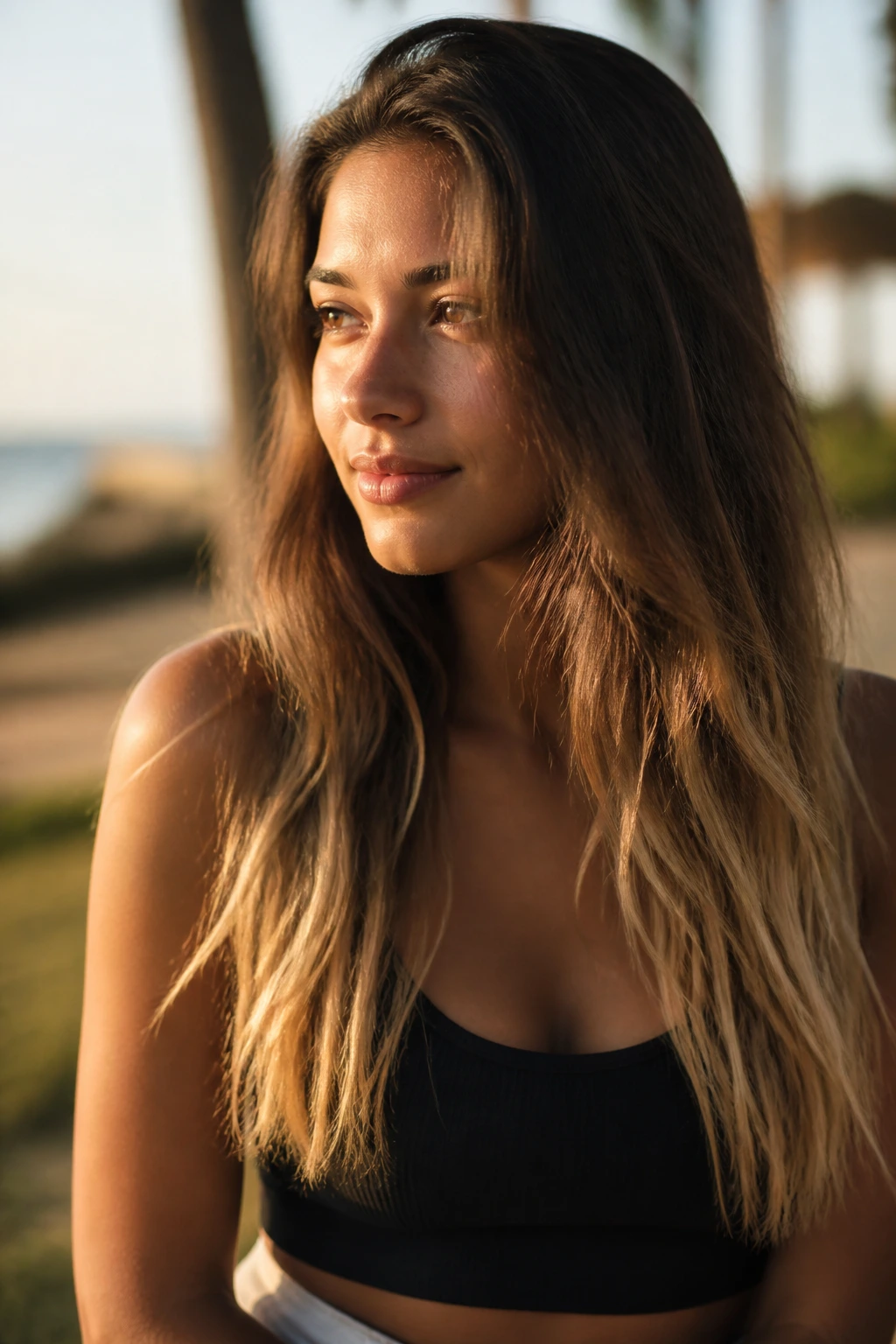
A lot of blonde-on-brunette looks lose their footing at the ends. Cocoa brown with sandy blonde tips fixes that by keeping the root deep and the ends lighter, but not icy. Sandy blonde is softer than platinum and less orange-prone than gold.
The Split Between Root and End
The top half holds the cocoa depth, while the lower third gets a lighter sweep of sandy tone. That shift is especially useful on long hair, where the ends can look dull if they’re left too dark. The lowlights matter here too, because they stop the brighter tips from looking disconnected from the rest of the head.
This look has a little beach energy, but not the overdone, sun-bleached kind. If your hair is fine, don’t over-lighten the very bottom. A few scattered sandy pieces are enough.
8. Mocha Lob with Sunlit Mid-Lengths
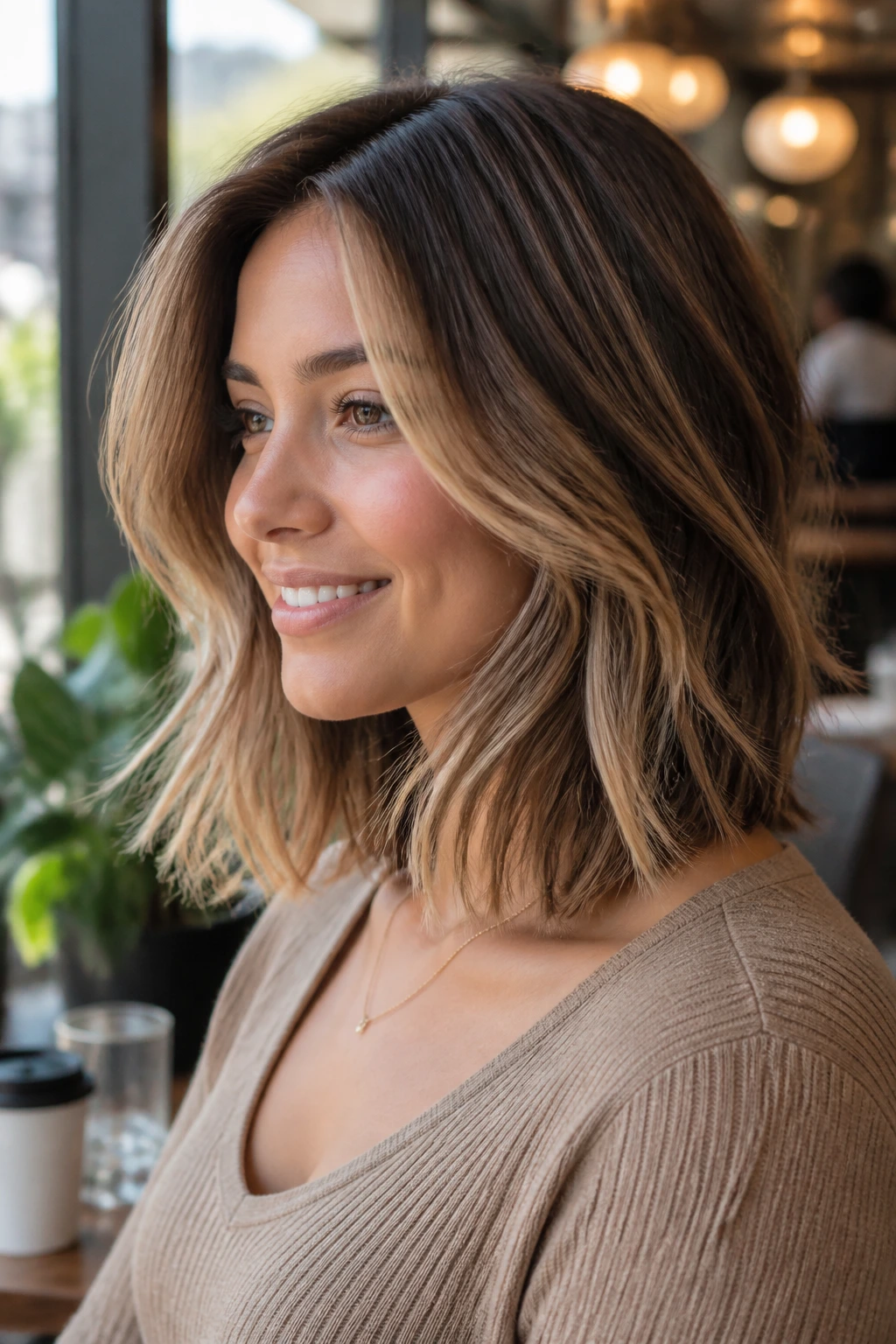
A lob gives this color room to move. The mocha base keeps the haircut solid, then the sunlit mid-lengths create the bright band that hits when the hair swings. Lowlights at the root and underneath stop the shape from collapsing into one pale mass.
This is one of my favorite choices for people who want dimension but not drama. The lighter pieces are concentrated where the hair naturally bends around the jaw and collarbone. That placement makes the cut look more expensive than it actually is, which is one of those small salon tricks worth paying for.
If your hair falls flat fast, ask for more contrast through the middle third and less around the ends. The lob will hold the shape better, and the grow-out will be cleaner.
9. Golden Chestnut with Cinnamon Lowlights
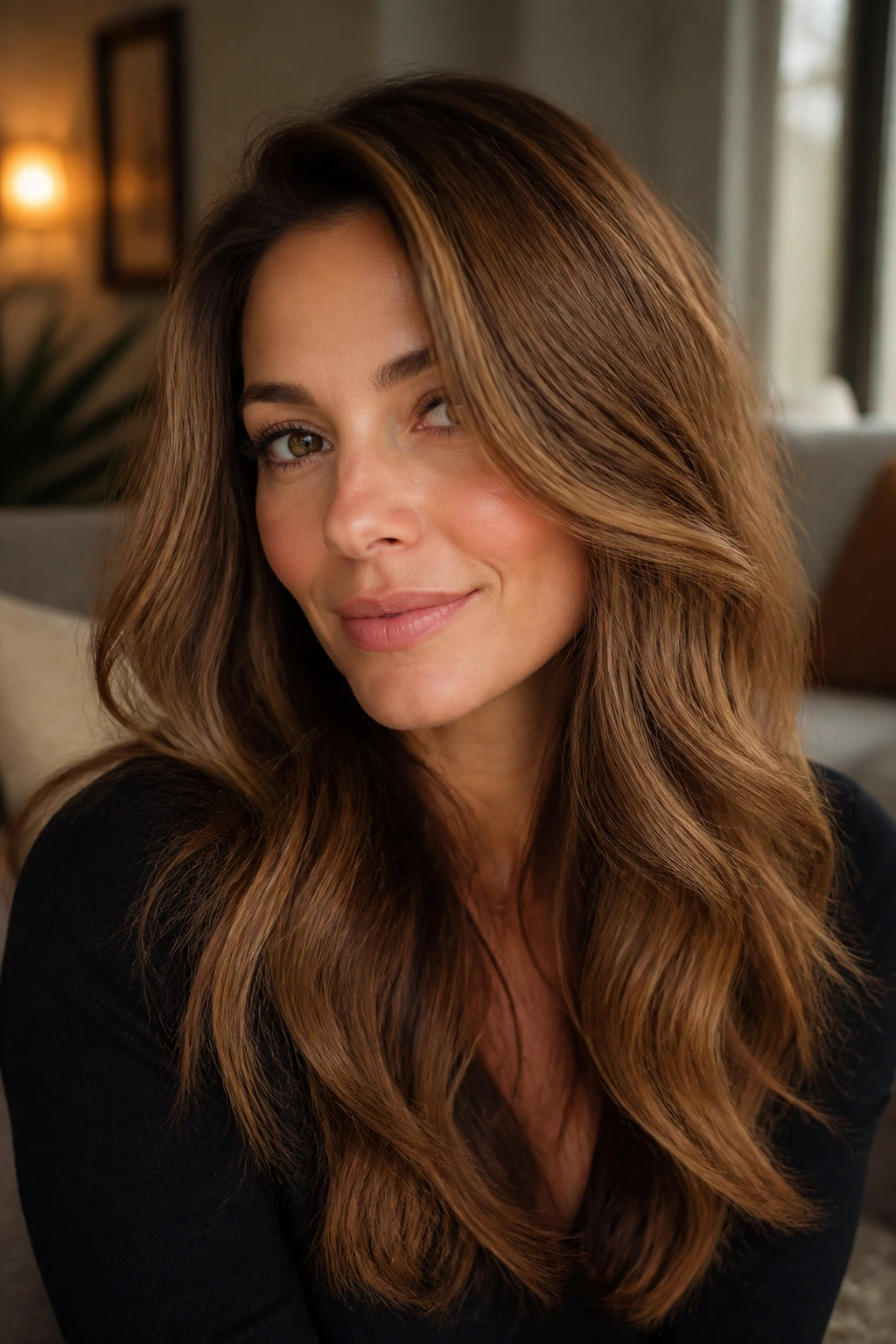
Golden chestnut sounds warm, and it is, but the cinnamon lowlights keep it from turning too pumpkin-y. That’s the useful part. The base carries a soft golden brown, while the darker cinnamon strands slide through the interior and underlayer, giving the blonde places to separate instead of crowding together.
What Makes It Work
The warmth stays layered, not loud. Golden highlights near the face make skin look healthier and a little brighter, especially if your natural color is already in the medium-brown range. Cinnamon lowlights are a smarter choice than flat brown because they echo the warmth instead of fighting it.
This suits wavy hair best, though it can look rich on straight styles too. I’d avoid pulling the blonde too pale here. The whole point is warmth with depth, not a caramel-to-white gradient.
10. Walnut Brown with Creamy Ribbon Highlights
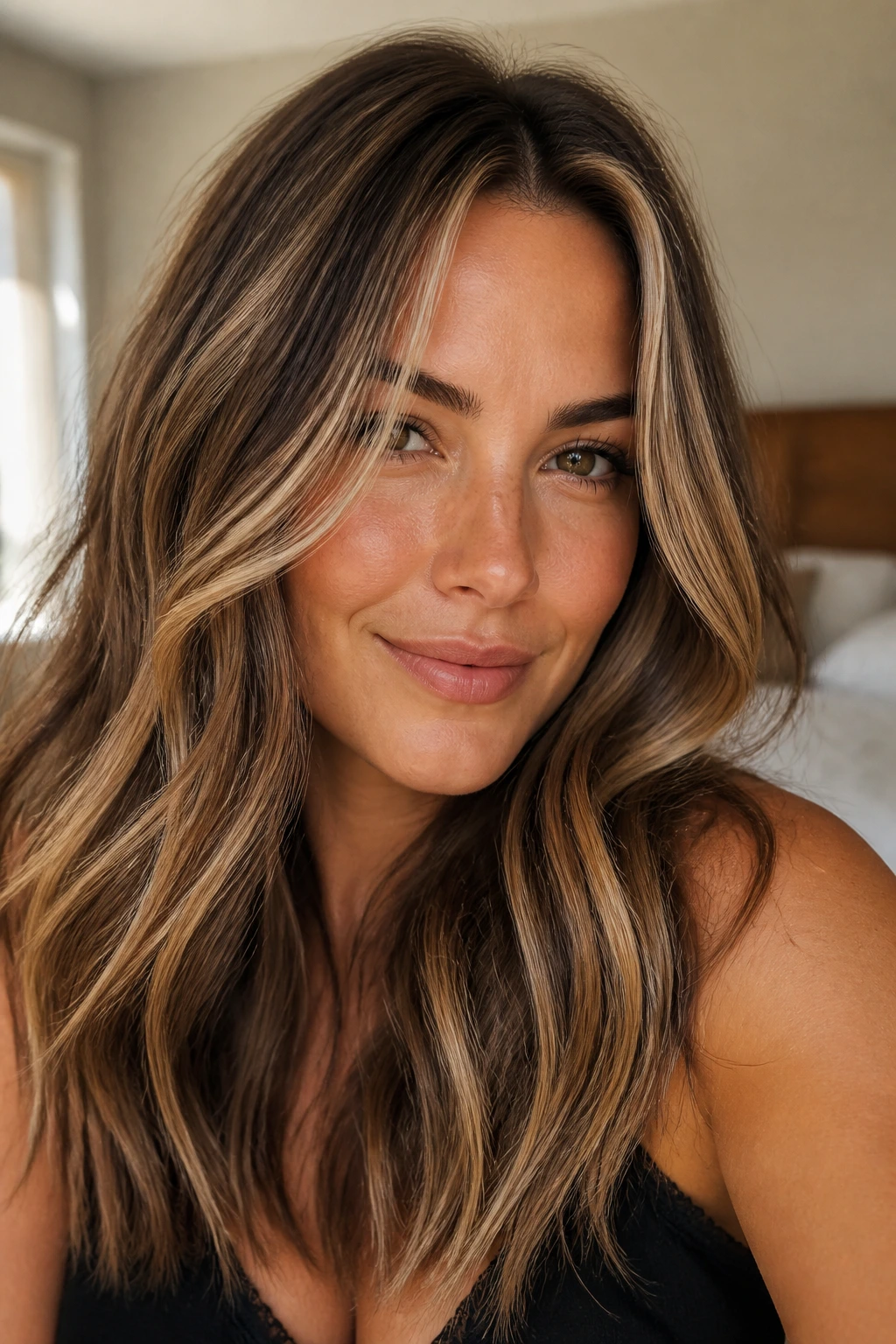
Walnut brown is one of the prettiest bases for dimension because it sits in that neutral middle ground. It’s neither too warm nor too cool, which means creamy ribbon highlights can read soft and natural instead of glaring. Add a few deeper lowlights beneath the surface and the hair starts to look fuller from every angle.
This version works well if you like visible color but don’t want harsh contrast. The ribbon placement gives movement through the lengths, while the creamy tone stays close to beige-blonde rather than yellow. That matters on days when you wear the hair smooth; ribbons show better than chunky foils when there’s a clean blowout.
If your hair is dense, ask for wider ribbons. If it’s fine, keep them thinner and closer together so the color doesn’t feel broken apart.
11. Smoky Brunette with Pearl Blonde Pieces
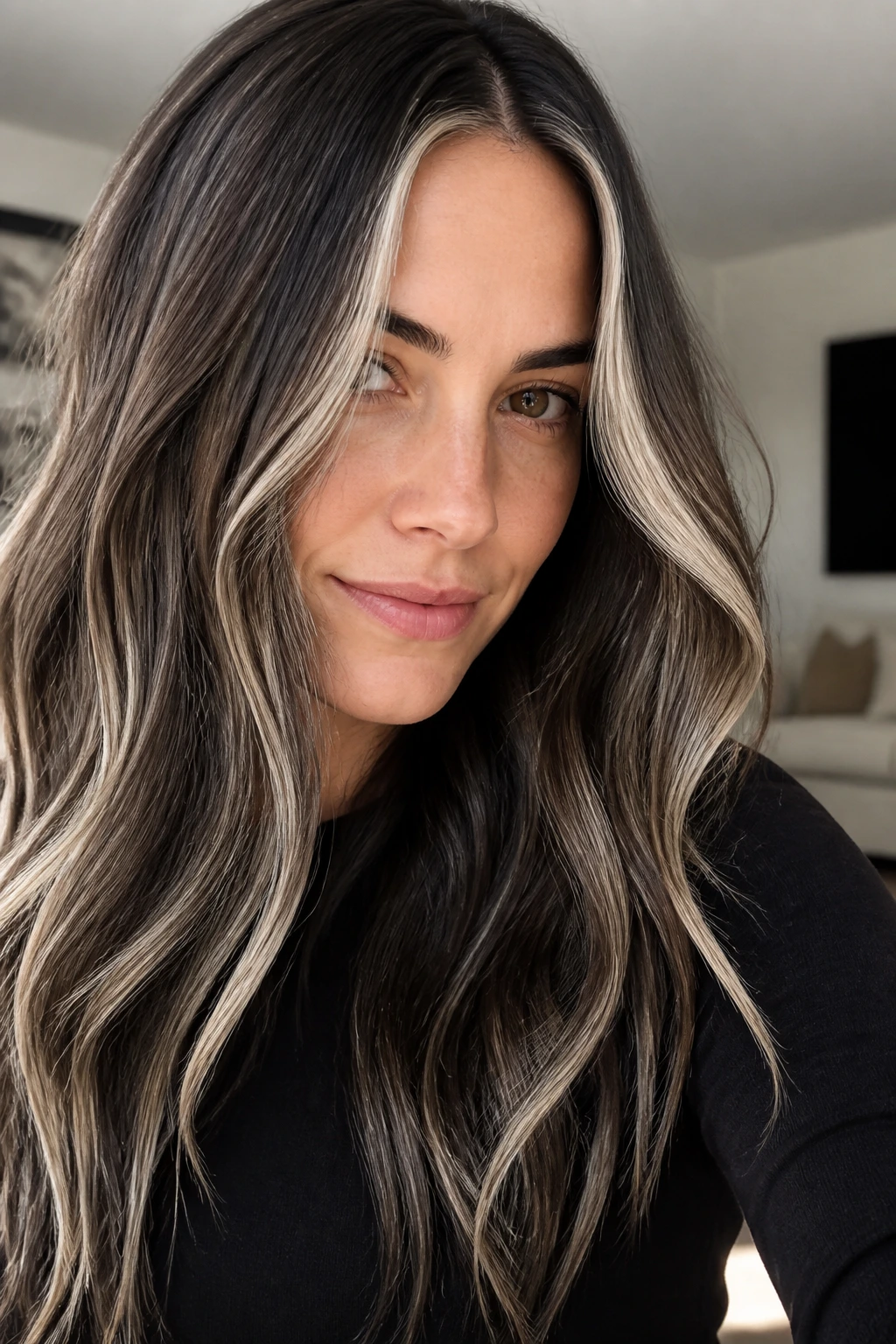
This is the cool-toned answer to honey bronde. Smoky brunette with pearl blonde pieces feels a little sharper, a little cleaner, and a lot more controlled. Pearl blonde isn’t stark white; it has enough softness to sit against brunette without looking like a bleach job.
The lowlights are key. They preserve the smoky effect and keep the light pieces from drifting into a washed-out gray. I especially like this on straight hair or polished waves, where the contrast feels deliberate. It’s less forgiving of brass than warmer mixes, so toner and good shampoo habits matter here.
If you’re after something quiet but still obviously colored, this is a strong choice. It gives the hair shine without glittering too much.
12. Bronde Bob with Airy Baby Lights
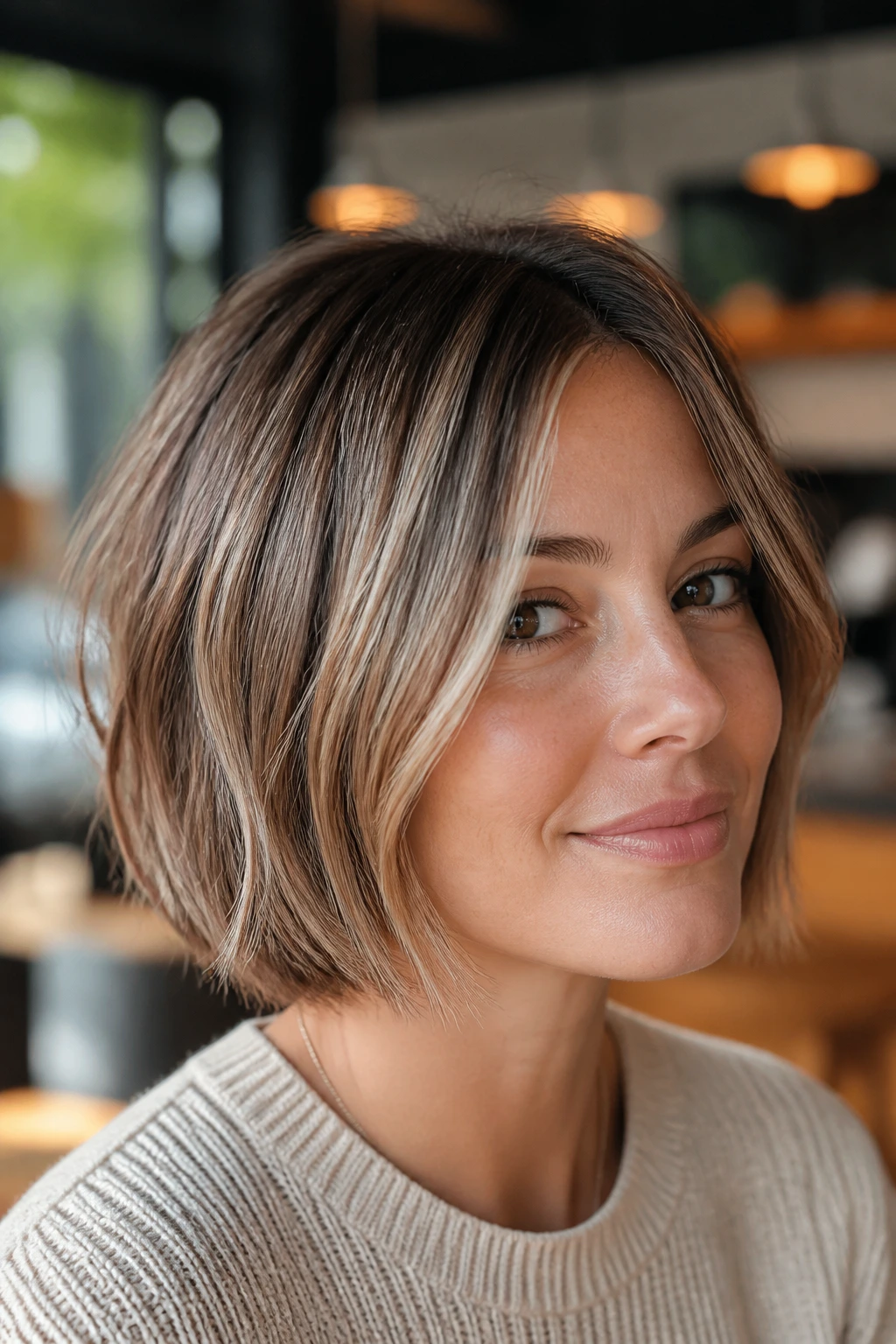
A bob is unforgiving when the color is too chunky. That’s why baby lights are the right move here. They’re fine, close together, and delicate enough to keep a short cut from looking blocky. The lowlights under the top layer add shape back in, which a bob needs more than people expect.
On a clean, jaw-length shape, this color reads crisp. Airy blonde pieces lift the face, while the brunette underneath gives the cut some weight at the ends. Without that depth, a bob can go puffy or too uniform.
This look suits someone who wants polish without a heavy maintenance plan. The fine placement grows out more softly than broad foils, and the whole thing stays wearable even when the root starts showing.
13. Dark Chocolate with Buttery Mid-Lengths
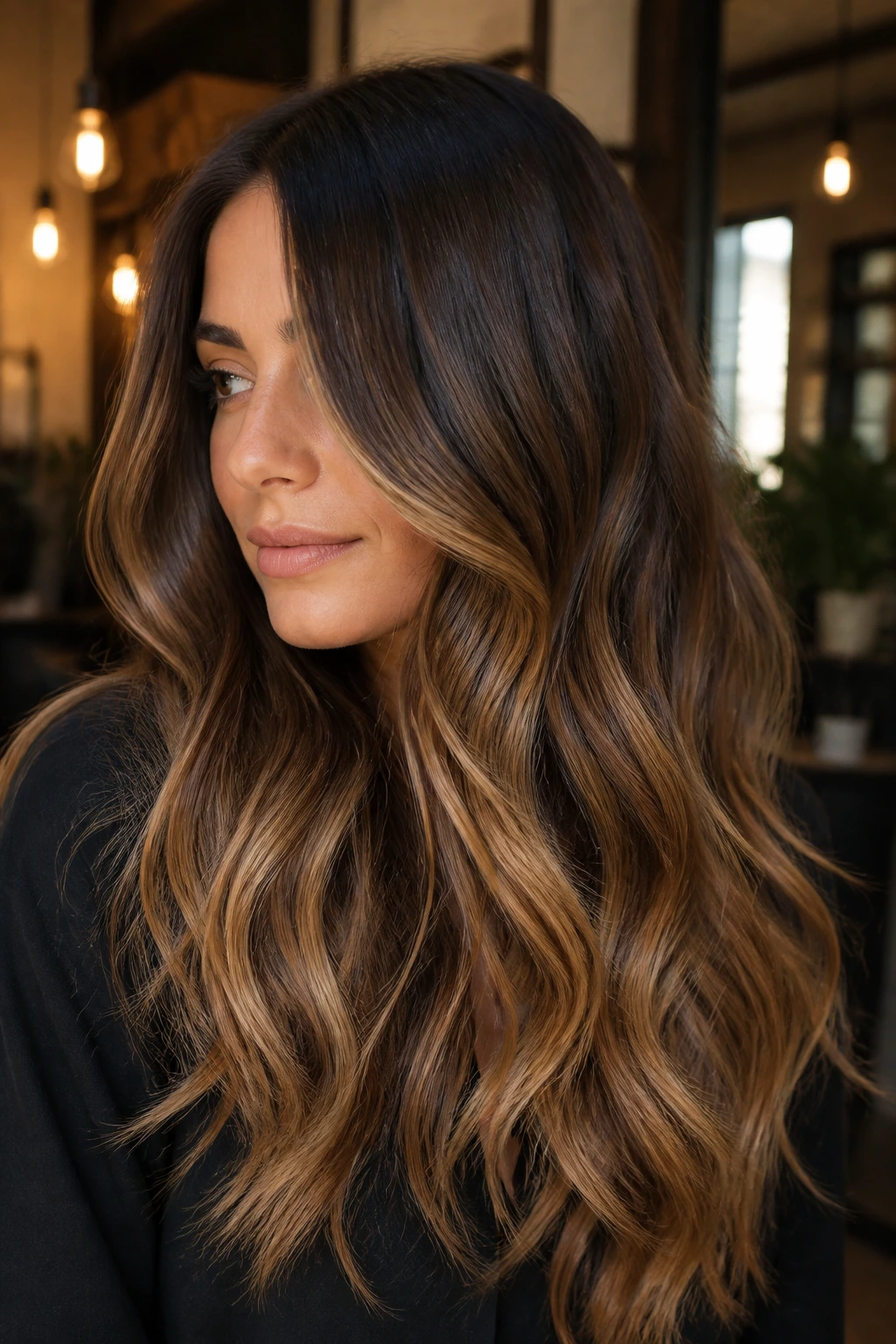
Dark chocolate at the root and buttery blonde through the mid-lengths is a classic contrast move, but the lowlights make it feel better controlled. The butter tones brighten the middle section of the hair, which is where most of the movement lives anyway. The deeper pieces underneath stop the blonded zones from taking over.
Why It Feels Balanced
The chocolate base anchors the look. Butter blonde brings warmth and reflectivity, especially in layered cuts. Then the lowlights under the crown and around the back keep the lightness from floating on top like a separate wig.
This is a good one for people who like visible blonde but don’t want the upkeep of all-over lightening. The middle band can be refreshed with glosses, while the deeper root keeps the color wearable between appointments.
14. Mulled-Cider Brunette with Wheat Blonde Accents
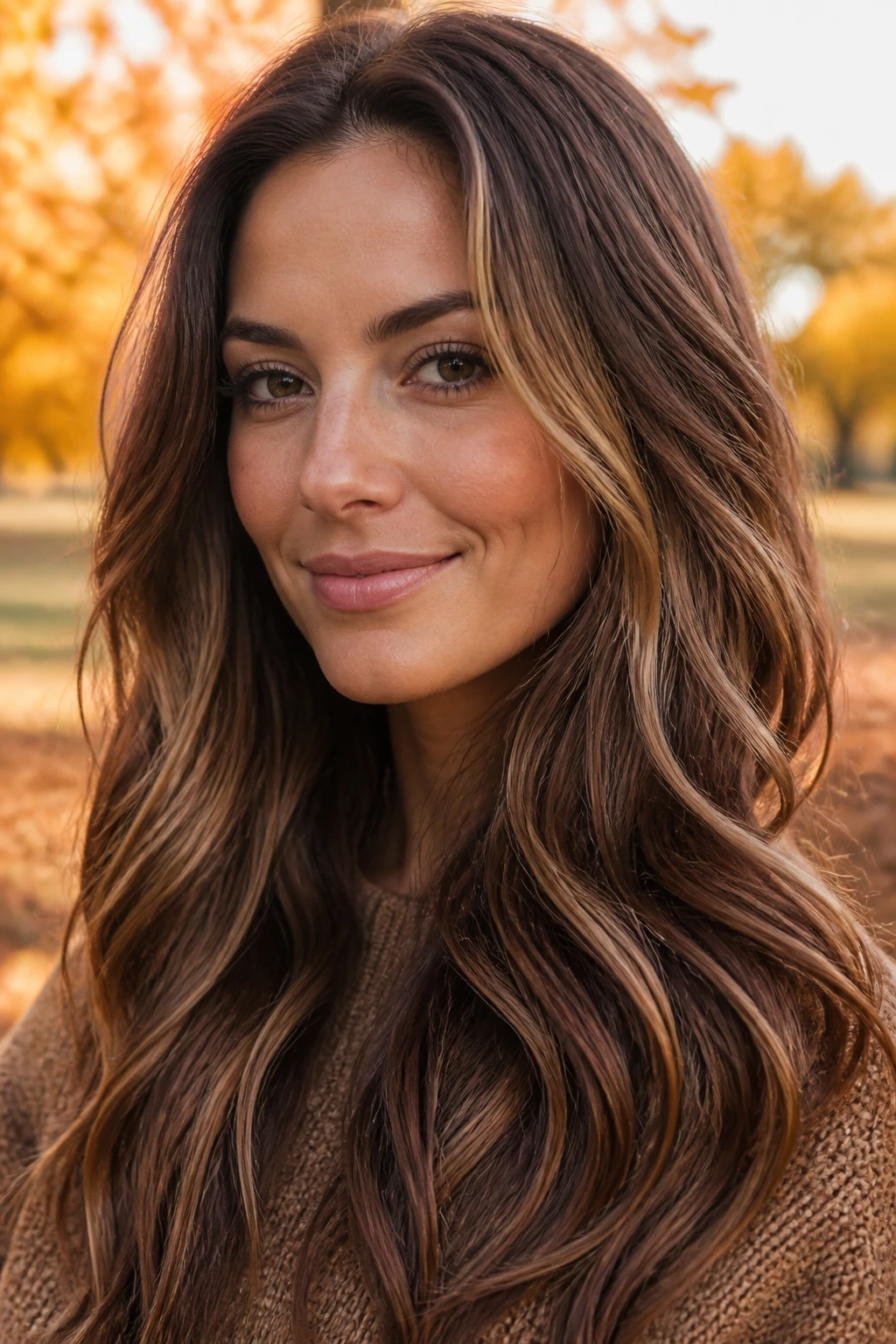
Mulled-cider brunette leans red-brown, so the blonde needs to stay soft. Wheat blonde is a smart choice because it’s warm without turning yellow, and the lowlights can sit in a rich brown-copper lane to keep everything cohesive. This is not the place for icy champagne pieces. They’ll fight the warmth.
The result feels autumnal without becoming costume-y. The red-brown base gives the blonde some glow, and the wheat accents keep the face from going dark. If you have freckles or warm undertones, the whole thing can look very natural.
A blunt cut or long waves both work here, though I prefer movement because the different tones show better when the hair bends.
15. Ash Brown with Vanilla-Cream Ends
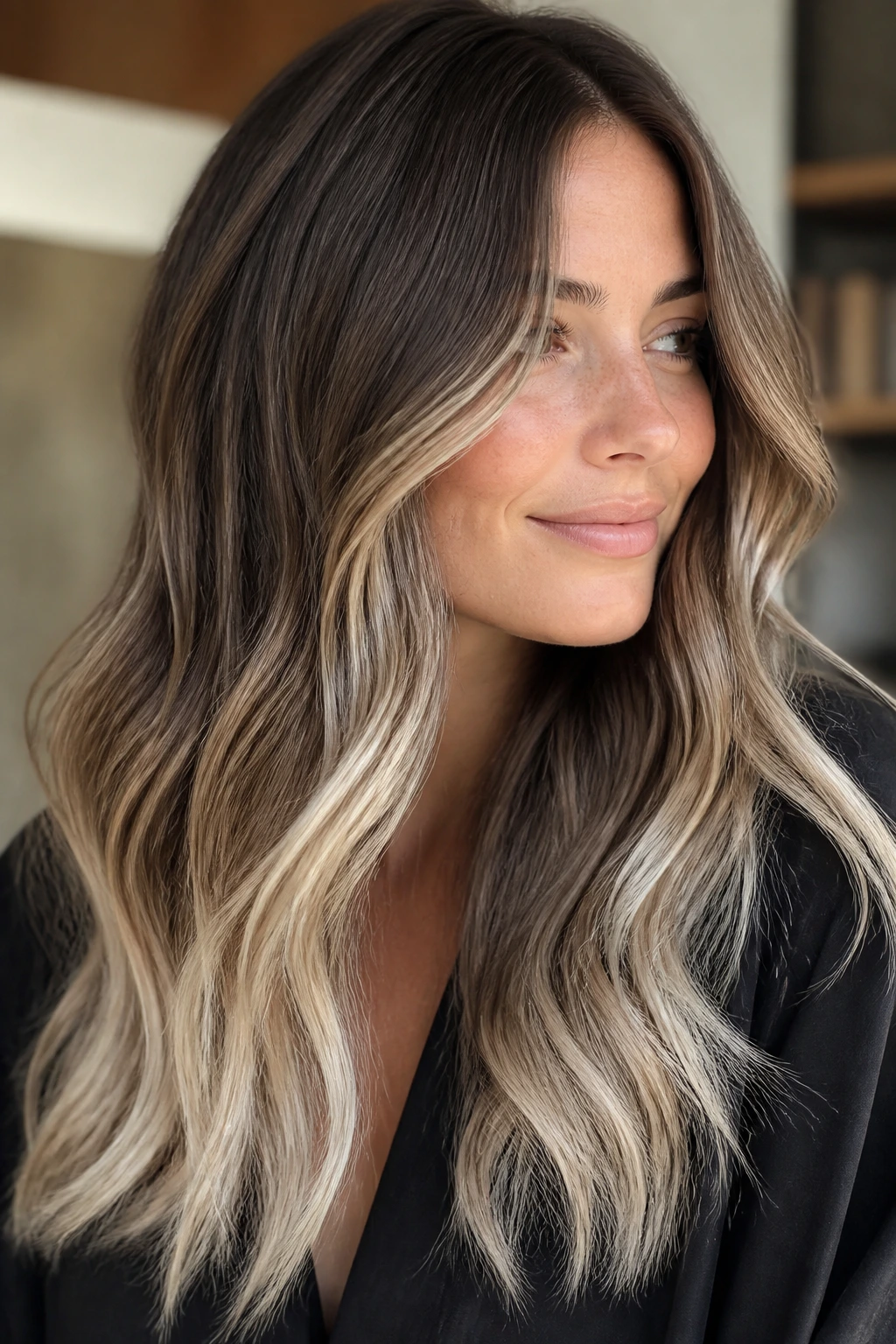
What makes ash brown interesting is that it can go flat fast if you don’t give it contrast. Vanilla-cream ends fix that problem. They’re pale enough to brighten the silhouette, but soft enough to keep the color from turning icy or overdone.
How to Ask for It
Tell your colorist you want a muted ash base, then creamier lightness only on the lower lengths and ends. Add lowlights through the mid-shaft so the transition doesn’t look like a hard dip dye. That lowlight layer is what keeps the ash from feeling dusty.
It’s a good pick for people who wear a lot of black, gray, denim, or muted makeup. The contrast is present, but it stays controlled.
16. Curly Brunette with Luminous Honey Pieces
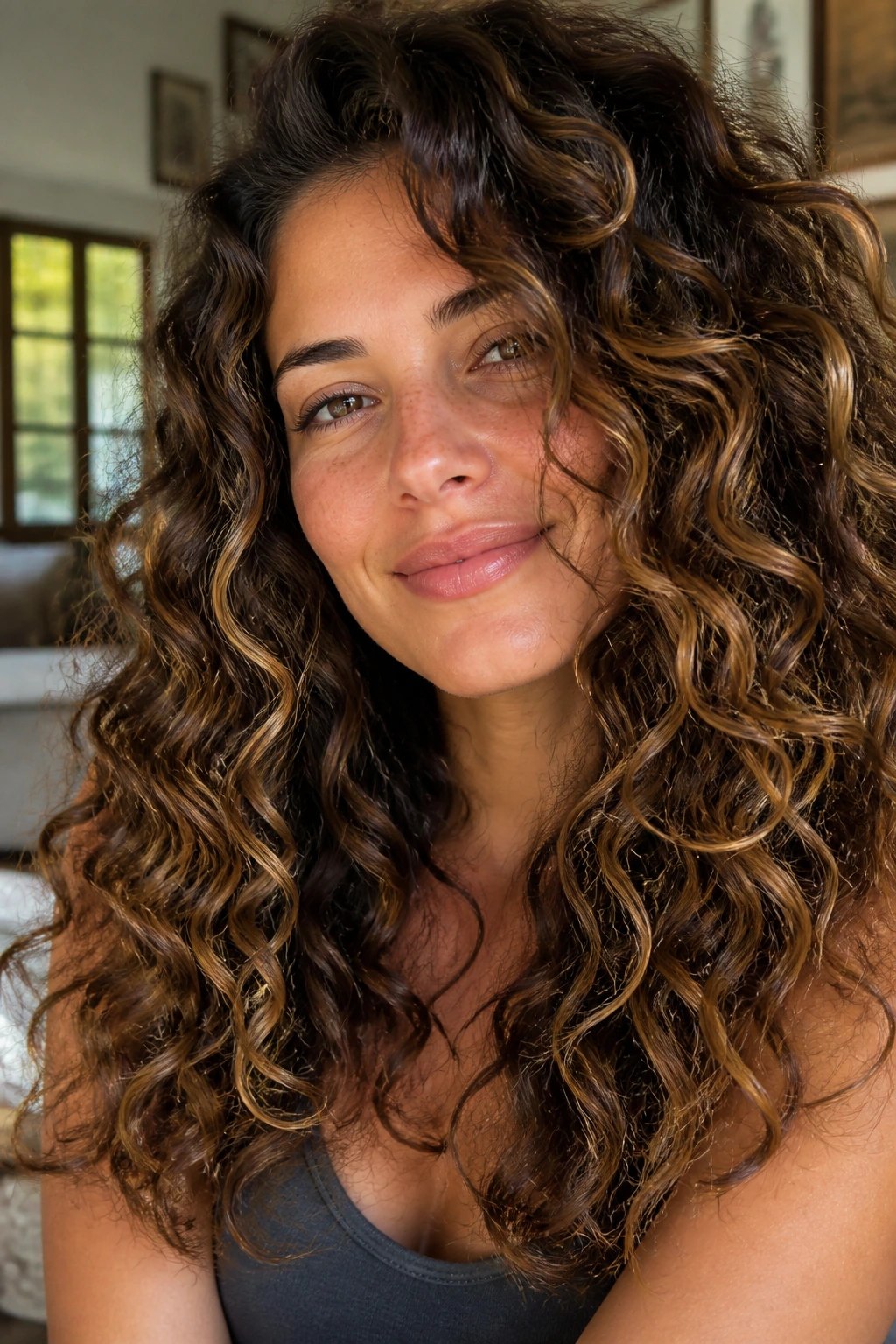
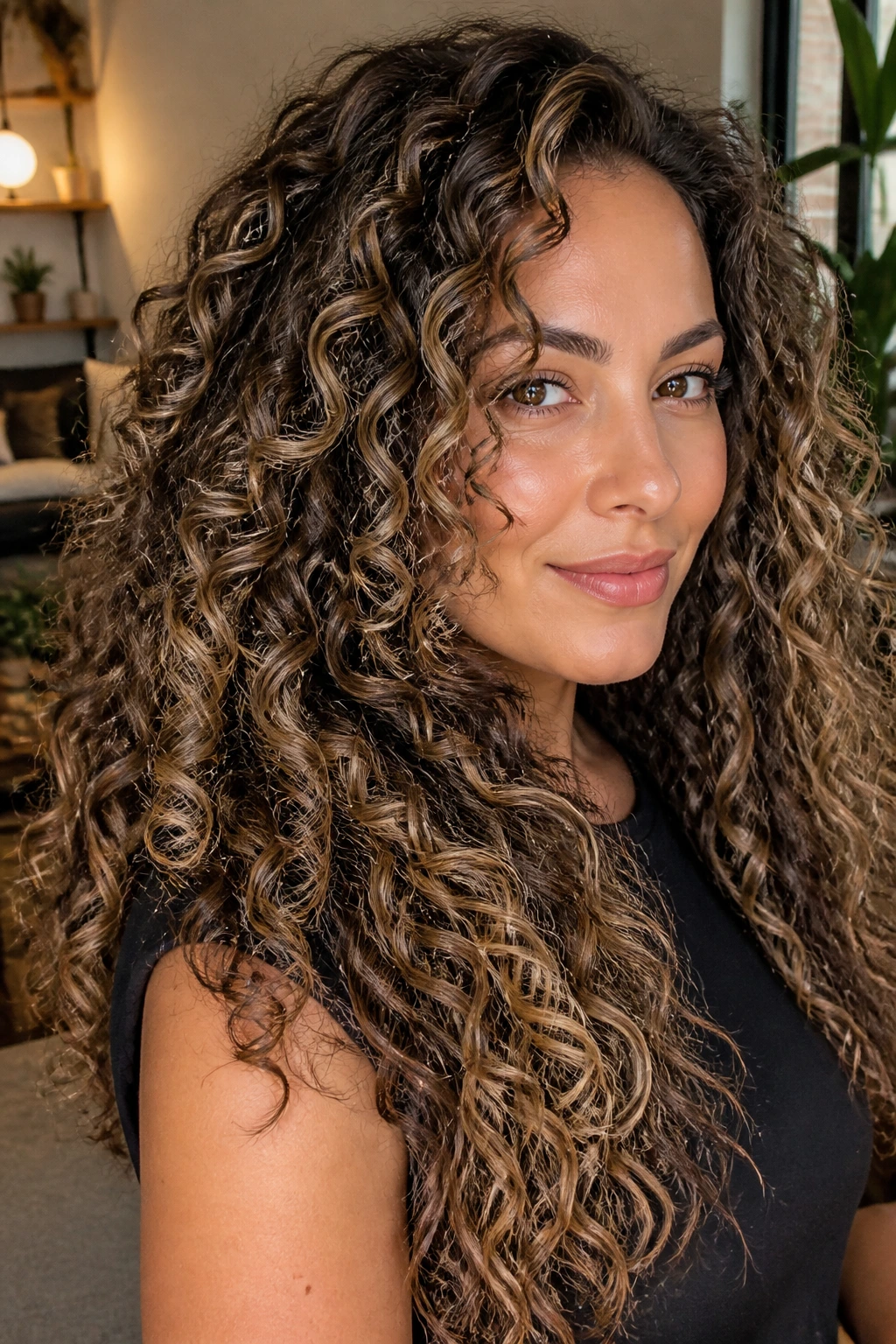
Curly hair needs a different map. If the blonde is painted like straight hair, the curls can hide it or bunch it up in the wrong places. Honey pieces placed around the curl pattern — not against it — let the dimension show when the hair springs.
The lowlights should live inside the curl mass, underneath the brighter surface. That gives definition without chopping up the pattern. It also makes the curls look denser, which is a nice side effect on looser textures.
A lot of people try to make curly hair look lighter by over-highlighting the top. Bad move. Put the honey where the curls actually open, and the color does more work with less bleach.
17. Sleek Long Layers with Mink Lowlights
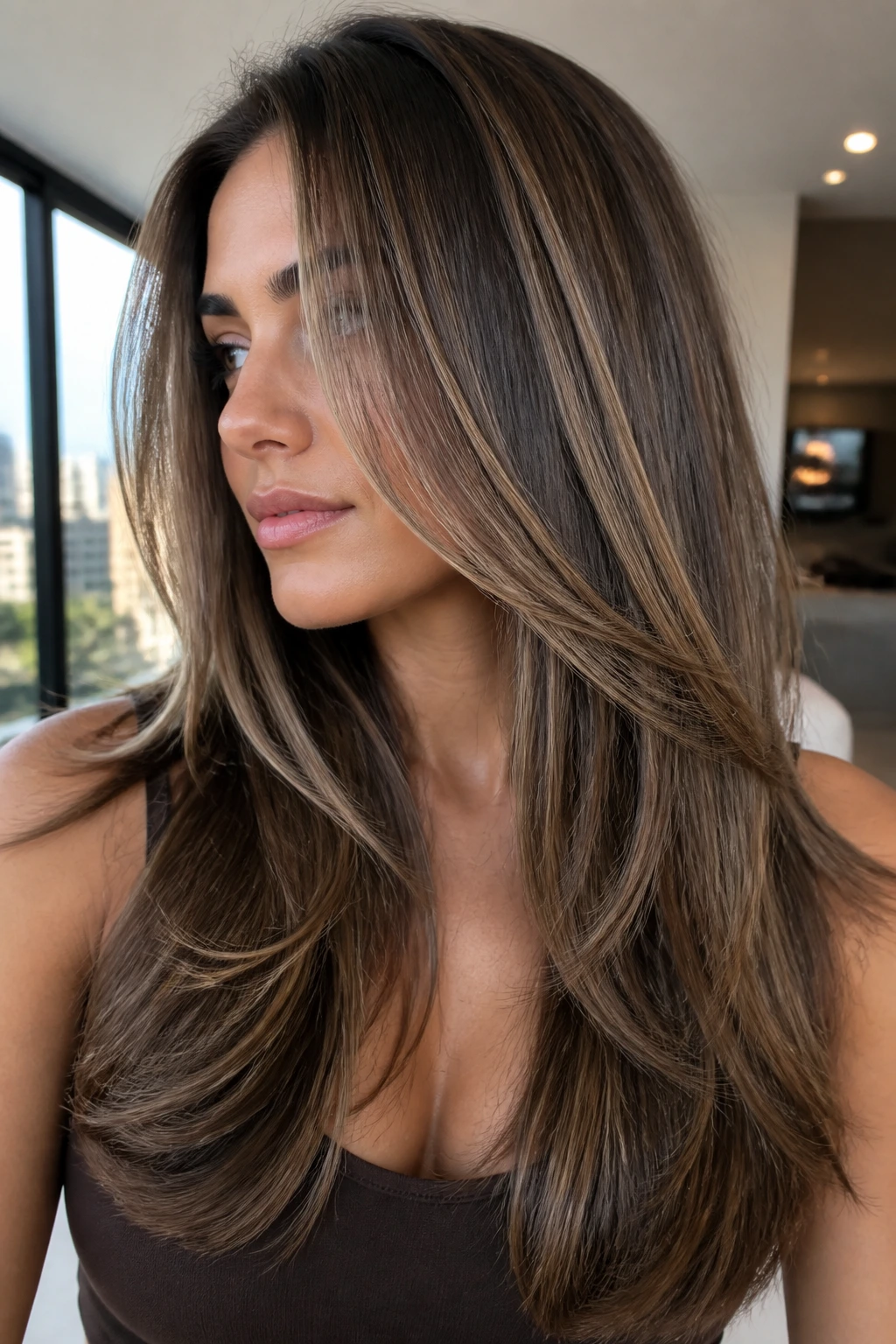
Mink lowlights are underrated. They’re soft, neutral, and just deep enough to cut through a long layered style without making it heavy. Pair them with thin blonde highlights and the hair gets a smooth, satin-like effect that looks especially good when blown out.
This is one of the best choices if you wear long hair straight or in loose bends. The layers need contrast to show, and mink lowlights give them that line. Too much blonde would erase the haircut. Too much darkness would swallow it. This hits the middle.
I’d recommend this to someone who wants movement more than brightness. The hair stays dimensional even when you tie it back, which is useful in real life and not just in a salon mirror.
18. Dimensional Bronde on a Shag Cut
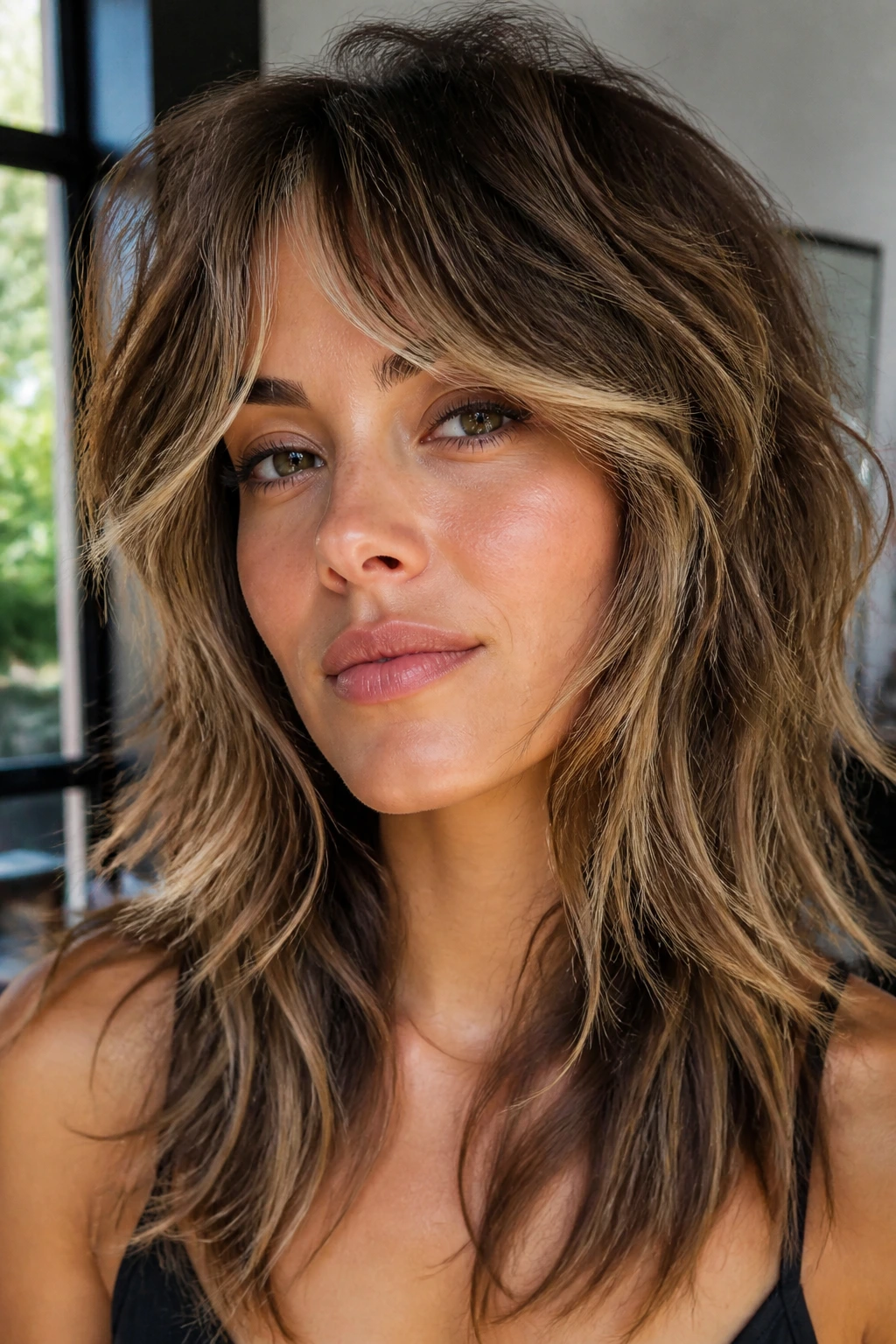
A shag and dimension are natural friends. The layered structure gives highlights and lowlights places to land, and bronde keeps the whole thing from feeling too serious. The blonde doesn’t need to be super light; the cut already creates movement.
This version works because the color follows the haircut’s rougher texture. Face-framing lighter pieces, darker underlayers, and a few sunlit mids all break up the shag in a way that looks effortless without being sloppy. That matters. A shag with one-tone brown can look heavy. A shag with too much blonde can look like a mess. This middle path fixes both.
If you style with a diffuser or texture spray, even better. The color and the cut help each other.
19. Rooted Blonde on a Medium Brunette Base
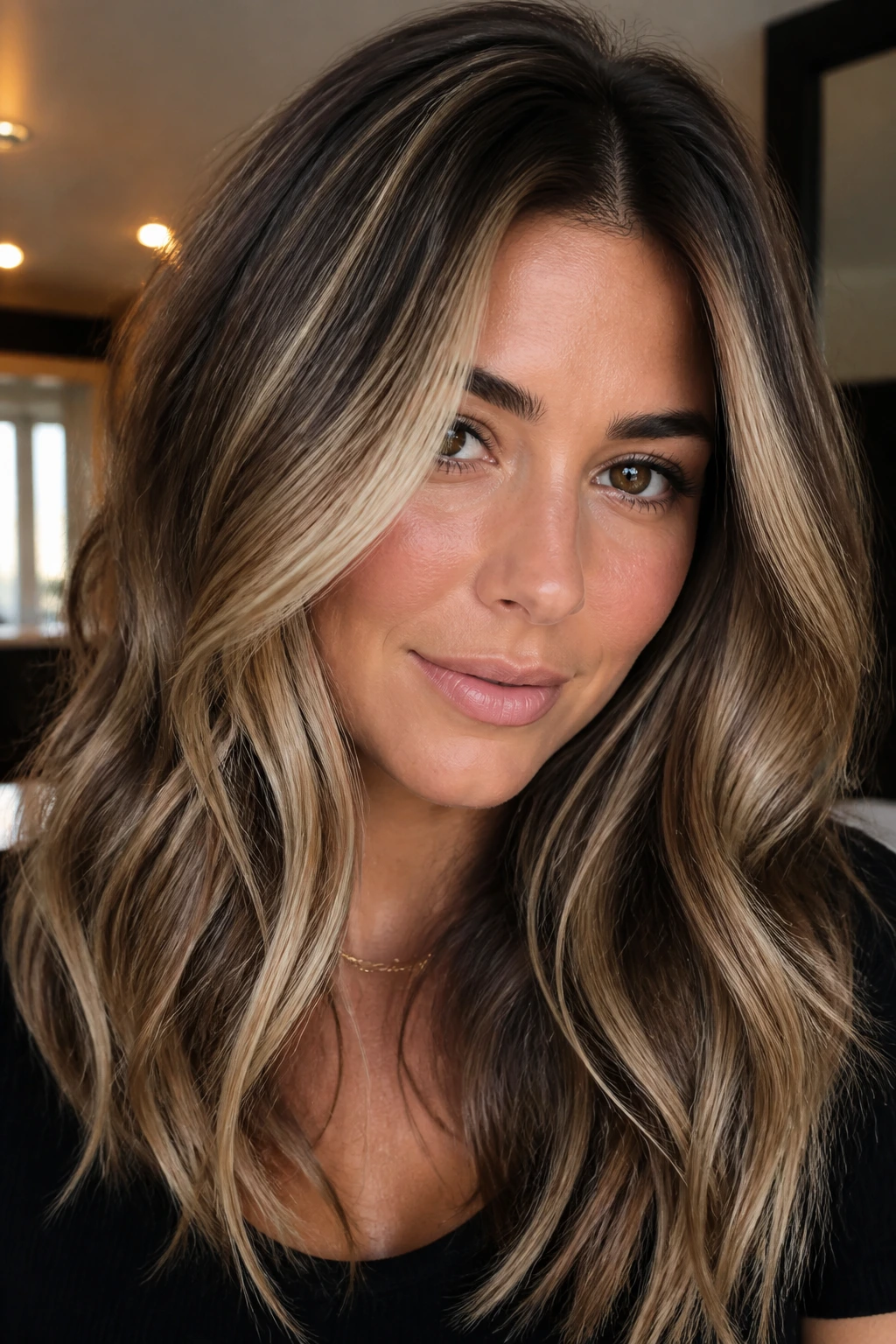
A rooted blonde look on brunette hair is a little bold, but the medium brunette base keeps it grounded. The root stays dark enough to create shadow, then the blonde grows lighter through the mids and ends, with lowlights threaded back in so the transition doesn’t go chalky.
Best Use Case
This is the one for people who like brightness and don’t mind some contrast. It’s stronger than a soft bronde, but less harsh than solid blonde. The lowlights are what save it from looking over-lightened; they keep the lighter sections from drifting into one flat field.
It’s especially effective on long layers or blunt ends. The root shadow gives the scalp area a pause, and the blonde does the lifting lower down where the eye actually lands.
20. Deep Brunette with Beige Slice Highlights
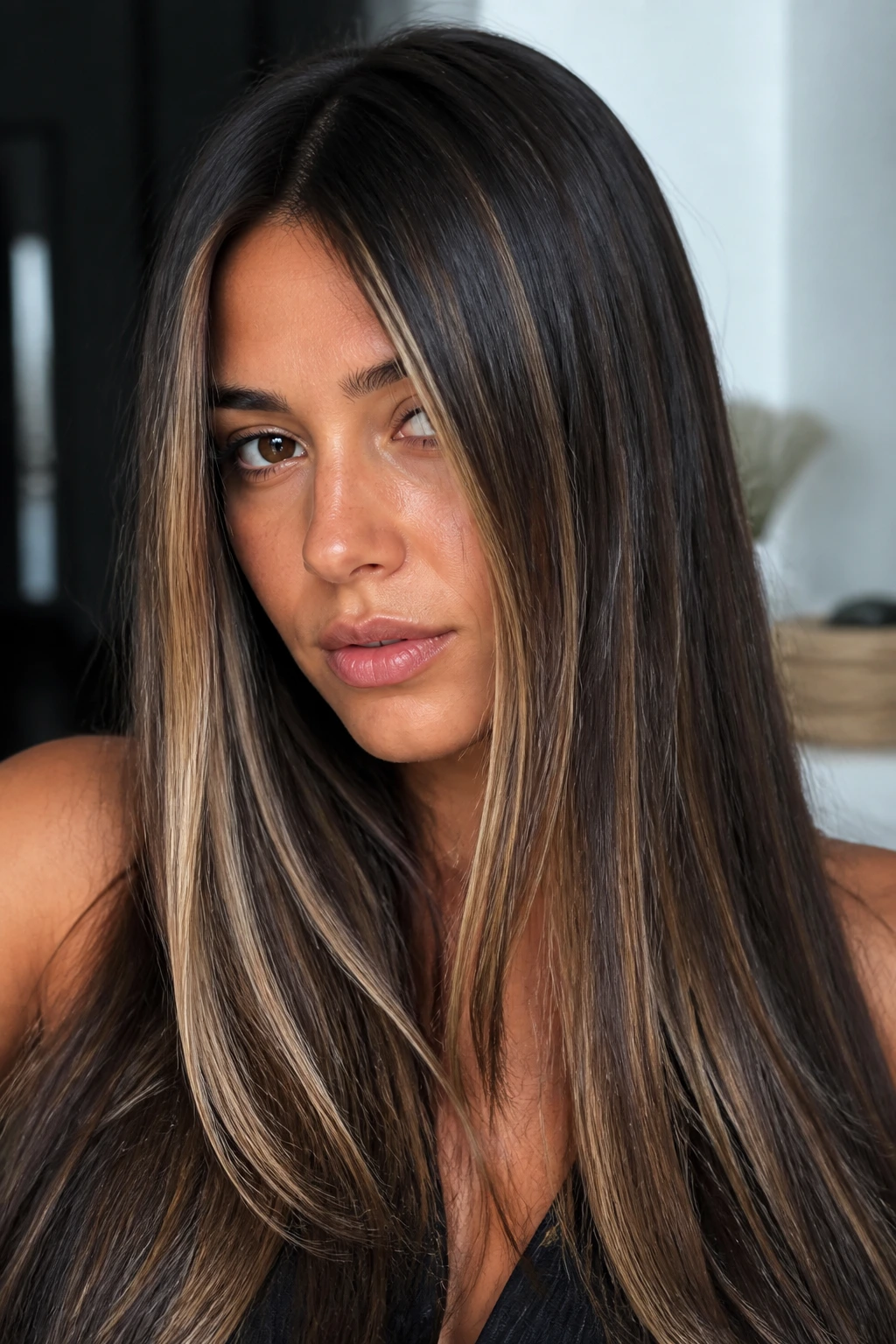
Slice highlights are for people who want the color to be seen from across the room. On a deep brunette base, beige slices create clean, visible bands of light without going streaky if they’re placed right. The lowlights between them keep the effect from becoming too graphic.
This is a sharper, more fashion-forward version of brunette-blonde blending. It looks especially good on straight hair or glassy waves because the slices line up and reflect light in a neat way. If you love subtlety, skip this one. If you like clear contrast, it’s hard to beat.
Tell your stylist to keep the slice width consistent and to leave enough brunette between them. That spacing is what makes it look deliberate.
21. Soft Auburn-Brunette Blend with Gold Threads
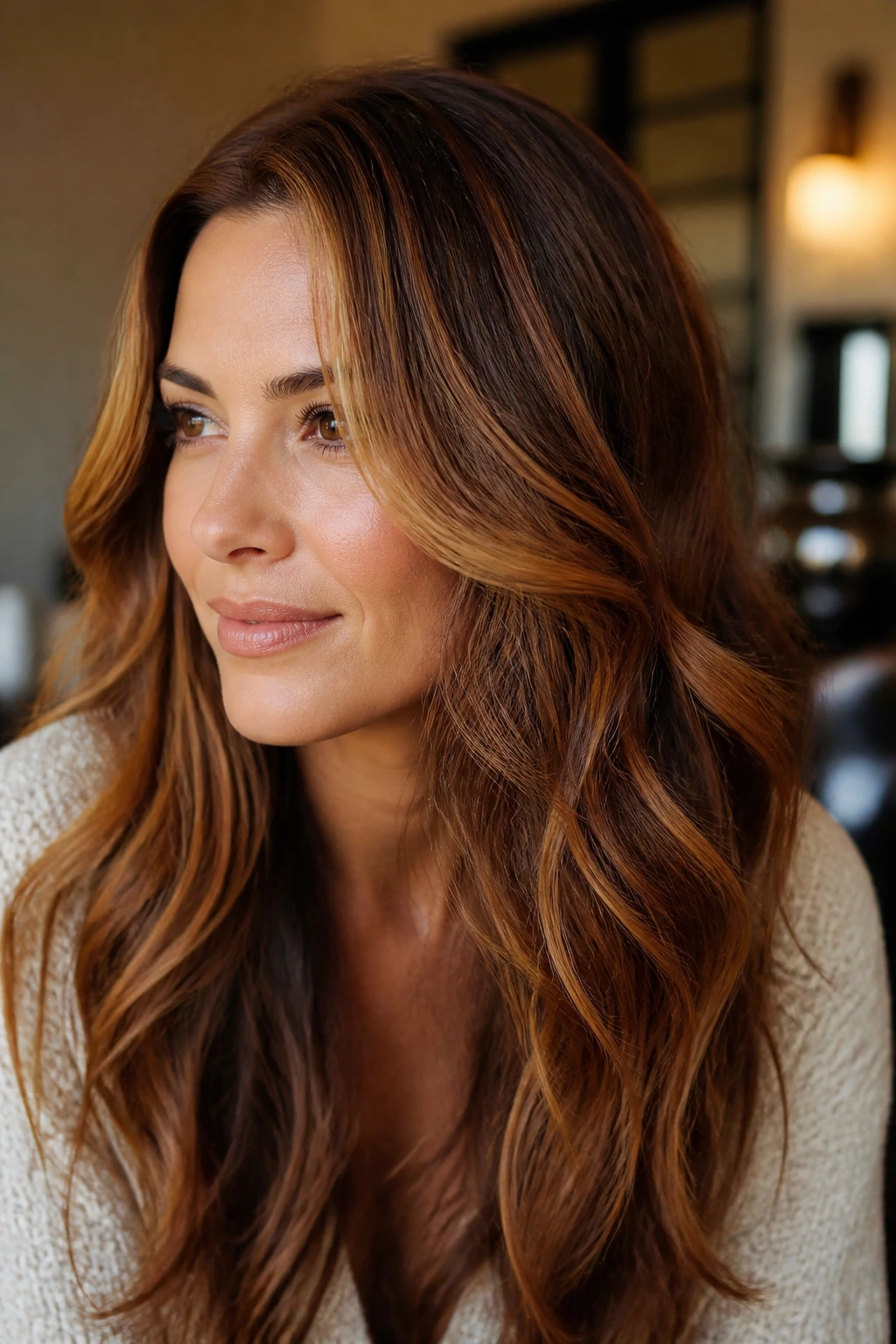
Can brunette and blonde live in the same head as red-brown and gold? Absolutely, if the tone is controlled. Soft auburn brunette with gold threads feels warm, a little fiery, and much more dimensional than a plain copper color. The lowlights should sit in a darker auburn-brown lane so the blonde threads don’t flash too hard.
This is a strong choice if you want warmth that doesn’t look flat in low light. Gold threads near the face pick up glow, while the darker interior keeps the color from turning into one washed-out copper mass. It looks especially good on skin with peach, olive, or golden undertones.
The trick is restraint. Too much gold, and it gets loud. A few well-placed threads, though, are gorgeous.
22. Sandstone Brunette with Buttercream Highlights
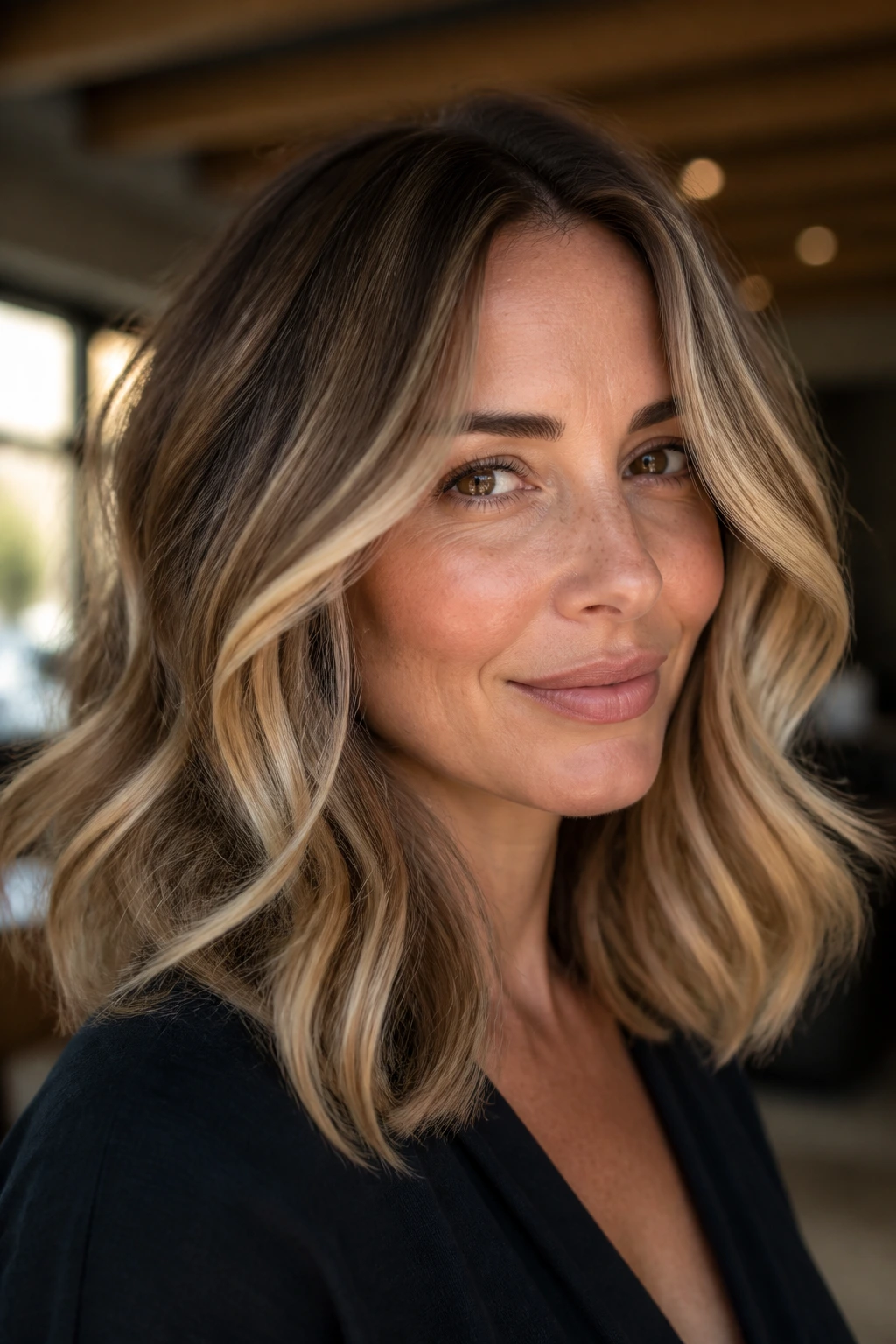
Sandstone brunette sits somewhere between beige brown and soft taupe. That makes buttercream highlights an easy fit. The blonde isn’t stark, the brunette isn’t heavy, and the lowlights keep the color from reading too powdery.
The result feels smooth and wearable. On shoulder-length cuts, especially, the mix gives the hair a soft-focus finish. I like this for people who want something lighter than classic brown but don’t want warmth taking over. The buttercream keeps the face bright, while the sandstone base keeps the rest civilized.
Loose waves work best here. They let the lighter and darker pieces separate just enough to show off the dimension.
23. Cool Cocoa Pixie with Micro-Lowlights
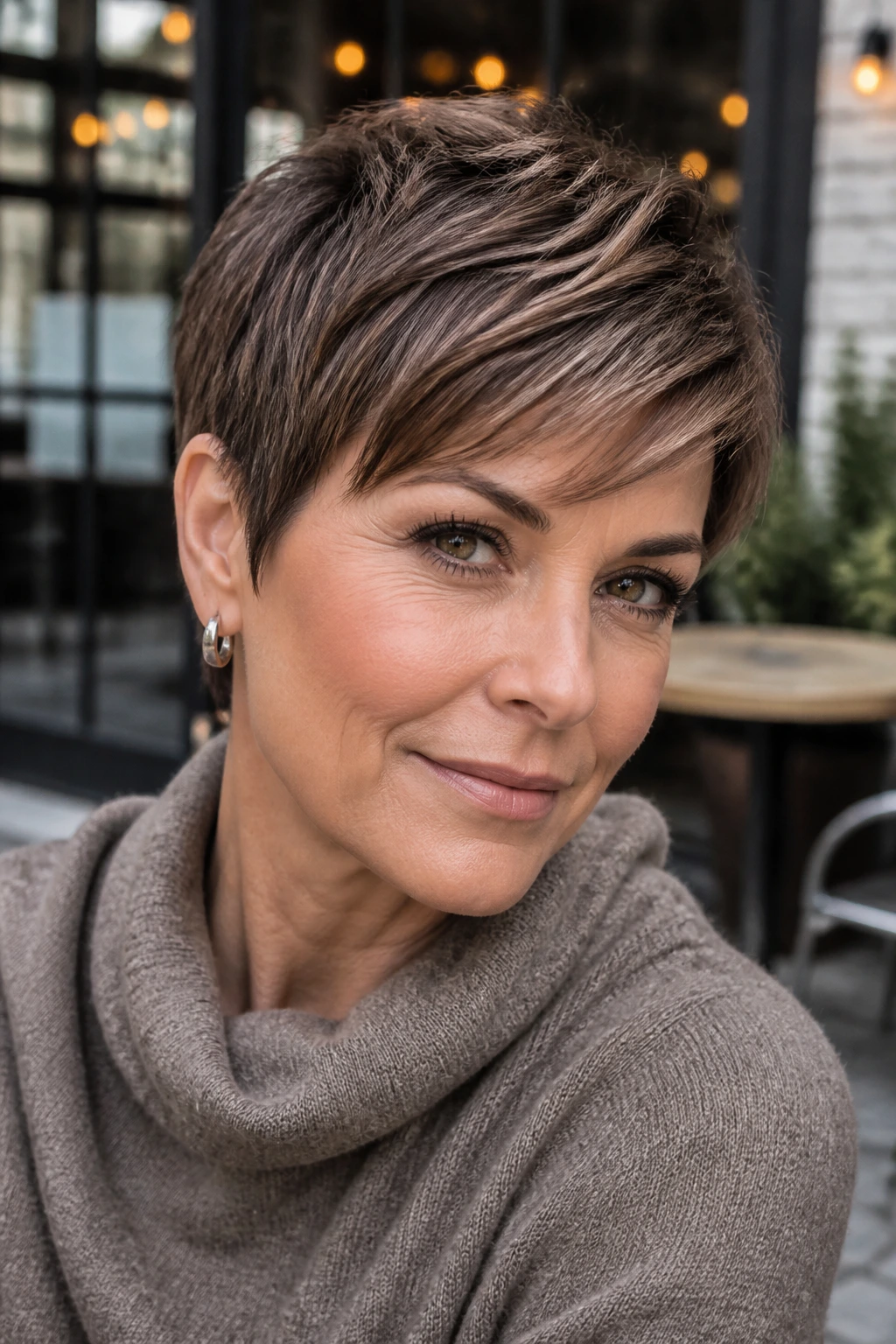
A pixie cut has almost no place to hide bad color, which is why micro-lowlights matter. Cool cocoa gives the short cut depth, while tiny blonde touches keep the shape from looking like one solid block. The result is sharp, neat, and far more interesting than a flat brunette pixie.
The lowlights should be fine and close to the base color. Too much contrast on short hair can look choppy in a bad way. Micro placement keeps the texture visible without making the cut noisy.
This is one of the easiest looks to wear if you like short hair and don’t want a high-maintenance color plan. The grow-out is forgiving, and the shape itself does a lot of the visual work.
24. Warm Mocha Waves with Painted Ends
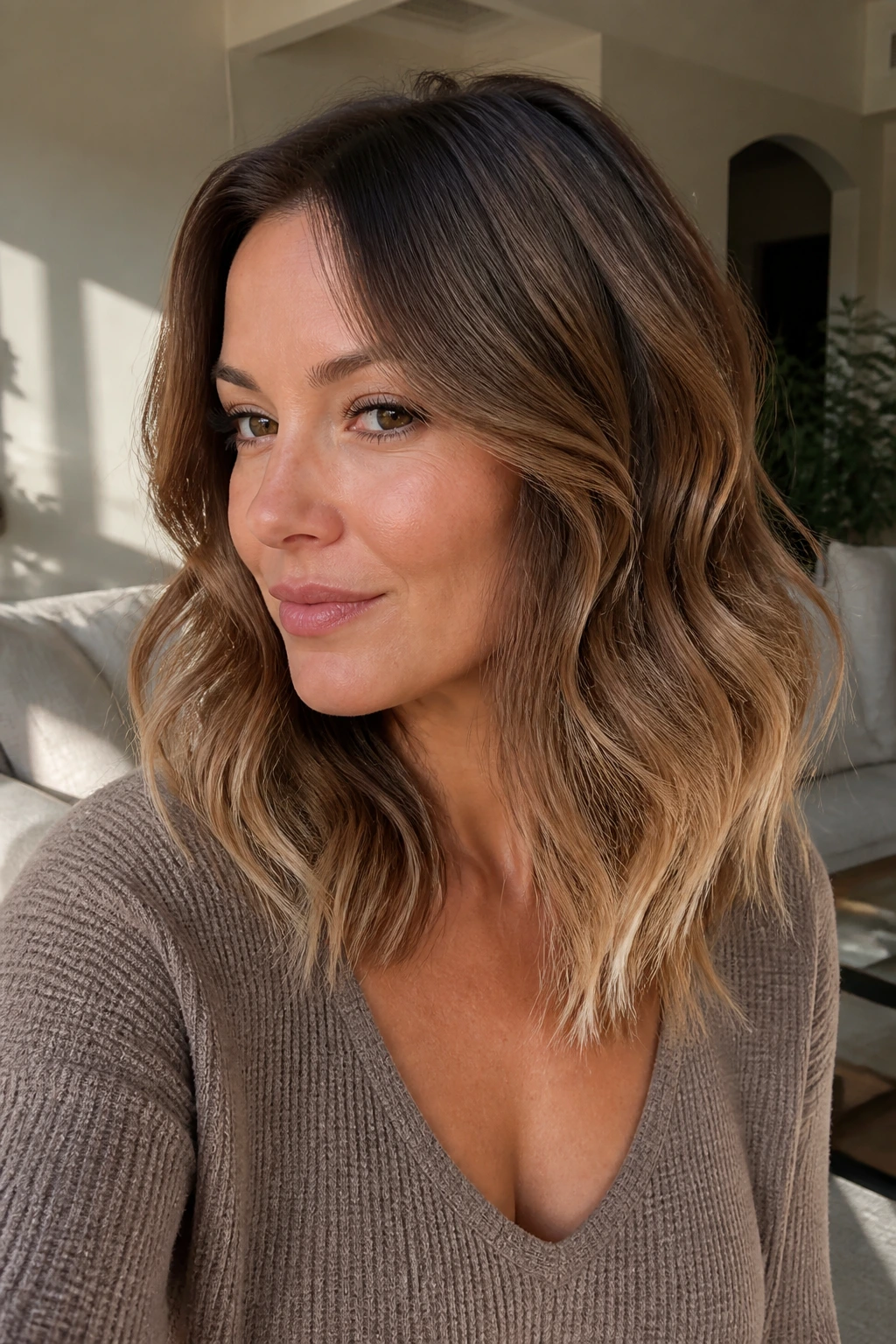
Warm mocha waves are a good example of how a color can stay relaxed and still look finished. The mocha root and mid-lengths keep the hair plush, the painted ends get a little lighter, and the lowlights threaded through the wave pattern stop the lighter tips from looking disconnected.
This is a nice fit for longer hair that you often wear loose. The painted ends show up when the hair moves, especially in daylight, and the lowlights help the lighter pieces settle back into the brown rather than floating away. It’s a soft blend, not a dramatic one.
If you like easy styling, this is a solid place to land. A few bends with a curling iron and a little shine cream are enough.
25. Luxe Brunette Blonde Melt with a Money Piece
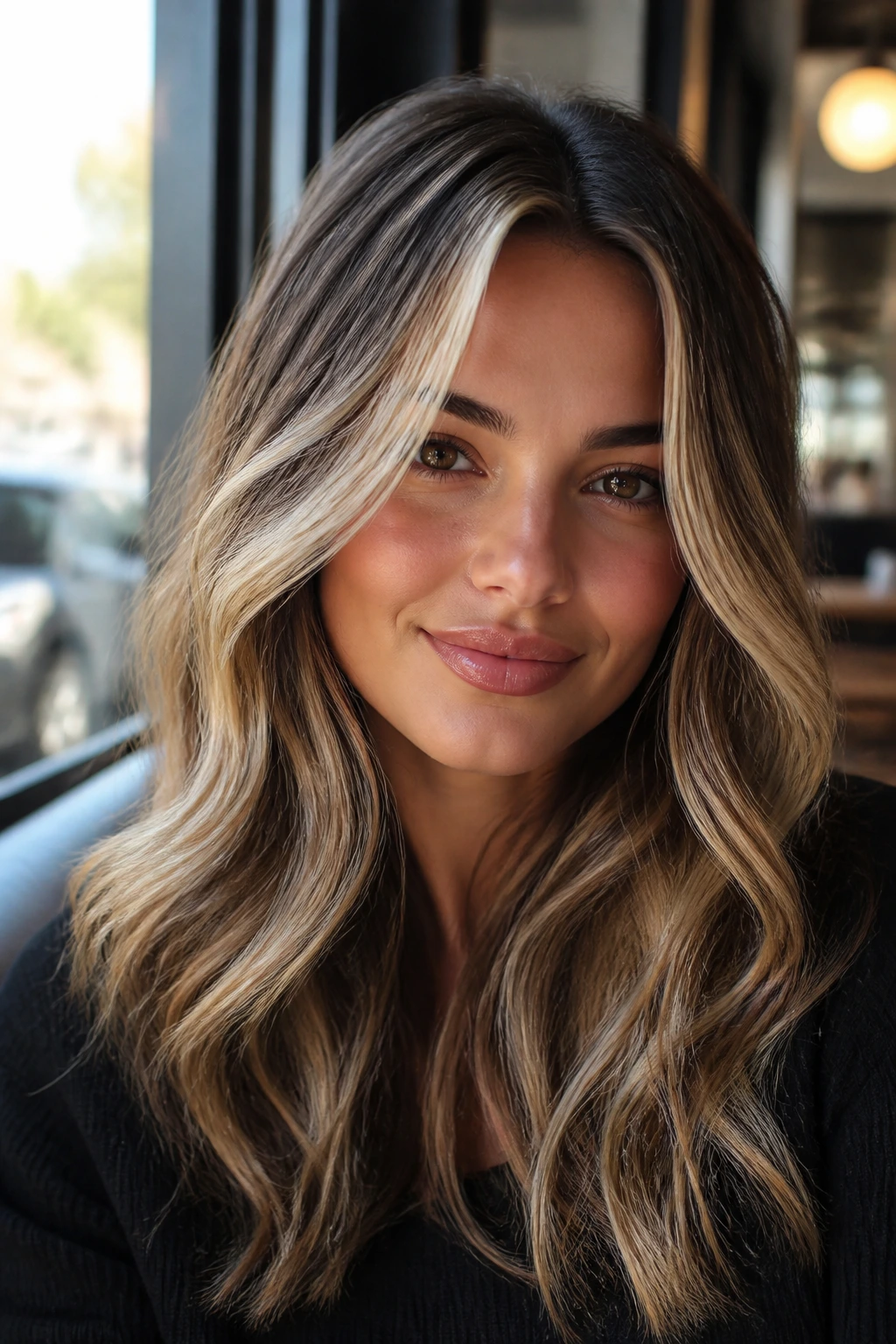
This is the most polished-looking version in the whole set, and yes, it deserves the space. A brunette blonde melt with a money piece gives you brightness at the front, a softened root, and blended mids that fold the blonde back into the brunette instead of letting it sit there separately. The lowlights are what make it feel luxe rather than over-processed.
The money piece should be the lightest point, but not the only bright point. If the front is light and the rest of the hair has no shadow, the look falls apart fast. Keep a few deeper strands under the crown and through the back, and the whole thing suddenly reads more expensive.
This is the version I’d choose when someone wants one color that works in loose waves, a blowout, and a ponytail. It holds up from every angle, which is rare enough to be worth calling out.
Why the Brown Needs the Blonde’s Shadow
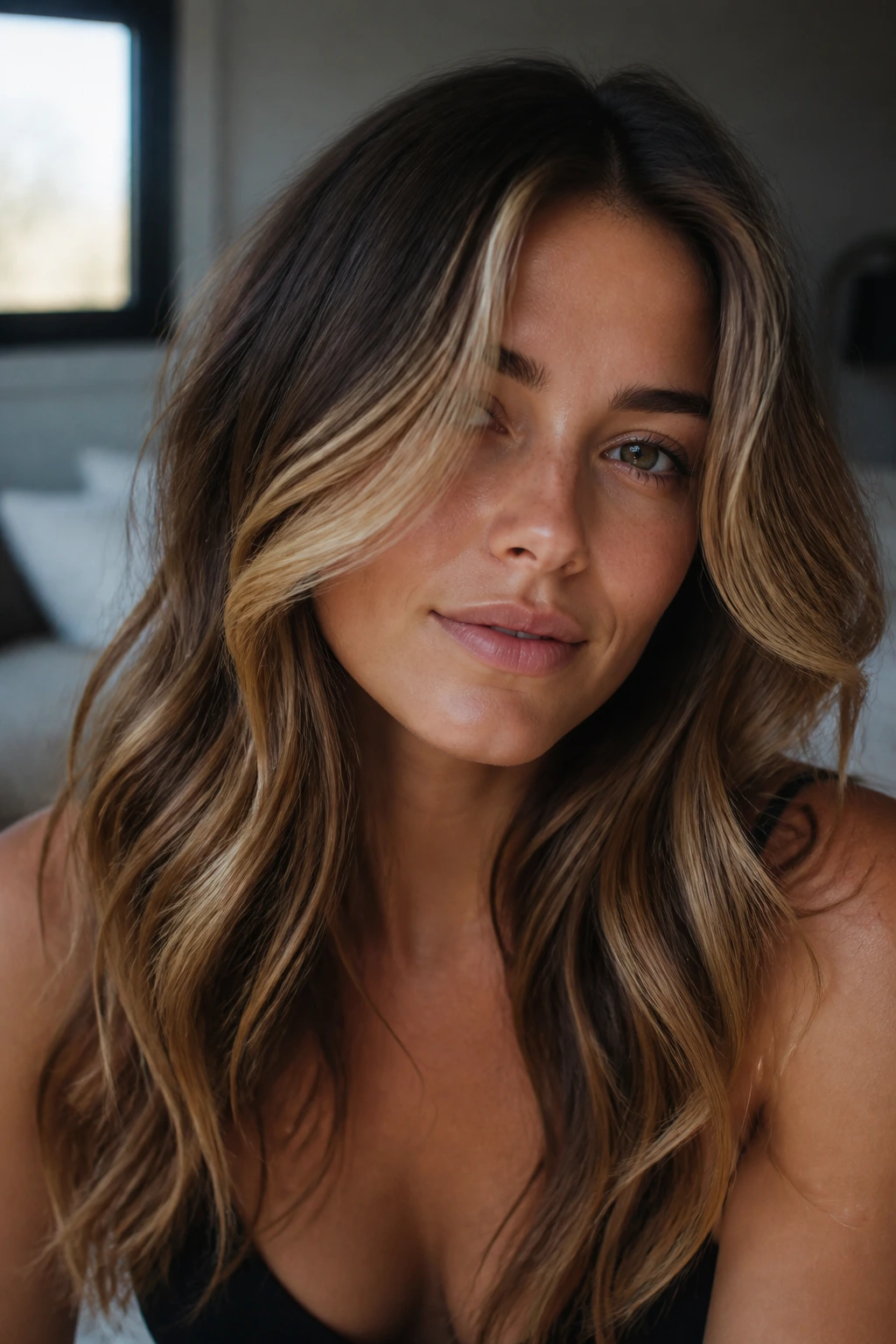
Brunette-and-blonde color works best when the blonde doesn’t have to carry the whole show. A brunette base gives the eye a place to rest. Lowlights keep the brighter pieces from floating on top like a separate layer. That’s why the best blends almost always have some depth tucked underneath the surface.
There’s a technical side to this, and it matters. Colorists usually think in levels, not just shade names. A lowlight that’s one or two levels deeper than the base gives definition; push it too dark and the hair can look heavy or muddy. Push the highlights too light without enough shadow, and the whole head starts to look thin, especially around the ends.
Porosity changes the game too. Hair that’s been lightened before often grabs toner faster, which means the blonde can turn cool or beige faster than the brunette can. That’s why some people need a gloss between appointments and others can coast for weeks. The strand history matters more than the photo on your phone.
Tools and Products Worth Keeping on Hand
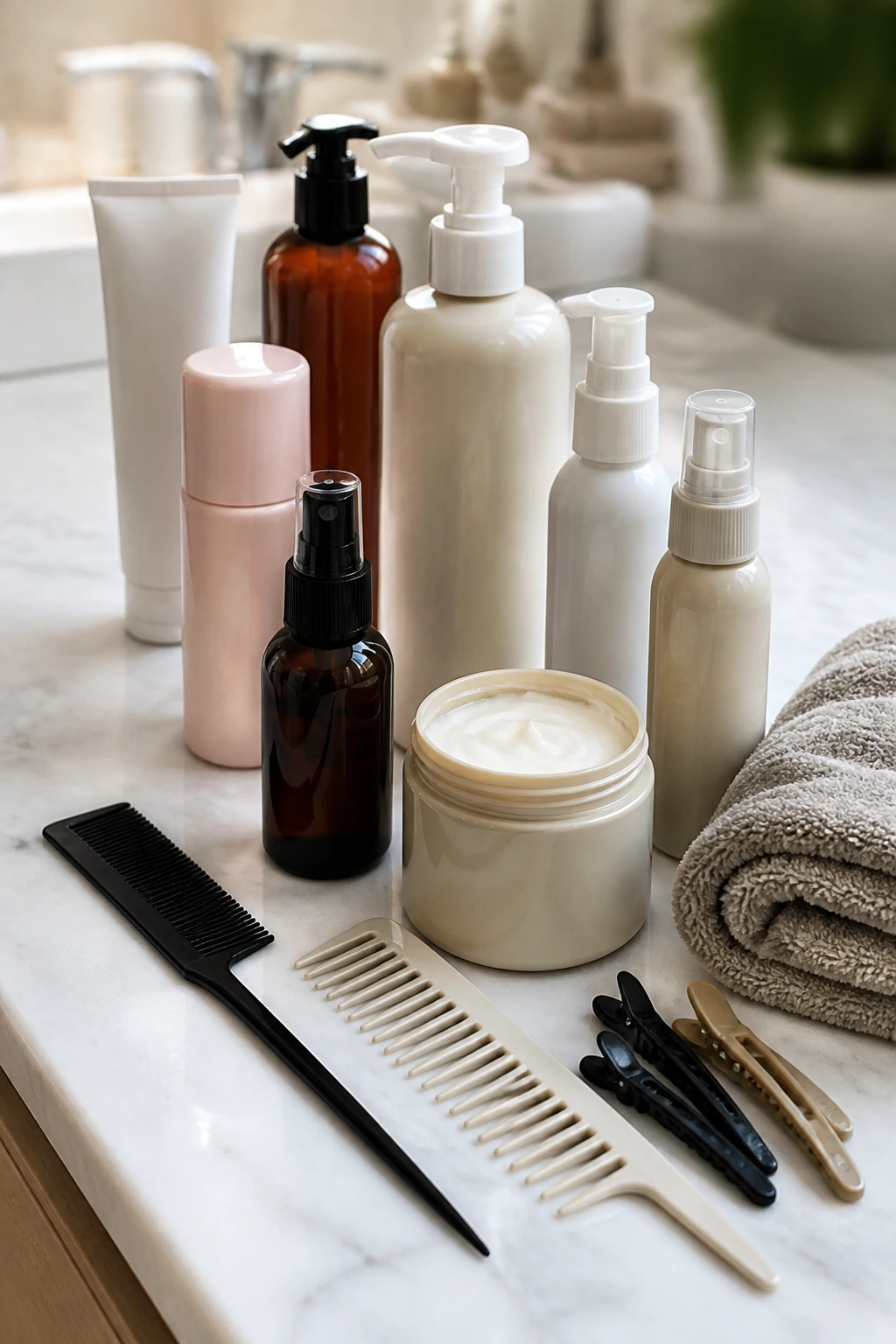
- Tail comb and sectioning clips: These help divide the hair cleanly when you’re planning a salon visit or parting it for home toning.
- Color-safe shampoo: Use a gentle formula that won’t strip the toner out in three washes.
- Purple shampoo: Best for yellow blonde pieces; use sparingly so the hair doesn’t turn dull or gray.
- Blue shampoo: Better for brunette-to-blonde blends that lean orange at the lightest parts.
- Deep conditioner or mask: Helps the highlighted ends stay smoother and less crunchy.
- Heat protectant spray: Essential if you blow-dry, curl, or flat-iron the lighter sections.
- Wide-tooth comb: Easier on wet, lightened hair than a brush that tugs.
- Microfiber towel: Cuts down friction, which matters when the blonde pieces are dry.
- Shower filter: Optional, but handy if hard water makes brass creep in fast.
How to Choose the Right Tone for Your Base
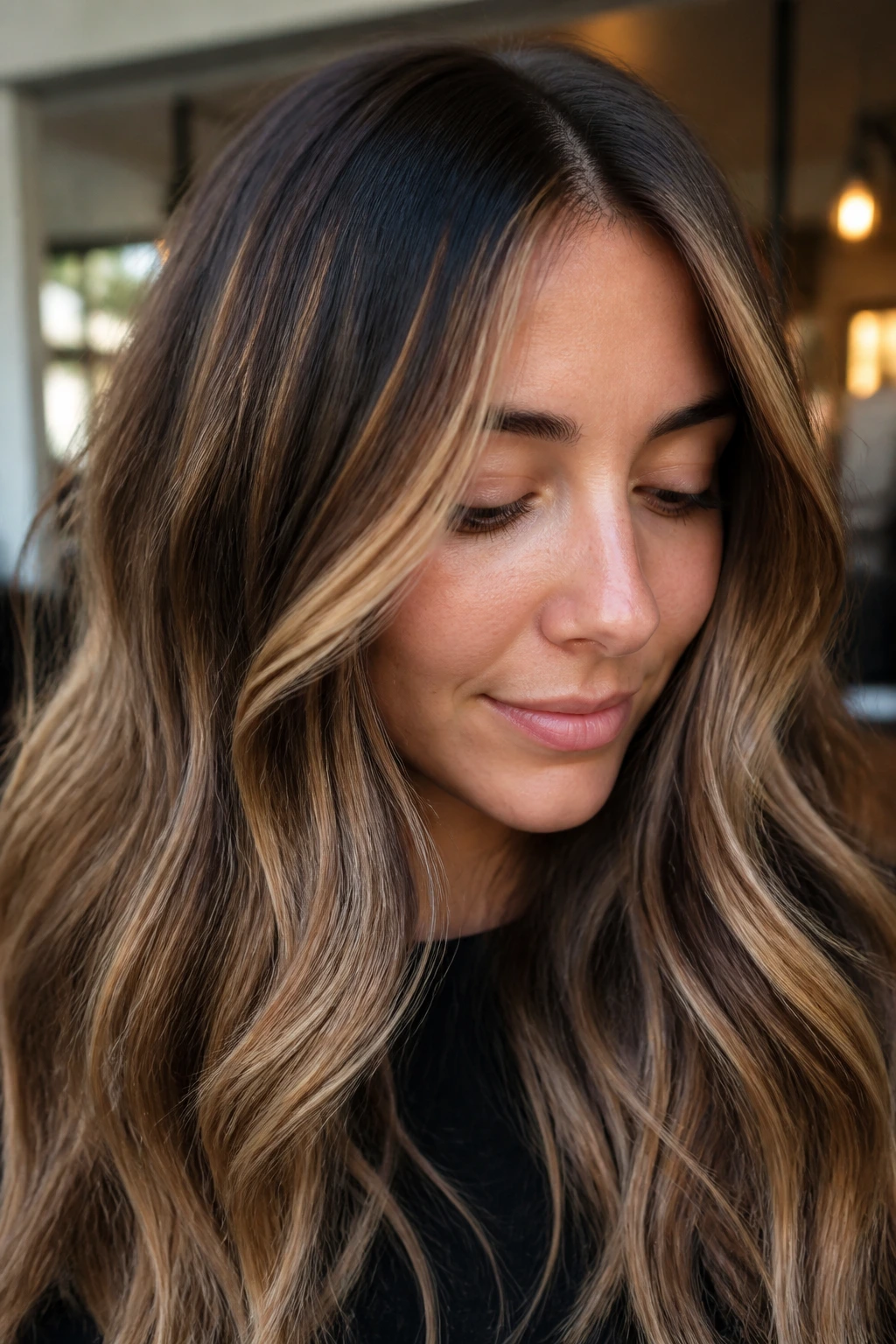
The easiest mistake is choosing the blonde tone you like in a photo instead of the one your base can actually hold. A level 4 or 5 brunette usually needs softer beige, caramel, or honey pieces to stay believable. A level 6 or 7 base can handle brighter champagne or ash-blonde ribbons without fighting the depth underneath.
Undertone matters more than people admit. If your skin reads warm, caramel, honey, buttercream, and wheat blonde usually sit more naturally. If you run cool, mushroom brown, beige, champagne, and pearl pieces tend to behave better. Neutral skin can go either way, which sounds convenient until you have to choose. Then it becomes annoying. Bring two photos: one for tone, one for placement. That helps more than a single perfect-looking picture.
And tell your colorist what your hair does at home. If it turns orange, fades fast, or feels dry after one wash, say so. The best brunette-blonde blend is the one that survives your actual routine.
How to Wear the Color So the Dimension Shows
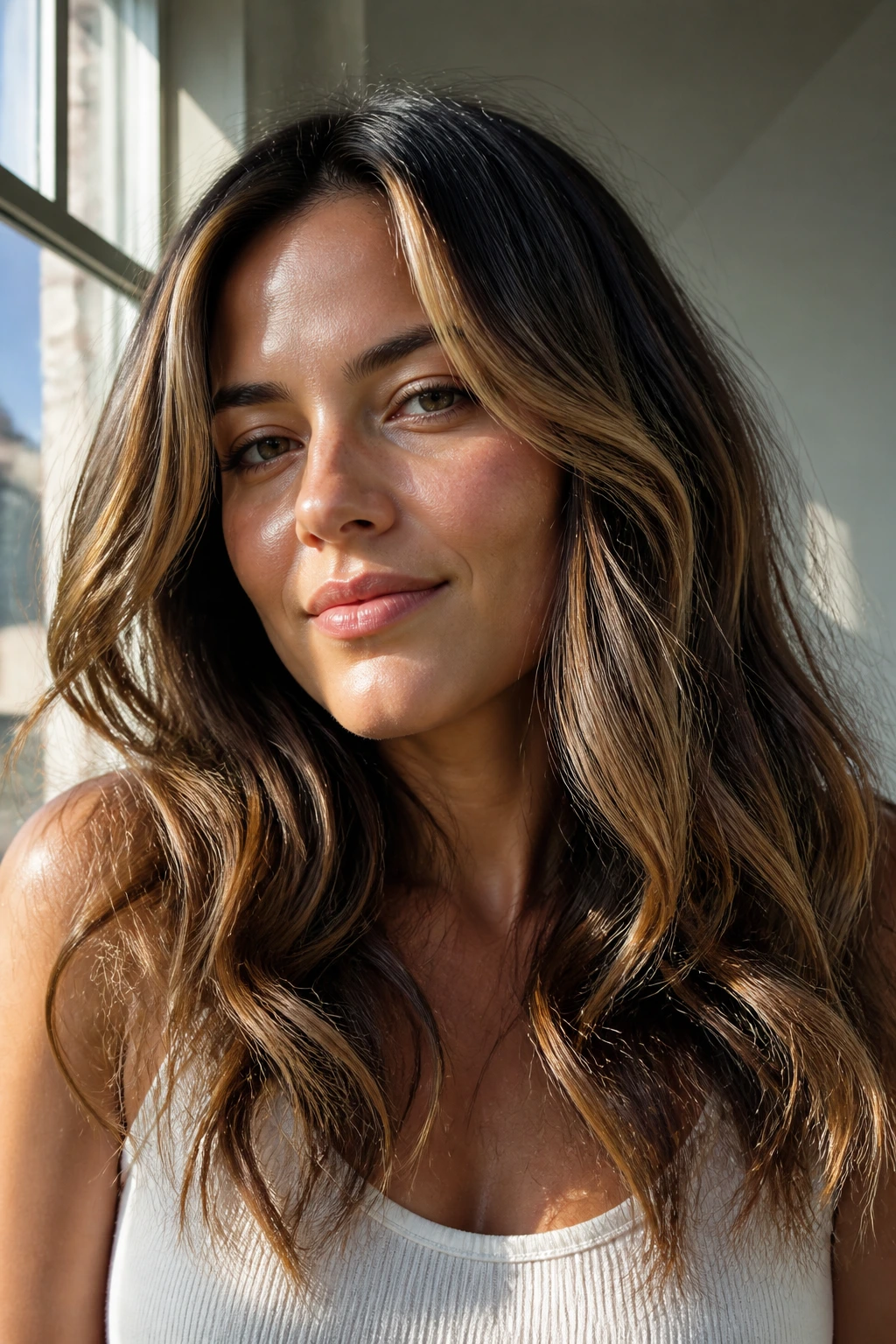
Presentation: Loose waves show the contrast best because the blonde and brunette pieces fold over each other. Straight hair reads cleaner, which is great if you want polish, but it can hide some of the lowlight work.
Accompaniments: Curtain bangs, face-framing layers, blunt bobs, soft shags, and long layers all give the color places to move. A solid one-length cut can wear this look, but it needs stronger placement to avoid looking too even.
Portions: Fine hair usually looks better with fewer, thinner highlights and slightly softer lowlights. Thick hair can carry more contrast without going busy, so don’t be afraid of a little more depth.
Finish: A light shine serum or gloss spray helps the blonde pieces reflect light. Matte styling products flatten the whole idea, and this color really does want some sheen.
Small Tweaks That Make the Color Feel More Expensive
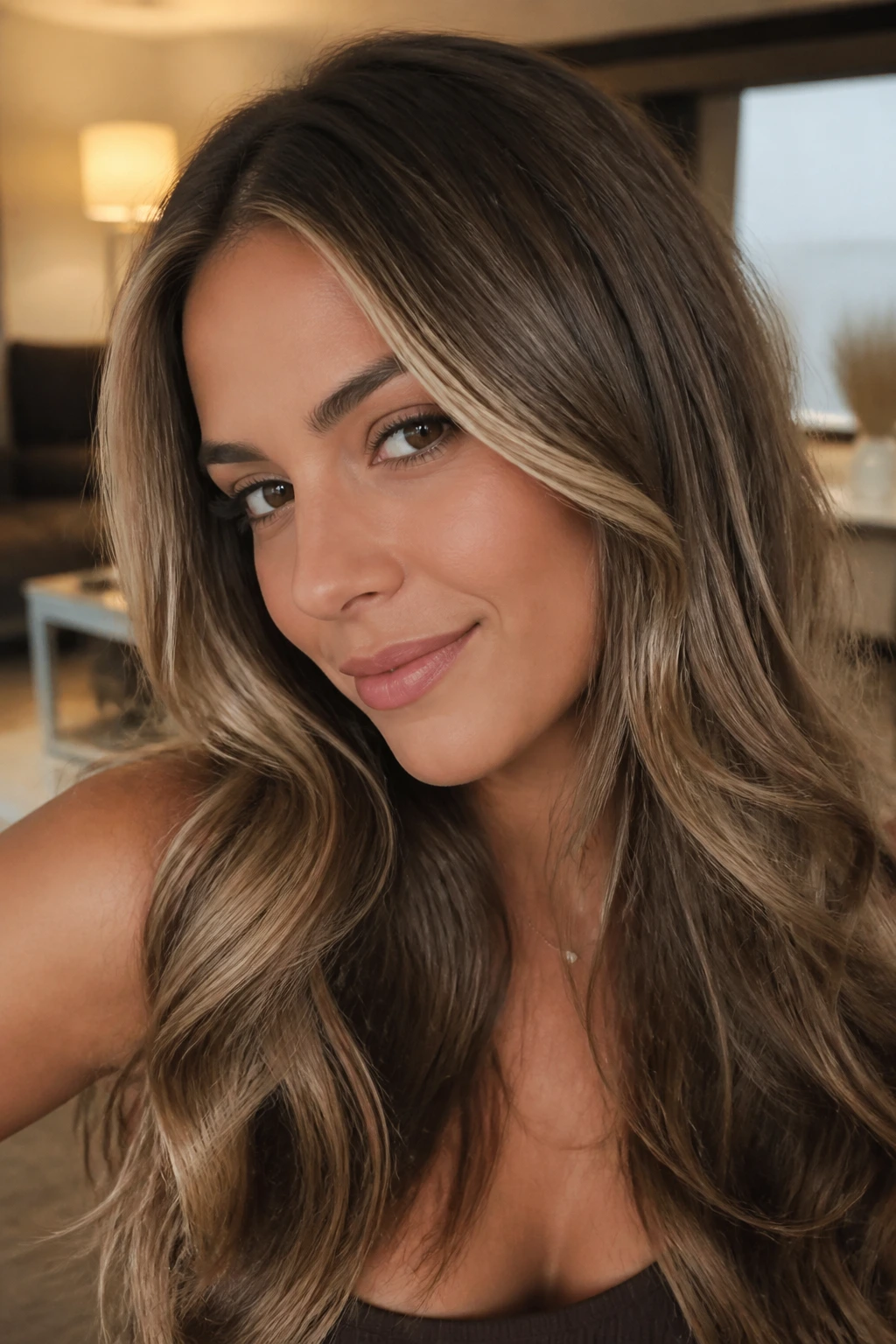
Gloss Boost: A clear or tinted gloss every few weeks keeps the blonde from drying out and helps the brunette stay reflective instead of dull. If the highlights are warm, ask for a beige or honey gloss; if they lean cool, a neutral gloss keeps them from going dull.
Placement Shift: Move the brightest pieces around the face and part line if you want the color to read stronger. Pull them lower through the mids if you want a softer, more blended look.
Texture Choice: Waves expose dimension. A smooth blowout shows shine. Tight curls or rough texture can hide careful lowlight work, so style with that in mind.
Make-It-Yours: Fine hair often needs less contrast and more delicacy. Thick, coarse hair can take bolder blonde pieces and deeper lowlights without turning chaotic. Gray blending also works well here; a few cool lowlights can help natural silver sit inside the brunette-blonde mix instead of fighting it.
Keeping the Tone Fresh Between Salon Visits
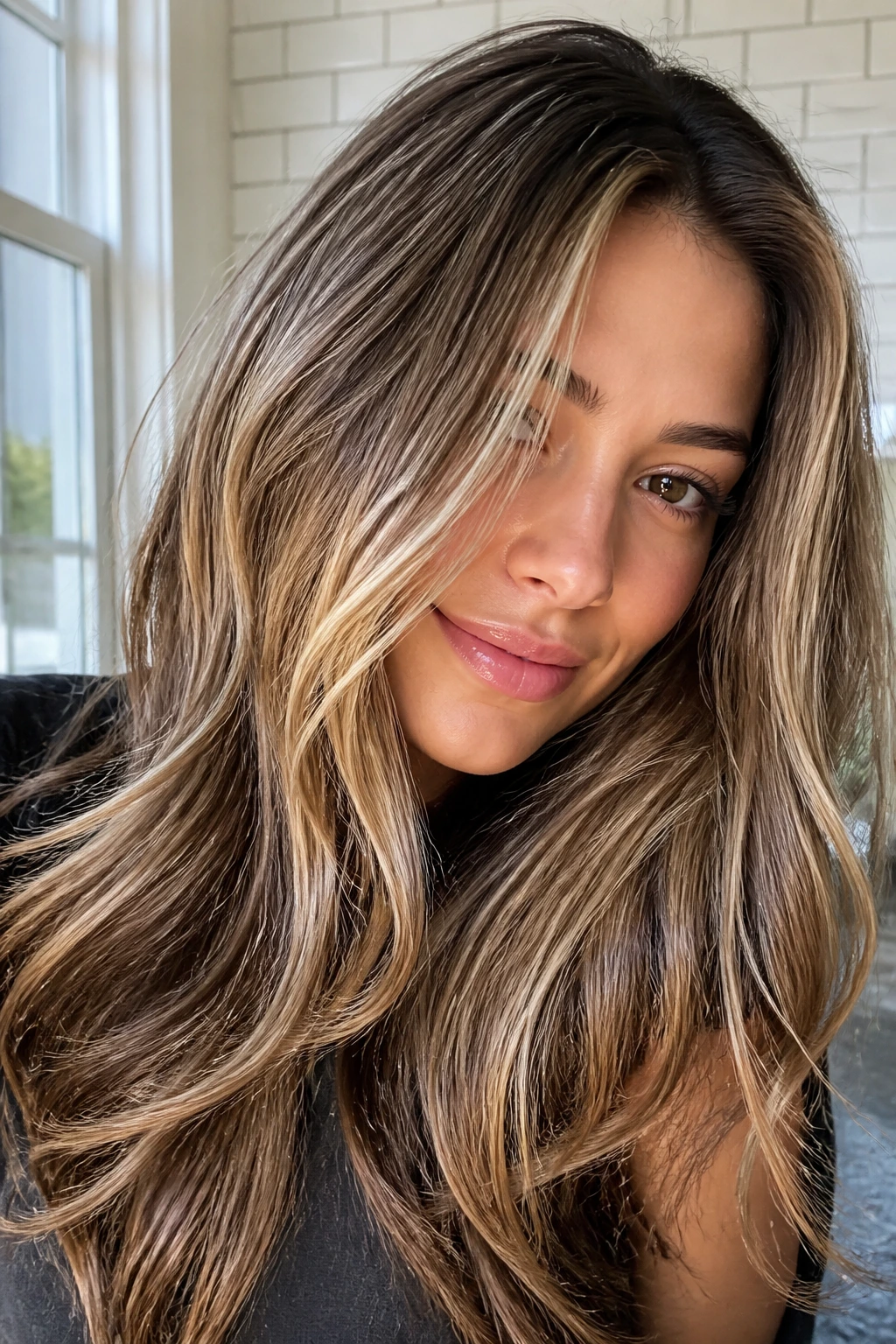
Most brunette-blonde blends stay nicest when they’re treated like a color service, not a one-time event. A gloss every 4 to 6 weeks can revive tone fast. Lowlights usually stretch 8 to 14 weeks, depending on how fast your hair grows and how visible the part line is. Highlights can often wait longer than people think if the placement was done well in the first place.
Use purple shampoo only when the blonde starts to yellow, not on autopilot. Once a week is enough for most heads. If your hair is warm-toned and you like that warmth, too much purple shampoo will drain the color and make it look tired. Heat protectant matters every single time you blow-dry or iron the lighter pieces, because the blonde sections are the first to rough up.
If your hair is porous or bleached more than once, a bond-building treatment can help the ends feel less straw-like. And if you’re booking color maintenance, ask for the glaze before you ask for more bleach. More often than not, the hair needs tone more than it needs lift.
Variations and Adaptations to Try
Soft Contrast Blend: Keep the lowlights only one shade deeper than the base and ask for fine, beige highlights. This is the easiest route if you want movement without obvious streaks.
Bright Face-Frame Version: Put the lightest pieces around the face and keep the rest of the head quieter. It brightens features fast and still lets you stretch maintenance on the back and interior.
Cool Ash Version: Use mushroom, beige, pearl, and ash-brown tones only. This works well if warm blonde turns brassy on you or if you like silver jewelry and cooler makeup.
Honey Glow Version: Lean into caramel, honey, buttercream, and wheat blonde. It softens the face and tends to look especially good on warm or olive undertones.
Curly-Hair Version: Follow the curl pattern with highlights and tuck the lowlights into the interior of the curl mass. The color shows better when the curls open, and the shape stays fuller.
Short-Cut Version: On bobs and pixies, go finer with the highlights and keep the lowlights close to the base. Short hair gets noisy fast, so delicate placement wins.
Common Mistakes That Flatten the Dimension
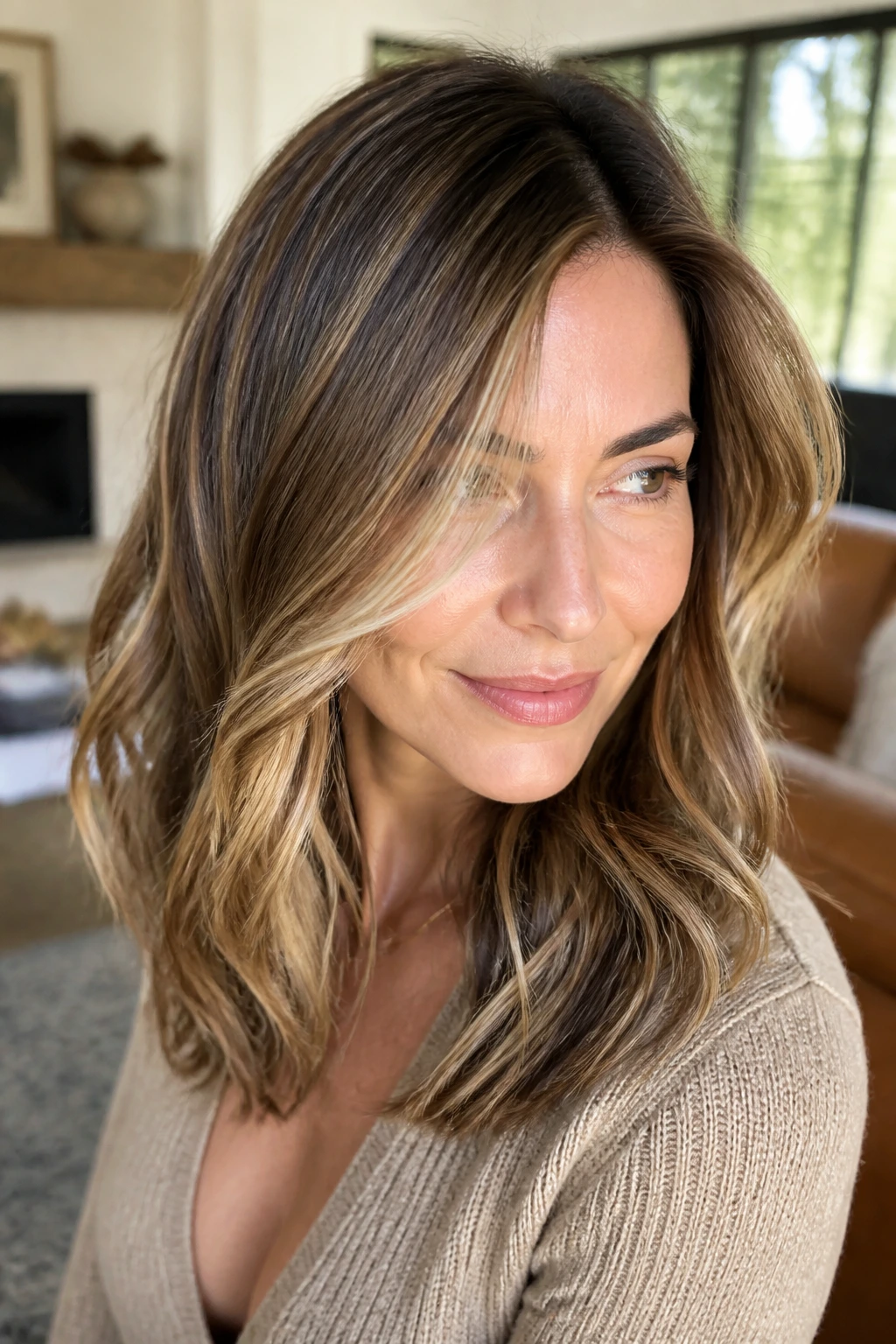
- Making the lowlights too dark: If they’re much deeper than the base, the hair can look muddy instead of dimensional. Keep them close enough to the brunette base that they read as shadow, not stripes.
- Going too blonde too fast: Extra lift doesn’t automatically improve the look. On darker brunettes, too much blonde can weaken the cut and make the ends look thinner than they are.
- Skipping toner and gloss: Highlights that were pretty on day one can turn yellow or orange in a few washes. A gloss keeps the color soft and believable.
- Putting all the brightness on top: If the lower layers stay dark and the top gets all the blonde, the result can look like a cap. Spread the lightness through the mids and around the face.
- Ignoring haircut shape: A blunt bob, shag, or long layer needs different placement. One foil map does not fit every cut, and that’s where many bad color jobs happen.
- Overusing purple shampoo: It can mute warm blonde pieces and leave them chalky. Use it only when the brass actually shows.
Frequently Asked Questions
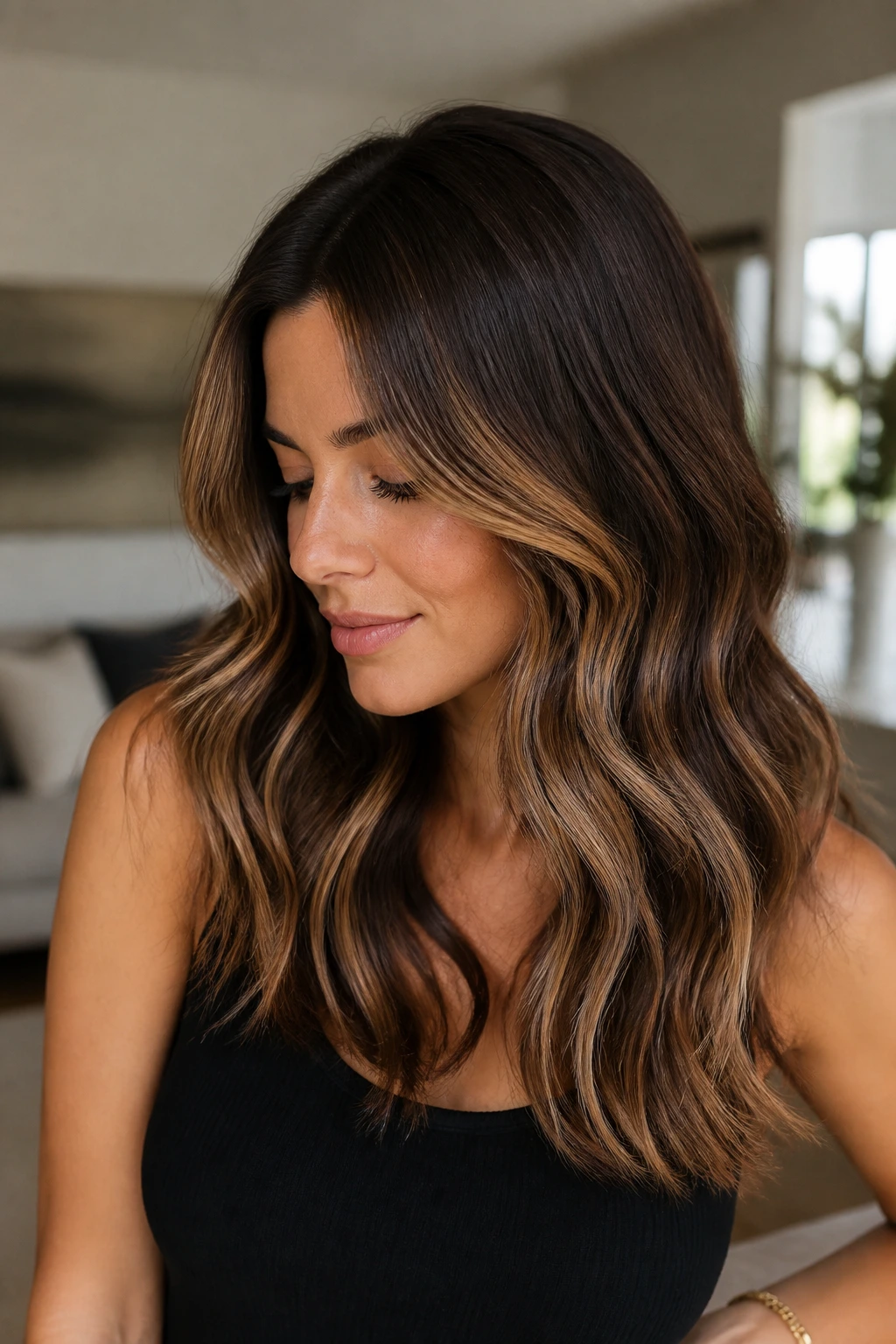
How do I ask for brunette blonde lowlights with highlights at the salon?
Bring two or three photos, not one. Show one that reflects the tone you want, one that shows placement you like, and one that matches your haircut or texture. Then ask for a brunette base with blonde highlights and a few deeper lowlights for shadow.
Will lowlights make my hair look thicker?
Often, yes. The darker strands create visual separation, which makes the hair look fuller, especially near the crown and through the mids. The effect is stronger on fine hair and layered cuts.
Can I do this if my hair is already lightened?
Yes, but the colorist may need to work with toner, lowlight deposits, or a root shadow first. If the hair is very porous, too much bleach can make the blonde grab unevenly, so the plan should focus on balance, not just more lift.
What if my blonde turns brassy fast?
That usually means the toner is fading faster than the underlying pigment can stay cool. A blue or purple shampoo used once a week, plus a salon gloss every few weeks, can slow the brass. Hard water can make the problem worse.
Is this look good on curly hair?
It can be excellent on curls, but placement matters more than usual. Highlights should follow the curl pattern, and lowlights need to sit inside the curl mass so the shape keeps its depth.
How much upkeep does this color need?
Less than an all-over blonde, more than a single-process brunette. A gloss every 4 to 6 weeks and a bigger refresh every 8 to 14 weeks is a common rhythm, depending on how obvious you want the contrast to stay.
Can I make it work without bleach?
Sometimes, yes, if your hair is already medium brown or lighter and you only want subtle lift. On darker brunettes, though, true blonde pieces usually need some lightening. A colorist can still keep the lift softer and more targeted.
What if my hair feels dry after highlights?
That means the lighter pieces need moisture and less heat, not more product piled on top. Use a conditioner or mask weekly, cut back on hot tools for a few washes, and ask for bond support at the salon if the ends feel rough.
The Right Amount of Contrast
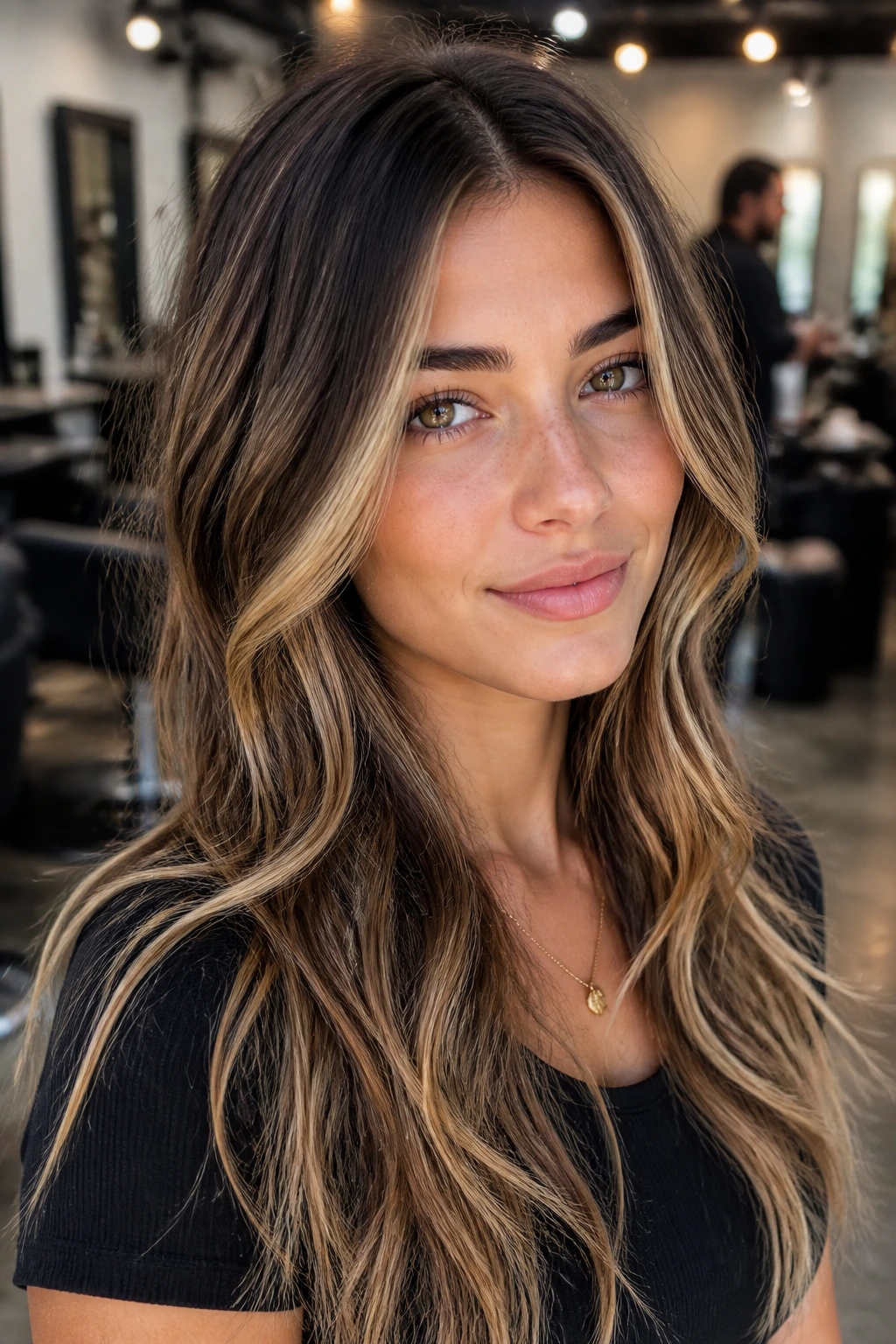
The best brunette-blonde blends don’t try to erase the brunette. They use it. That shadow gives the blonde shape, keeps the color from turning brittle, and makes the whole thing look like a planned mix instead of a panic appointment.
Pick your favorite version by tone first, then by placement. Warm, cool, soft, sharp, curly, short, long — the right choice is usually the one that fits your haircut and your maintenance habits without making you wrestle your own mirror every morning. A good color should help the cut do its job.
If you want the shortest path to a nicer result, start with one question: where does the light belong, and where does the depth need to stay? The answer decides almost everything else.