



A very short shag on medium hair only works when the cut is doing the hard work. If the crown is left too flat, the whole shape hangs like a tired bob; if the ends are over-thinned, it turns fluffy in humid air and stays that way. The sweet spot is a cut with short, broken-up layers through the top, enough length at the sides to flick or tuck, and a neckline that still feels clean.
That sweet spot is why very short shag haircuts for medium hair keep showing up in good salons. Medium hair gives the layers enough body to show their shape. The trick is knowing where to keep weight, because the best shags are not all texture and no structure.
I keep coming back to that structure piece. A good shag should look a little unruly, yes, but it should also sit down at the roots and move in pieces instead of exploding outward. The styles below play with that balance in different ways, from soft fringe to sharper razored ends to curly shapes that need room to shrink.
Why These Shags Work on Medium Lengths

Less weight, more bend: Medium hair has enough length to hold a shape, but not so much that the layers get buried. Short shag layers remove the heaviness that usually drags the crown down.
The cut does the styling: A strong shag keeps its personality even when you air-dry it rough. That matters on mornings when you want movement without standing in front of a mirror for half an hour.
The grow-out looks intentional: The shortest pieces blur into longer lengths instead of growing into a blunt shelf. That buys you a few extra weeks before the cut starts looking tired.
Face-framing matters more than perfection: The best versions carve softness around the cheekbones, jaw, or temples. A little imbalance is part of the charm.
Works with texture, not against it: Waves, bends, and curls make these cuts look richer. Straight hair can wear them too, but the shape needs sharper ends and a little product memory.
1. Feathered Micro Shag With Airy Fringe
A feathered micro shag on medium hair gives you lift at the crown without turning the sides into a puff ball. The fringe sits light and broken-up, so it skims the forehead instead of building a heavy line across it.
Why It Works
The short top layers create movement where medium hair usually lies the flattest. That is the whole trick here: keep the crown short enough to lift, then leave the perimeter long enough to swing when you turn your head.
- Best for: fine to medium hair that collapses at the roots.
- Shape cue: ask for the shortest layers near the crown, not all over the head.
- Styling note: a pea-sized mousse at the roots gives this cut a little memory.
Pro tip: Keep the fringe a touch longer than you think you want. One extra half-inch keeps it from sticking straight up after a wash.
2. Jaw-Length Razor Shag With Side Sweep
This is the one I’d pick for straight hair that refuses to look lived-in. The razored ends make the outline soft, but the side sweep keeps the cut from reading like a boxy bob. It has edge without looking severe.
The side part gives the front some lift, and that matters more than people admit. When the part is pushed off-center, the hair stops sitting like a curtain and starts folding around the face in a better way.
For styling, blow-dry the root near the part first, then bend the ends with a round brush or a quick pass of a flat iron. If you want the texture to show, finish with a dry texture spray from mid-length down. Not at the roots. Never at the roots.
3. Curly Crown Shag With Tapered Nape
Why does this version work so well on curls? Because it gives the crown room to breathe without leaving the neckline bulky. The top stays lifted, the nape stays neat, and the whole cut avoids that triangle shape curls can fall into when they’re left too heavy.
The shortest pieces should be cut with shrinkage in mind. Curls spring up more than people expect, and a shag that looks shoulder-grazing when wet can end up chin-length once it dries. That is not a surprise. It is the haircut doing exactly what curls do.
How to Style It
Use a leave-in and a light gel on soaking-wet hair, then scrunch with a microfiber towel or T-shirt. Diffuse on low heat until the roots are dry and the curl clumps hold their shape. If the top wants to split, clip the crown up while it dries for a few minutes.
4. Choppy Bob-Shag With Curtain Bangs
Picture a bob that got loosened up and a little more interesting. The curtain bangs open the face, while the choppy layers stop the shape from looking too square around the chin.
The cut works because it gives you movement at two points: through the fringe and through the ends. That means you do not need a polished blowout to make it look finished. A rough dry and a finger twist around the front pieces are often enough.
- Best for: round or heart-shaped faces that need a bit of vertical length.
- Ask for: bangs that hit just below the brow line and split naturally in the middle.
- Avoid: thinning the perimeter too much, or the bob-shag loses its shape.
A little bit of bend near the front makes this one look alive. That is the difference between “cute” and “why does this feel like it was cut on purpose?”
5. Soft Wolf Shag With Piecey Ends
This version leans a little closer to a wolf cut, but it stays wearable because the lengths are not pushed too far apart. The top has that broken texture you want, while the bottom still reads like medium hair, not a mullet in disguise.
I like this one for people who want a little attitude without a dramatic silhouette. It has that messy, music-show feel, but the soft ends keep it from going too far into costume territory. The piecey finish is the point. You want strands that separate, not a fuzzed-out halo.
A salt spray at the mid-lengths and a tiny bit of styling cream at the ends will usually do it. Too much cream and the pieces stick together. Too little and the cut loses its shape. Annoying, yes. But that middle ground is where it looks best.
6. Bixie Shag With Wispy Temple Fringe
A bixie shag sits between a pixie and a bob, which is exactly why it works on medium hair. You get the cropped energy around the ears and nape, but the longer top keeps the style from feeling too bare.
What Makes It Different
A pixie can feel all top and no swing. A bob can feel too tidy. This cut borrows the best bits of both, then adds shag texture at the temples and crown.
It suits people who want something short enough to feel light but not so short that every bad hair day is on display. The wispy temple fringe is a nice touch because it softens sideburn areas that often get ignored in short cuts.
Styling shortcut: dry the crown first, then pinch the temple pieces between your fingers with a dab of paste. That little detail gives the cut its shape.
7. Rounded Shag With Full Brow-Grazing Bangs
This one has a softer outline than many shags, and that is the appeal. The bangs sit full across the brows, then break apart just enough so the face does not feel boxed in.
The rounded shape works especially well if your medium hair tends to flare at the sides. Shorter internal layers keep the top from lying flat, while the perimeter curves inward instead of kicking out in random places. There is structure here, even if the finish still looks a bit undone.
I prefer this version on hair with a natural wave. Straight hair can wear it too, but you’ll need a round brush or a hot brush to get the front to bend the right way. Otherwise, the fringe can sit heavy.
8. Wavy Shag With Flipped-Out Ends
This is the easygoing one. On wavy hair, flipped-out ends make the haircut look like it has already lived a little. You do not need crisp edges; you need separation and a clean base.
The trick is in the bottom inch or two. Leave enough length so the ends can flick out, but keep the layers high enough that the wave does not turn into a flat sheet. If the ends are too blunt, the flip looks forced. If they are too shredded, the shape falls apart.
Use a round brush only on the last twist of the ends, not the whole head. A quick bend is enough. Then mist the mids with texture spray and leave the roots alone unless they are collapsing.
9. Uneven Razor Shag With Deep Side Part
Can a shag look sharp and soft at the same time? Yes, if the parting is doing half the work. The deep side part gives one side height and the other side weight, which is a very useful trick for medium hair that needs more movement.
The razored perimeter helps the ends fall in broken pieces rather than one solid line. That keeps the cut from feeling too tidy. It also means you can tuck one side behind the ear and still have something happening on the other side.
How to Style It
Blow the part side first, lifting at the root with your fingers or a vent brush. Then switch to a round brush only on the face-framing pieces. Finish with a light spray that dries matte, not shiny.
10. Coily Mini Shag With Halo Layers
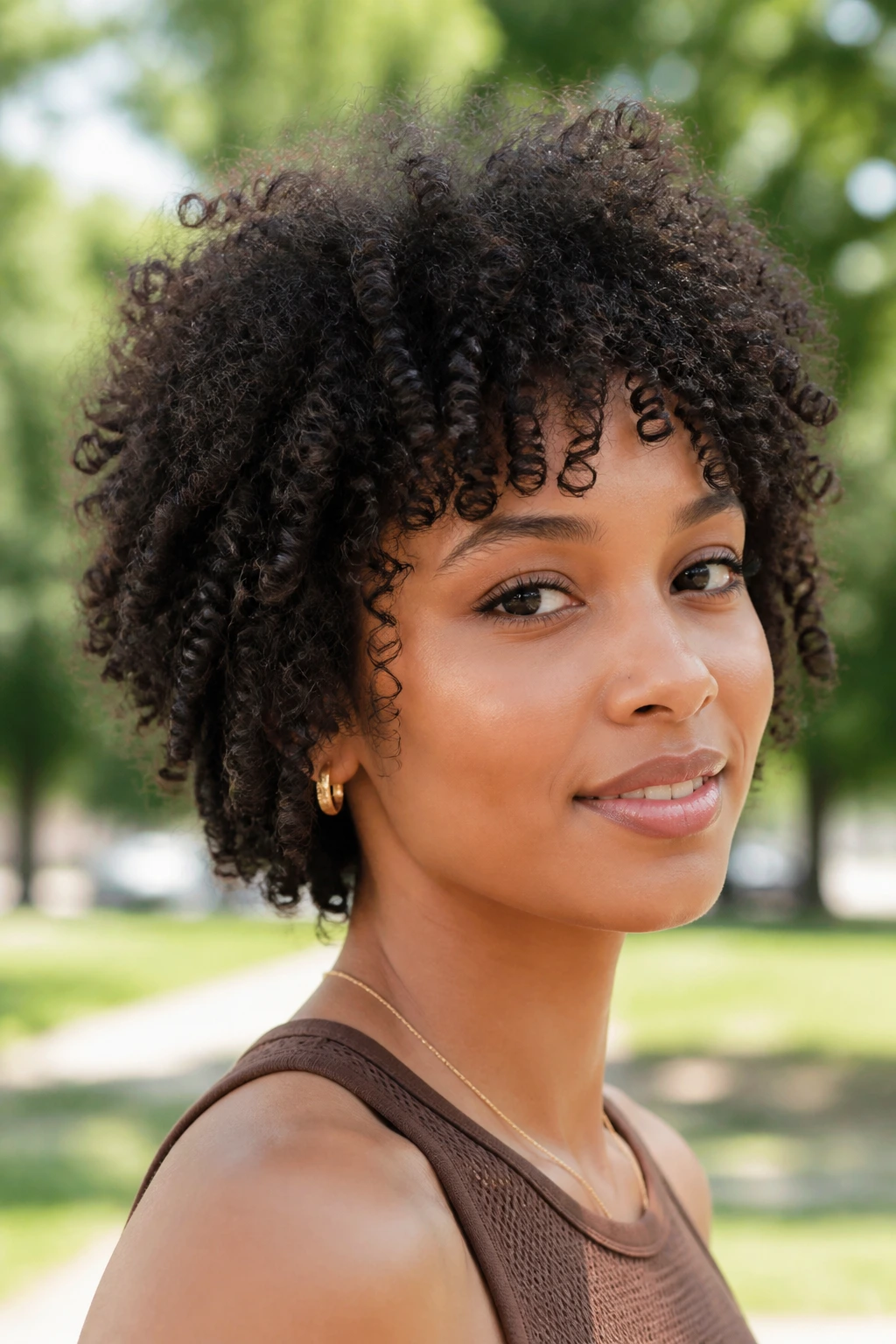
Coily hair needs room at the crown and respect at the perimeter. This mini shag gives both. The halo layers let the top rise without forcing the whole cut into a triangle, and the shorter outline around the face keeps the shape lively.
The best version of this cut is usually dry-shaped, not cut strictly wet. Coils shrink in ways that can fool even a careful stylist. You want the final outline to land where you expect, especially around the temples and neckline.
A light cream plus gel combo works better than one heavy product. Too much butter-like cream will drag the curls down and steal the lift. Keep the nape neat and let the top have room.
11. Retro Feather Shag With Tucked-In Nape
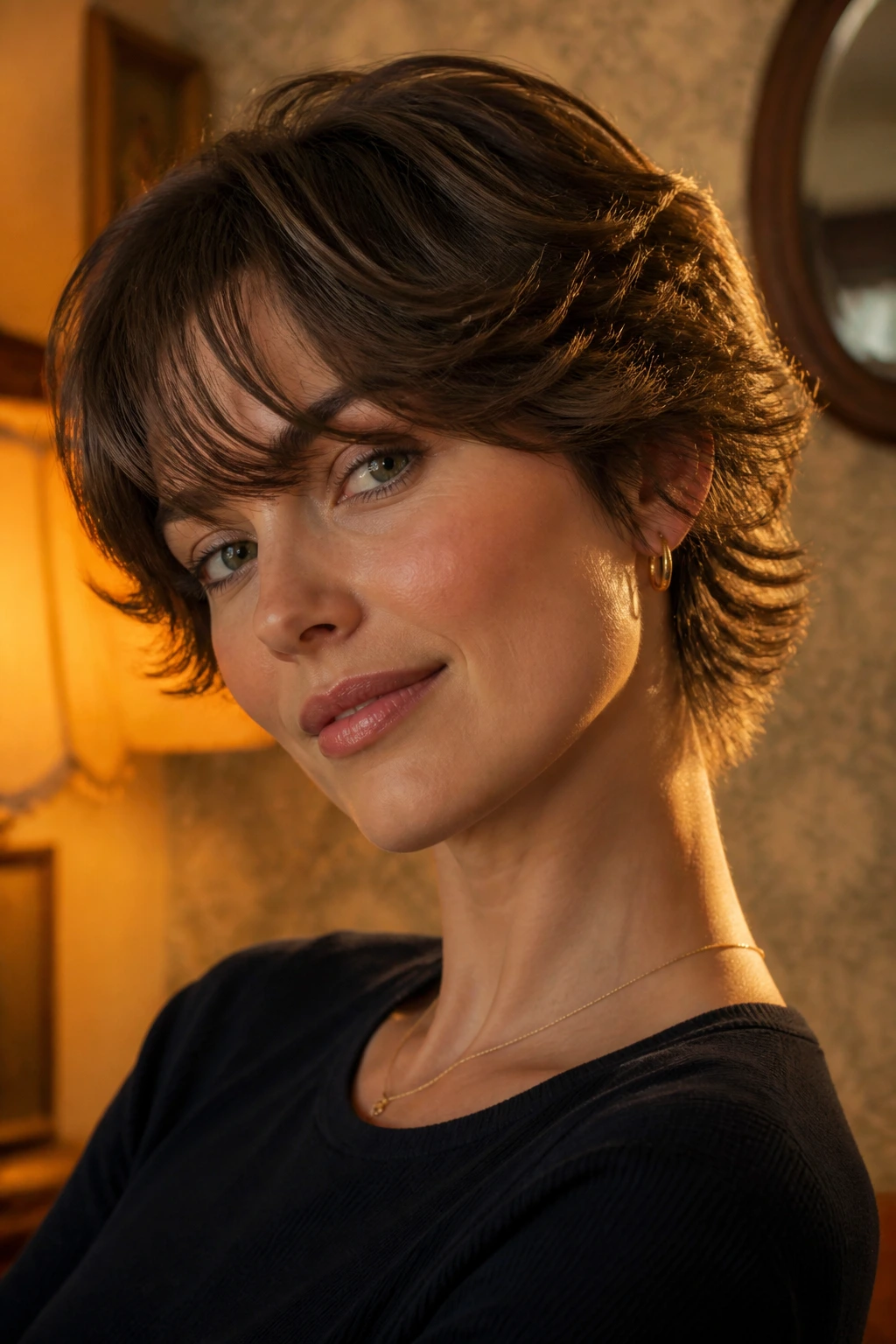
This one has a little vintage energy, and I mean that in the best possible way. The feathers around the face soften the jaw, while the tucked-in nape keeps the back clean and light.
It works because the shape alternates between soft and neat. The front pieces move and flip, but the back sits closer to the neck. That contrast gives the cut its rhythm. Without it, the whole thing can look like a generic layered bob.
A round brush blow-dry gives this version its best shape, especially if you direct the ends under at the nape and out near the cheekbones. It is a small detail, but it changes the whole read of the haircut.
12. Air-Dry Shag With Hidden Internal Layers

This cut is a quiet problem-solver. From the outside, it looks fairly smooth, but inside the shape there are short layers removing weight where the hair would usually puff.
That hidden structure matters if you hate heat styling. The hair dries into a soft, broken shape without needing a lot of coaxing. You still get movement, just not the dramatic choppiness that some shags lean on.
The key is restraint. If the interior layers are too aggressive, the ends can look sparse. If they are too timid, the haircut loses the reason it exists. I like this version for people who want the shag effect without making every strand look deliberately separated.
13. Punky Cropped Shag With Micro Fringe
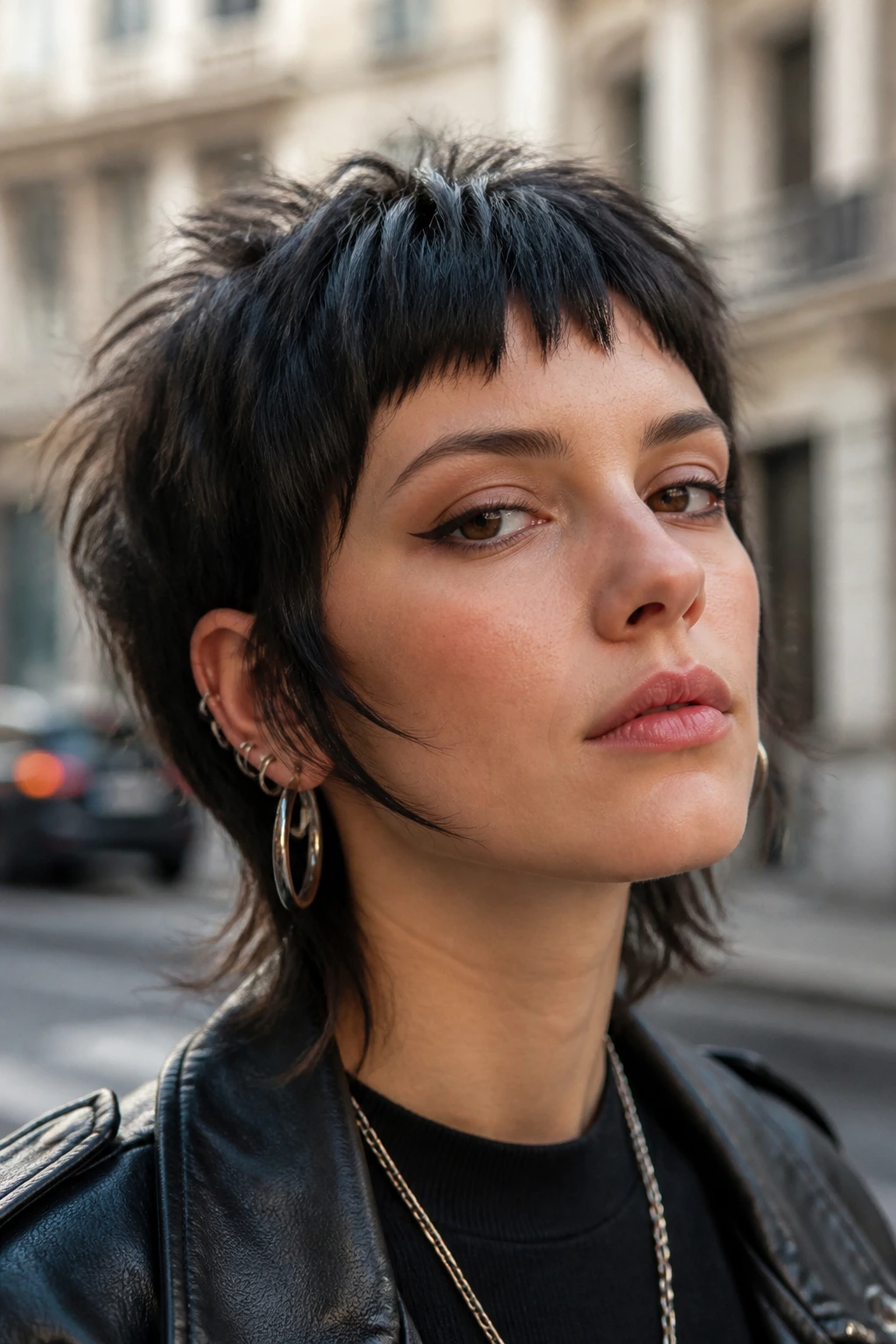
This cut has teeth. The micro fringe gives the face a sharp frame, and the short, jagged top layers make the silhouette feel a little rebellious without needing a color change or an extreme chop.
It is not subtle. That is the point.
The micro fringe works best when the rest of the cut has enough softness to keep it from reading harsh. Short nape pieces, broken crown layers, and a slightly longer side piece can keep the whole thing balanced. If everything is chopped to the same length, it starts to look like a uniform.
For styling, a matte paste is your friend. Use a tiny amount and press it into the fringe and crown with your fingertips. Don’t smear it through the whole head. That kills the texture fast.
14. Collarbone Shag With Chewed-Up Ends
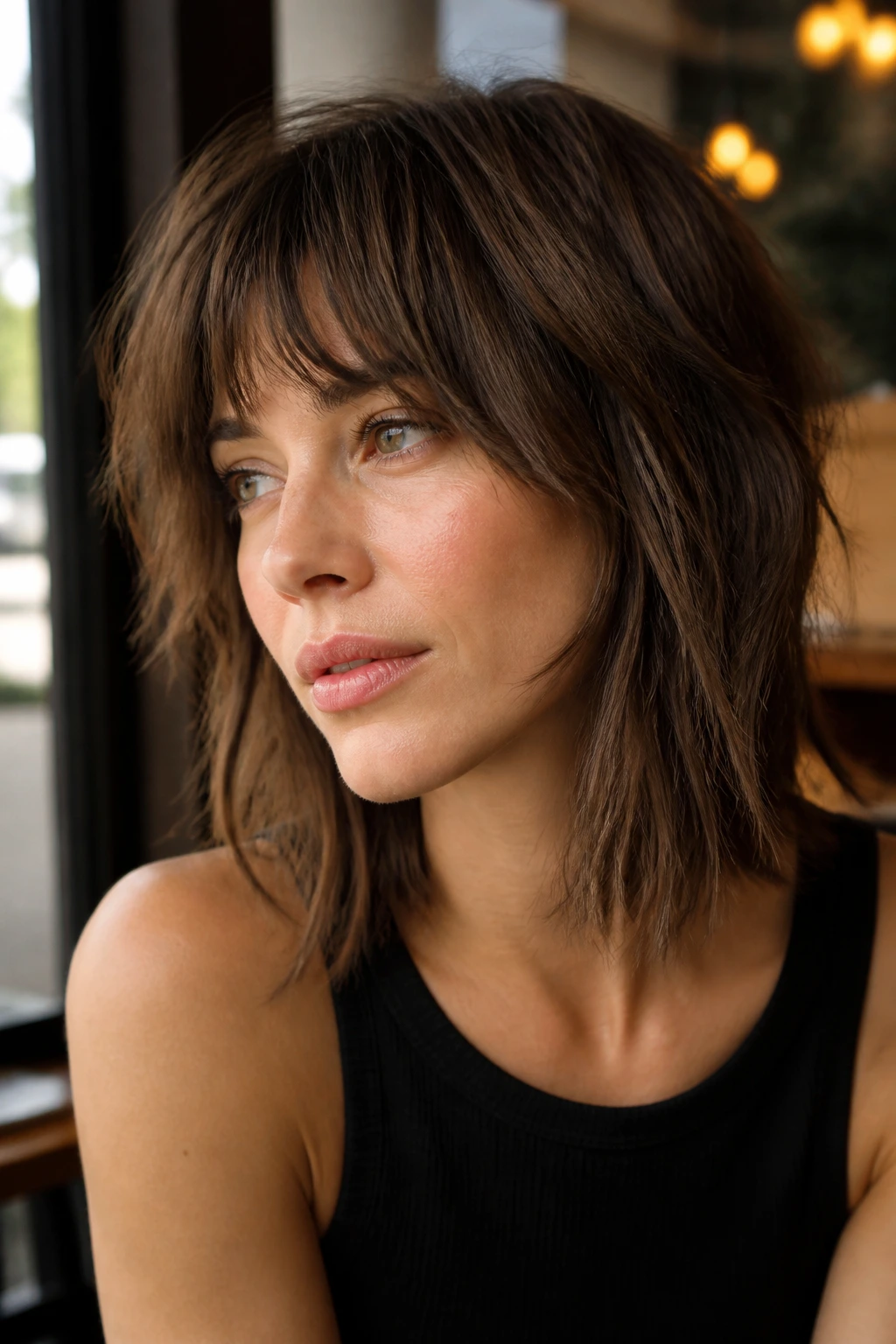
This is the gentler option for someone who wants a shag but is nervous about losing length. The collarbone length keeps enough hair around the shoulders to feel familiar, while the chewed-up ends make it move instead of hanging there.
The haircut looks especially good when the layers begin around the cheek or lip, then break down toward the collarbone. That preserves shape without creating a hard step in the silhouette. It is one of the easiest entries into short shag territory.
A little roughness helps. You do not want the ends to look polished and blunt; they should look lightly broken, as if they were cut to move. That tiny difference is what stops the cut from turning into an ordinary long bob.
15. Bedhead Shag With Short Face Frame

Why does this one feel easy? Because it embraces a little disorder from the start. The face frame sits short enough to open the cheeks, and the crown layers keep the whole cut from lying flat by midday.
The shape is built for people who want hair that looks good after being touched, tucked, and moved around. It is not a careful haircut. It is a “ran a hand through it and left the house” haircut, and that is a useful category.
Best way to wear it
Air-dry the mids until they are about 80 percent dry, then scrunch in a texture cream. If you want more lift, flip the part from one side to the other while it dries. That little switch gives the roots some memory without extra heat.
16. Square-Softening Shag With Long Side Bangs
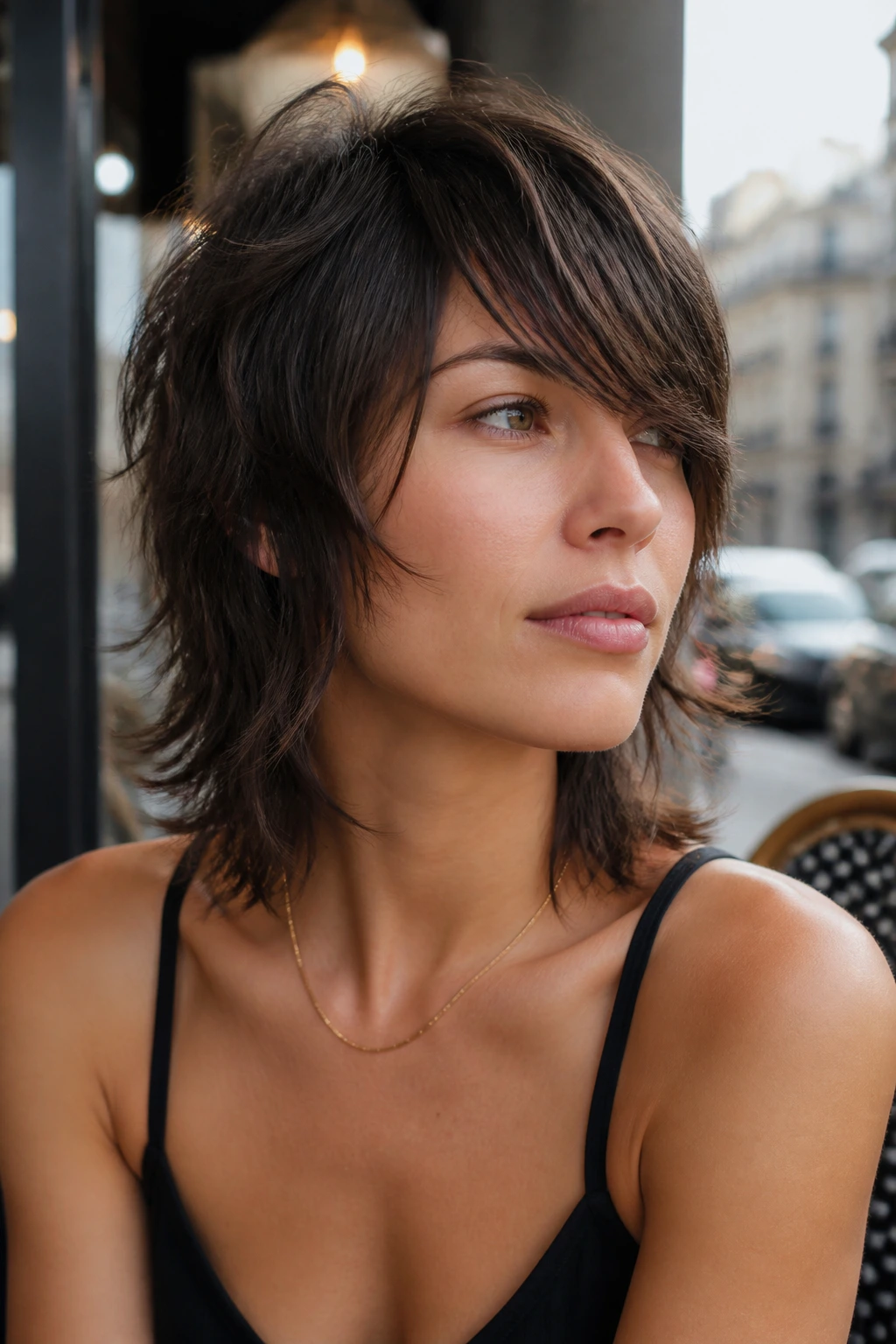
A strong jawline can look fantastic with this cut, because the long side bangs break up the angles instead of fighting them. The layers around the cheekbone are soft, not wispy to the point of disappearing, so the shape still reads clearly.
The side bangs are the star here. They land between the eye and cheek, which means they can be pushed back, tucked, or left loose depending on the day. That kind of flexibility makes the cut easier to live with.
The back should stay light but not over-shredded. If the nape is taken too short, the front becomes too dominant. You want balance. One side of the haircut should not feel like it’s shouting over the rest.
17. French Girl Shag With Soft Curtain Fringe
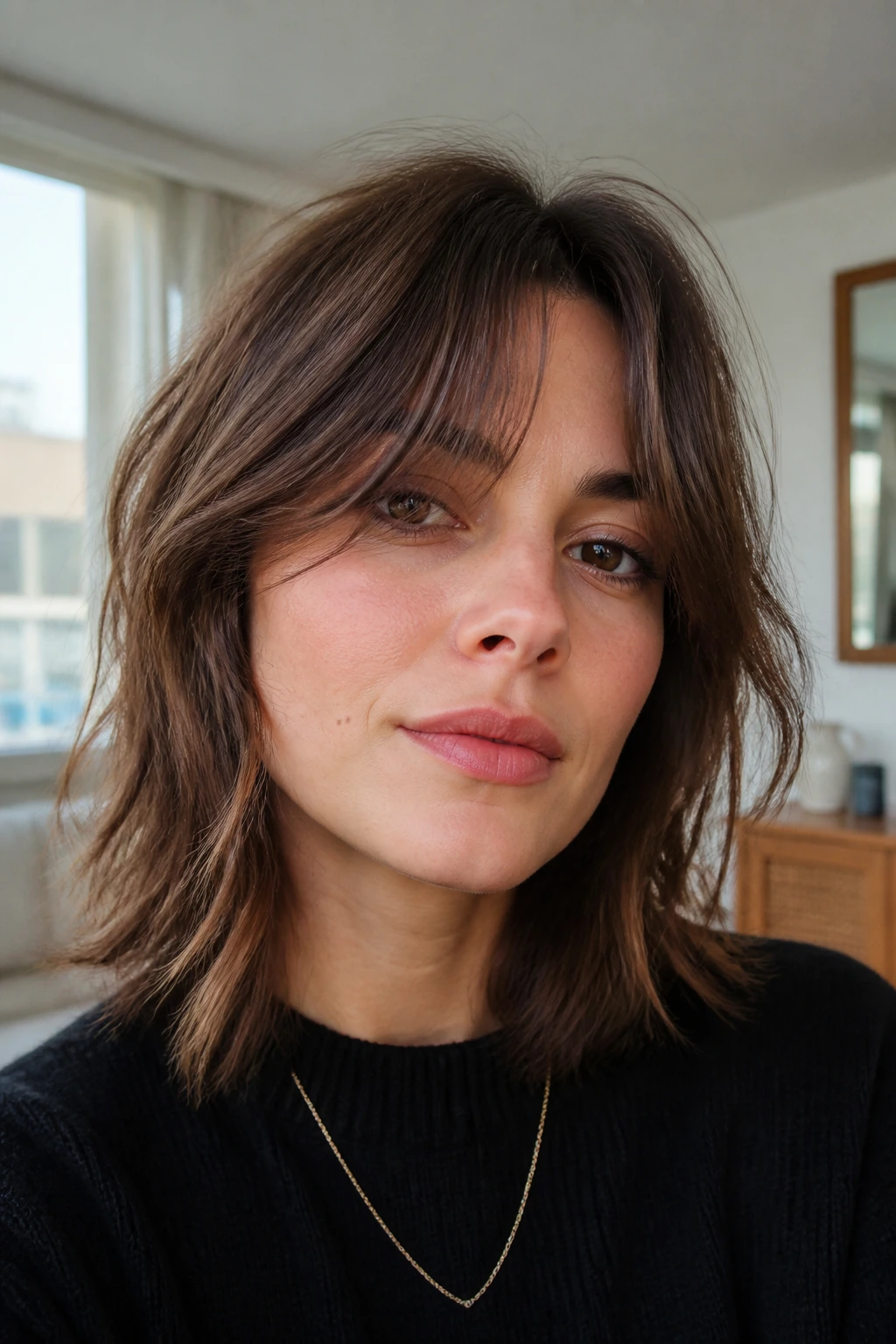
This version has a relaxed center part and soft fringe that splits around the face without looking overworked. The shape feels a little chic, but not in a polished, salon-perfect way. That would miss the point.
The curtain fringe helps the haircut fold around the eyes and cheekbones. On medium hair, that matters because you want the front to lead the eye, not the bulk in the back. The short layers at the crown keep the silhouette airy, while the ends stay soft enough to tuck behind the ears.
A round brush gives the front the right bend, but you only need a mild sweep. Too much curl and the fringe starts looking dated. Keep it loose.
18. Thick-Hair Shag With Debulked Crown
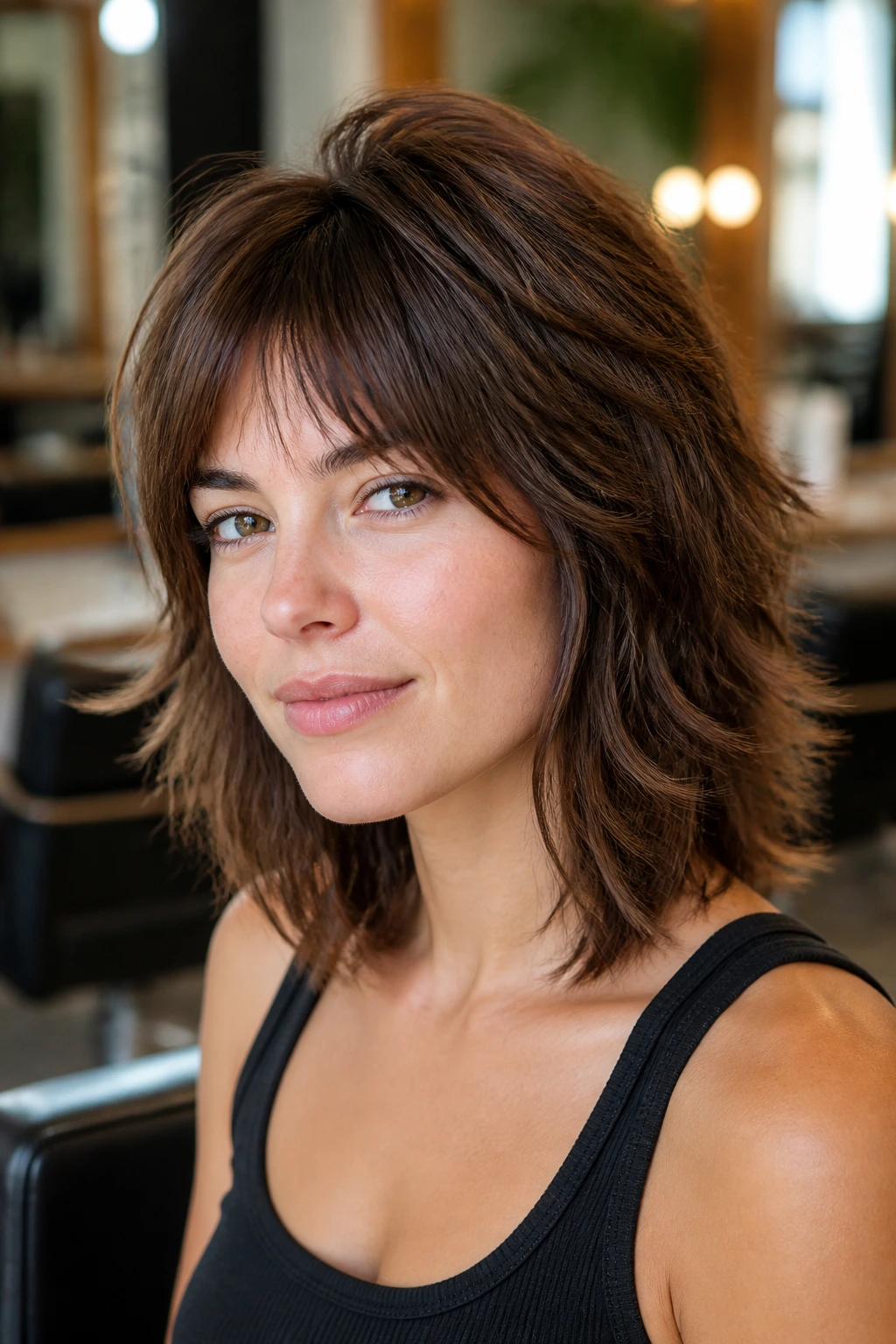
Thick hair can swallow a shag if the layers are not planned with care. This version removes weight at the crown and in the interior, which keeps the top from ballooning while preserving a fuller perimeter.
The goal is not to thin everything out. That is a mistake. The goal is to move the weight so the haircut sits close to the head where it should, then opens up around the face. Thick hair often behaves better when the shortest layers are placed with intention instead of chased all over the head.
What to tell your stylist
Ask where the bulk is sitting before anything gets cut. If the answer is “everywhere,” the haircut needs a strategy, not a random razor pass. A good debulked shag keeps the outline full enough to look rich, not wispy.
19. Grown-Out Pixie Shag With Jagged Crown
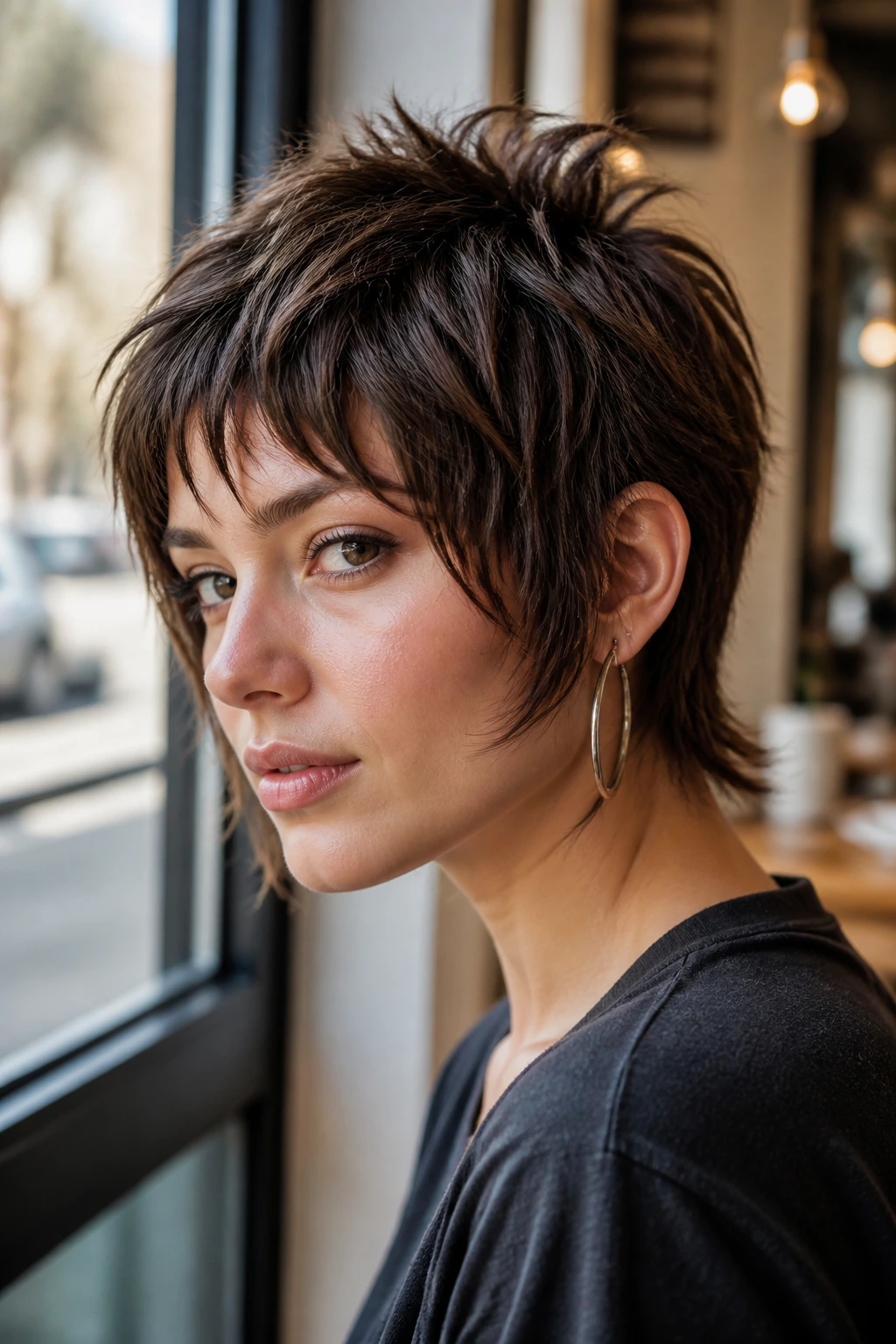
This is the cut for someone who is between lengths and wants that in-between state to look deliberate. The crown stays jagged and short, but the sides and front keep enough length to frame the face and hide the awkward grow-out stage.
It has a little pixie energy, a little shag energy, and a lot of practical value. You can tuck the sides, sweep the fringe, or let the top flop forward. That flexibility is what makes the grow-out feel less annoying.
I like this one when the neckline is kept tidy. A clean nape prevents the haircut from drifting into chaos as it softens. Without that anchor, the whole shape can start to look unfinished rather than textured.
20. Soft Mullet Shag With Slimmer Back
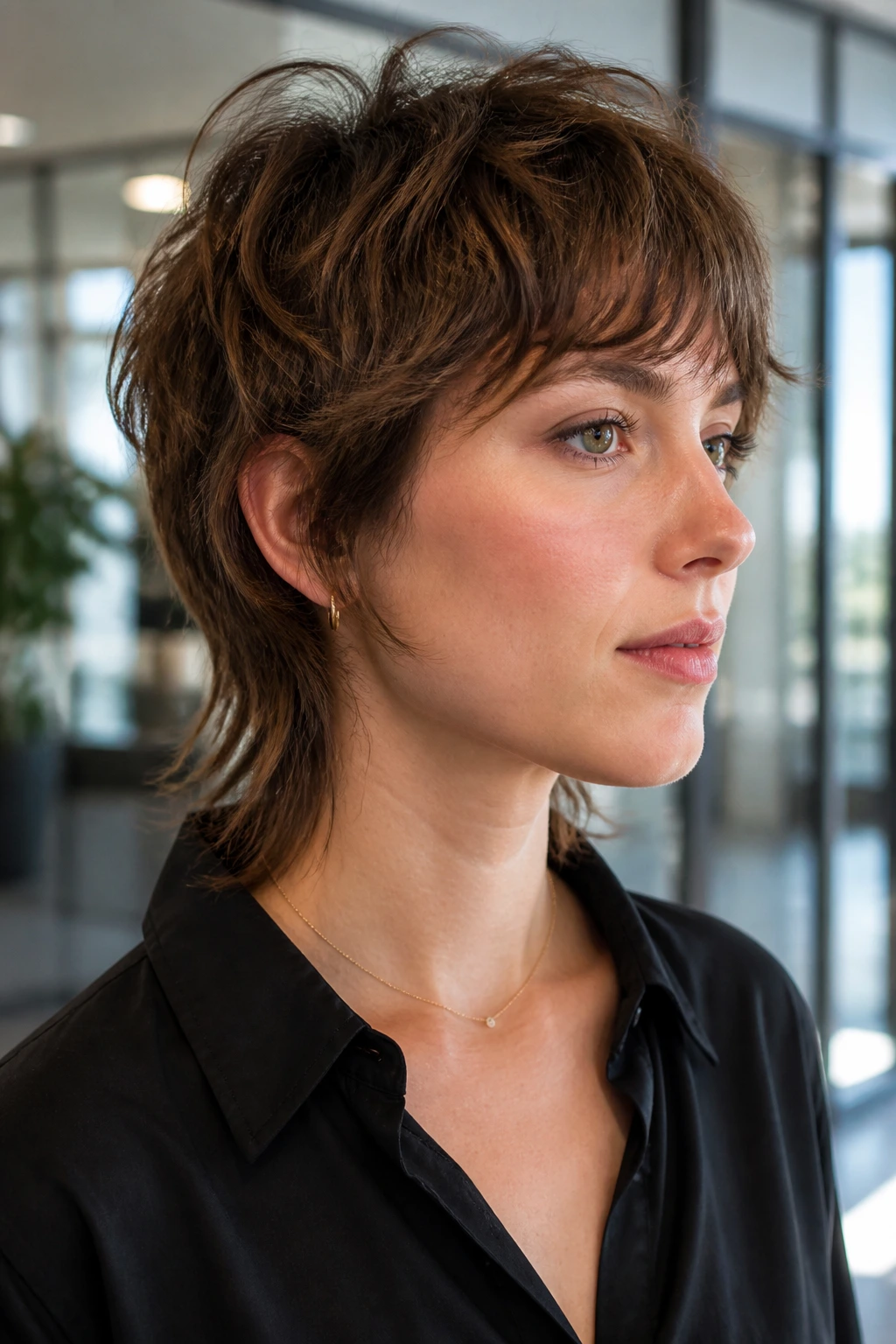
A soft mullet shag keeps the length difference visible without making the back dramatic. The crown is short and piecey, the front is light around the cheekbones, and the back tapers just enough to hint at a mullet without shouting about it.
This works best when the layers are kept fluid. No hard shelves. No blunt disconnect. The haircut needs a soft hand, or the contrast between top and back turns too sharp for medium hair.
It is a good choice if you want personality but still need the cut to move in an office, on a train, or in plain old daylight. The slimmer back keeps the shape from feeling bulky under jackets and collars, which is one of those small practical wins nobody talks about enough.
21. Straight-Hair Shag With Choppy Micro Layers
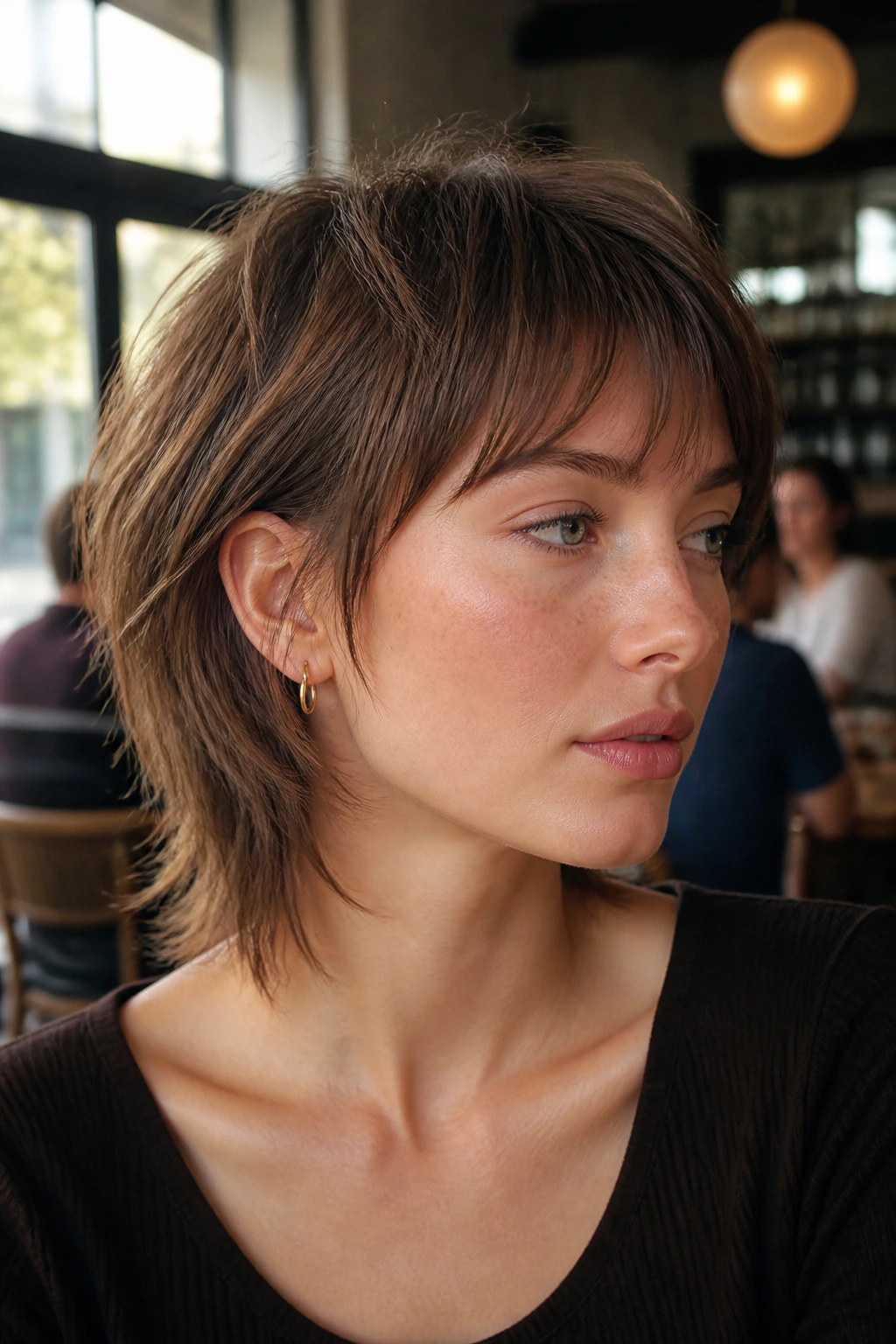
Straight hair can make a shag look too flat if the layers are too long and gentle. The fix is shorter micro layers through the crown and top sides, plus a choppy edge that keeps the ends from drawing one hard line.
The result is less “smooth layered bob” and more “hair with movement that stays put.” That distinction matters. Straight hair needs something to break up the sheet-like effect, especially around the temples and ends.
How to wear it
Use a heat protectant, then bend only a few pieces with a flat iron. Just a few. If every section is curled, the haircut loses its sharpness. Keep the root flat where you want polish, and leave the ends piecey where you want motion.
22. Tousled Shag With Razor-Pointed Ends
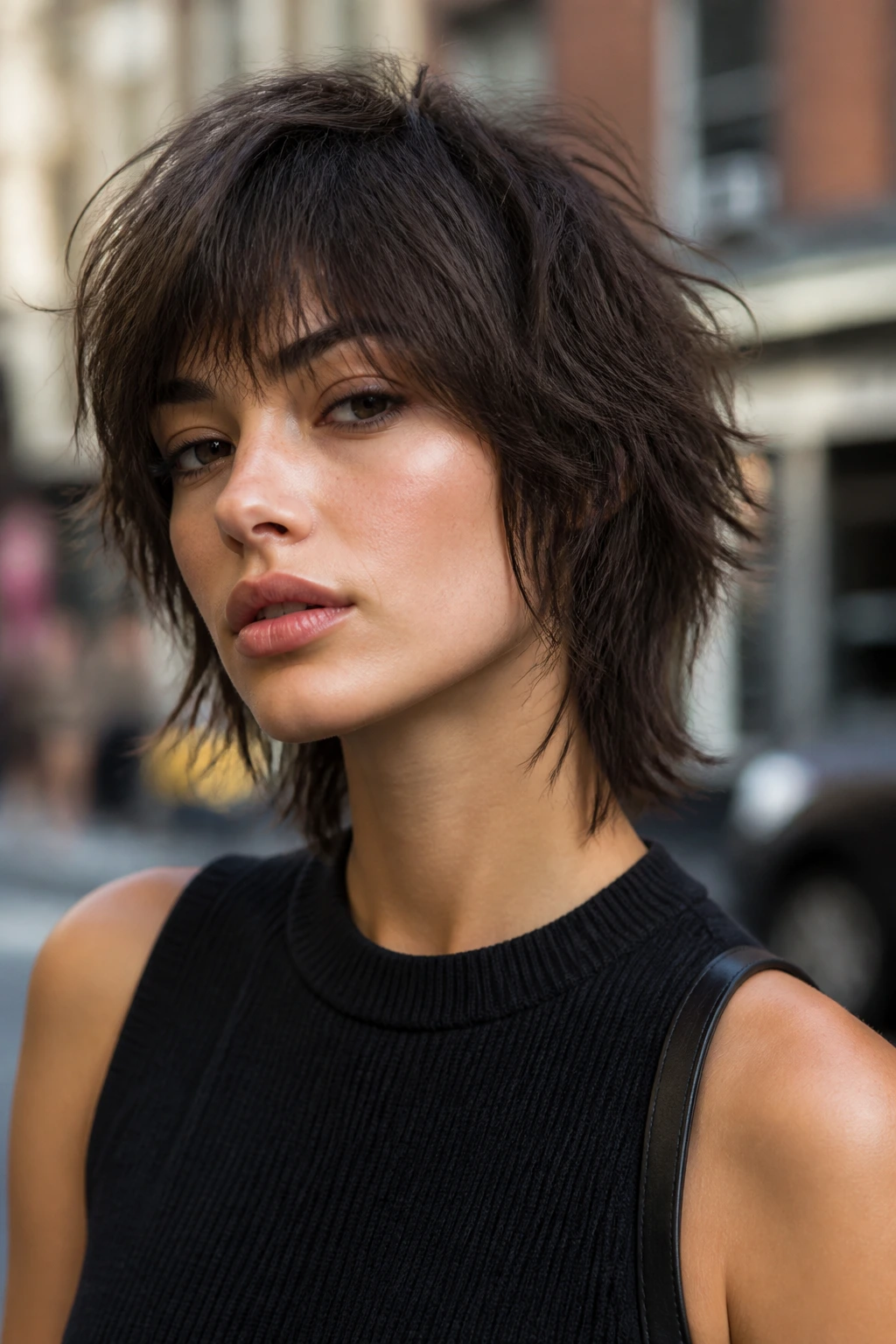
This is one of my favorites when the goal is movement without bulk. The razor-pointed ends give the cut a light, sharp finish, and the tousled styling keeps it from feeling too precious.
The haircut lives in the contrast between soft and sharp. The roots can be loose and airy, while the ends finish in tiny points that catch and separate. That means the style still looks good when the weather gets damp or your hair has a mind of its own.
Do not overload this cut with heavy cream. A light mist and a small amount of paste are enough. Too much softness at the ends blurs the whole shape, and then the razor work disappears.
23. Rounded Curly Shag With Lifted Top
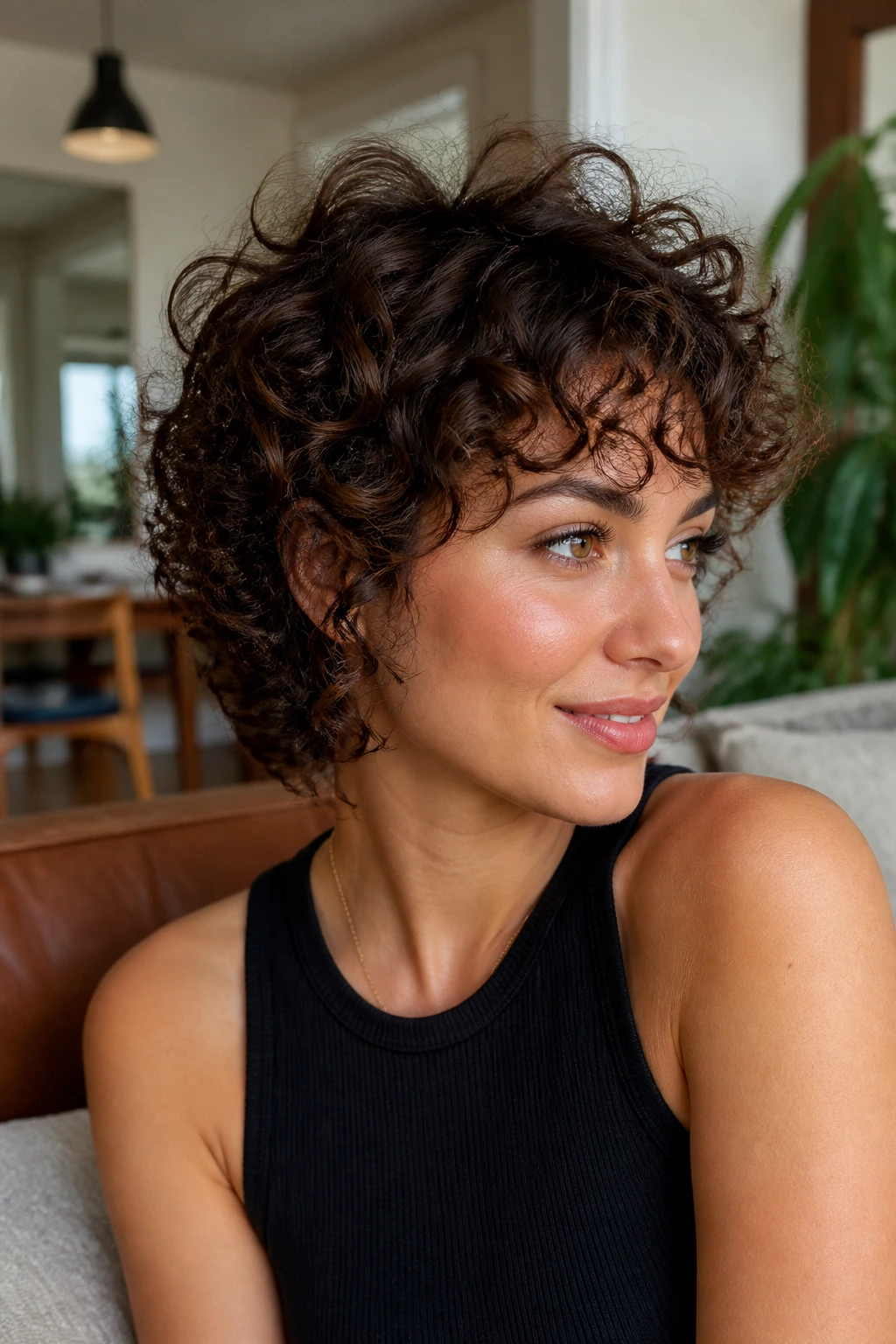
What makes this cut different from a standard curly shag is the rounded outline. Instead of widening out at the sides, the shape stays closer to the head and rises at the top, which gives the curls a cleaner profile.
The lift at the crown prevents the heavy dome effect that can happen when curly medium hair is cut in too many even layers. The rounded sides keep the silhouette tidy around the jaw. It is a smart compromise if you like curl volume but not width.
Styling note
Apply product to soaking-wet hair, then clip the crown up while the rest dries. That little lift at the root can make a huge difference for the final shape. Once dry, shake the curls out with your fingers and stop there.
24. Mini Shag Bob With Neck-Taper
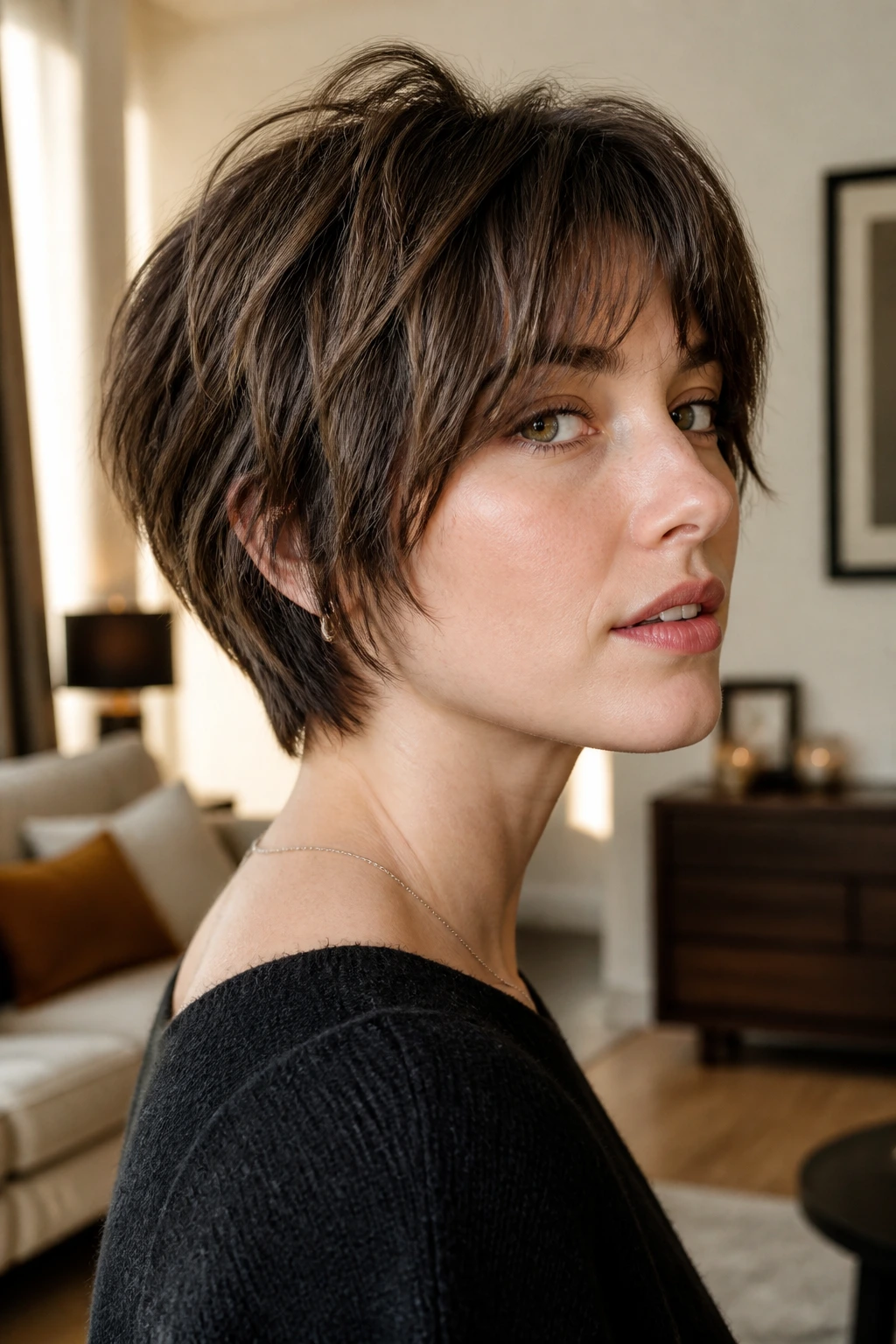
This cut sits in a sweet spot between a bob and a shag, with a tapered neckline that keeps the back clean. The top has enough broken texture to feel modern, but the overall shape still reads as a compact medium-length cut.
I like this one for people who want the ends to stay near the jaw and neck rather than spreading out toward the shoulders. The neck taper sharpens the silhouette and makes the cut feel fresher longer. It is the kind of detail that saves you from needing constant reshaping.
The front can be worn a little piecey or a little softer depending on your styling mood. Either way, the tapered back keeps the whole thing from getting bulky under scarves, collars, and coats.
25. Layered Shag With Flippy Side Pieces

A layered shag with flippy side pieces gives medium hair a cheerful, moving finish. The side pieces lift away from the cheeks, which opens the face, while the shorter crown keeps the top from collapsing.
This is the cut I’d point to if someone wanted a shag that feels lively but not edgy. It has enough texture to be interesting, enough structure to behave, and enough length to tuck behind the ear when you need it out of the way.
The flip at the sides should look loose, not perfectly curled. A quick bend with a brush or iron is enough. If the sides are too polished, the haircut loses the easy movement that makes it work.
Why Very Short Shag Haircuts for Medium Hair Keep Their Shape
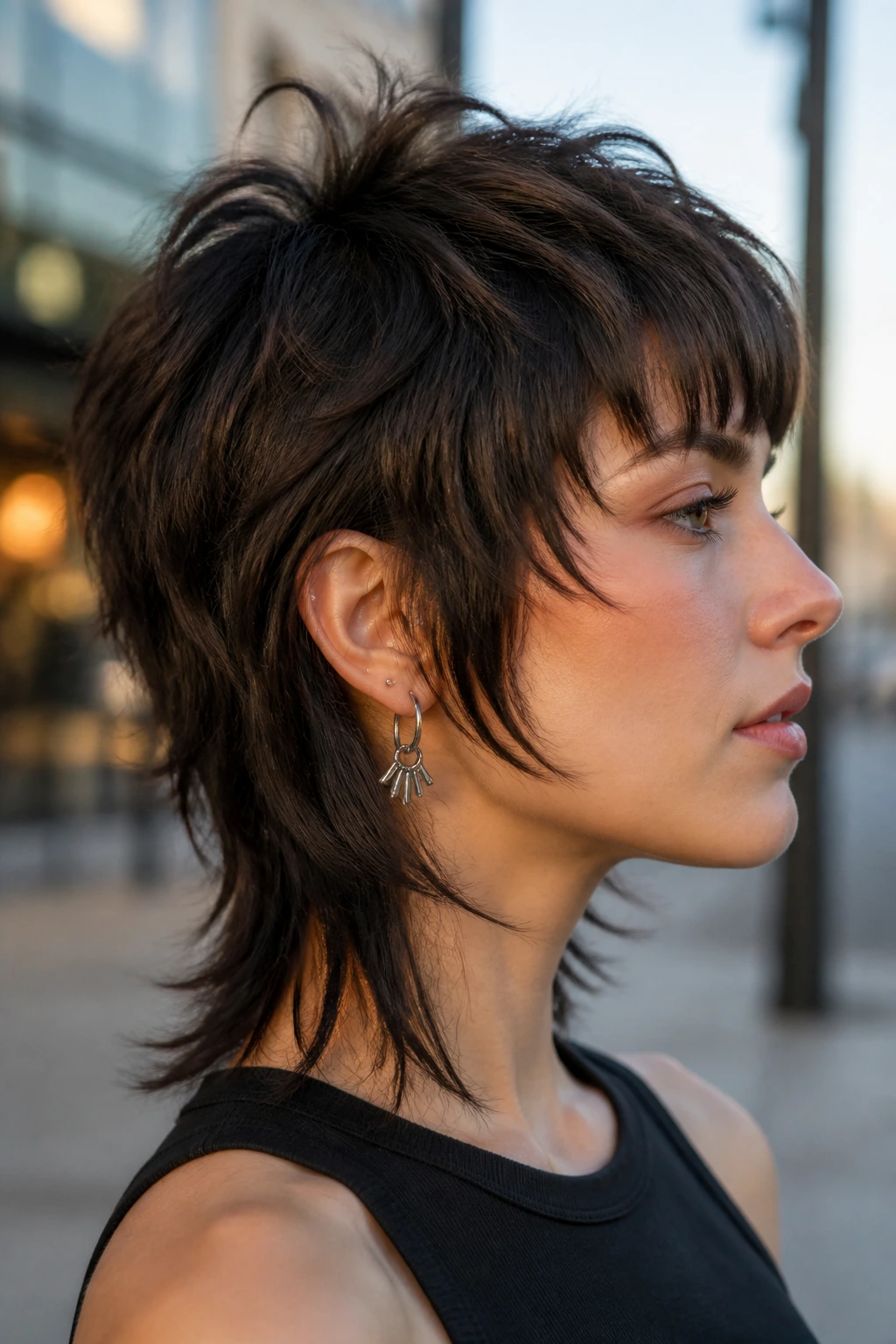
The reason these cuts hold up better than a heavy one-length cut is simple: they change where the weight sits. Short layers near the crown stop the top from falling flat, and broken ends keep the outline from forming a hard wall around the face. Medium hair is long enough to show the shape, but short enough that the layers do not disappear.
That also explains why these cuts age better as they grow out. A blunt cut grows into a shelf. A shag softens into something still readable, even after a few weeks of growth. You can see the same logic in good wolf cuts and cropped shags too — the haircut is built to loosen, not collapse.
What to Ask for at the Salon
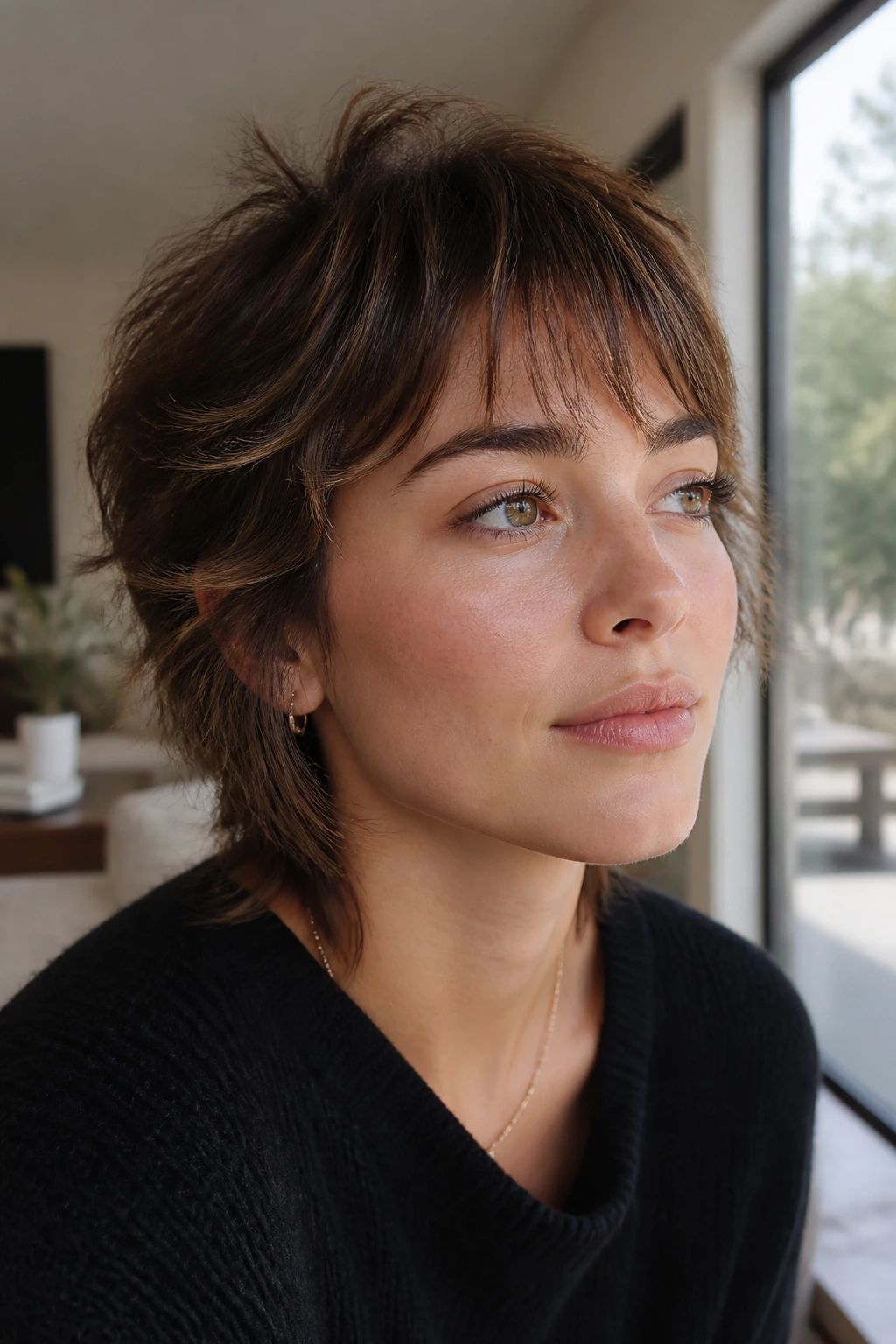
Start with the shortest layer you want to see. That is the sentence most people skip, and it’s the one that matters most. Tell the stylist whether the shortest pieces should live at the crown, around the cheekbones, or closer to the nape, because those placements create very different results.
Bring pictures, but talk through the parts of each photo you actually like. Maybe it is the fringe, not the length. Maybe it is the crown texture, not the whole shape. Say that out loud. Otherwise you risk getting a vague shag that looks trendy in the chair and wrong after the first wash.
A few useful phrases help:
- “Keep the crown lighter, but leave the ends with some weight.”
- “I want face-framing pieces that hit around the cheekbone or lip.”
- “Use point cutting or a soft razor finish, not a blunt line.”
- “Please leave enough length for me to tuck it behind my ears.”
If your hair is curly or very wavy, ask how the cut will look dry, not just wet. Wet hair hides a lot of trouble. Dry hair does not.
Tools and Products That Keep the Shape Sharp
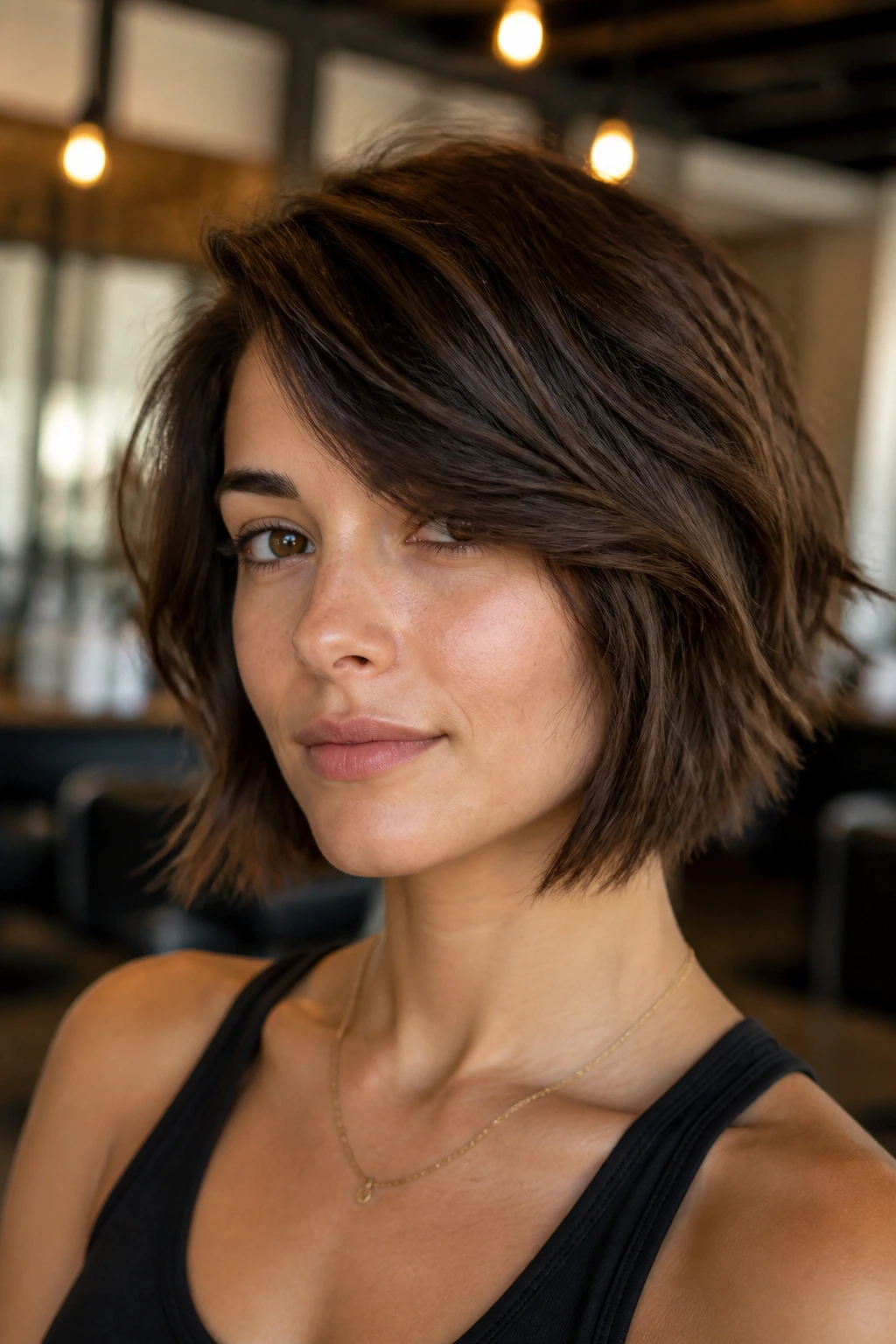
- Blow dryer with a concentrator nozzle: Directs air at the roots so the crown lifts instead of frizzing out.
- Diffuser attachment: The safest way to dry waves and curls without breaking up the shag’s shape.
- 1 to 1.5-inch round brush: Small enough to bend face-framing pieces, large enough to keep the ends soft.
- Vent brush: Useful for quick root drying when you do not want a polished blowout.
- Lightweight mousse: Gives medium hair memory without the greasy feel of heavy creams.
- Texturizing spray: Adds separation to the ends and the front pieces; use it sparingly.
- Dry shampoo: Keeps short crown layers from falling limp between washes.
- Heat protectant spray: Non-negotiable if you use a dryer, iron, or hot brush.
- Styling paste or soft pomade: Best for pinching out fringe or side pieces.
- Microfiber towel or T-shirt: Cuts frizz when you are drying waves or curls.
- Clarifying shampoo: Helps when texture products start to coat the layers and flatten the cut.
How to Style Them Day to Day
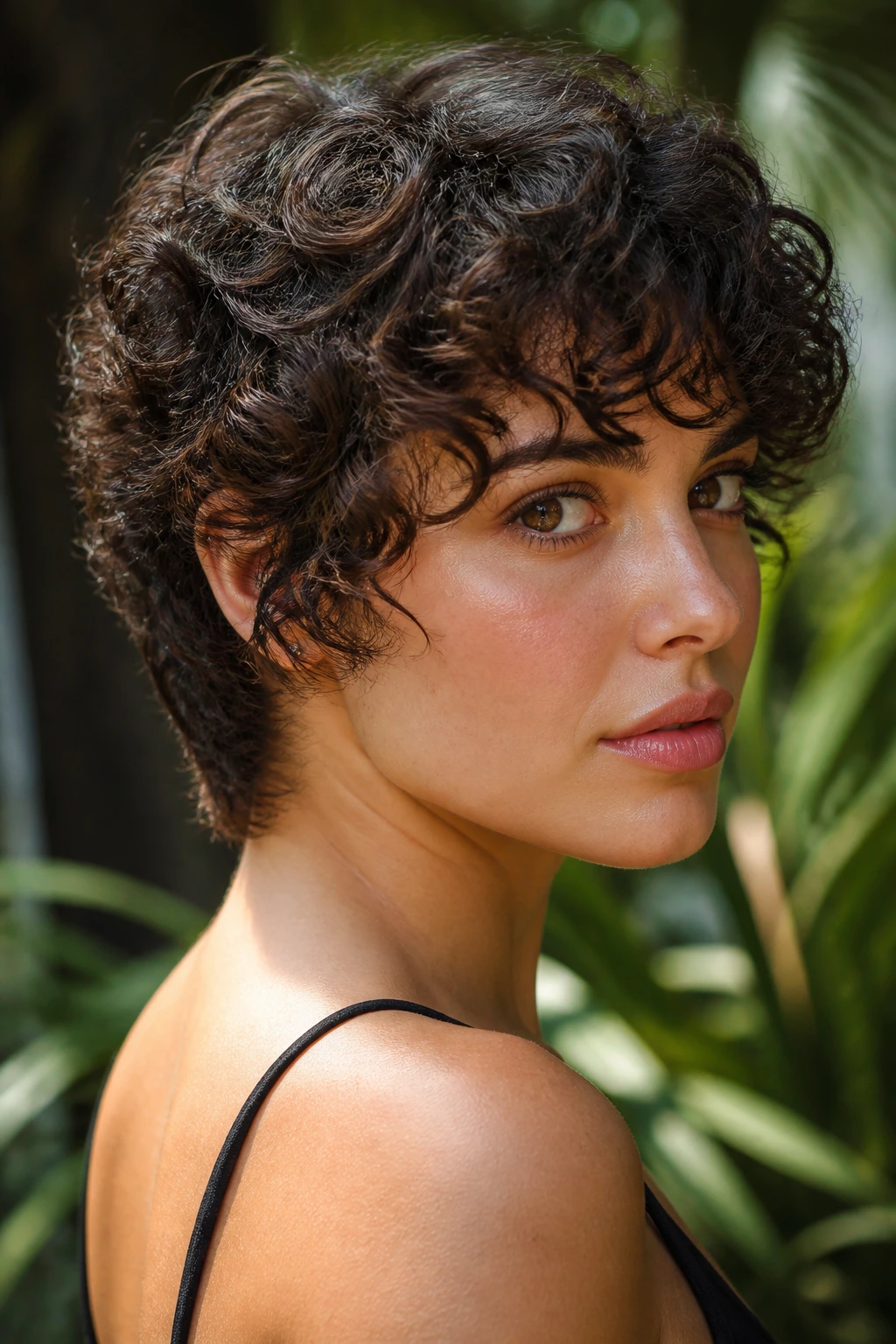
Air-dry finish: Work mousse through damp hair, scrunch the crown, and let the layers fall where they want. If the front pieces are too straight, twist them around your finger while they’re still damp.
Blow-dry finish: Dry the roots first, then use a round brush only on the face frame and the bottom inch of the cut. The rest can stay a little rough. That contrast is what keeps the style from looking overdone.
Quick reset: Mist the crown with water, add a pinch of dry shampoo at the roots, and pinch the ends with texture spray. You do not need a full wash every time the shape goes a little sleepy.
Sleeker mood: Smooth the top with a brush and leave the ends broken up. That keeps the cut sharp without erasing the shag part.
Small Styling Tweaks That Change the Whole Mood

Parting: A deep side part gives the crown more lift and makes the cut look sharper. A center part softens the whole shape and pulls the fringe toward the face.
Fringe length: Shorter bangs read bolder and expose more forehead. Longer curtain fringe blends better if you want the cut to feel softer around the eyes.
Texture placement: More texture at the roots creates height. More texture at the ends creates movement. Putting it everywhere can make the cut look fuzzy, which is not the same thing at all.
Neckline: A cleaner nape makes the shag feel intentional as it grows. A messier nape reads edgier but needs more frequent clean-up.
Keeping the Shape Between Washes

A very short shag on medium hair usually looks best when it is washed often enough to stay light, but not so often that the texture disappears. For most people, that means washing every 2 to 4 days, then refreshing the roots with dry shampoo on the days in between. If your scalp runs oily, you may need a faster rhythm. If your hair is dry, stretching the washes a little helps.
The real enemy is dampness at the root. Short layers flatten fast if you go to bed with hair that is still cool or wet near the crown. Dry the top all the way, even if the ends stay slightly unfinished. That tiny extra effort keeps the whole shape from bending weird overnight.
Plan on a trim every 6 to 8 weeks if you want the outline to stay crisp. Bangs or short fringe may need a touch-up every 3 to 4 weeks. If the cut starts to feel heavy, it usually means the crown lost its lift before the ends lost their shape.
Variations and Adaptations to Try
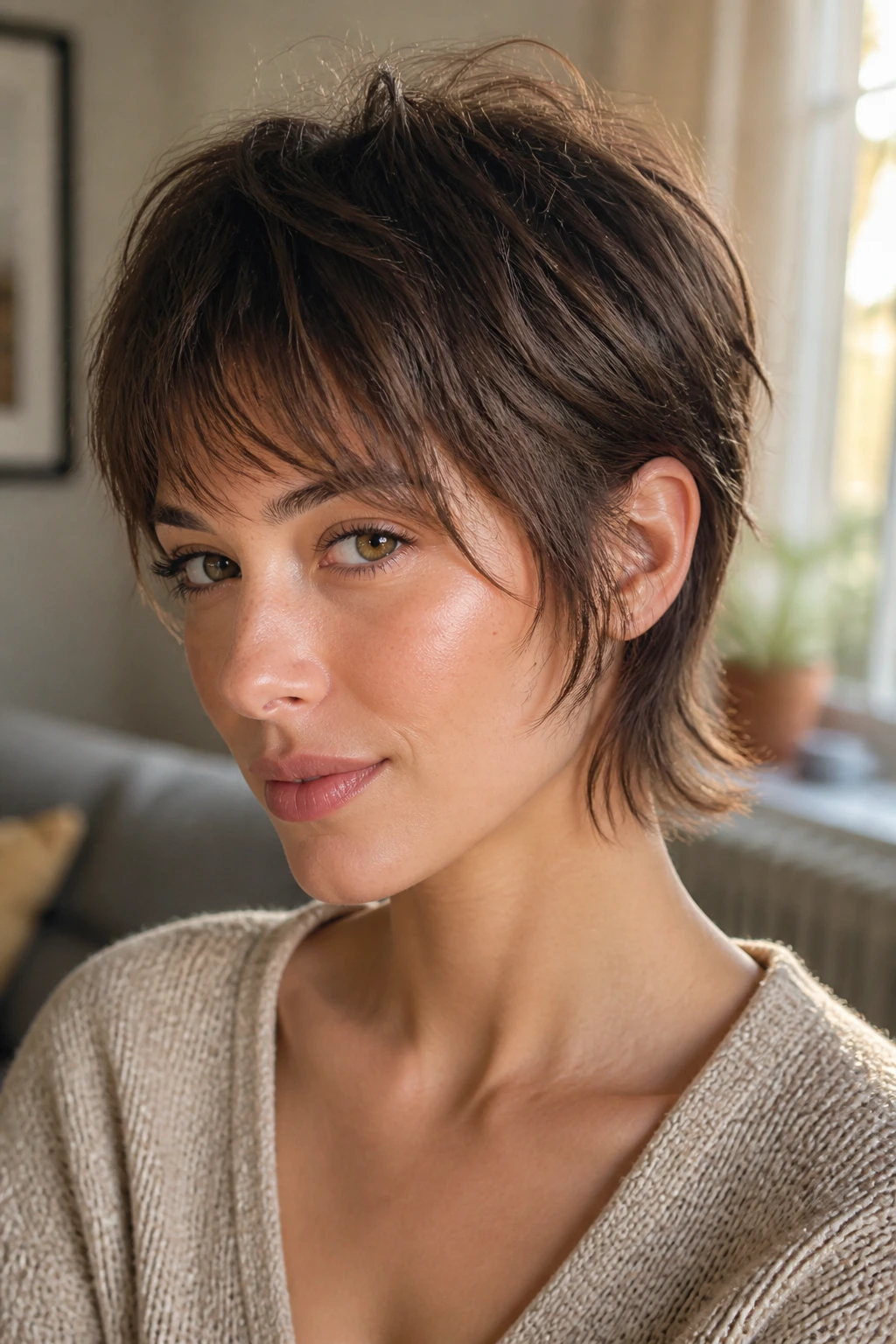
The Fine-Hair Lift Version: Keep the shortest layers near the crown and avoid over-thinning the ends. Fine hair needs structure more than it needs aggression, or it collapses fast.
The Thick-Hair Debulk Version: Focus on internal weight removal and a slightly stronger perimeter. That keeps the cut from ballooning out at the sides.
The Curl-Friendly Version: Ask for the shape to be checked dry or mostly dry, and leave room for shrinkage around the fringe and neckline. Curls need space, not guesswork.
The Straight-Hair Razor Version: Use sharper ends and a side part to create motion. Straight hair needs more separation or the shag can slide into flatness.
The Low-Styling Version: Keep the fringe longer and the layers a little softer so the cut still looks good with a quick air-dry. This is the version for people who do not want to think about their hair every morning.
The Wolf-Kissed Version: Shorten the crown a bit more and slim the back gently for a stronger outline. It gives the haircut a little more bite without turning it into a costume piece.
Common Mistakes to Avoid
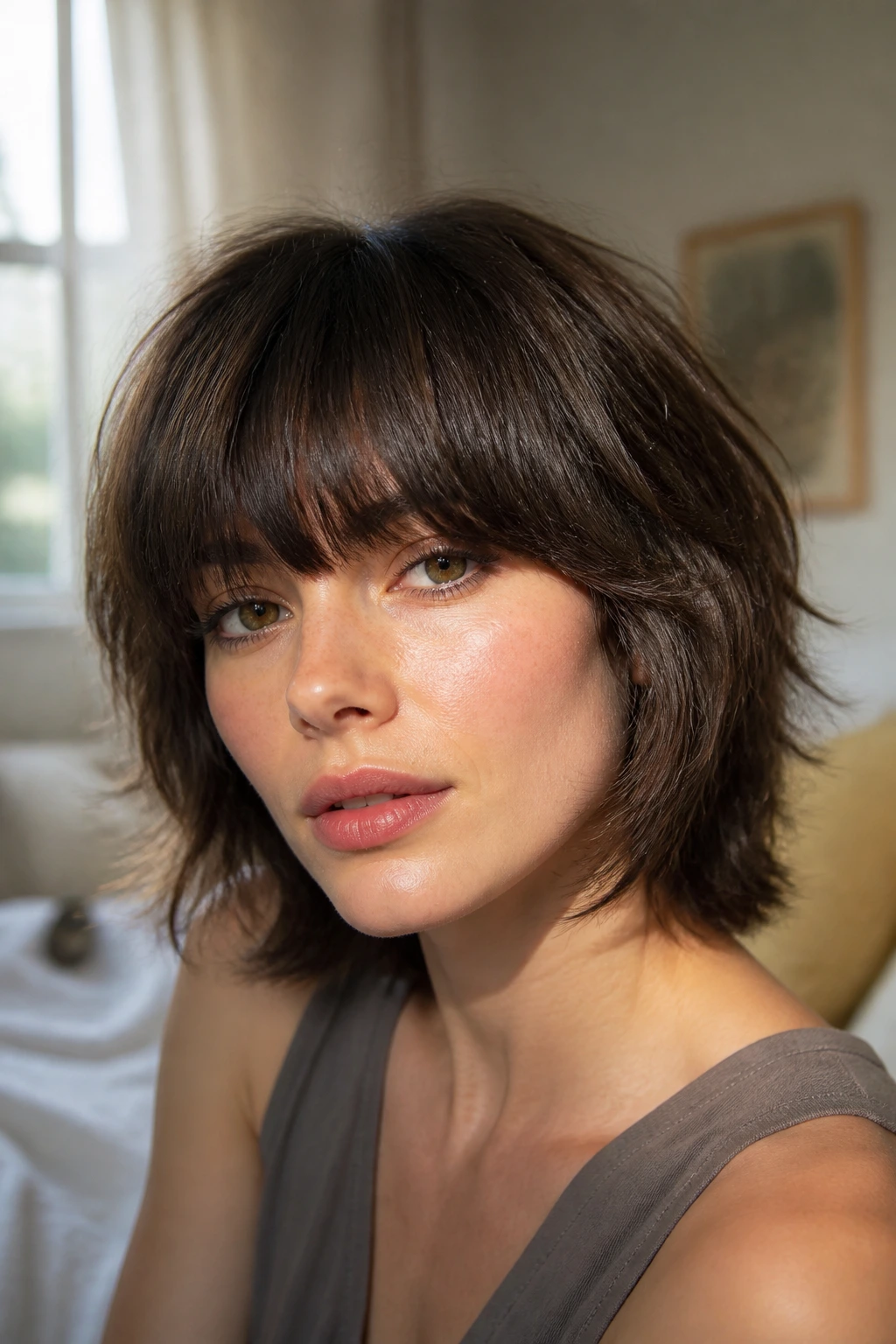
Cutting the crown too short: The shape can spring upward and turn fluffy instead of lifted. The fix is to keep some length at the top and build texture around it, not through it indiscriminately.
Over-thinning thick hair: The haircut starts looking see-through at the ends while the crown still feels bulky. Ask for weight removal in targeted spots, not a blanket texturizing pass.
Ignoring shrinkage on curly hair: What looks like a safe length when wet can become much shorter after drying. Always talk through the dry result before the first snip.
Using heavy oils at the root: The crown loses all movement and the shag turns limp by noon. Oils belong on the ends, and even there, use them lightly.
Skipping fringe maintenance: Short bangs grow awkwardly fast and can drag the whole style down. A small trim keeps the cut looking intentional.
Frequently Asked Questions About Very Short Shag Haircuts for Medium Hair

Will a very short shag make medium hair look thinner?
Not if it is cut with the right weight balance. Too much thinning can make the ends sparse, but a well-placed shag usually gives medium hair more lift and presence.
Can I wear this cut without bangs?
Yes. A fringe is not required. You can keep the front pieces longer, part them to the side, or leave them blended into the layers for a softer face frame.
Is this a good cut for fine hair?
It can be, if the stylist avoids over-thinning. Fine hair benefits from crown lift and careful layering, but it still needs enough density at the ends to keep the shape from fading out.
How often should I trim it?
Most very short shags need shape clean-up every 6 to 8 weeks. Bangs or short face-framing pieces may need a touch-up sooner if they fall into your eyes.
What if my hair is curly and shrinks a lot?
Ask for the cut to be checked dry or with a strong dry reference point. Curly shag layers should be placed with shrinkage in mind, especially around the crown and fringe.
Does this cut work with a center part?
Absolutely, but it changes the feel. A center part softens the style and makes the curtain-fringe versions look especially good; a side part gives more height and edge.
What if I hate a lot of styling?
Choose a softer version with longer fringe and hidden internal layers. Those cuts hold their shape with a rough dry, a little mousse, and maybe a pinch of texturizing spray at the ends.
Can thick hair pull off a short shag without looking puffy?
Yes, but the stylist has to remove weight in the right places. The crown, not the whole head, is usually where the shape needs the most help.
The Shape That Stays Interesting
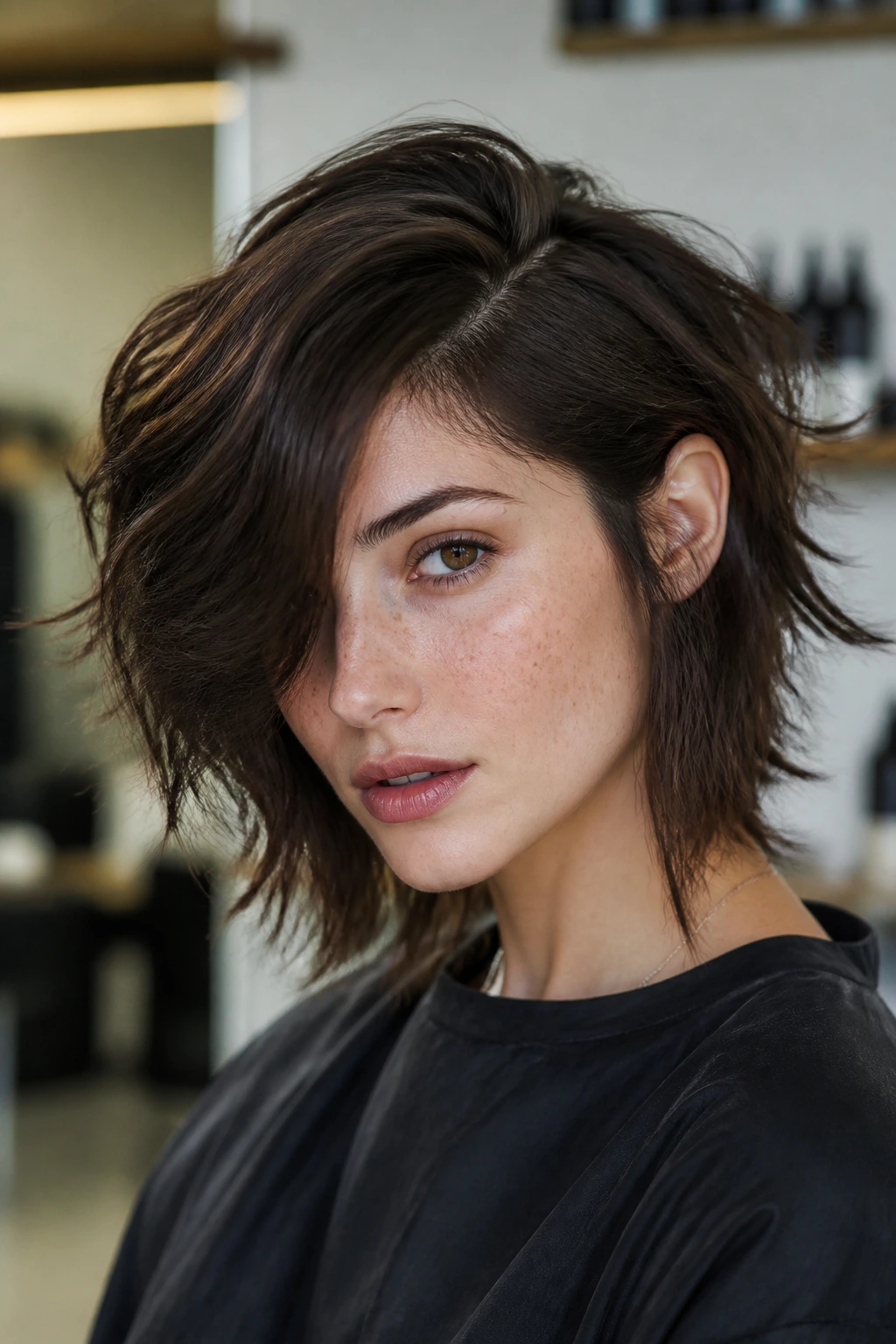
Very short shag haircuts for medium hair work because they never ask the hair to be one thing all day. They bend, break, tuck, and loosen a little as you move. That is the charm. A good shag should look like it has opinions, even when you have barely done anything to it.
The smartest versions are the ones that fit your texture instead of fighting it. Bring pictures, yes, but bring your daily routine too. That matters just as much. A cut that looks great for ten minutes in a salon mirror but falls apart when you shake it dry is not a win.