



Fine hair and a heavy haircut usually do each other no favors. Give the strands too much length, and they hang like damp thread. Chop them too bluntly, and the head can start to look flat at the crown and bulky at the bottom. The sweet spot is a short shag haircut with soft layers — enough movement to stop the ends from looking stringy, not so much slicing that you lose the shape entirely.
That balance is harder to get than people think. A good shag on fine hair isn’t a pile of random choppy bits. It’s a clean outline with carefully placed interior layers, a little lift around the crown, and face framing that bends instead of frays. If the stylist takes out too much weight, the hair goes wispy in the wrong way. If they leave too much weight, the haircut turns into a helmet.
The best versions have a kind of quiet trick to them. They look casual, but they’re built with a lot of judgment: where the shortest layer starts, how much stays at the perimeter, whether the fringe lands at the brows or slides to the cheekbones, and how much texture the ends can actually hold before they start to look see-through. That’s the real game here.
Why Short Shag Haircuts Earn Their Keep on Fine Hair

Built-in lift: The right short shag removes enough weight around the crown to make the top sit up instead of lying close to the scalp.
A stronger outline: Soft layers keep the perimeter from disappearing, which matters a lot when each strand has less diameter to work with.
Less styling drama: Most of these cuts look better with a quick bend, a little mousse, and a rough-dry. You do not need a perfect blowout every morning.
Better grow-out: A shag with a solid shape grows into something wearable, not a sad, uneven triangle by week five.
Fringe options without commitment panic: Curtain bangs, side bangs, and wispy fringe all work here because the rest of the haircut already carries motion.
1. Jaw-Length Shag with Broken Ends
This is the cut I reach for when someone wants movement without looking like they’ve been attacked by thinning shears. The jaw-length perimeter keeps the ends dense enough to read as hair, not haze, while the soft layers around the cheekbones give the whole thing a little lift.
Why It Works
A jaw-length shag gives fine hair a place to land. That matters. When the ends stop at the jaw, they keep their shape in a way longer lengths often don’t, especially if the hair is straight or slips flat by noon. The broken ends stop the cut from feeling hard, but the baseline is still solid.
- Best for: oval, heart, and square faces
- Styling move: bend the ends with a 1-inch round brush or a flat iron wave
- What to ask for: a clean perimeter, soft internal layers, no heavy texturizing at the bottom
- Watch out for: layers cut too high at the crown, which can puff out instead of lifting
My take: If your hair is fine and you’ve spent years regretting too many layers, start here. It looks modern without needing a lot of effort.
2. Chin-Grazing French Shag
A chin-grazing shag has a little Parisian swagger to it, but the real win is practical: chin length makes fine hair look fuller because the ends sit in one compact zone. Add airy fringe and the shape feels light instead of boxy.
The trick is restraint. You want movement around the face, not a shredded outline. This cut likes soft bends at the cheekbone and a slight inward turn at the chin. Straight, pin-straight hair can wear it too, but a little texture cream on damp hair makes the shape show up faster.
If your hair tends to split at the ends when it gets too long, this is a smart cutoff. It’s short enough to avoid the thin taper that happens below the shoulders, but not so short that you lose all styling options. One tuck behind the ear, and the whole thing changes shape.
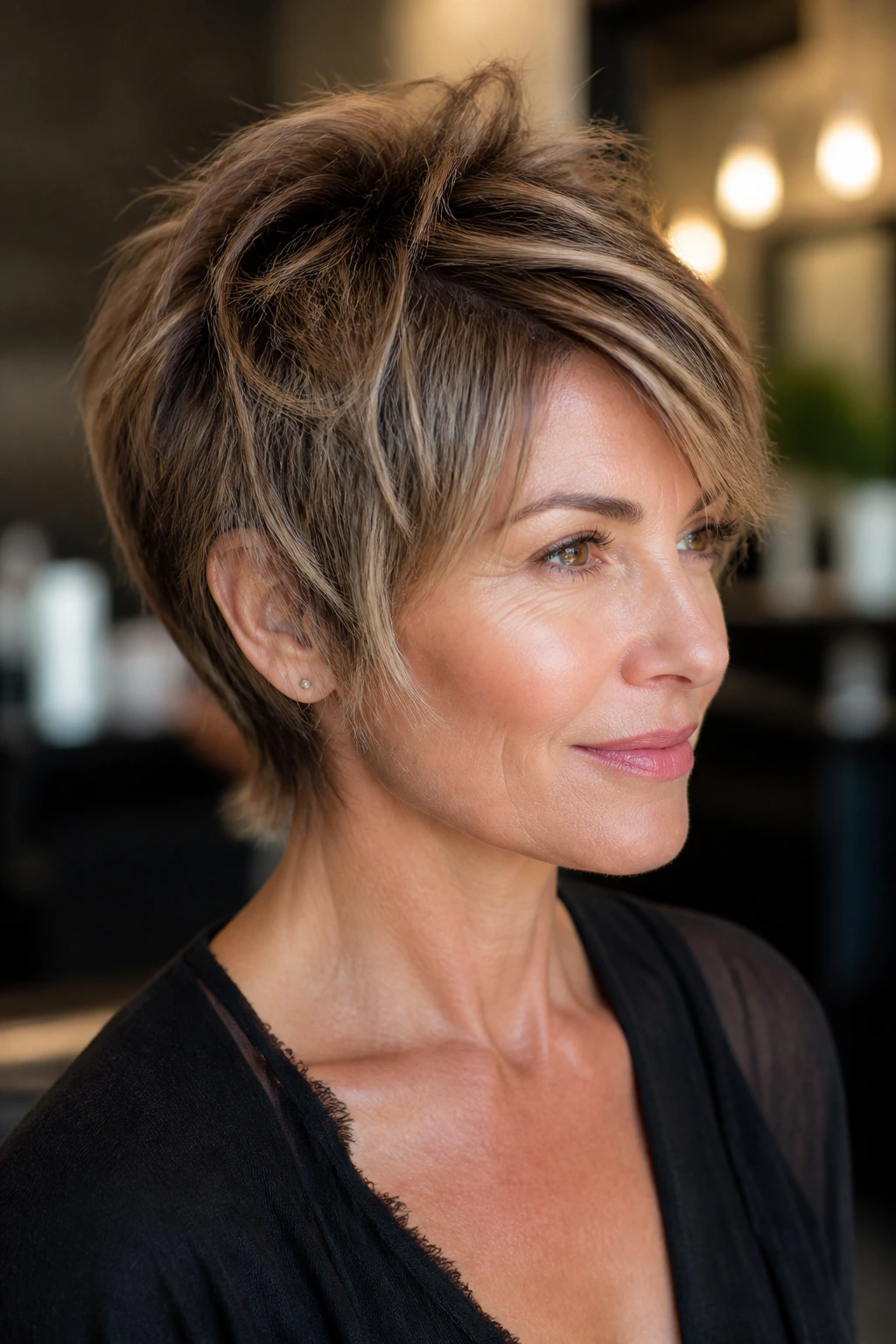
3. Pixie Shag with Longer Crown Layers
Can a pixie still feel soft? Absolutely — if the crown layers are left a touch longer and the sides are kept close enough to hold the shape. This version is a good one for fine hair that wants lift but not a lot of length.
The crown is the headline here. Short, airy layers on top create that easy, piecey lift you see on hair that looks awake even after a rough sleep. The sides should stay slightly longer than you think, because if they’re cropped too close, the cut can start to look too airy around the ears.
How to Style It
On the first day
Work a small amount of mousse through towel-dried hair, then rough-dry with fingers until the roots are about 90% dry. Finish with a quick hit from a round brush at the crown only. You’re building height, not sculpture.
For fine hair that collapses fast
A pea-sized dab of lightweight paste at the ends helps the layers hold their separation without looking greasy. Skip heavy creams. They flatten this cut fast.
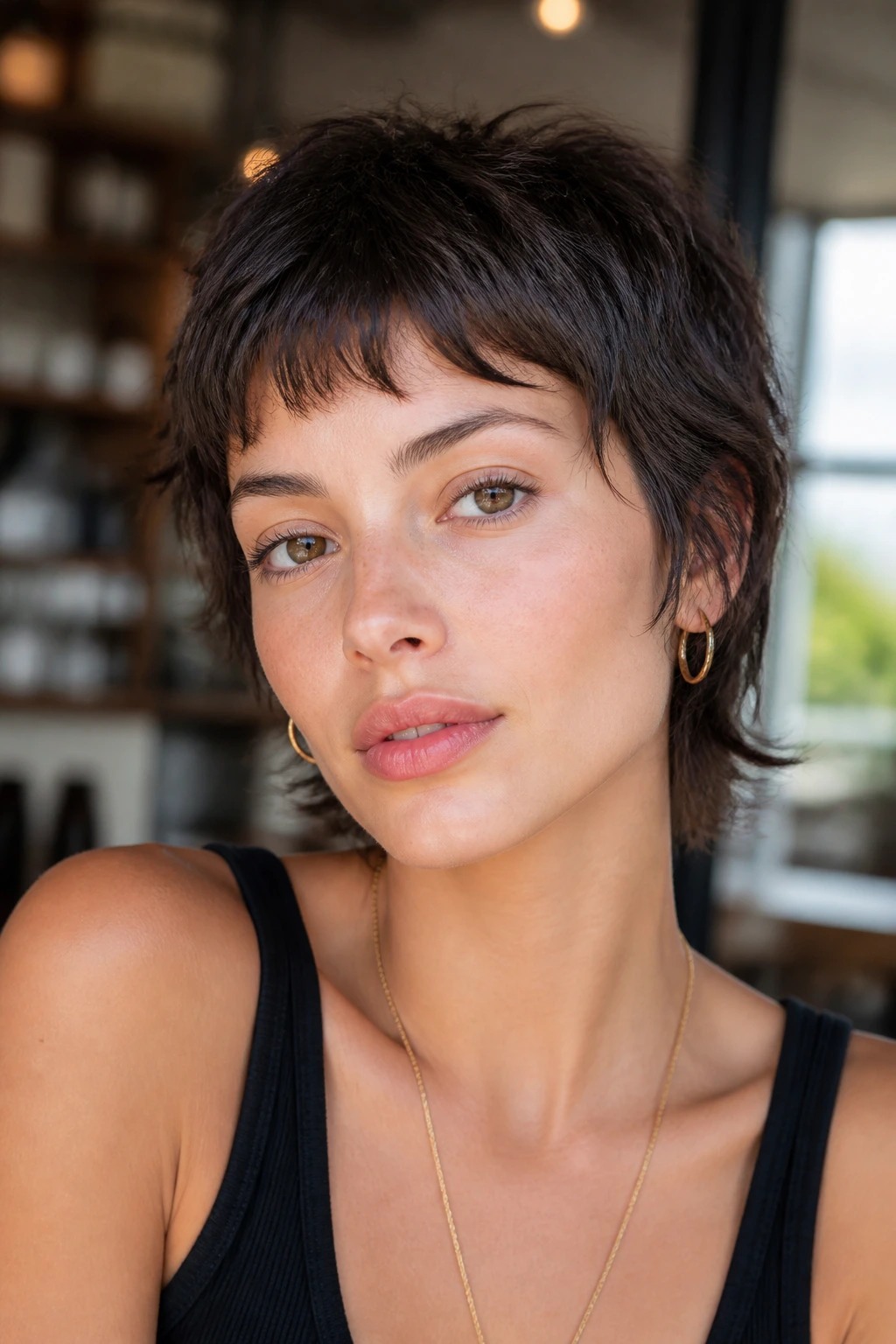
4. Micro Shag with Baby Bangs
A micro shag is tiny, sharp, and a little mischievous. It’s not the cut for someone who wants to hide behind their hair. It is, however, very good at giving fine strands a shape that doesn’t depend on length.
The baby bangs do a lot of the visual work, which helps when the rest of the hair is short and lightly layered. The key is keeping the fringe soft, not blunt and stiff. You want a hint of separation at the brow line, maybe even a slightly irregular edge, so it feels airy instead of severe.
This cut shines on straight hair and on hair with a tiny bit of wave. If your hair is very dense, it can still work, but the stylist should avoid over-thinning the crown. Too much removal up top and the whole silhouette starts to wobble. Keep the back tidy, keep the top lived-in, and the proportions stay clean.
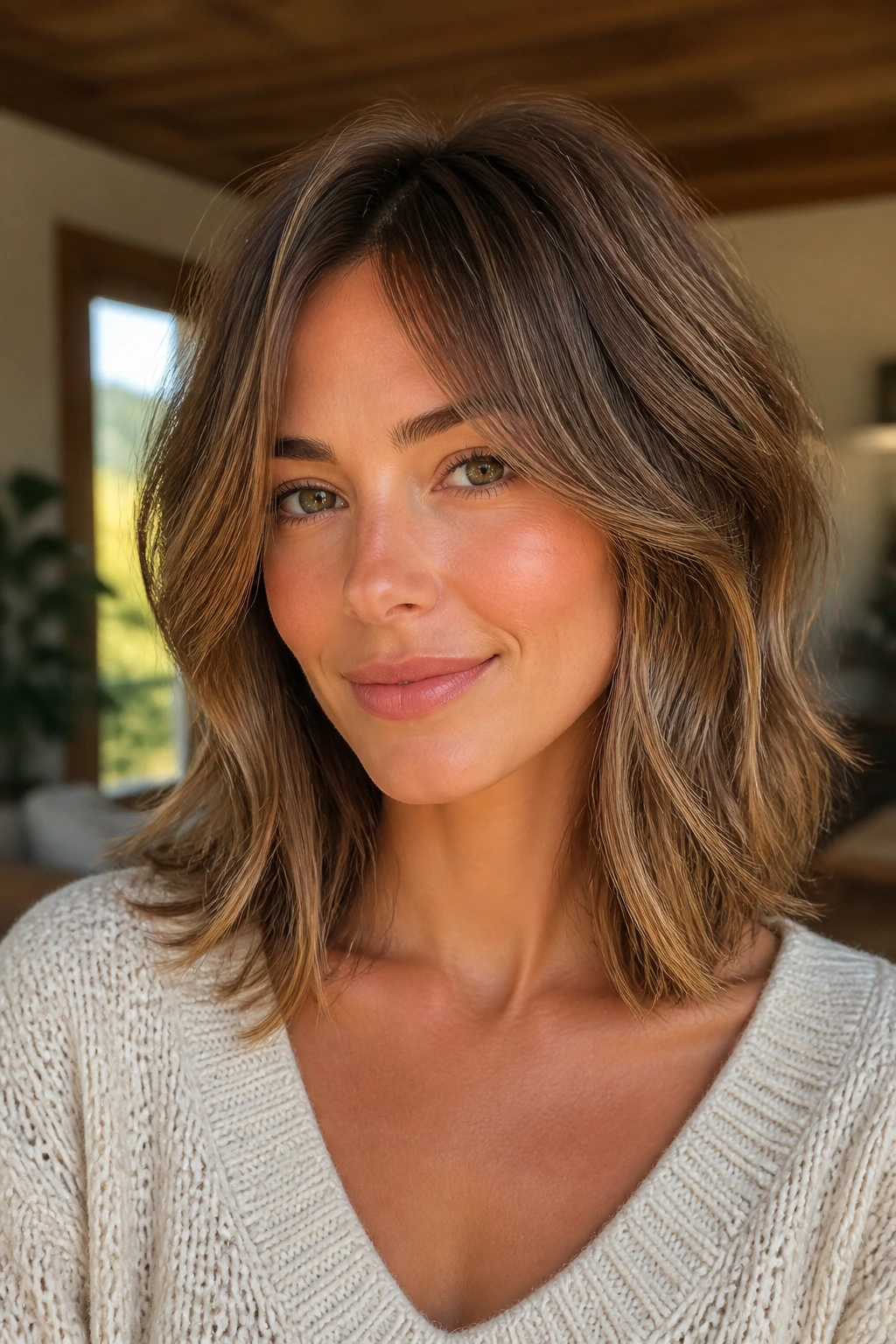
5. Collarbone Shag Lob
The collarbone shag lob is the compromise cut for people who want “short” but are not ready for jaw-length. Fine hair often behaves better when there’s a little more length to keep the perimeter visually full, and collarbone length does exactly that.
This one gets its personality from soft, sloping layers that start below the cheekbone and move toward the ends. The result is less choppy than a classic shag, more wearable for people who need to tie their hair back sometimes, and much easier to grow out. It’s also good if your hair has a few bends but not enough wave to build a full shag shape on its own.
A side part can make this cut feel fuller fast. So can a loose bend through the mids, not the ends. That detail matters. The ends should stay slightly heavier than the rest of the cut, or the lob loses the whole point.
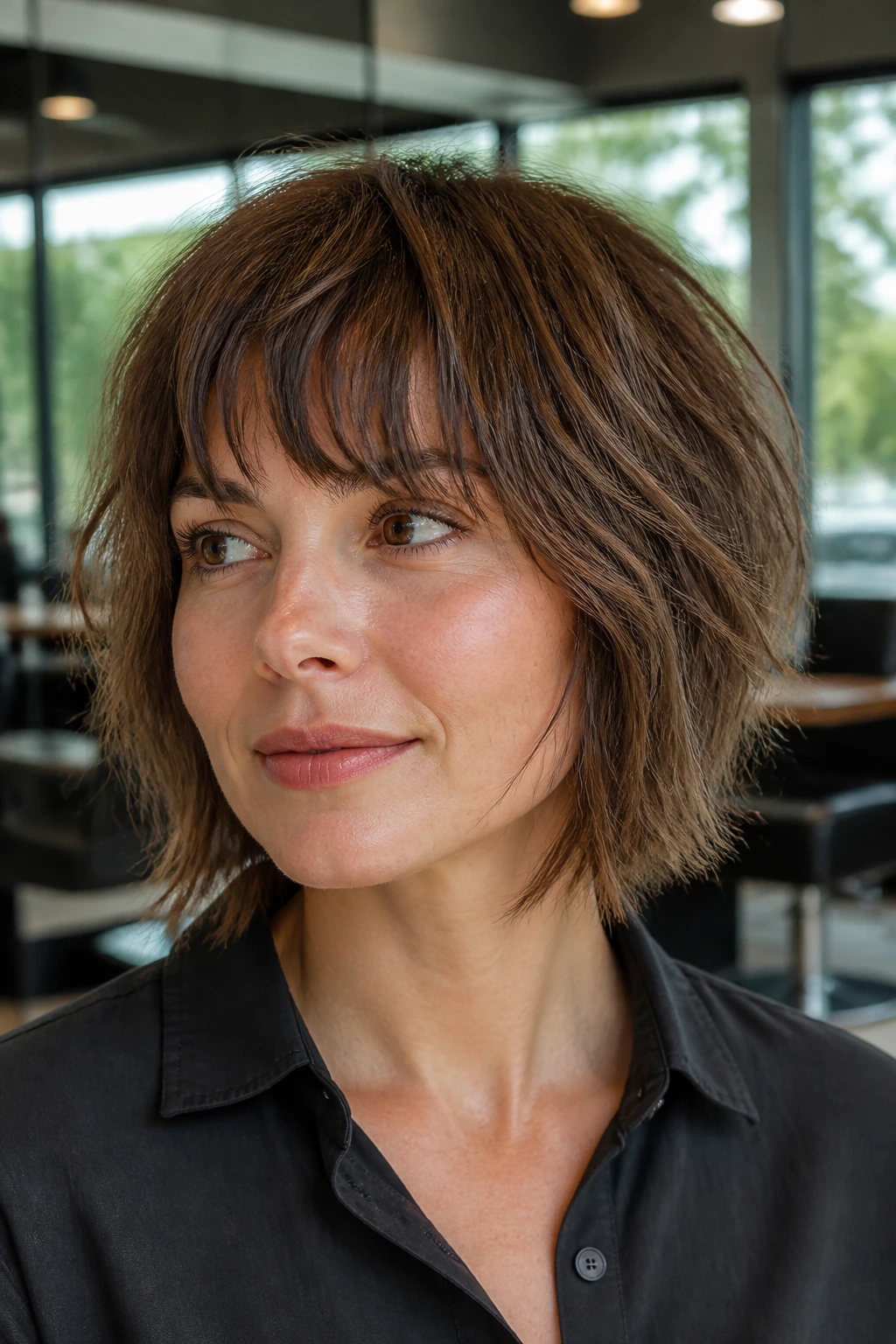
6. Razor-Textured Bob Shag
Razor work gets talked about like magic. It isn’t. On fine hair, it can help or it can wreck the ends, and the difference usually comes down to how much weight gets removed.
A razor-textured bob shag works best when the perimeter is kept blunt enough to hold density, while the interior gets just enough carving to break up the shape. The look is softly jagged, not frayed. If the stylist goes too far with the razor, the ends can start to look transparent, especially in daylight.
That’s why I prefer this cut on hair that has a bit of natural body or bend. It takes texture spray well. It can be air-dried and still look intentional. And when it grows out, the bob line keeps the haircut from disappearing into a shapeless cloud.
A good rule: if your hair already feels delicate, ask for minimal razor work and more point-cutting from the stylist’s scissors. Same effect, less damage.
7. Mini Wolf Cut
A mini wolf cut is the shag’s louder cousin, but on fine hair it needs a careful hand. Too much crown layering and the top puffs out while the bottom goes slim. Too little, and the whole thing loses its attitude.
The cut works because it stacks energy near the top of the head and lets the length taper below. On short hair, that taper has to stay soft. You want the outline to read as shaggy, not stringy. A little bit of fullness around the temples helps the face frame hold together.
What makes it different
The mini wolf cut is more directional than a regular shag. It has a slight forward pull around the face and a leaner neck area, which gives it that choppy, almost rebellious shape.
Best styling approach
Let it air-dry halfway, then scrunch in a texture spray or light foam. Blow-drying it perfectly smooth is a waste of effort. The cut wants movement, and it usually looks better when a few pieces are behaving slightly differently from the rest.
8. Soft Mullet with Tapered Nape
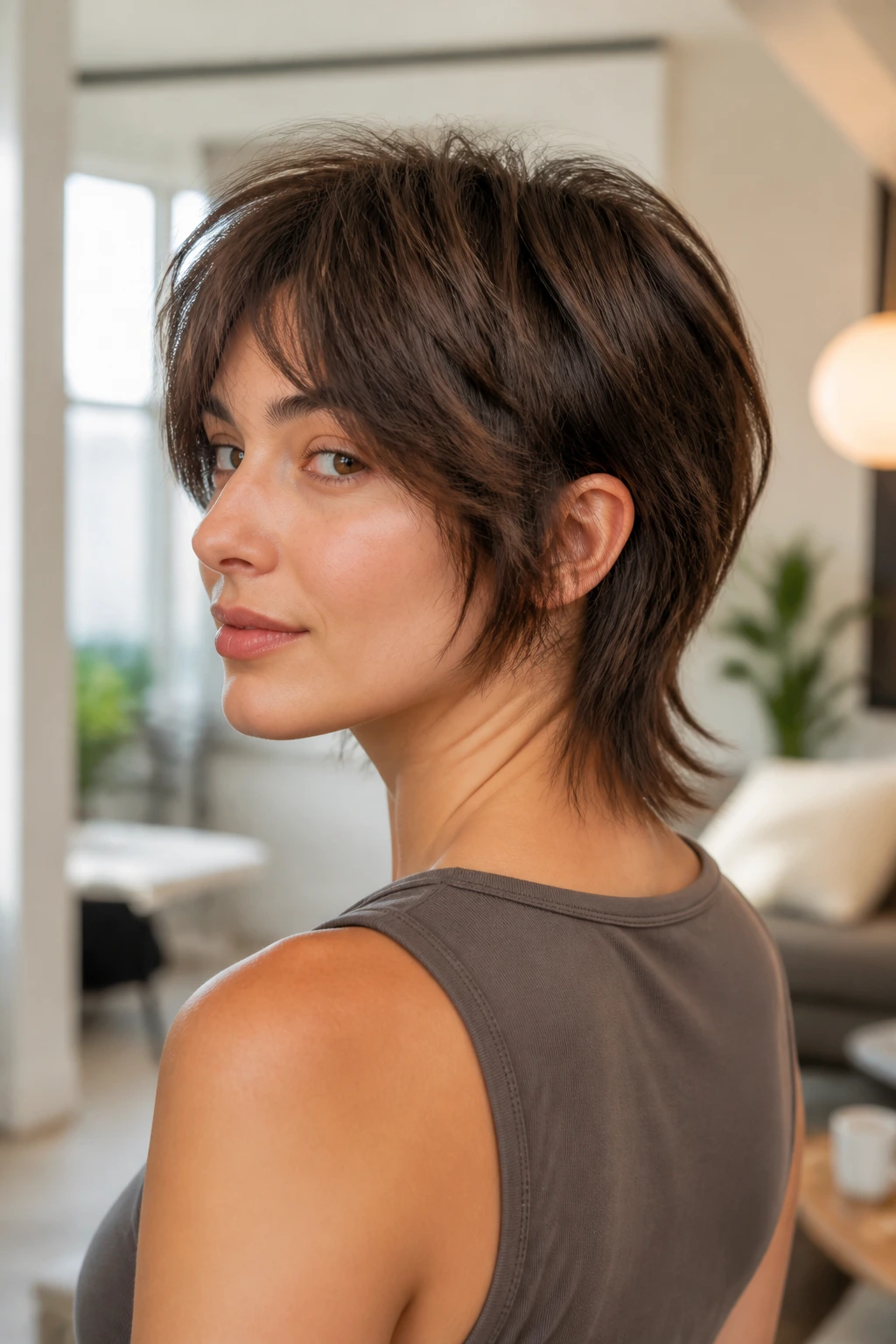
A mullet on fine hair can go wrong fast if the back gets too thin. But a soft mullet with a tapered nape has a useful shape: short where you want lift, longer where you want swing.
The front pieces can brush the cheekbones while the back stays close to the neck. That keeps the silhouette sharp without making the hair look sparse. It’s especially good if you like your hair off the collar but still want some length around the face. The nape should be neat, not chopped to bits. That clean taper is what makes the cut feel expensive instead of messy.
This is one of those cuts that looks better after a few lived-in days. The first day may feel a little too neat. By day two, the layers loosen and the shape wakes up. If your hair tends to stick flat at the crown, ask for a touch of root layering — not a lot, just enough to stop the top from clinging to the scalp.
9. Side-Swept Fringe Shag
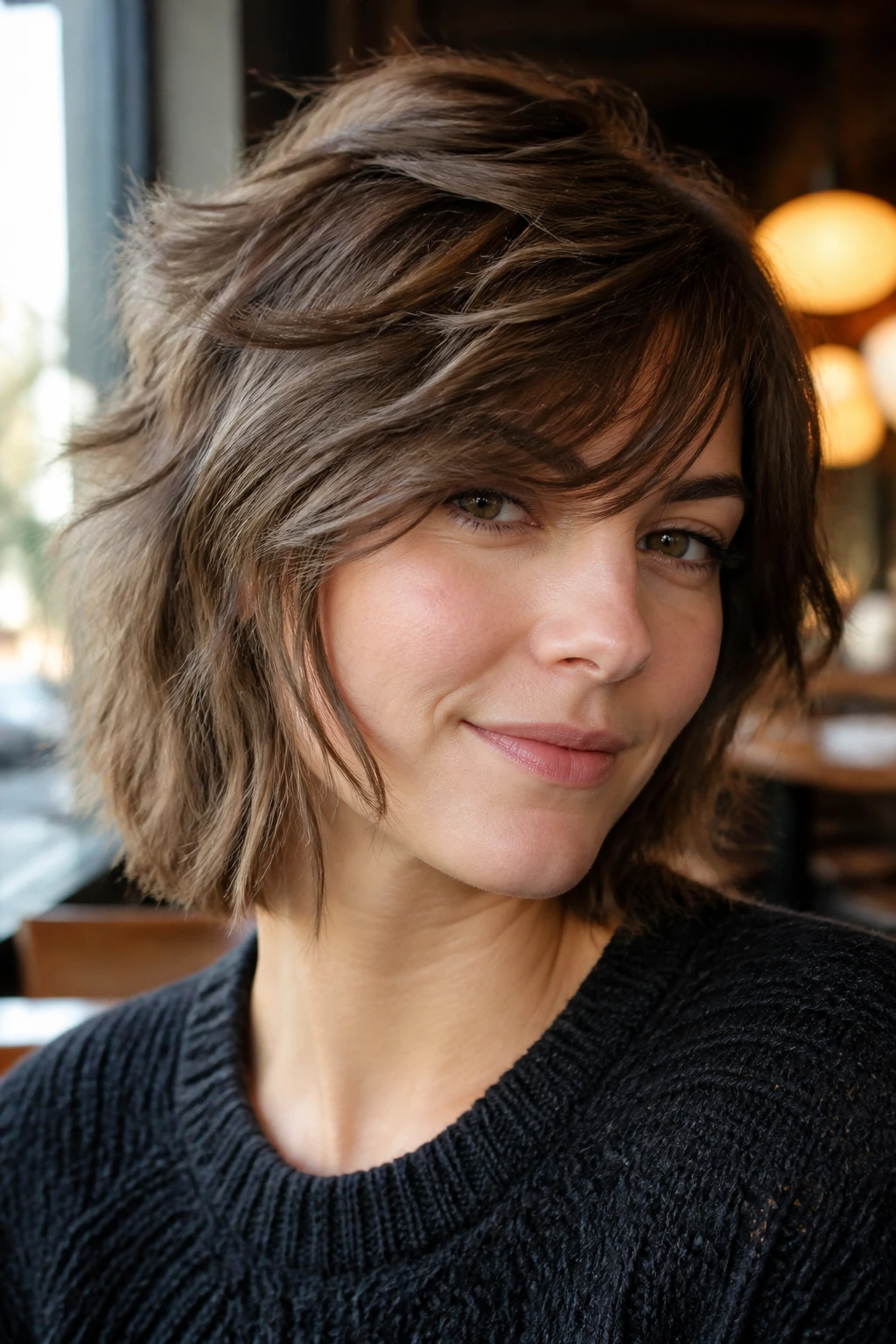
A side-swept fringe can do more for fine hair than a heavy full bang ever will. It gives the forehead coverage without swallowing the face, and it lets the rest of the cut stay light.
This shag works because the fringe travels into the layers instead of sitting on top of them like a separate piece. That connection keeps the haircut soft. It also helps if your hair is straight and a little slippery, since side fringe tends to move naturally instead of splitting awkwardly down the middle.
If you have a cowlick at the front hairline, this is a smarter bet than straight-across bangs. The side sweep can work with the cowlick instead of fighting it every morning. Use a vent brush and a quick blast from the dryer, then let the fringe cool in place. That cooling step matters more than people think.
10. Bottleneck Bang Shag
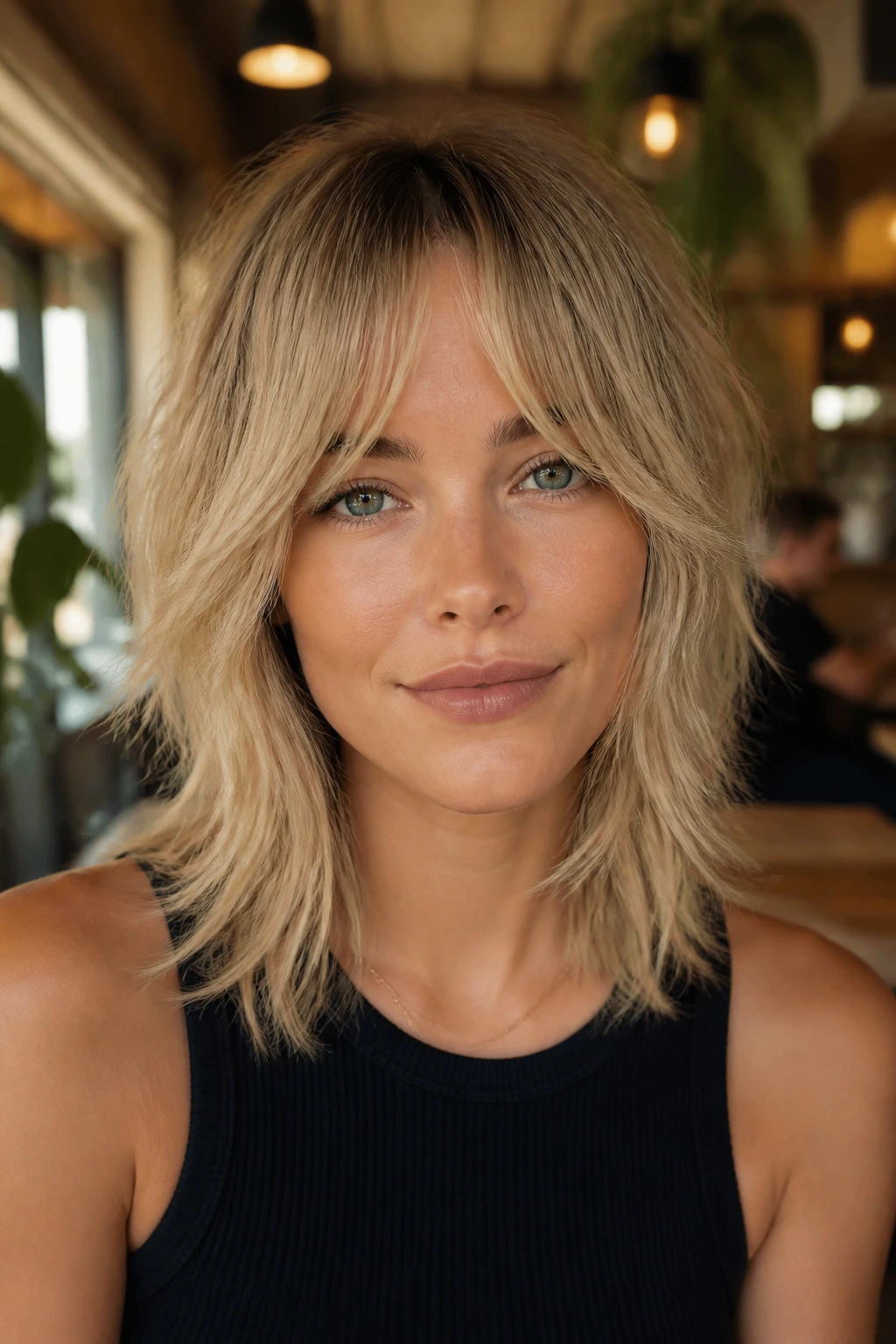
Bottleneck bangs are one of the best fringe choices for fine hair because they’re narrow near the center and open wider as they travel toward the cheeks. That shape gives the illusion of more hair at the front without burying the face in fringe.
On a short shag, they create a nice funnel effect. The bangs draw the eye inward, then the layers spread out around the cheekbones and jaw. If your face is long or narrow, this shape adds balance. If your hair is fine but plentiful in density, the bangs can still work — just keep them wispy enough to move.
This cut usually looks best with a bit of bend, not a perfect round-brush flip. A slight bend at the ends makes the bangs melt into the haircut. Over-styling the fringe is a mistake. You want them to look like they belong to the rest of the cut, not like they were added in a separate appointment.
11. Feathered Crown Shag

The feathered crown shag has a retro pulse to it, but the cut itself is very practical. On fine hair, feathering around the crown gives lift without leaving chunky gaps between layers.
This is one of the better choices if your hair collapses at the top but still has decent density through the mids. The stylists’ job is to remove weight in small, soft increments so the crown rises but the sides stay smooth. If the feathering starts too low, the hair can fan out in an awkward way. Keep the highest layers focused near the top third of the head.
It’s a good cut for a round brush finish. It also looks nice with a little bend from a small flat iron, especially if the ends are tucked in a touch. That’s the thing with feathering: it needs motion, but not noise.
12. Neck-Grazing Shag with Piecey Ends
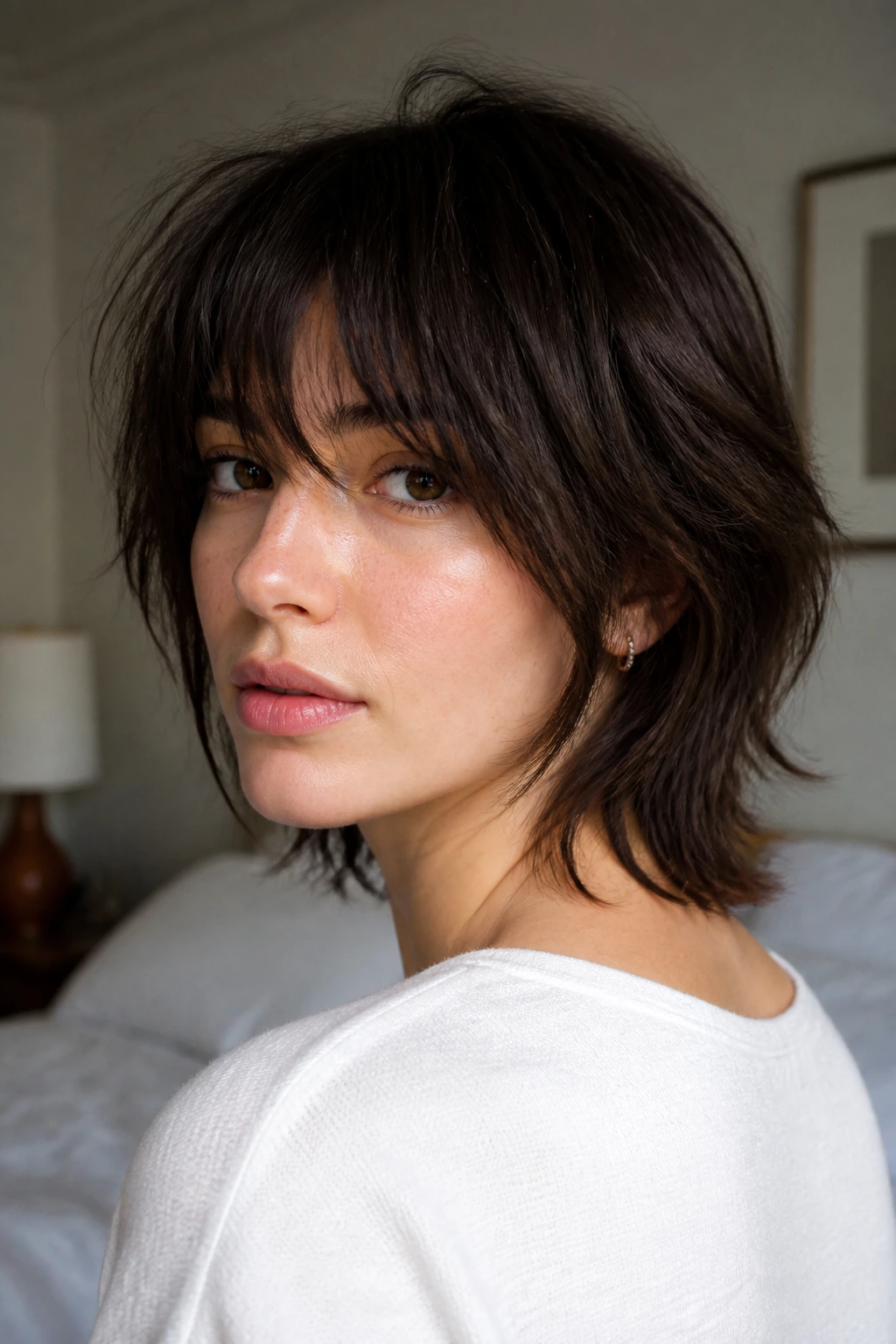
A neck-grazing shag is one of the quiet heroes of this whole category. It’s short enough to feel fresh, long enough to tuck behind the ears, and it lets fine hair keep enough length to look substantial.
The piecey ends keep it from feeling too neat. That’s important. Fine hair can go from chic to stiff if the perimeter is too polished, so a few separated ends keep the cut alive. A matte styling cream or very light paste is enough. Too much product and the pieces close up.
This cut also behaves well with scarves, high collars, and jackets. That sounds small, but it matters in real life. Hair that sits at the neck can get weird under clothing fast. A neck-grazing shag avoids some of that friction while still giving you a shape that reads as intentional when it’s down.
13. Air-Dry Wave Shag

If your hair already has a little wave, stop fighting it. The air-dry wave shag is built for that bend, and it’s especially good on fine hair that looks flat when over-styled.
The layers should follow the natural movement rather than forcing new direction into the cut. That means the shortest pieces sit where the wave wants to lift, usually around the cheekbones and crown. The ends stay soft and a bit irregular. If the cut is too symmetrical, natural waves will break it up in odd places.
A sea-salt spray can be useful here, but only in moderation. Too much salt and fine hair turns crisp and dry fast. I prefer a light mousse through the roots, then a small amount of cream on the mids. Scrunch, leave it alone, and let the hair finish drying on its own. The best version of this cut never looks overworked.
14. Curly Fine-Hair Shag
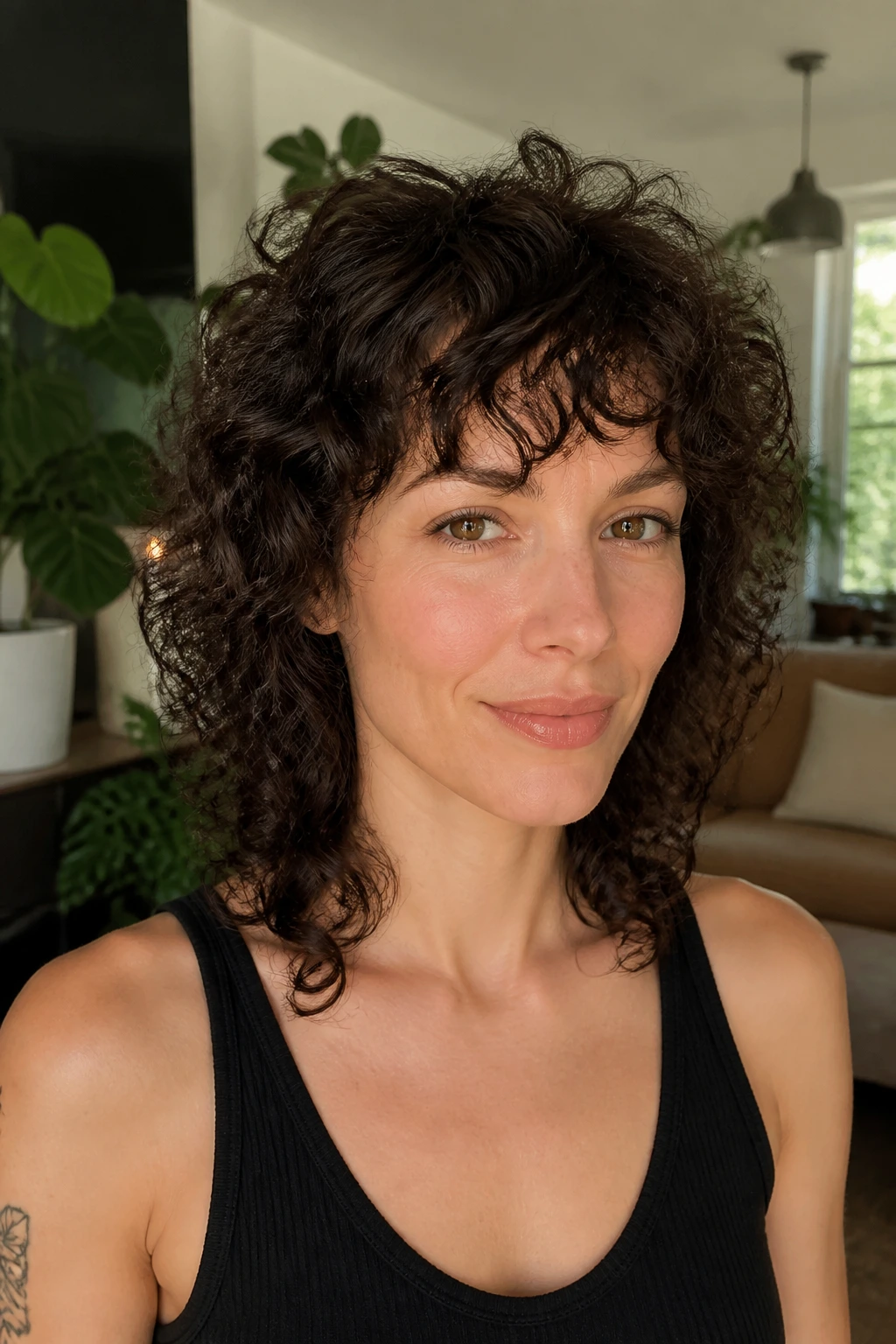
Curly fine hair needs a different kind of respect. The cut should preserve the curl clumps while still lifting the crown, and that means soft layers, not a pile of shredded pieces.
The biggest mistake with curly fine hair is over-layering the interior. You can end up with volume that looks airy at first and sparse by day two. A better approach is to keep the shape rounded, trim curl by curl where needed, and let the layers fall where the curl pattern naturally lands. If your curls shrink a lot, the cut should be made with that in mind — not on wishful thinking.
This kind of shag usually loves a diffuser on low heat. Plopping can work too if the fabric isn’t rough. And yes, you can still have fringe. Just keep it longer than it looks in the sink. Curly bangs bounce up after drying, and if they’re cut too short, they’ll sit above the brows and stay there.
15. Blunt-Perimeter Shag

Here’s the contrarian move: sometimes fine hair needs more bluntness, not more slicing. A blunt-perimeter shag keeps the outline thick while using soft layers inside the shape to give motion.
That blunt edge is doing a lot of work. It makes the ends read fuller and helps the haircut survive imperfect styling. Inside the cut, the layers are still soft and feathered, but they don’t eat into the outline. If your hair is very fine or prone to split ends, this is one of the safest shags on the list.
It’s also a nice answer for anyone who likes a cleaner look but still wants the ease of a shag. You get movement without the torn-up feel. The haircut can look polished when straight, then a little messier with texture spray. That range is the whole point.
16. Mushroom-Shaped Shag
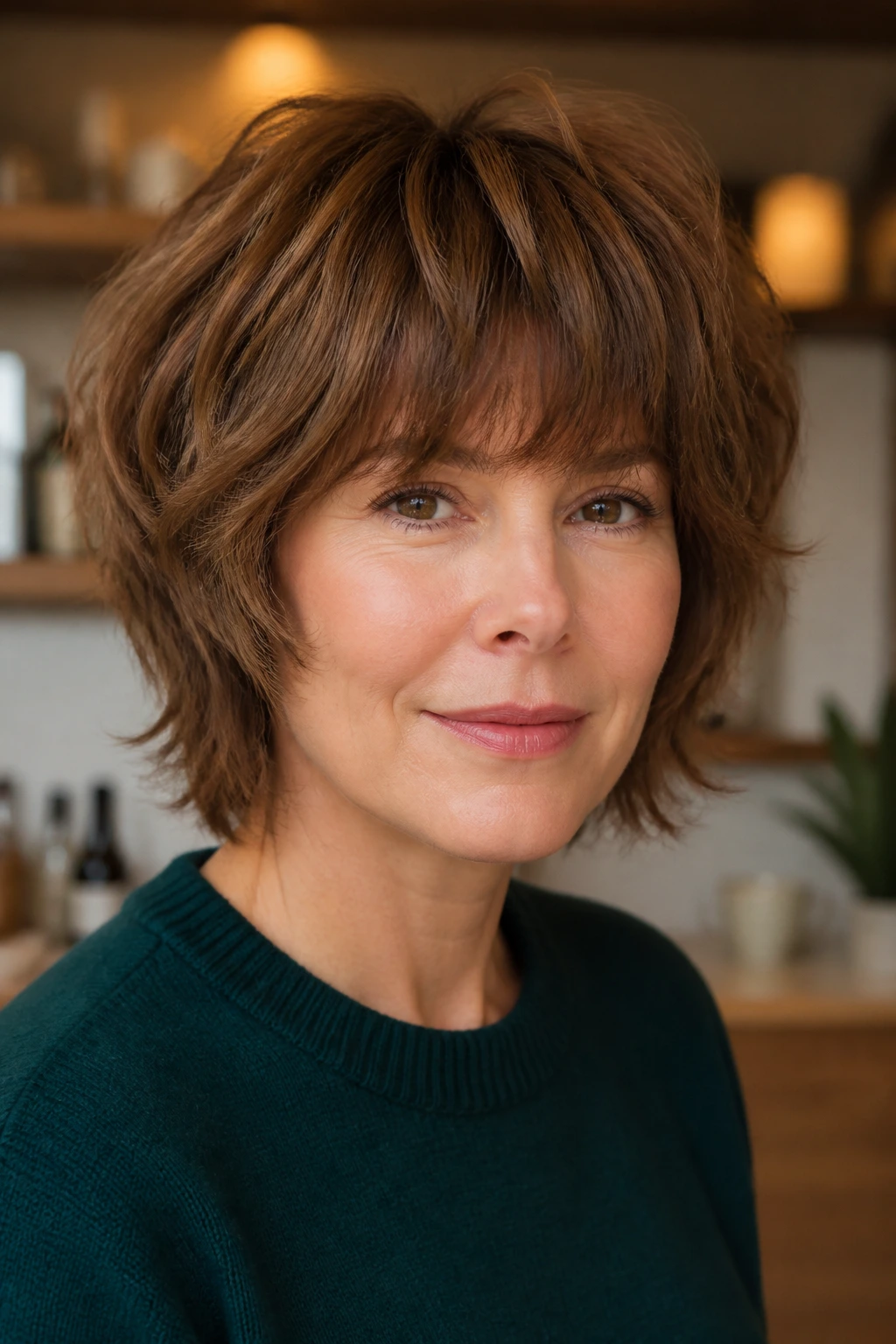
A mushroom-shaped shag sounds odd until you see it on the right head shape. The top is rounded and slightly full, the sides fall softly, and the ends stay tucked enough to avoid looking stringy.
It works on fine hair because the silhouette is compact. Compact hair looks thicker. That’s the basic truth. By keeping the outer shape rounded and the layers close to the head, the cut avoids the spindly look that can happen when fine hair is stretched too long or cut into too many disconnected pieces.
This style likes clean styling and a little control. A cream with a soft hold can help the sides stay smooth while the top keeps lift. If you want a haircut that feels neat but not stiff, this is a sleeper pick. It is not the loudest shag in the room. It is one of the smartest.
17. Disconnected Top-Heavy Shag
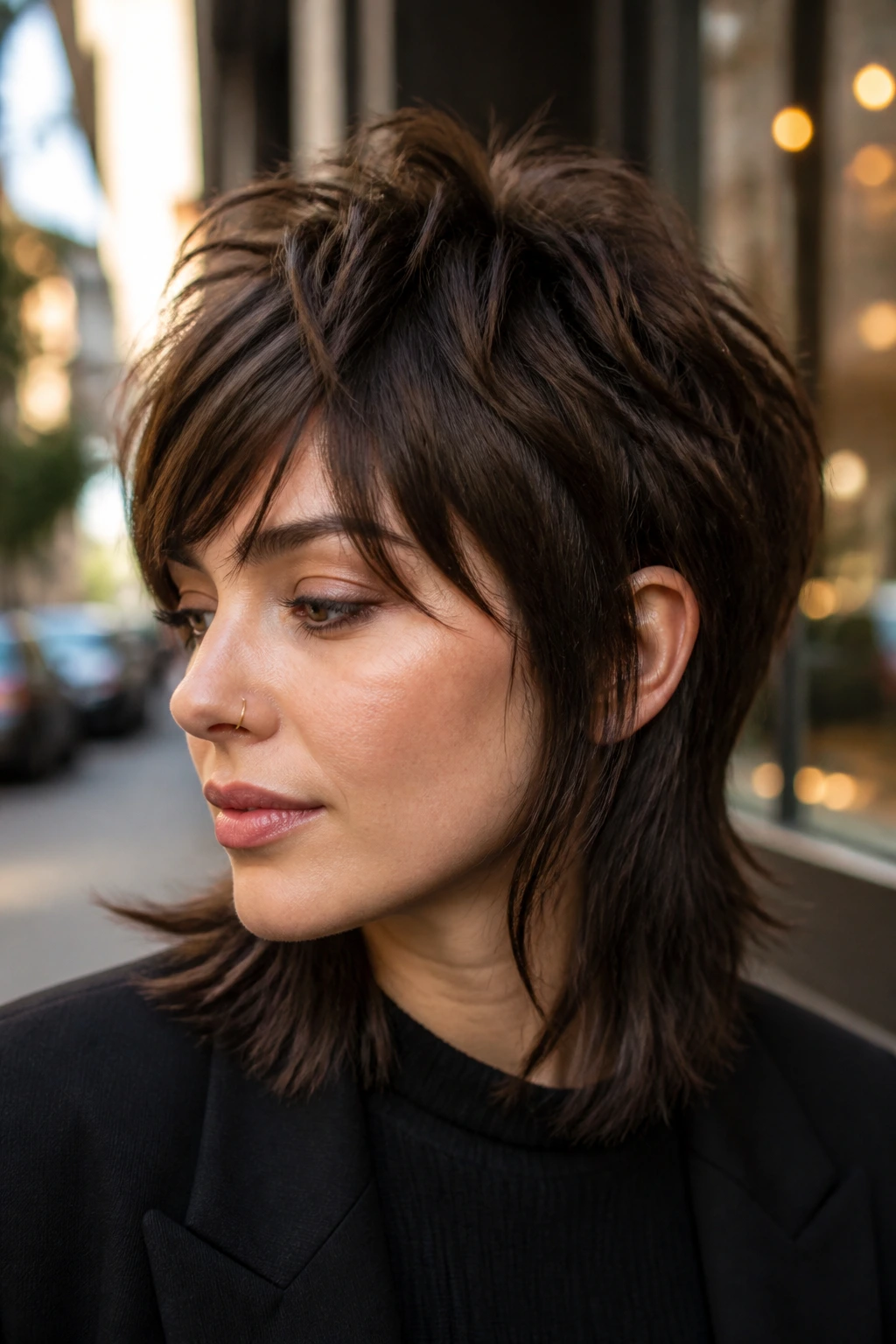
A disconnected shag is a little more fashion-forward, but on fine hair it can be useful if the stylist keeps the lower lengths solid. The top gets more texture and movement; the bottom stays a touch heavier.
That split gives you volume where you need it and substance where you can’t afford to lose it. The shape can look especially good if your hair falls flat at the crown but your ends already struggle to hold fullness. The lower section keeps the outline intact, while the top lifts and breaks apart in a deliberate way.
This isn’t the cut for someone who wants one smooth line from roots to ends. It’s for someone who likes a little edge. A side part or an off-center part helps it show its shape. And no, you do not need to overstyle the disconnect. A gentle bend and a little separation are enough.
18. Face-Framing Cheekbone Shag
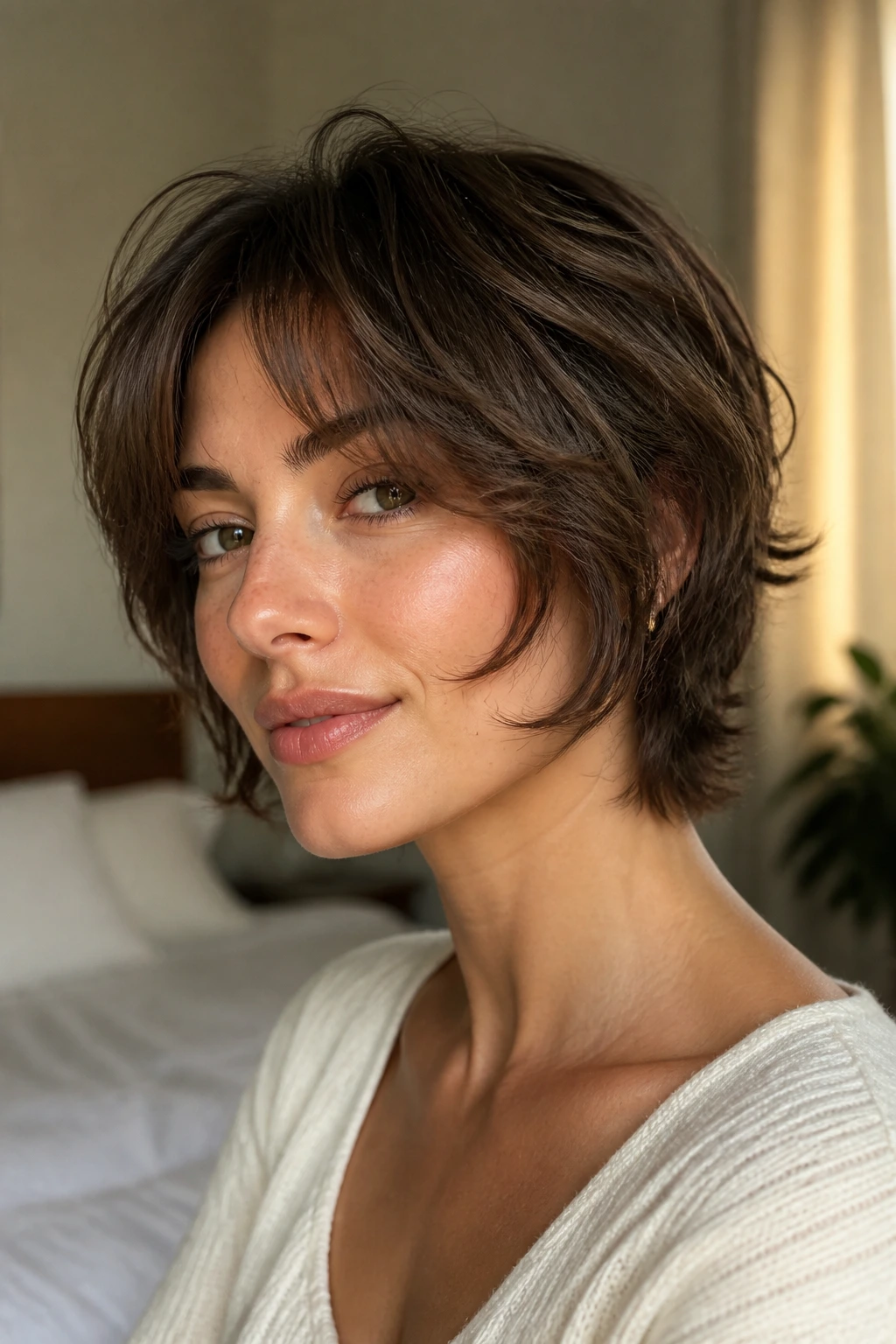
If you want your haircut to do some of the visual lifting for your face, this one earns its place. The shortest pieces land near the cheekbones, which gives fine hair a flattering frame without crowding the forehead.
The cheekbone hit is the secret. It pulls the eye upward and outward at the same time, which makes the whole cut look fuller even when the overall length is short. The rest of the layers should stay soft and connected, not chopped into pieces that break apart too early.
This shag works especially well for people who want a little softness around angular features. It can also rescue a haircut that feels too plain. A few well-placed face frames, and the whole thing changes. I’d keep the back simple here. Let the front do the talking.
19. Low-Maintenance Grown-Out Shag
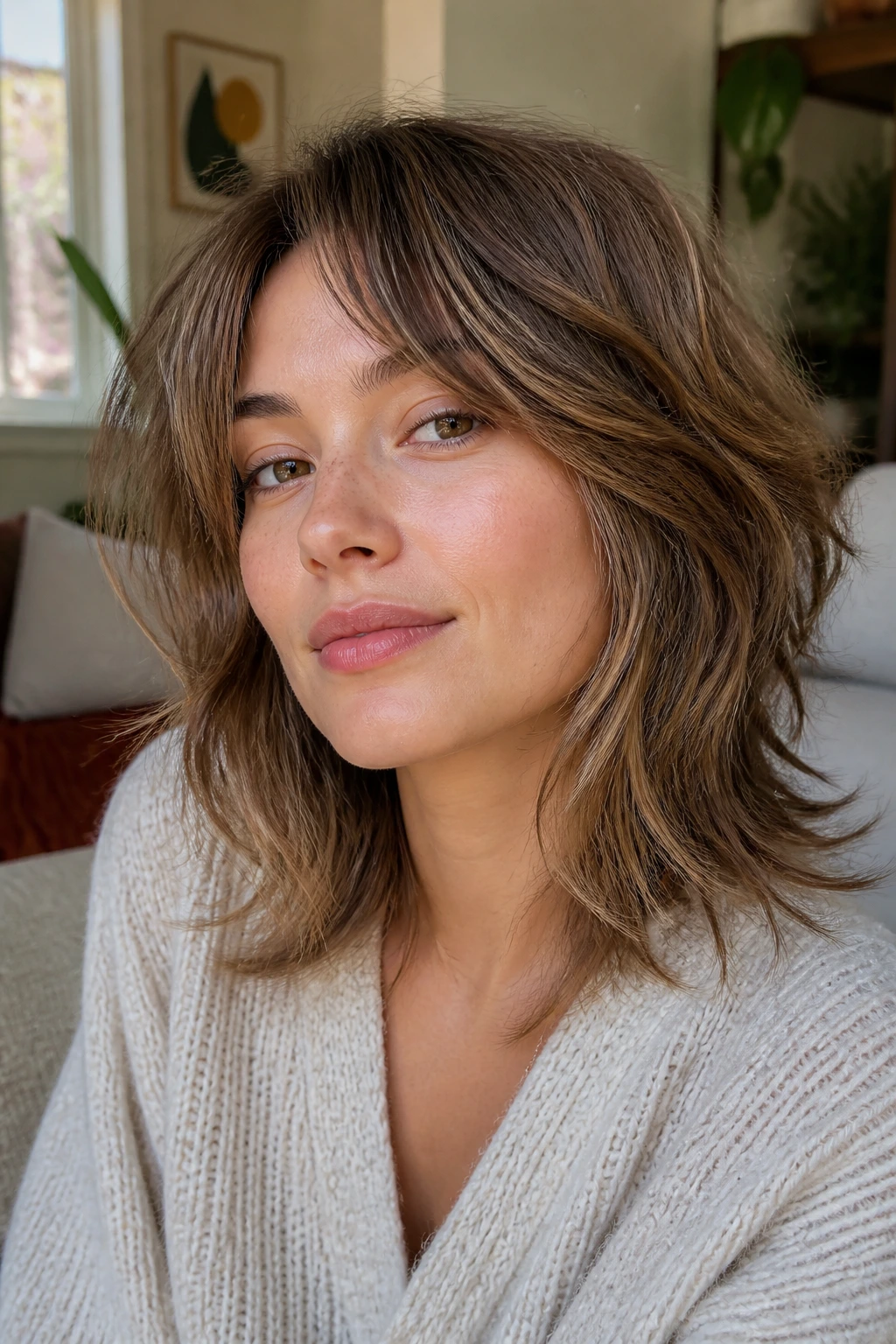
Not every haircut needs to look fresh from the salon on day one to be worth getting. A grown-out shag is built to behave after four, six, even eight weeks, which is a huge deal if you hate frequent trims.
The shape starts with a soft, layered top and a perimeter that doesn’t collapse as it grows. The face-framing bits should be long enough to blend into the rest of the hair instead of creating a hard line when they grow. That’s what makes this version useful for fine hair: it ages well.
If you’re trying to stretch appointments, ask for a cut that still looks like a haircut when the bang area starts to fall into your eyes. That means lighter fringe, blended sides, and a nape that doesn’t need a lot of babysitting. It’s the sort of haircut you can brush, scrunch, and forget about for two days without panicking.
20. Inverted Shag with Lifted Back
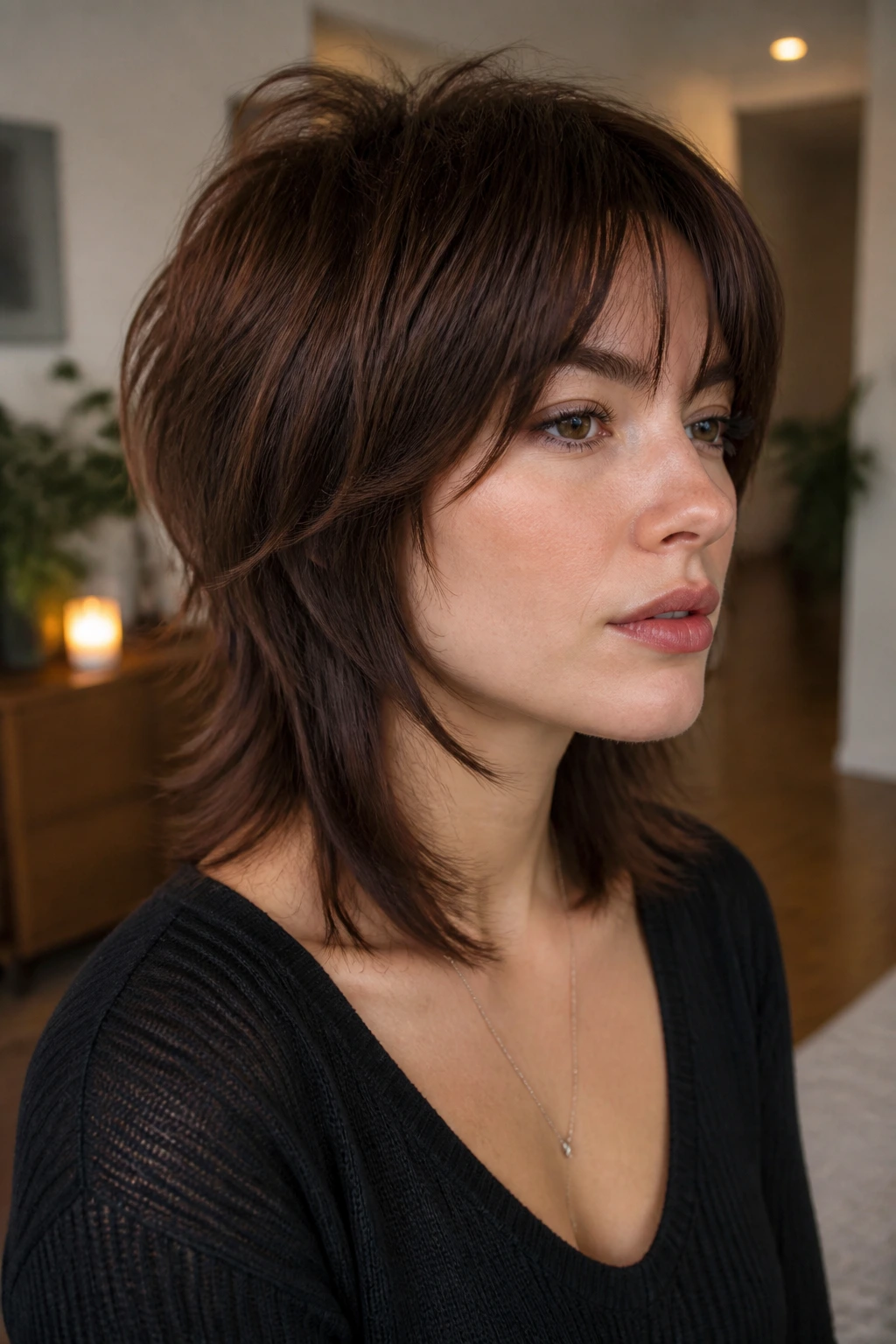
An inverted shag gives you more length in the front and a slightly shorter back, which can make fine hair look fuller at the crown and cleaner at the neck. The angle is subtle, not dramatic.
That subtlety matters. If the back gets too stacked, fine hair can start to look over-managed. Keep the lift soft and the angle gradual, and the cut feels modern without losing density. This is especially nice if you wear your hair tucked behind the ears a lot, because the front pieces keep the shape visible even when the back is calmer.
A little root spray helps this one. So does blow-drying the back upward first, then smoothing the front pieces into their fall. The lifted back gives a hint of shape; the front keeps it from feeling too practical. Nice trade.
21. Soft Layered Bob Shag with Tucked Nape
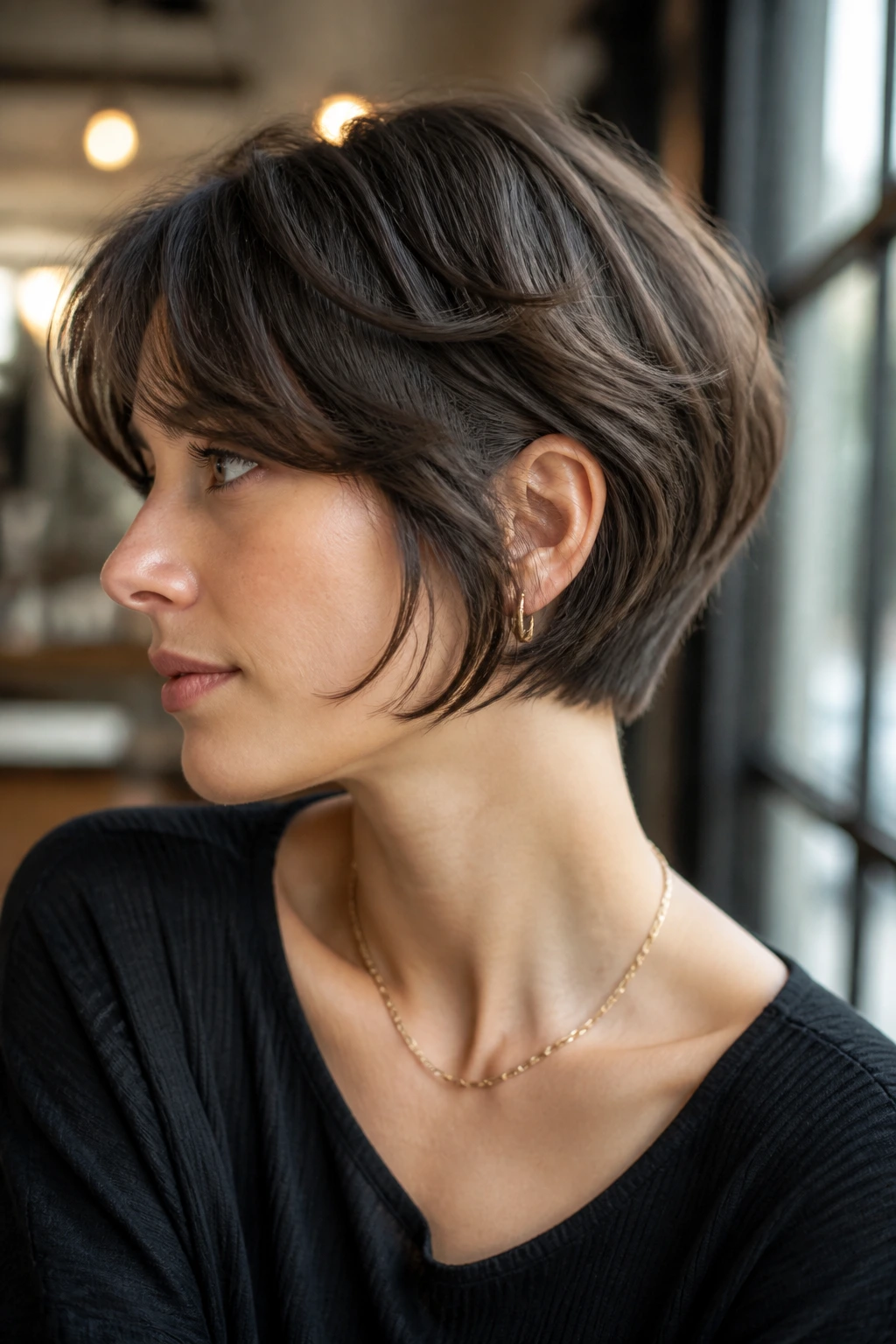
This is the haircut for the person who wants a bob but doesn’t want the bob to sit like a block. The nape is neatly tucked, the layers are soft, and the front pieces move enough to keep the whole thing from looking rigid.
The fine-hair advantage is obvious: a bob line creates the illusion of thickness at the bottom, and the shagging inside the shape prevents the helmet effect. The cut looks especially good behind one ear. That little asymmetry gives the hair a break and makes the perimeter feel more alive.
A side part can help if your hair naturally lies flat in the center. And if your stylist likes to thin everything to bits, this is not the place for that. You want the weight line to stay intact. The softness belongs inside the shape, not at the expense of it.
22. Wispy Tapered Shag with Curtain Ends
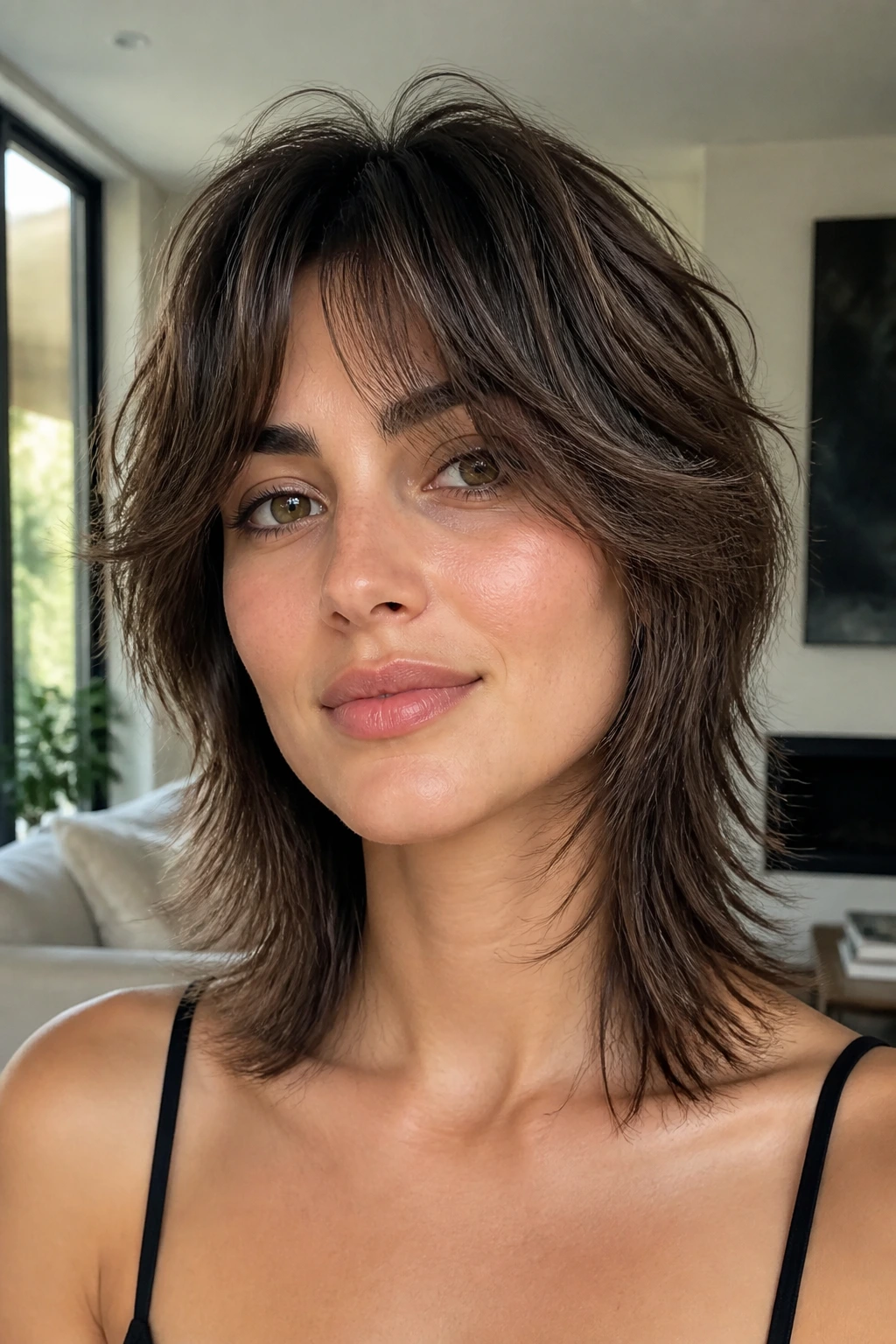
The final one is probably the easiest to live with. A wispy tapered shag with curtain ends keeps the front open, the crown light, and the ends slightly tapered so the haircut moves without looking overdone.
Curtain ends are useful because they frame the face in a very forgiving way. They also let fine hair keep a sense of fullness around the front, which is often where it needs help most. The taper should be soft enough that the ends don’t disappear. If they do, the haircut starts looking airy in the wrong way.
This shape plays nicely with almost any styling routine. Blow-dry it, air-dry it, tuck it, clip it back — it still reads as a haircut with intent. That kind of flexibility is what makes a short shag worth the chair time in the first place.
Why Soft Layers Beat Heavy Thinning on Fine Hair
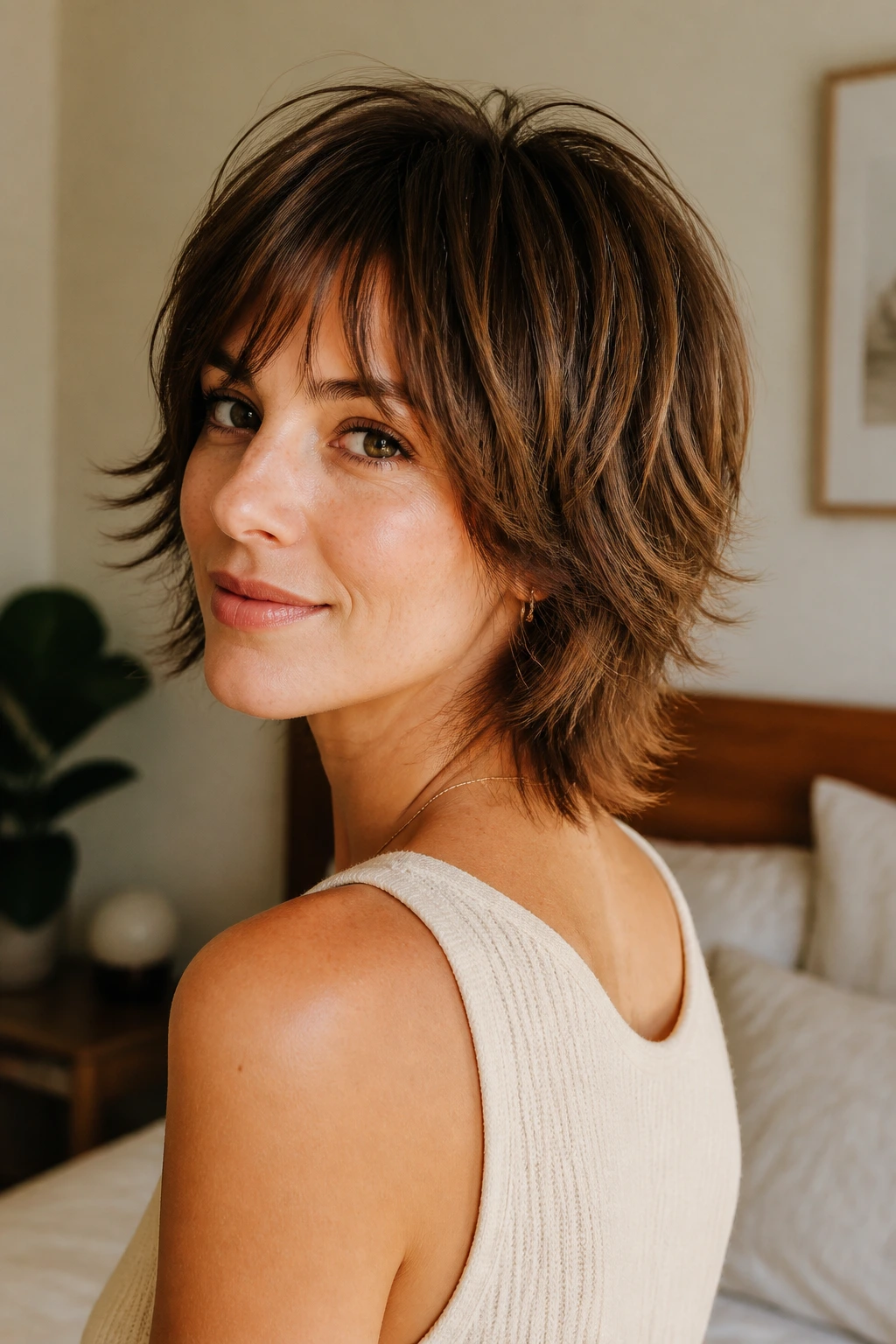
Soft layers are not the same thing as aggressive texturizing. That difference matters more on fine hair than on almost any other hair type. When the individual strands are thin, you don’t have much built-in bulk to spare, so every snip has to earn its place.
A good cut keeps a visible perimeter. That perimeter is the frame. Once that frame gets shredded, fine hair stops reading as a shape and starts reading as a collection of wisps. Soft layers lift the interior and lighten the top, but they leave enough weight at the outside edge to keep the haircut from going transparent.
Perimeter first
If a stylist keeps talking only about texture, ask where the weight line will live. You want to hear words like connected layers, soft graduation, and full ends. Those are the clues that the haircut won’t be over-thinned.
Crown lift, not crown fluff
There’s a real difference between volume and puffiness. Fine hair needs lift at the crown, but too much removal up top can cause flyaway fluff instead of shape. The best short shag haircuts make the root area feel lighter while the outline stays calm.
Essential Tools and Products for Styling a Short Shag
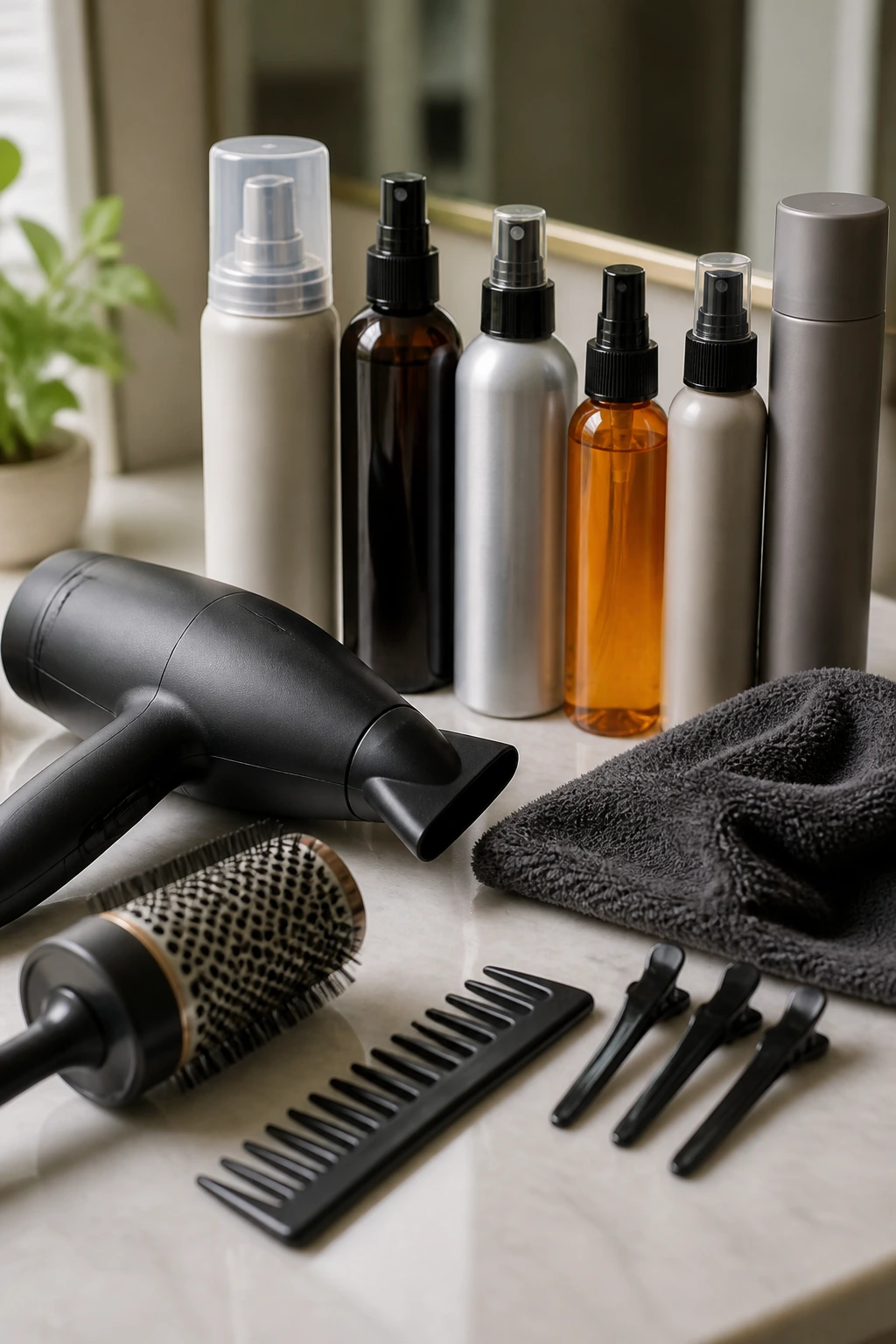
- 1-inch round brush: Small enough to bend short layers around the crown and fringe without over-stretching them.
- Blow dryer with a nozzle: The nozzle helps direct airflow at the roots so the top doesn’t blow around and dry flat.
- Lightweight mousse: Gives fine hair memory at the root and through the mids without that sticky, crunchy feeling.
- Root-lift spray: Use this at the crown or along the part line when you want more height on day one.
- Texturizing spray: Best for breaking up the ends after drying; use a little, then stop.
- Heat protectant: Non-negotiable if you use a flat iron or round brush regularly.
- Wide-tooth comb: Better than a dense brush for distributing product through damp hair without smearing the layers flat.
- Duckbill or sectioning clips: Handy for short layered cuts, especially if you want to style the fringe separately.
- Lightweight dry shampoo: Good for the second day when the roots need lift but the ends need to stay soft.
- Microfiber towel or T-shirt: Helps cut down on rough frizz when you’re air-drying.
How to Ask for the Cut Without Losing Density
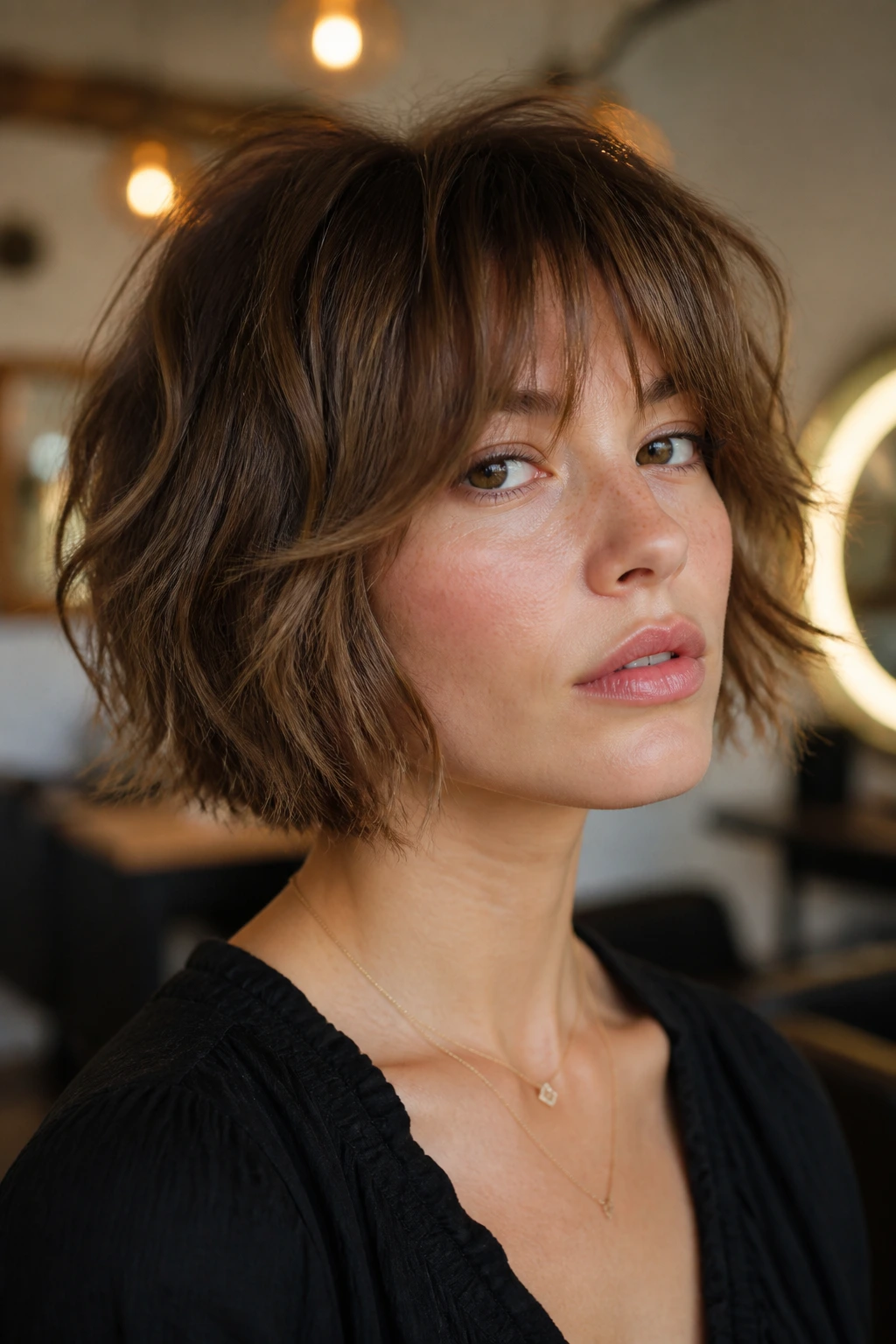
Bring photos, yes, but bring the right kind. A picture of a shag on thick hair will lie to you. It will look airy in the photo and sparse on your head. Find examples with hair density close to yours, or at least similar length and texture.
Say specific things. “Keep the perimeter full.” “I want soft layers, not piecey thinning.” “Please leave enough weight at the ends so it doesn’t look see-through.” Those phrases help more than saying you want “texture,” which can mean almost anything in a salon chair.
If you wear your hair with a part, show that part. If you want fringe, say how much forehead you’re willing to cover. And if you have a stubborn cowlick, bring it up before the scissors come out. That little swirl at the hairline changes how bangs fall, especially on short cuts. A stylist who knows that will cut the fringe differently and save you a lot of morning muttering.
How to Style It Without Flattening the Crown
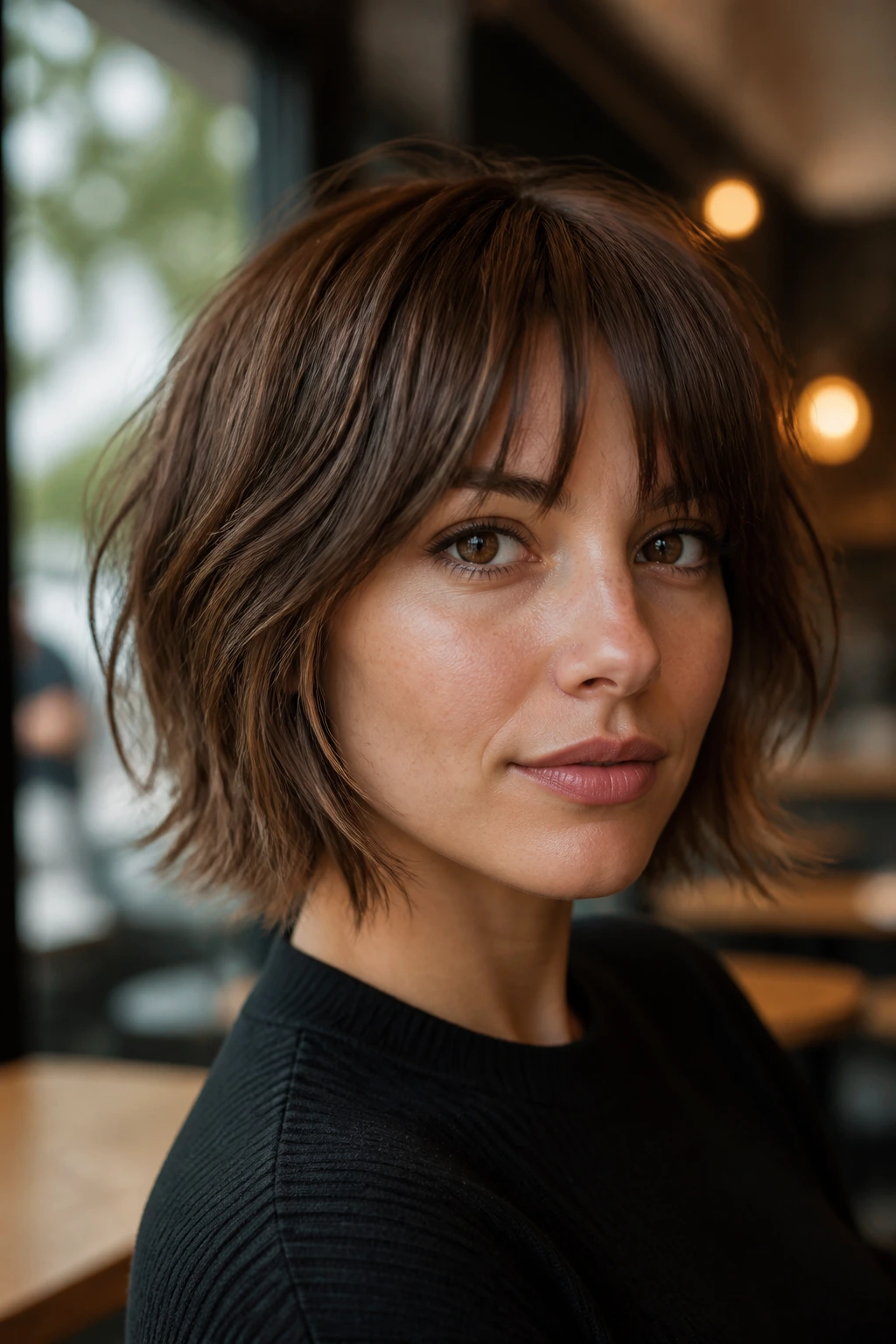
Straight hair: Blow-dry the roots first. Not the ends. Lift the crown with your fingers or a small brush, then bend only the last inch or two of the layers. Straight fine hair often goes limp because people overwork the mids and underwork the root. Reverse that habit.
Wavy hair: Scrunch in mousse on damp hair, then let it dry until it’s about 80% set before you touch it again. If you keep disturbing the wave pattern, it breaks into frizz. A little twist around the face pieces is enough.
Curly hair: Style in sections and stop once the curl clumps are defined. A short shag on fine curls looks best when the curls are allowed to stay grouped. A diffuser on low heat, used from below, helps the shape rise without blasting it apart.
Root lift without the helmet effect
Use product near the scalp, not at the scalp line. That sounds picky, but it keeps the roots lifted without making them tacky. Dry shampoo can help on day two, but don’t spray it into the fringe unless you want it to feel dusty.
Common Mistakes That Make Fine Hair Look See-Through
The first mistake is too much layering at the top. The hair gets fluffy for one hour and then starts showing gaps. The fix is simple: keep the crown soft, not shredded, and leave enough weight at the sides to support the silhouette.
Another one is heavy cream everywhere. Fine hair drinks product from the root down. If you pile cream on the mids and ends, the haircut collapses fast. Use mousse at the root, texture spray at the end, and keep the creamy stuff very light.
Over-cutting the fringe is a classic problem. Short bangs can look cute in the chair and disastrous once they dry. Fine hair often springs up a little, so fringe should usually be left a touch longer than the final target.
The last big miss is choosing a photo that’s all fluff and no structure. A cut that looks amazing on thick hair can look unfinished on fine hair. Look at the outline in the photo, not just the vibe. If the outline disappears, so will yours.
Variations and Adaptations to Try
For Pin-Straight Hair: Ask for a cleaner perimeter and softer internal layering. Straight fine hair shows every cut line, so this version needs shape more than random texture.
For Natural Waves: Keep the layers slightly longer and let the wave pattern do part of the work. A little mousse and air-drying can give this version a very relaxed finish.
For Very Long Faces: Choose curtain bangs, bottleneck bangs, or cheekbone framing. Those shapes shorten the visual length of the face without making the haircut heavy.
For Round Faces: Keep the volume a little higher at the crown and the face frame a little longer. That helps the cut elongate rather than widen.
For Grow-Out Skeptics: Pick a shag with a blunt perimeter and lighter fringe. The shape stays coherent longer, which means fewer awkward weeks between trims.
Maintenance, Trims, and Grow-Out
Short shag haircuts on fine hair usually need trimming every 6 to 8 weeks if you want to keep the shape crisp. If the fringe is part of the look, the bang area may need attention sooner — often around 3 to 4 weeks, especially if the hair grows fast at the front.
The nice part is that these cuts usually don’t fall apart all at once. They soften. That means you can stretch the appointment a bit if the perimeter stays full. Use dry shampoo sparingly, rough-dry the roots after washing, and don’t keep adding oil to the ends just because they feel a little dry. Fine hair shows product buildup fast, and buildup kills the lift you’re trying to keep.
If you want to grow the cut out, protect the outline. Keep the nape tidy, trim the fringe before it blocks your eyes, and let the face-framing pieces lengthen in stages. That way the cut turns into a layered bob, then a lob, instead of a strange halfway shape nobody planned.
Frequently Asked Questions
Will a short shag make fine hair look thinner?
Not if it’s cut with restraint. The problem is usually too much removal at the ends or crown, not the shag idea itself. A soft-layered shag keeps enough perimeter to preserve the look of density.
Is a shag better than a bob for fine hair?
A bob gives you a stronger outline; a shag gives you more movement. If your hair goes flat fast, a shag often feels more alive. If your hair is extremely sparse, a blunt bob with just a little layering may be safer.
Should fine hair get razor cutting?
Sometimes, but lightly. Razor cutting can soften the ends fast, which is useful on certain textures, but too much can make fine hair look frayed. Scissor cutting with point detail is usually the safer call.
Can I get bangs with a short shag?
Yes, but pick the right fringe. Curtain bangs, side-swept bangs, and bottleneck bangs tend to behave better than heavy blunt bangs on fine hair. They move more easily and grow out with less drama.
What if my hair is straight and won’t hold texture?
Choose a shape with a clean perimeter and a little internal layering, then use mousse and root lift spray while drying. You may need a small flat iron bend or a round brush finish to bring the layers to life.
How often should I trim a short shag?
Most people do well with trims every 6 to 8 weeks. Fringe may need a touch-up sooner if you wear it full or if it grows fast. If the crown starts lying flat, that’s usually your signal.
Can this work if my hair is thin in density, not just fine in strand size?
Yes, but the cut has to be even more careful. You want fewer short layers, a fuller perimeter, and very light texturizing. Thin density and fine strand size are not the same thing, and the haircut should respect that.
What’s the fastest way to fix a shag that looks too fluffy?
First, stop adding product at the root. Then smooth the top with a dryer and nozzle, and press the ends together with a tiny bit of lightweight cream or serum. If it still looks puffy, the cut may need a cleaner perimeter at the next trim.
The Shape That Keeps Moving
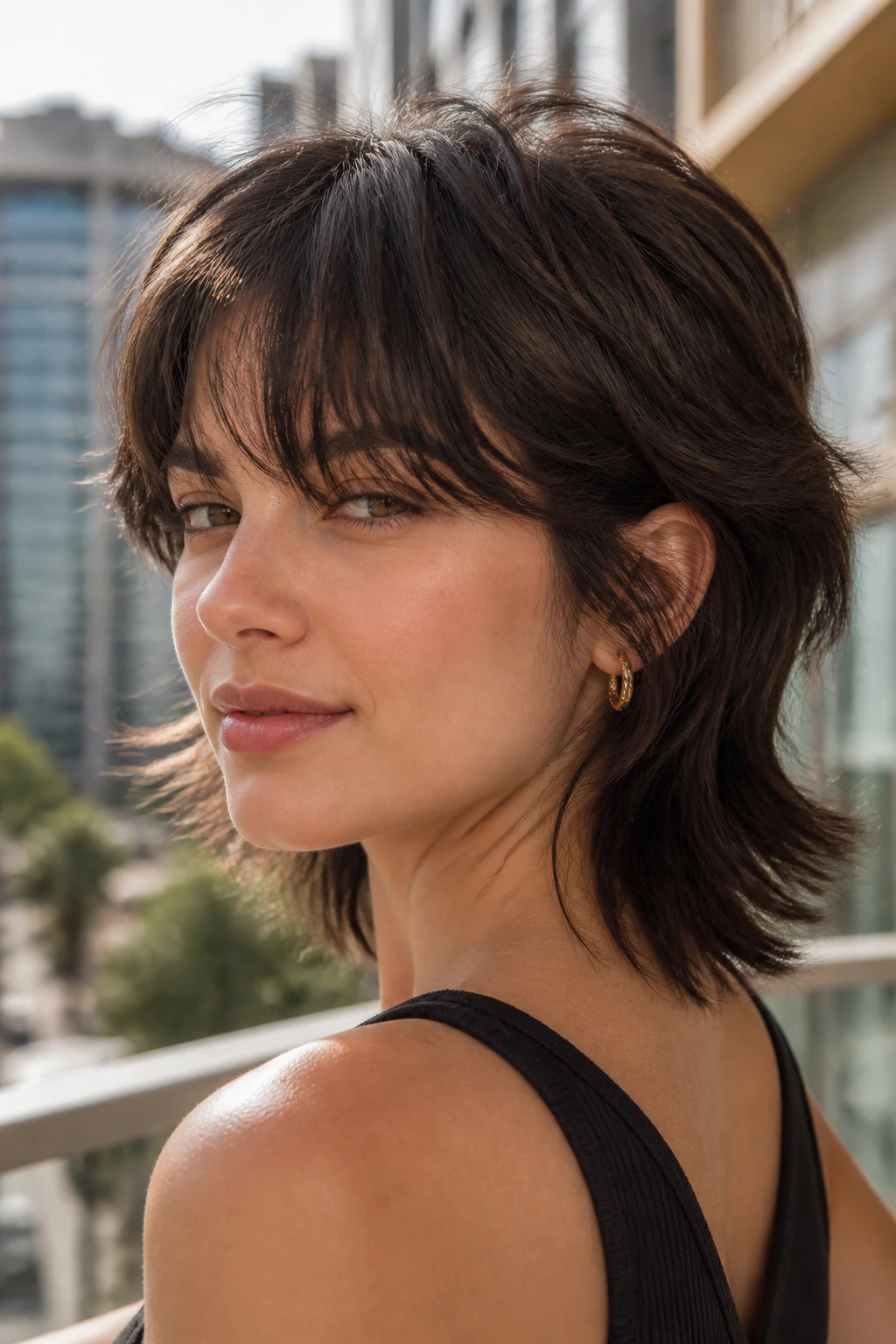
The reason short shag haircuts work so well on fine hair is not mystery. It’s structure. A solid outline gives the hair something to stand on, and soft layers keep that shape from going rigid or flat. That combination is the whole trick, and it’s why some shags look airy in a good way while others just look sparse.
If you’re bringing one of these ideas to a stylist, be specific about the edge you want to keep. Fine hair usually looks best when the ends stay a little fuller than your instinct tells you to ask for. That’s the part most people get wrong, and once you notice it, you can’t unsee it.
The right cut doesn’t try to fake thick hair. It gives fine hair a better shape. And that’s a far more useful goal.
Short Shag Haircuts for Fine Hair — Recipe Card
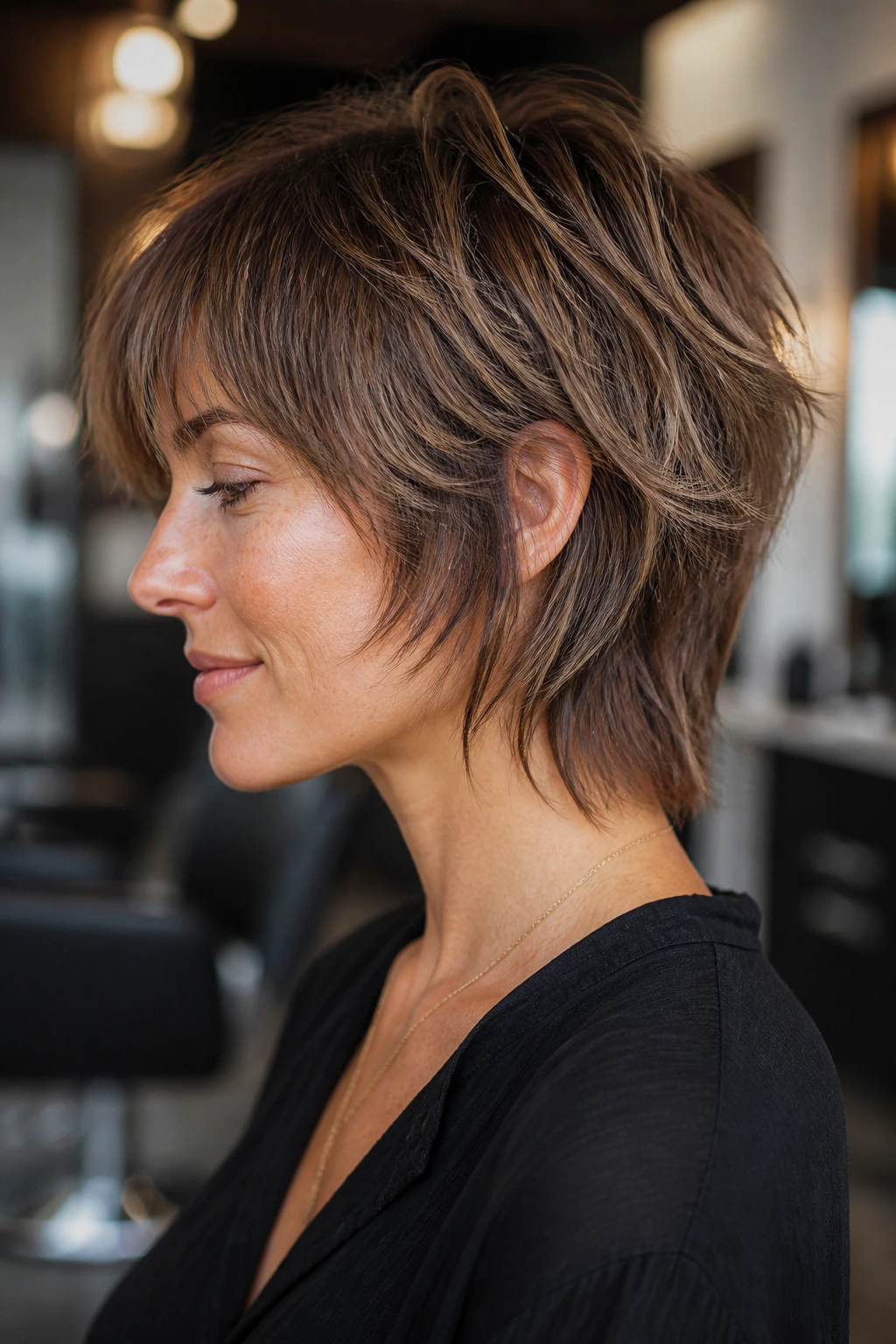
Recipe Name: 22 Short Shag Haircuts for Fine Hair with Soft Layers
Description: A curated set of short shag haircut ideas designed to give fine hair more lift, movement, and shape without stripping away density. Each look keeps a soft perimeter and uses layering with restraint.
Prep Time: N/A
Cook Time: N/A
Total Time: N/A
Course: Hairstyle Ideas
Cuisine: N/A
Servings: 22 haircut inspirations
Calories: N/A
Ingredients
-
For the reference photo stack:
- 3 to 5 photos of short shag haircuts with similar hair density and texture
- 1 photo showing your preferred fringe length
- 1 photo showing the neckline or perimeter you want
-
For the styling kit:
- 1 lightweight mousse
- 1 root-lift spray
- 1 texturizing spray
- 1 heat protectant
- 1 lightweight dry shampoo
- 1 microfiber towel or T-shirt
- 1 small round brush
- 1 blow dryer with nozzle
Instructions
-
Pick a shag shape that matches your density, length goal, and styling tolerance.
-
Bring reference photos that show the front, side, and back if possible.
-
Ask for a full perimeter with soft internal layers rather than heavy thinning.
-
Style the roots first with mousse or root-lift spray, then add texture only where needed.
-
Trim the fringe or perimeter every 6 to 8 weeks to keep the shape balanced.
Notes: Keep the ends fuller than you think you need. Fine hair reads thicker when the outline stays clean.