



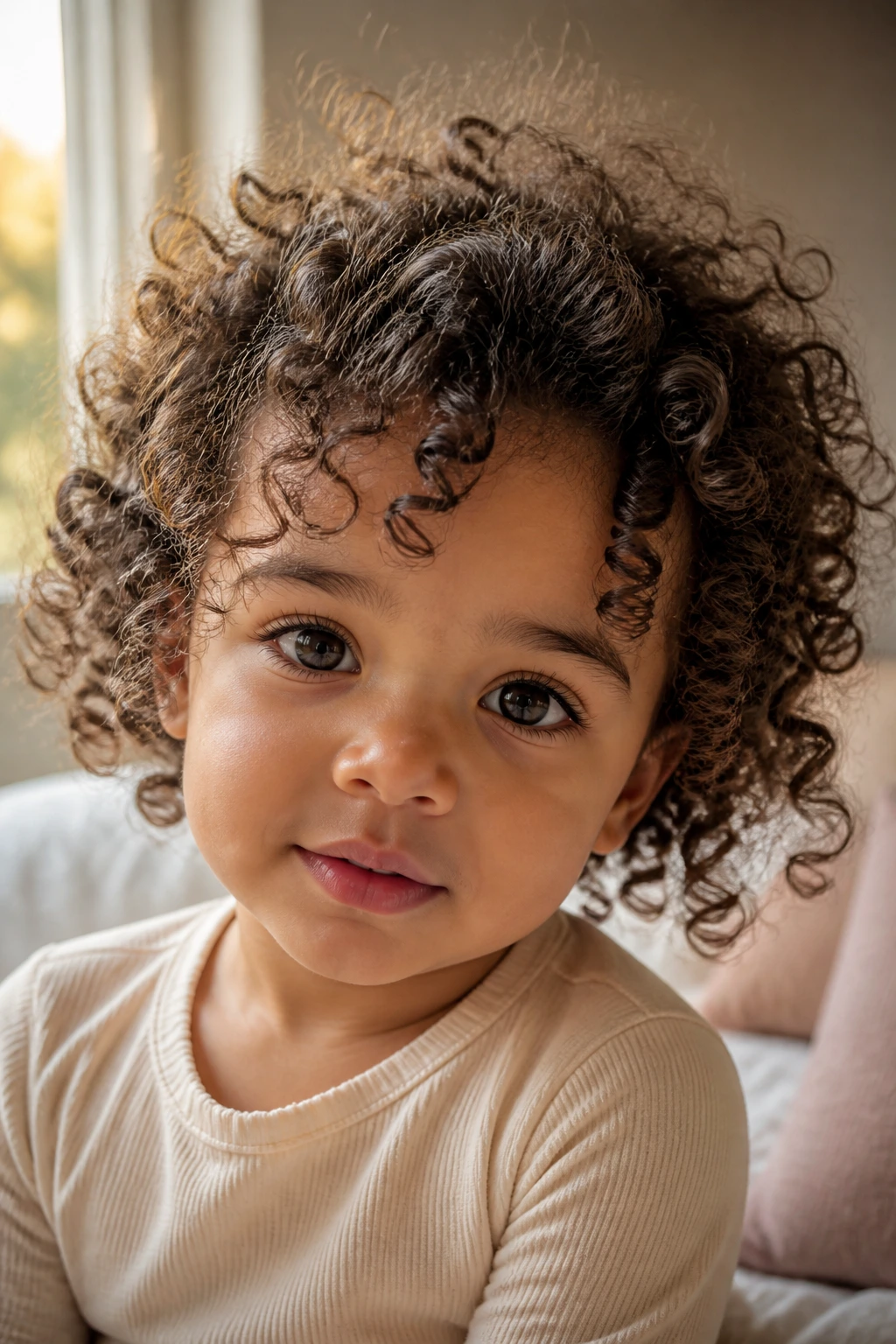
Toddler curls have a mind of their own. One minute they’re springy and neat, the next they’ve puffed out around a car seat strap, dropped a clip, and shoved a carefully made part into the side of a headband like it never existed.
The best hairstyles for toddlers with curly hair are the ones that respect that reality. They keep the hair off the face, don’t yank at the hairline, and still look like a real style after breakfast, a playground run, and one determined nap. That means less wrestling, fewer tears, and way more styles that actually survive the day.
There’s a sweet spot here. Too tight and the scalp complains. Too loose and the style evaporates before lunch. The styles below live in the middle, where curls can keep their shape, shrink back the way they want, and still look polished enough for daycare drop-off or a family photo with somebody holding a snack in the background.
Why These Hairstyles Work So Well on Little Curls
-
Low tension first: Each style keeps the pull away from the temples and edges, where toddler hair is most likely to get sore or frizzy fast.
-
Shrinkage-friendly shapes: Curly hair shortens as it dries, so these styles still look intentional when the curls bounce up an inch or two.
-
Fast resets: Most of these can be revived with a little water and a palmful of leave-in instead of a full wash day.
-
Nap-proof options: A style that can survive a nap without turning into one giant fuzzy knot earns its place here.
-
Short-hair friendly choices: Not every toddler has shoulder-length curls. Some of the best looks work on hair that barely brushes the ears.
-
Accessory-light by design: You do not need a drawer full of beads and clips to make curly hair look finished.
Why Toddler Curls Need a Softer Touch
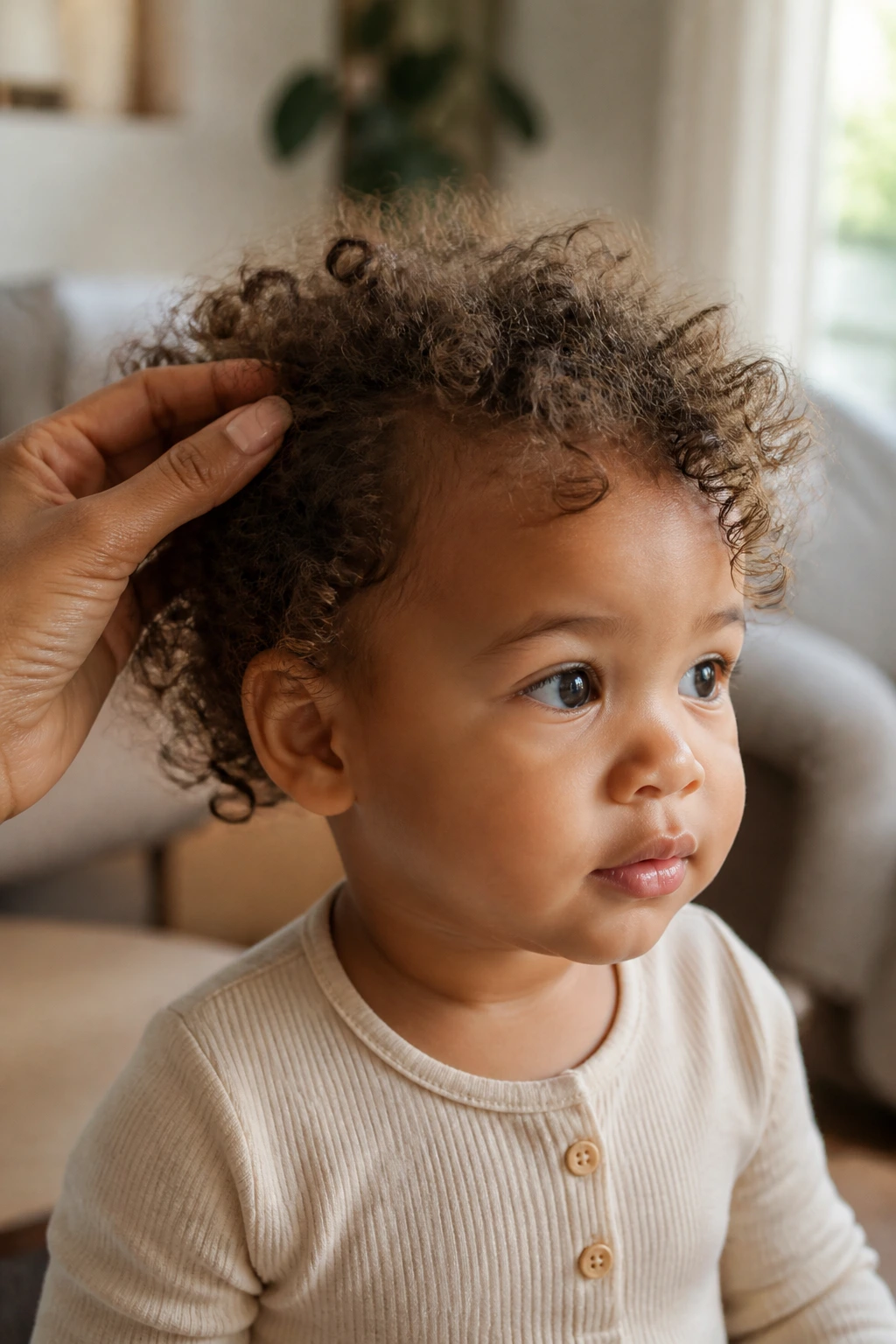
Toddler curls are not miniature adult curls. The texture is often finer, the scalp is more sensitive, and the child usually has less patience than the hair does. That combo matters. A style that looks cute for ten minutes but leaves a red ring around the hairline is not a win.
Shrinkage changes the whole plan. A puff that looks big in the mirror can settle into a neat little cloud after it dries, and a braid that feels roomy when wet may get much tighter once the curls spring up. That is why I like styles with a little slack built in. They look better after the curl settles.
Moisture matters too. Curly toddler hair tends to tangle when it’s dry, and rough detangling turns a small knot into a full negotiation. A light mist of water, then leave-in, then a soft brush or fingers if the hair is especially tender. Slow is faster here.
The real trick
A good toddler style does two jobs at once. It keeps the hair neat enough to last, and it leaves enough freedom for the curls to keep their shape.
What that means in practice
You want parts that are clean but not sharp-edged, elastics that hold without cutting, and styles that don’t depend on perfect symmetry. A crooked puff can still be a good puff. A slightly uneven braid can still look charming. Perfection is not the assignment.
1. High Puff with Soft Edges
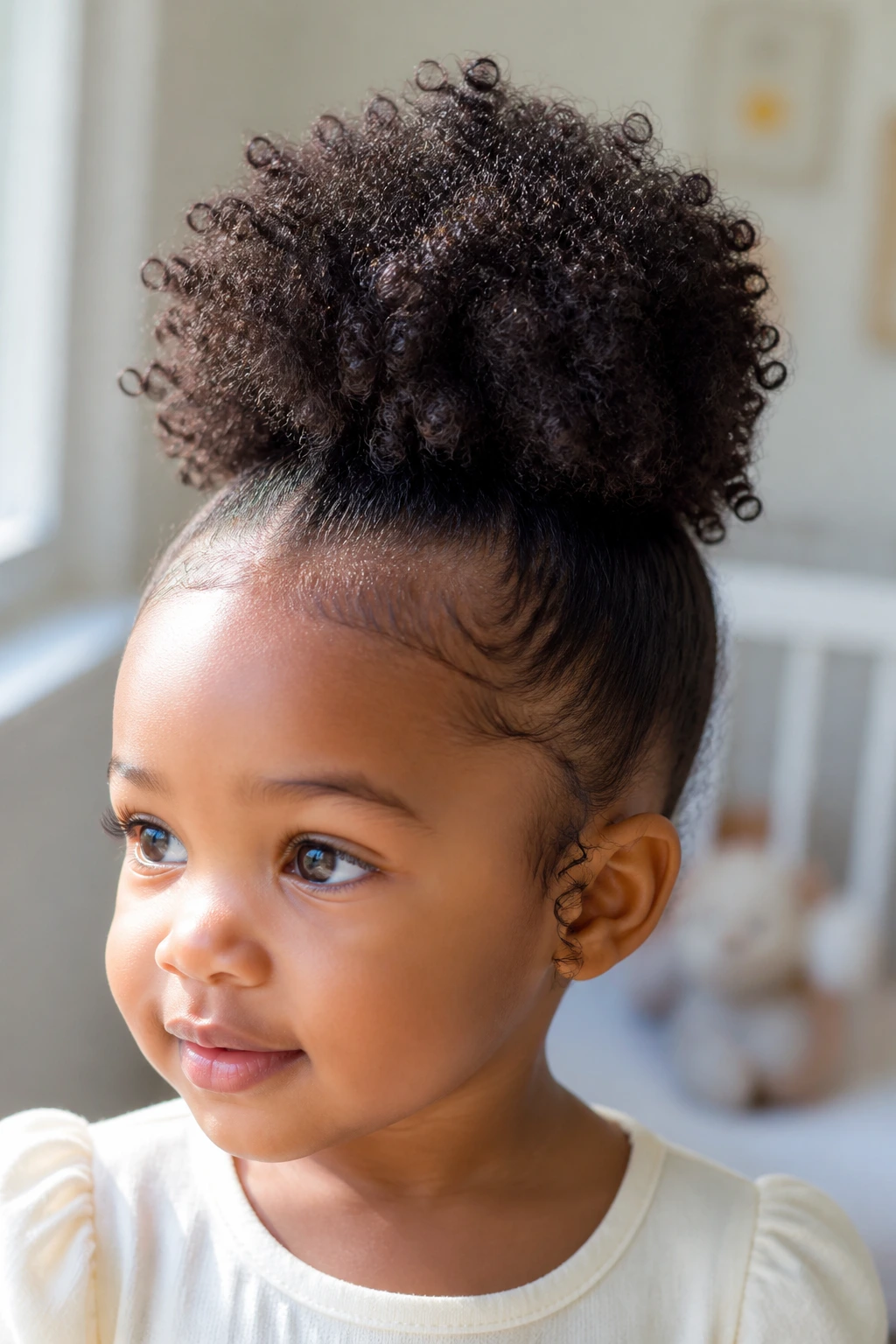
The high puff is the style I reach for when I want the hair off the neck and the curls still doing what curls do best: sitting up with a little attitude. It looks tidy, it takes little time, and it works whether the hair is tightly coiled or more loose and springy.
What makes it useful is the shape. Pull the curls up, but don’t yank them flat against the scalp. A soft puff lets the hair breathe. If the elastic leaves a deep dent or the front looks scraped back, it’s too tight.
The best version starts on damp hair with a little leave-in. Smooth the sides with your hands or a soft brush, gather the hair at the crown, and secure it with a satin scrunchie or snag-free elastic. Leave a few curls around the front if the hairline likes to frizz. That little softness makes the whole style look intentional instead of pulled-back and severe.
A good high puff also grows out well. By the end of the day, it may look slightly bigger and fluffier, which is exactly what curly hair is supposed to do.
2. Two Puff Pigtails
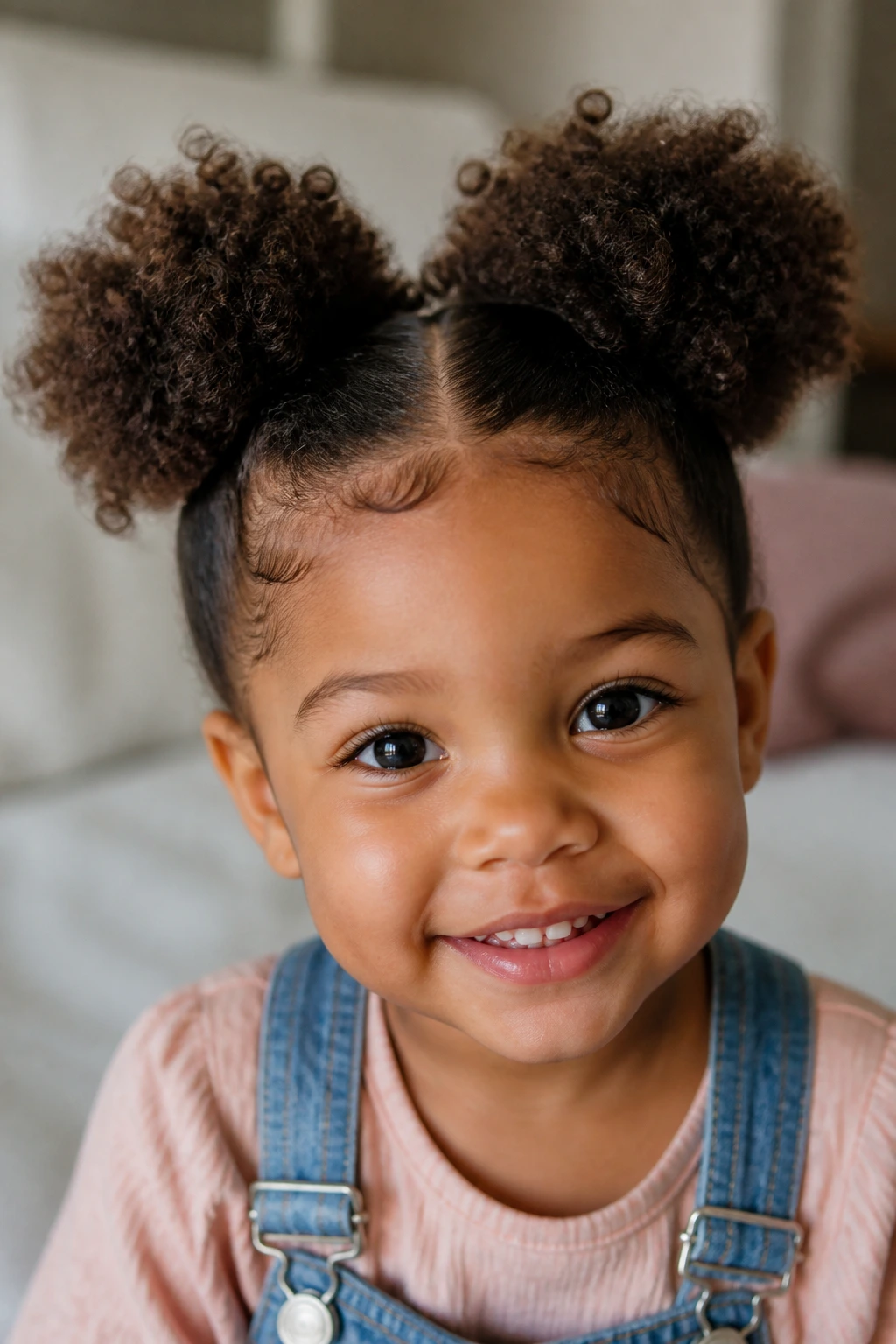
Two puffs have a kind of built-in charm that toddlers seem to wear without effort. The style divides the hair into two equal sections, one on each side, and each puff gets to do its own thing. That matters when the child has uneven density or one side of the head is flatter than the other.
The key is part placement. A straight middle part gives the most classic look, but a slight zig-zag or side part can soften the style and hide minor unevenness. If the curls are very springy, make the sections a little larger than you think you need. Shrinkage will shrink them right back.
Why it stays neat
Because each puff is smaller than a single high puff, the style puts less weight in one place. That helps if the hair is fine or if the toddler tends to tug at one side more than the other. It also means less slippage.
If you want the style to last, keep the roots smooth and the ends loose. A small amount of gel along the part helps, but too much turns the hair crispy. And crispy curls on a toddler head are not cute after the third hour.
3. Half-Up, Half-Down Curls
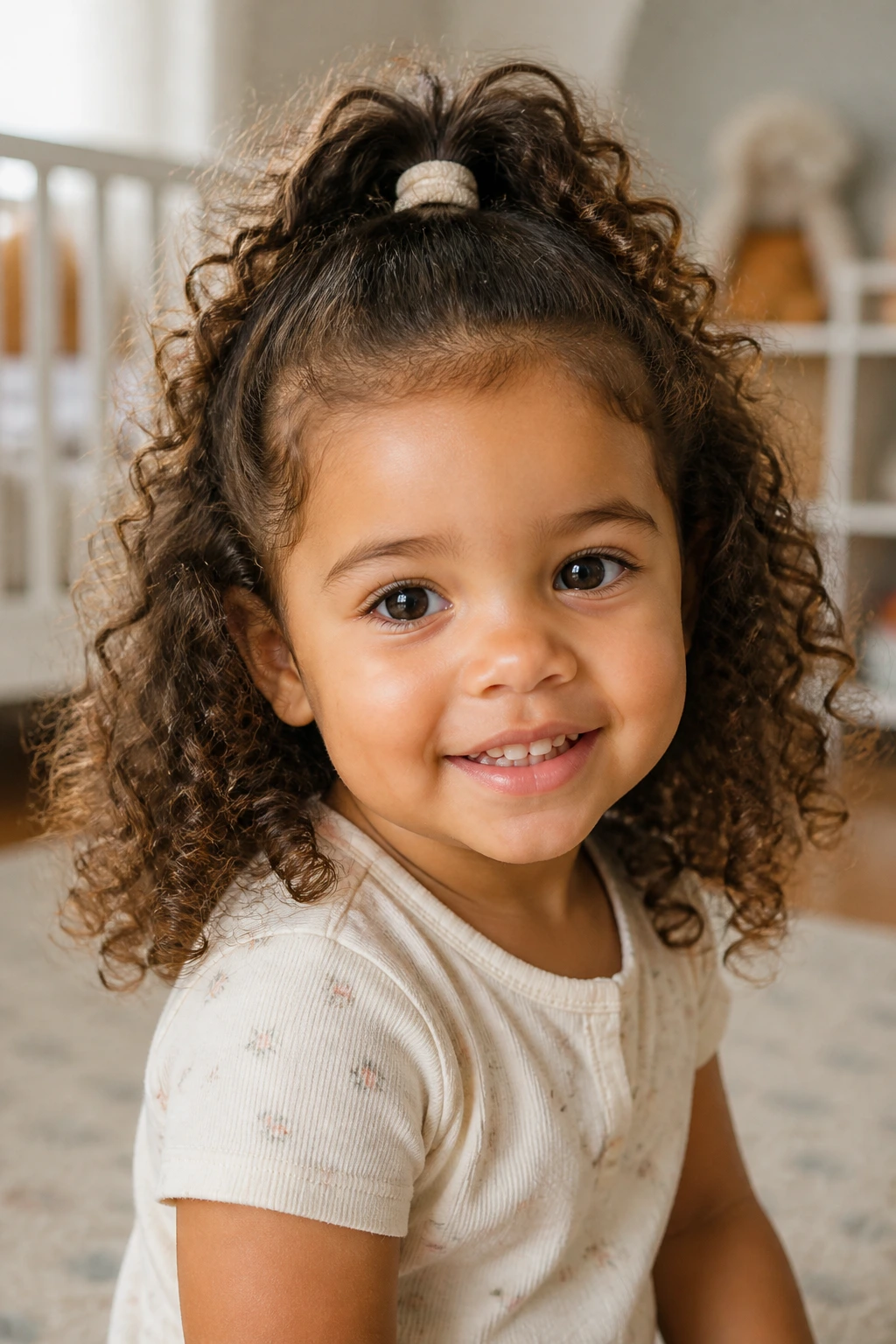
Half-up, half-down is the style you pull out when you want a little shape at the top and full curls left free underneath. It has more movement than a puff and more structure than a wash-and-go. The balance is the point.
It works especially well when the hair is not long enough for a big ponytail but too curly to stay brushed back on its own. Gather the top section from temple to temple, secure it loosely, and let the rest hang. If the curls are short, the bottom can still read as a style because the top section gives it a frame.
A small bow, clip, or soft barrette can finish it off, but don’t overload the top with accessories. The curls already do enough talking. One well-placed clip beats five fussy ones.
This style is also a good rescue move on second-day hair. If the curls have lost some shape underneath, pulling the top section up gives the whole head a little reset without starting over.
4. Mini Twists That Stay Neat
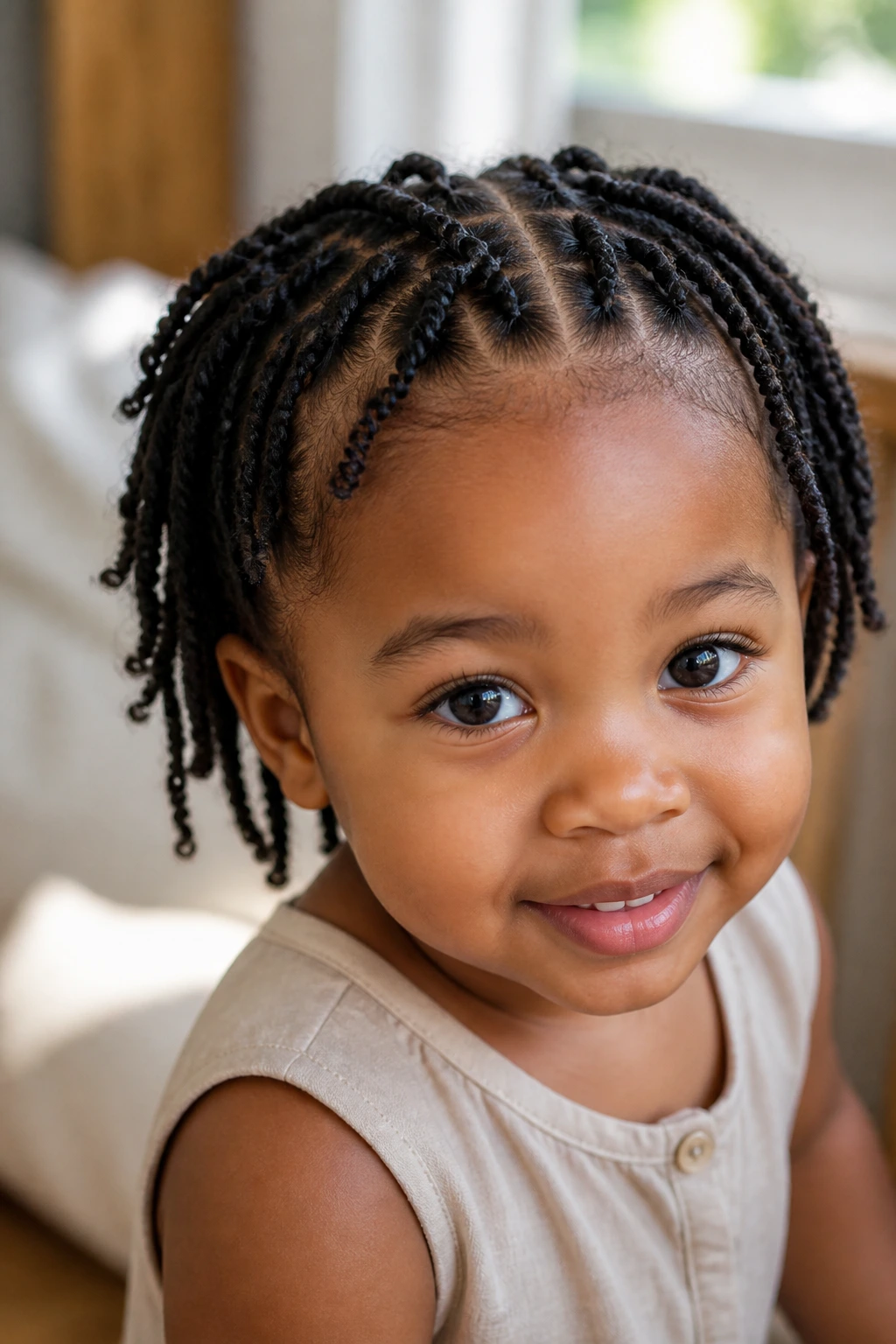
Mini twists are for the child who hates having hair touched every morning. Once they’re in, you get a few quieter days. That alone makes them worth knowing.
The style works because it turns loose curl into a set structure. Two-strand twists on damp, detangled hair keep the strands together and cut down on daily tangles. Use small sections if you want more definition, or slightly larger ones if your toddler is patient and the hair is dense enough to handle it.
I like mini twists when the day is going to be long and messy. They hold up through playground runs, car naps, and dinner, and the ends usually curl up into little coils that look neat without extra work.
The downside? They need a gentle hand. Pulling them too tight at the root makes the scalp unhappy, and twisting dry hair turns the whole process into a frizz festival. Work with moisture, keep the sections clean, and stop before the hairline starts to feel stiff.
5. Flat Twists into a Low Puff
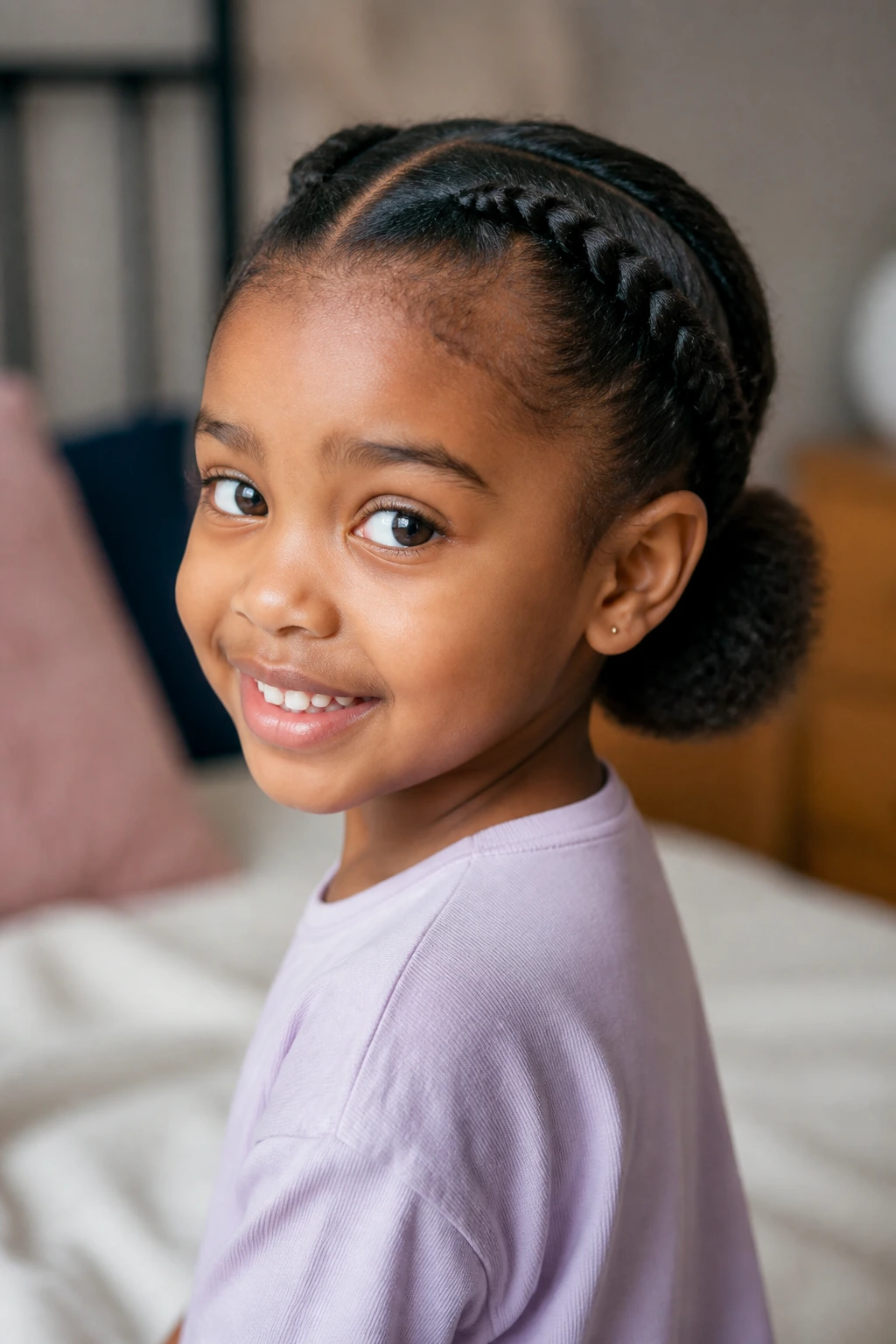
Flat twists are a smart middle ground when you want some control at the front and softness at the back. The twists lie close to the scalp, so the face stays open, and the loose section in back keeps the style from looking severe.
This one is especially handy for toddlers who rub the front of their hair a lot. The flat twists hold that area in place better than a loose puff alone. Two twists on each side are enough for a quick style. Four gives a neater finish if the hair is thick and the child sits still long enough.
The low puff at the back should stay loose. If it sits tight against the nape, the child will notice it. That’s usually when the style comes apart in the car on the way to wherever you were going.
A dab of cream on the ends makes the puff look polished. Not shiny. Just hydrated, which is the better goal anyway.
6. Bubble Ponytail on Curly Hair
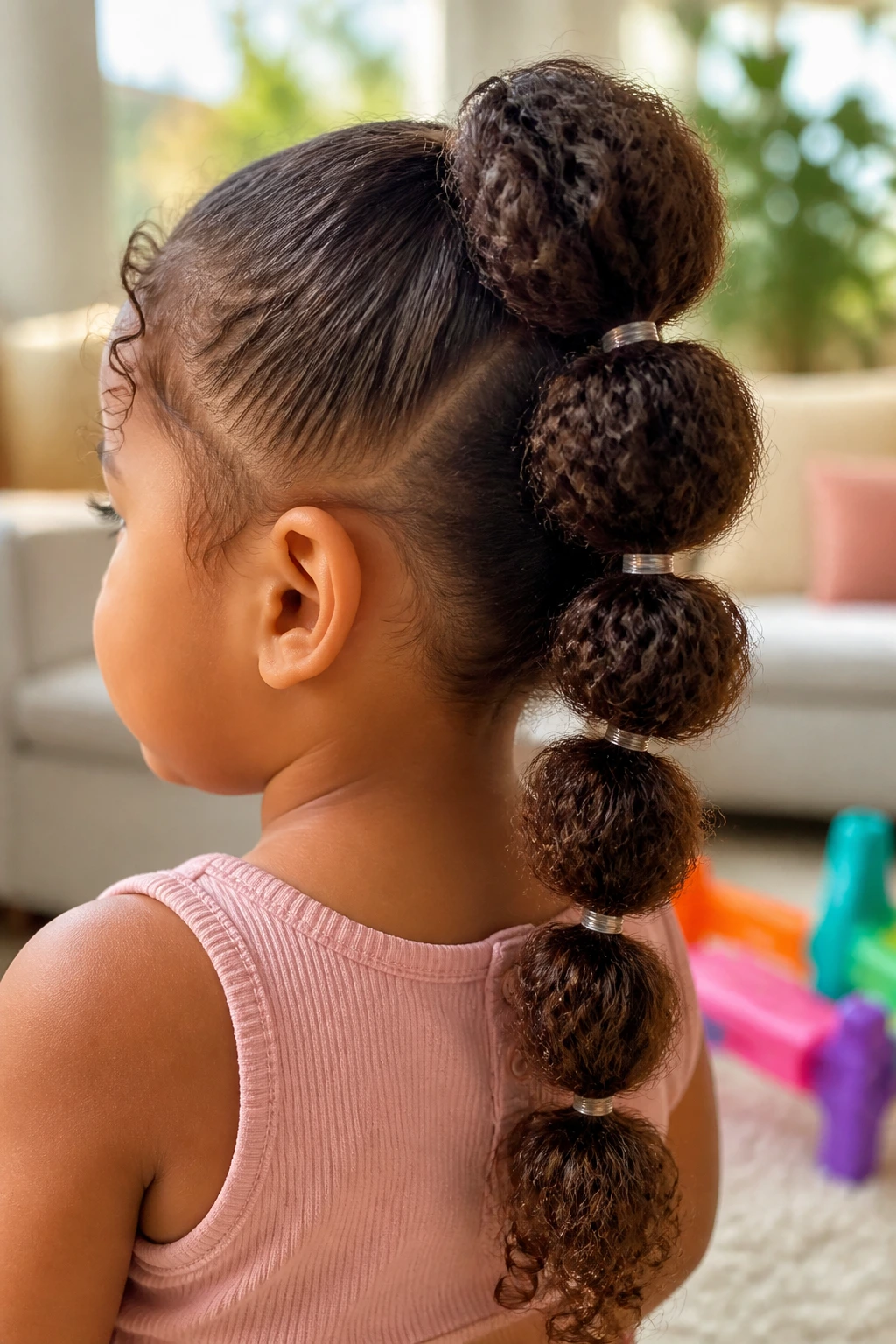
Bubble ponytails look fancier than they are, which is always a win. Start with one ponytail, then add a few small elastics down the length and gently puff each section into a rounded bubble. Curly hair gives this style a built-in texture that straight hair has to fake.
The trick is spacing. Put the elastics close enough to define the bubbles, but not so close that the ponytail looks cramped. On toddler hair, three to five bubbles is usually enough. More than that can look busy and takes longer than the child will tolerate.
A bubble ponytail works best on medium-length curls, but shorter hair can still pull it off if you make one or two bubbles near the crown. The shape matters more than the length. Even a tiny version reads as playful and neat.
If you want it to hold longer, smooth the roots first and use snag-free elastics. Any roughness at the base will show once the curls start moving around.
7. Side-Part Puff with a Barrette
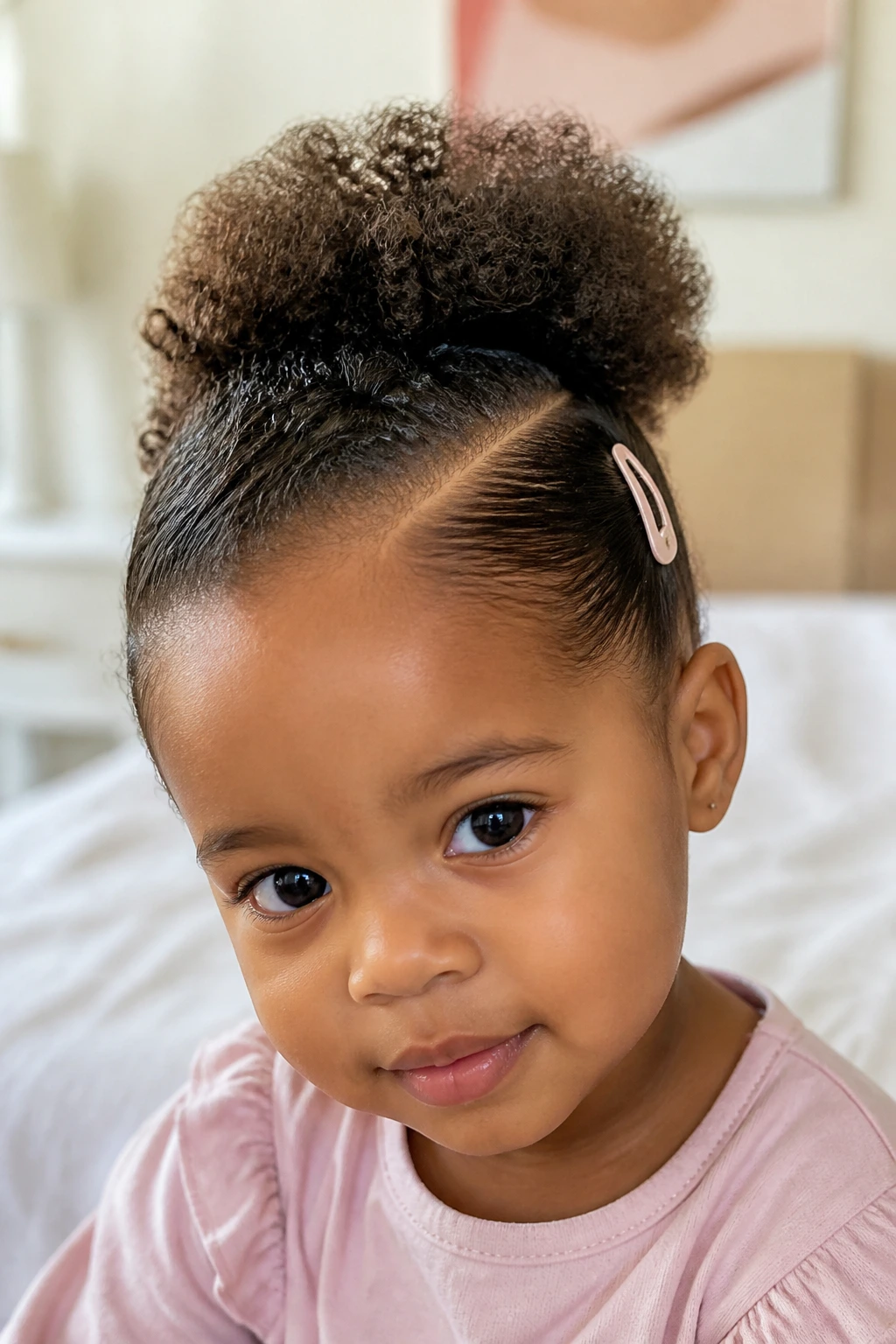
A side-part puff is the low-effort style that still looks considered. The side part gives the head shape, and the puff keeps the curls contained without flattening them. A single barrette or clip adds a tiny bit of polish.
This style is nice for fine curly hair because it does not need much volume to look finished. The side part creates the illusion of structure even when the curls are soft and wispy. If the hair is denser, the side part keeps the puff from ballooning straight up.
A small detail that matters
Place the part with a rat-tail comb only after the hair is lightly misted. Dry curls fight back. Damp curls cooperate.
A barrette works best when it catches a small side section, not the whole front. Too much tension on one clip can leave a line in the hair. One simple clip, placed where the hair naturally wants to fall, is enough.
8. Crown Braids for Busy Days
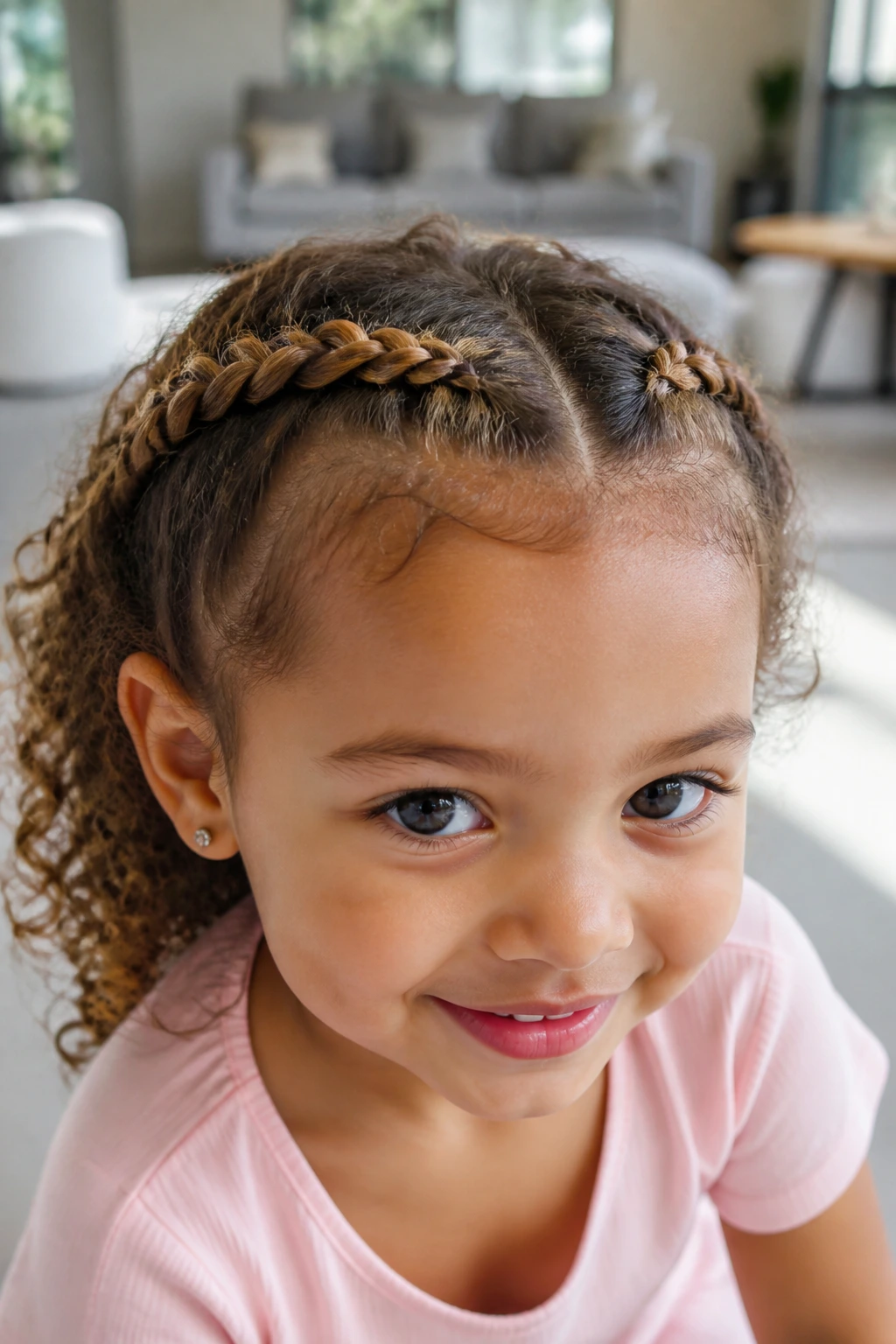
Crown braids are practical in the best way. They pull hair away from the face, protect the top layers, and give the style a finished shape that does not depend on perfect curl definition. For toddlers who hate hair in their eyes, this one saves everyone a little frustration.
The braids can be simple. Two braids that wrap from the front toward the back are enough. If the hair is too short for a full wrap, braided sections along the hairline still do the job. The goal is not a prom-style braid crown. It’s a neat frame that keeps the curls under control.
Braids like this look best when they’re not packed tight. A little fullness helps the shape sit softer on a toddler head. Tight braids age badly here. They look stiff, and stiff is not a toddler’s friend.
A few curls can be left loose at the back or around the ears. That tiny bit of softness keeps the style from looking overworked.
9. Bantu Knots with a Curly Finish
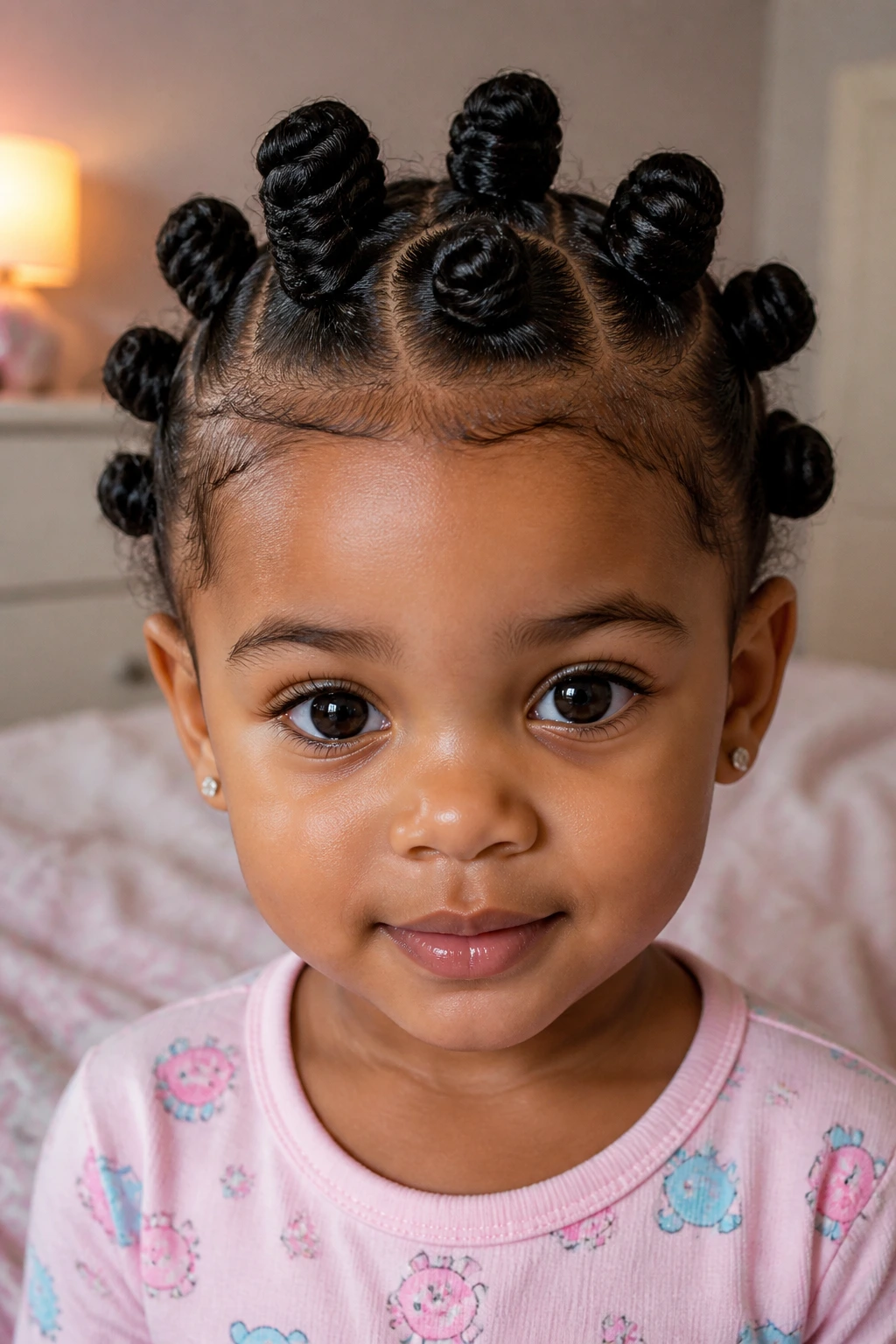
Bantu knots are one of those styles that look like they took forever, even when they didn’t. On toddlers, they work best when the knots are medium-sized, not tiny. Small knots can be fiddly and uncomfortable. Bigger ones are quicker and kinder.
The style can be worn as knots alone or taken out later for a knot-out with defined curls. That second version is the more playful one, especially if you want a bit of bounce at the ends. On a toddler, I would keep the sections larger and the styling time shorter. The hair should be damp, lightly coated, and twisted around itself until it forms a neat little coil.
If you’re leaving the knots in, make sure they sit flat enough to sleep on. If you’re planning to take them out, give them time to dry fully first. Taking down damp knots is a fast way to get frizz instead of curl.
They are not the most everyday style on this list. But for picture day, birthdays, or any day when a little extra shape feels worth it, they bring a lot.
10. Frohawk with Tucked Sides
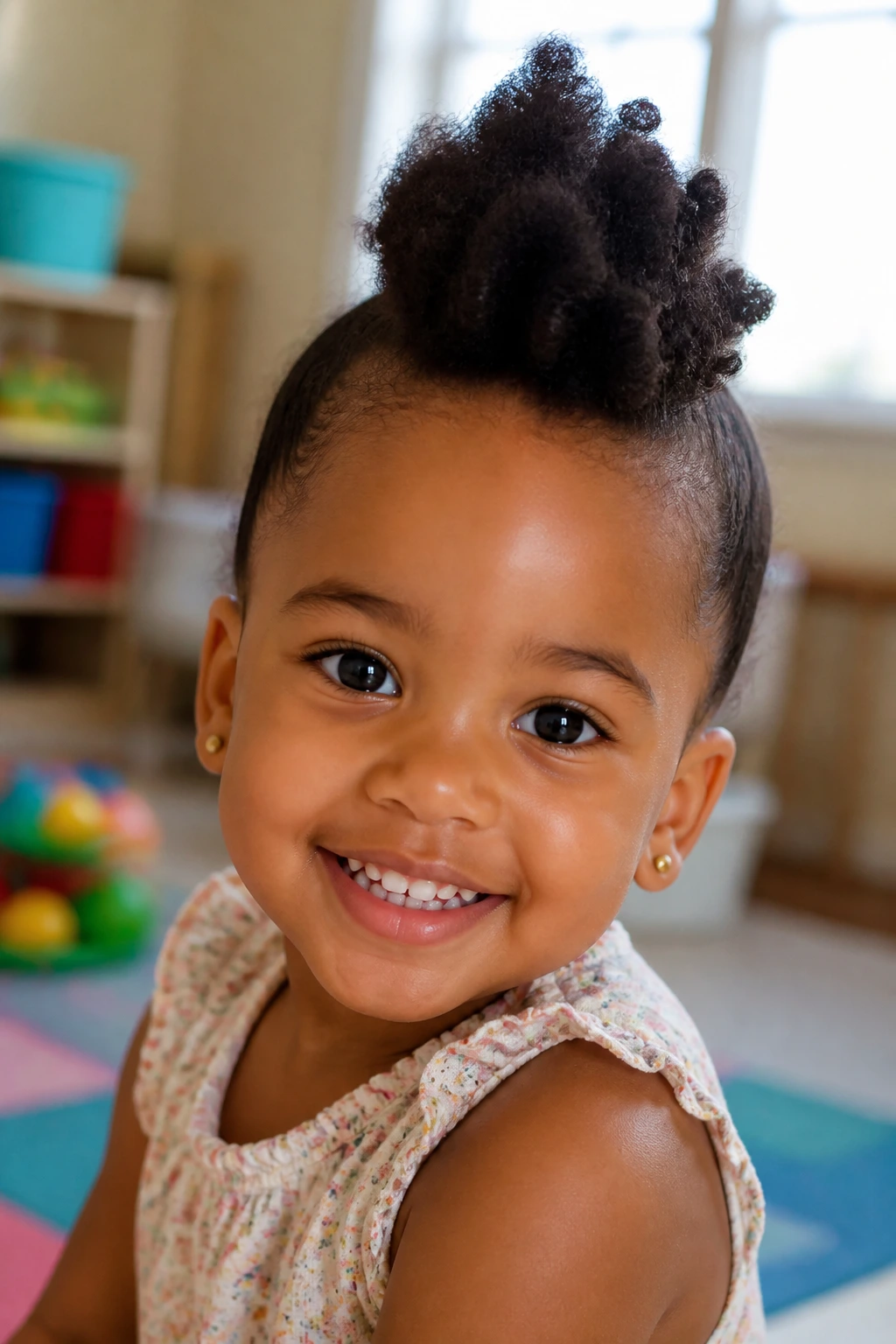
The frohawk is for the child who has big energy and hair that can match it. It keeps the sides neat and lets the center section stand up in a line of puffs, twists, or curled bunches. The result is bold, but not fussy.
What I like here is the way it clears the face without flattening the top. You can make the center section into three small puffs, two puff buns, or a series of loose twist sections. Each version has a different feel, but the same basic shape.
This style is especially useful if the hair is shorter on the sides or grows upward more than outward. The tucked sides make the length feel intentional. A little gel at the roots helps, though too much will make the hair feel crunchy fast.
If the toddler tends to touch the sides a lot, keep the braiding or twisting there simple. The style only has to last as long as the child’s patience, and that window is often shorter than the actual hairstyle.
11. Pineapple Puff for Shorter Curls
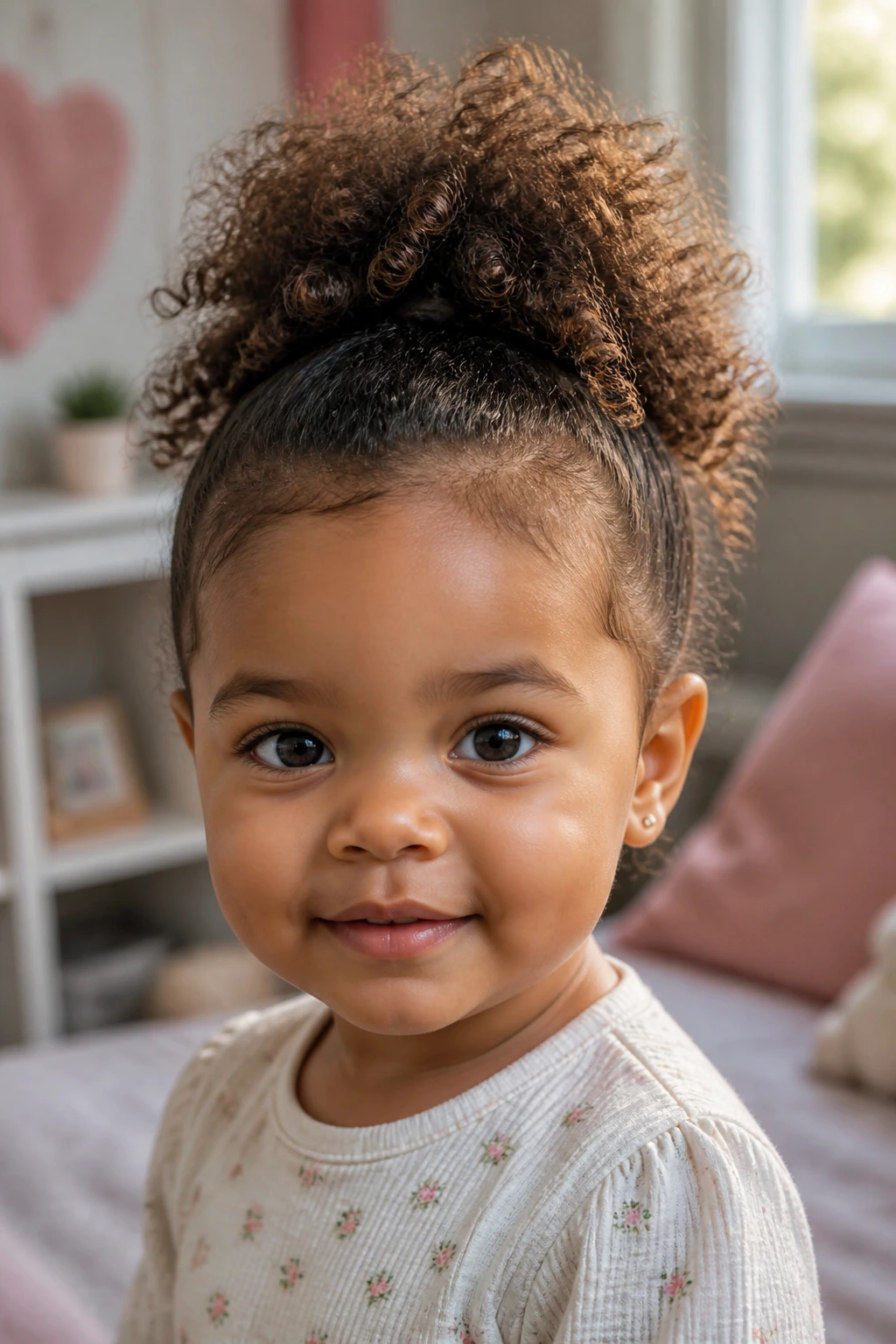
The pineapple puff is one of the easiest curly styles to understand and one of the easiest to wear. Gather the curls high and loose at the top of the head so they fall forward and out around the crown. It works beautifully on shorter curls that may not make a full ponytail but still have enough length to pile up.
The reason it works is the angle. Hair gathered at the top doesn’t get crushed as fast, and the curls keep their spring. It’s also a forgiving style if the hair is uneven in length. The shorter pieces blend into the puff instead of sticking out as obvious troublemakers.
For toddlers, keep the elastic loose enough to avoid pulling at the edges. The puff should sit like a soft cloud, not a tight bundle. A satin scrunchie is a better choice than a tiny rubber band here.
This one doubles as a sleep style if you make it loose enough. That makes it handy on nights when the hair is already detangled and you do not want to start from zero the next morning.
12. Twist-Out Pigtails
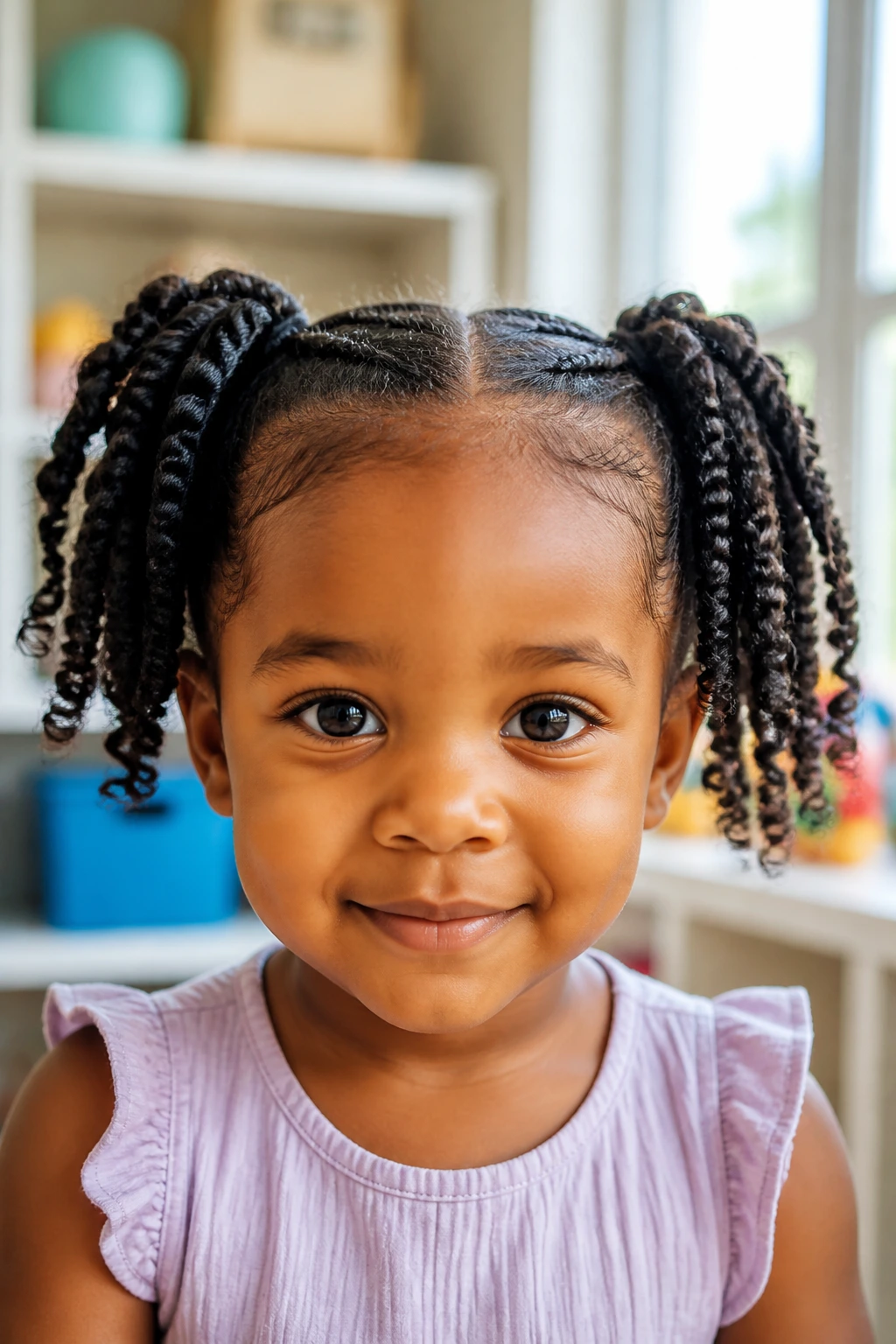
Twist-out pigtails give you the neatness of twists and the softness of separated curls. Start with two-strand twists, let them set, then gently separate the twists only if the hair has enough definition to hold it. The pigtail shape keeps the hair playful and symmetrical.
This is a nice choice when you want texture without relying on a single puff. The twists create structure, and the loose curl gives movement. On a toddler head, that combination reads relaxed rather than overdone.
How to keep the shape
Do not rush the takedown. If the twists are still damp when you separate them, the curls frizz at the first touch. Dry hair, a little oil or leave-in on your fingers, and a slow hand make the difference.
The pigtail part also helps if the child likes to pull one side more than the other. Two smaller sections are easier to manage than one big one, and they tend to fall back into place after a car nap.
13. Heart-Part Puffs
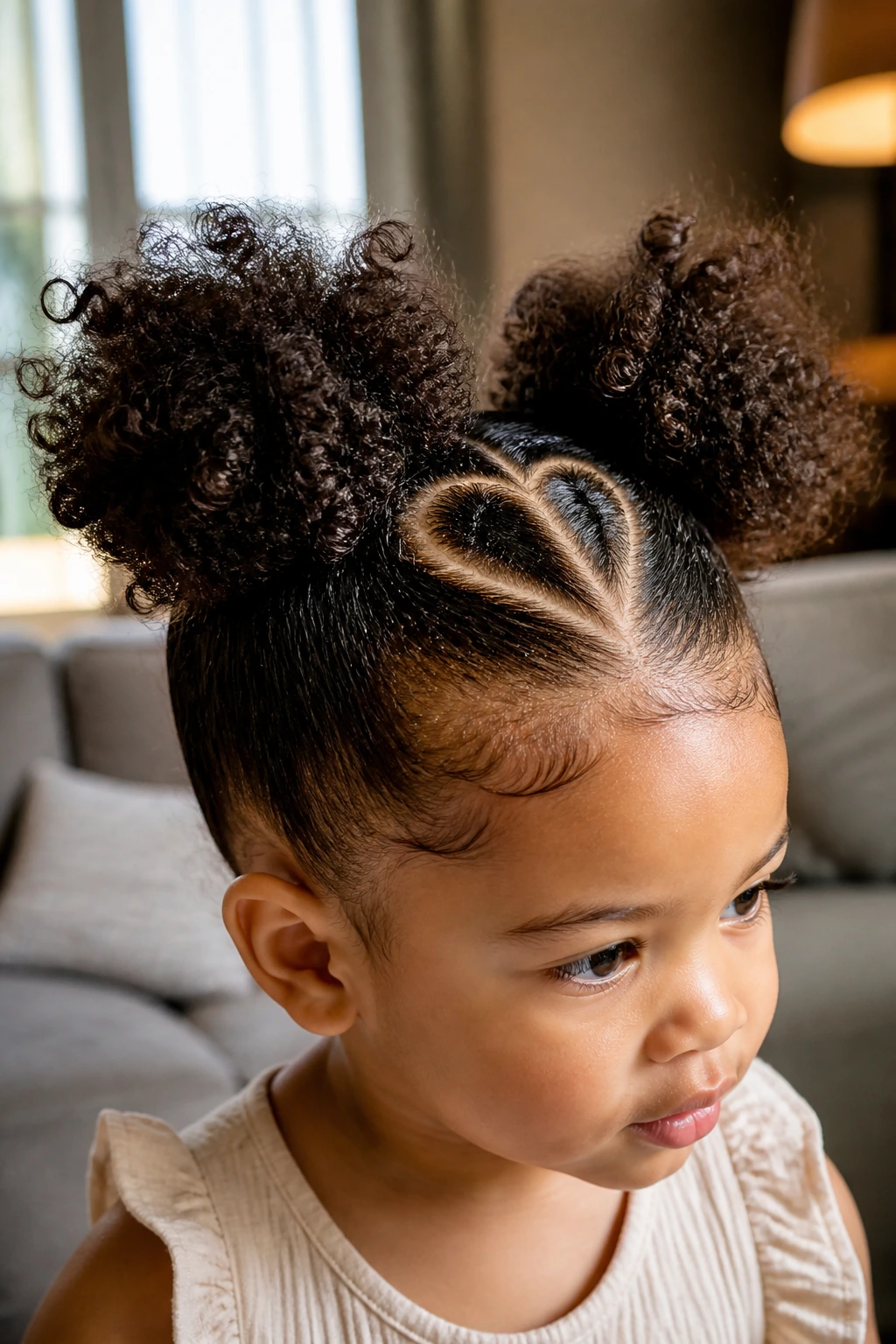
A heart part is a tiny bit of hair art, and it’s worth the effort if you want a style that feels special. The shape can be subtle or obvious depending on how precise the parting is. Even a simplified heart at the crown can make a basic puff feel dressed up.
This style works best when the toddler will sit still for the parting itself. That’s the hard part. The rest is easy. Use a rat-tail comb, trace the shape on damp hair, and secure two puffs or one puff and a side section depending on the length.
You do not need the heart to be perfect. In fact, perfect can look too stiff on small heads. A slightly rounded or uneven heart usually looks more natural. It reads as hand-made, not mass-produced, which is part of the charm.
Save this one for a day when the outfit or occasion asks for a little extra detail. It’s a photo-day style, a birthday style, a “we tried but did not spend an hour doing it” style.
14. Headband Tuck Style
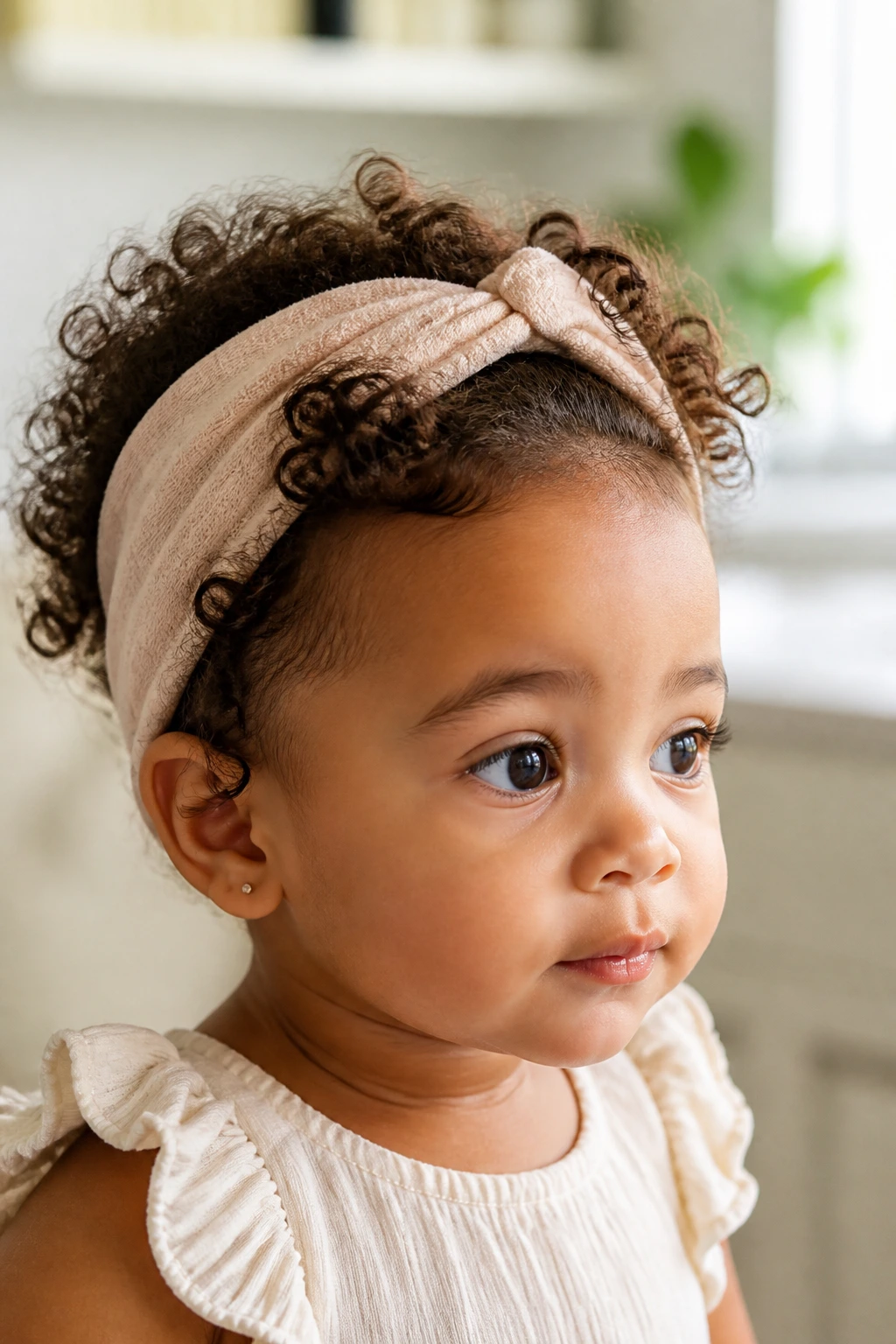
The headband tuck is a lifesaver on mornings when the hair is doing too much and you need it tamed in under five minutes. A soft, stretchy headband goes on first, then the front sections can be tucked, puffed, or left loose around it depending on length.
What makes it useful is speed. There’s no need to create a lot of structure. The headband does most of the work. It keeps the curls off the face and gives the style a clear shape without using tight elastics or a stack of clips.
The best headbands are wide, soft, and seam-free if possible. Thin bands tend to slide. Stiff bands pinch. Neither one belongs on a toddler head for long.
This style is also good for shorter curls that refuse to stay in a ponytail. The band gives the hair a center point, and the curls can sit around it instead of fighting it. It’s a practical style that doesn’t pretend to be more complicated than it is. I respect that.
15. Front Cornrows, Curly Back
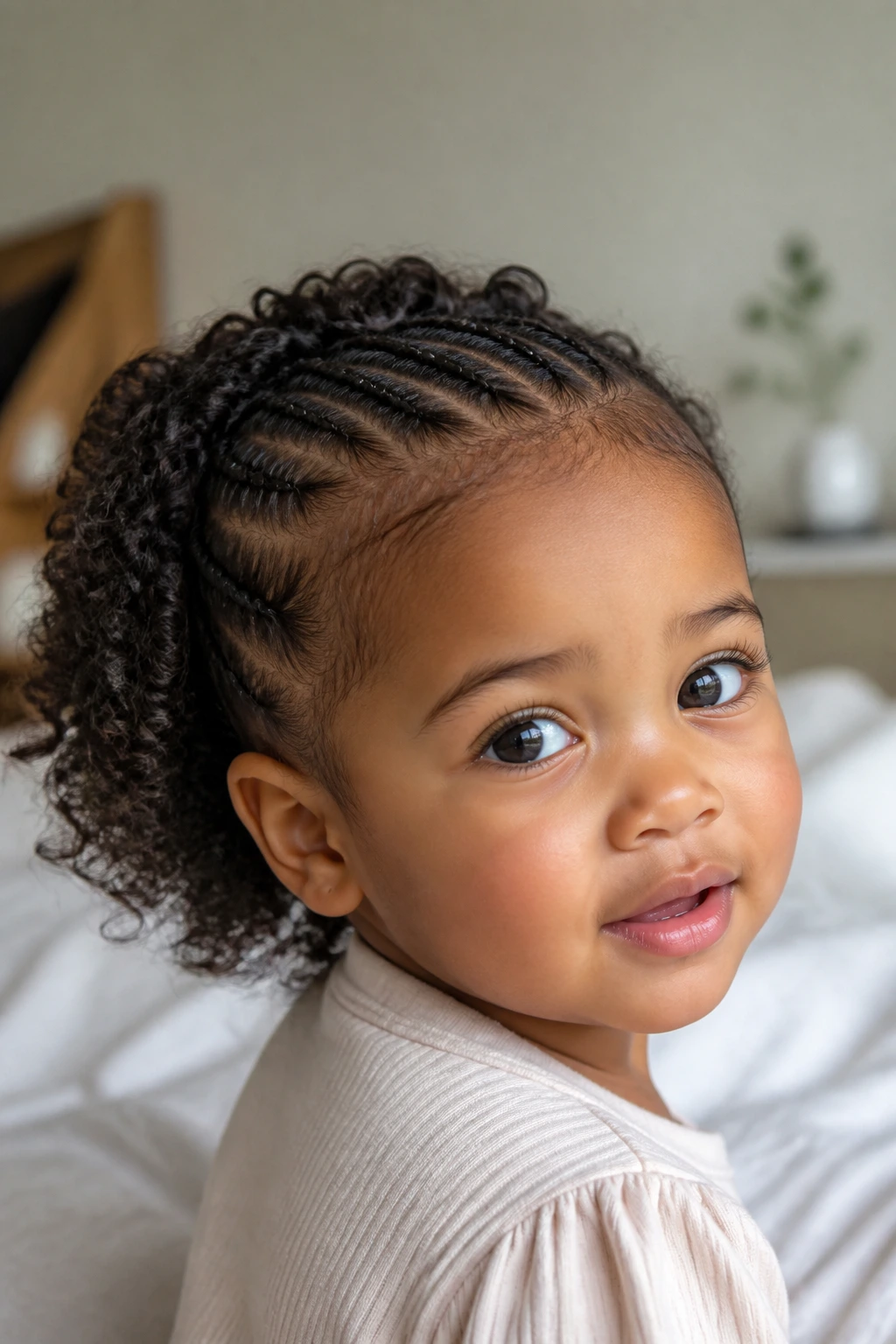
A few small cornrows at the front with curls left free in the back can be a smart compromise between protection and softness. The front stays neat, the eyes stay clear, and the back still shows off the curls.
This style works best when the front hairline needs more control than the rest of the head. Maybe the fringe keeps falling forward. Maybe the child rubs the front constantly. Maybe you just want the face open. Small braids there handle all of that.
The back can be left as a loose puff, a half-down section, or a free curly curtain. That flexibility is why the style shows up so often in real life and not just in photos.
One caution: the braids should not be so tight that they pull the scalp after a few hours. Toddler hair tells on bad tension quickly. If the child keeps touching the front or says it feels “funny,” it probably is.
16. Space Buns on Coily Hair
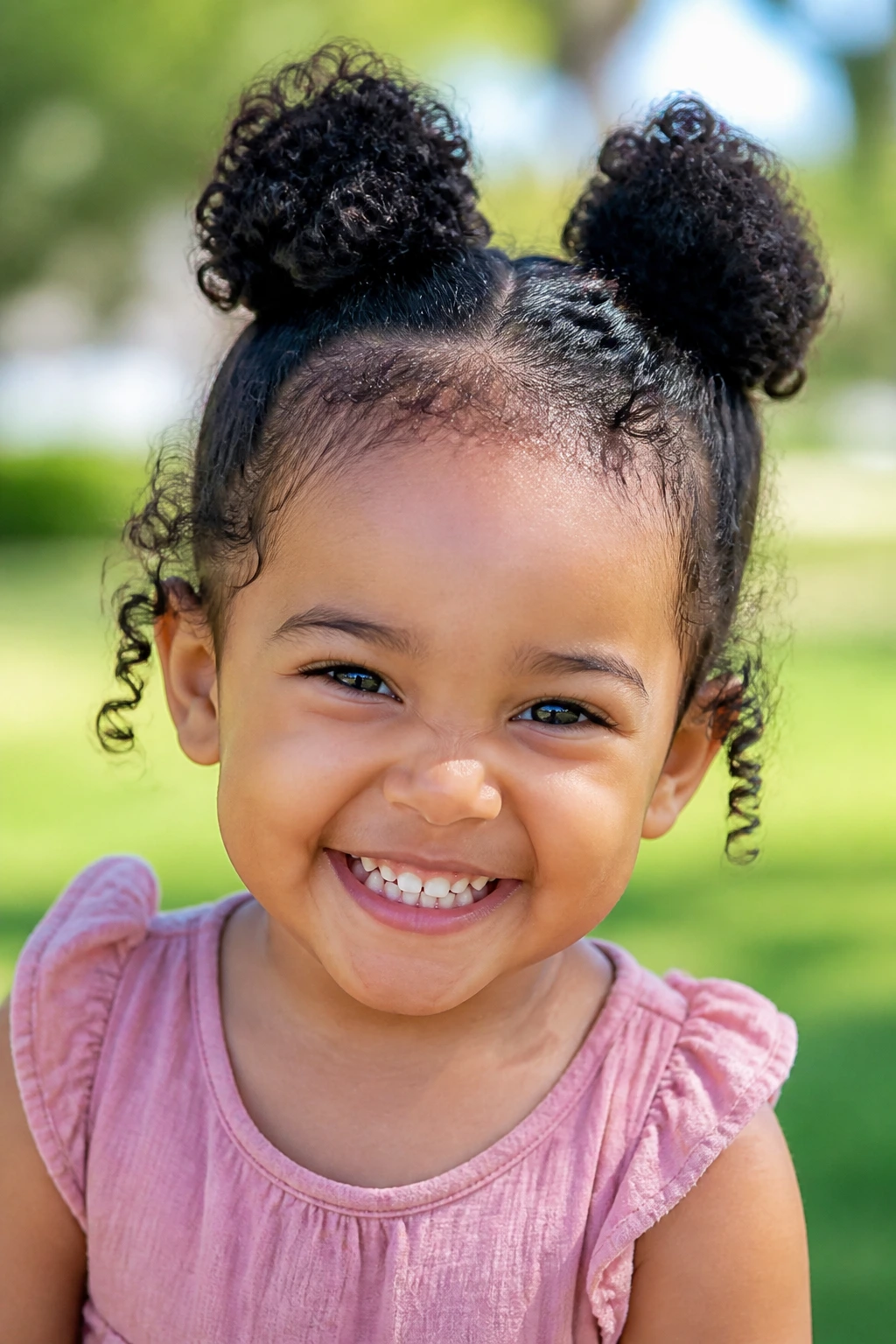
Space buns turn curly hair into something that feels playful without needing much length. Split the hair in two, gather each side high, and twist or puff the hair into two rounded buns. Coily hair gives the buns texture, which means they don’t have to be perfectly smooth to look good.
The style is a good fit when you want the hair completely off the neck and away from the face. It also gives a little more security than one big top puff because the hair is divided. That can help with balance if the child moves a lot or likes to lean on one side in the car.
For toddler hair, I prefer soft, not tight, buns. Small buns can look neat, but if they’re wound too hard they become uncomfortable fast. Let the curls keep some looseness in the bun itself.
A little curl at the end, sticking out here and there, is fine. Actually, it helps. Space buns that look too smooth can lose the curly texture that makes them interesting in the first place.
17. Rolled Side Puff
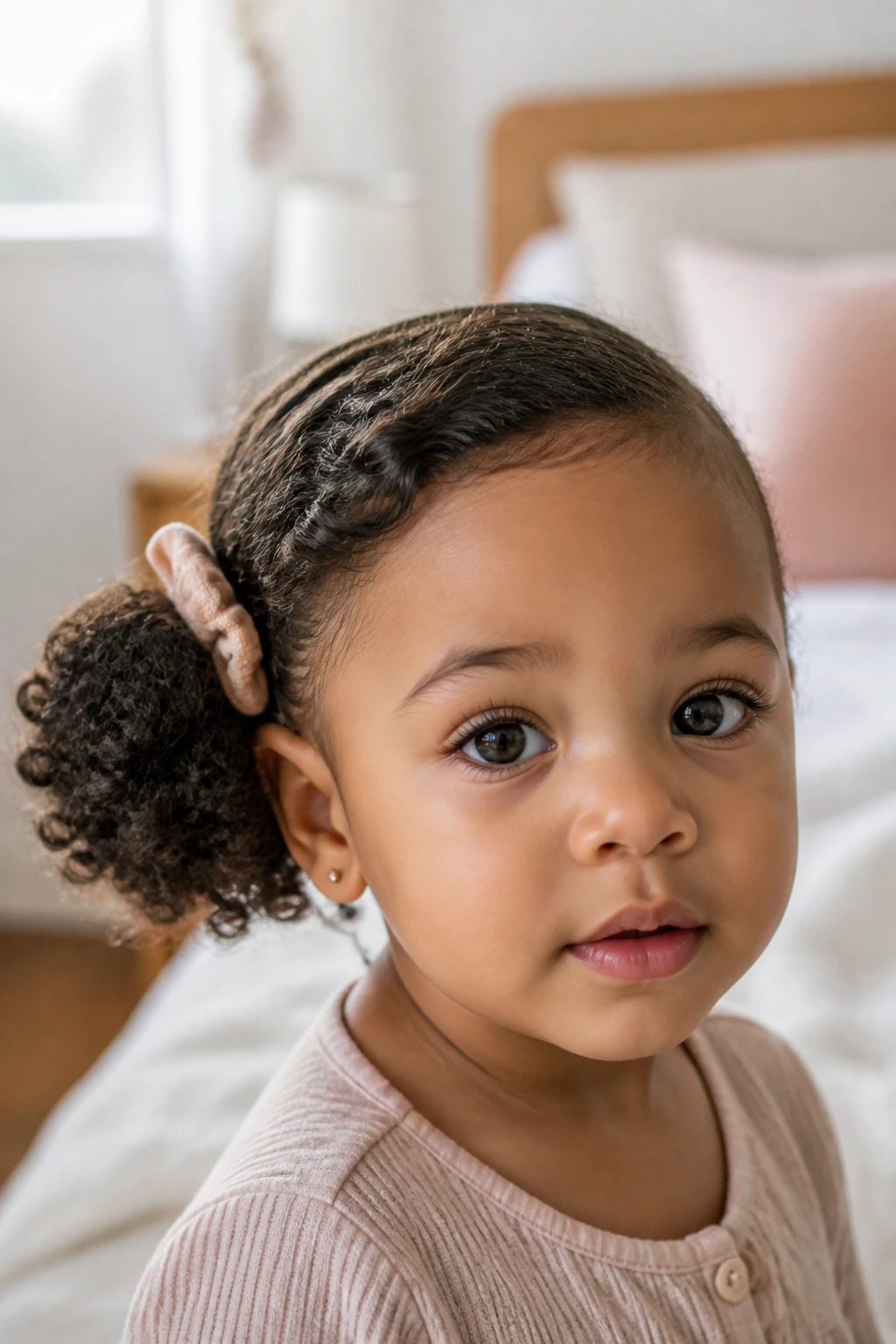
A rolled side puff gives the hair a little sweep without making the style complicated. Instead of pulling everything straight back, roll one side toward the center, then secure the puff low or off to the side. It gives shape, and it feels softer than a strict side ponytail.
This is a style for days when you want the curls to look done but not overly styled. It works well on medium-length hair and on toddlers who hate having both sides pulled evenly. The asymmetry makes it easier to disguise growth, frizz, or one side that always lays flatter than the other.
The roll can be tucked with pins or secured with a small clip, but keep the hardware toddler-friendly. Sharp edges and tiny decorative pieces tend to get pulled out first thing. Bigger, smooth clips behave better.
If the curls are thick, keep the roll loose and the puff low. If they’re fine, you can place the puff a little higher so the style doesn’t disappear against the head.
18. Low Puff with Ribbon Wrap
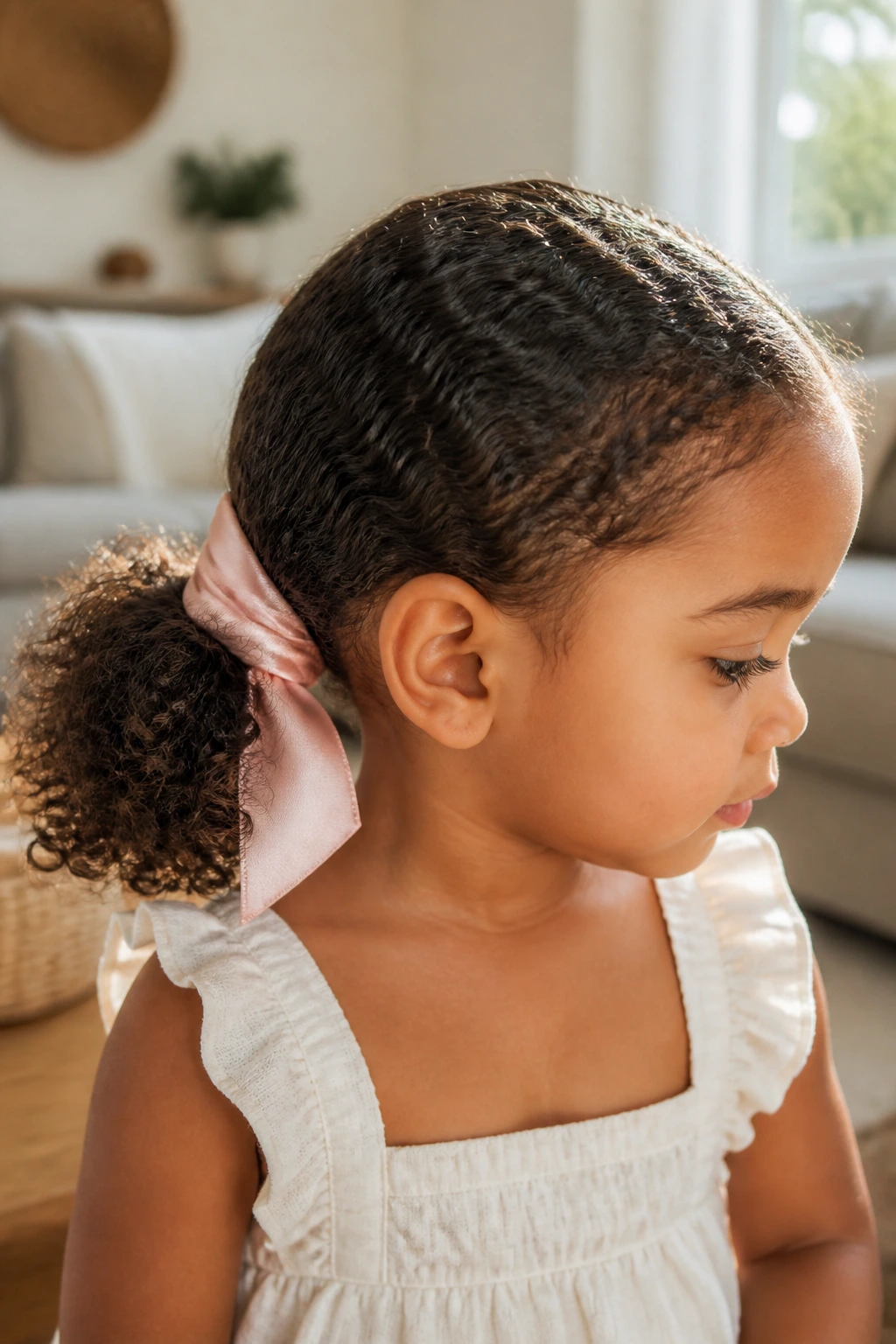
The low puff with a ribbon wrap is one of the nicest ways to make a simple style feel finished. Pull the curls low at the nape, secure them loosely, and wrap a ribbon or soft scarf around the base. That little detail changes the whole look.
It’s a good option when you want something gentle for the scalp and tidy for the rest of the day. The low placement keeps tension down, and the ribbon hides the elastic, which makes the style feel more deliberate than a basic ponytail.
A wide ribbon sits better than a skinny one. Skinny ribbons tangle and shift. A wider wrap stays visible and can be tied in a neat bow or tucked to the side.
This is the kind of style that works for family gatherings, dressier outfits, or any day when you want the curls controlled but still soft. It’s understated in the best way. No drama. Just a low puff that holds together and looks like it knew what it was doing.
How to Choose the Right Style for School, Daycare, and Photos
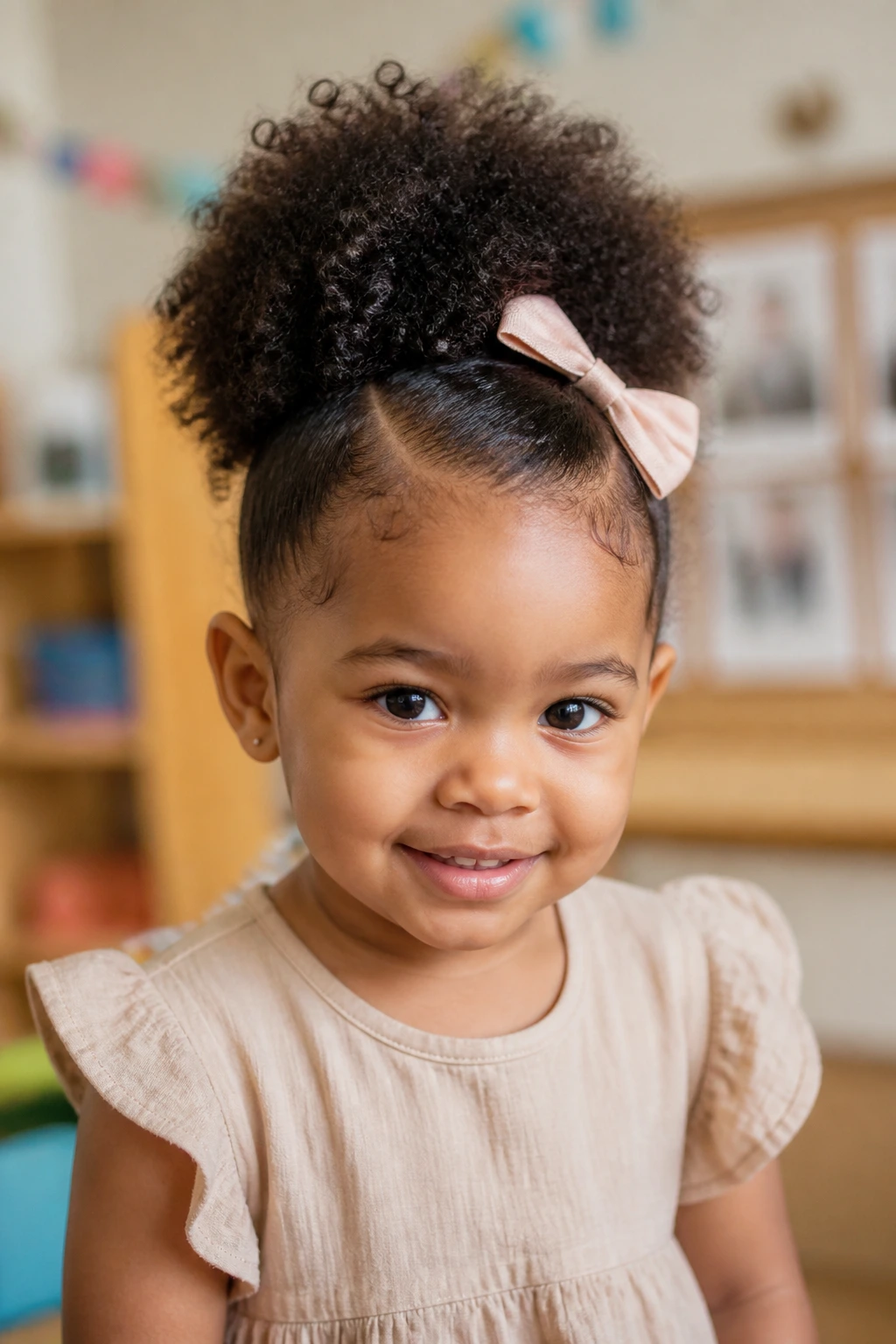
Presentation: If you want the hair to look neat from every angle, choose styles with a clear shape at the crown — high puff, side-part puff, flat twists into a low puff, or front cornrows with curls in back. If you want movement and texture, go with half-up, half-down curls, space buns, or a twist-out pigtail.
Pairings: School and daycare styles do best with soft accessories that stay put: wide headbands, satin scrunchies, simple clips, and snag-free elastics. Photo-day hair can handle ribbons, heart parts, or a tiny barrette, but the style should still feel comfortable when the camera is gone.
Wear Time: Styles with twists, braids, or tucked sections last longer than loose puffs. If you need the hair to survive a full day plus bedtime, start with mini twists, flat twists, or crown braids. If you only need it to look polished for a few hours, the high puff and headband tuck are faster.
Best For: Busy mornings belong to the high puff, headband tuck, and low puff with ribbon. Big personality days belong to frohawks, space buns, and heart parts. The best style is the one the child can wear without fussing every five minutes. That part matters more than the photo.
Essential Tools for Curly Toddler Styling
-
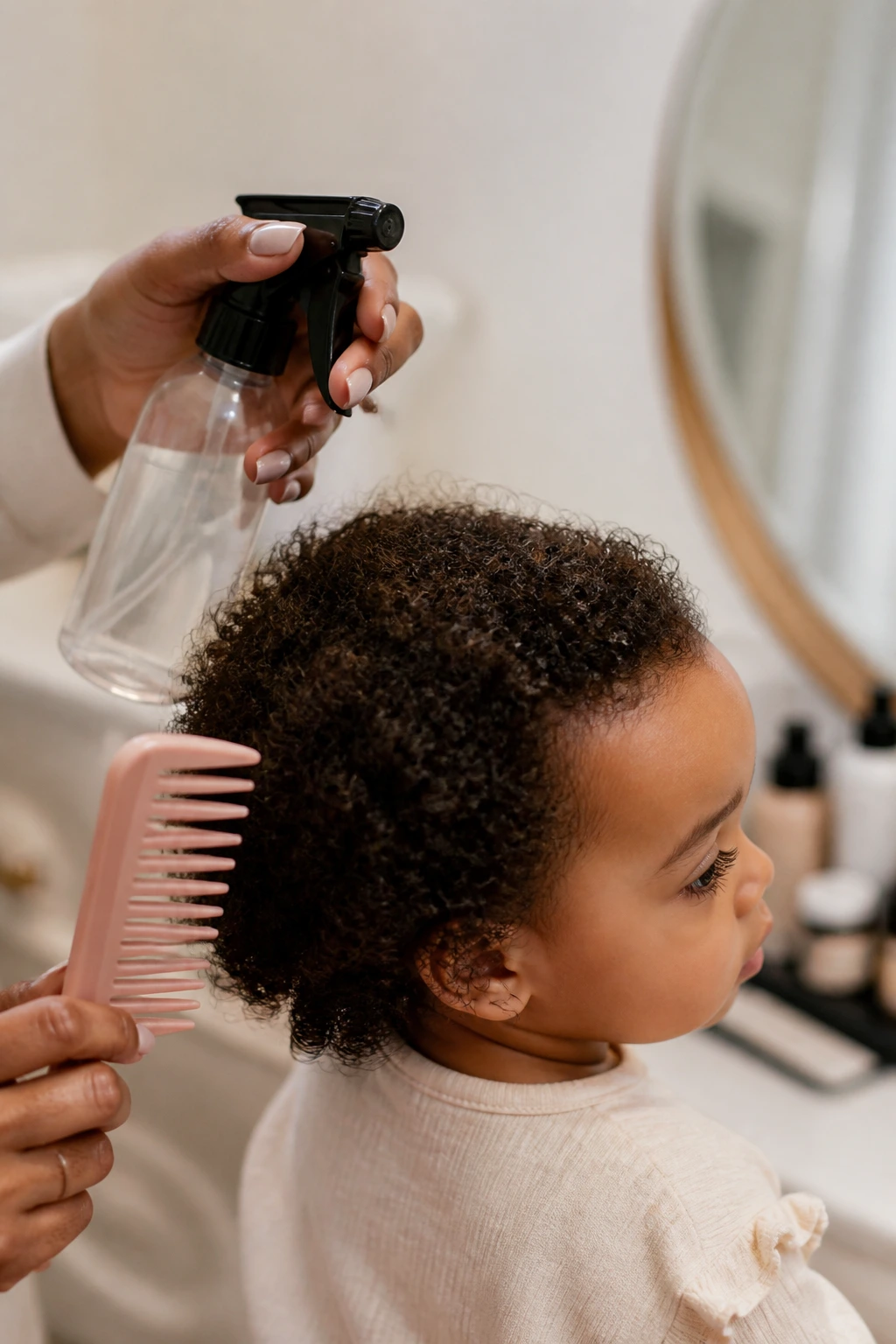
Spray bottle with water: A fine mist softens curls without soaking the scalp or dripping down the neck.
-
Leave-in conditioner: Use a light layer to help detangle and keep the curls from looking dry halfway through the day.
-
Wide-tooth comb: Best for working through knots after the hair has been misted and coated.
-
Soft detangling brush: Useful for smoother parts and puff bases, especially on denser curls.
-
Rat-tail comb: Helps with clean parts, heart shapes, and braid sections.
-
Snag-free elastics: Choose soft, seamless bands that won’t catch the curl pattern.
-
Satin scrunchies: Gentler than tight rubber bands and better for puffs and ponytails.
-
Soft clips and barrettes: Look for smooth backs and no sharp seams.
-
A light gel or styling cream: Keep it flexible; you want hold, not helmet hair.
-
Satin bonnet or pillowcase: Protects the style overnight and reduces frizz.
Smart Shopping for Gentle Accessories and Products
Accessory shopping for toddler curls is mostly about avoiding problems before they start. The wrong elastic, more than the wrong part, is what causes a lot of drama. Pick hair ties that slide without snagging and skip anything with metal joints that can pinch or tear the curl. If a clip feels sharp in your hand, it will feel sharper on a small scalp.
For products, lightweight is the move. A heavy cream can sit on top of fine curls and make them look greasy by lunchtime. A lighter leave-in with a soft curl cream or a tiny bit of gel usually behaves better. The hair should look moisturized, not coated.
I’m also a fan of buying fewer accessories in better sizes. One wide headband that stays put is worth more than three skinny ones that creep backward all morning. One sturdy rat-tail comb with a smooth tip is worth more than a bag of flimsy plastic tools. Cheap is fine when the item actually does the job. Cheap and sharp is not.
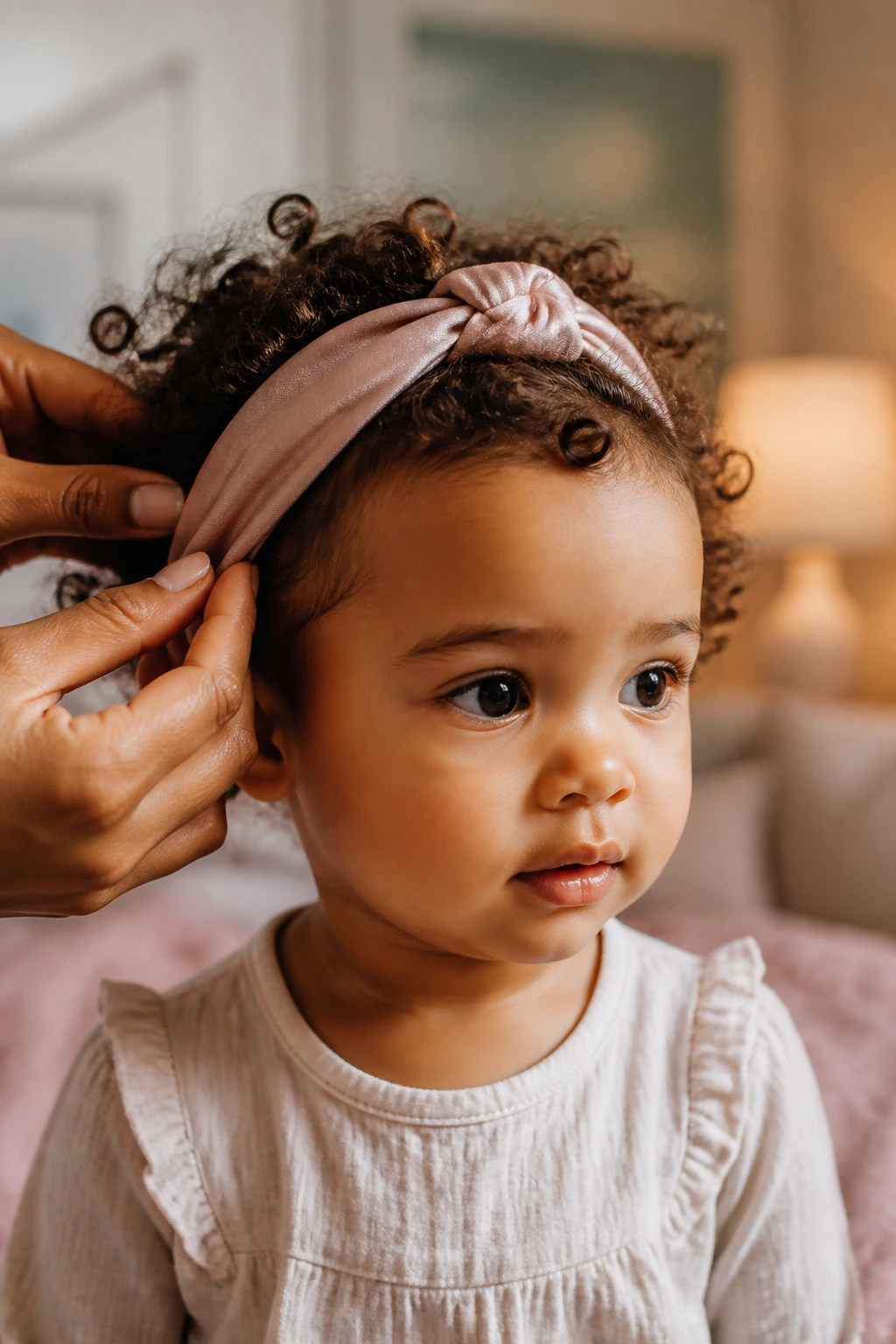
If you can, touch the fabric on headbands and bonnets before buying. Soft matters. Seams matter. Anything that rubs the ear or hairline will get rejected by the child faster than you expect.
Additional Tips for Styles That Last Longer
Moisture Boost: Start with damp hair, not soaked hair. A little water plus leave-in helps the curls cooperate without turning the roots slippery.
Time-Saver: Part the hair while it’s still lightly damp. Dry curls are more likely to split unevenly, and the sections drift while you work.
Shape Fix: If a puff starts to collapse, fluff the base with your fingers instead of adding more product. More product usually makes the hair tacky, not fuller.
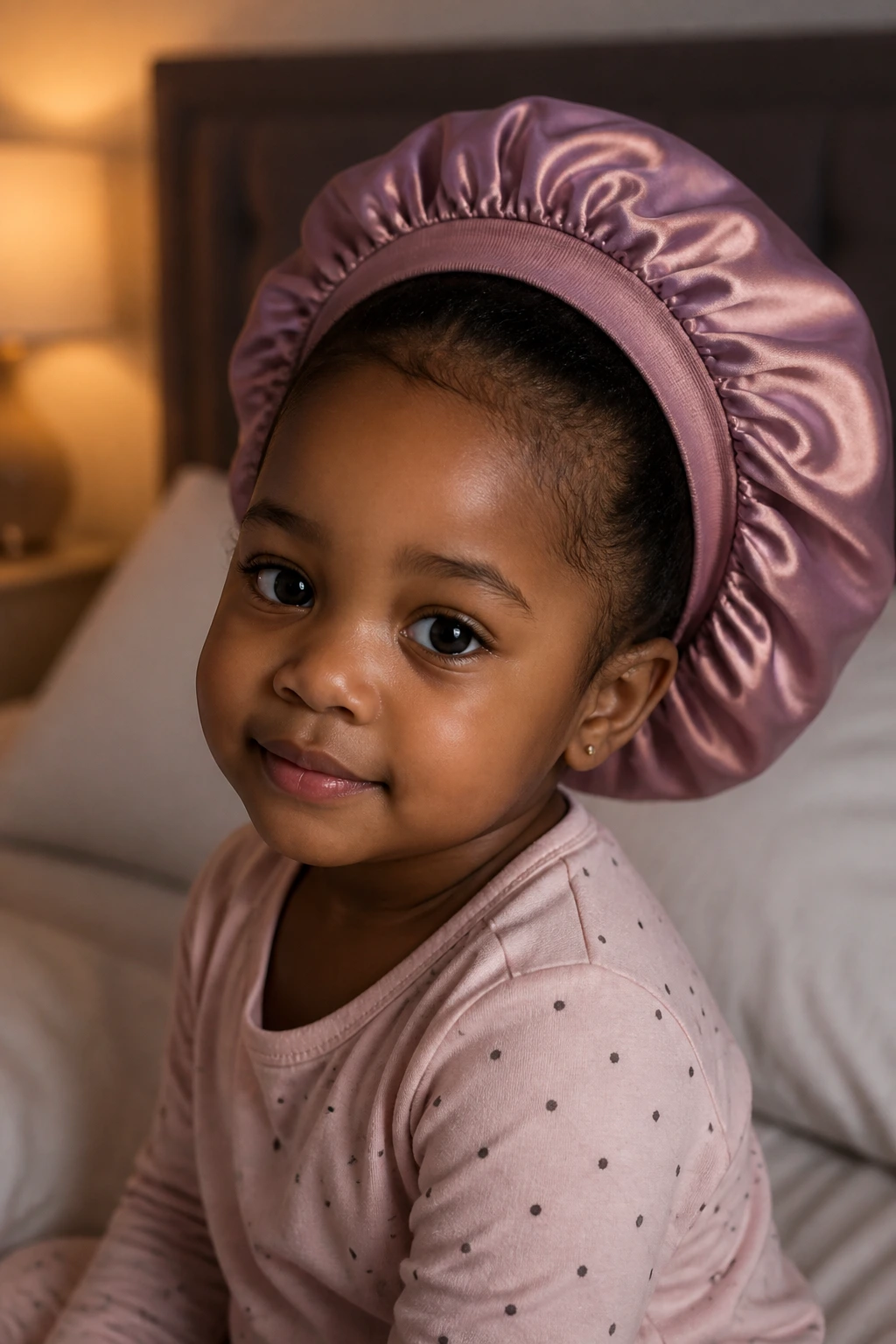
Night Prep: A satin bonnet or pillowcase buys you another day of wear. If the child won’t keep a bonnet on, a loose pineapple or low puff for sleep is the next best thing.
Clean Finish: Wipe the hairline with a damp cloth after styling if any cream or gel collects there. That tiny cleanup makes the style look neater without adding more product.
Common Mistakes That Make Toddler Styles Fall Apart
The first mistake is pulling everything too tight. A style can look crisp for ten minutes and still be wrong if the scalp is getting dragged. The fix is simple: leave a little slack at the base and stop before the hairline starts to flatten.
Another problem is styling dry curls like they’re straight hair. Dry curly strands snap, tangle, and frizz the minute you touch them. Mist first, detangle second, then style. That order saves time and tears.
Overusing gel is a sneaky one. The style may look slick at first, but too much product dries stiff and flakes later. A small amount at the roots or part line is enough for most toddler heads. If you can see white residue, you used too much.
A lot of styles also fail because the parting is fought instead of followed. Curls have a natural direction, and forcing them into a rigid line can make the style puff up around the section. Work with the way the hair falls and the whole thing sits better.
One more: choosing a style that is too elaborate for the day. If the child is heading to daycare, a six-step braid sculpture is going to lose to naps, hats, and snack time. Match the style to the schedule. That’s not laziness. That’s good sense.
Variations and Adaptations for Different Hair Lengths and Curl Patterns
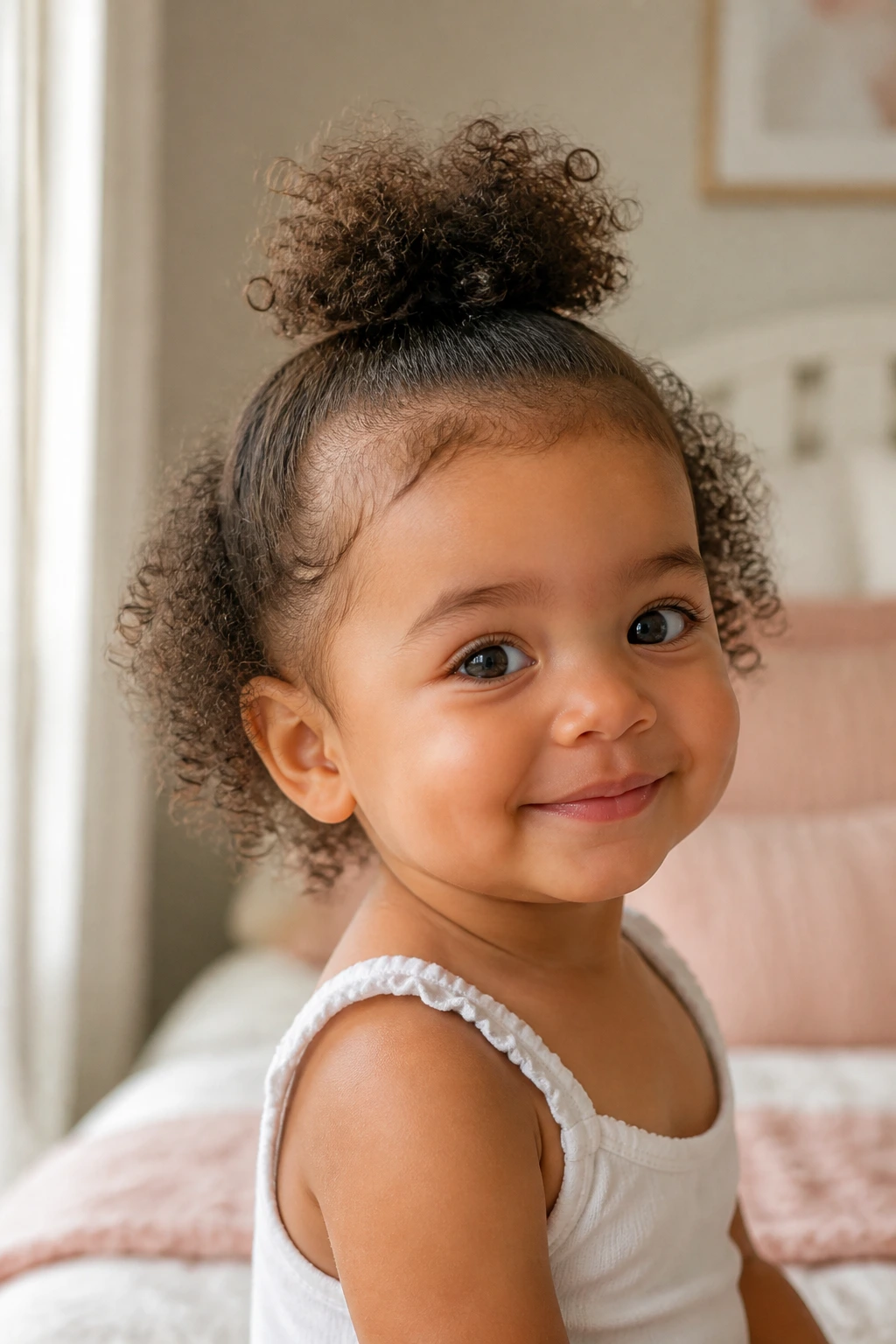
The Tiny Puff Version: For very short hair, shrink the style down instead of forcing a big shape. One small puff, a headband tuck, or a side clip can look cleaner than a ponytail that never quite reaches.
The Tender-Scalp Version: If the child gets sore easily, skip tight braids and use loose puffs, headbands, or a low ribbon wrap. The style should feel almost forgettable once it’s in.
The Photo-Day Version: Add a ribbon, a heart part, or two matching barrettes. Keep the base simple so the extras can do the work without making the hair feel overloaded.
The Daycare-Speed Version: Choose the high puff, side-part puff, or headband tuck. They take minutes, not patience, and they’re easier to fix if the child takes one clip out during lunch.
The Long-Hair Version: If the curls have some length, space buns, bubble ponytails, and twist-out pigtails hold shape better because the hair has enough weight to show off the structure.
The Soft-Coil Version: Coily hair often looks best with styles that respect shrinkage — mini twists, frohawks, and low puffs. Stretching the hair too hard can make the style fight itself.
Keeping Styles Fresh Between Wash Days
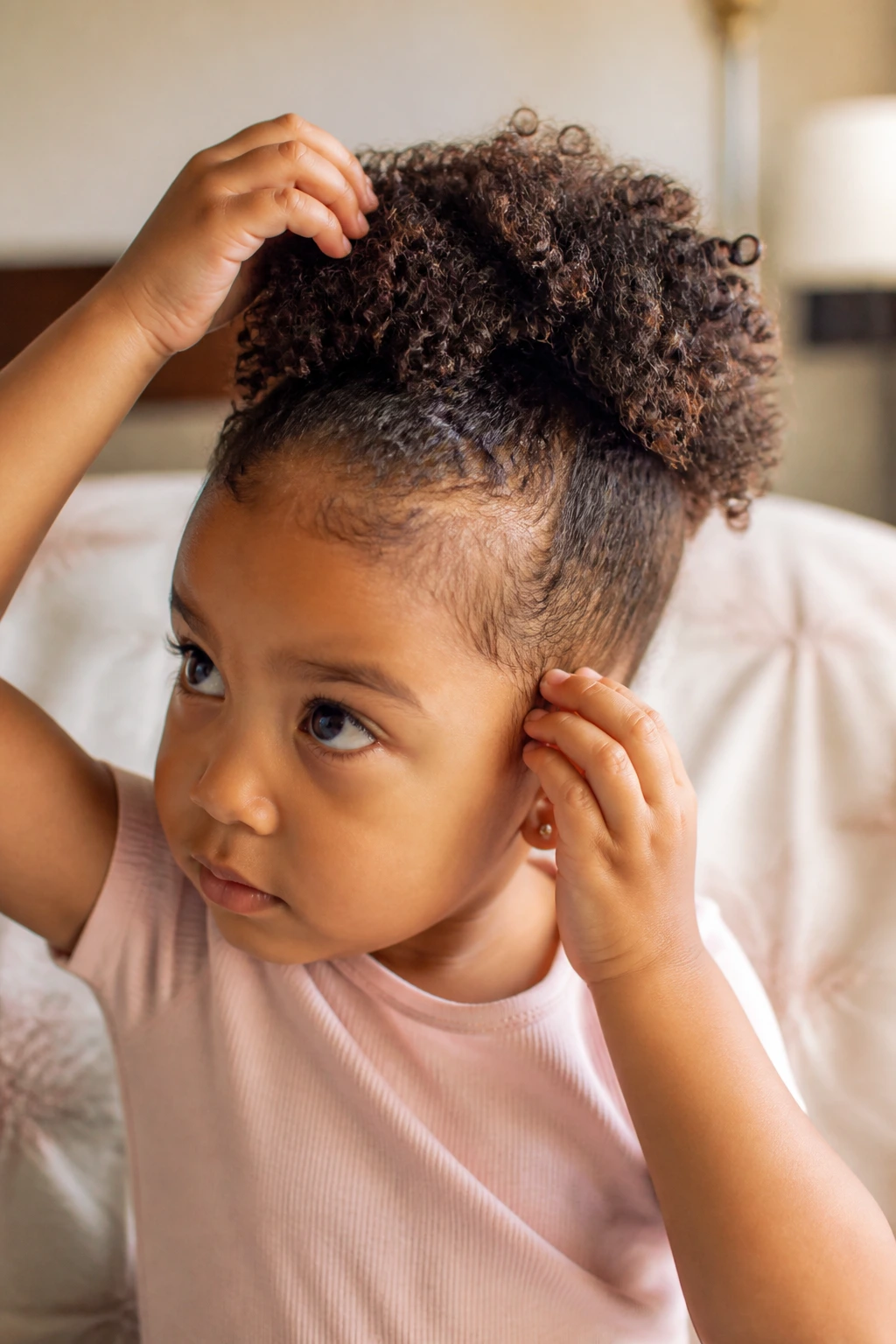
Toddler curly styles usually last longer when you treat them like a living thing instead of a finished object. A little mist in the morning, a light finger-fluff at the puff, and a quick reset of the part can buy another day without starting over. That’s the whole point. You do not need to rebuild the style every time it blinks.
If the style includes puffs or ponytails, check the elastic at bedtime. If the band has started to dig in, take it out and re-secure it lower or looser. Hair that’s comfortable overnight looks better the next day, which sounds obvious, but people keep forgetting it.
For twists and braids, the roots usually need the most help. A tiny bit of leave-in or curl cream on the first inch of hair is enough. The ends often need less than you think. Too much product at the tips makes them sticky and dull.
Most curly toddler styles also need less washing than people imagine, but the scalp still needs attention. If the roots start to smell off, feel greasy, or collect flakes, don’t keep preserving the style for pride’s sake. Wash days are part of the routine, not a failure.
Questions Parents Ask About Curly Toddler Hairstyles
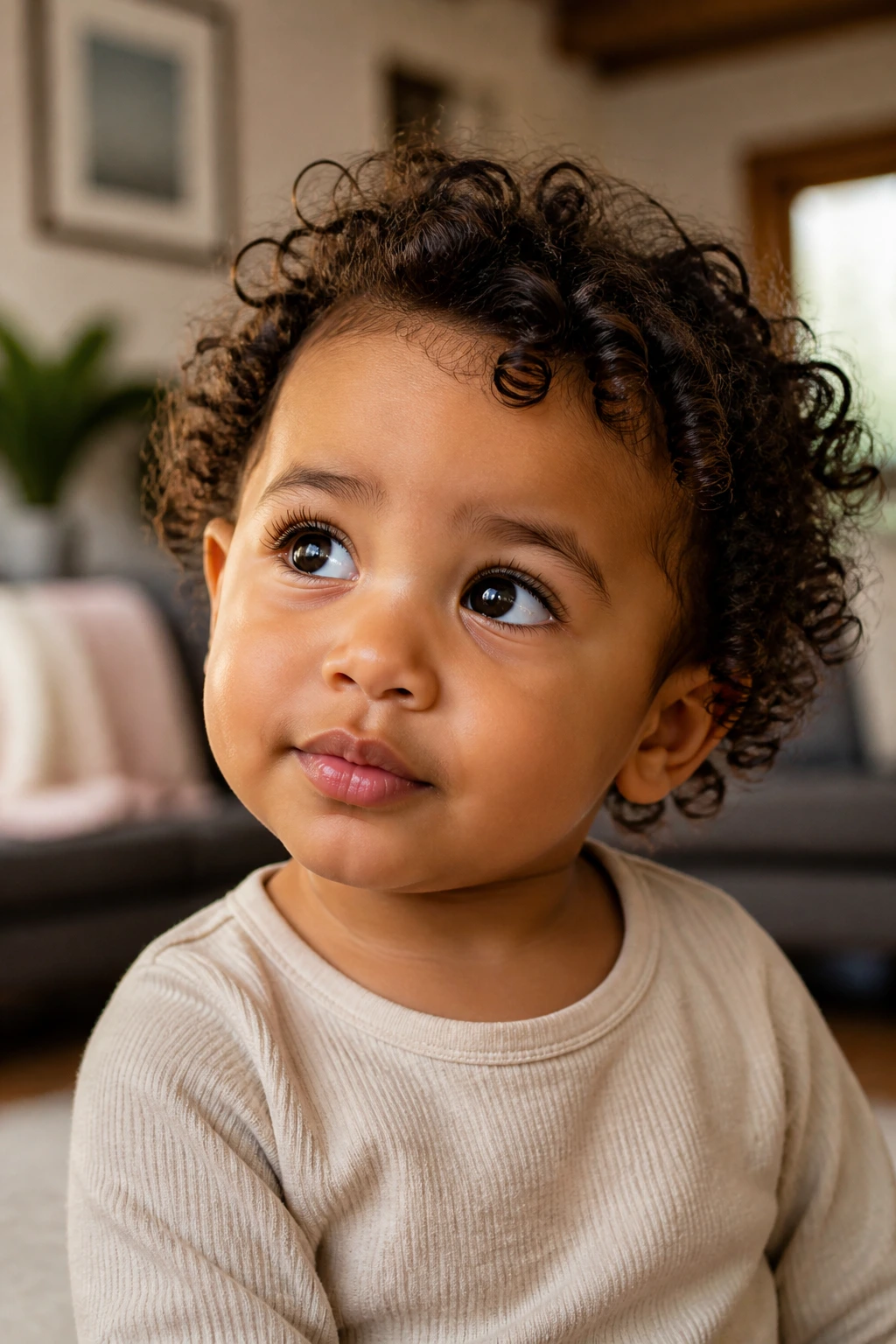
What hairstyle lasts the longest on toddler curly hair?
Mini twists, flat twists, and crown braids usually last longer than loose puffs because they hold the shape close to the scalp. If the child is rough on their hair, a style with a more structured front tends to survive better than an all-free puff.
Can these styles work on very short curly hair?
Yes. Short hair is where headbands, side clips, mini puffs, and front twists shine. You don’t need a lot of length to create shape; you need a style that fits the amount of hair actually there.
Do I need gel every time?
No. Gel helps with parts and flyaways, but a little leave-in and a soft brush is enough for many styles. If the hair is dry or the scalp is sensitive, a lighter product usually feels better.
How do I stop my toddler from pulling the style apart?
Choose styles that don’t feel tight or itchy, and keep the accessories simple. A child is much more likely to leave the hair alone if it doesn’t feel like something strange is sitting on their head.
Can I style the hair on wash day while it’s wet?
You can, but damp is usually better than dripping wet. Wet hair stretches more, and parts can shift while drying. Slightly damp hair gives you more control and a cleaner finish.
What if the curls frizz by midday?
That’s normal. Use a light refresh with water on your palms and smooth only the outer layer. You’re refreshing the shape, not restarting the whole style.
Are braids okay for toddlers?
They can be, if they’re loose, small, and comfortable. Tight braids that tug at the edges are not worth it. If the child sits still poorly, keep the braid work simple.
How often should I redo the style?
When the roots get uncomfortable, the parts start to spread, or the style no longer looks neat with a quick mist-and-smooth refresh. Some styles need a redo every day; others can stretch a few days. Comfort always wins.
The Styles That Make Mornings Easier
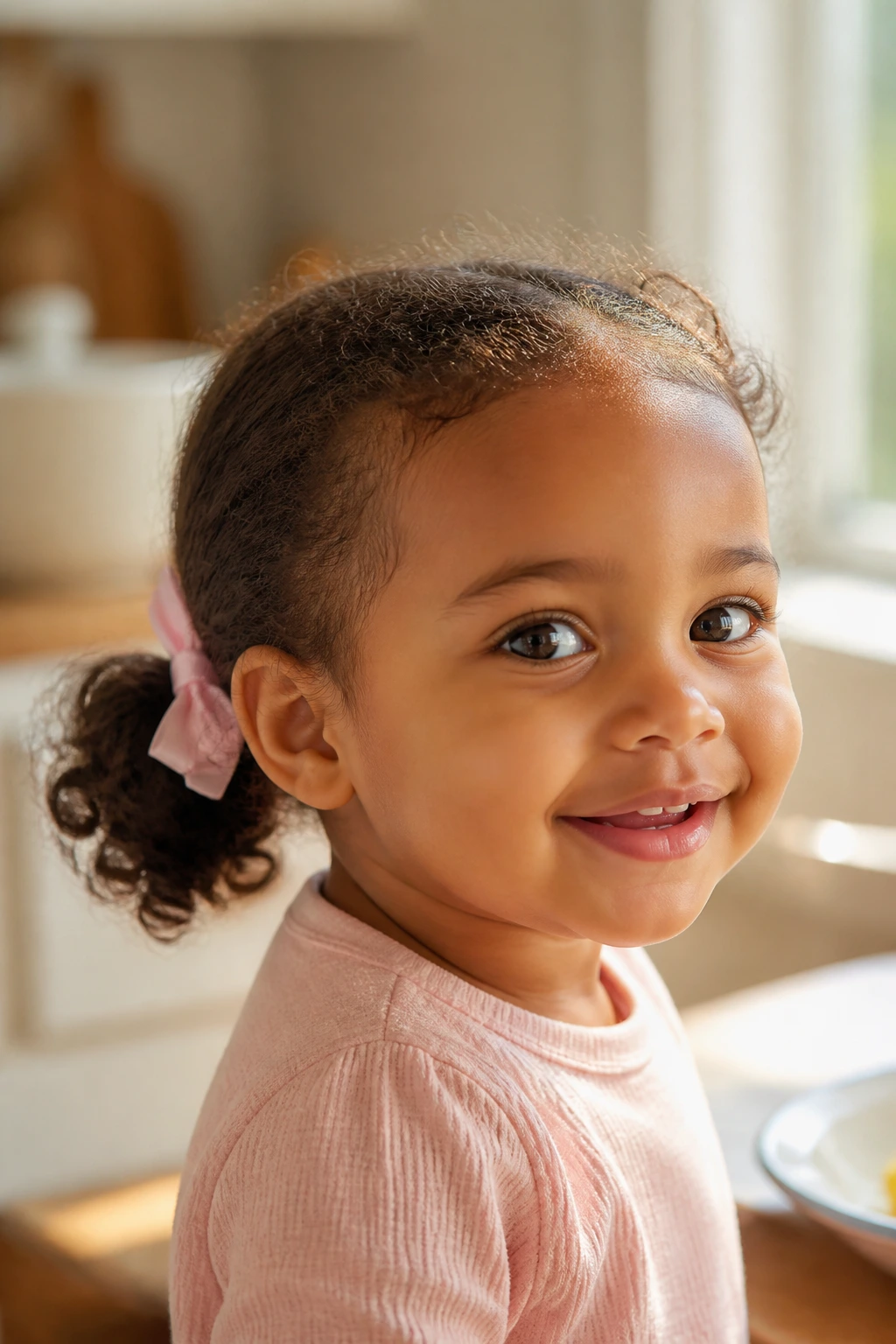
The nicest thing about curly toddler hair is that it doesn’t have to be tamed into one shape to look good. A puff, a braid, a twist, or a ribboned low pony can all work if the hair is treated with enough slack and enough respect. That’s the real pattern behind the styles above.
Start with the child’s mood, then the hair length, then the time you actually have. The style that fits those three things is usually the one that lasts past breakfast without drama. And honestly, that’s the version worth repeating tomorrow.