



The first cool mornings change curly hair faster than most people expect. A curl that sat happily in a wash-and-go in warmer weather can suddenly puff at the crown, lose definition at the ends, or get dragged down by a scarf collar and a wool coat collar at the same time. That’s the trouble and the fun of fall: the air gets drier, the outfits get heavier, and hair starts asking for a little more shape.
Oval faces get a small advantage here. Not a cheating advantage. A useful one. That face shape can handle a side part, a fringe, a bit of height at the crown, or width at the cheekbones without looking overworked, which means curly hair can do more of the talking. You can go soft or structured. Loose or polished. Short, long, pinned up, or left full around the jaw.
The trick is not picking a “pretty” style from a photo and hoping it behaves. It’s placing the volume on purpose. Once you do that, curly hair on an oval face starts looking less like a compromise and more like a plan.
Why These 18 Looks Work on Curly Hair and Oval Faces
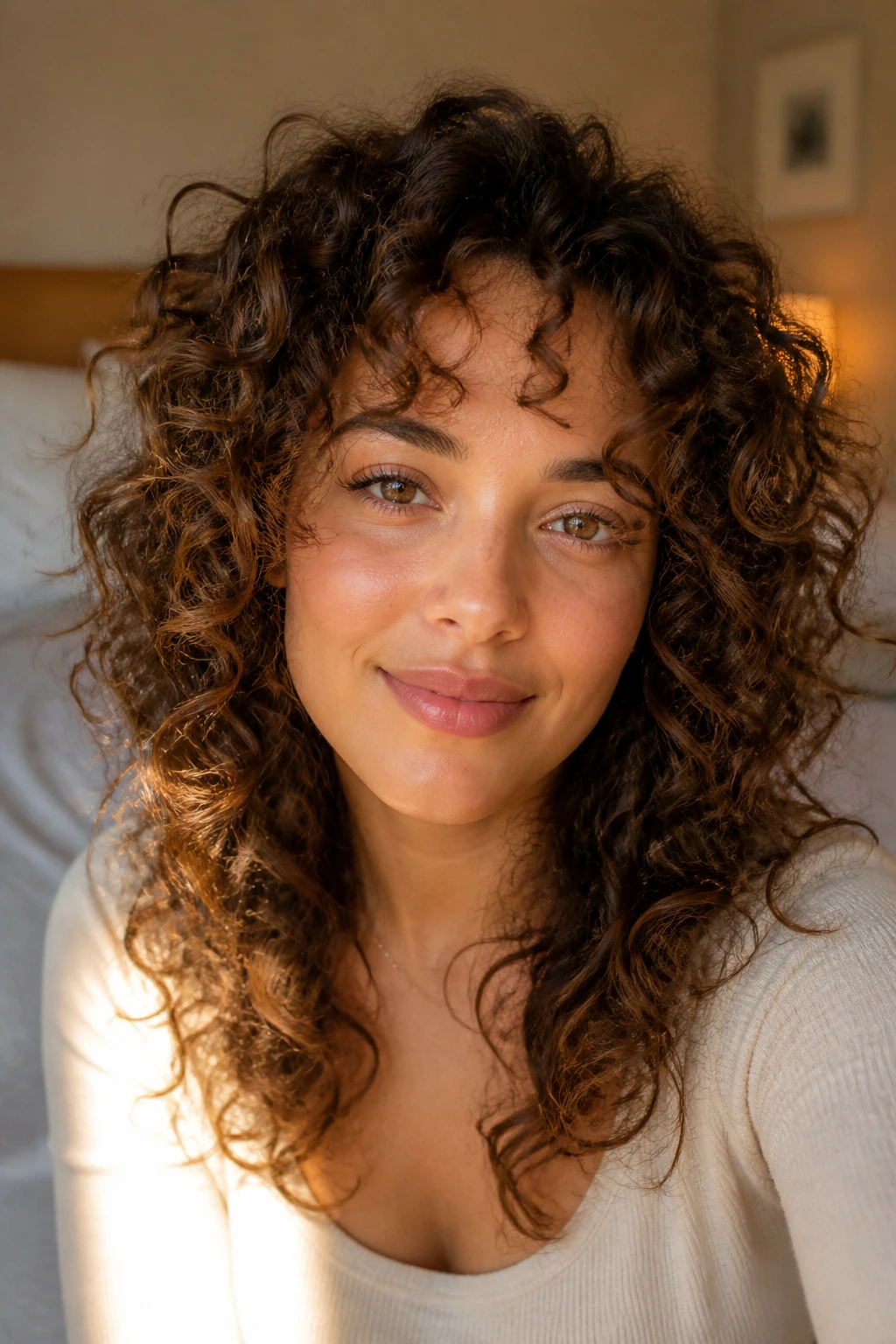
-
Face-framing balance: Oval faces already have balanced proportions, so a good curly style can play with width near the cheeks or lift at the crown without making the face look crowded.
-
Curl texture does the heavy lifting: You do not need a lot of heat or flat-ironing to make these shapes feel finished; a clean part, a well-placed pin, or a defined front section often does the job.
-
Fall layers help the whole silhouette: Scarves, collars, jackets, and sweaters can swallow hair that sits too flat. Styles with height, movement, or a controlled sweep keep the shape visible.
-
Second-day hair works in your favor: Plenty of these looks get better after a night in a satin bonnet or a pineapple, which is a relief when curls want to settle instead of frizzing outward.
-
There’s room for your curl pattern: Loose waves, springy 3B curls, and tighter coils all show up in this lineup. The details change, but the overall logic stays the same.
-
You can dress them up or down fast: The same cut can look casual with air-dried volume and more polished with a ribbon, a headband, or a clean side part.
1. Soft Curly Layers With a Deep Side Part
A deep side part does more than shift the hair to one side. It changes the whole mood of the face. On curly hair, especially shoulder-length or longer curls, it creates a soft diagonal line that keeps an oval face from feeling too long and gives the crown a little lift without turning the style into a helmet.
Why it works on oval faces
A middle part can look neat, but it can also make an oval face read a little narrower from top to bottom. A side part breaks that line. The side with less hair becomes a clean frame for the cheekbone, and the fuller side gives the curl pattern a place to spill. That asymmetry is the point.
Keep the shortest front layers around cheekbone level if you want the face to open up. If the layers hit too low, the shape drags downward and the whole style gets sleepy. I like this look best when the part sits about an inch off center, not all the way to the temple. That little shift keeps it wearable.
- Use a curl cream on damp hair, then layer a light gel on top.
- Clip the roots at the crown while the hair dries.
- Diffuse on low heat until the roots feel set, not damp.
- Flip the part after drying if you want a softer sweep.
Best for: medium to thick curls that need a little lift at the roots.
2. Curly Curtain Bangs and Collarbone Layers
Why do curtain bangs keep showing up on curly hair? Because they solve a real problem. They let curls frame the forehead without chopping the front off too bluntly, and on an oval face they sit right where the proportions already want to balance out.
The key is softness, not symmetry. Curtain bangs should split easily and fall away from the center, then blend into collarbone layers so the front doesn’t look separate from the rest of the haircut. If the bangs are too short, they spring up and make the face feel more vertical. If they’re too long, they disappear into the rest of the curls and lose the point.
I’d keep the shortest pieces around the brow to upper cheekbone zone for most curl patterns. That gives movement without making the forehead look crowded.
How to style them
A small diffuser attachment and a touch of mousse are usually enough. Dry the bangs first, using your fingers to separate any heavy clumps. Once they’re about 80 percent dry, stop touching them. That’s the part people ignore, and then they wonder why the front looks fuzzy.
This style works especially well with sweaters and coats because the layers keep the hair from getting trapped under the collar line.
3. Half-Up Twist With Defined Ends
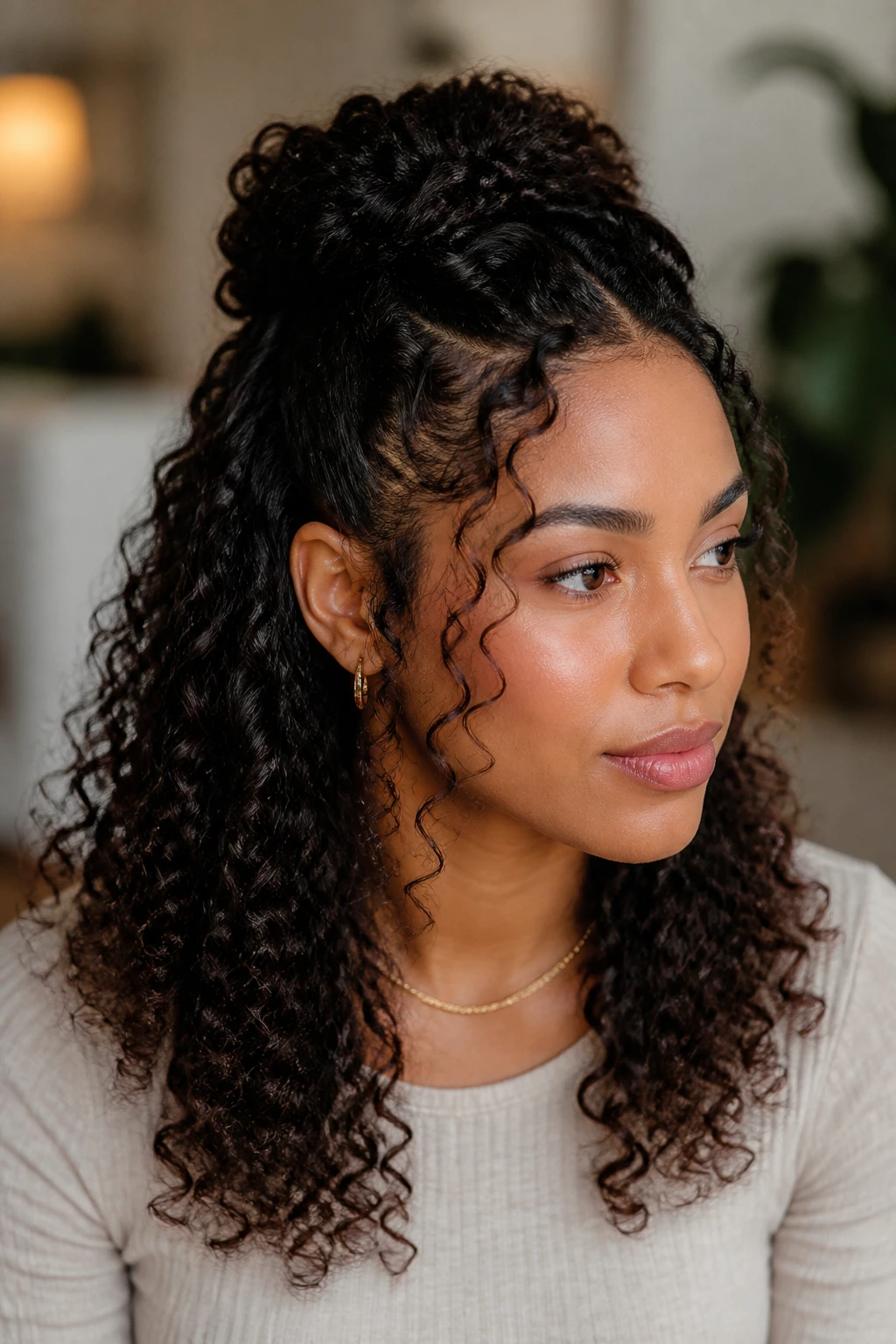
Picture this: you’ve got curls that are still lively, but they’re on the verge of falling in your face every time you shrug on a cardigan. The half-up twist is the move. It pulls the top section away from the face, leaves the ends visible, and keeps the curl pattern from disappearing into a tight knot.
What I like here is the contrast. The top can be slightly polished, even a little tucked, while the lower curls stay loose and springy. On an oval face, that split works because the exposed cheekbones and the lifted crown balance each other out.
Build it in three clean moves
- Section off the top third of the hair from temple to temple.
- Twist each side back toward the crown and pin them together, or gather them into a small half pony and hide the elastic with a curl.
- Leave the bottom section alone. Don’t brush it out. Just shape it with your hands.
If your curls are thick, use two bobby pins in an X shape instead of one. If they’re fine, a single clip with teeth gives you more hold. This is one of those styles that looks casual but takes less than ten minutes once you know where your hands are going.
4. The Curly Shag With Piecey Fringe
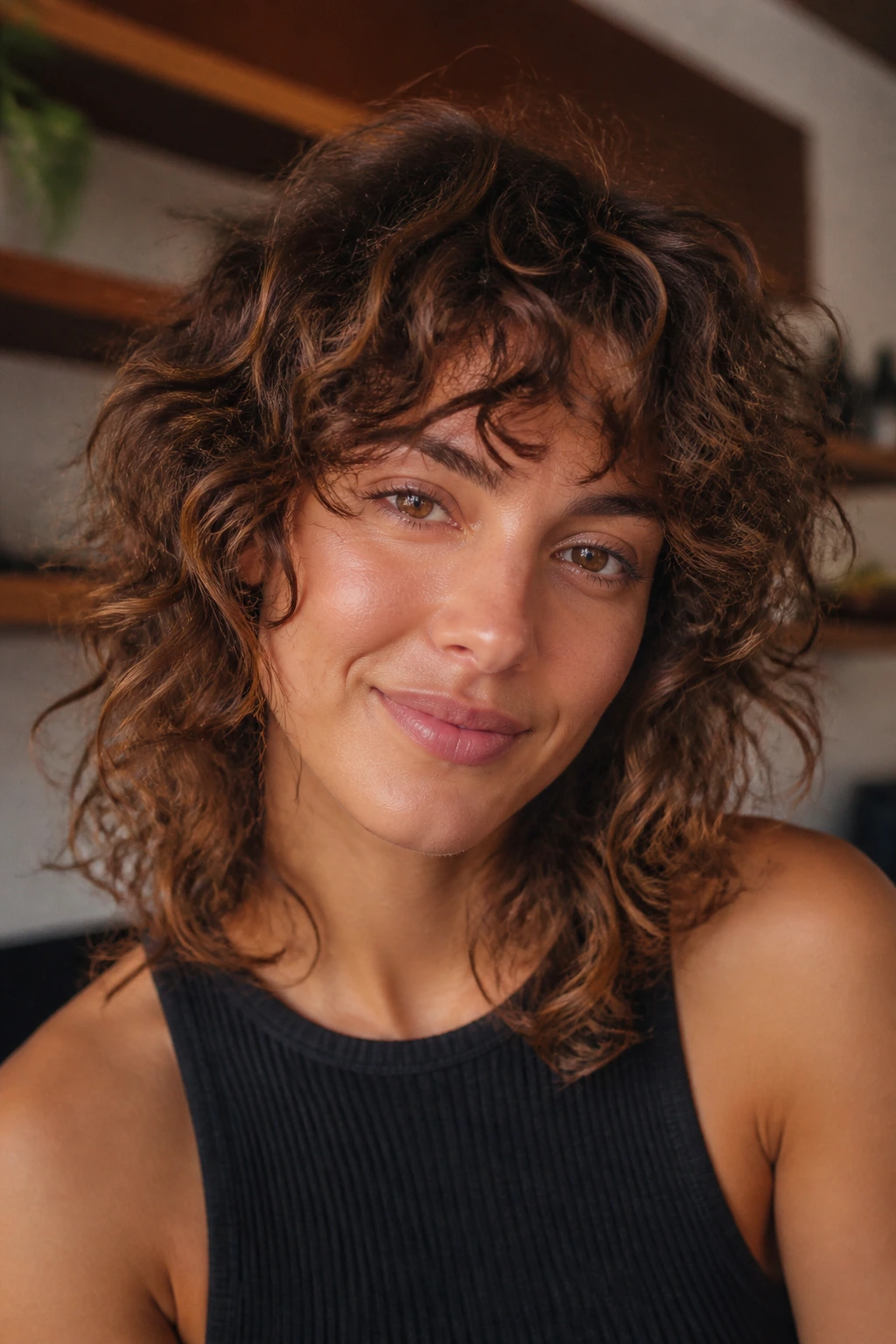
A shag is not only for people who want a big, rebellious haircut and a soundtrack with guitar feedback. On curly hair, it’s one of the smartest ways to keep volume from sitting like a triangle. The layers remove bulk where you do not want it and leave plenty of movement where you do.
Oval faces can handle the piecey fringe without trouble, which is one reason this cut looks so at home here. The fringe shortens the face a touch, the top layers add lift, and the sides soften the jawline just enough. When it’s done well, the whole haircut looks like it has a pulse.
This one does need a bit of honesty. If your curls are very fine and low-density, too many layers can make the ends feel thin. In that case, ask for a softer shag with longer internal layers, not a choppy one. The goal is movement, not gaps.
The style loves a diffuser and a medium-hold gel. Scrunch once, clip the crown, and let the fringe dry with a little space around it so it doesn’t glue to the forehead.
5. Low Puff With Face-Framing Tendrils
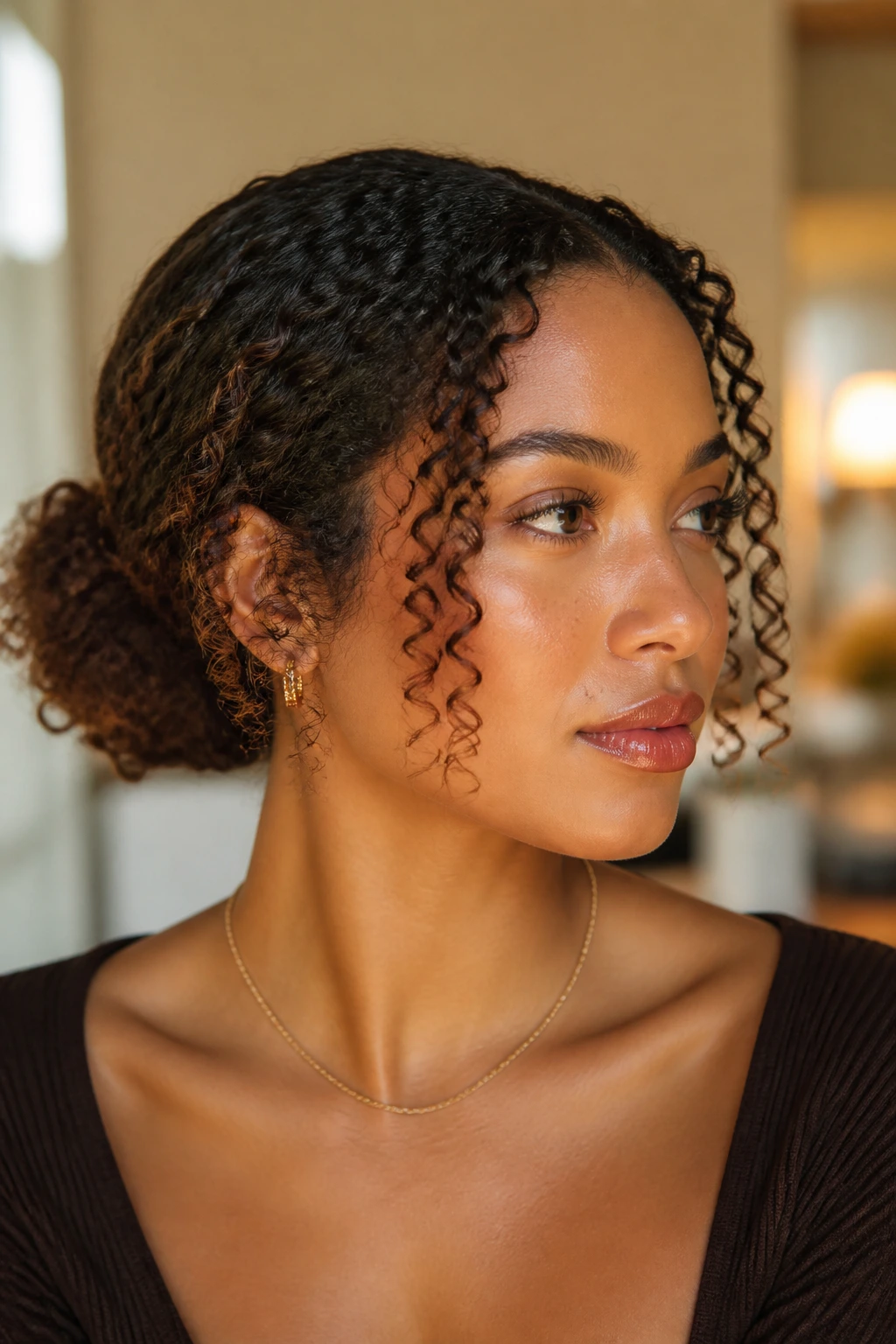
Clean at the nape, soft around the temples, and loose enough that the curl pattern still shows up. That’s the appeal of a low puff. It keeps the neck open when you’re layering scarves and jackets, and it leaves enough hair around the face to keep an oval shape from looking too long.
I especially like this on tighter curls and coils, where a low puff can look polished without fighting shrinkage. You gather the hair low, smooth the sides with a brush or your hands, and let two or three front pieces fall where they want. Those tendrils matter more than people think. They soften the line of the puff and stop the style from looking severe.
A satin scrunchie is better than a tight elastic here. It grips without carving a hard line into the hair shaft, and the puff keeps a bit more roundness.
If your edges frizz easily, use a small amount of gel or cream at the temples only. Don’t cover the whole head in product. You want control, not a helmet.
6. Claw-Clip French Twist for Curly Lengths
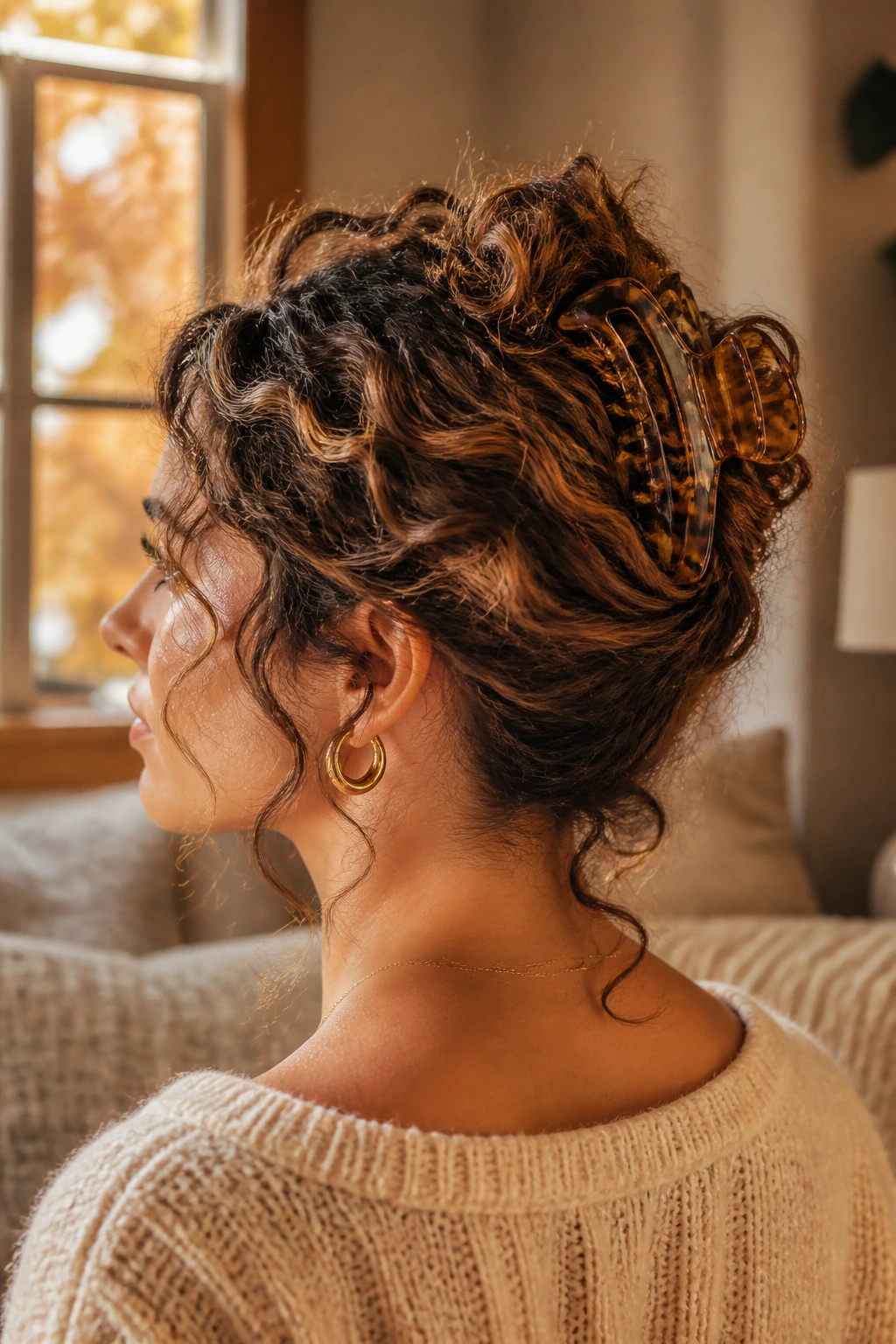
Unlike a tight bun, the claw-clip twist lets curly texture stay visible. That’s why it works so well on days when you want your hair up but you do not want to flatten the curls into submission. The style looks especially good on oval faces because the twist gives a little height at the back while keeping the sides clean and uncluttered.
Start with hair that has some grip. Second-day curls are ideal, and a mist of water at the ends is usually enough to wake them up. Gather the hair as if you were making a low ponytail, twist upward, and fold the length back over itself before clipping it in place. The ends can spill out a little. That’s not a mistake. That’s the charm.
The best part is how forgiving it is. If the twist sits a little crooked, it still reads as relaxed. If you use a clip with a strong spring and wide teeth, the style holds better than the cheap skinny ones that slide out after an hour.
This is one of my favorite styles for sweater weather because it keeps hair off the neck without making the head look tiny.
7. Diffused Wash-and-Go With Side Volume
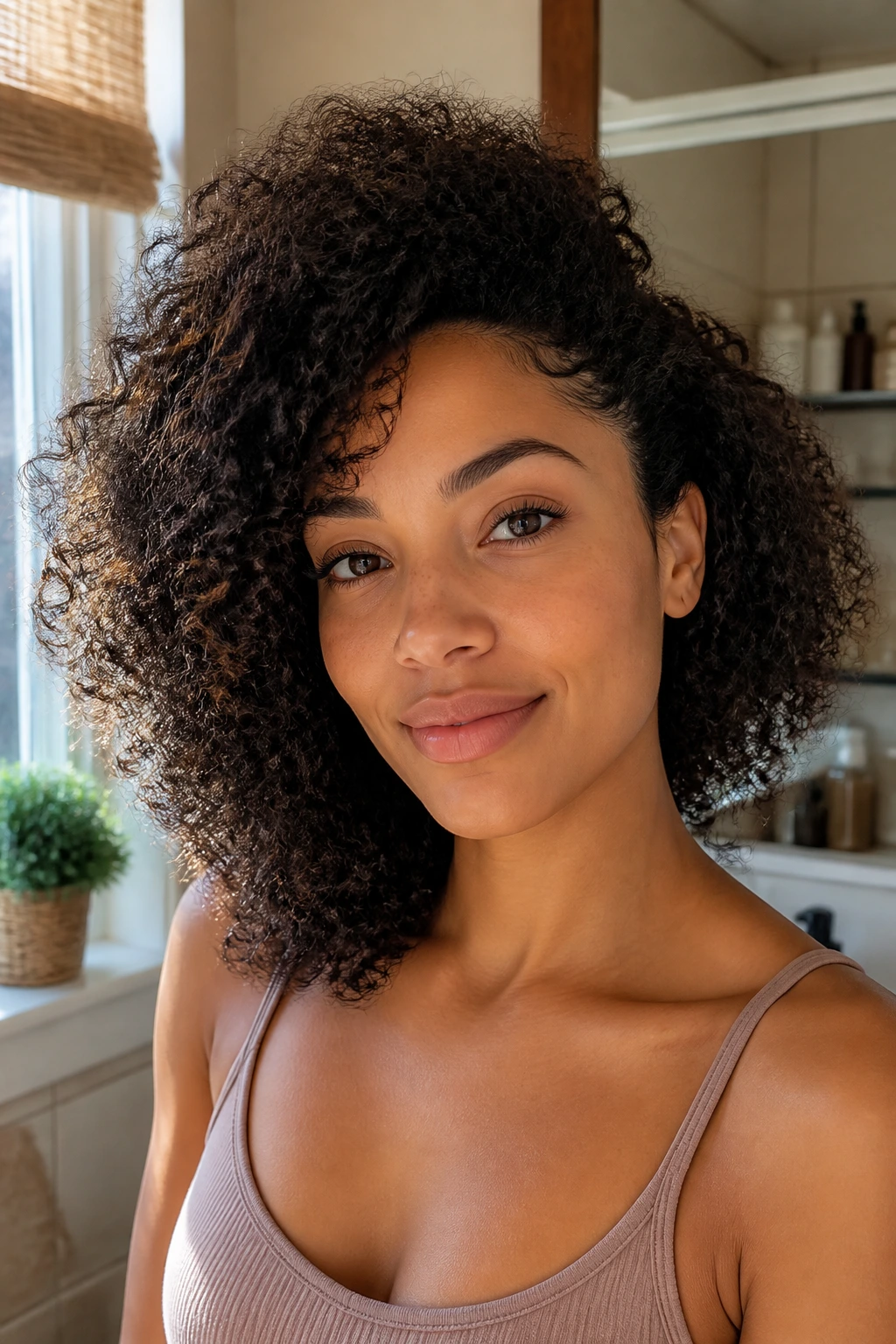
A wash-and-go does not have to mean “hair that happens to dry on its own.” On curly hair and oval faces, the difference between flat and flattering is often where the volume lives. A slight side part, clipped roots, and a careful diffuse can turn a basic wash-and-go into something that feels shaped instead of random.
The crown should dry with lift. The side closest to the part should stay smooth enough to guide the eye, and the fuller side should form the visual weight. That shift keeps the face from reading too long and gives the curls a little swing when you move.
Use a leave-in plus a gel if your curls frizz fast. If they’re softer and lose shape, mousse alone might not be enough. Dry on low heat, cupping the curls in the diffuser and pausing at the roots for a few extra seconds before moving on. That’s where the shape comes from.
A quick note on finish
Do not touch the hair until it is mostly dry. Seriously. The curls that look a little too tight at first usually settle into a better shape once they cool. Patience wins here.
8. Pineapple Updo With a Satin Ribbon
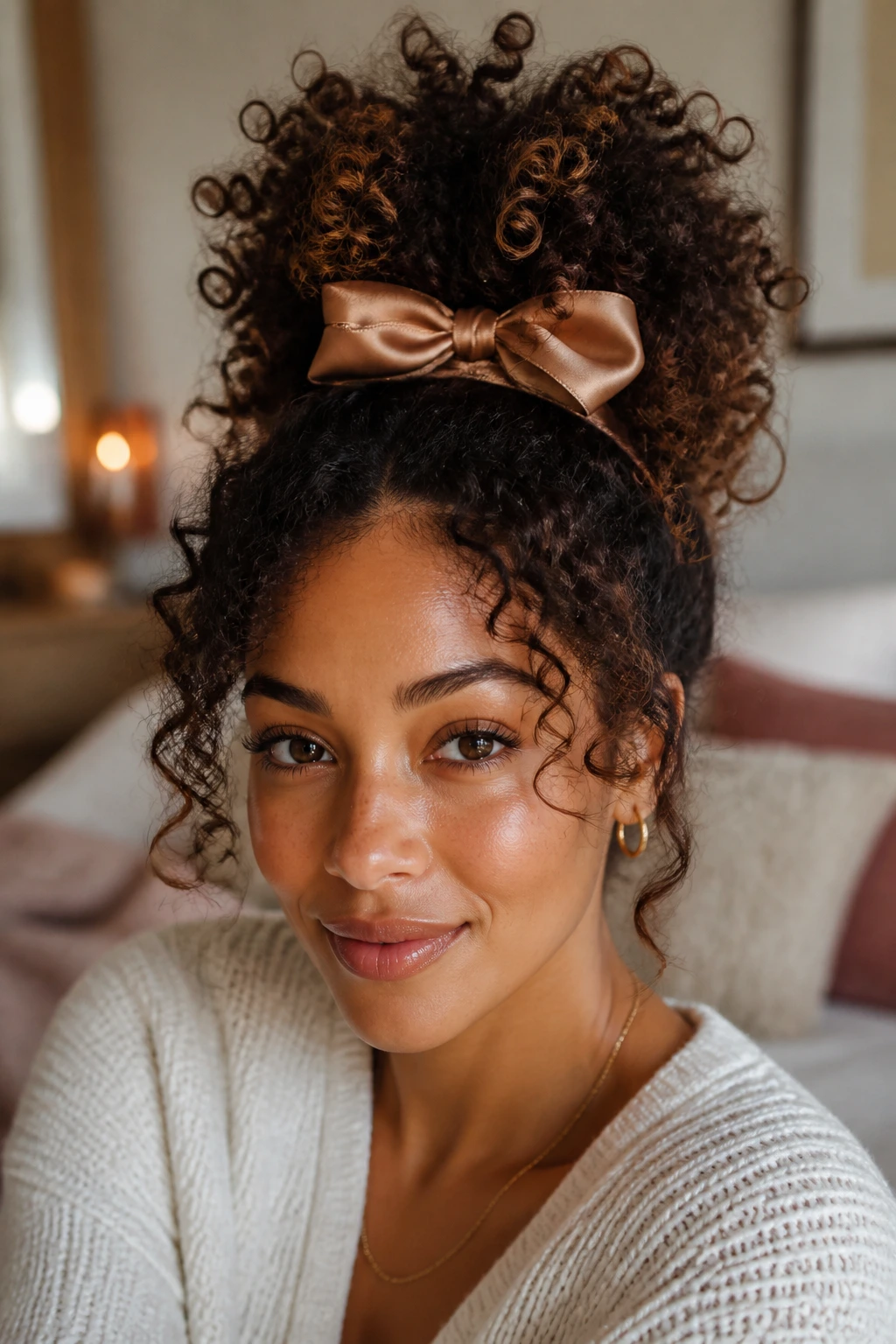
If you want height without losing your curl pattern, this is the style. The pineapple lifts the curls up and forward, which keeps the face open and gives an oval face a nice bit of vertical interest at the top. Add a satin ribbon, and the whole thing stops looking like gym hair.
This works best on medium to long curls. Gather the hair very high but not painfully tight, so the curls stack loosely rather than getting crushed. Let the ends fan out and keep some fullness around the crown. The ribbon can sit under the elastic or wrap around the base to hide it, which makes the style look intentional even when it takes five minutes.
For curly hair, the most common mistake is pulling too hard. That flattens the back and creates a bump in the wrong place. Keep the elastic loose enough that you can slide two fingers underneath it.
This is a useful style on dry, windy days, too. The curls stay out of your coat collar, and the shape still reads clearly from the front.
9. Curly Bob With Tucked-Under Ends
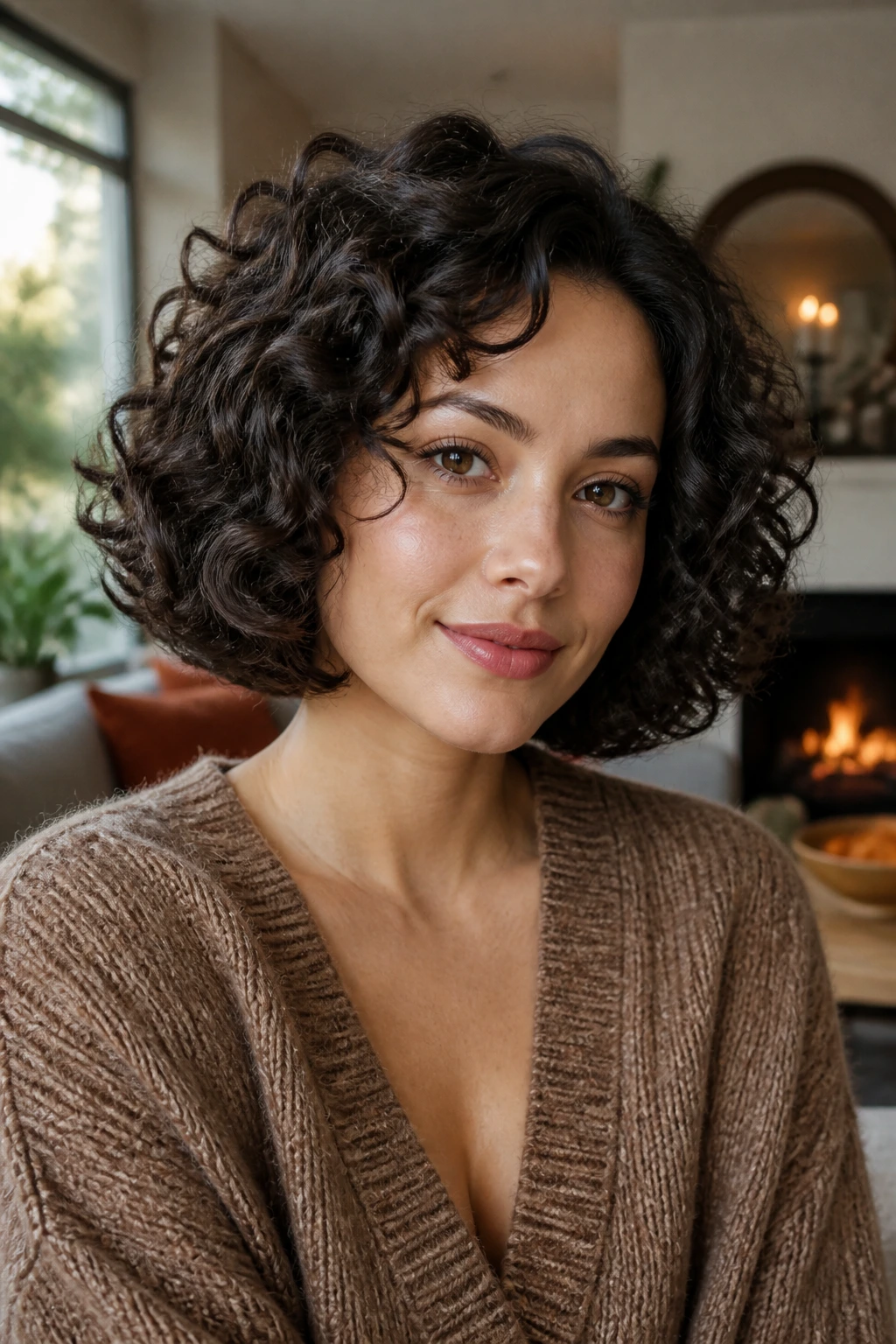
A curly bob is one of the cleanest ways to show off an oval face because it puts the cheekbones in the conversation immediately. If the bob lands between chin and jawline, the face gets a neat frame and the curls have just enough room to move without taking over.
I like a bob that is not too blunt. A little stacking in the back or soft internal layers keeps the shape from turning boxy. Tucking the ends under with a round brush or even a careful finger wrap gives the haircut a rounded finish that feels deliberate, not stiff.
The trick is not to over-style it. If the curls are already springy, use a small amount of cream and a light-hold gel, then diffuse until the roots are dry and the ends still have a bit of softness. Too much product makes the bob sit in one heavy block.
This is one of the few shorter styles that still looks good with a scarf or turtleneck because the neckline stays visible. That matters more in fall than people admit.
10. Halo Braid Around Loose Curls
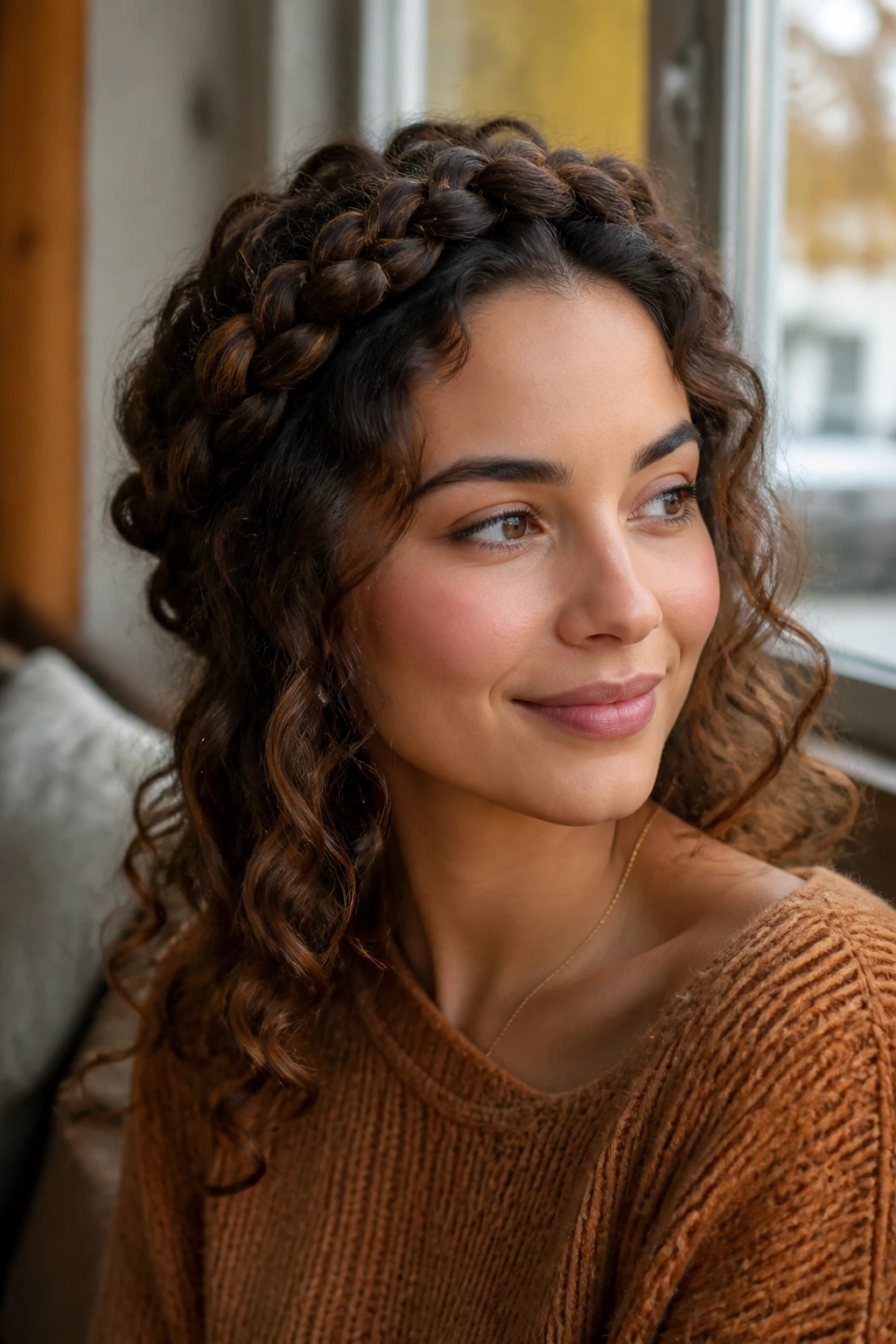
Need a style that keeps the front hair off your face without hiding the texture? The halo braid does that job better than a simple headband, and it has a little more personality. The braid wraps across the hairline like a built-in frame, while the rest of the curls stay loose and visible.
It works especially well when your curls are thick enough to support a braid along the crown. You do not need perfect braid precision. A slightly soft, pulled-apart braid actually looks better here because it sits more naturally against curly hair.
How to wear it without making it fussy
- Braid one side from the temple across the hairline.
- Secure it behind the opposite ear with bobby pins.
- Leave the back loose and let the curls fill the space below.
- Gently tug the braid edges for width, not for mess.
Oval faces can carry the braid sitting low across the forehead or slightly higher, depending on how much front coverage you want. Lower reads softer. Higher reads cleaner. Either way, the loose curls beneath keep the style from looking too hard.
11. Sleek Crown, Voluminous Ends
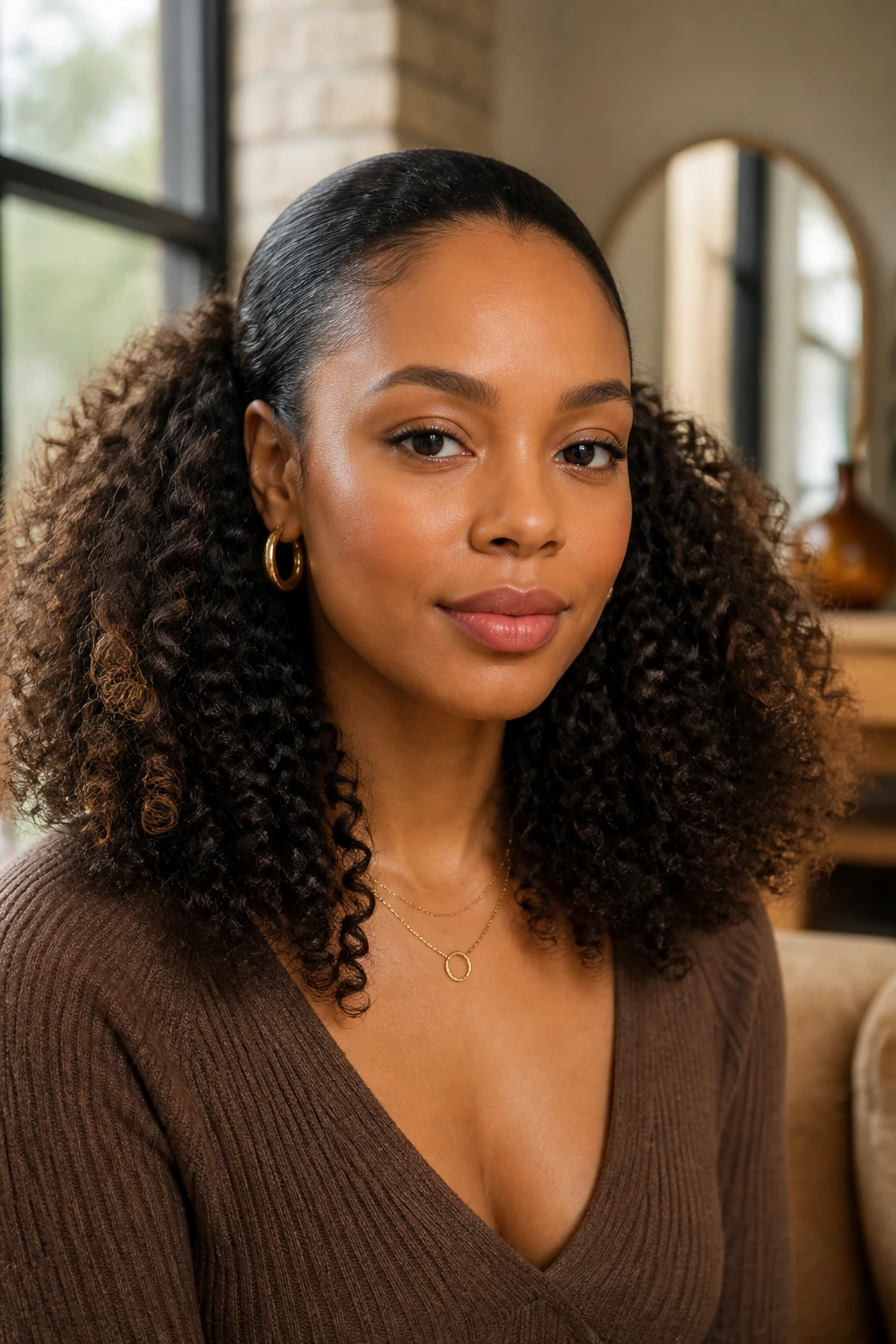
Smoothing the top does not mean flattening the whole style. That’s the whole point of this look. You keep the crown neat—sometimes with a little gel, sometimes with a brush and a firm hand—then let the lengths explode a bit at the bottom. On curly hair, that contrast can look sharp in the best sense.
Oval faces do well with this shape because the height at the crown keeps the face lively without elongating it too much, and the volume at the ends brings balance back down. It is a smart choice when you want a more dressed-up look but do not want to straighten the hair.
The crown needs discipline. Apply a small amount of styling gel to the top, brush it smooth, and pin it or clip it until it dries. The lengths can stay loose. If you’re working with tighter coils, a soft stretch at the roots with clips can help the top hold while the rest stays springy.
This one has a nice side effect: hats sit more cleanly over it than they do over a huge, unstructured puff.
12. Side-Swept Curly Lob With Layers
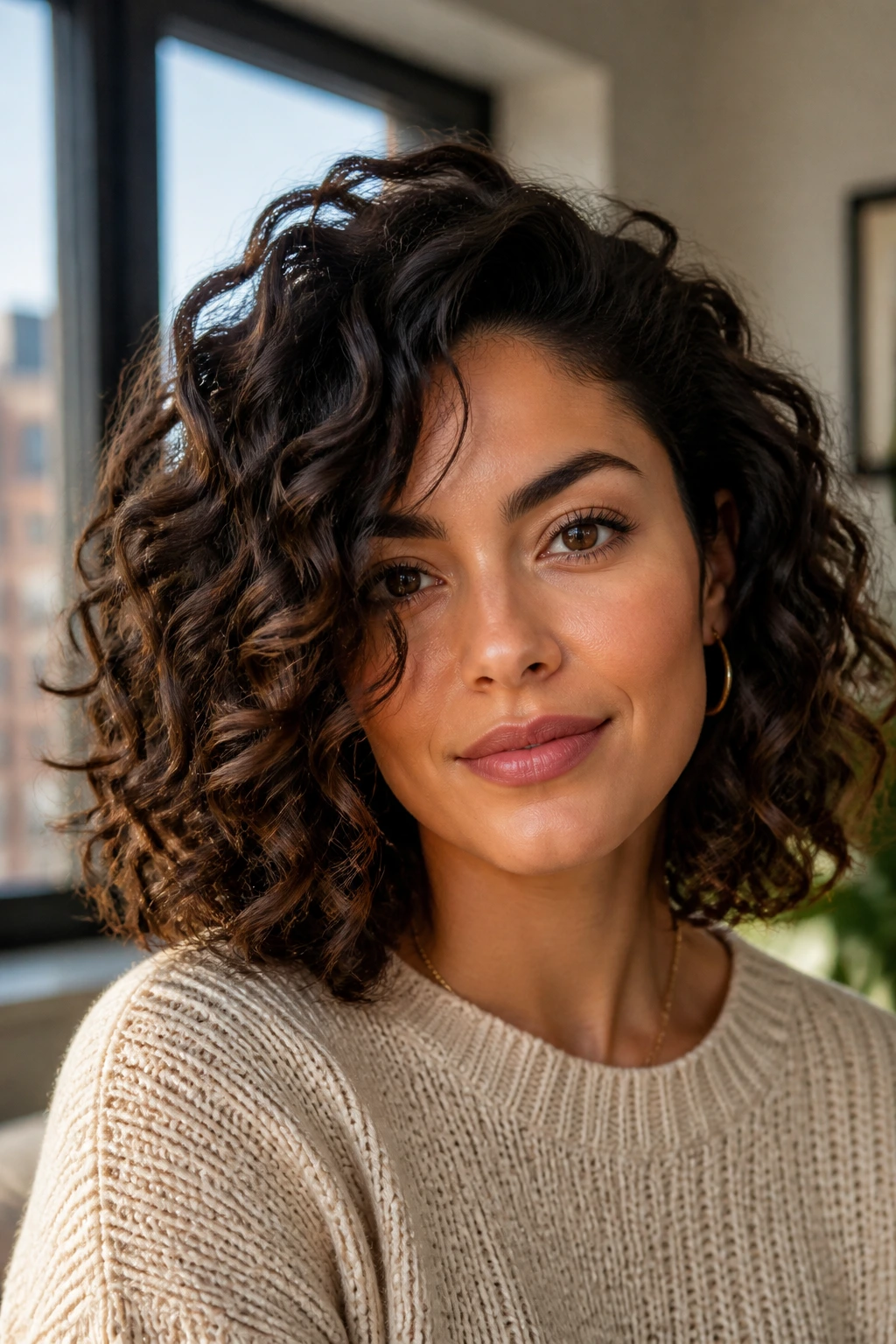
A lob changes the minute it lands right at the collarbone and swings over one shoulder. On oval faces, that length works because it gives definition without swallowing the neck, and the side sweep creates a little visual motion that keeps the face from looking too symmetrical.
This is a good style if your curls are medium density and you want the haircut itself to do the work. The layers should be soft enough to encourage movement, not so chopped that the ends fray. A deep side sweep lets one side create a curtain effect while the other side opens the face.
I’d keep the styling simple here. A curl cream, a gel, and a wide-tooth comb are enough. Let the curls dry, then sweep the fuller side across the shoulder and tuck the other side back behind the ear. That small asymmetry is the whole show.
For fall, this shape plays nicely with open cardigans and crewneck sweaters because the hair sits where the collar line ends rather than getting trapped under it.
13. Bubble Ponytail on Curly Hair
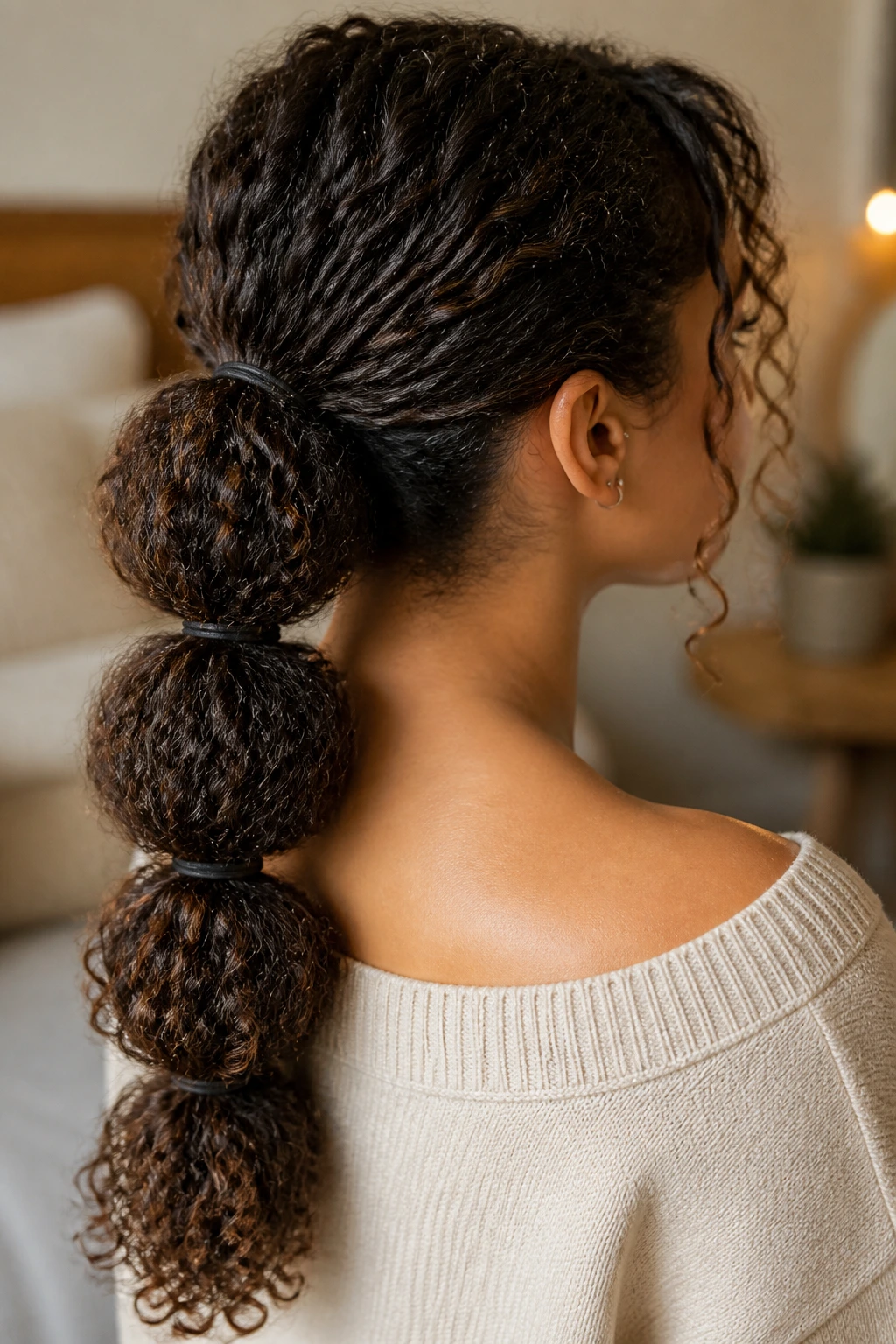
The bubble ponytail can look playful or sharp depending on how you space the elastics. On curly hair, it’s especially useful because the texture fills the “bubbles” naturally, so you do not need to fake volume. Oval faces get a nice lift from the vertical line of the ponytail, but the rounded sections keep it from looking severe.
A low-friction elastic every 2 to 3 inches is usually enough. After each band, gently pull the section outward so it balloons a little. Not wildly. Just enough to show the texture. The sections should look rounded, not squeezed into cylinders.
Small details that matter
Use clear elastics or thin wraps if you want the focus on the curls. If you want more of a fall mood, use a matte ribbon or a narrow velvet tie. That texture looks better with sweaters than shiny bands do.
This style works on long curls, but it also makes mid-length curls look more intentional than a basic ponytail. The key is leaving the ends loose enough that they still read as curls, not as a stiff tail.
14. Low Curly Chignon With a Soft Middle Part
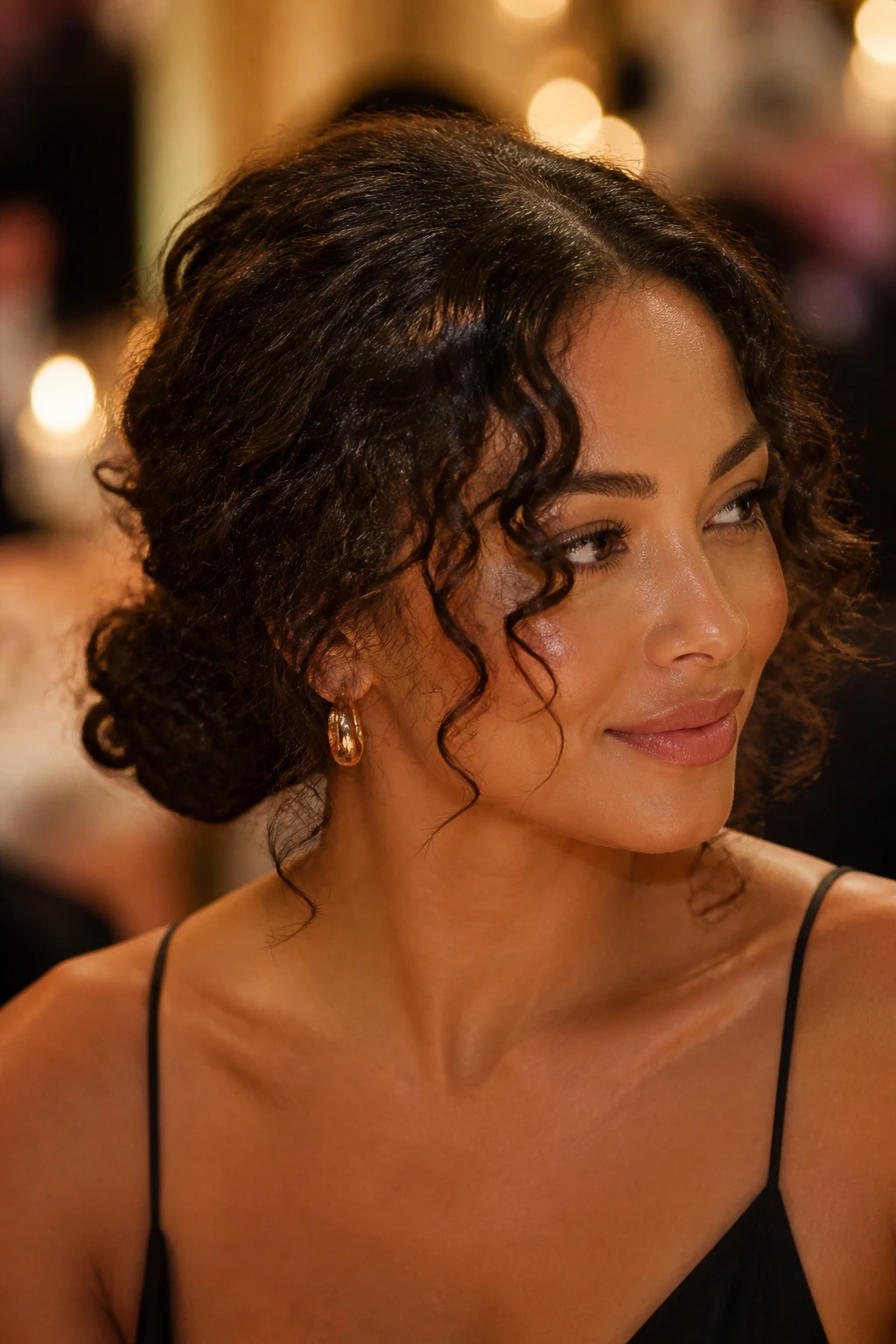
There’s a difference between a bun and a chignon, and curly hair shows it fast. A chignon sits lower, feels softer, and leaves room for the curls to keep their shape instead of being crushed into a tight knot. Add a soft middle part, and an oval face gets a clean, centered frame without looking severe.
This is the style I’d choose for a dinner, a wedding, or any night when you want the hair to behave and still look like hair. Gather the curls low, twist them loosely, and pin them into a knot or coil at the nape. Pull out one or two face-framing pieces if the front needs softness. Leave them alone if the curls already fall in the right place.
The style does not need to be perfect. In fact, it looks better when it isn’t. A chignon that’s too polished can fight curly texture, especially if the hair wants to expand over the evening. A little fullness at the back makes the silhouette feel richer.
Use a few bobby pins instead of one oversized clip. The hold is better, and the shape stays more controlled.
15. Defined Twist-Out With a Soft Side Part
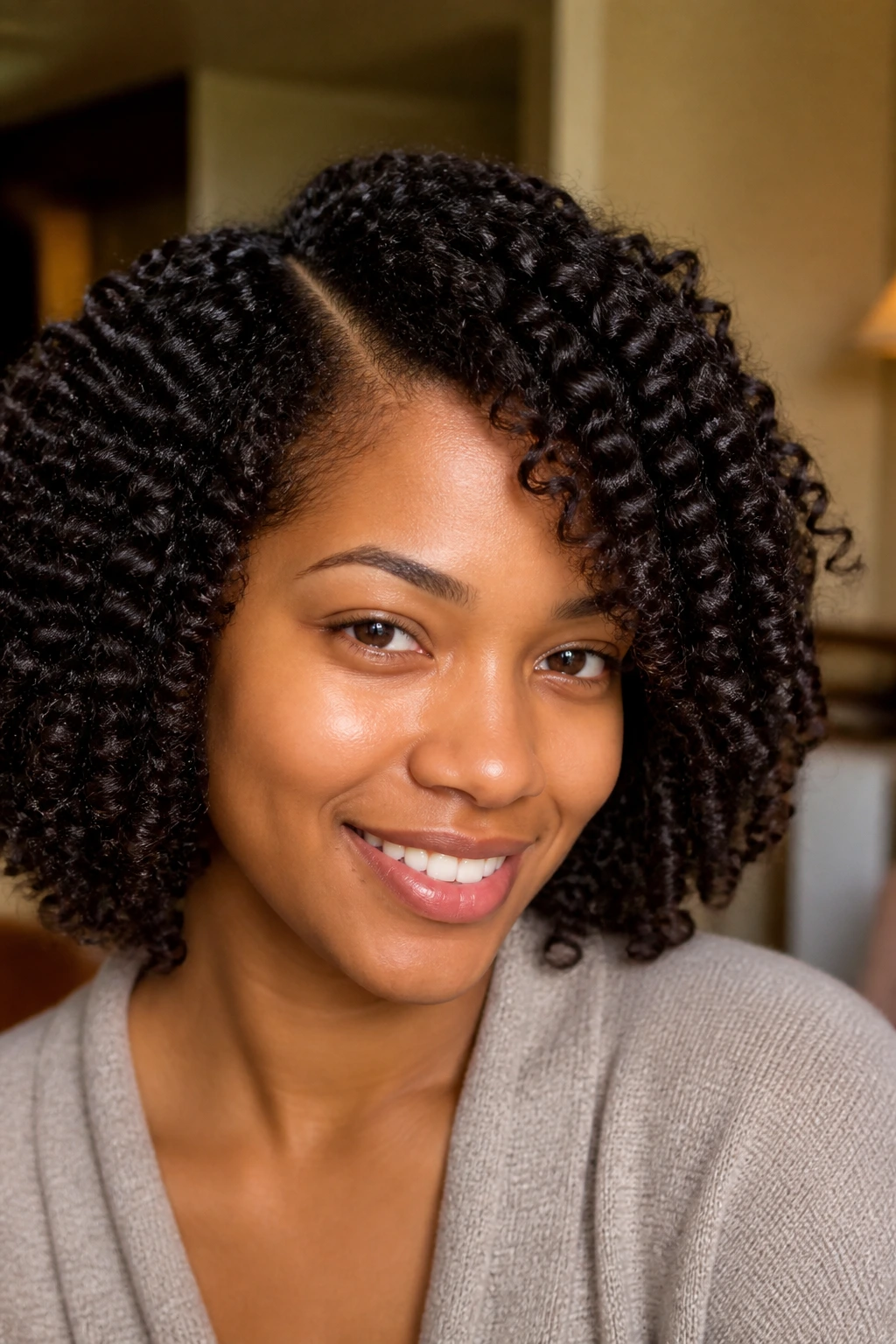
A twist-out gives curly hair one of the cleanest forms of definition, and a side part keeps it from feeling too uniform. On oval faces, that side part is useful because it breaks the vertical line and lets some volume sit off-center where it frames the eye and cheekbone.
Start with twists that are fully dry before you take them down. That part matters. If the hair still feels cool or damp inside the twists, the definition will collapse faster and frizz sooner. Once the twists are out, separate them gently with oiled fingertips or a tiny bit of serum. Too much separating turns a defined style into fluff.
- Best on 3C through 4C textures that hold a twist shape well.
- Good for medium to long lengths.
- Stronger hold products work better than light creams here.
- Sleep with a bonnet if you want the definition to last past one day.
I like this style because it looks finished without needing heat. It has structure, but not stiffness.
16. Headband Style With Full Volume at the Crown
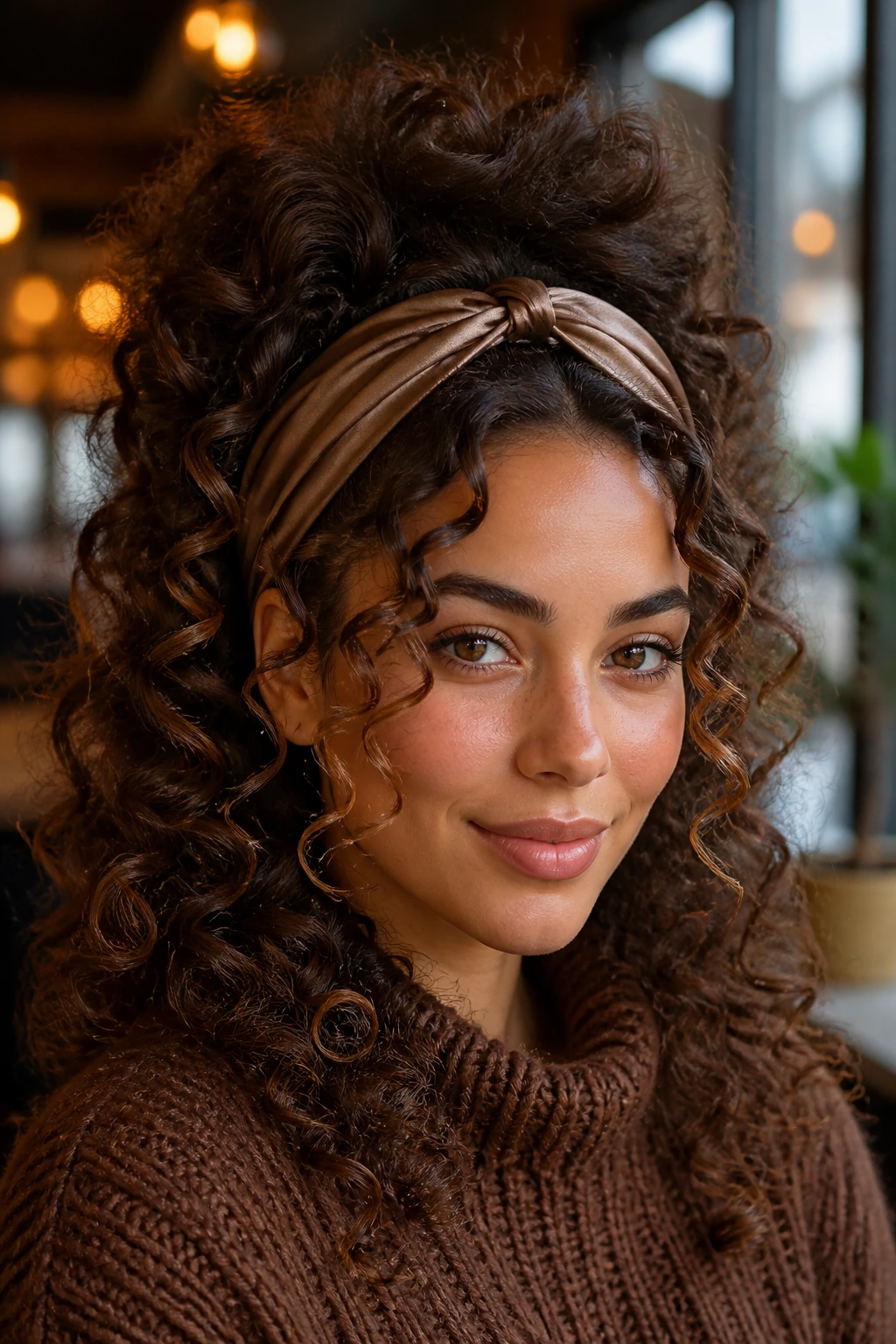
What’s easier than a headband style? Not much. But the good versions of this look depend on placement. Push the headband back a little so it lifts the front curls instead of flattening them, and let the crown stay full. On an oval face, that lift keeps the proportions lively and makes the face feel open.
A wide band works best if your curls are dense or if you want the style to read polished. A narrower band is better if you want the curls to spill more. Either way, the front should not be scraped straight back. Let a few pieces soften the temples.
Choosing the right band
- Satin or velvet bands grip without snagging.
- Padded bands create more shape at the crown.
- Elastic sports bands can work, but they often flatten the roots if they sit too tight.
This look is a useful fix for days when the hairline is frizzy but the rest of the curls still look good. You get coverage fast, and you don’t have to start over.
17. Volumized Pixie Curl Crop
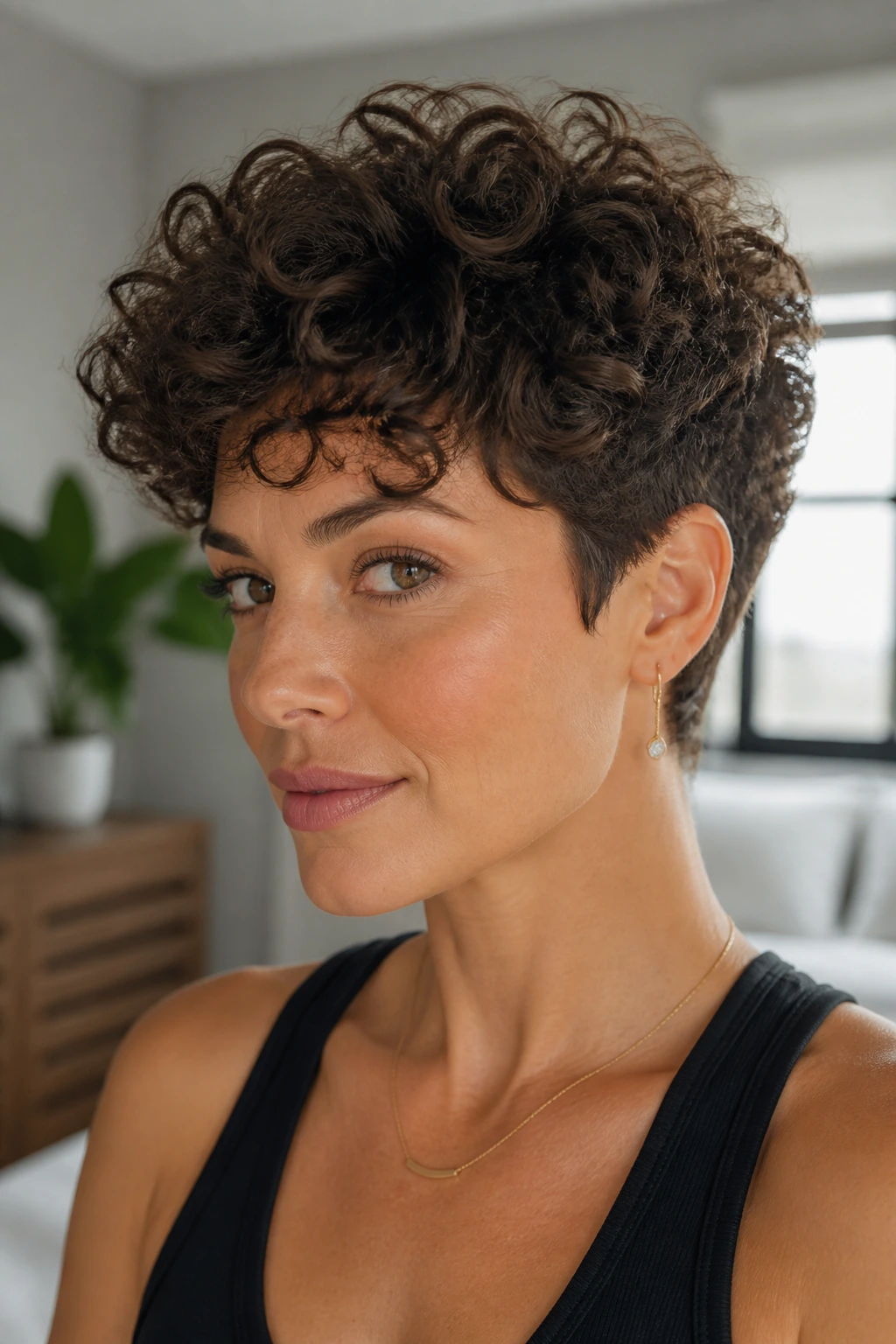
Short curly hair gets treated like a compromise too often. It isn’t. A curly pixie crop can be one of the sharpest matches for an oval face because the face shape can handle shorter sides and a little height on top without needing extra length to “balance” things out.
The important part is proportion. Keep the top full enough to show curl pattern, and let the sides and back stay neat. If the top gets too flat, the whole cut can look unfinished. If it gets too tall and fuzzy, the silhouette stops looking deliberate. The sweet spot is a shaped top with controlled edges.
Use a small amount of mousse or lightweight curl cream on damp hair, then lift the roots with your fingers while diffusing. Finger coils on the front pieces can help if the cut is very short and you want the face to stay framed.
This style has attitude, but more than that, it has ease. It takes less product, less drying time, and less fuss than most of the longer looks in this list.
18. Long Curly Layers With a Beret or Knit Headband
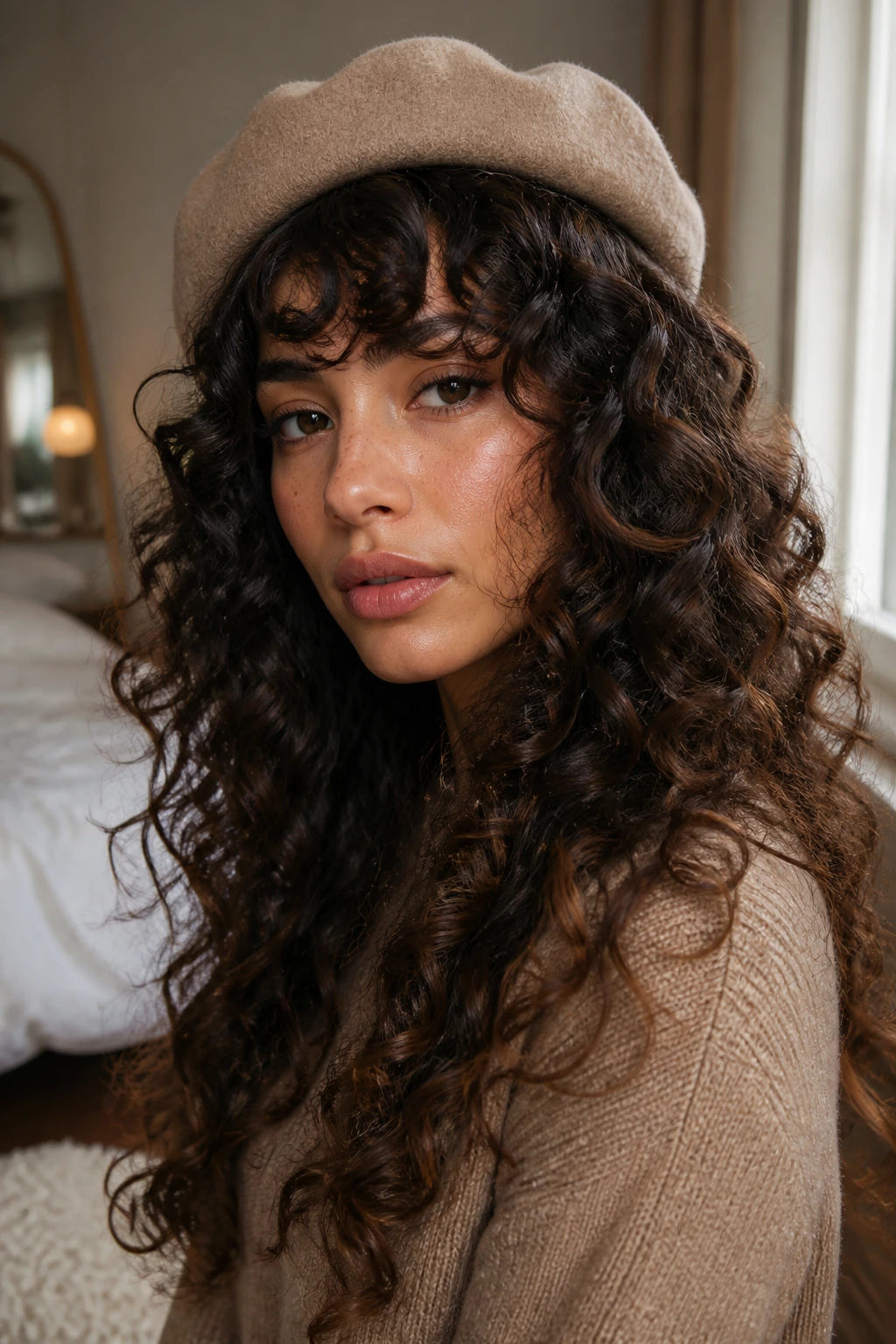
Long curls and fall accessories have a good relationship when the haircut has enough layers to avoid heaviness. A beret, a knit headband, or even a soft wool cap can sit over the crown without crushing the whole shape, as long as the curls around the face still have room to move.
Oval faces can handle the extra width from a beret or headband because the shape keeps the overall balance intact. The trick is not to bury the forehead and not to flatten the top. Let the curls frame out from beneath the accessory instead of forcing everything straight down.
I like this look for days when the weather flips from crisp to damp and back again. The accessory becomes part of the style instead of a thing you tolerate. If your hair is very long, tuck one side behind the ear and let the other side fall forward. That breaks up the length in a good way.
This is the easiest style in the set to personalize, which is probably why I keep coming back to it.
Why Curly Hair and Oval Faces Have So Much Styling Range
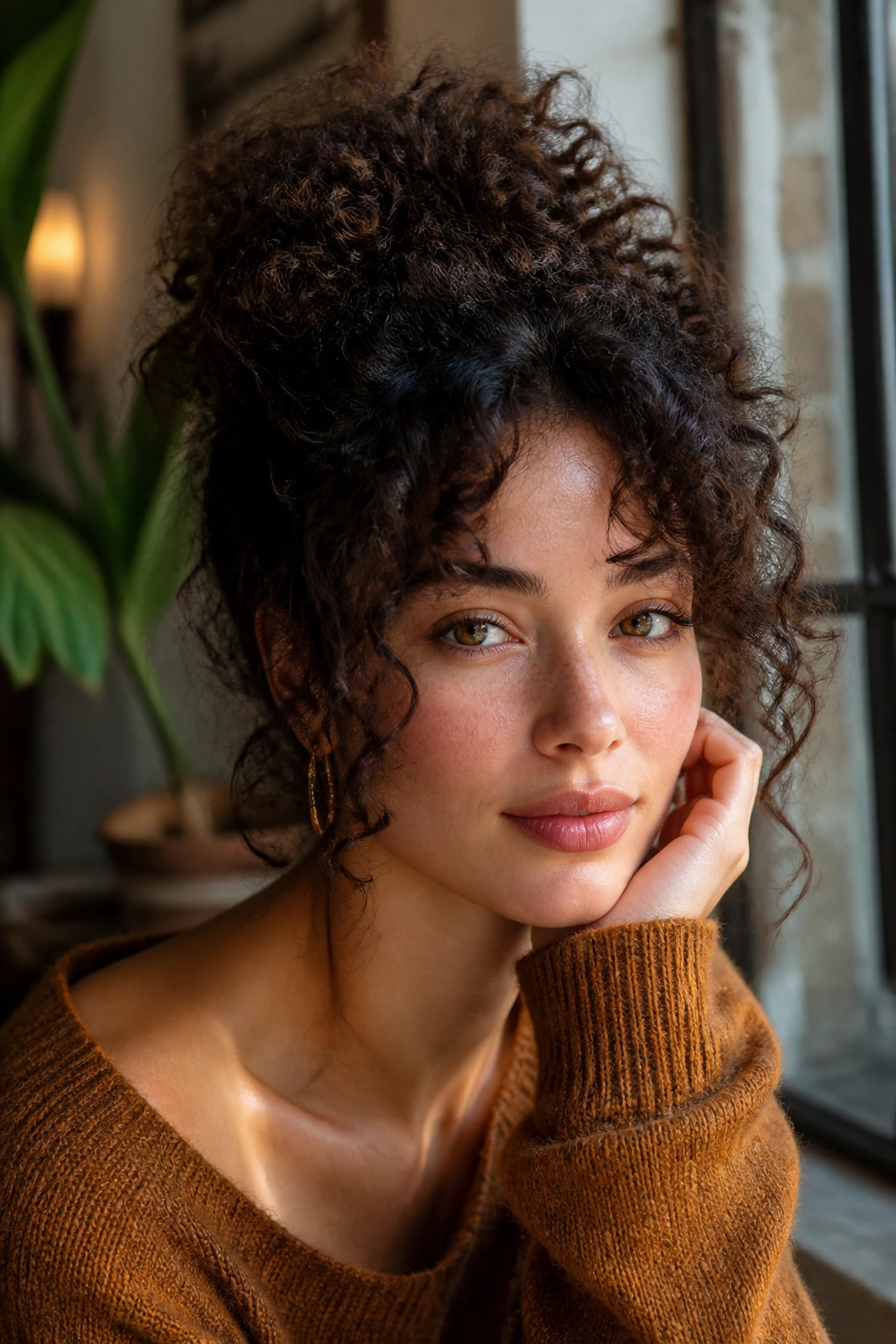
Oval faces are useful because they can take shape in more than one direction. You can push volume upward, widen the sides, soften the forehead, or keep the length longer and the face still reads balanced. Curly hair adds another layer of freedom because it can bend, stack, and flare in ways straight hair can’t.
That combination means your job is less about fixing the hair and more about deciding where the focus should land. Near the eyes? At the crown? Around the jaw? At the back of the neck? Once that choice is made, the style starts to feel intentional fast.
The biggest mistake people make is treating curly hair like it needs to be controlled into one flat shape. It doesn’t. It needs a shape with a plan. Oval faces make that easier, not harder.
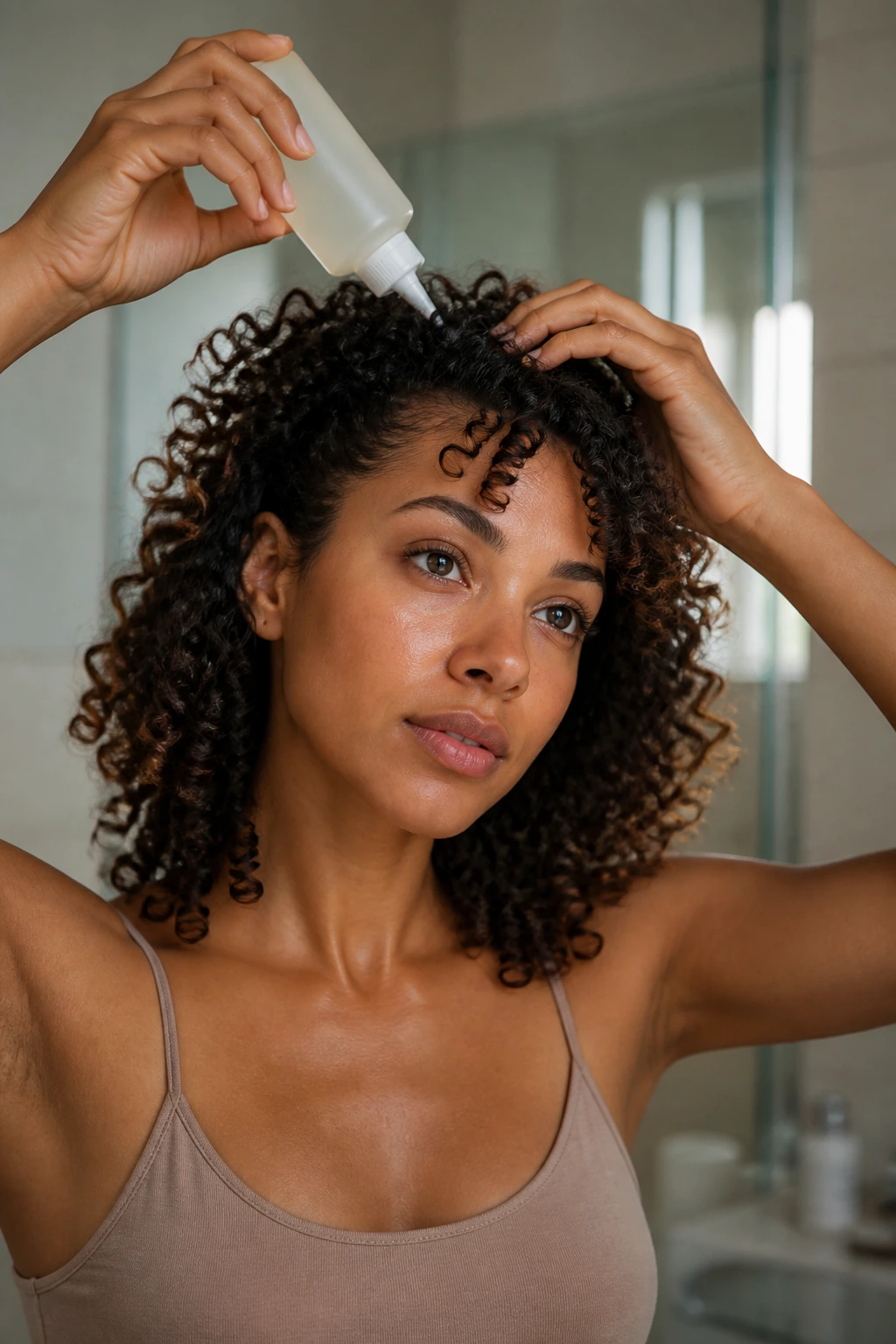
What to Keep in Your Curl Kit
-
Diffuser attachment: Dries curls without blasting them into frizz; the low-heat setting matters more than the brand.
-
Microfiber towel or cotton T-shirt: Better than a rough bath towel for squeezing out water without roughing up the cuticle.
-
Wide-tooth comb: Useful for distributing product in damp hair without breaking up curl clumps too early.
-
Duckbill clips: Great for root clipping, side parts, and holding the crown while the hair dries.
-
Satin scrunchies: Better than tight elastics when you want a ponytail or puff that doesn’t leave dents.
-
Bobby pins with grip: Matte pins hold curl-heavy styles better than the slick shiny kind.
-
Claw clip with wide teeth: Needed for thicker curls or twists that need more room.
-
Spray bottle: Handy for refreshing only the top layer instead of soaking the whole head again.
-
Satin bonnet or pillowcase: Keeps the style from getting crushed overnight and saves you from starting over in the morning.
How to Shop for Products That Behave in Dry Fall Air
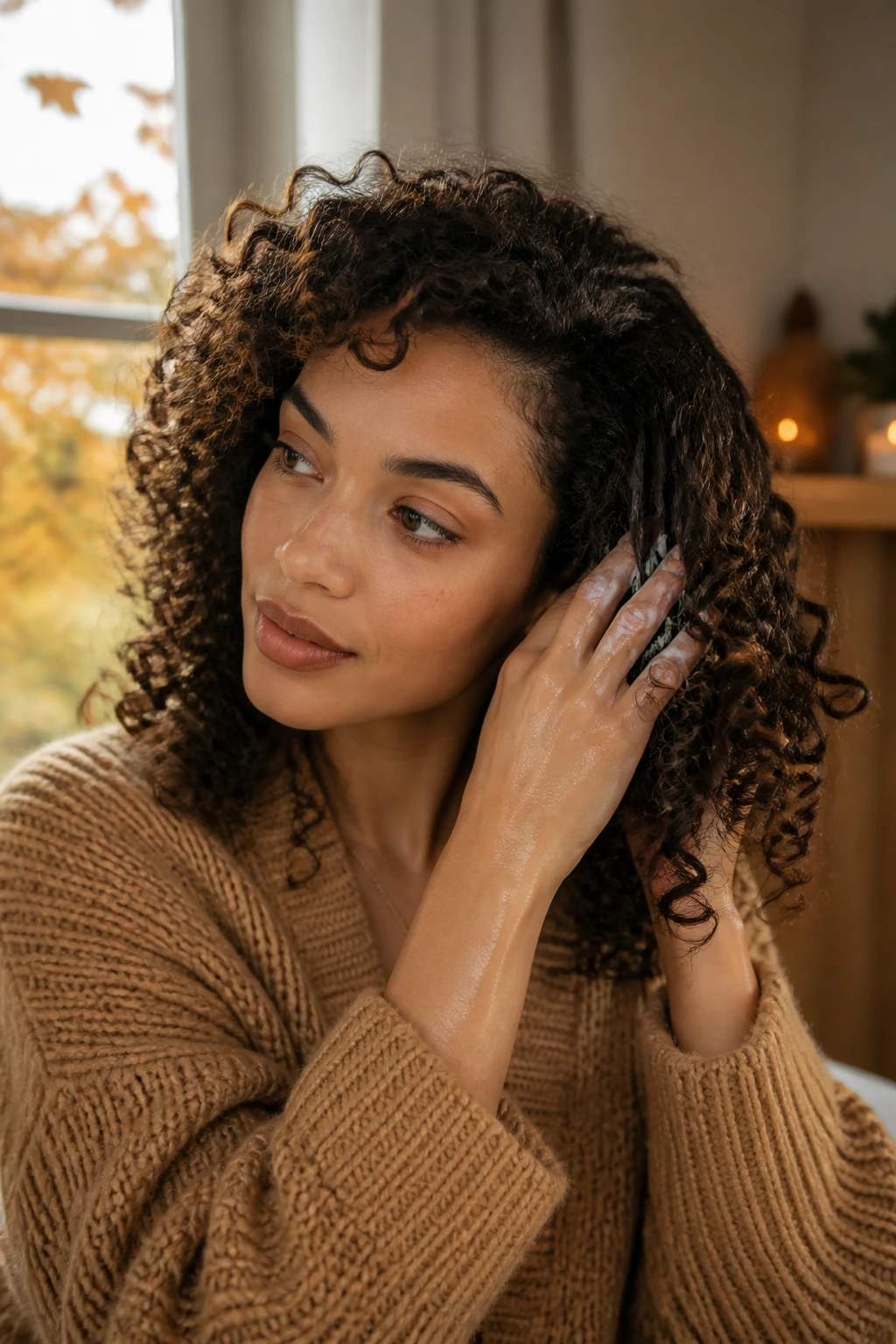
Dry air is rude to curls. It pulls moisture out fast, and that can mean frizz, brittle ends, or curls that expand in the wrong place. So when you’re choosing products, think about hold and softness together, not one or the other.
If your curls lose shape by noon, reach for a gel with real hold rather than a cream that sounds rich but disappears in three hours. If your hair feels stiff or crunchy, layer a lighter mousse under the gel instead of scrubbing the hold off with more oil. That order matters.
For dryer, wavier curls, a leave-in with a little slip can keep tangles from forming around scarves and collars. For tighter coils, a thicker cream may help the style stay round and smooth. The point is to match the product to what the hair actually does on a cold day, not what the bottle promises in a glossy sentence.
Accessories matter here, too. A satin-lined hat or a soft headband does less damage than a rough wool band. That small change can save the style by lunchtime.
The Small Tweaks That Keep the Shape Where You Want It
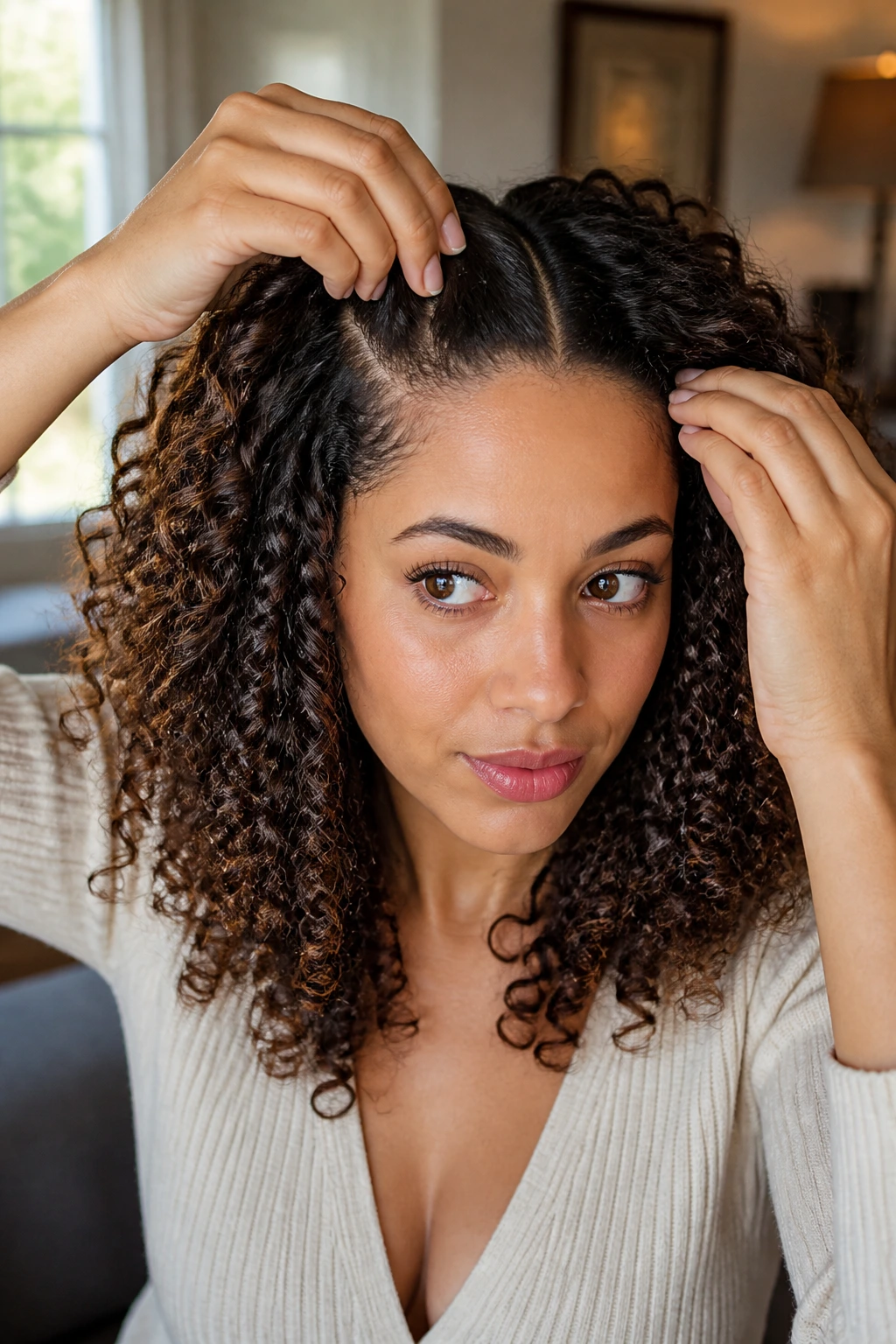
Root control: If the crown goes flat, clip it while the hair dries. Two small duckbill clips at the root can create lift that lasts all day. Do not wait until the hair is fully dry; by then, the shape is already set.
Part placement: Move the part a half-inch at a time. Tiny changes make a bigger visual difference than most people expect, especially on oval faces. A deeper side part can add drama; a softer off-center part can look calmer.
End definition: If the ends fray first, smooth a pea-sized amount of cream or gel through just the bottom third. You do not need to coat the whole head.
Accessory placement: Put headbands and scarves a finger-width behind the hairline if you want fullness at the front. Push them too far forward, and they flatten the exact spot you wanted to frame.
Night care: Pineapple the hair loosely or use a bonnet. The goal is to protect the top shape, not to squeeze every curl into one tight knot.
Common Curly-Hair Mistakes That Flatten the Face or Puff the Hair Out
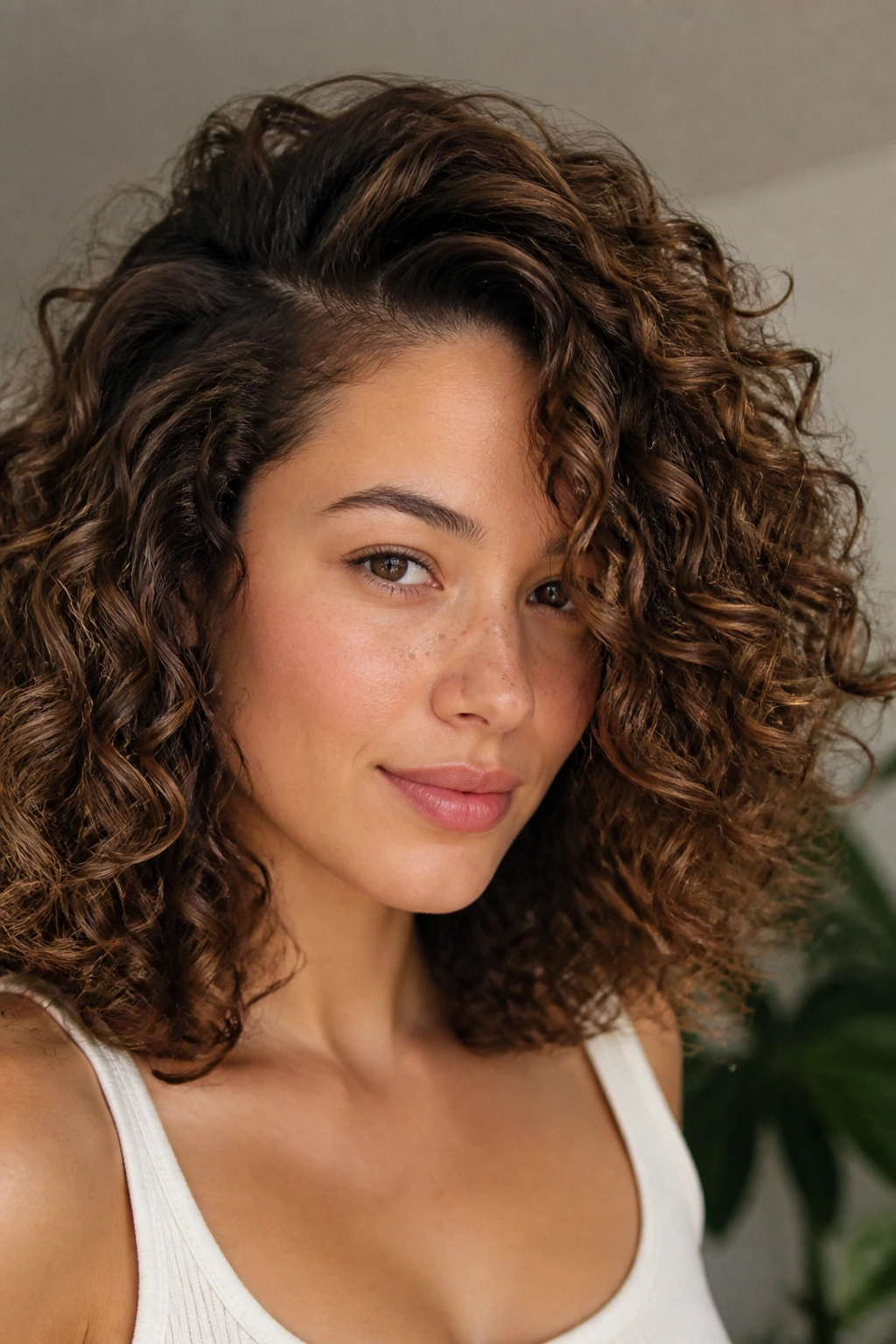
The first mistake is overloading the hair with cream. Heavy product can make curls clump in a tired way, and on an oval face that often drags the shape downward. If the hair looks greasy at the roots or dull at the ends, use less product next time and add hold instead of more softness.
The second mistake is making the part too severe. A dead-straight, ultra-deep part can look harsh when the curl pattern is soft and springy. Move it a little closer to center and let the front pieces fall with a softer bend.
Another one: brushing dry curls into submission before styling. That usually creates a puffed halo in the wrong place, then people wonder why the ends look fuzzy. Detangle when the hair is damp, not after the fact.
Tight elastics are another offender. They carve a line into the hair and make any updo look tense. If the style needs tension, use pins or a better clip.
And yes, flat roots matter. If the crown lies too close to the scalp, even a gorgeous curl pattern can look unfinished. Clip at the roots while drying, or lift the hair with your fingers and give it a few seconds of focused diffuser air.
Easy Variations for Different Curl Patterns and Lengths
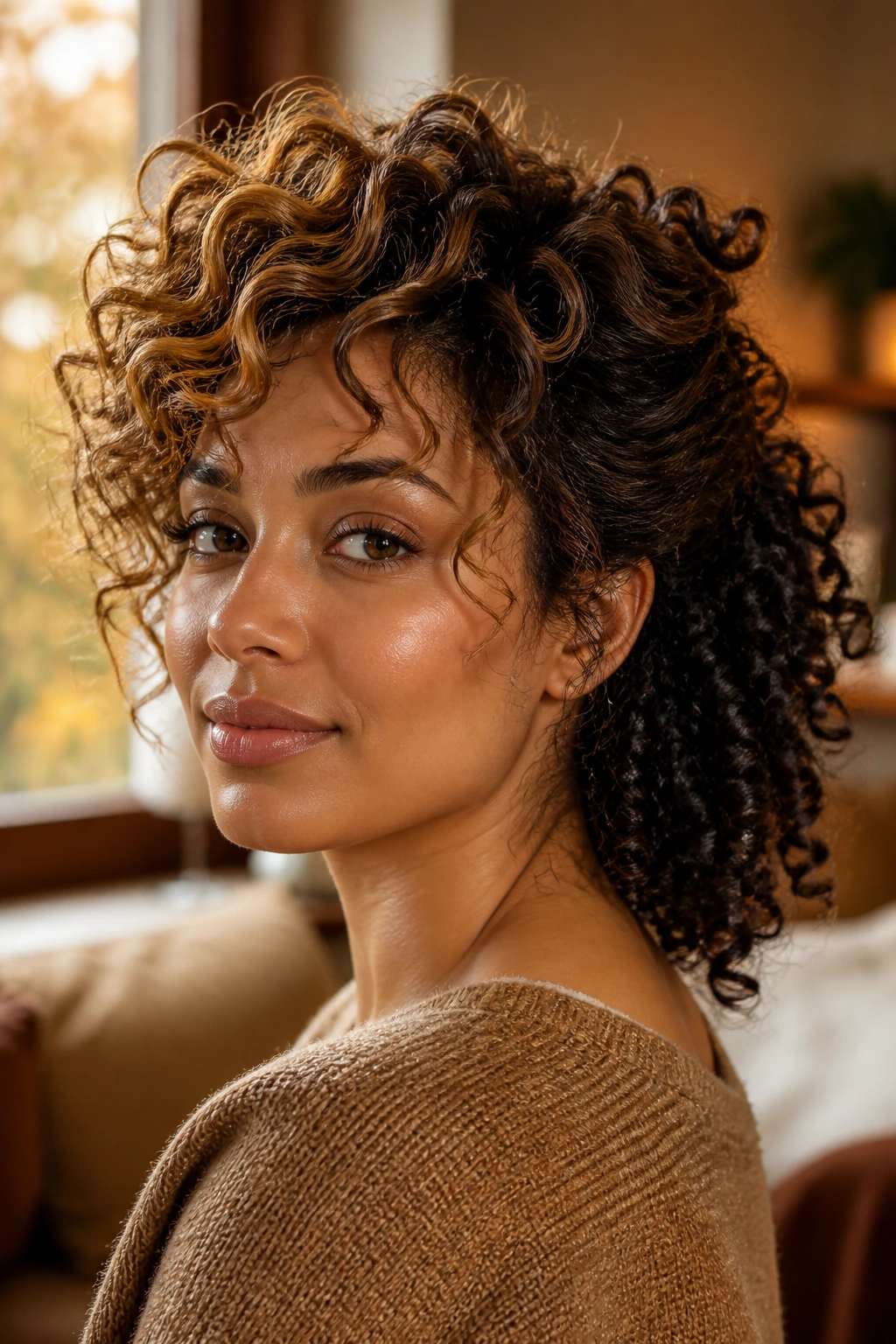
Loose Wave Edit: If your pattern sits closer to a wave, choose the side-swept lob, the half-up twist, or the headband style. These looks lean on shape and placement more than spring.
Tighter Coil Edit: If your hair is dense and compact, the low puff, low chignon, halo braid, and pixie crop are especially useful. They respect shrinkage instead of trying to stretch it out of the picture.
Short Hair Edit: The bob, the pixie crop, and the sleek crown with volume at the ends work best when length is limited. They all use silhouette first, which matters more than extra inches.
Long Hair Edit: The pineapple, bubble ponytail, claw-clip twist, and long layers with a beret give length something to do. Long curls can look heavy in fall if they’re left to hang straight down, so a little lift helps.
More Formal Edit: Swap the half-up twist for a pinned crown, or turn the low puff into a smoother chignon. A single accessory—ribbon, clip, or barrette—can shift the whole look from daytime to dressed-up.
Curly Hair and Oval Face Questions People Ask Most
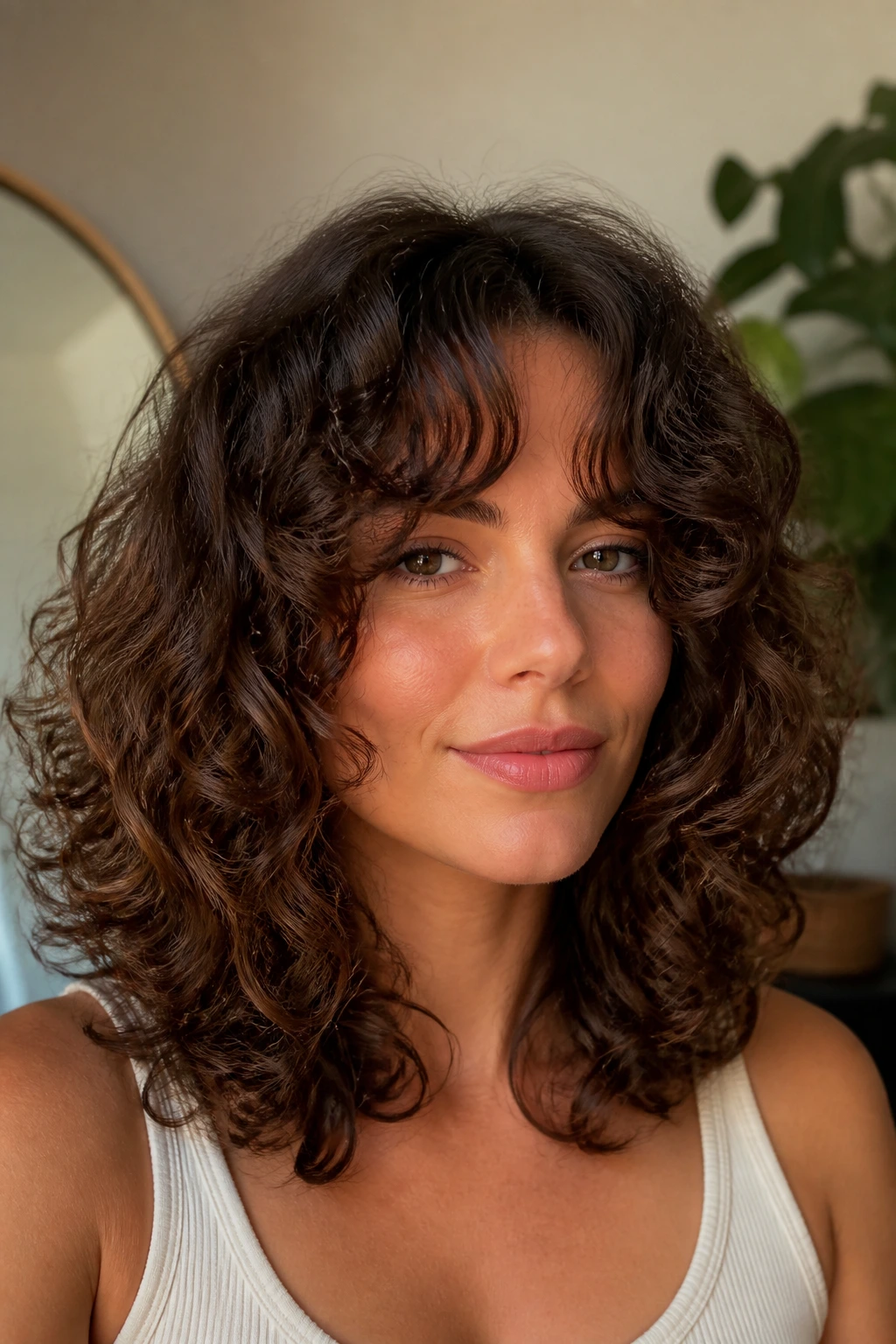
Which of these styles works best if my curls are frizzy at the crown?
The sleek crown with voluminous ends, the side-swept lob, and the headband style are the easiest fixes. They keep the top controlled while letting the rest of the curls stay visible, which means the frizz doesn’t have to be the headline.
Do oval faces need bangs to look balanced?
No. Bangs can be useful, especially curtain bangs or a soft fringe, but oval faces already have a flexible shape. If you like your forehead open, keep it open.
Can I do these styles on second-day curls?
Yes, and a few of them work better that way. The claw-clip twist, low puff, bubble ponytail, and pineapple are all easier when the curls have a little grip from the day before.
What if my curls are too short for a half-up style?
Use a tiny top section and secure it with pins instead of trying to make a full half ponytail. Short curly hair often looks better with a partial lift than with a forced all-back shape.
How do I keep a hat from ruining the style?
Choose styles with height at the crown or a side part, then wear a satin-lined hat if you can. When you remove it, shake the roots with your fingers rather than brushing the whole head.
Is a curly bob too short for an oval face?
Not if the length sits near the jaw or just below it. Oval faces handle short cuts well, and a bob can sharpen the cheekbone area in a way longer hair sometimes hides.
Which products matter most if I only want to buy two things?
A medium-hold gel and a flexible mousse cover more ground than most people think. Between the two, you can build definition, control frizz, and keep the style from collapsing.
What do I do if the style looks great for an hour and then gets bigger?
Start with more hold at the roots and less touching after drying. A little expansion is normal with curly hair, especially in dry air, but if it balloons fast, the product is probably too light.
The Styles I’d Reach For First
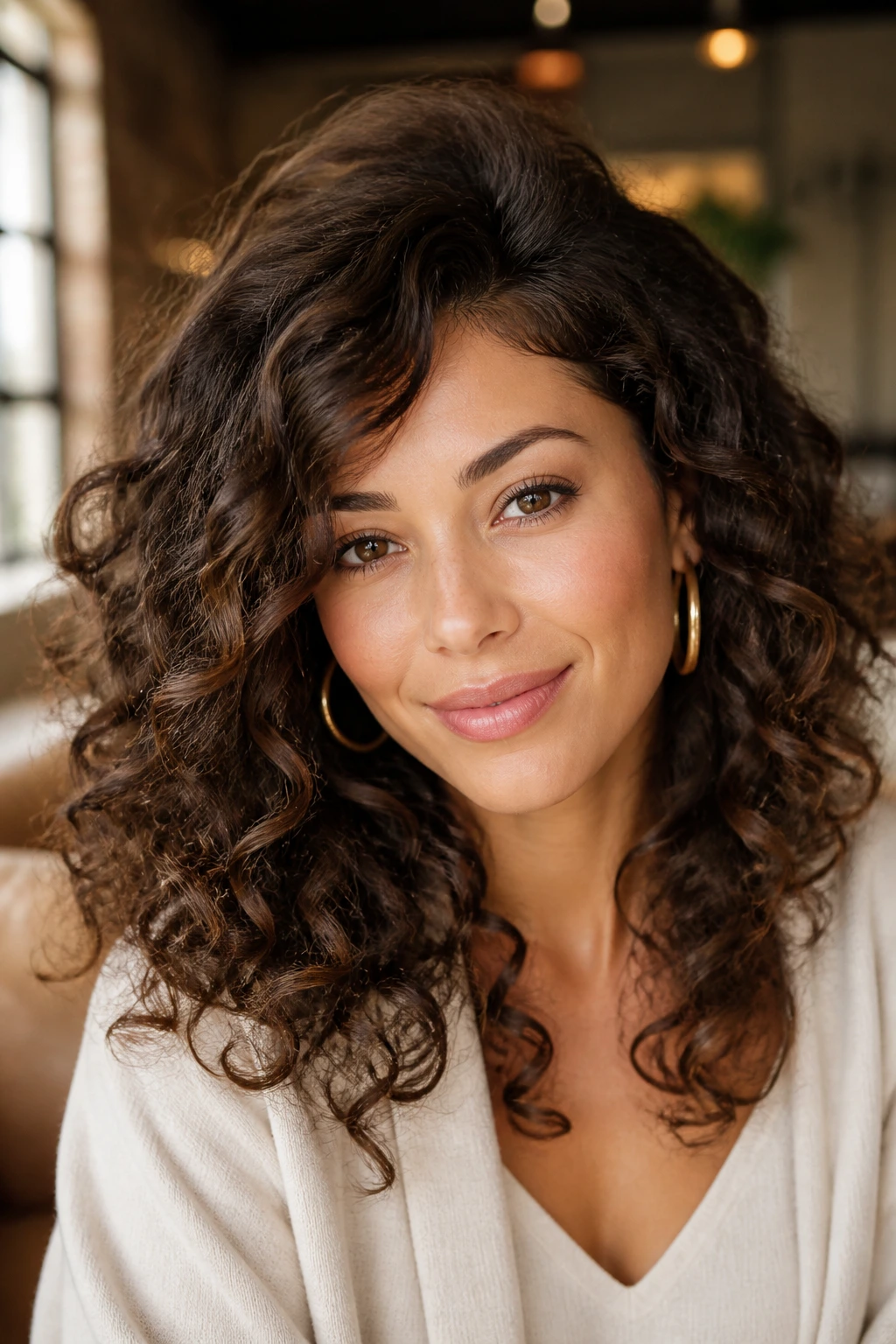
If I had to narrow this set down to the ones I’d use first on a real week with real weather and a real coat collar, I’d start with the soft side-part layers, the claw-clip twist, and the low puff. They solve different problems, but they all respect what curly hair does naturally instead of trying to bully it into shape.
Oval faces get to have a little fun here. A soft fringe, a lifted crown, a low chignon, a side sweep—none of it has to be precious. The best versions of these looks hold their shape because the placement is smart, not because the hair was flattened into obedience.
That’s the part worth remembering when fall arrives and everything gets a little dry, a little static-prone, and a little less forgiving. Pick the shape first. Let the curls do the rest.