



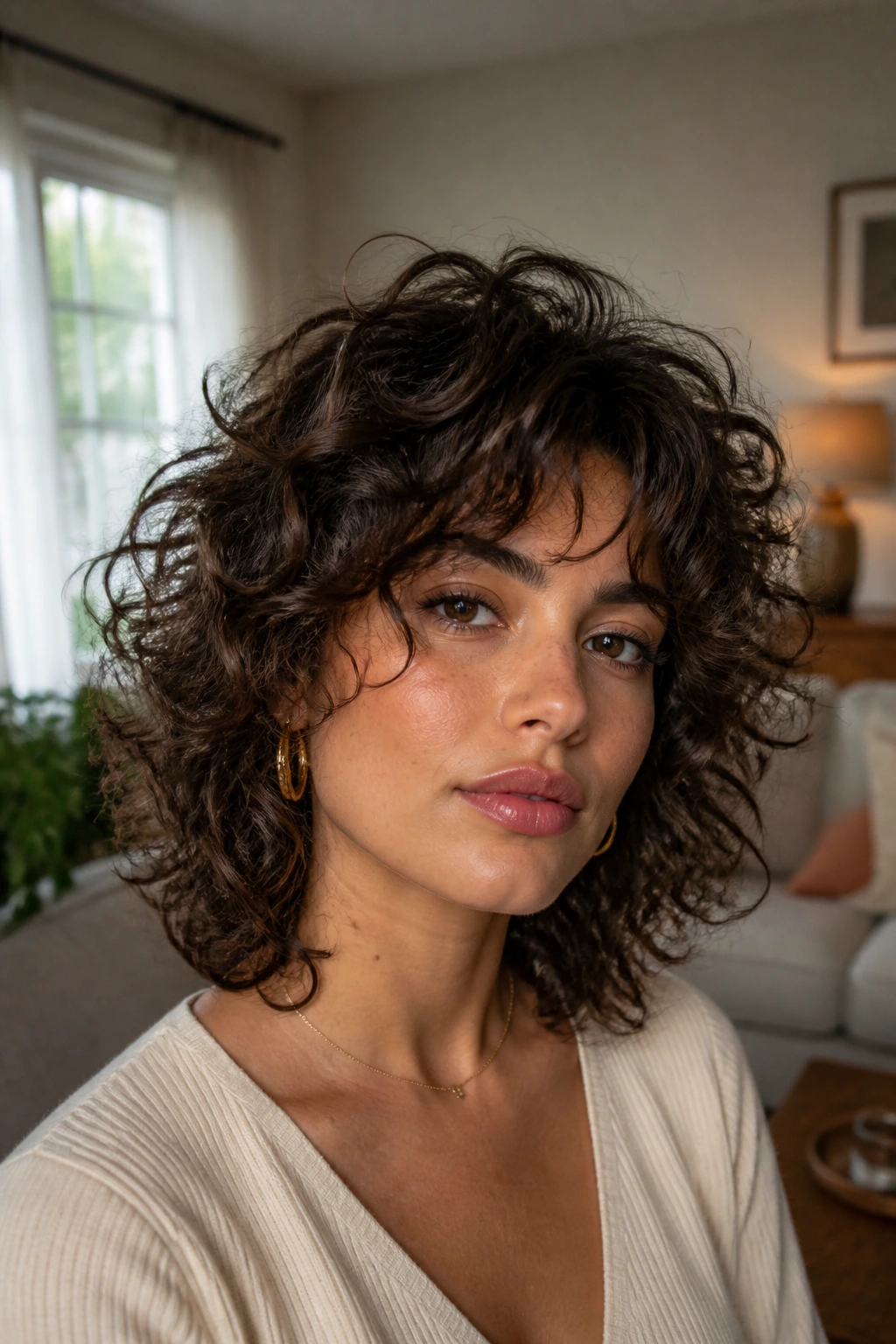
Shaggy short haircuts for curly hair with curtain bangs work because they stop fighting the curl pattern and start using it. A curl wants room. It wants air around the face, a little lift at the crown, and enough weight left in the right places so the whole shape doesn’t puff into a triangle by lunchtime.
Curtain bangs change the game in a very specific way. On straight hair, they can read soft and tidy; on curly hair, they become a built-in frame that bends around the cheekbones and breaks up the forehead line without looking severe. The trick is that the bangs have to be cut with shrinkage in mind, which is why the best versions usually look a touch longer than you expect when they leave the salon chair. Curls have opinions. You may as well work with them.
What I like about this category is how many directions it can go without losing the basic idea. You can keep it airy and French-girl soft, push it into wolf-cut territory, or take it almost pixie-short and still keep those front pieces sweeping open instead of hanging like a curtain rod. The cuts below range from gentle to audacious, and the differences matter. A lot.
Why These Curly Shags and Curtain Bangs Keep Working
-
They respect shrinkage: Short layers on curly hair need room to spring up, and these shapes keep the perimeter from collapsing into a blunt block when the hair dries.
-
They open the face instead of boxing it in: Curtain bangs split at the center and bend away from the cheeks, which is a cleaner line on curls than a heavy straight fringe.
-
They put bulk where it helps: The best shaggy short cuts remove weight from the ends and interior, then leave enough length in the front so the curl pattern can show off instead of exploding outward.
-
They look good in motion: A curly shag only gets better when you turn your head, tuck one side behind the ear, or let the fringe dry with a little separation.
-
They grow out with less drama: The layers are already shattered, so the shape can slide a few weeks without turning into a disaster line.
-
They can be tuned to almost any density: Fine curls need lift and softer layering; dense curls need weight removal and a longer fringe. Same idea. Different knife work.
1. Soft Cloud Shag with Cheekbone Curtain Bangs
This is the cut I point people toward when they want movement without feeling like the haircut is shouting. The layers are soft, the crown has just enough lift, and the curtain bangs start around the cheekbone so they fold away from the face instead of sitting on it. On 2B to 3A curls, it looks like the hair is floating, not hovering.
Why It Works
The shape is built to keep the outer line light while leaving some weight in the middle. That matters because curls will puff if you carve too much out of the ends and leave nothing to anchor them. The fringe should be longer in the center and slightly shorter on the sides, but not by much. You want a gentle open arc, not a dramatic split.
Quick Shape Notes
- Best for medium density curls that need a little lift at the root.
- Works well with a side or center part.
- Ask for dry cutting around the fringe so the stylist can see the spring.
- Diffused volume at the crown makes this cut look intentional, not accidental.
Best move: keep the front pieces just long enough to brush the top of the cheekbone when dry. That one detail saves the whole cut from looking too short.
2. Jaw-Length Curly Shag Bob
If you like a bob but hate the way a solid bob can go boxy on curls, this is the better answer. The line sits around the jaw, the layers are shattered through the interior, and the curtain bangs are long enough to fall in front of the eyes before they split open. It has edge. It also has softness, which is the part people forget to ask for.
The real job here is balance. Keep the perimeter clean enough to read as a bob, then break up the bulk through the mids so the curls don’t stack into a mushroom. I like this cut on people with strong cheekbones, because the bang pieces can land right where the bone structure starts to show.
3. Pixie Shag with Long Curtain Bangs
Can a pixie still give you face-framing movement? Yes, if the fringe stays long and the top is layered with restraint. The back and sides are cropped close enough to feel easy, but the front keeps enough length to split and sweep in a curtain shape rather than collapsing into tiny bangs.
How to Wear It
Use a pea-sized amount of mousse at the roots, then scrunch in a light gel through the front sections so the curtain pieces separate instead of puffing up. The shape looks best when the bangs are slightly longer than the rest of the crown, because curls shorten fast once they dry.
- Good for people who want short hair without losing a soft front.
- Needs trims more often than a shag bob.
- Looks strongest on springy curls that hold a bend.
One warning: if the fringe gets cut too short, it stops being curtain bangs and starts acting like a problem.
4. Rounded Curly Mullet with Feathered Bangs
This is the one for people who like a little attitude but don’t want the hard, disconnected mullet line that can look harsh on curls. The back stays a touch longer, the sides are feathered, and the curtain bangs fall into the shape like a soft opening scene. It’s playful. It’s not shy.
The rounded top keeps the crown from looking flat, while the longer back gives the curls somewhere to pile up without making the sides too wide. On thick hair, this cut can save you from the triangle effect. On finer hair, it can create the sense of fullness you’re probably after anyway.
5. Tapered Crop Shag with Face-Hugging Bangs
This cut is all about the neck and the jawline. The nape is tapered close enough to feel neat, the top layers stay a little longer, and the curtain bangs sweep down toward the cheekbones before they split open. You get a cropped shape that still feels soft at the front.
The best part is how neatly it sits on curly hair that likes to balloon at the sides. By taking the back in tighter, the silhouette stops spreading out horizontally. The front does the face-framing work, which is exactly where you want the softness anyway.
A good stylist will keep the longest front pieces at a length that still lets you tuck them behind the ear without losing the shape. That sounds minor. It isn’t.
6. Chin-Skimming Layered Shag
This is the safer short haircut for someone who wants movement but isn’t ready to go truly cropped. The layers fall around the chin, the interior is lightly carved out, and the curtain bangs open just enough to show the center of the forehead before they drift toward the cheeks. It’s neat on day one and forgiving on day four.
Unlike a blunt chin bob, this shape keeps the curl clumps from stacking into one heavy wall. The layers create space between the ringlets, which means the hair can expand without losing the outline. That matters if your curls are dense or if your hair always looks shorter after it dries.
7. French Girl Curly Shag with Bendy Curtain Bangs
There’s a reason this shape gets pulled into so many inspiration folders. It looks a little undone in a way that reads expensive only because it’s so specific: the bangs bend gently at the brow, the crown has a loose lift, and the ends are feathery rather than blunt. It’s not trying to look perfect.
What gives this cut its charm is the controlled messiness. Too much product and it turns stiff. Too little and the fringe balloons. You want enough hold to keep the curtain pieces separated, with enough softness that the curls still move when you shake them out.
Best for
- Loose ringlets and soft spirals
- Hair that gets flat at the roots
- People who want shape without hard edges
A light mousse at the root and a small amount of gel on the front pieces is usually enough. No need to overthink it.
8. Botticelli Mini Shag
This cut leans into loose, romantic curves instead of choppy texture. The layers are longer, the outline stays soft, and the curtain bangs are stretched just enough to arc around the forehead instead of snapping short. It suits curls that already form long S-waves or loose spirals.
The danger here is over-layering. If the stylist gets too aggressive, the ends can fray and the whole thing loses its painterly feel. Keep the lines gentle. The best version still has weight at the bottom, just enough so the curls drape instead of sticking out.
9. Wolfy Bob with Shaggy Bang Sweep
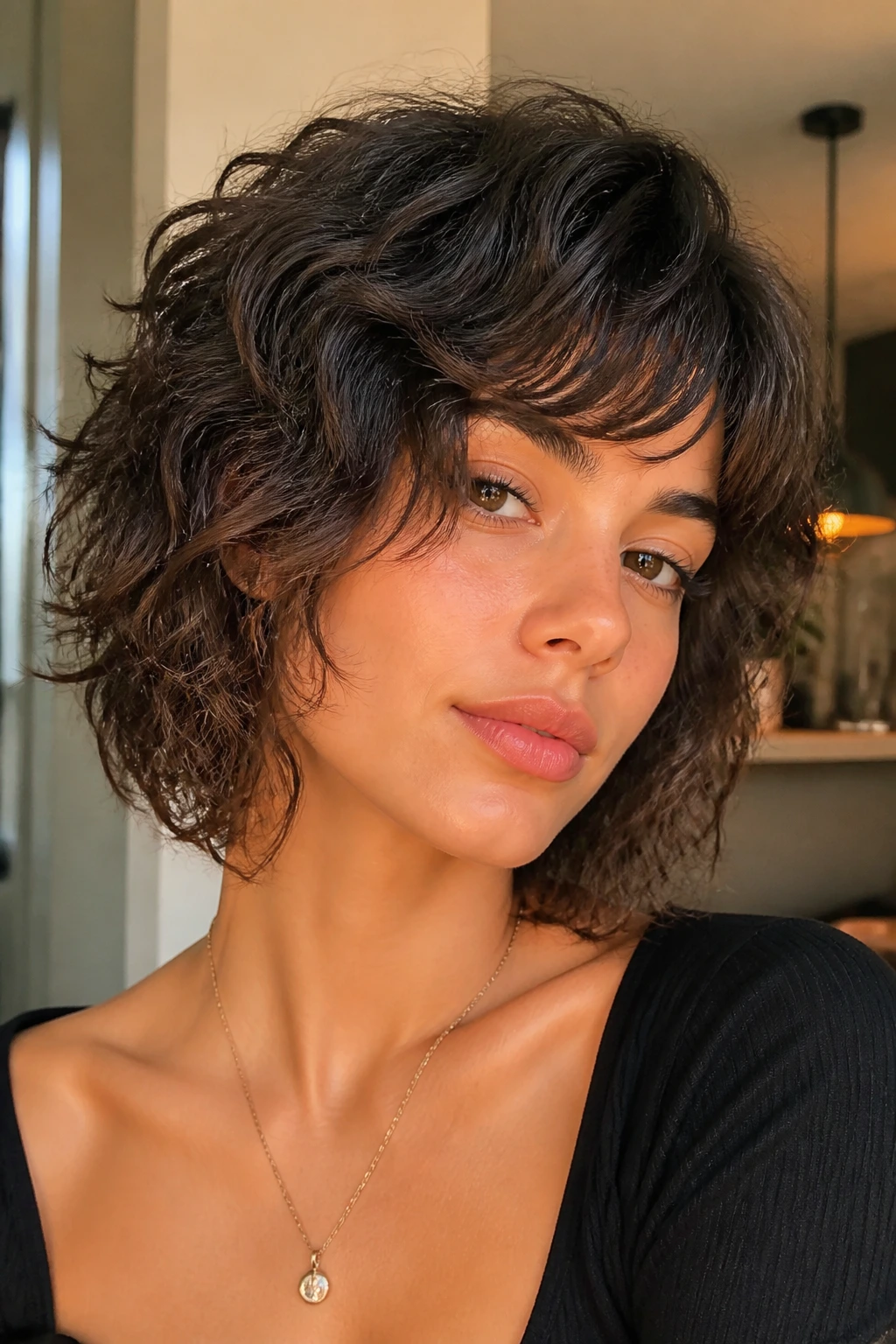
Why does this one show up in so many curly-hair conversations? Because it solves a common problem: people want the movement of a wolf cut, but they do not want their hair to look like a mullet with commitment issues. This version keeps the length around bob territory while building lift through the crown and cheekbone area.
What Makes It Different
The bang sweep is softer than a straight curtain bang. It starts a bit farther back, then falls forward in a loose split that lets the curl pattern take over. That makes it easier to grow out, too. You can trim the top layers without wrecking the shape below.
- Best on medium to thick curls.
- Looks strongest when the crown is diffused upward.
- Keeps the nape slightly longer than the front.
If you love texture but want less visual chaos than a full wolf cut, this is the sweet spot.
10. Airy Razor-Shag with Piecey Ends
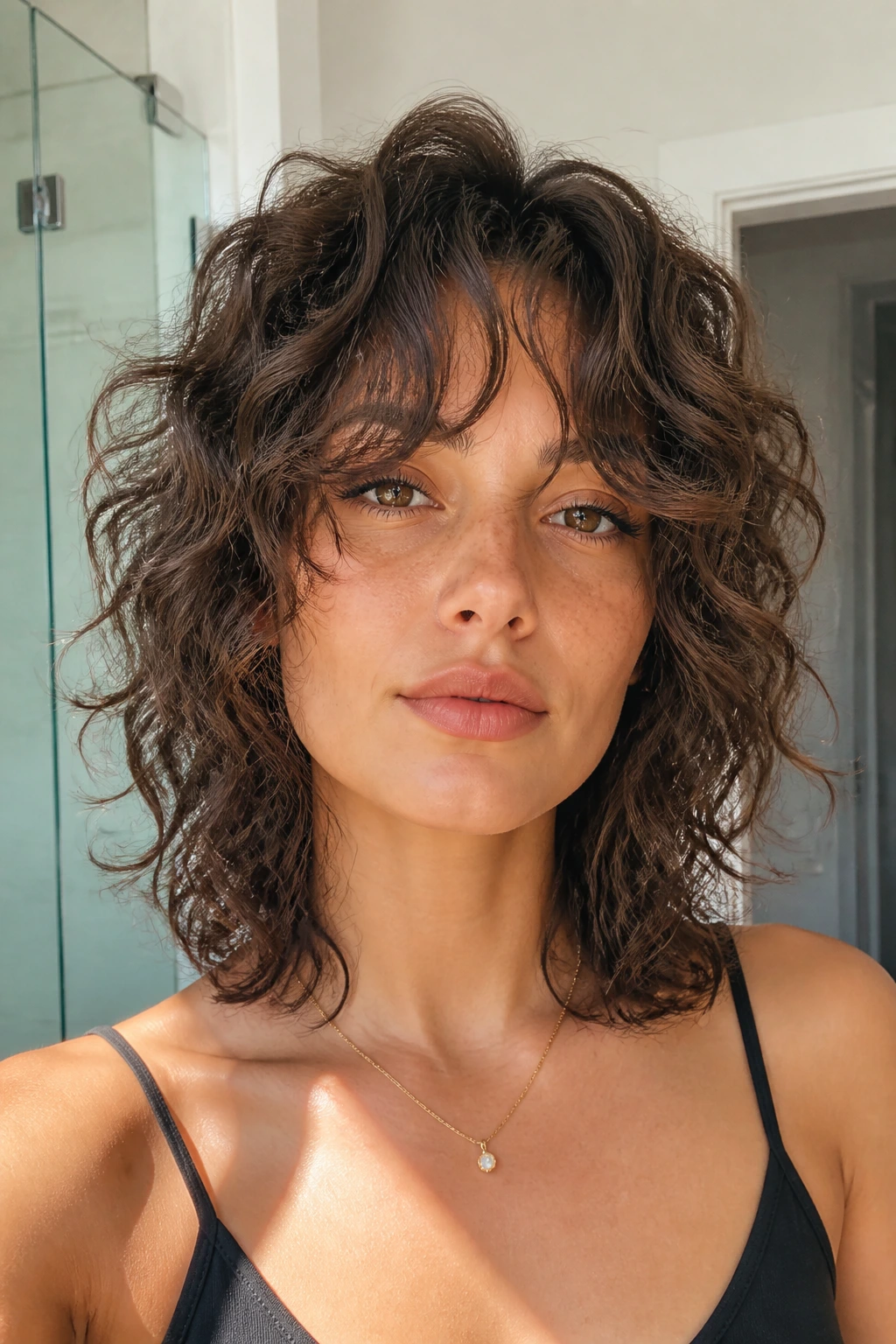
This cut belongs on dense hair that feels heavy no matter how many layers you throw at it. A razor can remove a lot of weight fast, which gives curls room to separate and creates those little wispy ends that make the fringe look lived-in rather than chopped. Used well, it’s brilliant. Used badly, it can fray the hair into puff.
The line I draw here is simple: razor work should reduce bulk, not shred the ends. The curtain bangs should still have enough length to fall past the brows when dry, because curls always shorten more than a straight-haired stylist expects. That extra length buys you softness.
11. Ear-Length Curly Shag with Long Fringe
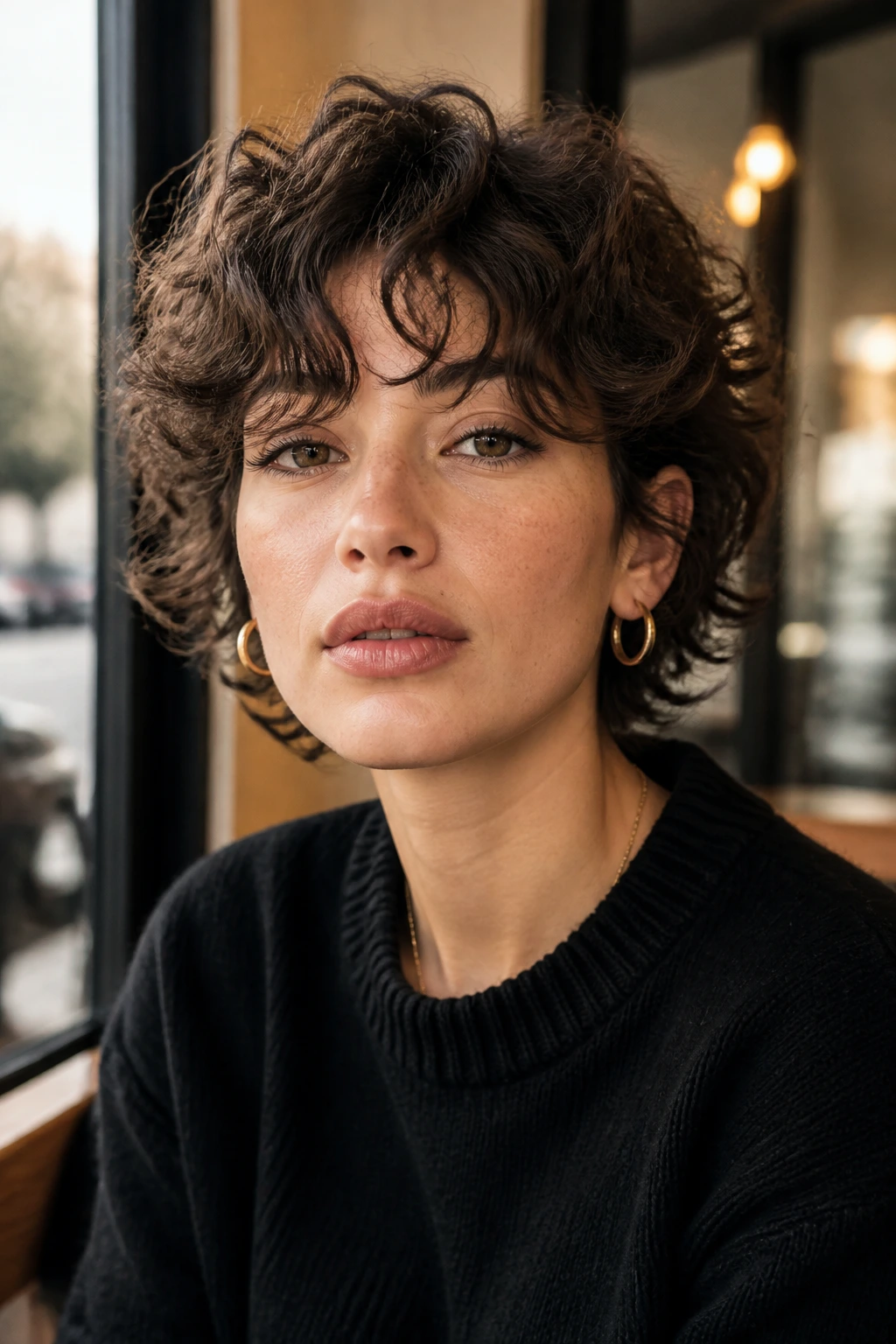
This one is short enough to show off earrings, glasses, and jawline, which is why it feels bolder than it first looks. The sides skim the ears, the crown stays layered, and the curtain bangs are left long enough to frame the face instead of disappearing into the crop. It’s neat. It’s a little cheeky.
The appeal here is contrast. Tight shape around the ears, softness at the front. That contrast keeps the haircut from reading too severe, which can happen fast when curly hair gets cropped close. If you tuck hair behind the ears a lot, this cut will need a bit of restyling, but that’s part of the look.
12. Square-Shape Softened Shag
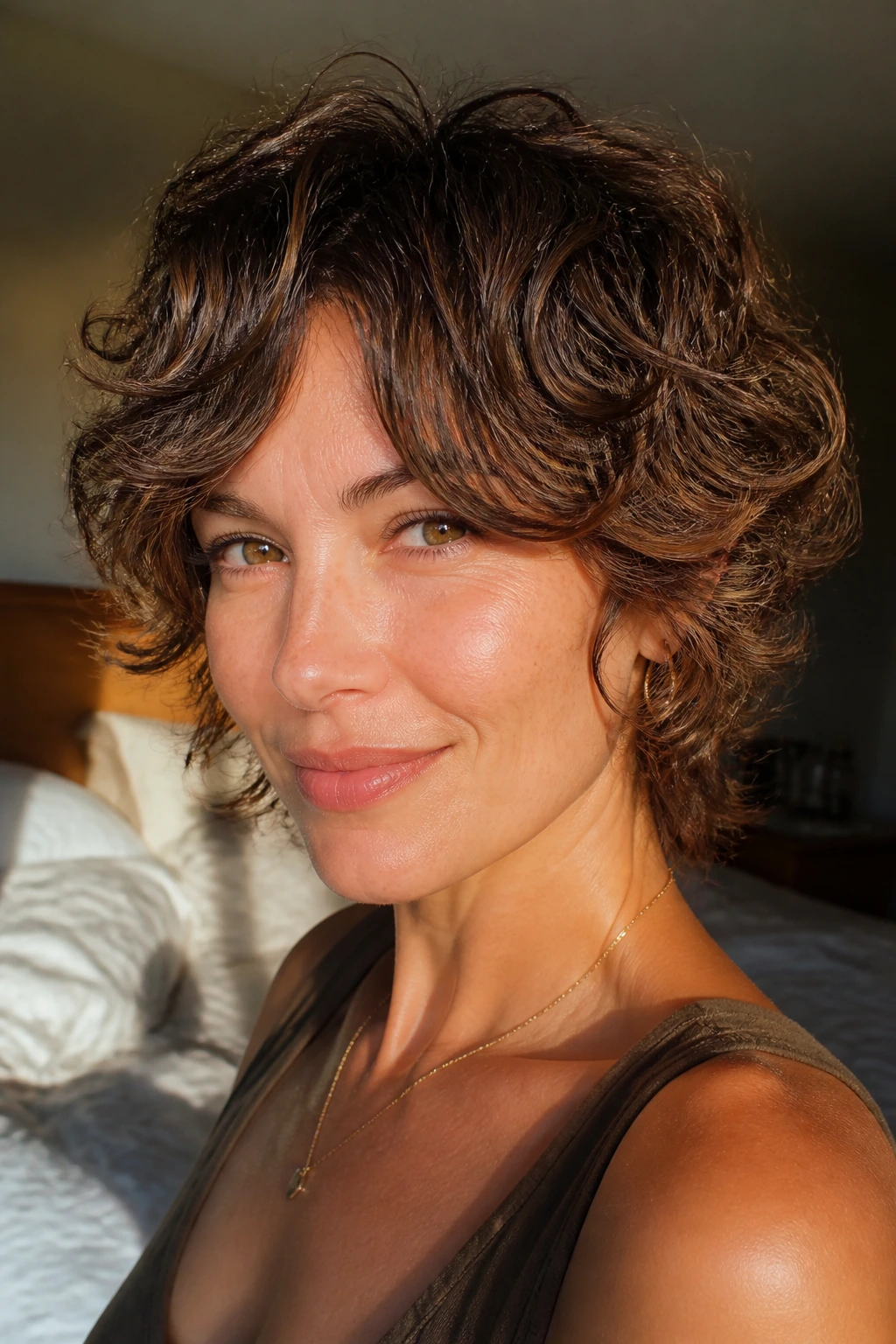
This is the cut I’d reach for if the jawline is strong and you want the haircut to soften it rather than echo it. The layers fall around the temples and cheeks, the fringe opens wider at the center, and the sides do not sit too straight. Everything bends a little.
The point isn’t to hide a square face. That would be boring. The point is to break the hard lines with curved movement so the cut feels more fluid. Curtain bangs help because they pull the eye inward and upward instead of letting the hair sit in one wide shape across the jaw.
13. Layered Mushroom Shag
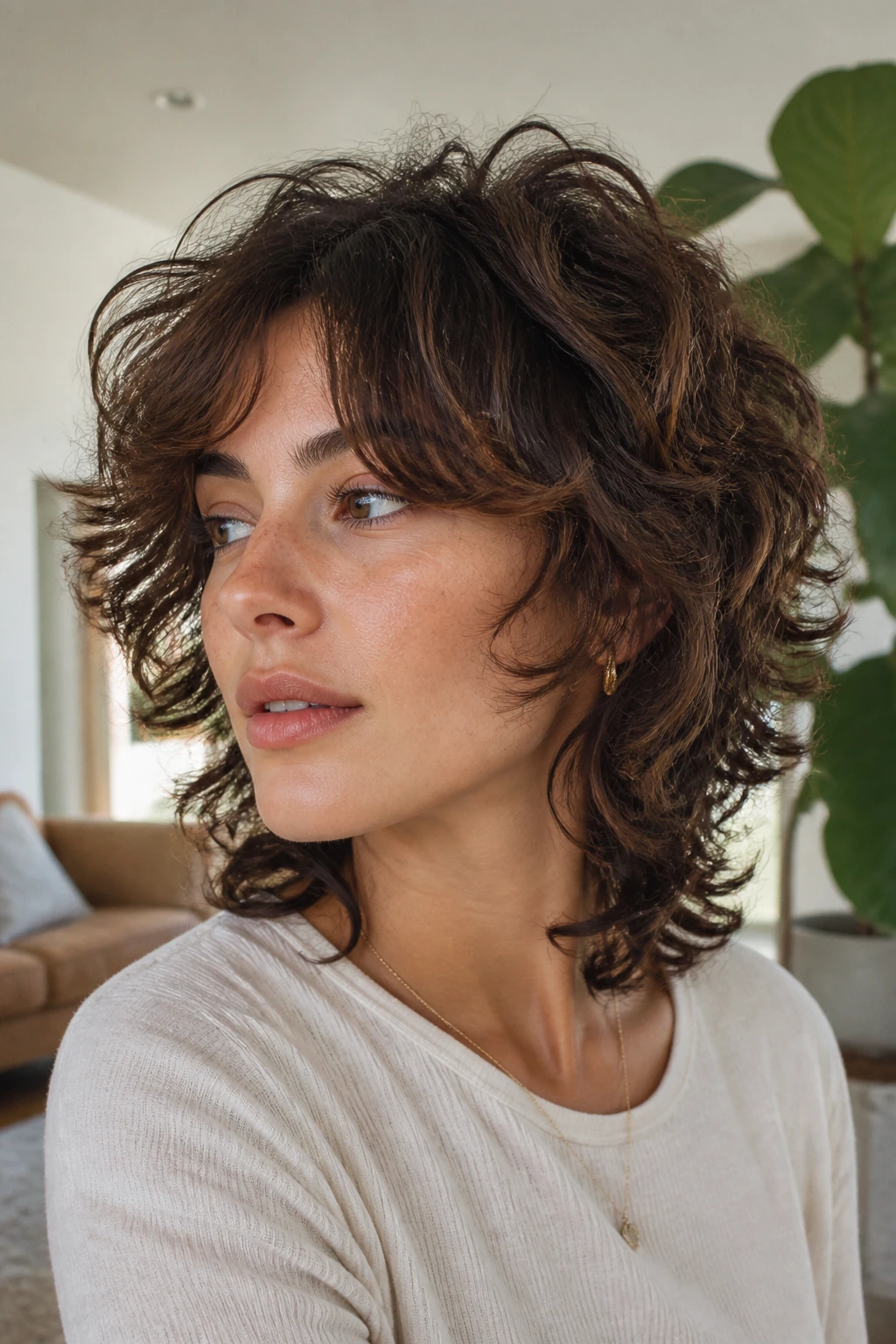
A mushroom cut sounds retro for a reason, but this version is lighter and smarter. The crown gets controlled roundness, the perimeter is softened, and the curtain bangs keep the front from looking too cap-like. On curly hair, that round shape can be gorgeous when it’s built with interior layers instead of one blunt dome.
I like this one on people who want volume at the top and a clean outline at the bottom. It can make a narrow face look fuller without drowning the features. The key is leaving the fringe long enough that it parts naturally rather than standing straight out.
14. Edgy Micro-Mullet with Soft Curtains
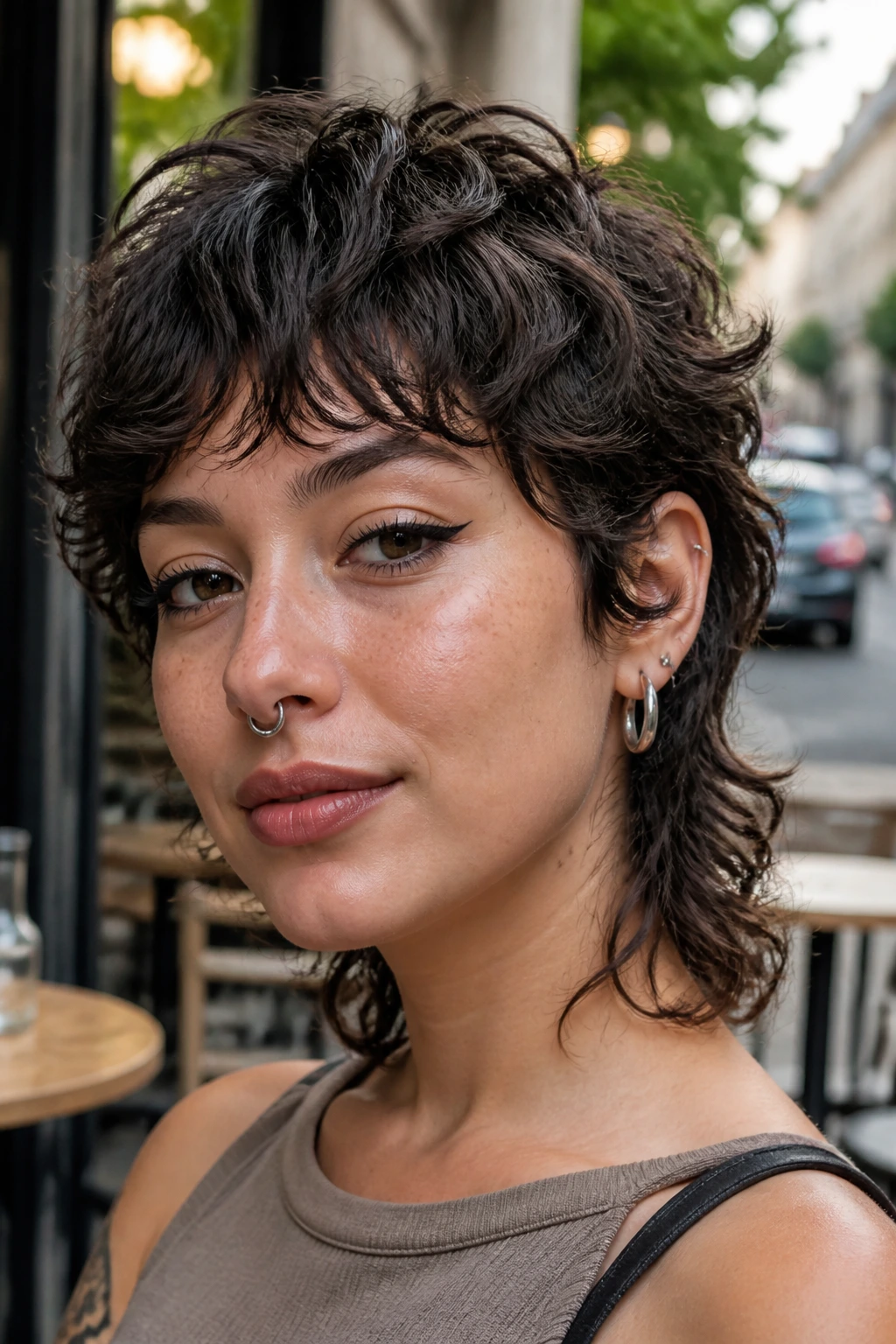
Short in front, longer in back. It sounds blunt because it is. But the soft curtain bangs keep this from turning into costume hair, and that’s the line that matters. The top stays compact, the neck area stretches out a little, and the curls get room to move in different directions.
This is not the haircut for someone who wants to disappear into the crowd. It’s for someone who likes a visible shape and doesn’t mind trimming the nape every so often to keep the silhouette clean. The curl pattern should be strong enough to hold a little lift at the crown, or the whole cut can slump.
15. Side-Part Shag with Curtain Bang Flip
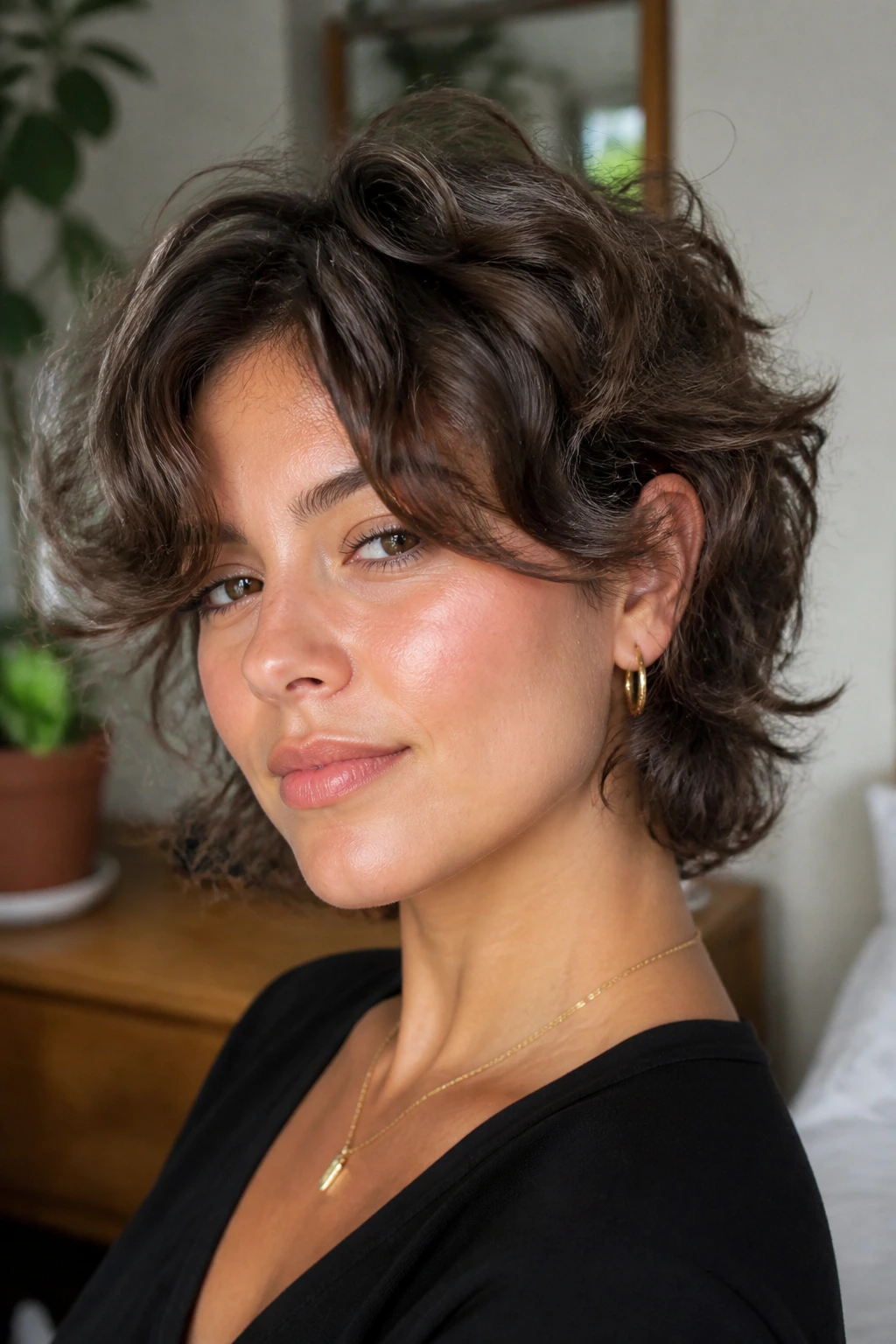
Curtain bangs do not have to live on a dead-center part. In fact, a side part can make the whole haircut feel richer, especially on curls that fall more strongly to one side anyway. The front pieces still sweep away from the face, but the part gives them a more natural bend and a little extra volume at the root.
How It Reads
The side part creates one heavier side and one lighter side, which is useful if one temple area is flatter than the other. The curtain pieces can flip outward more on the fuller side, then blend into the layers on the opposite side. That unevenness is the charm. It feels human.
If your face shape is long, this version can stop the haircut from stretching too much vertically. If your curls already like an off-center fall, this may be the easiest shape to maintain.
16. Curly Mixie with Split Fringe
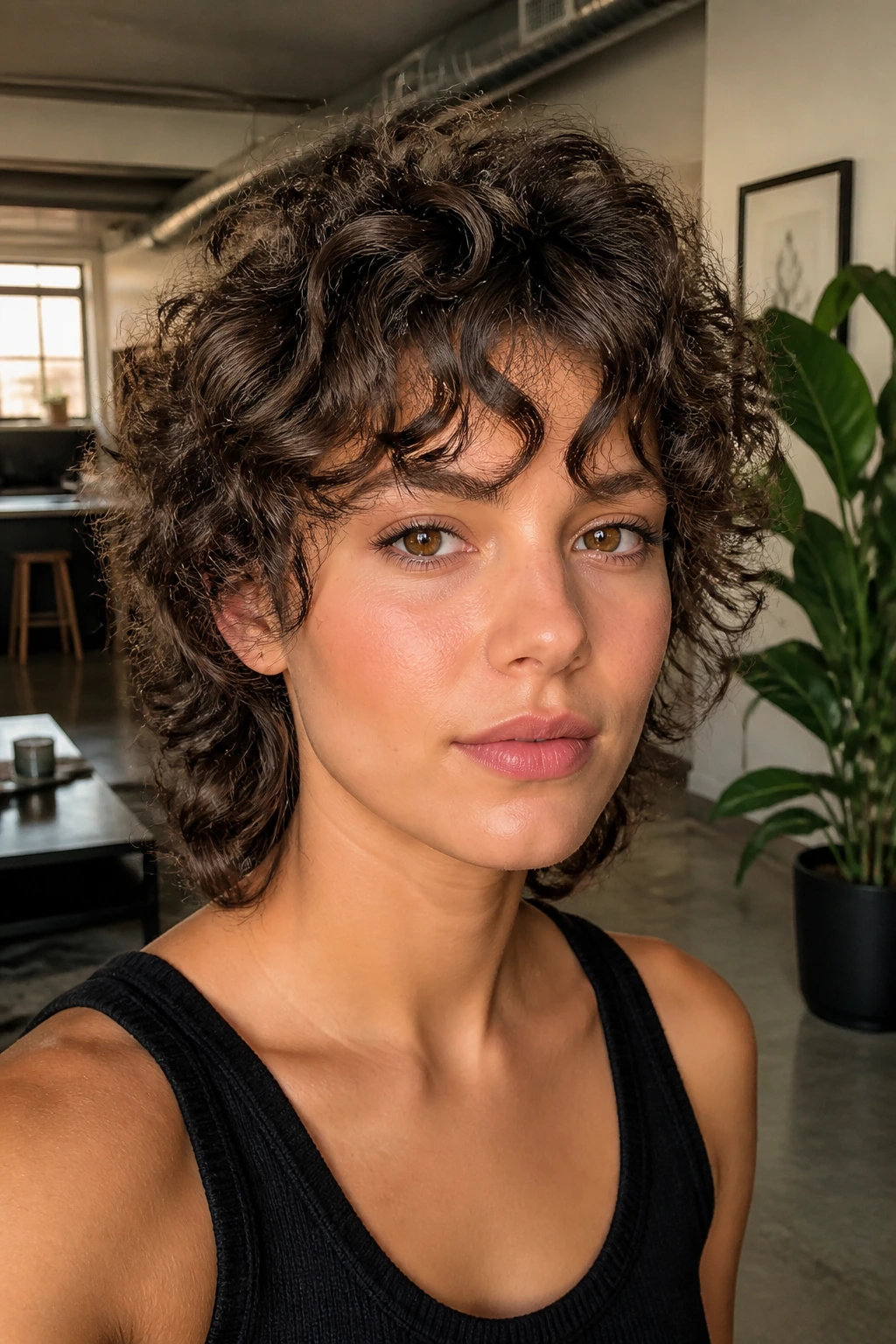
A mixie is a pixie-mullet hybrid, and on curls it can look unexpectedly elegant when the proportions are right. The front stays short enough to feel light, the back keeps a bit more length, and the split fringe drops in a soft curtain rather than a blunt bang. It’s edgy without being hard.
This cut works best when the stylist respects the curl pattern instead of forcing symmetry. The front pieces can be trimmed to brush the brow line when dry, while the back carries just enough extra length to keep the shape from feeling too cropped. It’s a nice choice if you want something that feels fresh but not fussy.
17. Sculpted Rounded Shag for Tight Curls
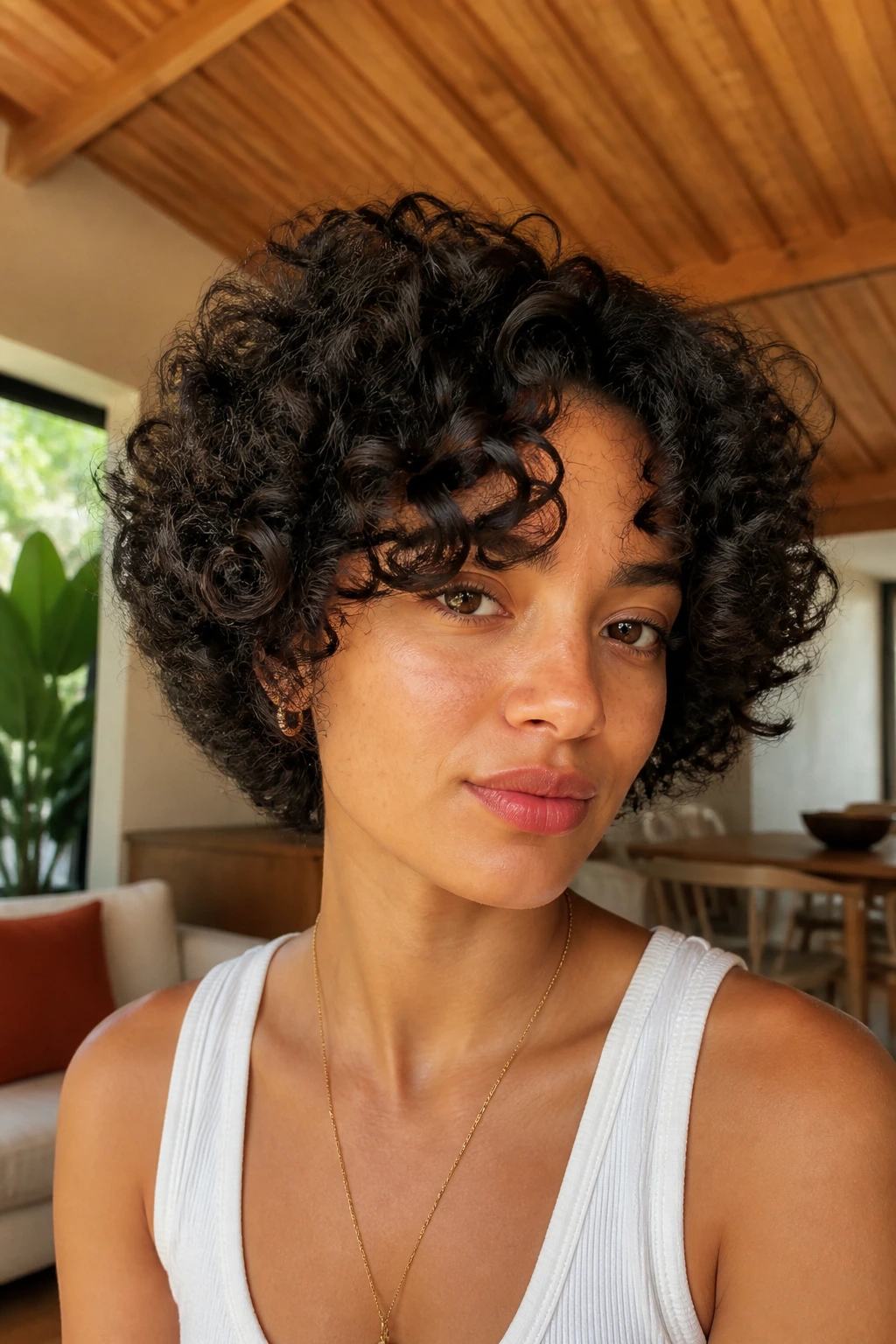
Tighter curls need a different kind of hand. The shape has to be carved with the curl pattern in mind, not against it, or the result turns into a stacked triangle no matter how many layers you cut. This version keeps the silhouette rounded, leaves enough weight at the ends, and lets the curtain bangs curve outward from the center instead of hanging straight.
Dry cutting helps here because a 3C or 4A curl can shrink a full inch or more once it dries, sometimes more near the forehead. The front pieces should be left longer than you think, then adjusted after the curls settle. That patience pays off.
18. Shaggy Crop with Underlayer Texture
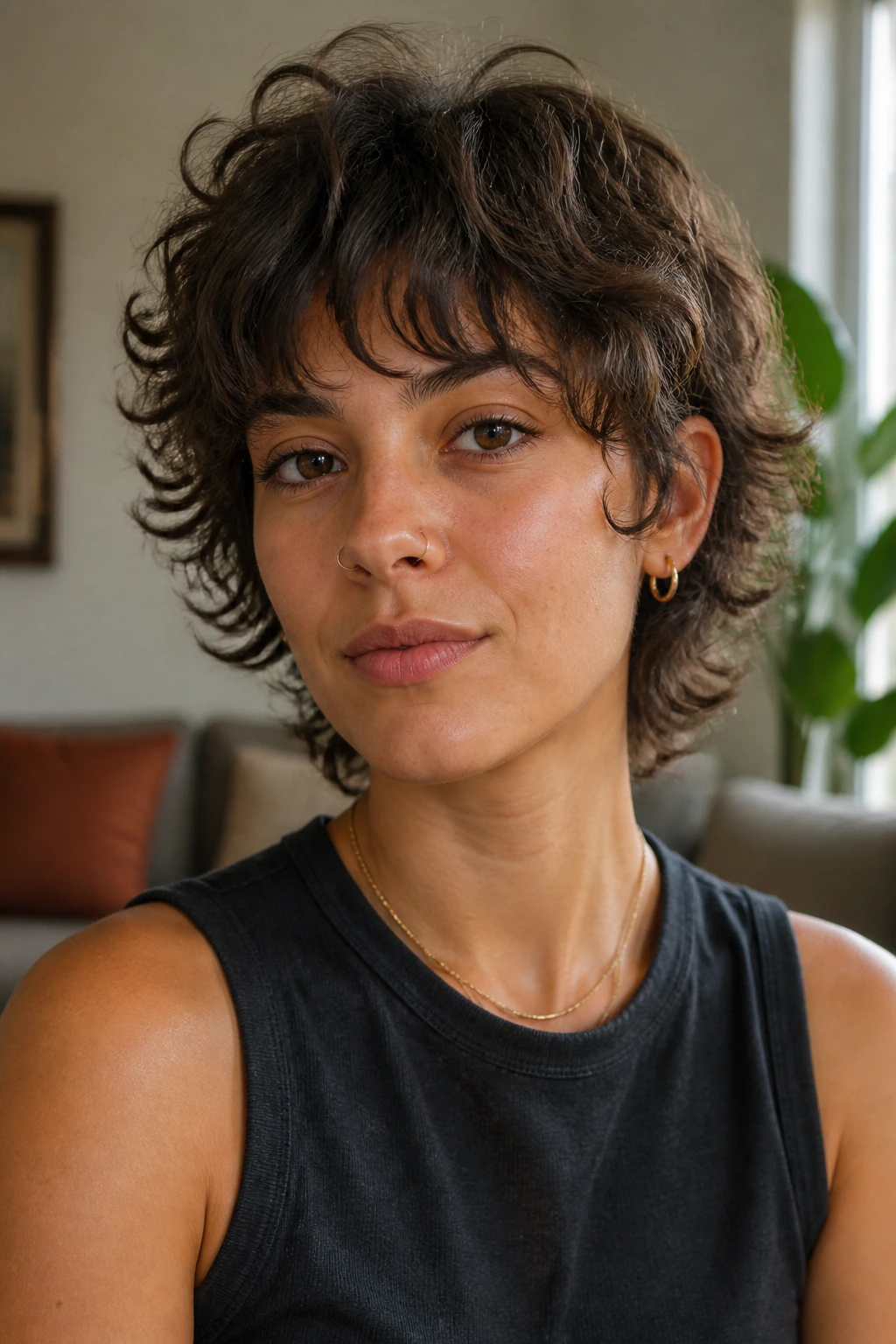
Here’s the cleanest trick for thick curls: take weight out underneath, not just on the surface. The top layer keeps enough length to show the curl pattern, while the hidden underlayers are softened so the whole cut doesn’t bulge out at the sides. The curtain bangs stay light and swingy instead of sitting heavy on the forehead.
This is a smart shape for anyone who hates the “poof at the ears” problem. It also helps if your curls clump well and you want that clump to show instead of spreading apart. The cut can look deceptively simple, which is usually a sign that the shaping was done well.
19. Halo-Shaped Curly Shag
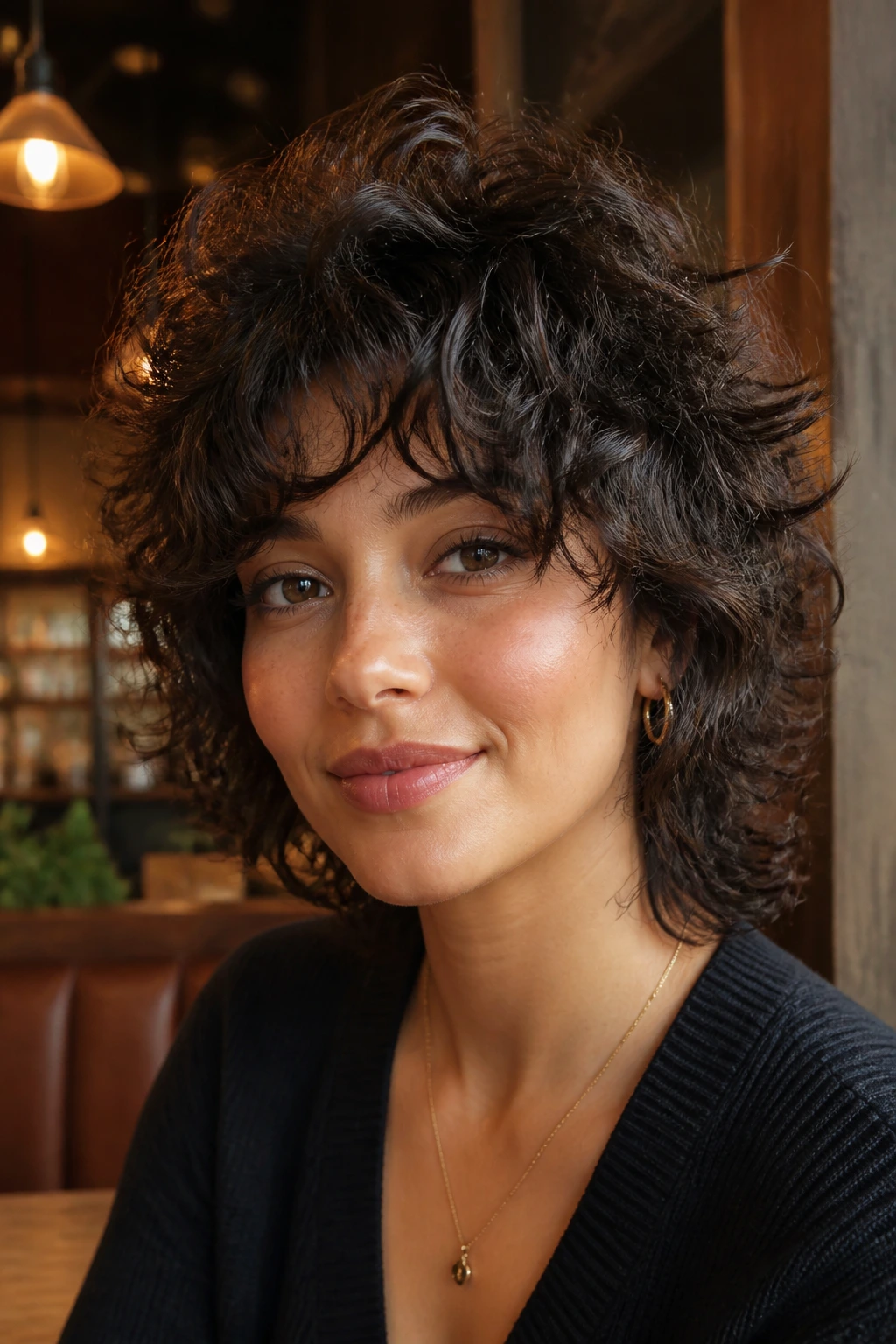
Some cuts are built for length. This one is built for air. The volume sits around the crown and temples, giving the hair a halo effect without leaving the bottom edge too heavy. Curtain bangs soften the front so the shape does not read like a perfect ring.
The trick is keeping the layers staggered enough that the curls stack upward instead of outward. That makes the silhouette feel lively, not puffy. It’s a good choice if you like big hair but want it to look controlled at the outline.
20. Face-Hugging Curly Shag with Bottleneck Bangs
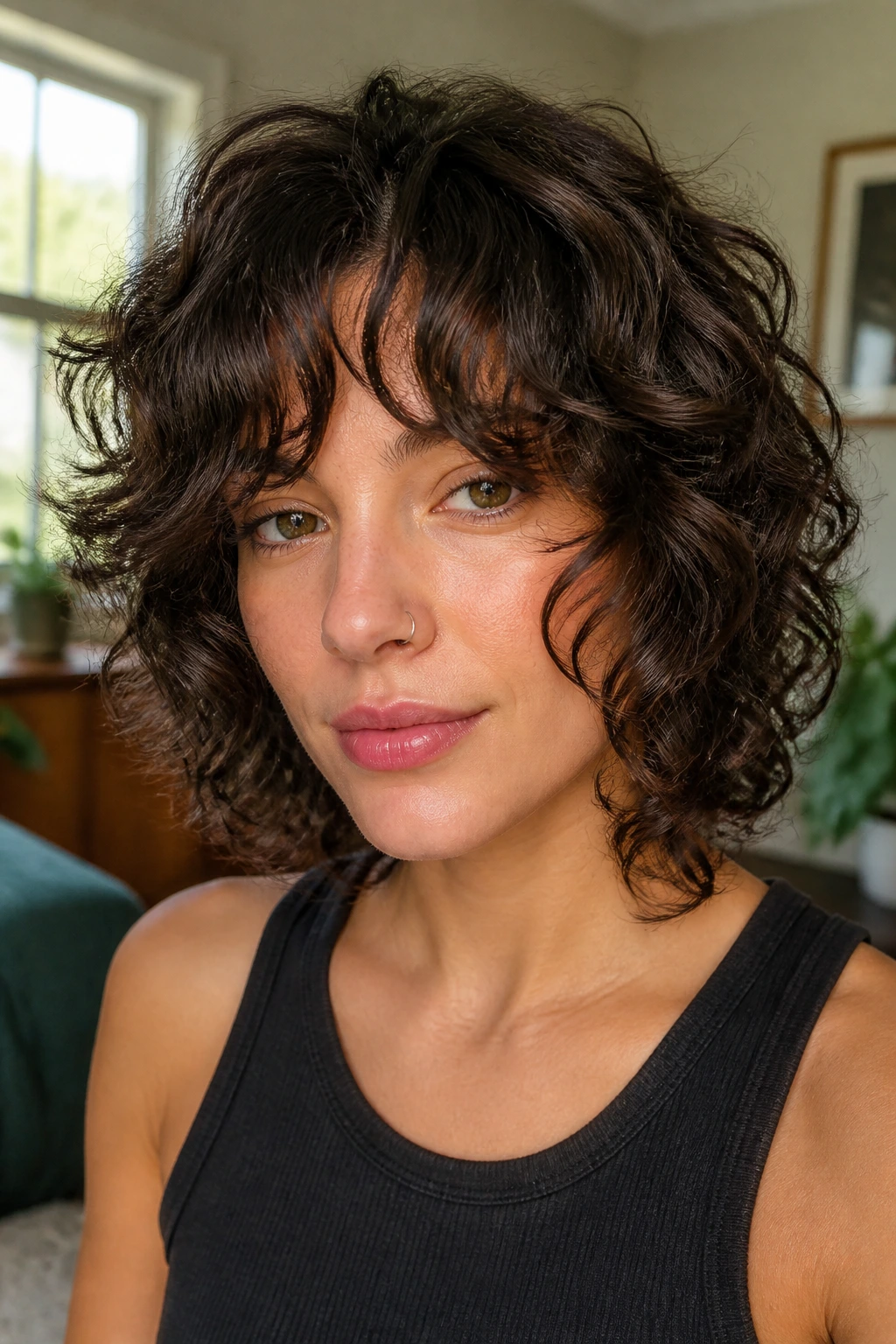
Bottleneck bangs are a close cousin of curtain bangs. They start narrower near the center, then open wider as they travel toward the cheekbones, which makes them a sharp fit for curls that need a little more structure at the forehead. The side pieces hug the face just enough to soften the jaw without swallowing it.
This shape is useful if your forehead feels broad or your face needs a bit more vertical focus. The narrower center keeps the top from looking too wide, while the opening pieces give you that curtain effect as they dry. I’d call this a smart, not flashy, choice.
21. Vintage-Inspired Fluffy Shag Bob

This one has a little 70s swagger without the costume feel. The curls are fluffed out rather than tightly defined, the layers are soft, and the curtain bangs fall like a light frame around the face. It works especially well on medium-density hair that can hold shape without going stiff.
What I like here is the lived-in texture. The hair should look touched, not shellacked. A diffuser helps build the lift, but the finish needs enough movement that the layers still separate when you run your fingers through them.
22. Tousled Razor Mullet with Curtain Bangs
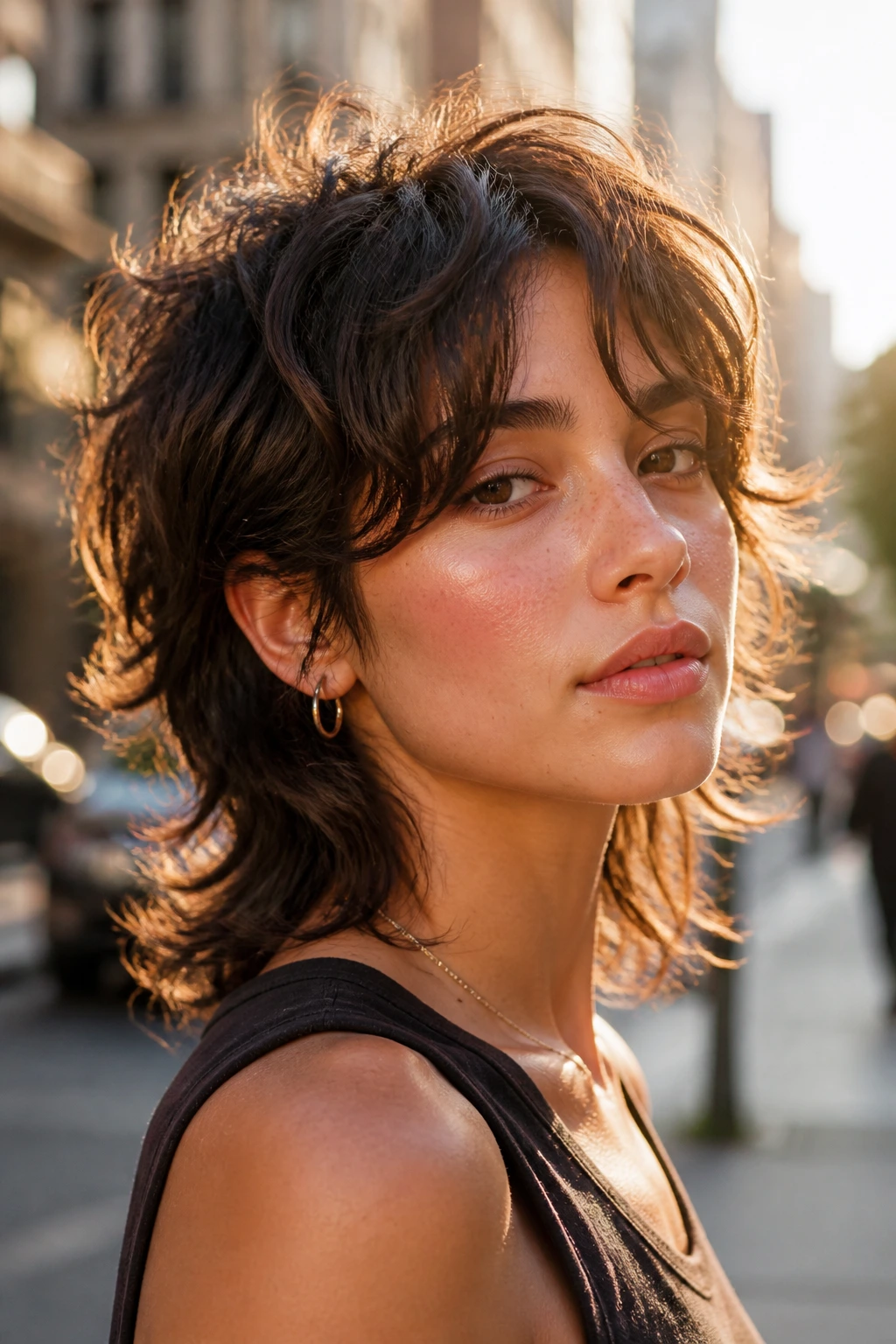
If you want the boldest version in the lineup, this is it. The crown is chopped for lift, the back keeps a little length so the curls can swing, and the curtain bangs sit front and center as the softest part of the whole cut. It’s a strong shape, not a polite one.
What keeps it from tipping into costume territory is the softness at the face. The fringe should open naturally and the sides should blend instead of stopping hard at the cheek. If you like your hair with a bit of bite and you don’t mind a trim schedule, this is the punchiest option here.
Choosing the Right Short Shag for Your Curl Pattern
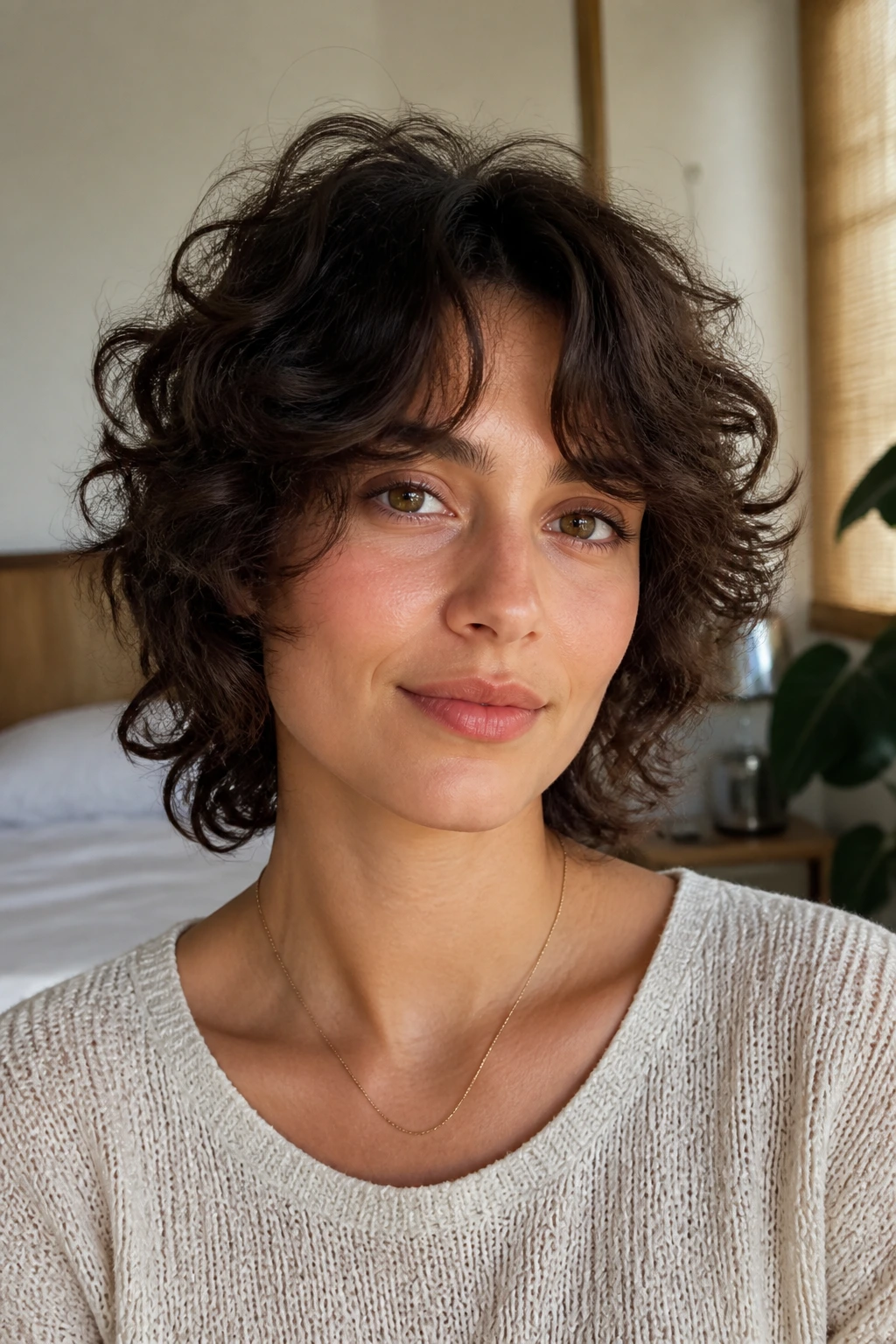
Loose waves and springy curls can usually handle more choppiness at the ends, while tighter textures often need a little more weight left in the perimeter. That sounds obvious, but it gets ignored all the time. A cut that looks airy on 2C hair can balloon on 3C hair if the layers are carved too high.
Fine curls need lift near the crown and less bulk removal through the ends. Thick curls usually need the opposite: controlled reduction in the interior, with enough length left at the front so the curtain bangs do not shrink into baby fringe. If your curls are different on each side — and plenty are — the better haircut leaves room to adjust that asymmetry instead of pretending it is a flaw.
Loose Waves and Bendier Curls
Go for a softer shag bob, a Botticelli mini shag, or the French-girl version if you want movement without too much frizz. These patterns usually need a bit of product weight to hold the curtain split, so a mousse-plus-gel combo tends to work better than cream alone.
Ringlets and Springy Spirals
Jaw-length shag bobs, chin-skimming layers, and cloud shags give ringlets room to spring without turning the sides wide. Ask for the bangs to be left longer than they look on the block, because those front pieces will jump up as they dry.
Dense Curls and Coils
Rounded shags, underlayer texture cuts, and soft mullets are your friends here. The job is to remove excess bulk while keeping a strong outline, because if you take too much weight out of the wrong spots, the hair can puff straight out from the head.
What to Tell Your Stylist Before the First Snip
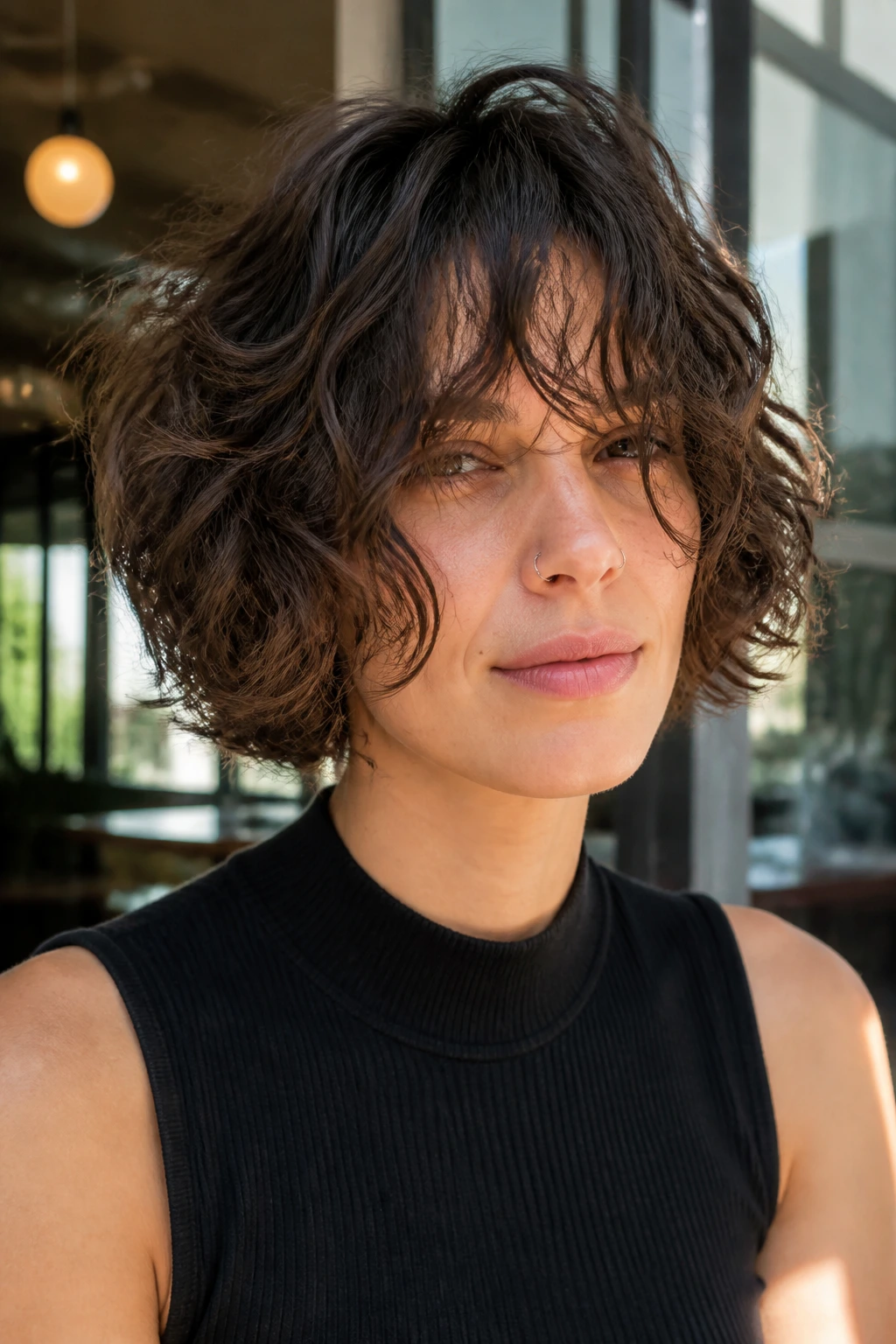
Bring photos, yes, but bring the right kind. A photo of someone with straight hair and a center part is not useful if your curls shrink two inches and your part lives off to one side. Find images of curly hair, preferably dry, preferably from the front and side. That one detail saves a lot of confusion.
Say where you want the shortest point of the curtain bangs to land when the hair is dry. On loose curls, that might be near the brow. On tighter curls, it may need to sit closer to the bridge of the nose so it doesn’t spring too short. Ask for the front to be cut in a way that lets it part naturally, not forced open.
You can also ask for the perimeter to stay a little longer than the stylist thinks is safe. That sounds cautious because it is. With curly hair, the cut is doing more than one job at once: framing the face, holding shape, and surviving shrinkage. Give yourself some margin.
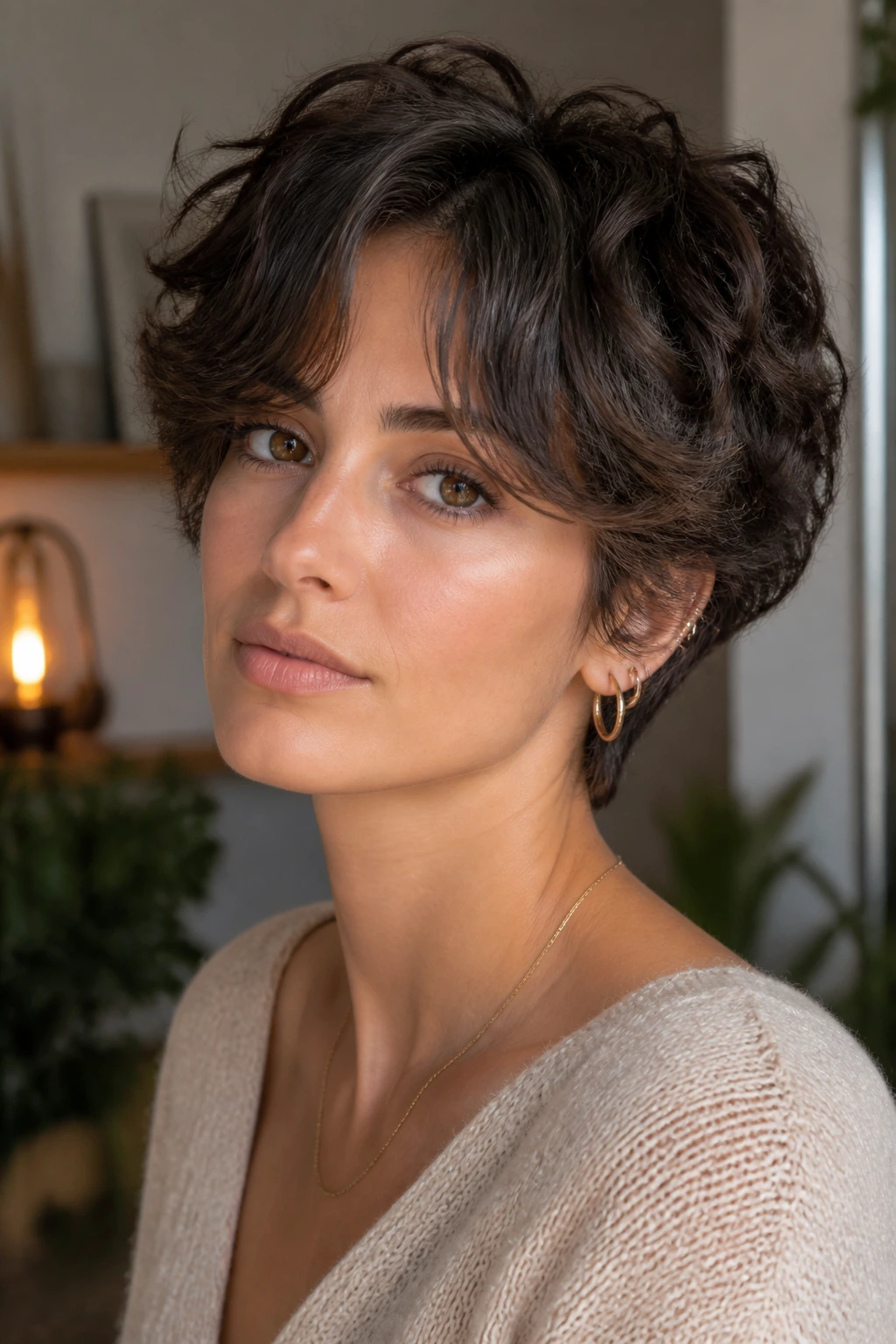
The Tools That Make Styling Easier
-
Diffuser attachment: This spreads airflow and helps curls dry with less disturbance, which matters a lot when you want the curtain bangs to keep their split.
-
Microfiber towel or soft T-shirt: Both cut down on rough drying and help the front pieces stay smooth instead of frizzy.
-
Wide-tooth comb: Good for distributing conditioner and curl cream without pulling curls apart too hard.
-
Duckbill or sectioning clips: Handy for setting the curtain bangs in place while they dry.
-
Spray bottle: Useful for refreshing just the fringe and crown on day two without soaking the whole head.
-
Small round brush: Optional, but useful if you want to encourage the curtain split on the front pieces while they’re damp.
-
Handheld mirror: Not glamorous, but worth it for checking the back shape and nape line.
Picking Curl Cream, Mousse, and Gel for This Shape
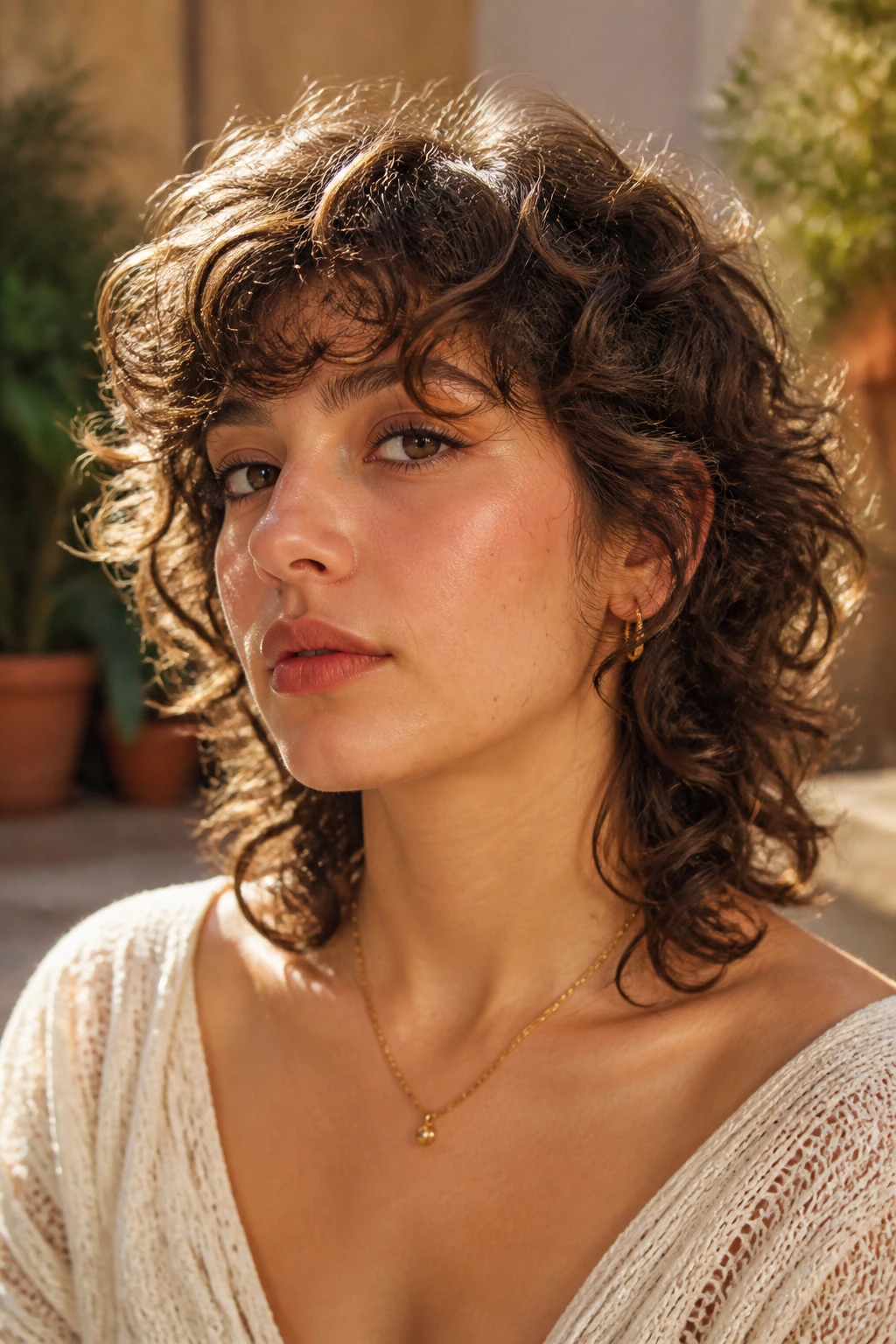
Product choice changes the whole haircut. A shaggy short cut can look airy or fuzzy depending on how heavy the styling layer is, and curtain bangs are where that shows first. If you use too much cream, the front falls flat. Too much hard gel, and the bangs separate into little crunchy strings.
For fine curls, start with mousse at the roots and a light gel through the front pieces. Fine hair usually wants lift more than softness, and mousse gives you body without weighing down the bang line. For thicker curls, a small amount of cream on the mids can help the layers clump cleanly, then gel goes on top to hold the shape through the day.
If humidity is a problem, stronger hold matters more than fancy ingredient lists. A curl that can hold a cast for a few hours usually keeps the curtain split longer. If your hair feels dry or rough after drying, the answer is not more cream everywhere. It is usually less product under the bangs and a touch of oil only on the very ends.
How to Style and Refresh It on Wash Day and Day Two
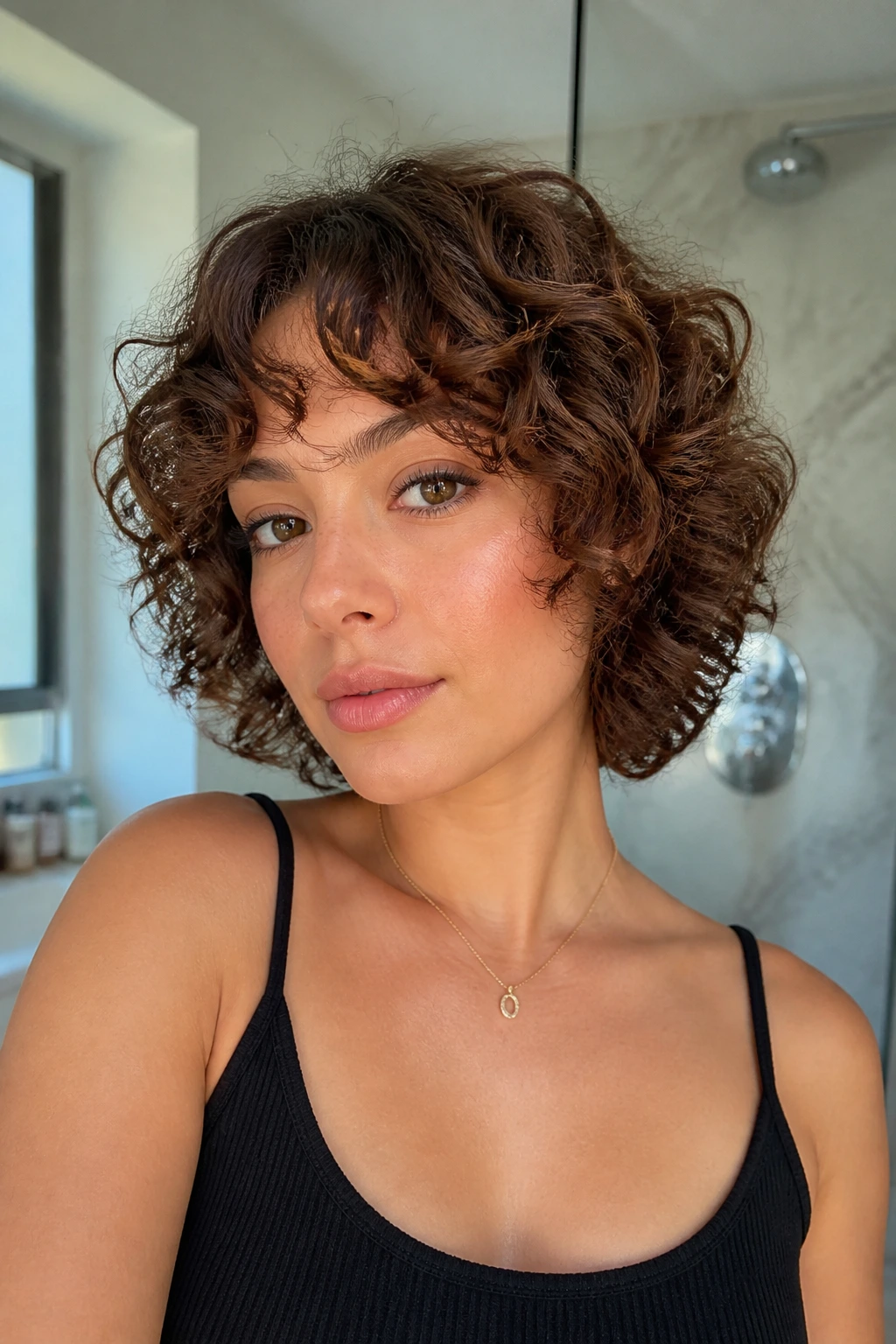
Drying Strategy: Start with damp, not dripping, curls and work in your stylers while the hair is still wet enough to clump. Scrunch the curtain bangs forward, then split them with your fingers so they dry away from the center line. A diffuser on low heat keeps the root lift without blasting the shape apart.
Bang Direction: Clip the front pieces away from the face while they dry if they keep falling straight down. That little pause helps the curls remember the open curtain shape instead of collapsing into one heavy piece across the forehead.
Day-Two Refresh: Mist the bangs and crown with water, add a pea-sized touch of gel to the front pieces, and twist each side away from the center with your fingers. Let it dry for a few minutes before you touch it again. That’s usually enough to bring the shape back.
Humidity Backup: If the air is heavy, use less cream and a stronger-hold gel from the start. Soft curls in humidity can look lovely. They can also go wide fast. A firmer cast buys you a cleaner silhouette.
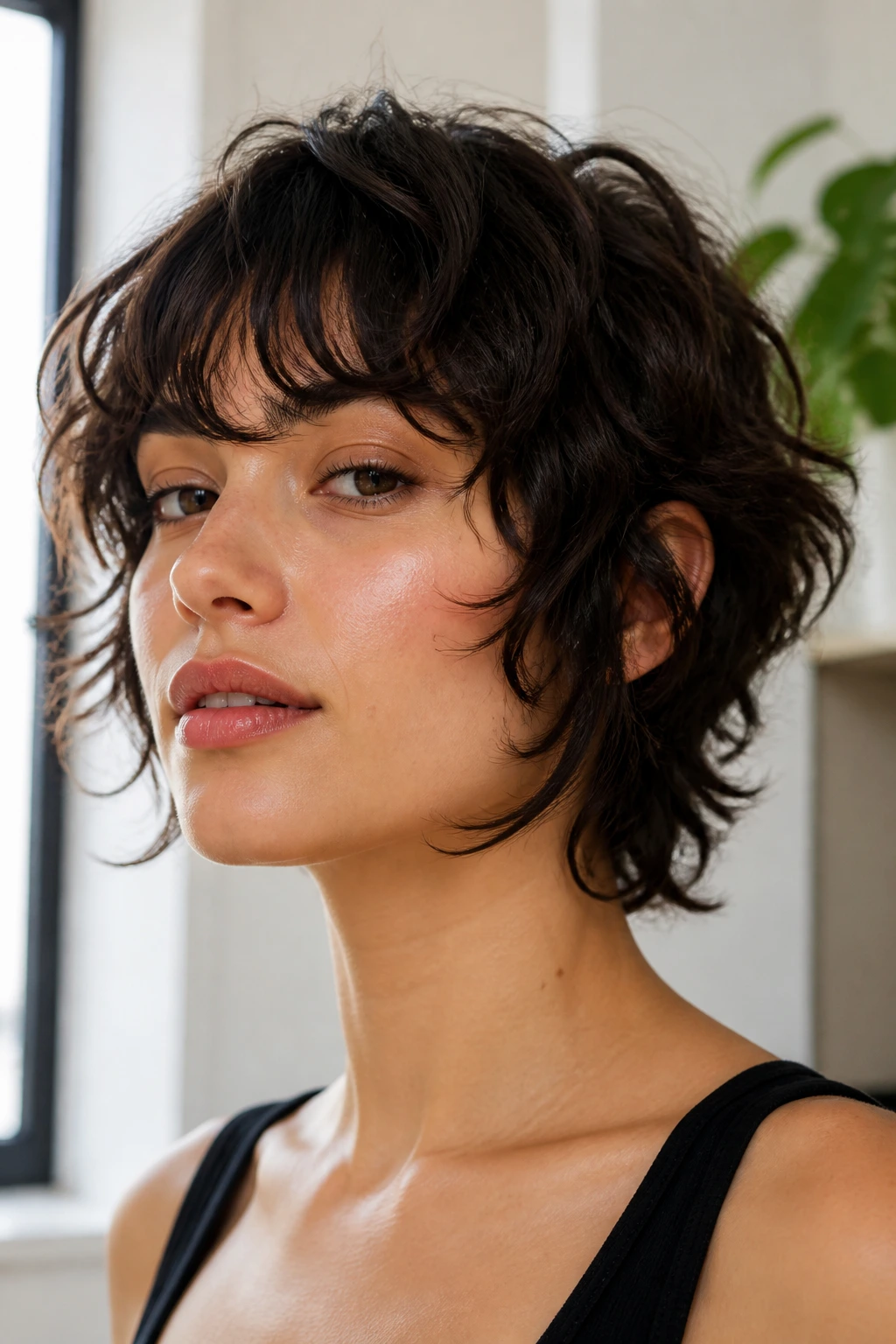
Common Mistakes to Avoid
-
Cutting the curtain bangs too short on the first pass: Curly fringe shrinks fast. If the shortest point lands above the brow when wet, it may bounce way too high once dry. Fix it by keeping the center point longer and trimming only after the curls settle.
-
Over-thinning the crown and sides: This can leave the ends frizzy and the shape hollow in the middle. The result is a puffed-out outline instead of a controlled shag. Ask for interior shaping, not aggressive debulking.
-
Using the same product all over the head: The fringe usually needs less cream and more hold than the rest of the cut. If the bangs look stringy or collapse onto the forehead, the product load is wrong, not the haircut.
-
Forcing the part every morning: Curtain bangs behave better when they’re allowed to dry in their natural split. If you keep raking them flat, you’ll fight the same battle every day.
-
Ignoring the nape: Short shags can look lopsided fast if the back grows out unchecked. A tiny cleanup at the neck line makes the whole cut look sharper.
Variations and Adaptations to Try
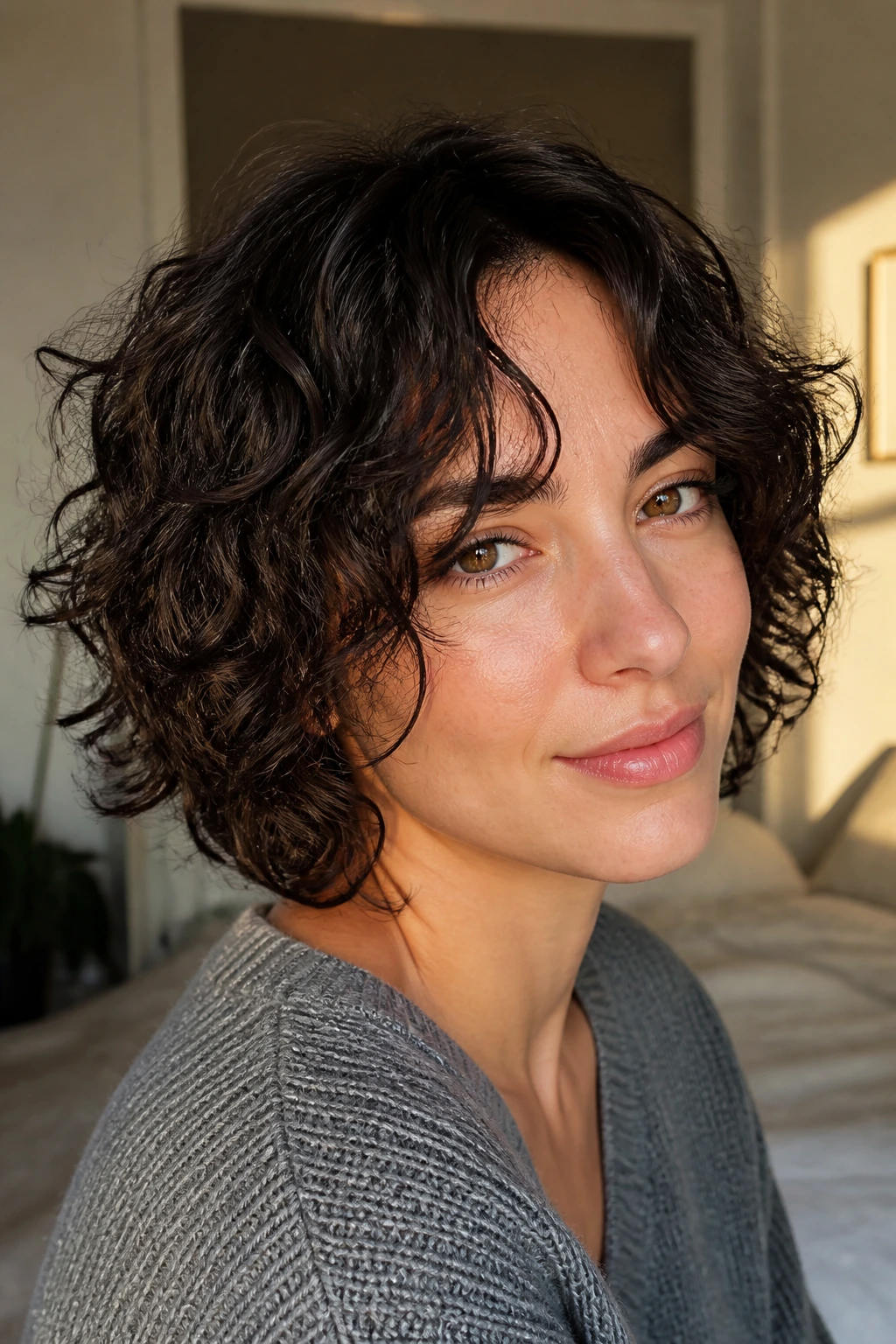
The Low-Maintenance Air-Dry Shag
Keep the layers soft, the fringe longer, and the outline closer to the chin than the ears. This version works when you want to wash, scrunch, and leave the house without a diffuser fight.
The High-Volume Diffused Shag
Ask for shorter crown layers and a slightly more dramatic curtain split. Diffusing upside down for a few minutes gives the top lift, which is useful if your curls tend to sit flat near the part.
The Fine-Hair Feather Cut
This adaptation keeps the layers lighter and the ends more connected so fine curls do not break apart into wisps. The curtain bangs stay soft, but the overall shape reads fuller because there’s enough weight left in the perimeter.
The Tight-Curl Halo Shape
Built for coils and strong spring, this version keeps the outline rounded and the fringe longer. It’s a smart choice if you want a halo of texture rather than a sharp geometric cut.
The Grow-Out-Friendly Wolf Bob
If you know you’ll want to grow the cut later, keep the back only slightly longer than the front and avoid a drastic disconnect. It will slide into a longer shag much more gracefully.
Maintenance, Trim Schedule, and Grow-Out
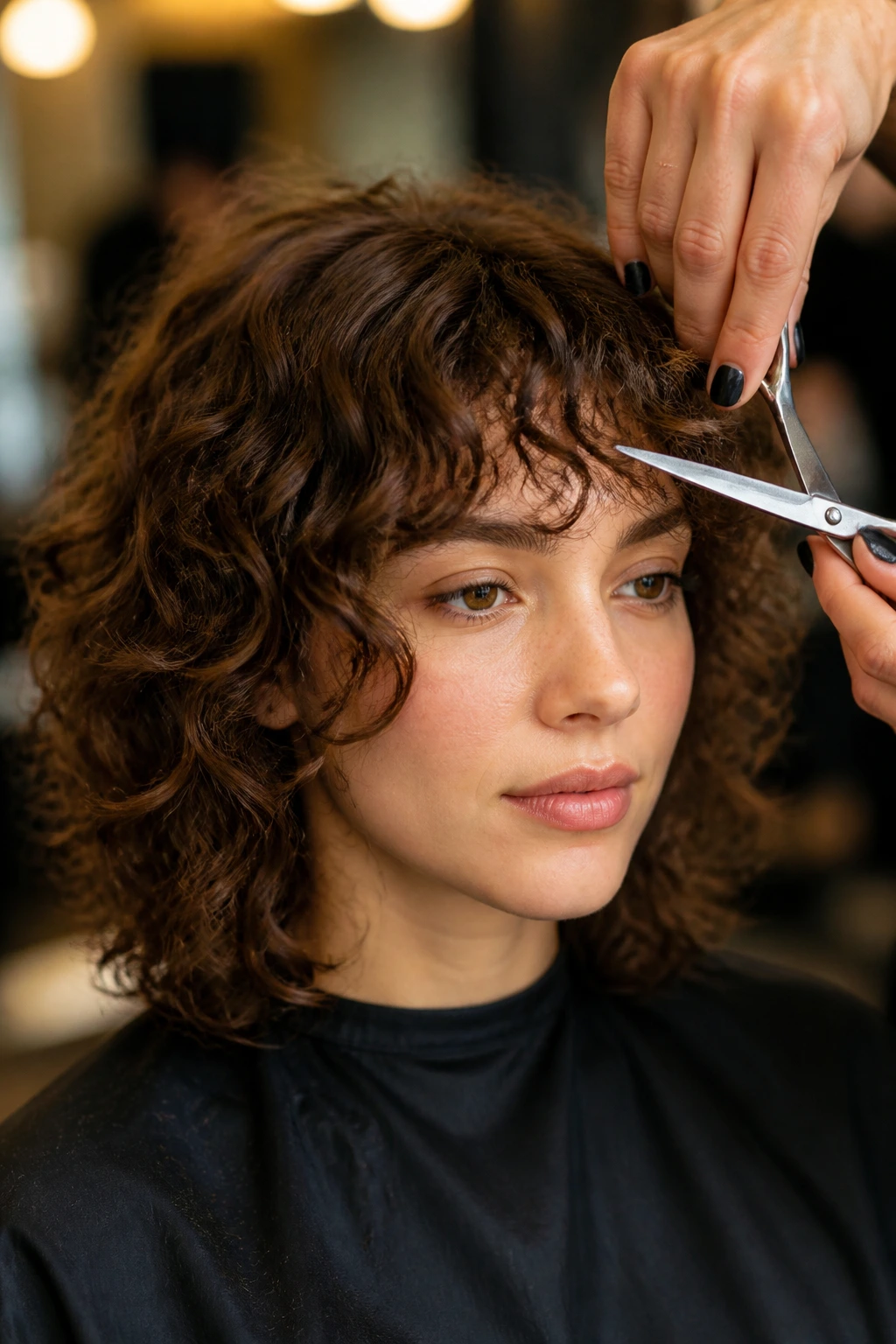
Curtain bangs need more attention than the rest of the cut. That’s the truth of it. On curly hair, the front pieces are the first place the shape can look overgrown, because they sit right in the face and change the whole read of the haircut. A small trim every 4 to 6 weeks keeps the split clean and stops the bangs from swallowing your eyes.
The full shag usually wants shaping every 8 to 12 weeks, depending on how fast your curls grow and how much the style depends on a neat perimeter. If you’re wearing a pixie shag, mixie, or micro-mullet, the nape may need a cleanup sooner than that. Neck hair has a way of showing every extra millimeter.
During grow-out, the goal is to keep the front connected to the sides. If the bangs get too long, don’t panic and chop them blunt. That’s how people end up with a weird shelf in the middle of their face. Trim a little from the longest pieces and let the curl pattern bridge the gap.
Frequently Asked Questions
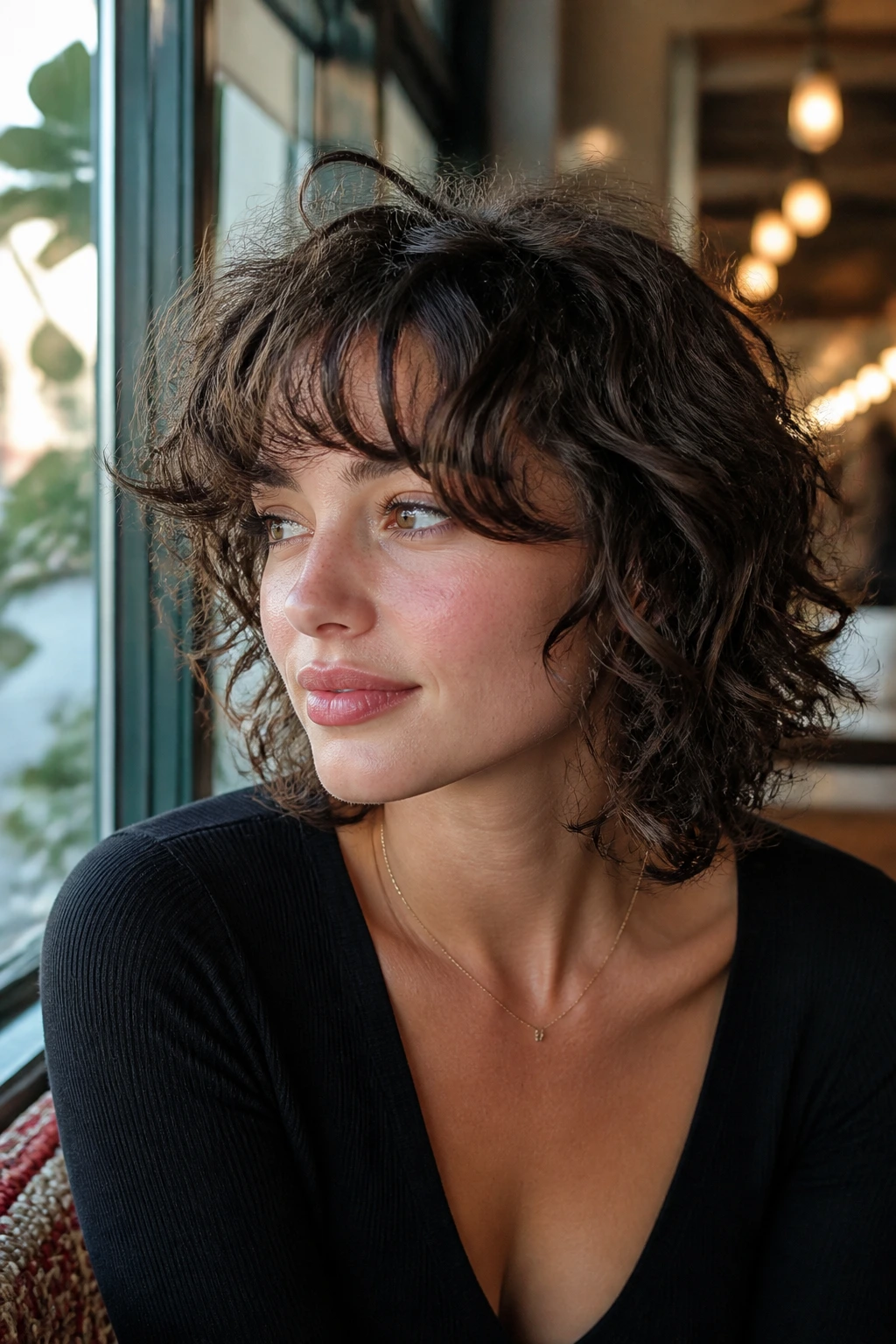
Do curtain bangs work on tight curls?
Yes, but the shortest point needs to be left longer than it would on straight hair. Tight curls shrink faster and spring higher, so the front pieces should be cut with extra length and then refined once they dry.
Should curly curtain bangs be cut wet or dry?
Dry is safer for most curl patterns because the stylist can see how much the hair actually shortens. Some stylists use a hybrid approach — dry for the fringe, damp for the body — which is often the best of both worlds.
Will a shaggy short haircut make my curls look thinner?
Not if the layering is done with care. A good shag removes bulk where the hair puffs and keeps enough weight at the ends so the curls still look full and connected.
How do I stop my curtain bangs from splitting too wide?
Use less cream on the front pieces and more hold, then clip the bangs in the desired split while they dry. If they still swing too far apart, the center pieces may need to be a touch shorter next trim.
What if my curls are different on each side?
That’s normal. Ask the stylist to cut each side according to how it falls naturally instead of forcing symmetry. Curly hair often looks better when the cut respects the imbalance instead of trying to erase it.
Can I air-dry these cuts?
Absolutely, though the curtain bangs usually behave better if you define the split before they dry all the way. A quick clip at the front or a finger twist helps keep the face-framing shape.
How short can the back go before it feels too severe?
That depends on curl density, but if the nape is cropped very close, the top needs enough softness to balance it. A little length left in the back keeps the whole cut from reading too sharp.
What if the haircut grows into a triangle?
That usually means the perimeter is carrying too much weight or the crown was thinned too hard. A reshape should remove bulk from the sides and add a bit more structure through the top layers.
The Shape That Keeps Moving

The best shaggy short haircuts for curly hair with curtain bangs do one thing well: they make the curl pattern look considered without making it look controlled. That’s the sweet spot. Not stiff. Not fluffy for the sake of fluff. Just enough architecture to let the hair fall with a little intention and a little freedom.
If you’re choosing between two versions, pick the one that leaves the fringe longer. Seriously. Curly curtain bangs are almost always better when they start a touch low and get refined later than when they’re chopped too high and left to apologize for themselves.
The nice part is how forgiving these cuts can be once the shape is right. They move, they grow, they bend, and they keep finding their own line. That’s the whole appeal.