



Round faces and curls can work against each other when the shortest layer stops at the cheekbone. The face reads wider, the curls spring outward, and the whole cut starts to feel heavier than it should. Move that same layer lower, tilt the front pieces, or break up the perimeter with a little asymmetry, and the shape changes fast. The eye starts traveling down instead of sideways.
That is why uneven layers for curly hair and round faces matter so much. “Uneven” does not mean random. It means the cut gives different lengths different jobs: one section stretches, another lifts, another tucks behind the ear, and the curls stop forming one big round halo.
The exact version you want depends on curl pattern, density, and shrinkage. A loose 2C wave that puffs at the sides needs a different balance than dense 4A coils, and a dry cut usually tells the truth better than wet hair ever will. The examples below are built around that reality.
Why These Cuts Work on Curly Hair and Round Faces
-
Vertical balance: Uneven layers pull the eye from crown to collarbone instead of letting it stop at the cheeks, which is the whole trick on a round face.
-
Curl memory: Curly hair does not hang straight; it springs, stacks, and bunches, so layered lengths need to be planned with shrinkage in mind.
-
Shape without bulk: The right cut removes weight where curls balloon and leaves fullness where the silhouette needs a little lift.
-
Better grow-out: A longer front line and staggered layers keep the haircut looking intentional for weeks after the salon visit.
-
Styling freedom: Side parts, soft fringes, and diffused volume all behave better when the haircut already has a diagonal built into it.
How Uneven Layers Change the Shape of Curly Hair on a Round Face
The quickest way to make curly hair flatter a round face is to stop thinking only about length. Length matters, sure, but placement matters more. A curl that lands below the jawline does a different job from one that sits right at the cheek, and that small shift can make the face look longer without making the hair look flat.
Curl shrinkage is the part people underestimate. A layer that looks safe when wet can bounce up three inches or more once it dries, and then the whole silhouette sits higher than expected. That is why dry cutting, curl-by-curl cutting, or at least a careful dry check after the initial shape often matters more than a neat wet outline.
Where the Shortest Piece Should Land
On a round face, the shortest face-framing piece usually works best when it falls at or below the mouth, not directly on the fullest part of the cheek. That does not mean every cut needs long hair in front. It means the shortest layer should create a downward line, not a horizontal shelf.
Why the Crown Can Carry More Height
A little lift at the crown is your friend. Height at the top stretches the face visually; width at the sides does the opposite. The best curly layered cuts use the crown for volume and let the side pieces stay a touch longer, which keeps the shape from puffing into a circle.
Why Dry Length Checks Save Bad Haircuts
Wet curls lie. They look longer, calmer, and safer than they really are. If your hair shrinks hard, ask for a dry finish or at least a dry confirmation before the stylist removes more length. That one step keeps a lot of good intentions from turning into a chin-length surprise.
1. The Collarbone Lob with a Longer Front Line
This is the cut I reach for when someone wants shape without committing to a short bob that can puff outward. The back sits around the collarbone, the front slips a little lower, and the whole outline leans forward instead of spreading wide. On curly hair, that diagonal is doing real work.
The best version keeps the shortest layer below the cheekbone and lets the front pieces graze the collarbone when dry. If your curls shrink hard, the stylist should leave a little extra length in front and clean up the shape after it dries. It looks especially good with a side part because the eye follows the longer front line and never gets stuck at the cheeks.
A blunt collarbone cut can feel boxy on a round face. This one avoids that. It still has presence, but the curl pattern gets room to move.
2. The Deep-Side-Part Curly Shag
A deep side part changes everything. One side carries more weight, the other opens up the face, and the result feels less like a circle and more like a moving shape. On round faces, that asymmetry is a gift.
The shag layers should start high enough to lift the crown but not so high that the sides explode. Think soft, not shredded. I like this on curls that need air between the clumps, especially if the hair has a medium-to-heavy density and tends to sit flat at the roots. A deep side part also helps if your cheeks are full and you want the hair to fall diagonally across them instead of sitting straight across.
What to ask for
- A side part with one front section left longer.
- Crown layers that create height without opening a gap at the top.
- Soft point-cut ends, not razor-thin wisps.
This cut has attitude, but it still behaves. That matters.
3. The Cheekbone Curtain Cut
Curtain pieces can work on a round face, but only when they start lower than most people think. If the shortest face frame sits right at the cheekbone, it can widen the middle of the face. If it begins a little lower and curves away from the cheeks, the effect is much cleaner.
The shape feels especially good on loose curls and bouncy ringlets because the front pieces can split around the face instead of sitting like a curtain rod. Ask your stylist to keep the center slightly shorter and the outer edge longer, so the front falls in a soft V around the face rather than in a blunt swing.
I like this one when you want softness around the forehead but do not want full bangs. It gives just enough shape to feel styled, and just enough length to keep the face from looking boxed in.
4. The One-Side-Longer Curly Bob
If you like a little drama but do not want a harsh asymmetrical cut, this is the move. One side is kept a touch longer—sometimes only an inch, sometimes two—and that tiny difference creates a strong diagonal line across the face. On a round face, diagonals do more than people expect.
This bob works best when the shorter side still falls below the cheek and the longer side brushes the jaw or just past it. The curls should be cut with their natural bounce in mind, not flattened into a wet shape that looks symmetrical for five minutes and then falls apart. Tuck one side behind the ear if you want the asymmetry to show off more clearly.
It is a smart cut for people who like shape but do not want the same curve all the way around the head. That soft imbalance makes the whole look feel sharper.
5. The Soft Wolf Cut with Lift at the Crown
The wolf cut gets a bad reputation when it turns into a choppy mess. The soft version is much better, especially on curly hair. The top layers are shorter, the lower lengths stay fuller, and the shape leans upward instead of outward.
On a round face, the crown lift matters more than the mullet-ish attitude. You want volume up top and movement through the ends, not a wide triangle around the cheeks. Ask for the layers to be blended with a light hand so the perimeter still feels deliberate. If the stylist over-thins the sides, the whole cut can go fuzzy; if they leave too much weight at the bottom, it turns heavy.
This one shines on 2C to 3B curls that need shape without looking overworked. It has edge, but it also grows out in a way that does not punish you.
6. The Dry-Cut Deva Shape
A dry-cut Deva style is one of the best ways to handle curly hair when the face is round, because it lets each curl fall where it actually lives. The stylist trims curl by curl, usually with the hair dry or close to dry, which means shrinkage is part of the cut rather than a nasty surprise later.
What makes it work on a round face is the precision. The shortest layers can be kept away from the cheeks, while the front pieces are placed lower and longer to create vertical movement. The result is less about a big dramatic shape and more about control. That control matters.
If your curls form strong clumps or ringlets, this cut can look almost custom-built. It usually costs more time in the chair, and I think that time is worth it.
7. The Balanced U-Shape with Tapered Sides
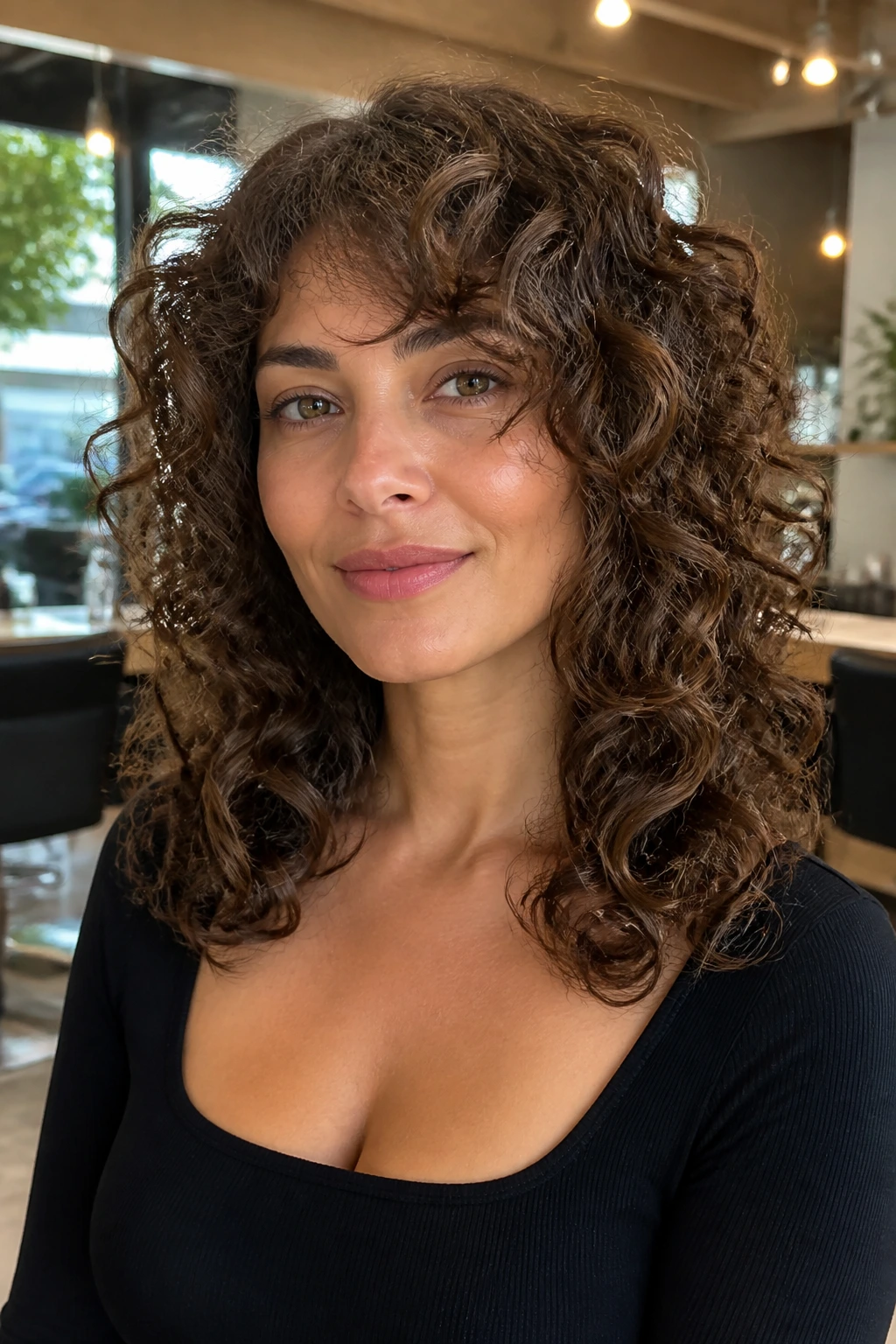
A U-shape keeps the back longer and the sides slightly shorter, which sounds simple until you see what it does in motion. Curly hair falls in a soft arc, and that arc gives the face a longer line than a blunt hem ever will. On a round face, the tapered sides stop the style from feeling like a blanket.
This cut is good when you want length but dislike the heavy, blocky feeling that long curly hair can develop. The front corners should sit lower than the widest part of the cheeks, and the back can keep a little fullness so the shape does not collapse. It works especially well if your hair is thick enough to hold weight but not so dense that it turns triangular.
The smart part is subtle. Nothing about this cut screams for attention, but the silhouette reads cleaner from every angle.
8. The Dense-Ringlet Internal Layer Cut
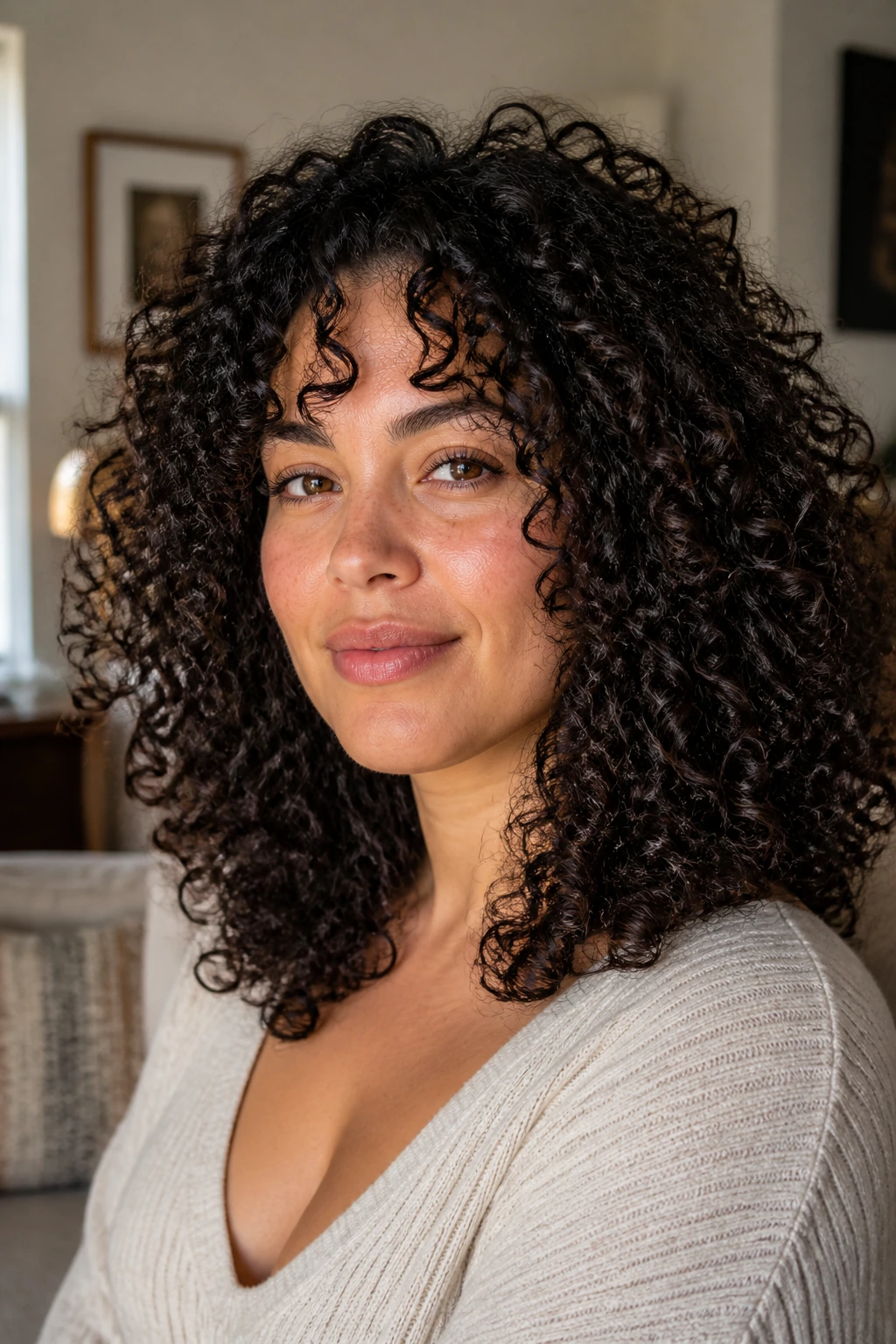
Dense ringlets do not need more shape on the outside. They need relief inside the haircut, where all that weight hides. Internal layers remove bulk without leaving the outer edge thin, which keeps the style from looking hacked apart.
For round faces, this is a good choice when the main problem is width at the sides. The hair can keep its perimeter and still shed enough weight to fall closer to the head. The key is restraint. Too much internal cutting and the ends start to fray; too little and the curls pile on top of one another like a stack of cushions.
Best use case
- Tight, dense ringlets that expand after washing.
- Hair that feels heavy around the cheeks and jaw.
- Curls that need shape without losing fullness at the ends.
This is the cut for someone who wants the hair to breathe, not balloon.
9. The Curly Pixie-Bob with Long Top Pieces
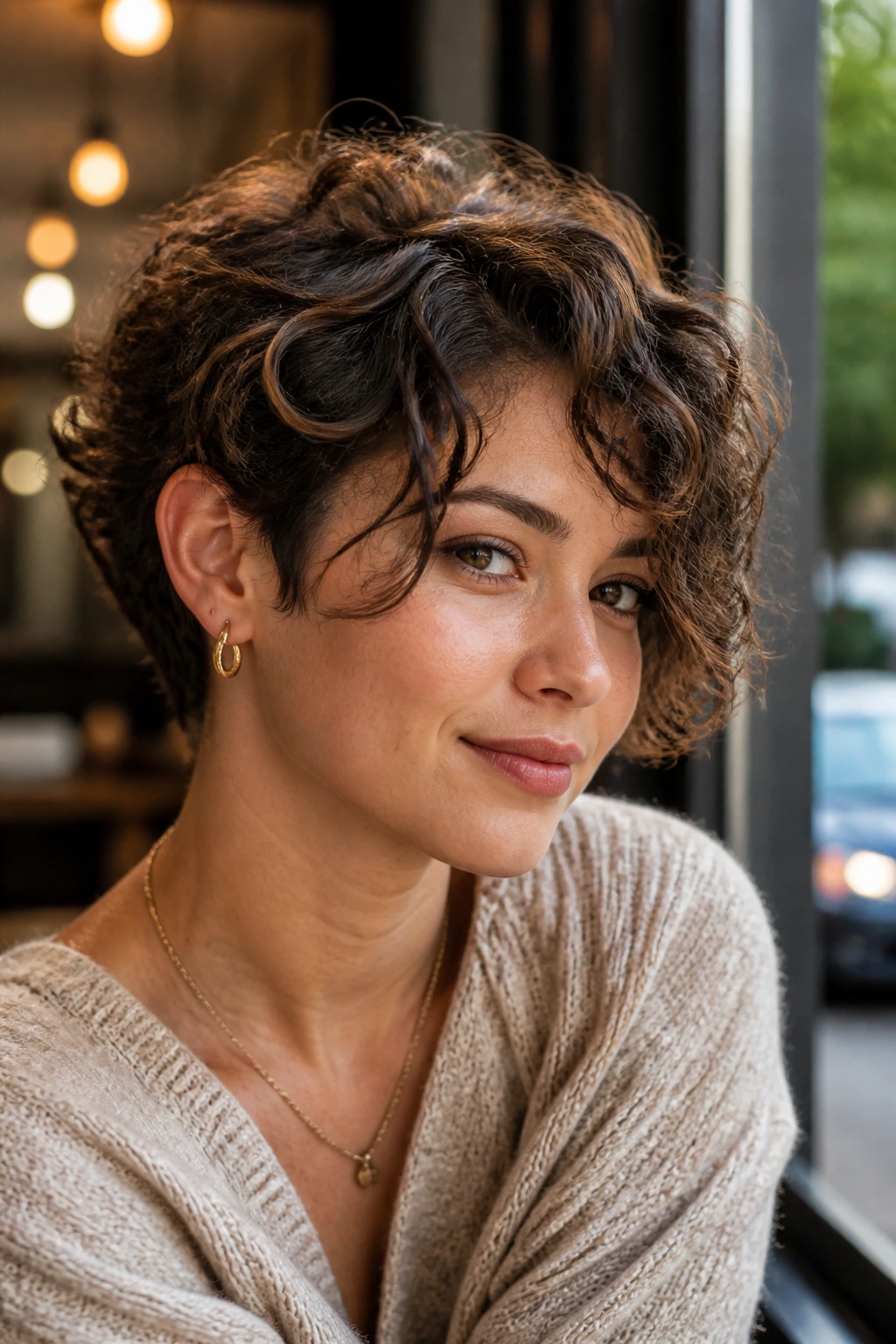
A pixie-bob on a round face only works if the top stays long enough to pull the eye upward. Short sides and a too-short crown will widen the face fast. Keep the top pieces soft and leave the front long enough to brush past the temples, and the whole look gets much smarter.
This cut is sharp, but not severe. The nape can be neat, the ears can be partly exposed, and the front curls can still drape forward a bit. That forward motion is what saves it. On curls with some spring, the top pieces can be styled with a little root lift and then left alone instead of sprayed into helmet shape.
If you want short hair but still want some face-framing length, this is the one to study. It is not timid. Good.
10. The Soft Mullet with a Slim Nape

The modern mullet works better than people admit, especially on curly hair. The trick is to keep it soft around the nape and longer in the front, so the hair creates a vertical line instead of a rounded dome. On a round face, that forward/back contrast changes the whole read.
I like this version when someone wants movement and a little edge but does not want the style to look punky in a harsh way. The top can stay airy, the sides can be lightly layered, and the back can taper just enough to keep the neck visible. If the nape is too bulky, the shape widens. If the front is too short, the face can feel boxed in.
This is a confident cut. It also grows out better than people expect, which is one reason it keeps hanging around.
11. The Center-Part Face Frame
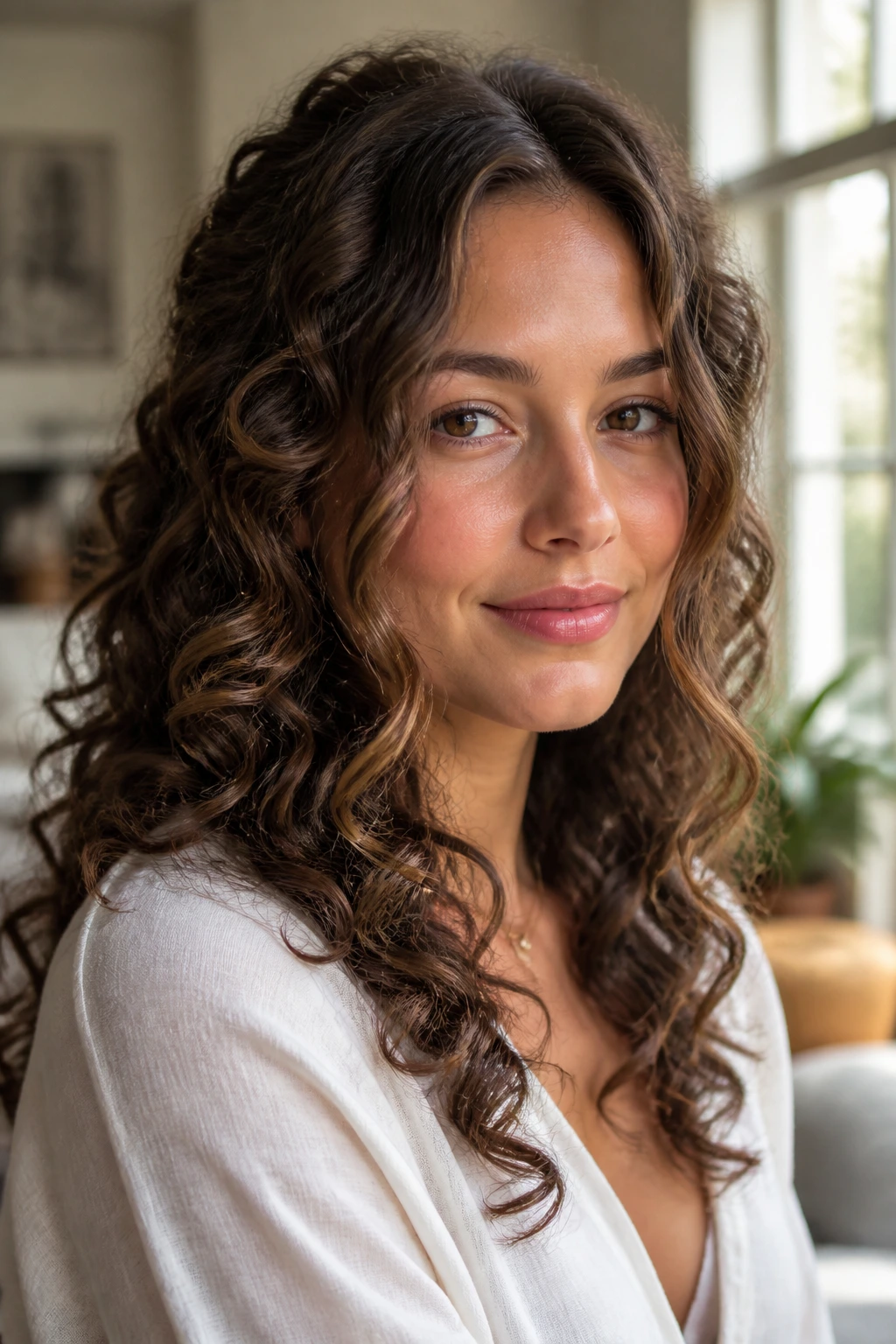
A center part can be tricky on a round face, but it is not automatically wrong. The key is length. The face-framing pieces need to start lower than the cheekbones and continue past the jaw so the part creates two long vertical lines rather than a short split in the middle of the face.
This shape works best when the curls have enough bounce to stay separated from the cheeks. If the front pieces are too short, the effect is wide and tidy in the worst possible way. If they are long enough, the cut looks elegant without getting fussy. The middle part also lets the hair fall evenly, which is useful when one side tends to puff more than the other.
It is a clean look, not a dramatic one. Sometimes that is the smartest move.
12. The Side-Bang Shoulder Cut
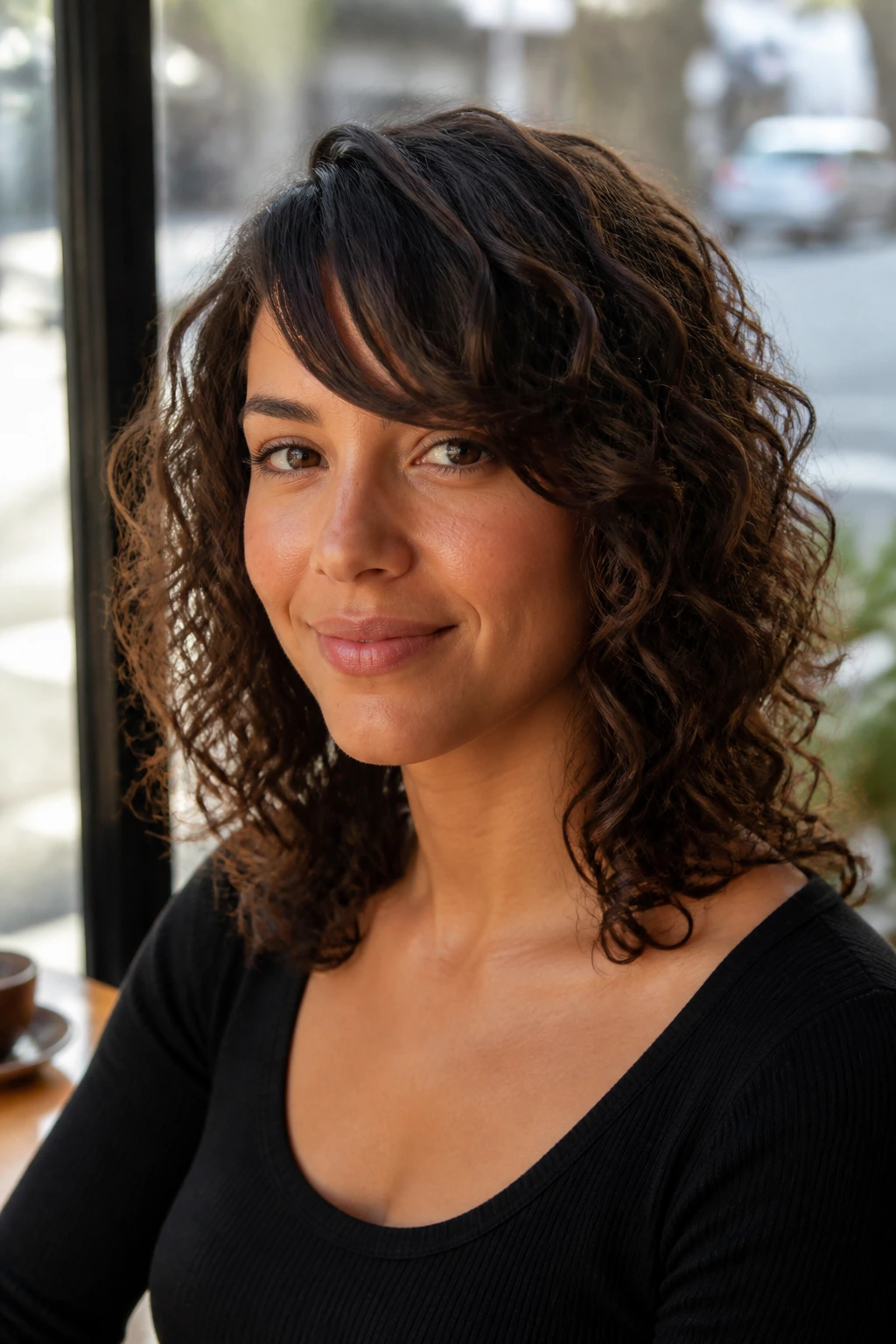
Side bangs are underrated on curly hair. Not the short, stiff kind that sit like a shelf. The long kind, the ones that sweep diagonally across the forehead and vanish into the rest of the layers.
On a round face, a shoulder-length cut with side bangs keeps the front soft while the length below the chin does the elongating. The bangs should start long enough to move past the brow and curve toward the cheek, but not stop there. If the stylist cuts them too high, they can make the face look shorter. Leave them longer and shape them once they spring up.
This cut is especially nice for people who want forehead coverage without the full commitment of blunt bangs. It gives movement, and it keeps the style from feeling one-note.
13. The Waterfall Layer Length
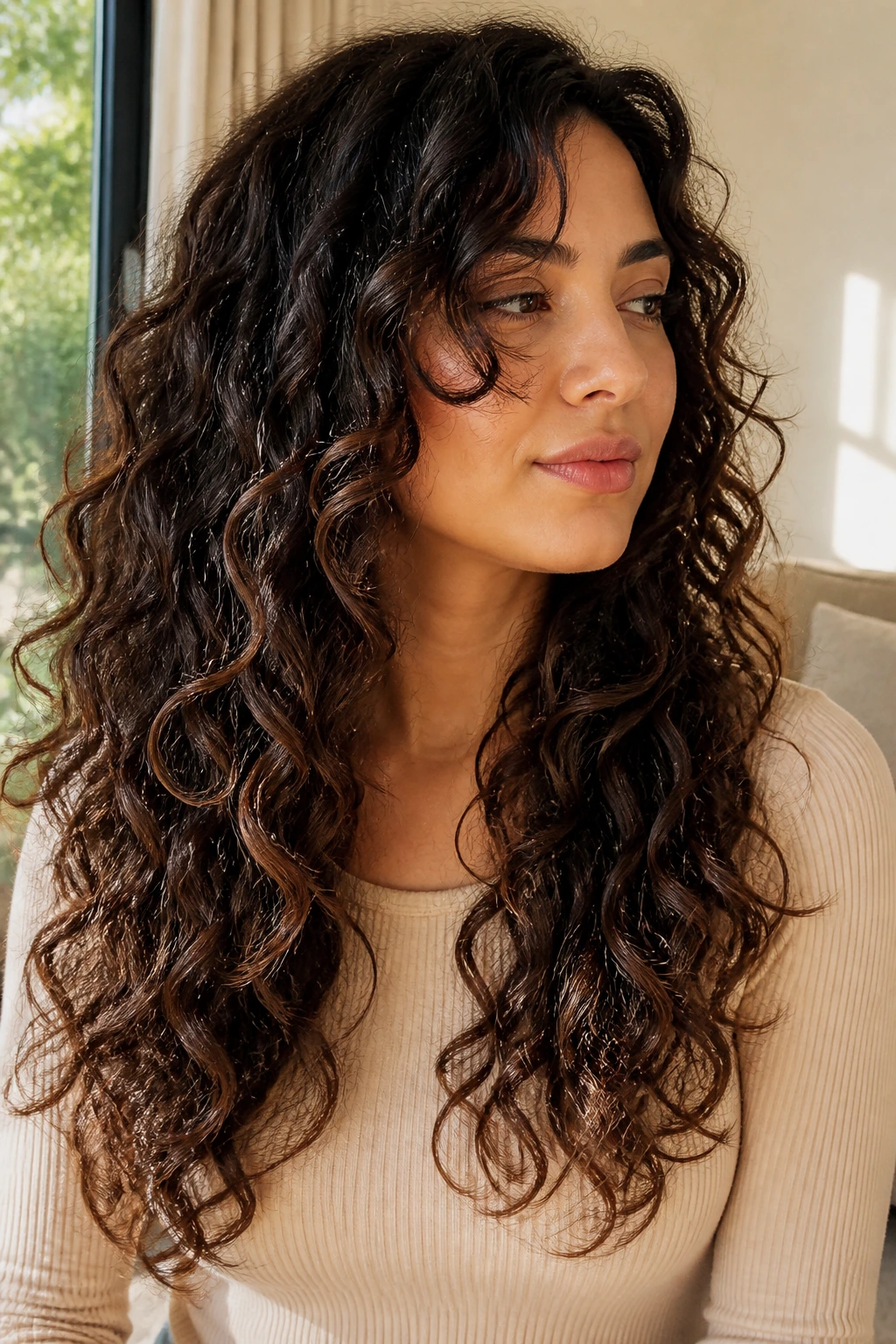
Waterfall layers are long, cascading layers that keep the base length while letting the curls fall in staggered pieces. On a round face, the beauty is in the gradual drop. There is no hard shelf, no blunt edge, no sudden stop at the widest part of the cheeks.
This works well on longer curls that need movement more than they need a dramatic shape change. If the layers begin too high, the hair can lose its weight and turn fuzzy. If they begin lower and flow toward the ends, the curl pattern stays rich and the outline stays soft. I like this on hair that you want to wear down often, especially when the ends tend to look heavy unless they are opened up a little.
It is not flashy. It is graceful, and there is a difference.
14. The Front-Long French Bob
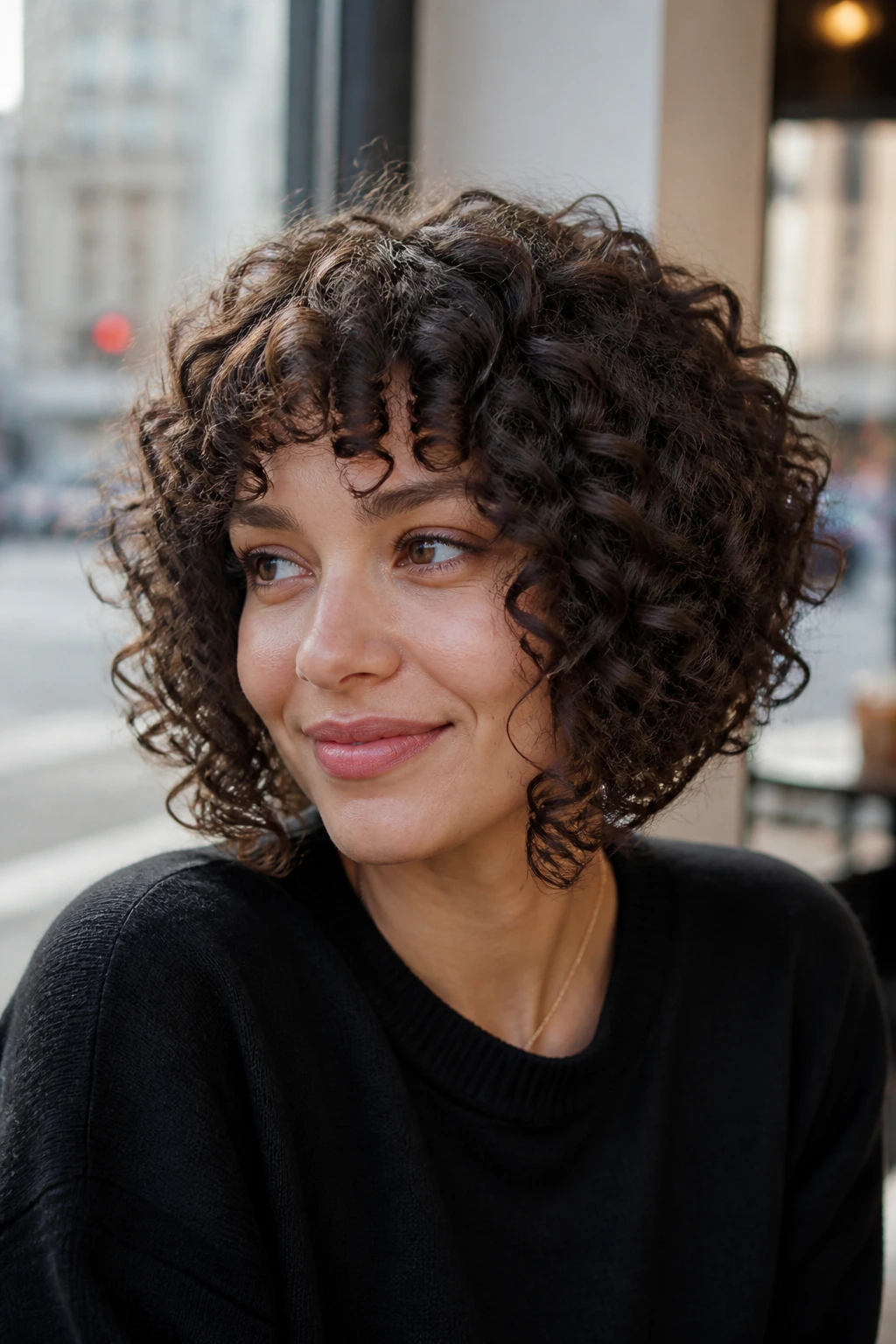
A French bob can work on a round face, but only if the front is left longer than the back and the shape does not stop right at the cheek. That little bit of extra length turns the cut from boxy to directional.
The best version keeps the nape clean, the crown soft, and the front pieces swinging closer to the jawline. On curly hair, the bob should be cut with shrinkage in mind, because a chin-length French bob can turn into a cheekbone bob faster than you think. If you want a bob that feels chic instead of bubble-shaped, this is the safer version.
I like it for people who want a shorter cut without losing the sense of line. It has structure, but not stiffness.
15. The Tapered Coil Shape
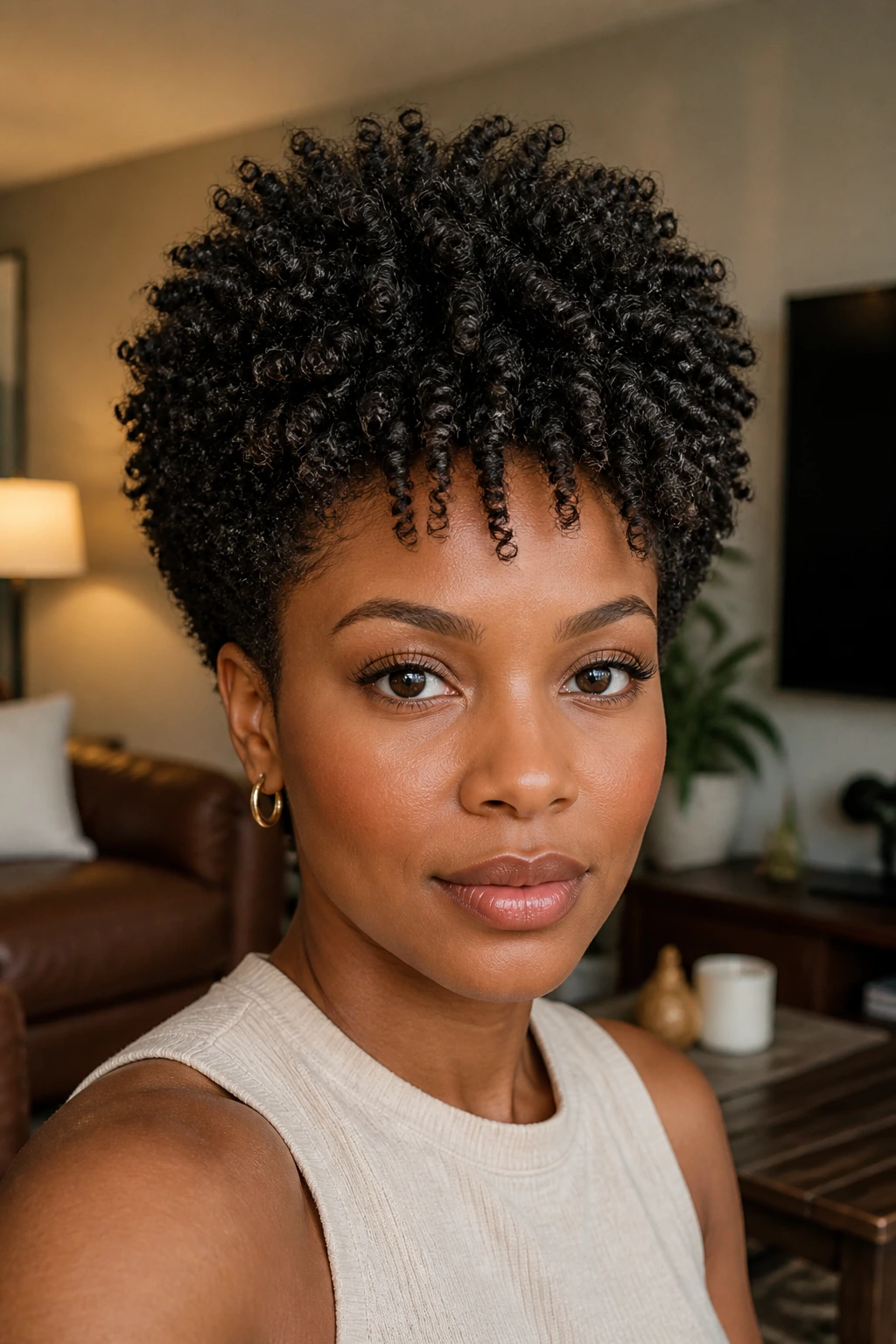
Tapered layers on coils can be gorgeous when they are done with restraint. The sides and back stay close enough to the head to keep the shape clean, while the top keeps a little more room for lift. That contrast is what keeps a round face from reading wider.
For 4A to 4C hair, this cut should be built around shrinkage, not against it. The curls will compress and spring up, so the stylist has to leave room for that movement. Do not let anyone thin the outside too aggressively; coils often need density to look full and healthy. Tapering should clean the shape, not leave it patchy.
This one is great if you want a sculpted outline and you are tired of the side halo. It makes the face feel taller without chopping off personality.
16. The Disconnected Spiral Cut
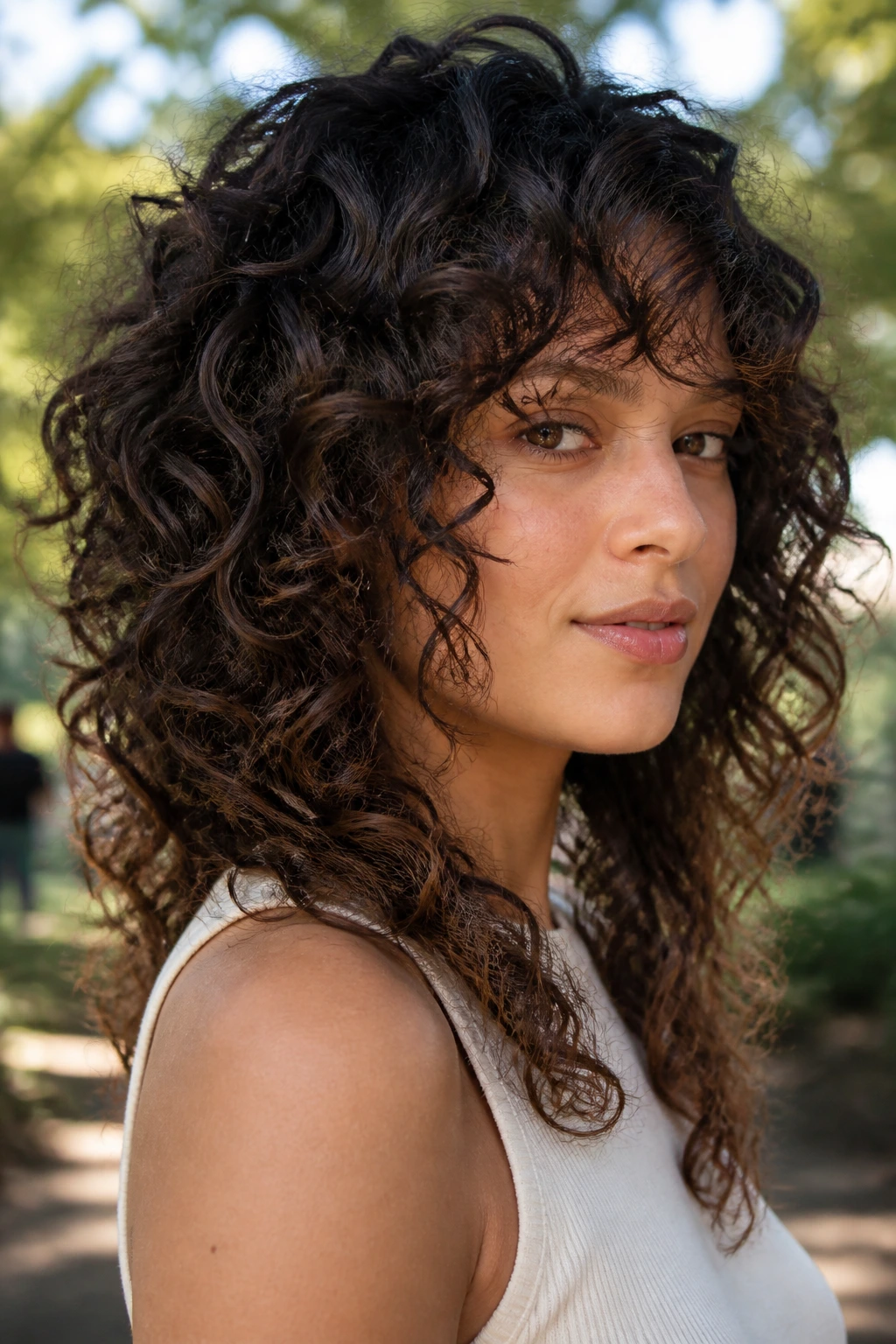
Disconnected layers sound technical because they are. In plain English, this means some sections stay clearly longer while other sections are cropped shorter, and the difference is visible on purpose. On curly hair, that can create a strong shape without relying on heavy blending.
On a round face, the disconnected approach can work if the shorter pieces sit higher and farther back, while the front stays elongated. It gives the hair a little architecture. The style looks deliberate, not accidental, and that matters when curls can already feel chaotic. If your hair is dense, this cut can take a serious amount of weight out without making the ends too flimsy.
It is not the quietest option on this list. It is the one for someone who wants the haircut itself to have attitude.
17. The Weightless Curly Lob
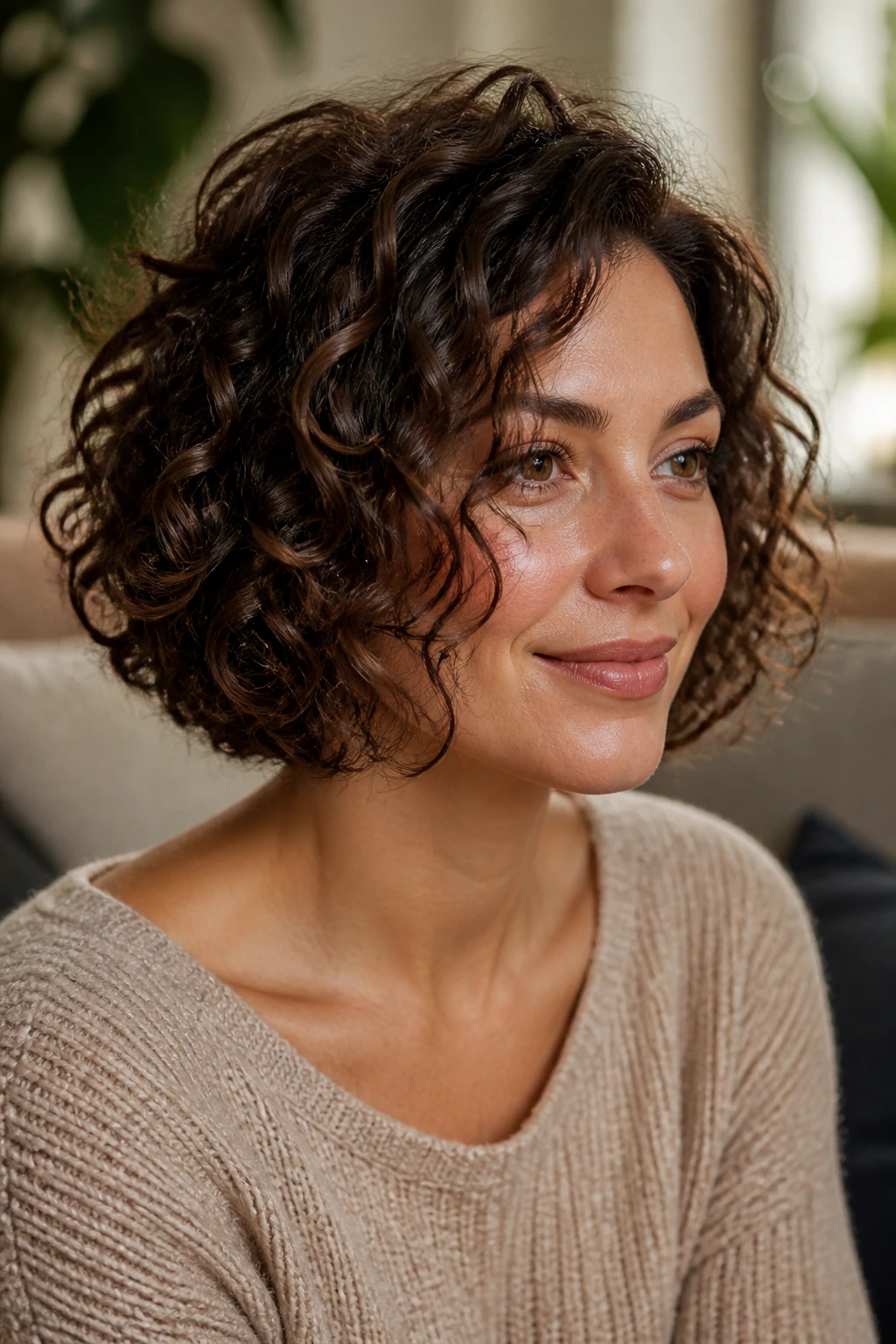
A curly lob only works on a round face when the weight is handled carefully. Leave too much bulk at the bottom and it becomes a shelf. Remove too much and the ends go wispy. The sweet spot is a lob with hidden weight removal and a front line that slips just below the chin.
This version is excellent for fine-to-medium curls that need lift but not aggression. The layers stay long enough to preserve fullness, while the underside loses just enough bulk to let the curls swing. If you wear your hair down most days, this shape gives you movement without asking for a complicated styling routine.
It is probably the least fussy cut in the bunch. I trust it for people who want a clean line with enough softness to keep it from looking strict.
18. The Butterfly Layer Curl Cut
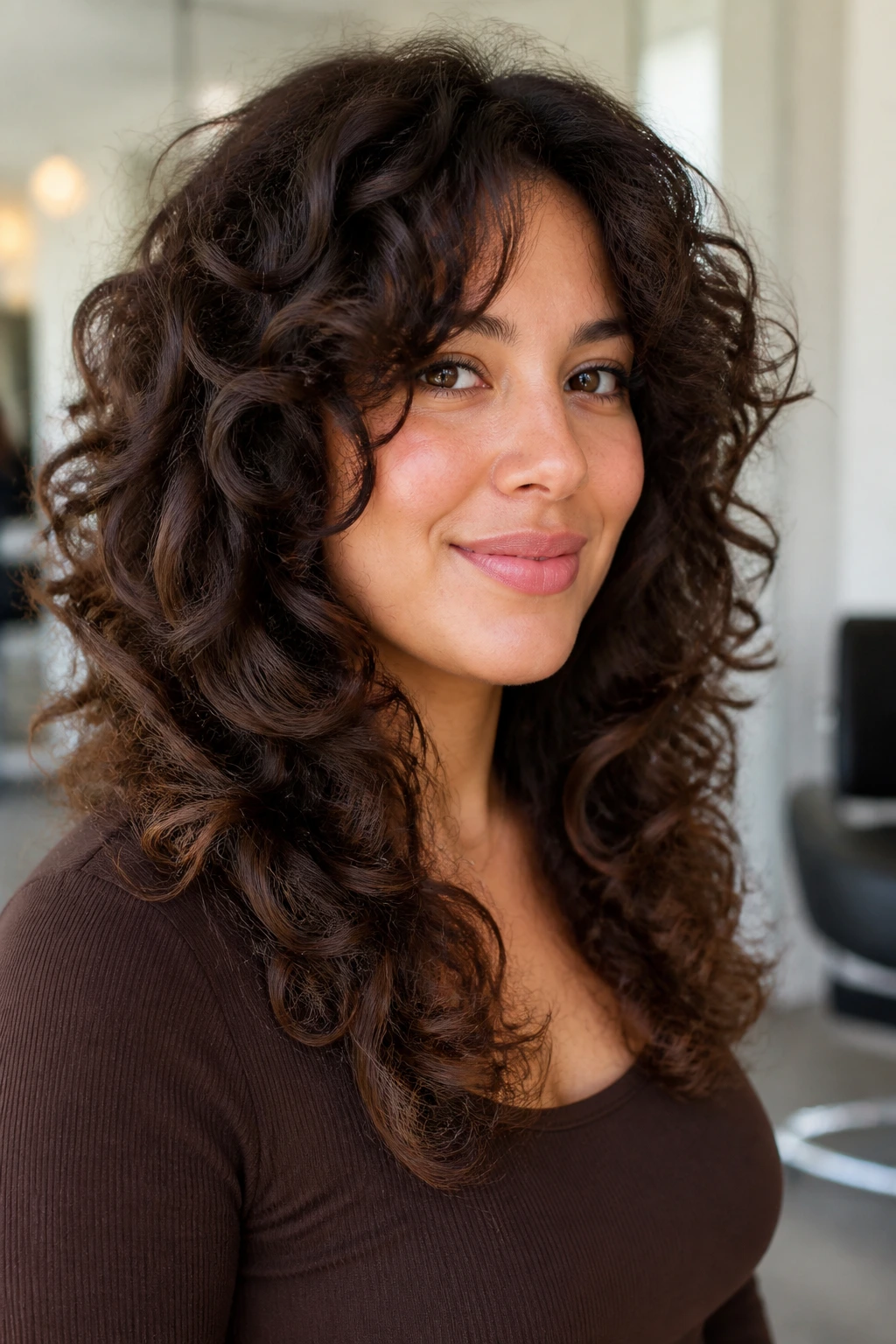
Butterfly layers are popular because they give two things at once: a lifted top section and a longer lower section. On curly hair, that contrast can look expensive without feeling over-styled. On a round face, the short upper layers help with height, while the long lower layers keep width under control.
The most important part is where the face frame lands. Keep it lower than the cheeks, and let the shorter top layers stay soft enough to blend rather than stack. This cut can look especially good when diffused with clips at the roots, because the crown lift opens the face without making the sides puff out.
If you like hair that feels bouncy and full but not square, this is worth a serious look. It has movement built into it from the first snip.
19. The Diagonal Fringe Cut

A diagonal fringe is a smart middle ground between no bangs and full bangs. It sweeps across the face at an angle, which is useful on a round face because it adds a line that goes down and across instead of straight across. That diagonal does more than people think.
On curly hair, the fringe should be cut longer than your instinct says. Curls bounce up, and a fringe that sits at brow level when wet can end up too short after it dries. The rest of the cut can stay medium or long, but the fringe should move into the face frame instead of stopping dead.
This is a good choice if you want a softer forehead line without giving up length or shape elsewhere. It is also kinder to grow-out than blunt bangs, which is a nice bonus.
20. The Crown-Forward Volume Cut
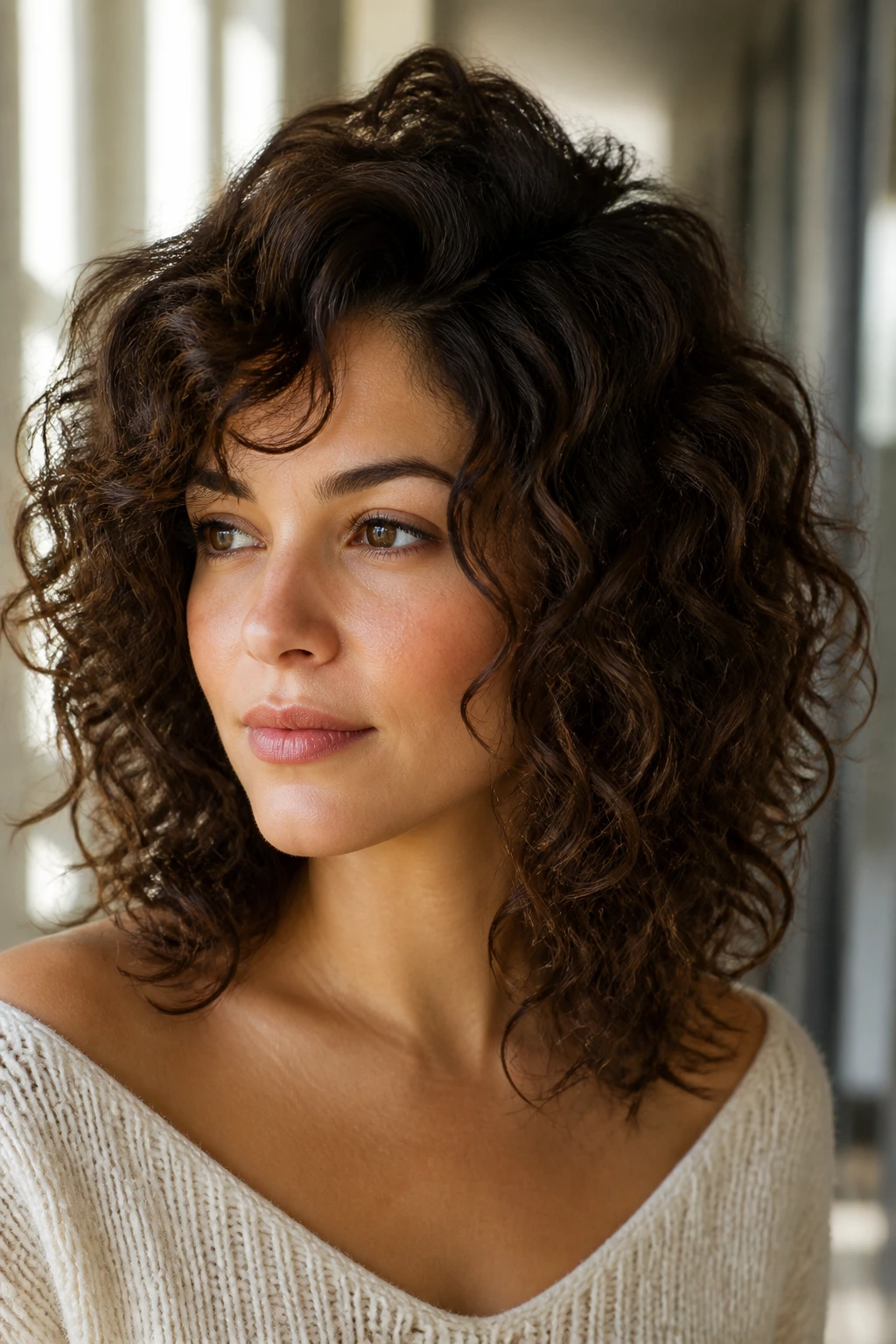
Here’s the thing: round faces usually need height more than they need side volume. A crown-forward cut puts the lift where it helps most, then keeps the sides a bit calmer so the silhouette stretches upward. It sounds simple. It is. And it works.
This cut is especially good for hair that collapses at the roots and flares at the ends. The layers near the crown give the top some air, while the front and side pieces stay long enough to frame the face instead of widening it. If you diffuse, lean your head forward and clip the roots near the part; that helps the crown lift without sending all the puff to the sides.
This is one of my favorites for curl patterns that flatten easily. The shape looks awake.
21. The Shaggy Mid-Length with Curved Ends
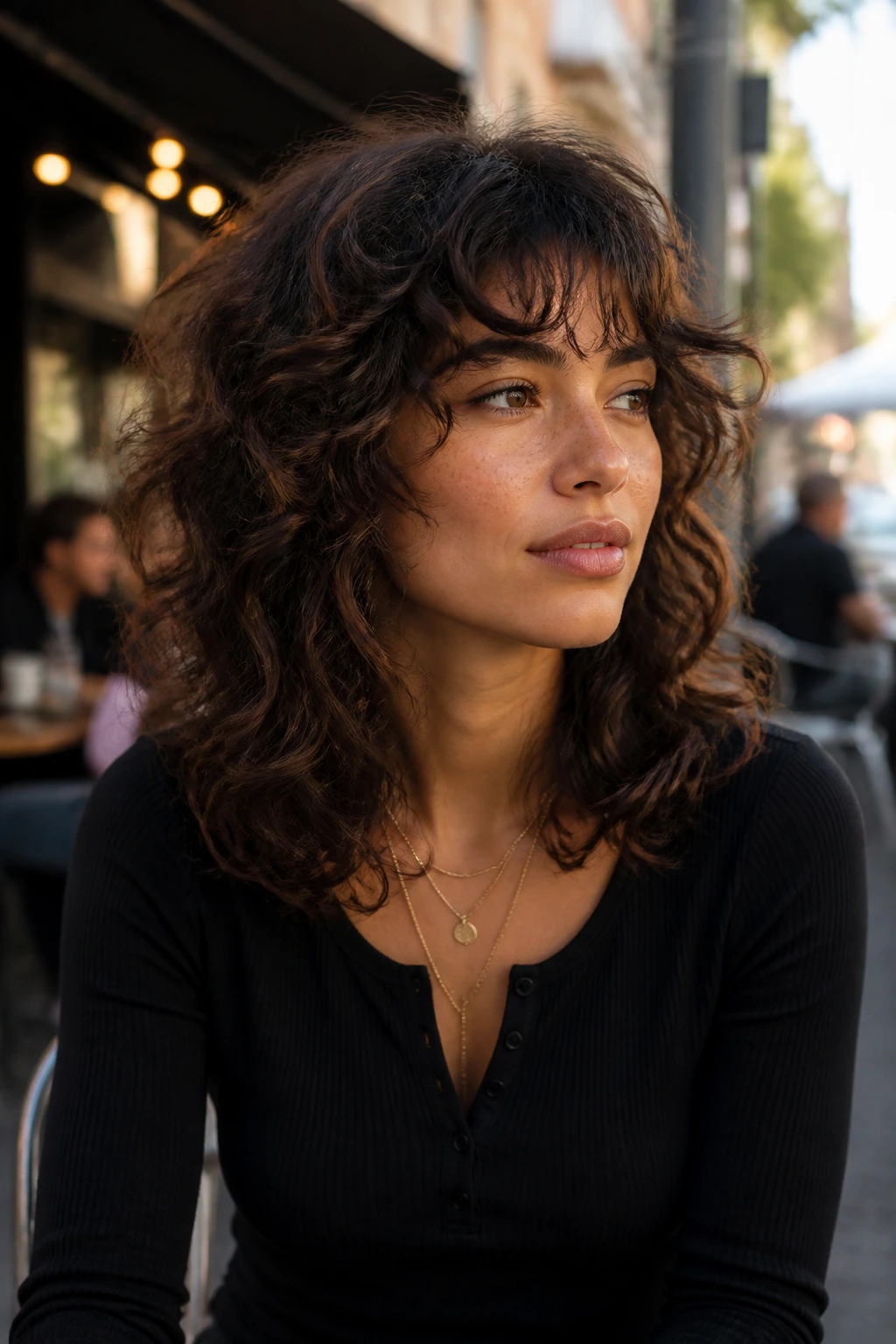
A shag does not have to be loud to be useful. At mid-length, with curved ends and soft layer breaks, it gives curly hair a bit of swing while keeping enough length to avoid that mushroom shape round faces can pick up from shorter cuts.
The curved ends matter. They stop the line from feeling square, and they let the curl pattern create a softer finish around the jaw and shoulders. This version works well on 2C to 3C hair that wants movement but still needs enough perimeter to look full. If the layers are cut too high, the shape can get too airy and start to frizz out. Leave the bottom enough weight to support the curls.
This is a smart everyday cut. It behaves well in daylight, which is when hair either earns its keep or does not.
22. The Chin-Angled Bouncy Bob

A bob on a round face needs an angle, not just a line. If the front pieces angle below the chin and the back sits slightly shorter, the cut can actually make the face look longer. On curly hair, the bounce of the curl makes that diagonal even clearer.
The biggest mistake with this shape is letting the shortest pieces sit right at the cheek. That’s the line that can widen the face. Push the shortest point lower, keep the front longer, and let the curls spring into place on their own. This is especially flattering if you like a polished finish and do not want a shaggy look.
It has a tidy silhouette, but it is still alive. That combination is harder to find than it sounds.
23. The Subtle Nape Taper Long Cut

Long hair does not need to sit heavy all the way through the back. A subtle nape taper removes some of that weight where it gathers under the crown, which keeps the shape from turning into one thick curtain. On a round face, that little taper matters because it helps the front stay the focus.
This cut is best when you want to keep length but avoid bulk at the back of the neck. It is a quiet fix, not a dramatic one. The front pieces can stay long and face-framing, while the back gets enough refinement to move instead of hanging in one block. If your hair feels dense but you are attached to length, this is a smart compromise.
It grows out gracefully too, which is more valuable than people give it credit for.
24. The Sweeping Bang Coil Shape
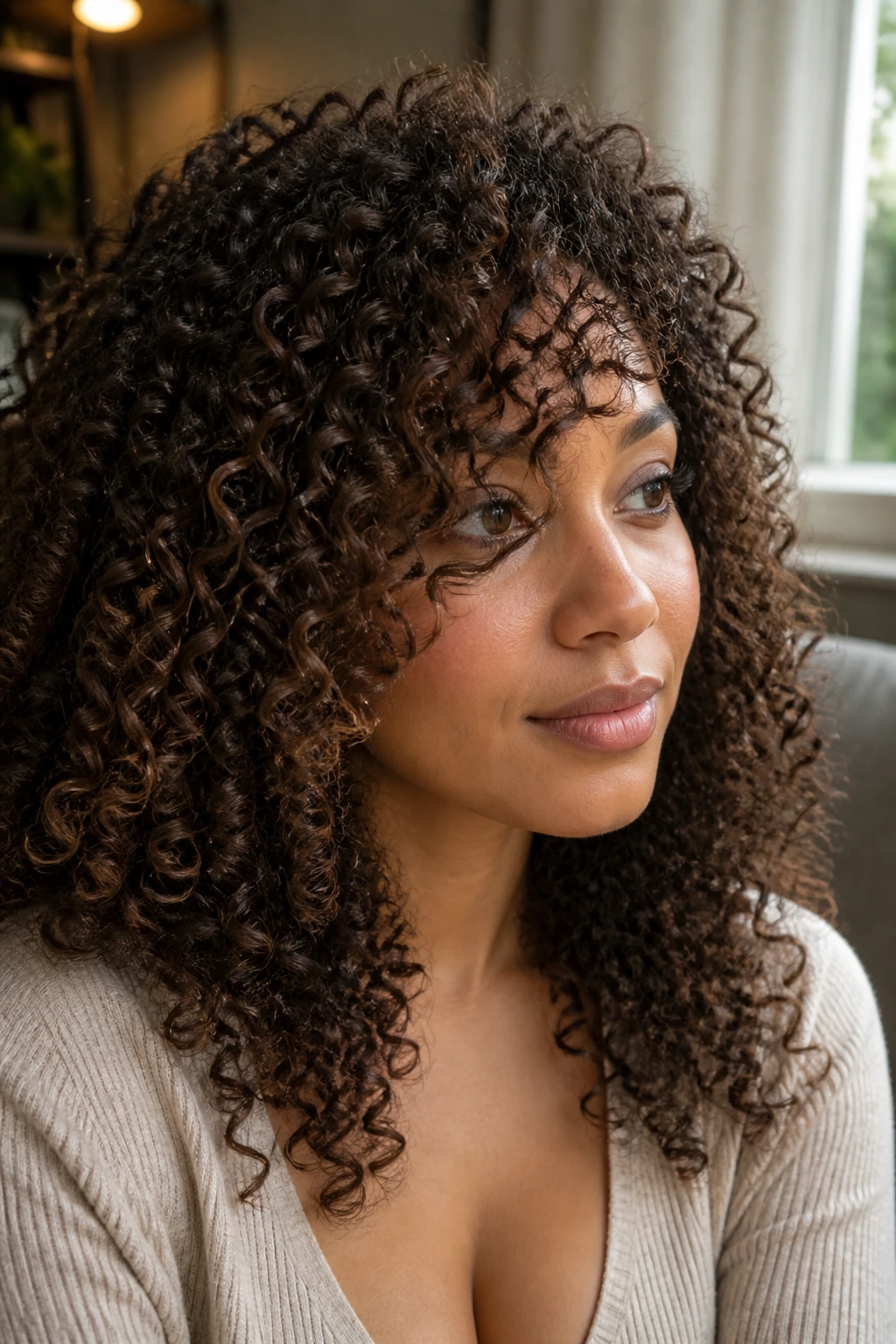
Sweeping bangs can look fantastic on coils, but only when they are left longer than a straight-hair version would be. The curl pattern adds lift, so the fringe needs room to rise and fall without shrinking into a hard line. On a round face, the sweep creates a diagonal that softens the width through the cheeks.
This cut works best when the bangs are blended into the front layers instead of separated like a little curtain of their own. You want motion, not a shelf. The rest of the haircut can stay medium or long, which helps the fringe feel balanced rather than isolated. If you wear your coils in twist-outs or stretched styles part of the time, the fringe should still look good in both states.
The right sweeping bang can make the whole cut feel lighter. The wrong one can take over the face. So the length matters.
25. The Elongated Front-Corner Finish
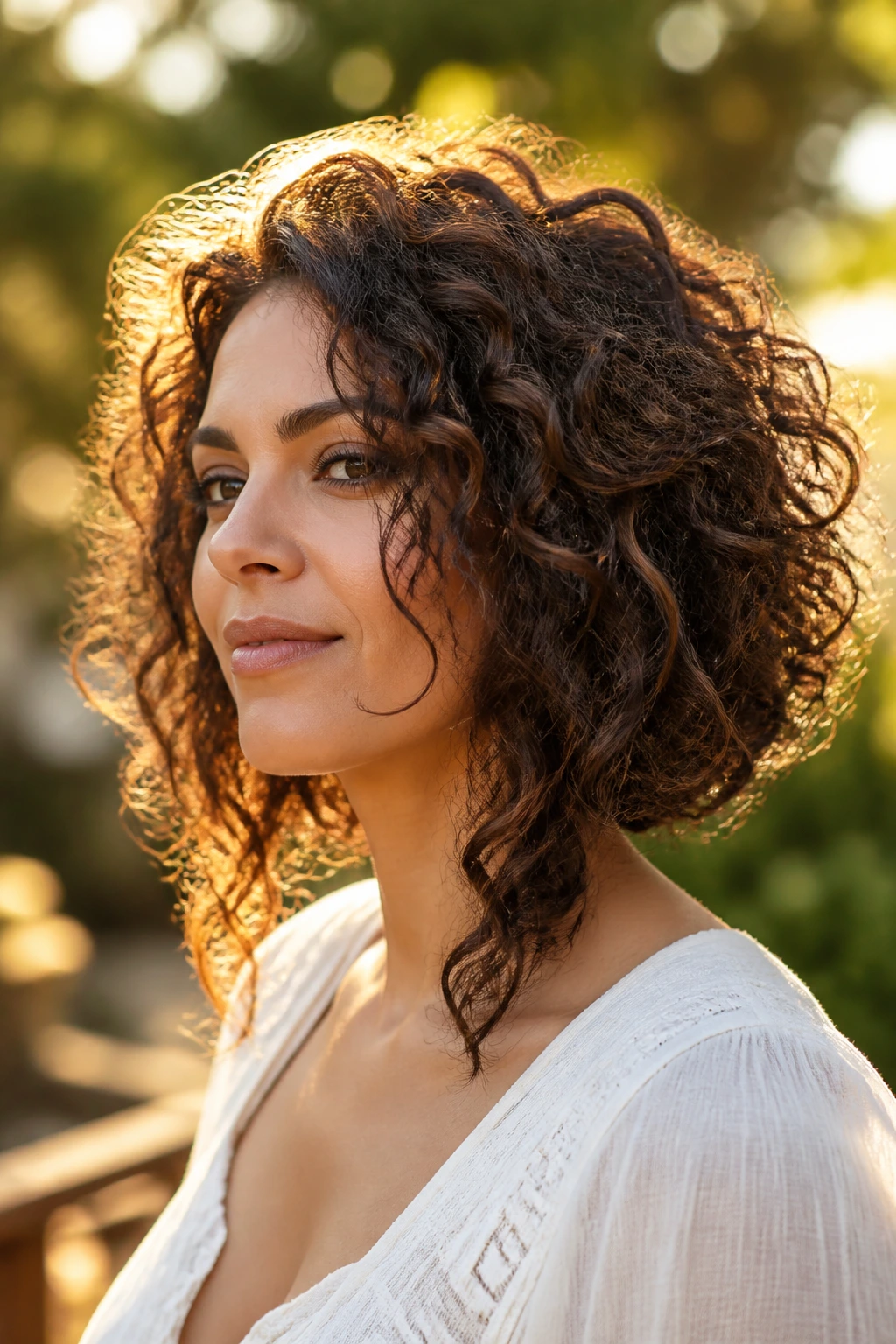
This is the shape I like as a final answer for someone who wants volume, length, and a cleaner outline all at once. The front corners are left long enough to stretch the face, the middle stays controlled, and the back can be tailored to the density of the curls. It is a strong closing move because it solves the width problem from the front and the side.
The cut works across a lot of curl patterns, but the details need adjustment. Fine curls need long layers and light internal removal. Dense curls need more weight taken out underneath. In both cases, the longest front pieces should sit below the jawline once dry, because that’s where the elongating effect finally lands.
It is the kind of cut that looks ordinary in the chair and then suddenly makes sense once the curls dry. That is usually a good sign.
Practical Ways to Wear the Cut Without Losing the Shape
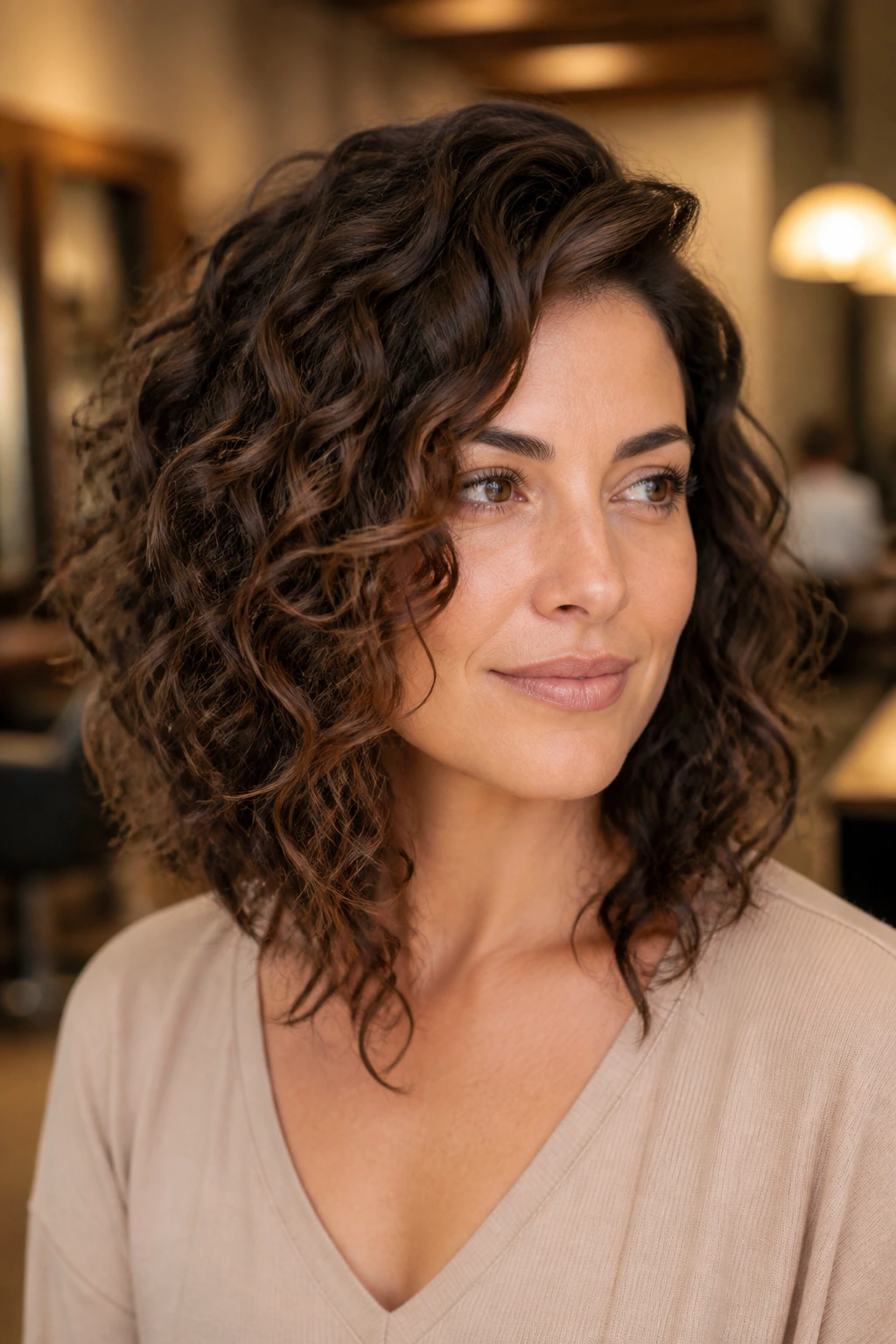
The haircut only does half the job. The other half is how you dry it, part it, and let it settle. On curly hair, a few degrees of angle can do more than an entire shelf of products, so I prefer to keep the routine simple and controlled.
Stylist brief: bring one front-facing photo and one side-view photo. Curly cuts are easier to explain in profile because the front alone hides too much. Tell the stylist where your curls shrink the most, because the safest starting point on a round face is usually lower than people think.
Parting trick: if your face reads widest straight down the middle, try a soft off-center part. Even a half-inch shift changes where the hair collapses and where it lifts. That small move can stretch the face without touching the haircut.
Drying rule: diffuse on low heat and low speed until the roots are set, then stop touching the hair. Once the clumps are formed, too much scrunching breaks them apart and makes the sides bloom. A microfiber towel or T-shirt is enough at the start; rough cotton towels are where a lot of halo frizz begins.
Product weight: keep heavy creams away from the face frame if your curls already puff at the cheeks. Use a lighter leave-in or mousse near the front and save richer creams for the denser back sections. The front should swing, not collapse.
Common Mistakes That Make Layered Curls Puff Sideways
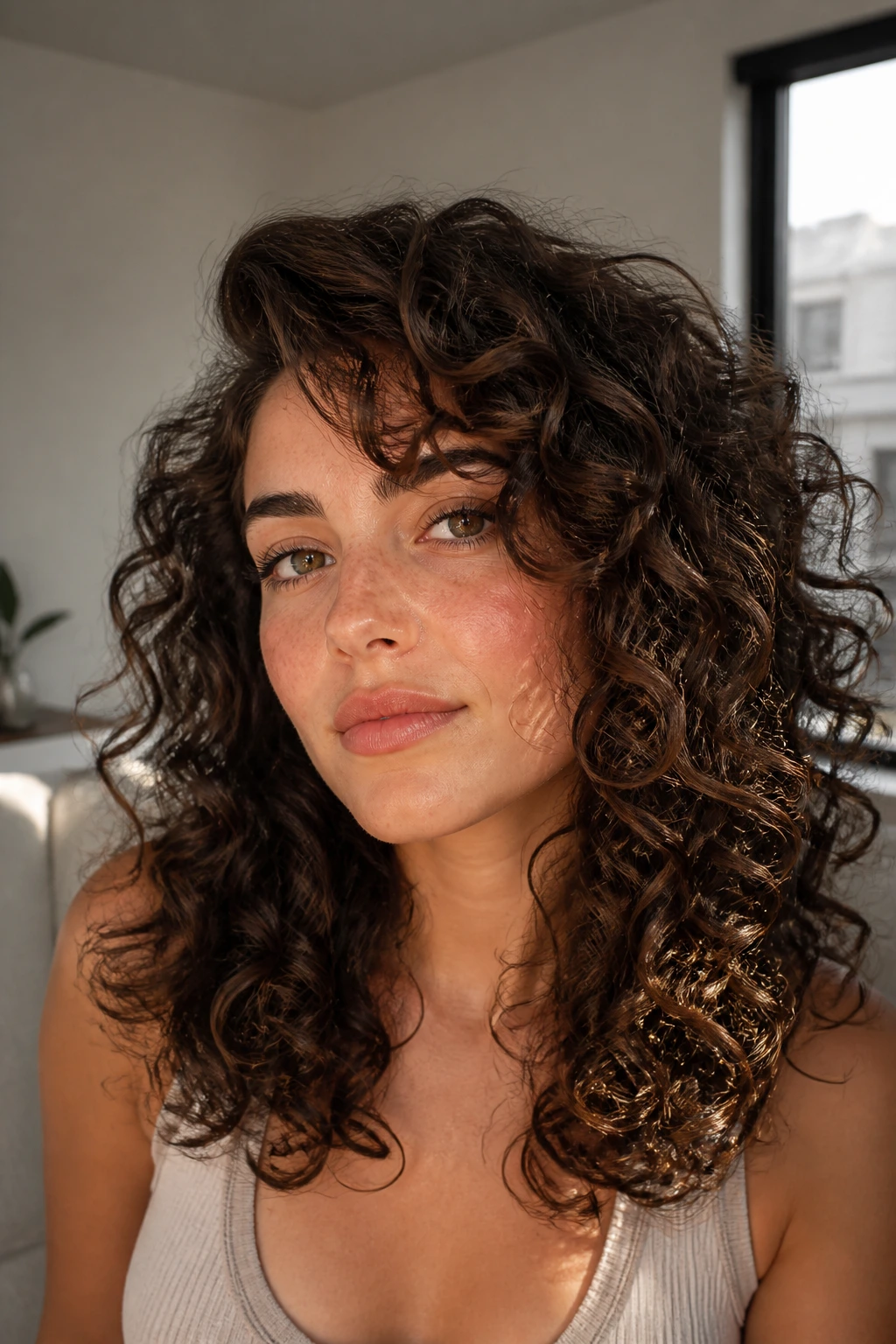
Cutting the shortest layer at the cheekbone
This is the big one. The symptom is easy to spot: the face looks wider even though the haircut has layers. The fix is just as simple, though not always easy in the chair—move the shortest face-framing piece lower, usually past the cheek and toward the jaw.
Thinning the outside too much
If the ends start looking see-through or frayed, the stylist took too much off the perimeter. Curly hair often needs outer density to keep its shape. Internal removal is usually safer than aggressively slimming the outer shell.
Forgetting shrinkage before the first big snip
A curl that seems long at the bowl can spring up much shorter once dry. If the haircut ends up too short in front, the face gets boxed in fast. A dry check, a curl-by-curl approach, or a staged cut prevents that mistake.
Building volume only at the sides
Side volume can look pretty in the mirror and wrong in motion. On a round face, you want lift at the crown and length through the front, not a puffed-out halo around the ears. Keep the sides controlled and let the top do the rising.
Cutting bangs too short while wet
Curly bangs are sneaky. They always bounce higher than expected, and a safe wet length can become a very tiny fringe after drying. Leave more length than you think, then refine once the hair is fully dry.
Variations and Alternatives Worth Trying
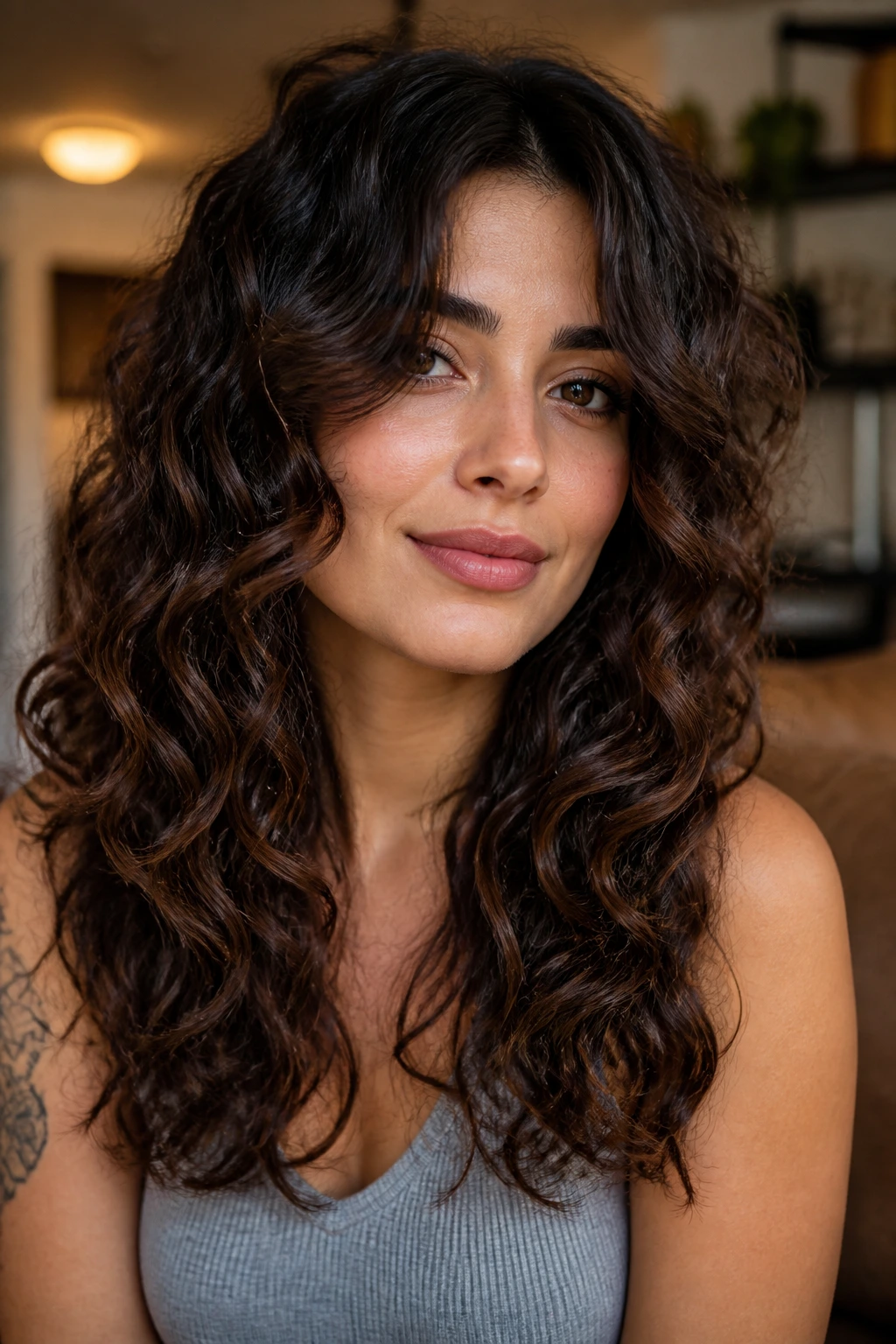
The Softer Sweep: Keep the front longer and let the layers blend more gradually. This is the low-risk version if you like the idea of uneven layers but do not want visible contrast.
The Bold Split: Go for a deeper asymmetry with one side noticeably longer than the other. It gives a sharper line and works best when you tuck one side back now and then.
The Coily Halo Fix: For 4A to 4C hair, keep the top a little fuller and taper the sides and nape just enough to stop the halo effect. This version respects shrinkage instead of fighting it.
The Fine-Curl Rescue: If your curls are light and prone to frizz, keep the layers long and sparse. Too many short layers can leave the ends wispy and make the whole cut look tired fast.
The Fringe Swap: If bangs scare you, use long curtain pieces or a side sweep instead. You get face framing without committing to a blunt fringe that may need constant trimming.
Tools, Products, and Salon Resources That Help
-
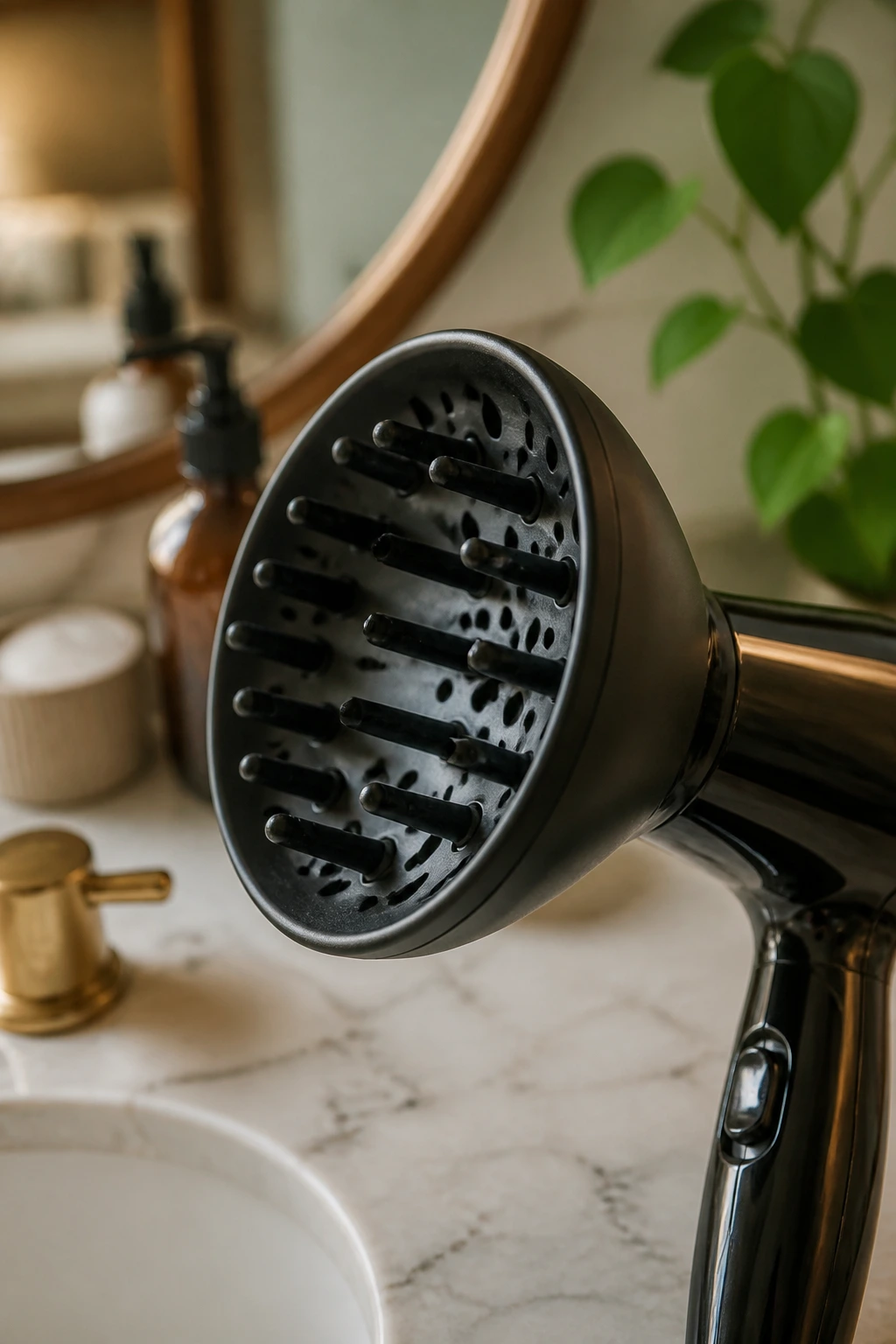
Diffuser attachment — This gives your roots lift while keeping the curl clumps intact, especially useful on layered cuts that can collapse at the crown.
-
Microfiber towel or cotton T-shirt — Better than a terry towel for blotting water from the ends without roughing up the face frame.
-
Wide-tooth comb — Good for detangling in the shower or while conditioner is still in the hair; it keeps the layers from tangling into one wet mass.
-
Sectioning clips — Helpful for setting a clean side part or pinning front pieces where you want them while they dry.
-
Leave-in conditioner — Use a light hand near the front and more where the hair is dense or dry.
-
Curl cream or mousse — Cream adds slip, mousse adds lift; many layered curly cuts do better with a lighter hold product near the cheeks.
-
Light gel — Useful if you want the front pieces to keep their shape instead of frizzing outward by lunch.
-
Hand mirror — A small one helps you check the nape, which matters more than people think when the cut is tapered.
-
A stylist who dry-cuts curls — Not a tool, but worth treating like one. A curly-cut specialist sees the shape before the shrinkage does.
Keeping the Shape Between Salon Visits
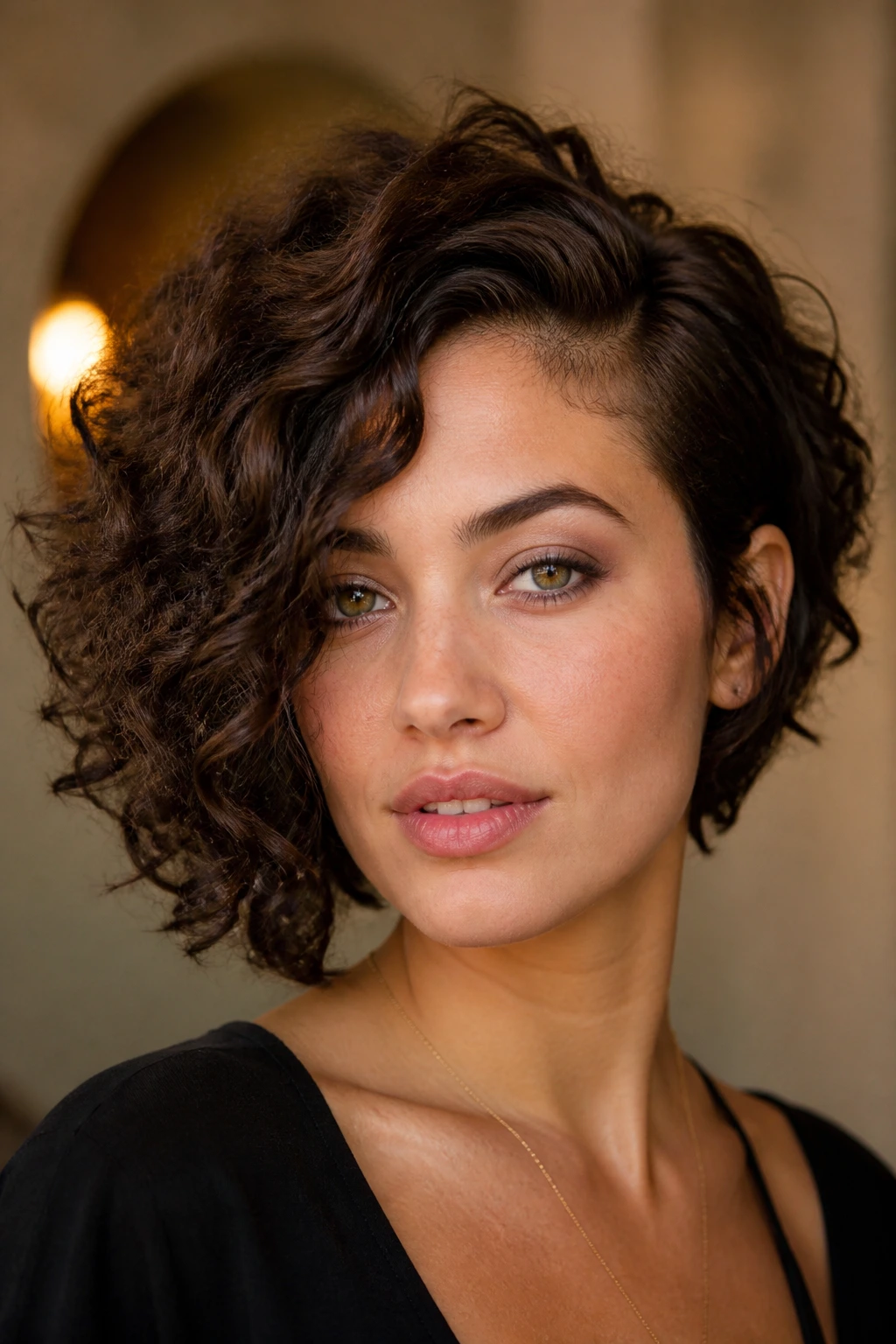
Curly layers hold their best shape when the trim schedule matches the cut. Shorter cuts like bobs and pixie-bobs usually need attention every 6 to 8 weeks if you want the line to stay clean. Longer layered cuts can stretch to 10 to 14 weeks, though the front frame may need a small cleanup sooner if it starts sitting in the eyes or curling into the cheeks.
Night care matters too. A loose pineapple, a silk bonnet, or a silk pillowcase keeps the front pieces from getting crushed flat on one side. If the curls wake up bent, mist the front with water, add a pea-sized amount of leave-in, and reshape only the pieces that need it. Don’t soak the whole head again unless you want to restart the style from scratch.
Product buildup can make layered curls sag at the sides. A gentle clarifying wash every 3 to 4 weeks clears that out. If the haircut starts looking boxy, heavy, or puffy only at the cheeks, the problem is often shape, not product. That usually means the cut needs a dusting, not a total redo.
Frequently Asked Questions

Will uneven layers make a round face look wider?
Not if the shortest layers are placed carefully. The width problem usually happens when the face-framing pieces stop right at the cheeks or when the sides get all the volume while the crown stays flat.
Are these cuts better on loose curls or tight coils?
They work on both, but the details change. Loose curls often need longer front pieces and a cleaner diagonal, while tight coils usually need more shrinkage room and a lighter hand with thinning.
Should curly hair be cut dry or wet for this kind of shape?
Dry cutting is usually safer because you can see the curl pattern and the shrinkage at once. Wet cutting can still work for refining or cleaning up the perimeter, but dry cutting gives a more honest preview.
Can fine curly hair wear uneven layers?
Yes, but keep the layers long. Too many short layers can make the ends look thin and the crown look flimsy, which is not the effect you want on any face shape.
Do bangs work with a round face and curly hair?
They do, as long as they are long enough to move. Curtain bangs, side-swept bangs, and sweeping fringe are easier to live with than short blunt bangs that sit too high once the hair dries.
How often should I trim uneven layers?
Shorter cuts usually need shaping every 6 to 8 weeks. Longer cuts can go 10 to 14 weeks, but if the front starts landing at the cheek and widening the face, it is time for a small cleanup.
What if the layers look too choppy after the cut?
First, style them with water, a light leave-in, and a diffuser before deciding they are wrong. Curly hair often softens once it clumps together; if it still looks too broken up after styling, ask for a gentler blend at the next visit.
Can I style these cuts without heat?
Absolutely. In fact, most of them look better when air-dried or diffused on low heat, because the natural curl pattern keeps the angles from getting flattened into one shape.
A Shape That Gives the Curls Room
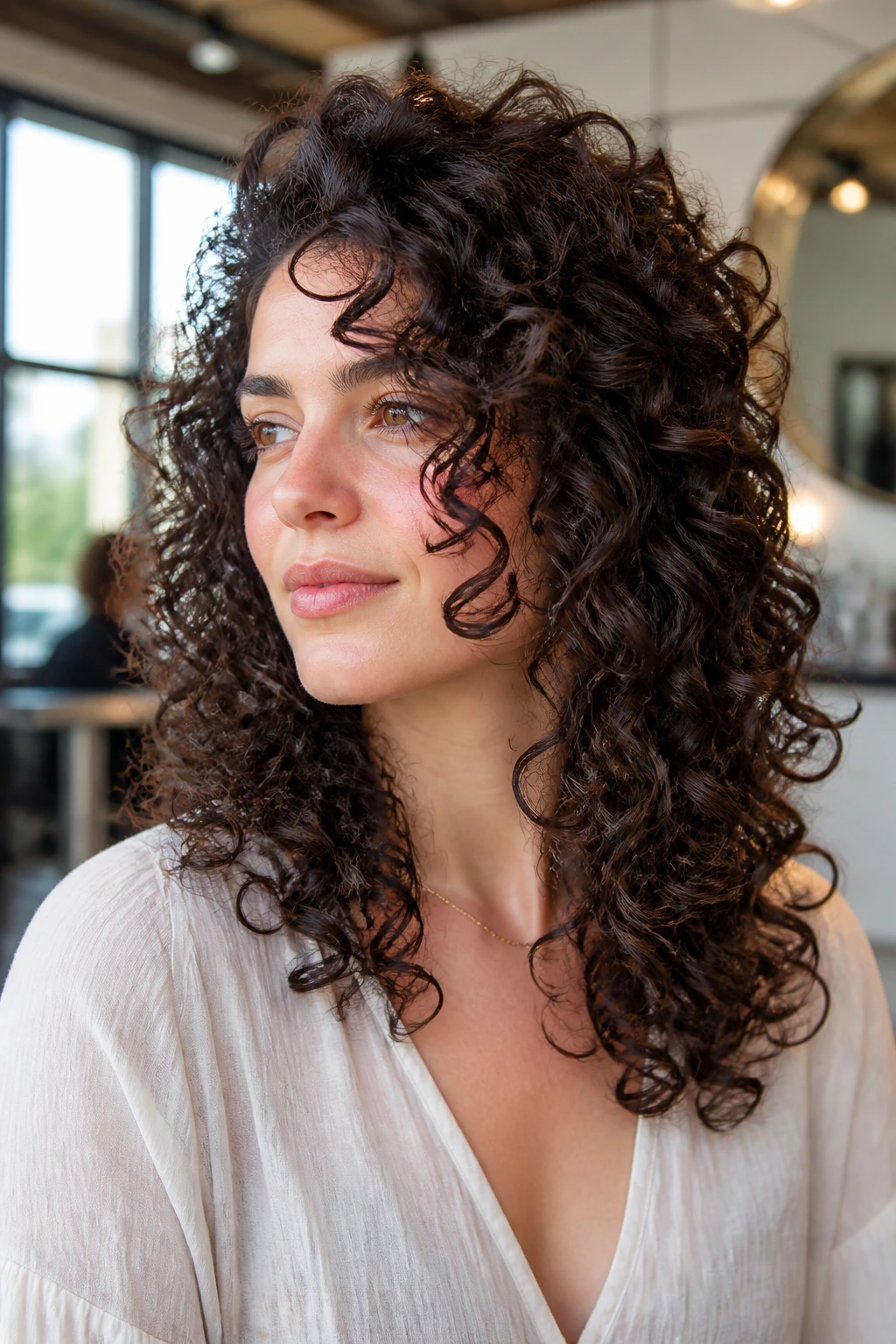
The best uneven layers for curly hair and round faces do one thing very well: they give the curls a route to follow. The hair can move, the face can lengthen, and the whole shape stops fighting itself. That is the real win, not some magical trick or a cut that looks good only from one angle.
If you are bringing one of these ideas to a stylist, keep the conversation practical. Talk about where your curls shrink, where your face feels widest, and how much length you are willing to keep in the front. The right answer is usually a little lower, a little longer, and a little more diagonal than your first instinct.
The next good haircut is probably hiding in one of those small adjustments.