



Medium long layers for round faces with thick hair have one job, and it’s not subtle: they need to pull the eye down, tame the sides, and keep all that density from blooming out around the cheeks. Get the cut wrong and the hair can sit like a bell. Get it right and the whole shape looks longer, cleaner, and far easier to live with on the second and third day after washing.
That’s the part people miss. Thick hair isn’t hard because it lacks body. It’s hard because it has too much of it in the wrong places. A blunt edge at the jaw can make a round face look wider than it is. Short, choppy layers can kick out at the cheek line and add width where you least want it. The sweet spot is somewhere between those two mistakes — long enough to keep the outline sleek, layered enough to stop the bulk from taking over.
I keep coming back to the same idea with this kind of haircut: position matters more than drama. A half-inch shift in where the shortest layer starts can change the whole mood. So can the way the front pieces fall, whether the part is dead center or slightly off, and whether the inside of the haircut has been relieved without stripping the ends thin. That’s the difference between hair that looks expensive in motion and hair that just looks heavy.
Why These 22 Cuts Earn a Spot
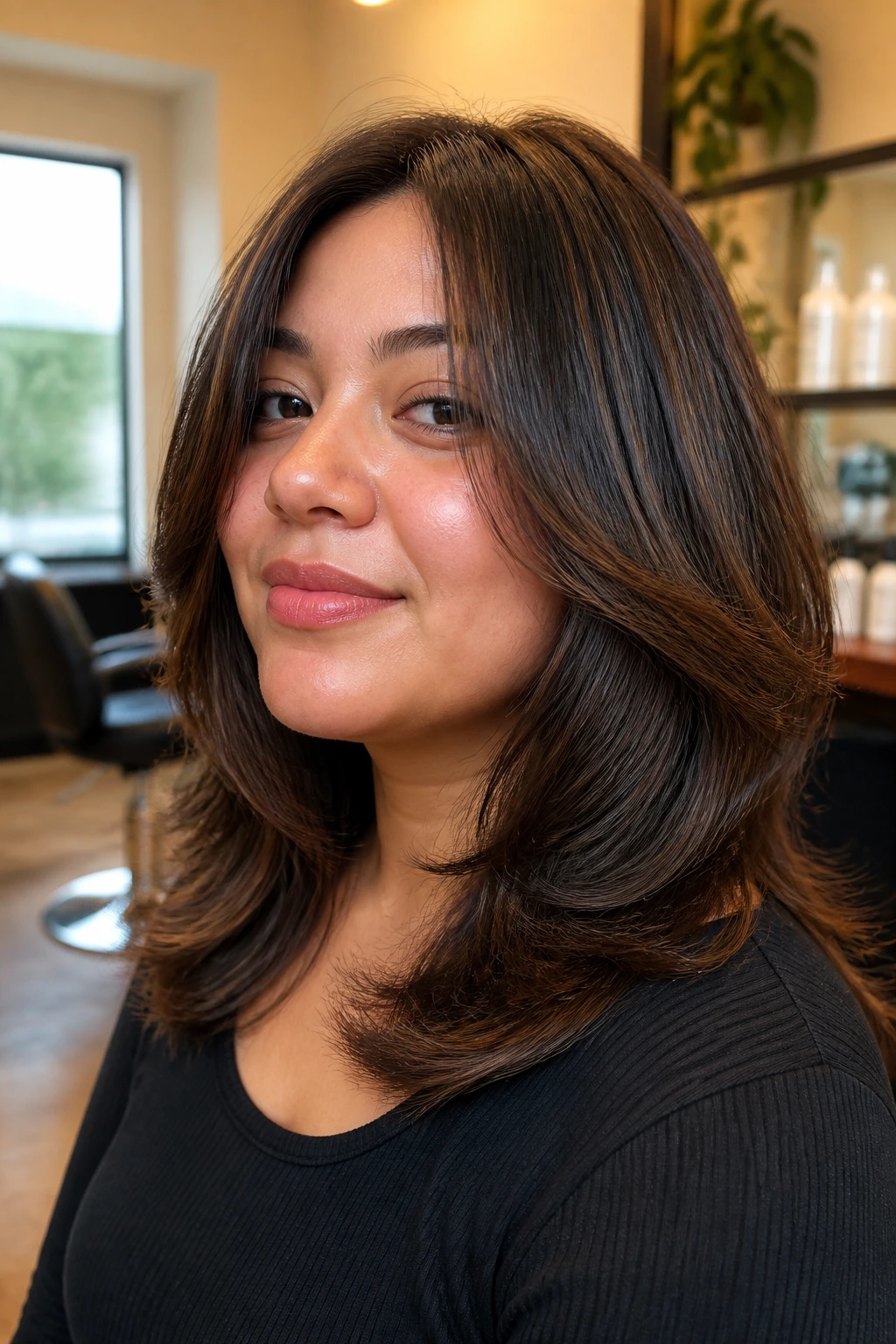
- The face gets a longer line: Each style keeps the shortest pieces below the cheekbone or lets them sweep past it, which helps a round face look less circular from the front.
- Thick hair loses bulk where it counts: The good versions remove weight from the inside of the cut, not from the perimeter, so the ends still look full instead of stringy.
- The shape holds past wash day: These cuts don’t collapse the moment the salon blowout wears off. They still have a line when you rough-dry, diffuse, or air-dry.
- You can wear them a few ways: Most of these shapes work with a center part, a soft side part, or a tucked-behind-the-ear finish, which matters when you don’t want one haircut with one mood.
- The grow-out is kinder: Long layers and medium-long length let the haircut soften instead of turning into a triangle or a shaggy mushroom two months later.
The common thread is simple: these cuts make thick hair move instead of swell. That sounds small. It isn’t. When the right pieces are cut in the right places, the face gets breathing room, the sides stop acting like they’re in charge, and the whole shape feels more intentional.
What Thick Hair and Round Faces Need From a Layered Cut
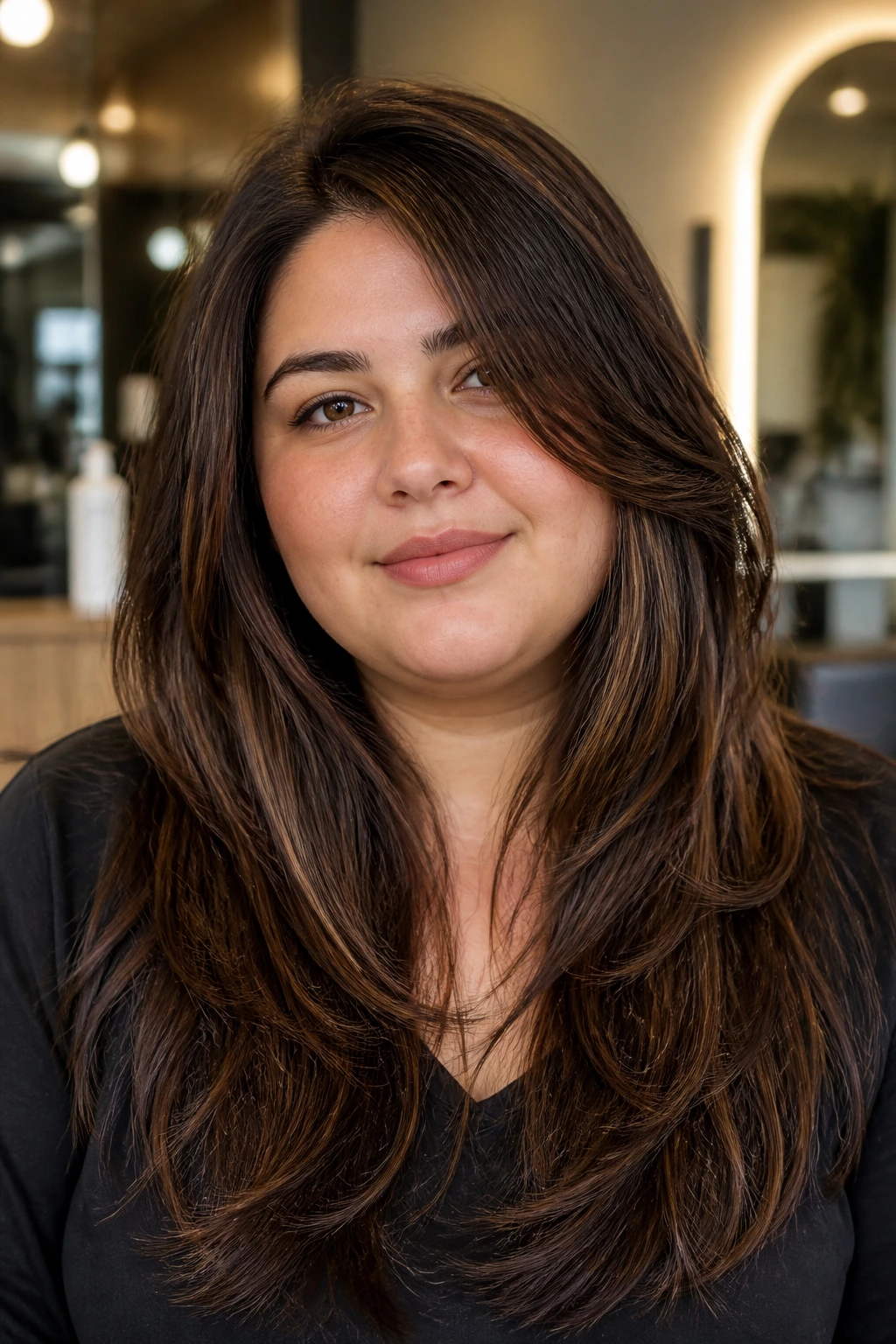
A round face usually benefits from vertical motion, not extra width. That means the hair should travel downward and diagonally, not sit in a fluffy halo at the widest part of the cheeks. Medium-long length helps because it gives the layers somewhere to fall. Short hair can spring outward. Very long hair can drag flat. The middle ground is where the shape actually has room to work.
Thick hair changes the equation again. Density can be beautiful, but only if the haircut respects it. If the stylist removes too much weight from the bottom, the ends look thin and puffy at the same time. If they leave everything blunt and heavy, the hair can settle into a block. The best versions of these layered cuts create movement inside the haircut while keeping the outline strong.
Keep the shortest layer low
The safest rule is this: the shortest face-framing piece usually starts below the cheekbone, sometimes closer to the jaw or upper lip, depending on texture. Start it too high and you get width. Start it lower and you get a longer line.
Let the part help
A slight off-center part can do a lot of quiet work on a round face. It breaks up symmetry, gives the crown more lift, and keeps the top from reading as one round shape. A dead-center part can still work, but it usually needs better root lift to avoid flattening the profile.
Remove weight from the inside
This is the part most people feel before they can name it. The haircut suddenly feels lighter, but the ends still look full. That’s the goal. Not less hair — just better-placed hair.
1. Below-Cheekbone Face-Framing Layers That Narrow the Sides
If your thick hair tends to flare around the cheeks, this is the cleanest place to start. The shortest pieces live below the cheekbones, then taper into shoulder-grazing length, so the shape skims the face instead of sitting on it.
Where the shortest pieces should land
Ask for the front to begin around the jaw or slightly lower, especially if your hair springs up after drying. On thick hair, even an inch too high can change the whole mood of the cut. You want a diagonal line, not a fluffy frame that circles the face.
A clean blow-dry makes this cut behave. Aim the dryer down the shaft, bend the front pieces away from your face with a 1.5-inch round brush, and stop fussing once the ends are smooth.
- Best for straight or softly wavy hair
- Works well with an off-center part
- Avoid if you want obvious shag texture
My honest take: this is the safest “start here” version if you want face-framing without the haircut shouting for attention.
2. Off-Center Part With Long Interior Layers
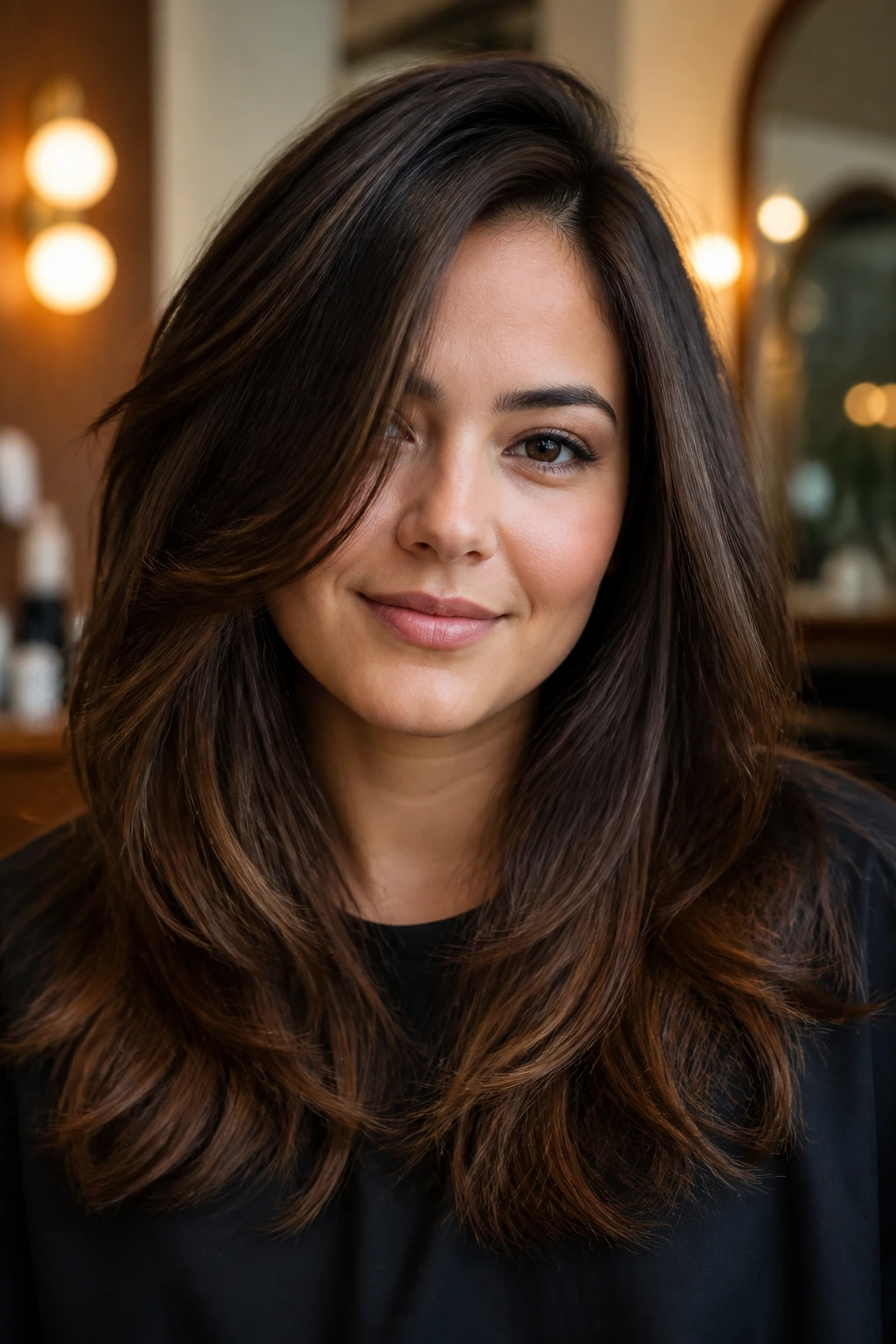
What if you want the cut to look softer without looking styled? An off-center part does more than people think. Even shifting it an inch or two away from center breaks the straight-down symmetry that can make a round face read wider, and long interior layers keep the bulk from sitting like a shelf.
The nice part is that this shape doesn’t rely on obvious choppiness. From the outside, the perimeter can still look calm and full. Inside, the weight has been taken out in a way that lets the hair fold instead of balloon. That’s a very different result from simply thinning the ends.
This one works especially well if your hair is dense but straight, because the off-center part gives the roots a natural lift without requiring a huge blowout. If you tuck one side behind the ear, even better. The asymmetry keeps the eye moving.
3. Butterfly Layers With Built-In Crown Lift
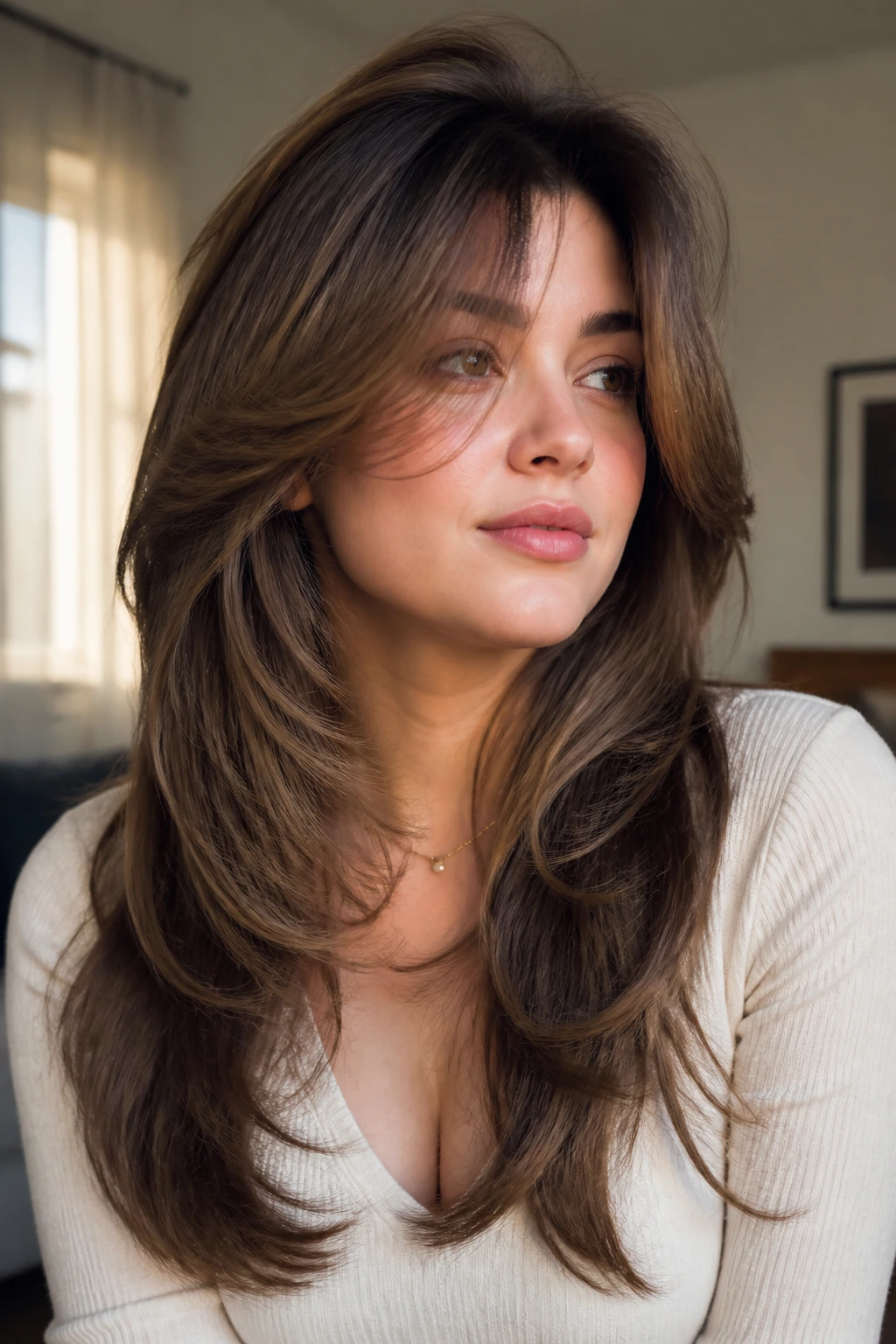
The butterfly cut can be a monster on the wrong head shape. Too much volume around the face, too much separation, too much “look at my layers.” But when it’s tuned for a round face and thick hair, it does a useful job: lift at the crown, length through the bottom, and enough movement to keep the middle from feeling bulky.
The trick is restraint
Keep the shortest pieces high enough to create lift but low enough that they do not flare out at the cheeks. That usually means the shortest face layer starts around the mouth or below, not right at the cheekbone. Thick hair can carry the crown volume without looking sparse, which is why this cut has more presence on dense hair than on fine hair.
I like this shape for people who blow-dry with a round brush or use large rollers. It has a little swagger to it. If you air-dry and walk away, it can look unfinished fast.
4. U-Shaped Length With Hidden Bulk Removal
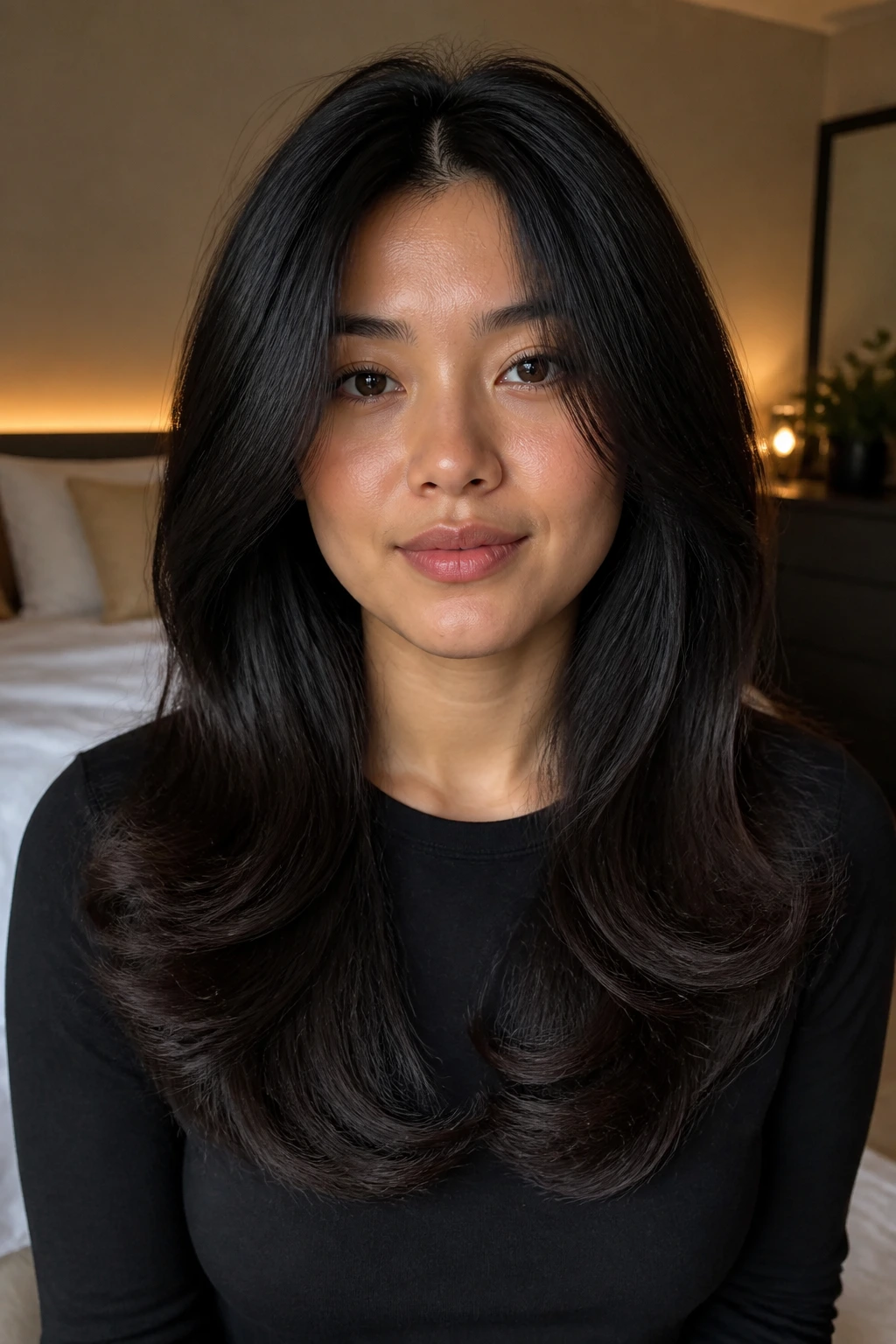
A U-shaped outline is one of the least fussy ways to make thick hair sit better on a round face. The curve in the back keeps the perimeter soft, while interior removal lightens the sides where the hair tends to poof out. You get shape without a hard corner at the bottom.
Picture the haircut from behind: not blunt, not overly shattered, just a gentle curve that lets the length move. From the front, the face-framing pieces fall long enough to avoid piling right on top of the cheeks. That’s the key. The haircut reads as full, but not heavy.
- Best for people who wear their hair down most days
- Good if you want ponytails that still look neat
- Ask for bulk removal inside the shape, not aggressive thinning at the ends
This is a calm haircut. Not boring. Calm. There’s a difference.
5. Curtain Bangs and Collarbone Layers

Curtain bangs on a round face can be terrific, but only when they’re long enough to split and sweep, not sit like a short curtain rod. On thick hair, the density helps the bangs hold their shape. The rest of the haircut should drop to the collarbone so the face gets length below the widest point.
The best version opens at the center and softens toward the temples. That creates a little vertical line down the middle of the face, which is exactly the sort of quiet trick a round face likes. If the bangs are cut too short or too heavy, they do the opposite and press the face wider. I would skip the shortcut version.
Blow-dry the bangs first. Clip them to cool. That tiny step makes a difference, especially if your hair has any natural bend at the front.
6. Soft Shag With Longer Ends

A soft shag is a good home for thick hair because it likes a bit of chaos. The mistake is making it too short around the crown, which can turn a round face into a puffball. Keep the texture in the lower half, let the ends stay longer, and keep the fringe soft rather than choppy.
This is one of those cuts that looks better with movement than with perfection. On a round face, the longer ends help the eye travel downward. On thick hair, the texture stops the bulk from becoming a solid block. If your hair is naturally wavy, this cut can look almost effortless. If it’s straight, you’ll probably want a bit of grit spray or a loose bend from a curling iron.
Best use: when you want texture but not a full wolf-cut attitude.
7. Swooping Cheekbone Sweep Layers
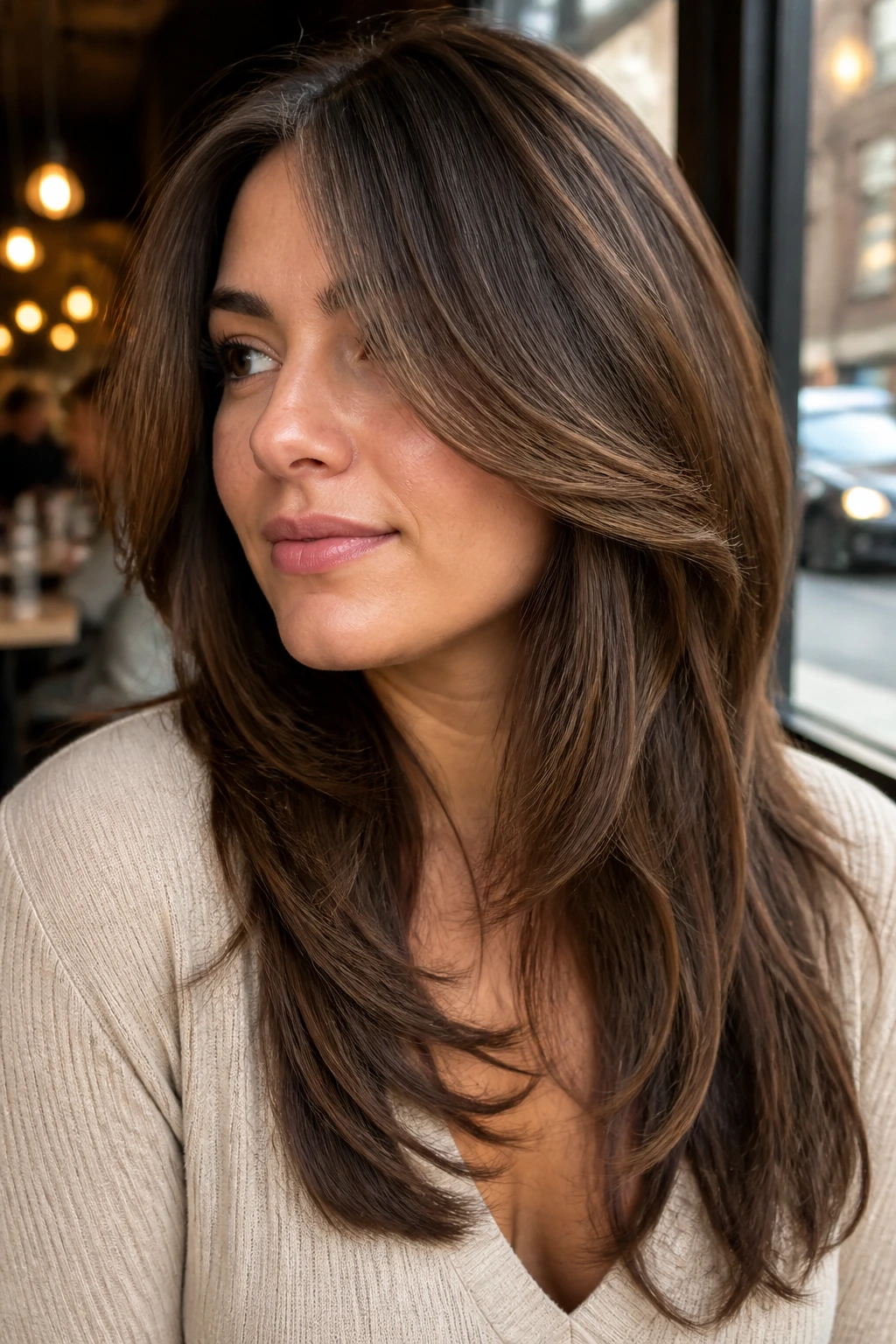
This is the cut for people who want their hair to move diagonally across the face instead of framing it head-on. The front pieces start high enough to sweep, then fall lower than the cheekbone. That diagonal line matters. It pulls the eye down and away from the widest part of a round face.
Thick hair makes the sweep feel substantial instead of wispy, which I prefer. Thin hair often needs a lot of help to keep this kind of movement visible. Thick hair usually just needs the right cut and a large curling iron or round brush.
Styling note
Wrap the front away from the face, then brush it out once it cools. If you stop at the first curl, the hair can look too curled and too wide. Brushing it out softens the line and keeps the front from turning into a ring.
8. V-Cut Layers That Narrow the Back
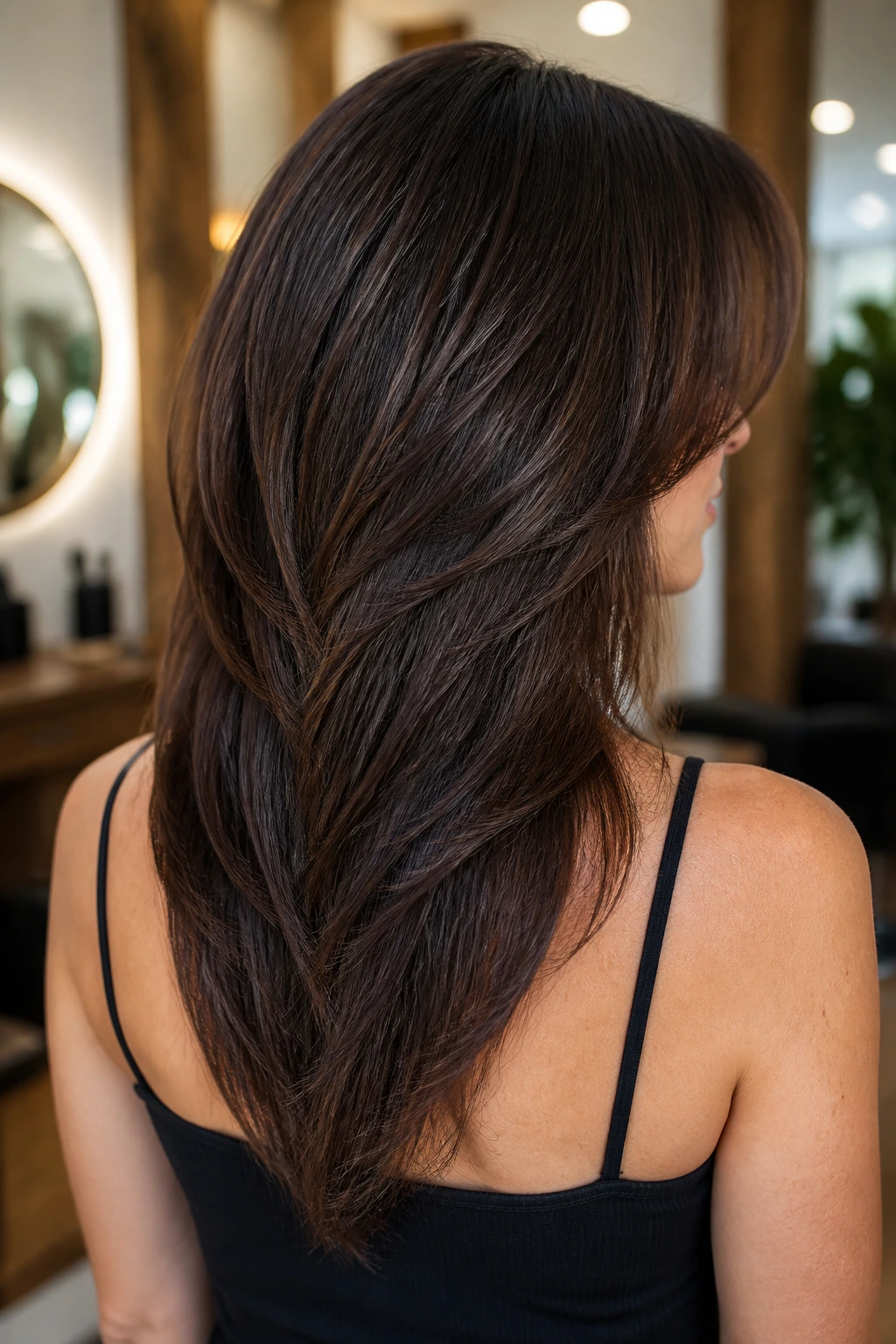
A V-cut is one of the easiest ways to make long, thick hair feel lighter without losing the drama of length. From behind, the outline narrows into a soft point. From the front, the longer sides keep a round face from looking boxed in. The haircut gets leaner as it moves downward, which is a very useful shape when your hair has serious density.
This is not the cut to choose if you want every layer to scream for attention. The power is in the outline. It works especially well if you wear your hair half-up or in a low ponytail, because the V still shows up even when the hair is tied back.
Just don’t let the front layers get too short. That’s how a V-cut starts feeling busy near the face.
9. Feathered Ends With a Round-Brush Finish

Feathered ends can look dated when they’re too stiff, too flipped, or too symmetrical. Done softly, though, they’re excellent on thick hair. They break up the heaviness at the bottom and create a little air between the strands, which keeps a round face from getting boxed in by a blunt edge.
This cut lives or dies by the finish. Blow-dry with a medium round brush, pull the ends slightly away from the face, then release the brush and let the hair cool before touching it. Thick hair holds that shape longer than fine hair does, which is one reason feathering still makes sense here.
I’d choose this for someone who likes a blowout look and doesn’t mind spending a few minutes with a dryer. It is not the lowest-maintenance option. It is, however, one of the more flattering ones when you want softness without fluff.
10. Razor-Textured Layers for Dense Hair
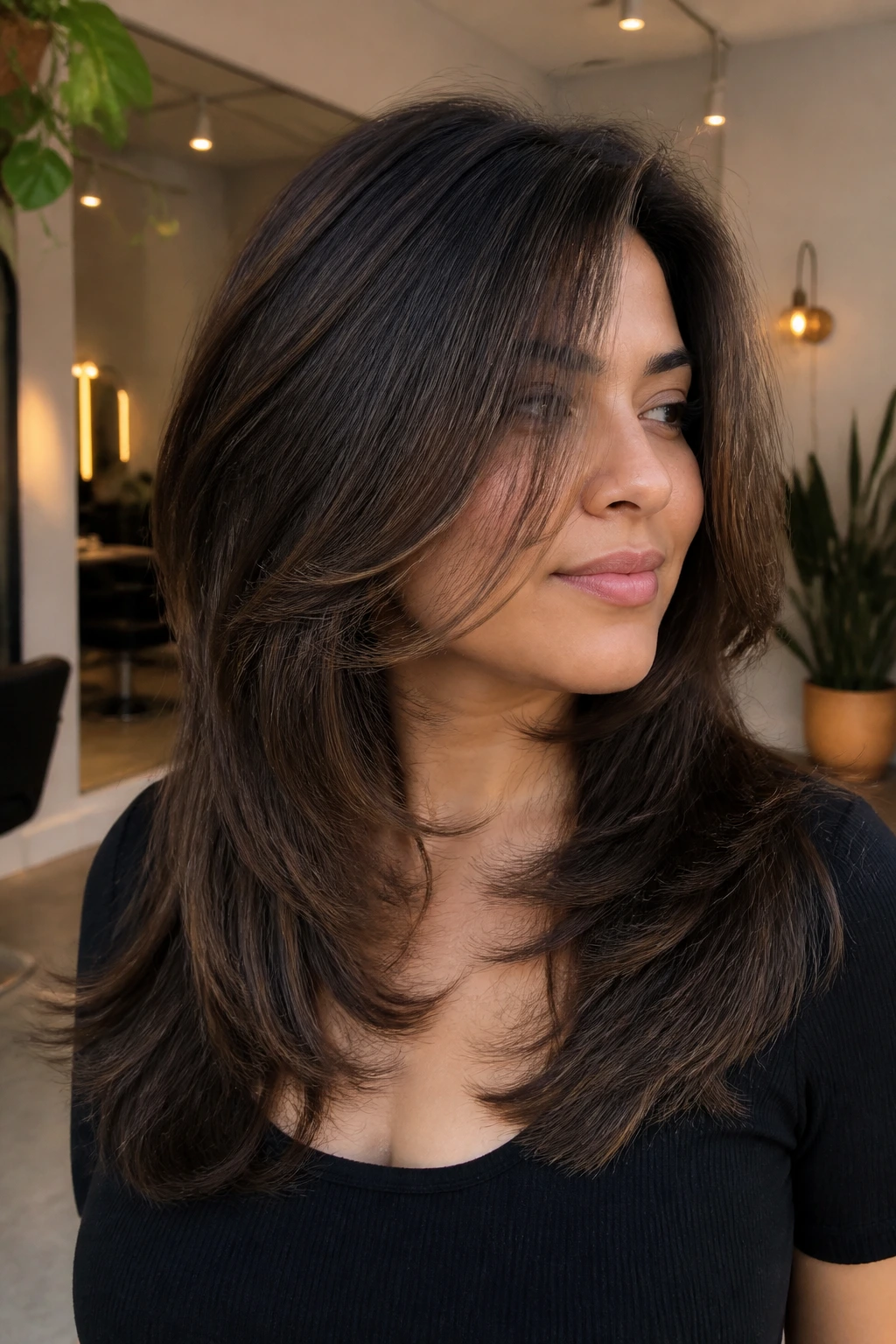
A razor can be your best friend or your worst mistake. On very thick hair that’s straight or only slightly wavy, razor-textured layers can take the edge off bulk and give the ends a lighter, more fluid finish. On frizz-prone hair, the same move can create extra roughness. That’s why texture matters here.
For a round face, the point of the razor work is not to create choppiness around the cheeks. It’s to let the hair fall in thinner, cleaner sections that still keep length. If the ends are too blunt, thick hair can fan outward. If the texture is too high, the haircut can get fuzzy. There’s a narrow lane in the middle that works.
Use this cut if your hair is dense enough to hold shape and you like a little edge in the finish. Skip it if your hair already inflates in humidity.
11. Collarbone Lob With Soft Graduation
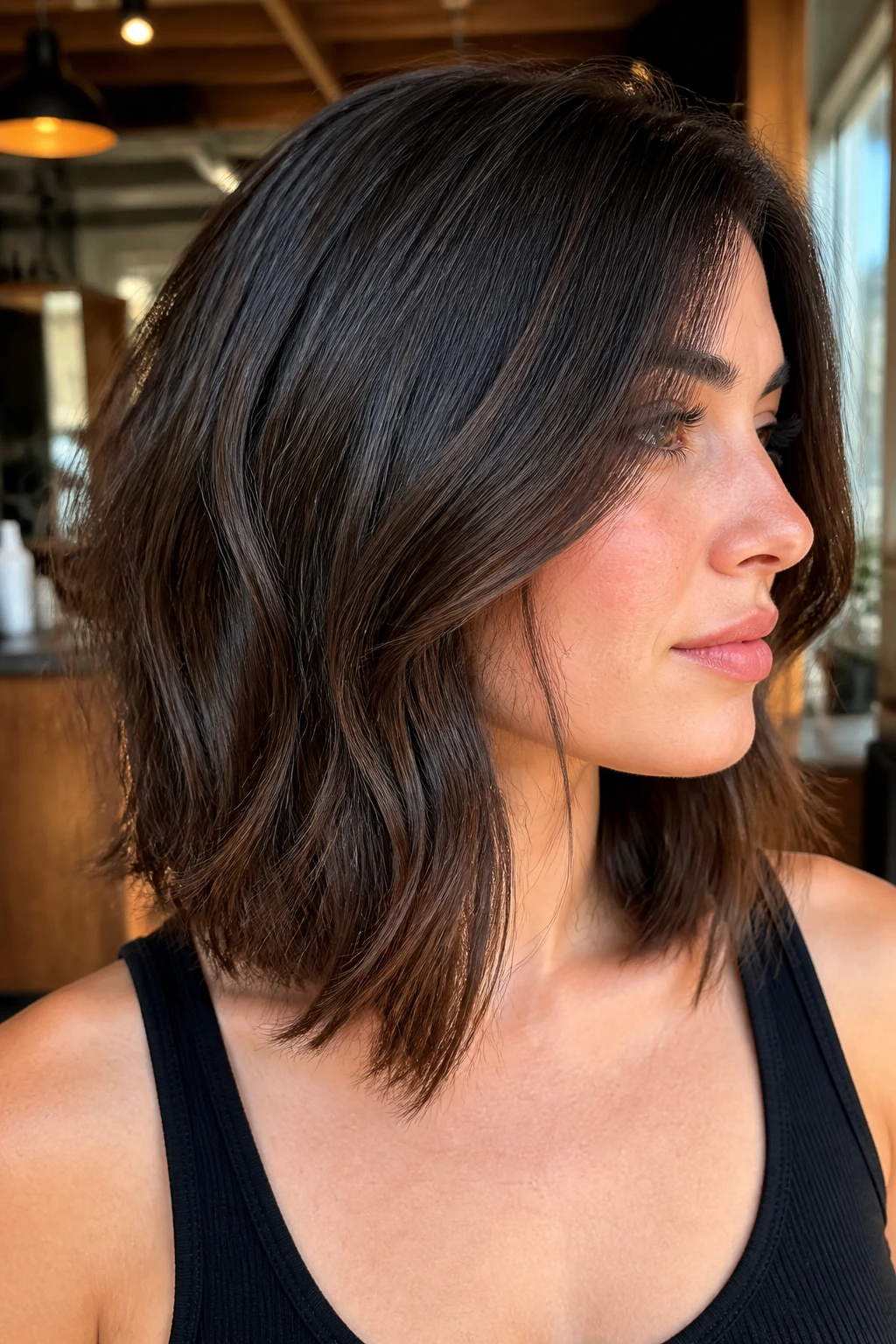
The collarbone is a flattering landing spot for a reason. It’s low enough to lengthen a round face, high enough to keep thick hair from getting too weighed down, and practical enough that the cut still behaves on day two. Add soft graduation in the back and you get a line that curves instead of dropping like a block.
This is one of the most wearable versions on the list. Not the flashiest. Probably not the one that gets the most compliments from strangers. But it’s the haircut I’d send someone to when they want shape without extra effort.
Thick hair makes the lob look full instead of limp, which matters. The soft layers stop the sides from ballooning, and the collarbone length gives the front some swing. If you tuck one side behind the ear, the whole thing gets a cleaner line instantly.
12. Deep Side Part and Cascading Layers
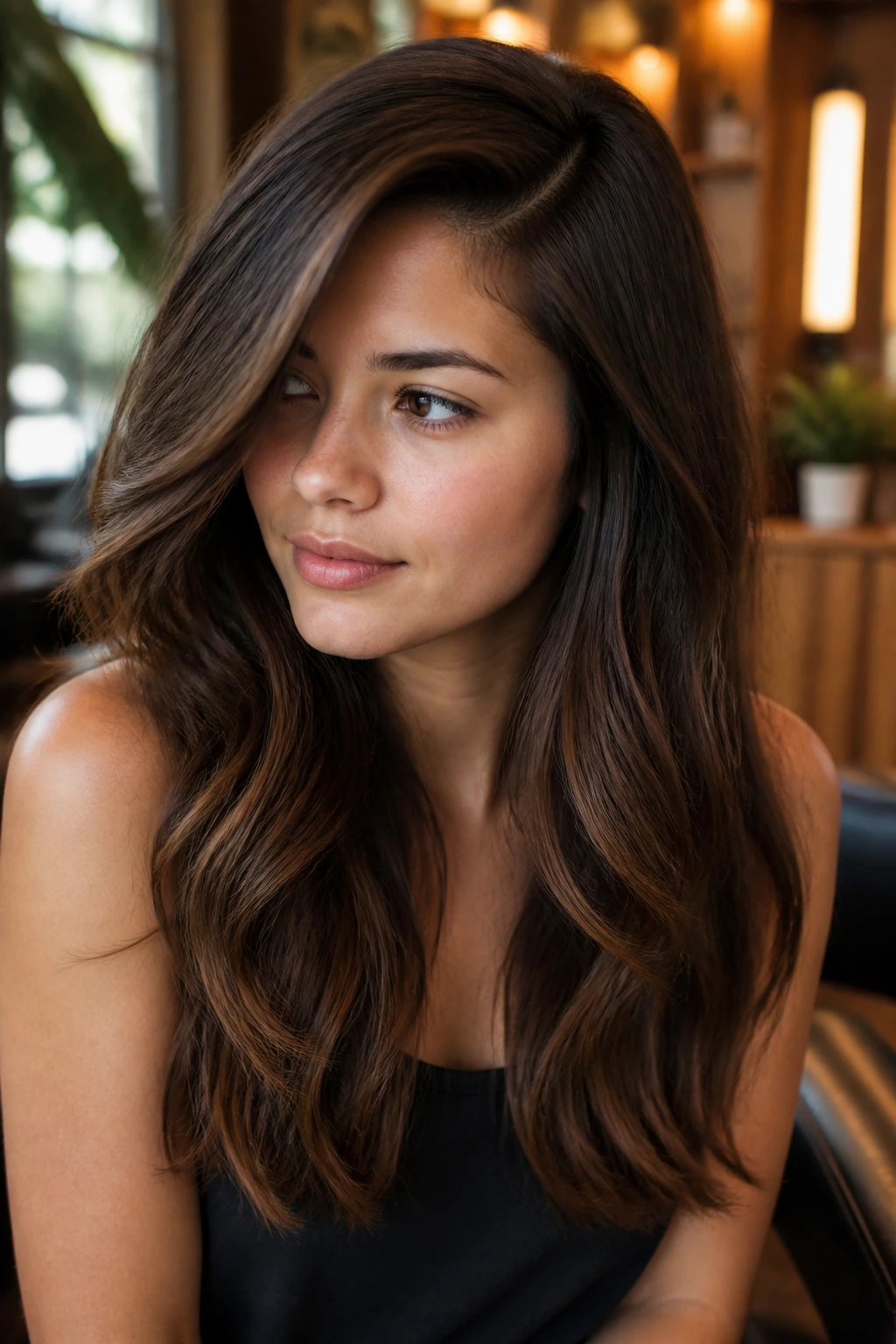
A deep side part adds asymmetry fast. On a round face, that matters because symmetry can emphasize roundness, while a strong side part breaks it apart. Pair that with cascading layers and you get a shape that moves diagonally down the head instead of sitting straight across it.
This is a good choice if you like root volume. Thick hair usually gives you some lift at the part already, and a side part makes that lift look deliberate. The cascading layers should start low enough that they fall past the cheeks, then blend toward the shoulders. Keep the pieces soft. If they get too chunky, the side part can start feeling theatrical in a bad way.
A small trick that helps
Set the part while the hair is damp. Once thick hair dries in the wrong part, it can be stubborn about changing.
13. Bottleneck Bangs With Flowing Side Pieces
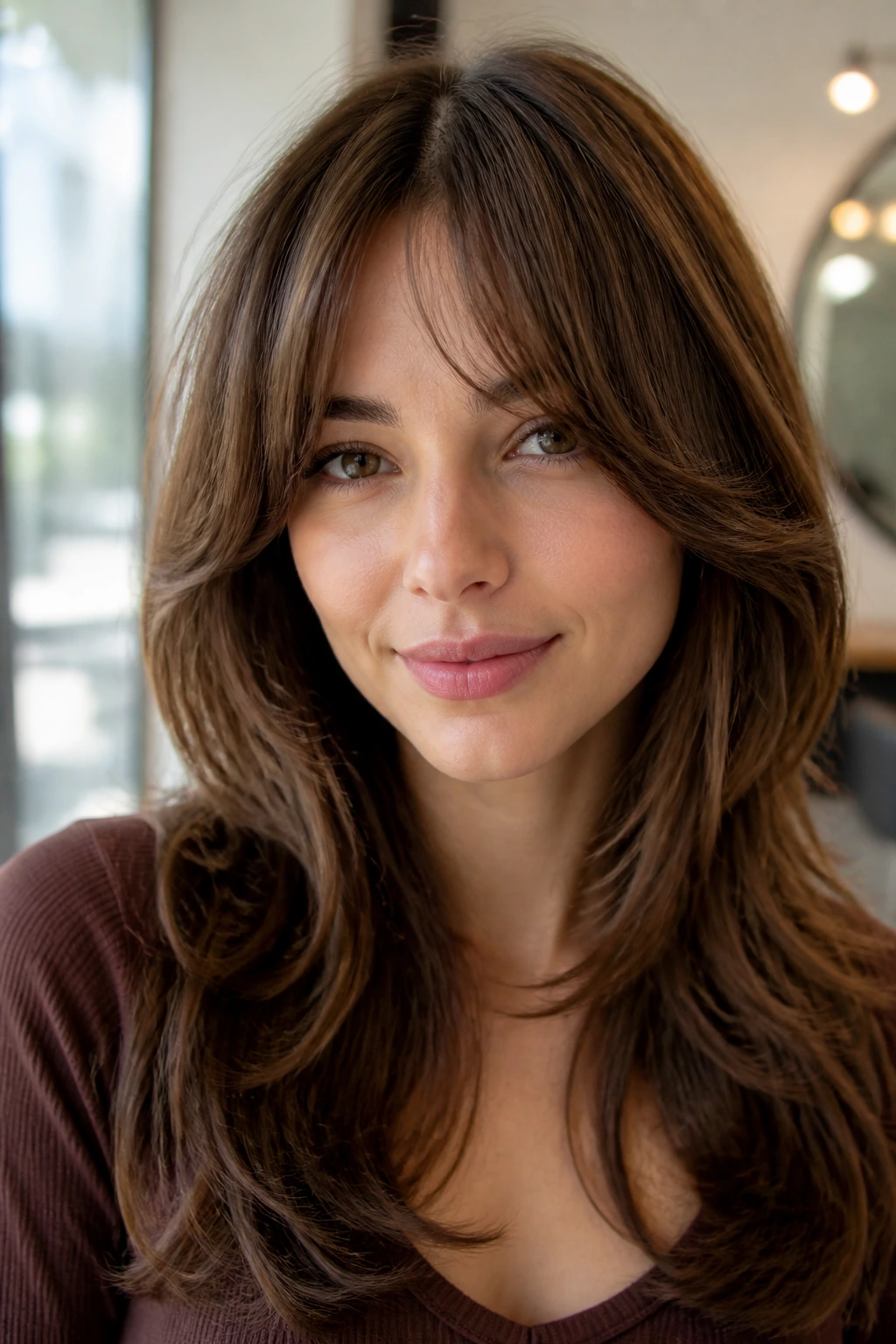
Bottleneck bangs are one of the smarter fringe choices for a round face. They stay shorter in the center, then widen and lengthen toward the temples, which gives a softer opening around the forehead without drawing a hard line straight across the face. With thick hair, you have enough density to make the shape hold.
The side pieces should flow into the rest of the cut, not end like separate curtain ropes. That’s the part that makes this feel deliberate. The bangs need trims more often than the rest of the cut — usually every few weeks if you want them to sit correctly — but they repay the effort by making the haircut look styled even when the lengths are simple.
I’d avoid this if you hate maintenance around the forehead. Fringe demands a little attention. There’s no way around that.
14. Polished Tucked-In Layers
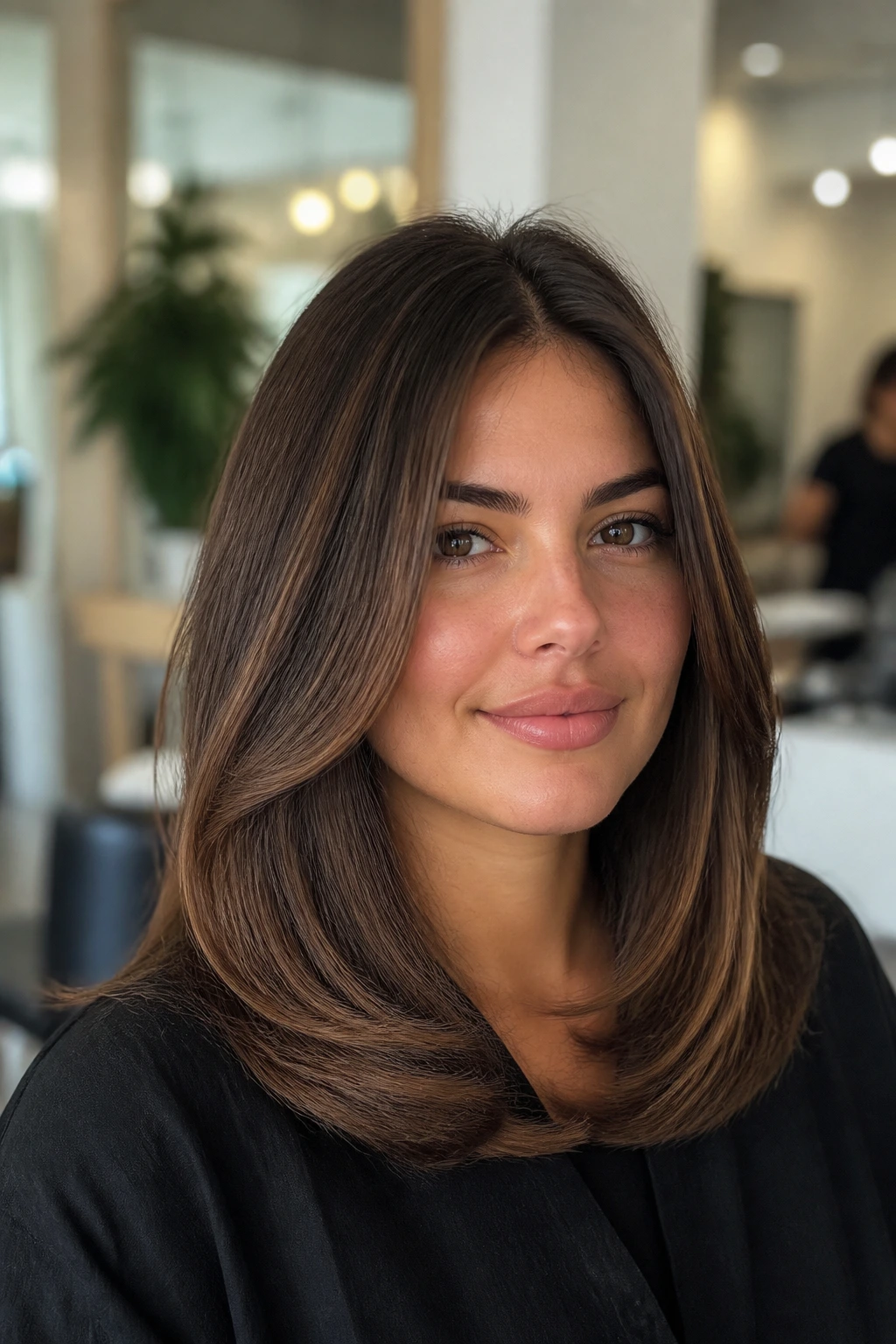
Some people don’t want texture. They want smoothness, shape, and enough movement to keep thick hair from turning into a wall. Polished tucked-in layers do that well. The ends bend inward, the outline stays full, and the face gets a soft vertical frame instead of a wide one.
This is one of the cleanest options for a round face because the hair doesn’t flare outward at the jaw. Thick hair can hold this style with a good blow-dry and a little smoothing cream. Use a paddle brush for the base, then a round brush only on the front and ends if you want a slight curve.
It’s a serious haircut in the nicest sense. Tidy. Controlled. Not fussy. If you like your hair to look composed even when the rest of the day is a mess, this one lands well.
15. Airy Wave Layers With Piecey Ends

If your thick hair has a natural wave, don’t fight it into a straight silhouette unless you truly enjoy that kind of work. Airy wave layers let the texture do the talking while still keeping the face long and the sides from puffing out. The ends should stay piecey, not frayed.
The layers need to be spaced so the wave can bend through them. Too many short chops and the hair gets broad. Too little layering and the wave collapses into one heavy sheet. That balance is the whole game here. Around a round face, the pieces should fall below the cheekbone and travel toward the collarbone, not sit directly on the cheeks.
A bit of cream or mousse is enough. You do not need a bucket of product. Heavy styling paste on thick waves can flatten the top and make the sides wider.
16. Disconnected Crown Layers for Extra Height
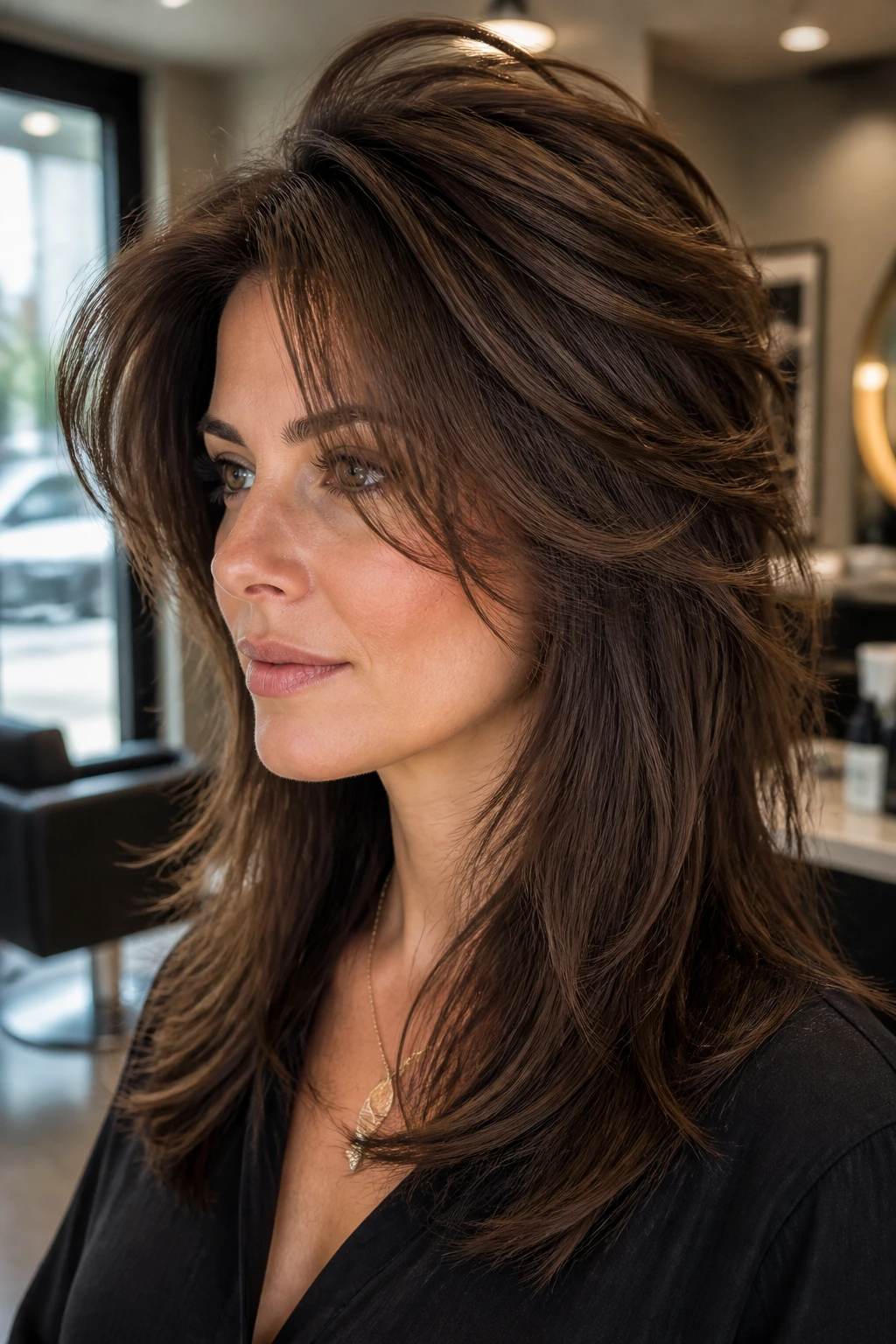
This one is for people who don’t mind a little drama at the top. Disconnected crown layers create lift where a round face needs it most: above the cheek line. The length underneath stays longer, which keeps the shape from becoming top-heavy if the cut is done well.
It’s a bolder shape, and it needs styling. Thick hair helps because the crown has enough body to support the shorter layer without turning sparse. But if you hate blow-drying, or you want hair that falls into place on its own, this is probably too much work.
- Great for big round brushes and velcro rollers
- Best when the shortest crown layer still keeps some length
- Avoid if your hair grows outward instead of downward
This is the one that says, “Yes, I meant to have layers.”
17. Angled Front Layers That Sweep Back
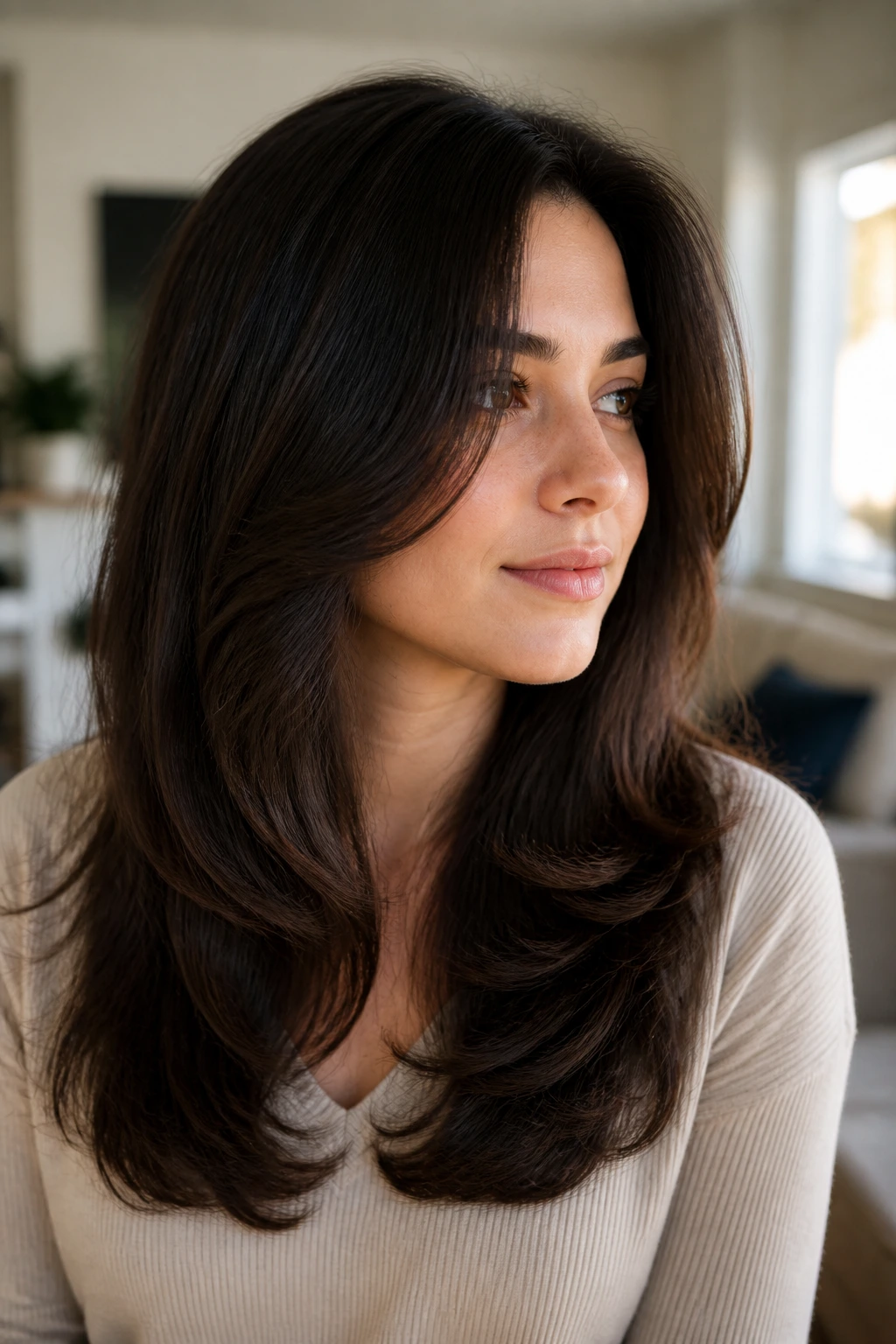
Angles are underrated. A front layer that sweeps back from the cheek toward the shoulder draws the eye in a diagonal line, which is exactly what a round face needs when the hair is thick. The angle keeps the sides from forming a straight curtain.
This shape also works when you like to tuck your hair behind your ears. The front still falls out with purpose, and the rest of the cut stays neat. Ask your stylist to keep the front longest near the shoulder and shortest somewhere below the cheekbone. That gives the angle room to show.
The cut can be polished or messy, depending on how you dry it. I prefer it brushed smooth first, then bent slightly at the ends. Too much curl and you lose the line. Too little and the angle disappears.
18. Soft Wolf Cut With Less Edge
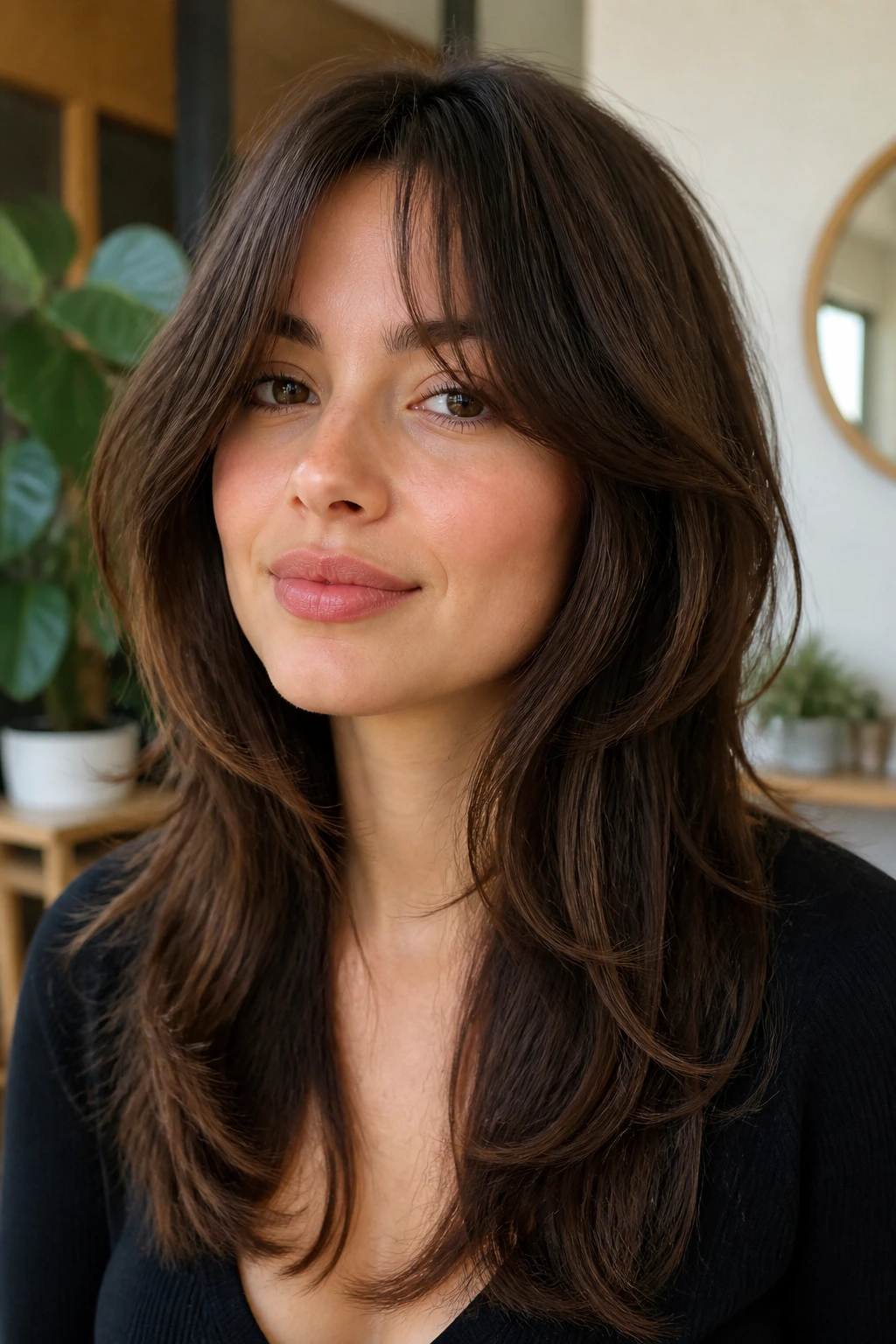
A full wolf cut can be a lot on a round face, especially if the short layers rise too high around the cheeks. But a softened version — longer, less choppy, less mullet-minded — can work well on thick hair. You get crown lift, visible texture, and enough length to keep the shape from going wild.
The trick is not to overdo the fringe or the top layers. Let the volume sit higher on the head and the length stay long through the sides. Thick hair gives this cut some structure so it doesn’t look stringy. If your hair is very straight, you may need styling help. If it’s wavy, the cut can almost build itself.
This is for someone who wants a little attitude without looking like they raided a music video from twenty years ago.
19. Long Layers With a Blunt Bottom Line
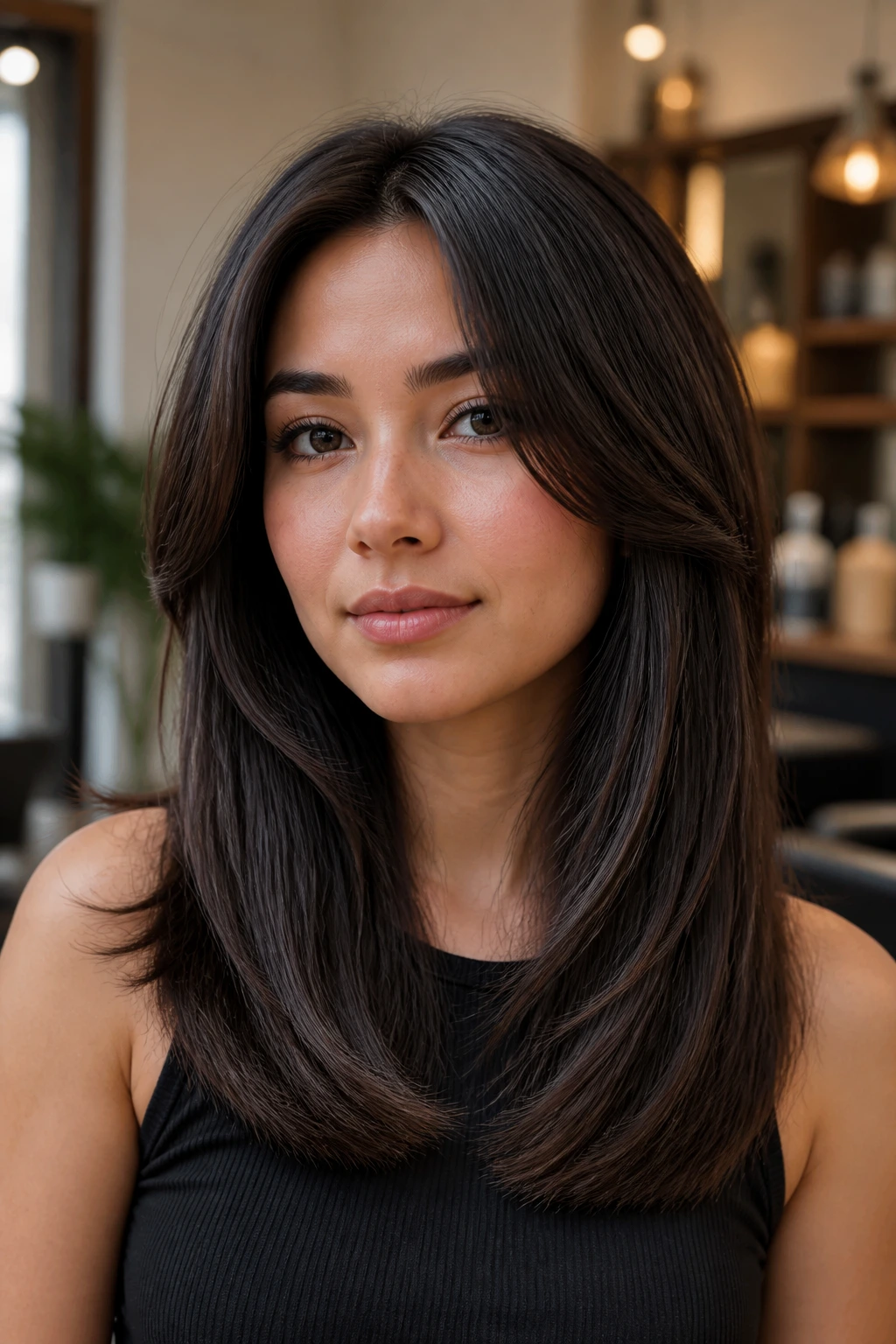
This is one of my favorites for thick hair on a round face because it solves two problems at once. The long layers create movement through the body of the hair, and the blunt bottom line keeps the ends looking thick and intentional. Nothing wispy. Nothing ragged. Just a clean base with some life above it.
That blunt edge helps lengthen the silhouette. The layers above it stop the haircut from turning into one dense sheet. It’s a very practical compromise, and frankly, a smart one for anyone who wants the hair to stay polished between appointments.
Ask your stylist to keep the front pieces below the cheekbone and the perimeter strong. If you let them shred the bottom too much, you lose the whole point of this shape.
20. Interior Layers That Take Out Weight
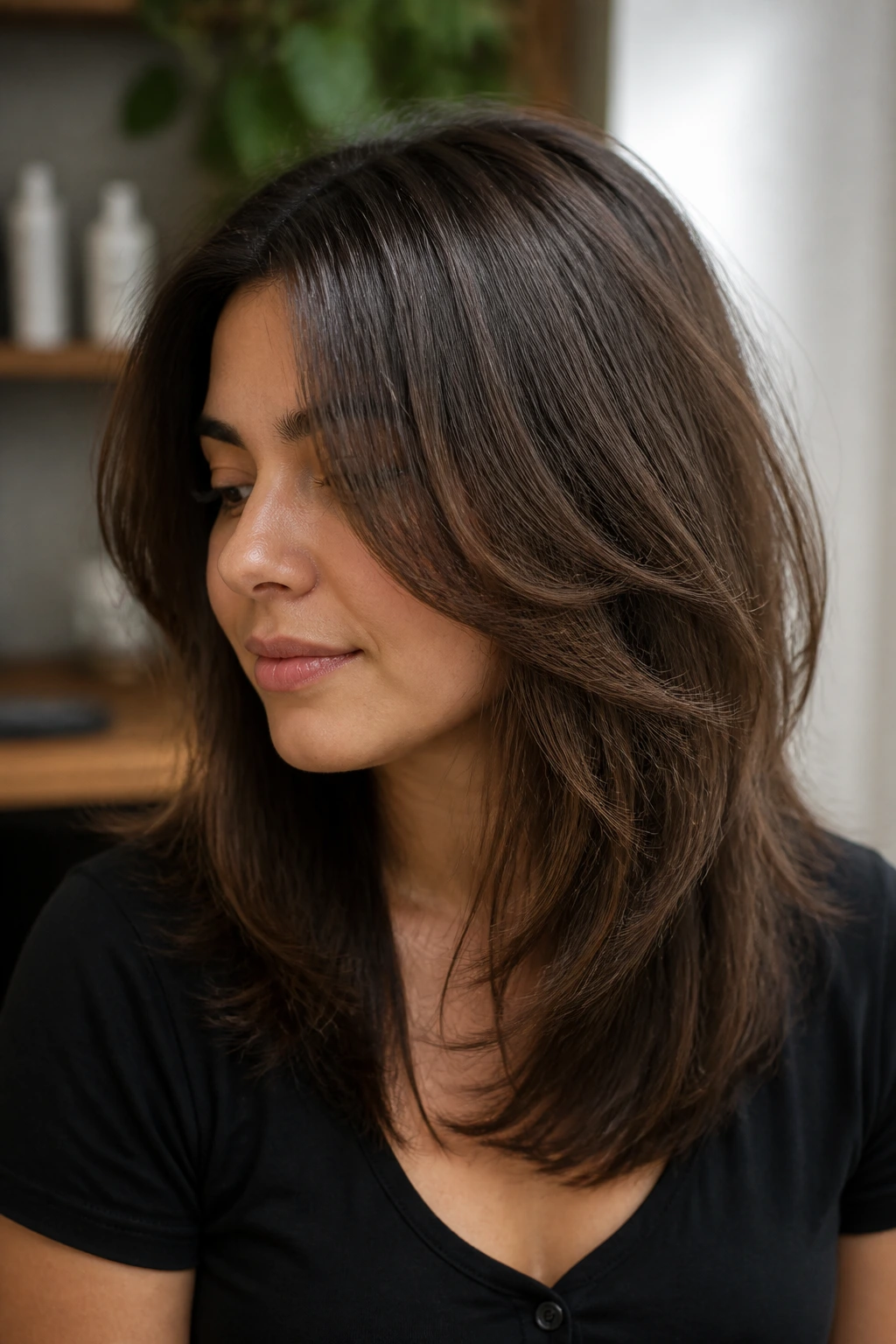
Sometimes the best layers are the ones nobody sees. Interior layers remove bulk from the middle and underside of thick hair, which lets the shape fall closer to the head without exposing obvious short pieces around the face. For a round face, that’s gold. The outline stays clean, and the hair stops puffing out where it usually does.
This cut is ideal if you like your hair to look full but controlled. You keep the length, you keep the thickness, and you lose the extra heaviness that makes the sides swell. It also tends to grow out more quietly than a heavily choppy cut.
If you’re the kind of person who wants your hair to cooperate more than perform, start here. It’s not flashy. It works.
21. C-Curve Blowout Layers at Mid-Length

A soft C-curve at the ends can do a lot for a round face. It gives the hair a gentle inward bend that follows the line of the collarbone and the jaw without ending right on top of them. On thick hair, the curve holds better and looks smoother than it does on finer textures.
This cut is a good match for a round brush, a blow dryer with a nozzle, and a little patience. You don’t need tight curls. You need a bend. That small difference keeps the haircut from widening out at the sides. I like this shape for anyone who wants a more finished look without heavy layering or obvious texture.
The effect is clean from the front and tidy from the side. That matters more than people think.
22. Glossy Curtain Sweep Layers
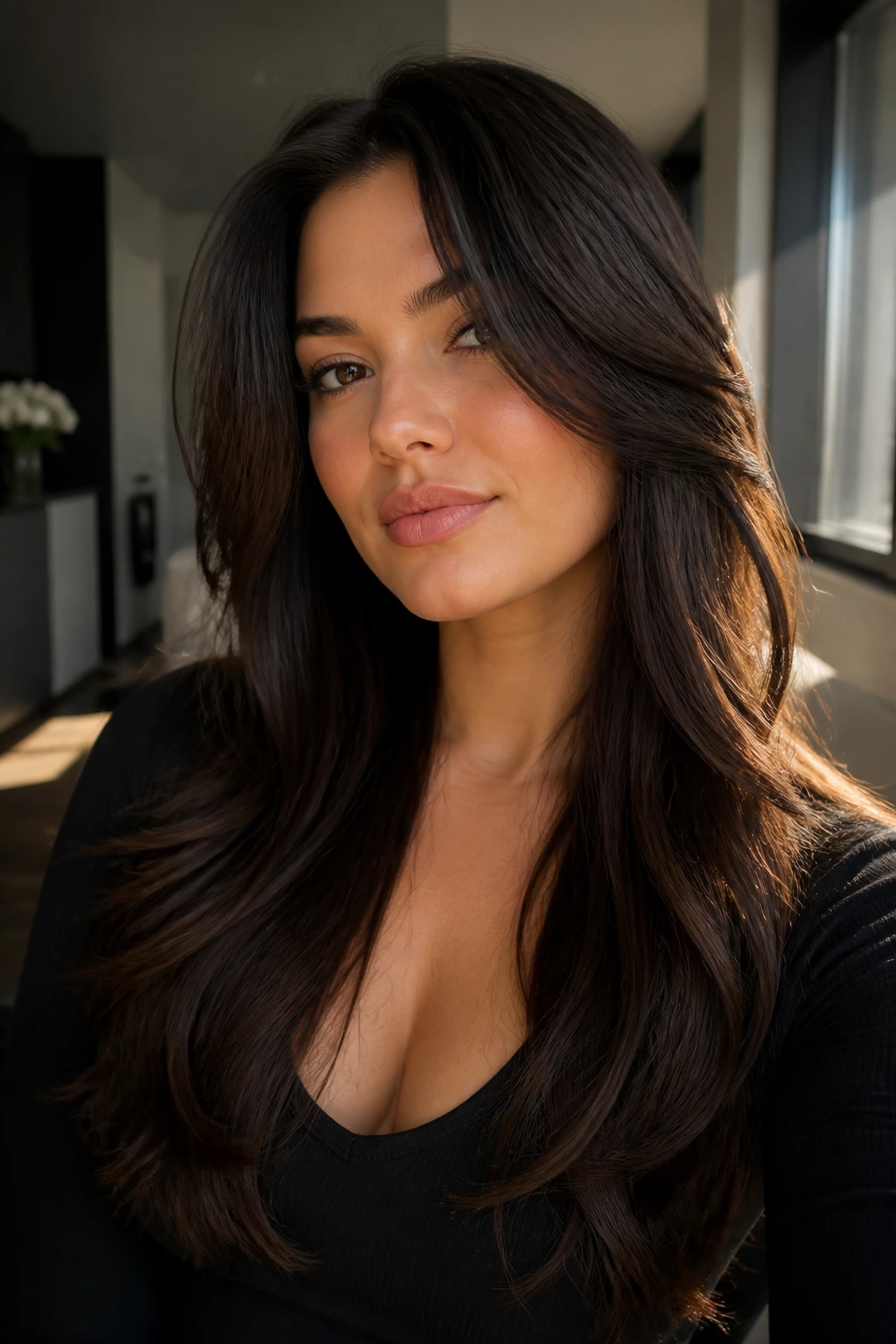
This is the polished version of the whole idea. The front pieces sweep away from the face like curtains drawn back from a window, but they stay long enough to avoid parking themselves right at the cheeks. The rest of the layers are soft, controlled, and weighted enough to move instead of puff.
Thick hair gives this style its best quality: presence. It looks substantial, not flimsy. The key is to remove weight underneath so the top layers can fall smoothly. A bit of smoothing cream, a large round brush, and a cool shot at the end keep the shape sharp.
If you want a haircut that can look sleek at work and softer after you bend the ends at home, this is a strong finish to the list. It’s the one that feels dressed up without looking overworked.
Why the Shape Matters More Than the Trend
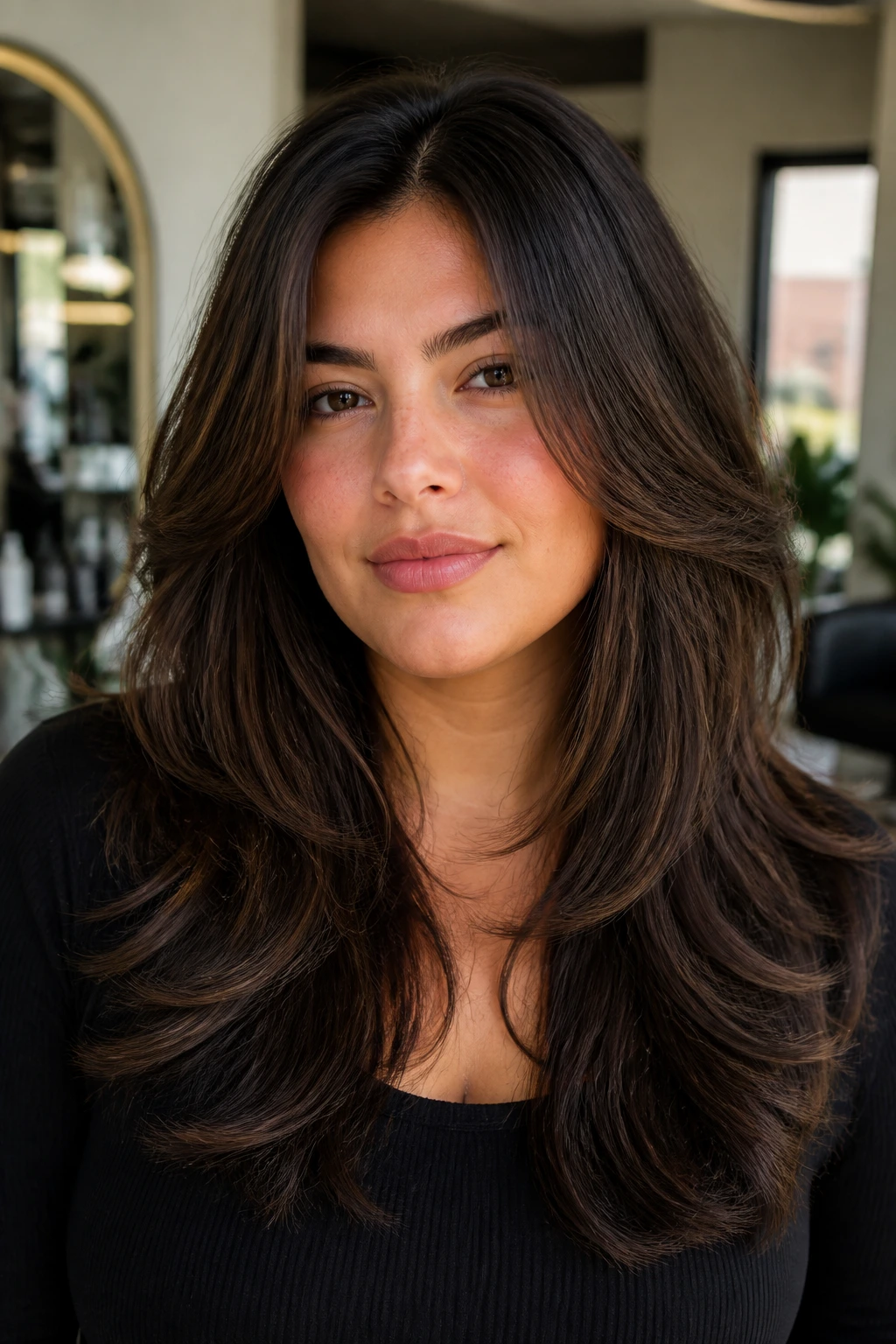
The thing about round faces and thick hair is that trends can be noisy in the wrong way. A haircut might be everywhere and still be a bad match if it starts the layers too high or leaves the outline too wide. Shape wins. Every time. The best cuts on this list work because they understand where width lives, where it should be reduced, and where a little lift actually helps.
Round faces need lines, not circles
That doesn’t mean the hair should be severe. It means the eye should travel downward and slightly diagonally. Long face-framing pieces, off-center parts, and collarbone length all help with that. So do front layers that sweep back instead of stopping at the cheeks.
Thick hair needs removal from the inside
A lot of people ask for “thinning,” then wonder why the ends look ragged. What they usually needed was internal weight removal. That keeps the perimeter full while making the shape easier to move and style. A good cut should feel lighter without looking chopped to bits.
Medium-long gives the cut room to behave
Medium-long length is the sweet spot because it gives layers room to fall. Shorter than that, and thick hair can spring outward. Much longer, and the weight can drag the shape flat. Medium-long gives you some lift, some swing, and enough length that the haircut still feels like hair, not a design exercise.
Essential Tools for Styling and Maintenance
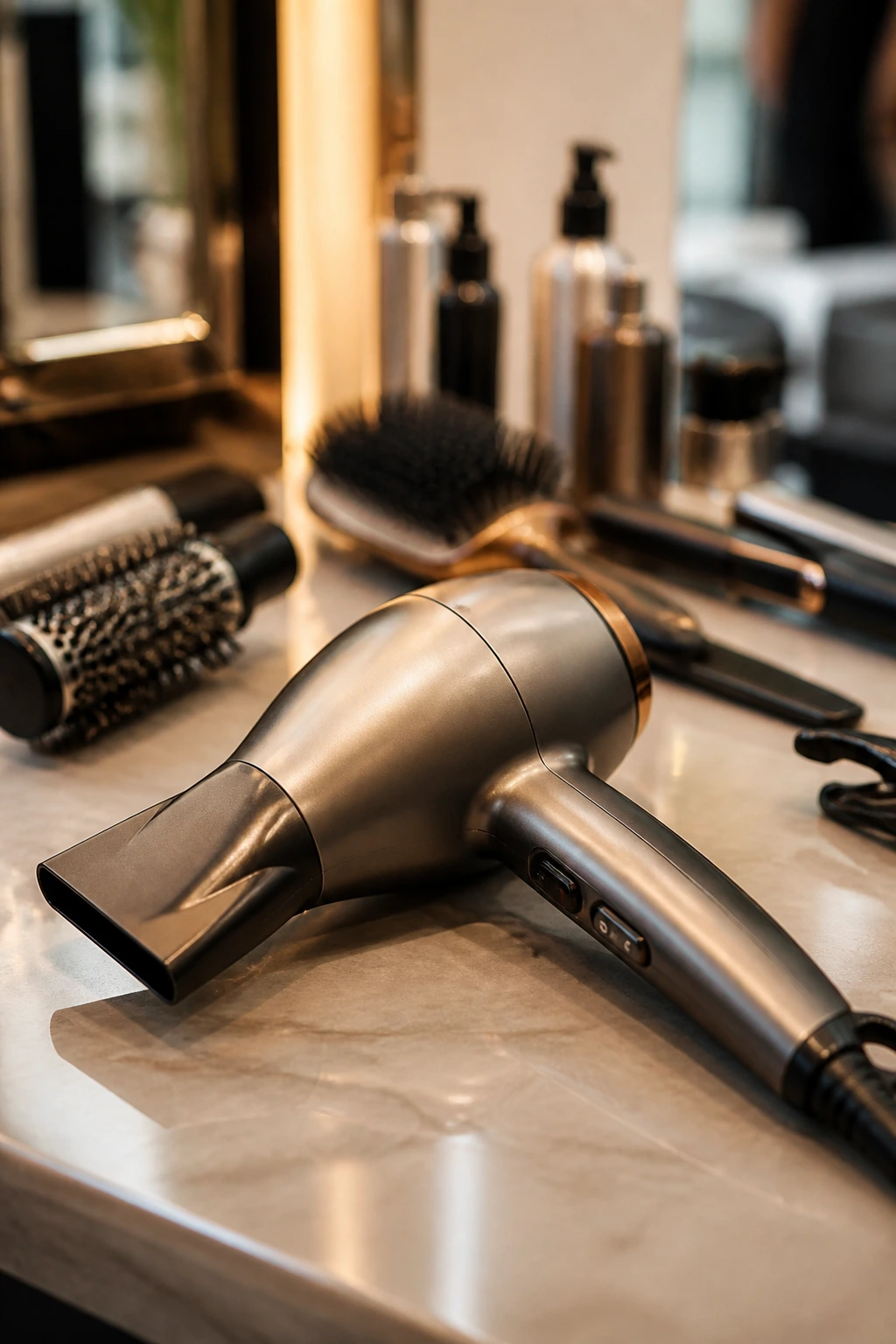
- Blow dryer with a nozzle attachment — The nozzle pushes air downward and keeps thick hair from puffing out while you dry the front and crown.
- 1.25- to 1.5-inch round brush — This is the workhorse for bending face-framing layers and softening the ends without making tight curls.
- Sectioning clips — Thick hair is impossible to control in one giant pile; clips make the front, crown, and lower sections easier to handle.
- Heat protectant spray or cream — Use it on damp hair before any blow-dry or iron work, especially around the front pieces that get touched most.
- Light mousse or root-lift foam — A little at the roots helps the crown hold height without making the hair stiff.
- Wide-tooth comb — Better than a small brush for detangling thick hair after washing; it keeps you from ripping through knots.
- Smoothing serum — Use one small drop on the ends only. Too much will flatten the layers and make the haircut look greasy.
- Large-barrel curling iron or hot brush — Handy if you want a soft bend instead of a straight blowout.
- Velcro rollers — Optional, but they’re a good trick for setting the front and crown while you do your makeup.
How to Ask for the Cut Without Ending Up with a Boxy Shape

Bring photos, yes. But bring the right photos. A picture of a great haircut on someone with straight, fine hair is not the same thing as a picture on thick, round-shaped hair. Ask for examples that match your density and movement as closely as possible, or your stylist will be guessing.
Say the layer start point out loud
Tell them where you want the shortest face-framing pieces to begin. “Below the cheekbone” or “around the jaw” is better than “some layers around the front.” Specific language keeps the cut from drifting too high.
Describe the bulk problem
If the sides of your hair balloon out, say that. If the back gets heavy and triangular, say that too. A good stylist will know whether that means interior layering, a softer outline, a cleaner perimeter, or a dry-cut check for shrinkage.
Name your routine
If you air-dry, say so. If you blow-dry with a round brush, say that too. A cut that looks great only when straightened with a flat iron might not be worth the daily fight. Haircuts should fit your routine, not the other way around.
Be honest about bangs
If you do not want to trim bangs every few weeks, say no to them. If you want fringe, mention whether you can keep up with it. Curtain and bottleneck bangs are manageable, but they are still bangs.
Daily Styling Moves That Keep the Sides From Puffing Out
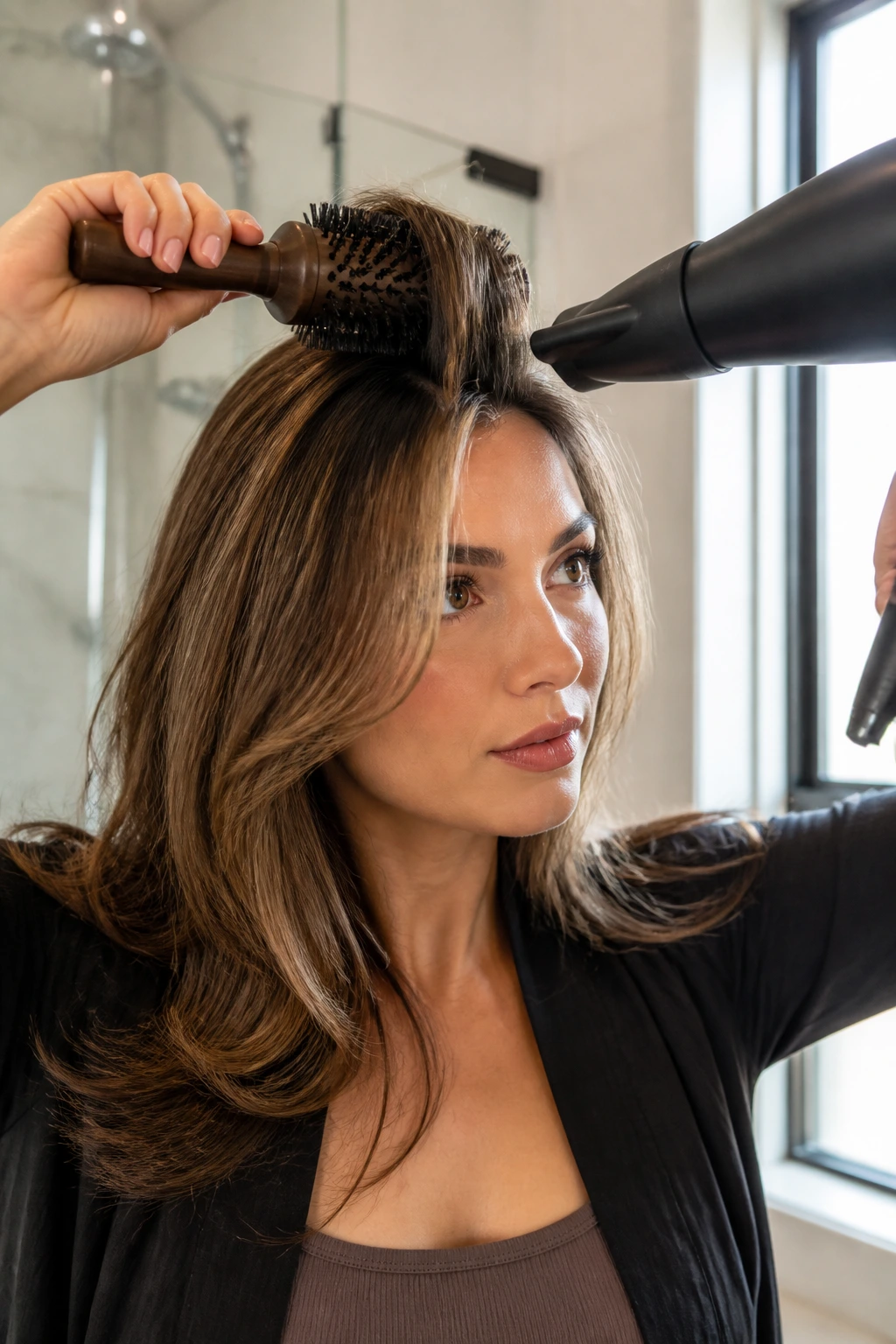
The fastest way to ruin a flattering cut is to dry it in every direction and hope for the best. Thick hair has strong opinions. It will follow the path you give it.
Blow-dry: Rough-dry the roots to about 80 percent first, then use a brush only on the front and crown. Direct the airflow down the hair shaft and away from the cheeks. That keeps the outer layer smooth instead of fuzzy.
Air-dry: Work a light cream or mousse through damp hair, then twist the front pieces away from the face while they dry. If the hair is only waved, not curly, that tiny twist can teach the front where to fall. Don’t touch it too much once it starts setting.
Hot tools: Use a large barrel, not a tight iron. Thick hair curled too tightly around the face can make the whole head look wider. A bend is enough. You want movement, not little ringlets sitting at cheek level.
Product stack: Keep the roots light and the ends smooth. Mousse or root spray at the scalp, cream through the middle, serum just at the ends. Heavy oil through the side panels is usually a bad idea. It collapses the lift and makes the hair feel wider.
Common Mistakes That Make Thick Layers Look Wider
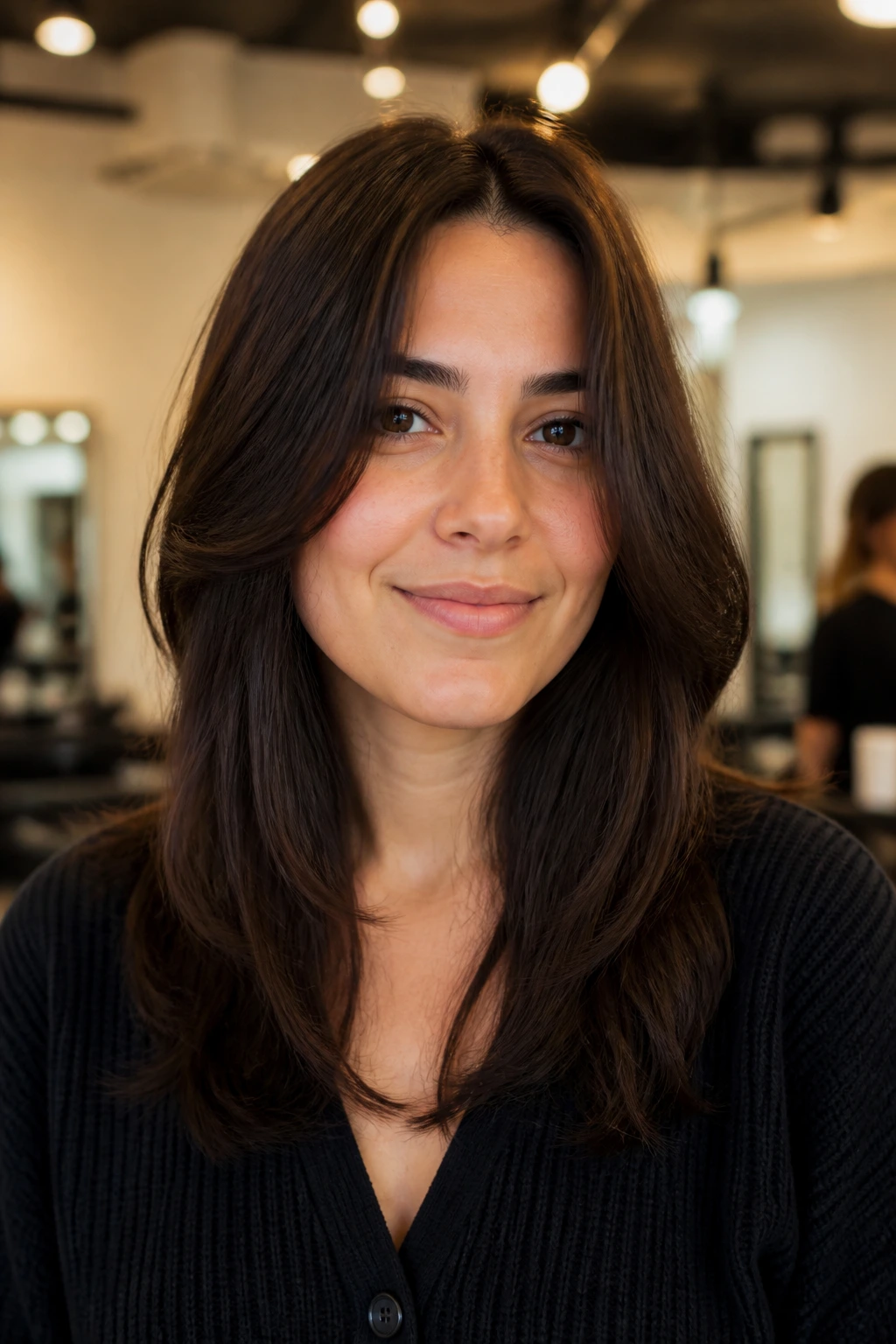
- Starting the shortest layer too high — If the front pieces hit the cheekbone, the haircut can widen the face right where you want it to slim down. Start lower and let the layer taper.
- Over-thinning the bottom — When the ends get too light, thick hair puffs out around them and the outline looks ragged. Keep the perimeter strong.
- Using a dead-center part with no lift — A flat center part can make the top too symmetrical and the sides too full. A slight off-center part or some root lift changes that fast.
- Curling everything toward the face — That creates a bubble around the cheeks. Bend the front away from the face or brush it out after curling.
- Skipping trims for too long — Thick hair can hide split ends, but it cannot hide a grown-out shape forever. The layers drift, and the cut starts to widen.
- Letting a razor do all the work — Razor texture is useful on the right hair. On coarse or frizz-prone strands, too much razor work can create extra swell and a fuzzy outline.
Variations and Alternatives for Different Routines
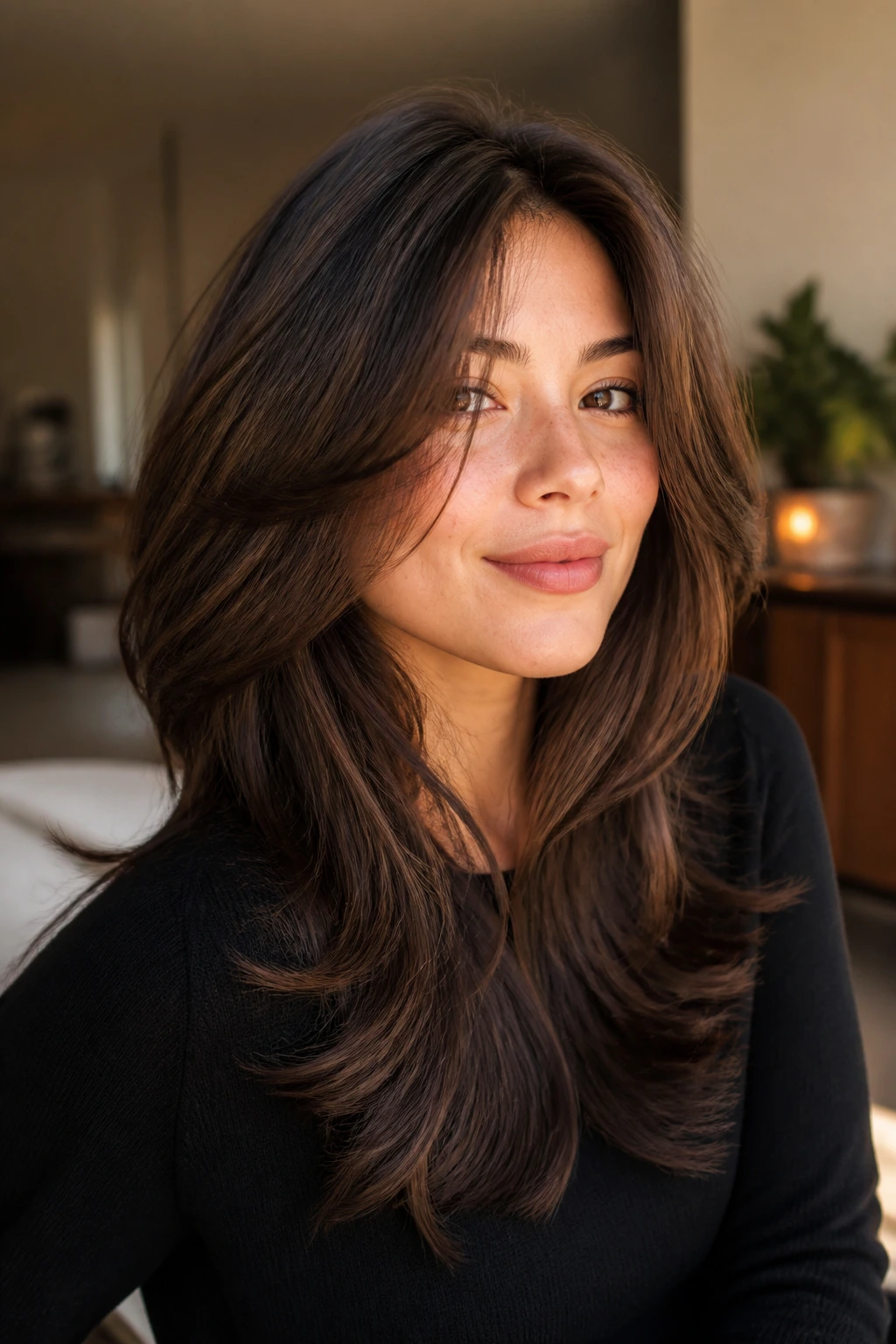
The Low-Heat Version: Keep the layers longer, start the face-framing below the cheekbone, and use a light cream or leave-in on damp hair. This works best if you air-dry and want the haircut to behave without a full blowout.
The Big Blowout Version: Add a little crown lift, use a round brush, and let the front pieces sweep away from the face. This is the most polished version, and it suits thick hair that can hold shape after styling.
The Curly-Hair Version: Ask for a dry cut or at least a curl-aware shaping session. Keep the layers longer and avoid heavy razoring at the ends, because curls already shrink and expand on their own.
The Sleek Blunt Version: Keep the perimeter full and clean, then hide the weight removal inside the shape. This is a good choice if you like a more classic silhouette and you do not want obvious shag texture.
The Grow-Out-Friendly Version: Start the shortest layers lower, skip short fringe, and keep the overall outline soft. It looks quieter at first, but it grows out with less drama than a highly textured cut.
Keeping the Cut in Shape Between Haircuts
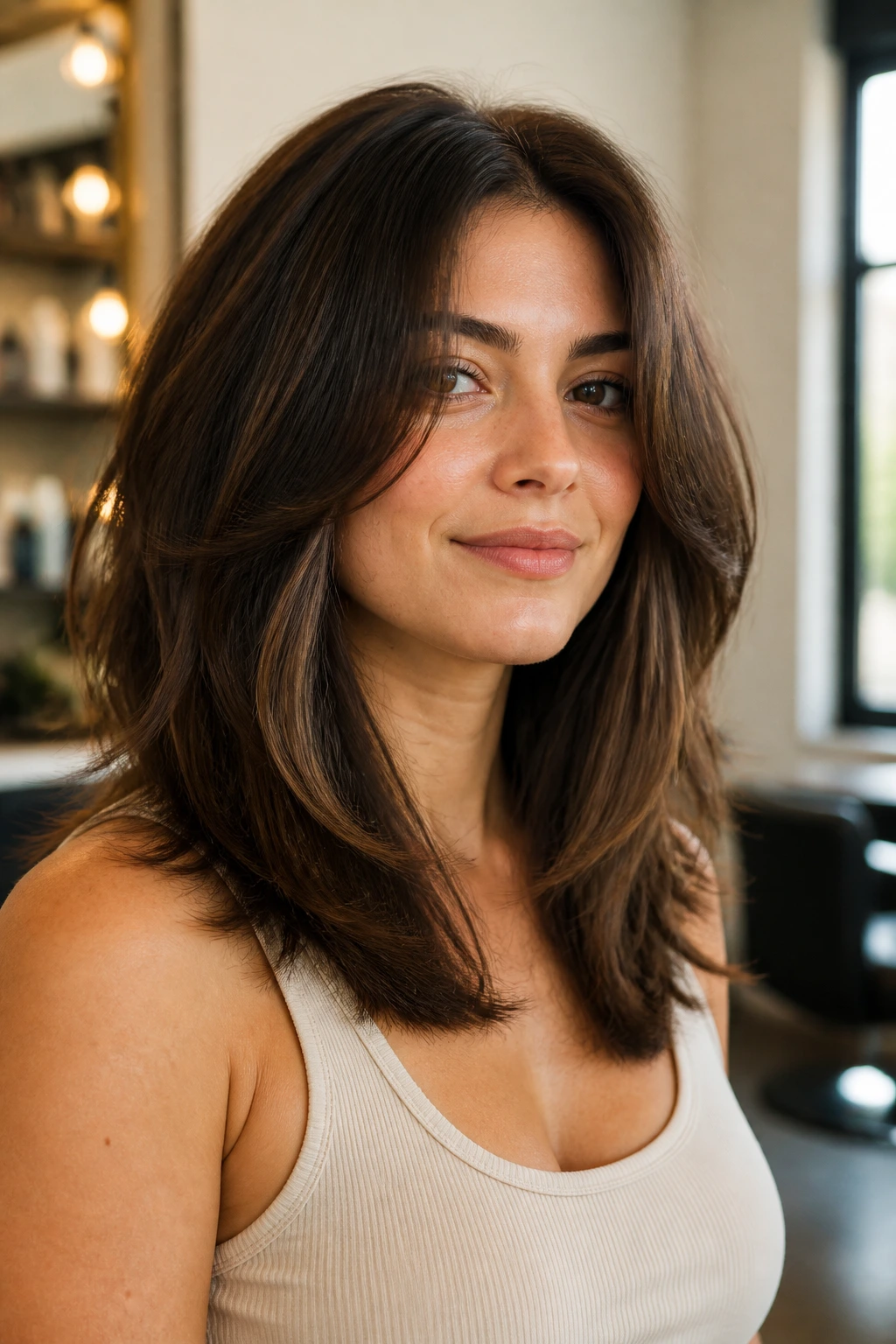
Thick hair can go from “freshly cut” to “why is this suddenly wide?” faster than people expect, especially once the inside weight settles and the ends start to dry out. The fix is not a weekly crisis. It’s a routine.
Trim the shape every 8 to 10 weeks if you want the layers to stay where they were designed to sit. Curtain bangs, bottleneck bangs, and any short face-framing pieces may need a light trim sooner, often every 3 to 5 weeks, because they show grow-out fast. The rest of the cut can usually wait longer if the perimeter is still strong.
Wash routine matters too. Thick hair often needs conditioner from mid-length down, not all the way to the roots. If the roots get coated, the haircut loses lift and the sides look heavier. A clarifying shampoo once every few weeks can clear product buildup, especially if you use mousse, dry shampoo, or smoothing cream. Don’t overdo it. Once every couple of weeks is enough for most hair, and less if your hair is dry.
At night, keep the front pieces from bending into weird dents. A loose braid, a soft clip, or a silk pillowcase helps. In the morning, a quick blast at the roots and a few minutes with a round brush on the front usually brings the shape back. If humidity is your enemy, refresh with a tiny bit of water and a touch of cream, then dry the frame back into place. Don’t soak the whole head. That’s how thick layers puff up all over again.
Questions People Ask Before They Book
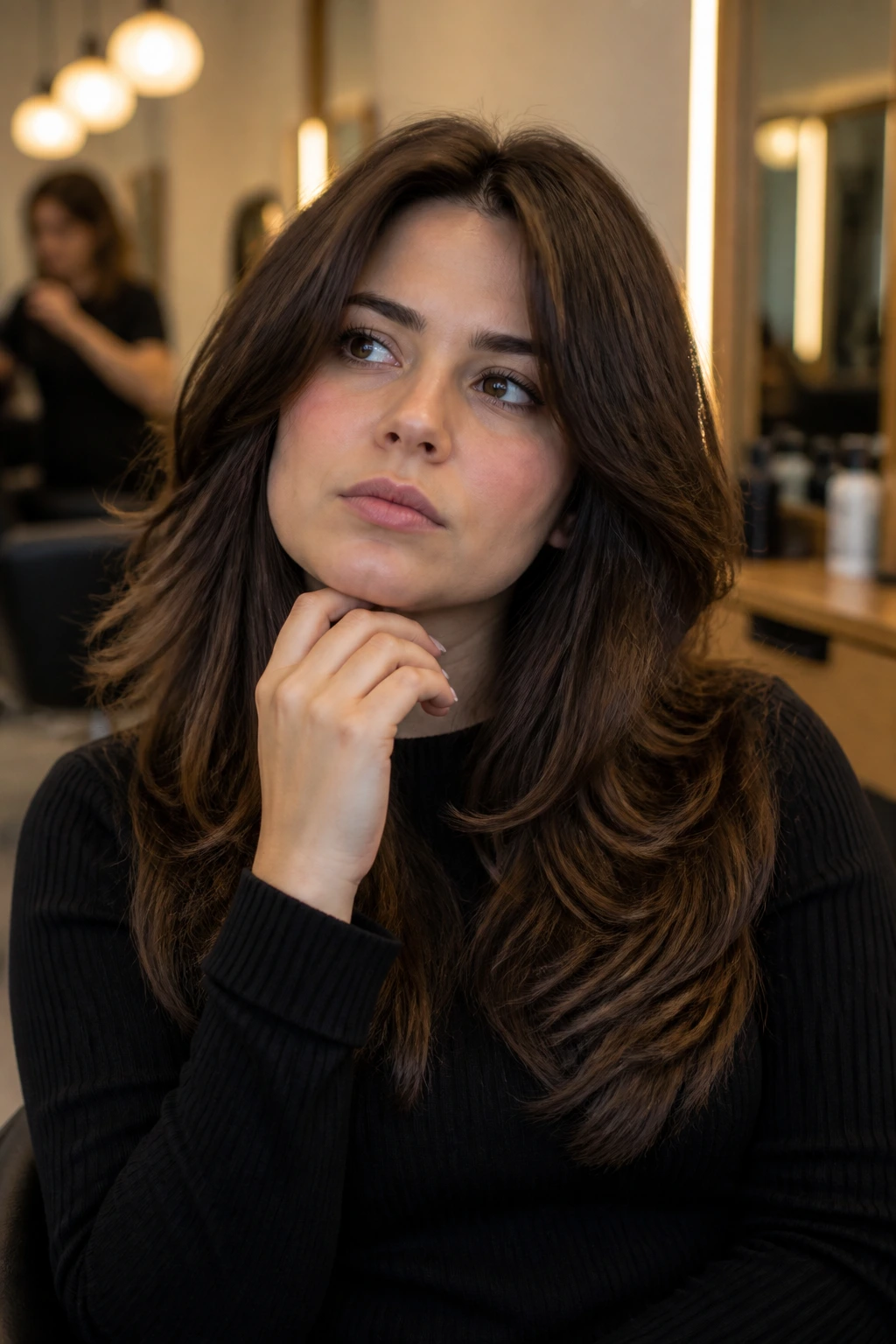
Will medium long layers make a round face look wider?
They can, if the shortest pieces start too high or the side volume sits right at the cheeks. The version you want keeps the face-framing lower and the movement diagonal, not round.
Should the shortest layer hit the cheekbone or the jawline?
For most thick-haired round faces, the jawline or just below it is safer. Cheekbone-level layers can work if the rest of the cut is longer and the shape is very controlled, but they’re easier to get wrong.
Do curtain bangs work with thick hair?
Yes, and thick hair usually gives curtain bangs better body than fine hair does. The catch is maintenance: they need regular trims and a little blow-dry work so they split properly.
Is a side part better than a center part?
A soft side part often gives a round face more lift and a slimmer line, especially with thick hair. A center part can still work if the layers are long and the crown has some height.
Can I air-dry this kind of haircut?
You can, but choose a shape that doesn’t depend on a perfect blowout. Long interior layers, a soft shag, or an airy wave cut usually air-dry better than a strong crown-lift style.
Will thinning shears help?
Sometimes. Used carefully, they can remove weight from thick hair. Used badly, they can leave ends that look ragged and wide. I’d rather see weight removed from the inside of the cut than have the perimeter chewed up.
How often should I trim it?
Most of these shapes do well with trims every 8 to 10 weeks. If you have fringe or very defined face-framing, expect a sooner tidy-up around the front.
What if my hair is thick and curly?
Go longer with the layers and keep the shortest pieces from sitting at the widest part of the face. Curly hair shrinks, so the same cut that looks balanced wet can spring up higher once it dries.
The Cut That Keeps Thick Hair Moving
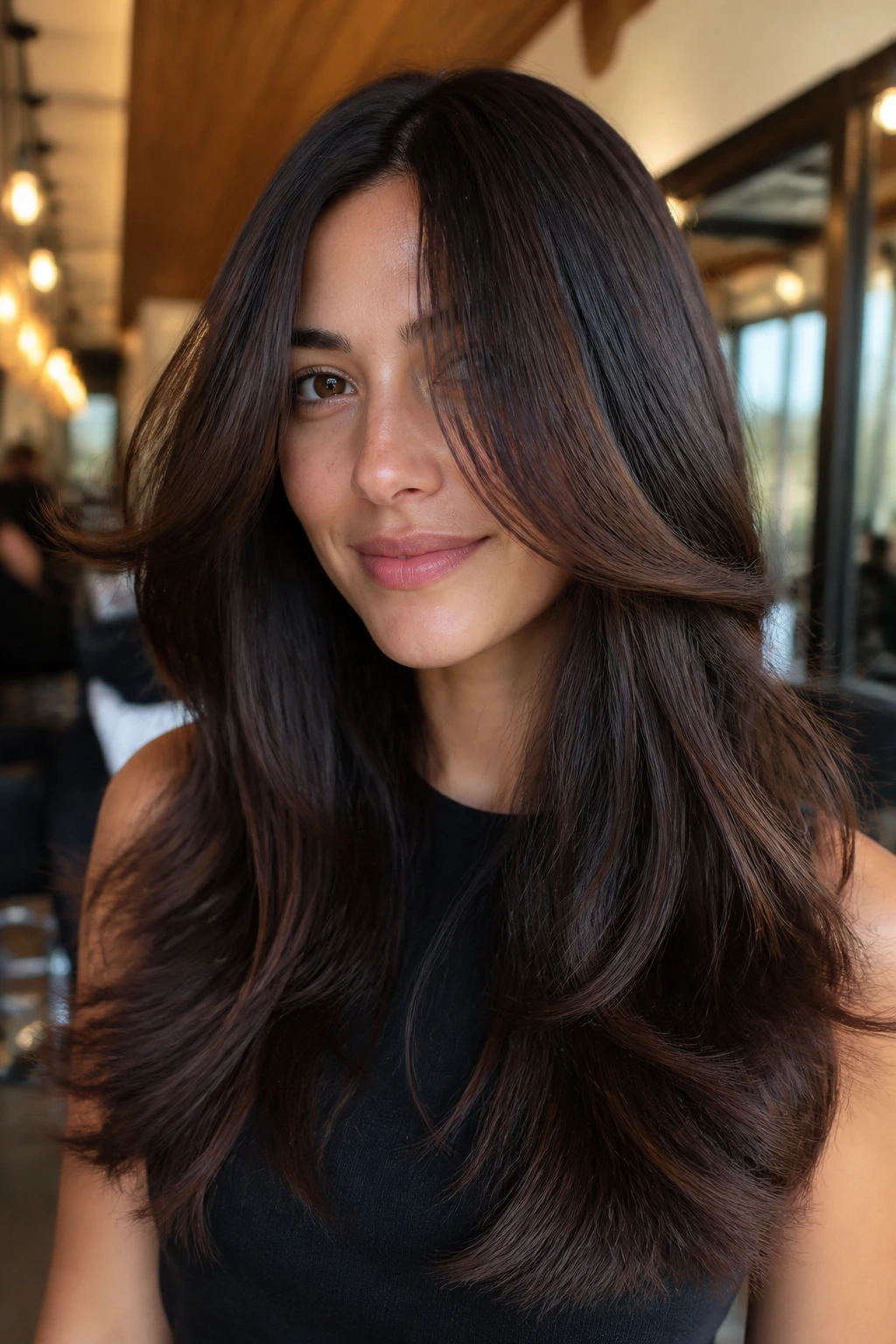
The nicest thing about these shapes is that they solve a real problem without making the haircut feel overworked. Thick hair gets room to move. A round face gets a longer line. The ends keep their substance, which matters more than most people realize when the hair is naturally dense.
If you’ve spent time fighting bulk, the answer usually isn’t more chopping. It’s better placement. Start the layers lower, keep the perimeter honest, and let the front pieces sweep instead of sit. That’s where the payoff lives.
And if you’re standing in a salon chair with a photo in one hand and a vague hope in the other, ask for the simplest version first: long layers, face-framing below the cheekbones, and weight removed from the inside. That alone can change the whole cut.